



The best lower body gym routines for women are rarely the ones packed with the most exercises. They’re the ones that line up with your goal, your recovery, and the equipment you actually have access to.
A lot of leg days go sideways because they try to do everything at once: glute growth, quad burn, hamstring strength, cardio, balance, core work, and a little punishment for good measure. That sounds productive. It usually isn’t. Your lower body can handle a lot, but it still likes structure, and it tends to reward a clear plan more than a random pile of squats and lunges.
There’s also a simple truth that gets missed all the time: glutes, quads, hamstrings, adductors, and calves do not all need the same training. If your program never changes, one area keeps doing all the work while another stays underfed. You feel that in the mirror, sure, but you also feel it when your knees get cranky, your deadlift stalls, or your split squats suddenly expose a side-to-side imbalance you didn’t know you had.
So the smarter move is to choose the style of leg day that fits the job. Heavy strength work. Machine-based volume. Unilateral training. Power. Pump work. The good stuff is all here, and each routine has a different feel on purpose.
How to Match a Routine to Your Goal
Not every leg session should feel the same. That’s the first thing worth locking in.
If your main goal is glute growth, you want at least one routine built around hip extension: hip thrusts, Romanian deadlifts, split squats, cable work. If you care more about front-thigh size and squat strength, quad-dominant work belongs at the front of the session, not as an afterthought. And if your legs tend to feel beat up fast, a machine day or a lighter unilateral day may give you more useful work with less system-wide fatigue.
A simple way to think about it:
- 2 lower-body days a week: pick one glute/hamstring day and one quad or full-leg strength day.
- 3 lower-body days a week: add either a machine pump session or a unilateral balance session.
- 4 lower-body days a week: split the work even more carefully — one heavy day, one hinge day, one quad day, one lighter volume or athletic day.
That’s the part people skip. They keep doing the same leg workout three times a week, then wonder why progress crawls.
Also, don’t chase soreness like it’s proof of a good program. Some of the best lower body sessions leave you feeling solid and worked, not flattened. You want enough hard sets to drive adaptation, not so many that you spend two days walking down stairs like they’re a negotiation.
1. Barbell Glute-Building Day
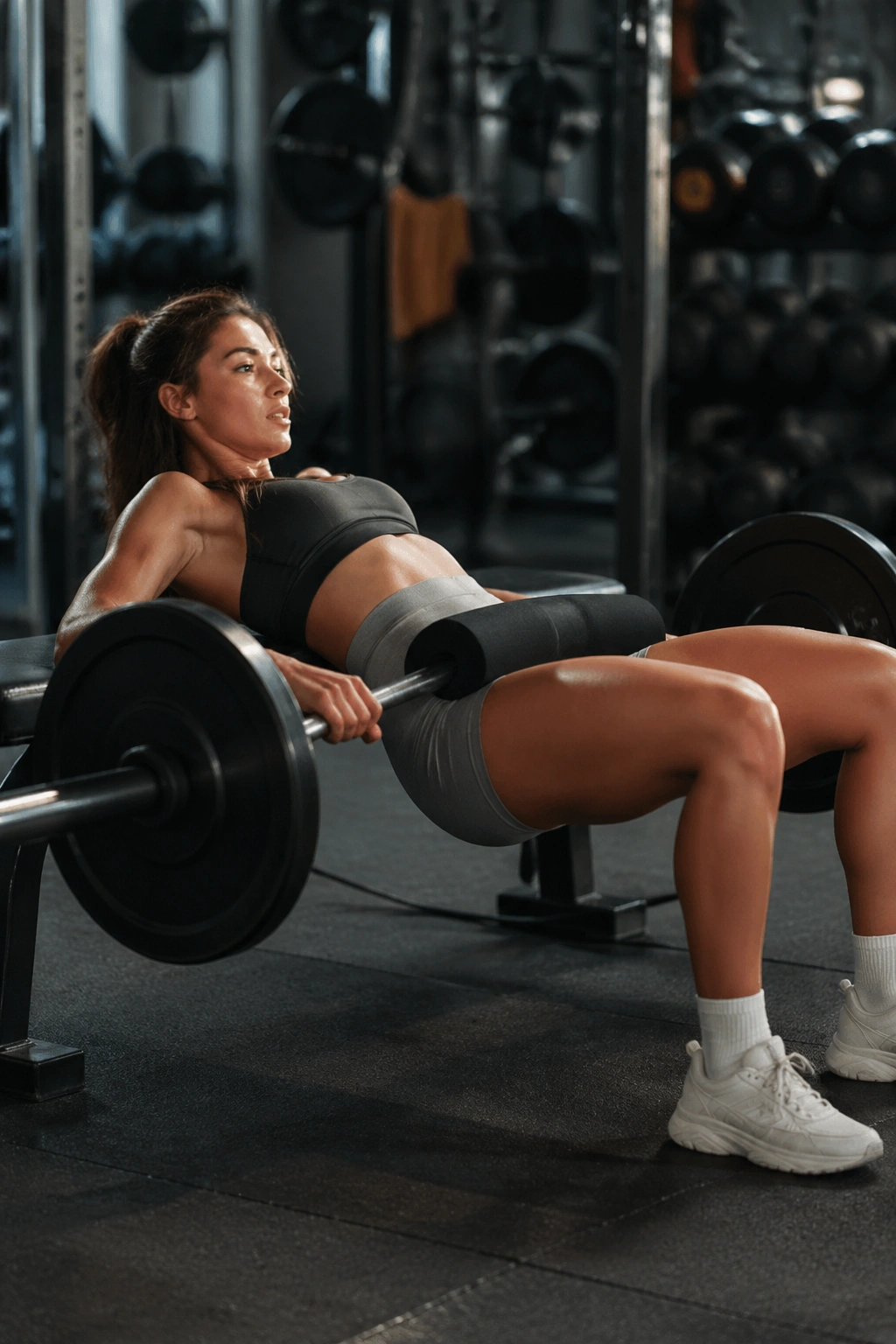
Glute growth starts with the first two lifts, not the last two. If you want a lower body day that puts the hips first, this is the one I’d put near the top of the pile.
The backbone here is hip extension under load. That means heavy hip thrusts, a hinge pattern like Romanian deadlifts, and then single-leg work to clean up side-to-side gaps. You’ll still train quads, but they don’t get to hog the whole session. Glutes like tension, a full range of motion, and enough load to make the last few reps honest.
Sample workout
- Barbell hip thrusts — 4 sets of 6 to 8 reps
- Romanian deadlifts — 3 sets of 8 reps
- Bulgarian split squats — 3 sets of 8 to 10 reps per leg
- Cable kickbacks — 2 to 3 sets of 12 to 15 reps per leg
- Seated hip abductions — 2 sets of 15 to 20 reps
Rest 90 to 120 seconds on the first two movements. Take 60 to 75 seconds on the smaller stuff. On hip thrusts, pause for a full second at lockout. That tiny pause matters more than people think.
What to watch for
Your lower back should not be doing the bragging. If you feel hip thrusts mostly in your spine, reset your ribcage, tuck your pelvis slightly, and shorten the range just enough to keep tension on the glutes. Same deal on Romanian deadlifts: the bar stays close, the knees stay soft, and the hips move back like you’re closing a car door with your glutes.
This routine works best for someone who wants shape, strength, and a noticeable glute focus without spending the whole session on machines. It also pairs well with one quad day later in the week, which keeps your legs balanced instead of overfeeding just one pattern.
2. Quad-Dominant Strength Day
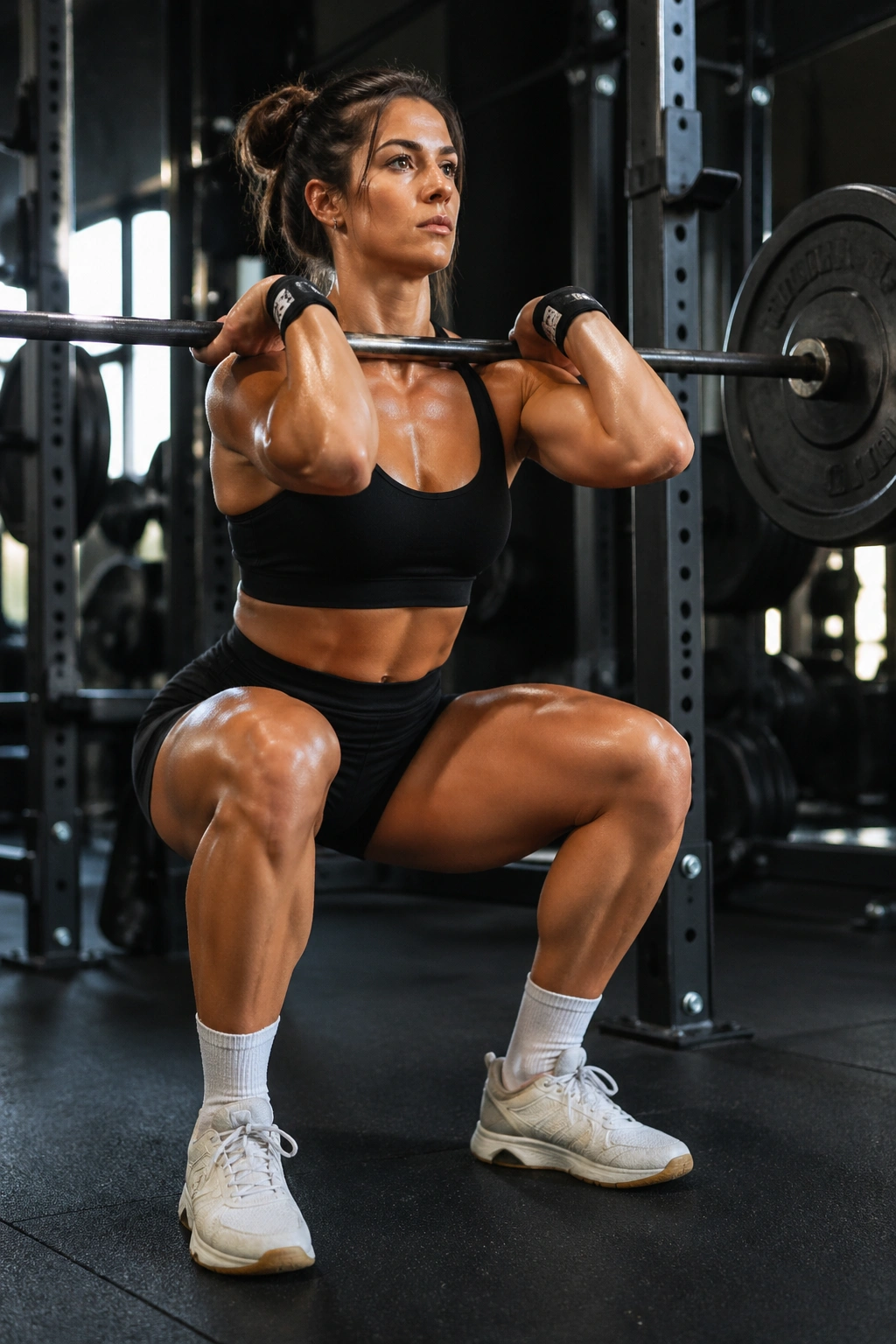
Want stronger front thighs without turning the workout into a back-dominant grind? Then the answer is to put knee bend at the center of the session.
Quad work is not just about leg press until your soul leaves your body. Good quad training usually includes some kind of squat pattern with an upright torso, a knee-forward leg press, and an isolation move that lets you load the quads without asking the hips to help too much. That mix is what makes the front of the leg respond.
A solid quad-focused session
- Front squat or goblet squat with heels elevated — 4 sets of 5 to 8 reps
- Hack squat or leg press with feet lower on the platform — 3 sets of 8 to 12 reps
- Walking lunges or reverse lunges — 3 sets of 10 steps per leg
- Leg extensions — 3 sets of 12 to 15 reps
- Standing calf raises — 4 sets of 10 to 15 reps
Keep the first lift heavy enough that the last rep slows down, but do not turn it into a max-effort circus. Two to three minutes of rest on squats is fair. The rest can stay shorter.
Why it works
The quad bias comes from three things: upright torso position, knee travel, and enough range of motion to make the quads work through the bottom of the rep. A lot of people fear letting the knees come forward. That’s usually a mistake. If your ankles and knees tolerate it, that forward travel is part of what lights up the front of the leg.
If your knees get irritated, try a small heel lift, shorten the stride on lunges, and keep the eccentric slow. The burn will still show up. It just won’t feel sloppy.
3. Hamstring and Hinge Day
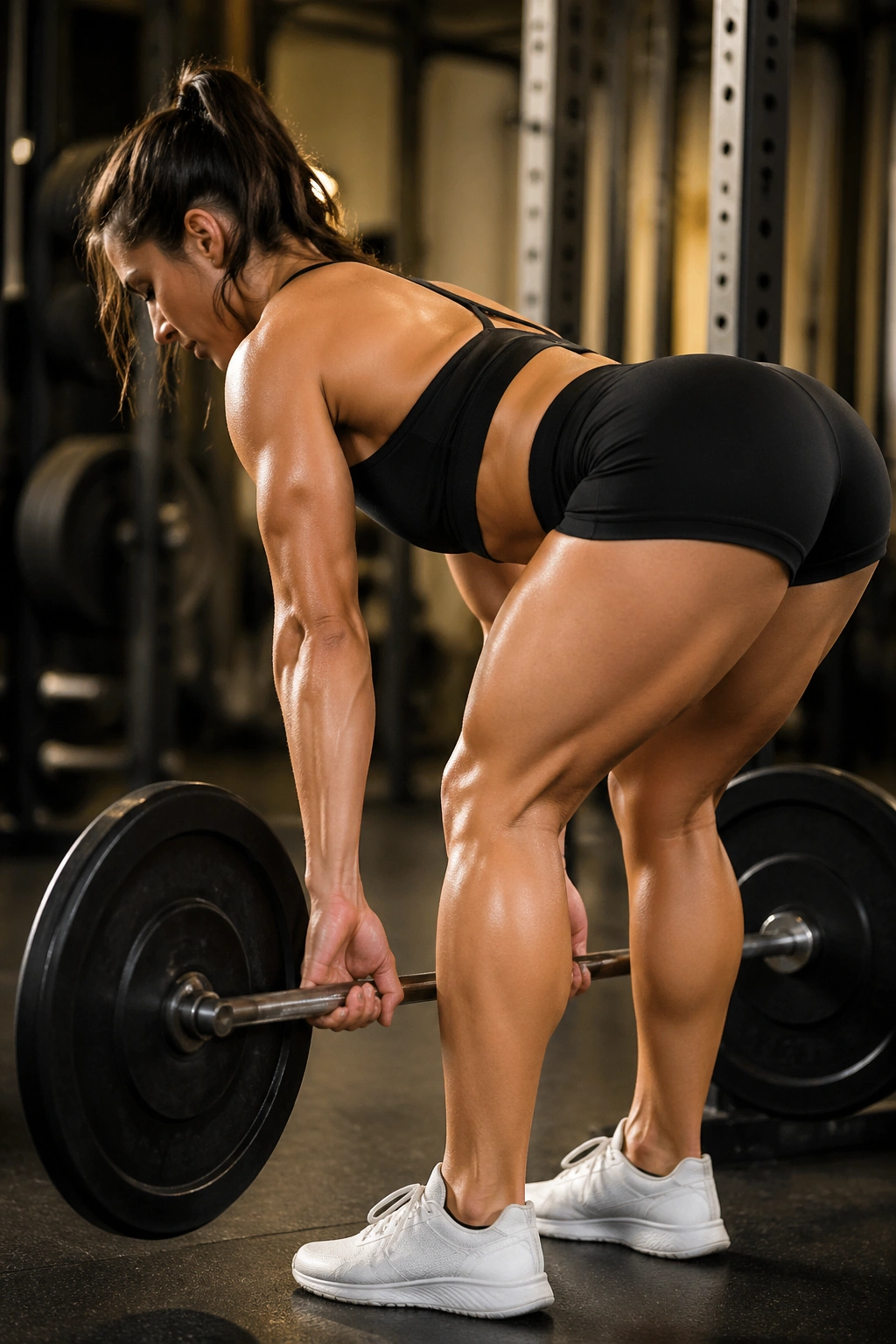
If all you ever do is squat, your hamstrings are getting shortchanged.
That’s the blunt version. The slightly kinder version is this: a lot of lower body gym routines for women lean hard on knee-dominant work and never teach the backside of the body how to pull its weight. Hamstring and hinge training fixes that. It makes the back of the leg stronger, helps the glutes do their job, and usually makes the whole lower body feel more stable when you walk, run, or climb.
Sample hinge-focused day
- Romanian deadlifts — 4 sets of 6 to 8 reps
- Seated or lying leg curls — 4 sets of 10 to 12 reps
- Dumbbell or barbell good mornings — 3 sets of 8 reps
- Single-leg Romanian deadlifts — 3 sets of 8 reps per side
- Back extensions with a rounded upper back kept neutral — 2 sets of 12 to 15 reps
The hamstrings tend to love a long stretch under control. That’s why RDLs and leg curls show up together. One loads the muscle while it’s lengthened. The other lets you curl the heel in and finish the job without needing a big load on the spine.
What matters here
Do not rush the lowering phase. Seriously. On hinges, the descent is where most of the useful work lives. Three seconds down is a nice rule if your form tends to get loose when you go fast.
Also, don’t confuse “deep” with “good.” If your lower back rounds because you’re chasing the floor, you’ve gone too far for now. Stop when your hips can no longer move back cleanly. That’s the real range of motion.
This is the kind of leg day that quietly fixes weak links. It may not feel as flashy as a high-volume quad session, but it pays off when you go back to squats, lunges, and even sled work.
4. Beginner Machine-Based Lower Body Day
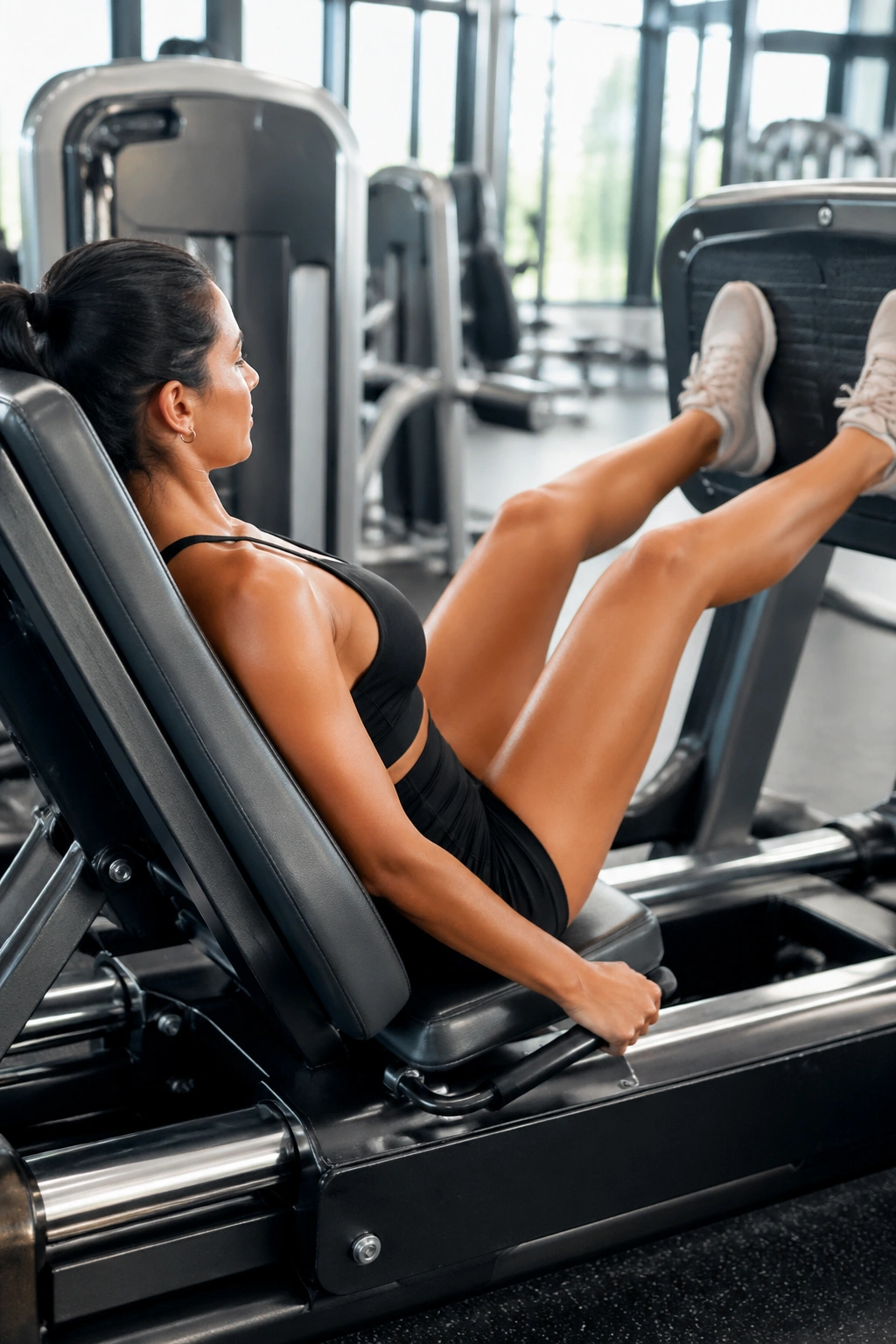
The smell of rubber mats, the click of the weight stack, the faint squeak of a seat that never quite slides the way it should — that’s the machine area, and it’s a smart place to start.
For someone new to the gym, or for anyone who wants a lower body day without worrying about balance, setup, and barbell technique, machines are a gift. They let you load the legs hard while keeping the movement path stable. That matters. A lot. Because beginners often don’t need more chaos; they need clean reps and a way to learn what each muscle actually feels like.
Simple machine routine
- Leg press — 4 sets of 10 to 12 reps
- Seated leg curl — 3 sets of 10 to 12 reps
- Leg extension — 3 sets of 12 to 15 reps
- Hip abduction machine — 3 sets of 15 to 20 reps
- Seated calf raise — 3 sets of 12 to 15 reps
Use a controlled two-second lower on each rep. On leg press, keep your lower back pinned into the pad and stop the depth the moment your pelvis starts to tuck hard. That’s a better limit than chasing extra inches.
Why this works for new lifters
Machines take a lot of guesswork out of the first few months of training. You still need to set the seat correctly, and yes, you still need to control the rep. But you don’t have to think about bar path, balance, or whether your torso drifted six inches to one side.
A nice rule: when you can hit the top of the rep range on all sets with clean form, add the smallest plate jump available next time. Not a heroic jump. Just a small one. That steady rise is enough.
This routine also works well on busy days. If you have 45 minutes and want something direct, reliable, and easy to track, this is it.
5. Unilateral Dumbbell and Cable Day
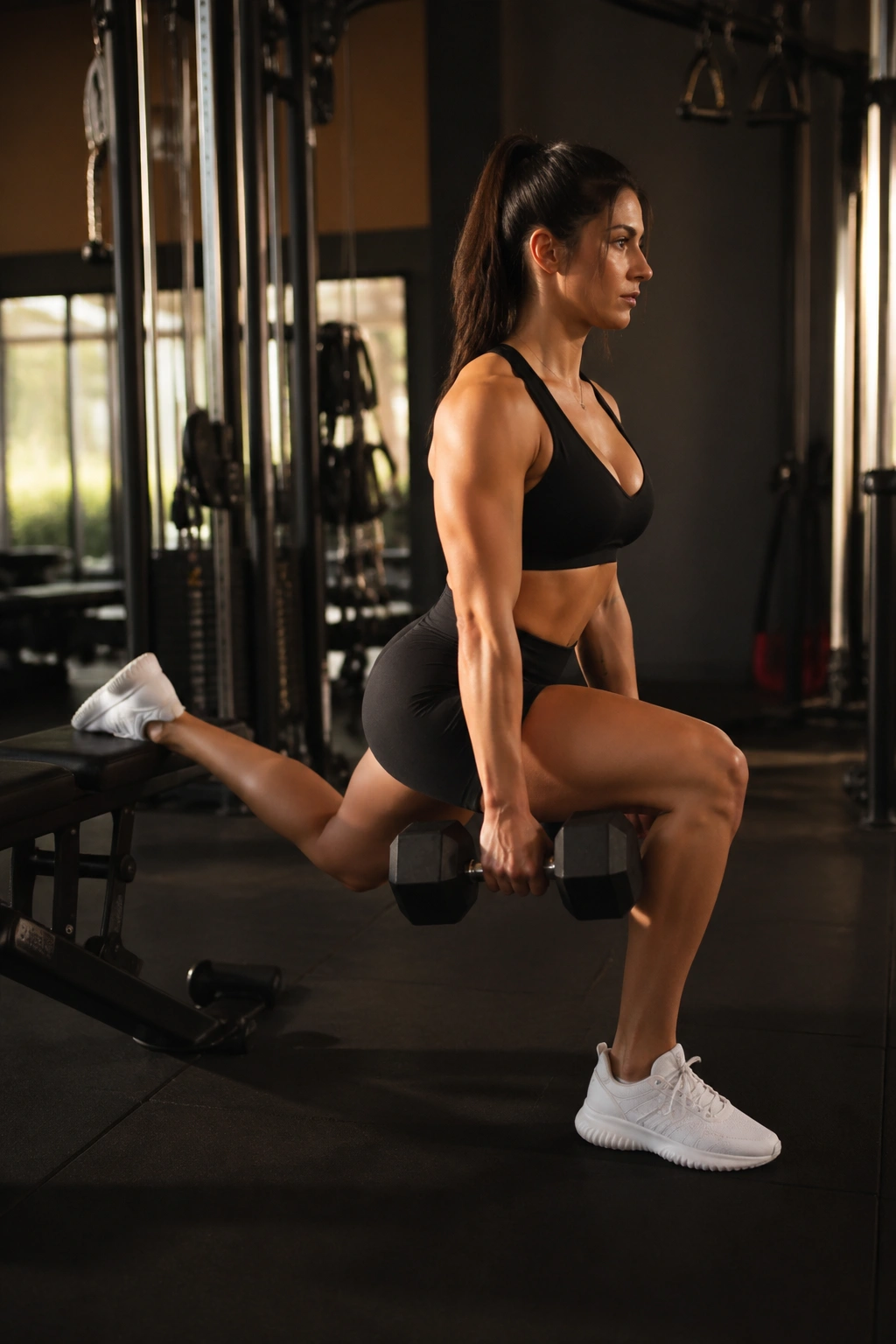
Single-leg work is where things get honest fast.
One side always wants to help the other. That’s normal. The problem is that bilateral lifts can hide it. A unilateral day strips away the cheating. It tells you which side is stronger, which hip shifts when fatigue kicks in, and which leg never quite gets the same depth on lunges. That information is useful, even when it’s mildly annoying.
Sample unilateral session
- Bulgarian split squats with dumbbells — 3 sets of 8 reps per leg
- Step-ups onto a box around knee height — 3 sets of 10 reps per leg
- Single-leg leg press — 3 sets of 10 to 12 reps per leg
- Cable glute kickbacks — 2 to 3 sets of 12 to 15 reps per leg
- Lateral lunges — 2 sets of 10 reps per side
Keep the dumbbells lighter than your ego wants. The whole point is control. If you have to wobble, lean, or twist to finish the set, the load is already too high for this kind of day.
How to get the most from it
Unlike a heavy barbell day, this one rewards patience and clean setup. Use a rack or wall for balance if you need it. That is not “cheating.” It’s smart. Better reps beat dramatic ones.
This is also one of the best routines for glute medius work — the side hip muscle that helps with pelvic stability and cleaner knee tracking. If your knees cave in when you get tired, a day like this can help teach better positions without needing huge weights.
The honest downside? It’s tiring in a sneaky way. You don’t always feel smoked during the set, but the side-to-side demand adds up. That’s why the rest periods should be a full 75 to 90 seconds, especially on split squats and step-ups.
6. Heavy Strength Day for Squats and Deadlifts
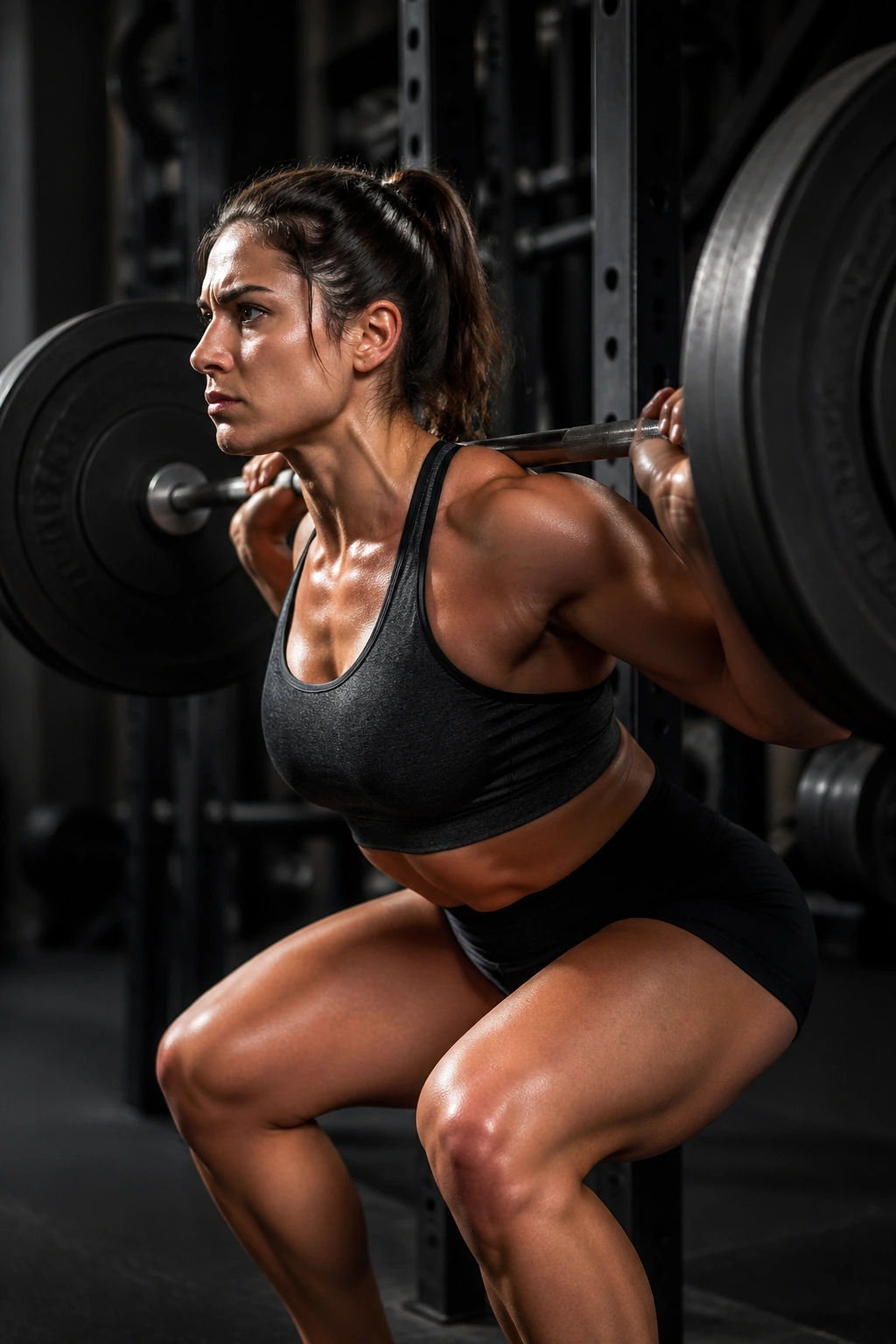
Fewer exercises, more intent. That’s the whole game here.
If you want a leg day that builds raw strength, the heavy stuff has to stay heavy. Not sloppy-heavy. Not ego-heavy. Just honest, well-braced, technically clean lifting with enough recovery between sets that your next rep still looks like a rep and not a survival exercise. This is the day for the biggest loading patterns: squats and deadlifts, plus a couple of accessories that support them.
Heavy strength setup
- Back squat or safety bar squat — 5 sets of 3 to 5 reps
- Trap-bar deadlift or sumo deadlift — 4 sets of 3 to 5 reps
- Pause squat with a 2-second hold at the bottom — 3 sets of 3 reps
- Reverse lunge — 3 sets of 6 to 8 reps per leg
- Standing calf raises — 3 sets of 8 to 12 reps
Take 2 to 4 minutes between heavy sets. If your breathing hasn’t settled, you probably rushed it.
What to keep in mind
Heavy strength work is not the place to grind every set to failure. Leave one or two reps in the tank on the big lifts. That’s usually enough to keep technique sharp and reduce the kind of fatigue that wrecks the next session.
Bracing matters here more than almost anywhere else. Take a breath into your belly and sides before you descend. Keep your ribs from flaring. If you lose your brace, the weight starts talking back in a way you won’t enjoy.
This routine suits lifters who already know their basic squat and hinge patterns, or who are working with a coach. It’s not the friendliest first leg day, but it can be one of the most satisfying when the numbers start moving.
7. Low-Impact High-Rep Burn Day
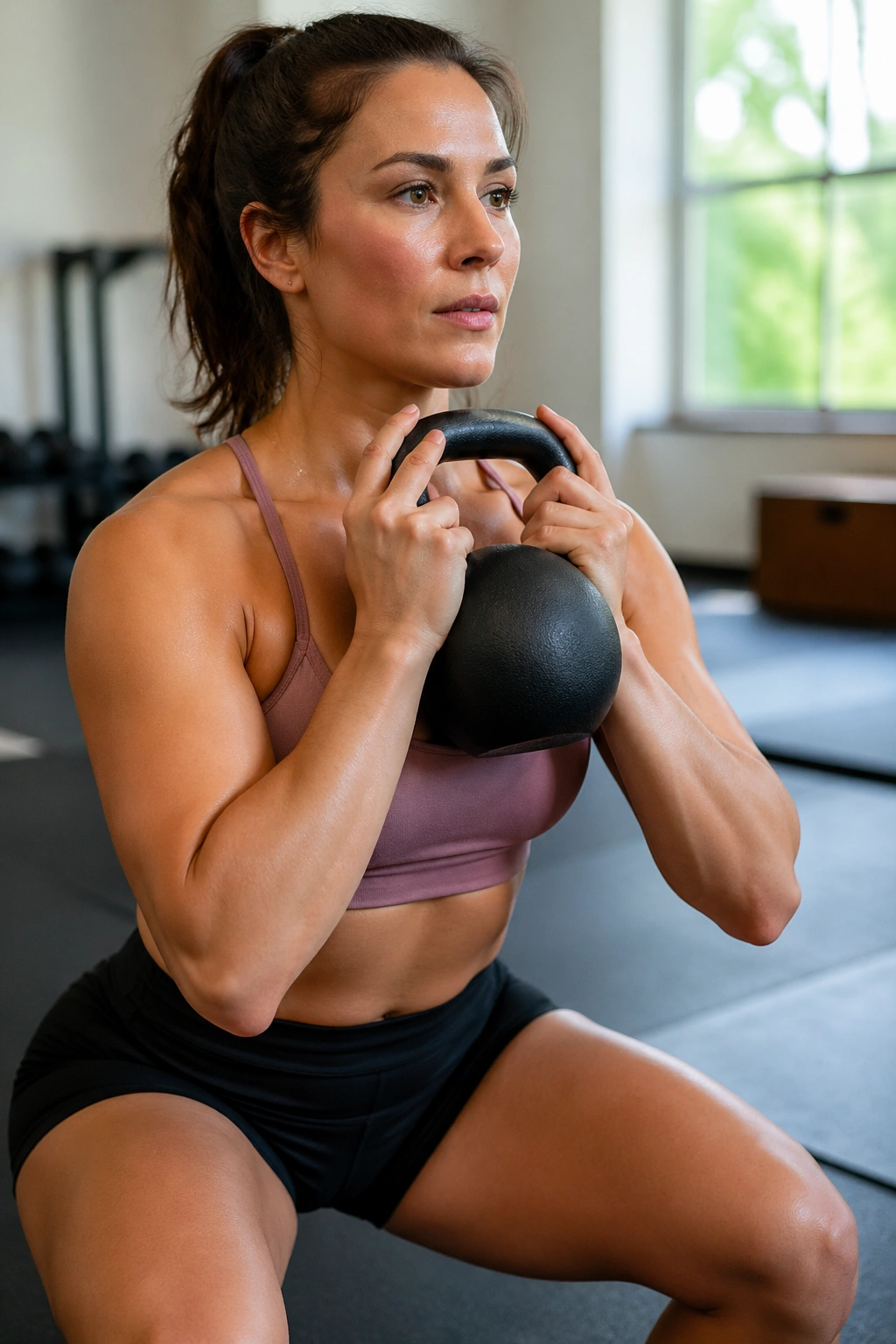
Some days your legs need work, not punishment.
That’s where a lighter high-rep session earns its keep. The point here is not max load. It’s extra volume, a big blood flow hit, and enough time under tension to make the muscles work without beating up your joints. If you’ve had a heavy week, this kind of routine can keep momentum going while giving your spine and nervous system a break.
Circuit-style lower body session
- Goblet squat — 3 sets of 15 reps
- Dumbbell Romanian deadlift — 3 sets of 12 reps
- Static lunge — 3 sets of 12 reps per leg
- Glute bridge — 3 sets of 20 reps
- Banded lateral walk — 2 sets of 20 steps each way
- Wall sit — 2 holds of 30 to 45 seconds
- Bodyweight calf raises — 3 sets of 20 reps
Keep rest short, around 30 to 45 seconds between exercises if you’re moving through it like a circuit. If your form starts to fall apart, lengthen the rest. No prize is awarded for messier reps.
Why this one belongs in the mix
High-rep work is useful when your goal is to build work capacity, add volume without adding a ton of load, or just keep the legs active during a deload-style week. It’s also a decent option if you’re coming back from a stretch away from training and want to get the movement pattern back without jumping straight into heavy barbell work.
The burn will show up fast. So will the temptation to rush. Don’t. The muscles still need full range, clean tempo, and control on the last few reps, especially when fatigue starts making your knees drift or your torso collapse forward.
This routine is not glamorous. It works anyway.
8. Athletic Power and Conditioning Day
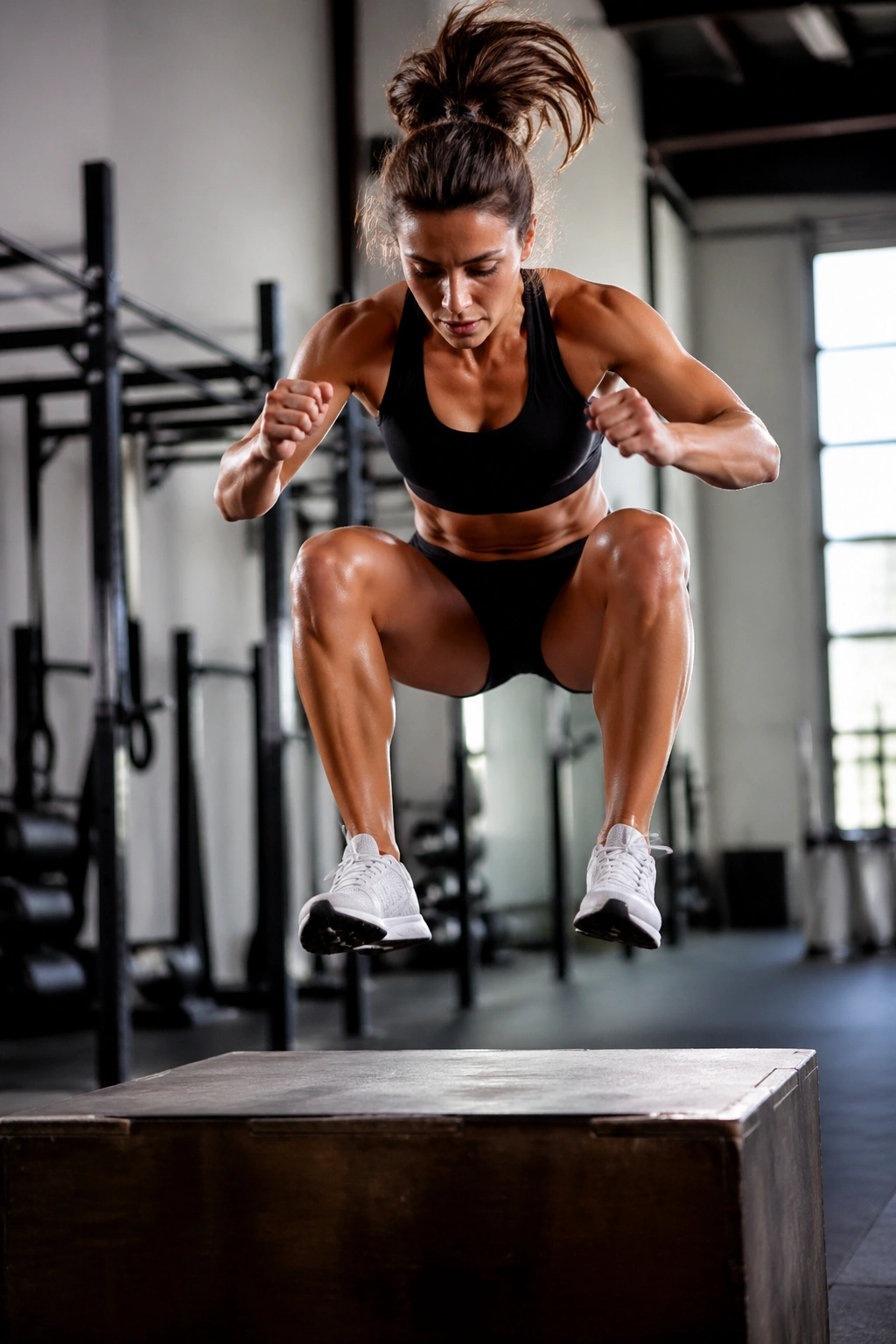
Can your lower body move fast, not just hard? That’s the question this session asks.
A lot of leg programs build size and strength but skip power. That’s a miss if you like classes, sports, hills, sprint work, or simply want legs that feel springy instead of heavy. Power training is different from strength training. The reps are lower, the intent is higher, and the rest has to be long enough that every rep stays snappy.
Power-focused lower body session
- Box jumps or squat jumps — 4 sets of 3 to 5 reps
- Sled pushes — 6 rounds of 15 to 20 meters
- Kettlebell swings — 4 sets of 12 reps
- Lateral bounds — 3 sets of 6 reps per side
- Walking lunges with light dumbbells — 2 sets of 12 steps per leg
- Farmer carries — 3 rounds of 30 to 40 meters
Rest 60 to 90 seconds after jumps and bounds, and a little longer after sled pushes if your breathing gets ragged. The goal is explosive output, not exhaustion.
What makes it different
Power work should look crisp. The jump either pops, or it doesn’t. The sled either moves with purpose, or you need to lower the load. That honesty is part of why people like these sessions once they get used to them.
If you don’t love jumping, you can swap in sled drags, fast step-ups, or medicine ball work. Good alternatives. Same intent, less impact. That matters if your knees don’t enjoy landing forces or if you simply prefer a quieter training day.
This routine is a strong fit for women who want lower body work that carries over to daily movement, sports, or conditioning without turning every session into a slow strength grind.
Final Thoughts
The best lower body routine is the one that keeps giving you a reason to come back. Not the one that wrecks you for three days. Not the one that looks hardest on paper.
Pick one heavy day, one bias day, and one lighter support day if you train legs more than once a week. That’s a clean way to cover glutes, quads, hamstrings, and conditioning without repeating the same stress over and over. Your joints tend to like that. So do your results.
Track the small stuff. Reps. Load. Depth. Whether your left side still feels sketchy on split squats. That logbook tells you more than a mirror ever will, and it keeps your lower body training moving in the right direction when motivation gets noisy.
