



Strength training is often misunderstood as merely a tool for changing how a body looks in the mirror. While the physical changes are certainly a byproduct, the real value lies in what happens beneath the surface. Building a strong lower body does more than fill out a pair of jeans; it creates the structural foundation for your entire life. Stronger legs mean better balance, more efficient movement, reduced risk of injury, and a metabolism that feels more responsive.
Many people walk into a gym and immediately gravitate toward cardio machines, viewing the weight room as an intimidating or overly aggressive space. But once you move past the initial discomfort of not knowing exactly which handle to pull or which rack to claim, you find that strength training is deeply rewarding. It provides clear, measurable markers of progress. You can track how much weight you lift, how many repetitions you complete, and how your form improves over time. This data-driven approach removes the guesswork from fitness and replaces it with tangible achievement.
A well-rounded lower body program targets the glutes, hamstrings, quadriceps, and calves. Ignoring these major muscle groups is a missed opportunity, as they are the engines of the human body. When these muscles are engaged properly, you unlock a level of power that impacts everything from how you walk up stairs to how you carry heavy groceries. This is not about chasing an aesthetic ideal; it is about functional capability. Let’s look at the movements that actually matter and how to perform them with precision.
1. The Back Squat
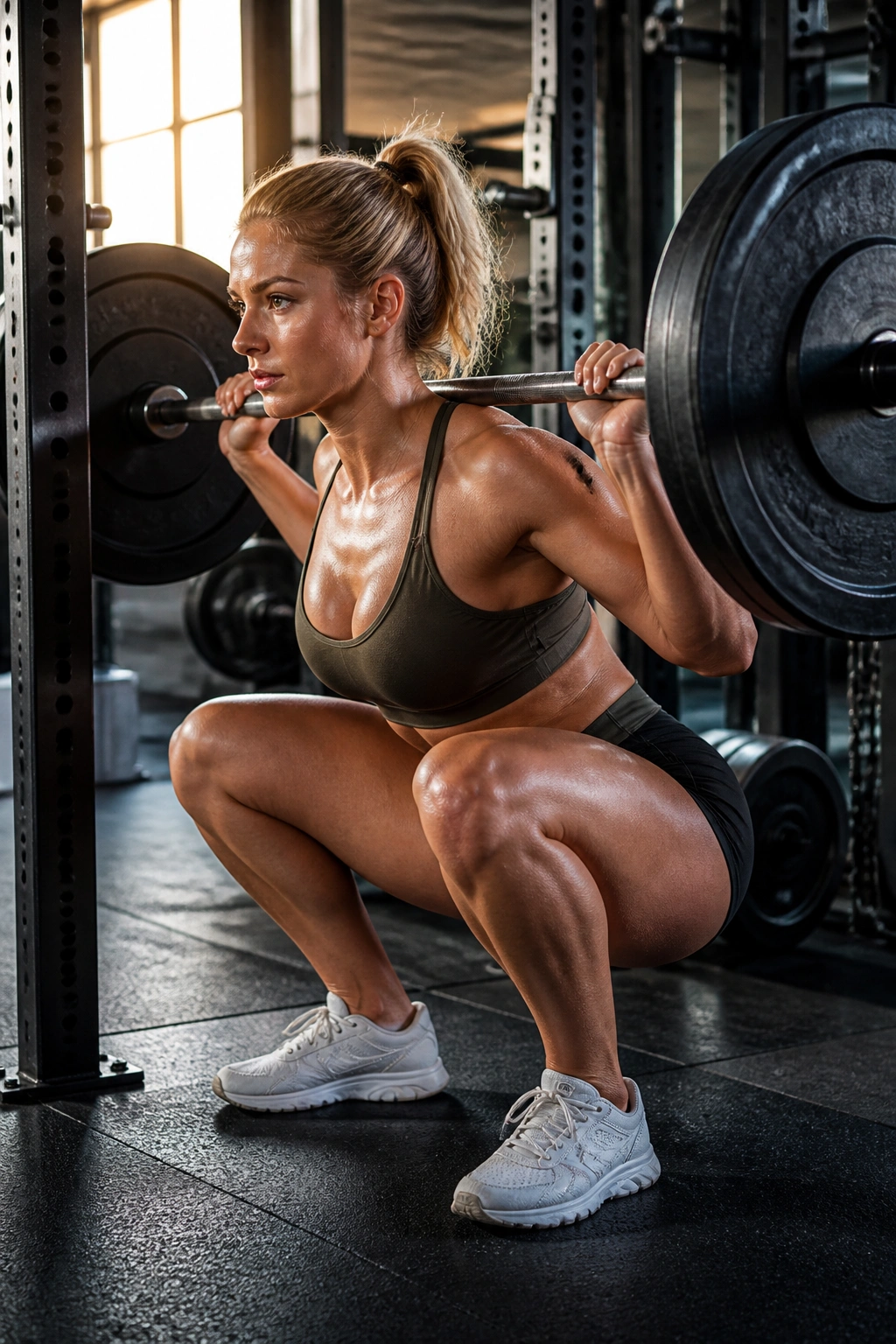
The back squat is the king of compound movements for a reason. It requires coordination between your core, your lower back, and your legs, forcing them to work as a single, cohesive unit. You are not just squatting weight; you are learning to manage a load against gravity while maintaining a neutral spine.
The Mechanics of Depth
When you set up for a back squat, the bar should rest comfortably on your upper traps, not your neck. Keep your chest up and your gaze forward. As you initiate the movement, imagine you are sitting back into a chair rather than dropping straight down. Your knees should track over your toes, but never let them cave inward. If you find your heels lifting off the ground, your stance might be too narrow or your ankle mobility might need some focused attention.
Troubleshooting Form
- The Depth Check: Aim for your hip crease to drop slightly below the top of your knee.
- Core Engagement: Think about taking a deep breath into your belly and bracing your abs as if someone is about to punch you.
- The Setup: A wider stance often helps with stability if you have longer limbs, while a narrower stance can emphasize quad engagement.
Pro tip: Practice “box squats” to learn exactly where your depth should be. Place a box or a bench behind you and squat until you just barely touch it before standing back up.
2. Romanian Deadlift
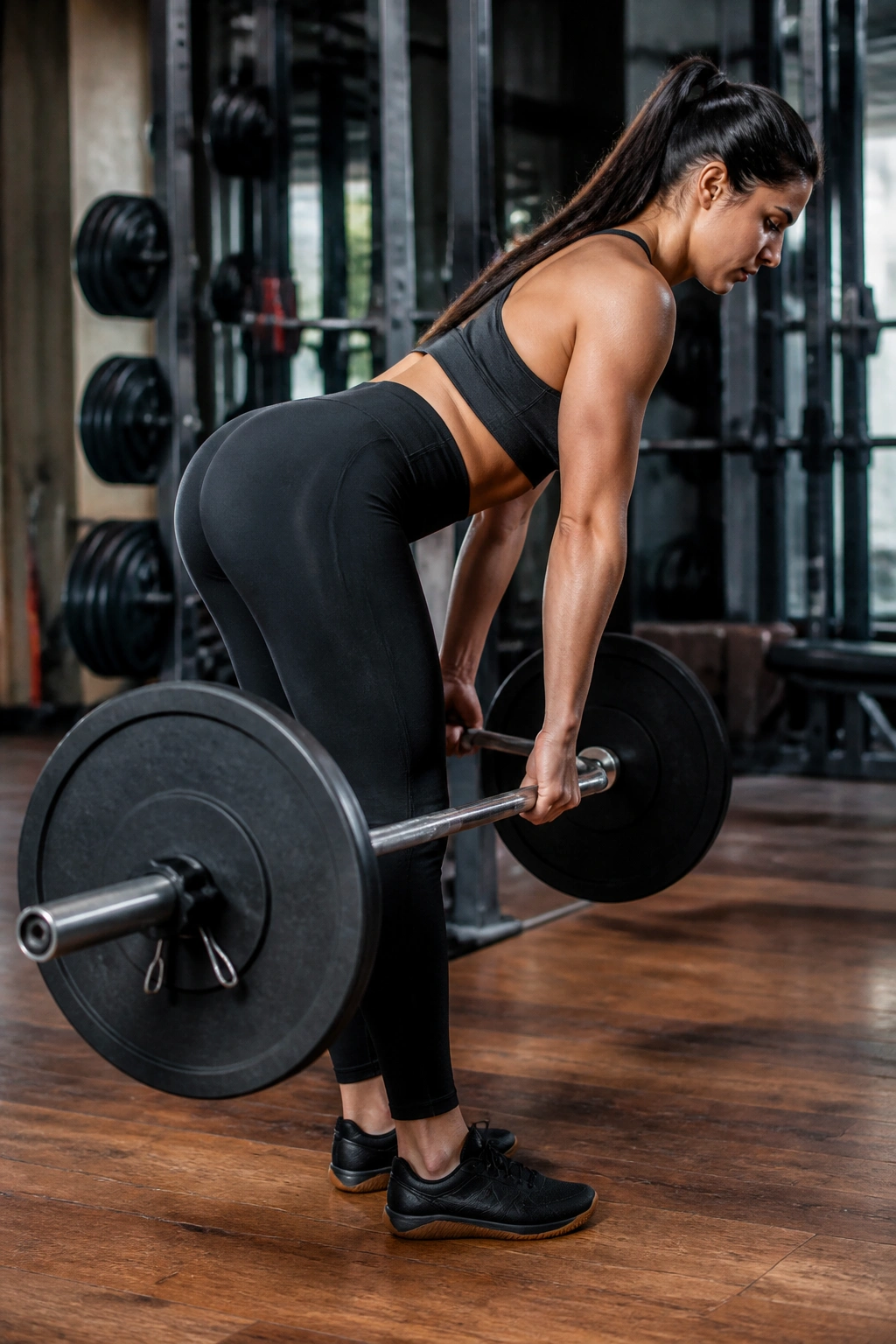
If the squat is about vertical pushing, the Romanian deadlift (RDL) is about the hinge. This movement is arguably the most important exercise for posterior chain development—that is, your hamstrings, glutes, and lower back. Because it doesn’t involve the quad-heavy drive of a traditional deadlift, it allows you to isolate the backside with incredible precision.
You start this movement standing tall with a barbell or pair of dumbbells in front of your thighs. Keep a soft bend in your knees, but keep them locked in that position for the entire set. Hinge at your hips, pushing your butt backward as if you are trying to close a heavy door with your glutes. The weights should graze your legs on the way down, stopping just below the knees or mid-shin, depending on your hamstring flexibility.
You will feel a significant stretch in the back of your legs. That tension is exactly what you are looking for. Avoid the temptation to round your back to get lower. The depth of the RDL is dictated by your hamstring length, not by how close you can get the weights to the floor. If you reach a point where your back starts to curve, you have gone too far. Stop there, pause for a second to feel the load, and then drive your hips forward to return to a standing position.
3. Bulgarian Split Squat
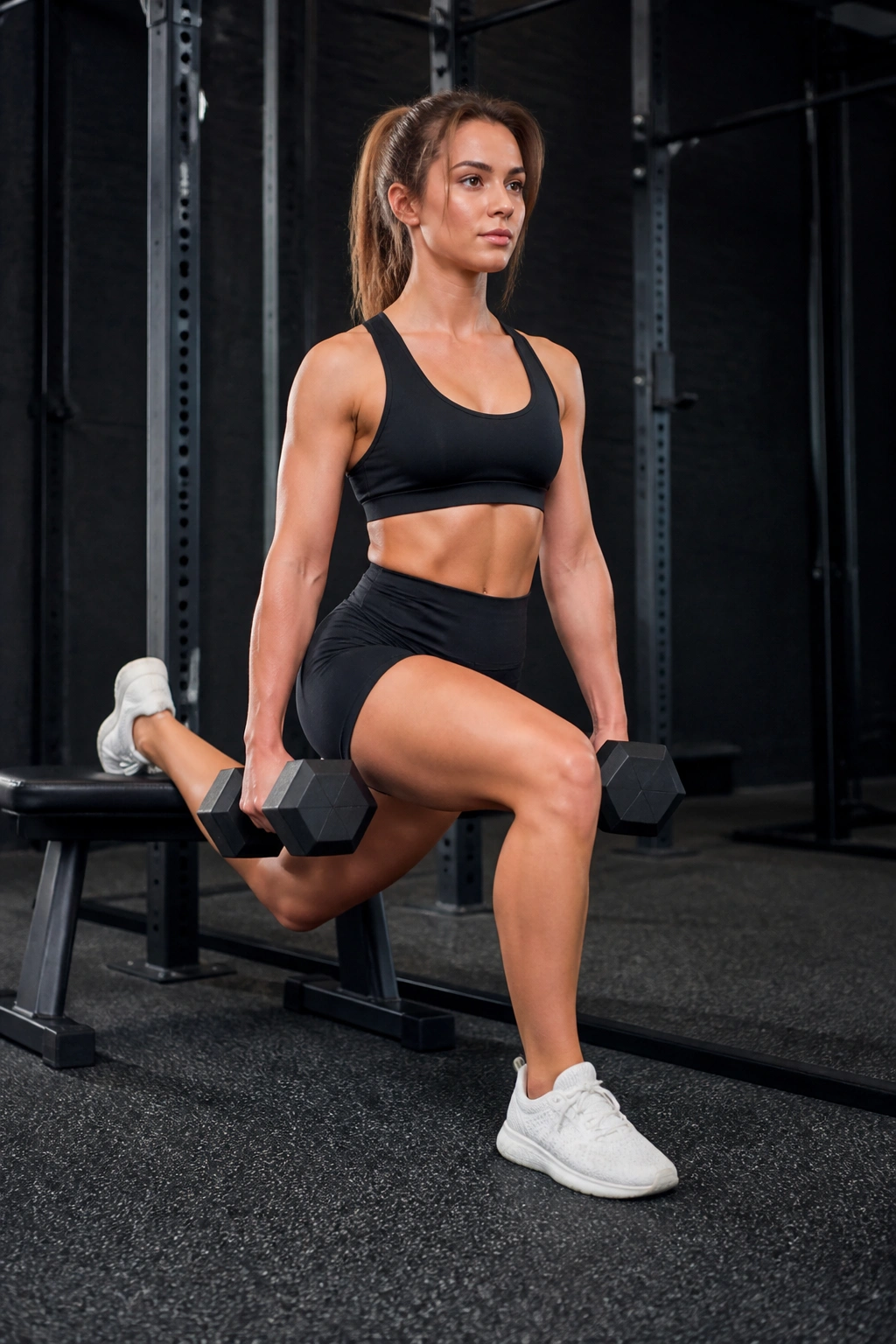
There is a reason this exercise is universally dreaded by anyone who takes leg day seriously. It is a unilateral movement, meaning it forces each leg to work independently. This is the ultimate equalizer. If you have a strength imbalance between your left and right sides, the Bulgarian split squat will expose it immediately.
To set up, place one foot on a bench behind you. Step your other foot forward far enough that when you lower into a squat, your front knee remains behind your toes. This setup takes some trial and error. If you are too close, you will feel it in your front knee. If you are too far, you might overstretch your hip flexor on the back leg.
Lower yourself until your front thigh is parallel to the floor. Keep your torso upright if you want to emphasize the quads, or lean forward slightly to engage more of the glutes. The real challenge here is balance. If you are wobbling, tighten your core and squeeze the glute of the leg that is on the floor. It is a grueling movement, but it is one of the fastest ways to build stability and definition in the lower body.
4. Hip Thrust
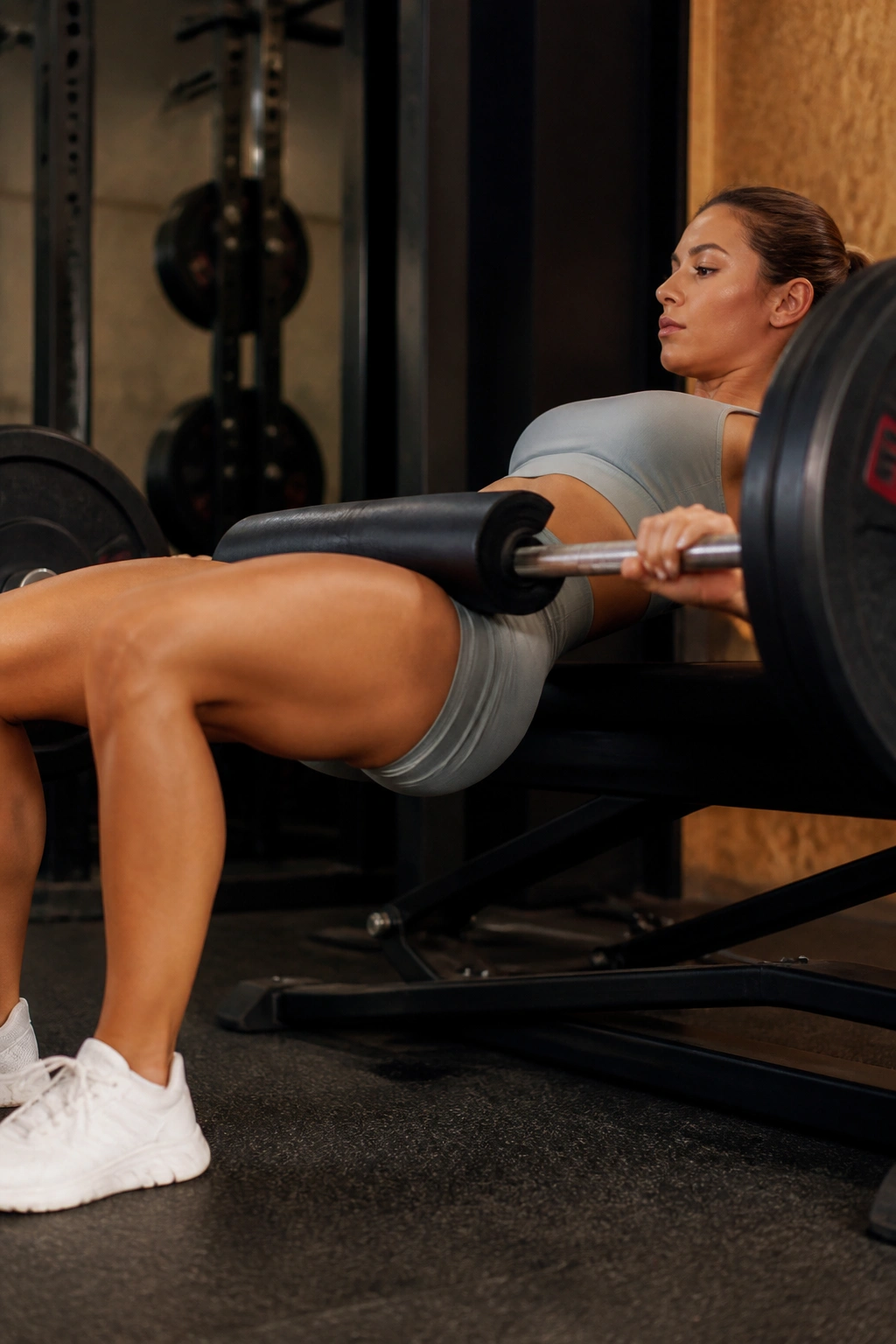
For pure glute isolation, the hip thrust is unmatched. It places the glutes in a position of maximum mechanical tension when they are at their shortest point—the top of the movement. Unlike squats, which can be limited by back strength or ankle mobility, the hip thrust allows you to load the hips heavily without compromising your posture.
You will need a bench and a barbell (or a heavy dumbbell if you are working from home). Sit on the floor with your upper back against the bench. Roll the barbell over your hips—use a pad or a folded yoga mat to protect your pelvic bone, as this can become uncomfortable quickly. Plant your feet firmly on the ground, about hip-width apart.
Drive through your heels to lift your hips toward the ceiling. At the top of the movement, your shins should be vertical, and your knees should be bent at a 90-degree angle. Squeeze your glutes as hard as you possibly can for a full second. This pause is not optional; it is where the growth happens. Lower your hips back down with control, keeping your chin tucked toward your chest throughout the entire motion.
5. Walking Lunges
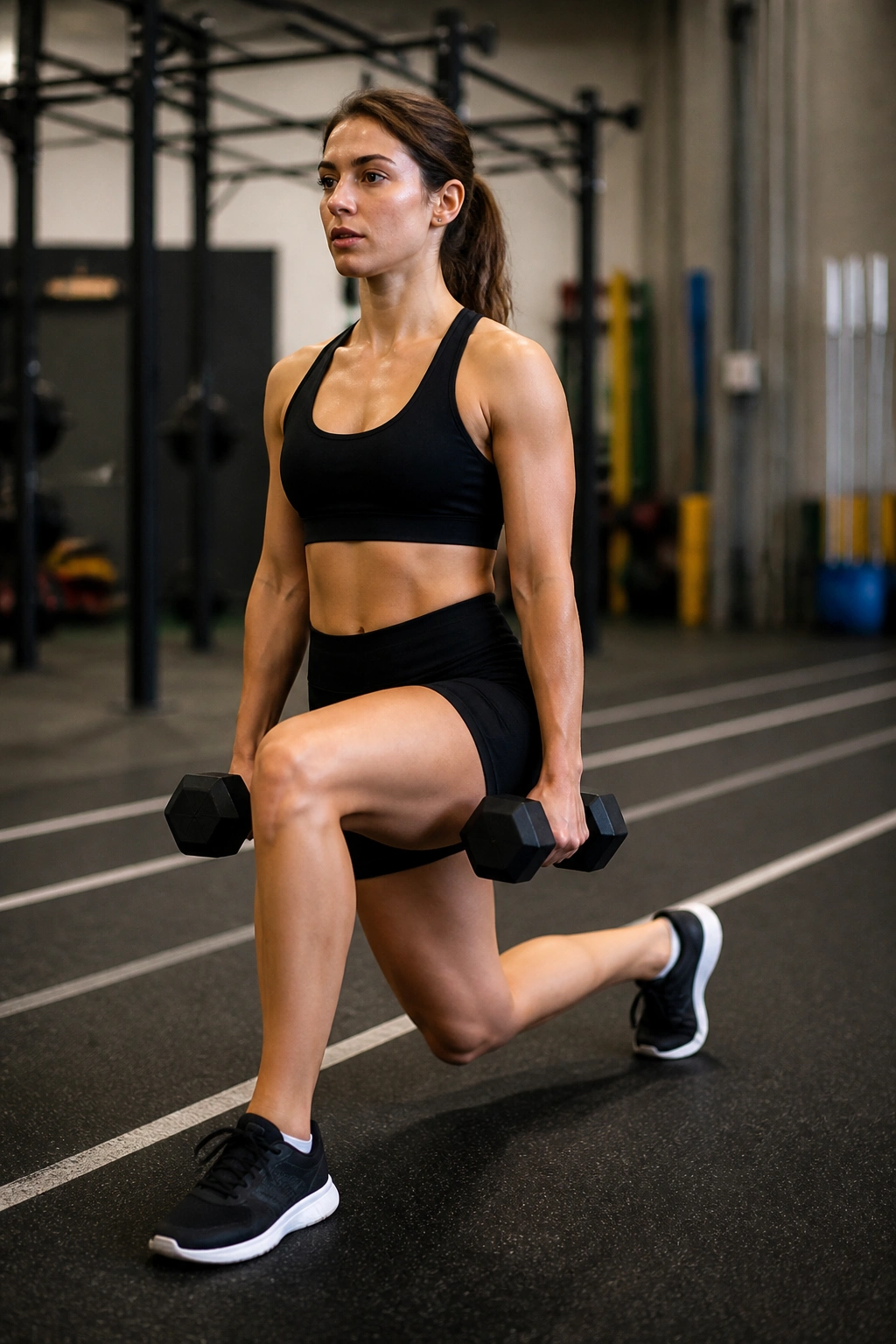
Walking lunges are a fantastic way to develop dynamic stability. Unlike static lunges, where you reset your feet after every repetition, walking lunges force you to regain your balance while moving through space. This is a much closer approximation of real-world movement.
Begin by taking a long, controlled step forward. Drop your back knee toward the floor, stopping just an inch above the ground. Your front shin should be vertical, and your back leg should be bent at a 90-degree angle. Keep your torso straight up; leaning forward during walking lunges tends to shift the burden onto the lower back, which is exactly what we want to avoid.
Staying Stable
Focus on keeping your hips level. Many people let their hips tilt or sway as they walk, which kills the efficiency of the movement. Imagine you are walking along a tightrope. Every step should be placed directly in front of the other, not out to the side. If you feel like you are walking on railroad tracks, you are likely using a stance that is too wide, which reduces the glute activation you should be getting.
Increasing the Intensity
- Hold dumbbells: This increases the load and challenges your grip strength.
- Use a barbell: A bar across your back makes this an intense full-body challenge.
- Slow down: Perform the descent over three seconds to increase time under tension.
6. Sumo Deadlift
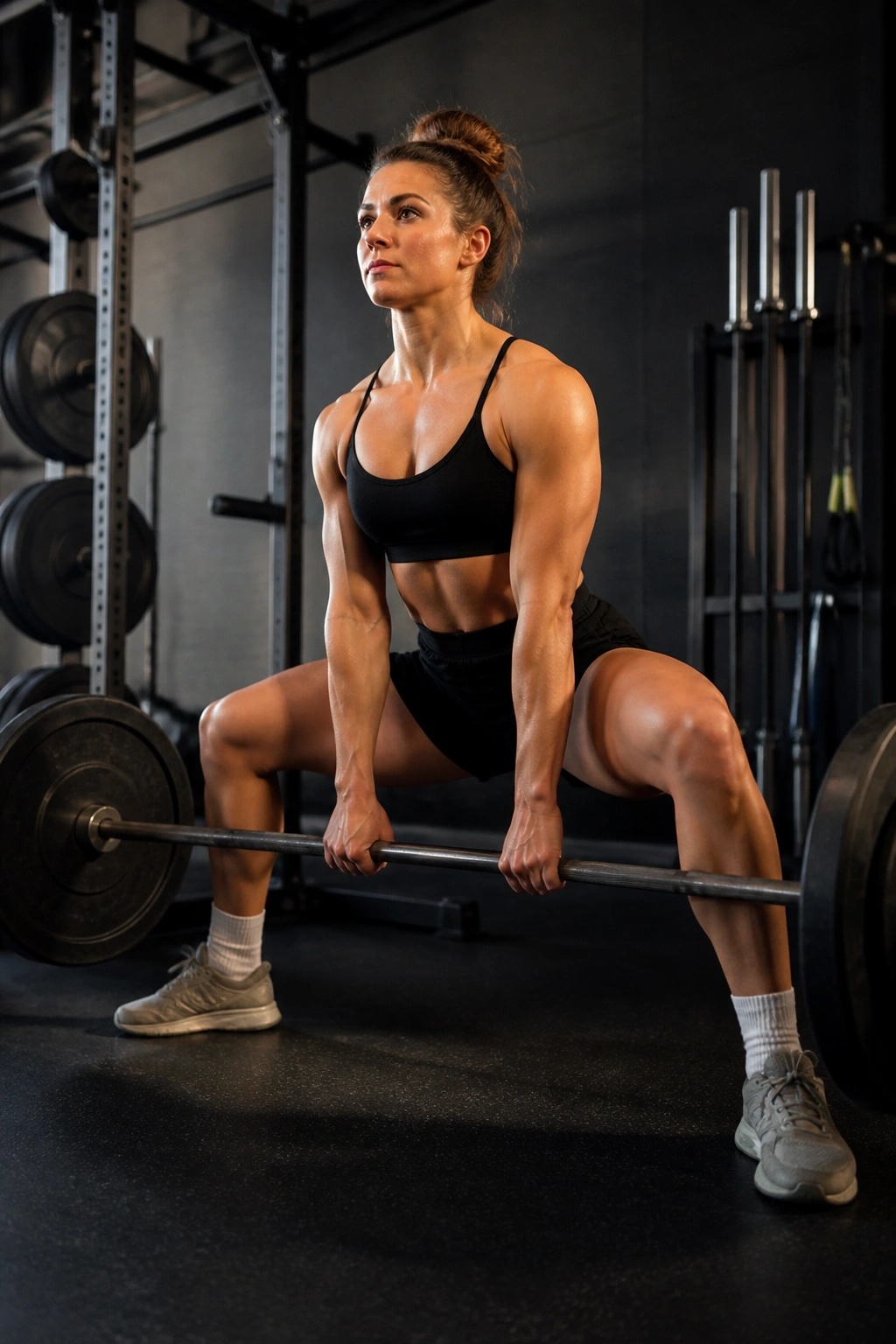
The sumo deadlift involves a much wider stance than a traditional deadlift, with your hands placed inside your legs rather than outside. This shift in positioning forces your hips into external rotation and emphasizes the inner thighs and glutes. It is a great alternative for those who find the conventional deadlift puts too much strain on their lower back.
Start with your feet wider than shoulder-width, toes pointed slightly outward. As you reach down to grab the bar, keep your chest high and your back flat. Think about pushing the floor away with your feet, almost like you are performing a leg press while standing. The goal is to keep your torso as upright as possible, which allows you to use your legs to drive the weight up.
Because your torso is more upright, the range of motion is slightly shorter than a conventional deadlift. This usually allows people to lift slightly more weight, which is excellent for building overall lower body strength. If you find your knees caving in, lighten the load. A wide stance demands that your glutes and adductors are strong enough to push your knees out, not just collapse under the pressure.
7. Step-Ups
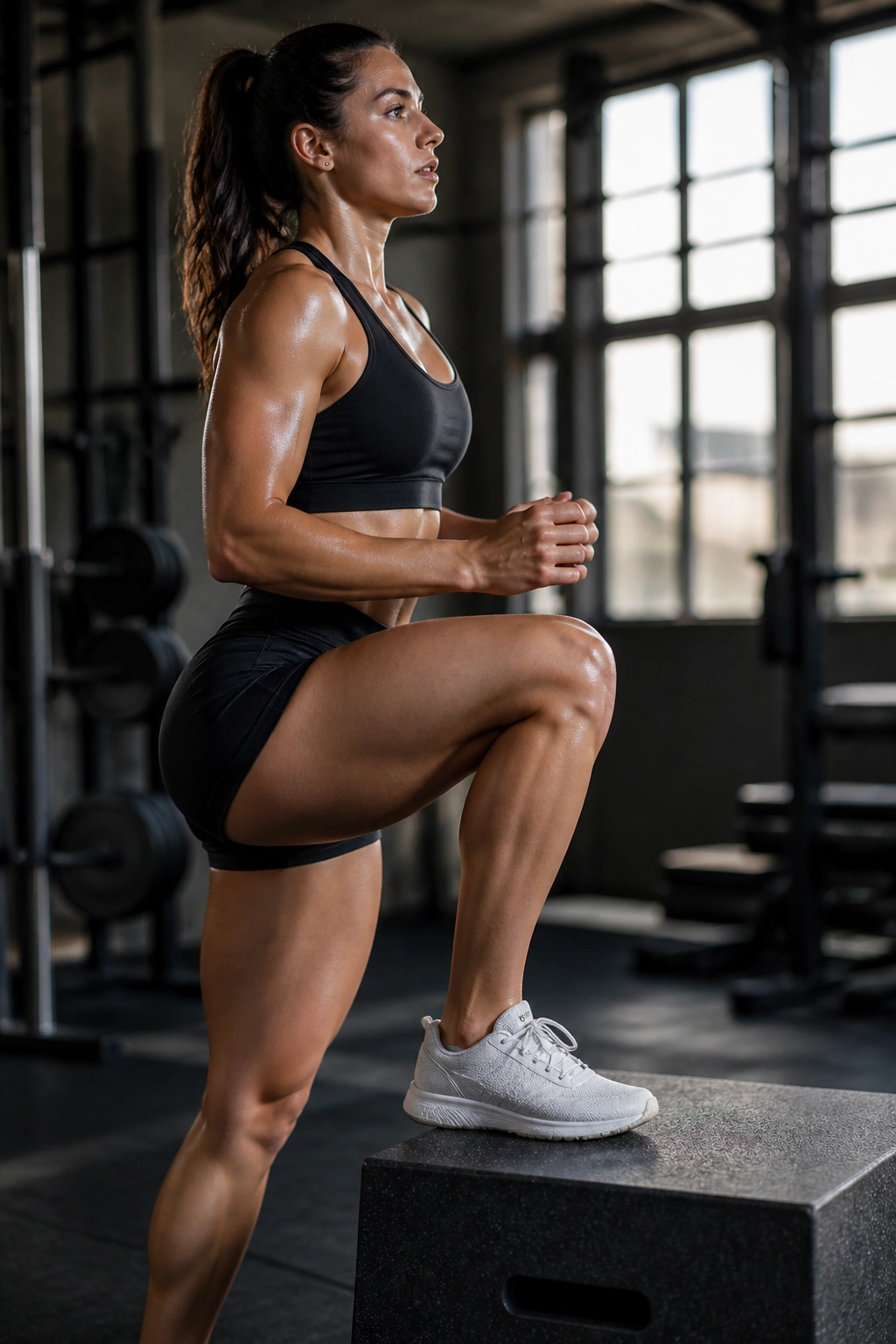
Step-ups are the ultimate functional move. Every time you climb stairs, get on a bus, or step onto a curb, you are performing a step-up. Doing them with weight in the gym turns a mundane task into a powerful strength-builder.
You need a sturdy box or bench that is roughly knee-height. If it is too high, you will find yourself pushing off your bottom foot to gain momentum, which cheats the exercise. Place your entire foot firmly on the platform. It is vital that your heel is not hanging off the edge.
Drive through the heel of the elevated leg to lift your body weight up. Do not push off with the foot that is still on the ground. Once you are standing on the box, pause for a moment, then lower yourself slowly. The descent is just as important as the ascent. Controlling your body on the way down is where the eccentric muscle fiber damage—the kind that leads to strength gains—actually occurs.
8. Goblet Squat
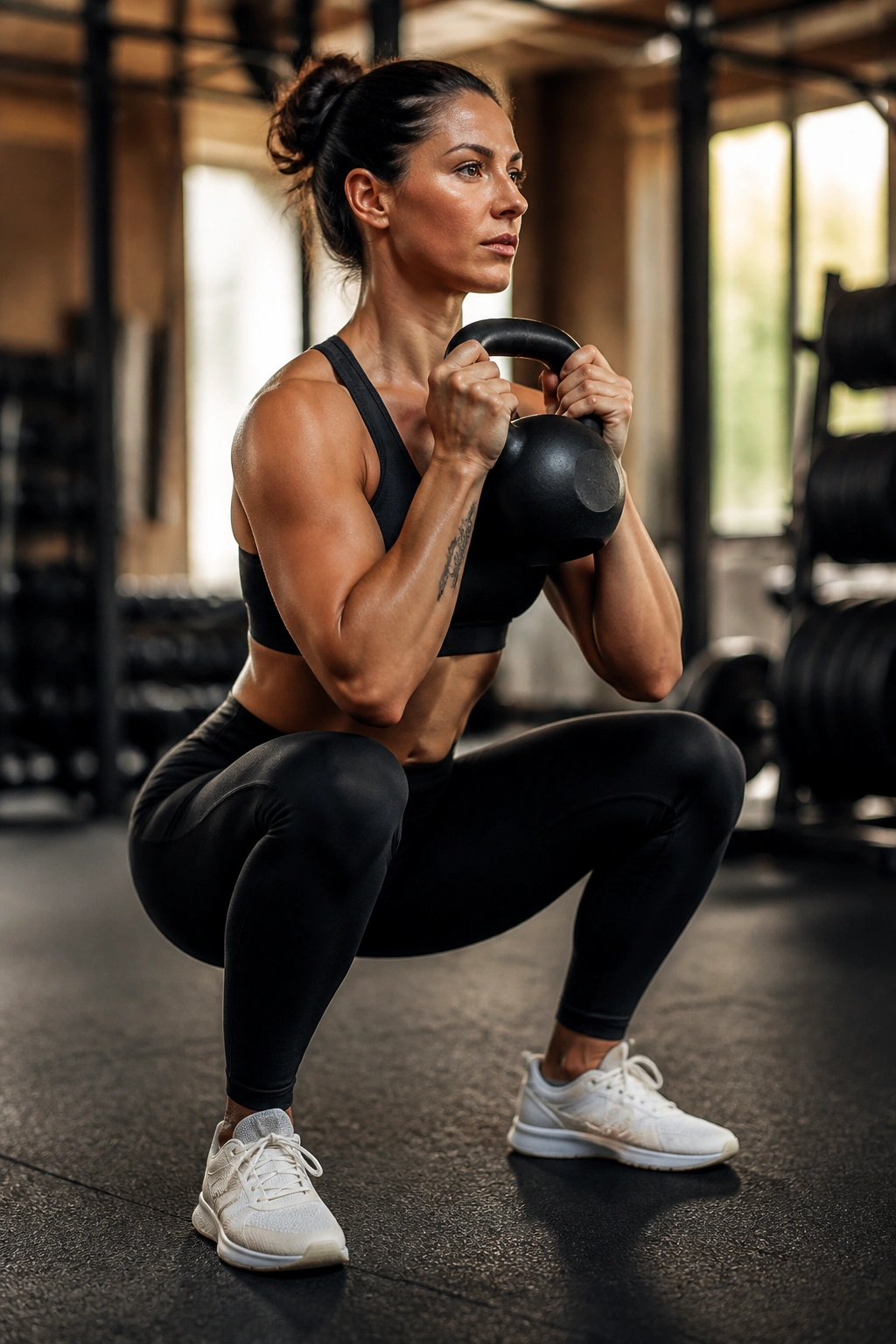
If you struggle with form during barbell squats, the goblet squat is your best friend. By holding a weight (like a kettlebell or a single dumbbell) at your chest, you create a counterbalance that forces you to sit back and keep your chest upright. It acts as an external cue that physically prevents you from falling forward.
Hold the weight close to your sternum, with your elbows tucked in. Take a stance that feels natural, then drop into your squat. The weight in front of you acts like a tether, helping you maintain a perfect, vertical torso. This is an incredibly safe and effective way to practice squat mechanics before you move to heavier barbell work.
This move is also excellent for core development. Because the weight is held anteriorly, your abdominals have to work overtime to keep you from tipping over. It is a fantastic full-body integration exercise that builds real-world, functional strength in your legs and your midsection simultaneously.
9. Lateral Lunge
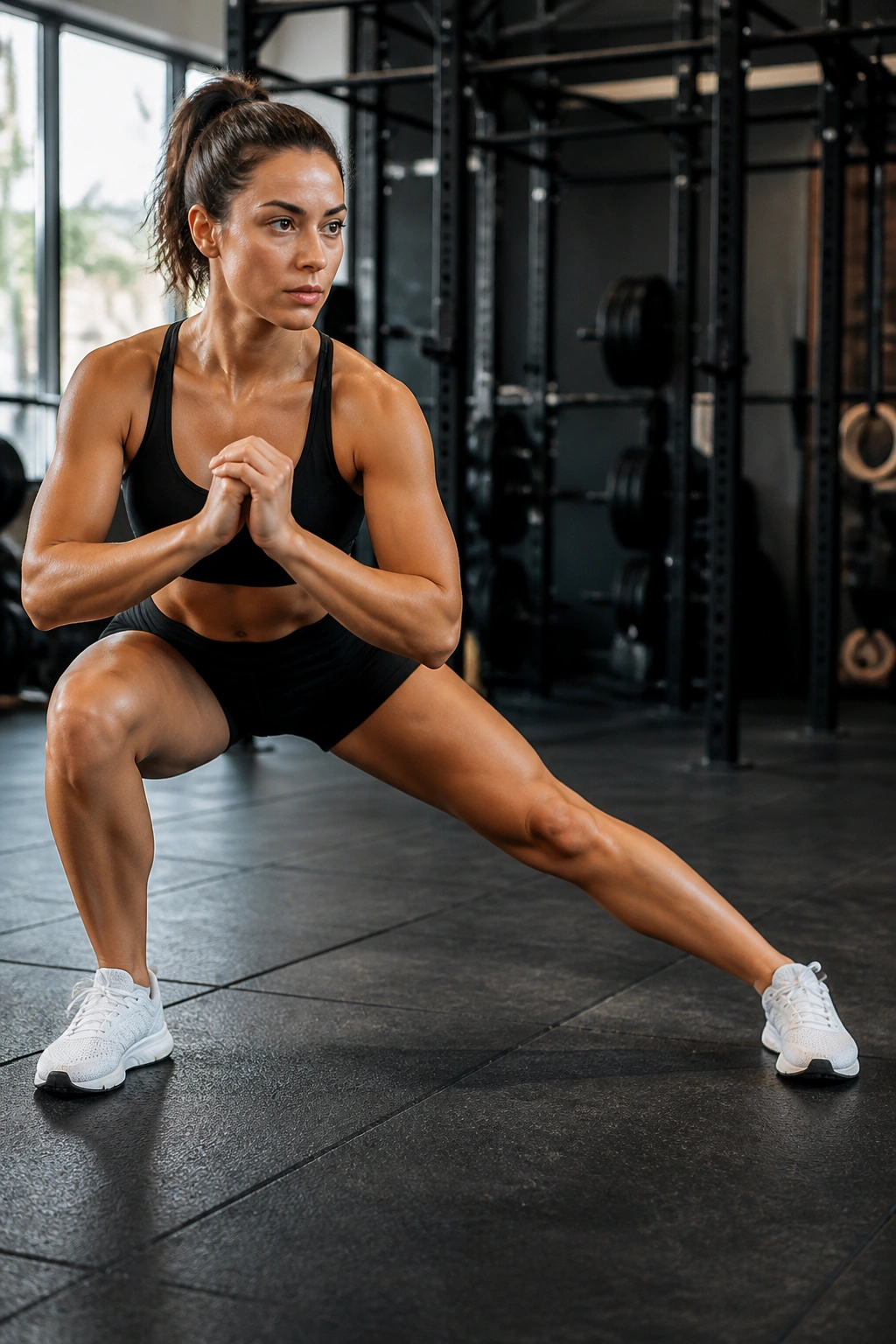
Most strength training happens in the sagittal plane—meaning moving forward and backward. But life happens in all directions. The lateral lunge moves you into the frontal plane, challenging your inner and outer thighs, your hips, and your stability in a way that standard forward lunges never will.
Step out to the side with one foot, keeping the other leg straight. Sink your hips back and down into that side, keeping your chest up and your knees tracking over your toes. The leg that is straight should stay completely extended, with your foot planted firmly. Push off the bent leg to return to the starting position.
This movement can be humbling. You will likely feel muscles in your hips and inner thighs that you haven’t engaged in a long time. It is vital to keep your back neutral throughout. It is very common to hunch over to get lower, but that is a mistake. Keep your gaze forward, and treat this like a squat to one side rather than a bend at the waist.
10. Kettlebell Swing
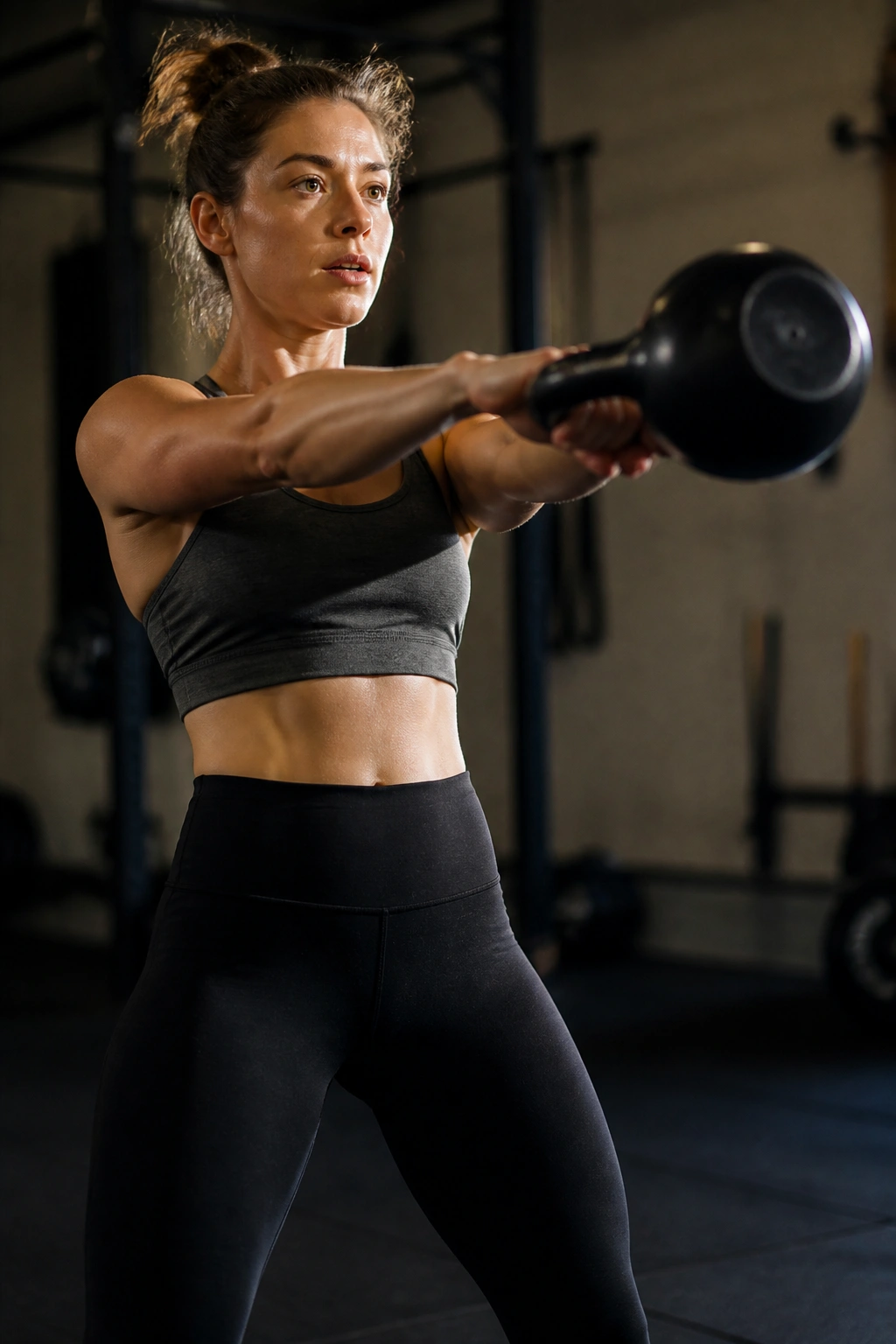
The kettlebell swing is a dynamic, explosive movement that builds power in the posterior chain. It is not a squat; it is a hinge. Your legs should barely bend. The entire movement is driven by your hips snapping forward with speed and force.
Stand with feet shoulder-width apart, holding the handle of the kettlebell. Hike the bell back between your legs like a center in football. Then, explode your hips forward, letting the momentum of that snap carry the kettlebell up to about chest height. The arms are just straps; they do not lift the bell. Your hips do all the work.
This is a metabolic powerhouse. Because it uses so many muscle groups at once and requires high-intensity effort, it is often used for conditioning. However, it is fundamentally a strength movement for your glutes and hamstrings. Keep your shoulders packed down and back to protect your neck and traps, and ensure you are not using your lower back to pull the weight up.
11. Single-Leg Romanian Deadlift
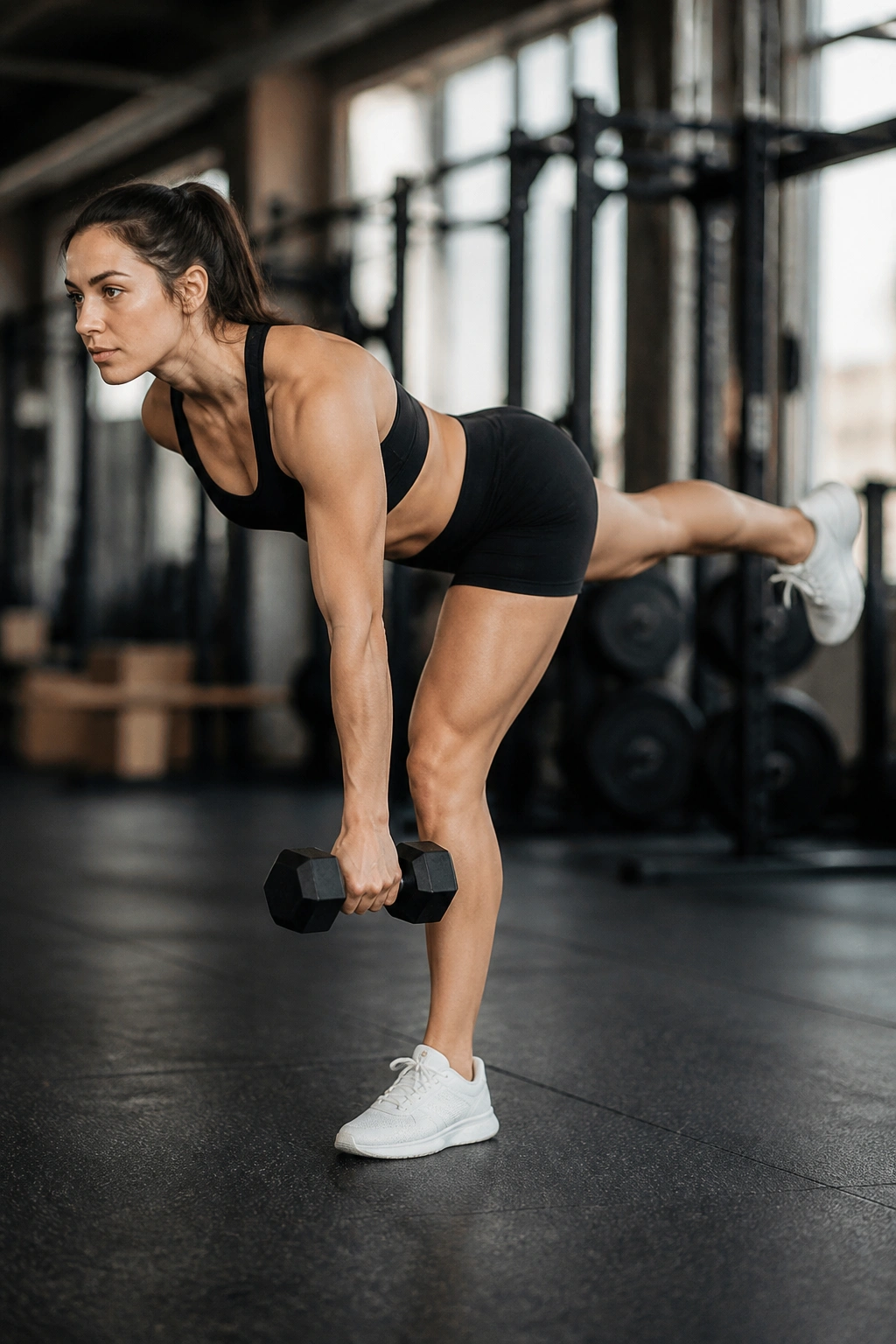
If you want to test your coordination, this is the move. The single-leg Romanian deadlift requires you to hinge on one leg while keeping your body in a straight line from your heel to your head. It is incredibly effective for fixing imbalances and strengthening the small stabilizing muscles around your ankles and knees.
Hold a weight in the hand opposite the working leg. As you hinge at your hip, extend your free leg behind you. Try to keep your hips square to the floor—don’t let the hip of your raised leg rotate outward. The weight should track down toward the floor, not swing wildly.
The challenge here is not the weight; it is the balance. You will find that you cannot lift nearly as heavy as you can with a traditional Romanian deadlift, and that is perfectly fine. Focus on the slow, controlled movement. Feel your hamstring working to keep you upright. If you find yourself falling over, you can use a light hand on a wall for support, but try to wean yourself off it as quickly as possible.
12. Curtsy Lunge
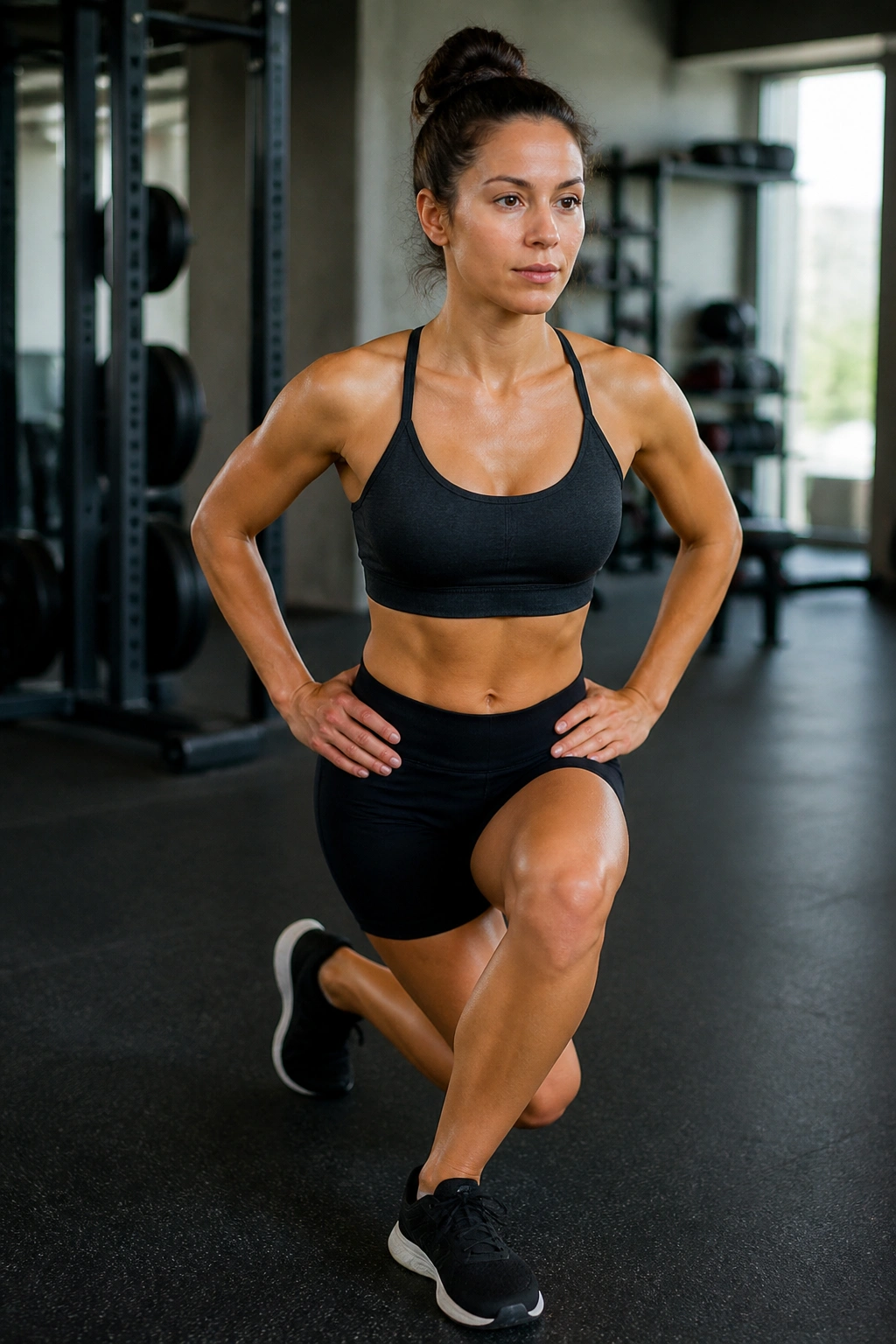
The curtsy lunge is a variation that targets the glute medius—the muscle on the side of your hip that is often neglected in standard squats and deadlifts. It is essential for hip stability and knee health.
Start standing, then step one foot back and across behind your other leg, as if you are performing a curtsy. Lower your hips down until your front thigh is parallel to the ground. Your weight should be concentrated on the front leg. Keep your chest up and core tight throughout.
This exercise is particularly good because it forces your front knee to resist inward collapse. By placing your back leg in a cross-body position, you create a natural tendency for the front knee to cave. You must fight that. Press through your front heel, keep your knee tracking straight, and squeeze your outer glute as you push back up to standing.
13. Standing Calf Raise
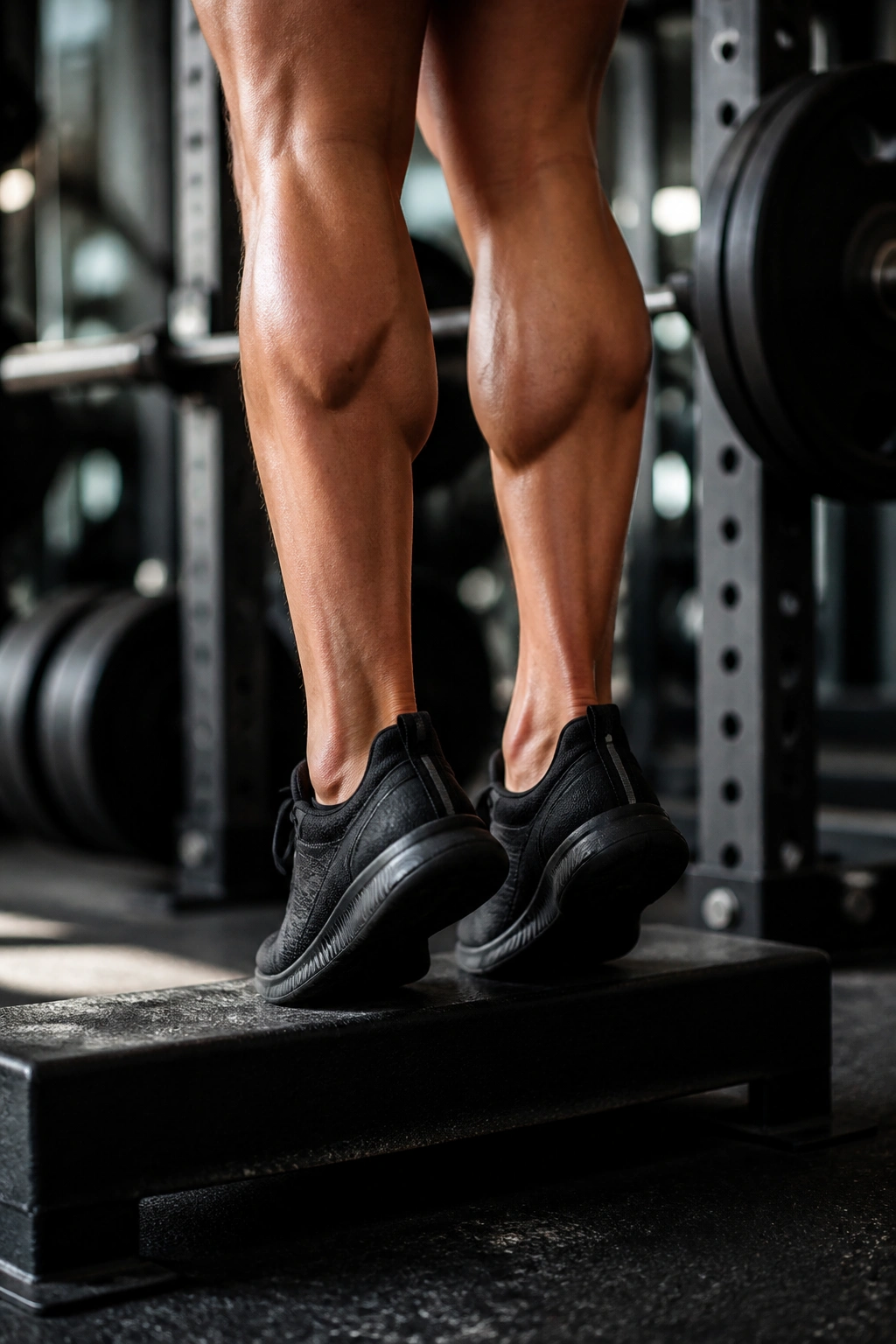
The lower leg is often ignored, but it is the foundation of your movement. Standing calf raises build strength and endurance in the gastrocnemius and soleus muscles. These muscles are responsible for everything from jumping to simply walking, and keeping them strong helps absorb impact and prevent common foot and ankle issues.
You can perform these on a dedicated machine, but you can also do them with a barbell on your back or by holding dumbbells. Stand with the balls of your feet on a raised edge—a step or a weight plate works well. Lower your heels until you feel a deep stretch in your calves, then drive up onto your toes.
Don’t bounce. Bouncing uses your Achilles tendon to do the work instead of your muscles. Control the movement. Go down slowly (two seconds), pause at the bottom to lose all momentum, and then explode up onto your toes. You are looking for that burning sensation that indicates the muscle fibers are truly exhausted.
14. Glute Kickbacks
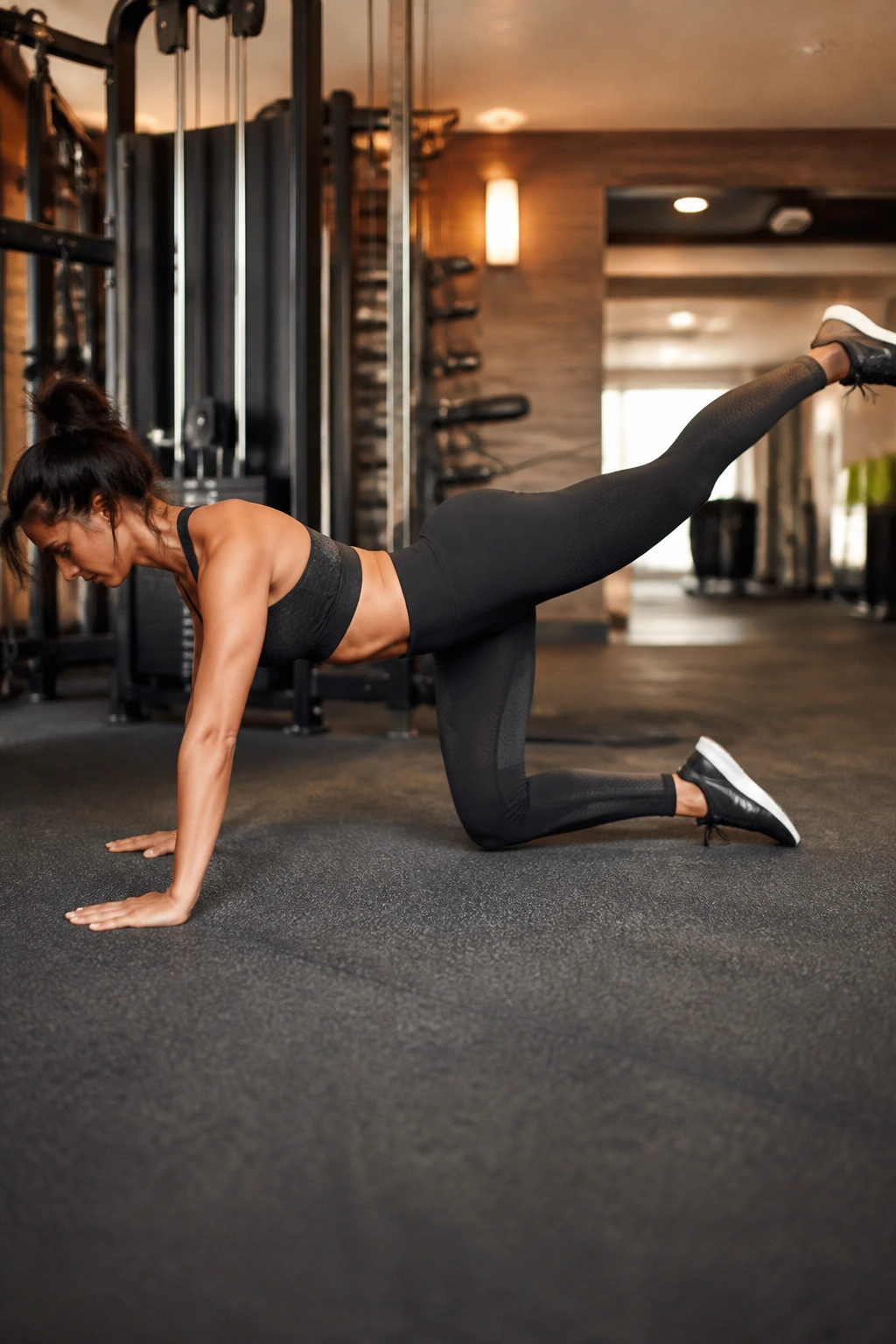
Sometimes you need to isolate a muscle to feel it working. Glute kickbacks are perfect for this. They don’t require heavy loads, so they are great for the end of a workout when you want to fatigue the muscle without taxing your nervous system.
You can do these on a cable machine, with a resistance band, or just using your body weight. Get on your hands and knees. Keep your back flat and your core braced. Slowly extend one leg back and up, squeezing your glute at the top of the movement. Avoid arching your lower back to get the leg higher; the range of motion should come from the hip joint, not the lumbar spine.
This is a mind-muscle connection exercise. Because the glute is a large, powerful muscle, it is often overpowered by the hamstrings and lower back in compound lifts. This move forces you to focus entirely on the gluteal contraction. Perform high repetitions, and feel the muscle working through the entire range of motion.
15. Box Squat
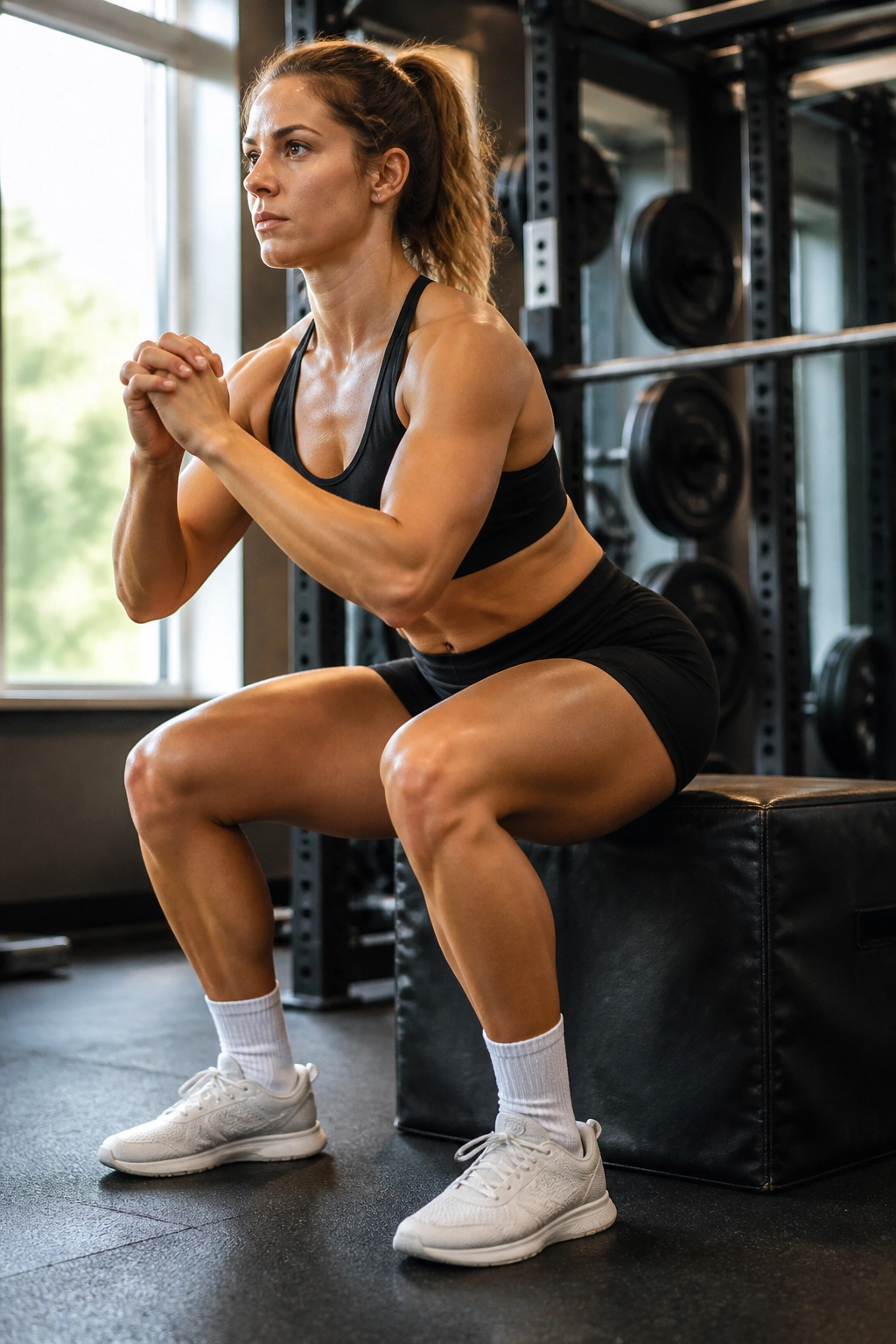
We touched on this as a training tool, but the box squat is a legitimate strength exercise in its own right. It changes the mechanics of the squat by breaking the eccentric (lowering) and concentric (rising) phases of the lift. By pausing on the box, you remove the stretch reflex—the natural spring-like rebound effect of your muscles—that usually helps you stand up.
This forces you to generate force from a dead stop. It is harder than a regular squat, and it is a phenomenal way to build explosive power. Sit back onto the box, pause for a full second, and then drive upward. Do not rock on the box to gain momentum; that defeats the purpose.
This variation is also excellent for teaching you how to sit back properly. If you are someone who tends to let your knees travel too far forward, the box will correct that instinct immediately. It forces you to hinge at the hips first, ensuring that your posterior chain is doing the heavy lifting rather than just your quads.
Final Thoughts
Strength training is a marathon, not a sprint. The exercises listed here are all powerful tools, but their true effectiveness comes from consistency. You do not need to perform all fifteen of these in one session. In fact, you shouldn’t. A well-designed routine uses a few of these, performed with high quality and progressively heavier weights over time.
Focus on the quality of your movement. It is always better to lift a lighter weight with perfect form than to heave a heavy weight with poor mechanics. Poor form doesn’t just reduce the stimulus on the muscle; it invites injury. Listen to your body. If a movement causes sharp pain, stop. There is always an alternative that will give you the same benefits without the risk.
As you continue your journey, keep your mind open to learning. Even experienced lifters return to these basics, tweaking their stance or refining their hinge to get just a little bit more out of every rep. Your body is capable of remarkable adaptation, but it requires the right stimulus. Keep showing up, keep pushing, and let your consistency be the factor that defines your progress.
