



A pair of dumbbells can do more for your legs than most people give them credit for. If you set up a home strength day with the right moves, you can hit quads, glutes, hamstrings, calves, and the small stabilizers that keep your knees and hips happy for the long haul.
The catch is that not every leg exercise earns its keep. Some moves look tough but don’t load much muscle. Others are plain, even boring-looking, and then you try them with real effort and realize they’re brutal in the best way. That’s the lane dumbbells live in. They make basic patterns heavier, cleaner, and more honest.
What works at home is usually simple: a squat pattern, a hinge pattern, a single-leg pattern, something for the glutes, and one or two finishers that round out the session. You do not need a rack, a sled, or a fancy machine. You do need good form, enough load to matter, and the patience to let the slow lowering phase do its job.
Here’s the part most people miss: a “leg day” at home gets better when you stop thinking only in terms of sweat and start thinking in terms of force. Push the floor away. Own the bottom position. Control the descent. That’s where the dumbbells earn their place.
1. Goblet Squat for Dumbbell Leg Workouts
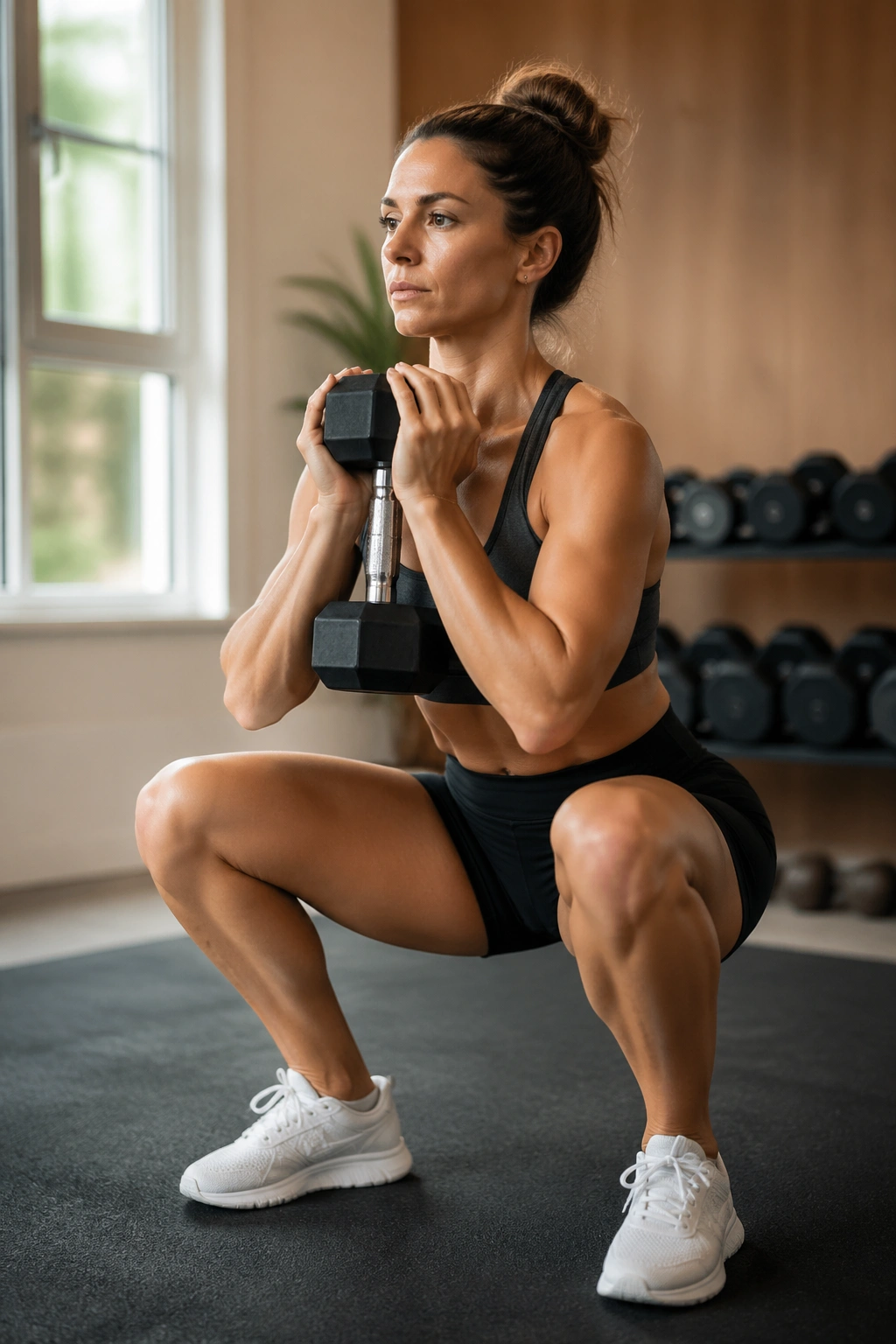
The goblet squat is the move I’d keep if I had to strip a home leg session down to one exercise. It is simple, but it isn’t easy, and that is exactly why it works so well for dumbbell leg workouts. Holding a dumbbell close to your chest keeps your torso upright, which makes the squat pattern easier to learn and harder to fake.
Why It Belongs First
A goblet squat loads your quads hard, asks your glutes to finish the rep, and forces your core to stay braced. That front-loaded position also gives you a built-in counterbalance, so many people can squat deeper than they expect. Deep, controlled reps matter here.
- Use 1 dumbbell held vertically at chest height.
- Aim for 8 to 12 reps on a strength day.
- Keep your elbows pointed down, not flared wide.
- Drive up through the whole foot, especially the big toe and heel.
Best cue: sit between your hips, not straight down onto your toes. If your heels pop up, shorten the range a little and slow the descent.
2. Dumbbell Romanian Deadlift for a Home Strength Day
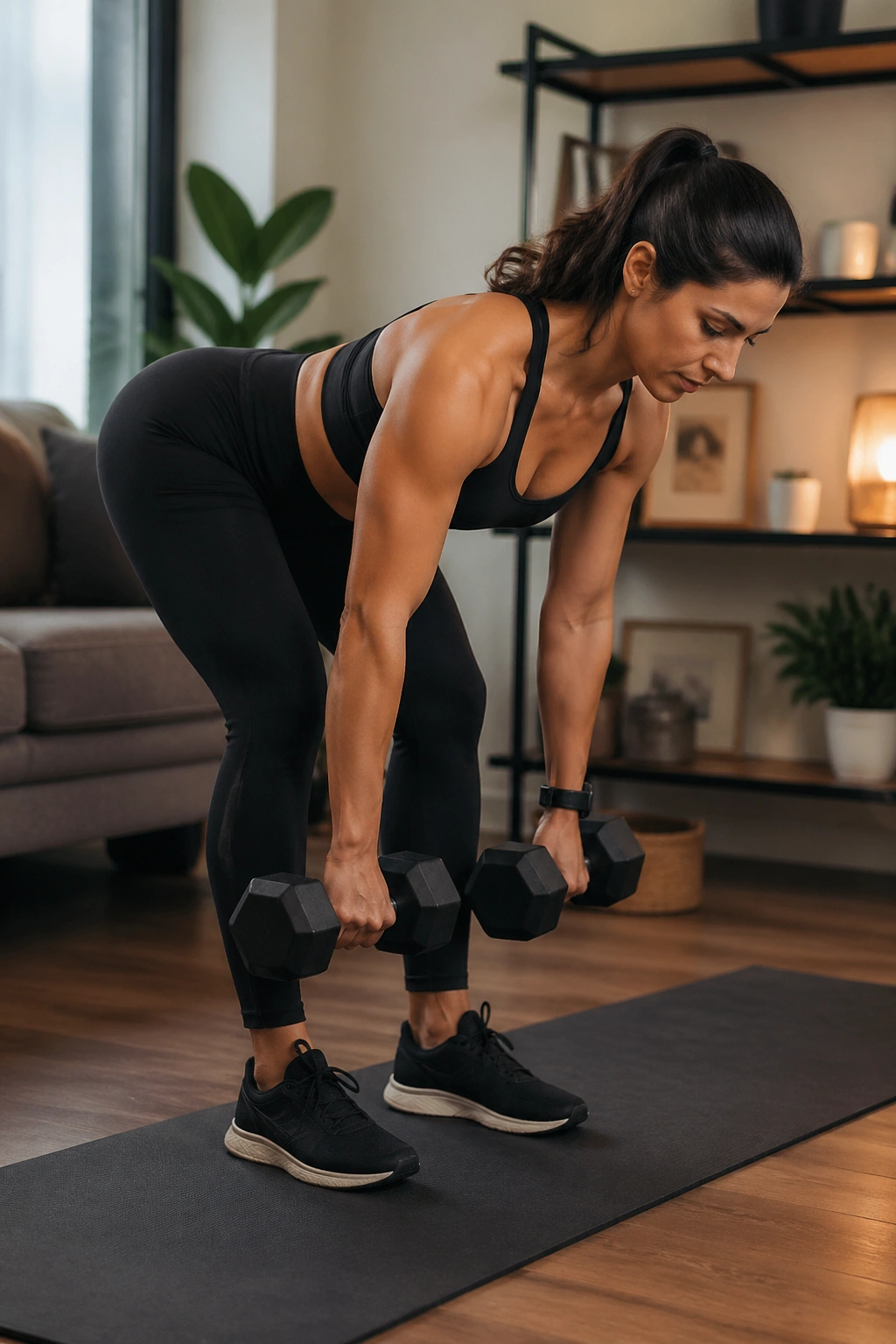
This is the move that teaches your hamstrings to work like hamstrings. A dumbbell Romanian deadlift, or RDL, is a hip hinge, not a squat, and that difference matters. Your knees stay softly bent while your hips travel back, so the load lands on the back of the legs and the glutes.
A lot of home lifters rush this one. Don’t. The lowering phase is the point. If you lower the dumbbells for three full seconds and pause for a beat near mid-shin, the exercise gets much more honest, much faster.
Keep the dumbbells close to your thighs and shins the whole time. If they drift away from your body, your lower back starts helping more than it should. That’s the mistake that turns a great hamstring move into a sloppy back exercise.
You do not need to touch the floor. In fact, most people lose tension when they chase depth they can’t control. Stop when your back wants to round or when you feel a strong stretch in the hamstrings, then stand by pushing the hips forward.
3. Bulgarian Split Squat
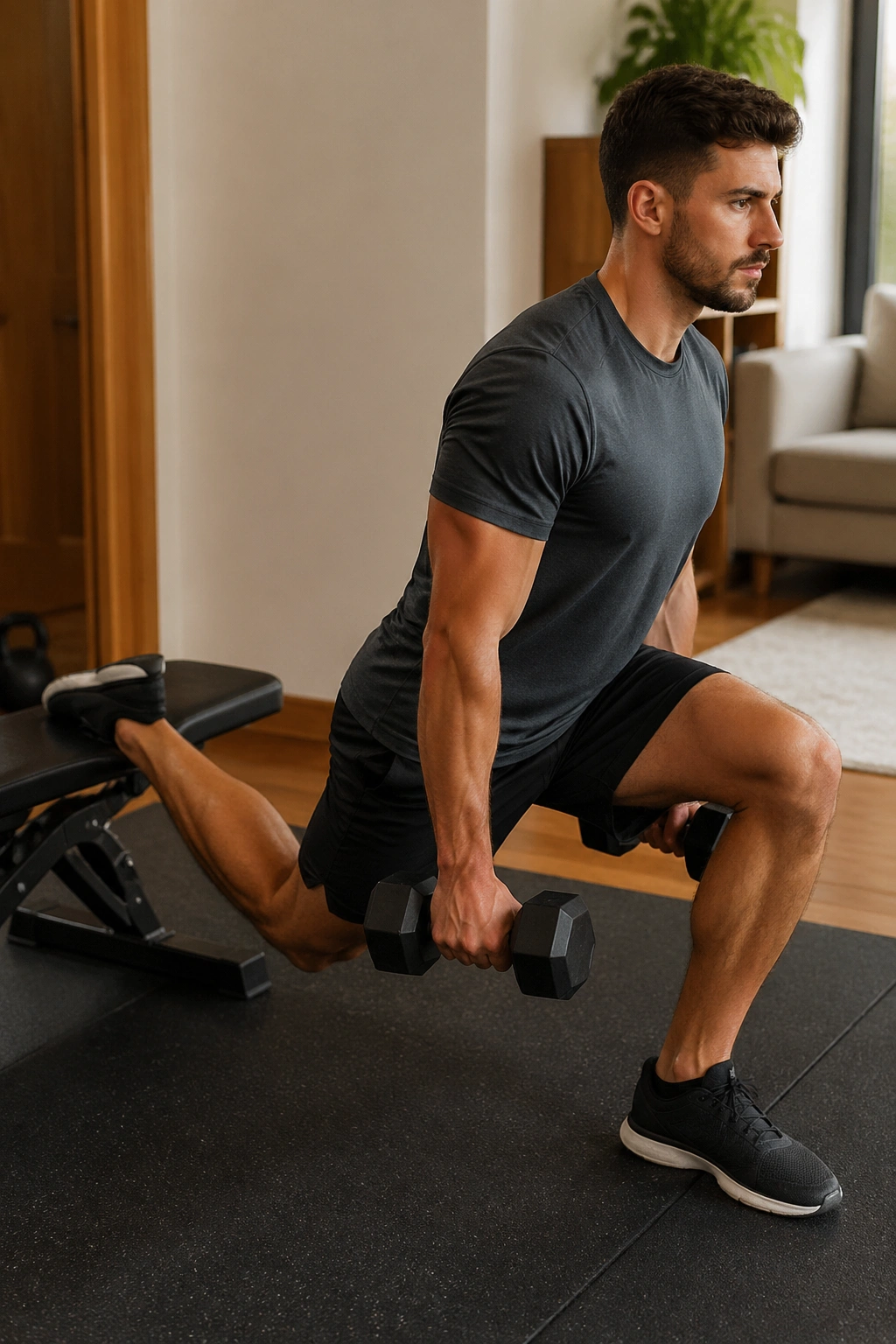
A Bulgarian split squat looks almost rude the first time you set it up. One foot on the floor, the other elevated behind you, a pair of dumbbells in your hands, and suddenly your front leg has to do the work of an entire gym machine. That is the appeal.
Why It Hits So Hard
The front leg gets loaded through a long range of motion, which makes this one of the best unilateral leg builders you can do at home. It is also useful for left-right balance. If one side is weaker, the difference shows up fast.
Setup That Saves Your Knees
- Place the back foot on a couch, bench, or sturdy chair.
- Step the front foot far enough forward that your front heel stays down.
- Keep the torso slightly forward, not bolt upright.
- Lower until the back knee hovers just above the floor.
A short stance makes the knee travel too far forward. A stance that’s too long turns the move into a weird lunge and steals quad work. The sweet spot is usually somewhere in the middle, and you’ll feel it within the first two reps.
Use a load that lets you stay smooth for 6 to 10 reps per side. Heavy enough to matter. Not so heavy that you start bouncing.
4. Dumbbell Step-Up
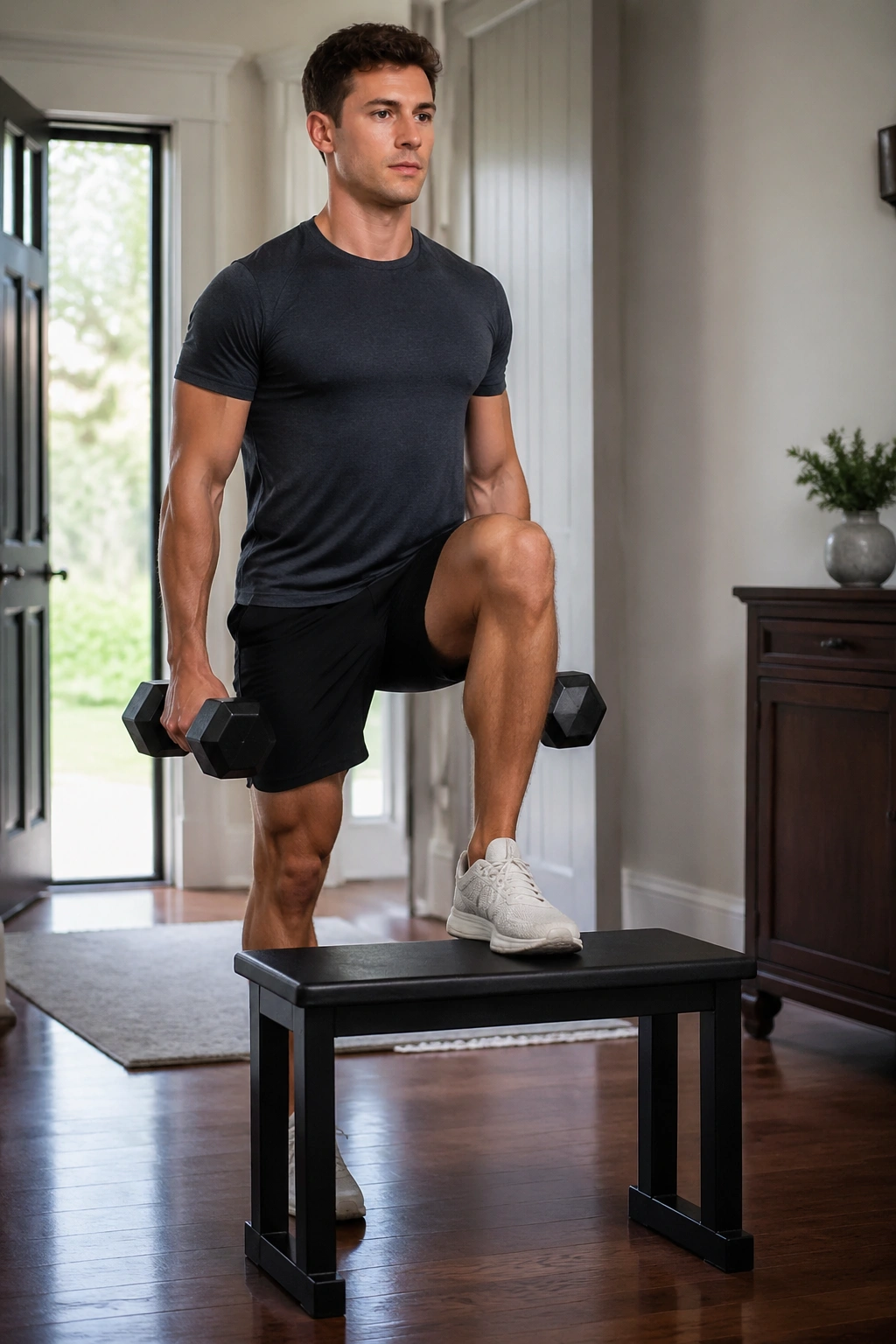
Why do step-ups humble strong people? Because they expose every little cheat. You can’t fake a clean step-up with momentum the way you can with some other leg moves, and that makes it a very useful exercise for a home strength day.
The box or bench should be low enough that your working thigh is roughly parallel to the floor, or a bit below it. Higher isn’t better. Higher usually just means you twist, push off the back leg, and turn the whole thing into a circus trick.
How to Use It
The working foot should stay flat on the platform. Push through that foot until the trailing leg is only there for balance, then come down under control. If you spring off the back leg, you’ve stolen the work from the front side.
A step-up is a sneaky glute builder, but it also hammers the quads if you keep your torso tall. I like it for people who want a move that feels athletic without needing a lot of floor space. Hold dumbbells at your sides, take 8 to 12 reps per leg, and don’t rush the descent. That last part matters more than people think.
5. Reverse Lunge
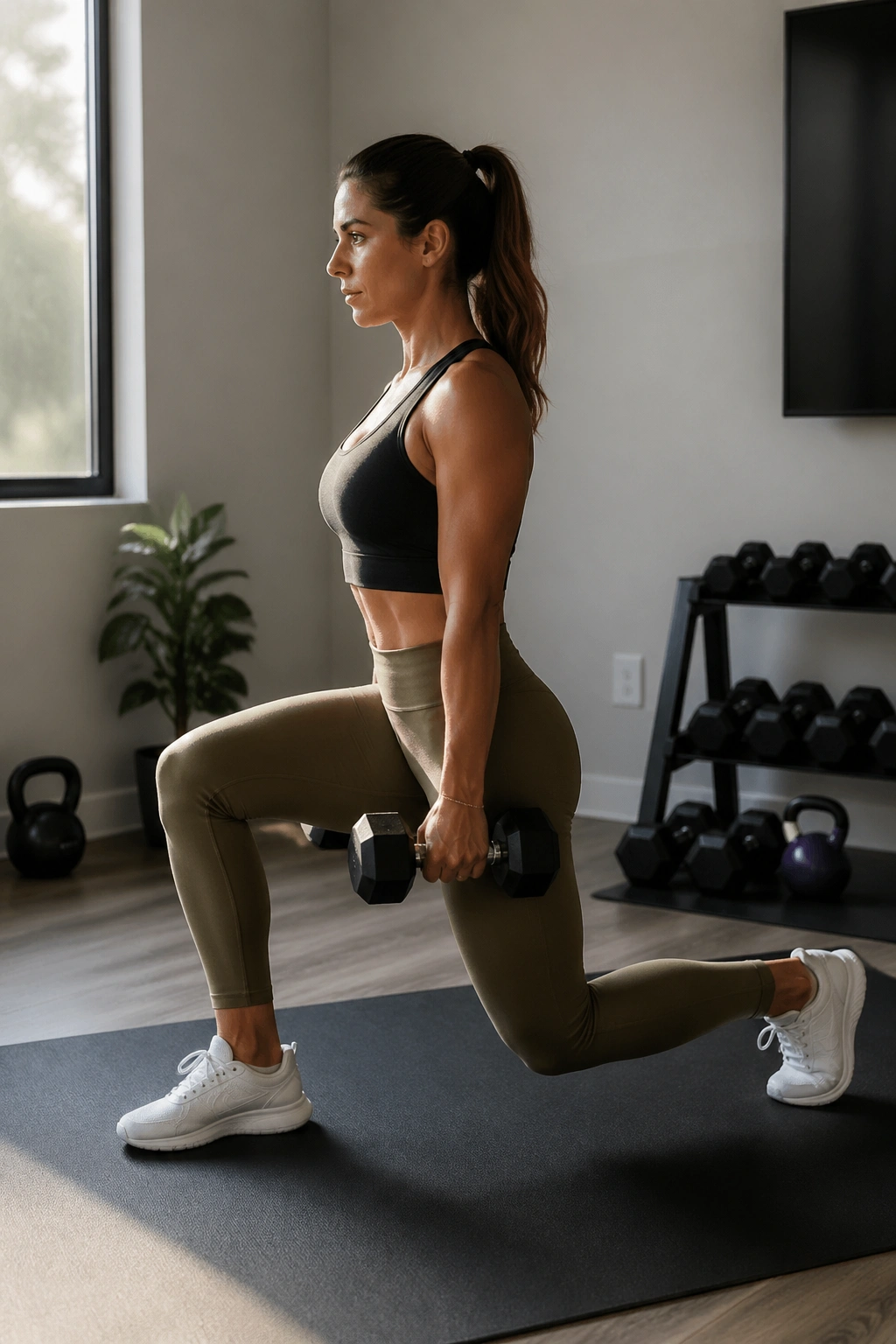
A reverse lunge is kinder on the knees than a forward lunge for a lot of lifters, and that alone earns it a place here. The backward step lets you control the landing and keep more tension on the front leg where it belongs. It also tends to feel smoother at home, where space is tight and you don’t want to travel across the room every set.
The movement is simple. Step one foot back, drop straight down, then press through the front heel to stand. Keep the front knee tracking over the middle toes. No wobbling if you can help it.
I prefer reverse lunges when someone wants a cleaner strength feel and less drama than a walking lunge. They’re easy to load with dumbbells at your sides, and they punish sloppy balance without being chaotic. That’s a good trade.
If your torso folds forward every rep, shorten the step a little and lighten the load. If your front heel lifts, you’re probably stepping back too far or dropping too quickly. A controlled set of 6 to 10 reps per side is usually enough to make the legs talk back.
6. Dumbbell Hip Thrust
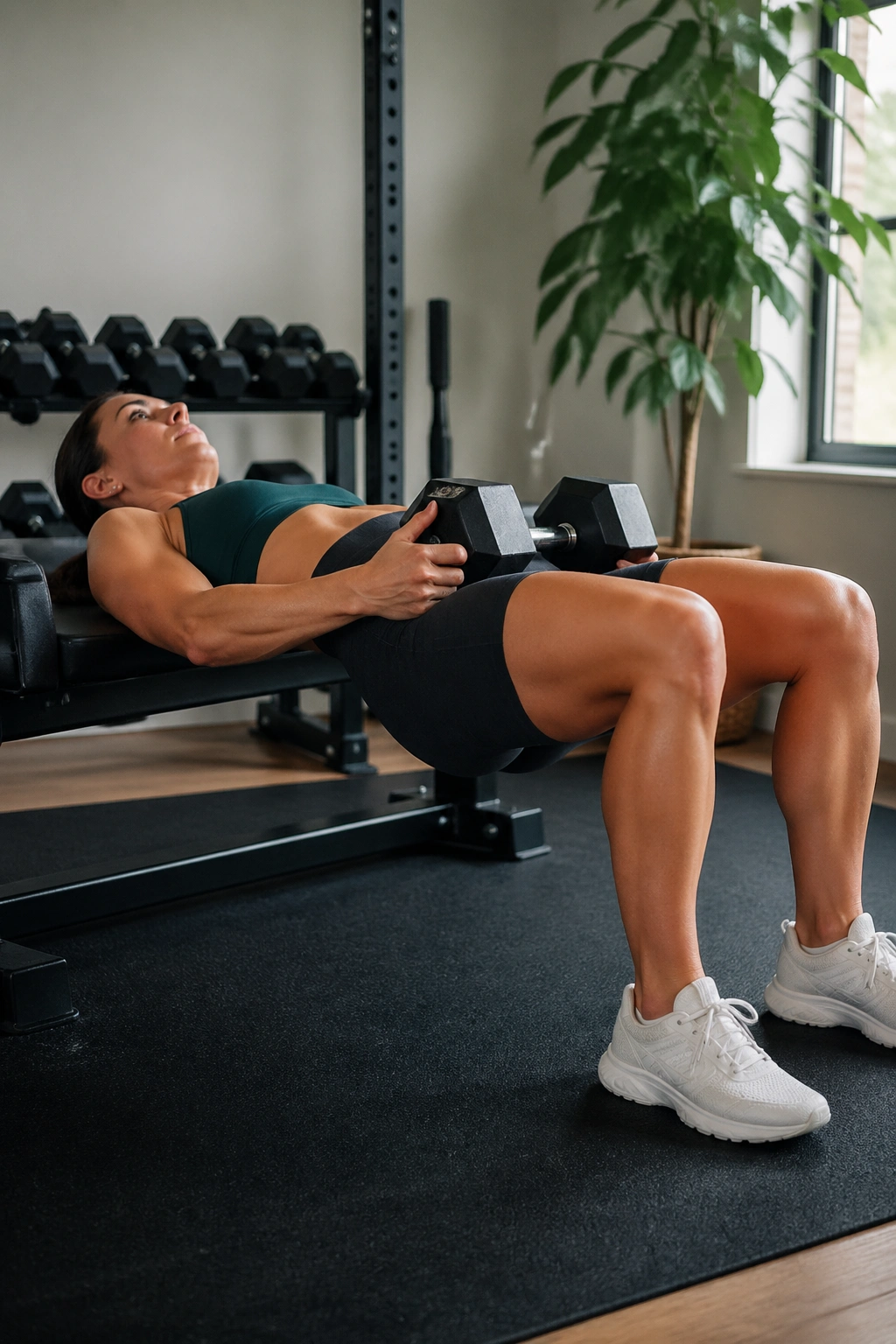
A dumbbell hip thrust is not subtle. It is a direct hit for the glutes, and if you want stronger hips without a barbell, this one earns its keep fast. Compared with squats, which spread the work across the whole lower body, hip thrusts let you load hip extension more aggressively. That means more glute tension at the top where many people leave strength on the table.
Use a couch, sturdy bench, or low step for your upper back. The dumbbell sits across the crease of the hips, and a folded towel or mat under it helps keep the pressure bearable. Then drive your hips up until your torso and thighs make a straight line.
Pause at the top for a full second. Squeeze the glutes. Hard.
That pause is not decorative. It keeps the rep from turning into a bounce and makes the top position count. If your lower back takes over, tuck the ribs down and bring the chin slightly toward the chest. The finish should feel like glutes, not lumbar spine.
7. Sumo Dumbbell Squat
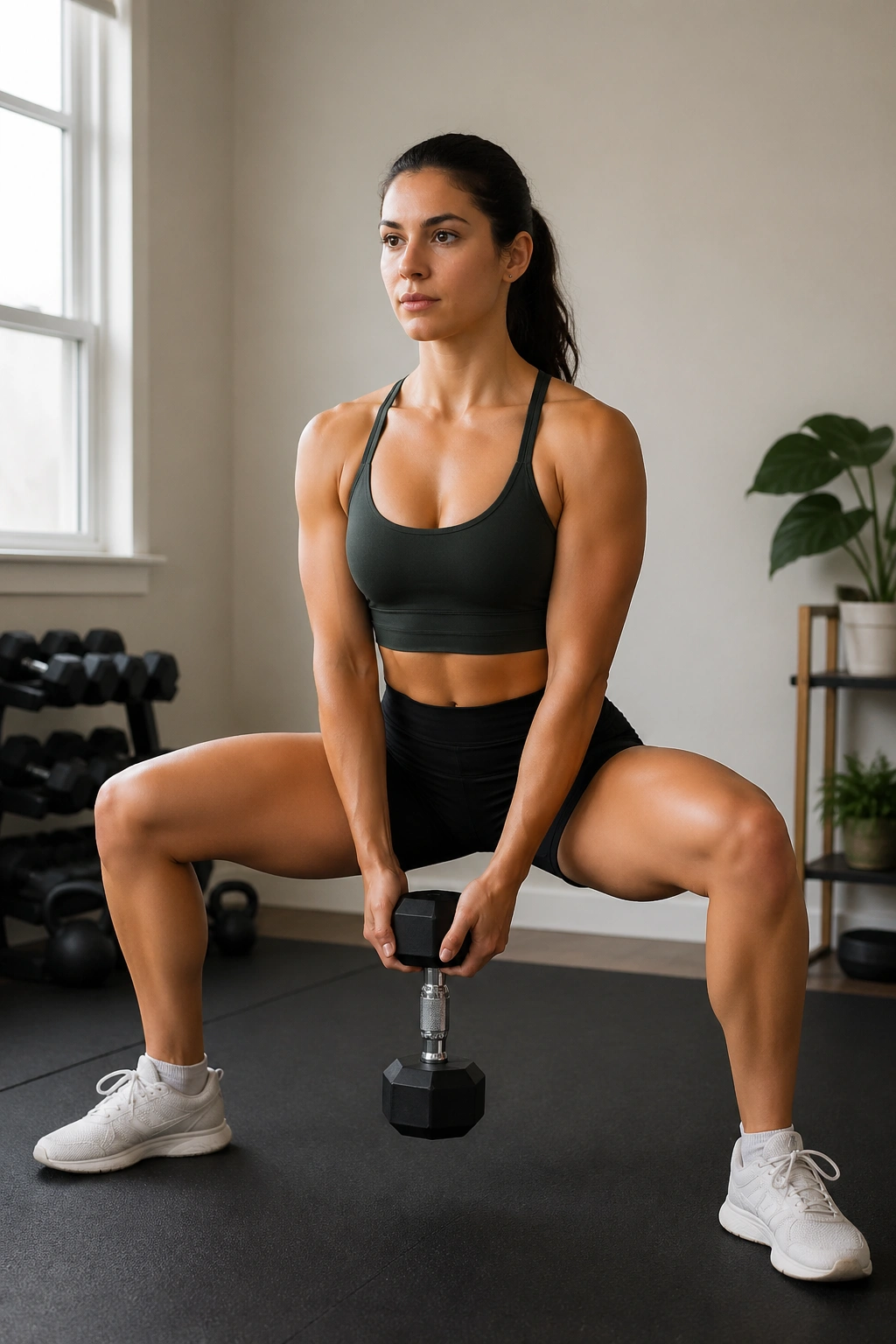
A sumo stance changes the whole feel of a squat. Your feet sit wider, your toes point out a bit, and the dumbbell hangs between the legs instead of in front of the chest. That setup shifts more work into the inner thighs and glutes while still giving the quads a solid job.
What It Looks Like in Practice
You’ll usually be able to stay a little more upright here than in a standard squat. That can make the move friendlier for people whose backs don’t love a deep forward lean. It also gives your adductors—those inner-thigh muscles—a proper challenge, which most home routines skip.
- Stand with feet wider than shoulders.
- Turn the toes out about 20 to 30 degrees.
- Hold one heavy dumbbell by one end between the legs.
- Lower until the dumbbell nearly brushes the floor.
Do not turn this into a deadlift by accident. Keep the chest open and the knees tracking over the toes. A good rep feels like the legs are spreading the floor apart on the way up. If the dumbbell swings, the set is probably too fast.
8. Single-Leg Romanian Deadlift
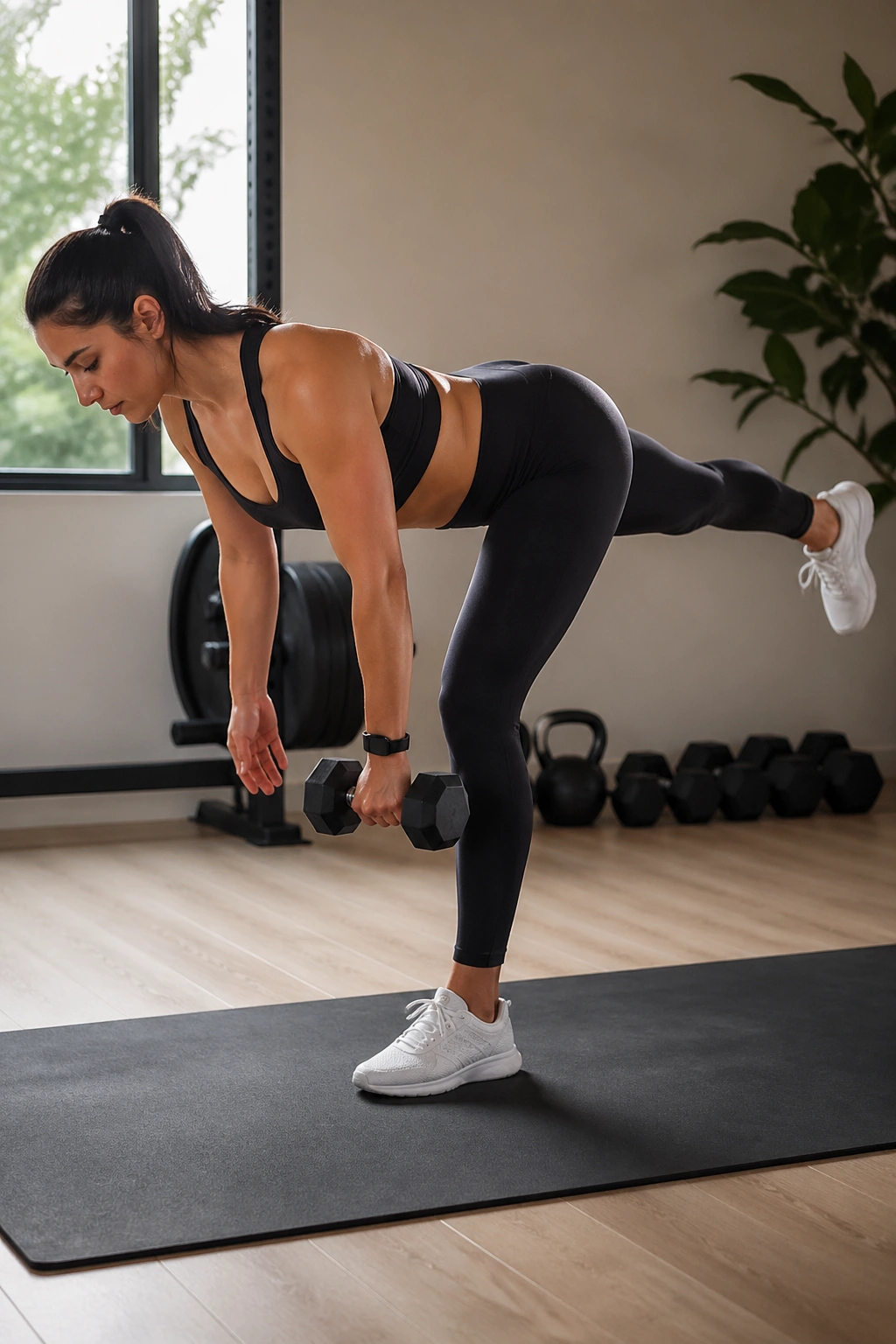
This is where balance stops being a side note and becomes part of the workout. The single-leg Romanian deadlift asks one leg to support the body while the other leg reaches back, and that makes the hips work hard to keep everything square. It’s a nasty little move, in the best possible way.
You can hold one dumbbell in the opposite hand of the working leg, or use a pair if you’re stable enough. I usually like the contralateral setup first because it teaches the body not to rotate. That skill matters more than people realize. It carries over to walking, running, and even standing on one foot to put on a shoe.
The key is to keep your hips level. Let the back leg extend behind you, but don’t open the pelvis like a door swinging on a hinge. A tiny bend in the standing knee helps.
A lot of people chase depth here and fold their spine. Skip that. Stop when your torso and back leg are almost in a long line, then come back up by squeezing the glute of the standing leg. Slow reps of 6 to 8 per side are plenty.
9. Front-Foot-Elevated Split Squat
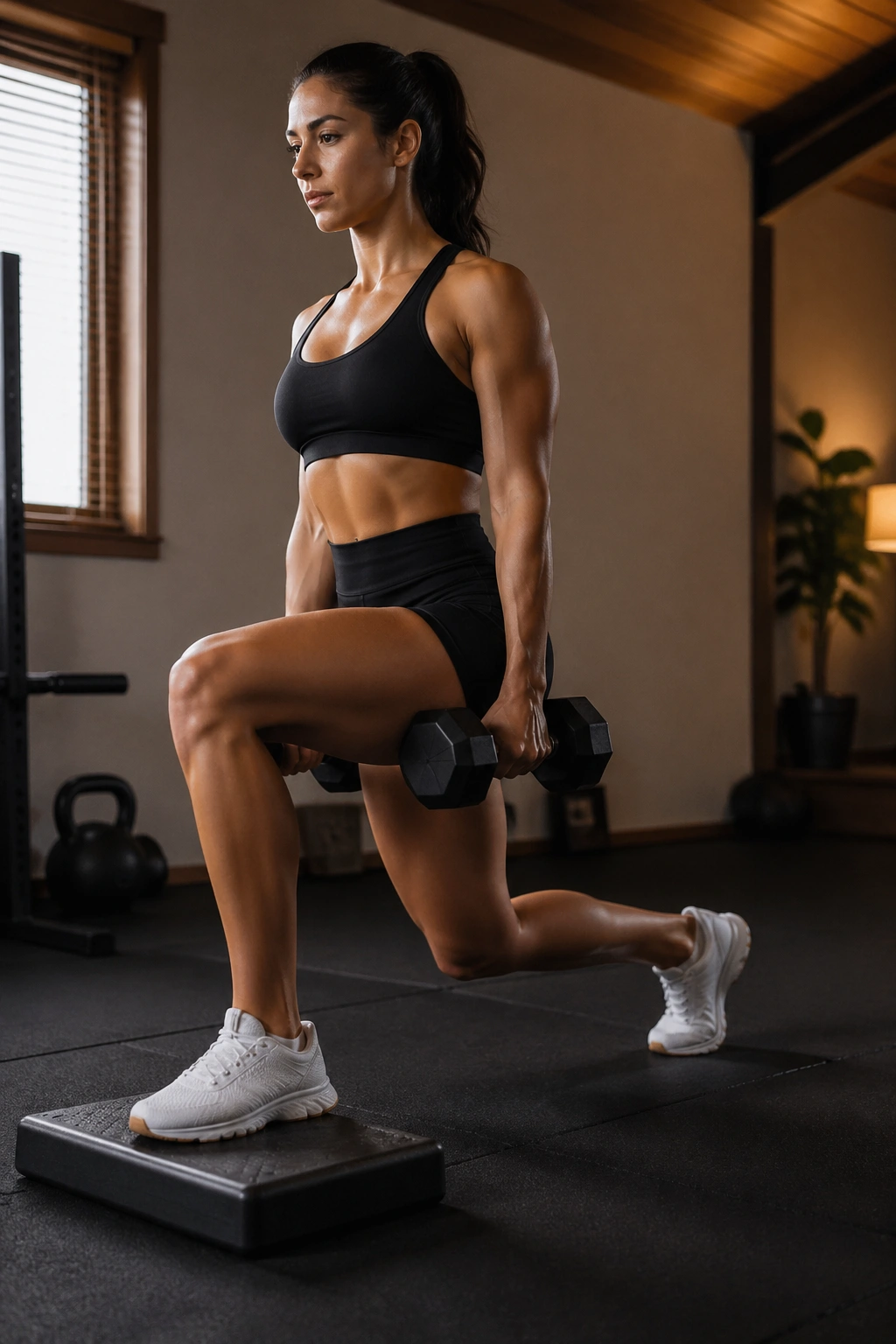
Why raise the front foot? Because the extra drop gives you more range of motion, and more range usually means more muscle tension. A front-foot-elevated split squat is a meaner version of the regular split squat, especially for the quads and glutes. You do not need a huge platform. A sturdy book stack, a low step, or a weight plate works fine if it doesn’t wobble.
The front heel stays planted on the elevated surface while the back foot does almost nothing besides balance. Drop straight down, then drive up through the middle of the front foot. The deeper bottom position stretches the working leg in a way that feels useful, not flashy.
How to Set It Up
Use a height of about 1 to 3 inches to start. Higher than that can make the movement awkward fast. If your knee caves in or your torso collapses, the platform is probably too tall for your current control.
This one is especially good when standard split squats start feeling too easy but you’re not ready to load a barbell. It gives you more work without needing more equipment. Nice deal. A solid set of 8 to 12 reps per side tends to expose weak points fast.
10. Walking Lunge
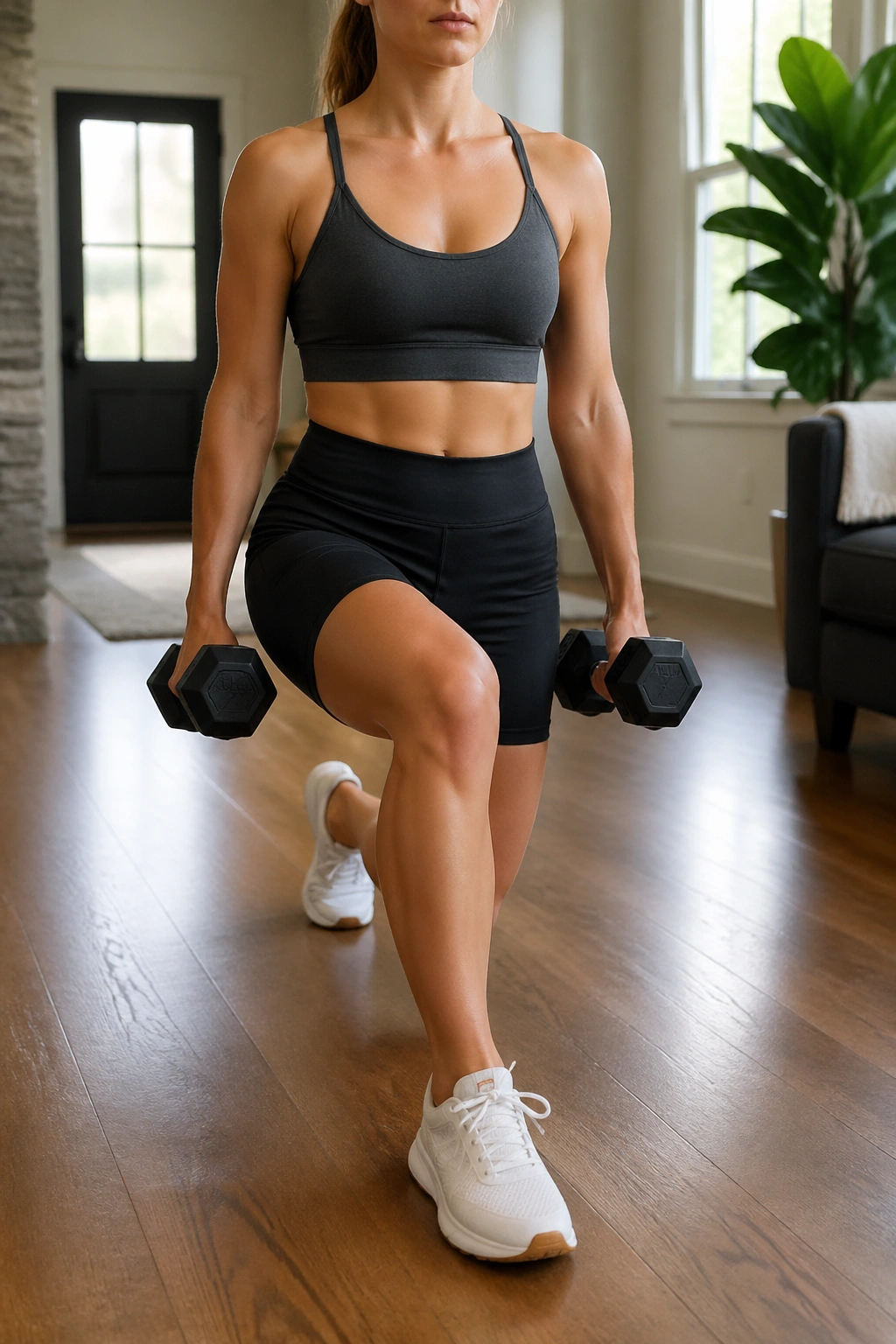
Walking lunges are the closest thing a dumbbell leg day has to a moving test of patience. You step, you sink, you catch yourself, and then you do it again on the other side. There’s a reason they show up in so many serious home routines: they build leg strength while also demanding coordination.
The move is simple enough that people rush it. They should not. Long, fast strides usually turn the set into a balance drill with cheap reps. Keep the steps smooth and the front shin fairly vertical if you want the glutes to do their share.
What To Watch For
- Hold the dumbbells at your sides and keep your shoulders relaxed.
- Take a step long enough that the front heel stays down.
- Drop the back knee toward the floor without slamming it.
- Push through the front leg to keep moving forward.
A walking lunge is a good choice when you want more volume than a reverse lunge gives you. It also burns through the quads in a way that’s hard to ignore. Use it after your main lift if you still have gas left. Or put it near the end and accept that stairs may feel rude afterward.
11. Lateral Lunge
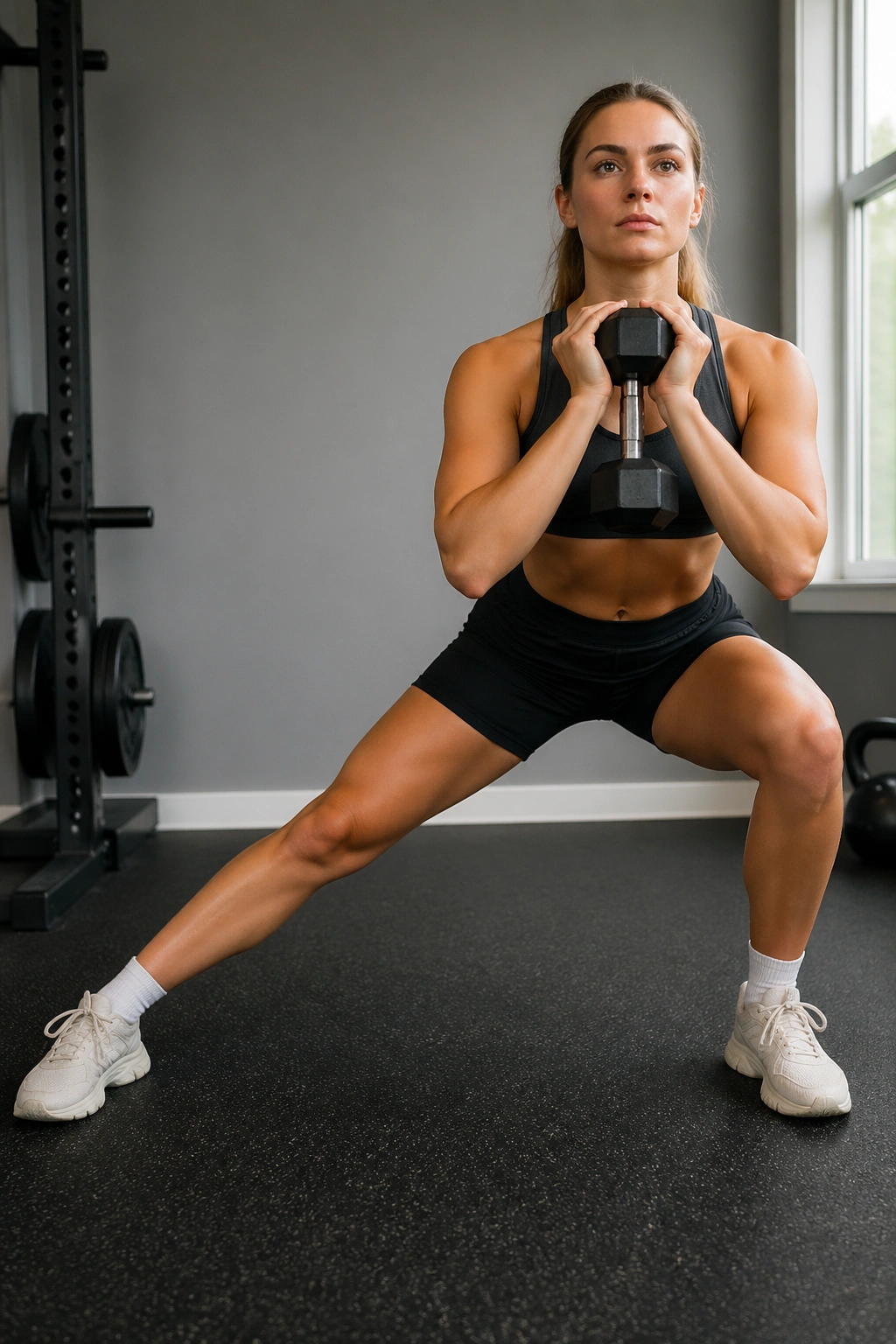
Side-to-side work belongs in more leg plans than it gets. The lateral lunge, sometimes called a side lunge, hits the adductors, glutes, and quads in a plane that many people barely train. That matters for hip strength and for the small stabilizing muscles that keep you from feeling wobbly during real life movement.
Take a wider stance than normal, then shift your hips to one side while the other leg stays long. The moving leg bends and loads, while the straight leg stays rooted. It’s a different feeling from a squat. Cleaner, in some ways. More awkward, too, until you’ve done it a few times.
The main thing is to sit back into the hip, not just collapse the knee inward. Keep the foot of the working side flat and the chest lifted enough to avoid rounding. You want to feel the inner thigh of the straight leg lengthen, but not strain.
Use a dumbbell at your chest or one in goblet position. Start with 6 to 8 reps per side and see how your hips answer. They’ll tell you fast if the range is honest.
12. Box Squat to a Chair
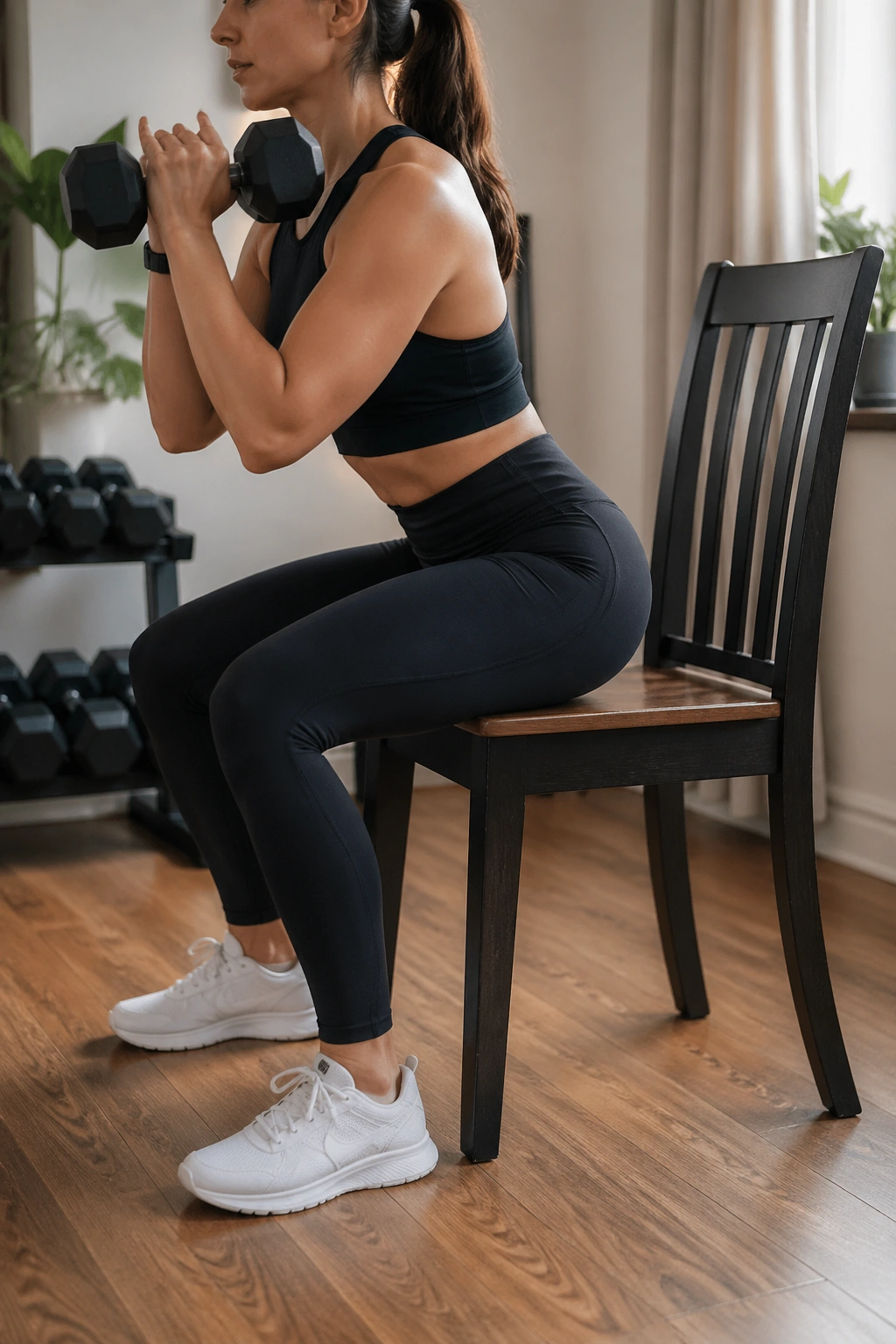
A box squat to a chair sounds tame. It isn’t. The box gives you a target, which is useful, but it also forces you to own the bottom position instead of bouncing around it. That makes it a smart option when you want cleaner depth and a little more consistency from rep to rep.
Unlike a free squat, the chair teaches you where the bottom actually is. That can help lifters who cut reps short or collapse when they get near parallel. Set the chair behind you, sit back until you touch it lightly, then stand without fully relaxing on the seat.
What to Watch For
If you crash onto the chair, the set loses tension. If you hover too high above it, you’re probably dodging depth instead of building it. The touch should be light. Think tap, not sit.
This is one of the easiest ways to make goblet squats feel more repeatable at home, especially when you’re using moderate dumbbells and want a controlled strength stimulus. It’s not fancy. It is useful. Keep the shins fairly vertical and the chest open, and use 8 to 10 reps with a steady tempo.
13. Dumbbell Sumo Deadlift
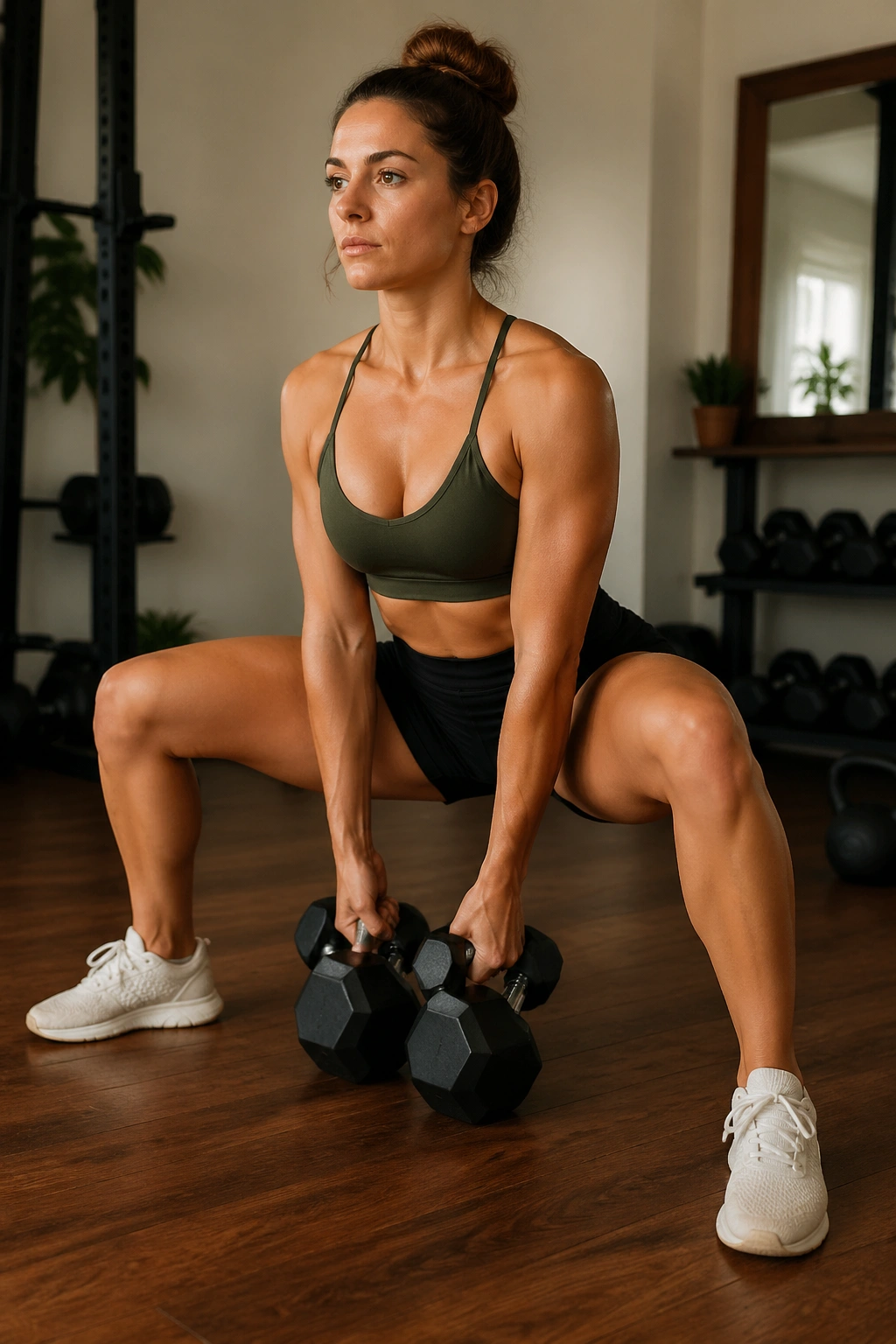
The sumo dumbbell deadlift sits somewhere between a squat and a hinge, and that’s exactly why I like it. The wider stance shortens the range a bit for many people, while still asking the glutes, adductors, and hamstrings to contribute. If regular RDLs feel too hamstring-heavy, this gives you another route.
Set the dumbbells between your feet with a wide stance and toes turned out. Sink the hips enough to grip the dumbbells cleanly, then stand by pushing the floor apart. Your chest should stay tall, but not overarched. A neutral spine is the goal. Nothing heroic. Nothing twisty.
I like this one for lifters who want to load the lower body hard without the same hamstring stretch you get in an RDL. The wider stance can feel friendlier for some hips, too. But only if your knees track well and your feet stay planted. If your arches cave, shorten the stance and clean up the setup.
Heavy sets of 5 to 8 reps work well here. The exercise should feel powerful, not frantic.
14. Standing Dumbbell Calf Raise
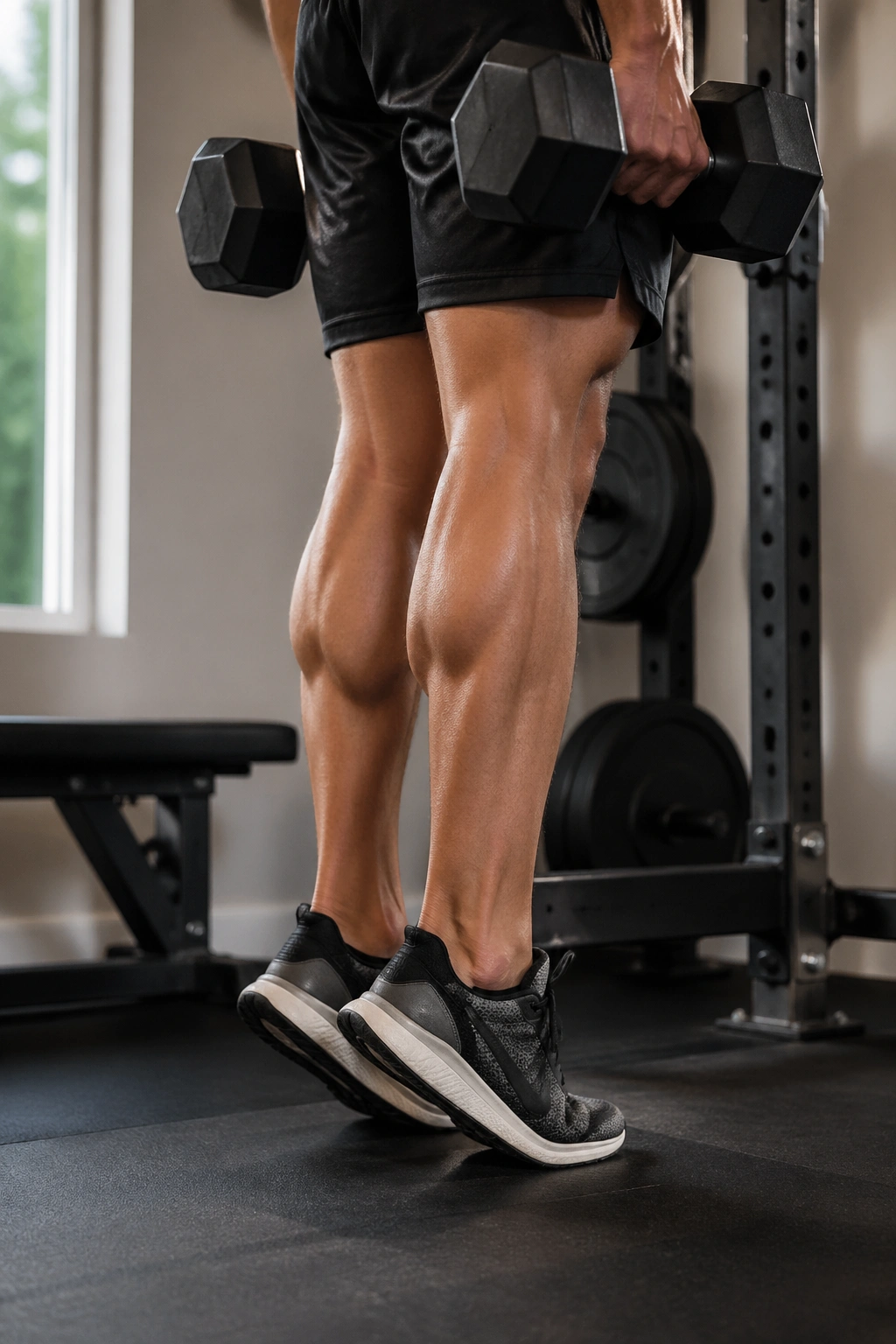
Are calf raises worth a slot in a leg session? Yes. Absolutely. Skip them too often and you end up with strong thighs on top of weak lower legs, which is a lopsided way to train. The calves matter for ankle strength, balance, and the last bit of force when you walk, climb, or sprint up stairs.
Stand on the floor or on a sturdy step if you want a bigger stretch. Hold dumbbells at your sides and rise onto the balls of your feet as high as possible. Then lower all the way down until the heels dip below neutral if you’re on a step.
How to Use It
- Keep the knees mostly straight, but not locked hard.
- Pause for 1 second at the top.
- Lower slowly for 2 to 3 seconds.
- Don’t bounce through the bottom.
The full stretch matters more than the load. A lot of people load calf raises too heavily and chop the range short. That is a waste of time. Use a weight that lets you own the top and bottom, and take 12 to 20 controlled reps. Small muscle, hard work.
15. Dumbbell Glute Bridge March
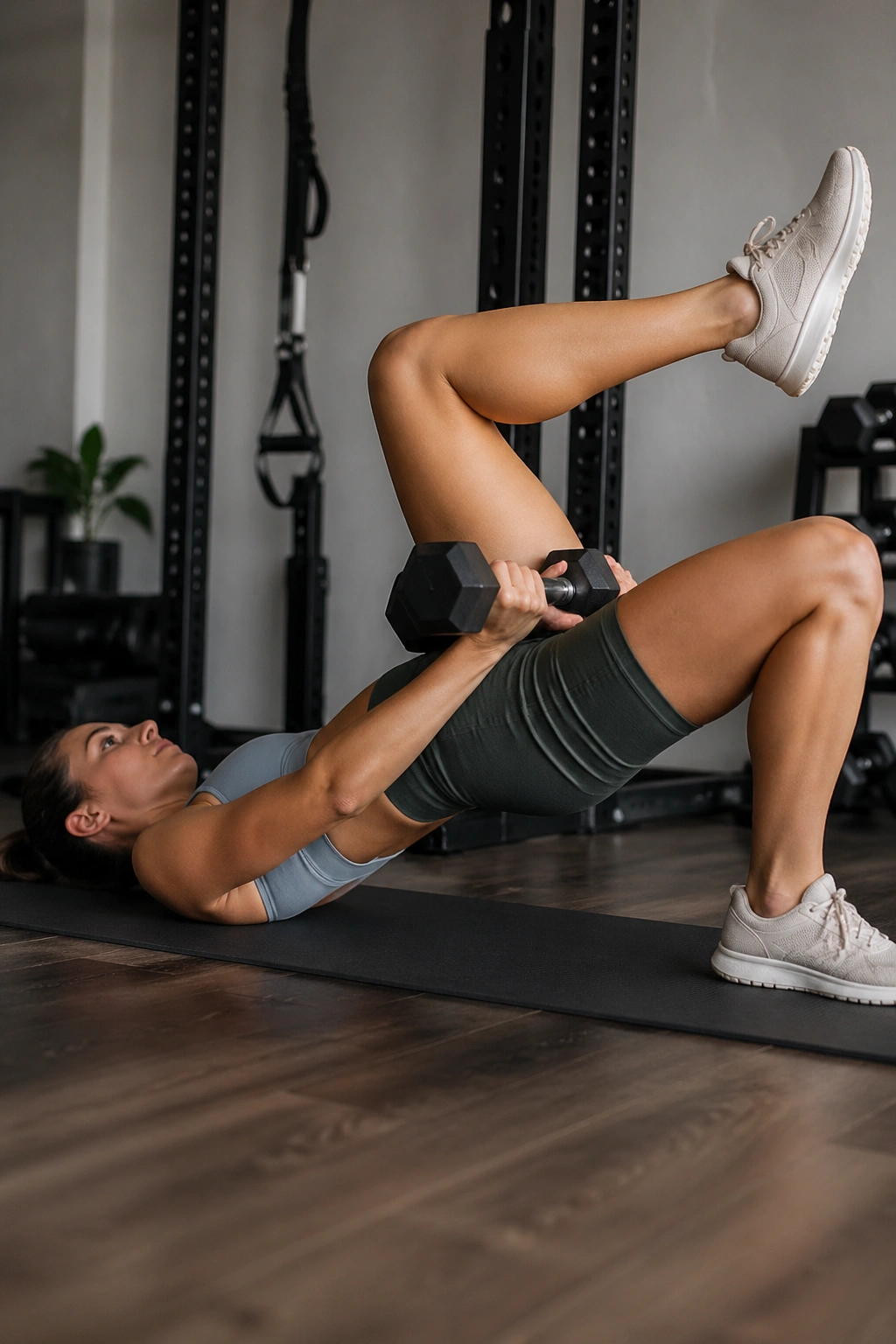
When your legs are cooked but you still want one more clean rep of useful work, the glute bridge march is a smart finisher. It looks almost too simple. Lie on your back, lift into a bridge, and alternate lifting one knee at a time while keeping the hips steady. The challenge is not the load. It’s the control.
Put one dumbbell across the hips if you want more resistance, but keep it moderate. The goal is to keep the pelvis level while one leg leaves the floor. If your hips rock side to side, the rep is doing too much with momentum and not enough with the glutes.
The march helps teach pelvic control and glute endurance at the same time. That makes it a nice closer after heavy squats or lunges, especially when you want a little extra work without pounding the knees. It also tends to light up the core, which is a pleasant surprise if you were expecting an easy finish.
Take your time. A slow set of 10 to 16 total marches is enough for most home sessions. If it turns into a crampy hamstring exercise, lower the hips a bit and reset.
Final Thoughts
A strong home leg day does not need a huge menu. It needs a few good patterns done with care: one squat, one hinge, one unilateral move, and one exercise that lets the glutes or calves finish the job. That’s the backbone.
Mix the list above in different ways depending on the day. Heavy goblet squats and RDLs make a solid core session. Split squats and step-ups are better when you want each leg to earn its keep. Finish with calf raises or glute bridge marches if you still have enough left in the tank.
The small detail that changes everything is control. Slow the lowering phase. Keep the dumbbells close. Use a range you can own. Do that, and a couple of dumbbells can carry a home strength day farther than most people expect.
