



A lot of leg exercises fail for the same boring reason: they chase a burn and skip the stuff that actually changes how your lower body moves.
That matters more than people think. If you only squat, or only use machines, or only do the same lunge variation until your joints protest, you end up with gaps — weak hamstrings, sleepy glutes, wobbly ankles, one leg that clearly does more work than the other. The lower body is not one muscle. It’s a stack of joints and patterns, and it behaves better when you train it that way.
Good leg training has a feel to it. The pressure sits through the mid-foot. The hips load. The quads get hot, but the hamstrings don’t disappear. The last rep should look controlled, not rescued.
The twelve exercises below cover the big pieces: squatting, hinging, single-leg work, side-to-side work, and the small lower-leg stuff that people skip until their knees and calves remind them why that was a bad idea.
1. Back Squat
The back squat earns its place because it loads the knees, hips, and trunk at the same time. That’s why it shows up in so many serious lower-body programs and why it keeps showing up after newer trends get their fifteen minutes.
A clean squat is not about dropping fast and hoping depth happens. You want the whole foot rooted, the chest stacked over the hips, and the descent controlled enough that you can feel where the bottom is before you hit it. If the bar turns the rep into a forward lean or your heels pop up, the load is too much or the setup is off.
What a good rep looks like
- Feet about shoulder-width apart, with toes turned out a little.
- Braced torso before you unlock the knees.
- Hips and knees bending together on the way down.
- Knees tracking over the toes instead of caving inward.
- A steady drive up from the mid-foot, not a bounce off the toes.
Best use: 3 to 5 sets of 3 to 8 reps for strength, or 3 to 4 sets of 8 to 10 for size.
Do not turn the squat into a half-rep just because it feels safer. A shallow squat has its place, sure, but if you never train real depth, you’re leaving a lot on the table. And if your lower back does all the talking, that’s not a squat problem so much as a bracing problem.
Heavy, honest, and unforgiving. That’s why it works.
2. Romanian Deadlift
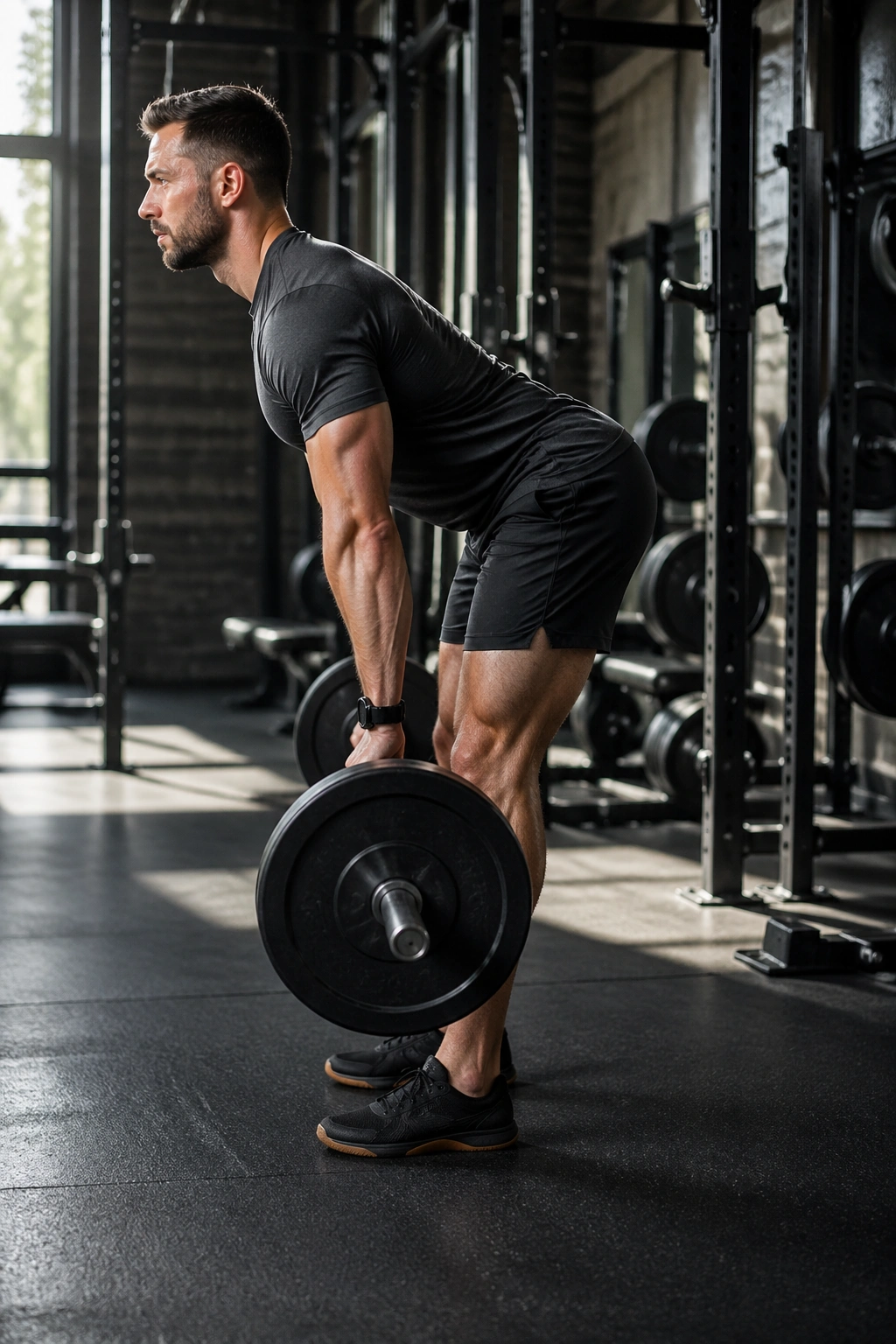
Why do the best leg programs still make room for a hip hinge? Because your hamstrings and glutes need more than knee-bending work, and the Romanian deadlift is one of the cleanest ways to give them that load.
The magic here is the stretch. You lower the bar by sending the hips back, keeping a soft bend in the knees, and letting the hamstrings lengthen under control. That long, loaded position is where the exercise earns its keep. If you rush through it, or drop the bar until your spine rounds like a question mark, you’ve missed the point.
How to keep it honest
The bar stays close to the thighs. Close enough that you’d scrape your shins if you lost focus. The ribs stay down, the neck stays neutral, and the movement ends when the hamstrings say “enough” — not when the plates touch the floor.
Common mistakes
- Turning it into a conventional deadlift.
- Bending the knees too much and losing the hinge.
- Rounding the lower back on the way down.
- Pulling with the arms instead of driving through the hips.
I like this move for people who want stronger glutes without always living under a barbell squat. It’s also kind to the ego, which matters more than gym culture likes to admit. Three to four sets of 6 to 10 reps is a good place to live, and a slow lowering phase usually beats sloppy extra weight.
3. Bulgarian Split Squat
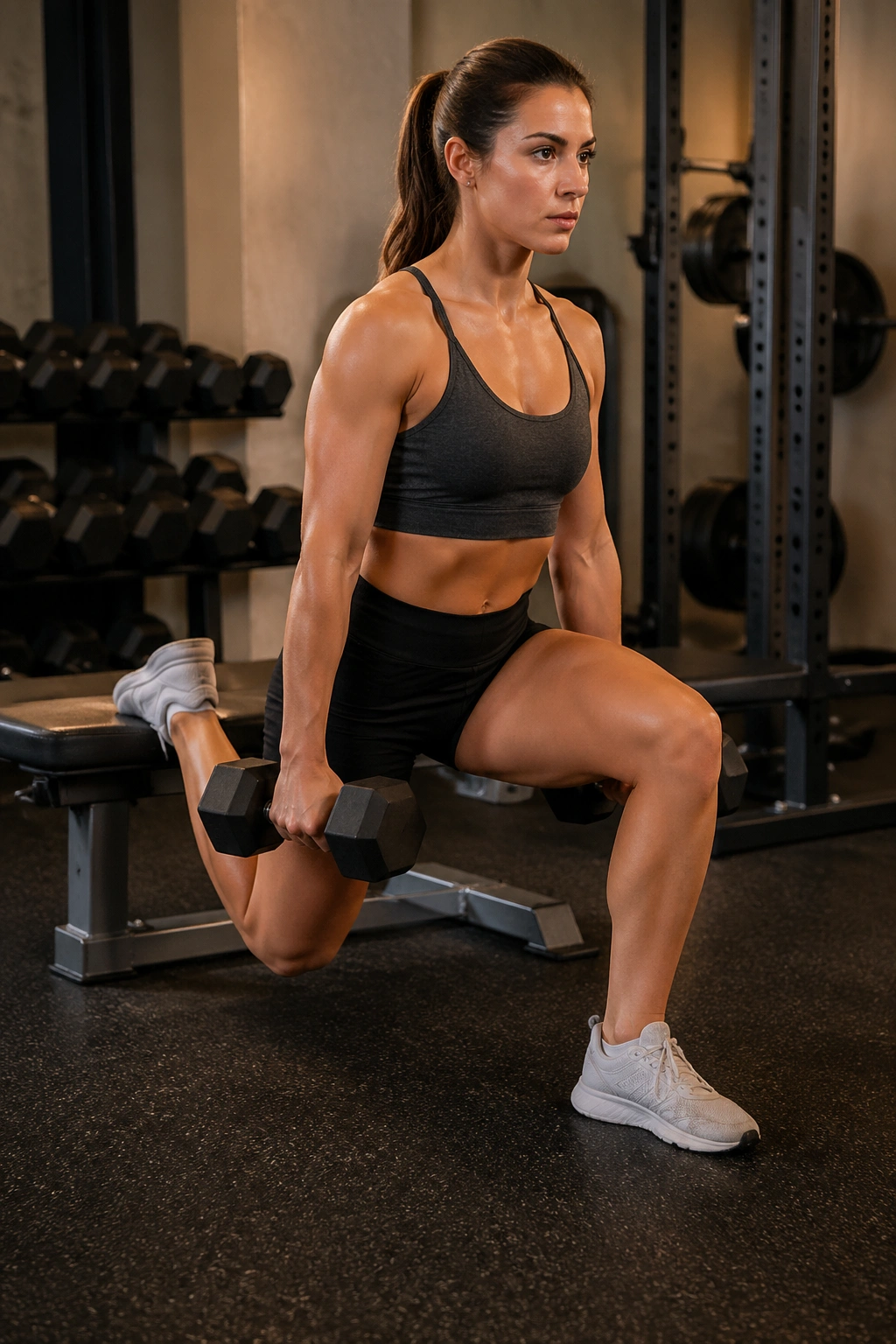
Unlike a two-legged squat, the Bulgarian split squat tells you quickly which leg is lazy. There’s no hiding. The front leg does the work, the back leg is there mostly for balance, and the whole thing exposes side-to-side weakness in about two reps.
That honesty is why I keep it in the mix. It builds quads and glutes hard, but it also forces stability through the hip and ankle in a way bilateral lifts often don’t. One leg gets loaded while the other sits back, which makes it a smart choice when you want serious leg stimulus without piling on more spinal compression.
A good setup matters. Put the back foot on a bench or box that’s around knee height. Step the front foot far enough forward that the front heel stays down and the knee can travel without the torso folding like a lawn chair. Then lower under control until the front thigh gets close to parallel.
What to watch for
- Too short a stance makes the front knee angry.
- Pushing off the back leg turns the exercise into a cheat.
- A wobbling front foot usually means the load is too heavy.
- Short range of motion makes the whole thing less useful.
Try this: start with dumbbells at your sides and 3 sets of 8 to 12 reps per leg. If balance is the limiter, keep one hand lightly on a rack. That is not cheating. It’s learning.
4. Hip Thrust
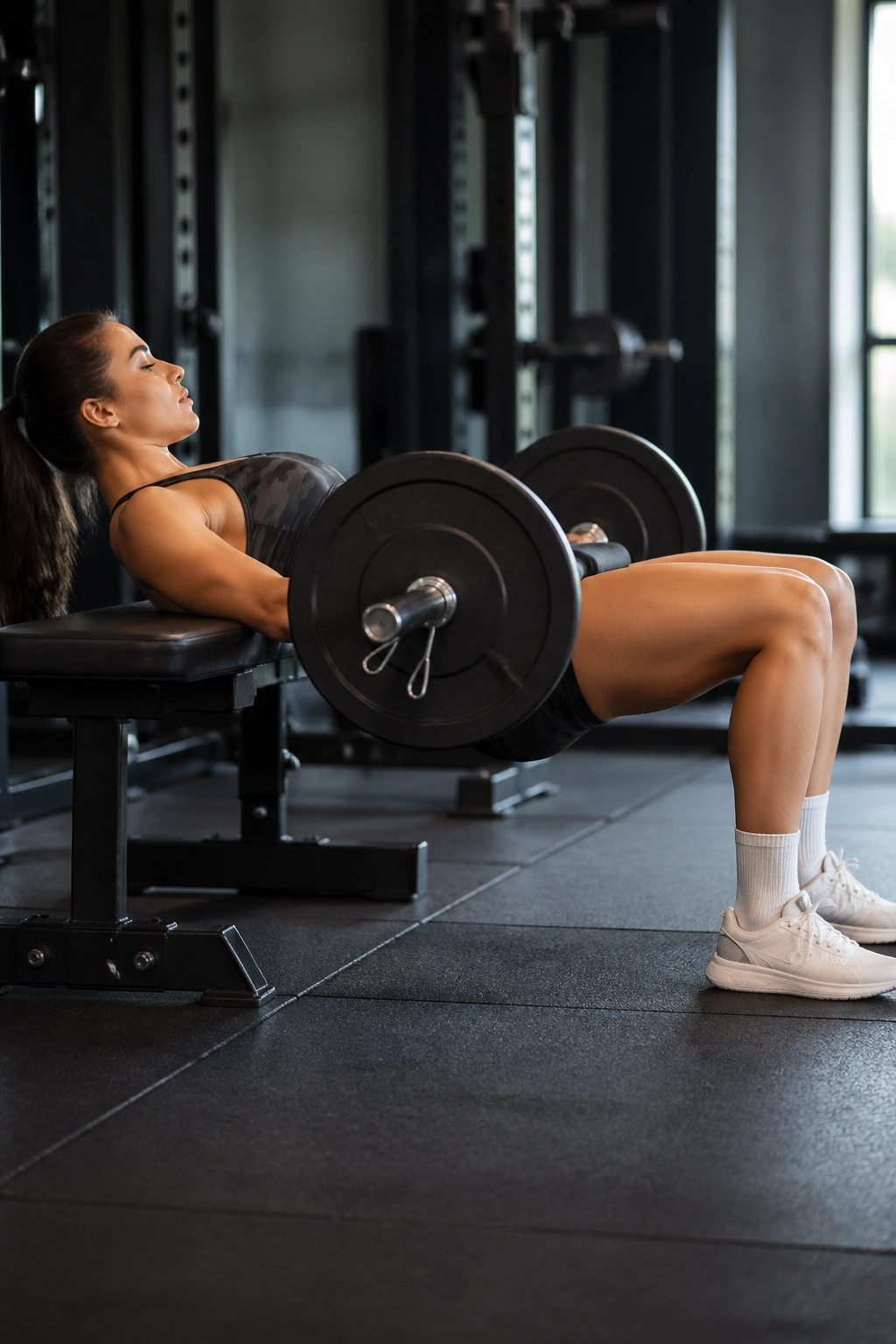
If your glutes still feel underworked after squats, hip thrusts usually expose the obvious gap. They bias hip extension hard, and they do it with less stress on the lower back than many barbell lifts.
The top position matters most here. You want the shins roughly vertical at lockout, the ribs tucked down, and the pelvis slightly tucked instead of dumped forward into a backbend. People who chase the peak squeeze with an arched lower back are usually missing the glutes and feeding the spine the extra work. That mistake shows up fast.
Setup that pays off
- Upper back on a bench or sturdy box.
- Barbell or dumbbell sitting across the hip crease with padding if needed.
- Feet placed so the heels can drive down at the top.
- Chin tucked, eyes forward or slightly down.
- A one-second pause at lockout.
The hip thrust is not fancy. It’s just brutally specific. If you want stronger glutes for squats, sprints, jumps, or general lower-body size, this one earns room in the session.
I like pairing it after a squat or split squat, when the quads have already done some work and the glutes can take over without the lower back turning into the weak link. Three to five sets of 8 to 12 reps works well, and a controlled descent makes the set feel twice as honest.
A heavy top-end squeeze. That’s the whole point.
5. Step-Up
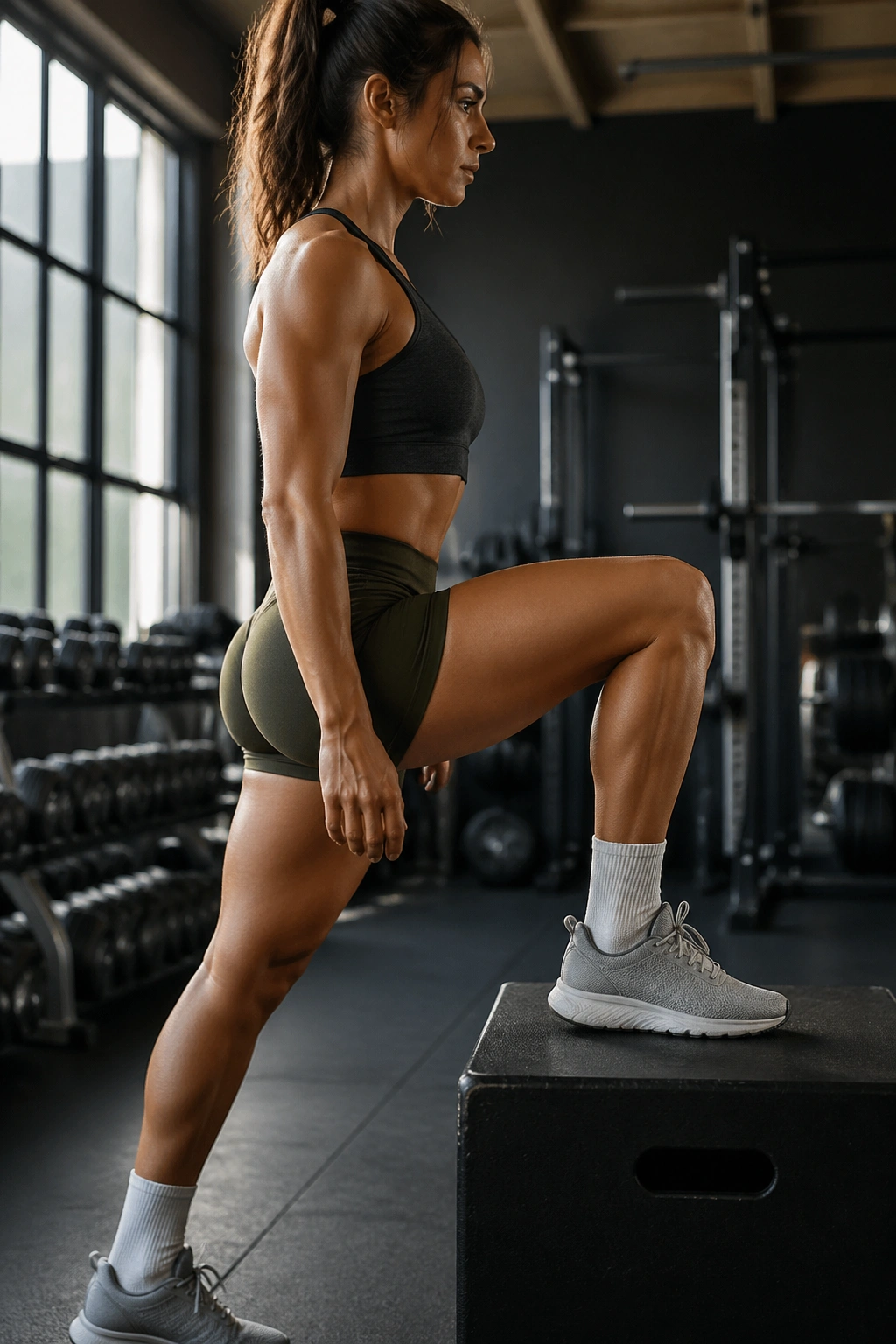
A step-up looks tame until you load it honestly. Then it becomes one of the best tests of whether your leg strength actually transfers to the real world, where you climb stairs, step over curbs, and get up from low chairs without thinking about it.
The angle matters. A box that’s around knee height is enough for most people; go much higher and you start turning the movement into a weird hip hike. Drive through the working leg, keep the torso slightly forward, and let the trailing leg stay light. If the back foot is jumping off the floor to help, the step is too hard or the box is too tall.
Why it’s worth the slot
- Strong glute and quad stimulus with less total load than a squat.
- Good for side-to-side imbalance.
- Easy to load with dumbbells, a barbell, or a weight vest.
- Friendly to people who want leg work without a lot of spinal fatigue.
The lowering phase is where people get sloppy. Slow it down. Touch the trailing foot softly, then step down under control instead of dropping off the box like you’re in a hurry. That eccentric control is part of the exercise, not a bonus.
This one deserves more respect than it gets. If your knees cave on the way up or your hips shift hard to one side, the rep has already told you something useful. Listen to it.
6. Reverse Lunge
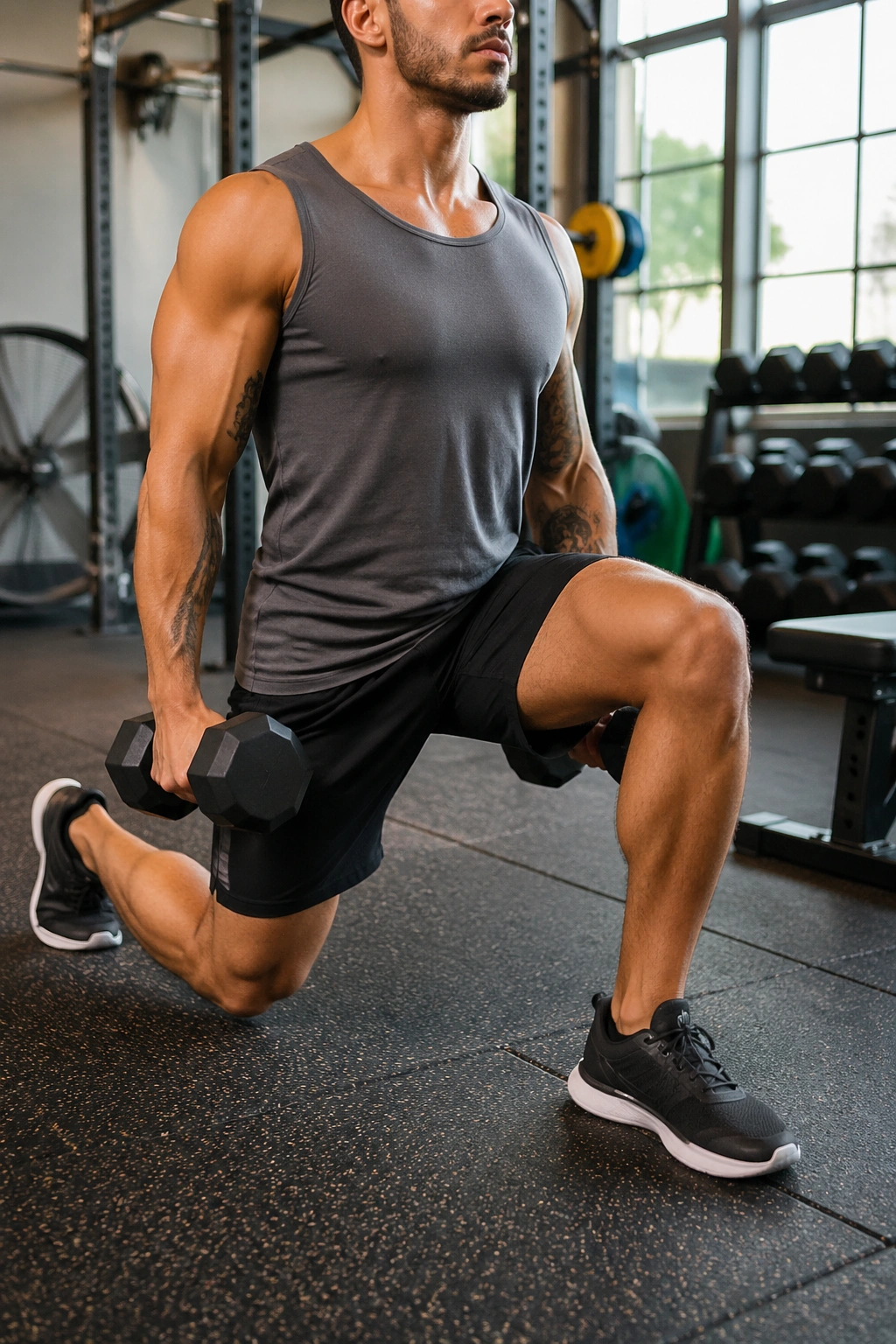
Want a lunge that teaches control without chewing up your knees? The reverse lunge is the one I hand people first.
Stepping backward tends to feel less chaotic than stepping forward, and that matters when balance is still a work in progress. The front leg does the real work while the back knee lowers toward the floor, and the front shin usually stays in a friendlier position than it does in a forward lunge. That makes the movement easier to learn and easier to load.
Use a normal stride length, not a tiny step. A cramped stance shoves the front knee forward and steals from the hips. Lower until the back knee comes close to the floor, then push through the front heel and mid-foot to stand back up. No rushing. No bouncing.
A few useful cues
- Keep the torso tall but not stiff.
- Step straight back, not on a diagonal.
- Let both hips stay square to the front.
- Drive up through the front leg only.
This exercise sits in a nice middle zone. It builds quads and glutes, it improves balance, and it usually feels less punishing than walking lunges. That makes it easier to train hard without dreading the next set.
Three sets of 8 to 12 reps per side is plenty for most people. If grip is the limiter, use bodyweight or light dumbbells and make the tempo slower instead.
7. Leg Press
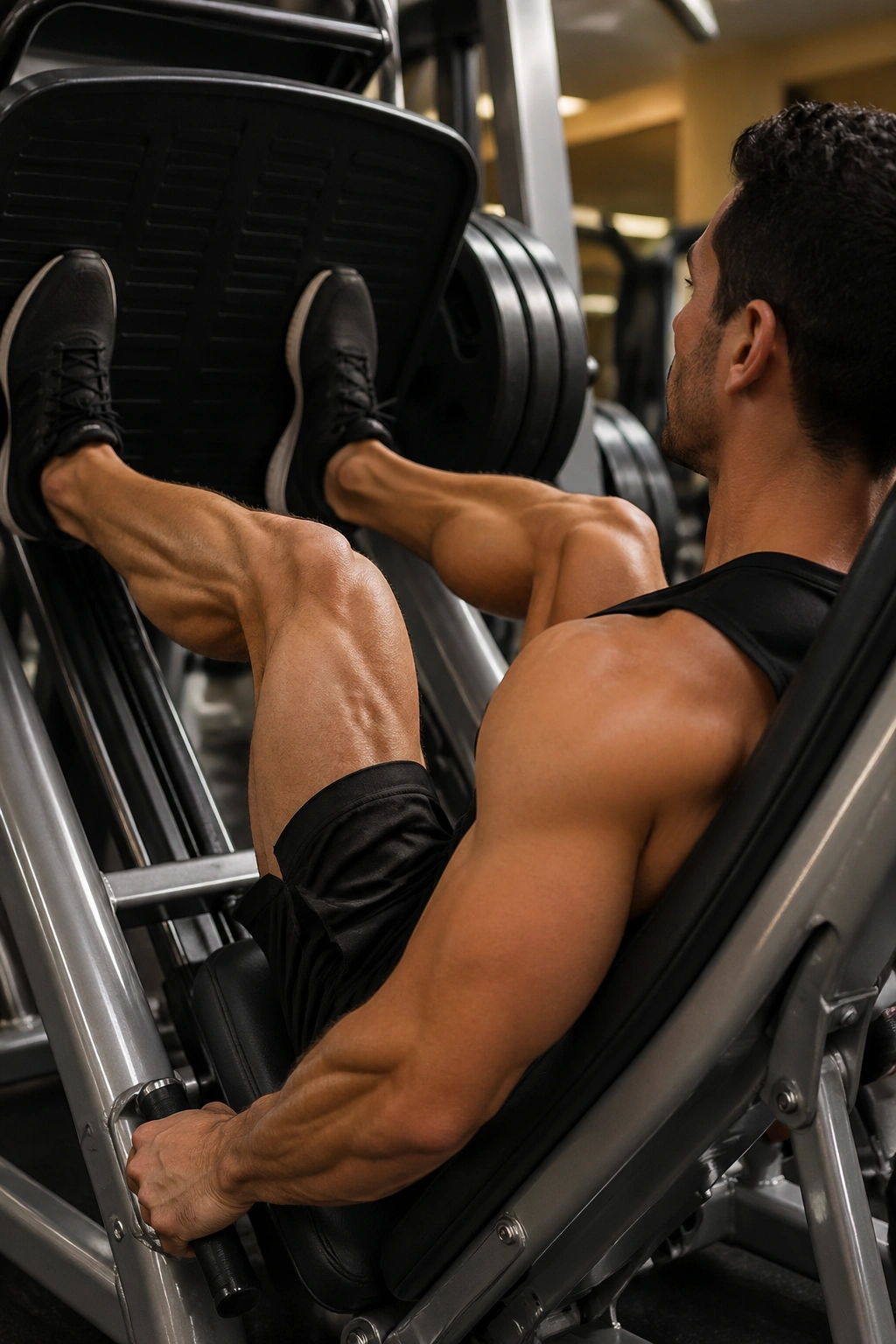
The leg press is not a lazy substitute. It’s a tool, and a pretty useful one when you want hard quad work without worrying about balance, bracing, or what your lower back thinks about the plan.
That is the part people miss. Machines are not lesser because they’re machines. They’re different. The leg press lets you push close to failure with a very clear path of motion, which is great for adding volume after your heavier free-weight work. You can train hard without your stabilization muscles stealing the show.
Foot placement changes the feel. Higher on the platform usually shifts a bit more toward glutes and hamstrings. Lower and narrower tends to hit the quads harder. Either way, the key is full control. Bring the sled down far enough for a real knee bend, but don’t let the lower back peel off the pad.
What to avoid
- Locking out with a snap at the knees.
- Cutting depth short every rep.
- Letting the hips curl off the seat at the bottom.
- Piling on plates you can’t move through a clean range.
I like the leg press for higher-rep work: 10 to 15 reps, sometimes even 15 to 20 if the machine is smooth and the form stays tight. It’s one of the easiest ways to get a lot of leg volume without destroying yourself before the rest of the session.
Simple. Useful. Underused.
8. Goblet Squat
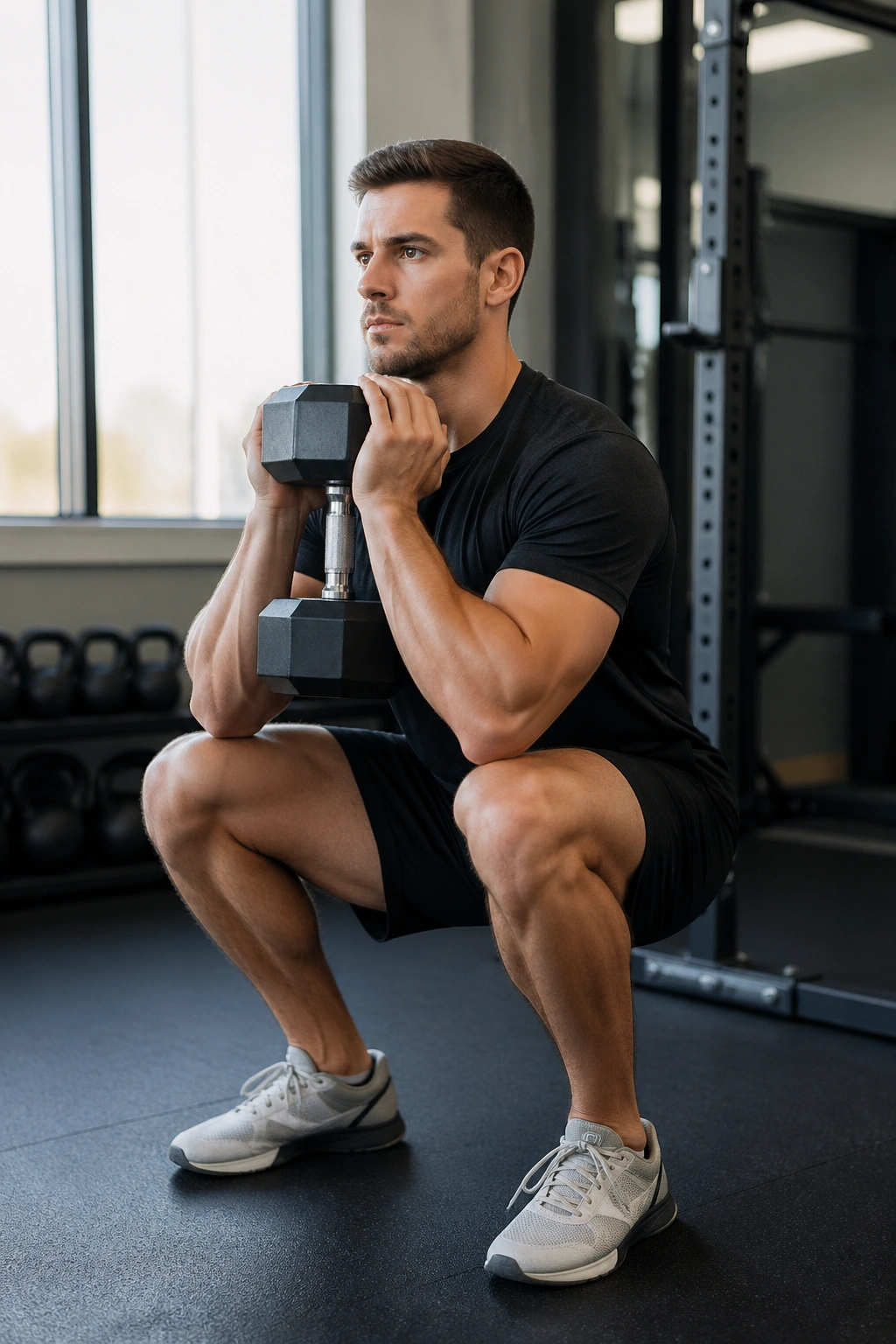
A dumbbell held at your chest does a lot of good things at once. It teaches front-loaded bracing, helps many people stay more upright, and gives you a squat pattern that is easier to own than a barbell version when your technique still needs work.
That is why goblet squats show up so often in smart warm-ups and beginner programs. The weight in front of you gives a clear counterbalance, which can help you sit between your hips instead of folding forward. It also makes depth easier to feel. If you can’t reach a clean bottom position here, the problem is probably mobility, stance, or control — not just “tight hips,” which gets blamed for everything.
Why it earns a spot
- Teaches a clean squat path.
- Builds quads and glutes with less setup.
- Makes bracing easier to learn.
- Works well for tempo reps and pauses.
Try a 2-second pause at the bottom and you’ll feel how much this move can teach. The pause exposes foot pressure, ankle control, and whether you’re actually staying stacked. It’s humbling. Good.
This is also a smart choice on days when you want leg work without loading your spine as hard as a back squat does. Three or four sets of 10 to 15 reps is a strong option, especially when you use a load that makes the last three reps slow but still clean.
9. Hamstring Curl
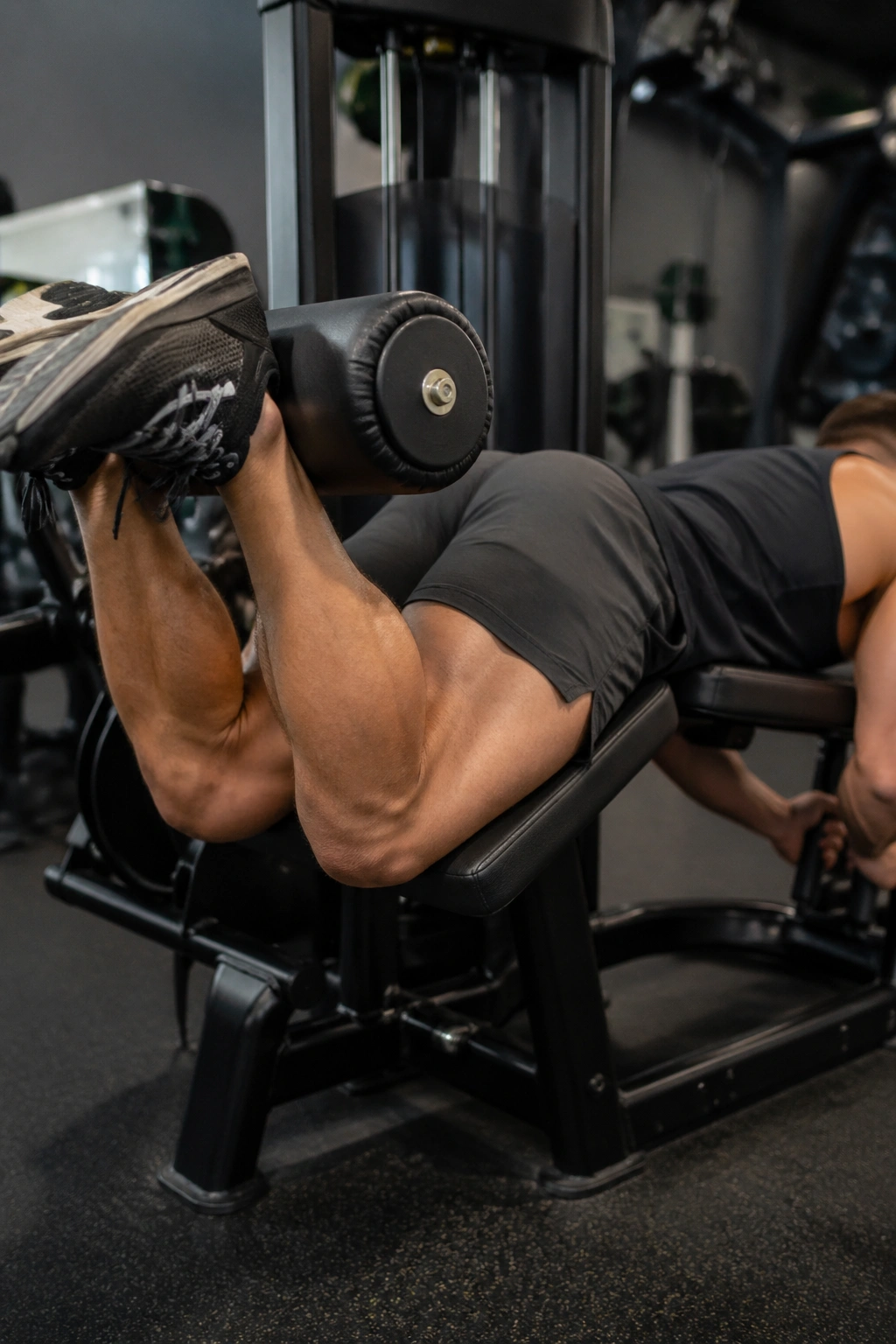
Hamstring curls matter because the hamstrings do more than extend the hip. They also bend the knee, and if you never train that action directly, you leave part of the muscle underdosed.
Lying curls and seated curls both have value. I tend to favor seated versions when they’re available because the hamstrings start in a longer position at the hip, and that longer length seems to make the set feel more complete. But a lying curl is still useful, and it still belongs on the list if that’s what your gym has.
The trick is not to turn the exercise into a swing. Set the pad correctly, pin the hips down, and curl through a full range with control. The lowering phase should be slower than the lift. If the stack clangs down on every rep, the weight is too heavy or the tempo is too lazy.
What good work feels like
- A strong squeeze behind the knee.
- Stable hips on the pad.
- No bouncing at the bottom.
- A clean stretch before each curl.
This is one of the easiest ways to round out a leg day that already has squats and hinges. It helps hamstring size, and it also gives the knees a little extra support because the muscle has to do real work through flexion. Three to four sets of 10 to 15 reps is a solid zone.
10. Lateral Lunge
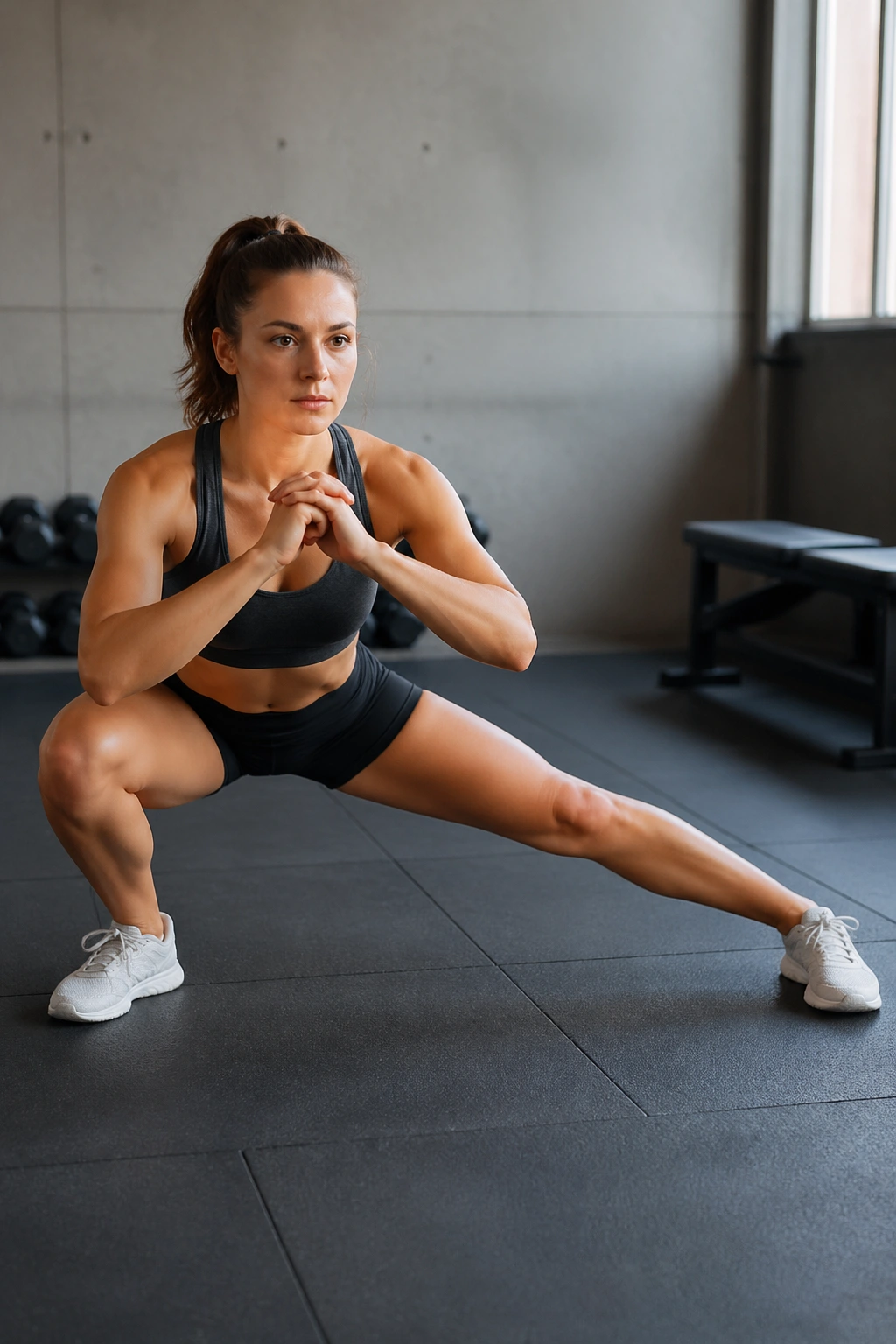
Forward-and-back work is only half the story. The lateral lunge brings side-to-side loading into the picture, and that matters for the adductors, glute medius, and the parts of the hips that keep your pelvis from wobbling around when you move.
Step out to the side, sit the hips back into the loaded leg, and keep the other leg straighter than the working side. You should feel the inner thigh of the bent leg lengthen, plus a fair amount of glute work on that side. If your chest collapses forward and your knee twists inward, the range is too aggressive or the load is too heavy.
Where people get it wrong
- Taking a step that’s too short.
- Letting the planted foot roll inward.
- Staying too upright and missing the hip shift.
- Rushing side to side like the floor is hot.
I like this exercise because it fills a gap that many leg days ignore. Squats and deadlifts are great, but they mostly live in the sagittal plane — front to back. The lateral lunge teaches you to control the body when the load moves sideways, which is useful in sport and useful in plain old life.
Start with bodyweight or a light dumbbell in a goblet hold. Six to ten reps per side is enough to feel the pattern without turning it into a circus trick. Clean reps beat noisy ones here.
11. Standing Calf Raise
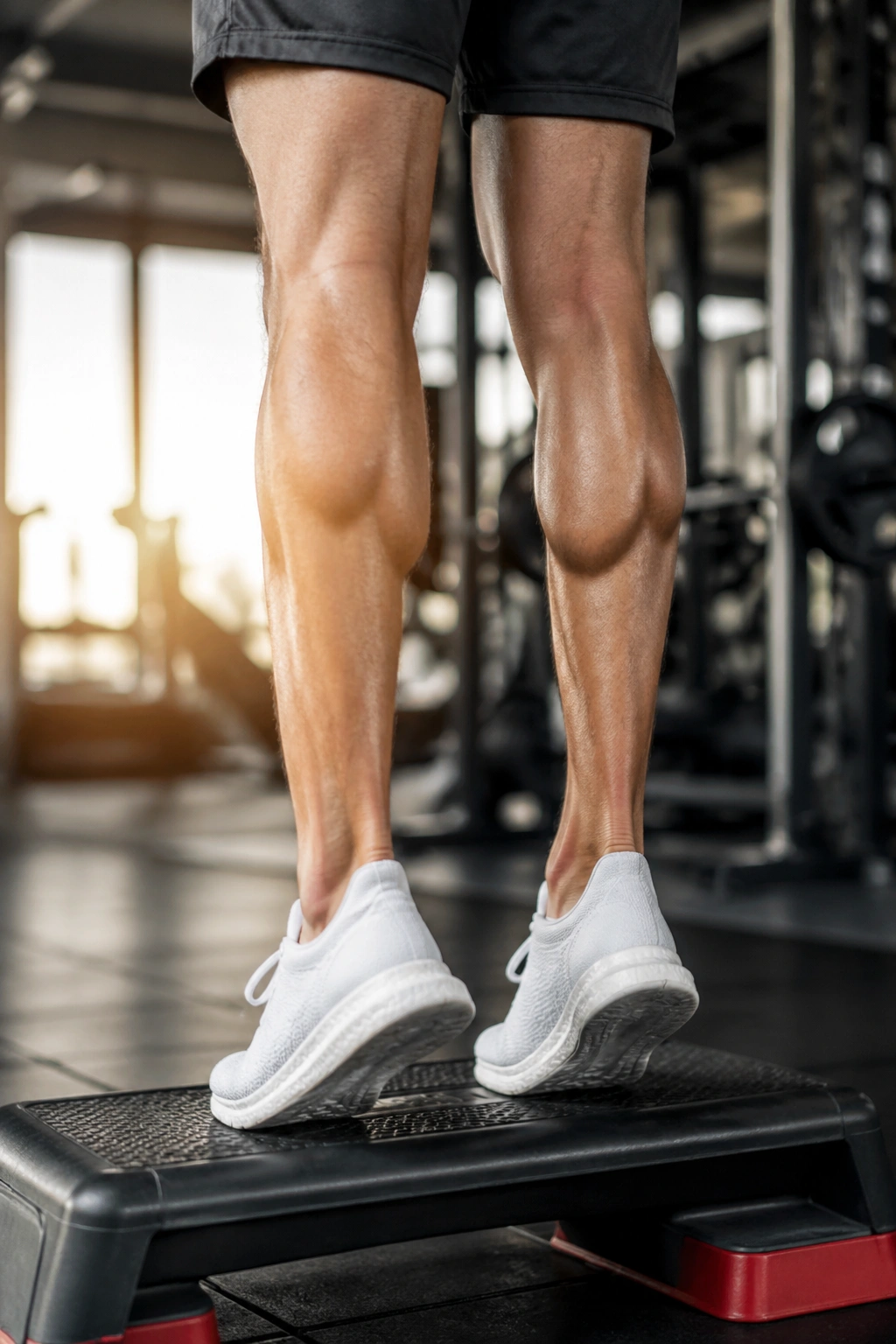
Calf raises are small, and that is exactly why people ignore them until their lower legs look like they were borrowed from a different body. Straight-knee calf work targets the gastrocnemius, which does not get the same attention from squats and lunges that the quads and glutes do.
Use a step, a machine, or a Smith machine setup if that’s what you have. Start with a deep stretch at the bottom — heels dropped, not bouncing — then rise all the way up onto the balls of the feet and hold the top for a second. The top pause matters. So does the bottom. Half reps grow patience, not calves.
A few details that pay off
- Keep the knees nearly straight, but not locked hard.
- Let the heel sink below the step for a full stretch.
- Use a slow lower, about 2 to 3 seconds.
- Stop pretending momentum is a rep.
If you want to get picky, vary the toe angle a little from set to set. Straight ahead is the default. Slightly in or out can change the feel a bit, but don’t overcomplicate a move that already suffers from neglect.
I think calf raises belong in almost every leg session. They’re not glamorous. They are necessary. Four to six sets of 8 to 20 reps, done with control, usually beats the quick, sloppy version people rush through at the end of training.
12. Single-Leg Romanian Deadlift
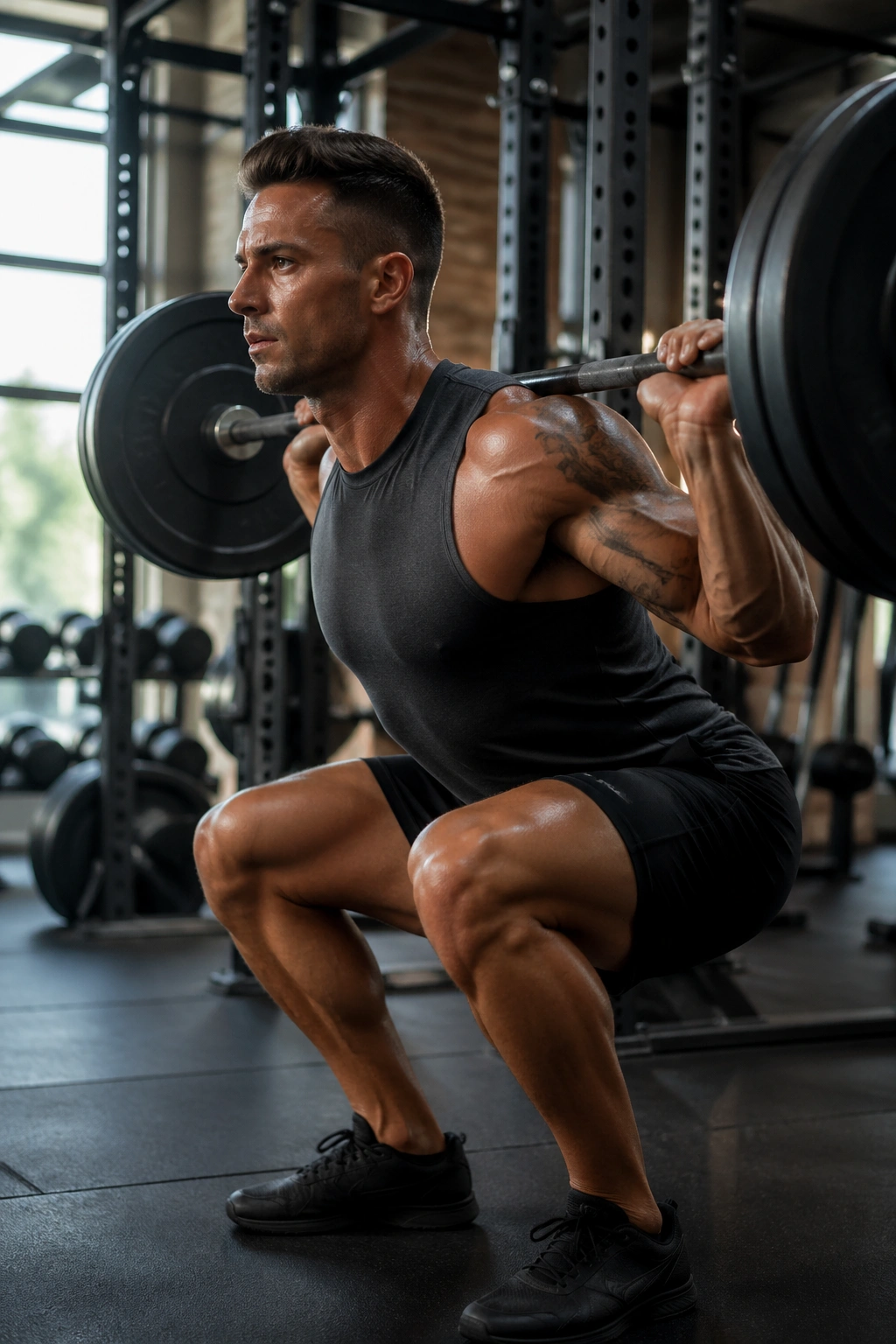
The first few reps of a single-leg Romanian deadlift usually feel clumsy. Good. That awkwardness is the point.
This exercise forces the hips to stay square while one leg reaches back and the torso tips forward in a controlled hinge. You get hamstring work, glute work, and a big dose of balance and ankle control all at once. If your standing foot wiggles all over the place, the drill is doing its job and showing you where the weak links are.
A light touch on a rack or wall is fine when you’re learning. I prefer that over turning the rep into a wobble-fest where the brain is so busy not falling over that the hamstrings never get a fair shot. Keep the free leg long, reach it back like a counterweight, and stop the descent when your pelvis wants to rotate open.
Common mistakes
- Rounding the back to reach lower.
- Letting the hip of the lifted leg open too soon.
- Bending the standing knee into a squat.
- Using weight so heavy that balance disappears.
This is one of those leg exercises that pays back in weird ways. Better hip control. Better single-leg strength. Less side-to-side slop when you squat or run. It also tends to expose right-left differences faster than people like, which is annoying and useful at the same time.
Three sets of 6 to 10 reps per side is enough for most people. Keep the load moderate and the motion crisp. A clean single-leg hinge tells you more than a messy heavy one ever will.
The simplest leg day is often the strongest one: one squat pattern, one hinge, one single-leg move, one machine or isolation exercise, and one lower-leg move. That setup covers more ground than a random pile of exercises ever will.
And if you want to bias glutes and legs without overthinking it, start with the back squat or goblet squat, add a Romanian deadlift, choose either a split squat or reverse lunge, then finish with calves or hamstrings. That’s enough to build something real.
