



Most leg day mistakes are boring, which is exactly why they stick around. A lifter will spend ten minutes debating shoes, sleeves, and belt tightness, then treat the first squat like the body is supposed to be ready on command. It is a strange habit. And it shows up everywhere.
The mistakes are rarely dramatic. They’re usually smaller than people want to admit: a warm-up that doesn’t prepare anything, a load that outruns control, a range of motion that shrinks the moment the plates get heavy, or a session that turns into a long, random mess of machines and finishers. Those habits can still feel hard, which is part of the trap. Hard work and good work are not the same thing.
Legs are honest. Squats, split squats, Romanian deadlifts, leg presses, calf raises — they all expose shortcuts fast. If the knees cave, the hips dump forward, the torso folds, or one side always feels like it’s doing a little more, the workout is telling on you. That’s not a moral failing. It’s useful feedback.
Most fixes are small. A better ramp-up, one less plate, one cleaner rep, one notebook entry after the session — that stuff adds up faster than people expect. The trick is knowing which habits are stealing progress before they get baked into every lower-body workout.
1. Skipping the Warm-Up Before Heavy Leg Work
Cold hips do not lie. A squat, hinge, or lunge that feels fine during the first few easy reps can turn stiff and awkward the moment the load gets serious. The mistake is not always skipping a warm-up entirely. More often, it’s doing a warm-up that only makes you sweaty.
A real warm-up has a job. It should raise body temperature, wake up the movement pattern, and show you where the weak spots are before you ask for working weight. That matters more on leg day than people think, because lower-body lifts ask for ankle motion, hip control, trunk stiffness, and foot pressure all at once. If one of those pieces is asleep, the set starts getting messy fast.
What a warm-up should actually do
The point is not to waste energy. The point is to reduce the little surprises that show up in heavy sets. Tight ankles can make your knees drift. Stiff hip flexors can tip the pelvis forward. An underprepared low back can steal work from the glutes and hamstrings. None of that sounds dramatic, but each one changes how the rep feels.
A good ramp-up doesn’t need to be long. It does need to be specific. Five to eight minutes of easy bike work or incline walking is enough to get blood moving. After that, move through the pattern you’re about to train, not some random stretch you saw online and forgot by the second set.
One sentence. That’s often all it takes to say the important part: if your first work set is the first real test, you started too cold.
A simple ramp-up that actually helps
Try this before squats, leg press, or split squats:
- 5 to 8 minutes of easy cardio
- 6 to 8 leg swings front to back on each side
- 6 to 8 leg swings side to side on each side
- 8 bodyweight squats with a 1-second pause in the bottom
- 8 reverse lunges per side
- 2 ramp-up sets on the main lift with light-to-moderate load
If you’re doing Romanian deadlifts or another hinge, swap in hip hinges, glute bridges, and a couple of light sets that rehearse the bar path. The idea is the same. Your joints should feel warmer, your feet should feel planted, and the first loaded rep should not feel like a guess.
If a joint still feels sticky after that, do one more ramp-up set instead of pretending you’re ready.
2. Adding Weight Before You Own the Movement
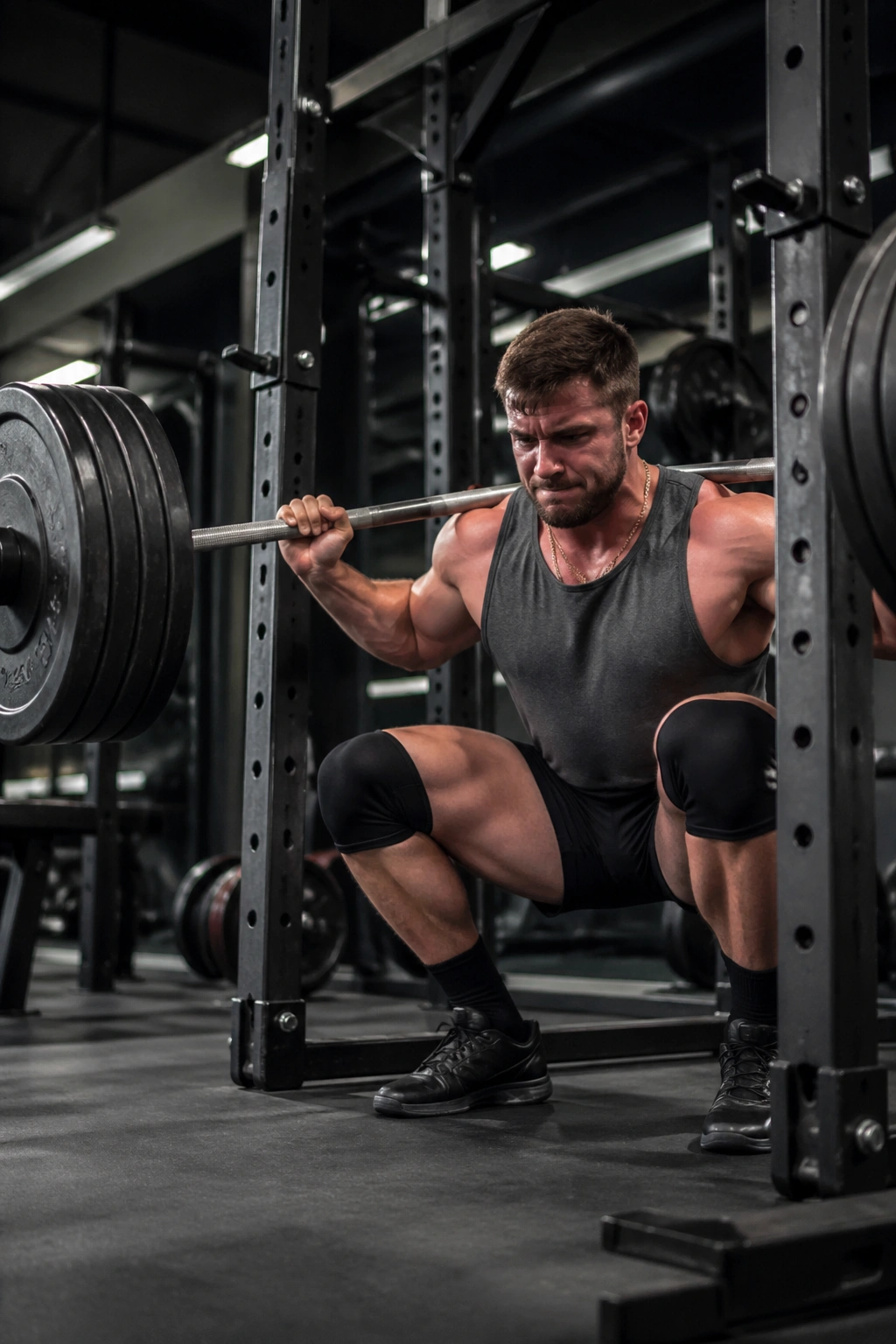
A heavier bar is not a cleaner rep. People love to chase the next plate because the number looks serious, then they spend the whole set hanging on for dear life. The lift still feels hard, which is why this mistake survives. Hard is not the issue. Sloppy is.
A lot of leg day mistakes come from confusing strain with skill. If your first rep and your last rep look nothing alike, the load is probably ahead of your control. Maybe the hips shoot up. Maybe the knees cave. Maybe the heels pop. Maybe the torso turns the squat into a low-back exercise you never asked for. That is not a strength problem. That is a control problem.
What control looks like
On squats and split squats, the descent should look repeatable. On Romanian deadlifts, the bar should stay close to the legs instead of drifting away like it has its own plan. On leg press, the hips should stay stuck to the pad instead of curling up when the reps get rough.
A simple tempo check helps a lot here. Lower the weight for two or three seconds, pause for one count at the hardest point, then drive up. If the rep falls apart when the bounce disappears, that’s useful information. It means the load is only working because you’re stealing momentum.
When to add weight
Use this little filter before adding plates:
- The last rep looks close to the first rep
- Your brace stays tight without turning into panic breathing
- Your knees track where your toes point
- Your feet stay planted instead of rocking around
- You still have one or two reps left when the set ends
If two of those disappear, keep the weight where it is. That sounds boring. It is. Also, it works.
Small jumps beat ego jumps most of the time. On lower-body work, even 5 pounds can change the feel of a movement enough to keep the rep clean. That’s especially true on unilateral lifts and machines, where the jump from “smooth” to “ugly” can be tiny.
3. Cutting Your Range of Motion Short

Half reps have a place. Most of them are not here. There’s a difference between a deliberate partial rep used for a specific purpose and a lazy cut that happens because the full range feels inconvenient. On leg day, shortened range is one of the fastest ways to make hard work less useful.
A squat that stops well above parallel may still burn, but it skips a big chunk of quad and glute work from the stretched position. A Romanian deadlift that turns into a shallow knee bend with the bar drifting away from the body gives you less hamstring tension and more lower-back cheating. A split squat with a tiny dip looks tidy in the mirror and does almost nothing for the back leg or the hip of the front leg.
How to tell the difference between honest depth and cheating depth
Sometimes the body really does have a limit. Tight ankles, hip structure, old injuries, or plain stiffness can change the picture. That’s real. If ankle motion is the issue, a small heel wedge or weightlifting shoes may help. If stance width is the issue, move your feet one notch wider or narrower and test again. If depth still falls apart, use a box or target so the rep has a clear bottom position.
That is not the same thing as shaving the rep just to load more weight. One is an adjustment. The other is a shortcut.
Watch the rep from the side. On a squat, the hip crease should move below the top of the knee if your body allows it without the back rounding hard. On a hinge, the hips should travel back far enough that the hamstrings feel loaded before the bar stops descending. On a lunge, the back knee should actually travel downward instead of hovering like it is avoiding work.
What to fix first
- Raise the heel slightly if ankle stiffness blocks depth
- Change stance width one notch at a time
- Drop the load until the full rep is smooth
- Use a box or target during practice sets
- End the set when the next rep would turn into a shape change
Range of motion is not a trophy. Full depth is only useful if you can own it.
If a shorter rep is the only one that keeps your position intact, adjust the setup. Then build from there. That’s a much better deal than pretending partials are the same thing.
4. Ignoring Unilateral Leg Work
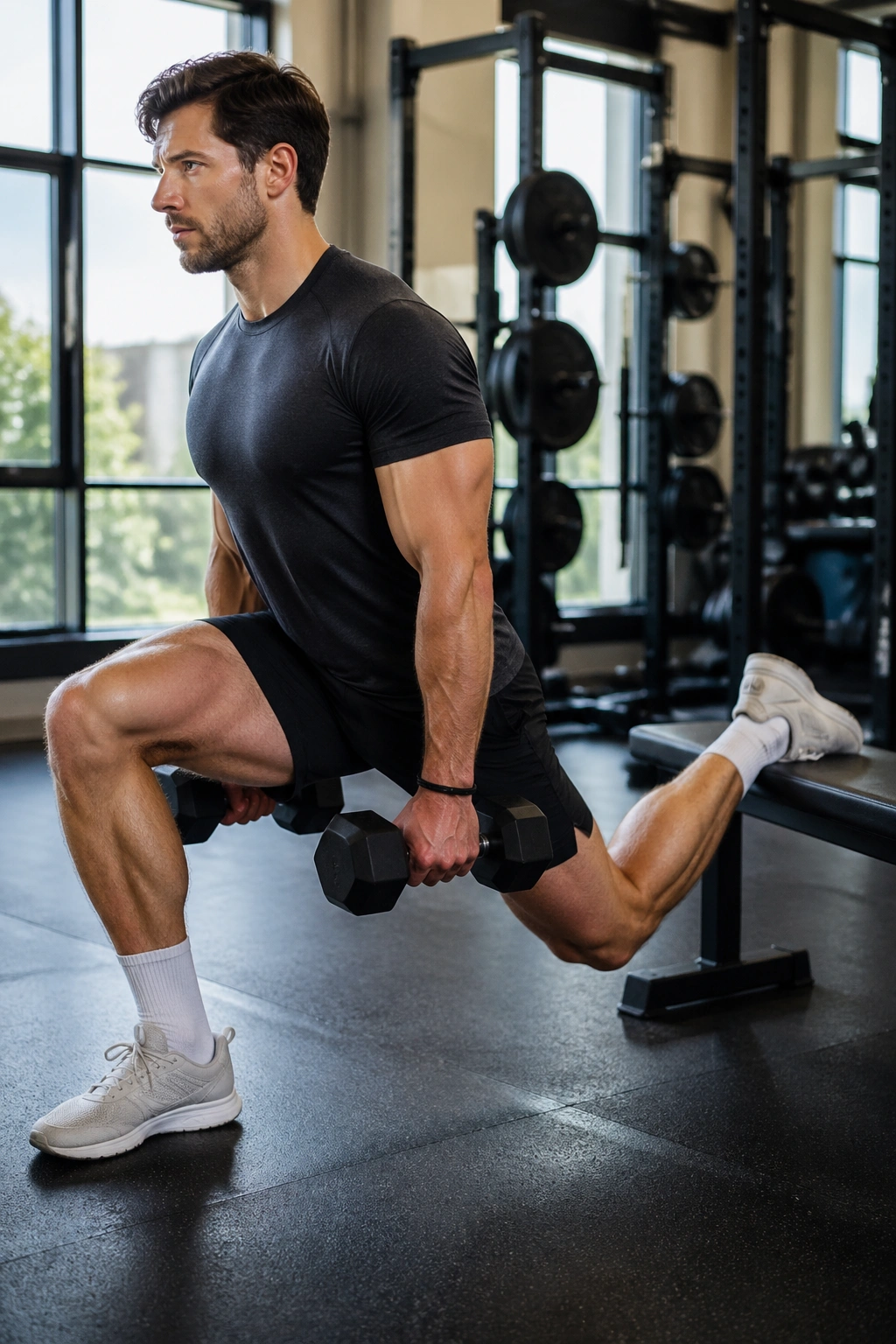
Both legs together hide a lot. A back squat, leg press, or deadlift can feel productive even when one side is doing more work than the other. That imbalance does not always show up as pain. Sometimes it just shows up as one glute that never seems to wake up, one knee that drifts, or one leg that grows faster than the other.
Single-leg training is not fancy. It is honest. A split squat, reverse lunge, step-up, or single-leg RDL removes the easy escape route and makes each side carry its own weight. That matters for glute growth, knee control, and the side-to-side strength gaps most people never notice until the load gets heavier or fatigue sets in.
Why one-leg work matters
Your pelvis has to stay level. Your foot has to stay planted. Your glute med on the standing side has to keep the hip from collapsing inward. That little stabilizing job sounds small, but it changes the whole way the leg works. Heavy bilateral lifts are useful. They just don’t ask the same question.
A lot of people skip these movements because they feel awkward at first. Fair enough. The first few sets can feel like your legs belong to different people. Hold onto a rack with one hand if you need to. Start with bodyweight or a light dumbbell. Make the rep look clean before you chase load.
The easiest places to start
- Reverse lunges with a short step back
- Bulgarian split squats with a shallow range at first
- Step-ups to a box around knee height or lower
- Single-leg RDLs with a dumbbell in the opposite hand
- Assisted split squats while one hand stays on a rack
Do not turn unilateral work into a circus. If the dumbbell is so heavy that you have to twist, hop, or lean, the set is over. The point is control and even work, not looking heroic for one shaky rep.
You can keep your big barbell lifts. You should. But one or two single-leg movements a week will tell you more about your glutes and legs than a pile of rushed machine work ever will.
5. Turning Leg Day Into a Random Grab Bag
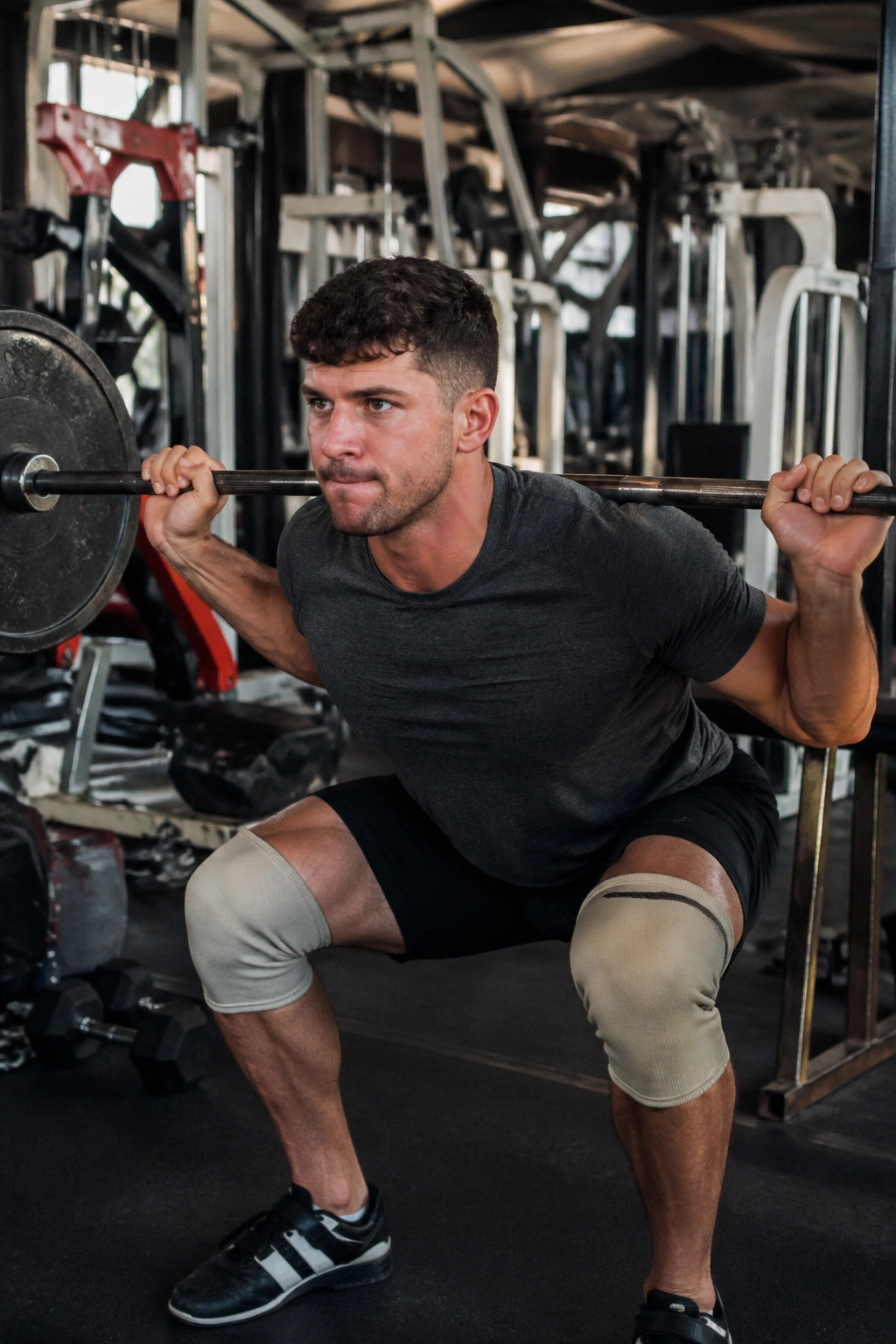
More exercises do not make a better leg day. They often make a longer one. Once fatigue piles up, the set quality drops, your rest gets sloppy, and the last few exercises become a half-hearted tour of machines you chose because they were empty.
There’s a point where variety stops helping and starts stealing effort. Ten hard sets done with focus usually beat twenty-five rushed sets where the first half gets all your attention and the rest gets whatever is left in the tank. Legs grow from tension, range, and repeatable effort. They do not need a circus.
A cleaner session usually has one squat pattern, one hinge, one unilateral move, one hamstring isolation, maybe one quad isolation, and calves if you care about them. That’s already plenty. If your workout starts looking like a scavenger hunt — hack squat, smith squat, goblet squat, leg press, sled drag, walking lunge, Bulgarian split squat, cable kickback, sissy squat, then three finishers — you probably do not have a plan. You have a pile.
A cleaner leg-day template
- 1 main squat or press pattern
- 1 hip hinge, like a Romanian deadlift
- 1 single-leg pattern
- 1 hamstring curl or similar isolation
- 1 quad isolation or a second machine if needed
- 2 to 4 sets of calves
Rest longer on the first two lifts. Two to three minutes is not lazy when the goal is a strong, clean set. Shorter rests belong on the smaller movements where grip, breathing, and setup do not limit the work.
The same thing goes for glute work. A few hard sets of hip thrusts, split squats, or RDLs done well will beat a parade of half-relevant kickbacks done after you’re already cooked. The muscle does not care how many stations you visited. It cares about the work that was actually hard.
Boredom is not a reason to add another machine. Sometimes the better move is to repeat the same core lifts for a few weeks and make them cleaner, deeper, and a little heavier.
That is how a leg day stops becoming junk volume.
6. Taking Every Set to Failure
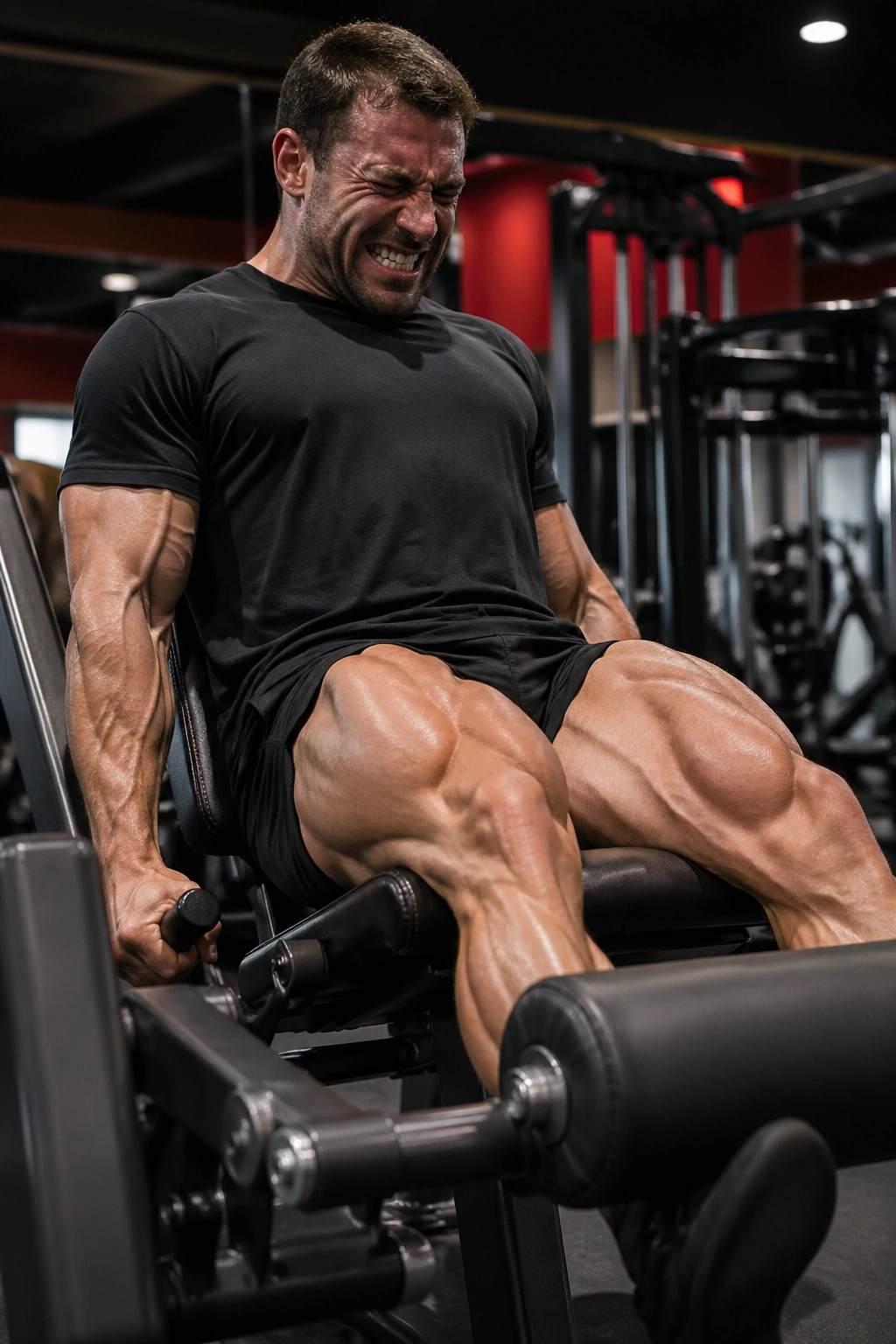
Who decided every set had to end with a grimace? There’s a strange gym habit where people treat leg day like a punishment contest. Squats to collapse, leg presses until the hips curl, lunges until the room spins. Hard work matters. Pointless wreckage does not.
Failure has a place. It is not the first place. On big compound lifts, especially squats and deadlift variations, grinding to total failure can turn the last rep into a mess of lost position and joint stress. On isolation work — leg extensions, hamstring curls, calf raises — you can push closer because the movement is easier to control and the risk is lower.
Where failure belongs
A cleaner rule works well: keep one or two reps in reserve on the main lifts, and save near-failure efforts for the final set or the smaller machine work. If your squat turns into a good-morning because you chased the burn one rep too long, the set stopped being useful before it stopped being hard.
That does not mean you coast. It means you stop when form starts to leak. A set that ends with tight bracing and a stable torso still counts. A set where your back starts doing the job of your quads does not earn extra credit because it hurt more.
Leg day burn also gets overrated. The burn can mean effort, sure, but it can also mean you cut rest too short or chose a rep range that is more about suffering than progress. One clean set of 8 with good tempo often beats a sloppy 15 that turns into flailing by rep 11.
What to do instead
- Use 1 to 2 reps in reserve on squats, presses, and hinges
- Push isolation work closer to failure
- Keep the last rep clean enough to repeat
- Rest long enough that the next set starts fresh
- Stop chasing soreness as if it were a scorecard
Pain is not the same thing as productive effort.
If your legs are trashed every time but your numbers never move, the session is taking more than it gives. A little restraint on the big lifts usually leads to better progress and fewer weird aches later.
7. No Training Log

If you don’t write it down, you are guessing. That sounds blunt because it is. The fastest way to keep repeating the same leg day mistakes is to leave the gym with only a vague memory of what you did. After three exercises, most people forget the exact load, the rep count, and whether the right leg felt stronger than the left.
A logbook does not need to be fancy. A phone note works. A notebook works. A whiteboard works. What matters is that you can look back and see whether your squat went from 185 for 5 to 190 for 5, whether your split squat felt steadier on the second side, and whether the Romanian deadlift felt better with the bar closer to the shin. That is the boring detail that actually changes training.
What to write after leg day
- Exercise name and order
- Weight used
- Reps on each set
- Rest time if it was shorter or longer than usual
- Reps in reserve on the hardest set
- Stance width, heel height, or machine setting if those changed
- Any pain, pinching, or weird asymmetry
Those notes matter more than people think. A tiny change in foot position can fix a cranky knee on a leg press. A slightly shorter split-squat stance can shift the load from the hip flexor to the glute. If you never write those details down, you end up re-learning the same lesson every few weeks.
The log also keeps you honest about progress. Progress does not always mean more weight. Sometimes it is one more rep with the same load, or the same reps with a cleaner bottom position, or the same workout with less rest between the first two lifts because your conditioning improved. Those are real wins.
And yes, the log helps with recovery. If you notice that your hamstring curls feel awful whenever you pair them with heavy RDLs after leg press, you can change the order. If your knees complain when you push split squats too close to failure, you can back off before the irritation turns into a bigger problem.
Write the session down. Keep the useful bits. Repeat the lifts that build strength, not the ones that only make the workout feel dramatic.
That tiny record is how you stop making the same leg day mistakes over and over.
