



Everyone acts like the barbell back squat is the mandatory rite of passage for building strong, muscular legs. If you hang around powerlifting forums or old-school gym culture long enough, you’ll hear that you aren’t “really” training legs unless you’re putting a heavy bar on your back and dropping into the hole. But here is the reality that rarely gets discussed in those circles: back squats are not for everyone.
Some people deal with chronic lower back pain that flares up the moment a heavy load compresses their spine. Others have long femurs that make the mechanics of a deep squat feel like a biomechanical nightmare, forcing them to fold over like a lawn chair just to hit depth. Then there is the sheer mental exhaustion. There is a specific kind of dread that comes with walking up to a loaded squat rack when you already know you are going to hate the movement.
If you hate squats, you do not have to force yourself to do them. You can build powerful quads, massive hamstrings, and thick calves without ever stepping under a heavy barbell back squat. The key is understanding that your legs do not know the difference between a squat and a well-executed lunge or deadlift variation. They only understand tension, mechanical load, and fatigue.
By shifting your focus to movements that emphasize hip extension, knee flexion, and unilateral stability, you can actually build a better-looking, more functional lower body than someone who spends all their time grinding out squats they despise. Let’s look at the alternatives that work just as well, if not better, for most people.
1. Romanian Deadlifts
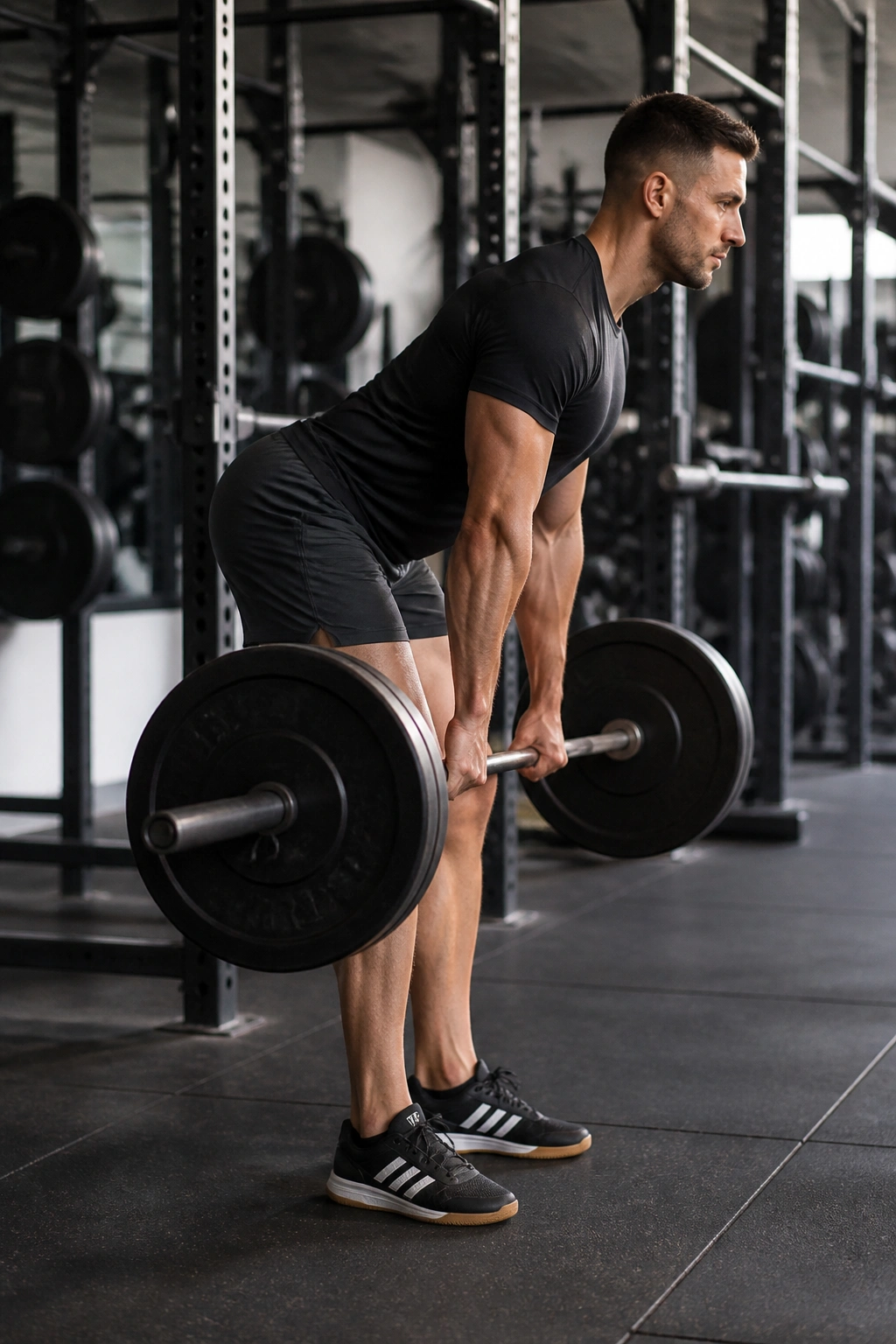
This is the king of posterior chain development. Unlike a standard deadlift that pulls from the floor, the Romanian Deadlift (RDL) starts from the top and focuses on the eccentric phase—the lowering. It puts immense tension on your hamstrings and glutes without the crushing spinal load of a high-bar squat.
The Mechanics of the Hinge
To perform these correctly, stand with your feet hip-width apart. Hold a barbell or a pair of heavy dumbbells in front of your thighs. Keep a very slight bend in your knees—don’t lock them out, but do not turn it into a squat—and push your hips backward as if you are trying to touch a wall behind you with your glutes.
The bar should stay glued to your legs the entire time. As you descend, you will feel a massive, deep stretch in your hamstrings. That is the money zone. Go as low as your flexibility allows before your back starts to round. Squeeze your glutes to pull yourself back to the standing position.
Why It Beats Squatting
Most people find RDLs much easier on the lower back because the load is centered more effectively over the mid-foot rather than resting high on the traps. You get all the hypertrophy benefits for the back of your legs with significantly less technical frustration.
2. Leg Press
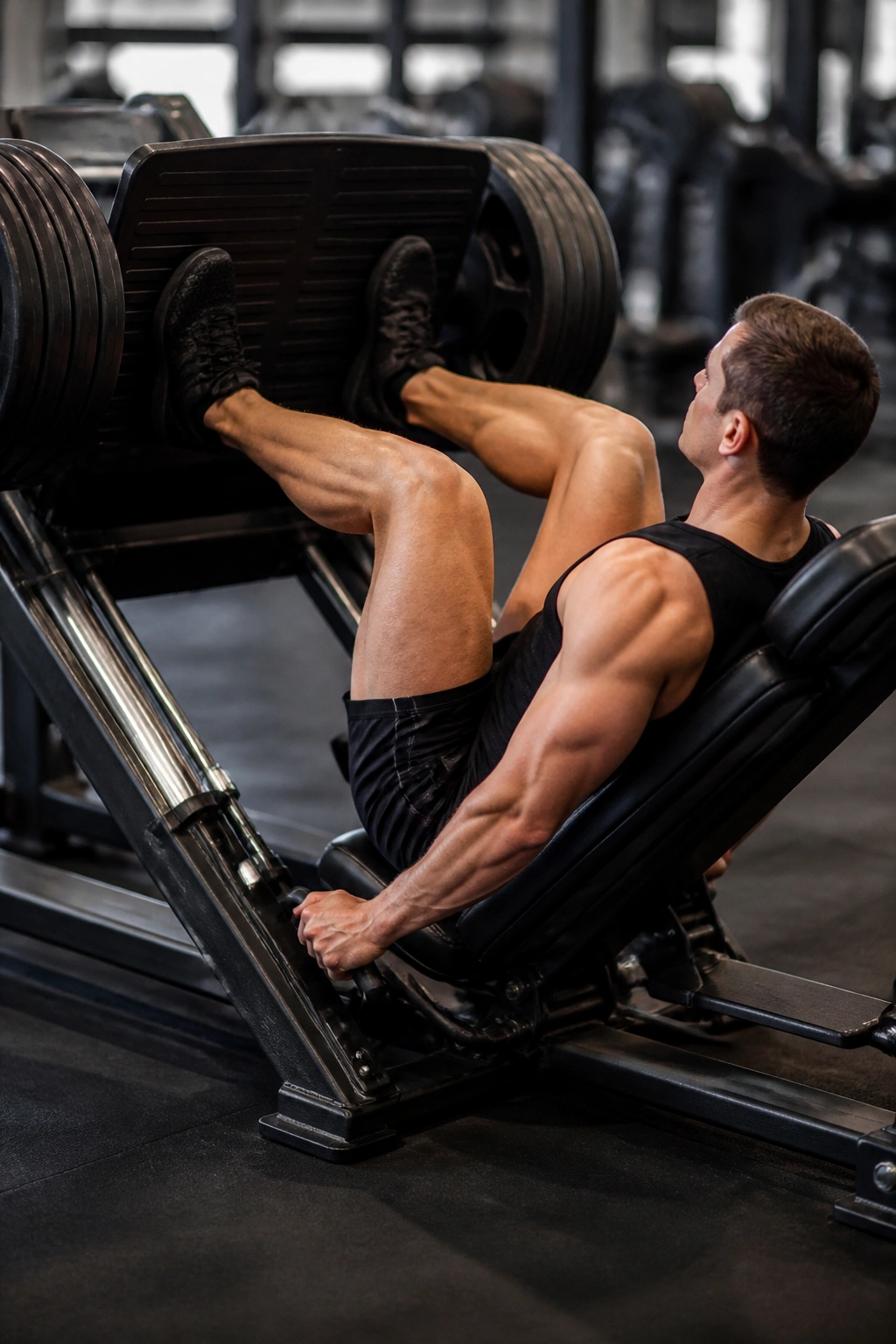
There is a weird stigma against the leg press in some hardcore lifting communities, often fueled by people who clearly do not understand how to use it. Ignore them. When you want to isolate your quads without involving your core or lower back, the leg press is one of the most effective tools available.
Manipulating Foot Placement
One of the best things about the leg press is that you can change the target muscle group just by moving your feet. If you place your feet low on the platform, you will get significantly more knee flexion and quad engagement. If you move your feet high on the platform, you shift the load to your glutes and hamstrings.
Keep your lower back pressed firmly against the pad at all times. If your butt starts to lift off the seat at the bottom of the movement, you are going too deep or the machine is not set up correctly for your anatomy. Stop the descent just before your lower back peels away.
Volume and Time Under Tension
Because the machine handles the stability, you can push yourself to failure safely. This makes the leg press perfect for drop sets or high-repetition work where you are trying to force blood into the muscle and maximize metabolic stress. You don’t need a spotter, and you don’t need to worry about the bar crushing you.
3. Walking Lunges
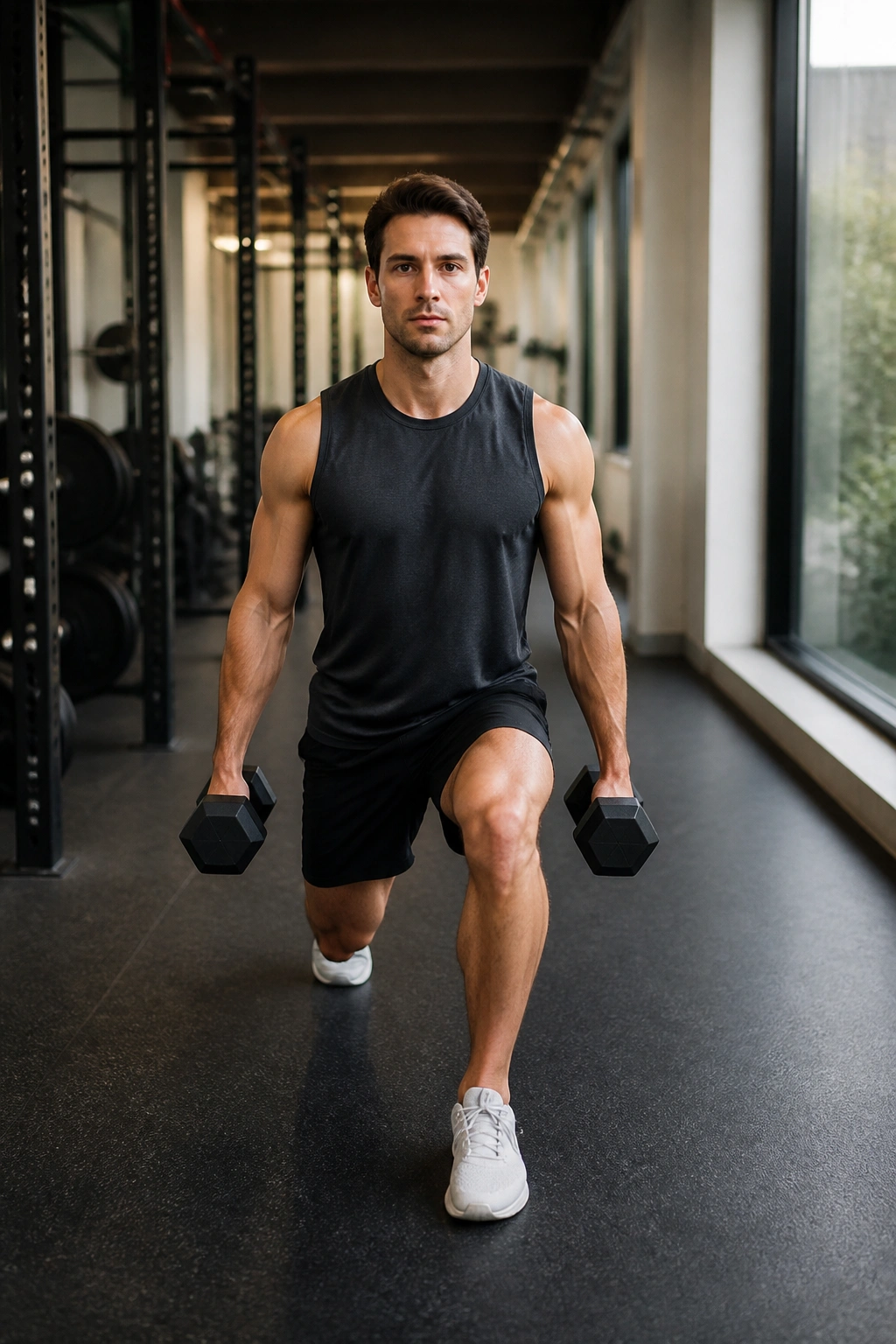
Walking lunges are brutal in the best way possible. They force you to stabilize your entire body with every step, and they hit the quads, glutes, and even the adductors. They are essentially a squat pattern broken into a unilateral movement, which is often much kinder to the hips and lower back.
Maintaining Proper Form
Keep your torso upright. If you lean too far forward, you turn the lunge into a hip-dominant exercise, which is fine, but it misses the quad-building potential of the upright position. Take a step long enough that your front shin stays vertical or only slightly angled forward.
Drive through the heel of your front foot to stand up and bring your back leg forward into the next rep. You will find that this movement creates a tremendous amount of instability, which is exactly why it is so good for building functional leg strength.
Intensity Variations
If bodyweight lunges become too easy, grab a pair of dumbbells. You can hold them at your sides (suitcase carry style) to test your grip, or you can hold them at your shoulders (front rack) to make it more difficult for your core to stay upright.
4. Kettlebell Swings
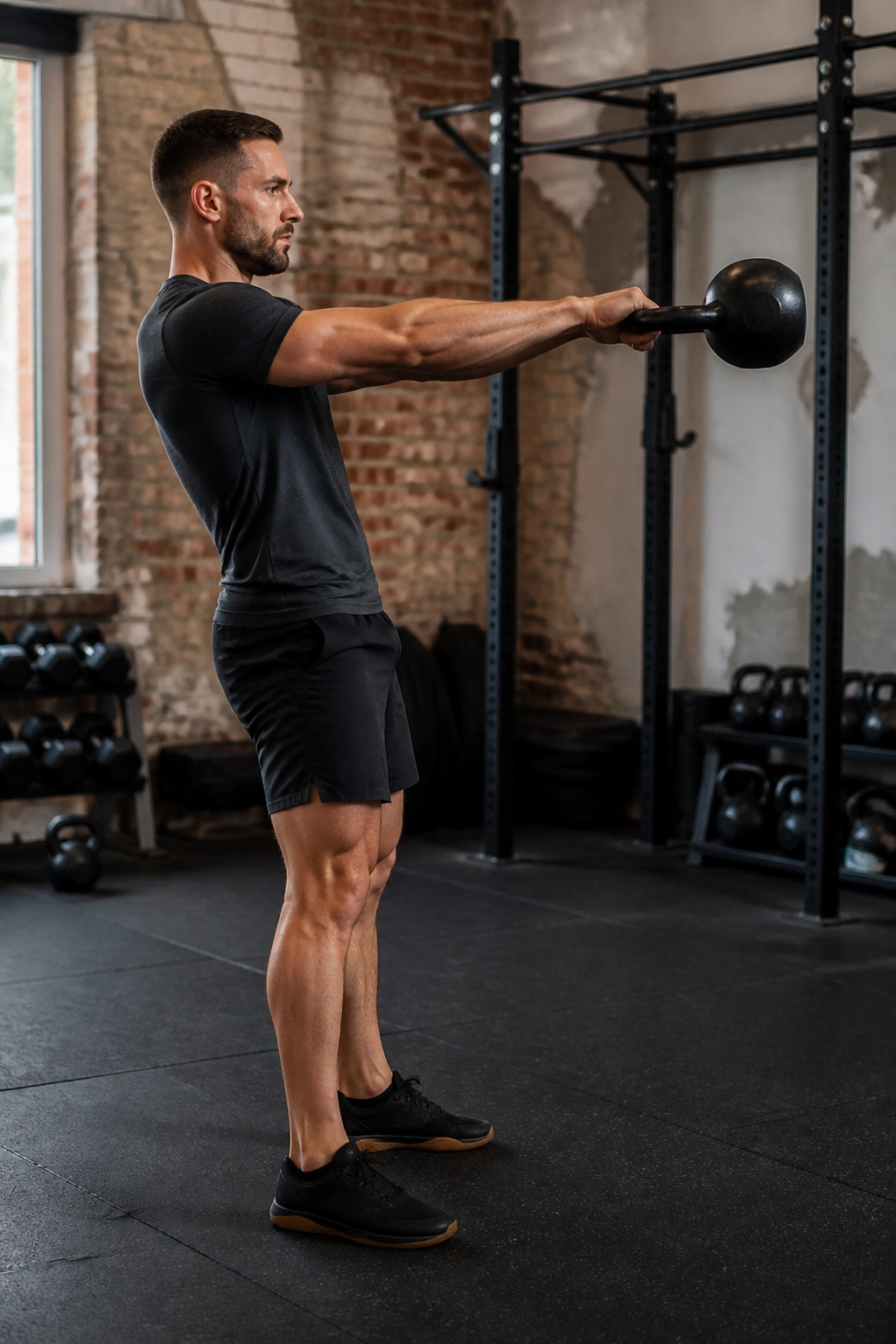
While many people think of this as a cardio movement, the kettlebell swing is an explosive hip hinge exercise that builds incredible glute and hamstring power. It is dynamic, fast, and does not require you to hold a heavy bar on your shoulders.
The Hip Snap
Think of the movement as a vertical jump that you are catching with your hips. You are not squatting the bell up; you are using your hips to violently snap the weight forward. Your arms are just ropes—they do not lift the bell.
As the bell swings down, let it pass between your legs, keeping your back flat. When it hits the peak of your hips, aggressively squeeze your glutes to thrust the weight upward. The power should come entirely from your posterior chain.
Building Posterior Chain Power
This exercise forces you to develop rapid hip extension. It is a fantastic movement for athletes or anyone who wants to improve their speed and power. Plus, it builds a dense, muscular set of glutes that back squats often fail to target specifically due to the quad-heavy nature of traditional squat mechanics.
5. Goblet Reverse Lunges
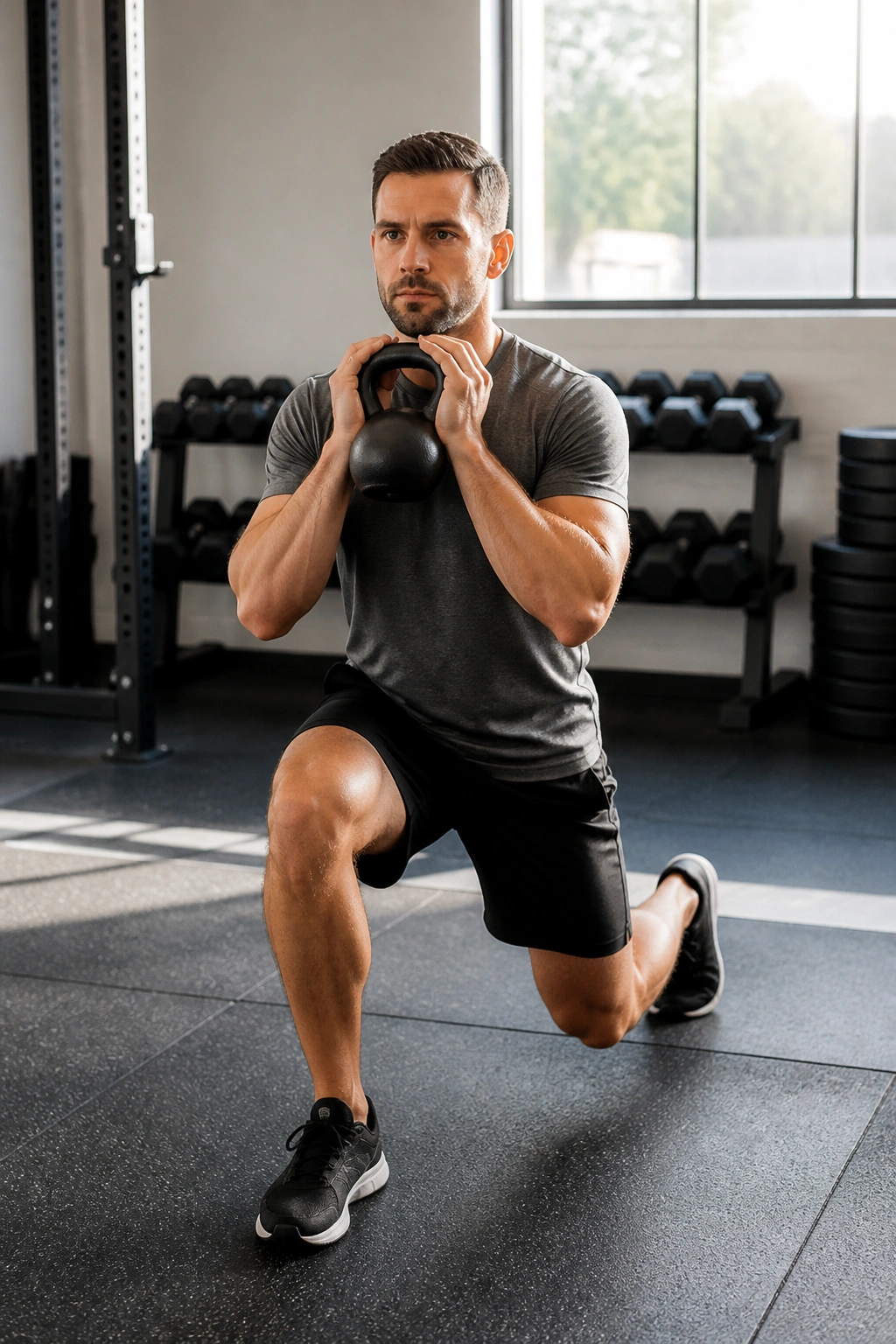
Reverse lunges are generally safer for the knees than forward lunges because the weight is shifting backward, which prevents the forward momentum from driving your knee over your toe in an uncontrolled way. Holding a weight in a “goblet” position—against your chest—engages your core and upper back.
Why the Reverse Matters
By stepping backward, you are creating a more controlled deceleration of the body. You can maintain a much better vertical torso angle, which keeps the focus squarely on the quads of the front leg.
Keep the weight pressed against your sternum. This counterbalances your body, helping you stay upright. If you drop the weight away from your chest, you will naturally tip forward, which shifts the emphasis away from the legs and onto the lower back.
Managing the Load
You do not need massive amounts of weight to make this effective. Because it is a unilateral exercise, a pair of moderate dumbbells or even a single heavy kettlebell is usually enough to induce significant muscle fatigue. Focus on the control of the negative—the way down—rather than the speed.
6. Seated Leg Curls
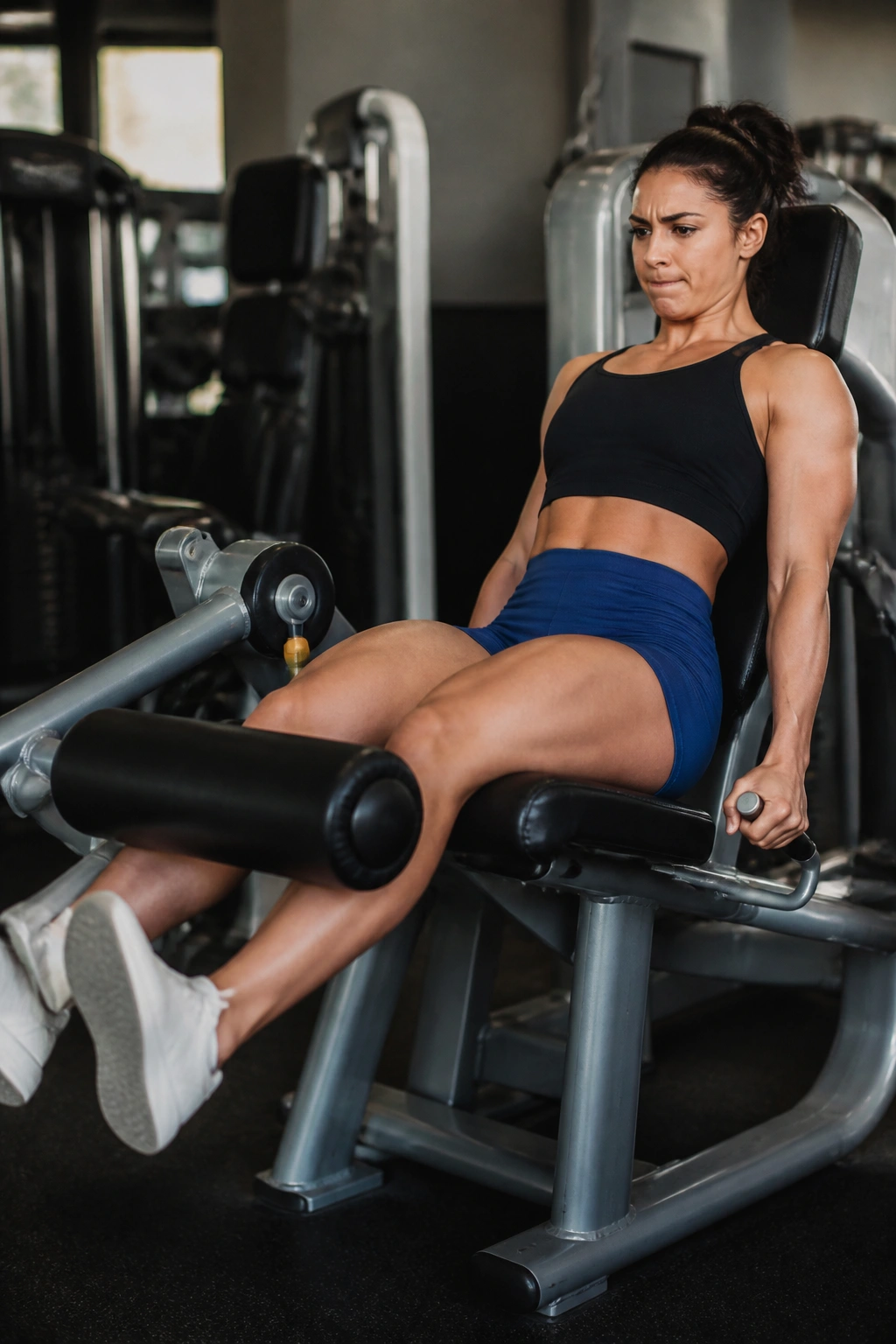
Sometimes, you need to isolate the muscle directly. Compound movements are great, but the hamstrings are often neglected in squat-heavy programs because the quads take over. The seated leg curl machine allows you to lock your hips down and focus exclusively on knee flexion.
Isolating the Hamstring
The secret to the seated leg curl is pinning your hips into the seat. Use the pad over your thighs to lock yourself down securely. If your hips are bouncing up out of the seat while you curl, you are losing tension and using momentum.
Control the weight. Do not just swing the pad down with your legs. Curl it in two seconds, pause for a second at the peak contraction where the hamstrings are fully shortened, and then take three seconds to release it. That slow eccentric release is where the muscle growth happens.
The Importance of Knee Flexion
The hamstrings do two things: they extend the hip (like in a deadlift) and they flex the knee (like in a curl). If you only do hinge movements like deadlifts, you are missing half the function of the hamstring. This is why a dedicated curl machine or a Nordic curl is essential for full development.
7. Lateral Lunges (Cossack Squats)
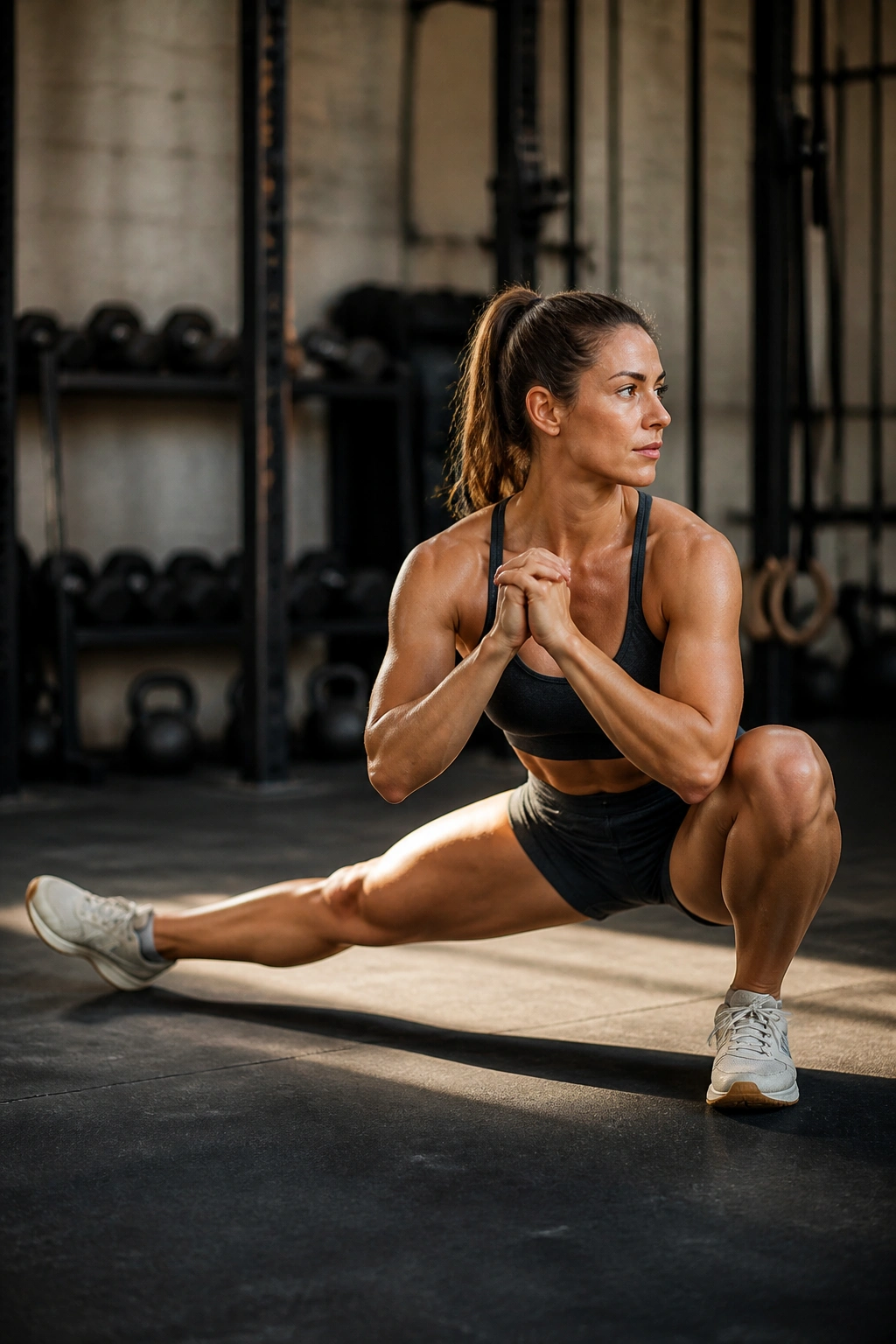
Most leg exercises are done in the sagittal plane—moving forward and backward. But life happens in all directions. Lateral lunges or Cossack squats force you to train in the frontal plane, which hits the adductors (inner thighs) and glutes in a way that squats never will.
The Movement Pattern
Take a very wide stance, much wider than shoulder-width. Shift your entire body weight to one side, bending that knee while keeping the other leg perfectly straight. The goal is to get that working hip as low as possible.
You will feel a significant stretch in the inner thigh of the straight leg. Push yourself back to the center using the heel of your bent leg. This movement exposes weaknesses in hip mobility instantly.
Why They Feel Different
If your adductors are weak, your knees will cave inward during heavy squats. Lateral lunges are the best corrective exercise for this. They strengthen the inner thigh, improve hip range of motion, and force you to stabilize your body on a single leg, which is a great skill for overall balance.
8. Glute Bridges
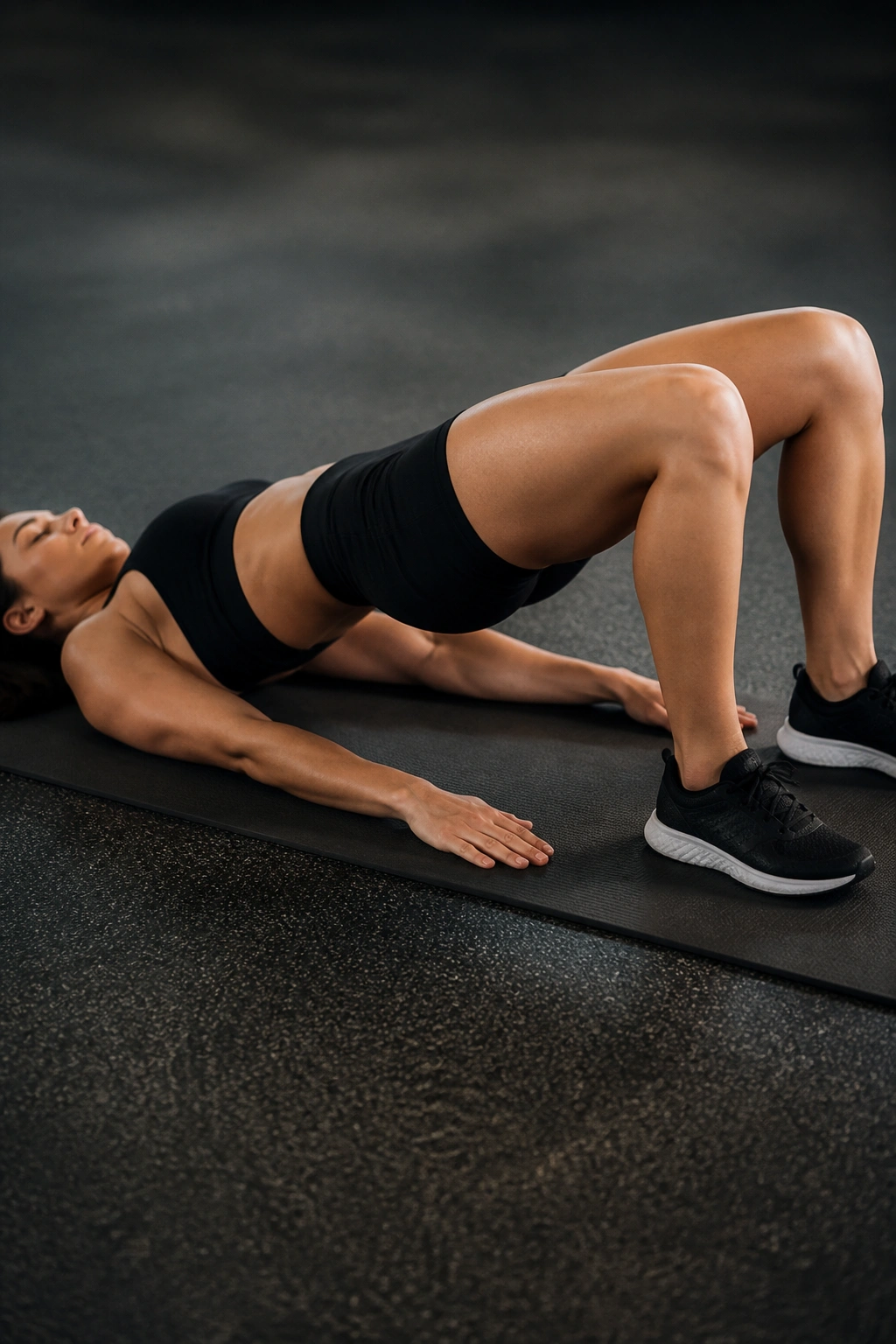
The glute bridge is the ultimate movement for, well, your glutes. It isolates them completely and removes the lower back from the equation. Whether you use a barbell, a plate, or just your body weight, this is a staple for anyone who wants strong hips without spinal compression.
Perfecting the Form
Lie on your back with your knees bent and feet flat on the floor. Drive through your heels to lift your hips toward the ceiling. At the top of the movement, your body should form a straight line from your knees to your shoulders.
Squeeze your glutes at the top as hard as you can. Avoid the common mistake of arching your lower back to get more height. If you feel this in your lower back, you are doing it wrong. Keep your ribs tucked down, brace your core, and drive through the glutes.
Variations
If the standard version becomes too easy, do them one leg at a time. A single-leg glute bridge is twice as hard and requires significantly more stability from your hips. It is one of the most honest tests of glute strength you can perform.
9. Leg Extensions
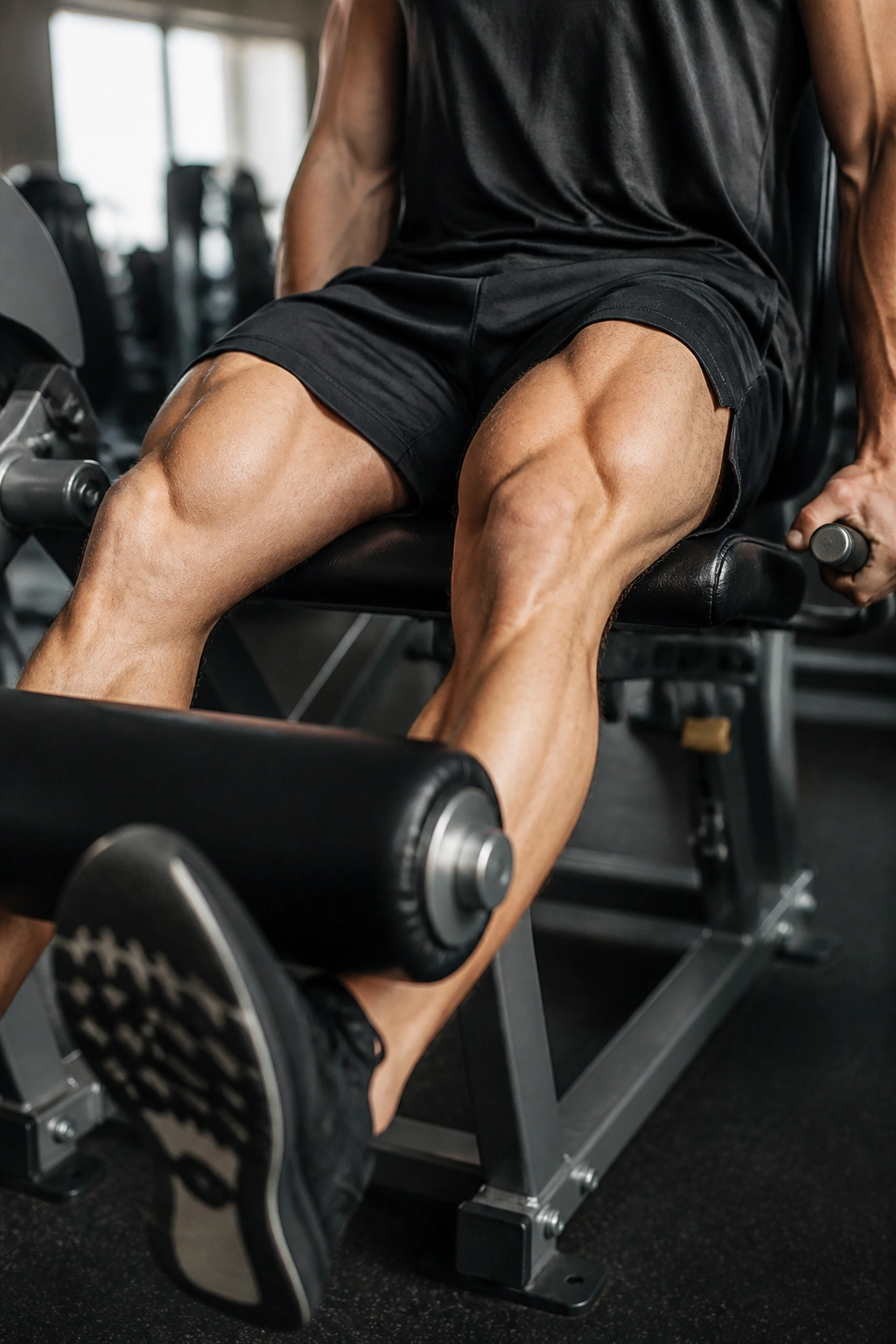
Like the seated leg curl, the leg extension machine is often criticized by the “functional training” crowd, but it is one of the best ways to target the rectus femoris—the quad muscle that crosses the hip joint. It is a pure isolation exercise that allows you to fatigue the quads without stressing your glutes, back, or core.
Controlling the Reps
Sit with your back against the pad. Adjust the leg pad so it rests on your shins, just above the ankles. Lift the weight by extending your legs until they are straight. Pause at the top.
Most people perform this exercise way too quickly. The magic happens on the way down. Lower the weight slowly, taking a full three to four seconds. By the time you get to the bottom, your quads should be screaming.
Why Use It?
If you are recovering from a lower back injury or just hate the physical toll of squats, leg extensions allow you to build quad size without any systemic fatigue. You can go to failure, you can do high reps, and you can focus on the pump. It is purely mechanical work.
10. Cable Pull-Throughs
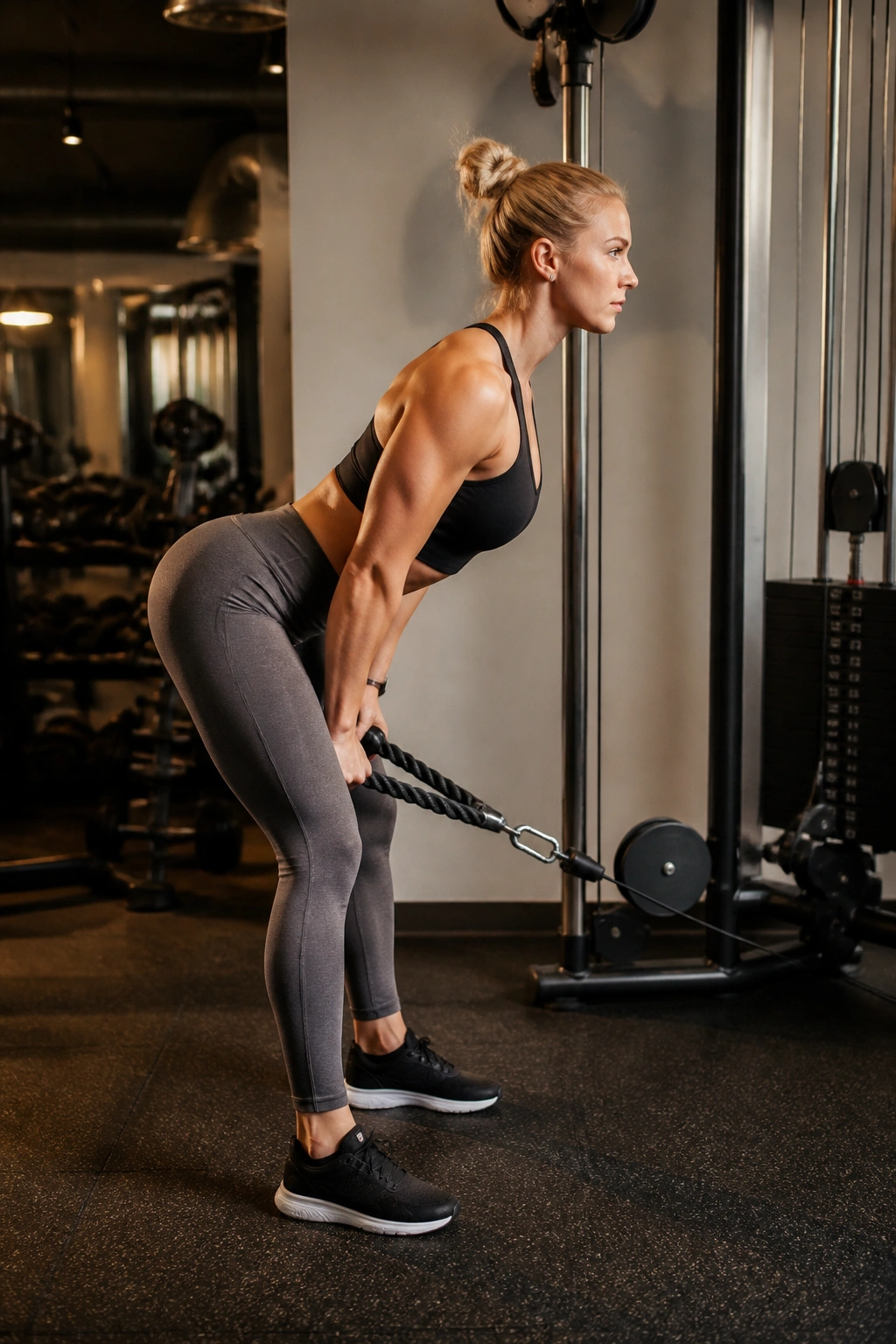
This is a movement that feels slightly awkward the first time you do it, but once you master the mechanics, you will realize why it is a powerhouse for the glutes. It uses a cable machine to apply constant tension to your posterior chain, mimicking a deadlift without the bar.
The Setup
Attach a rope handle to a low cable pulley. Stand facing away from the machine, reach between your legs, and grab the rope with both hands. Walk forward so there is tension on the cable.
From here, perform a hip hinge. Let the weight pull your hips back between your legs, feeling the stretch. Then, snap your hips forward to the starting position, pulling the rope through your legs.
Constant Tension
Unlike a barbell deadlift, where the tension can dissipate at the top of the movement, the cable pulls you constantly. You have to fight to keep your balance. This forces your glutes to stay engaged through the entire range of motion, which is excellent for hypertrophy.
11. Step-Ups
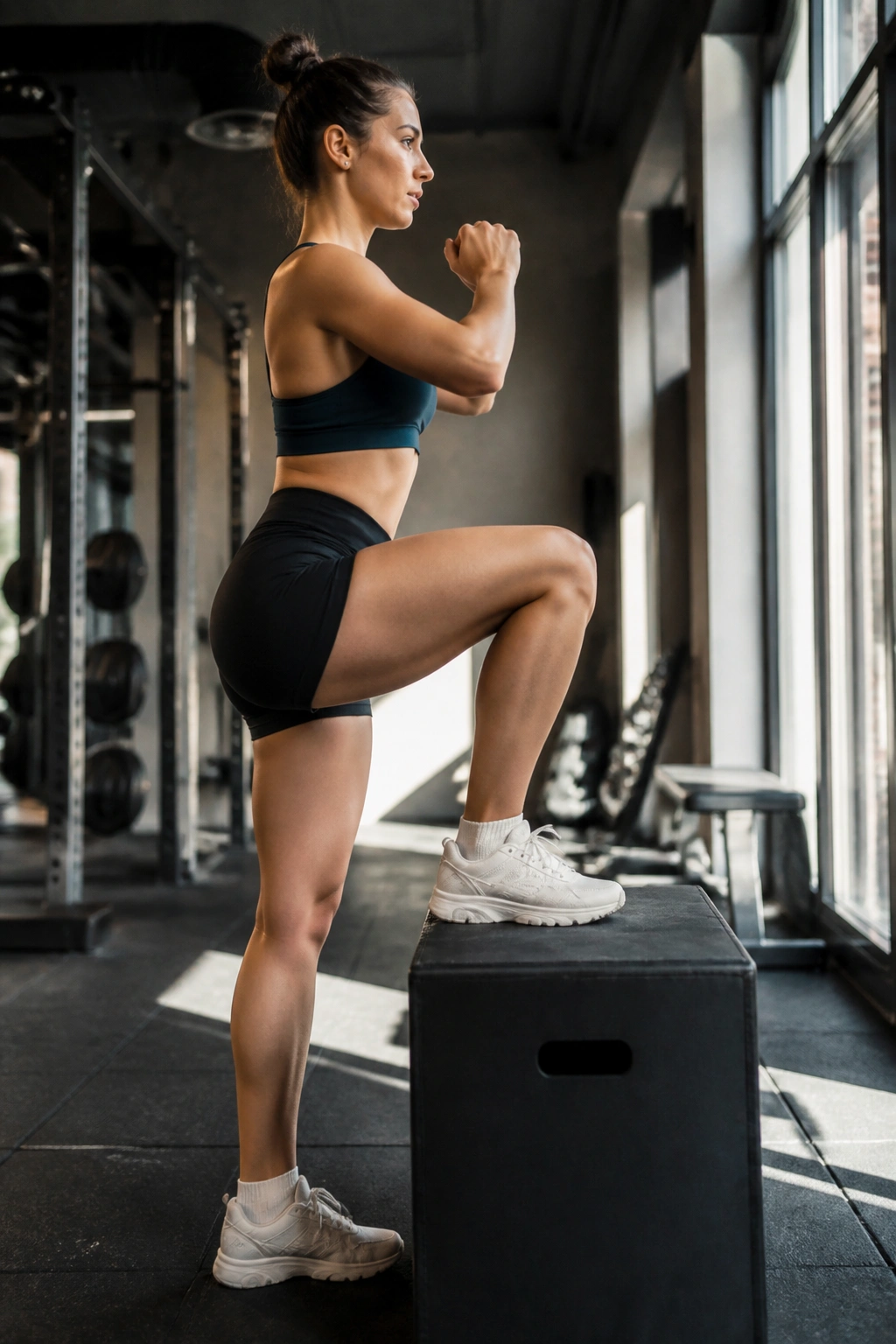
Step-ups are one of the most underrated leg exercises in existence. They are effectively a lunge where you have to lift your body weight onto a platform. They build unilateral strength, coordination, and serious quad power.
Choosing the Right Height
Do not use a platform that is too high. If your knee is higher than your hip at the start of the movement, you are putting unnecessary stress on the joint and it becomes more of a gymnastics feat than a leg exercise. Use a box or bench that allows your thigh to be roughly parallel to the floor at the starting position.
Drive through the heel of the foot on the box. Try to minimize the “push-off” from the bottom foot. The leg on the box should do 90% of the work. If you find yourself jumping off the floor to get up, you are using too much momentum and not enough muscle.
Adding Load
You can hold dumbbells at your sides for an extra challenge. This turns the exercise into a massive stabilizer test for your ankles and hips. It is fantastic for correcting imbalances where one leg is stronger than the other.
12. Sumo Deadlifts
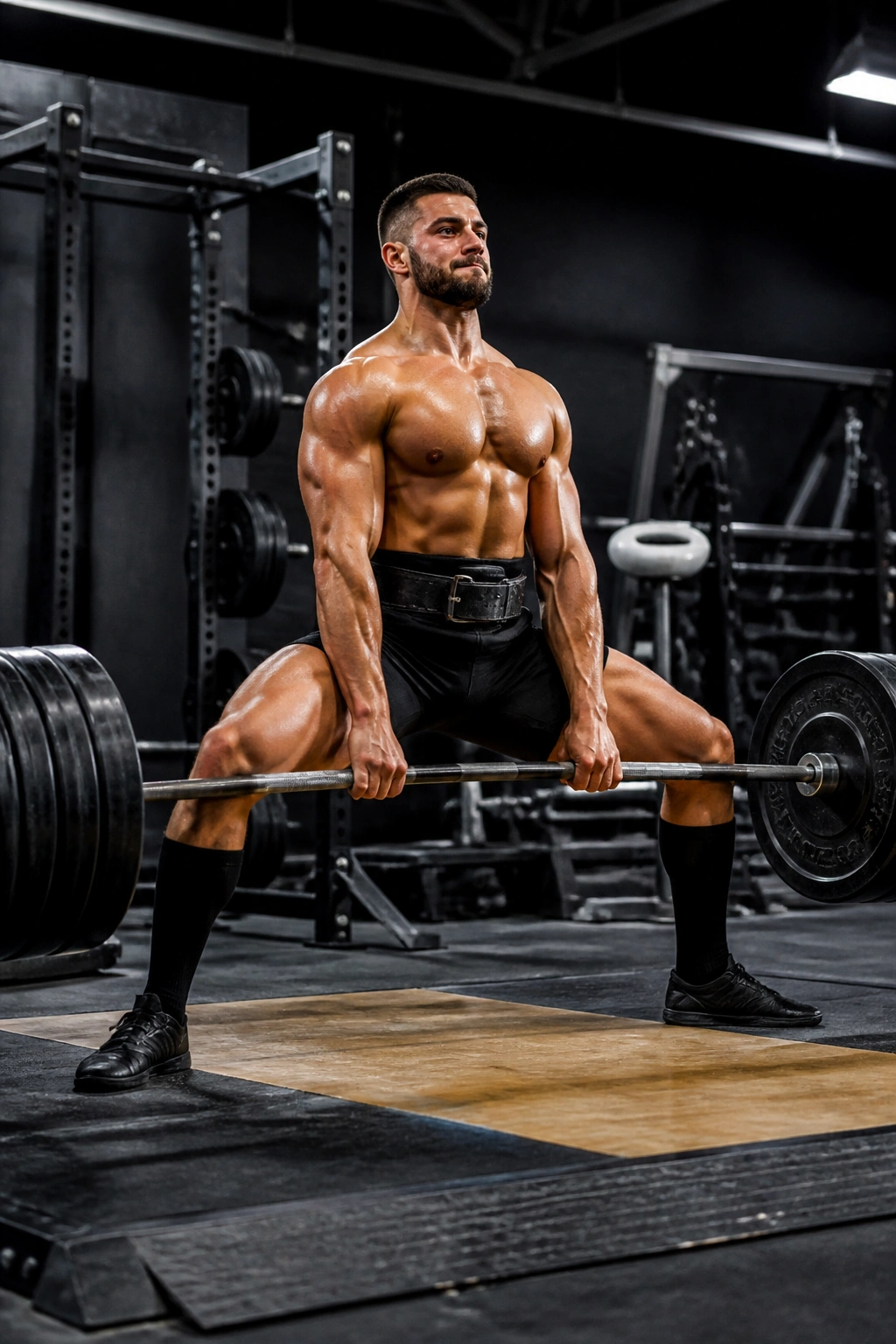
If you like the idea of deadlifting but find the standard stance uncomfortable for your hips, the sumo deadlift is your answer. By taking a wide stance with your toes pointed out, you shift the load away from the lower back and place more emphasis on the glutes and adductors.
The Stance
Set your feet wider than shoulder-width, with your toes pointed out at about 45 degrees. Your hands should be inside your knees. Keep your chest up and your back flat.
Because your torso remains more upright in a sumo stance than a conventional deadlift, there is significantly less shear force on the lumbar spine. This makes it a great alternative for people who want to lift heavy but have a history of back issues.
The Drive
Think about pushing the floor away with your feet, rather than pulling the bar up with your back. You want to drive your knees out as you stand up. This keeps your glutes engaged and protects your knees.
13. Sled Pushes
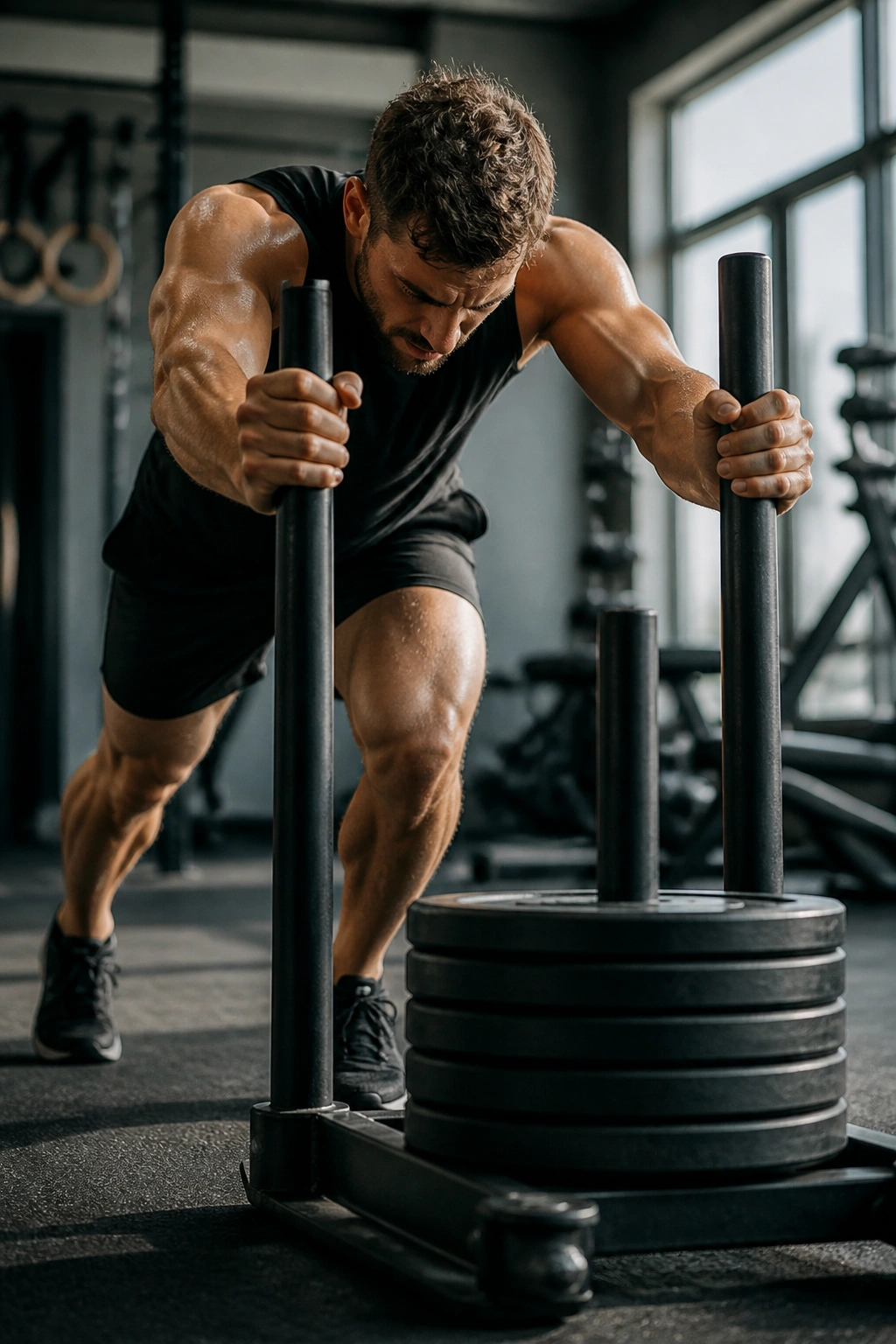
This is the ultimate “I hate squats” leg workout. It is non-eccentric, meaning there is no lowering phase—so there is zero muscle damage and almost no soreness. It is purely concentric, which makes it perfect for high-volume leg training.
The Mechanics
Load up a heavy sled and push it. Lean into the handles, drive through your midfoot, and keep your legs moving. It is simple, effective, and brutal.
You can adjust the weight to make it a strength exercise or a conditioning exercise. If you go heavy, it feels like a heavy leg press. If you go light, it becomes a cardio workout that will leave your quads burning like nothing else.
Recovery
Because there is no eccentric loading, you can do this multiple times a week without wrecking your recovery for other training. It is arguably the best leg exercise for athletes who need strong legs but cannot afford the fatigue of heavy barbell training.
14. Curtsy Lunges
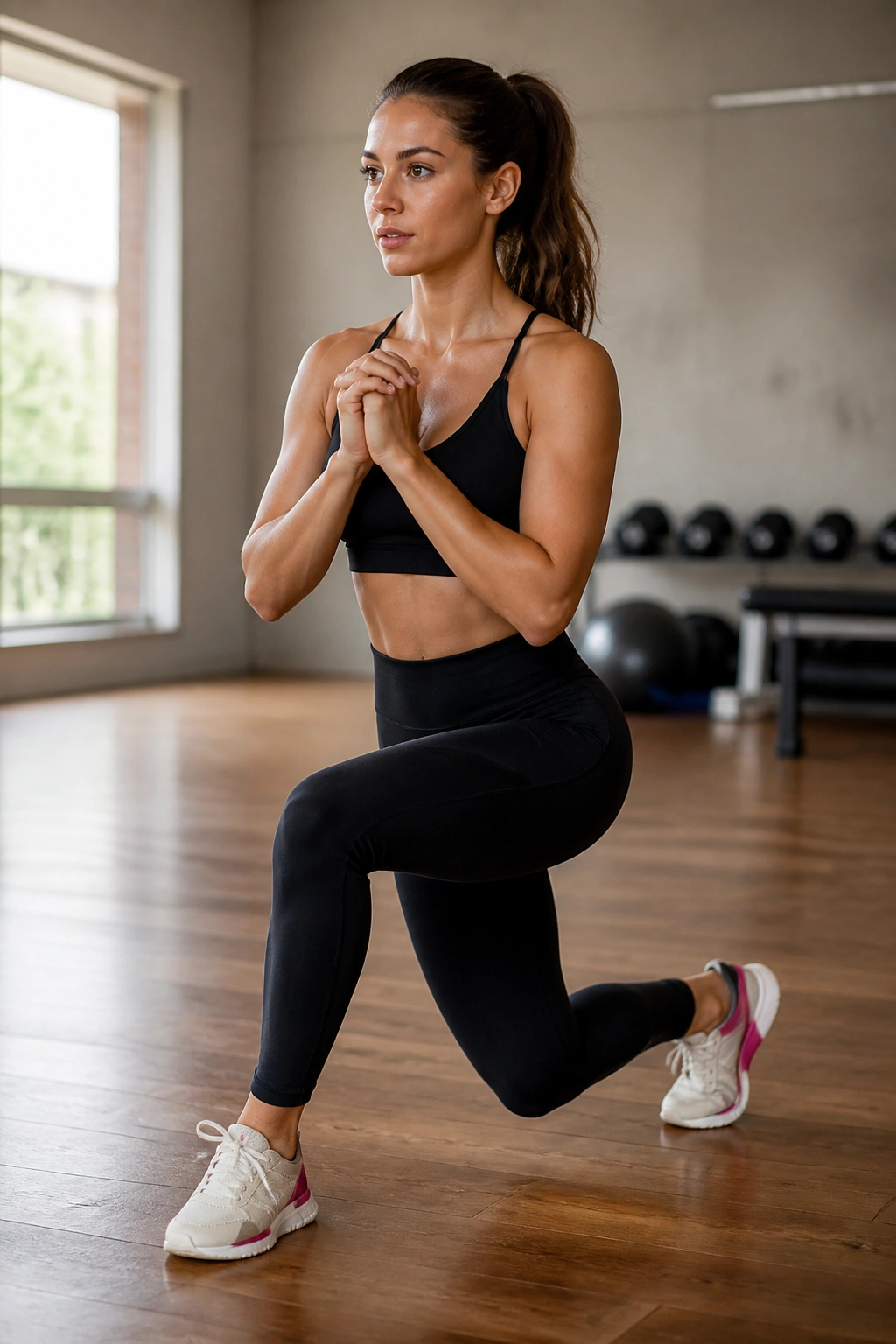
The curtsy lunge is a variation that targets the glute medius—the side of the hip that is often neglected. By stepping behind your front leg, you create a diagonal angle that forces the hip to stabilize against lateral movement.
Stabilization
Start standing, then step your right leg back and across behind your left leg. Lower your hips until your front thigh is parallel to the floor. Keep your torso upright.
This requires a ton of balance. If you are struggling, you can hold onto a rack for stability, but try to wean yourself off it as you get stronger. The instability is the benefit.
The Glute Medius
Most people have weak glute medius muscles, which leads to hip pain and knee instability. This exercise fixes that. It creates a unique burn in the side of the glutes that a back squat simply cannot replicate.
15. Nordic Hamstring Curls
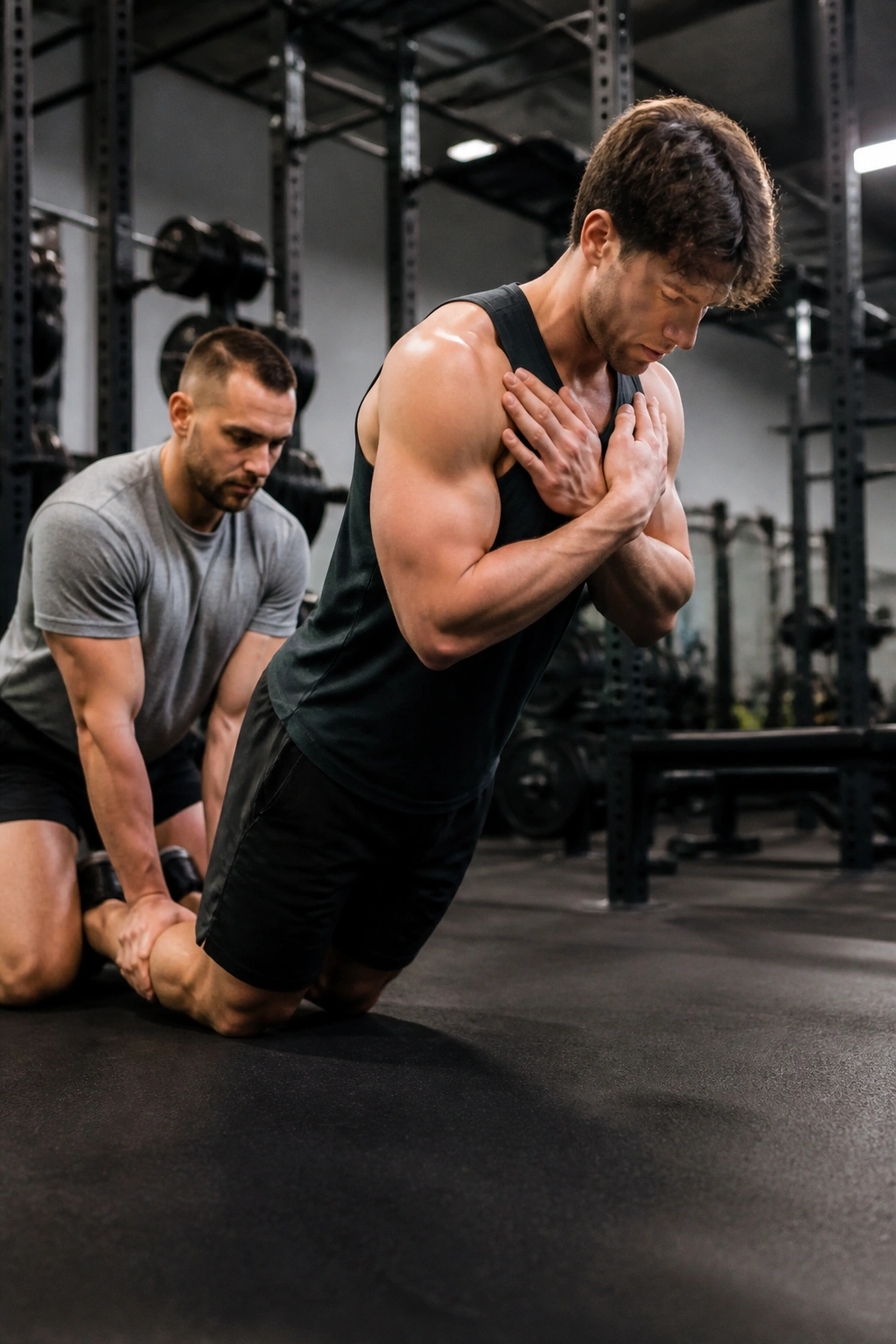
These are advanced, but if you want bulletproof hamstrings, there is no better exercise. It is a bodyweight movement that isolates the hamstrings through eccentric loading. You will need a partner to hold your ankles, or a specialized machine to anchor your heels.
The Eccentric Load
Kneel on a soft pad. Have a partner hold your ankles down firmly. Keeping your back straight and your hips locked in extension, lower your torso toward the floor as slowly as you possibly can.
You will reach a point where you cannot hold it anymore and you will fall. That is normal. Use your hands to push yourself back up. The goal is to maximize the time spent in that lowering phase.
Injury Prevention
These are widely regarded as the gold standard for hamstring injury prevention in sports. They strengthen the muscle fibers while they are in a lengthened state, which is exactly where most hamstring tears happen.
16. Box Jumps
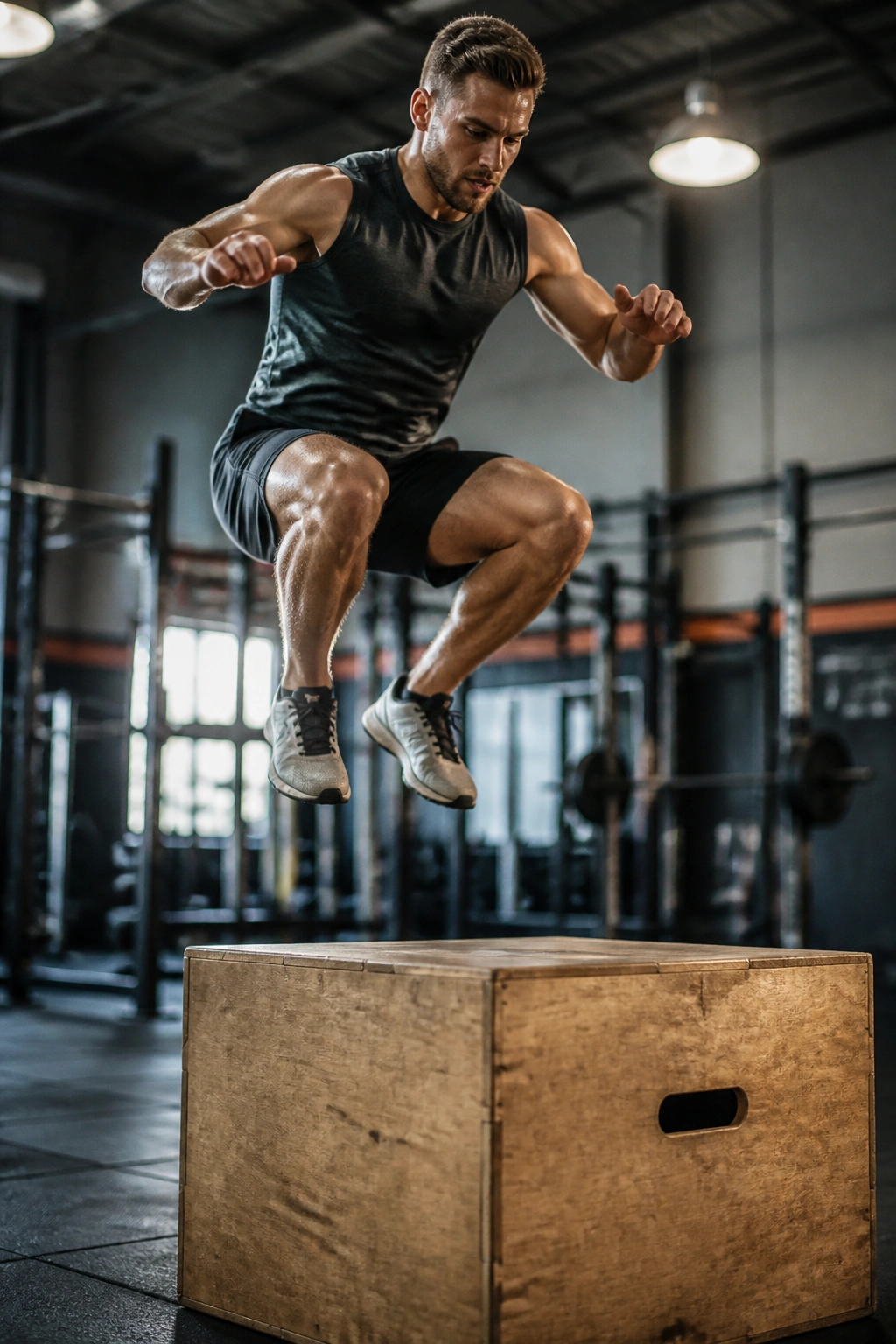
If you want to train your legs for power and speed rather than just raw size, box jumps are the answer. They require explosive hip extension and landing mechanics that engage the entire lower body.
Landing Softly
The goal of a box jump is not to jump as high as you possibly can and then flop onto the box. The goal is to jump with intent and land softly, absorbing the force with your legs.
Land with your feet flat, knees bent, and core braced. If you land with a loud thud, you are jumping too high or not using your legs to absorb the force. Your landing should be silent.
Developing Fast-Twitch Fibers
Explosive movements like this recruit fast-twitch muscle fibers, which are the ones that have the most potential for growth. By doing these, you train your nervous system to fire your leg muscles faster, which carries over to every other exercise you do.
17. Single-Leg RDLs
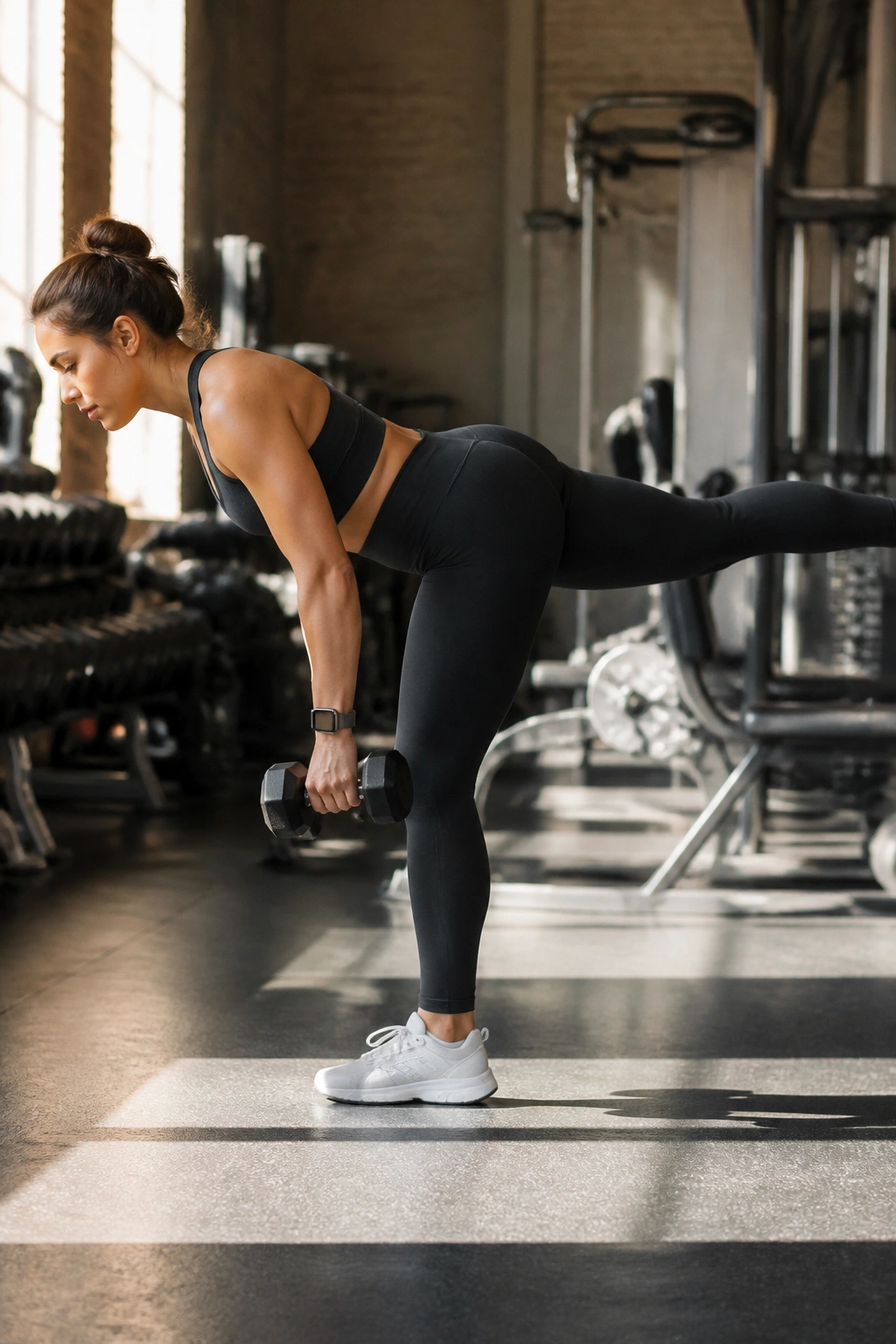
The single-leg Romanian Deadlift is the ultimate test of balance and posterior chain strength. It fixes imbalances, strengthens the ankles, and builds massive glutes. It is also completely self-limiting—you cannot cheat with heavy weight because you will fall over.
Finding Balance
Stand on one leg, holding a dumbbell in the opposite hand. Hinge at the hip while extending your free leg backward for balance. Your body should form a “T” shape at the bottom of the movement.
Return to the standing position by driving through the heel of the standing leg. This requires incredible focus. You will feel your stabilizer muscles in your foot, ankle, and hip firing like crazy.
Fixing Asymmetries
Everyone has a dominant leg and a non-dominant leg. Usually, your dominant leg does all the work in a squat. This exercise forces your weaker leg to do the same amount of work, balancing out your physique and fixing strength deficits.
18. Glute Ham Raises
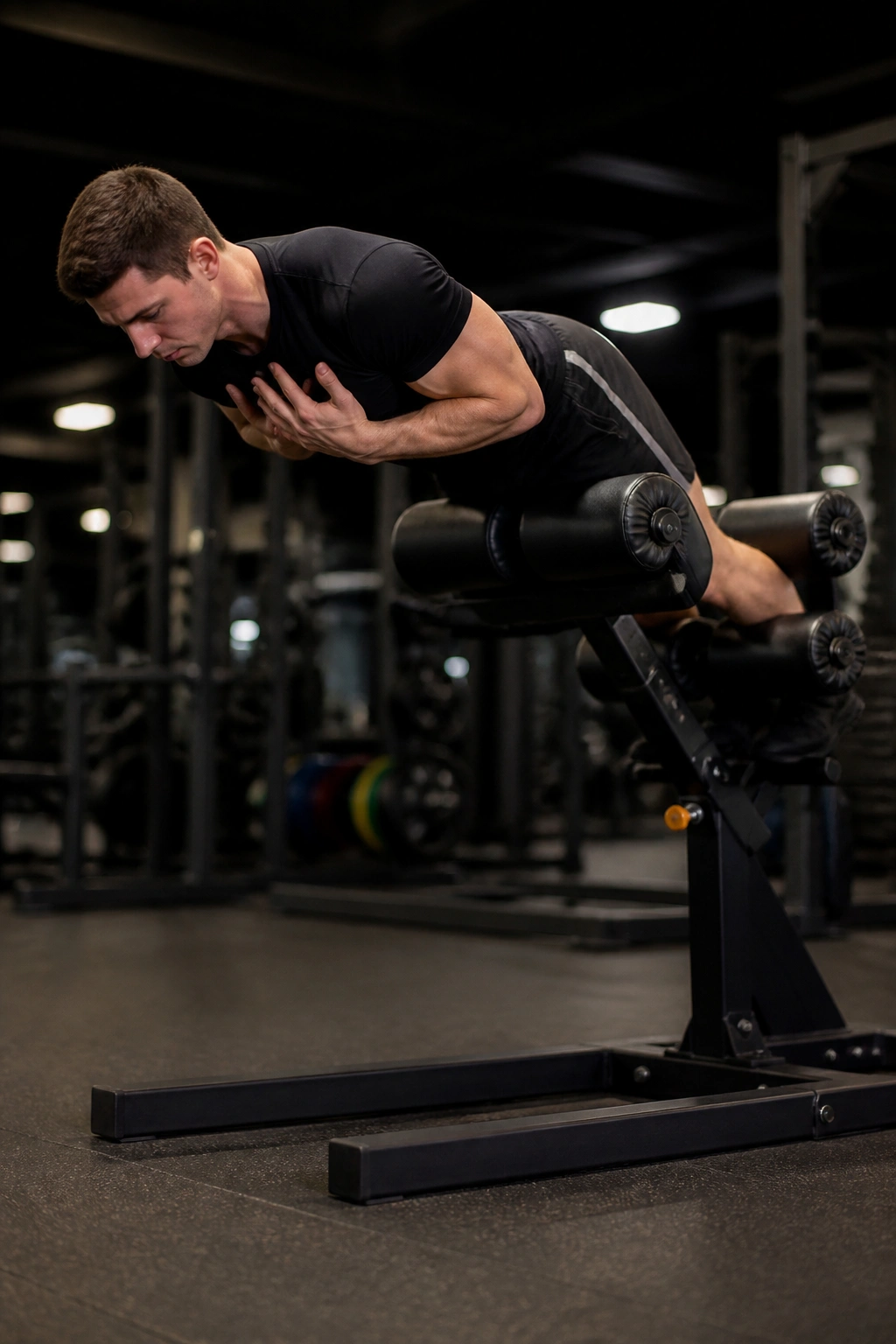
This is a classic piece of gym equipment that most people walk past because they do not know how to use it. It is, however, one of the best exercises for the posterior chain. It combines hip extension and knee flexion into one fluid motion.
The Motion
Lock your feet into the footplate. Start with your torso horizontal. Use your hamstrings to curl your body up, then use your glutes to extend your hips and bring your torso upright.
It is a difficult movement. If you cannot do a full one, start by just practicing the eccentric lowering phase. Like the Nordic curl, the lowering is where the strength is built.
Full Posterior Chain
This hits the calves, hamstrings, glutes, and lower back simultaneously. It is a full-body posterior chain movement that builds thick, powerful legs without needing a massive amount of external weight.
19. Stability Ball Leg Curls
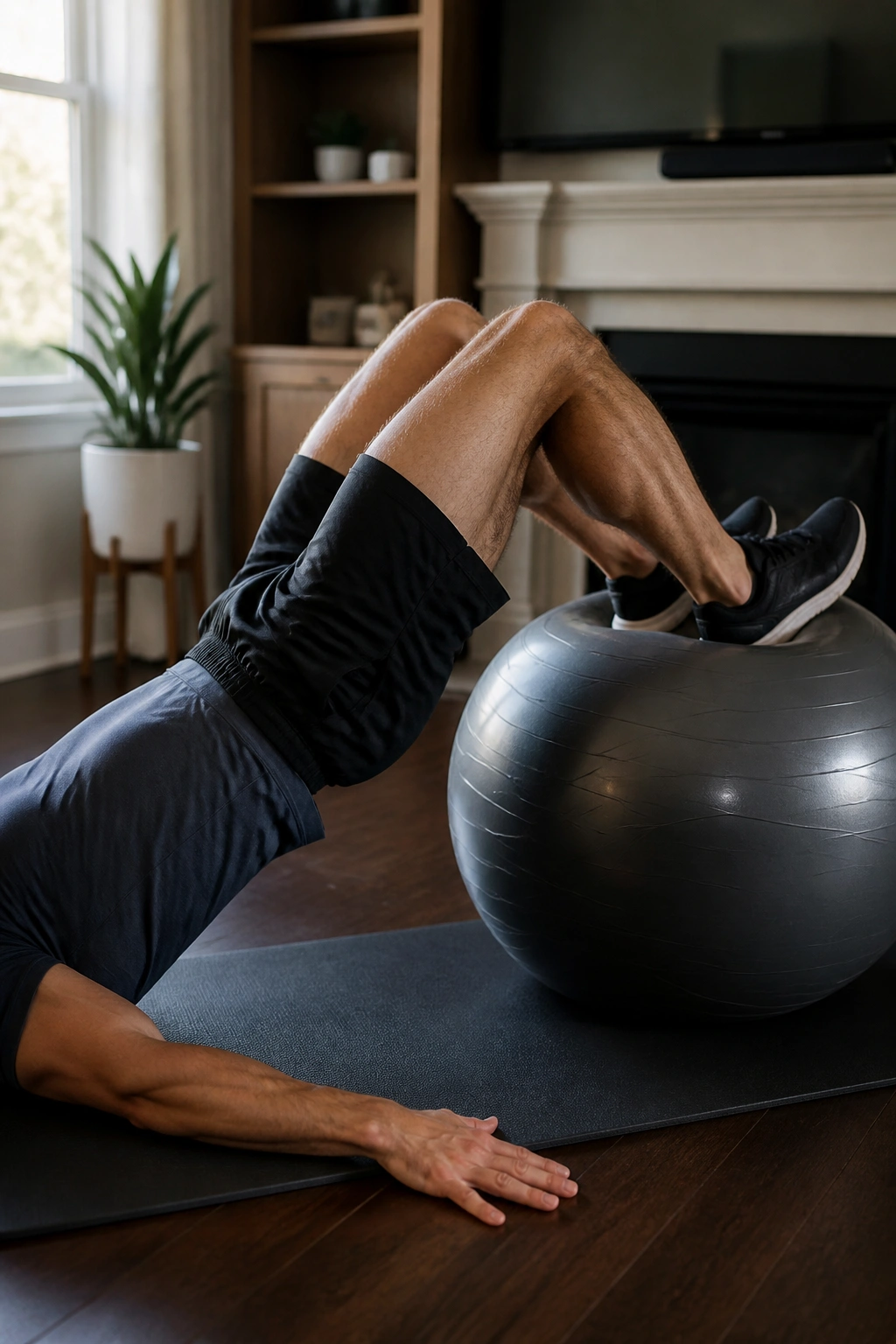
This is an excellent option for home training. It requires zero fancy equipment, just a large stability ball. It is much harder than it looks and will absolutely destroy your hamstrings.
The Setup
Lie on your back with your heels on the stability ball. Lift your hips off the floor, keeping your body in a straight line. Pull your heels toward your glutes, rolling the ball with you.
Keep your hips high the entire time. If your glutes sag, you are turning it into a lower back exercise. You must actively squeeze your glutes to keep your hips elevated while your hamstrings do the curling.
Controlling the Ball
Because the ball is unstable, your hamstrings and calves have to work overtime to keep it from rolling away. This constant micro-adjustment builds stability and functional strength that a machine just cannot provide.
20. Split Squats (Bulgarian Split Squats)
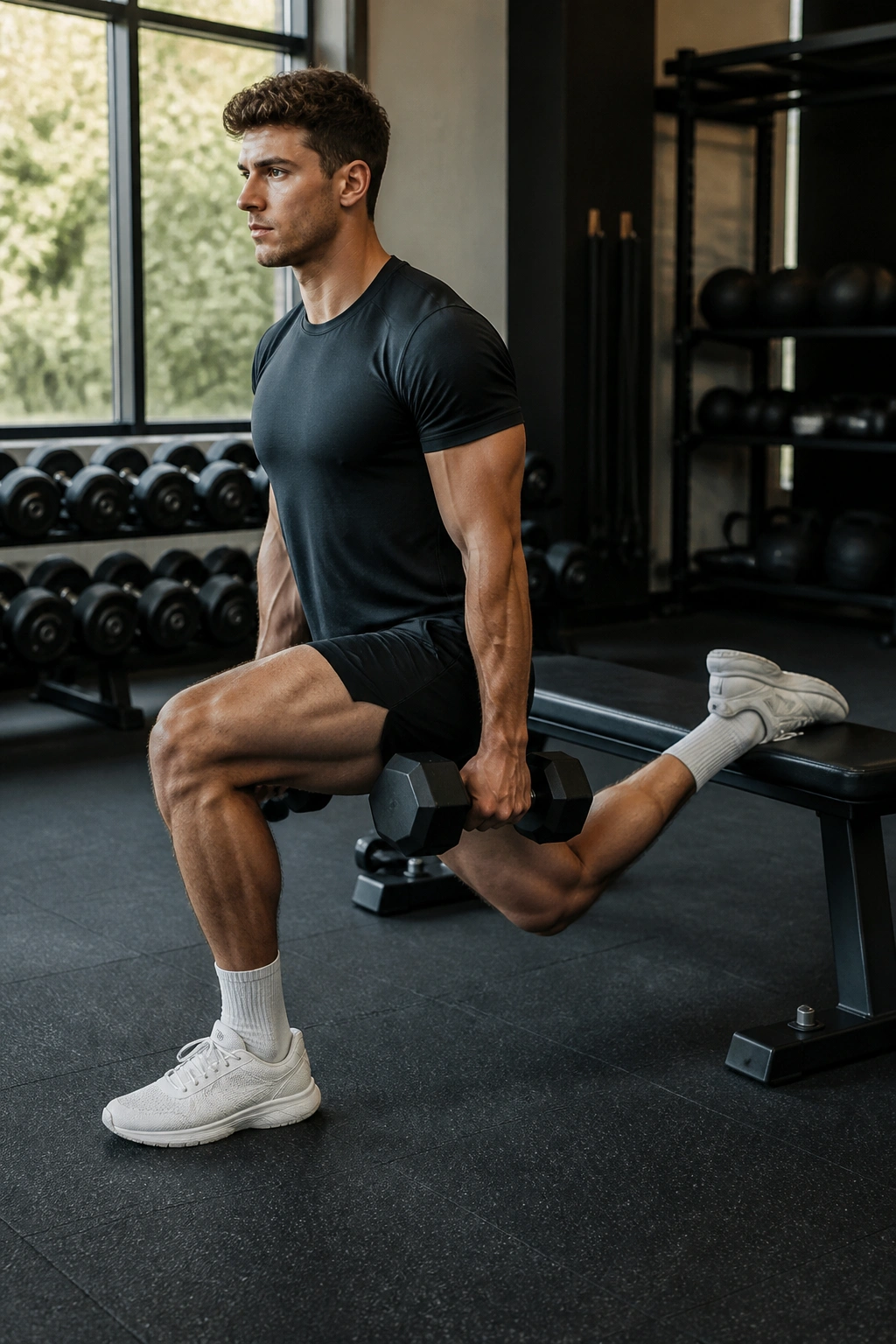
I saved these for last because they are the most effective “squat alternative” for muscle growth. While they technically contain a “squat” pattern, they are unilateral. They take the load off your spine because you only need half the weight to get the same stimulus.
The Setup
Place your back foot on a bench behind you. Step your front foot out and lower your hips until your front thigh is parallel to the floor. Keep your torso upright to maximize quad engagement.
Yes, they hurt. Yes, they are difficult. But they are essentially a leg press for one leg, without the spinal compression of a back squat.
Why They Work
The sheer amount of stabilization required from your core, glutes, and ankle makes this one of the most taxing exercises you can do. You will feel this in your quads for days. It is the perfect exercise for people who want the benefits of a squat without the back pain.
Final Thoughts
The idea that you must squat to have big, strong legs is a relic of old-school gym culture that ignores individual biomechanics. You do not owe the barbell anything. If you hate squats, leave them out of your program. Your legs do not have a “squat” requirement; they have a “stimulus” requirement.
Whether you choose to use machines, free weights, or bodyweight movements, the principle remains the same: push yourself close to failure, maintain controlled form, and be consistent over time. Focus on the exercises that feel good for your body—the ones where you can feel the muscle working and not just the joints aching.
Consistency is the only secret that actually matters. If you enjoy your training because you have removed the exercises you dread, you will show up to the gym more often, work harder, and ultimately get better results. Build your program around what you can sustain, not what someone told you that you “should” do. Your legs will grow, and more importantly, you will actually look forward to your workouts.
