



Leg workouts with no equipment are not the weak version. They’re the version that shows you exactly how honest your legs are, because there’s nowhere to hide when it’s just you, the floor, and your own bodyweight.
No dumbbells. No machines. Still hard.
A lot of people assume bodyweight training is only for warm-ups or recovery days, but that misses the point. Legs respond to tension, range, balance, tempo, and fatigue. If you slow the lowering, use one leg at a time, and actually finish the rep with control, a simple move can light up your quads, glutes, hamstrings, adductors, and calves in a way that feels much less “easy home workout” than people expect.
I’m a fan of this style of training because it exposes sloppy movement fast. A squat tells on tight ankles. A lunge tells on weak balance. A bridge tells on lazy glutes. That feedback is useful. Annoying, sometimes. Useful, always.
So here’s the practical part: mix squat patterns, lunge patterns, hinge patterns, bridge work, calf work, and a little lateral movement, and you’ve got a leg session that does a lot more than pass the time. Start with the first one and pay attention to where you feel it. Your body gives better notes than a mirror ever will.
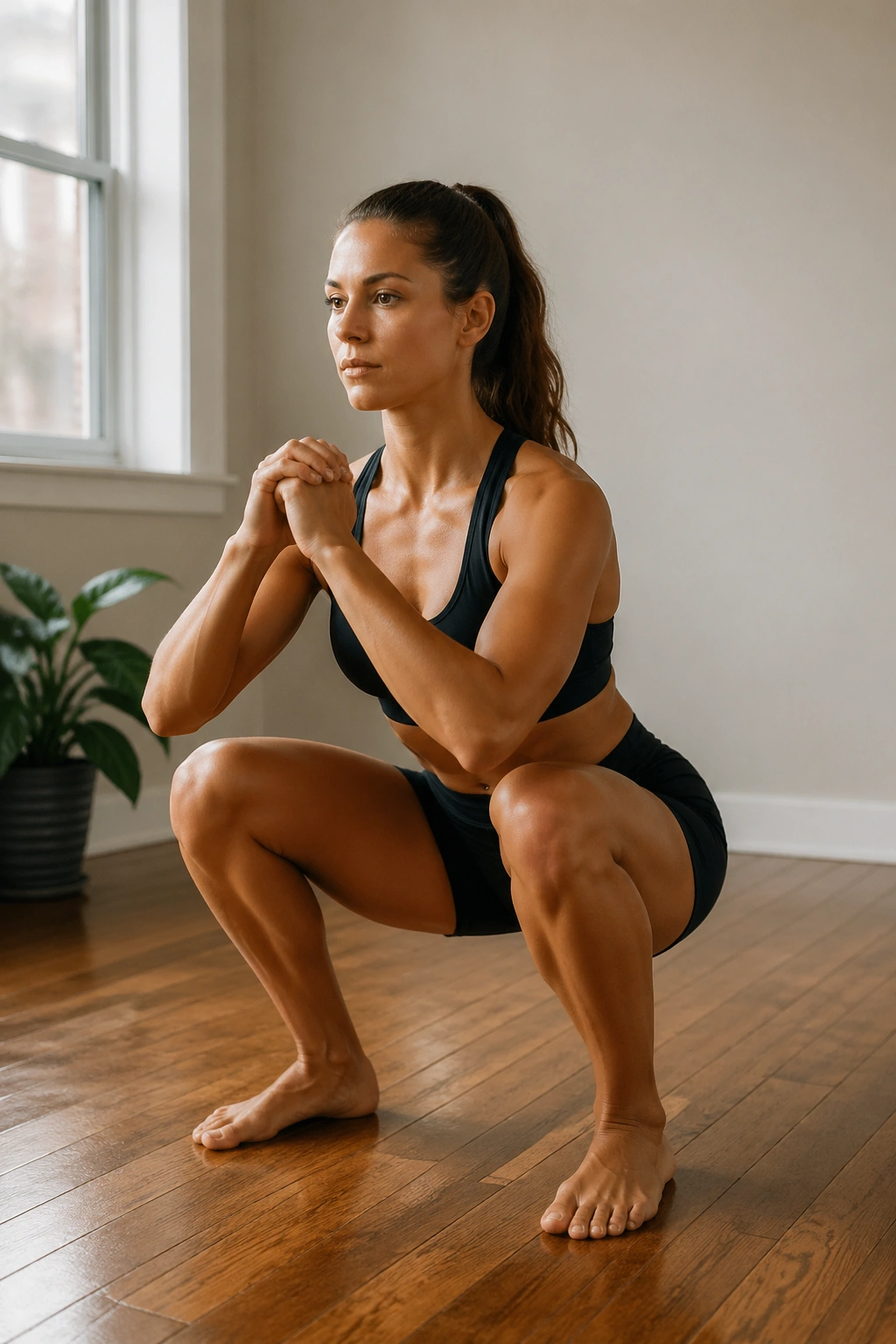
1. Bodyweight Squats
A bodyweight squat is the baseline for a reason. It looks simple, and then the third set starts burning through your thighs like someone turned up the heat.
What makes it useful is not the movement alone. It’s the clean mix of hip bend, knee bend, ankle motion, and trunk control. If your heels stay planted and your knees track over your toes, you’ll feel the work spread across your quads and glutes instead of dumping into your lower back.
How to make a squat hard without weights
- Lower for 3 seconds instead of dropping fast.
- Pause for 1 full second at the bottom.
- Stand up by driving through the whole foot, not just the toes.
- Stop 1 or 2 reps before your form gets messy.
That last one matters. A squat with shallow range and a rounded back is not the same thing as a squat with control and depth. Go as low as your hips, ankles, and knees will allow without losing shape.
Best use: 2 to 4 sets of 12 to 20 reps, or 30 to 45 seconds of nonstop reps if you want a conditioning feel.
2. Reverse Lunges
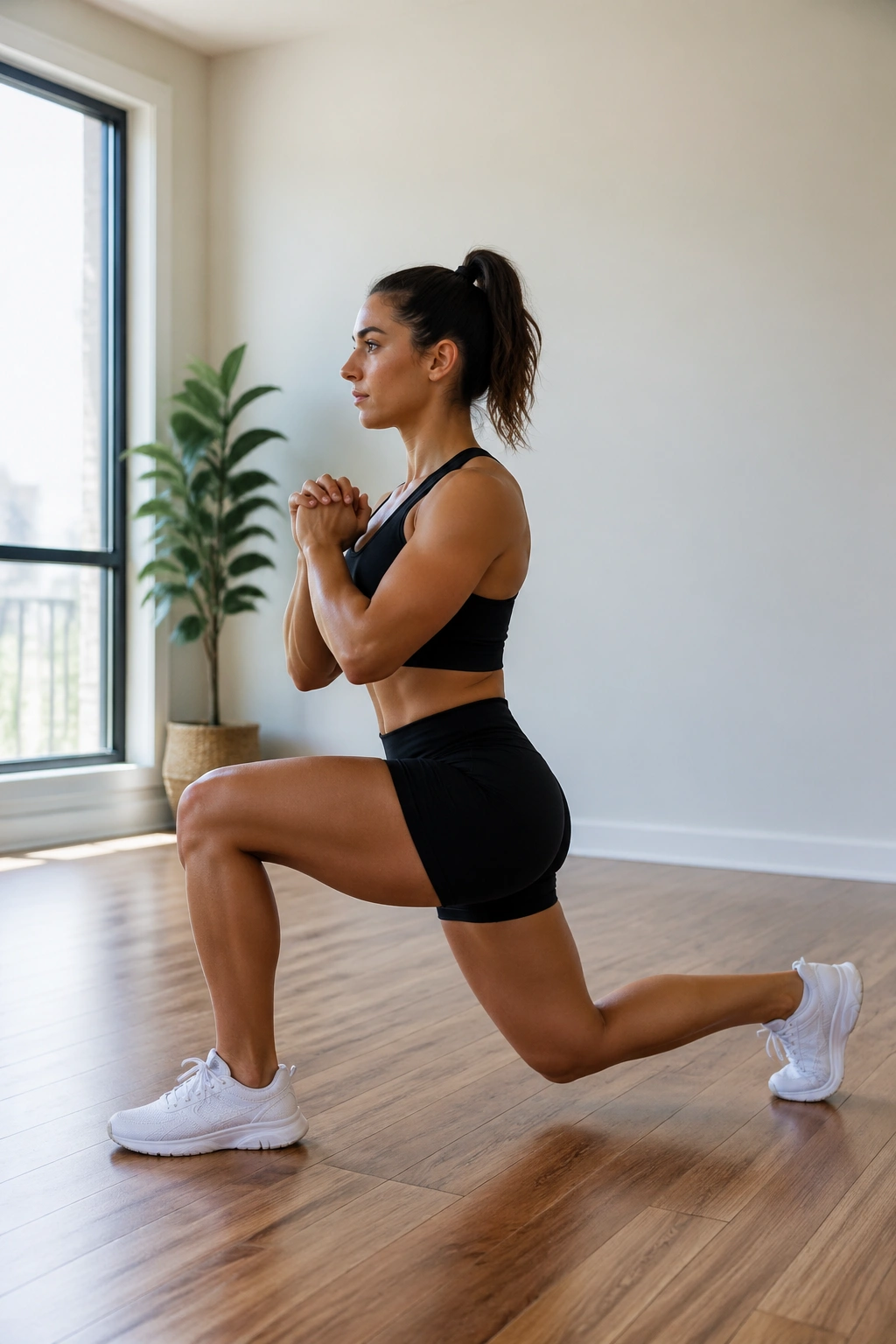
Why do reverse lunges feel kinder on the knees than forward lunges for a lot of people? Because you’re stepping back into the load, not throwing yourself into it. That small change gives you more control right away.
The front leg does most of the work here. Your front heel stays heavy, your torso stays tall enough to keep balance, and your back knee drops toward the floor without crashing into it. Done well, this move hits the quads, glutes, and a surprising amount of balance work in one shot.
How to use it
A shorter step puts more stress on the front quad. A longer step shifts more of the work into the glute of the front leg. Neither is wrong. They just feel different.
If your hips wobble all over the place, slow down and make the step smaller. If your front knee caves in, think about gently pressing it outward as you stand back up. Keep the push smooth. No jumping around. No bouncing.
Best use: 8 to 12 reps per side, with a 1-second pause near the bottom if you want more burn.
3. Forward Lunges
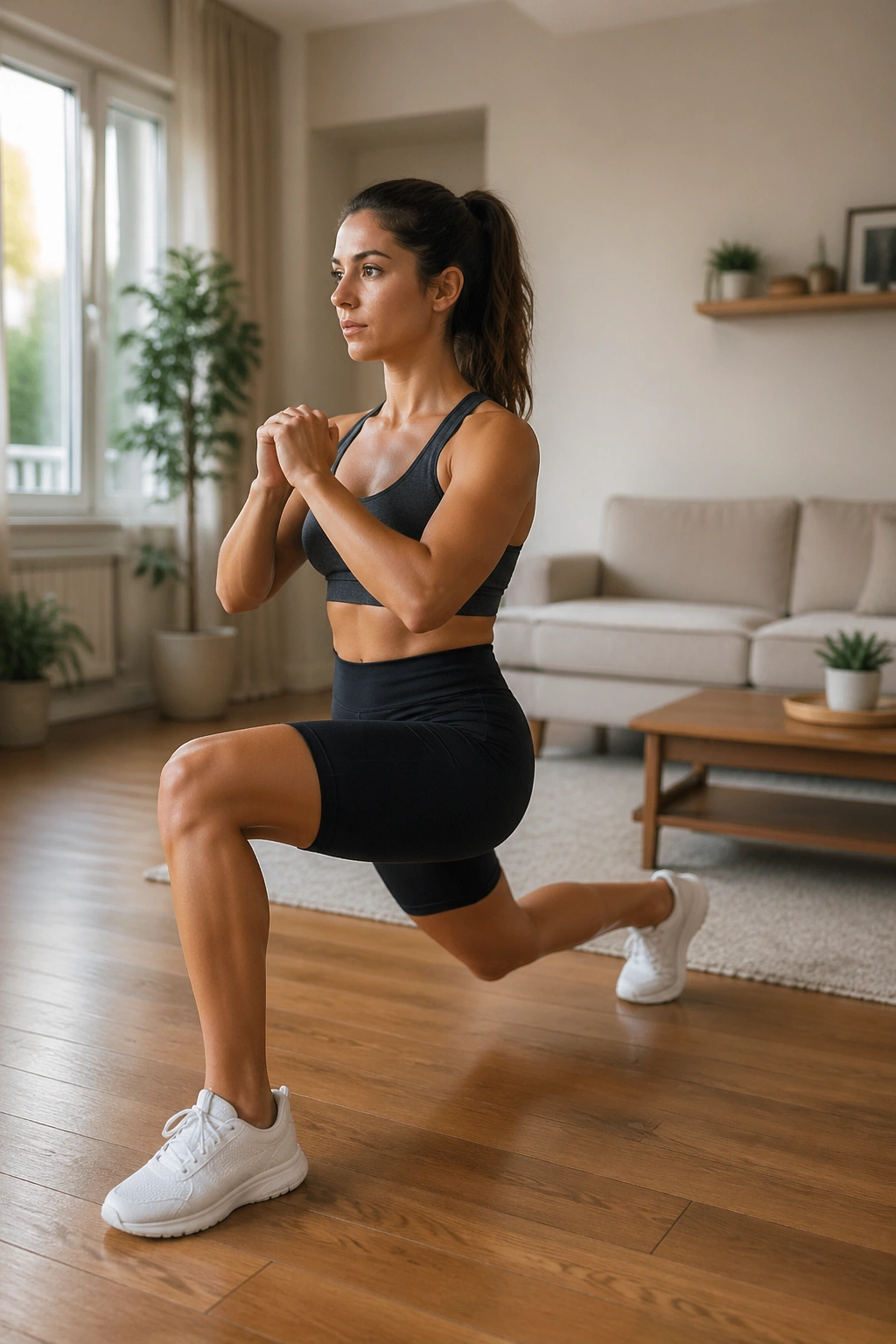
The first time you really pay attention to a forward lunge, it can feel a little like stepping off a curb in the dark. Your body has to catch itself, and that braking action is part of the point.
Forward lunges ask for more deceleration than reverse lunges. That means the quads work harder to slow you down, while the glutes and hamstrings help you stand back up. If you move with control, they’re excellent for leg strength and balance.
- Step far enough that your front knee doesn’t shoot way past your toes.
- Land softly. Quiet feet are a good sign.
- Keep most of your weight on the front leg.
- Don’t rush the return; the way back up matters.
A lot of people either lunge too short, which makes the knee angle awkward, or too long, which turns it into a balance circus. Find the middle ground. The front shin can move forward a bit, but it shouldn’t look like your knee is diving for the floor.
Best use: 6 to 10 reps per side when form is the priority, or 12 to 16 reps if you want a higher-burn set.
4. Walking Lunges
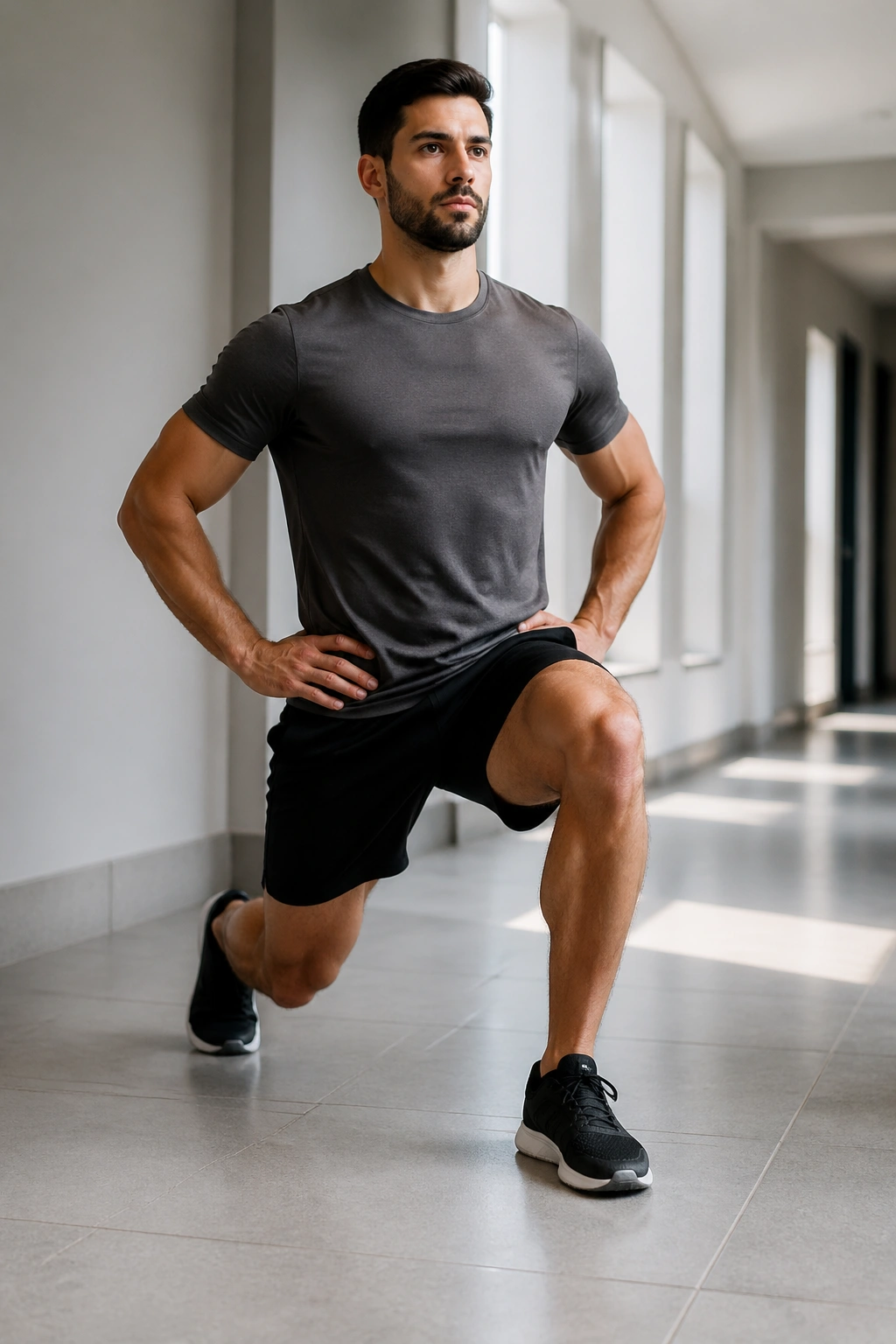
Walking lunges are what happen when a lunge stops being polite. They keep the legs under tension for longer, and the moving step makes the set feel less like isolated reps and more like work.
The rhythm matters here. If you lunge too fast, the movement gets sloppy and the knees start wandering. If you go too slow, it can turn into a balance drill instead of a leg drill. Aim for a steady pace where each step lands under control and each push back up feels deliberate.
They’re especially good for unilateral endurance. One side gets a turn, then the other, then both start complaining. That complaint is the signal.
If you do not have enough room to walk across a floor, turn them into marching lunges in place. Same idea. Less space. Still tough.
Best use: 10 to 20 total steps per leg, depending on how much space and stamina you have.
5. Split Squats
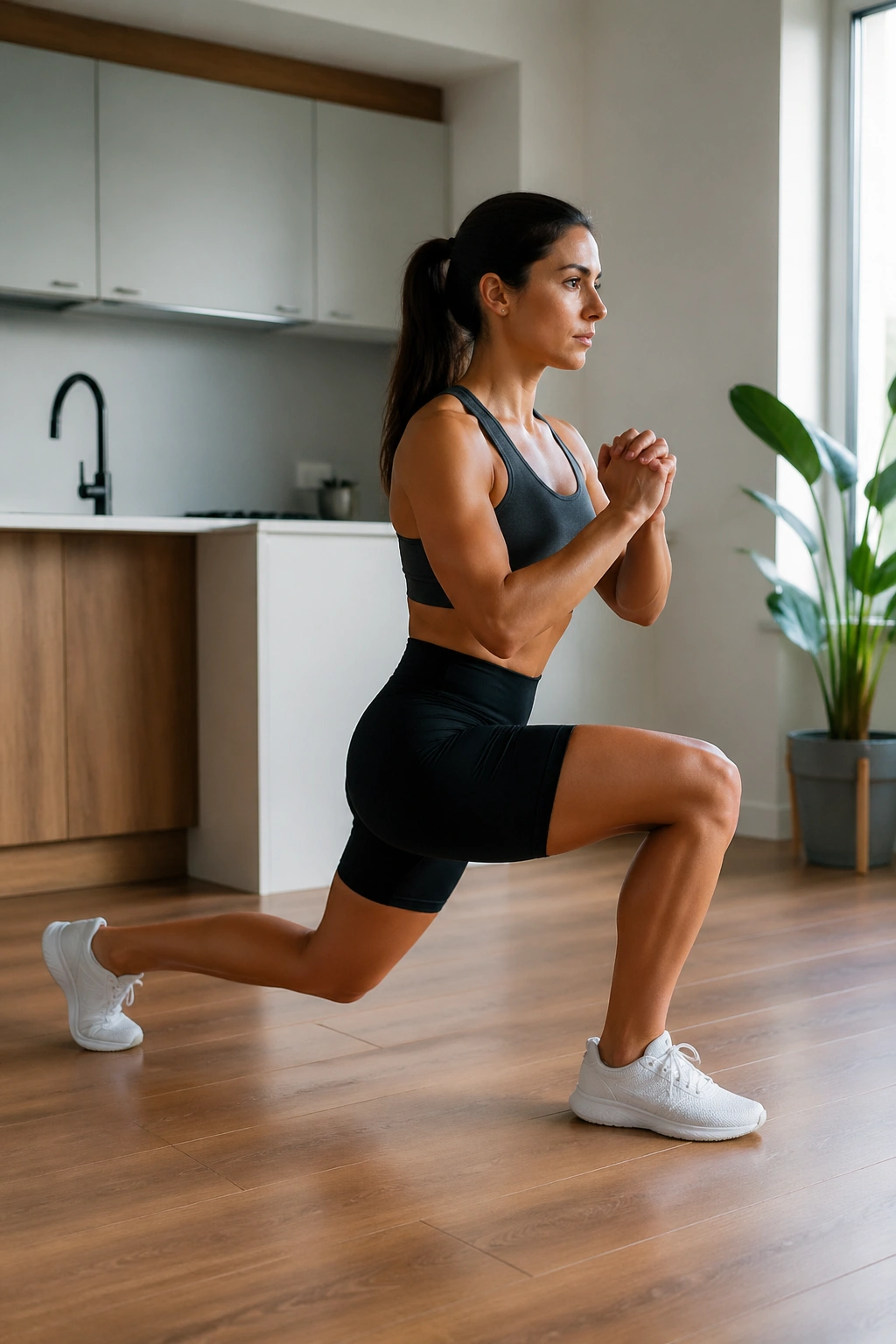
Split squats are a little boring on paper and a little rude in practice. You set your feet, drop straight down, and discover how long one leg can hold tension when it has nowhere to go.
Unlike walking lunges, you stay in one position, which means the working leg never gets a break from the load. That makes split squats one of the cleanest no-equipment leg workouts for quad and glute fatigue. They also let you adjust your stance with more precision than a moving lunge.
What makes them sting
A more upright torso pushes the work toward the quads. A slight forward lean shifts more demand into the glutes. Both are useful.
Keep the back heel lifted, the front foot flat, and the front knee tracking in line with the toes. If your front foot starts sliding, shorten the stance and ground the heel harder. If your lower back takes over, your torso has tipped too far forward.
Best use: 8 to 15 reps per side, or 20 to 40 seconds of slow reps for each leg.
6. Side Lunges
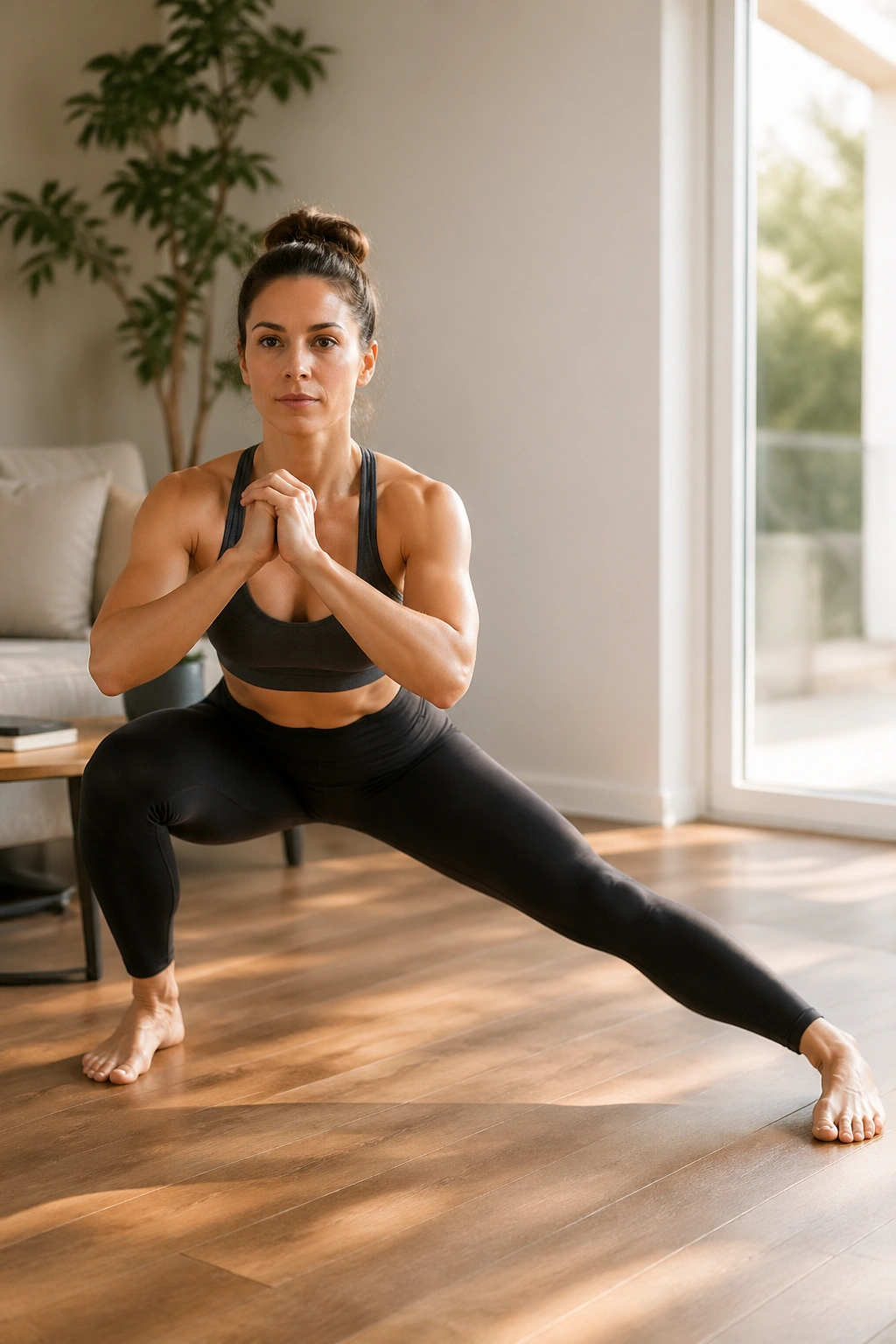
A side lunge is one of those moves people skip until their inner thighs and side glutes start feeling weak in all the same places. Then it suddenly makes sense.
The side step forces your body to work in a direction most leg workouts ignore. One leg bends deeply while the other stays long, and that contrast hits the adductors, glute medius, and quads in a way straight-ahead lunges can’t quite copy.
Keep the stepping foot flat and the other leg straight, but not locked hard. Sit back into the bent hip as if you’re aiming your hips behind you, not just down. If you collapse forward, you lose a lot of the benefit.
- Step out wide enough to feel a stretch in the inner thigh of the straight leg.
- Keep the chest up, but not stiff.
- Push the floor away with the bent leg to return to center.
Best use: 6 to 10 reps per side, done slowly enough that you can control the shift.
7. Curtsy Lunges
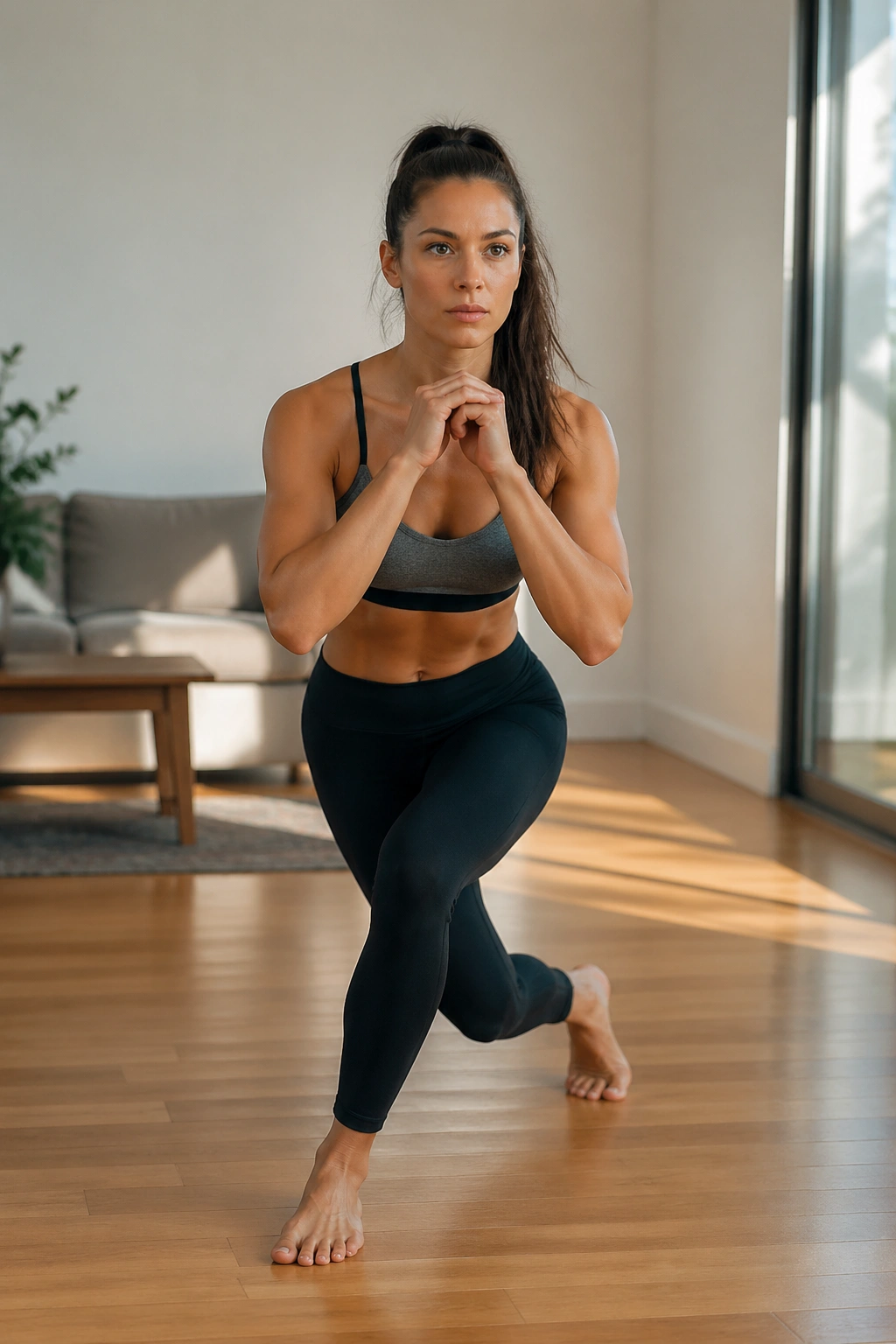
Want a move that hits the outer glute without needing any gear? Curtsy lunges do that job fast, and they do it with a little drama.
The back-and-across step changes the angle on the hips, which is why the side of the glute often lights up more than people expect. It also asks for some coordination, so if your balance is shaky at first, that’s normal. The setup is awkward for many people the first few times.
How to use it
Take the back leg behind you on a diagonal, not way across like you’re trying to thread a needle. A smaller cross-over usually feels cleaner on the knees. Lower under control, keep the front heel planted, and stand back up without twisting your torso.
This is one of those exercises where range matters less than control. If your knee complains, shorten the motion or skip it for a while. No exercise is worth forcing through pain.
Best use: 8 to 12 reps per side, or 2 sets of slower reps as a glute-focused finisher.
8. Sumo Squats
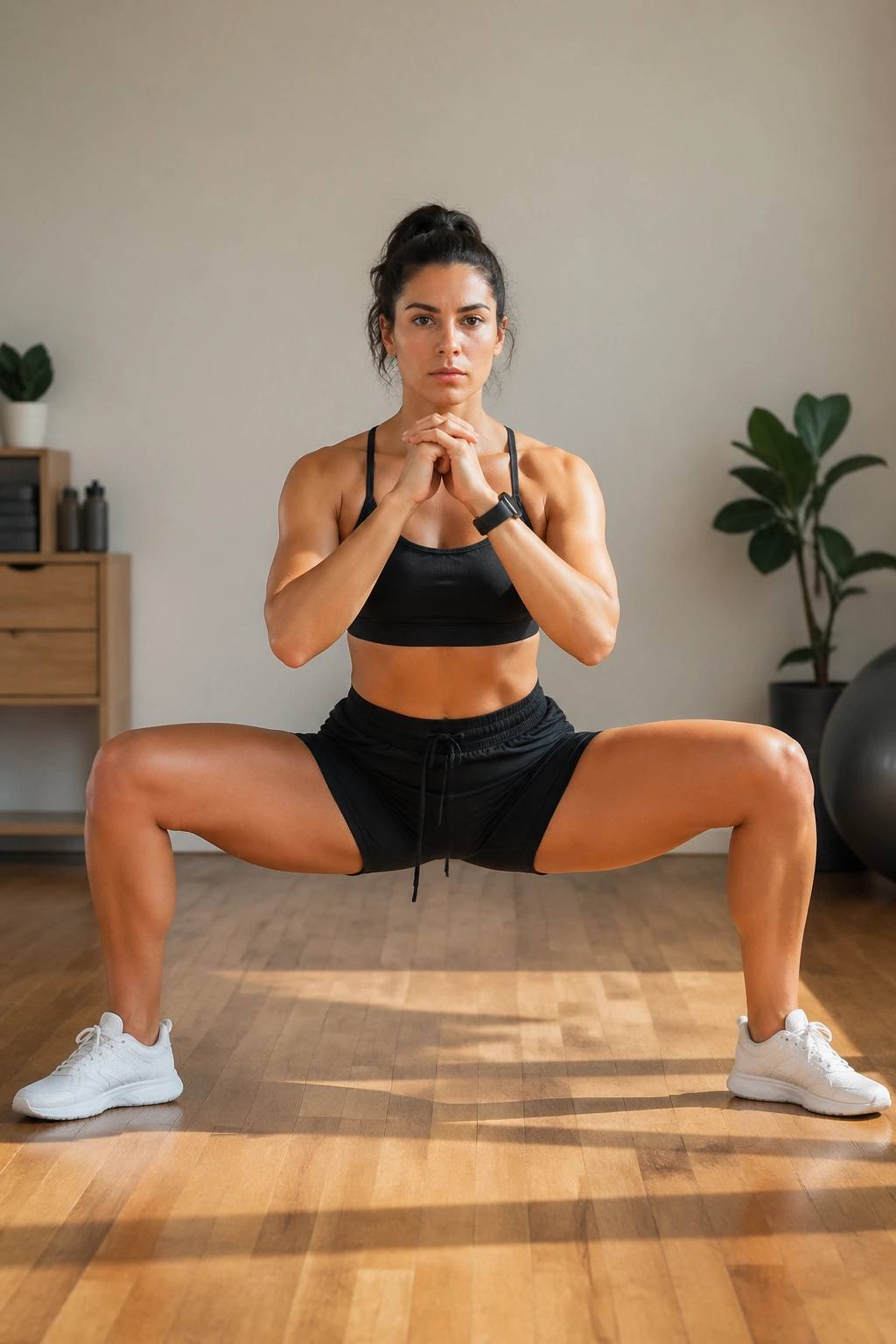
Feet wide, toes turned out a little, chest tall. That’s the sumo squat setup, and it changes the feel of a squat enough that your inner thighs notice right away.
The wide stance shifts more work into the adductors and glutes while still asking your quads to help. It also tends to feel friendlier for people whose ankles hate narrow squats. That said, wide does not mean sloppy. If your knees cave inward or your feet roll up on the edges, the stance is too wide for you.
Quick setup cues
- Start with feet a little wider than shoulder width.
- Turn toes out about 20 to 30 degrees.
- Keep the knees tracking over the second and third toes.
- Pause for 1 second near the bottom if you want more tension.
The squat does not need to be deep for the move to count. A controlled half-depth sumo squat can still burn. Depth is great, but only if you own it.
Best use: 12 to 18 reps with a slow descent, especially when you want an inner-thigh-heavy leg session.
9. Pulse Squats
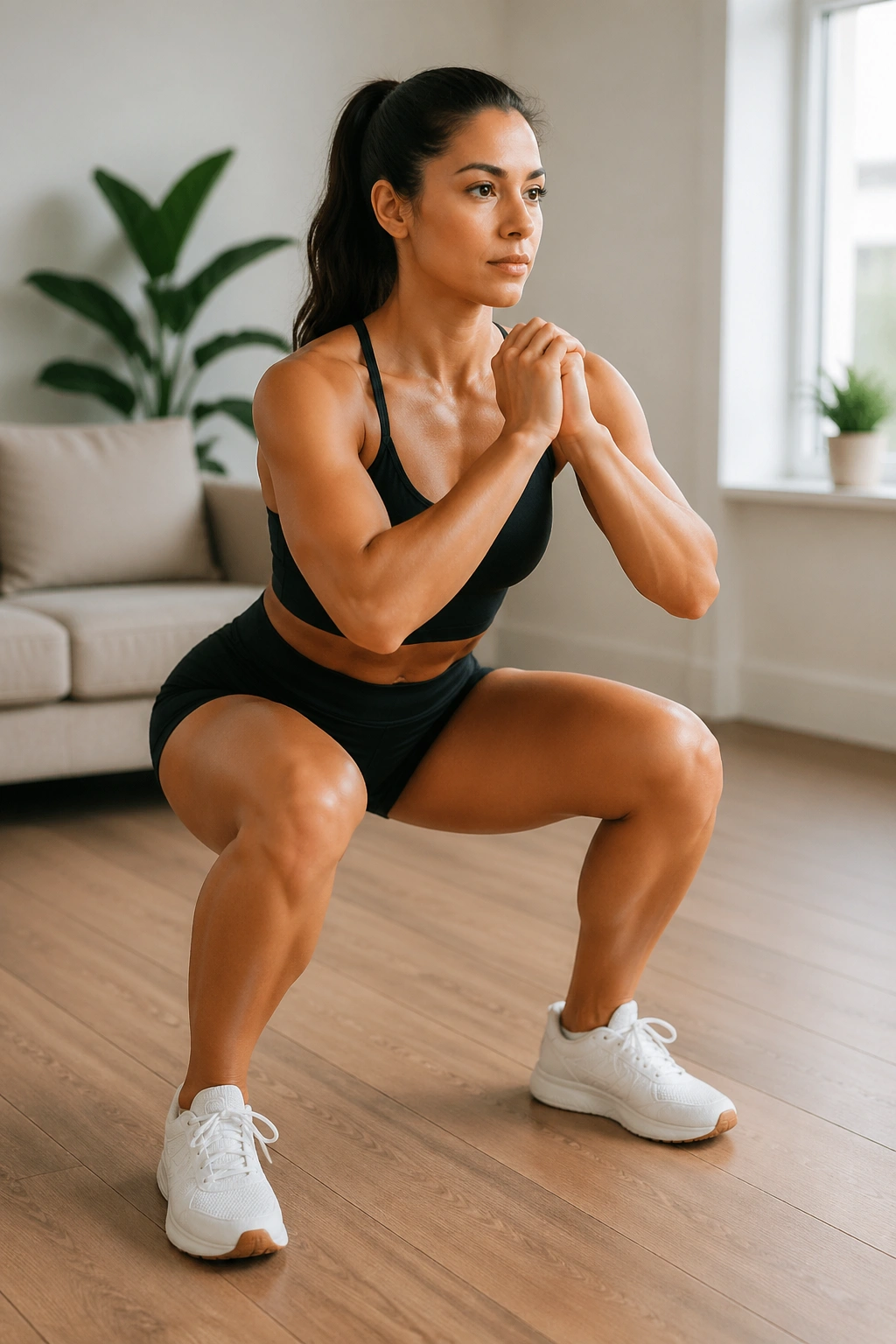
Pulse squats are tiny on range and huge on discomfort. That’s the whole trick.
Instead of standing all the way up after each squat, you stay in the lower half of the movement and pulse up and down a few inches. The muscles never get a clean break, so the burn arrives fast and stays mean. They work well as a finisher, not as your only squat pattern.
The mistake people make is bouncing around like they’re trying to save energy. Don’t. Keep the movement short, tight, and controlled. Your thighs should feel as if they’re holding a wall in place.
A good way to use them is after a full set of regular squats or lunges. Even 20 to 30 pulses can change the feel of a workout. More is not always better here. Form slips fast when fatigue gets loud.
Best use: 15 to 30 pulses after another leg move, or 2 rounds of 20 pulses with a slow hold at the bottom.
10. Jump Squats
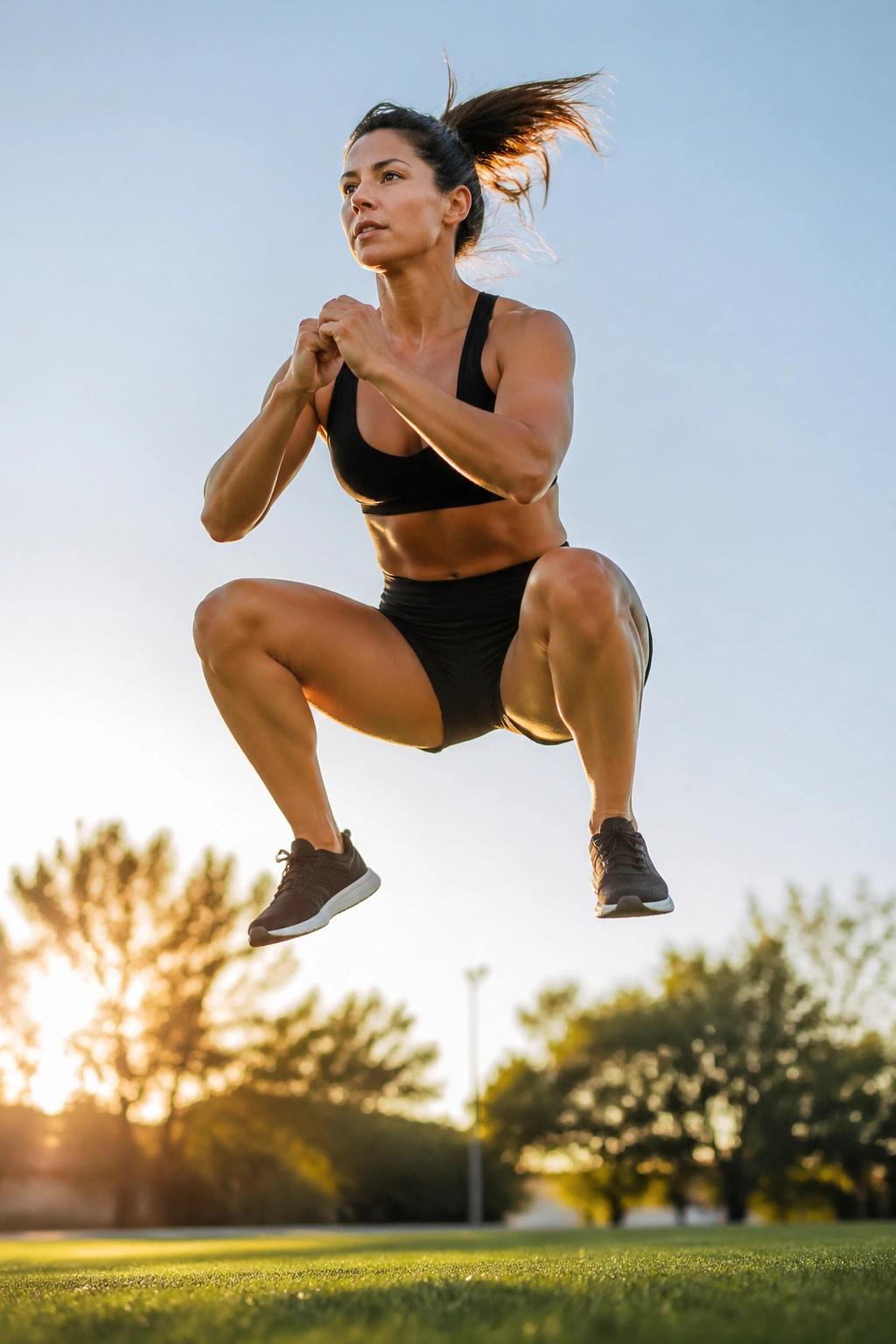
Jump squats are the loud cousin of the bodyweight squat. They’re not subtle, and they’re not supposed to be.
Unlike wall sits or pulse squats, jump squats train power. You absorb force on the way down, then drive upward fast and land softly. That combination is useful for athletes, but it also builds a different kind of leg strength for anyone who wants more snap in the lower body.
Land like you mean to stay quiet. Knees bend to absorb the landing, hips go back, and the chest stays under control. If you crash down hard, the move turns into punishment instead of training.
Use fewer reps than you think. Three sets of 5 to 8 jumps with plenty of rest beats sloppy high-rep jumping every time. Quality matters a lot more here than exhaustion.
Best use: power work, not burnout work. If your knees ache or your landing gets noisy, switch to regular squats for that session.
11. Wall Sit
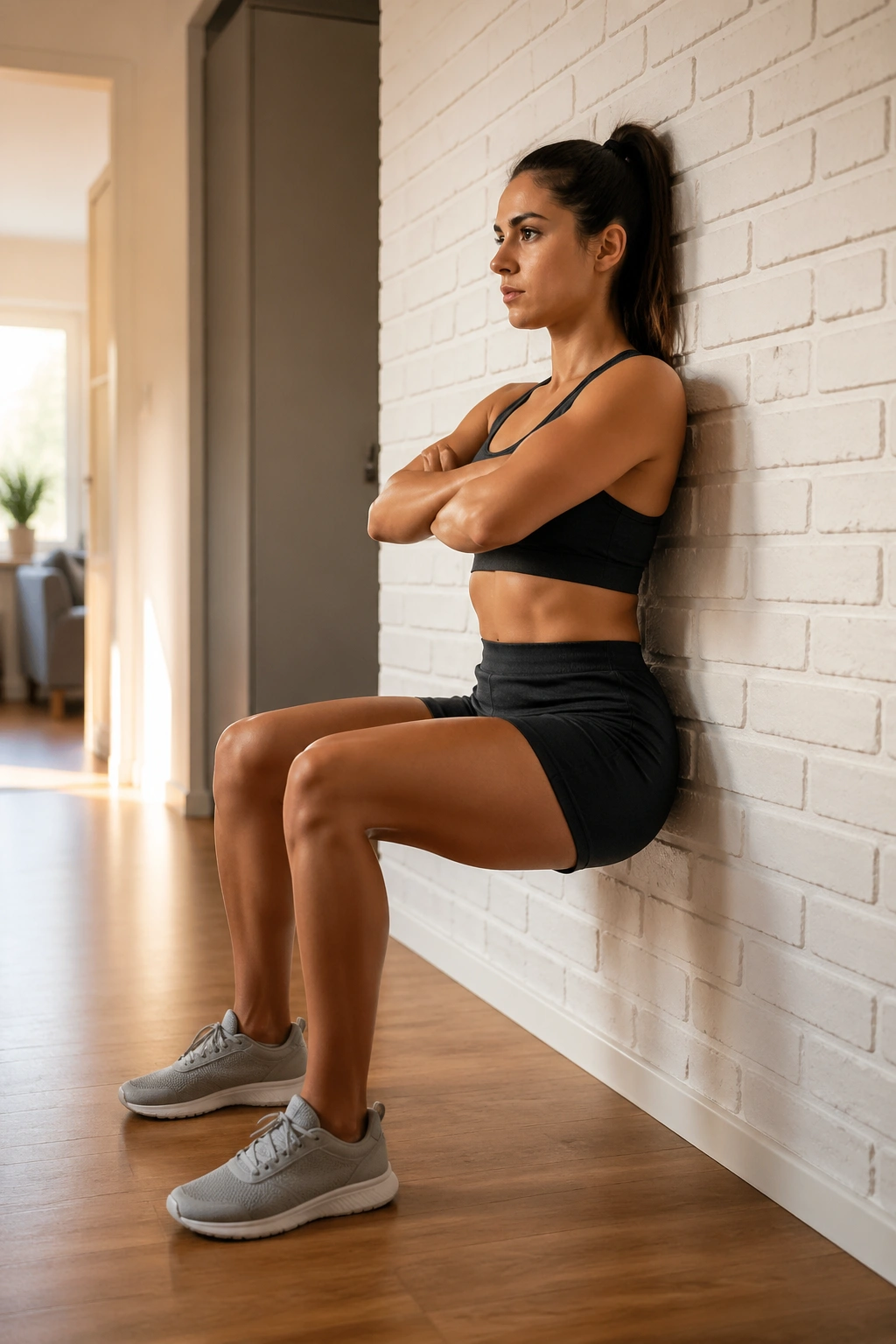
A wall sit looks easy for about twelve seconds. Then the quads start writing angry letters.
It’s an isometric hold, which means the muscles are working without moving. That makes it a clean way to load the front of the thighs when you want a break from repetition but not from effort. People often underestimate isometrics because they seem simple. They aren’t.
How to set it up right
- Put your back flat against a wall.
- Slide down until your knees are around 90 degrees or a little higher if needed.
- Keep both feet flat and about a foot away from the wall.
- Hold for 20 to 60 seconds without bouncing.
If your knees bother you, raise the seat angle a bit. A shallower wall sit is still useful, and it’s smarter than forcing a painful depth just to chase a number. Your legs will still know they worked.
Best use: 2 to 4 rounds, usually near the end of a workout when the quads are already tired.
12. Glute Bridge
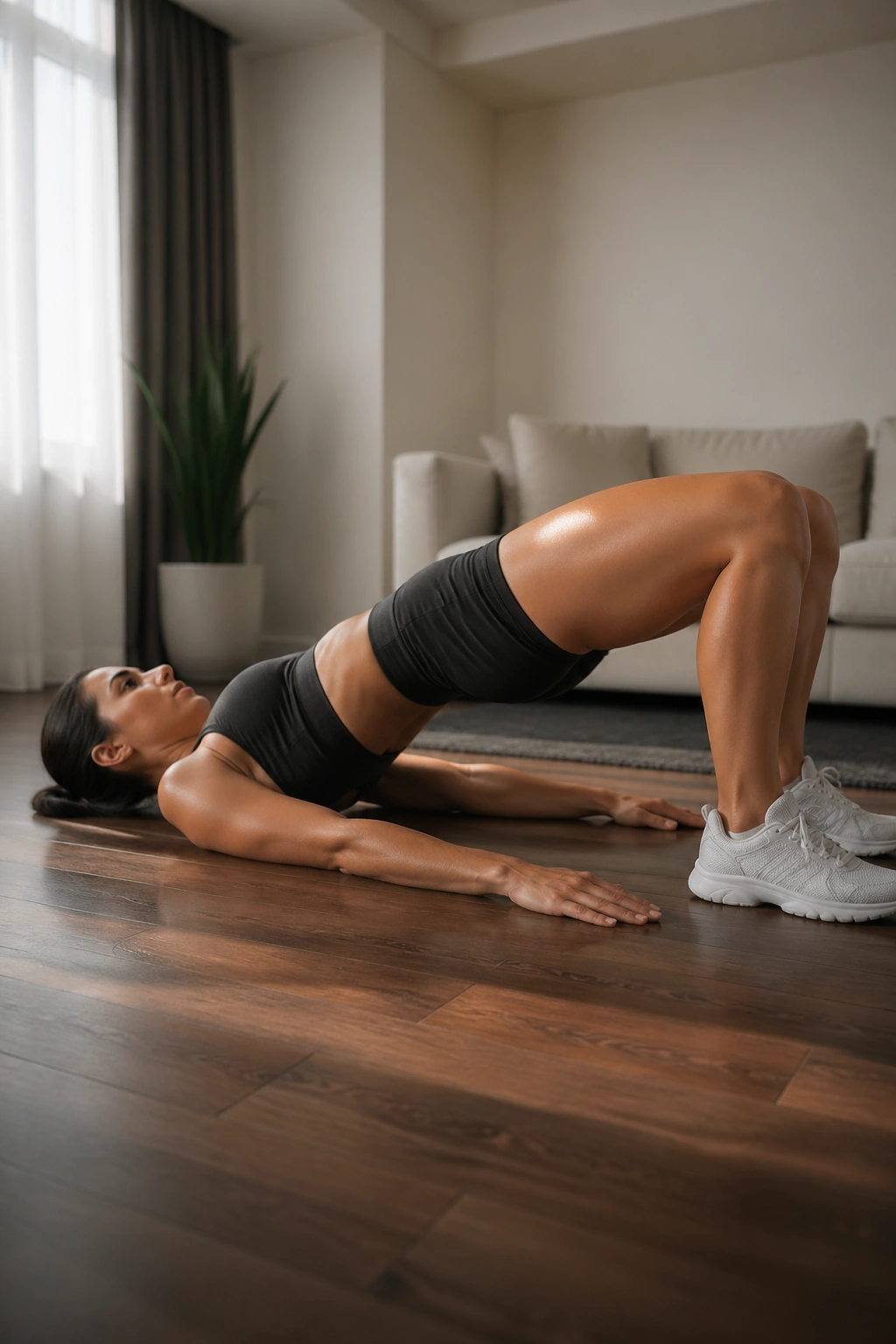
If your glutes have been underworking for years, the glute bridge is one of the first no-equipment moves that can wake them up properly.
Lie on your back, bend your knees, plant your feet, and lift your hips by squeezing the glutes. The trick is not to fling the hips up. The trick is to tuck the pelvis slightly first, then drive the floor away and finish with a hard squeeze at the top.
That little tuck matters. Without it, people often dump the work into their lower back and hamstrings. With it, the glutes do what they’re supposed to do.
The cue that changes everything: think about making your belt buckle point slightly toward your chin before you lift.
A strong bridge should feel like the back side of your hips is doing the pushing, not your spine. If you feel cramping in the hamstrings, bring your feet a touch closer or a touch farther away and see which position gives you a better squeeze.
Best use: 12 to 20 reps, or 20 to 30 seconds of a top-position hold.
13. Single-Leg Glute Bridge
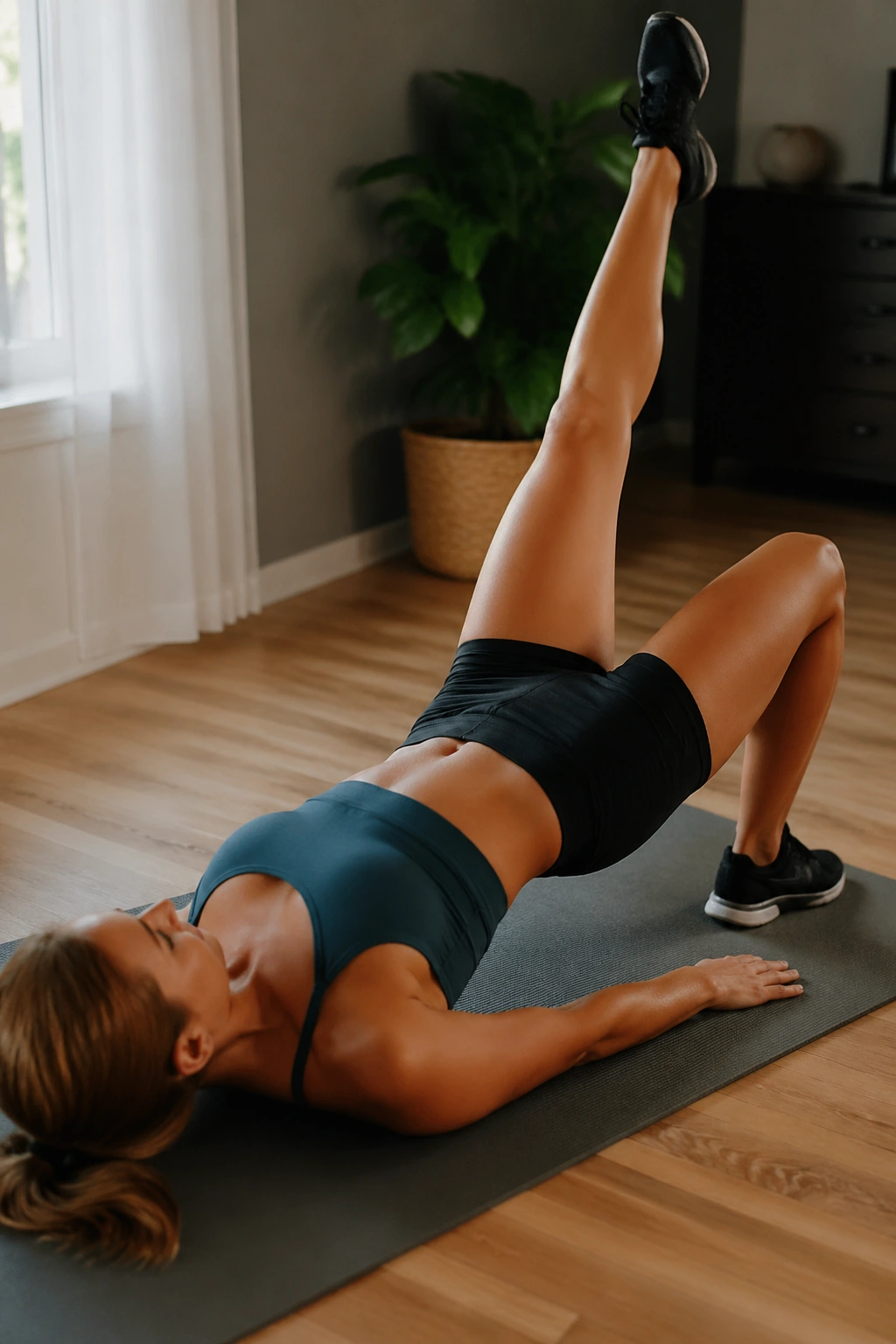
A regular bridge is good. A single-leg glute bridge is the version that stops you from cheating.
With one leg lifted, the working side has to do far more of the lifting and stabilizing. You’ll feel the glute, the hamstring, and a bit of the low-back support system all working harder to keep the hips level. It’s not flashy. It’s just effective.
This move exposes side-to-side differences fast. One side may cramp. One side may feel weak. One side may barely lift at all. That information is gold, because it tells you what to train instead of guessing.
Keep the lifted leg bent or straight, whichever lets you keep the hips square. Don’t let one side of the pelvis dip. If that happens, shorten the range and go slower.
Best use: 6 to 10 reps per side, or 15 to 25-second holds when you want more control work than rep count.
14. Glute Bridge March
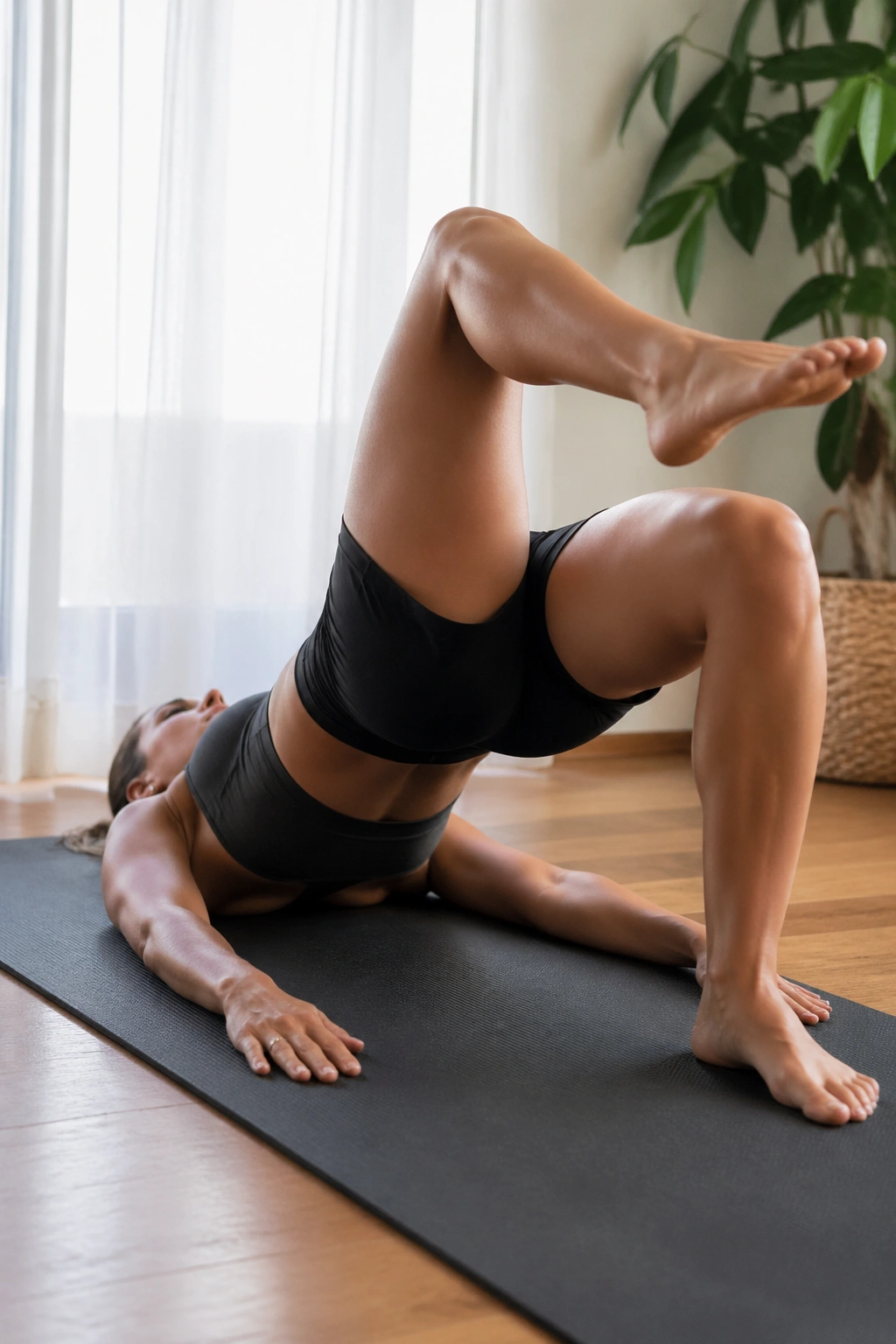
A glute bridge march takes the bridge and turns it into a stability drill with a burn attached. One leg lifts, then the other, and the hips are supposed to stay level the whole time.
That sounds easy until your pelvis starts wobbling like a shopping cart with one bad wheel. The point is not to kick the knee up high. The point is to keep the glutes on while the legs move.
What to watch for
- Keep the hips lifted before the first march.
- Move one knee up only a few inches at first.
- Stop if the hips drop or twist.
- Exhale as each knee lifts to help keep the ribs down.
This works well when you want glute activation without high impact. It also pairs nicely with squats and lunges because it gives the front side of the hips a different job.
Best use: 8 to 12 marches per side, performed slowly enough that the bridge never collapses.
15. Single-Leg Romanian Deadlift
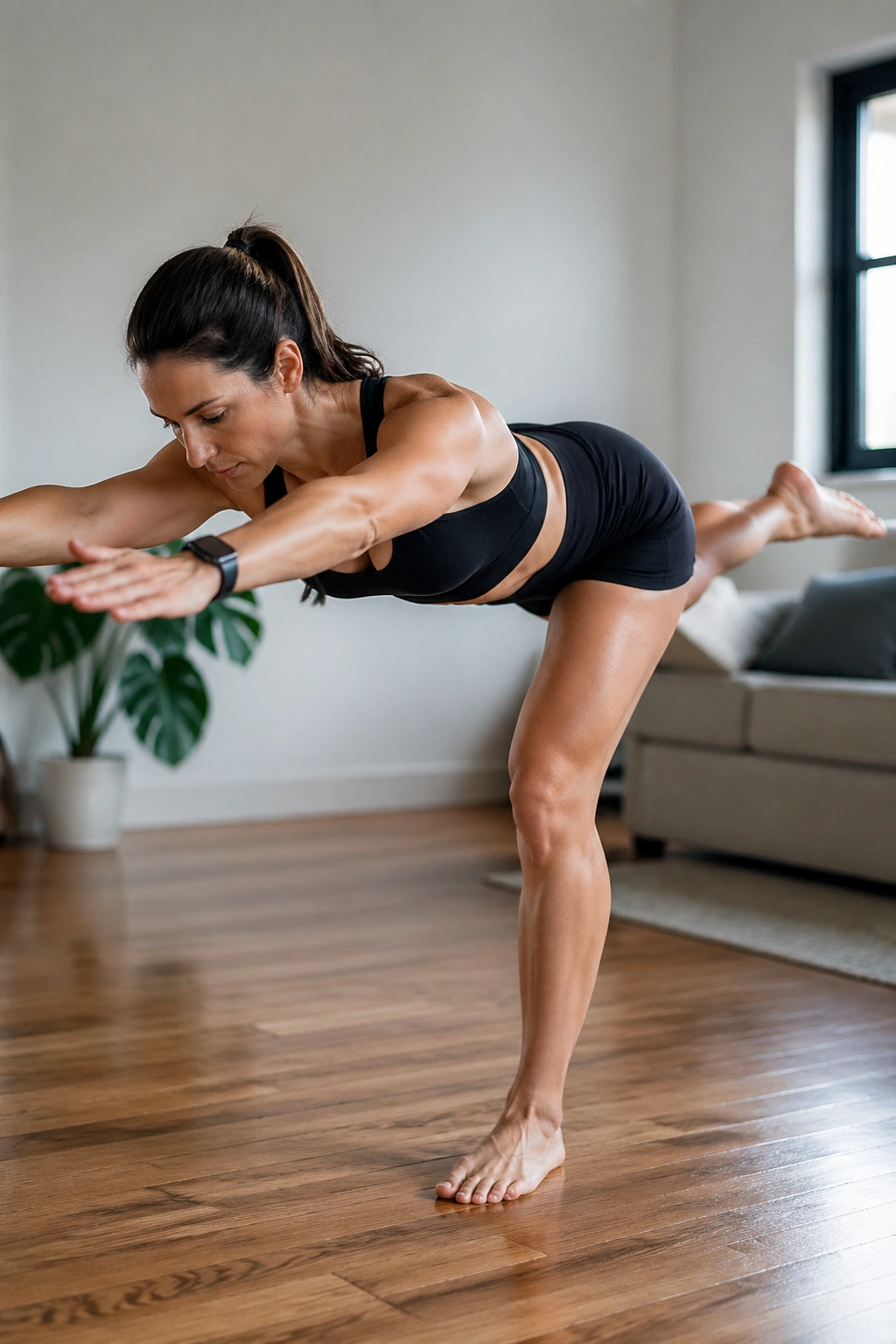
A bodyweight Romanian deadlift is the hinge pattern most people need more of. On one leg, it becomes a balance test, a hamstring drill, and a glute exercise all at once.
Instead of bending at the waist, push your hips back as the torso leans forward and the free leg reaches behind you. Keep a soft knee on the standing leg. The back stays long, not rounded. If you’ve ever seen someone touch a wall behind them with their hips, that’s the feeling you’re after.
- Reach back with the non-working leg like a counterweight.
- Keep the standing foot rooted through the heel and big toe.
- Stop the descent when your back wants to round.
- Stand by squeezing the standing glute, not by yanking with your low back.
A small range is fine. A controlled short hinge beats a sloppy deep hinge every time. This one rewards patience more than bravado.
Best use: 6 to 10 reps per side, slow enough that you can pause for a beat at the bottom.
16. Donkey Kicks
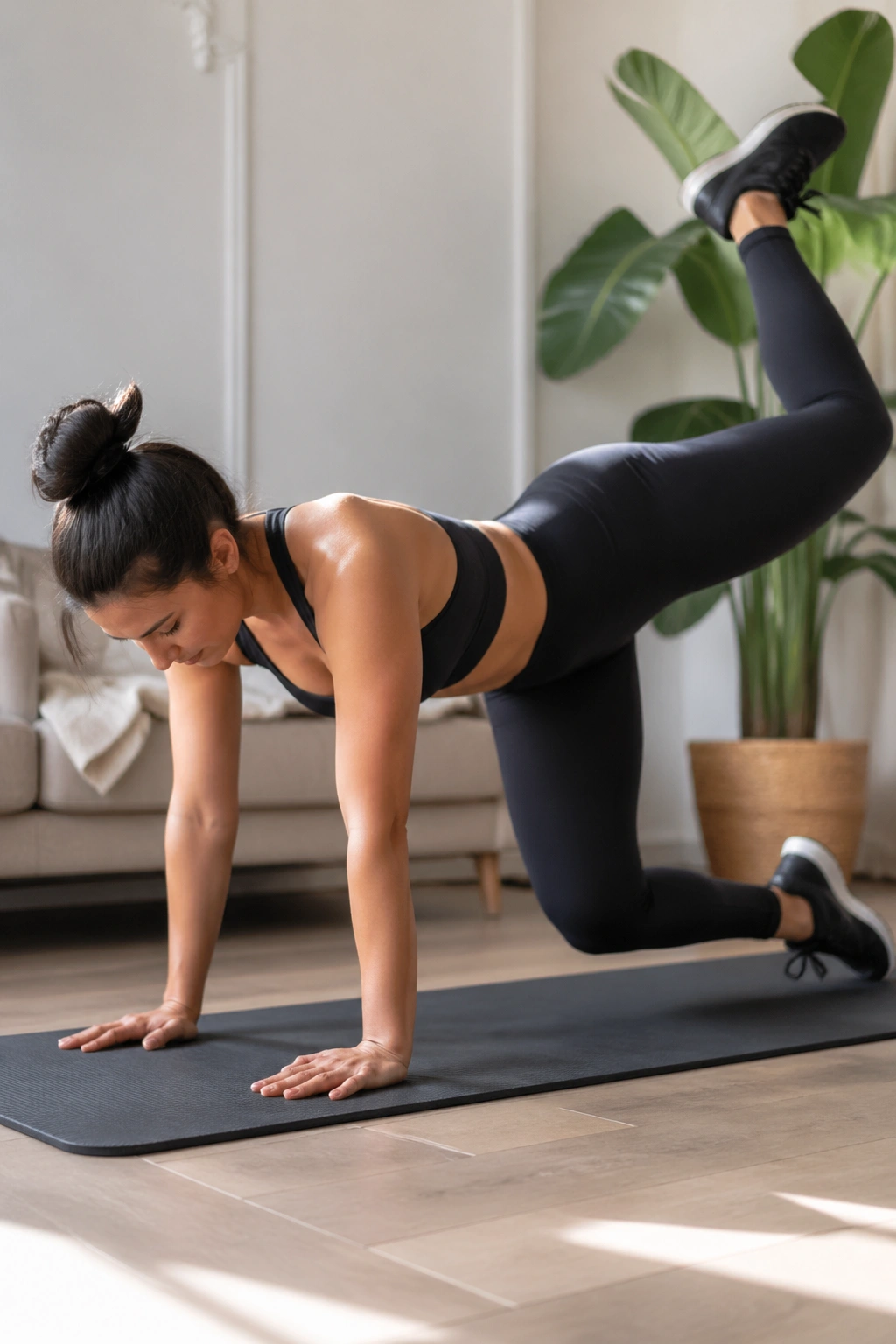
Donkey kicks look almost too simple to matter, and then your glute tells you otherwise two sets later.
On hands and knees, bend one knee and drive the sole of the foot upward without letting the lower back arch like a bridge. The movement should come from the hip, not from flinging the spine. If your ribs pop up and your neck cranes, you’ve gone too far.
A small, clean range usually works better than trying to kick the ceiling. Squeeze for a second at the top, then lower with control. That tiny pause is where the work shows up.
This move is good for people who want glute isolation without impact. It’s also useful after a squat-heavy session because it adds backside work without loading the knees much.
Best use: 12 to 20 reps per side, or 20-second controlled pulses if you want a short finisher.
17. Fire Hydrants
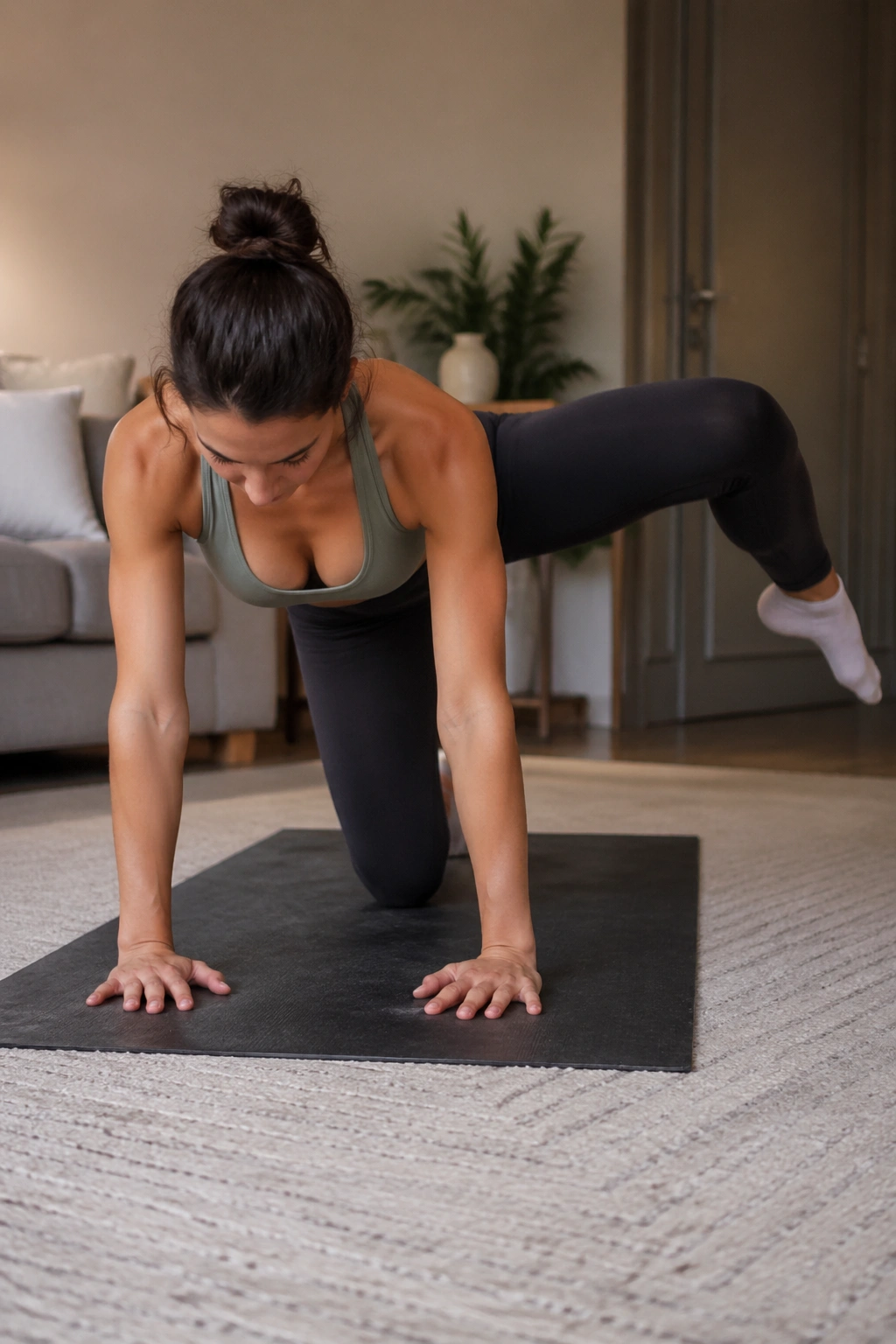
Fire hydrants are one of the best bodyweight leg workouts for the side glutes, and they’re sneaky because the range is small.
From all fours, lift one bent knee out to the side like a dog at a tree. The lift should stay controlled, and the hips should stay mostly square to the floor. You’re training the muscles that stabilize the pelvis when you walk, run, climb stairs, and stand on one leg.
How to use it
If you swing the leg instead of lifting it, the lower back starts helping too much. If the knee goes way higher than your hip can control, the pelvis twists and the work gets messy. Small is fine. Clean is better.
Try slow reps with a one-second hold near the top. That’s enough to make the outer hip work hard without beating up the joints.
Best use: 12 to 15 reps per side, especially as a warm-up for glute work or a finisher after bigger movements.
18. Frog Pumps
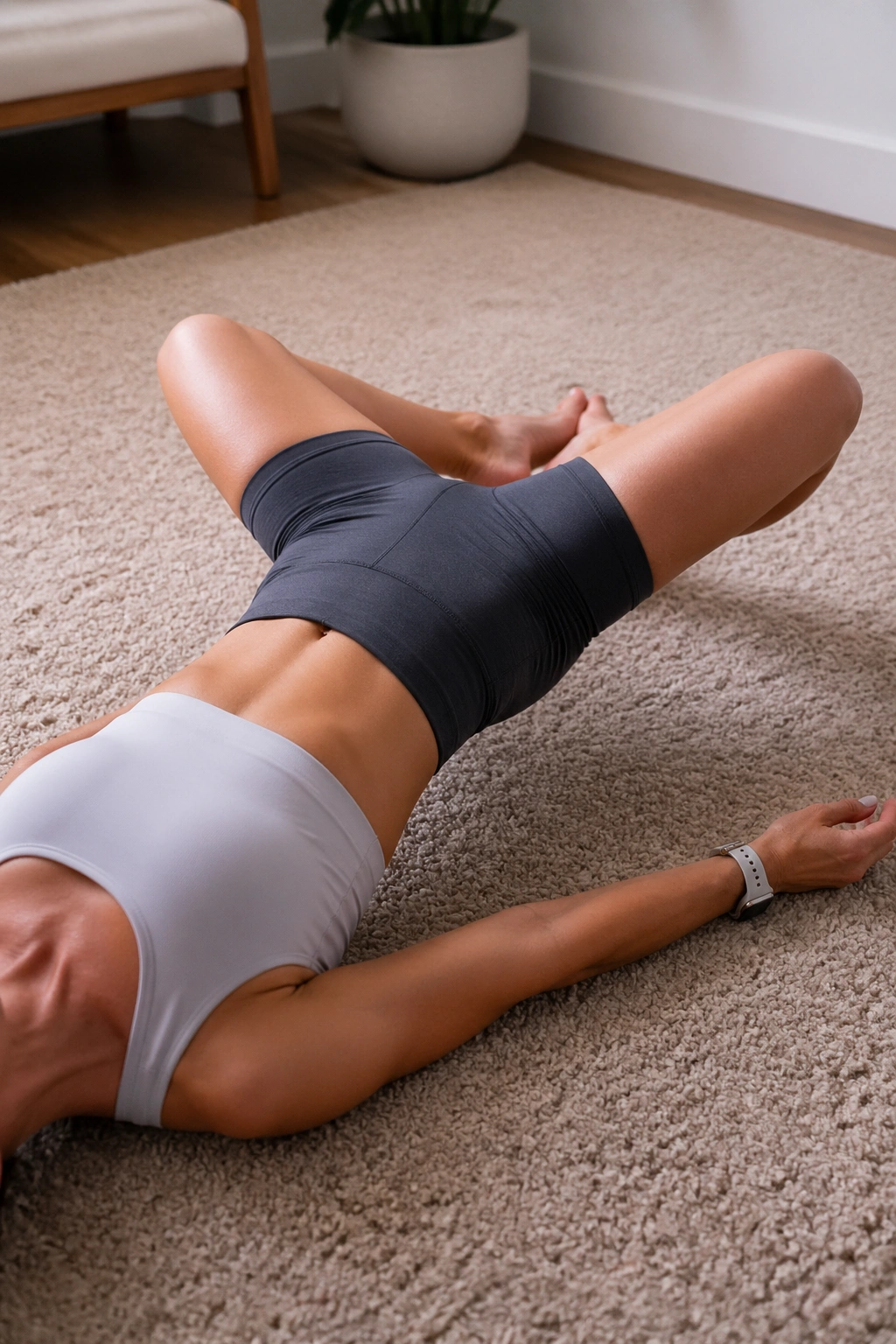
Frog pumps are what I reach for when I want glutes to burn fast without a long setup.
Lie on your back, press the soles of your feet together, let the knees open out, and pump the hips upward in a short range. It looks odd. It works. The bent-knee, wide-hip position shifts more of the tension into the glutes and away from the hamstrings, which is why the burn comes on quickly.
The rhythm should stay tight. A sloppy frog pump turns into a lazy bounce, and that defeats the point. Keep the feet pressed together, the pelvis tucked, and the top squeeze strong.
- Use them after bridges or squats.
- Keep the range short.
- Stop if your lower back starts taking over.
- Try a 2-second squeeze at the top for a sharper burn.
Best use: 20 to 30 reps as a finisher, or 2 sets of 15 slow pulses when you want a quick glute hit.
19. Calf Raise
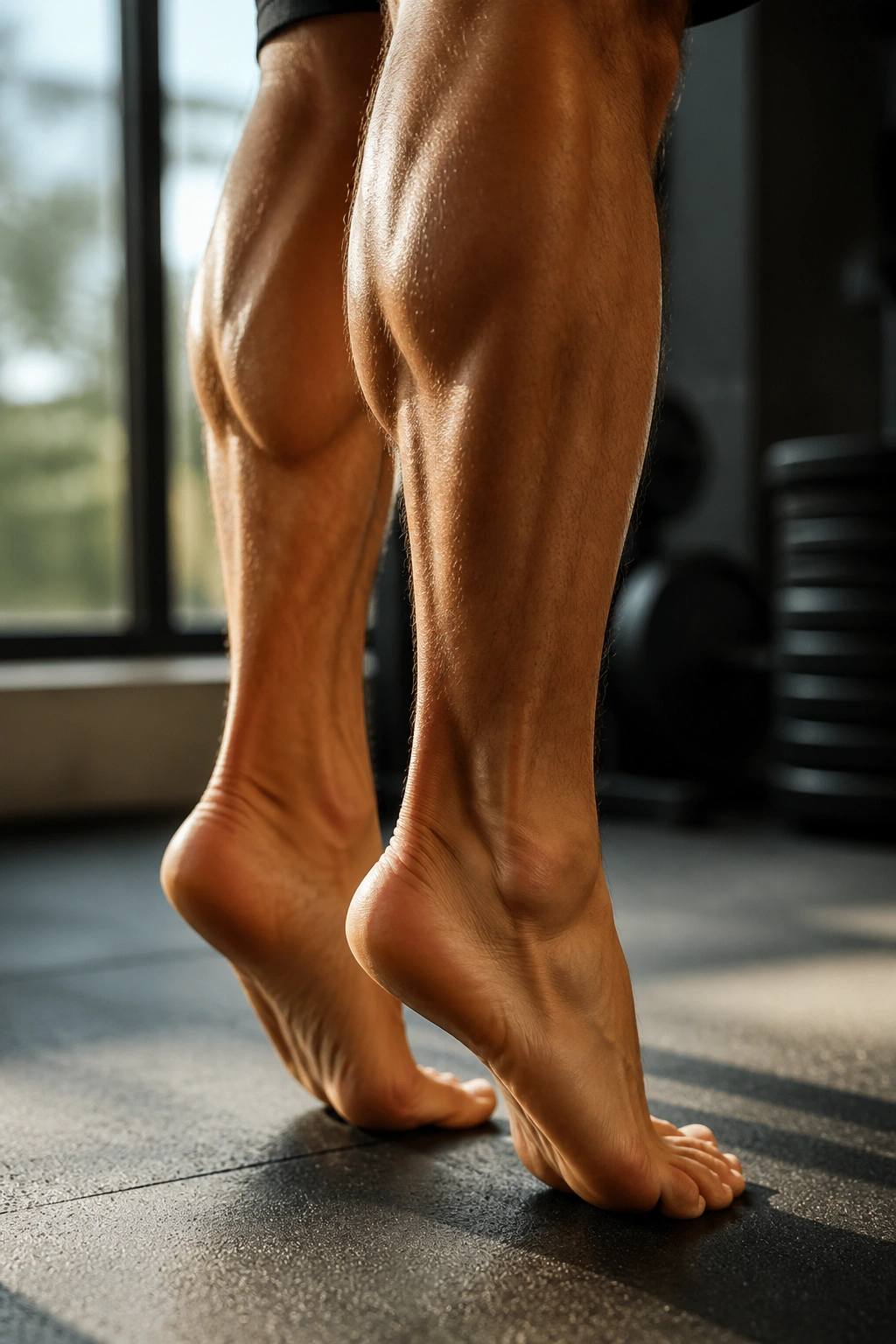
Calf raises are the move people skip right up until they realize how much lower-leg strength matters for walking, running, jumping, and even just standing for long stretches.
Stand tall, rise onto the balls of your feet, pause at the top, then lower all the way down until you feel a stretch in the calves. That full range matters. Half reps keep the calves busy, but full reps train them better and usually feel cleaner.
The straight-knee version leans more toward the bigger calf muscle that shows when the leg is extended. If you rush through them, they get boring fast. If you slow down and own the stretch at the bottom, they get hard fast.
Best use: 15 to 25 reps, with a 1-second pause at the top and another brief pause at the bottom.
20. Single-Leg Calf Raise
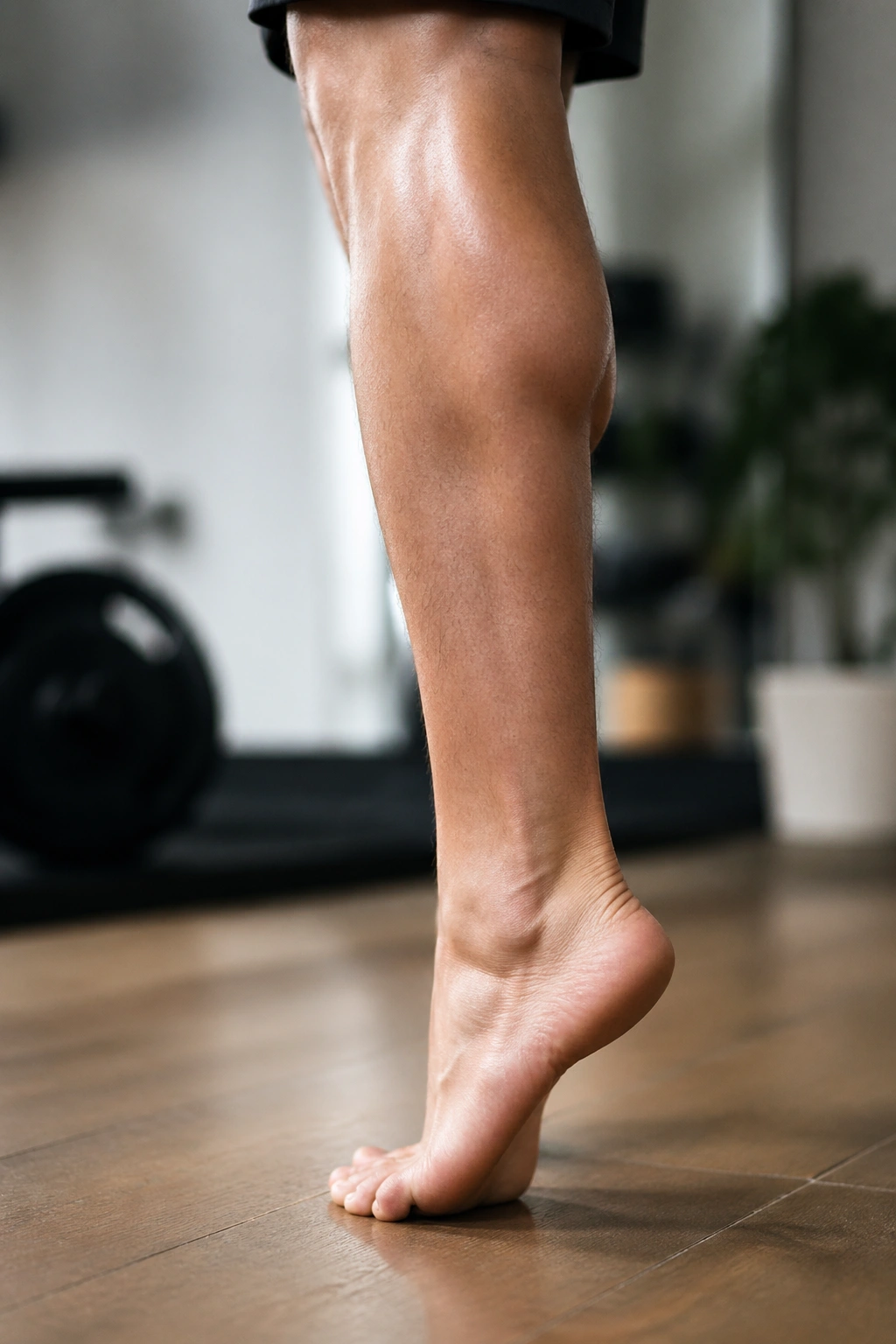
A single-leg calf raise turns a small movement into a real challenge. That’s what makes it worth doing.
One leg takes the full load, which means each rep asks more from the calf, the ankle, and the tiny stabilizers in the foot. If you’ve got one side that feels weaker or less coordinated, this move will expose it within a few reps.
You can keep a fingertip on a wall for balance if needed. That does not ruin the exercise. The goal is calf work, not a balance contest you didn’t sign up for.
- Rise straight up, not forward onto the toes.
- Pause at the top for 1 second.
- Lower slowly until the heel sits low and the calf stretches.
- Keep the standing knee straight but not locked hard.
Best use: 8 to 15 reps per side, done with control rather than speed.
21. Skater Hops
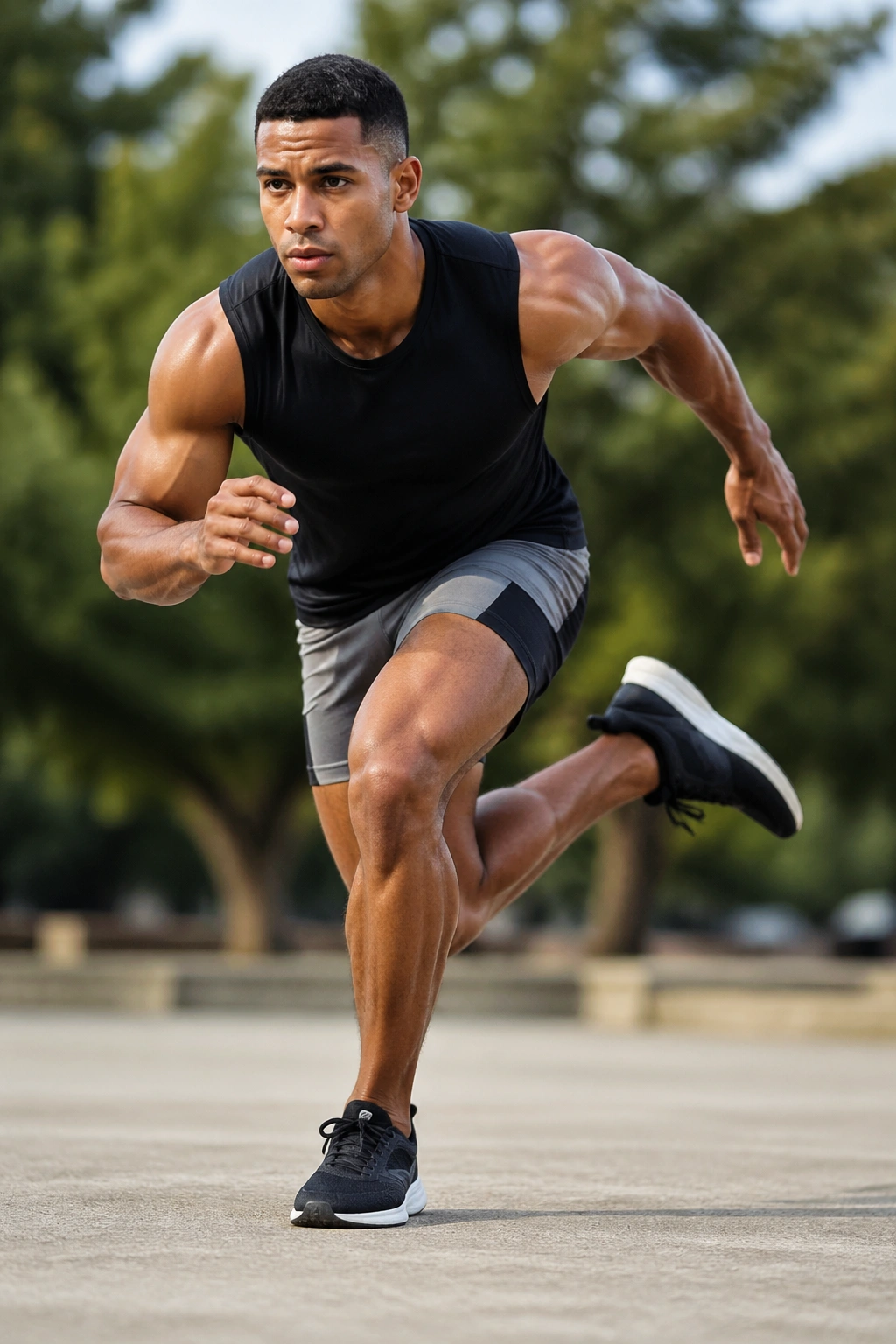
Skater hops are one of the best no-equipment leg workouts if you want sideways power instead of straight-ahead movement all the time.
You hop from one leg to the other in a lateral pattern, landing softly and absorbing force through the hip, knee, and ankle. The outside hip works hard to stabilize the landing, which is exactly why the move feels so alive compared with a standard squat.
The main thing is the landing. Stick the landing quietly, keep the chest steady, and let the bent leg absorb the shock. If you’re bouncing all over the floor, the hop is too large or too fast.
Key details
- Start with a small hop if balance is shaky.
- Keep the trailing leg behind you like a speed skater.
- Land on a bent knee, not a locked leg.
- Rest 30 to 60 seconds between sets if the power drops.
Best use: 5 to 8 hops per side for power, or 20 to 30 seconds if you want a conditioning finish.
22. Cossack Squats
If I had to pick one lateral move that teaches the body to work in a different plane, it would be the Cossack squat. It looks unusual. It feels even more unusual the first few times.
You shift into one bent leg while the other stays long and the foot stays grounded or lightly tipped up, depending on mobility. The bent side works hard, but the long side gets a big inner-thigh stretch too. That combination is excellent for hips, adductors, and ankle control.
Start shallow if deep range makes your heel pop up or your torso fold forward. A lot of people try to go low too soon and end up fighting their own structure. Better to own a smaller depth and keep the movement clean.
Here’s the part I like most: Cossack squats make ordinary squats and lunges feel better later. The hips move more freely, the adductors stop barking as much, and the body learns to handle side-to-side loading instead of only forward and backward work.
If you want a simple home leg session, stack a squat, a lunge, a bridge, a calf move, and one lateral pattern. That’s enough to make your legs earn their dinner.
