



Two dumbbells and a strip of floor can do more for your legs than a crowded machine circuit with ten stations and a line behind every one of them. Dumbbell leg workouts for women work because they load the movements that matter: squats, hinges, lunges, bridges, and carries. Do those well, and your quads, glutes, hamstrings, inner thighs, and calves all get the memo.
A lot of leg day plans drift into random burnouts and half-effort machines. That’s where progress gets muddy. A better setup uses moves you can load, slow down, and repeat with clean form, which is how strength actually builds.
A pair of 10-, 15-, or 25-pound dumbbells can be enough to start. The exact number matters less than the way you move them. Good reps beat sloppy heavy ones every time.
Pick a handful from the list, pair a squat with a hinge and a single-leg move, and keep the rest for another session. That’s the useful part. The first place to start is the squat.
1. Goblet Squat
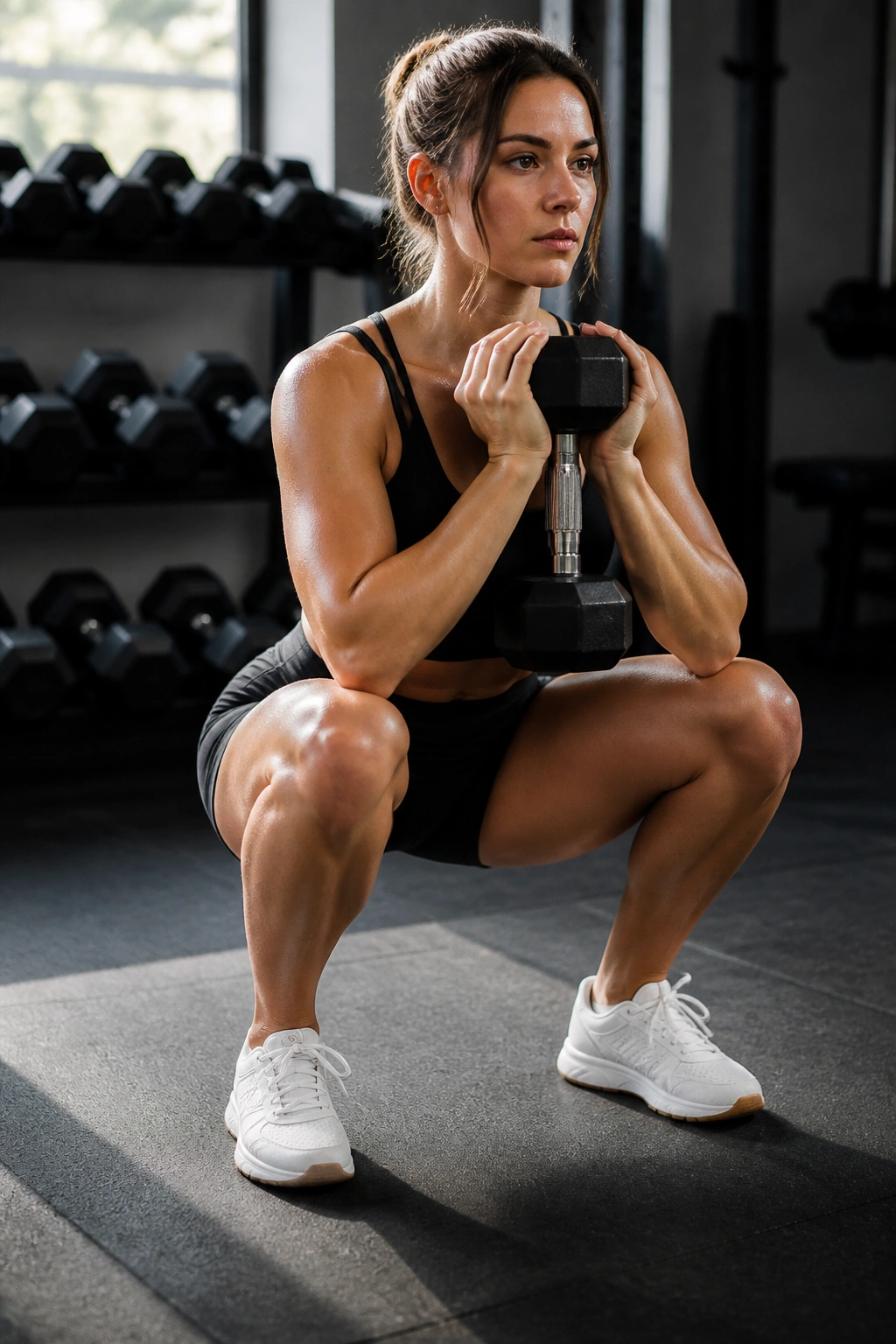
If you only learn one dumbbell leg move, make it this one. The goblet squat is the cleanest entry point into lower-body strength because it teaches bracing, depth, and knee control without turning the setup into a circus.
Hold one dumbbell vertically at your chest, elbows pointed down and slightly in. Sit between your hips, not straight down onto your toes, and keep your heels heavy. A good rep feels like your whole foot is glued to the floor.
Why It Works
The front-loaded position keeps your torso more upright than a back-loaded squat, which usually makes the movement easier to learn. It also makes your core work harder than people expect. That’s a nice bonus, not the main event.
Aim for 3 to 4 sets of 8 to 12 reps. If depth gets messy, stop a hair above the point where your lower back starts to tuck. That little bit of honesty keeps the exercise useful instead of turning it into a shrug with bent knees.
- Keep the dumbbell close to your chest.
- Let your knees track over your middle toes.
- Lower under control for 2 to 3 seconds.
Tip: if the bottom feels cramped, stand on small plates or wear shoes with a firmer heel. It changes the whole rep.
2. Dumbbell Romanian Deadlift
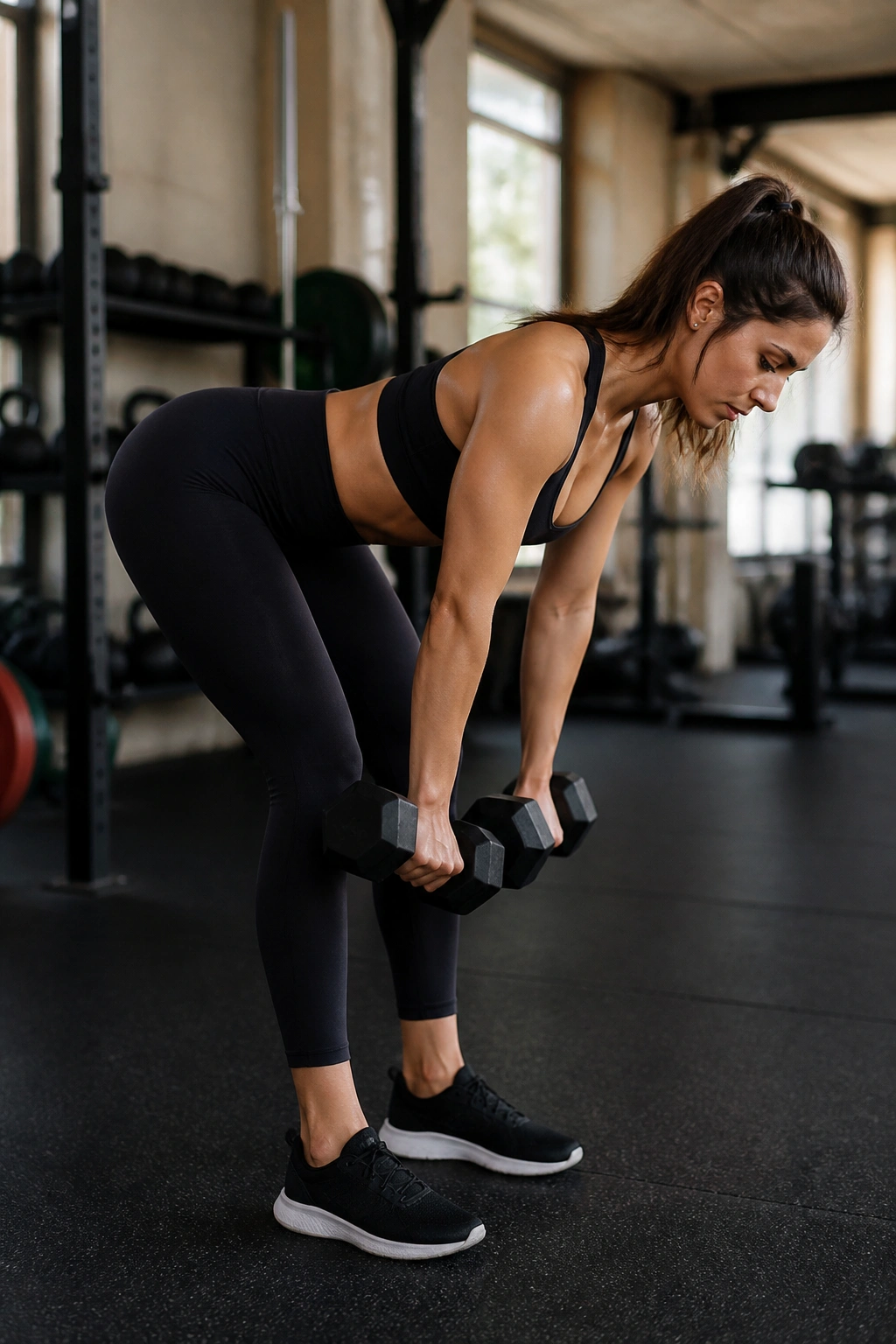
Why does the Romanian deadlift show up in so many leg plans? Because it hammers the hamstrings and glutes without pounding the knees. That makes it a smart hinge pattern for anyone who wants stronger legs without living in deep knee bend all day.
Hold a dumbbell in each hand and soften your knees just enough to unlock them. Push your hips back, keep your spine long, and slide the weights down the front of your thighs. The dumbbells should stay close enough to shave your legs if you were wearing pants.
What You Should Feel
You should feel a stretch in the back of your legs before you feel your lower back. If your back takes over first, the hinge is off. Usually that means the weights drift too far away from you or the knees bend too much.
Use 3 sets of 8 to 10 reps with a slow 3-second lower. Stop when your hamstrings say enough and your back is still neutral. That range is usually somewhere around mid-shin, but don’t chase a line in the sand. Chase the stretch.
3. Reverse Lunge
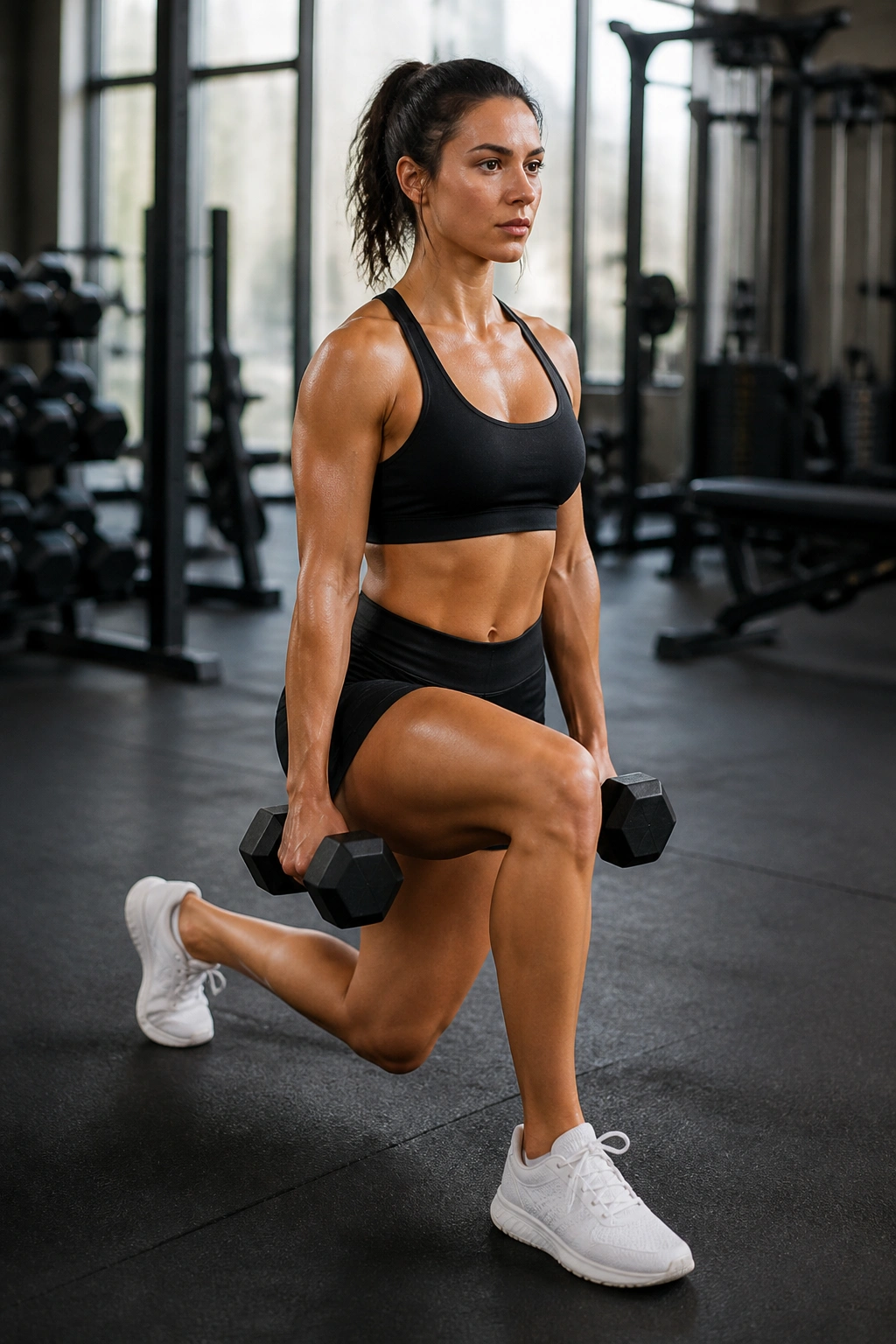
If forward lunges make you wobble, step back instead. The reverse lunge is kinder on the knees and easier to control, which is why I like it for building confidence and leg strength at the same time.
Start tall with a dumbbell in each hand. Take a long step back, drop the back knee toward the floor, and keep most of your weight on the front leg. The front shin can lean a little, but it should not shoot way past your toes.
- Step back about 2 feet.
- Keep the front heel down.
- Drive through the front foot to stand up.
A reverse lunge is one of those moves that looks plain until you add weight. Then it gets serious. Use 3 sets of 8 to 10 reps per side, and don’t rush the reset between reps. Clean foot placement matters more than speed.
4. Bulgarian Split Squat
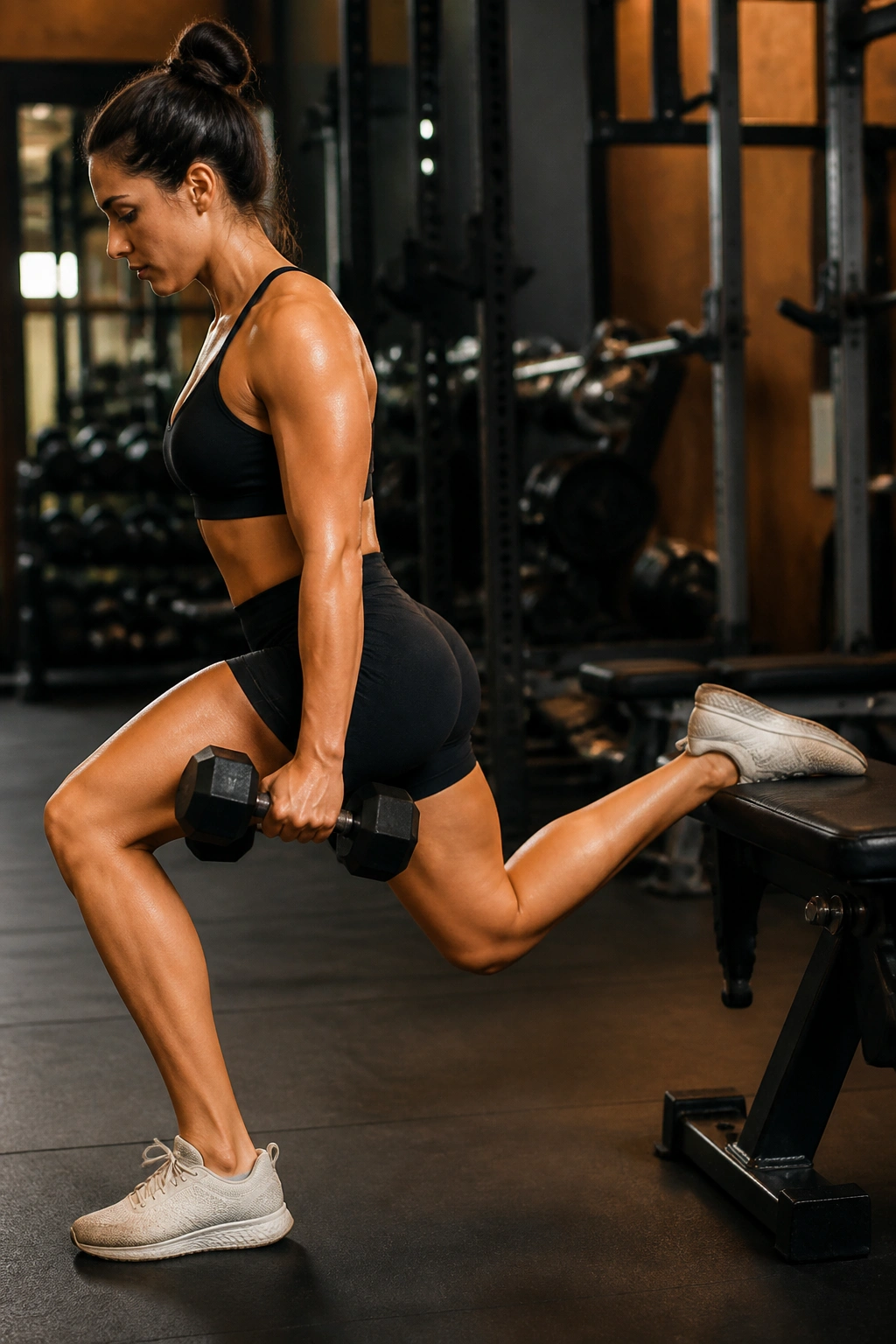
This one earns its reputation fast. The Bulgarian split squat is a leg shaker because one leg does nearly all the work while the back foot just keeps you from face-planting.
Set your rear foot on a bench or sturdy step, usually around knee height or a little lower. Hold the dumbbells at your sides, lean the torso slightly forward, and lower straight down. The front thigh should do the heavy lifting, while the back leg just rides along.
Where the Load Lands
A more upright torso shifts the work toward the quad. A slight forward lean shifts more to the glute. That tiny angle change matters a lot, and it’s why this move is never as generic as it looks from across the room.
Try 3 sets of 6 to 10 reps per leg. Start lighter than your ego wants. This exercise has a way of punishing overconfidence by rep four.
5. Dumbbell Sumo Squat
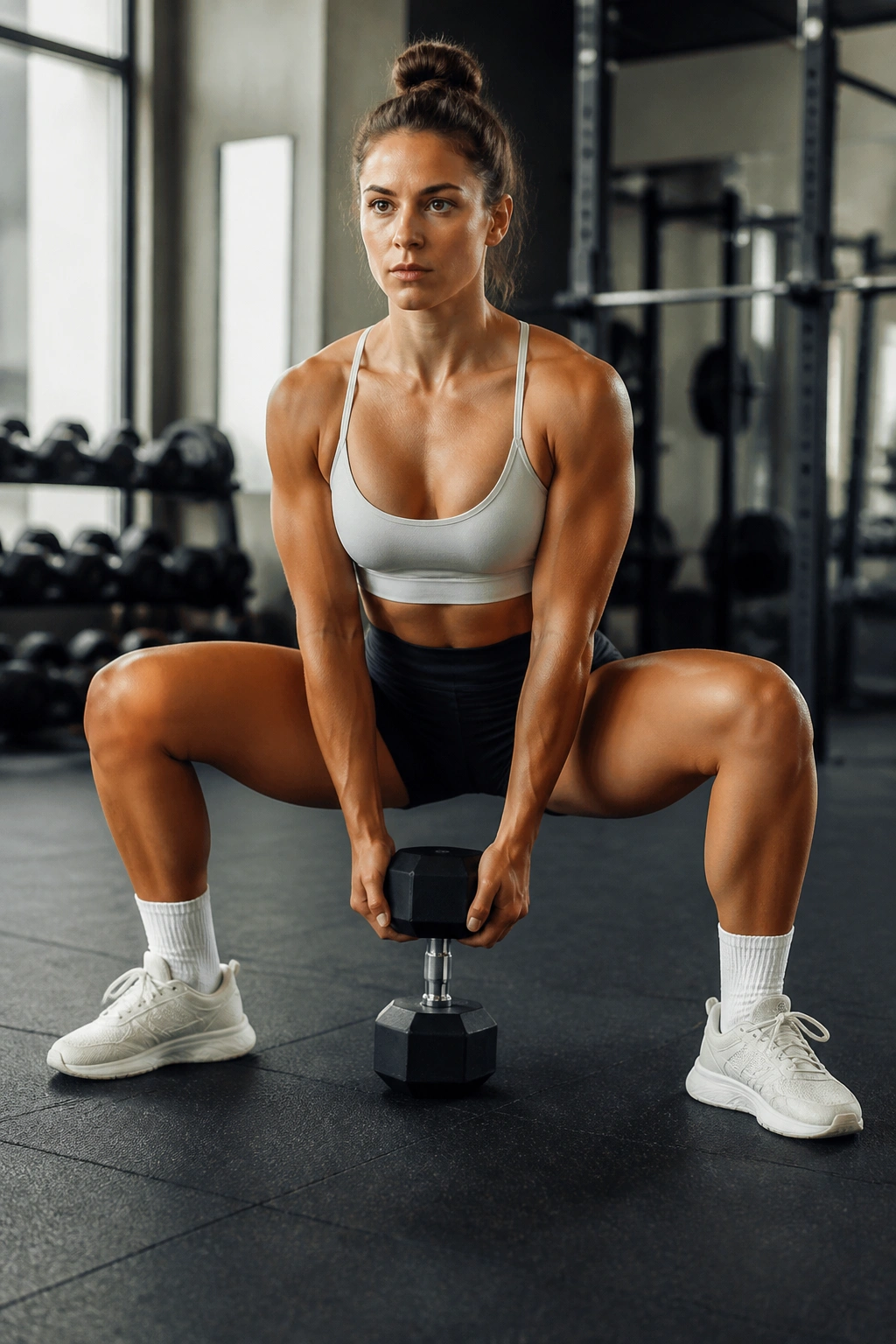
A narrow squat and a sumo squat do not feel the same, and they should not. The wider stance in a sumo squat shifts more work into the inner thighs and glutes, which gives your lower body a different kind of stress.
Stand with your feet wider than shoulder width, toes turned out about 30 to 45 degrees. Hold one dumbbell between your legs or two dumbbells at your sides. Sit down between your hips and keep your knees pushing out in the same direction as your toes.
That wide stance often feels friendlier if regular squats make your hips feel boxed in. It is also useful when you want some adductor work without adding a separate inner-thigh drill. Go for 3 sets of 10 to 15 reps, and keep the bottom position honest. Don’t bounce.
6. Dumbbell Hip Thrust
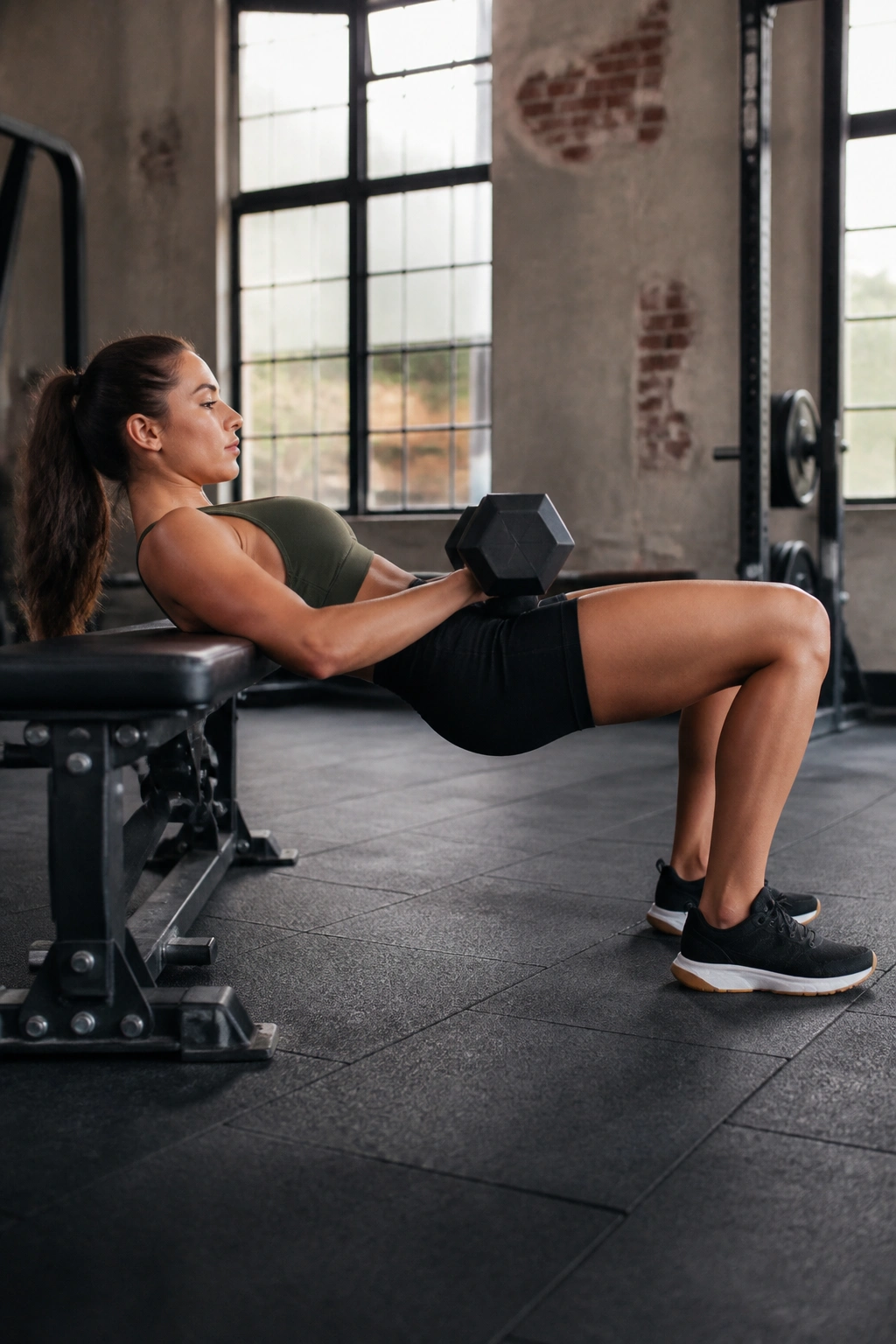
A bench, a dumbbell, and a few hard reps. That’s the whole story here. The dumbbell hip thrust is one of the best pure glute builders because it loads the top end of hip extension, where a lot of people are weak.
Set your upper back on a bench, place the dumbbell across your hips, and tuck your chin slightly so your ribs don’t flare. Drive your heels into the floor and lift until your torso and thighs make a straight line. At the top, squeeze your glutes for a full second or two.
If you feel it in your lower back, the ribs are probably popping up or the feet are too far away. Fix that before adding more weight. Use 3 to 4 sets of 10 to 12 reps, and keep the top pause strict. That pause matters.
7. Dumbbell Step-Up
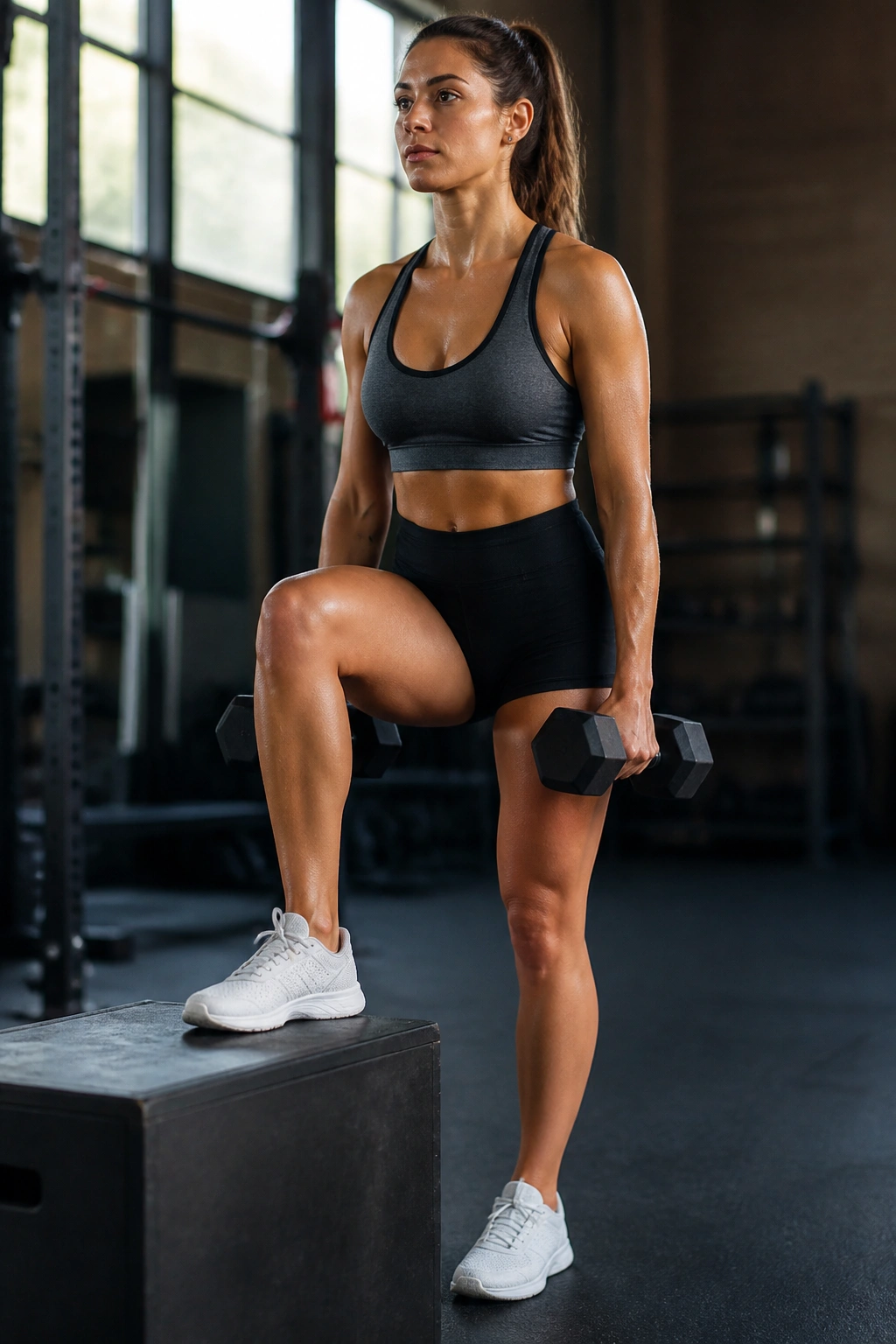
A step-up looks simple. Then one leg starts doing all the work and your balance gets tested. Step-ups are excellent for single-leg strength, glute drive, and stair-climbing power without the same strain some people feel in deep lunges.
Use a box or bench that puts your thigh around parallel to the floor or slightly below. Hold dumbbells at your sides, plant the whole foot on the box, and press through the working leg to stand. The back leg should help only a little, if at all.
Quick Setup Cues
- Choose a box height that you can control.
- Keep the chest tall.
- Lower slowly; do not drop off the box.
Aim for 3 sets of 8 reps per leg. If you have to spring off the back leg, the box is too high or the weight is too heavy. Lower one of them.
8. Dumbbell Curtsy Lunge
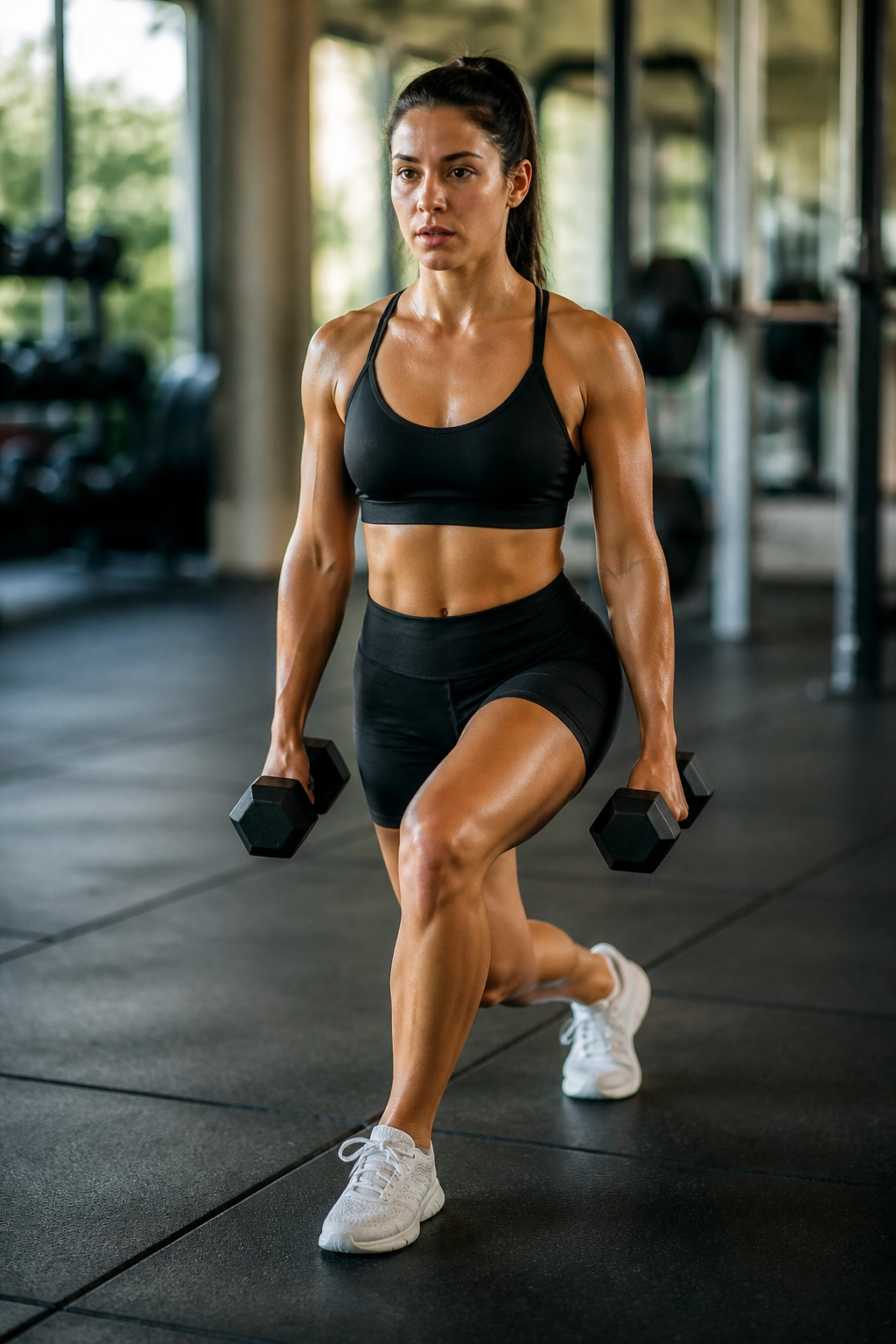
Some people love this one. Some people hate it. Both reactions make sense. The curtsy lunge hits the glute medius and inner thighs in a way that straight-back lunges do not, but it can annoy knees that dislike twisty angles.
Hold the dumbbells at your sides and step one leg back and across the other, like you’re making room in a crowded hallway. Keep the movement long and controlled, not tiny and cramped. You want the hips to stay square while the front leg does the real work.
If your knees feel sketchy, skip it. No prize gets handed out for forcing a move that doesn’t suit your joints. If it feels solid, use 2 to 3 sets of 8 reps per side as a controlled accessory movement, not a max-effort test.
9. Front-Foot-Elevated Split Squat
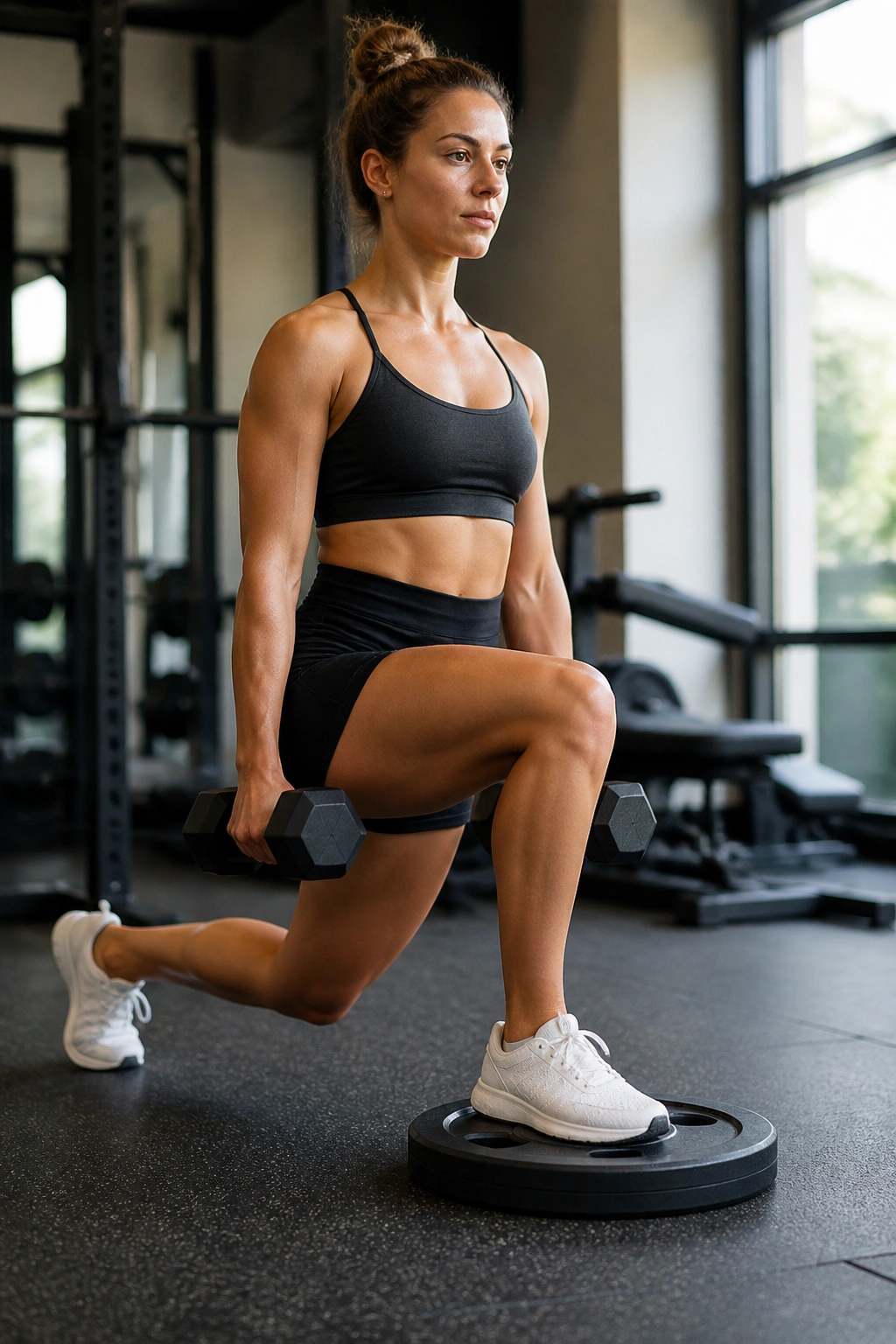
A little ramp changes the whole exercise. Front-foot elevation gives you more range of motion and more quad loading, which is why this version feels so different from a regular split squat.
Put your front foot on a small plate, wedge, or low step. Hold dumbbells at your sides, keep the front heel planted, and lower until the back knee comes close to the floor. Rise by driving through the midfoot and heel, not by bouncing off the back leg.
The Little Ramp Matters
That small elevation lets the front knee travel a bit more and gives the working leg a longer path. For a lot of people, that means more muscle tension and a cleaner rep.
Use 3 sets of 8 to 12 reps per side. Keep the setup tidy. If the front foot slips around, the whole thing turns into a balance drill you didn’t ask for.
10. Dumbbell Sumo Deadlift
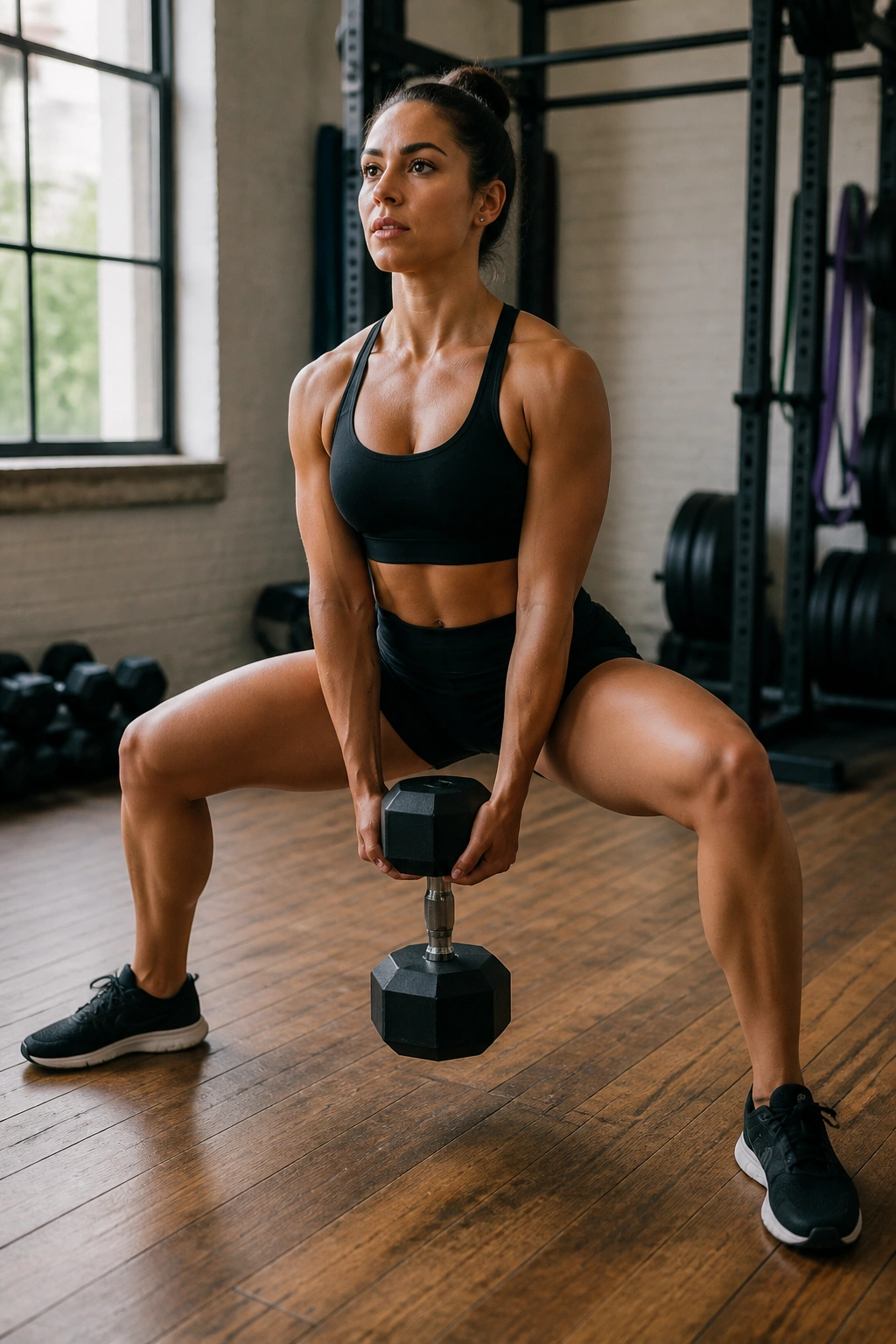
If the Romanian deadlift is a hamstring stretch with weight, the sumo deadlift is the heavier, more upright cousin. It blends glute, quad, and inner-thigh work and usually feels friendlier on the back than a long-range hinge for some lifters.
Set your feet wide, toes out, and place the dumbbell between your feet. Sit your hips down, keep your chest proud, and stand by pushing the floor away. The dumbbell should travel close to your shins, not swing forward like a pendulum.
This one is excellent when you want a heavier feel without needing a barbell. Use 3 to 4 sets of 6 to 10 reps, and stop before your shoulders roll forward. If the setup gets sloppy, the lift loses its point fast.
11. Dumbbell Walking Lunge
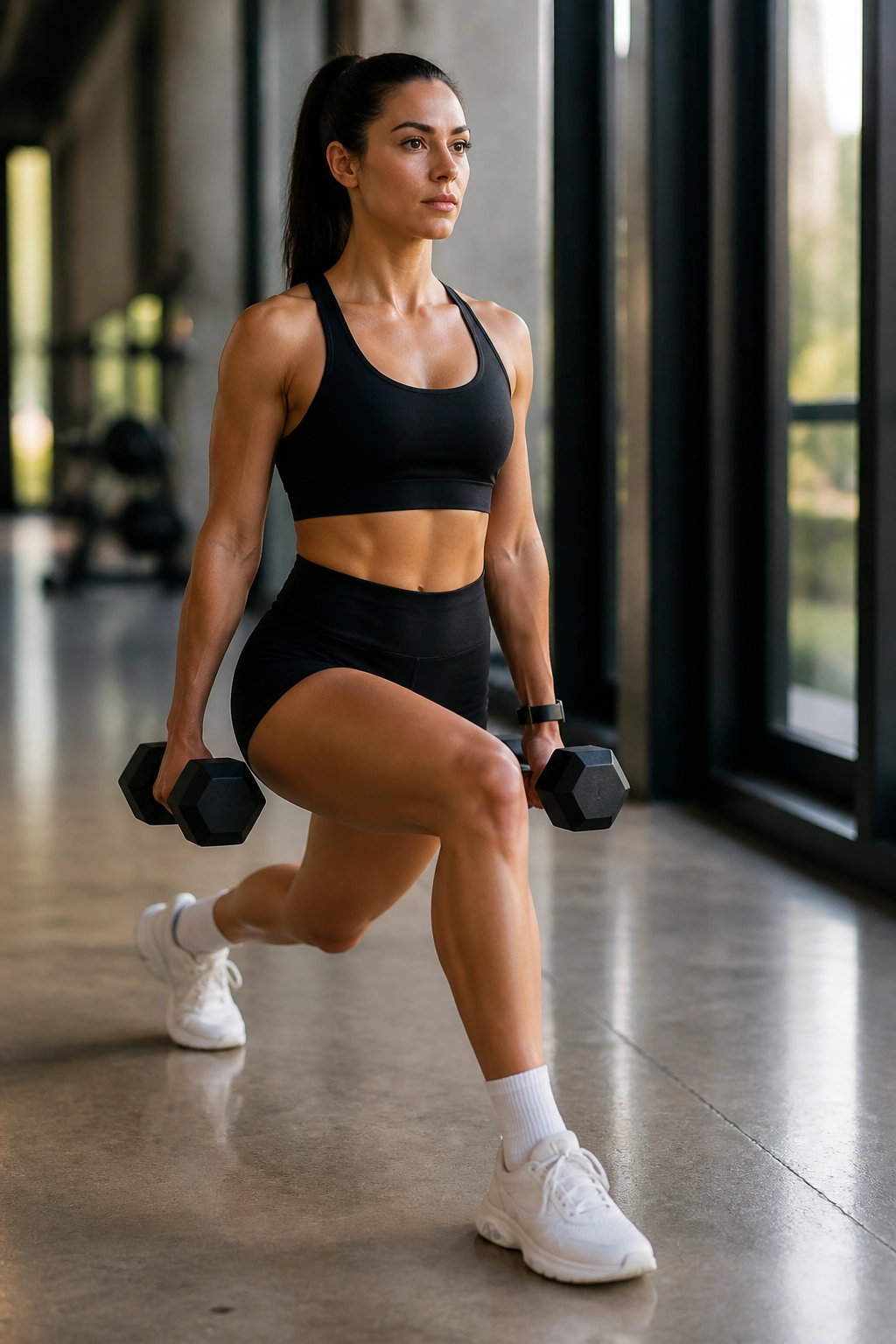
Walking lunges are a sneaky kind of chaos. They build leg endurance, hip control, and balance at the same time, which is why they show up in so many hard lower-body sessions.
Start with dumbbells at your sides and take a long, clean step forward. Drop straight down until both knees are bent, then drive through the front leg and bring the back leg forward into the next stride. Keep your torso stacked over your hips. If you lean like you’re chasing a bus, the form falls apart.
A few practical things help here:
- Start with 10 to 16 total steps.
- Keep the steps even.
- Use lighter dumbbells than you would for split squats.
Walking lunges get ugly when fatigue jumps in early. Respect that. Two to three rounds is enough for most people who want quality instead of a sloppy finish.
12. Single-Leg Romanian Deadlift
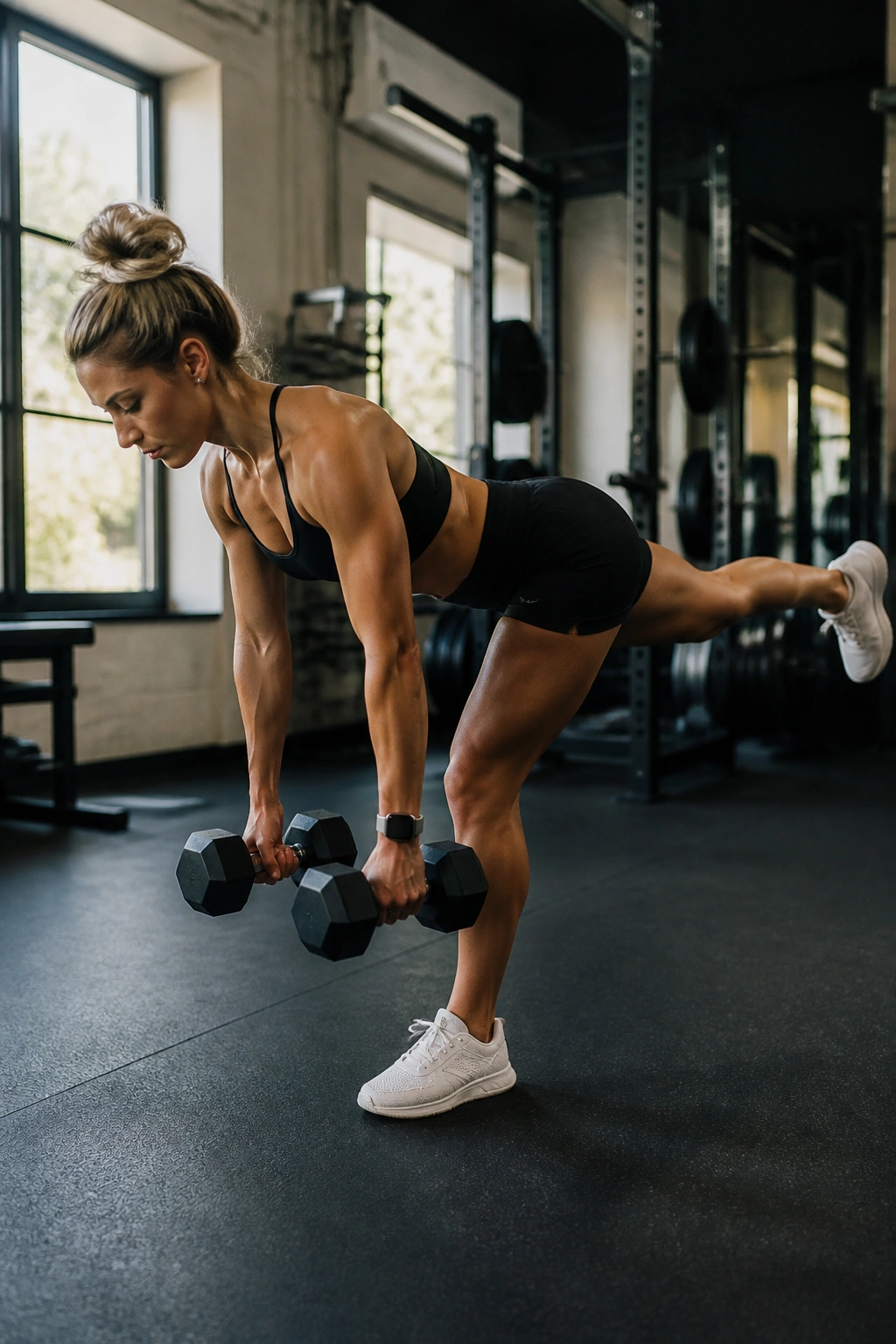
Can you balance while hinging? Good. That’s half the battle. The single-leg Romanian deadlift builds hamstring strength and ankle control together, and it also exposes weak hips in a way two-legged moves can hide.
Hold one or two dumbbells and shift weight onto one leg. Hinge forward while the free leg reaches back like a counterweight. Keep the hips square to the floor and let the dumbbell travel toward the standing leg’s foot. A hand on a wall or rack is fair game if balance is the limiter.
How to Stop Wobbling
The standing knee should stay soft, not locked. The back leg does not need to lift high. In truth, a small reach works better than a dramatic one because it keeps the pelvis from twisting open.
Aim for 3 sets of 6 to 8 reps per side. If your foot starts gripping like crazy, slow the rep down. Control beats range.
13. Lateral Lunge
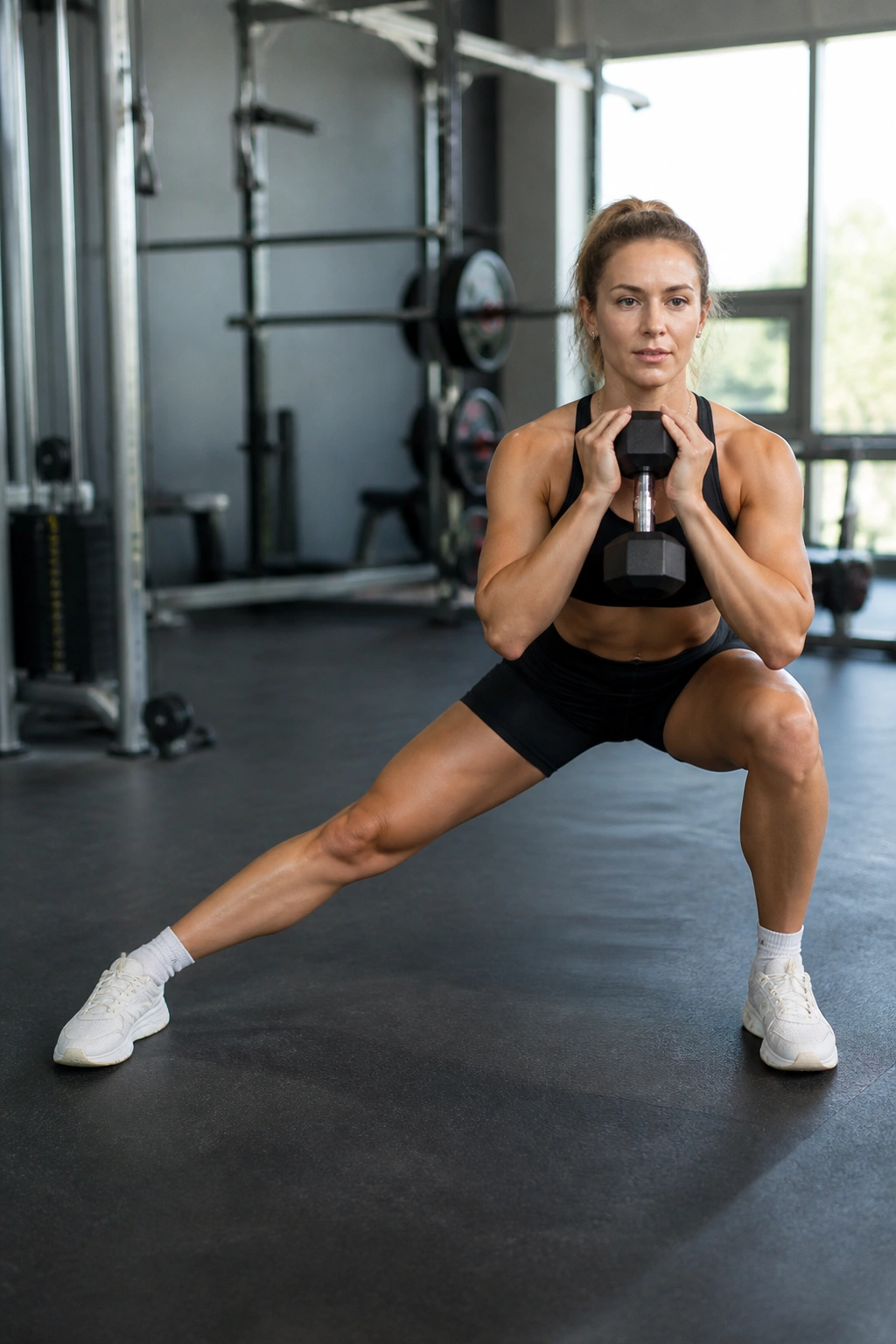
Side-to-side strength gets ignored too often. The lateral lunge trains the glutes, adductors, and hips in a plane most people barely touch, which is a shame because real life happens in more than one direction.
Hold a dumbbell at your chest or between both hands. Step out to one side, sit the hips back over the stepping leg, and keep the other leg straighter. The working knee should point in the same direction as the toes, not collapse inward.
The stretch in the inner thigh can feel odd at first. That’s normal. It should not feel sharp. Use 2 to 3 sets of 6 to 10 reps per side, and keep the trailing foot flat. If you try to rush this one, it turns into a side shuffle with weights.
14. Dumbbell Glute Bridge
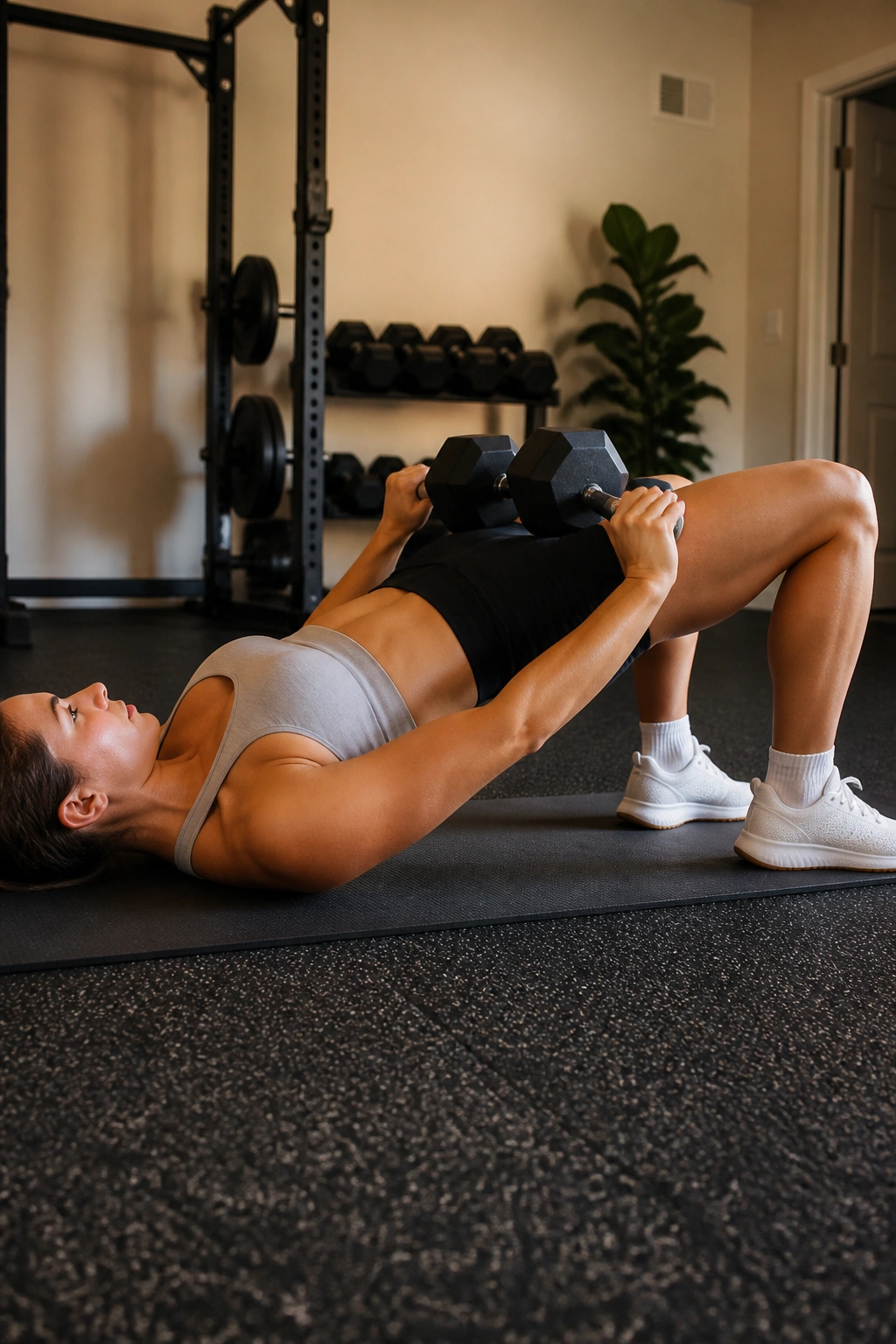
No bench. No drama. The dumbbell glute bridge is a simple floor move that still burns if you do it right. It is easier to set up than a hip thrust, which makes it a good choice when time is short or your lower back needs a calmer session.
Lie on your back, bend your knees, and place the dumbbell across your hips. Keep your feet flat and about hip-width apart. Drive through the heels until your hips lift, then squeeze at the top before lowering under control.
- Keep the chin slightly tucked.
- Pause for 1 to 2 seconds at the top.
- Use a pad or folded towel under the dumbbell if it digs into your hips.
Two to four sets of 12 to 20 reps works well here. Higher reps make sense because the range is short and the glutes usually tolerate volume well.
15. Heel-Elevated Goblet Squat
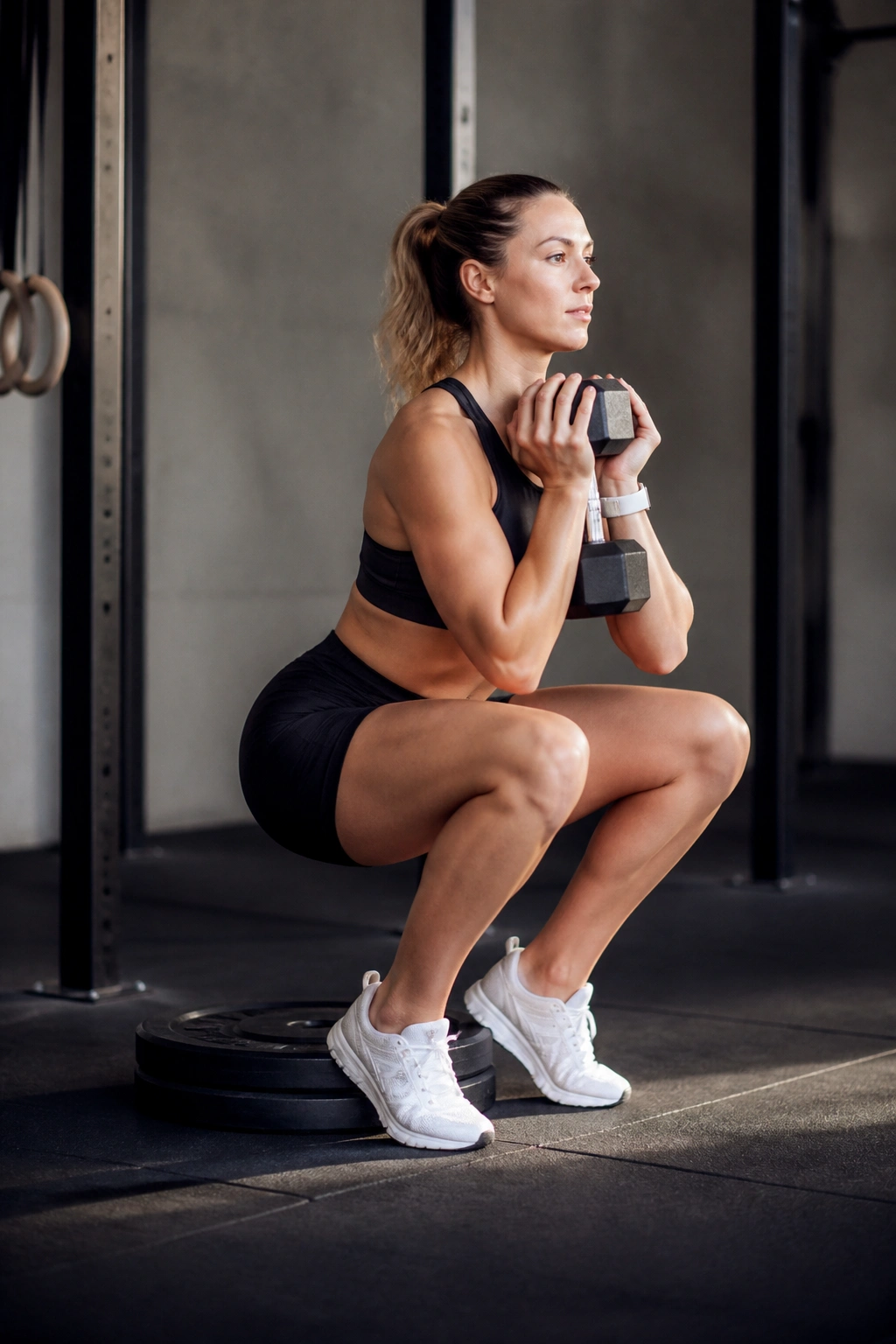
A heel wedge changes the angle enough to matter. Heel-elevated squats bias the quads more strongly, which is useful if your regular squat feels too hip-dominant or your ankles feel stiff.
Place your heels on small plates or a proper wedge, hold a dumbbell at your chest, and squat down with a tall torso. The knees will travel forward more than in a flat-foot squat, and that’s the point. Let them. Keep your heels rooted into the elevation.
Who Should Use It
People with limited ankle mobility often find this version easier to keep clean. It also works well as a quad-focused variation on days when the glutes already got hammered elsewhere.
Try 3 sets of 10 to 12 reps. If your knees feel irritated, shorten the range a bit and slow the descent. Tiny changes matter here.
16. Kickstand Romanian Deadlift
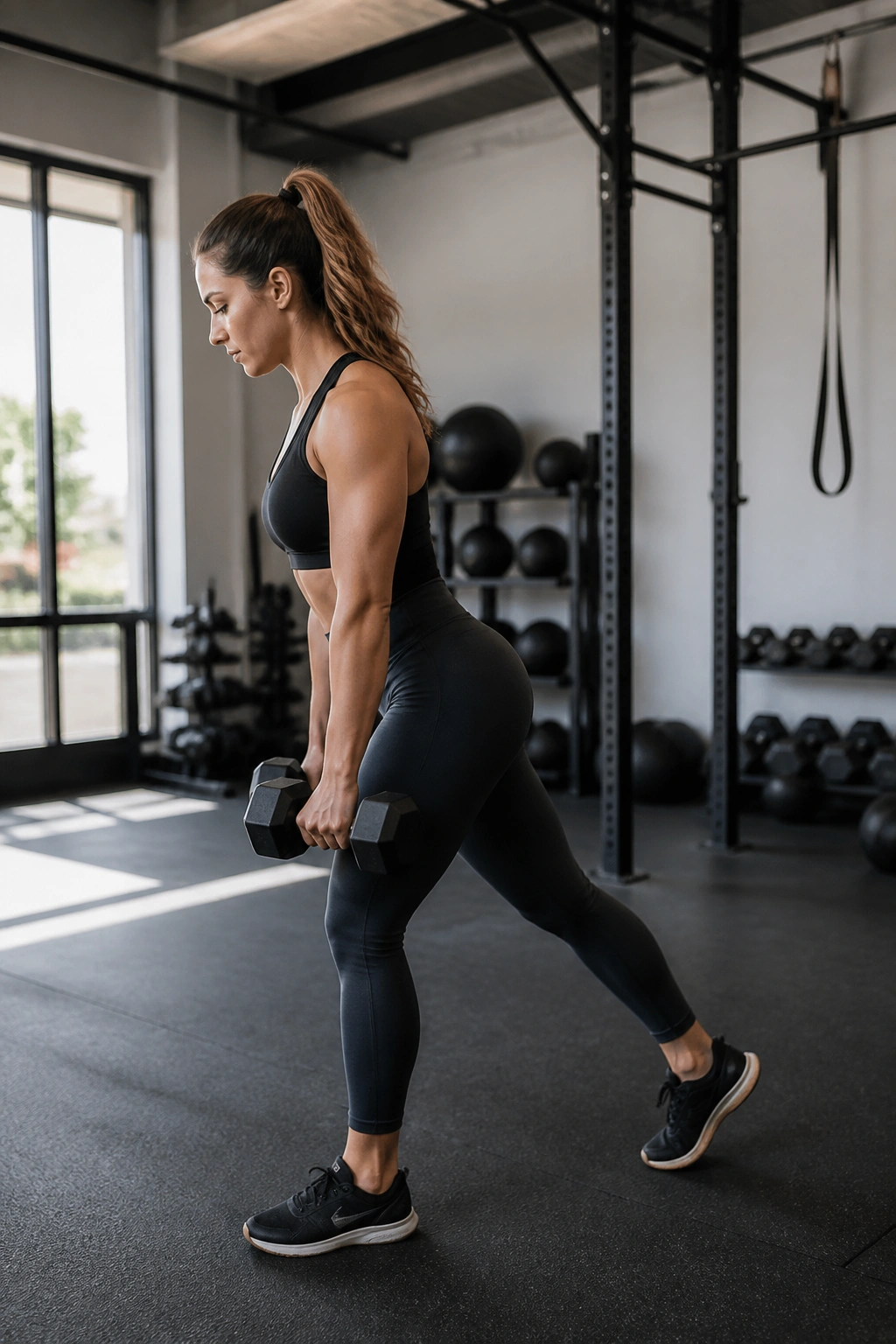
One foot stays planted; the other just helps you keep your balance. The kickstand RDL is a smart bridge between a two-leg hinge and a full single-leg deadlift.
Put most of your weight on the front leg and set the back foot lightly behind you, toes on the floor like a bicycle kickstand. Hold dumbbells at your sides and hinge at the hips. The back leg barely bears weight, which lets you load the working side without the full wobble of a single-leg version.
This is one of my favorite options when a full single-leg hinge feels too fussy. Use 3 sets of 8 to 10 reps per side, and keep the pelvis square. If the back foot starts doing real work, you’re cheating yourself out of the benefit.
17. Dumbbell Sumo Squat to Calf Raise
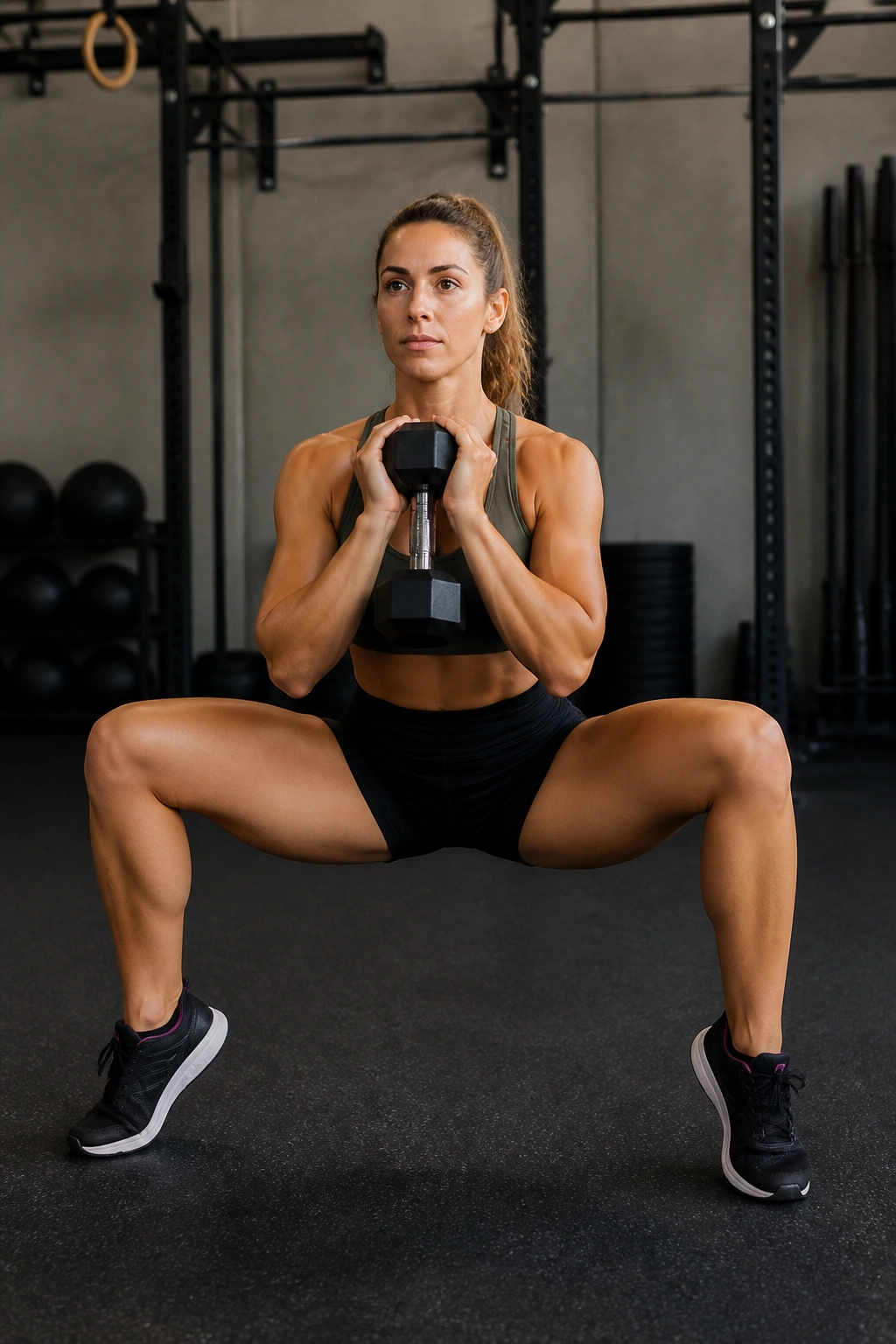
This one does a neat job of stacking two lower-body patterns into one rep. The sumo squat to calf raise gives your glutes, inner thighs, and calves a turn without needing a pile of equipment.
Take a wide stance, toes out, and lower into the squat. On the way up, squeeze your glutes and then rise onto the balls of your feet for the calf raise. Lower the heels slowly. That slow lower is where the calf work actually sticks.
Do not rush the top. The calf raise should look clean, not bouncy. Use 2 to 3 sets of 12 to 15 reps, and keep the dumbbell load moderate so the movement stays controlled. If your feet cramp, shorten the calf-raise range a little.
18. Dumbbell Frog Pump
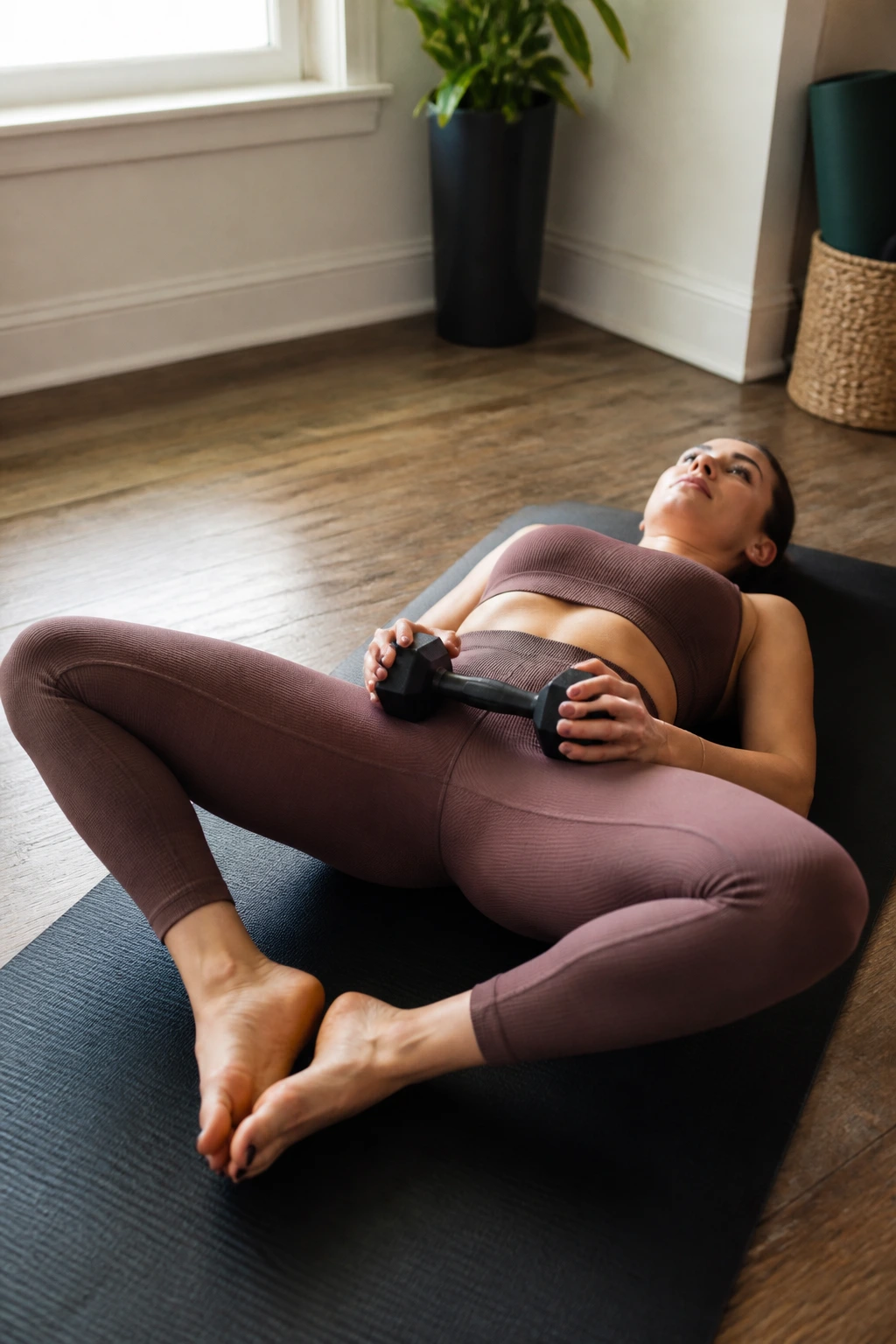
This one looks almost too easy until the high reps kick in. Frog pumps are a glute burner, and they make a very good finisher after heavier leg work.
Lie on your back with the soles of your feet together and knees falling open. Place a dumbbell over your hips if you can keep it stable. Press the hips up in a small range, squeeze the glutes hard, and come back down under control. The movement is short on purpose.
- Use light-to-moderate load.
- Keep the neck relaxed.
- Aim for a burning, not crashing, fatigue.
Twenty to 30 reps is a sweet spot here. This is not a power exercise. It is a “yes, I can still feel my glutes tomorrow” exercise.
19. Dumbbell Box Squat
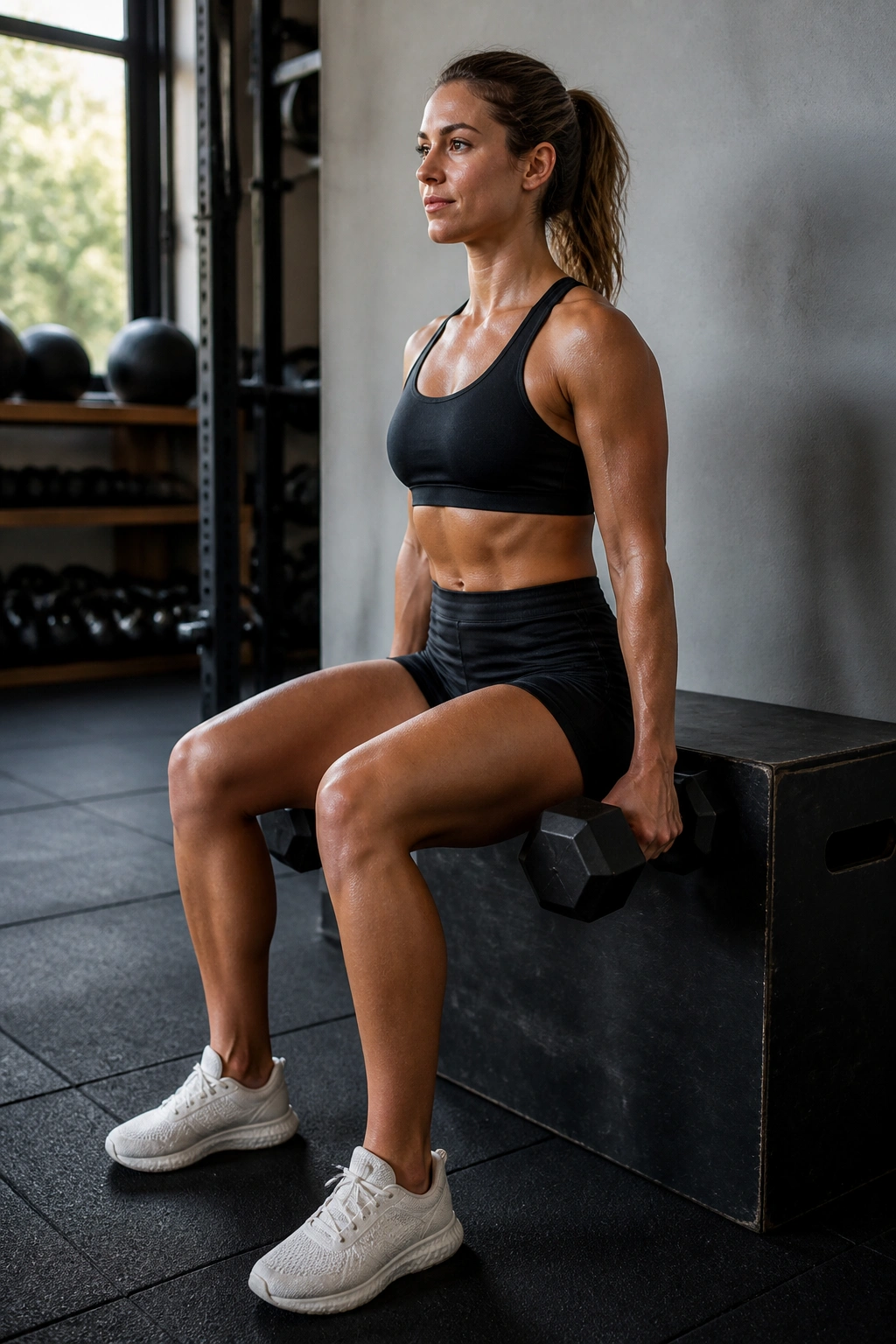
A box gives you a target. That sounds simple, and it is. Box squats help you own depth and keep your reps consistent, which is handy when free squatting starts to get messy.
Set a box or bench behind you at a height that lets you sit back under control. Hold dumbbells at your sides or at your chest. Lower until you tap the box lightly, pause without collapsing, and drive back up. Do not rock back and bounce off it like a spring.
Why Sitting Back Helps
The box teaches you to load the hips and stay honest about range. It also gives you a clear depth marker, which makes progression easier from week to week.
Use 3 sets of 6 to 10 reps with a moderately heavy load. If the box is too low, your form will fold. If it’s too high, the movement gets lazy. Pick the middle ground.
20. Alternating Split Squat
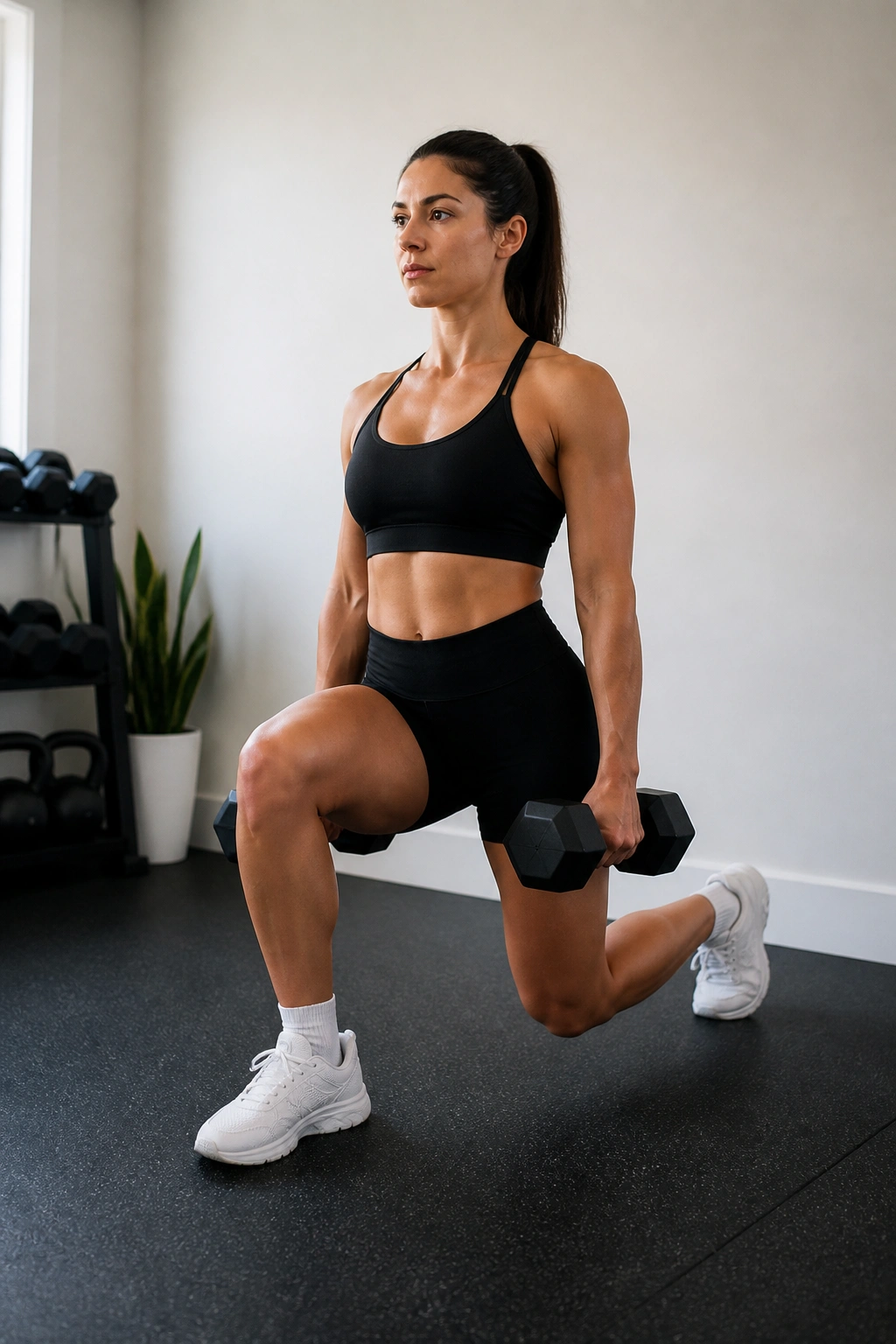
Simple, brutal, useful. The alternating split squat builds one leg at a time without requiring you to walk across the room, which makes it a tidy home or gym option.
Start in a split stance with dumbbells at your sides. Drop straight down, stand up, then switch the front and back legs on the next rep. Keep the torso tall, the front heel heavy, and the feet far enough apart that your knees have room to bend without clashing.
This one is easy to underestimate because the setup is plain. Then the eighth rep arrives. Try 3 sets of 8 to 12 reps per leg, and keep your rhythm steady. If your feet end up too close together, the balance cost goes up and the muscles get less of the work.
21. Dumbbell Good Morning
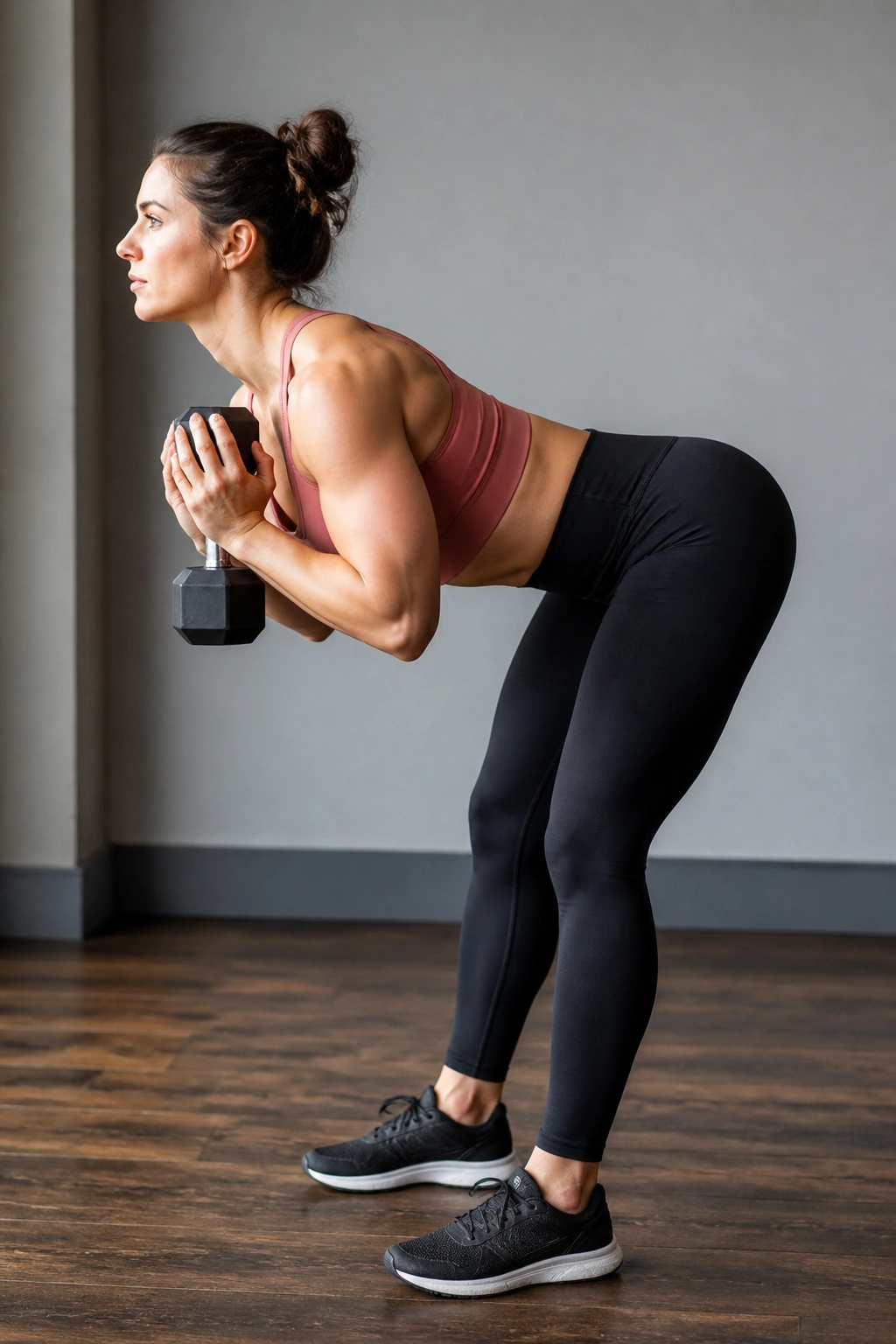
A good morning is a hinge, not a squat, and that distinction matters. The dumbbell good morning hits the posterior chain hard when you want hamstrings and glutes without holding the weights at your sides.
Hold a dumbbell at your chest like a goblet squat, soften the knees, and push the hips back until the torso leans forward. Keep the spine long and stop before the lower back wants to round. Come back up by driving the hips forward, not by throwing the shoulders back.
Compared with an RDL, this version often feels a little more upright and easier to center at the chest. It can be useful, but it does ask for clean technique. Use 3 sets of 8 to 10 reps, and keep the load modest until the hinge feels automatic.
22. Lateral Step-Up
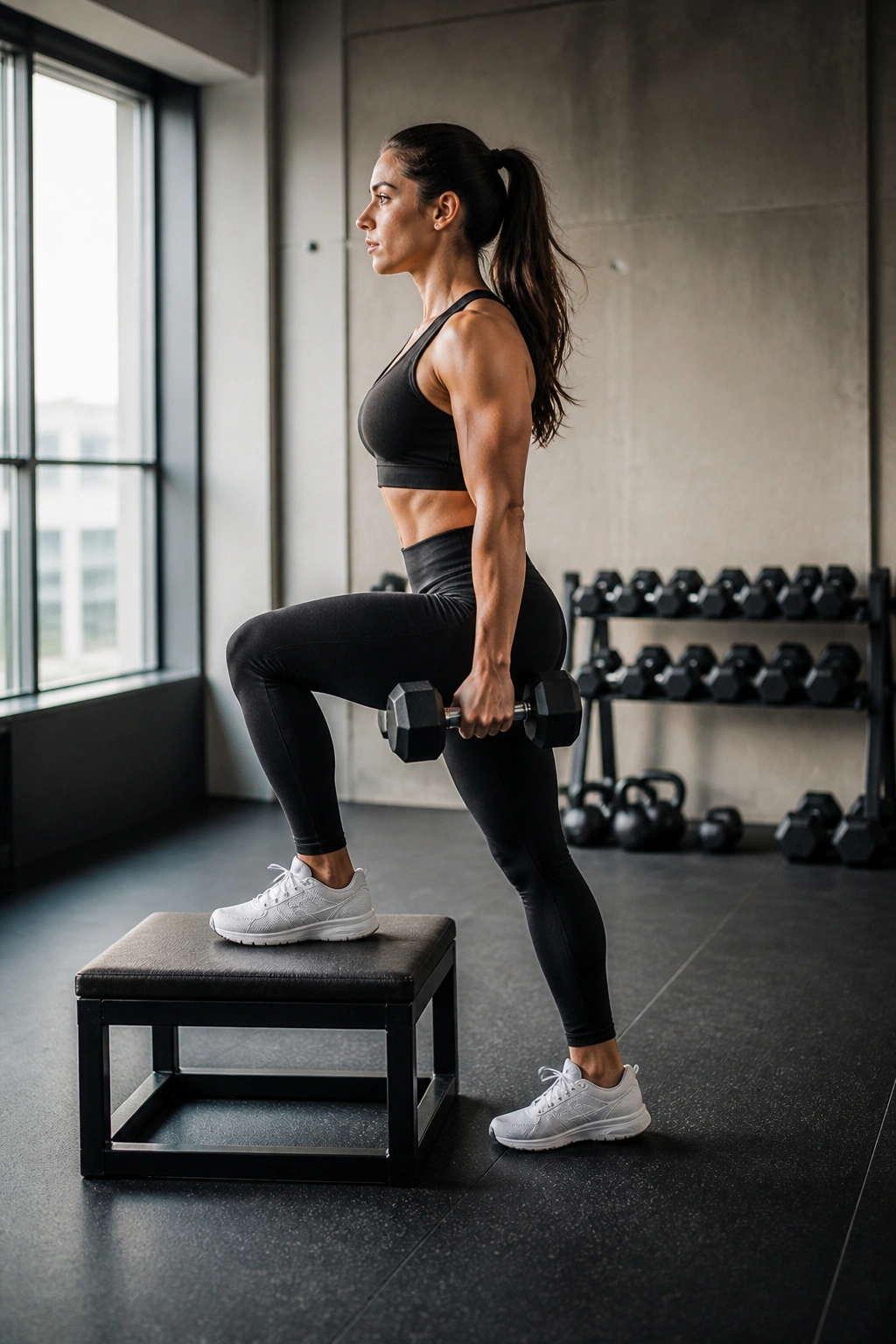
Standing sideways changes the stress. The lateral step-up lights up the glutes and hip stabilizers differently than a forward step-up, which is why I like it for people who want stronger, steadier hips.
Set a low box or step next to you. Place the near foot on top, press through it to stand, and control the return down without dropping the free leg. Keep the knee from caving in when you stand. That’s the part that tells you whether the hip is doing its job.
- Choose a low platform first.
- Keep your toes pointed mostly forward.
- Go slower than you think you need to.
Use 2 to 3 sets of 8 reps per side. It’s a clean accessory move, and it tends to show up the weak side fast.
23. Dumbbell Squat Pulse
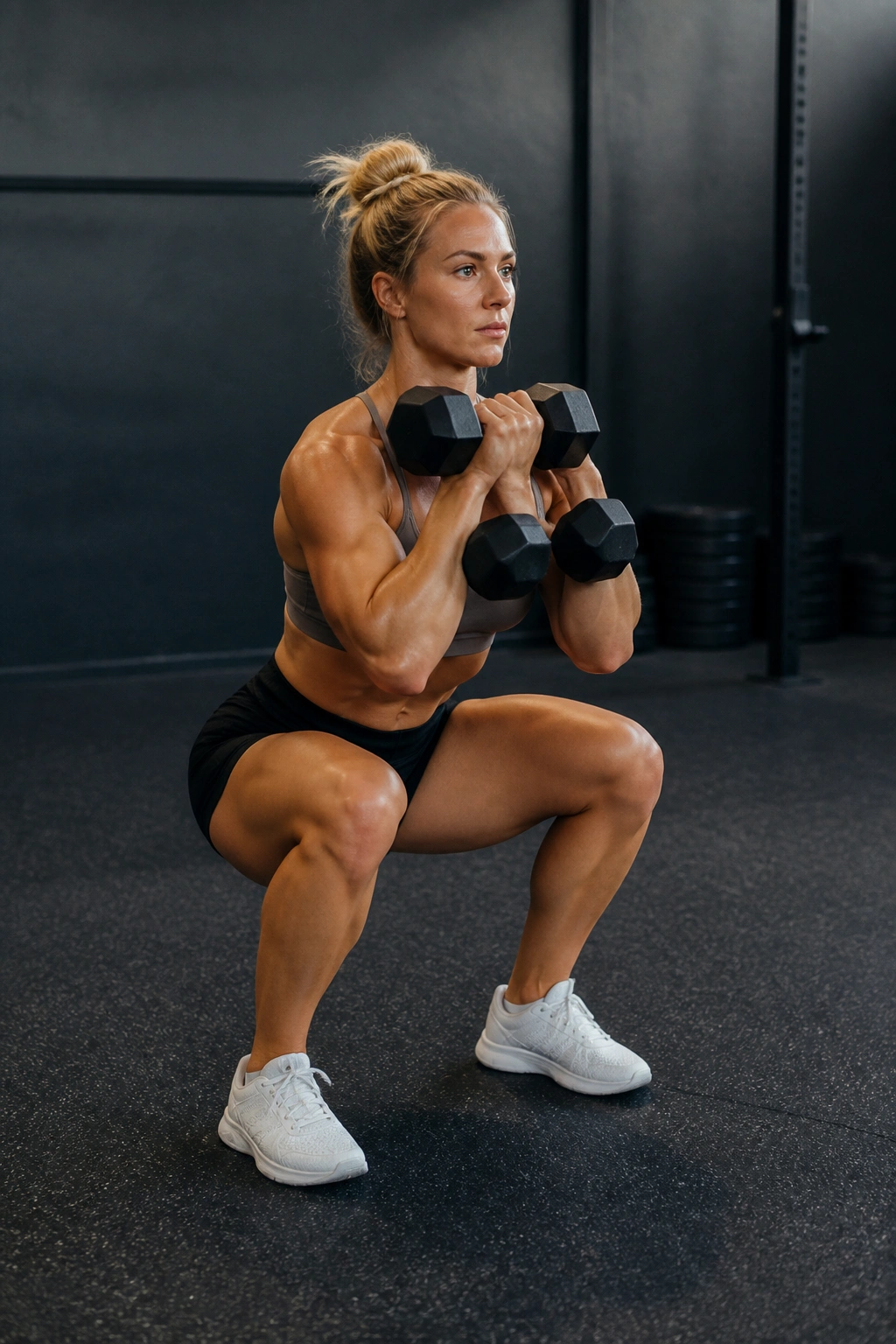
Pulses are not fancy. They are not meant to be. Squat pulses create time under tension in the hardest part of the rep, which makes them useful as a finisher after heavier work.
Hold a dumbbell at your chest, drop into a squat, and pulse in a small range of motion — maybe 2 to 3 inches — near the bottom. Keep the heels planted and the torso braced. The goal is tension, not depth chasing.
If you bounce off your joints, the rep is trash. Keep it smooth. Use 15 to 25 pulses per set, or pair them after regular squats for one short, ugly, effective burnout. Ugly in the right way, anyway.
24. Dumbbell Wall Sit Hold
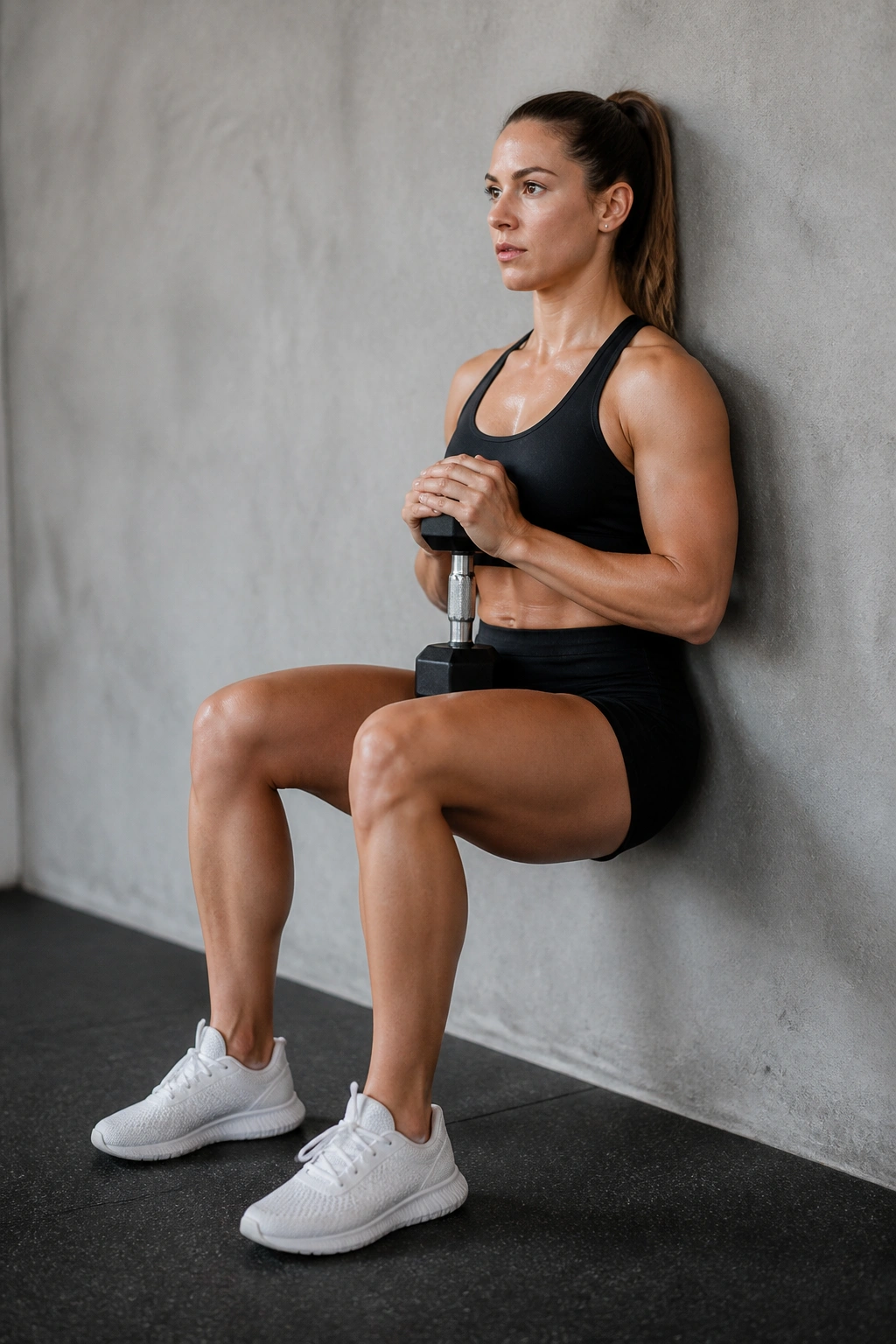
This one looks easy until the clock starts. The wall sit is a simple quad endurance drill that can make a strength session feel longer without adding complicated setup.
Slide down the wall until your knees are near a 90-degree bend. Hold a dumbbell on your lap or at your chest in goblet position if you want more load. Keep your lower back flat against the wall and your feet far enough out that the knees feel loaded but not jammed.
How to Load It
Start with 20 to 30 seconds and work toward 45 to 60 seconds. If your knees get cranky, move your feet a few inches farther away from the wall. That small change can make the difference between useful burn and irritating pressure.
This is the kind of move that teaches you to tolerate effort without moving a joint through a big range. That has its place.
25. Reverse Lunge to Knee Drive
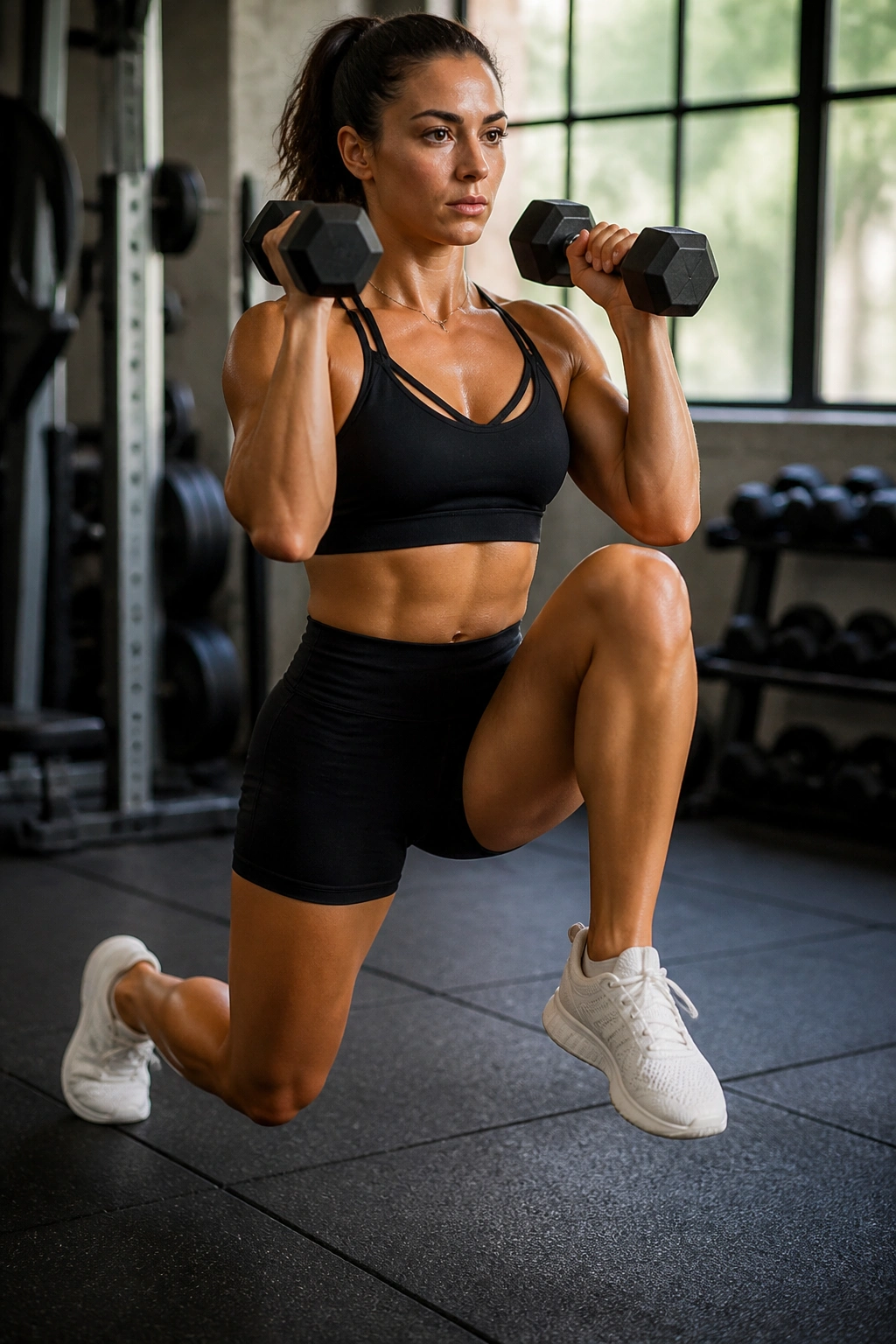
Finish with something that asks for balance, power, and control all at once. The reverse lunge to knee drive is a strong end-of-workout choice because it links a lower-body strength move with a quick stability challenge at the top.
Step back into a reverse lunge, stand up through the front leg, and bring the back knee forward into a sharp knee drive. Keep the torso tall and the rib cage stacked over the hips. The knee drive should look crisp, not flung forward.
A few cues keep it from turning sloppy:
- Step back far enough to keep balance.
- Drive through the standing heel.
- Pause for half a second at the top.
Use 2 to 3 sets of 6 to 8 reps per side when you want a finisher that still feels athletic. It’s a nice way to leave the room with your legs talking back a little.
Final Thoughts
You do not need all 25 moves in one session. That would be a mess. A better leg day usually comes from a small, well-chosen mix: one squat, one hinge, one single-leg exercise, and one glute-focused finish if you still have gas left.
The smartest dumbbell leg workouts for women are the ones you can repeat cleanly next week. Add load when the reps stay solid, slow the lowering phase when the weights feel easy, and keep an eye on the exercises that make your knees, hips, or lower back complain.
The work that tends to stick is rarely flashy. It is the stuff you can set up quickly, feel in the right muscles, and recover from without dreading the next session. That’s the kind of lower-body training worth keeping around.
