



Glutes get stubborn when you train them like they’re a single muscle and not a three-part engine. The best glute workout routines hit hip extension, single-leg balance, and side-to-side stability, because that’s what the glutes actually do when they’re earning their keep.
A lot of people chase endless kickbacks and tiny band pulses, then wonder why squats still feel like a quad party. I like routines that ask the glutes to work hard under load first, then finish with the smaller stuff that makes the muscle feel awake.
The other piece people miss is simple anatomy. The glute max is the big mover, but the glute medius and minimus keep the pelvis from wobbling and the knees from drifting inward. Leave them out, and lower-body training starts to feel loose and messy. Train them well, and even ordinary walking starts to feel cleaner.
A good routine does not need tricks. It needs the right pattern, the right order, and enough honest effort to make the reps count.
1. The Band Warm-Up Routine That Wakes Up Sleepy Glutes
A lot of lifters skip warm-ups, then wonder why the first few sets feel awkward and flat. This routine is what I use when the hips feel sticky, the knees cave a little, or the glutes seem to be “there” but not really participating.
Do 2 to 3 rounds of this before your main lift:
- 15 lateral band steps to the left, then 15 to the right
- 20 glute bridges with a 2-second squeeze at the top
- 12 standing band abductions per side
- 20 frog pumps with the soles of the feet together
Keep the band just above the knees if you want a cleaner line of tension. Put it around the ankles only if you can keep the pelvis steady; otherwise the hips start swaying around like they’ve had too much coffee.
What to feel
You want the outer hip to work, not the lower back. If your ribs flare up or your toes turn out hard, the glutes usually stop doing the job and the movement turns into a hip flexor tug-of-war.
This is a warm-up, not the main event. Do not chase exhaustion here. The goal is a better first working set, not a sweaty little cardio session that steals energy from your squats or thrusts.
2. The Dumbbell Hip Thrust Routine for Home or Small Gyms
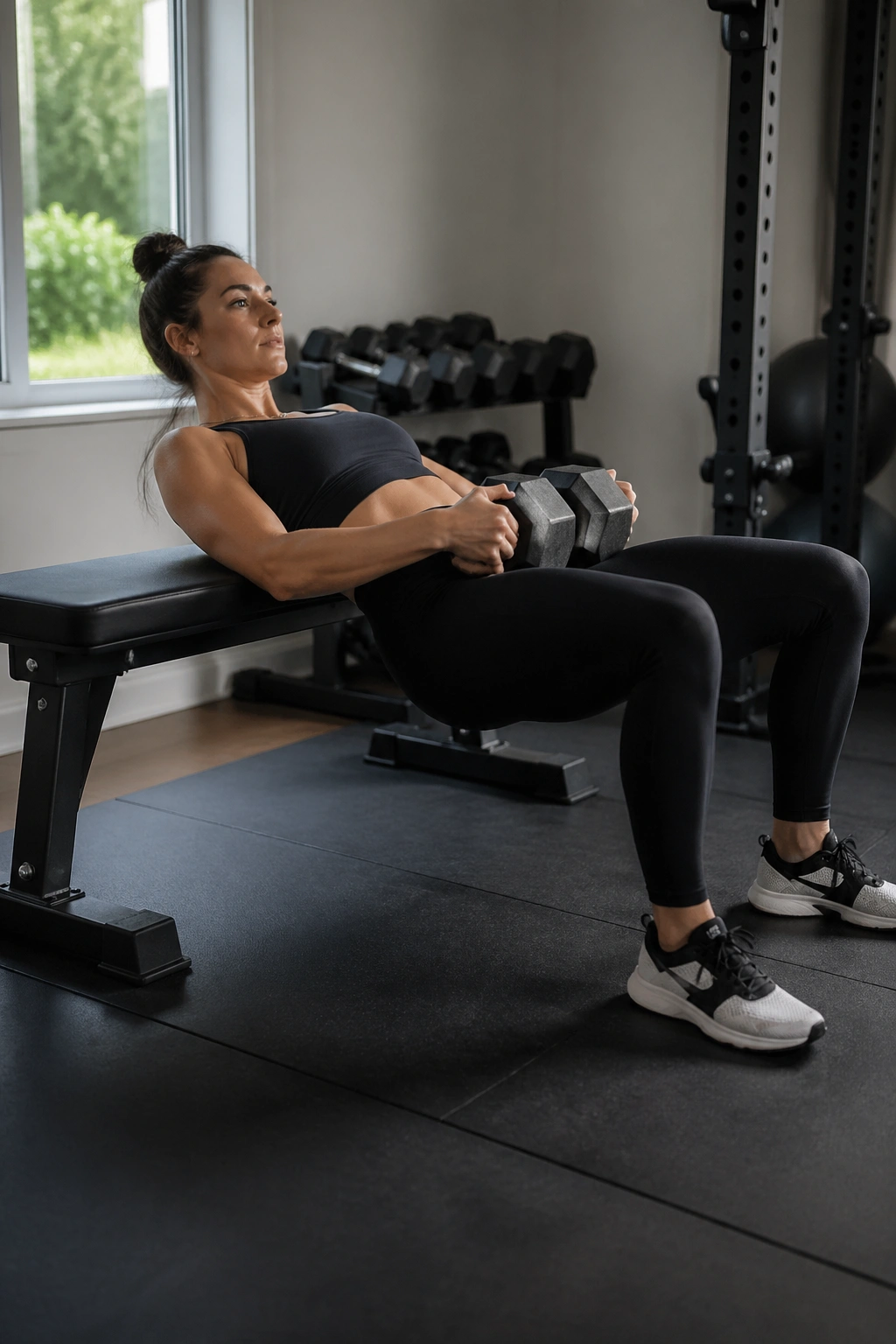
A bench, a dumbbell, and a floor space about the size of a yoga mat are enough to build a serious glute session. That is why this routine stays on my list. It’s simple, and simple tends to be repeatable.
How I’d run it
- Set 1: 12 reps
- Set 2: 10 reps
- Set 3: 10 reps with a 2-second squeeze at the top
- Set 4: 15 reps with a lighter dumbbell or bodyweight finisher
Rest 60 to 90 seconds between sets. If the dumbbell digs into your hips, use a folded towel, a thick pad, or even a barbell pad if you’ve got one lying around.
Why it works better than people expect
The top of a hip thrust puts the glutes in a shortened position where they can produce a lot of force. That is the whole point. You are not trying to turn the movement into a lower-back bridge; you’re trying to finish each rep with the pelvis tucked slightly and the shins close to vertical.
Foot placement matters. Too far away, and hamstrings take over. Too close, and the knees get grumpy. I like heels planted so that the shins are roughly vertical at lockout, with the chin tucked and the ribs down.
A small but useful detail
Pause for one full second at the top of each rep. That tiny pause is annoying in the best way. It keeps people from bouncing through the movement and it makes the glutes do the work instead of letting momentum steal the set.
3. The Heavy Barbell Hip Thrust Routine for Pure Strength
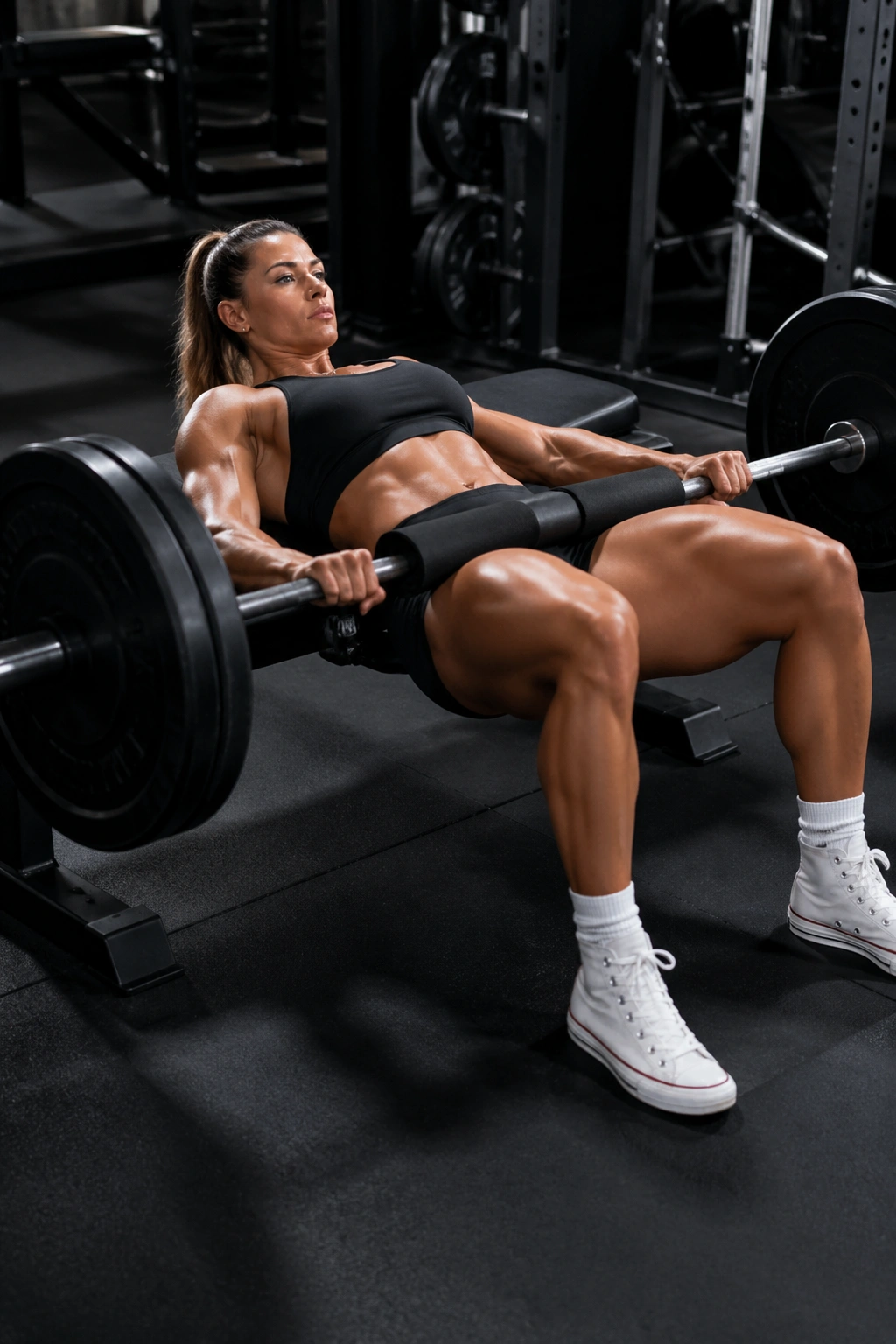
Heavy barbell hip thrusts are the blunt instrument of glute training. They’re not subtle, and that’s part of the charm. When someone wants a routine that lets the glutes handle real load without turning every set into a balance test, this is the one I reach for.
I like 5 sets of 5 for strength, or 4 sets of 6 to 8 if the goal leans more toward muscle growth than raw force. Rest 2 to 3 minutes between sets so the hips can actually produce force again. Short rest turns a good lift into a sloppy one.
The setup is where most people leave gains on the bench. Set your upper back on the pad so the shoulder blades are anchored, then plant the feet with a stance that lets you reach full lockout without overextending the lower back. The bar should sit over the hip crease, not halfway up the stomach.
Heavy does not mean sloppy.
At the top, squeeze the glutes hard enough that your pelvis comes into a slight posterior tilt. That is the bit many lifters miss. They throw the ribs up, arch the lower back, and call it a lockout. It looks finished from across the room, but the glutes are not the main driver anymore.
If you want progress, load the bar slowly. Add 5 to 10 pounds when all five sets look clean, the top pause stays solid, and the last rep of each set still feels like glute work rather than spine survival.
4. The Bulgarian Split Squat Routine That Builds One Leg at a Time
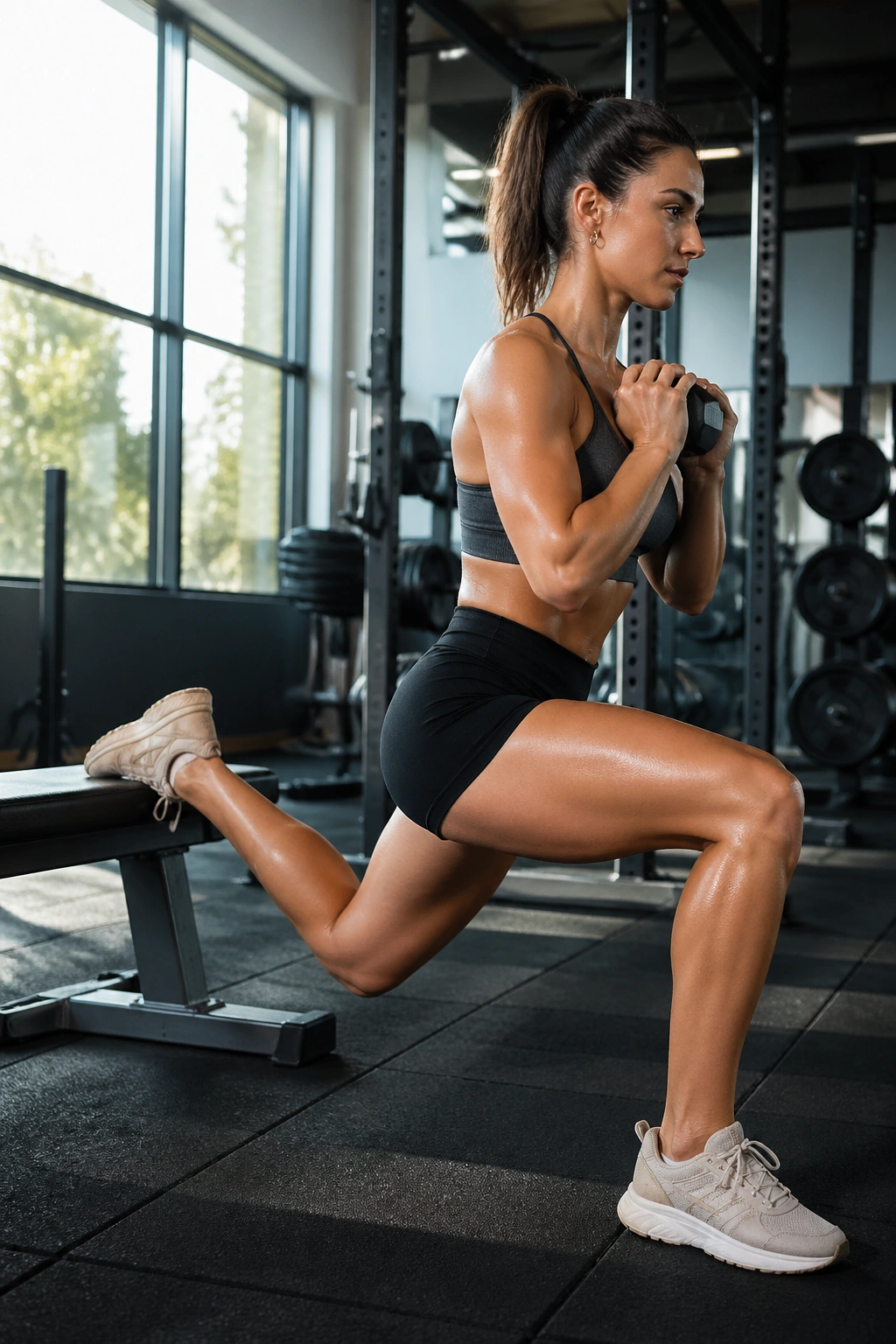
Unlike a bilateral squat day, a split-squat routine shows you the truth about each side of the body. One leg always works a little harder, the pelvis has to stay level, and the glute on the front leg has to control both drive and stability at once. It’s honest work. Brutally honest, sometimes.
I like this routine for anyone whose quads dominate every squat and who wants more shape through the upper and outer glute. The slight forward torso lean changes everything. It shifts more load into the hip instead of parking it all in the front thigh.
My go-to pairing
- Bulgarian split squat: 3 to 4 sets of 8 to 10 reps per side
- Step-up: 3 sets of 8 to 12 reps per side
- Reverse lunge: 2 sets of 10 reps per side
Keep rest around 60 to 90 seconds. If you go too heavy too early, form falls apart and the back leg starts doing weird little pushes that don’t help much.
What makes this routine useful
The front foot should stay rooted through the whole tripod: heel, big toe, little toe. Let the torso tip forward a little, keep the shin close to vertical, and think about driving through the midfoot. That combination usually puts the glute in the right place to work.
This routine is one of my favorites for people who sit a lot. It exposes tight hips, weak control, and side-to-side differences fast. It also leaves a proper glute ache the next day if you did it right. Not a random ache. A useful one.
5. The Romanian Deadlift Routine for Glutes and Hamstrings
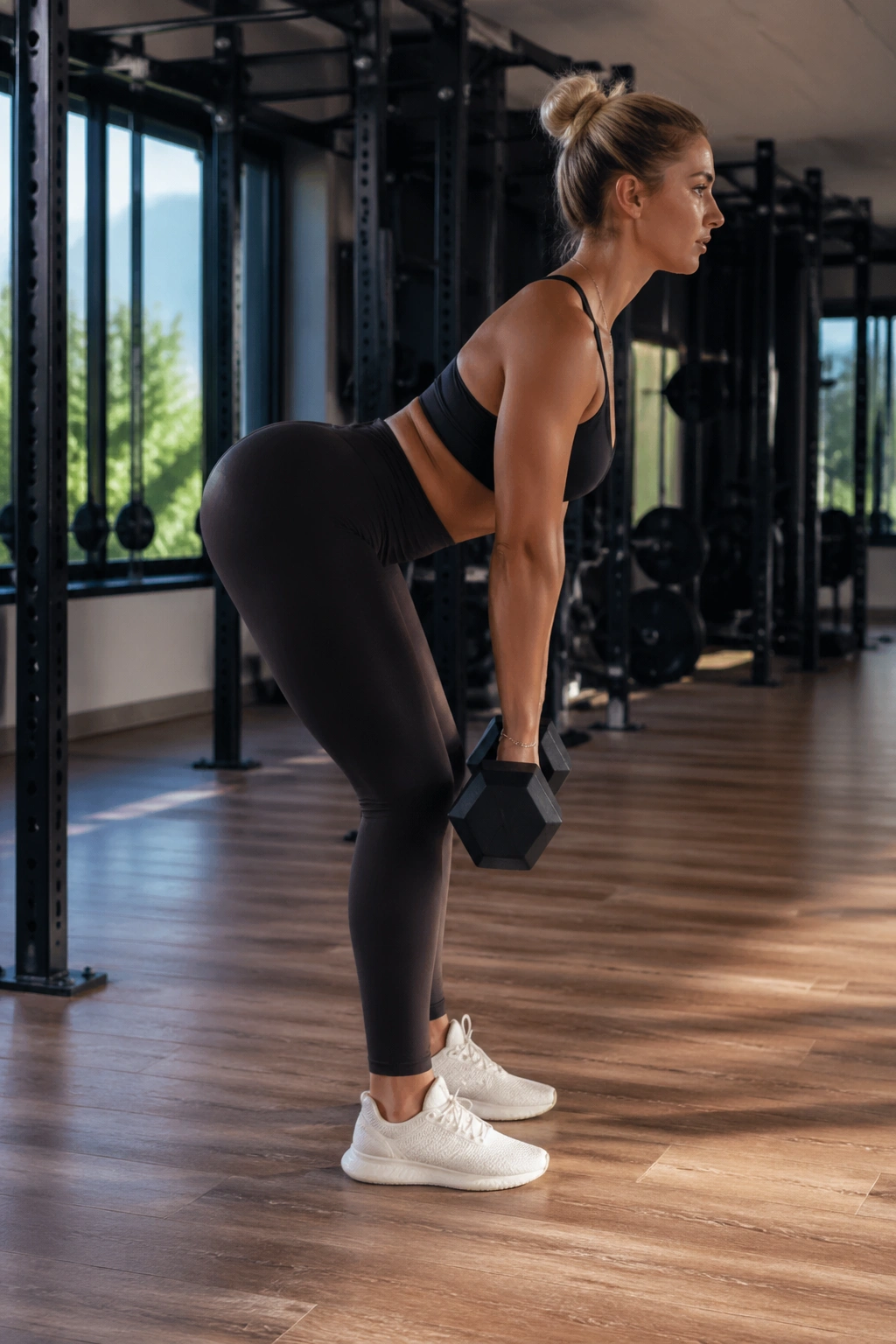
Why does the Romanian deadlift keep showing up in good glute routines? Because the glutes love a loaded stretch almost as much as they love a hard squeeze. The RDL gives you both the hinge pattern and the lengthened position, which is why it feels so different from hip thrusts.
Start with 3 to 4 sets of 6 to 8 reps if you want a heavier session. If the goal is more muscle and less spine fatigue, 3 sets of 8 to 10 works well too. Lower the weight under control for about 3 seconds, then stand up by driving the hips forward, not by yanking the chest up.
How to use it
- Keep a soft bend in the knees
- Push the hips back until the hamstrings tighten
- Let the dumbbells or bar travel close to the legs
- Stop the descent when the low back wants to round
That last point matters a lot. Going lower is not automatically better. When the back starts to curl, the glutes stop getting a clean signal and the hinge turns messy.
A lot of people feel RDLs mostly in the hamstrings, and that is not a problem. The hamstrings and glutes work together here. If you want more glute bias, think about sending the hips back and then squeezing the glutes to stand, rather than trying to “pull” the weight up with the lower back.
How to finish the session
Pair the RDL with a bridge variation or abduction movement after. The hinge gives you tension. The finishers give you the burn. That combination is usually better than stacking three random exercises that all feel the same.
6. The Cable Kickback Routine for High-Rep Glute Burn
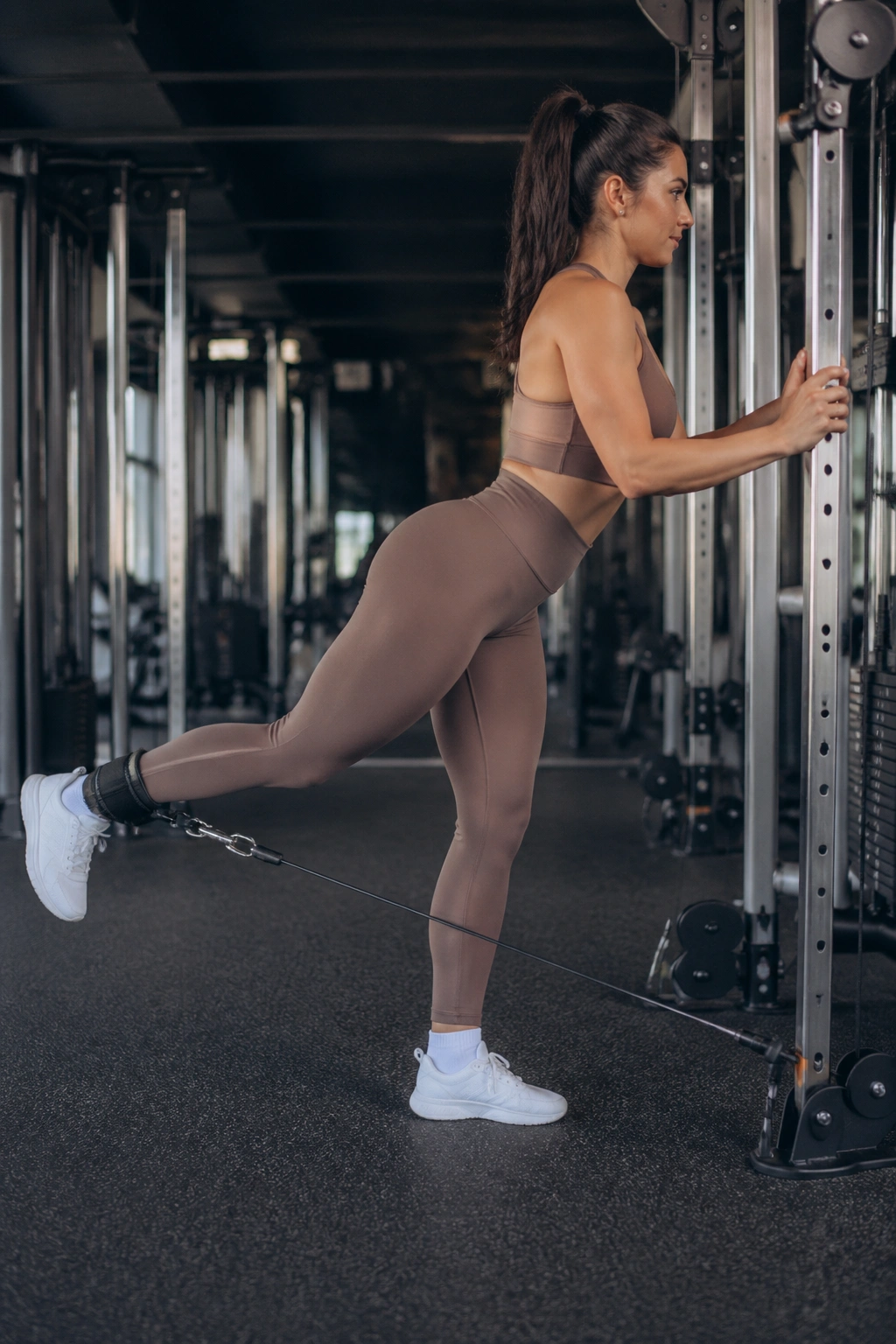
Cable work is not fluff. That sounds harsh, but I mean it in a friendly way. A cable kickback or abduction set can light up the glutes in a way that heavy compounds sometimes miss, especially when you want controlled tension and a clean squeeze at the end of the range.
This routine works well as a second or third lower-body day when you want to push volume without beating up the joints. I like 3 sets of 15 to 20 reps for cable kickbacks, then 3 sets of 20 reps for standing or seated abductions. Keep rest short, around 30 to 45 seconds, so the muscle stays under tension.
The trick is not to swing the leg. Set your torso still, brace the ribs, and move only at the hip. If the lower back is rocking to make the rep happen, the weight is too heavy.
The cable keeps resistance alive through the whole movement, which is why the last third of the rep tends to feel so different from bands alone. Bands are useful, but the cable gives a cleaner line of pull and usually lets you load the movement a little more honestly.
A practical setup is simple: one kickback slot, one abduction slot, and one final high-rep finisher like glute bridge pulses or frog pumps for 20 to 30 reps. That’s enough. More is not always better here. Better control usually beats a longer exercise menu.
7. The Sumo-Stance Routine for Glute Drive and Wide-Base Power
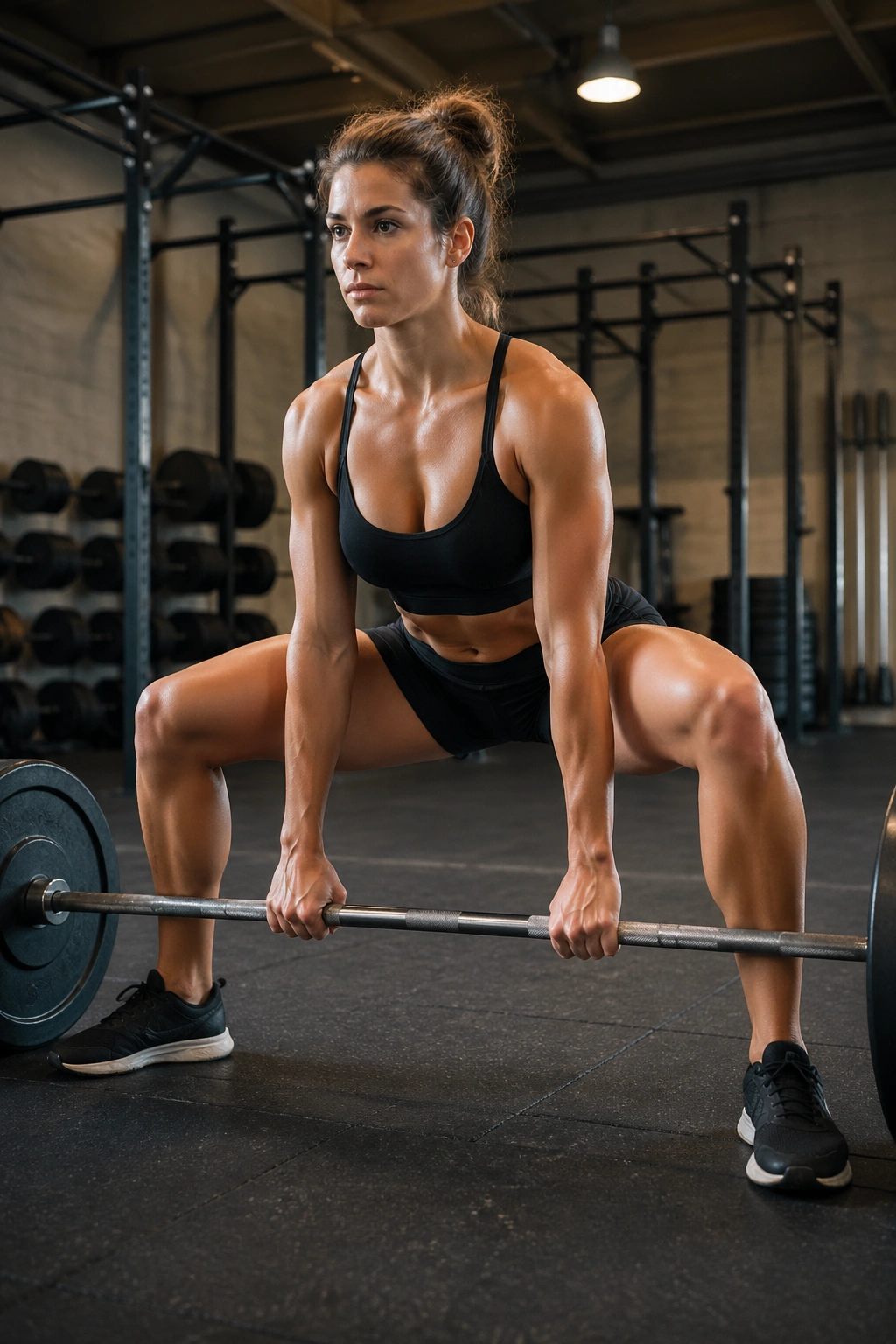
A wide stance changes the whole feel of lower-body training. Some people hate it at first because the hips feel tight and the adductors complain. Then they learn how to set their feet, and suddenly the glutes start contributing in a way they never did on narrower work.
What to watch for
- Toes turned out only slightly
- Knees tracking in line with the toes
- Chest proud, but not flared
- Floor pushed apart on the way up
A sumo squat or sumo deadlift routine is best when you want hip drive plus a little extra help from the inner thigh. That inner thigh work matters more than most people think. It helps stabilize the pelvis and gives the glutes a better base to push from.
I usually like 4 sets of 6 to 8 for a heavier barbell sumo deadlift, or 4 sets of 10 to 12 for a goblet sumo squat. If the gym setup is crowded or the hips feel cranky, the goblet version is easier to keep tidy. Less load, less fuss, still plenty of work.
The biggest mistake is turning the movement into a sloppy squat with a wide stance. Keep the weight centered, keep the knees open, and think about driving the floor away rather than standing up in a hurry. That cue alone fixes a lot of bad reps.
This routine suits lifters who want glutes without endless single-leg work. It’s also useful when you want a day that feels different from the usual hip thrust-and-split-squat combo. Different matters. Bodies adapt fast.
8. The Single-Leg Glute Bridge Routine for Stability and Control
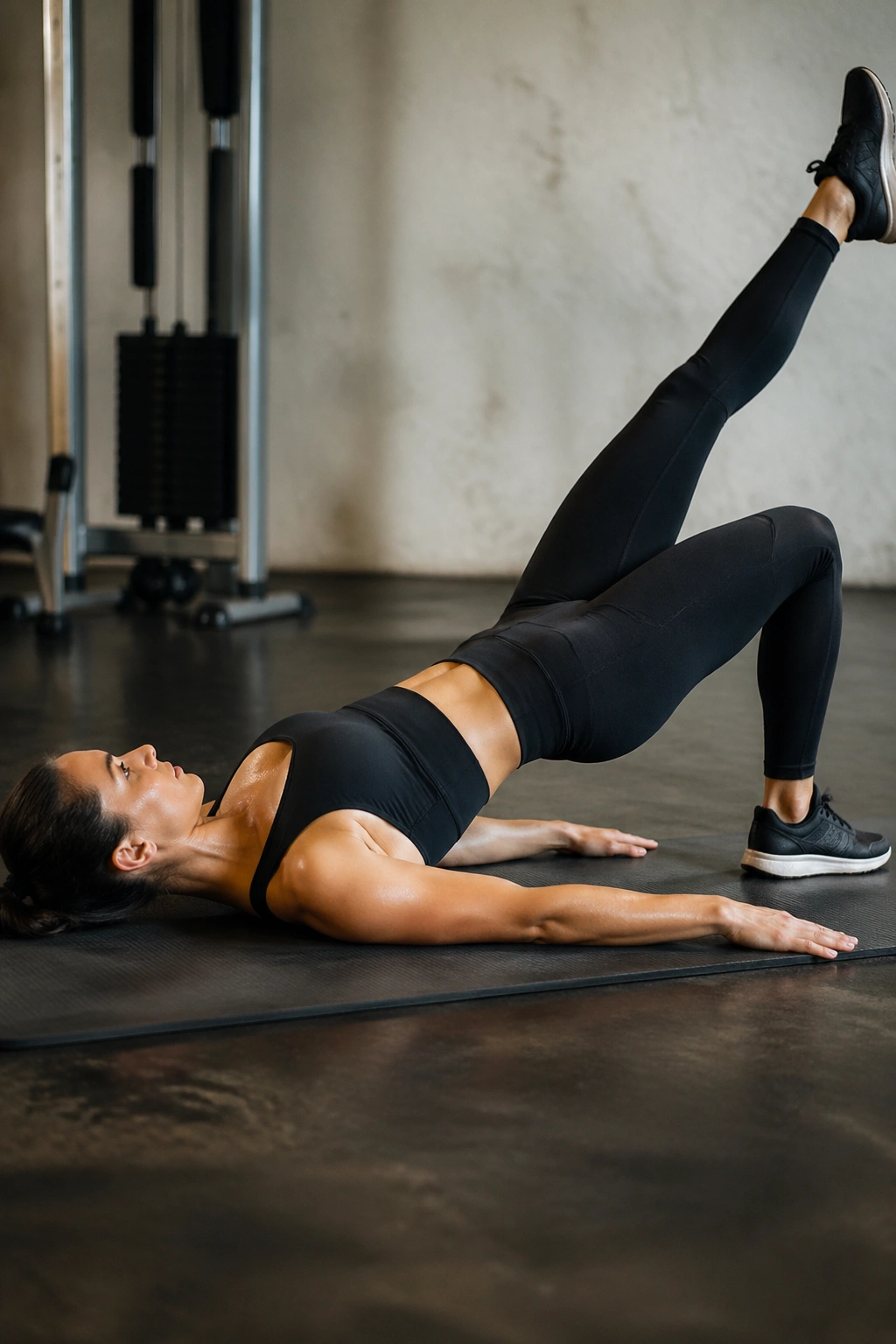
If you want a routine that tells on your weak side fast, this is it. Single-leg glute bridges are not glamorous. They’re small, controlled, and annoying in the best possible way.
Small burn, big payoff.
I like them on lighter days, during warm-ups, or after heavier lifting when the goal is to finish the glutes without much spinal load. Try 3 sets of 10 to 12 reps per side with a 2-second squeeze at the top. If that feels too easy, add a mini band above the knees or place the non-working foot in a hover position for a longer lever.
The biggest issue here is hamstring cramping. That usually happens when the heel sits too far away from the body or when the pelvis tilts and the hamstring tries to rescue the movement. Bring the working foot a little closer, keep the ribs down, and think about curling the pelvis up before you drive through the heel.
This routine shines because it forces the glute max and the stabilizers to cooperate. The non-working side has to stay quiet while the working side keeps the pelvis level. That kind of control matters outside the gym too, especially if one hip always feels tighter than the other.
You can pair single-leg bridges with marching bridges or dead bugs if you want a little core work in the same session. The combination keeps the trunk from stealing the show, which is half the battle in one-leg training.
9. The Back Extension Routine for Glutes Without a Big Load
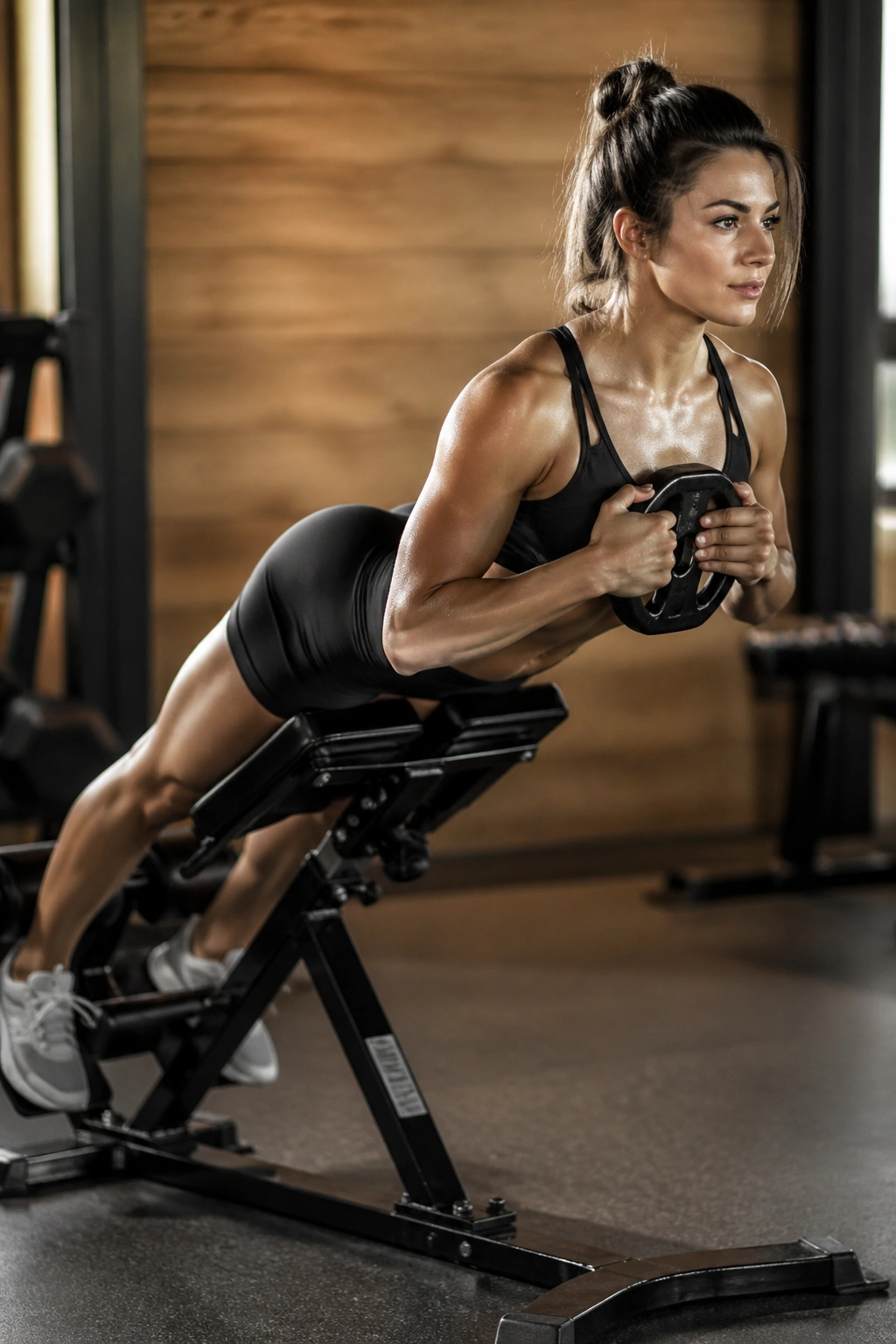
Back extensions look like a low-back exercise at first glance. Done right, they’re one of the cleanest glute finishers in the gym. Done badly, they turn into a spinal extension contest that your lower back did not sign up for.
The glute-biased version is pretty simple. Set the pad so your hips can hinge freely, round the upper back slightly, and move through the hips instead of cranking the spine. A light plate or dumbbell held to the chest works well for 3 sets of 12 to 15 reps. At the top, squeeze the glutes for 1 full second and stop before the lower back starts arching hard.
A few details that matter
- Keep the feet planted and pressure through the midfoot
- Start the movement by hinging, not by lifting the chest
- Stop when the body is in a straight line, not past it
- Move slowly on the way down
This routine is useful when you want extra glute volume without the fatigue of another heavy squat or hinge day. It also pairs nicely with cable pull-throughs, which hit a similar pattern from a different angle. One of the two is usually enough.
Back extensions are especially good late in a session. The heavy stuff is already done, and now you just want controlled reps with a clear squeeze. That’s where these shine. They’re not flashy. They don’t need to be.
10. The Full Glute Day Routine for Weekly Programming
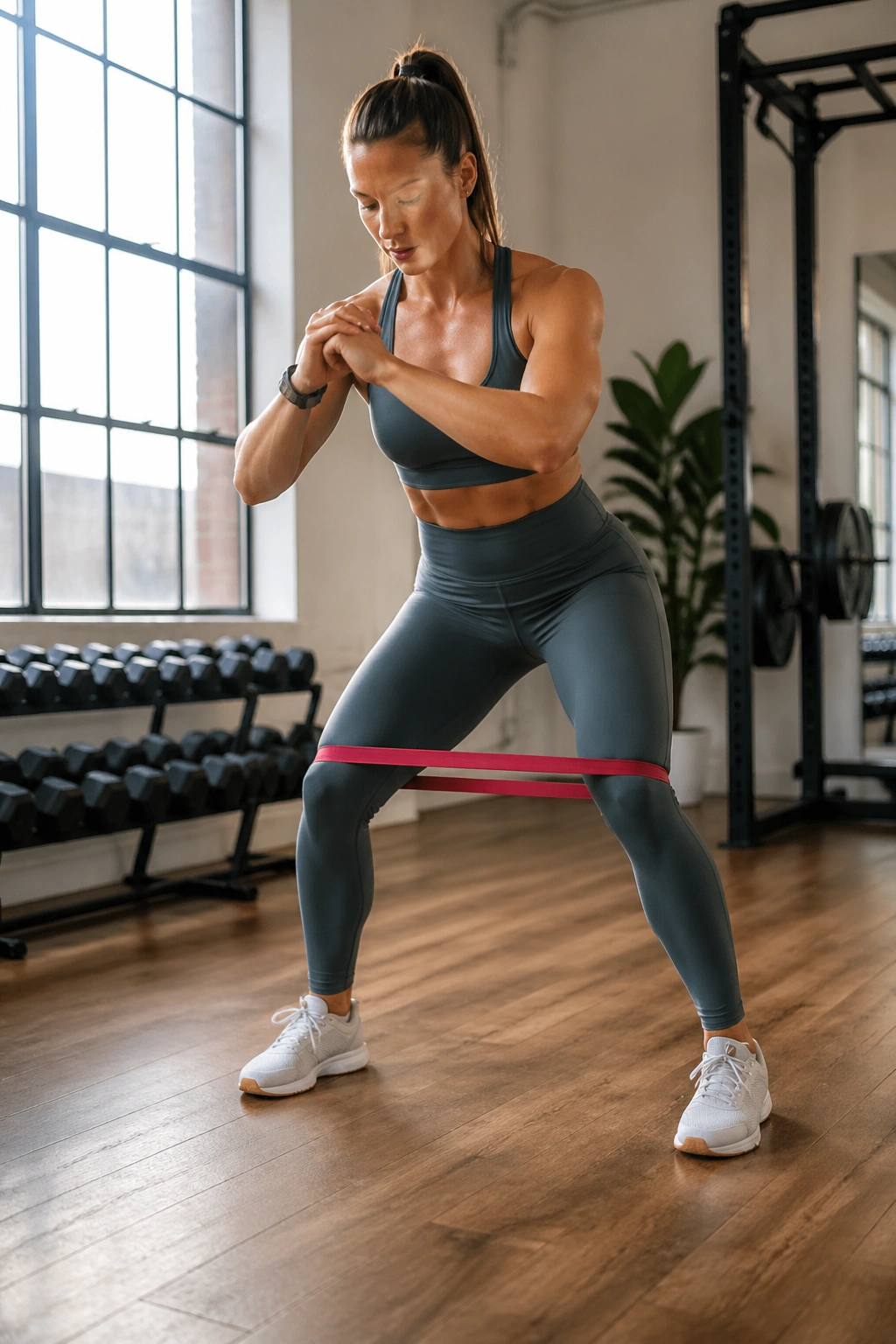
This is the routine I’d hand to someone who wants one lower-body session that covers almost everything without becoming a circus. Heavy hip extension, one-leg work, and abduction all show up here, which means the glutes get hit from the angles that matter most.
Start with a heavy lift, then move to a single-leg pattern, then finish with higher-rep work. That order is not random. The big compound needs the freshest energy, while the smaller moves are happy to come later when the legs are tired and the burn feels welcome.
A simple version looks like this:
- Barbell hip thrust: 4 sets of 6 to 8
- Bulgarian split squat: 3 sets of 8 per side
- Romanian deadlift: 3 sets of 8 to 10
- Cable or band abduction: 3 sets of 20
- Frog pumps or glute bridge pulses: 1 set of 30
Rest 2 minutes on the heavy lift and 60 to 90 seconds on the rest. If the session starts running long, cut the last finisher before you cut the main work. The heavy sets matter more.
How to place it in a week
If you train lower body twice, make this your harder day. Pair it with a lighter band-and-bridge session or a single-leg control day later in the week. If you only train lower body once, this is the template I’d pick before almost any other. It covers the main glute jobs without wasting time.
The best routines are the ones you can repeat without dreading them. That’s the quiet trick here. Pick one heavy day, one lighter day, and keep the effort honest. Glutes respond well to that kind of boring consistency, and boring consistency is underrated for a reason.
If you want, I can turn these into a weekly glute training plan with sets, reps, and rest periods laid out for beginner, intermediate, or advanced lifters.
