



A single kettlebell can train your legs, back, shoulders, core, and grip harder than a lot of people expect.
That’s why kettlebell exercises show up in home gyms, garage setups, and packed commercial gyms. The bell’s offset load makes your body fight for position even when the movement looks simple. A 16-kilo bell can humble a strong lifter if the hinge is sloppy.
But the trick is not collecting random moves. It’s choosing a spread that covers the hinge, squat, push, pull, carry, and rotation patterns. Get that mix right and you can build strength, muscle, and conditioning with one piece of equipment.
Start with the hinge. It teaches the rest of the list how to behave.
1. Two-Hand Kettlebell Swing
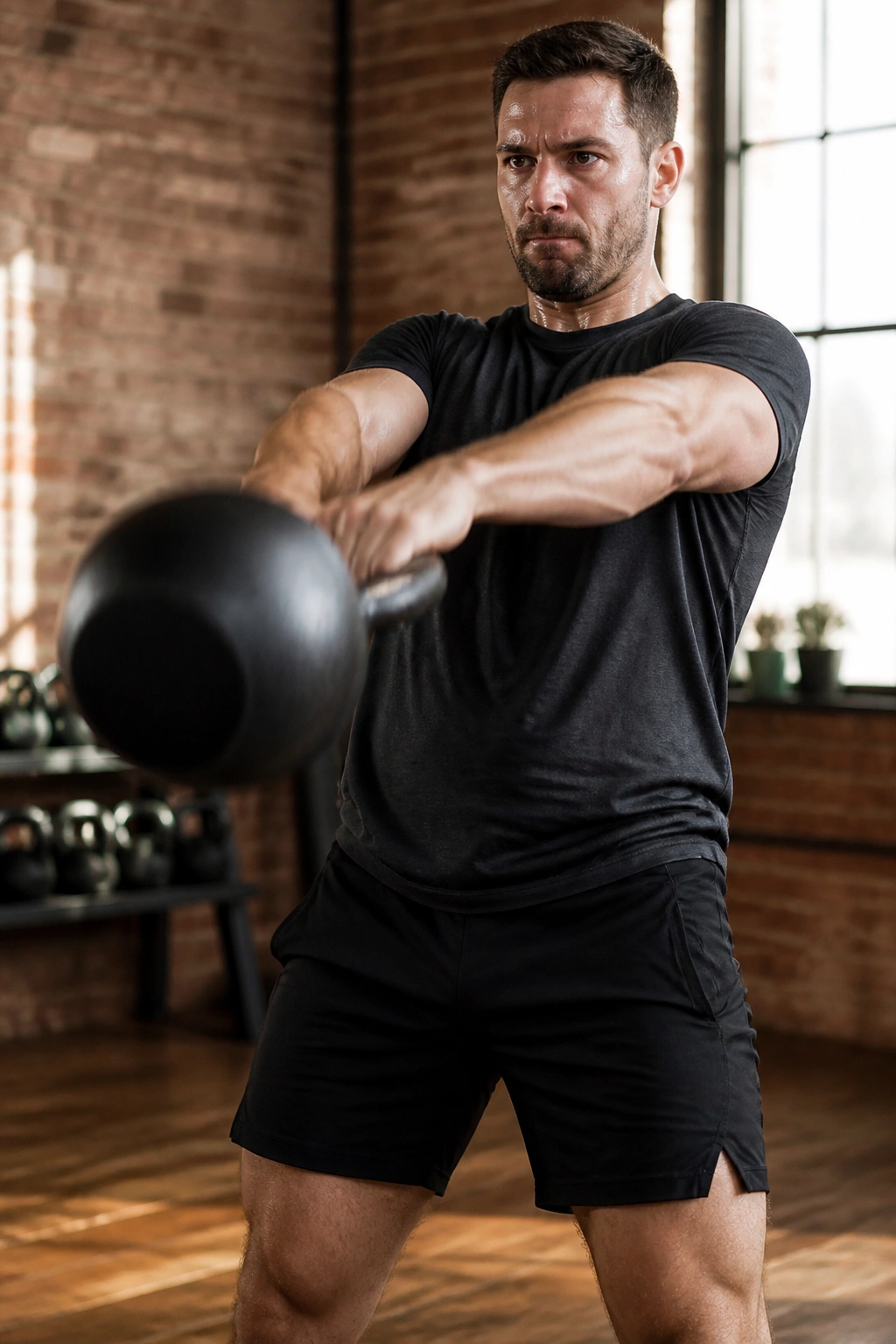
The two-hand swing is the move most people picture first, and it earns that place. It hammers the glutes, hamstrings, lats, and grip while pushing your heart rate up fast enough to make the workout feel honest.
Why It Works
The swing is a hip hinge, not a squat. That matters. Your hips snap the bell forward; your arms are hooks, not lifters. When done well, the bell floats because your hips did the hard part.
- Main muscles: glutes, hamstrings, spinal erectors, lats, forearms
- Best use: power, conditioning, posterior-chain work
- Watch for: squatting the bell or yanking with the shoulders
Tip: If your low back feels it more than your hips, the setup is wrong.
2. Kettlebell Goblet Squat
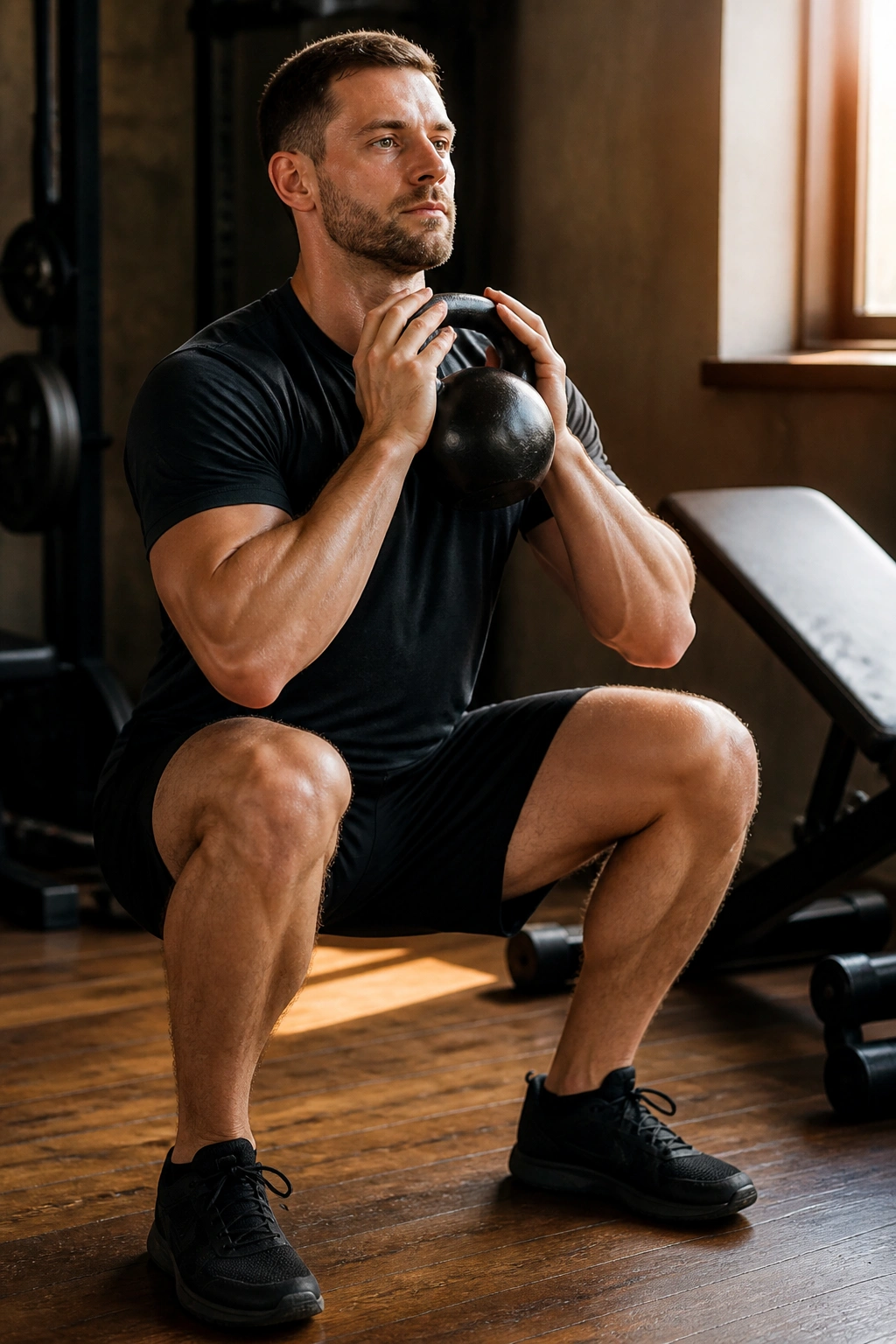
The goblet squat fixes a lot of ugly squat habits fast. Holding the bell at chest level gives you a counterbalance, so you can sit between your hips with a more upright torso and usually better depth.
The front-loaded position also wakes up the upper back and core. You’ll feel your quads, yes, but the real gift is how clean the posture gets when you stop dumping forward. Use it for strength, warm-ups, or as the squat pattern in a beginner plan.
A good rep looks smooth from start to finish. If the heels pop up or the chest collapses, the bell is probably too heavy for the version you’re doing.
3. Kettlebell Deadlift
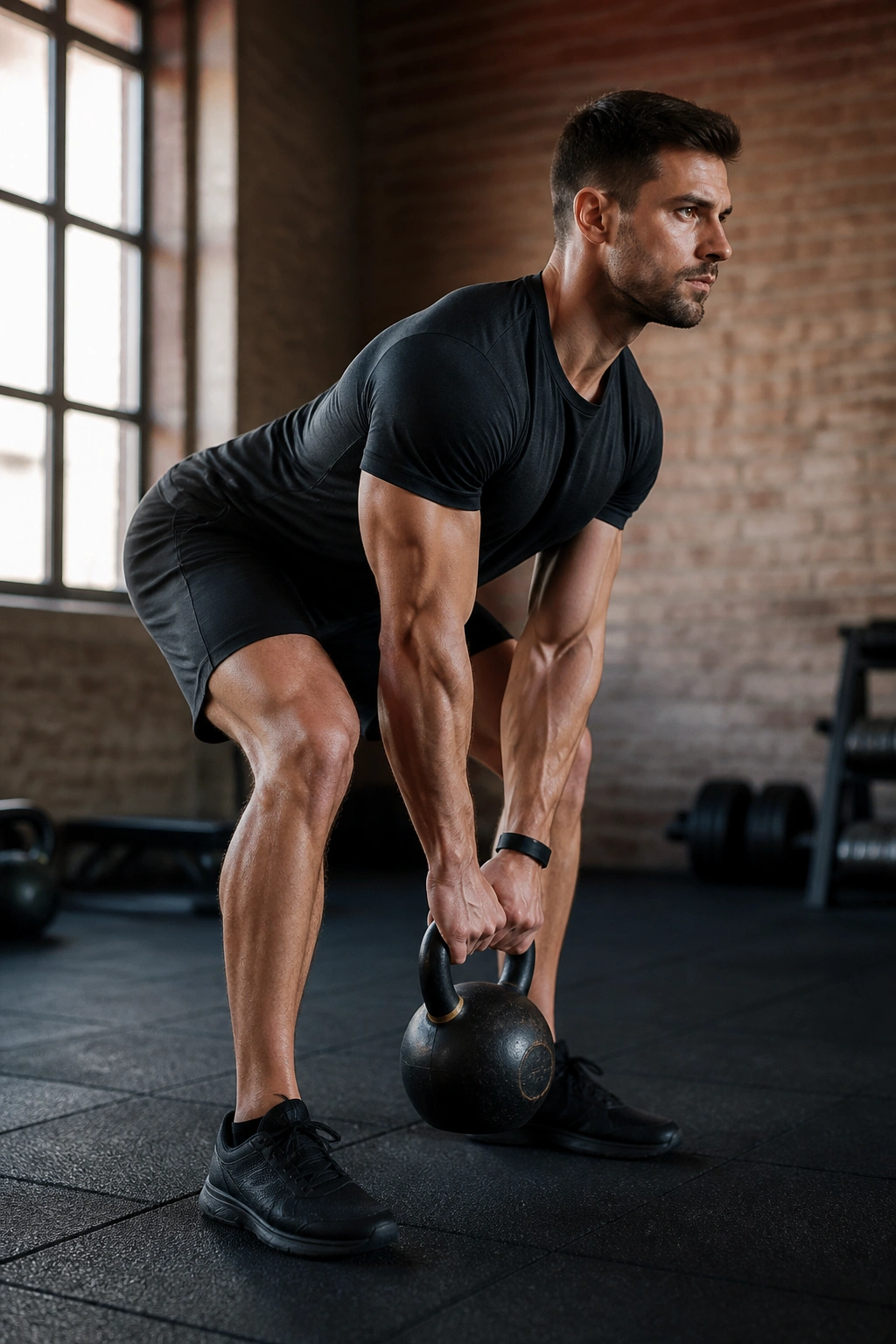
Why start here when the swing looks flashier? Because the kettlebell deadlift teaches the hinge without speed, and that makes it one of the best low-drama lifts in the room.
Set the bell between your feet, brace, then drive the floor away. You should feel the hamstrings load on the way down and the glutes finish the rep at the top. The spine stays long. The bell stays close.
How to Use It
A deadlift is the cleanest place to learn hip position before you ever try a swing or clean.
- Keep the bell over the midfoot
- Keep the shins fairly vertical
- Stand up by pushing through the floor, not by jerking the bell
4. Kettlebell Sumo Deadlift
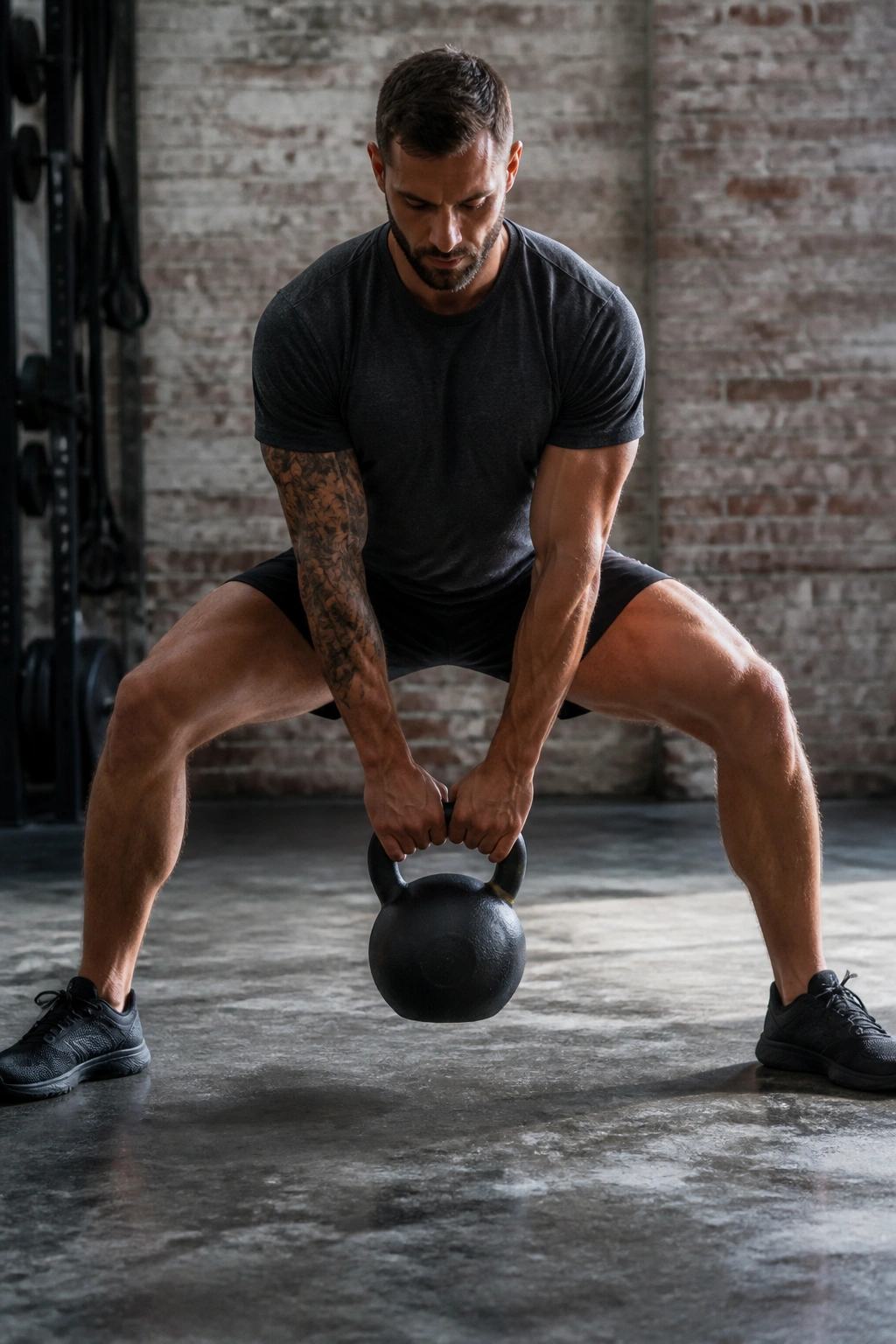
A sumo deadlift changes the feel in a big way. The wider stance shifts more work into the adductors and glutes, and the shorter range can make it friendlier for taller lifters or people with cranky backs.
The stance should feel grounded, not forced. Toes out a little, knees tracking over them, bell hanging straight down. If you wedge yourself too wide, you lose the ability to drive force into the floor.
This is also a smart variation for building leg drive without as much forward lean as the conventional stance. Good choice when you want heavy lower-body work but don’t want to turn the session into a back exercise.
5. Front-Rack Reverse Lunge
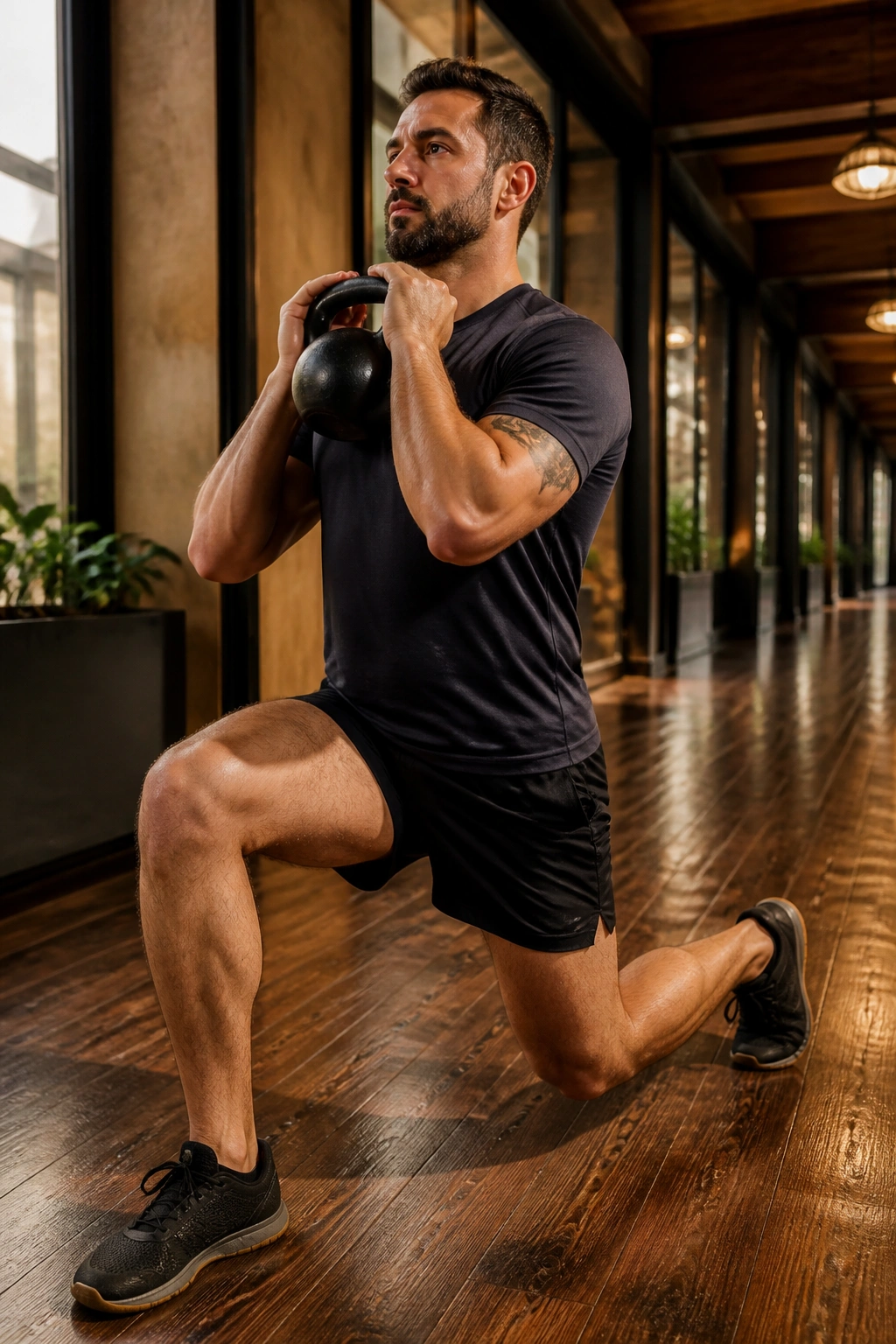
A front-rack reverse lunge teaches balance under load and punishes sloppy bracing. Holding the kettlebell in the rack position makes the torso work harder, and stepping back usually feels easier on the knees than stepping forward.
The front leg does most of the work. The front heel stays planted, the torso stays tall, and the knee tracks over the toes instead of diving inward. You’ll feel quads, glutes, and a deep core brace all at once.
It’s also a sneaky conditioning move. One bell in the rack, a few controlled reps each side, and your breathing changes fast.
6. Kettlebell Split Squat
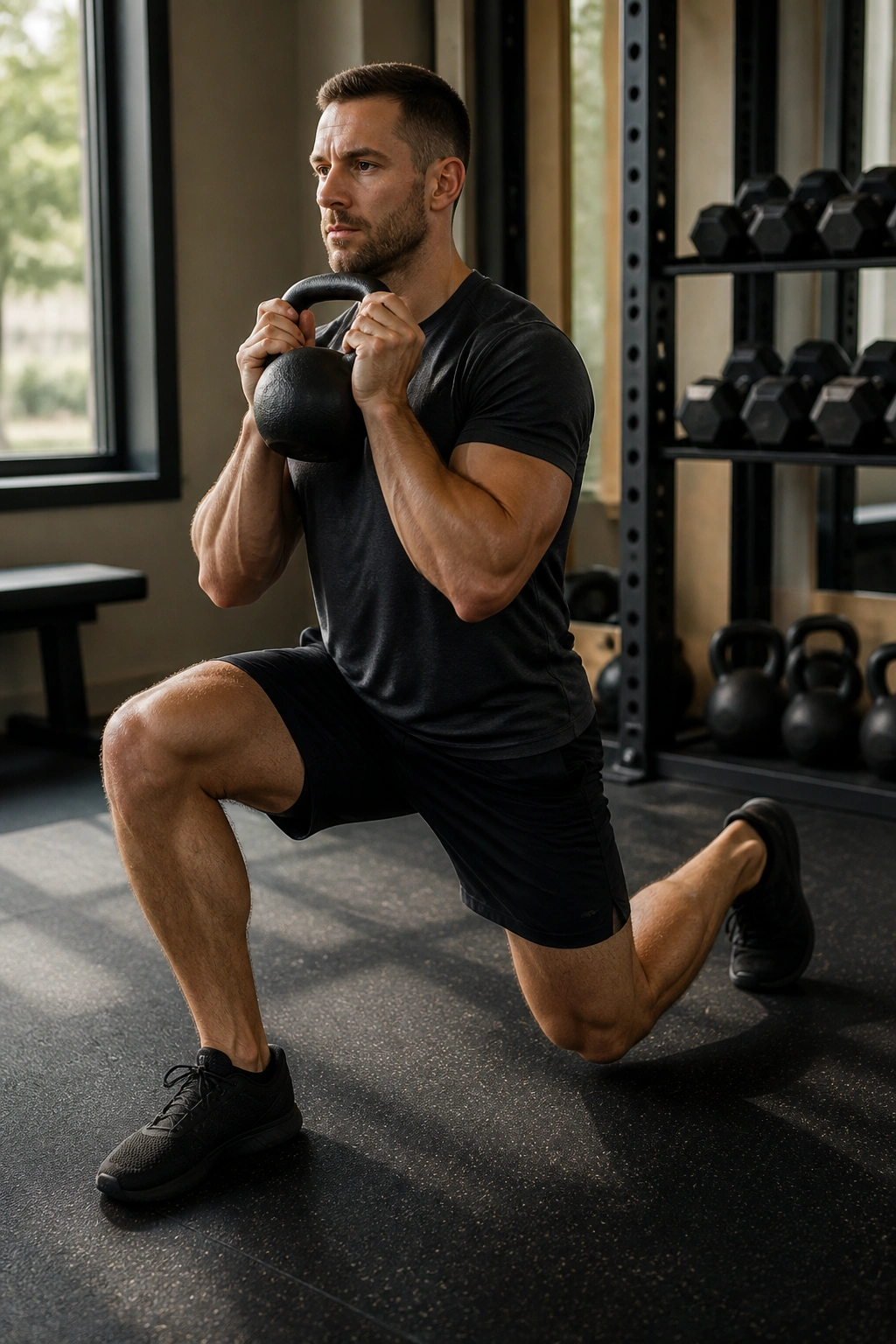
The split squat looks boring until you do real sets of it. Then it gets mean. Because your feet stay planted, there’s more tension on the lead leg and less cheating from momentum.
Split Squat vs. Reverse Lunge
The reverse lunge asks for a step each rep. The split squat locks you in place and keeps constant tension through the quads and glutes. If you want more muscle-building feel and less movement noise, this is the one.
It’s also good for people who need better leg strength without a lot of equipment. A single kettlebell held goblet-style or in the rack works fine.
7. Kettlebell Lateral Lunge
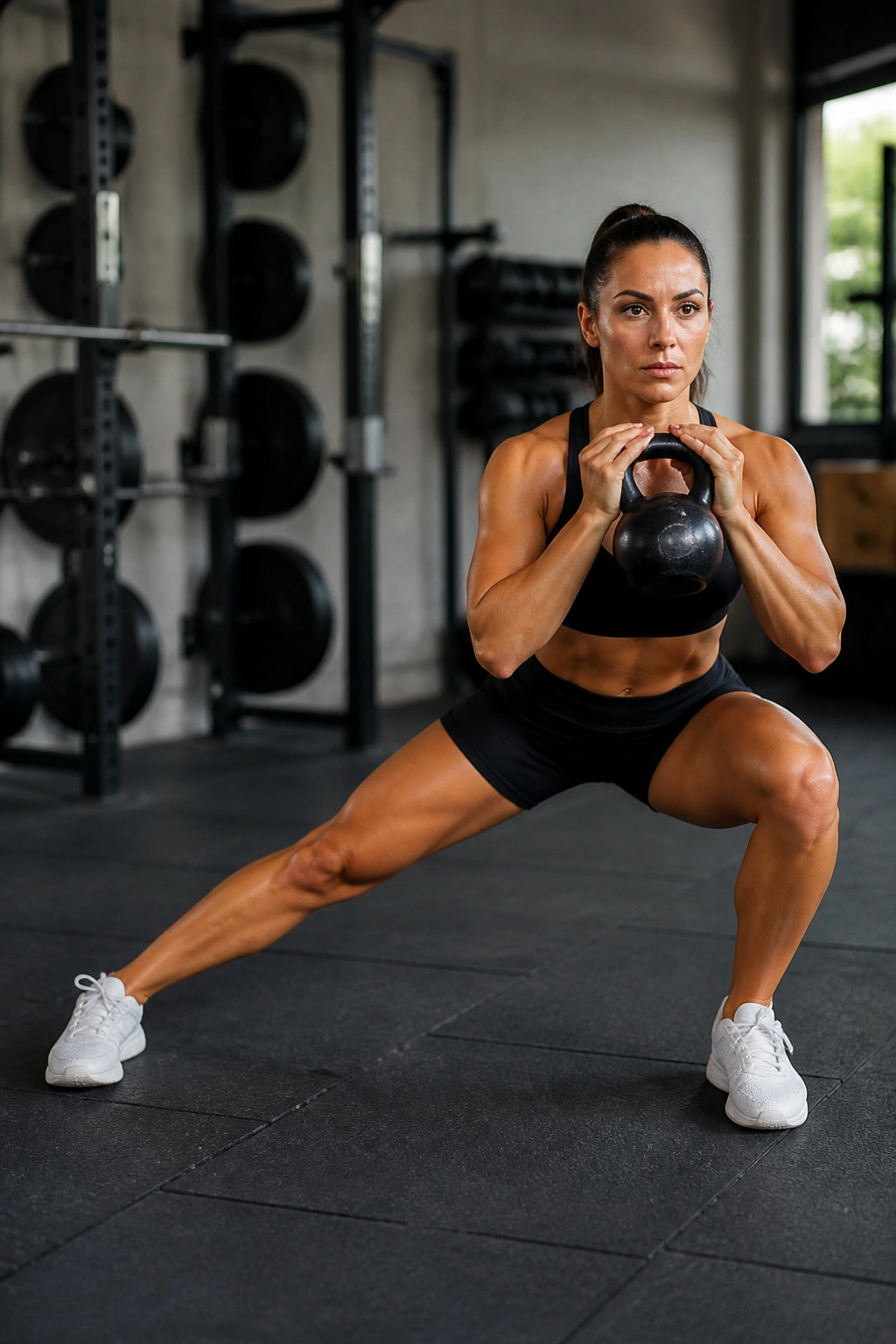
Side-to-side work gets ignored, which is a mistake. The lateral lunge hits the adductors, glute medius, and quads in a way forward-and-back lunges never quite touch.
The working leg bends while the opposite leg stays long. Sit your hips back, keep the planted foot flat, and don’t let the knee cave inward. If your inner thigh complains a little, that’s the point.
What to Feel
You should feel the hip of the bent leg load up, then the glute finish the drive back to standing. It’s a great choice for athletes, but it’s just as useful if you sit a lot and feel stiff in the hips.
8. Kettlebell Cossack Squat
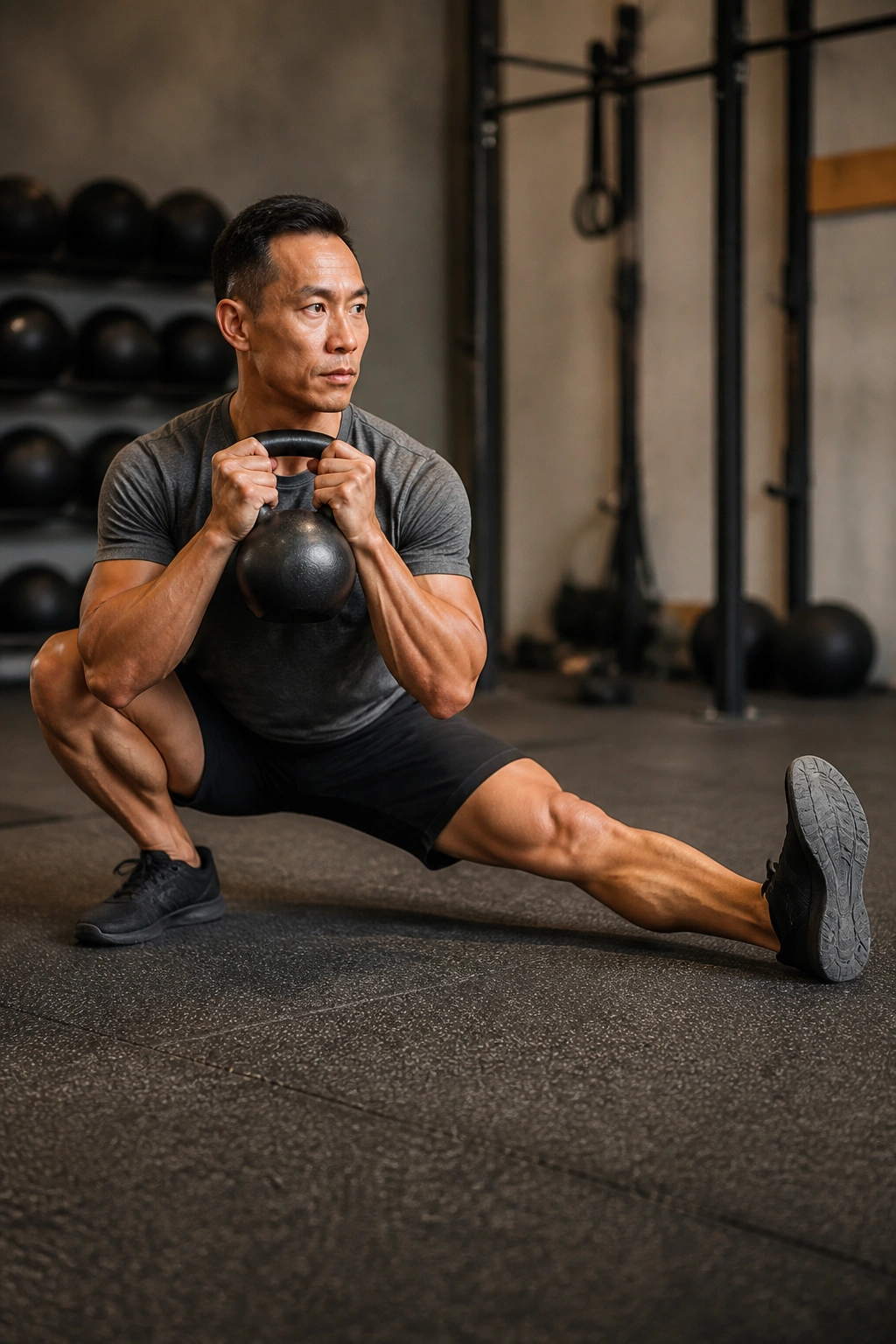
The Cossack squat is a deeper, more demanding version of the lateral pattern. It opens the hips, loads the adductors hard, and challenges ankle mobility in a way most leg exercises don’t.
One leg bends deeply while the other stays straighter and the toes point up or mostly up. Keep the chest proud and the bell close to the body. If you fold forward, the movement turns into a back fight instead of a leg drill.
It’s humbling. Good. Use a lighter bell than you think you need and earn the depth.
9. Single-Leg Kettlebell Deadlift
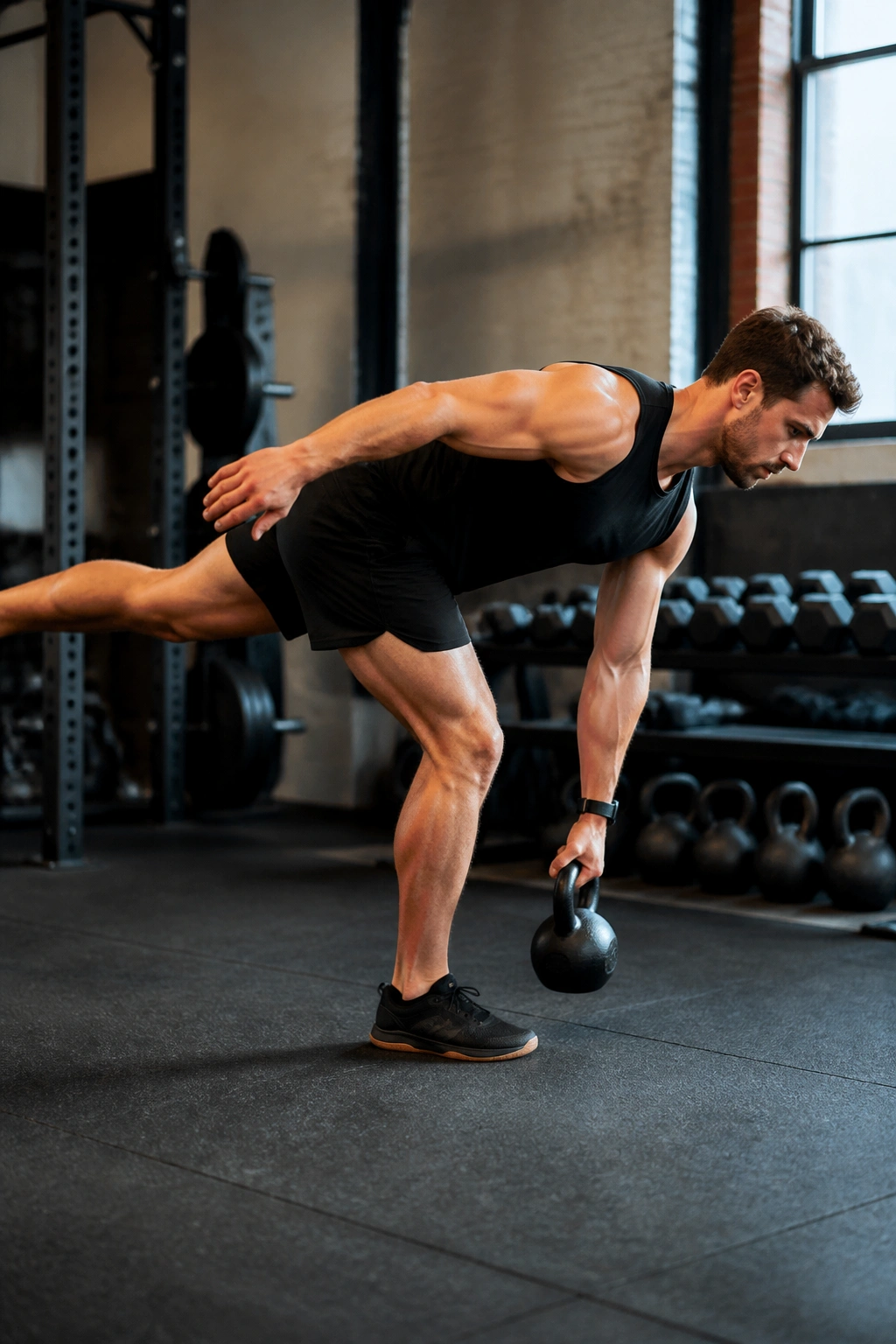
This is one of the best hamstring and balance builders you can do with one bell. The hinge happens on one leg, which means the glutes, hamstrings, foot, and ankle all have to stay awake.
Start with a soft knee, then push the hips straight back as the free leg reaches behind you. The torso and lifted leg should move like a seesaw. If the pelvis opens up and spins, slow down and lighten the load.
A lot of people rush this move. Don’t. The control is the whole point.
10. Kettlebell Hip Thrust
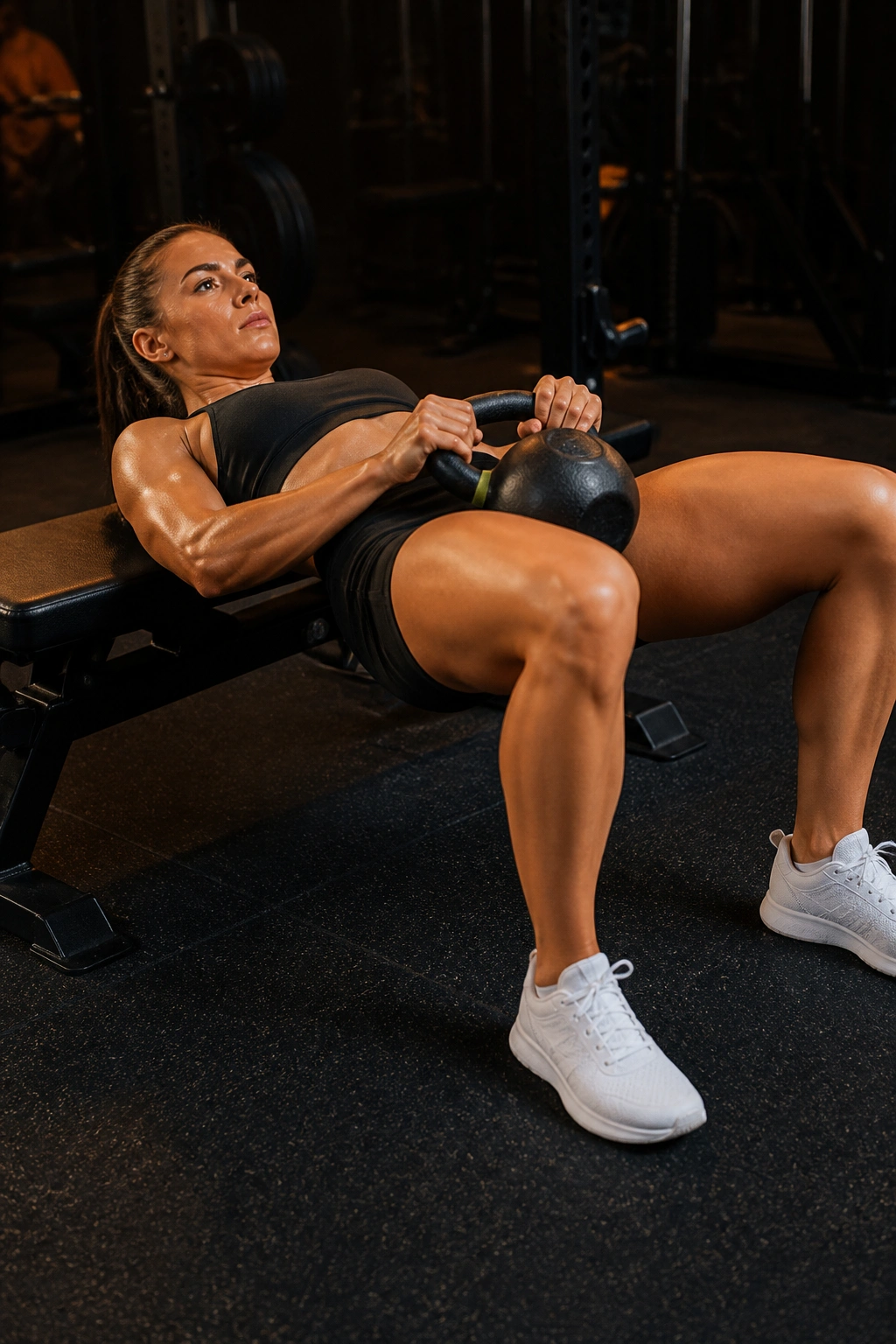
If you want glutes, this one belongs in the mix. The hip thrust lets you load the glutes hard with less spinal stress than many standing lifts, which is useful when you want lower-body volume without frying your back.
Set the upper back on a bench, place the bell across the hips, and drive up until the torso is roughly parallel to the floor. The top position should feel like a glute squeeze, not a low-back arch.
Quick Setup Notes
- Tuck the chin slightly
- Keep the ribs down
- Pause for a second at the top if you want more glute work
11. Kettlebell Glute Bridge
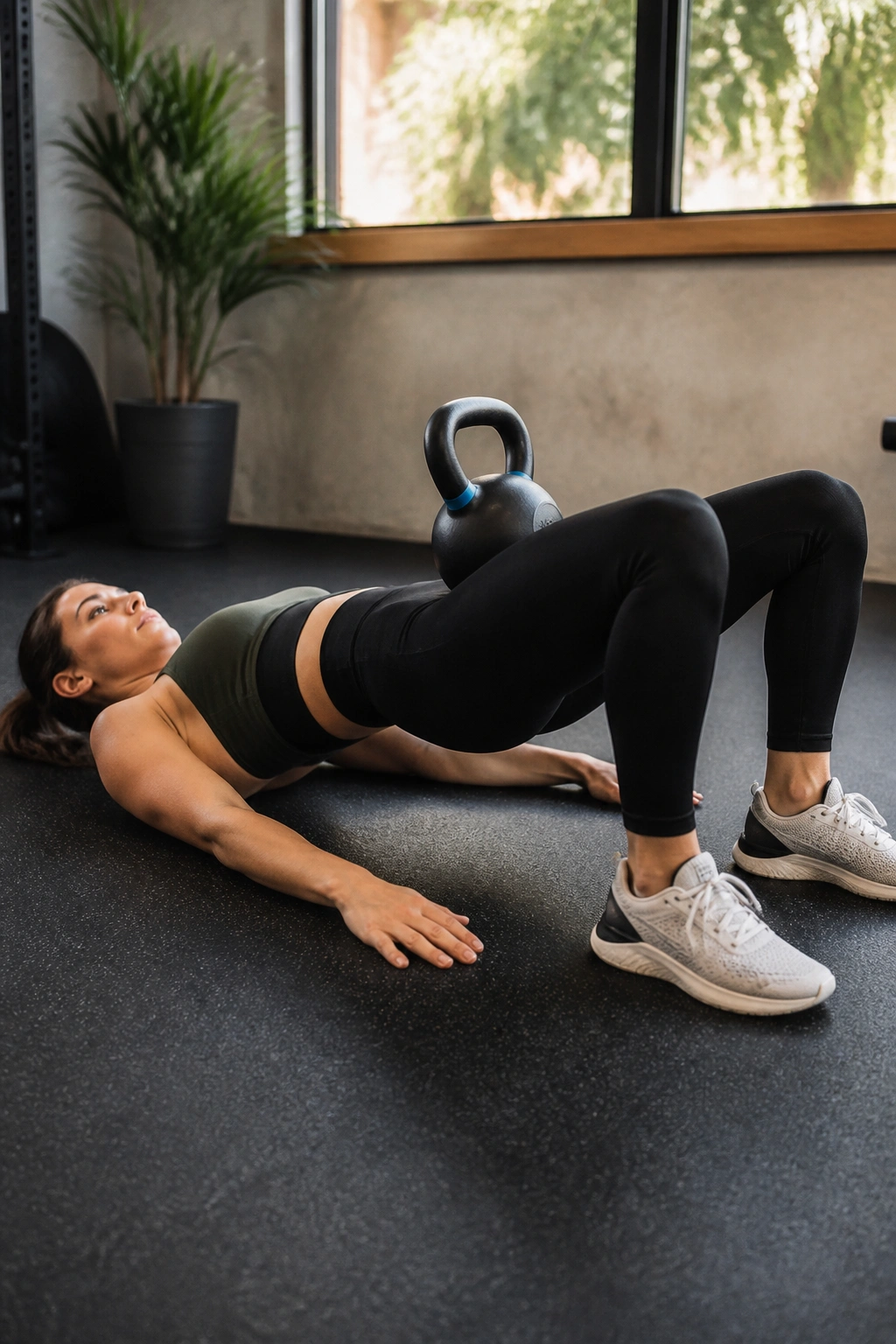
The floor version is simpler, and that simplicity is a feature. The glute bridge is easy to learn, easy to load, and useful when you want to teach hip extension without as much setup.
The bell rests on the pelvis, feet stay planted, and you lift until the hips are fully extended. Short range, big payoff. It’s also a smart accessory drill for days when your lower back wants less drama.
This move doesn’t need to look dramatic to work. A clean bridge with a hard squeeze at the top can light up the glutes fast.
12. Kettlebell Clean
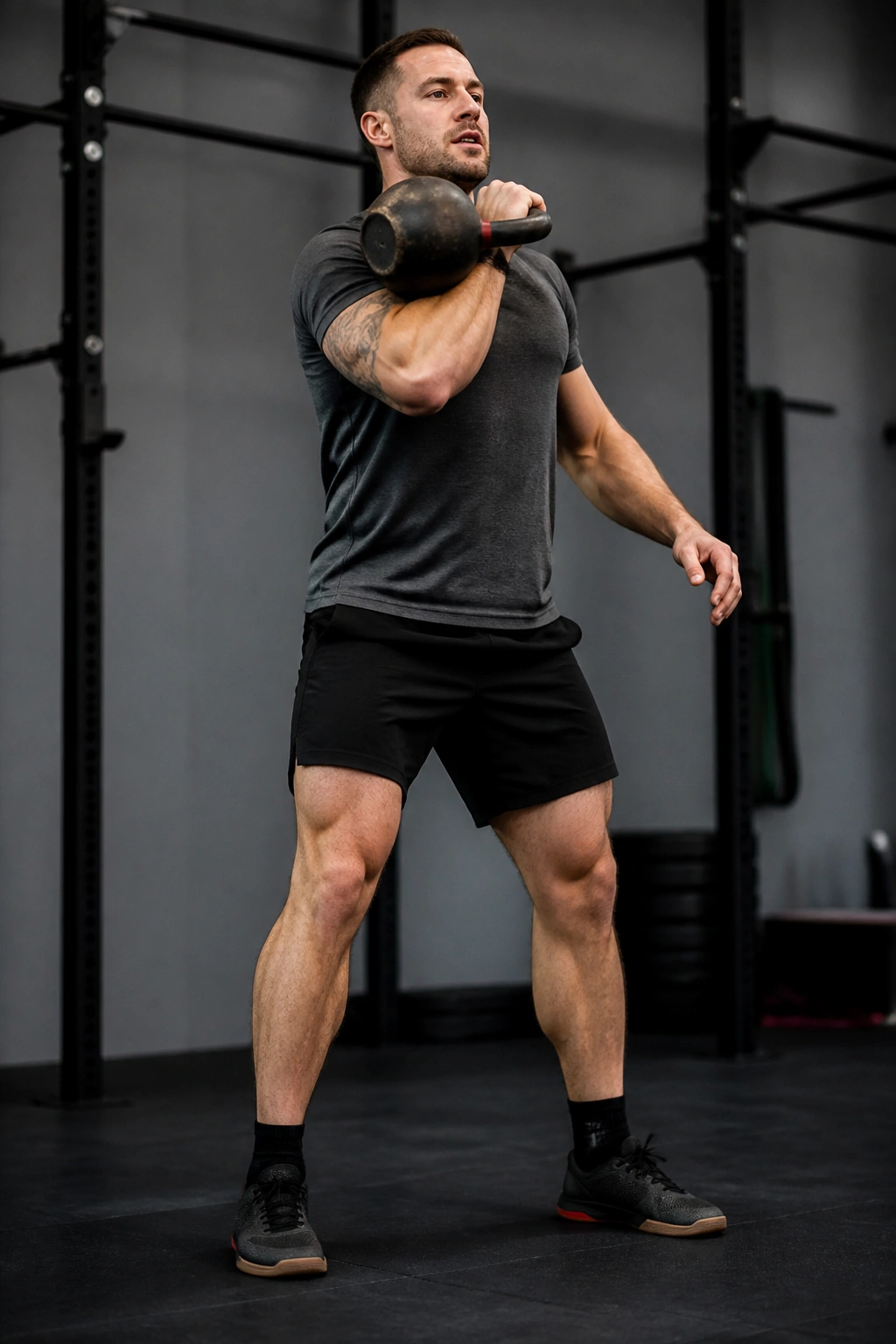
The clean is where the kettlebell starts to feel like a tool for the whole body, not just the lower half. The hips, lats, grip, and core all have to cooperate, and the rack position gives you a ready-made starting point for presses, lunges, and carries.
The big thing: the bell should rotate around the hand, not slam into the forearm. Keep it close, guide it into the rack, and let the forearm stay roughly vertical.
If you’ve been bruising your wrist, the bell is looping too wide. Tighten the path and clean with patience.
13. Kettlebell Clean and Press
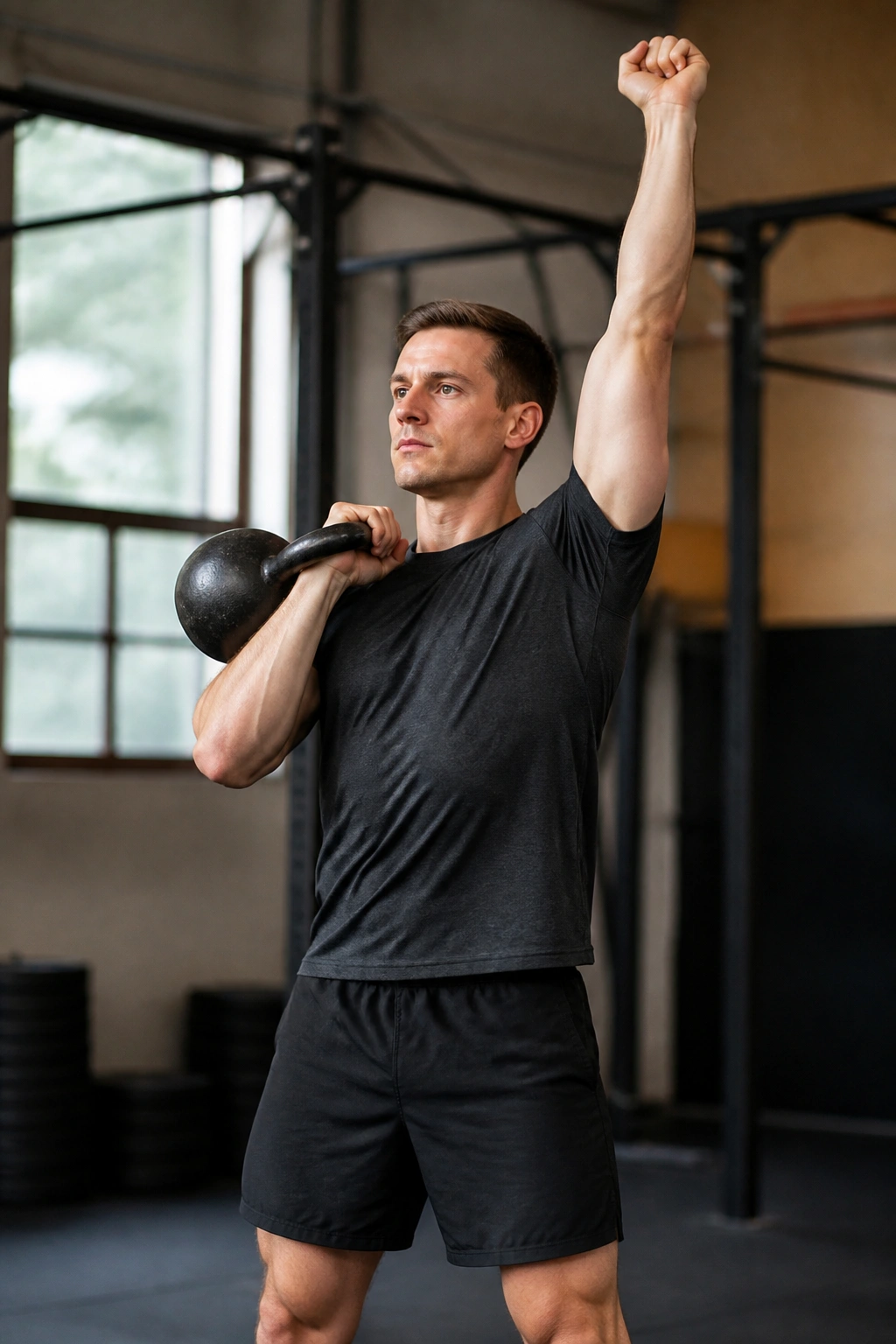
The clean and press is a blunt instrument in the best way. It combines lower-body power with upper-body strength, and it asks your midsection to stay locked in while the bell travels from floor-level force to overhead control.
Why It’s So Useful
One rep hits a lot: hips, glutes, shoulders, triceps, upper back, and trunk stability. That makes it a strong choice for full-body sessions when you don’t want to overcomplicate things.
- Clean: builds hip snap and rack control
- Press: builds shoulder and triceps strength
- Together: makes the transition between body positions matter
Use a weight you can clean cleanly and press without leaning back like you’re trying to avoid the ceiling.
14. Kettlebell Push Press
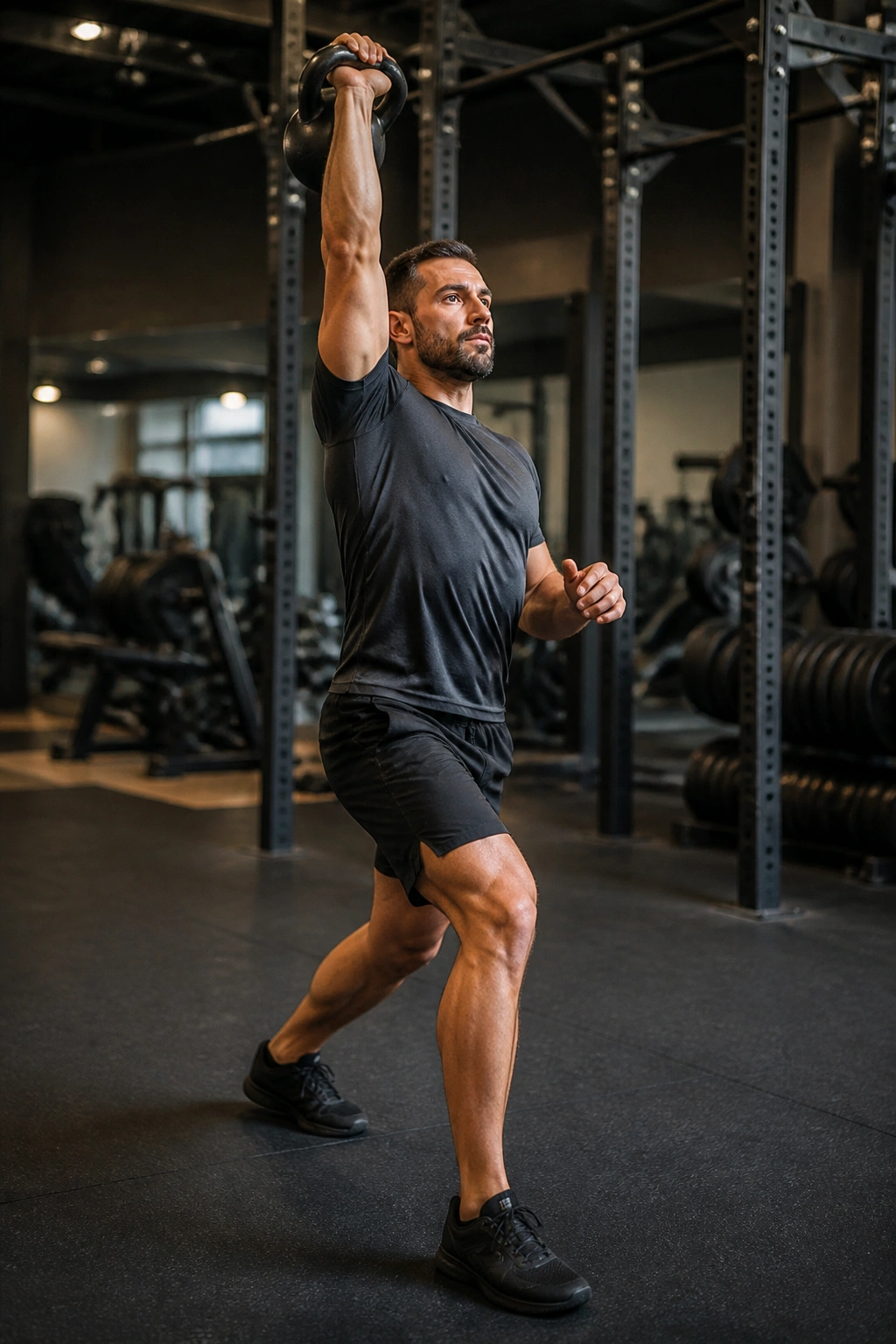
A strict press is all shoulder and triceps. A push press borrows a little leg drive so you can move a heavier bell and train power through the entire chain.
Dip a few inches, then drive straight up. The legs start the rep, and the arm finishes it. If the knees bend too much or the torso folds, the timing is off.
This is a good choice when your press stalls but your lower body still has plenty to give. It also teaches force transfer in a way that carries over to a lot of other lifts.
15. Kettlebell Jerk
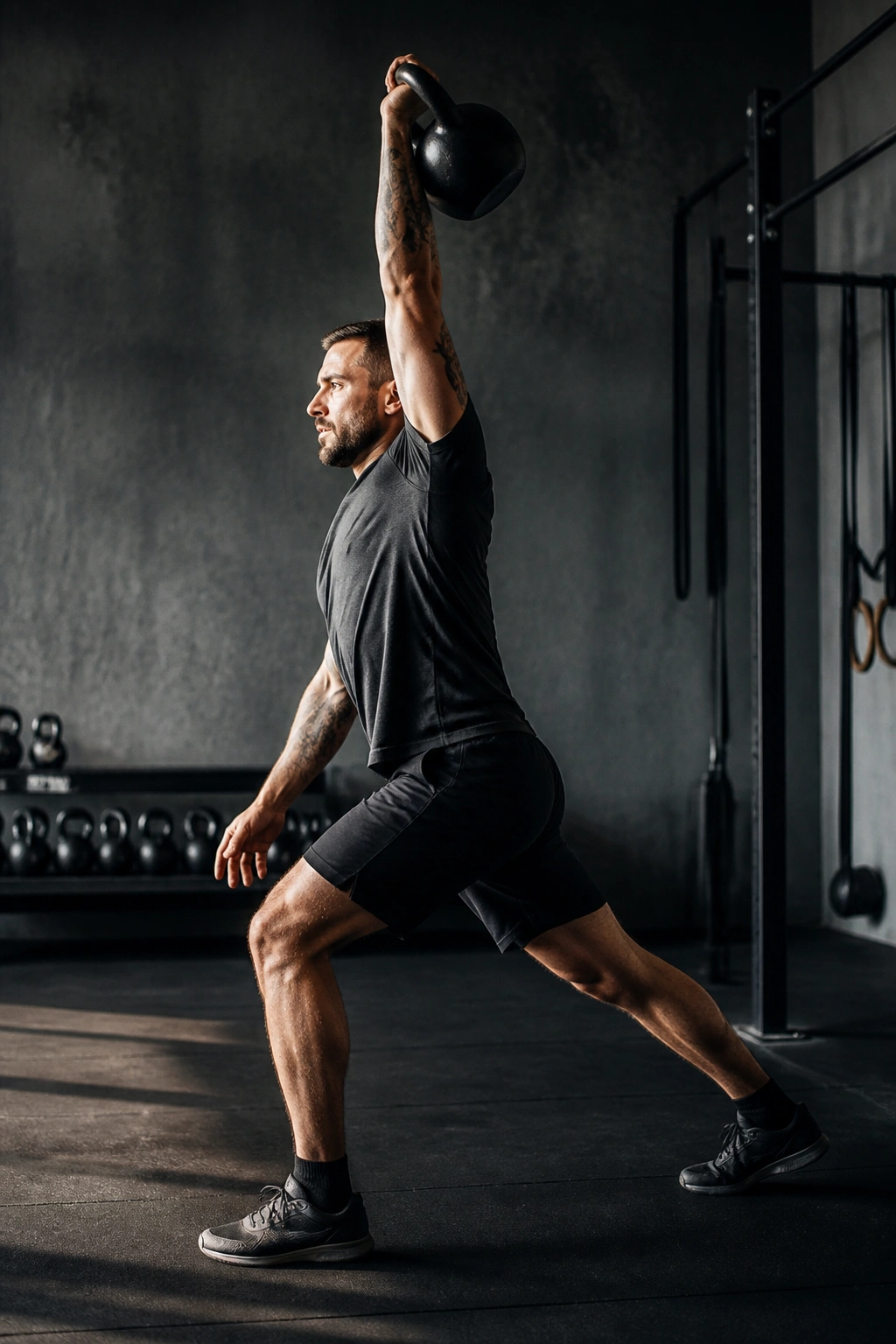
The jerk looks similar to the push press, but the second dip changes everything. You drive the bell up, then re-bend under it and lock out with less strain on the shoulders.
That extra footwork makes the movement more technical, but it also lets you handle heavier bells cleanly once the timing clicks. The legs do a burst of work, then the upper body receives the load instead of muscling it alone.
It’s a sharp tool. Not the first move I’d teach, but a very good one once the basics are there.
16. Kettlebell Overhead Press
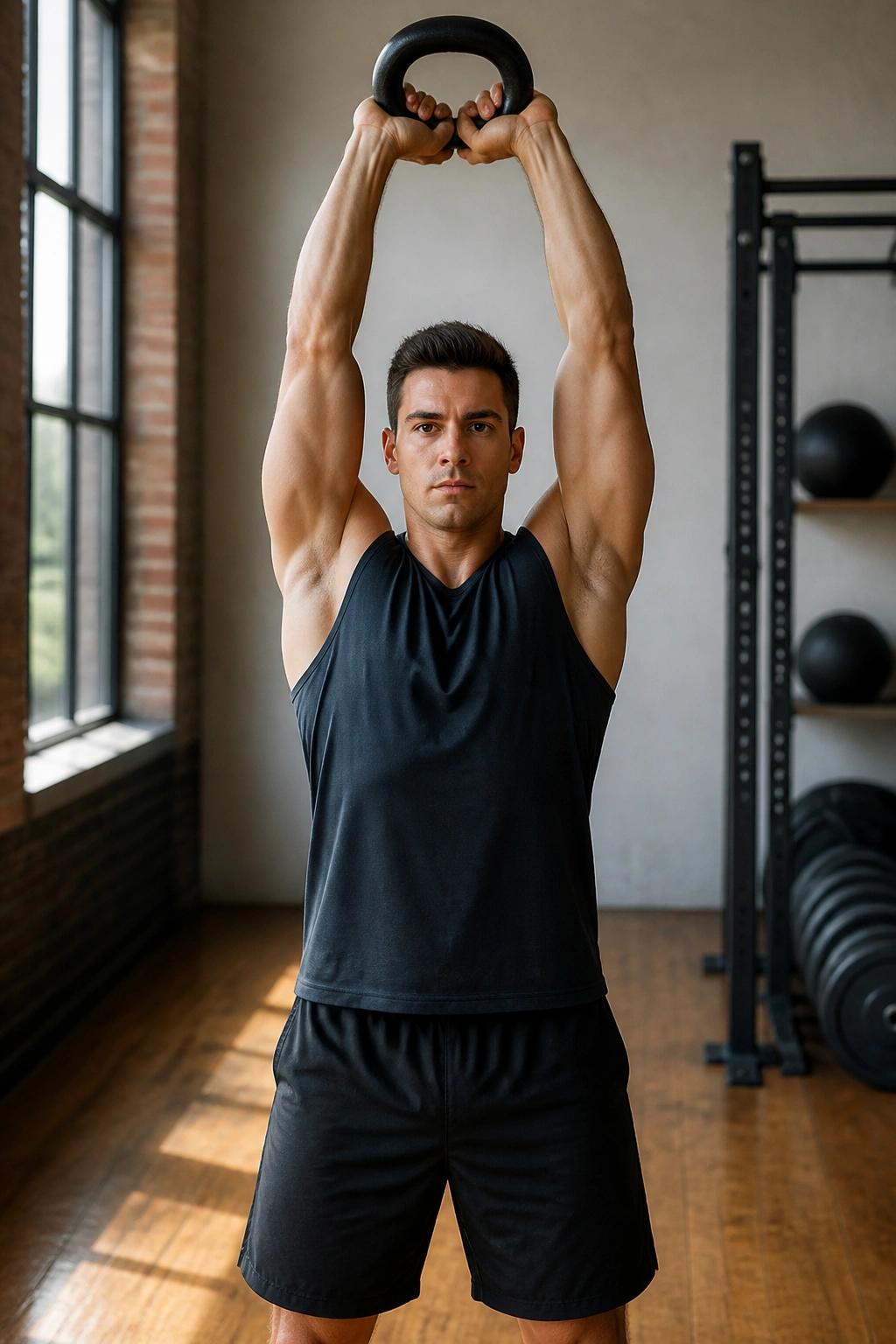
The strict overhead press is the honest shoulder builder in the list. No leg help, no bounce, no extra noise. Just delts, triceps, and a trunk that refuses to bend under load.
Press in a straight path. Squeeze the glutes, keep the ribs stacked, and avoid turning the press into a standing backbend. If your lower back arches to finish the rep, the bell is too heavy for that day.
How to Keep It Clean
Hold the kettlebell tightly in the rack first. Then drive it straight up until the biceps comes near the ear and the elbow locks out without grinding.
17. Kettlebell Floor Press
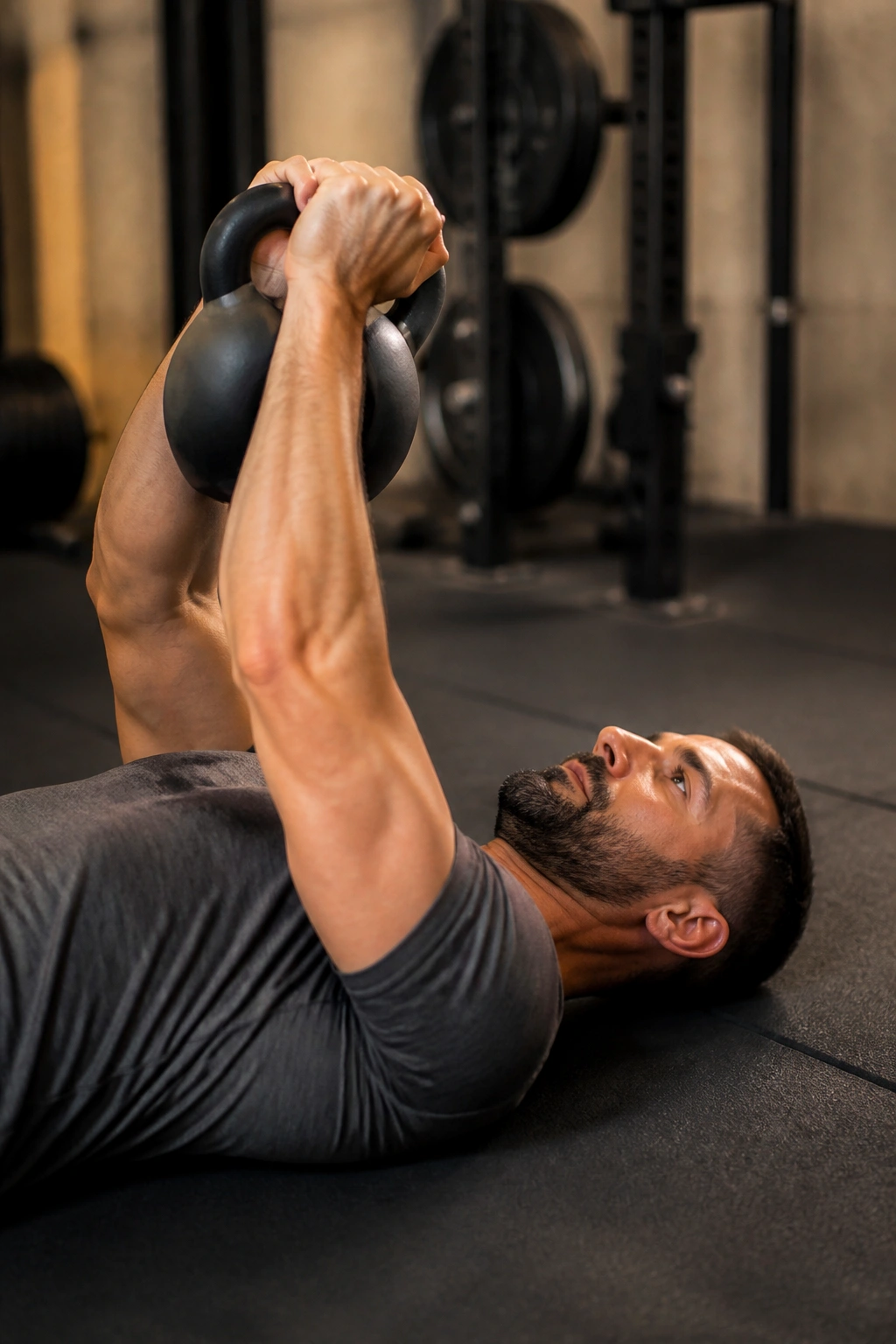
The floor press gives your chest and triceps solid work without asking the shoulder joint to travel through a huge range. That makes it a favorite when you want pressing volume and don’t want to beat up the front of the shoulder.
Lie on the floor, elbow at about 45 degrees, and press until the arm is straight. The floor stops the descent, so you learn control right where people usually get sloppy.
It’s also easy to load one side at a time. That turns the core on, which is never a bad thing.
18. Single-Arm Kettlebell Floor Press
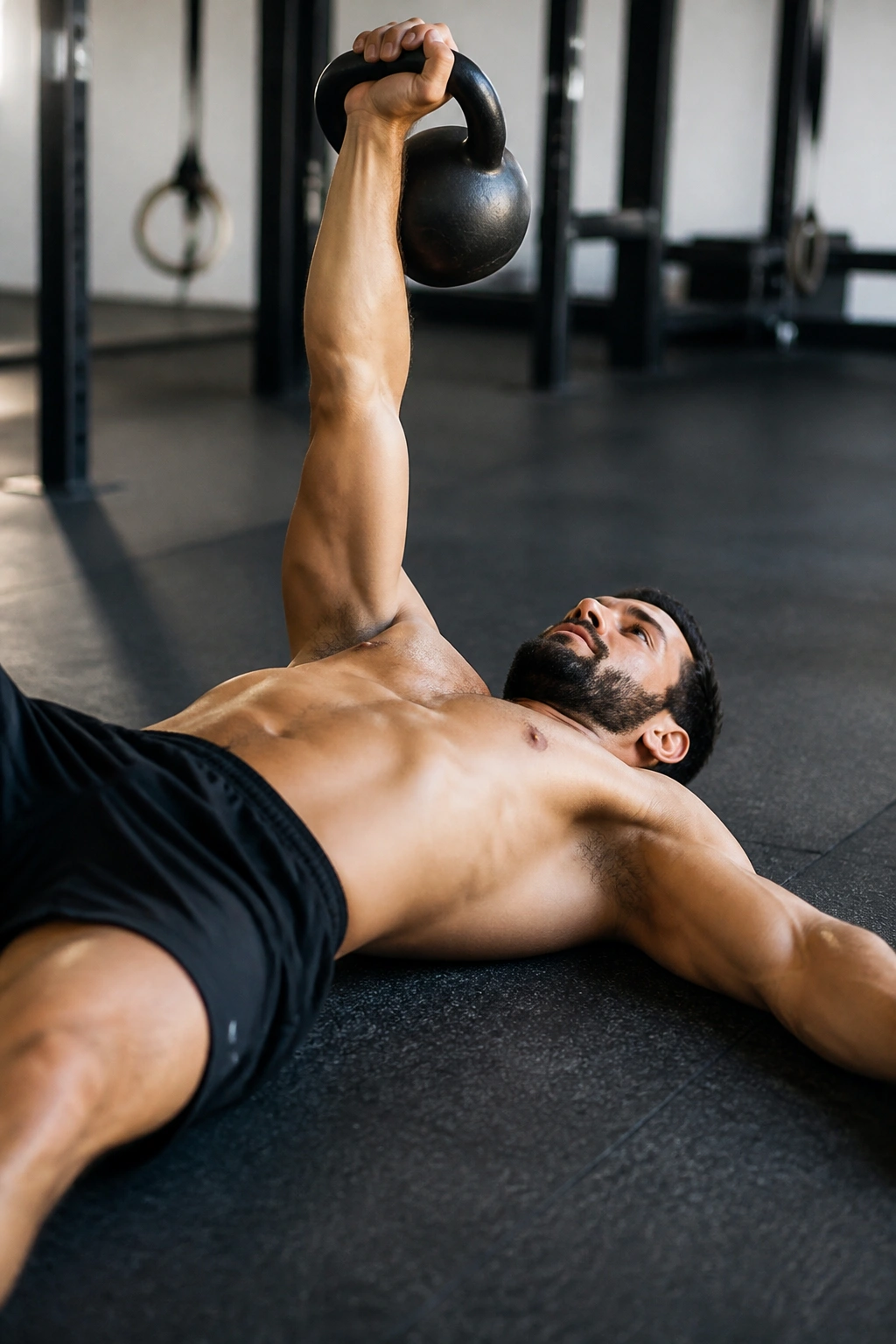
One arm at a time changes the mood. The chest still works, but now the obliques, lats, and deep trunk muscles have to keep your body from twisting toward the loaded side.
That anti-rotation demand is the real payoff. It’s a simple drill, but the asymmetry makes it feel much bigger than it looks.
Use a slow lower, a brief pause with the triceps on the floor, then a smooth press to lockout. If the shoulder rolls forward, reset the shoulder blade and try again.
19. Bent-Over Kettlebell Row
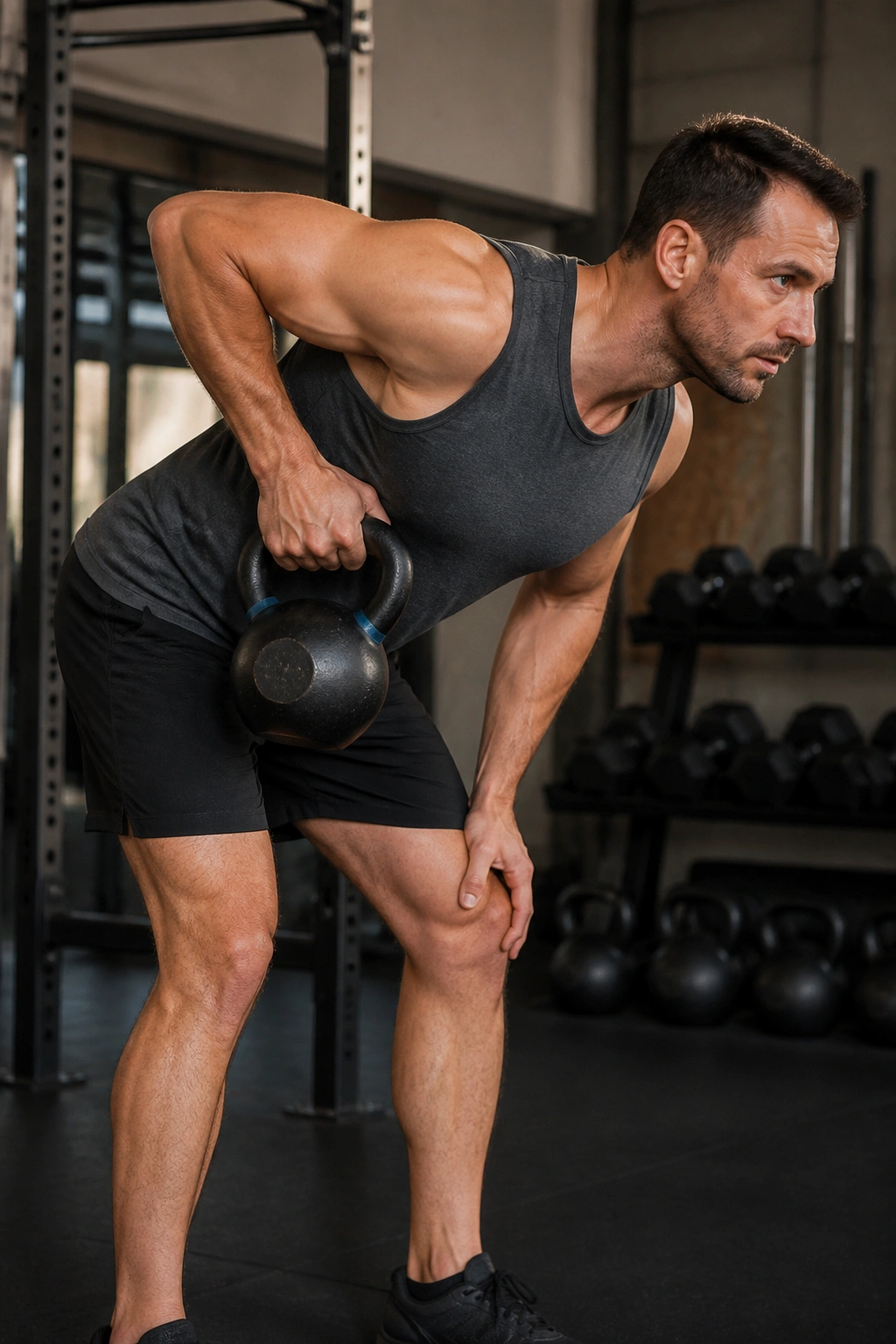
The bent-over row is still one of the best ways to build the back with a kettlebell. It hits the lats, rhomboids, rear delts, and grip while the hinge position keeps the trunk honest.
Row It Right
Pull the elbow toward the hip, not straight up toward the ceiling. That small angle shift changes the emphasis and keeps the lats involved.
- Keep the spine long
- Brace the abs before each rep
- Avoid twisting the torso to cheat the weight up
A row should feel like a back exercise, not a shoulder shrug with attitude.
20. Renegade Row
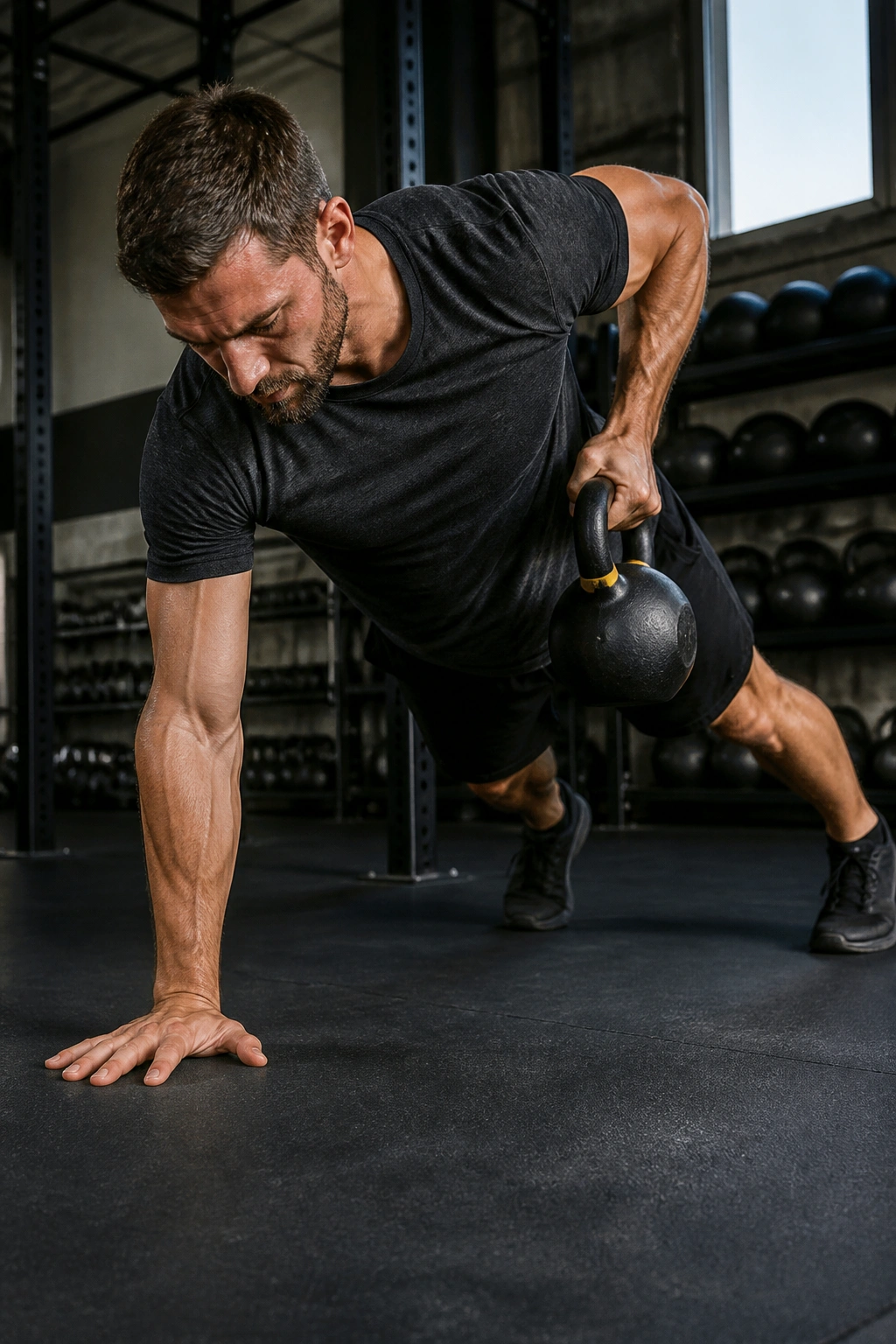
The renegade row is where pulling meets anti-rotation. You row one kettlebell while the other hand stays on the floor or on the opposite bell, and your torso has to stay square the entire time.
That makes it a nasty core drill and a solid upper-back builder. The wider the feet, the easier the balance. The narrower the feet, the more the obliques have to fight.
A lot of people turn this into a hip-sway contest. Don’t. Keep the hips low, move the bell with control, and let the plank do its job.
21. Kettlebell Curl
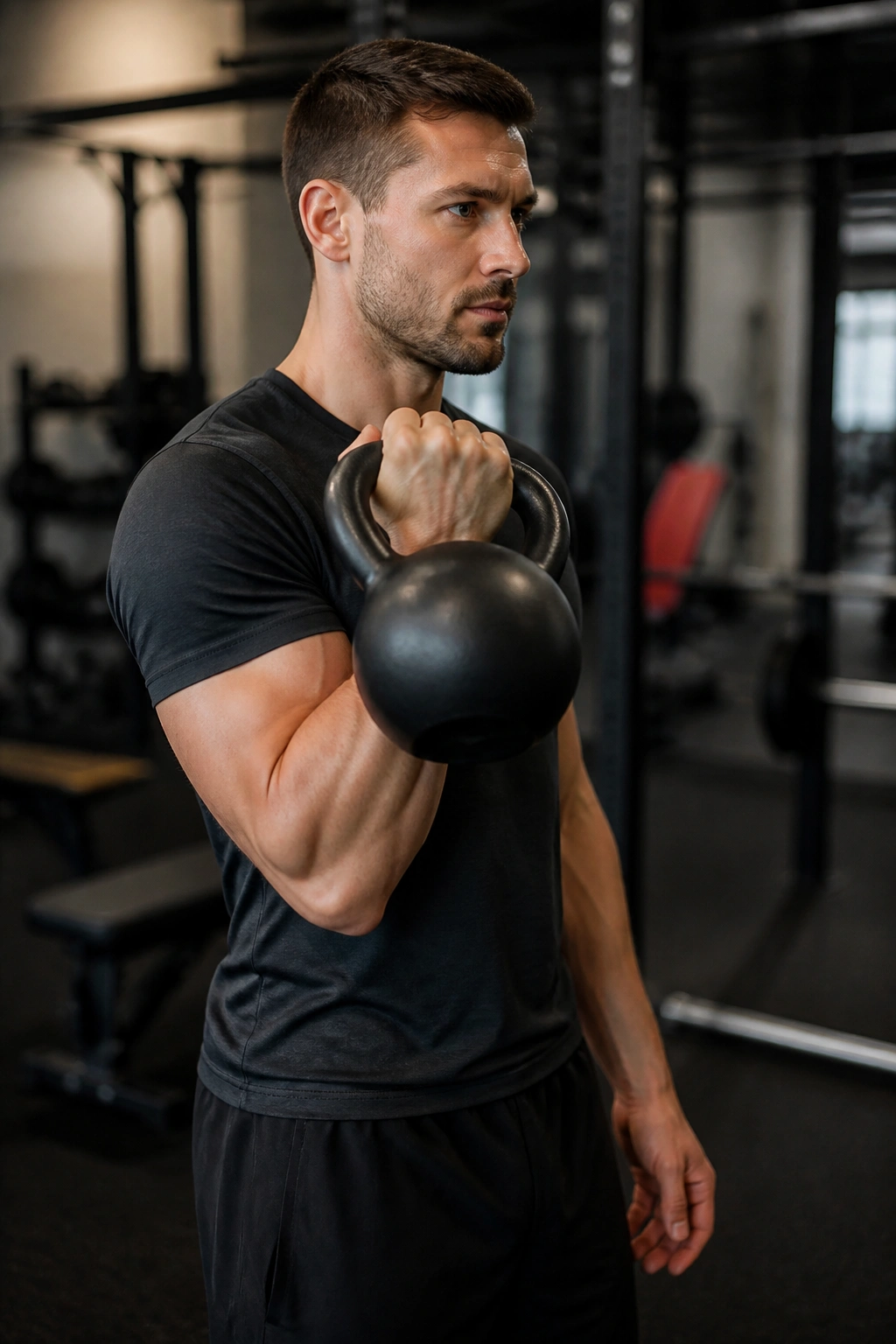
Yes, you can curl a kettlebell, and yes, it’s awkward in a useful way. The off-center load makes the biceps, forearm, and wrist stabilizers work harder than a smooth dumbbell curl often does.
Keep the elbow pinned near the ribs and lower the bell slowly. If the shoulder swings forward to help, the set has turned into a cheat rep.
This is a smaller move, sure, but smaller is not the same thing as useless. It’s a nice accessory if you want arm work and grip work in the same slot.
22. Overhead Kettlebell Triceps Extension
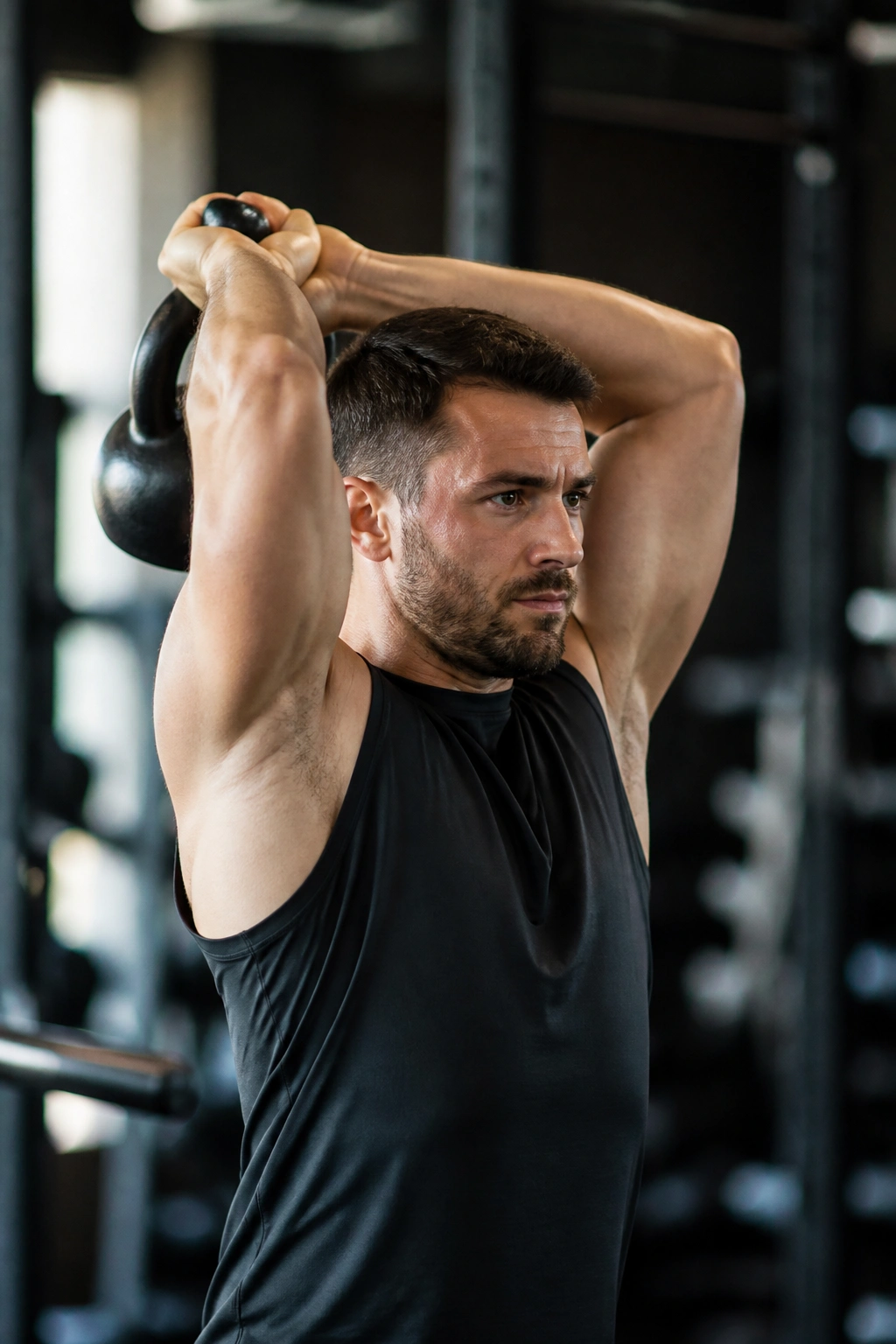
The overhead triceps extension lights up the long head of the triceps and asks the shoulder to stay stable while the elbows bend and straighten. It looks simple. It is not especially forgiving.
Hold the bell by the horns or by the handle with both hands, then let it travel behind the head under control. The elbows should stay fairly close together, and the ribs should stay down.
If your lower back arches, the load is too heavy or your stance is too loose. Keep the pelvis tucked and make the triceps do the work.
23. Kettlebell Pullover
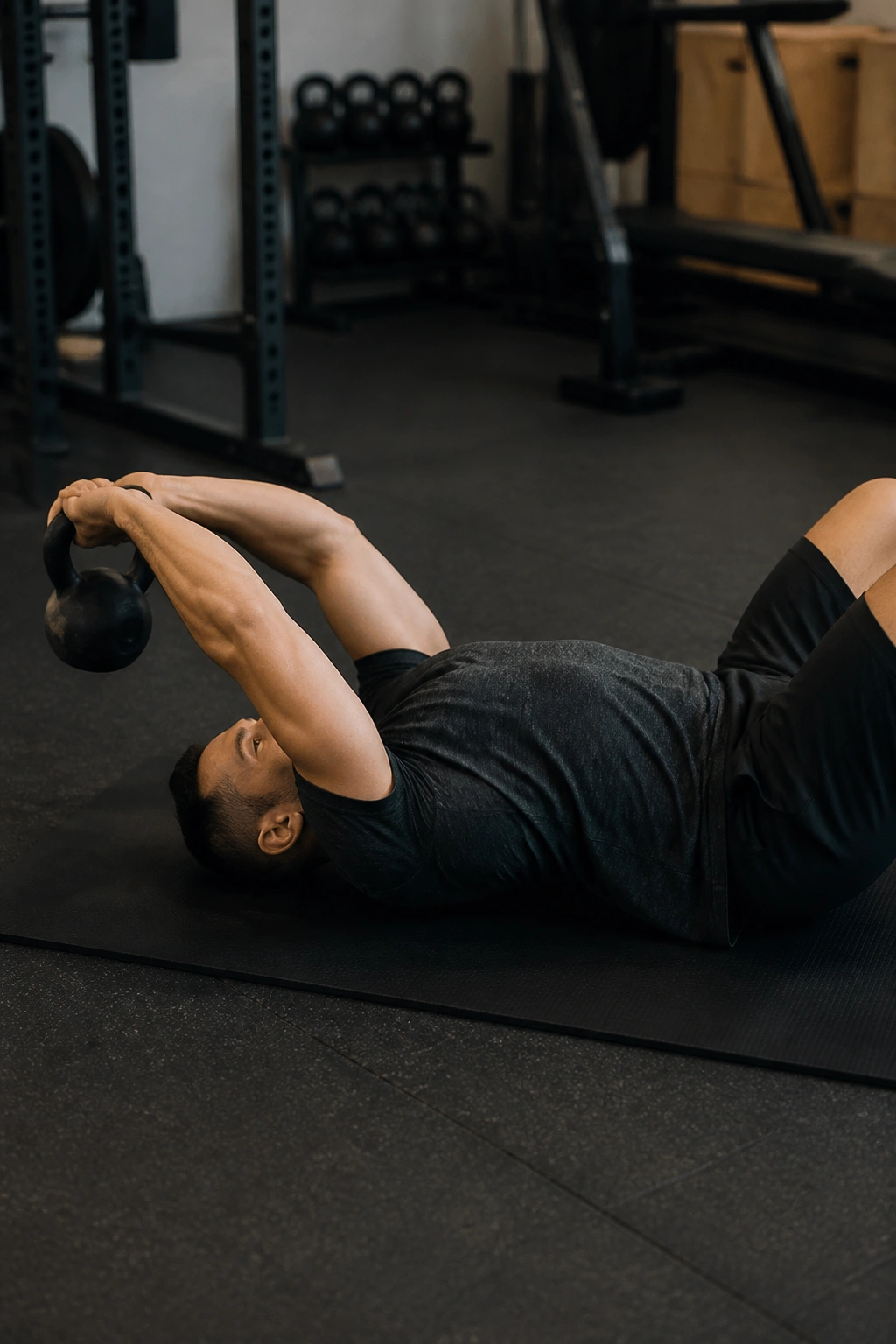
The pullover is a sneaky lat and rib-control exercise. Lying on the floor keeps the range honest, and the overhead path teaches your lats and serratus to work while the core resists rib flare.
Lower the bell slowly over the head, stop before the low back pops off the floor, then pull it back over the chest. That controlled range matters more than how heavy the bell looks in your hand.
This is a good one for people who want a pull pattern without standing hinge fatigue. It also pairs well with floor presses.
24. Kettlebell Halo
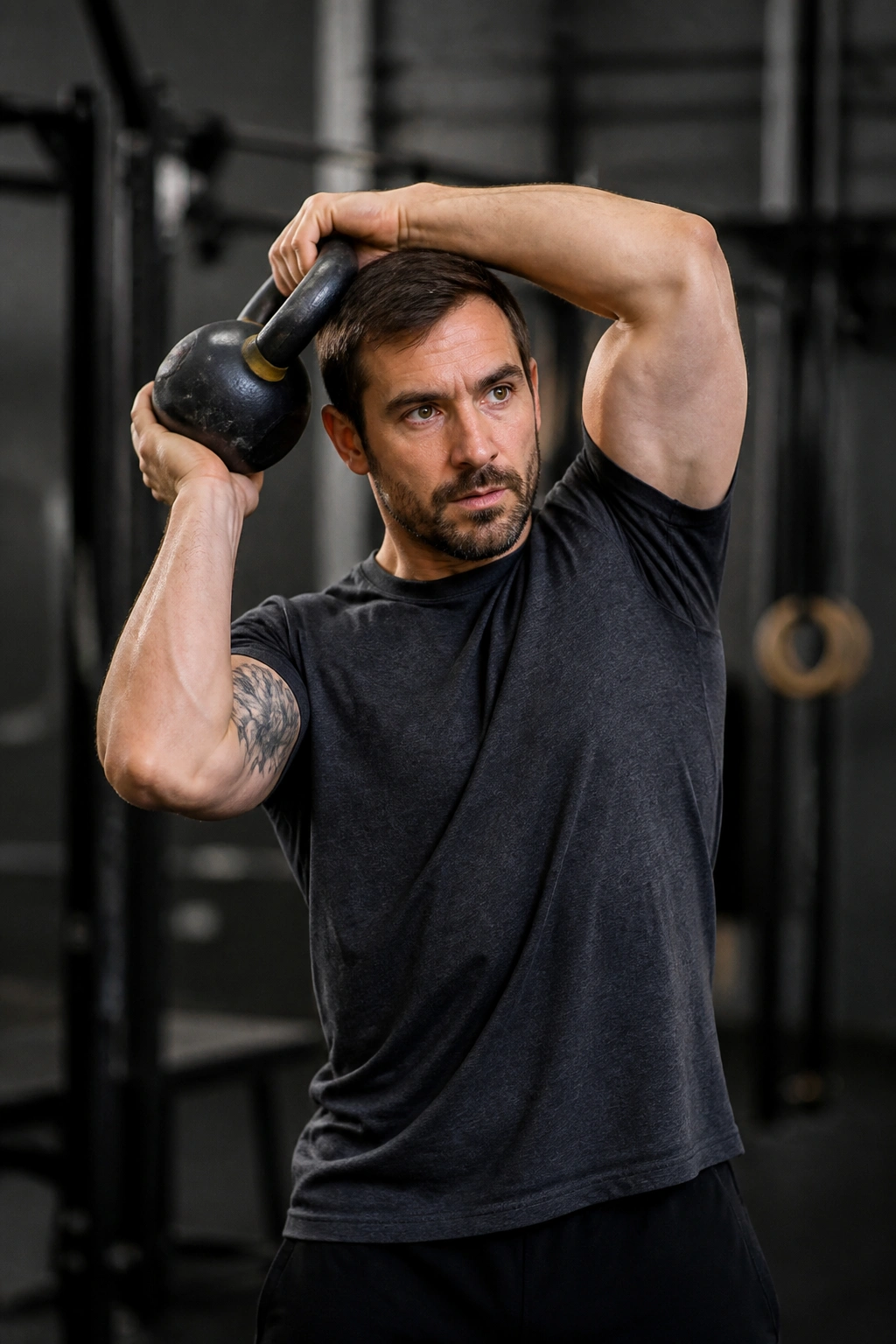
The halo is part warm-up, part shoulder drill, part posture check. It circles the bell around the head, which makes the shoulders, upper back, and core work together while you keep the neck relaxed.
Move slowly. The bell should stay close to the skull without actually touching it. If the rib cage flares or the chin juts forward, the movement has turned into a mess.
Best Use
Halos shine before pressing, overhead carries, or get-ups. They wake up the shoulders without draining them.
25. Around-the-World
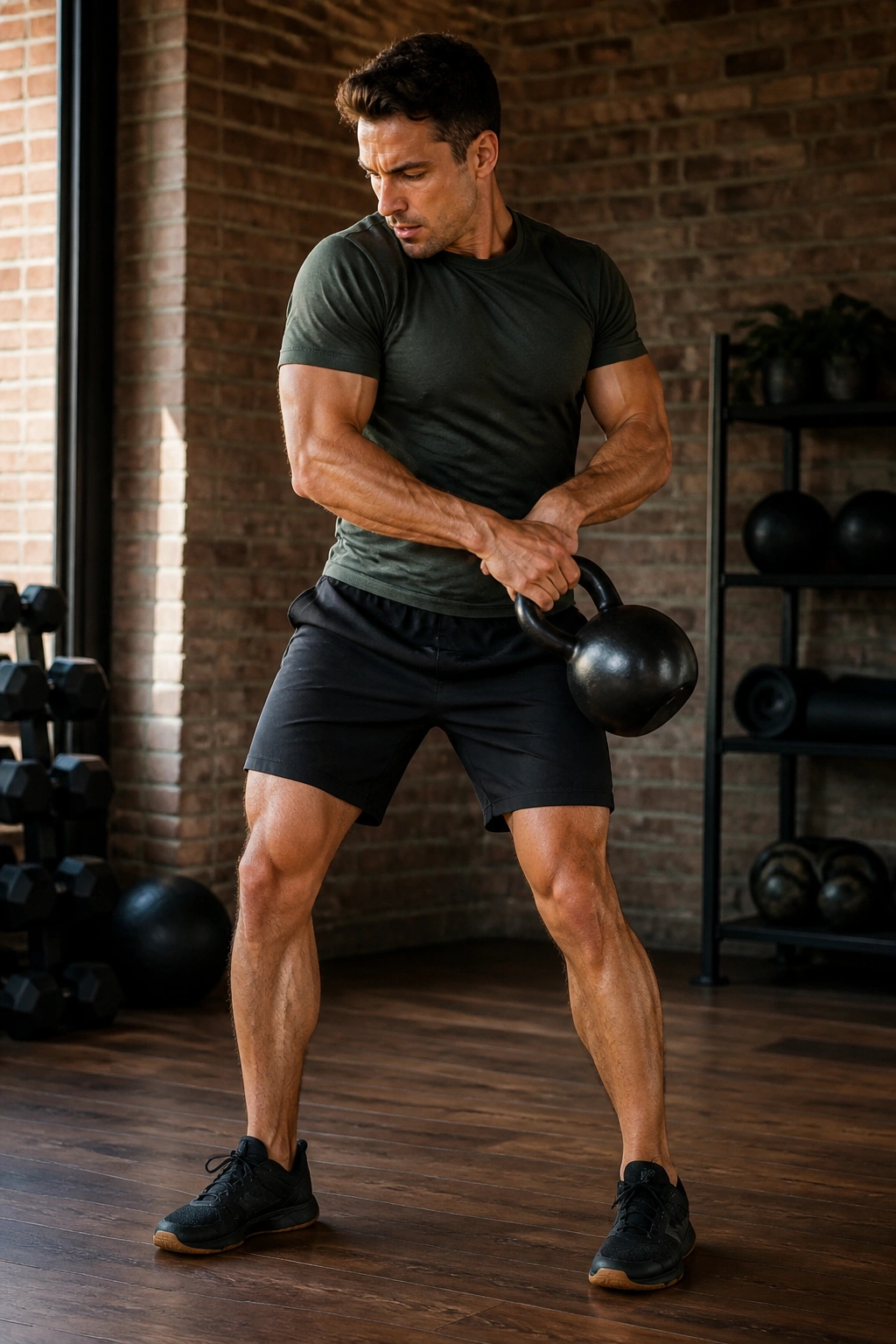
This one looks playful, and that’s probably why people dismiss it. Bad move. Around-the-world work challenges grip, shoulder control, and trunk stiffness as the bell travels around the waist in a tight path.
You can pass the bell hand to hand or keep a firmer grip depending on the variation. The point is to keep the torso quiet while the arms and hands stay coordinated.
What Makes It Different
Unlike a curl or row, this drill isn’t trying to move a lot of weight. It’s training control under a moving load, which has its own value.
26. Turkish Get-Up
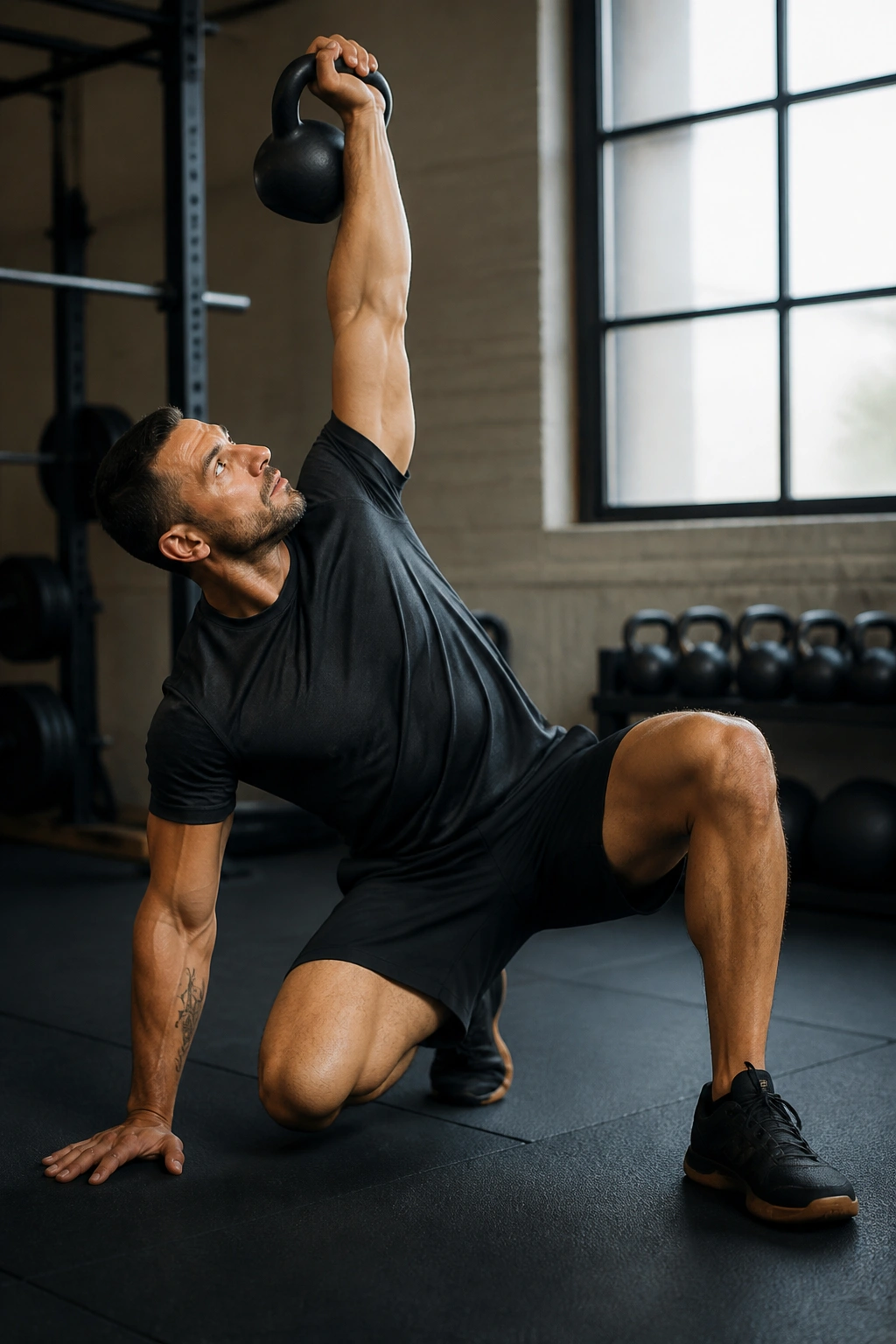
The Turkish get-up is one of the few exercises that makes the whole body feel connected in a real way. Shoulders, core, hips, glutes, and even the feet matter here because every stage of the lift depends on the one before it.
It’s not a speed exercise. It’s a skill exercise with strength attached. If you rush the transitions, it falls apart. If you take your time, it teaches body control better than almost anything else on this list.
Use a light bell first. Serious lifters still do, because the lesson is in the positions, not the ego.
27. Kettlebell Windmill
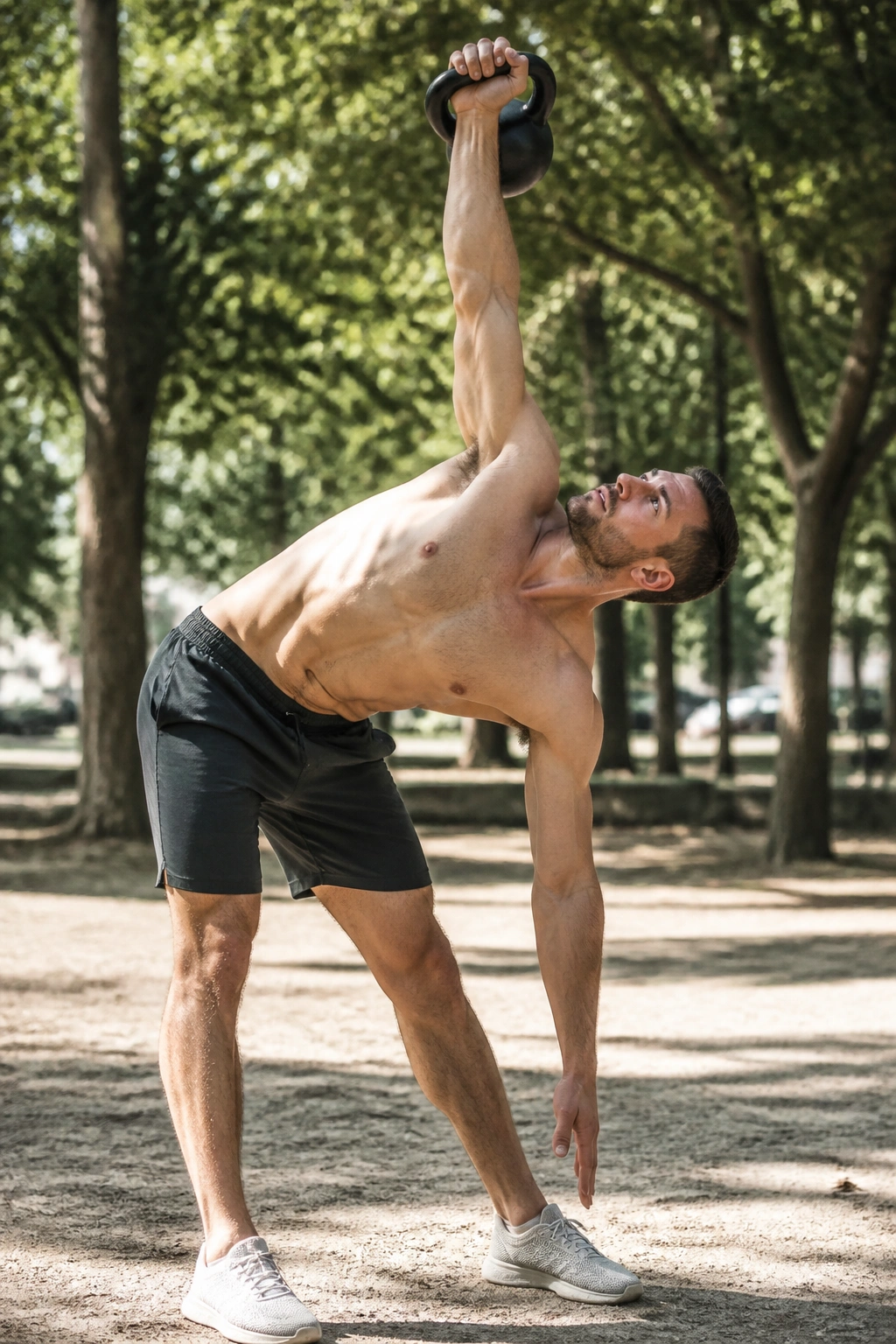
The windmill is a favorite of mine when someone needs core strength and hip mobility in the same drill. The bell goes overhead, the hips shift back, and the torso rotates under control while the eye stays on the bell.
You’ll feel the obliques working hard on the way down and the glutes helping stabilize the stand back up. It’s a great way to load side-body strength without a bunch of noise.
If hamstrings or shoulders are tight, start shallow. The rep should look deliberate, not desperate.
28. Kettlebell Snatch
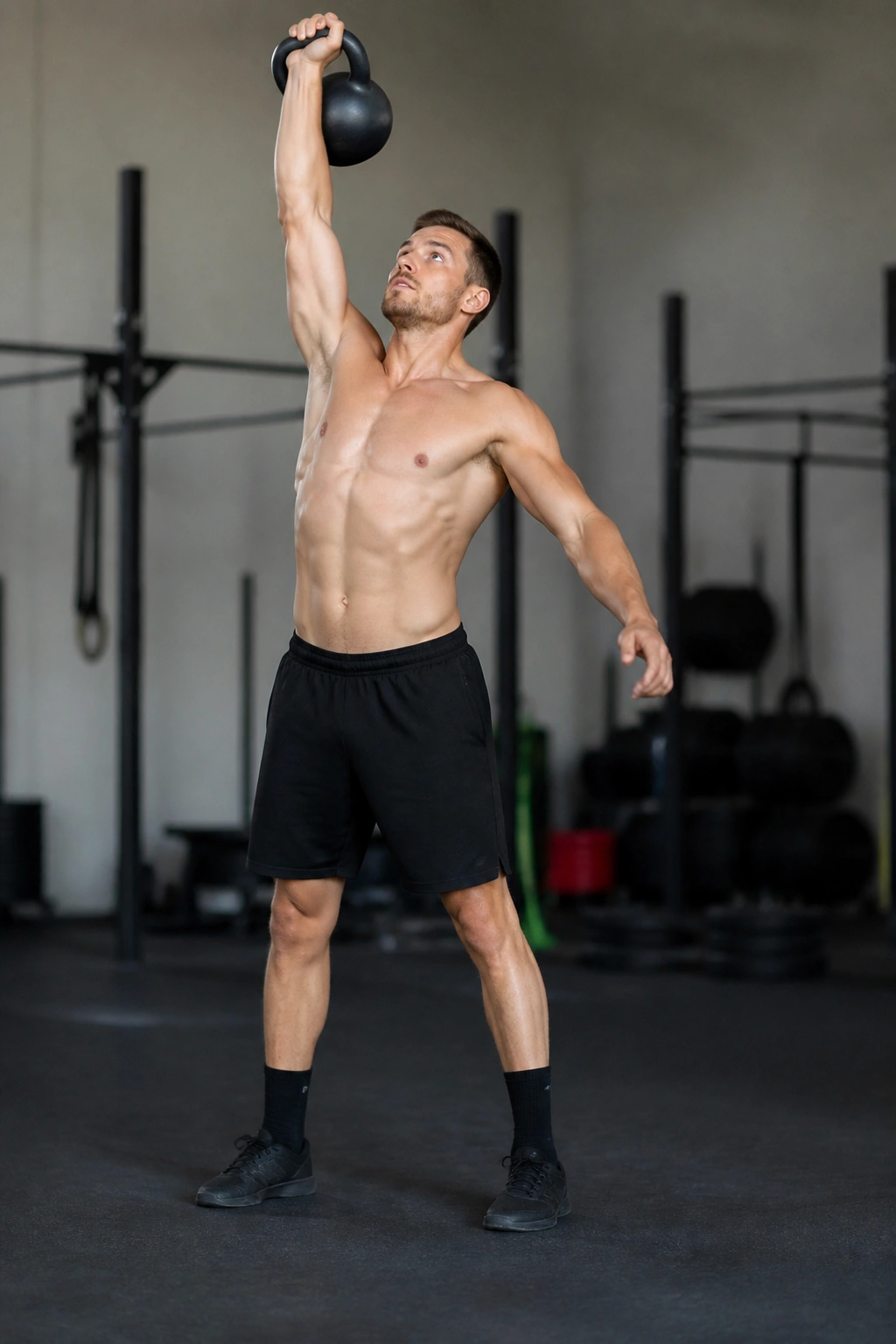
The snatch is fast, explosive, and not the exercise to learn while tired. It trains the hips, back, shoulders, and grip, and it builds a lot of power in a short number of reps.
The key is a tight bell path and a clean turnover. The bell should travel close to the body, then slide into lockout without slamming the forearm on the way up. If it’s bruising you, the timing is off.
This is one of the best conditioning lifts in the kettlebell toolbox. It asks for precision and pays you back with speed.
29. Kettlebell High Pull
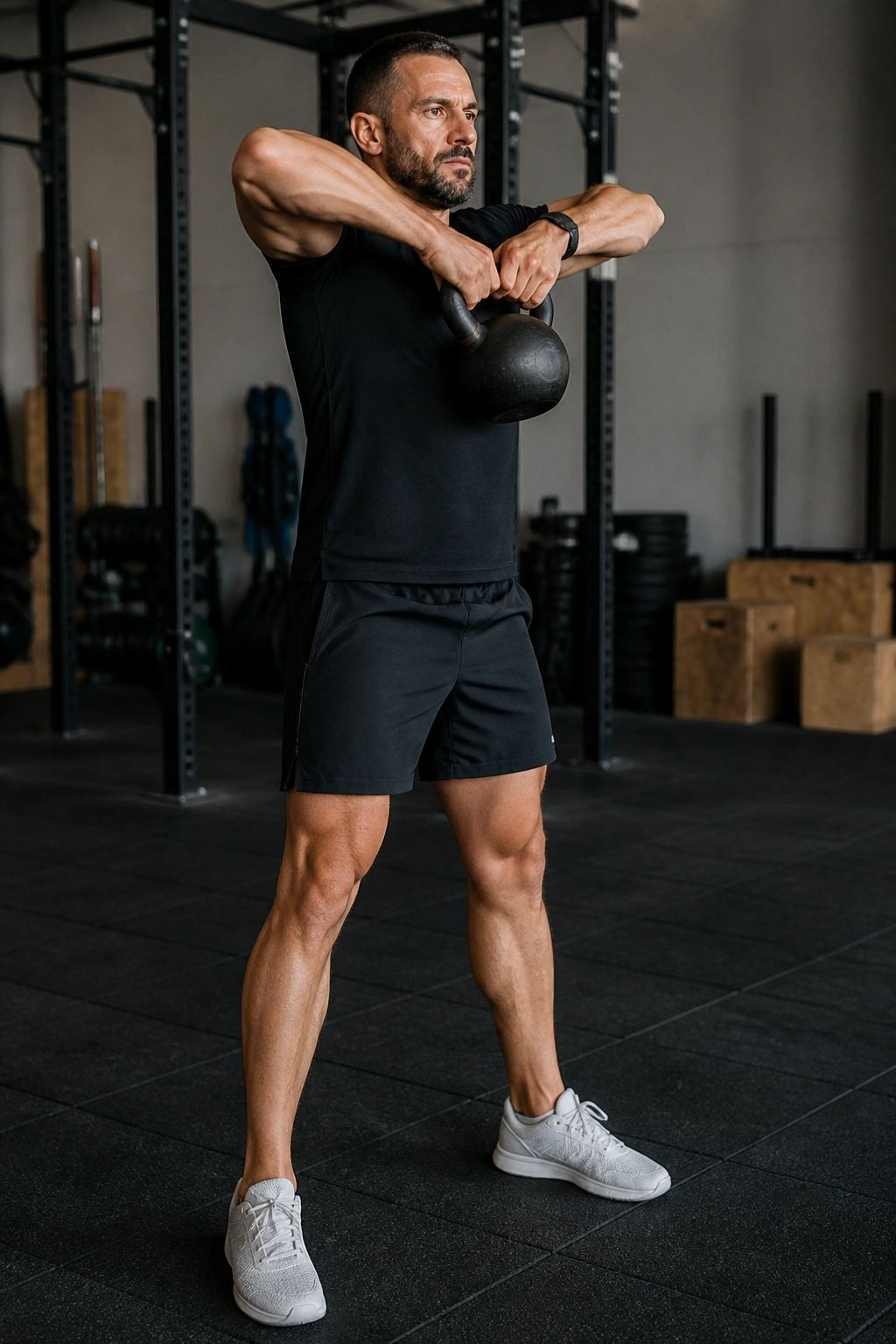
The high pull sits between a row and a snatch. It builds the upper back, traps, rear delts, and hip drive without the full overhead turnover, which makes it a useful stepping stone.
Drive the bell with the hips, then pull the elbow high and slightly out. The bell should stay close; the shoulder should not yank the arm into a shrug from the start.
It’s a nice option when you want some of the snatch’s explosiveness without the same technical demand. Still plenty of work. Still plenty of sweat.
30. Kettlebell Farmer Carry
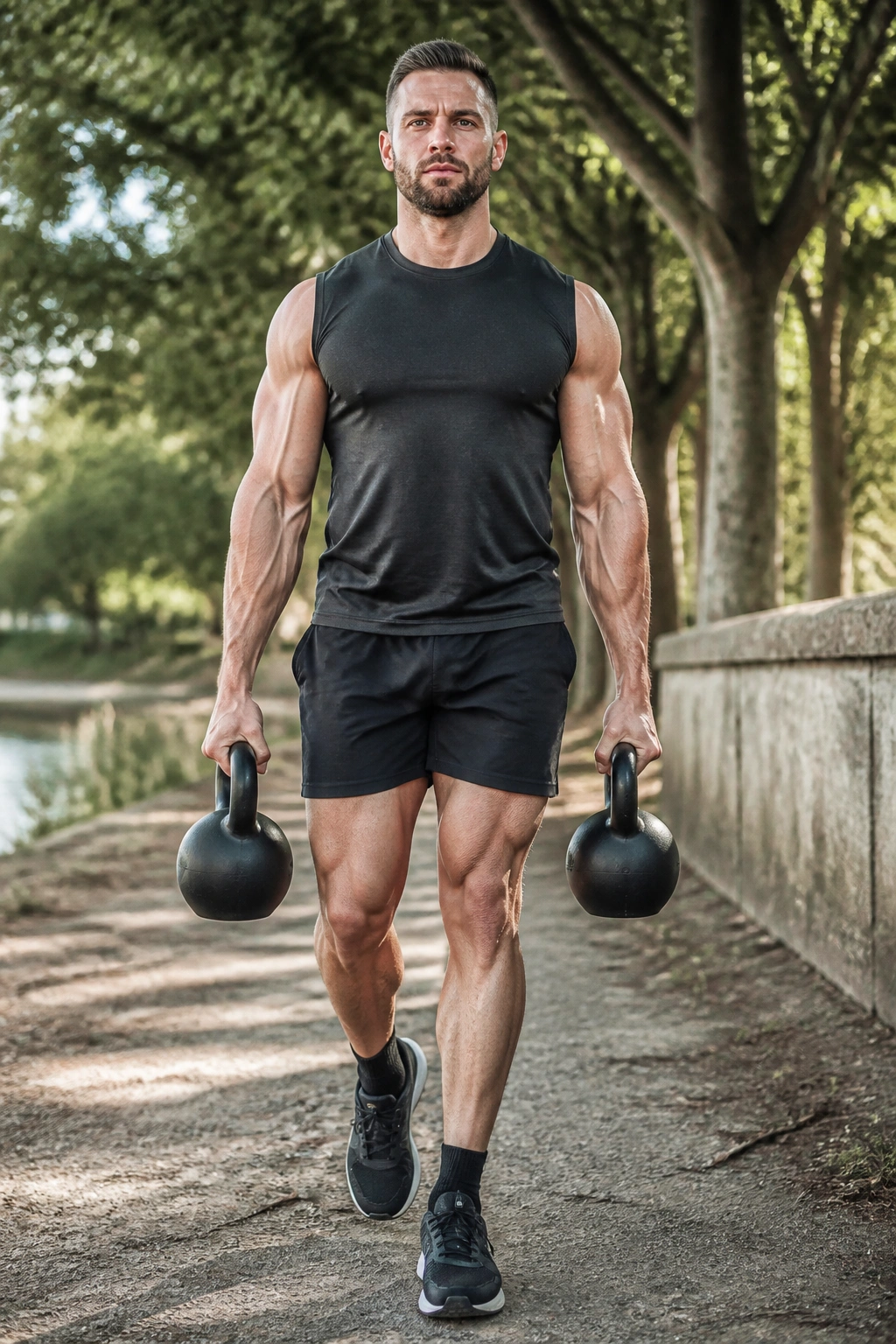
The farmer carry is brutally simple. Pick up a heavy bell in each hand and walk. The grip works, the traps work, the core braces, and your posture has to stay tall the whole way.
Why It Belongs in a Full-Body Plan
Carries teach you how to own a load while moving. That matters more than people think.
- Main muscles: grip, forearms, traps, abs, calves
- Best use: posture, grip strength, trunk stiffness
- Cue: walk tall and keep the ribs stacked over the pelvis
If you have space for one drill that makes almost everything else better, this is a strong candidate.
31. Kettlebell Suitcase Carry
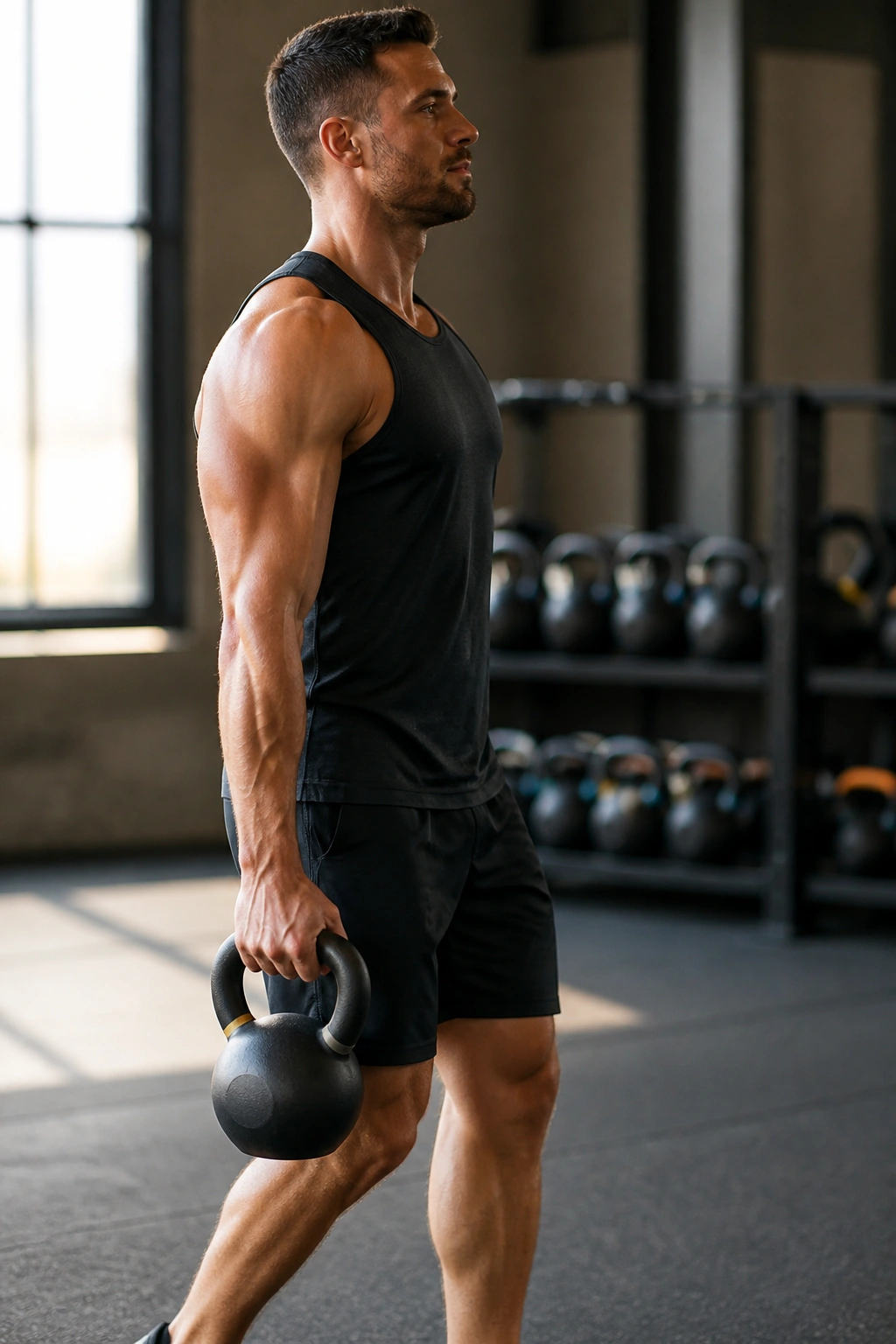
One bell at your side changes the whole conversation. Now the obliques and the muscles along the side of the spine have to fight the pull toward the loaded side, and the hips have to stay level.
That makes the suitcase carry a clean anti-lateral-flexion drill. It’s also a great way to expose weak links you can ignore during bilateral lifts.
Keep the free shoulder relaxed, don’t lean away from the bell, and walk slower than you think you need to. If you wobble, reduce the load and clean up the walk.
32. Kettlebell Rack Carry
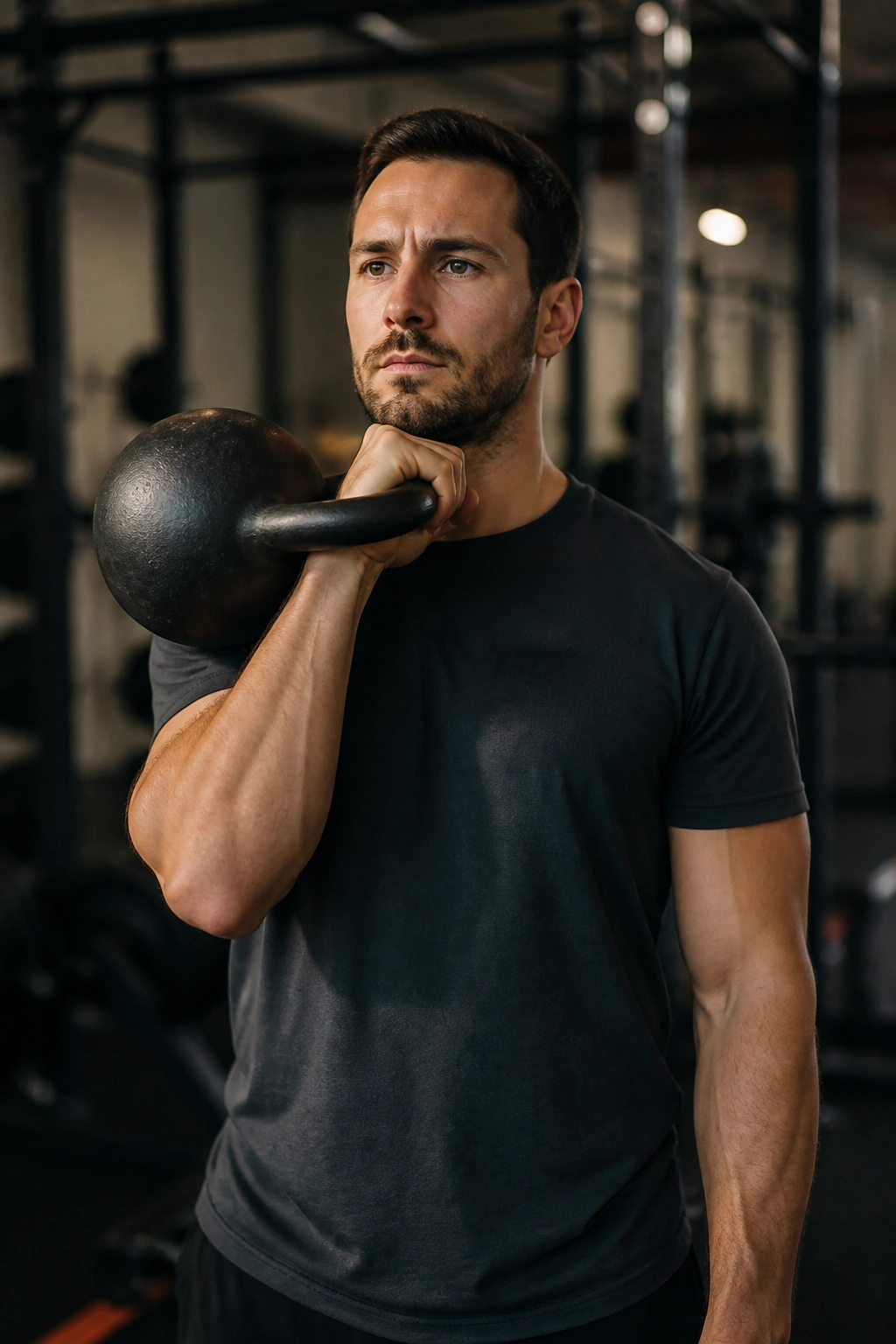
The rack carry is a quiet thief. It looks mild, then your abs, upper back, forearms, and breathing all start working together to keep the bell parked in place.
Hold the bell in the front rack and walk without letting the torso twist. The front-loaded position trains posture under pressure and helps you get better at presses, cleans, and front-rack lunges.
It also teaches you to breathe without losing tension. That’s a useful skill, not a fancy one.
33. Kettlebell Overhead Carry
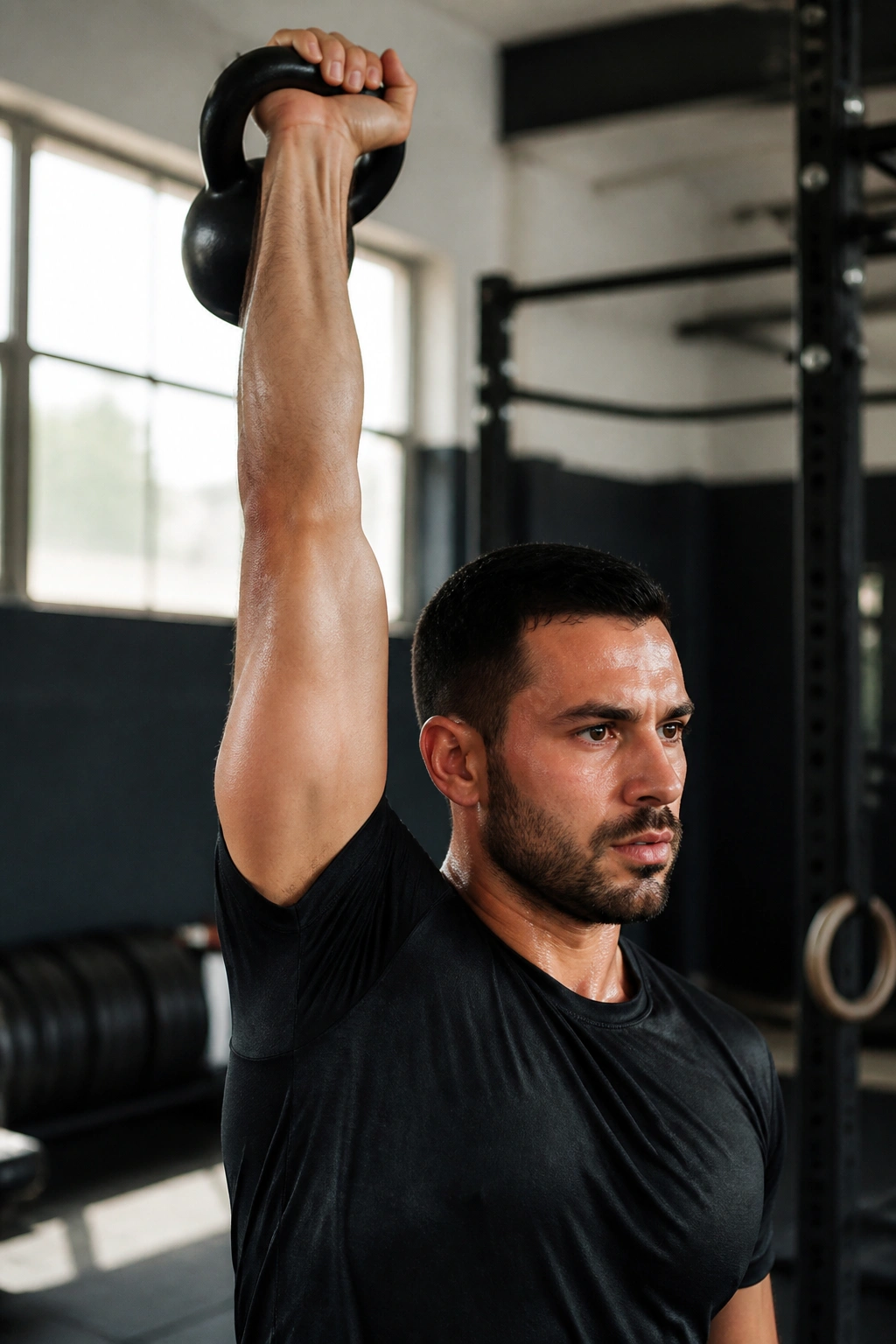
If you want shoulder stability, this one is hard to beat. The overhead carry forces the shoulder blade to stay active while the trunk resists side bend and the legs keep moving under a stable load.
The arm should be locked out, biceps near the ear, and ribs stacked. If the bell drifts forward, the shoulder starts working in a less friendly angle.
Use a lighter bell than you would for floor work. Overhead carries punish sloppy positions fast.
34. Bottoms-Up Kettlebell Carry
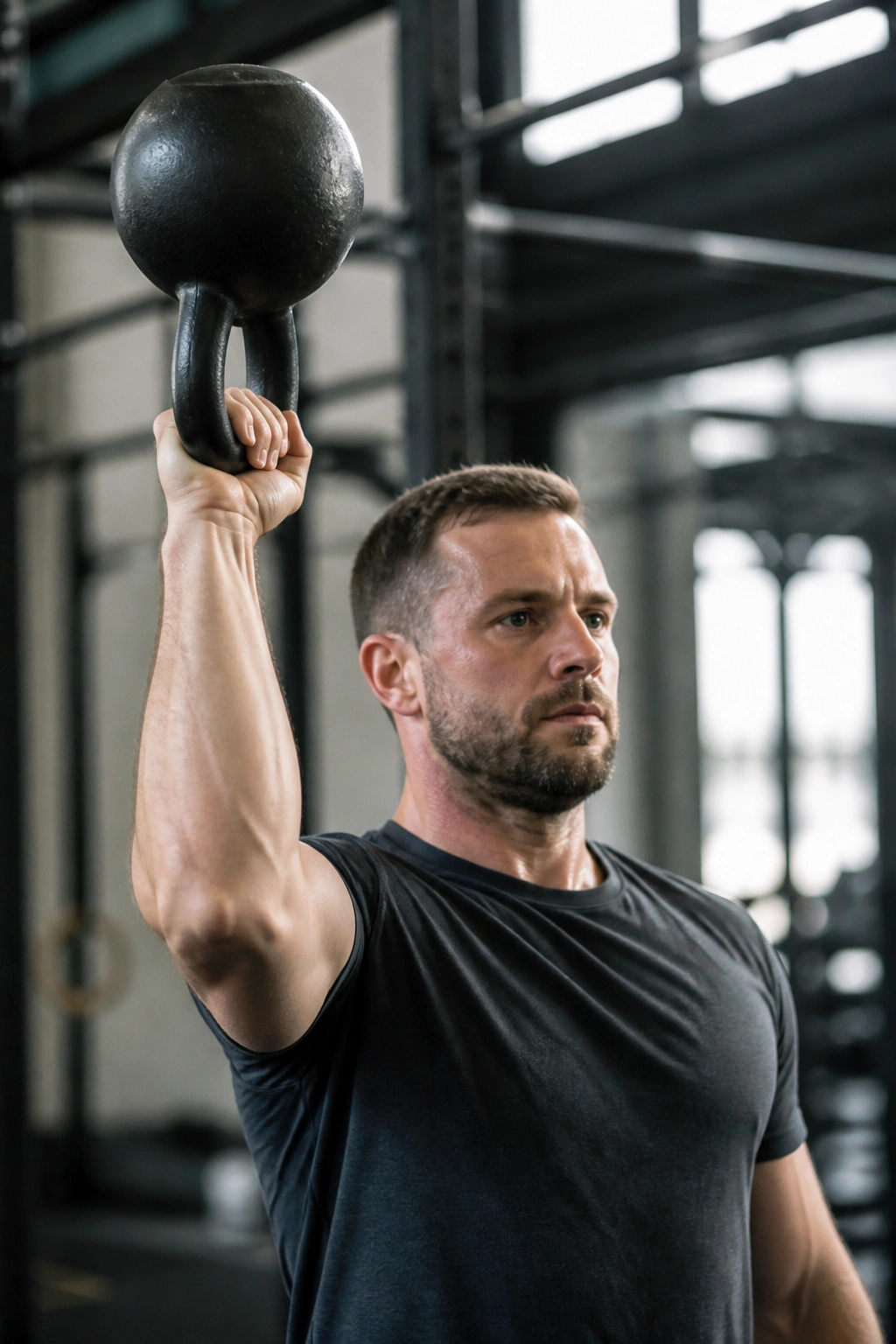
The bottoms-up carry is the humbler cousin of the overhead carry, and it’s mean in a very specific way. Flipping the bell upside down demands a ton of grip, forearm, and shoulder control because the center of mass feels unstable the whole time.
Keep the wrist straight and the bell stacked over the elbow and shoulder. Small weight, big demand. That’s the pattern here.
This drill is not about impressing anyone. It’s about control, and it exposes weak wrists or shaky shoulders fast enough to be useful.
35. Kettlebell Plank Drag
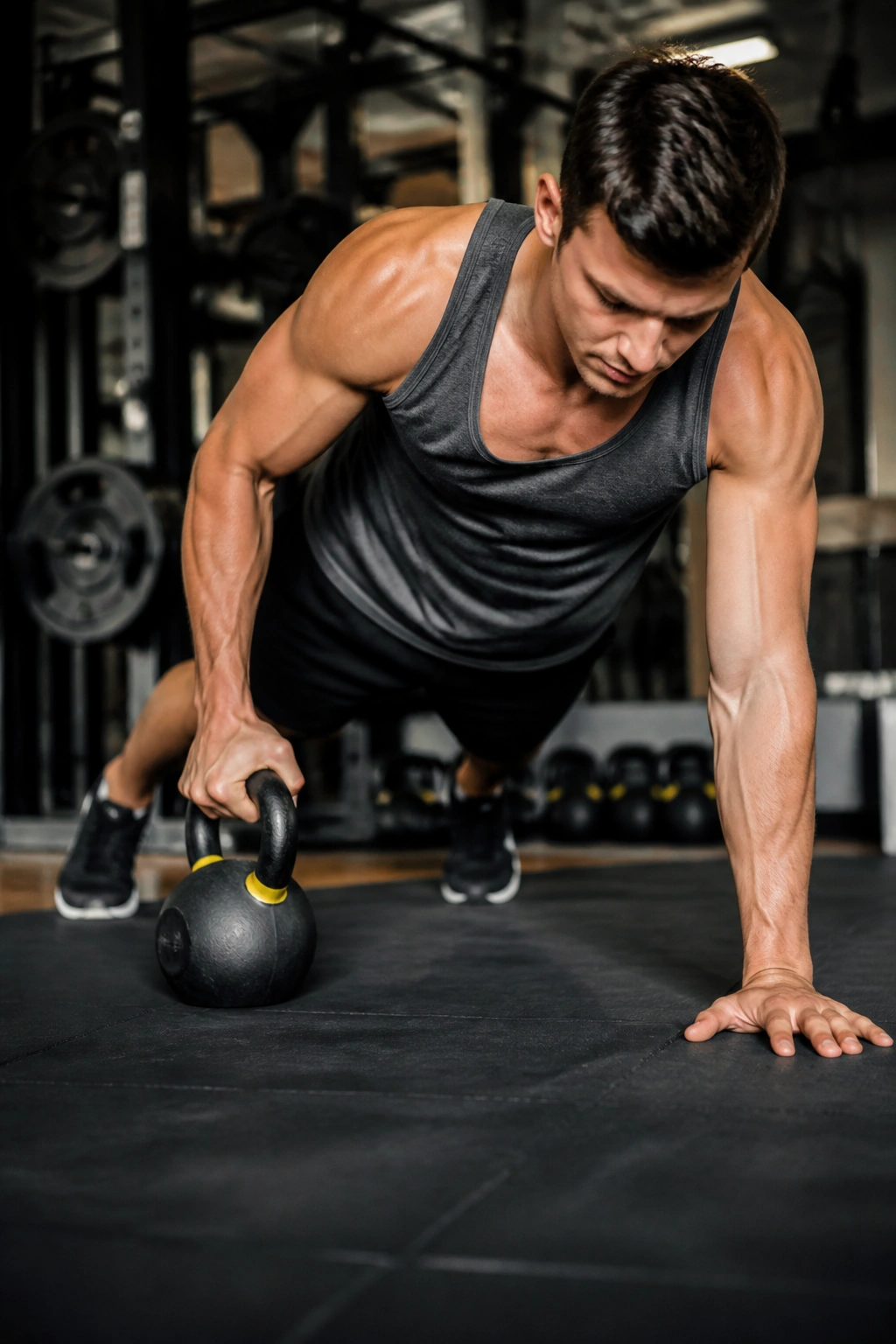
The plank drag blends core strength, shoulder stability, and anti-rotation in one ugly little package. From a strong plank, you drag the bell from one side of the body to the other without letting the hips sway.
That no-sway rule matters. The obliques, serratus, and deep core muscles have to keep the trunk quiet while the arm reaches across and pulls. It’s a finishing drill, a warm-up drill, and a reminder that strength without control gets noisy fast.
Keep the feet a little wider than a strict plank, move slowly, and make every drag look deliberate. If the hips rock, shorten the range and clean it up before adding speed.
A good kettlebell session does not need all thirty-five moves. Pick one hinge, one squat, one push, one pull, one carry, and one core drill, and you already have a workout that covers more than most people do in a week. If you only own one bell, that’s still enough.
