



A good strength exercise doesn’t need to look fancy. It needs to teach a clean movement, give you a way to scale the difficulty, and hold up whether you’re brand new or already lifting decent weight.
That’s the whole deal.
The best strength exercises for all fitness levels do something simple and rare: they let you start where you are, then make the same pattern a little harder without turning it into a different exercise. A squat can become a box squat, a pause squat, a goblet squat, or a loaded split squat. A push-up can live on a wall, a bench, the floor, or under your feet with added load. Same pattern. Different challenge.
I care more about that than flashy stuff. A movement that lets you adjust stance, leverage, tempo, range of motion, or load is worth keeping in your rotation because it keeps paying off when your body changes, your schedule changes, or your equipment changes. A chair, a dumbbell, a backpack, and a pull-up bar can cover a lot of ground.
Simple doesn’t mean soft. Some of these will feel easy at first. Then you load them, slow them down, add a pause, or clean up the range of motion, and they get serious fast.
1. Bodyweight Squat for Lower-Body Strength
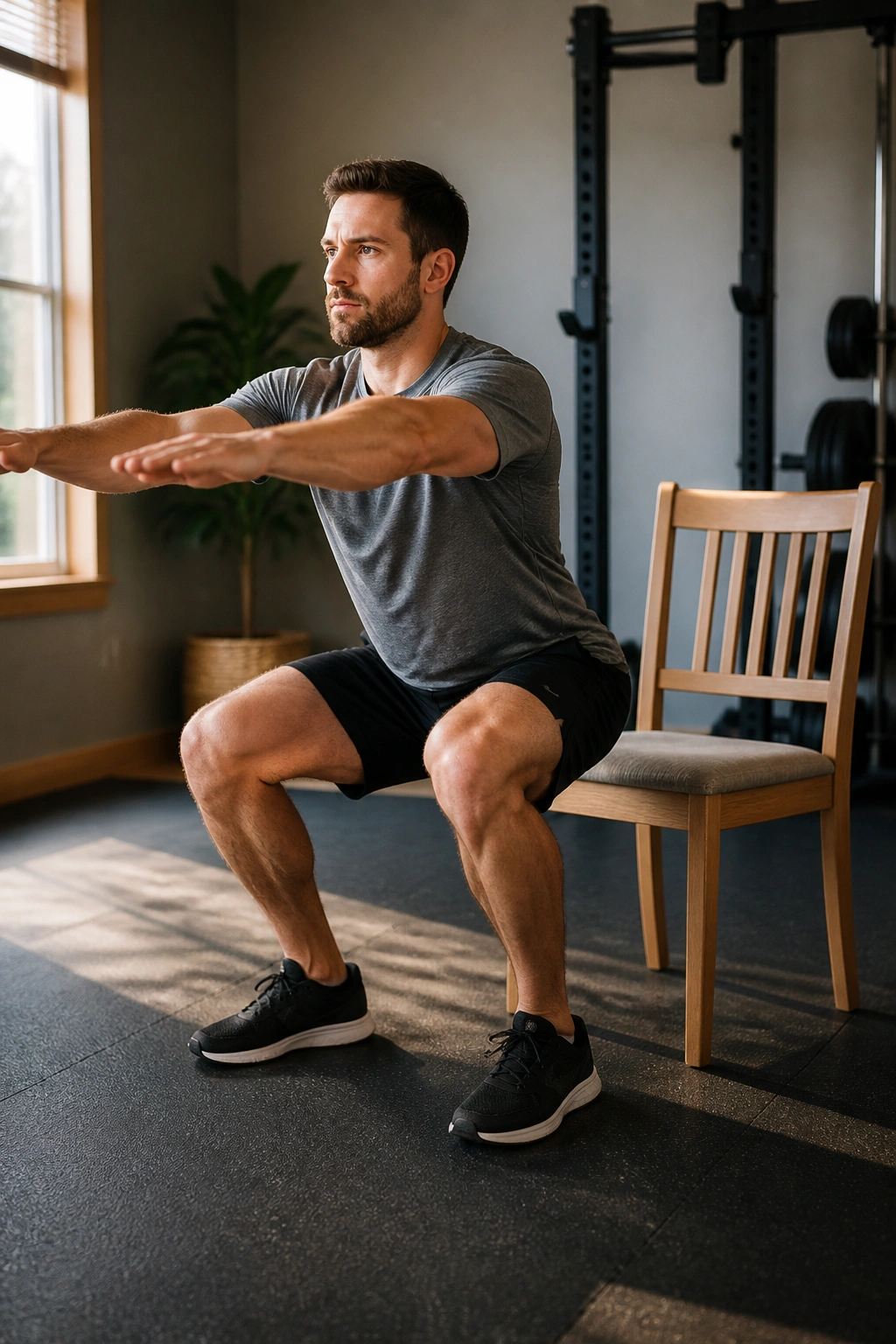
The bodyweight squat is the exercise most people rush past, which is a mistake. It teaches knee bend, hip control, ankle mobility, and basic bracing in one shot, and you can keep making it harder without picking up a barbell. A clean squat also tells you a lot about how your feet, knees, and hips work together.
How to scale it
Start with a chair or box behind you if depth feels shaky. Sit back until you tap it lightly, then stand up with your whole foot planted. That small target makes the movement feel safer and gives you a clear depth marker.
If you already own the movement, slow the lowering phase to 3 seconds, pause for 1 second at the bottom, then stand. That tiny change turns a basic squat into a much harder strength drill. Add a backpack hugged to the chest later if you want more load without changing the pattern.
Watch for knees caving inward, heels popping up, or the chest dropping so far forward that the whole rep turns into a fold. The squat should feel like a controlled sit between your heels, not a collapse.
2. Push-Up for Chest, Shoulders, and Triceps
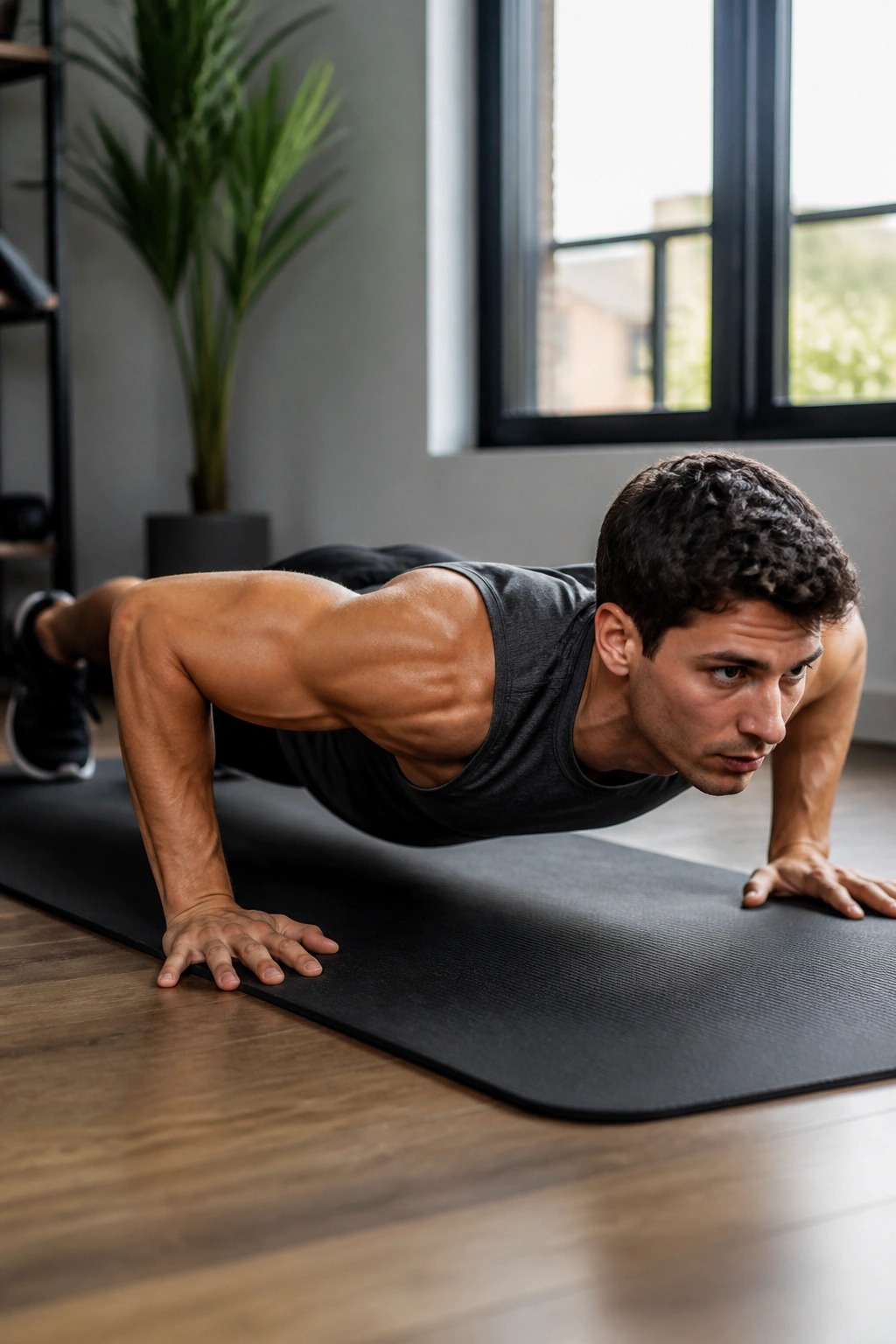
A clean push-up tells the truth fast. If your ribs flare, hips sag, or hands are dumped too far forward, the rep gets messy before it gets strong. That’s why I like push-ups so much: they scale beautifully from wall work to hard floor sets, and the feedback is instant.
The easiest version is still a real push-up. Wall push-ups build the pattern without loading the shoulders much. Incline push-ups on a bench or sturdy table make the angle friendlier. Floor push-ups sit in the middle. Decline push-ups, slow negatives, and weighted versions push the difficulty up without changing the movement itself.
What to feel
- Hands slightly wider than shoulder width
- Elbows angling back, not flaring straight out
- A straight line from head to heels
- Chest and triceps doing the work, not your lower back
A one-sentence warning: If your low back aches, the set ended too late.
I like incline push-ups for anyone rebuilding strength. They keep the rep crisp and let you build volume without turning every set into a grind.
3. Glute Bridge for Hip Extension
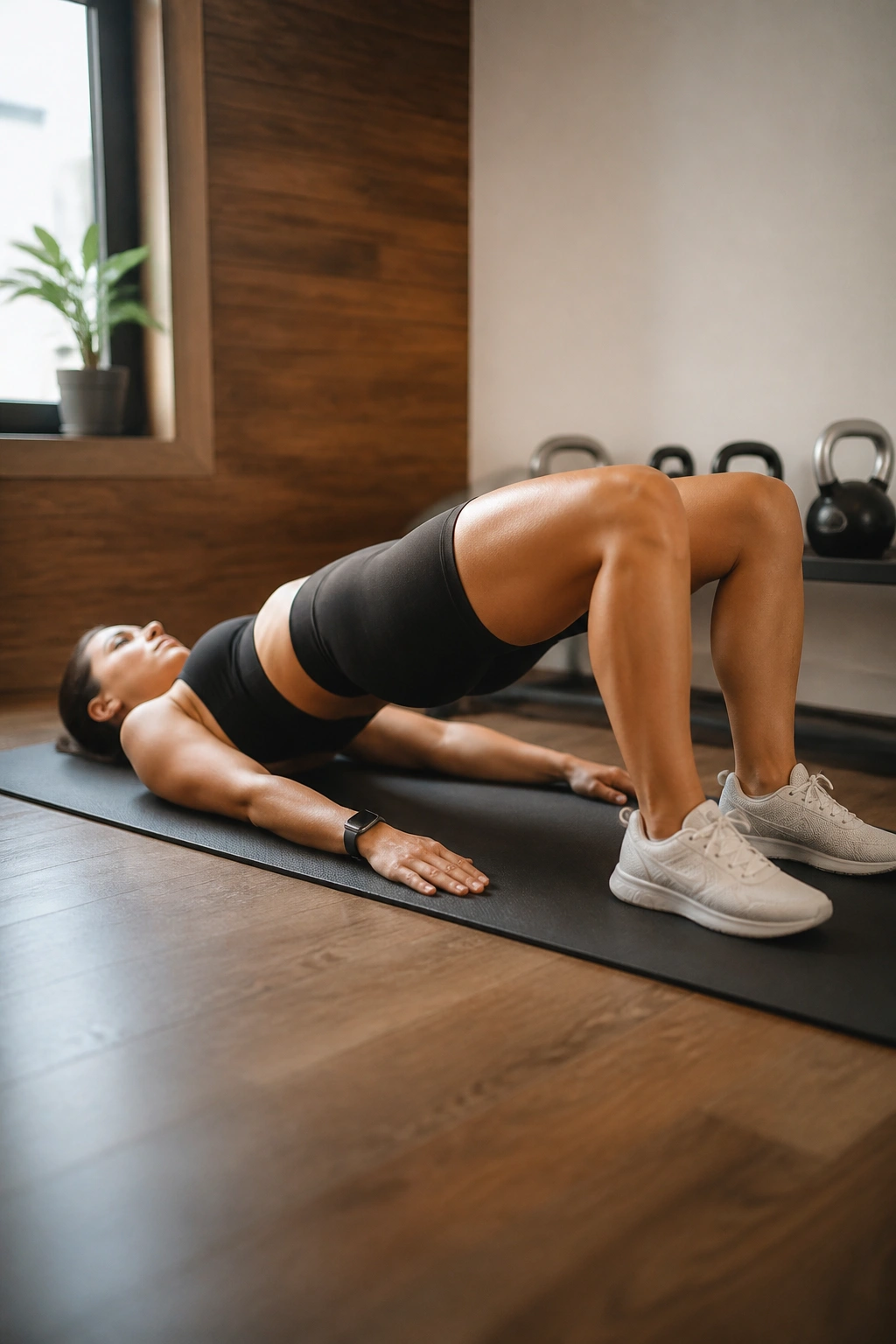
The glute bridge looks almost too simple, which is why people skip it and then wonder why their hips and lower back never feel quite right. Lie on the floor, bend your knees, drive through your heels, and lift your hips until your torso and thighs form a straight line. That is the whole movement, and it works.
What makes it useful
It teaches hip extension without asking your spine to hold much load. If your glutes tend to switch off and your lower back does all the work, bridges are a clean reset. They also fit into warm-ups, rehab-style sessions, or full strength work when you load them with a dumbbell, barbell, or resistance band.
How to know it’s working
- You feel the glutes, not just the hamstrings
- Your ribs stay down
- The top position feels strong, not cranked into your lower back
- The descent is controlled, not dropped
If your hamstrings cramp, move your feet a little closer to your hips and try again. That tiny adjustment fixes more bridge reps than people expect. Small setup changes matter here.
4. Dumbbell Romanian Deadlift for the Posterior Chain
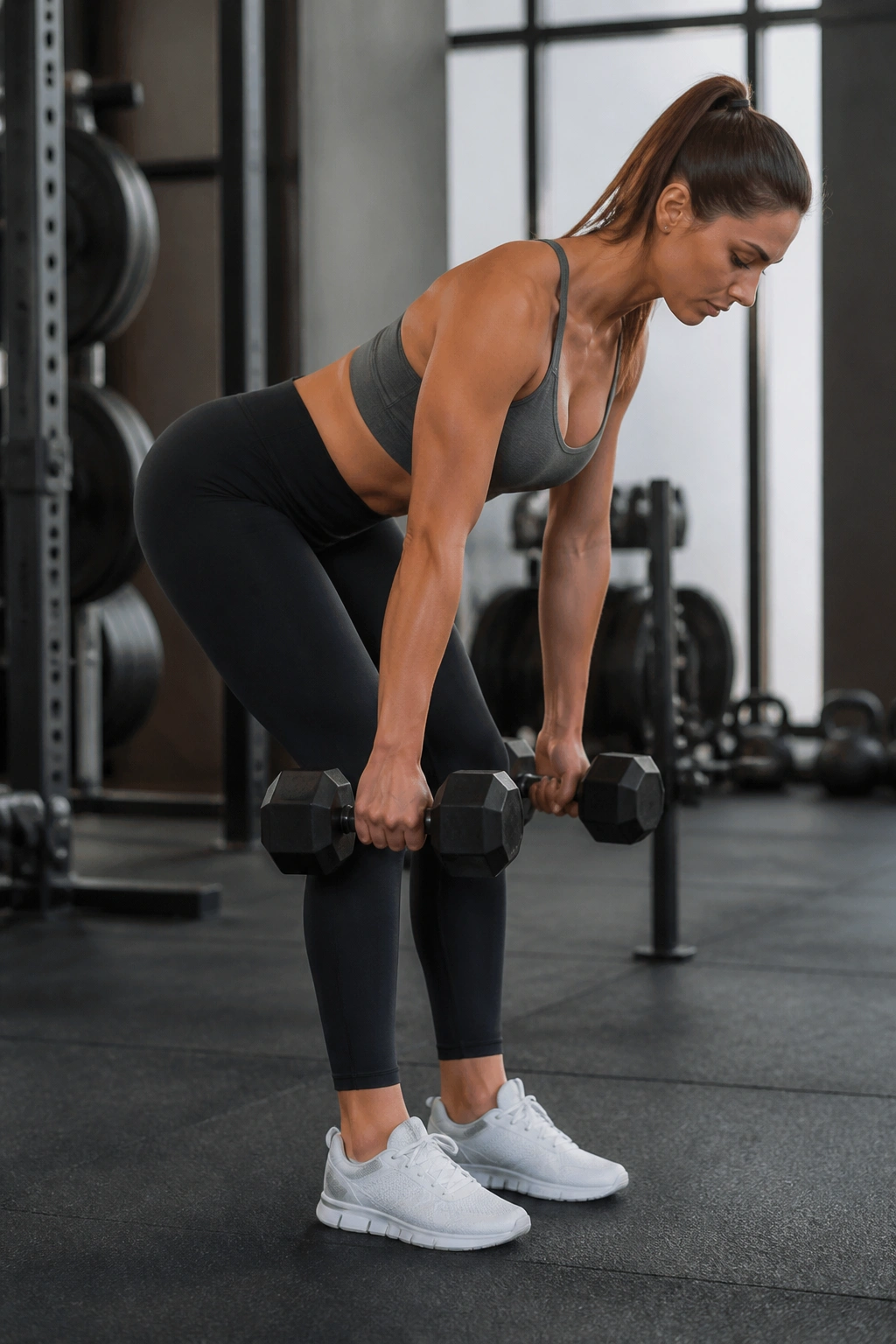
If I had to keep only one hinge exercise for general strength, the Romanian deadlift would be near the top of the list. It loads the hamstrings, glutes, and back in a way that teaches real hinge mechanics without asking you to pull from the floor every time. The key is simple: hips back, spine long, dumbbells close.
Keep a soft bend in the knees and slide the weights down the front of your thighs. Stop when the hamstrings feel loaded and your back still looks the same as it did at the start. Then drive the hips forward and stand tall. If the dumbbells drift away from your legs, the rep gets harder in the wrong places.
A few details that matter
- Think “reach the hips back,” not “bend over”
- Keep the neck neutral
- Lower until you feel tension, not until the floor calls you home
- Use lighter dumbbells than you think at first
For beginners, a short range of motion is fine. For more advanced lifters, a slow 3-second lower or a paused rep below the knee can make a light pair of dumbbells feel plenty heavy.
5. Split Squat for Single-Leg Strength
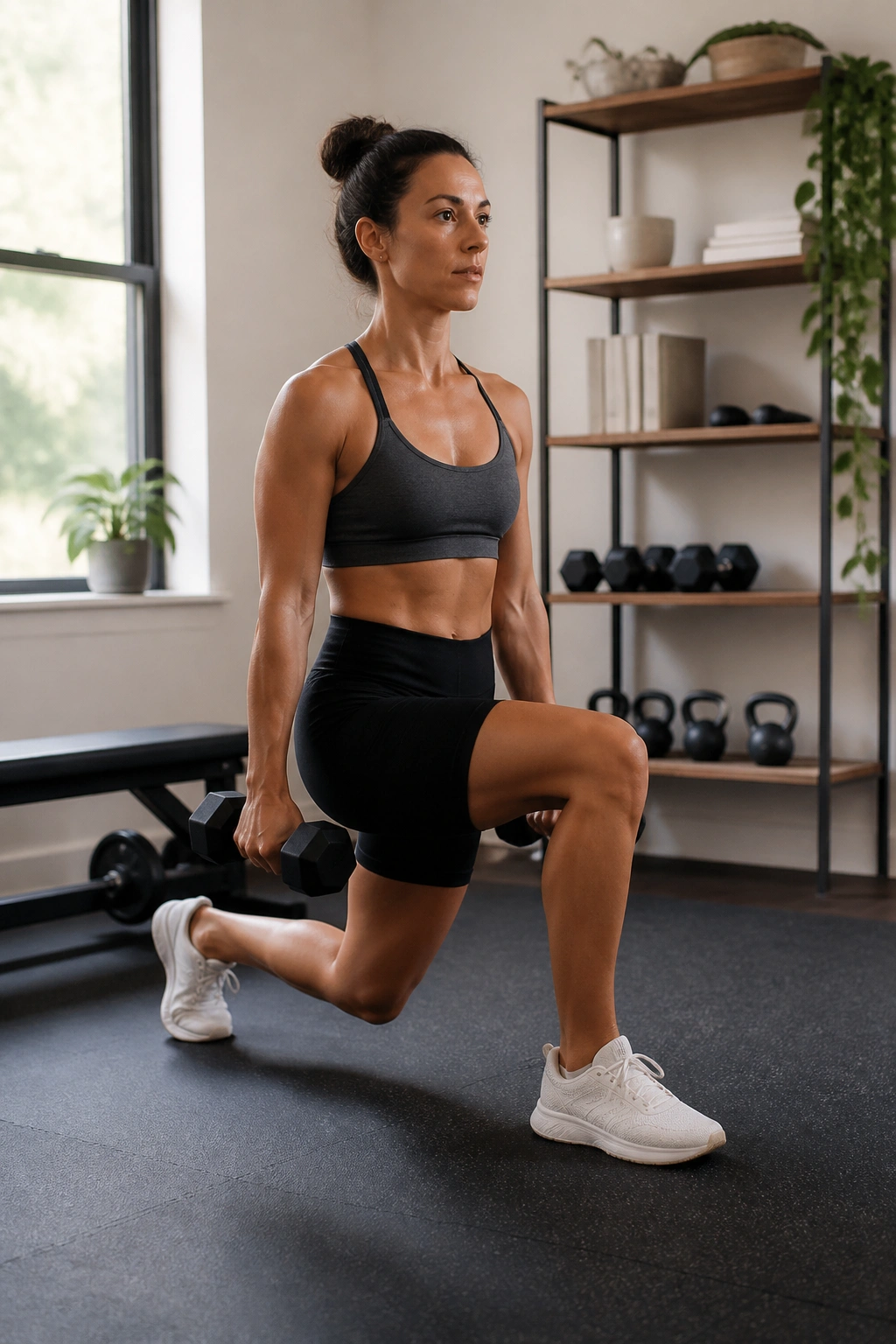
A split squat is what I hand people when one leg is clearly doing more than the other. Unlike a walking lunge, the feet stay planted, which makes balance easier and lets you focus on the actual work: the front leg taking load and the rear leg staying quiet.
Set one foot forward and the other behind you, then drop straight down. The front heel stays down, the front knee tracks over the toes, and the torso stays tall enough that you can keep breathing. You do not need a huge stance. In fact, too much distance between the feet makes the movement clunky and less useful.
This one burns fast. That’s normal.
Split squats are useful for beginners because they build strength without needing much weight. They’re useful for experienced lifters because they expose side-to-side differences that a standard squat can hide. Add dumbbells when bodyweight feels boring, then slow the lowering phase or pause near the bottom if you want more challenge.
6. Plank for Core Strength and Body Control
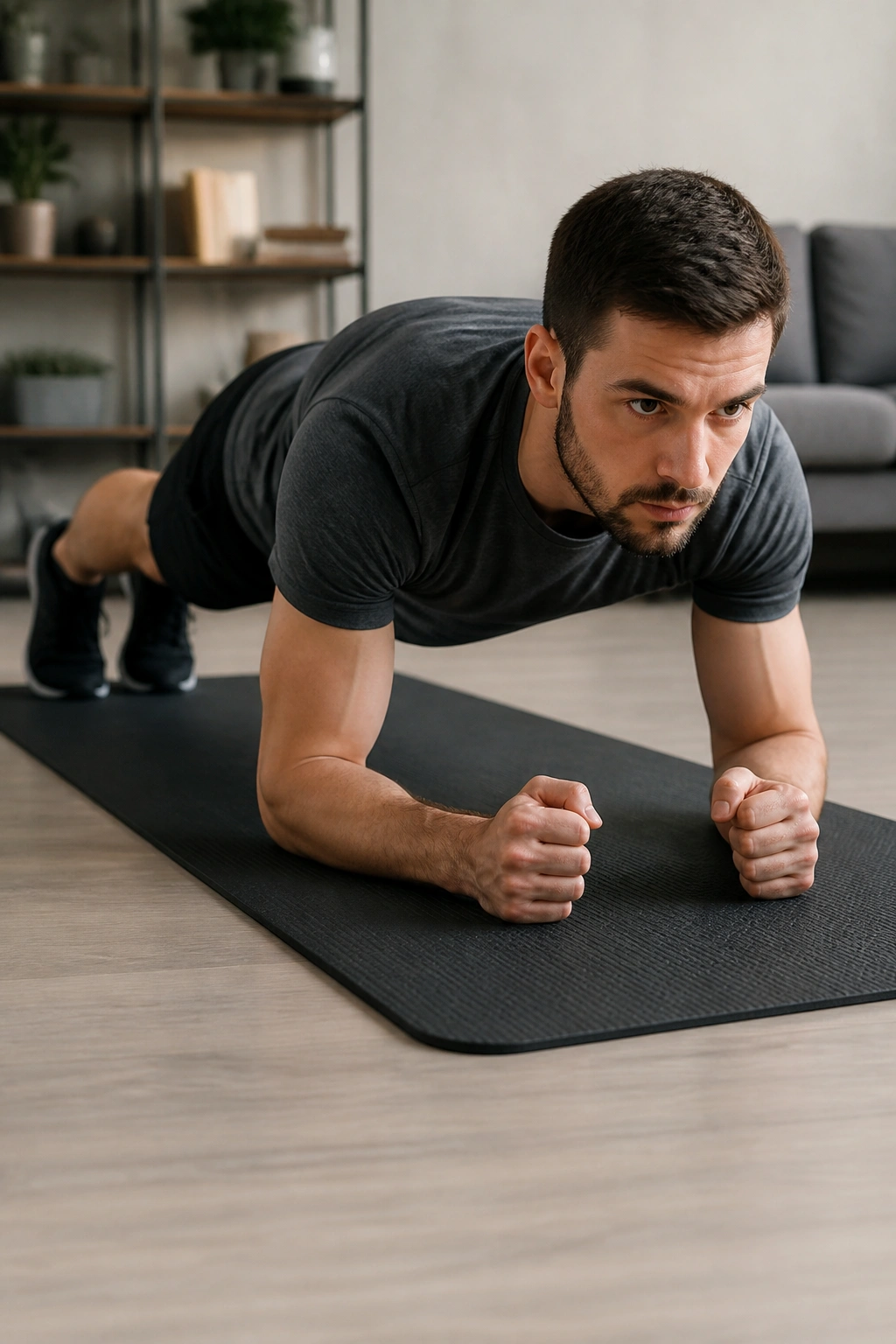
A plank is boring right up until you do it correctly. Then it turns into a quiet test of how well you can hold your ribs, pelvis, shoulders, and glutes in one line without cheating. That skill matters more than people give it credit for, especially if your bigger lifts keep leaking energy through the middle.
Put your elbows under your shoulders, press the forearms into the floor, squeeze the glutes, and pull the ribs down just enough that your low back doesn’t sag. Think long from head to heel. Think firm, not hard. A plank should feel like organized tension, not a survival event.
A shaky plank is a warning, not a badge.
If your hips sink, shorten the hold. If your shoulders shrug toward your ears, reset. Knees-down planks, forearm planks with a raised bench, and long-lever planks all change the difficulty without changing the basic pattern. That is why the exercise works so well across fitness levels.
7. One-Arm Dumbbell Row for the Back
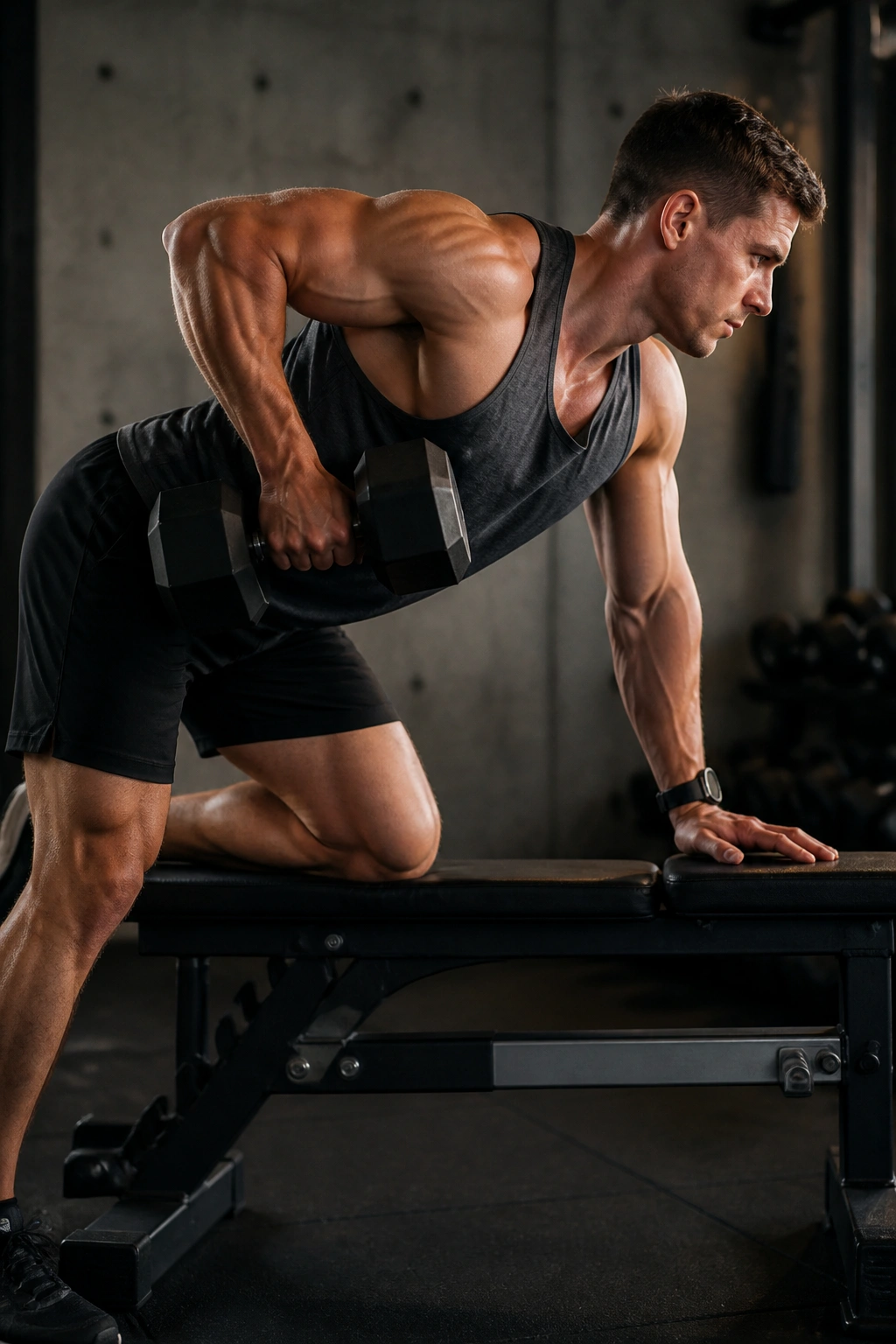
The one-arm dumbbell row is one of those plain-looking lifts that quietly does a lot. It builds the lats, upper back, and rear shoulder while also teaching you how to keep the torso steady under load. That part matters. A row is not just a pull; it’s a pull without twisting yourself into a mess.
Setup
Brace one hand on a bench, rack, or sturdy chair. Let the working arm hang straight down, then pull the elbow toward your back pocket. The dumbbell should travel close to your body. If you yank it straight up toward your chest, the movement turns into a shrug.
What to feel
- Mid-back tension, not neck tension
- A strong squeeze near the bottom of the shoulder blade
- The torso staying quiet
- The lowering phase controlled, not dumped
What to avoid
- Ripping with the biceps
- Rotating the shoulders open
- Using weight so heavy that the last third of the rep disappears
For a simpler version, use a lighter dumbbell and hold the top for 1 second. For a harder one, take away momentum entirely and row from a dead stop each rep.
8. Overhead Press for Strong Shoulders
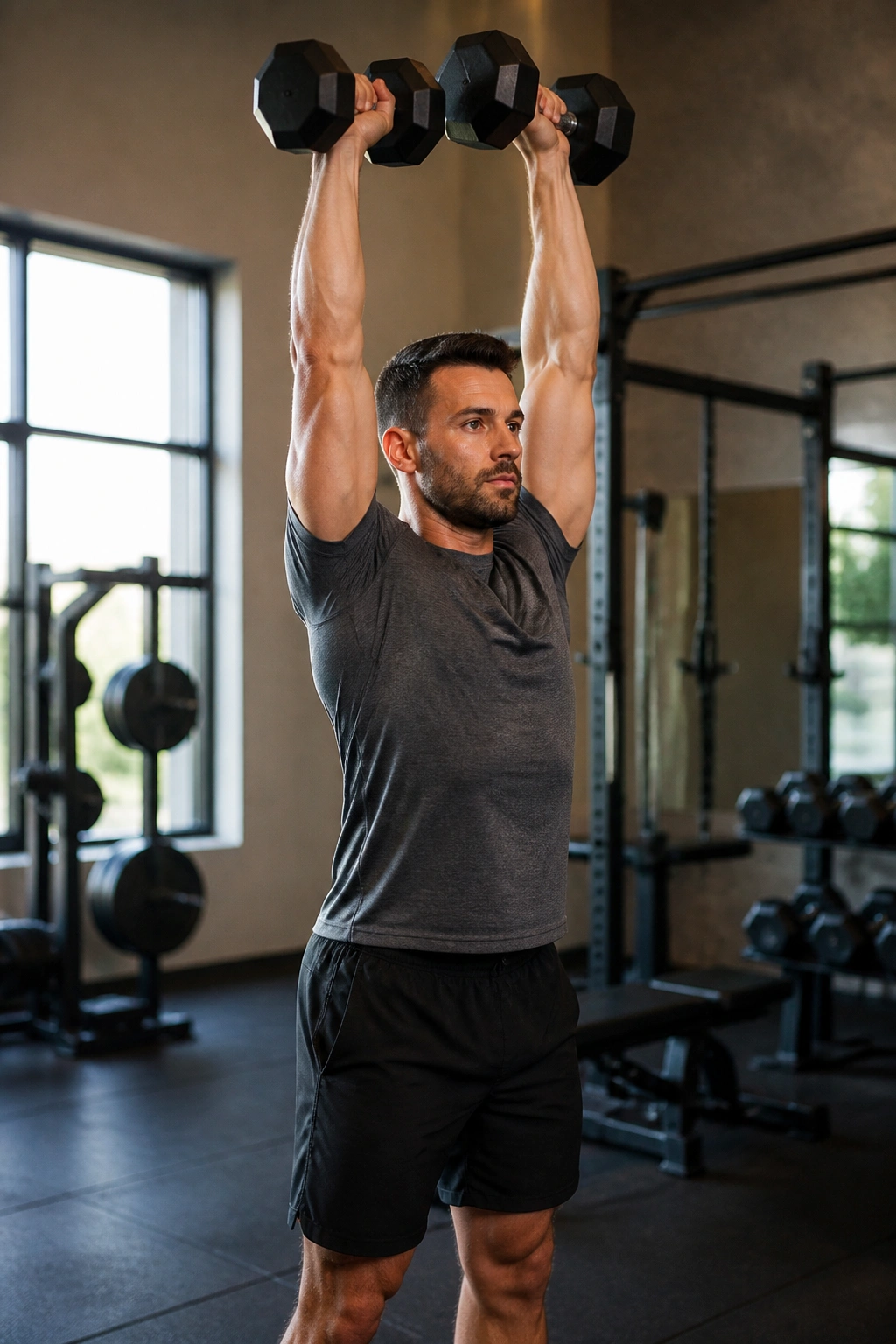
If you can press weight overhead with your ribs stacked and your back quiet, a lot of your upper-body strength starts to make more sense. The overhead press asks for shoulder strength, sure, but it also asks for core control, glute tension, and a decent amount of honesty. You cannot fake your way through it for long.
Stand tall, squeeze the glutes, and press the dumbbells or bar straight up. As the weight passes your forehead, move your head slightly back, then through the window so the load ends up over the middle of your body. That last part matters more than people think. A press should finish stacked, not behind you.
Seated presses reduce the balance demand. Single-arm presses help if one side gets sloppy. A landmine press is a nice bridge if full overhead work feels rough on your shoulders. The goal is smooth force, not a dramatic lean-back.
I like this lift for anyone who spends too much time in front of a desk. Shoulders that can press well usually move better in daily life, and the press gives you a simple way to keep track of that.
9. Goblet Squat for Better Squat Mechanics
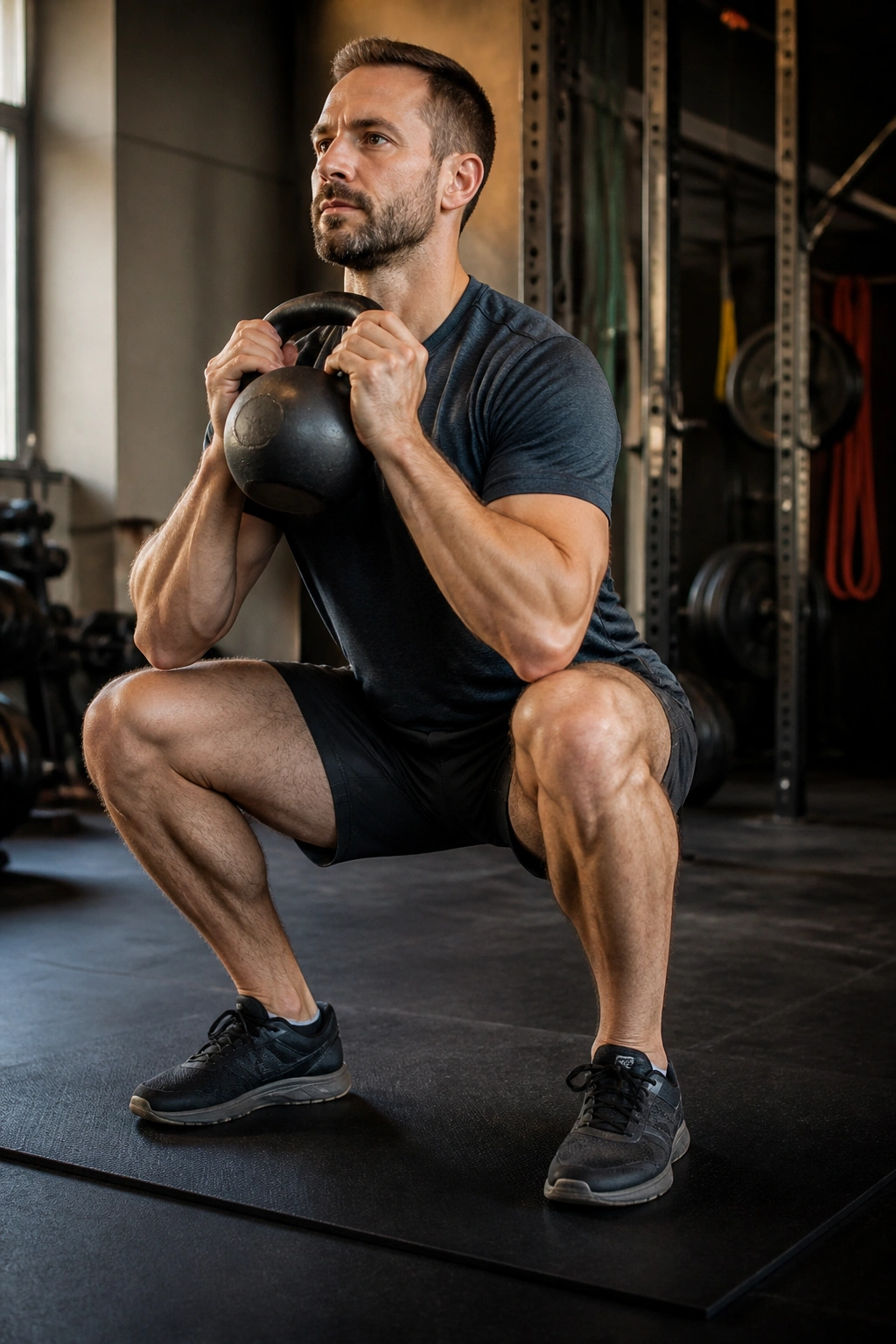
Why does holding a weight at your chest make squatting easier to learn? Because the goblet squat gives you a built-in counterbalance. That front load helps keep the torso more upright, which is why I reach for it with beginners, taller lifters, and anyone whose body keeps folding forward in a bodyweight squat.
Hold a dumbbell or kettlebell against your sternum, elbows pointed down, and sit between your hips. The front load should help you find depth without losing your balance. If your heels lift, the stance is probably too narrow or the depth is too ambitious for the current mobility you’ve got.
How to use it well
- Use it as a learning tool for squat depth
- Slow the lowering phase if you want more work
- Pause at the bottom if your position gets wobbly
- Load it only after the movement looks clean
I like the goblet squat because it gives instant feedback. If the chest collapses or the elbows flare wildly, the load is telling you the setup is off. Fix the setup first. Then add weight.
10. Dead Bug for Core Control
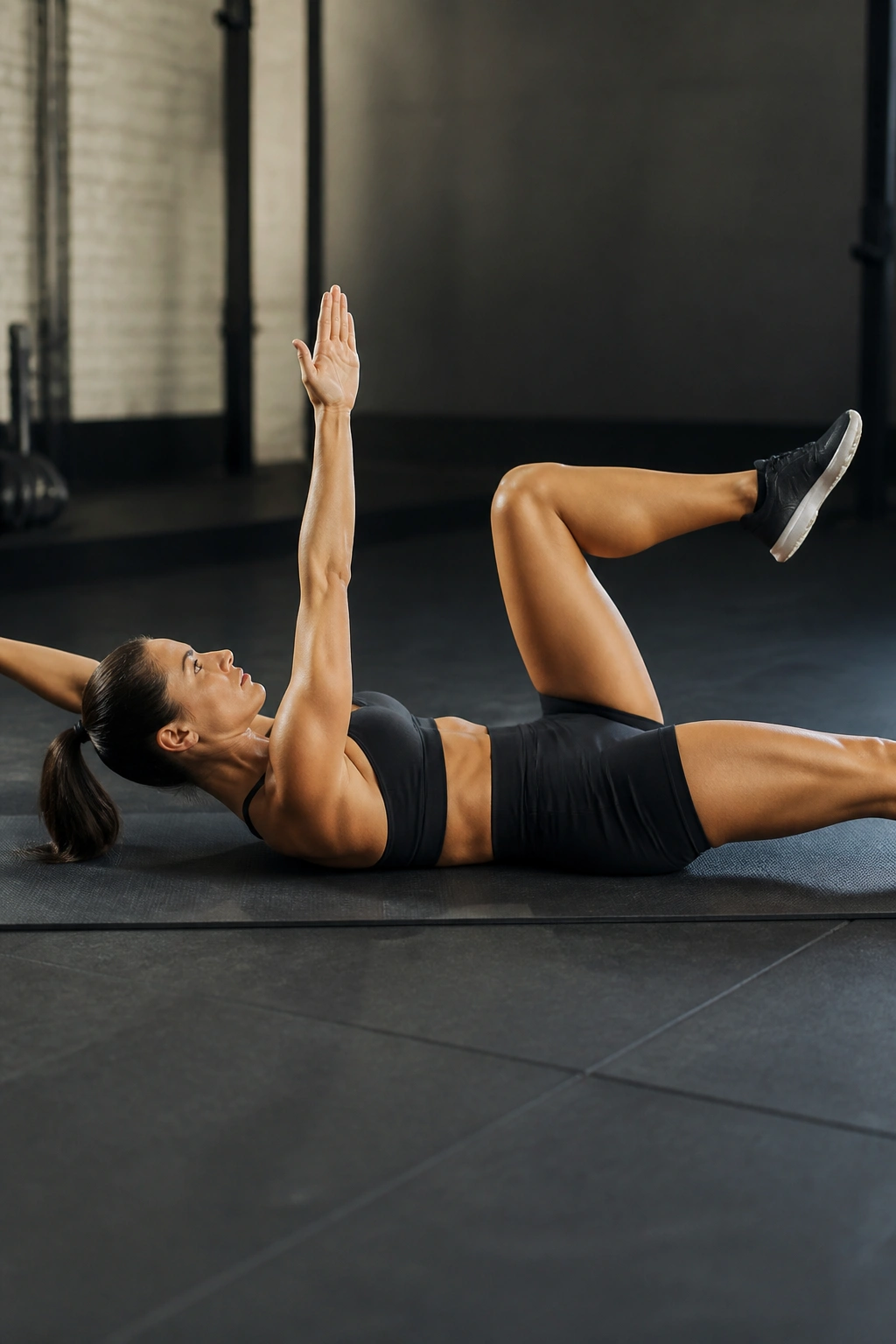
People laugh at dead bugs until their lower back starts to arch halfway through the set. Then the exercise gets serious. It’s not about crunching hard. It’s about keeping the ribs and pelvis stacked while the arms and legs move in opposite directions.
Lie on your back, lift your legs, reach your arms toward the ceiling, and flatten the low back gently into the floor. Then lower one arm and the opposite leg with control. The farther you reach without losing that back contact, the harder the rep gets. Small range, clean form, and slow breathing beat fast, sloppy reps every time.
Keep an eye on these details
- Exhale before the rep starts
- Move one side at a time
- Stop the leg before the low back arches
- Use a heel tap if full leg extension is too much
A one-sentence truth: Slow dead bugs are meaner than they look.
This is a great exercise for beginners, but it also works well for experienced lifters who need better trunk control under squats, presses, and carries.
11. Conventional Deadlift for Full-Body Power
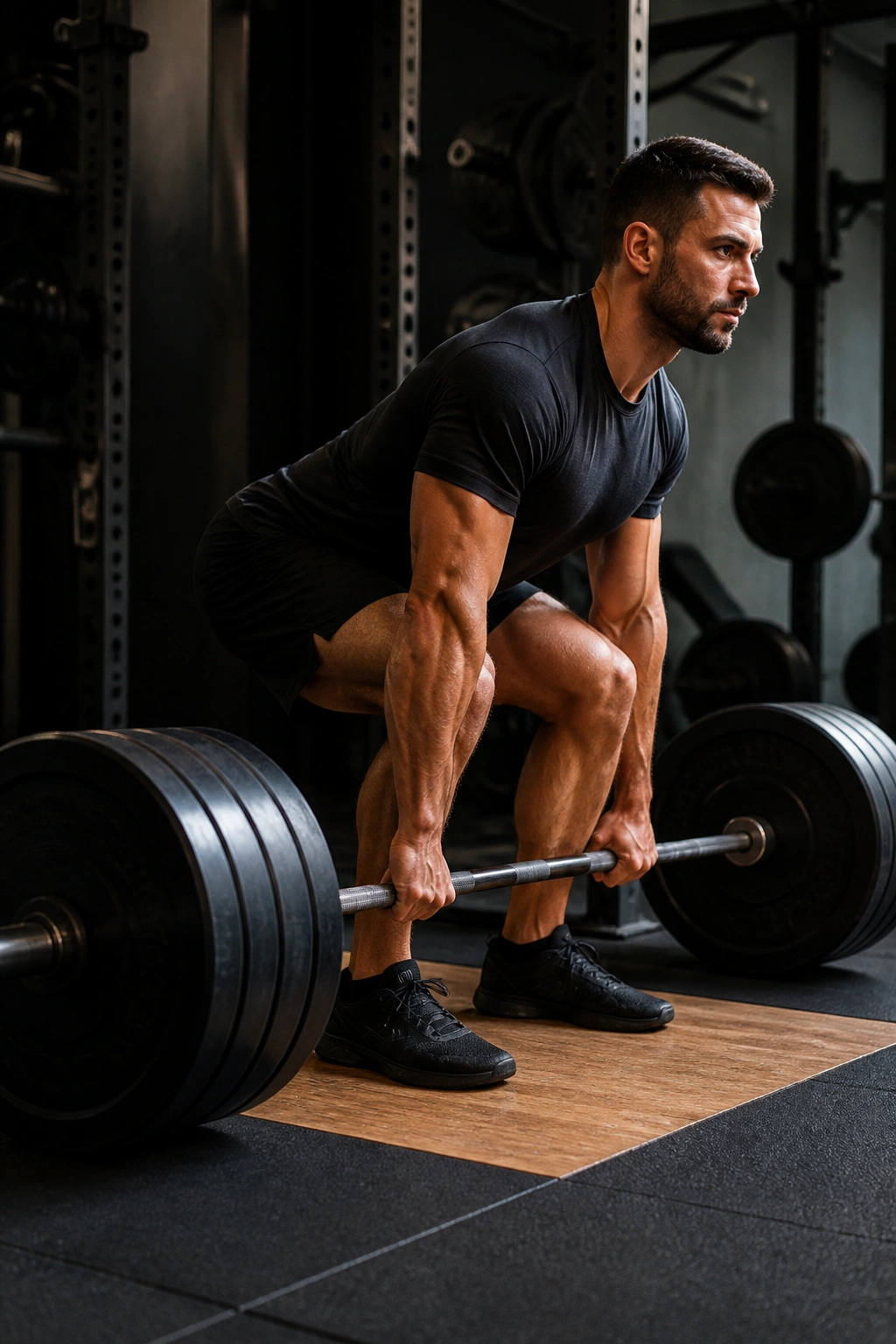
The conventional deadlift is a big lift, and it deserves a big dose of respect. Done well, it trains the legs, hips, back, grip, and bracing pattern in one clean pull from the floor. Done badly, it turns into a tug-of-war with your lower back. There isn’t much middle ground.
Set the bar over the midfoot, bend to grab it, and bring your shins close without rolling the bar away. Brace hard, pull slack out of the bar, then push the floor away until the weight leaves the ground. The bar should stay close to your body the whole time. If it drifts forward, the lift gets ugly fast.
For newer lifters, a lighter barbell or elevated setup helps. A kettlebell deadlift from a raised surface teaches the same pattern with less strain. More advanced lifters can work on tighter starts, slower pulls, and heavier triples while keeping the setup honest.
The part most people miss
The deadlift is not about yanking. It’s about wedging yourself into position and then driving.
That tiny change in mindset makes the lift feel more stable, and stable is where strength lives.
12. Floor Press for Shoulder-Friendly Upper-Body Strength
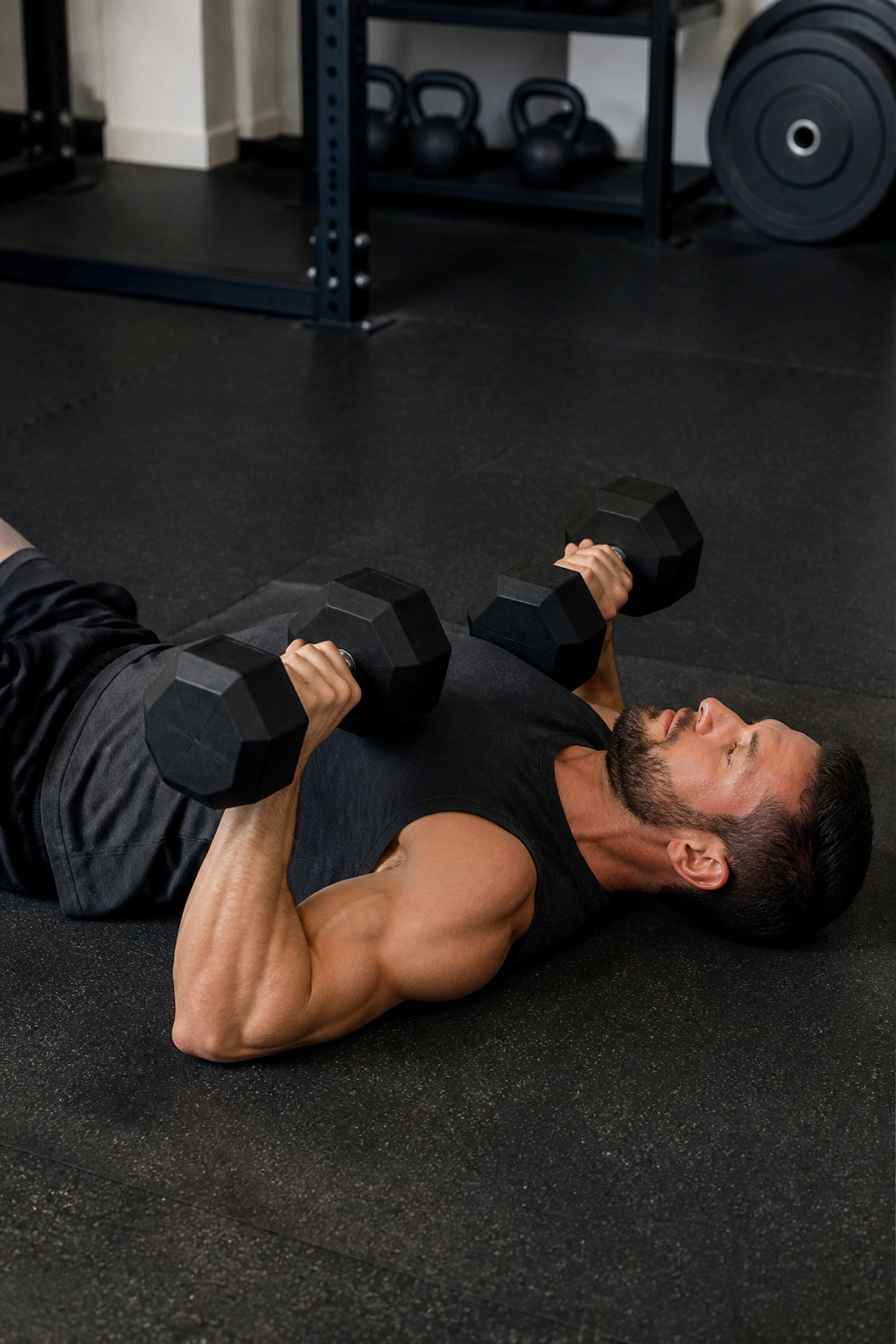
Compared with the bench press, the floor press cuts the range of motion down and often feels friendlier on the shoulders. That shorter path is not a weakness. It means you can keep tension in the triceps and chest while avoiding the deep bottom position that some lifters hate.
Lie on the floor with dumbbells or a barbell, bend your knees, and press from the elbows touching the ground lightly. Pause for a beat, then drive the weight up. The floor stops the lower half of the rep, which also makes the lockout work harder than it looks.
This is a good choice if you train at home, if your shoulders complain on a full bench press, or if you want to build pressing strength without a lot of setup. Dumbbells are especially useful because they let each arm move on its own path.
Shorter range does not mean easier. The triceps usually find that out first.
13. Inverted Row for Pulling Strength
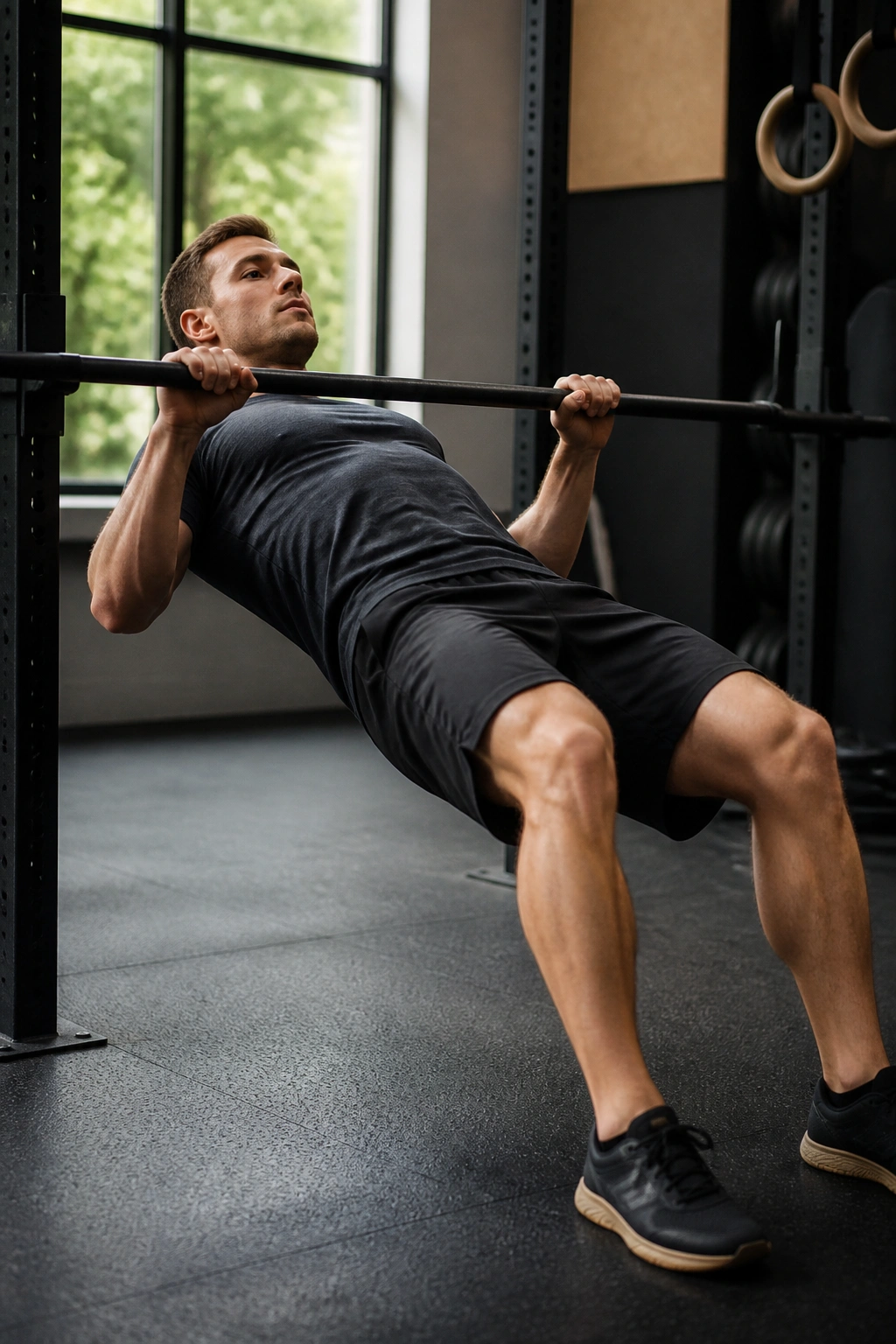
An inverted row looks almost too civilized to count as real work. Then you lie under the bar, ring, or sturdy table and realize your back has to do the job while your body stays stiff like a plank. That combination is why it’s such a strong bridge between beginner pulling and full pull-ups.
Setup and grip
Place the bar around waist height if you’re new to it. Bend the knees to make it easier, or keep the legs straight to make it harder. Grip the bar a little wider than shoulder width, pull the chest toward it, and squeeze the shoulder blades together at the top.
What to watch
- Keep the ribs from flaring
- Keep the hips from sagging
- Pull with the back, not a neck shrug
- Lower under control for 2 seconds
A lower bar angle makes the row harder. Straight legs make it harder. Feet elevated make it harder again. That’s the nice thing about this exercise: it scales in tiny steps, which is exactly what a lot of people need.
It’s a pull-up’s quieter cousin. Still serious.
14. Step-Up for Legs That Work One Side at a Time
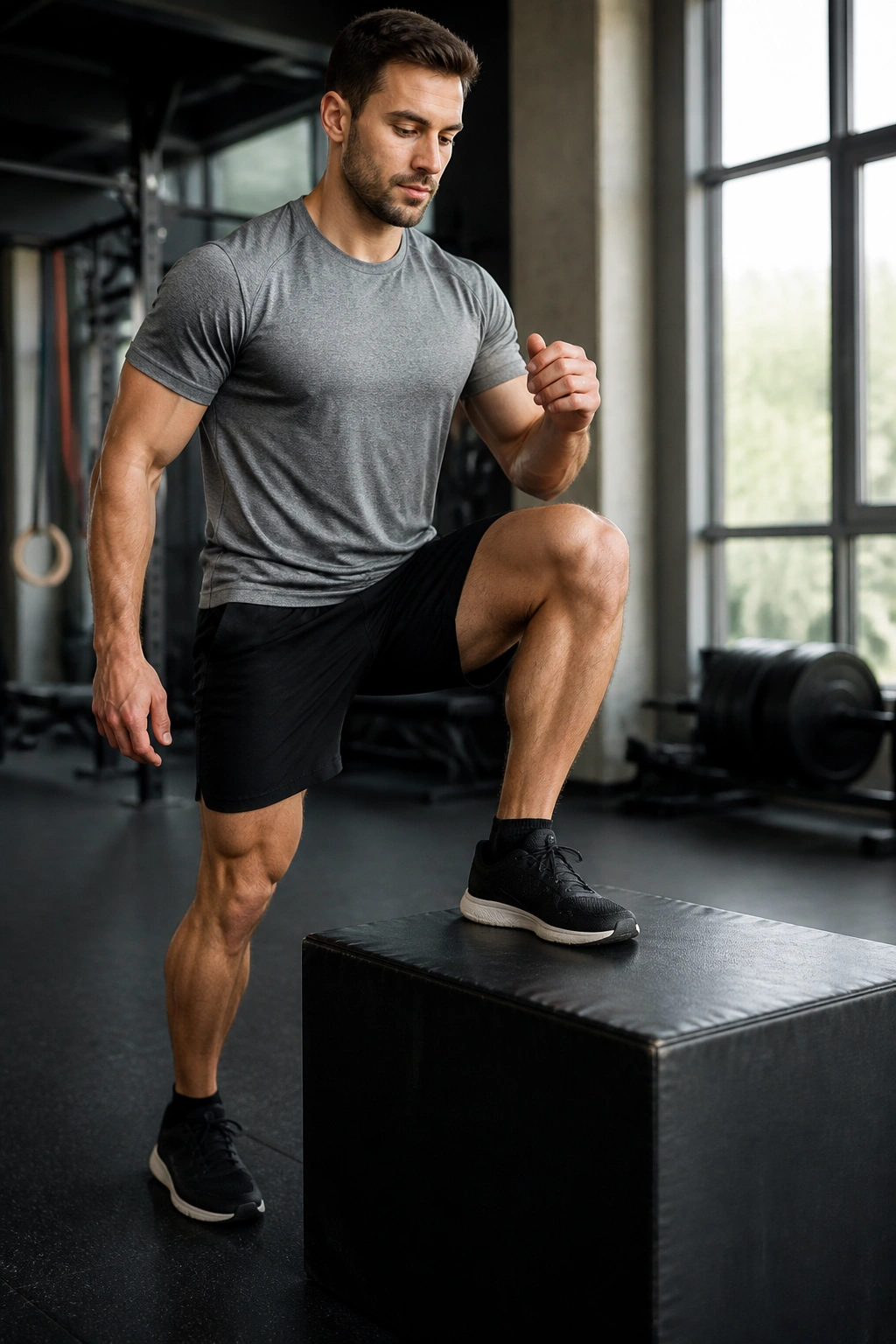
Step-ups look polite. They are not. Put one foot on a box or bench and the movement quickly exposes which leg is doing the work and which one is just tagging along. That makes step-ups one of my favorite single-leg strength drills, especially when someone wants better balance without a circus of setup.
Choose a step height that lets the working thigh stay close to parallel or a little above. Plant the whole foot, lean the torso forward just enough to load the leg, and stand by driving through the front heel and midfoot. The back leg should help only a little. If you push hard off the trailing foot, the front leg never gets the full job.
A few useful checks
- Knee tracks over the toes
- Hips rise smoothly, not in a jump
- The lowering phase is slow
- The box is stable and not wobbling
Add dumbbells when bodyweight feels too easy. Slow the descent if you want more time under tension. A box that’s too tall usually turns the exercise into a hip flexor test, and nobody needs that unless they’re training for it on purpose.
15. Farmer’s Carry for Grip and Core Strength
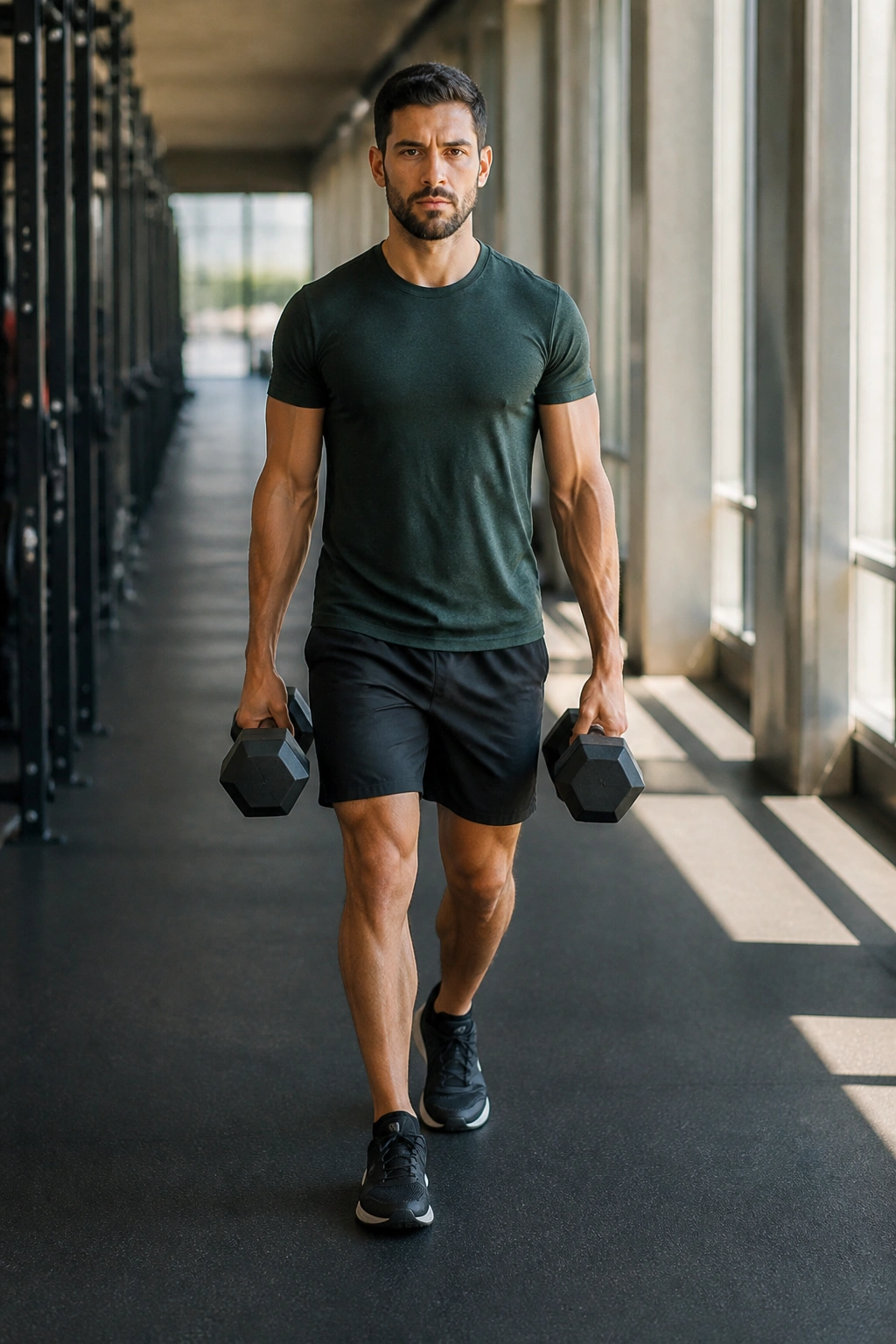
Why carry heavy things? Because strength does not stop mattering once the weight is off the floor. The farmer’s carry trains grip, posture, trunk stiffness, and walking control all at once, and it does it without much equipment. Two dumbbells or kettlebells are enough.
Pick the weights up, stand tall, and walk with short, clean steps for 20 to 40 meters or about 20 to 60 seconds. Keep the shoulders down, ribs stacked, and hands crushing the handles. If you start leaning side to side or shrugging hard, the load is too much or the set is too long.
Easy ways to change the challenge
- One side only: suitcase carry
- One weight in the rack: front rack carry
- One weight overhead: overhead carry
- Longer walk: more grip and trunk fatigue
The farmer’s carry is one of those exercises that sneaks up on people. You think you’re just walking. Then your forearms light up, your breathing gets choppy, and your torso starts begging for the finish line.
16. Kettlebell Swing for Hip Power
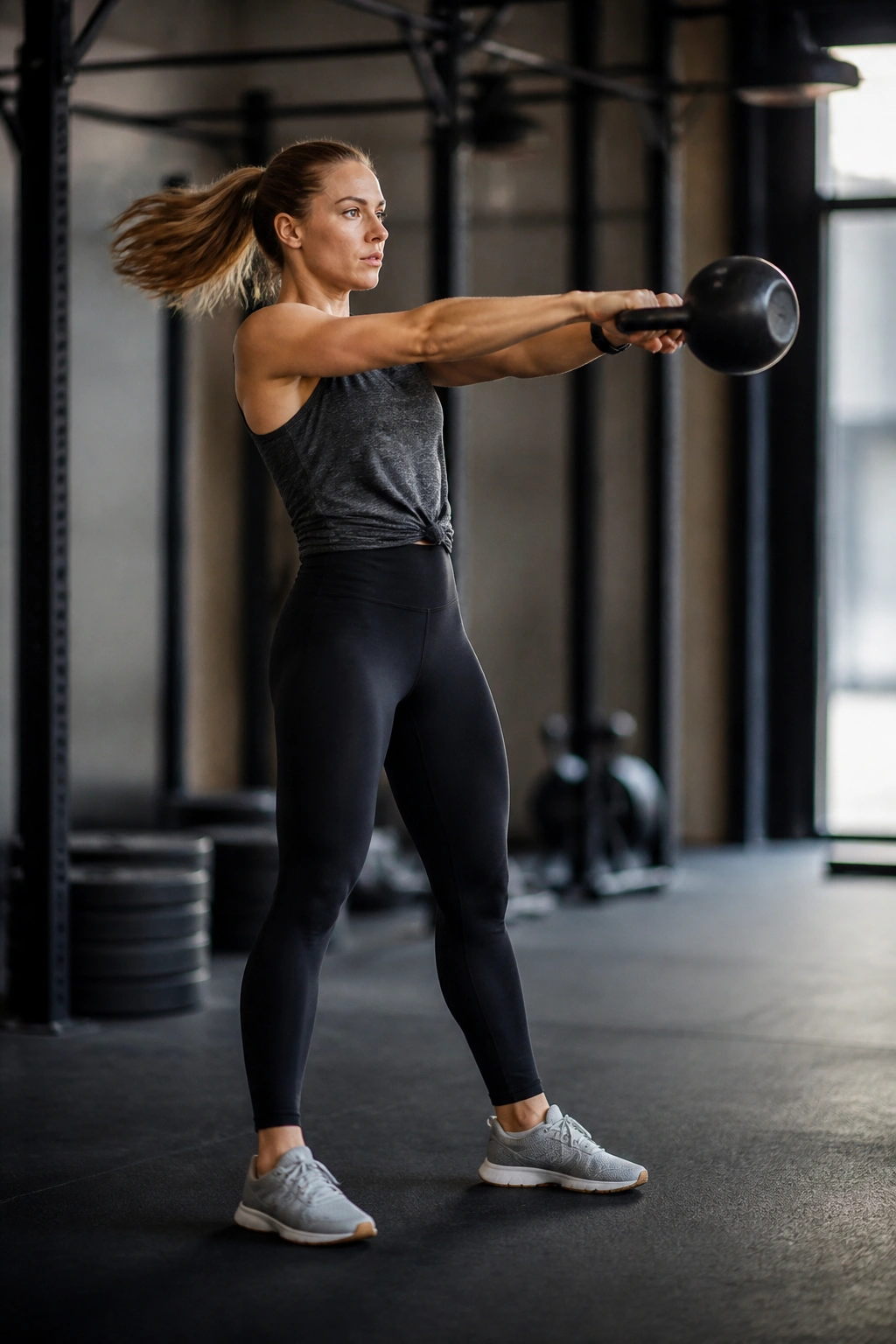
The kettlebell swing is not a squat. It’s not a front raise either. It’s a fast hinge, built around the hips snapping forward and the bell floating because of that hip drive. If the shoulders are doing the heavy lifting, the technique has gone sideways.
Set the bell a foot or so in front of you, hike it back between the legs, and snap the hips forward hard enough that the kettlebell rises to chest height on its own. The arms stay relaxed. The back stays neutral. The bell should feel like it floats. If you’re muscling it up, the load is too heavy or the hinge is off.
Common mistakes worth avoiding
- Squatting down instead of hinging
- Lifting with the arms
- Overextending the lower back at the top
- Letting the bell drift far from the body
I’d rather see a person own the deadlift pattern before chasing swings. Once the hinge is solid, swings are a fast, sharp way to train power and conditioning without turning the session into a grind. Crisp reps beat wild ones. Every time.
17. Side Plank for Obliques and Hip Stability
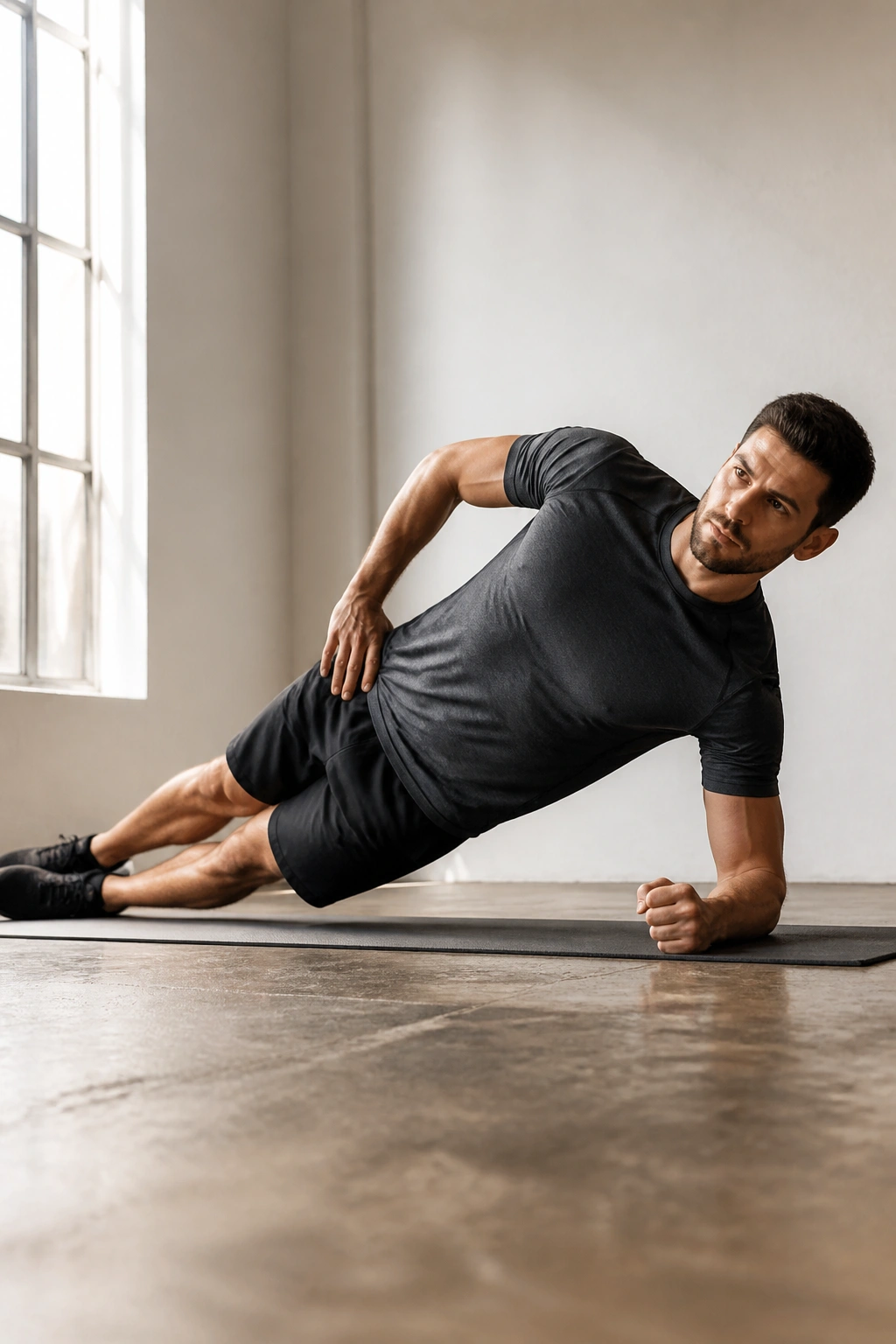
A side plank trains the body to resist bending sideways, which sounds abstract until you feel it in your obliques, glutes, and shoulder. That resistance matters. We spend a lot of time flexing and twisting, and not much time holding a clean line.
Set the elbow under the shoulder, stack the feet or stagger them for more balance, and lift the hips until your body makes one long diagonal. Keep the top shoulder from rolling forward. Keep the hips from drifting back. The line should feel firm and quiet.
Hips sag first. That’s the tell.
If the full version is too much, drop the bottom knee to the floor. If you want more load, lift the top leg or reach the top arm overhead. I like this drill because it teaches control without needing much time or equipment, and it tends to expose weak spots fast.
18. Hip Thrust for Glute Strength
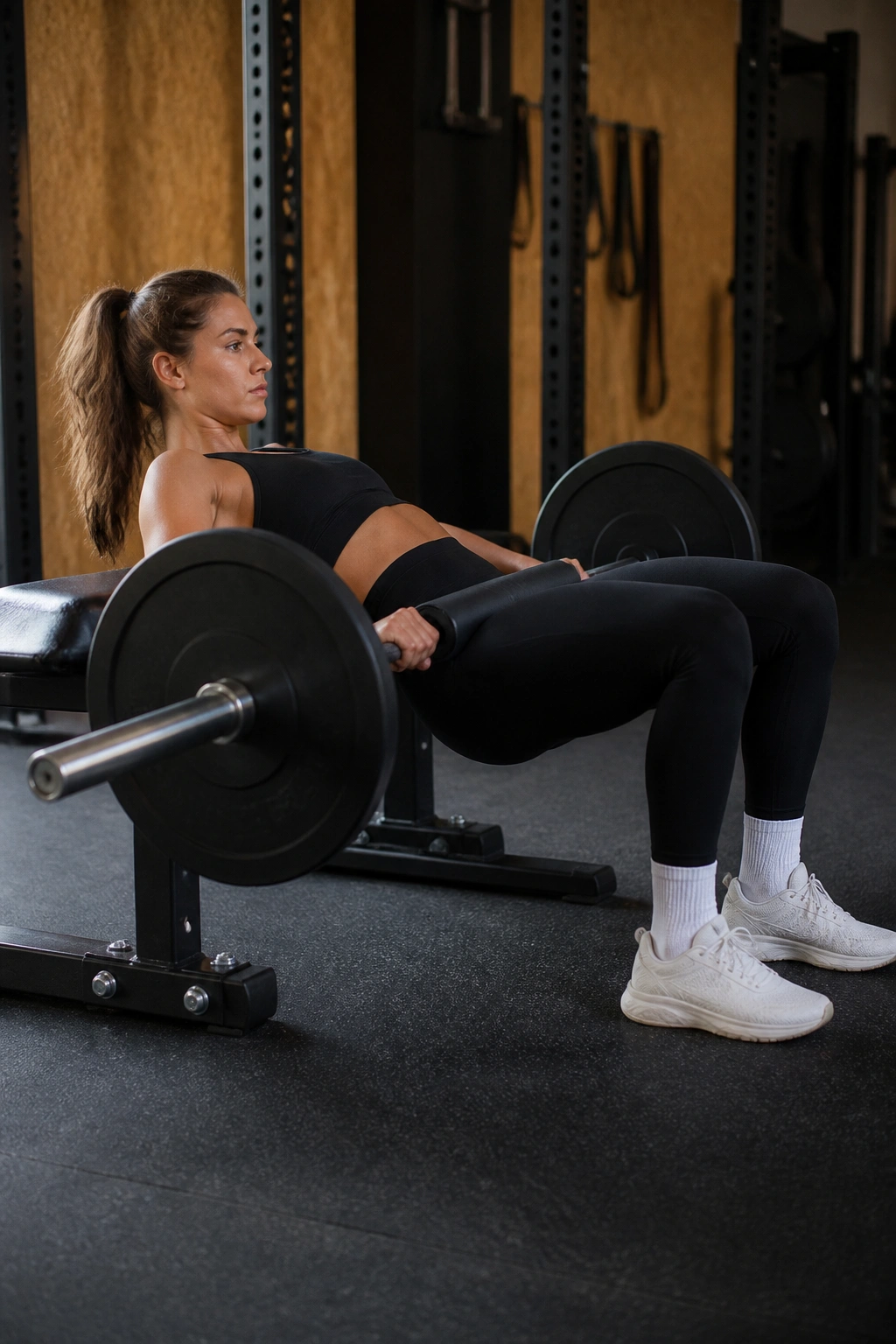
The hip thrust is the glute bridge’s heavier, louder cousin. With your upper back on a bench and the load across your hips, you can train glute extension through a bigger range and usually with more weight than a floor bridge allows. That makes it a strong choice for lower-body strength and size.
How to set it up
Sit on the floor with your shoulder blades against the bench edge, feet flat, and knees bent. Roll the weight into your lap, brace the core, and drive the hips up until the shins are roughly vertical. At the top, the ribs stay down and the chin stays tucked so the lower back does not steal the rep.
Good places to start
- Bodyweight for setup practice
- Dumbbell across the hips
- Barbell once the position feels stable
- Single-leg version when bilateral reps get easy
A sloppy hip thrust usually ends with an over-arched back and not much glute work. A good one feels like the hips are doing the job while the torso stays stacked. That difference is huge.
19. Pull-Up Progression for Real Upper-Body Pulling
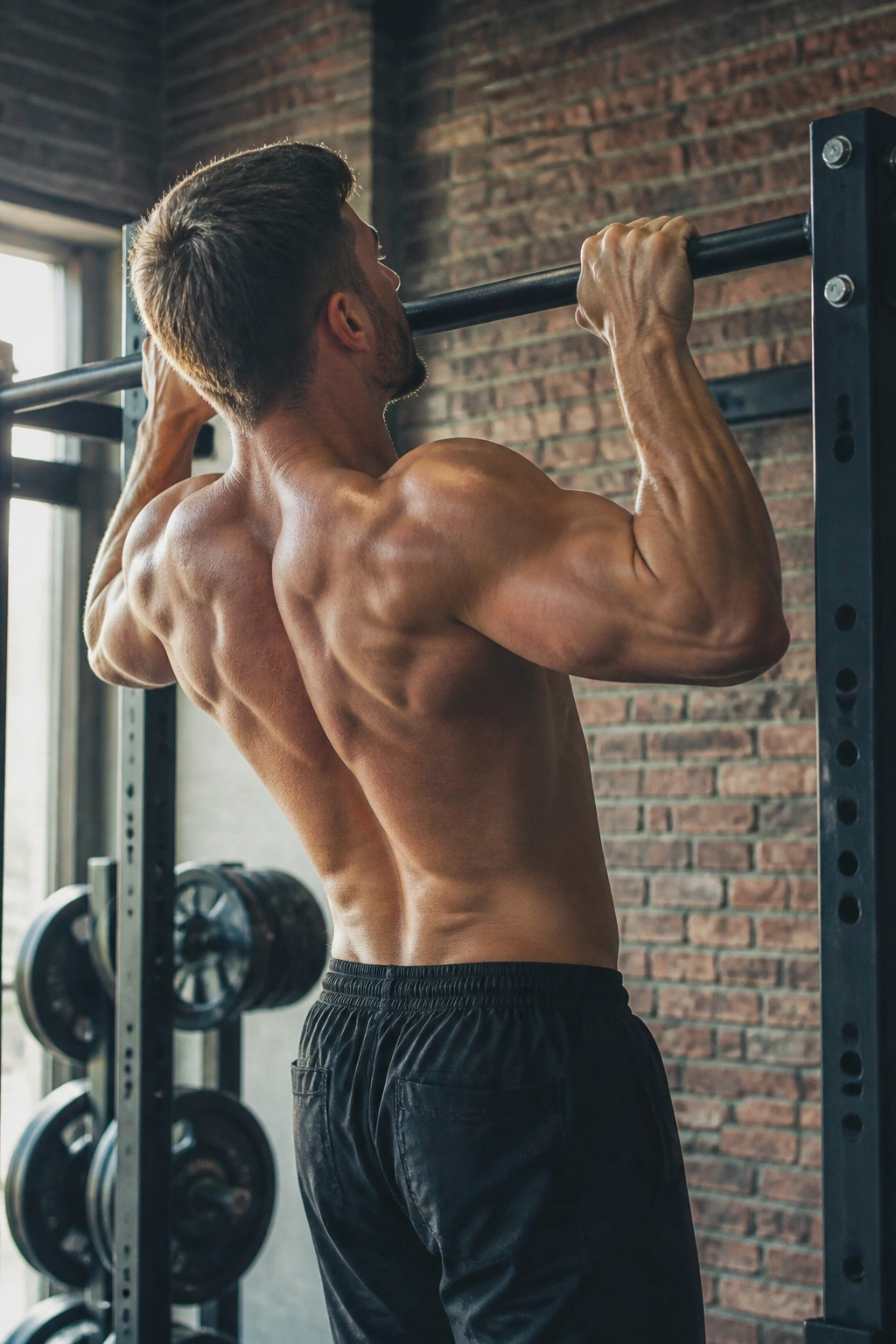
If a full pull-up isn’t there yet, that does not mean you’re stuck. It means you need a ladder, not a leap. Pull-up strength can be built in layers: dead hangs, scapular pull-ups, band-assisted reps, slow negatives, and then full bodyweight reps when the pattern finally clicks.
A smart progression
- Dead hang for grip and shoulder comfort
- Scapular pull-up for shoulder control
- Band-assisted pull-up for full range practice
- Slow lower from the top for strength
- Strict pull-up when the pieces fit
Compared with a lat pulldown, the pull-up asks more from your grip and body tension because you have to move your whole mass. The pulldown still has value, especially if you need to groove the pattern or you train at a gym with no bar you can reach well. I like both. They serve different jobs.
If you already own a pull-up, keep the reps clean and stop before the form gets choppy. If you do not, build the pieces patiently. Hanging is not glamorous. It works.
20. Wall Sit for Quad Endurance and Position
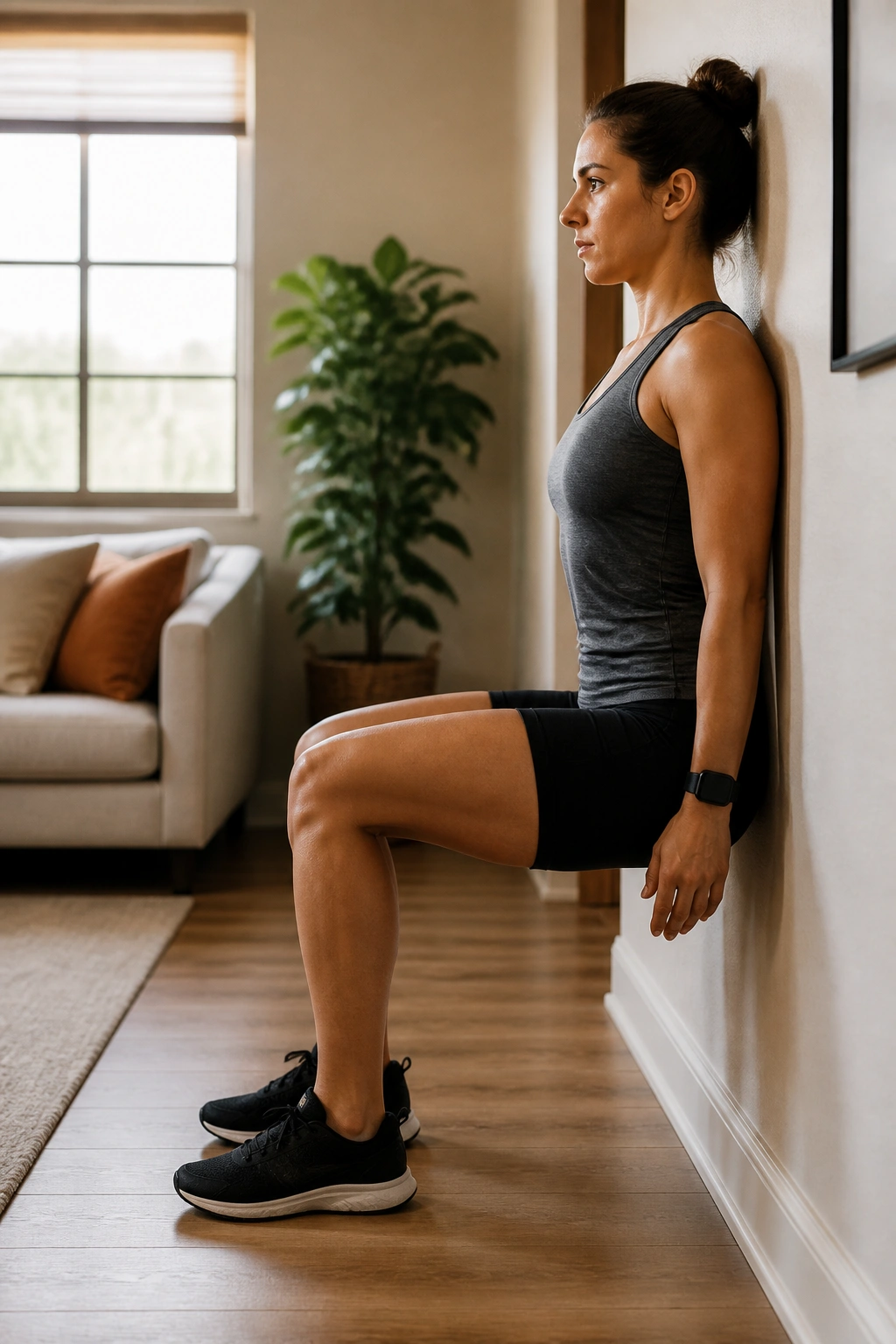
A wall sit can make strong legs feel rude for the last 15 seconds. That’s because it turns the quads into a long isometric hold, and isometric work has a sneaky way of exposing what your dynamic reps hide. It also asks very little from the equipment side, which makes it easy to slot into a home workout or finish a leg session without moving a single machine.
Slide down the wall until your knees are around 90 degrees or a little higher if that feels kinder. Keep the back flat, feet planted about a foot or two in front of the wall, and breathe through the hold. Start with 20 to 30 seconds if you’re new to it. Add time in small bites, or hold a dumbbell or plate in your lap when the bodyweight version stops feeling serious.
When to use it
- After squats or lunges
- As a finisher
- To build quad endurance
- To test whether your knees and hips stay happy in a bent position
If knee pain shows up, shorten the range or skip it. That’s not a moral failure. It’s a clue.
Pick a squat, a push, a pull, a hinge, a carry, and one core drill, then keep the reps clean and the jumps in weight small. That boring approach lasts longer than flashy workouts, and it gives you a lot more room to get stronger without needing a brand-new plan every week.
