



The first workout after baby is rarely a triumphant montage. More often, it’s a cautious 12-minute walk, one hand on the stroller, the other checking whether your abdomen feels odd, your pelvic floor feels heavy, or your energy has simply vanished. That is normal. New moms returning to fitness are not trying to “bounce back” from anything; they’re rebuilding strength, stamina, and confidence in a body that has done something enormous.
Postpartum exercise works best when it respects a simple truth: you are healing and training at the same time. That means walking can count. Breathing can count. A few well-chosen squats can count. If you had a C-section, tearing, pelvic floor symptoms, or a complicated delivery, it makes sense to get clearance from your clinician or a pelvic floor therapist before you push harder.
The smartest early workouts are not flashy. They’re the ones that leave you feeling a little more upright, a little less stiff, and a little less afraid of movement. And yes, that counts as progress.
1. 90-Second Diaphragmatic Breathing and Pelvic Floor Reset
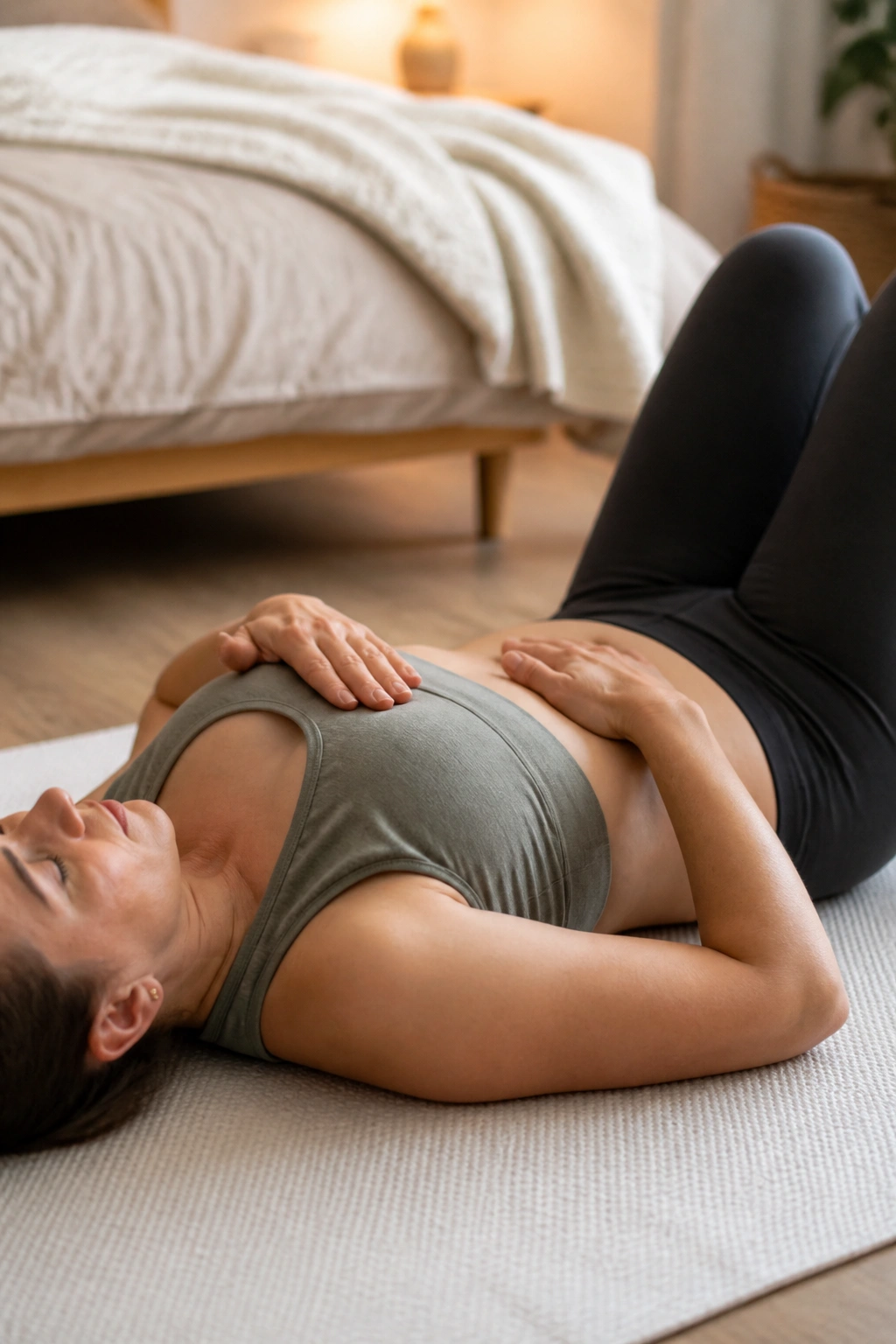
This is the workout that looks too easy until you do it badly. Then you notice how much your ribs flare, how quickly your lower back grabs, and how often you hold your breath without realizing it. A few slow breathing rounds can reconnect your core and pelvic floor before you ask for more from your body.
How to do it
Lie on your back with your knees bent or sit propped against a wall. Place one hand on your ribs and one on your belly. Inhale through your nose for 4 counts, letting your ribs widen softly. Exhale for 6 counts through your mouth and gently draw the lower belly inward as if zipping up snug jeans.
Do 5 to 8 breaths. That’s it.
What good reps feel like
- Your shoulders stay quiet.
- Your ribs soften down on the exhale.
- Your lower belly flattens a little, not a lot.
- Your pelvic floor feels like it lifts and relaxes, not like you’re bearing down.
If you feel pressure, doming, or pain, stop and reset. This first workout should feel almost boring, and I mean that as a compliment.
2. Gentle Walking Intervals for the First Cardio Days
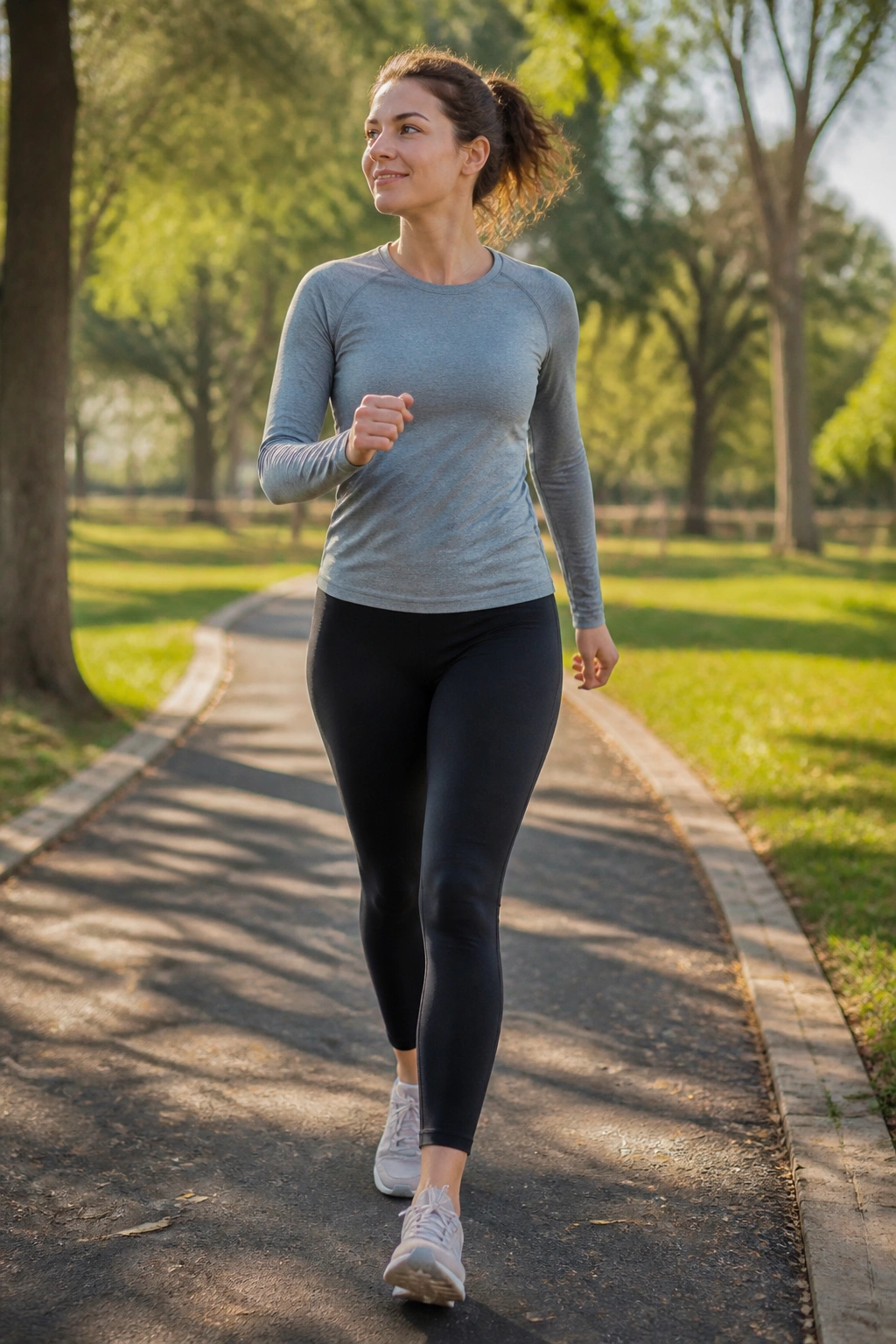
Walking is not a downgrade. It’s the first honest test of how your body handles impact, rhythm, and endurance after pregnancy. A lot of new moms try to jump straight to “real cardio” and then wonder why they feel wrecked by the end of the day. Walking intervals solve that problem neatly.
Try 10 to 15 minutes total. Walk easy for 2 minutes, then pick up the pace for 30 to 45 seconds. Repeat that pattern 4 to 6 times. You should still be able to speak in short sentences, maybe with a little breath showing up at the brisk parts.
A flat route is fine. A treadmill works too. Keep your stride natural, not long and pushy. If your pelvis feels heavy or your abdomen domes, shorten the fast sections before you make the walk longer.
This is the kind of workout that seems almost insultingly simple until you do it consistently. Then it starts to carry a lot of weight.
3. Stroller Walks That Wake Up Your Legs Without Wrecking Them
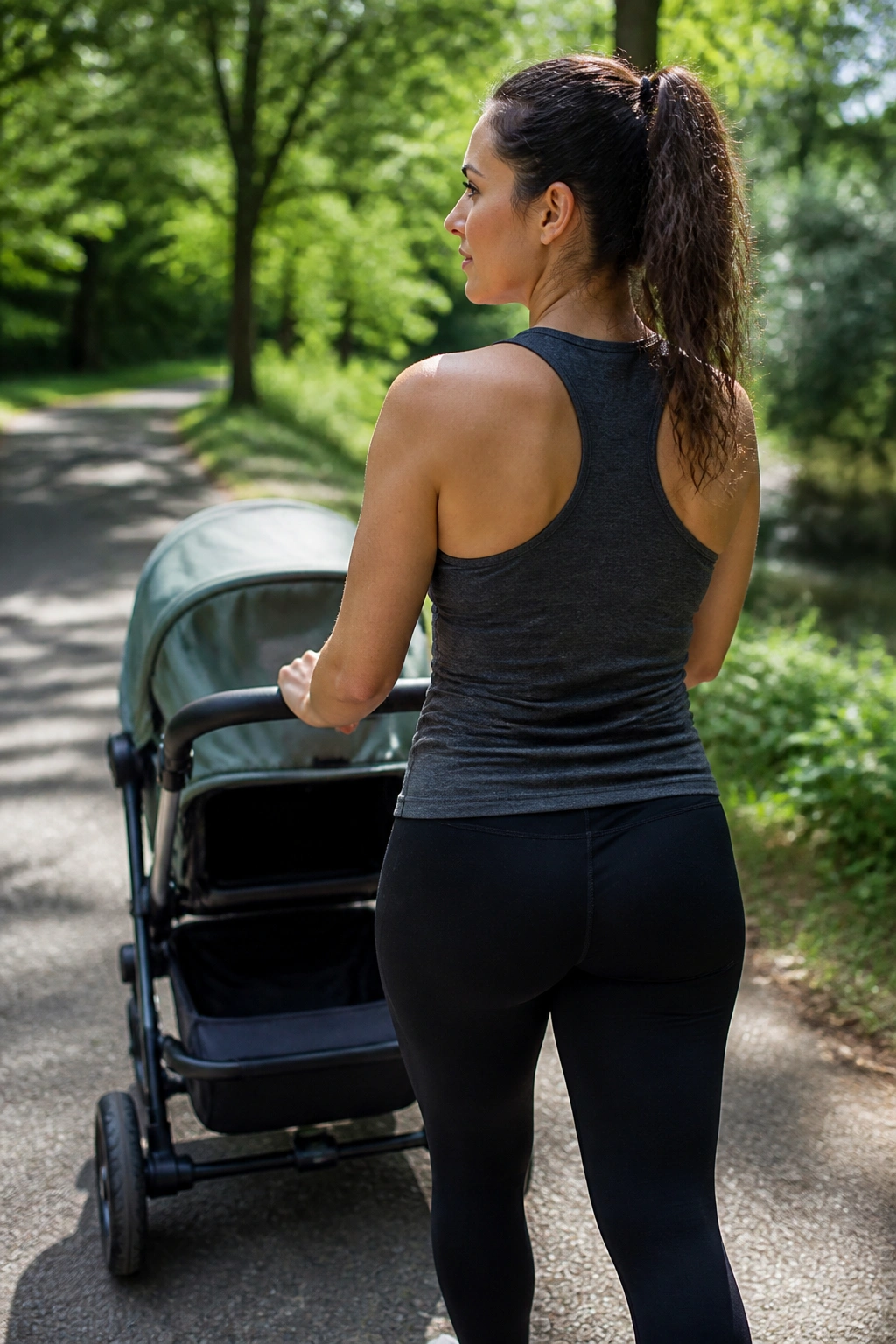
A stroller walk changes the feel of movement in a useful way. You get a little extra support, a bit of resistance from pushing, and a built-in reason to leave the house. That matters more than people admit. The baby may sleep, scream, stare at trees, or lose interest in all of humanity. You still moved.
Start with 15 to 20 minutes at an easy pace. Keep both hands on the stroller most of the time and stand tall through the crown of your head. Don’t hunch over the handlebar. If the handle is too low, you’ll feel it in your neck and low back fast.
Try this pattern on a safe path:
- 5 minutes easy pace
- 30 seconds faster walking
- 90 seconds normal pace
- Repeat 4 to 6 times
Hills count, but don’t force them. A gentle incline adds work without needing jumps or complicated choreography. This is one of the most practical postpartum workouts because it blends exercise with real life instead of fighting it.
4. Chair Squats and Sit-to-Stand Practice for Lower-Body Strength
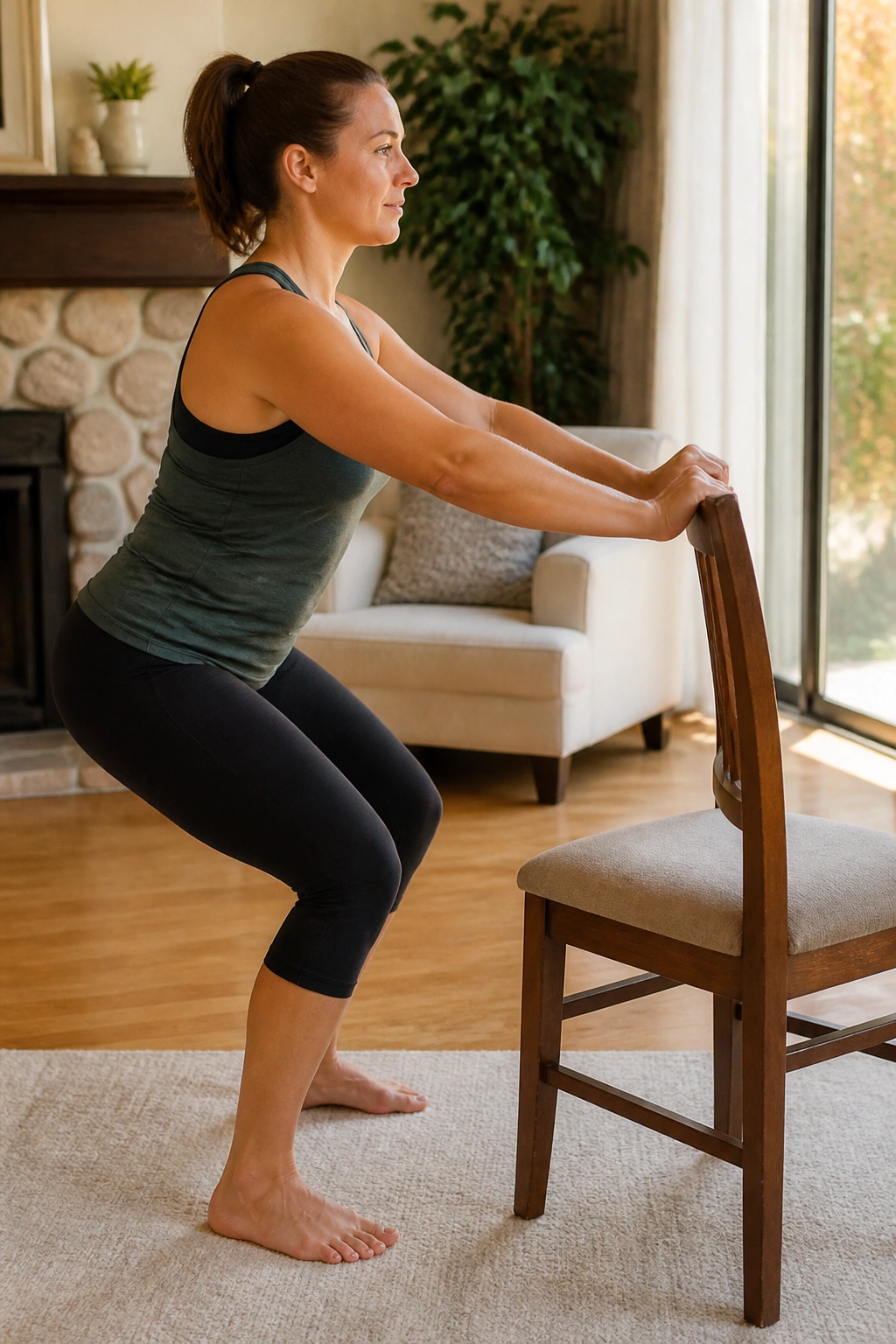
Chair squats are humble, and they work. They train your legs, hips, and trunk without asking for much balance, which is helpful when sleep deprivation has turned your coordination into a guess. They also mimic a motion you already do constantly: standing up while carrying a baby, a diaper bag, or both.
Stand in front of a sturdy chair with your feet about hip-width apart. Sit back until you touch the seat, then stand up again by driving through your heels. Exhale as you stand. That exhale matters. It keeps pressure from dumping forward into your core.
Start with 2 sets of 6 to 8 reps. If that feels smooth, add a third set later in the week. If standing all the way up feels too sharp on your knees, use a higher chair or lightly hold a counter.
What to watch for
- Knees collapsing inward.
- Holding your breath.
- Rocking forward onto your toes.
- Feeling pelvic heaviness instead of leg work.
Simple. Effective. A little humbling, too.
5. Wall Push-Up Ladders for a Return to Upper-Body Work
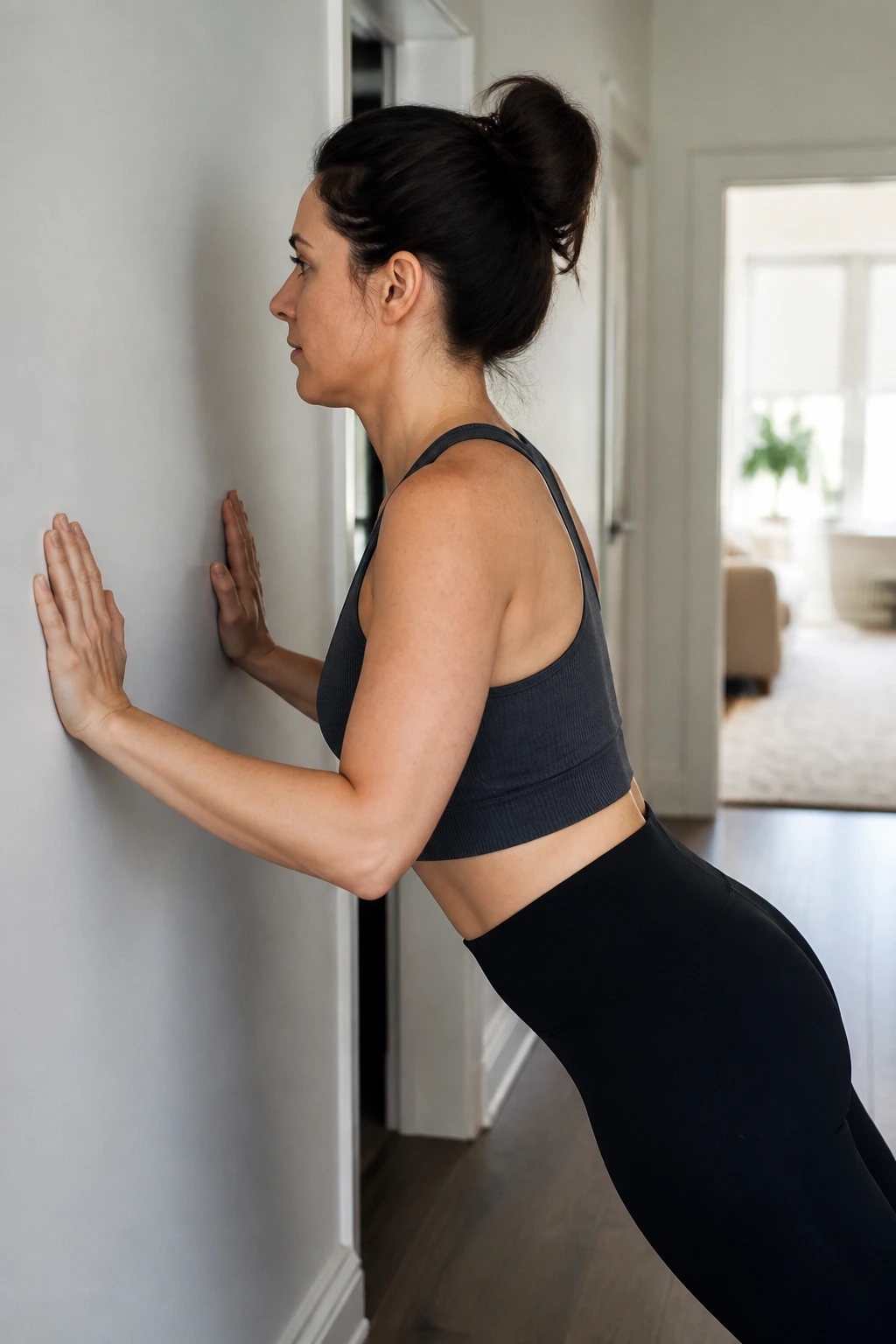
Upper-body strength matters a lot more after childbirth than most fitness plans admit. You’re lifting a baby, a car seat, laundry baskets, and probably a few objects you don’t remember buying. Wall push-ups rebuild pushing strength without the strain of floor work too soon.
Stand arm’s length from a wall and place your hands at chest height. Bend your elbows and bring your chest toward the wall, then press away. Keep your body in one long line. Don’t shrug. Don’t crane your neck. Let your elbows angle about 30 to 45 degrees away from your sides.
Try a ladder: 5 reps, then 6, then 7, resting 20 to 30 seconds between each round. If that feels fine, move your feet a little farther back next time. That changes the angle and makes the move harder without needing heavier equipment.
A small adjustment that helps
If your wrists ache, make fists or place your hands on the edge of a countertop instead of the wall. Tiny changes like that keep the workout useful instead of irritating.
6. Glute Bridges and Hip Lifts for a Sleep-Deprived Back
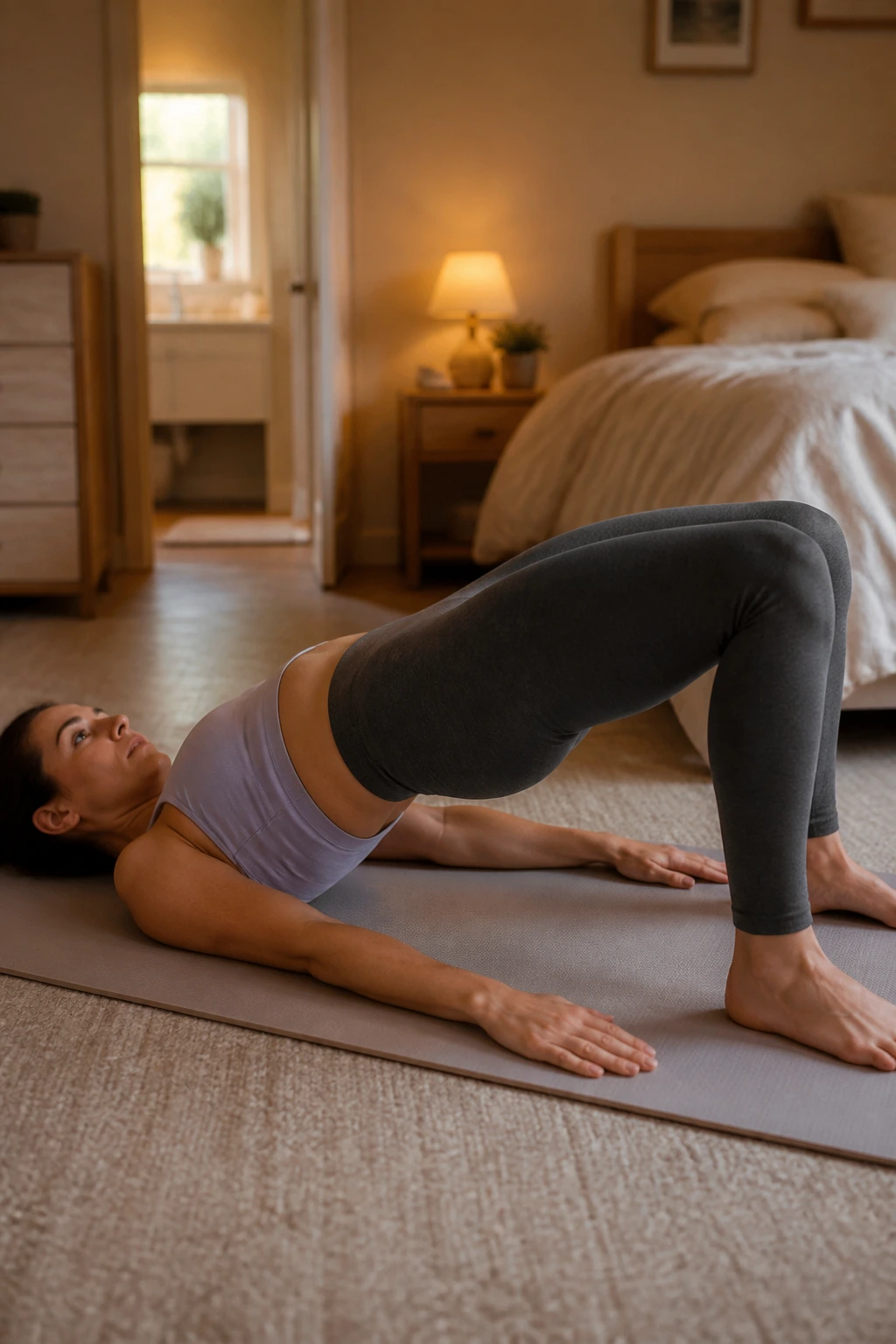
Glute bridges help in the exact spots that tend to get cranky when you spend half the day carrying a baby on one hip. Your glutes wake up, your hamstrings get involved, and your lower back stops doing all the work by itself. That alone is worth the floor space.
Lie on your back with your knees bent and feet flat. Exhale, then press through your heels and lift your hips until your body makes a straight line from shoulders to knees. Pause for 1 second at the top. Lower slowly. The movement should feel controlled, not flung.
Do 2 to 3 sets of 8 to 12 reps. If that feels easy, add a 5-second hold on the last rep of each set. If your hamstrings cramp, bring your feet a little closer to your seat and make the lift smaller.
Glute bridges are especially useful early on because they give you strength without pounding, twisting, or a lot of impact. Quiet work. Good results.
7. Bird Dogs and Dead Bugs for Gentle Core Rebuilding
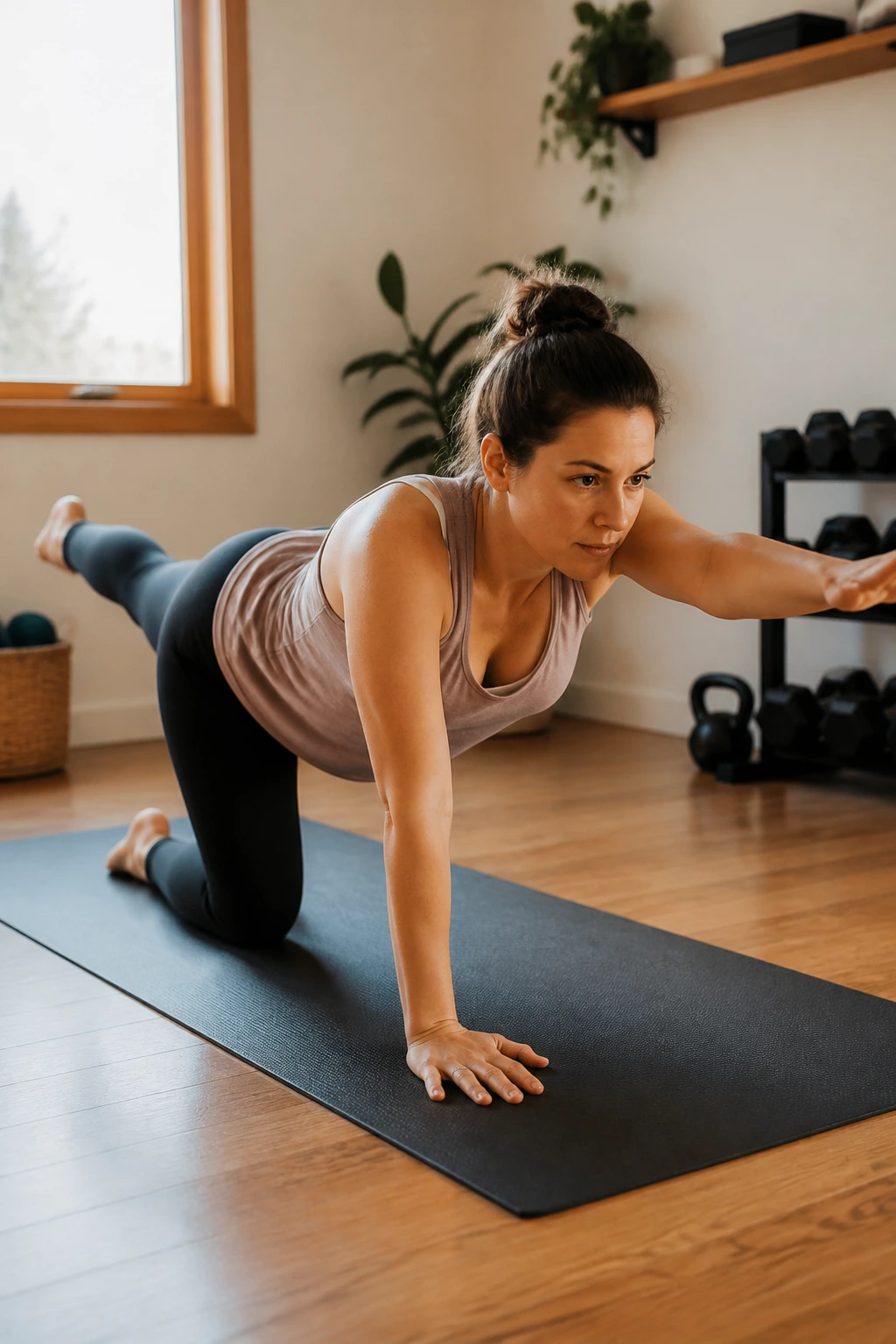
Core training after pregnancy does not mean endless crunches. In fact, crunches are often the wrong place to start. Bird dogs and dead bugs teach your trunk to resist movement, which is exactly what you want when you’re picking up a baby, turning in bed, or reaching into a crib at odd angles.
Bird dog
Start on hands and knees. Reach one leg back and the opposite arm forward. Keep your hips level. Return with control. Do 6 to 8 reps per side.
Dead bug
Lie on your back with your hips and knees bent to 90 degrees. Lower one heel toward the floor while the opposite arm reaches overhead, then return. Keep your ribs quiet and your lower back gently connected to the floor. Do 5 to 8 reps per side.
If you see or feel doming down the center of your belly, make the movement smaller. Heel taps can become toe taps. Dead bugs can become heel slides. That kind of regression is not failure. It’s smart. And smart wins here.
8. Resistance-Band Rows and Pull-Aparts for Better Posture
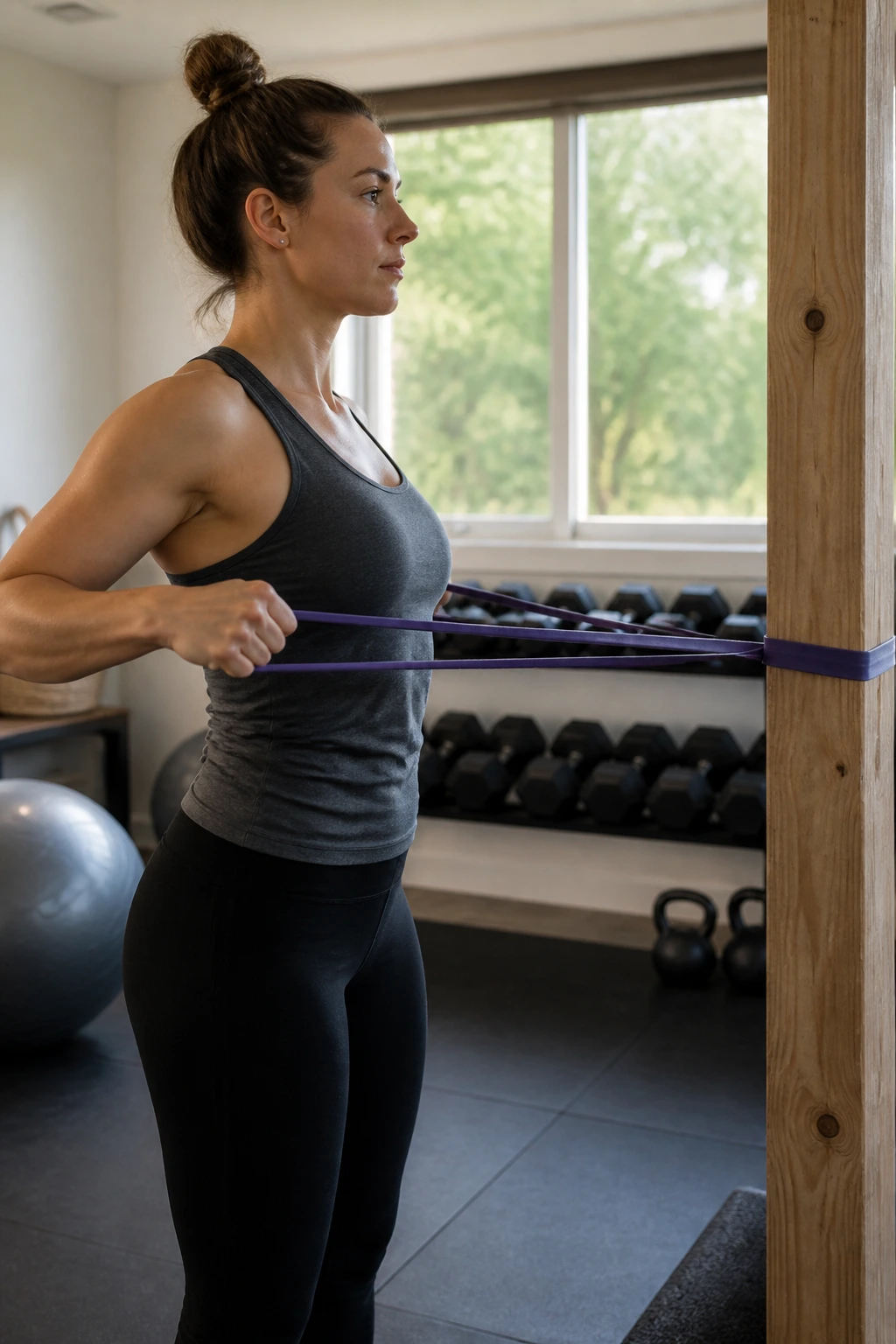
Breastfeeding, bottle feeding, carrying, and rocking all pull your shoulders forward over time. Band work helps reverse that pattern. Rows and pull-aparts are cheap, easy to store, and they pay off fast when your upper back starts feeling like a tired coat hanger.
Anchor a light resistance band around a sturdy post or hold both ends yourself. For rows, pull your elbows back toward your ribs and squeeze your shoulder blades gently together. For pull-aparts, keep your arms straight and separate the band until it reaches your chest. Both should feel controlled and smooth.
Do 2 rounds of 10 to 15 reps for each move. Keep your neck long. If your shoulders creep up toward your ears, the band is probably too heavy or you’re rushing.
Unlike big lifting sessions, this workout is about clean lines and posture. It’s a small thing that makes carrying everything else feel less miserable.
9. Step-Up Intervals on a Low Step or Stair
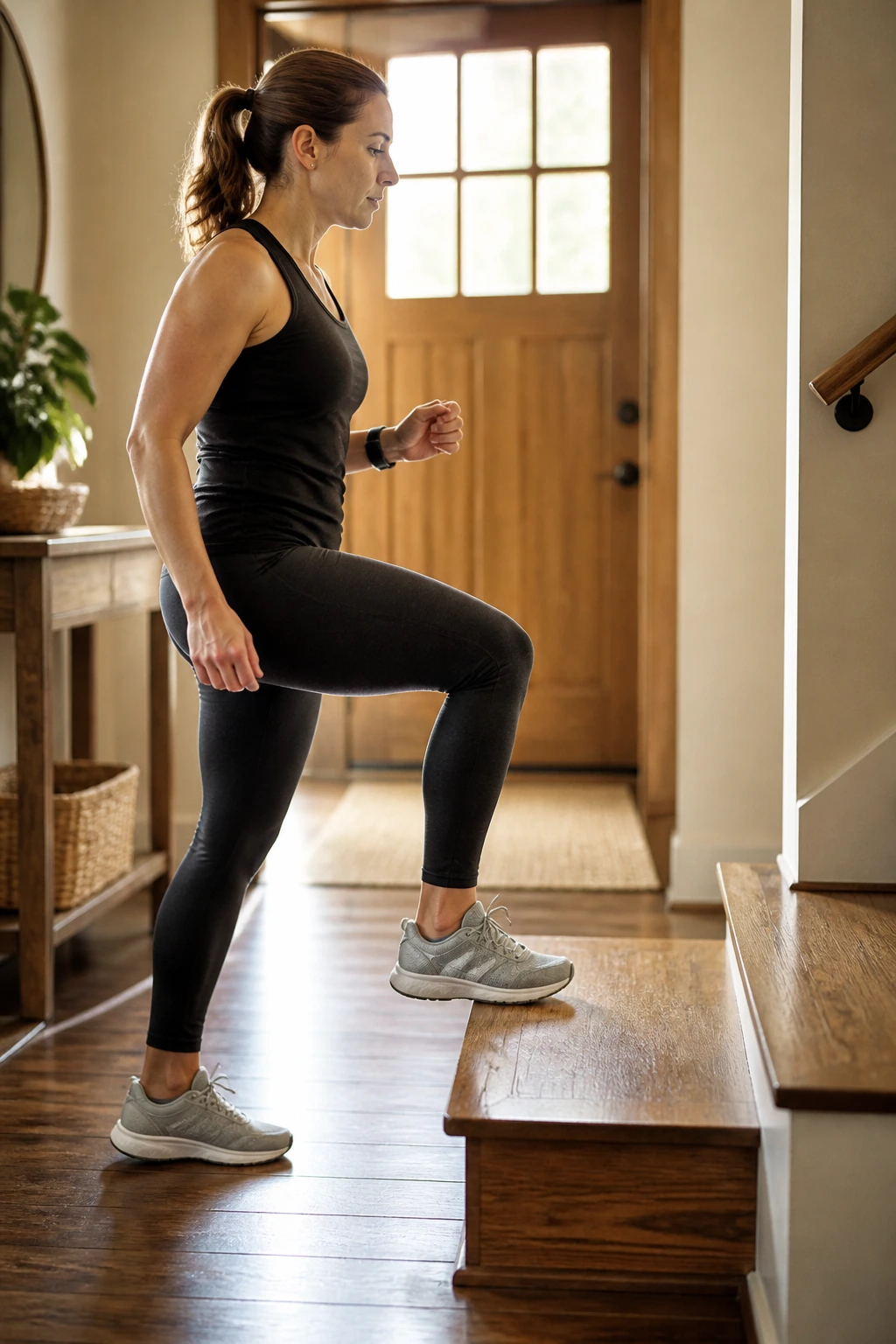
A low step turns into a surprisingly good workout when you use it with intent. Step-ups train one leg at a time, which helps balance out the asymmetry that shows up when you’re always carrying weight on one side. They also raise your heart rate without jumping.
Choose a step that’s 4 to 8 inches high. Step up with one foot, bring the other foot to meet it, then step down with control. Alternate your leading leg every rep or every set. Start with 2 sets of 6 reps per leg.
What makes this work
- The higher your step, the more it asks of your hips.
- A lower step is easier on the pelvic floor.
- Slower lowering builds more strength than rushing through it.
- Holding a wall or railing is fine.
If you feel wobble in your knees, shorten the range and slow down. That tiny adjustment often fixes the problem. No drama. Just better mechanics.
10. A Short Yoga Flow for Tight Hips, Shoulders, and Low Back
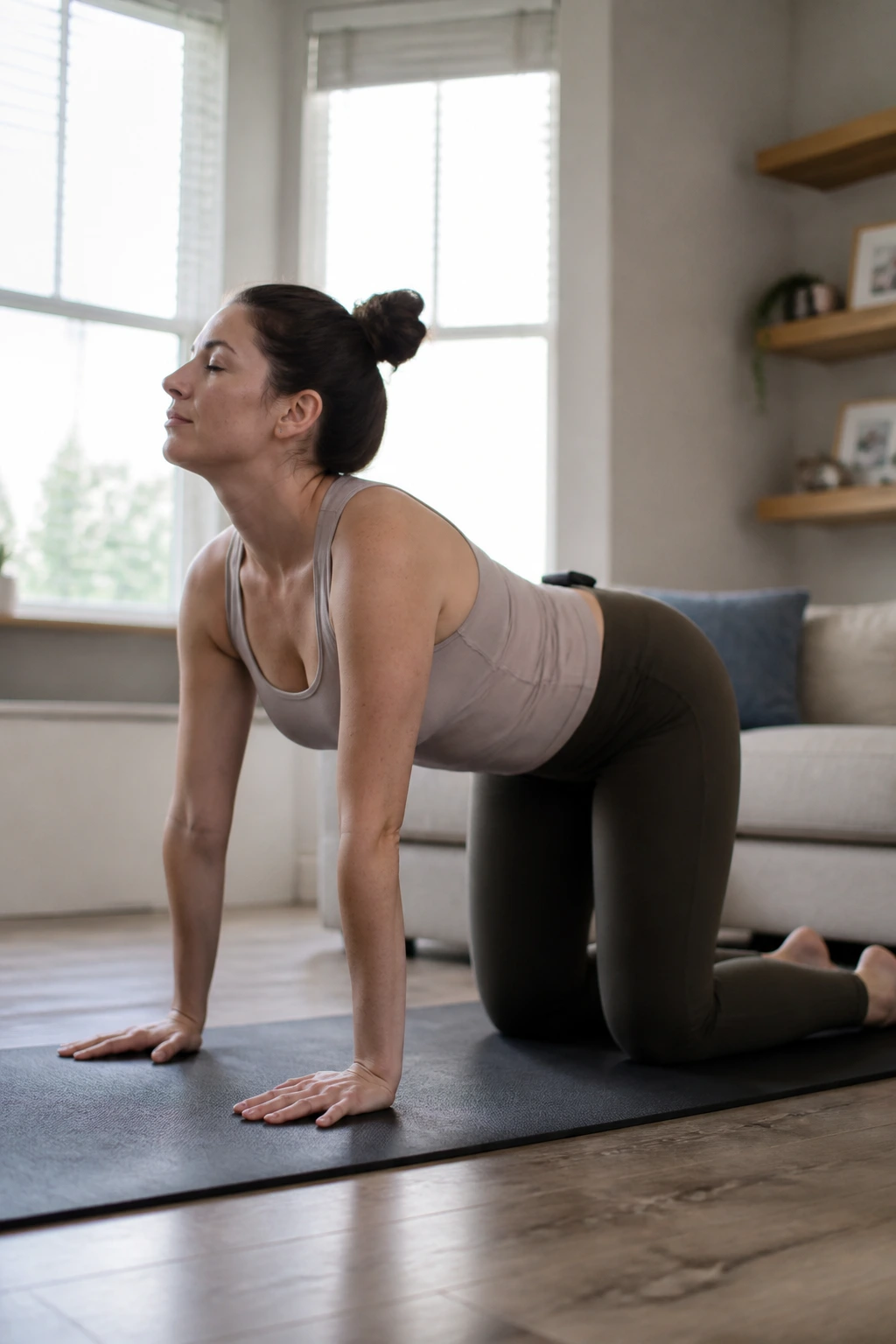
Some days you don’t need a sweaty session. You need to feel like your body belongs to you again. A short yoga flow does that job well, especially when your hips feel glued shut and your upper back has turned into a knot.
Start with cat-cow for 5 slow rounds. Move into child’s pose if it feels okay, or skip it if it doesn’t. Then do a low lunge on each side, keeping the back knee down. Add a gentle thread-the-needle stretch for the shoulders and finish with a seated forward fold or a reclined figure-4 stretch.
Keep the whole thing at 10 to 15 minutes. No forcing. No chasing deep shapes. The point is to open things up, not to win a flexibility contest.
If your belly feels strained in deep core positions or your wrists hate weight-bearing, use forearms, blocks, or a wall. Yoga after birth should meet your body where it is, not where a studio poster says it should be.
11. Stationary Bike Intervals That Feel Controlled, Not Punishing
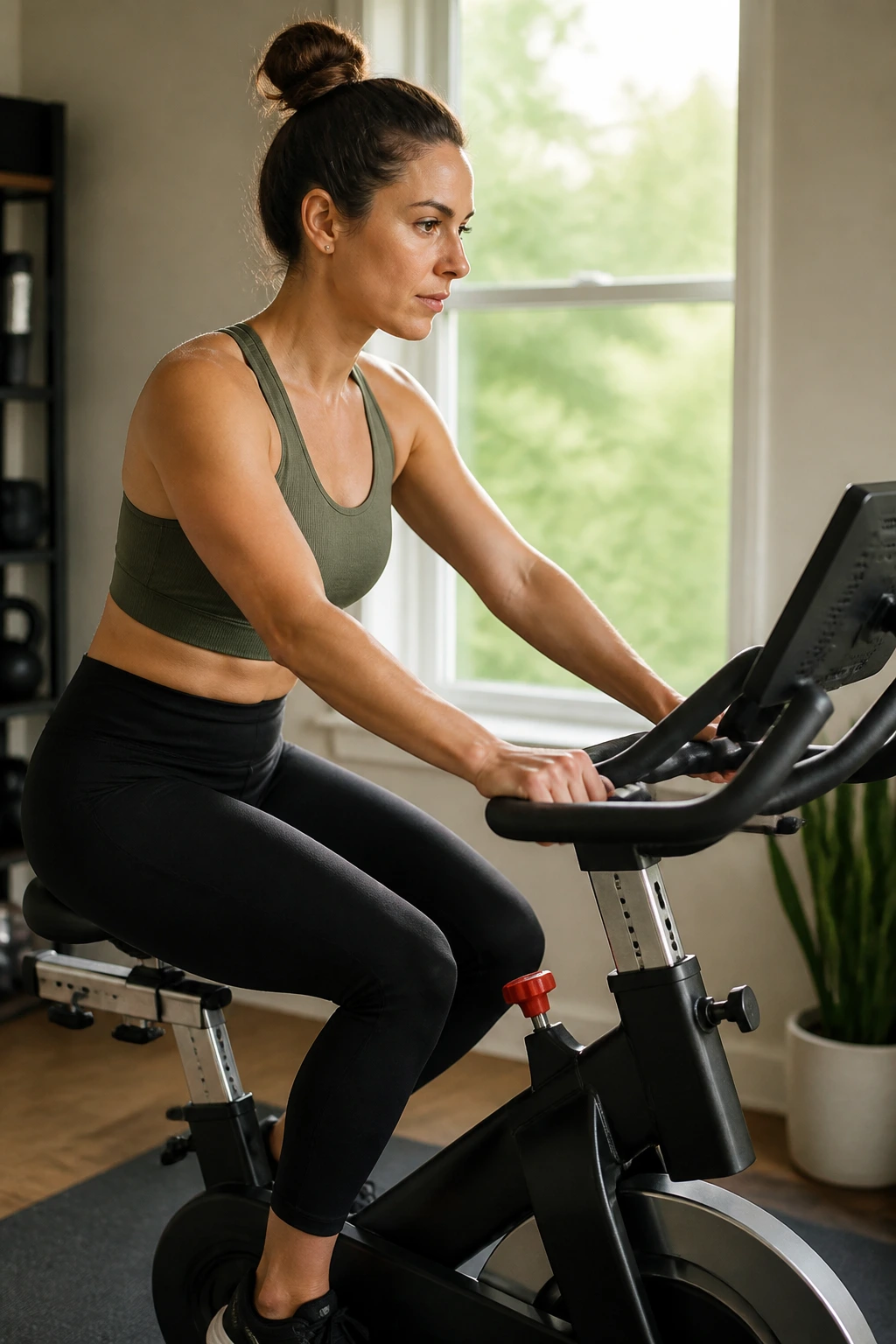
A bike is one of the cleanest ways to raise your heart rate without impact. Your joints get a break, your pelvis stays more contained, and you can dial the effort up or down with a knob instead of trying to fake energy you don’t have.
Try 15 minutes total. Pedal easy for 3 minutes, then moderate for 1 minute. Repeat that cycle 3 to 4 times. Your breathing should speed up, but not turn ragged. If it does, back off the resistance first, then slow your cadence a little.
Keep your shoulders loose and your hands light on the handlebars. A death grip usually means the bike is set up wrong or you’re working harder than you need to. Seat height matters too; your knee should stay softly bent at the bottom of the pedal stroke.
This is a smart choice on days when walking feels fine but your knees, ankles, or pelvic floor want less pounding.
12. Postpartum Pilates Mat Work for Deep Core Control
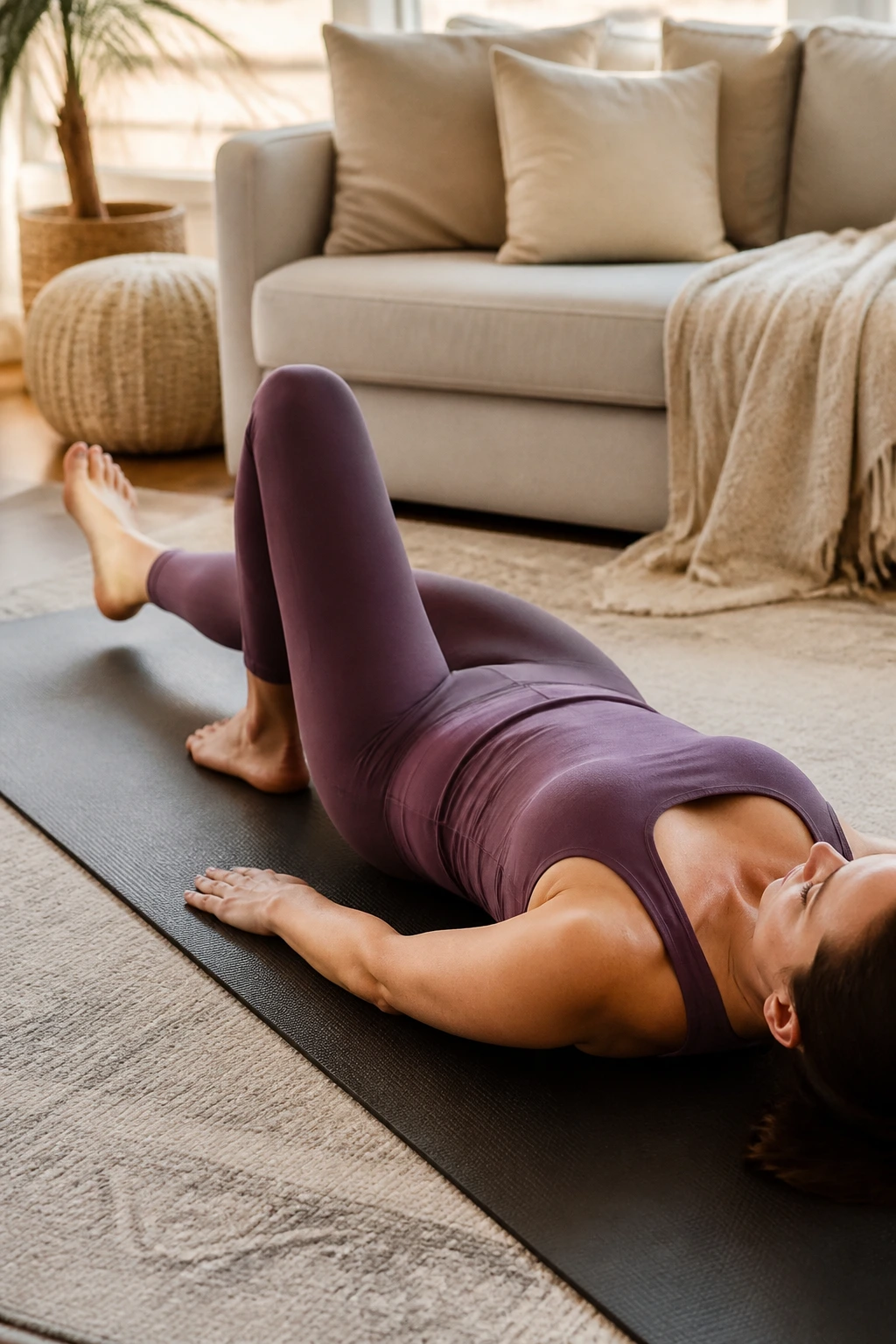
Pilates gets talked about a lot, sometimes too much, but the good versions of it have real value after pregnancy. The emphasis on control, breathing, and alignment can help you rebuild from the inside out instead of muscling through everything.
A simple mat sequence
- Heel slides: 6 per side
- Toe taps: 6 per side
- Side-lying clamshells: 10 per side
- Side-lying leg lifts: 8 per side
- Seated band squeeze or pillow squeeze: 10 slow reps
Move slowly. Exhale on the effort. If your belly domes, make the range smaller or return to heel slides. The point is not to make your abs burn. The point is to teach them to stabilize.
A lot of postpartum Pilates fails when it gets too fancy too quickly. Keep the early work plain. Clean reps beat clever choreography every time.
13. Light Dumbbell Full-Body Circuits for Strength Coming Back
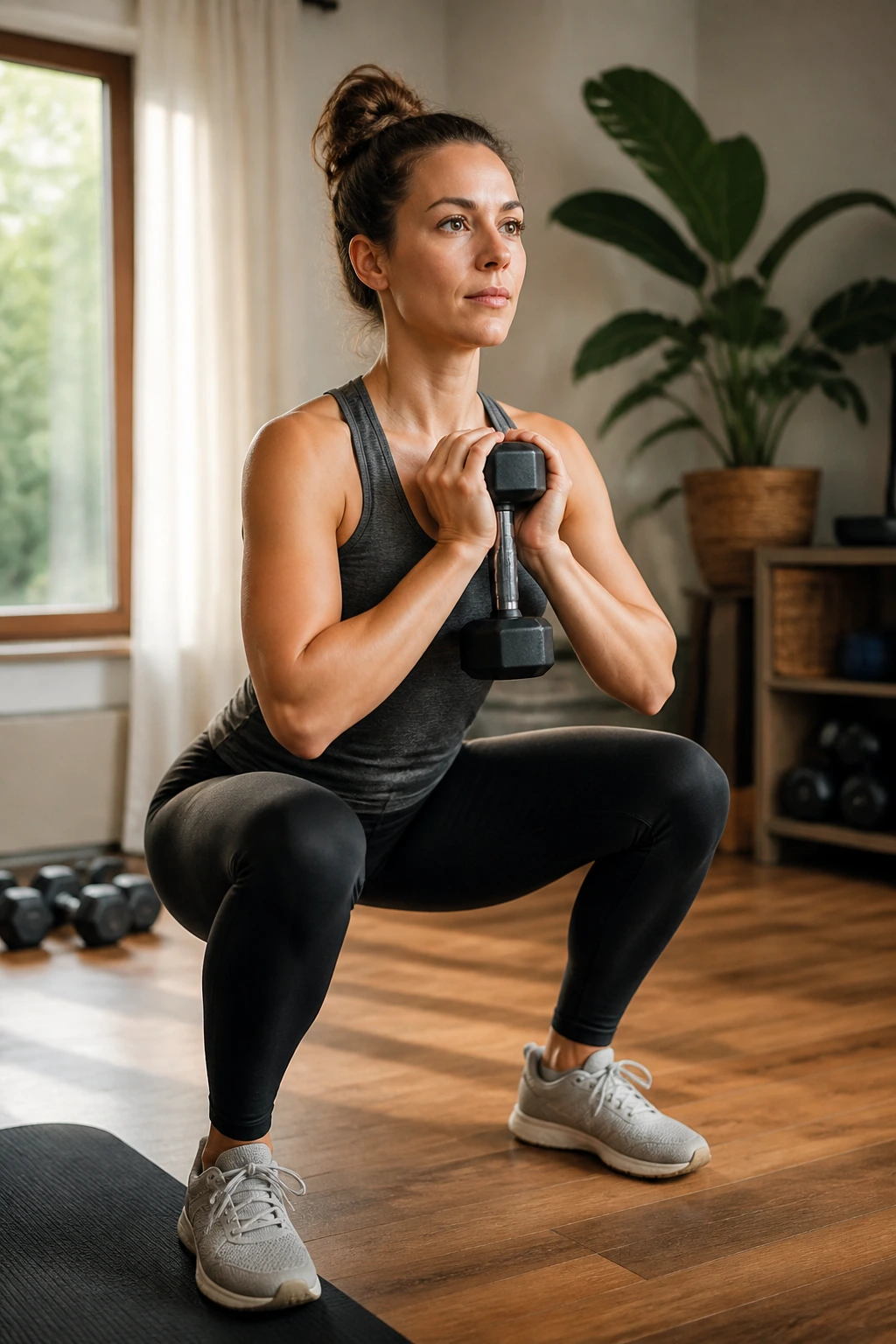
This is where workouts start feeling like workouts again. A few dumbbells, even light ones, can make a big difference once your body has settled into basic walking and core control. You don’t need a heavy setup. Two matching dumbbells in the 3- to 10-pound range are enough to begin.
Try this circuit:
- Goblet squat, 8 reps
- One-arm row, 8 reps per side
- Floor press, 8 reps
- Romanian deadlift, 8 reps
- Rest 60 seconds, repeat 2 to 3 rounds
Keep the pace steady. Don’t rush from move to move. The magic is in the shape of the reps, not in trying to get sweaty for its own sake. If overhead pressing feels sketchy, skip it for now and stay with floor presses and rows.
The best part? This kind of session rebuilds useful strength for lifting a car seat, reaching a diaper caddy, and getting off the couch with a baby in your arms.
14. Farmer Carries That Teach Your Body to Hold Itself Upright
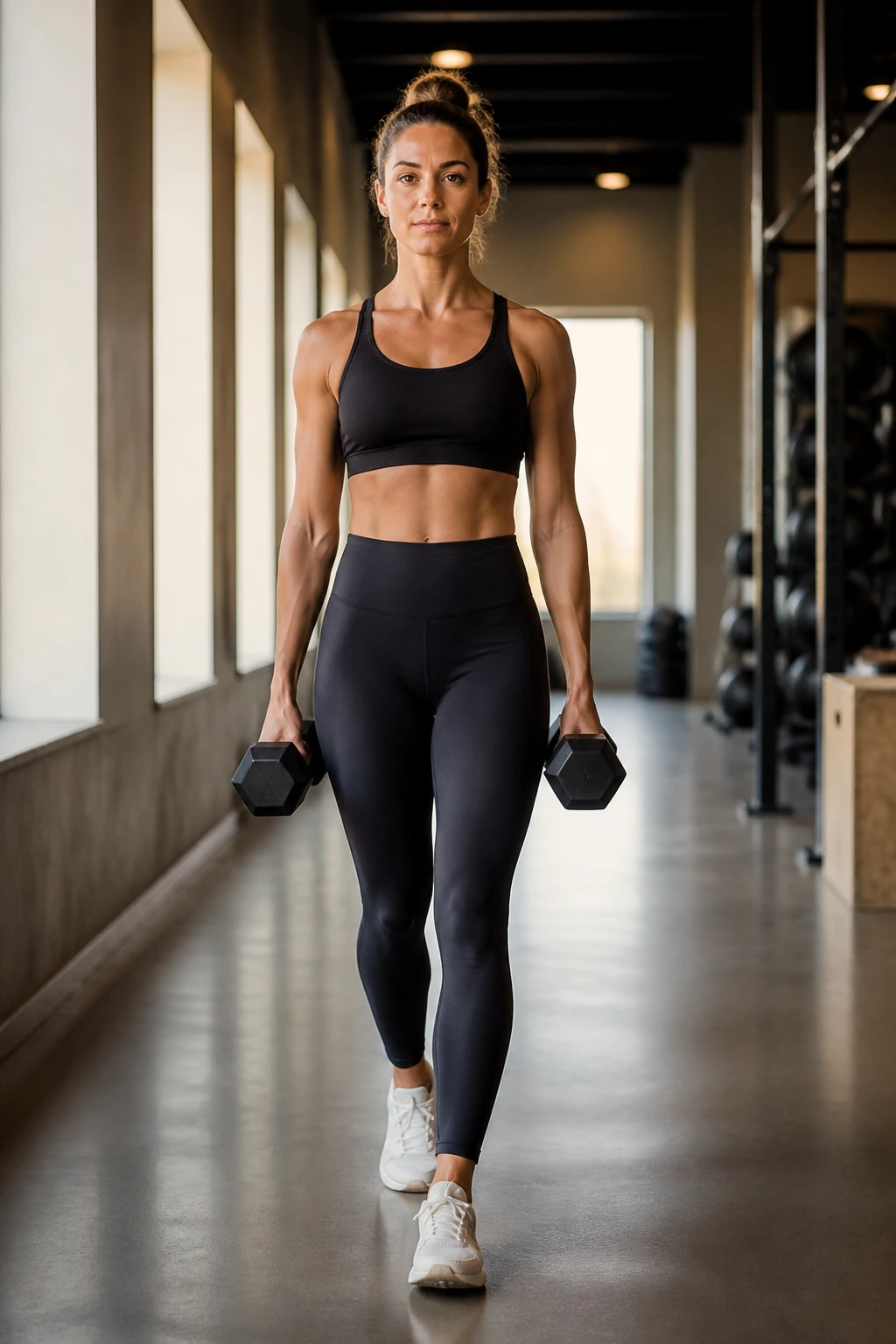
Carries are underrated. You pick up weight, walk, and stay tall. That sounds almost too plain to matter, which is exactly why it works so well. After pregnancy, your body often wants to lean, shift, and overuse the back. Carries teach it to resist that.
Hold one dumbbell in each hand for a standard farmer carry, or hold one weight on one side for a suitcase carry. Walk 20 to 40 steps, turn around, and repeat 3 to 5 times. Keep your ribs stacked over your hips. Don’t let one shoulder rise higher than the other.
What to notice
- Your torso should stay upright.
- Your grip will fatigue before your legs do.
- A suitcase carry will expose side-to-side weakness fast.
- Breathing should stay calm and steady.
You can use grocery bags, water jugs, or dumbbells. The object matters less than the quality of the walk. And that quality translates straight into baby-carrying life.
15. Pool Walking or Easy Swimming for Weightless Movement
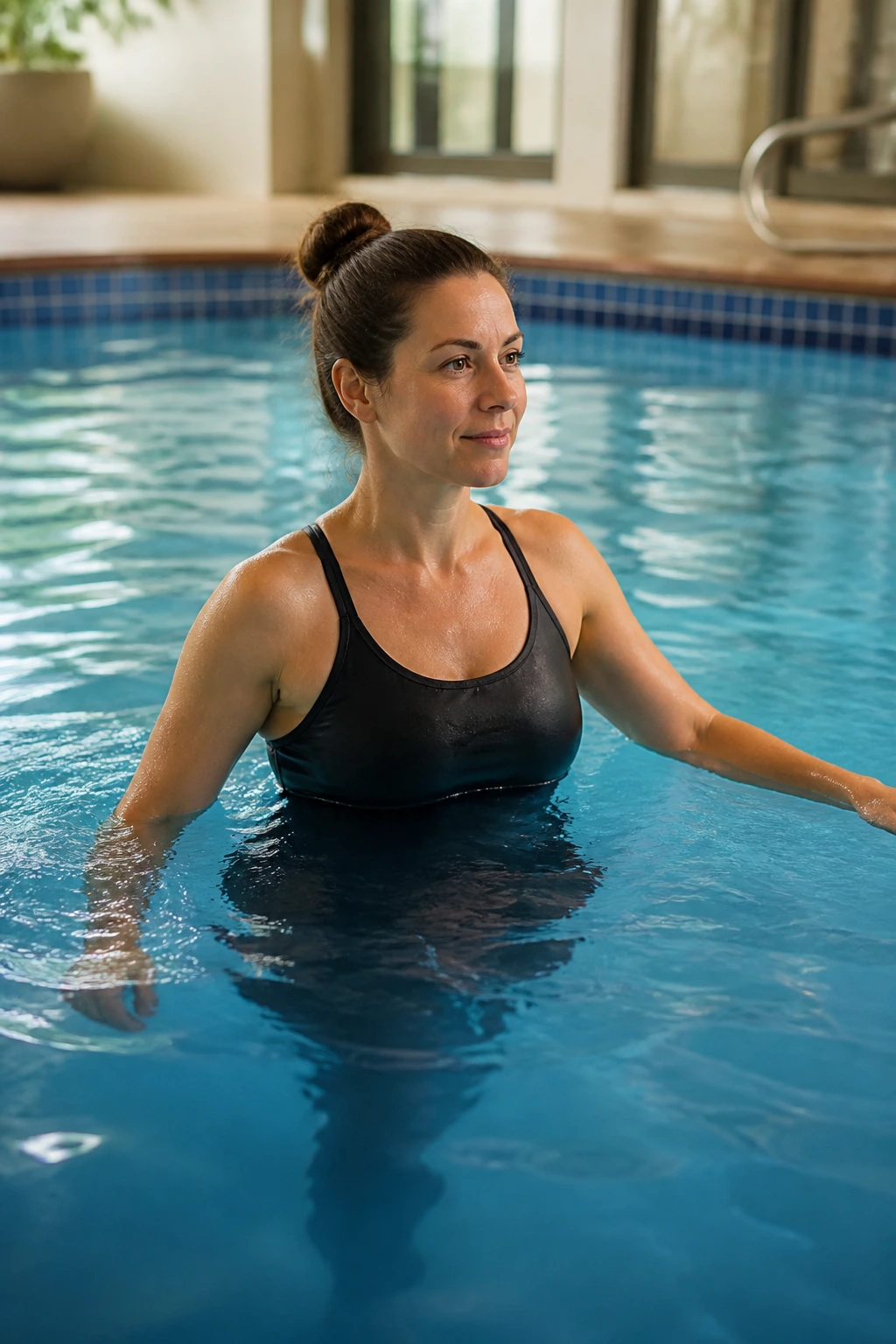
Water changes the game. It supports your joints, reduces impact, and gives you a place to move without the same load you carry on land. For a new mom whose body feels tender everywhere, that relief can be huge.
Pool walking is simple: walk forward, then backward, for 5 to 10 minutes each. If swimming feels good and your body is healed enough for it, keep the strokes relaxed and the distance short. Think 10 to 20 gentle lengths, not a test.
If you’ve had a C-section, make sure the incision is healed and you’ve been cleared before soaking. That part matters. Don’t rush the water just because it sounds nice.
Pool workouts are especially good when your feet, hips, or back need a break. They leave you feeling worked, but not beat up. That’s a useful place to be.
16. Low-Impact Dance Cardio for Days When You Need Energy
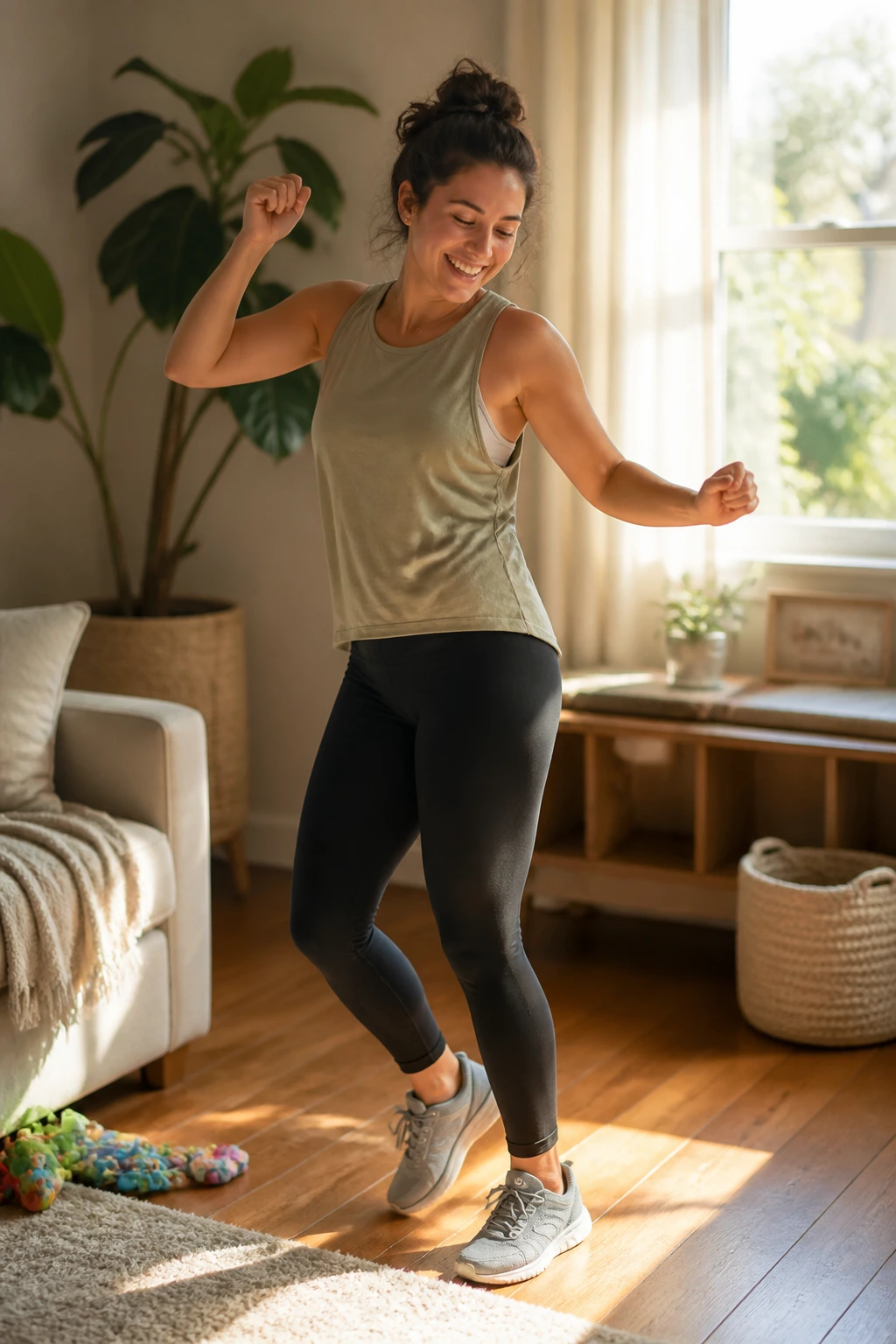
Some days, the best workout is the one that makes you feel a little more alive. Low-impact dance cardio does that without asking for jumps, burpees, or a complicated plan. Put on music with a steady beat and keep one rule: at least one foot stays on the floor.
Use a loop like this for 12 to 15 minutes:
- March in place, 1 minute
- Step-touch side to side, 1 minute
- Grapevine or side steps, 1 minute
- Knee lifts with soft arms, 1 minute
Repeat the loop and keep the movements smooth. If your pelvic floor feels heavy, shorten the range and remove the knee drives. If your wrists or shoulders are tired from baby holding, let the arm work stay small.
This one matters because postpartum fitness is not only about strength and rehab. It’s also about mood. A little rhythm goes a long way on a long day.
17. Incline Walking on a Hill or Treadmill
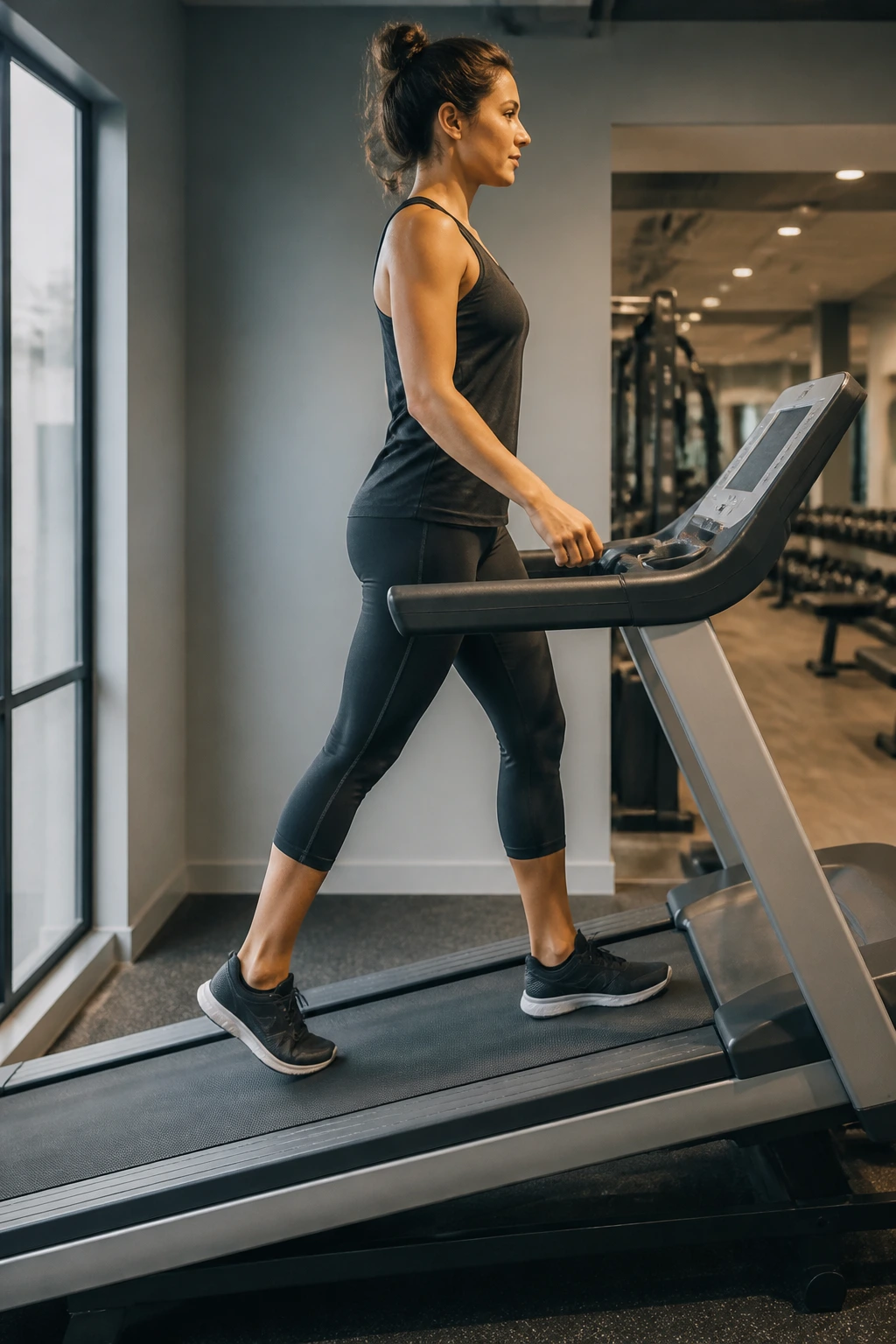
Flat walking is good. Incline walking is sneaky good. A small hill or a treadmill set between 3% and 6% incline asks more from your glutes and calves without adding impact, which makes it a nice middle step between easy walking and harder cardio.
Try 15 minutes total:
- 3 minutes flat
- 2 minutes at a moderate incline
- 2 minutes flat
- 2 minutes at a moderate incline
- Repeat once more
Keep your posture tall and avoid leaning heavily on the treadmill rails. If you need the rails for balance, use them lightly. If your breathing gets choppy, lower the incline before you slow the whole session down.
You should feel your legs working, but still stay in control. That control is the point. It keeps the workout useful and the recovery manageable.
18. Mobility and Recovery Sessions That Keep You Moving on Tired Days
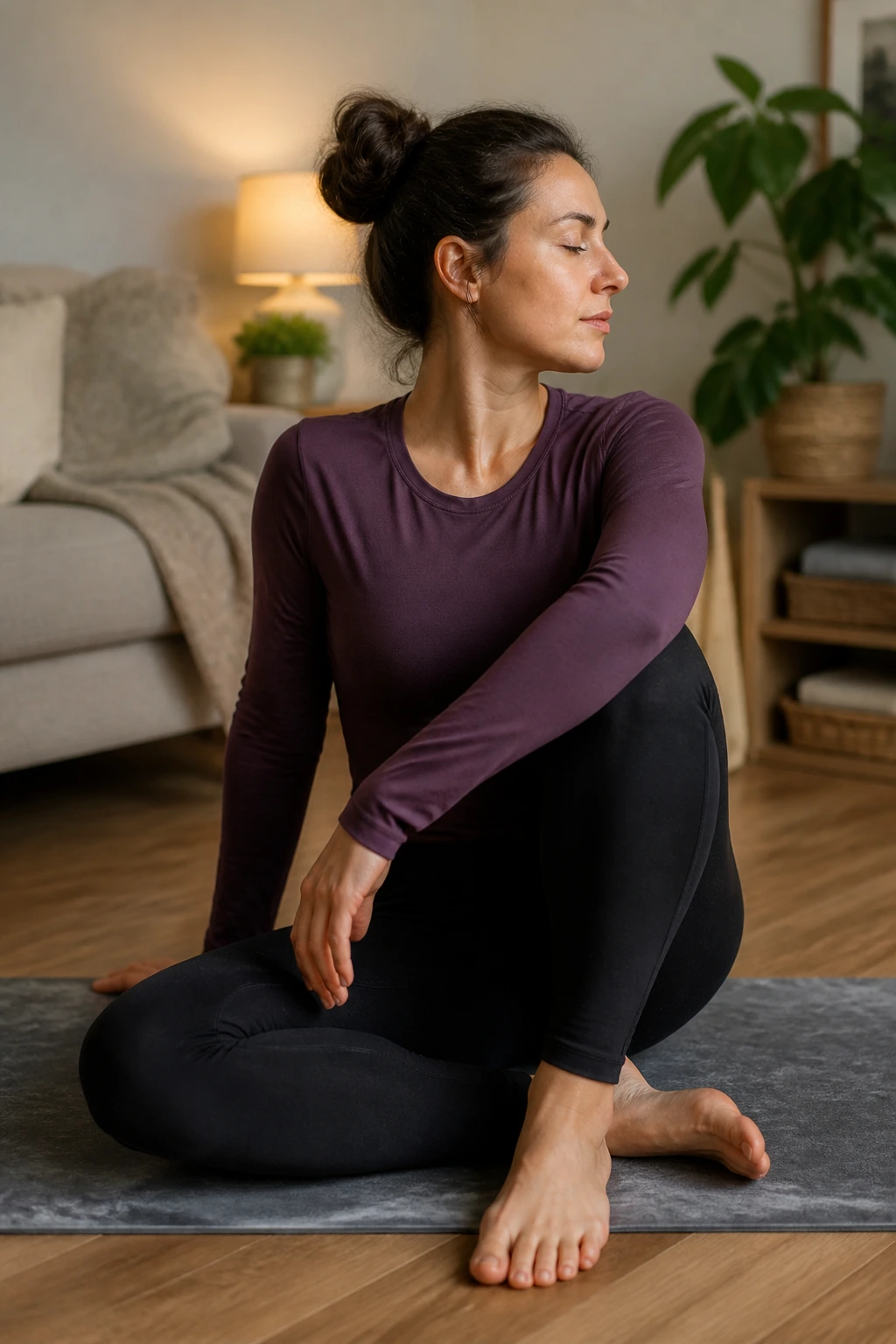
Not every day needs a sweat. Some days, your body needs a little maintenance work and a reminder that motion can feel good even when you’re tired. Recovery sessions are not a cop-out. They’re what make the harder workouts possible.
Pick 4 or 5 moves and spend 30 to 45 seconds on each:
- Neck and shoulder rolls
- Thoracic spine rotations
- Hip flexor stretch
- Ankle rocks
- Calf raises
- Gentle hamstring stretch
You can do this barefoot on a rug while the baby naps or in tiny slices through the day. Five minutes counts. Ten minutes is even better. Keep the pressure mild and the breathing slow.
This is the workout I’d keep in every postpartum plan, even if it’s not dramatic enough for a fitness clip. Your body has enough drama already.
19. Bodyweight Interval Circuits You Can Scale Up Slowly
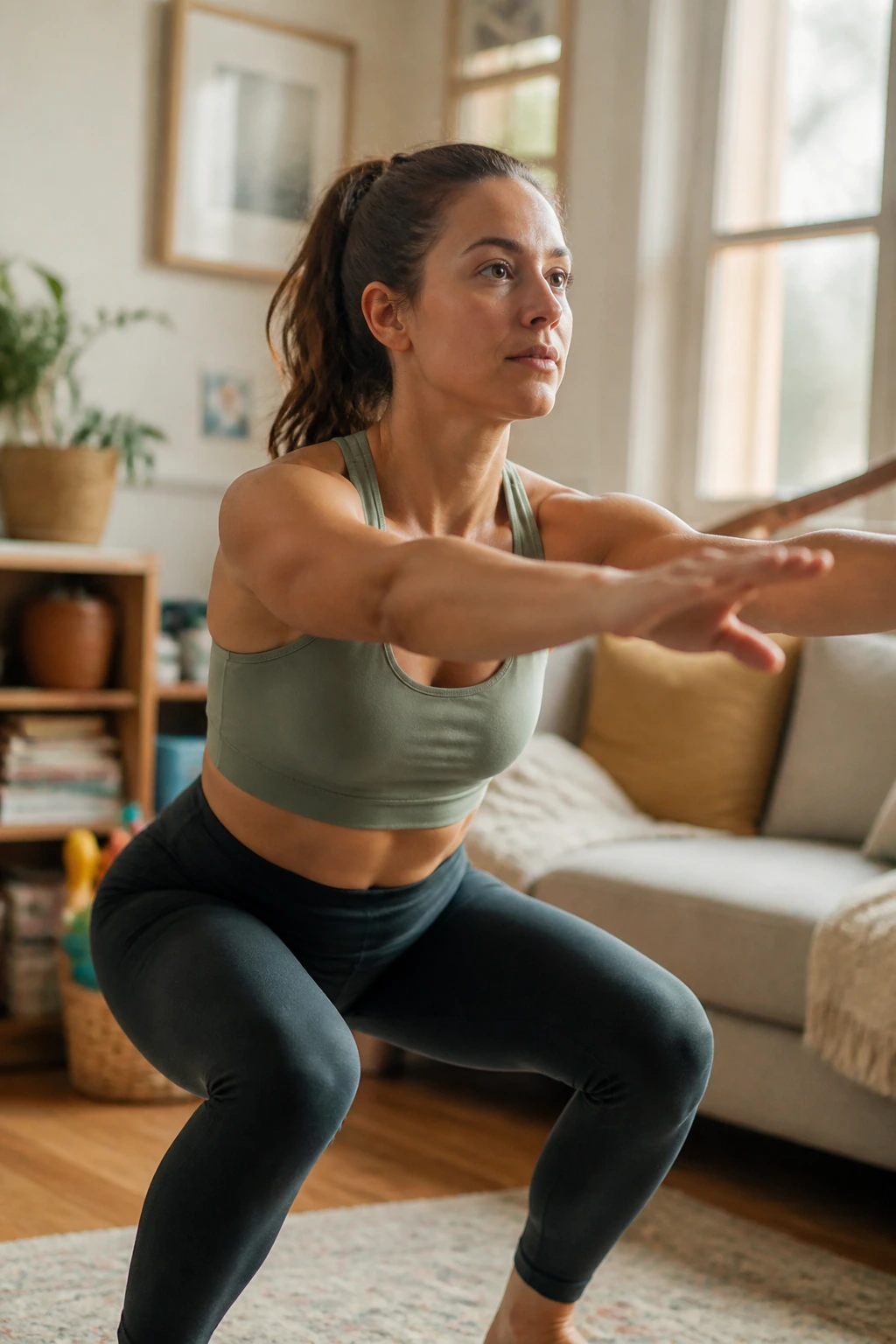
Once basic strength feels steadier, a short interval circuit can bring cardio and muscle work together without needing a full gym setup. The trick is to keep the movements simple and the transitions calm. You want challenge, not chaos.
Try 30 seconds of work and 30 seconds of rest for 3 rounds:
- Squat to reach
- Incline push-up on a wall or counter
- Alternating reverse lunge
- Marching glute bridge
- Standing band row or towel row
- Dead bug variation
If 30 seconds feels like too much, cut it to 20 seconds. If you finish and feel fresh, that doesn’t mean it was useless. It means you’re building a base you can expand later.
This kind of circuit is useful because it teaches you to move under a little fatigue while still keeping form intact. That’s closer to real life than a perfect gym day ever is.
20. A 20-Minute Mixed-Move Workout for the Week You Feel Ready
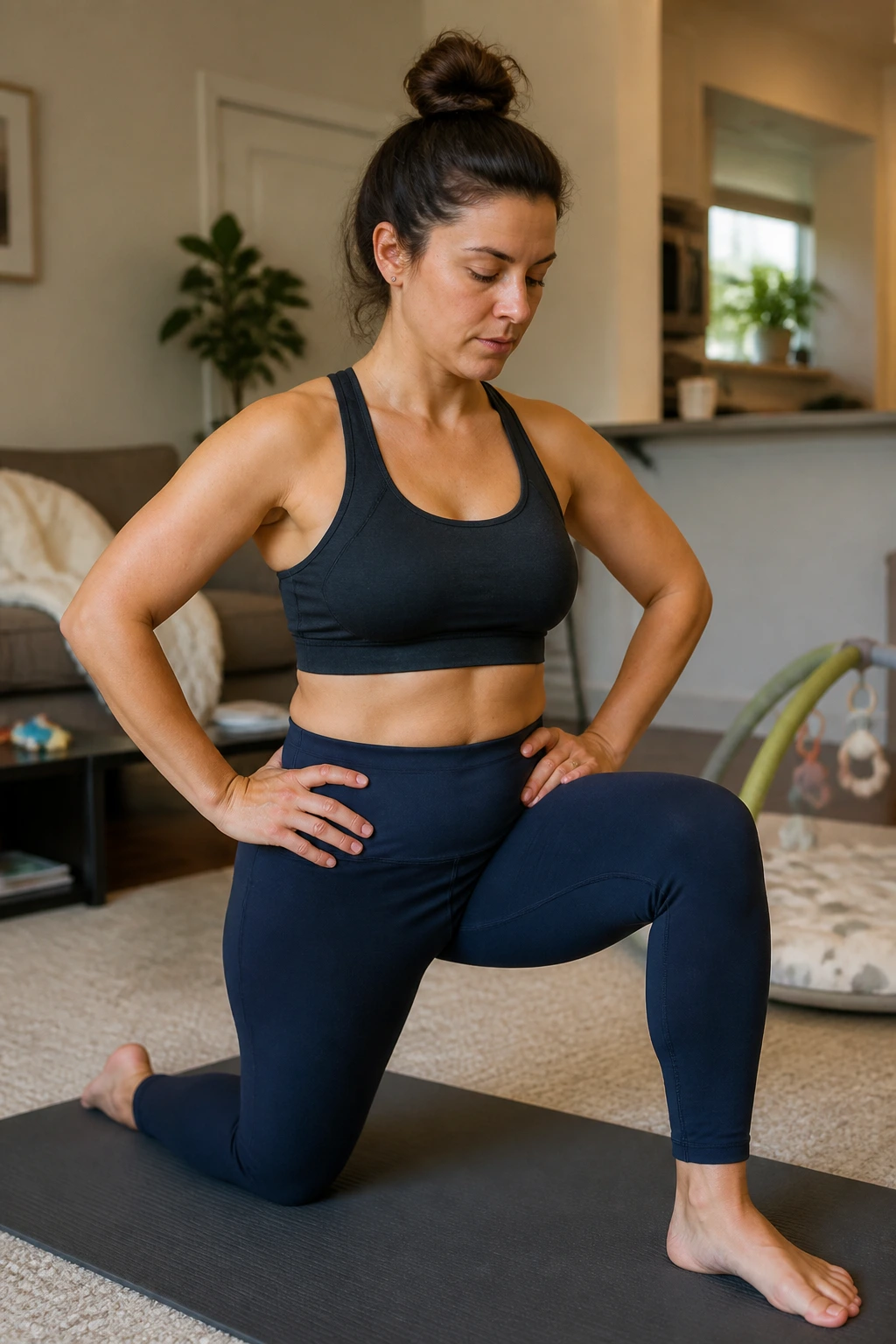
This is the session that ties everything together. Not because you need to “graduate” to it, but because it pulls from all the work you’ve already been doing: breathing, strength, posture, and a little sweat. It’s a clean test of readiness without being reckless.
The circuit
- 1 minute diaphragmatic breathing
- 8 chair squats
- 8 wall push-ups
- 10 band rows
- 6 bird dogs per side
- 20-step farmer carry
- 1 minute easy march in place
Repeat the whole circuit 2 to 3 times. Rest for 30 to 60 seconds between rounds. Keep your exhale long on the effort parts, and watch your abdomen for doming or pressure.
If any move feels off, swap in an easier version. Wall push-ups can replace floor work. Marching can replace anything that feels too jumpy. A mixed workout should leave you more confident than you were when you started, not flattened. That’s the real marker to trust.
