



A good upper-body week does not need to be random. If your shoulders feel cooked by Thursday and your elbows start talking back every time you reach for a door handle, the problem is usually not effort. It is structure.
Simple works.
The best upper body workouts repeat cleanly. They give you a heavy press, a real pull, some work for the rear delts, and enough arm volume to make the session feel complete without turning it into junk volume. That balance matters more than chasing whatever feels hardest on a given day.
I like routines that let you keep 2 or 3 main lifts steady while changing the angle, grip, or tempo. That keeps progress moving and saves you from the trap of maxing out the same bench press every week until your shoulders hate you. Small changes add up.
1. Heavy Barbell Push-Pull Day
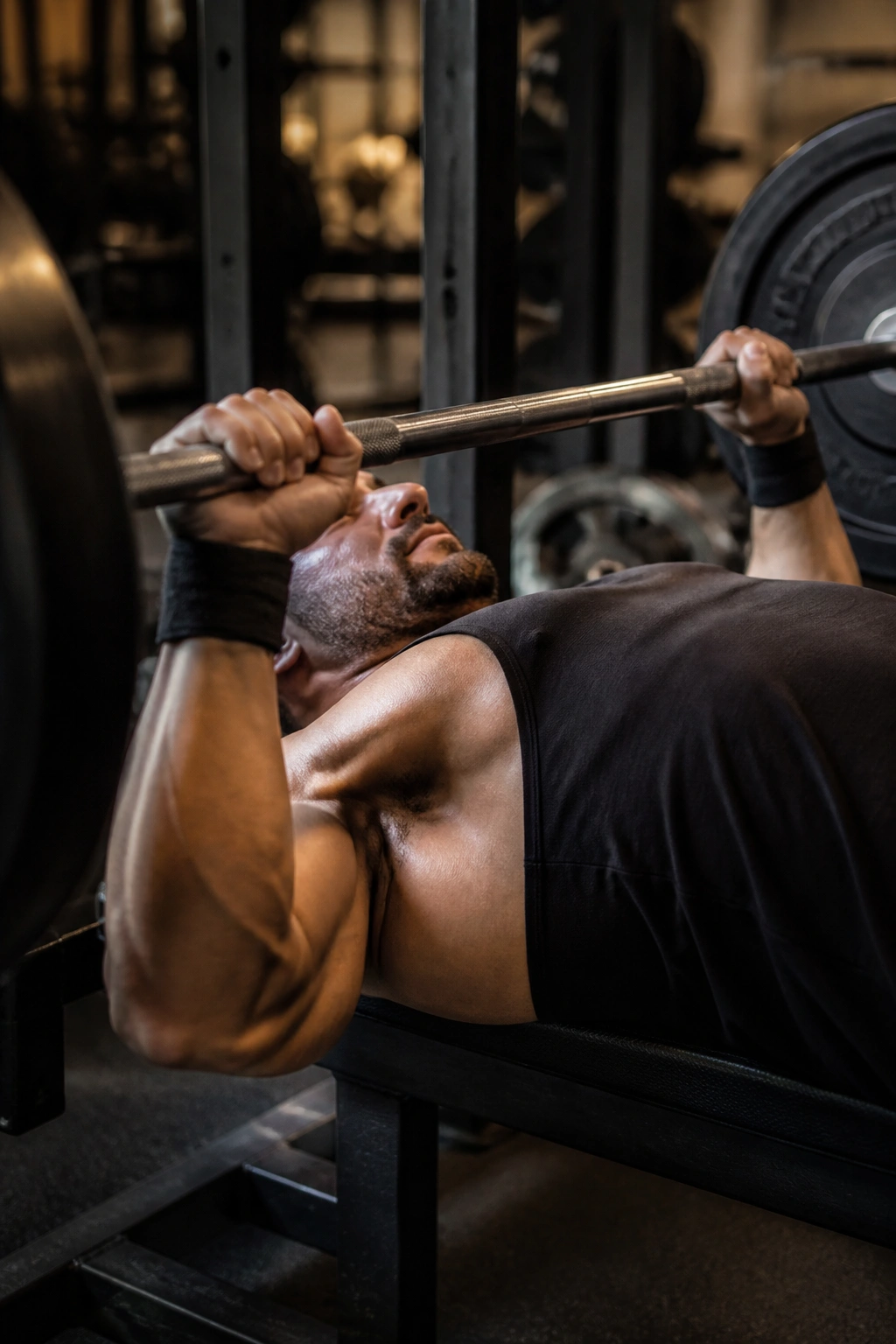
If your goal is raw upper-body strength, this is the kind of session that earns its keep. A heavy press paired with a heavy row gives you the kind of tension that makes the whole torso wake up, not just the chest or arms.
The trick is to keep the lift list short. Three hard sets can do more than eight sloppy ones if the weights are honest and the rest periods are long enough to matter.
Main lifts
- Barbell bench press: 5 sets of 3 to 5 reps
- Weighted pull-up or chin-up: 5 sets of 3 to 5 reps
- Standing barbell overhead press: 4 sets of 4 reps
- Barbell row: 4 sets of 6 reps
- Rope pressdown or skull crusher: 3 sets of 10 to 12 reps
Rest 2 to 3 minutes on the first four lifts. If your bar speed falls apart, the set is done. Do not turn a strength day into a cardio test.
How to make it work
Use a load that leaves you one clean rep in reserve on the first two movements. That keeps your form tight and your joints happier, which is the part people skip when they get excited about heavy numbers.
Best for: lifters who want measurable strength gains and can train with a barbell at least once a week. If you only have one upper-body day to take seriously, make it this one.
2. Incline Dumbbell Press and Chest-Supported Row

Need a session that hits the upper chest and upper back without forcing you to brace like a powerlifter? This is the one I reach for. The incline dumbbell press gives you a smoother shoulder angle than flat barbell work, and the chest-supported row keeps your lower back out of the fight.
That combination feels controlled in a good way. The dumbbells move a little differently on each side, so your stabilizers have to do their job, but the bench support stops the session from turning into a lower-back grind.
How to run it
- Incline dumbbell press: 4 sets of 8 to 10 reps
- Chest-supported dumbbell row: 4 sets of 8 to 10 reps
- Low-incline dumbbell fly: 3 sets of 10 to 12 reps
- Neutral-grip lat pulldown: 3 sets of 10 to 12 reps
- Incline hammer curl: 3 sets of 10 to 12 reps
One simple rule
Pair the press and row as a superset if you want the session to move faster. Rest 60 to 90 seconds after each pairing. If the weights start wobbling, slow down and use a cleaner tempo instead of chasing more load.
A lot of people overcomplicate upper body workouts. This one does not need that. It just needs steady execution and a bench that does some of the stabilizing for you.
3. Upper Body EMOM With Dumbbells and Bands

If you only have 20 minutes, an EMOM — every minute on the minute — keeps things honest. You start a set at the top of each minute, finish it before the clock rolls over, and recover with whatever time is left. Brutal? A little. Efficient? Very.
The nice part is that you can keep the work crisp without chasing failure. That matters because EMOMs punish sloppy pacing fast. If you blow your first three minutes, the rest of the session becomes a rescue mission.
A simple EMOM layout
- Minute 1: 10 dumbbell push presses
- Minute 2: 12 one-arm rows per side
- Minute 3: 12 push-ups
- Minute 4: 15 band pull-aparts
- Repeat for 4 to 5 rounds
Use a pair of moderate dumbbells. The last 2 reps should feel hard, but your shoulders should still move smoothly and your trunk should stay tight. If you start arching your back on the push press, the weight is too heavy.
The charm of this format is that it keeps your heart rate up while still giving the upper body enough real work to grow stronger. It is not a fluff circuit. It is a short session with teeth.
4. Pull-Up and Dip Strength Circuit

Pull-ups and dips are the kind of pairing that tells the truth fast. There is no hiding in either one. If your scapular control is sloppy or your elbows hate the angle, the session will tell you within the first round.
Unlike a chest-only day, this one forces you to own both vertical pulling and deep pressing. That makes it a useful repeatable workout for intermediate lifters who want upper-body strength without living on barbells alone.
What to pair
- Weighted pull-ups: 4 sets of 4 to 6 reps
- Weighted dips: 4 sets of 4 to 6 reps
- Chin-ups: 3 sets of 6 to 8 reps
- Ring push-ups or deficit push-ups: 3 sets of 8 to 12 reps
- Hanging knee raises: 3 sets of 10 to 15 reps
A good rule here: stop the dip before the shoulder rolls forward at the bottom. That deep stretch can be useful, but only if your shoulders tolerate it. If not, swap dips for close-grip push-ups or a neutral-grip dumbbell press.
This workout is best for people who like simple training with a clear scorecard. Add one rep, add five pounds, repeat next week. Plain and effective.
5. Shoulder-Centric Press, Raise, and Rear-Delt Day

Shoulder days work best when they are not just heavy pressing in disguise. If you hammer the same overhead pattern over and over, your front delts get plenty while your side and rear delts quietly fall behind. That is how people end up looking strong from the front and oddly flat from the side.
A better shoulder workout uses different angles. A standing press builds the main force, lateral raises fill out the side head, and rear-delt work keeps the shoulder from feeling pulled forward all the time. The last piece matters more than people admit.
The move I like most here is the landmine press. It sits in that sweet spot between a strict overhead press and a chest press, so it feels friendlier on irritated shoulders while still giving you a real challenge.
Keep the weights moderate. Heavy lateral raises look cool for about 20 seconds and then turn ugly. Clean reps, a slight pause near the top, and slow lowering work better than swinging the dumbbells around like you are trying to start a lawn mower.
A session like this usually lands well in the 8 to 15 rep range. That gives the shoulders enough time under tension to feel worked without forcing ugly grind reps. The burn is the point. Not the joint pain.
6. Chest-and-Back Hypertrophy Supersets

This is the workout I’d pick if size is the goal and you like a session that keeps moving. Supersets are useful here because the chest and back don’t need to rest the same muscles at the same time. While one side works, the other side gets a break.
That does not mean you rush. It means you keep the pace tight and the form sharp. A lot of people confuse a fast session with a sloppy one. Those are different things.
The pairings
- Flat dumbbell press + one-arm dumbbell row: 4 rounds of 10 reps each
- Cable fly + seated cable row: 3 rounds of 12 reps each
- Machine chest press + wide-grip pulldown: 3 rounds of 10 to 12 reps
- Rope triceps pressdown + EZ-bar curl: 3 rounds of 12 reps each
Rest 60 to 75 seconds after each superset. That is enough to breathe, but not enough to cool off completely.
What makes this work
The chest gets hit from horizontal pressing and fly work. The back gets rows and pulldowns. That balance helps your shoulders stay happier, and it also keeps the session from feeling one-sided. If you want an upper-body day that builds muscle without a lot of drama, this is a reliable one.
7. Arms-and-Delts Finisher Session

There are days when your chest and back already got their turn, but your sleeves still look a little empty. That is when an arms-and-delts finisher makes sense. It is not a replacement for big compound lifts. It is the accessory day that makes the big lifts look better.
I like this workout at the end of a split because it’s focused, loud, and mercifully short. You get the pump, the shoulder cap work, and enough elbow flexion and extension to remind your biceps and triceps that they still have a job.
What each superset hits
- Seated dumbbell curl + rope pressdown: 4 rounds of 10 to 12 reps
- Incline curl + overhead cable triceps extension: 3 rounds of 10 to 12 reps
- Lateral raise + rear-delt fly: 4 rounds of 12 to 15 reps
- Hammer curl + close-grip push-up: 3 rounds of 8 to 12 reps
A small warning: do not chase failure on every arm set. The elbows get cranky when every rep is a max effort grind. Leave one clean rep in the tank on the first two rounds, then push harder on the last round if everything still feels smooth.
This workout is best for people who like that full, tight, skin-stretching pump. If that phrase makes sense to you, you already know where this belongs in the week.
8. Band-Only Upper Body Session
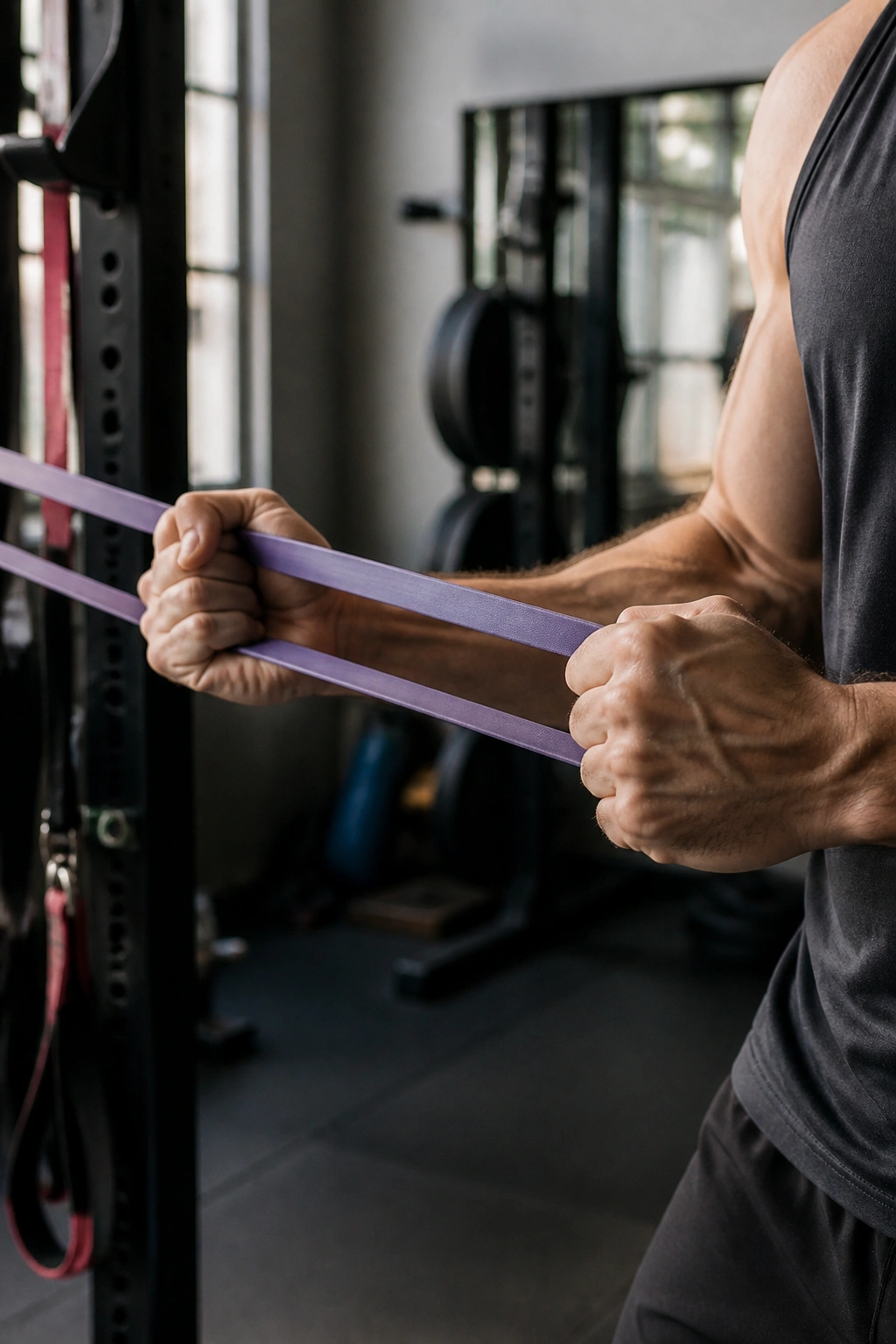
Bands look mild until the last 5 reps. Then they bite. The resistance climbs as the band stretches, which means the hardest part of the rep is often the lockout — exactly where a lot of people tend to coast with free weights.
That makes bands useful for travel, home training, and recovery weeks. They also keep constant tension on the muscle, which can be a nice change when you’ve been living under barbells and dumbbells.
A clean band workout
- Band chest press: 4 sets of 12 to 15 reps
- Standing band row: 4 sets of 12 to 15 reps
- Band overhead press: 3 sets of 10 to 12 reps
- Band face pull: 3 sets of 15 to 20 reps
- Band curl: 3 sets of 12 to 15 reps
- Band triceps extension: 3 sets of 12 to 15 reps
Anchor the band at chest height for presses and rows. For face pulls, set it slightly above eye level and pull toward the bridge of the nose with your elbows high and wide. That detail matters.
This is best for days when you want the upper body to work but do not want the session to beat you up. It is light on equipment, not light on effort.
9. Push-Up Ladder and Inverted Row Session

A good living-room session does not need to feel like a compromise. A push-up ladder paired with inverted rows can leave your chest, triceps, lats, and upper back tired in all the right places, and you only need a sturdy table or bar for the row setup.
The ladder format is simple: start with a small rep target, build up, then come back down. Your first few rounds feel almost easy. Then your breathing starts to change and the floor gets less friendly.
The ladder
- Push-ups: 2, 4, 6, 8, 10, then back down
- Inverted rows: match each push-up round
- Pike push-ups: 3 sets of 6 to 8 reps after the ladder
- Close-grip push-ups: 2 sets of 8 to 12 reps
- Plank shoulder taps: 2 sets of 20 taps
If the full ladder feels too long, stop at 8 reps on the way up. You still get a good session without turning the last rounds into a form collapse.
Use a slower lowering phase on the push-ups if you want more challenge without adding more reps. Three seconds down, brief pause, up with control. That one detail makes bodyweight work feel a lot more serious.
10. Machine-Based Upper Body Pump

Machines are not a shortcut. They are a way to keep tension honest when you want to focus on the muscle instead of fighting balance, grip fatigue, or awkward setup. That makes them useful for repeat weekly upper body workouts, especially if you want to move from one station to the next without wasting energy.
The nice thing about machine work is the clean arc of motion. You press, pull, or raise against a fixed path, and that helps you feel exactly which part of the movement is doing the work. No mystery. No bar wobble. No drama.
A solid machine day
- Machine chest press: 4 sets of 8 to 12 reps
- Seated row: 4 sets of 8 to 12 reps
- Machine shoulder press: 3 sets of 8 to 10 reps
- Lat pulldown: 3 sets of 10 to 12 reps
- Pec deck: 3 sets of 12 to 15 reps
- Cable curl and pressdown: 3 sets of 12 reps each
Why this works: the machine keeps tension in the target muscle and makes it easier to repeat the same path week after week. That consistency helps when you want to track load or reps without your form changing every set.
This workout is a solid fit for anyone who likes a cleaner feel than free weights can sometimes give. It also works well on days when your joints want a little less chaos.
11. Upper Body Beginner Workout

New lifters often make the same mistake: they try to train every muscle from every angle before they can even press and row with decent form. That usually creates more confusion than progress. A beginner upper body workout should teach patterns first, then build load later.
Start with one push, one pull, one overhead movement, and one arm move. That’s enough. A workout does not need to be busy to work.
Starter pattern
- Incline push-up or machine chest press: 3 sets of 8 to 10 reps
- Seated cable row or chest-supported row: 3 sets of 8 to 10 reps
- Dumbbell overhead press: 3 sets of 8 reps
- Lat pulldown: 3 sets of 10 reps
- Dumbbell curl: 2 sets of 12 reps
- Rope pressdown: 2 sets of 12 reps
What to watch for
Keep the first few reps smooth. If the shoulders shrug up on every press or the lower back arches hard, the load is too much. You want clean, repeatable reps, not a heroic grind.
This session is best for someone who wants a clear weekly upper-body template that can be repeated without needing a different exercise list every Monday. That simplicity is a feature, not a flaw.
12. 30-Minute Upper Body Density Session

Some weeks are tight. Work runs long, sleep gets weird, and the gym window shrinks to half an hour. A density session keeps you from skipping the upper body altogether, which is usually a better choice than waiting for a perfect day that never arrives.
The goal here is simple: do a lot of quality work in a short window. You are not resting forever between sets, but you are also not rushing through junk reps.
The layout
- Round 1: dumbbell bench press, 10 reps
- Round 2: one-arm row, 10 reps per side
- Round 3: seated dumbbell shoulder press, 8 reps
- Round 4: band pull-aparts, 20 reps
- Round 5: hammer curls, 12 reps
- Round 6: overhead triceps extensions, 12 reps
Run those six movements for 3 rounds with 30 to 45 seconds between moves. If you move steadily, the workout lands right around 30 minutes.
A density session like this is not flashy. It is dependable. The chest and back get work, the shoulders stay involved, and the arms get enough to keep the session feeling complete. That is usually enough on a packed day.
13. Shoulder-Friendly Upper Body Workout

Not every upper-body plan needs heavy overhead pressing. If your shoulders get pinchy, cranky, or plain irritated, forcing a strict barbell press every week is a bad bargain. A better workout respects the joint angle and still trains the whole upper body.
That usually means neutral grips, slightly reduced range where needed, and more chest-supported pulling. The goal is not to baby the shoulders forever. The goal is to keep training while giving the irritated spots room to settle down.
What to skip and what to keep
- Skip or reduce: deep barbell dips, extreme range benching, and upright rows if they bother you
- Keep: neutral-grip dumbbell press, landmine press, chest-supported row, cable face pull, incline push-up
- Add: light external rotations for 2 sets of 15 reps
A joint-friendlier sequence
- Neutral-grip dumbbell press — 4 sets of 8 reps
- Chest-supported row — 4 sets of 10 reps
- Landmine press — 3 sets of 10 reps
- Face pull — 3 sets of 15 reps
- Incline push-up — 2 sets close to failure without pain
A workout that keeps you training is better than one that looks perfect on paper and leaves you sore in the wrong way. That is a hard lesson, but a useful one.
14. Home Gym Dumbbell Upper Body Workout
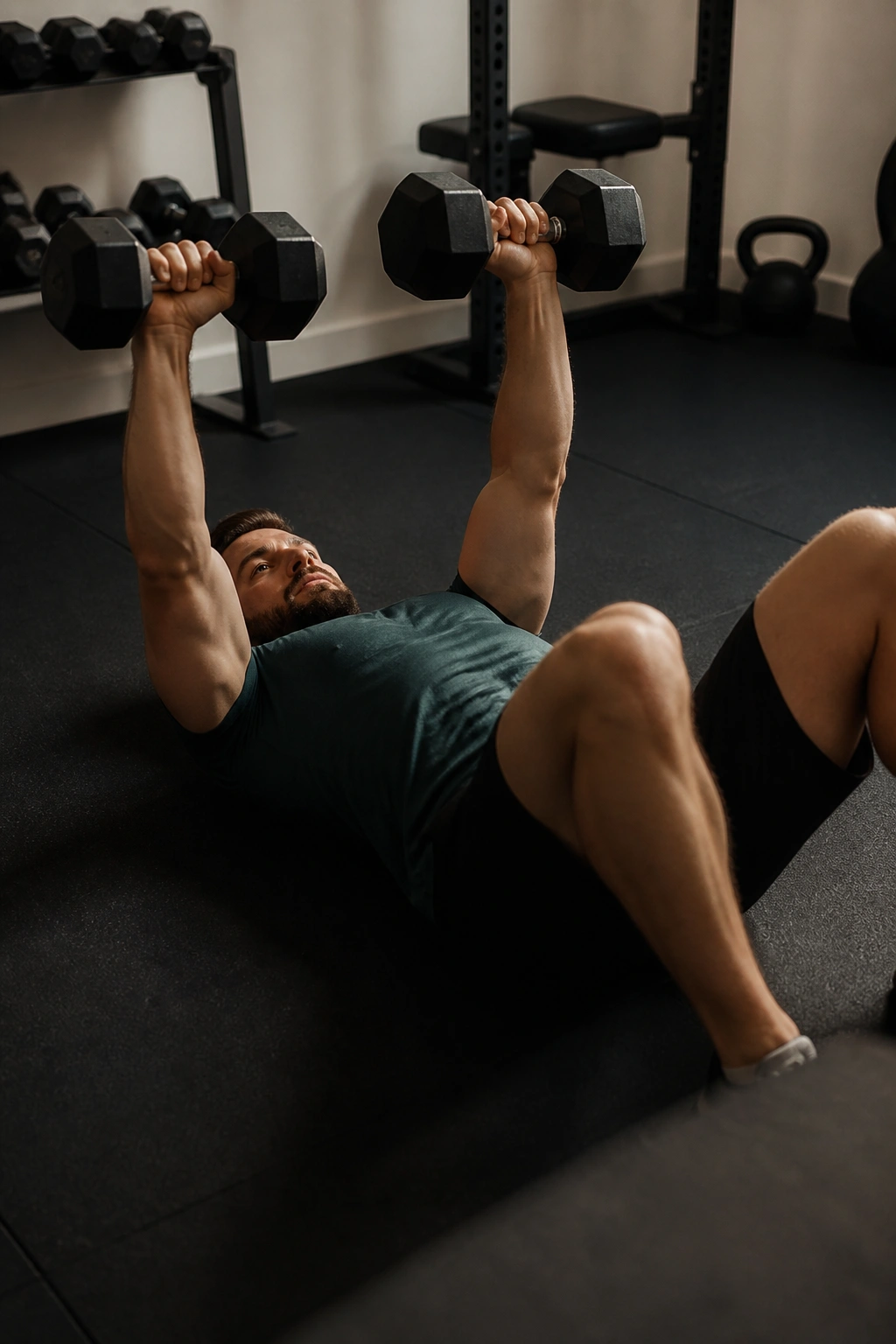
There is a specific feel to a dumbbell session at home. The weights clink a little louder on the floor. The bench pad is never quite where you want it. The room is smaller, so every movement feels more obvious. And somehow that makes the workout cleaner.
I like home dumbbell work because it strips out the nonsense. You pick a few solid moves, keep the rest short, and get to work. If the setup is good, the session can be every bit as effective as a gym day.
A dependable home upper-body workout looks like this:
- Flat or floor dumbbell press: 4 sets of 8 to 10 reps
- One-arm dumbbell row: 4 sets of 10 reps per side
- Standing dumbbell shoulder press: 3 sets of 8 reps
- Lateral raise: 3 sets of 12 to 15 reps
- Alternating dumbbell curl: 3 sets of 10 to 12 reps
- Overhead triceps extension: 3 sets of 10 to 12 reps
The floor press is a smart substitute if you do not have a bench. It limits the bottom range a bit, which is often easier on the shoulders while still hitting the chest and triceps hard.
Keep the bench or floor setup stable, breathe hard, and move the dumbbells with purpose. Home training rewards people who keep the session simple.
15. Minimal-Equipment Tempo Upper Body Session
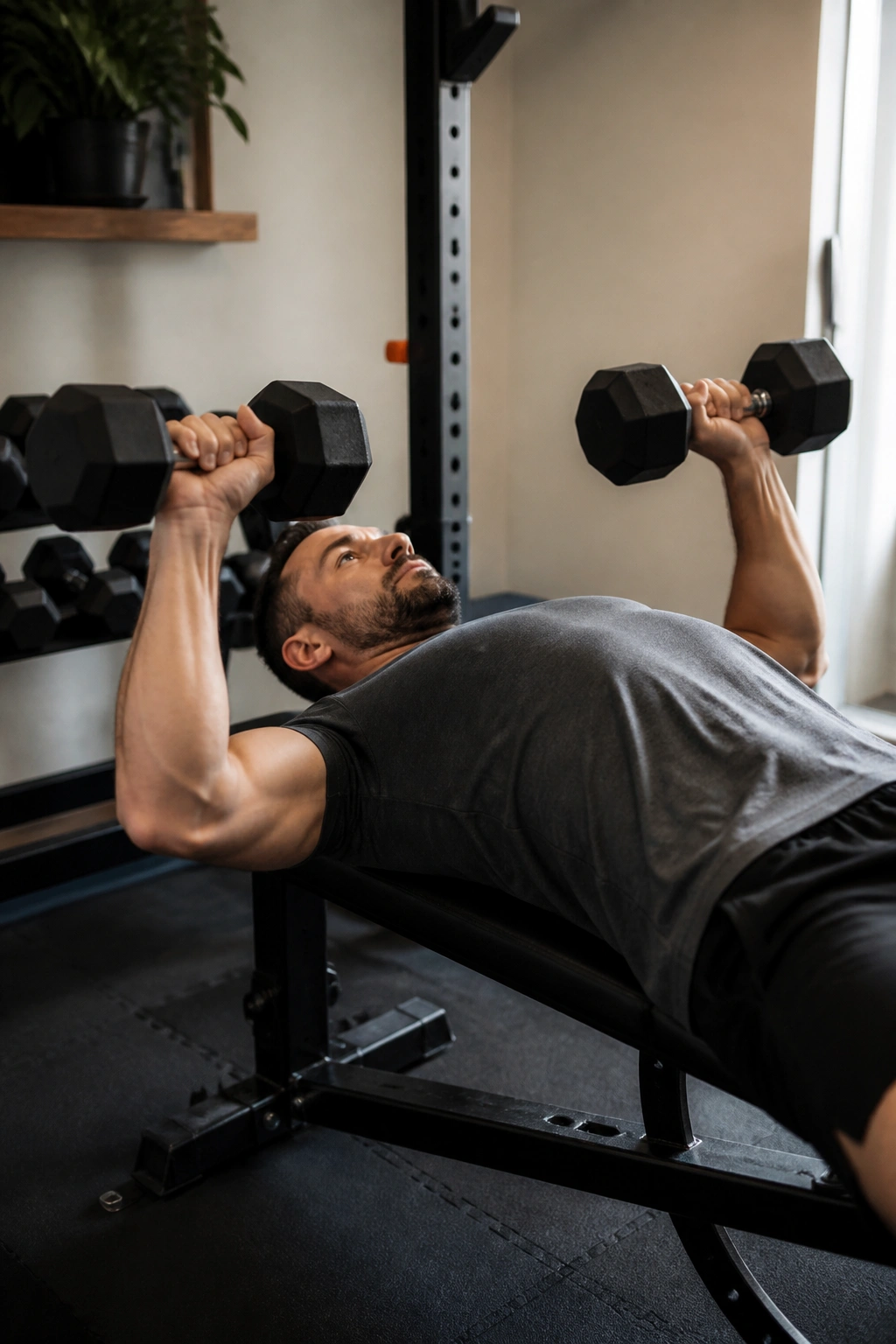
A single pair of dumbbells and a bench can go farther than people think. If you control the tempo, you do not need a mountain of equipment to make the upper body work hard. Slower reps create more time under tension, and that changes the feel of the whole session.
This style is a favorite of mine for weeks when I want to train without chasing load. It is also useful if your joints feel better when the lifting is clean and deliberate.
Tempo template
- Dumbbell bench press: 3 sets of 8 reps with a 3-second lower
- One-arm row: 3 sets of 10 reps with a 1-second squeeze at the top
- Seated dumbbell press: 3 sets of 8 reps with a controlled lower
- Lateral raise: 3 sets of 15 reps with no swinging
- Curl: 3 sets of 12 reps with a brief pause near the top
- Triceps extension: 3 sets of 12 reps with a slow return
The tempo is the point. If you let the dumbbells drop, you lose the main benefit of the session. Keep the lowering phase smooth, and you’ll feel the difference by the second round.
This workout is best for lifters who want a tighter, more controlled feel and do not need every session to be heavy to be worth doing.
16. Upper Body Endurance Circuit

If your upper-body training has been all heavy sets and long rests, an endurance circuit can wake things up. It is less about max strength and more about keeping the shoulders, chest, back, and arms working without falling apart as fatigue builds.
The pace matters here. You are trying to maintain shape under breathing stress, which is a different skill from grinding one heavy rep. That kind of work pays off when you want a session that feels athletic and not overly technical.
Circuit setup
- Push-ups: 15 to 20 reps
- Inverted rows or band rows: 15 reps
- Dumbbell push press: 12 reps
- Band face pull: 20 reps
- Dumbbell curl: 15 reps
- Close-grip push-up or bench dip substitute: 12 reps
Run 3 to 5 rounds with 45 seconds of rest between rounds. If your form starts looking rough before round 3 is done, the reps are too high or the weights are too heavy.
A circuit like this is a nice change of pace when your upper body needs work but you do not want another slow, heavy session. It builds work capacity without pretending to be a max-strength day.
17. Posture-Focused Upper Back Workout

Why do so many people feel like their shoulders round forward even when they train? Usually because their weekly plan gives more love to pressing than to the upper back, rear delts, and external rotators. That imbalance is common, and it is fixable.
This is not a miracle posture workout. It will not erase a desk job. But it can make your shoulder blades move better, help you stand a bit more open, and make your pressing feel smoother.
The moves
- Face pulls: 4 sets of 15 reps
- Chest-supported reverse fly: 3 sets of 12 to 15 reps
- Cable row with a 1-second squeeze: 4 sets of 10 reps
- Prone Y-raise: 3 sets of 10 reps
- Wall slide: 2 sets of 10 slow reps
The key is to move with control and keep the neck relaxed. If your traps take over and your shoulders climb toward your ears, lighten the load immediately.
A workout like this works well after heavy pressing days or on its own as a lighter upper-body session. It gives your back the sort of focused attention that a lot of weekly plans skip.
18. Upper Body Power Session

Power work should look and feel fast. If the bar turns into a slow grind, you are no longer training power; you are just lifting something heavy in a tired way. That distinction matters.
A good power session uses lower reps, longer rest, and fast intent. You want each rep to move sharply. Not recklessly. Sharply.
Power sequence
- Push press: 5 sets of 3 reps
- Speed bench press: 6 sets of 3 reps at a light to moderate load
- Explosive row: 4 sets of 5 reps
- Plyo push-up: 4 sets of 5 reps
- Medicine ball chest pass or slam: 4 sets of 6 reps
Rest 90 seconds to 3 minutes depending on the movement. The lighter explosive work can use shorter rest, but the heavier barbell lifts need enough recovery to stay fast.
This kind of workout is useful when you want the upper body to feel springy, not just tired. It is also a nice break from the slower, higher-volume sessions that fill out most weeks.
19. Mixed-Grip and Tempo Control Session

Brute force is overrated when the reps get sloppy. A controlled session with mixed grips, pauses, and slower lowering phases can clean up technique while still giving the upper body a real training effect. It’s a quieter workout, but not an easier one.
I like this style for lifters who need better consistency. It exposes side-to-side differences, teaches patience under load, and makes the body hold positions it usually cheats out of.
The structure
- Paused bench press: 4 sets of 5 reps with a 1-second pause on the chest
- One-arm dumbbell row: 4 sets of 8 reps per side
- Z-press or seated dumbbell press: 3 sets of 8 reps
- Neutral-grip chin-up: 3 sets of 6 reps
- Slow curl: 3 sets of 10 reps with a 3-second lower
The paused bench removes the bounce. The Z-press forces the trunk to stay honest. The slow curl sounds small, but it teaches control in a way that carries over better than people expect.
This workout is a strong fit if you want upper-body work that feels technical and deliberate, not just sweaty.
20. Upper Body Deload and Recovery Workout

A recovery week is not a break from training. It is a way to keep training without carrying every joint and tendon to the edge. When your pressing feels sticky, your elbows ache on curls, or your shoulders feel flat and tired, a lighter upper-body workout often helps more than another hard session.
This one should feel smooth, not heroic. Keep the weights light, the reps crisp, and the rest calm. You want blood moving through the area, not a big finish-line moment.
Light work
- Incline push-up: 3 sets of 10 to 15 reps
- Band row: 3 sets of 15 reps
- Cable or band face pull: 3 sets of 15 to 20 reps
- Light dumbbell lateral raise: 2 sets of 15 reps
- Scapular push-up: 2 sets of 10 reps
- Easy curl and pressdown superset: 2 sets of 12 reps each
Stay well shy of failure. Two to four reps in reserve is the point. You should leave the gym feeling better than when you walked in, not cooked.
This is the workout I like to keep in the rotation when the week has been heavy, the sleep has been short, or the joints need a little mercy. That sort of session does not always look exciting on paper, but it keeps the whole upper-body plan moving.
If you keep one heavy day, one volume day, and one lighter recovery day in the mix, you can repeat upper body workouts every week without beating yourself up. That’s the real trick.
