



A kettlebell looks harmless until you pick one up and try to move with it.
Then the offset weight starts telling on your grip, your hips, your core, and every shortcut you usually get away with. That is exactly why the kettlebell exercises every woman should try are not the flashy circus moves that fill a feed; they’re the ones that build strength you can feel in your posture, your stride, and the way you carry groceries without thinking about it.
A bell is also brutally honest. If you hinge badly, it shows it. If you rush a press, it shows it. If your midsection goes soft on a carry, that shows too. I like that about kettlebells. No fluff. No hiding.
Women who train with kettlebells tend to get a nice mix of lower-body strength, shoulder stability, and core work without needing a giant room full of machines. A single bell can teach better bracing, better balance, and cleaner power than a lot of people expect. Start with the movements that make the body organize itself first. The rest becomes much easier to earn.
1. Kettlebell Deadlift
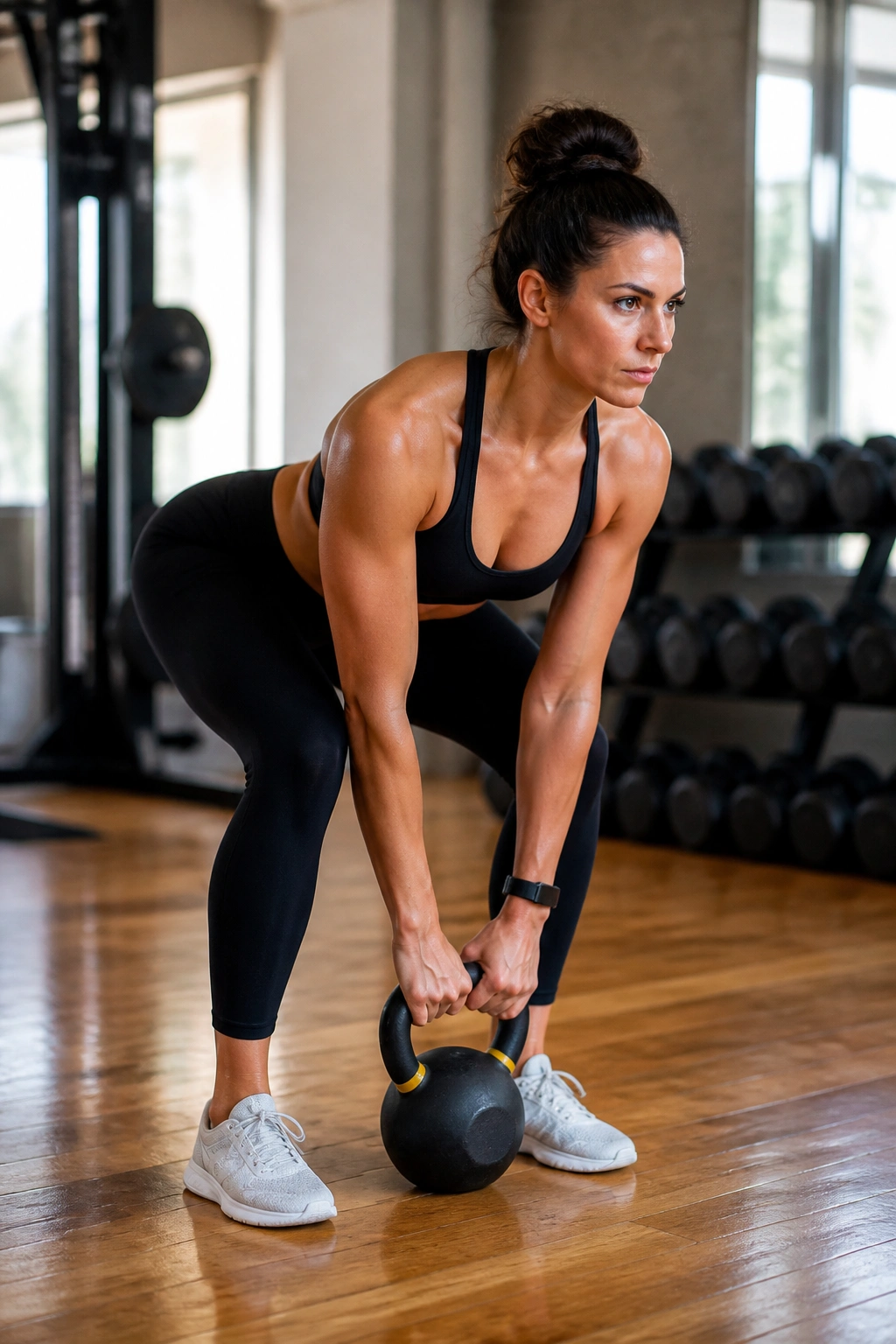
The deadlift is where kettlebell training gets honest. It teaches the hip hinge without the chaos of speed, and that matters more than people admit. If you can set the bell down and pick it up with a flat back, packed shoulders, and a real brace, you’ve already built a base that carries into swings, cleans, and carries.
Why It Belongs First
This is the simplest place to learn how a kettlebell should feel between your feet. The bell starts still. You move around it, not at it.
Quick Cues to Nail It
- Place the bell between your feet, not out in front.
- Keep your shins nearly vertical as you push your hips back.
- Squeeze the handle hard and keep your lats tight.
- Stand up by driving the floor away, then finish tall without leaning back.
- Lower the bell with the same control you used to stand up.
If your lower back takes over, the bell is probably too far away or too heavy. That’s the blunt truth. Use the deadlift to teach your body what a proper hinge feels like, and do not rush past it just because it looks easy.
2. Two-Hand Kettlebell Swing
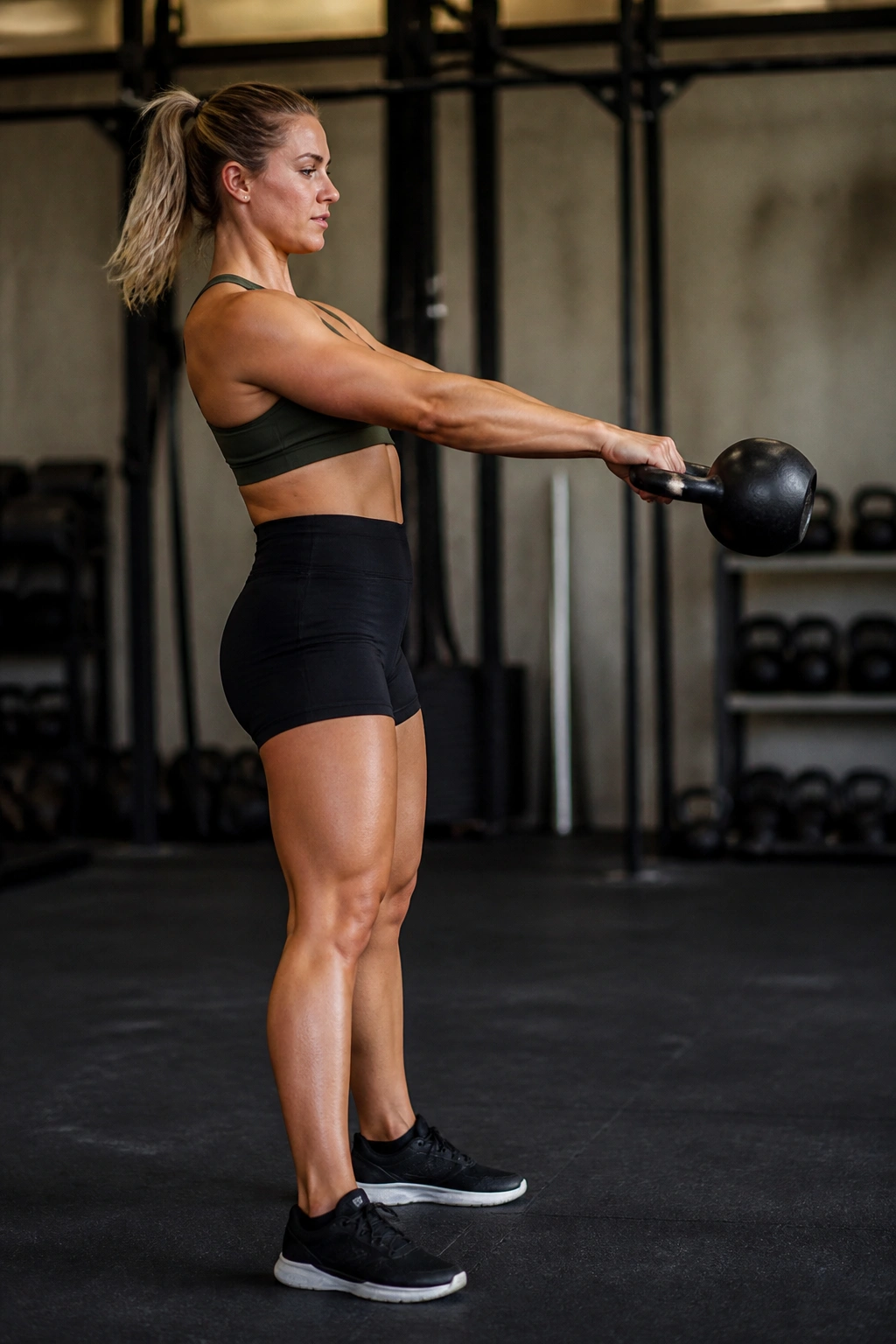
The swing is the move that makes people grin and swear at the same time. Done well, it feels explosive and oddly light at the top. Done badly, it turns into a shoulder lift with a bell attached, which is a fast route to frustration.
The secret is that the swing is a hinge, not a squat and not an arm raise. Your hips fire, the bell floats, and your hands mostly act like hooks. That difference matters. A clean swing gives you power, conditioning, and a hard hit to the posterior chain without beating up your joints the way sloppy jumping can.
One crisp set beats twenty messy reps. I mean that. Stop while your snap is still sharp and your back still feels long.
A good swing starts with the same setup as the deadlift, then the bell hikes back between the legs like a football snap. From there, you stand fast, squeeze the glutes, and let the bell rise because your hips made it happen. If the bell is climbing above chest height, you’re probably muscling it with your arms or overextending at the top.
3. Goblet Squat
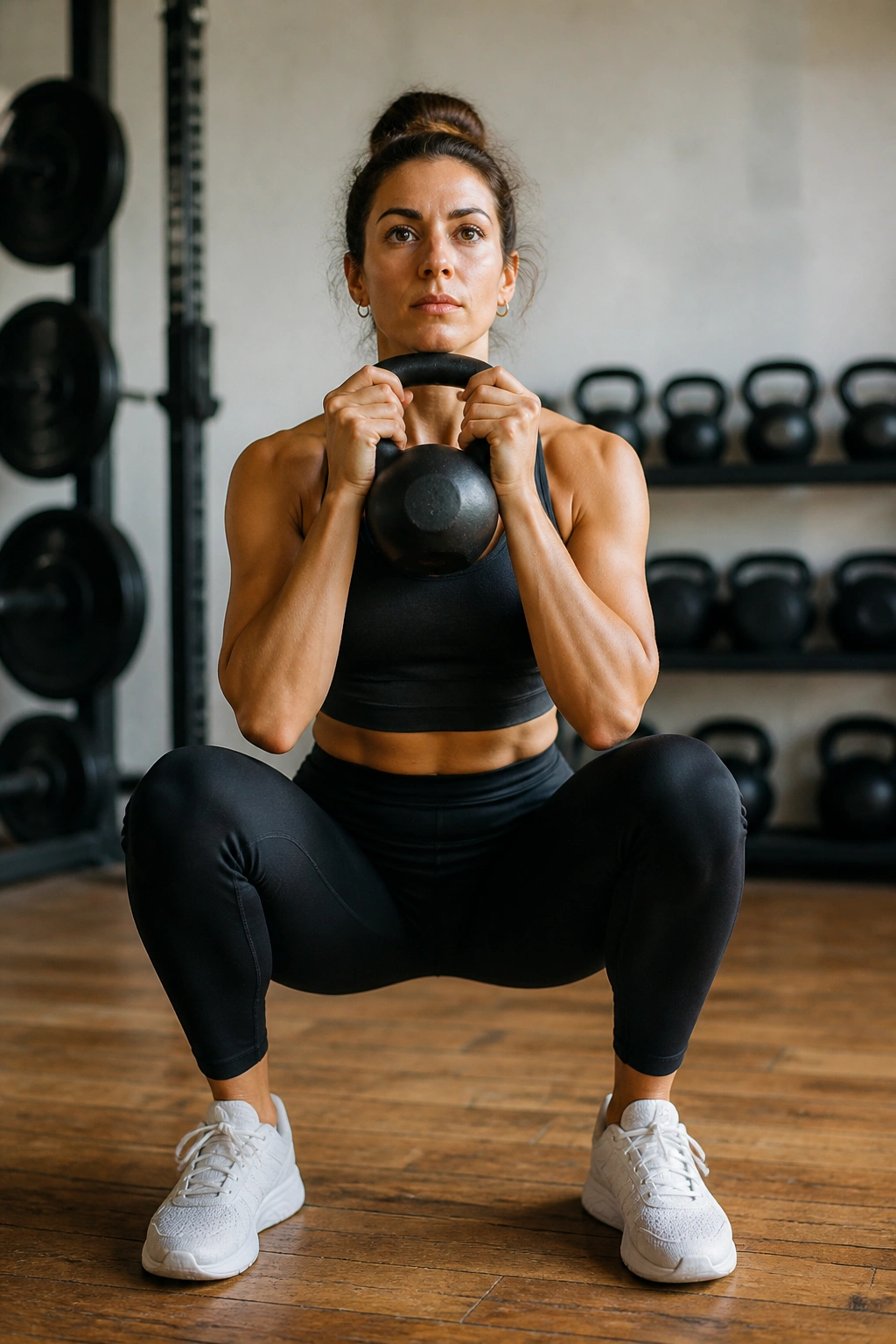
Why does a goblet squat feel so different from a bodyweight squat? Because the front-loaded bell forces your torso to stay honest. You cannot fold forward and pretend everything is fine. The kettlebell sits close to the chest, and that tiny shift makes the whole squat feel more grounded and useful.
It’s one of the best ways to teach depth, control, and better knee tracking. The front load also encourages a more upright chest, which is useful if your hips tend to tip you forward. I like goblet squats for people who have a hard time feeling their glutes and quads work together.
What to Watch For
Keep the elbows inside the knees if that helps your depth, but don’t force your knees to shove outward just for the sake of the position. The feet should stay rooted. The whole movement should look steady, not dramatic.
A simple rule helps here: descend under control, pause for a beat at the bottom, then stand without bouncing out of the hole. That pause tells you whether you truly own the bottom position or just drop into it and hope for the best.
4. Front Rack Reverse Lunge
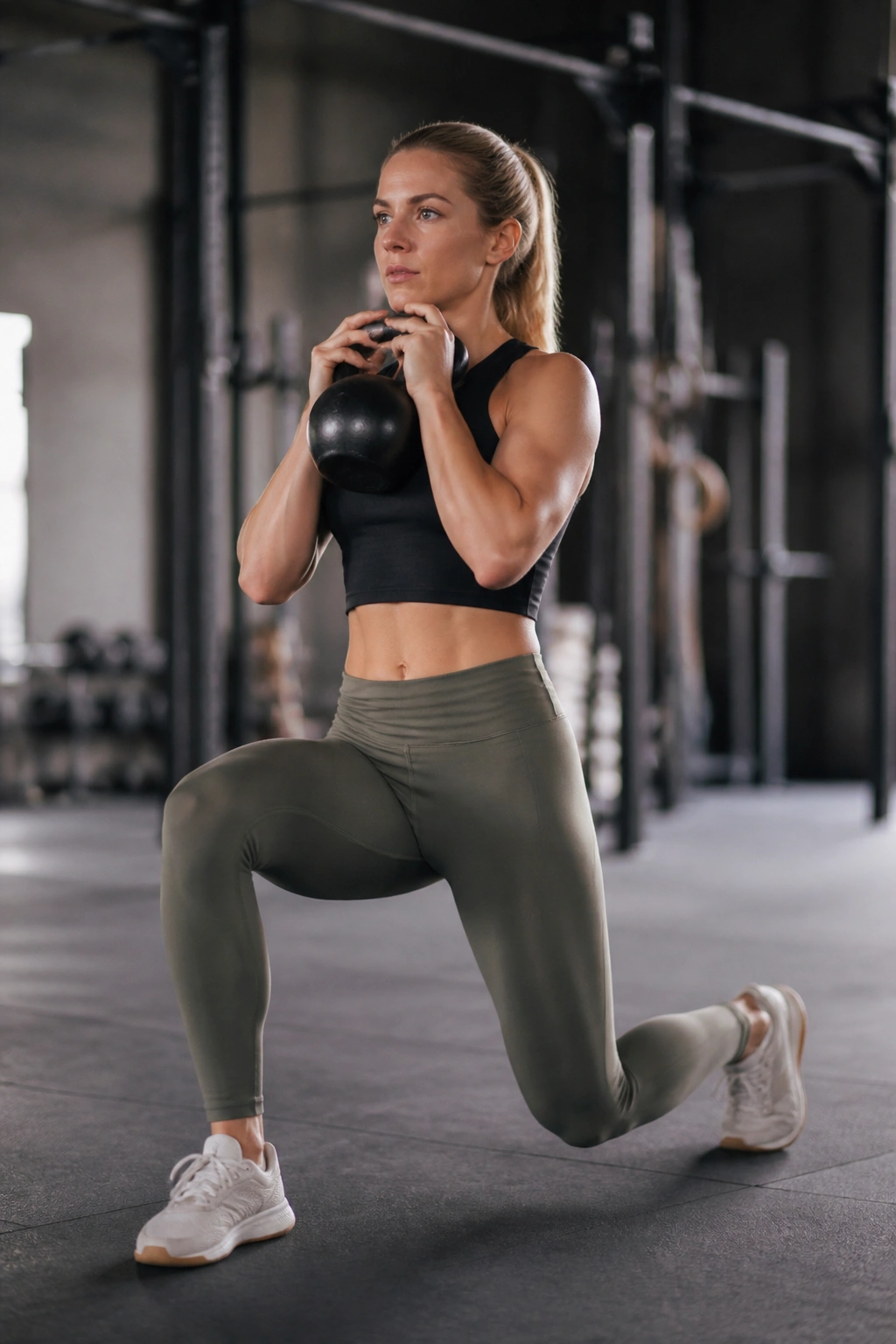
A reverse lunge is friendlier than a forward lunge, and I say that with no apology. Stepping back gives you more control, more balance, and usually less drama at the front knee. Put the kettlebell in the front rack or hold it goblet-style, and the exercise becomes a real test of single-leg strength instead of a speed contest.
Picture the setup: tall torso, front foot planted, back knee moving toward the floor without slamming it. The front leg does the main work. The back leg helps, but it should not hijack the whole thing. If you wobble, shorten the step. If your front heel pops up, slow down and reset.
This is a great move for building glutes and quads without needing a barbell. It also teaches you to keep your ribs stacked over your hips while one leg is working hard. That carryover shows up everywhere, from stairs to hiking to getting up off the floor without using your hands like crutches.
5. Kettlebell Romanian Deadlift
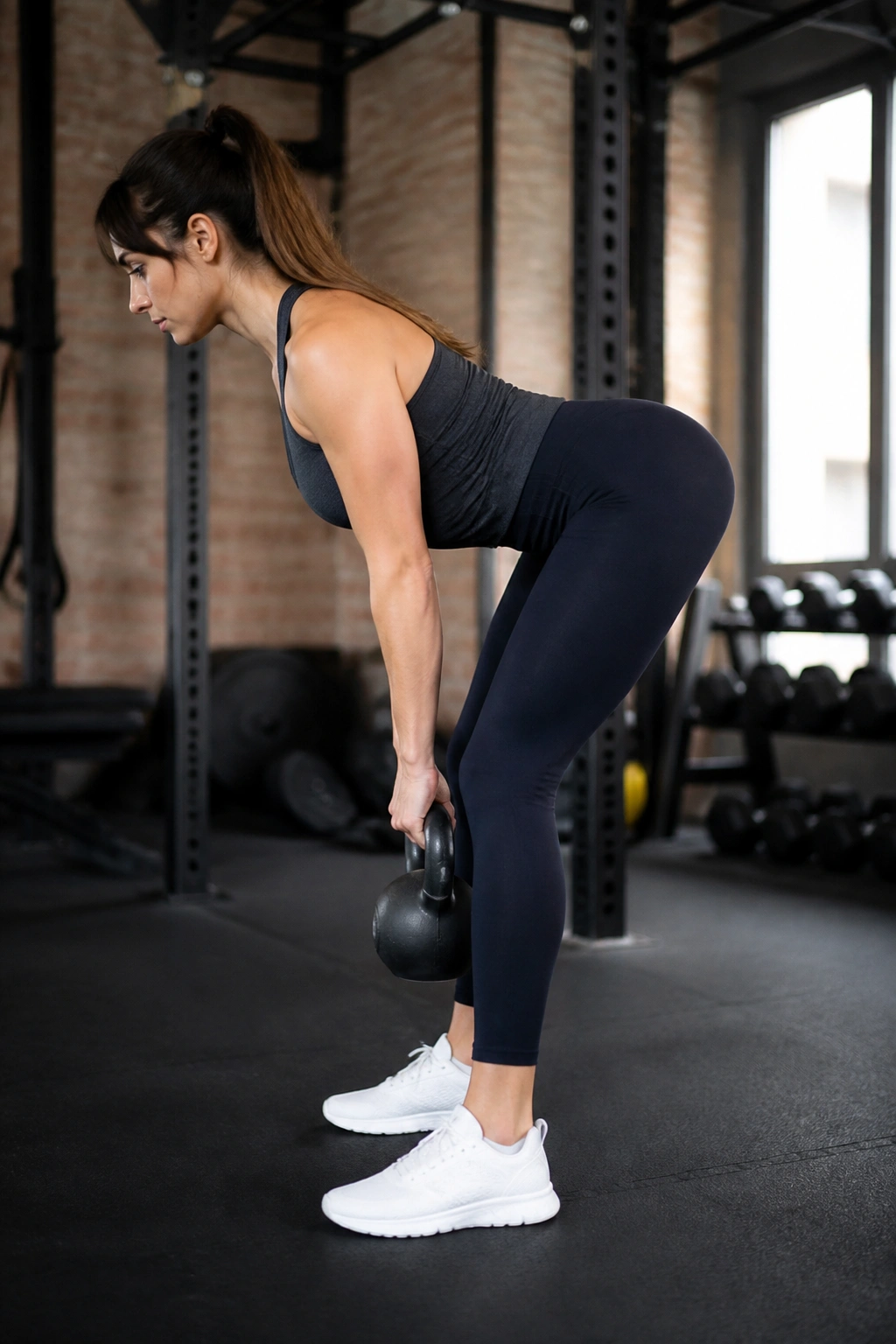
If the deadlift is the doorway, the Romanian deadlift is the long hallway that teaches you patience. The movement starts at the hips, with only a soft bend in the knees, and the bell travels down the thighs while your hamstrings stretch under load.
People mess this up by turning it into a squat or by lowering the bell until the back starts rounding. Don’t do that. The goal is a controlled hinge that loads the hamstrings and glutes while keeping the spine long and the bell close to the body. You should feel tension, not a tug-of-war in your lower back.
I like this version because it teaches the part of the hinge most people miss: the return. The way you come back up matters. Drive the hips forward, stand tall, and stop the rep without snapping into a hard lean-back. That clean finish keeps the pelvis and ribs stacked, which is exactly where you want them.
6. Suitcase Carry
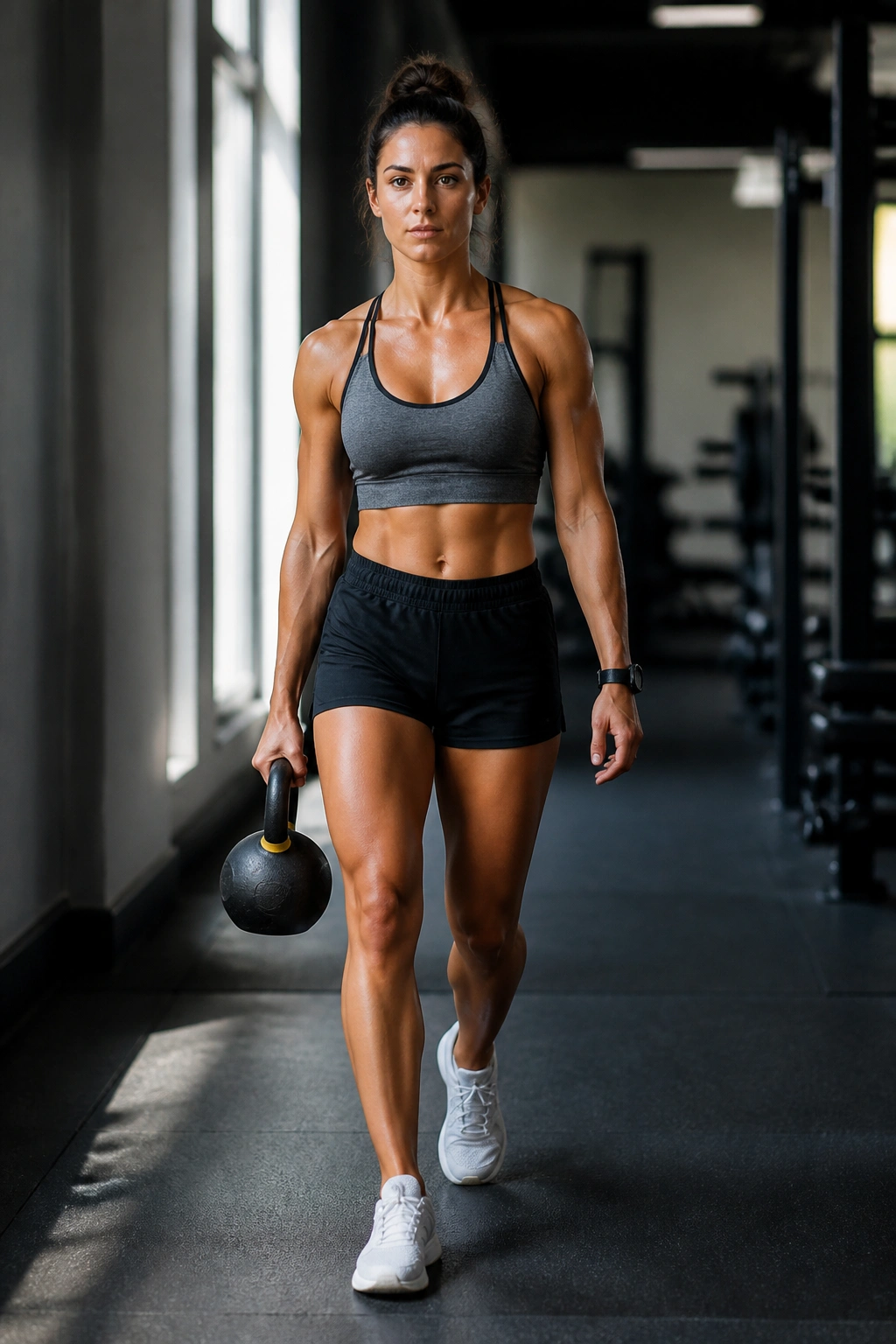
One bell. One hand. Zero excuses.
The suitcase carry is one of my favorite kettlebell exercises because it tells the truth in a very short walk. Put a bell in one hand, stand tall, and walk without leaning toward or away from the weight. Your obliques, grip, hip stabilizers, and even your foot muscles get involved fast.
There’s no fancy rhythm here. Just control. If your shoulder hikes up to your ear, or your ribs flare, or you start swaying side to side like you’re on a boat, the bell is asking for more structure from you. That is the point. The move trains your body to resist side-bending, which matters more than people think.
Take smaller, slower steps than you’d use on a normal walk. Keep the free hand relaxed. Breathe quietly through the nose if you can. It looks almost boring from the outside. Inside, it is doing a lot.
7. Farmer Carry
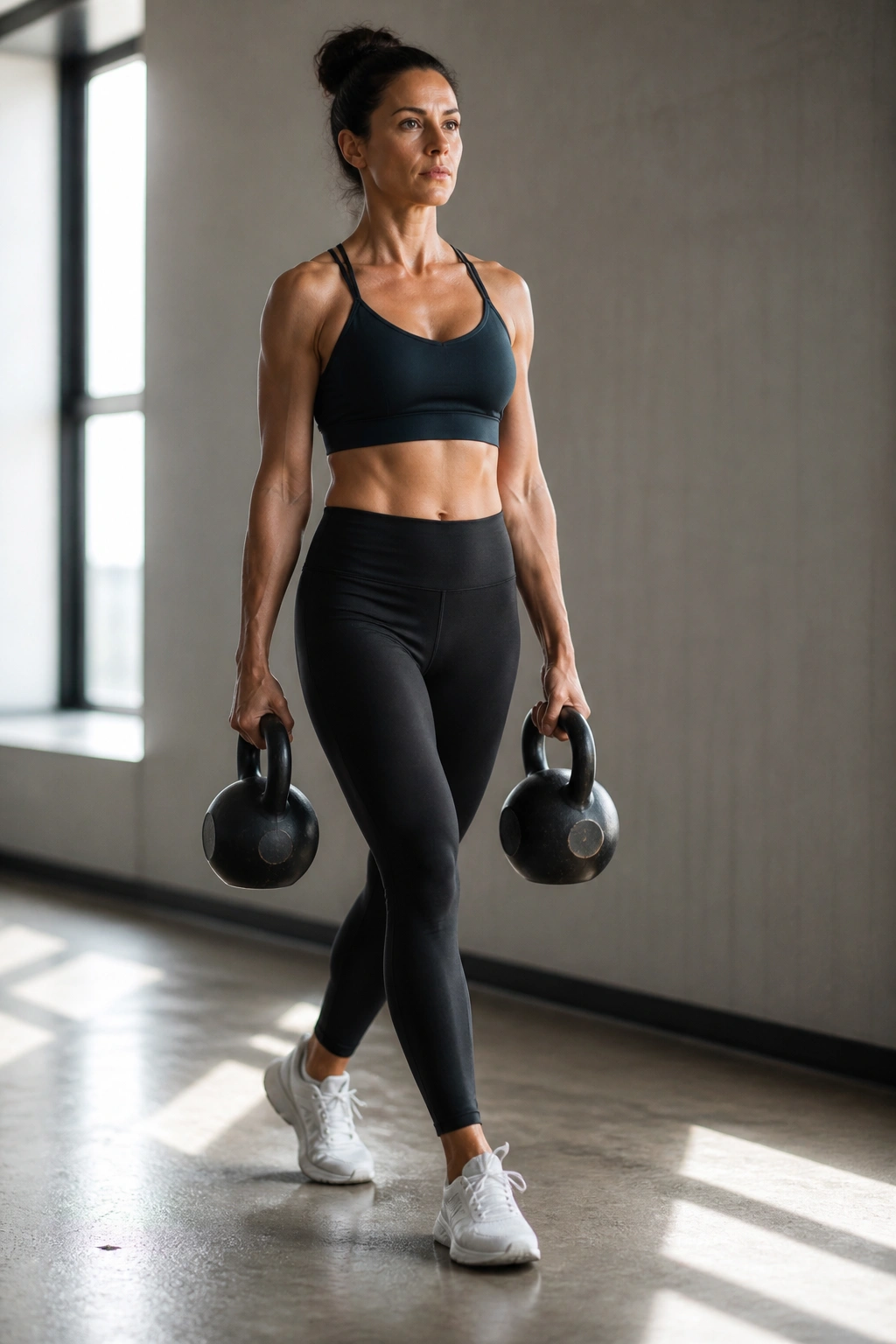
The farmer carry is the suitcase carry’s symmetrical cousin. Two bells, two hands, one job: stay tall and keep walking. It sounds simple, and that’s why people underestimate it. Load it properly, and it becomes a serious strength drill for the grip, upper back, trunk, and even the calves.
I prefer farmer carries when someone wants posture work without extra movement noise. The bells hang at your sides, your shoulders stay down, and your body has to organize itself against the pull of gravity. You should feel like you are carrying something awkward through a narrow hallway and refusing to slouch about it.
Make It Count
- Walk 20 to 40 meters at a time.
- Keep the bells just off your thighs.
- Look ahead, not down at your feet.
- Stop the set when your posture starts to collapse.
A heavy farmer carry can reveal weak links faster than a dozen mirror checks. And it has a side benefit people love: your grip gets better fast, which helps with every other kettlebell movement on this list.
8. Bent-Over Kettlebell Row
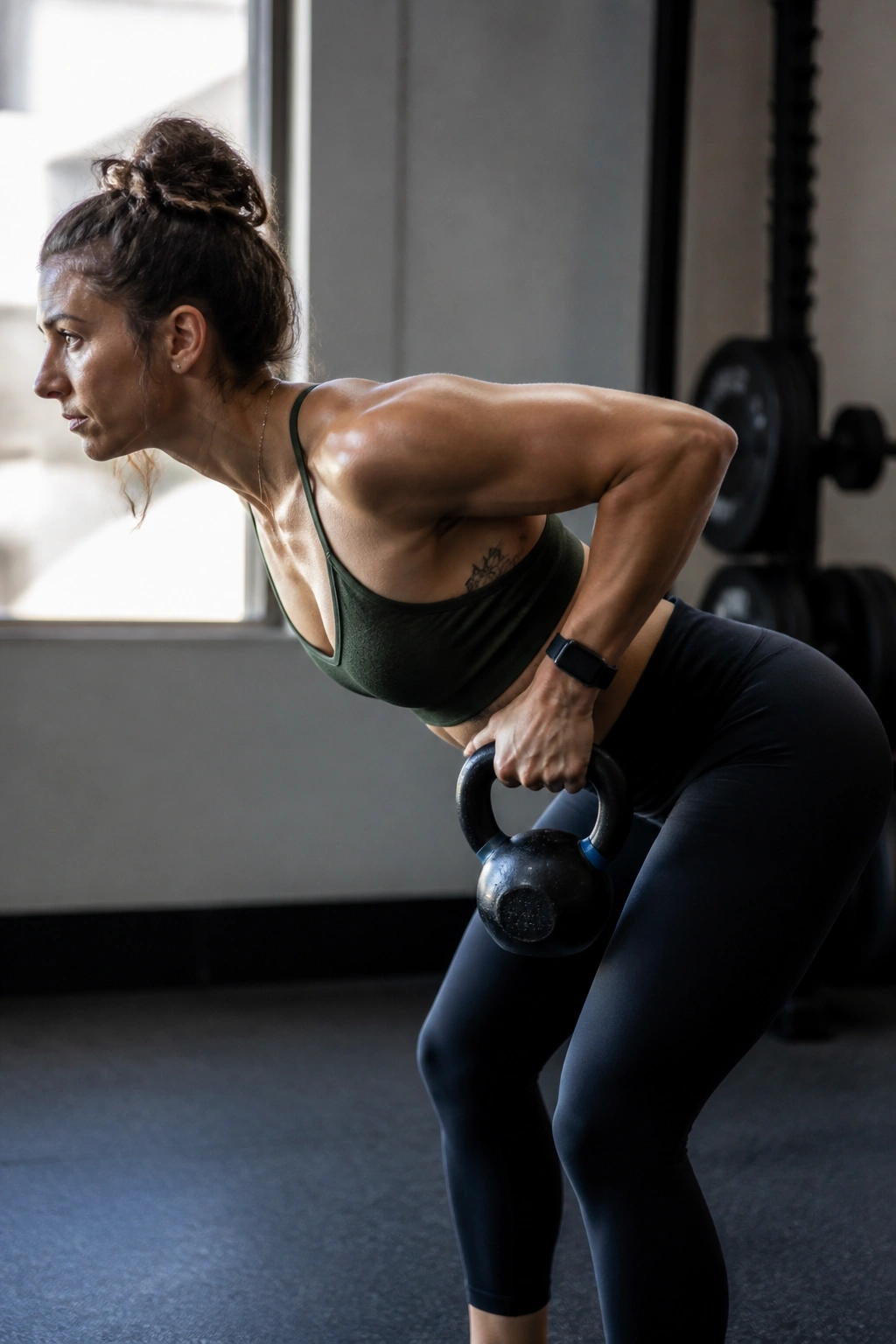
If your upper back tends to disappear into the background, rows fix that. They train the lats, rhomboids, rear delts, and the whole area between the shoulder blades that keeps you from folding forward like a lawn chair. With a kettlebell, the off-center load also asks your torso to stay braced while one arm works.
Set yourself in a strong hinge, not a rounded crouch. Pull the elbow toward the hip, not straight up toward the ceiling. That path matters because it keeps the shoulder packed and the lat doing the work. If the bell bangs into your ribs or your torso twists hard on every rep, slow it down and lighten the load.
Some people use the free hand on a bench or box for support, and that’s fine. I’d rather see crisp rows with solid position than a heavy row that turns into a shrug. The body gets enough mess from daily life; the row should clean things up, not add more chaos.
9. One-Arm Overhead Press
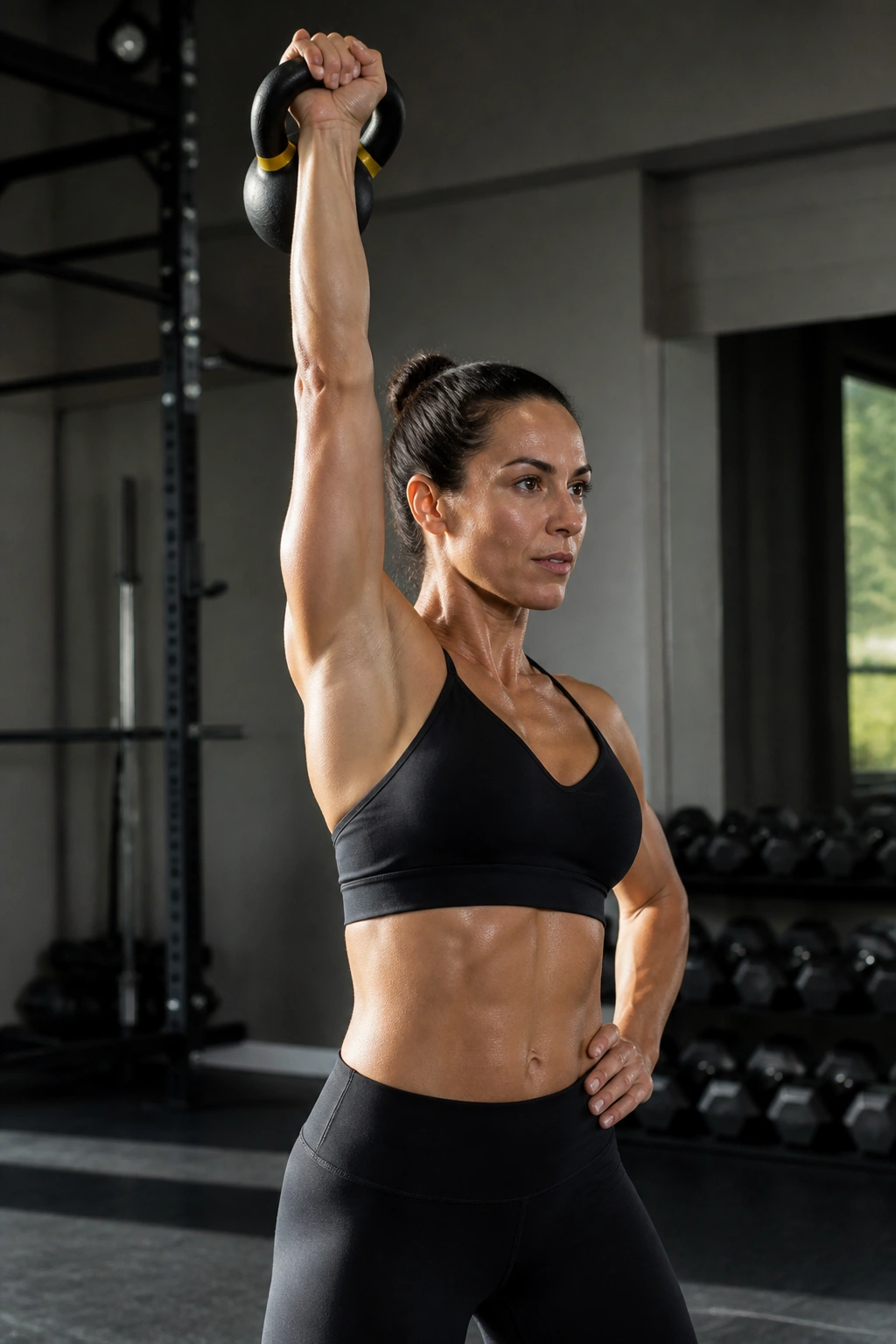
Can you press the bell overhead without turning your ribs into a bridge? That’s the real question. The one-arm overhead press looks like an upper-body exercise, but your trunk and glutes are doing a ton of quiet work to keep you stacked.
Start with the bell in the rack. Squeeze the glute on the pressing side, keep the ribs down, and press the bell in a slightly back-and-in path so it finishes over the shoulder, not drifting in front of it. The forearm should end up vertical. The wrist should stay stacked. If the bell wobbles, pause and regroup.
How to Keep the Press Clean
Your head can move back slightly as the bell passes, then come through under the weight at the top. That small head path helps the press feel smoother. It should not feel like you’re shrugging into your neck.
A half-kneeling press is a smart variation if standing overhead work feels sloppy. One knee down removes a lot of cheating and makes the core job obvious. That’s not easier in the lazy sense. It’s easier in the useful sense.
10. Kettlebell Push Press
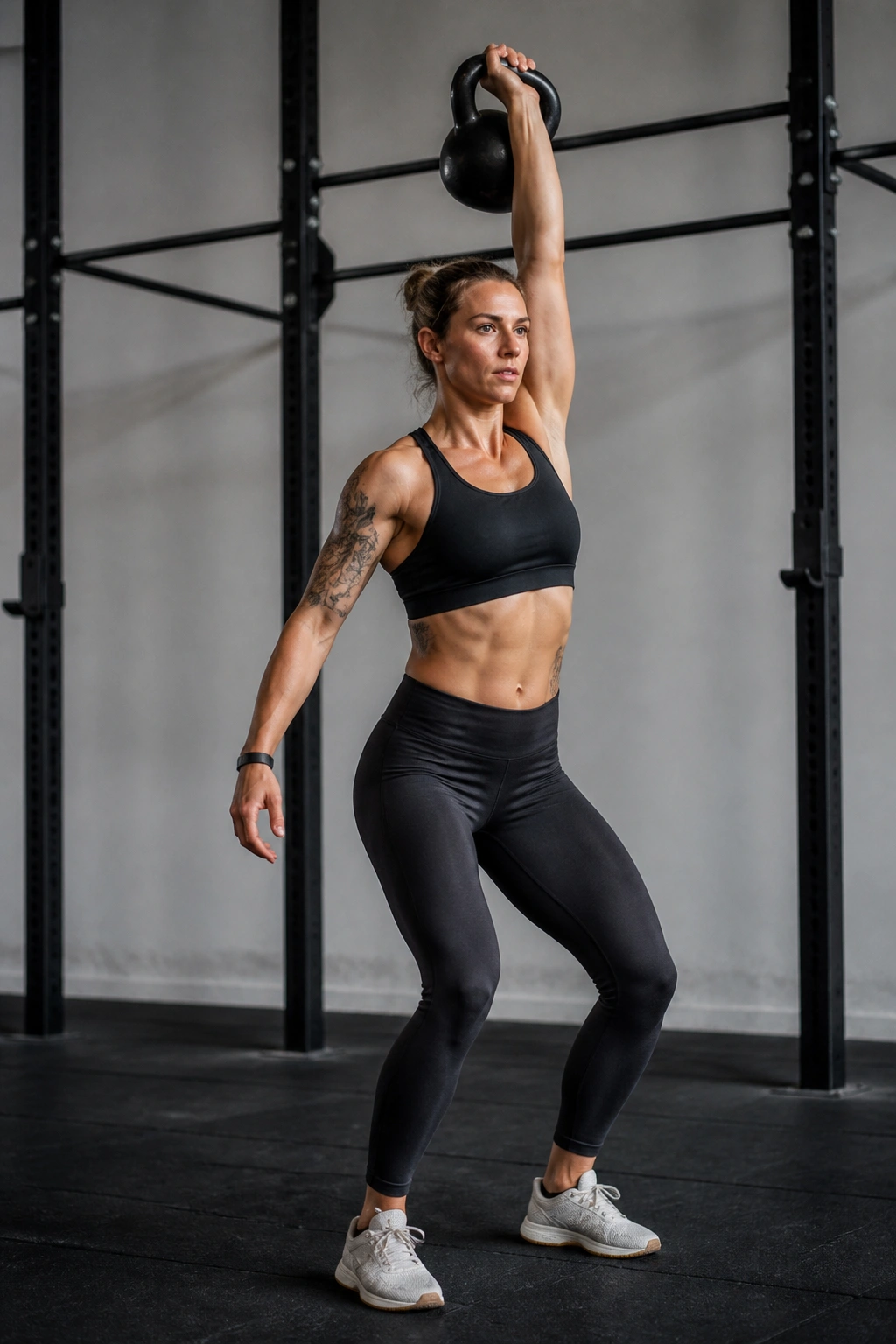
The push press is what happens when you want more load overhead but your strict press stalls a little short. A small dip of the knees gives the bell a bit of help, then your arm finishes the job. The legs start it; the shoulder locks it out.
That transfer of power makes the move feel snappy when it’s done right. Too much dip and it turns into a shallow squat. Too little dip and you end up muscling the bell with the shoulder anyway. The sweet spot is small, quick, and vertical.
I like the push press for people who have already earned a solid strict press and want a bridge to heavier bells. It also helps teach timing. The legs and arm have to agree with each other. If they don’t, the bell drifts, the wrist gets cranky, and the rep feels choppy.
Use it with intent, not as a sloppy shortcut. That’s the whole game here.
11. Kettlebell Halo
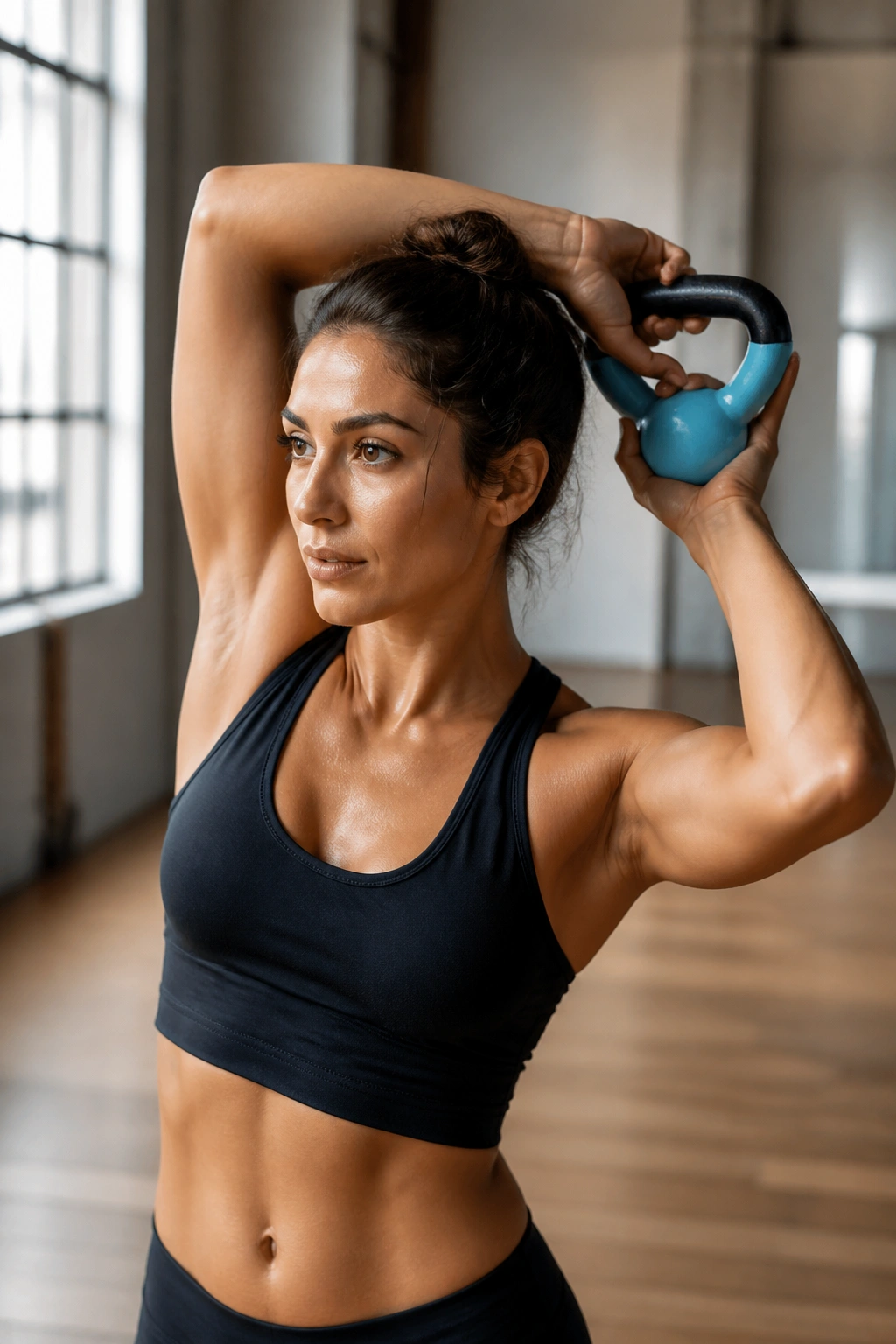
The halo looks almost playful until you do it slowly and notice how much control it asks for. You guide the bell around the head in a smooth circle, keeping the elbows fairly close and the ribs stacked. It’s a shoulder drill, yes, but it also wakes up the upper back and teaches your torso not to flail around.
I like halos before pressing or overhead work because they make the shoulder joint feel less rusty. They are not a strength move in the same way a press is. They’re more of a reset, a check-in, a way to remind the body where the bell is traveling.
Use a light kettlebell here. Seriously. People load halos too aggressively and then spend the whole set fighting position. A light bell lets you move slowly enough to actually feel the shoulder blades and the path of the weight around the head. That’s where the value lives.
12. Kettlebell Clean
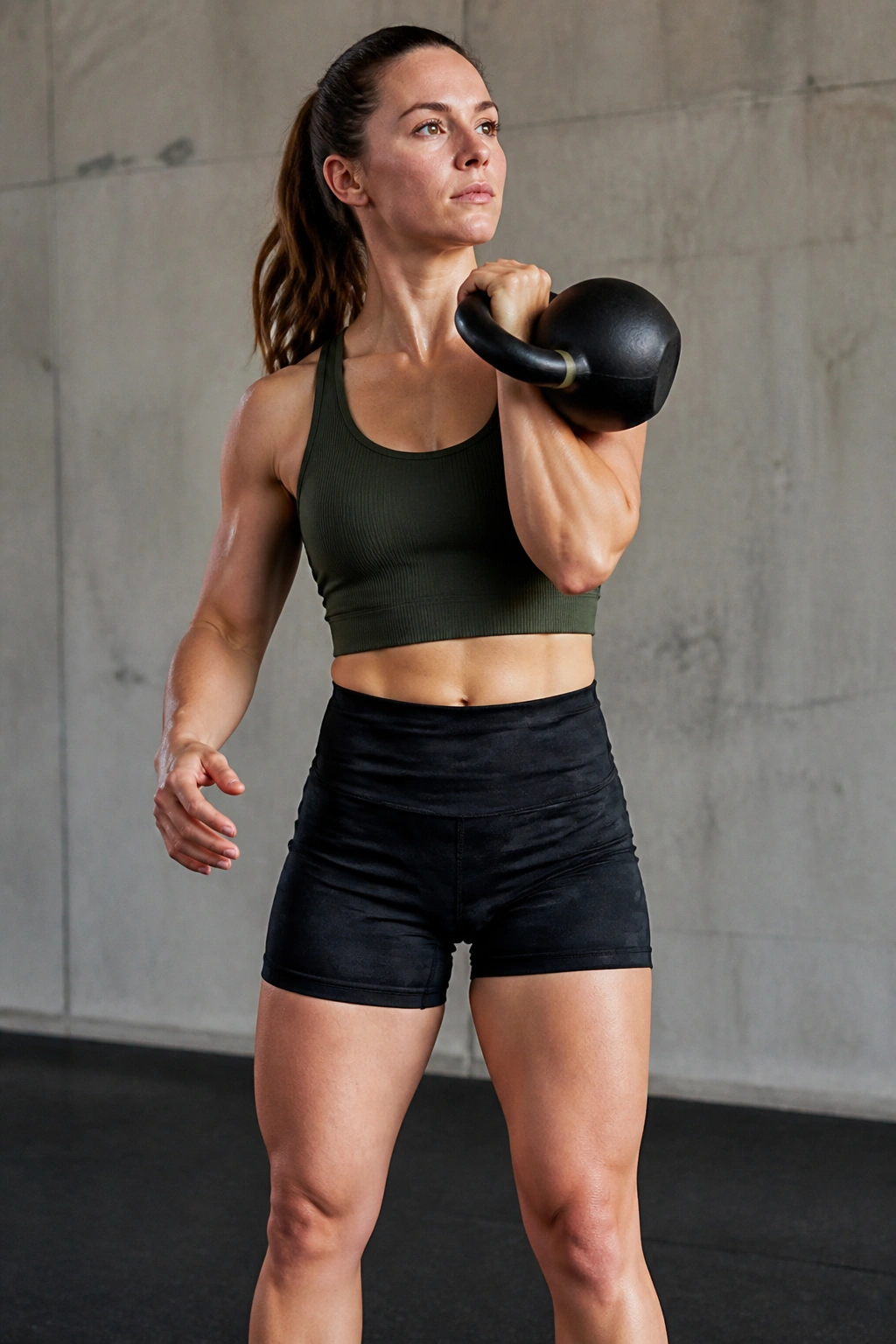
Why does the clean trip people up? Because it looks like a pull when it’s really a small, tight redirect. The bell should move close to the body, then rotate around the forearm into the rack without slapping the wrist or crashing into the forearm.
The rack is the point. Not the swing. Not the toss. The rack.
What Makes the Clean Work
- Keep the bell close on the way up.
- Think “zip” more than “lift.”
- Let the hand slip through the handle as the bell turns over.
- Catch it softly in the rack with the wrist straight.
A good clean feels quiet. That surprises people. If it sounds loud and awkward, the bell is usually drifting too far away or you’re punching the hand through too early. Start with a dead stop between reps if needed. There is no prize for making the first few cleans look dramatic.
13. Clean and Press
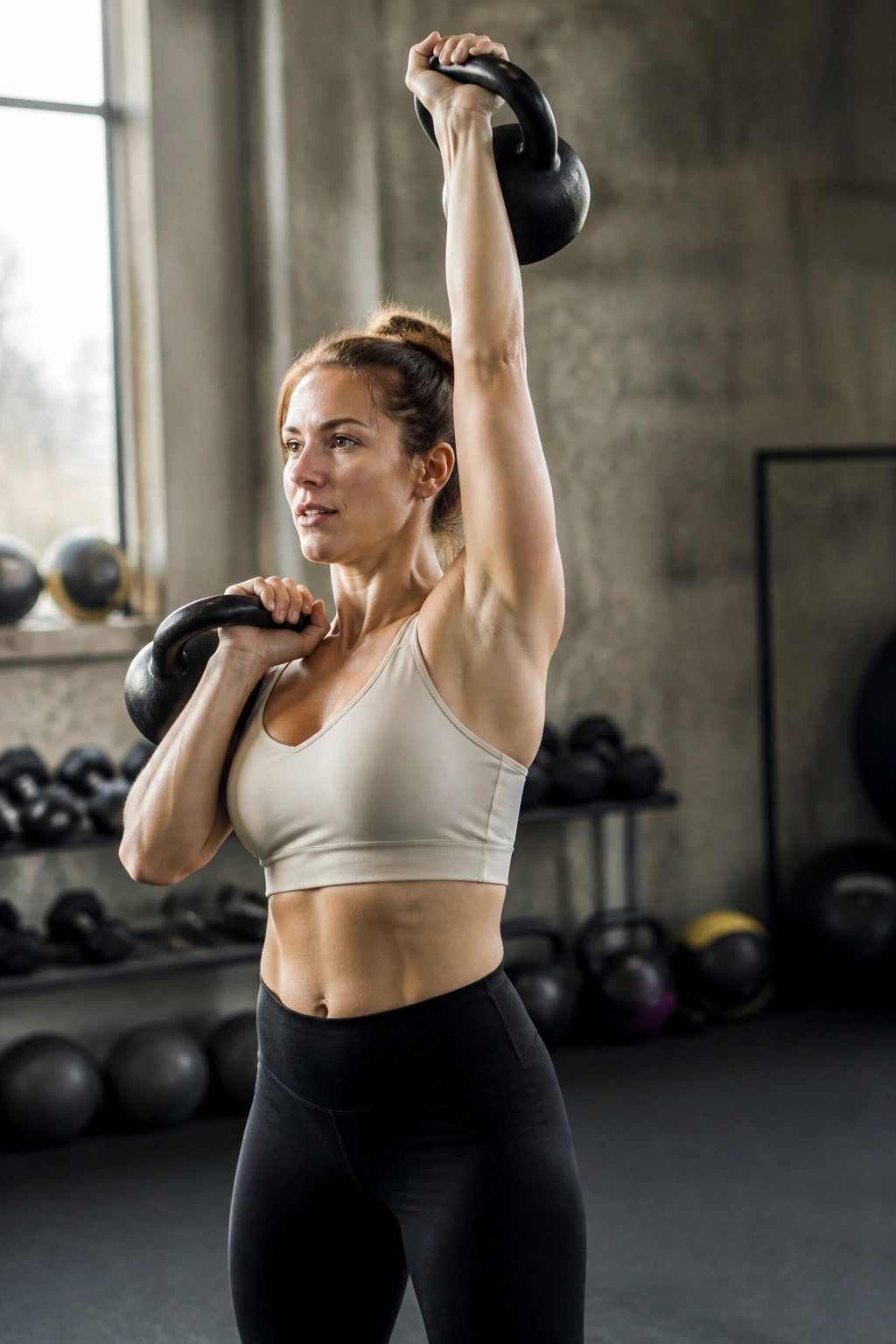
The clean and press is one of those combinations that looks simple on paper and gets your attention in real life. One rep asks you to hinge, pull, rack, brace, and press without losing your shape. It is efficient in the best sense of the word: lots of work, very little wasted motion.
I like this combo when time is short and the goal is full-body strength. You get the lower body from the clean, the shoulder and trunk from the press, and a nice dose of conditioning if you keep the sets honest. It’s also a good lesson in patience. If the clean is sloppy, the press will feel worse. If the rack is unstable, the overhead path gets messy.
Use lighter bells than you think at first. The combo punishes greed. A clean and press should feel like one smooth chain, not two separate fights. Once the clean is clean—yes, I said that on purpose—the press has a much better chance of looking strong instead of wobbly.
14. Kettlebell Windmill
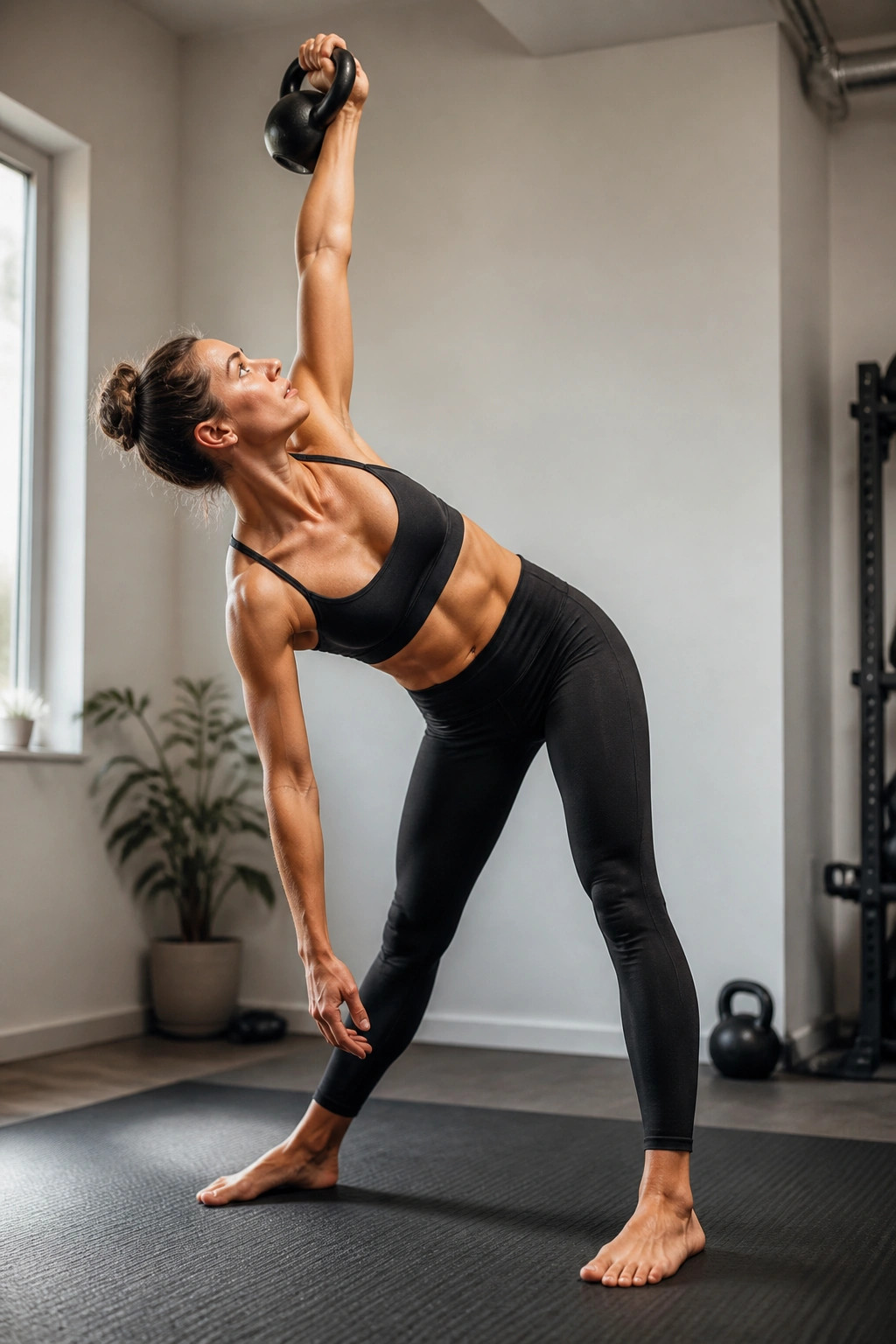
The windmill is a sharp little test of shoulder stability, hip control, and body awareness. One arm holds the bell overhead while the hips shift and the torso folds to the side. It is not flashy. It is precise. And precision is what makes it useful.
This move teaches the body to stay organized under asymmetrical load. The standing side has to brace. The working side has to keep the bell steady. The hips have to move back enough for the torso to hinge without collapsing. If the shoulder sinks or the bell wanders, the whole point of the drill is lost.
Use a light bell and move slowly. A lot of people try to make the windmill look impressive. Bad idea. It’s better to look controlled and finish with a clean stack of shoulder, rib cage, and hip than to chase a huge range and lose the line of the body.
15. Turkish Get-Up
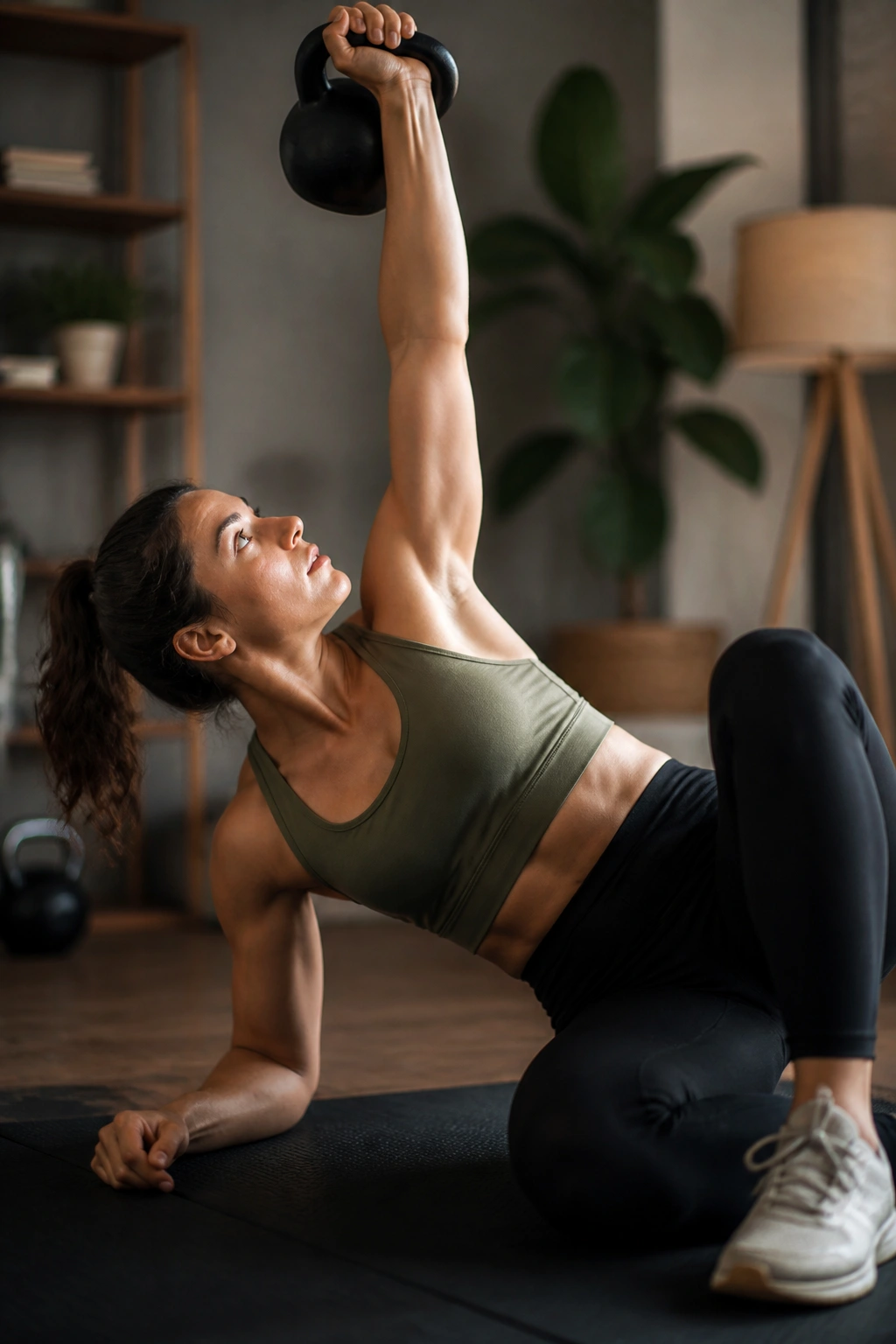
The Turkish get-up is the movement people avoid until they finally learn it, then they act surprised that it fixes so much. It is part shoulder drill, part core drill, part coordination test, and part sanity check. One rep can tell you a lot about how your body organizes itself from the floor to standing.
Break it into pieces. That’s the only sensible way to learn it.
Make the Get-Up Less Intimidating
- Start with a shoe balanced on your fist if the movement feels shaky.
- Move through each stage slowly and pause where needed.
- Keep your eyes on the bell for the early phases.
- Breathe at the transitions instead of holding everything tight.
The get-up becomes a lot less mysterious once you stop treating it like one giant lift. It’s really a chain of smaller positions: roll to the elbow, post to the hand, bridge, sweep the leg, kneel, stand. Then reverse the path with the same care. If any stage feels ugly, stay there and clean it up before adding speed or weight.
16. Single-Leg Kettlebell Deadlift
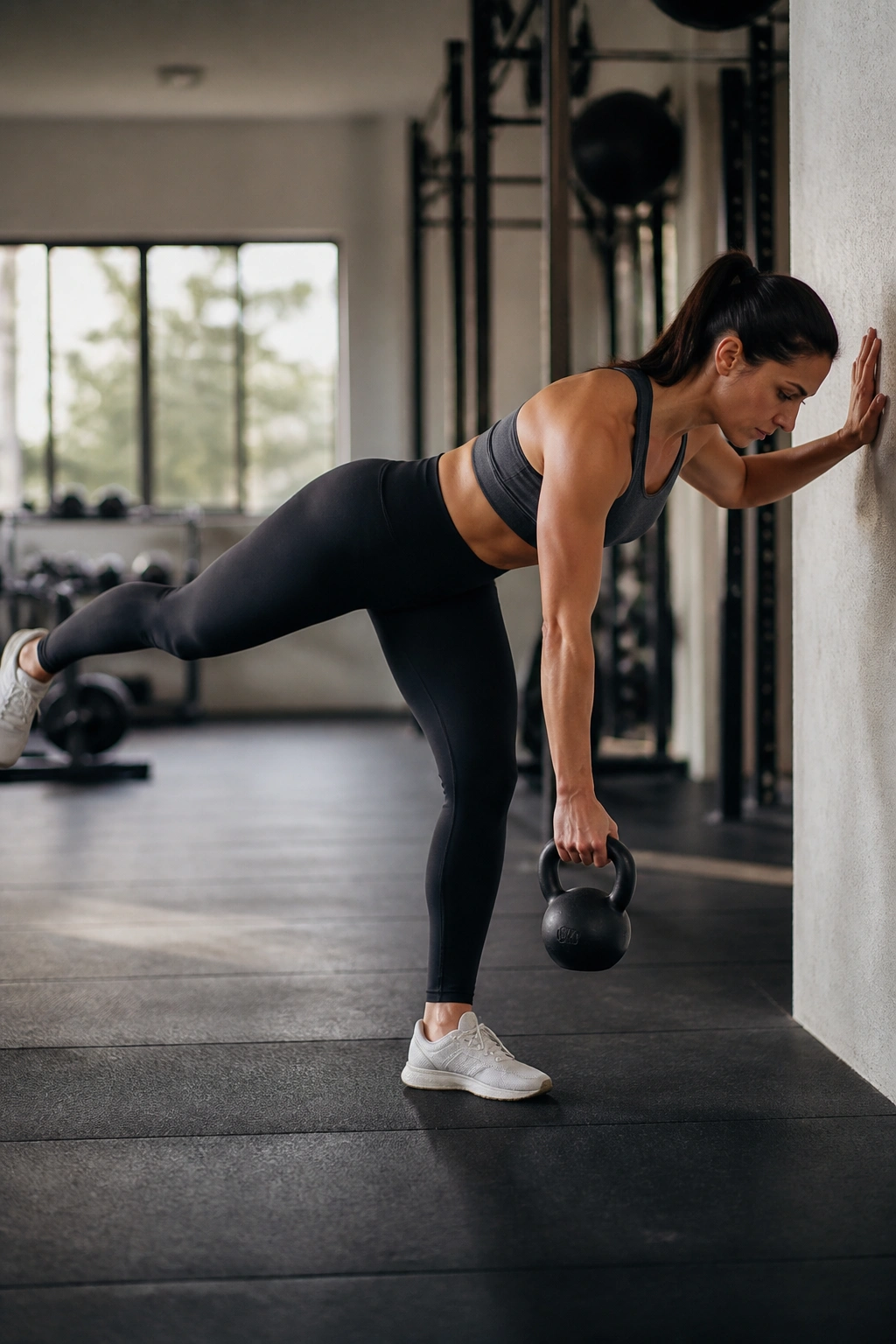
Single-leg deadlifts are humbling. One foot stays rooted, the other leg reaches back, and your hips have to stay square while the bell moves down and up in a straight, controlled line. The hamstrings light up fast. So does the balance system.
This is one of the best ways to spot side-to-side differences. If one leg feels wobbly or one hip keeps twisting open, you’ll know it within a few reps. That feedback is useful, not embarrassing. It lets you fix the weak side before it turns into a bigger problem.
Use the free hand on a wall or rack if needed. No shame in that. I’d rather see a stable, clean single-leg hinge with a little support than a wild wobble done in the name of pride. The bell should travel like it’s connected to your hip, not like it’s trying to escape the room.
17. Kettlebell High Pull
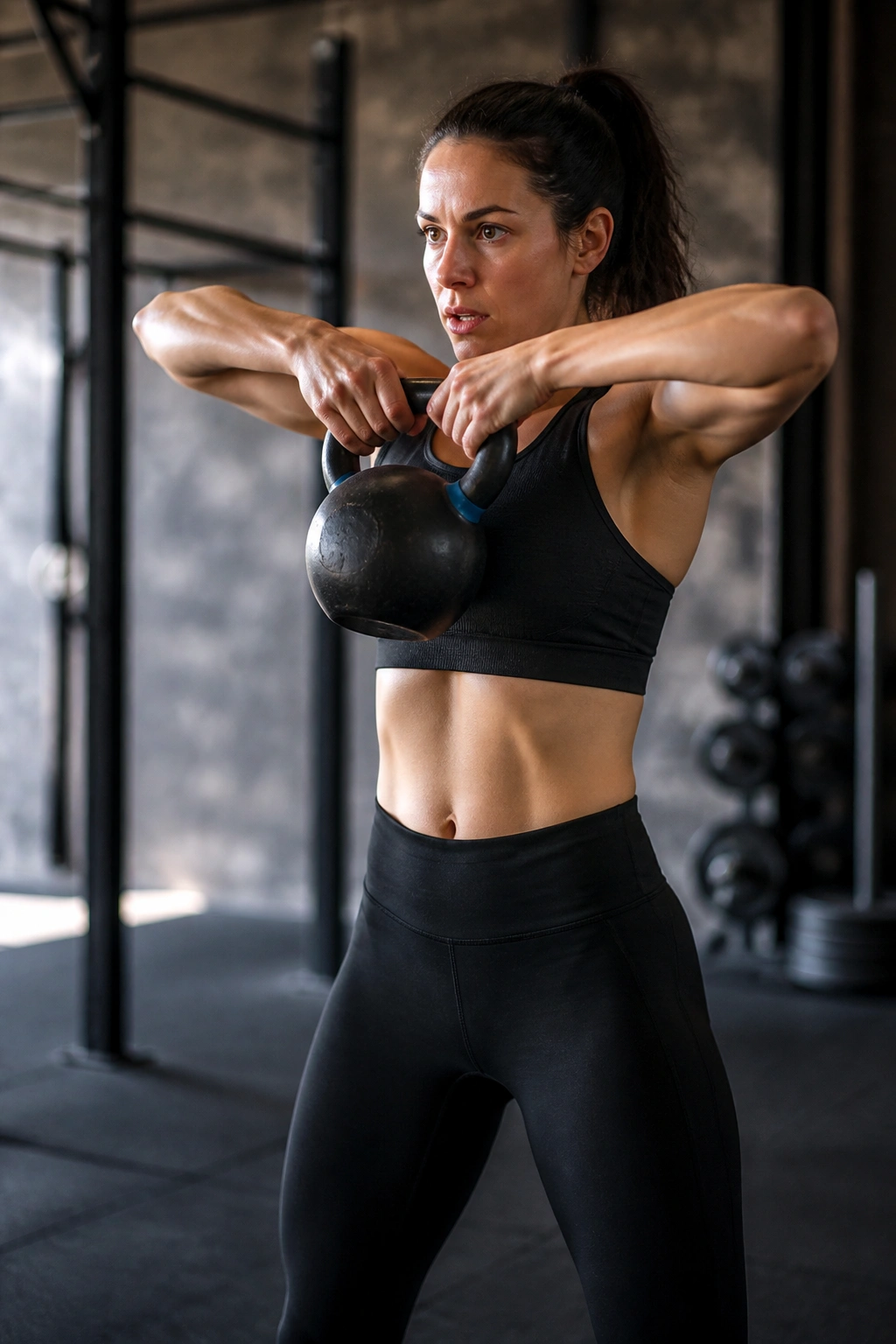
The high pull sits in an interesting spot between a swing and a cleaner, tighter pull. You hinge, snap the hips, and then guide the bell higher with the elbow leading. The trick is not to yank with the arm or crank the shoulders up toward your ears.
People often confuse the high pull with an upright row. They’re not the same thing, and the distinction matters. In a high pull, the bell stays close, the hips drive the motion, and the elbow moves back and up without forcing the shoulder into a weird pinch. When done well, it builds power and gives the upper back a solid job to do.
Keep It Sharp
- Start from a swing, not from a lazy arm lift.
- Keep the bell close on the way up.
- Finish with the elbow high, then let the bell float back down under control.
- Stop if the shoulder starts feeling jammed.
This is a move worth respecting. It can feel great or it can feel aggravating, and the line between those two is mostly technique and load.
18. Kettlebell Snatch
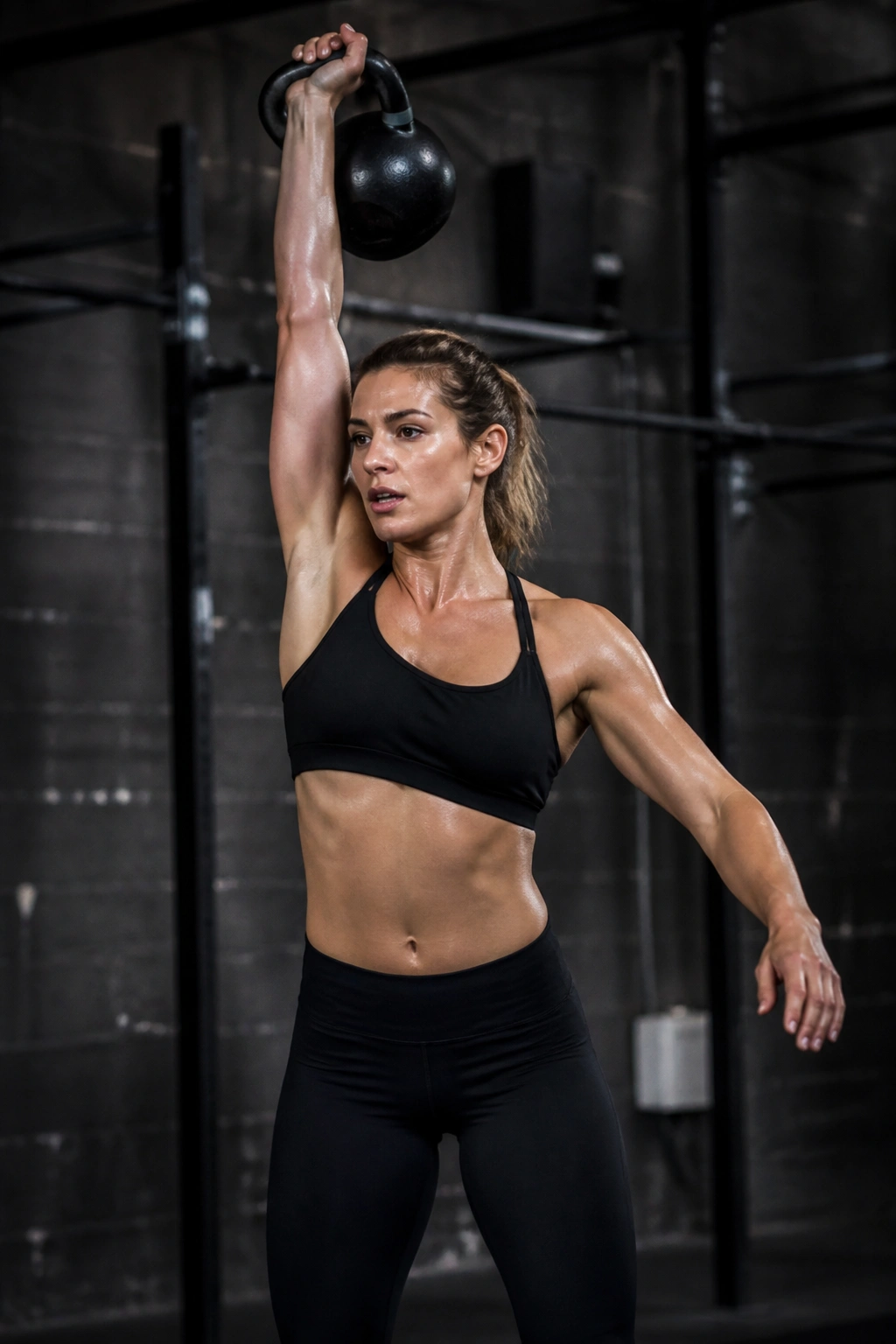
The snatch is the most advanced exercise on this list, and I would rather say that plainly than dress it up. It is fast, powerful, and unforgiving of sloppy timing. The bell travels from the swing path to overhead in one fluid motion, which means your hinge, pull, punch-through, and lockout all need to cooperate.
That said, the snatch is also a beautiful expression of efficient power when it’s learned patiently. The bell should not crash into the forearm. The lockout should be quiet. The overhead position should look calm, with the ribs tucked and the shoulder stacked. If it feels like a fight, you’re moving too fast for your current skill.
Start by earning it through swings, cleans, presses, and carries. That sequence matters more than ego. And once you can snatch cleanly for a few steady reps, the movement feels less like a trick and more like a natural extension of the hinge. Which is a nice place to land.
A strong kettlebell practice does not need to be complicated. It needs to be honest. Pick a few of these moves, keep the weight sensible, and let clean reps do the heavy lifting for a while. That boring-looking work has a way of changing how you stand, walk, lift, and carry long before the mirror says anything about it.
