



Pregnancy changes the feel of strength work fast. A move that used to be a warm-up can suddenly feel like a full workout, and a heavy barbell is not always the friend you want when your balance is shifting and your lower back is a little more vocal than usual. That is where resistance band exercises safe for pregnancy earn their place: they load the muscles, move with your body, and let you keep the work honest without a bunch of impact.
The best band work during pregnancy is not flashy. It is controlled, steady, and boring in the best way. You want exercises that keep you breathing normally, let you stop with a couple of good reps left, and avoid positions that make your belly feel squeezed or your back feel cranky. For an uncomplicated pregnancy, broad guidance from obstetric groups such as ACOG points toward about 150 minutes of moderate-intensity activity a week. Band work fits neatly into that space.
A useful rule: if you can talk in full sentences, you’re in the right neighborhood. If you cannot, the band is probably too heavy, the rest periods are too short, or you’re moving too fast. One more thing that matters a lot more than people think — control beats load. Slow reps, stable footing, and a band that doesn’t drag you out of position will do more for you than chasing burn.
A few ground rules make the whole list safer and easier to use:
- Exhale on the hard part of each rep. Don’t hold your breath.
- Keep effort around 5 to 7 out of 10. You should finish a set feeling challenged, not wrecked.
- Use a chair, wall, or counter if balance feels sketchy.
- Stop and call your clinician if you have bleeding, fluid leakage, dizziness, chest pain, regular contractions, calf swelling, or sharp pelvic pain.
- If you notice a ridge or “doming” down the center of your belly, shorten the range or switch to an easier version.
If you want a simple structure, pick two lower-body moves, two upper-body moves, and one core stability drill. That gives you a full session without turning it into a circus.
1. Seated Band Rows
Seated rows are the move I reach for first when someone wants a pregnancy-friendly band workout that still feels like real strength work. Your upper back does a lot of quiet labor during pregnancy, especially once posture starts to change and the shoulders want to drift forward.
Why this one earns a spot early
Sit on a sturdy chair with your feet flat and a long band looped around both feet. Hold one end in each hand, sit tall, and pull your elbows back until your hands reach your ribs. Pause for one second. The band should feel firm, not jerky.
Use 2 to 3 sets of 8 to 12 reps. Keep your chest open and your neck loose. If you feel your shoulders creeping toward your ears, the band is too heavy or you’re yanking too hard.
Quick cues:
- Pull the shoulder blades back and down.
- Stop before your torso starts rocking.
- Release slowly; don’t let the band snap you forward.
A lot of people notice this move helps with that “I’ve been sitting too long” ache between the shoulder blades. It does. And it’s also one of the safest ways to get a solid pulling pattern without needing to lie on your back or brace hard through the belly.
2. Standing Band Chest Press
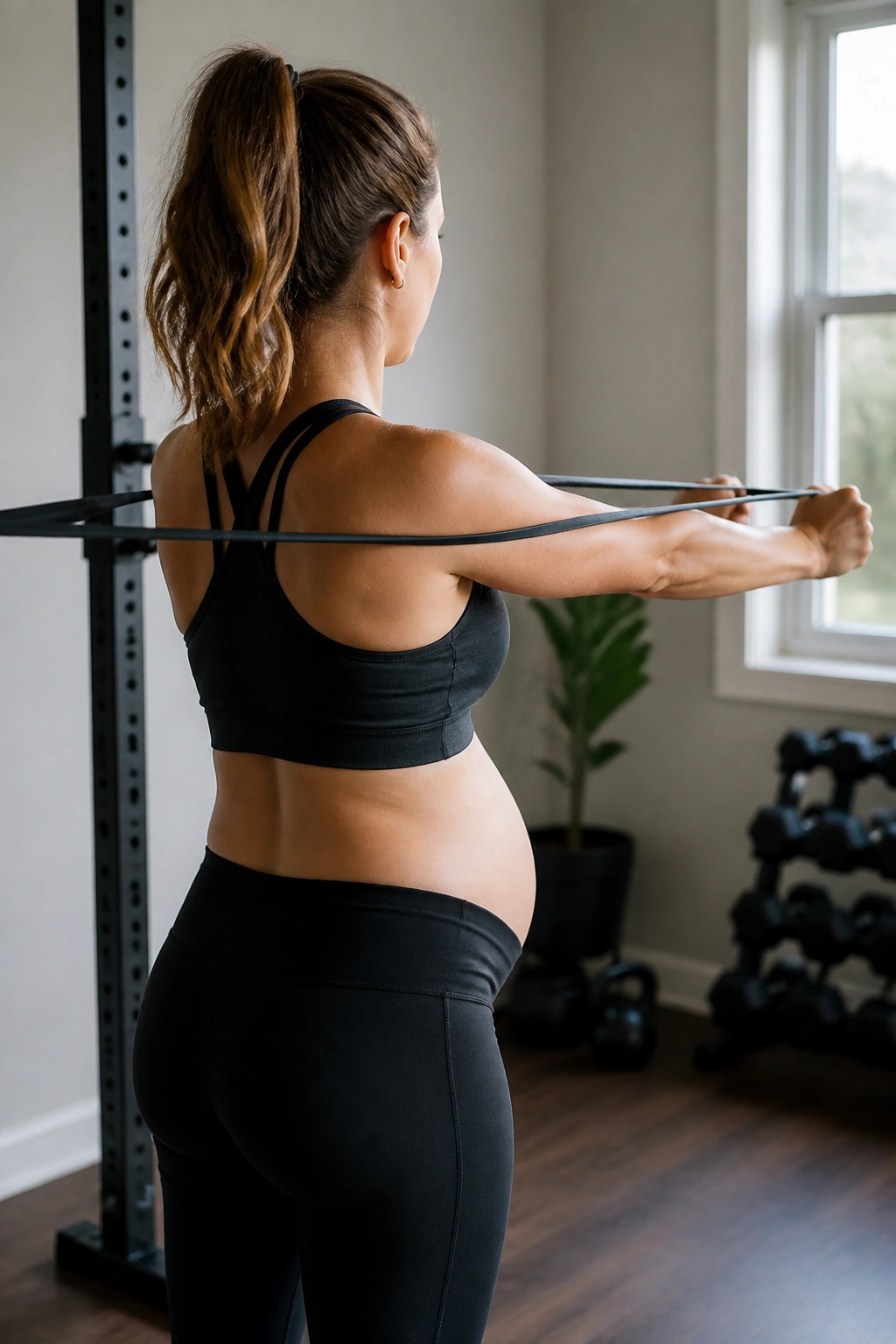
Why do chest presses matter when everyone talks about glutes and core? Because pregnancy posture can leave the front of the body feeling tight and the back feeling overworked, and a gentle press helps balance that out.
Anchor a long band behind you at chest height, or wrap it around a sturdy post. Face away from the anchor, stand in a staggered stance, and press the handles forward until your elbows straighten without locking. Bring your hands back with control, stopping when your upper arms line up with your ribs.
Keep the ribs stacked over the pelvis. That matters more than raw force. If you arch your lower back to squeeze out more reps, the movement stops being useful pretty fast.
A good target is 2 sets of 10 to 12 reps. The last two reps should feel deliberate. No flailing. No shrugging. If your shoulders are sensitive, keep your elbows a little lower than shoulder height and use a lighter band.
Standing chest presses are nice because they train push strength without pinning you to the floor. That matters. A lot.
3. Chair Squats With a Mini Band
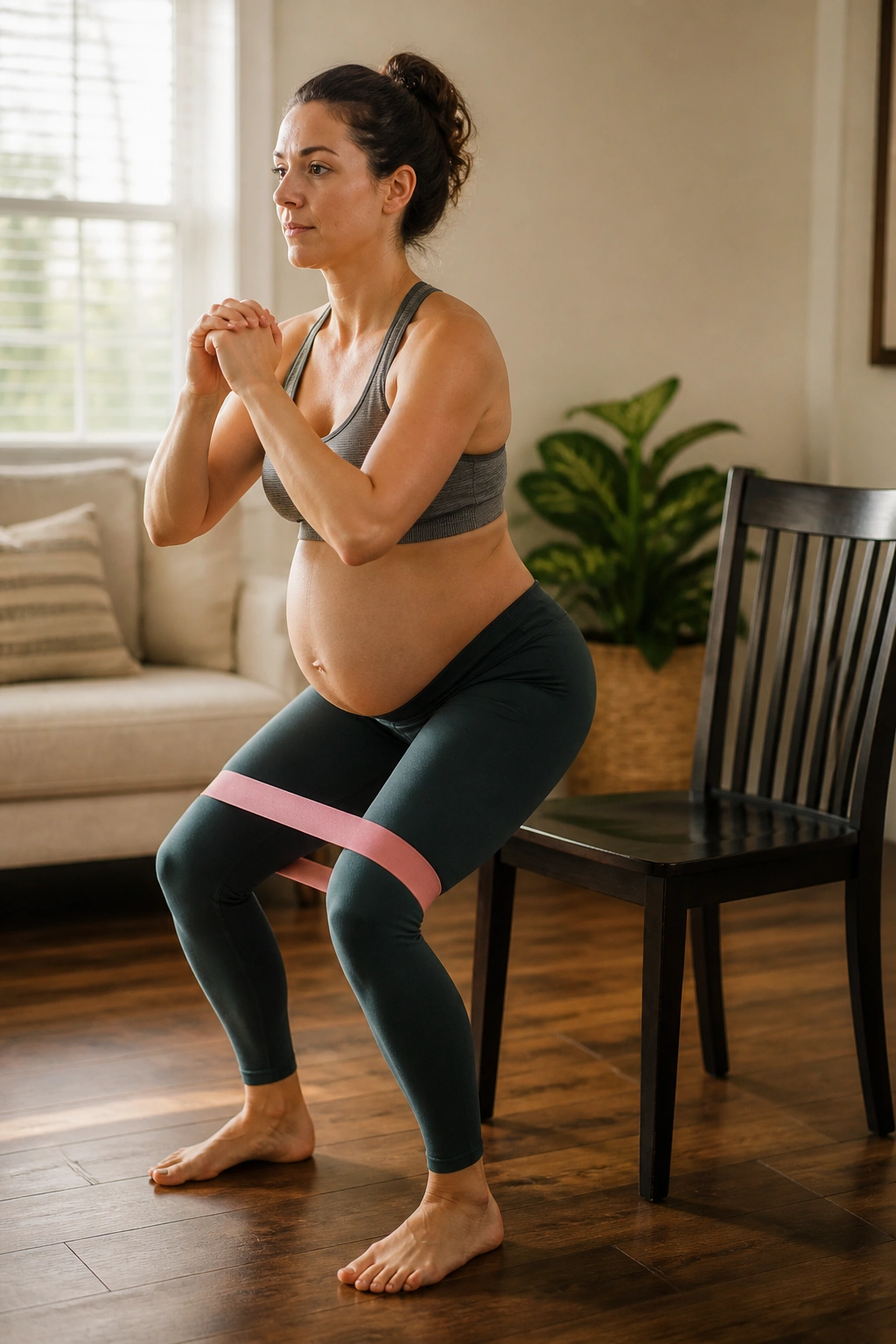
A simple sit-to-stand is one of the most useful prenatal strength drills you can do, and a mini band makes it work a little harder without turning it into a knee-dominant mess. Place the band just above your knees and sit on the edge of a chair with your feet hip-width apart.
What to focus on
Drive through your heels, stand up, and press your knees gently outward against the band as you rise. Then sit back down slowly until you barely touch the chair again. Don’t plop. That drop is where form goes to die.
Use a chair that puts your hips a little higher than your knees if possible. It makes the movement smoother, especially if your pelvis feels tight or your balance has gone weird. Try 2 to 3 sets of 8 to 10 reps.
Keep it clean:
- Knees track over the middle toes.
- Chest stays tall.
- The band should guide the knees, not force them wide.
If a full squat feels awkward, reduce the range and treat it like a partial sit-to-stand. That’s fine. The point is to build leg strength you can actually use when getting off a couch, climbing a step, or standing up for the fifteenth time in a row.
4. Lateral Band Walks
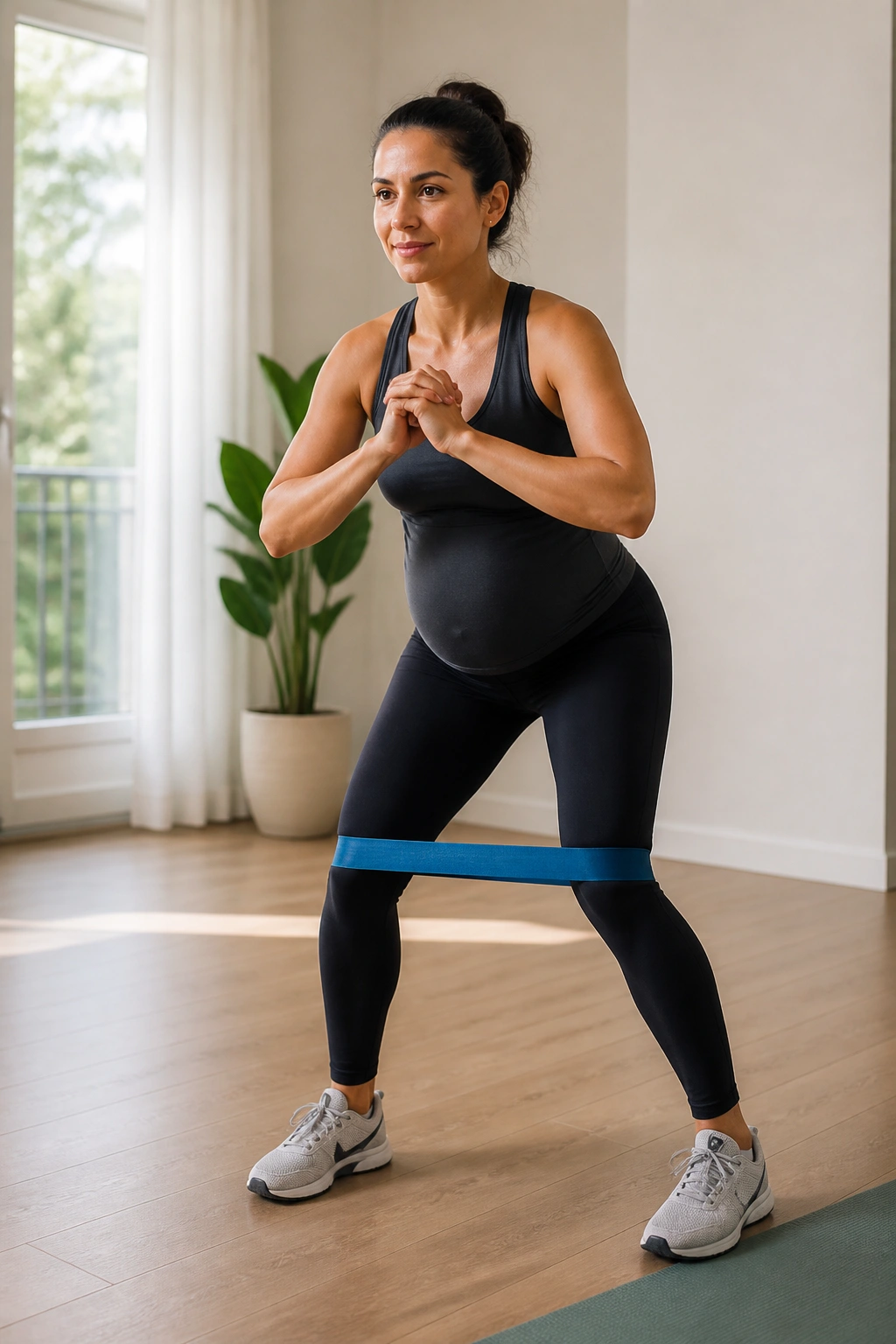
Lateral walks are one of those exercises that look small and feel bigger than they look. They wake up the side glutes, which can help when your pelvis starts asking for more support and your knees want to drift inward.
Stand with a mini band above your knees or around your ankles. Keep a soft bend in the knees, send your hips back a touch, and take 8 to 10 small steps to the right, then 8 to 10 back to the left. The steps should stay short. If you’re swinging your legs wide, you’ve missed the point.
The best version is the boring version. Tension stays steady. Feet stay parallel. Torso stays level. You should feel the burn on the outside of the hips, not in the lower back.
A lot of pregnant exercisers like this one because it doesn’t require much coordination. Good. That’s the charm. Do 2 rounds each direction and rest a little between sets. If your knees or outer hips get cranky, move the band higher, above the knees, and shorten the step length.
5. Standing Bicep Curls
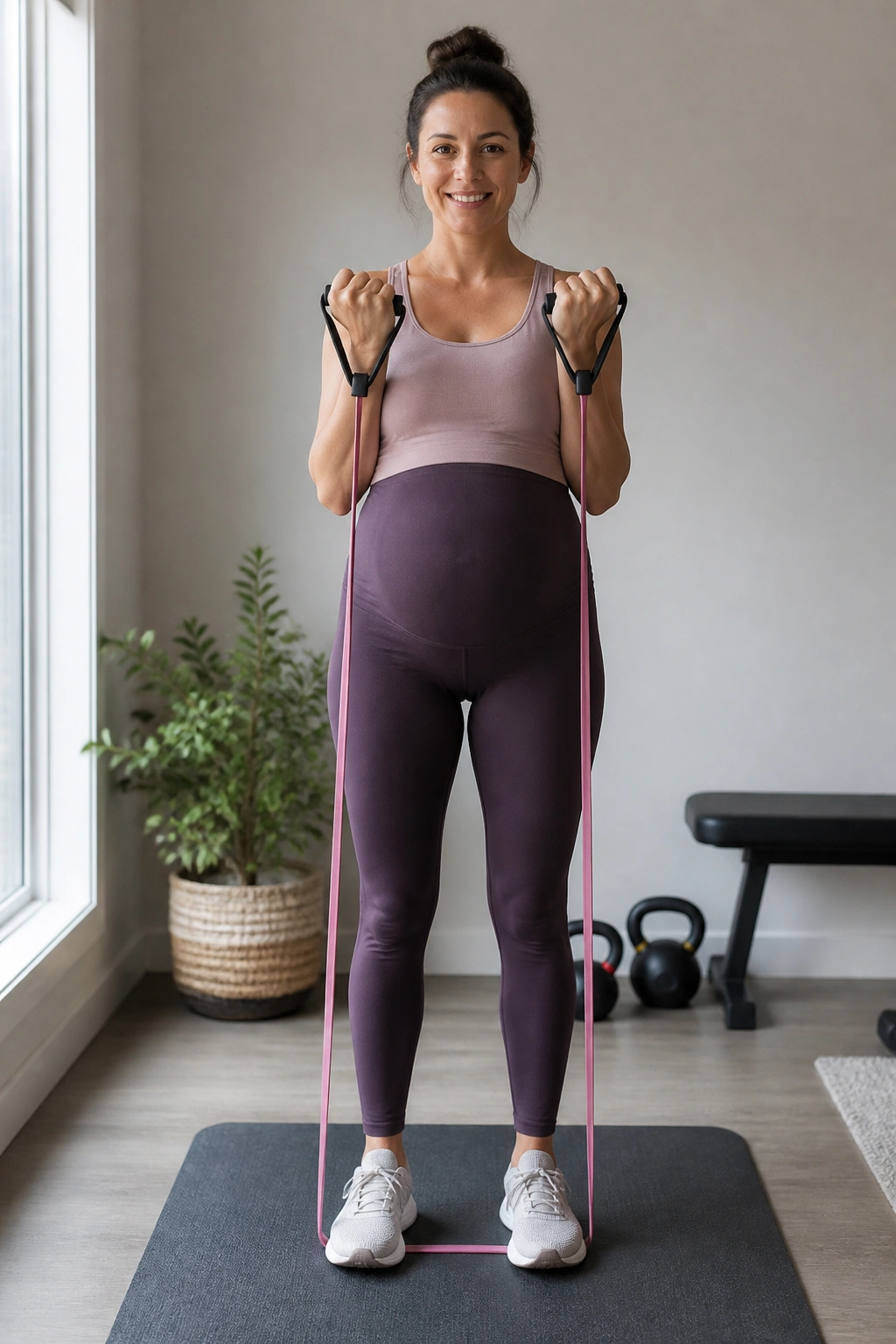
Biceps curls are not glamorous. They are useful, though, especially when you’re carrying bags, lifting a child, or doing the daily one-armed grab for something on the floor. Pregnancy can make arm fatigue show up sooner than expected.
Stand with both feet on a long band and hold the handles or ends at your sides, palms facing forward. Curl the hands toward your shoulders, pause for a beat, then lower with control. Keep your elbows glued near your ribs. If the elbows drift forward, the shoulders take over.
Use a light-to-moderate band and aim for 2 to 3 sets of 10 to 15 reps. You want the last three reps to feel slower, not sloppier. If your wrists hate the straight-up palm position, turn the hands slightly inward and use a neutral grip.
This one is easy to overdo, because the motion is familiar and people love to add too much tension. Don’t. A clean curl with a lighter band beats a half-ugly heave with a heavy one. Keep the shoulders down, breathe out on the lift, and let the lowering phase take a full two seconds.
6. Supported Overhead Press
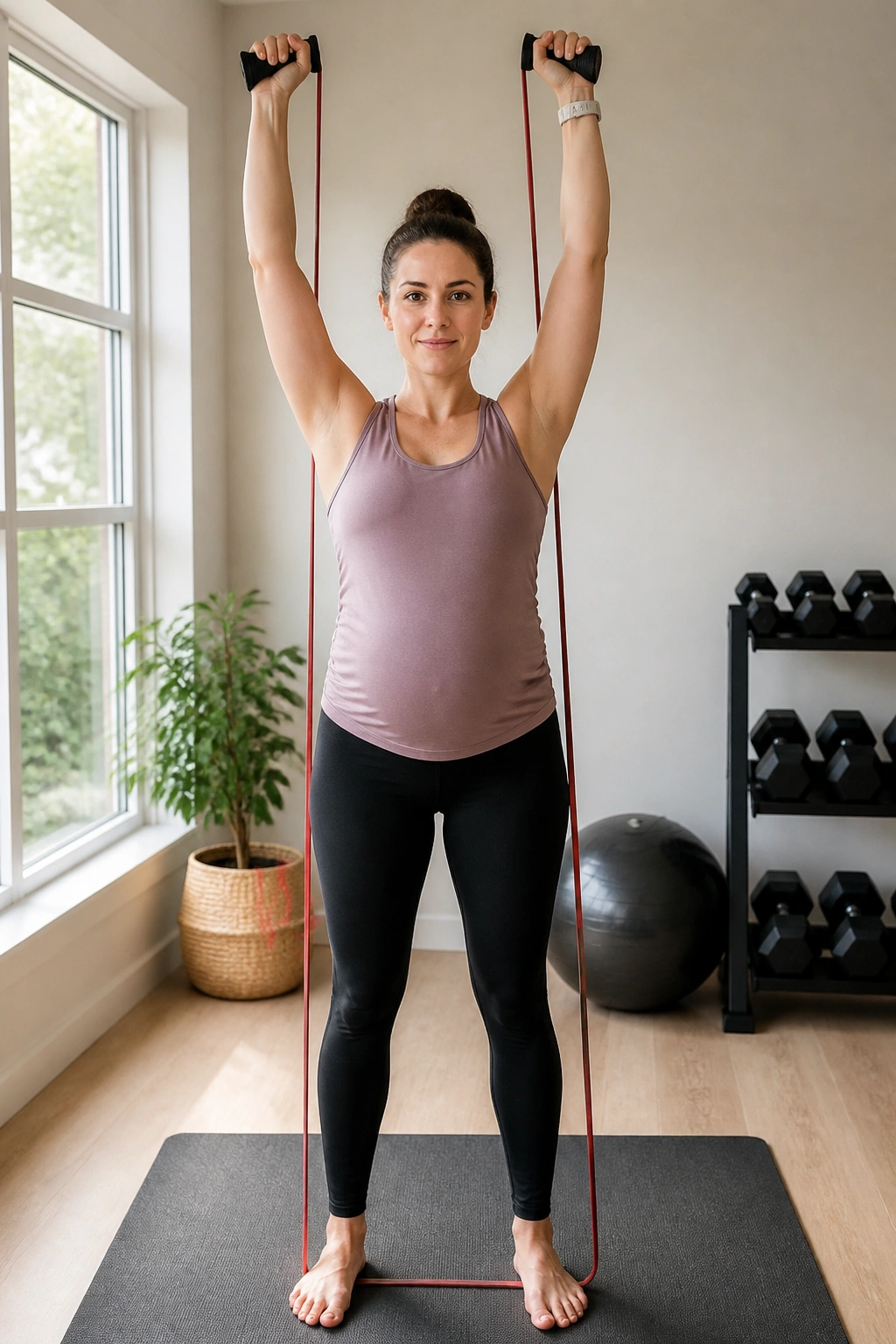
Can you press overhead during pregnancy? Usually, yes — if the range feels good, the ribs stay down, and you don’t turn it into a lower-back arch contest. That last part is the one people miss.
Stand with a band under both feet and hold the handles at shoulder height. Press one arm or both arms overhead until the elbows straighten comfortably, then lower slowly. If standing feels unstable, sit on a firm chair and do the same movement.
What makes it work
The movement should feel smooth from shoulder to wrist. No shrugging. No leaning back. The band should rise in a clean line instead of drifting in front of your face. If you feel pinching in the shoulder, stop there. Range matters less than quality.
Try 1 to 2 sets of 6 to 10 reps at first. Overhead work uses a lot of upper-body coordination, so there’s no prize for using a band that feels heroic. A light band is enough. If overhead motion feels cramped as your pregnancy progresses, swap this for front raises that stop around shoulder height.
7. Pallof Press
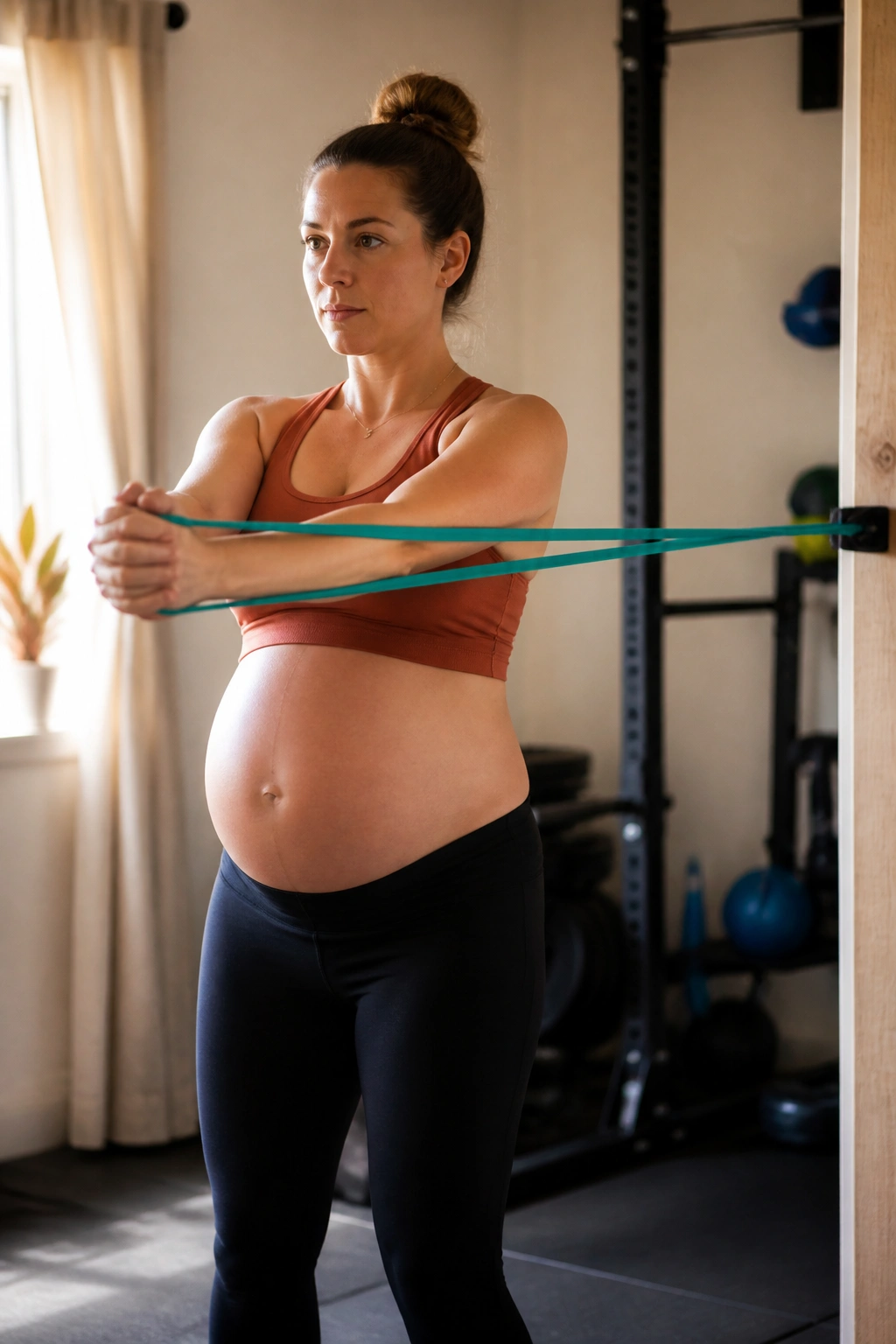
The Pallof press is a quiet little core exercise that earns its keep. It trains your torso to resist rotation, which is a nice way of saying it teaches your trunk to stay steady while your arms move.
Anchor the band at chest height to your side. Stand tall with both hands on the handle near your sternum, then press the band straight out in front of you and bring it back in. Your torso should stay square the whole time. If your body twists toward the anchor point, the band is too heavy.
How to use it
Start with 2 to 3 sets of 8 to 12 presses per side or hold the band out for 15 to 20 seconds. Keep the knees soft and the ribs stacked. This isn’t about brute force. It’s about control.
The best cue is simple: don’t let the band move you. If you can feel your waist, obliques, and deep core all working together without strain, you’re on track. Some people like to do this in a split stance for more stability. Others prefer feet hip-width apart. Use whichever version lets you stay calm through the trunk.
8. Side-Lying Clamshells
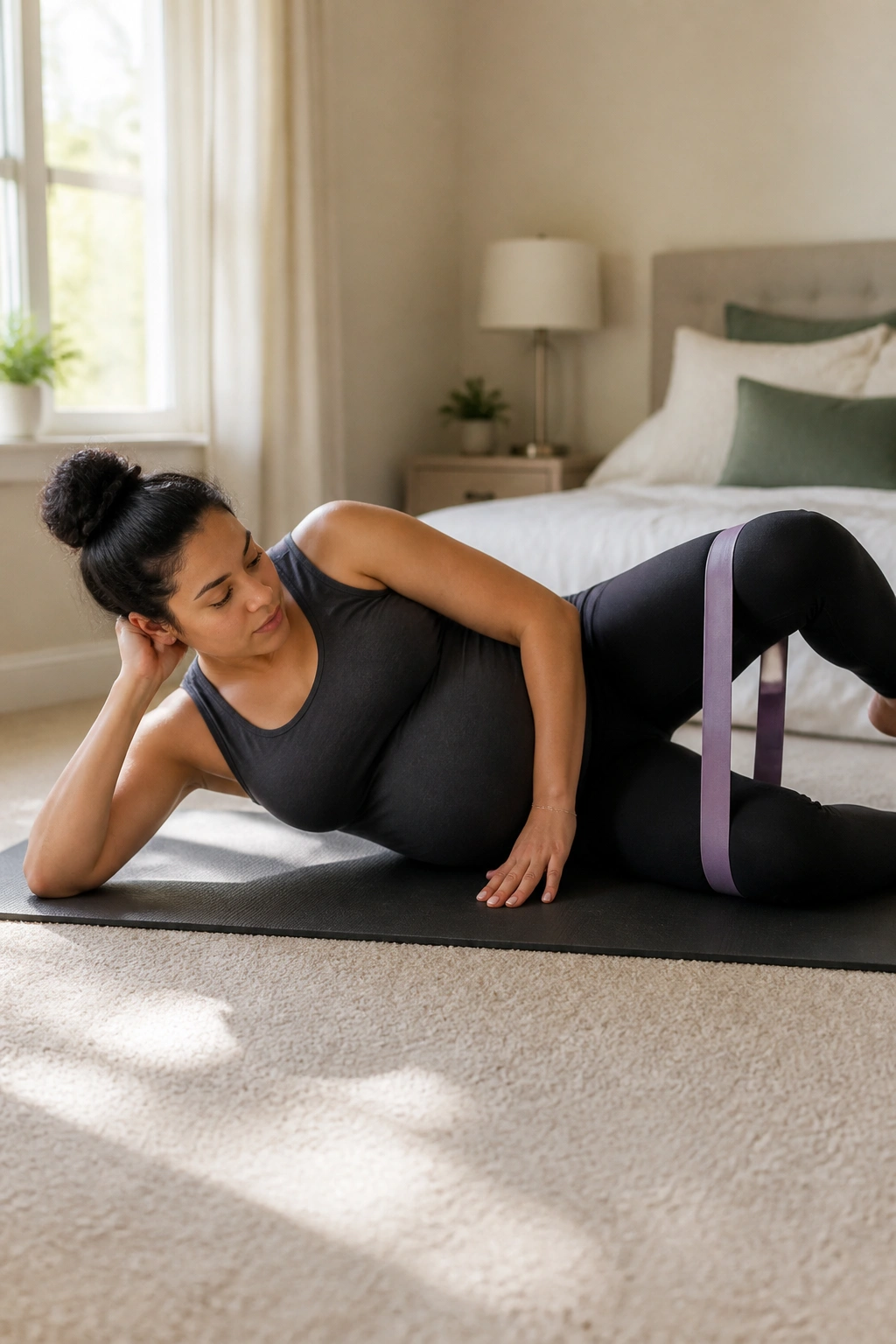
Side-lying clamshells are one of the few floor moves that stays kind to the body and still hits the glute medius hard. That muscle matters more than it gets credit for, especially when the hips start feeling loose or the pelvis feels like it needs extra support.
Lie on your side with knees bent, a mini band just above the knees, and your heels together. Keep your hips stacked. Open the top knee without rolling backward, then lower slowly. The movement is small. That’s fine. It should burn around the outer hip, not the low back.
Do 2 to 3 sets of 10 to 15 reps per side. If side-lying feels uncomfortable for your belly, prop yourself with a pillow or use a more upright side-lying angle. A small cushion between the knees can also make the position feel less awkward.
This is a good “quiet strength” move. No drama. No sweat mess. Just honest hip work that often makes walking, stair climbing, and standing on one leg feel a touch more stable.
9. Standing Hip Abduction
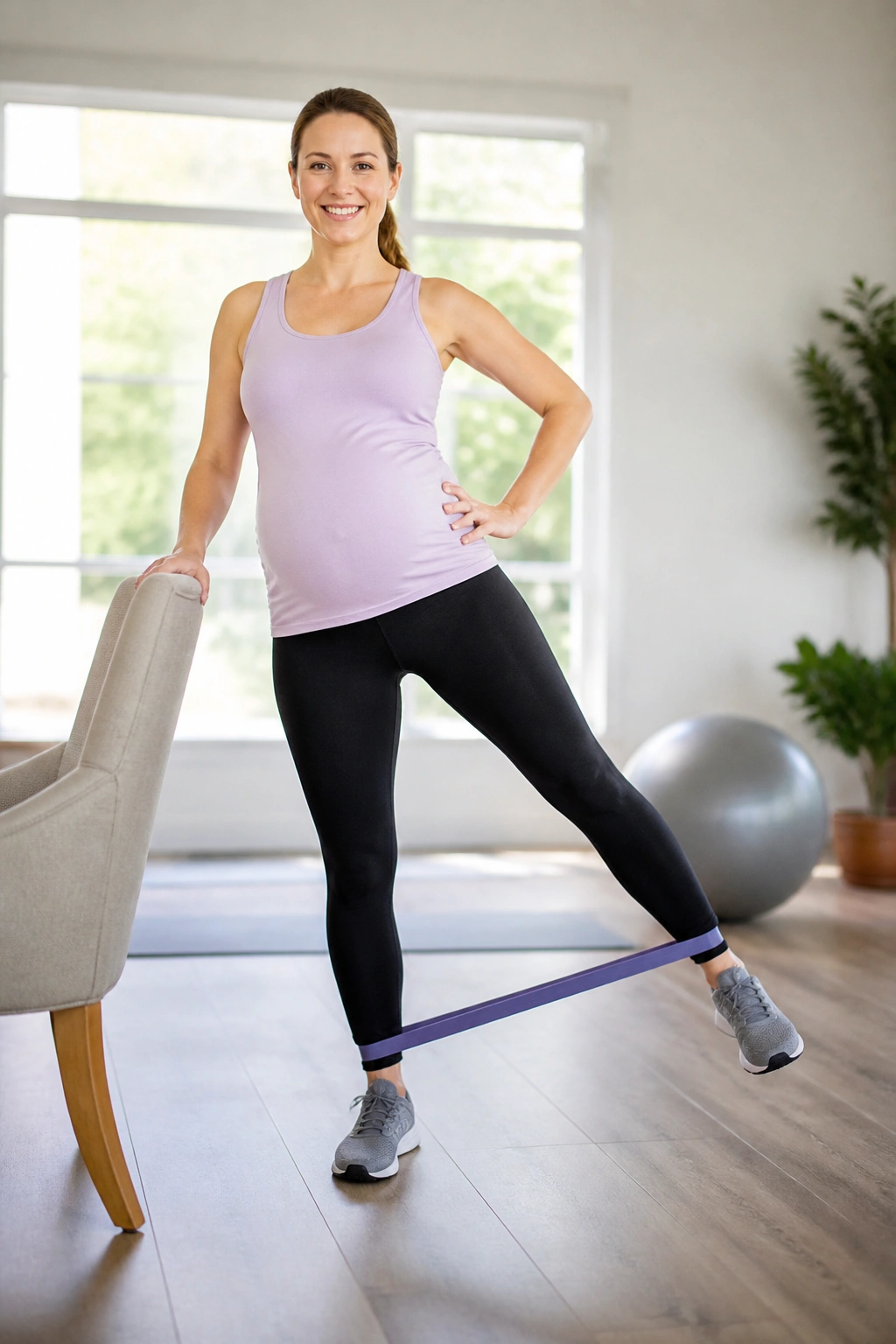
Standing hip abduction is the upright cousin of the clamshell, and it’s useful when getting down to the floor feels like too much. Hook a light band around your ankles or place a mini band above your knees, hold a chair for balance, and lift one leg out to the side without leaning your torso.
The lifted leg doesn’t need to go high. In fact, high usually turns into sloppy. A small, controlled arc is enough. Pause for a second at the top, then return with a slow lower. Keep both hip bones facing forward.
Try 2 sets of 10 to 12 reps on each side. If the standing leg starts to wobble, widen your stance or use both hands on the chair. A little support goes a long way here.
One nice thing about this exercise: you can feel exactly when it stops being useful. The second you start hitching the hip or swinging the leg, the band is too strong. Back off, shorten the range, and keep the motion tidy.
10. Banded Good Mornings
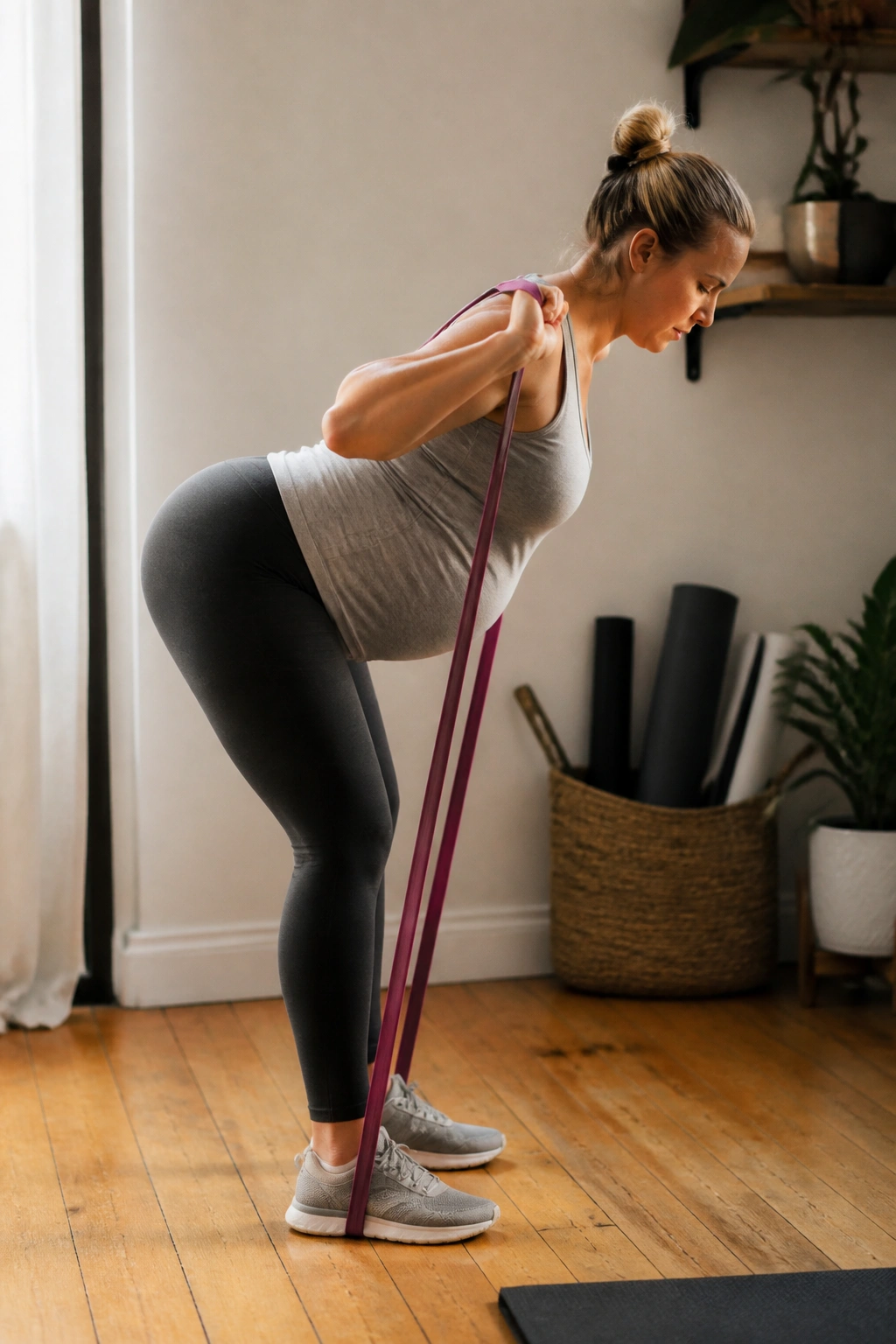
A good morning with a band is basically a hip hinge dressed in simpler clothes. It trains the hamstrings, glutes, and back of the body without asking you to pick up heavy weights or deal with awkward floor positions.
Stand on a long band and drape the other end over the back of your shoulders, holding it in place near the collarbones. Soften the knees, send the hips back, and tip your torso forward a few inches with a flat back. Then stand tall by squeezing the glutes.
Hinge, don’t fold
That’s the whole game. The movement should feel like your hips are sliding behind you, not like your spine is curling forward. If you feel the pressure in your lower back, you’ve gone too far or lost control on the way down.
Use 2 to 3 sets of 8 to 12 reps with a light band. The range can be tiny. It still works. For pregnancy, especially as your center of mass shifts, a smaller hinge often feels much better than a deep one.
This is one of those moves that quietly helps with real life: picking up laundry, loading a low drawer, and getting down to a child’s level without feeling like your back is doing all the talking.
11. Bird Dog Rows
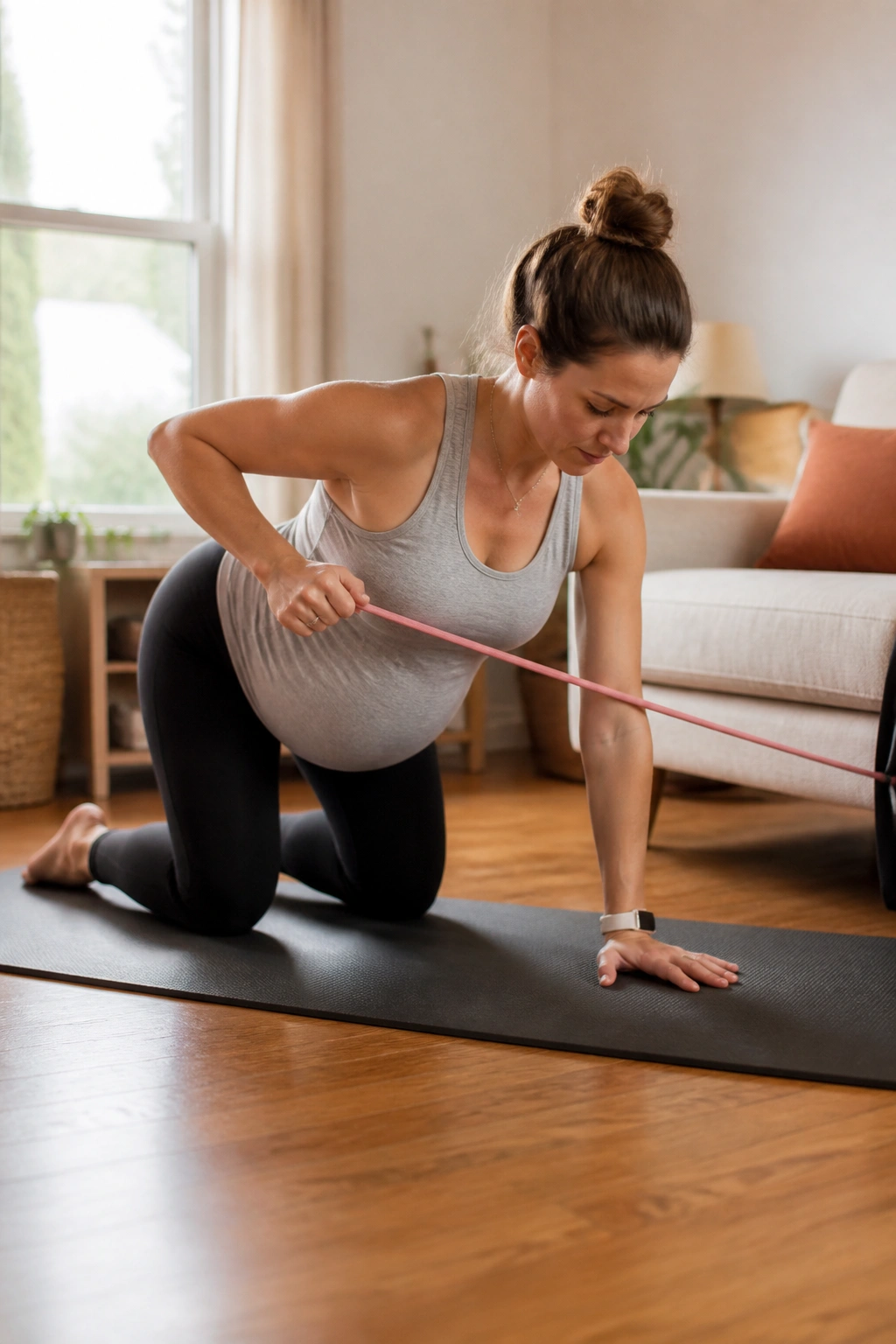
Bird dog rows look a little clumsy the first time you do them. That’s normal. They combine balance, core stability, and upper-back work in one pattern, which is why they’re useful and a bit humbling.
Start on hands and knees with a band anchored low to one side. Hold the handle in one hand while the opposite knee stays on the floor and the other leg reaches long behind you. Row the band toward your ribs while keeping your hips square. Then lower with control and switch sides.
If the full version feels wobbly, keep both knees down and just do the row. That’s still a perfectly good exercise. Stability comes first. The row is the bonus.
What to watch for
- Don’t let the belly sag.
- Don’t let the trunk twist to chase the pull.
- Keep the neck long and the ribs quiet.
Use 2 sets of 6 to 8 reps per side. This one is less about burning the muscles out and more about teaching them to cooperate. That matters more than it sounds like it should.
12. Triceps Pressdowns
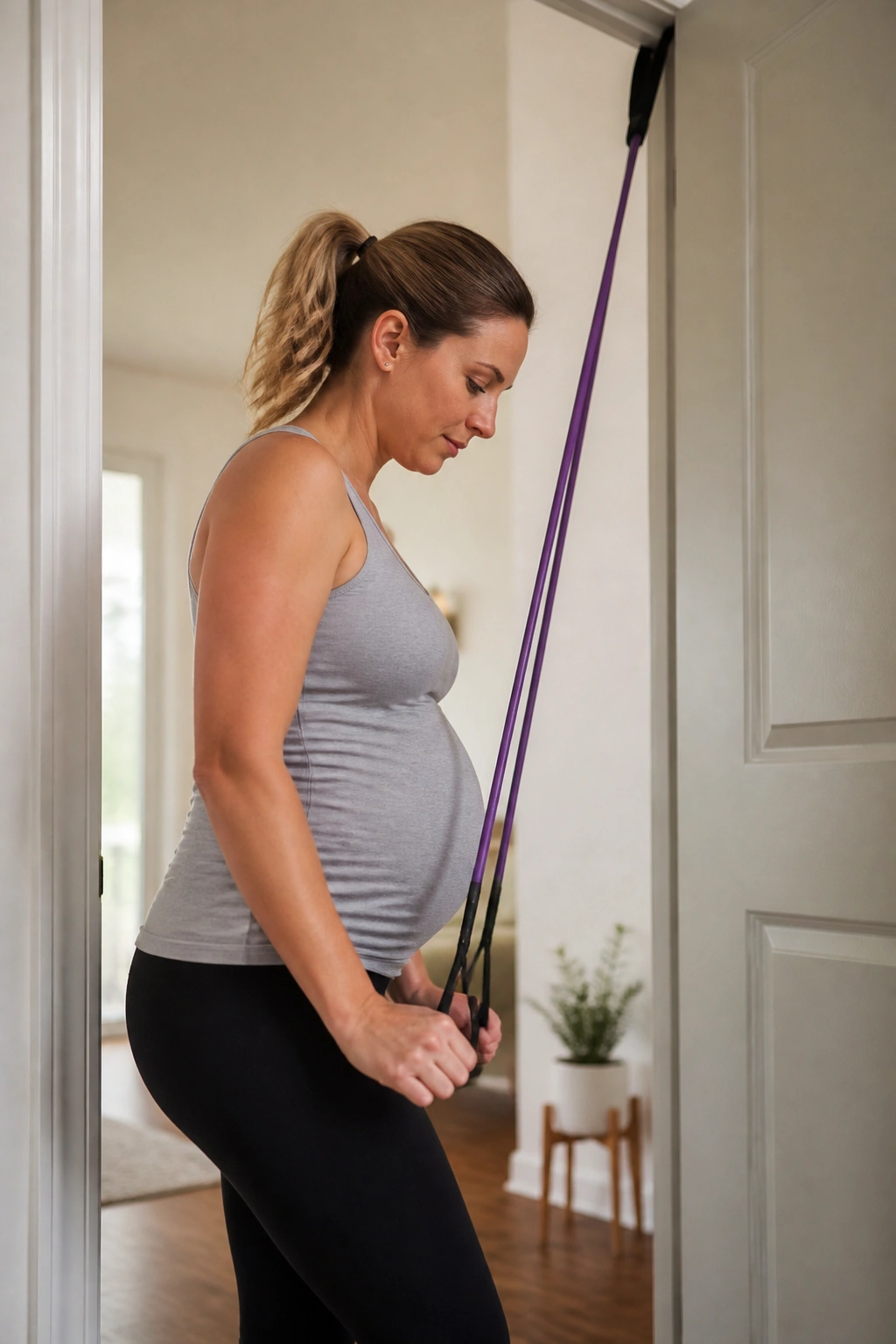
Triceps pressdowns are a simple win. They help with arm strength, and they’re easy to scale down if you’re having a tired, low-energy workout day. Anchor the band high on a door or sturdy bar and hold the ends with elbows tucked close to your sides.
Press the hands down until the arms straighten, then return slowly until the forearms are about parallel to the floor. The upper arms should stay almost still. If the shoulders start taking over, lighten the band.
Try 2 to 3 sets of 10 to 15 reps. Keep the wrists neutral and the elbows pinned near the ribs. A lot of people lean forward during this movement without noticing. Don’t do that. The torso should stay stacked and easy.
This is one of the nicest band exercises for pregnancy because it doesn’t ask much of balance, and it gives you a clean upper-body effort without irritating the lower back. If overhead work feels off, this is a smart place to put your energy.
13. Wall Sit With a Mini Band
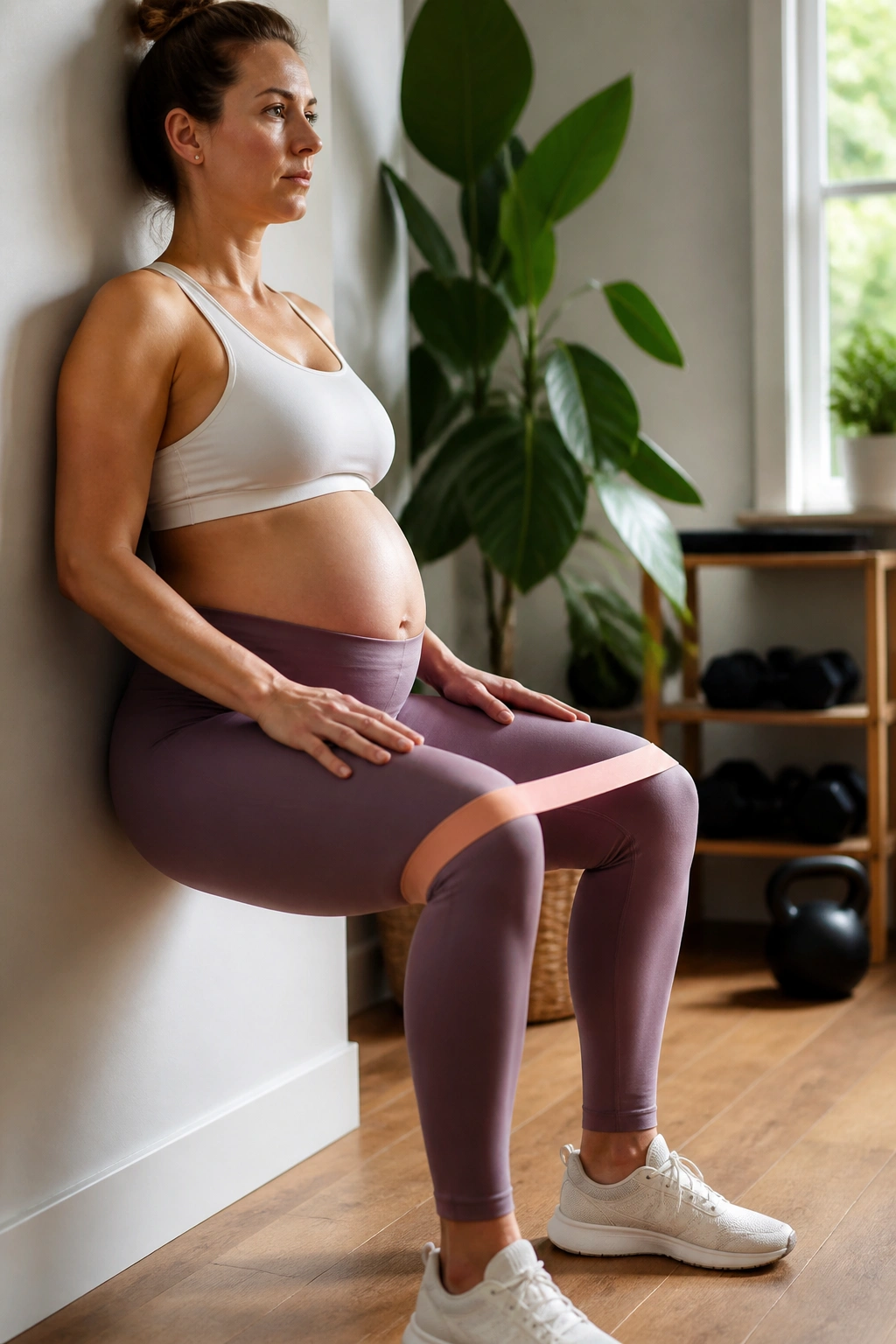
Want a lower-body drill that feels steady instead of wobbly? A wall sit with a mini band usually does the trick. It gives you quad work, glute work, and a little bit of isometric endurance without the balance demands of free squats.
Stand with your back against a wall, slide down only as far as feels comfortable, and place the band above your knees. Press the knees gently outward against the band while you hold the position. Keep the feet flat and a bit forward of the knees.
Hold for 20 to 30 seconds, rest, then repeat for 2 to 4 rounds. If your knees don’t like a deep bend, don’t force it. A half-sit is enough. The wall is there to make you feel safe, not trapped.
The best thing about this move is how predictable it is. No rushing. No odd angles. Just steady leg work. If you’re having a day where your joints feel loose and your coordination is off, wall sits tend to behave better than more dynamic leg drills.
14. Supported Split Squats
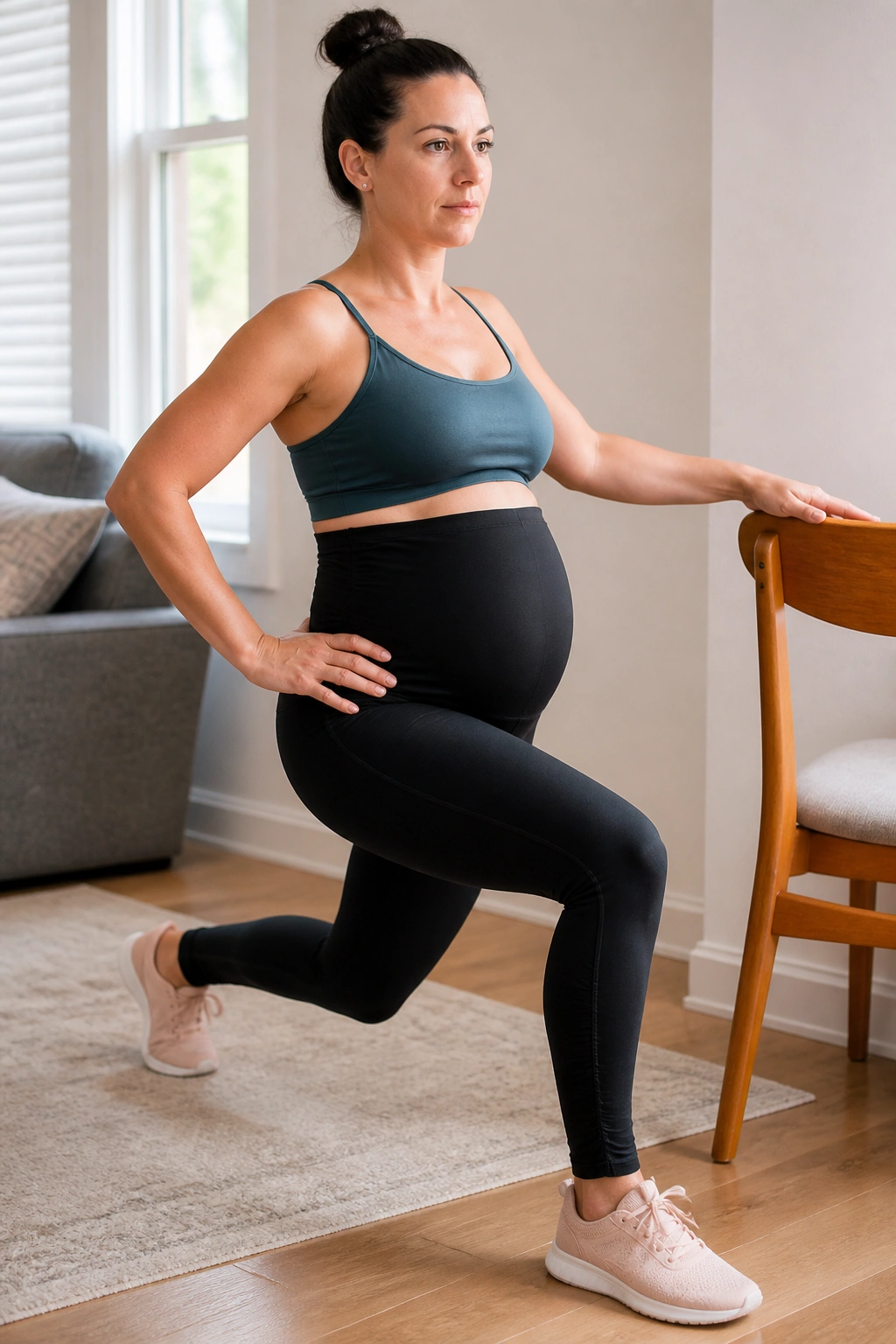
Split squats can be excellent during pregnancy if you respect balance and keep the range small. Stand in a staggered stance near a wall or chair, hold the support lightly, and lower a few inches until both knees bend comfortably. Then press back up through the front heel.
A few form rules
Keep the torso upright. Don’t let the front knee collapse inward. Don’t take such a long stance that your hips feel stretched in a bad way. The goal is a smooth, controlled knee bend, not a deep lunge.
Use 1 to 2 sets of 6 to 10 reps per side if you’re new to the pattern, or 2 to 3 sets if it feels stable. If your pelvis feels touchy, shorten the stance and reduce depth. That small adjustment often makes the difference between useful and annoying.
A supported split squat is worth the effort because it trains single-leg strength in a way that transfers to stairs, walking, and standing up from low furniture. It also tells you a lot about how your balance is changing, which is useful information even when the exercise itself isn’t especially exciting.
15. Band Pull-Aparts
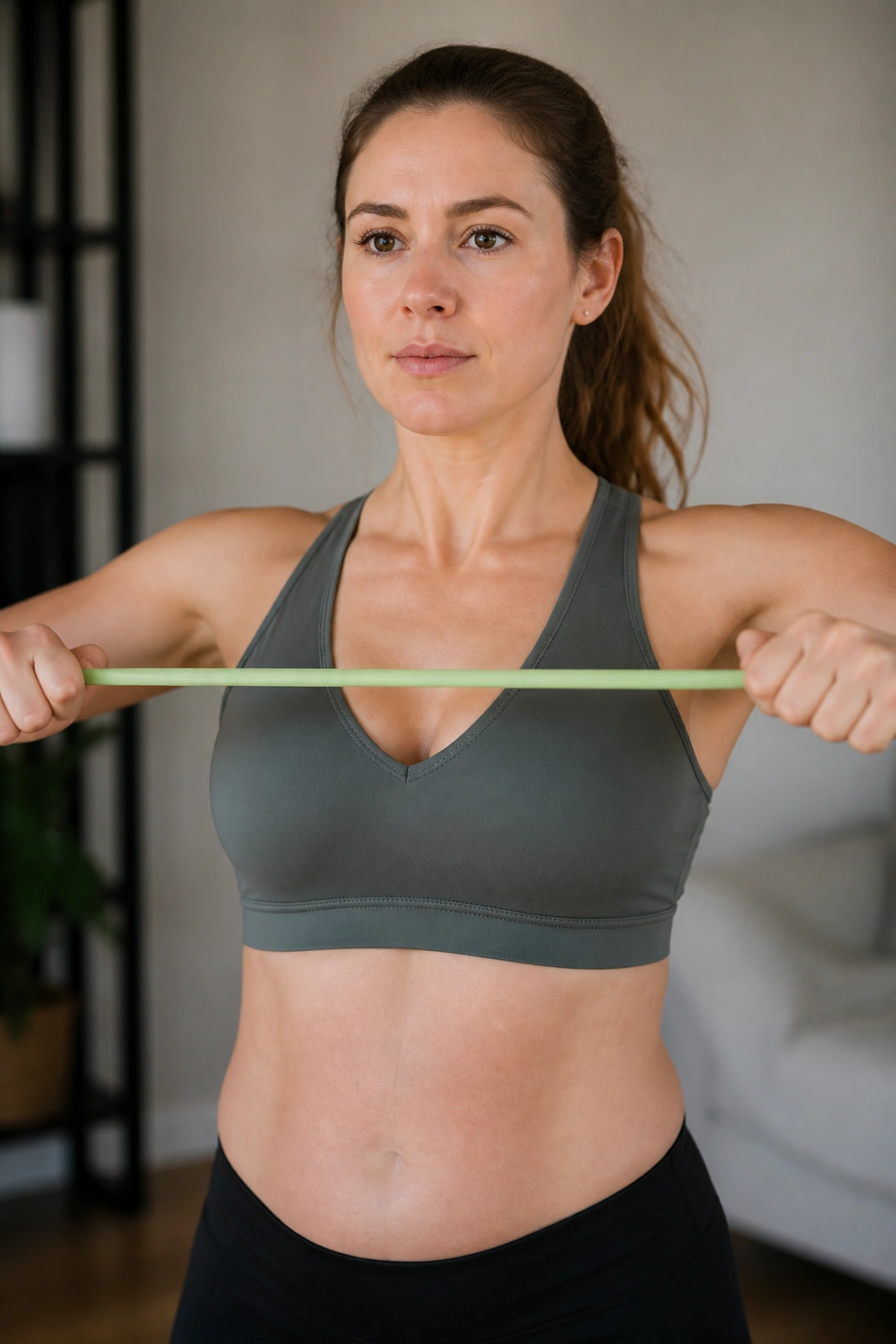
Band pull-aparts are plain, and I mean that in a good way. They open the upper back, wake up the rear shoulders, and give your posture a break after all the forward-facing work of daily life.
Hold a light band in front of your chest with both arms straight but not locked. Pull your hands apart until the band touches your chest or gets close, then return slowly. Keep the shoulders down and the neck relaxed. If you feel yourself arching the lower back to make the band move farther, lighten the tension.
2 to 3 sets of 10 to 15 reps is plenty. The movement should feel crisp. Not jerky. Not huge. Just controlled and clean.
How to keep it useful
- Keep the elbows soft.
- Move from the shoulder blades, not the neck.
- Stop the set if your ribs flare forward.
This one is one of those little posture helpers that doesn’t look like much on paper. In real life, it can be a nice reset between more demanding lower-body exercises.
16. Standing Kickbacks
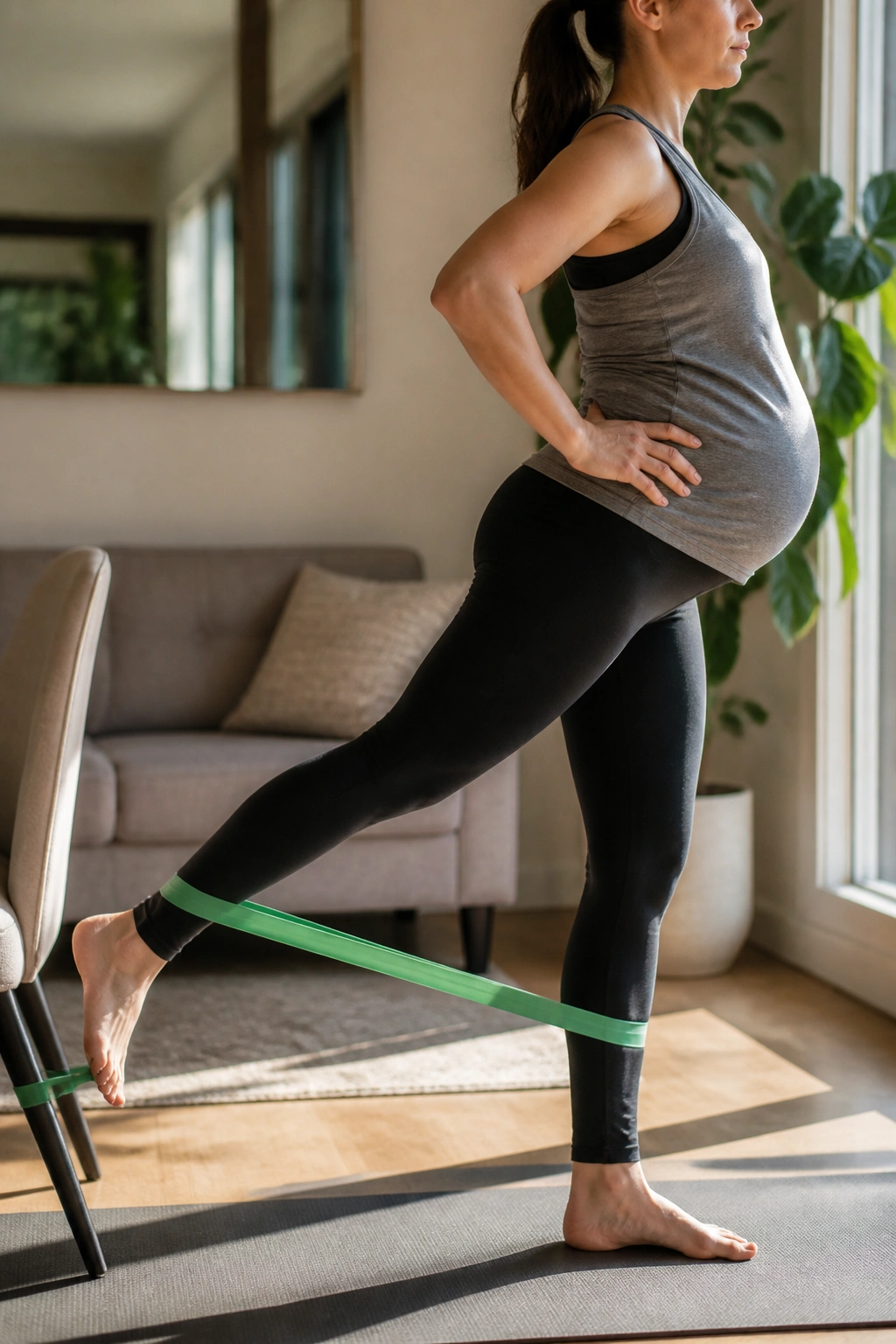
Standing kickbacks work the glutes without putting you on the floor or asking much of your balance. Anchor the band low behind you, loop it around one ankle, and hold onto a chair or counter. Keeping the working leg straight, extend it gently back behind your body.
The motion is small. That’s the part people miss. You don’t need to swing the leg high. In fact, a high kick usually makes the lower back take over and the glute quit early.
Use 2 sets of 10 to 12 reps per side. Keep the torso tall and the hips facing forward. If the standing leg starts to lock up, soften the knee and reset. If your back feels it more than your seat, shorten the range and slow down the rep.
A clean kickback gives you glute work without much fuss. It’s also easy to adjust on days when you feel strong versus days when your body wants gentler work. That flexibility is a big deal during pregnancy.
17. Diagonal Band Chops
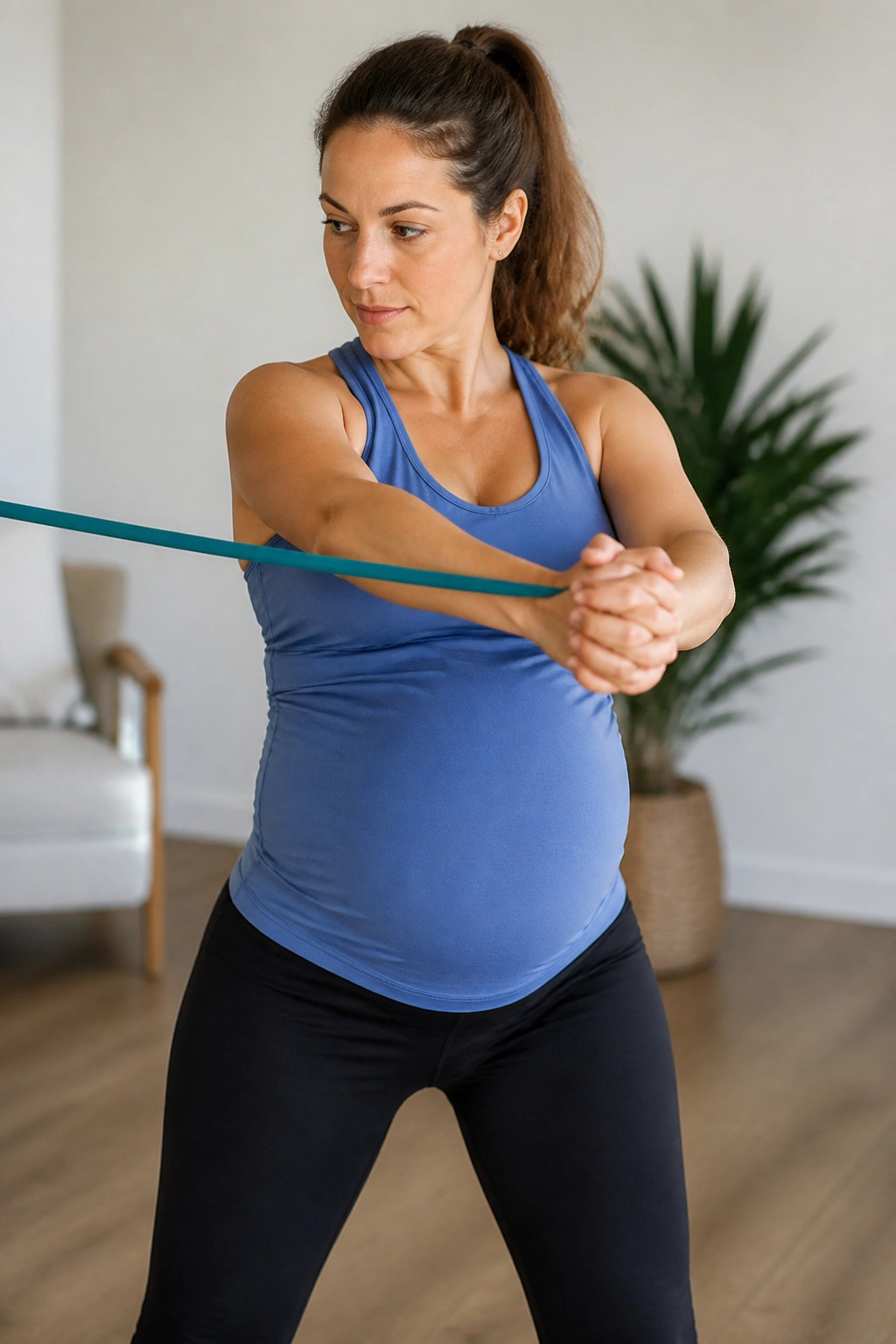
Diagonal chops train your torso to move through a controlled pattern without yanking around at the midsection. They’re not about speed. They’re about clean rotation and good posture.
Anchor the band high on one side or low on one side, depending on the direction you want to work. Stand with feet hip-width apart and pull the band diagonally across your body with both hands, stopping when the movement stays smooth and the ribs remain stacked. Return slowly.
How to use it
Think “controlled sweep,” not “woodchopper at full blast.” The hips should stay mostly steady. The ribs should not flare. If the movement makes your abdomen dome or your back arch, reduce the range or switch to a lighter band.
Start with 2 sets of 8 to 10 reps per side. This exercise is useful because it ties the trunk and shoulders together without needing a plank or a floor-based core drill. It’s a smart middle ground when you want core work but don’t want anything that feels too compressed.
18. Seated Marches With a Mini Band
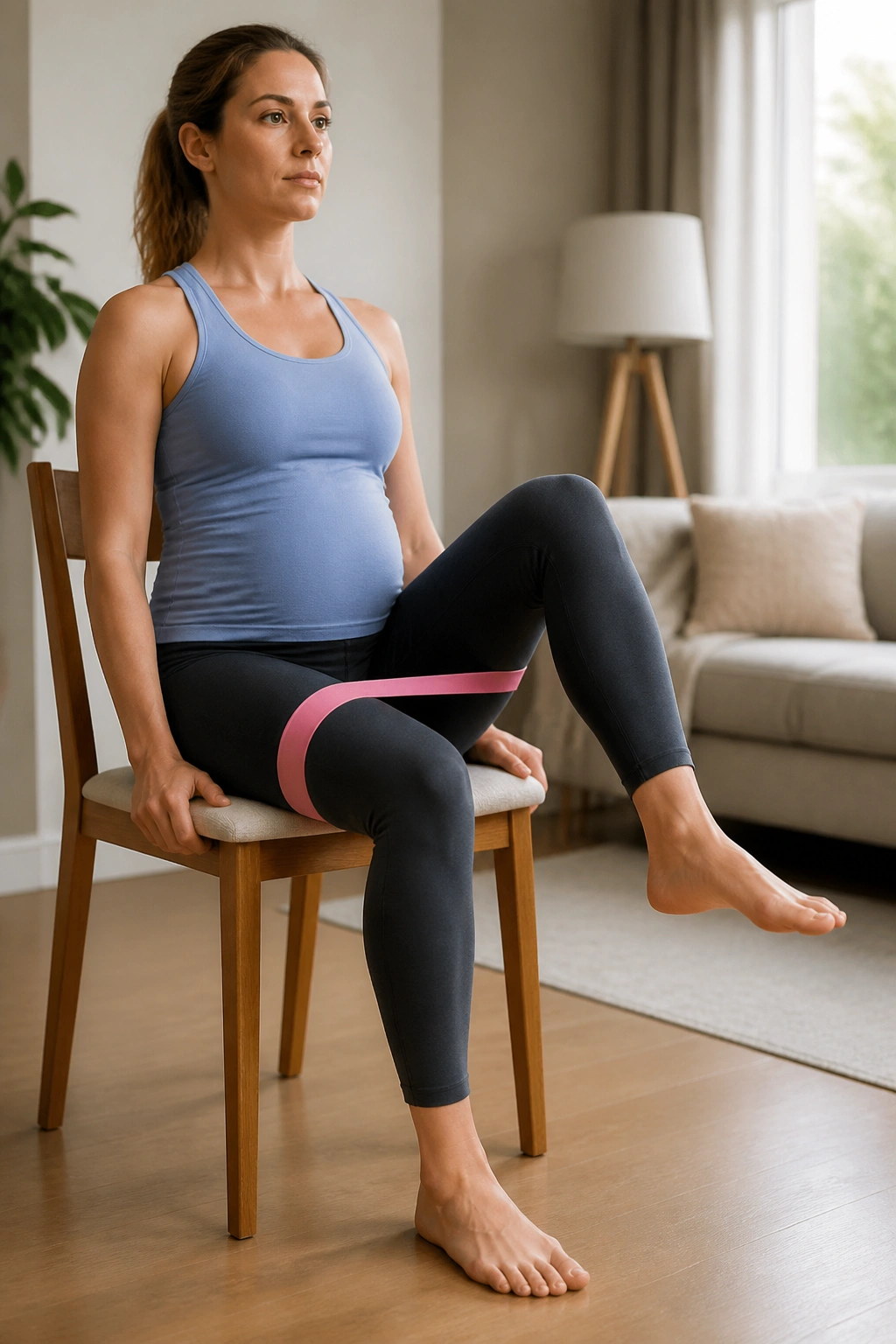
Seated marches are about as low-drama as exercise gets, which is exactly why they’re useful. Put a mini band above your knees, sit tall on a chair, and lift one knee at a time in a slow marching pattern. Keep the pelvis level and the torso upright.
Why it’s worth doing
You train hip flexors, core stability, and pelvic control without asking your balance system to do extra gymnastics. If standing marches make you feel unstable, this seated version is a calm substitute. It also works well on days when your energy is low but you still want to move.
Use 2 to 3 sets of 10 to 20 total marches. Move one leg at a time, not both together. If you feel the hip flexors gripping too hard, lower the knees a little and sit a touch taller.
The band adds enough outward pressure to make the hips and outer thighs participate, which is helpful. Just don’t bounce. A smooth lift and lower is better than a fast one. And if sitting on the chair makes your pelvis tilt backward, put a folded towel under you so your spine can stay neutral.
19. Sit-to-Stand With Band Pressure
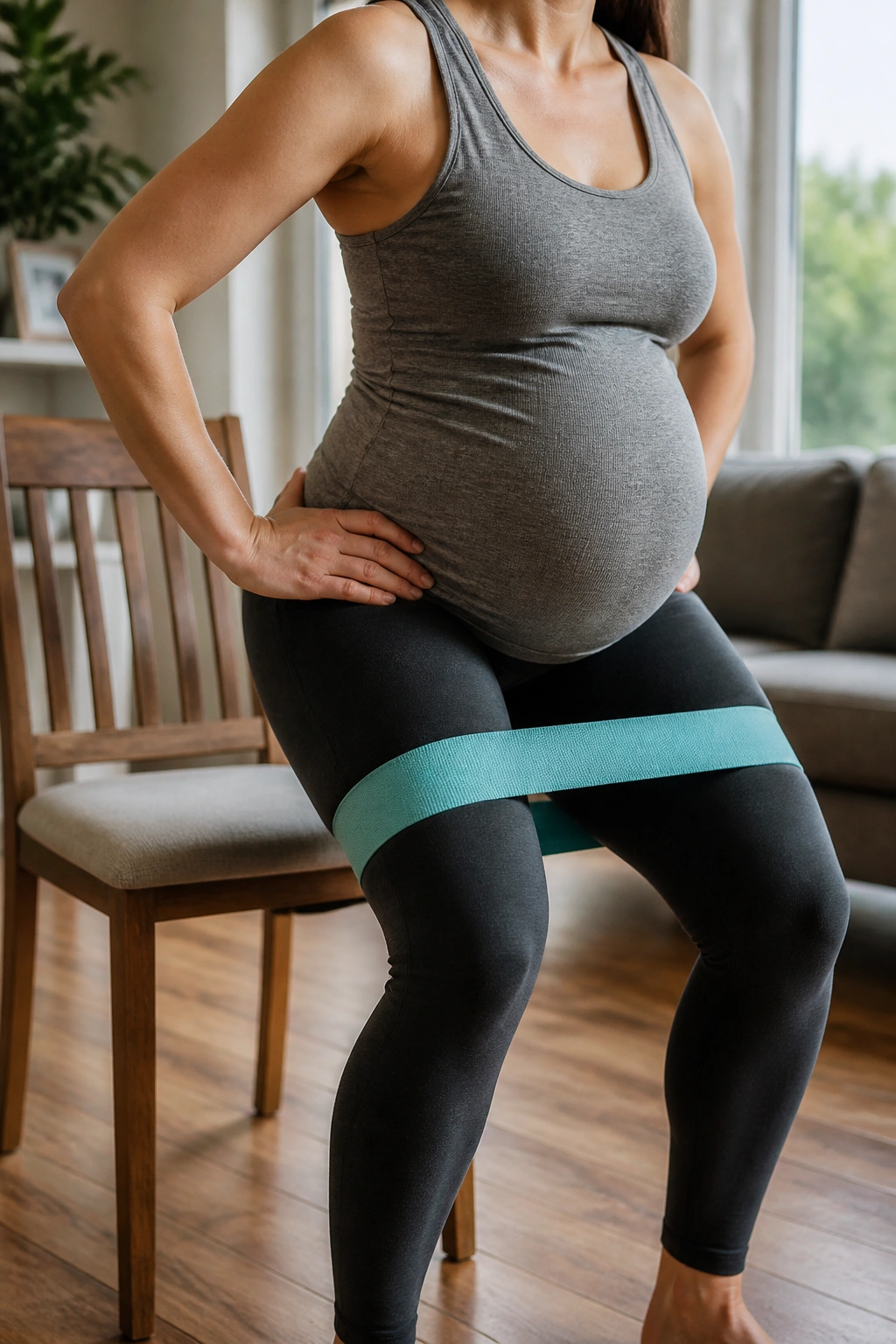
This is a stronger, slightly more functional version of the regular chair squat. Sit on a firm chair, place a mini band above the knees, and stand up while gently pressing the knees outward. Sit back down with control and repeat.
The magic here is the combo. You get leg strength, glute work, and a little anti-collapse pressure through the hips all in one movement. That’s useful when everyday tasks are starting to feel more effortful than they used to.
Aim for 2 to 3 sets of 8 to 10 reps. Use a chair that does not sink or slide. If you need your hands on the chair arms at first, use them. Then phase them out later if the movement feels steady.
A good sit-to-stand should feel clean at the top and quiet on the way down. If you’re dropping into the chair, lower the band tension or raise the seat height. Small changes like that matter more than people think, especially when fatigue changes from day to day.
20. Standing Band Punches
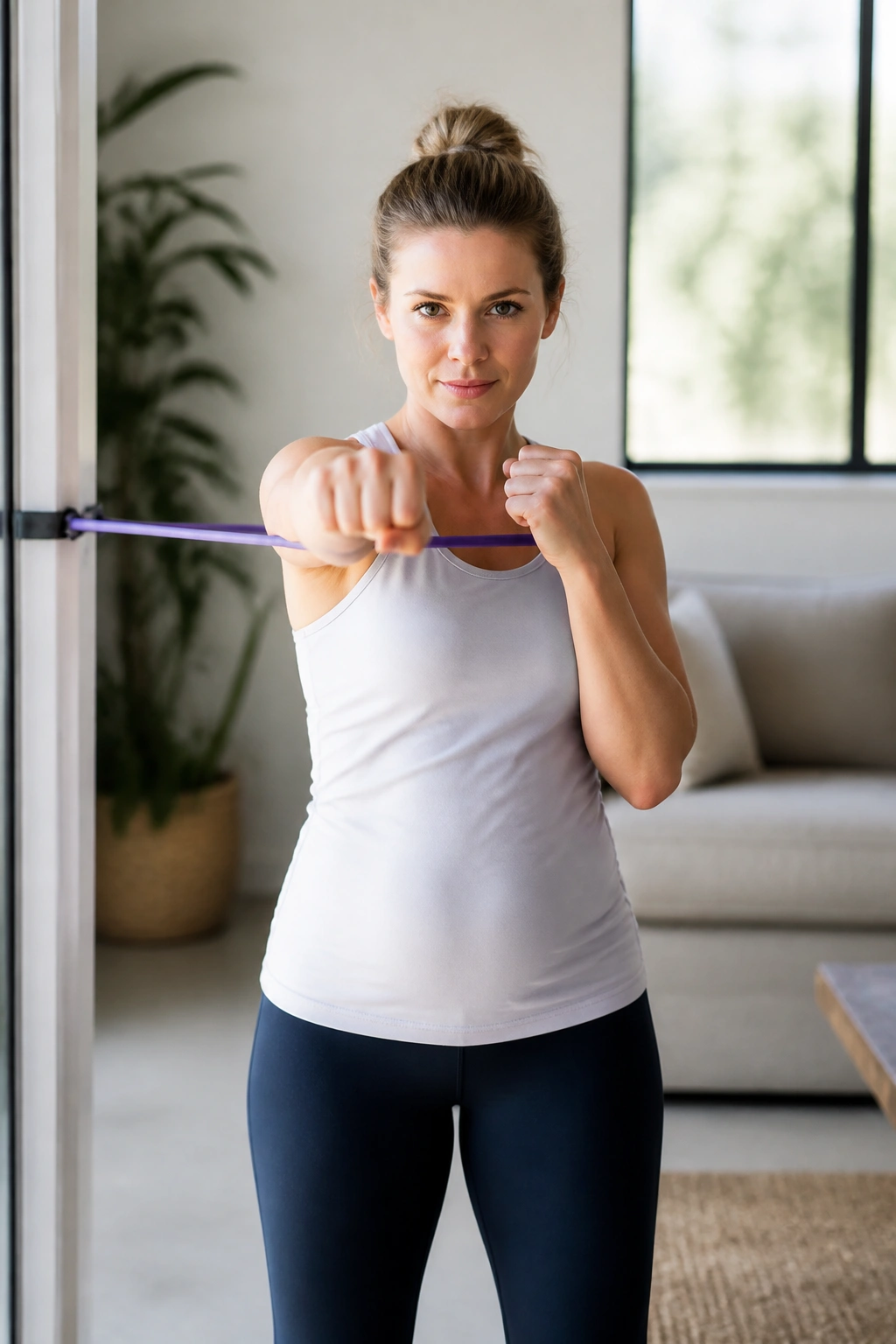
Standing band punches are a nice way to finish a workout because they raise the heart rate a bit without pounding your joints. Anchor a band behind you at chest height, step into a stable stance, and punch one arm forward at a time in a smooth rhythm.
Keep the ribs stacked and the elbows soft. The punch should stop before the shoulder starts shrugging. If twisting through the torso feels awkward, square your hips and keep the motion straight ahead. You can also alternate arms slowly instead of punching fast.
Use 2 to 3 rounds of 20 to 30 seconds with a short rest between rounds. The effort should feel lively, not frantic. Think brisk, controlled, and upright.
This move works well as a final circuit piece because it gives you a little conditioning without needing to lie down, jump, or balance on one leg. If your belly feels sensitive to rotation, shorten the range and keep the punches smaller. Clean form beats speed every time.
Final Thoughts
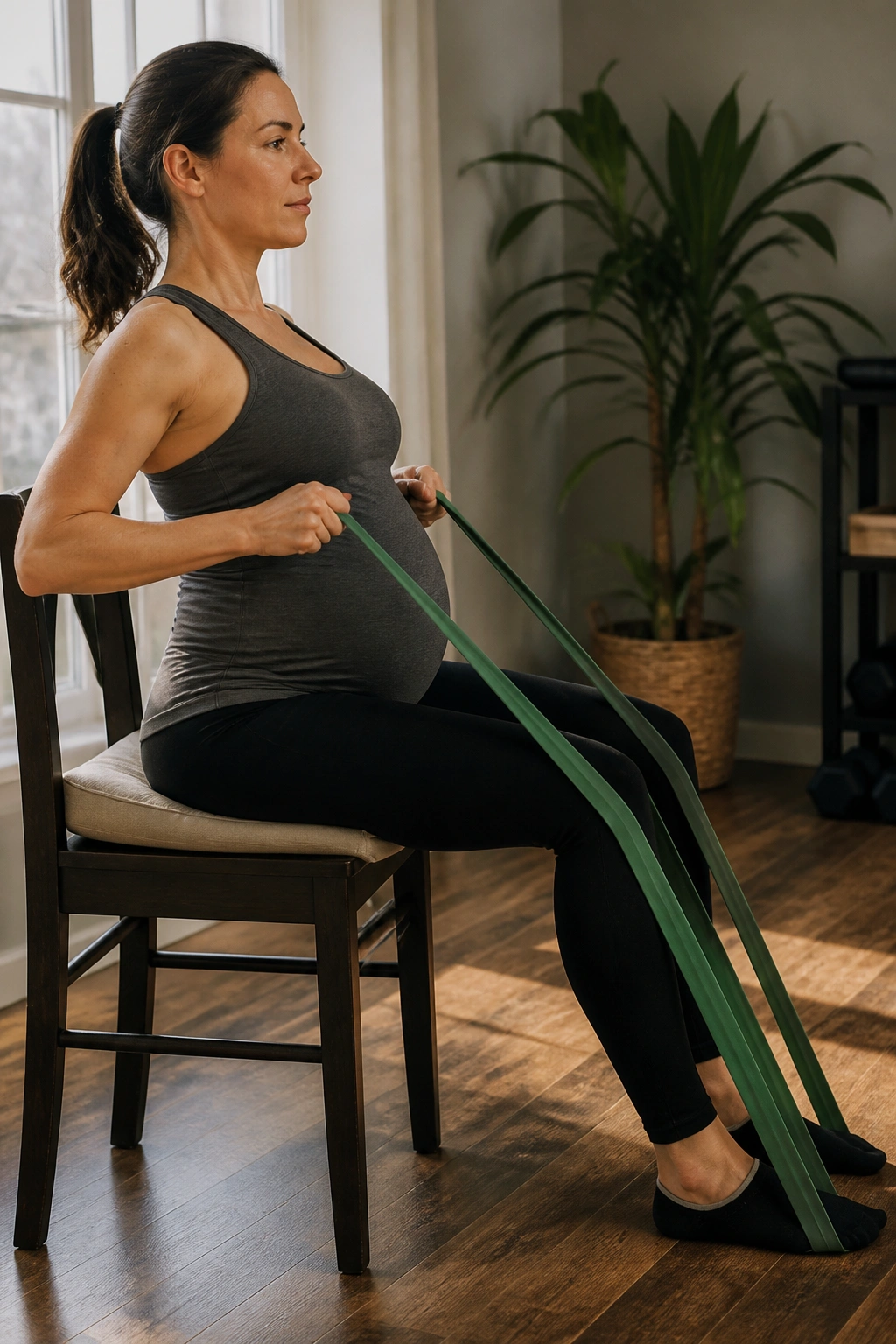
A good prenatal band session does not need to be complicated. Pick a few upright moves, keep the load moderate, and stay alert to the small signals your body gives you — heavy breathing, belly doming, pelvic pressure, or a shoulder that suddenly hates the angle you picked.
The best routine is the one you can repeat without dread. That usually means a chair nearby, a light-to-moderate band, and a hard stop before form gets sloppy. Keep it steady, keep it calm, and keep the range of motion honest.
