



Arm toning exercises work best when they do two unglamorous things well: load the muscle hard enough to make it adapt, and let you repeat that work week after week without your elbows, wrists, or shoulders complaining. That’s the part a lot of flashy arm routines skip. They lean on burn, speed, and cute little pulses, then wonder why the upper arm still looks the same under a T-shirt.
Real definition comes from muscle plus consistency. The triceps matter more than most people think because they make up a big chunk of upper-arm size, and the shoulders and upper back help the whole arm look cleaner from every angle. So yes, curls belong here. So do push-ups, carries, rows, presses, and a few moves that feel a little old-school because they work.
No, you do not need fifty variations of the same elbow-bend. You need a mix that covers pushing, pulling, curling, pressing, and grip work, with enough resistance to make the last few reps honest. That’s the whole game, really.
Start with the movements below, and keep one eye on form the whole time. Pretty reps are nice. Clean reps that actually challenge the muscle are better.
1. Standard Push-Ups
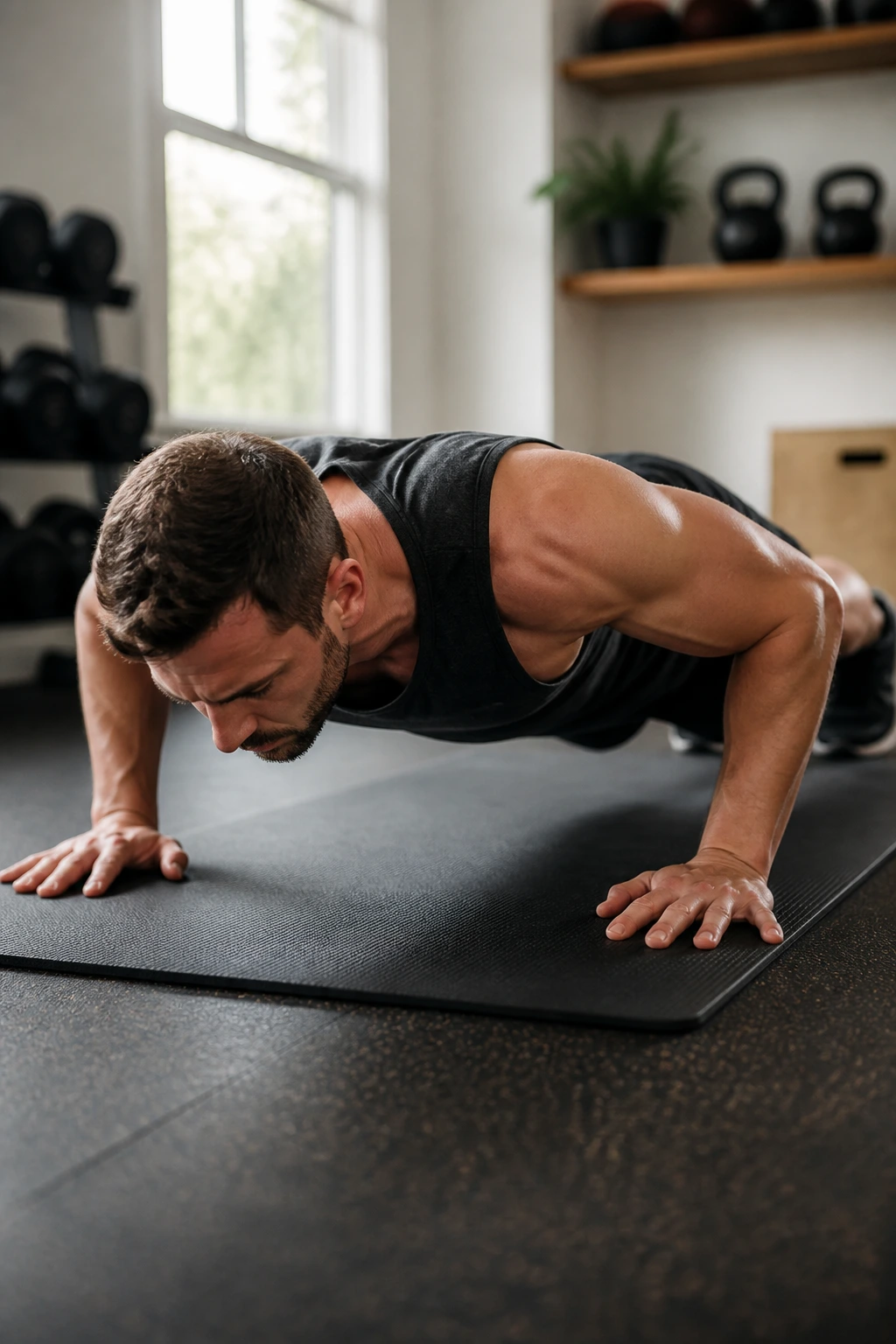
Standard push-ups are still one of the best arm toning exercises around because they ask the triceps, shoulders, chest, and core to work together. That matters more than people admit. Arms that look defined usually belong to a body that can press well, not just curl well.
Why It Earns a Spot
A push-up gives you a clean way to train the back of the arms without needing a lot of equipment. Keep your hands just outside shoulder width, lower until your chest comes close to the floor, then press up while keeping your ribs from flaring. If your lower back sags, the set is over.
Form cues:
- Hands under or just outside the shoulders
- Elbows at roughly a 30 to 45 degree angle
- Body in one straight line
- Chest touches first, not hips
Good starting dose: 3 sets of 8 to 15 reps, or 2 to 3 sets of incline push-ups if full reps are too hard.
One clean push-up beats five sloppy ones. Every time.
2. Close-Grip Push-Ups

Close-grip push-ups put more of the work on the triceps than the wider version does, and you feel that shift fast. The hands sit inside shoulder width, usually with the thumbs or index fingers close together, though you do not need a perfect diamond shape for the move to work.
A lot of people rush this exercise because it looks simple. It isn’t. The narrower stance makes the triceps do more of the pressing, and that can light up the back of the arm in a way standard push-ups sometimes do not.
If your wrists feel cranky, do these on push-up handles or with your hands on a sturdy bench. That small change often keeps the exercise usable instead of painful. Aim for 3 sets of 6 to 12 reps, stopping before your elbows flare out and your chest starts taking over.
3. Bench Dips
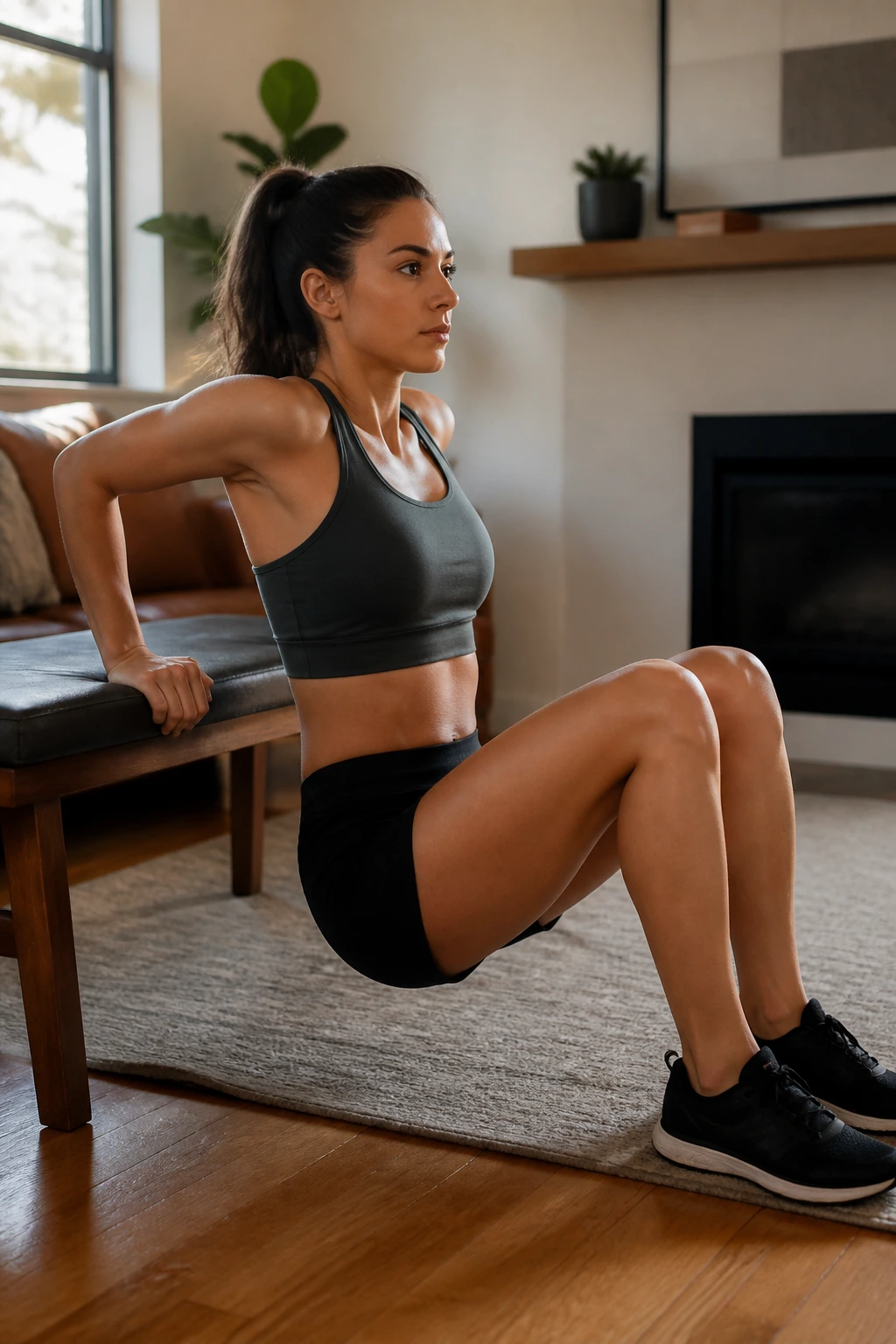
Bench dips are old-school, and yes, they can be useful when you do them with control. The setup is simple: hands on a bench or sturdy chair, legs bent for an easier version or straight for a tougher one, then lower until the upper arms are about parallel to the floor.
What Makes Them Tricky
The movement feels easy for the first few reps. Then the shoulders start telling the truth. Go too deep, or let your shoulders creep up toward your ears, and the exercise can get cranky fast. Keep your chest open, shoulders down, and elbows pointing back rather than out.
Best use:
- 2 to 4 sets of 8 to 15 reps
- Shorter range if shoulders complain
- Slower lowering phase for more triceps work
If dips bother the front of your shoulders, skip them. There are plenty of other ways to build the triceps without fighting a joint that hates the angle.
4. Overhead Triceps Extensions
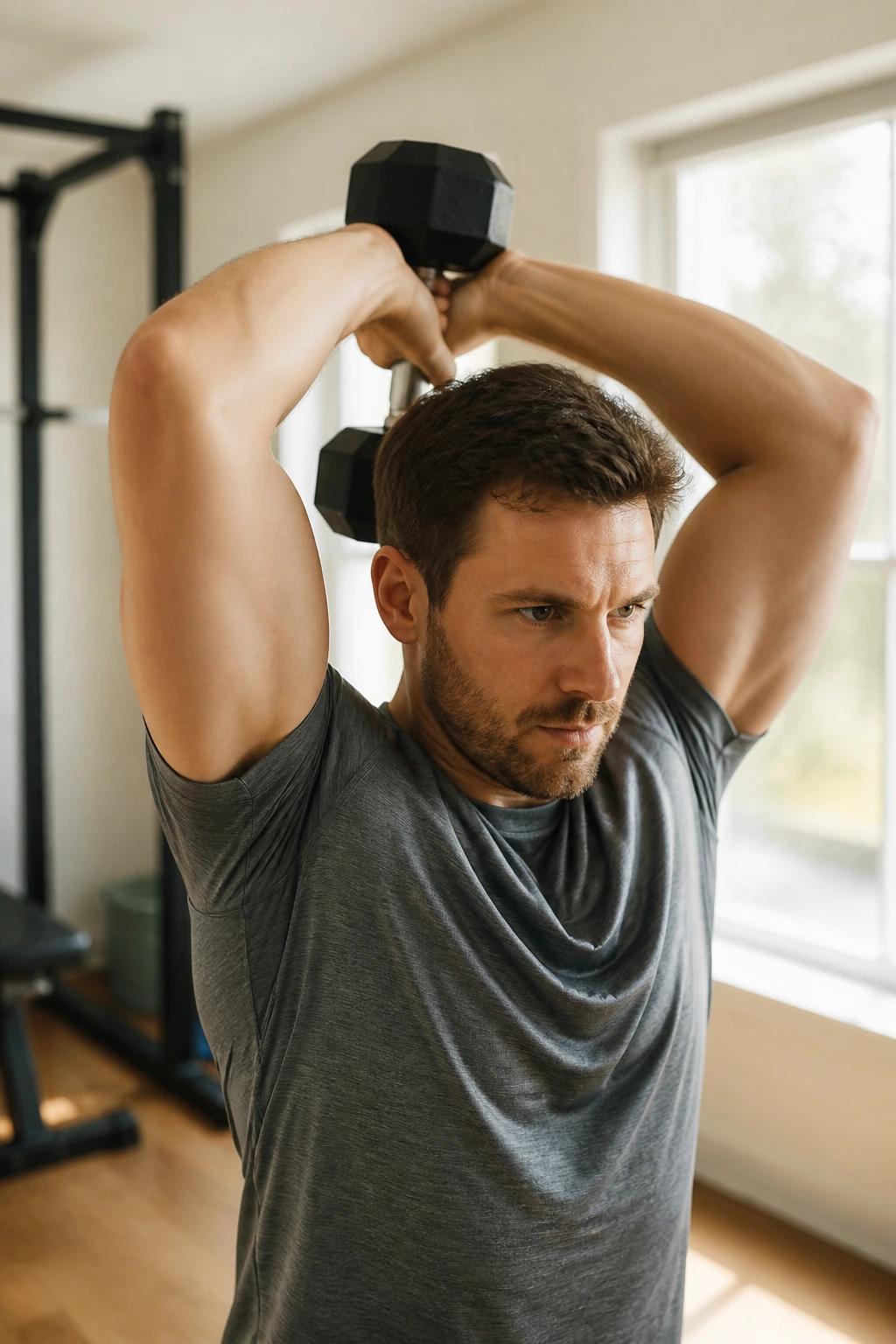
Why do overhead triceps extensions show up on almost every solid arm routine? Because they hit the long head of the triceps, which gets missed when you only do pressing movements. That long head helps the back of the arm look fuller, and it likes overhead positions.
Hold one dumbbell with both hands, or use a cable or resistance band if that feels smoother. Start with the weight overhead, elbows tucked near your ears, then bend only at the elbows and lower the load behind your head. Press back up until the arms are straight, but do not slam the elbows into lockout.
How to Use It
Keep the upper arms as still as possible. If they drift forward and back like windshield wipers, the load leaves the triceps and turns into body English. Use 3 sets of 10 to 15 reps with a weight that feels controlled on the way down and slightly spicy on the way up.
5. Triceps Kickbacks
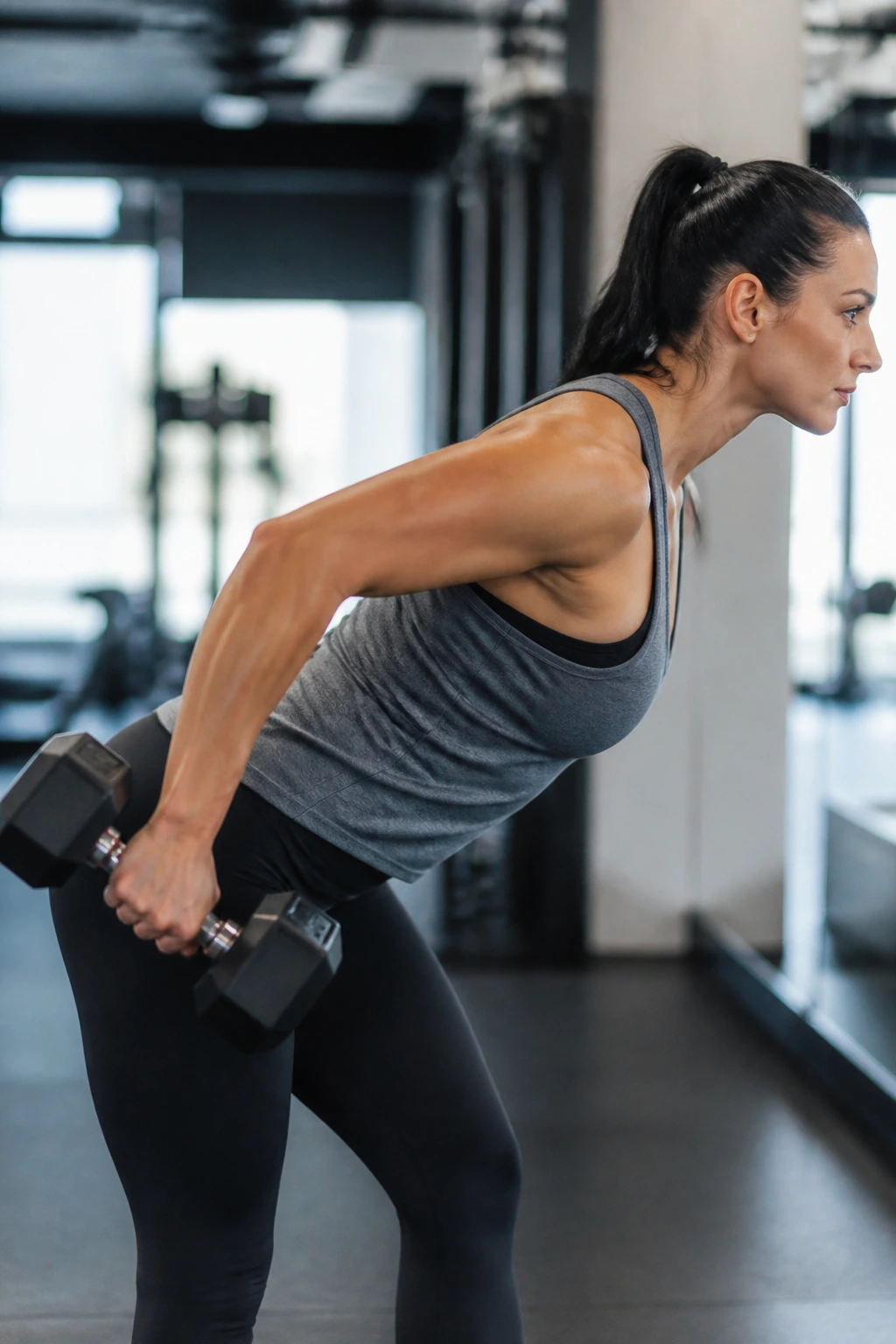
Triceps kickbacks are not flashy. They are also not supposed to be. The magic here is precision, not load. If you swing a heavy dumbbell through this exercise, it stops being a triceps move and turns into a lower-back exercise with extra drama.
Hinge at the hips, flatten your back, and keep the upper arm pinned beside your torso. From there, straighten the elbow until the arm is fully extended behind you, then come back just enough to keep tension on the muscle. The movement is tiny. That’s fine. Tiny is the point.
I like kickbacks as a finisher after heavier pressing work. They’re useful when the triceps are already warm and the goal is to squeeze out a clean burn without loading the joints too much. Use light to moderate dumbbells for 2 to 4 sets of 12 to 20 reps, and stop the set the second your shoulder starts doing the work.
6. Dumbbell Biceps Curls
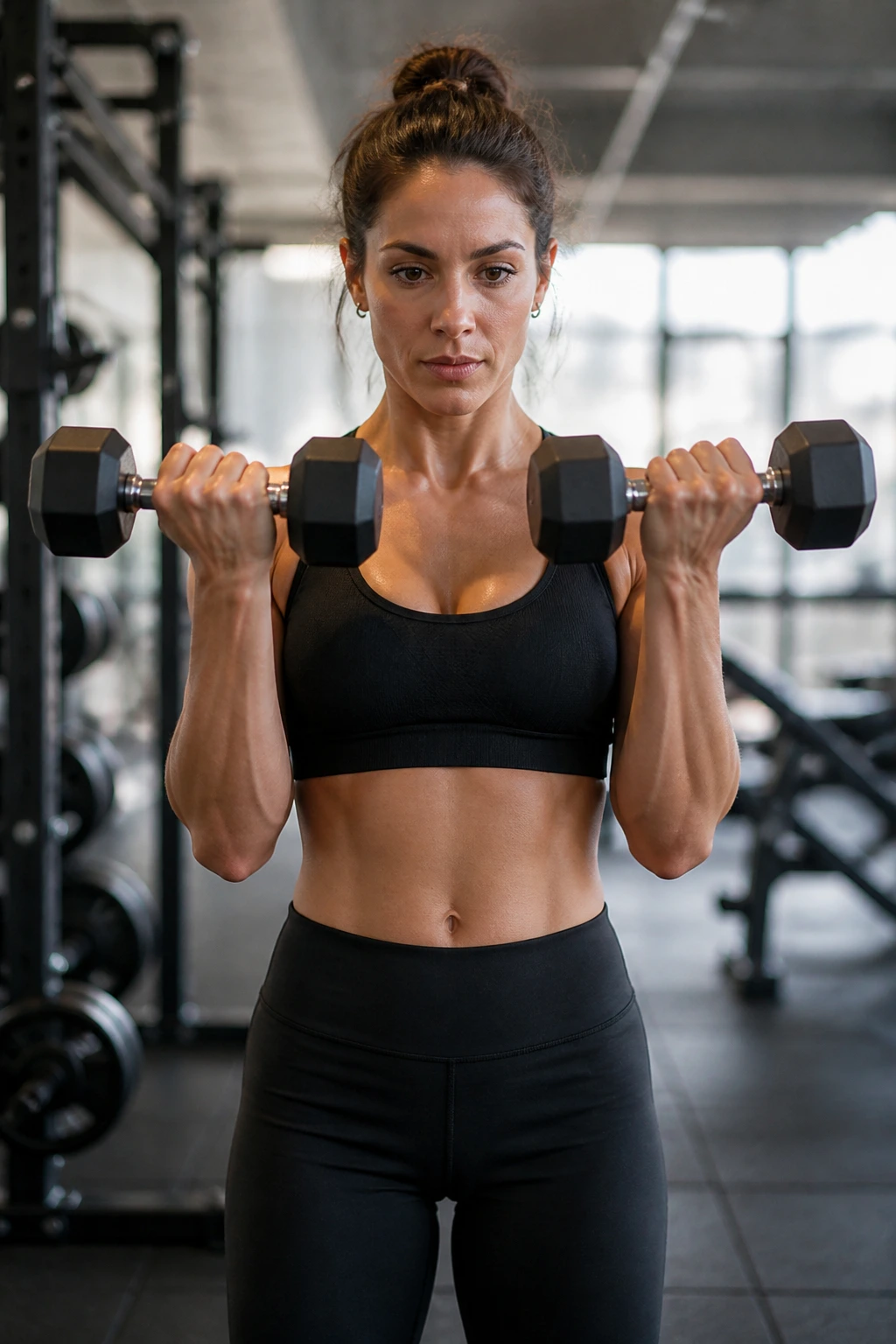
A standard dumbbell curl is still one of the cleanest ways to build the front of the upper arm. Nothing fancy. No tricks. Just a solid elbow bend with a full squeeze at the top and a controlled lower on the way down.
Stand tall, hold a dumbbell in each hand with palms facing forward, and keep your elbows close to your sides. Curl the weights up without leaning back, then lower them slowly until the arms are almost straight. If your torso is rocking, the weight is too heavy.
A lot of people chase the top half of the curl and ignore the lower half. Bad habit. The bottom position matters because it forces the biceps to work from a stretched start, and that’s where a lot of people leave growth on the table.
Use 3 sets of 8 to 12 reps. If you can do 15 clean reps without changing your posture, grab a heavier pair.
7. Hammer Curls
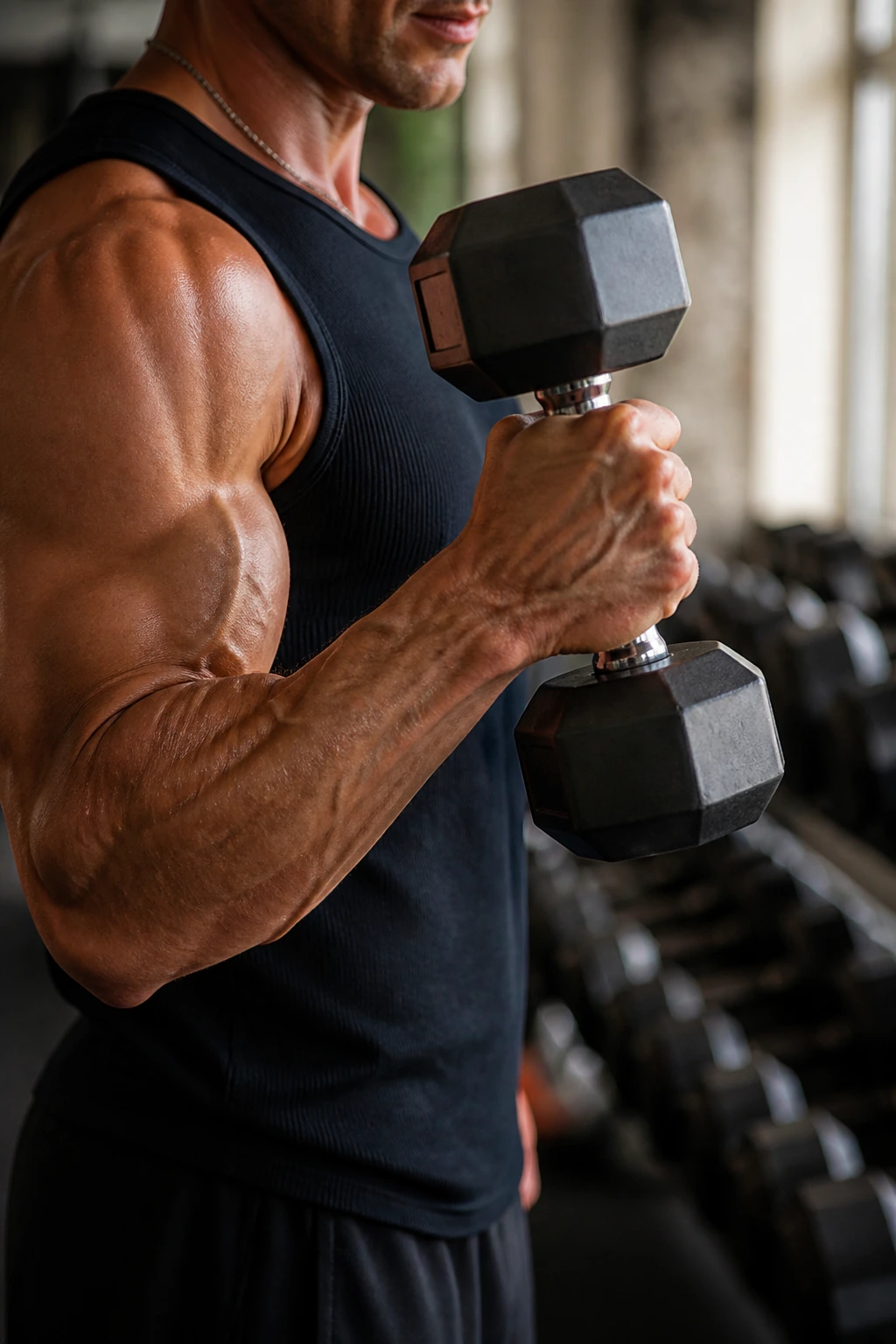
Hammer curls are the curl variation I’d keep if I had room for only one extra biceps move. They train the brachialis, a muscle that sits under the biceps, and that can make the upper arm look thicker from the side. They also recruit the forearms, which is a nice bonus if grip strength has been lagging.
What Changes Here
The hand position stays neutral, like you’re holding a hammer. That grip usually feels more natural on the wrists than a fully supinated curl, and it shifts some of the work away from the biceps peak and onto the meatier part of the upper arm.
- Keep the elbows pinned
- Don’t swing the dumbbells up
- Lower under control for 2 to 3 seconds
- Use a weight you can own for all reps
Three sets of 8 to 12 is a good starting point. The burn shows up fast, but the real benefit is the fuller look you get when the brachialis and forearms catch up.
8. Concentration Curls
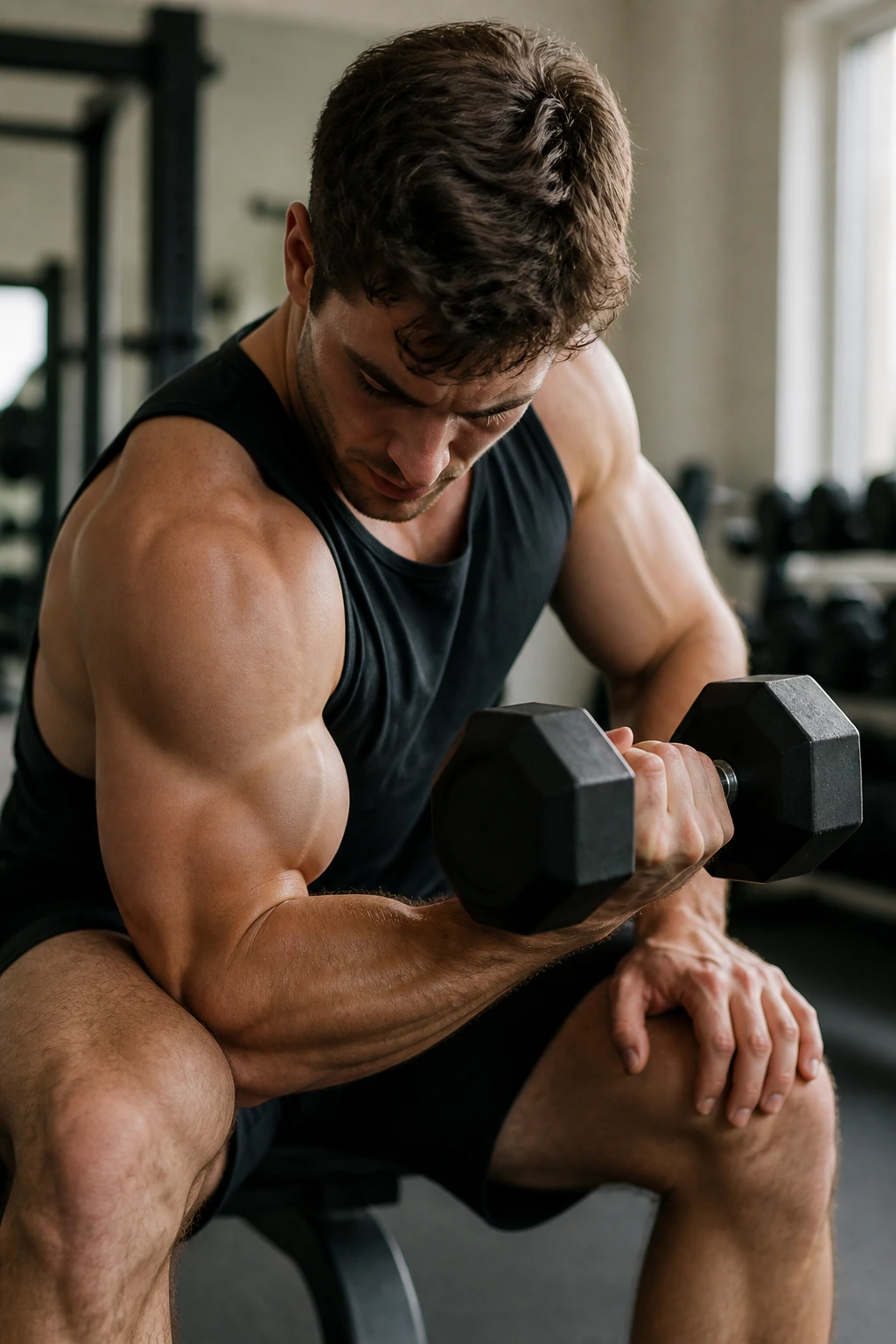
Concentration curls are the exercise people use when they want to shut out cheating. You sit down, brace the working elbow against the inside of your thigh, and curl one dumbbell at a time with almost no room to swing. It’s a small setup that forces the biceps to do the work honestly.
That fixed elbow position matters. There’s nowhere to hide. If the shoulder starts helping, you feel it immediately, which is why this move is so useful for learning control and building a clean squeeze at the top.
Use a moderate dumbbell and move slowly. A 3-second lower is not overkill here; it is often the difference between a real curl and a half-hearted fling. Two or three sets of 10 to 12 reps per arm is enough for most people.
This one looks simple from the outside. Inside the muscle, it’s a different story.
9. Incline Dumbbell Curls
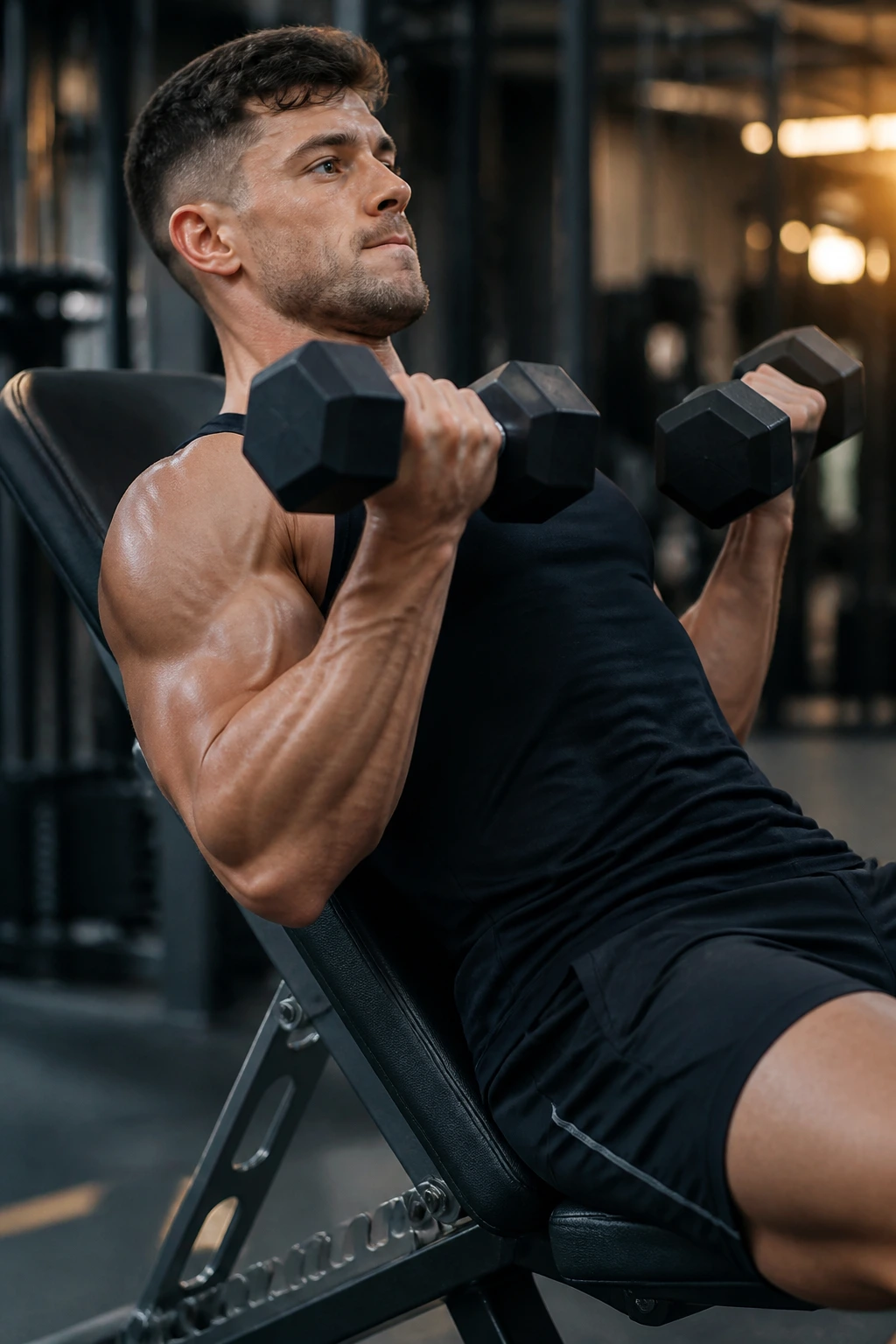
Incline dumbbell curls are sneaky. The bench angle puts the arms behind the torso, which stretches the biceps before each rep even starts. That stretch changes the feel of the exercise right away, and most people notice they need lighter weights than they expected.
Why It Works So Well
The long head of the biceps gets a stronger stretch in this position, which can make the exercise feel more demanding through the full range. Keep the shoulders back against the bench, let the arms hang long at the bottom, and curl without letting the upper arms drift forward.
Set-up details:
- Bench at about 45 to 60 degrees
- Elbows slightly behind the torso at the bottom
- No jerking the weights off the bottom
- Slow lower for 2 to 4 seconds
Use 3 sets of 8 to 12 reps. If your lower back arches off the bench, reduce the weight. The stretch is supposed to challenge the biceps, not turn the set into a spine compensation contest.
10. Reverse Curls
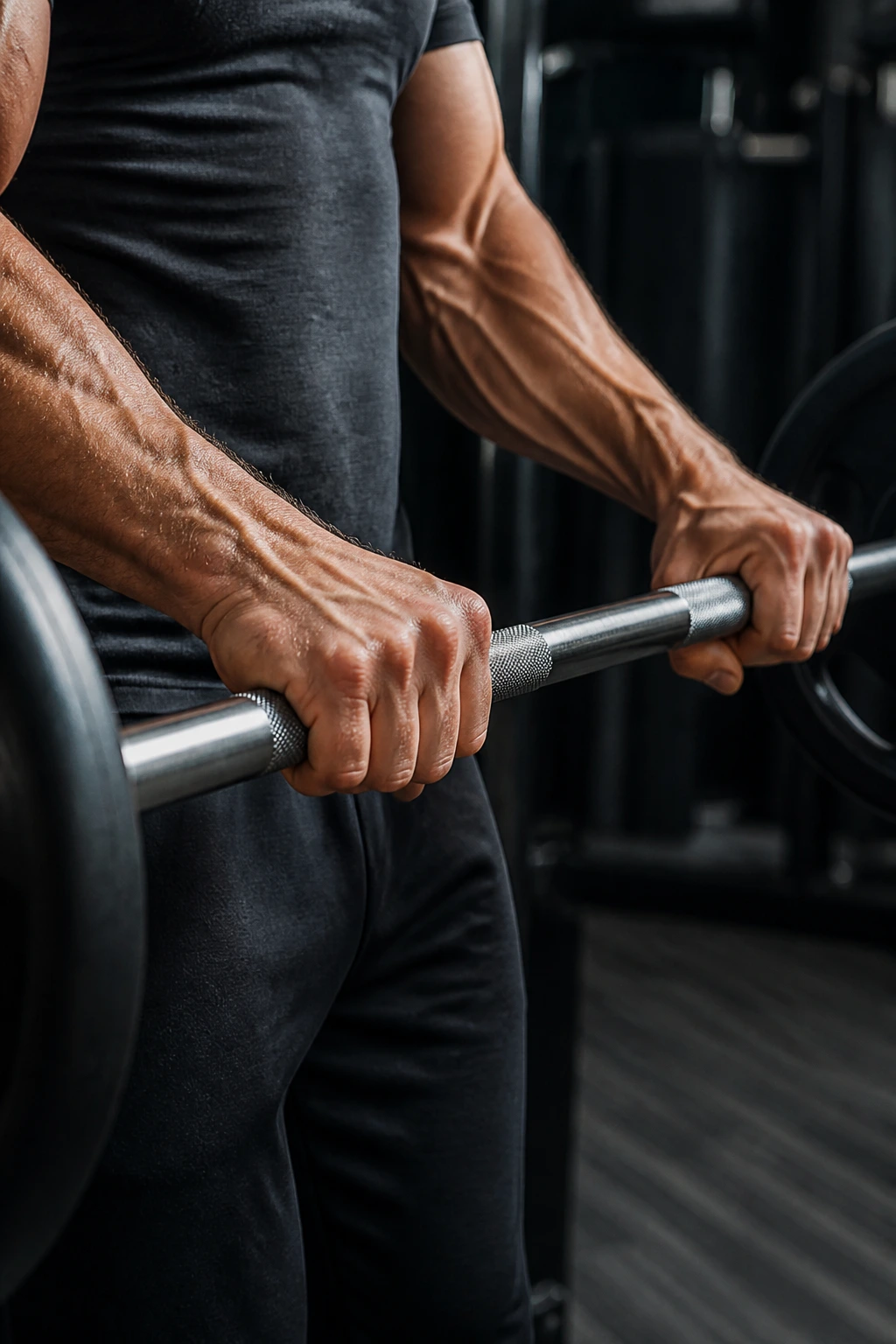
Reverse curls are the move most people skip, then wonder why their forearms never seem to catch up. The grip is pronated, with palms facing down, so the forearms and brachialis work much harder than they do in a normal curl.
Grab an EZ bar, straight bar, or dumbbells if that’s what you have. Keep your wrists straight, curl the weight up without letting the elbows drift forward, and lower it slowly. The temptation here is to bend the wrists back and make the whole thing messy. Don’t.
A reverse curl rarely uses your heaviest weight, and that’s fine. This is a joint-friendly accessory exercise, not a lift to ego out on. Two or three sets of 10 to 15 reps can do a lot for grip, forearm thickness, and the “finished” look of the arm.
11. Chin-Ups

Chin-ups are the kind of exercise that tells you the truth fast. Underhand grip, bodyweight, full hang, pull the chest toward the bar. If you can do them well, the biceps will light up, and the back of the arm gets help too because the pulling chain is working hard.
Some people think chin-ups are only a back exercise. Not even close. The underhand grip gives the biceps a larger role than a standard pull-up does, and that makes chin-ups one of the best compound arm builders in the mix.
Use assistance if needed. A band, a machine, or a foot under a box can turn a dead stop into a workable rep. Aim for 3 sets of 4 to 8 reps, or stop a rep or two before form breaks if you’re doing bodyweight sets. Swinging ruins the point.
12. Inverted Rows
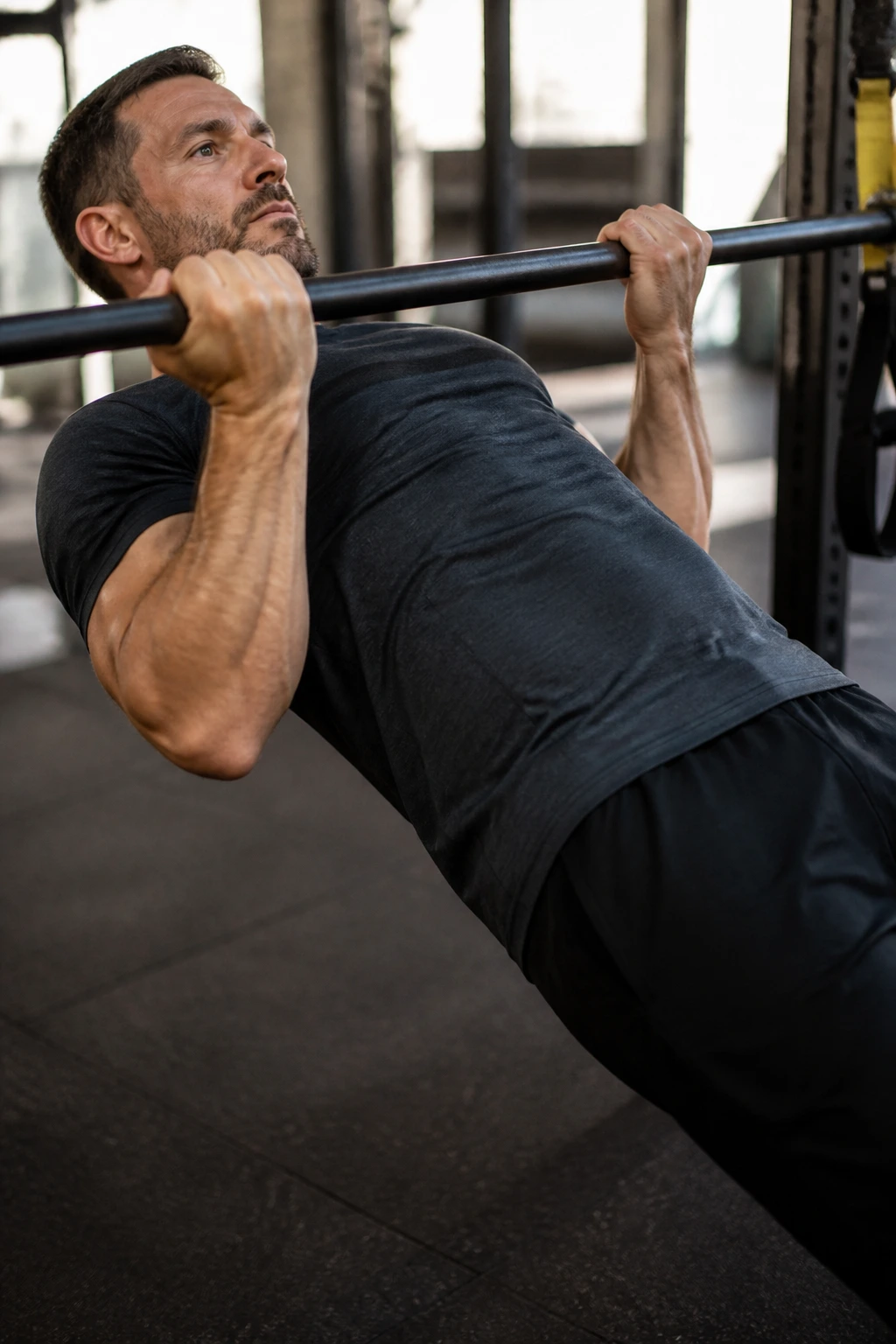
Inverted rows are the quieter cousin of the chin-up. You lie under a bar, TRX straps, or rings, grip the handles, and pull your chest up toward the support while keeping your body in a straight line. The exercise is easier to scale than a chin-up, which makes it useful for building pulling strength without needing a full bodyweight pull.
The angle of your body changes the difficulty. Feet farther forward and body more horizontal? Harder. More upright? Easier. That simple adjustment lets you keep the exercise in the right rep range instead of grinding through ugly reps.
Compare It to a Chin-Up
Chin-ups ask for more vertical pulling and more grip demand. Inverted rows are friendlier on the elbows for a lot of people and often easier to control. If the goal is arm definition with less joint drama, rows are a smart place to live.
Use 3 sets of 8 to 12 reps with a pause for one second at the top.
13. Triceps Pushdowns
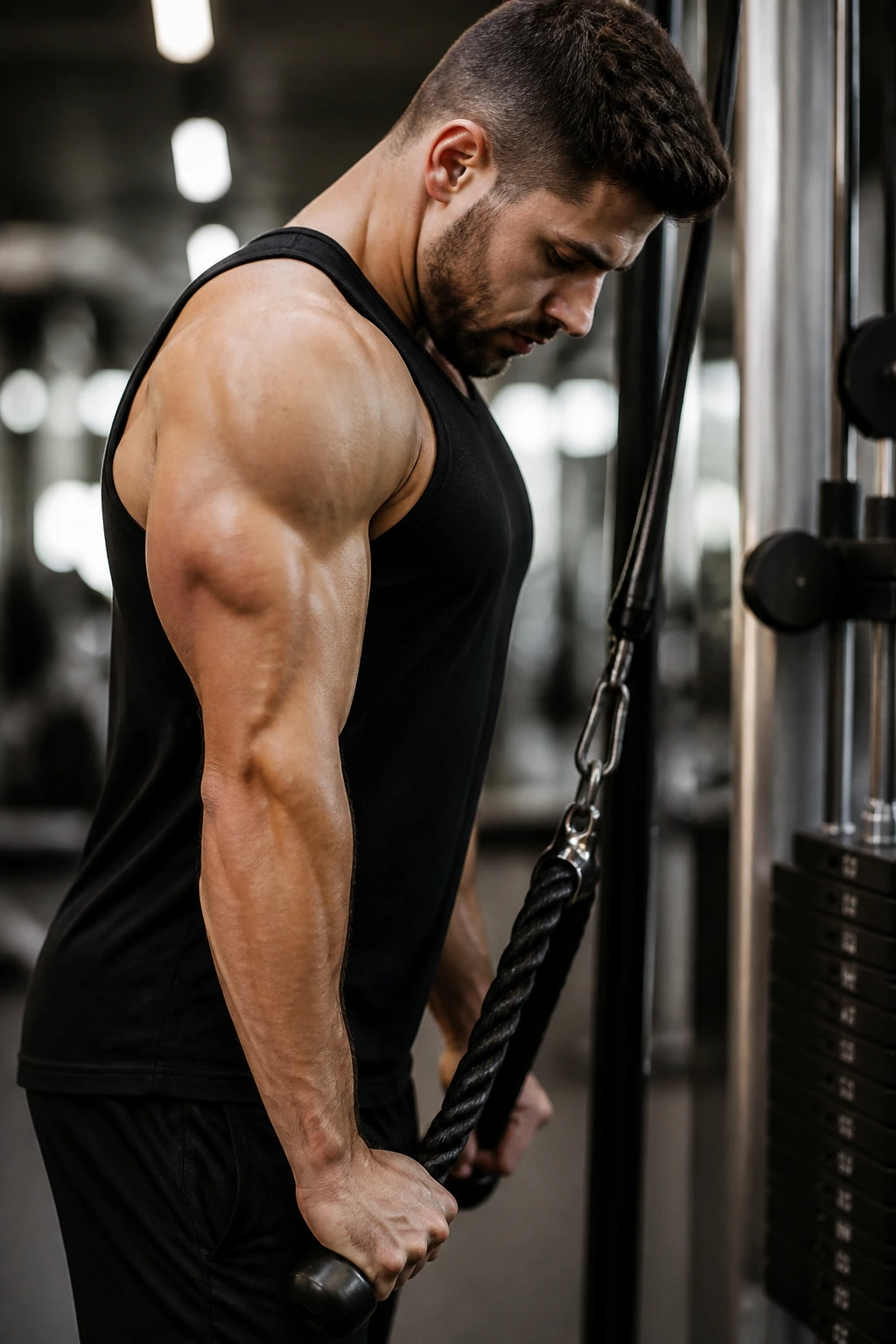
Cable or band triceps pushdowns are one of the cleanest isolation moves for the back of the arm. The setup is simple: elbows pinned near your sides, forearms moving only at the elbow, and the handle pushed down until the arms are straight.
How to Get the Most From It
The mistake is obvious once you see it. People shove their shoulders forward, lean their whole body into the stack, and turn a tidy triceps move into a full-body heave. Keep the ribs down, keep the elbows parked, and separate the rope at the bottom if you’re using one.
- Rope, straight bar, or band all work
- Full elbow extension at the bottom
- Slow return to keep tension on the triceps
- 3 sets of 10 to 15 reps is a solid target
Pushdowns are especially handy if you want higher-rep work without smashing your joints. They’re boring in the best way.
14. Diamond Push-Ups

Diamond push-ups are hard in a way that surprises people who think bodyweight work is always easy. Hands come together under the chest so the thumbs and index fingers make a diamond shape, and that narrow placement shifts a ton of pressure to the triceps.
The range of motion is the same general idea as a regular push-up, but the triceps have to do more of the finishing work. That’s why the exercise feels so intense near the top end. The lockout matters here more than usual.
If the wrist angle feels rough, do them with your hands slightly less tight than a perfect diamond. A tiny adjustment can save the movement without changing its purpose. Three sets of 5 to 10 reps is enough for most people, because the load feels hefty fast.
Short rep ranges are normal. They’re not a failure. They’re the exercise talking back.
15. Pike Push-Ups
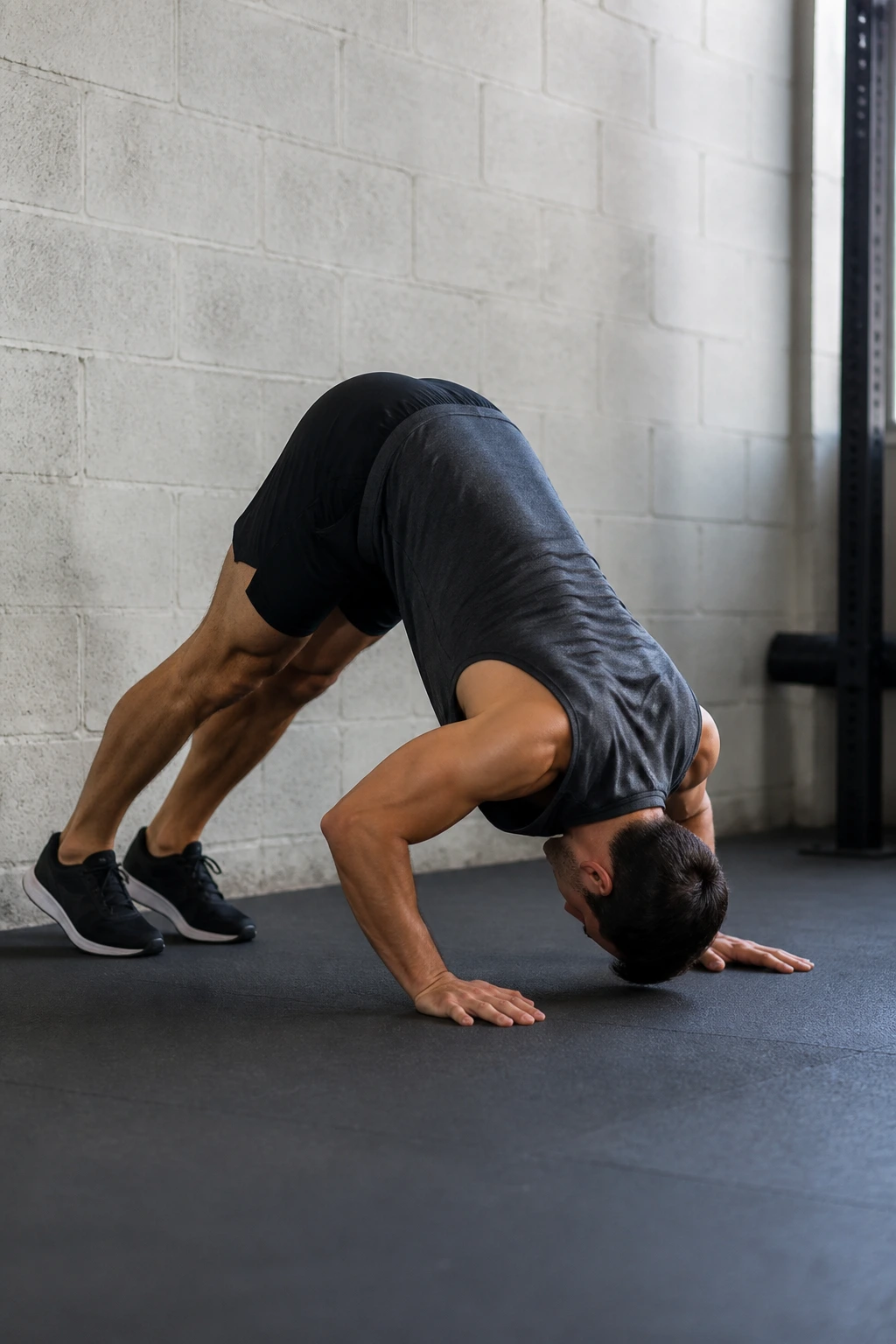
Pike push-ups lean more into the shoulders than the plain arm work most people expect, but that’s part of the reason they help with upper-arm definition. Bigger-looking shoulders make the arms look more shaped, and the triceps assist hard during the press.
Set your hands on the floor, lift the hips high, and form an upside-down V. Lower the head toward the floor between the hands, then press back up while keeping the elbows from flaring wildly. The movement should feel like a vertical press rather than a normal push-up.
Use a box or bench if you need to shorten the range, and keep the neck neutral so you’re not jamming your head forward. Two to four sets of 6 to 10 reps is a good place to start. If you can do them cleanly for 12 reps, the elevation or angle probably needs to get harder.
16. Lateral Raises
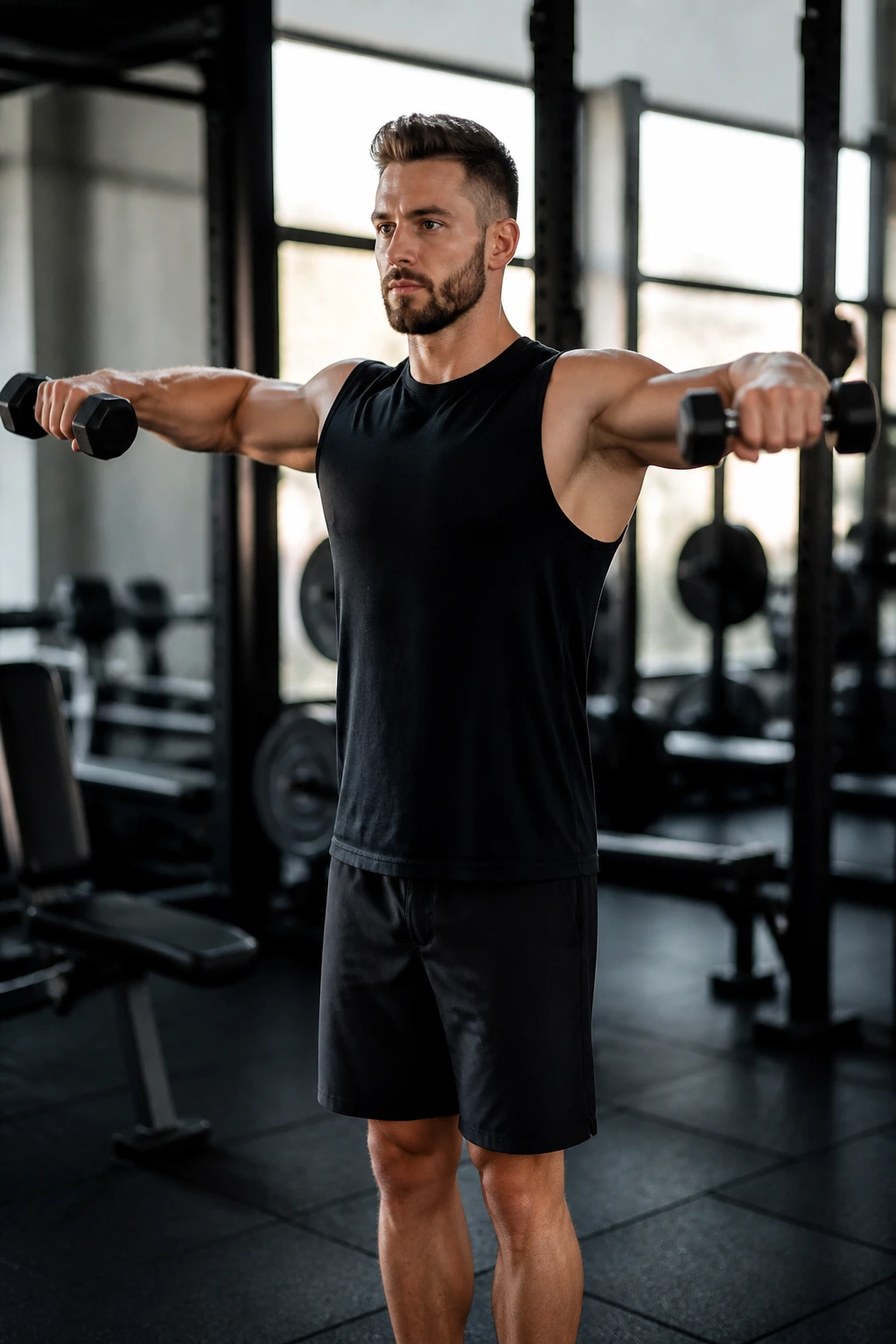
Can a shoulder exercise help arm toning? Absolutely. Lateral raises build the side delts, and that broadens the upper arm’s outline, which makes the whole arm look more defined even when it’s relaxed. That’s the part many curl-only plans miss.
Hold light dumbbells at your sides, keep a soft bend in the elbows, and raise the weights out until they’re around shoulder height. Lead with the elbows, not the hands. The weights should travel in a smooth arc, not a frantic shrug.
What to Watch For
The trap is going too heavy and turning the exercise into a neck lift. If your shoulders are creeping toward your ears, drop the weight. You want tension in the side delts, not a burned-out upper trap.
Best rep range: 12 to 20 reps per set.
Tempo: 2 seconds up, 2 to 3 seconds down.
Shortcut: Use a cable if dumbbells feel too jerky.
Light weights can be brutal here. That’s normal.
17. Front Raises
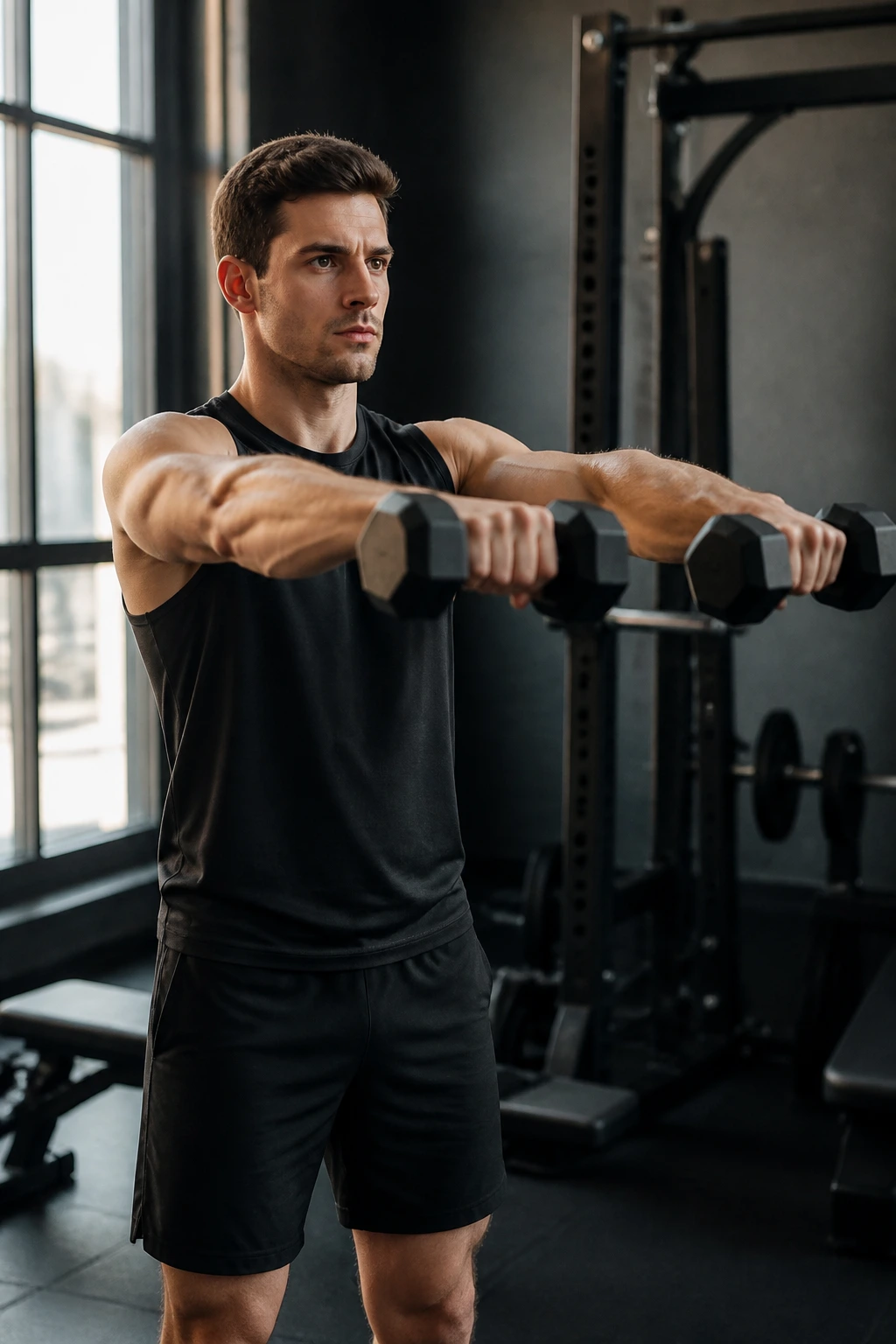
Front raises hit the front of the shoulders, and that matters because a strong-looking shoulder line frames the upper arm. If you only train biceps and triceps, the arm can still look flat from the front. Front raises help fix that.
A dumbbell, plate, or cable all work. Lift the weight in front of you until the arm reaches roughly shoulder height, then lower it under control. Keep the torso tall and avoid swinging. The movement is small enough that cheating shows immediately.
This is one of those exercises where less load often means more useful work. Go too heavy and the lower back starts to arch, which steals tension from the delts. Two or three sets of 10 to 15 reps is usually enough.
Use this one as a support move, not the centerpiece. It fills out the shoulder cap, which helps the whole arm look more finished.
18. Arnold Press
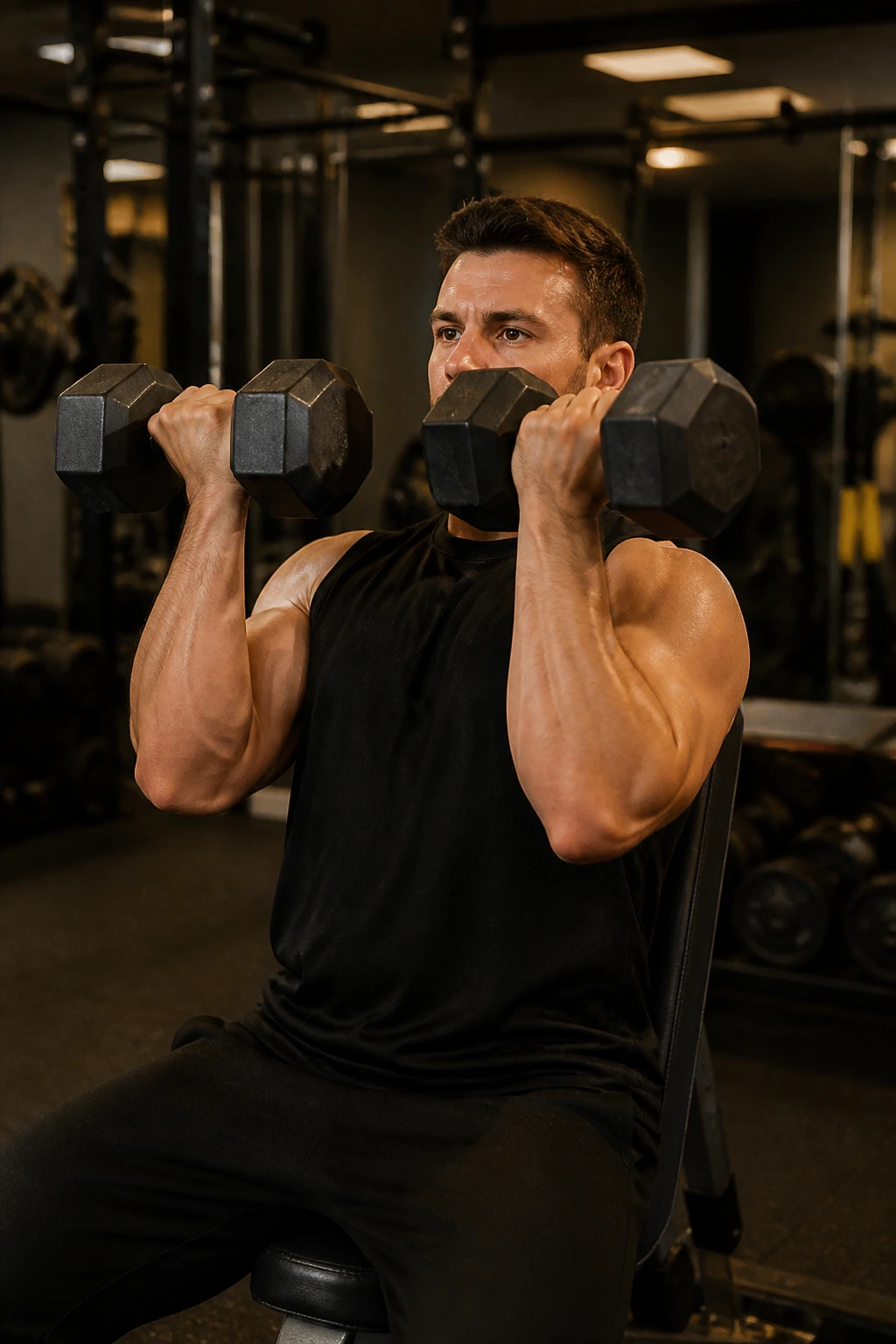
The Arnold press gives the shoulders and triceps a lot to do in one motion, and that makes it a useful compound move for arm definition. Start with the dumbbells in front of your face, palms toward you, then rotate and press overhead as you drive the weights up.
The rotation looks fancy, but the goal is plain: press through a full range and keep the movement smooth. If the weights bang together overhead or your lower back starts to arch, the load is too heavy. Keep the ribs down and the glutes lightly squeezed.
Who It Suits Best
This is a strong choice for people who want one press that does more than just one thing. It’s not as shoulder-friendly for everyone as a standard dumbbell press, though, so pay attention to how it feels. If your shoulders dislike the rotation, skip it and use a plain overhead press instead.
Try 3 sets of 8 to 12 reps with controlled tempo.
19. Farmer’s Carries
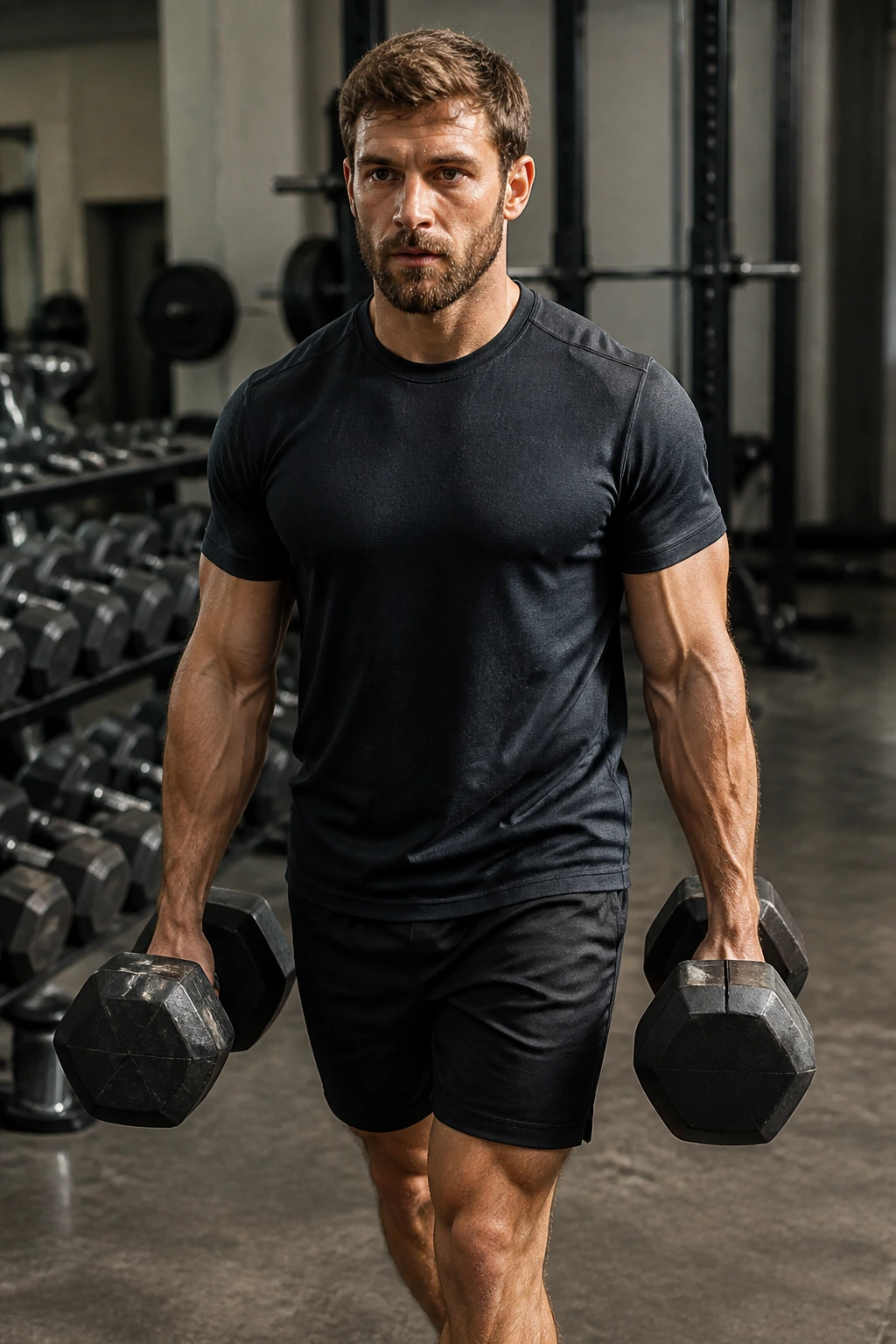
Farmer’s carries do not look like much until you hold heavy dumbbells for 30 seconds and realize your forearms are on fire. That’s exactly why they belong in an arm definition plan. Grip strength, forearms, traps, and even the upper arm all get involved.
Pick up two heavy weights, stand tall, and walk with short, controlled steps for 20 to 40 meters or 30 to 60 seconds. Keep the shoulders down and the ribs stacked over the hips. The temptation is to lean back like you’re carrying a couch. Don’t.
The carry has a useful side effect too: it teaches the body to stay organized under load. That can improve how every other arm exercise feels, because the hands and wrists stop giving out so early. Use it as a finisher after curls or presses, or slot it between sets as an active rest drill.
Heavy, simple, and brutally honest. Good stuff.
20. Renegade Rows

Renegade rows combine pulling, bracing, and anti-rotation work in one tight package. You start in a high plank with a dumbbell in each hand, row one weight toward your ribs, set it down, then switch sides without letting your hips rock all over the floor.
Why It Stands Out
This move works the lats and biceps, but it also forces the core and shoulders to keep the body square. That makes it a smart “real life strength” exercise, and it often shows people where their weak links are. If the hips twist wildly, the row is too heavy.
Form checklist:
- Feet set wider for balance
- Hands under the shoulders
- One row at a time
- Hips stay as quiet as possible
Use lighter dumbbells than you think you need. Two or three sets of 6 to 10 reps per side is plenty. If you can’t keep the body still, switch to a one-arm row from a bench first and build up from there.
Final Thoughts
Arm definition comes from doing enough honest work that the muscles have a reason to change. The best arm toning exercises do not all look the same, and that’s the point. Push, pull, curl, press, and carry. Mix those patterns, and the arms stop relying on one tired trick.
The smart move is to pick 6 to 8 exercises from this list, train them 2 to 3 times per week, and make the last rep look the same as the first one. Add a little load or a rep here and there. That’s the boring part that actually works.
And yes, the mirror matters. So does the logbook. If both start showing cleaner lines around the biceps, triceps, and shoulders, you’re doing it right.
