



A pair of dumbbells can rescue a stale training plan faster than most people expect. One set lets you squat, hinge, press, row, carry, rotate, and clean up side-to-side imbalances without a rack full of gear. That matters whether you train at home, in a small gym, or on a floor with just enough space to turn around.
The best dumbbell exercises do more than light up a muscle. They teach bracing, balance, and control under load, which is why a goblet squat feels nothing like a machine leg press and a suitcase carry can expose a lazy core in about ten steps. Dumbbells also force honesty: if one side is weaker, sloppier, or less stable, the bell tells on you.
Not every movement earns its place. Some are fluff, some are too fussy, and some look useful until you try them with real weight and your form falls apart. The list below sticks to the ones that pull their weight in a routine and cover the main patterns that matter.
1. Goblet Squat
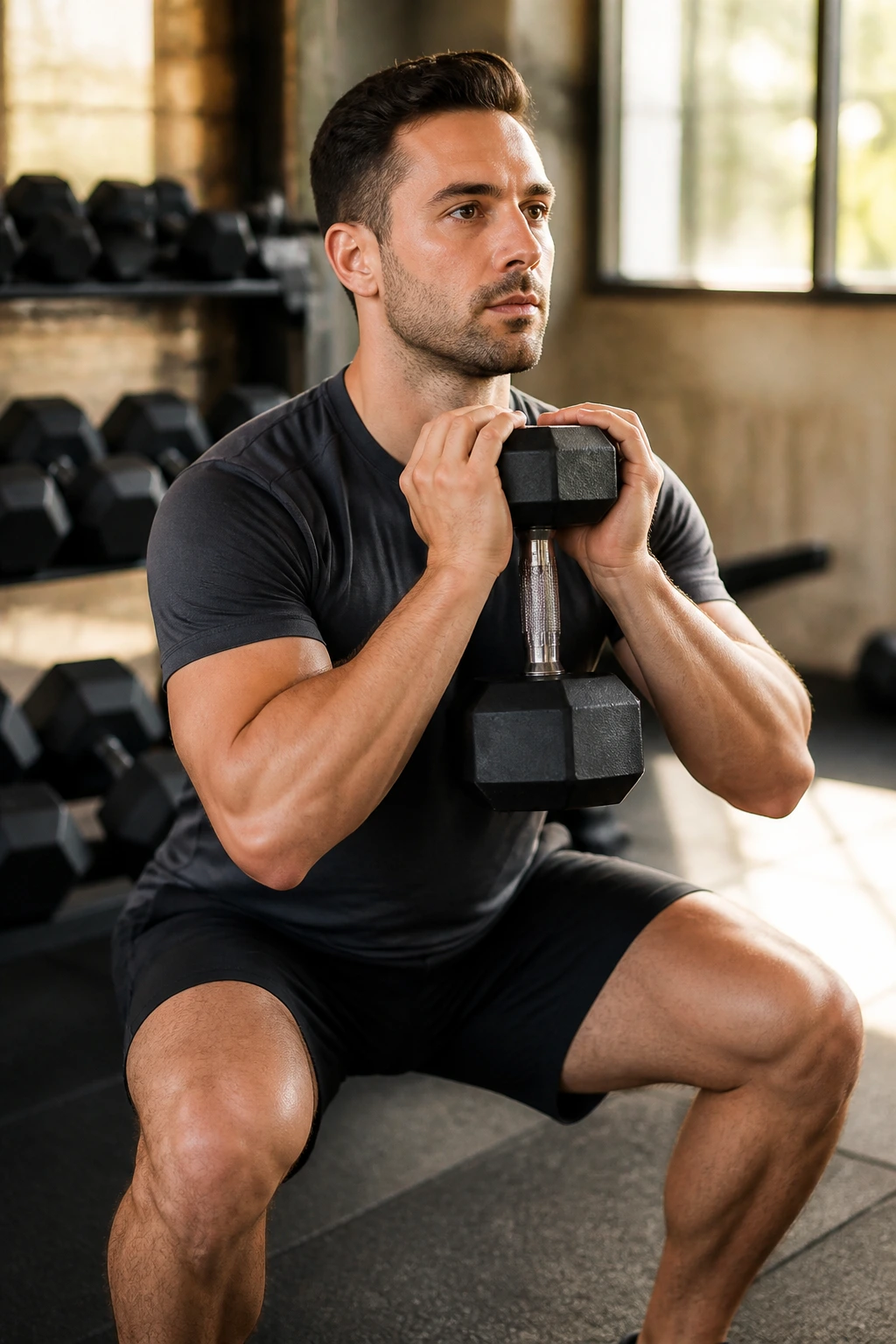
A goblet squat is the kind of move that looks basic until you load it. Hold one dumbbell close to your chest, and you get a squat that teaches an upright torso, better depth, and honest core tension without a barbell on your back.
Why It Earns Its Spot
- Keep the dumbbell tucked tight against your sternum, not drifting forward.
- Let your elbows travel between your knees at the bottom if your hips allow it.
- Use 3 to 4 sets of 6 to 12 reps before your legs start shaking.
Best cue: think “ribcage down, chest tall,” and the whole movement gets cleaner fast.
2. Dumbbell Romanian Deadlift
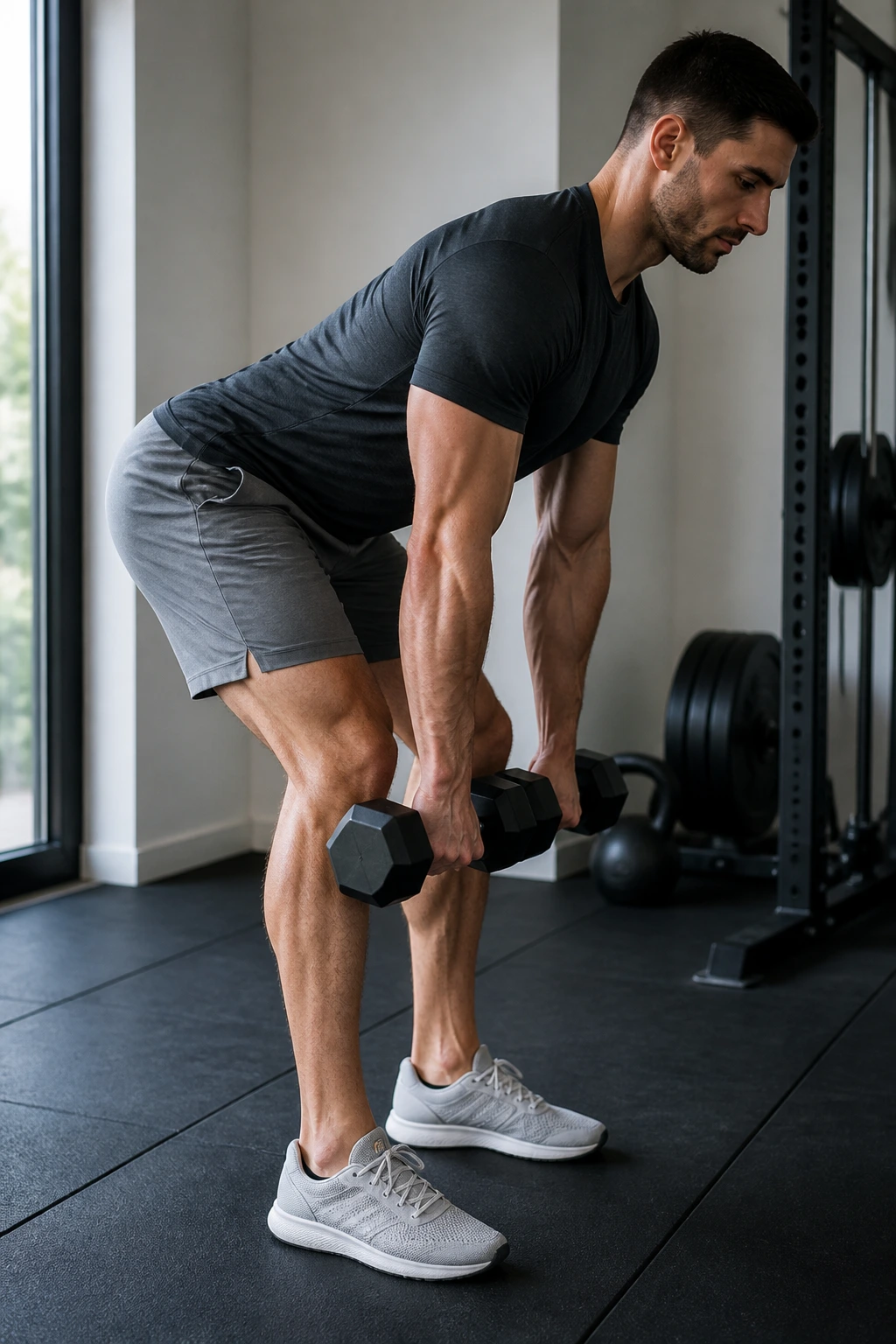
If I had to pick one hinge to build hamstrings without beating up the lower back, this would be it. The dumbbell Romanian deadlift keeps the load close to your body, which makes the hip hinge easier to feel and harder to fake.
You should feel the stretch in the back of your thighs before you feel anything in your lower back. Soft knees, hips back, dumbbells sliding along the front of your legs. That’s the rhythm.
Use 6 to 10 reps here and stop the set the moment your back starts rounding or the weights drift away from you. Small mistake. Big price.
3. Dumbbell Bench Press
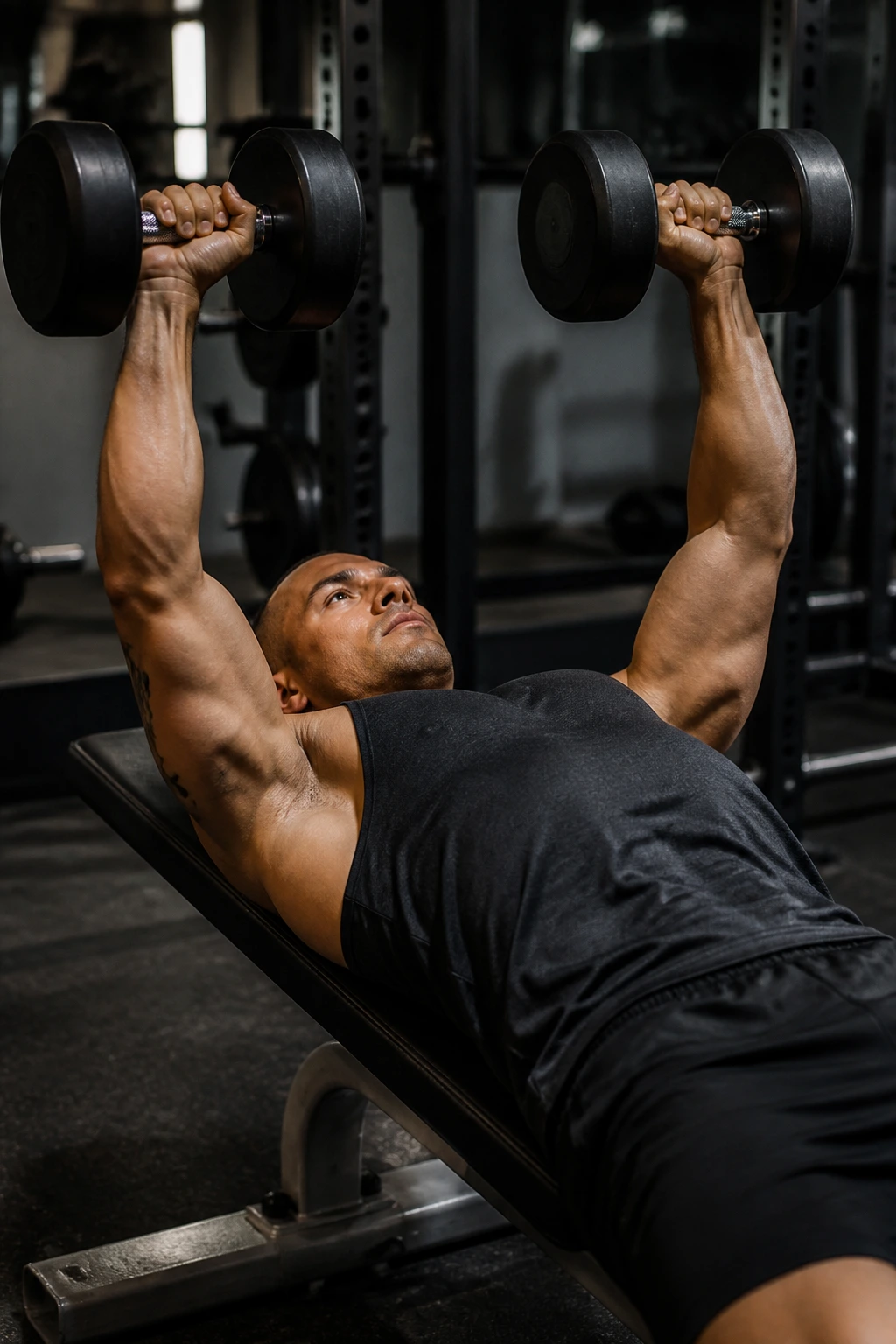
A dumbbell bench press gives you a little more freedom than a barbell press, and that freedom matters. Each arm has to stabilize its own path, which usually makes weak spots show up fast and helps you press with a smoother range.
What Makes It Different
Unlike a fixed bar, dumbbells let your wrists stay in a more natural position. That can feel kinder on the shoulders, especially if you lower the bells under control and keep your elbows at roughly a 30 to 45 degree angle from your torso.
Press for 6 to 10 reps when you want strength, or 8 to 12 if you want more chest volume. Either way, don’t bounce the weights off your chest. That shortcut is ugly and usually useless.
4. One-Arm Dumbbell Row
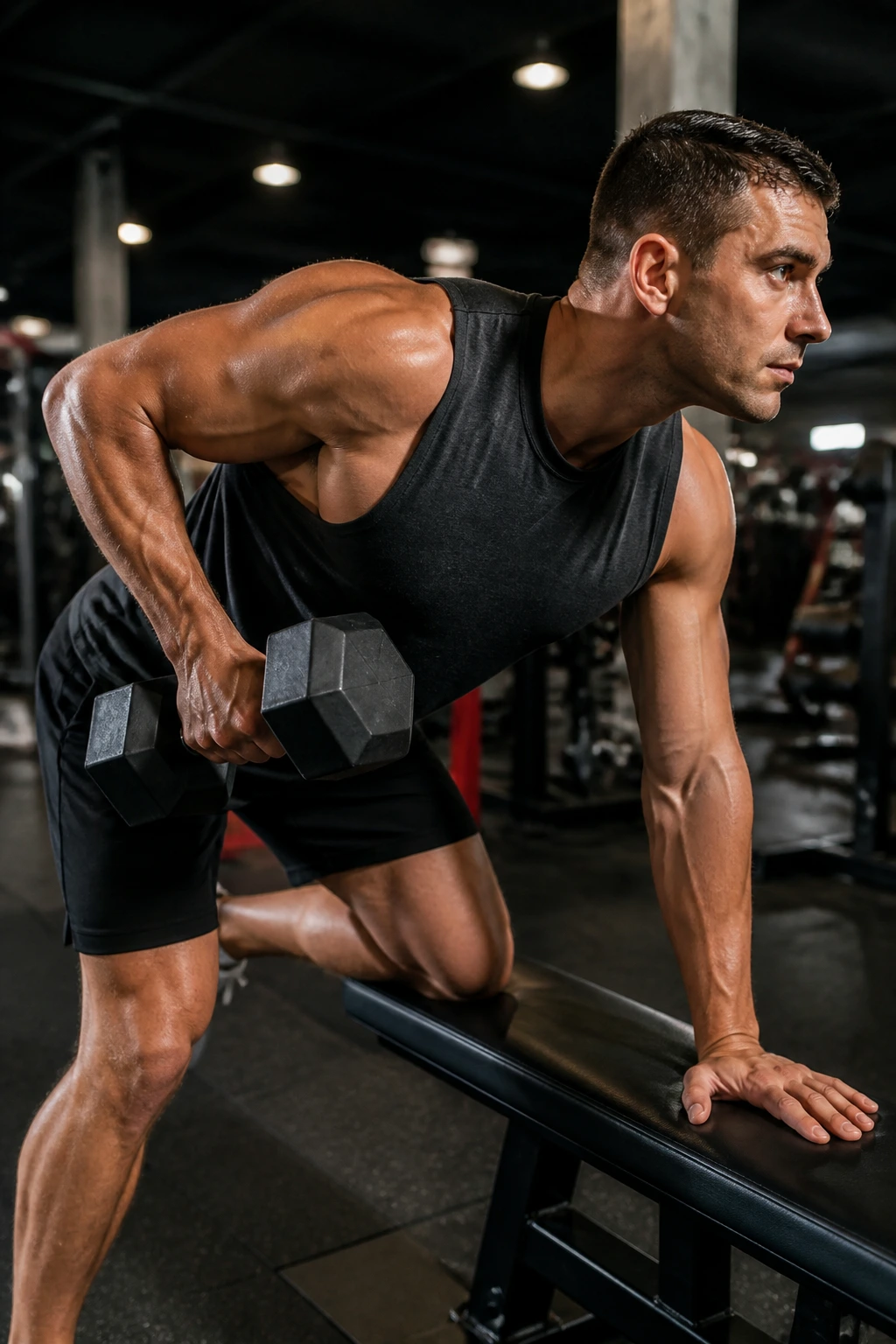
If your back work still depends on machines, this row will wake things up. One arm at a time means less cheating, more bracing, and a much better chance of noticing whether your left side is doing what your right side does.
Setup That Saves Your Lower Back
Brace one hand on a bench or settle into a split stance. Pull the dumbbell toward your hip, not your shoulder, and pause for a beat when the elbow reaches the top.
- Keep your spine long, not twisted.
- Let the shoulder blade stretch at the bottom.
- Aim for 8 to 12 reps per side.
That pause at the top is small, but it makes the row feel honest.
5. Standing Dumbbell Overhead Press
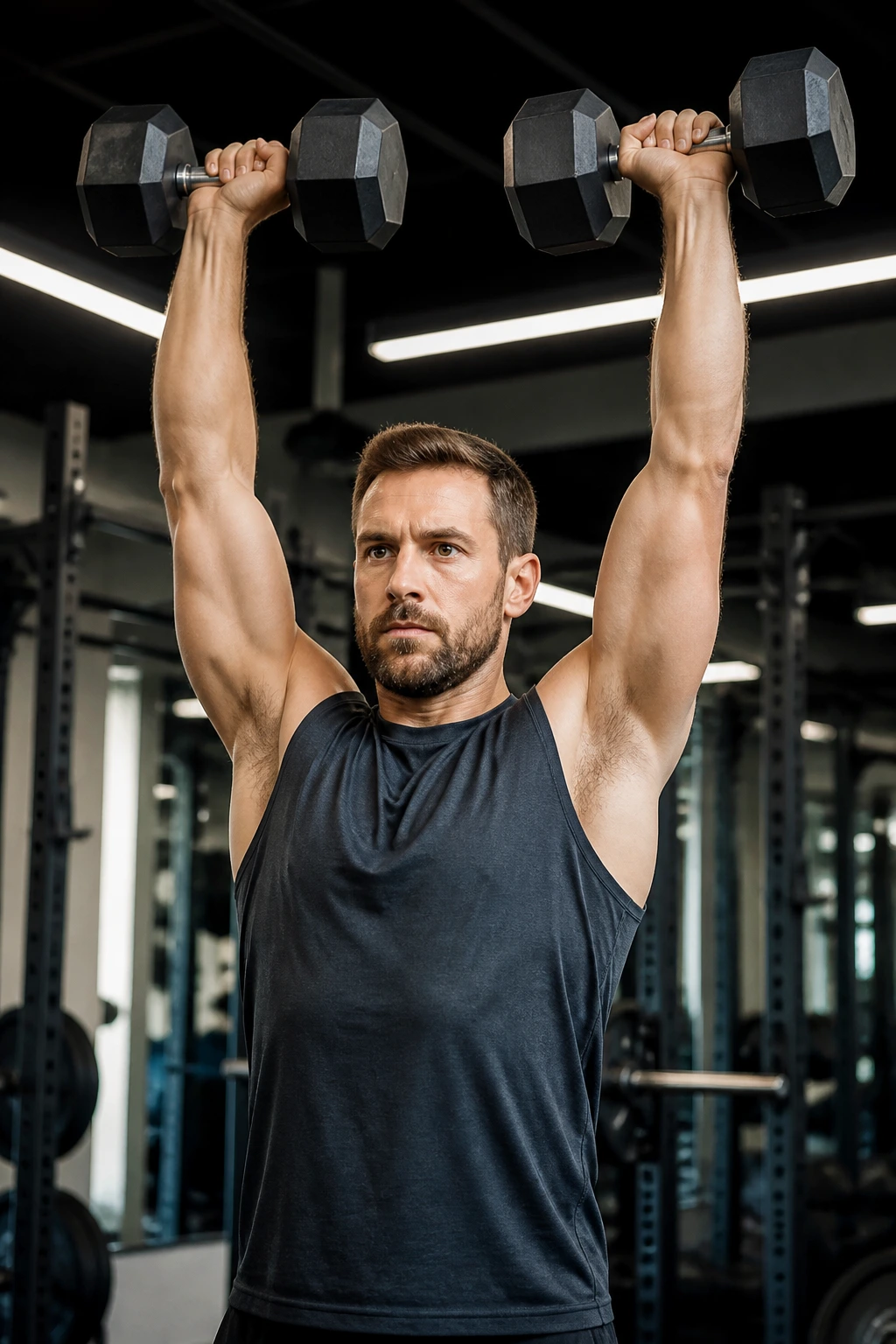
A strict overhead press shows you, very quickly, whether your shoulders and midsection can work together. Stand tall, squeeze your glutes, and press the dumbbells straight up without turning it into a leaning contest with yourself.
Your ribs will try to flare. They always do. Don’t let them.
Use 5 to 8 reps when the load is serious. If your lower back starts taking over, the weight is too heavy or your stance is too loose. A clean press should feel controlled from the floor all the way to lockout.
6. Bulgarian Split Squat
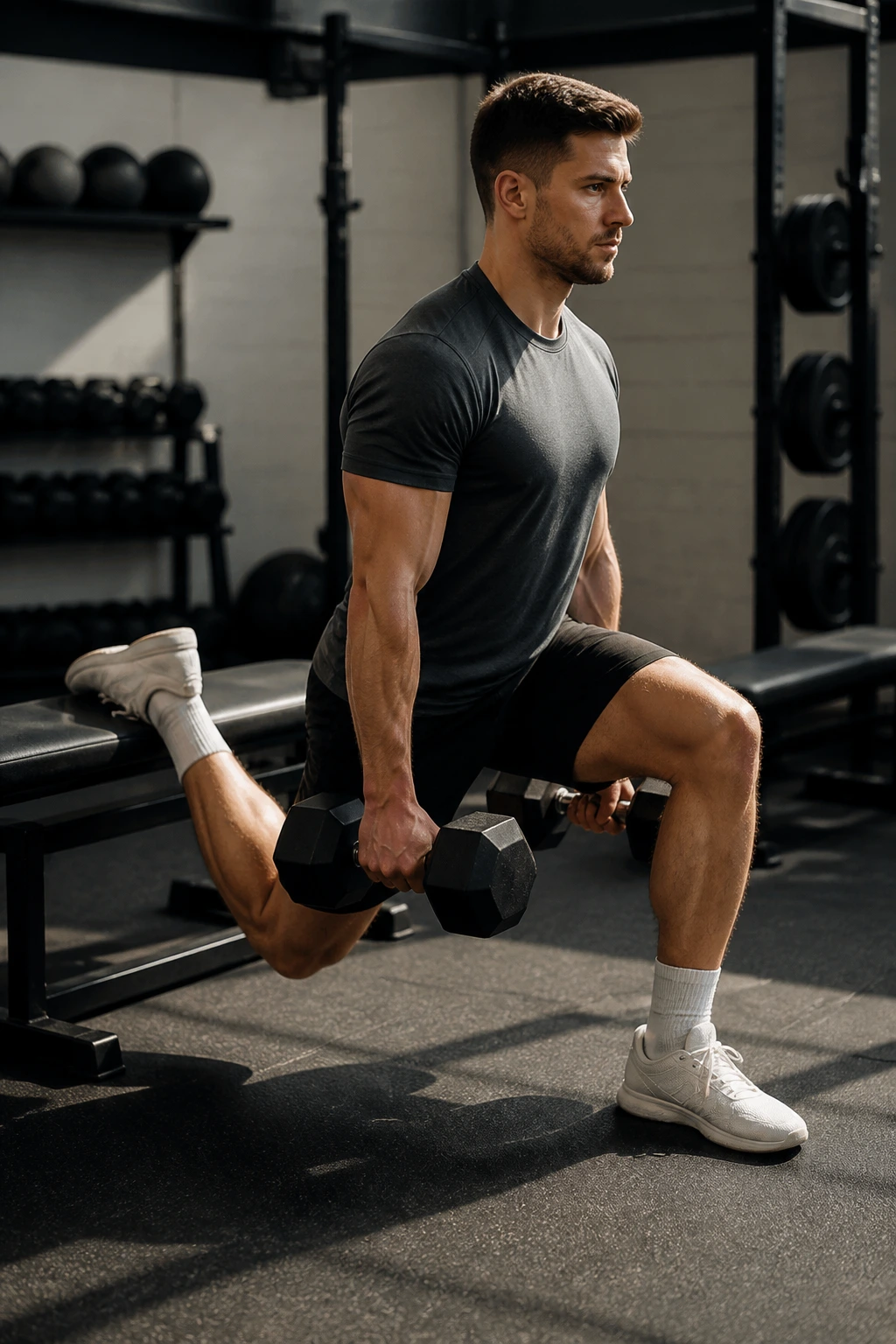
A back squat hides a lot. A Bulgarian split squat does not. With your rear foot elevated, the front leg has to do nearly all the work, and that usually means a sharper burn in the quads and glutes than most people expect.
Why It Hurts in a Good Way
The exercise punishes sloppy balance, lazy depth, and weak hip stability. That’s part of the appeal. A light pair of dumbbells can feel brutal here, which is useful if you want leg work without needing huge loads.
- Keep the front foot far enough forward that the front heel stays down.
- Lower until the back knee nearly taps the floor.
- Try 8 to 10 reps per side.
Short version: stay upright and own the bottom.
7. Dumbbell Floor Press
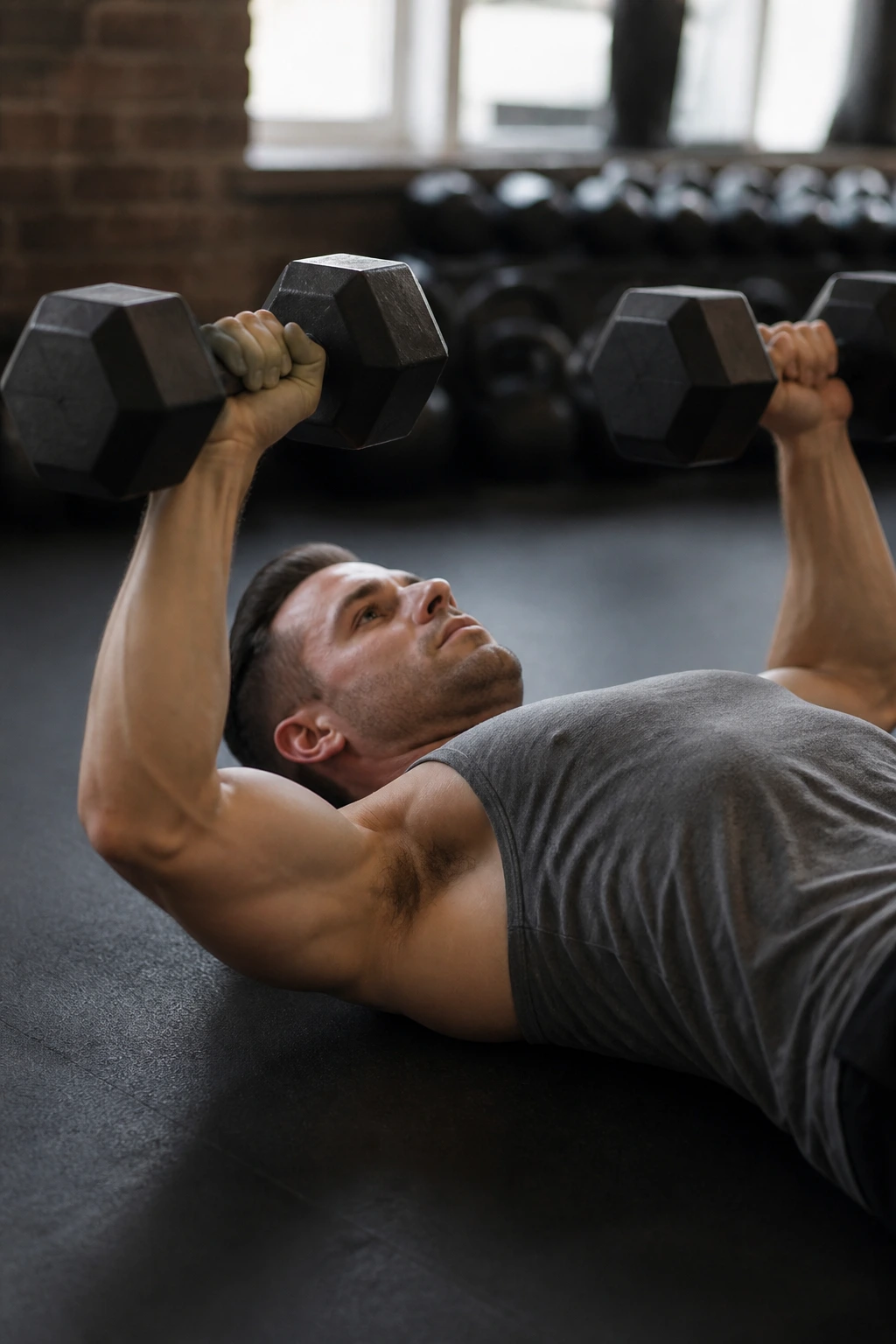
The floor press is the shoulder-friendly cousin of the flat bench press. Your elbows stop on the floor, which trims the bottom range and often feels better if deep pressing irritates your shoulders or you simply want a more triceps-heavy press.
That shortened range is not a flaw. It is the point.
Lower the bells until your upper arms meet the floor, pause for a split second, and drive them up again. 6 to 12 reps works well here, and the pause keeps you from turning it into a sloppy bounce. If your wrists drift back, reset. Fast.
8. Reverse Lunge
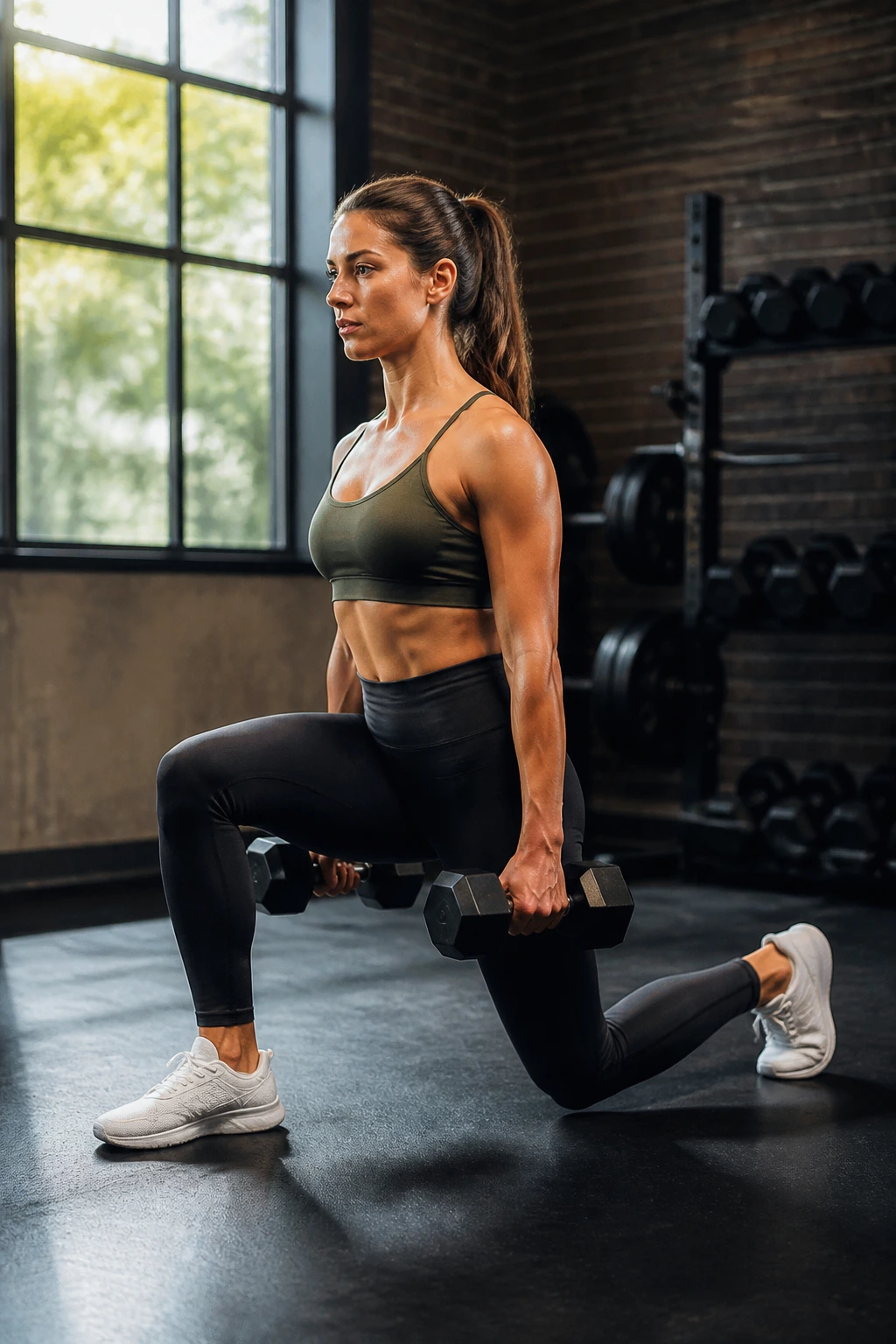
Reverse lunges are kinder on the knees than a lot of people think, and they teach a smoother step pattern than forward lunges. Step back, drop under control, then push the floor away through the front foot when you stand up.
The back step matters more than people realize. Too short, and you lose balance. Too long, and the front leg barely works.
Use 8 to 10 reps per side. A controlled reverse lunge is a good choice when you want single-leg work without the wobble getting out of hand. It also pairs well with squats on a lower-body day.
9. Incline Dumbbell Press
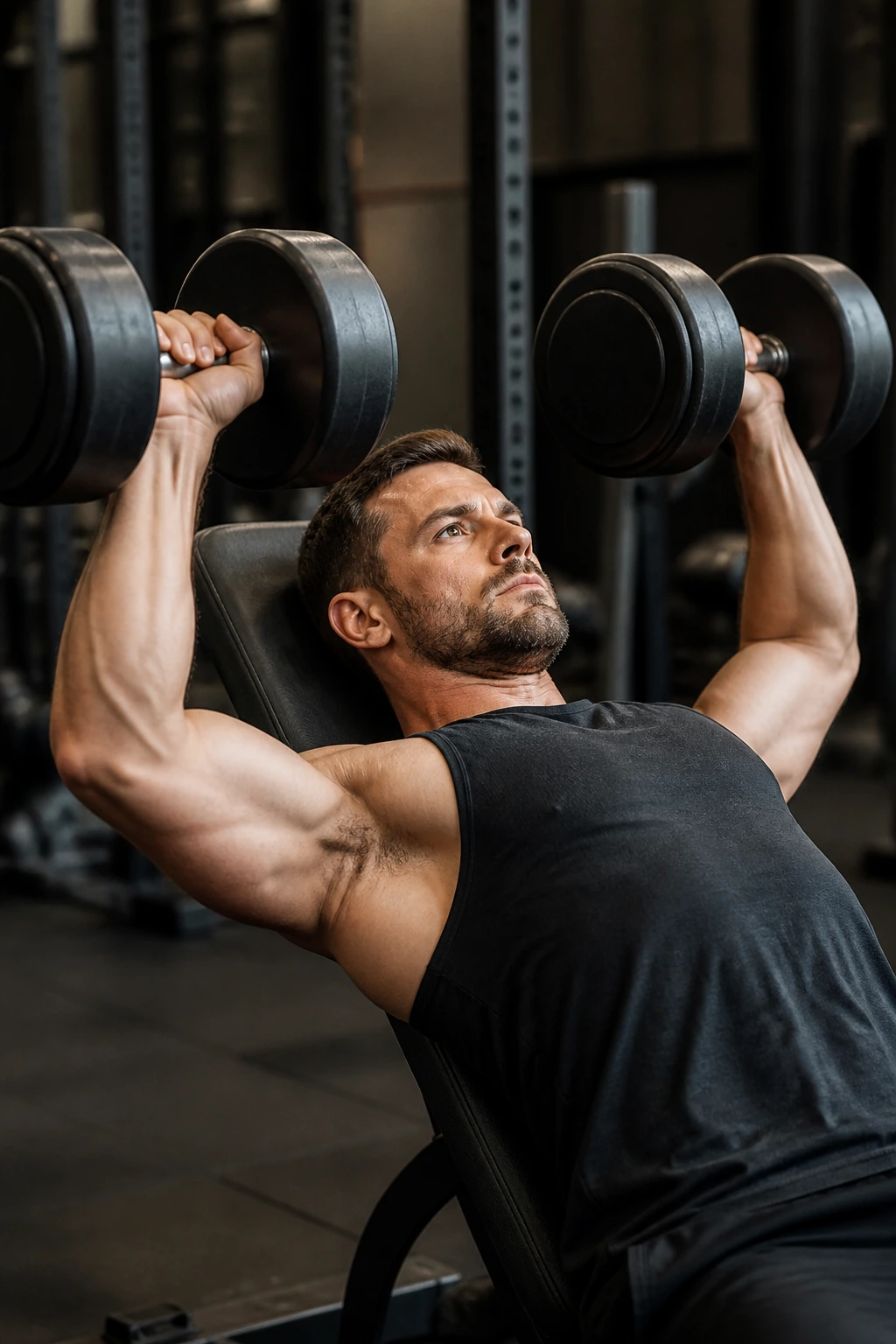
An incline dumbbell press shifts more work toward the upper chest and front delts than a flat press does. Set the bench at about 30 to 45 degrees, not some steep angle that turns the move into a shoulder press wearing a fake mustache.
The better the angle, the less your shoulders usually complain. That’s the practical part people like.
Lower the dumbbells until your upper arms are just below parallel, then press without letting your ribs pop up. 8 to 12 reps is a sweet spot here. Anything much heavier tends to shorten the range and make the movement uglier than it needs to be.
10. Renegade Row
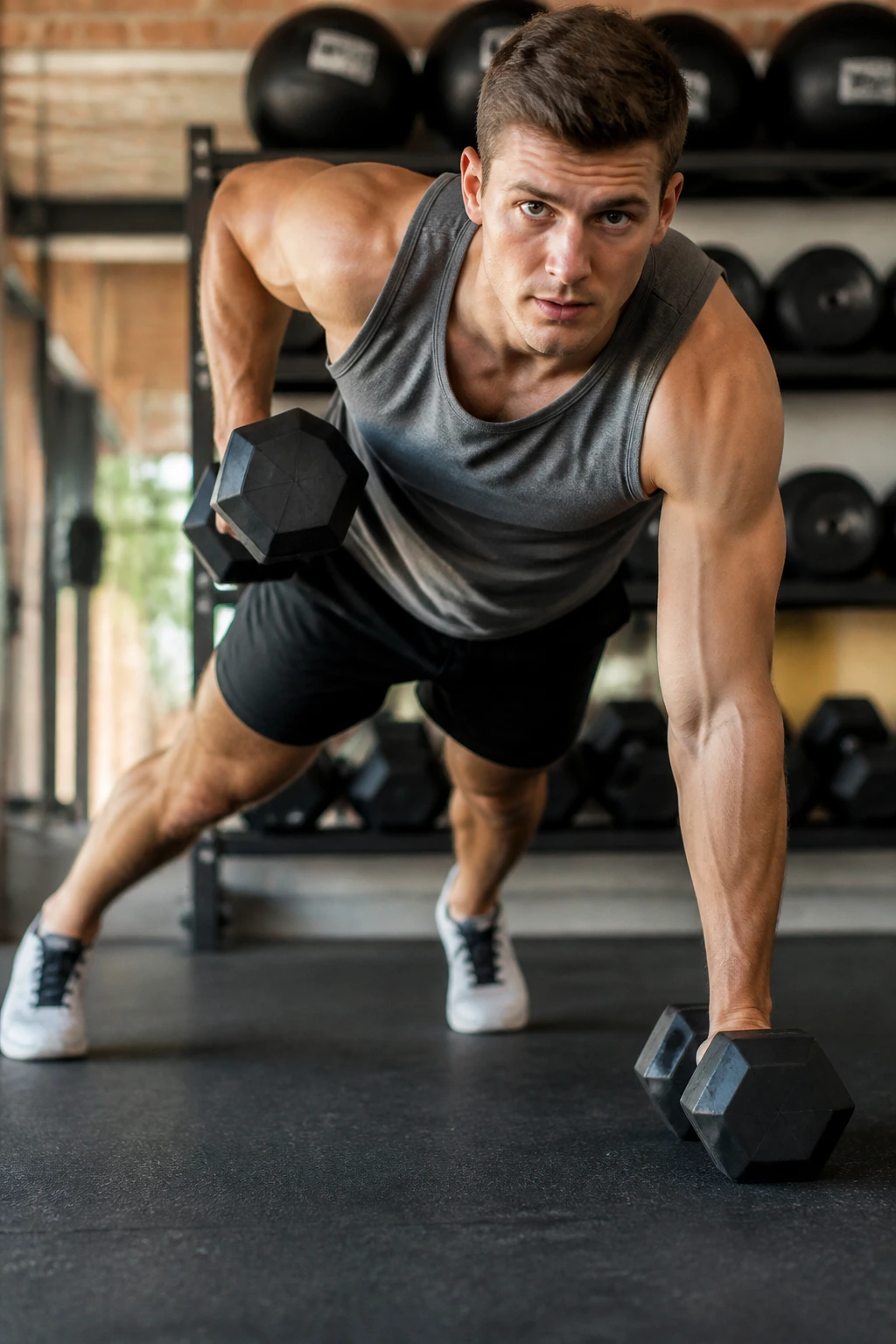
A renegade row is half back exercise, half anti-rotation drill, and the core work is not an accident. In the plank position, one arm rows while the rest of you tries not to twist like a wet towel.
What To Watch For
If your hips sway, your feet are probably too close together or the bells are too heavy. Spread your stance a little wider than shoulder width and row slowly.
- Keep the body flat from head to heel.
- Pull the dumbbell to the lower rib or hip line.
- Use 6 to 8 rows per side.
It’s not the kind of row you do to move huge weight. It’s the kind you do to stay honest.
11. Dumbbell Thruster
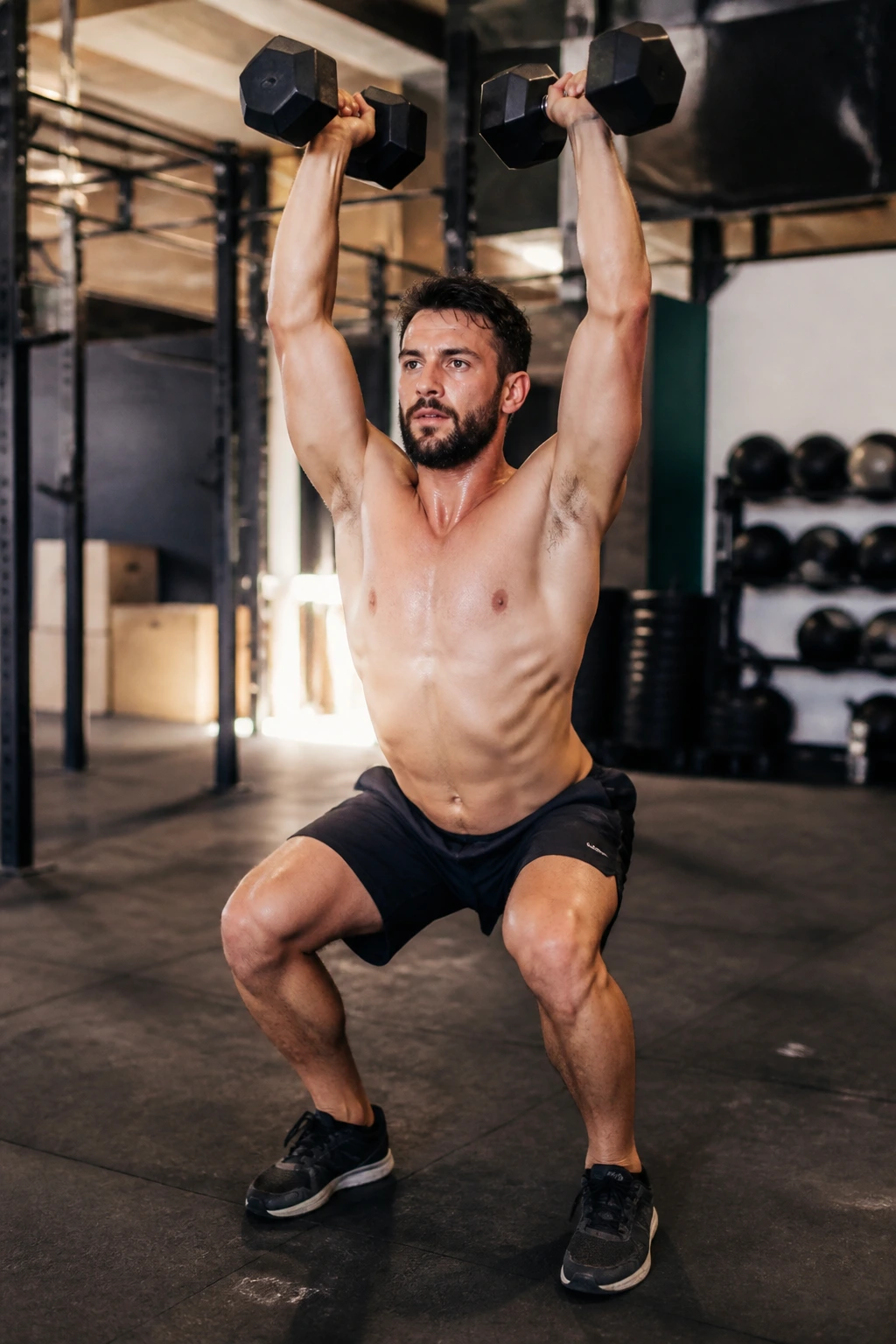
A thruster is a squat and a press smashed together, which makes it a sneaky conditioning tool. You dip, stand hard, and use that leg drive to send the dumbbells overhead in one smooth chain.
That’s why it feels so efficient. And a little rude.
Go light enough that the squat stays clean. 5 to 8 reps is plenty if you want power and breathing room; 8 to 12 starts to drift toward a lungs-on-fire finish. If your press turns into a half-rep because your legs are cooked, stop a rep earlier next set.
12. Dumbbell Lateral Raise
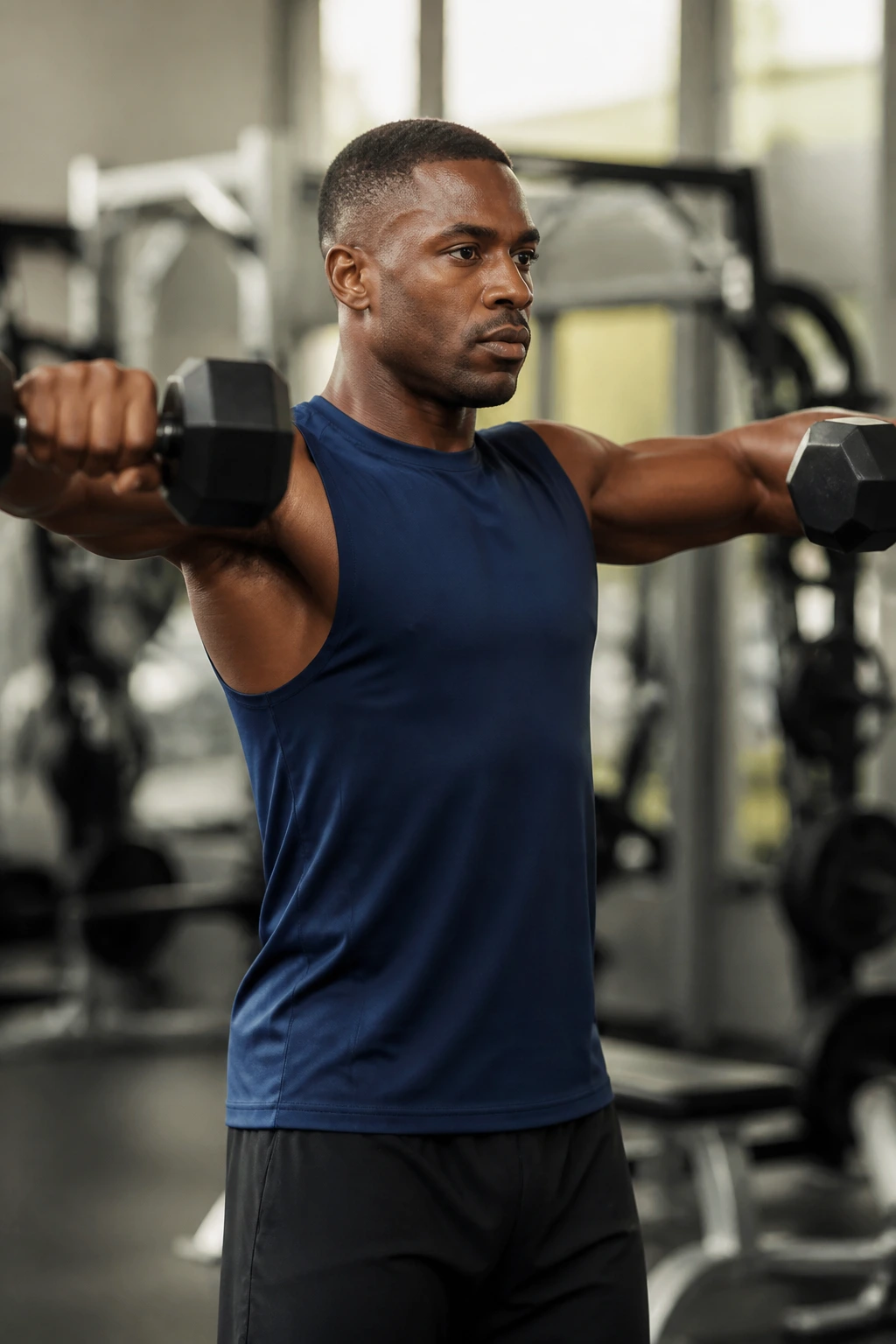
Side delts are picky little muscles. They respond better to clean tension than to ego lifting, which is why the lateral raise works when the weight is modest and the movement stays strict.
How to Make It Work
Lean slightly forward, keep a soft bend in the elbows, and raise the dumbbells until your upper arms are about level with the floor. You do not need to shrug them up by your ears.
- Use 12 to 20 reps.
- Keep the wrists neutral.
- Stop swinging when the set gets hard.
One small tip: lead with the elbows, not the hands. That keeps the line of pull where you want it.
13. Bent-Over Reverse Fly
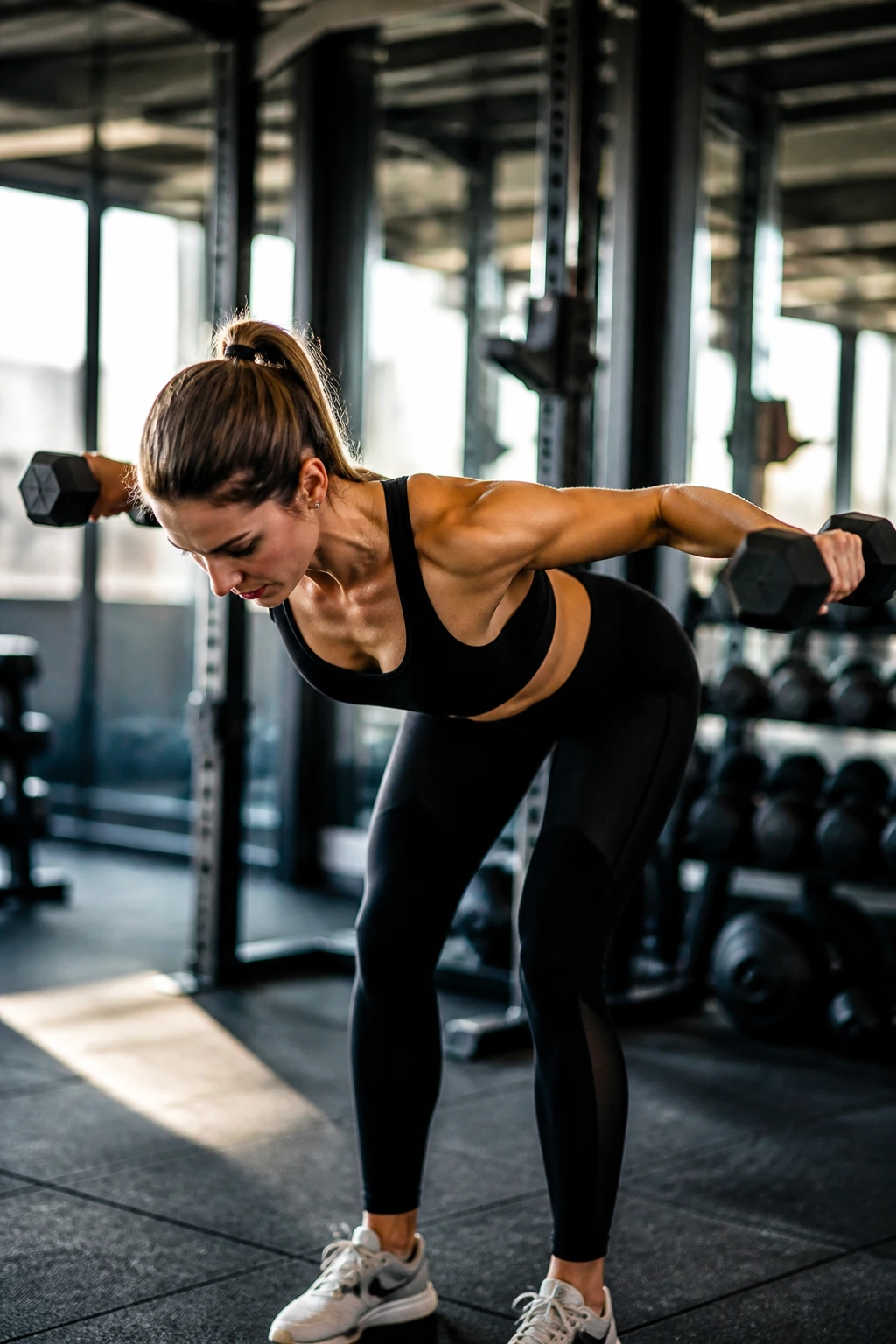
Rear delts get neglected all the time, then people wonder why their shoulders look rounded forward. The bent-over reverse fly helps fill that gap without requiring heavy loads or fancy setup.
Hinge at the hips, keep your chest braced, and open the arms out in a wide arc. The motion should feel more like spreading than yanking. If you have to heave the dumbbells, the load is too much.
Try 12 to 15 reps and keep the top position brief. A clean reverse fly feels controlled and slightly annoying in the best way. It is not a power move. It is a precision move.
14. Hammer Curl
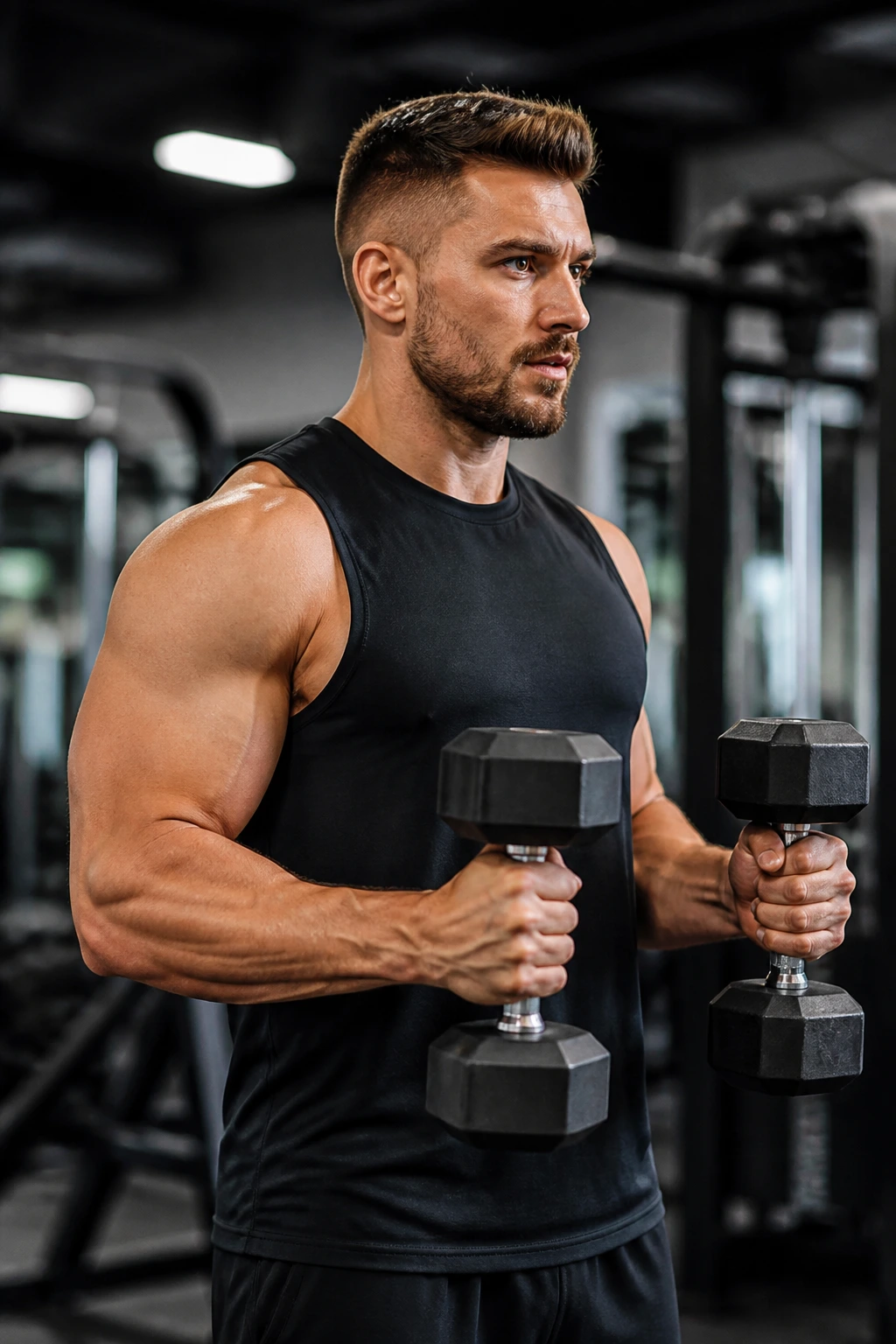
Hammer curls hit the biceps, sure, but they also ask the brachialis and forearms to help out. That neutral grip makes the exercise feel different from a palm-up curl, and in a lot of people it is easier on the wrists.
The form is simple, which is part of the appeal. Elbows stay near your sides, shoulders stay quiet, and the dumbbells travel straight up and down without a lot of body swing.
Use 8 to 12 reps. If your torso starts rocking, the set is over. A good hammer curl looks boring from across the room, and that is exactly why it works.
15. Alternating Supinating Curl
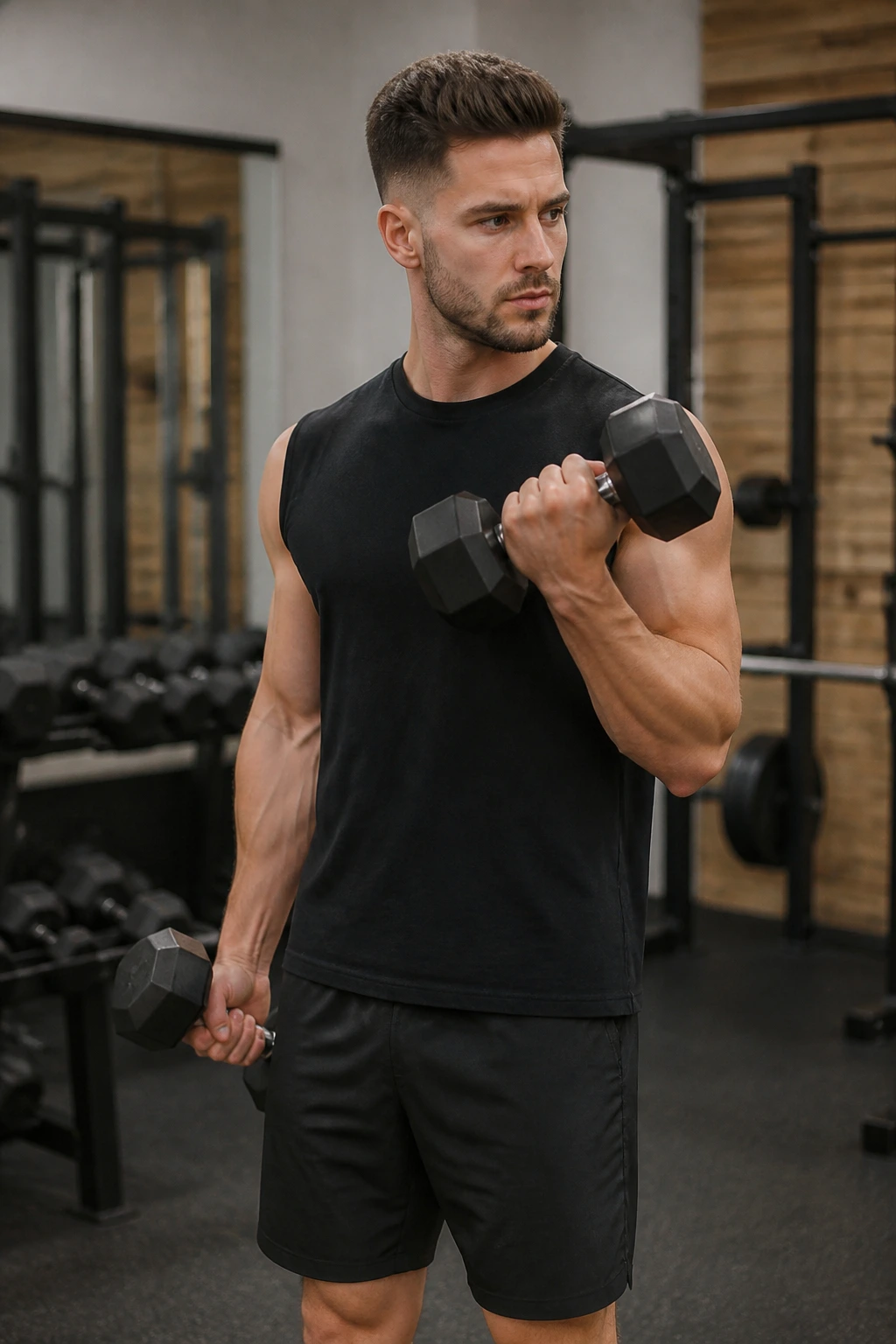
This one looks old-school because it is old-school. Start with your palms facing in, then rotate the hand as you curl so the palm finishes facing up. That little turn gives the biceps a different feel than a hammer curl or a fixed-grip curl.
You’ll notice the twist most in the top half of the lift. That’s where the biceps get a little more of the job. Keep the elbow pinned and let the forearm rotate smoothly rather than snapping into place.
A smart range here is 8 to 12 reps per arm. If you want one curl variation that feels the most classic, this is probably the one.
16. Overhead Dumbbell Triceps Extension
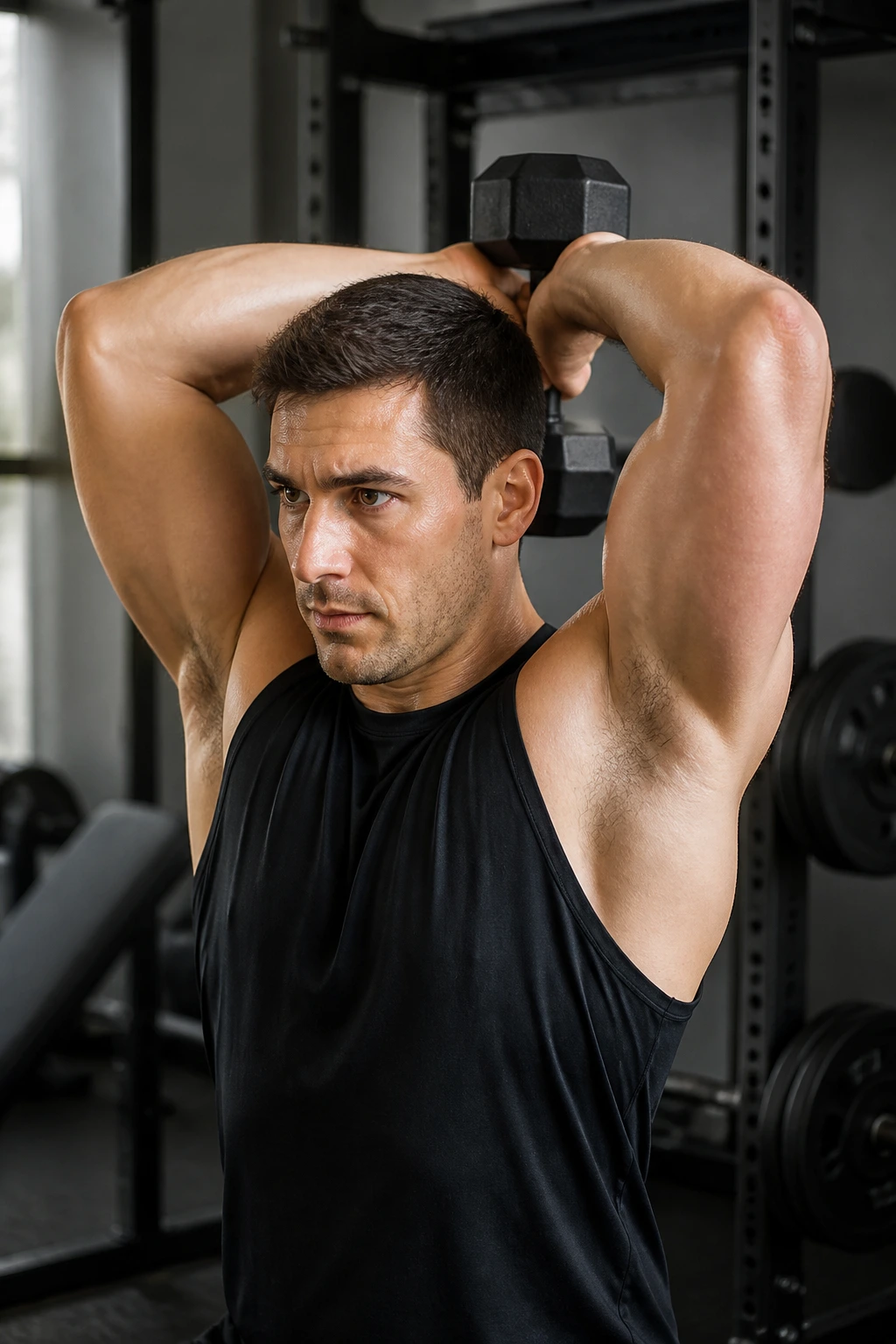
Overhead extensions are great for the long head of the triceps because the arm is lifted above the head, which gives that muscle a longer stretch. That stretch is the whole point, and it’s the reason the movement earns a spot.
The Part People Rush
Keep the elbows pointed mostly forward, not flaring all over the place. Lower the dumbbell behind your head under control, then extend until the arms are straight without locking out hard.
- Aim for 10 to 15 reps.
- Use one dumbbell held with both hands, or one arm at a time.
- Keep your ribs from flaring.
If your shoulders hate the position, lower the weight and shorten the range a touch. No shame there.
17. Dumbbell Skull Crusher
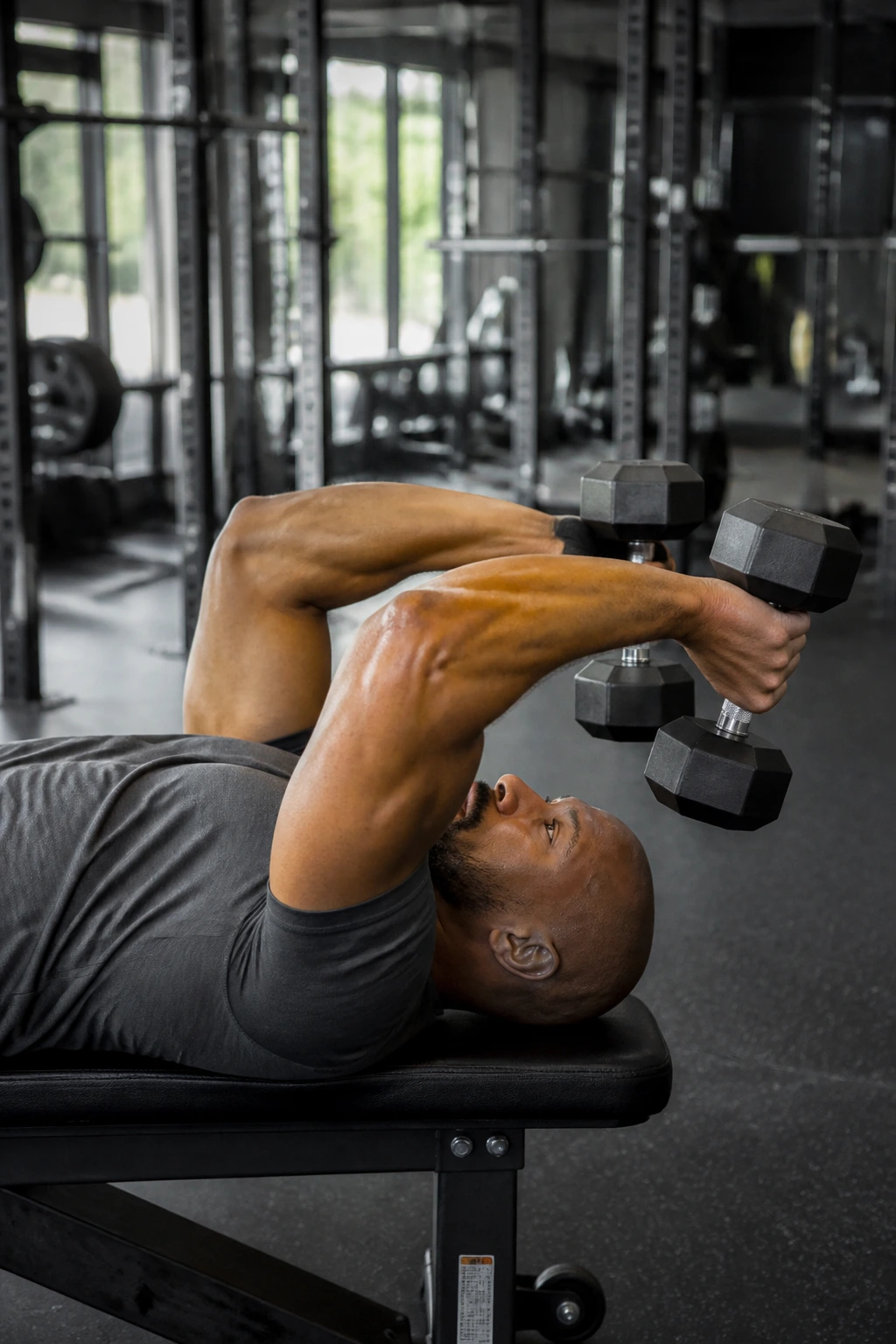
Skull crushers can be great, but they ask for respect. The elbow joint does not love sloppy reps, so the load needs to stay moderate and the lowering phase needs to be slow.
A floor or bench version both work. Lower the dumbbells by bending only at the elbows, then press them back up without letting the upper arms wander all over the place. If the movement turns into a shoulder press, it’s gone off the rails.
Use 8 to 12 controlled reps and stop well before your elbows feel cranky. That is not the exercise to chase a max with. It is the exercise to be neat with.
18. Farmer’s Carry
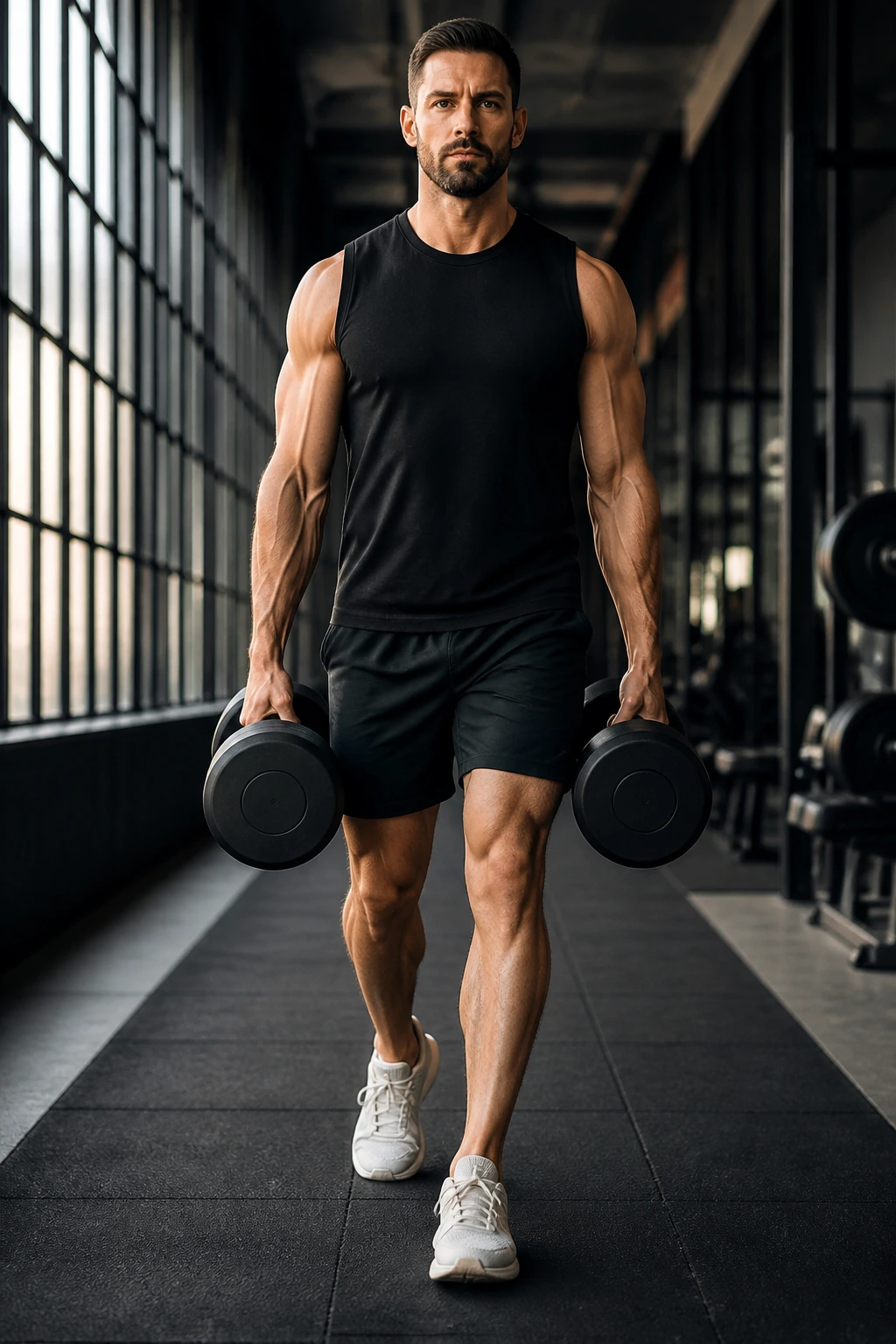
Carry a heavy dumbbell in each hand and walk. That sounds almost too simple, which is part of why it’s so good. Farmer’s carries train grip, posture, core stiffness, and plain old work capacity in one clean drill.
Your shoulders should stay level. Your gait should stay smooth. If you start waddling, the load is too high or the distance is too long.
Quick Carry Rules
- Walk for 20 to 40 meters or 30 to 60 seconds.
- Keep the ribs stacked over the pelvis.
- Use a weight that makes the last few steps feel serious, not chaotic.
There’s no trick here. Pick up the bells and stay tall.
19. Suitcase Carry
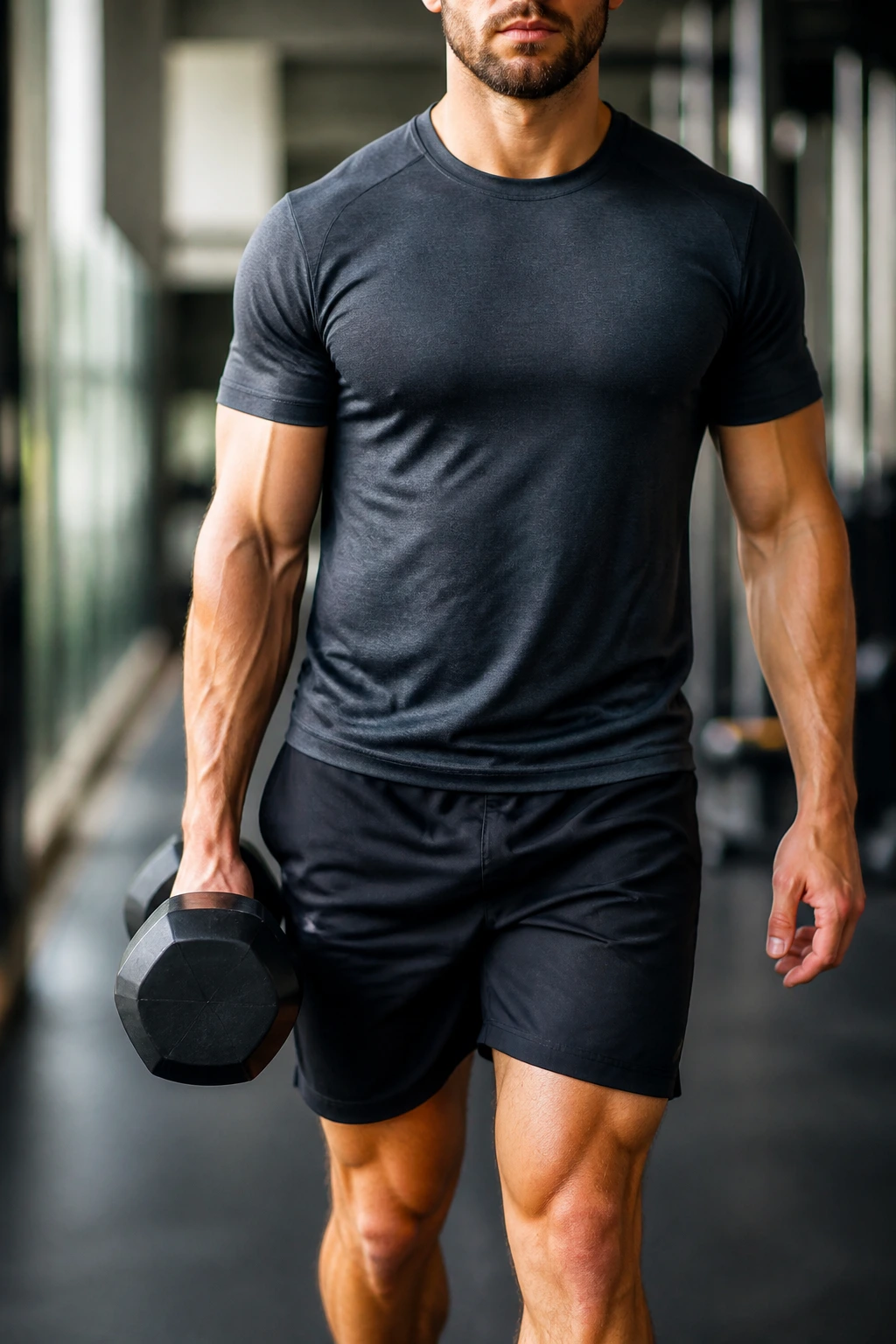
A suitcase carry takes the same idea and makes it meaner. Load only one side, and your body has to fight the urge to lean toward the heavy hand or fold away from it.
That anti-side-bend demand is gold for the obliques and the deeper core muscles. It also tells you a lot about asymmetry. One side often feels steadier than the other, and that is useful information.
Walk 20 to 40 seconds per side with the torso perfectly upright. No drifting. No shrugging. A suitcase carry looks calm when it is done well, which is ironic because your trunk is working hard the whole time.
20. Single-Leg Romanian Deadlift
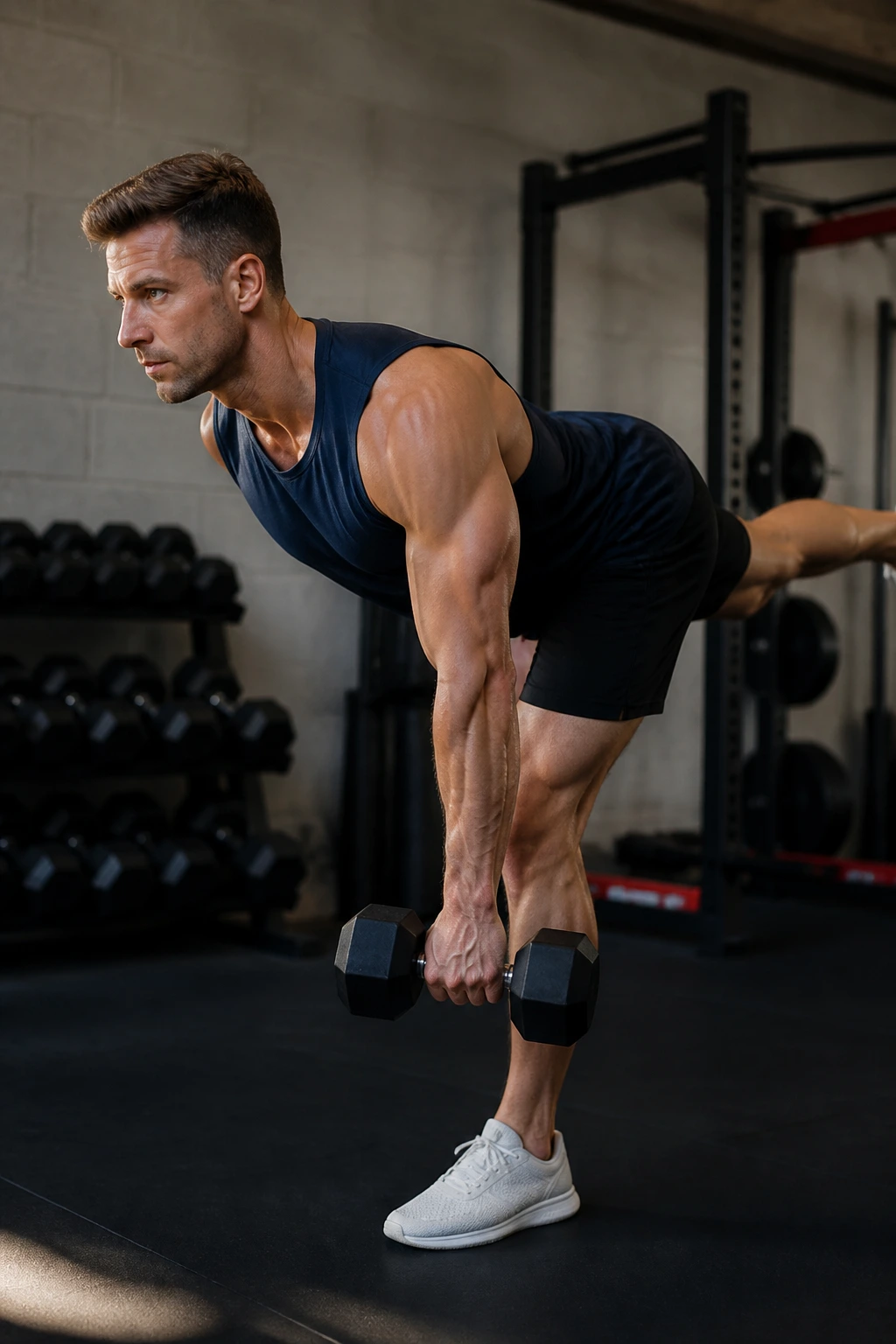
Single-leg hinges are where balance and posterior-chain strength shake hands. The dumbbell single-leg Romanian deadlift asks the standing leg to stabilize while the free leg reaches back like a counterweight.
How To Keep It Clean
Hips stay square to the floor, knee soft, and the dumbbell tracks close to the stance leg. If you open the hip or twist the shoulders, the rep stops being useful fast.
A light touch on a wall or rack can help at first. That is not cheating. It is practice.
- Use 8 to 10 reps per side.
- Move slowly enough to feel the hamstring stretch.
- Stop when your back wants to round.
It’s a simple move that exposes control issues fast.
21. Dumbbell Step-Up
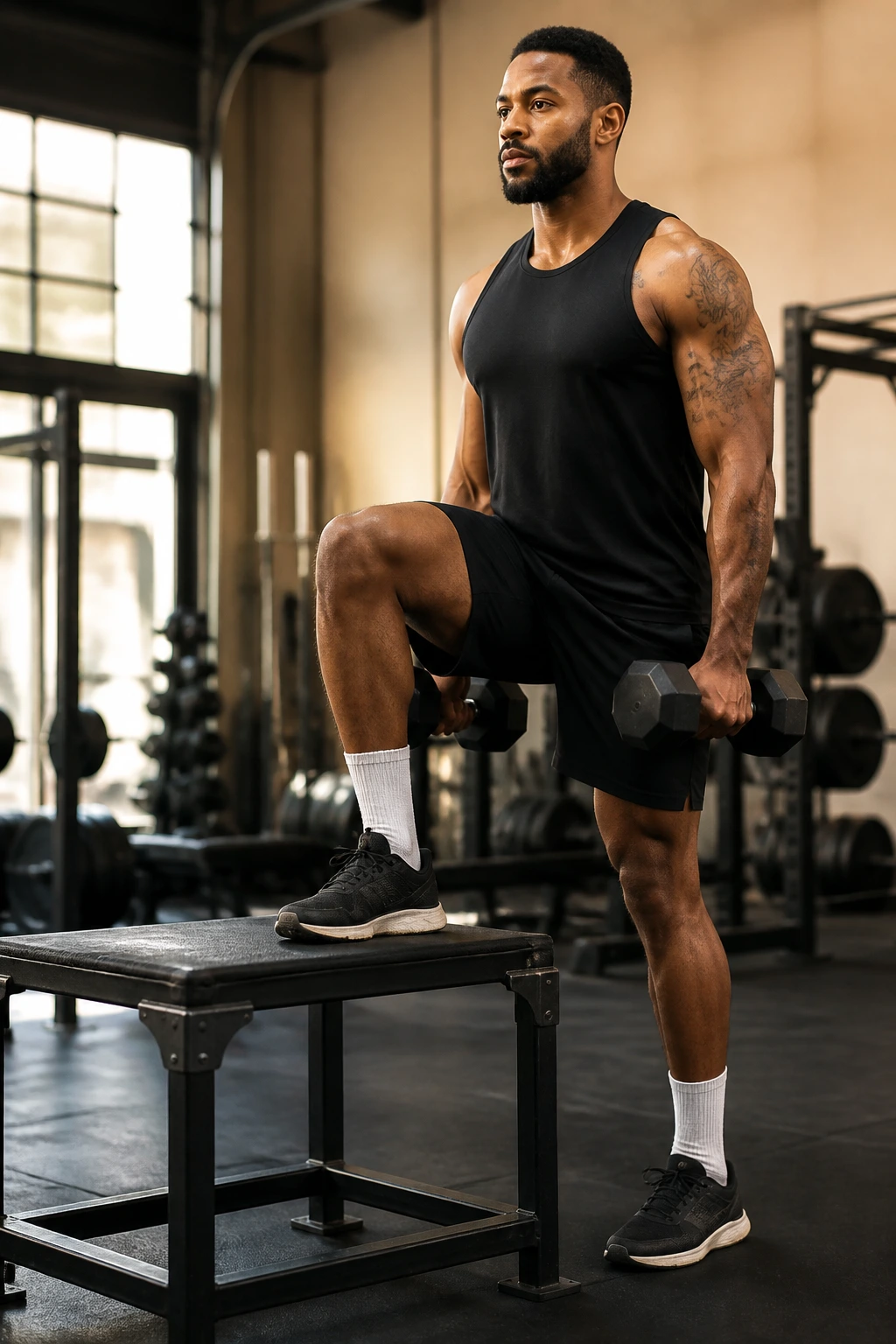
A step-up is a straightforward test of leg drive, balance, and control on the way down. Put one foot on a box or bench, drive through the whole foot, and stand up without bouncing off the trailing leg.
The box height matters. Too low and the move is timid. Too high and you turn it into a hip flexor circus.
Use a height that lets the working thigh stay roughly parallel or a little above. 8 to 10 reps per side is plenty. If you’re pushing off the floor hard with the back leg, lower the box or lighten the dumbbells.
22. Chest-Supported Dumbbell Row
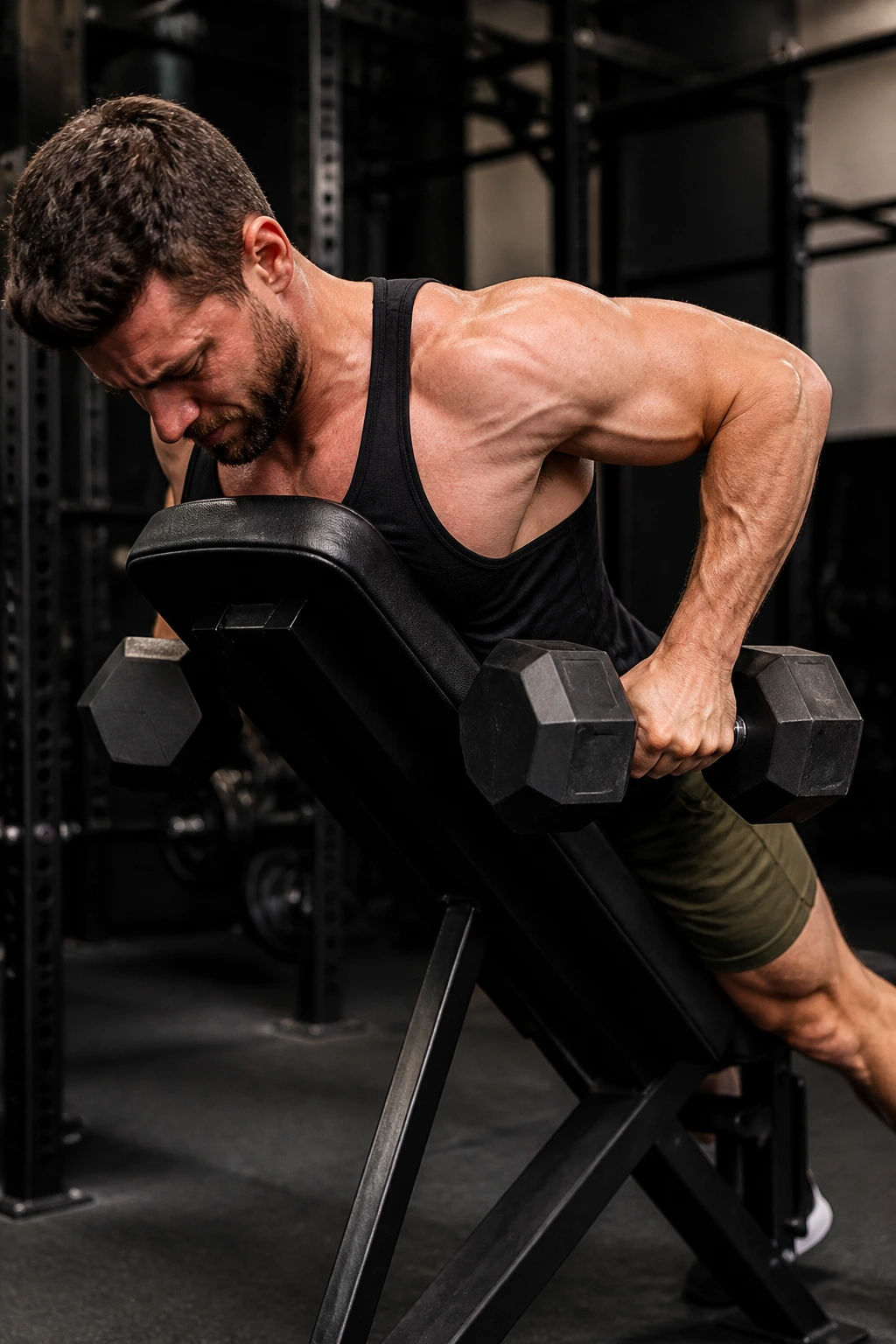
This is the row for days when your lower back is already tired or you just want to stop cheating. Lie face down on an incline bench and row the dumbbells from a dead hang toward your lower ribs.
Why It Feels So Strict
The bench removes the temptation to swing, so the back does the work instead of your hips. That makes it a clean choice for higher reps and for people who tend to turn every row into a shrug.
- Pull with your elbows, not your hands.
- Pause briefly at the top.
- Try 8 to 12 reps.
The setup is simple, but the payoff is real. You can make the back work hard without your spine doing extra overtime.
23. Dumbbell Pullover
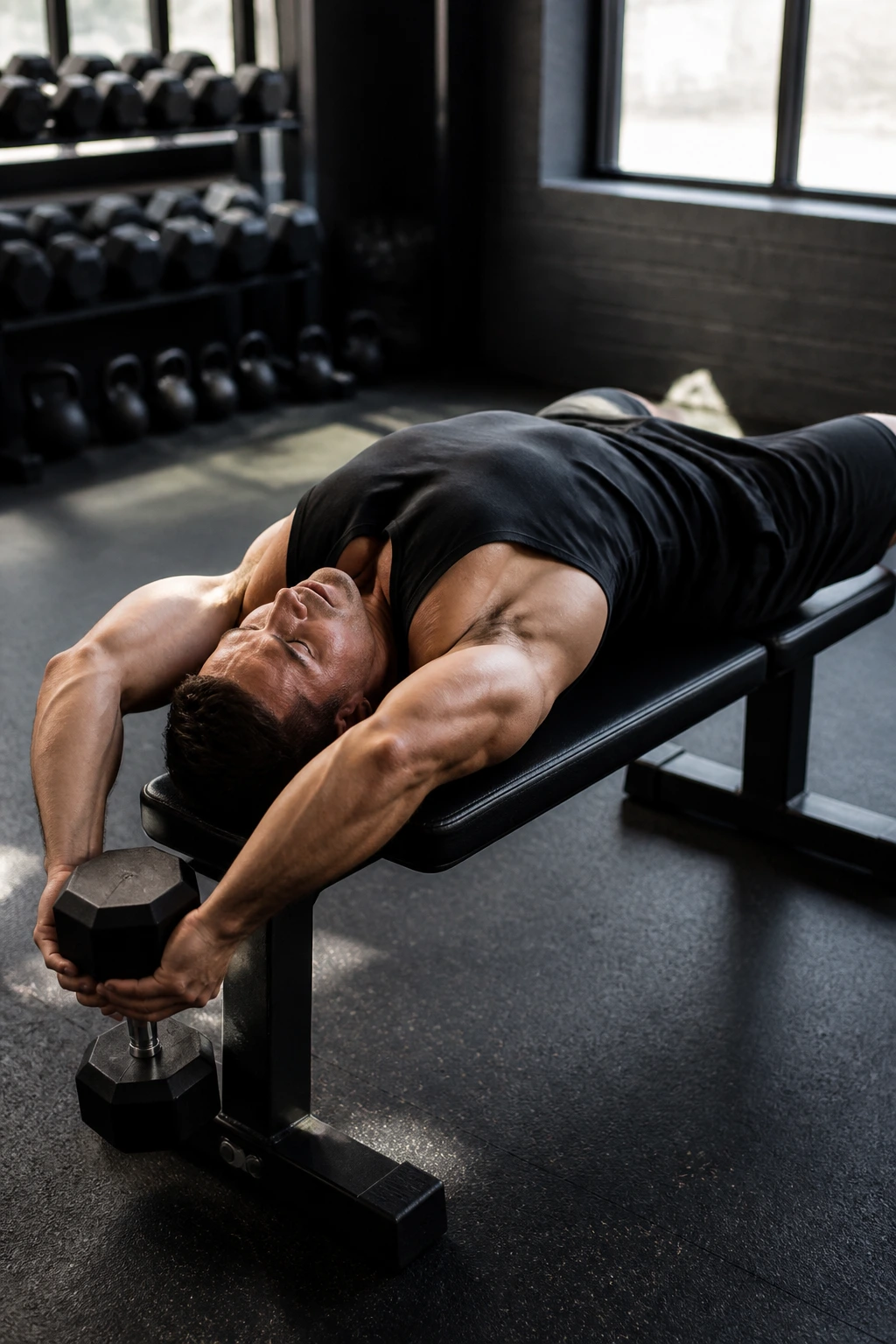
The dumbbell pullover sits in a funny spot between chest and back work. Some people feel it in the lats, some feel it more in the chest, and most feel a bit of both when the range is controlled.
Lower the dumbbell behind your head only as far as your shoulders let you keep control. Keep a slight bend in the elbows and do not arch your lower back just to fake a bigger range.
Use 8 to 12 slow reps. The bottom position should feel like a stretch, not a joint complaint. That’s the difference between a useful pullover and a cranky one.
24. Arnold Press
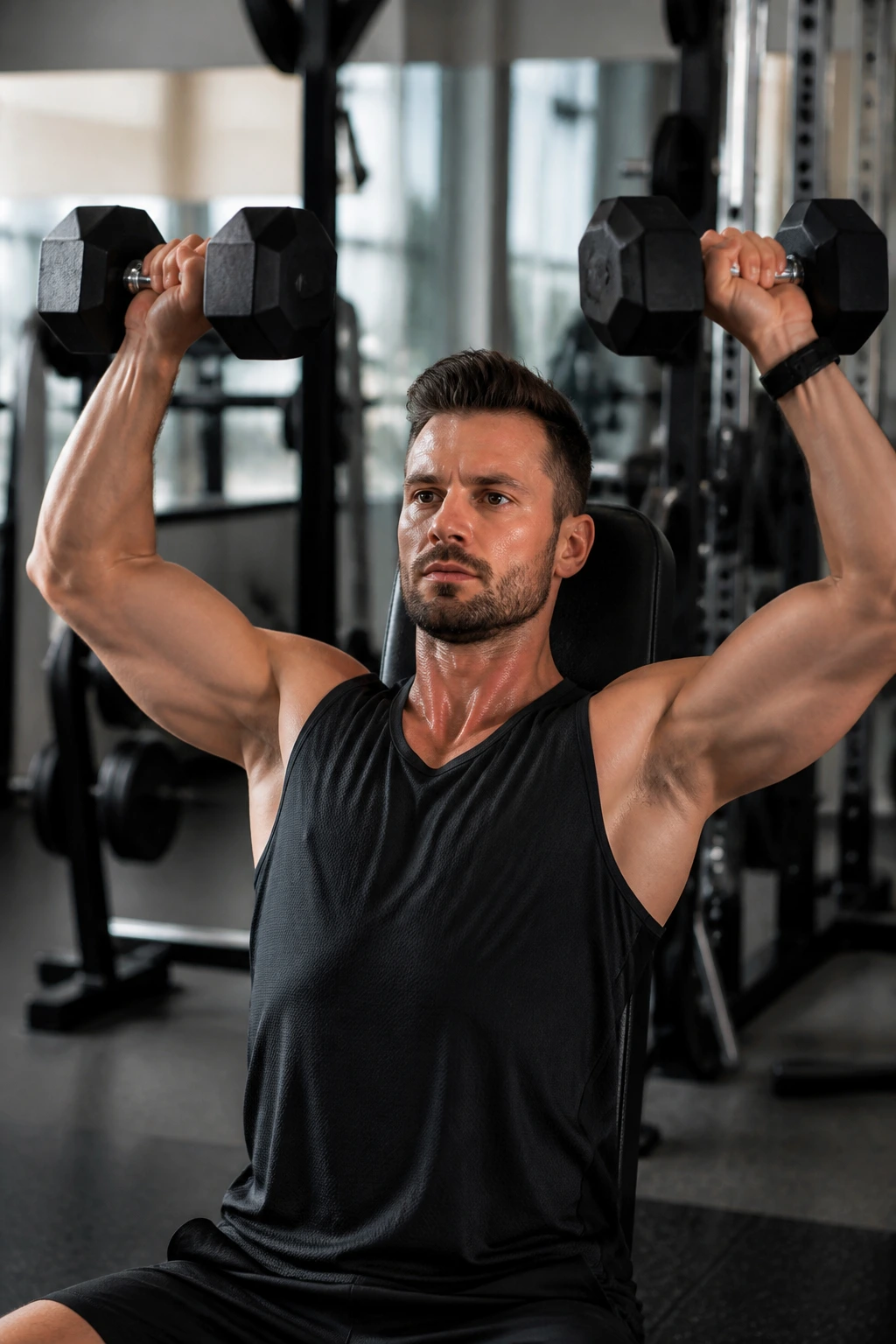
The Arnold press gets a lot of attention because of the rotation, but the rotation is not magic. What matters is that the movement takes the shoulder through a slightly different path and often feels smoother than a straight overhead press for some lifters.
Start with the palms facing you, then rotate as you press up. Keep the motion smooth and avoid turning the lift into a sloppy spin. That’s where people lose the plot.
A moderate load for 6 to 10 reps usually works better than trying to grind it out. If your shoulders feel pinchy, a regular press may be the smarter choice.
25. Dumbbell Chest Fly
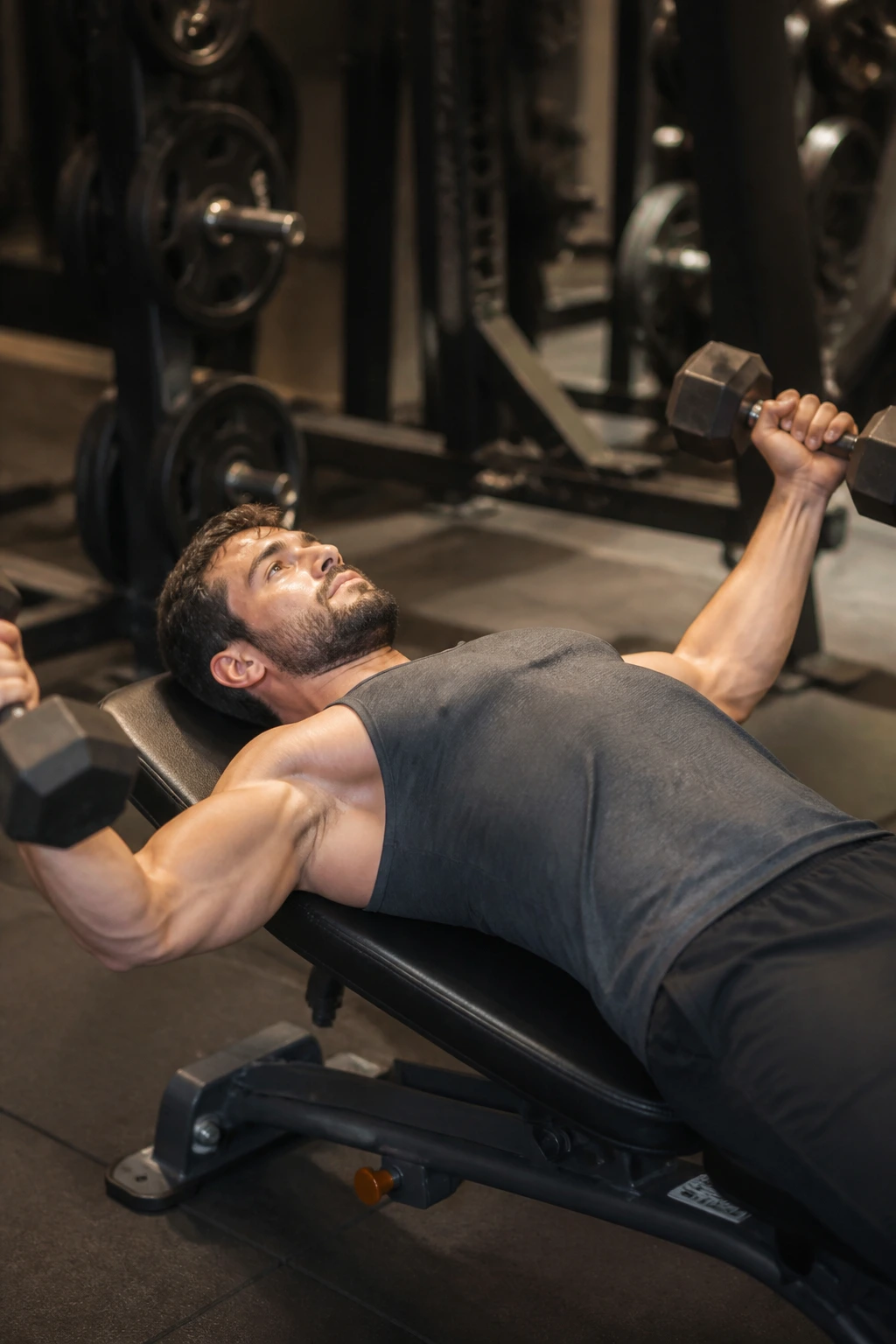
Flyes are not about moving heavy weight. They are about taking the chest through a long, controlled stretch and then bringing the arms back together without losing tension or turning the set into a press.
Lower the arms in a wide arc with a soft bend in the elbows. Stop before the shoulder joint feels like it is reaching for a bad idea. That bottom position should feel deep, but not sloppy.
A light to moderate load for 10 to 15 reps is plenty. If you want more chest work without chasing pressing numbers, this is a solid accessory.
26. Standing Dumbbell Calf Raise
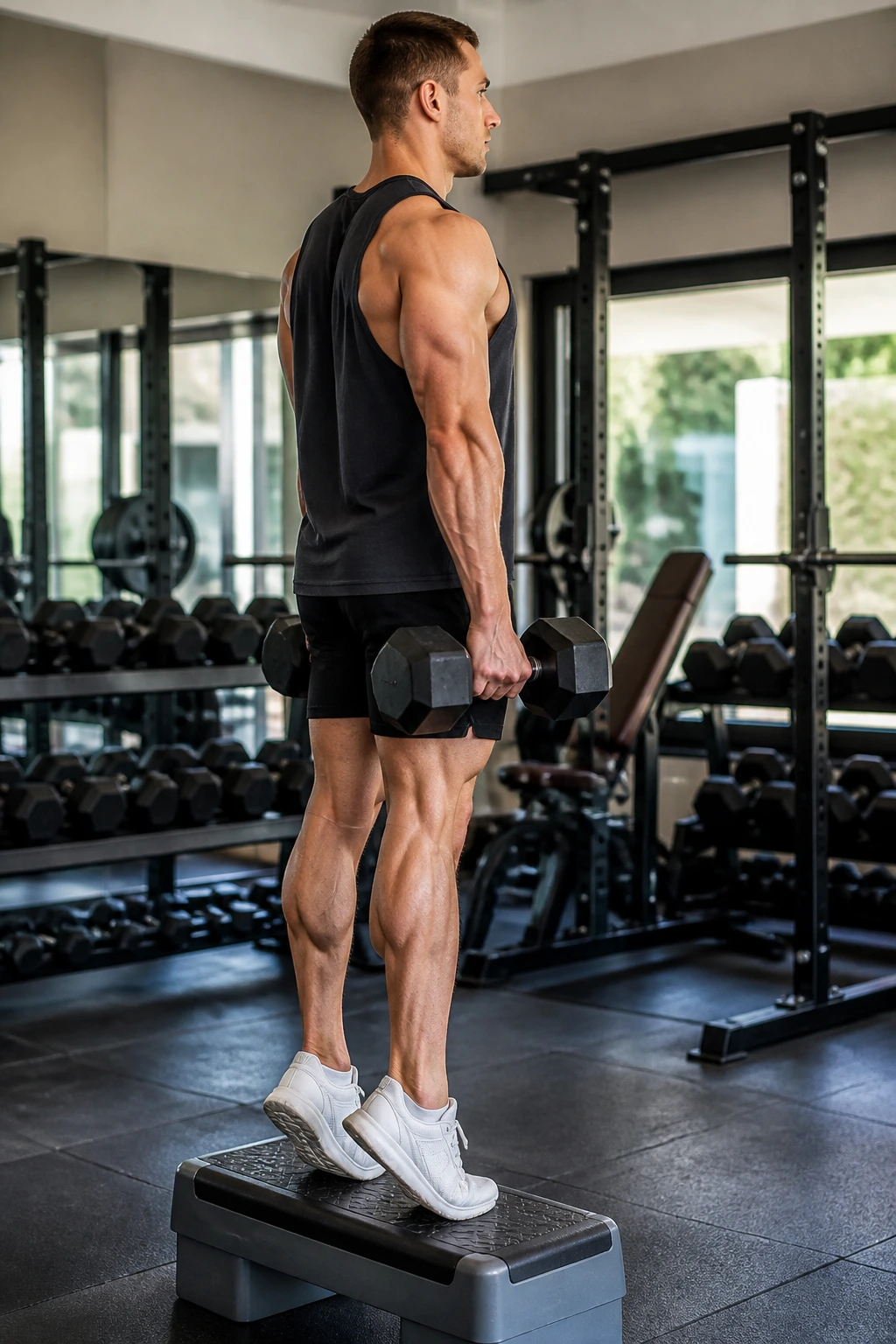
Calf raises are boring in the same way brushing your teeth is boring. Skip them long enough and you notice. Do them well and your lower legs start looking and working better, especially if you pause at the top instead of bouncing.
Small Details Matter Here
Stand on a step if you can, let the heel drop for a real stretch, then rise as high as possible and hold for a full second. That pause is where the work lives.
- Use 12 to 20 reps.
- Try single-leg reps if both feet feel too easy.
- Move through the full range every time.
The calves love consistency. They don’t care about drama.
27. Dumbbell Glute Bridge or Hip Thrust
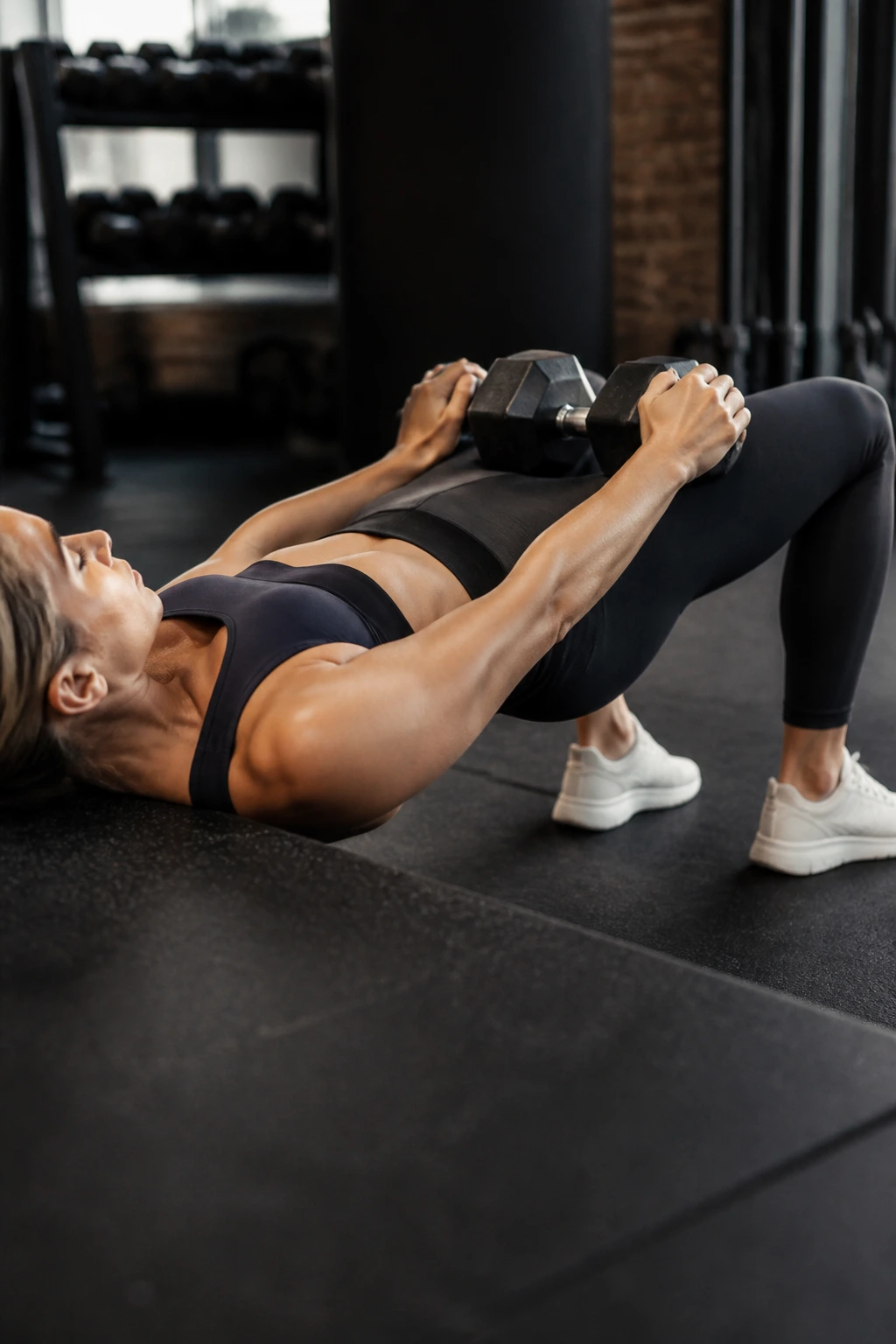
If your glutes are asleep, this is one of the simplest ways to wake them up. Put a dumbbell across the hips, drive through the heels, and finish the rep by squeezing the glutes rather than arching the lower back.
What Good Reps Feel Like
At the top, the ribs stay down and the pelvis stays tucked. That keeps the work where you want it. If your hamstrings cramp hard, slide the feet a little closer.
- Try 10 to 15 reps.
- Hold the top for one second.
- Keep the chin slightly tucked.
The movement is simple. The execution is where people either get glutes or get a lazy back extension instead.
28. Dumbbell Russian Twist
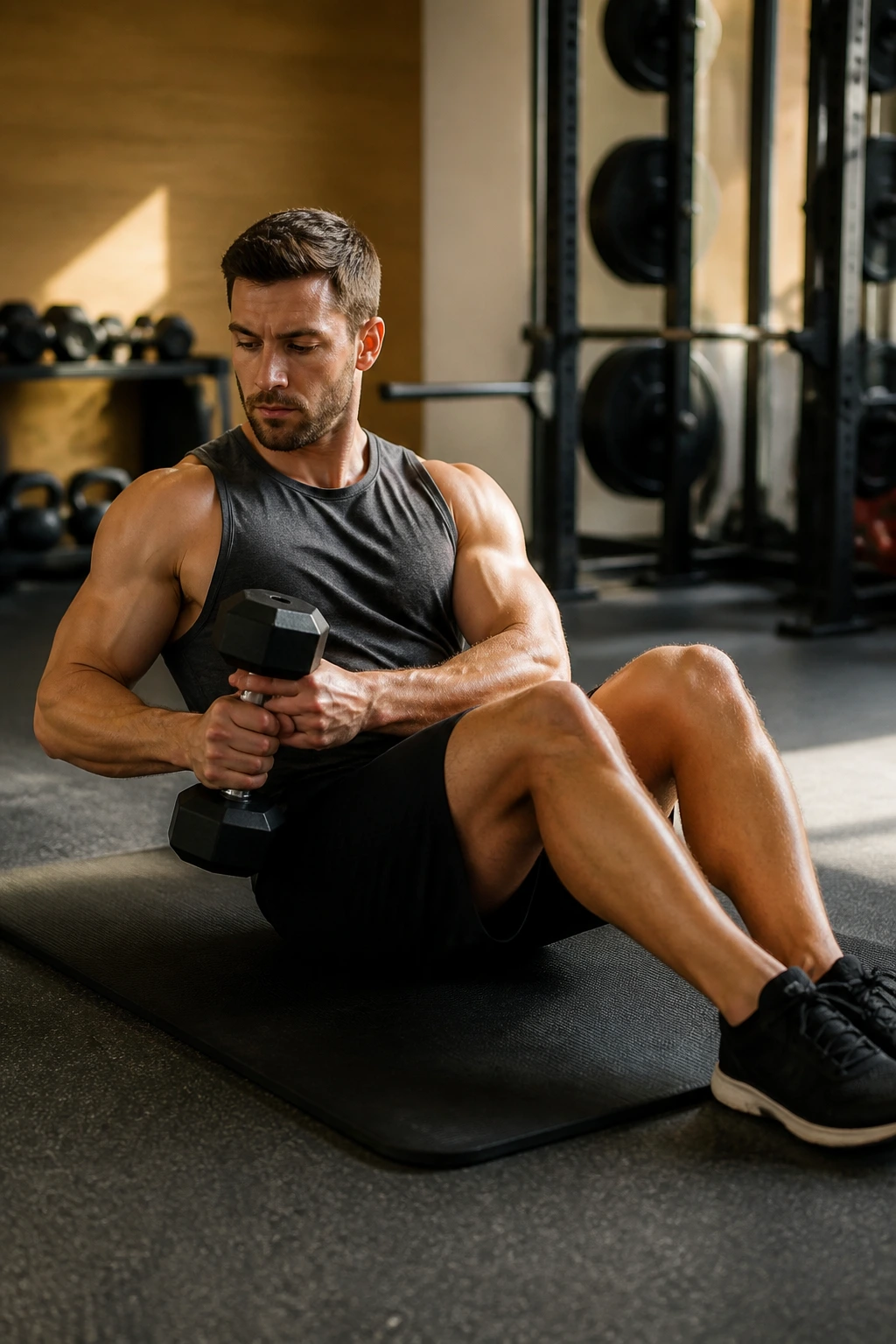
Russian twists are one of those exercises people either rush through or hate because they rush through them. Slow the rep down and the trunk work becomes much more obvious.
Sit tall, lean back a little, and rotate the ribcage from side to side with the dumbbell under control. You do not need to fling the weight across the room.
If your hips are rocking more than your torso is turning, the set is drifting. Keep the feet down if needed, and chase clean turns instead of speed. 16 to 24 total twists is enough for most people.
29. Dumbbell Wood Chop
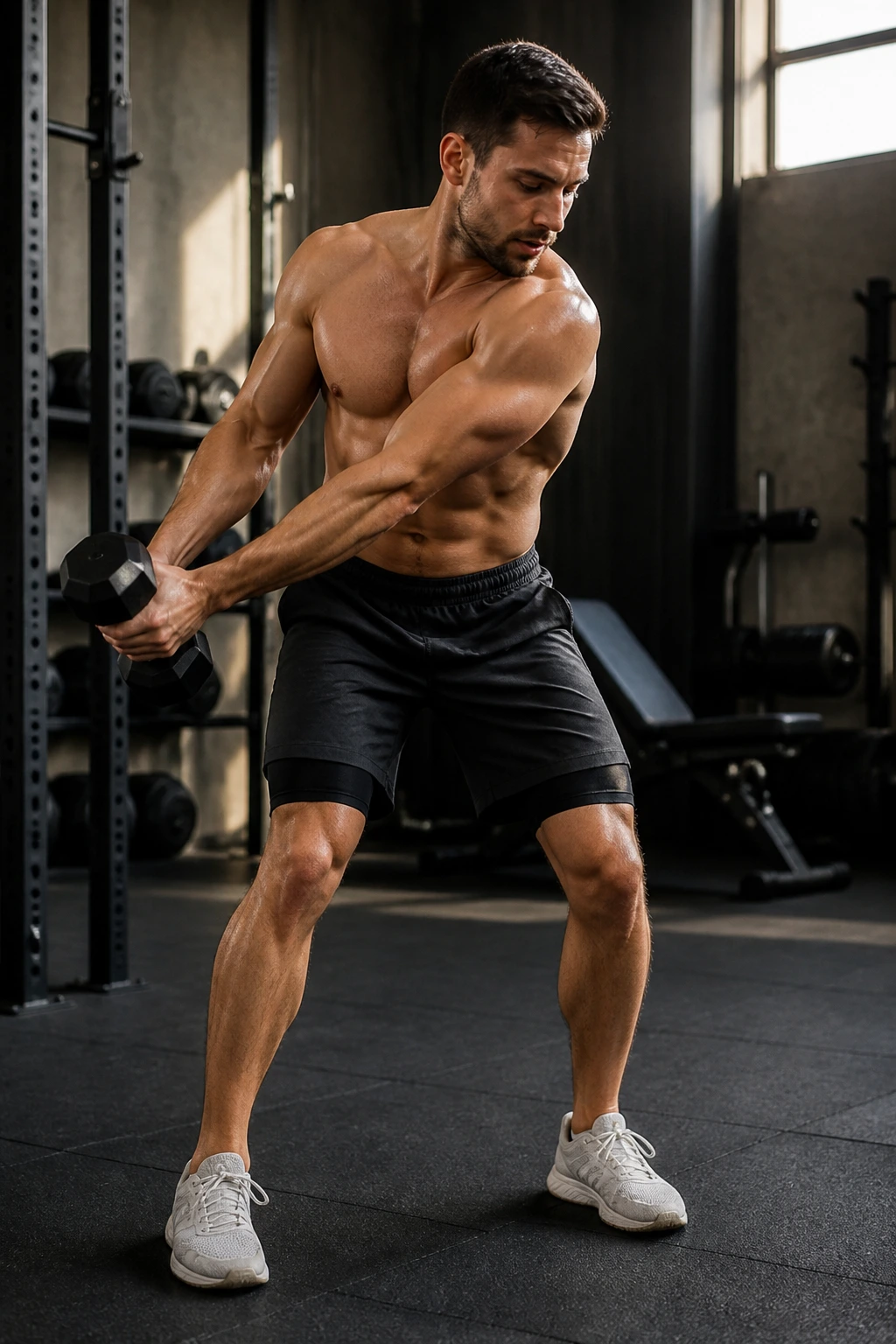
A wood chop drives the arms across the body on a diagonal path, which makes the torso and hips work together in a way straight-up crunches never do. It’s especially useful when you want core training that looks and feels more athletic.
How To Keep the Pattern Honest
Rotate through the trunk, not just the arms. The dumbbell should travel from one shoulder line down toward the opposite hip or from low to high, depending on the version you choose.
- Use 8 to 12 reps per side.
- Keep the movement smooth.
- Don’t whip through the bottom.
The best chop variations feel coordinated, not frantic. That matters.
30. Dumbbell Clean
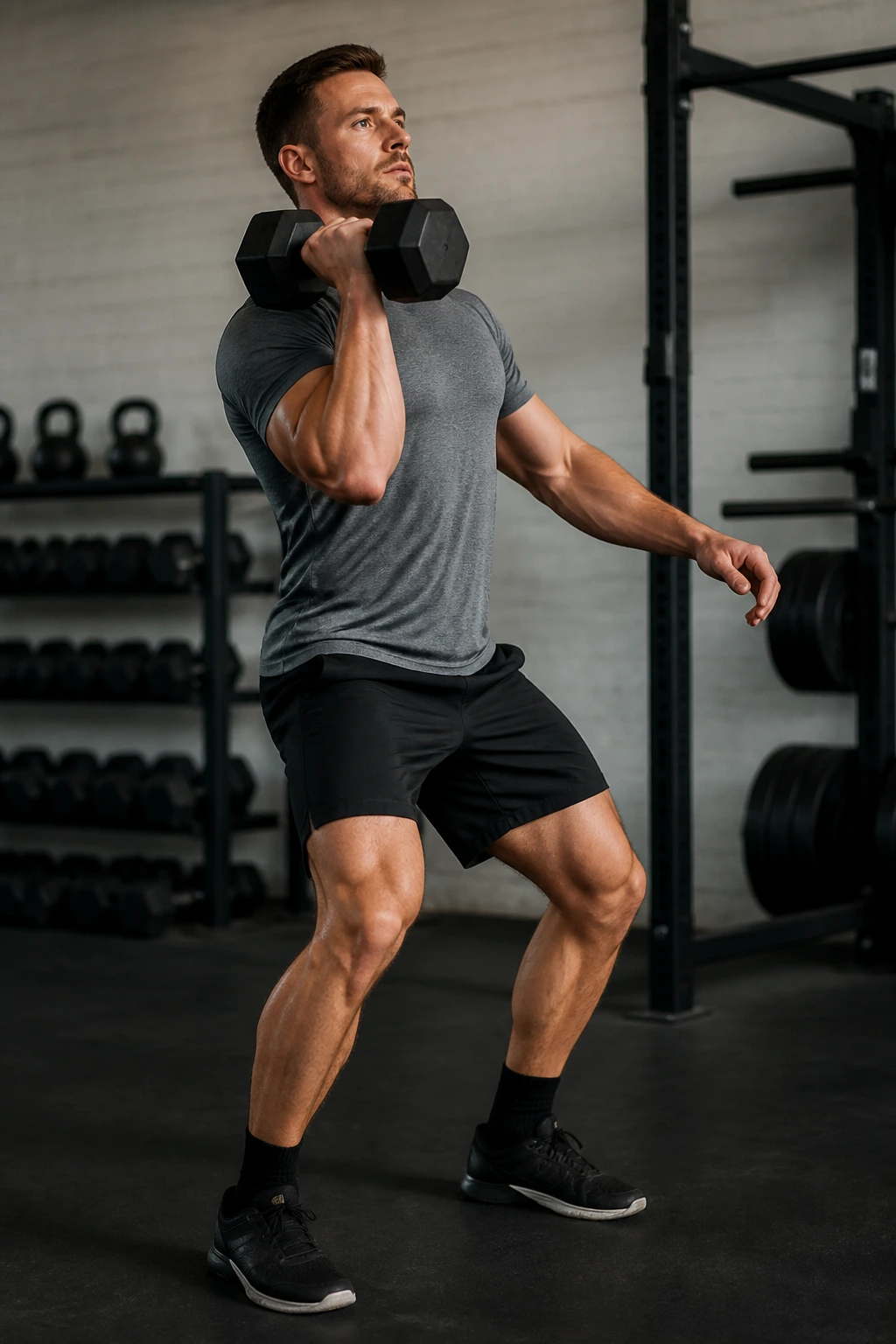
A dumbbell clean teaches power, timing, and a quick rack position in one move. Start from a hinge, drive through the hips, and catch the bell at the shoulder rather than curling it like a giant biceps rep.
Where People Mess It Up
The bell should stay close to the body. If it swings far away, you lose speed and usually bang the wrist on the way up. A clean is crisp when it’s close.
- Use 3 to 6 reps per side.
- Treat each rep like its own event.
- Catch softly with the elbow slightly forward.
It’s one of those exercises that feels awkward the first time and useful for a long time after that.
31. Dumbbell Snatch
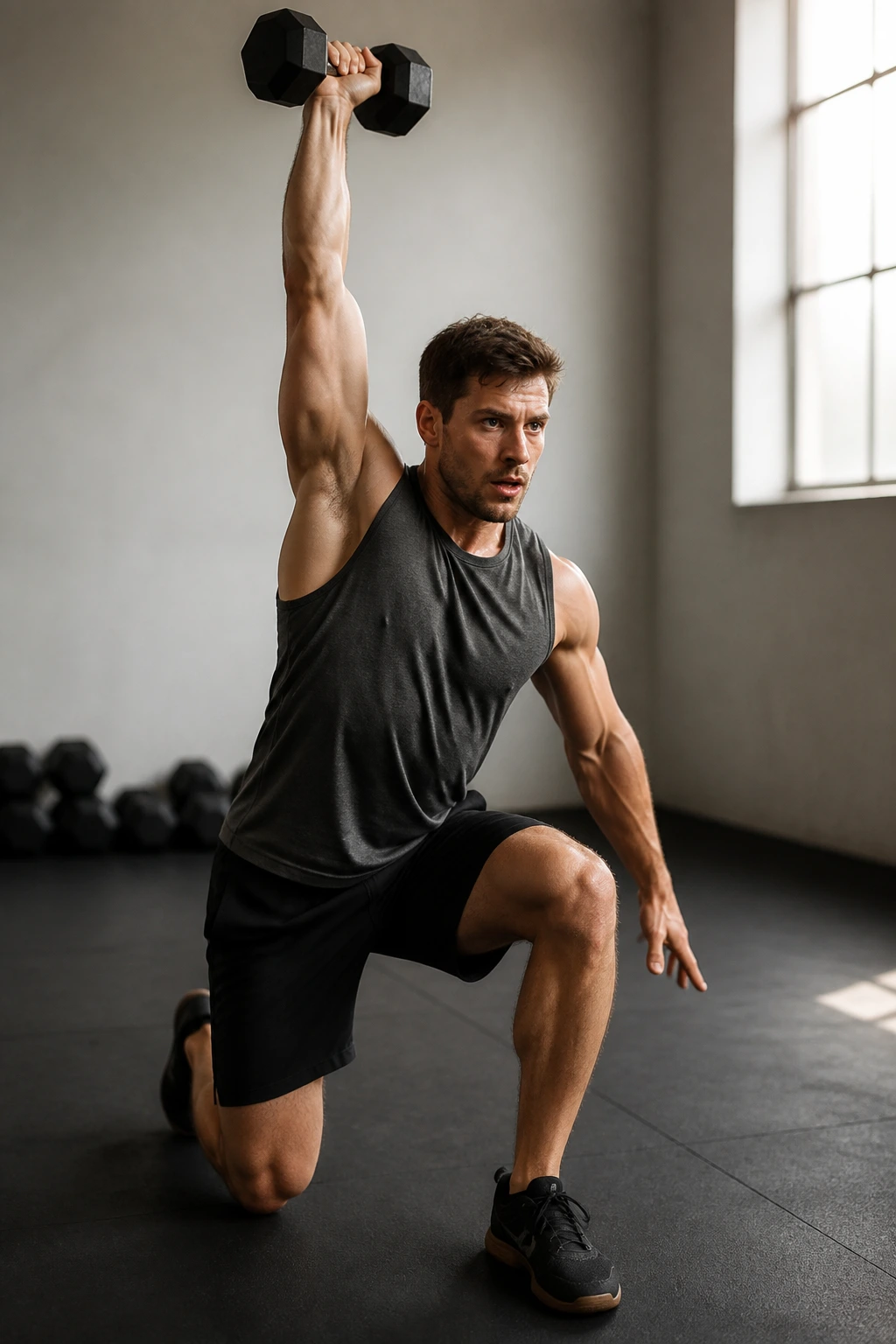
The dumbbell snatch is the more explosive cousin of the clean. One fluid pull from the floor or hang sends the bell overhead, and the whole movement asks for speed, control, and a decent sense of rhythm.
That overhead catch should feel stable, not like a lucky save. If the dumbbell crashes into position, slow down and clean up the path. Power only counts when you can own the end of the rep.
Use 3 to 5 reps per side. That’s enough. More than that and form usually starts to blur.
32. Dumbbell Push Press
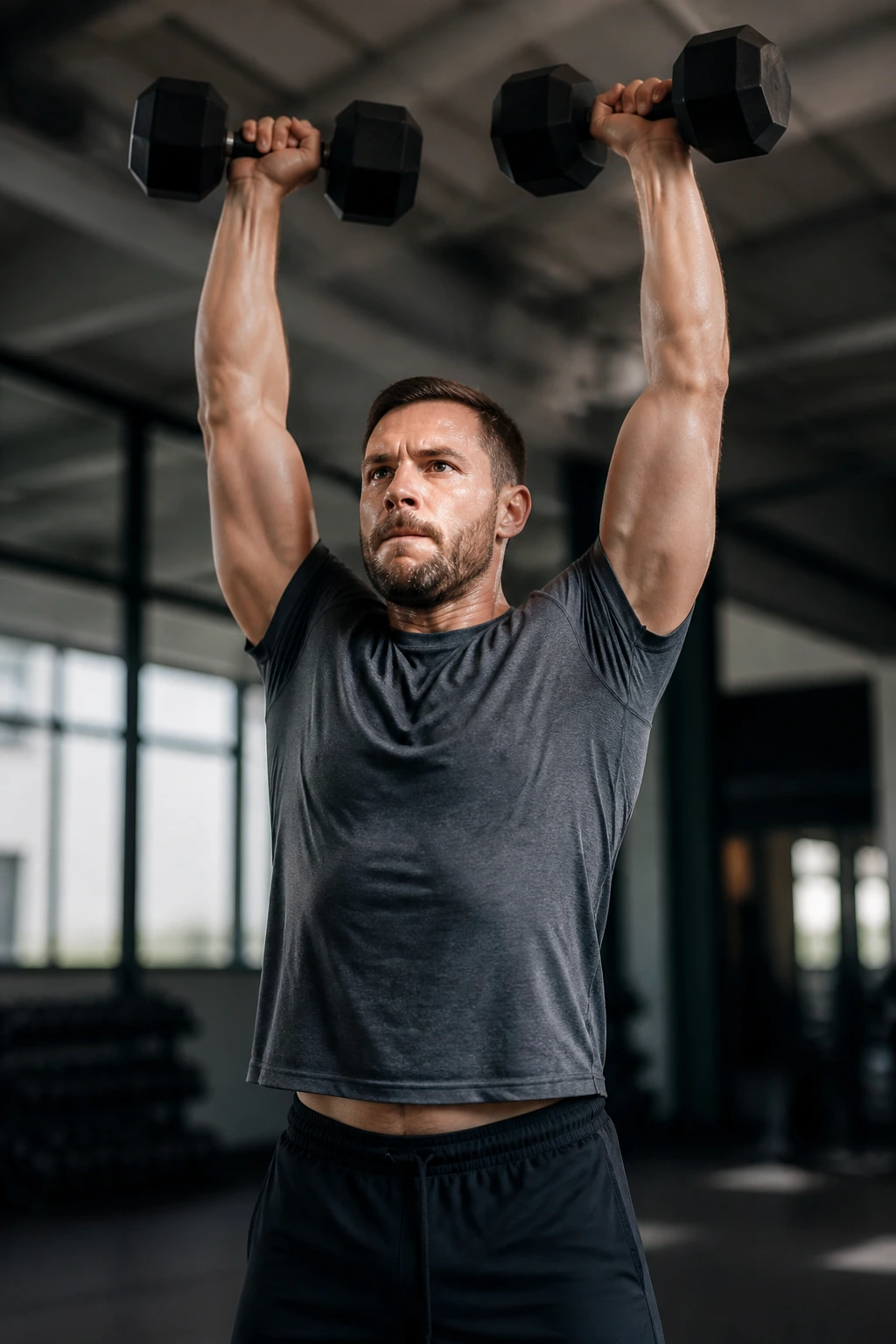
A push press is what happens when a strict press gets a little help from the legs. You dip just a few inches, drive hard, and transfer that leg force into the dumbbells overhead.
Compared with a strict overhead press, this lets you handle more load and train power instead of pure shoulder strength. The catch is simple: the dip must be short and vertical. If you turn it into a squat, the timing falls apart.
Use 4 to 6 reps when the goal is power. If you want shoulder isolation, stay with a strict press instead.
33. Dumbbell Sumo Squat
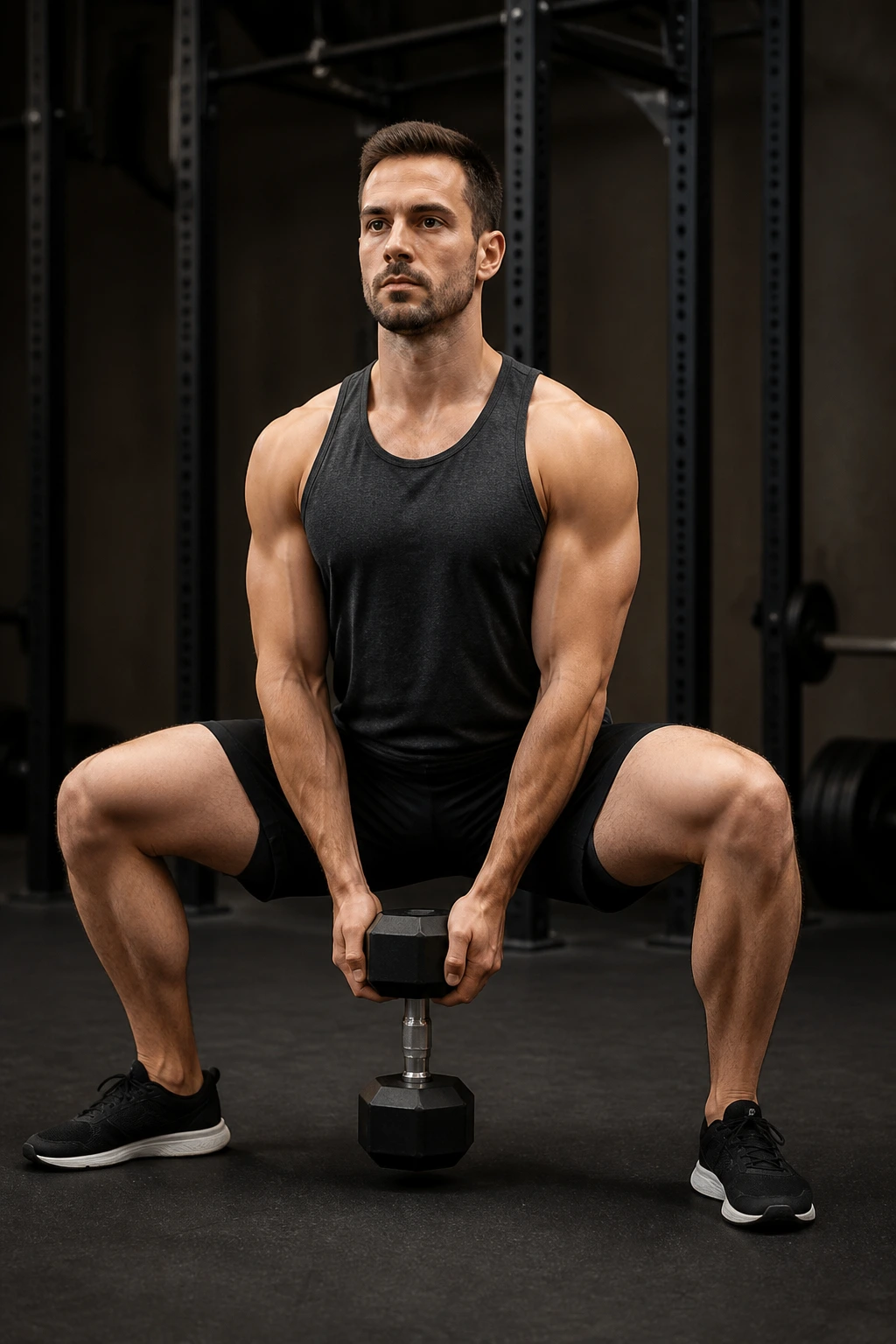
A sumo squat shifts the stance wider and turns the toes out a bit, which changes where you feel the load. The inner thighs and glutes get more attention, and many lifters like the stance because it feels friendly on the hips.
Good Form, Better Range
Keep the dumbbell hanging between the legs, not drifting forward. Sit down between your heels, then stand by pushing the floor apart with your feet.
- Aim for 8 to 12 reps.
- Keep the knees tracking over the toes.
- Hold the top for a brief squeeze if you want more glute work.
The wide stance is useful, but only if you can keep it controlled. Sprawling is not the goal.
34. Z Press
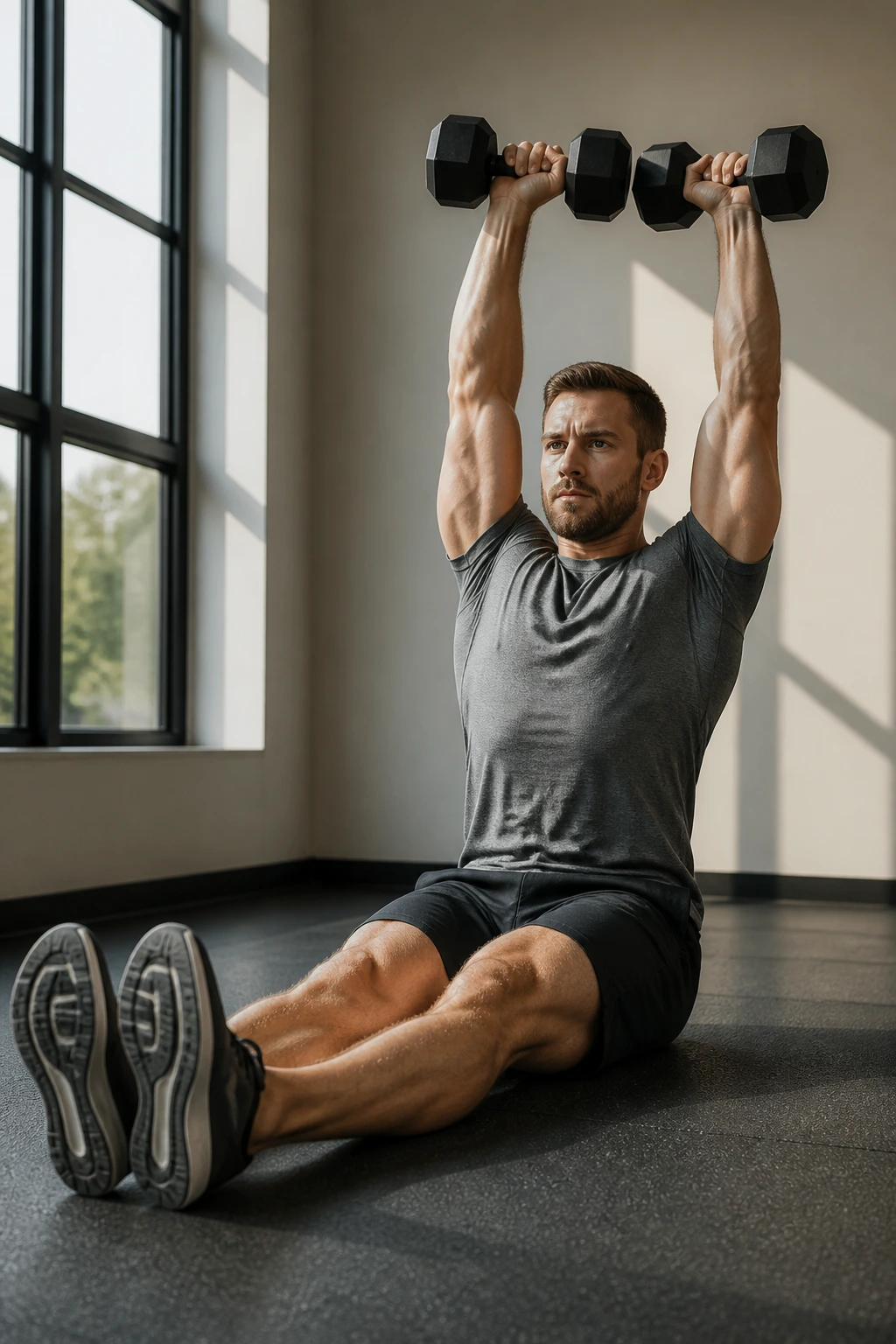
The Z press is a seated overhead press done on the floor with your legs straight out in front of you. That position strips away the lower-body help and makes the core, shoulders, and upper back do the work themselves.
Why It Feels So Demanding
You cannot hide here. If your torso collapses or your upper back rounds, the press goes nowhere. A lighter weight is normal, and frankly, smart.
- Start with 6 to 8 reps.
- Keep the legs active and the feet flexed.
- Press without leaning back.
It is a rough exercise in the best way. Small load, big honesty.
35. Turkish Get-Up
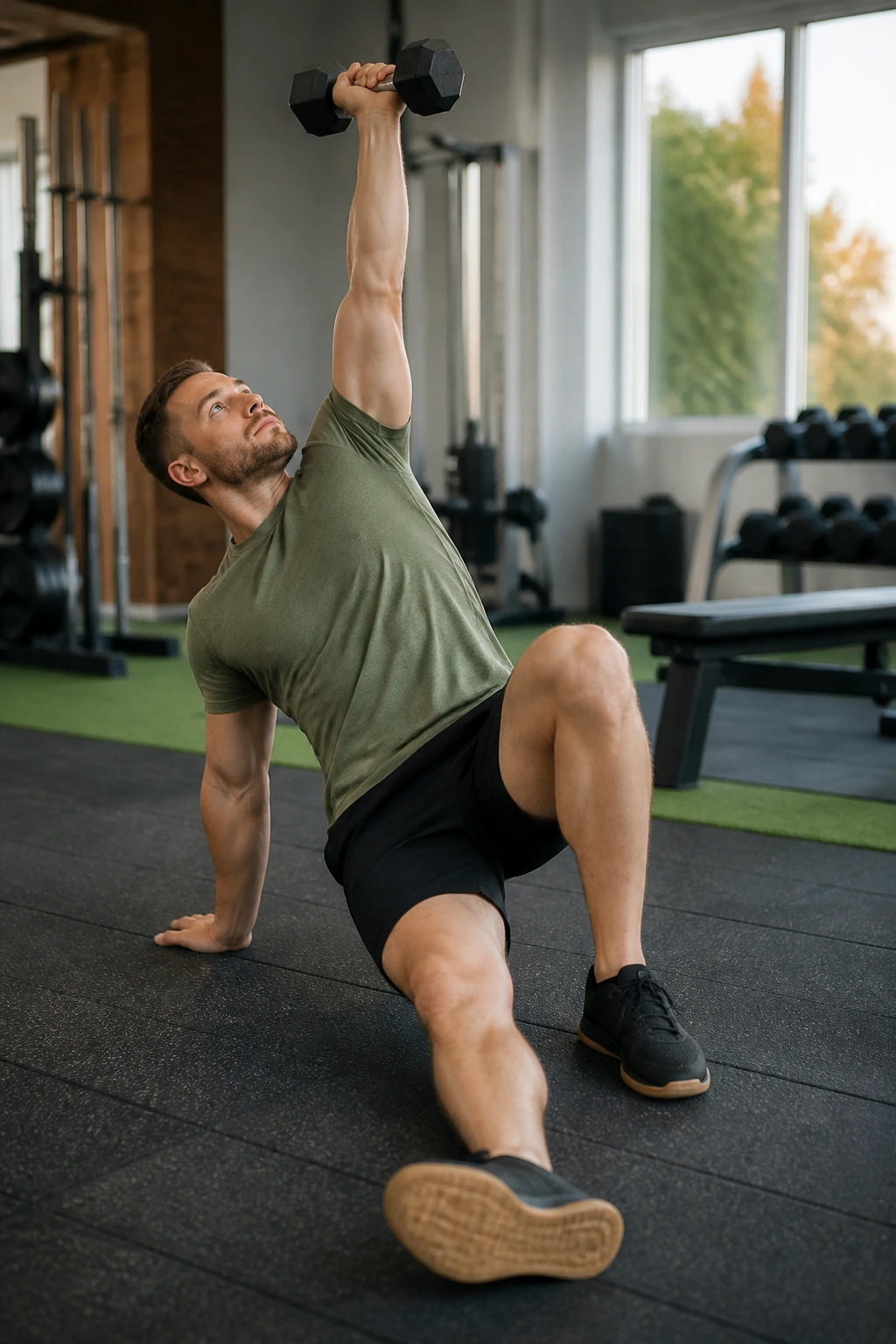
A Turkish get-up is part strength, part balance, part movement skill. You start on the floor, work your way to standing while keeping one dumbbell locked overhead, and then return to the floor under control.
That overhead stability is what makes the exercise special. Every phase demands focus — the roll, the bridge, the sweep, the stand, the reverse path back down. If one part gets messy, the whole rep gets messy.
Use 1 to 3 reps per side and move slowly enough that you could explain each position if someone asked. That is the point. Not speed. Control.
Final Thoughts
If a routine feels stale, the fix is usually not more random exercises. It is a cleaner mix of patterns: one squat, one hinge, one press, one pull, one carry, and one movement that makes your trunk work for real.
These dumbbell exercises cover that job without asking for much space or equipment. Start with the basics, keep the flashy lifts honest, and do not be shy about revisiting the plain stuff. The boring movements are often the ones that build the legs, shoulders, and back you can actually rely on.
A good routine does not need to feel complicated. It needs to feel repeatable, loaded well, and hard to fake.
