



Good dumbbell workouts can train almost every muscle in your body with one simple tool, a little floor space, and enough honesty to show where you’re strong and where you cheat. That’s the part people often miss. Dumbbells don’t hide sloppy form the way some machines do, and they don’t let your stronger side do all the work the way a barbell sometimes can.
That makes them useful in a way that never gets old. You can press, squat, hinge, row, curl, carry, twist, and build a full-body training plan without turning your garage, spare room, or corner of a gym into a science project. A solid pair of dumbbells also gives you enough freedom to adjust your grip, stance, and range of motion so the movement fits your body instead of forcing your body to fit the machine.
The best dumbbell work tends to follow a simple pattern: squat, hinge, push, pull, carry, and a little direct arm or core work once the big stuff is done. That order keeps the session balanced and usually feels better on the joints, too. Start with the lower-body work that teaches you to brace and drive through the floor, then move into the upper body and finish with the small, annoying muscles that always need more attention than they think they do.
1. Goblet Squat
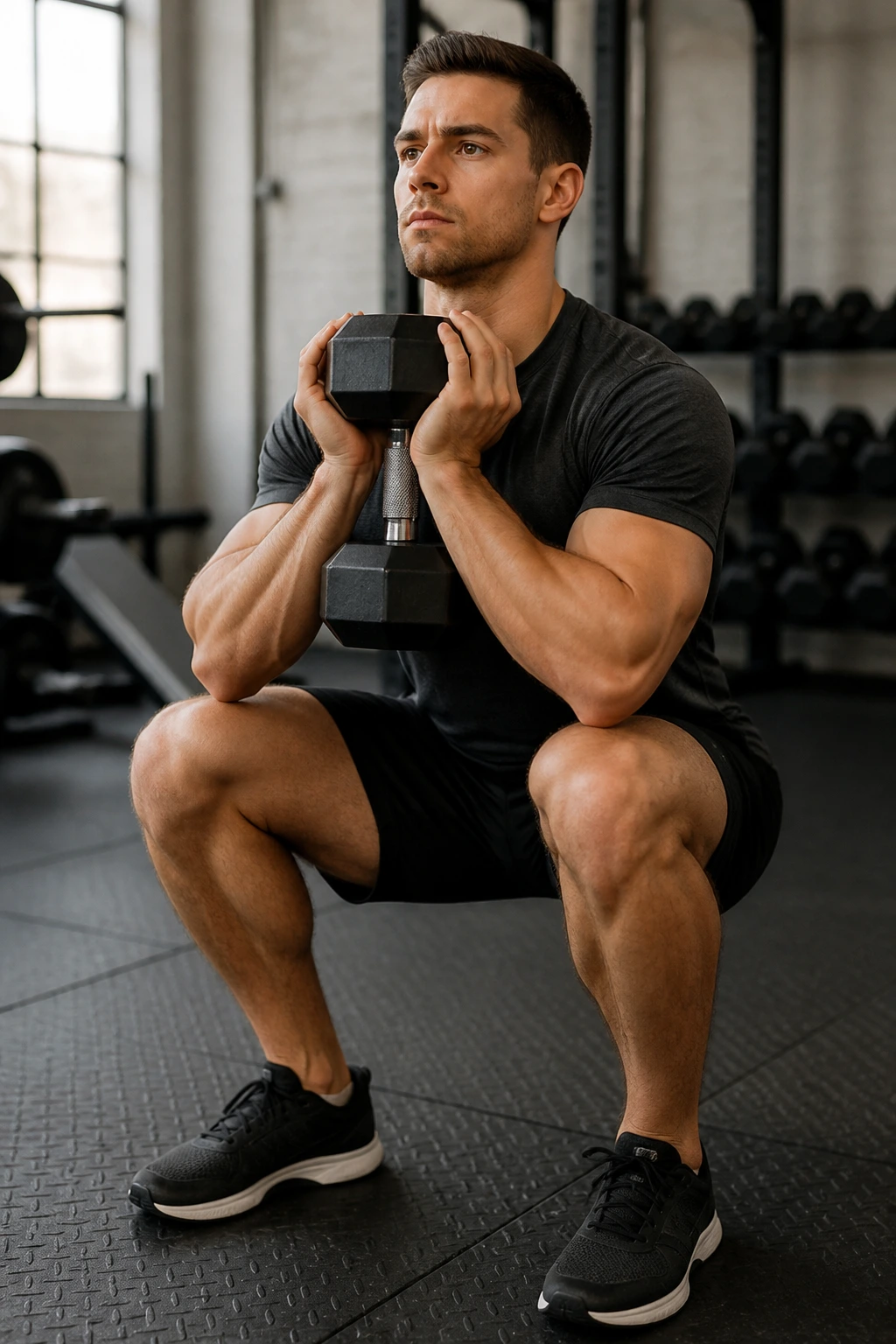
A goblet squat is the cleanest way to teach a squat without turning the whole lift into a balancing act. Hold one dumbbell tight against your chest, keep your elbows pointed down, and let the weight pull you into a deeper brace. Your quads, glutes, adductors, and core all have to work at the same time, which is exactly why this move feels simple and hard in the same breath.
What to Watch for
The chest stays tall. The feet stay flat. The knees track over the toes instead of collapsing inward. If your torso folds like a lawn chair, the weight is too heavy or your stance is too narrow.
- Use 3 sets of 8 to 12 reps.
- Pause for 1 second at the bottom if you want more quad work.
- Raise your heels on small plates if your ankles are tight.
- Stop the set when you lose depth or the dumbbell drifts away from your chest.
Tip: If the last two reps look ugly, the load is doing more than it should.
2. Bulgarian Split Squat
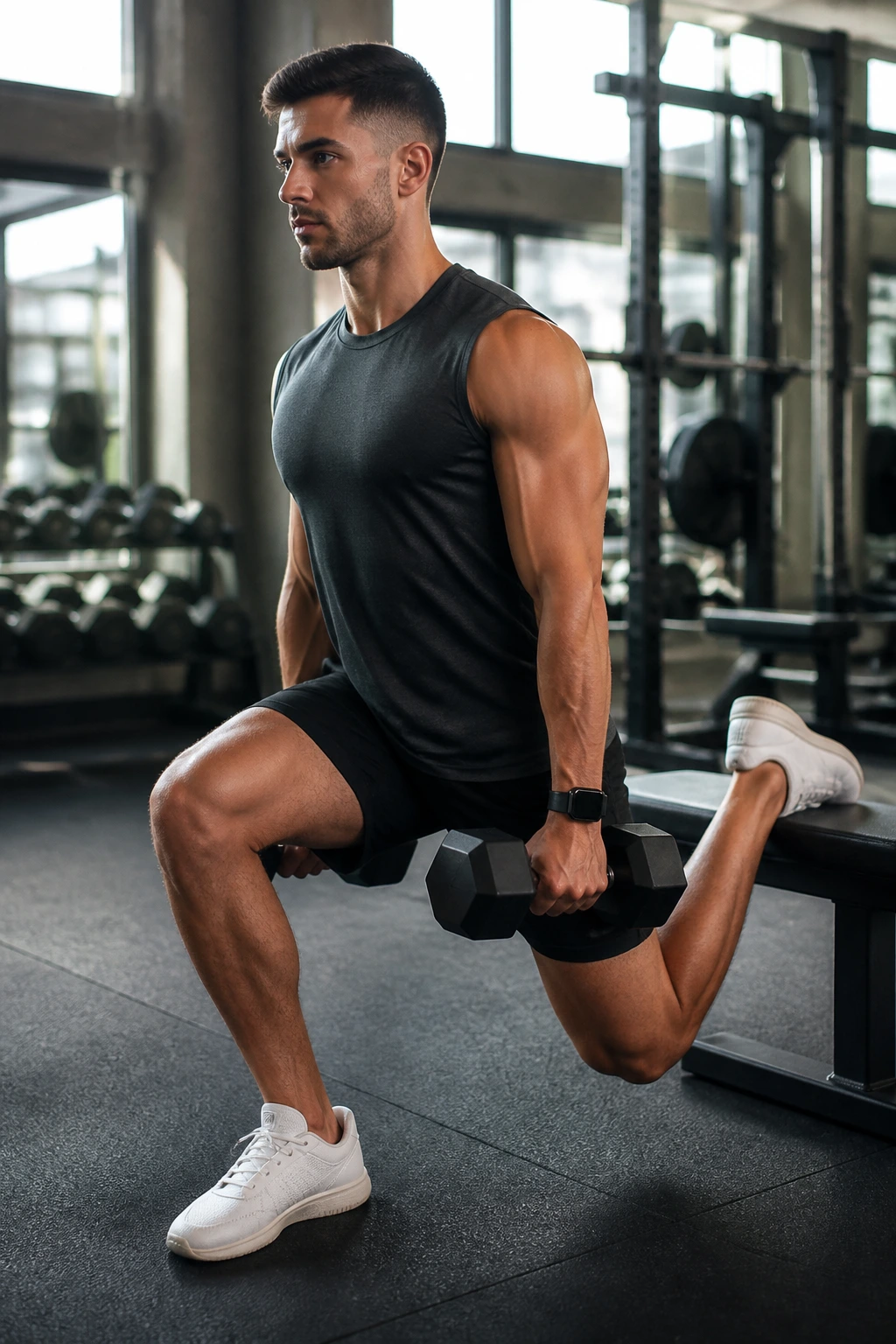
This one is brutal in the best way. One foot goes behind you on a bench or box, the front leg does almost all the work, and the dumbbells make every rep feel honest. The Bulgarian split squat hits the quads and glutes hard, but it also exposes side-to-side differences fast, which is useful if one knee caves or one hip feels lazy.
You do not need a huge load to make this effective. In fact, too much weight turns the movement into a wobble contest. Start with 2 sets of 8 reps per leg, keep the front foot far enough forward that your front heel stays planted, and lower under control until the back knee nearly kisses the floor. If your balance is shaky, hold onto a rack lightly with one hand. That is not cheating. It is smart.
3. Single-Leg Romanian Deadlift
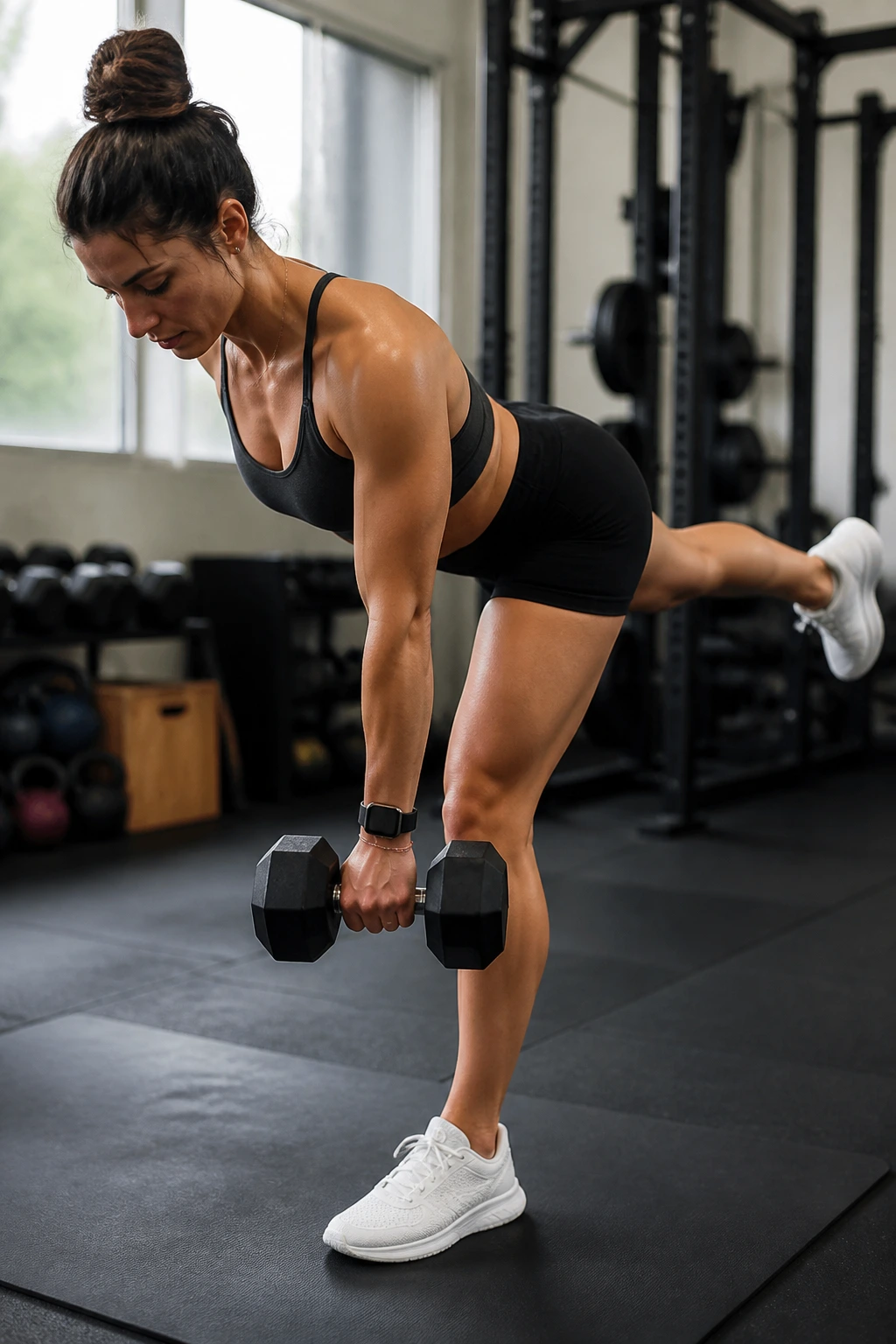
Why does one dumbbell in one hand light up the back of the leg so fast? Because the single-leg Romanian deadlift asks your hamstrings, glutes, calves, and foot muscles to stabilize while the hip folds back and the torso stays long. The movement looks simple. It is not.
How to Use It
Think of reaching your back leg away from you while the dumbbell travels down the front shin. Keep the hips square to the floor and let the standing leg do the work.
- Use 3 sets of 6 to 10 reps per side.
- Keep a soft bend in the knee.
- Reach back until you feel a strong stretch in the hamstring.
- Touch the floor only if you can keep the spine neutral.
A wall or rack near your free hand makes the first few reps less clumsy. That little bit of support helps you learn the pattern without turning every set into a balance drill.
4. Dumbbell Hip Thrust
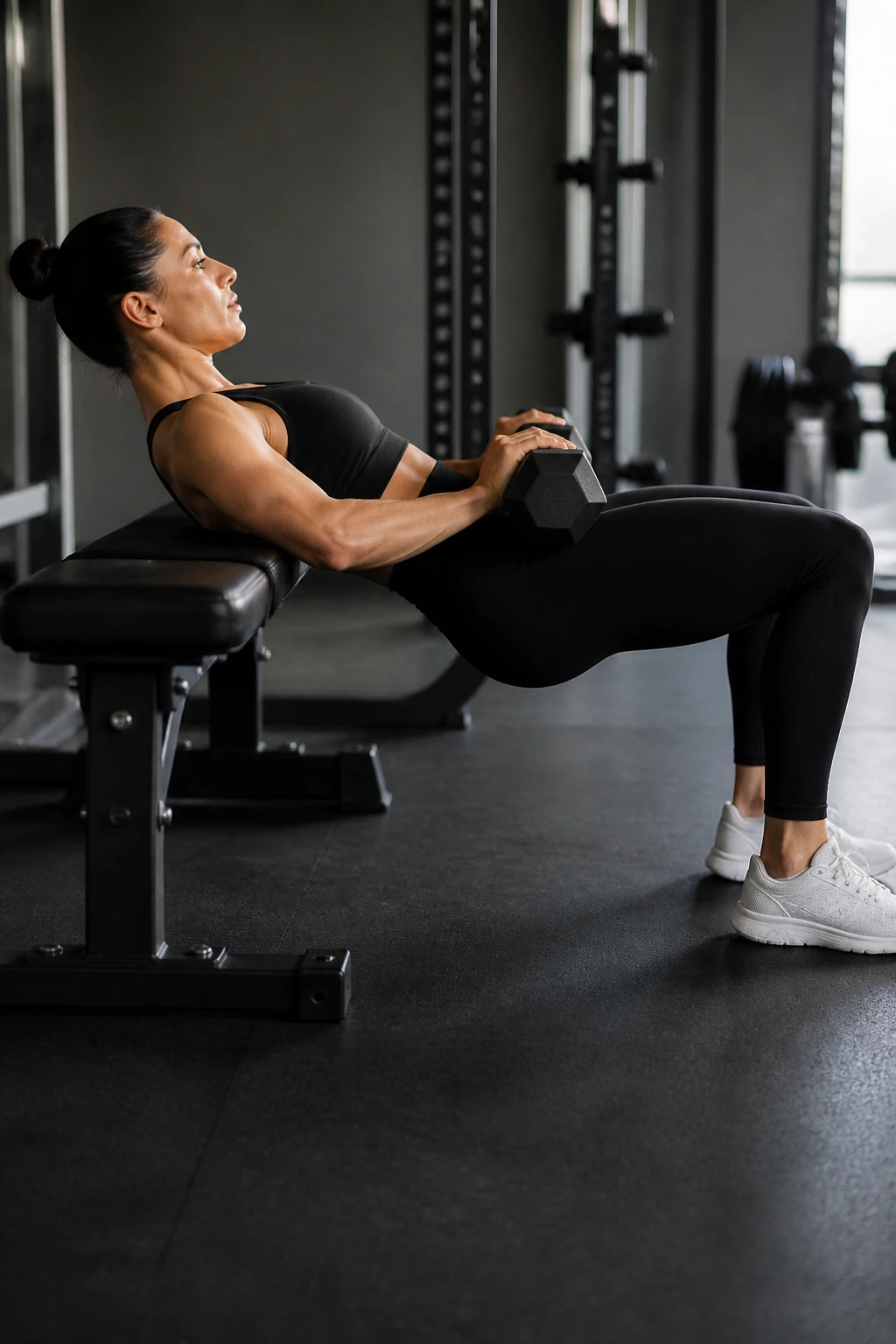
If your lower back takes over, you need this move. The dumbbell hip thrust puts the load where you want it — on the glutes — and takes some pressure off the spine compared with sloppy hinging. Sit with your upper back on a bench, plant your feet, and drive the hips up until your torso makes a straight line from shoulders to knees.
The best reps have a hard squeeze at the top. Not a lazy shrug upward. A real squeeze. Keep your chin tucked, ribs down, and shins close to vertical at the top so the glutes do the work instead of the quads. A folded mat or pad under the dumbbell makes a big difference, because nobody needs a bruised hip crease to prove a point. Use 3 sets of 10 to 15 reps and stop short of arching your lower back.
5. Dumbbell Sumo Deadlift
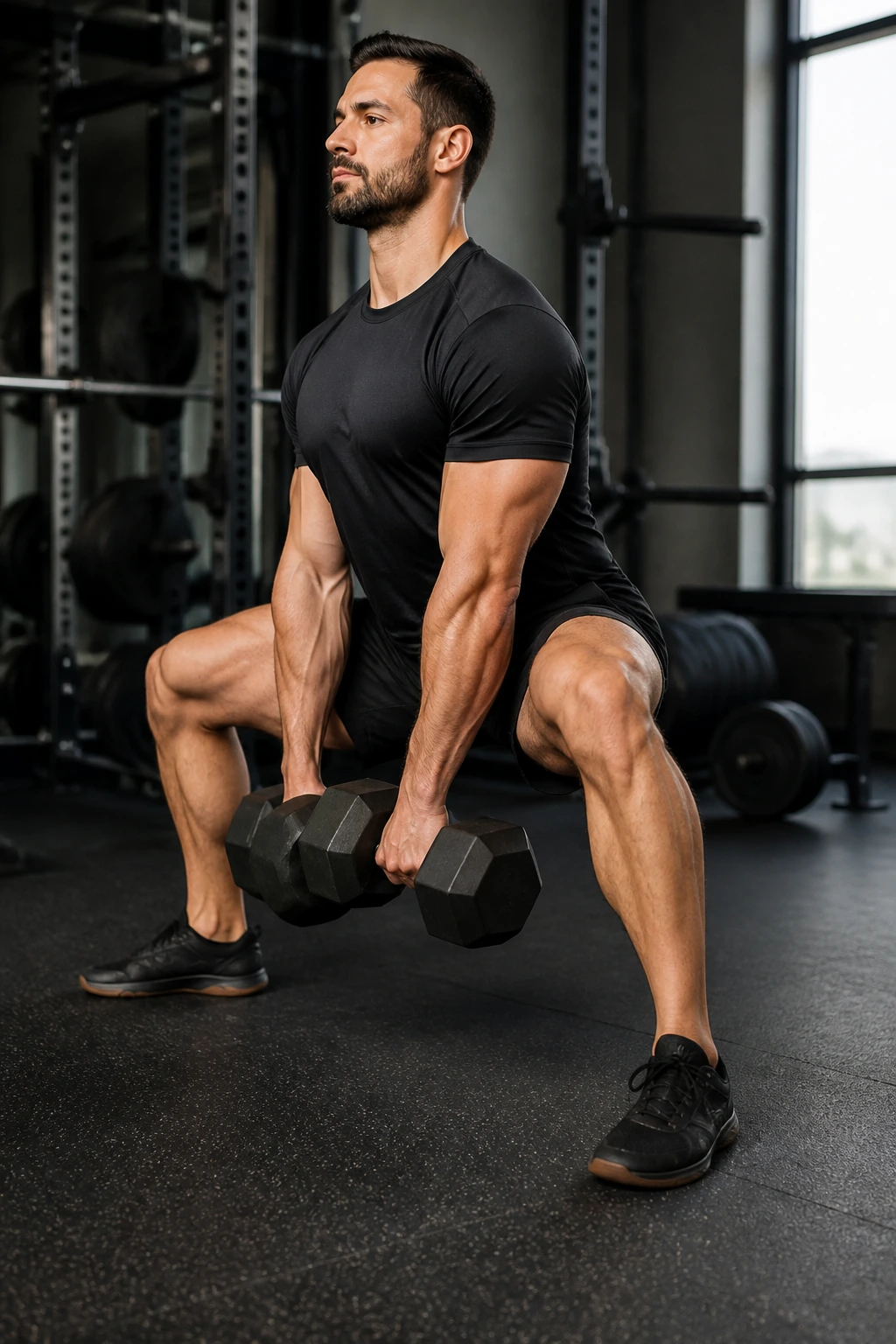
Feet wide, toes out, dumbbells inside the legs. That’s the setup, and it changes the whole feel of the deadlift. A sumo stance brings the inner thighs, glutes, quads, and upper back into the lift a little differently than a narrow stance does. Some people like it because it feels easier on the back. Some like it because they can keep the torso more upright. Either reason is fair.
The dumbbells should stay close to the body the whole time. If they drift forward, the lift gets harder on the low back and less useful for the legs. Think about pushing the floor apart as you stand. That cue helps the knees track out and keeps the hips from shooting up first. Three to 4 sets of 6 to 10 reps works well here. And yes, the adductors will notice.
6. Dumbbell Bench Press
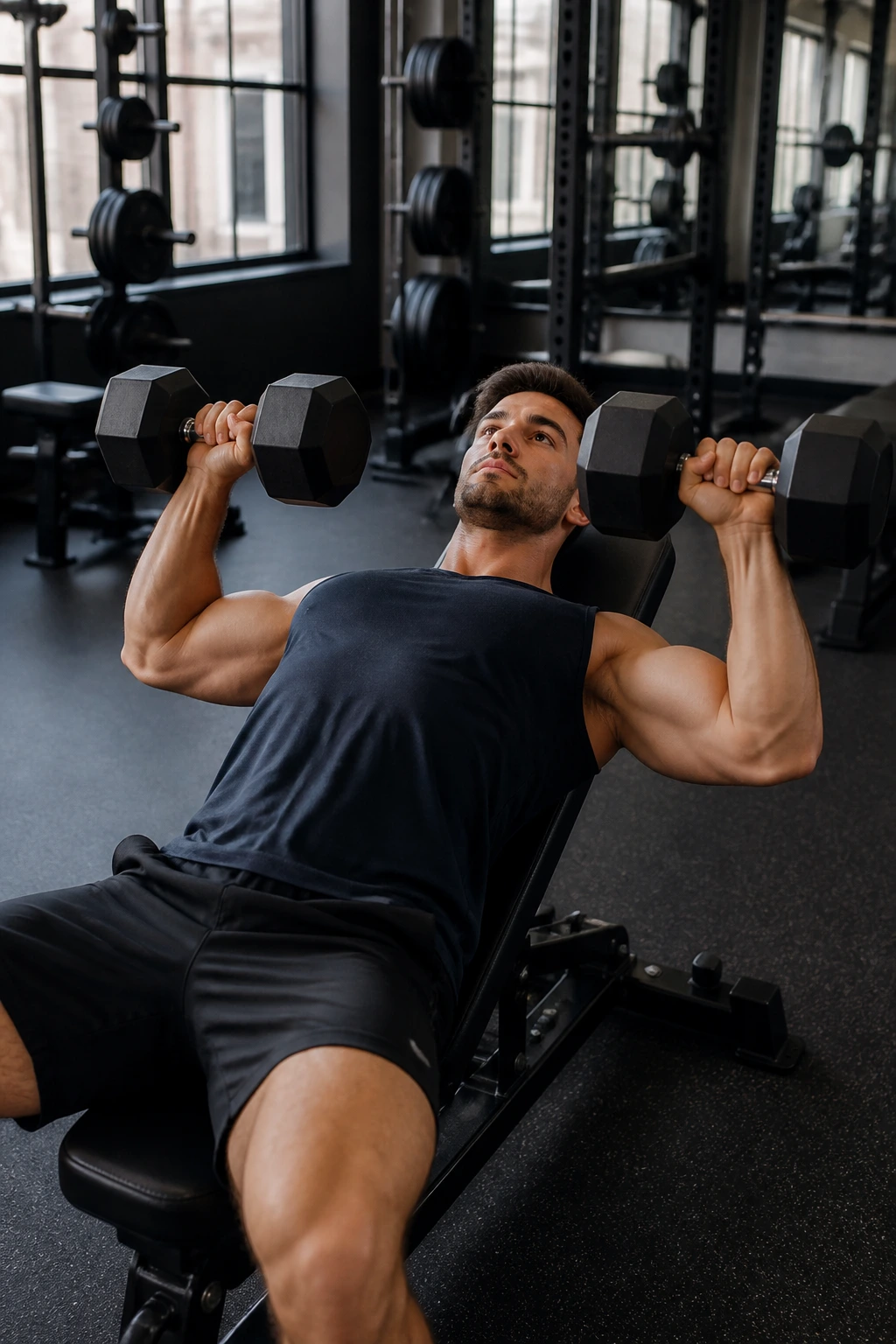
Unlike a barbell bench press, dumbbells let each arm travel on its own path. That matters more than people think. The freedom can be easier on the shoulders, and it also shows you if one side is pressing harder than the other. Chest, front delts, and triceps all work, but the movement feels cleaner when you lower each dumbbell to about chest level and press up without banging them together at the top.
This is a good lift for steady strength work. Use 3 or 4 sets of 6 to 10 reps, keep the shoulder blades gently pulled back, and plant your feet like you mean it. If your wrists bend backward, the dumbbells are sitting too high in the hand. Lower them into the heel of the palm and keep the forearms stacked under the wrists.
7. Dumbbell Floor Press
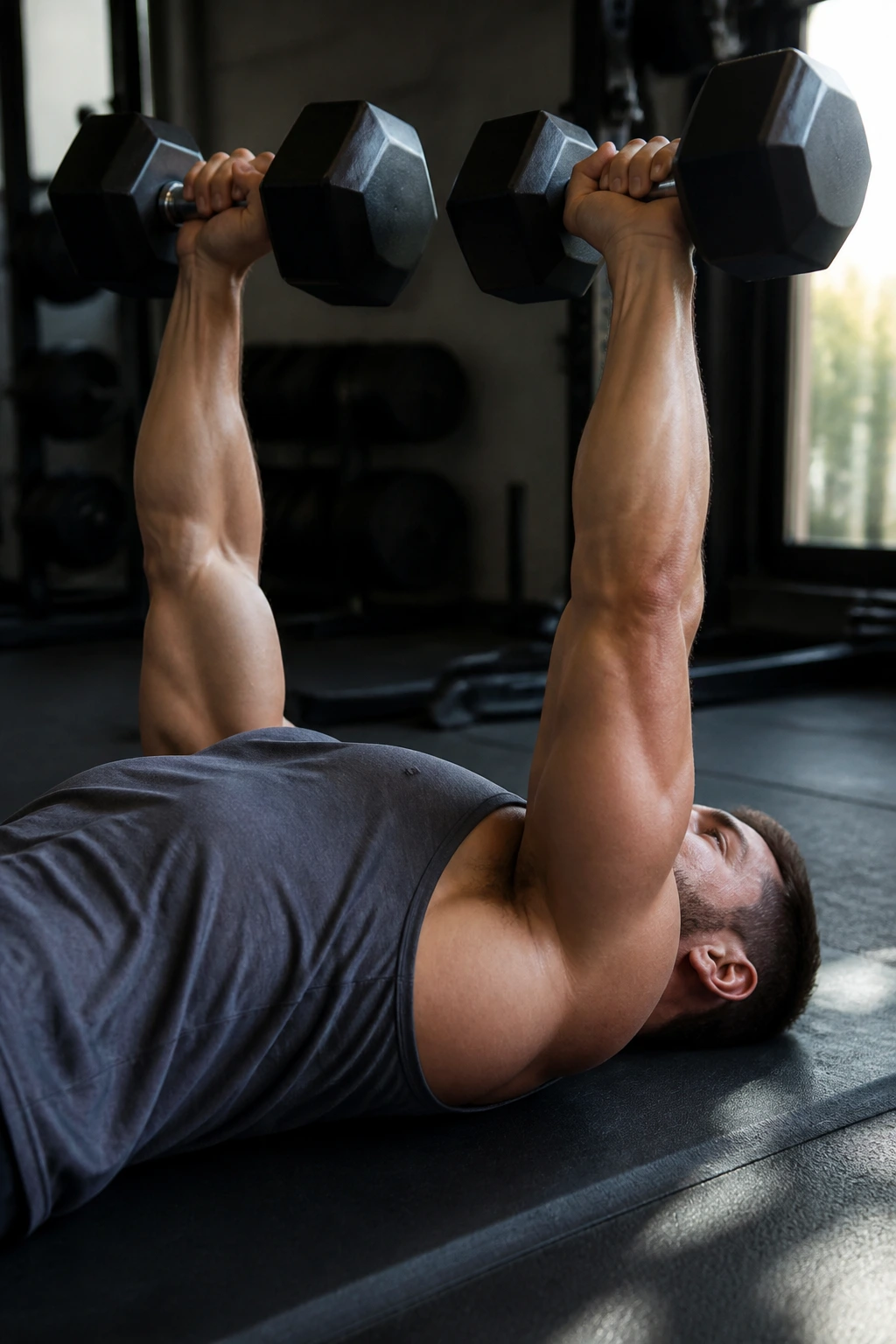
A floor press feels a little odd the first time, then it starts to make sense. The floor cuts off the bottom half of the press, which limits shoulder stretch and usually makes the movement friendlier for anyone whose shoulders get cranky on a full bench. Chest and triceps still work hard, but the reduced range gives you more control.
Why the Floor Changes the Feel
The elbows stop when they touch the floor, so there’s less chance of overextending the shoulder. That also means you can push hard at the top without chasing a huge stretch at the bottom.
- Best with 3 sets of 8 to 12 reps.
- Keep the upper arm at about 45 degrees from the torso.
- Pause lightly on the floor, then press with a straight wrist.
- Use it as a heavier triceps-focused press if your bench bothers you.
Tip: Don’t bounce the elbows off the ground. That turns the set sloppy fast.
8. Incline Dumbbell Press
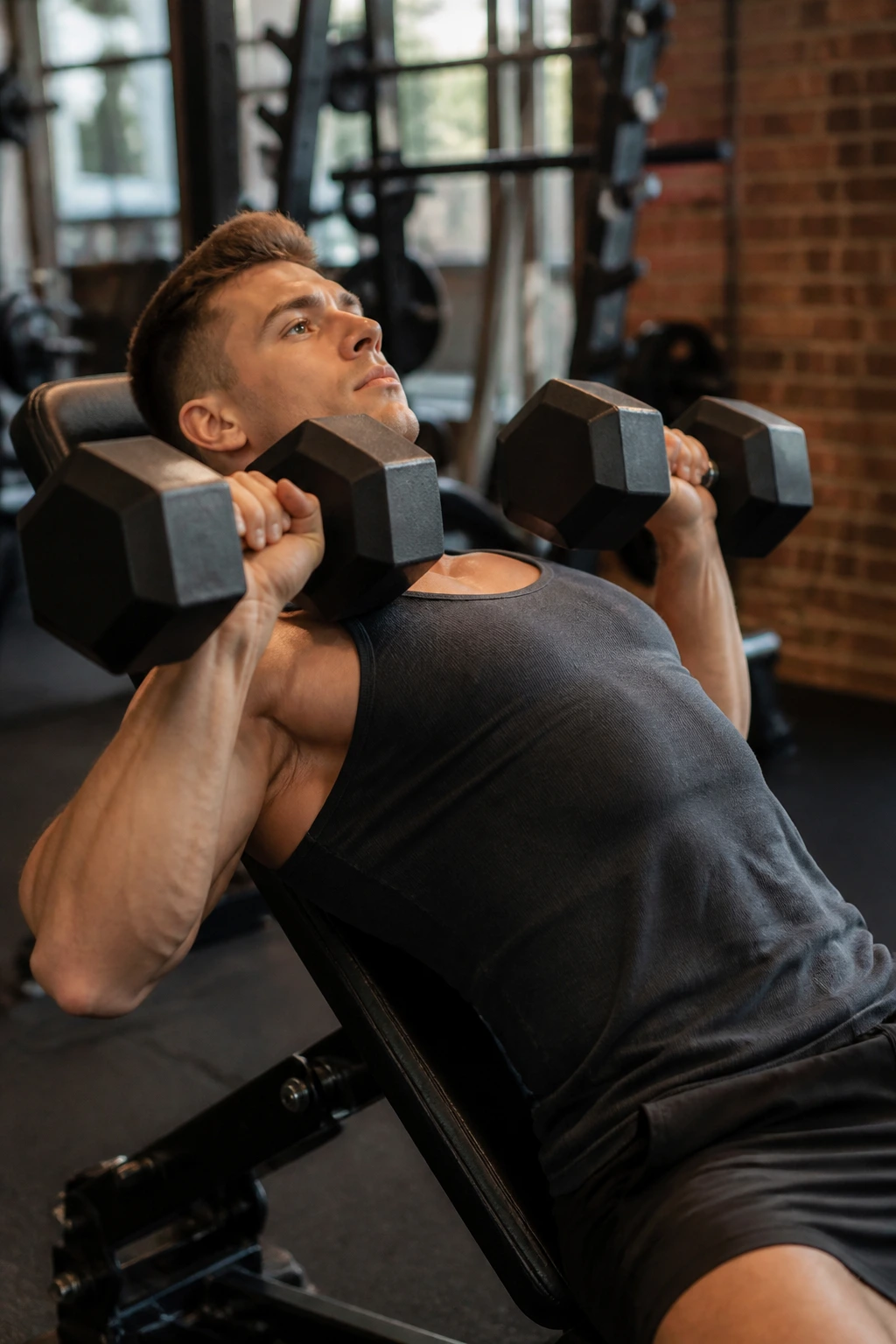
A low incline — around 20 to 30 degrees — hits the upper chest better than a steep bench that starts to feel like a shoulder press. That angle matters. Too much incline and the front delts take over. Too little and you’re back to a flat press with an odd setup.
The best reps come from lowering the dumbbells under control to the upper chest, then pressing up and slightly inward without clanking the weights together. Keep the chest lifted and the shoulder blades tucked back just enough to feel stable. This one suits people who want a stronger upper chest line and a little more front-delt support. Use 3 sets of 8 to 12 reps, and if the last few reps turn into a neck shrug, the bench is probably too steep.
9. One-Arm Dumbbell Row
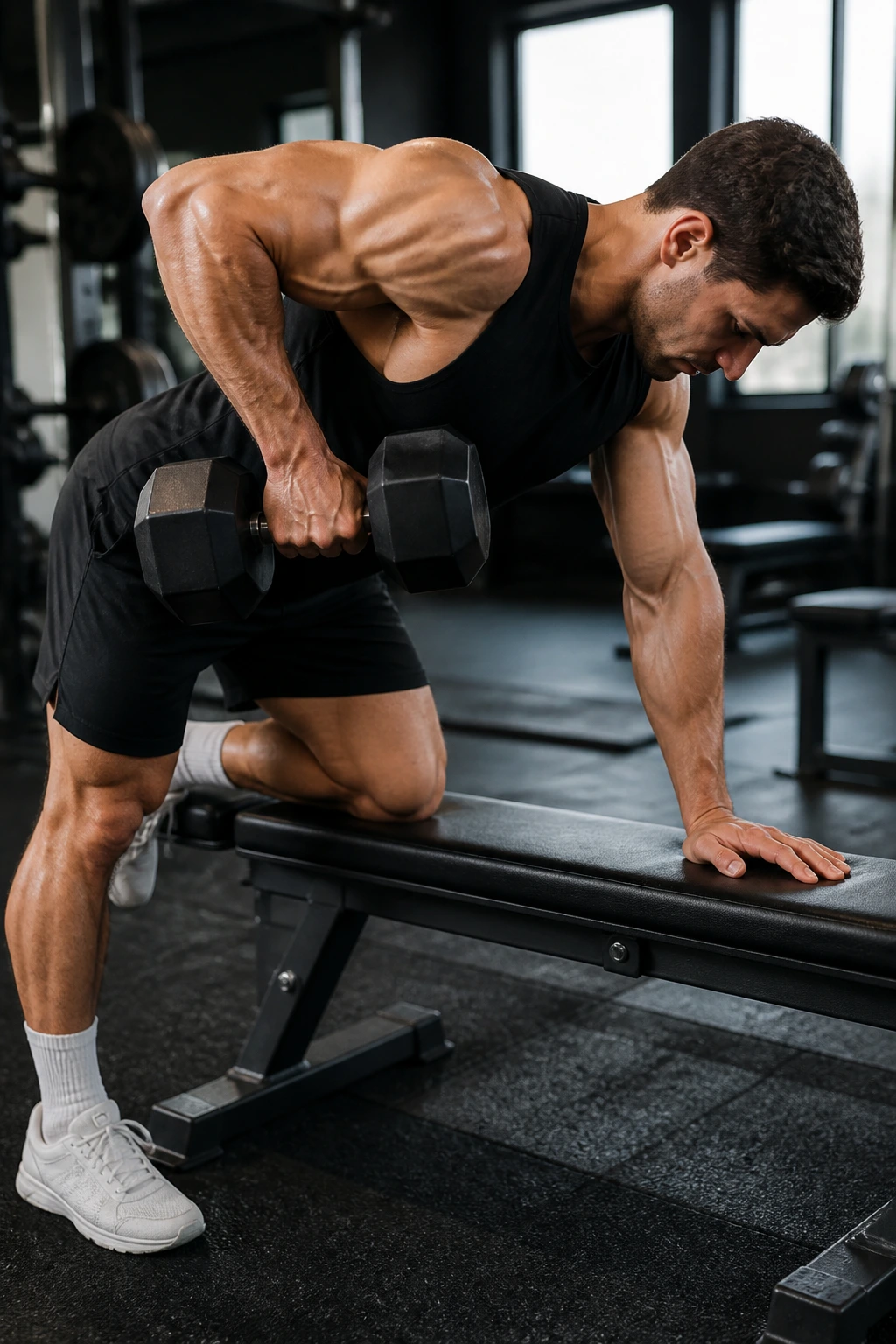
Why does a one-arm row feel so different from a machine row? Because the torso has to brace while the pulling arm works, and that makes the lats, mid-back, rear delts, and grip share the load in a way that feels more raw. You can do it with one hand on a bench, a knee on the seat, or even in a staggered stance if you don’t have support nearby.
How to Keep It Out of the Biceps
Pull the elbow toward the hip, not straight up toward the shoulder. That line keeps more tension on the lat.
- Use 3 to 4 sets of 8 to 12 reps per side.
- Let the shoulder stretch at the bottom, then row without jerking.
- Keep the torso quiet.
- Stop if the lower back starts twisting.
A clean row should feel like the back is doing the work and the hand is just holding the dumbbell.
10. Chest-Supported Dumbbell Row
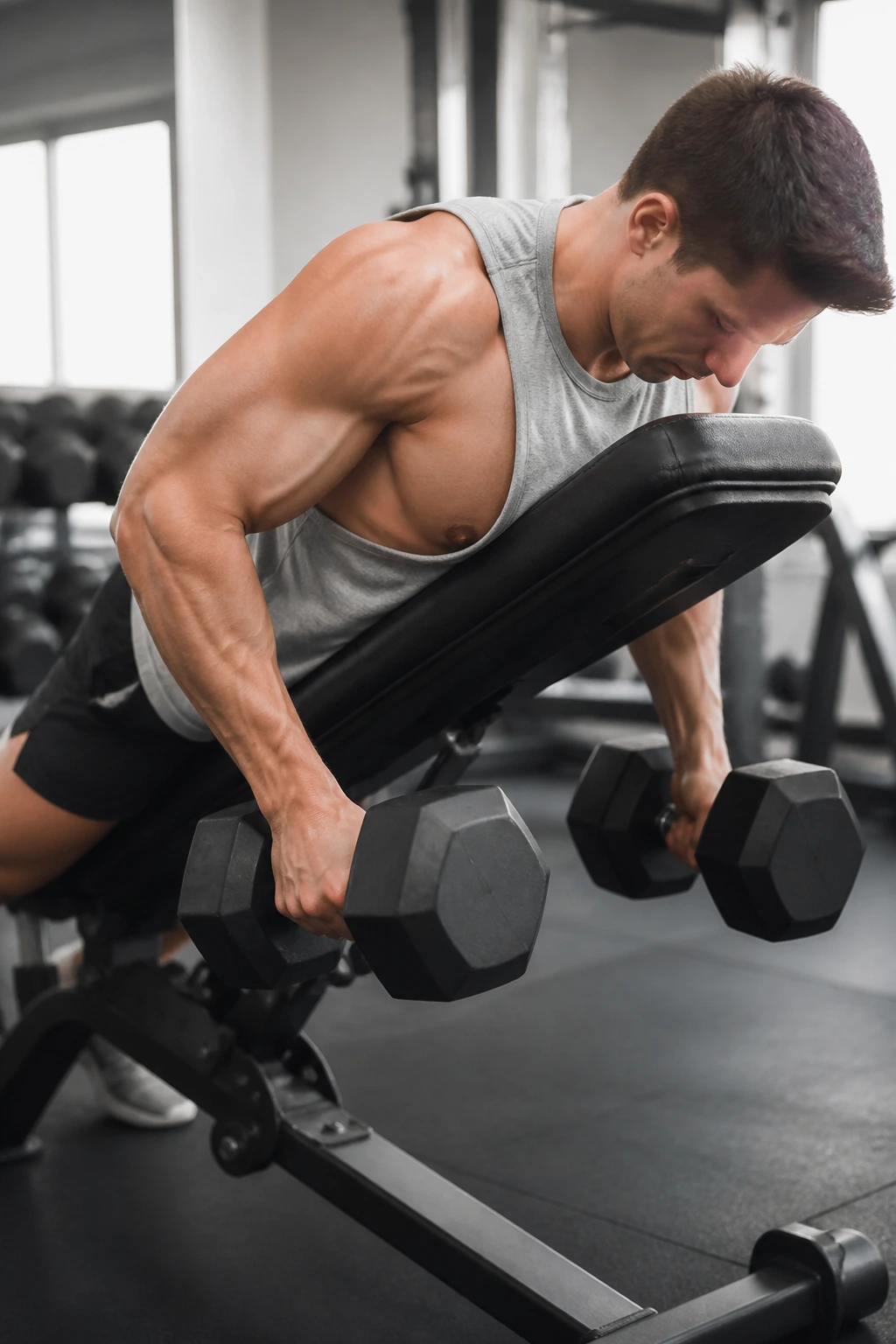
If you want to take the lower back out of the equation, chest-supported rows are a gift. Lie face down on an incline bench and row both dumbbells from a dead hang to the sides of the rib cage. The upper back gets hit hard, especially the rhomboids and rear delts, and you can usually use a little more load because your torso isn’t fighting to stay upright.
That support changes the whole mood of the set. The pull feels stricter, the squeeze at the top is easier to feel, and cheating gets much harder. Use 3 sets of 10 to 15 reps, and hold the top for half a second before lowering. If the shoulders creep up toward the ears, the weight is too much. Keep the neck long. It makes the whole thing better.
11. Dumbbell Pullover
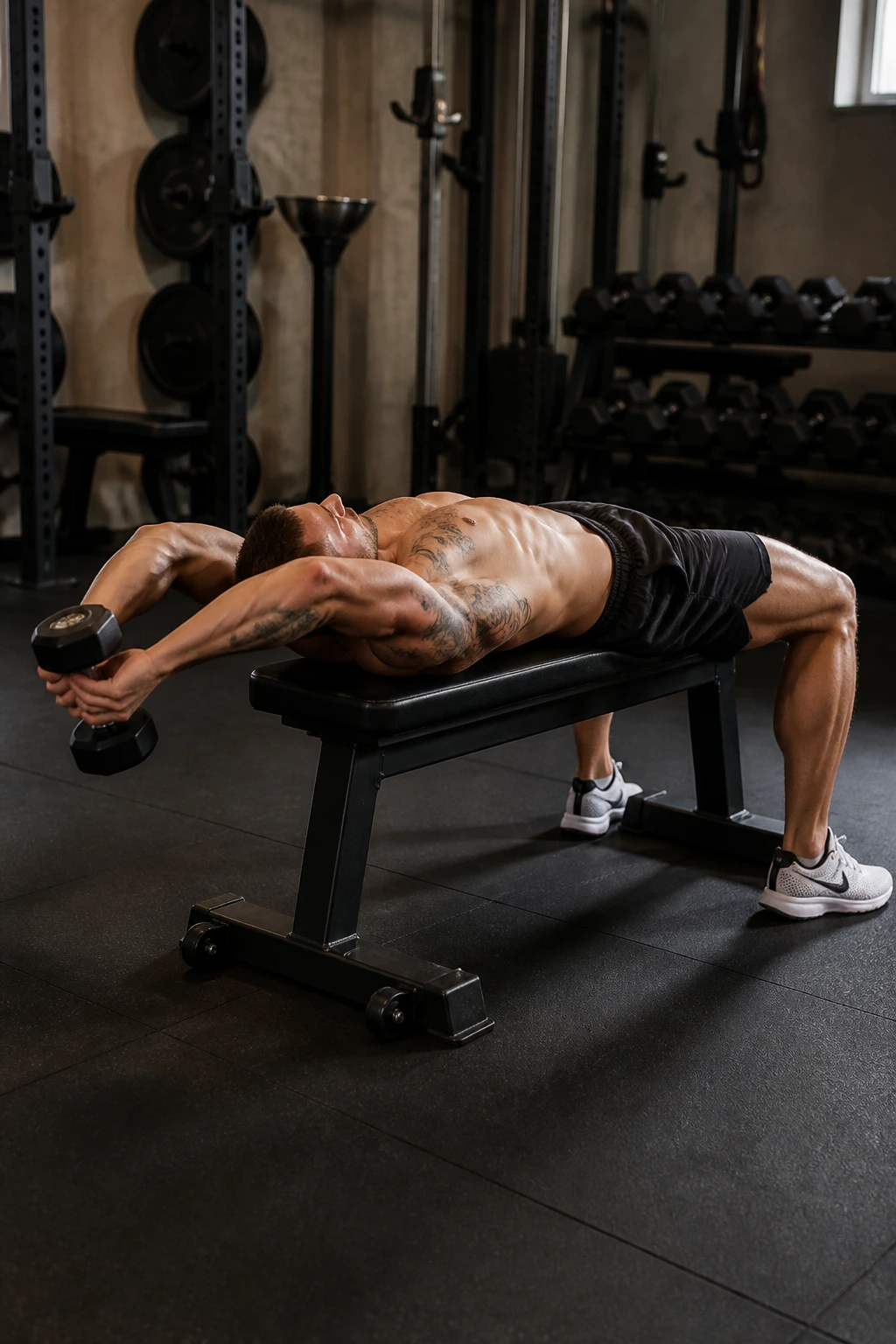
A dumbbell pullover looks strange enough that people either love it or avoid it. They shouldn’t avoid it. When done well, it trains the lats, serratus, chest, and the muscles around the rib cage with a long stretch that presses and pulls never quite match. The key is control, not range for range’s sake.
Lie across a bench with only the upper back supported, hold one dumbbell by the inner plate or handle, and lower it in a slow arc behind your head. Keep a slight bend in the elbows. If the elbows bend and unbend like a triceps press, the movement changes. If the low back arches hard, the load is too heavy. Use 2 or 3 sets of 10 to 12 reps and think about moving through the shoulders, not tossing the weight backward.
12. Standing Dumbbell Overhead Press
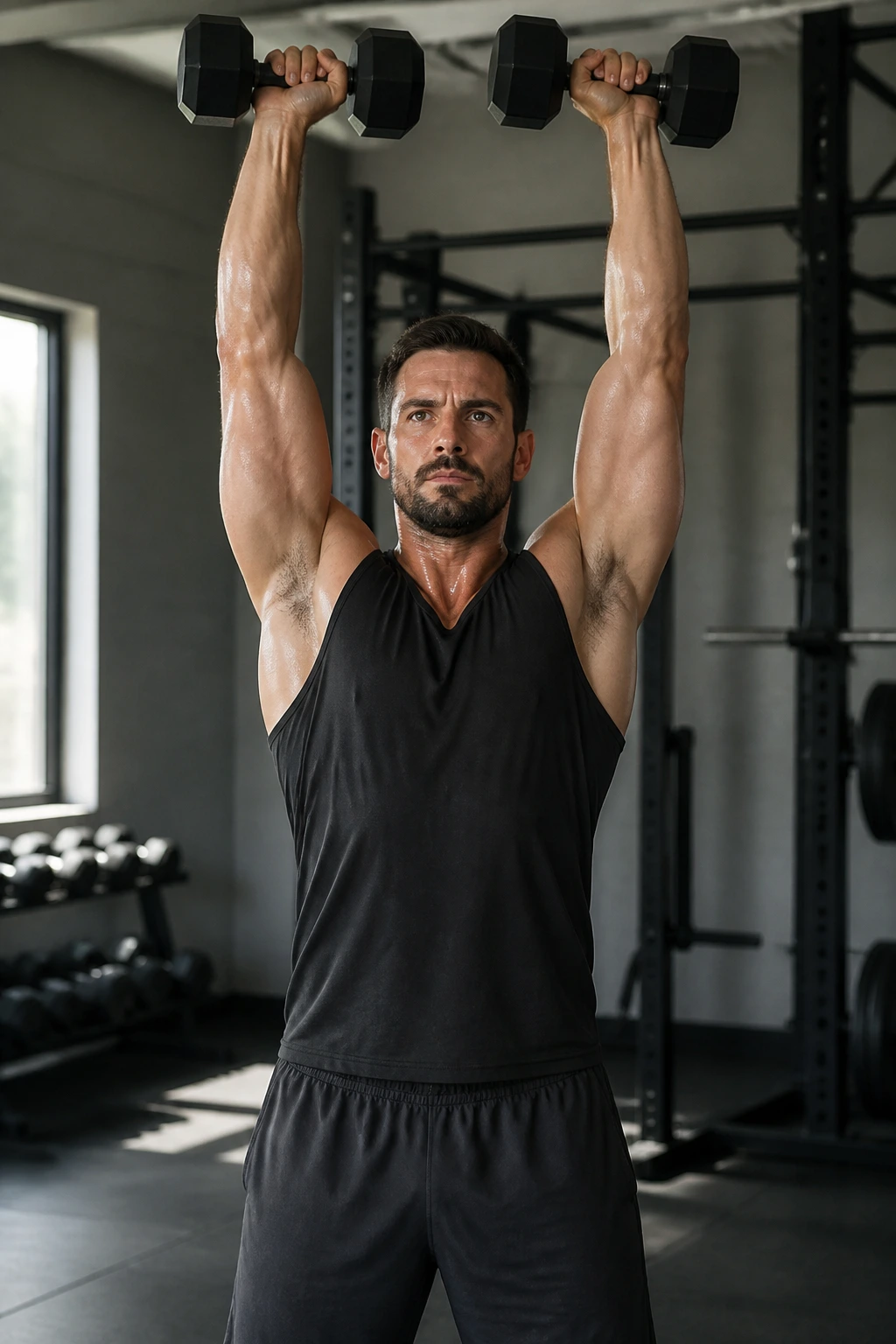
Standing changes everything. Unlike a seated press, a standing dumbbell overhead press forces your abs, glutes, and upper back to help keep the torso from tipping backward. That makes the shoulders work in a more useful way, and the triceps usually feel it on the last few reps.
What Makes It Different
The dumbbells start at shoulder height with wrists stacked over elbows. Press straight up, then finish with biceps near the ears without over-arching the lower back.
- Best for 3 or 4 sets of 6 to 10 reps.
- Squeeze the glutes before every rep.
- Keep the ribs down.
- Lower under control; don’t drop the bells to the shoulders.
If you need to lean way back to finish the rep, the load is too heavy. A clean press should feel strong, not wobbly.
13. Arnold Press
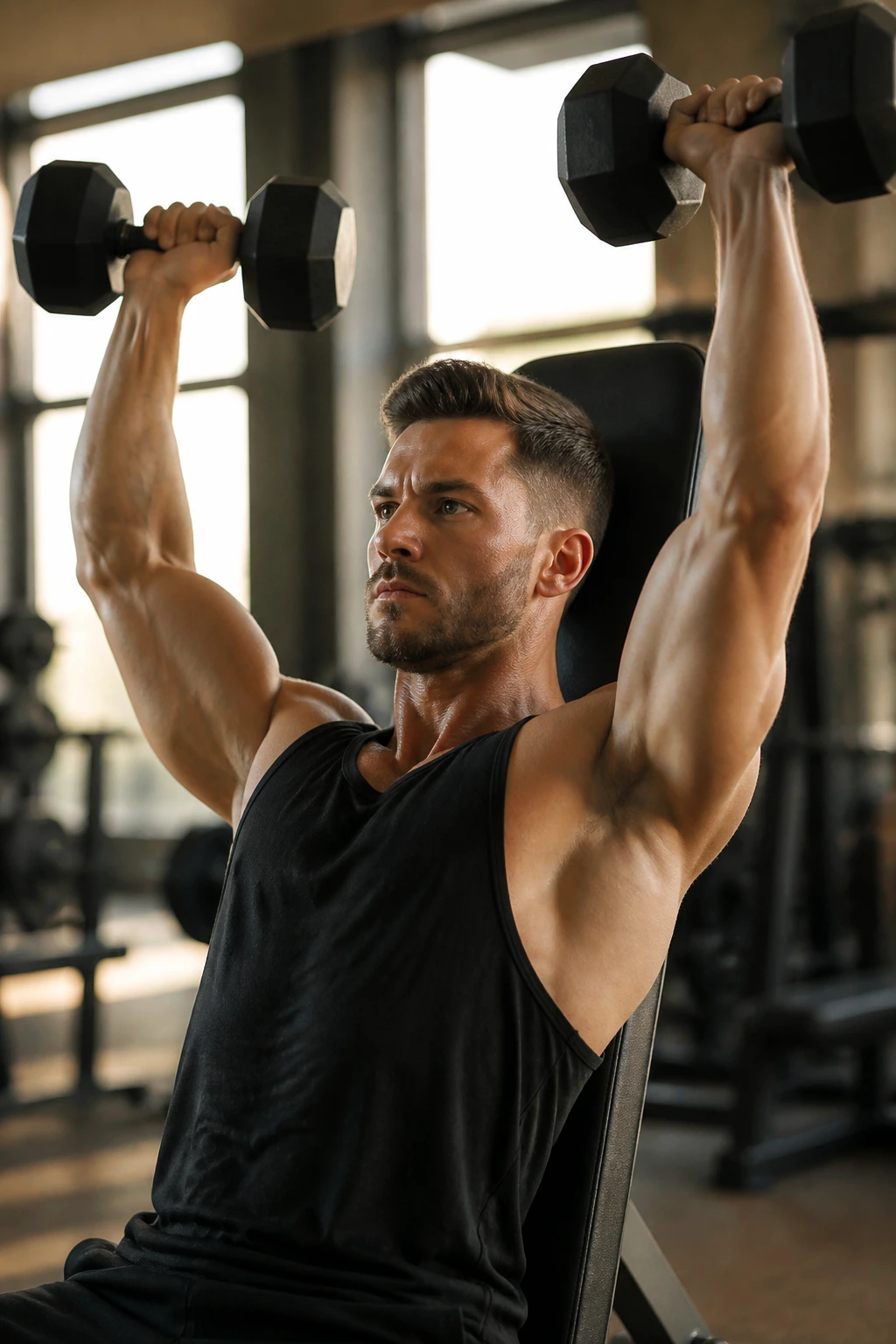
The rotation is the whole point here. Starting with palms facing you and turning them as you press upward adds work for the front delts and keeps the shoulders moving through a slightly longer path. It feels busy fast, which is why the Arnold press is useful as a moderate-load shoulder builder rather than a max-strength lift.
Use a bench with back support if you want to focus on the shoulders and leave the lower back alone. Turn the wrists smoothly as you press, not in a jerky twist at the top. If your shoulders feel pinchy, reduce the range and use a lighter pair. Three sets of 8 to 12 reps is plenty. The movement is useful, but it does not need to be heavy to count.
14. Dumbbell Lateral Raise
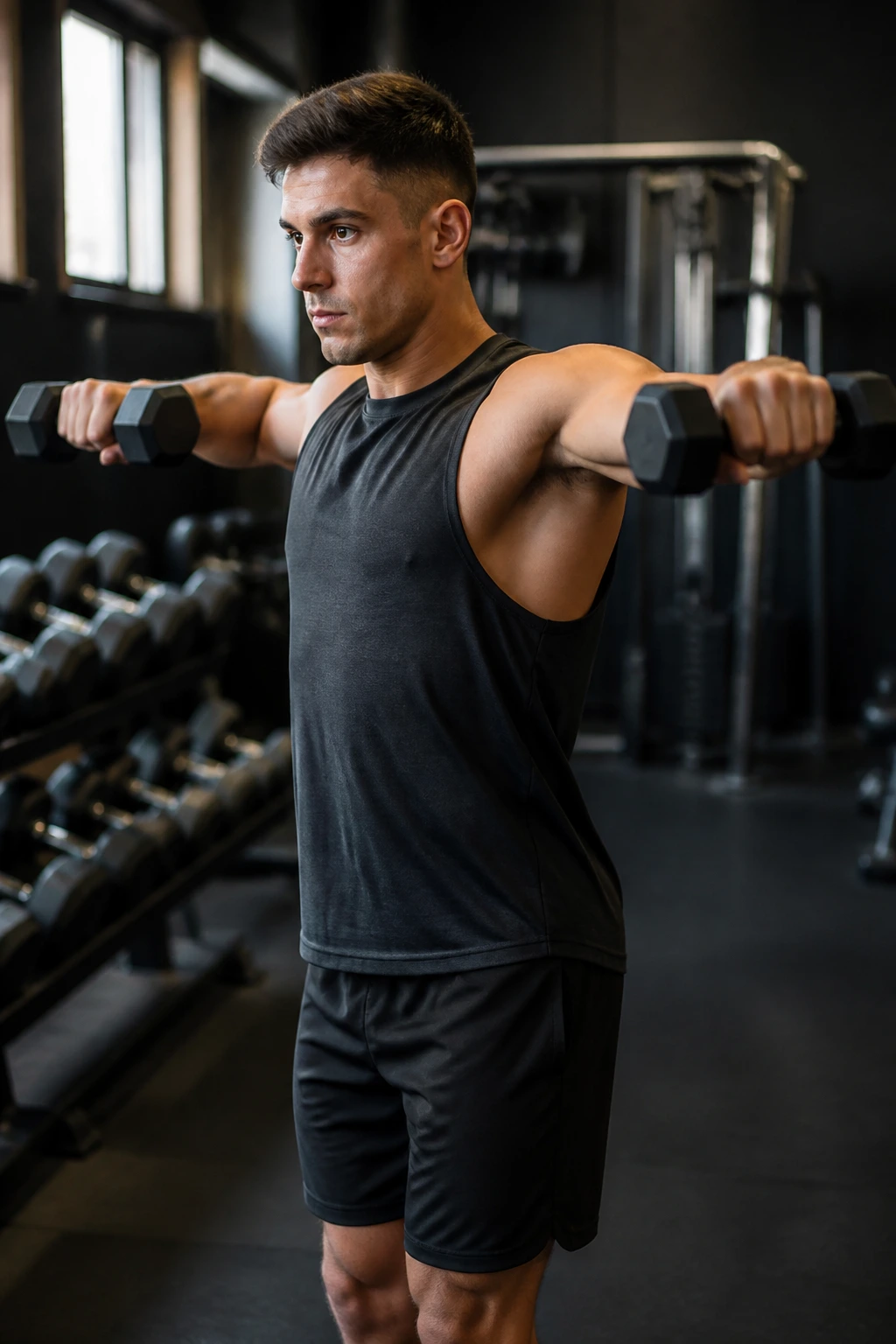
A lateral raise is proof that small weights can wreck your shoulders in a good way. The side delts do not need a lot of load; they need clean tension, a steady path, and enough patience to keep the swing out of it. That’s why 8-pound dumbbells can feel surprisingly serious by the final set.
Lift with a slight lean forward, lead with the elbows, and stop around shoulder height. Higher than that usually hands too much work to the traps. A tiny bend in the elbows is fine. Locking them stiff makes the movement feel awkward. If you want the side delts to light up, use 2 to 4 sets of 12 to 20 reps and lower the weights slowly. Rush the lowering phase and the whole thing turns into a shrug.
15. Dumbbell Rear Delt Fly
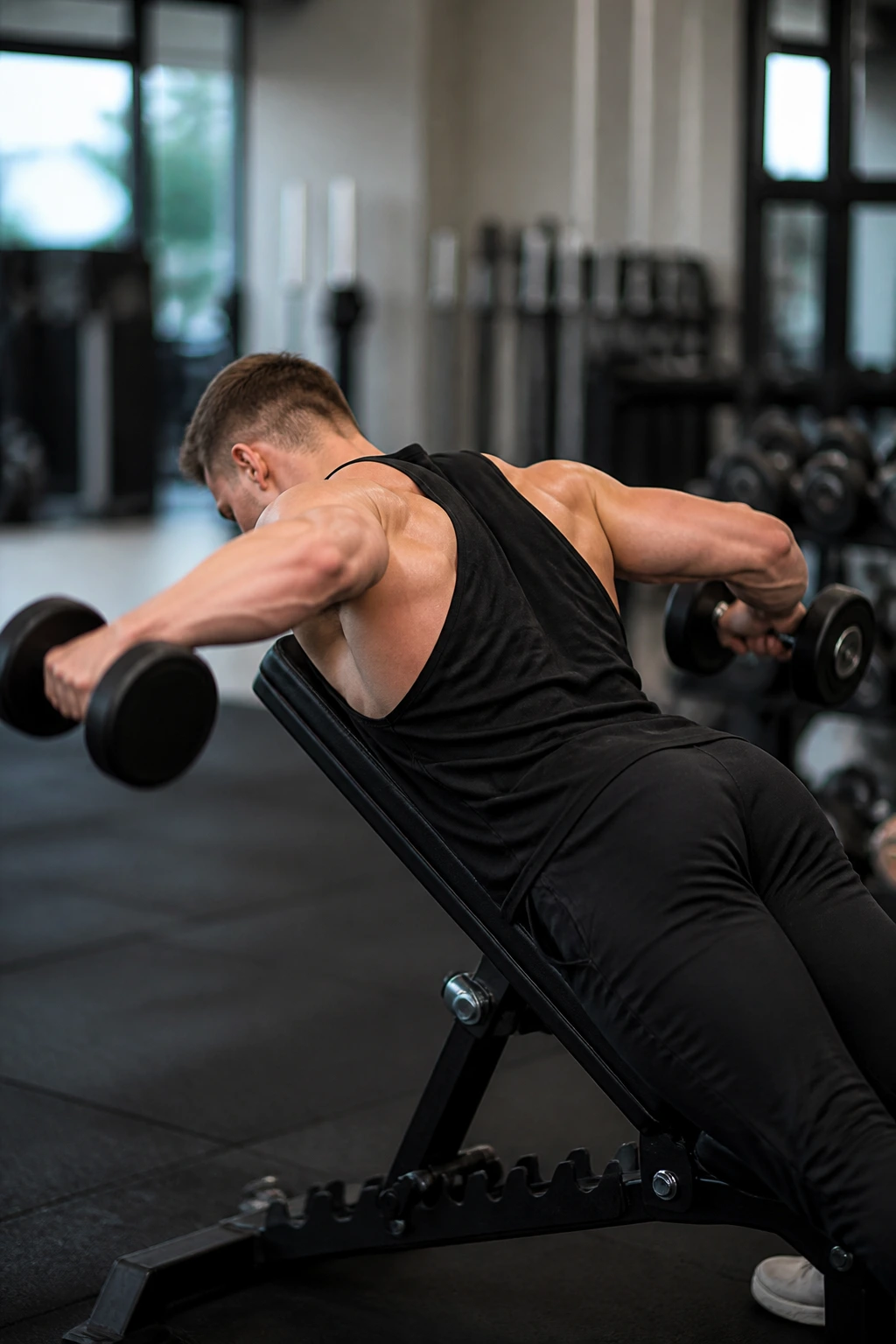
What makes rear delt flyes useful is also what makes them easy to mess up: the rear delts are small, and the upper back loves to jump in and steal the work. That’s why a light pair and a strict hinge or chest-supported setup usually beats a heavy, sloppy swing.
What to Watch For
Pull the arms out wide in a soft arc, not straight back in a row pattern. The hands should finish around shoulder line, not jammed behind the body.
If you feel neck tension first, the traps have taken over. Drop the load. Slow down. A one-second squeeze at the top helps more than adding more weight ever will. Use 2 or 3 sets of 12 to 20 reps, and keep the ribs from flaring forward. Small muscle, big payoff.
16. Dumbbell Shrug
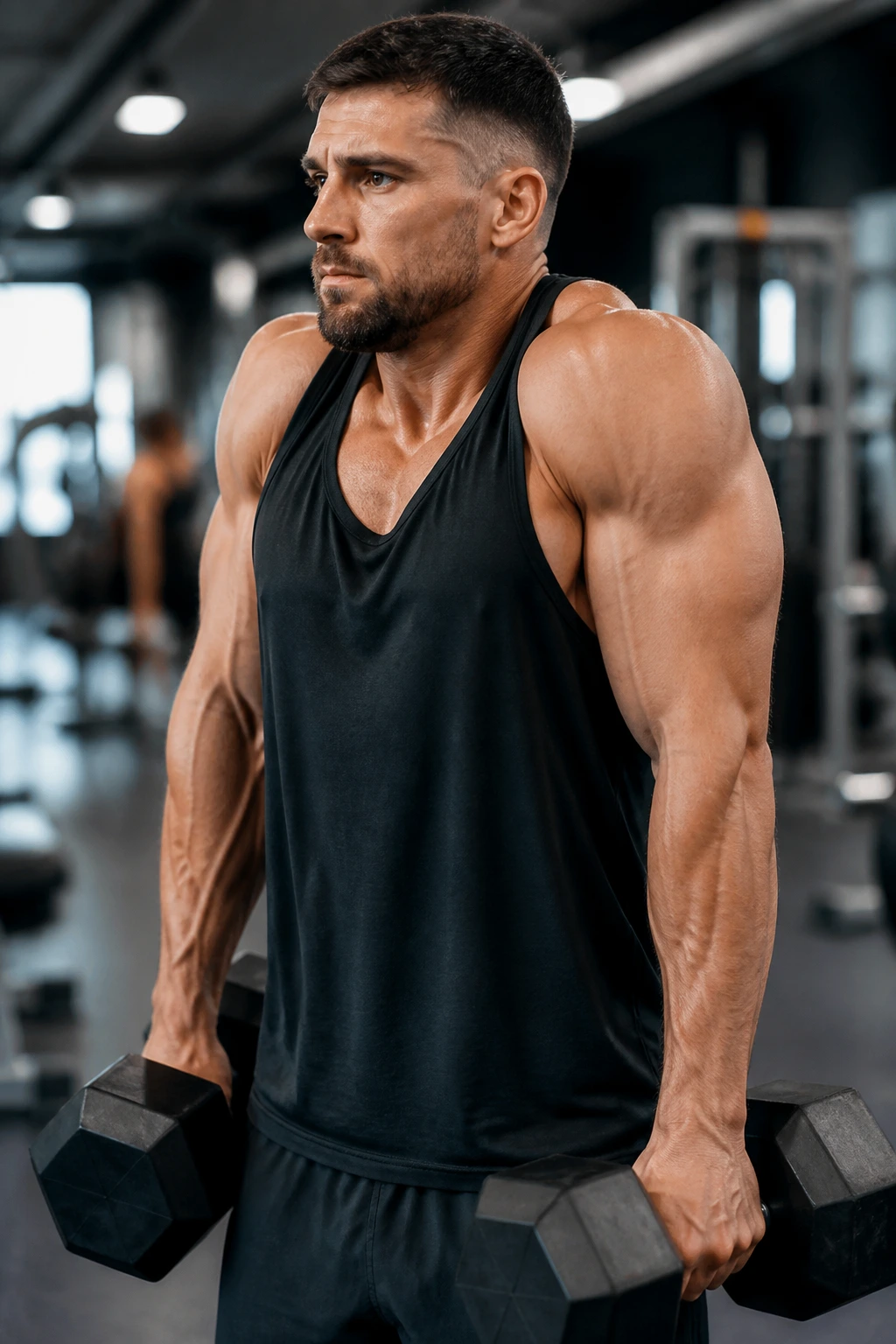
You will know this one is working when your neck wants to disappear into your shoulders. That’s normal, and in this case it’s the goal. Shrugs build the upper traps, which help with shoulder support, posture, and the look of a thicker upper back. They also pair well with carries, but they hit differently because the movement is pure elevation.
Pull the shoulders straight up, hold for a beat, then lower all the way down before the next rep. That full stretch at the bottom matters more than people think. Half reps turn into little bounces and do less for the traps. Use 3 sets of 10 to 15 reps, and keep the head neutral. No chin jutting. No rolling the shoulders in circles. Straight up and down is the whole game.
17. Dumbbell Hammer Curl
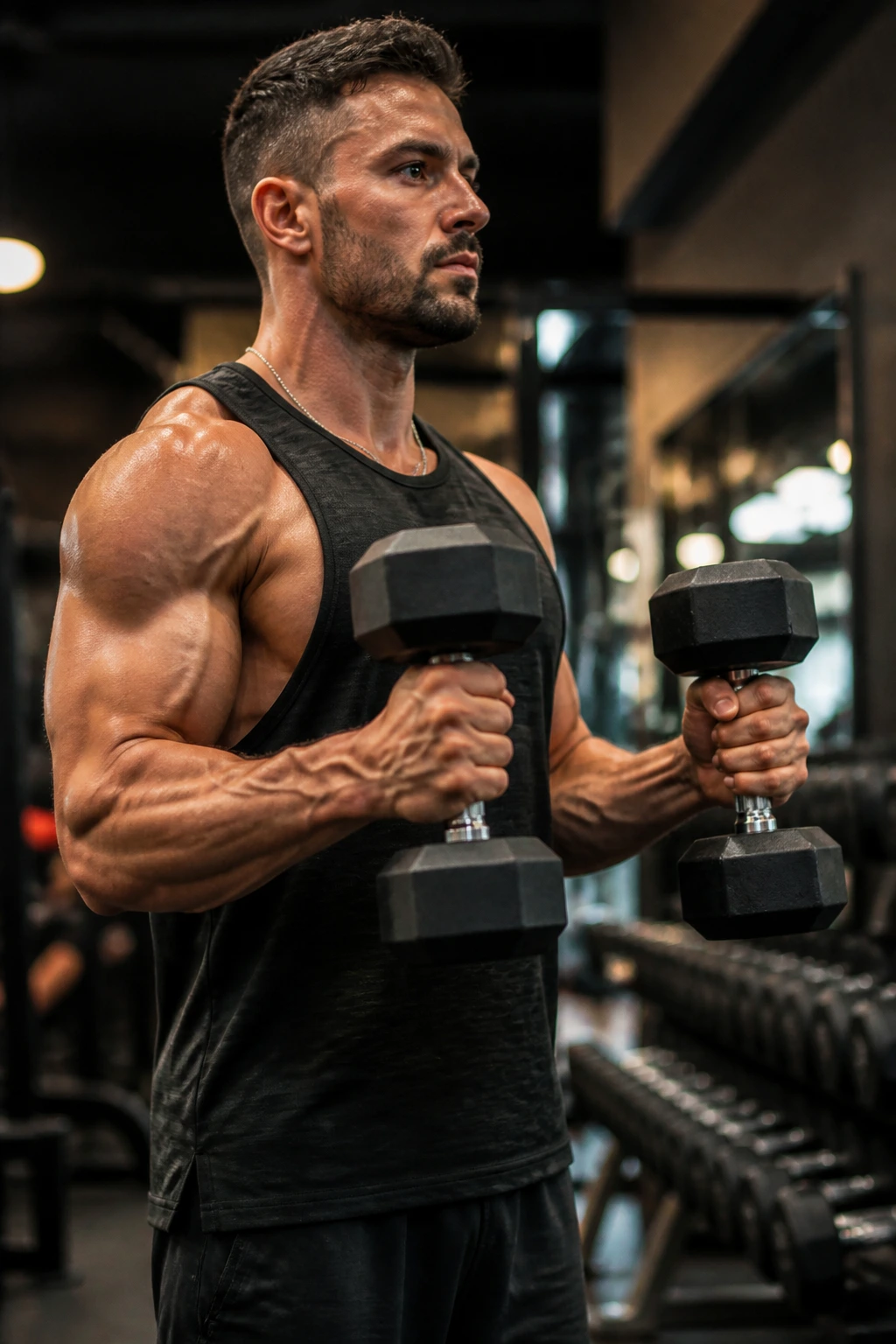
Hammer curls are the friendlier cousin of the classic biceps curl. The neutral grip shifts more work onto the brachialis and forearms while still hitting the biceps, which is why the upper arm often looks fuller over time. They also tend to bother the elbows less than some straight-bar curl variations.
Keep the elbows pinned near the ribs and curl without swinging your torso backward. That last part matters. If the weight starts moving because your hips are helping, the set is already drifting off course. Use 3 sets of 8 to 12 reps, and pause for a split second near the top. You’ll feel the forearm tighten more than you expect. Good. That means you’re not just chasing a pretty curl.
18. Alternating Supinating Curl
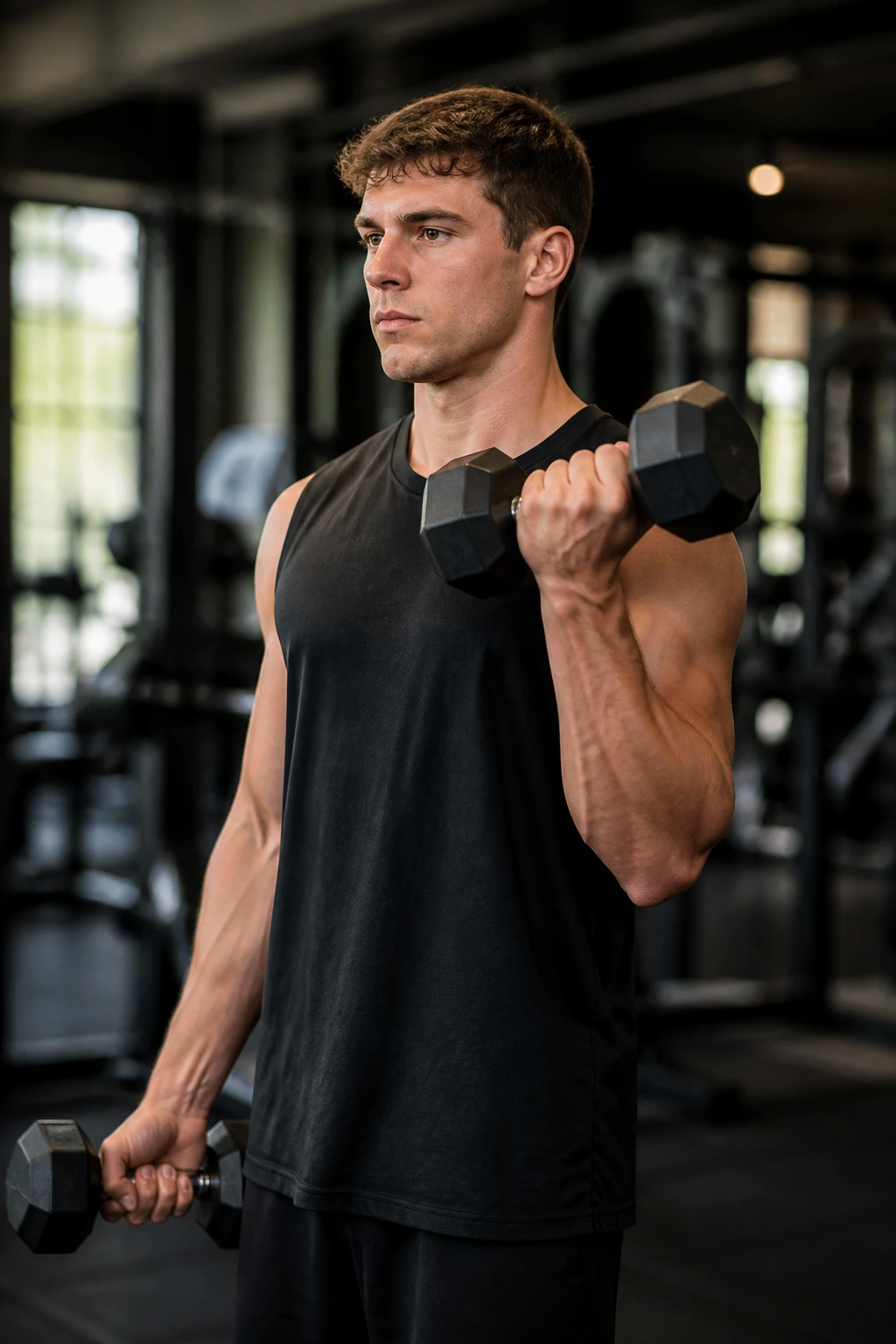
Unlike hammer curls, this version turns the palm up as you lift, which puts the biceps in a more direct line of work. That twist — the supination — is the reason the movement feels so clean when the weight is right and so annoying when it isn’t. Go too heavy and the wrist gets sloppy. Stay controlled and the biceps do what they’re meant to do.
This is a good choice if you want straightforward arm work without much setup. Stand tall, keep the shoulders quiet, and curl one side at a time so each arm gets a clear rep. Two or 3 sets of 10 to 12 each side works well. If your elbow drifts forward on every rep, step back from the mirror and lighten the load. The mirror can be useful. It can also lie to you.
19. Incline Dumbbell Curl
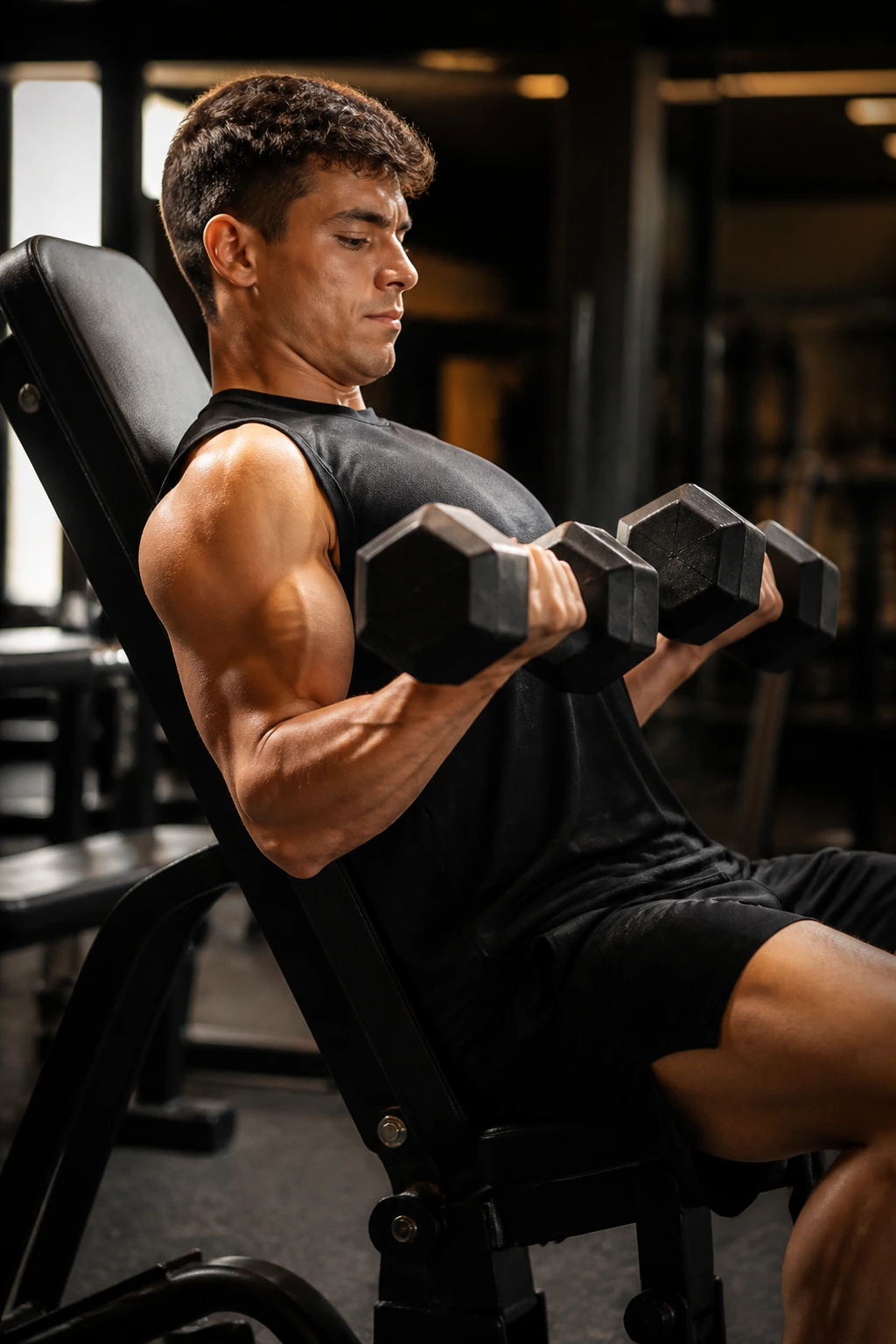
An incline bench changes the whole arm game. With the arms hanging behind the torso, the long head of the biceps starts from a stretched position, which makes the top of the arm work in a different way than a standing curl does. That stretch is the point.
How to Get the Most From It
Set the bench around 45 to 60 degrees and let the arms hang fully before curling. Keep the upper arm still.
- Use 2 or 3 sets of 8 to 12 reps.
- Lower for 2 to 3 seconds.
- Stop the set if the shoulders roll forward.
- Keep the wrists straight.
The movement feels strict, almost stubborn, and that is why it works. If the bells hit the bench or the elbows drift, you’re stealing the stretch that makes the exercise worth doing.
20. Concentration Curl
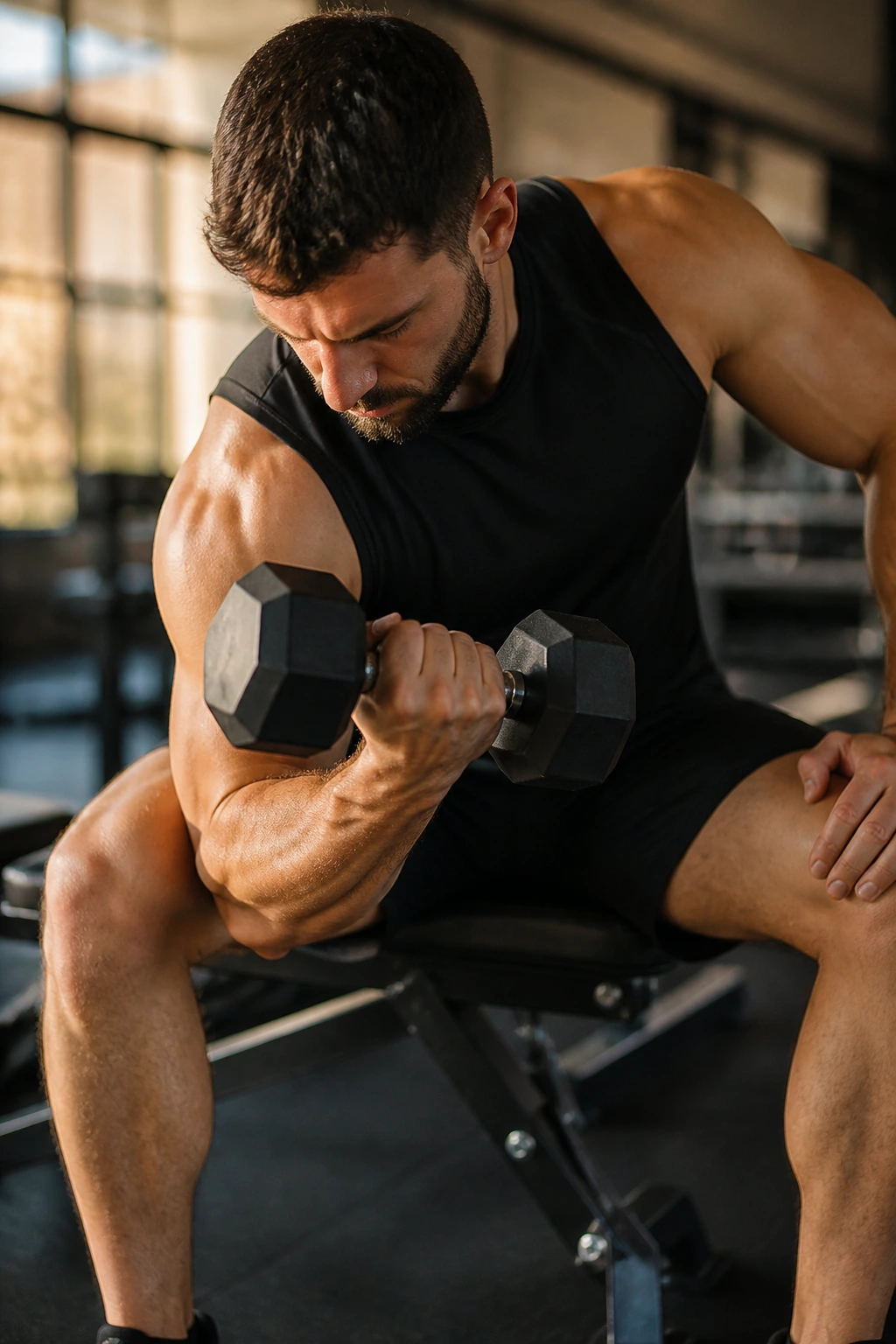
A concentration curl is one of those moves that looks almost too small to matter until you do a real set. Sit down, brace the elbow against the inner thigh, and curl one dumbbell with a slow squeeze at the top. The whole exercise is about clean elbow flexion and a hard peak contraction, which is why it shows off the biceps without much help from momentum.
This is not the place to chase heavy numbers. It is the place to slow down and actually feel the muscle contract. Use 2 or 3 sets of 10 to 15 reps per side, and lower the weight under control. A one-second squeeze at the top makes more difference than people expect. If the torso starts rocking, the curl has stopped being a curl.
21. Close-Grip Dumbbell Press
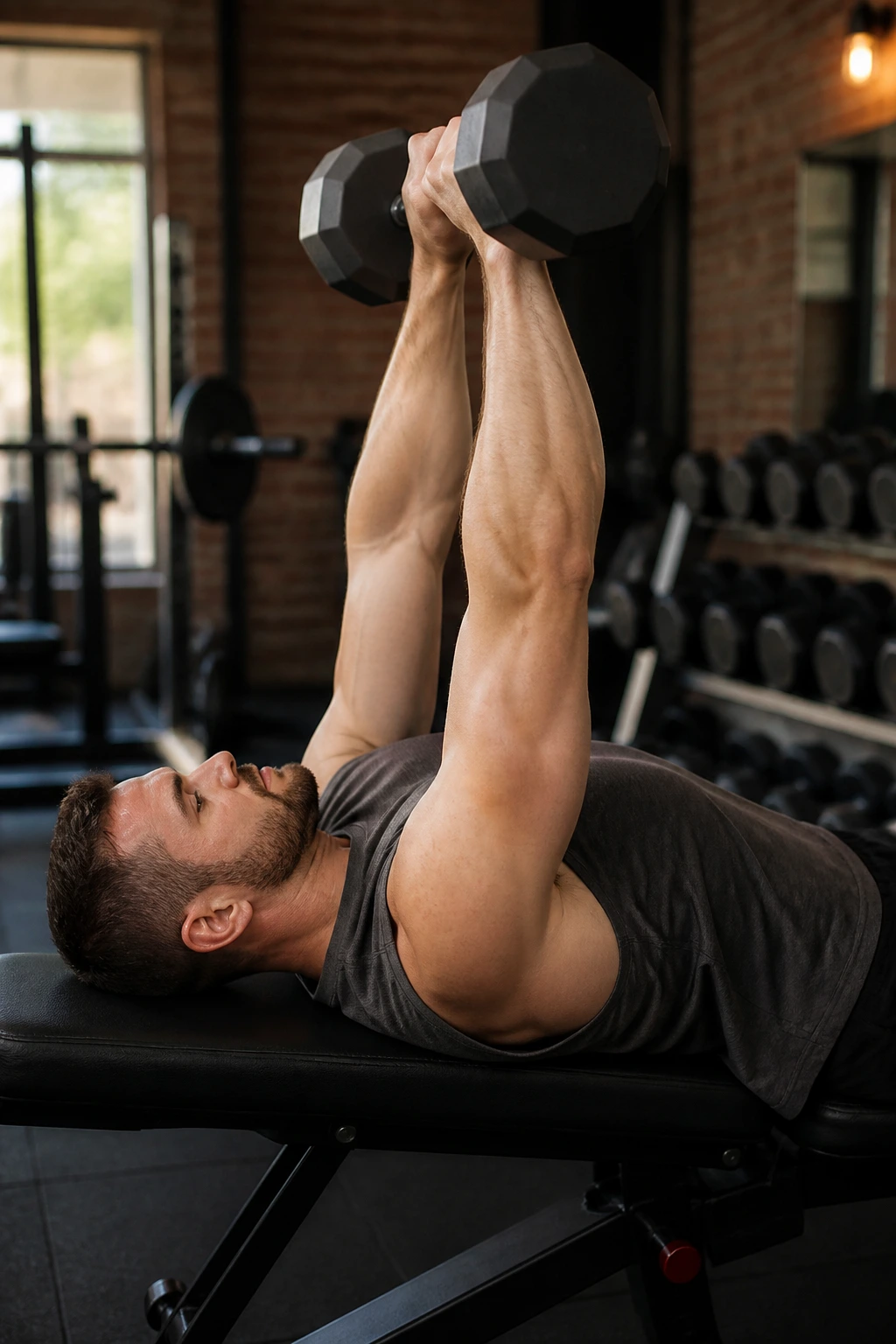
Can a chest press turn into a triceps builder? Yes, if you bring the dumbbells closer together and keep the elbows tucked a bit tighter. The close-grip dumbbell press shifts more of the load onto the triceps while still giving the chest enough work to matter. It’s a nice middle ground when you want pressing strength without the shoulder feel of a very wide grip.
Lie on a bench or the floor and press the dumbbells from a narrow, stable start. Keep the wrists stacked and avoid letting the bells drift too far apart at the top. Use 3 sets of 8 to 12 reps. If the elbows flare hard, the movement turns back into a standard press. Tight elbows. Strong triceps. Simple.
22. Overhead Dumbbell Triceps Extension
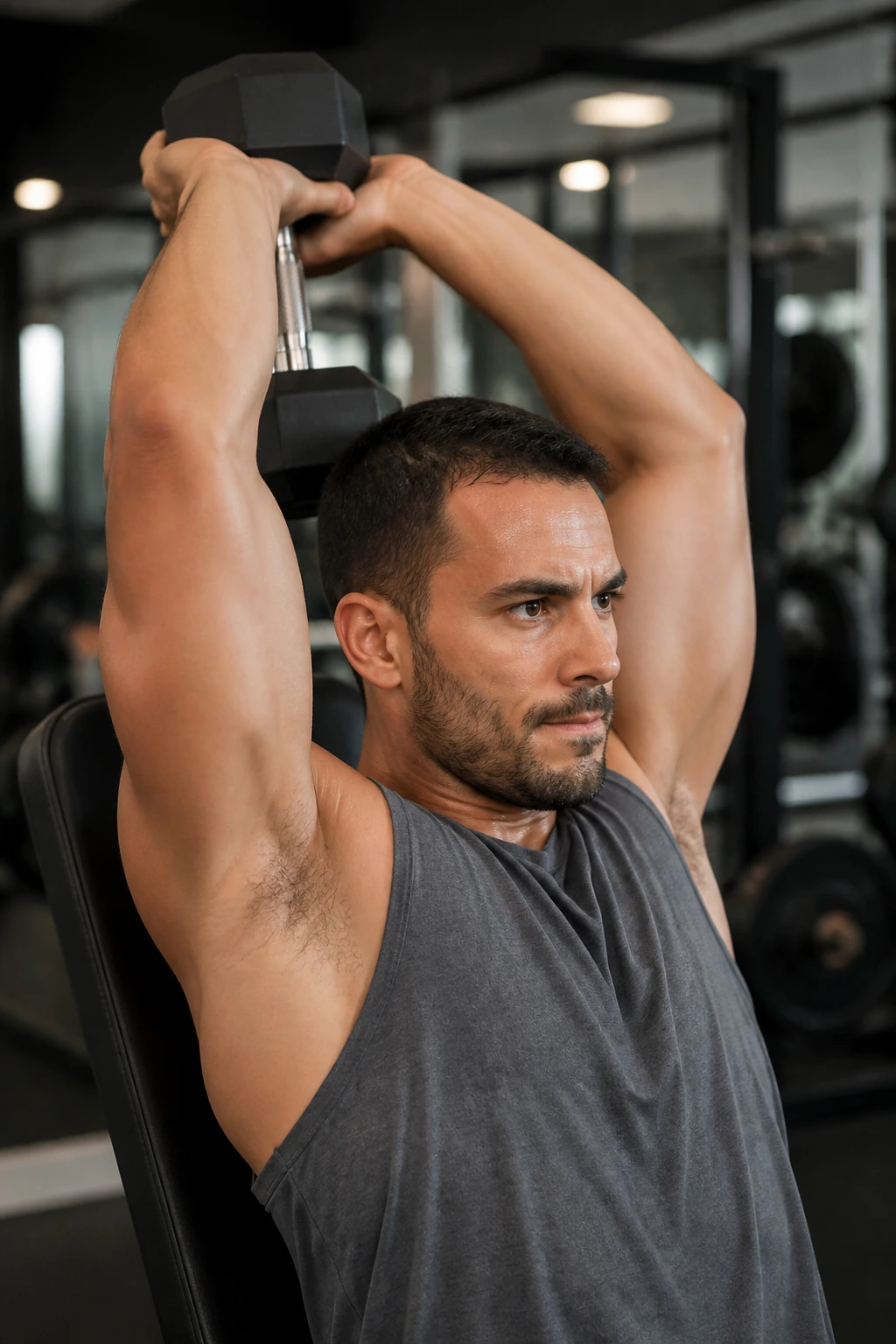
The long head of the triceps likes overhead work because the arm is raised, which gives that part of the muscle a longer stretch. That is the part many people miss when they only press or kick back. One dumbbell, held with both hands, works well here, though a single-arm version is fine if your shoulders prefer it.
What to Feel
The upper arms stay mostly still while the elbows bend and straighten. The stretch happens behind the head, not in the lower back.
- Try 3 sets of 10 to 15 reps.
- Keep the ribs down.
- Lower until you feel a clear stretch.
- Do not let the elbows flare wide.
A soft bench backrest helps if you tend to arch. The movement should feel like elbow extension, not a standing backbend.
23. Dumbbell Skull Crusher
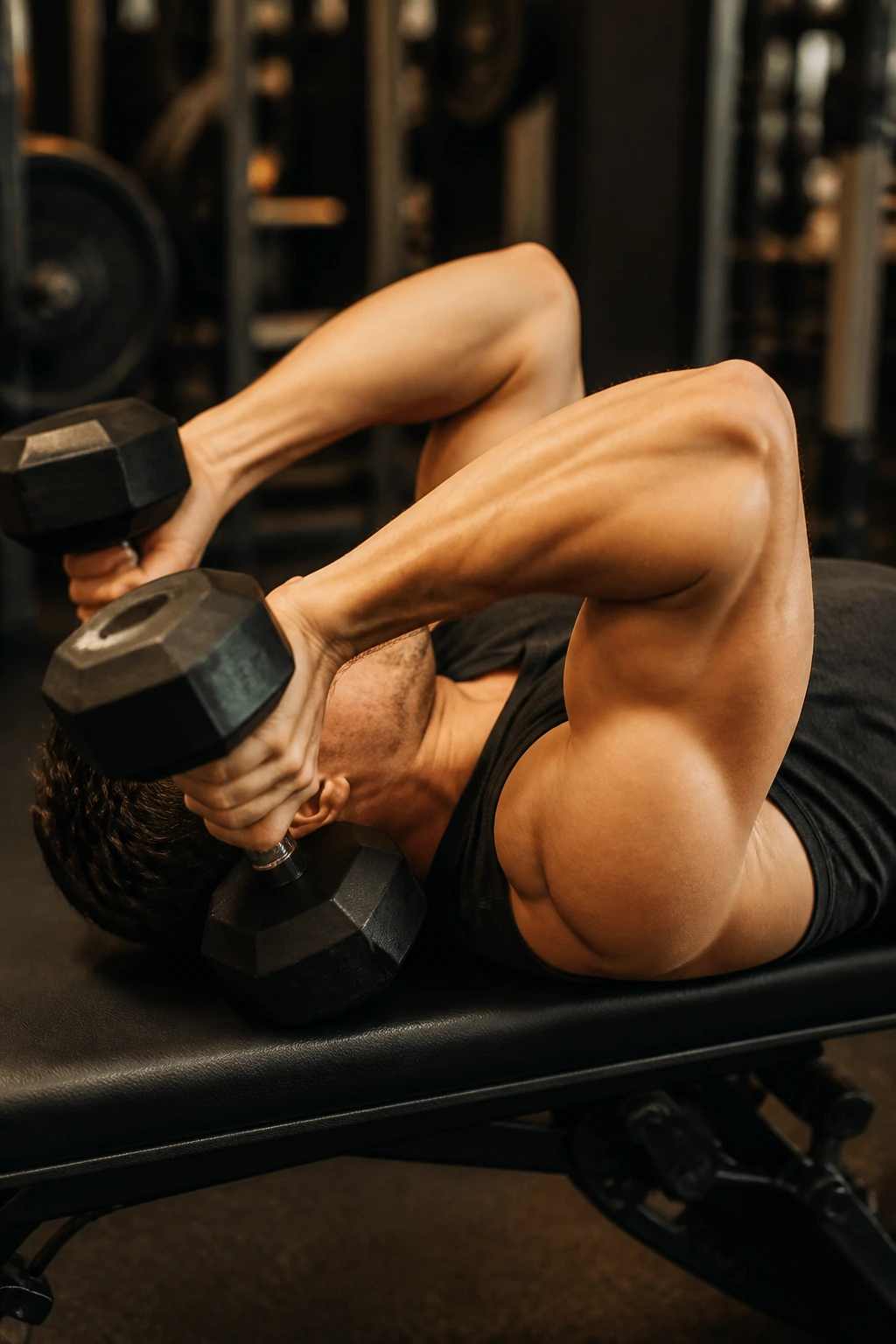
Skull crushers are one of those exercises that sound harsh because they are. They hit the triceps hard, especially when you keep the upper arms still and let only the elbows move. Dumbbells make the version a little friendlier on the wrists than a straight bar, and a floor or bench setup both work fine.
Lower the weights toward the sides of the head or just behind the forehead, depending on what feels best on the elbows. The range should be controlled and smooth. If the elbows wander all over the place, the triceps lose the tension you’re trying to build. Use 3 sets of 8 to 12 reps and stop a rep before the form gets messy. That last rep matters less than the clean ones in the middle.
24. Dumbbell Kickback
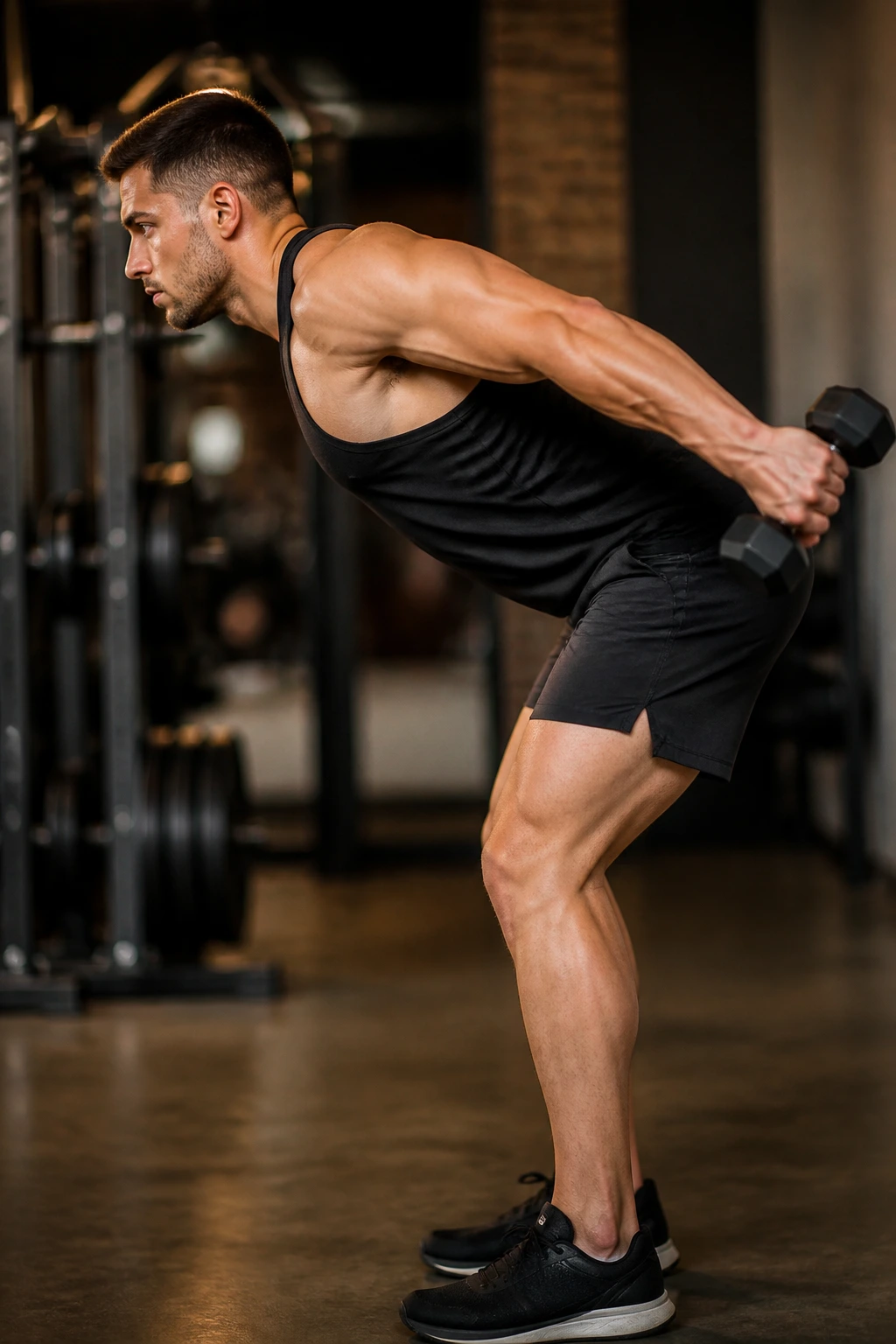
A kickback is not the move for ego lifting. It is a finisher, and it behaves like one. The upper arm stays locked beside the torso, the forearm extends back, and the triceps get a sharp squeeze at the end of the motion. That short lever makes heavy loading awkward, so lighter weights usually work better.
This is the exercise you pick when presses and extensions are done and the triceps still have a little gas left. Use 2 or 3 sets of 12 to 20 reps, keep the torso hinged forward, and make every rep look the same. If the shoulder swings backward, the dumbbell is too heavy. The rep should end with a hard lockout and a straight arm, not a body English contest.
25. Farmer’s Carry
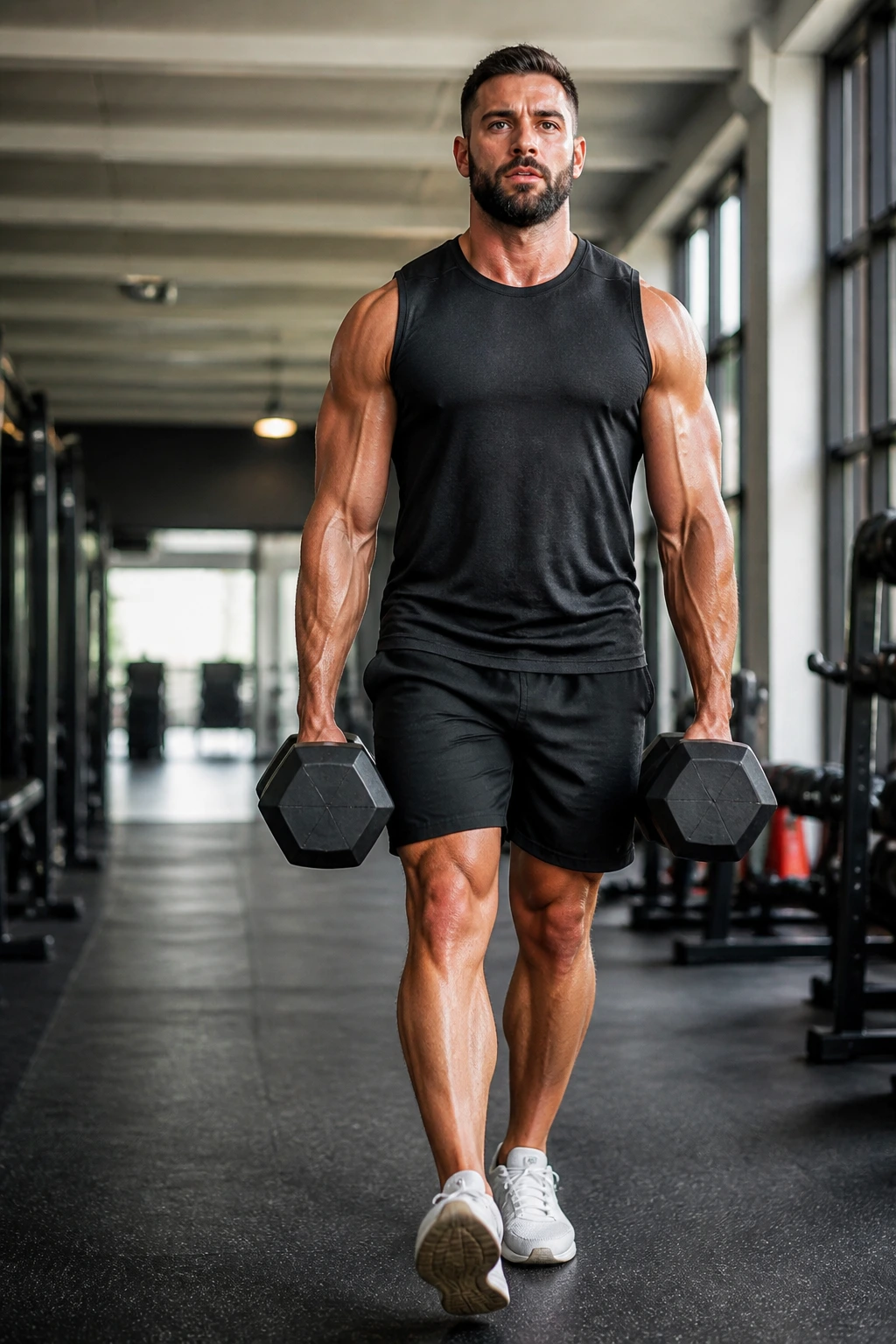
A loaded carry tells the truth fast. Hold a dumbbell in each hand, stand tall, and walk with control. Grip, traps, obliques, feet, calves, and even your breathing pattern all have to line up. That makes the farmer’s carry one of the most useful dumbbell drills around, especially when you want strength that shows up outside the gym.
What It Teaches
The body has to resist sway. The shoulders have to stay packed. The hands have to keep squeezing.
- Walk 20 to 40 meters per set.
- Use 3 to 5 rounds.
- Keep the rib cage stacked over the pelvis.
- Stop if the dumbbells bang into your legs so much that your stride falls apart.
Tip: If your posture collapses before your grip gives out, the load is too heavy.
26. Suitcase Carry
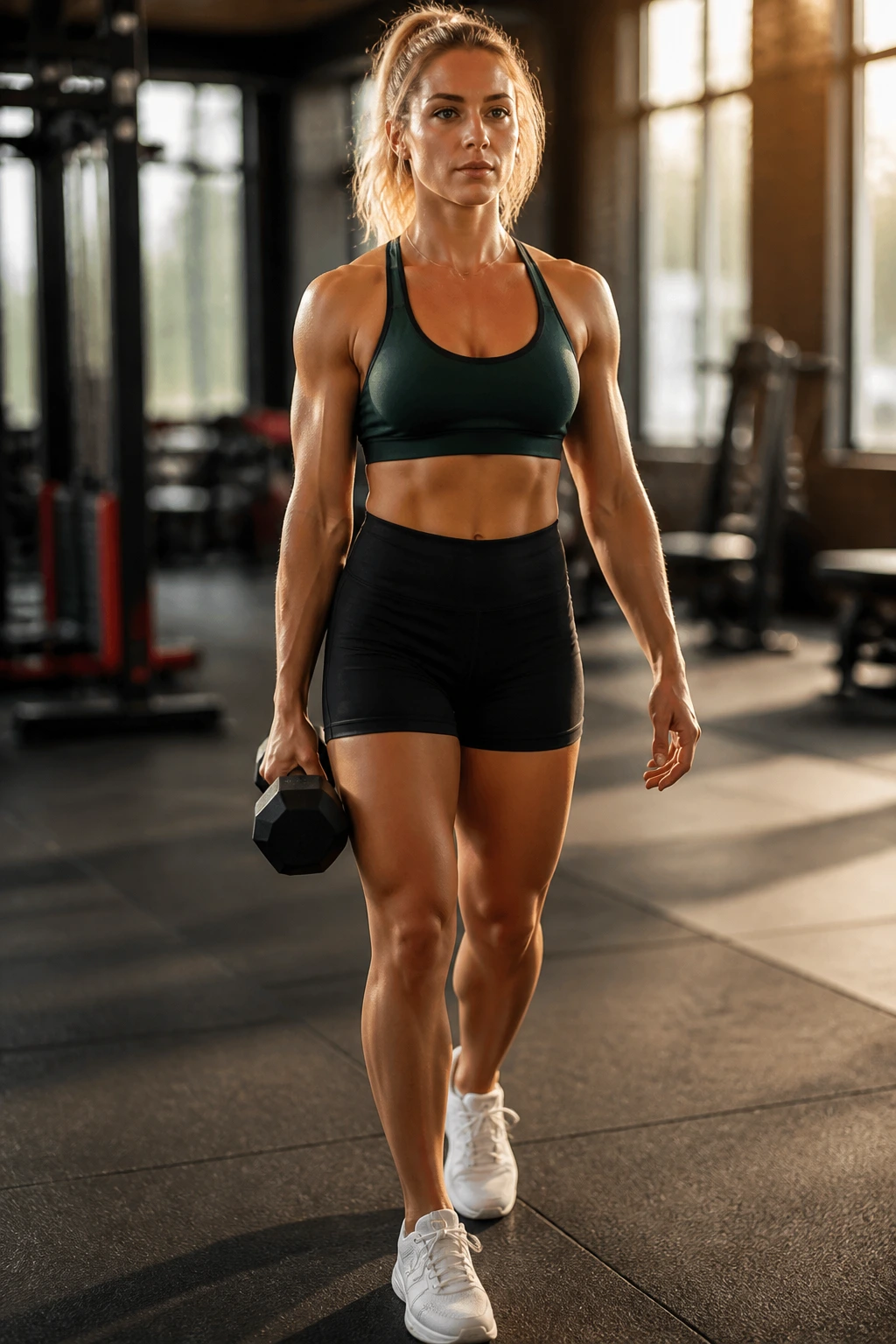
A suitcase carry is just a farmer’s carry with one dumbbell, and that small change makes the obliques and side of the torso work much harder. The body wants to lean toward the weight. Your job is to stop that from happening. It is simple, and it is harder than it sounds.
Use a moderate load, stand tall, and walk slowly for 20 to 30 meters on each side. Keep the free hand relaxed and the shoulders level. If you lean, shorten the stride and slow down. This is one of the best dumbbell drills for anti-lateral flexion — that’s the fancy way of saying your torso resists side bending. You do not need a fancy cue, though. Just don’t fold.
27. Turkish Get-Up
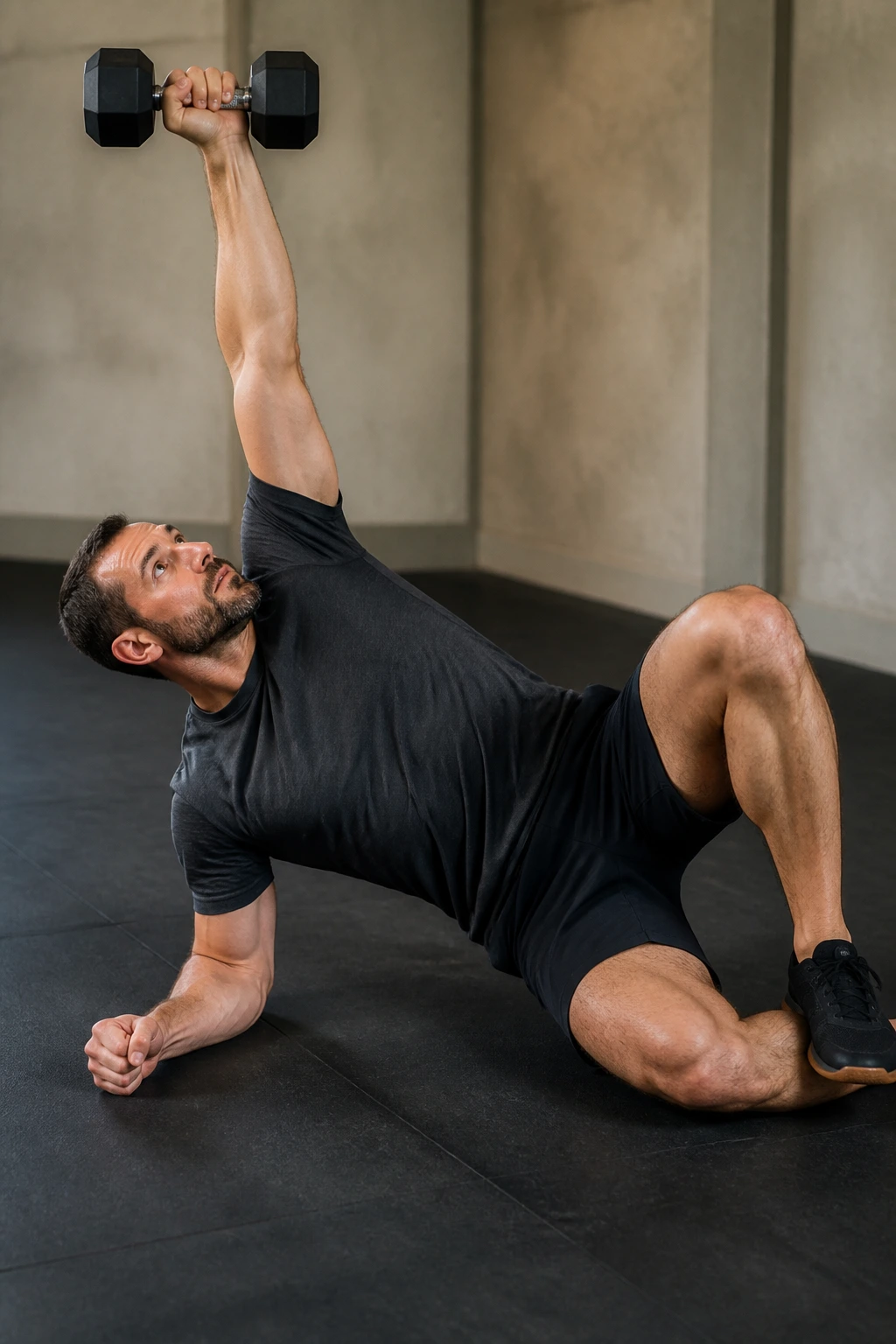
Why does one exercise feel like five exercises at once? Because the Turkish get-up ties together shoulder stability, core strength, hip control, and floor mobility in a way almost nothing else does. You start lying down with a dumbbell locked overhead and finish standing up, then reverse the whole thing with control.
How to Use It Without Rushing
Break the movement into pieces: elbow, hand, bridge, sweep, half-kneel, stand. Each transition should be deliberate.
- Use 1 to 3 reps per side at first.
- Keep the eyes on the weight.
- Move slowly enough to own each position.
- Start light. Much lighter than you think.
If the overhead arm wobbles, the load is too much. The get-up rewards patience. It punishes rushing. That is part of why it works so well.
28. Renegade Row
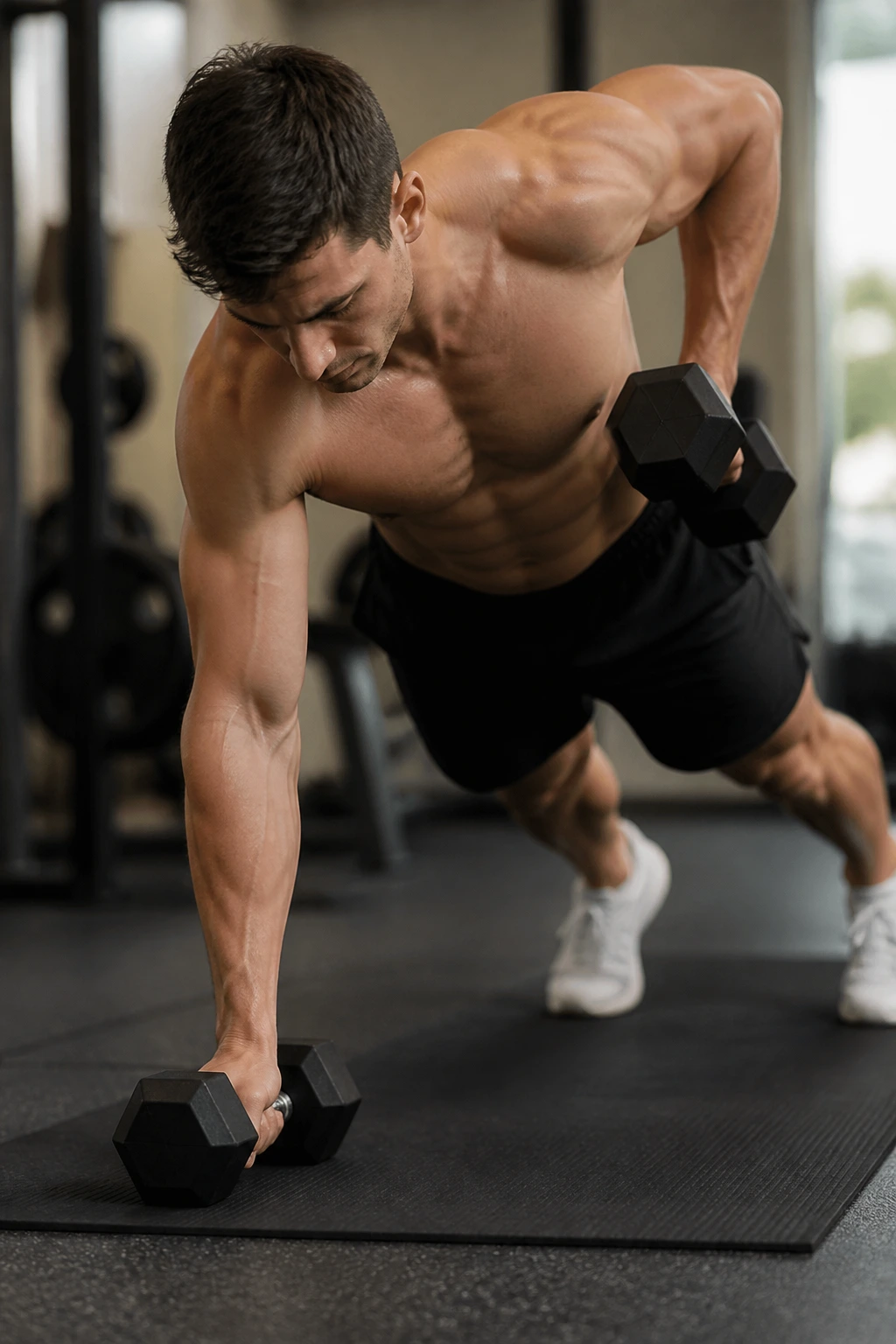
Plank first, row second. That’s the whole spirit of the renegade row, and it explains why the exercise is so useful for the core. One hand rows the dumbbell while the rest of the body tries not to twist, which means the abs, obliques, shoulders, and upper back all have a job.
What to Notice
The hips want to rotate. Don’t let them. Spread the feet a little wider than a strict plank stance if you need more balance.
- Row 6 to 10 reps per side.
- Keep the dumbbells under the shoulders.
- Use a slow row, not a yank.
- Lower the hips if the lower back sags.
A mat helps, because this one can get loud. It also gets sloppy fast when the weight is too ambitious. Start lighter than your ego wants.
29. Dumbbell Dead Bug Press
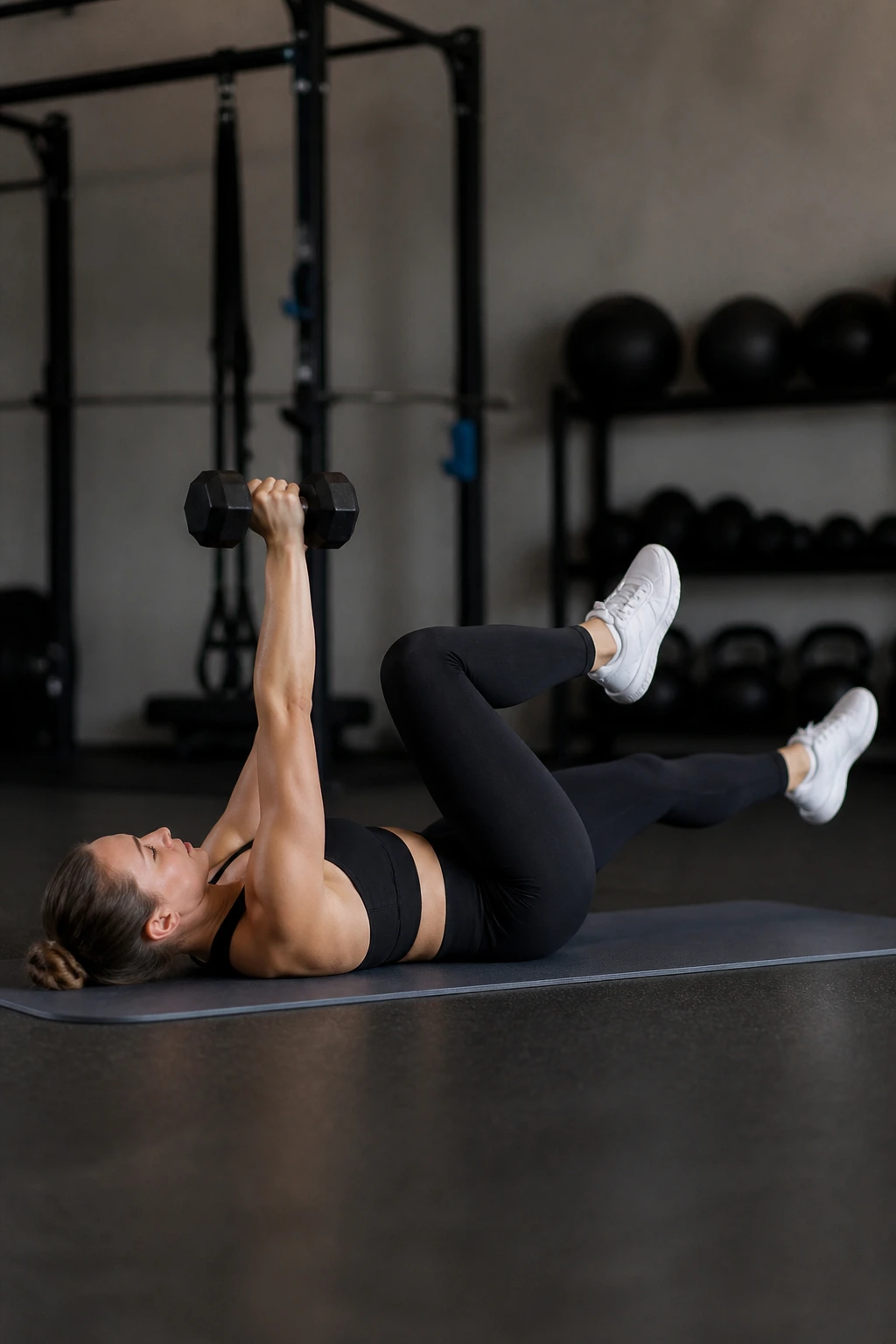
The dead bug is already a good core drill. Add a dumbbell press, and the upper body has to stay quiet while the low back keeps pressure against the floor. That makes the exercise useful for deep core control, breathing, and rib position, not just abs that show up in mirror photos.
Lie on your back, knees and hips bent, and press the dumbbell straight over the chest with one or both arms while the opposite leg extends. The low back should stay in contact with the floor. If it arches, the range is too big or the dumbbell is too heavy. Slow reps matter here. Two or 3 sets of 6 to 10 controlled reps per side is enough to feel it. The goal is control, not speed.
30. Dumbbell Russian Twist
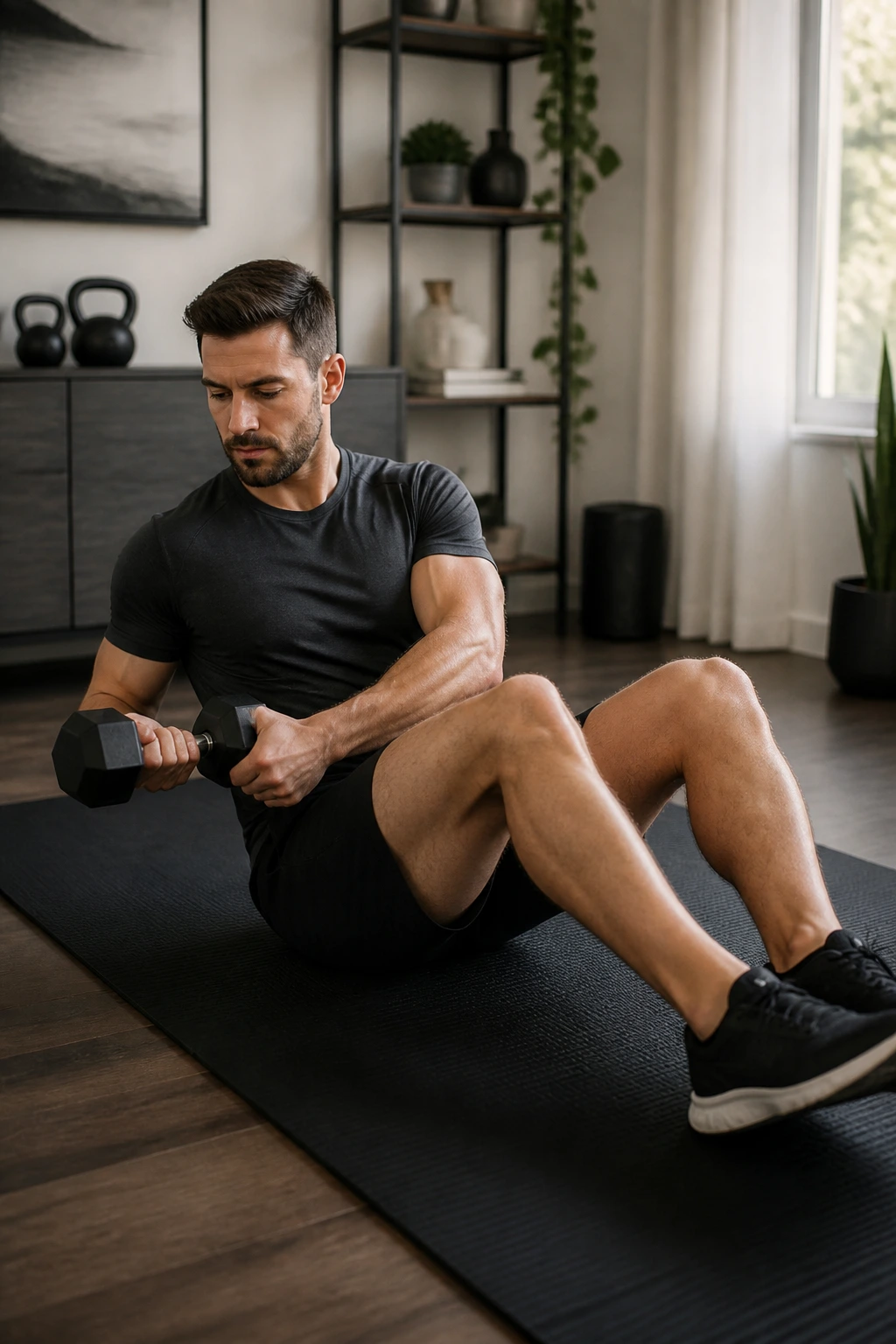
Unlike dead bugs, Russian twists add rotation. That means the obliques and the deeper trunk muscles have to manage turning force, not just stillness. Done well, the exercise builds control through the midsection. Done fast, it turns into a sloppy torso swing that mostly wastes time.
Sit with your chest lifted, lean back slightly, and rotate the dumbbell from side to side without yanking with the arms. Keep the movement smooth. If your lower back rounds or the heels lift too much, the set has gone too far. A lighter dumbbell usually works better than a heavy one because you want rotation you can own, not one you survive. Use 2 or 3 sets of 12 to 20 total taps.
31. Dumbbell Wood Chop
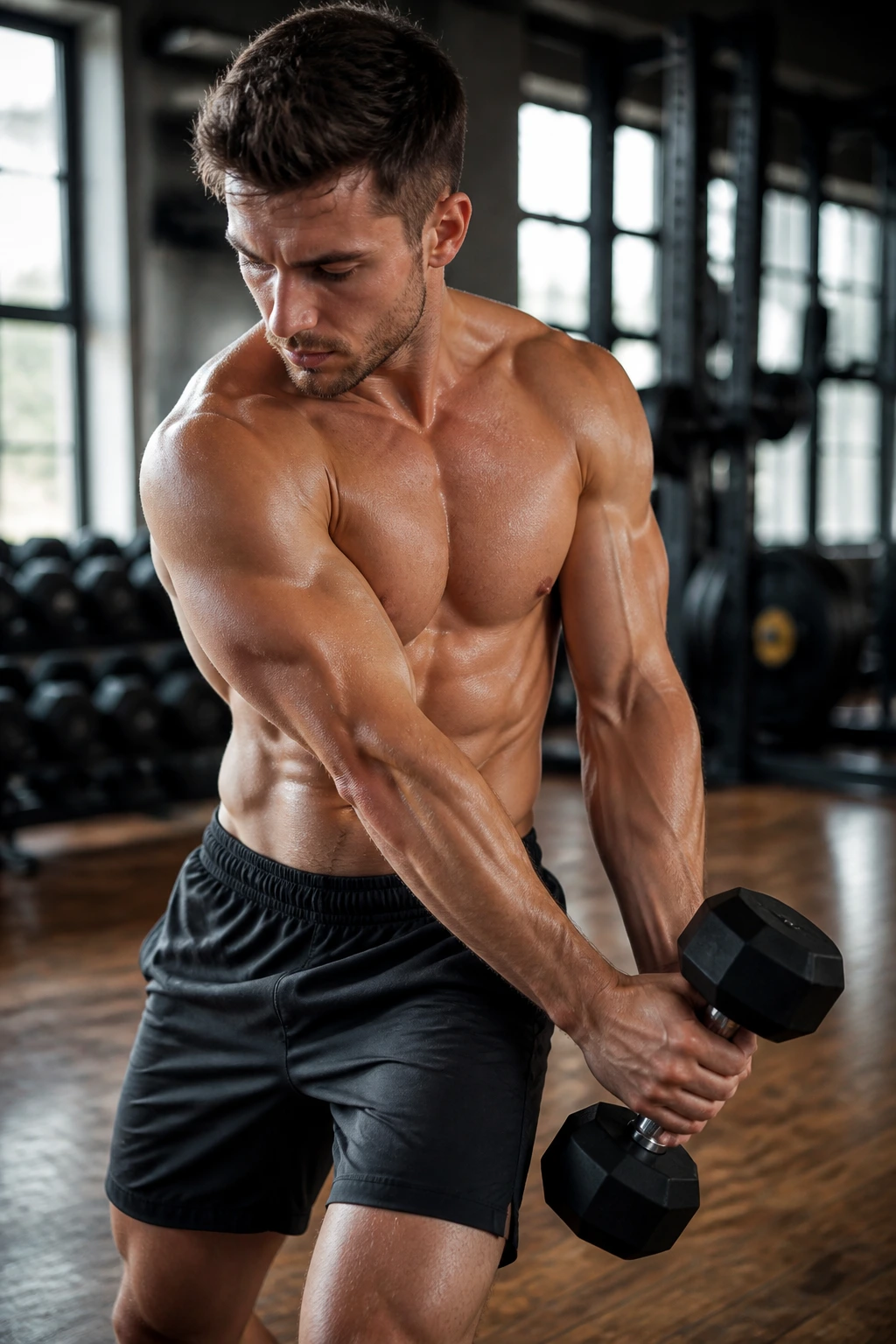
A wood chop moves on a diagonal, and that diagonal line is what makes it useful. The obliques, shoulders, hips, and upper back all help guide the dumbbell from high to low or low to high, depending on the version you choose. It feels athletic because it asks the body to connect the lower half and upper half instead of treating them like separate rooms.
How to Make It Clean
Rotate through the torso and hips together, but keep the movement smooth instead of jerky.
- Do 2 or 3 sets of 8 to 12 reps per side.
- Keep the arms connected to the trunk.
- Use a stance that feels balanced.
- Finish each rep with control, not speed.
Tip: If the movement turns into an arm swing, slow down and shorten the range.
32. Reverse Lunge
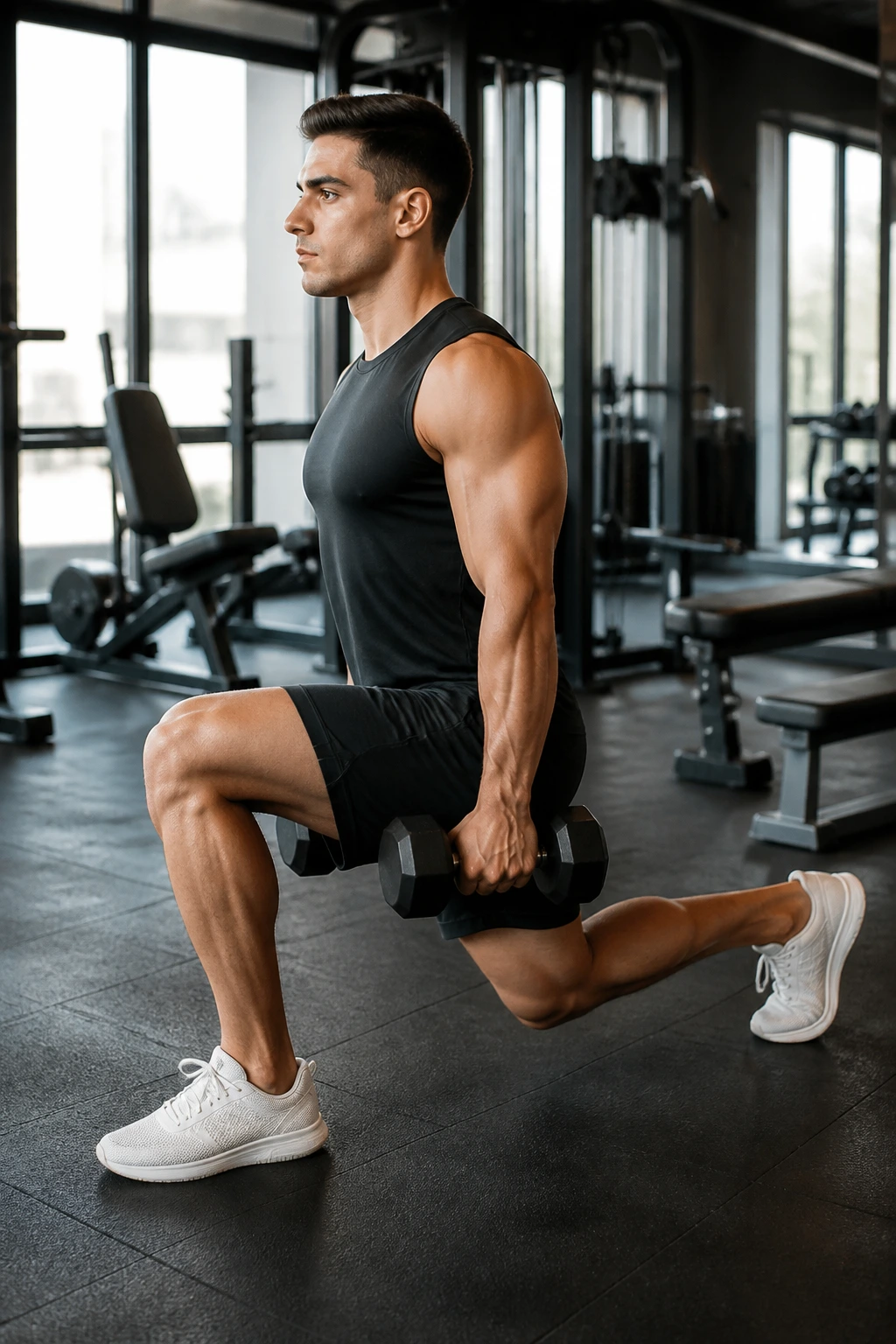
This one is kinder to the knees for many lifters than a forward lunge, and that alone makes it worth keeping around. Step back, lower under control, and drive through the front foot to stand. The quads, glutes, hamstrings, and calves all get involved, but the front leg does most of the work.
A reverse lunge also teaches balance without demanding the same quick catch that a forward step often does. That makes it easier to learn and easier to load. Use 3 sets of 8 to 10 reps per leg, keep the torso tall, and avoid pushing off the back foot too hard on the way up. If your front heel pops up, shorten the step or widen your stance a little.
33. Dumbbell Step-Up
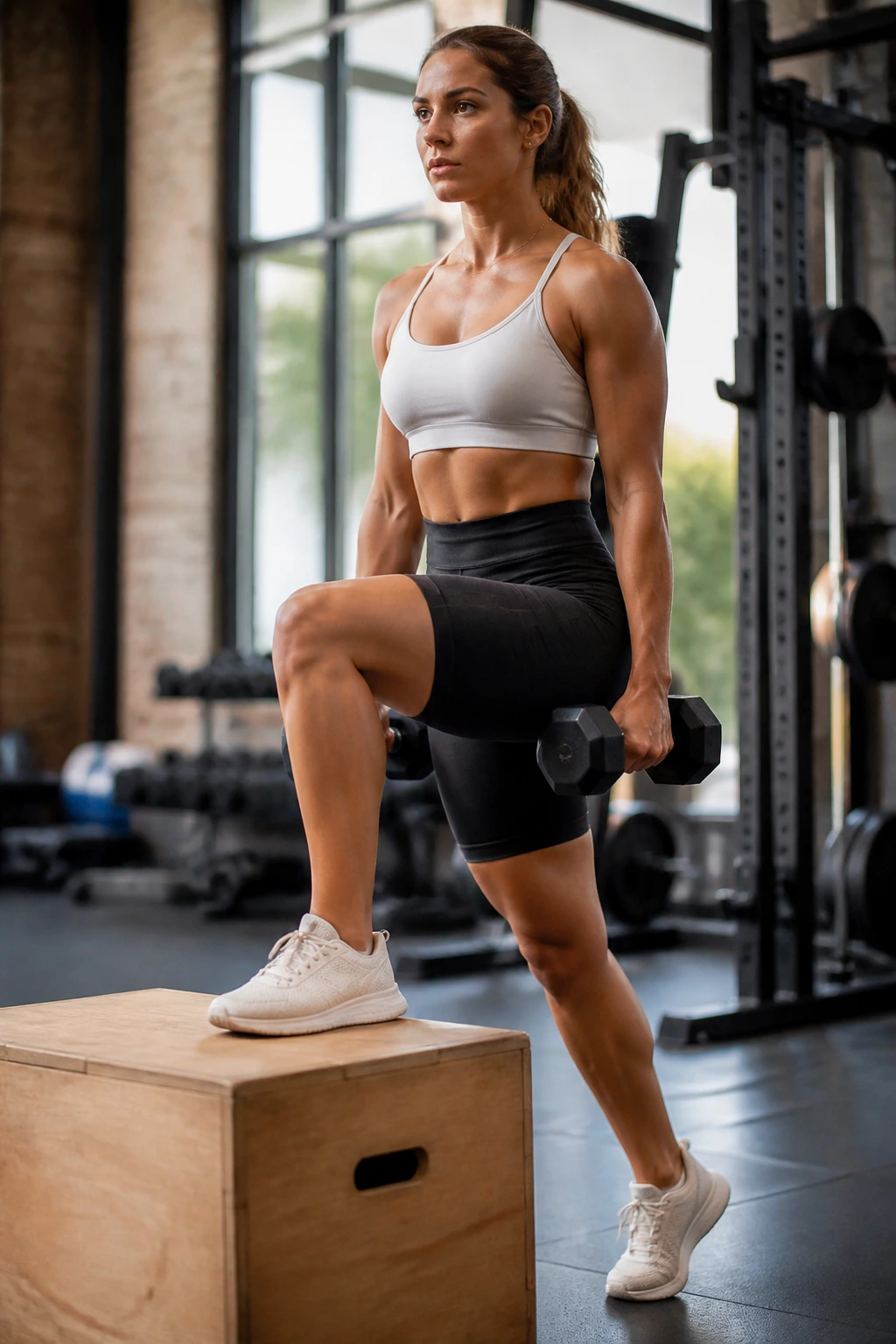
What looks like a simple stair climb can turn into a serious leg builder if you pick the right box height and stay controlled. Step-ups hit the quads and glutes, and they’re especially good for teaching one leg to drive the body upward without cheating off the other side.
How to Get the Most From It
Choose a box or bench around knee height or a little lower. Higher is not automatically better.
- Use 2 or 3 sets of 8 to 12 reps per leg.
- Keep the whole foot on the box.
- Drive through the heel and midfoot.
- Avoid bouncing off the back leg.
The top of the rep should feel like a clean stand, not a hop. If the trailing foot is doing most of the work, the box is probably too high or the dumbbells are too heavy.
34. Dumbbell Calf Raise
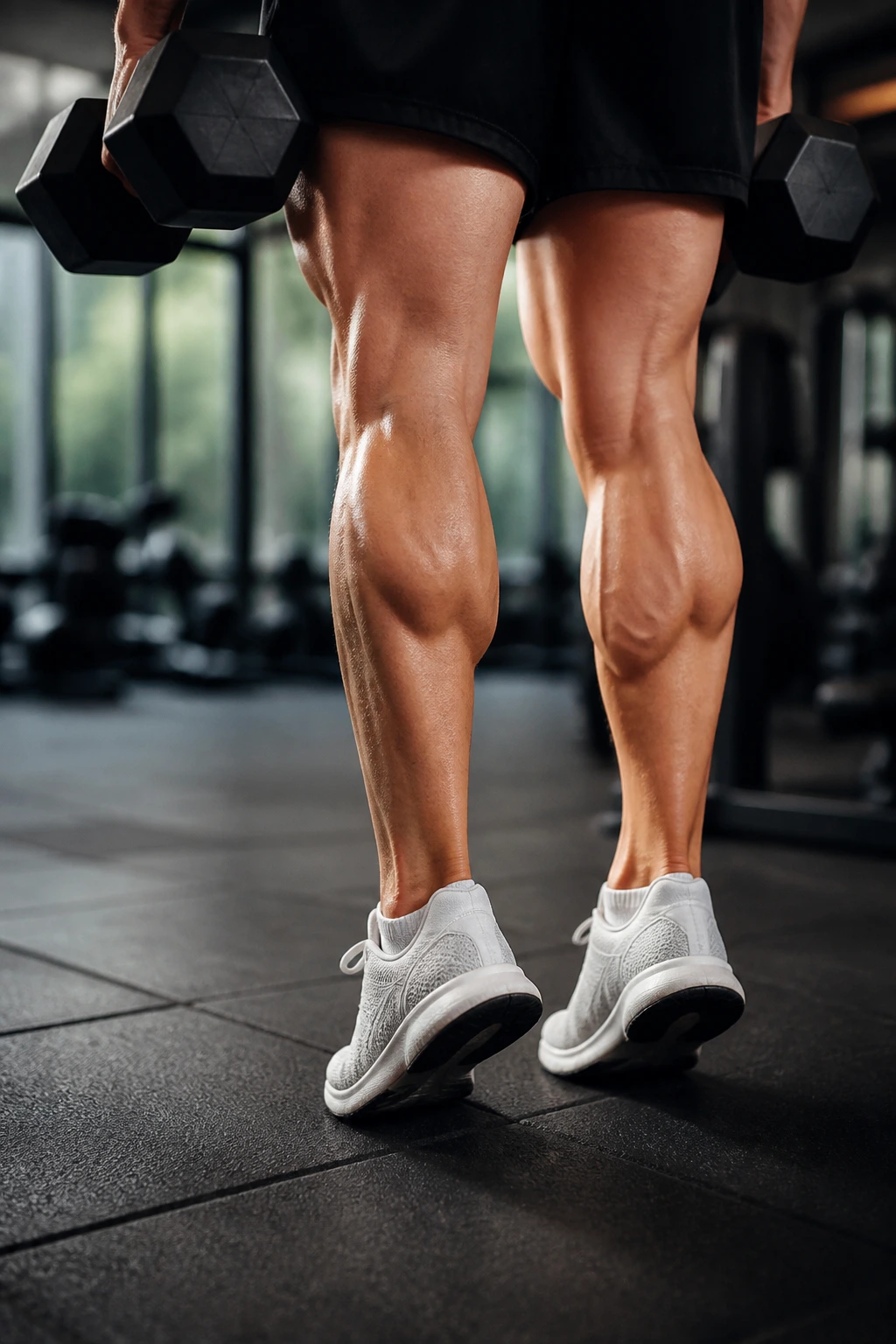
Calf raises look boring until you do them slowly and realize how much the lower leg likes to complain. Hold the dumbbells at your sides or in a goblet position, rise onto the balls of your feet, pause at the top, then lower all the way until you feel a stretch through the Achilles and calf.
That bottom stretch matters. Cutting the range short is the fastest way to turn the exercise into a half-rep shrug for the ankles. Use 3 to 4 sets of 12 to 20 reps, and try a single-leg version if the two-leg set gets too easy. A 2-second pause at the top and a 2-second lower can make a light dumbbell feel plenty heavy.
35. Dumbbell Thruster
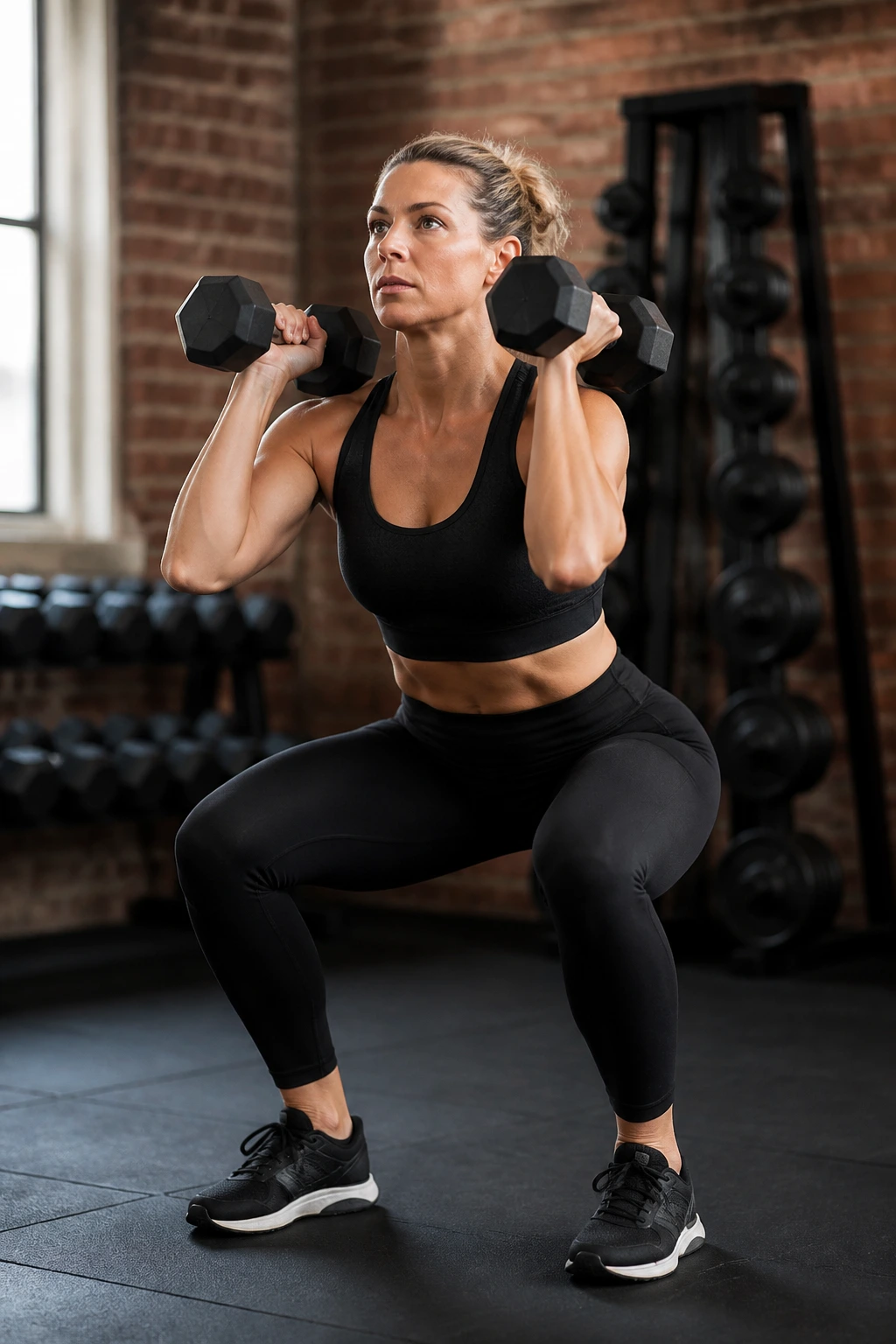
A thruster is a squat and an overhead press welded into one hard, fast full-body rep. The legs drive the weight upward, the shoulders finish the press, and the heart rate jumps fast. That makes the thruster useful for power, conditioning, and plain old toughness when you want a short dumbbell session to feel like it did something.
The trick is keeping the squat clean before the press starts. Drop into the squat with the dumbbells at the shoulders, stand up hard, and let that leg drive carry the weights overhead. If you press too early, the rep gets messy and the lower back ends up doing too much. Use 3 sets of 6 to 10 reps, or a short timed interval if you want a harder finish. It’s a lot of work in one movement. That’s why people keep coming back to it.
The Bottom Line
A good dumbbell program does not need a dozen machines or a drawer full of gadgets. It needs solid movement patterns, enough load to challenge you, and a little restraint so the weights don’t turn into a swing session. Squat, hinge, push, pull, carry, then add the arm and core work that rounds everything out.
The smartest way to use these 35 dumbbell workouts is to pick a few from each bucket and repeat them long enough to get better at them. That means cleaner reps, more control, and better judgment about when to increase the load. Fancy is overrated. Consistent, well-done dumbbell work tends to hold up just fine.
