



Brutal workouts are not usually what break people. It’s the loose hours around them.
A hard WOD feels manageable when sleep, food, water, and recovery are lined up. It feels rough when they aren’t. That is why the smartest CrossFit lifestyle habits are rarely flashy. They are the dull, repeatable ones: go to bed on time, drink before coffee, warm up with intent, and stop treating every session like a test you need to win.
Anyone who has spent time around a good box knows this already. The athletes who improve steadily are not always the loudest, fastest, or strongest in the room. They’re the ones who keep a bottle nearby, scale without drama, and build a life that supports training instead of fighting it.
The habits below are worth stealing because they make hard work easier to repeat. That’s the whole trick, really.
1. Keep a Fixed Sleep Window

A 5 a.m. class feels different after a real night of sleep. So does a 7 p.m. class, for that matter. If your bedtime wanders by two hours every night, your recovery gets messy fast, even if the workouts themselves are well planned.
Sleep is the base layer. The CDC’s general recommendation of at least 7 hours for adults is a floor, not a bragging right, and plenty of people training hard feel better with 8 or 9. I like a consistent wake time more than a perfect bedtime, because the wake time is what shapes the rest of the day. Keep it steady, and the rest starts to fall in line.
A few small habits do more than people expect:
- Keep the room cool and dark.
- Stop scrolling in bed.
- Put the phone across the room.
- Cut the caffeine earlier than you think you need to.
- Give yourself 15-minute bedtime shifts instead of trying to change everything at once.
That last one matters. Big changes look heroic and usually fail. Small changes stick.
2. Drink Water Before Coffee

Why do so many strong athletes feel flat in the first round? Half the time, they’re dry before they even touch a barbell.
Water first changes the whole morning. If you wake up and immediately slam coffee, you may feel alert but still underhydrated, especially if you train early or sweat hard. I like 16 to 24 ounces of water before anything else, then more if the class is long or the day is hot. A pinch of salt or an electrolyte packet can help if you’re a heavy sweater, but plain water is a good start.
How to make it stick
- Keep a bottle by the bed.
- Drink half of it before checking your phone.
- Finish the rest before you leave the house.
- Add electrolytes on days when your shirt gets soaked fast.
Your mouth will tell you a lot. Dry lips, dark urine, and that “my brain feels wrapped in wool” feeling are often simple water problems. Not glamorous. Still real.
3. Eat a Protein-Forward First Meal

Boring wins here.
If your first meal of the day has 25 to 40 grams of protein, you’re already doing one useful thing for recovery and appetite control. Eggs, Greek yogurt, cottage cheese, chicken, tofu, a shake with fruit — none of it needs to be fancy. It just needs to be there. CrossFit training asks a lot from your body, and protein gives it the raw material to rebuild.
I’m not a fan of forcing breakfast if you hate it. That’s not the point. The point is to get a solid protein dose early enough that you’re not trying to make up for it with a random snack trail at 4 p.m. A shake and a banana is fine. So is scrambled eggs with toast and salsa. The exact meal matters less than the habit.
If you train before work, this gets even more useful. A simple first meal can keep you from feeling ravenous later, and it usually makes post-workout eating less chaotic. That’s the part people skip over. Hunger management is part of performance.
4. Pack Your Gym Bag the Night Before
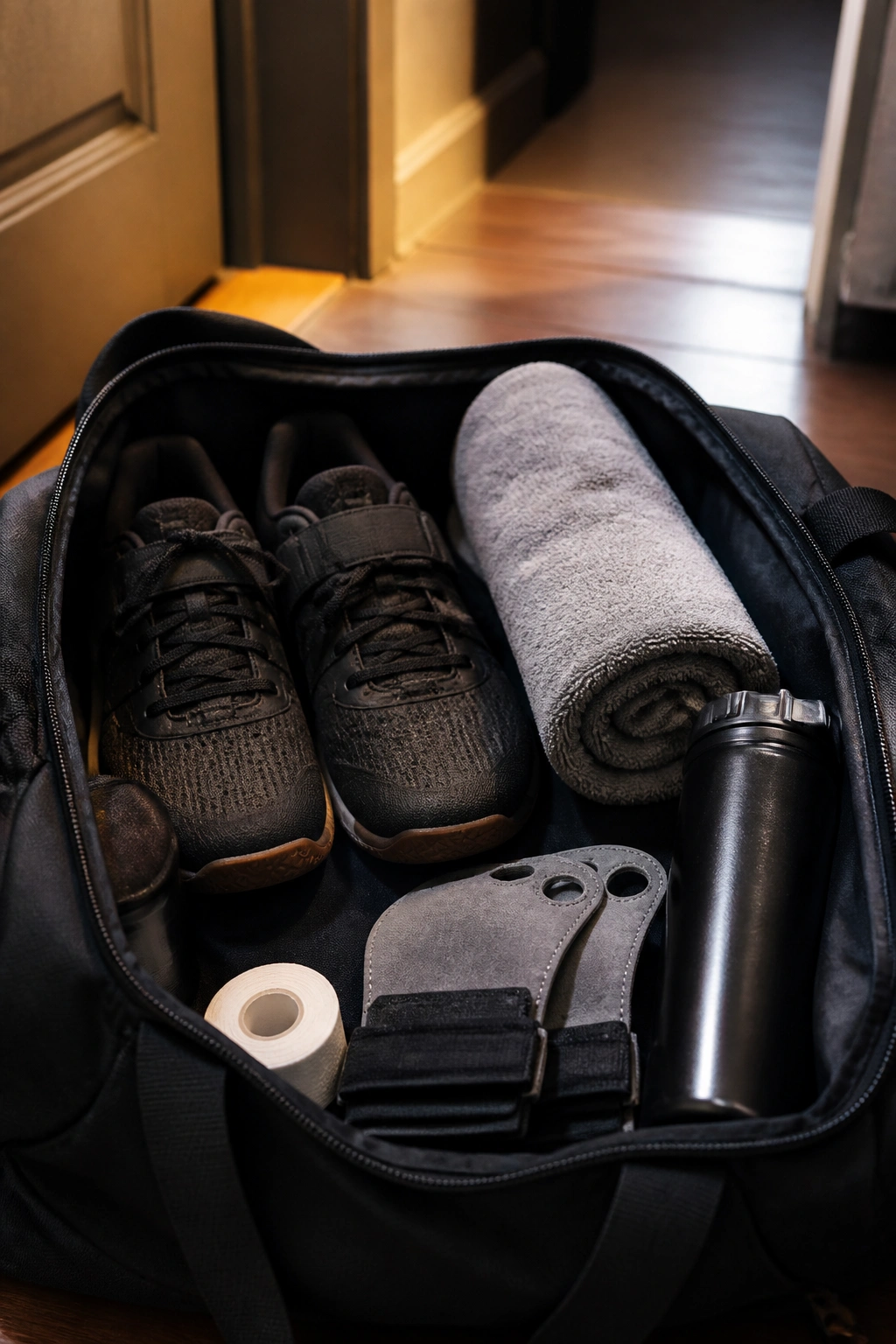
Morning brain is a liar.
It will tell you the shoes are by the door when they’re in the laundry room. It will tell you the grips are somewhere obvious. Then you’ll stand in the kitchen at 5:40 a.m. looking at one sock and a water bottle cap. That is not a character flaw. It’s just a bad system.
I like this habit because it removes friction before the day starts. Put your shoes, socks, grips, tape, water bottle, and a spare shirt in the bag before you go to bed. If you use wrist wraps, knee sleeves, or a jump rope, those go in too. The idea is simple: no scavenger hunt when you’re half awake.
What goes in the bag
- Training shoes
- Socks
- Grips or gloves, if you use them
- Tape for thumbs or hot spots
- Water bottle
- Towel or shirt
- Jump rope, belt, or wraps if they live in your routine
Best tip: put the bag by the door, not in the car. If it’s in your face, you’ll notice when something is missing.
5. Warm Up Like the Workout Matters

A rushed warm-up is false economy.
Two arm circles and a shrug do not prepare you for heavy squats, kipping pull-ups, or repeated sprints. They just make you feel like you did something. A useful warm-up raises body temperature, opens the joints that need help, and rehearses the movement pattern you’re about to demand from under stress.
I like 8 to 12 minutes as a starting point. That can be a row, bike, brisk walk, light jump rope, or a short circuit that mirrors the session. If the workout includes cleans, spend a few extra minutes on front rack positions and empty-bar work. If it includes running, give your ankles and calves some time first. The warm-up should look like a smaller version of the workout, not a random detour.
A good rule: if the first working set feels shocking, the warm-up was too small. You want to arrive at the hard part already awake, already moving well, already a little sweaty.
6. Move Your Joints Every Day

A weekly stretch session is nice. Daily mobility is better.
The difference is simple. A long stretch once in a while tries to fix everything at once. Five minutes every day keeps the usual trouble spots from tightening up in the first place. Ankles, hips, thoracic spine, shoulders, wrists — those are the places CrossFit athletes feel most often, and they respond well to small, regular attention.
I’m not talking about a dramatic floor routine with candles and a playlist. I mean a mat, a timer, and a few honest drills. Couch stretch while the coffee brews. Ankle rocks while you wait for the shower to warm up. Thoracic extensions over a foam roller after work. Little things. They add up.
How to use it
- Do 1 or 2 drills for tight spots.
- Hold each stretch for 30 to 60 seconds.
- Breathe slowly instead of forcing range.
- Pick the same time each day so it becomes automatic.
This habit is best for people who sit all day, lift overhead, or keep complaining about front rack position and never do anything about it. Guilty. That’s usually the crowd.
7. Track Your Workouts and Recovery Notes
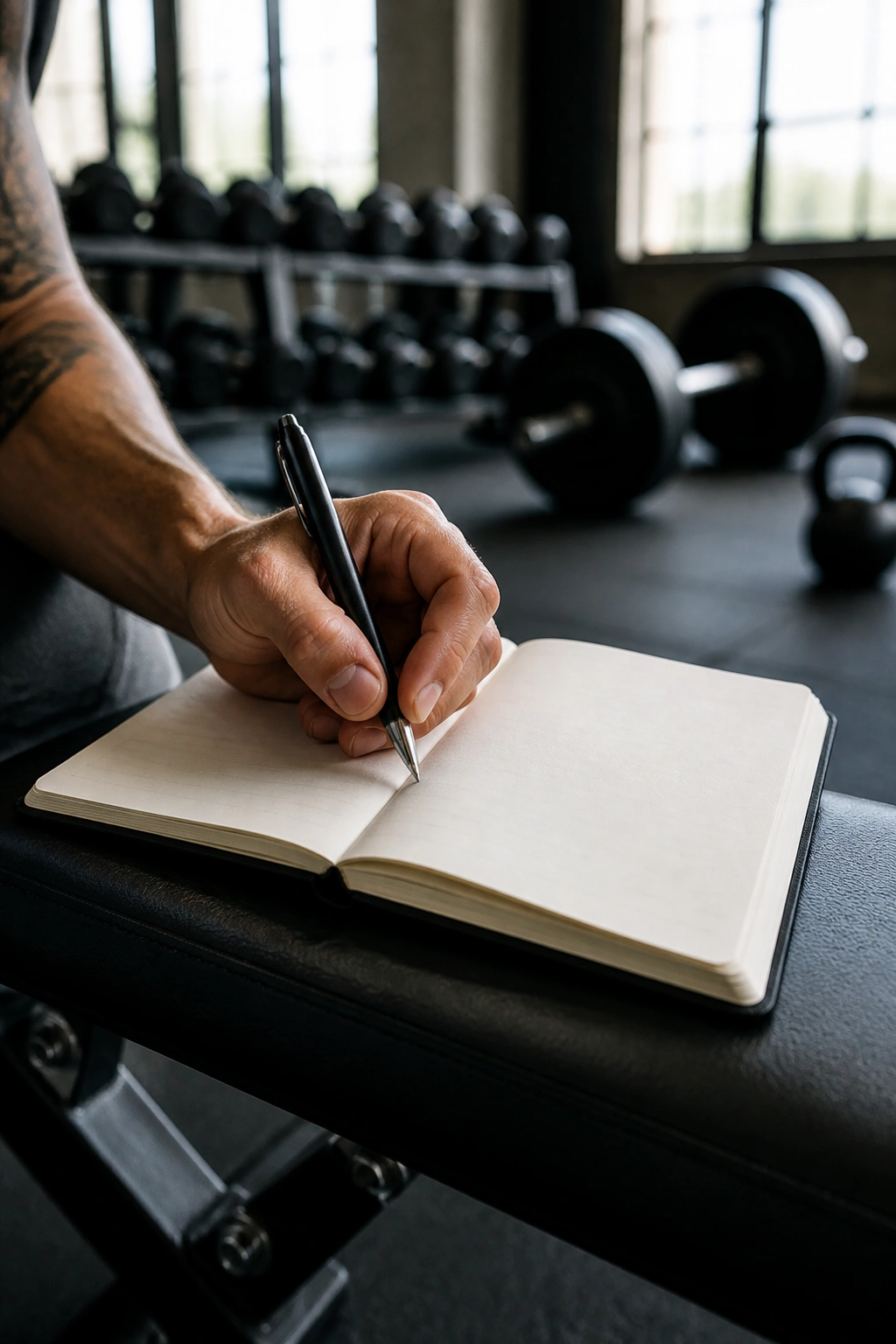
A notebook tells the truth when your memory won’t.
Most people remember the big moments — the PR, the blown-up interval, the set that got ugly. They forget the small stuff that explained it. That’s why I like logging not just the score, but the load, reps, sleep quality, soreness, and one short note about how the workout felt. It takes 30 seconds, maybe 60 if you write neatly.
What to write down
- The workout name or format
- Weight used
- Reps completed
- Time or score
- One note on sleep, soreness, or stress
- Any movement that felt off
Over time, patterns show up fast. You start seeing that front squats feel heavy after poor sleep, or that your pull-up volume drops when your grip is beat up from two hard days in a row. That’s the real value. Not the record itself. The pattern behind it.
A phone app is fine. Paper is fine too. I still like paper because it keeps the notes short.
8. Walk on Rest Days

What does a good off-day look like when you still want to move?
Honestly, it looks boring. That’s part of the appeal. A 20- to 45-minute walk does a lot without poking your nervous system the way another hard session can. You get blood flow, a little fresh air, and less stiffness in the hips and lower back. If you can keep the pace easy enough to talk in full sentences, you’re doing it right.
I like this habit because it keeps recovery from turning into a couch trap. You do not need to earn a walk. You do not need to turn it into cardio punishment. Keep it easy, keep it light, and let it help.
A post-dinner walk is especially useful if your evenings tend to slide into snacks, screens, and a stiff back. Ten minutes is enough to start. Thirty is better. The point is not miles. The point is movement without stress.
9. Scale Early and Without Ego
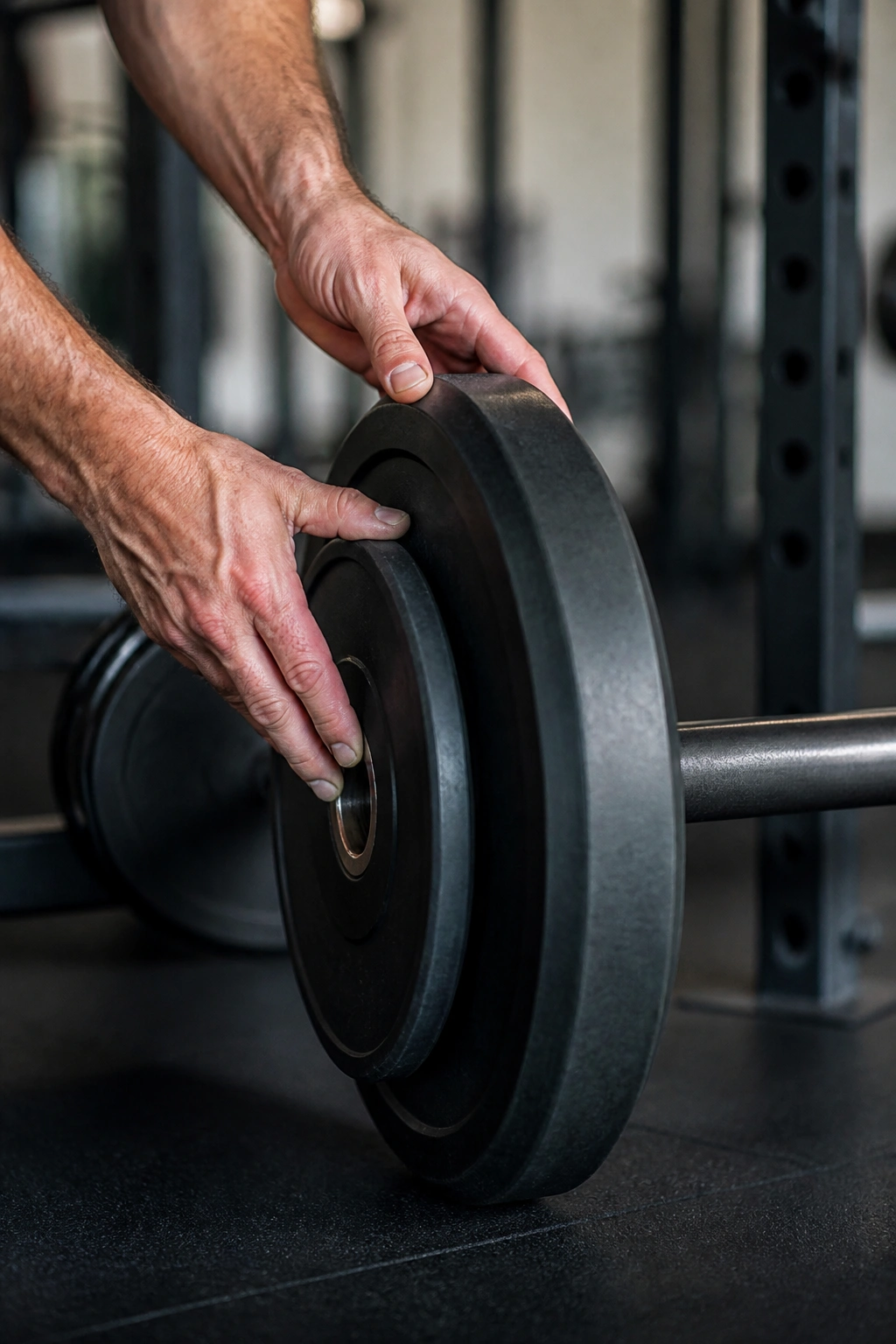
Scaling is a skill, not a downgrade.
That sentence needs repeating because the room can get noisy. If the workout calls for 21-15-9 thrusters at a load that turns your spine into a question mark, the smart move is to scale before the first set gets ugly. Same with pull-ups, rope climbs, handstand work, and barbell cycling. The goal is to keep the intended stimulus, not to collect points for suffering.
How to choose the right version
- Pick a load you can move with clean form.
- Choose a movement you can repeat without panic.
- Keep the pace alive, not frantic.
- Stop if a movement starts looking broken.
No medal is hiding behind the bar. The athlete who scales well usually finishes with better work quality and less junk fatigue. That matters on the next day, when everyone else is limping around pretending a torn grip was noble.
If you need proof, watch the people who train for years without constant flare-ups. They are rarely the ones trying to act tough every single session.
10. Eat Carbs Around Hard Training
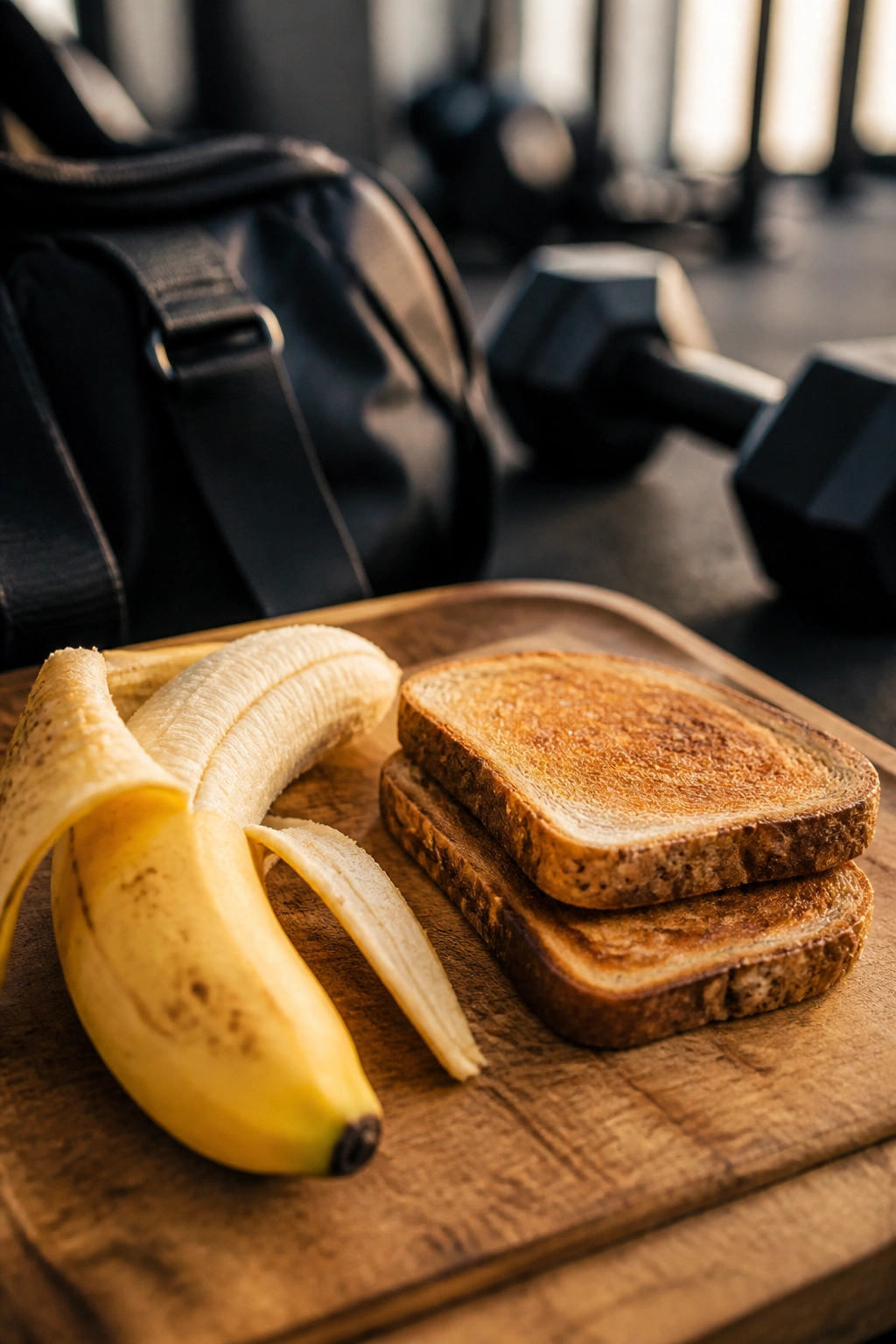
Leg day with no carbs feels like running on a half-empty tank.
Carbs around training are one of the simplest CrossFit lifestyle habits to get right, and people still overcomplicate it. If you train early, a banana and toast may be enough. If you train later, rice, potatoes, oats, fruit, or bread can give you the fuel you need to push hard without that dead-legged fade halfway through the metcon.
I’m not talking about eating wildly. I’m talking about timing. A meal or snack with 30 to 60 grams of carbs before a hard session can help a lot, especially if the workout is long or barbell-heavy. After training, pairing carbs with protein helps refill what you used and makes the next meal easier to build.
How to time the carbs
- Eat them 60 to 90 minutes before training if you can.
- Keep the meal lower in fat and fiber if your stomach is sensitive.
- Use fruit, oats, rice, or bread when you need something simple.
- Add protein after the workout instead of waiting all day.
They are not the enemy. They are the reason the second half of the workout doesn’t turn into sludge.
11. Respect Rest Days Like Training Days

If rest days are optional, why do so many people stall?
Because they keep sneaking extra work into the gaps. A hard WOD on Monday, another one on Tuesday, a “light” conditioning piece on Wednesday that isn’t actually light — then they wonder why the shoulders feel wooden and the bar speed falls off. Rest is when the adaptation happens. Skip it, and you’re just collecting fatigue.
A real rest day has shape. It might include a walk, some mobility, normal meals, and a decent bedtime. It does not need a secret punishment circuit. It does not need to feel productive in the same way a training session does.
What a real rest day looks like
- One easy walk
- 10 minutes of mobility
- Normal protein and carb intake
- No max lifts
- No random extra metcon
Rest days are where stubborn athletes either grow up or keep paying for the same mistake. I’ve seen both.
12. Protect Your Hands and Manage Calluses
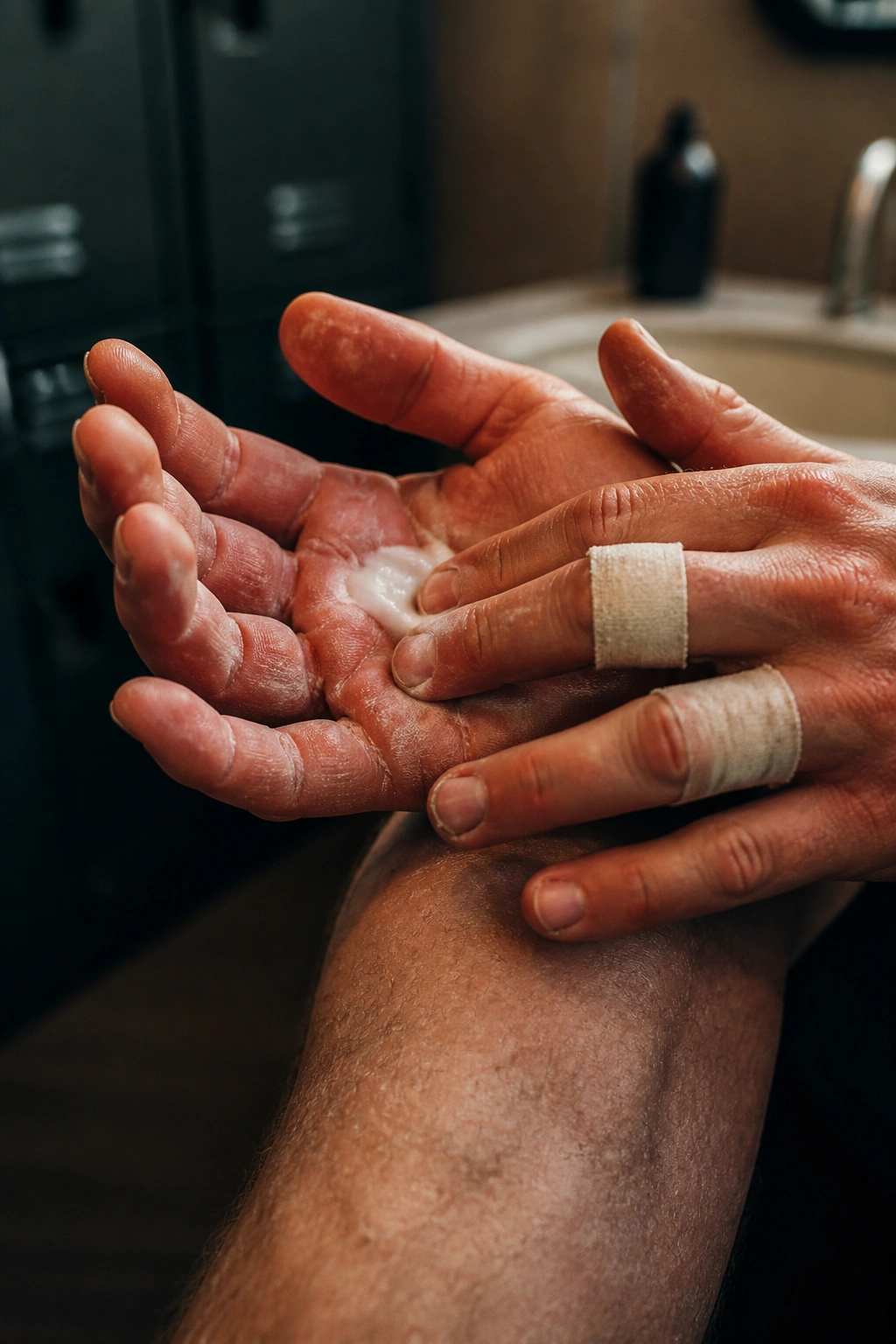
A torn palm can ruin a week.
Anyone who has done enough pull-ups, rope climbs, or high-rep kettlebell work knows the feeling. One hot spot turns into a flap of skin, and suddenly every hanging movement hurts. The fix is not to baby your hands forever. The fix is to care for them before they break.
I like a simple approach: keep calluses filed down after a shower, use a little hand cream at night, and tape hot spots before high-volume bar work if needed. Chalk helps with grip, but too much chalk builds a dry, rough layer that tears easier. That dry, sandpaper look is not a trophy. It’s a warning.
If your hands are already torn, clean the area, keep it protected, and give it a few days. Ripping it open again because you wanted one more set is a terrible trade. There’s nothing noble about training through avoidable skin damage.
A small nail file and a little consistency save more pull-up volume than most people realize.
13. Keep a Simple Supplement Stack

Do you need a shelf full of tubs?
Nope. Most people do better with a small, boring stack and a little discipline. Creatine monohydrate is the first thing I’d look at for strength and repeated effort; 3 to 5 grams a day is the usual routine. Caffeine can help if you tolerate it, but it works best when you don’t lean on it for every tired morning. Electrolytes make sense if you sweat a lot. Protein powder is just food in a more convenient form.
Keep it simple
- Use creatine every day, not only on hard sessions.
- Save caffeine for sessions that truly need a push.
- Reach for electrolytes on long or sweaty training days.
- Use protein powder only when real food is awkward.
The stack gets messy when people chase ten powders before they can drink water on time. If a supplement makes your routine harder instead of easier, it is probably a waste of money.
If you take medication or have a health issue, check first. That part is not optional.
14. Cut Back on Late-Night Alcohol and Random Snacking

The biggest recovery problem is often not the workout.
It’s the late-night drift. A few drinks, a bag of snacks, a bedtime that slides later than planned, then a groggy morning that feels mysteriously hard. Alcohol can mess with sleep quality even when you fall asleep fast, and random grazing at night often crowds out the meals that actually support training.
I’m not interested in preaching here. If you enjoy a drink, fine. Just make it deliberate instead of automatic. One beer with dinner is a different thing from four drinks plus a salty fridge raid at midnight. The second version tends to show up in the gym the next day, and not in a good way.
A practical move: set a cutoff for eating after dinner unless you truly need food, and alternate alcoholic drinks with water when you go out. Small guardrails beat dramatic promises. Every time.
15. Build a Community Routine

The same class time can change everything.
CrossFit works partly because the room does some of the heavy lifting for you. Names get remembered. Coaches notice when you’re fading. A few people expect to see you. That quiet pressure is useful. I’ve never seen a lonely training plan beat a stable class routine for consistency over time.
Pick a class slot that fits your life and protect it. Same days, same time, same general rhythm. You do not need to be the loudest person there. You just need to show up enough that the box becomes part of your week instead of a place you visit when you’re feeling motivated.
Why the box matters
- People notice when you miss.
- Coaches catch movement mistakes fast.
- Training feels less random.
- You’re more likely to keep going when the plan gets hard.
There’s a reason the social part matters, even for people who claim they just want the workout. The room pulls you forward when your personal willpower gets tired.
16. Set One Goal for Each Training Block

If you chase five goals at once, you’ll blur the whole thing.
One goal is cleaner. Maybe it’s your first strict pull-up. Maybe it’s a faster 500-meter row. Maybe it’s cleaning up your squat depth or holding a better pace in workouts longer than 12 minutes. Pick one thing that matters, then let the rest support it instead of competing with it.
I like this because it stops the scatter. A lot of athletes train hard but never aim at anything sharp. They want better conditioning, more muscle, less pain, a cleaner snatch, and better sleep all at once. That’s not a plan. That’s a wish list.
Set the target for the next block, write it down, and keep the rest of the training aligned with it. If the goal is pull-ups, you probably need more pulling volume, better recovery, and fewer random max-effort moves that trash your elbows. Simple. Not easy. Simple.
17. Keep Your Shoes, Grips, and Belt in Order
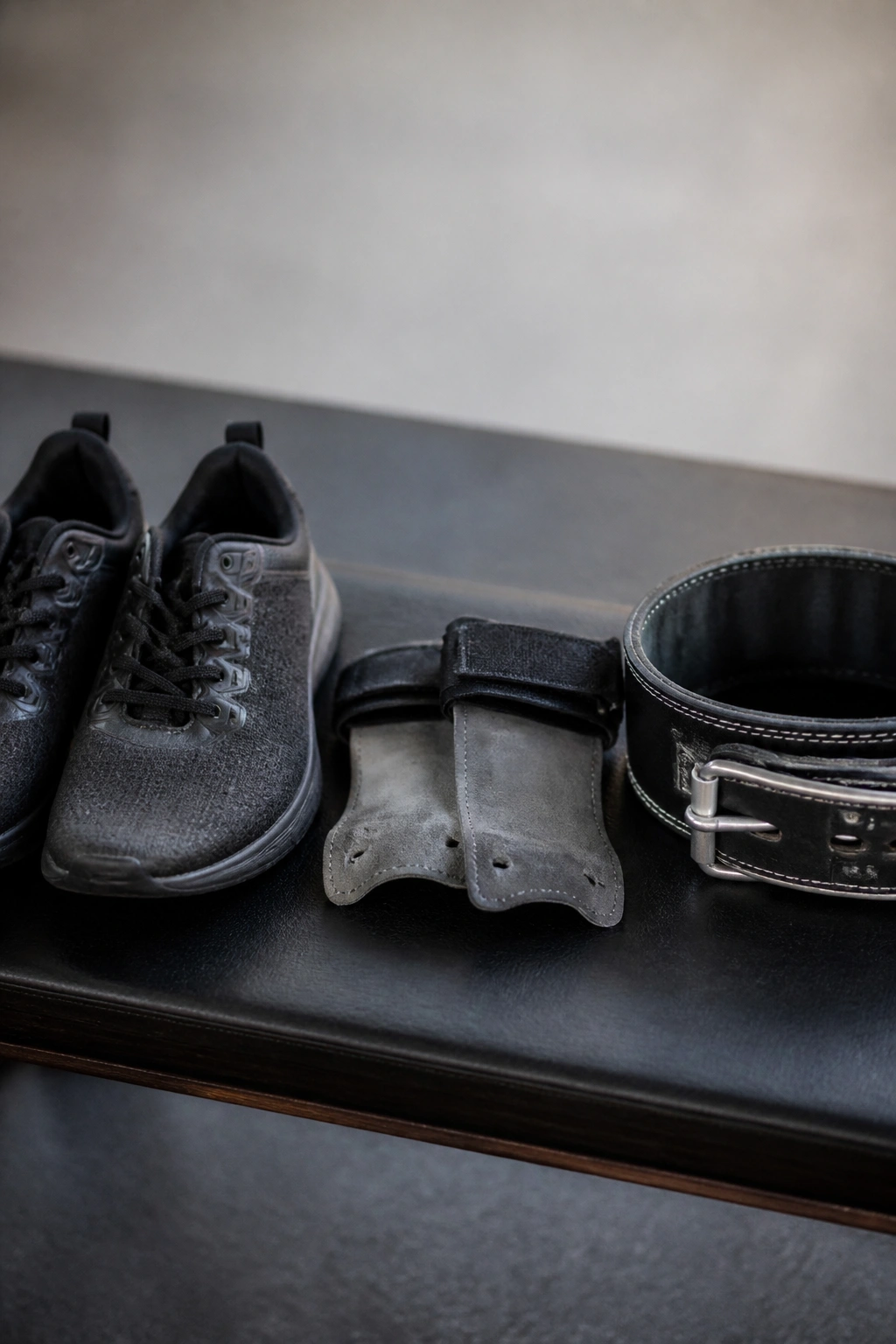
Packing the bag gets you to class. Caring for the gear keeps it ready for the next one.
Worn shoes, crusty grips, and a belt tossed in a corner do not sound dramatic, but they slow people down more than they admit. Shoes lose support little by little. Grips get slick or ragged. Belts warp if you leave them folded in a knot for weeks. None of it ruins your life. All of it adds friction.
I like to air out shoes after training, dry grips flat, and wash wraps or sleeves before they become their own small ecosystem. If the sole is dead or the tread is gone, replace the shoes instead of squeezing another month out of them because you’re attached. That attachment is usually expensive.
A tidy gear routine is part money-saving, part sanity-saving. You show up with the tools ready, and you stop dealing with tiny failures at the worst time.
18. Use Breathing to Downshift After Training

After a nasty AMRAP, your heart does not know the session is over.
That’s why I like a short breathing reset before I rush back into the rest of the day. Sit down, stand still, or walk slowly for a minute. Breathe through the nose if you can. Make the exhale longer than the inhale — something like 4 seconds in and 6 seconds out is enough to start. You are telling your body that the fight is done.
This is not about being mystical. It is about changing gears. If you sprint out of the gym still wired and then eat in the car, answer work messages, and slam more caffeine, you stay stuck in the same stress loop. A minute of calm can smooth the drop.
I like it best after heavy barbell work or hard intervals. The transition feels cleaner. Your shoulders come down. Your jaw unclenches. Small thing. Useful thing.
19. Schedule Lighter Weeks Before You Need Them
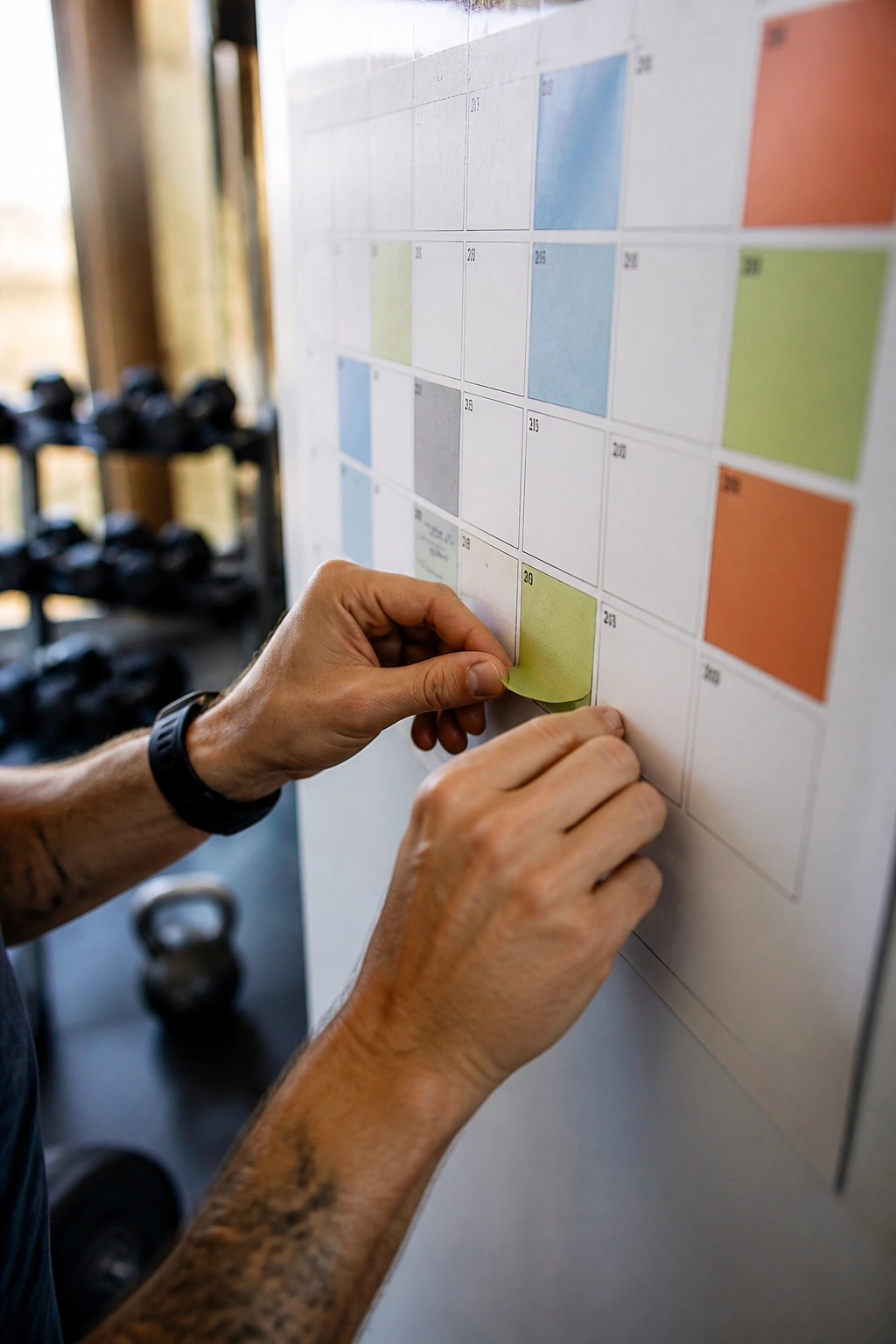
Most people wait too long to back off.
They keep pushing until the elbows ache, the bar speed dies, and every warm-up set feels like a job interview. Then they finally take a lighter week because they have to. That is the wrong direction. A planned lighter week, or even a few lighter sessions inside a hard block, keeps you training well instead of just surviving.
Signs you need less
- Sleep starts getting worse.
- Barbell speed drops early.
- Grip feels cooked for days.
- You dread the warm-up.
- Little aches stop leaving.
A lighter week does not mean doing nothing. It means cutting volume by about 30 to 40 percent, keeping movement quality high, and letting the joints calm down. Skill work can stay. Intensity can drop a little. The whole point is to come back sharp instead of stale.
If you wait until you’re wrecked, you are already behind.
20. Review the Week and Reset

Ten quiet minutes can save a messy week.
Pick one day and make it the reset point. Look at your training log, your sleep, the meals that went well, and the sessions that felt flat. Ask three blunt questions: What worked? What dragged? What needs to change next week? That is enough. You do not need a full life audit.
I like this habit because it keeps the whole thing honest. Without a reset, the same problems drift across the calendar — missed sleep, random food choices, too much intensity, too little recovery. A weekly review catches the drift before it turns into a pattern.
Write down one change only. Maybe it’s bedtime, maybe it’s water first, maybe it’s a better warm-up, maybe it’s finally scaling a movement you keep forcing. One fix is enough when it’s real. Then repeat it until it becomes ordinary, because ordinary is where these CrossFit lifestyle habits start paying off in the gym and everywhere else.
