



Pregnancy and the gym can work together better than people think, but the rules change fast. A treadmill, a bike, or a cable stack can feel friendly one week and awkward the next once your balance shifts, your breathing changes, and your joints start acting looser than usual.
The safest bet is usually not the fanciest workout. It’s the one you can control: low impact, easy to scale, and easy to stop without drama. The American College of Obstetricians and Gynecologists has long advised that many pregnant people with uncomplicated pregnancies can aim for about 150 minutes of moderate activity a week, which sounds modest until you remember that walking, cycling, and strength work all count. The talk test is useful here: you should be able to speak in full sentences, just not sing them.
I like gym workouts during pregnancy because the equipment does some of the thinking for you. A machine gives you a seat, a rail, or a guided path; that matters when your center of gravity is shifting and you do not want to fight for balance on a bad day. A little swelling can make shoes feel tighter, too, so a workout that lets you stay stable and upright tends to feel better than one that asks for heroics.
If you’re dealing with bleeding, placenta issues, severe anemia, preeclampsia, dizziness, or anything your clinician has flagged, the exercise menu changes. For everyone else, the smartest choices are the ones below—simple movements, steady machines, and a few strength drills that keep your legs, back, and core honest without asking for breath-holding or acrobatics.
1. Treadmill Walking for Pregnancy Cardio
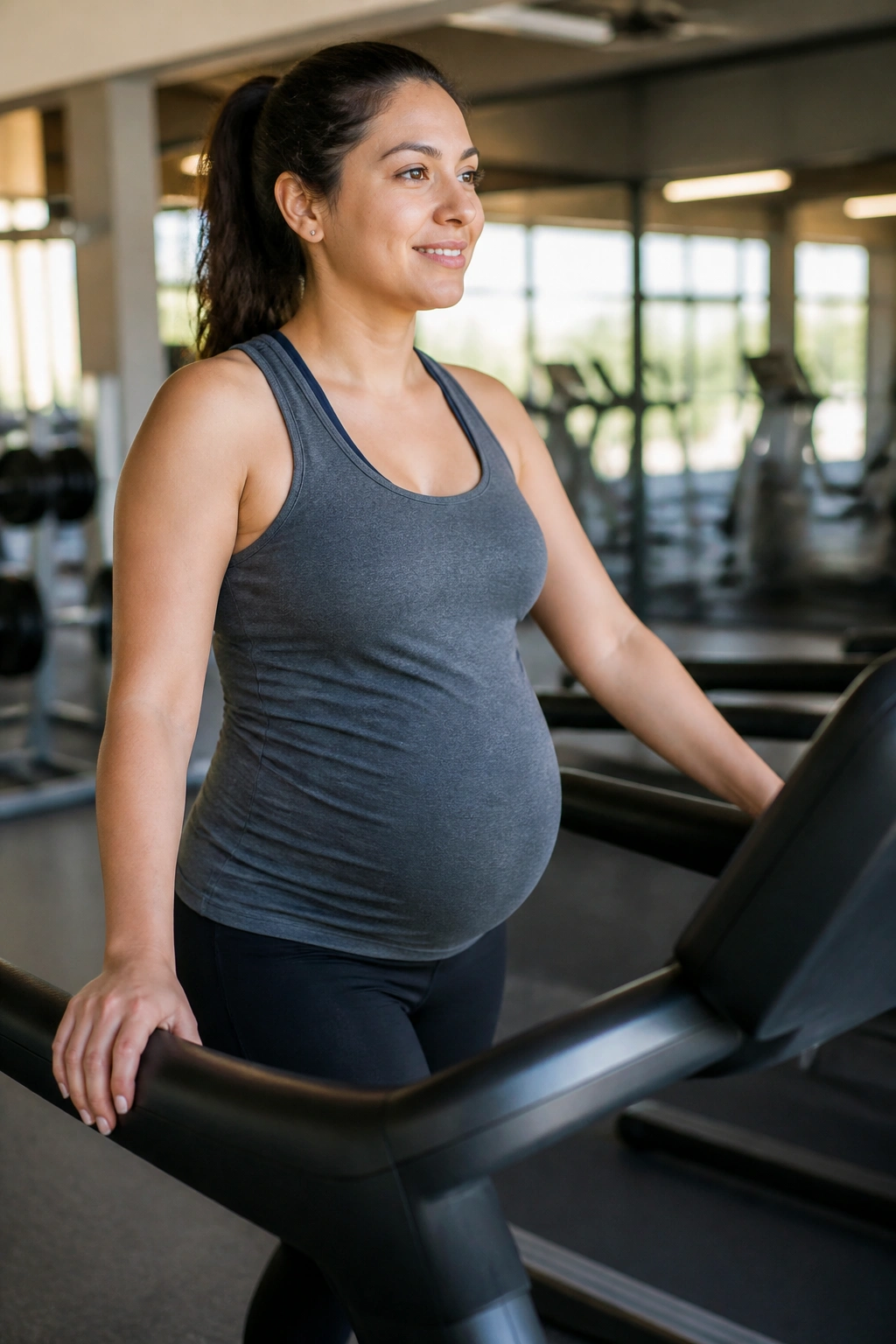
A treadmill walk is the plainest option in the room, and that is exactly why it works. You can adjust speed in tiny steps, add a little incline, and stop the second your body says “enough” without having to worry about weather, traffic, or uneven ground.
Keep the pace in the comfortable-moderate zone, not the “I’m trying to prove something” zone. For a lot of people, that means somewhere around 2.5 to 3.8 mph, maybe with a 0 to 2 percent incline. The number matters less than the feeling. You should be breathing a little harder, not gasping.
How to set it up
- Start with 5 minutes at an easy pace.
- Build to 10 to 20 minutes of steady walking.
- Hold the rails only for balance, not for hauling yourself along.
- Keep your posture tall, ribs stacked over hips.
If you need to lean on the console, slow down. That little wobble is the body doing useful feedback.
A treadmill walk also makes a good “reset” workout on days when everything feels off. Two short blocks of 10 minutes can be better than forcing one long session. No drama. No fancy footwork. Just clean, repeatable movement.
2. Stationary Bike Sessions That Keep You Upright
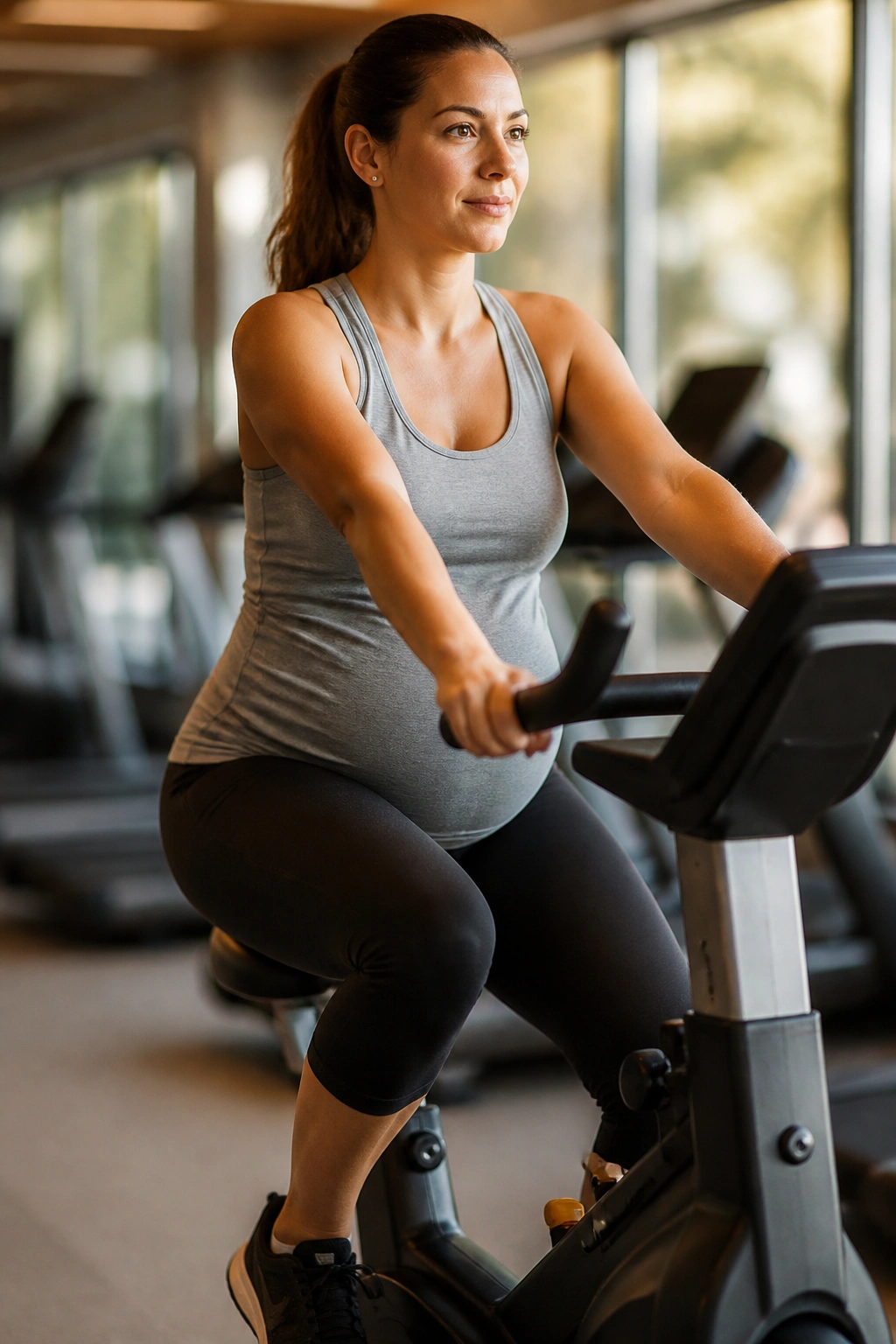
A stationary bike is one of the easiest ways to get your heart rate up without feeling like you’re bouncing around. That sounds boring until you’ve had one of those days when your pelvis feels a bit loose and your lower back would like fewer surprises.
An upright bike usually works well if you want a regular cardio feel, but a recumbent bike can be a nicer choice when your lower back is cranky or your balance feels off. The seat gives you a clear place to sit, and the pedals do the work without loading your joints much. Keep the resistance moderate and the cadence smooth. If your knees are jamming into your belly or your back rounds to reach the bars, the bike fit is wrong.
Short blocks work well here. Ten minutes can be a real session. Twenty minutes is plenty for many people. If you want a simple structure, try 3 minutes easy, 2 minutes brisk, then repeat until you hit 15 or 20 minutes.
No standing climbs. No all-out sprints. Those belong on someone else’s playlist.
3. Elliptical Training That Feels Smooth Instead of Bouncy
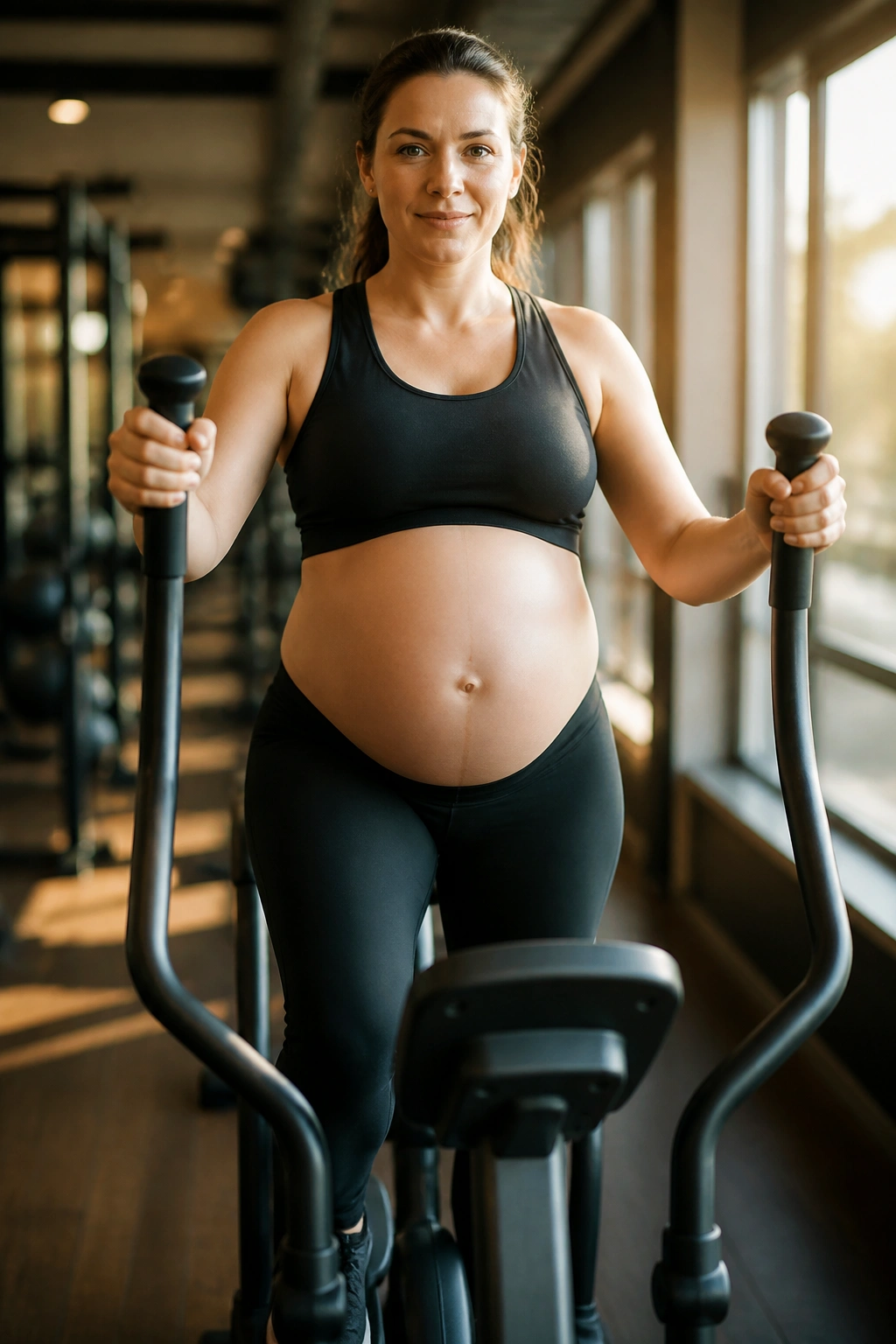
Why do so many people switch to the elliptical when walking starts feeling clunky? Because the machine keeps your feet connected to the pedals, which cuts down on impact and gives your body a smoother path to follow.
That fixed track is the whole point. You still get a solid cardio session, but you are not slamming one foot into the floor at a time. Keep the resistance light to moderate, and don’t overstride just because the machine allows it. A long, reaching stride can tug on the hips and make the movement feel strange.
What to watch for
- Keep your grip light on the handles.
- Stay tall through the chest.
- Use a pace that lets you breathe steadily.
- Back off if you feel pulling in the pelvis or lower back.
A lot of people like the elliptical because it feels “done for you.” That can be nice, but it also tempts you to zone out and start leaning on the rails. Don’t. If your hands are doing half the work, the machine is too easy or your posture has drifted.
4. Incline Treadmill Intervals for a Little More Work
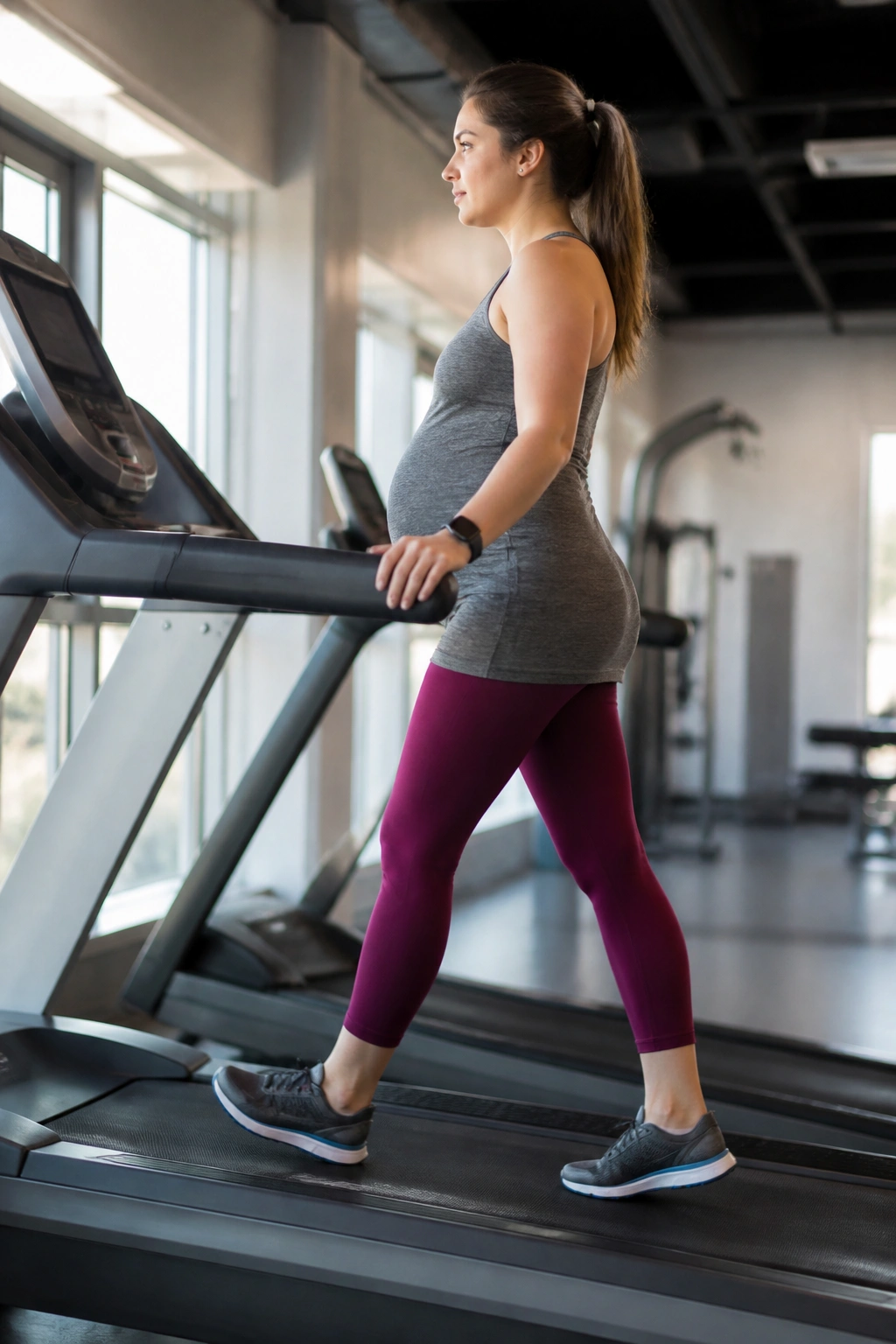
A brisk walk with a small incline can wake your legs up fast, but the incline needs a leash. Too much slope and you start hanging forward, squeezing your calves, or grabbing the rails like a cliff face.
A smart version is simple: 1 minute brisk, 2 minutes easy, repeated for 10 to 18 minutes. Keep the incline modest, around 1 to 4 percent, and choose a pace that feels like hard walking, not hill survival training. The point is to raise effort a little without turning the session into a grind.
The nice thing about incline intervals is that they save your joints while still giving you a clear workout signal. You feel the glutes, the hamstrings, the calves. You also get a little break every few minutes, which can matter more than you expect when pregnancy makes breathing feel shorter.
Skip steep inclines if they pull on your pelvic floor, make you feel unstable, or force you into a forward lean. Flat ground is never a failure. It’s a choice.
5. Rowing Machine Workouts With a Short Stroke
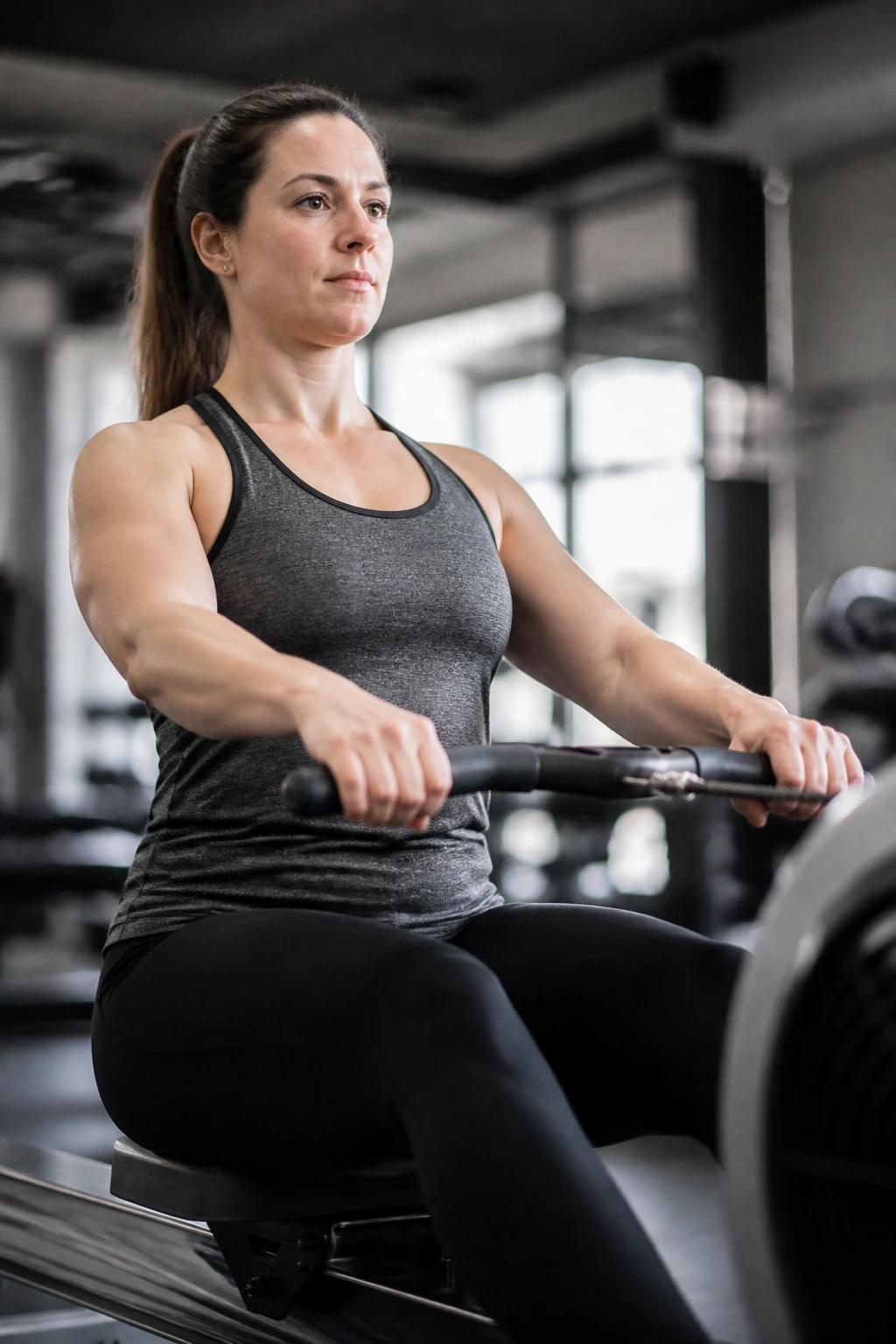
Rowing can be fine during pregnancy, but only when you shorten the stroke and keep your ribs stacked. A sloppy row turns into a deep hip hinge with rounded shoulders, and that is not the vibe.
The machine shines when you want a whole-body cardio session without pounding your feet. Sit tall, drive through your legs first, then swing the torso slightly, then pull with the arms. On the return, reverse it: arms, torso, legs. If your belly starts pressing into the setup or you can’t reach the catch position without squishing yourself, your range is too long.
Two cues that save your back
- Keep the handle path straight to the lower ribs.
- Stop the drive before your torso collapses forward.
Rowing works best in short blocks of 5 to 10 minutes with plenty of easy pacing. A low damper setting is usually enough. You do not need to crank the resistance to make it count. If your lower back complains, switch to the bike or the treadmill that day. Easy choice.
6. Seated Leg Press for Prenatal Leg Strength
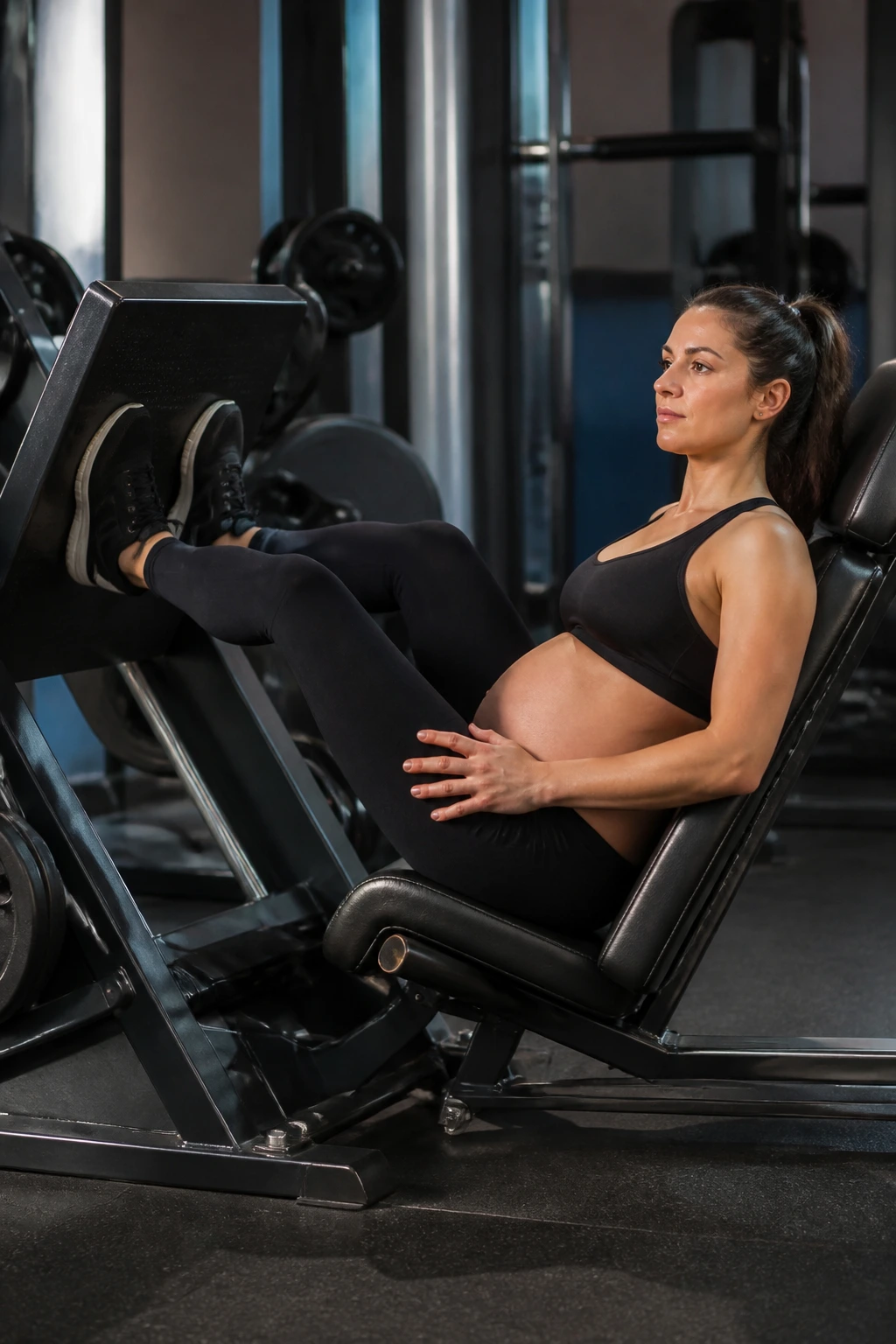
Unlike free squats, the leg press gives you a backrest and a fixed path. That makes it friendlier when your balance changes or your legs are tired before you even start.
Use a stance that feels stable, often a little higher on the platform so your knees have room and your hips do not feel jammed. Press through the whole foot, not just the toes. Stop the descent before your pelvis tucks under or your lower back starts rounding off the pad. That little detail matters more than the number of plates on the machine.
A useful range is 2 to 3 sets of 8 to 12 reps with a load that leaves two clean reps in reserve. If the machine forces you to hold your breath, it is too heavy. If the sled barely moves and you feel nothing, go a little higher next time.
This is not the place for ego lifting. It is the place for smooth reps and controlled breathing. Clean reps beat heavy ones every time here.
7. Goblet Squats to a Box
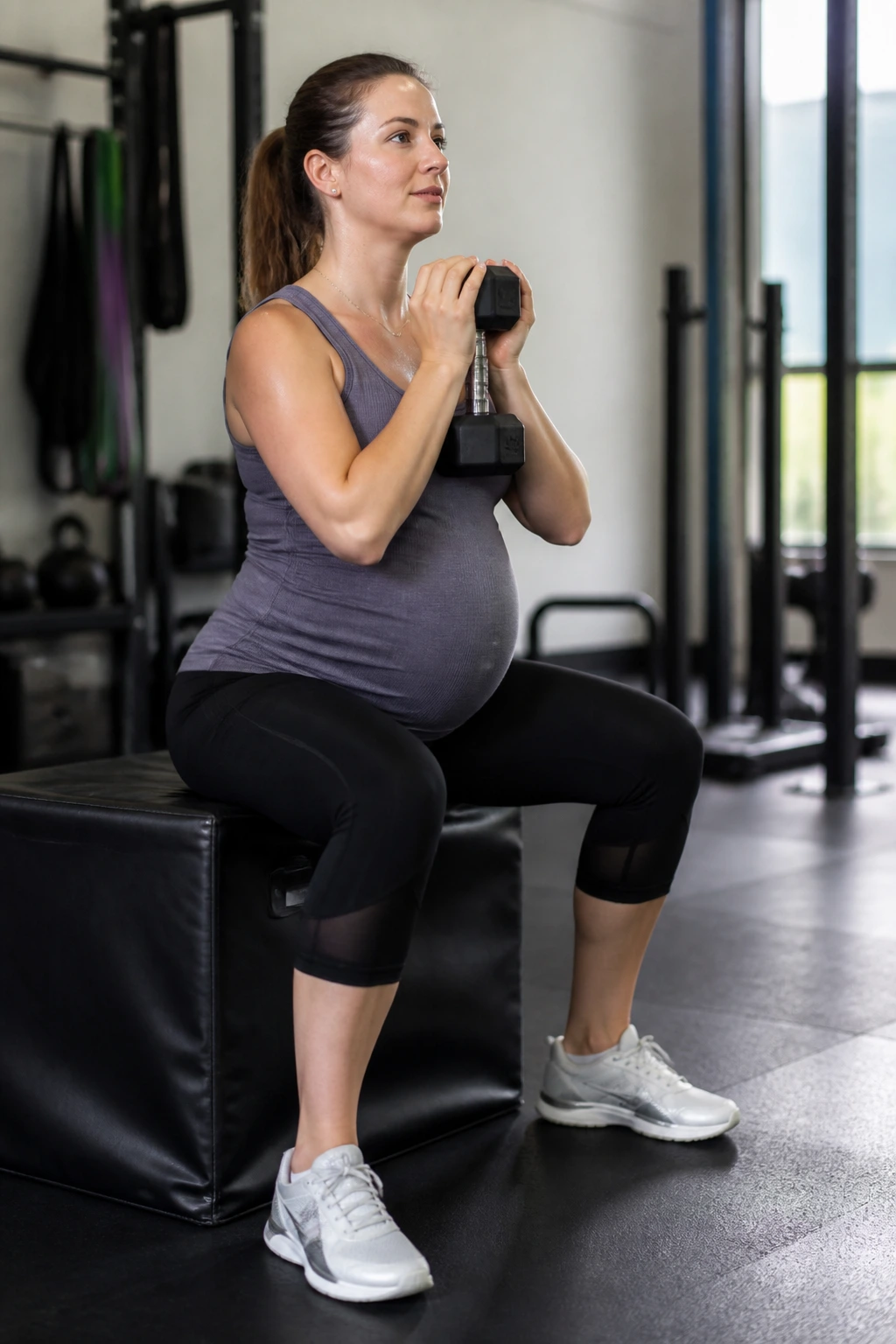
If bodyweight squats feel fine but your balance is getting picky, a goblet squat to a box is a smart middle ground. The box gives you a target depth, and that target keeps you from sinking too low on a day when your hips are acting loose.
Hold a single dumbbell or kettlebell close to your chest, feet about shoulder width, toes turned out just a touch. Sit back to the box with control, tap it lightly, then stand. No plopping. No collapse. The weight should help you stay upright, not drag you forward.
Box height matters
- Use a box or bench that lets you keep your spine neutral.
- Raise the target if your knees or hips feel pinchy.
- Lower it only if the movement stays smooth and stable.
- Keep your exhale on the way up.
A box squat also gives you feedback you can trust. If the tap feels sketchy, the depth is too low. Simple. And once the belly gets in the way of a deep squat, that extra structure is a relief.
8. Dumbbell Romanian Deadlifts
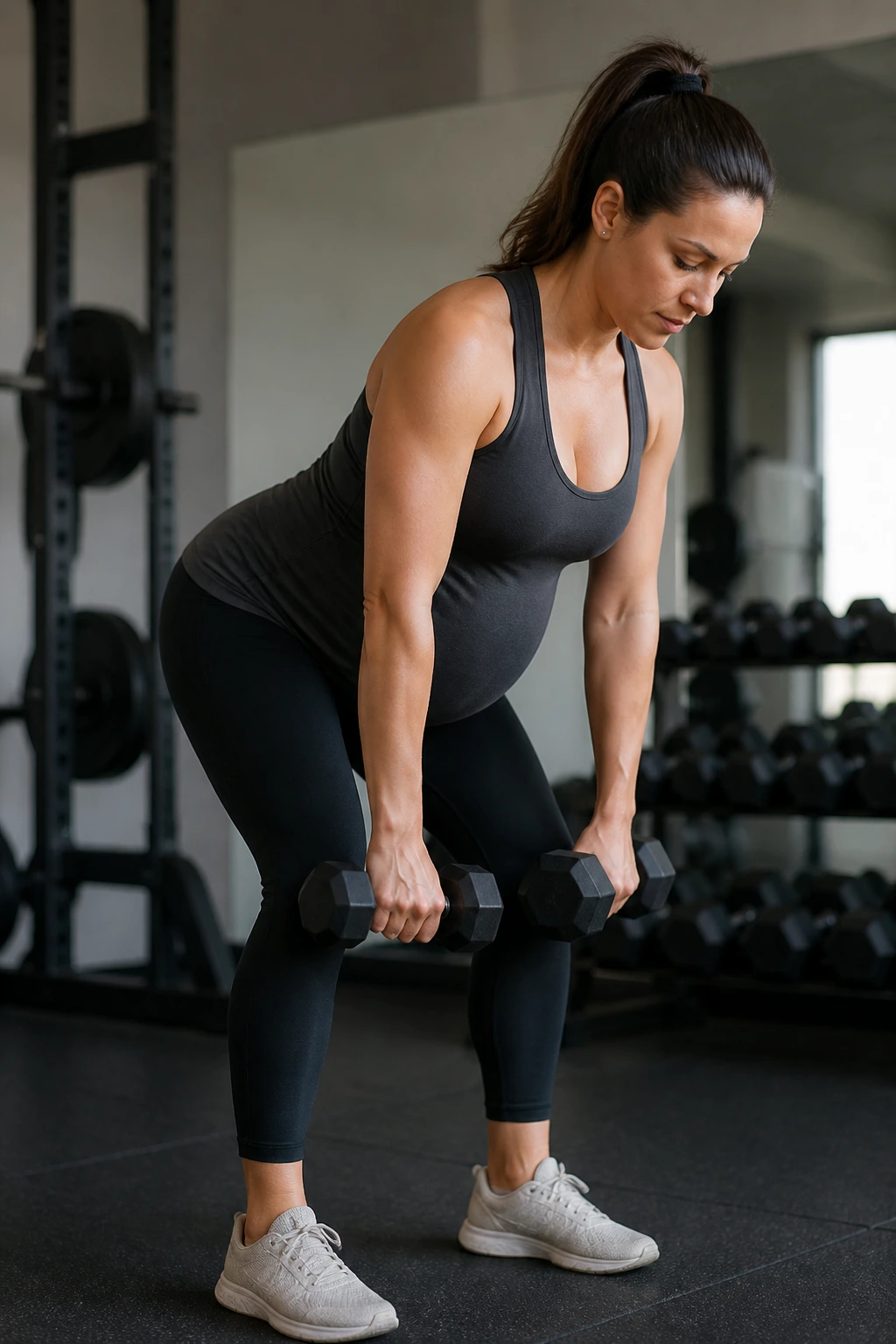
The dumbbell Romanian deadlift is one of the best ways to train the back side of your body without doing anything flashy. Hamstrings, glutes, and upper back all chip in, which is useful when pregnancy posture starts nudging you forward.
Keep the dumbbells close to your legs, soften the knees, then send the hips back as if you were closing a car door with your hips. Stop when the hamstrings feel loaded and your back stays flat. You do not need to chase the floor. In fact, chasing the floor is usually where form starts getting sloppy.
A lot of people make this move too big. Smaller is better. Three-quarters of the range with clean posture beats a deep hinge that rounds the spine and turns into a back stretch you did not ask for.
Use light to moderate weight for 2 to 3 sets of 8 to 10 reps. If you feel the weight in your lower back before you feel it in your hamstrings, shorten the range and slow down.
9. Step-Ups on a Low Box
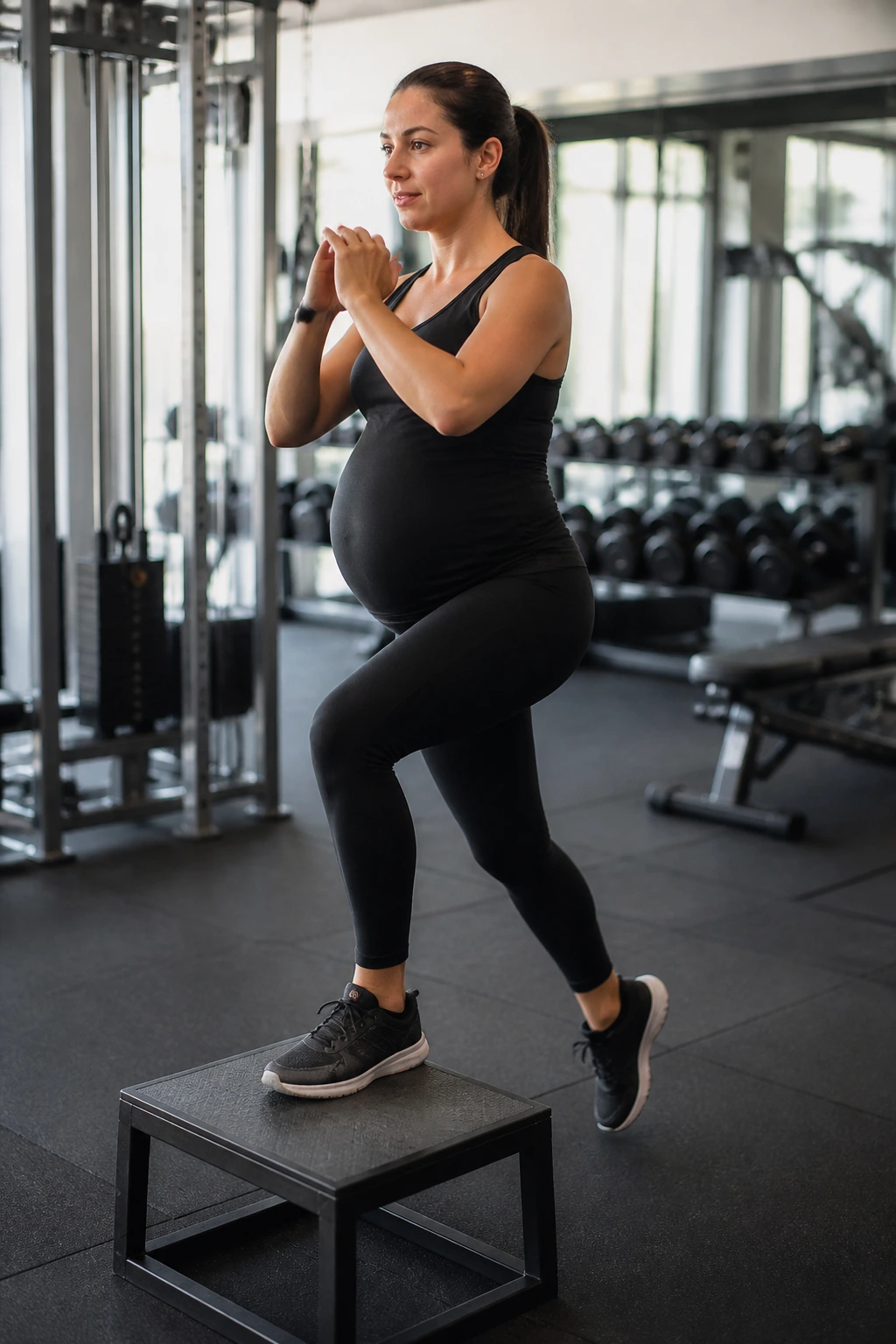
Need a leg move that feels closer to climbing stairs than performing an exercise? Step-ups are about as honest as it gets. They train each leg on its own, which can help you spot side-to-side differences that two-legged moves hide.
Choose a low box first—4 to 8 inches is enough for many people. Put one foot fully on top, press through the heel, and stand tall without kicking off the back foot. Then step down slowly. The descent matters. Fast drop-offs make the knee and hip work harder than they need to.
- Use a rail or rack for one hand if balance feels uncertain.
- Keep the torso tall.
- Slow the lowering phase to about 2 seconds.
- Stop if the pelvis shifts side to side.
Step-ups are great for day-to-day life, which is why they stick around in pregnancy training. You are building the exact kind of leg strength that helps on stairs, curbs, and all the annoying little ledges that show up everywhere.
10. Supported Reverse Lunges
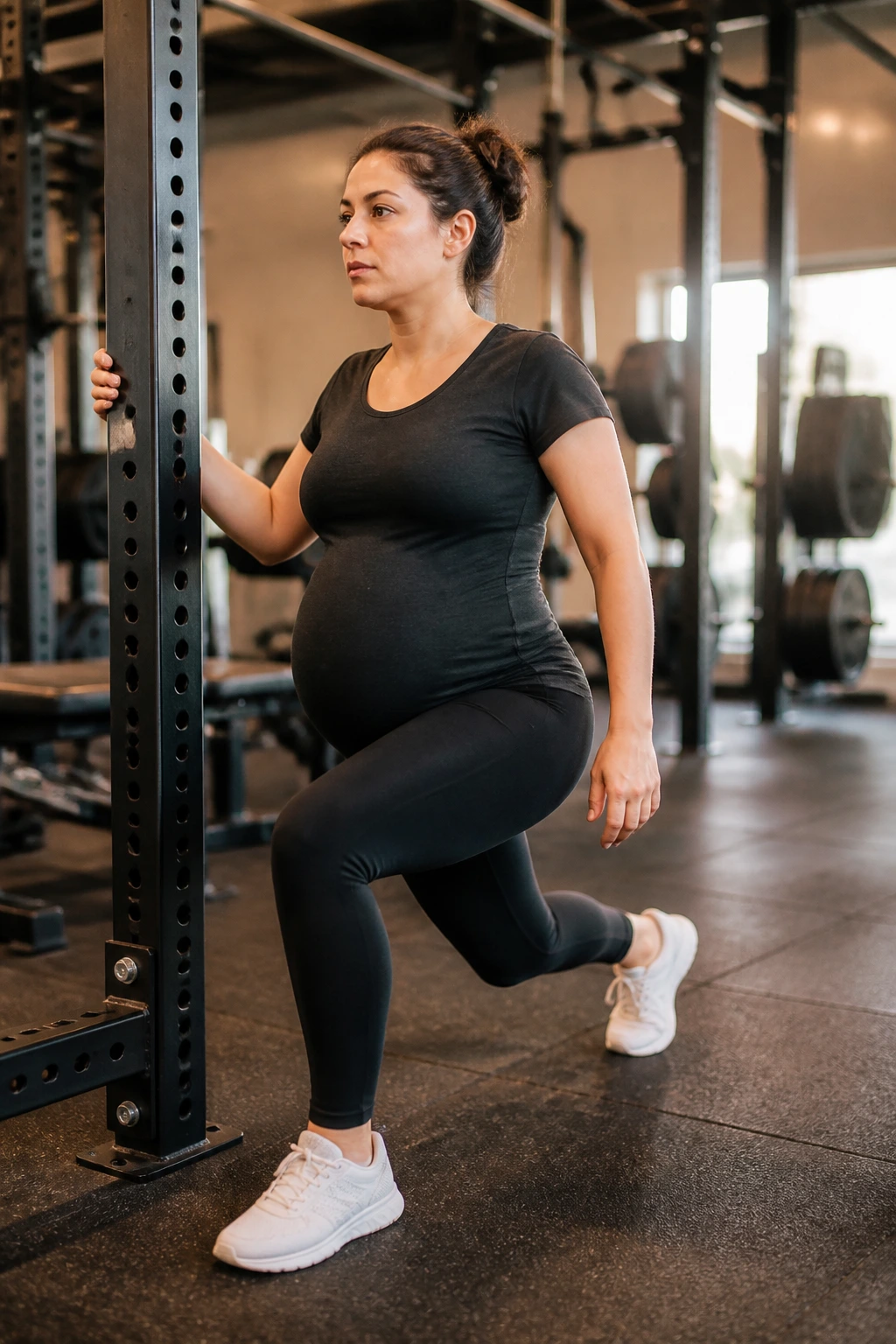
If forward lunges make you feel wobbly, reverse lunges usually feel calmer. Stepping backward keeps your front foot planted, which is easier to control when your center of gravity is changing.
Hold onto a rack, a pole, or the edge of a Smith machine if that helps. Step back far enough that both knees can bend without your front knee shooting way past your toes. Then drive through the front heel to stand. The back leg is there for support and balance, not for show.
Why the step-back helps
- It keeps the landing softer.
- It gives you more room to stay upright.
- It usually feels friendlier on the hips.
- It makes balance easier to manage.
Start with bodyweight. Seriously. A lot of people do not need dumbbells here at all, and adding load too soon is a fast way to make the movement messy. When the pattern feels solid, you can hold light weights at your sides.
11. Seated Cable Rows for Better Posture
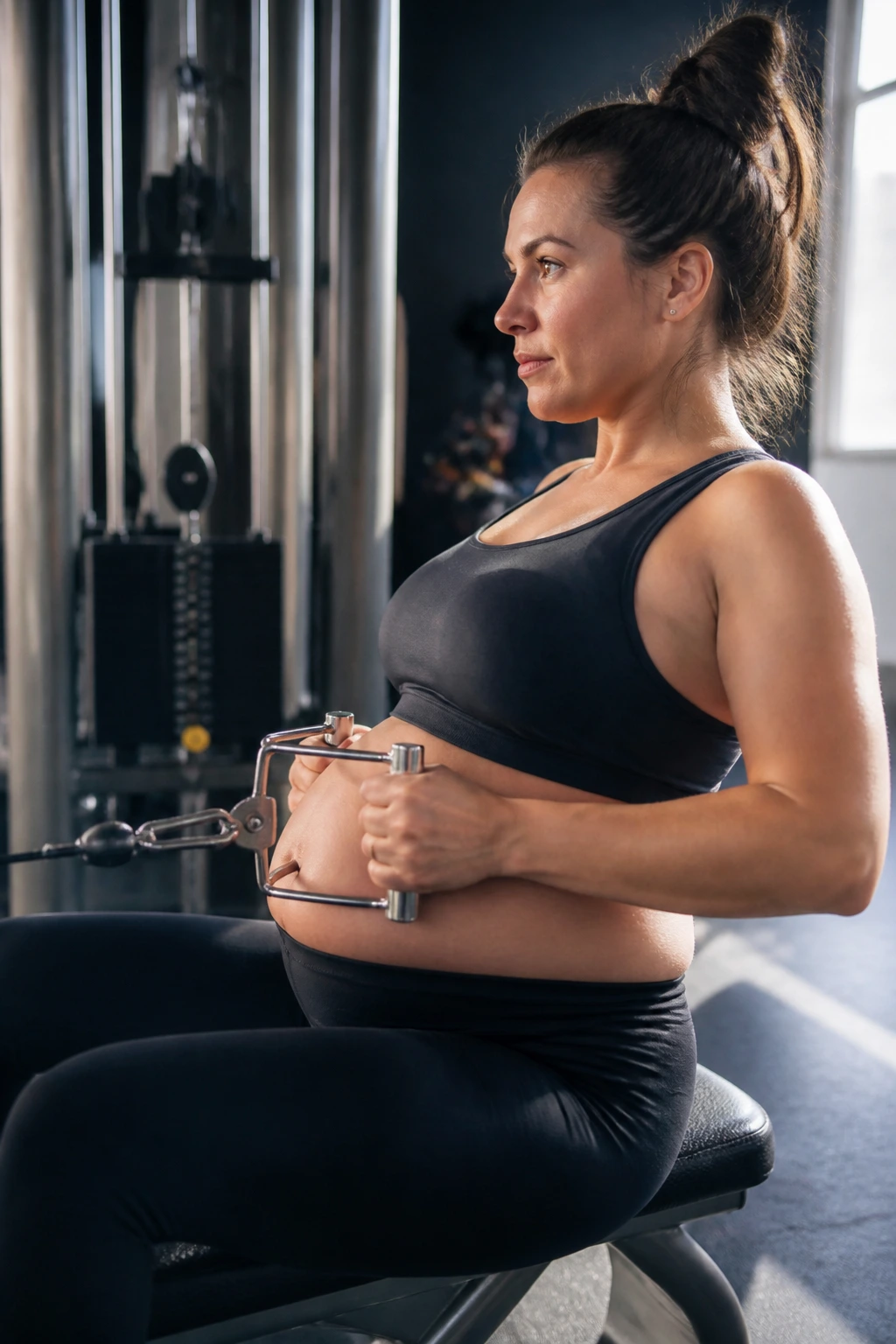
Seated cable rows fix a lot of the posture slouch that shows up when a belly and a bra band both start asking for more space. They train the upper back, rear shoulders, and lats, which helps you stay open through the chest instead of curling forward all day.
Sit tall, plant your feet, and pull the handle toward the ribs. Pause for a beat with the shoulder blades moving back and down, then return the handle with control. No yanking. No shrugging. The move should feel crisp, not jerky.
A neutral grip usually feels friendlier on the shoulders than a wide overhand grip. If your lower back wants to help by swinging, the weight is too heavy. Lighten it until the torso stays quiet and the arms do the work.
This one is especially nice on days when sitting at a desk or driving has made your upper back feel stiff. A few clean sets can make standing up feel better almost immediately.
12. Lat Pulldowns
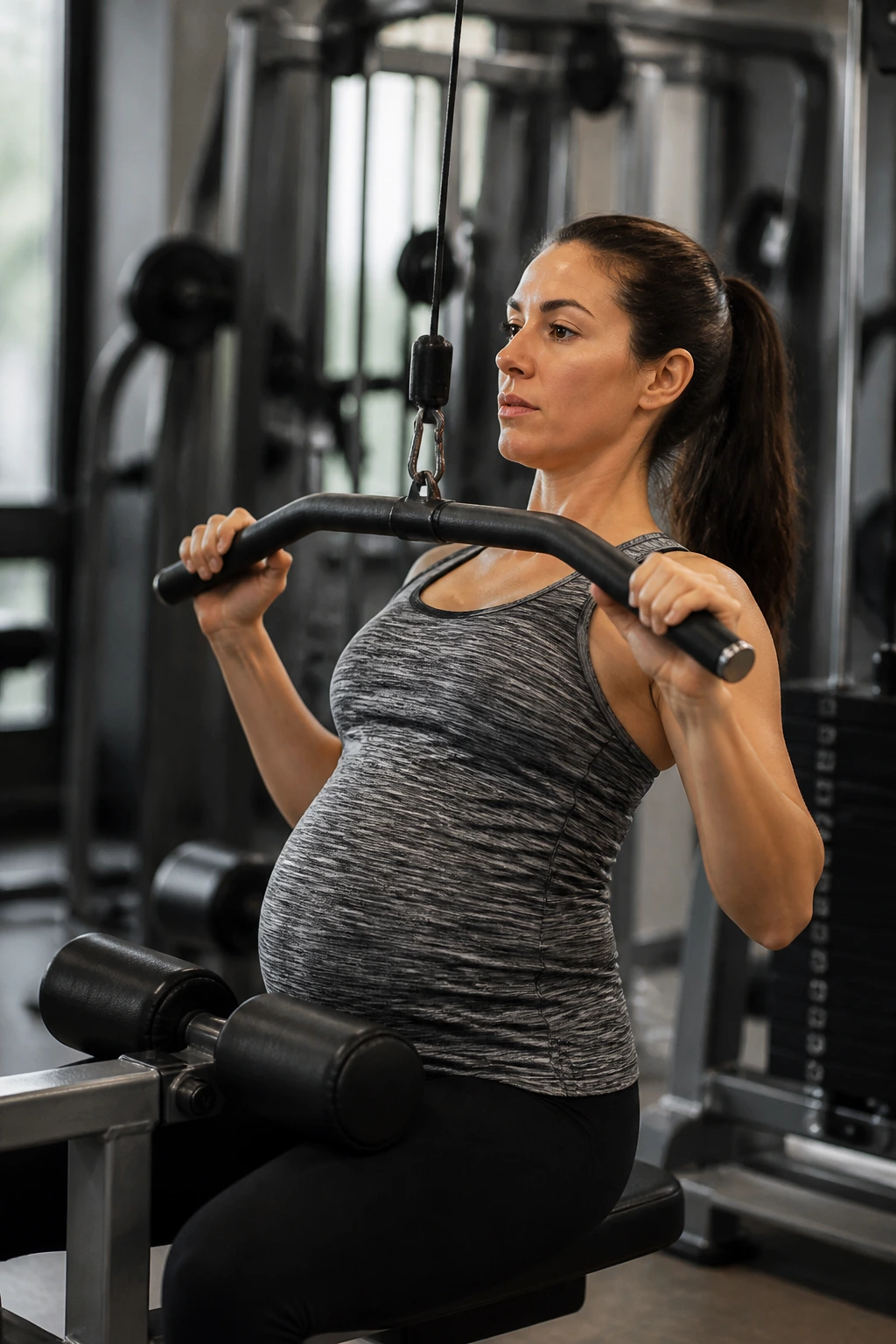
A lat pulldown is the pull-up’s easier cousin, and for pregnancy gym work that’s a good thing. Same big back muscles. Less drama.
Choose a grip that lets your shoulders move comfortably, usually neutral or slightly underhand. Sit tall, pull the bar to the upper chest, then let it rise under control. Keep the rib cage from flaring wildly at the bottom. That flare is your clue that the weight is doing too much and your body is trying to cheat.
You do not need to lean way back. A slight tilt is fine; a dramatic recline turns the movement into a half-row and starts loading the lower back in a way that usually feels silly once the bump gets in the way. Use 2 to 4 sets of 8 to 12 reps and stop before your elbows lose their path.
If pull-ups were a pre-pregnancy favorite, this is the version that keeps you connected to the same muscle pattern without making the workout a fight.
13. Chest Press Machine or Incline Push-Ups
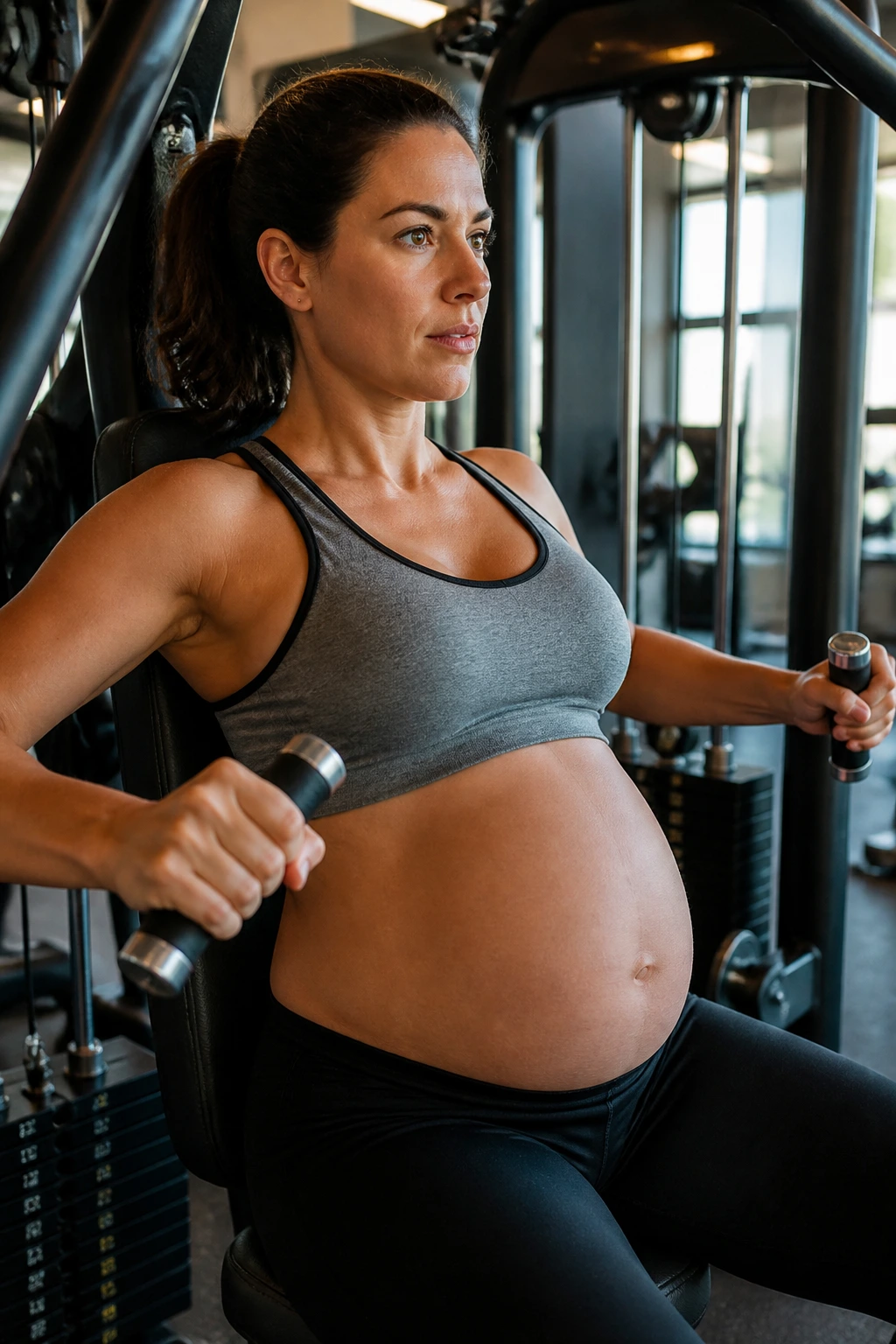
If floor push-ups or flat bench work start feeling awkward, the chest press machine earns its keep. You get a guided press, a backrest, and less need to stabilize your entire body while the pregnancy center of mass keeps shifting.
Set the seat so the handles line up around mid-chest. Press without locking the elbows hard at the top, and keep your shoulders from creeping up toward your ears. If a flat machine feels uncomfortable on your back or belly, choose an incline push-up on a Smith bar, bench, or wall instead. The incline makes a huge difference.
Choose the version that feels best today
- Machine if you want more support.
- Incline push-up if you want bodyweight control.
- Wall push-up if you need the gentlest angle.
- Higher incline if your wrists or core feel tired.
You are not trying to win a push-up contest here. You are keeping your pressing muscles online while the body changes shape under them. That’s enough.
14. Cable Face Pulls for Upper-Back Comfort
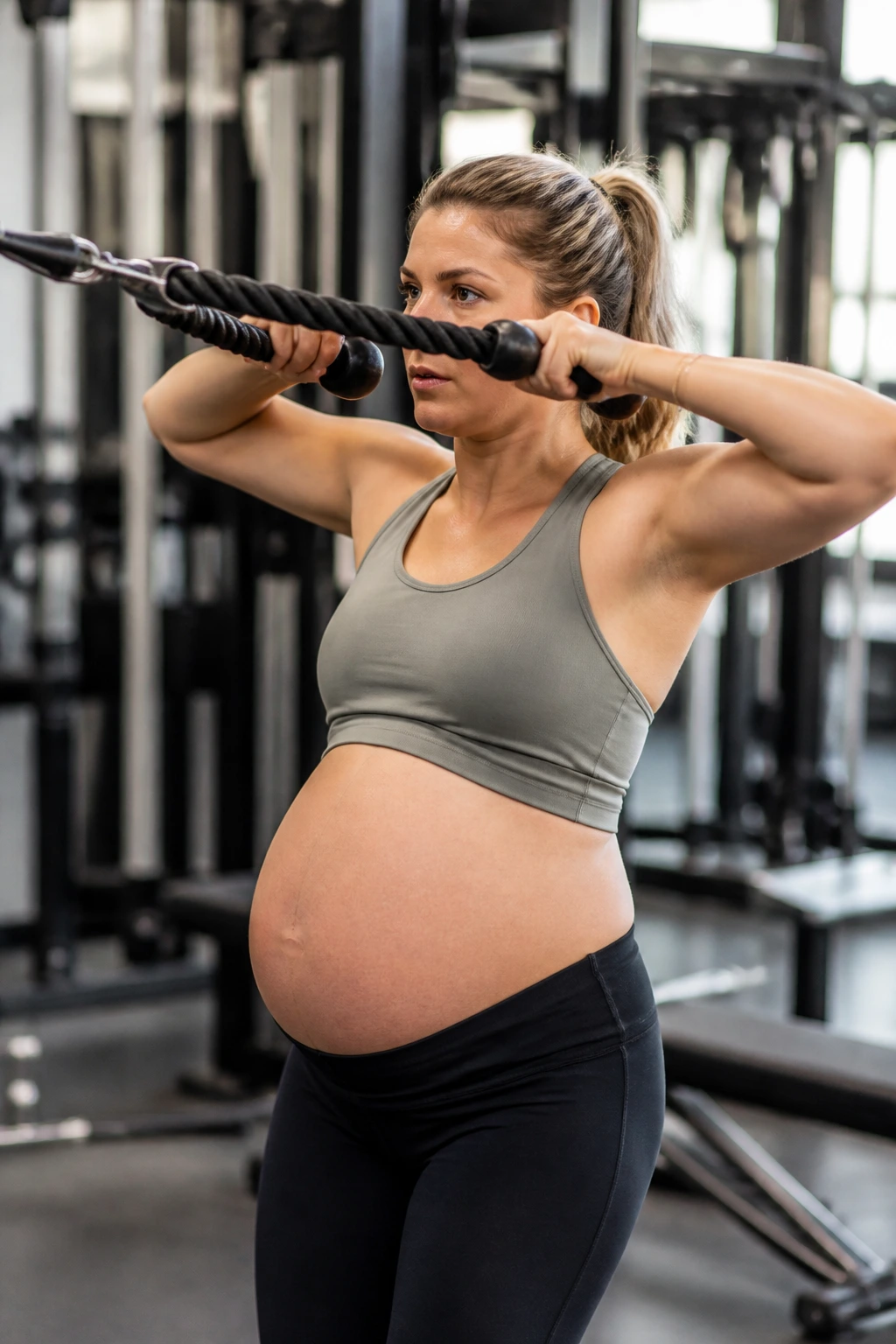
Why do face pulls show up in so many pregnancy strength plans? Because they help undo the rounded-shoulder slump that sneaks in when the chest feels heavier and the upper back gets left behind.
Set the cable at eye level or a little higher, use a rope attachment, and pull toward the face while letting the elbows flare out. Think “pull apart and back,” not “rip the weight down.” The rear shoulders and mid-back should do the work. If your neck takes over, the load is too heavy.
A light cable or even a band is plenty. Twelve to fifteen smooth reps can light up the upper back without turning the movement into a trap shrug. That matters because neck tension is common, and face pulls often feel better than people expect.
This is one of those small exercises that pays off in boring, useful ways. Better posture at the desk. Less shoulder pinch during carries. More room to breathe up top.
15. Pallof Presses for Core Stability
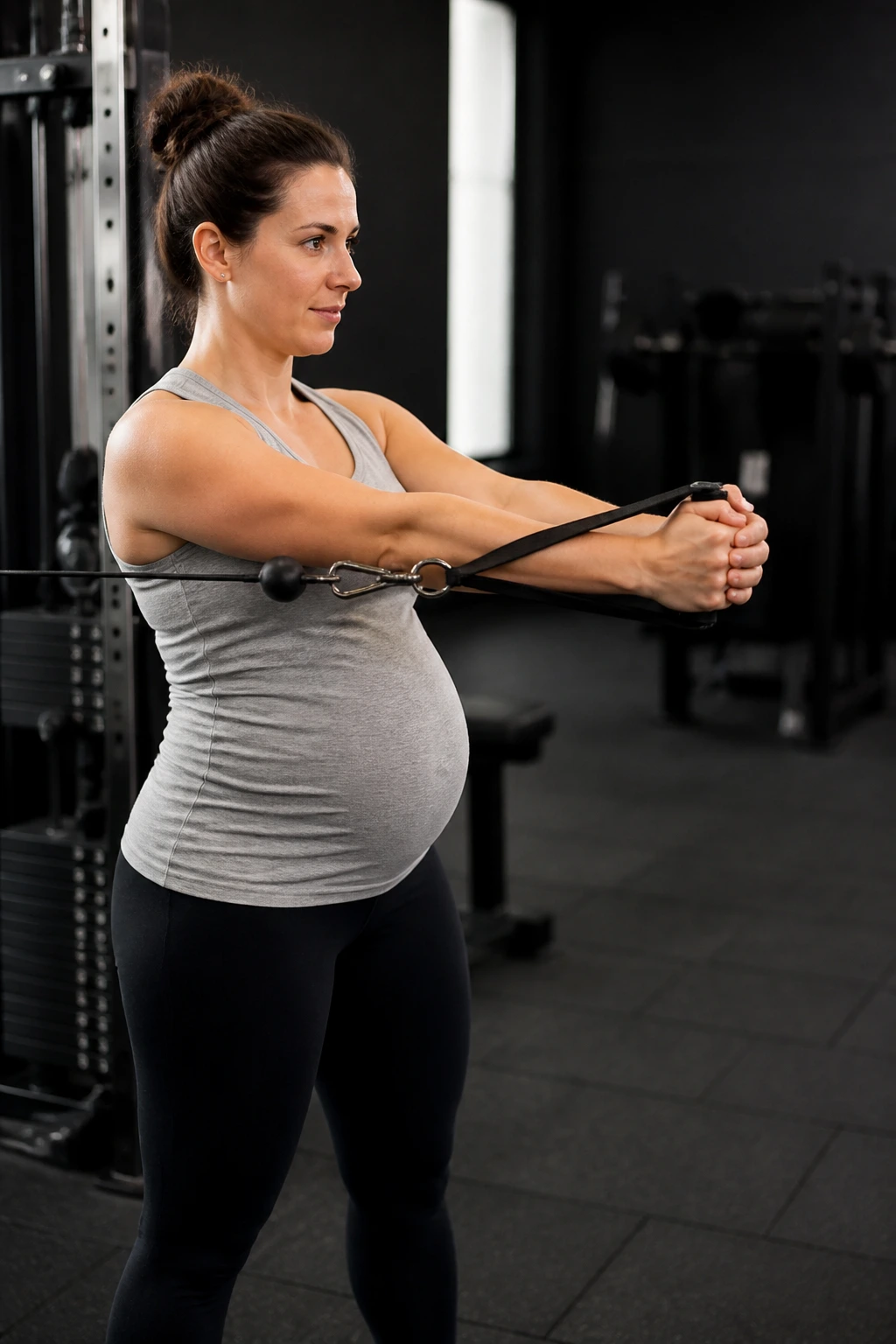
The Pallof press looks almost boring, and that is the point. It trains your trunk to resist twisting, which is a far better fit for pregnancy than endless crunches or sit-ups.
Stand sideways to a cable or band, hold the handle close to your chest, then press it straight out and back without letting your torso rotate. Your feet stay planted. Your ribs stay quiet. The job is to hold your shape while the cable tries to pull you sideways.
How to use it
- Start with a light cable setting.
- Press for a 1- to 2-second pause.
- Do 8 to 10 reps per side.
- Keep the hips level and the jaw relaxed.
If the movement feels too easy, widen your stance a little less or hold the press longer. If it feels too hard, step closer to the stack and make the resistance lighter. This is one of those rare core exercises where gentle control is the whole win.
16. Bird Dogs on a Bench
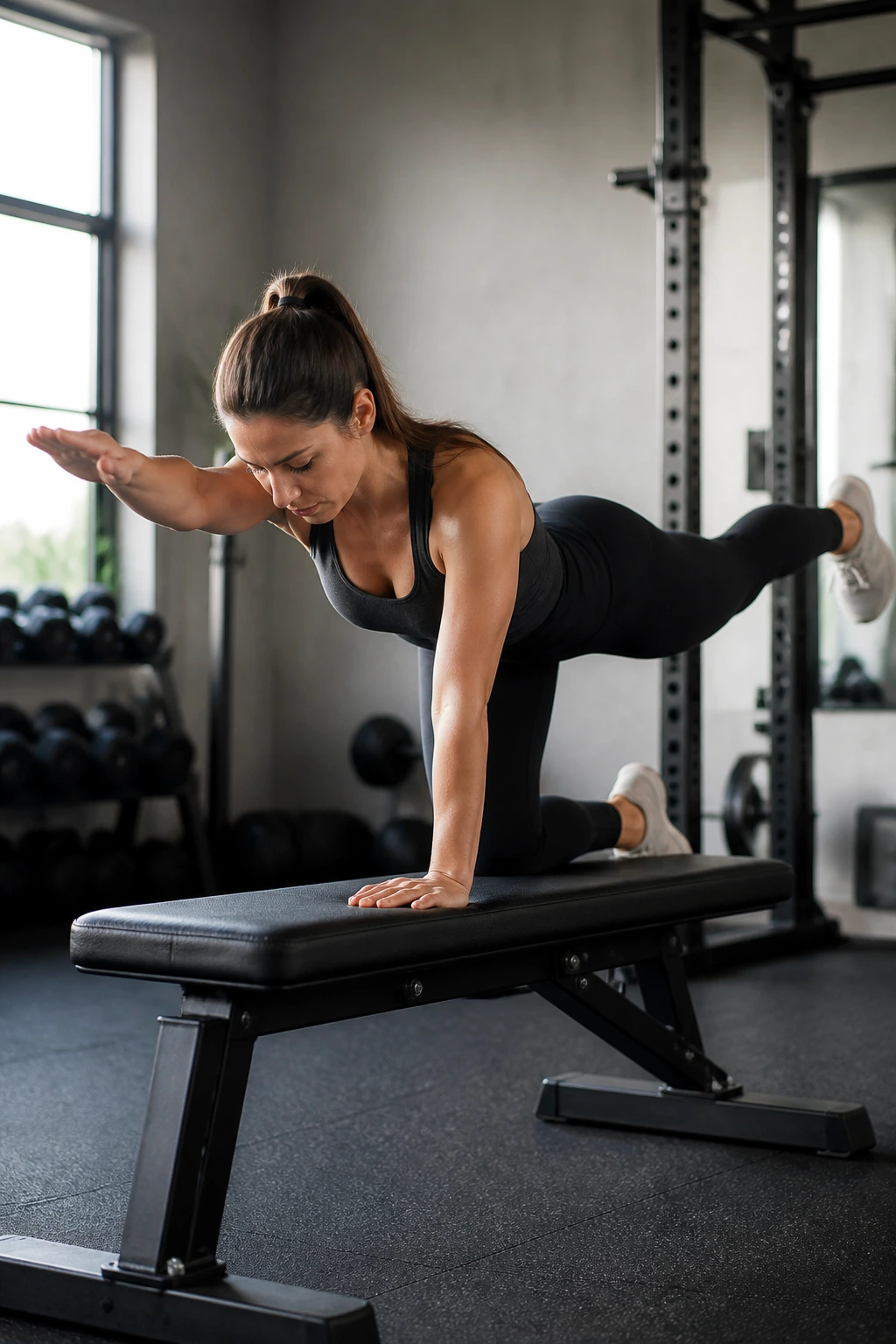
A bird dog on a bench is one of the cleaner ways to train your core when the floor starts feeling like too much. The bench gives you height, room for the belly, and less pressure on the wrists than some floor work.
Place one hand and the opposite knee on the bench, then extend the other arm and leg until they line up with your torso. Pause for a beat. Bring them back under control. The goal is to keep the hips level and the spine quiet, not to kick the leg high.
If the full reach feels shaky, make it smaller. A short extension with a flat back beats a big, wobbly reach every time. You can also skip the leg lift and just reach the arm, which still gives the trunk work without extra fuss.
This move is humble, but it has a nice effect on low-back comfort and overall coordination. Not glamorous. Very useful.
17. Farmer Carries With Light Dumbbells
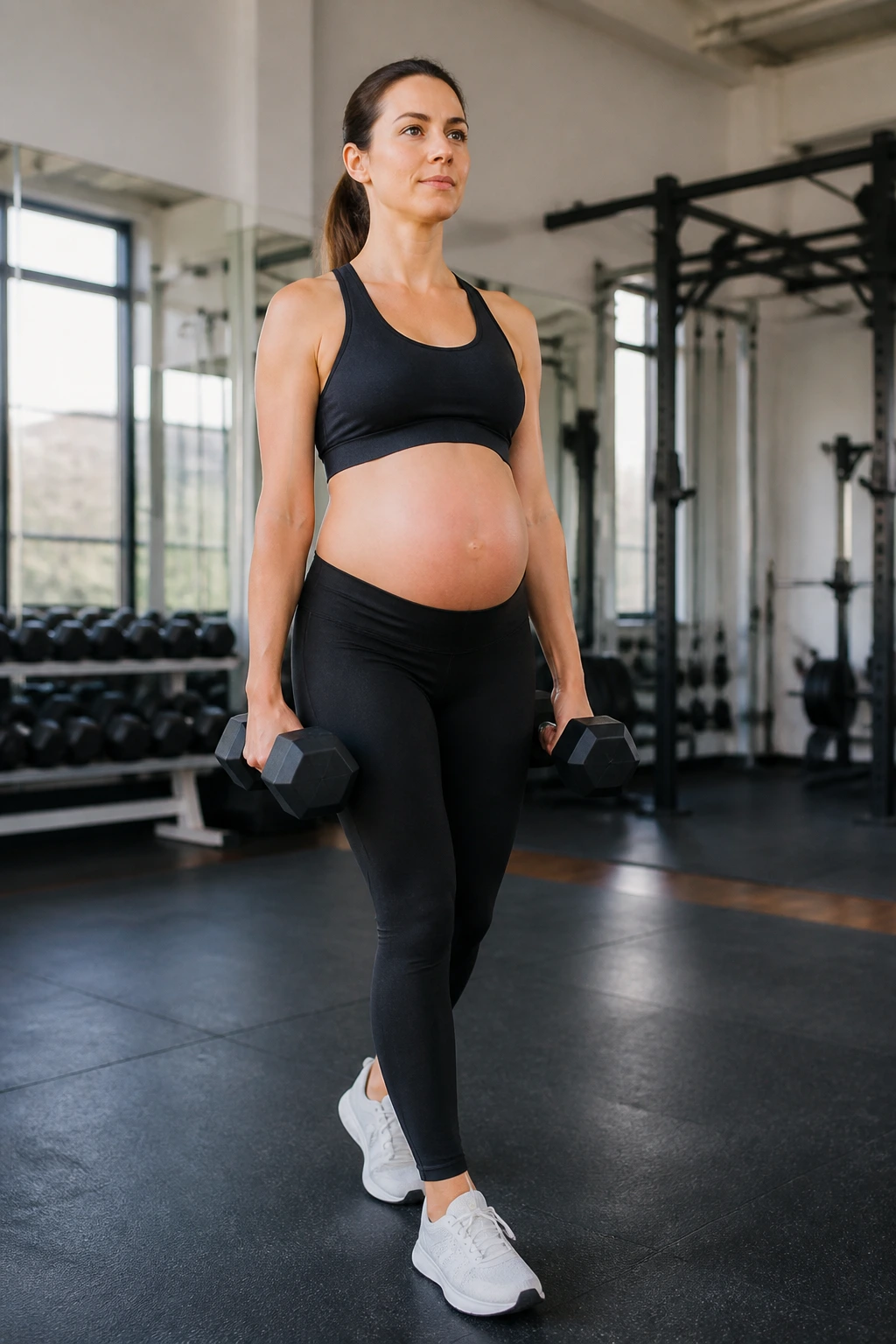
Farmer carries do more than people expect because they train your trunk while you move. You are standing, breathing, and holding weight at your sides, which sounds plain until you realize how much your midsection has to organize itself to keep you upright.
Pick a pair of light to moderate dumbbells, stand tall, and walk for 20 to 40 seconds without letting the shoulders shrug up. If one side feels better than two, try a suitcase carry with a single dumbbell in one hand. That version trains anti-lean control and often feels more natural than a heavy two-hand carry.
Good carry cues
- Look straight ahead.
- Keep the ribs down.
- Walk in short, steady steps.
- Stop before your grip dies and your posture collapses.
Carries are useful because they look like life. Grocery bags, toddler hauls, suitcases, all of it. That practical overlap makes them worth keeping in a prenatal gym routine.
18. Stability Ball Wall Squats
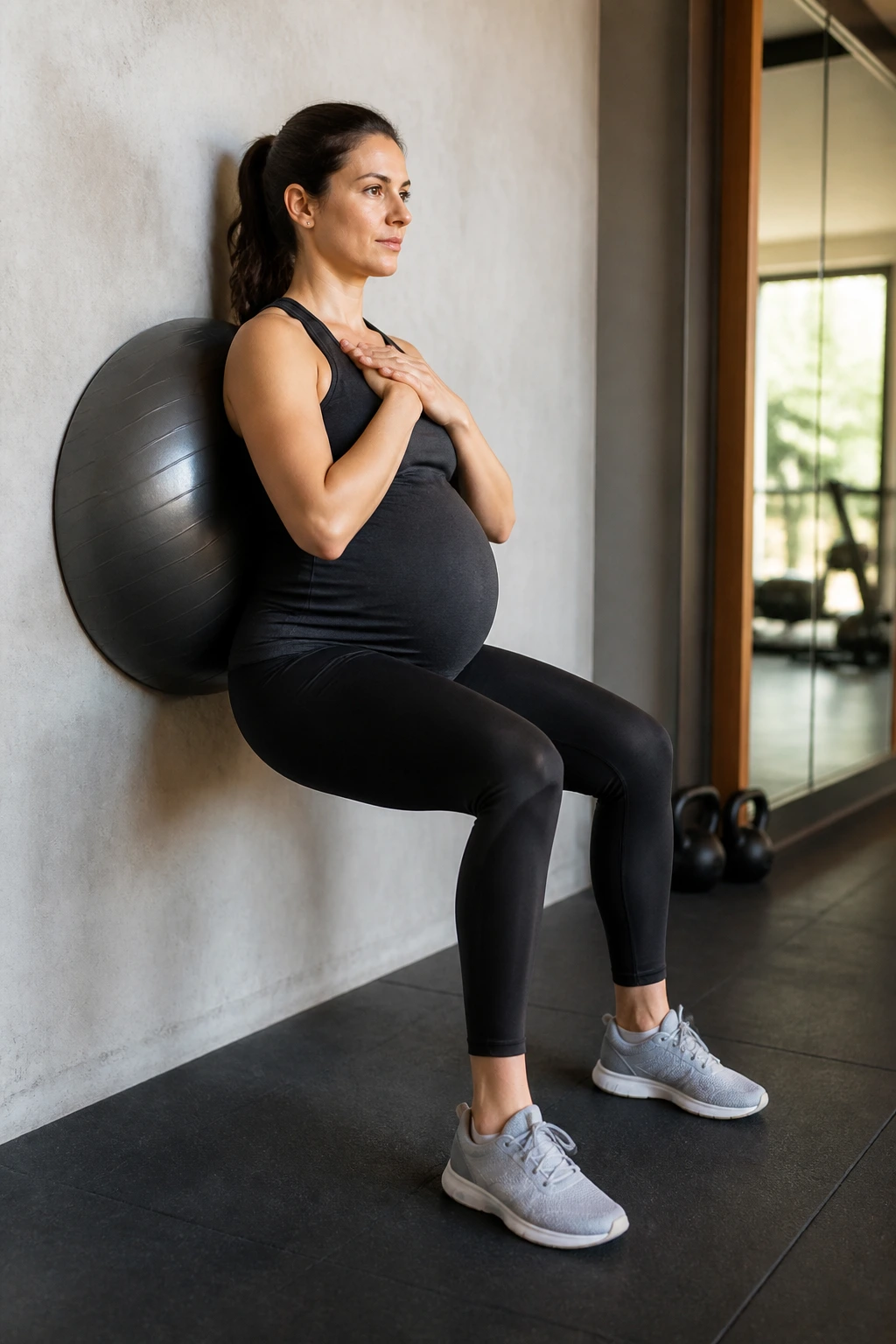
Stability ball wall squats are friendly on tired hips, and they still make your legs work. The ball gives you support, which takes some pressure off balance and lets you stay upright when free squats feel like too much.
Place the ball between your lower back and a wall, feet a bit forward, then slide down only as far as feels smooth. A shallow squat is fine. Press through the heels to stand back up, keeping the knees tracking over the toes. If the ball starts slipping around, your feet are probably too far away or the depth is too deep.
You can do these for 10 to 15 reps, or hold the bottom position for 20 to 30 seconds if that feels better. Use a slow tempo. No bouncing. That is the mistake that turns a friendly move into a weird knee grind.
On days when your energy is low and the gym feels like a puzzle, this is one of the simplest ways to get in useful work without overthinking it. A treadmill walk plus a few sets of wall squats can still leave you feeling like you trained.
