



A pair of dumbbells can build more useful strength than a room full of flashy machines if you use them with a little discipline. They force you to stabilize, brace, and stay honest, which is exactly why dumbbell exercises show up in so many smart training plans for lean strength.
That phrase matters: lean strength is not about chasing the heaviest possible load in the ugliest possible rep. It’s about getting stronger in a way that keeps your joints happy, your movements crisp, and your muscles working through a full range. Dumbbells are good at that because they expose weak links fast. One side drifts. One shoulder hikes up. One hip cheats. Fine. You can’t hide it for long.
A lot of people treat dumbbells like arm toys. That’s a mistake. The better use is simple: squat, hinge, lunge, press, row, carry, repeat. Do that with clean form and a sensible progression — a few more reps, a little more load, a slower lowering phase — and the results look different. Not bloated. Not sloppy. Just stronger and harder to move around.
Start with the lifts that earn their keep, then build the rest around them.
1. Goblet Squat
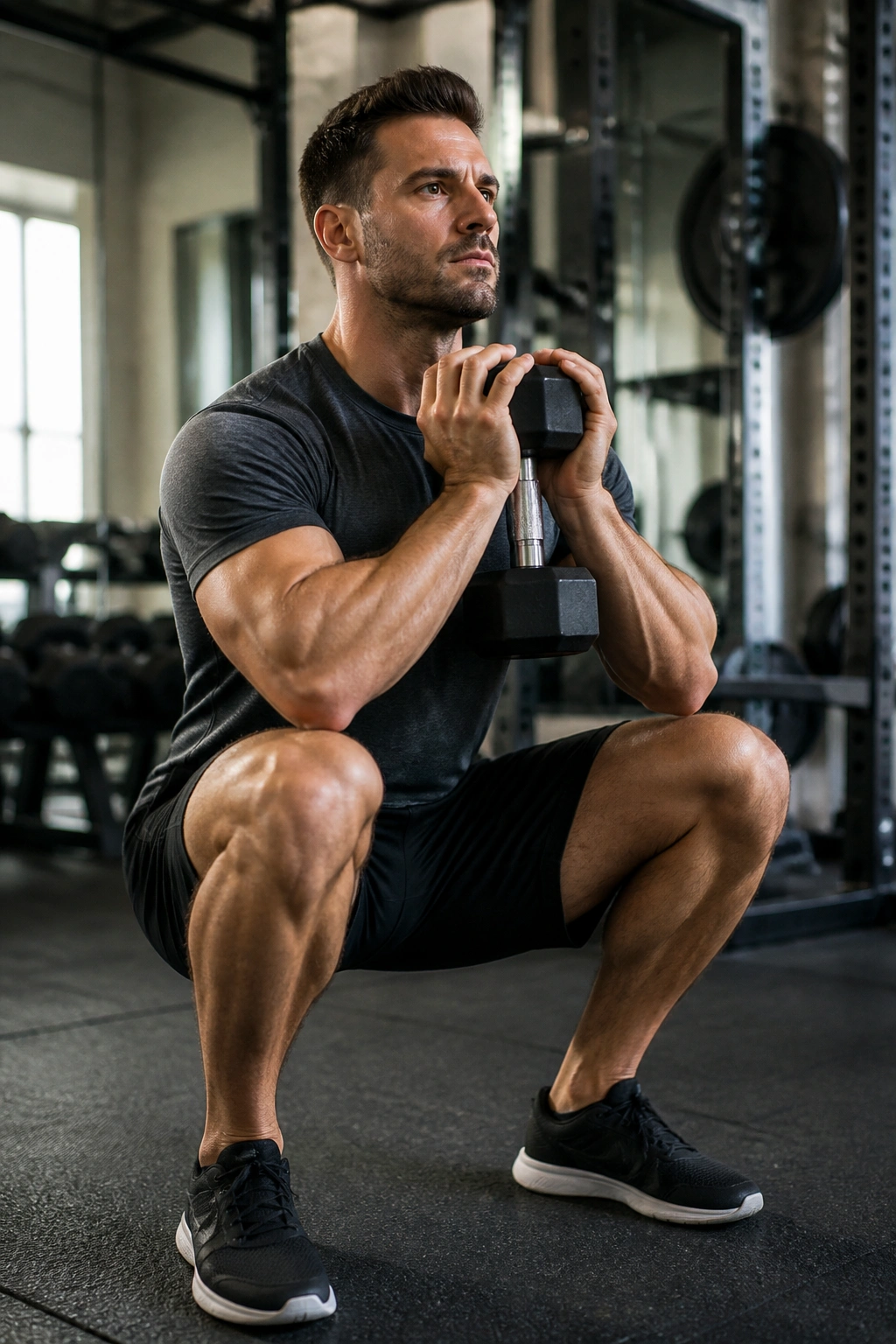
The goblet squat is one of those dumbbell exercises that looks almost too simple until your thighs start burning. Holding a single dumbbell at chest height pulls your torso upright, which makes the squat easier to learn and harder to cheat. That upright position is the whole point. It teaches you to sit between your hips instead of folding forward like a lawn chair.
Why It Builds Clean Leg Strength
A goblet squat loads the quads, glutes, and upper back at the same time. Because the weight sits in front of you, your core has to brace hard to keep your chest from collapsing. That makes it useful for beginners, but it also works for stronger lifters who need a better squat pattern before moving to heavier front squats.
A good rep feels controlled on the way down and forceful on the way up. Try 3 to 4 sets of 8 to 12 reps, with a pause of one second at the bottom if your form gets wobbly. Keep your elbows pointed down and your heels flat. If your knees cave inward, lighten the load and shorten the set. Do not chase depth at the cost of position.
Quick cue: hold the dumbbell close enough that it almost touches your sternum.
2. Dumbbell Romanian Deadlift
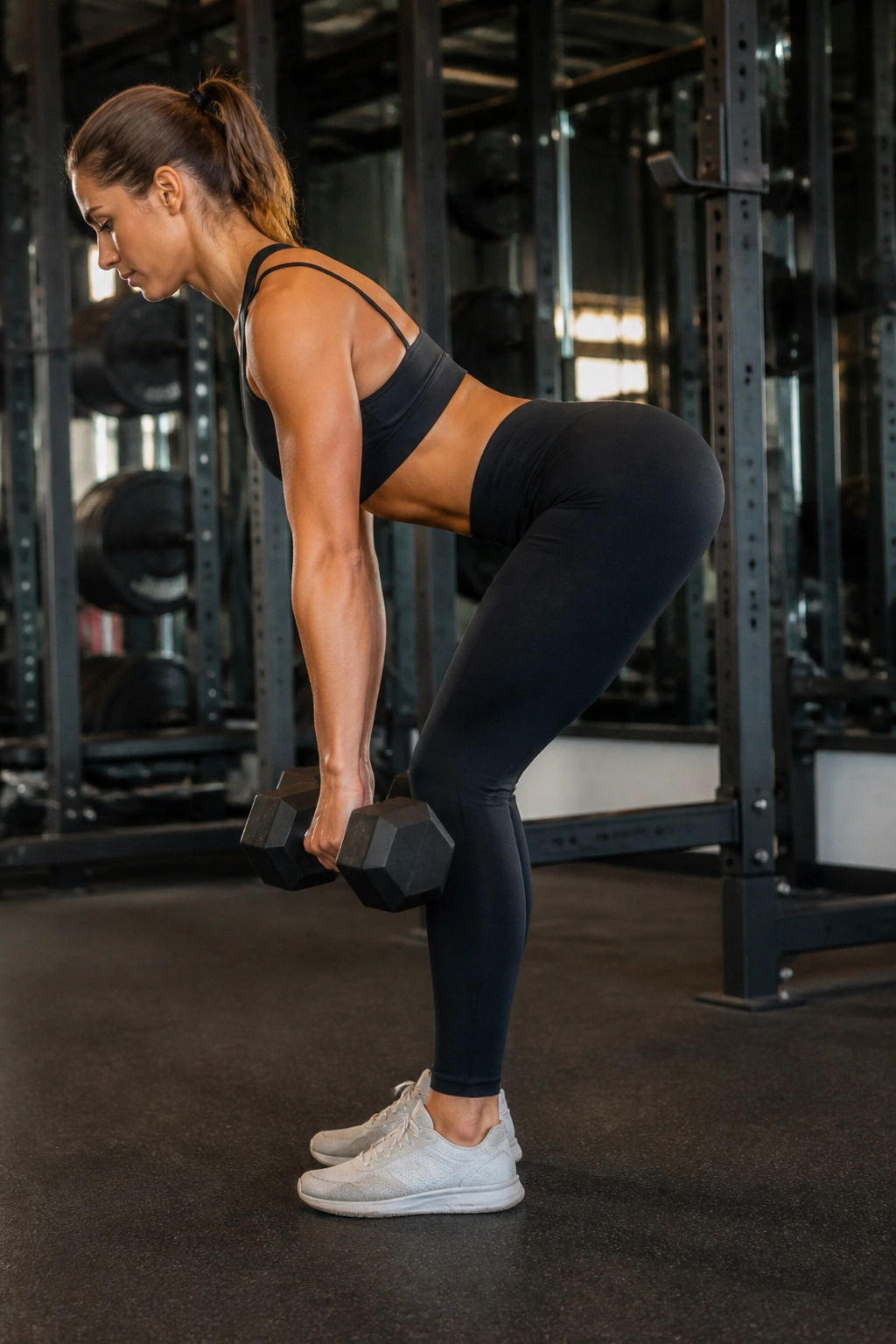
If you want hamstrings that actually do work, the dumbbell Romanian deadlift is hard to beat. It trains the hip hinge, which is the movement pattern people butcher most often in the gym. You are not squatting here. You are pushing your hips back, keeping a soft bend in the knees, and letting the dumbbells slide close to your legs.
The best reps feel like a long stretch through the back of the thighs, followed by a hard squeeze through the glutes as you stand. That stretch is the signal. If you only feel your lower back, the hinge is off. Keep your ribs down, spine long, and shoulders packed. A slight bend in the knees is fine; a deep knee bend turns it into something else.
Use 3 to 5 sets of 6 to 10 reps. Lower the dumbbells for about three seconds, stop when your torso is near parallel or when your hamstrings stop you, then drive up. Simple. Brutal. Effective.
What to Watch For
- The dumbbells should stay close to your thighs and shins.
- Your back should stay flat, not arched hard.
- The movement starts at the hips, not the hands.
- Stop the descent before your lower back rounds.
3. Dumbbell Reverse Lunge
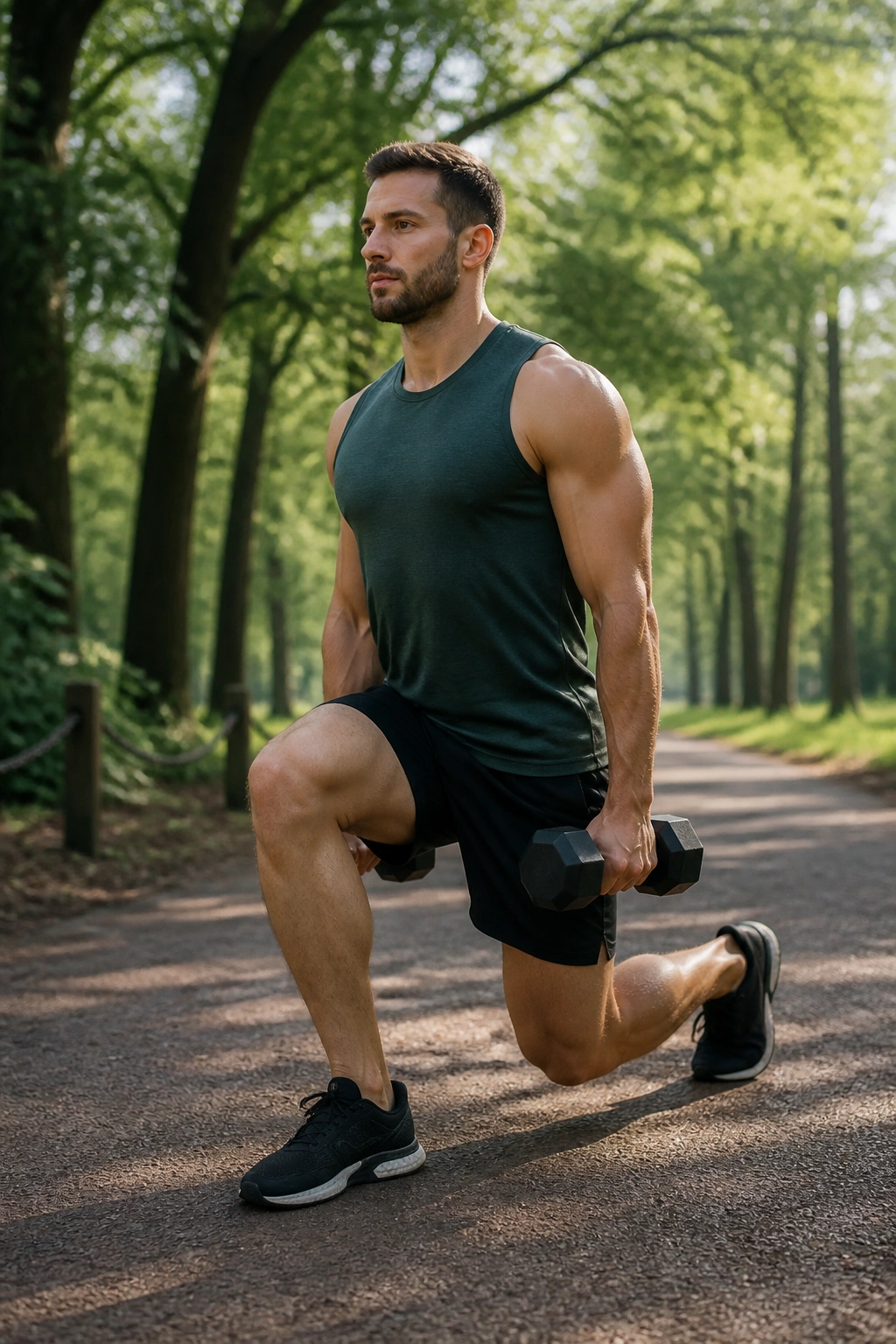
Why reverse instead of forward? Because the reverse lunge is usually kinder to the knees and easier to control. You step back, lower with control, and push through the front foot to stand. That back step keeps the landing cleaner and gives you a better shot at staying balanced, which matters if you care about quality reps more than ego.
This is a strong choice for building single-leg strength without wrecking yourself. It trains the glutes, quads, and adductors while forcing each leg to work on its own. That alone makes it useful. Add the balance demand and you get a lower-body drill that carries over to walking, climbing stairs, and nearly any sport that asks you to move one leg at a time.
Keep the front foot planted and take a long enough step back that your front knee stays stacked over the middle of the foot. Three sets of 8 to 10 reps per side is a solid starting point. If you wobble, slow down. If you tip forward, shorten the weight and reset.
How to Keep It Clean
- Lower straight down, not forward.
- Keep most of your weight on the front leg.
- Touch the back knee softly if you want a consistent range.
- Push the floor away instead of lunging upward.
4. Bulgarian Split Squat
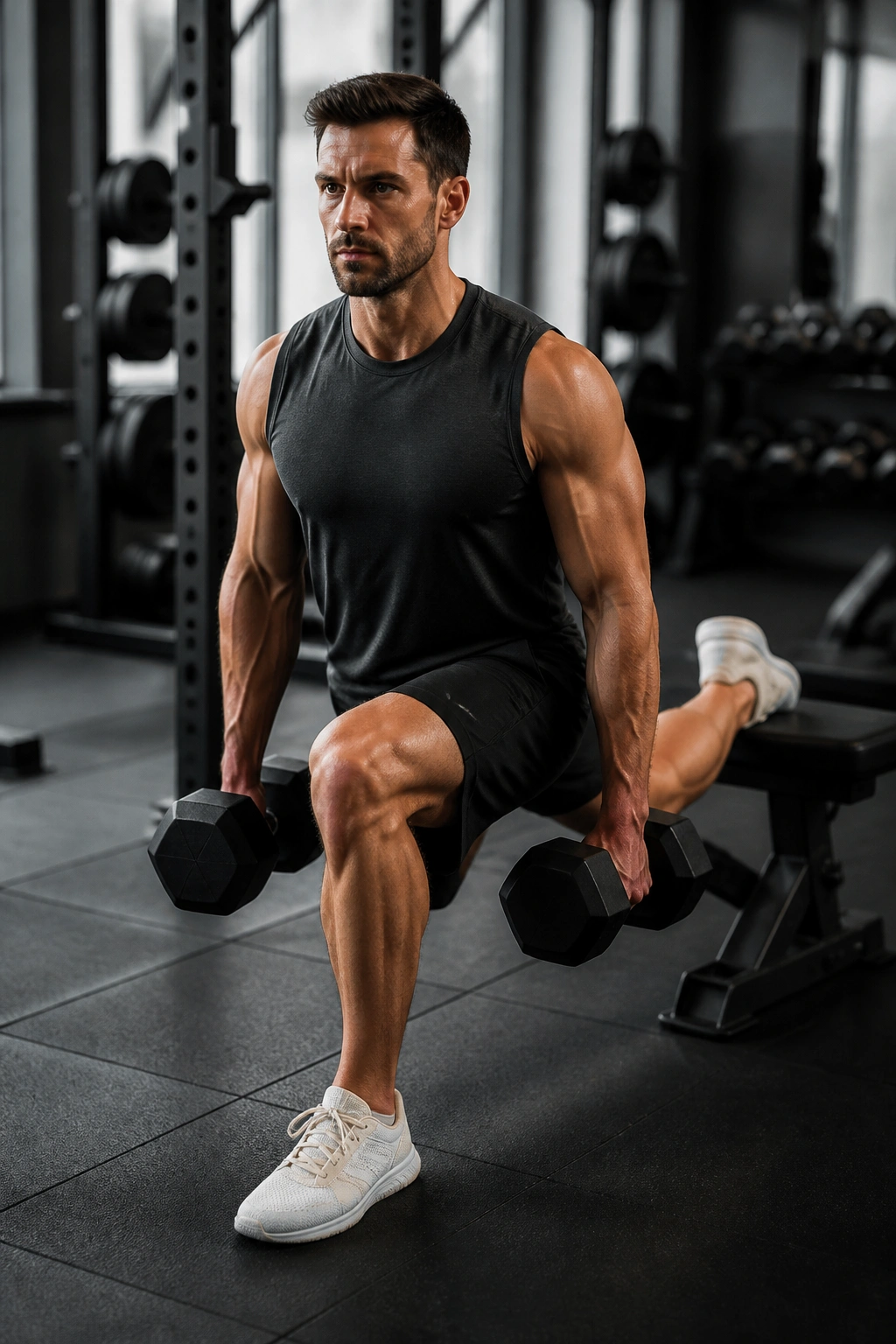
This is the one that makes people reconsider their life choices. A rear foot elevated split squat looks harmless until the front leg starts shaking, and then you understand why so many strong people swear by it. The Bulgarian split squat gives you a huge training effect with a lighter pair of dumbbells than you would need for bilateral leg work.
It’s a fantastic exercise for lean strength because it builds muscle and control at the same time. The front leg gets the main load. The rear leg mostly balances you. That means less cheating, more honest work, and a long path to stronger quads and glutes. If your left and right legs are not equally happy, this move will tell on them fast.
Set the rear foot on a bench or box that’s around knee height or a little lower. Take a step forward first so the front shin can move freely. Aim for 3 to 4 sets of 6 to 10 reps per side. If your torso folds over, the front foot is probably too close. Fix that before you add weight.
5. Dumbbell Step-Up
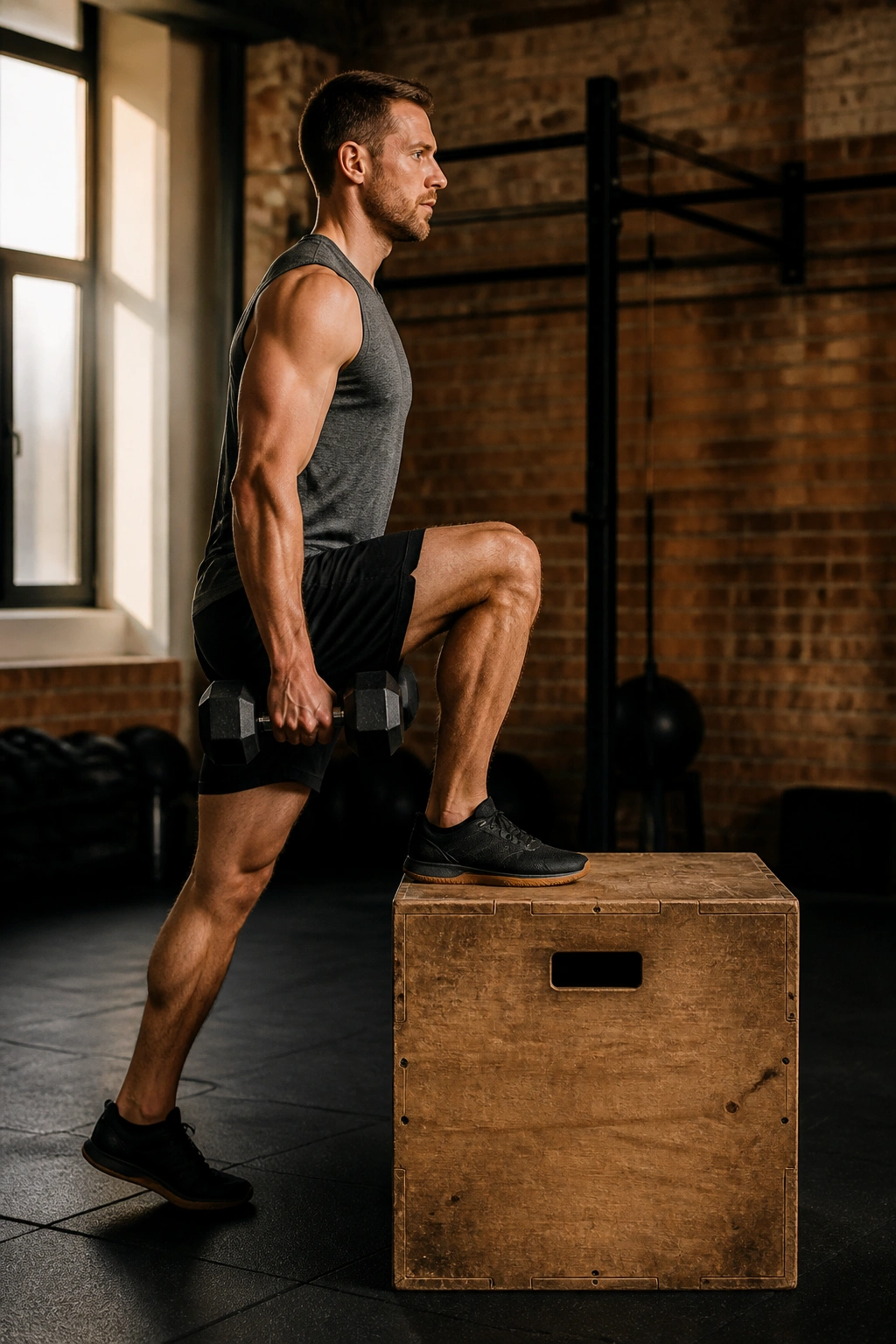
The dumbbell step-up is one of the cleanest ways to build leg strength without beating up your lower back. You need a box, a bench, or a stable platform that puts your knee around hip height or lower. Anything too high turns the move into a circus act. Anything too low turns it into a shrug.
The real value here is force production through one leg while the body stays stacked and stable. Drive through the whole foot on the box, then stand all the way up before stepping down under control. Do not push off the trailing leg. That tiny cheat ruins half the benefit and turns the movement into a half-rep with a leg lift.
Step-ups are useful when you want athletic carryover. They’re also easier to recover from than some of the nastier split-squat variations, which makes them handy in higher-volume programs. Use 3 sets of 8 reps per side and keep the descent slow. The lowering phase matters more than most people think.
6. Dumbbell Front Squat
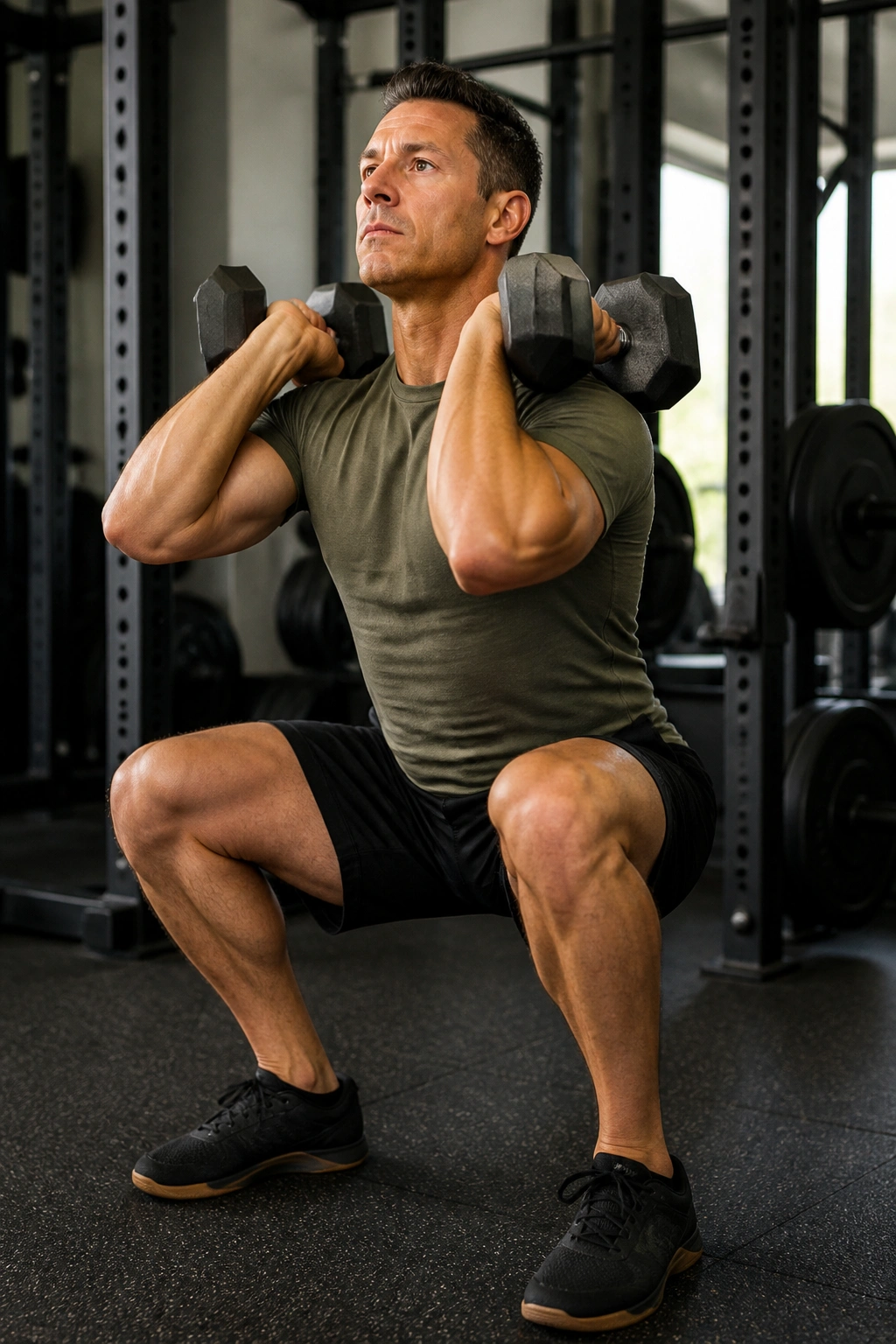
Front-loaded dumbbell work punishes sloppy bracing fast. That is why the dumbbell front squat deserves a place in any serious list of dumbbell exercises for lean strength. Holding two dumbbells at your shoulders changes the game. Your torso has to stay upright, your core has to stay tight, and your legs have to do the work instead of your lower back.
Why the Front Rack Matters
The front rack position makes the squat more honest. If your elbows drop, the dumbbells drift, and the rep gets ugly. Keep the weights close to the shoulders, ribs down, and chest tall without flaring the lower back. The goal is not to arch hard. It’s to stay stacked.
A good rep feels more quad-heavy than a goblet squat and usually allows less load than a barbell front squat, which is fine. You do not need giant dumbbells to get a strong training effect. Try 4 sets of 5 to 8 reps with a controlled descent and a firm stand.
Watch for: wrists bent back, elbows drooping, and the dumbbells sliding forward. That setup steals tension and makes the lift feel clumsy.
7. Dumbbell Hip Thrust
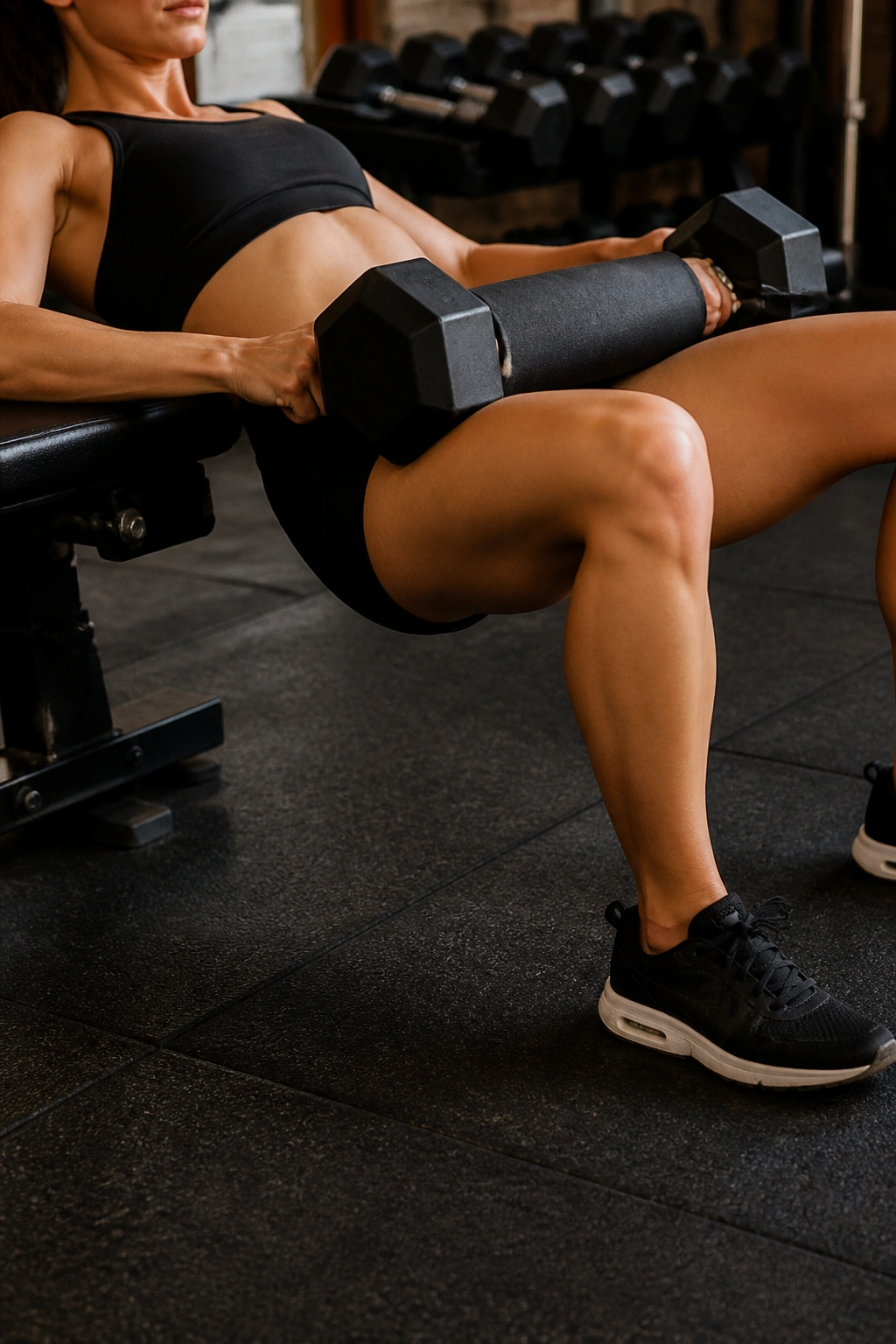
The dumbbell hip thrust is blunt, and I mean that as praise. It gives the glutes a clear job and does not ask much from the lower back if you set it up properly. Place your upper back on a bench, bend your knees, and put one dumbbell across the crease of your hips. A pad or folded towel helps if the handle digs in.
The top position should feel like a hard glute squeeze, not a lower-back arch. That matters. A lot. Tuck your chin slightly, keep your ribs down, and drive your hips up until your torso and thighs form a straight line. Hold that top position for one or two seconds. The pause is worth more than people think.
Use 3 to 4 sets of 8 to 12 reps. If the dumbbell keeps sliding, place a mat under it or switch to two smaller dumbbells. This is a good example of a simple movement that gets much better when you pay attention to setup.
How to Get the Most From It
- Plant your feet so your shins are close to vertical at the top.
- Keep your eyes forward or slightly down.
- Squeeze the glutes before lowering each rep.
- Stop if you feel the movement in your lower back.
8. Dumbbell Floor Press
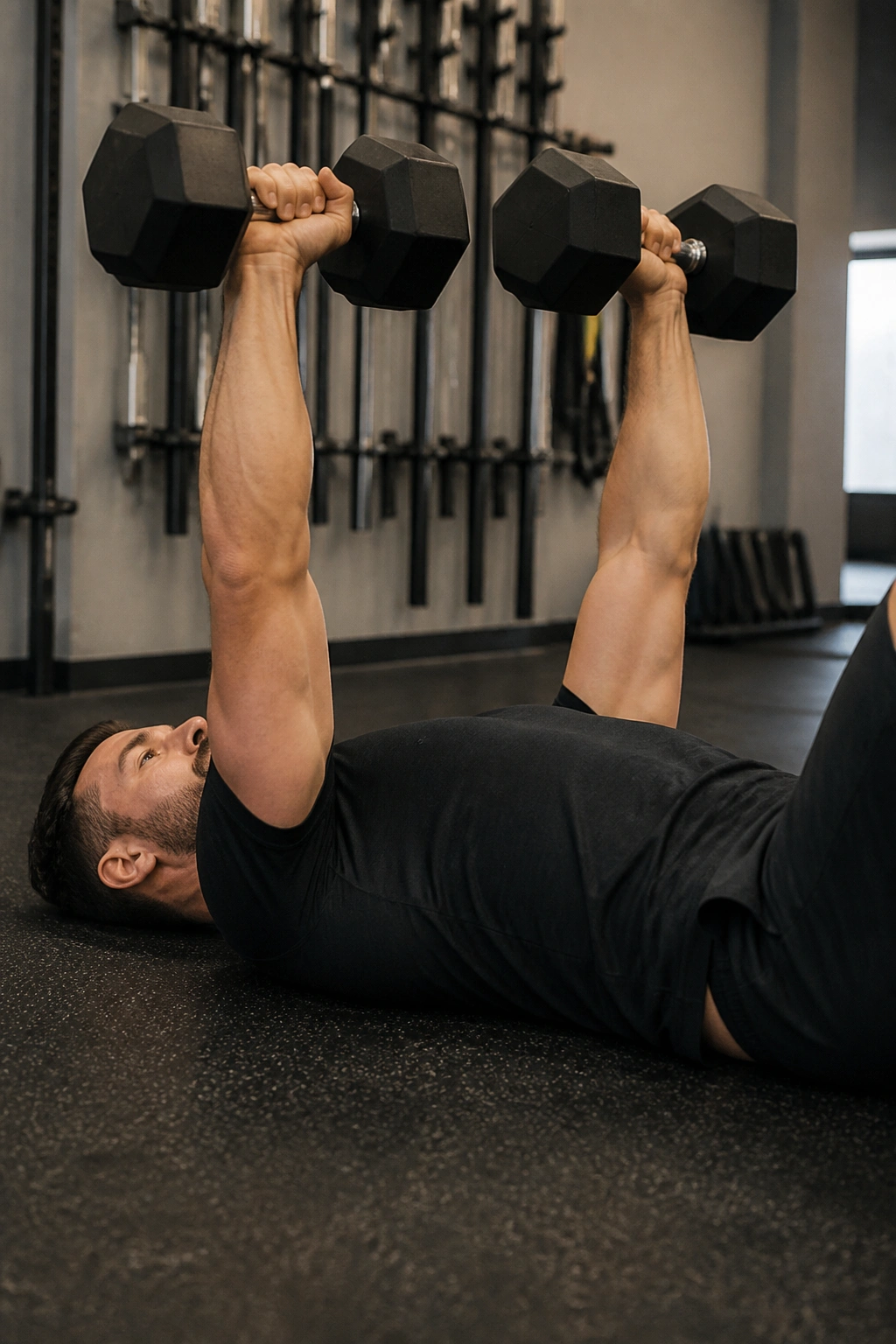
Need a press that is kinder to the shoulders? The dumbbell floor press is a smart place to start. Because your elbows hit the floor before your shoulders drift too far back, the floor limits the range of motion and keeps the press tight. That makes it useful for pressing strength, triceps work, and lifters who don’t love deep bench angles.
The setup is simple: lie on the floor, bend your knees, and press the dumbbells from the chest to full lockout. Keep your elbows at about a 30- to 45-degree angle from your ribs. If they flare straight out, the shoulders tend to complain. The bottom position should feel controlled, not bouncy.
Use 4 sets of 6 to 10 reps with a steady lowering phase. The pause on the floor kills momentum, which is half the point. You learn to own the press instead of bouncing through it.
9. Dumbbell Bench Press
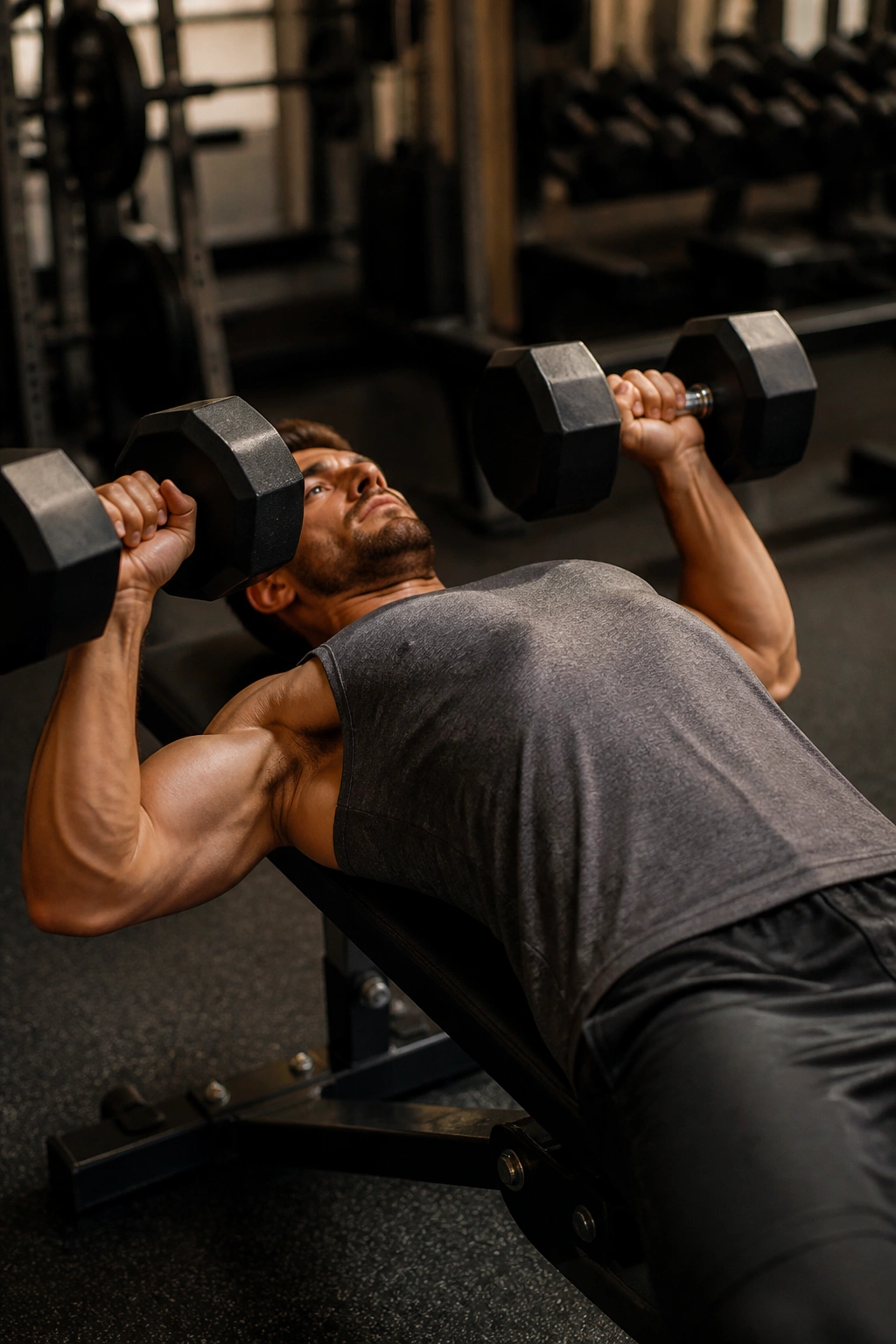
The dumbbell bench press is a classic for a reason. It trains the chest, front delts, and triceps while asking each side to do its own share of the work. That independent loading is useful. One arm cannot coast while the other one does the heavy lifting. At least, not easily.
Set your shoulder blades back and down on the bench, plant your feet, and lower the dumbbells under control. Keep the wrists stacked over the elbows so the load stays in a good line. The descent should feel smooth, not rushed. On the way up, drive the dumbbells slightly inward without smashing them together. That tiny arc feels more natural on the shoulders for many lifters.
Three to 4 sets of 6 to 10 reps works well for most people. If the dumbbells wobble too much near the bottom, go lighter and clean up the path. A shaky rep is still a rep, but it’s not the kind that builds strength efficiently.
10. Incline Dumbbell Press
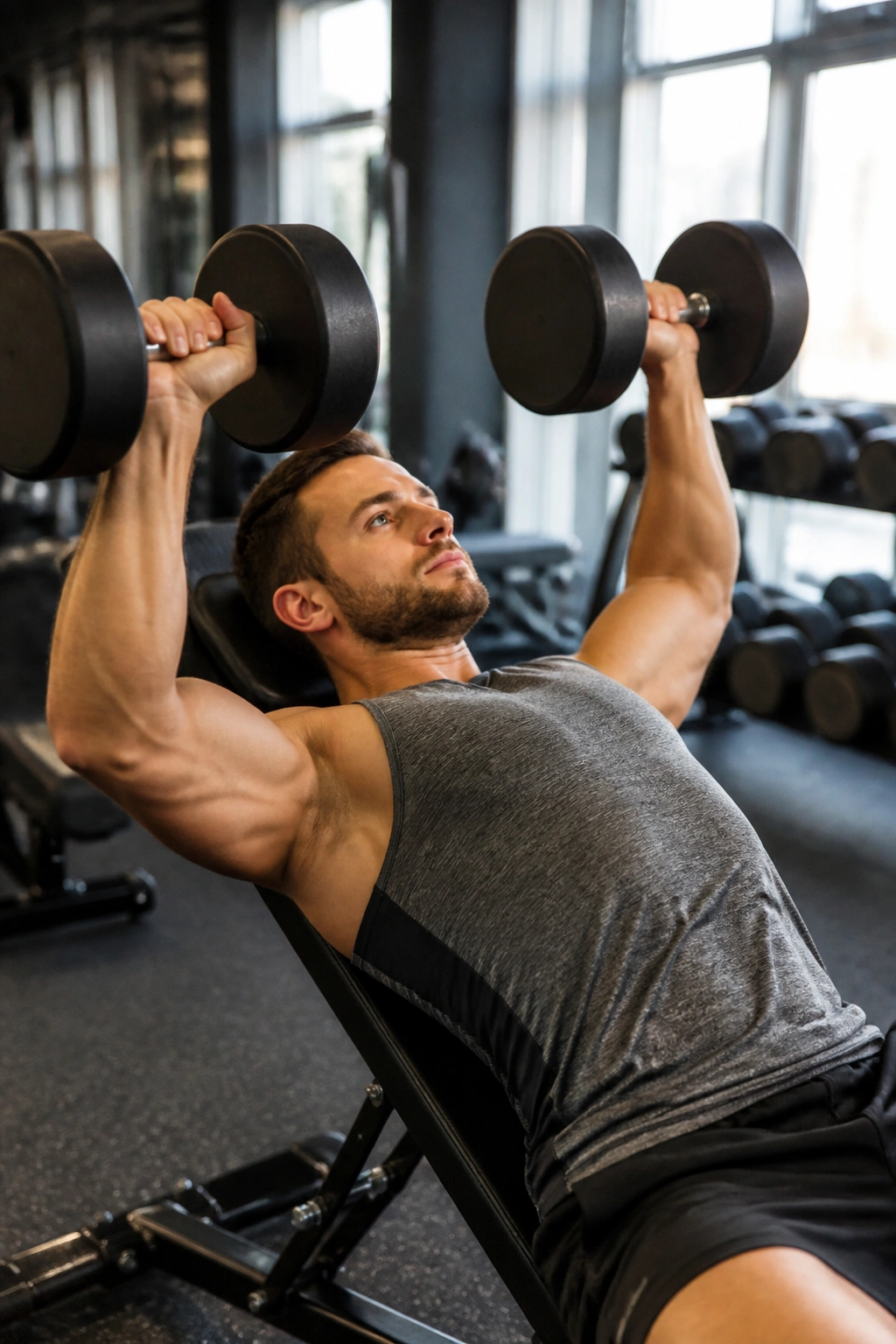
A slight incline changes everything. Set the bench to about 20 to 30 degrees and the incline dumbbell press shifts more work onto the upper chest and front delts without turning into a shoulder press. Go much steeper and the movement changes shape fast. That’s the trap.
Why the Angle Matters
The lower incline is the sweet spot for most people. It keeps the chest involved while still letting the shoulders help. If the bench is too upright, the front delts take over and the pecs get less of the job. That might feel hard, but hard is not the same as useful.
Press with control and keep the elbows from flaring way out to the sides. Three to 4 sets of 8 to 12 reps is a solid range here. Because the incline is a little less stable than flat pressing, many lifters find they need to slow the lowering phase and use slightly lighter dumbbells. That is normal. No need to force it.
A small pause near the chest makes the rep cleaner and keeps you from bouncing out of the bottom.
11. One-Arm Dumbbell Row
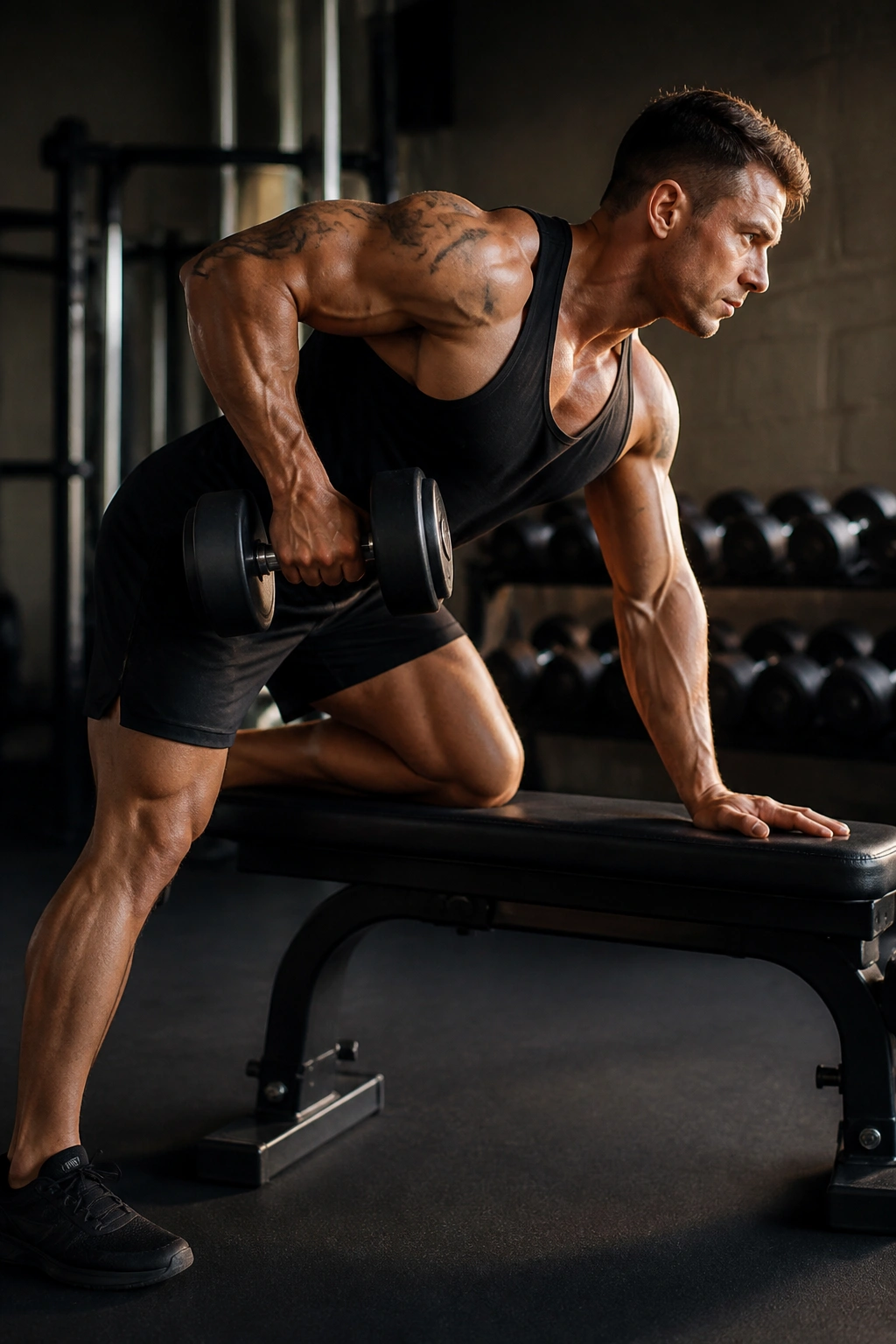
The one-arm dumbbell row is one of the best back exercises you can do with a single dumbbell and a bench. It builds lat strength, upper-back thickness, and a surprising amount of trunk control because your torso has to resist twisting while one arm works. That anti-rotation demand is a quiet bonus.
Brace one hand and one knee on a bench, or use a staggered stance if you prefer. Pull the dumbbell toward your hip, not straight up to your shoulder. That path matters. When the elbow drives back and slightly in, the lat tends to light up better than when the weight gets yanked high with the trap.
Three to 4 sets of 8 to 12 reps per side is a good target. Keep the torso still. If you’re rotating to finish the rep, the weight is too heavy or the set is too long. Finish strong, but finish clean.
Quick Cues
- Start the pull by driving the elbow back.
- Pause briefly at the top.
- Lower with control and let the shoulder blade reach forward.
- Keep the neck relaxed.
12. Chest-Supported Dumbbell Row
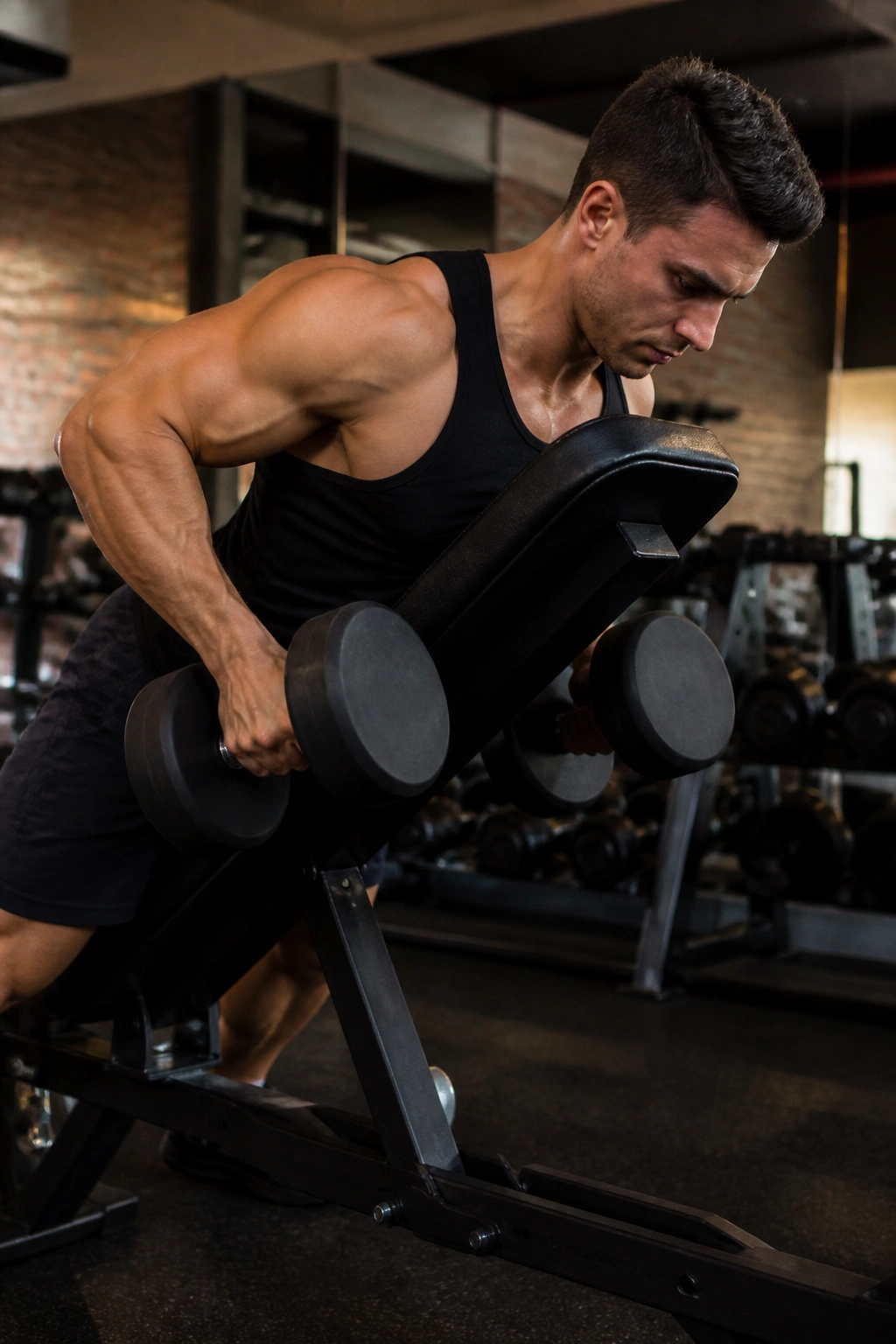
Unlike the one-arm row, the chest-supported row strips away most of the cheating. That is the appeal. Set an incline bench to a moderate angle, lie chest-down, and row the dumbbells with your torso pinned to the pad. The lower back gets a break. The upper back gets honest work.
This is a good choice when you want to train row strength without turning the movement into a hip hinge or a shrug. It hits the rear delts, rhomboids, and mid-back in a way that feels clean and direct. It also pairs well with pressing because it keeps the shoulder girdle balanced.
Use 3 to 4 sets of 10 to 15 reps. The higher rep range works well because the support lets you stay strict longer. Pause for a second at the top and think about bringing your shoulder blades back and down. Not yanked. Not thrown. Pulled.
13. Standing Dumbbell Overhead Press
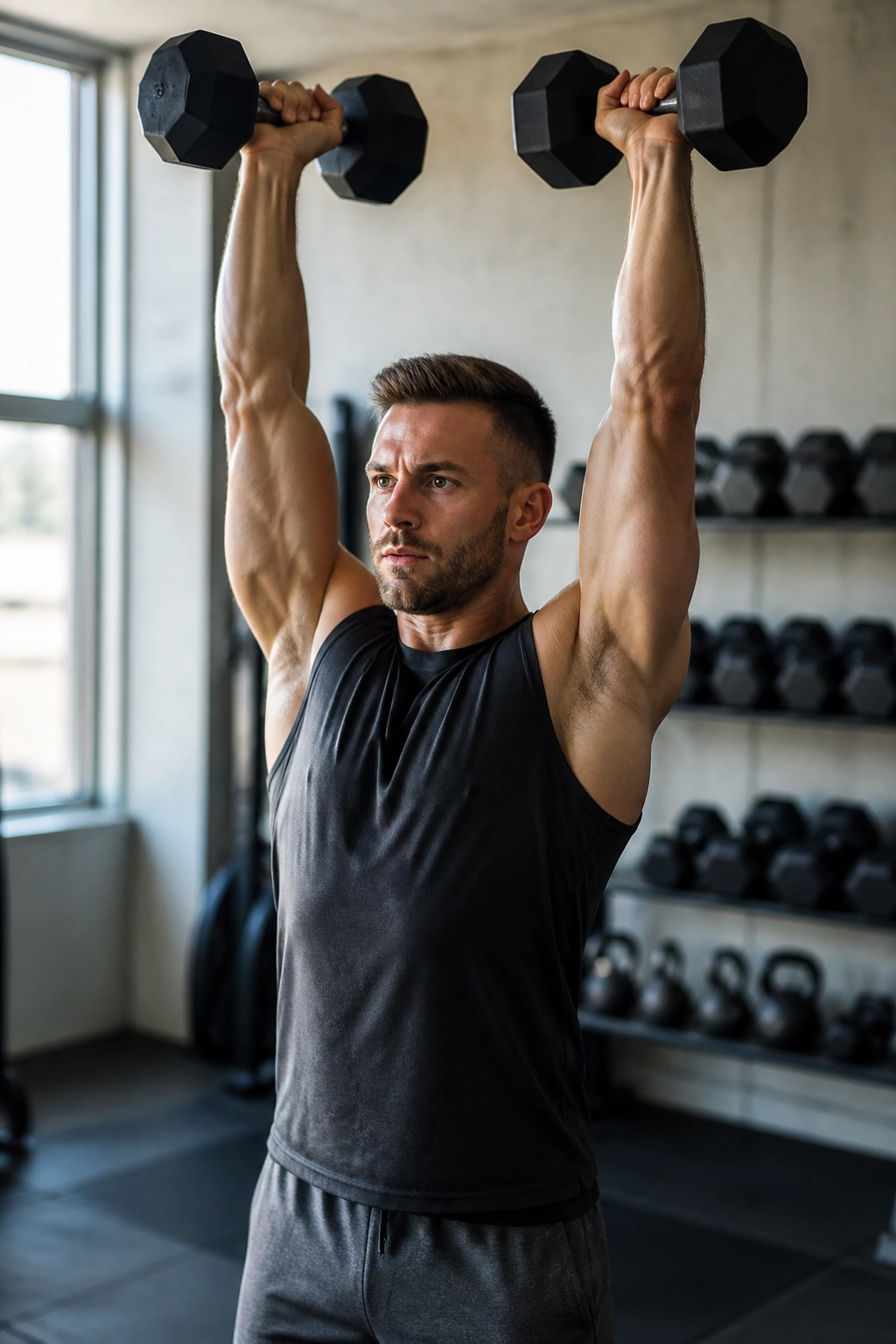
Can dumbbells build real pressing strength without a barbell? Absolutely. The standing overhead press asks for solid bracing, clean shoulder motion, and enough leg and trunk tension to keep the weights from drifting. It’s a simple test of whether your body can turn force into upward movement without leaning into every rep.
Stand with your feet under your hips, squeeze your glutes, and keep your ribs from flaring as you press. The dumbbells should travel in a slight arc so they finish over the middle of the body. If they drift in front of your face, the press gets messy. If your lower back arches hard, the load is too heavy or your setup is loose.
Try 4 sets of 5 to 8 reps. That rep range keeps the movement honest. A slow lowering phase helps even more. The rep should look smooth from the side. If it looks like a standing backbend, start over.
14. Half-Kneeling Single-Arm Press
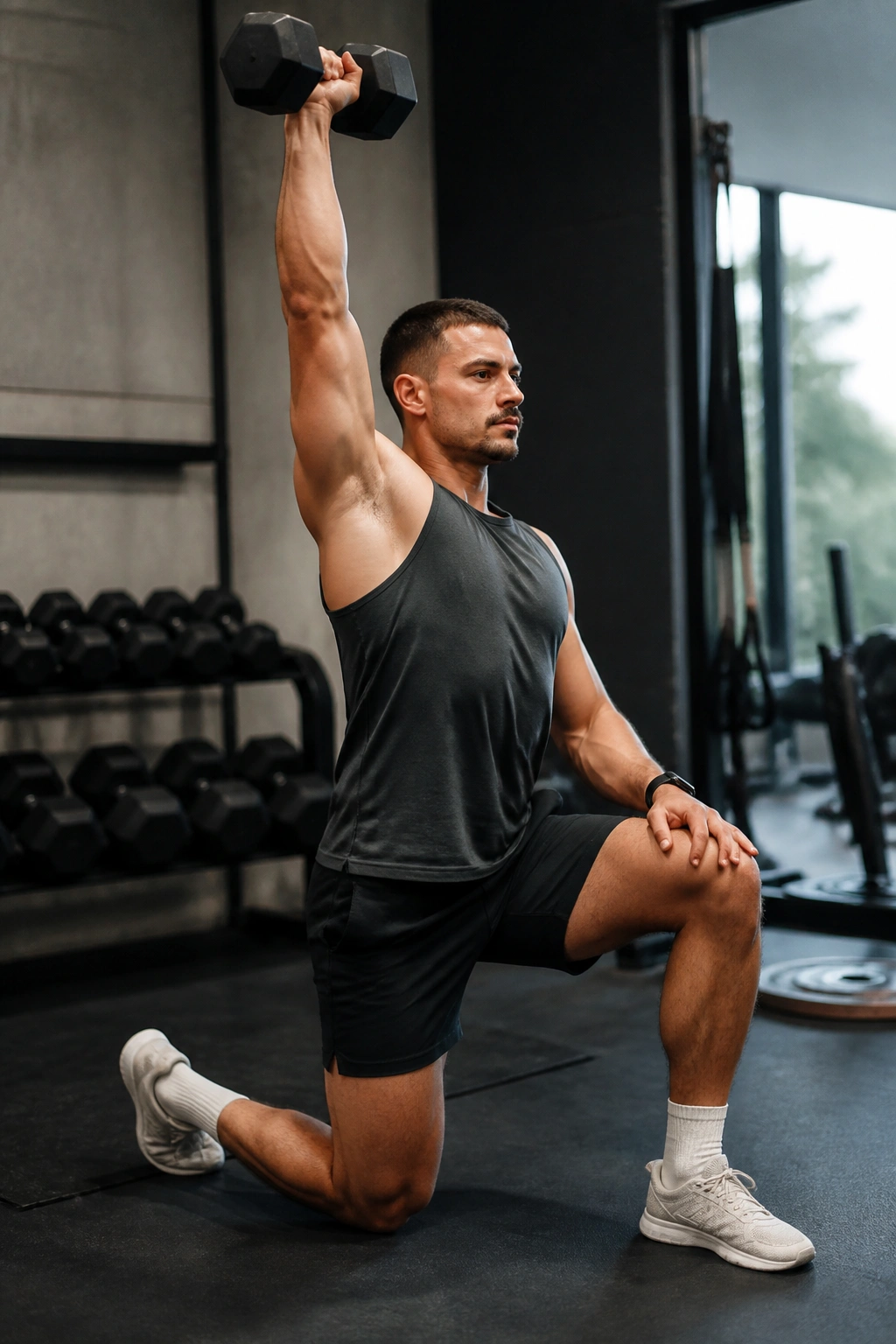
Half-kneeling pressing is sneaky. It looks like a small adjustment, then your core starts yelling. One knee down, the other foot planted, and one dumbbell moving overhead — that setup cleans up a lot of bad habits because you cannot lean or twist as easily.
What It Teaches
The half-kneeling position locks the pelvis down and makes the press more about shoulder control and trunk stiffness. It’s useful if one side presses better than the other, or if you want to train overhead work without letting the lower body help too much. That is a nice trick when the standing press starts to feel too dependent on leg drive.
Keep the kneeling-side glute tight and press straight up with the working arm. Three sets of 6 to 10 reps per side is enough for a lot of people. The dumbbell should finish over the shoulder, not drift forward. If you feel yourself tipping, widen the stance a touch and reset.
Setup Checklist
- Back knee on the floor, front foot flat.
- Front shin vertical or close to it.
- Ribcage stacked over pelvis.
- Press without leaning.
15. Renegade Row
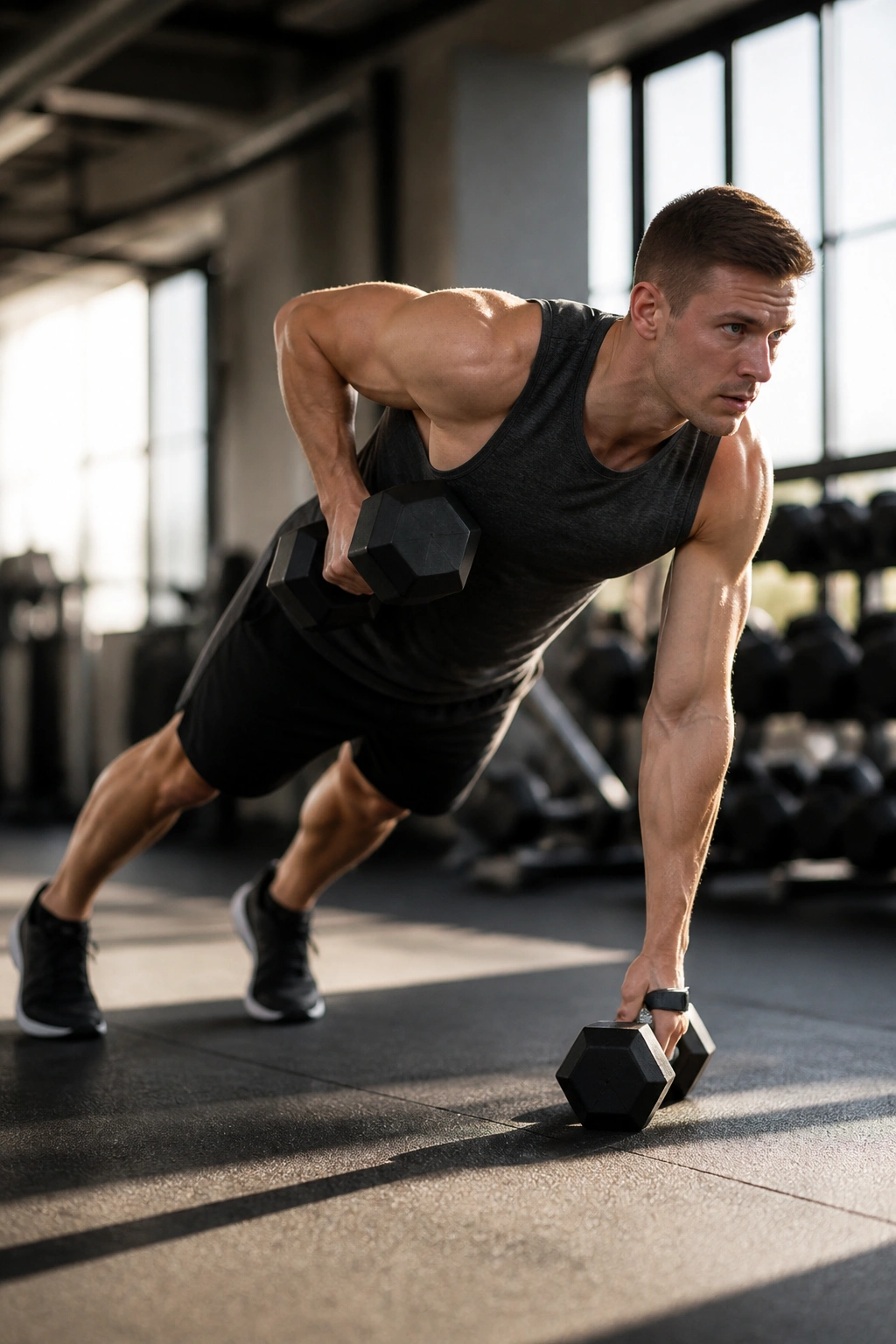
The renegade row looks like a back exercise, but it behaves like a core drill with a row attached. That’s the real appeal. You start in a plank on two dumbbells, then row one dumbbell while trying not to let your hips wobble like a loose shopping cart.
Use a wider stance than you think you need. Narrow feet make the move harder in a way that’s mostly annoying, not useful. Row one weight at a time, brace hard, and keep the dumbbell moving close to your side. If your body twists a lot, the set has gone past useful.
This is not a place for big ego weights. Three sets of 6 to 8 rows per side is plenty for most lifters. Quality matters more here than load. The best reps look calm from the outside even though your midsection is working hard to keep everything square.
16. Dumbbell Push Press
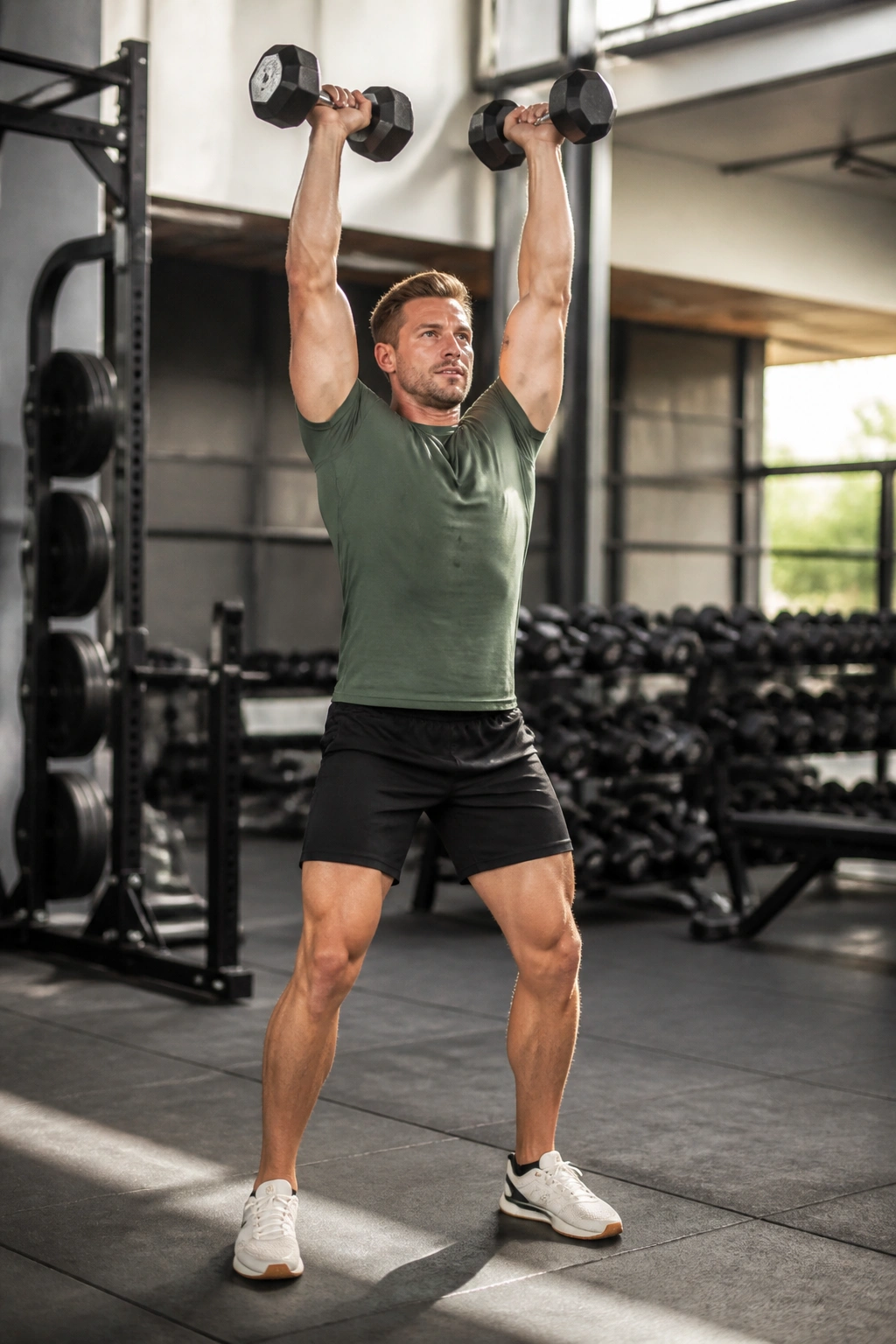
The push press is where strength and power shake hands. A small knee dip and drive from the legs helps move heavier dumbbells overhead than a strict press would allow, which makes this a good tool when you want to train explosive force without leaving dumbbells behind.
The dip should be shallow — a few inches, not a squat. Keep the torso upright, heels grounded, and then explode through the floor. The arms finish the job after the legs do their part. If the press turns into a sloppy jump or a forward lean, the timing is off.
Use 4 to 5 sets of 3 to 5 reps. Low reps keep the speed sharp and the technique clean. This movement works well when you want to feel powerful without grinding through slow reps all day.
17. Dumbbell Clean
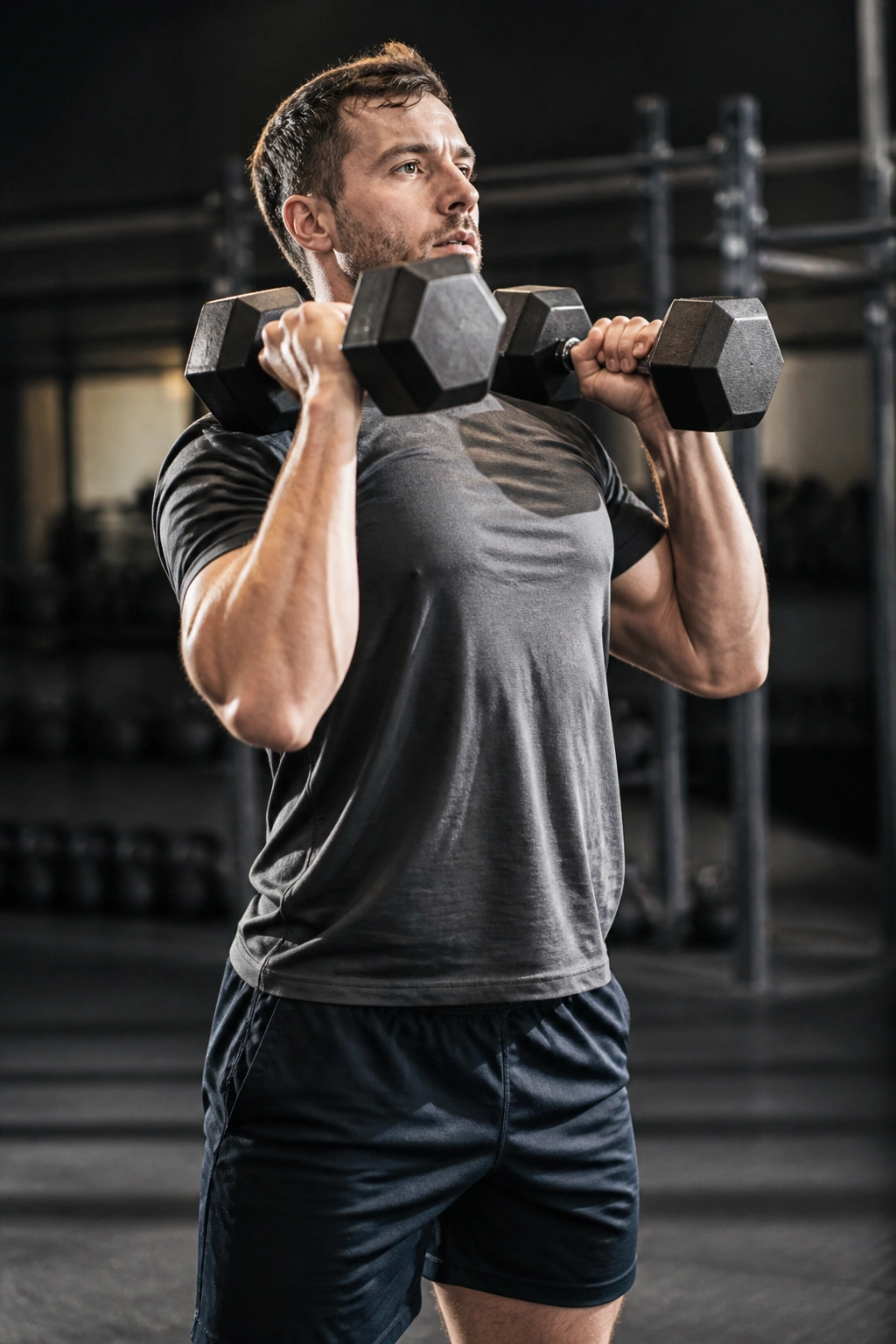
Why learn a clean if you are not competing in weightlifting? Because it teaches efficient force transfer. The dumbbell clean is a compact way to train hip snap, coordination, and quick force production. It also shows you whether your hinge is honest or fake.
Start with the dumbbells near the thighs or from a hang position. Drive the hips forward, shrug just enough to help the weights rise, and catch them at the shoulders. Do not curl them up. That is the mistake people make when they don’t trust the hips. The pull should feel fast and close to the body.
Use 3 to 5 sets of 3 to 6 reps. Keep the reps crisp and stop before the movement gets mushy. A clean is useful because it rewards timing. When timing fades, so does the benefit.
How to Learn It
- Practice from the hang before touching the floor.
- Keep the dumbbells brushing close to the legs.
- Catch softly at the shoulders.
- Reset after each rep if needed.
18. Dumbbell Clean and Press
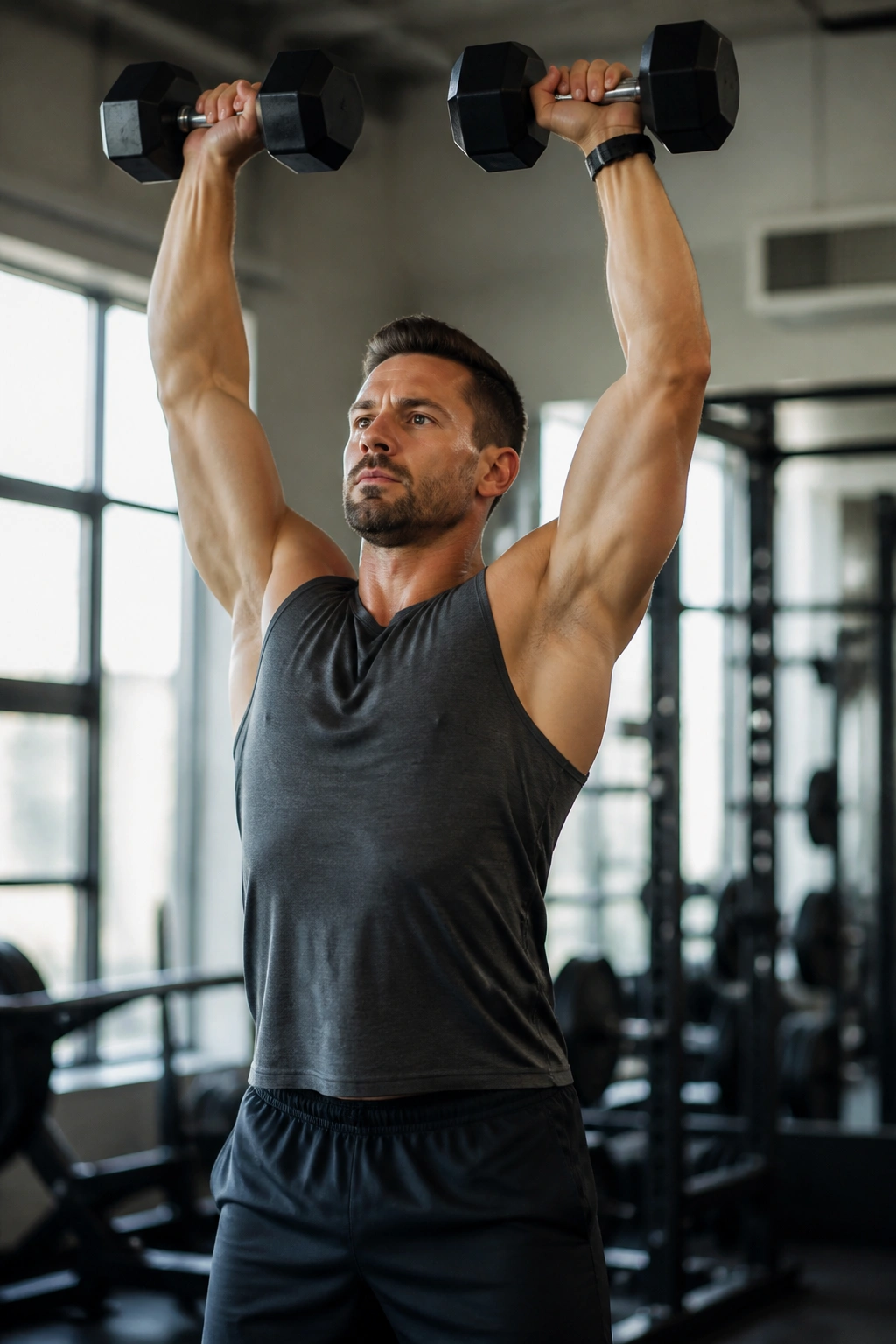
The clean and press ties everything together. One motion brings the dumbbells to the shoulders, and the next sends them overhead. It’s a full-body movement that asks for coordination, power, and enough conditioning to keep form from falling apart after the first few reps.
This is one of the better dumbbell exercises when time is short and you still want a hard session. It hits the legs, hips, back, shoulders, and core in one sequence. Because the movement is demanding, the load usually stays moderate. That’s fine. The value comes from how much work you can do cleanly, not from heaving monster dumbbells.
Try 4 sets of 3 to 5 reps. That keeps the technique from slipping. If the clean becomes messy, use a lower load and separate the clean from the press for a while. There’s no prize for ugly reps.
19. Dumbbell Snatch
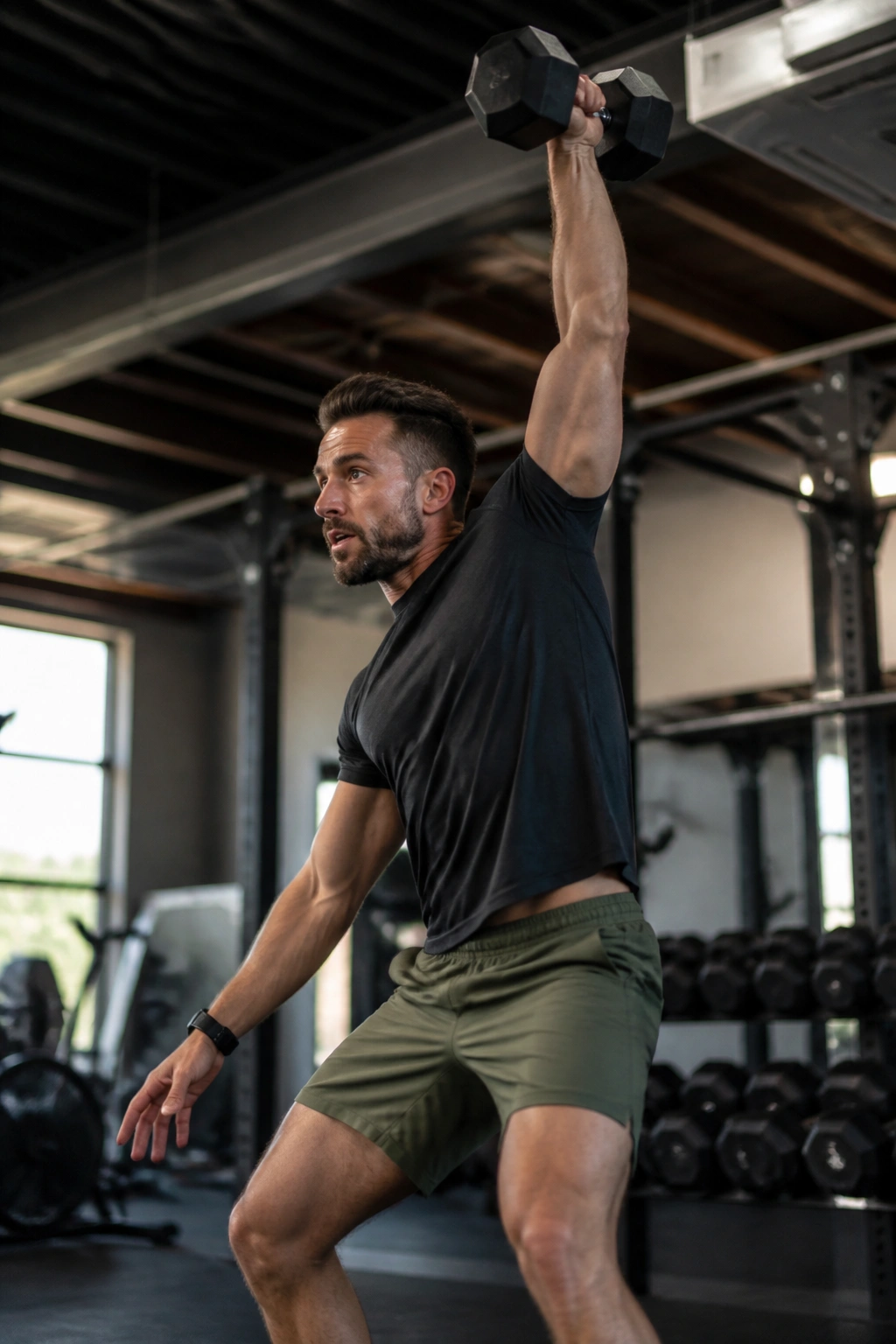
The dumbbell snatch is a sharp, fast movement that takes patience to learn. One dumbbell leaves the floor or hang, rises close to the body, and ends locked out overhead in one smooth path. It’s powerful. It’s technical. And if you rush it, it gets ugly fast.
The key is hip drive, not arm yank. Let the legs and hips create the speed, then punch the dumbbell overhead as it floats past the chest. The catch should feel solid but not violent. If the weight smacks your forearm on the way up, the path is probably looping away from your body.
Start light. Seriously. 3 sets of 3 to 5 reps per side is enough while you learn. The dumbbell snatch is great for power and conditioning, but only when the timing is there. It’s one of those lifts where clean mechanics matter more than looking impressive.
A Better Learning Path
- Practice a dumbbell high pull first.
- Move to a hang snatch before the floor version.
- Keep your free hand out of the way.
- Lock out fully overhead before lowering.
20. Dumbbell Thruster
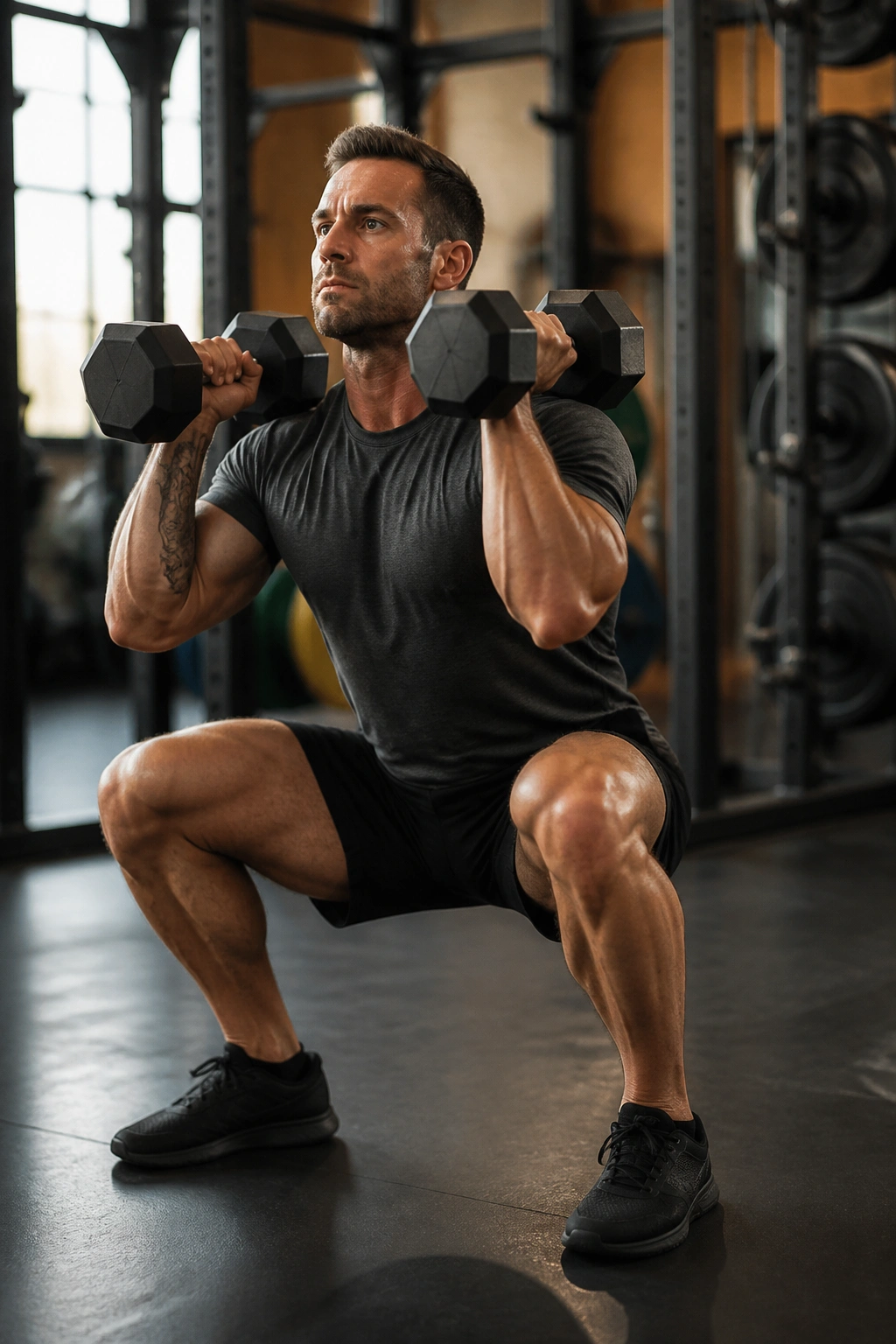
When legs and lungs both complain, thrusters show up and make the point plain. A dumbbell thruster is a front squat flowing directly into an overhead press, which means the lower body helps launch the upper body through the hardest part of the press. That’s why it feels so efficient and so tiring.
This move is useful when you want a high-output drill that still builds strength. It’s not subtle. The quads drive out of the squat, the core braces, and the press finishes overhead in one smooth chain. Keep the dumbbells at shoulder height between reps and avoid letting them drop too low before the next squat.
Use 3 to 4 sets of 6 to 10 reps if you want strength-endurance, or shorter sets of 5 reps if the form starts to slip. A moderate load works best. Too heavy and the press slows to a grind. Too light and the squat loses tension.
21. Dumbbell Lateral Raise
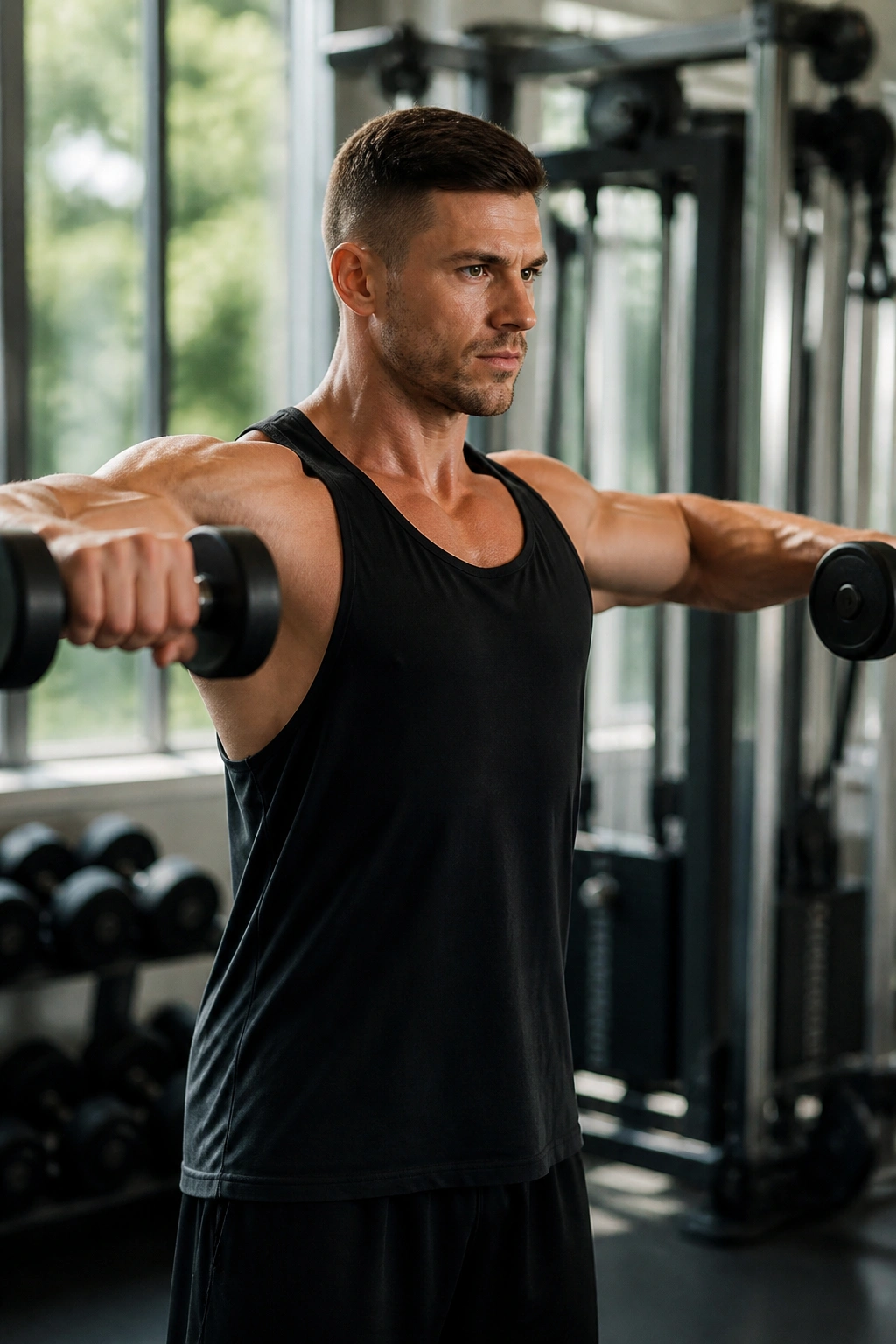
The lateral raise is a small move with outsized value. It won’t replace your big presses, and it’s not trying to. What it does is build the side delts, which help shoulders look broader and often feel more stable when you press and carry. That matters more than people admit.
Why Lighter Wins Here
Go too heavy and the movement turns into a shrug with bad manners. Use light dumbbells, a slight bend in the elbows, and raise the weights out to about shoulder height. A little lean forward often feels better than standing bolt upright, because it puts the side delt in a cleaner line. Stop before the trap takes over.
Use 2 to 4 sets of 12 to 20 reps. Yes, the reps are higher. That’s normal. The goal is constant tension and good control, not a heroic heave. Lower the weights slowly and keep the motion smooth. No swinging. No bounce.
A small one-second pause at the top can make the whole set feel much more precise.
22. Dumbbell Hammer Curl
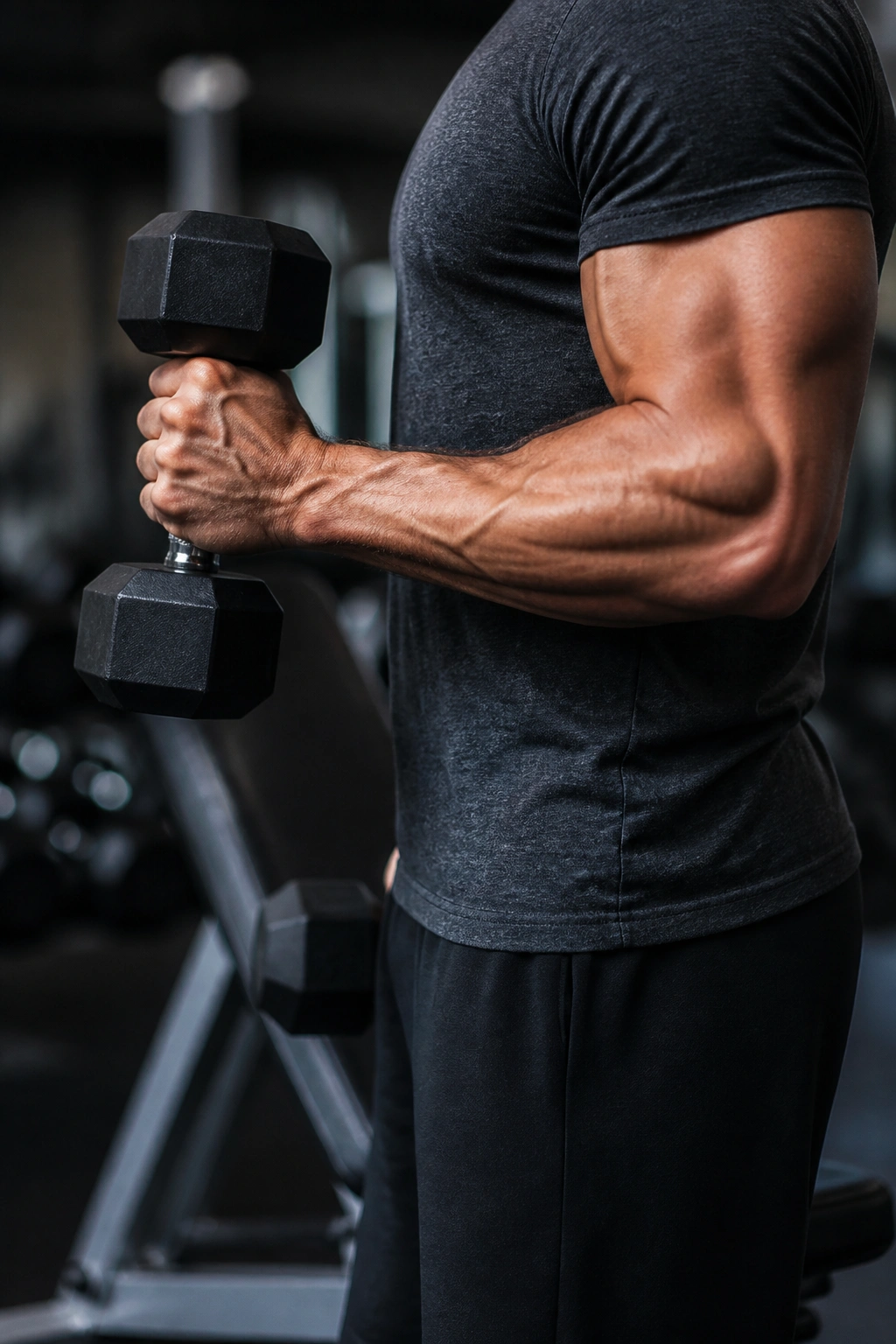
The hammer curl is the friendlier cousin of the classic biceps curl, and I mean “friendlier” in a useful way. The neutral grip hits the brachialis and forearm muscles hard, which helps add thickness to the upper arm and can make pulling work feel stronger over time.
Stand tall, keep the elbows near your sides, and curl the dumbbells without letting the shoulders roll forward. The hands stay neutral, like you’re holding a hammer. That grip changes the line of pull enough to make the forearms work harder than they do in a supinated curl.
Use 3 sets of 8 to 12 reps. A slow lowering phase helps more than extra swing. If the last few reps turn into body English, the dumbbells are too heavy. Better to keep the line clean and actually train the arm than to fling the weights around for show.
23. Dumbbell Overhead Triceps Extension
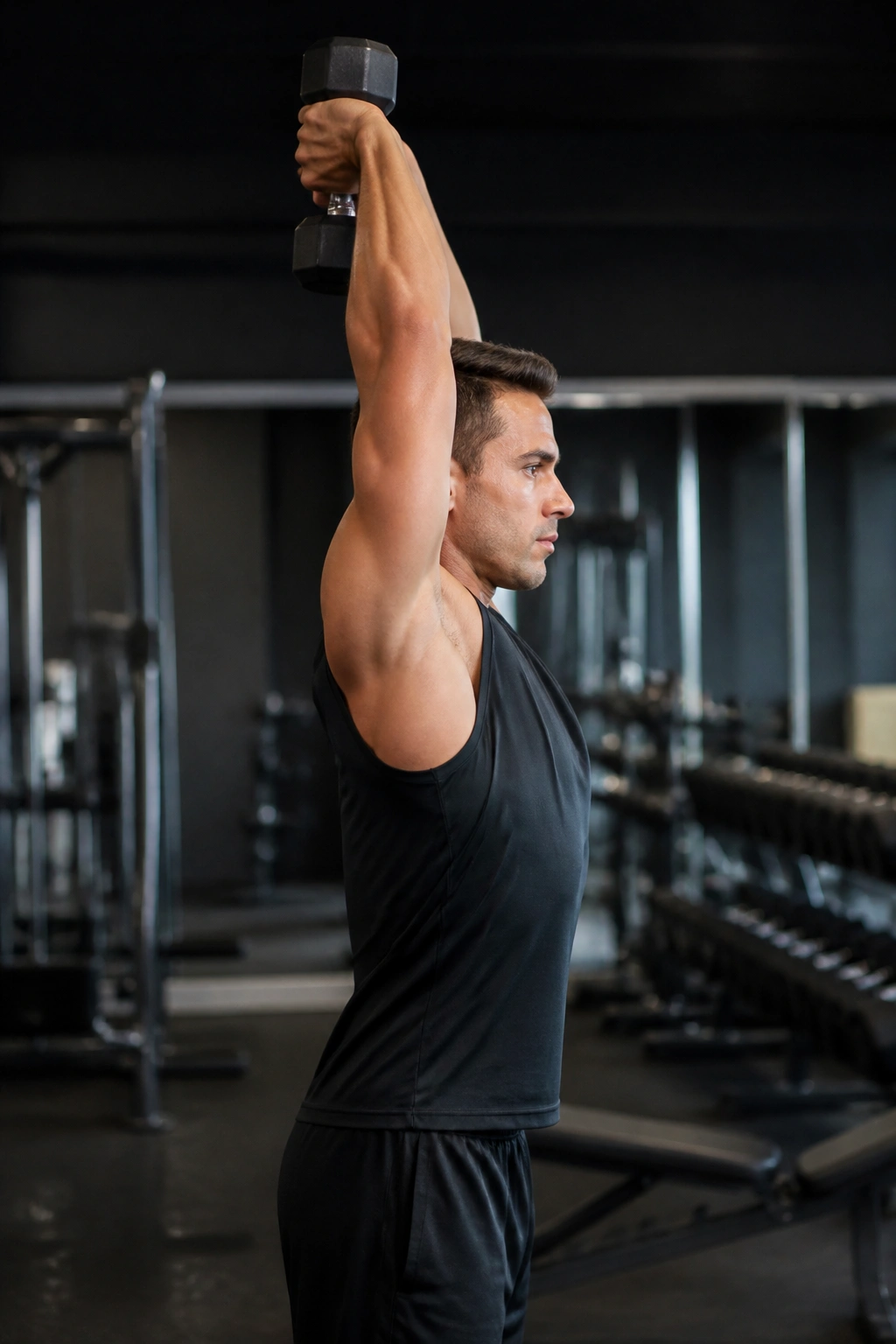
The overhead triceps extension is one of the better dumbbell exercises for the long head of the triceps, which gets stretched when your arms go overhead. That stretched position is part of why the move feels so direct. Your elbows know they are working.
Hold one dumbbell with both hands or use a single dumbbell in one hand at a time. Keep your upper arms mostly still, lower the weight behind your head, then extend through the elbows until your arms are straight again. If your elbows flare wide, the movement tends to get sloppy and the shoulders start helping too much.
Try 3 sets of 10 to 15 reps. A smooth tempo works best here. The bottom should feel like a deep stretch, but not a painful tug in the elbows. If your shoulder mobility is limited, shorten the range a bit and keep the reps strict.
24. Farmer’s Carry
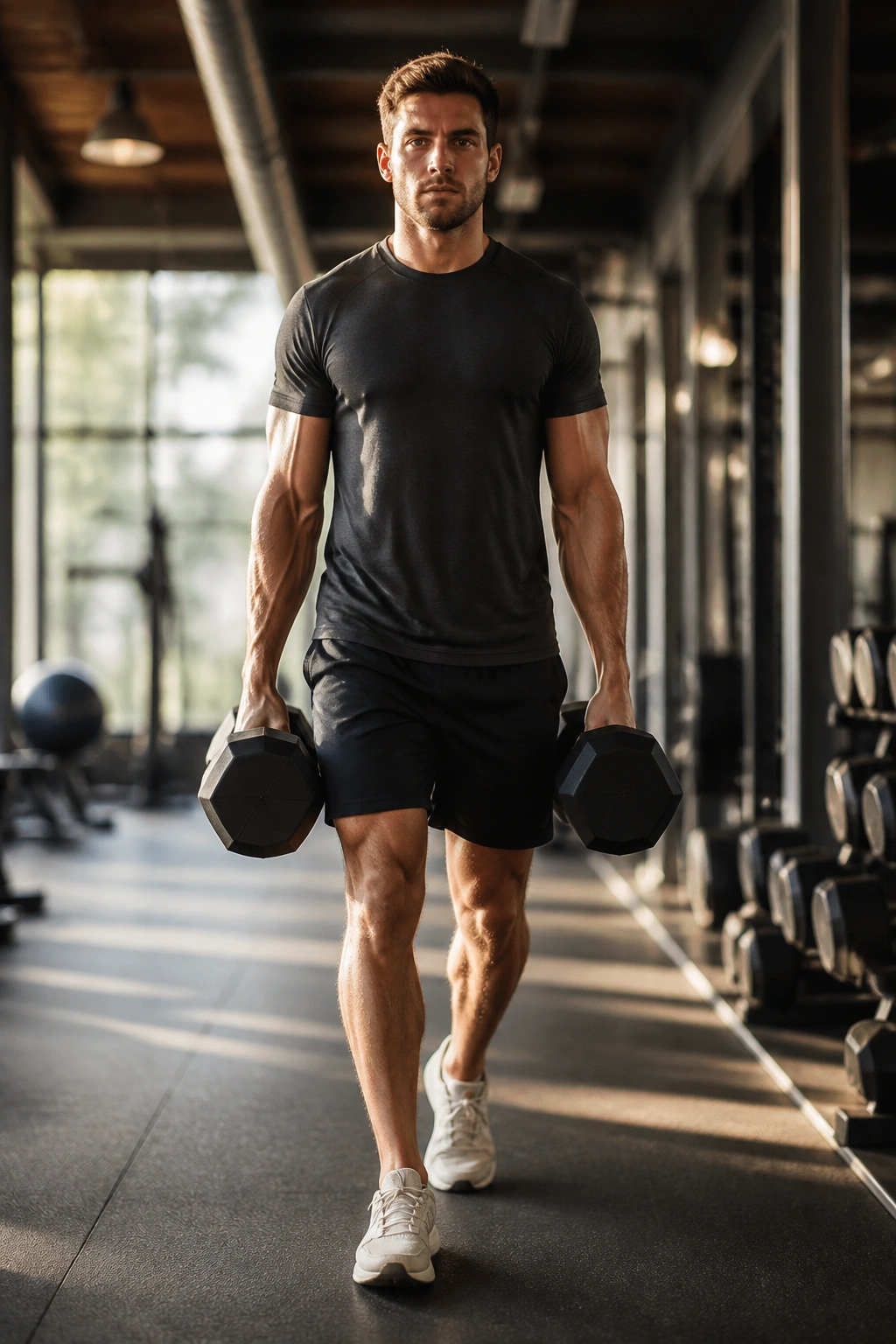
Carrying heavy dumbbells while walking may look boring to people who like complicated gym moves. It isn’t boring when your grip starts fading and your trunk has to keep you upright anyway. The farmer’s carry builds grip, core tension, posture, and the kind of full-body strength that shows up outside the gym.
How to Carry Like You Mean It
Stand tall, pick up the dumbbells, and walk with short, controlled steps. Don’t lean back. Don’t shrug to your ears. Keep the ribs stacked, shoulders down, and eyes forward. If the weights bang against your thighs, your stride is too wide or the load is too heavy.
Use 3 to 5 carries of 20 to 40 meters or 20 to 40 seconds per round. The carries should feel challenging, not chaotic. Grip training matters more than people think, and so does the ability to stay tall under load. This is one of the cleanest ways to train both.
25. Suitcase Carry
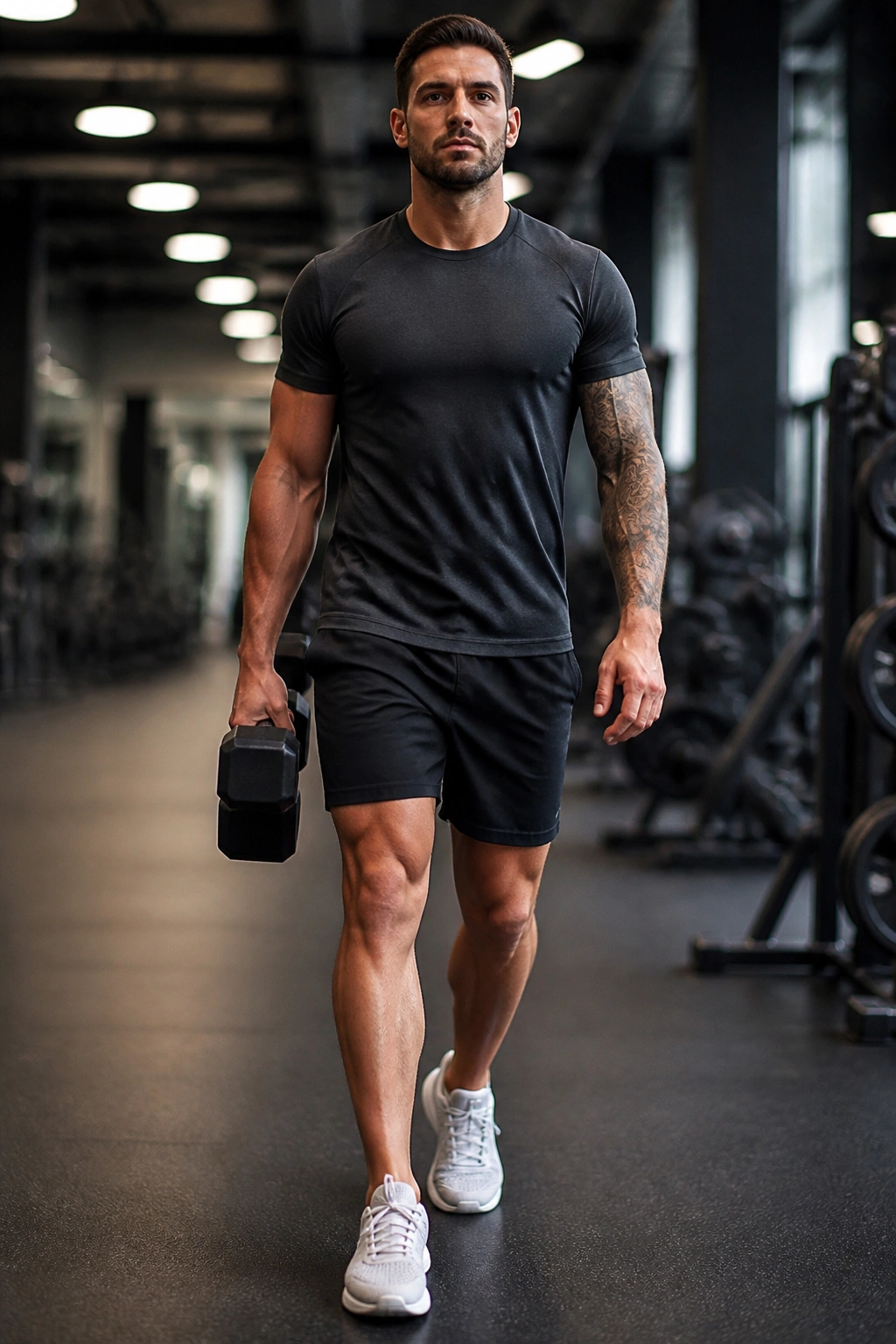
The suitcase carry is the farmer’s carry’s sharper, meaner sibling. You carry one dumbbell on one side only, which forces your torso to resist side bending. That makes the obliques, quadratus lumborum, and deep trunk muscles work hard to keep you from tipping.
This is one of the smartest dumbbell exercises for lean strength because it teaches the body to stay aligned under uneven load. Life is not symmetrical. Bags, kids, toolboxes, and grocery runs don’t care about your program. The suitcase carry fills that gap nicely.
Keep the load a few inches away from your leg, walk slowly, and do not lean toward the weight. If anything, think about growing taller through the crown of the head. Three to 4 carries of 20 to 30 meters per side is enough to start. A short walk with excellent posture beats a long, sloppy one every time.
The Bottom Line
The best dumbbell exercises for lean strength do more than make muscles tired. They teach you to brace, balance, hinge, press, and carry with control. That mix is what gives strength a cleaner look and a more useful feel.
You do not need all 25 in one workout. Pick a squat or lunge, a hinge, a press, a row, and a carry, then build from there. Keep the reps honest, add load only when the movement stays sharp, and let the dumbbells do the quiet work they’re good at.
