



The first lap through ab workouts at the gym for beginners can feel weirdly chaotic. One person is hanging from a bar, another is slow-curling a cable rope, and somebody on the mat is doing dead bugs so slowly it almost looks like nothing is happening.
That last person is usually the one who understands what’s going on. Your abs do not need nonstop crunches. They need jobs that teach them to brace, resist twisting, and keep your ribs and pelvis stacked while your arms and legs move.
I care more about clean reps than the burn people chase. Ten controlled cable crunches with a real exhale will do more for most beginners than thirty fast sit-ups that yank on the neck and leave the lower back annoyed.
The moves below cover the big beginner patterns: flexion, anti-extension, anti-rotation, and side-to-side control. Start small, keep the range honest, and let the effort build instead of forcing it.
1. Forearm Plank
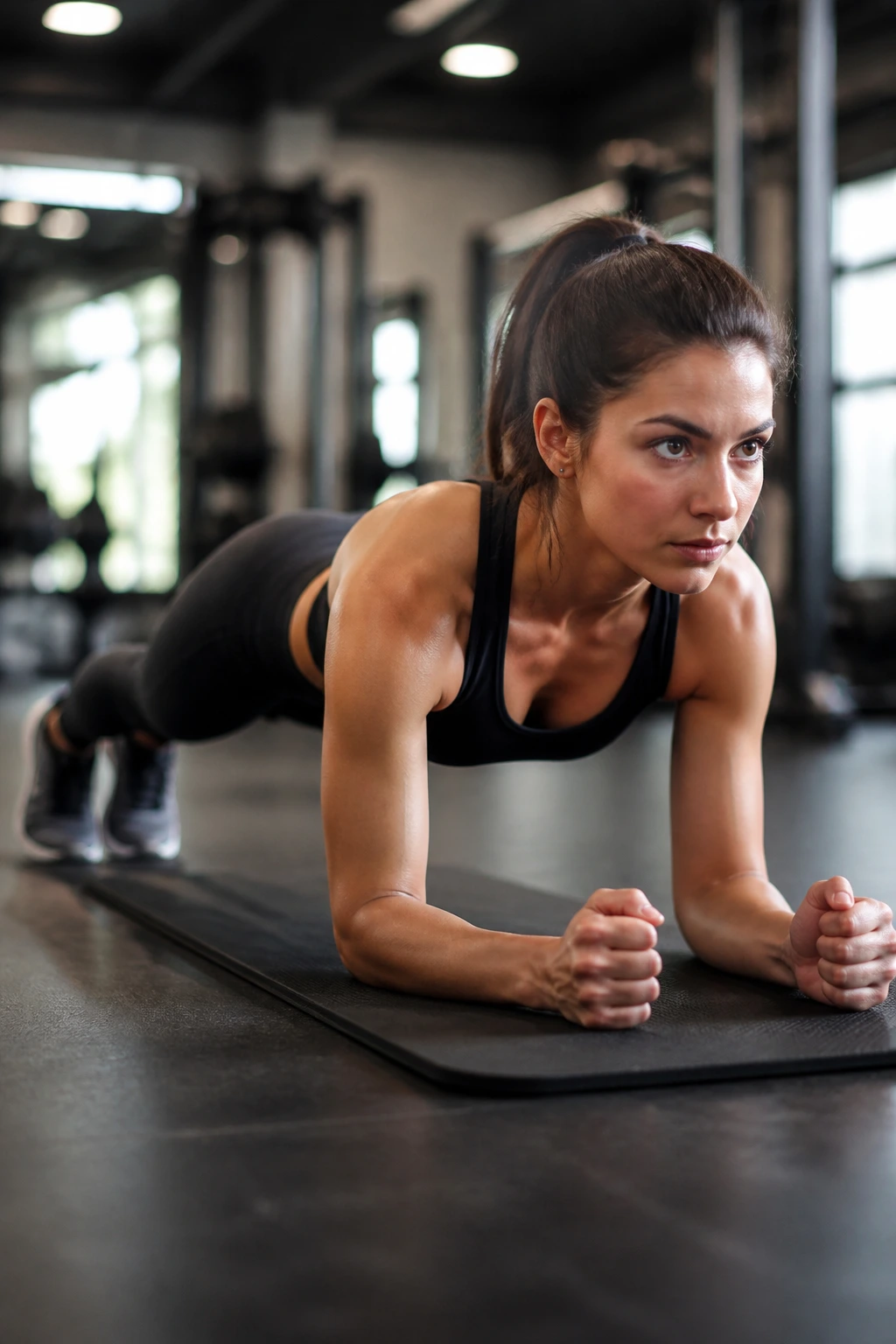
The forearm plank is boring in the best way. It tells you almost immediately whether you can hold your torso steady without arching your back or sticking your hips too high.
How to make it count
Set your elbows under your shoulders, press your forearms into the floor, and squeeze your glutes hard enough that your legs feel awake. Pull your ribs down toward your pelvis and breathe behind that brace.
- Hold for 15 to 30 seconds at first.
- Keep your neck long and your gaze a few inches past your hands.
- Stop the set the moment your lower back starts to sag.
- If your hips shake, that’s fine. If your spine collapses, that’s a sign to cut the set short.
One clean 20-second plank beats a sloppy minute every time. That’s the whole game here.
2. Kneeling Cable Crunch
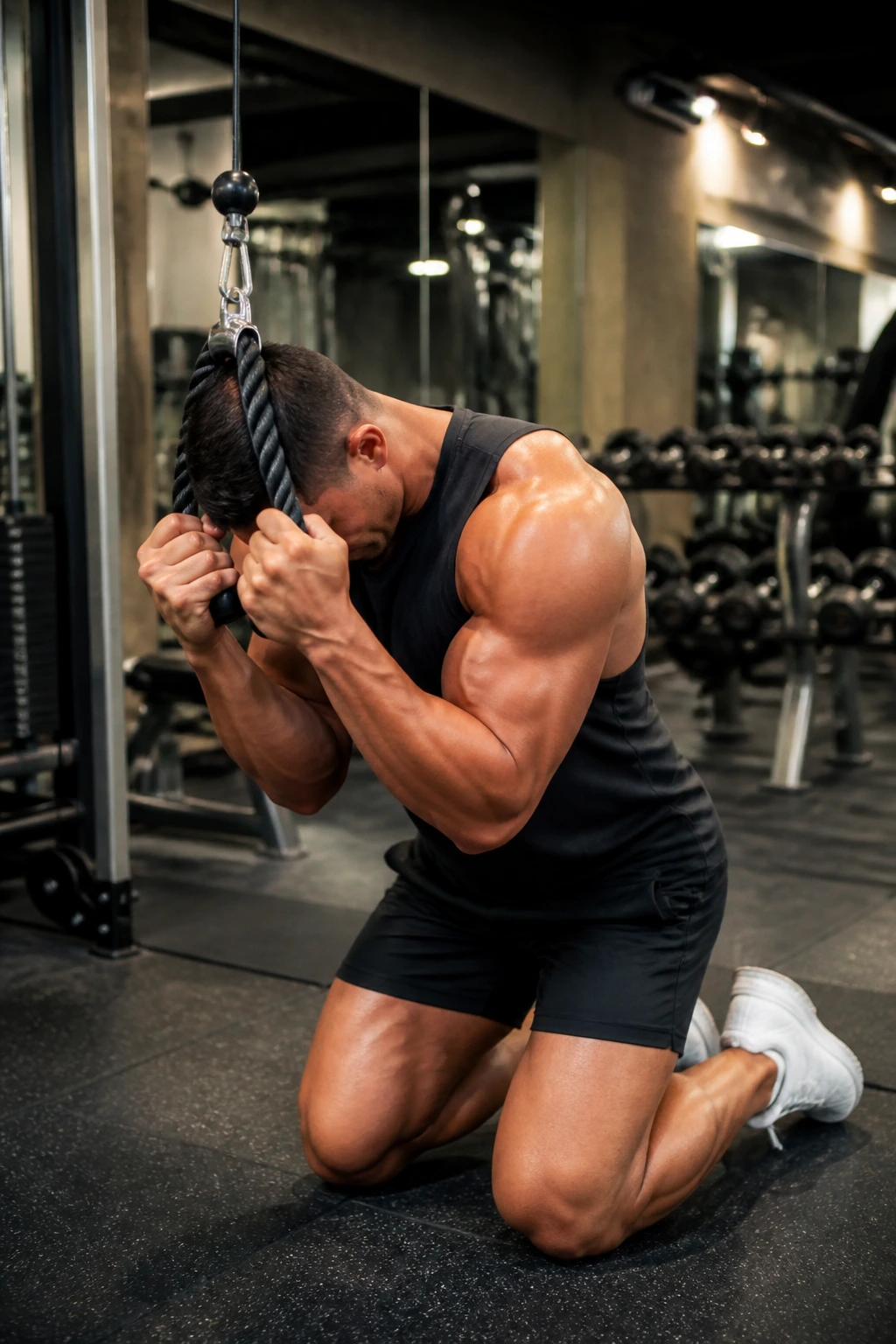
If you want a beginner ab exercise that you can load like a real lift, this is it. The kneeling cable crunch gives you resistance through the whole curl, which makes it easier to feel the abs doing the work instead of the hips.
Sit your knees a few inches behind the rope, keep the cable set high, and crunch your ribs toward your pelvis. Don’t think “bend at the hips.” Think “close the space between your sternum and your belt line.”
A lot of beginners pull with the arms or bow forward like a broken hinge. Nope. The rope should stay close to your face, the elbows should travel down and in, and the movement should come from the trunk. Start with a light stack, around 15 to 30 pounds, and earn the right to add more.
Ten clean reps are enough to make this one sting in the right place.
3. Dead Bug
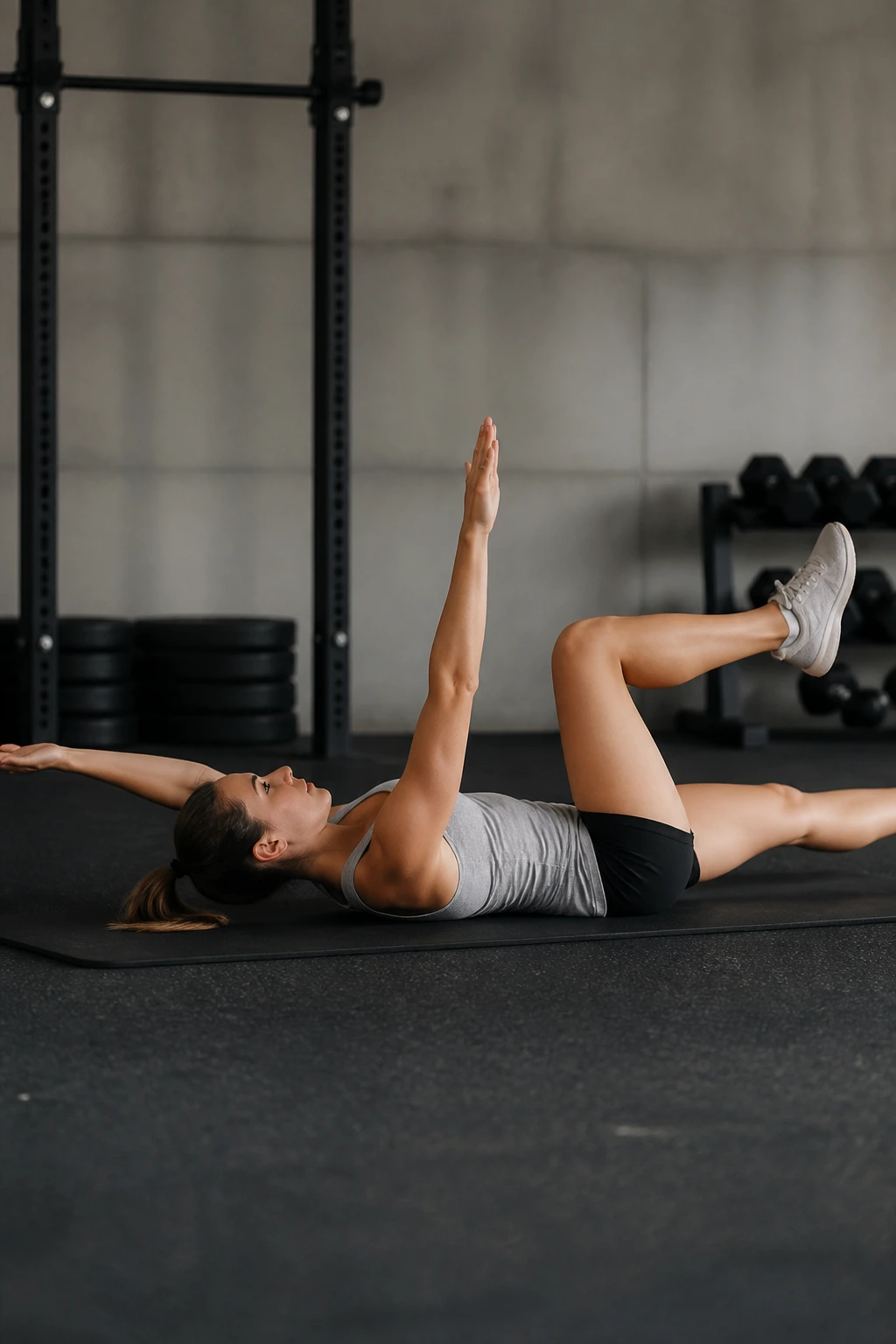
Why does a move that looks this quiet show up in so many beginner core routines? Because it teaches your torso to stay calm while your limbs move in opposite directions, which is a skill most people do not have yet.
Lie on your back, knees over hips, arms pointing toward the ceiling. Flatten your lower back into the floor before you move anything. Then lower one arm and the opposite leg slowly, stop before your back lifts, and return to the start with control.
How to use it
- Start with 5 to 8 reps per side.
- Touch the heel down instead of straightening the leg if the full version feels too hard.
- Exhale as the arm and leg extend.
- Keep the movement slow enough that you can feel your lower abs work.
I like this one for beginners who want something that builds control without loading the spine. It looks easy. It isn’t.
4. Captain’s Chair Knee Raise
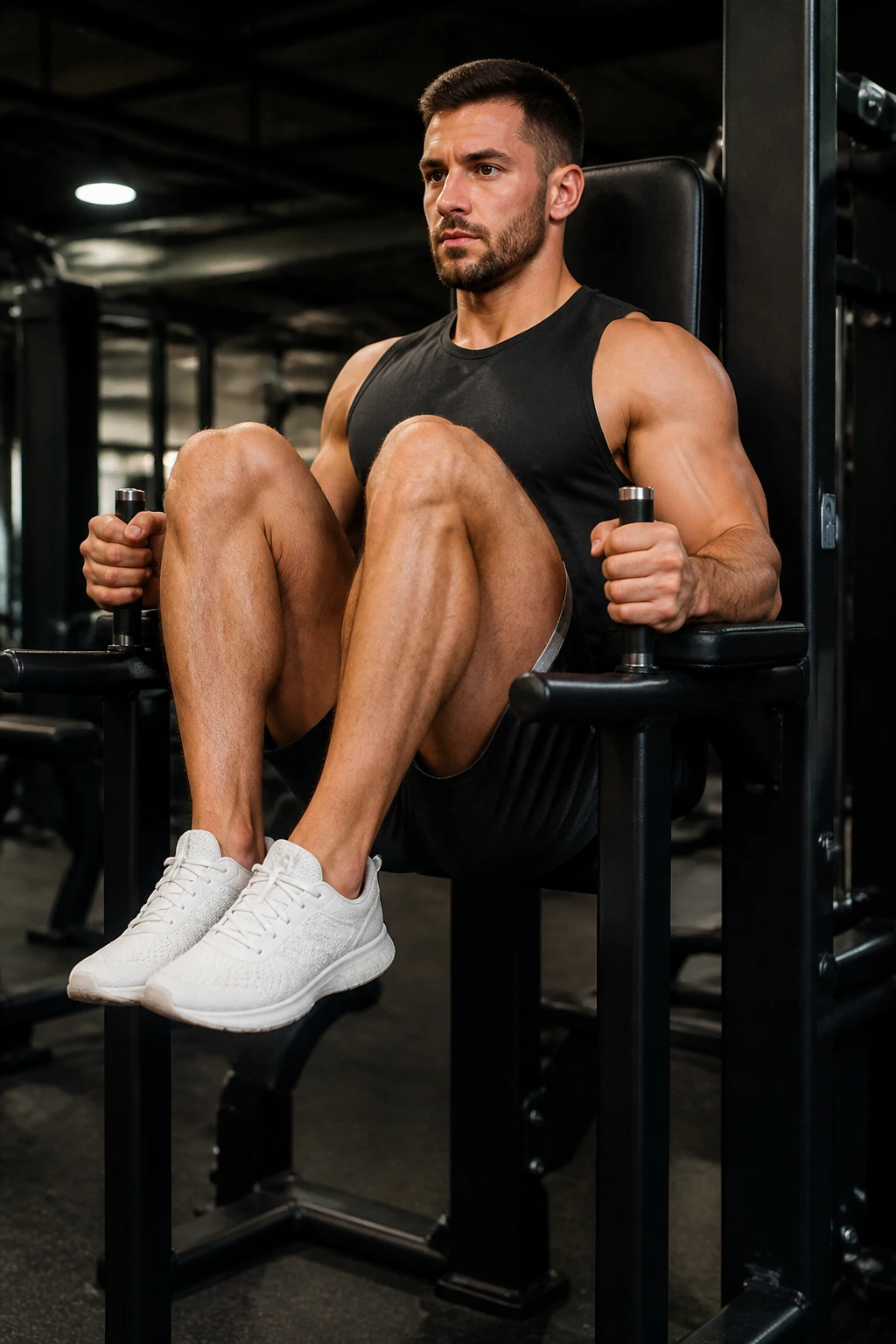
Picture a machine with padded armrests and your feet hanging off the ground. That’s the captain’s chair, and it’s one of the friendliest ways to train the lower abs without needing strong grip strength.
The support takes pressure off your shoulders and lets you focus on the actual curl. Bring your knees up toward your waist, pause for a second, and lower them slowly instead of dropping them. If you swing, the hip flexors steal the show.
What to watch for
- Keep your back pressed lightly into the pad.
- Raise the knees to about hip height at first.
- Use a slow 2-second lower.
- Stop before momentum takes over.
A lot of beginners try to make this look dramatic. Small, controlled reps are the point. The machine already did half the work for you, so use that gift.
5. Side Plank
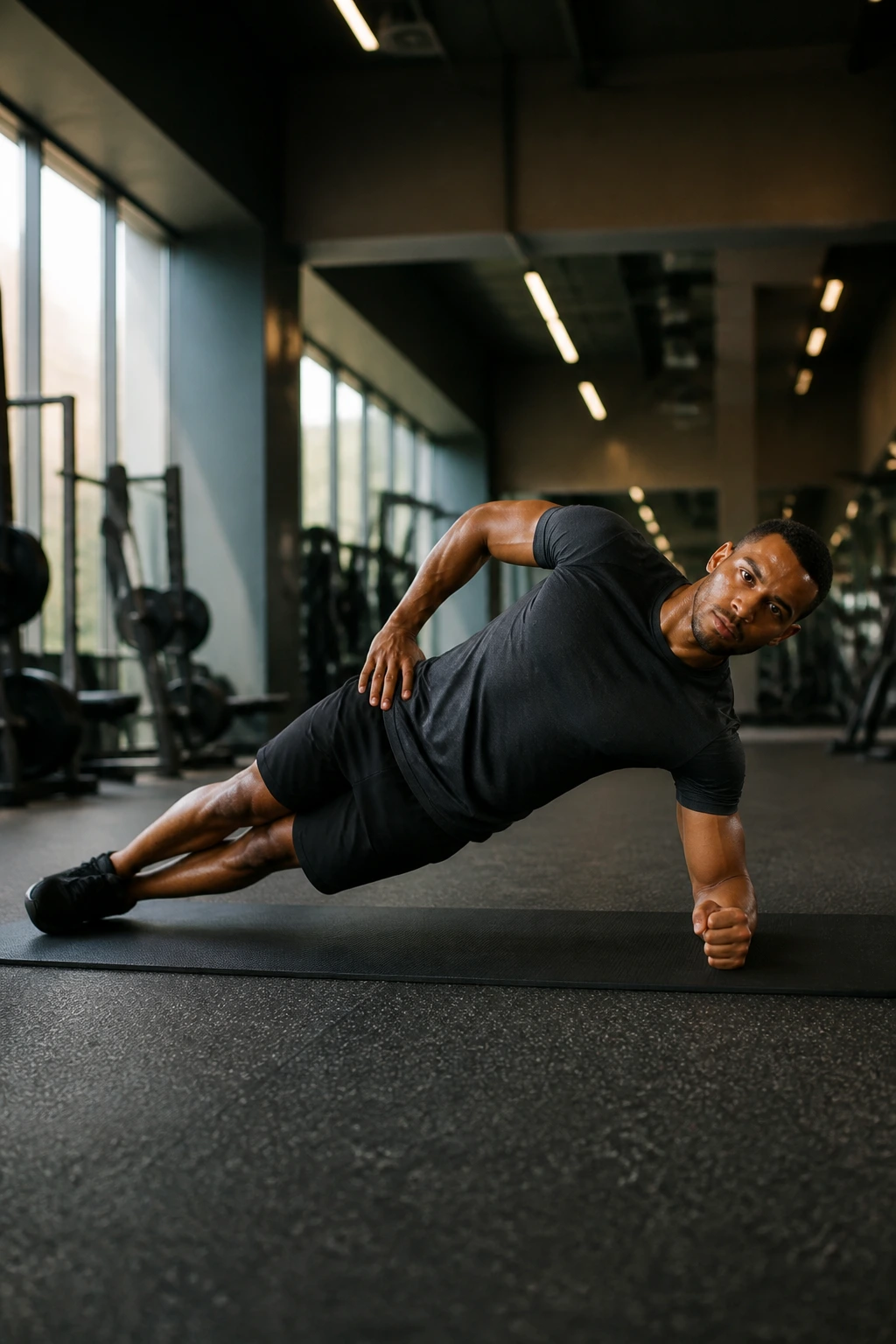
The side plank is one of those exercises people underestimate until the bottom hip starts complaining after ten seconds. It trains the obliques, but it also asks the whole side of your trunk to stay long and steady.
Start from your forearm and knee if the full version feels like too much. Stack your shoulders, keep your top hip forward instead of rolling open, and lift until your body makes one straight line from head to knee or foot.
Keep breathing. That matters more than people think. If you hold your breath, the tension jumps into your neck and jaw, and the exercise gets uglier fast.
Short holds win here. Think 15 seconds per side, then build to 30 seconds before chasing anything longer. The side plank should feel clean, not heroic.
6. Suitcase Carry
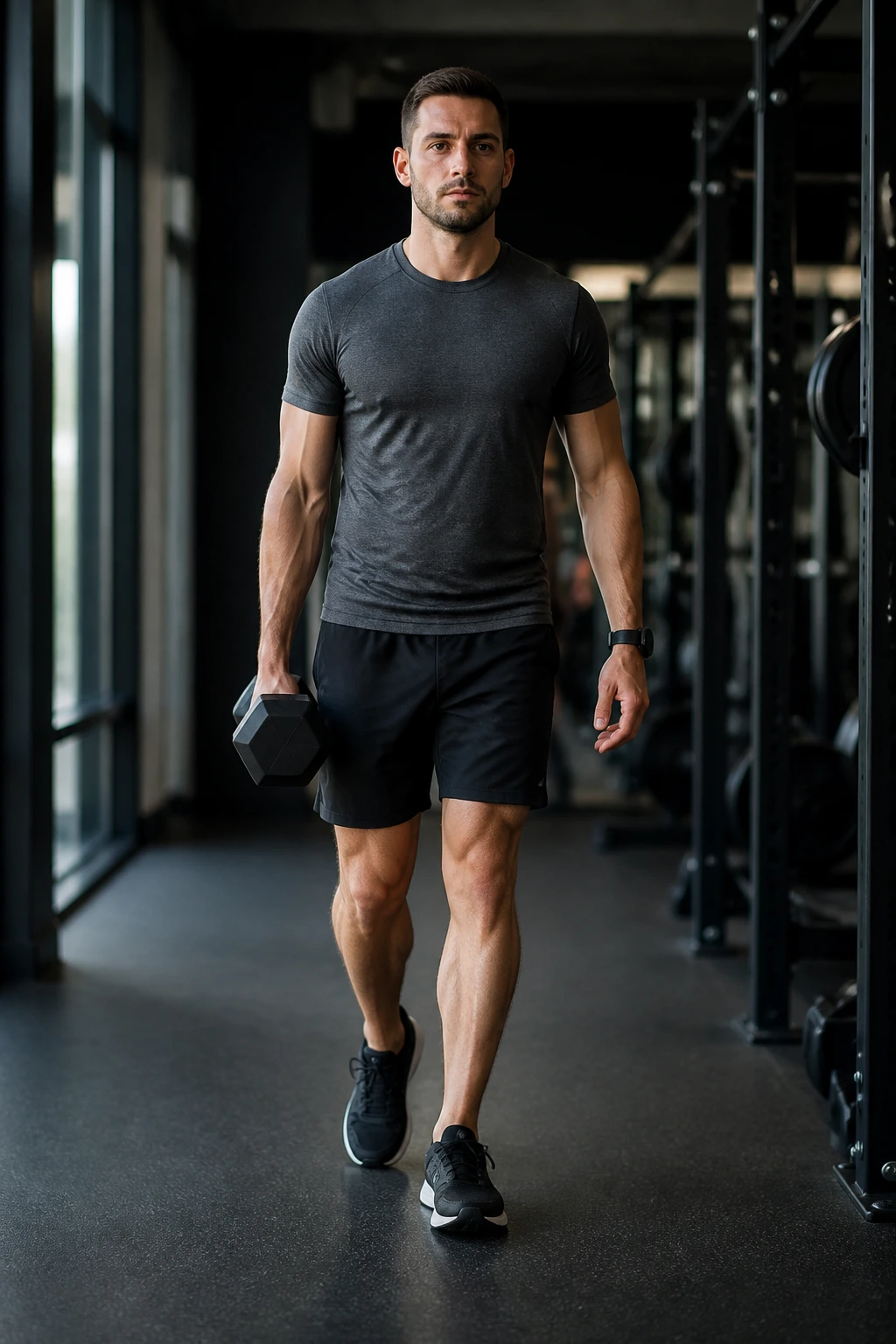
Unlike crunches, the suitcase carry trains your abs while you walk like a normal human being. One dumbbell in one hand creates a sideways pull, and your trunk has to fight that pull without leaning.
Pick a weight that makes you work but does not drag you into a tilt. Walk tall for 20 to 40 meters on one side, switch hands, and repeat. The goal is not speed. The goal is looking steady while the weight tries to bend you.
This one is especially good if you want a stronger waist without a lot of floor work. It also teaches posture in a way machines cannot quite match. If you lean at all, the load is too heavy. Simple.
I like to think of this as anti-cheating training. Your body has to stay honest the whole time.
7. Reverse Crunch on a Bench
This one is sneaky. It looks small, then your abs light up because the work starts at the pelvis, not the shoulders.
Lie on a flat bench and hold the top edge behind your head. Bring your knees in, then curl your tailbone up a few inches so your hips roll off the bench a little. Lower slowly until your lower back is set again, then repeat.
What beginners mess up
- They swing the legs and skip the pelvic tuck.
- They turn it into a knee-to-chest hug instead of a real curl.
- They rush the lowering phase.
- They arch the back hard at the bottom.
Keep the movement compact. A tiny curl done well is better than a big swing that never hits the abs. If you want more challenge, slow the lowering phase to 3 seconds. That small change makes a big difference.
8. Pallof Press
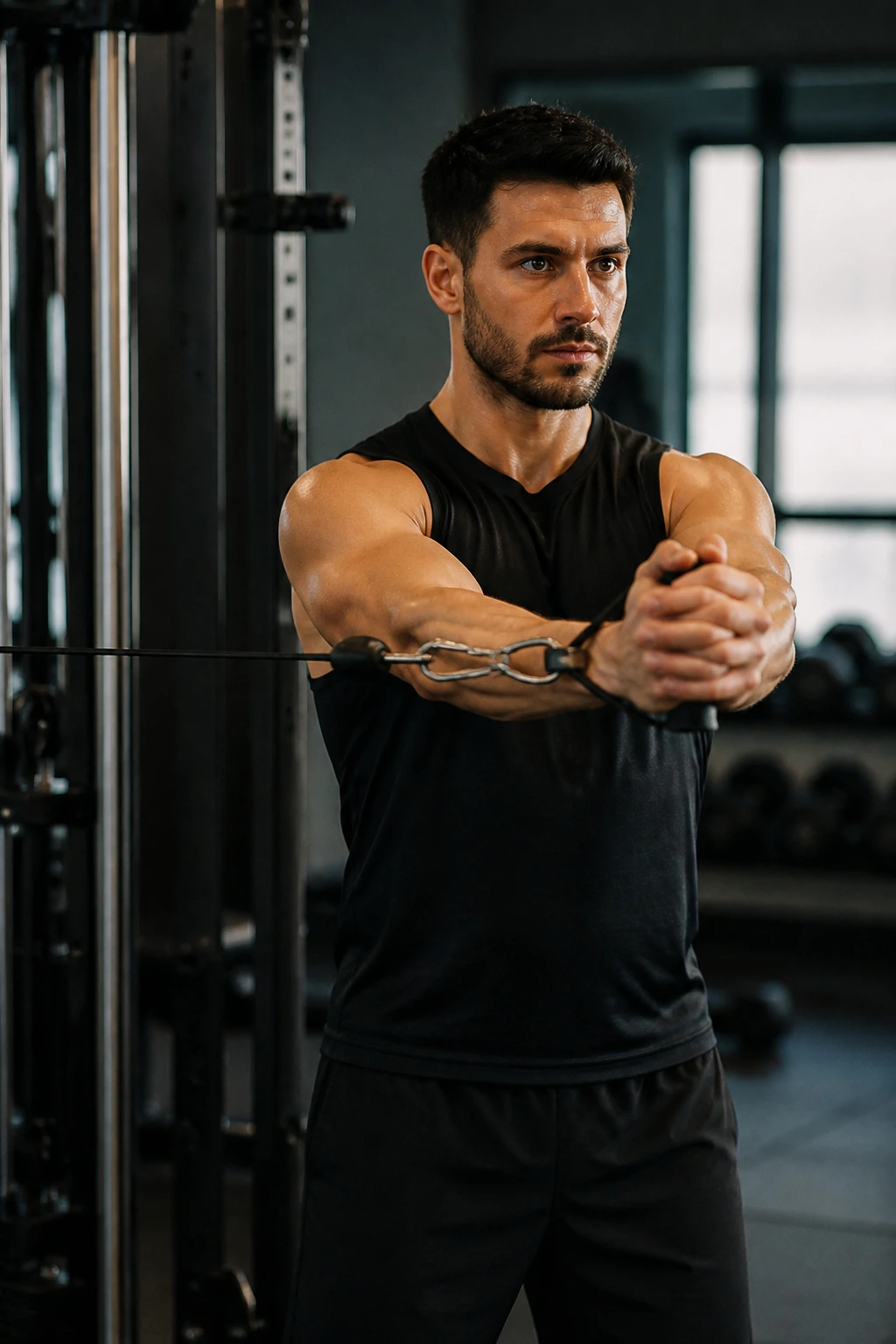
If your gym only gives you a cable station and ten minutes, the Pallof press still earns a spot. It trains your abs to resist twisting, which is one of the most useful things they can learn.
Set the handle at chest height, stand sideways to the cable, and hold the handle close to your sternum. Press it straight out, pause for a beat, and bring it back without letting your torso drift. The cable should feel like it wants to spin you toward the stack.
A lighter weight works better than a heavy one. That sounds backward until you try it. Start with a stack that lets you hold the press for 8 to 10 controlled reps or 15-second holds on each side.
The best rep looks almost boring. That’s the point.
9. Stability Ball Crunch
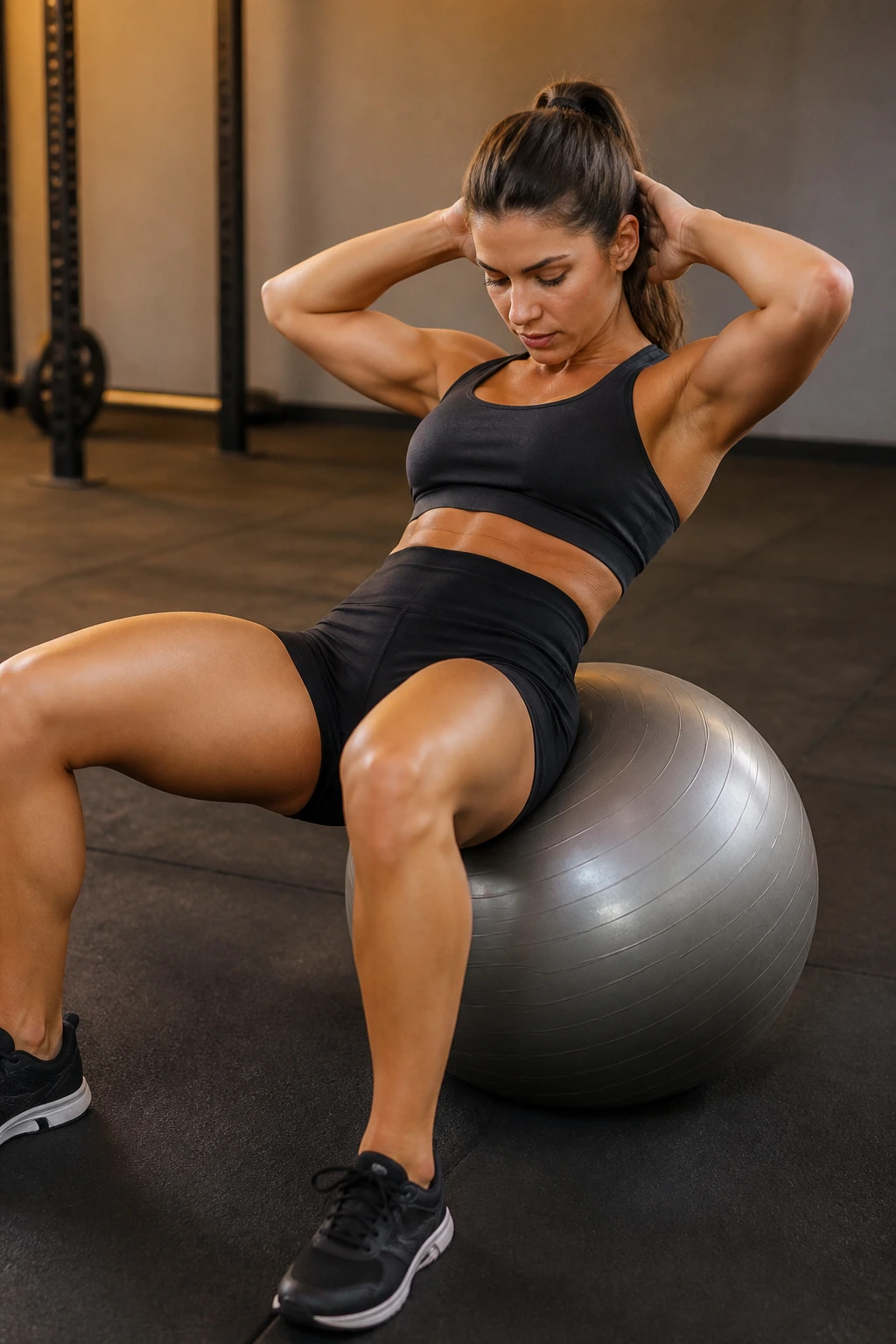
Why use a ball instead of the floor? Because the curve lets your spine move through a little more range, and that extra range can make the abs work harder without needing heavy weight.
Sit on the ball, walk your feet forward, and let your lower back rest over the curve. Keep your feet wider than hip width so you do not wobble around, then curl up through the chest and ribs without yanking your neck. The top of the rep should feel like a short, controlled crunch, not a sit-up launch.
How to make the ball work
- Keep your chin slightly tucked.
- Exhale as you curl up.
- Stop if the ball slides too much.
- Use a short range if your lower back feels cranky.
I like this option for beginners who want something soft under the spine but still honest enough to work. It’s friendlier than a decline bench and less awkward than it looks.
10. Machine Ab Crunch
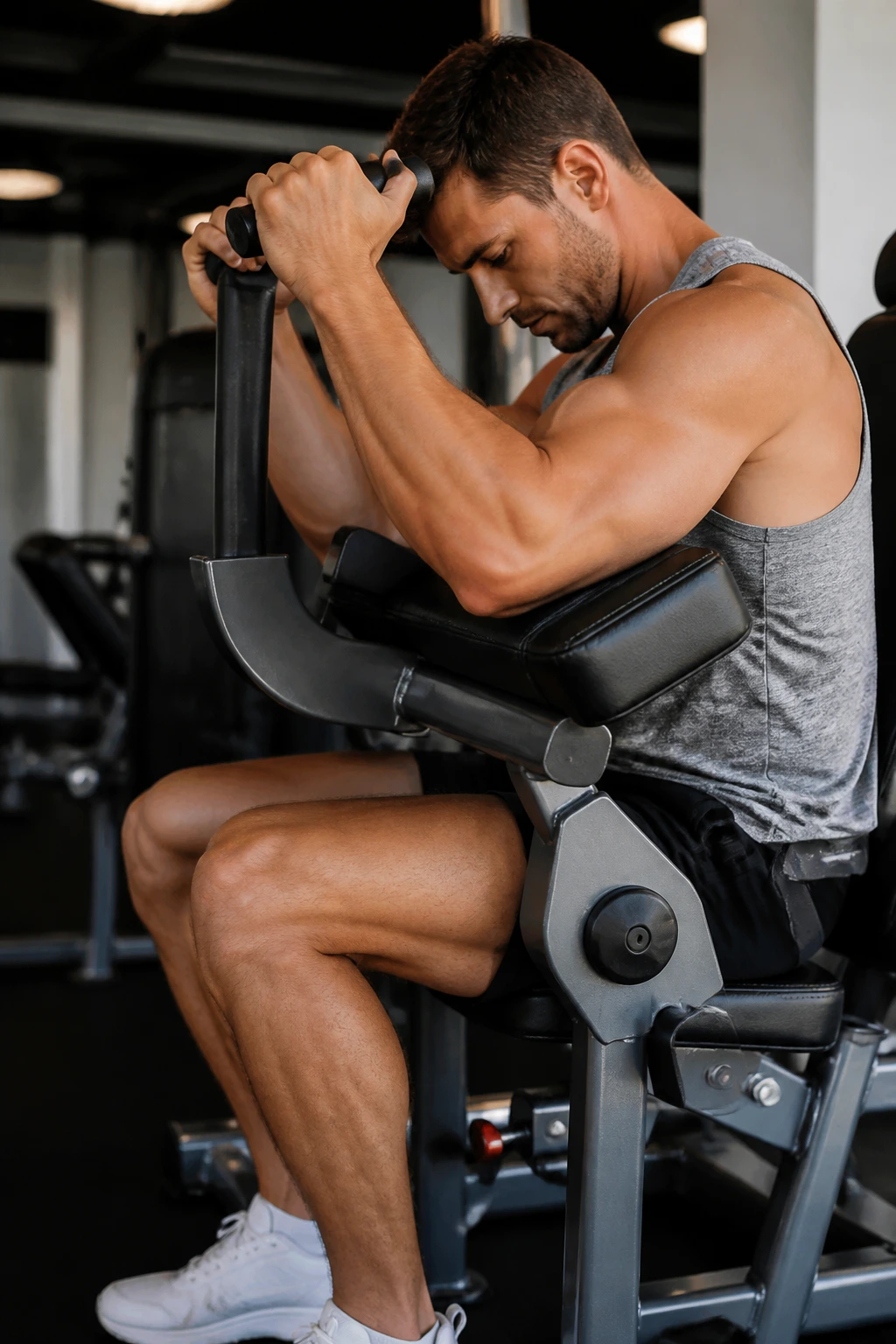
The machine ab crunch is a gift for beginners because the path is fixed. You sit, brace, crunch, and repeat without worrying about balance, grip, or what your legs are doing.
Set the seat so the pad sits where you can drive your torso down through the ribcage, not your shoulders. Start the movement tall, then curl the spine forward and down. If the pad ends up on your neck, the machine is set wrong.
Use a slow squeeze at the bottom and a controlled return. Eight to twelve reps is a good starting point, especially if the stack is already giving you enough resistance to slow the last few reps down. I prefer this one when someone wants a clean, simple way to feel the abs work without learning a complicated setup.
No drama needed. Just a tidy curl and a steady exhale.
11. Cable Woodchop
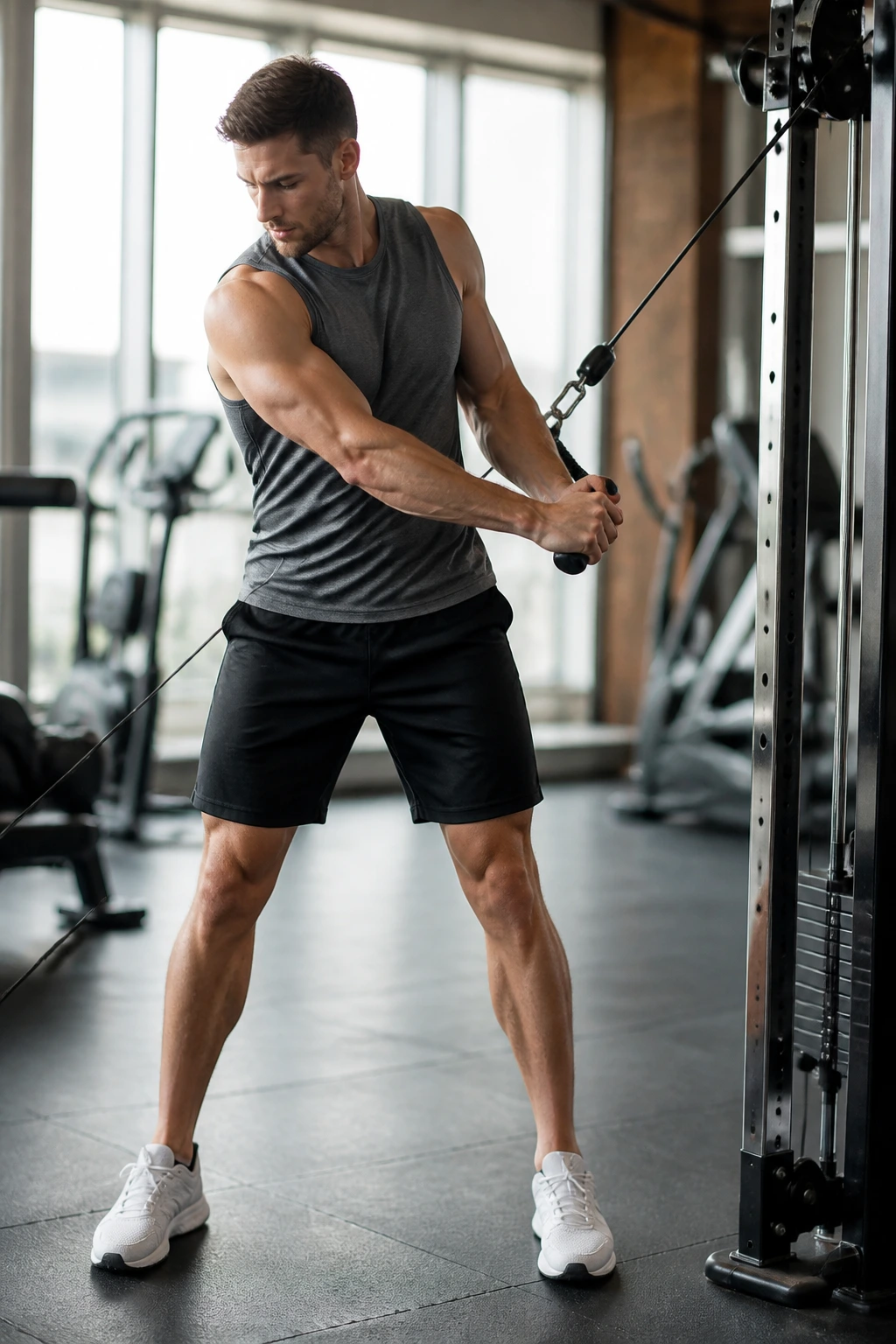
The cable woodchop is a diagonal move, which makes it feel different from the straight-up crunches and planks. Your trunk has to guide force across the body, and that makes the obliques wake up fast.
Stand to the side of the cable, grab the handle, and move it in a smooth arc from one shoulder toward the opposite hip, or the reverse if you set the pulley lower. Keep your ribs from flaring and let the torso rotate as one unit instead of flinging the low back around.
If the movement turns sloppy, the stack is too heavy. It really is that simple. Start light, keep your feet planted, and let the hips pivot only a little if you need help staying smooth.
What makes it work
The win here is control, not speed. A slow chop with a clean line will teach your midsection more than a rushed set with weight you can barely guide.
12. Hanging Knee Raise
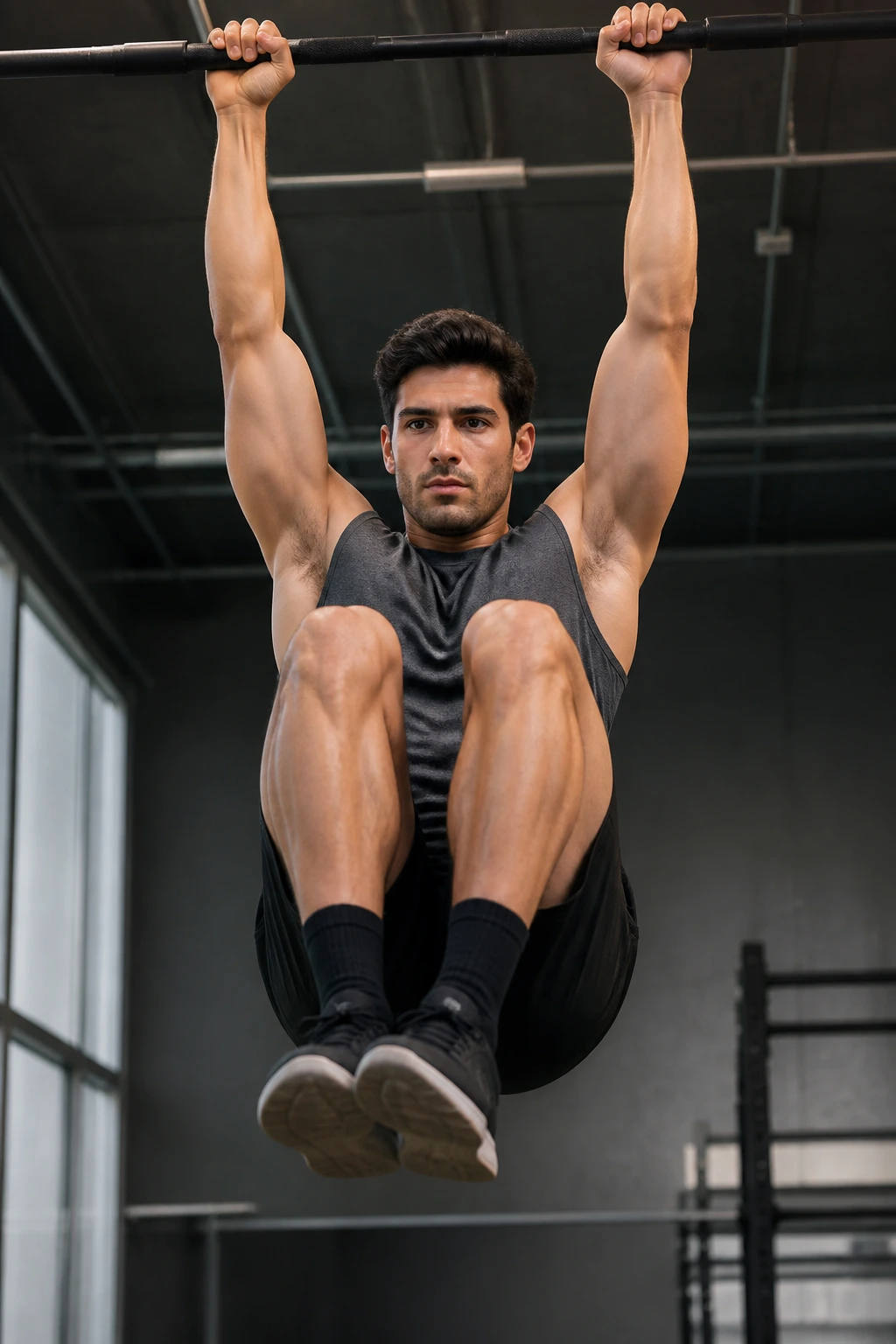
This one looks flashy from a distance, but the beginner version is modest. Bent knees, small range, slow lowering. That’s enough.
Hang from a bar with a shoulder-width grip and bring the knees up toward your chest. The key part is the finish: tilt the pelvis back a little at the top so the abs, not just the hip flexors, finish the rep. Lower until the body is still again, then go back up without swinging.
If gripping the bar feels like the main event, move to the captain’s chair first. That is not failure. It is a smarter starting point. Hanging knee raises ask for more shoulder and grip work than most people expect, and that can hide the abdominal work if you rush it.
Aim for 6 to 10 reps. Keep the reps small enough that you can control every inch.
13. Bird Dog
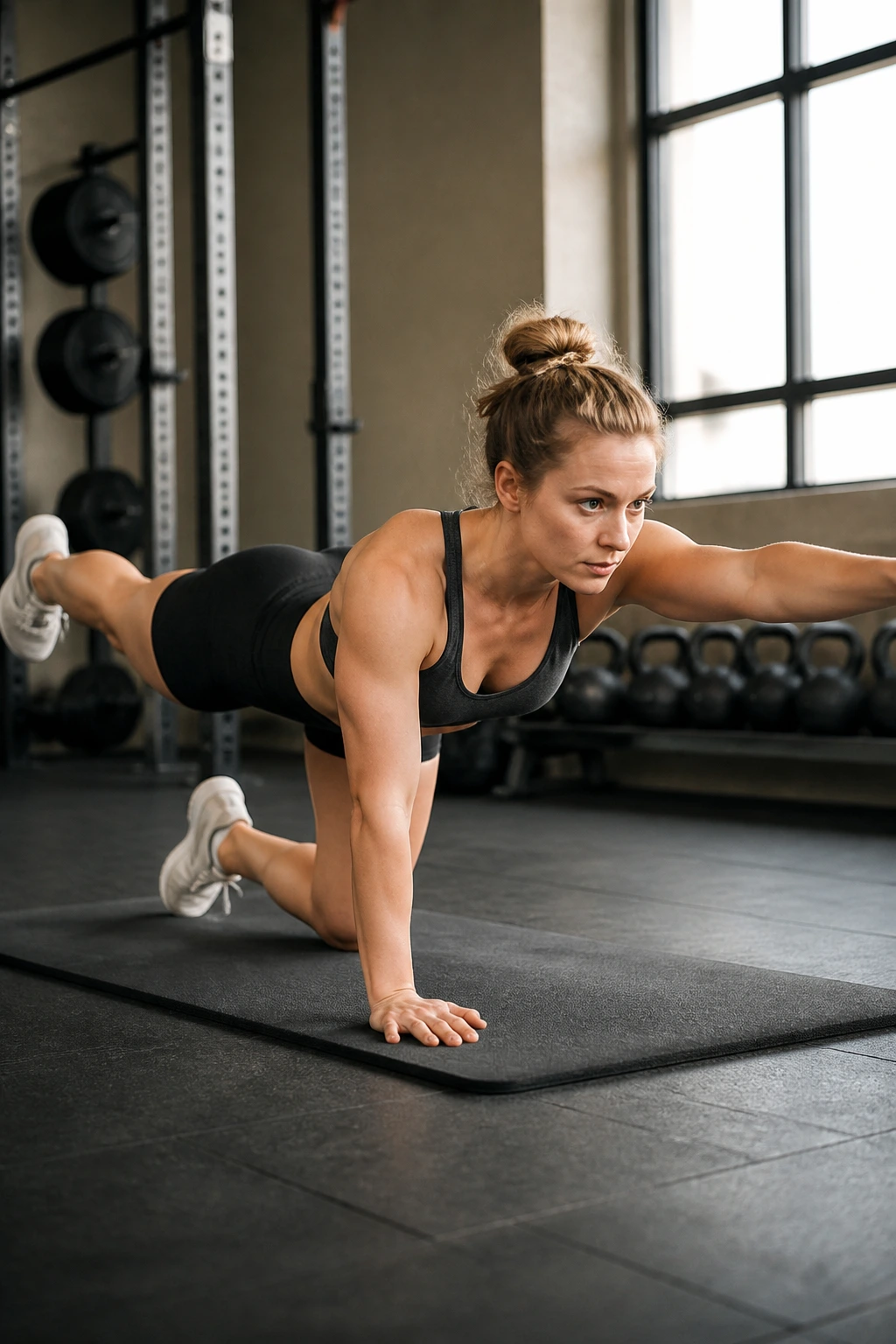
The bird dog belongs in a beginner gym routine even though it looks like warm-up material. It teaches cross-body stability from the floor, which is exactly the kind of control that makes heavier ab work cleaner later.
Start on hands and knees. Reach one leg back and the opposite arm forward until both limbs feel long, then pause without letting the hips twist. Bring them back in with the same control, and switch sides.
Why it matters
- It keeps the pelvis square.
- It teaches you to brace without clenching every muscle in sight.
- It is easy to scale down by shortening the reach.
- It shows you pretty fast if one side is weaker.
I like this move between harder exercises or after a day with heavy squats. It resets the trunk without beating you up, and beginners usually feel more balanced after a few slow reps.
14. Farmer’s Carry
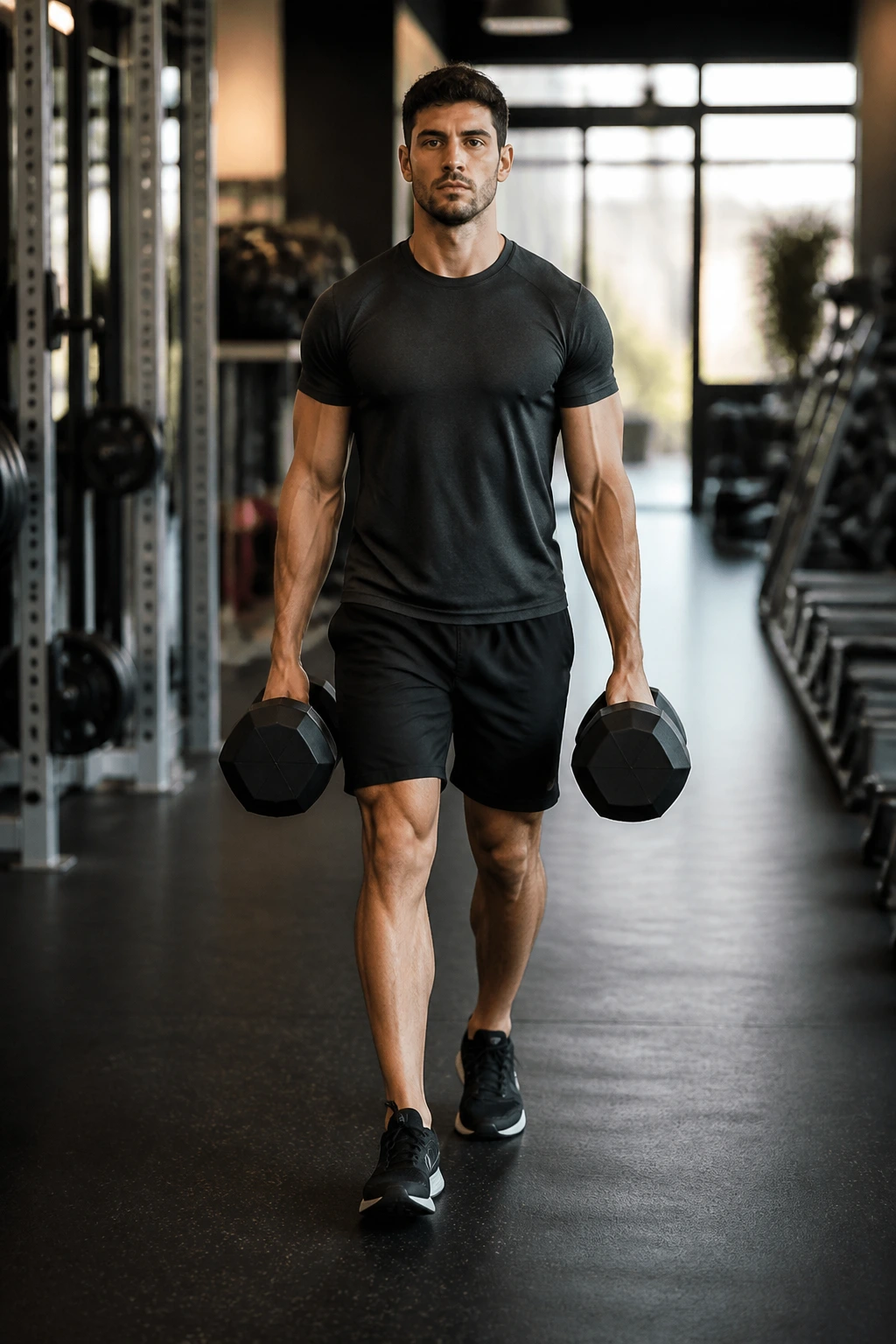
The farmer’s carry is one of the best “abs without looking like abs” drills in the gym. Two dumbbells, both hands loaded, and a simple walk.
Stand tall, pick up a pair of dumbbells that make your grip work hard, and walk for 30 to 60 seconds. Keep the ribs stacked over the pelvis, shoulders relaxed but not slumped, and your steps smooth. If you sway side to side, the dumbbells are too heavy or the pace is too quick.
Unlike the suitcase carry, this one loads both sides and asks your trunk to keep everything from collapsing forward. It also hits grip and upper back in a way beginners usually appreciate once they get used to it. No twisting. No bending. Just walking with purpose.
I put this on the list because it’s useful in a plain, unfussy way. The gym needs more of that.
15. Hollow Hold
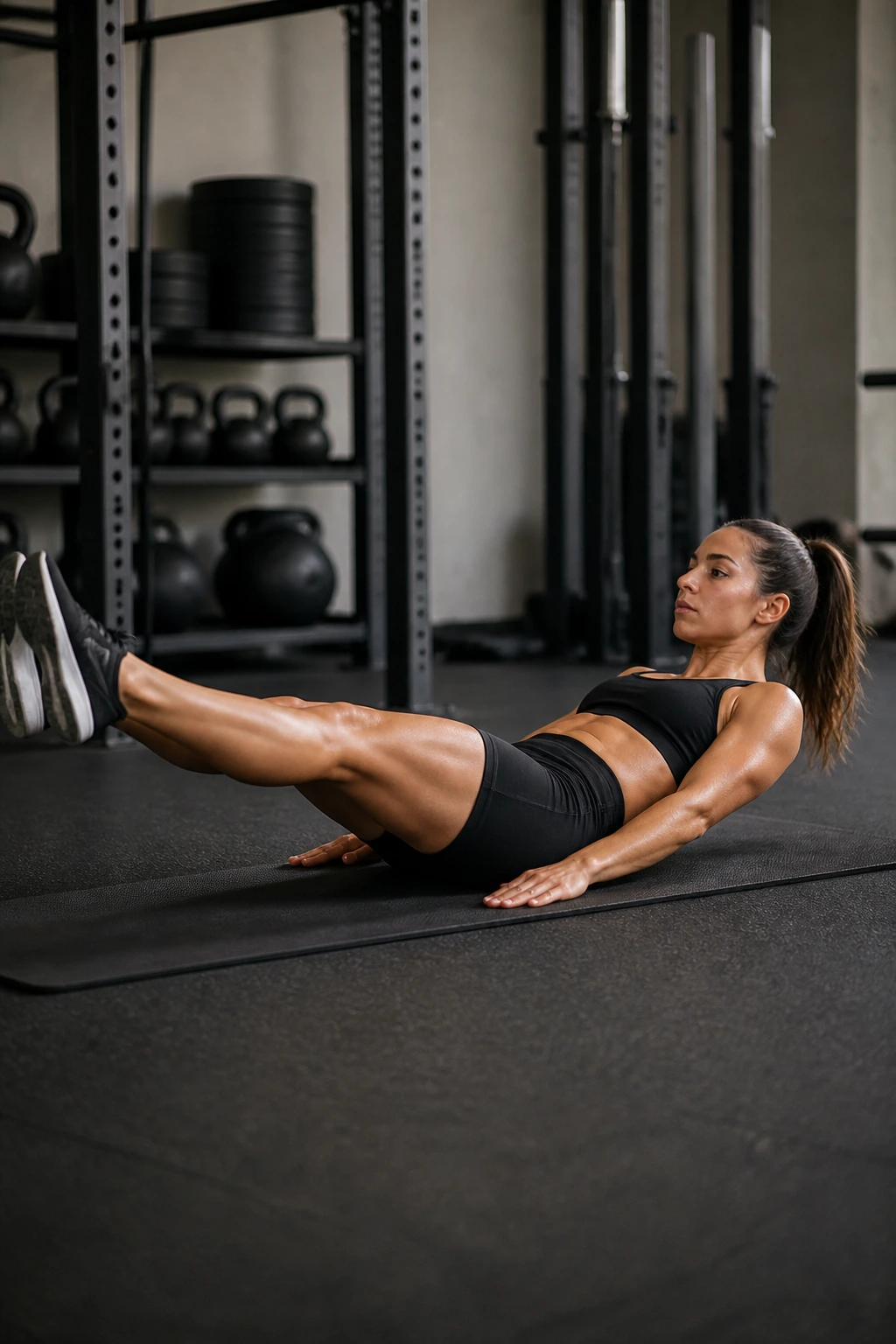
Can a floor hold build abs? Yes, if you can keep your lower back pinned down and resist the urge to arch like a bow.
Lie on your back, press the lower spine into the floor, and lift your shoulders and legs just enough to make the front line of the body work. Arms can stay by your sides if the full version is too much. Bend the knees if you need to. The shape matters less than the tension.
How to scale it
- Tuck the knees closer to the chest.
- Keep the arms overhead only if the back stays flat.
- Start with 10-second holds.
- Add time before adding difficulty.
This is a sharp little exercise. It punishes sloppy form fast, which is exactly why beginners should use it carefully. If the back lifts, stop. There’s no bonus point for forcing through a bad shape.
16. Decline Bench Sit-Up
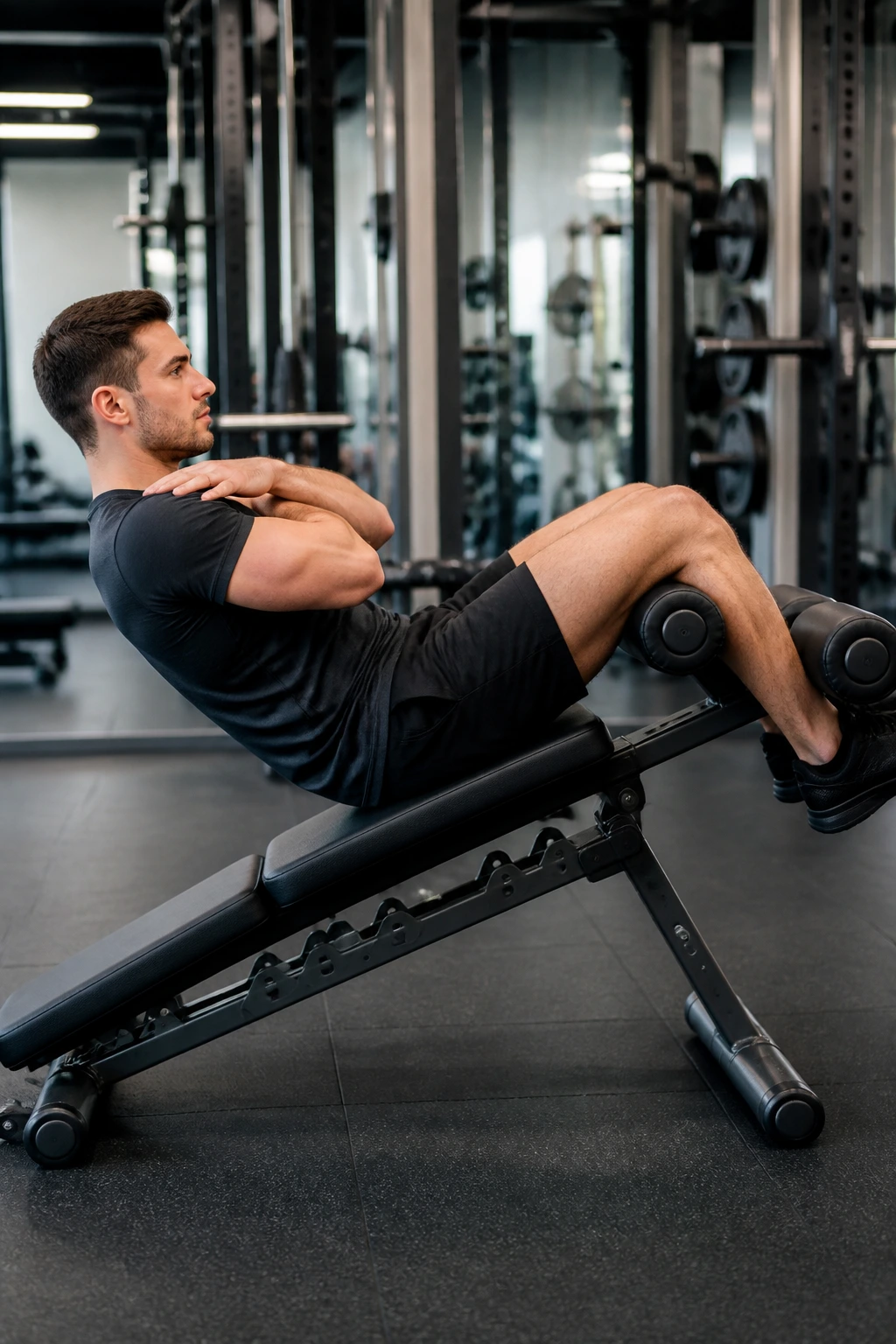
A decline bench can be useful, but only if you treat it like a controlled curl instead of a throw-yourself-up contest. Beginners usually get more from a modest angle than from a steep bench.
Set the bench to a mild decline, cross your arms over your chest, and lower only as far as you can keep tension in the abs. Come back up without yanking on the head or using momentum from the legs. A shorter range with control beats a huge swing every single time.
No racing. That is the rule here.
If your hip flexors take over, the bench is probably too steep or your reps are too fast. Keep the pace slow, around 8 to 12 reps, and stop before the lower back gets cranky. I’d rather see a beginner do a controlled partial sit-up than a dramatic full-range rep that turns into a mess.
17. Swiss Ball Rollout
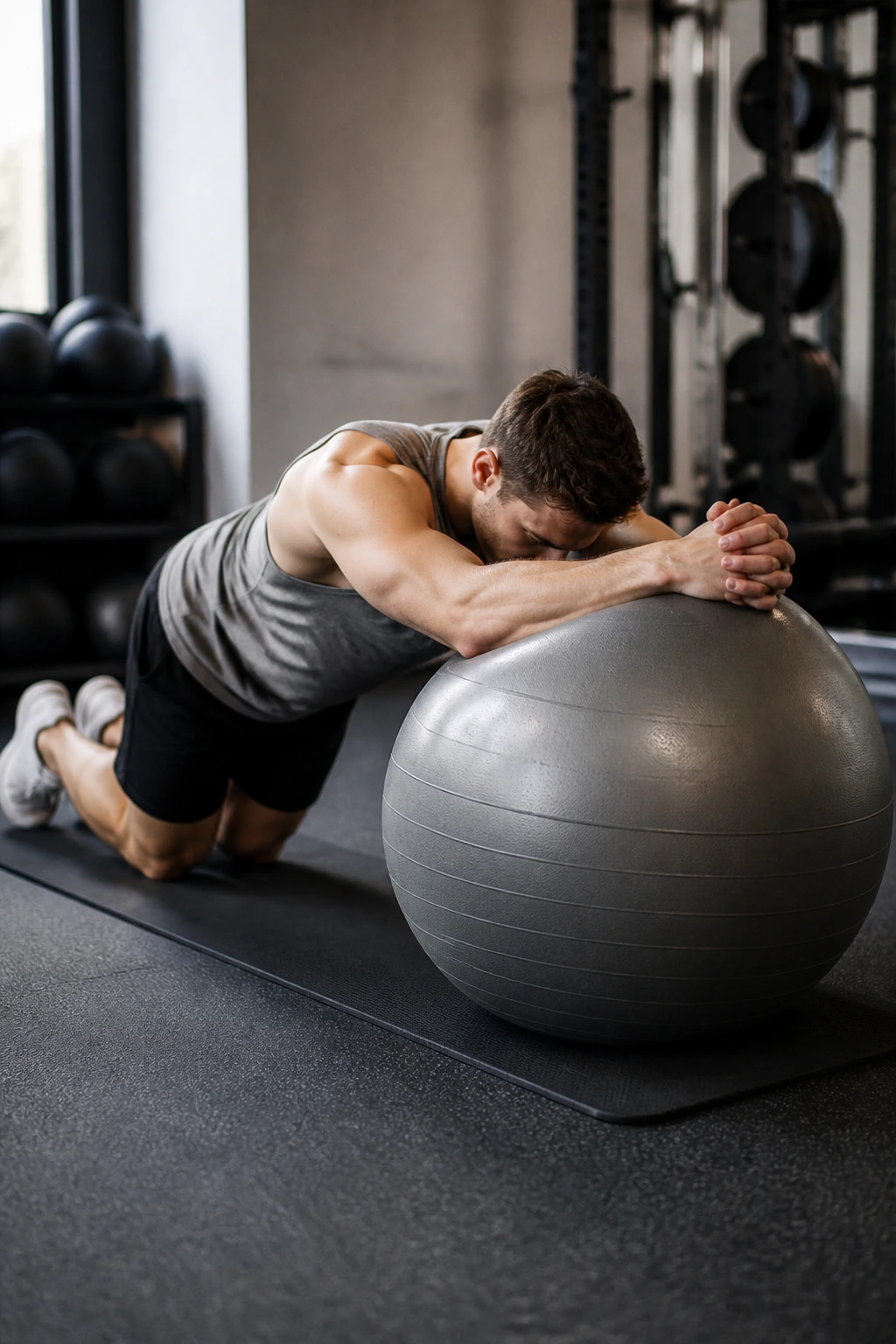
This one feels a little like a plank that learned how to move. Your abs have to stop the spine from collapsing while your body shifts forward on the ball.
Kneel on a mat, place your forearms on a Swiss ball, and roll the ball forward only a short distance. Keep your ribs down and your glutes lightly squeezed so the lower back does not arch when your arms extend. The farther you roll, the harder it gets, so beginners should stay conservative.
What to watch for
- Stop before the lower back starts to sag.
- Keep the neck neutral and eyes down.
- Roll out only 6 to 12 inches at first.
- Pull back with control instead of yanking the ball in.
This move surprises people. The ball looks soft, but the exercise hits anti-extension hard. If the ball shoots away from you, the range was too big. Shorten it and try again.
18. Landmine Rotation
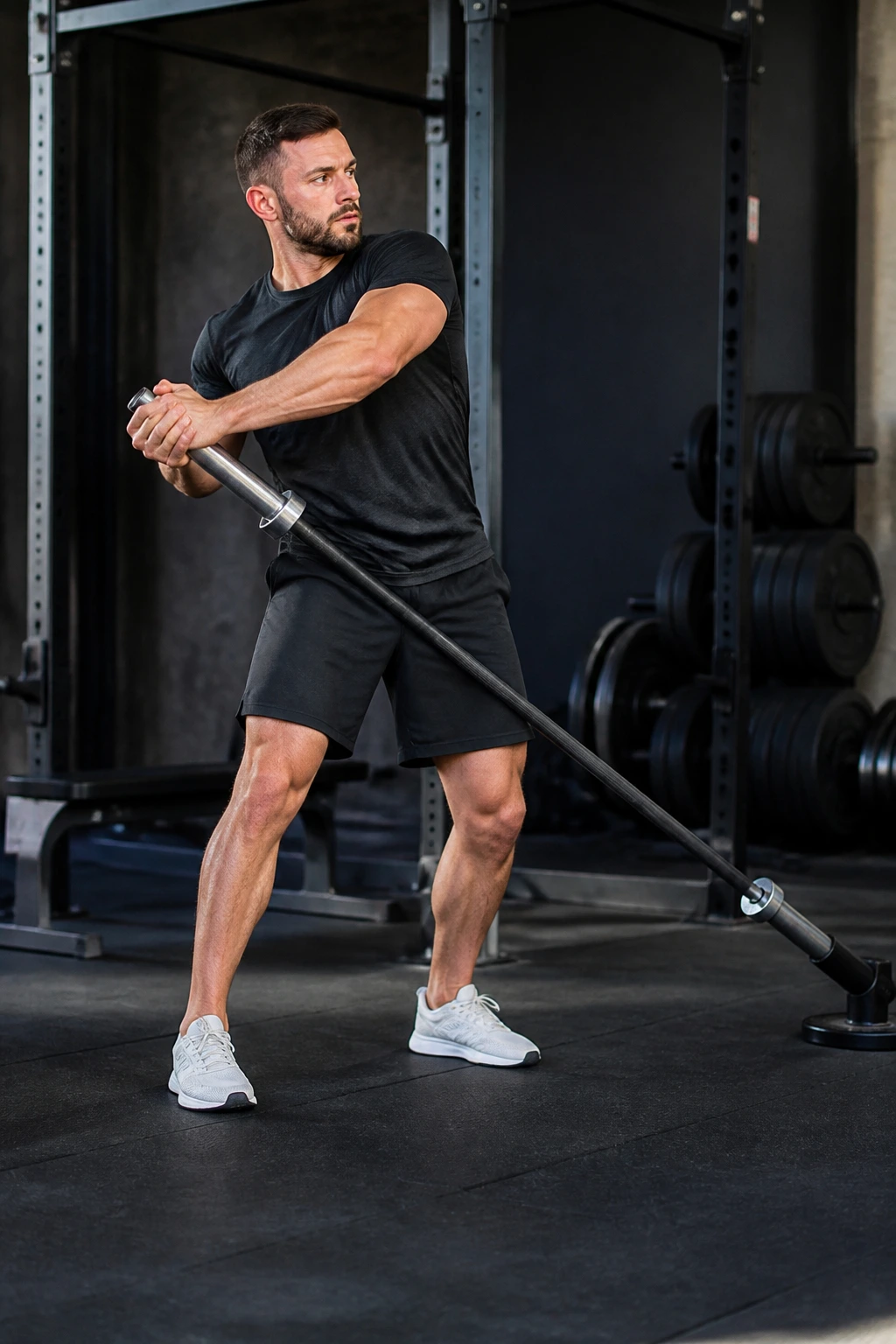
The landmine rotation is a cleaner choice than a lot of wild twisting moves because the bar travels in a fixed arc. That gives beginners a little structure, which usually means better form.
Hold the end of the bar with both hands or one hand, brace the trunk, and move the bar in a controlled arc from one side of the body to the other. Think smooth sweep, not violent spin. Your hips can pivot a bit, but your low back should not be doing the main twisting job.
This one is great for people who want a rotational drill without the chaos of flinging a medicine ball around. Start with a light bar load and keep the rep count around 8 per side. If the movement feels like it’s coming from the shoulders instead of the trunk, slow down and shorten the path.
It looks simple. It still demands respect.
19. TRX Knee Tuck
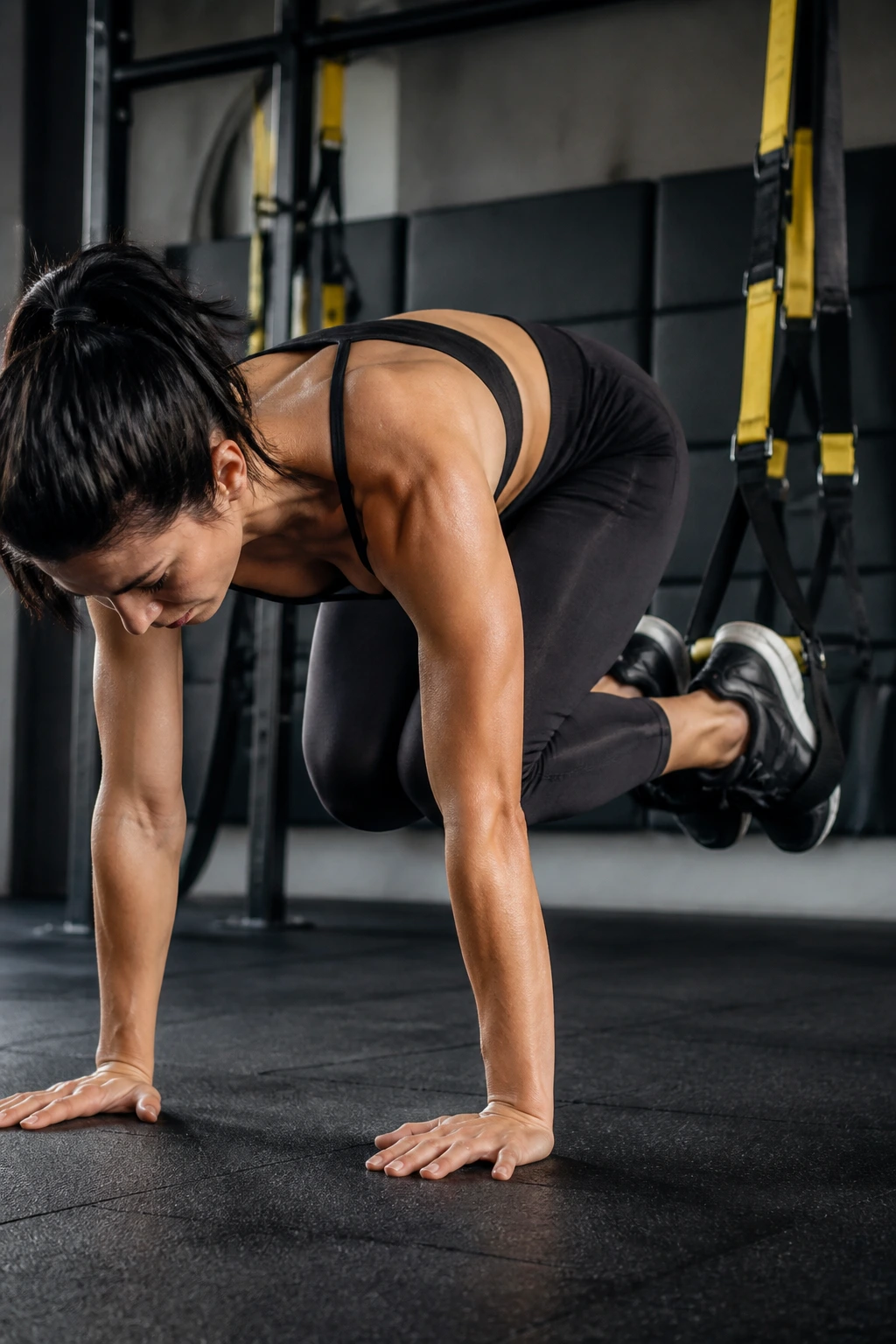
The TRX knee tuck turns the abs on fast because the straps make everything a little less stable. That instability is useful only if you keep the movement honest.
Start in a plank with your feet in the straps and your shoulders stacked over your hands. Draw the knees toward the chest without hiking the hips too high, then extend back to plank with control. If your shoulders are doing all the shaking, shorten the range and move a little slower.
Why the straps change the feel
The TRX wants to pull your body around, so your core has to work against that drift. Beginners usually feel the lower abs, but they also notice the shoulders and hip flexors if they rush.
- Keep the start position strong before every tuck.
- Pull the knees in only as far as you can control.
- Stop if the lower back starts to pinch.
- Use 5 to 8 reps to begin with.
This one is harder than it looks. Good.
20. Cable Side Bend
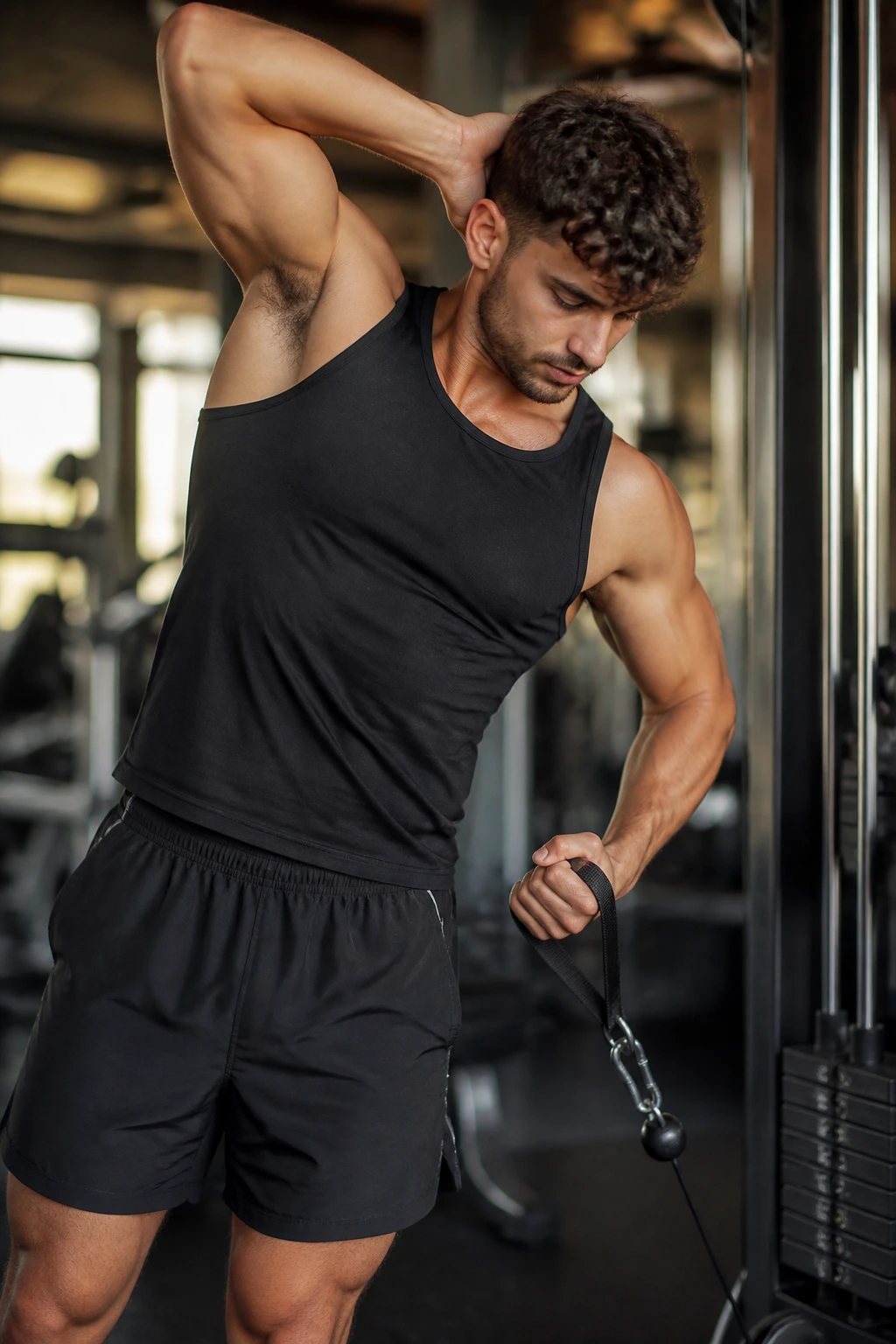
Loaded side bends are not evil. They’re just not a toy, and beginners need to keep the weight light and the range controlled.
Stand next to a low cable stack, hold the handle in the hand farthest from the machine, and let the weight pull you slightly toward it. Then slide the ribcage toward the hip on the working side, pause for a beat, and return to tall standing without leaning backward or forward. The movement should look small.
This is a direct oblique exercise, which makes it different from carries and planks. It asks the side of the trunk to shorten and control the descent, then bring you back up without cheating. Start light, around 5 to 15 pounds on a cable setup that feels smooth, and keep the reps around 10 to 12 per side.
If your lower back hates this pattern, swap it for suitcase carries. That is a fair trade.
Final Thoughts
You do not need all 20 of these in one session. Pick one move that curls the torso, one that resists movement, and one loaded carry, then build from there.
That mix covers more ground than endless crunches ever will. It also gives beginners a cleaner way to learn what their midsection is supposed to do when the weight gets a little uncomfortable.
Keep the reps slow, the range honest, and the weights lighter than your ego wants. That is how beginner ab work at the gym starts paying off without turning into a lower-back lottery.
