



A weekly yoga practice does not need 90 minutes, incense, or a floor full of props. It needs a few honest shapes, done with enough attention that your joints and breath can actually show up.
A tight hamstring, a cranky lower back, or a mind that keeps sprinting ahead can all get something useful from the same place: yoga poses worth practicing every single week. The best ones are not all dramatic. Some wake up your feet. Some open the front of the hips. Some teach your shoulders how to stop living by your ears.
Some poses build heat. Some slow things down. A few do both, which is why a smart weekly practice feels balanced instead of random. You do not need to cram all 30 into one session, either. A better approach is to move through a mix of standing shapes, balances, folds, twists, and rest so your body gets the full range of work it keeps asking for.
Start with the pose that teaches every other pose how to stand.
1. Mountain Pose for Learning How to Stand Still
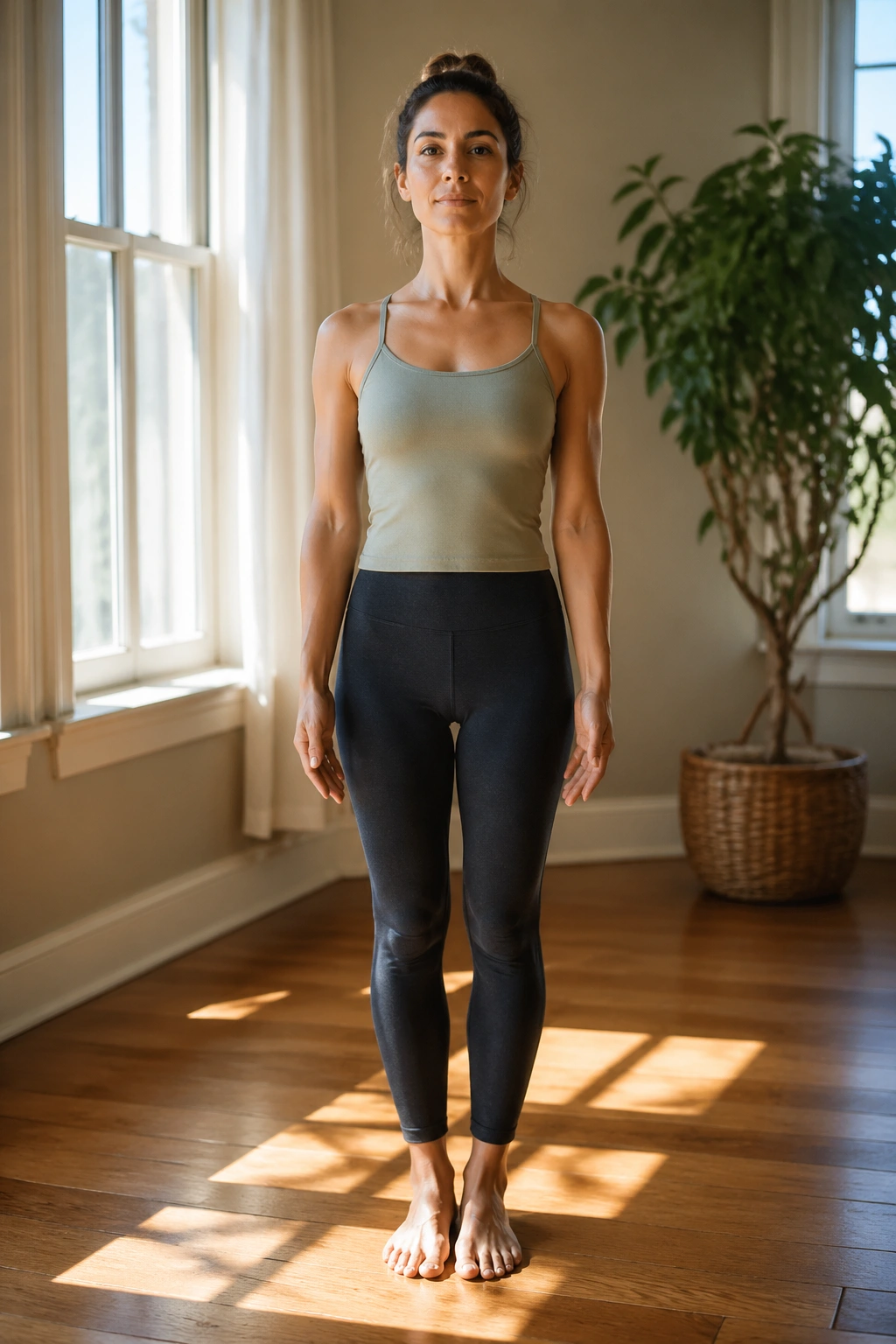
Mountain Pose looks plain, and that is exactly why it matters. Tadasana gives you a clean read on how your body stacks up when you are not trying to impress anyone.
Stand with your feet grounded, your knees soft, and your ribs resting over your pelvis instead of drifting forward. Let your arms hang by your sides or turn the palms forward if that feels more open. The pose gets useful the moment you stop faking it.
What to Feel in the Setup
- Spread your toes and press through the base of the big toe, the little toe, and the heel.
- Soften the knees enough that they do not lock.
- Lift the crown of the head without jutting the chin.
- Let the shoulder blades settle down the back.
Tip: If you can breathe quietly here, you are off to a good start.
2. Downward-Facing Dog for Length Through the Whole Back
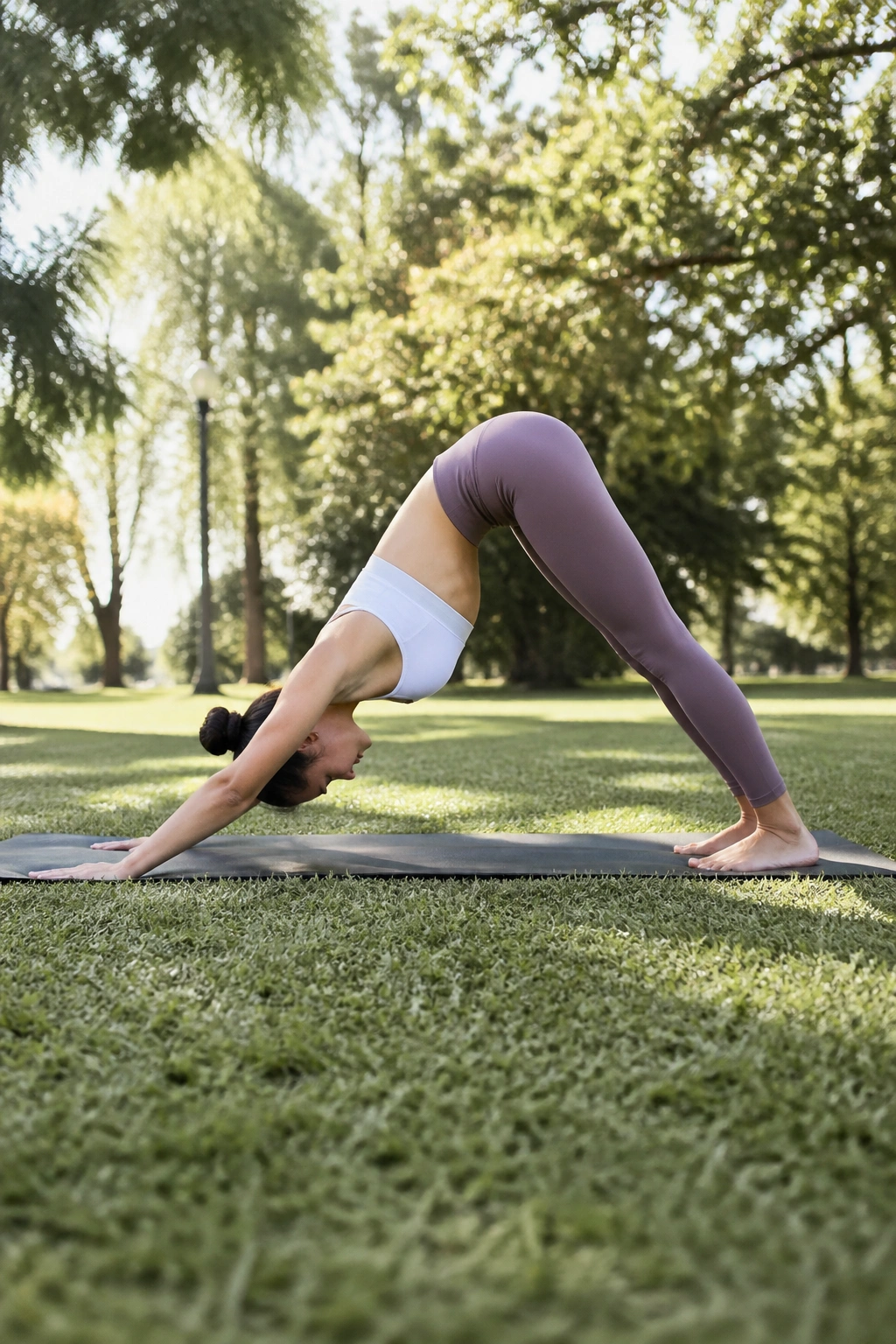
Why does this pose show up so often? Because Downward-Facing Dog gives your shoulders, hamstrings, calves, and spine something useful to do at the same time.
The trick is not chasing the heels to the floor. Bend the knees if your back feels tight, press the floor away through your hands, and let the hips travel up and back until the spine feels long. When people force the shape, the dog gets dumpy and the shoulders get cranky. Nobody needs that.
What Makes It Work
- Spread the fingers wide and press evenly through the hands.
- Keep the shoulders away from the ears.
- Bend the knees as much as needed to lengthen the back.
- Let the heels be heavy, not heroic.
Better a bent-knee Dog than a collapsed one.
3. Plank Pose for a Core That Holds a Line
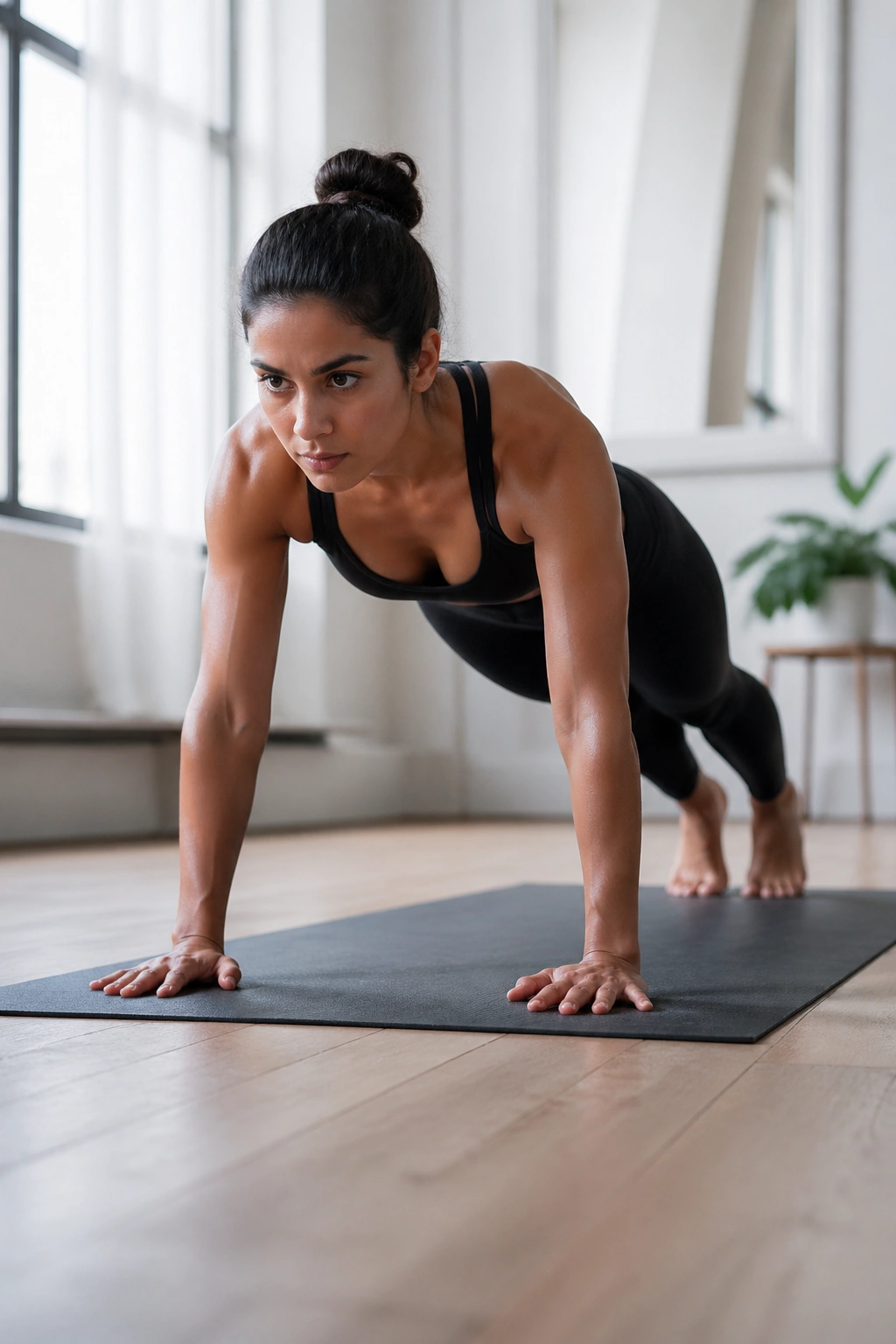
Plank is not an abs contest. It is a line check.
Your wrists stack under your shoulders, your legs stay active, and your ribs do not sag toward the floor. The pose teaches your whole front body how to brace without holding your breath, which is a skill that shows up in just about every other pose on this list.
A clean Plank should feel firm, not sloppy. If your lower back pinches, take the knees down and keep the spine long. That is not a lesser version. That is smart practice.
A Simple Cue That Helps
- Push the floor away.
- Squeeze the thighs lightly.
- Draw the belly in just enough to support the lower back.
- Keep the neck long and the gaze slightly ahead of the hands.
One strong Plank done well beats three rushed ones.
4. Chaturanga for Controlled Strength, Not a Crash Landing
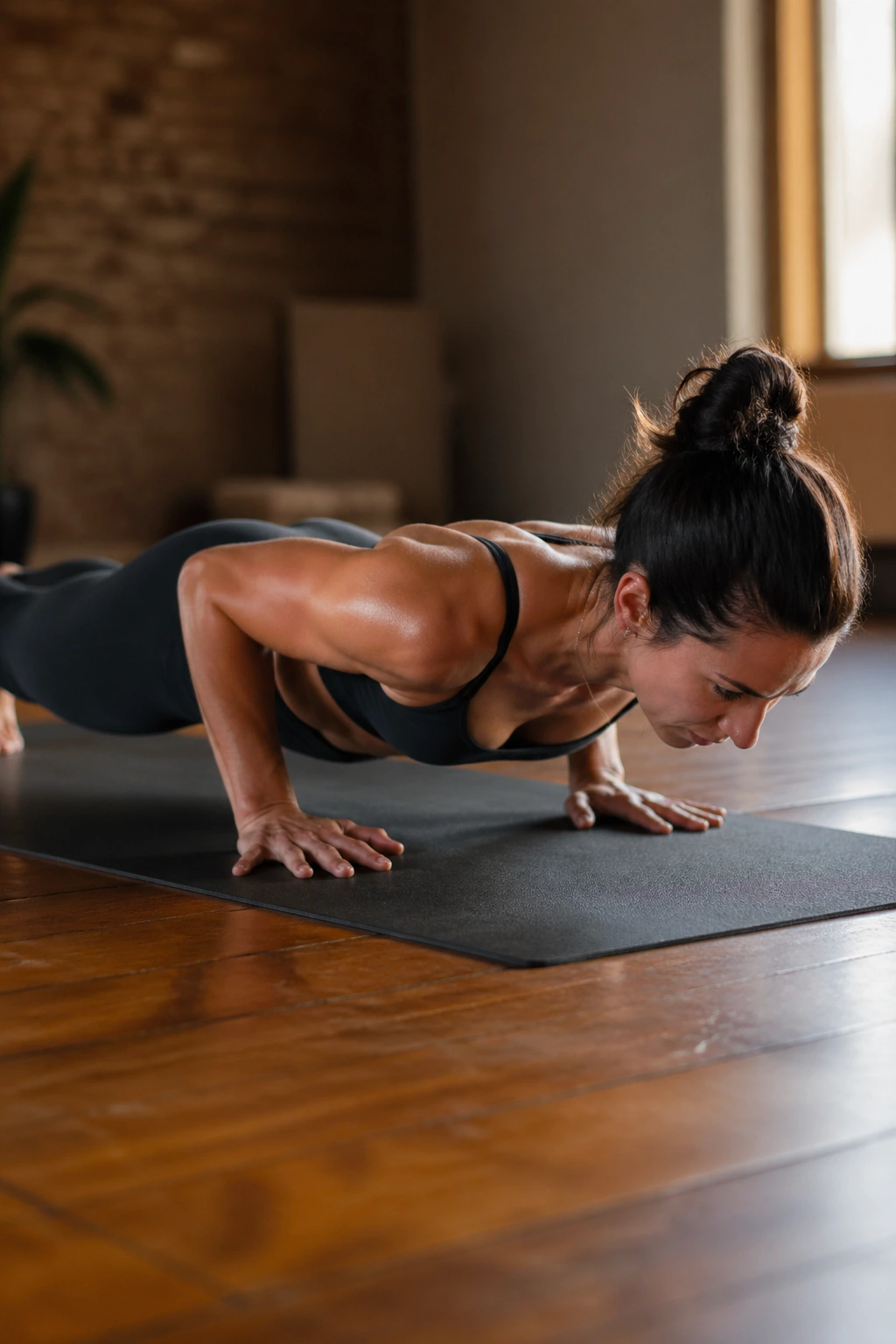
Lower slowly, and half the drama disappears. Chaturanga is where a lot of weekly practice gets messy, mostly because people drop too fast and call it strength.
Keep your elbows close to your ribs, shift forward just a little, and lower until the upper arms are parallel with the floor or skip the full version entirely. Knees-down Chaturanga is still Chaturanga if the line is honest. The shoulders should feel supported, not jammed.
Safer Lowering Cues
- Start from Plank with steady legs.
- Move forward a few inches before bending the elbows.
- Keep the elbows hugging in, not flaring out.
- Stop before the shoulders sink lower than the elbows.
If your shoulders feel shaky, shorten the range.
5. Cobra Pose for a Gentle Backbend That Wakes Up the Spine
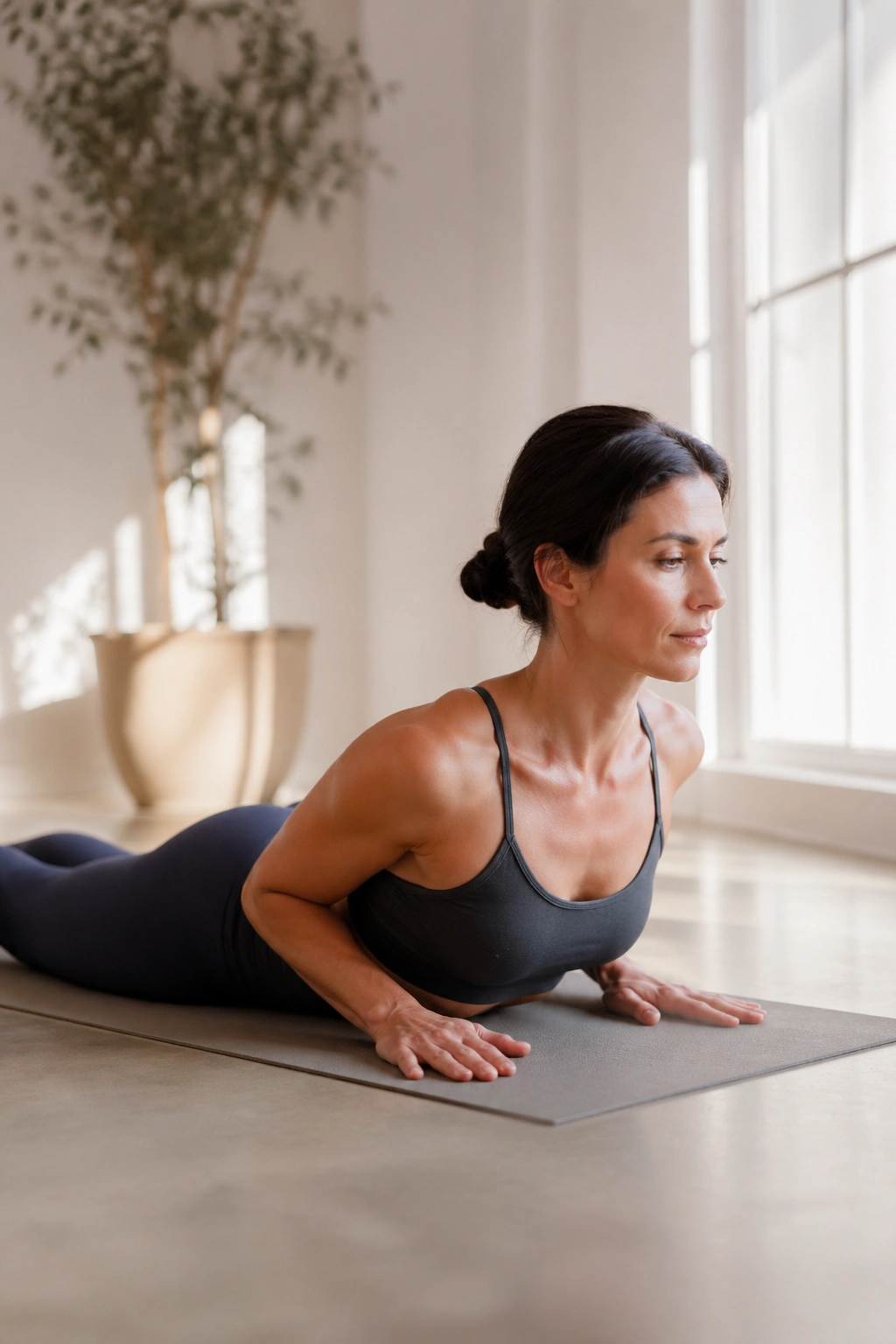
Cobra feels like a small lift, and that small lift is the point. Bhujangasana opens the front of the body without asking your lower back to do all the work.
Lie on your belly, press the tops of the feet into the mat, and use a light hand press to peel the chest up. The pubic bone stays heavy. The neck stays long. If you crank the chest upward, the lumbar spine usually pays for it.
Keep the lift modest and the breath smooth. A low Cobra with clean form is often better than a bigger shape that feels squeezed.
What to Watch For
- Elbows stay bent and close to the body.
- Shoulders roll away from the ears.
- The gaze stays a little forward and down.
- The low ribs do not jam into the floor.
That quiet lift is what your back likes most.
6. Warrior I for a Stronger Front Leg and a Longer Front Body
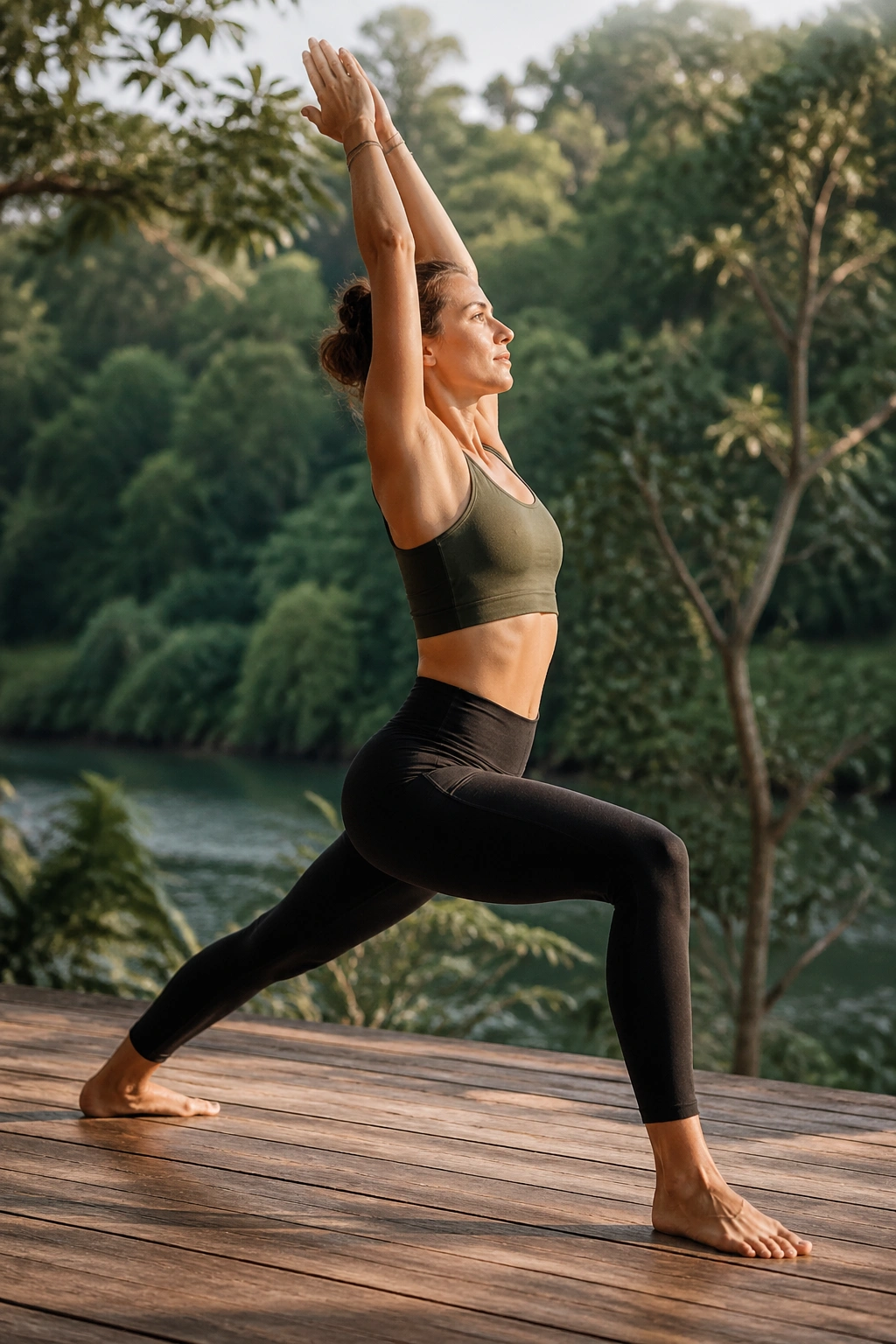
Set the back foot before you think about the arms. Warrior I works best when the stance feels rooted first and dramatic second.
The front knee bends over the ankle, the back heel grounds down, and the chest reaches up without turning into a low-back bend. Hips do not have to be perfectly square, no matter how often people try to sell that idea. A little openness is fine if the low back and front knee stay happy.
Set the Shape in Layers
- Place the back foot at a slight angle.
- Press firmly through the outer edge of the back foot.
- Lift the ribs without flaring them.
- Reach the arms only after the legs feel steady.
A steady Warrior I makes the rest of the standing sequence feel less wobbly.
7. Warrior II for Focus You Can Feel in Your Thighs
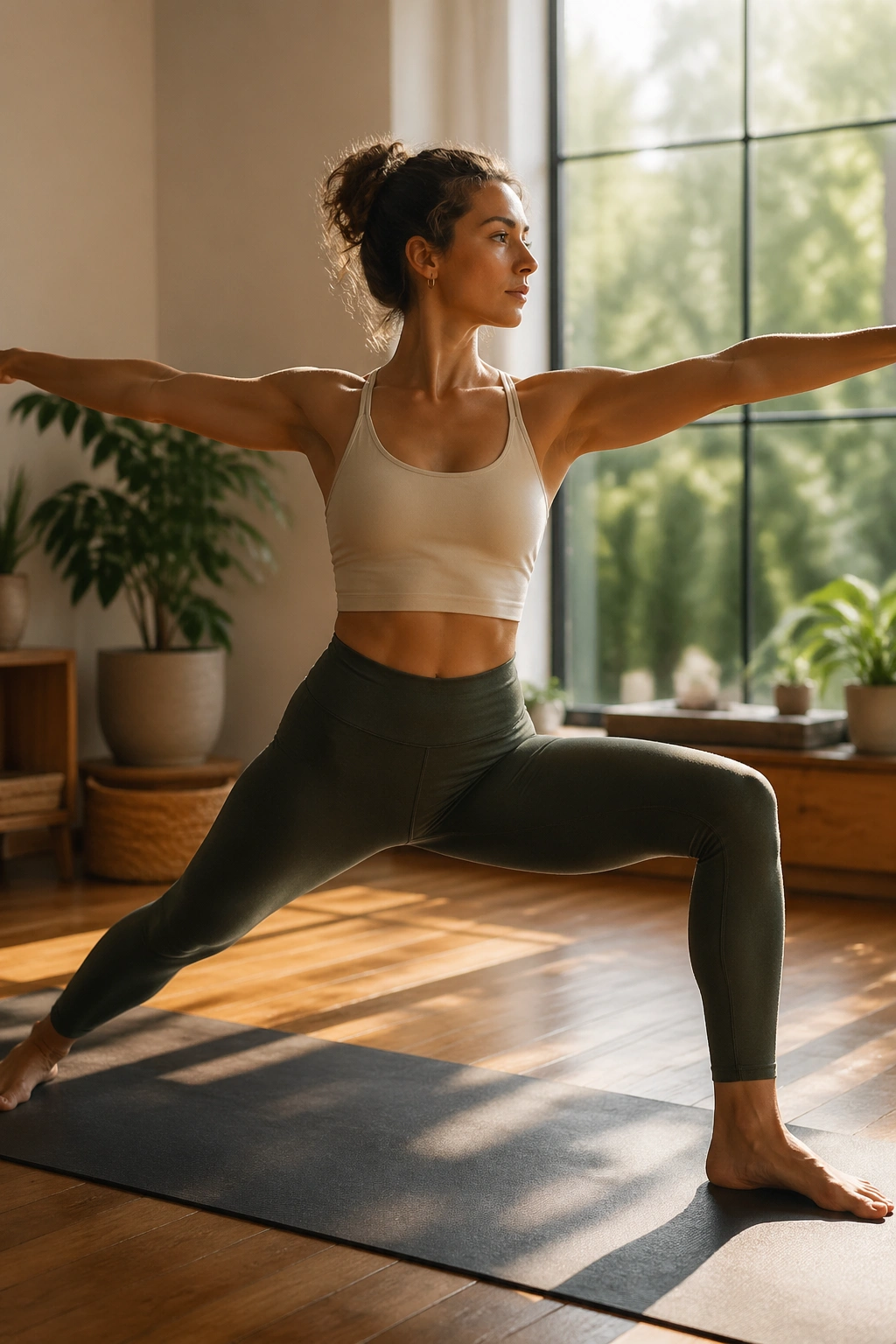
Warrior II looks open, but the work is in the legs. Virabhadrasana II trains you to stay broad across the chest while the front thigh does the heavy lifting.
The front knee tracks over the middle toes, the back leg stays active, and the arms stretch in opposite directions without shrugging. The gaze goes over the front hand, but the neck stays loose. If you sink too low and lose the back leg, the pose turns into a collapse.
A clean Warrior II feels alert from the feet up. You can almost feel the room widen around you.
8. Reverse Warrior for a Side Stretch That Stays Grounded
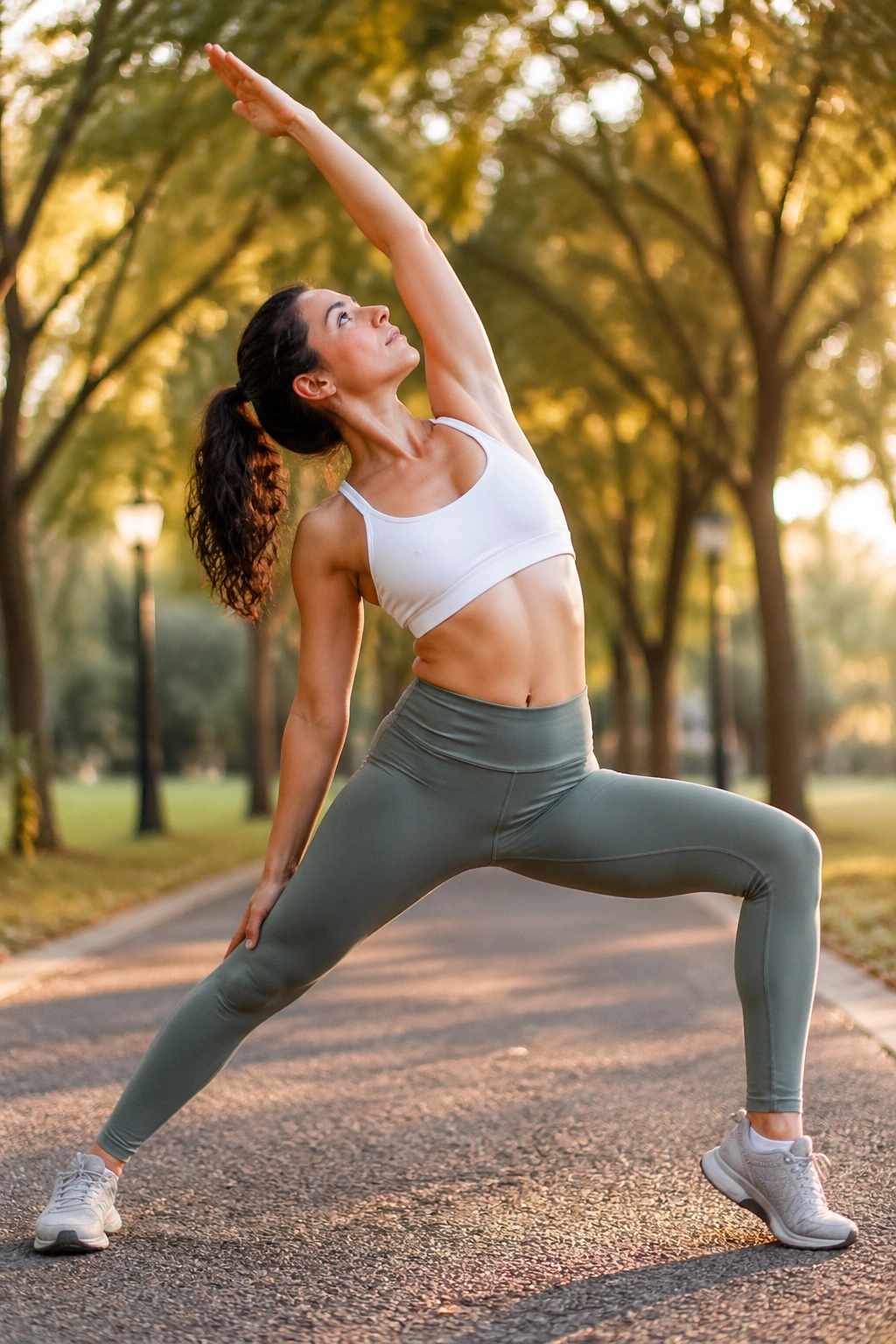
Need a side stretch that does not dump all your weight into the front hip? Reverse Warrior is the one.
Keep the front knee bent, slide the back hand lightly down the back leg, and arc the top arm overhead without collapsing the torso. The front knee stays where it is. The chest lifts, but the pose is not a backbend. That distinction matters more than most people think.
This is one of those shapes that makes your rib cage feel bigger by the end of the exhale. Nice and clean.
9. Extended Side Angle for a Long Line from Heel to Fingertips
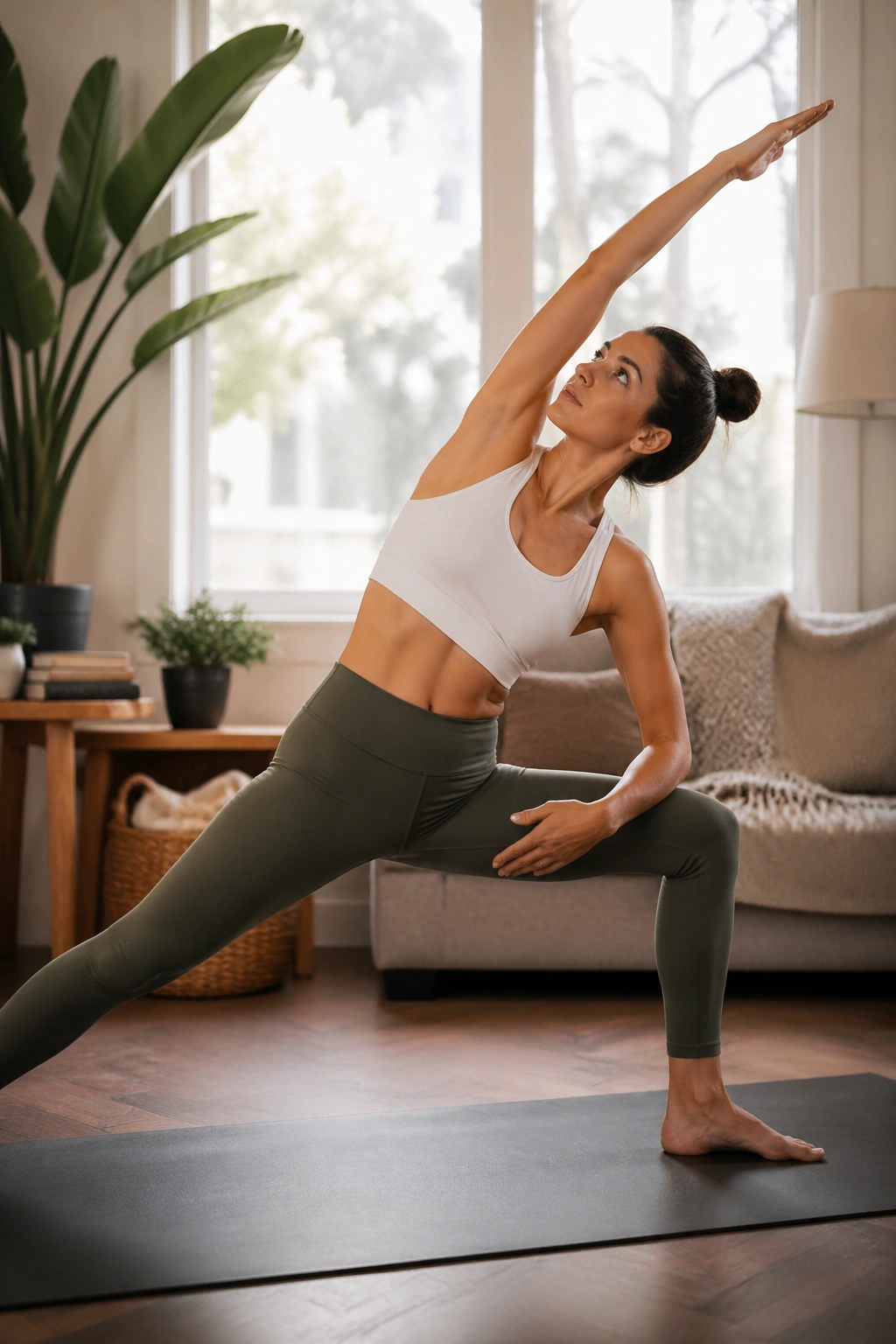
A rushed Extended Side Angle usually looks shorter than it should. The whole point is to make a long line from the back heel through the side body and out through the top hand.
Some days the lower hand reaches to the floor. Some days it lands on a block or rests on the front thigh. Both versions count. The important part is keeping space in the chest instead of dumping the torso toward the floor.
Hand Placement Options
- Front forearm on the thigh for a simpler shape.
- Hand to a block on the inside or outside of the front foot.
- Top arm reaching overhead with the palm facing down or forward.
- Gaze either at the floor or under the top arm, depending on the neck.
Length first, depth second.
10. Triangle Pose for Hips, Hamstrings, and the Side Body
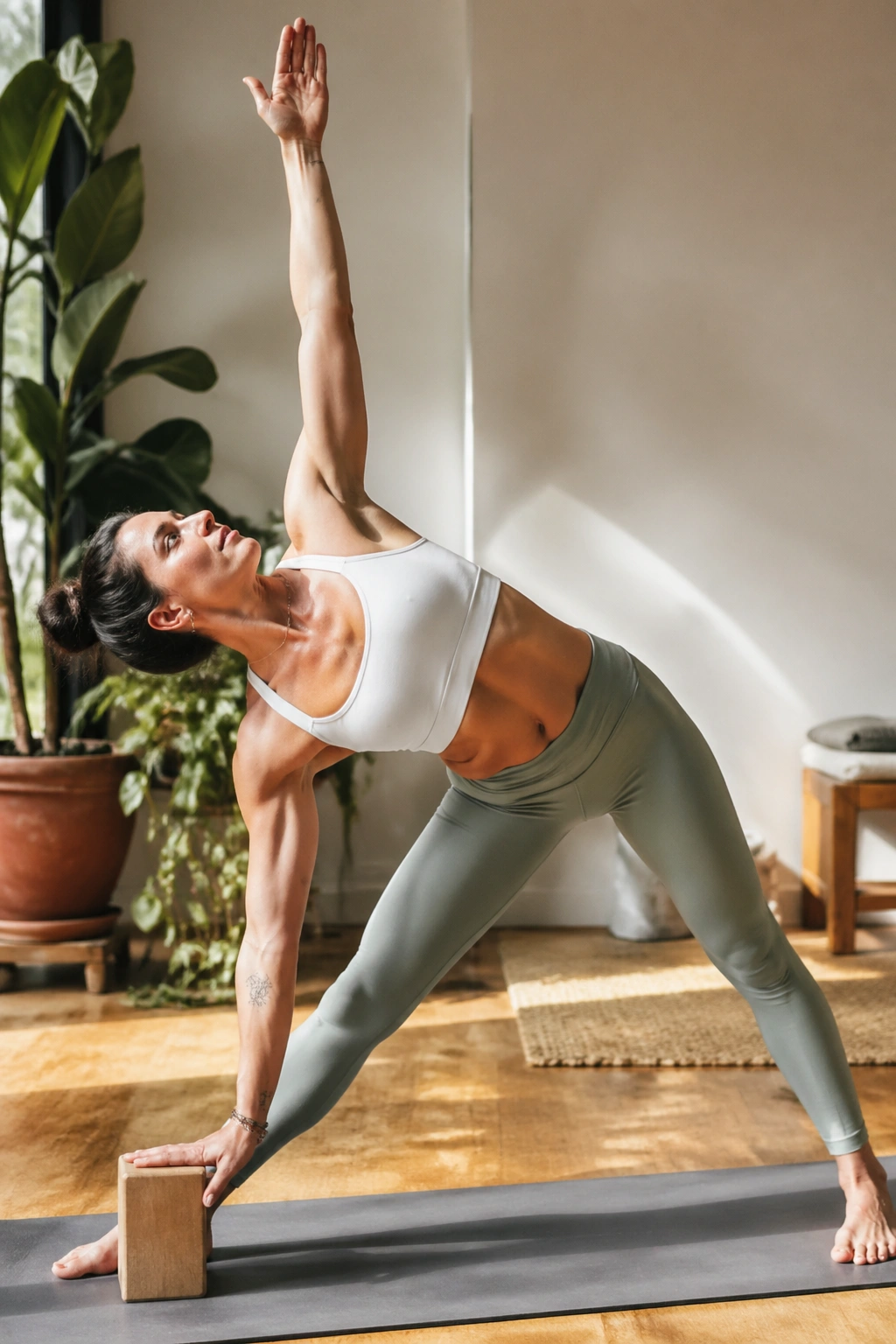
Triangle rewards patience. If you rush it, you get a twisted, cramped shape that feels more like a survival pose than a stretch.
Start from a wide stance, hinge at the front hip, and reach the front hand down only as far as you can keep the chest open. A block under the lower hand can save the spine from rounding. The standing legs stay active, and the lifted arm reaches up or forward depending on what keeps the chest from folding in.
Three Points to Keep Honest
- Front knee stays soft, not locked.
- Torso turns from the waist and ribs, not from collapsing forward.
- Back foot stays grounded through the outer edge.
That little bend in the front knee is often the difference between a useful stretch and a gritted-teeth one.
11. Half Moon Pose for Balance That Teaches the Hips to Stack
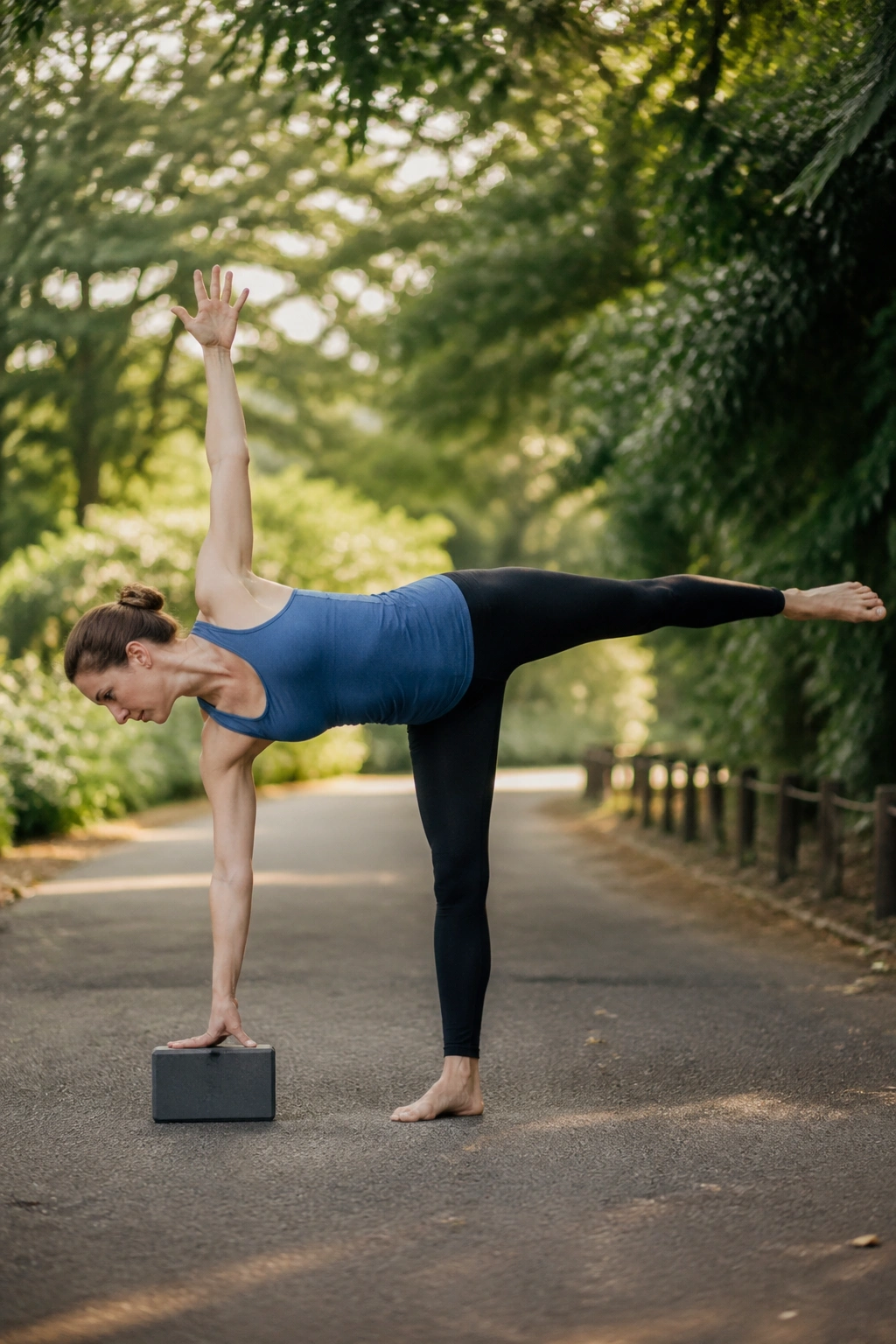
Half Moon punishes sloppy setup. Ardha Chandrasana asks you to balance on one leg while the torso opens to the side, which means your standing foot has to do a lot of quiet work.
A block under the lower hand can make this pose feel possible instead of dramatic. Keep the lifted leg active, stack the hips as much as your body allows, and do not panic if the top shoulder wants to roll forward. That happens.
What Helps Most
- Use a block at the highest setting at first.
- Keep the standing knee soft.
- Reach the lifted heel back, not up.
- Look down if your neck starts to wobble.
The best Half Moon is the one where you can breathe without wobbling like a shopping cart wheel.
12. Chair Pose for Heat Without Losing Your Spine
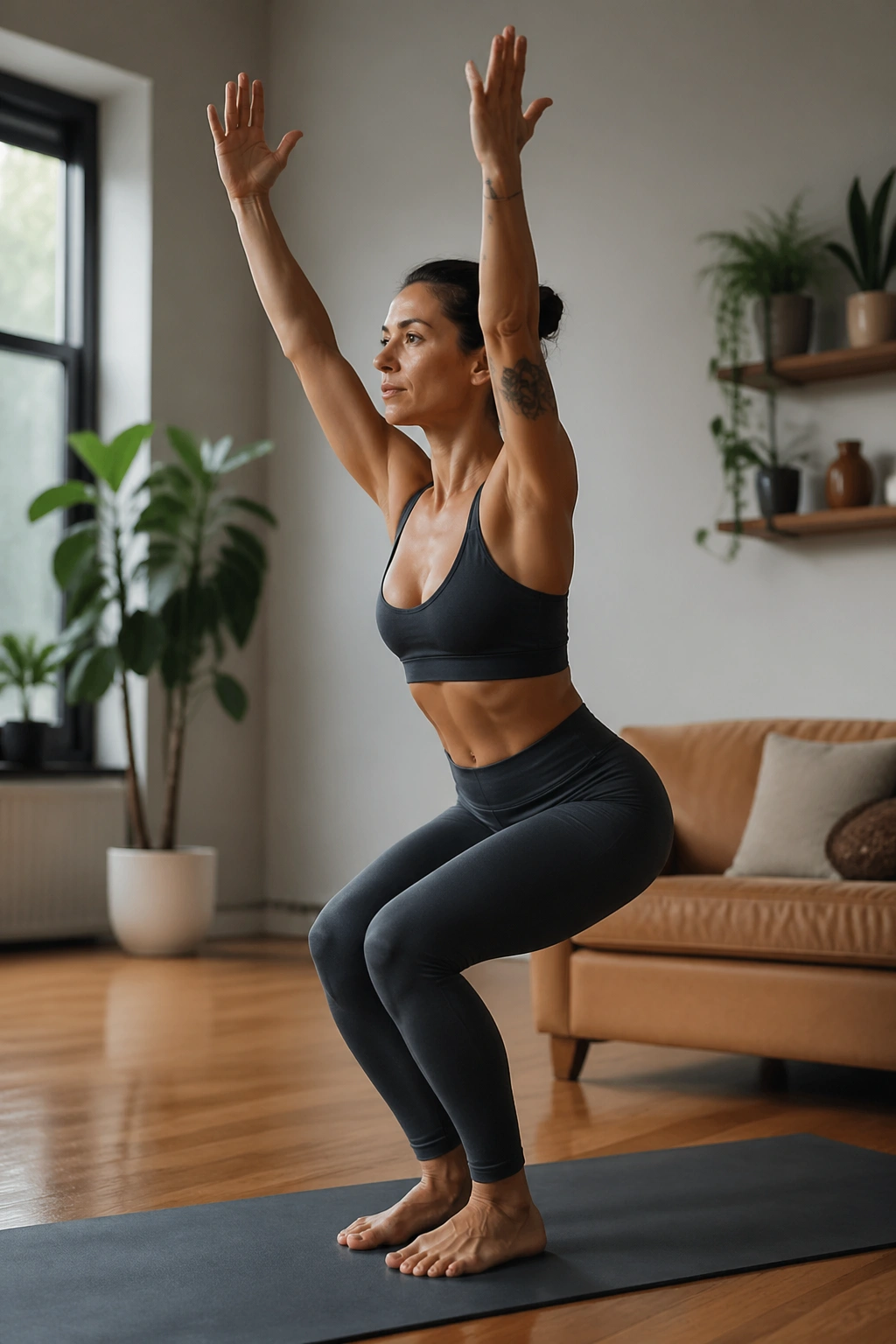
Chair pose is not a squat, even if your thighs start shouting like one. Utkatasana is about sitting back while keeping the spine long and the chest open enough that you do not fold over your own legs.
The knees bend, the hips send back, and the weight stays through the heels and midfoot. If the knees dive far forward, the pose gets knee-heavy and the low back often rounds. A small shift in the hips makes a big difference.
Clean Chair Cues
- Keep the knees tracking in line with the toes.
- Lift the chest without flaring the ribs.
- Spread the toes and press evenly through both feet.
- Keep the shoulders relaxed instead of bracing them toward the ears.
It should feel demanding, yes. It should not feel messy.
13. Tree Pose for Balance That Starts in the Standing Foot
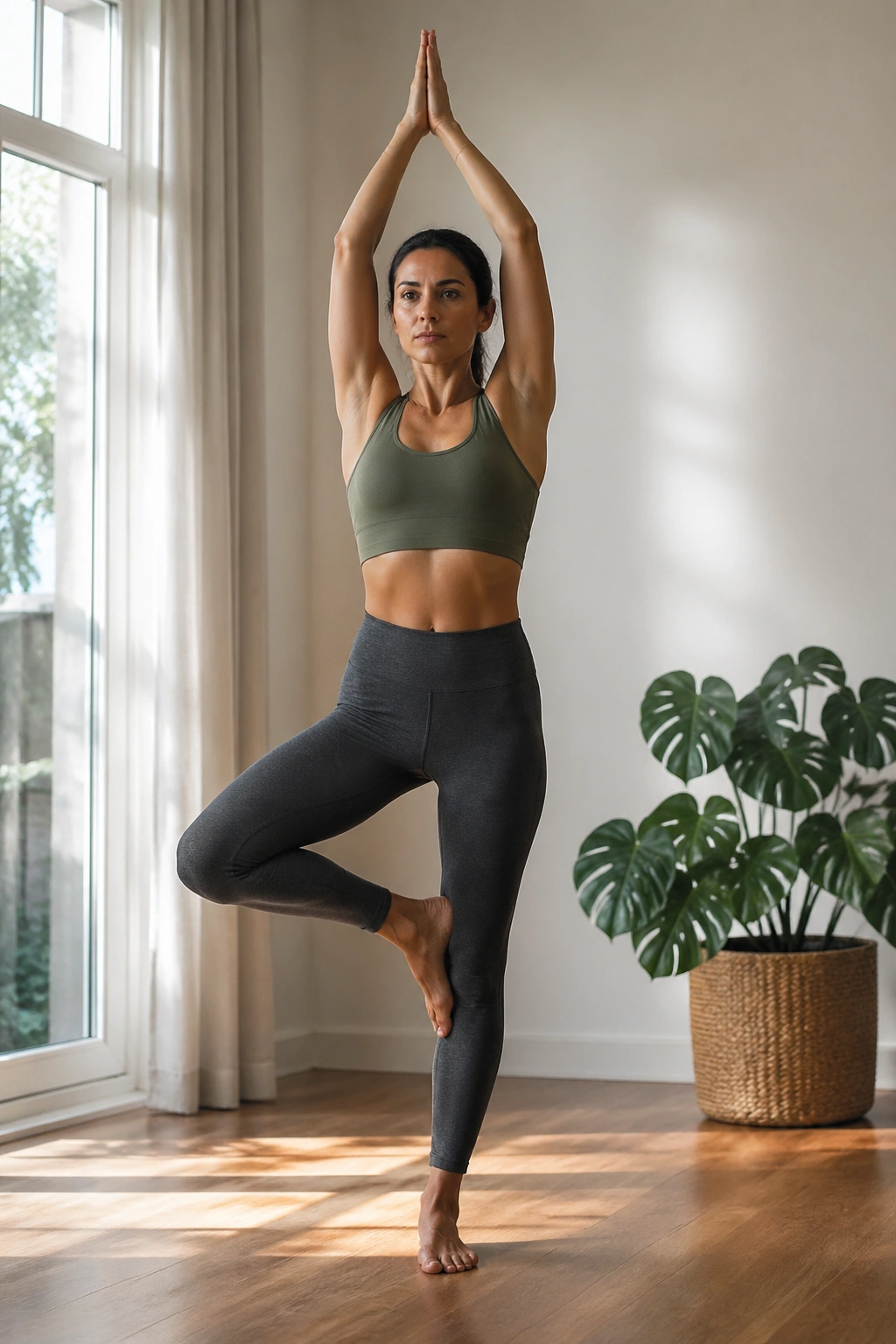
Tree Pose gets easier when the standing foot feels heavy. Vrksasana is not about pinning the lifted foot high against the inner thigh and hoping for the best.
Keep the lifted foot low on the ankle or calf if needed, and avoid pressing it into the knee joint. Pick one point to look at and let the breathing slow down a notch. The pose can wobble at first. That is not failure. That is your nervous system learning where the floor is.
Where the Foot Can Go
- Low on the ankle for the most stability.
- On the inner calf if that feels steady.
- High on the inner thigh only if the pelvis stays level and the knee stays safe.
Never plant the foot on the knee itself. That is a hard no.
14. Eagle Pose for Shoulders, Hips, and Laser Focus
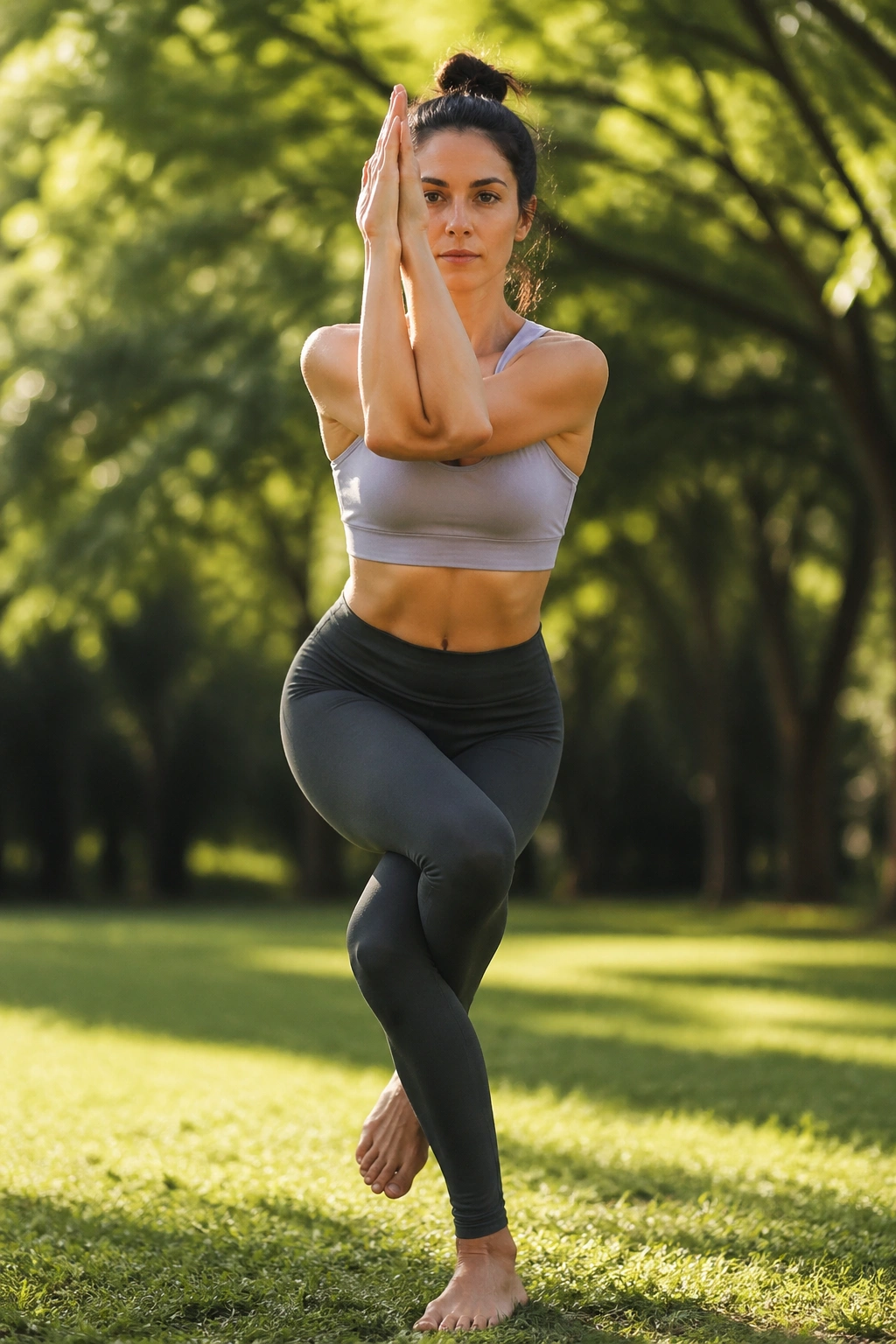
Want a pose that wakes up the hips and shoulders at the same time? Garudasana does that with a kind of awkward grace that grows on you.
Wrap one leg over the other if you can, or keep the toes on the floor and work the arm shape first. The elbows lift, the shoulder blades widen, and the spine stays tall even while everything crosses over itself. It feels tangled for a few breaths, then suddenly clear.
A good Eagle is more about compression and focus than depth. That compression is what makes the pose useful.
15. Low Lunge for Hips That Need a Real Stretch
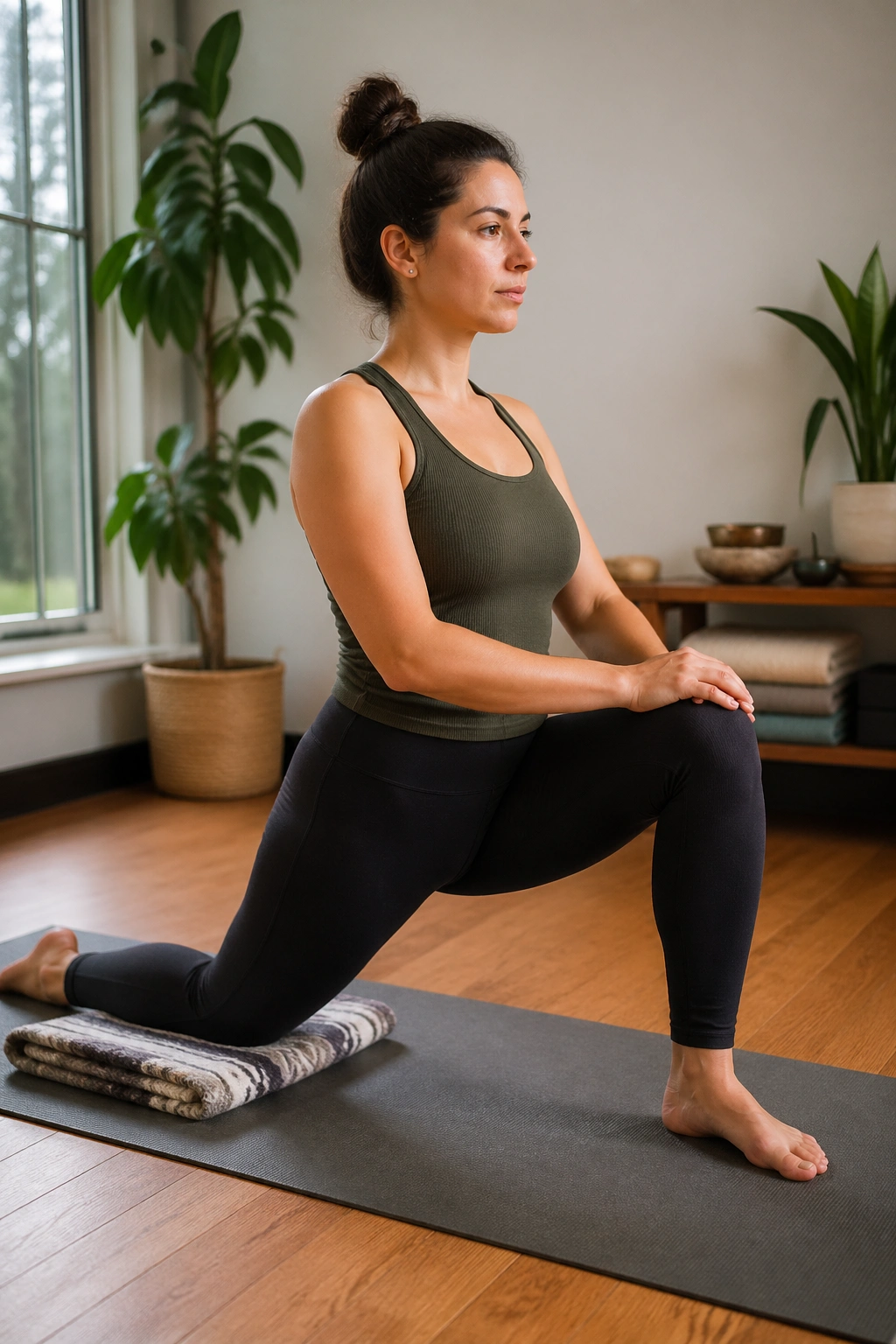
After a day in a chair, Low Lunge can feel like a sigh you did not know you were holding.
Set the back knee down on a folded blanket if the floor feels sharp, keep the front knee over the ankle, and let the pelvis stay mostly neutral instead of tipping forward hard. The stretch should land in the front of the back hip, not in the lower back. If it moves into the back, shorten the stance and lift the ribs a bit.
Useful Adjustments
- Place blocks under the hands for more length.
- Pad the back knee.
- Stay upright before folding forward.
- Breathe into the front hip crease for a few slower rounds.
A little patience here goes a long way.
16. Crescent Lunge Twist for Rotation Without Wrenching
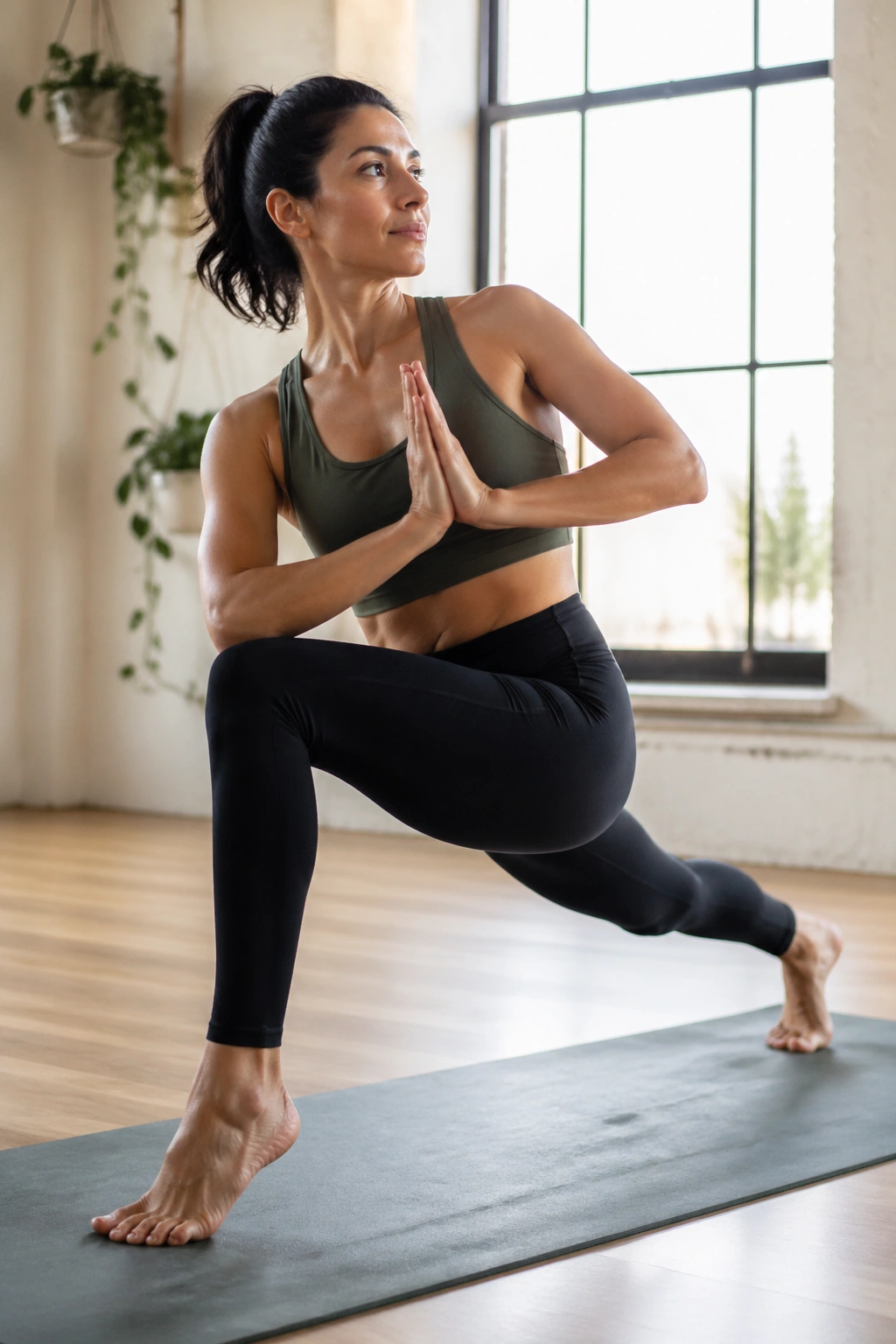
Twisting is not about wrenching the ribs. Crescent Lunge Twist works when the spine stays long and the twist builds from the chest and upper back, not from yanking the arms around.
Keep the back heel lifted, the front knee bent, and the belly lightly engaged so the low back does not take the whole turn. If balance gets shaky, drop the back knee first and clean up the shape before adding more rotation. The pose often looks bigger than it feels when done well.
A smooth twist should feel like space opening across the collarbones, not a contest with your own spine.
17. Lizard Pose for a Deeper Hip Opening
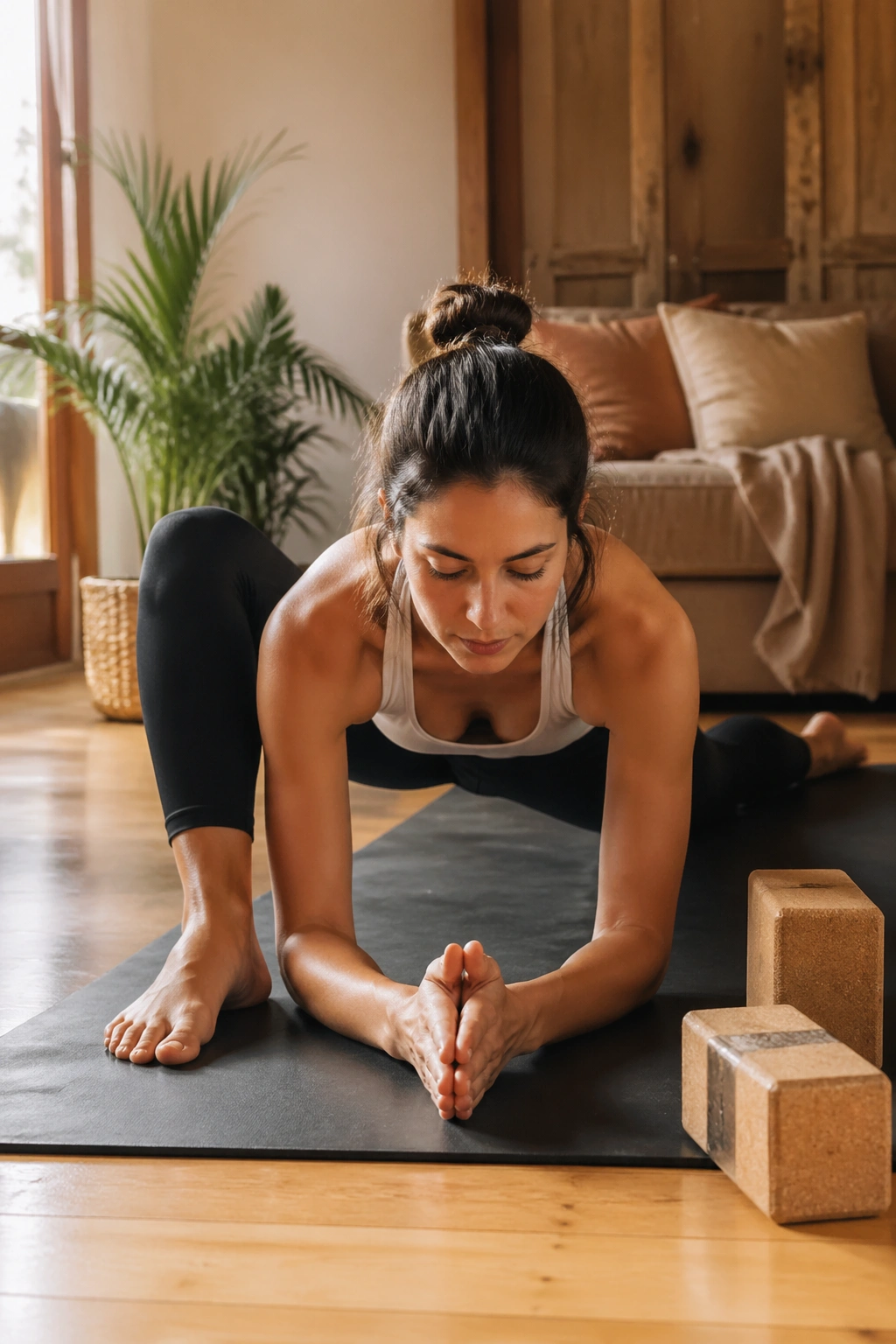
Lizard has a different flavor from the standing poses. Utthan Pristhasana asks the hips to settle, which can be extremely useful when you spend too much time walking, running, or sitting.
Hands can stay on blocks, the back knee can stay down, and the forearms do not have to come to the floor at all. In fact, forcing the forearms down early often makes the front hip jam instead of release. Let the breath stay long and see whether the pelvis can feel heavy without collapsing.
What to Keep in Mind
- Keep the front foot planted and the knee supported.
- Use blocks if the floor feels far away.
- Stay upright if the low back starts to complain.
- Work toward stillness only after the shape feels safe.
This pose is more about patience than stretch bragging.
18. Pigeon Pose for the Outer Hips That Never Seem to Quit
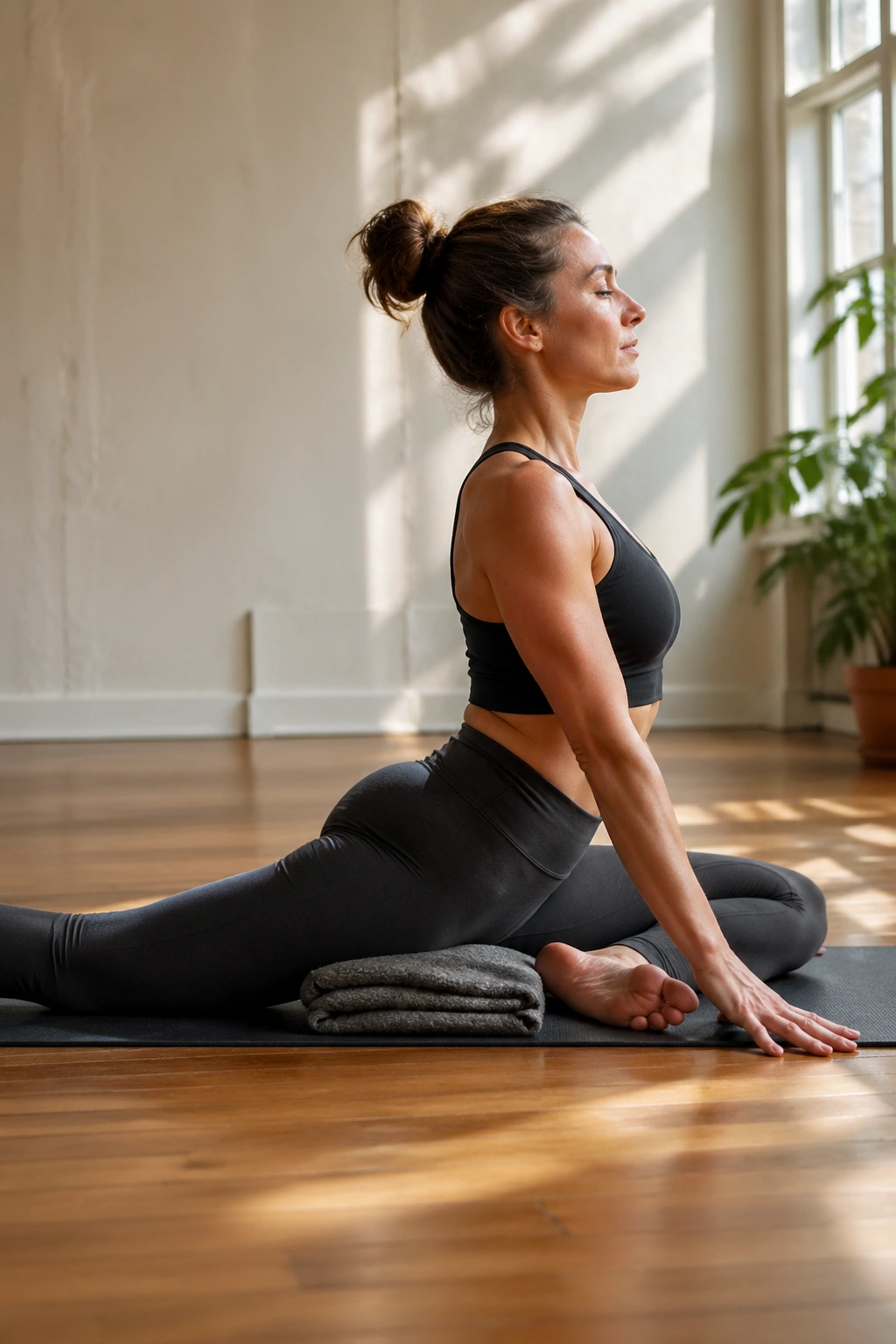
Pigeon is slower and more honest. Eka Pada Rajakapotasana prep, or the simple front-leg-fold version most people use, gives the glutes and outer hips a chance to loosen without constant movement.
Prop the hip of the front-leg side with a folded blanket if it floats off the floor. That tiny support can make a huge difference. The front shin does not need to be parallel to the mat, and the torso does not need to sink all the way down. Those are internet goals, not body goals.
When the breath stays easy, Pigeon works. When it turns into strain, back out a bit.
19. Wide-Legged Forward Fold for the Hamstrings and Inner Thighs
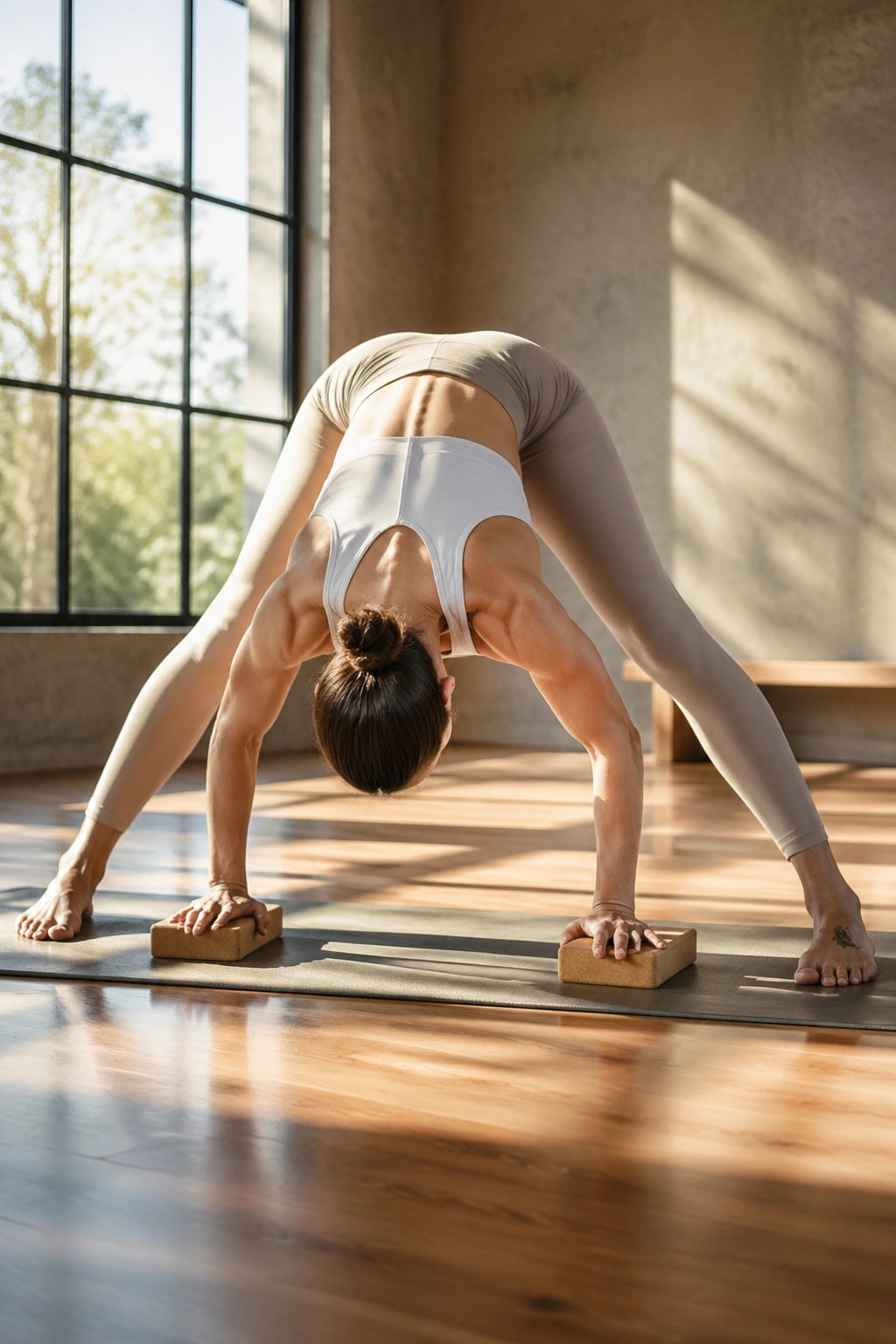
The wide fold works best when the spine stays longer than the hamstrings want. Prasarita Padottanasana is a simple shape with a lot of room for bad habits, so the setup matters.
Stand with the feet wide enough that you can hinge at the hips without losing your balance. Let the hands rest on blocks or the floor, and fold only as far as you can keep a soft bend in the knees and a long neck. Some people love letting the head hang. Fine. Just do not let gravity yank the whole torso forward.
Hinge, Then Lengthen
- Turn the toes slightly in if that feels better.
- Keep the weight even across both feet.
- Shift from hips, not from rounding the back.
- Stop before the inner thighs start grabbing.
That quiet hinge teaches your body a cleaner fold than most people expect.
20. Seated Forward Fold for Stillness That Does Not Need Drama
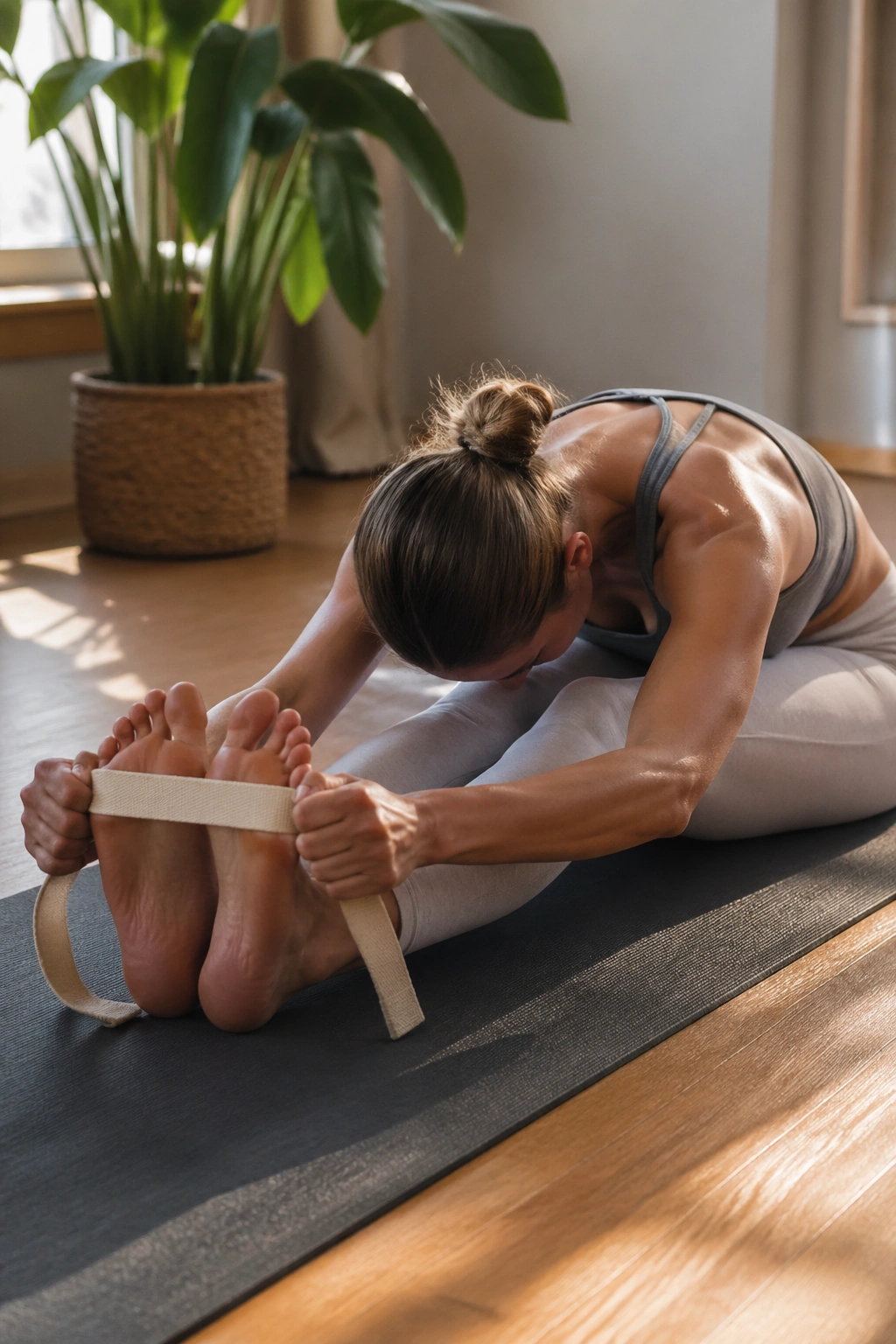
Seated Forward Fold should feel quiet, not heroic. Paschimottanasana asks for a long spine, flexed feet, and enough patience to let the hamstrings complain a little without taking over.
Use a strap around the feet if reaching forward turns into a round-back tug-of-war. Hinge from the hips first, then soften the chest toward the legs only as far as the back stays honest. If your lower back rounds immediately, sit on a folded blanket and try again. That small lift often solves a lot.
The point is not to collapse onto your thighs. The point is to lengthen the whole back side of the body.
21. Bridge Pose for Glutes, Hamstrings, and a Friendly Backbend
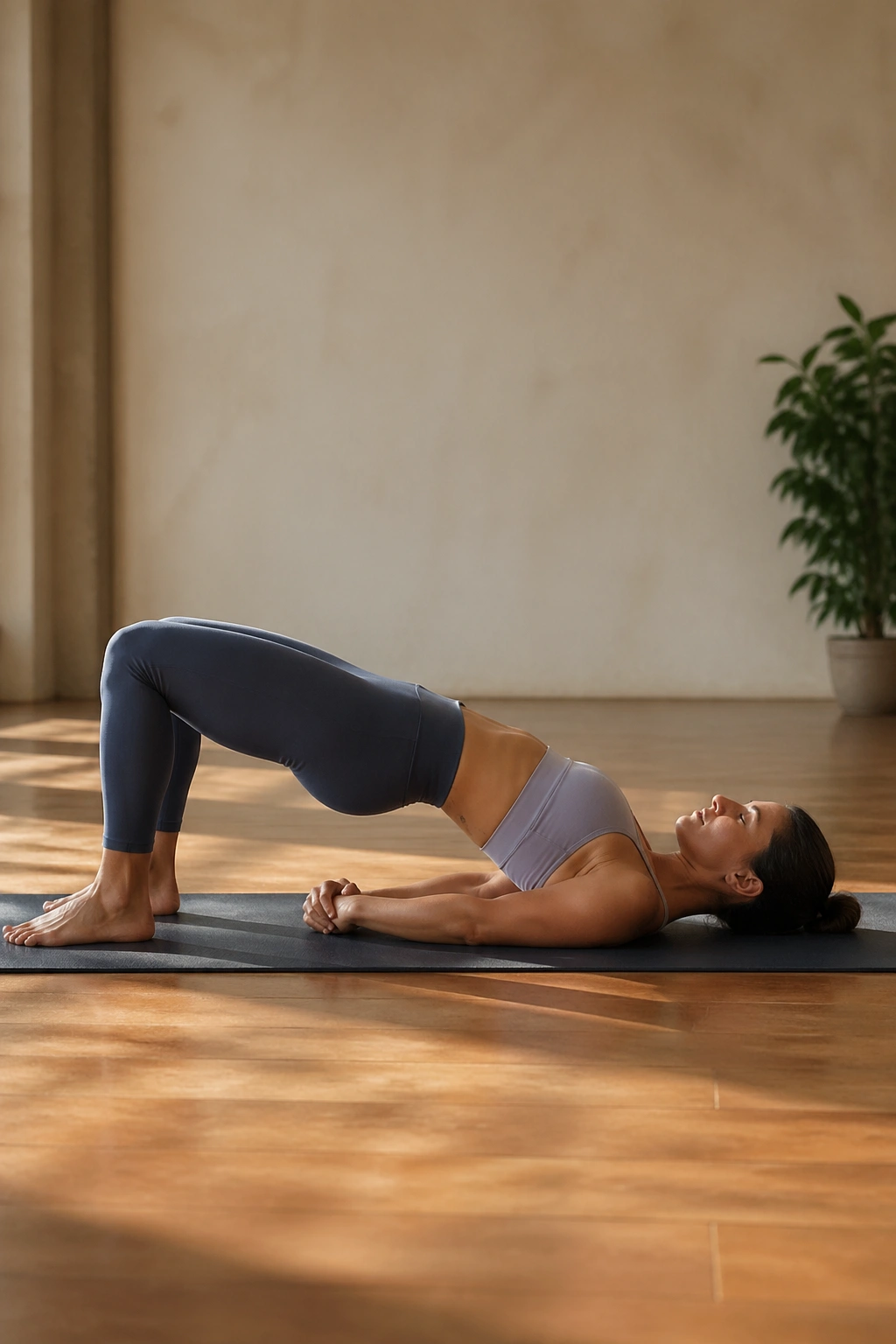
Bridge Pose can be gentle or strong. Setu Bandha Sarvangasana gives you both choices without making a big fuss about it.
Press the feet into the floor, lift the hips, and keep the knees pointing roughly forward rather than splaying apart. If the low back feels tight, lower less high and squeeze the glutes only lightly. A block under the sacrum turns the shape into a supported rest pose, which is a nice option after a long day.
Two Ways to Practice It
- Active Bridge with the hips lifting and lowering for a few slow reps.
- Supported Bridge with a block under the pelvis for 1 to 3 minutes.
If your neck feels strained, come down and reset. No pose is worth that.
22. Boat Pose for Core Strength That Shows Up in Real Life
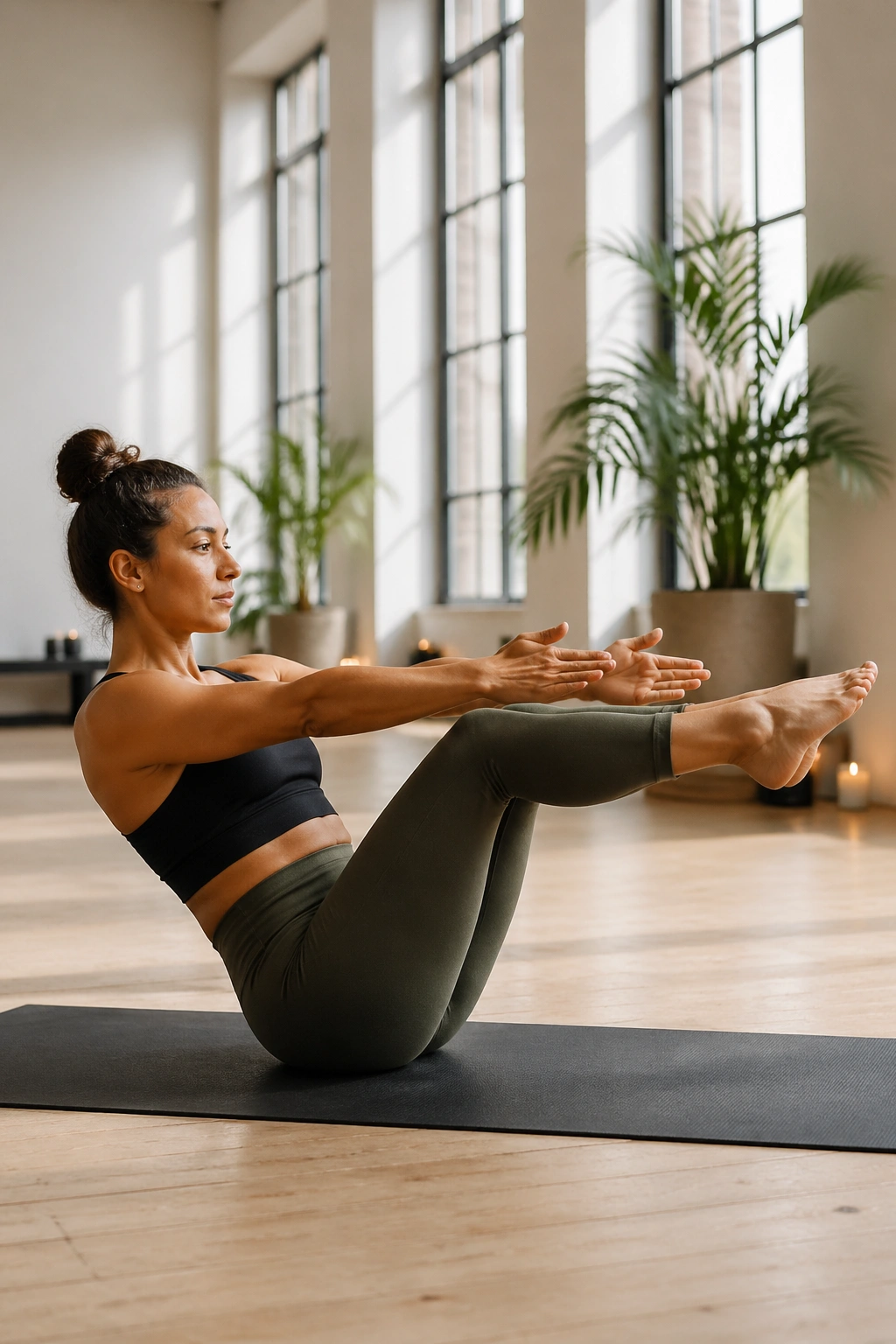
Boat Pose looks simple until your hip flexors start talking back. Navasana builds core strength, yes, but it also teaches the front of the thighs and the lower belly how to share the load.
Keep the chest lifted, the spine long, and the knees bent if straight legs turn the pose into a wobble fest. A lot of people lean back too far and then wonder why the lower back feels tired. The answer is usually right there in the setup.
A small bend in the knees is not cheating. It is smart. The pose still works.
23. Camel Pose for the Front of the Body
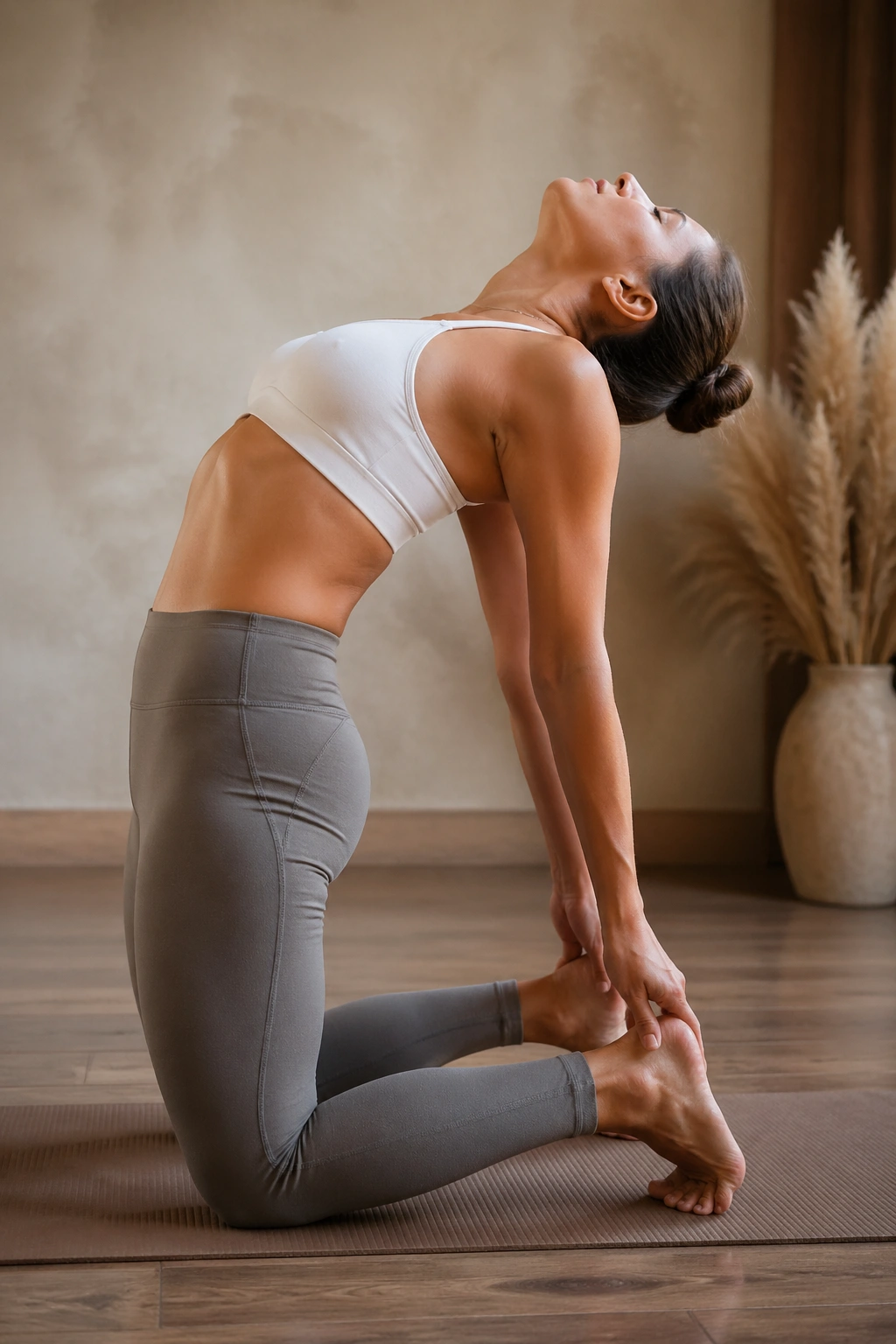
Why does Camel feel so big? Because Ustrasana opens the quads, the hip flexors, the chest, and the throat all at once.
Start with the hands on the lower back or sacrum and lift the chest before reaching for the heels. That order matters. If you drop backward too soon, the low back usually takes the load and the rest of the body gets along for the ride. Keep the thighs active and the hips stacked over the knees as much as possible.
A Safer Way In
- Tuck the toes if that makes the knees happier.
- Keep the chin slightly tucked instead of throwing the head back.
- Reach one hand at a time if the full version feels too much.
- Stay on the shins and sacrum if that is the day’s version.
Camel can be gorgeous, but it should not feel like a wrestling match with your spine.
24. Fish Pose for the Chest and Upper Back
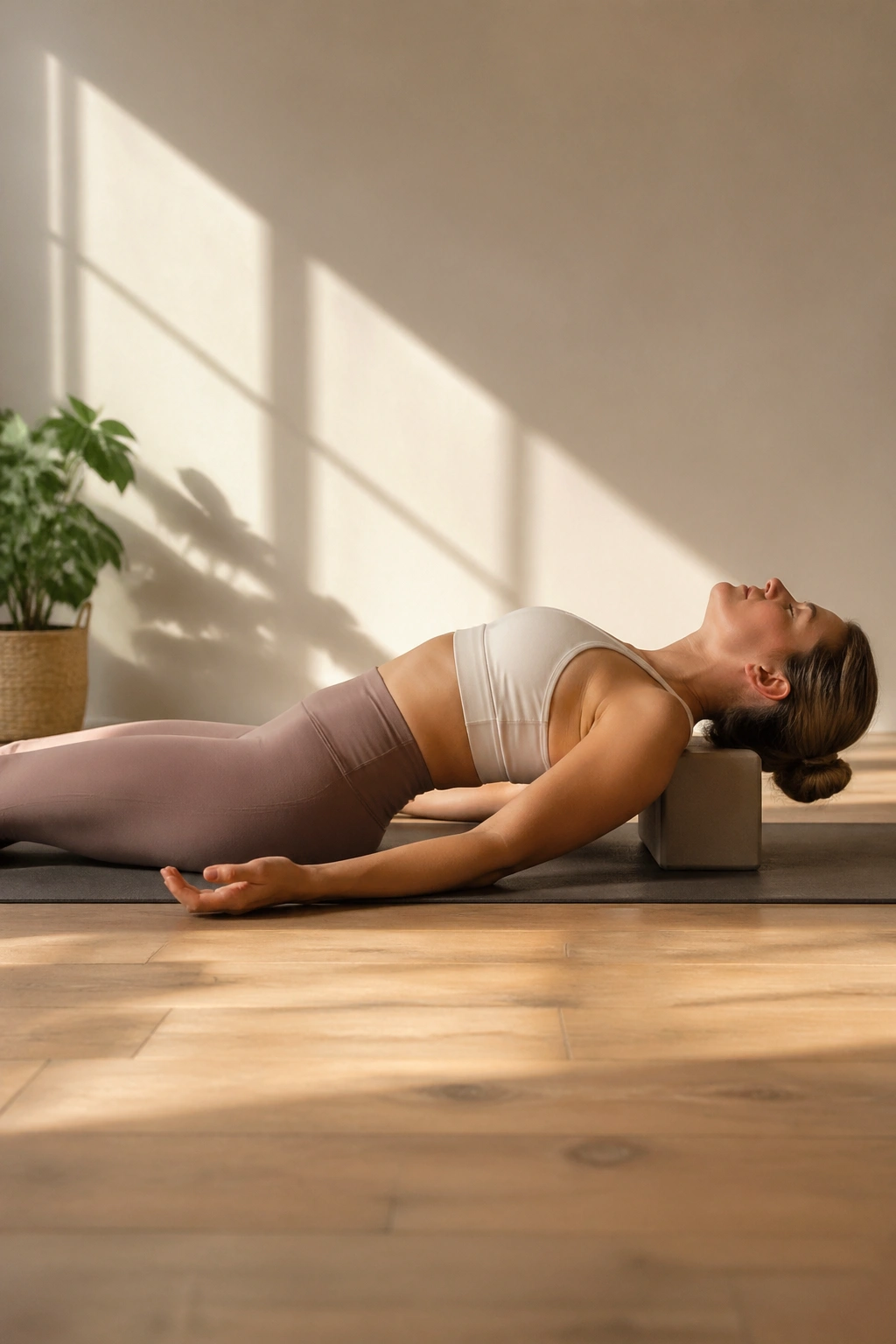
Fish Pose opens the chest in a way standing backbends do not. Matsyasana works well after a lot of desk time because it gives the front body a place to spread without asking the legs to stabilize anything.
A block or folded blanket under the upper back can make this pose feel rich instead of sharp. The throat stays relaxed, the arms can rest by the sides, and the breath often gets easier almost immediately. If the neck feels compressed, lift out and reduce the support height.
This is a quieter backbend than Camel. That is part of its charm.
25. Supine Twist for the Spine to Unwind
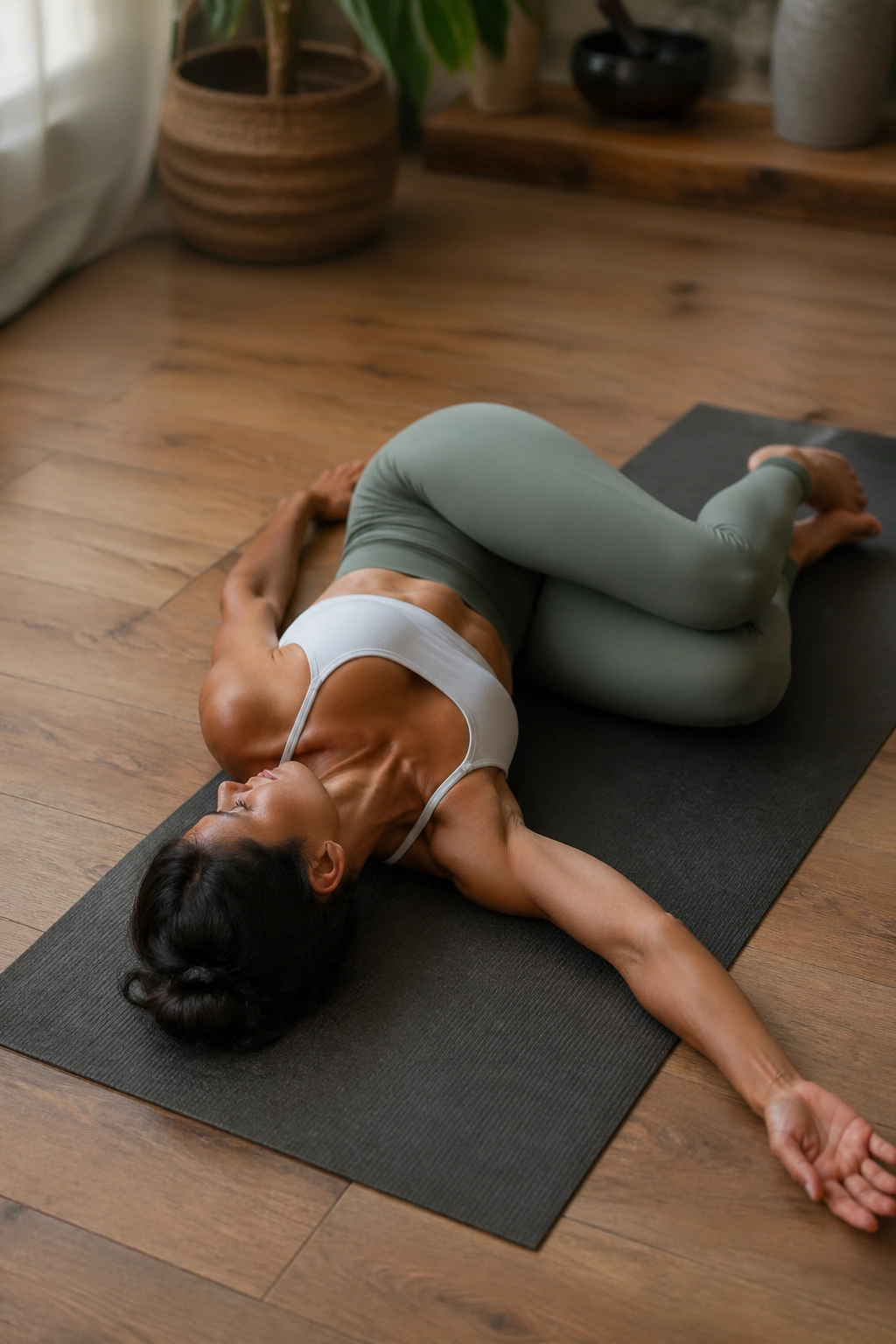
Supine Twist is one of the cleanest ways to let the spine settle. Jathara Parivartanasana gives your back a simple rotation without much demand from the shoulders or hips.
Keep both shoulders as heavy as possible and stack the knees only as far as the lower back allows. A pillow or blanket between the knees can keep the twist from turning into a knee tug. Some people like to look the opposite direction; others keep the gaze straight up. Your neck will tell you which one is smarter.
A slow exhale makes this pose work better than force ever will.
26. Happy Baby for a Low-Back Reset
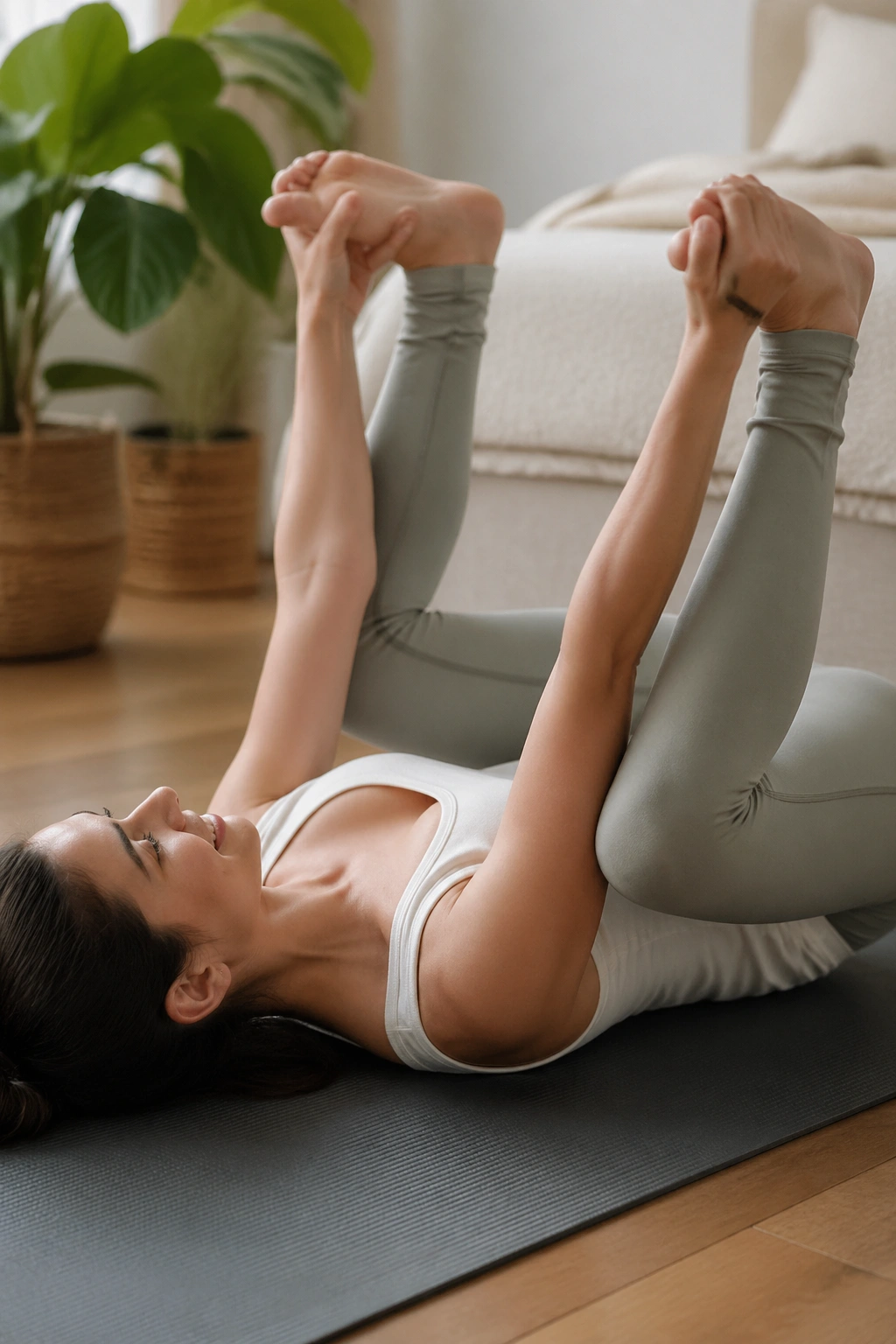
Happy Baby is less about looking relaxed and more about giving the low back a break. Ananda Balasana lets the hips open while the pelvis stays heavy on the floor.
Hold the outer edges of the feet or the shins, and keep the tailbone soft instead of curling aggressively. If grabbing the feet makes the shoulders hunch, hold the backs of the thighs instead. The pose should feel loose and a little playful, not like a fight with your own limbs.
After stronger standing work, this one feels especially kind. Simple. No performance required.
27. Legs-Up-the-Wall Pose for Recovery That Actually Feels Like Recovery
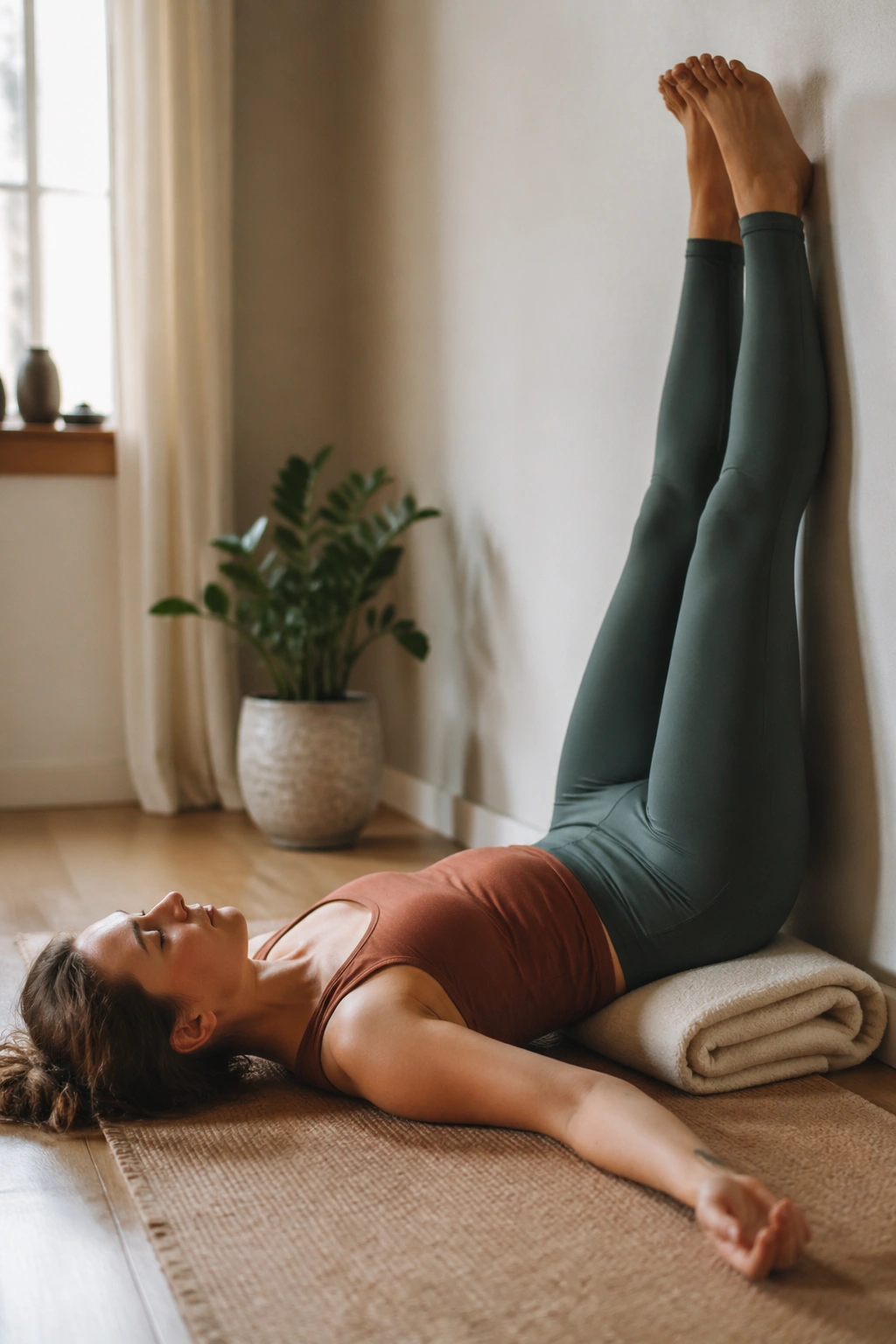
Put a folded blanket under your hips and stay here longer than feels necessary. Viparita Karani is one of the easiest ways to shift out of standing fatigue and into a calmer gear.
How to Set It Up
- Sit sideways next to a wall.
- Swing the legs up as you lower onto your back.
- Move your hips close enough to the wall that the legs can rest without strain.
- Drape a blanket over the eyes if light feels irritating.
Five minutes helps. Ten helps more. The pose is quiet, but the effect can be obvious in the legs, feet, and lower back.
28. Child’s Pose for Rest Without Checking Out
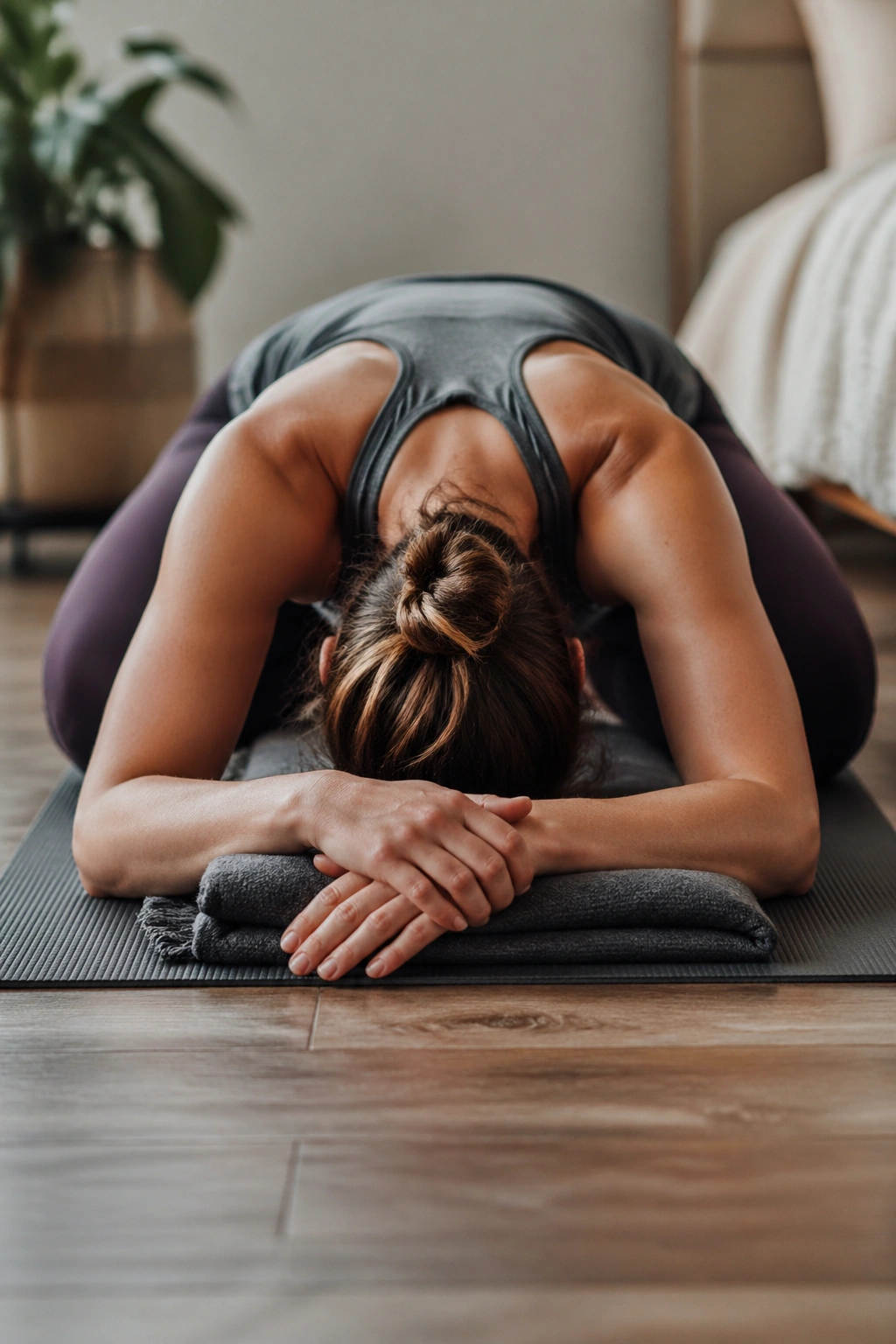
Child’s Pose is not a throwaway rest. Balasana gives the back a rounded shape, the hips a break, and the breath a place to soften.
Bring the knees together for a tighter fold or widen them if the belly needs room. Arms can stretch forward or rest by the sides. If the forehead does not comfortably reach the floor, stack the fists, a block, or a blanket under it so the neck can relax. The point is not to fold as far as possible. The point is to settle.
Some days this is the pose that saves the whole practice.
29. Cat-Cow for a Spine That Wakes Up Smoothly
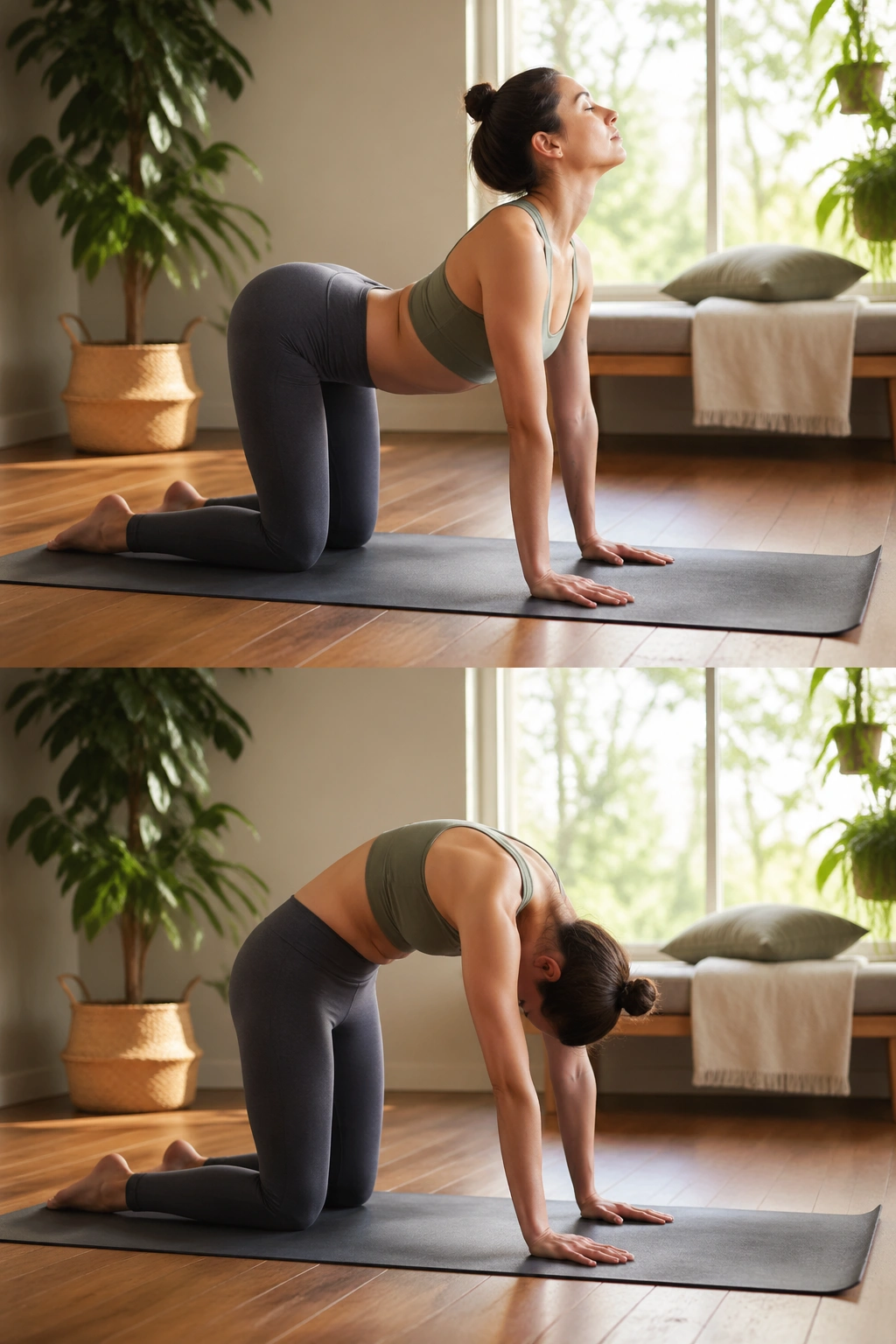
Need a warm-up that never feels fussy? Cat-Cow does the job.
How to Move Through It
- Inhale and let the chest widen, the tailbone lift, and the belly soften.
- Exhale and round the spine, drawing the navel inward.
- Keep the elbows soft and the shoulders away from the ears.
- Move slowly enough that the breath leads the motion.
This is one of those poses that looks almost too simple to matter, and then your back feels smoother five breaths later. If the wrists complain, come down to forearms or make fists. Small adjustments keep the shape usable.
30. Savasana for Letting the Whole Practice Land
Savasana is the part many people skip in their minds. It is not a bonus round. It is where the body has a chance to register everything you just did.
Lie down, let the feet fall open, and let the hands rest wherever they stop gripping. A blanket over the body or eyes can make the pose feel less exposed. Stay long enough that the jaw unclenches and the breath becomes almost invisible. If you need a timer, use one. If you do not, even better.
The useful thing about Savasana is how uninteresting it looks. The body does not need another task here. It needs a pause, and then another one if you can spare it.
