



Stiff hips can make the simplest seat feel weirdly hostile.
One minute you’re fine, the next your knees are drifting up, your low back is rounding, and every floor pose feels like it needs a negotiation. That’s exactly where seated yoga poses for stiff hip days earn their keep. They don’t ask for balance, they don’t demand fancy flexibility, and they let you work with the body you actually have in that moment.
The mistake most people make is forcing depth. Bad trade. Hips usually respond better to a little breathing room, a small amount of movement, and a setup that stops the pelvis from collapsing backward. A folded blanket under the sit bones, a yoga block nearby, and patience measured in breaths instead of ego can change the whole session.
There’s another reason seated shapes work so well: they quiet the rest of the body. When you take standing balance out of the picture, you can feel the difference between a stretch in the outer hip, a tug in the inner thigh, and that sharp pinch that says “back off.” That difference matters. A lot.
1. Easy Seat With a Forward Lean
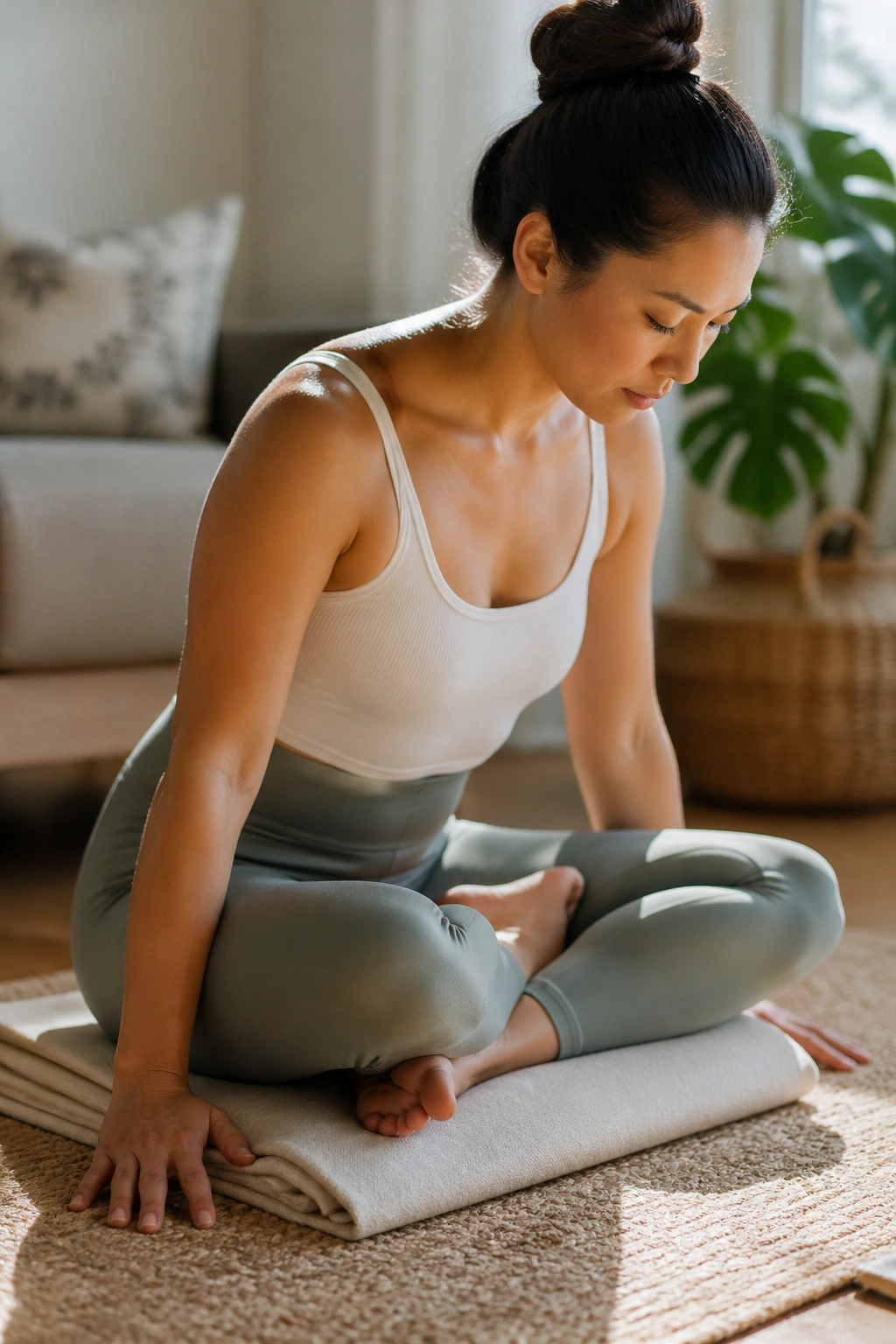
Easy seat is where I start when the hips feel rusty. Sit with your shins crossed loosely, and place a folded blanket or a firm cushion under your sit bones so your pelvis can tip forward a little. That tiny lift is often the whole trick. Without it, people sink into the low back and blame the hips when the real issue is the angle.
Why it works
A gentle forward lean gives the hips a bit of traction without shoving them into end range. You’re not trying to fold in half. You’re trying to create enough space at the front of the hips and enough length along the spine that the muscles can stop bracing.
How to use it
- Sit for 5 to 8 slow breaths with your hands on the floor or blocks.
- Keep the chest soft, not puffed up.
- If the knees sit higher than the hips, raise the seat more.
- If the ankles complain, uncross and switch the cross after a few breaths.
One good rule: if the stretch disappears the second you round your back, the setup needs more height, not more effort.
2. Seated Cat-Cow for a Stiff Pelvis
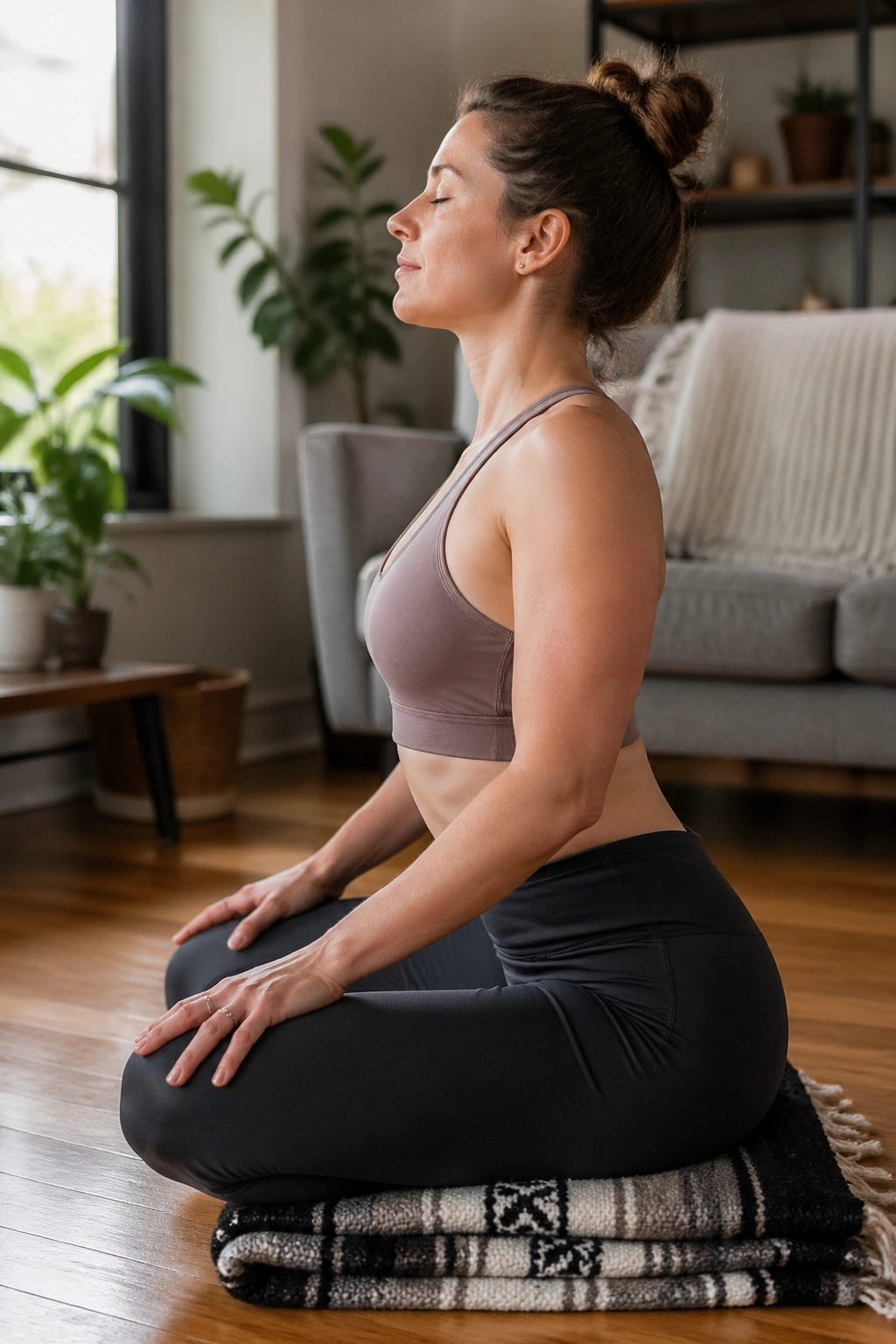
Can something this small really matter? Yes. Seated cat-cow is one of those boring-looking moves that earns its place because it changes the pelvis, not just the spine. When the hips feel locked, they often need a little rhythm before they need a big opening.
Sit tall on a blanket, put your hands on your knees, and let the inhale tip the pelvis forward so the chest broadens. On the exhale, round the low back and let the tailbone tuck under. Keep the movement slow enough that you can feel each vertebra changing shape. Six to ten rounds is usually plenty.
How to move it
What to watch for
Do not throw the head back on the inhale. That turns the pose into a neck stretch with a costume on. Keep the chin level and let the motion start low.
A useful cue
Think pelvis first, ribs second. That order matters more than most people realize. If the hips are the problem, the hips should get the first vote.
A small pulse like this can make the next pose feel ten times kinder.
3. Seated Hip Windshield Wipers
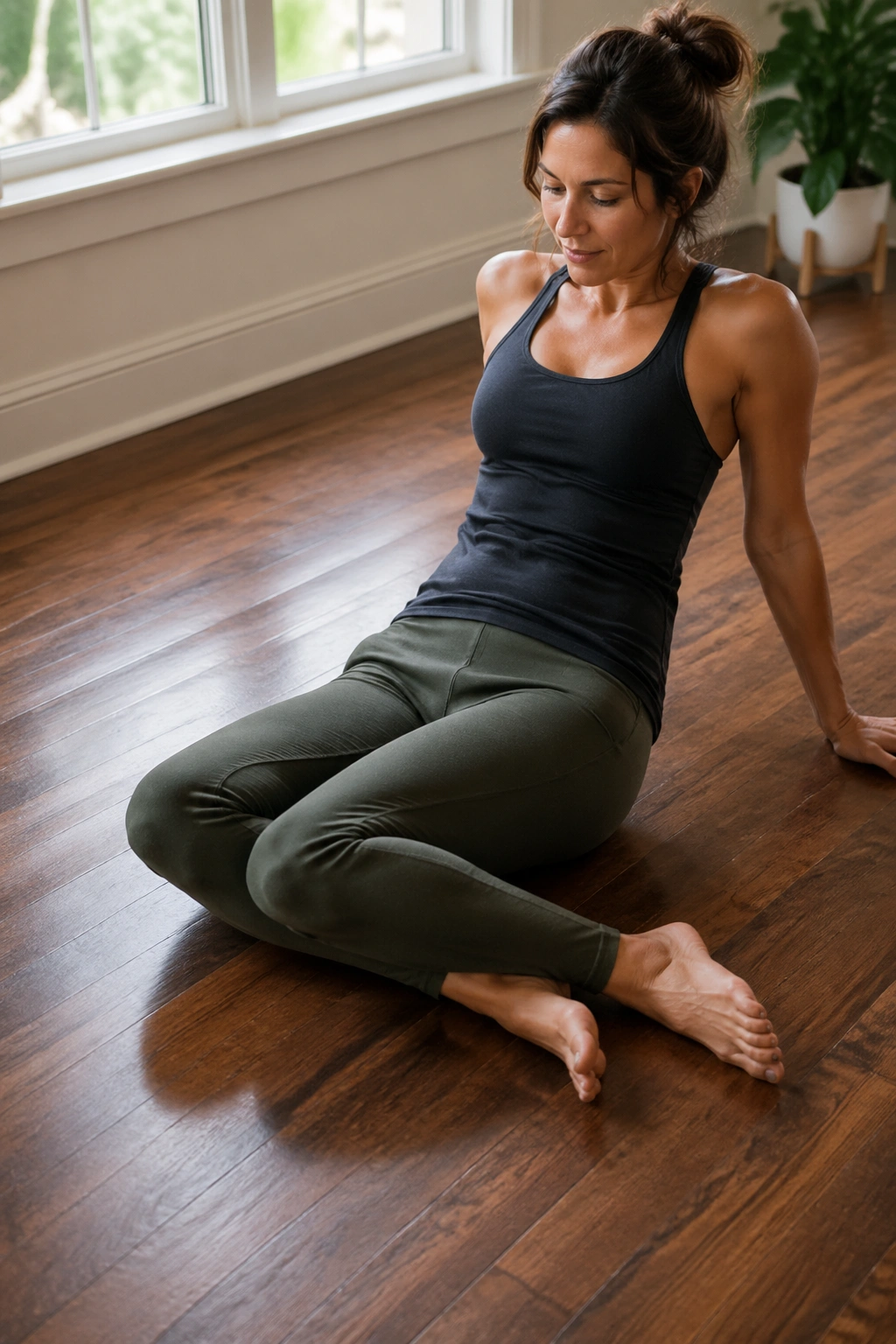
After a long drive, this is one of the first things I’d pick. It looks almost too easy to count as yoga, which is probably why people skip it and go straight for the dramatic stuff. Bad idea. The hips usually appreciate the quiet work.
Sit with your knees bent and your feet on the floor. Let both knees drop a few inches to one side, then lift them back to center and let them move to the other side. The movement should feel smooth, like a slow windshield wiper, not like a contest. Keep your hands behind you if you need extra support.
- Move for 8 to 12 slow rounds.
- Keep the feet planted lightly.
- Let the pelvis follow the knees a little.
- Stop if you feel a sharp pinch in the front of the hip.
This is less about stretching and more about reminding the joint that it can move without a fight. That matters after sitting, cycling, or any day when the hips have gone a bit sulky.
4. Bound Angle Pose With a Long Spine
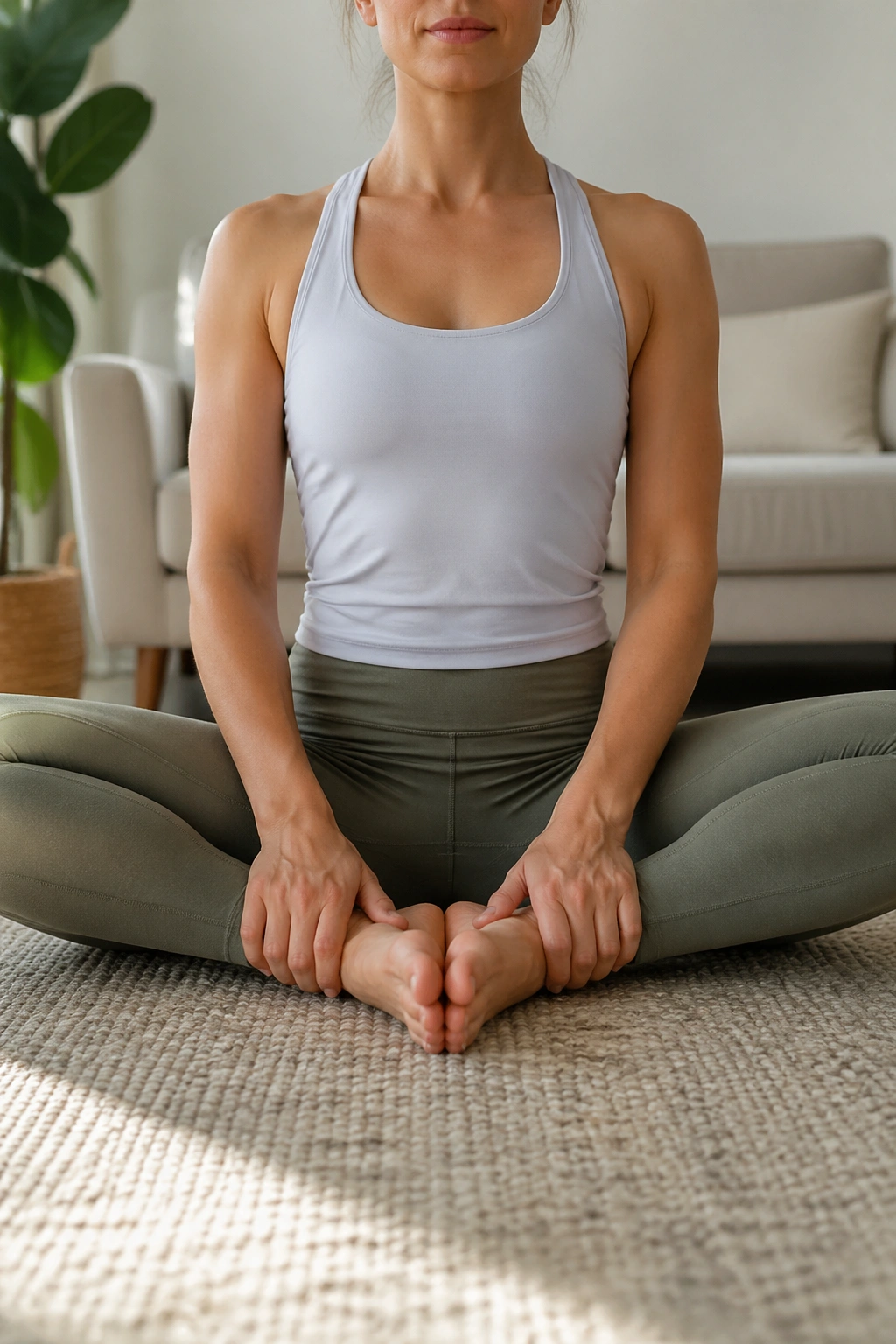
Bound angle is not a test. Nobody gets a prize for dropping the knees to the floor. Sit with the soles of the feet together, then slide the heels a little farther away from the pelvis than you think you need. On stiff hip days, that small adjustment keeps the stretch in the inner thighs instead of turning it into a knee complaint.
Stay upright first. Press the outer edges of the feet together, let the sit bones ground down, and lengthen up through the crown of the head. If the low back starts to round hard, stop there. If the pose feels okay, hinge forward a few inches from the hips and rest the forearms on blocks.
A lot of people push this pose too hard because it looks gentle. It isn’t, not always. The inner thighs can be sneaky. They’ll feel mild for the first 20 seconds, then suddenly start talking loudly.
A better version is the one you can breathe through. Hold for 5 to 10 breaths, then come out slowly and straighten the legs before going deeper into anything else. That reset helps more than people expect.
5. Seated Butterfly Fold
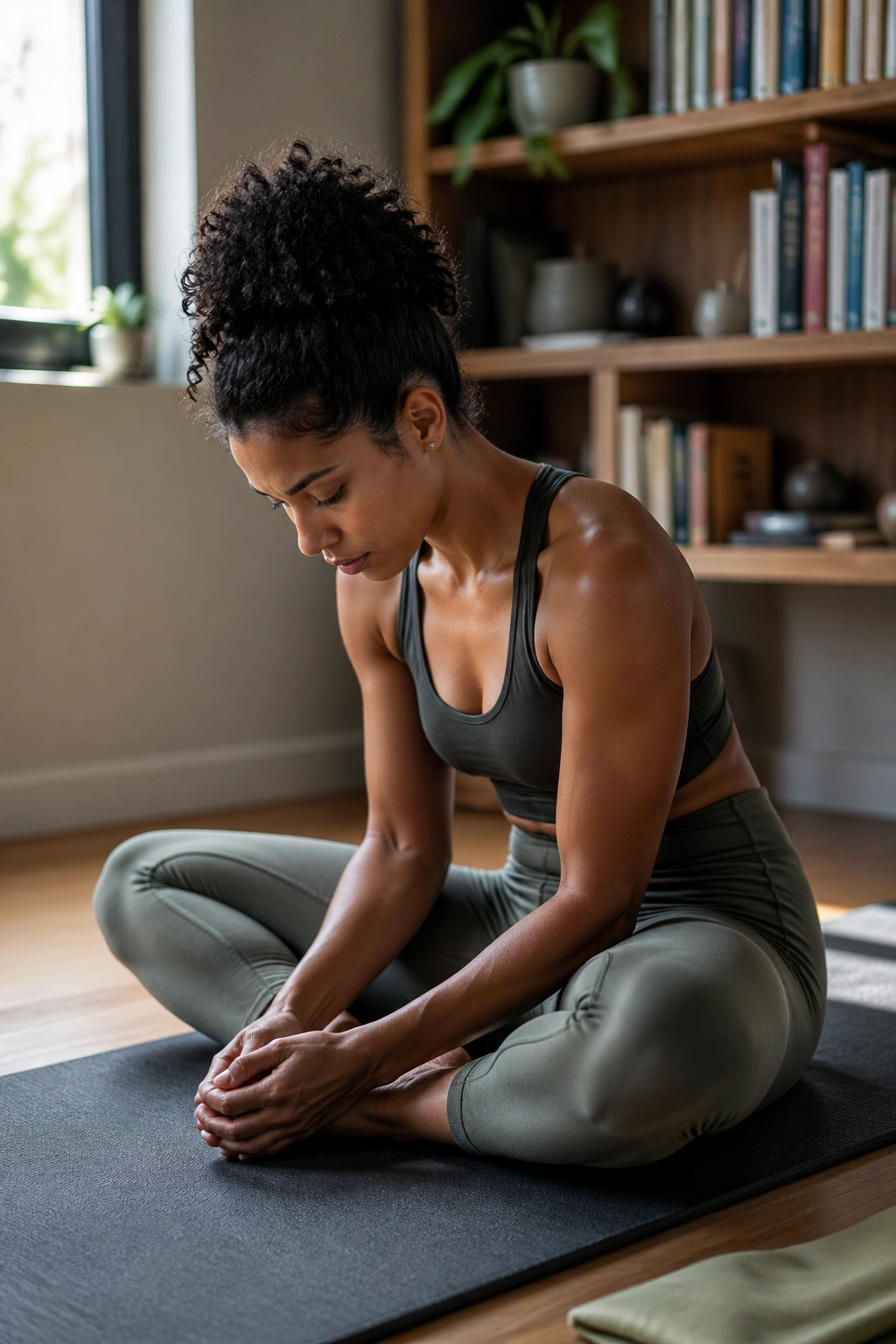
Butterfly fold is the quieter sibling of bound angle. It still opens the inner thighs, but the forward fold changes the sensation and often lands lower in the pelvis. Sit with the soles together, make a little space between your heels and groin, and hinge forward from the hips with a long spine.
I like this one when the hips feel stiff but not angry. That distinction matters. If the joints feel cranky, stay upright. If the muscles feel tight and underused, the fold can be a relief.
How I use it on a stiff day
Settle first
Take 3 slow breaths before folding. That little pause helps the body unclench.
Fold in stages
Go halfway down, breathe, then maybe go a touch lower. There is no prize for speed here.
Keep the knees honest
A light pressure of the elbows against the inner thighs can help, but don’t shove. The goal is a gentle opening, not a wrestling match with your own legs.
One clean fold, done patiently, usually beats three rounds of trying to “get deeper.”
6. Seated Figure Four for Outer-Hip Tightness
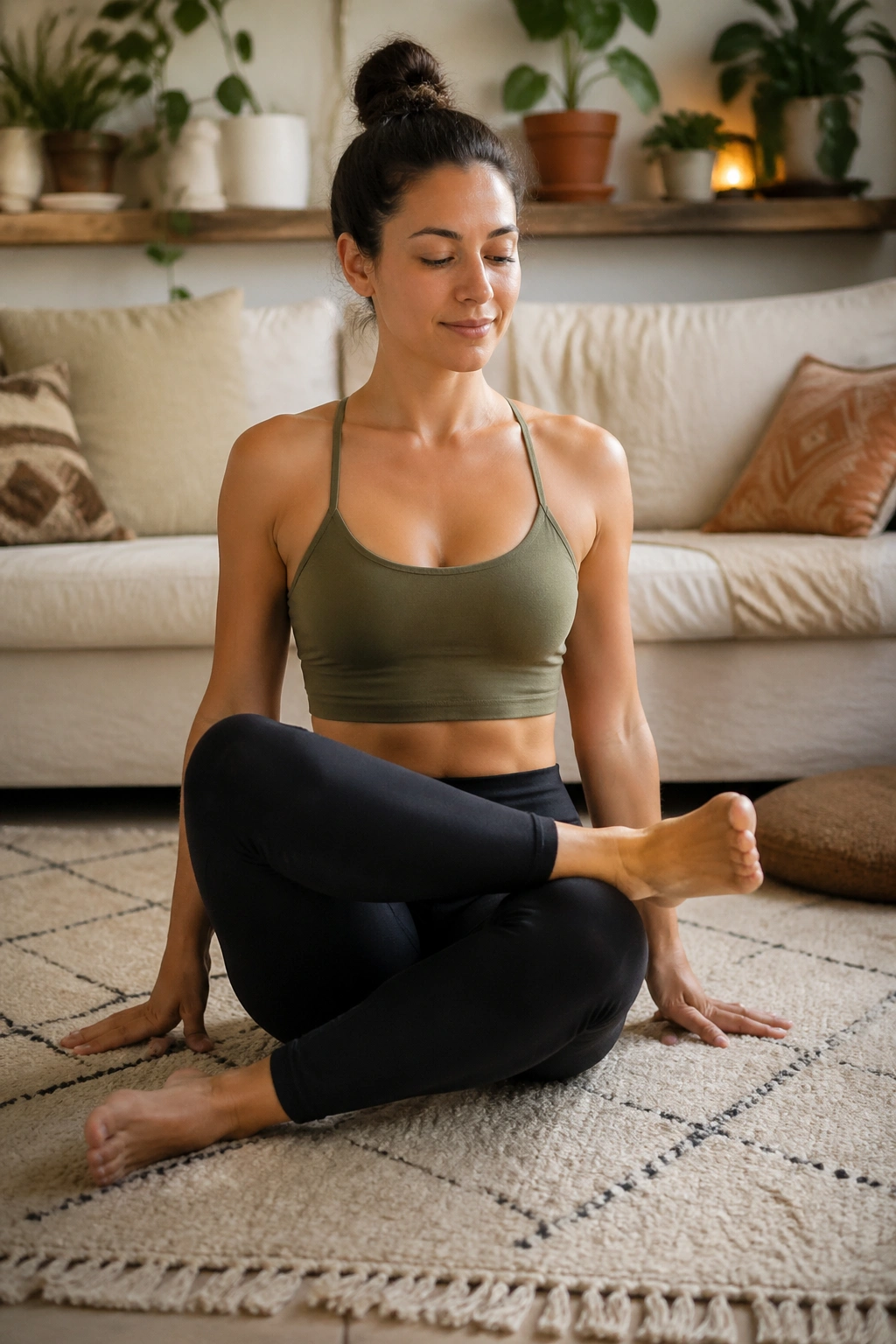
Why do people keep coming back to this one? Because the outer hip often does the screaming when the front of the pelvis is the thing that’s actually tight. Sit tall, cross your right ankle over your left thigh, and flex the right foot hard. That flex keeps the knee safer and the stretch more honest.
From there, stay upright for a few breaths or hinge forward with a long spine. If the knee points outward and the ankle goes floppy, the pose gets sloppy fast. That’s not what you want. Keep the shin active and the crossing leg from slumping.
How to use it
- Hold 5 to 8 breaths per side.
- Stay higher if the hip pinches.
- Slide the bottom foot farther away if the pelvis rounds.
- Use a block under the top knee if it floats high.
The best version feels like a deep, broad stretch in the glute, not a stab in the front of the hip. If it lands in the wrong place, make it smaller. Smaller usually wins.
7. Fire Log Pose When You Want a Deeper Stretch
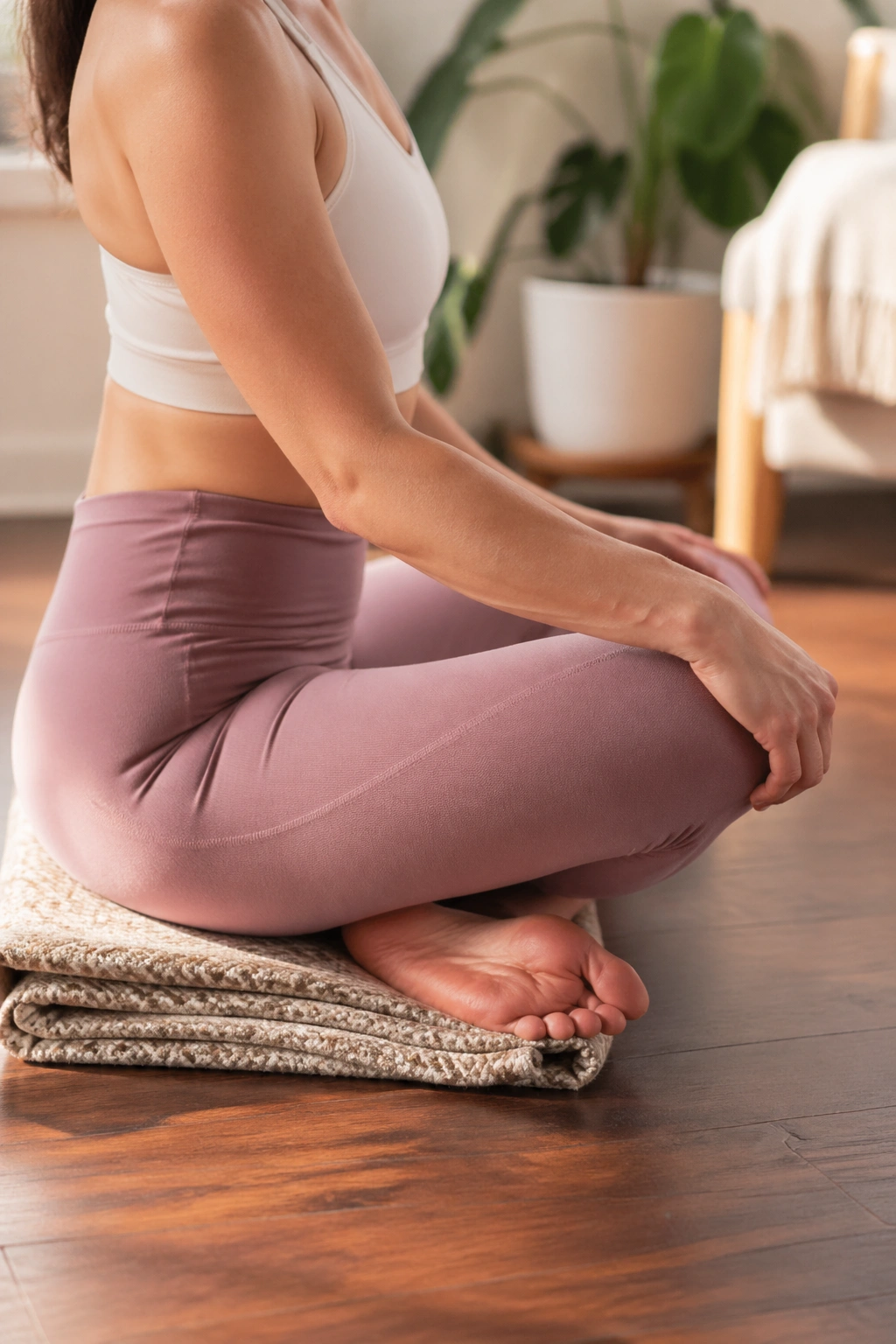
Fire log pose is the one people either adore or avoid. There’s not much middle ground. Stack one shin on top of the other so both knees are bent near ninety degrees, then sit on a folded blanket if the pelvis tips backward. The setup matters more than the shape itself.
This pose gets into the deep rotators and the outer hips in a way that bound angle never will. It can feel intense fast. Not painful-intense. More like the body has found the drawer you forgot was stuffed full.
- Sit high if the knees are far off the floor.
- Keep the feet active instead of floppy.
- Stay upright for 6 breaths before folding.
- Use blocks under the knees if one side is much tighter.
A small forward fold is enough. A lot of people go looking for drama and end up rounding the spine so hard that the hips stop getting the message. The stretch should feel clean, not forced.
8. Janu Sirsasana for One Side at a Time
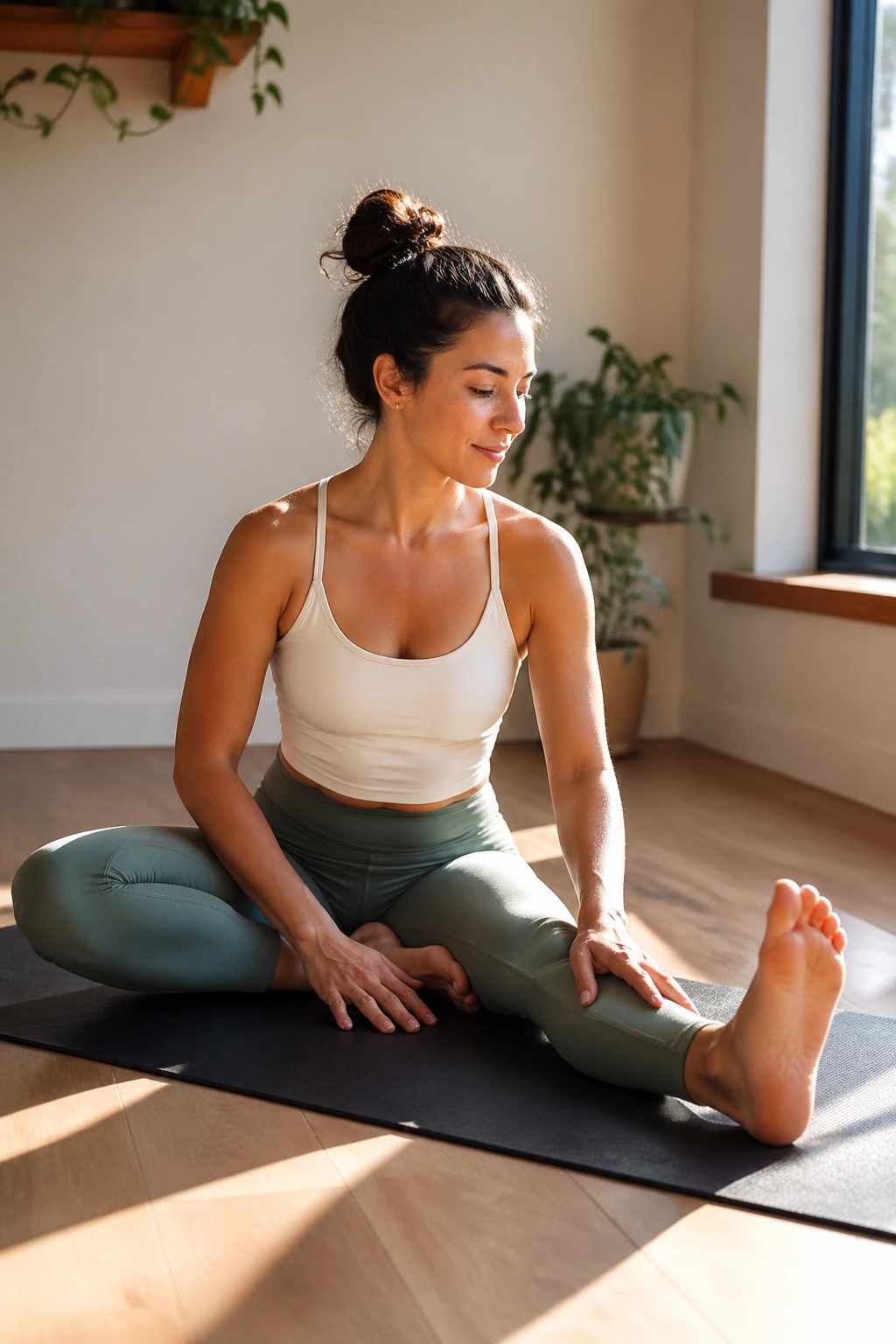
One-sided work is underrated. Janu sirsasana gives you one bent leg, one extended leg, and a chance to notice which hip is tighter without the whole body chiming in at once. Sit with your left leg long, bend the right leg so the sole of the foot rests against the inner thigh, and square the torso over the extended leg.
Keep the extended foot flexed. That’s not a small detail. A flexed foot keeps the back of the leg active and stops the whole pose from sliding into a lazy slump. Hinge forward from the hips, and only go as far as you can keep length in the spine.
What makes it useful
The bent leg gets a mild opening in the inner thigh and groin, while the straight leg gets a stretch along the hamstring. That combination is handy on stiff hip days because the pelvis often feels better when both sides get a different job.
What not to do
Don’t yank the foot closer with your hands. That usually turns into a back round and a hip pinch. Rest a hand on each side of the extended leg, breathe for 5 to 8 counts, and let the position settle on its own.
9. Wide-Leg Seated Forward Fold Across the Inner Thighs
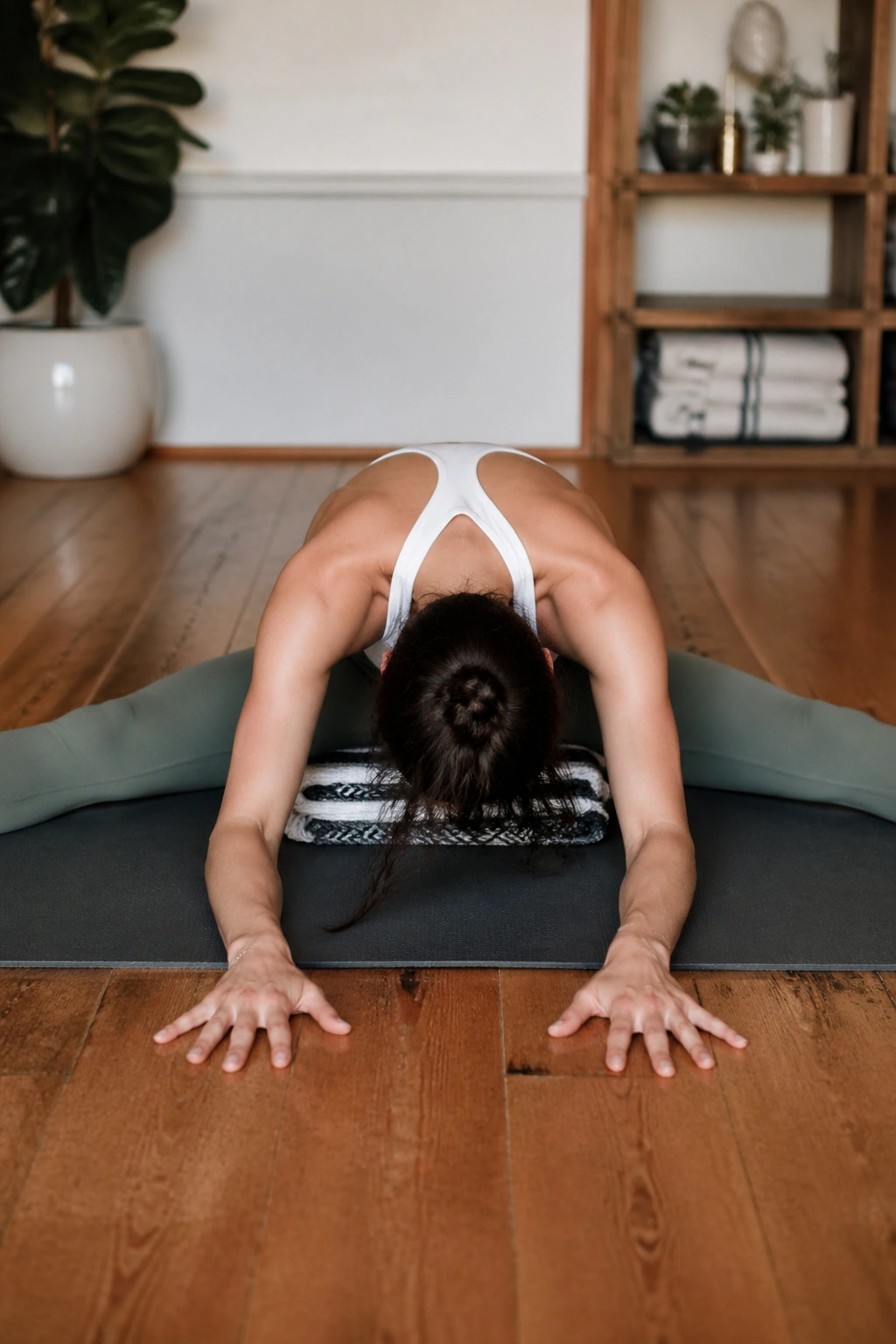
This one looks calm. It is not always calm. Sit with the legs spread wide in a comfortable V, and put a blanket under the pelvis if the low back rounds immediately. The wider the legs, the more the inner thighs start talking, so there’s no reason to force a huge shape.
I prefer a smaller V with a strong hinge over a giant split-like setup with a collapsing spine. The first version actually stretches the hips. The second often just irritates the back and makes the adductors clamp down.
Reach forward with the hands or place them on blocks between the legs. Keep the chest long, and lean from the hips until you feel a steady pull across the inner thighs. Breathe for 5 to 10 breaths. If that feels fine, walk the hands a little farther forward, but only if the spine stays honest.
A neat trick: point the toes up and press the heels down. That gives the legs some structure and keeps the stretch from turning mushy.
10. Seated Spinal Twist for the Low Back and Hips
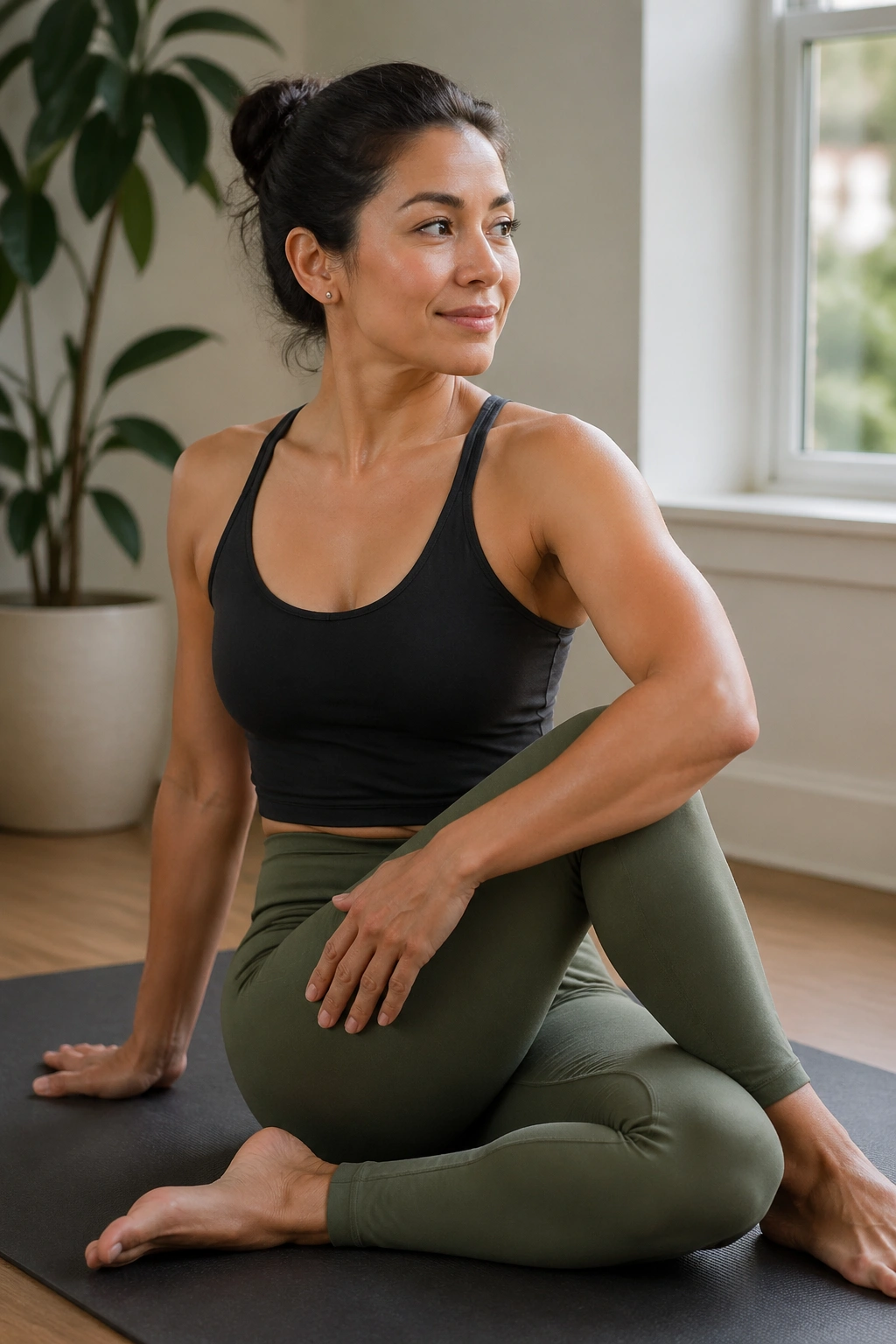
Do twists open the hips? Not in the dramatic, movie-poster way people imagine. They do something a little smarter. A seated twist can ease the low back, wake up the side body, and help one hip feel less glued to the floor after a long day.
Sit with both legs bent, or take a simple cross-legged seat if that feels better. Place the right hand behind you and the left hand on the outer right thigh, then grow taller on the inhale before turning to the right on the exhale. The twist comes from the ribs and waist, not from yanking the knee across the body.
What to feel
You want a gentle spiral through the torso and a mild sensation through the outer hip of the crossed leg. If the hip joint itself feels pinched, the twist is too deep or the leg position is too narrow.
How to make it work
- Sit on a folded blanket if the pelvis tucks under.
- Keep the spine long for the first 3 breaths.
- Turn only as far as the breath stays smooth.
- Come out slowly and repeat on the other side.
That slow exit matters. Twists can feel sneaky on a stiff body, and rushing out of one is a nice way to make the next pose feel worse.
11. Cow Face Legs for Rotating the Outer Hips
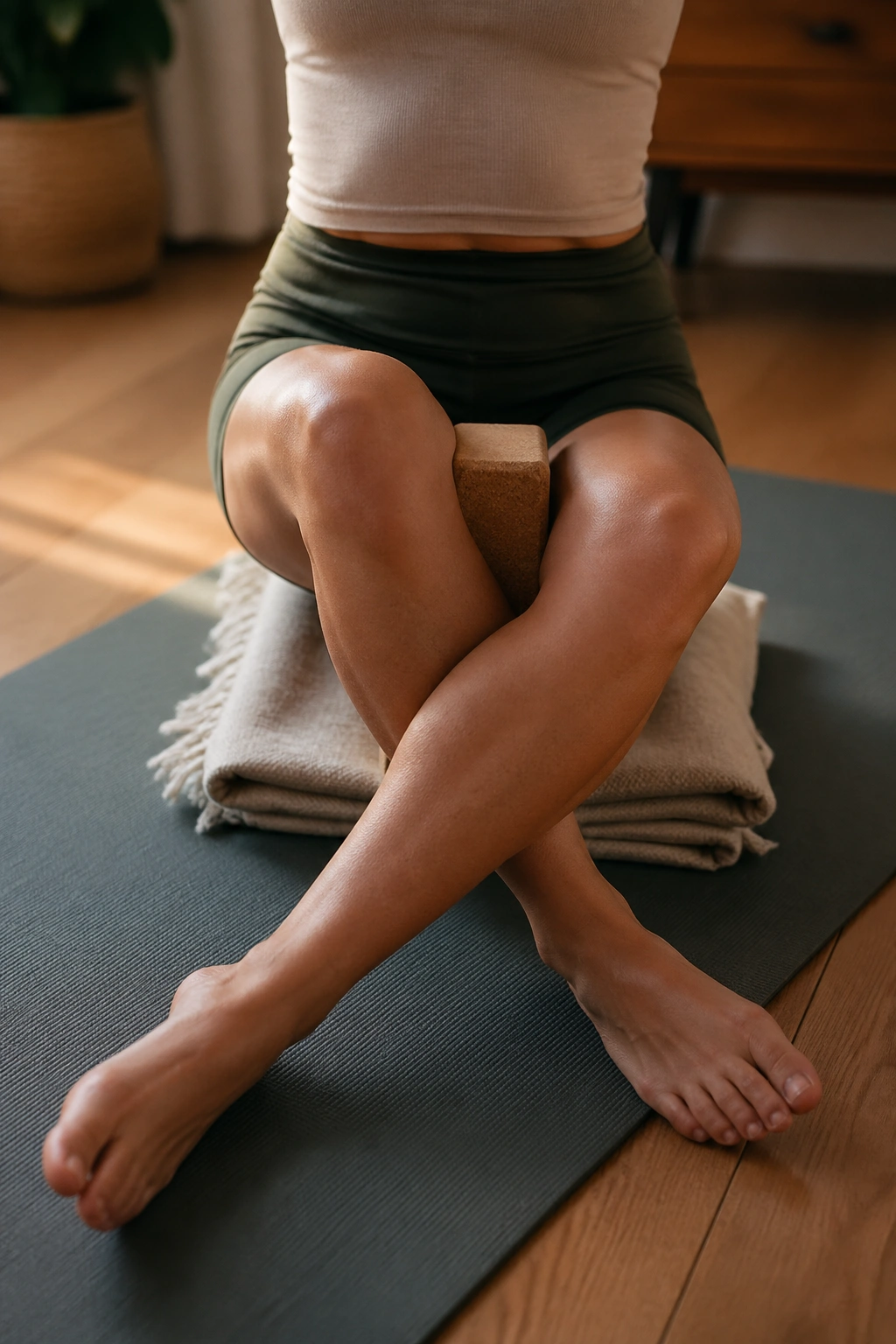
Cow face legs are a little fussy at first, and then suddenly they make sense. Stack the knees one over the other so the thighs angle inward, then sit on a blanket if the hips are floating. If the top knee points to the ceiling and the bottom knee flares wildly off to the side, the setup is too big.
This pose reaches the outer hips in a different way than figure four or fire log. It has a more direct feeling through the side of the pelvis. Some people love it. Some people need a month before they stop muttering at it. Both reactions are normal.
- Keep both sit bones as even as possible.
- If the knees are far apart, shorten the shape.
- Stay upright first, fold later.
- Use a block between the knees if the stack feels unstable.
The fold, if you take it, should come after the legs settle. Otherwise the pose turns into a back stretch with a confusing name. Hold for 4 to 6 breaths each side and move on before the hips start to bargain.
12. Deer Pose for a Softer, Sideways Hip Stretch
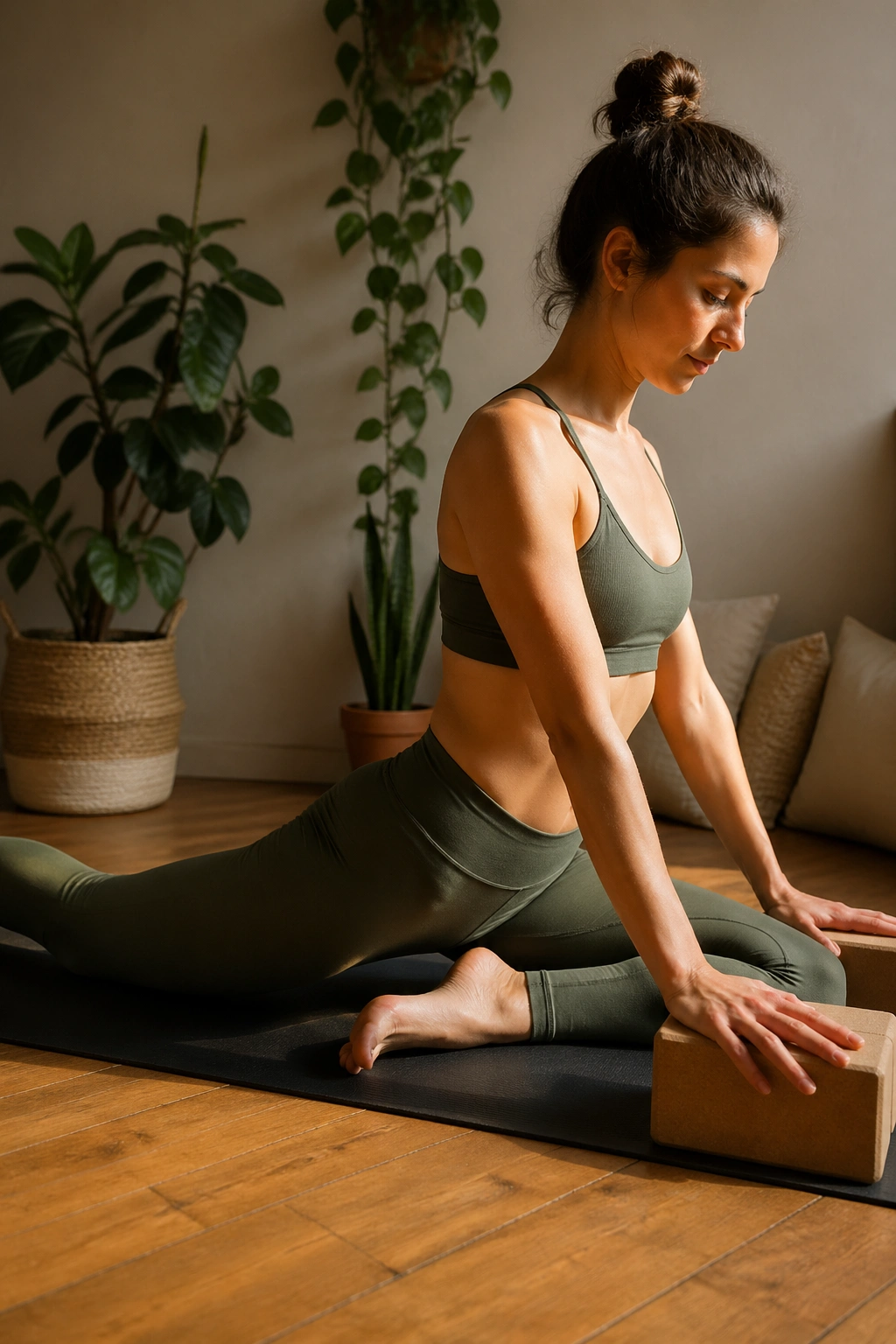
Deer pose is one of those shapes that people overlook because it doesn’t look heroic. Good. Heroic is overrated on stiff hip days. Sit with one leg bent in front of you and the other bent behind you, both knees angled out a bit, so the pelvis has to deal with a sideways shape rather than a straight-on fold.
What I like about deer pose is the asymmetry. One hip gets internal rotation, the other gets external rotation, and the body has to settle into a less familiar map. That often feels kinder than trying to pry both hips open at once.
Start upright. Always upright first. If that feels steady, fold forward over the front shin or lean slightly toward the front leg with your hands on blocks. If one knee feels unhappy, move the back foot farther behind you or bring the front foot a little closer to the body.
The stretch should feel mild and odd before it feels deep. That oddness is the point. Stay for 5 breaths, switch sides, then notice which side felt cleaner. They almost never feel the same.
13. Seated Side Bend to Open the Waist and Outer Hips
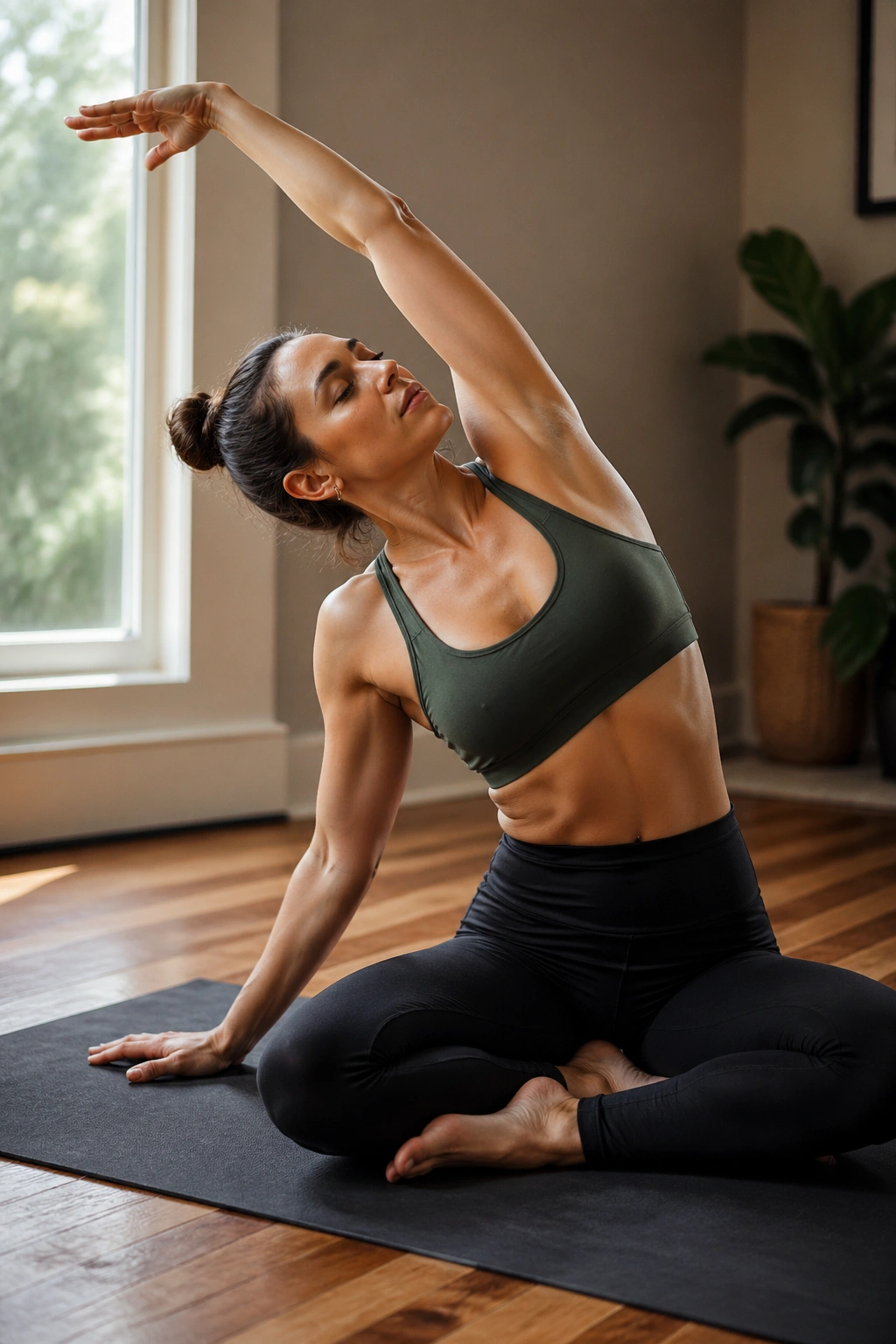
A side bend does not get enough credit on hip days. It reaches the waist, the side of the pelvis, and the tissues that connect the rib cage to the hips — the places that often tighten up when you’ve been sitting too long. Sit cross-legged or in easy seat, ground one hand beside you, and sweep the other arm overhead.
The move is small. Good. Small is the whole story here. Keep both sit bones heavy, then arc the top arm over without collapsing the chest forward. You want a clean line along the side body, not a banana-shaped crunch.
Why I like it
A side bend gives the pelvis a break from front-to-back work. That change of direction can make stiff hips feel less trapped, especially if the low back has been doing too much compensation.
How to get the most from it
Hold each side for 4 to 6 breaths. Keep the bottom shoulder soft. If the neck tightens, lower the top arm and shorten the curve.
A small bend is enough. If you chase a giant shape, the ribs shove forward and the hips stop participating. That is the part most people miss.
14. Hero Pose With a Block Under the Hips
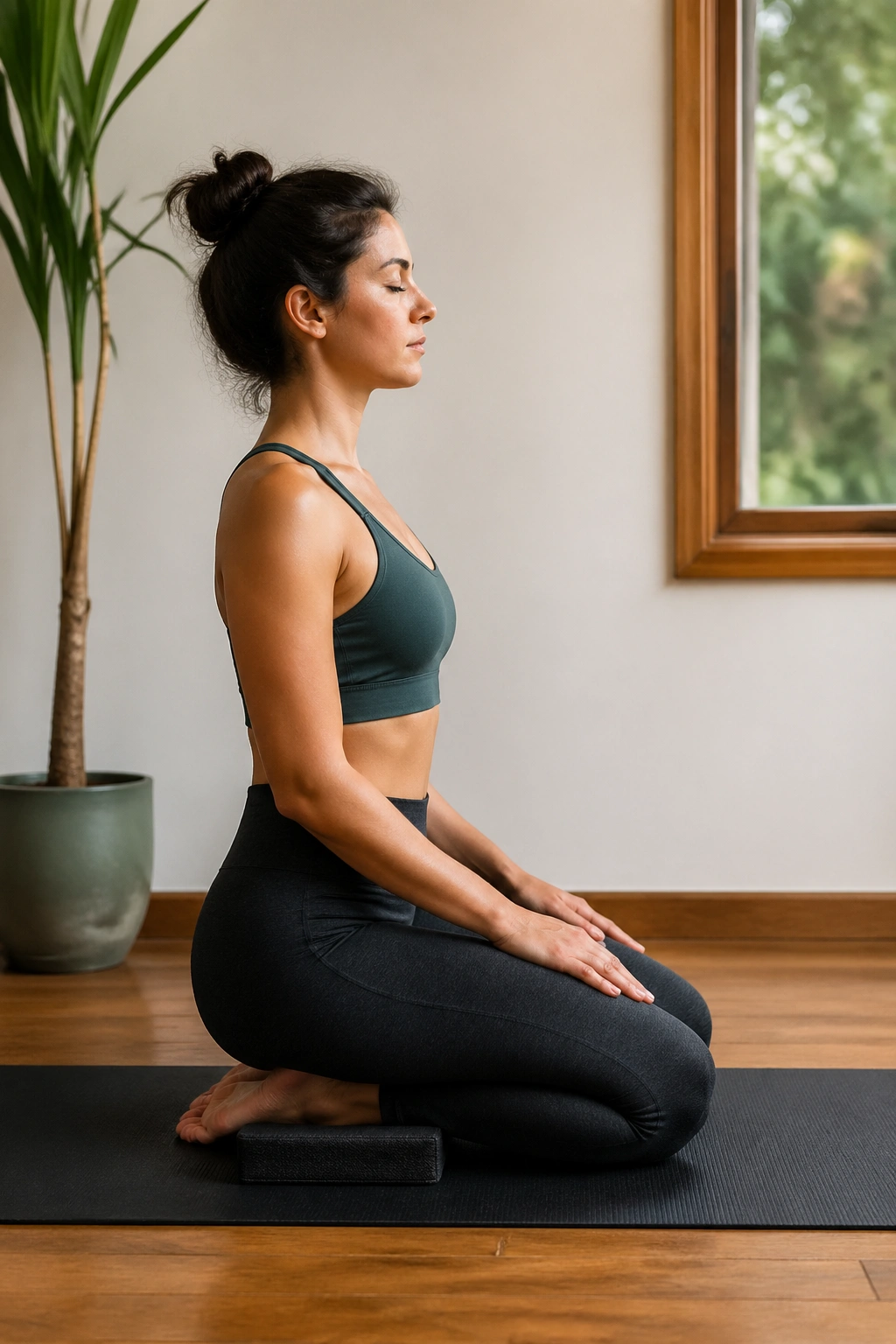
Is hero pose a hip stretch or a knee stretch? Honestly, it can be both, which is why I treat it with respect. Kneel with the knees together or slightly apart, then sit between the heels. If that feels like too much, sit on a block or bolster instead. No drama required.
The pose asks for hip extension and a lot of quads. On a stiff day, it can feel surprisingly intense in the front of the thighs and the groin. That is useful if you’ve been stuck in chairs and cars, but it’s not a pose to muscle through.
Knee and ankle setup
If the knees complain, widen them a bit. If the ankles feel crushed, put a folded towel under the lower legs. And if the sit bones are nowhere near the floor, raise the seat high enough that you can breathe without bracing.
Stay upright for 5 breaths, maybe longer if the front body softens. A small forward fold over the thighs can be fine, but keep it mild. This is one of those shapes that rewards restraint.
If hero pose feels impossible, skip it. No pose earns points for making your knees grumpy.
15. Chair Figure Four for the Days the Floor Feels Too Much
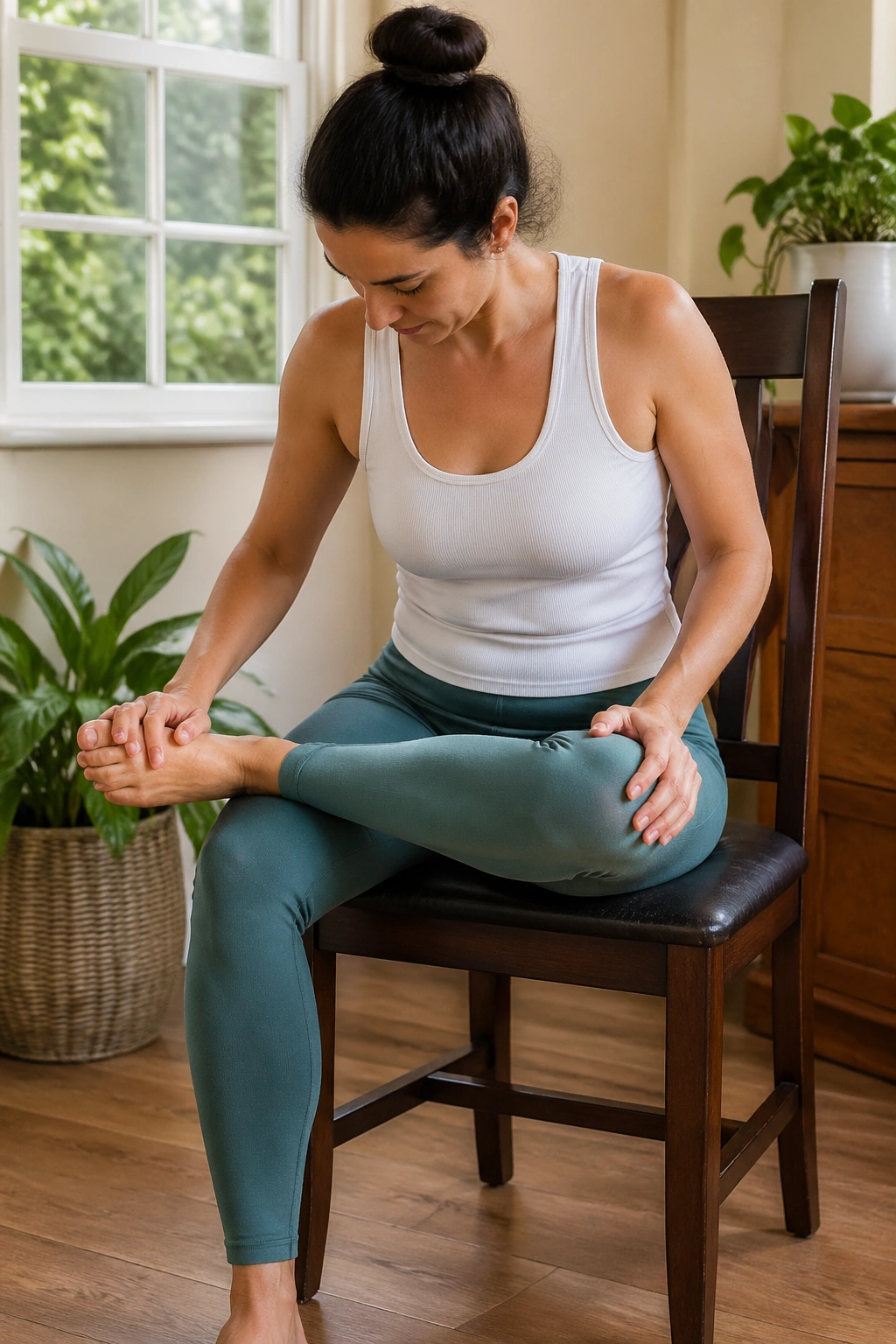
Some days the best seated pose is the one that does not require getting onto the floor at all. Chair figure four is a smart option when the hips are stiff and the rest of the body feels lazy, tired, or plain stubborn. Sit toward the front of a sturdy chair, cross the right ankle over the left thigh, and flex the foot.
Then hinge forward from the hips, keeping the spine long and the chest open as long as you can. If the fold collapses the back, stay upright. That upright version still gives the outer hip useful work. If the knee floats way up, lower the foot position or use a second chair nearby for support.
- Hold for 5 to 8 breaths on each side.
- Keep the standing foot flat and grounded.
- Flex the crossed foot to protect the knee.
- Stop if the front of the hip gives a sharp pinch.
This is the version I reach for when I want the stretch without the fuss. It’s practical. It’s calm. And on a stiff hip day, that combination usually beats ambition.
A good hip practice does not need to feel dramatic to work. It needs to be clear, supported, and honest about where the body is today.
