



Your spine does not want to live in one shape all day. It wants to bend forward, arch back, twist, and lean to the side, then come home again.
That’s why yoga poses for a healthier more flexible spine work best when they feel like movement, not punishment. A stiff back usually isn’t asking for one heroic stretch. It’s asking for variety, breath, and a little patience. The good news is that you don’t need extreme backbends or a contortionist’s hamstrings to give it what it needs.
A smart spine practice pays attention to the whole stack: neck, upper back, ribs, low back, hips. Those pieces are linked more tightly than most people realize. If your upper back never rotates, your low back often ends up doing too much. If your hips stay locked, the spine tends to keep the bill.
Start with the gentle stuff. Build from there. And if a pose gives you sharp pain, numbness, or that pinching feeling that makes you go still for the wrong reason, skip it and choose something calmer.
1. Cat-Cow to Wake Up the Whole Spine
Cat-Cow is the pose I’d put first on almost any spine sequence. It is simple, yes, but simple is not the same as small. This one moves the spine through flexion and extension while syncing breath to motion, and that combination wakes up a back faster than a random hard stretch ever will.
Why It Works
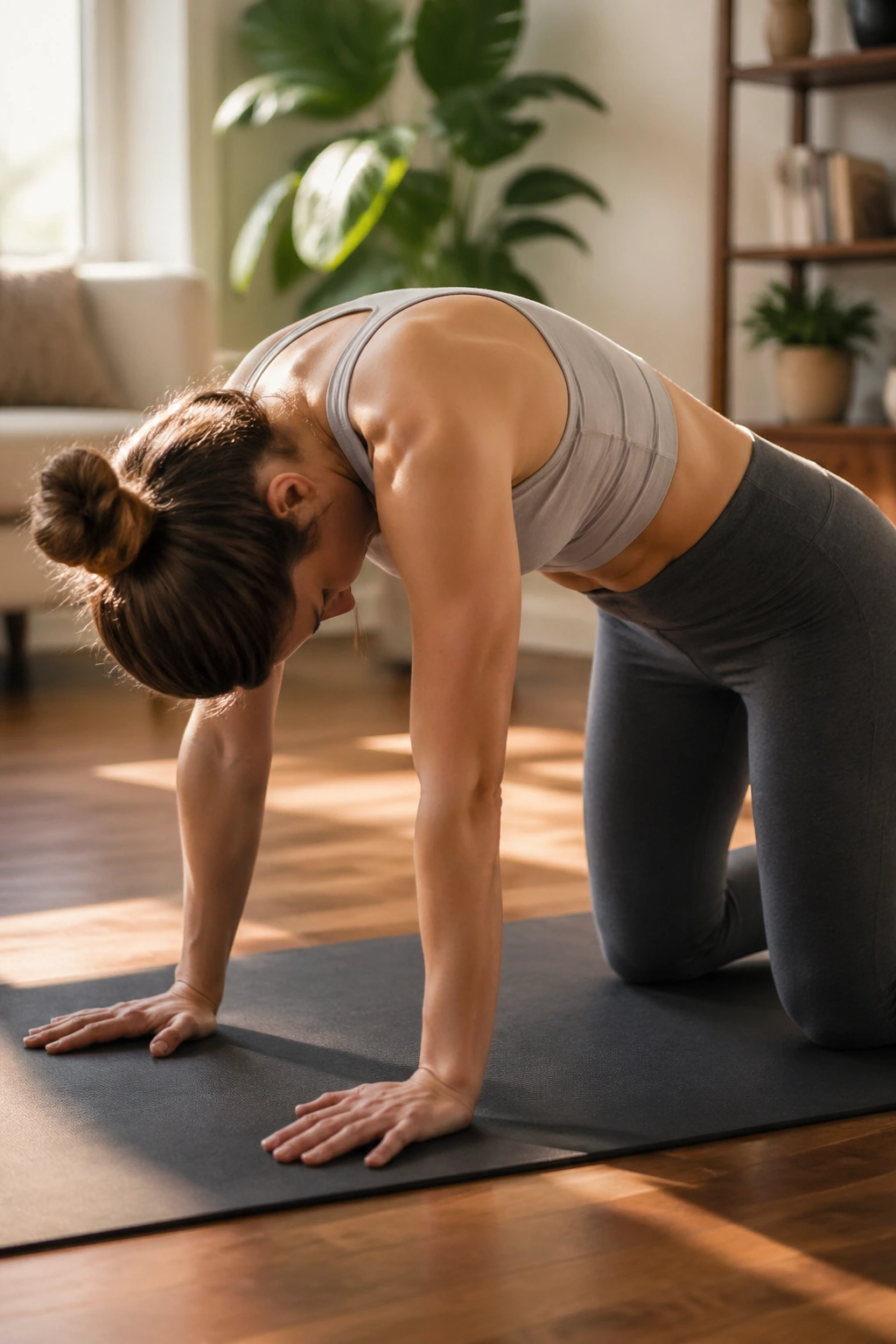
On hands and knees, the whole spine can move without much drama. You round through Cat, then arch through Cow, and the motion spreads from tailbone to neck if you do it slowly enough. That matters. A lot of people only move one end of the spine and call it “back work.”
- Stack wrists under shoulders and knees under hips.
- Inhale as the chest broadens and the tailbone lifts.
- Exhale as the navel draws in and the spine rounds.
- Move for 6 to 8 slow rounds, not speed laps.
Keep the motion smooth. No yanking. No slamming into end range. If your wrists are sensitive, make small fists or come down to forearms for a few rounds. The goal is to make the spine feel awake, not cooked.
2. Thread the Needle for Thoracic Rotation
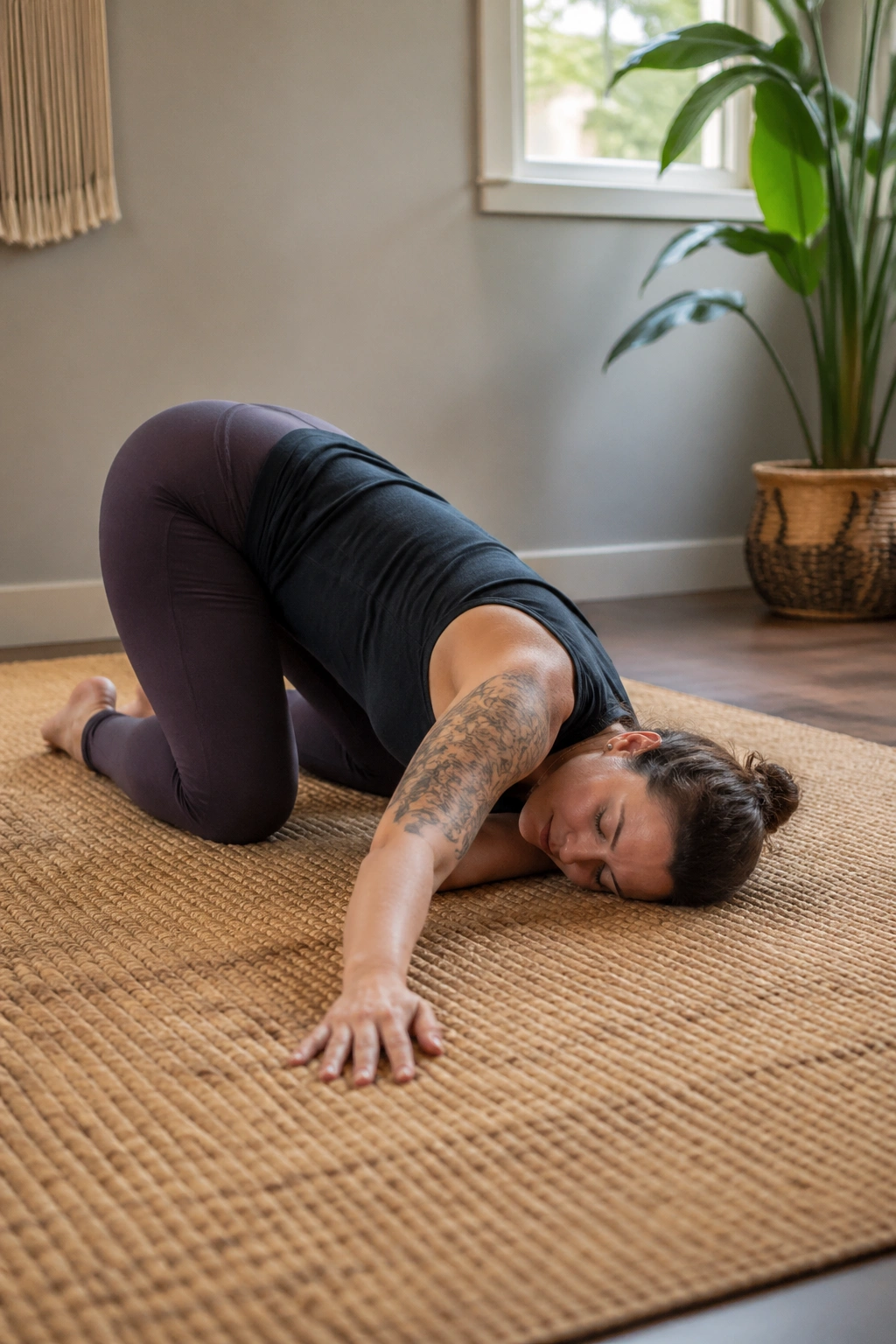
A stiff upper back can make everything else feel older than it is. Thread the Needle gives the thoracic spine a clean rotation without asking the lumbar spine to overdo the job.
What Makes It Different
This pose looks tiny. It isn’t. When you slide one arm under the other and rest the shoulder down, you get a spiral through the ribs that most daily movement never gives you. That’s gold for desk-heavy bodies and anyone who feels stuck between the shoulder blades.
If your hips stay squared above the knees, the twist has to come from the mid-back instead of the pelvis cheating. That is the whole point. Keep the supporting hand active, press lightly into the floor, and let the top shoulder soften.
A little hold goes a long way here. Three to five breaths per side is plenty at first. If the neck feels cranked, rest the head on a folded blanket or a block. A twist should feel open through the ribs, not jammed in the neck.
3. Sphinx Pose for Gentle Back Extension
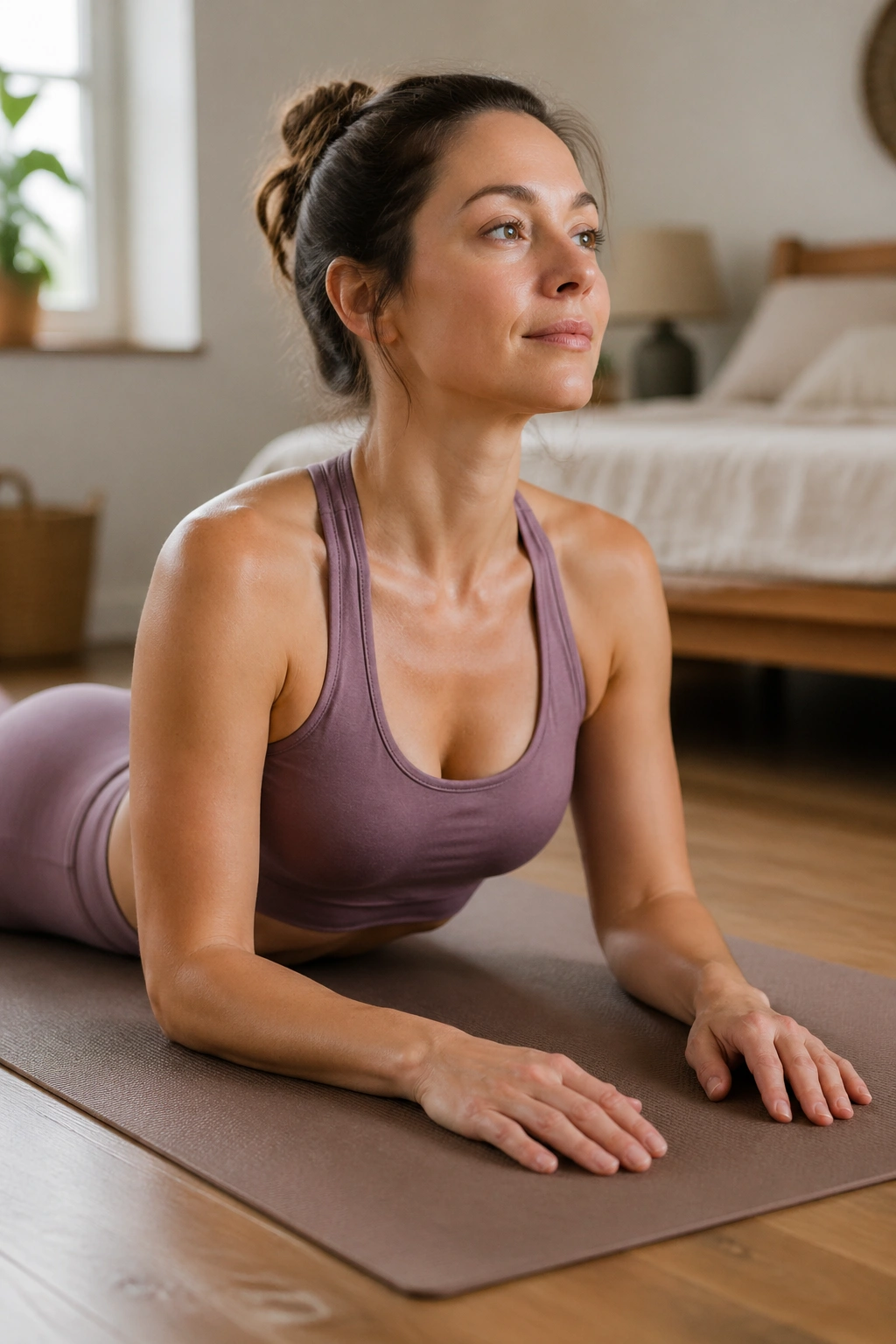
Sphinx is one of those poses people ignore because it looks almost too easy. Then they try it properly and notice their low back finally gets extension without feeling bullied by the floor.
The forearms take some of the load off the spine, which makes Sphinx a good choice when Cobra feels like too much. Your chest lifts a little, your pubic bone stays heavy, and the front body gets a long, mild stretch. That setup matters more than how high you can lift.
Here’s the part most people skip: press the forearms down and reach the heart forward, not up. Up tends to compress. Forward creates length. The back of the neck stays long, and the shoulders creep away from the ears.
A few slow breaths here can change the whole tone of a practice. If the low back pinches, move the elbows farther forward or come out sooner. Gentle extension should feel steady, not sharp.
4. Cobra Pose for an Active Lift Through the Chest
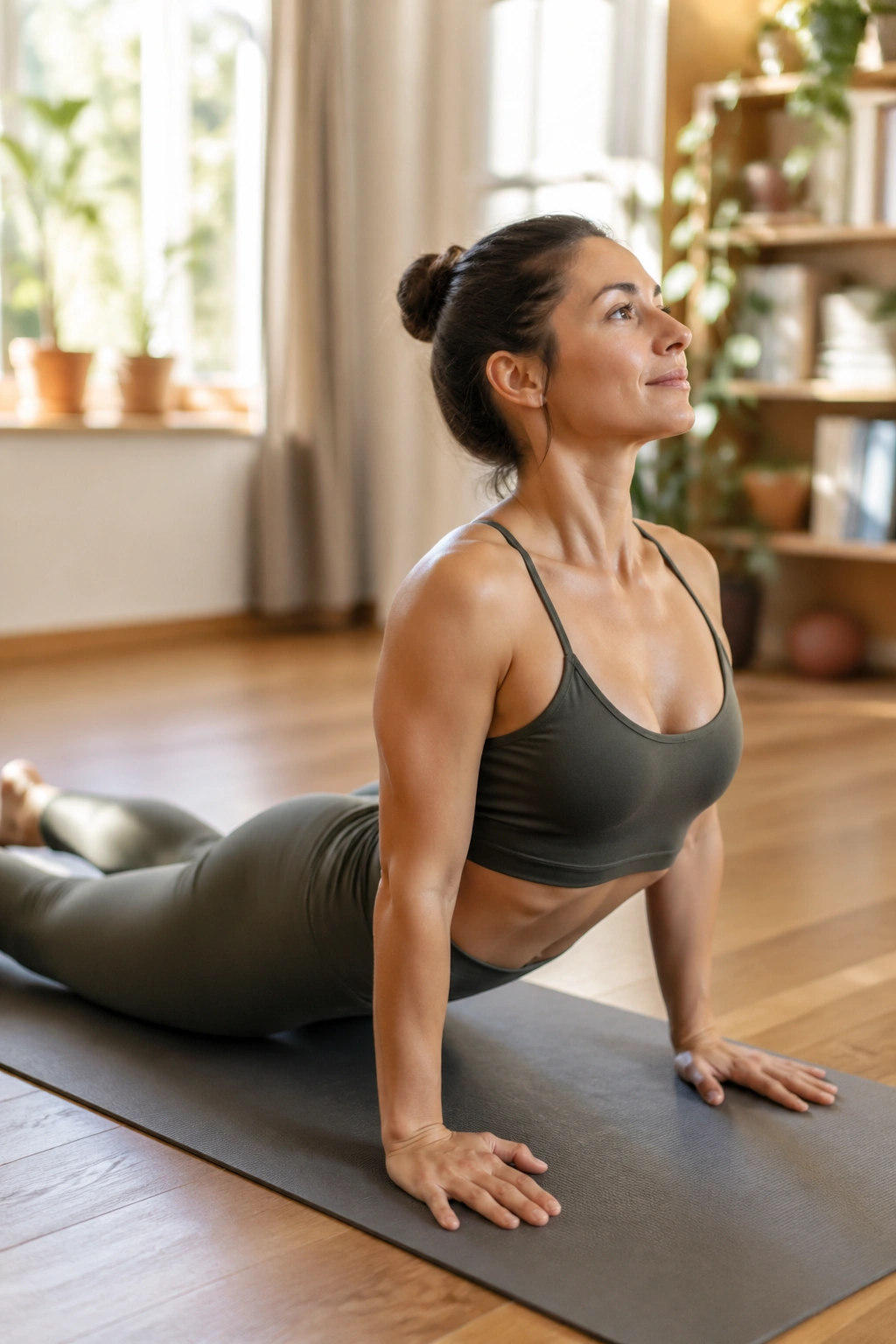
Cobra is the more active cousin of Sphinx. It asks the back muscles to work, not just hang out while gravity does the job. That makes it a useful pose when you want a stronger spine, not only a looser one.
The trick is to keep the lift modest. A tiny Cobra done well beats a huge Cobra done with clenched glutes and a jammed lower back. Press the tops of the feet into the mat, draw the elbows in close, and lift the chest by lengthening the spine first. Height comes after length.
I like Cobra when a practice feels flat. It brings energy up the front of the body and asks the upper back to participate. If Sphinx is the easy warm-up, Cobra is the wake-up call.
Choose a low version if you’re not sure. Lift for a breath or two, lower down, rest, and repeat. If the low back does all the work, the pose is too big.
5. Child’s Pose with Side Reach for the Back Body
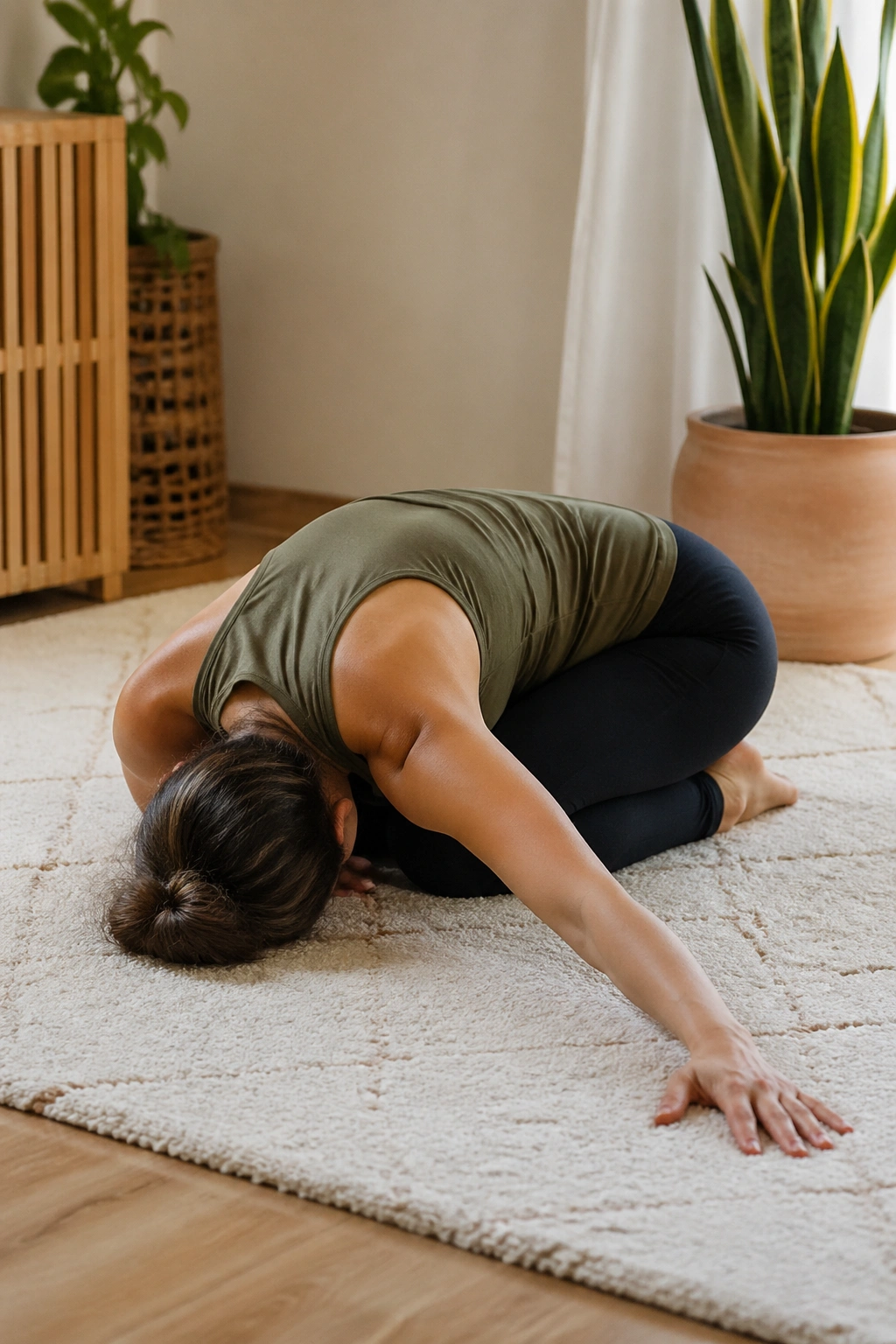
Why add a side reach to Child’s Pose? Because the spine does not move in a straight line all day, and neither should your stretch.
How to Use It
Start in a wide-knee Child’s Pose and walk both hands to the right. You’ll feel the left side body lengthen from hip to fingertips, which often gives the ribs and lower back a better stretch than a basic center Child’s Pose. Then switch sides.
That side opening matters for people who sit with one hip dropped or one shoulder higher than the other. The shape helps unwind the lats, the muscles along the side of the back that can tug on spinal motion more than they get credit for.
Keep the breath slow and wide. Try 4 to 6 breaths on each side, letting the exhale soften the ribs toward the floor. If the knees are cranky, place a blanket behind them or bring them closer together. The stretch should run along the side body, not dump into the shoulders.
6. Seated Forward Fold with a Long Spine
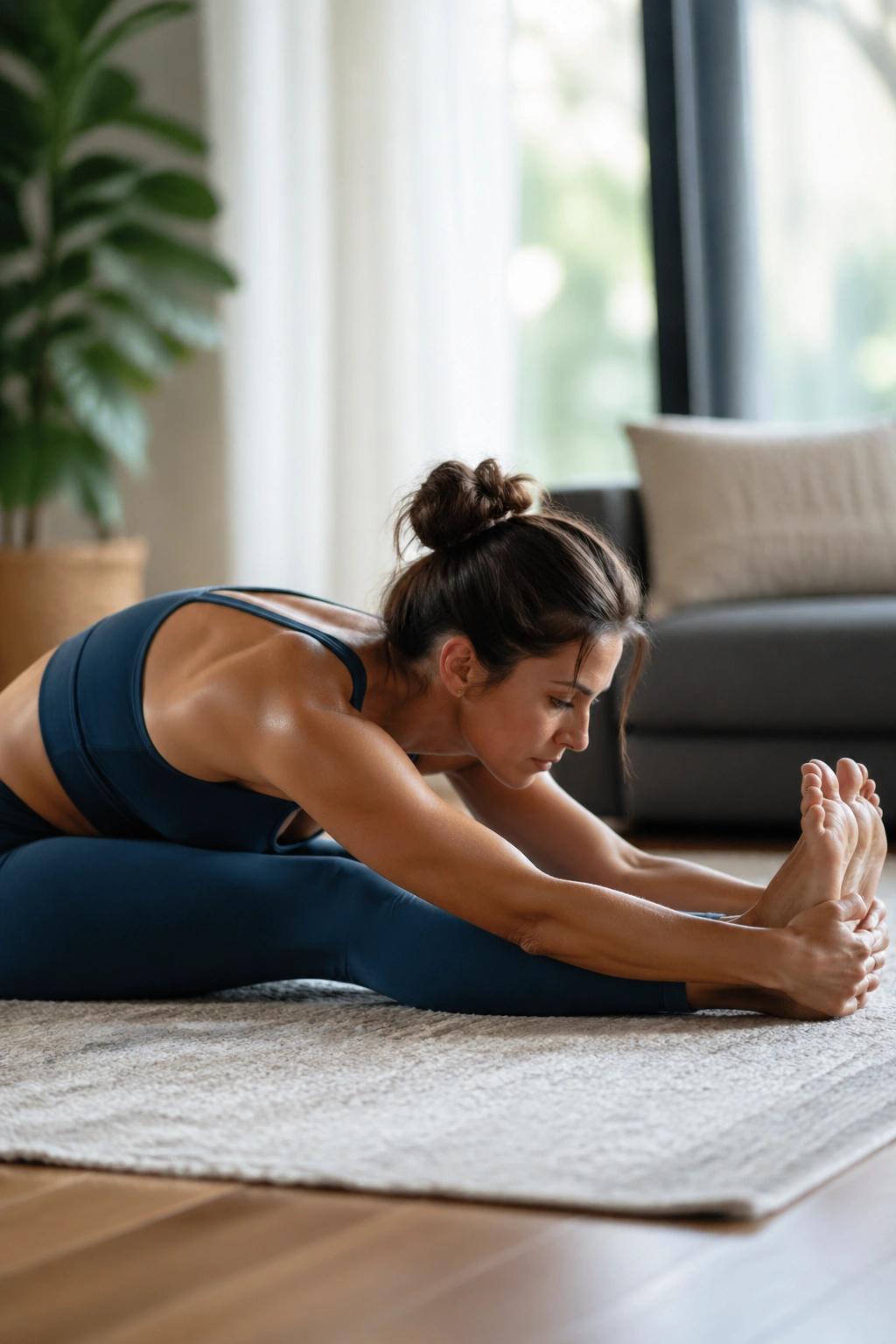
Seated Forward Fold is where a lot of people accidentally turn a good spine pose into a hamstring wrestling match. That is a shame, because the pose can teach a lot about length, hinge, and patience.
Sit on a folded blanket if your pelvis tips backward. That one change often makes the whole posture friendlier. Then bend the knees enough to keep the low back from rounding like a cat on a cold roof. Reach forward from the hips before you fold deeper.
What to Watch For
- Sit tall before reaching.
- Keep the collarbones broad.
- Soften the knees if the back rounds hard.
- Fold from the hips, not the waist.
If you only feel this behind the knees, back off and sit higher. If you feel the front body opening and the breath staying smooth, you’re in the right place. The spine likes length before depth.
7. Standing Forward Fold with Soft Knees
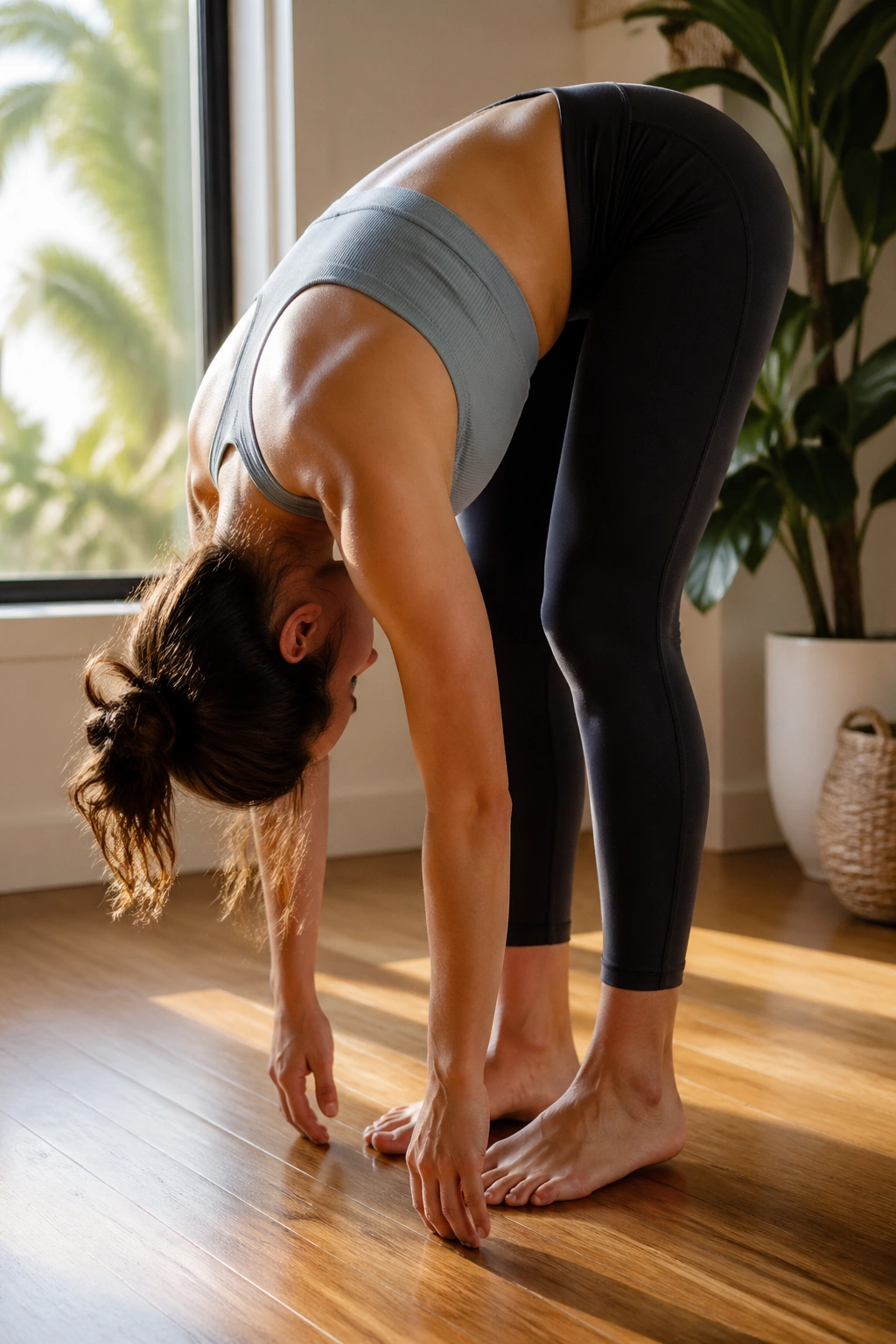
Standing Forward Fold feels different from the seated version because the body gets traction from gravity and the feet stay grounded. That can be a relief after a lot of sitting.
Keep the knees soft. Soft means soft, not locked into a dramatic bend and not paper-thin straight. Let the torso hang, let the head go heavy, and sway a little if the low back wants to soften. A tiny bend in the knees often frees the spine more than trying to force straight legs ever will.
This is a good place to notice how the body cheats. The hips may want to shift backward, the shoulders may shrug, and the neck may stay tense even while the rest of you folds. Slow down enough to catch those habits.
Come up with care. Roll up one vertebra at a time or bring hands to shins and rise with a long spine first. If you stand up too fast, the head may feel floaty for a second.
8. Downward-Facing Dog to Lengthen the Back Line
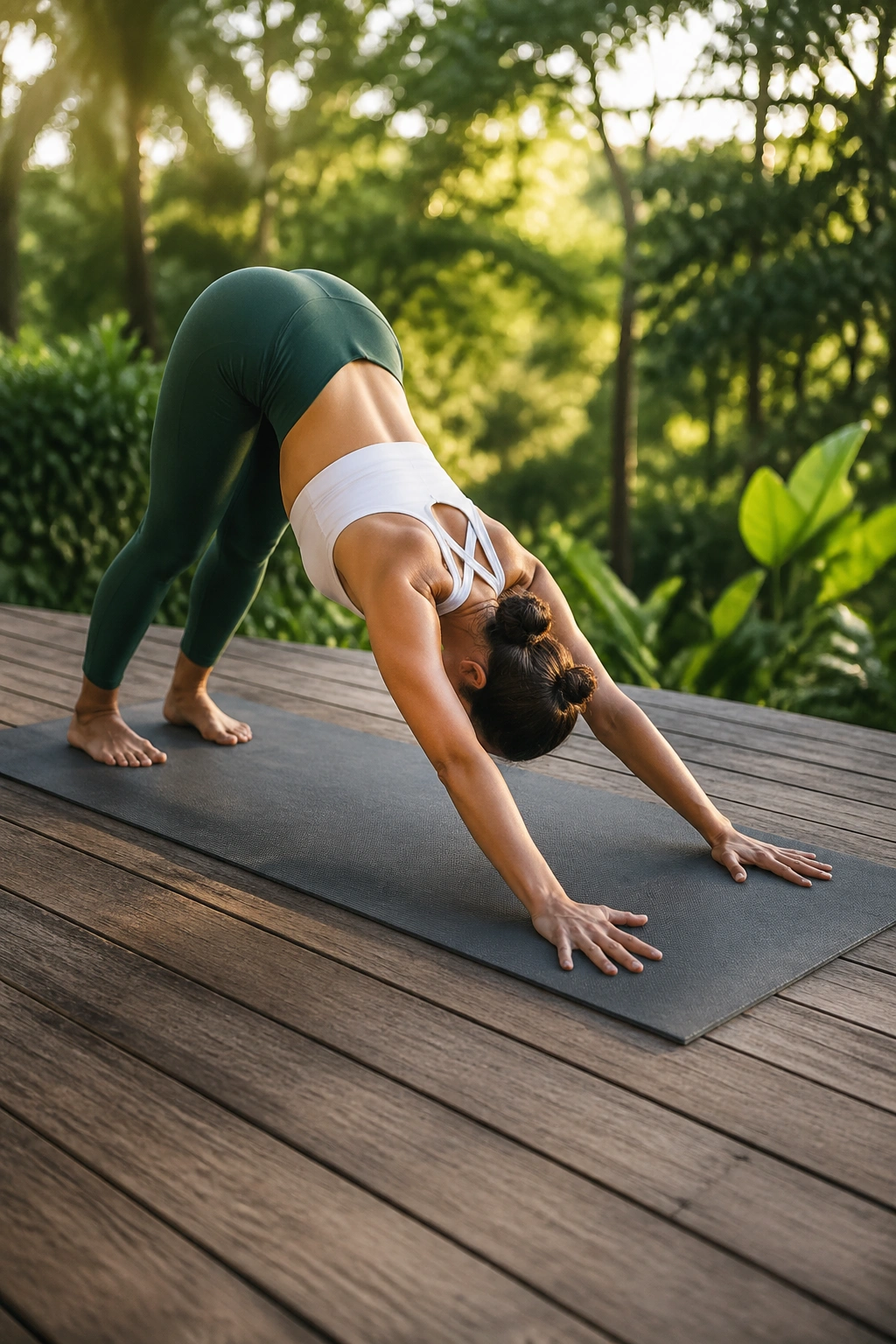
Downward-Facing Dog is half stretch, half reset. Done well, it lengthens the hamstrings, calves, shoulders, and the long muscles that run beside the spine, which makes the whole back line feel more organized.
The pose works best when you stop trying to make it look like a triangle. Bend the knees if the heels don’t touch. That gives the pelvis room to tip and lets the spine lengthen more cleanly. Press the mat away, lift the hips high, and keep the ribs from flaring like a little tent.
Pedaling the feet helps, but keep the pace slow. One heel lowers, then the other. Feel the side-to-side change in the hips and lower back. That small rhythm can loosen the spine more than a static hold.
Use Down Dog between backbends or after a round of twisting. It clears the slate. A bent-knee Down Dog is not a lesser version; it is often the smarter one.
9. Low Lunge with a Side Bend and Crescent Reach
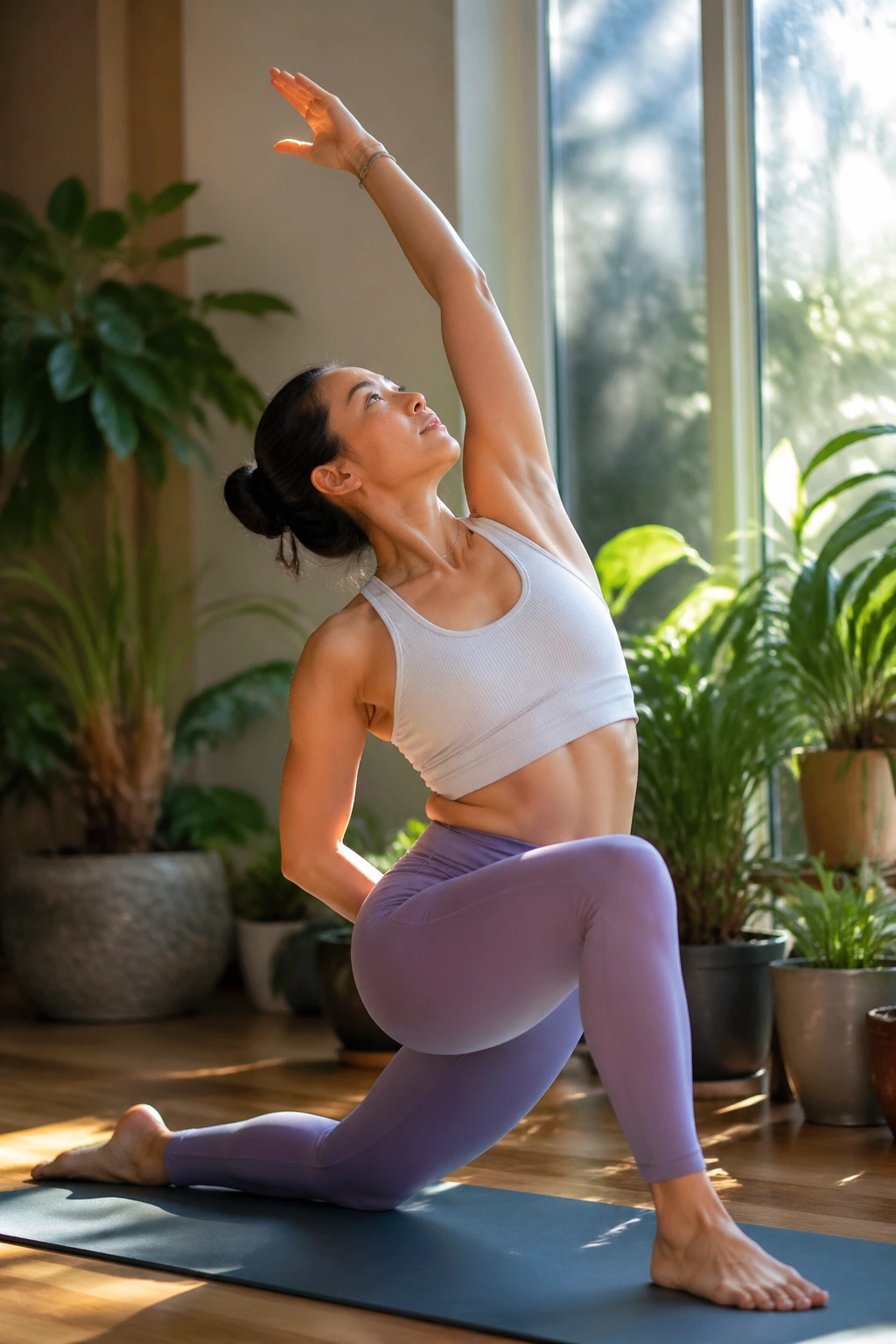
Can a lunge help the spine? Absolutely, because tight hip flexors pull on the pelvis and can make the low back work overtime.
How to Get More Out of It
Step the right foot forward into a low lunge, with the back knee down if you want more stability. Once the hips settle, reach the same-side arm up and arc gently toward the front leg. That side bend opens the space between the ribs and the pelvis, which is where a lot of stiffness hides.
Keep the front knee over the ankle and the back leg active. If the low back feels pinchy, tuck the tailbone slightly and shorten the arc. There is no prize for making the reach enormous.
Try 3 to 5 breaths, then switch sides. If balance feels shaky, keep both hands on blocks until the pelvis settles. The lunge is doing two jobs at once: opening the front hip and freeing the side of the spine.
10. Crescent Twist to Train Rotation Without Wobble
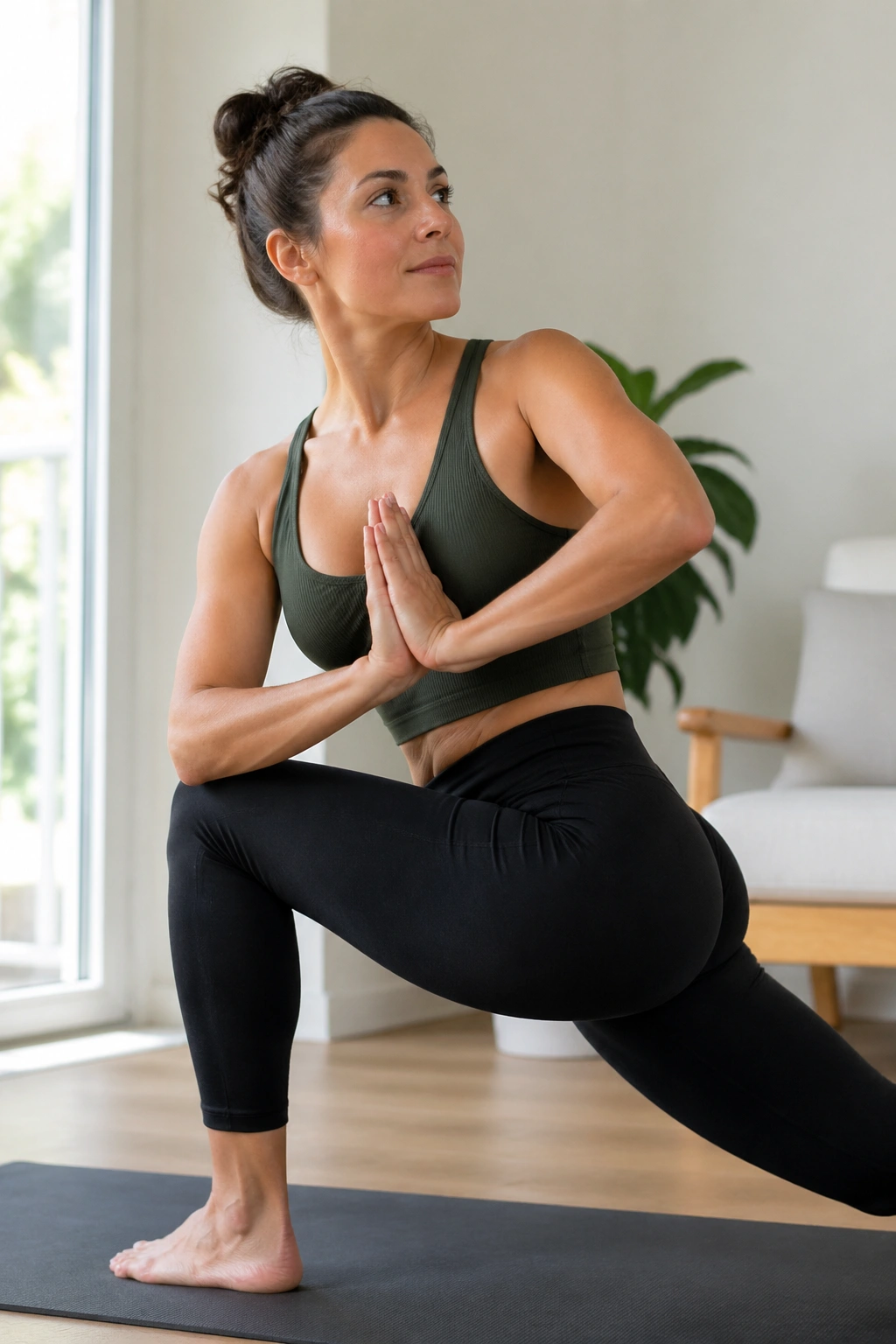
A twist while in lunge stance tells you a lot about your spinal control. The legs stay rooted, the pelvis stays steadier, and the rib cage rotates around the vertical axis instead of letting the whole body flop sideways.
This is where people often overtwist from the low back. Don’t. Lift through the crown of the head first, then rotate from the ribs. If the hands are at prayer, press them evenly so the chest turns cleanly rather than collapsing into the shoulder that feels strongest.
A wall helps here if balance is iffy. So does a block under the back hand. The point is to keep the twist spacious and exact, not dramatic.
If you breathe well in this pose, you’ll often feel the belly and the low back let go on the exhale. Twisting should feel like a spiral, not a wrench.
11. Bridge Pose to Open the Front of the Spine
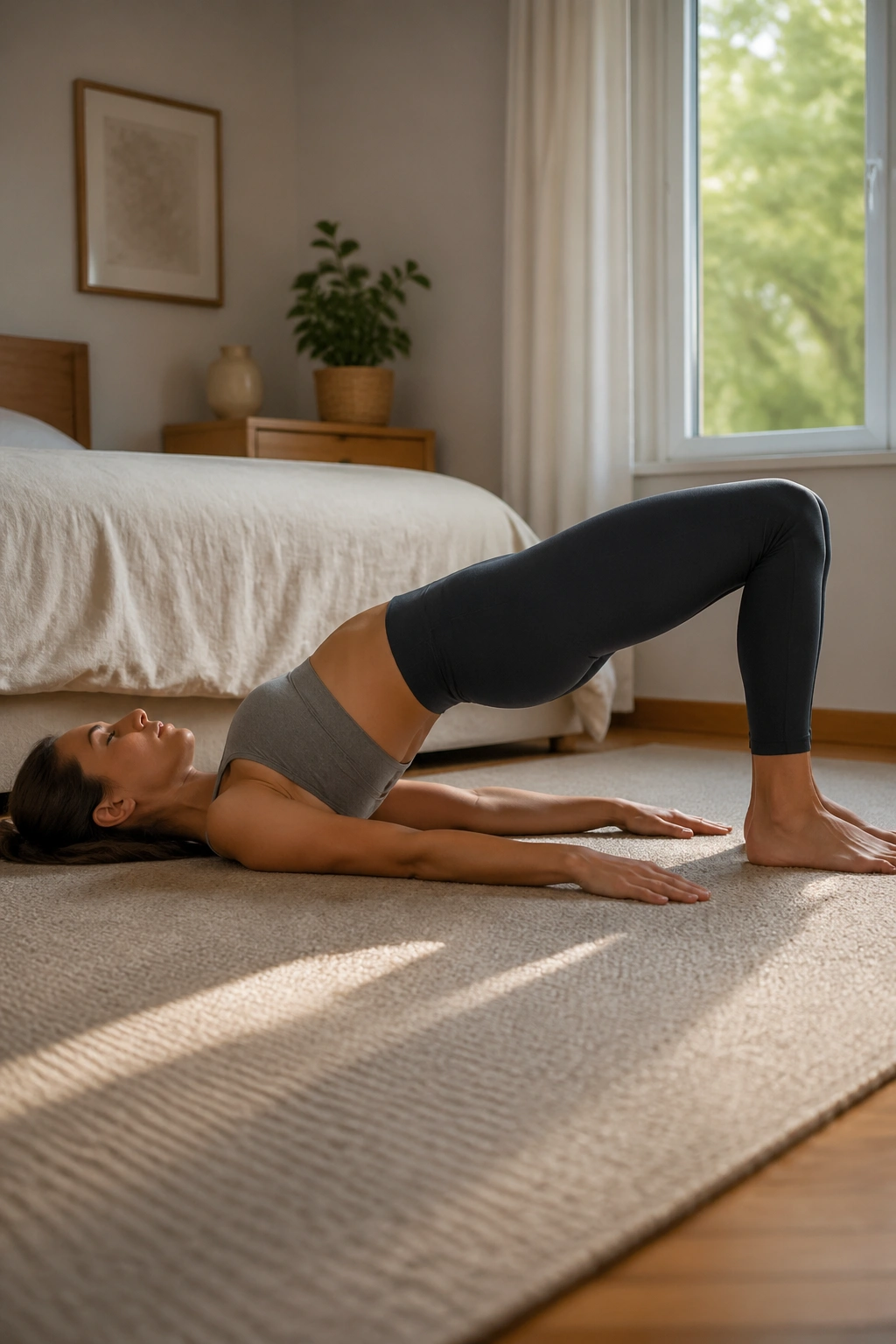
Bridge Pose does something a lot of back pain sufferers need: it strengthens the backside while gently opening the front line. That combination matters. A spine that only stretches without support usually goes right back to being stiff.
Lie on your back, feet hip-width apart, and press the feet down before lifting the hips. The glutes should wake up, but not clamp like a fist. Think lift and length, not smash and squeeze. Keep the knees tracking forward, not splaying out.
A supported version is worth using. Slide a block under the sacrum and rest there for 5 to 10 breaths if your lower back likes that shape better. It gives the front of the body an easy opening and lets the spine decompress without effort.
Bridge is also a good reminder that flexibility without strength is a half-finished story. Your spine wants muscles that can both open and hold.
12. Supine Twist for Easy Rotation
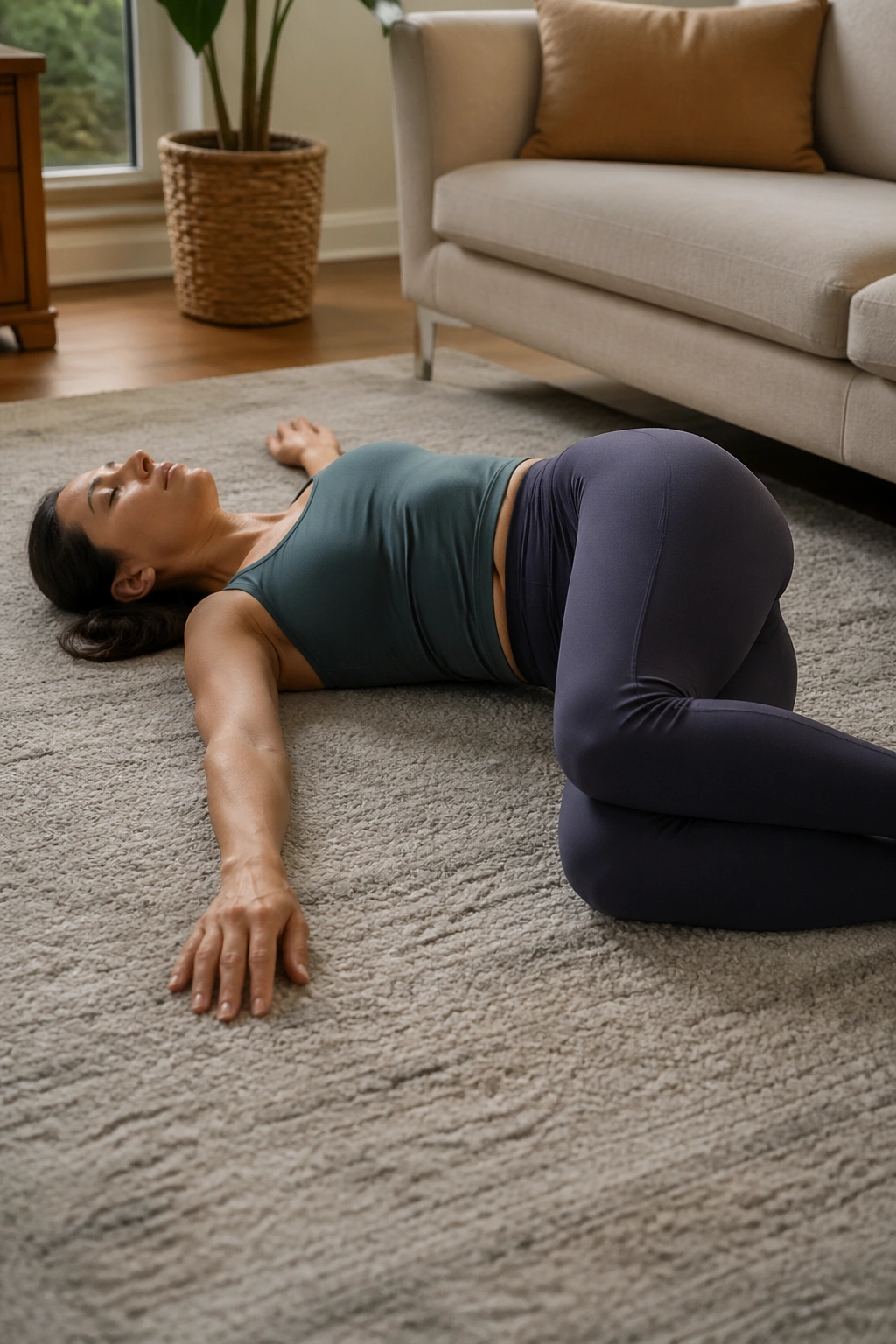
A good reclining twist feels like somebody turned the volume down in the low back. Gravity helps. The floor helps. You do not have to muscle your way into anything.
Bring the knees toward the chest, then let them fall to one side while the shoulders stay heavy. If the top shoulder floats, place a folded blanket under the knee or arm so the body can settle more evenly. The breath usually slows here whether you plan for it or not.
I like this pose near the end of a practice because it gives the spine a quiet, organized rotation after the active shapes. There is no balancing, no load, no need to hold yourself together. That simplicity is part of the appeal.
Stay for 6 to 10 breaths, especially if the back feels tired rather than tight. A twist that feels restful is often more useful than one that feels deep.
13. Locust Pose to Build Back Strength
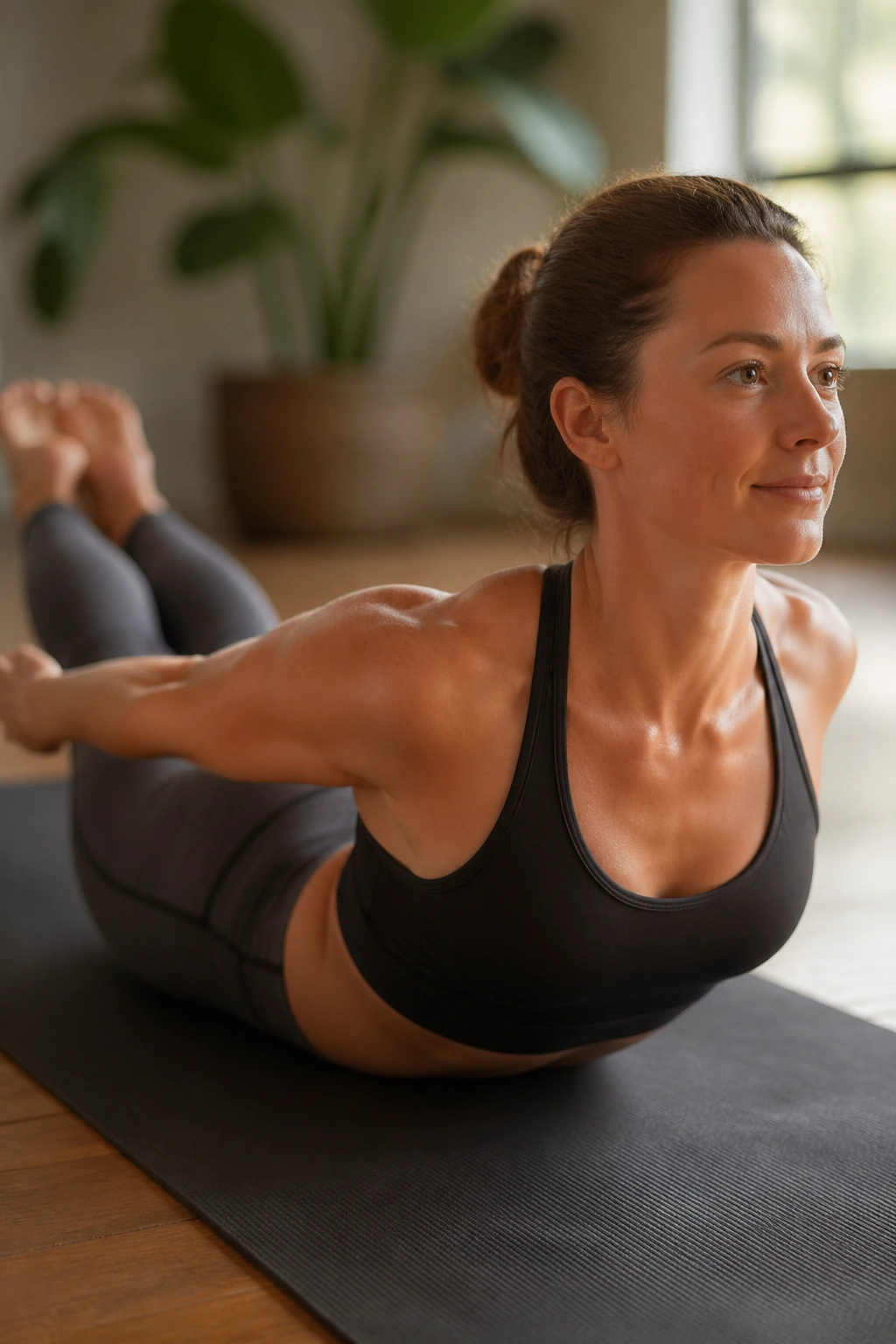
Locust is the pose that reminds people a flexible spine still needs muscle behind it. Passive stretching helps, but the muscles along the back also need training so the spine can move with control.
Lie face down, lengthen the legs, and lift the chest, arms, or both a little off the floor. Keep the neck long. The chin should not shoot forward like it’s trying to prove something. Lift from the upper back and the glutes together, then lower with control.
What to Feel
- The back of the thighs engage lightly.
- The low ribs lift without crunching.
- The shoulder blades slide down.
- The neck stays in line with the spine.
If full Locust feels like too much, lift one arm and the opposite leg instead. That version is less dramatic, and honestly, it teaches more. A strong back is often a calmer back.
14. Puppy Pose for a Chest-Opening Spine Stretch
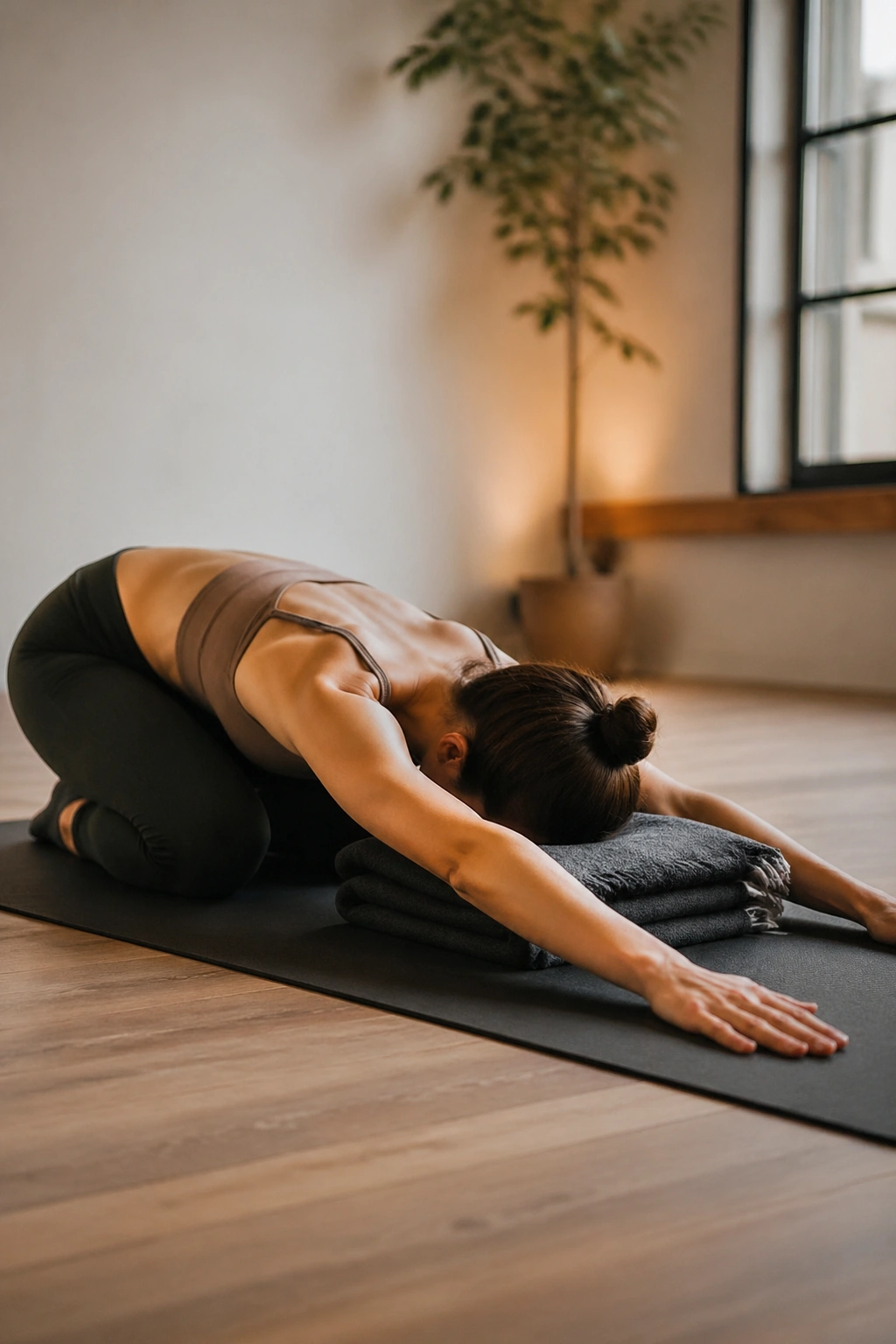
Puppy Pose is one of those stretches that feels both sweet and oddly intense. The hips stay over the knees, the chest reaches toward the mat, and the upper spine gets a long, honest opening.
It’s a cousin of Child’s Pose, but the angle is different enough to matter. In Puppy Pose, the thoracic spine gets more extension and the shoulders get asked to soften without collapsing. That can feel amazing after a day of hunching over a screen.
How to Keep It Comfortable
If the shoulders complain, bring the hands a little closer to the knees. If the neck feels cranky, rest the forehead or chin on a folded blanket. A block under the chest can also help if the floor is too far away.
This pose is not about dropping as low as possible. It’s about finding the point where the ribs can breathe and the spine can lengthen without strain. If the front of the shoulders pinch, back out half an inch.
15. Half Lord of the Fishes for a Deeper Seated Twist
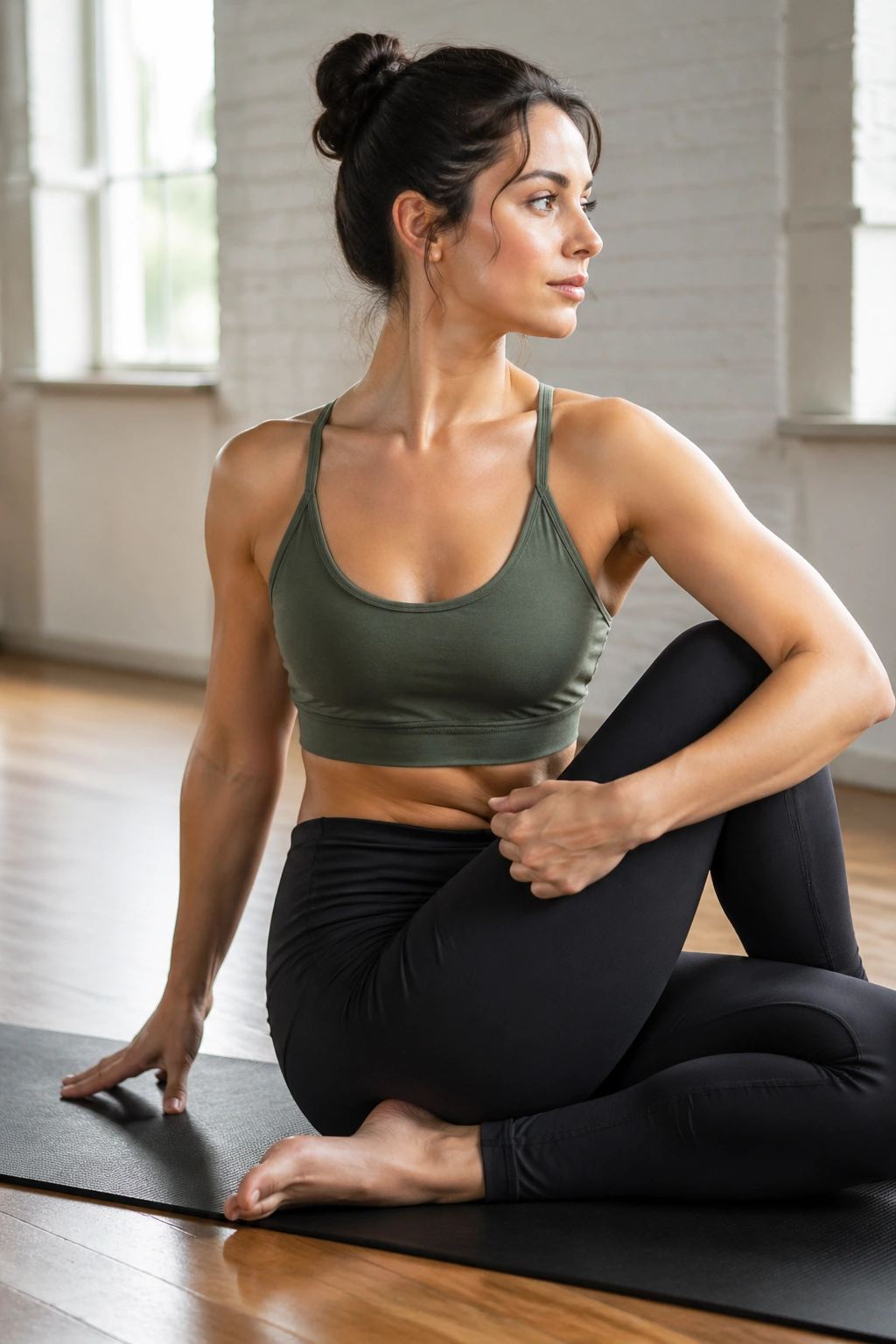
Half Lord of the Fishes has a more structured feel than a reclining twist. The seated position gives the twist a clear axis, which is useful when you want to feel the spine rotate instead of just flopping sideways.
Sit tall first. That part matters more than the twist itself. Cross one leg over the other, anchor the sit bones, and rotate from the ribs. If the pelvis tips and the back rounds, sit on a folded blanket until you can stack the spine better.
This pose can feel wonderful after all the forward folds and backbends. It gathers everything back into the middle. If you want the twist to stay in the upper back instead of dumping into the low back, keep the crown of the head reaching up as you turn.
A few steady breaths are enough. Seated twists reward precision more than force.
16. Triangle Pose with a Long Side Body
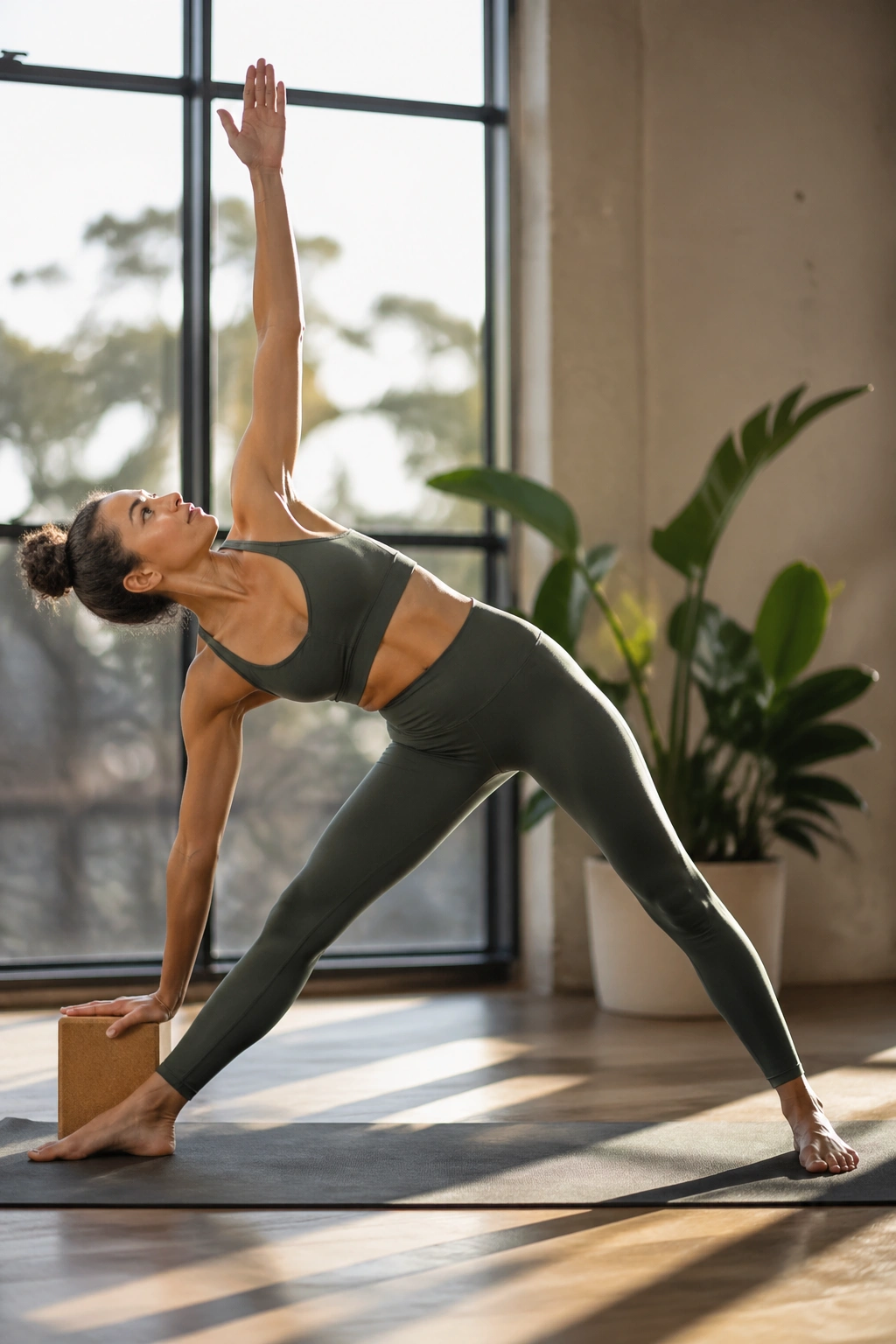
Triangle is a side-bending pose, but only if you keep the spine long on the way into it. If you collapse and hang on the lower hand, the stretch goes dull fast.
Reach forward first, then tip the torso while keeping both sides of the waist long. The top arm stacks over the shoulder, and the ribs stay open. A block under the lower hand is not cheating. It’s often the thing that keeps the pose clean enough to help the spine instead of folding it into a slump.
Triangle also gives the back of the legs a say in the matter. Tight hamstrings often tug on the pelvis, which is why this pose can feel like a back stretch even though it starts in the hips and legs.
Try both sides and compare them. One side usually feels smoother. That difference can tell you more than a mirror ever will.
17. Camel Pose for a Stronger Backbend
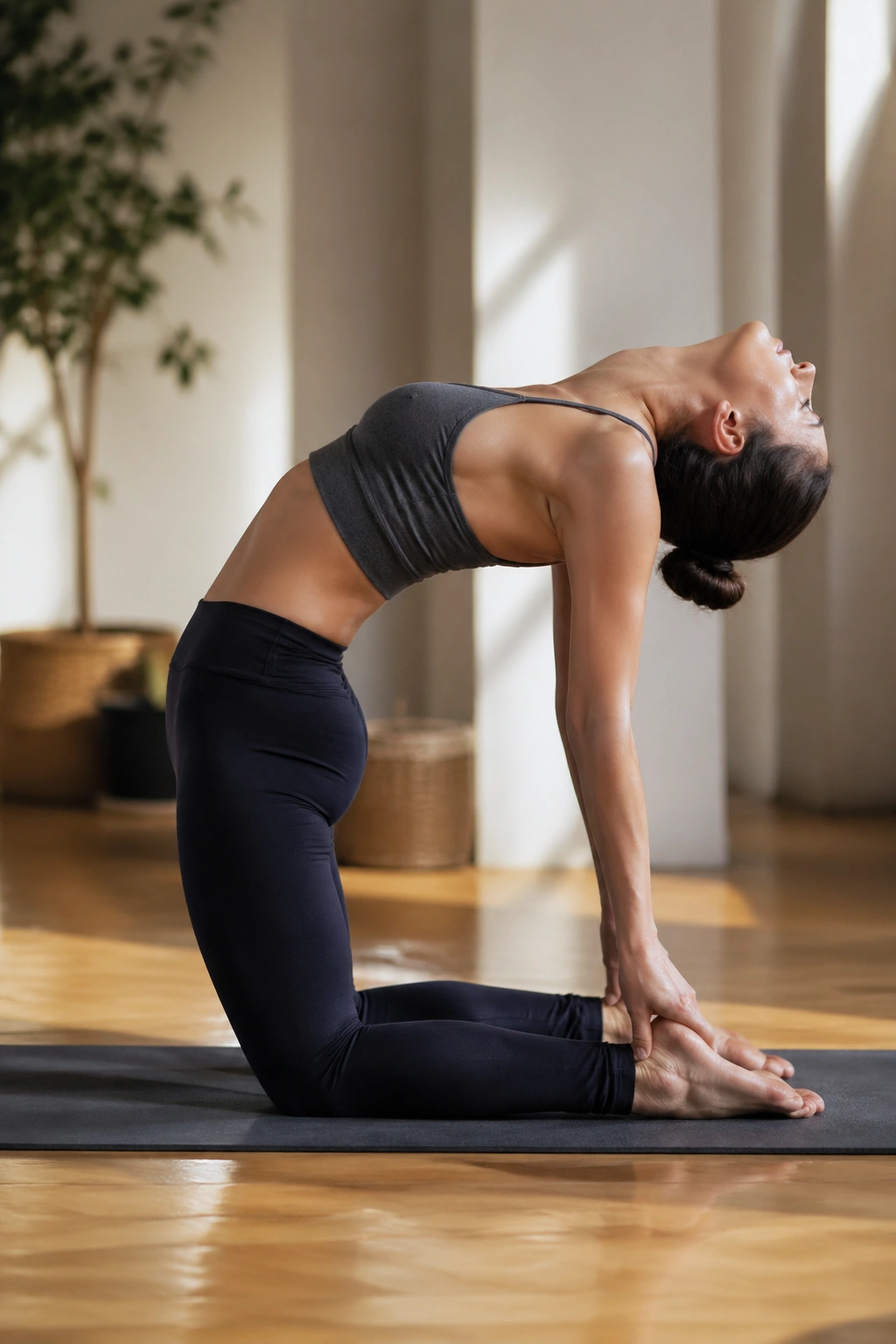
Camel is not the pose to rush into. It’s a strong backbend, and strong backbends demand warm muscles, steady breath, and a spine that has already had gentler opening work.
Kneel with the thighs vertical, lift the chest, and place the hands on the sacrum or the heels if that feels steady. The most common mistake is throwing the head back and dumping the work into the low back. Don’t do that. Keep the sternum lifting first, then let the upper back participate.
Safety Notes That Actually Matter
- Warm up with Cat-Cow, Sphinx, or Bridge first.
- Keep the thighs pressing forward.
- Stop if there is pinching in the low back.
- Use blocks by the heels if reaching feels too far.
Camel should feel expansive through the front body and firm through the legs. If it feels like your spine is getting folded in half, come out. A backbend is only useful when it stays roomy.
18. Supported Fish Pose for Upper-Back Opening
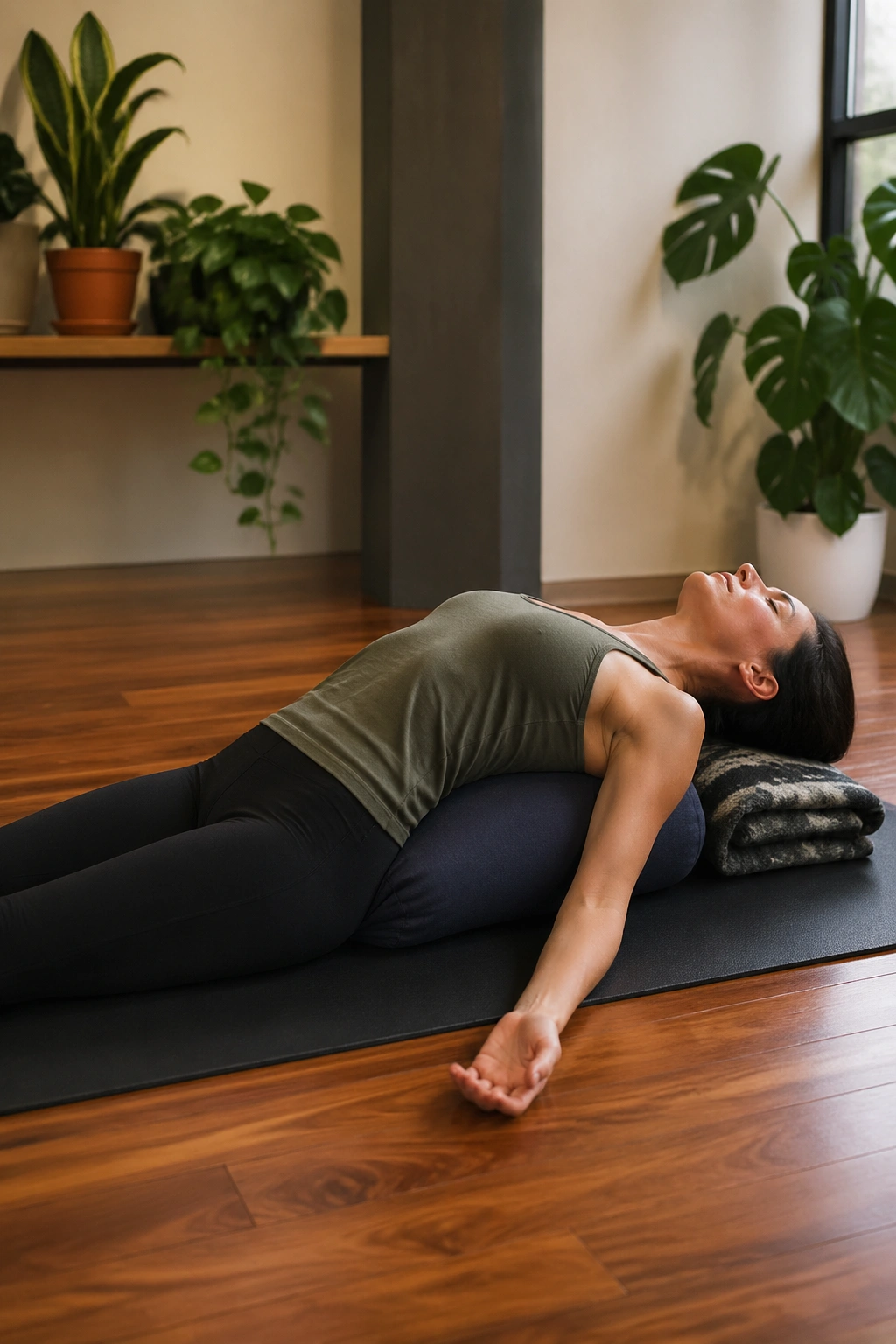
Supported Fish is one of the quiet heroes of a spine practice. It looks restful, and it is, but it also opens the chest and upper back in a way that can feel deeper than a more forceful shape because the body can release into the support.
Place a bolster or a tightly rolled blanket lengthwise under the upper back, from the middle of the shoulder blades toward the base of the ribs. Let the head rest on a folded blanket if needed. Arms can open wide or rest by the sides. The chest softens, the front ribs broaden, and the spine gets a passive lift.
This is a lovely ending pose after a sequence with twists and extensions. Gravity does the work. You do not have to chase anything. If the low back feels too arched, bend the knees or raise the support a little.
Stay for a minute or two and let the breath go easy. It is hard to beat a pose that feels this calm and still helps the spine open.
Final Thoughts
A healthier spine usually comes from a mix of movement, not one perfect pose repeated forever. Flexion, extension, rotation, and side-bending all matter. Leave one out long enough and the body starts to complain in its own stubborn way.
If you only have a few minutes, choose a small trio and move through it with care: Cat-Cow, one opening pose, one twist, then a resting shape. That is enough to change how your back feels after sitting, driving, lifting, or sleeping badly on one side.
The real trick is not depth. It’s consistency, breath, and a willingness to stay honest about what the body is actually ready for. Your spine likes attention more than drama.
