



Progress in the gym usually looks boring from the outside. A few more reps. A cleaner last set. Five extra pounds on the bar after three honest weeks. That’s the real engine behind workout routines for steady weekly progress, not random punishment.
If your plan changes every Monday, you never get a clean read on what’s working. One week it’s heavy lifting, the next it’s a bootcamp circuit, then a half-hearted jog and a rack of machines you barely remember using. That kind of chaos feels productive for about ten minutes. Then the numbers stop moving.
The better approach is plain, almost stubborn. Repeat the same basic movement patterns, nudge one variable at a time, and keep the work hard enough to matter. A rep that slows down a little is still good. A rep that turns into a grind every set is not. Tiny jumps matter more than people want to admit.
The routines below cover the whole spread: barbell work, dumbbells, bodyweight, machines, cardio, recovery days, and the kind of short sessions that still count when life is crowded. Some are built for beginners. Some are for people who have been lifting long enough to get picky about rest times and rep quality. All of them are meant to help you keep moving forward week after week.
1. Three-Day Full-Body Barbell Routine
Big lifts make progress easy to track. That’s the charm of a three-day full-body plan: you can see the numbers change, and you do not need six different workout days to make it happen.
How to run it
- Day 1: Back squat, bench press, barbell row, plank.
- Day 2: Deadlift, overhead press, split squat, hanging knee raise.
- Day 3: Front squat, incline bench press, Romanian deadlift, pull-up or lat pulldown.
Keep the main lifts in the 3 to 5 rep range for strength, then use one or two accessory moves in the 8 to 12 rep range. Add 2.5 to 5 pounds when you hit all your reps with clean form. If the bar speed turns ugly, hold the load and repeat it next week.
This routine works because the same lifts show up often enough for your body to learn them. That repetition is the whole point. You get stronger without turning each session into a guess.
2. Upper/Lower Split With Top Sets

Do you want steady weekly progress without living in the gym? An upper/lower split is one of the cleanest answers.
The pattern is simple: two upper-body days and two lower-body days. On each main lift, use one top set that feels hard but controlled, then two back-off sets with a slightly lighter load. That gives you a hard stimulus without needing endless volume. Bench press might look like 1 set of 5, then 2 sets of 5 at about 90% of that top set. Squats and deadlifts follow the same idea.
The nice part is the built-in feedback. If the top set rises by a rep or two, you know the whole session is moving in the right direction. If it stalls for two or three weeks, your rest, sleep, or food probably needs attention. Not glamorous. Very useful.
3. Push, Pull, Legs With a Rotating Week

Push/pull/legs gets a bad rap from people who run it badly. Done well, it gives you enough volume to grow while still keeping each session focused.
A practical setup is push, pull, legs, rest, then repeat. Push day handles benching, overhead work, and triceps. Pull day covers rows, pull-ups, and rear delts. Leg day takes care of squats, hinges, calves, and abs. If you only have three days, you can still rotate the sequence across the week and pick up where you left off.
The real win here is recovery. You stop smashing the same muscles on back-to-back days, which means your later sets stay sharper. Progress tends to show up in one of three places: a slightly heavier top set, an extra rep on the second set, or better control on the last accessory movement. That’s enough.
4. Dumbbell-Only Home Routine

Your living room does not need to look like a gym to support real progress. A pair of dumbbells can carry a lot more weight than people give them credit for.
Start with a goblet squat, dumbbell floor press, one-arm row, Romanian deadlift, and standing shoulder press. Then finish with a carry or a dead bug. Keep the work in 3 to 4 sets of 8 to 12 reps. If the dumbbells stop feeling hard, slow the lowering phase to 3 seconds or add a pause at the bottom. That buys you time before you need a heavier pair.
A simple rule that helps
- Lower-body work: Use split squats when the weight feels too light.
- Upper-body pressing: Switch to single-arm presses for a harder set.
- Back work: Hold the top of each row for 1 second.
Small spaces need smart tweaks. This routine gives you both.
5. Bodyweight Strength Ladder

Bodyweight routines get dismissed because people think they’re too easy. That’s usually true for the first two weeks. Then the reps stack up and the set starts talking back.
Run a ladder like this: 5 push-ups, 10 squats, 5 rows or inverted rows, 20-second plank. Repeat the ladder 3 to 6 times depending on your level. When the first round feels smooth, add one rung next week or slow the tempo on the push-ups and split squats.
The trick is progression through leverage, not just brute force. Move from incline push-ups to floor push-ups to feet-elevated push-ups. Swap air squats for split squats, then Bulgarian split squats. Once the movement gets harder without adding equipment, you’ve got a real training tool.
6. Kettlebell Density Session

Kettlebells reward honesty. If your hips and grip are weak, they tell you fast. If your hinge is solid, they feel like a clean, compact way to train the whole body.
Use a 20-minute density block: swings, cleans, front squats, presses, and carries. Set a timer, then cycle through 5 swings, 5 cleans per side, 5 squats, 5 presses per side, and a 20- to 30-second carry. Rest only as needed to keep form tidy. The goal is not speed for its own sake. It’s more work in the same amount of time.
A week later, you can progress by adding one round, trimming rest by 10 seconds, or using a slightly heavier bell. That’s simple, measurable, and hard to fake.
7. Strength First, Cardio After

Weights first. A little engine work after. That order keeps the quality of your lifting higher and still leaves room for conditioning.
The structure
- Warm up for 5 to 8 minutes with easy movement.
- Do your main lift for 3 to 5 hard sets.
- Add two accessories for 2 to 3 sets each.
- Finish with 8 to 15 minutes on a bike, rower, or incline walk.
The cardio piece should feel like work, not punishment. Think brisk breathing, not all-out collapse. When you keep the finishers controlled, you recover better and can train again sooner. That’s the part people miss when they turn every workout into a test.
8. Zone 2 Base-Building Routine

A lot of people skip easy cardio because it looks too plain. Then they wonder why they’re gassed halfway through a leg session.
Zone 2 work is the boring hero here. Brisk walking, cycling, easy rowing, or an incline treadmill walk for 30 to 45 minutes is enough if you keep the pace steady and can still speak in short sentences. The rhythm matters. So does patience. Your heart and legs adapt when the effort stays moderate long enough to settle in.
I like putting this on a separate day, but it also works after lifting if your legs are not cooked. Keep the pace honest, not heroic. If the machine says you’re working harder every ten minutes, you went too fast.
9. Incline Intervals on the Treadmill

Walking uphill sounds tame until you hit a decent incline and your calves start negotiating with you.
Use 6 to 10 rounds of 1 minute at a hard incline and 1 to 2 minutes at an easy walk. A strong setting is usually somewhere between 8% and 15% incline, depending on your machine and fitness. Keep your stride short and your chest tall. Don’t lean so far forward that your lower back starts doing the job of your legs.
This routine is useful because it builds conditioning without the pounding of full sprint work. It also scales well. Add one round, increase the incline a notch, or cut the recovery by 15 seconds. All three count.
10. EMOM Strength Workout

An EMOM is brutally efficient when you use it right. Every minute on the minute, you do a set, then rest for whatever time is left in that minute.
Try 10 to 20 minutes of alternating movements: minute one goblet squats, minute two push-ups, minute three dumbbell rows, minute four kettlebell swings, then repeat. Keep the reps low enough that you finish each set in 20 to 35 seconds. If you’re still working at the 50-second mark, the load is too high.
The appeal is simple: you get a clear work target and a built-in rest cap. That makes progress easy to see. More reps in the same minute, or the same reps with a heavier load, both count.
11. AMRAP Conditioning Circuit

An AMRAP is one of those routines that looks innocent on paper and gets rude halfway through. “As many rounds as possible” sounds playful until your breathing goes sideways.
Pick 4 moves that don’t wreck each other: squat thrusts, dumbbell thrusters, rows, and sit-ups is a common combo. Set 12 to 15 minutes on the clock and move through the circuit as many times as you can with tidy form. Write down your round count. Beat it by one round next week, or keep the rounds the same and make the reps a touch cleaner.
What to watch
- Don’t turn the first minute into a sprint.
- Use loads you can control when tired.
- Keep transitions short but not sloppy.
That last part matters. If your setup eats the whole workout, the circuit loses its point.
12. Superset Hypertrophy Session

Supersets are a blunt instrument, and I mean that as a compliment. Pair one exercise with another, rest, repeat, and move on.
A clean pattern is push with pull: bench press with rows, incline dumbbells with pull-ups, lateral raises with rear-delt flyes. For lower body, pair squats with hamstring curls or lunges with calf raises. Stay in the 8 to 12 rep range and keep rest around 60 to 90 seconds after each pair.
Why it works
You save time, but you also keep the session moving without turning it into cardio. That middle ground is useful for muscle growth. The muscles get enough work, and you stay fresh enough to finish the volume. Add reps first, then load. It’s a boring rule. It works.
13. Leg Day That Actually Progresses

A leg day should do more than leave you wobbly on the stairs. It should give you a clear place to add work over time.
Start with a main squat pattern, then move to a hinge, then a single-leg move, then a calf or hamstring finisher. A session might look like back squat 4×5, Romanian deadlift 3×8, Bulgarian split squat 3×10 each side, standing calf raise 3×15. The order matters. Put the hardest compound lift first while your legs still have something to give.
If the squat stalls, do not panic and throw in five extra exercises. Add a rep to the back-off sets, or hold the load and tighten your depth. That’s usually enough to keep the week moving.
14. Glute-Focused Lower Body Routine

Glute work gets messy fast because everyone wants the burn and nobody wants the setup. The setup matters.
Hip thrusts, Romanian deadlifts, split squats with a slight forward lean, and cable or band abductions form a solid glute-focused day. Keep the thrusts in 8 to 12 reps, the hinges in 6 to 10, and the smaller work in 12 to 20. At the top of a thrust, pause for 1 full second. You should feel the glutes finish the lift, not the lower back.
A simple way to progress is to add one rep per set until you hit the top of the range, then raise the load. If your hips take over and your lower back starts arching hard, the weight is too much or the bench setup is off. That part is worth fixing.
15. Back and Posture Routine

A strong back changes how the rest of your training feels. Rows become more stable. Pressing feels less shaky. Even standing around gets easier.
Useful movement pairings
- Chest-supported row for mid-back thickness.
- Pull-up or pulldown for vertical pulling.
- Face pull or reverse fly for rear delts.
- Farmer carry for upper-back and grip endurance.
That mix hits both the big back muscles and the smaller stuff around the shoulder blade. Keep the first two lifts heavy enough to challenge you, then use the rear-delt work as controlled volume. If your shoulders live too far forward, this kind of day helps pull them back where they belong.
16. Push Day With Honest Pressing

Pressing days can get sloppy when people chase the pump and forget the main lift. Don’t.
Bench press or dumbbell press goes first, overhead press follows, then an incline variation, then one triceps movement. Use 4 sets of 4 to 6 reps on the main press, 3 sets of 6 to 8 on the second press, and 2 to 3 sets of 10 to 15 on the triceps finisher. If the shoulder feels pinched, swap barbell pressing for dumbbells and keep the elbows a little closer to the ribs.
The weekly win here is straightforward: one more rep on the main press, or the same reps with tighter form and less wobble. That’s enough to keep building.
17. Pull Day That Doesn’t Cheat the Back

Rowing is easy to fake. The shoulders move, the weight moves, and the back never really gets the message.
Use a vertical pull, a horizontal row, a rear-delt move, and a curl. That could be pull-ups, chest-supported rows, cable reverse flyes, and incline dumbbell curls. Keep the first two hard and the last two honest. No swinging. No heaving. No pretending a half-rep with a torso twist counts the same.
A good progression marker is simple: when you can hit the top end of the rep range on both row variations, add load next week. If grip is the limiter, use straps on the row and save your grip for pull-ups or carries.
18. Core and Carry Routine

A strong core is not about endless crunches. It’s about resisting movement when life, the barbell, or a dumbbell tries to pull you out of shape.
Dead bugs, side planks, Pallof presses, suitcase carries, and farmer carries make a solid session. Keep the static holds around 20 to 40 seconds and the carries around 20 to 40 yards. The odd-looking part here is useful: one-sided carries force your trunk to stay square, which shows up later in squats, deadlifts, and even running.
If you want progress, add distance before load, then load before duration. That keeps the challenge growing without turning the session into a sloppy cardio event.
19. Recovery Day Flow Routine

Some weeks call for less crushing and more restoring. That is not weakness. It is strategy.
A recovery day can be 20 minutes of mobility, 20 to 30 minutes of easy walking, and a few rounds of breathing work or light stretching. Think hips, ankles, thoracic spine, and shoulders. Move slowly enough to feel where things stick. Hold the tougher positions for 30 to 45 seconds, then back out and repeat.
The point is not to sweat through it. The point is to leave feeling looser, not empty. If you train hard on Monday and your hips feel glued on Wednesday, this is the session that keeps the rest of the week usable.
20. Beginner Ramp-Up Plan

Beginners do not need variety first. They need repeatable moves and clean reps.
Use three full-body days with squat, hinge, push, pull, and core. Keep the loads moderate and the sets at 2 to 3 per exercise. That might be leg press, dumbbell bench, seated row, Romanian deadlift, and plank. Do the same base pattern for several weeks, and only change one thing at a time — usually load or reps, not both.
A beginner who gets stronger at the same exercises is building a map. A beginner who changes the map every week is guessing. Guessing is expensive.
21. Intermediate Four-Day Strength Plan

Once the beginner phase is gone, a four-day plan gives you more room to push without wrecking recovery.
Upper body gets two days. Lower body gets two days. On each day, use one main lift, one secondary compound, and two accessories. A weekly structure might look like heavy upper, heavy lower, volume upper, volume lower. That mix gives you one day to push load and one day to clean up the reps with a bit more volume.
The useful marker here is not just the barbell. It’s how quickly you recover from week to week. If your third set on Friday looks better than it did last Friday, the plan is working.
22. Advanced Five-Day Volume Plan

Five days can work well when you’ve already built the habit and know how your body responds to volume.
A common setup is push, pull, legs, upper, lower. The first three days focus on base work; the last two add more targeted volume for weak spots. Keep the main lifts heavy enough to matter, then use the extra days for extra sets in the 10 to 15 rep range. That’s where a lot of useful size work lives.
Advanced training is not about making every day brutal. It’s about putting stress in the right places and not wasting recovery on junk volume. If your elbows or knees start whispering complaints, back off one accessory before you cut the main work.
23. Travel Hotel Room Routine
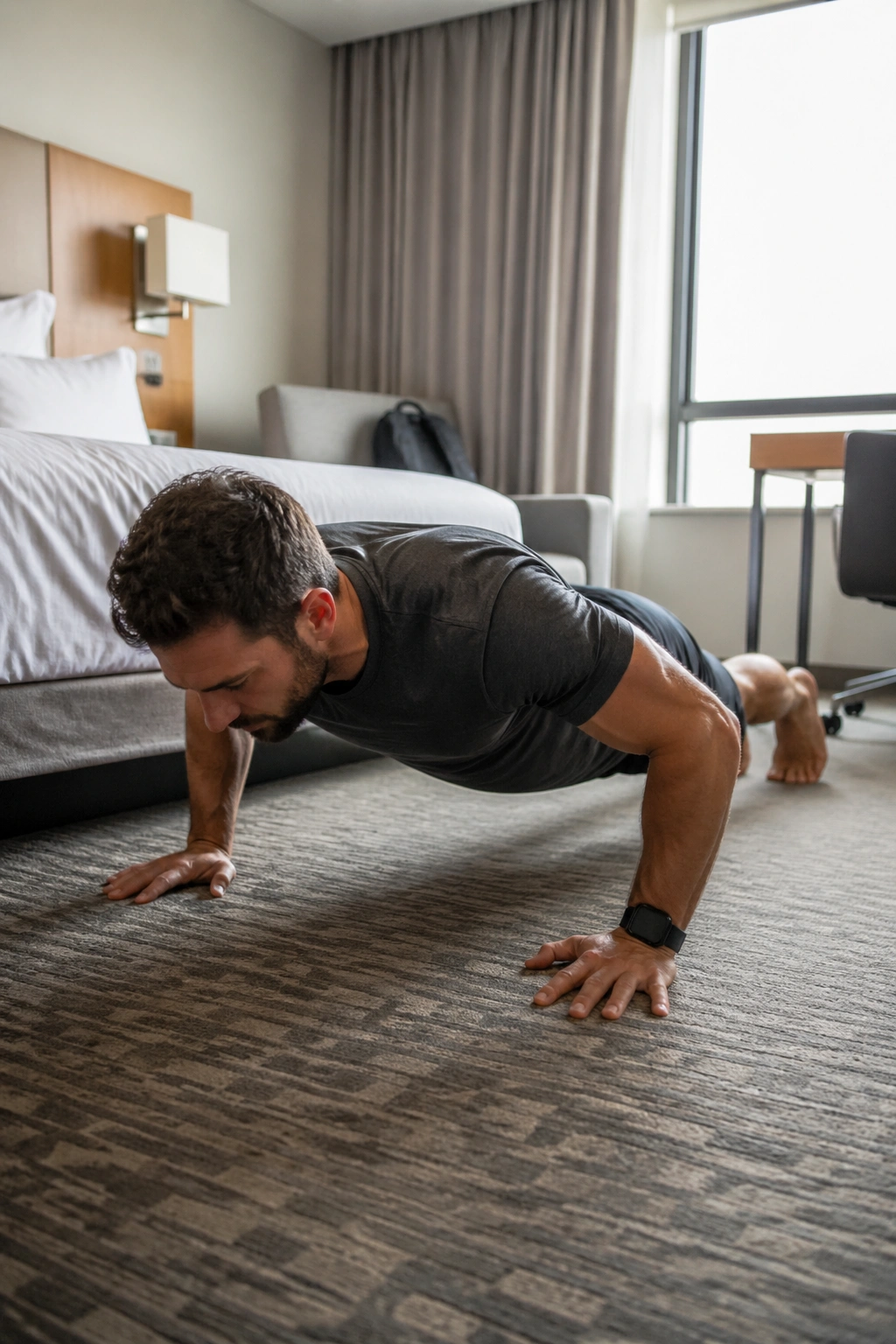
A hotel room is awkward, which is fine. Awkward spaces make creative training necessary.
A compact setup
- Push-ups or feet-elevated push-ups.
- Split squats or reverse lunges.
- Backpack rows with a loaded bag.
- Glute bridges.
- Planks or hollow holds.
Run this as a 15- to 25-minute circuit with little rest. If there’s a resistance band, great. If not, slow the reps and make each set harder by pausing at the bottom. The goal is to keep the habit alive until you get back to real equipment.
24. Lunch Break 20-Minute Routine

Short sessions only work when the plan is ruthless. No wandering, no filler, no staring at machines.
Pick one lower-body move, one upper-body push, one upper-body pull, and one core drill. Do them as a circuit for 4 to 5 rounds. Example: goblet squat, push-up, dumbbell row, plank. Keep the reps around 8 to 12 for the lifts and 30 seconds for the plank. Rest just long enough to keep the next round clean.
That routine works because it respects the clock without turning into a toy workout. If you finish sweaty and your notebook shows one more round than last week, you moved forward.
25. Low-Impact Joint-Friendly Routine

Not every useful workout has to hammer your joints. Some of the best progress comes from staying consistent when your knees, hips, or shoulders need a softer touch.
Use machines, sled pushes if you have them, incline walking, cycling, supported rows, and controlled presses. Keep the range of motion clean and the load moderate. Two or three movements for the lower body, two for the upper body, and a few minutes of easy cardio is enough. A leg press, chest press, seated row, and bike session can be a very respectable day.
The trick is to stop chasing the feeling of destruction. Chase repeatability instead. If you leave the gym able to train again two days later, you picked the right dose.
26. Stair Climber Routine

The stair climber is honest in a way that annoys people. Every step counts. Every skipped step counts too.
Try 5 rounds of 2 minutes hard and 1 minute easy, or set a steady climb for 15 to 20 minutes if intervals feel too sharp. Keep your torso tall and avoid leaning on the rails. The machine works better when your legs do the job, not your body weight hanging off the handles.
Progress can come from adding a round, extending the hard intervals by 15 seconds, or increasing the resistance one notch. That is enough. You do not need to turn it into a punishment session.
27. Rowing Machine Routine

Rowing is one of the few cardio tools that also punishes sloppy technique. Fair trade.
Start with 10 minutes of easy rowing to get the rhythm right, then do 6 to 8 rounds of 500 meters hard with 1 to 2 minutes of easy paddling. Focus on the sequence: legs, hips, arms on the drive; arms, hips, legs on the return. If the stroke feels like all arms, the output will drop fast.
What I like about rowing is the feedback. If your split time improves without your form falling apart, you know fitness is going up. If it gets worse, the session tells on you immediately.
28. Sandbag or Weighted Backpack Routine

A sandbag makes you work in a less polished, more useful way. A backpack loaded with books or plates can do a rough version of the same thing.
Use the bag for bear hugs, front carries, squats, cleans, and lunges. Keep the rounds short and the setup controlled. Three to five exercises, 3 to 4 sets each, is plenty. The odd shape forces your trunk and grip to stay honest, which is part of the appeal.
Good moves to rotate
- Bear-hug carry for total-body tension.
- Front-loaded squat for core and legs.
- Shouldering drills for power.
- Walking lunges for balance and grit.
If the bag shifts too much, slow down. Control matters more than heroics.
29. Sprint and Walk Intervals

Sprints are wonderful and rude. They also deserve respect.
Use 6 to 10 rounds of 10 to 20 seconds hard followed by 60 to 120 seconds of walking. A track, hill, bike, or sled all work. The short work window keeps quality high, and the long recovery protects your legs from turning into mashed fruit. Warm up for 8 to 10 minutes before the first hard effort. Skip that and your hamstrings may file a complaint.
How to keep it useful
- Stop the set when speed drops off hard.
- Stay crisp on the first few reps.
- Add rounds only after the current set feels controlled.
That last bit is the difference between training and trying to prove something to the pavement.
30. Reset Week Routine
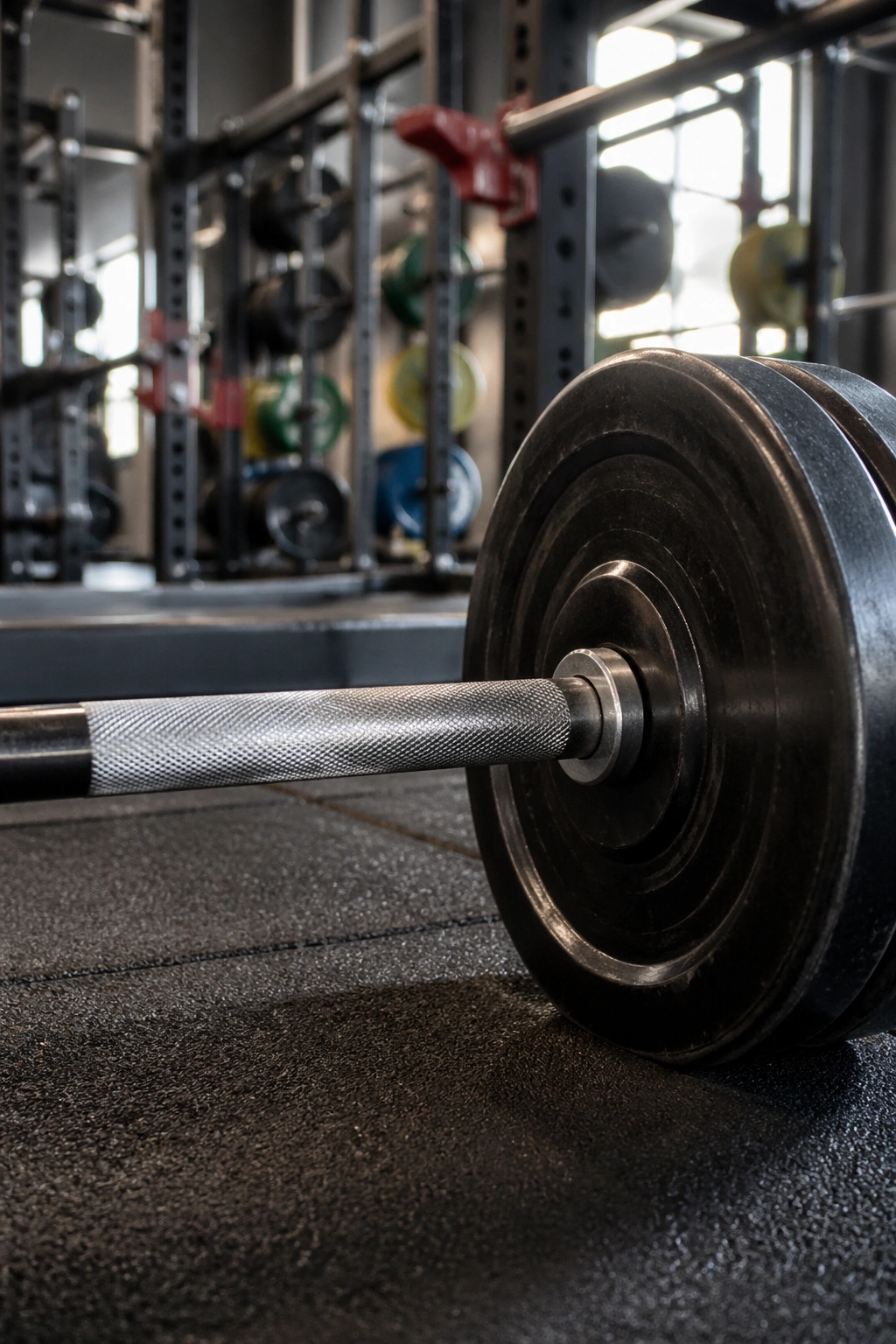
Every hard training block needs a quieter week. Not a lazy week. A reset week.
Cut your usual weights to about 60 to 70%, trim the number of sets by half, and keep the movements familiar. Squat, press, row, hinge, walk. That’s enough. You can also use this week to test rep quality, clean up form, and notice where little aches are starting to gather before they turn into bigger problems.
A reset week is what keeps steady weekly progress from turning into a string of crashes. You come back less sore, more eager, and usually a little stronger than you expected. That part never gets old.
