



A beginner home workout can feel awkward for about three minutes, and then it usually turns into one of two things: either you keep going, or you start negotiating with your own couch. The easiest way to stay on the right side of that argument is to make it a challenge. Give yourself a clear target, a short window, and a simple way to win.
That is why workout challenges for beginners at home work so well. They turn exercise into something concrete: 30 seconds here, 10 reps there, 5 days in a row, one small note in a notebook when you finish. No gym. No fancy gear. No pretending you suddenly enjoy 45-minute routines with names that sound like military drills.
A good beginner challenge should feel a little demanding, but not messy. You want enough effort to raise your breathing and make your legs or shoulders notice what is happening, while still leaving room to keep decent form. If your back hurts, your neck tightens, or your knees complain in a sharp way, the challenge is too much as written. Scale it down. That is not quitting. That is training like a person with a spine.
I like challenges because they solve the hardest part of home fitness: getting started again tomorrow. One clean session is fine. A pattern is better. And patterns are built from small, specific wins.
1. March-in-Place and Step-Touch Challenge
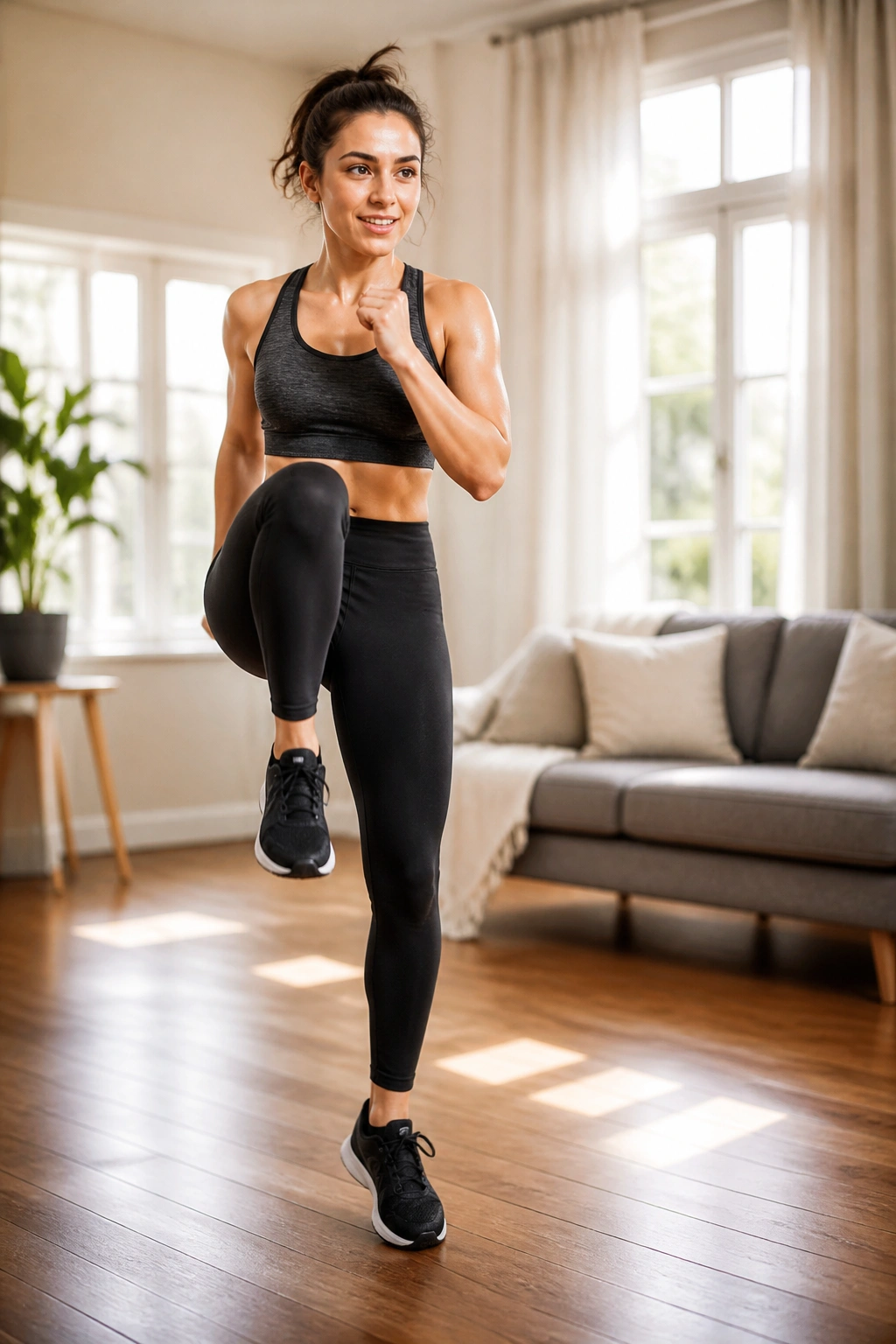
Start with marching in place. Seriously. It sounds too simple until you do it for 10 straight minutes and realize your heart rate has changed, your calves are awake, and your brain has stopped looking for excuses.
For a beginner home workout, this is one of the safest entry points because it warms the whole body without jolting your joints. Keep your feet under you, swing your arms naturally, and land softly. If marching feels stale, add a side step every four counts or reach your hands overhead every third round.
A clean target is 10 rounds of 1 minute: 40 seconds of marching, 20 seconds of step-touch recovery. If that feels easy, lengthen the marching blocks to 50 seconds. If it feels rough, keep the pace light and use the recovery window to breathe through your nose.
- Track how many rounds you finish without stopping.
- Watch your posture in a mirror or phone camera.
- Aim for smoother steps, not louder ones.
One good sign: you can still talk in short sentences by the end. If you cannot, slow it down a notch.
2. Wall Sit Challenge
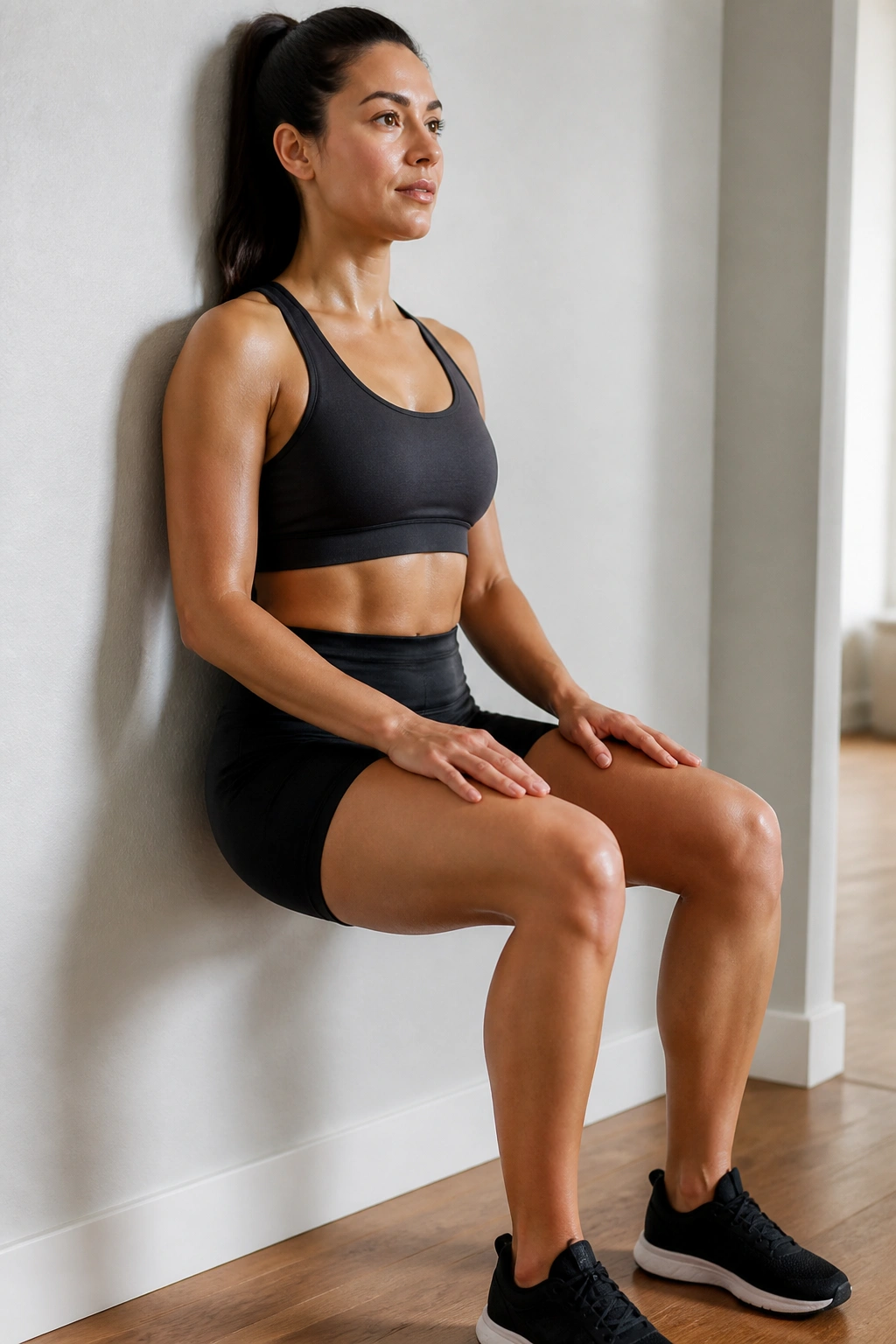
Wall sits look easy right up until minute twenty, which is exactly why they belong on this list. Your thighs do the work, your core has to stay honest, and there is nowhere to hide except gravity.
Stand with your back against a wall, walk your feet forward about 18 to 24 inches, and slide down until your knees are bent around 90 degrees, or a little higher if that position feels shaky. Keep your knees over your ankles. Not pushed way out. Not caving inward.
A beginner target is 3 holds of 15 to 30 seconds with 45 seconds of rest. Add 5 seconds each time you repeat the challenge over the course of the week. That tiny jump matters more than people think. Wall sits build patience as much as leg strength.
If your lower back starts yelling, stand up a few inches and retry. If your quads shake, that part is normal. If your knees hurt, shorten the bend and sit higher on the wall.
3. Incline Push-Up Ladder
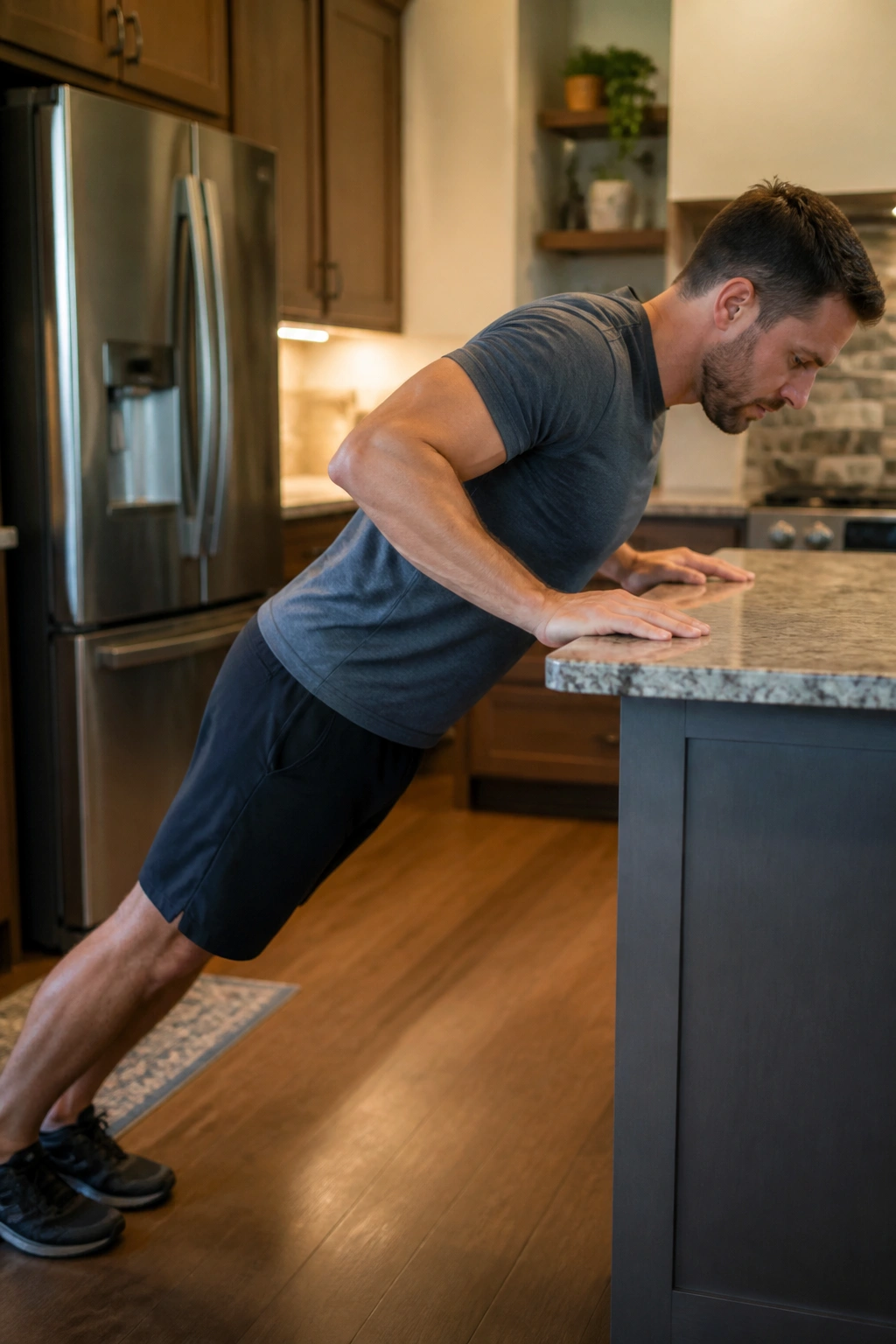
Push-ups scare beginners because the floor feels rude. Use a wall, counter, or sturdy table edge first. Same movement pattern. Much kinder angle.
Place your hands shoulder-width apart, brace your middle, and lower your chest toward the surface in one controlled line. Your elbows should drift back at about 30 to 45 degrees, not flare out like chicken wings. That small detail saves a lot of shoulder irritation.
A simple ladder works well here: 2 reps, 3 reps, 4 reps, 5 reps, resting 30 to 45 seconds between rungs. Stop one rep before your form falls apart. That part matters. A sloppy push-up teaches bad habits fast, and home workouts already have enough distractions.
Try the same ladder on the same surface for 3 sessions. Then lower the surface a little, or add one more rung. The change should be small enough that you notice it in your muscles, not in your ego.
4. Chair Squat Challenge
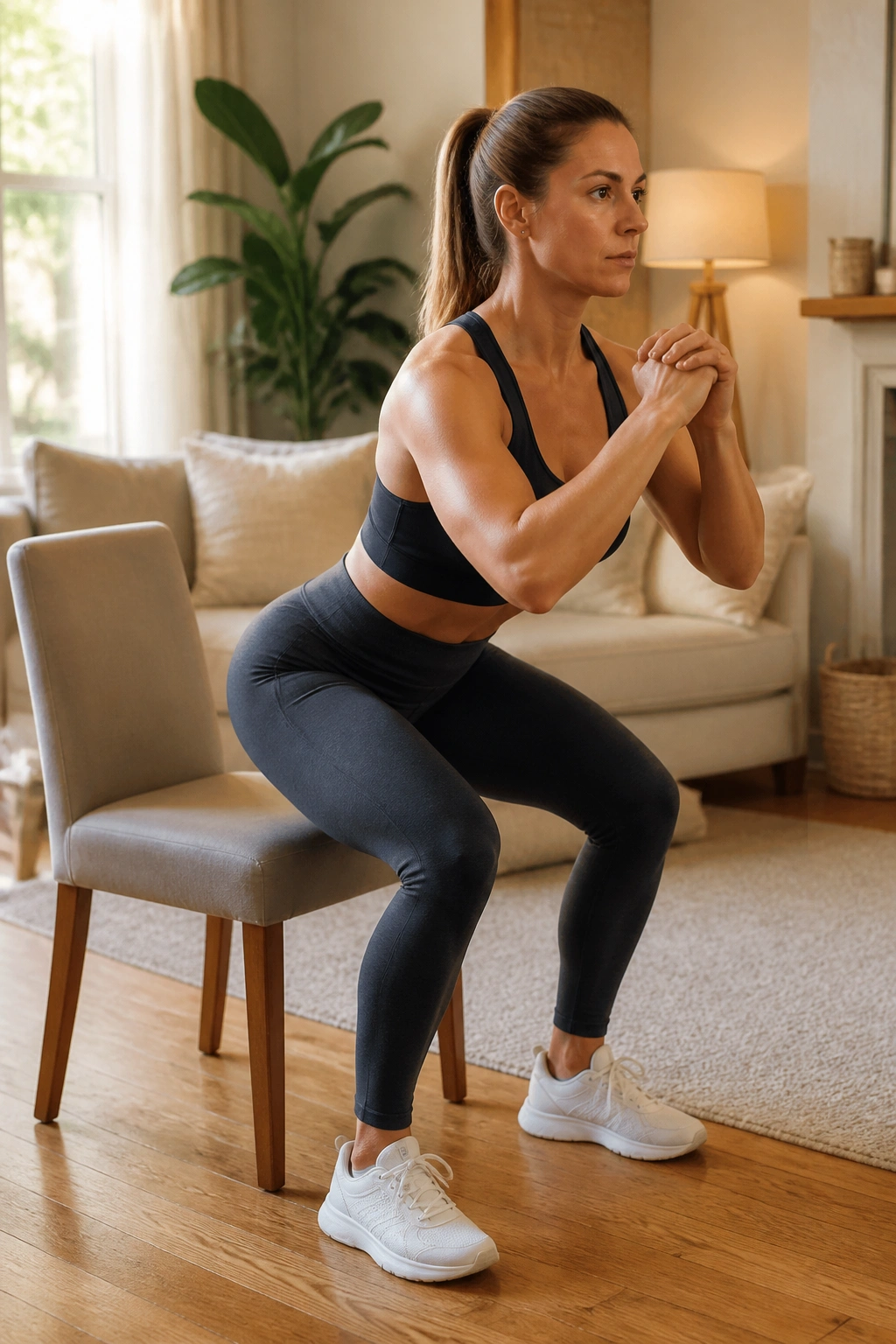
A chair squat challenge fixes the two biggest beginner problems at once: depth and confidence. The chair gives you a clear target, and that makes the movement feel less random.
Stand in front of a stable chair, feet about hip-width apart, toes slightly out. Send your hips back, bend your knees, and touch the chair lightly before standing again. Do not flop down. Do not collapse. Think of tapping the seat and leaving.
Start with 3 sets of 8 to 10 chair squats. Rest 30 to 60 seconds between sets. If your knees wobble inward, slow down and keep the range smaller. If you need your hands out front for balance, use them. I’d rather see a controlled squat with a little help than a fancy one that looks pretty and does nothing useful.
What to Watch For
- Keep your heels down.
- Let your chest stay proud, not tipped forward.
- Drive through the whole foot when you stand.
Once 10 reps feels boring, pause for 2 seconds on the chair before coming up. That tiny pause makes the challenge sharper without adding equipment.
5. Plank Hold Ladder
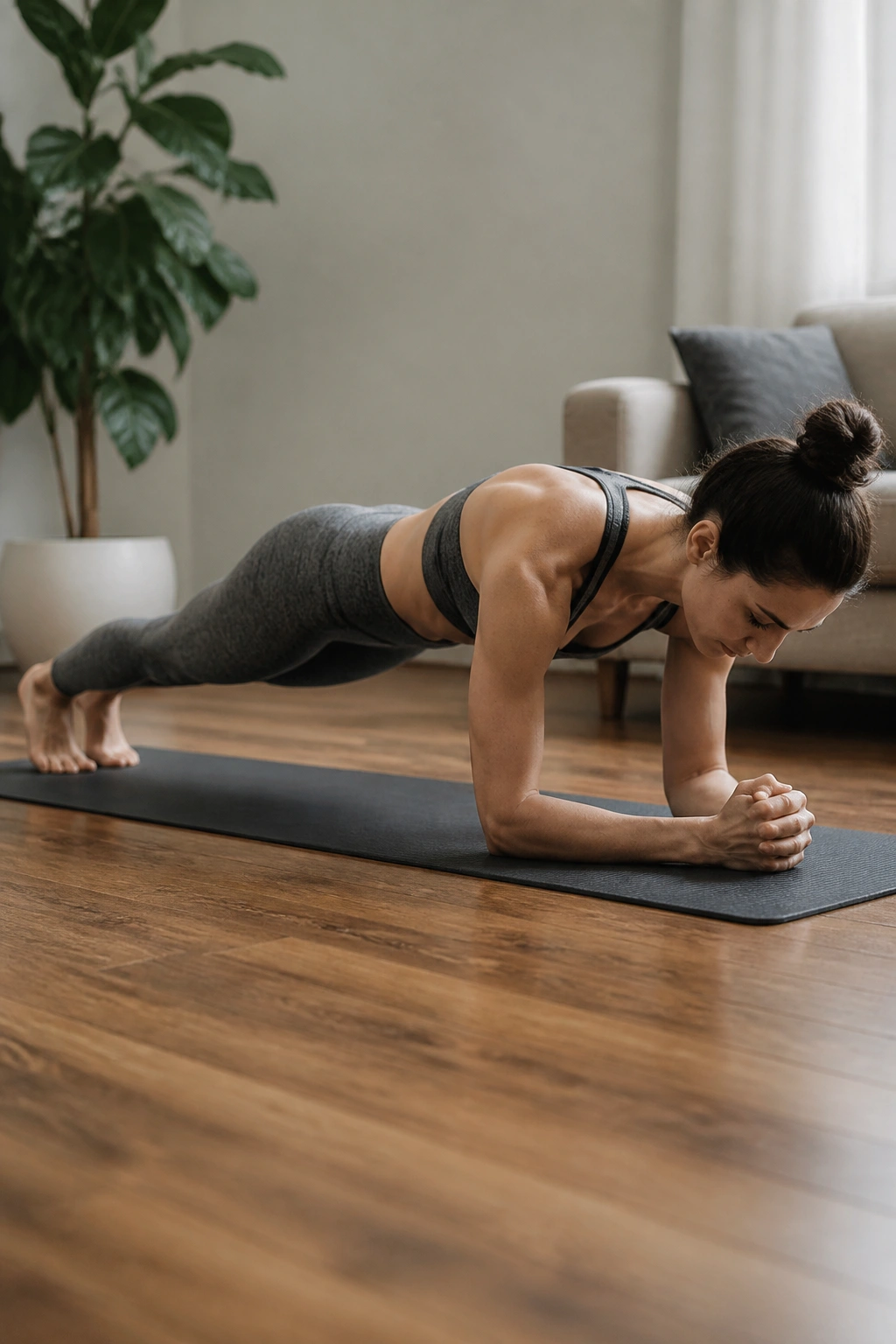
Planks punish sloppy form, which is exactly why they are useful. They teach you to brace your core without moving a single weight.
Set up on your forearms or hands, whichever feels kinder on your wrists. Your body should make one straight line from head to heels. Squeeze your glutes lightly, pull your ribs down, and avoid letting your lower back sag. If your shoulders creep toward your ears, reset.
Why It Works
A plank is not about surviving as long as possible while your shape falls apart. It is about holding tension in the right places for a controlled amount of time. Ten solid seconds matter more than forty messy ones.
Try this ladder: 10 seconds, 15 seconds, 20 seconds, 15 seconds, 10 seconds. Rest 20 to 30 seconds between holds. That gives beginners a chance to build quality without turning the move into a grim endurance test.
If forearm planks feel too hard, keep your knees on the floor. If your neck aches, look slightly ahead of your hands instead of straight down.
6. Glute Bridge Ladder
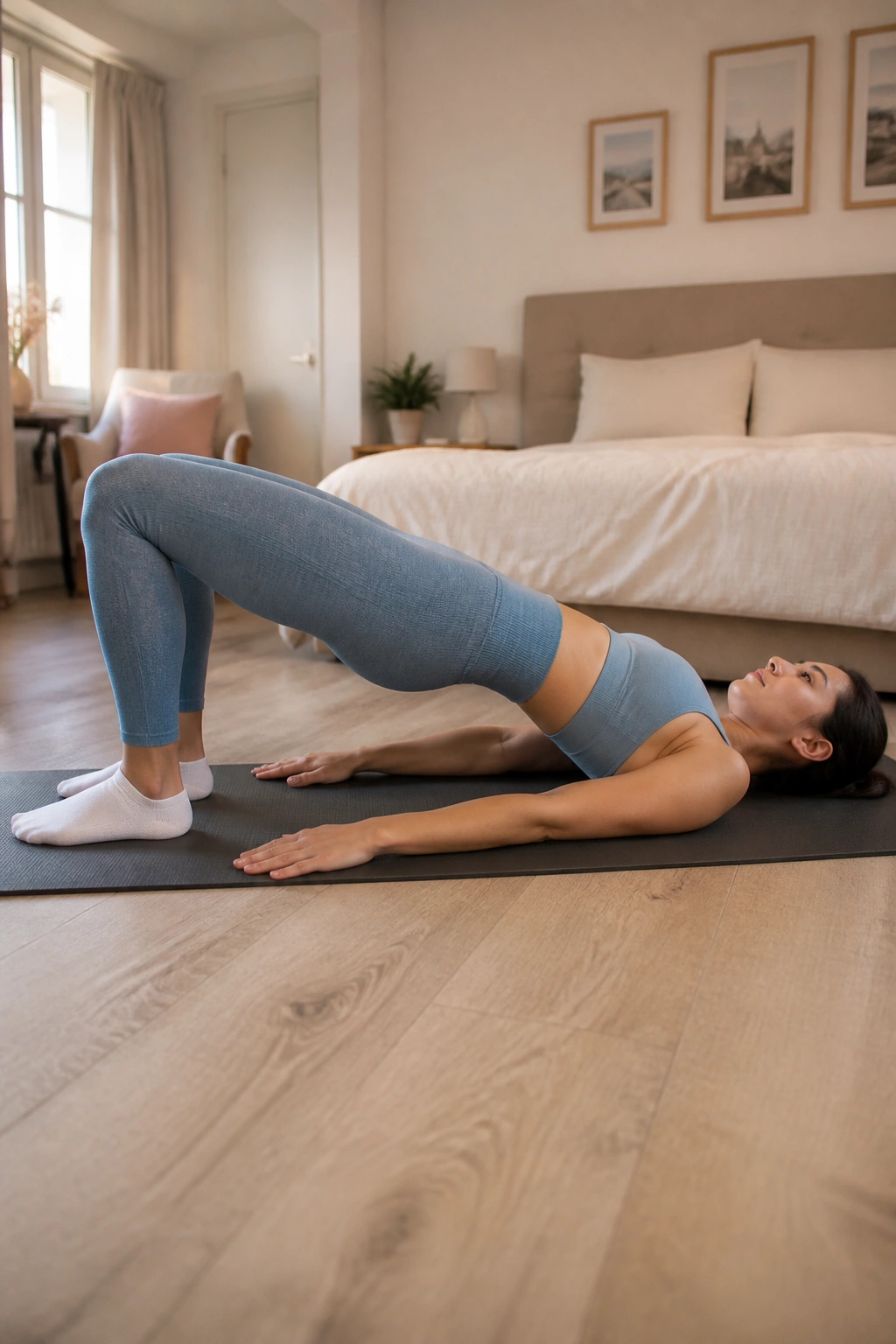
Glute bridges are the rare move that feels gentle and mean at the same time. Gentle, because you’re lying on the floor. Mean, because your backside will notice what happened later.
Lie on your back with your knees bent and your feet flat about a foot from your hips. Press through your heels, lift your hips until your body makes a straight line from shoulders to knees, then lower with control. Keep your ribs from flaring up. That part is easy to miss.
A simple ladder is 8 reps, 10 reps, 12 reps, 10 reps, 8 reps. Rest 20 to 30 seconds between rounds. If the top position feels easy, hold each bridge for 2 seconds before lowering. That changes the challenge fast.
One sentence matters here: your lower back should not do the lifting. If it does, move your feet a little closer and shorten the lift. You want glutes, not spinal drama.
7. Reverse Lunge Balance Challenge
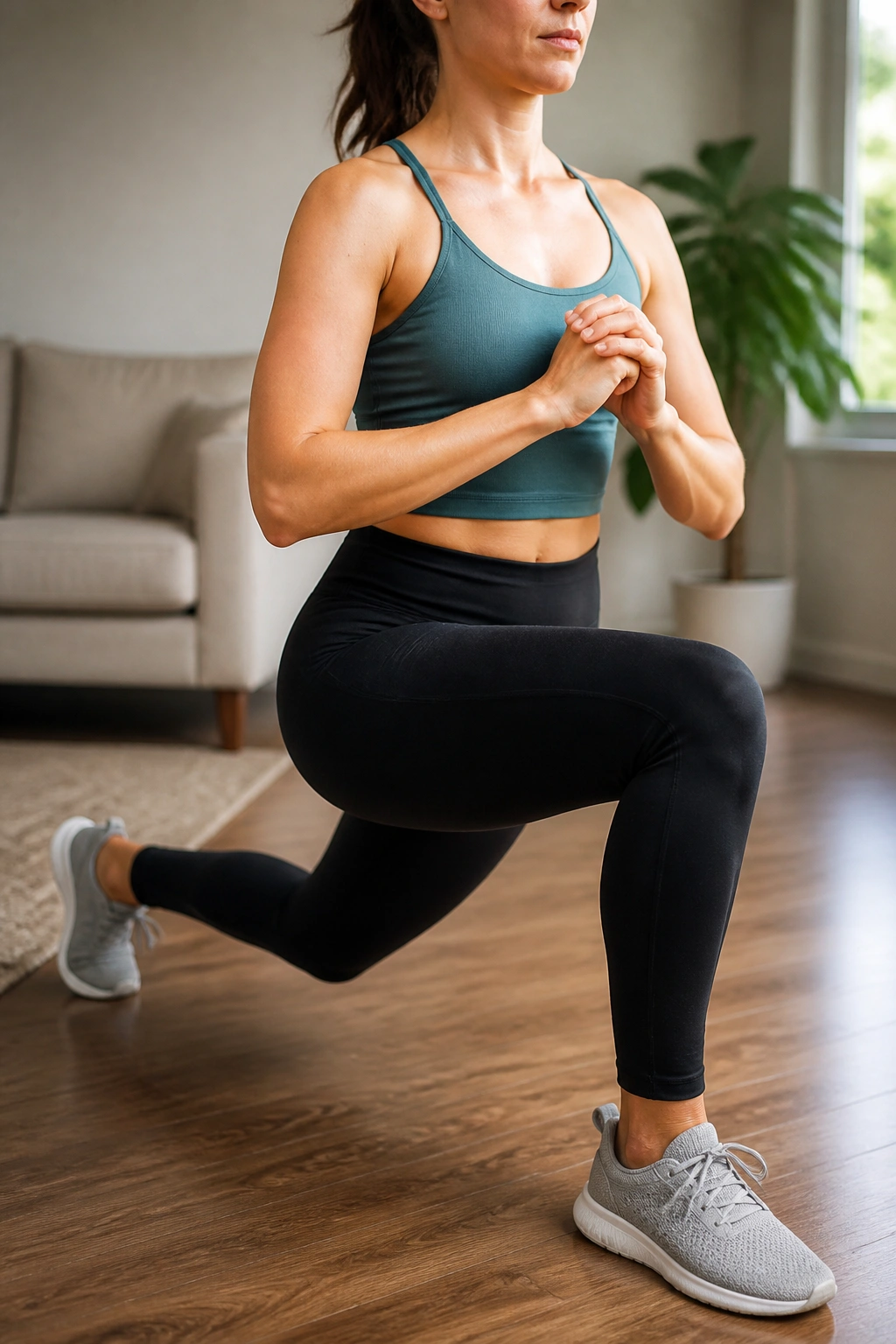
Reverse lunges expose balance issues fast, which is useful even if it feels a bit humbling. Stepping back tends to be friendlier on the knees than stepping forward, and beginners usually tolerate it better.
Stand tall, step one foot back, lower until both knees bend comfortably, then press through the front foot to return. Keep your front knee roughly over the middle toes. If you wobble, slow down. Speed hides mistakes.
Try 5 reps per side for 3 rounds to start. That sounds tiny. It isn’t, not when you are learning how to control the movement. If bodyweight lunges feel unstable, hold onto a wall with one hand and use the other arm for balance.
How to Make It Harder Later
- Add 2 reps per side.
- Pause for 1 second at the bottom.
- Hold a light backpack at your chest.
The pause is the sneaky one. It forces you to own the position instead of bouncing through it.
8. Mountain Climber Interval Challenge
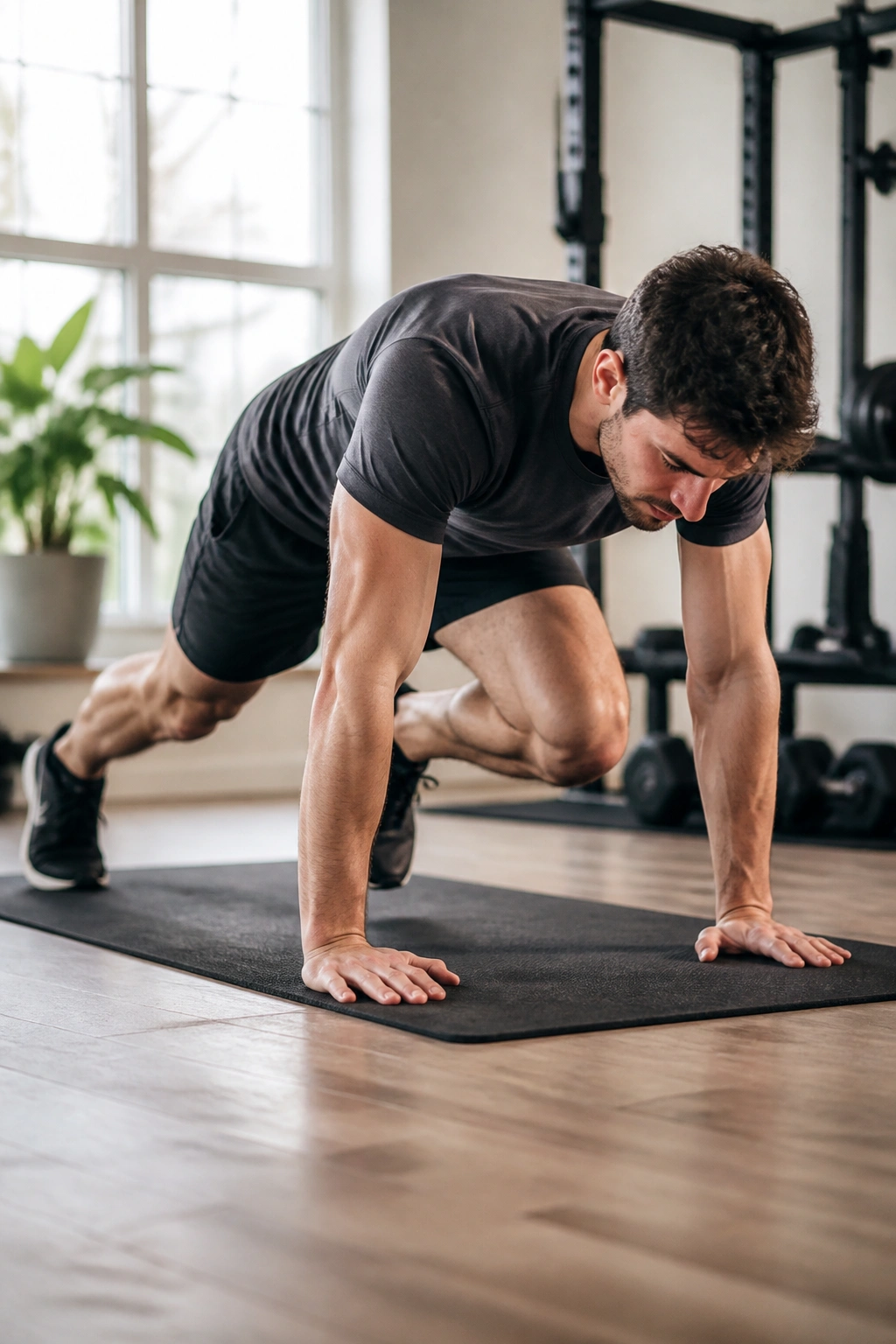
Mountain climbers can get noisy, frantic, and sloppy in a hurry. Slow them down and they become a strong beginner cardio drill that also trains your core.
Start in a plank position with your hands under your shoulders. Drive one knee toward your chest, then switch legs. Keep your hips level. If your back starts swaying or your shoulders burn out before your abs do, your pace is too fast.
A clean beginner challenge is 6 rounds of 20 seconds on, 40 seconds off. That rest window is not cheating. It helps you keep the next round crisp. You should finish sweaty, not wrecked.
If floor climbers are too much, put your hands on a couch or low counter and do them at an incline. Same movement. Less strain. Better form.
And yes, you can count each knee drive as one rep if that helps. Simple counts keep people honest.
9. Dead Bug Core Control Challenge
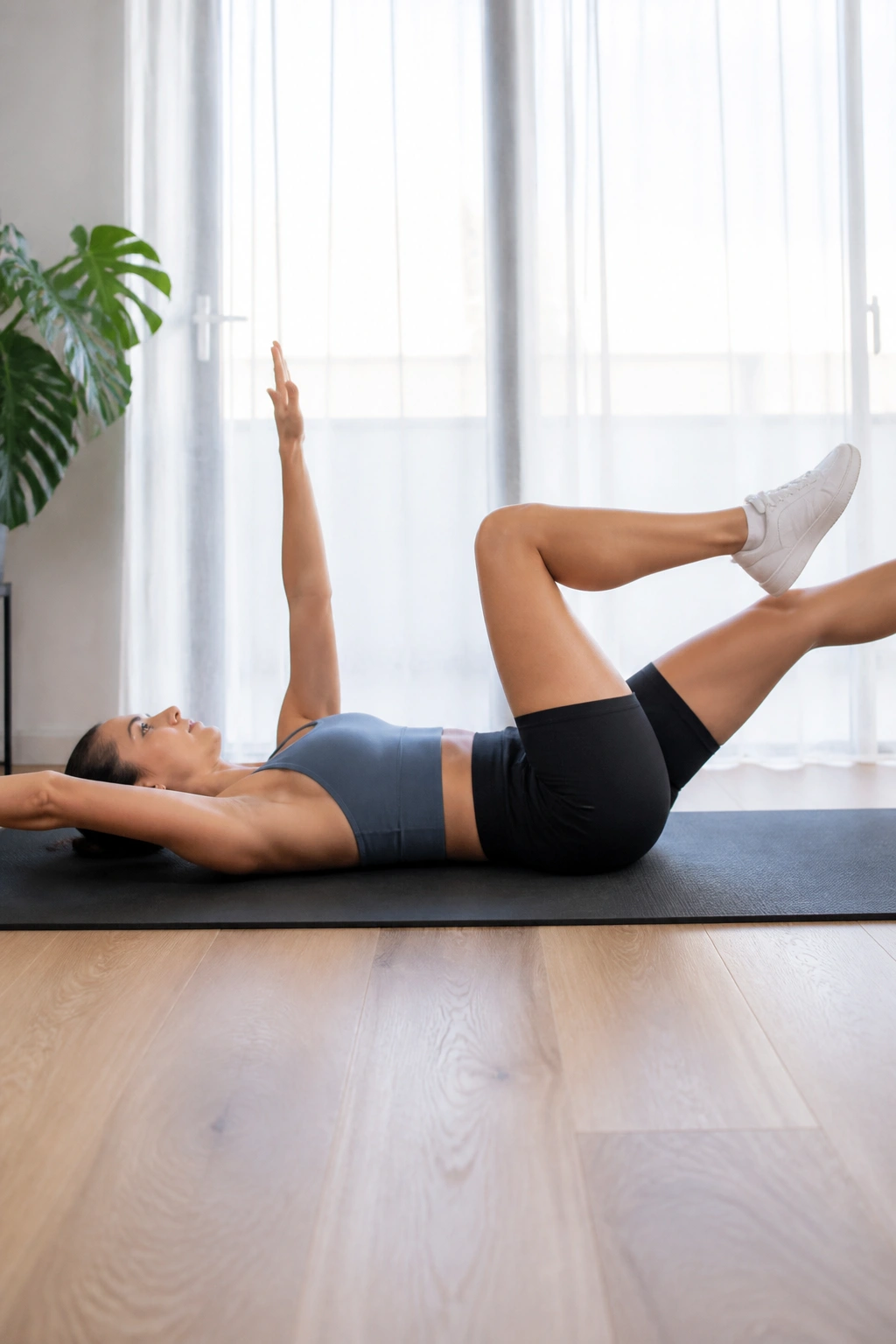
Dead bugs sound odd because they look like someone dropped a toy spider on the floor. They also happen to be one of the best beginner core drills because they teach control, not flailing.
Lie on your back with your arms pointing up and your knees bent at 90 degrees. Slowly lower your right arm and left leg at the same time, then return to the start and switch sides. Keep your lower back lightly pressed into the floor. If it arches, the move is too big.
Try 6 slow reps per side for 2 to 3 rounds. Go slower than feels necessary. The point is to keep your torso steady while your arms and legs move. That makes the challenge harder than it looks.
A Small Cue That Helps
Exhale as the arm and leg move away from center. That breath pattern helps your ribs stay down. It also makes the move feel cleaner, which matters when you are training at home with no coach standing there correcting you.
10. Shadow Boxing Rounds
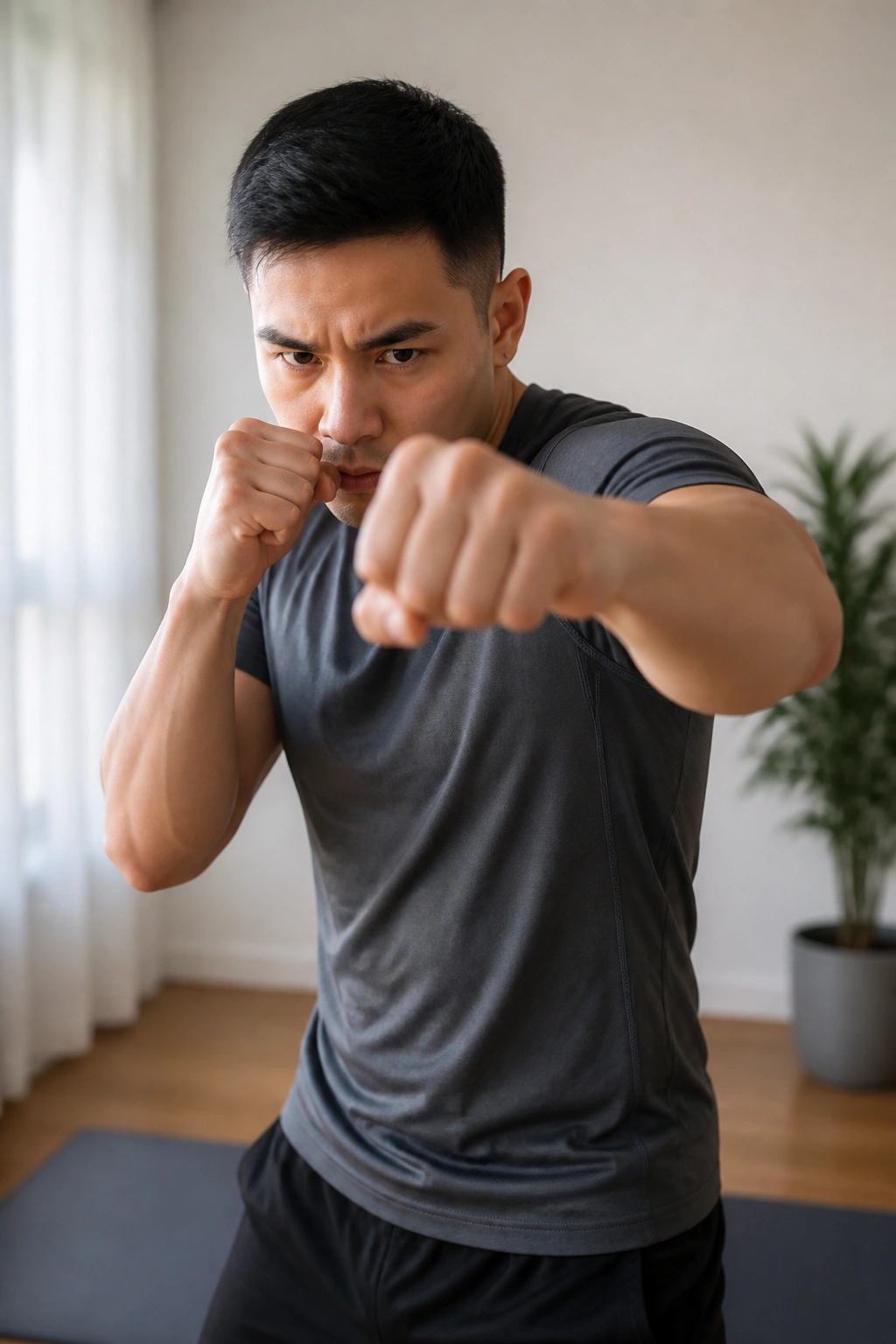
Shadow boxing is sneaky cardio. It raises your pulse, loosens your shoulders, and makes you feel more awake than a lot of “real” workouts with equipment.
Stand in a staggered stance, soften your knees, and throw simple punches into the air: jab, cross, jab-cross, then a little movement. Keep your shoulders relaxed. Punching should feel crisp, not stiff. If your wrists bend, straighten them. If your neck tightens, shake it out and reset.
Use 5 rounds of 2 minutes with 1 minute of rest between rounds. Beginners often overdo the speed and forget the footwork. Don’t. A light step, a small pivot, and steady breathing are enough. You are not trying to win a prize for how hard you can flail.
A useful trick: pick one focus per round. One round is only jabs. One round is jab-cross. One round is punches plus sidesteps. That keeps the workout from turning into random arm waving.
11. Step-Up Stair Challenge
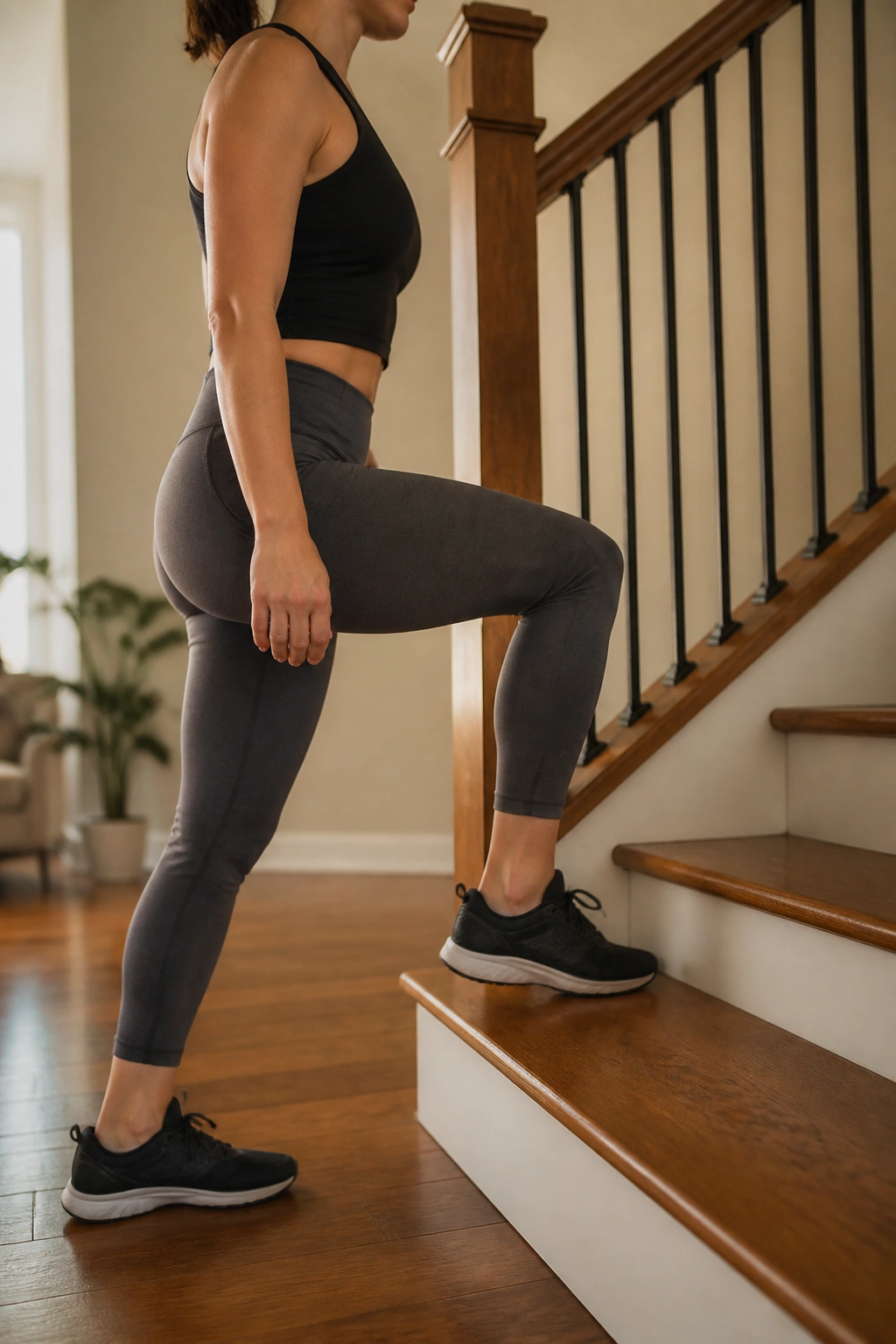
A step or a short flight of stairs can turn a hallway into a training tool. Step-ups build leg strength, balance, and a little heart rate spike without needing much space.
Put one foot fully on the step, press through the heel, stand tall, then step down under control. Do not push off the back foot unless you need help at the start. Keep your torso upright. A stiff, leaning torso tends to make the move feel harder than it should.
Begin with 8 step-ups per leg for 3 rounds. If that feels manageable, add a slow knee drive at the top. Bring the free knee up to hip height for a split second before stepping down. That one pause tightens the whole drill.
Watch the surface. It has to be solid and dry. Slippery stairs are not a challenge; they’re a bad idea. Simple distinction.
12. Mobility Flow Challenge
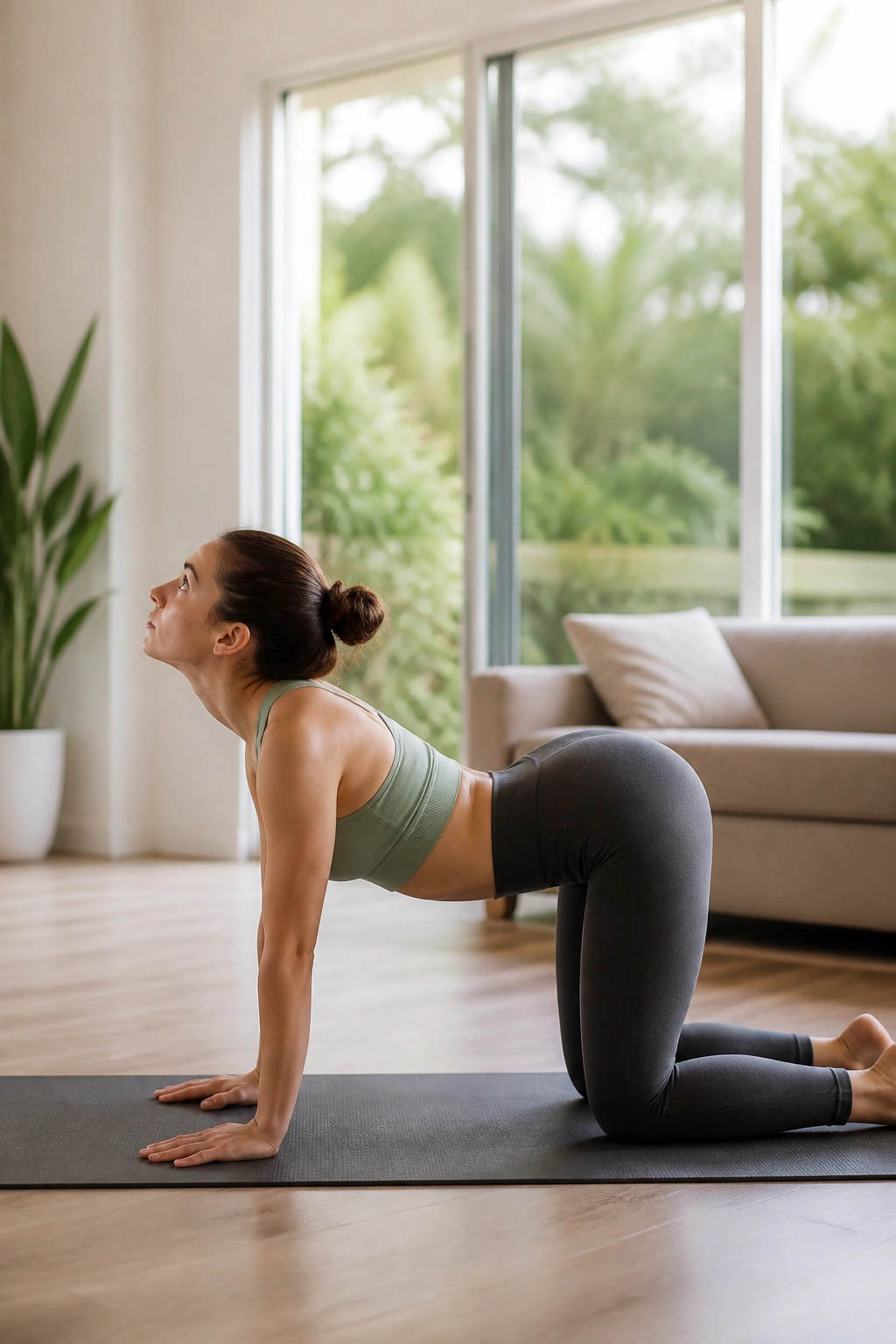
Mobility gets ignored until a hip locks up or your shoulders complain while reaching into a cabinet. A short flow fixes that gap before it gets annoying.
Pick 4 moves: cat-cow, hip circles, arm circles, and a gentle forward fold with bent knees. Move through each one for 30 to 45 seconds without rushing. You are warming tissue and waking up joints, not performing for anyone.
The best beginner version feels smooth and boring in the right way. No strain. No snapping into end ranges. Just controlled movement and easy breathing. If you feel pinching in a joint, back off and shorten the motion.
My Favorite Way to Use It
- Before workouts: 4 minutes.
- After workouts: 4 to 6 minutes.
- On stiff days: repeat the whole flow twice.
That is enough to matter. You do not need a dramatic stretch festival.
13. Low-Impact Cardio Circuit
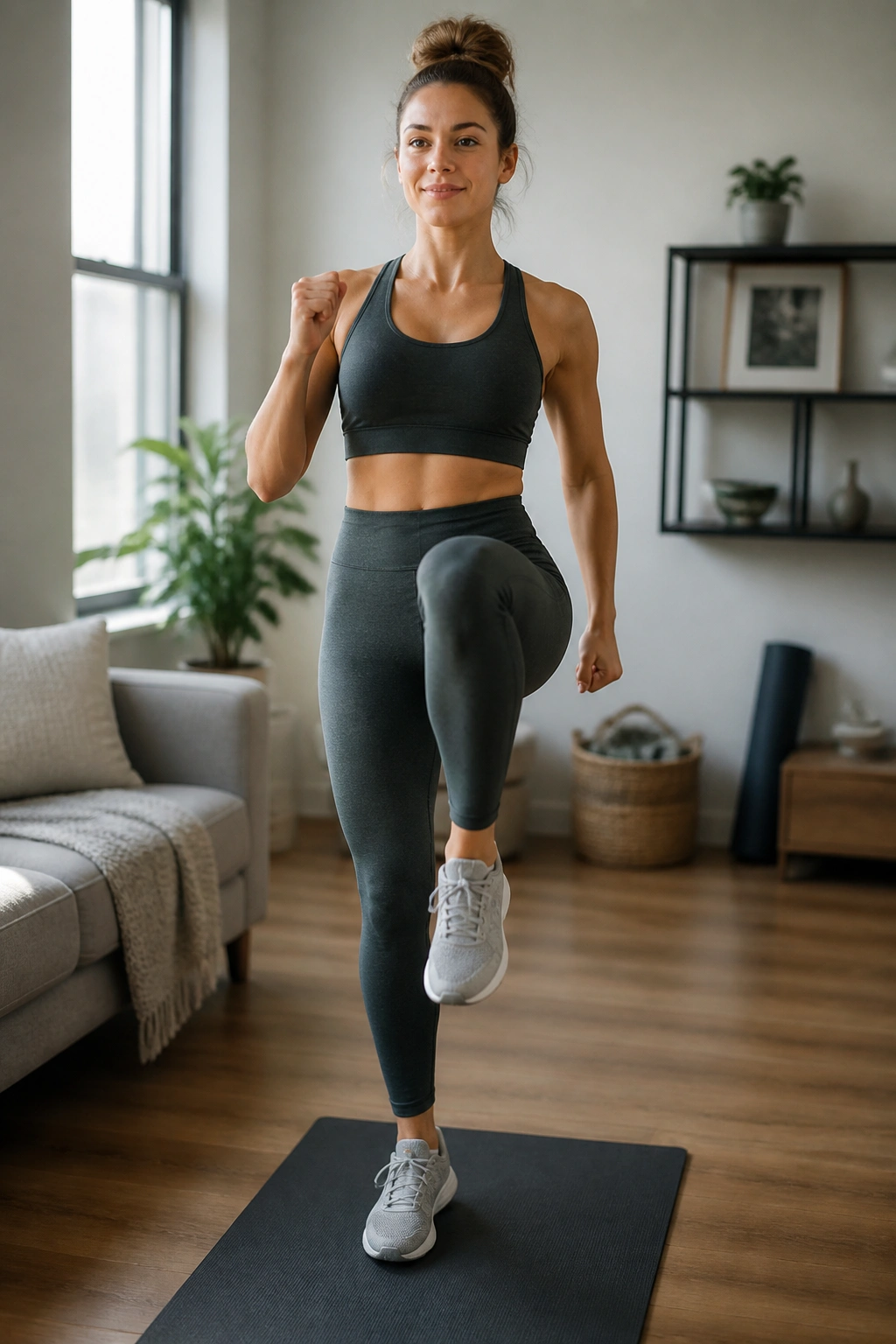
A low-impact circuit is the cleanest way to make a home workout feel like actual training without pounding your knees or making your neighbors hate you.
Put together 4 moves: march in place, step jacks, squats to chair, and standing knee drives. Work for 30 seconds each, then rest 30 seconds after all four. Repeat the circuit 3 to 5 times.
The trick is to keep the effort steady instead of sprinting the first round and crawling through the rest. Your breathing should rise, but the movement should stay neat. If the squats get sloppy, reduce the speed. If your shoulders tense up during step jacks, lower your arms and keep the legs going.
This challenge is especially useful when you want a sweaty session but not a high-impact one. It pairs well with a timer and some music. A metronome works too, though that does make the whole thing feel a little like a school test.
14. Backpack Row and Hold Challenge
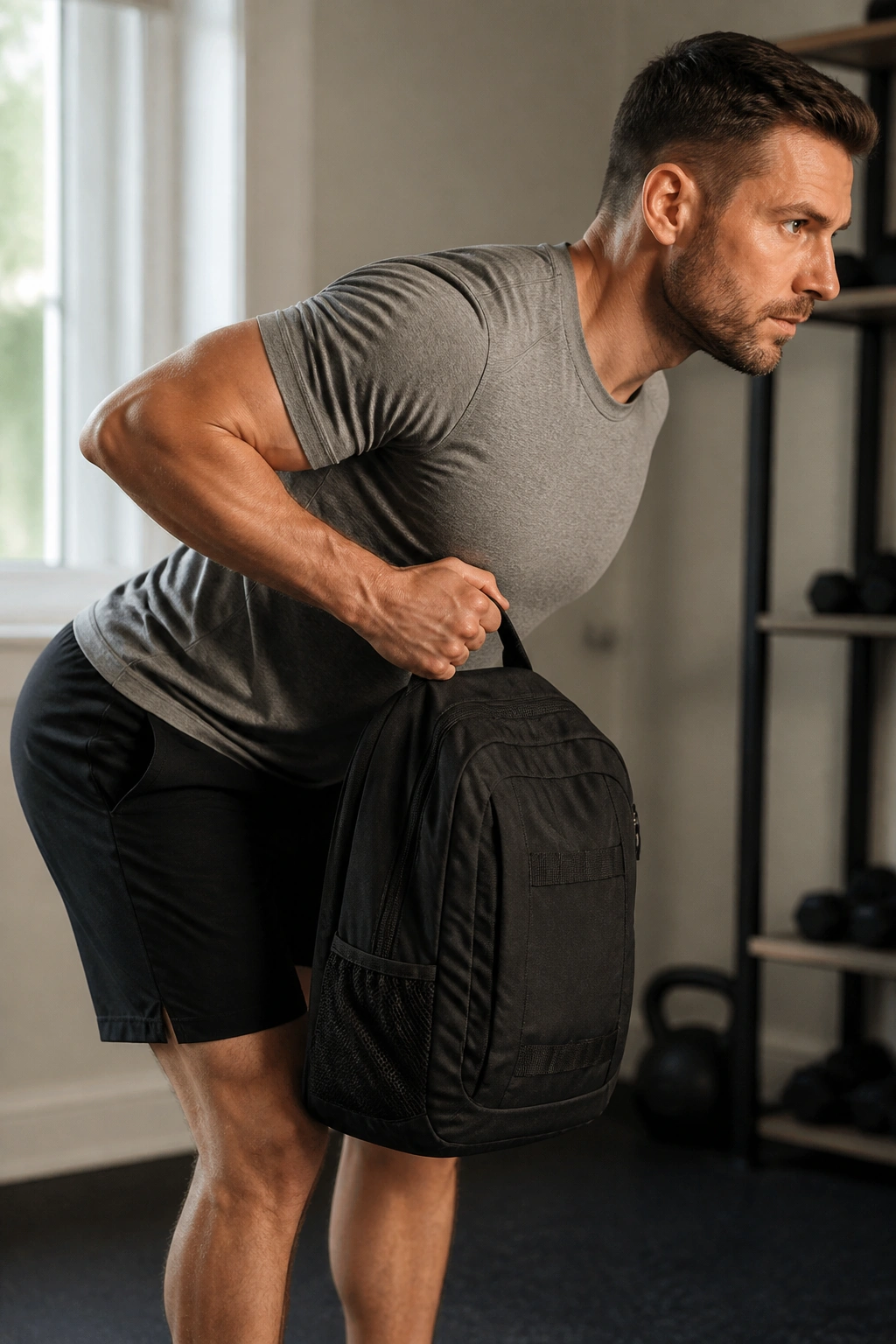
A backpack row challenge gives your upper back something to do, which matters because push-ups and planks alone do not cover everything. Fill a backpack with 2 to 4 books, hold it by the top handle or the side straps, and hinge at the hips with a flat back.
Pull the backpack toward your torso, squeeze your shoulder blades for a beat, then lower it slowly. Keep your neck long. If you round your back to lift the bag higher, the load is too much or your hinge is too shallow.
Try 3 sets of 10 reps with a 1-second squeeze at the top. You can also turn it into a hold challenge: row up, hold for 10 seconds, lower, rest, repeat. That version burns in a useful way.
What Makes This One Worth Keeping
- It balances all the pressing and planking.
- It uses stuff you already have.
- It teaches your upper back to stay awake.
A backpack is not glamorous. It does the job.
15. Bird-Dog Stability Challenge
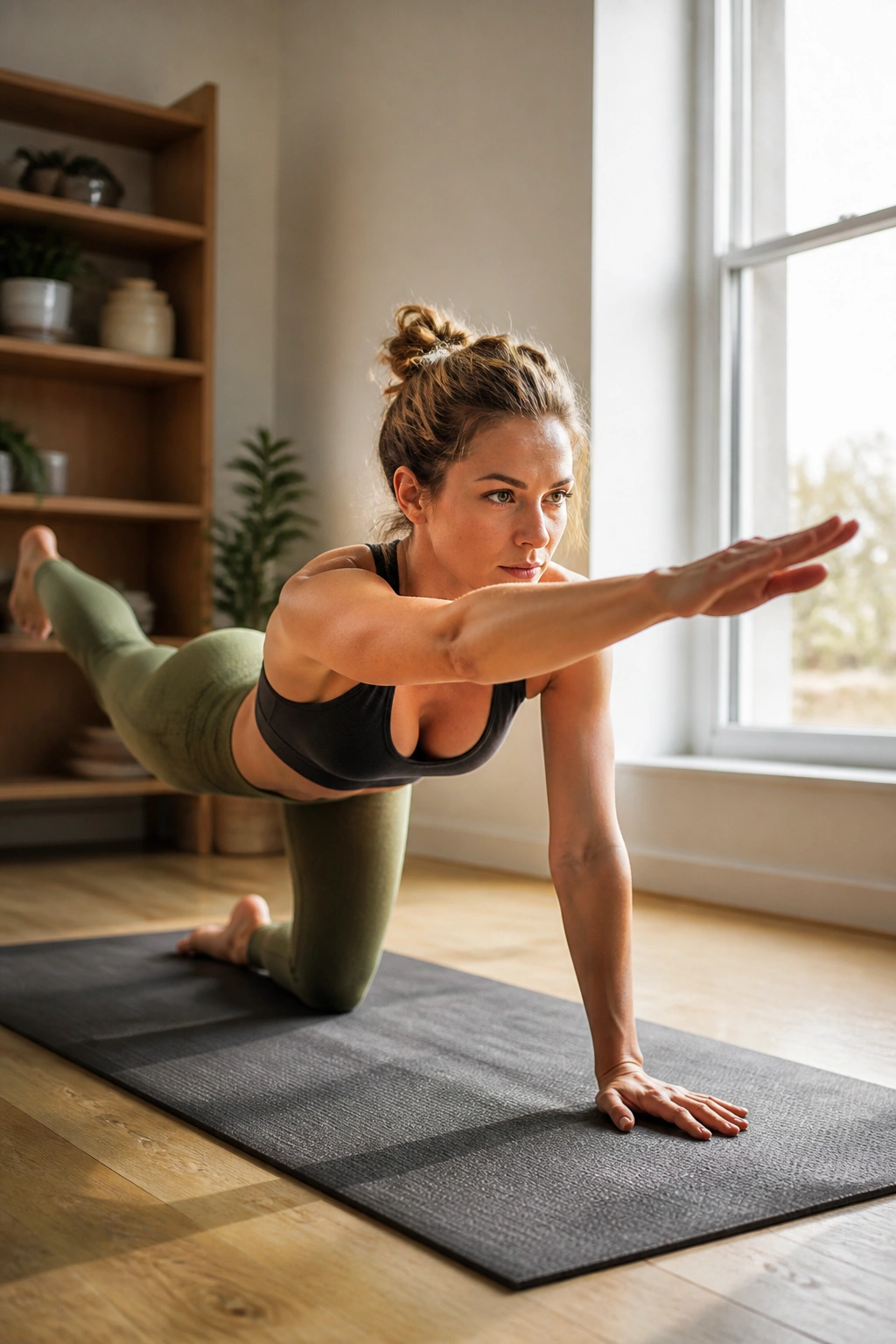
Bird-dogs look simple, and that’s the trap. A clean bird-dog asks your core to stop twisting while your opposite arm and leg reach away from each other.
Start on hands and knees, hands under shoulders, knees under hips. Reach your right arm forward and left leg back, keeping your hips level. Hold for 2 seconds, return, and switch sides. If your body sways side to side, shorten the reach a little.
A good beginner challenge is 5 slow reps per side for 3 rounds. The tempo matters. Move like you’re balancing a cup of tea on your lower back. If that sounds odd, good. Odd images stick.
People rush this one and miss the point. Don’t. A slower bird-dog teaches better control than a faster one, and control is the thing most home workouts need more of.
16. Burpee Walkout Challenge
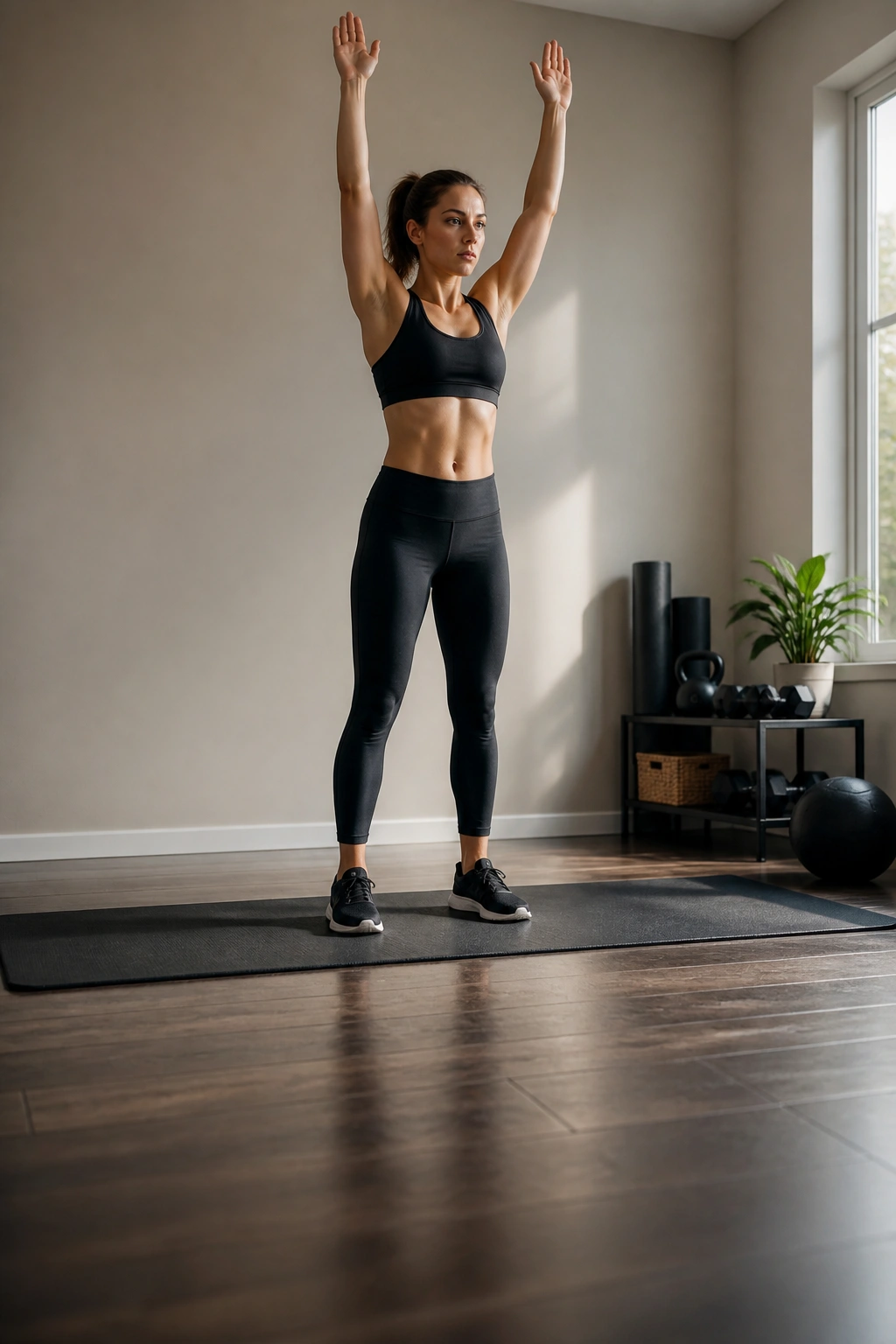
Burpees can be beginner-friendly if you stop treating them like a race. The jump is optional. The chaos is optional too.
Stand tall, squat down, place your hands on the floor, and walk your feet back into a high plank. Walk them forward again, stand up, and reach overhead. That’s one rep. No jump needed. No chest-to-floor theatrics unless you want them later.
Try 6 to 8 reps for 3 rounds with 45 to 60 seconds of rest. If your lower back feels loose in the plank, tighten your core and shorten the step-back. If getting to the floor feels awkward, put your hands on a sturdy chair and do a higher version.
This challenge works because it ties together standing, squatting, bracing, and cardio in one move. It also exposes weak points quickly, which is annoying and useful at the same time. That’s a good sign. Mostly.
17. Calf Raise Endurance Challenge
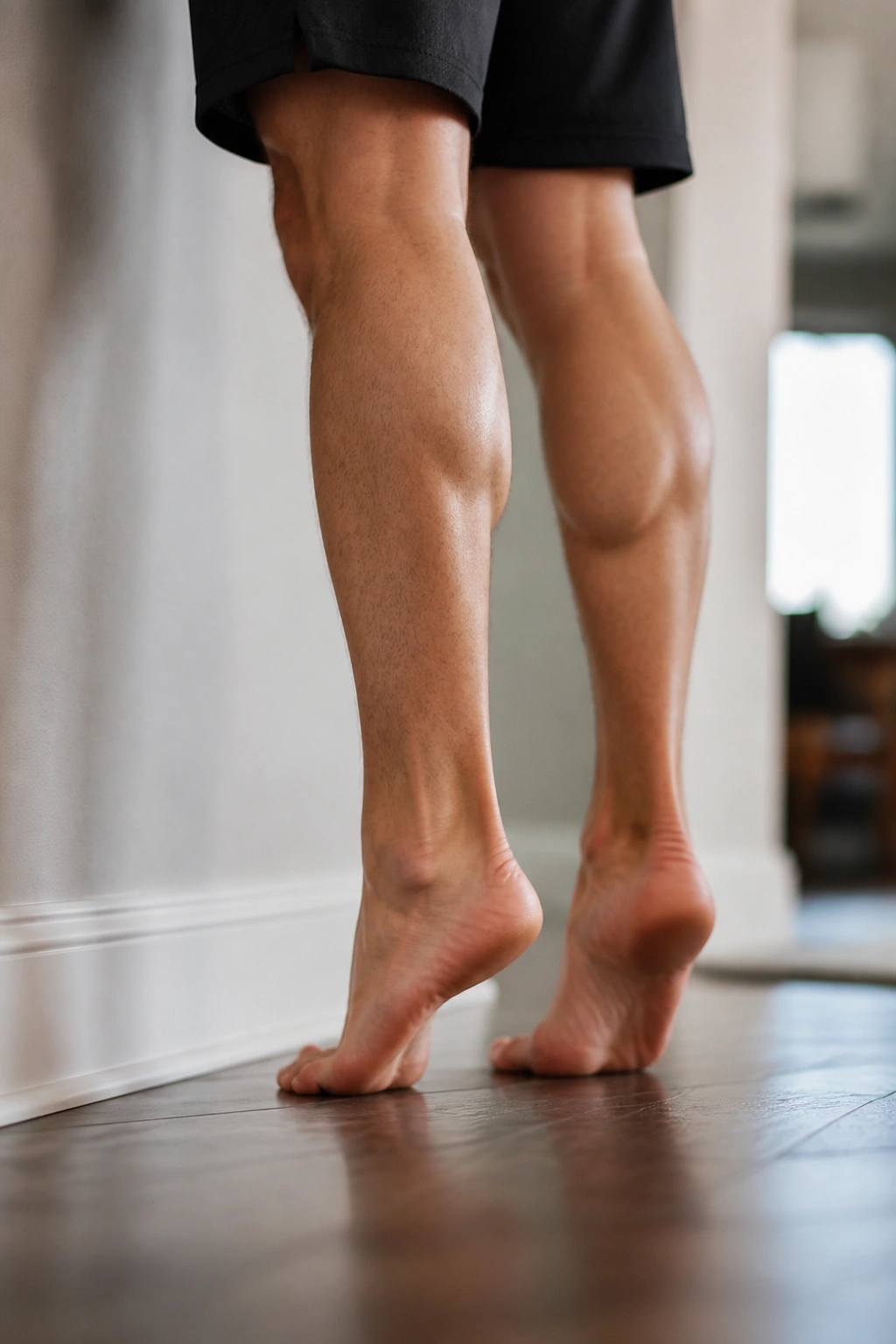
Calf raises are boring in the best way. They are small, direct, and a little underestimated, which makes them perfect for beginners building lower-leg strength at home.
Stand near a wall or chair for balance, rise onto the balls of your feet, pause for a second at the top, then lower slowly until your heels touch down fully. The slow lower matters. It makes the move much more effective than bouncing through it.
Set a target of 25 reps in one set, or split it into 3 sets of 12 to 15. If that feels too easy, do them on one leg with one hand on the wall for balance. If your feet cramp, shorten the range and move slower.
A small tip: keep pressure through the big toe and second toe as you rise. That helps the foot stay stable. A lot of people skip that and wobble all over the place.
18. Stretch-and-Reset Recovery Challenge
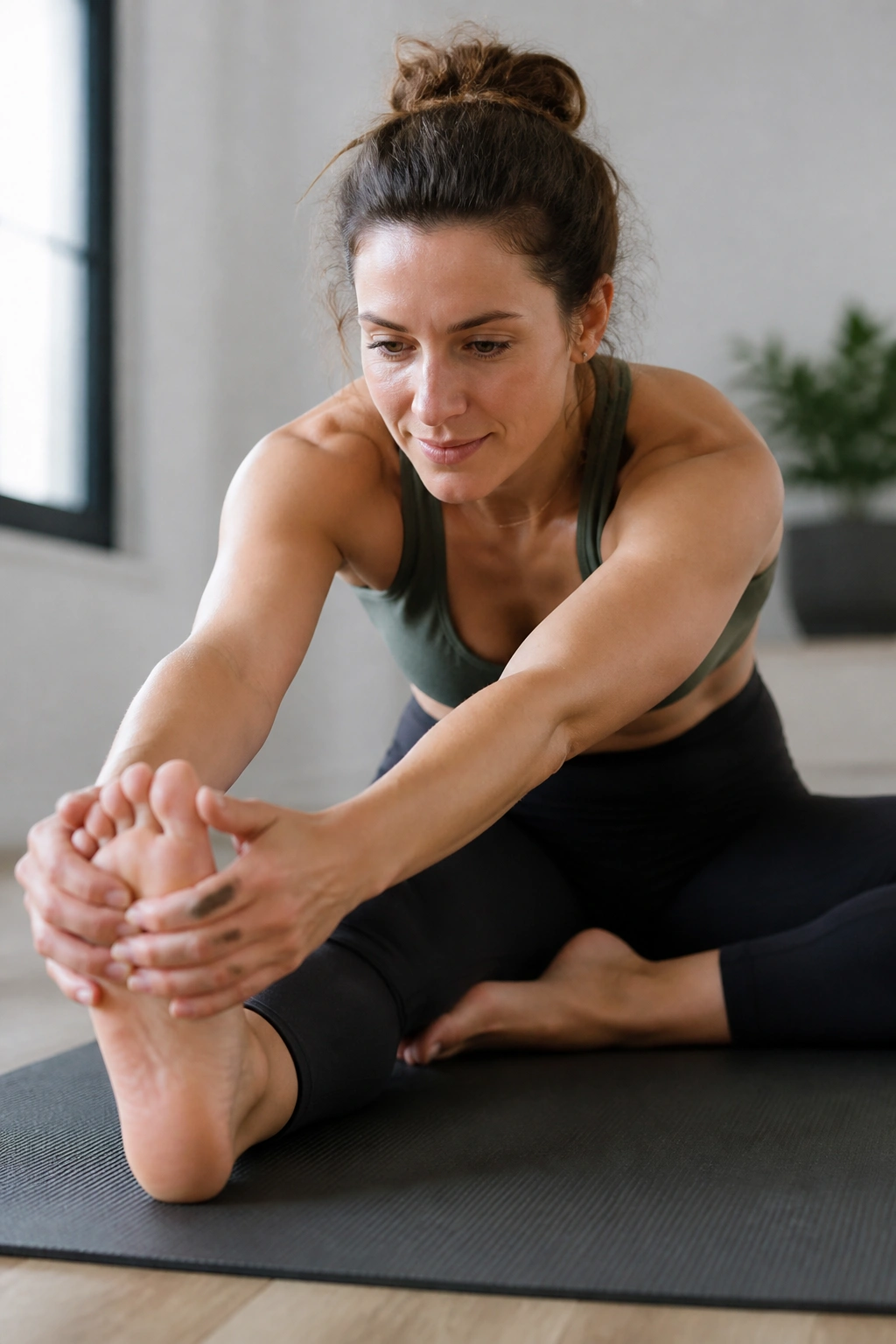
Recovery counts as training when you do it on purpose. A stretch-and-reset challenge is not a lazy day with a nicer name. It is a short block that helps you keep showing up.
Pick 5 positions: child’s pose, chest opener against a wall, seated hamstring stretch, figure-four stretch, and a gentle spinal twist. Hold each one for 20 to 30 seconds. Breathe slowly through your nose if you can. If not, just slow the exhale.
This is the challenge to use after a hard day or between tougher workouts. The goal is to reduce stiffness, lower tension, and leave your body feeling a little easier to move. Not mushy. Just looser.
I like this one because beginners often think only sweating counts. It doesn’t. If your hips get tight after sitting all day, a 6-minute reset may do more for tomorrow’s workout than another round of frantic reps.
19. Daily Consistency Streak Challenge
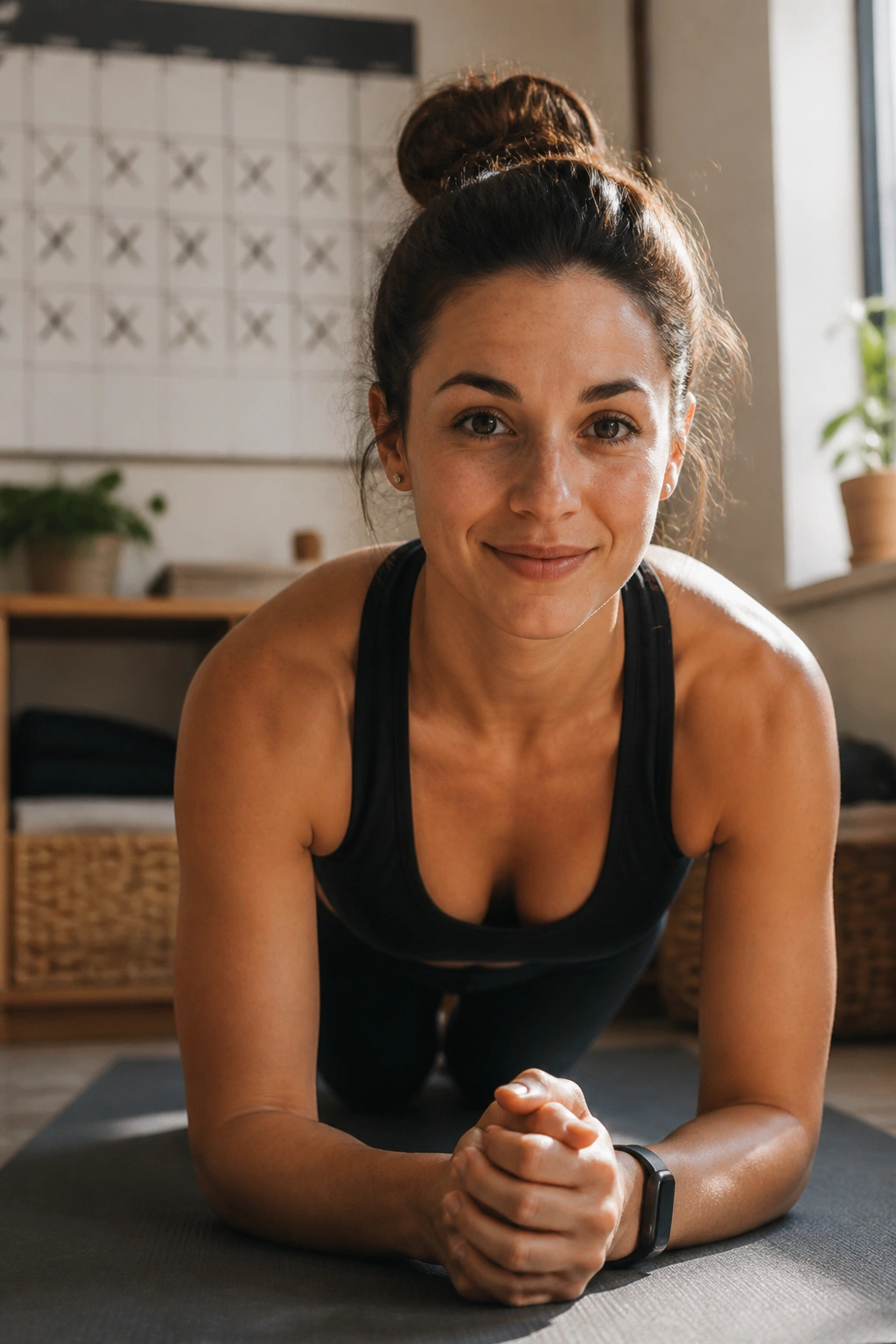
Consistency streaks work because they lower the decision cost. You are not asking yourself, “Do I want a full workout?” You are asking, “Can I do 8 minutes today?” That is a much easier yes.
Build a minimum daily target that feels almost too small: 5 squats, 5 incline push-ups, 20 seconds of marching, and 20 seconds of plank. That’s it. If you want to keep going, fine. If not, you still kept the chain alive.
How to Track It
- Mark an X on a calendar.
- Use a notebook and write the date.
- Keep the rule the same for 2 weeks.
The power here is not in the workout size. It’s in the repeat. Once the streak starts, many people do more than the minimum anyway. And if not, the habit still holds.
This challenge suits busy days, low-motivation days, and the strange evenings when you feel restless but cannot name why.
20. Re-Test and Record Challenge
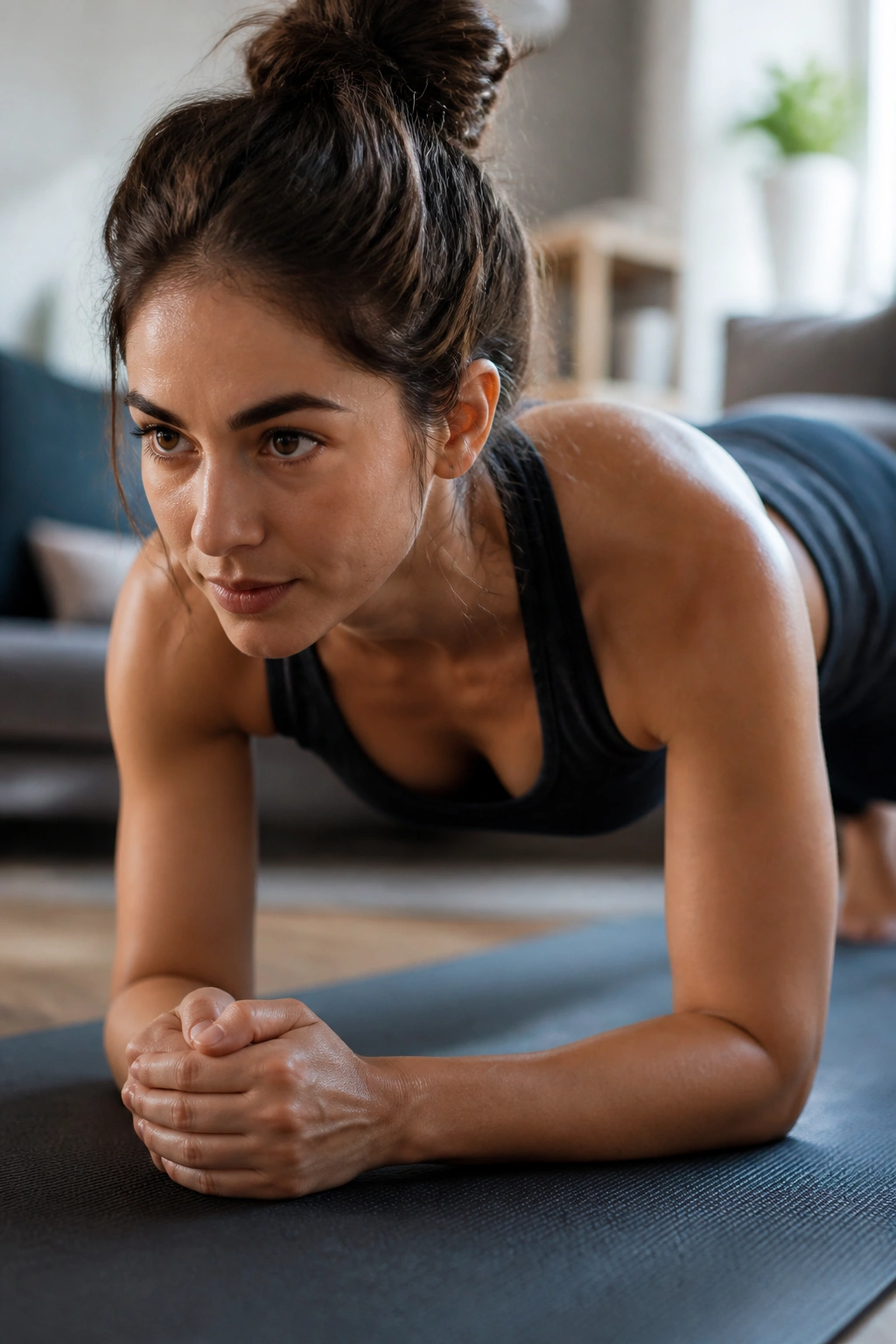
Re-testing is the part most people skip, and it’s the part that makes the whole thing feel real. You finish a round of beginner home workouts, then you repeat the same benchmark under the same conditions and see what changed.
Pick 3 markers from the earlier challenges: wall sit time, plank hold time, incline push-up reps, or 1 minute of marching pace. Use the same setup you used before. Same chair. Same surface. Same rest time. Write down the result.
The goal is not to chase a perfect number. The goal is to notice progress that is easy to miss day to day. Maybe you held a plank for 12 seconds longer. Maybe your squats felt smoother. Maybe your breathing settled faster after mountain climbers. That counts.
A clean re-test usually takes 10 to 15 minutes. Do it after a rest day, not after you have already worn yourself out. Fresh legs and honest notes tell you more than a heroic test done while half-tired.
Progress at home can be quiet. Fine. Quiet progress still counts.
A good beginner routine doesn’t need to feel dramatic to work. It needs to be repeatable, a little challenging, and specific enough that you know whether you showed up or not. That is the whole trick.
Pick three of these workout challenges for beginners at home and rotate them for a week. Keep the timer simple. Keep the notes messy if you have to. The body tends to respond well to people who stop overcomplicating things and start moving.
