



Twenty-five minute full body workouts work because they force the issue. There’s nowhere to hide in a 25-minute session. You either keep moving, or you spend half the workout staring at the floor and wondering where the clock went.
That’s the real trick, honestly. Not more sweat. Not more chaos. A squat, a push, a hinge, a pull, and a little core work can cover a surprising amount of ground when you stop letting rest turn into a five-minute detour.
Time is not the problem.
The problem is usually clutter: too many exercises, too much setup, too much wandering between stations. Short workouts get a bad name because people treat them like scraps. They’re not scraps. Done well, they’re sharp, focused, and far more repeatable than the giant marathon session you keep skipping because life happened.
I like short workouts for another reason too. They expose fluff fast. If a move doesn’t earn its place, you feel it immediately. If a circuit is poorly built, the weakness shows up by round two. And if the pace is right, you finish with that useful kind of tired where your breathing is up, your posture feels tall, and you still have enough in the tank to function like a human being afterward.
Start with the one that matches your equipment and mood. The first routine is the easiest place to begin.
1. The Five-Move Bodyweight Circuit
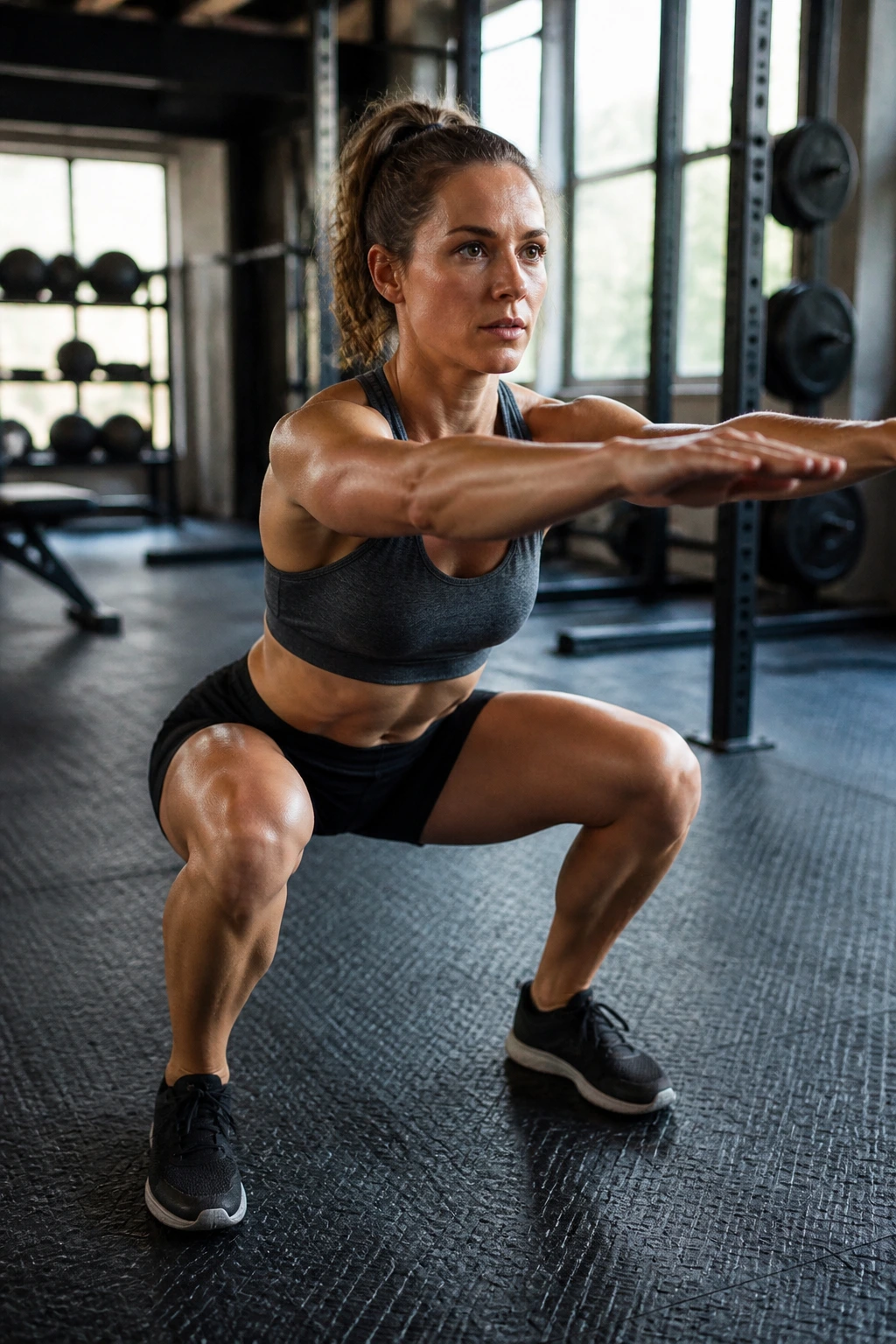
The fastest way to waste a 25-minute bodyweight session is to keep changing exercises before anything meaningful happens. This one stays simple on purpose. You repeat the same five moves long enough for your legs, chest, back, and core to stop pretending they’re fine.
Timer Setup
- 5 minutes of warm-up: marching in place, hip circles, arm swings, and 10 slow squats
- 40 seconds of work, 20 seconds of rest
- 5 exercises
- 4 rounds total
Use air squats, incline push-ups, reverse lunges, mountain climbers, and glute bridges. If push-ups are still a grind, put your hands on a sturdy bench, couch, or table edge. If lunges bother your knees, step back a little farther and keep your front shin more vertical.
Why It Stays Effective
The order matters. Squats wake up the legs, push-ups wake up the upper body, lunges load one side at a time, mountain climbers raise the heart rate, and glute bridges finish with the back side of the body. You’re not chasing novelty here. You’re chasing clean reps and fewer excuses.
One round should feel manageable. By round three, the work should feel honest. By round four, your breathing tells the truth.
2. Dumbbell EMOM for Busy Days
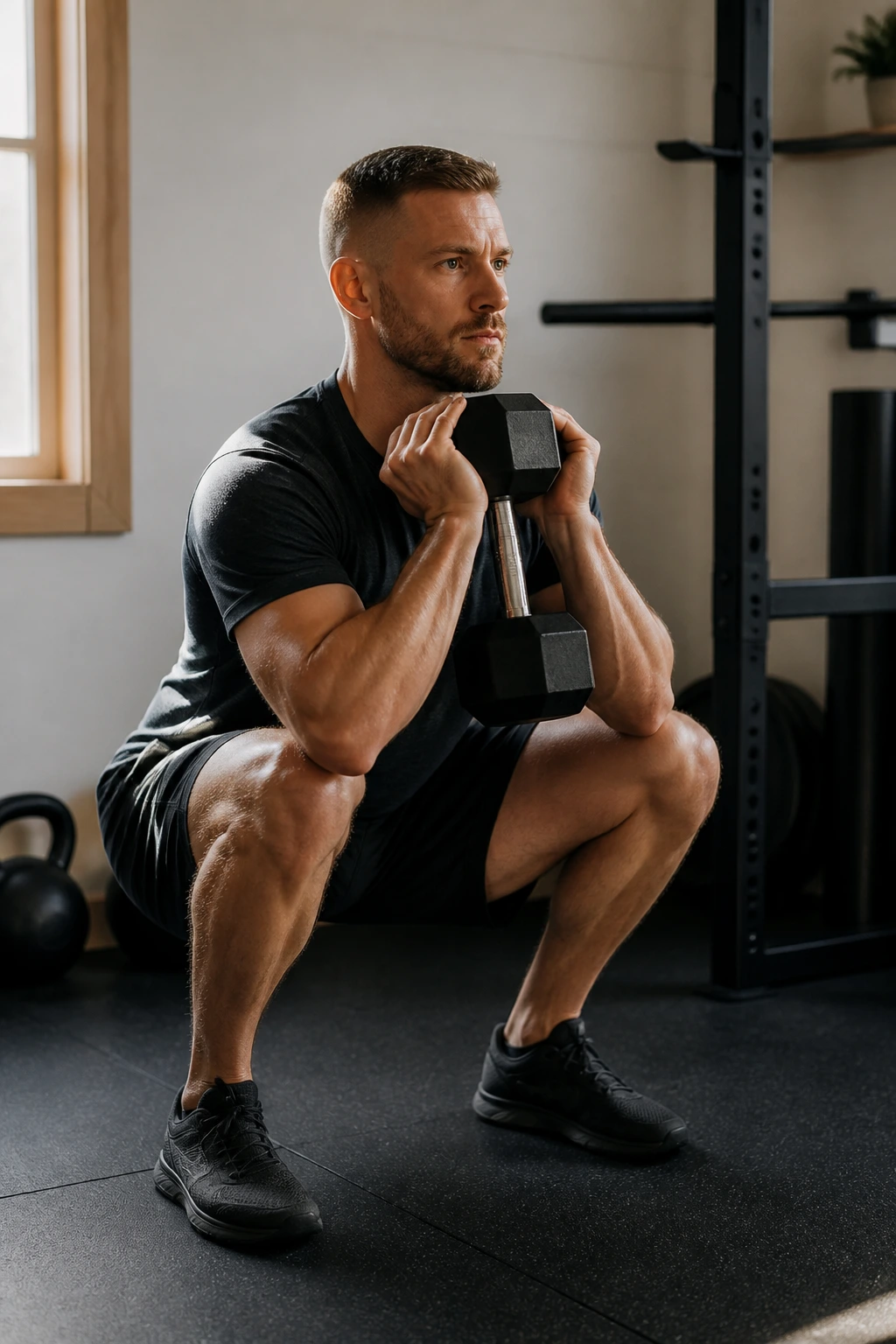
Need structure without having to think very hard? EMOM means “every minute on the minute,” and it’s one of the cleanest ways to squeeze real work into 25 minutes. You pick a movement, do your reps, and rest for whatever time is left in that minute. Simple. Brutal in the right way.
Set aside 5 minutes for a brisk warm-up, then run a 20-minute EMOM with 5 stations repeated 4 times. Minute 1 is 10 goblet squats. Minute 2 is 8 one-arm rows on each side. Minute 3 is 8 dumbbell push presses. Minute 4 is 10 Romanian deadlifts. Minute 5 is 8 reverse lunges on each leg.
The load should feel honest by the end of each minute, not impossible at the start. If you’re finishing each station with 25 seconds left, the weight is too light. If you’re still grinding through the last rep when the next minute starts, it’s too heavy.
That’s the sweet spot: controlled, a little breathless, and just messy enough to feel useful.
3. The Kettlebell Swing-and-Squat Ladder

A kettlebell ladder is one of those workouts that looks almost too clean on paper and then suddenly your grip and lungs start negotiating with you. Good. That means it’s working.
Start with a 5-minute warm-up: hip hinges, arm circles, bodyweight squats, and a few slow dead bugs. Then do a descending ladder of 10, 8, 6, 4, and 2 reps for each move: kettlebell swings, goblet squats, and push-ups. Rest 45 to 60 seconds between rounds.
How to Keep It Sharp
- Swings should snap from the hips, not lift with the shoulders.
- Squats should stay smooth and deep enough that your heels stay planted.
- Push-ups can be from the floor or from an incline if your form starts sagging.
A few people try to turn swings into a front raise. Don’t. The bell should float because your hips are driving it. Once that gets sloppy, the workout stops being crisp and starts being dumb.
If you want a cleaner finisher, add a 30-second plank after the 4-rep and 2-rep rounds. That tiny extra dose makes the whole thing feel more complete.
4. Low-Impact Full-Body Circuit Without Jumps
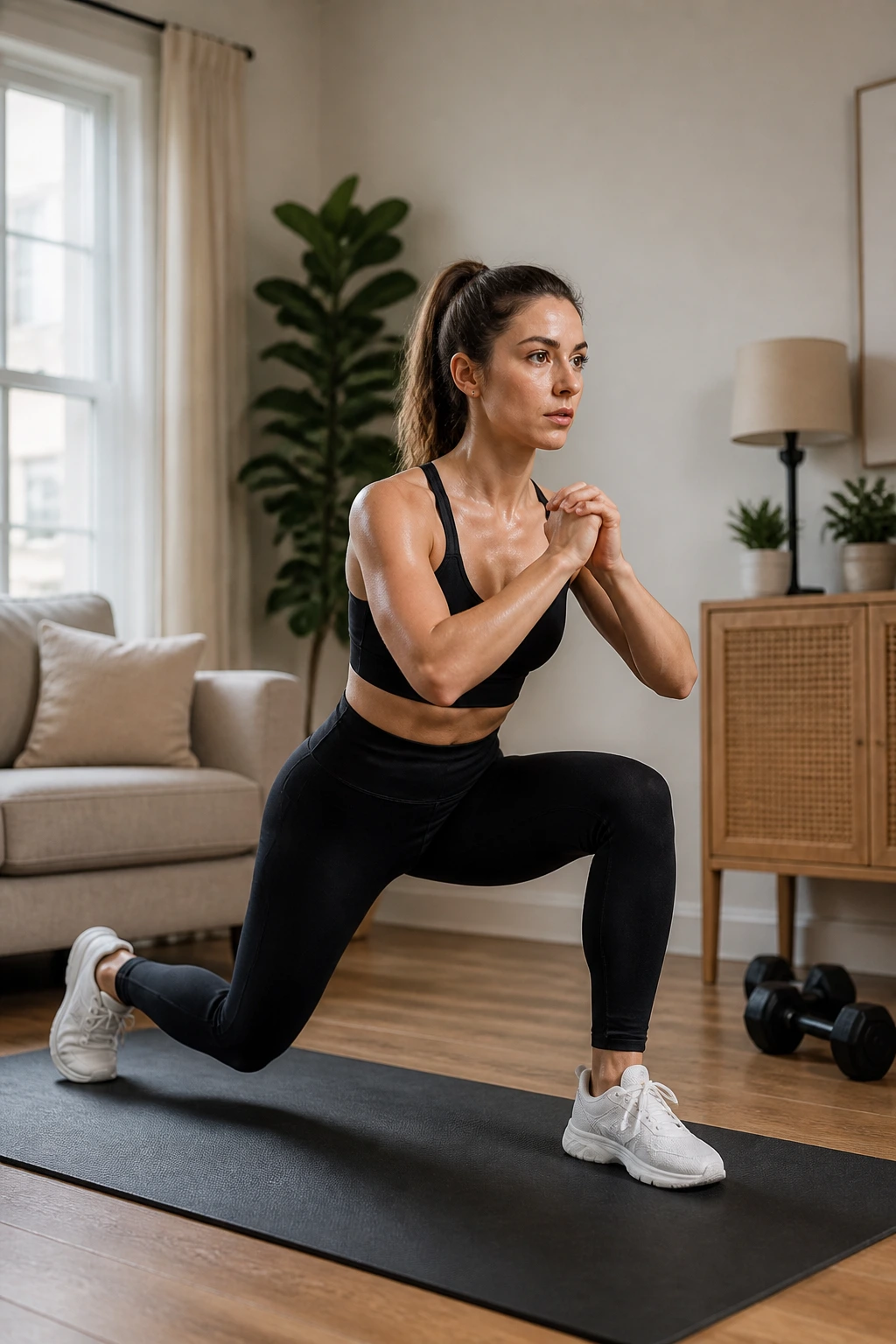
You do not need burpees to sweat through a 25-minute full body workout. That’s one of my favorite fitness myths to knock over.
This version is for the days when your joints want a little mercy but you still want to work. After a 5-minute warm-up, run 4 rounds of 45 seconds on and 15 seconds off with step-back squats, incline push-ups, band rows, glute bridge marches, and dead bugs. If you don’t have a band, do towel rows around a sturdy post or swap in a slow bird dog.
No jumping. No pounding. Still real work.
The magic is in the tempo. Step back, plant the foot, stand tall. Lower the push-up under control instead of flopping. Drive the hips up on the bridge and keep the ribs from flaring. Small things. They add up fast.
This is the workout I’d hand to someone who says they hate “cardio” but still wants their heart rate up. It doesn’t shout. It works.
5. Push, Pull, and Legs in Three Tight Blocks

A short workout gets much better the moment you stop cramming random exercises together and start grouping them on purpose. Push, pull, and legs is a clean way to do that, and it works especially well with dumbbells or bands.
Block 1: Upper and Lower Strength
Spend 6 minutes cycling through dumbbell floor presses, bent-over rows, and goblet squats. Keep each set to 8 to 10 reps. Rest long enough to keep your form tidy, not long enough to drift off.
Block 2: Single-Side Work
Use 6 minutes for split squats, one-arm overhead presses, and suitcase holds. The split squat loads the legs hard. The press wakes up the shoulders. The suitcase hold forces your trunk to stop wobbling around.
Block 3: Finish Strong
End with 6 minutes of renegade rows, alternating lunges, and plank shoulder taps. That last piece is where the session starts feeling like a full body workout instead of a few unrelated lifts taped together.
It’s efficient, but not lazy. There’s a difference.
6. Tabata Intervals That Actually Fit 25 Minutes

Tabata gets abused a lot. People slap the name on any hard interval and call it a day. The real version is tighter than that: 20 seconds of work, 10 seconds of rest, repeated 8 times for 4 minutes.
Run 4 of those blocks after a 5-minute warm-up. That gives you 16 minutes of work. Finish with 4 minutes of easy movement and breathing, and you land right at 25.
Start with air squats and push-ups. Then move to skaters and alternating reverse lunges. After that, try mountain climbers and band rows. Finish with plank jacks or step-out planks if jumping isn’t your thing. Each block should feel fast, ugly, and controlled at the same time.
What Makes Tabata Worth Keeping
It punishes wasted motion. If you’re setting up equipment, you’re doing it wrong. If your reps fall apart by round five, the pace is too hot. And if you finish and feel like you could have done another full block without blinking, the work wasn’t hard enough.
Tabata is short. It’s also not polite.
7. The Bodyweight AMRAP Benchmark

Want a workout that tells you exactly how you’re doing? AMRAP means “as many rounds as possible,” and it’s one of the clearest ways to measure pace without needing fancy gear.
After a 5-minute warm-up, set a timer for 15 minutes and cycle through 10 air squats, 8 push-ups, 12 alternating lunges, 10 hip hinges, and a 20-second hollow hold. Repeat as many clean rounds as you can before the clock runs out. Save 5 minutes for a cool-down walk and some easy stretching.
How to Pace It
- Round 1 should feel almost too easy.
- Keep every transition under 10 seconds.
- Stop one rep before form gets sloppy.
- Breathe through your nose when you can; it keeps the pace from spiking too early.
The nice thing about this one is that it gives you something to beat next time. Not by turning it into a competition with the whole internet. Just with yourself, which is the only comparison that matters here.
It’s honest. I like that.
8. One-Dumbbell Complex From Floor to Overhead
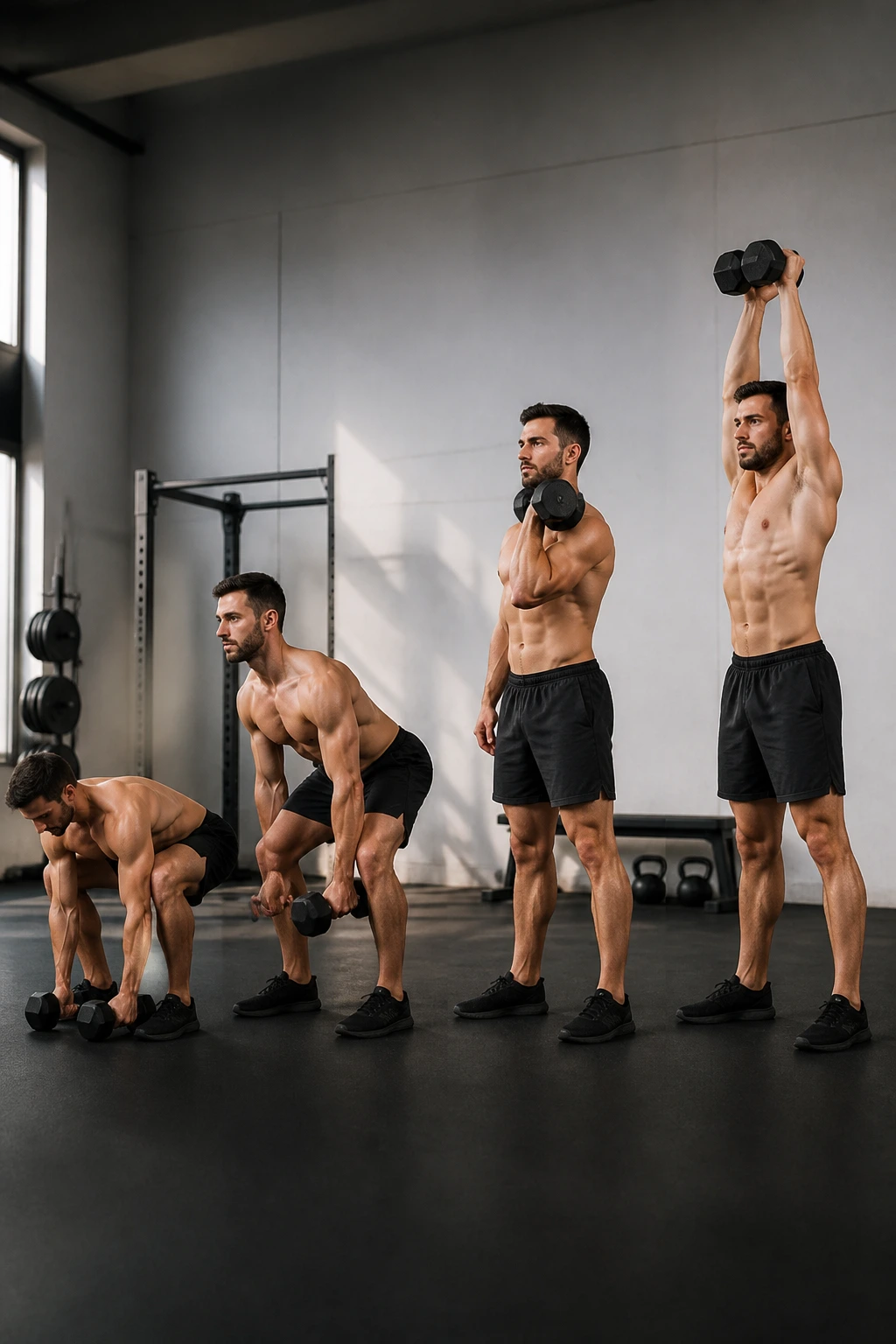
A one-dumbbell complex is a great answer for the person who wants a real workout and doesn’t want to chase equipment all over the room. You keep the same weight in your hand and move it through the whole chain.
Warm up for 5 minutes, then perform 4 rounds of this sequence with one dumbbell: 6 deadlifts, 6 hang cleans, 6 front squats, 6 push presses, and 6 reverse lunges on each leg. Rest 60 to 90 seconds between rounds. Choose a weight that feels light at rep one and heavy at rep six.
What Makes It Different
Unlike a normal circuit, the complex keeps tension on you the whole time. You don’t get the little reset that comes from dropping the dumbbell after every rep. That means the workout feels bigger than the load suggests.
If you’re new to cleans, keep the movement simple. Bring the bell close to your body, catch it softly at shoulder height, and don’t fling it with your arm. The hips do the work. The hand just guides.
A single bell, a tight timer, and not much nonsense. That’s a good combination.
9. Stair Workout for Legs, Lungs, and Arms

Stairs are rude in the best possible way. You think you’re walking, and then your quads light up.
Use a stairwell, a single step, or a sturdy box. After 5 minutes of marching, ankle circles, and slow step-ups, do 10 rounds of 45 seconds of work and 15 seconds of rest. Alternate between fast step-ups, incline push-ups on the stair or box, reverse lunges, and a loaded carry if you’ve got a backpack or a pair of dumbbells.
No weights? Fine. Add a knee drive at the top of each step-up and hold the bottom of the lunge for one second before standing. That tiny pause makes the movement much harder.
The reason this works so well is that the stairs sneak in cardio without turning the workout into a running session. Your legs handle the load, your arms get a turn, and your heart rate follows along whether it wants to or not.
Keep your foot fully on the step. Half-foot stair work gets sloppy fast.
10. Glute-Heavy Full Body With a Bit of Core
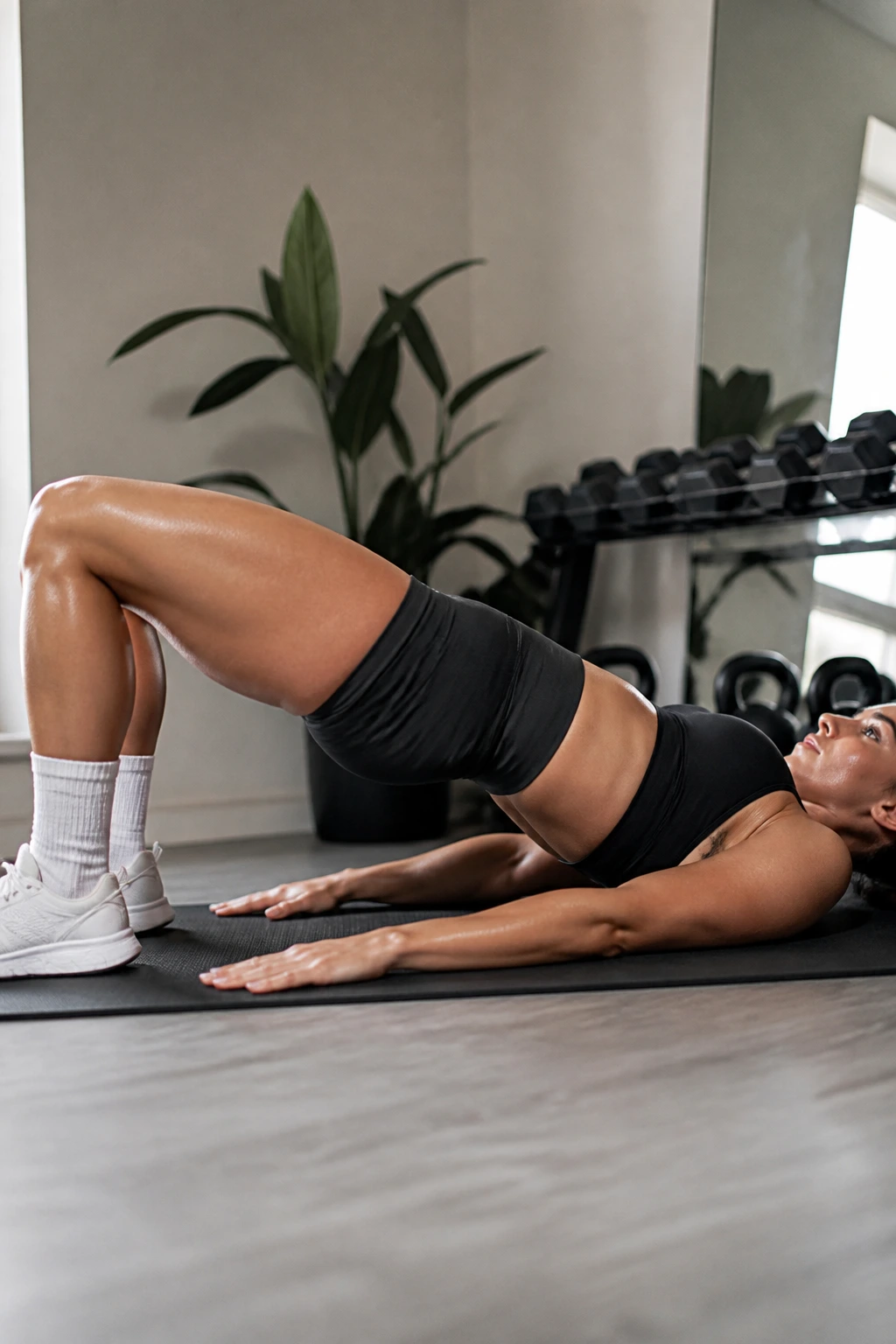
A lower-body focused workout can still hit the whole body if you pair each leg move with something that asks the upper body to show up. That’s the move here.
After a short warm-up, run 3 supersets for 4 rounds each. Pair split squats with one-arm rows. Pair glute bridges with push-ups. Pair Romanian deadlifts with plank taps. Keep each set in the 8 to 12 rep range and rest just long enough to catch your breath.
The glutes do a lot of work in this plan, but the rest of you doesn’t get to nap. That’s why I like it. It feels centered around the legs without becoming a leg-only workout.
Watch the Hips
If your lower back starts taking over on the hinge, shorten the range and slow down. If the push-ups collapse at the bottom, use an incline. If the plank taps make your hips swing side to side, spread your feet wider.
Small fixes. Big difference. And the workout stays honest instead of just loud.
11. Boxing Rounds Plus Strength Moves

Shadowboxing gets far more useful when you stop treating it like fluff and start using it between real strength blocks. The rhythm keeps you moving, and the punches make the whole thing feel a little meaner.
Do 4 rounds of 4 minutes each. Round structure: 2 minutes of shadowboxing, 1 minute of squats and lunges, 1 minute of push-ups or rows. Use the 5 minutes before that for warm-up footwork, shoulder circles, and a few easy jabs and crosses.
Keep the boxing simple. Jab, cross, hook, slip. That’s enough. You don’t need a ten-punch combo taped to the wall. In the strength minute, pick one lower-body move and one upper-body move, then alternate them with clean reps.
The best part is how naturally the heart rate rises and falls. You get a burst during the hands, a grind during the strength work, and a little room to reset before the next round starts. It feels athletic without becoming fussy.
And yes, you’ll know if you’re slacking. Shadowboxing has a way of revealing lazy feet.
12. Hotel-Room Workout With No Noise
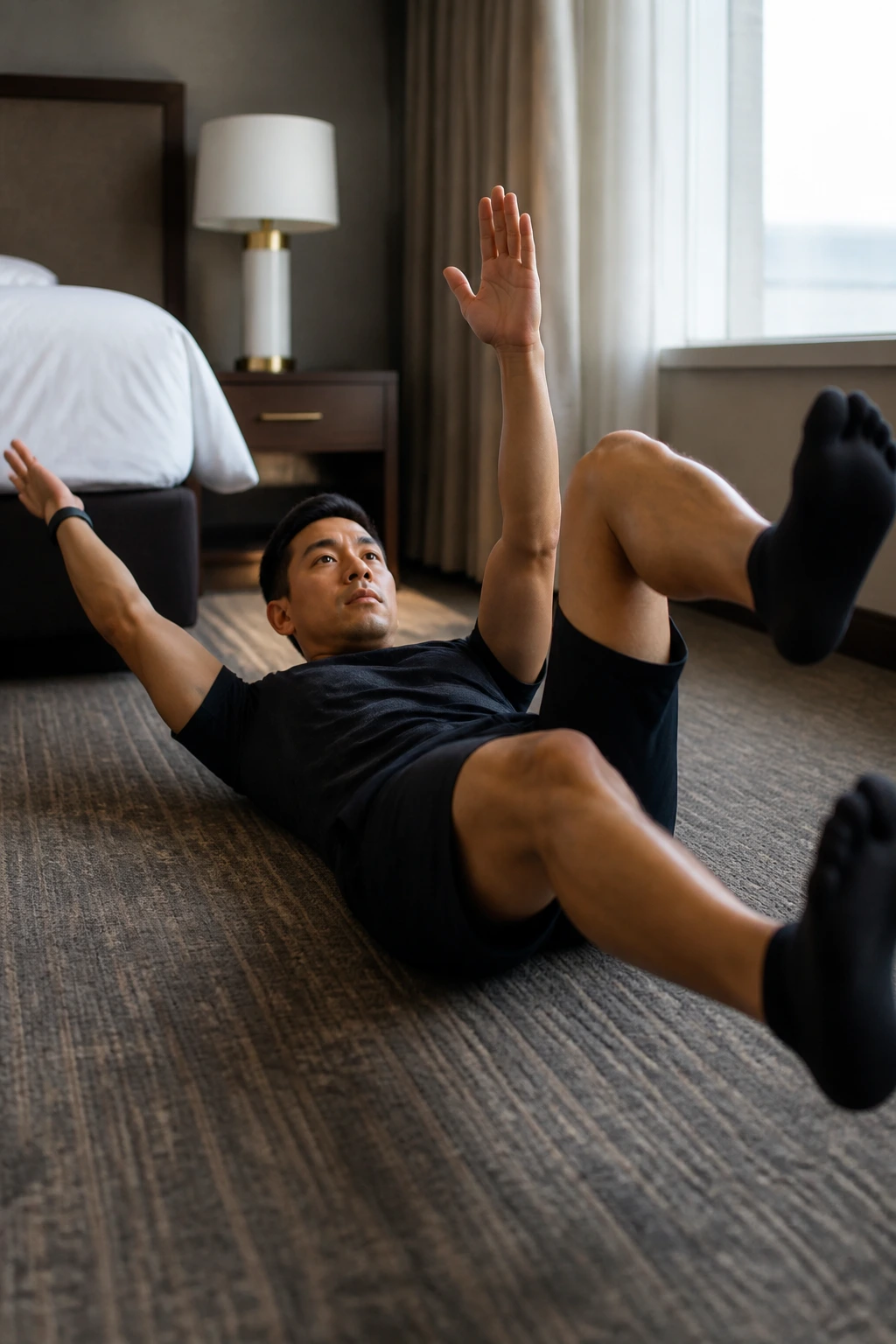
If you’ve got thin walls, a tired floor, and no interest in upsetting the people next door, this one’s your friend.
Start with 5 minutes of mobility: neck rolls, arm swings, bodyweight good mornings, and slow lunges with a reach overhead. Then run 4 rounds of 40 seconds on and 20 seconds off with air squats, reverse lunges, plank shoulder taps, glute bridge marches, and dead bugs. If the room has a sturdy desk or dresser, use it for incline push-ups.
A Few Small Rules
- Keep every landing quiet.
- Step rather than jump.
- Avoid using the bed for support; it’s unstable and usually too soft.
- Move with control so the session feels deliberate, not cramped.
The beauty of a hotel-room workout is that it strips away the usual gym drama. No machines. No mirror checking. No waiting for the one set of dumbbells everybody else wants. Just a floor, a timer, and enough discipline to not make a scene.
It’s boring in the right way. I mean that as a compliment.
13. Tempo Strength Session With Slower Reps

Slower reps are underrated because they punish sloppy form almost immediately. If you cut the speed, the load gets honest.
Use a 3-second lowering phase, a 1-second pause, and a strong drive up. After a 4-minute warm-up, do 3 rounds of goblet squats, push-ups, Romanian deadlifts, one-arm rows, and split squats. Keep each move at 6 to 8 reps per side, with 30 to 45 seconds of rest between sets.
Tempo Cues That Matter
- Lower under control for 3 seconds.
- Hold the bottom for 1 second.
- Stand or press up with purpose.
- Stop the set when the last rep starts to wobble.
This style of workout feels less frantic than an interval circuit, but the burn sneaks in anyway. The quads shake on the pause. The back feels the row a little more. The push-up turns into a test of patience, which is often where good strength work lives.
If you rush tempo work, you miss the point. Slow down and let the movement do the talking.
14. Core-Driven Sweat Circuit With Carries

A lot of people think core work means endless crunches. It doesn’t. The trunk gets trained best when it has to stop movement, resist twisting, or carry a load from one end of the room to the other.
Warm up for 5 minutes, then do 4 rounds of 45 seconds on and 15 seconds off with suitcase carries, bear crawls, squat to press, dead bug presses, and plank drags. Use a dumbbell, kettlebell, or even a loaded backpack if that’s what you’ve got.
What to Feel
- Suitcase carries should make one side of your body work harder to stay tall.
- Bear crawls should feel controlled, not rushed.
- Dead bug presses should keep your lower back from popping off the floor.
- Plank drags should challenge your hips without turning into a sprint.
This is one of those workouts that looks tame until your midsection starts complaining. The fatigue spreads upward and downward too, which is why it lands as a full body session instead of a sit-up marathon.
Strong cores don’t just bend. They hold.
15. Resistance Band Full Body From Head to Heel
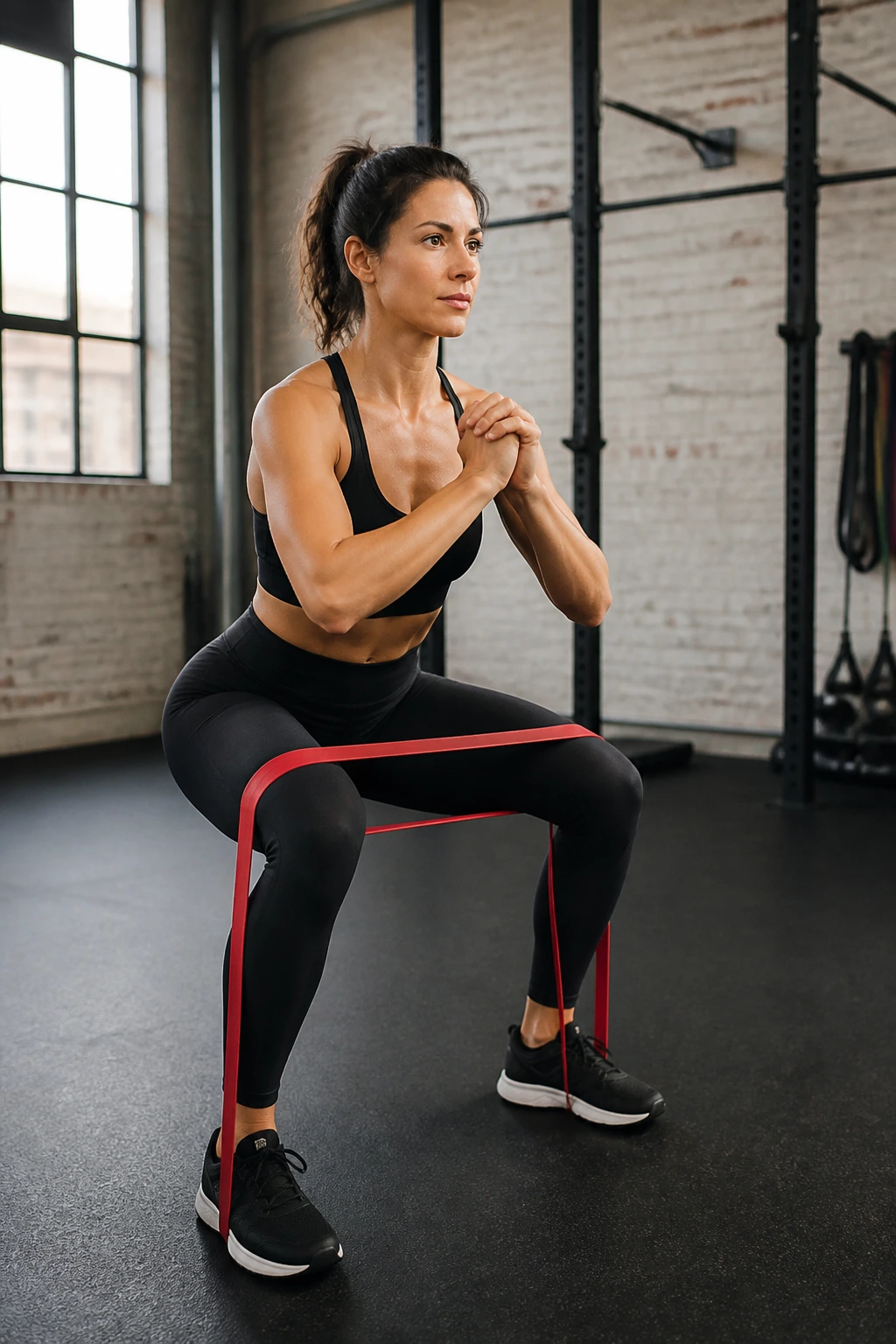
Bands look easy until the last 10 seconds of a set. Then they get interesting.
Use one loop band and one longer band if you have it. Start with a 5-minute warm-up, then run 3 rounds of band squats, band rows, overhead presses, lateral walks, hinge pulls, and pull-aparts. Stay in the 12 to 15 rep range, and keep tension on the band the whole time instead of letting it go slack between reps.
What Makes Bands Worth Using
The resistance gets harder as the band stretches, which changes how the muscles work through the rep. That’s part of why they’re so useful for short sessions. You don’t need much load to feel the set by the end.
Place the loop band above the knees for squats and lateral walks. Stand on the long band for presses and rows. If an anchor point is involved, use something sturdy and low-risk, not a wobbly chair leg or a door that might give out.
Bands are not a consolation prize. They just ask for cleaner movement.
16. Upper-Body and Lower-Body Alternating Intervals

Alternating upper and lower body work keeps the pace high without making every minute feel like a sprint. It’s a nice middle ground if you want structure and a little breathing room.
After 5 minutes of warm-up, set a timer for 20 minutes. Work for 1 minute on upper body, then 1 minute on lower body, and repeat for 10 rounds. Use push-ups, rows, overhead presses, squats, reverse lunges, and Romanian deadlifts. If you’re using bodyweight only, swap rows for towel pulls, floor slides, or prone Y raises.
The rhythm helps. Your shoulders get a short break while your legs work, and your legs get a break while your upper body picks up the load. That makes the session feel longer in a good way, not because it drags, but because every minute has a job.
Keep the reps tight. If you’re flailing by minute four, lighten the load or choose simpler versions. The workout should challenge you, not turn you into a pile.
17. Back-Friendly Full Body With Smart Loading

If your lower back gets cranky when workouts turn too fast or too heavy, stop forcing the issue. Use positions that support you.
This session leans on split squats, chest-supported rows, glute bridges, elevated push-ups, bird dogs, and suitcase carries. Run them in 3 rounds with 8 to 12 reps on the lifts and 30-second holds or carries where they fit. Keep the total work tight enough to stay focused and long enough to feel like a full body workout, not rehab homework.
What to Avoid
- Heavy, rushed deadlifts if your hinge pattern is sloppy.
- Fast twisting when the trunk is already tired.
- Sloppy row reps with a rounded back.
- Deep ranges you can’t control.
The point here is not to baby yourself. It’s to load the body in ways that still feel clean. A chest-supported row can light up the upper back without making the lumbar spine carry the burden. A split squat gives the legs a serious job without asking the spine to balance a barbell.
That’s smart training, not soft training.
18. Power Complex for Days You Want to Move Fast

A power workout should look crisp, not sloppy. If the reps slow down too much, the load is too heavy or the pace is too aggressive.
After a 5-minute warm-up, do 6 rounds of 30 seconds of work and 30 seconds of rest with squat jumps or fast air squats, push presses, skater steps, medicine ball slams, and mountain climbers. If jumps bother your knees, stay with quick squat-to-stand reps and fast step-out skaters instead.
Keep the weight light. That matters more than people think. Power comes from speed and intent, not from grinding a load you can barely move. If the medicine ball or dumbbells make you slow, drop down a size.
This workout feels athletic in a clean, direct way. Fast feet. Fast hands. Clean landings. Done well, it wakes you up without leaving you wrecked. Done badly, it turns into a messy cardio session with too much ego in it.
Choose the clean version.
19. Partner Workout With Shared Stations

Training with someone else changes the energy fast. Nobody wants to be the person who zones out when the timer is running and someone else is watching.
Set 5 minutes aside to warm up together, then alternate 45-second work intervals with 15 seconds to switch stations. One person does goblet squats while the other rows. Then swap. Next round, one person handles push-ups while the other does reverse lunges. Keep rotating through presses, carries, planks, and hinge work until you’ve covered 20 minutes.
Why It Works Well
- The wait time disappears because somebody is always moving.
- Heavier equipment gets used without crowding.
- The pace stays high because the next turn is always close.
- Form tends to improve when another pair of eyes is in the room.
If you’re training solo, the same workout still works. Just treat each station as a timer-based circuit and move through it alone. The shared version is more fun, though. That’s not a tiny thing. Fun gets people back in the room.
And that matters more than perfect programming on paper.
20. The Quiet Finish Mobility-Strength Reset
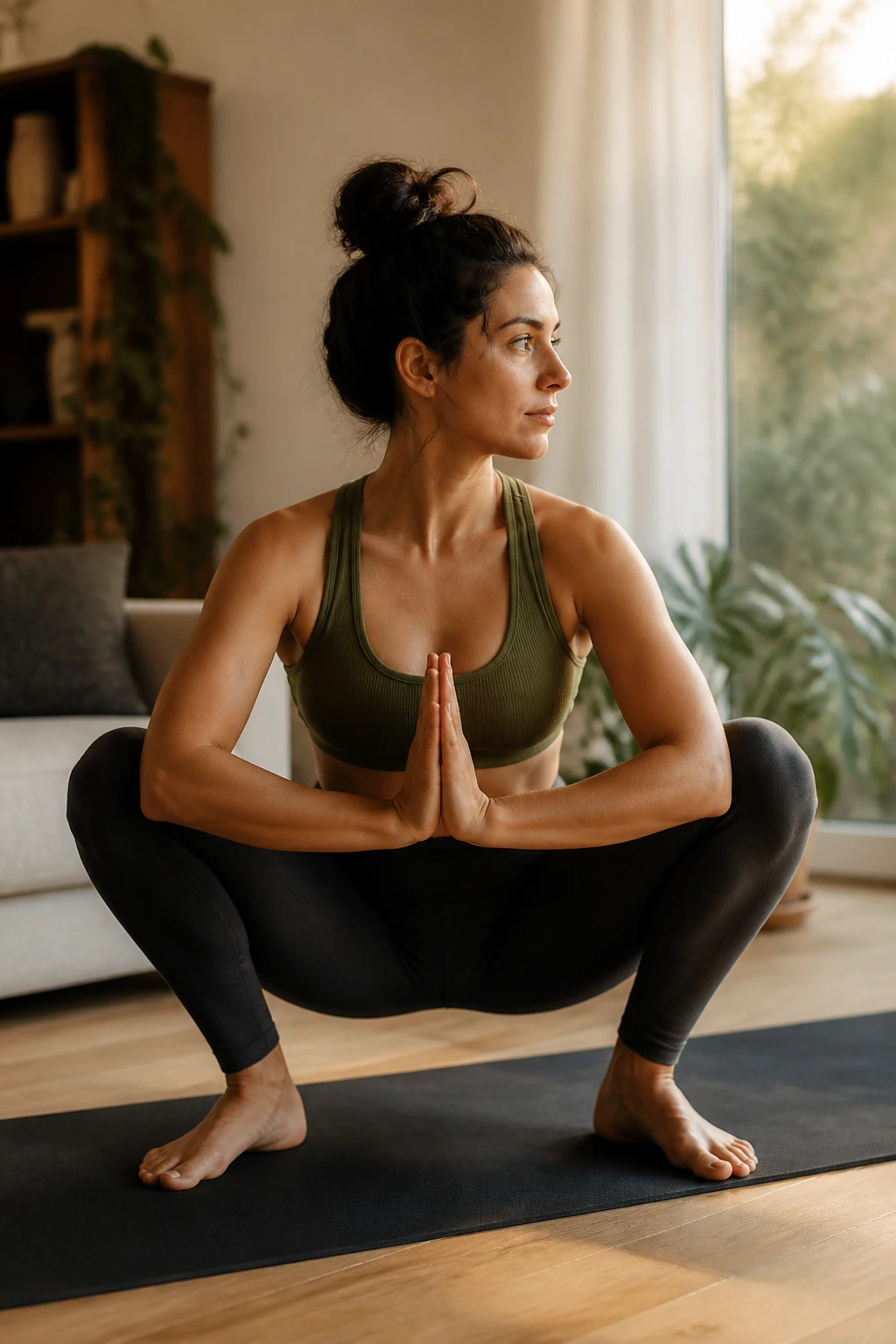
Not every 25-minute full body workout needs to feel like a fight. Some days, the best session is the one that leaves you looser, warmer, and less stiff than when you started.
Use 5 minutes for joint circles, cat-cow, hip openers, and slow arm reaches. Then spend 15 minutes moving through cossack squats, incline push-ups, single-leg Romanian deadlifts, bird dogs, and a deep squat hold. Finish with 5 minutes of easy walking or floor breathing. The intensity stays lower here, but the work is still real.
This is the one I’d choose when the body feels a little flat, a little tight, or a little cooked from harder sessions. You still get squatting, hinging, pushing, core control, and a bit of balance work. You just don’t pile speed on top of all of it.
That’s a useful reminder, too. A good workout does not always have to drain you. Sometimes it should leave the hinges quieter, the shoulders open, and the legs ready to move again tomorrow.
