



Thirty days can change the way a beginner feels on a yoga mat — if the practice is small enough to repeat and specific enough to stick. The mistake most people make is trying to copy a flowing studio class on day one, then wondering why their wrists ache, their hamstrings scream, and the whole thing starts to feel like homework.
A smarter route is much less dramatic. Pick one tiny focus, keep the poses simple, and let the body catch up to the habit. That might mean five minutes of cat-cow and child’s pose for one person, or a slow strength flow with a wall for another. The point is not to “win” yoga. It’s to build a practice that feels doable when you’re stiff, busy, tired, or a little grumpy.
If you’re looking for 30 thirty-day yoga challenges for beginners, the best ones are the ones that remove friction. Use a block. Keep a strap nearby. Repeat the same three poses until they feel familiar. That’s not boring — that’s how beginners get traction without beating themselves up.
These challenges are built for real life: small spaces, limited time, tight hips, noisy minds, and the weird fact that your body sometimes feels better after moving for eight minutes than after promising yourself a full hour. Start with the one that fits your current energy, not the one that sounds toughest.
1. Five Minutes of Sun Salutations Every Day
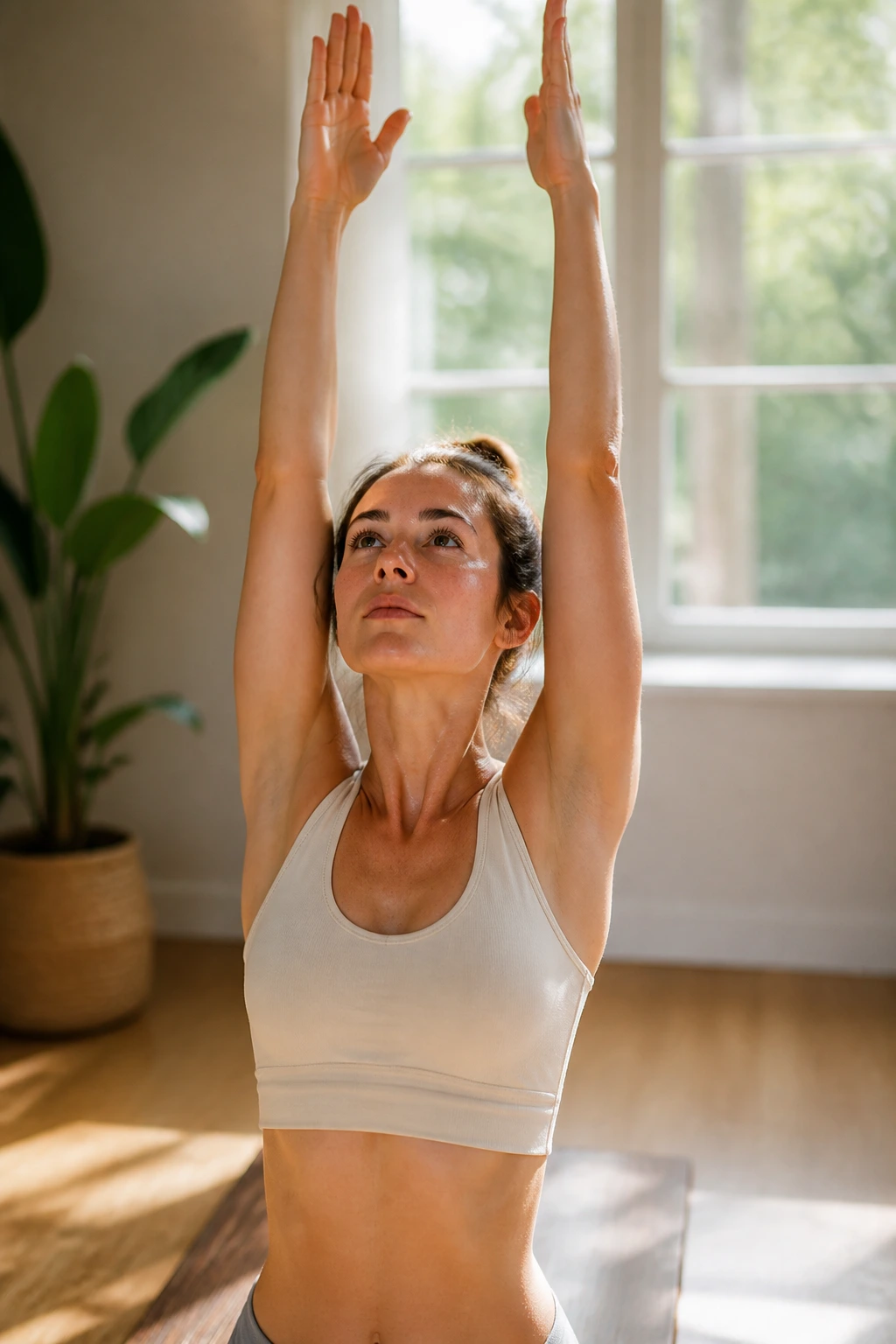
Sun salutations are the closest thing yoga has to a “hello” that the whole body understands. A beginner-friendly version works best when it stays slow: mountain pose, forward fold, half lift, step back to plank, lower to knees if needed, cobra or upward-facing dog if it feels fine, then back through child’s pose.
Keep it to 3 to 5 rounds at first. That’s enough to warm the shoulders, wake up the hips, and make you breathe a little deeper without turning the practice into a slog.
How to scale it
If your wrists are sore, put your hands on blocks or a sturdy chair seat. If your low back feels cranky, skip the jump-backs and step one foot at a time. If all of that sounds like too much, do the same sequence at the wall. It still counts.
- Round 1-2: move slowly and memorize the shape
- Round 3-4: link breath to movement
- Round 5: hold each fold for two full breaths
Tip: this challenge works best first thing in the morning, before your brain starts negotiating.
2. A Morning Mobility Flow That Starts the Day Without a Jolt
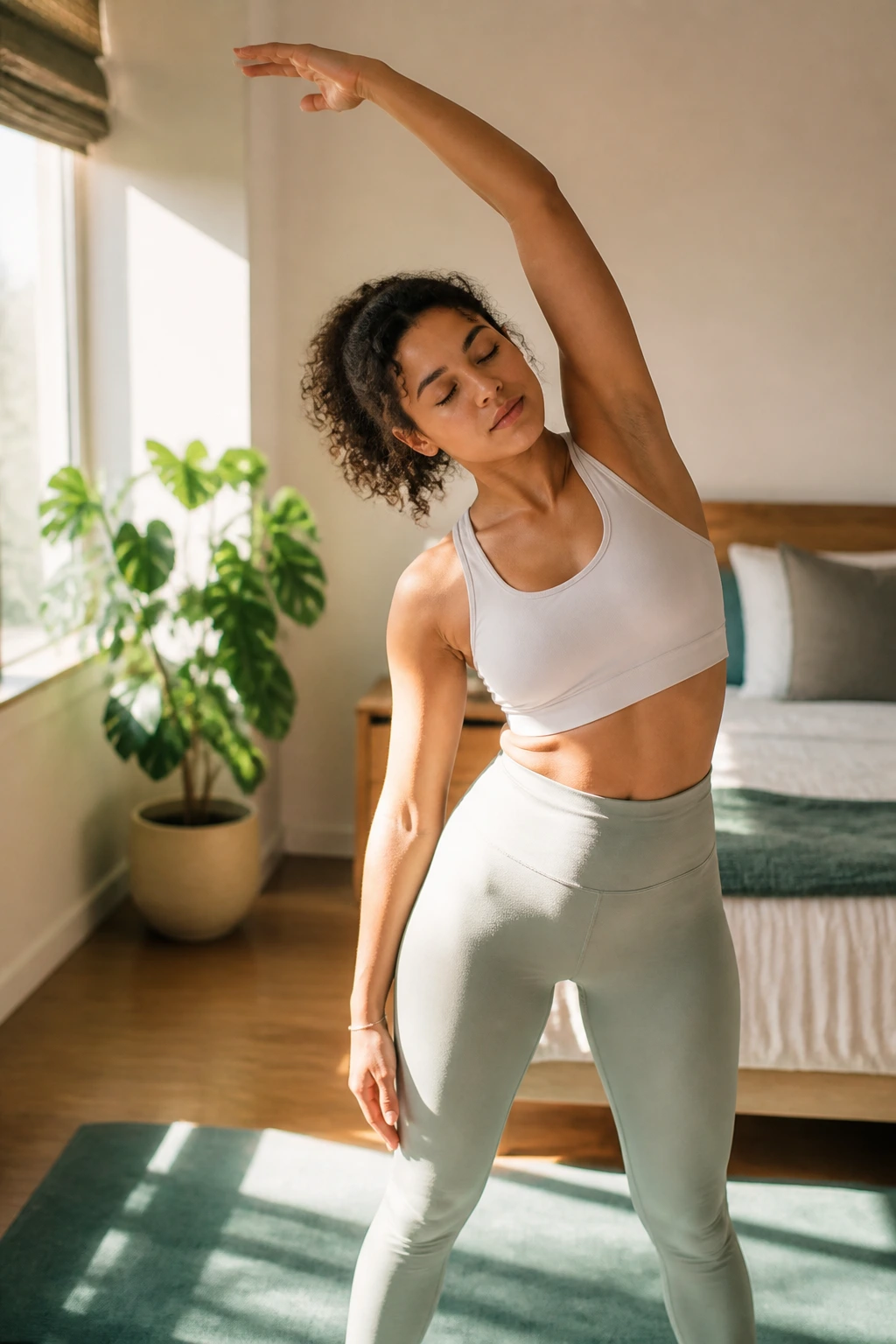
A morning flow should feel like turning a key, not starting a lawn mower. Think cat-cow, low lunge, half split, standing side stretch, and a gentle forward fold done at half speed. You want joints that feel oiled, not yanked.
Why morning? Because stiffness loves sleep. Shoulders round, hips tighten, and the first few minutes out of bed can feel like you’re made of old hinges. A 10-minute mobility flow gives you a clean start without demanding sweat or flexibility you do not have yet.
What to keep in mind
- Stay on the floor longer than you think you need
- Keep bends in the knees
- Move your head last, not first
- Pause in child’s pose if the room still feels blurry
A lot of beginners try to do too much too soon in the morning. Don’t. The goal is to leave the mat feeling more awake, not half-folded and annoyed.
3. An Evening Wind-Down Practice for Tired Hips and Loud Thoughts
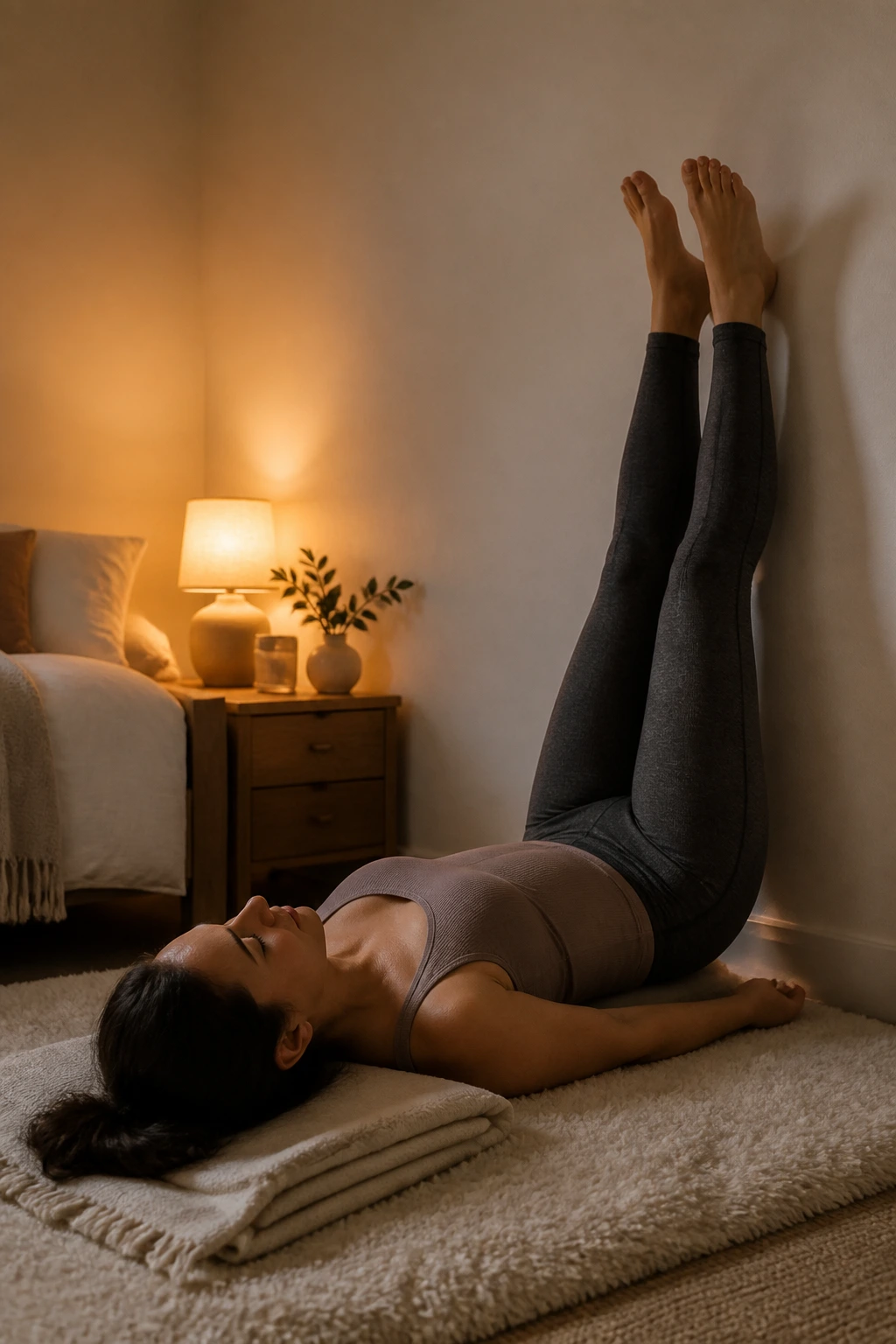
Evening yoga has a different personality. It should lower the volume. Supported child’s pose, legs up the wall, reclined twist, and a long bridge hold can work wonders when your body feels like it has been braced all day.
The best part is how little you need. A blanket, a wall, maybe a bolster if you have one. That’s enough. Keep each pose for 5 to 8 slow breaths, and let the exhale be the main event.
Your face should soften. Your jaw too.
If you’re tempted to turn this into a workout, stop. Evening practice is where beginners learn that yoga can be quiet and still count. That lesson matters more than people think.
4. A Breath-Led Challenge That Slows Everything Down
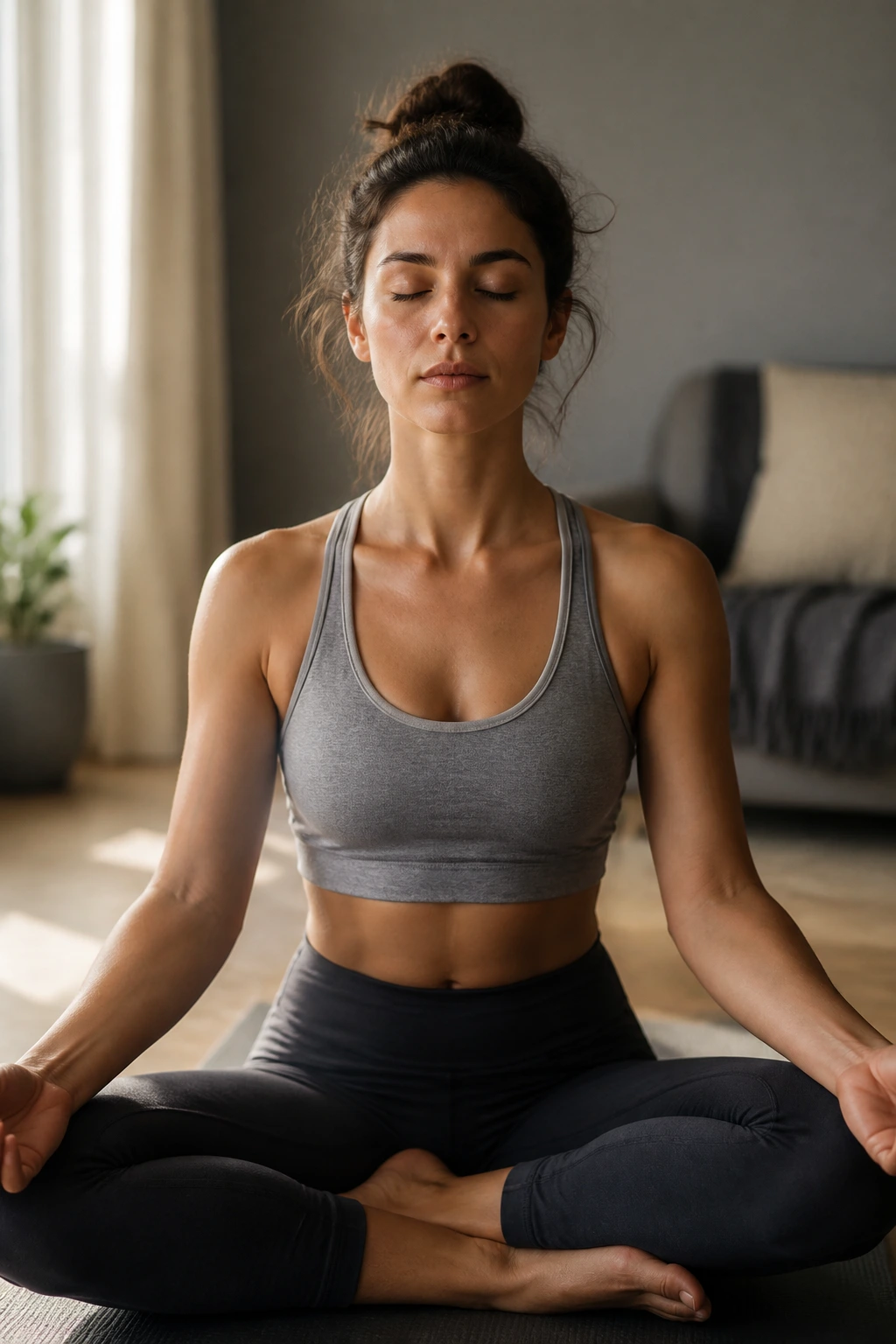
Breath-led yoga is almost absurdly simple, which is why it works. Each movement starts with inhale or exhale, and the pace stays honest. No rushing. No trying to look graceful. Just breath, motion, breath, motion.
The challenge is to match one movement to one breath for 10 to 15 minutes. Reach up on the inhale, fold on the exhale. Lift the chest on the inhale, soften on the exhale. After a few rounds, the practice starts to feel less like exercise and more like a metronome.
Why beginners like it
Because it removes decision fatigue. You are not trying to remember a long sequence. You are following a simple rule, and that rule gives the session a shape.
A good starter flow here includes mountain pose, forward fold, half lift, low lunge, and child’s pose. Keep it steady. Keep it plain. That plainness is a feature, not a flaw.
5. Balance Basics with Tree Pose, Heel-to-Toe Walking, and Wall Support
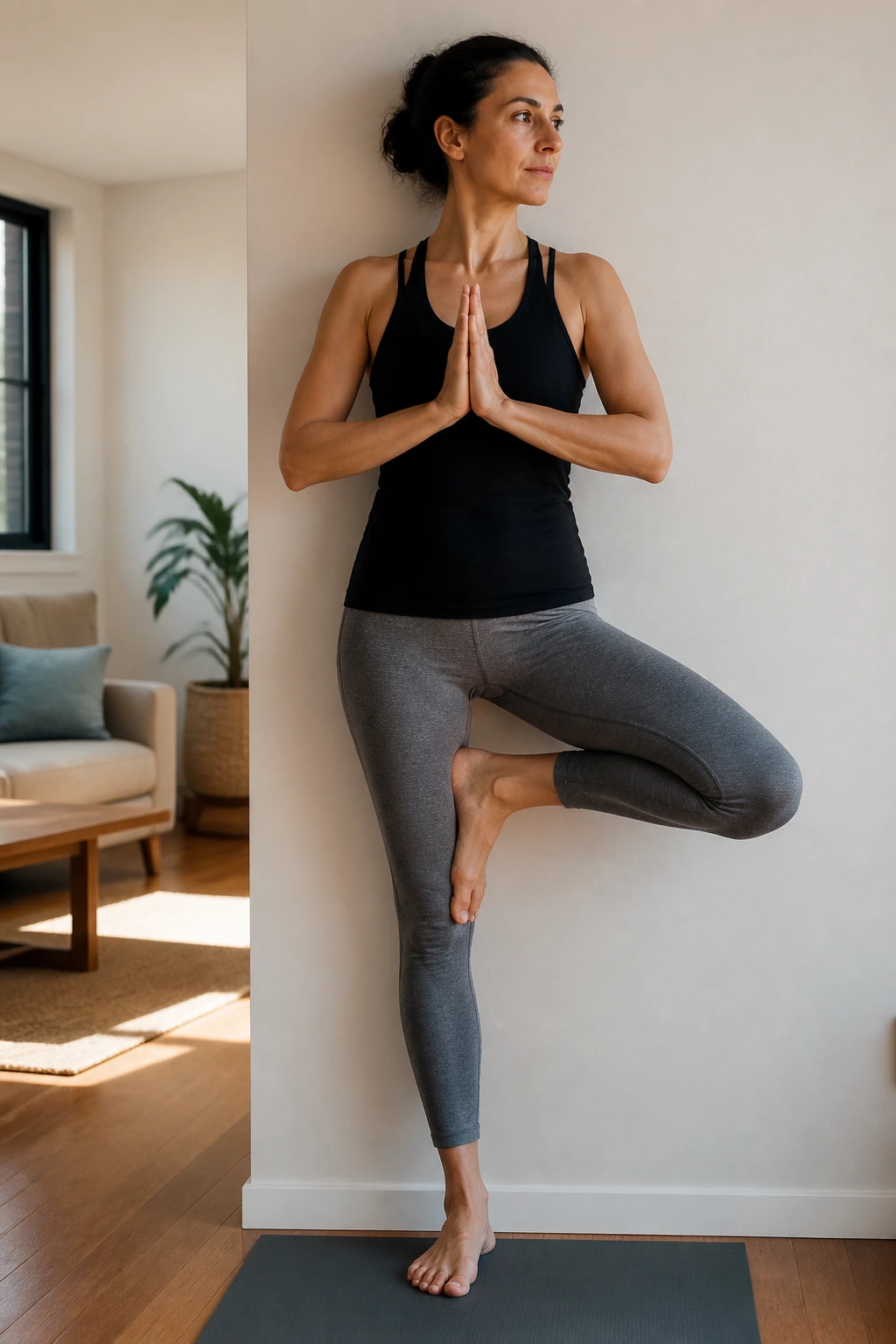
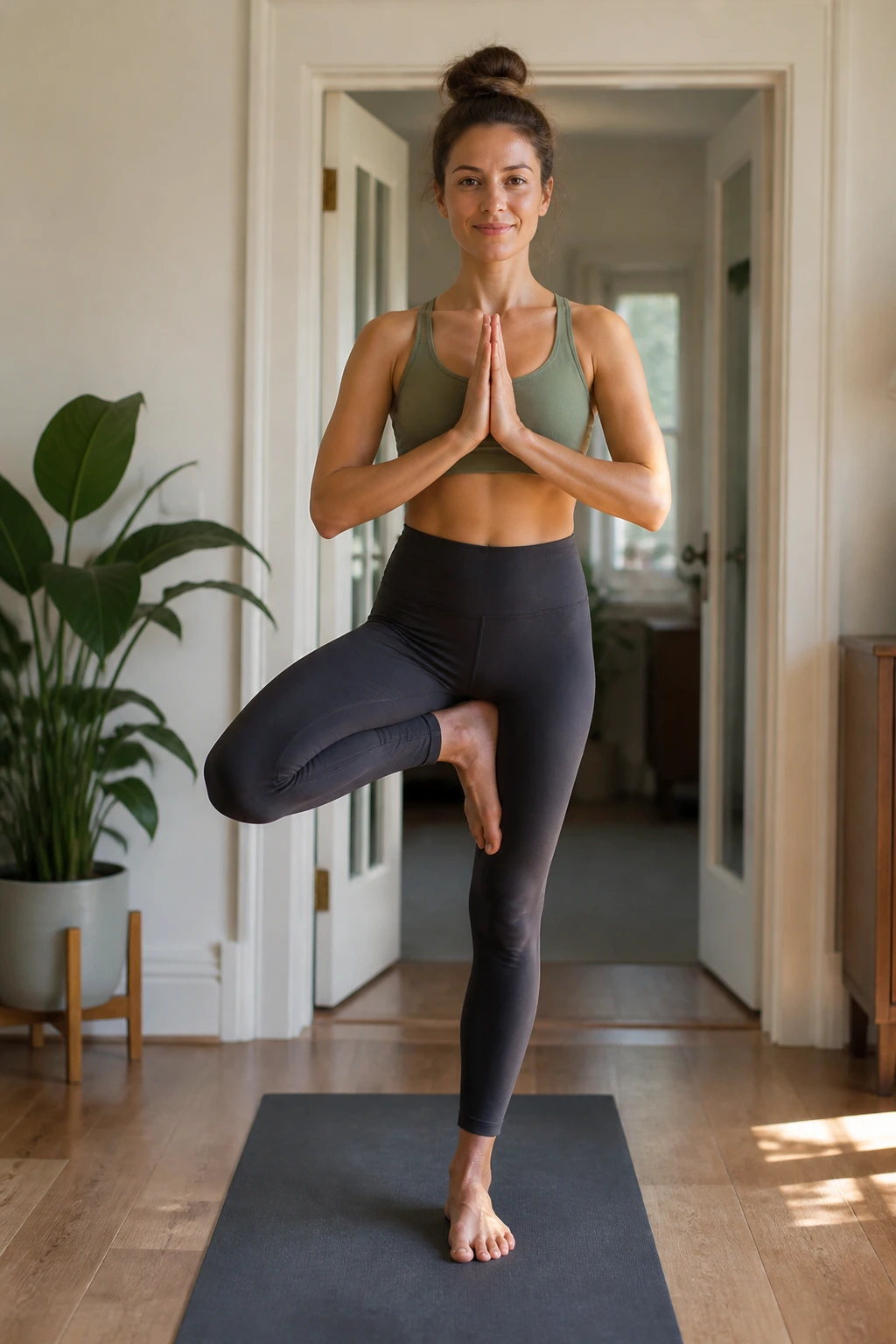
Balance work looks intimidating until you realize it starts on the floor. A beginner can build balance with heel-to-toe walks across the room, single-leg stands near a wall, and tree pose with toes of the lifted foot resting on the ankle instead of high on the inner thigh.
That last detail matters. High tree pose gets all the attention, but low tree pose is often smarter for beginners because it steadies the pelvis and gives the standing foot a chance to do its job. Stay there for 20 to 30 seconds per side.
A few useful cues
- Press the floor with the big toe, little toe, and heel
- Pick one spot to stare at
- Keep the hips level instead of twisting open
- Hold the wall lightly, not death-grip it
Balance challenges tend to reveal how rushed the nervous system is. That’s useful information. Annoying, maybe, but useful.
6. Core Stability Without the Crunches
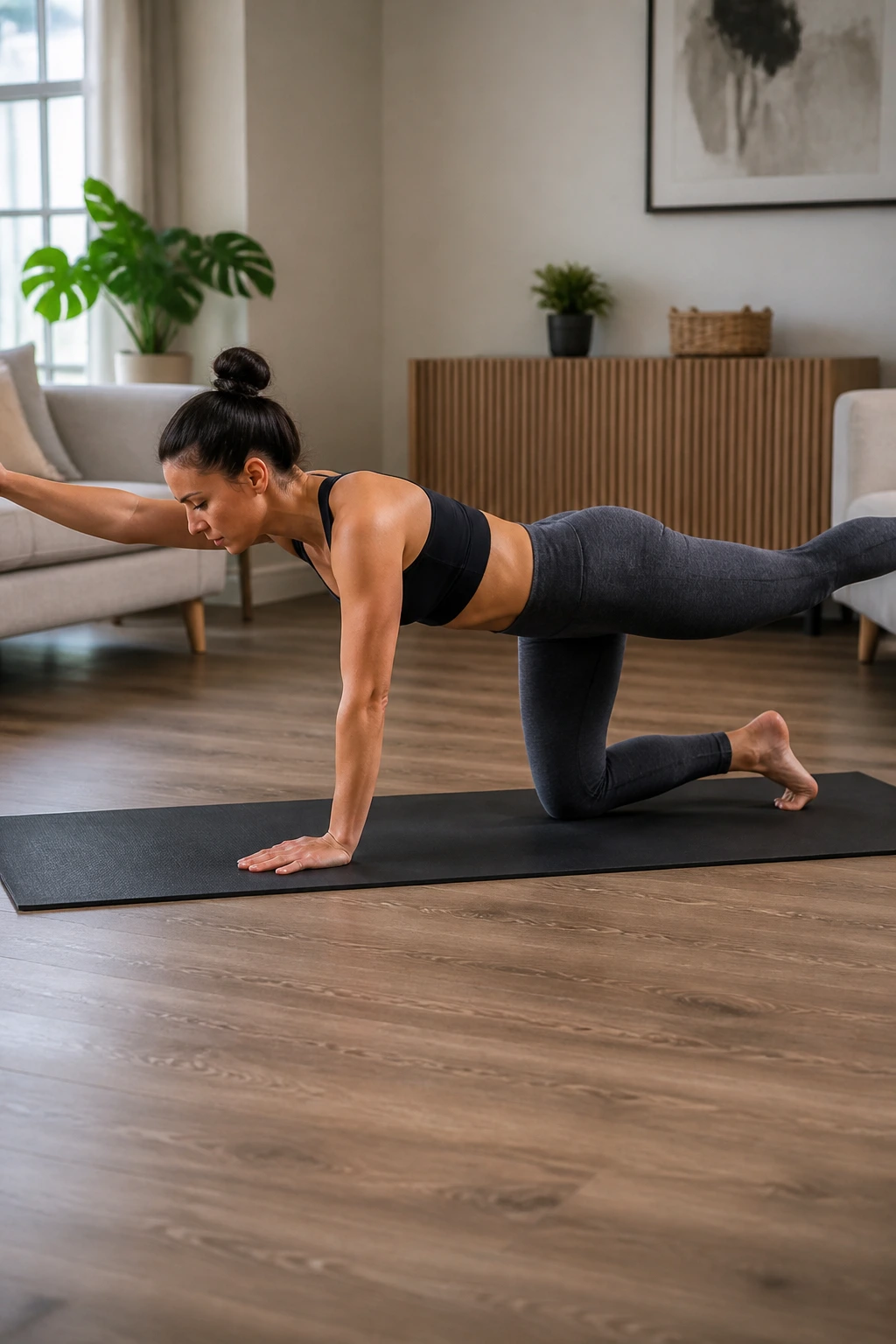
Do beginners need core work in yoga? Yes. Do they need a thousand boat pose reps? Absolutely not.
A better challenge is slow, steady bracing: tabletop hover, dead bug-style arm and leg reaches, low plank on knees, and a short boat pose hold with the feet on the floor if needed. The aim is control, not shaking like a leaf for the sake of drama.
What makes it work
You are training the midsection to support the spine while the limbs move. That’s different from doing sit-ups until your neck feels tight. Keep the effort around 6 out of 10, and stop before form starts to fall apart.
A simple pattern:
- Hold tabletop for 5 breaths
- Extend one arm and the opposite leg
- Return and switch
- Finish with child’s pose
That’s enough. Really.
7. Hip Openers That Don’t Turn Into a Wrestling Match
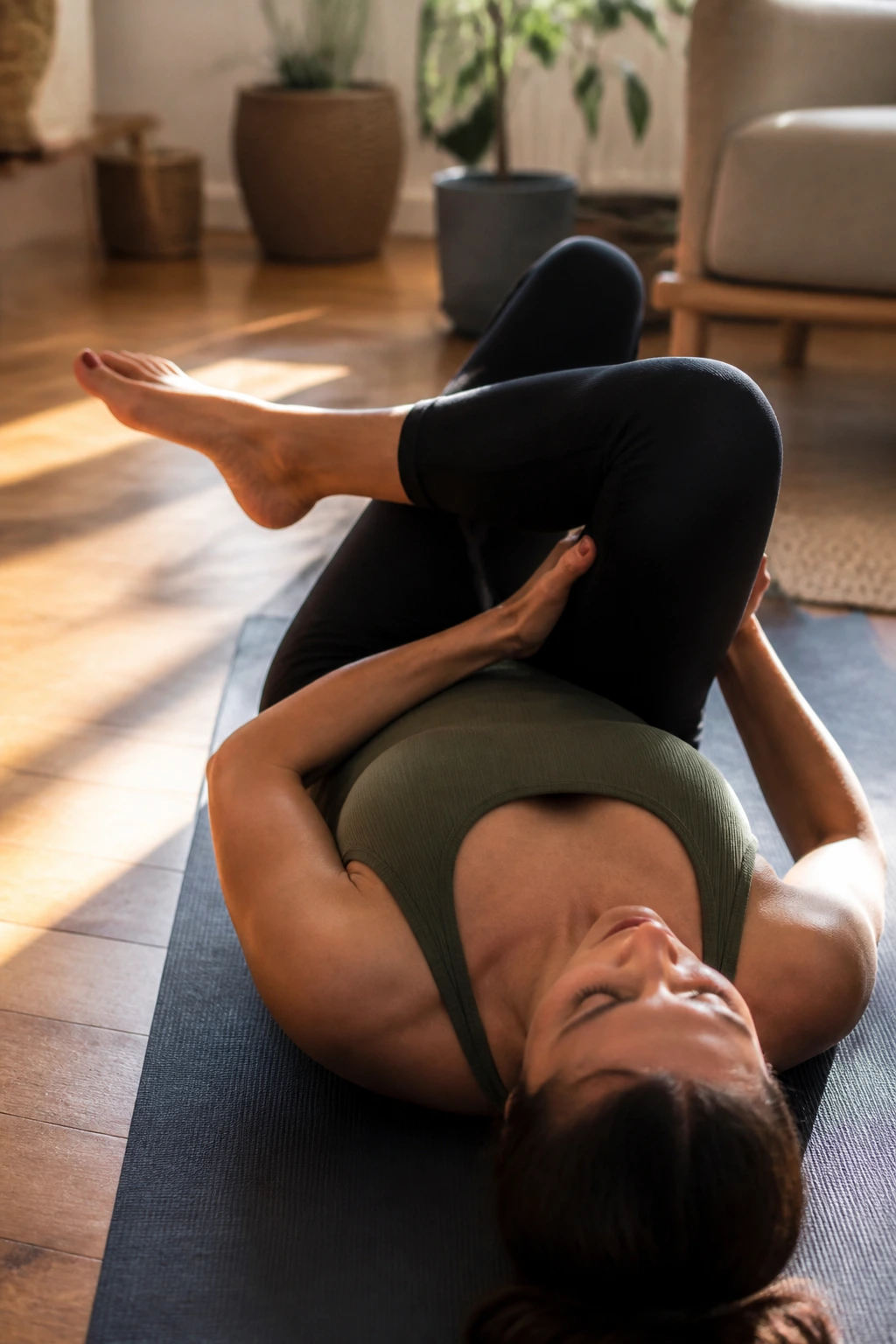
Hip openness is one of those yoga goals people chase with too much force. The hips do not care about your urgency. They respond better to patience, warmth, and positions that let the muscles soften over time.
A solid beginner challenge includes low lunge, figure-four on the back, goddess pose, and supported pigeon at the wall or on a block. Hold each one for 4 to 6 breaths instead of bouncing around. The bounce is usually where things get cranky.
What to watch for
If the front knee in a lunge feels pinchy, shorten the stance. If pigeon feels like a hip lottery you did not agree to, switch to reclined figure-four. Same general effect. Less drama.
And that’s the point: hip work should leave you feeling open in a usable way, not like you’ve been folded in half and left there.
8. Hamstring Ease with Bent Knees and a Strap
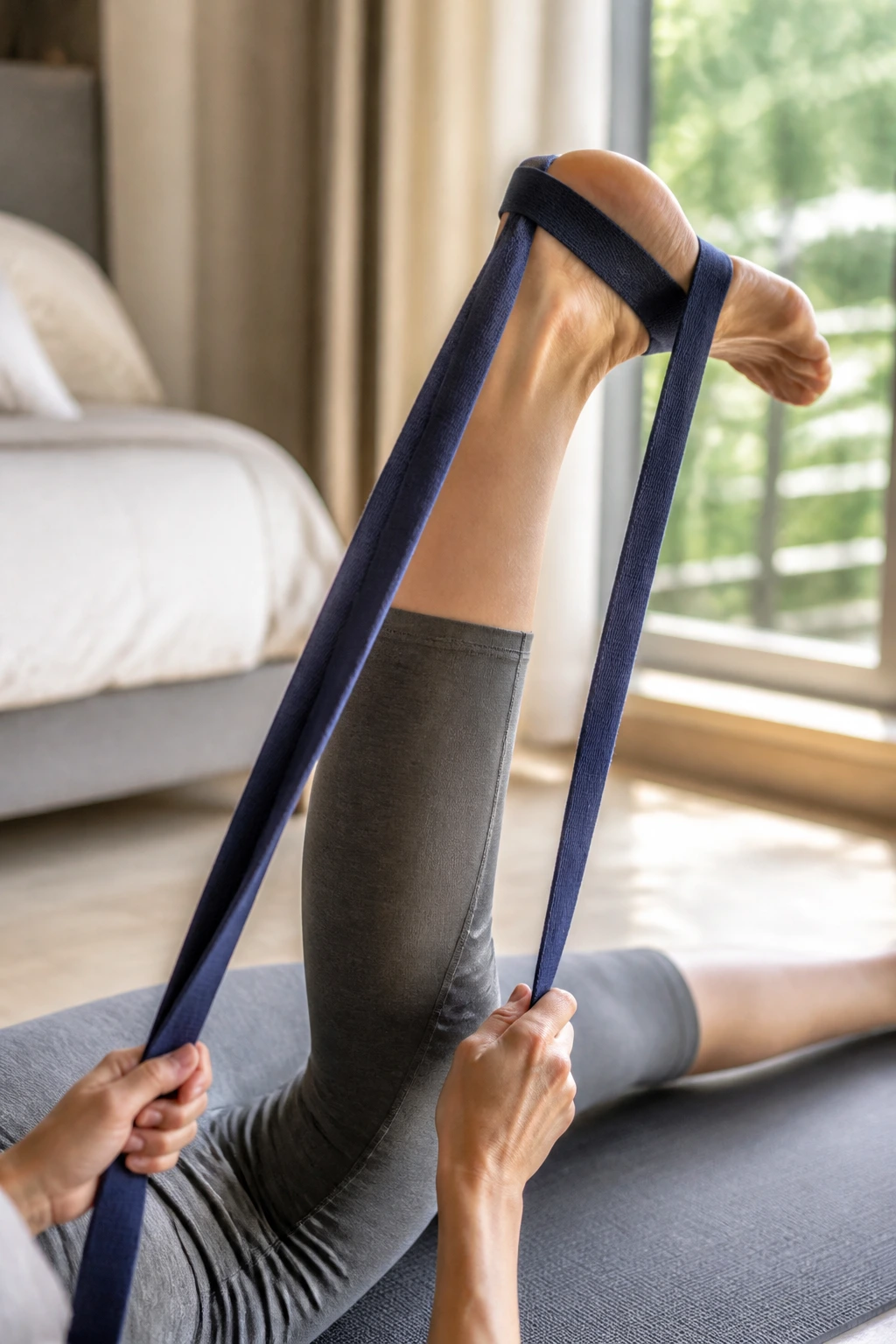
Hamstrings get a bad reputation because they feel tight, but they often just hate being yanked. A beginner challenge for hamstring ease should protect the back and keep the knee slightly bent in forward folds.
Try half split, seated forward fold on a blanket, and reclining hamstring stretch with a strap. Keep the heel flexed and the spine long. If you can breathe easily, you’re in a good place. If you’re holding your breath, ease off.
Quick setup notes
- Use a yoga strap, towel, or belt
- Bend the supporting knee if the back rounds too much
- Hold each side for 30 to 45 seconds
- Come out slowly, especially after the reclined version
A lot of people push hamstring stretches because the pose looks simple. It isn’t. The fix is not force. It’s angle, breath, and a little restraint.
9. Shoulder and Upper Back Release for Desk Tension
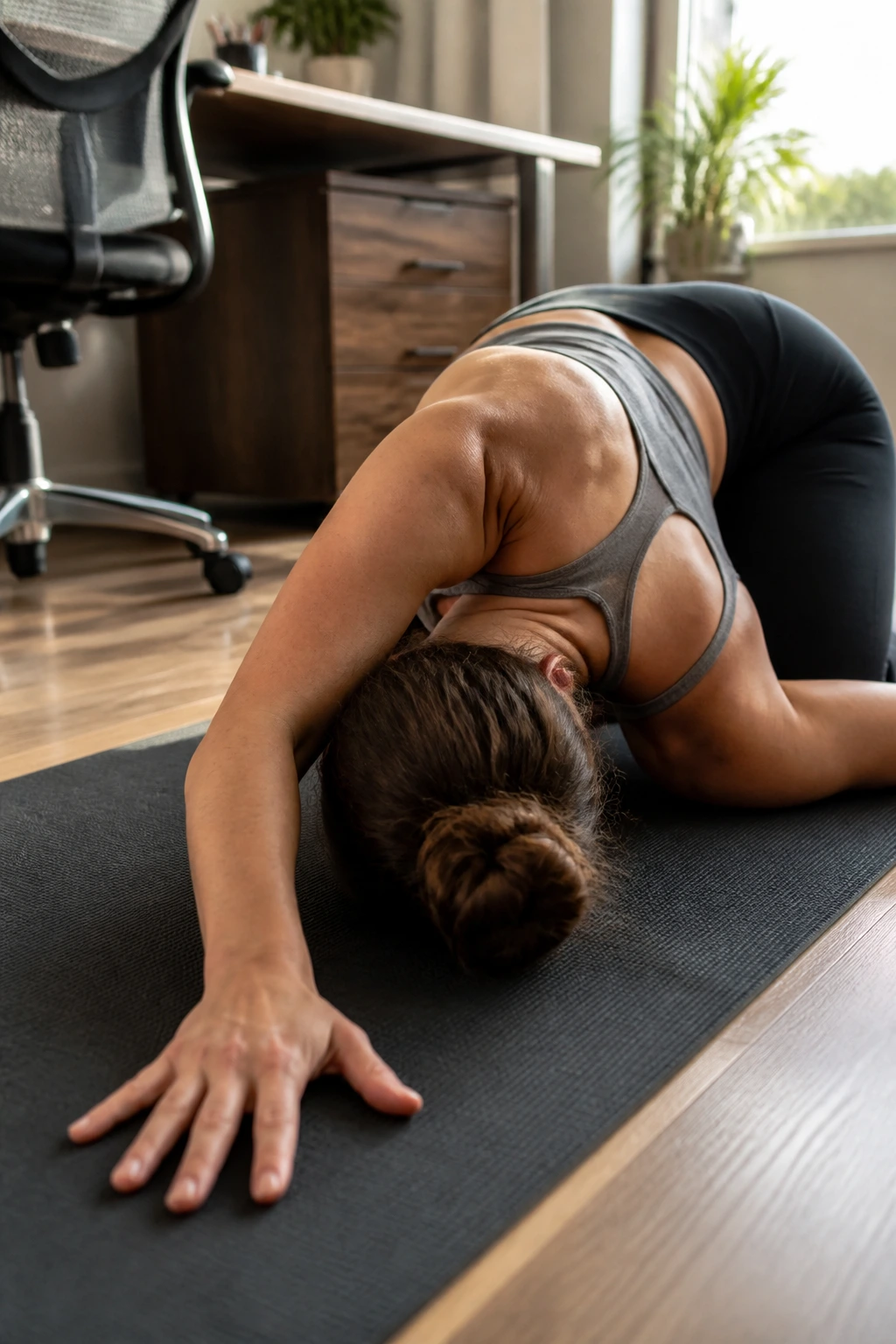
Shoulders carry more tension than they admit. Beginner yoga can help, but only if the sequence gives the upper back somewhere to go besides “more rounded.”
Thread-the-needle, eagle arms, sphinx pose, and puppy pose are strong choices here. They open the chest, wake up the back body, and give the shoulder blades a chance to move instead of locking in place.
A nice rhythm is 20 seconds of opening, 20 seconds of rest. That rest matters. It gives the nervous system a second to decide the stretch is safe.
If your neck gets involved, you’re pushing too hard. Keep the head heavy. Let the arms do less than they want to.
10. Wall-Supported Yoga for Better Form and Less Guesswork
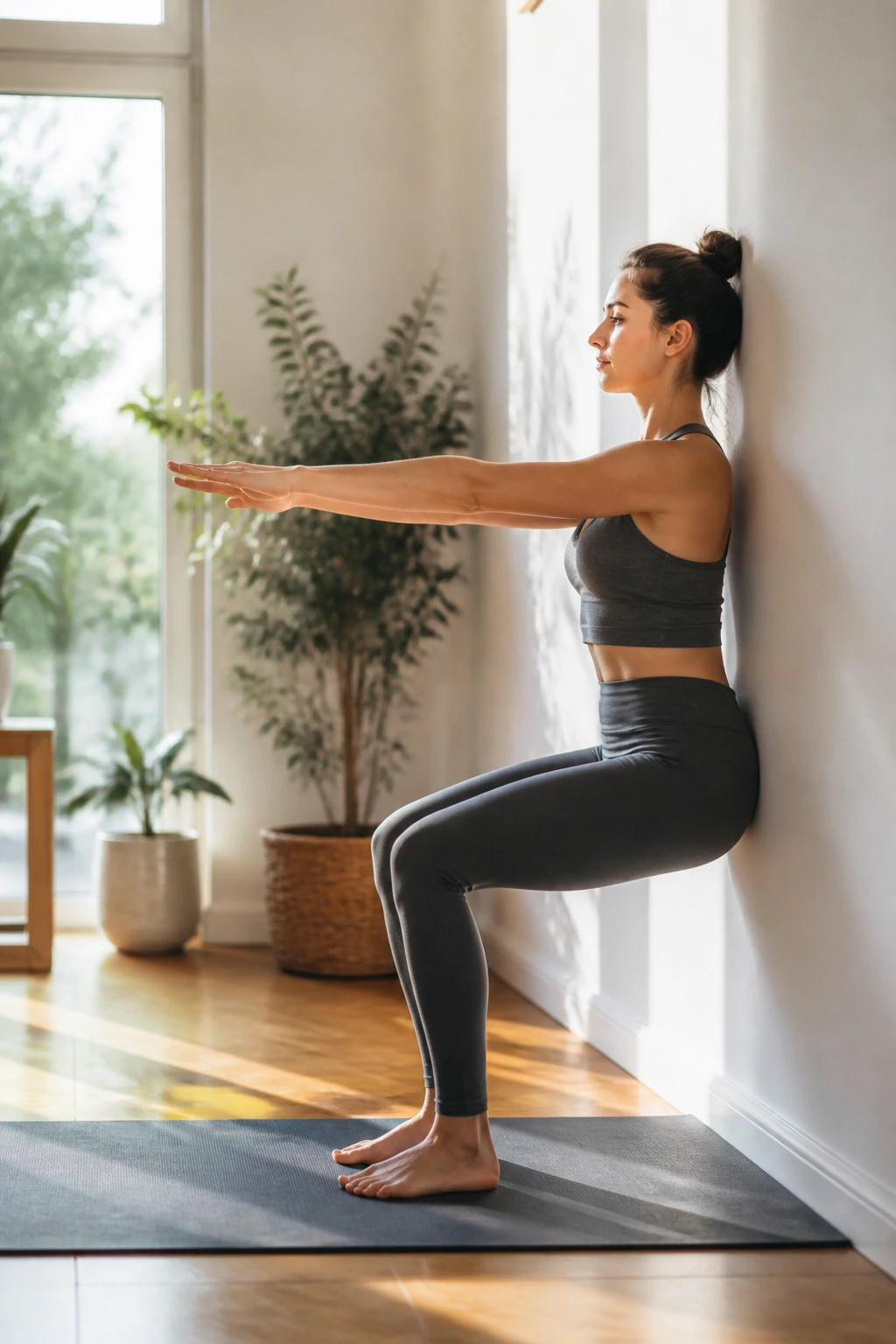
A wall makes yoga less mysterious. It gives you feedback, and beginners need feedback more than they need fancy shapes.
Stand in mountain pose with the back of the head, shoulder blades, and hips near the wall. Then try wall-assisted chair pose, wall plank, and legs-up-the-wall. The wall keeps your alignment honest when your body is still learning where the pieces go.
The wall does the work
- Wall plank helps you feel core engagement without collapsing the low back
- Wall chair teaches knee tracking over the toes
- Legs-up-the-wall reduces the strain that comes with unsupported inversion
A wall challenge is especially useful if you feel wobbly in the room. It turns yoga into something measurable. You can feel when you’re stacked, and that’s worth a lot.
11. Chair Yoga When the Floor Feels Like Too Much
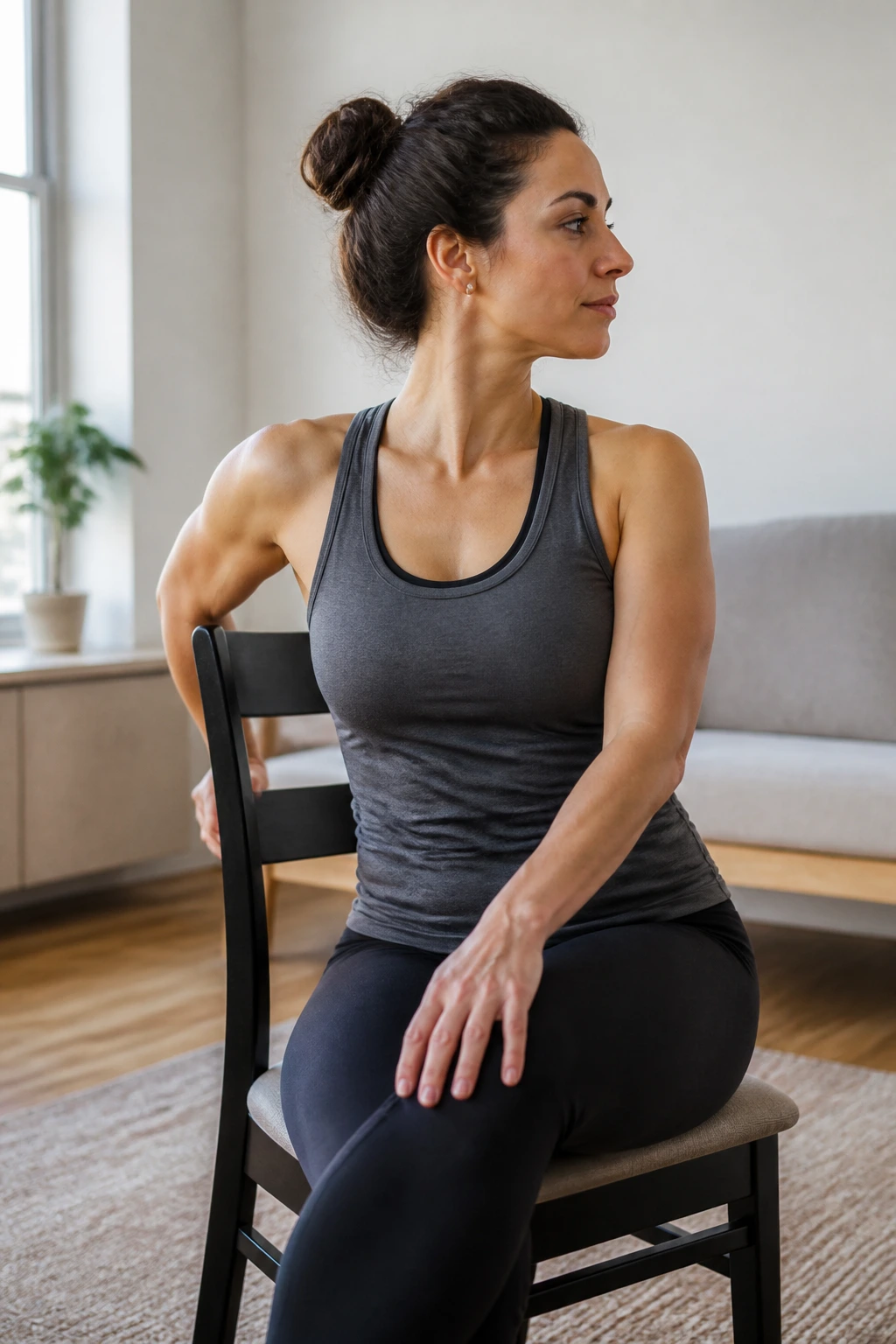
Chair yoga is not a backup plan. It’s a real practice, and for some beginners it’s the best entry point there is.
Use a sturdy chair with no wheels. Try seated cat-cow, seated side bends, seated twists, and a chair-based warrior variation with one foot behind you. You can still open the spine, wake up the hips, and move the shoulders without getting down on the floor.
The nice thing is how forgiving it is. You can practice in work clothes. You can practice near a desk. You can practice on a day when getting up and down from the mat feels like a project.
That makes this challenge useful, not lesser. Useful wins.
12. A Props-Only Challenge That Proves Blocks and Straps Are Not Cheating
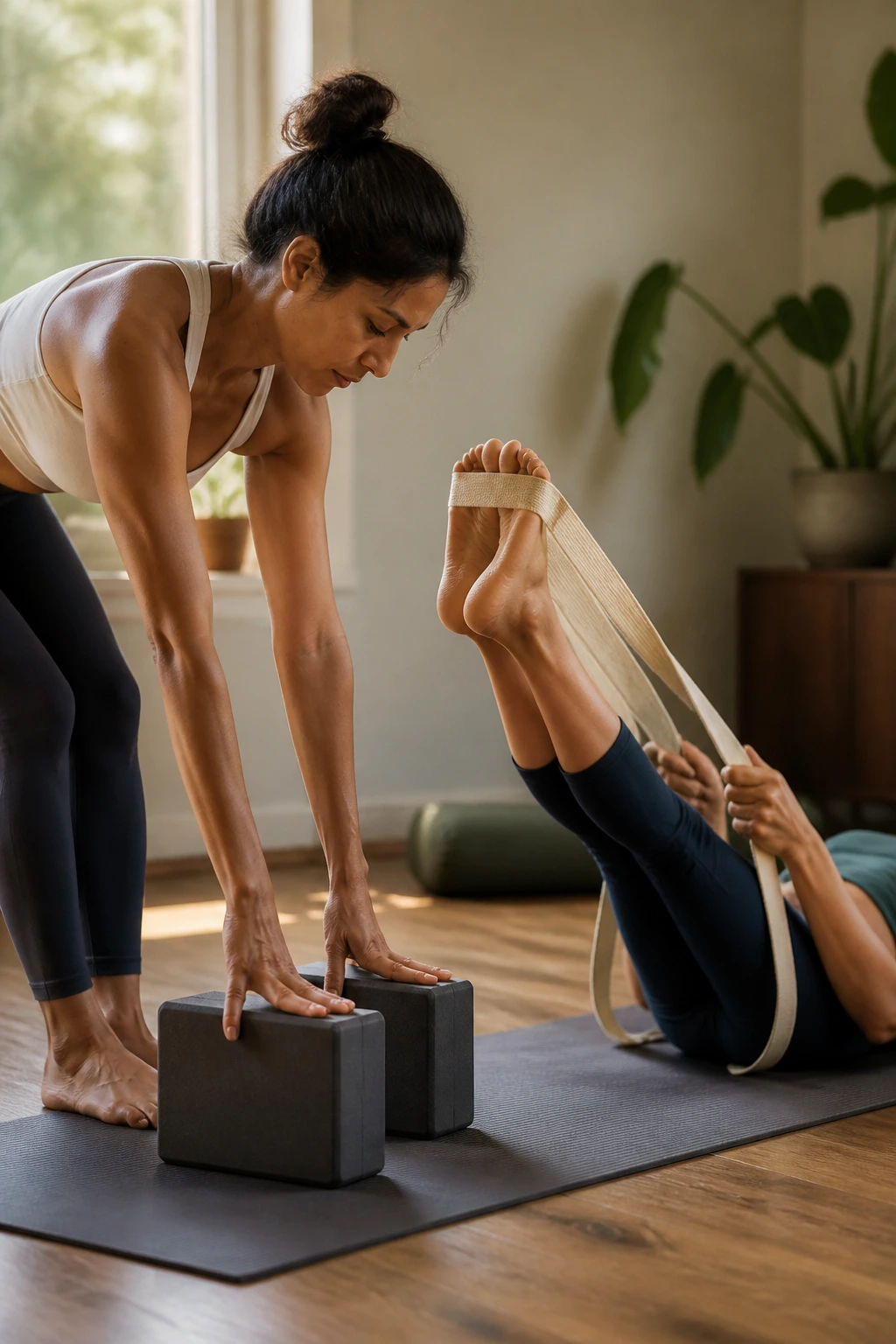
Some beginners avoid props because they think props mean they are doing yoga “wrong.” Nonsense. Props make the practice cleaner.
Use blocks in standing folds, a strap in hamstring stretches, and a bolster or folded blanket in reclined poses. The point is to reduce strain so you can stay in the pose long enough to learn it.
Try this setup
- Blocks under the hands in half lift
- A strap around the feet in reclined leg stretches
- A folded blanket under the knees in child’s pose
- A bolster under the knees in savasana
The right prop changes the whole experience. A tight fold with a block can feel calm and grounded; the same fold without support can feel like a fight. Beginners usually notice that difference fast.
13. Recovery-Day Yoga for Sore Legs and Heavy Shoulders
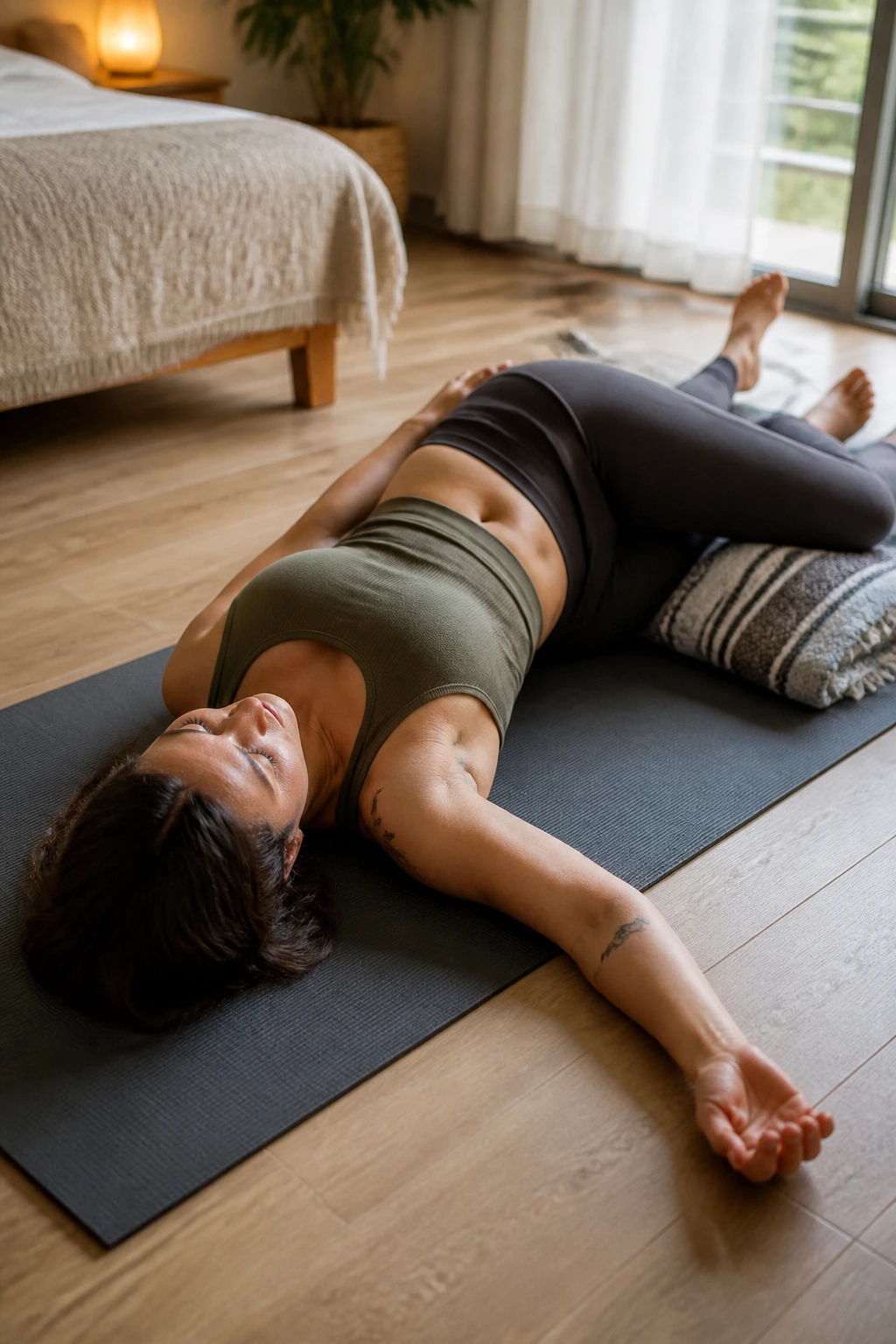
Recovery-day yoga is what you do after a brisk walk, a gym session, or one of those days when your body feels used but not broken. The goal is circulation and release, not effort.
A good recovery sequence might include cat-cow, low lunge, reclining twist, legs up the wall, and savasana. Keep the holds moderate — 3 to 5 breaths is plenty — and skip anything that feels like work.
I like this kind of practice because it respects the fact that rest can still be active. You are moving enough to feel better, but not enough to create another recovery bill for tomorrow.
If you wake up the next day feeling looser instead of duller, the challenge worked.
14. A Five-Minute Challenge That Makes Showing Up Ridiculously Easy
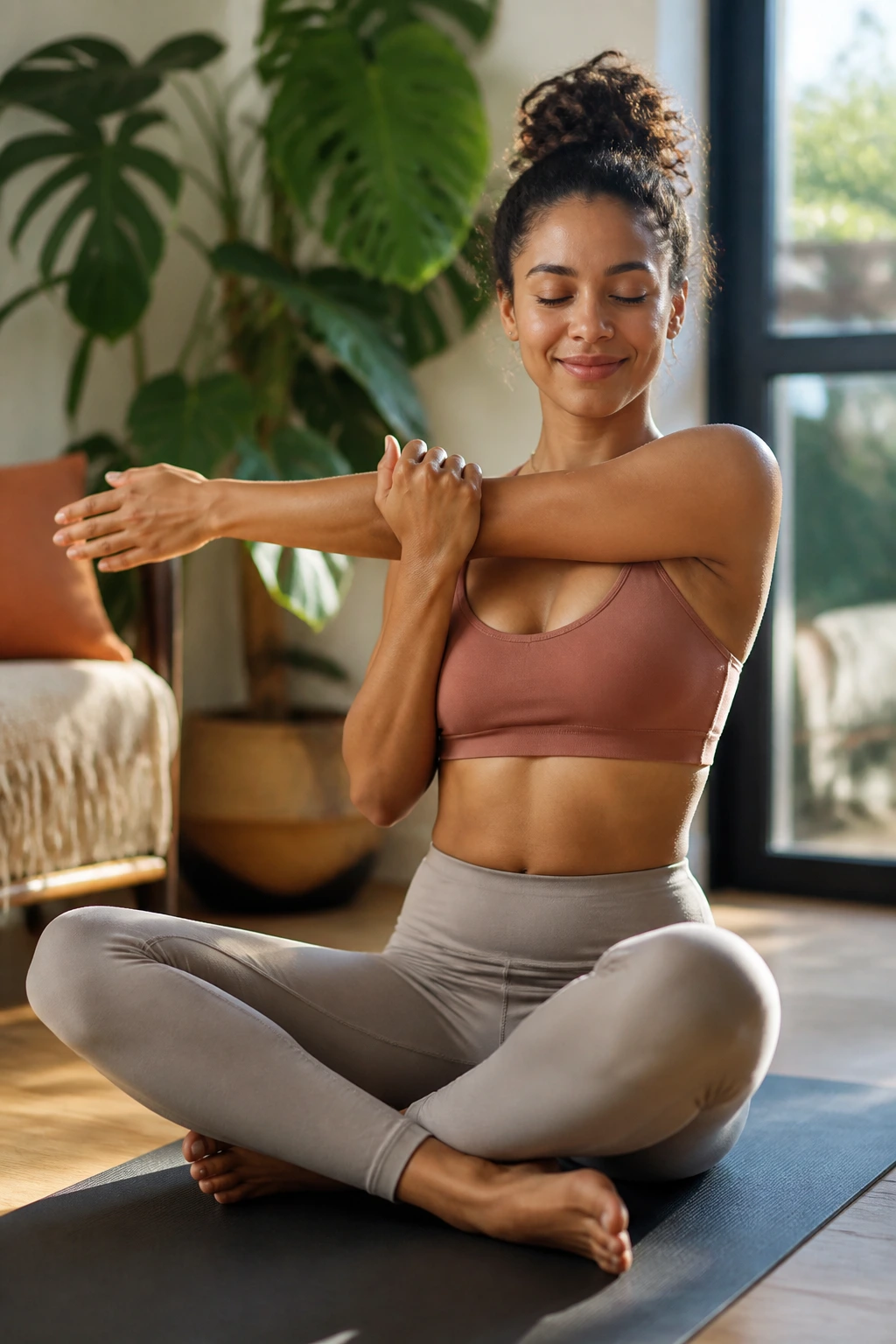
Five minutes sounds almost insultingly small. Good. That’s why it works.
A beginner who can do five minutes every day will usually beat the person who keeps waiting for a perfect 45-minute window. Pick a tiny sequence — mountain pose, cat-cow, downward dog at the wall, child’s pose — and finish before your brain starts bargaining.
A simple five-minute menu
- 60 seconds of breathing
- 2 rounds of cat-cow
- 2 low lunges per side
- 1 minute of forward fold
- 30 seconds in savasana
That’s it. No drama.
Five-minute challenges are excellent for resistance days. The day you do not feel like rolling out the mat is often the day the smallest practice matters most.
15. A Ten-Minute Consistency Challenge with the Same Sequence Every Day
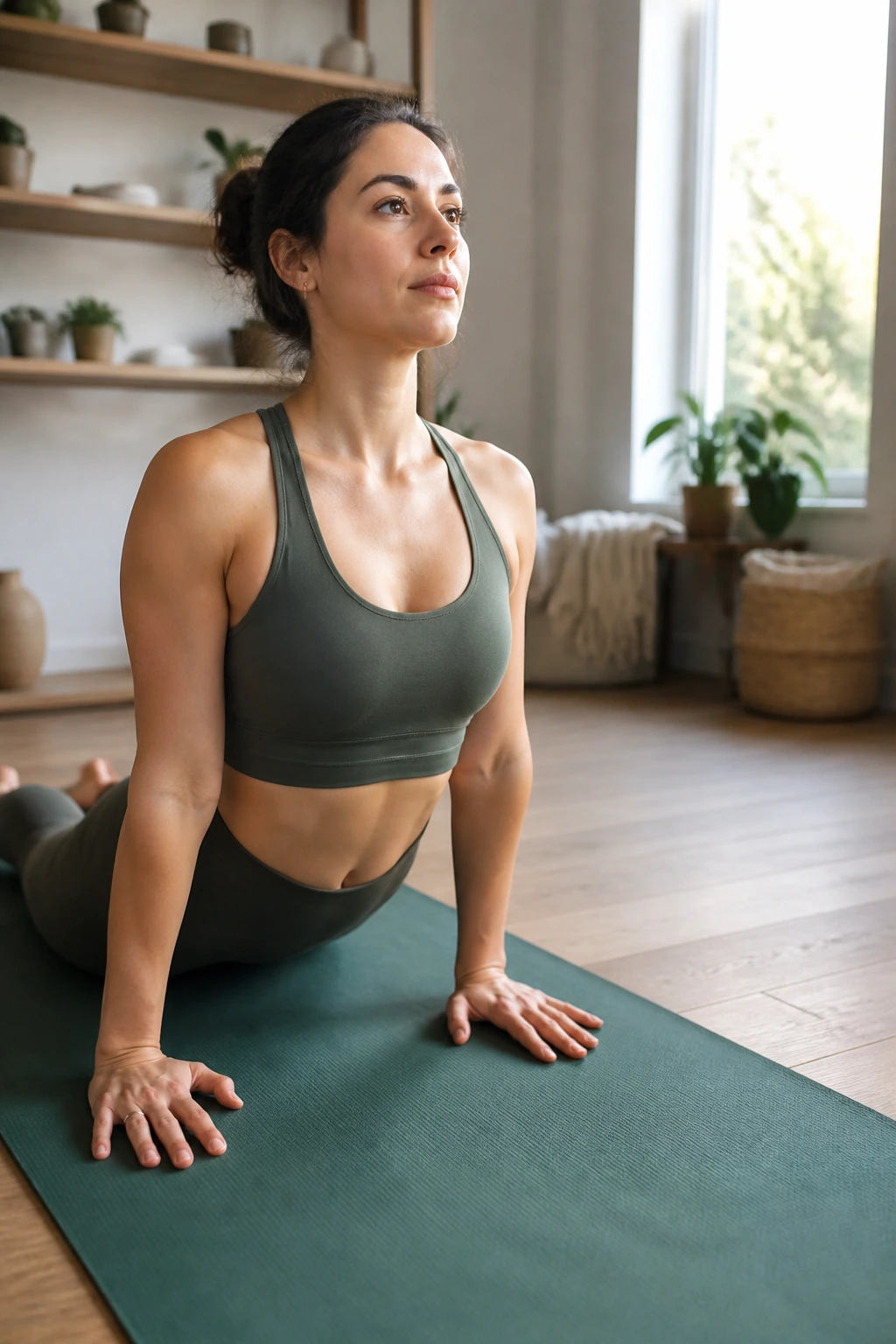
This one is less about flexibility and more about memory. Repeat the same 10-minute flow for 30 days until your body starts to remember the order without you staring at the ceiling in confusion.
A steady sequence could be mountain, forward fold, half lift, low lunge, plank, child’s pose, bridge, reclined twist, and savasana. Keep the transitions smooth and predictable.
The repetition pays off in a weirdly satisfying way. By week two, you know where your feet go. By week three, the breath starts arriving on time. By week four, the mat feels less like a puzzle and more like a place your body recognizes.
That familiarity is calming. It also makes it easier to notice small changes.
16. An Alignment Check Challenge with the Wall, Mirror, and Slow Holds
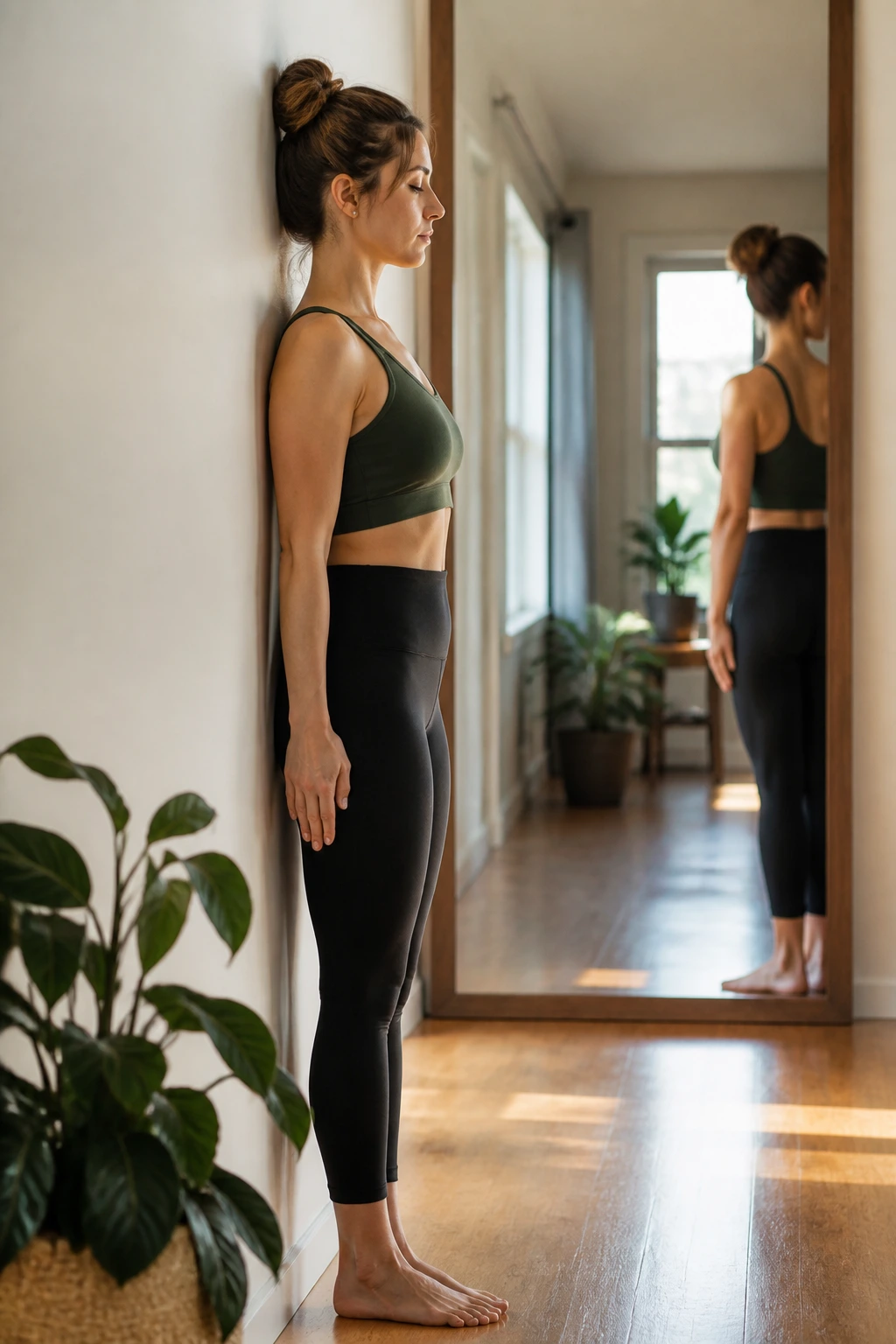
Alignment sounds dry until you realize it solves a lot of beginner headaches. Knees that cave in. Shoulders that creep toward the ears. Feet that splay out like nobody’s watching. The wall and mirror make those problems visible.
Three checkpoints worth using
- In standing poses, keep the front knee tracking over the second toe
- In folds, lengthen the spine before you deepen the bend
- In planks, keep the ribs from flaring forward
A mirror helps in warrior poses, but a wall can be even better because you feel the contact points. Back body touching the wall? Good. Hips twisting away? Adjust. No guessing.
This challenge is a little less glamorous than flow videos, and that is fine. Beginners need clean mechanics before they need speed.
17. Gentle Strength with Slow Lunges and Short Holds
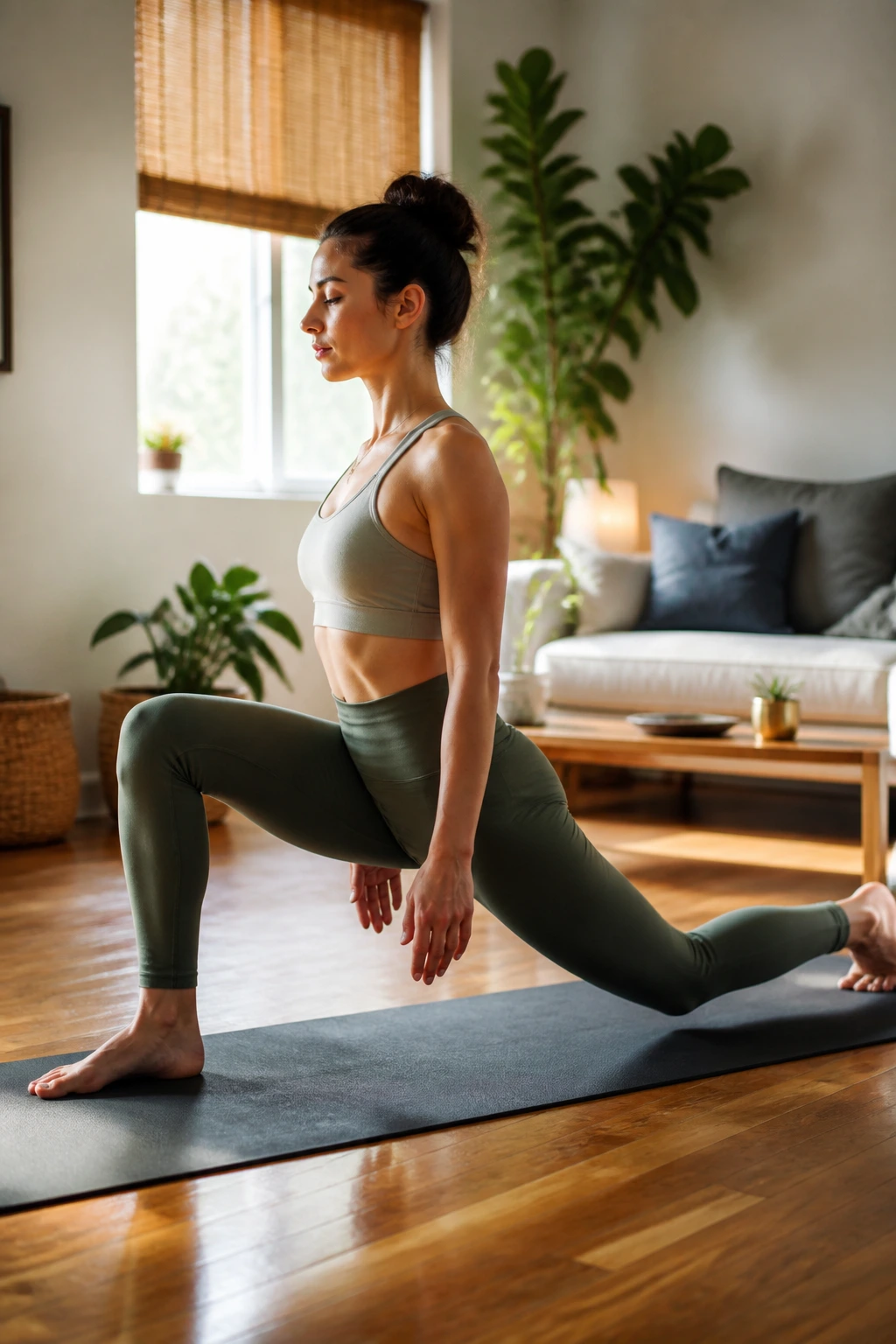
Yoga strength for beginners should feel steady, not punishing. Slow lunges, chair pose, kneeling plank, bridge pose, and locust are enough to build real support through the legs, back, and core.
The trick is time under tension. Hold each pose for 3 to 5 breaths, rest briefly, then repeat. That gives the muscles a chance to work without the sloppy form that shows up when people race through everything.
Why this challenge matters
Gentle strength often makes balance and flexibility feel better too. Strong feet hold tree pose more easily. Strong glutes take pressure off the low back. Strong shoulders make plank less miserable.
Not every beginner wants a sweaty workout. Fine. This challenge still gives you strength, and it does it without turning yoga into boot camp.
18. Stress-Reset Breathing with Long Exhales and Simple Shapes
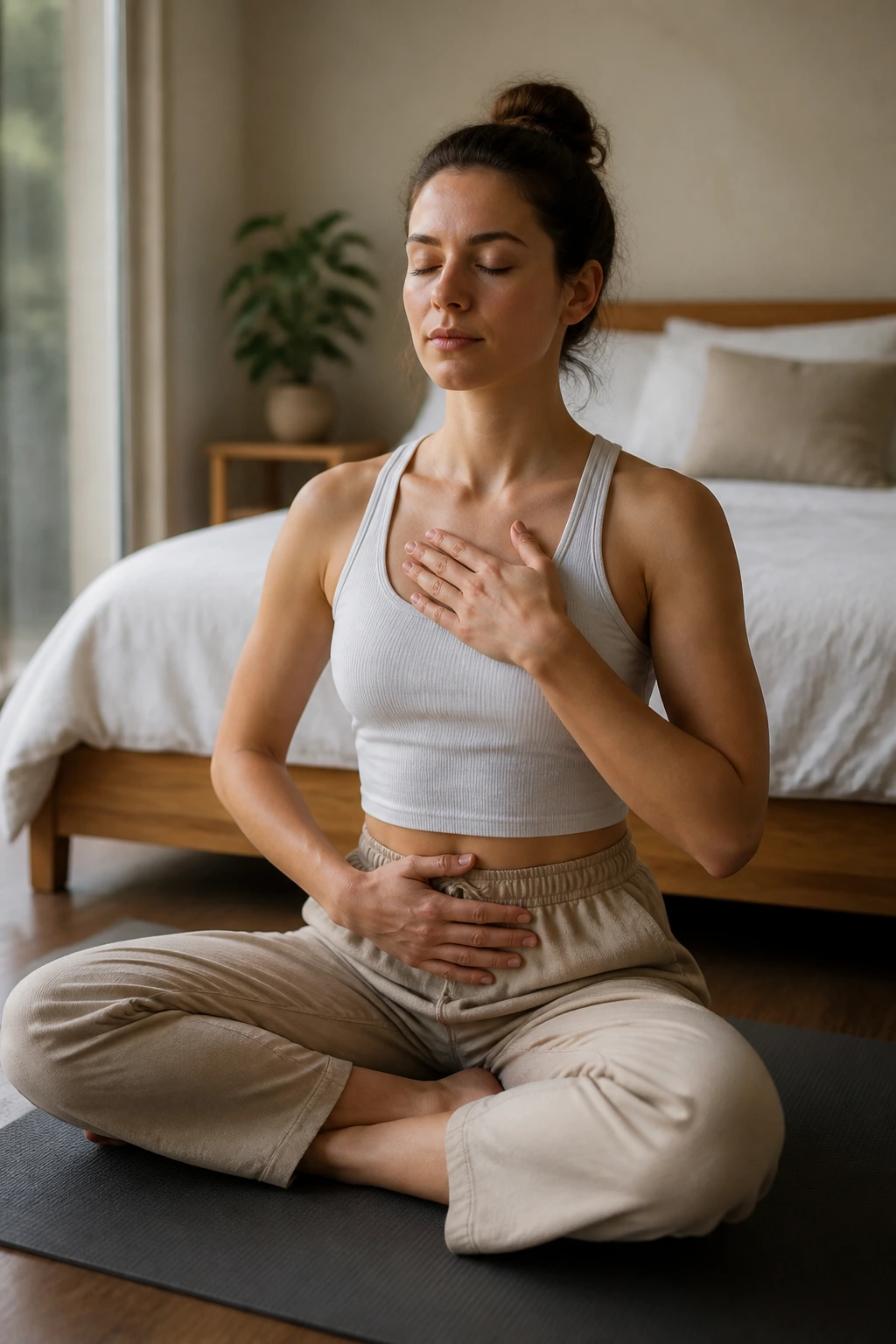
If your nervous system feels a little fried, start with the breath and keep the movement small. Long exhales, easy posture, and only a few poses are enough.
Try seated breathing with a 4-count inhale and 6-count exhale, then add child’s pose, standing forward fold, and legs up the wall. The exhale is the star here. It tends to slow the whole session down in a way the body can actually feel.
You do not need a dramatic opening sequence. You need a practice that drops your shoulders and gives your jaw permission to unclench. That’s a different job.
Some days, that job is the whole point.
19. A Sunset Stretch Challenge That Helps You Leave the Day Behind
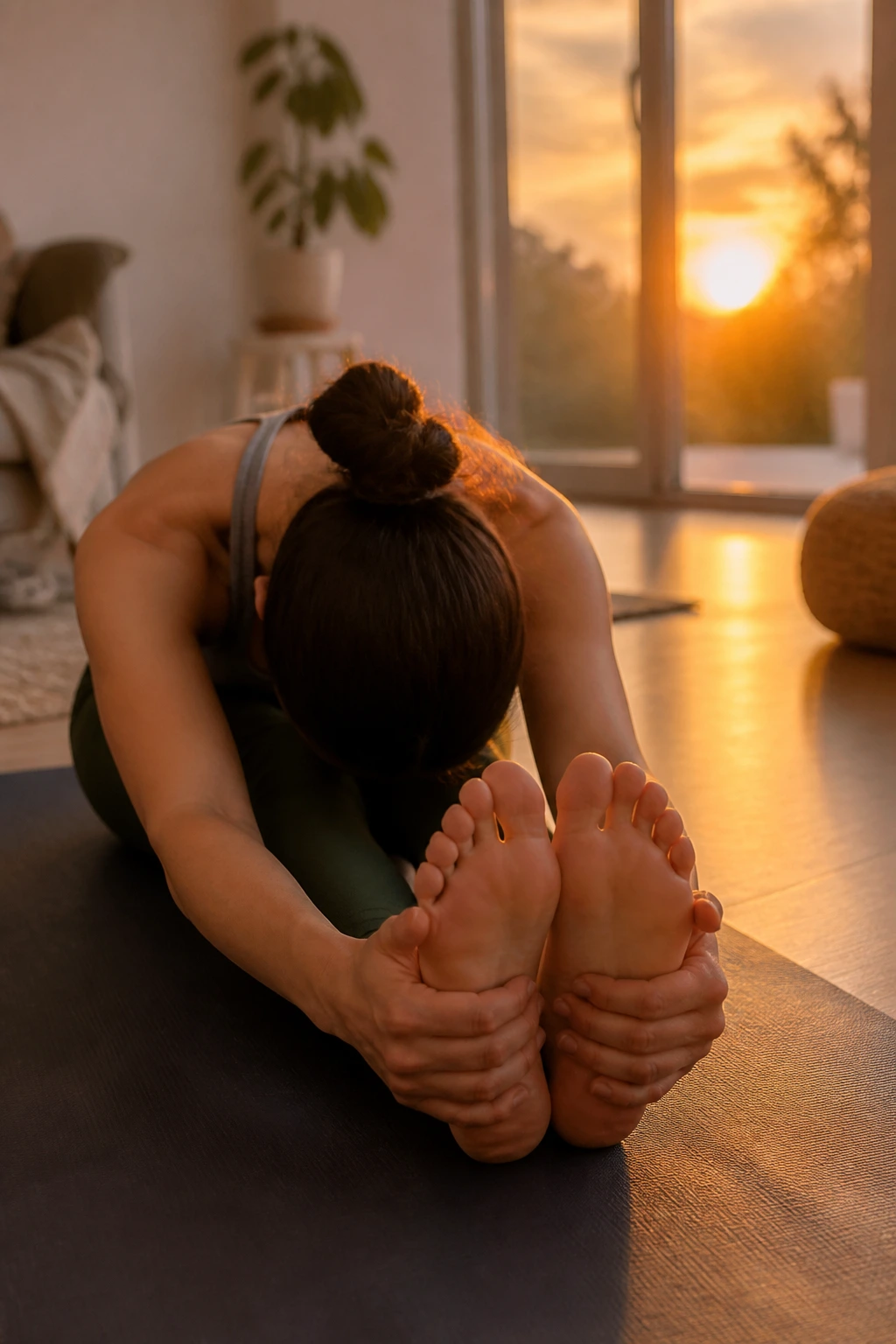
There’s something satisfying about stretching when the light is soft and the room is quiet. The body tends to settle faster then, maybe because you are less likely to treat yoga like an errand.
A sunset sequence can include low lunge, butterfly pose, reclined bound angle, gentle twist, and a long savasana. Use slower transitions and stay on the floor longer than you would in a morning practice.
The mood matters here. Dimmer light, slower music if you want it, and no phone within reach if possible. Beginners often notice that their minds stop sprinting once the room stops shouting at them.
That’s a nice trade.
20. Low-Back Care with Cat-Cow, Bridge, and Supported Twists
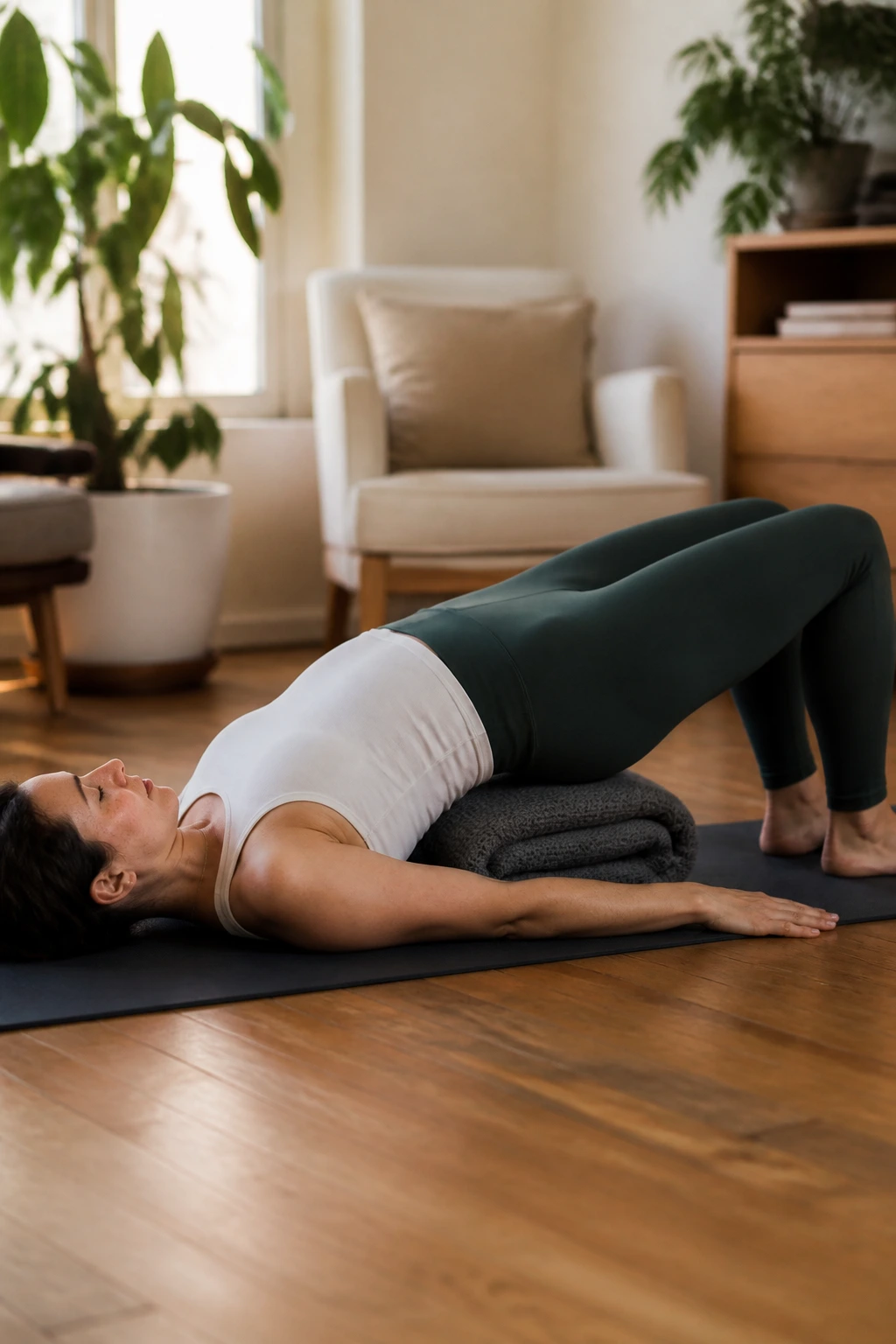
Low-back care is one of the most useful beginner yoga challenges, and one of the most misunderstood. The answer is not always “stretch more.” Sometimes the back wants support, some gentle movement, and less force.
Cat-cow warms the spine. Bridge pose wakes up the glutes. Reclined twist can ease the whole area without demanding much. Knees-to-chest is useful too, but keep it light if your back dislikes rounding.
If a pose makes pain sharper, stop. That sounds obvious, but beginners often push through because they think flexibility is always the answer. It is not.
A blanket under the hips in bridge or under the knees in savasana can change the whole practice. Small adjustment, big difference.
21. Grounding and Stillness with Longer Holds and Fewer Poses
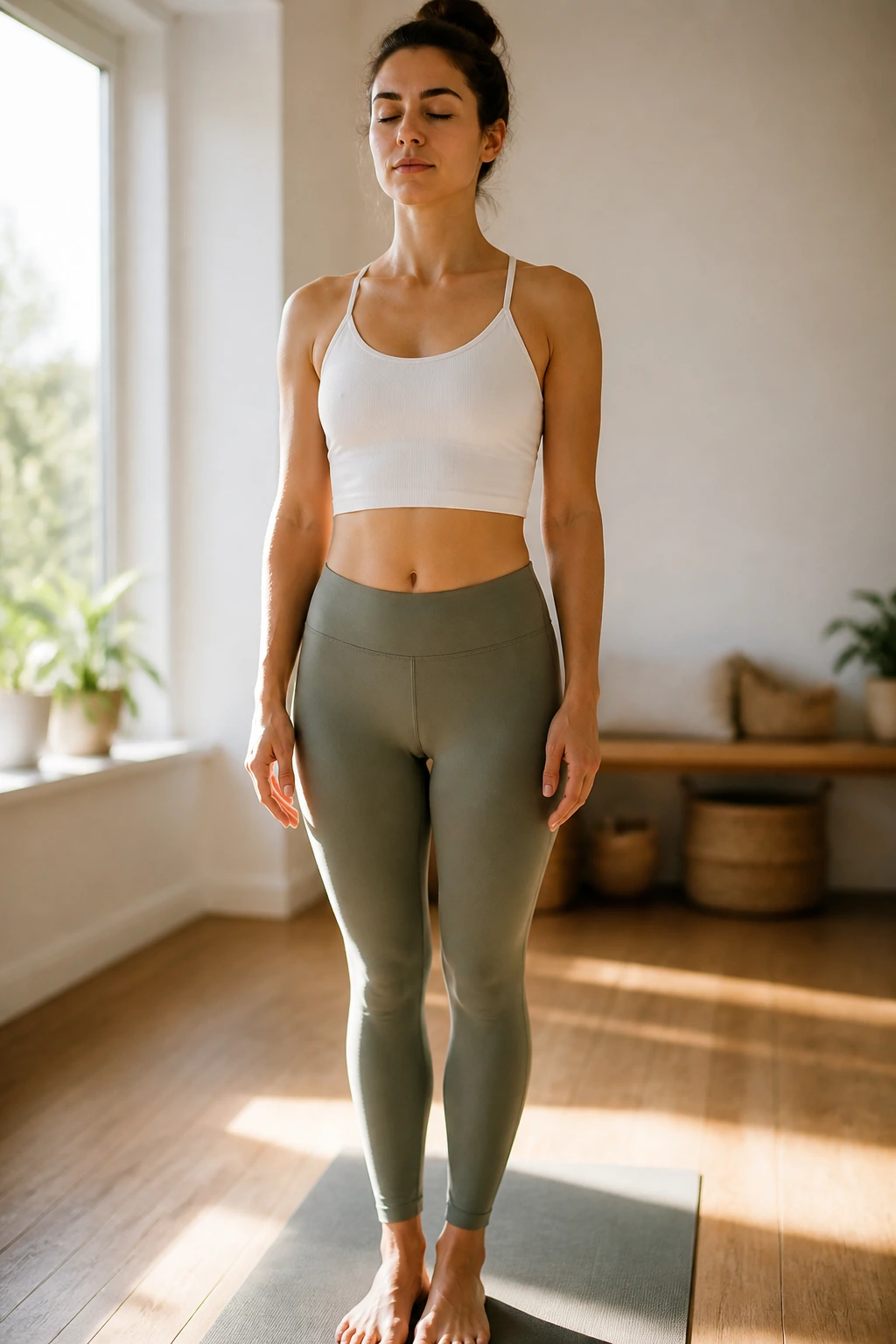
Not every challenge needs motion. Some beginner yogis benefit more from learning how to stay still in a pose without fidgeting out of it after eight seconds.
Try mountain pose, standing forward fold with bent knees, supported squat, child’s pose, and corpse pose. Hold each one for 5 to 10 breaths. Fewer changes. More noticing.
Less movement, more attention
- Feel the feet spread into the floor
- Notice where the breath catches
- Relax the hands instead of gripping the mat
- Let the eyes soften or close
This kind of practice can feel oddly intense because there is nowhere to hide. That is useful, too. Stillness is a skill, and beginners are allowed to be bad at it for a while.
22. A Longer Weekend Flow for the Days When You Have More Time
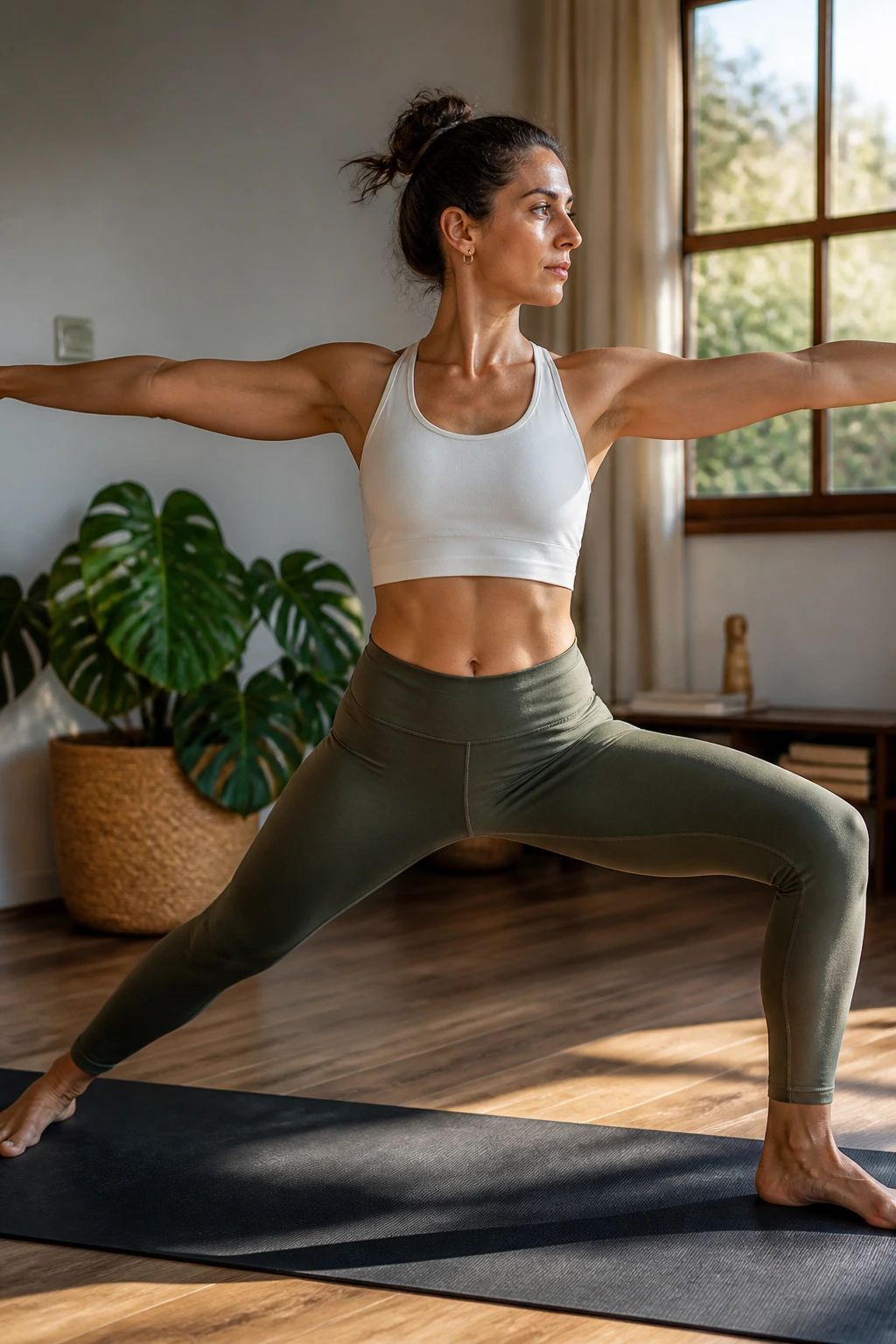
Weekday practice and weekend practice do not need to look the same. When you have more time, stretch the session to 20 or 30 minutes and add more standing work.
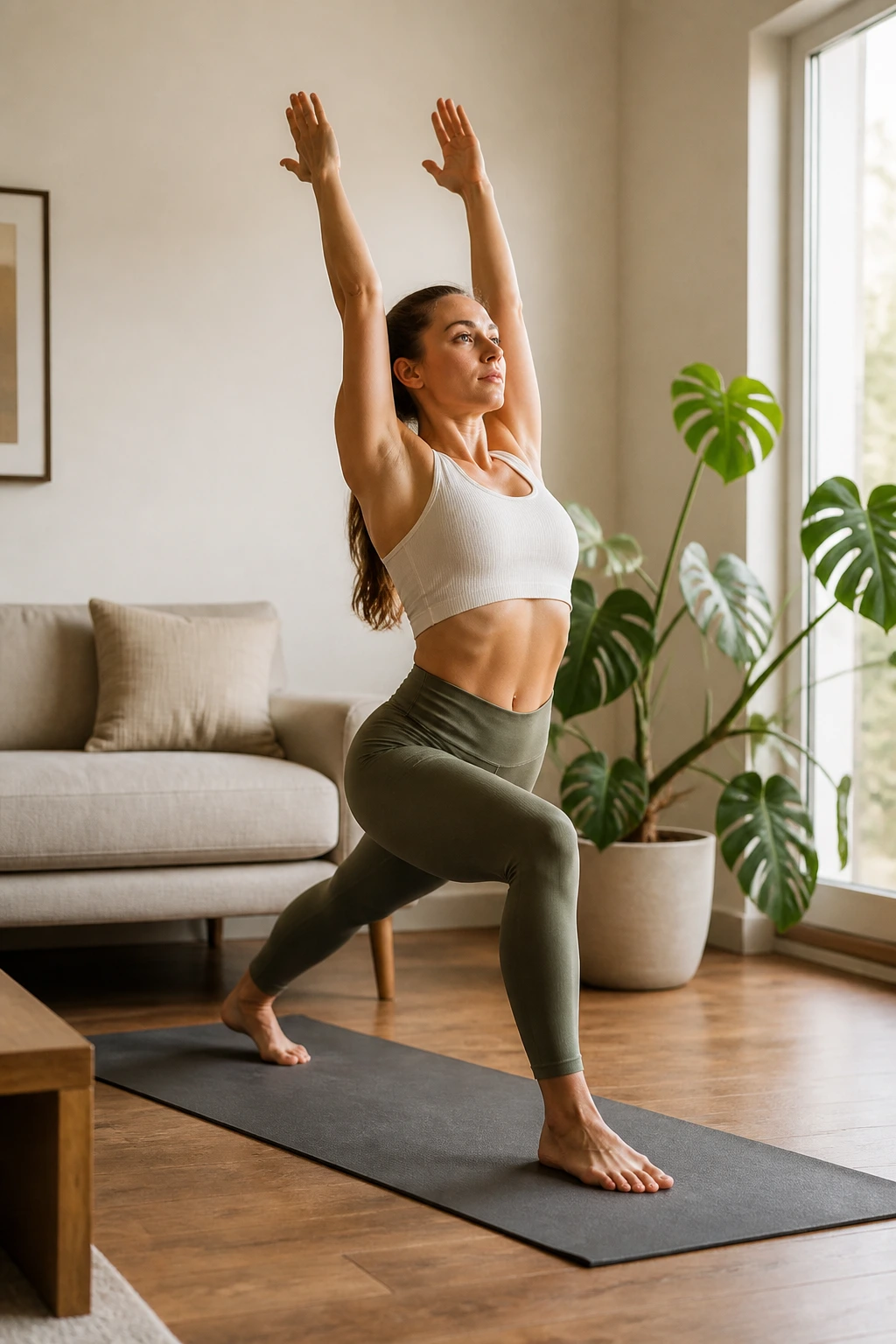
A good longer flow might include sun salutations, warrior I, warrior II, reverse warrior, triangle, pigeon, bridge, and a final rest. The extra time lets you repeat poses instead of sprinting past them.
That repetition is where beginners often learn the most. The second time you enter a pose, your body remembers a little more. The third time, you stop overthinking your hands. Tiny victory.
It’s a different kind of challenge because it asks for attention, not just attendance.
23. Low-Impact Sweat Without Jumping or Pounding
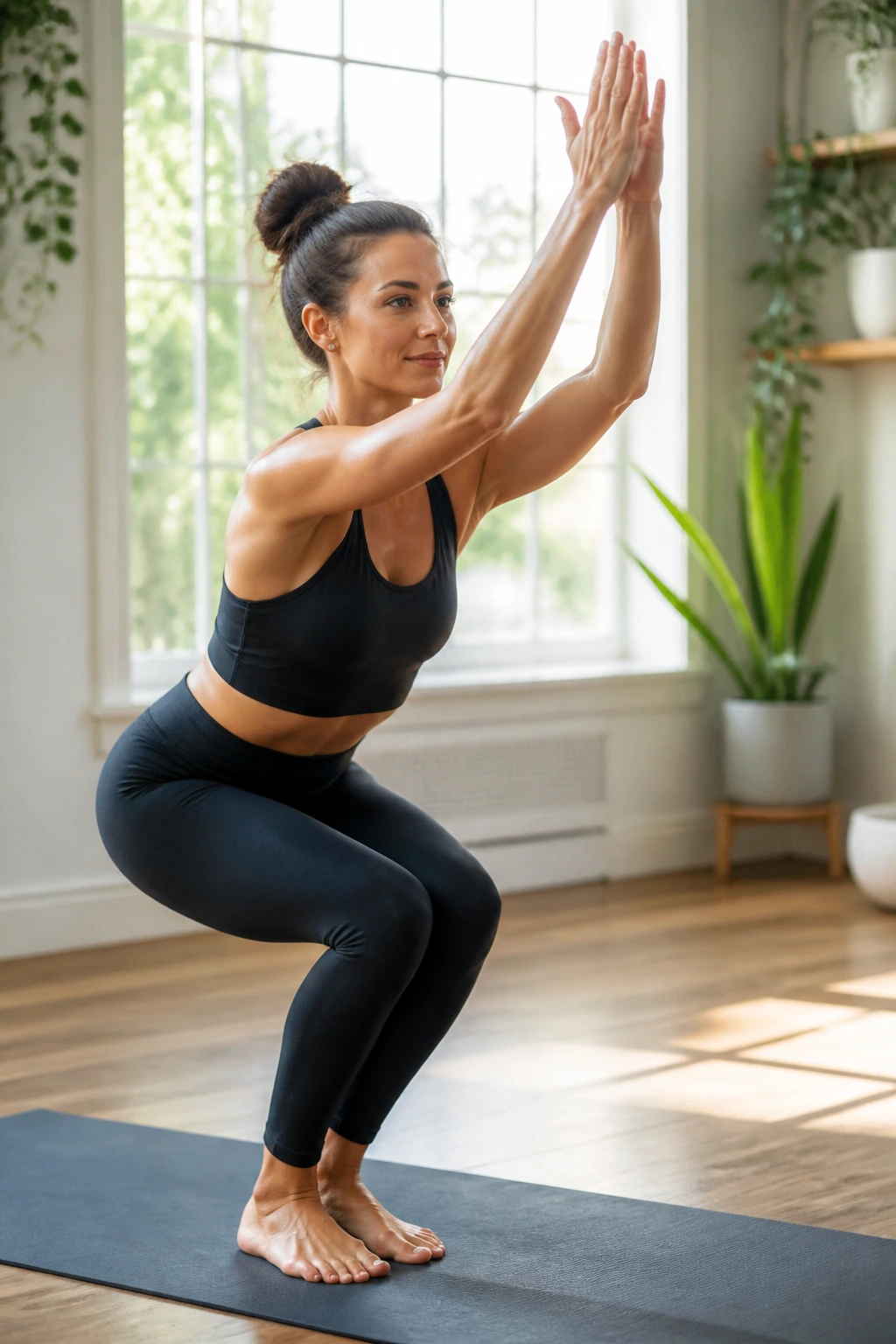
Some people want a little heat. Fair enough. Yoga can absolutely give you that without noisy jumps or frantic transitions.
Use faster sun salutations, chair pose pulses, low lunges, plank-to-knees, and standing balance work done one side at a time. Keep the impact low, but let the effort rise to a 7 out of 10 for short stretches.
What you should feel is warmth, not strain. If your wrists or knees start complaining, slow the pace and cut the number of rounds. Beginners sometimes confuse faster with better. It is not.
This challenge is useful for people who want their practice to feel alive and sweaty but still joint-friendly.
24. Pelvic Stability with Bridges, Lunges, and Standing Work
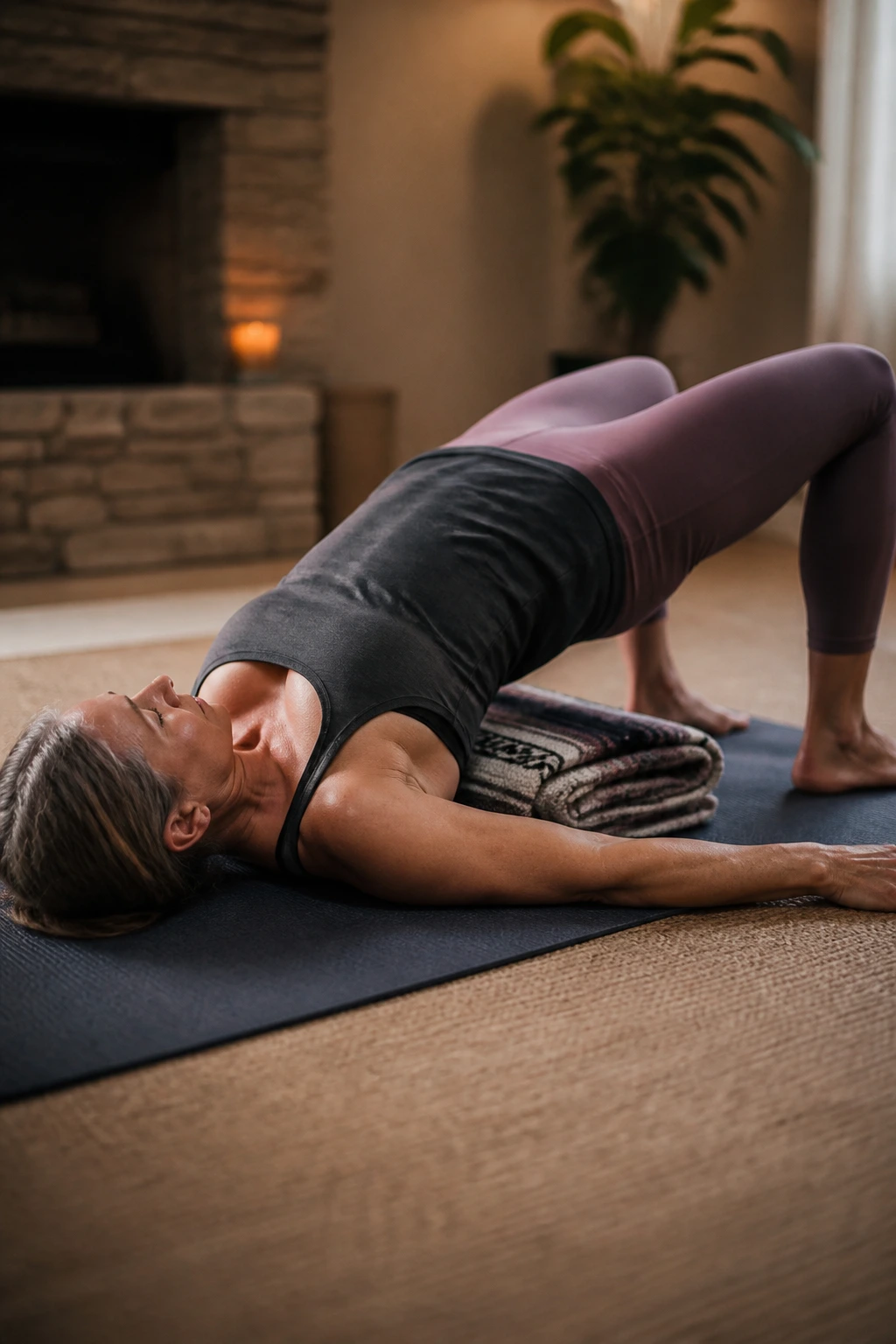
The pelvis does a lot of quiet work in yoga. If it feels unstable, everything above it gets more complicated.
Bridge pose, low lunge with a tucked tailbone, warrior I, and bird-dog are all useful here. They help the hips support the spine instead of wobbling around the edges of it. Keep the feet grounded and the lower ribs from flaring forward.
A few cues that help
- Press through the heel in bridge
- Keep front knee over ankle in lunges
- Stand tall through the crown of the head in warriors
- Move slowly enough to notice the hips shifting
This challenge is a good one for people who feel loose in some places and tight in others. That combination is common, and it’s annoying. Training stability helps more than trying to stretch everything all at once.
25. Twists and Rotation Without Cranking the Spine
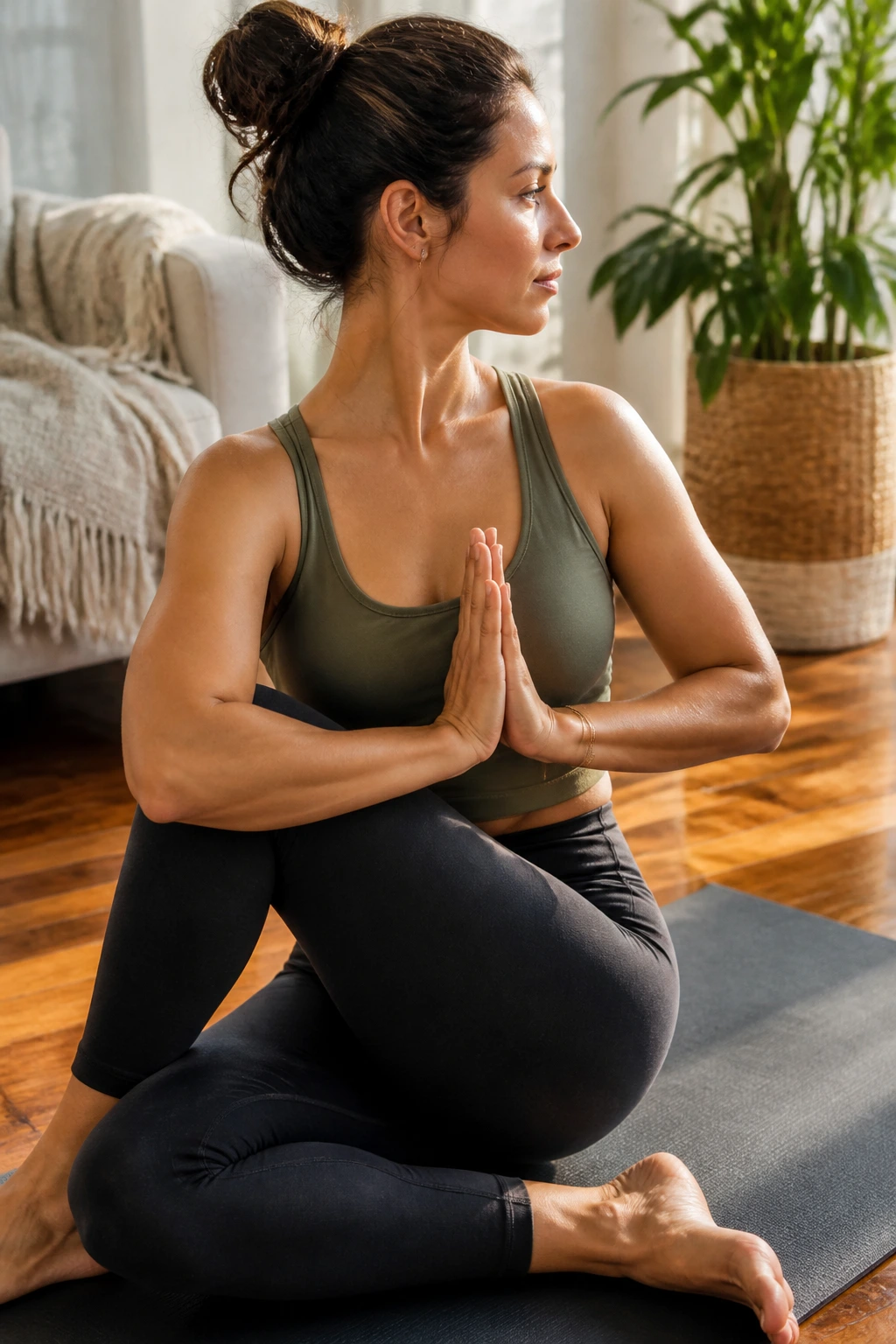
Twists are useful, but beginners should treat them with care. A good twist should feel like rotation through the ribs and upper back, not a wrenching turn from the knees.
Reclined twist, seated twist with a long spine, open book, and lunge twist are all beginner-friendly when they stay gentle. Keep the breath smooth and the shoulders soft. Don’t force the pose deeper by yanking the arm across the body.
That little restraint matters. Twists can be refreshing when they are clean. They can also turn annoying if you chase depth instead of ease.
I prefer twists after a warm-up or near the end of a practice. Cold twisting rarely feels good for beginners, and there’s no reason to pretend otherwise.
26. Feet, Ankles, and Calves, Which Beginners Ignore at Their Own Risk
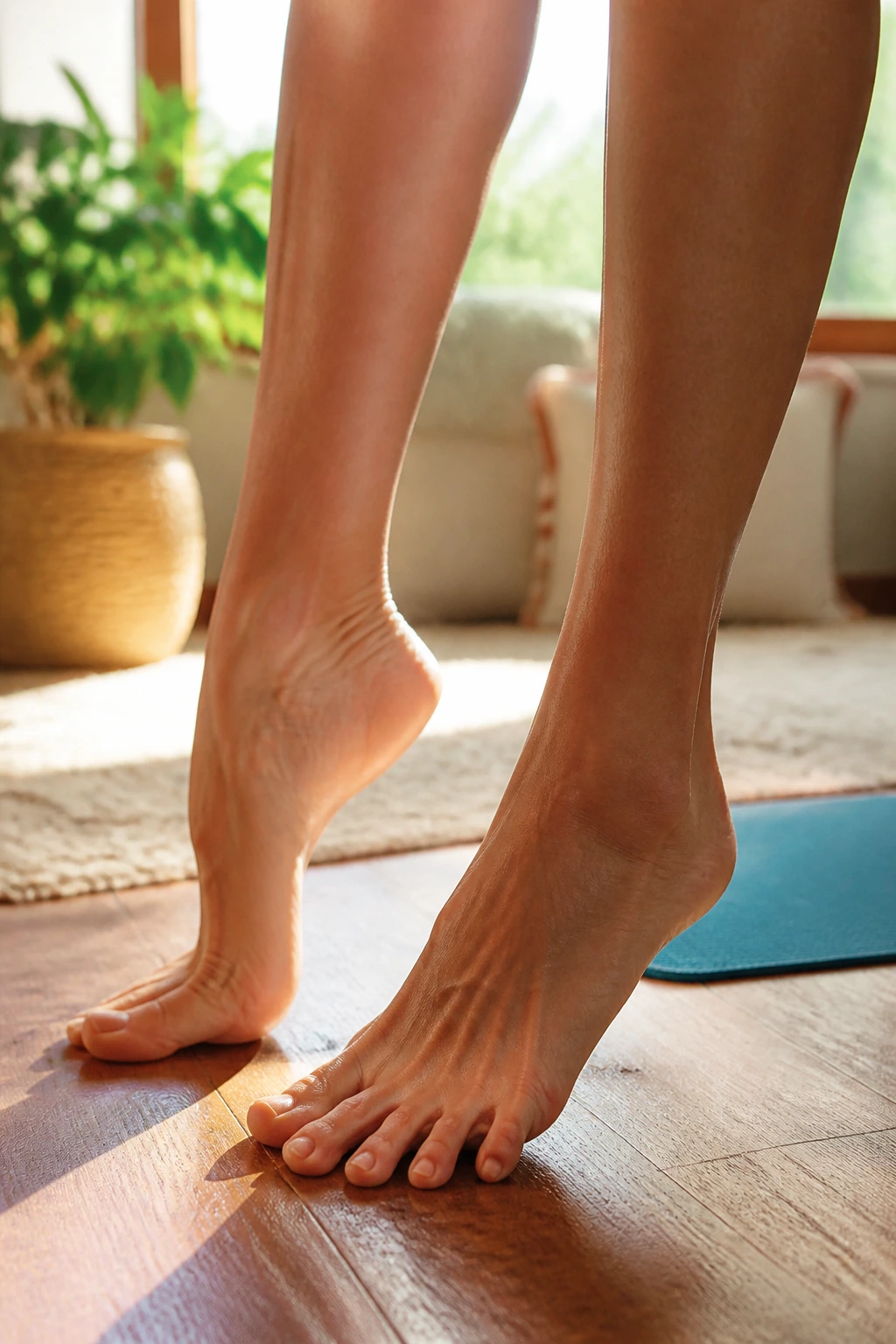
Feet are the base of the whole practice, and they rarely get enough attention. If the feet are stiff or sleepy, balance and standing poses get messy fast.
A simple challenge can include toe spreads, heel raises, ankle circles, downward dog pedal, and standing calf stretches. Spend a minute or two on each side. The difference can be surprisingly obvious after a few days.
Small work that pays off
- Spread the toes wide in mountain pose
- Rock gently from heel to toe
- Lift one heel at a time in chair pose
- Balance barefoot if your floor is safe and not slippery
This is one of those sections people skip because it looks too small. Then their tree pose wobbles, their calves stay tight, and they wonder why standing poses feel hard. The feet are not decoration. They’re the foundation.
27. A Full-Body Reset for the Days You Feel Compressed
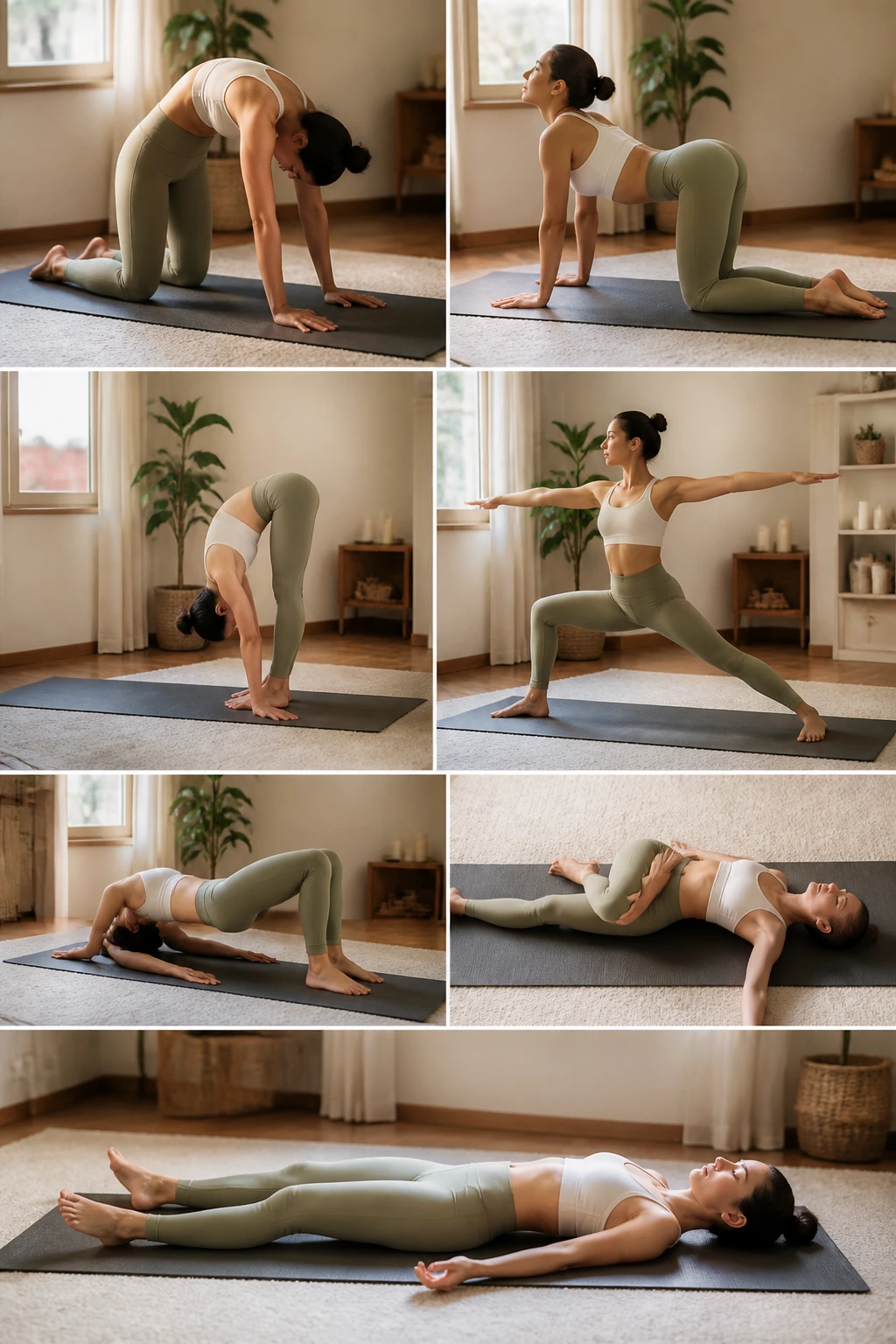
A full-body reset challenge is what you reach for after travel, long sitting, or a week that left your body feeling stacked like luggage. The goal is to touch every major area without overdoing any one of them.
Use cat-cow, low lunge, standing forward fold, warrior II, bridge, reclined twist, and savasana. That covers the spine, hips, legs, chest, and back body in one neat sweep.
What the reset should feel like
- Hips less jammed
- Shoulders a little lower
- Breath easier to find
- Legs awake, but not smoked
This is a good “catch-all” challenge for beginners who do not want to overthink sequencing. When in doubt, reset the whole system and keep it simple.
28. A Memory Sequence Challenge That Teaches You to Practice Without the Screen
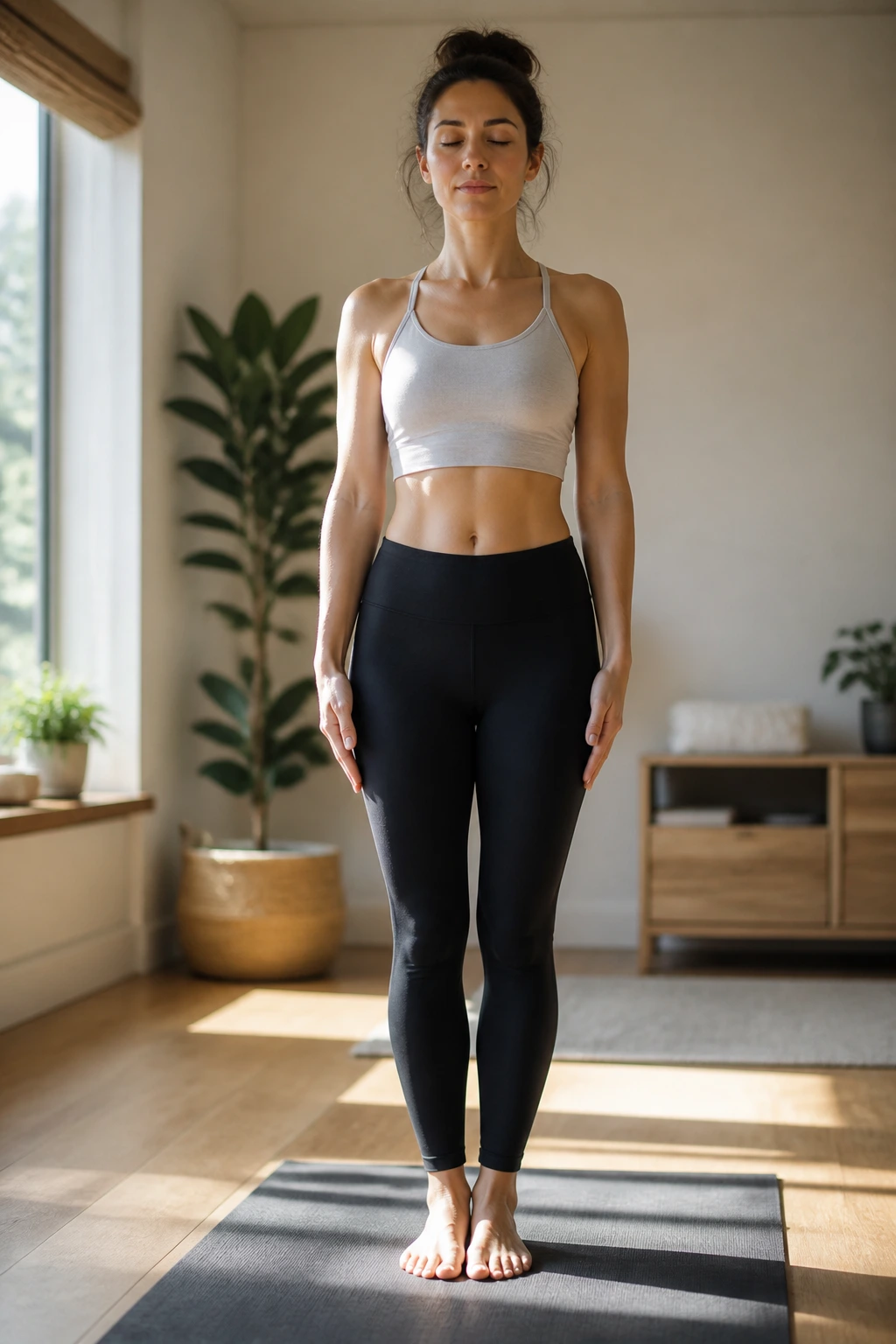
So many beginners get trapped by following along forever. There’s nothing wrong with videos, but memorizing a short sequence builds confidence fast.
Pick six poses — maybe mountain, fold, lunge, plank, bridge, savasana — and repeat them daily until you can move through them without peeking at your phone. Keep the order stable for a full 30 days.
At first, you’ll forget where a foot goes. Then you’ll stop forgetting. That’s the magic here. The practice starts living in your body instead of inside a screen.
If you want an extra nudge, say the names out loud for the first week. A little awkward. Extremely effective.
29. A Habit Streak Challenge That Makes the Mat Hard to Ignore
Habit is often less about motivation and more about placement. Put the mat where you can see it. Leave the block out. Keep the strap beside your shoes. Make the practice hard to forget.
This challenge uses one simple rule: do not miss twice in a row. If you skip a day, fine. But the next day gets a five-minute practice, even if it’s sloppy. That rule is sturdy enough for beginners and forgiving enough to stay alive.
A small checkmark on a paper calendar works better than most people expect. So does attaching yoga to another habit, like coffee or brushing your teeth.
Boring? A little. Effective? Very.
30. Your Own Mixed-Motion Challenge Built from the Poses You Actually Like
The last challenge is the most personal one. Build your own 30-day mix from the poses that already feel good enough to repeat. No need to chase a perfect sequence. Use what your body keeps asking for.
Take three categories: one opener, one strength pose, one rest pose. Maybe cat-cow, chair pose, and child’s pose. Or sun salutations, tree pose, and legs-up-the-wall. Rotate them through the month and adjust as needed.
Build your mix
- Choose 1 opening movement
- Choose 1 standing or strength pose
- Choose 1 floor or recovery pose
- Repeat the trio for a week before changing anything
This kind of challenge teaches judgment, which beginners need more than variety. You start noticing what wakes you up, what calms you down, and what feels like too much on a Tuesday. That awareness is the real prize.
Final Thoughts
A beginner yoga challenge works best when it is repeatable, not impressive. Small sequences, clear props, and a pace you can actually keep tend to beat ambitious plans that collapse by day four.
The nice surprise is that the simplest challenges usually teach the most. Breath gets steadier. Tight spots stop feeling quite so stubborn. The mat starts to feel less like a test and more like a place you know how to return to.
Pick one challenge, keep it honest, and give it time to get familiar. That familiarity is where the good stuff starts to show up.
