



A chair, a mat, and a couple of dumbbells can do more work than most people expect. Give them enough tension, and they’ll shape your legs, shoulders, back, and core in a way that feels honest — not gimmicky. That is the whole appeal of 20 toning exercises made for women at home: no commute, no waiting for equipment, no wandering around a gym trying to remember what machine does what.
“Toning” gets used loosely, and that annoys me a little. What most people mean is building a bit of muscle while keeping body fat in check so the shape underneath shows through. That takes resistance, control, and enough consistency to make the last few reps matter. It does not take tiny wrist weights and a playlist full of distractions.
Some of the best home moves are plain-looking. Squats. Lunges. Push-ups against a counter. Rows with a backpack. They are plain because they work, and there’s a reason they show up in training plans year after year. A good at-home routine also needs a few smaller moves for the hips and core, because that’s where a lot of people feel weak first.
Start with the squat. It earns its place.
1. Bodyweight Squats
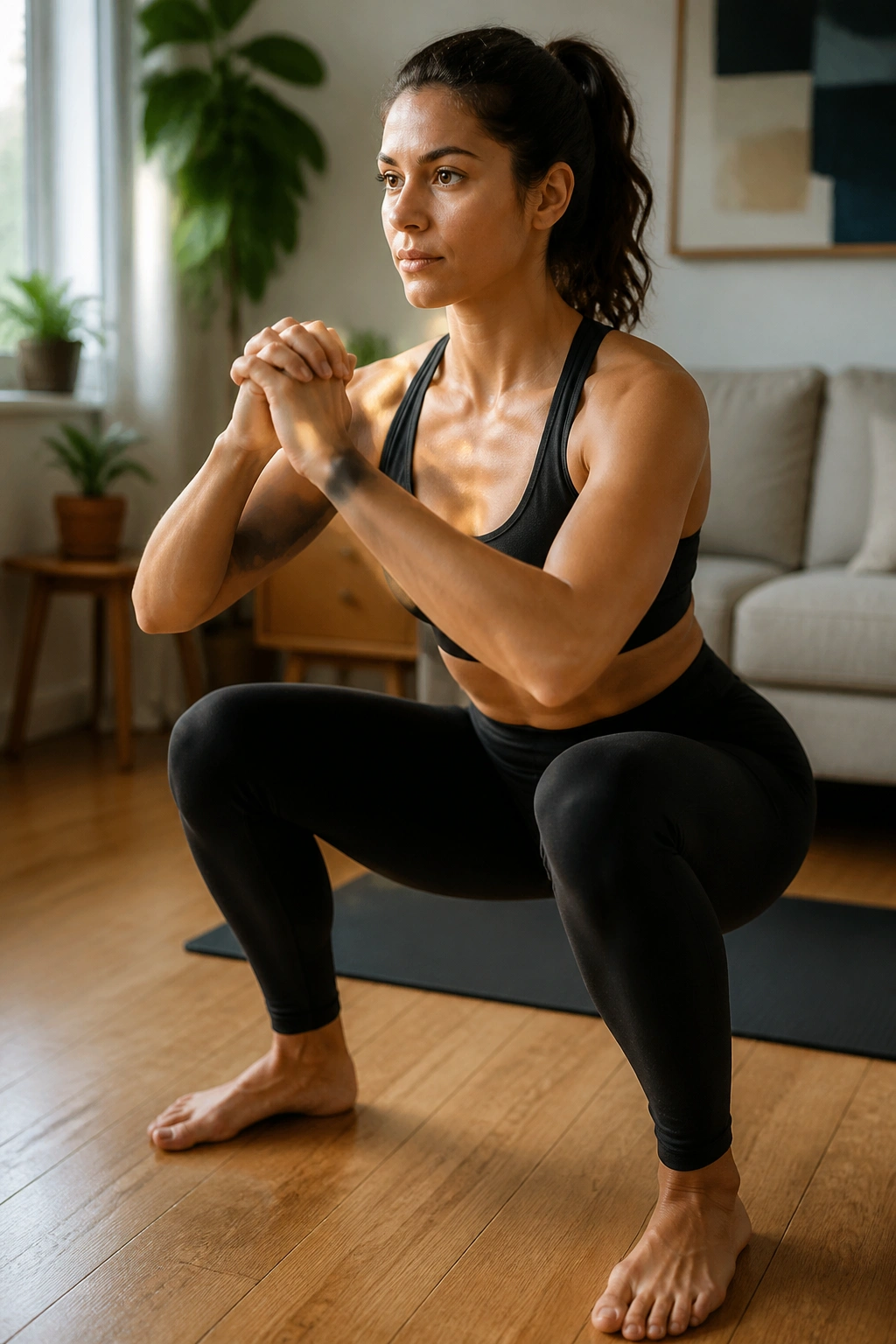
Squats look basic, and that’s part of the trap. People rush through them, lose their posture, and then wonder why their legs never feel worked. A clean squat is one of the best home moves for the thighs, glutes, and core because it trains you to lower your body under control and stand back up without cheating.
What Good Form Looks Like
Set your feet about shoulder-width apart, toes turned out just a little. Sit your hips back and down, keep your chest open, and let your knees track in the same direction as your second toe. If your heels pop up or your lower back rounds hard, you’ve gone deeper than your body is ready for.
- Lower for 2 to 3 seconds on the way down.
- Pause for 1 second at the bottom.
- Drive up through the heels and midfoot.
- Stop when your thighs are parallel to the floor, or slightly above if that’s where your form stays clean.
Best use: 2 to 4 sets of 10 to 15 reps. If bodyweight squats feel too easy, slow the lowering phase or hold a dumbbell at your chest. That small change can turn a casual set into one that actually makes your legs wake up.
2. Reverse Lunges
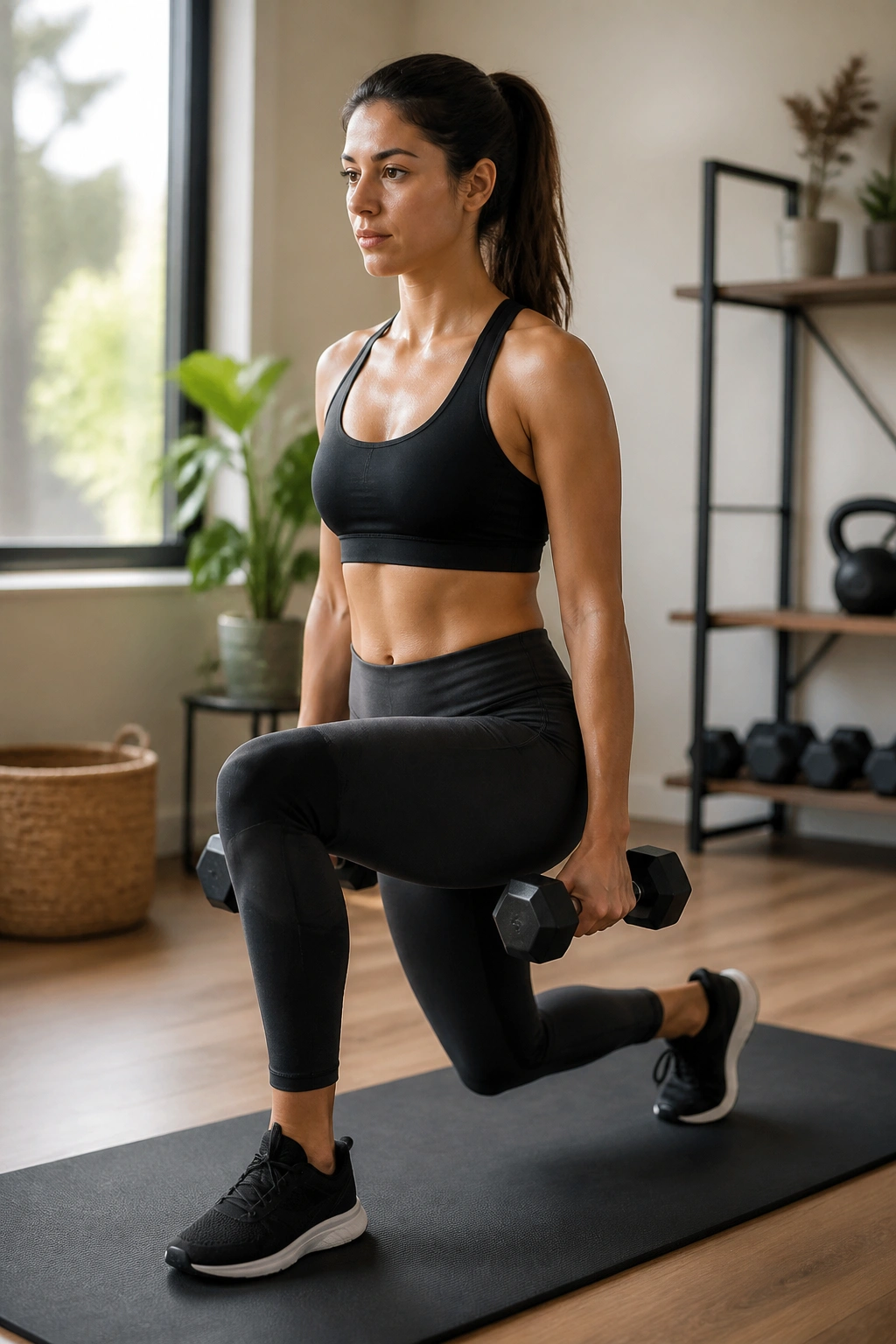
A reverse lunge is friendlier than a forward lunge, and I’ll stand by that. Stepping back tends to feel easier on the knees, gives you more control, and makes it simpler to keep the front foot planted. For anyone trying to tone the legs at home without a lot of space, this move is a workhorse.
You’ll feel it in the glutes, quads, and inner thighs, but only if you keep the motion steady. Step back far enough that both knees can bend without wobbling, then drop straight down instead of leaning forward like you’re dodging something. The front heel should stay down. If it lifts, your stance is too short.
Start with 8 to 10 reps per side for 2 to 3 rounds. Keep your torso tall and use a wall or chair lightly for balance if needed. That support is not “cheating”; it’s how you keep the muscles doing the work instead of your balance system stealing the show.
3. Split Squats
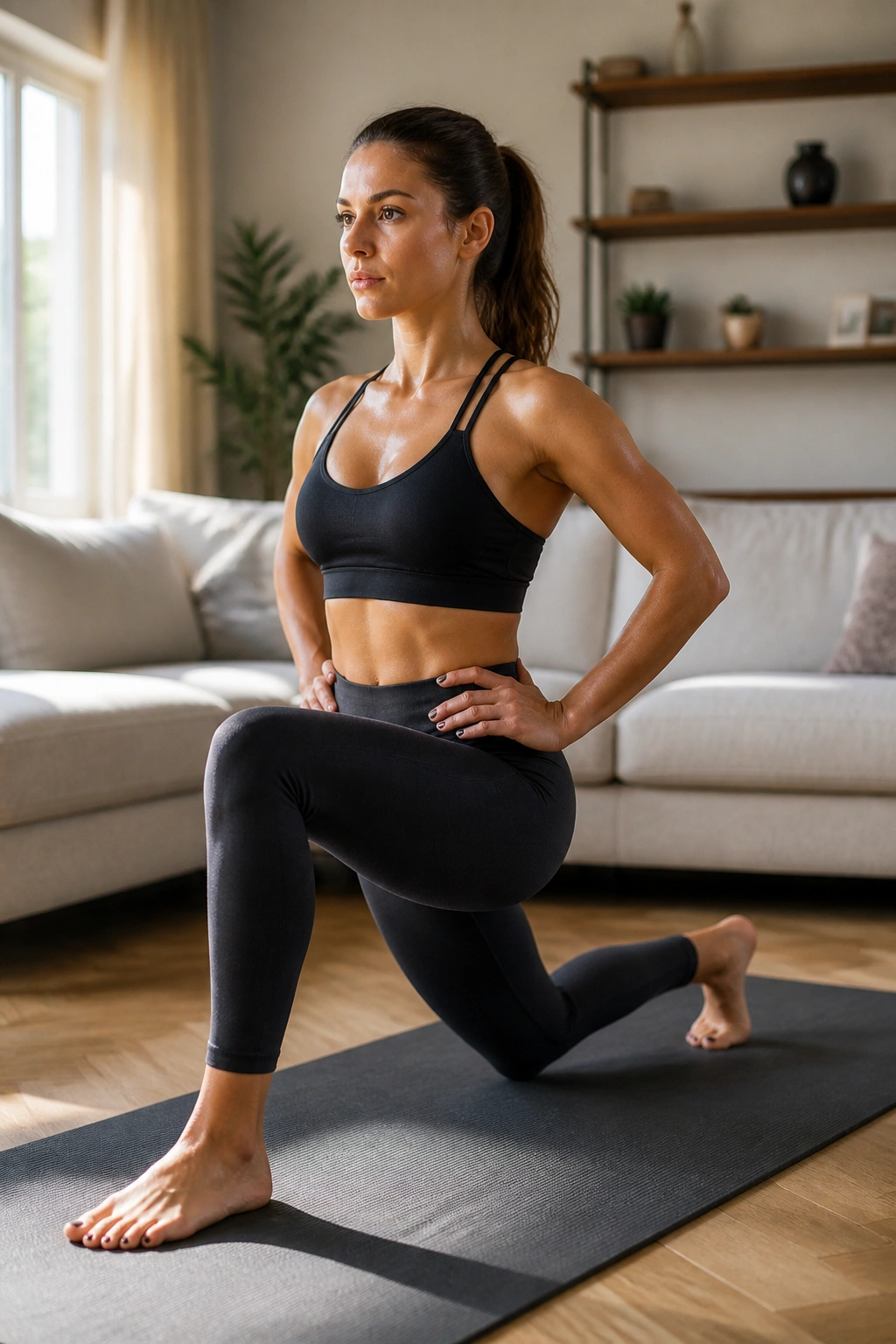
Why do split squats burn so fast? Because one leg has to do almost everything while the other leg just stands there looking useful. That single-leg load is what makes split squats so effective for home toning, especially if you want stronger quads and glutes without bouncing around.
How to Use It
Set one foot forward and one foot back, like you’re in a long railroad track stance. Lower straight down, not forward, until your back knee comes close to the floor. Then push through the front heel and come back up. Keep the front shin fairly vertical if your knees like that better.
- Use a shorter stance if you feel it too much in the knee.
- Hold dumbbells at your sides once bodyweight feels too easy.
- Try 8 to 12 reps per leg.
- Add a 1-second pause at the bottom if you want more burn without more weight.
A split squat is one of those exercises that looks neat from a distance and feels humbling up close. That’s a good sign.
4. Glute Bridges
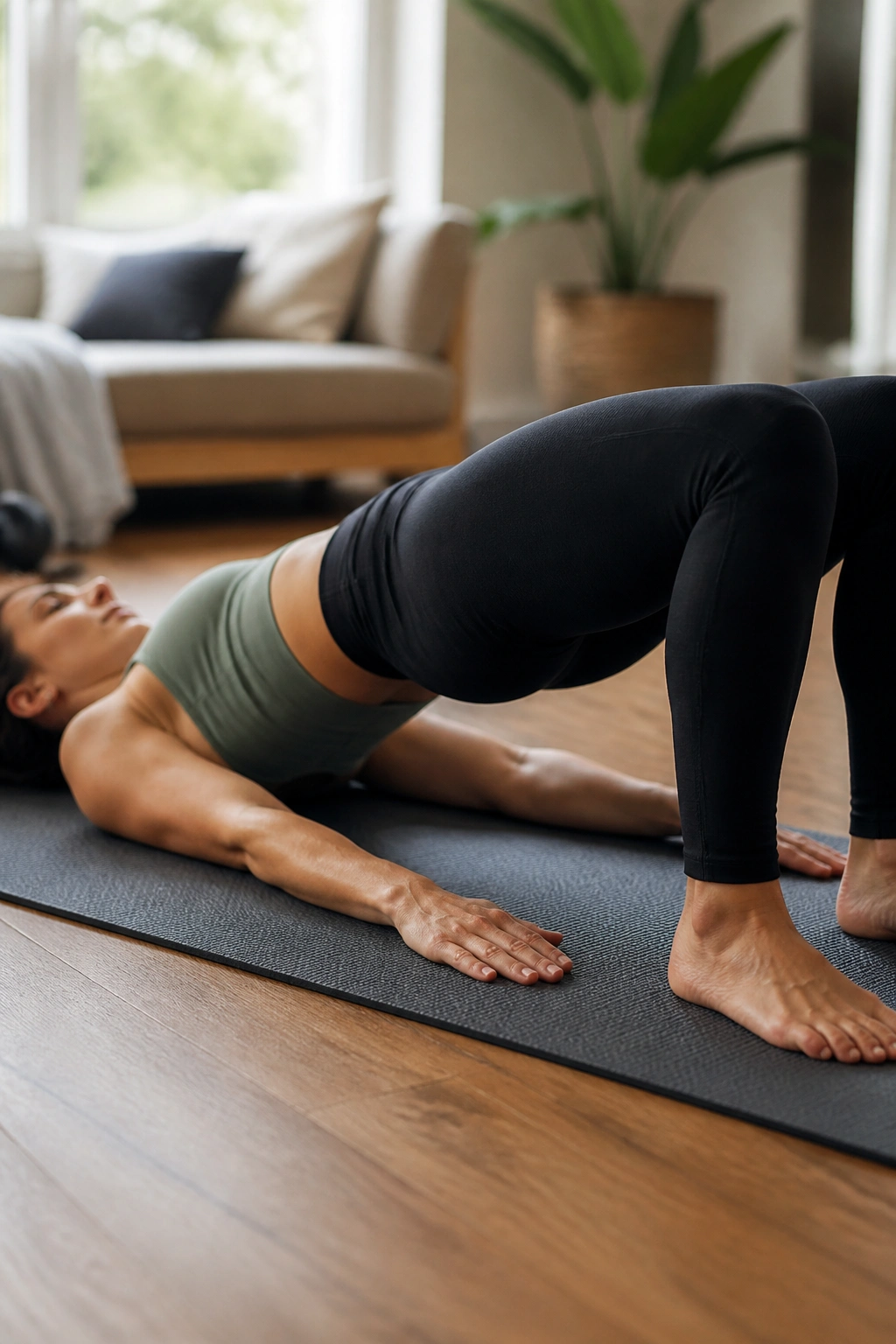
If your lower back has been annoyed by sitting all day, glute bridges are usually one of the first moves worth trying. They teach your glutes to fire without asking your spine to do extra work, which is part of why this exercise shows up in so many home programs.
Lie on your back with your knees bent and feet flat on the floor, about hip-width apart. Brace your core, squeeze your glutes, and lift your hips until your body makes a straight line from shoulders to knees. The lift should come from the back of the hips, not from arching your lower back into a dramatic shape that looks high but feels wrong.
A lot of people go too fast here. Don’t. Hold the top for 2 seconds, lower under control, and stop if you feel the effort in your lower back instead of your glutes. 12 to 20 reps is a solid range, and a mini band above the knees can make the outer hips work harder without needing heavy equipment.
5. Hip Thrusts on the Sofa
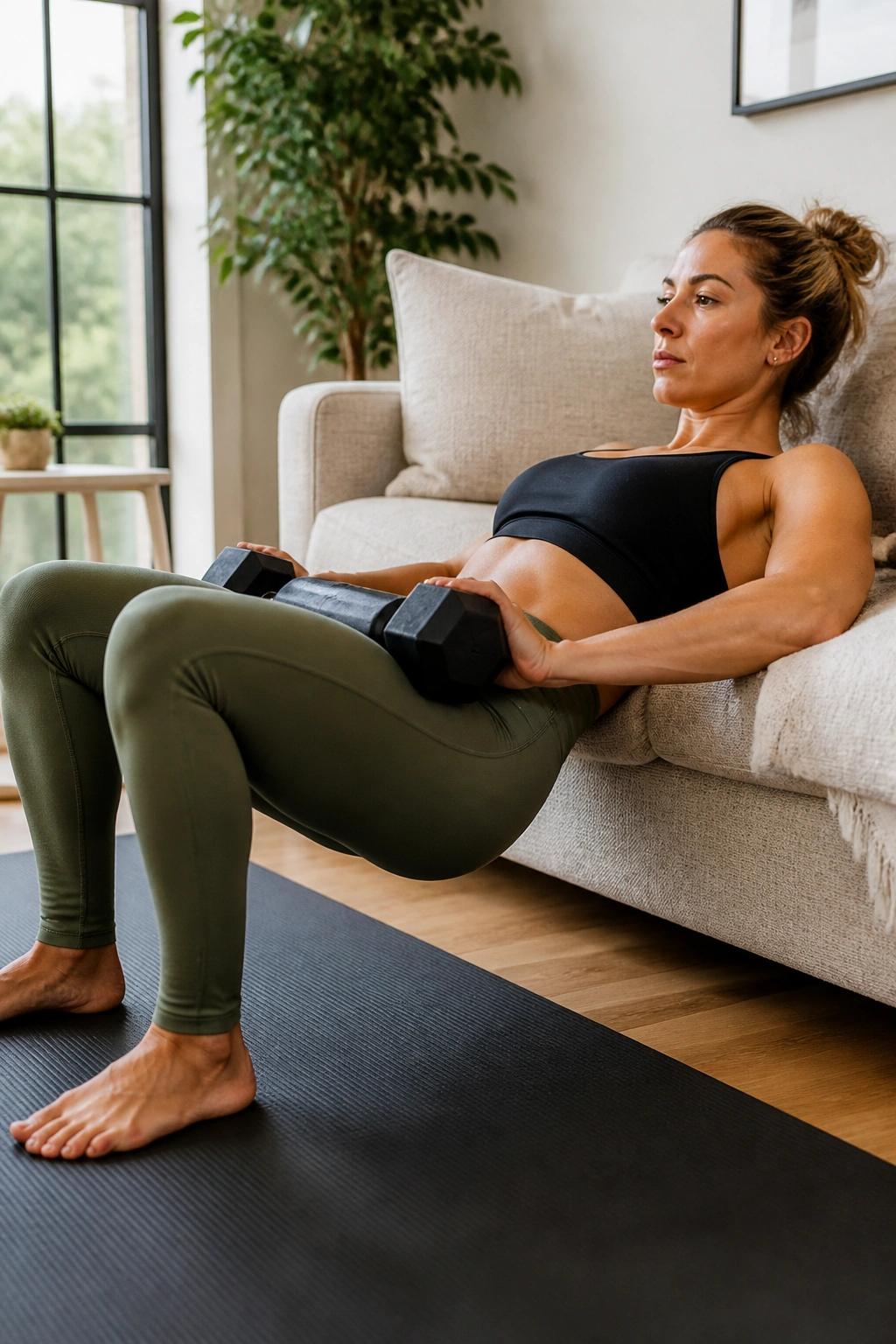
Hip thrusts are the bridge’s louder cousin. Same general family, bigger range of motion, more room to load the glutes, and a stronger peak squeeze at the top. If you have a sturdy couch, bench, or ottoman, this is one of the best ways to make home glute work feel serious.
Set your upper back against the edge of the sofa and plant your feet on the floor so your shins are close to vertical at the top. Place a dumbbell, backpack, or weighted object across your hips if bodyweight stops feeling hard. Then drive the hips up, tuck the chin slightly, and keep the ribs from flaring.
The top position matters more than people think. You want your glutes doing the lifting, not your lower back overextending to fake a bigger range. If your hamstrings cramp, move your feet a few inches farther away. If you feel pressure in the neck, put a folded towel under the upper back edge and check that your chin stays tucked. 8 to 12 controlled reps is enough when the load is honest.
6. Romanian Deadlifts
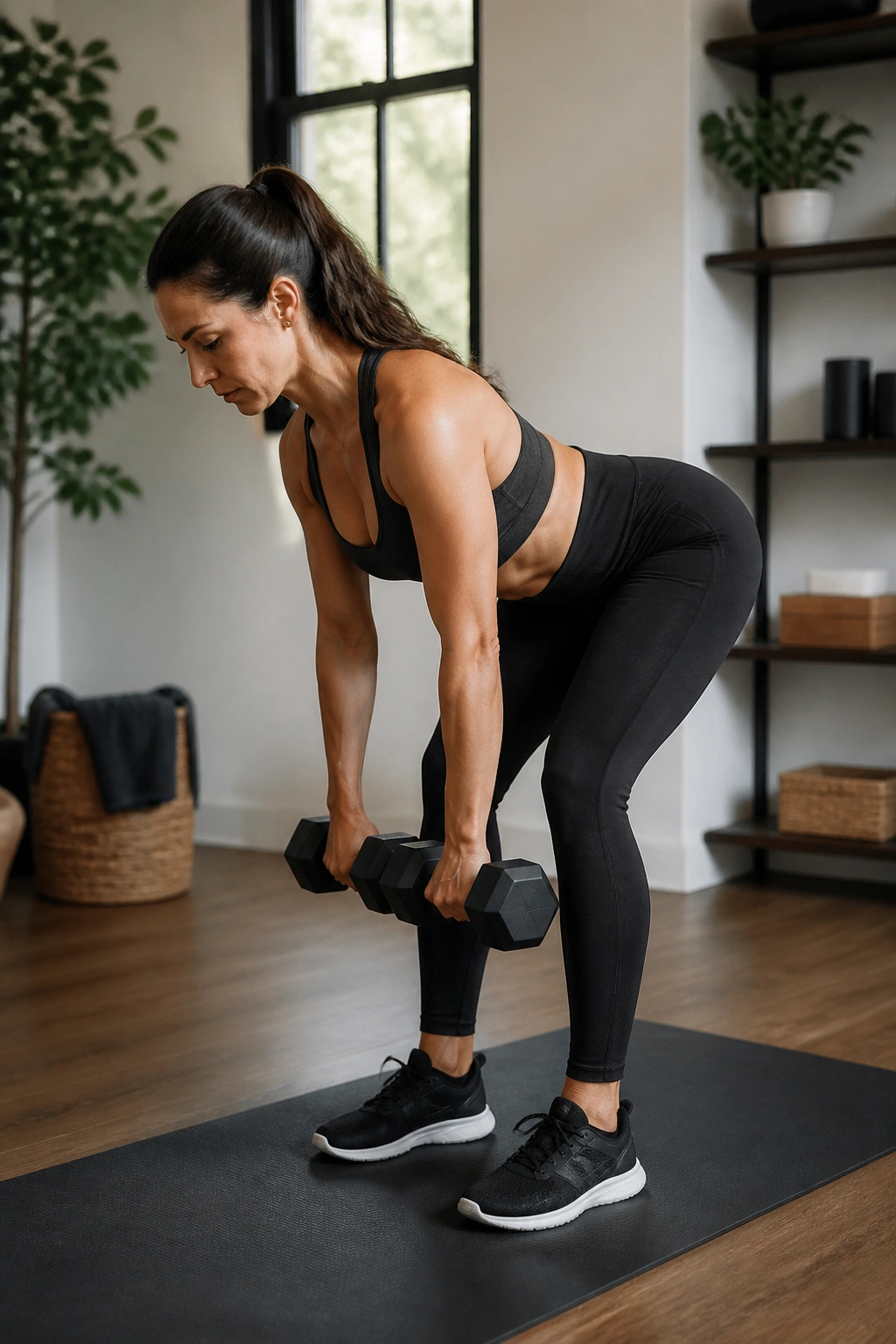
Unlike squats, Romanian deadlifts are a hip hinge. That means they train the back side of the body — hamstrings, glutes, and the muscles that help you stand and walk with better posture. If you want legs that look strong from behind, this is the move you don’t skip.
Hold a pair of dumbbells in front of your thighs, unlock the knees slightly, and push your hips back as if you’re closing a drawer with your backside. The weights should slide close to your legs. Your back stays long and neutral; don’t round it just because the stretch starts to bite.
This exercise works best when you keep the descent slow, around 2 to 3 seconds, and stop when your hamstrings are stretched but your spine still feels stacked. You do not need to touch the floor. Most people don’t. 8 to 12 reps is a useful target, and a backpack or filled laundry detergent bottle can work if dumbbells aren’t available.
7. Incline Push-Ups on a Chair or Counter
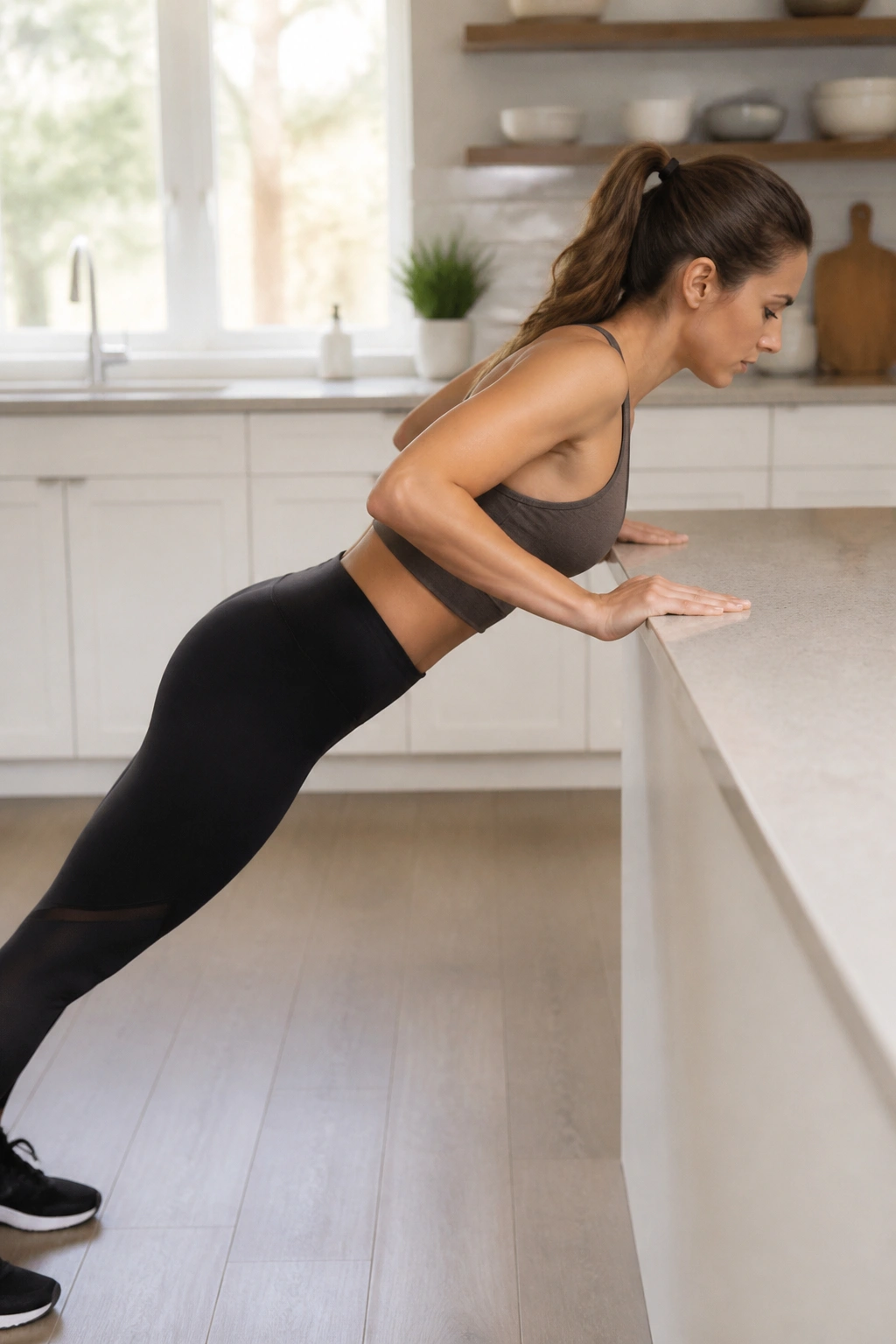
Hands on a counter, body in one straight line, and suddenly the push-up feels doable. That’s the beauty of the incline version: it gives your chest, shoulders, and triceps real work without forcing you straight to the floor before you’re ready.
Why It Works So Well
The higher your hands are, the easier the push-up gets. A kitchen counter is the easiest option, a sturdy sofa arm sits in the middle, and a low chair edge makes it harder. That built-in scaling lets you train the same pattern while keeping your shoulders and wrists happier.
- Keep your body rigid from head to heels.
- Lower until your chest nearly meets the surface.
- Keep elbows angled about 30 to 45 degrees from your sides.
- Press up without letting your hips sag.
Try 6 to 12 reps for 2 to 4 sets. If the movement feels awkward, check the surface height first. Too low too soon is where people bail out and decide push-ups “aren’t for them.” They usually are. The angle was just wrong.
8. Tricep Dips on a Chair
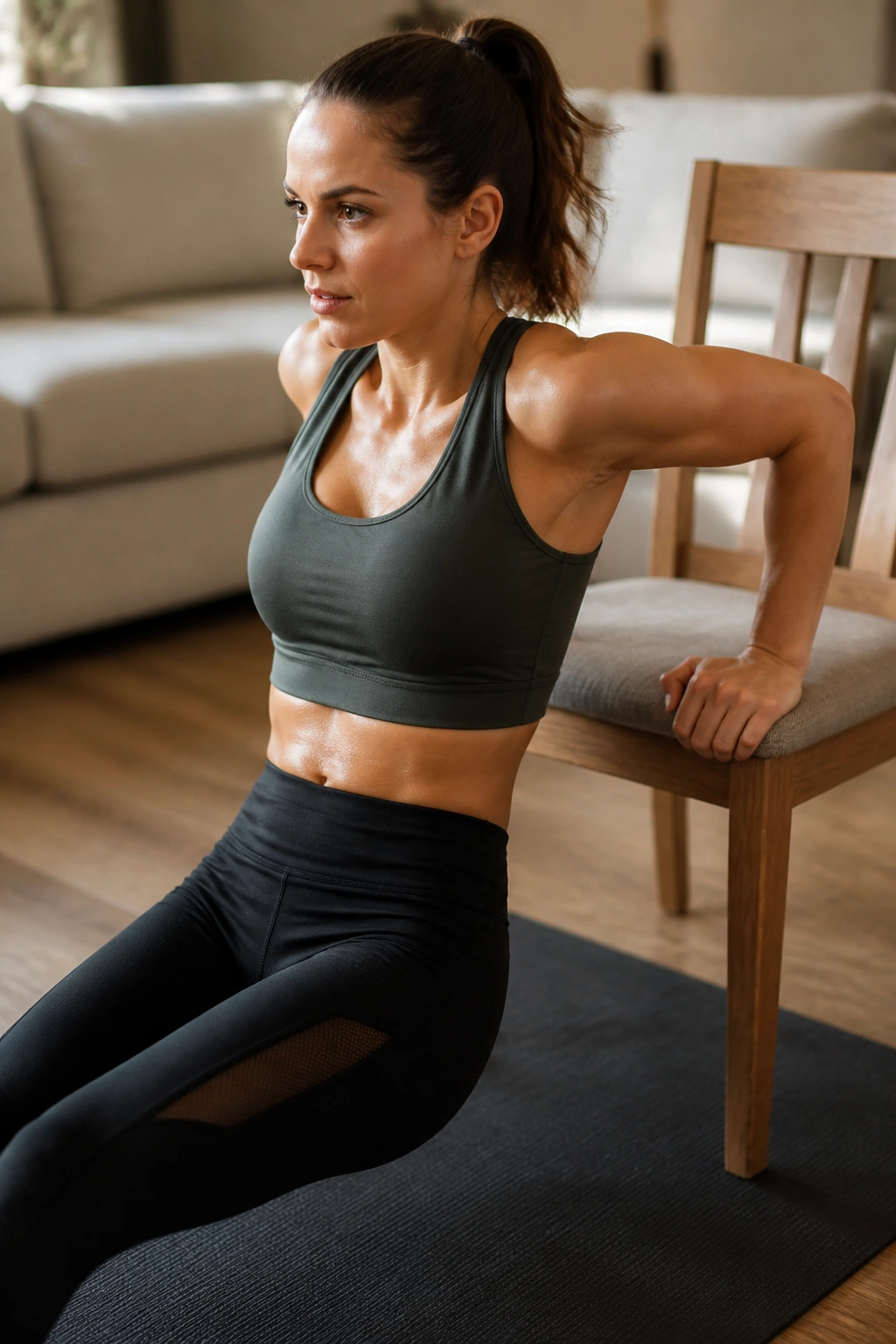
Tricep dips are a little rude. They seem simple, then your arms start shaking halfway through the set and the chair suddenly feels taller than it looked. Still, they’re useful for the back of the arms, especially if you want a home move that targets triceps without much setup.
Sit on the edge of a sturdy chair or bench, place your hands next to your hips, and walk your feet out until your body is supported by your arms. Bend your elbows to lower yourself, then press back up. The key is to keep your shoulders down and avoid dropping too deep just because you can.
That last part matters. Going too low can irritate the shoulders, and a lot of people push past the comfortable range because they think deeper always means better. It doesn’t. Aim for roughly a 90-degree elbow bend, keep the movement smooth, and stop there. 8 to 12 controlled reps is enough to make your triceps complain in a useful way.
9. Bent-Over Dumbbell Rows
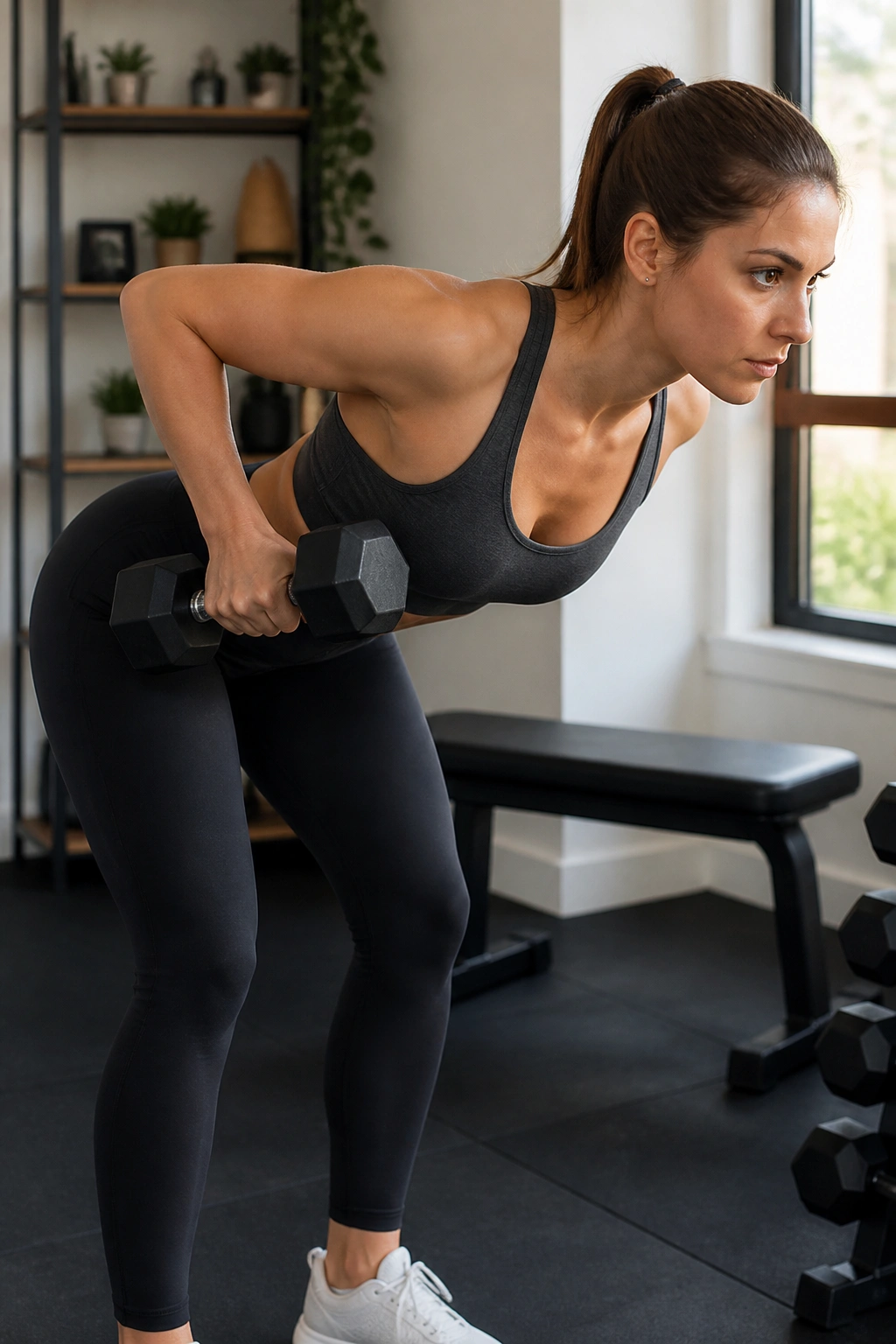
Most home routines do a lot of pushing and not enough pulling. Rows fix that imbalance. They train the upper back, rear shoulders, and biceps while helping your posture feel less slumped after a long day at a desk or in the car.
Hinge at the hips until your torso is angled forward, then row the dumbbells toward your ribs. Pull with your elbows, not your hands. That small cue changes the whole feel of the exercise. Your shoulder blades should glide back and down, not shrug toward your ears like they’re trying to hide.
If your lower back starts to take over, stand a little more upright or use one hand on a chair for support. That’s not a failure. It’s smart. 8 to 12 reps per side works well, and if you only have one dumbbell, do one-arm rows with your free hand braced on a couch or sturdy table.
10. Dumbbell Shoulder Press
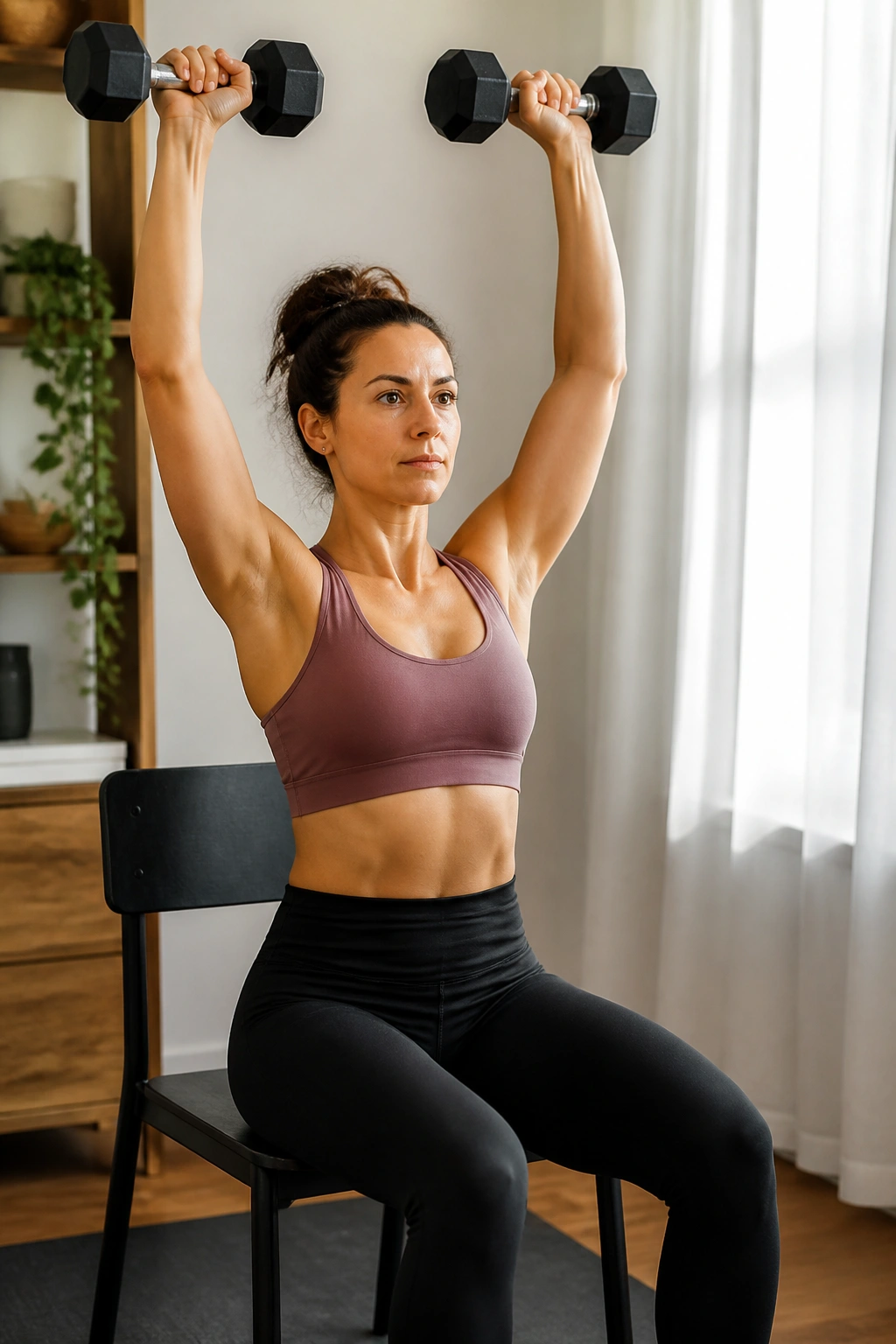
A shoulder press sounds glamorous until you do the last two reps and realize how much your core wants in on the job. That’s why it’s such a good home exercise. It trains the shoulders, triceps, and upper back while asking the midsection to stay stacked instead of leaning into the lift.
Setup That Saves Your Neck
You can do this standing or seated. I prefer seated if you tend to arch your lower back, because the bench or chair gives you fewer ways to cheat. Start with the dumbbells at shoulder height, palms facing forward or slightly inward, and press them overhead in a straight line.
- Keep your ribs from flaring.
- Finish with the weights just short of locking out if your elbows feel better that way.
- Lower slowly to shoulder height.
- Use a weight that lets you stay smooth for 8 to 10 reps.
The mistake I see most often is pressing too far forward. That turns the move into a weird shoulder shrug. Keep the weights over the middle of your body, and the exercise suddenly feels cleaner — and harder.
11. Dead Bug
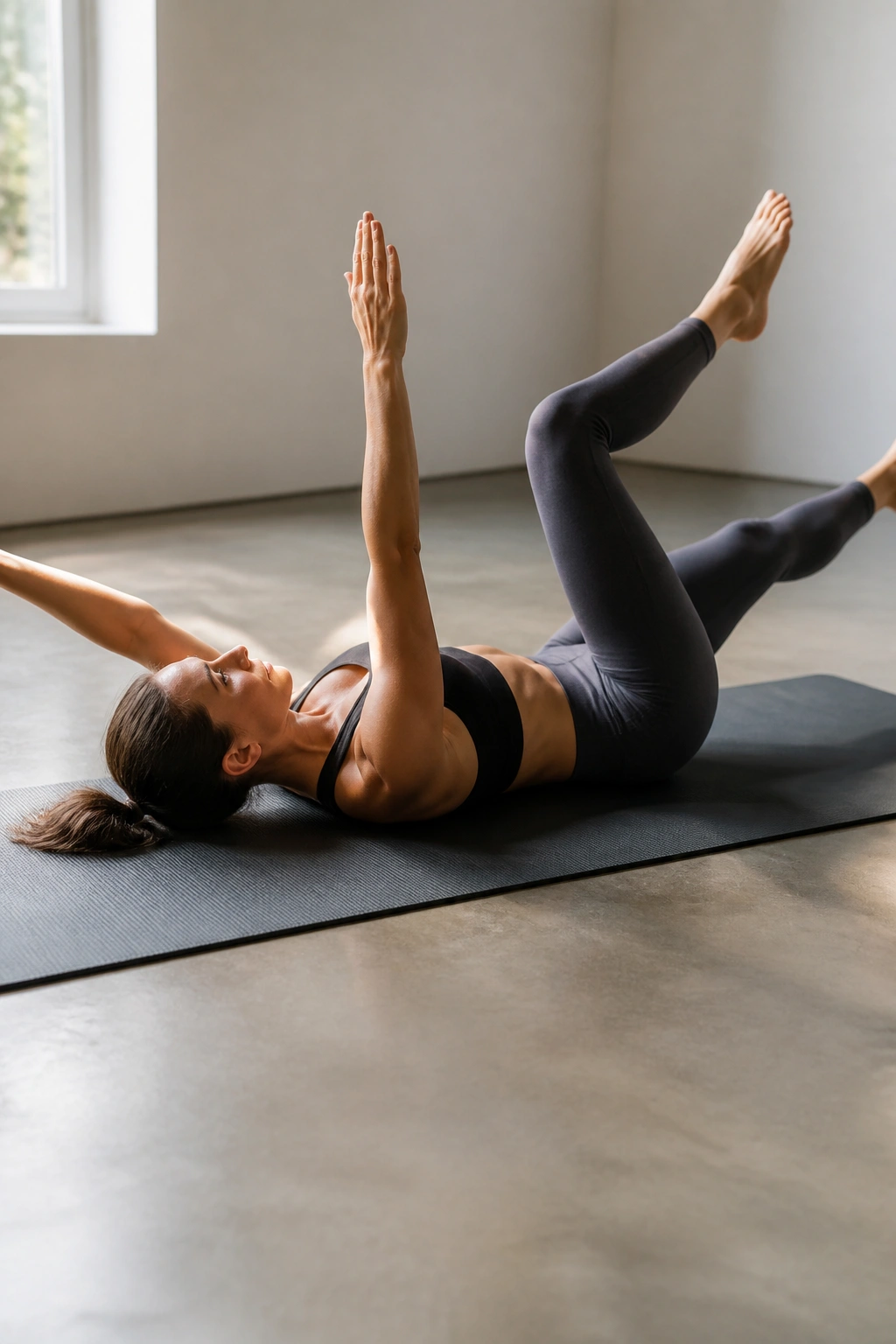
Why is a move named after a dead bug so useful? Because it teaches your core to hold still while your arms and legs move, which is the exact skill a lot of people are missing. If your lower back arches when you exercise, the dead bug is one of the first fixes worth learning.
Lie on your back with your arms pointed toward the ceiling and your knees bent over your hips. Flatten your lower back gently into the floor. Then extend the opposite arm and leg away from each other, stopping before your back pops up. Bring them back in and switch sides.
How to Get the Most From It
Move slower than you think you need to. A sloppy dead bug does almost nothing, and a slow one can light up your core fast.
- Exhale as the arm and leg reach out.
- Keep the knee over the hip.
- Stop the range if your back starts to lift.
- Try 6 to 10 reps per side.
This is a quiet exercise. No drama. But it teaches control, and control is what keeps the stronger moves honest.
12. Plank Shoulder Taps
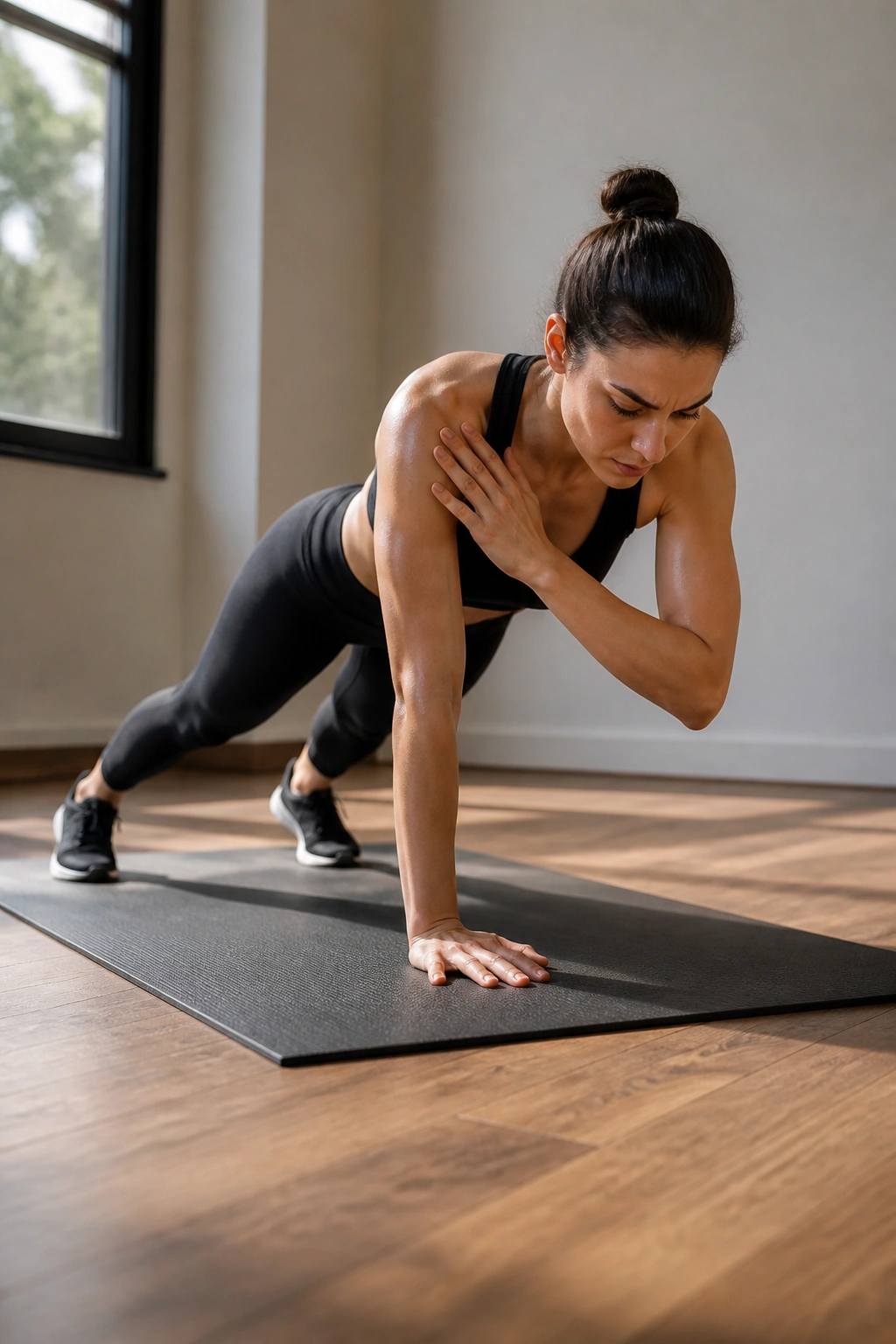
If your plank looks solid until one hand leaves the floor, shoulder taps will expose that right away. That is the point. This move trains anti-rotation, which is a fancy way of saying your core has to stop the body from twisting while the shoulders work.
Get into a high plank with your feet a bit wider than hip-width to start. Lift one hand and tap the opposite shoulder, then set it back down before switching sides. Keep the hips as level as you can. If they rock hard side to side, widen your stance and slow down.
- Tap slowly, not fast.
- Keep the feet planted and quiet.
- Hold the plank line from head to heels.
- Aim for 10 to 20 taps total.
The burn shows up in weird places — abs, shoulders, even the glutes — because the whole body is working to keep you still. That’s why this one earns a place in a home toning routine.
13. Bird Dog
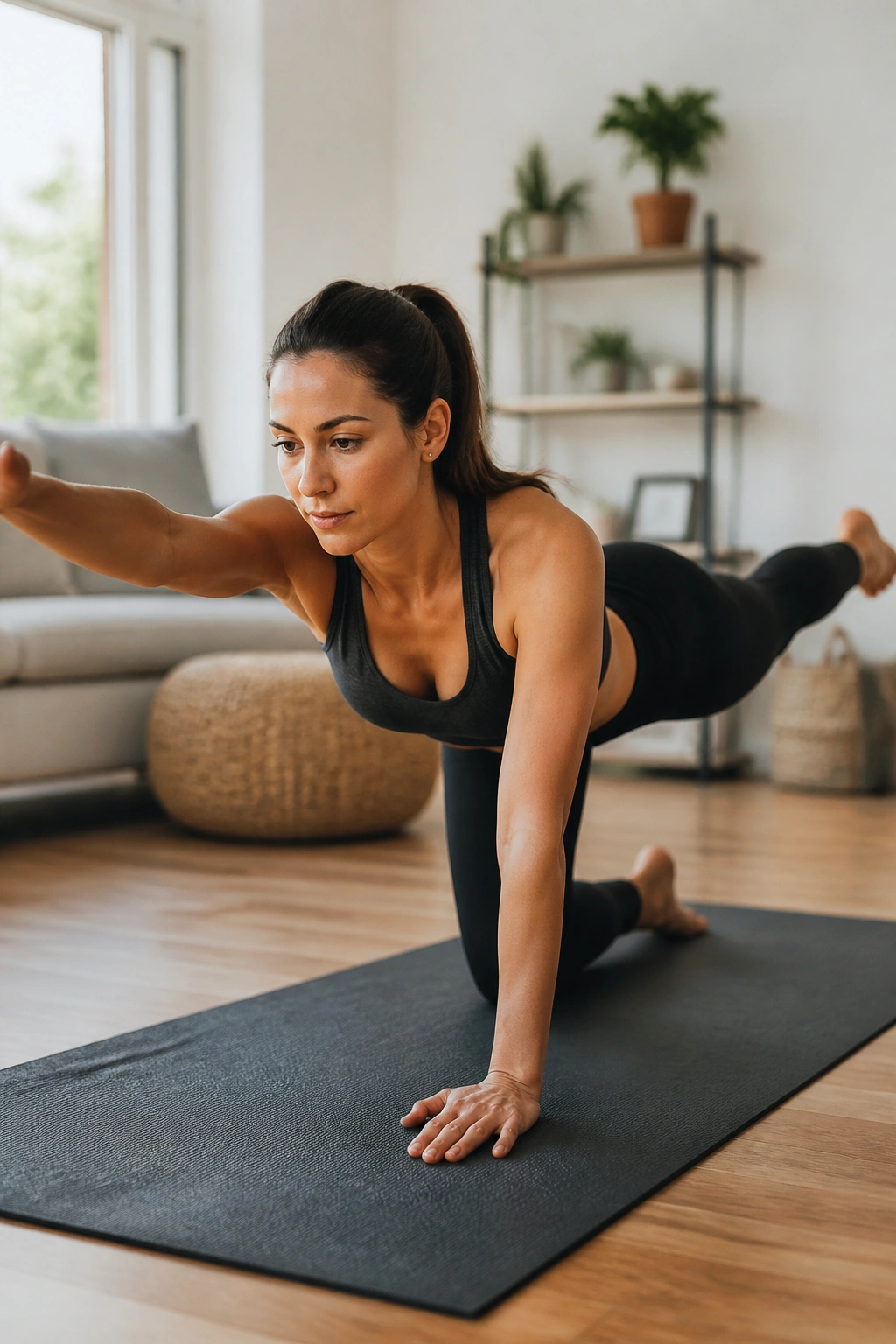
Bird dog is the kind of exercise people dismiss because it looks too polite. Then they hold the position for three seconds and realize how much their trunk and hips actually have to do. It is one of the cleanest moves for core stability, lower-back control, and glute engagement.
Start on hands and knees with your wrists under your shoulders and knees under your hips. Reach one arm forward and the opposite leg back without opening the pelvis to one side. The goal is a long line, not a high kick. A lot of people lift the back leg too far and end up arching the low back instead of using the glute.
Hold the reach for 2 to 3 seconds, then return with control. Switch sides. If you can keep your ribs quiet and your hips level, you’re doing it right. 6 to 8 reps per side is enough to feel the work, and it pairs well with dead bugs if you want a core sequence that doesn’t need a single piece of equipment.
14. Side-Lying Leg Lift
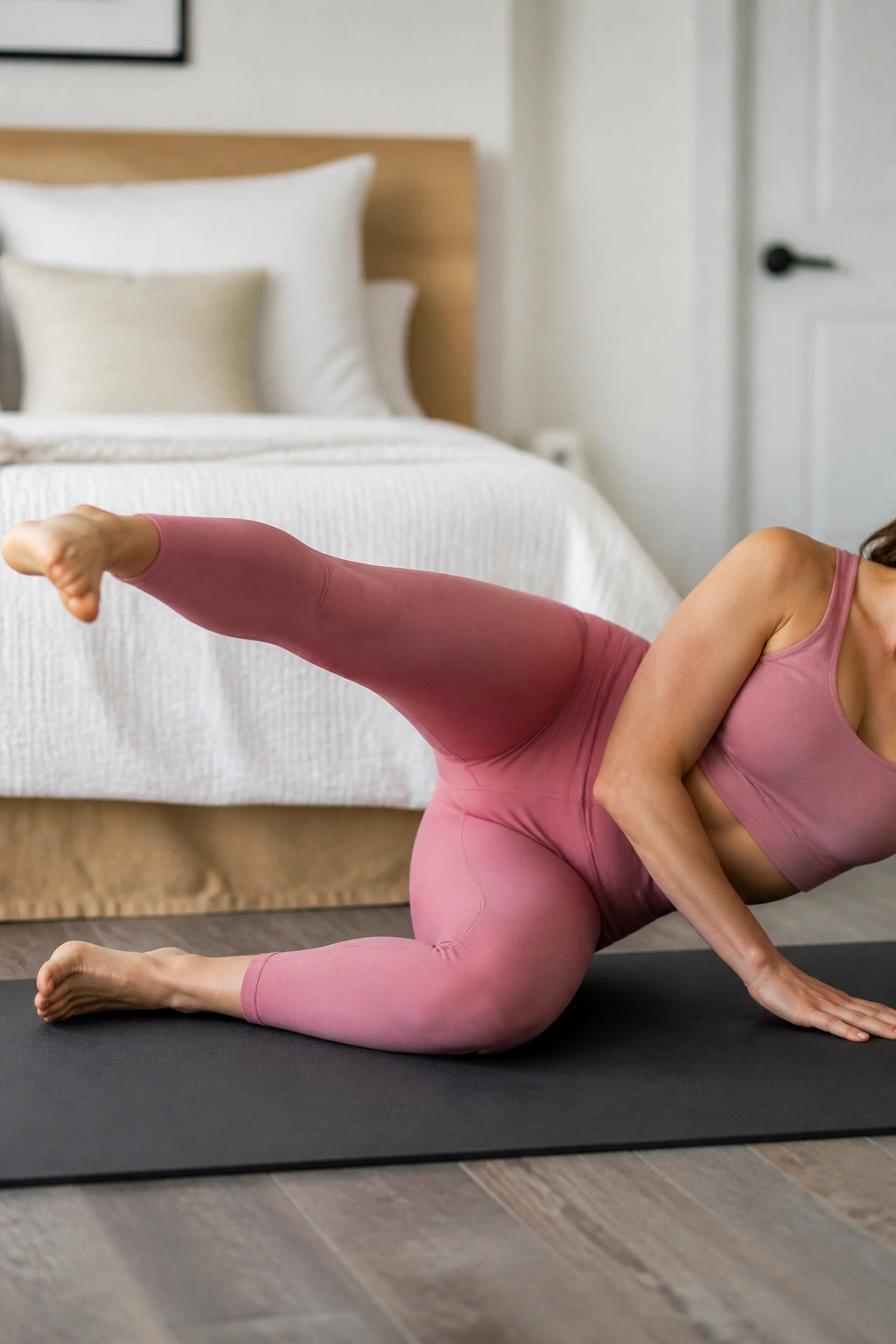
Unlike squats and lunges, side-lying leg lifts hit the outer hip directly. That matters more than people think, because the glute medius helps stabilize the pelvis when you walk, climb stairs, or balance on one leg. It’s a small muscle with a big job.
Lie on your side with your legs stacked and your lower arm under your head or stretched out for support. Lift the top leg slowly, keeping the toes angled slightly down so the front of the hip doesn’t take over. Lower just as slowly. The move should stay smooth, not swingy.
This is a move where range is less important than control. A smaller lift with a clean squeeze beats a bigger lift that rocks your torso backward. 12 to 20 reps per side works well, and you can add a mini band around the thighs once bodyweight starts feeling too easy.
15. Clamshells
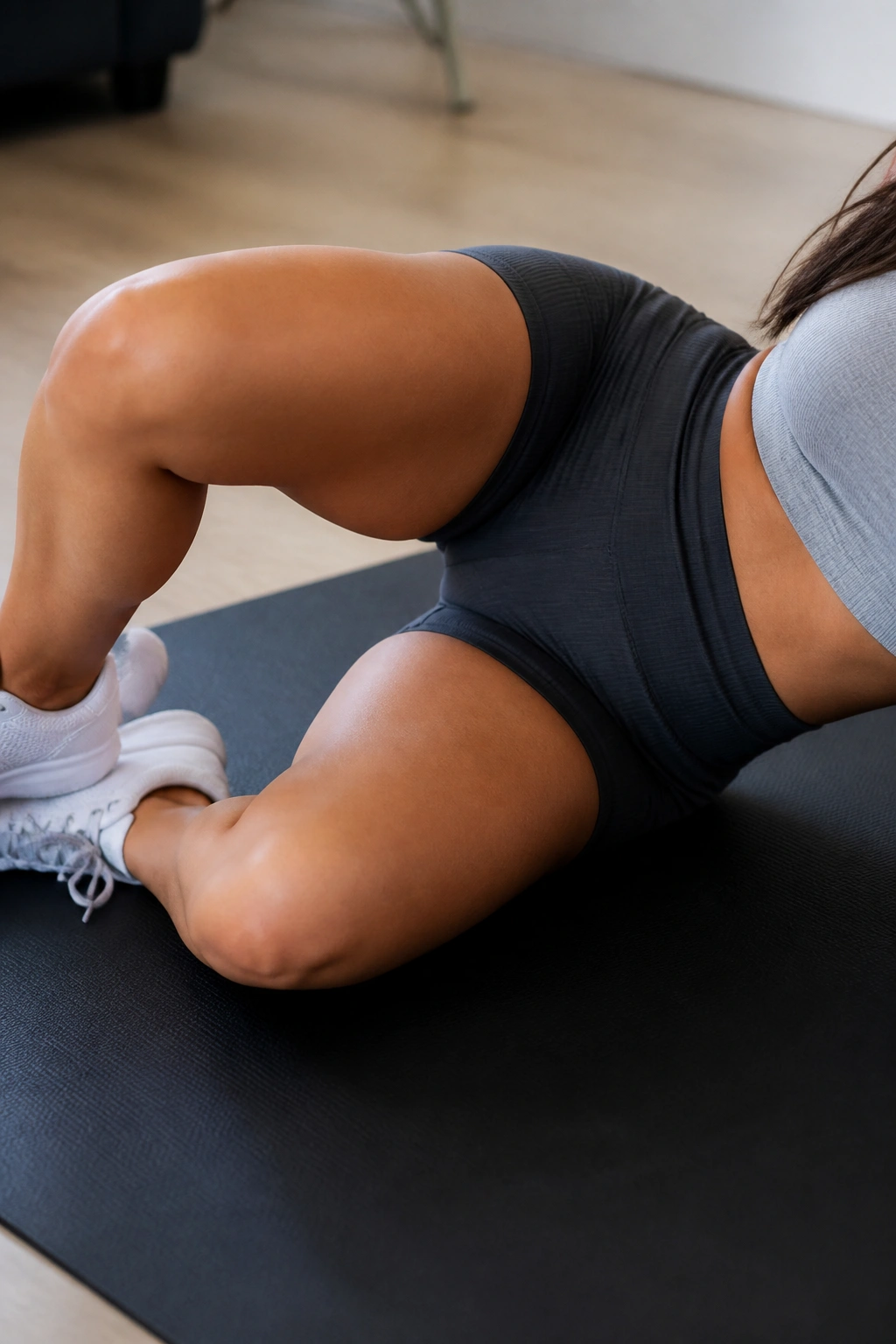
Small range. Big payoff. That’s clamshells in one line. They look almost too gentle to matter, but when they’re done cleanly with the hips stacked and a band above the knees, the side glutes light up fast.
Lie on your side with knees bent and feet together. Keep your pelvis still as you open the top knee like a clamshell, then close it without letting the hips roll backward. The lower back should stay quiet. If your torso twists, the glutes lose some of the work.
Clamshells are useful before a lower-body workout because they wake up the side glutes without tiring you out. They’re also good after squats or lunges if those muscles tend to dominate. Try 15 to 20 reps per side or a set of short pulses for 20 to 30 seconds. If you feel the front of the hip more than the side of the butt, bring the heels a little closer to your hips.
16. Donkey Kicks
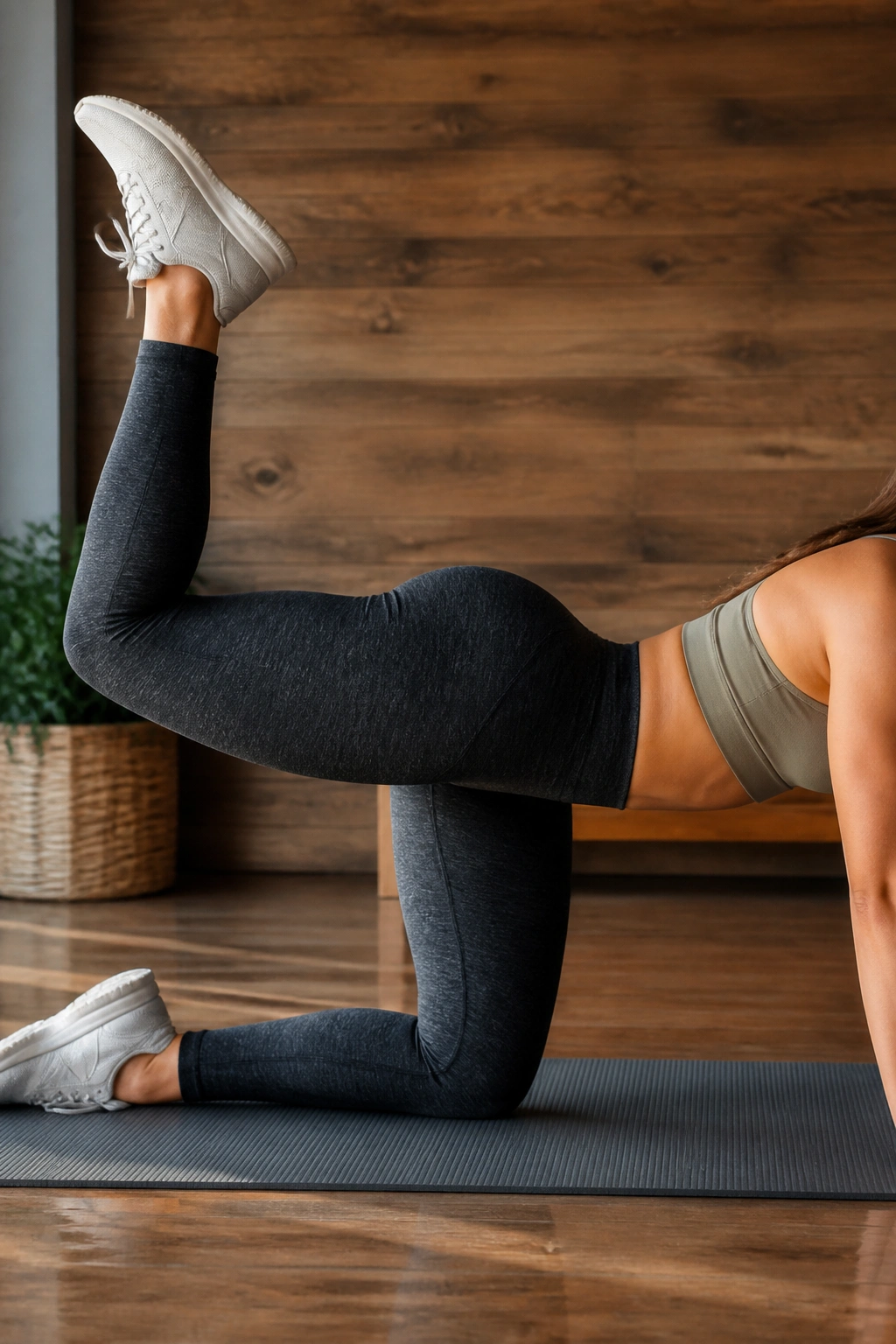
Why does this old-school glute move keep showing up? Because it’s easy to set up, easy to scale, and great for the muscle most people want to feel in the back of the hips. Donkey kicks also keep load off the spine, which makes them useful when you want glute work without much fuss.
How to Use It
Get on hands and knees. Keep one knee bent at 90 degrees and drive that foot up toward the ceiling while keeping the torso still. The leg does not need to go sky-high. If your lower back arches to get more height, the glute has already lost the job.
- Keep your core braced.
- Hold the top for 1 second.
- Lower slowly instead of dropping the leg.
- Do 12 to 15 reps per side.
That short pause at the top matters. It turns the rep from a swing into an actual contraction. If you want a harder version, loop a light resistance band around the foot or do the movement with a mini band around the thighs.
17. Fire Hydrants
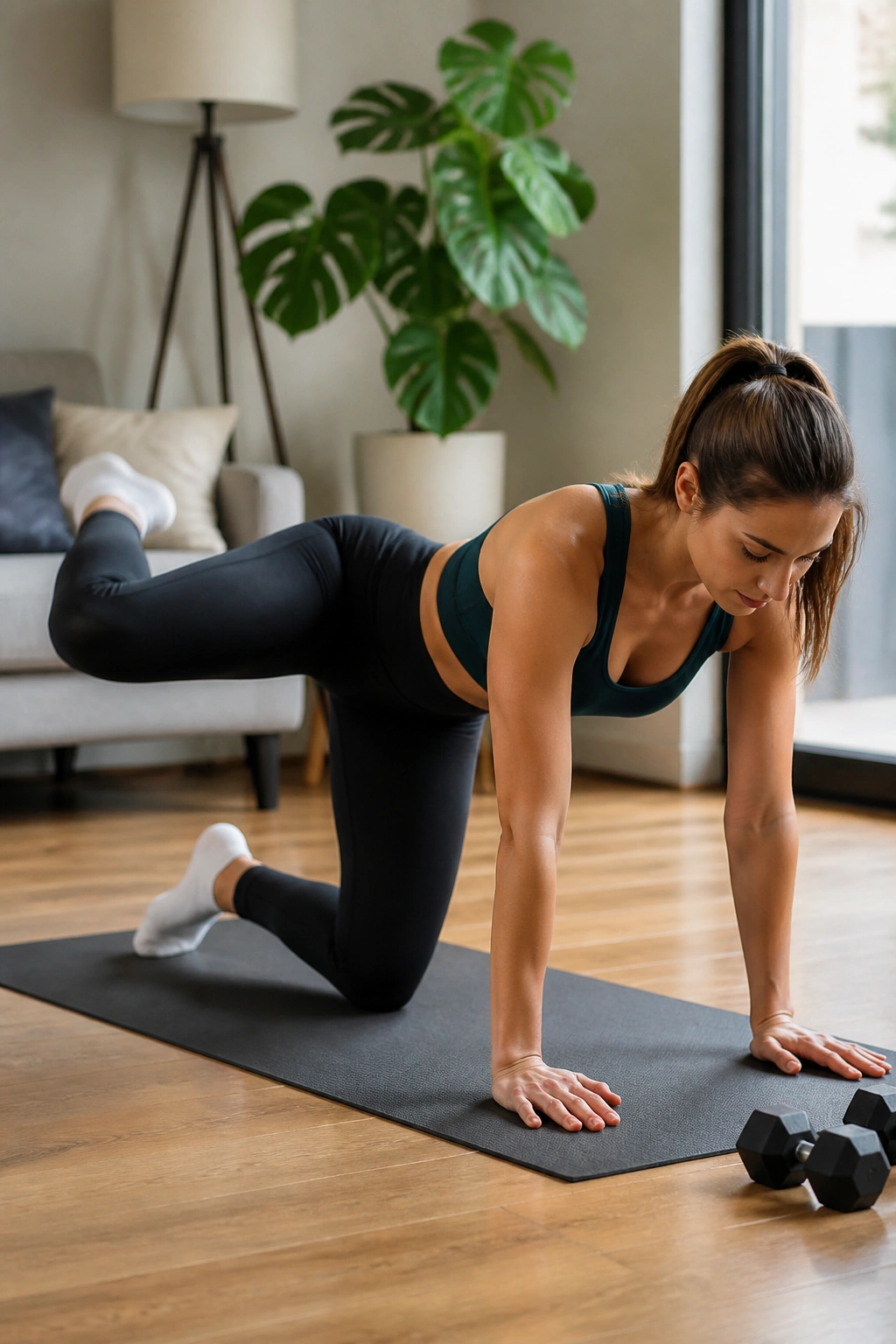
Donkey kicks hit the back of the glute. Fire hydrants hit the side. That difference sounds small, but the side-glute work is what helps hips feel steadier and gives lower-body training a more rounded feel.
Start on all fours with your hands under your shoulders and knees under your hips. Keeping the knee bent, lift one leg out to the side until the thigh reaches about hip height, or a little below if your pelvis starts to tip. Lower slowly. No swinging. No twisting. The movement is short, and that’s fine.
- Keep the shoulders level.
- Do not crane the neck up.
- Use a mini band once bodyweight feels easy.
- Aim for 12 to 15 reps per side.
The burn shows up fast because the glute medius is a smaller muscle. That’s not a problem. That’s the reason the exercise works. Clean reps beat high reps every time here.
18. Curtsy Lunges
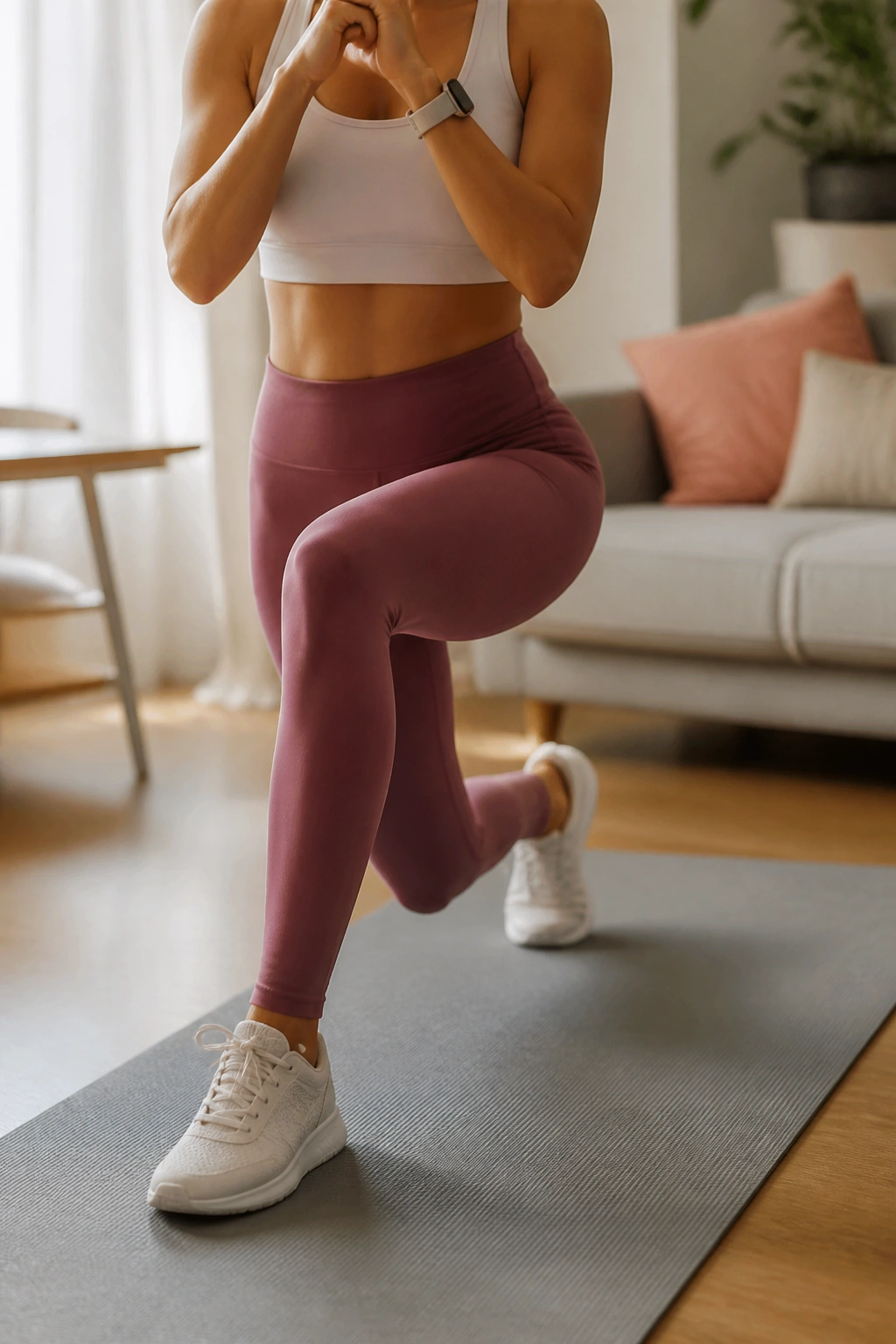
Curtsy lunges look graceful, but they’re sneaky. The crossing step hits the glutes and inner thighs in a way that regular lunges do not, and it also asks your balance to stay sharp. That makes it a useful home move if your lower body training needs a little variety.
Step one leg diagonally behind the other, then lower into a small lunge while keeping your chest upright. The front knee should track in a comfortable line, not cave inward. Use a shorter step if the motion feels awkward or if your knees don’t love the crossover angle.
I’m not wild about forcing this one on people who already have cranky knees. Some bodies love it; some don’t. If it feels clean, keep it in the mix for 8 to 10 reps per side. If it feels pinchy, skip it and use reverse lunges instead. No exercise gets a free pass just because it looks cute in a workout video.
19. Wall Sit
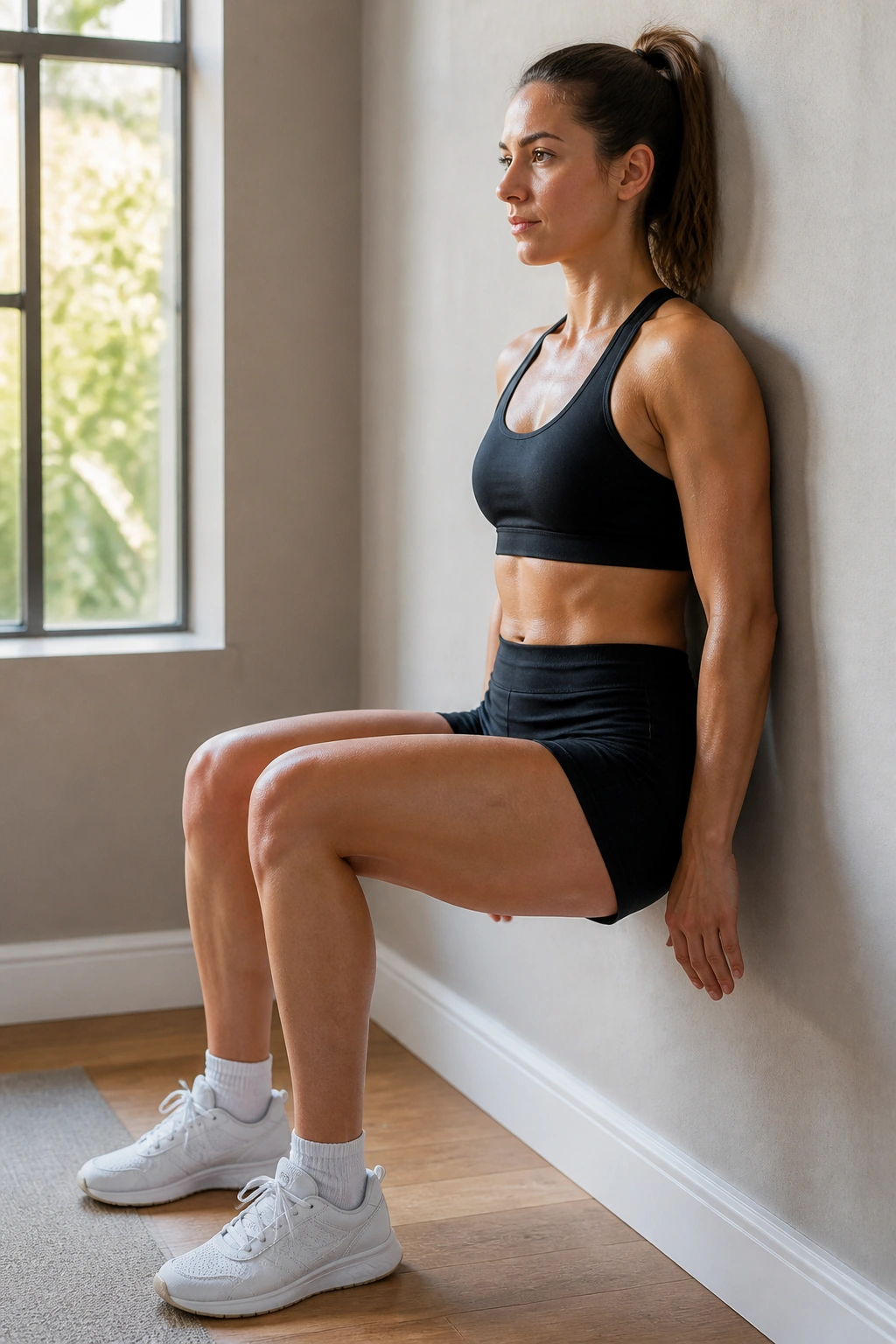
A wall sit is the sort of exercise that looks dull until your quads start asking for mercy. Unlike lunges or squats, this is an isometric hold, which means the muscles work hard without moving through a range of motion. That makes it a useful finisher when you want the legs to burn without extra impact.
Slide your back down a wall until your knees are near a 90-degree bend. Keep the feet a comfortable distance from the wall so your shins aren’t forced too far forward. Hold the position, breathe through it, and avoid pressing your lower back hard into the wall like you’re trying to glue yourself there.
- Start with 20 to 30 seconds.
- Build toward 45 to 60 seconds.
- Sit a little higher if your knees complain.
- Put a dumbbell on your thighs later if bodyweight gets easy.
The best wall sits feel steady and brutal in the right way. They don’t need fancy form cues. They need patience.
20. Standing Calf Raises
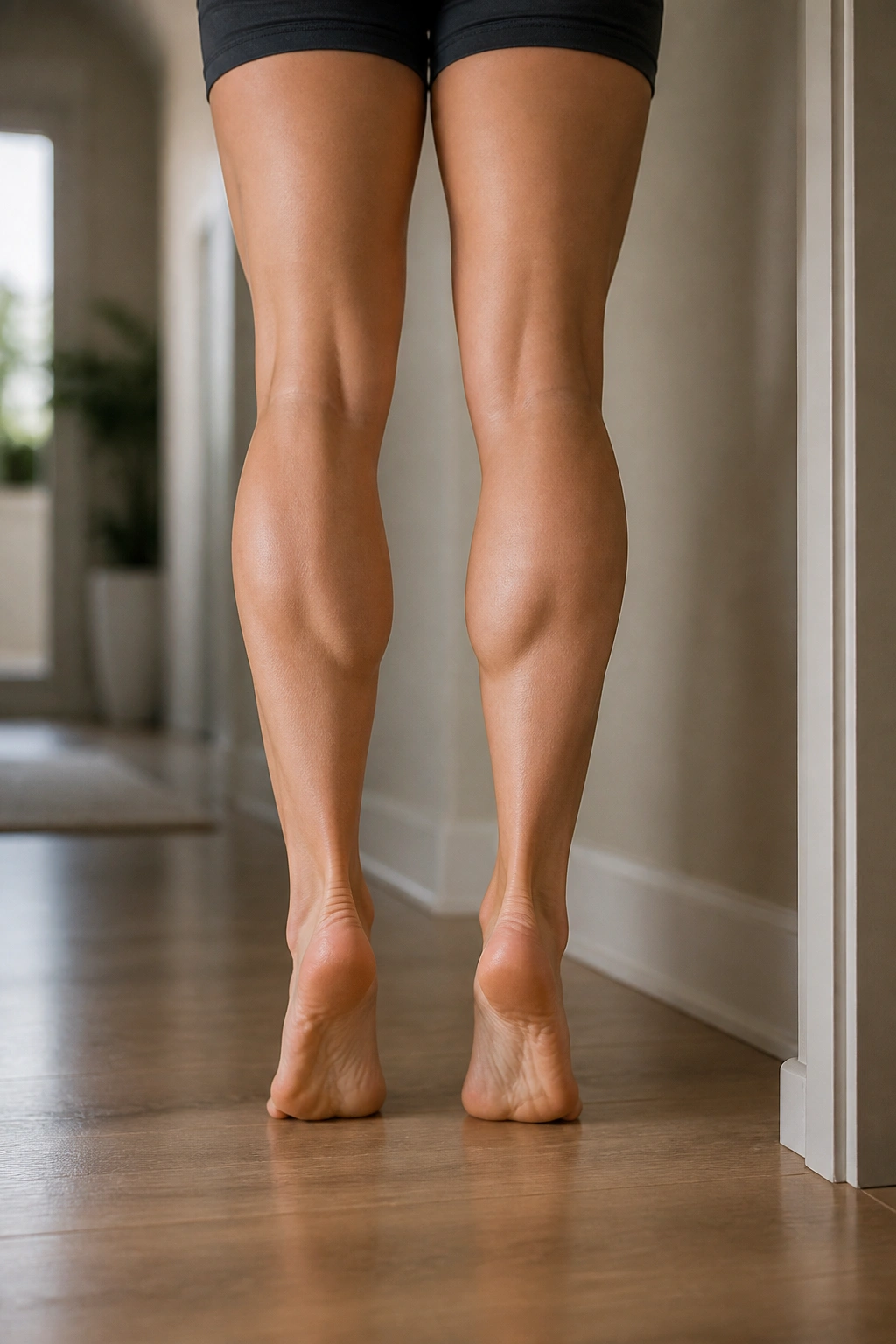
People ignore calf raises until stairs remind them they have lower legs. That’s a mistake. Calf work helps with ankle strength, balance, and the look of the lower leg, and it’s one of the simplest things you can do at home with no real setup.
Simple Setup That Works
Stand with your feet about hip-width apart and hold onto a wall or chair lightly if balance is shaky. Rise onto the balls of your feet, pause for a beat at the top, and lower slowly until your heels reach the floor. A small pause at both ends makes the movement much better than bouncing up and down.
- Use a step edge if you want a deeper stretch.
- Keep the ankles from rolling outward.
- Try 15 to 25 reps.
- Move to one leg once two legs feel too easy.
The move is tiny, but the control matters. Full range beats speed here. If you rush it, the calves do less and the Achilles tendon gets more irritation than it needs.
Final Thoughts
A good home workout does not need twenty exercises every time. That would be too much, and most people would quit before the week is over. What you really need is a short list you trust: one squat pattern, one hinge, one push, one pull, one core drill, and a couple of glute-focused moves that make the lower body feel fully trained.
Pick five or six of these and do them hard enough that the last two reps slow down. That’s the part a lot of people skip. The muscles don’t care that you moved quickly or finished the video. They care that the set gave them a reason to adapt.
A simple setup can work for a long time: 3 rounds, 8 to 15 reps on most moves, 20 to 45 seconds on holds, and one rest day between lower-body sessions. Keep the reps clean, keep the weights honest, and the whole thing starts to feel less like random exercise and more like a routine that actually changes the way your body carries itself.
