



Some yoga flows feel like a warm shower. Others feel like a brisk walk uphill with a good playlist. The useful ones do both jobs, depending on what your body needs that day, and that’s why yoga flows work so well for different fitness levels.
A stiff beginner can take the same sequence and keep the knees bent, slow the pace, and stay near a wall. A stronger mover can hold poses longer, link breaths more tightly to movement, or repeat the sequence until the legs start to burn. Same flow. Different demand. That flexibility is the whole appeal.
A mat, a block, and a wall can change a practice more than people expect. So can five extra breaths. So can deciding not to force a pose that your hips, shoulders, or wrists are clearly not ready for. The smartest yoga sequence is not the one that looks hardest. It is the one you can repeat without dreading it.
1. Sun Salutation A for a Steady Warm-Up
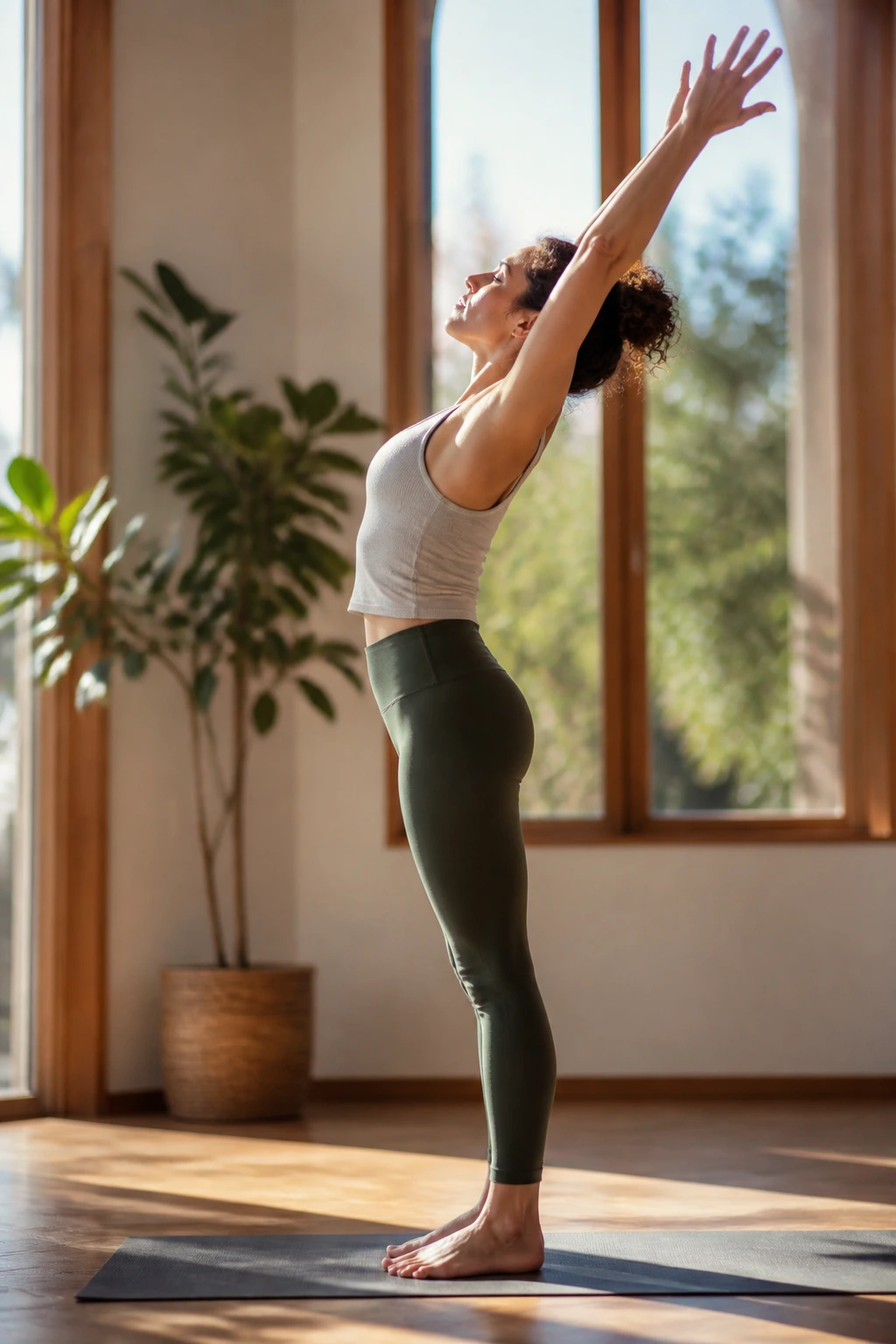
This is the one I’d hand to almost anyone on a cold or sleepy day. Sun Salutation A gets the spine moving, warms the shoulders, and brings the breath online without a lot of fuss.
Why it works
Move through 3 to 6 rounds, and keep each transition smooth. Mountain pose, forward fold, half lift, plank, cobra or upward dog, downward dog. That’s the backbone. The magic is in the rhythm, not the speed.
- Bend the knees in forward fold if your hamstrings complain.
- Drop to the knees in plank if your wrists feel cranky.
- Stay for 3 breaths in downward dog if you want more opening.
- Use blocks under the hands in the fold if the floor feels far away.
Tip: On the exhale, let the ribs soften. That small detail makes the whole flow feel less rushed and more controlled.
2. Sun Salutation B for More Heat
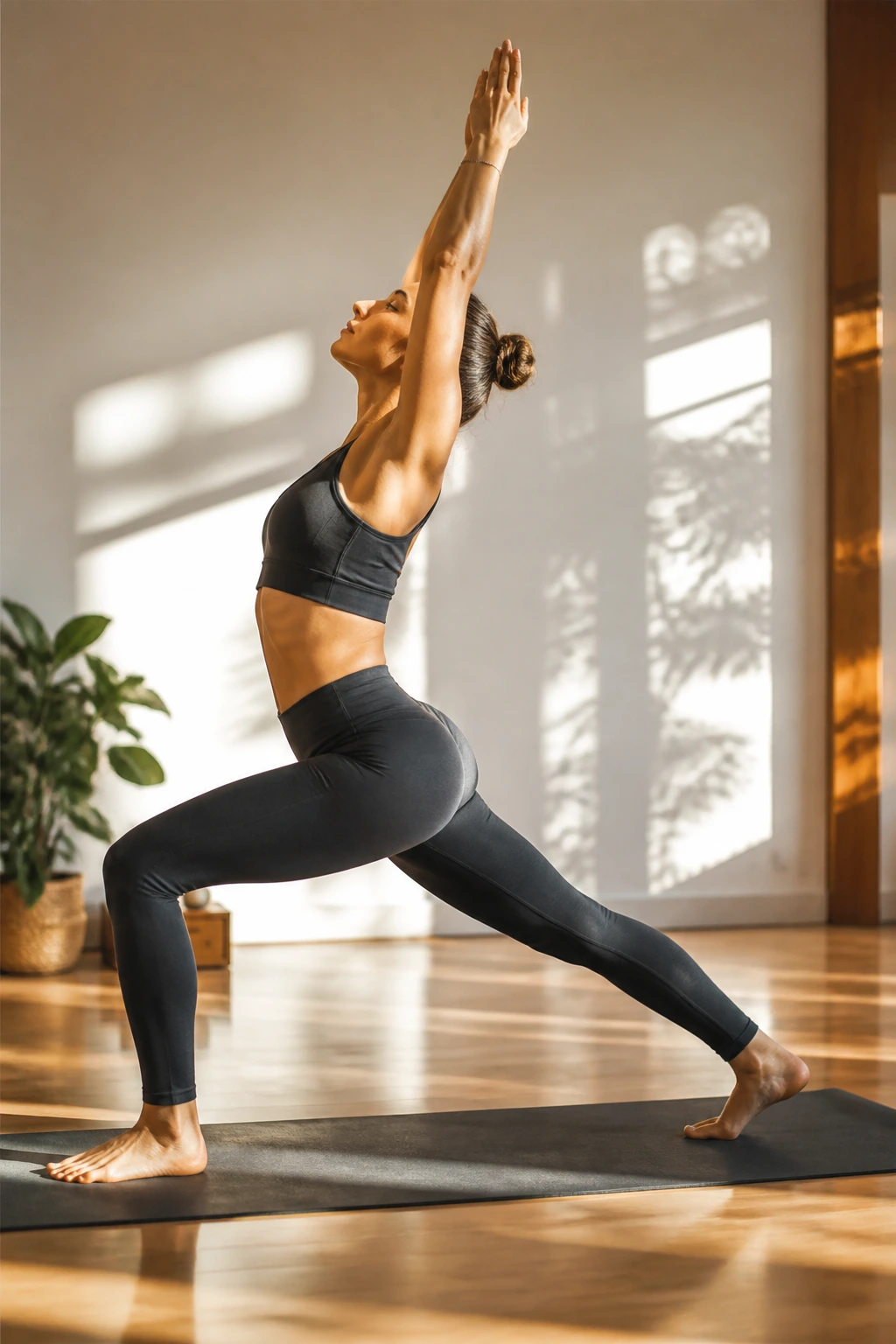
If Sun A is a warm-up, Sun B is the version that wakes up the legs. Chair pose and Warrior I add load right away, and that changes the whole feel of the practice.
A few rounds are enough to make your thighs notice what’s happening. I like this flow when I want a stronger practice but don’t want to jump around. The steps are familiar, but the standing shapes ask more from your balance and ankles. That makes it a good bridge between beginner work and more athletic sequences.
Keep the back heel down in Warrior I if you want stability. Lift it slightly if the hips are tight and you need a softer entry. Either way, move with your breath, not against it. This is a flow that rewards control more than ambition, and that’s probably why it holds up so well.
3. Gentle Morning Flow for Stiff Mornings
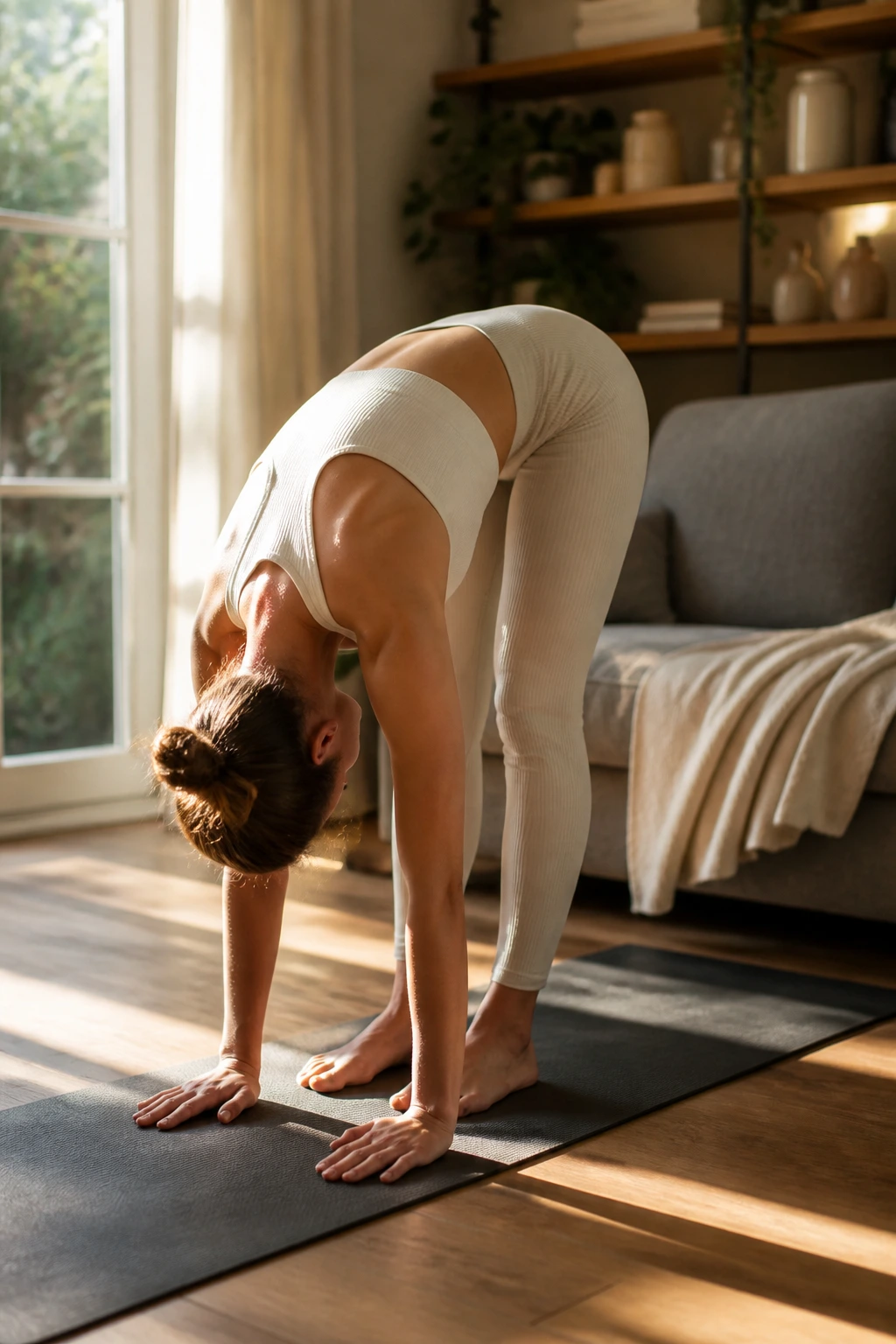
Why does the body feel like it was folded into a suitcase overnight? A gentle morning flow answers that without asking for much.
Start with cat-cow, then thread in low lunge, half lift, standing forward fold, and a slow side reach. The idea is not to get deep. The idea is to wake up the joints, spine, and hips with low drama. Three to five breaths in each pose is enough.
How to use it
- Stay low and keep the pace slow.
- Hold onto blocks if the ground feels far away.
- Skip deep backbends until your torso feels warmer.
- Finish with a simple chest opener, not a big finish pose.
A good morning flow should make you feel looser within 6 to 8 minutes, not wiped out. If you’re tired after it, the sequence is too aggressive.
4. Desk-Reset Flow for Neck and Shoulders
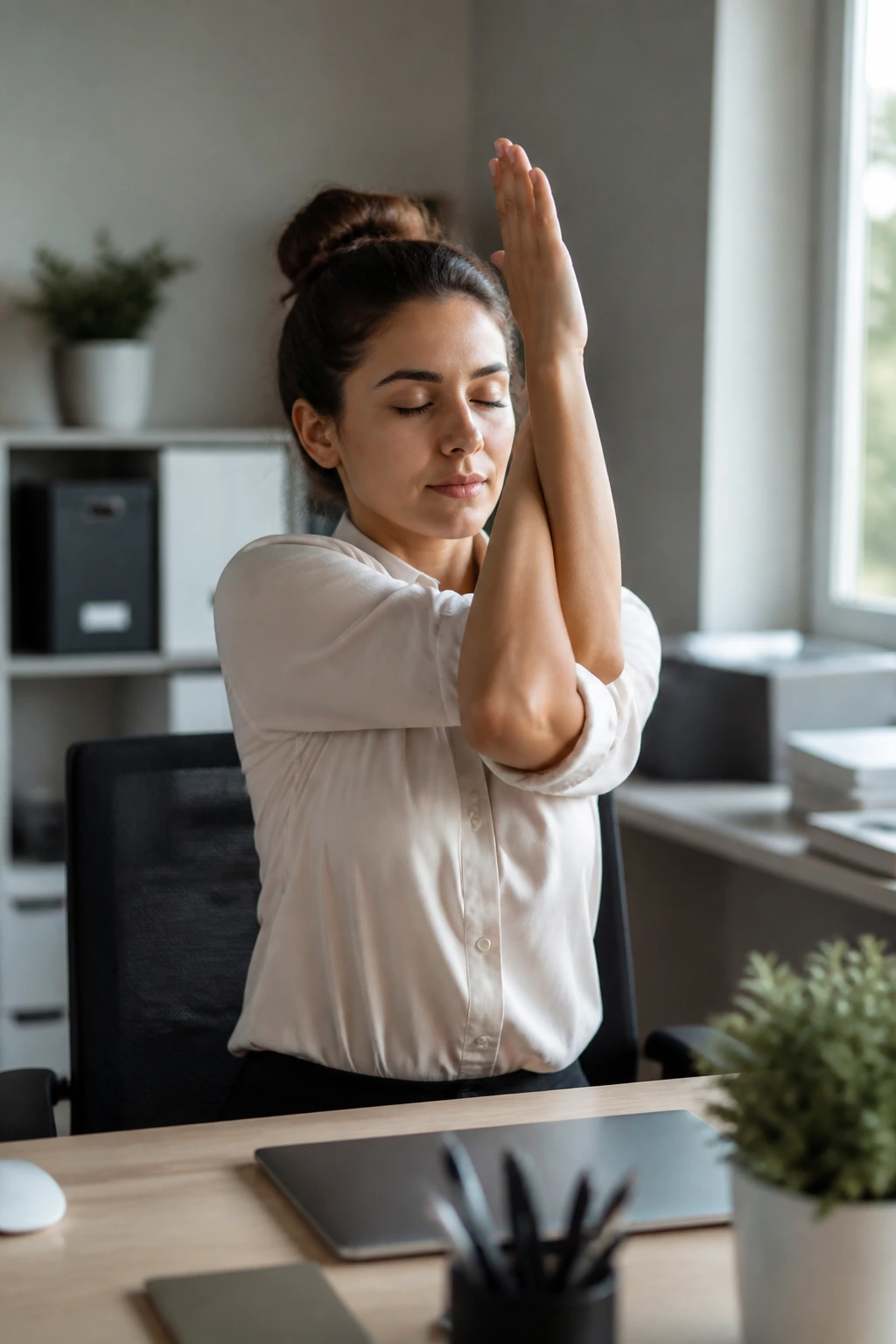
You know the feeling: shoulders up by your ears, chin creeping forward, and a neck that feels one inch too short. This is the flow I’d use after a long desk stretch or a screen-heavy day.
Start seated or kneeling. Roll the neck slowly, then move into seated cat-cow, eagle arms, thread the needle, and puppy pose. That mix opens the front of the chest while giving the upper back a chance to stop bracing.
- 5 slow breaths in seated cat-cow
- 20 to 30 seconds per side in eagle arms
- 30 seconds in thread the needle
- 3 to 5 breaths in puppy pose
The best part is how quickly the body responds when the shoulders finally get a break. Your breath usually deepens first. Then the jaw softens. That order matters more than people think.
5. Core-Strength Flow That Still Feels Like Yoga
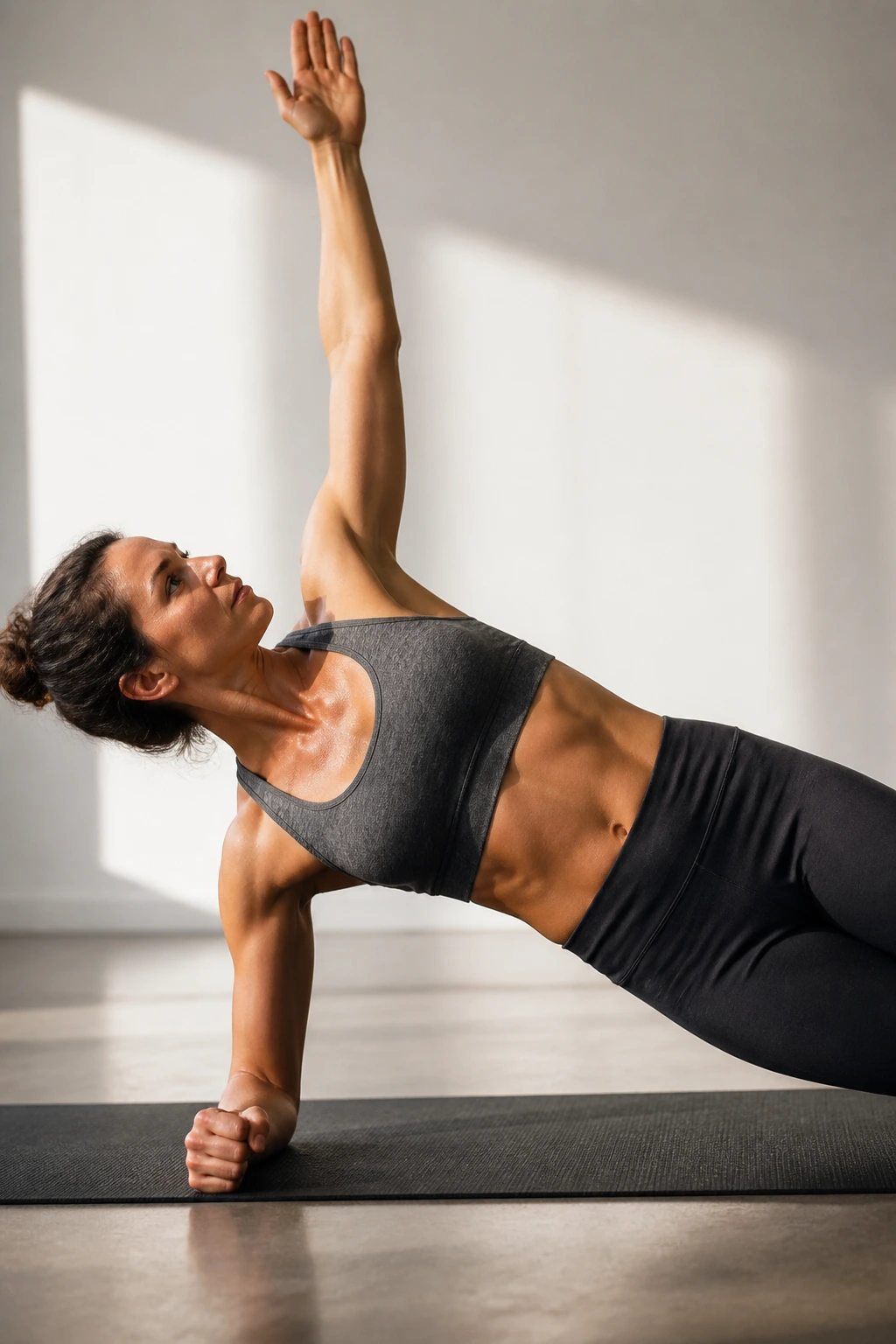
Core work does not have to mean crunches. A good core-strength flow trains the front of the body, the side body, and the back line without turning the practice into a boot camp.
Link plank, side plank, boat pose, bird dog, and forearm plank in a slow circuit. Keep the holds short at first — 15 to 20 seconds is enough for a beginner. More experienced movers can stretch that to 30 or 40 seconds and repeat the circuit twice.
The difference between this and random ab work is the breath. If you’re holding your breath, the sequence has slipped into strain. If the breath stays steady, the whole thing feels cleaner and safer. And yes, your hip flexors will notice. That’s normal.
6. Hip-Opening Flow for Tight Hips
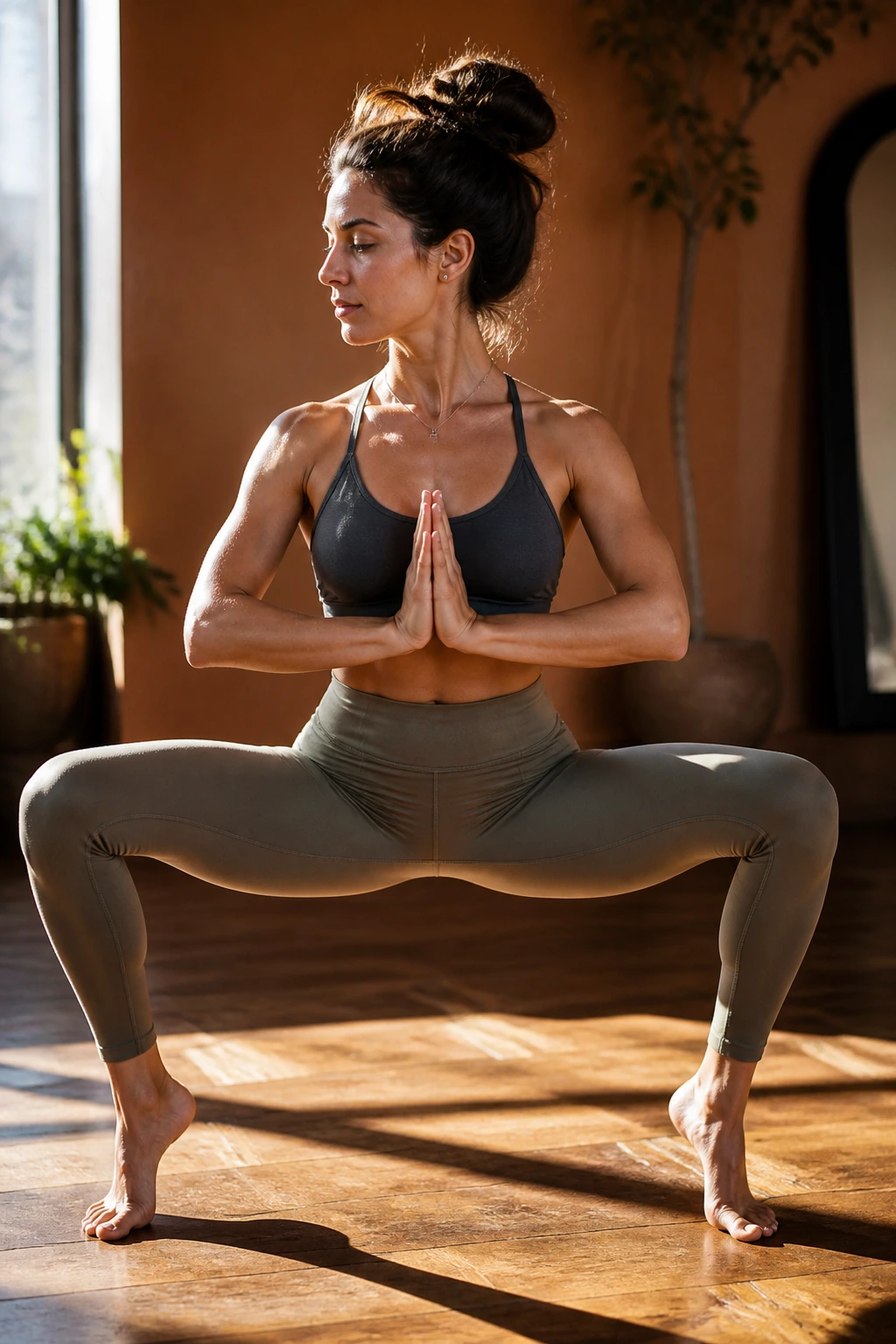
Unlike a straight stretching session, this flow starts by building heat first. That matters. Cold hips tend to lie about what they can do.
A sequence with goddess pose, low lunge, lizard, half pigeon, and bound angle gives the hip joint multiple angles without forcing anything. I prefer this on days when walking up stairs feels oddly sticky. The standing shapes wake things up, then the floor work lets you settle into the opening.
What makes it different
- Goddess pose works the inner thighs and outer hips at the same time.
- Lizard gives a deeper stretch, but you can stay on the hands.
- Half pigeon goes after the outer hip and glute.
- Bound angle finishes with a gentler, more relaxed shape.
If your knees are sensitive, stay higher in each pose and use blankets under the hips. Low and deep is not the goal. Smooth and useful is.
7. Hamstring Release Flow for the Back of the Legs
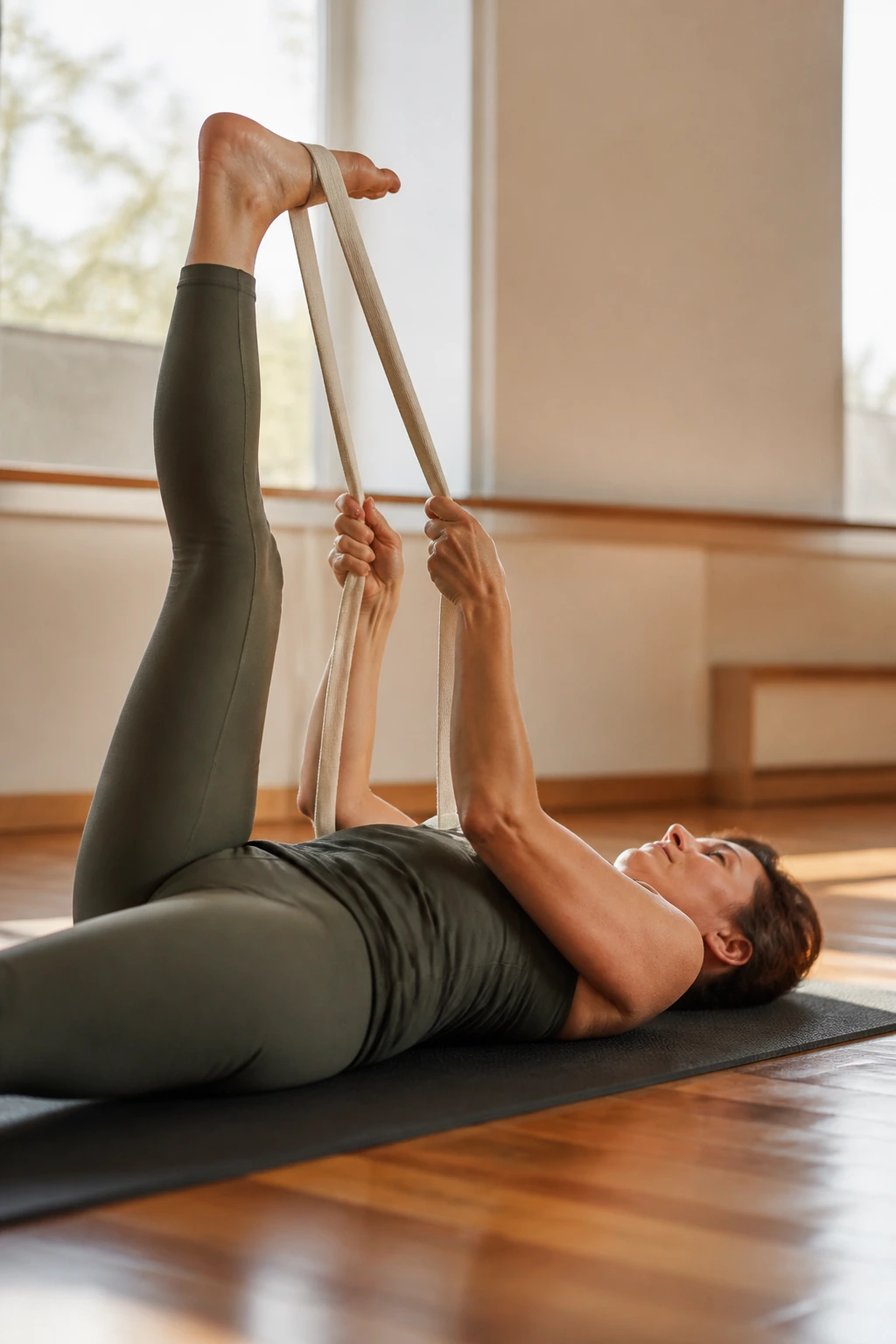
Tight hamstrings usually need patience more than force. That’s especially true if you sit a lot or run hard and then go straight into forward folds like you’re trying to win something.
Use half splits, pyramid pose, standing forward fold with bent knees, and a reclined hamstring stretch with a strap. Hold each for 3 to 6 breaths. The strap lets you work without yanking on the back of the knee, which is where a lot of people get into trouble.
How to use it
A small bend in the knee is not a failure. It is a better line for most bodies, especially if the lower back rounds early. Keep the chest broad, and let the exhale be long. You’ll usually feel the stretch shift from a sharp pull to a broad, dull opening after a few breaths. That’s the version worth keeping.
8. Standing Balance Flow for Wobbly Days
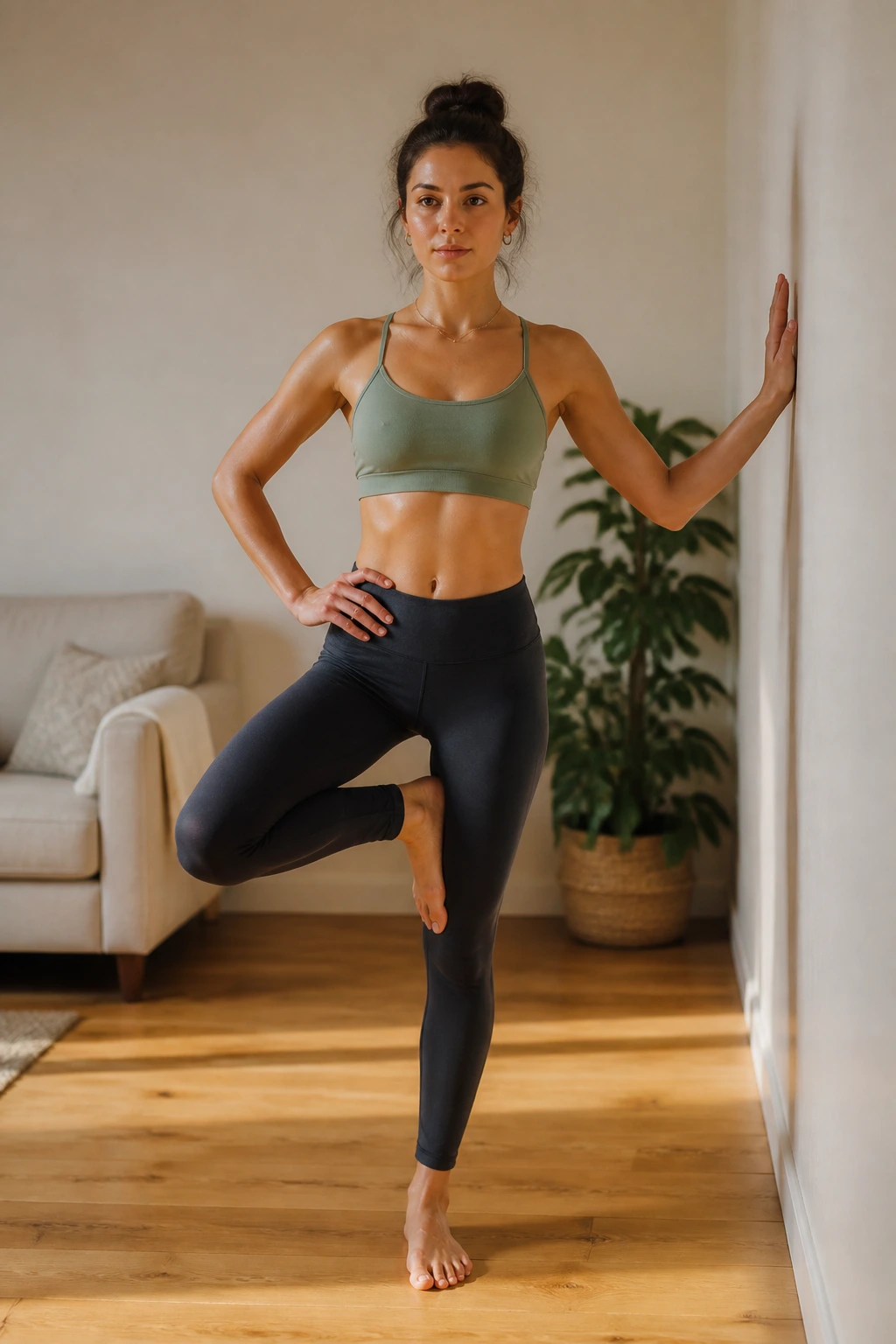
Tree pose has a way of revealing everything — ankle strength, focus, mood, and whether you slept enough. A standing balance flow uses that wobble on purpose.
Move through tree pose, standing figure four, warrior III, and dancer prep. Keep one wall nearby if balance is shaky. The wall isn’t a crutch. It’s feedback. It tells you when the standing foot is drifting and when the pelvis is twisting too far.
Balance cues
- Press the big toe mound down hard.
- Spread the toes in the standing foot.
- Pick one fixed point on the wall.
- Exhale before lifting the second leg.
If the ankle starts to burn, that’s a sign to shorten the hold. Five breaths is enough on day one. Ten is plenty if you’re steady. The point is control, not a photo op.
9. Low-Impact Power Flow Without Jumping
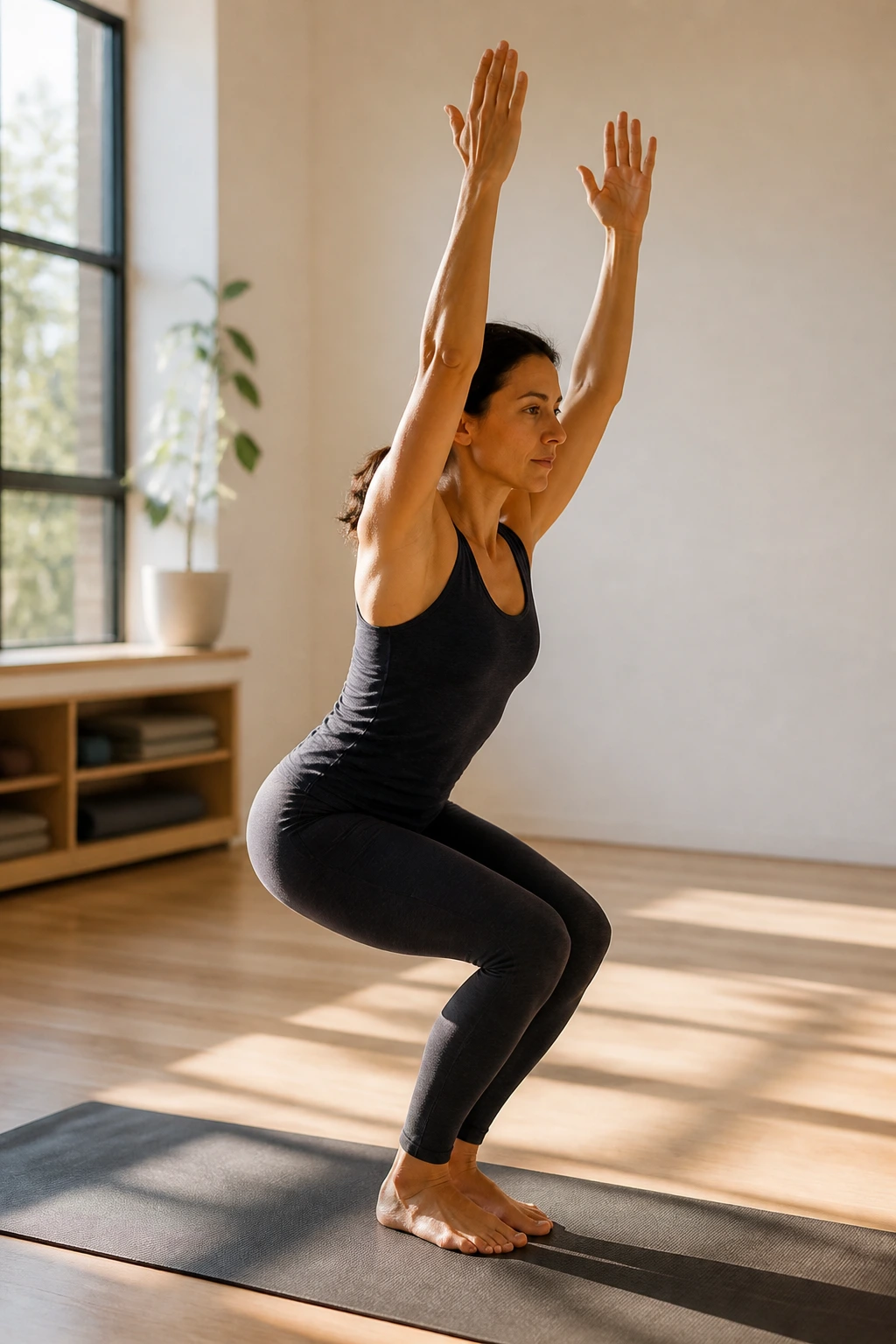
You can get hot without jumping once. That’s the selling point here, and I’m a fan of it because not every strong practice needs a lot of noise.
Build the sequence from chair pose, crescent lunge, side angle, plank, downward dog, and a slow step-through instead of a hop. Two or three rounds usually do the trick. Keep the transitions deliberate. When the pace gets sloppy, the flow stops feeling powerful and starts feeling random.
A low-impact power flow is a smart choice if your knees don’t love impact or if you want to save your joints for another workout later. It still asks for effort. It just spreads that effort out more evenly, which is kinder than people expect.
10. Chair Yoga Flow for Seated Days
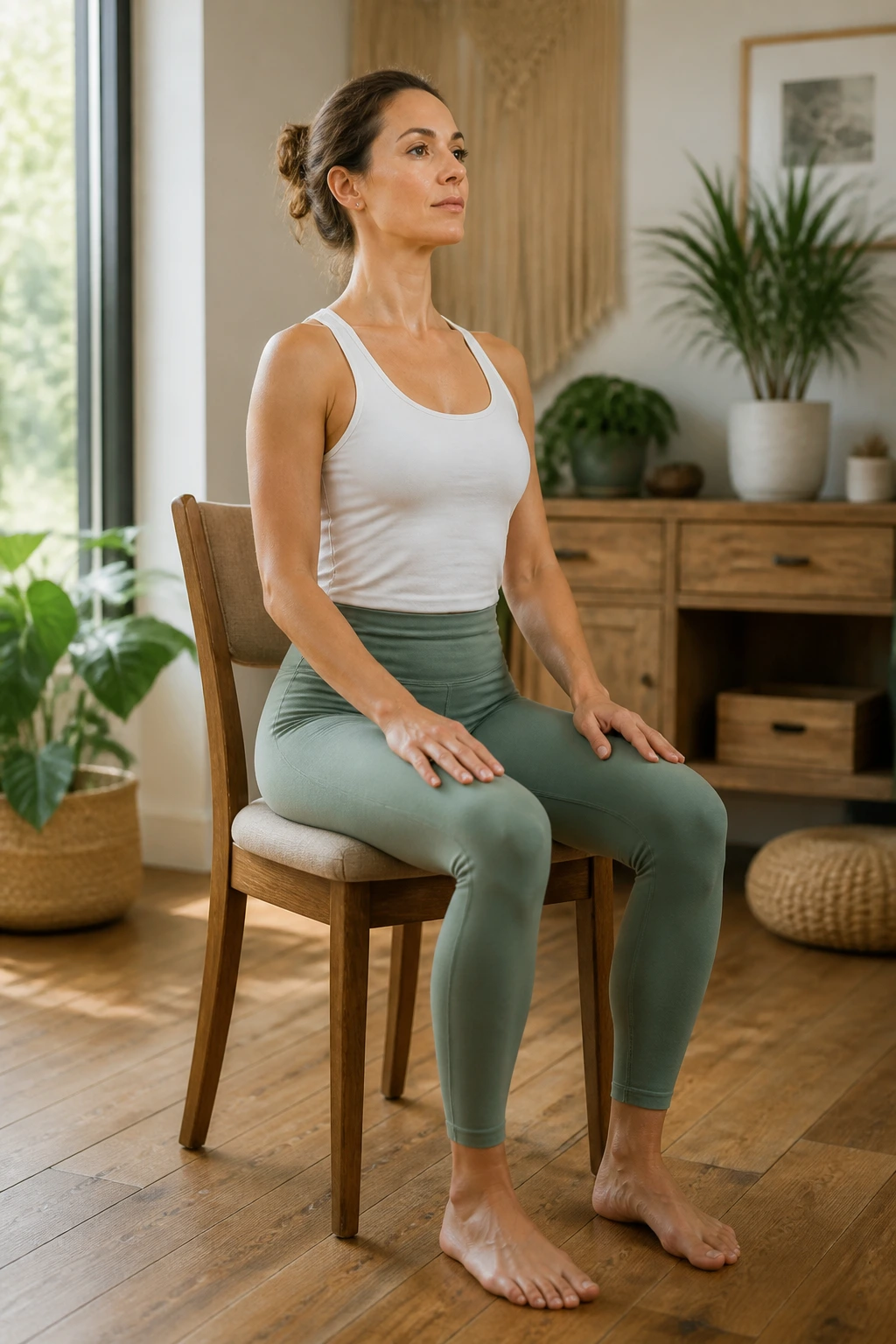
A chair is not the soft option. It’s the precise one. Chair yoga gives you a way to move when the floor is inconvenient, the knees are sore, or the body feels too tired for a full mat session.
Use seated mountain, seated cat-cow, spinal twist, seated figure four, side bend, and a gentle chest opener with the hands behind the chair. Three to five breaths per position is enough. You can repeat the whole set in 10 to 12 minutes, which makes it easy to fit between calls or errands.
The real advantage is clean alignment. A chair takes out some of the wobble, so you can pay attention to the spine, ribs, and shoulder blades. That’s useful even for strong people. Especially for strong people, honestly. Form gets blurry when everything happens standing up too fast.
11. Wall-Supported Flow for Extra Feedback
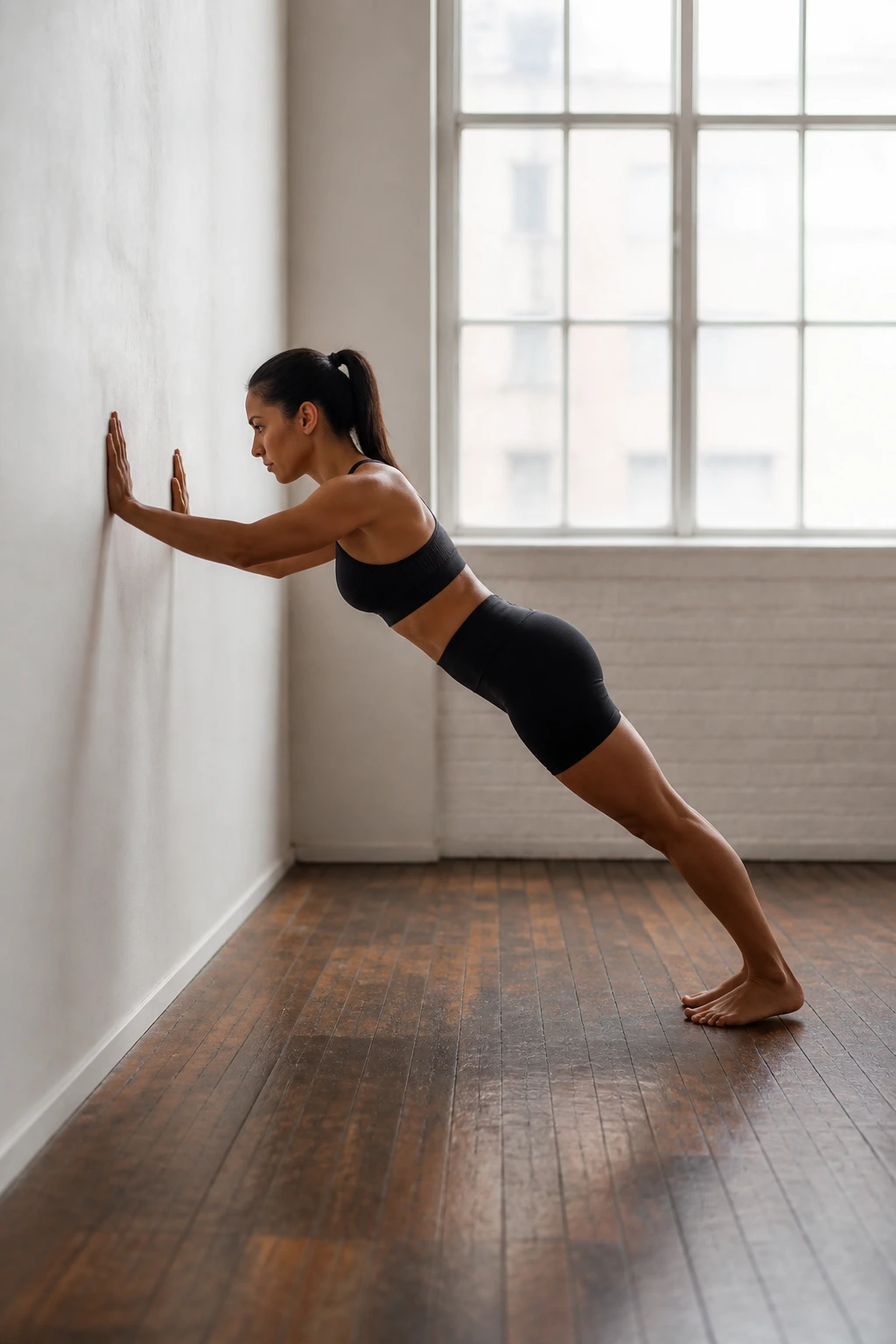
The wall changes everything. Pressing a hand, foot, or back against a flat surface gives the body a clear line to work from, and that makes this flow a nice middle ground between gentle and demanding.
Try wall plank, wall lunge, calf stretch with the heel down, and legs-up-the-wall at the end. The wall plank is especially helpful if standard plank feels messy; it lets you train the shoulders and core without the full load. Keep your ribs tucked lightly and your neck long.
What to watch for
- Don’t shrug into the shoulders.
- Keep both hips facing forward in the wall lunge.
- Use the wall to slow your movement, not to hang on it.
- End with 2 to 5 minutes legs-up-the-wall if your legs feel puffy or heavy.
The wall gives you honesty. No wobbling around it.
12. Restorative Evening Flow for Slowing Down
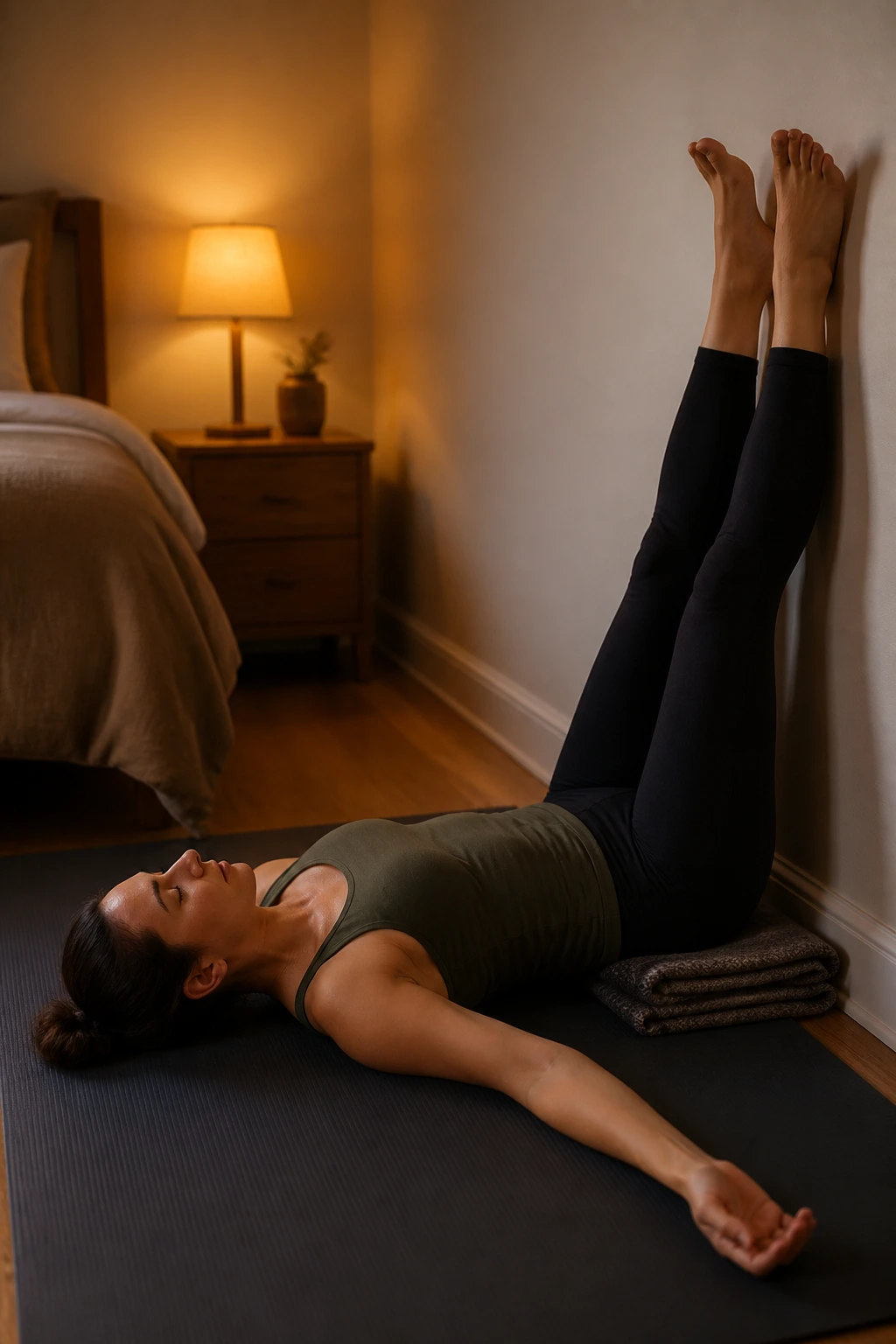
What if your practice ended with your shoulders lower than when you started? That’s the whole point of a restorative evening flow.
Use child’s pose, supported bridge, reclined bound angle, and legs-up-the-wall. Add a folded blanket under the knees or sacrum if the lower back likes support. Each pose can stay for 1 to 5 minutes, which sounds long until you feel your breath settle and your face soften.
This is not the sequence for chasing a burn. It is for unwinding a nervous system that has been on duty all day. Longer exhales help more than deep stretches here. If the body starts to fight, back off a little and keep the setup simple. Restorative work should feel almost boring at first. That’s usually the sign it’s doing its job.
13. Spine Mobility Flow for a Stiff Back
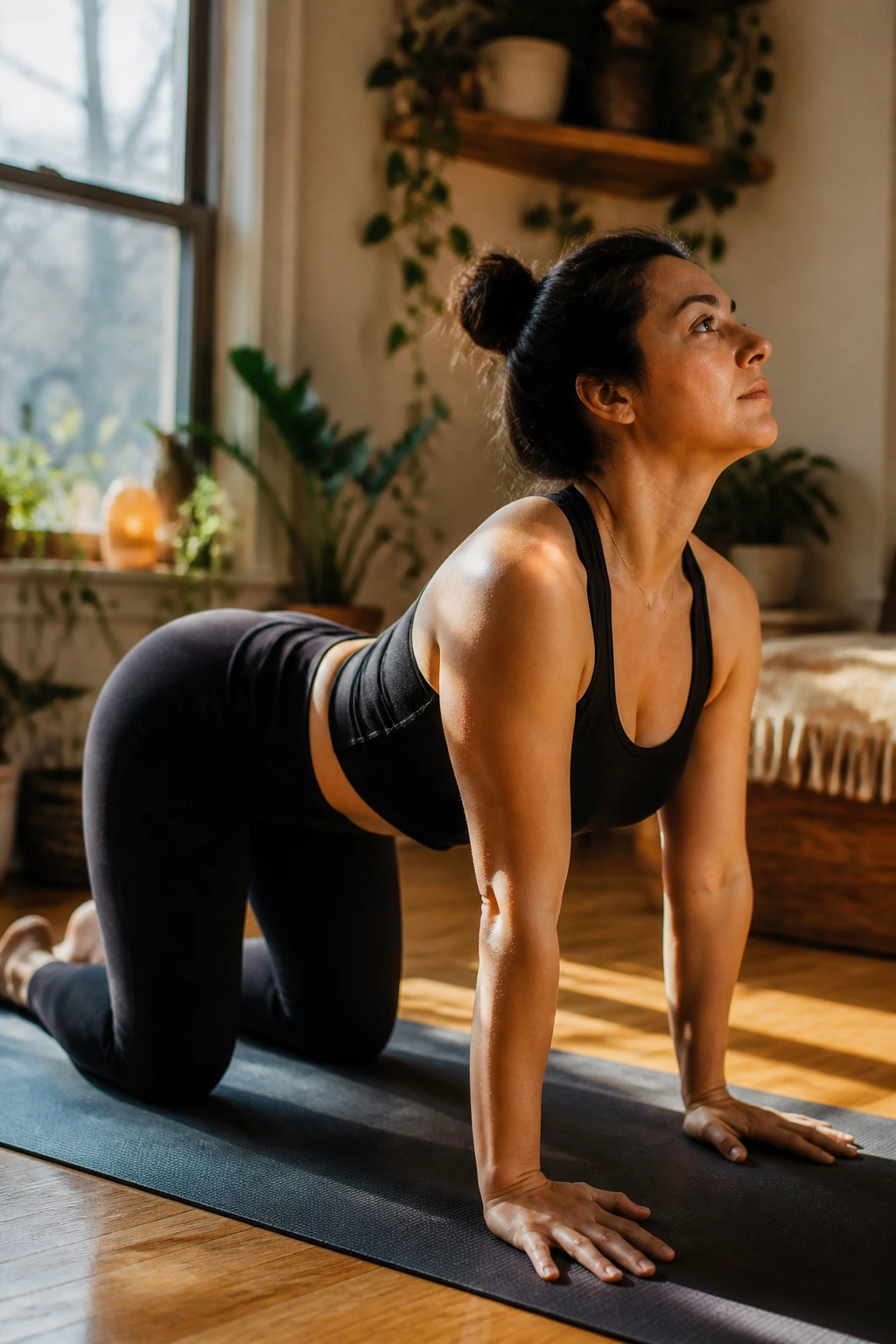
A stiff back often needs motion before stretch. Spine mobility work does that by moving the spine in several directions instead of forcing one big shape.
Start with cat-cow, then thread the needle, sphinx, windshield wipers, and a simple supine twist. Keep the movements small at first. The spine likes repetition more than drama. Five slow rounds of cat-cow can do more than one aggressive backbend.
The order matters
Cat-cow wakes up flexion and extension. Thread the needle opens the upper back and shoulders. Sphinx gives the front body a gentle lift. Windshield wipers and twists round everything out by letting the pelvis and low back move side to side. If one section feels tighter than the others, stay there a little longer.
A back that moves well usually feels more trustworthy during the rest of the day. That’s the real win.
14. Lower-Back Relief Flow for the Days That Ache
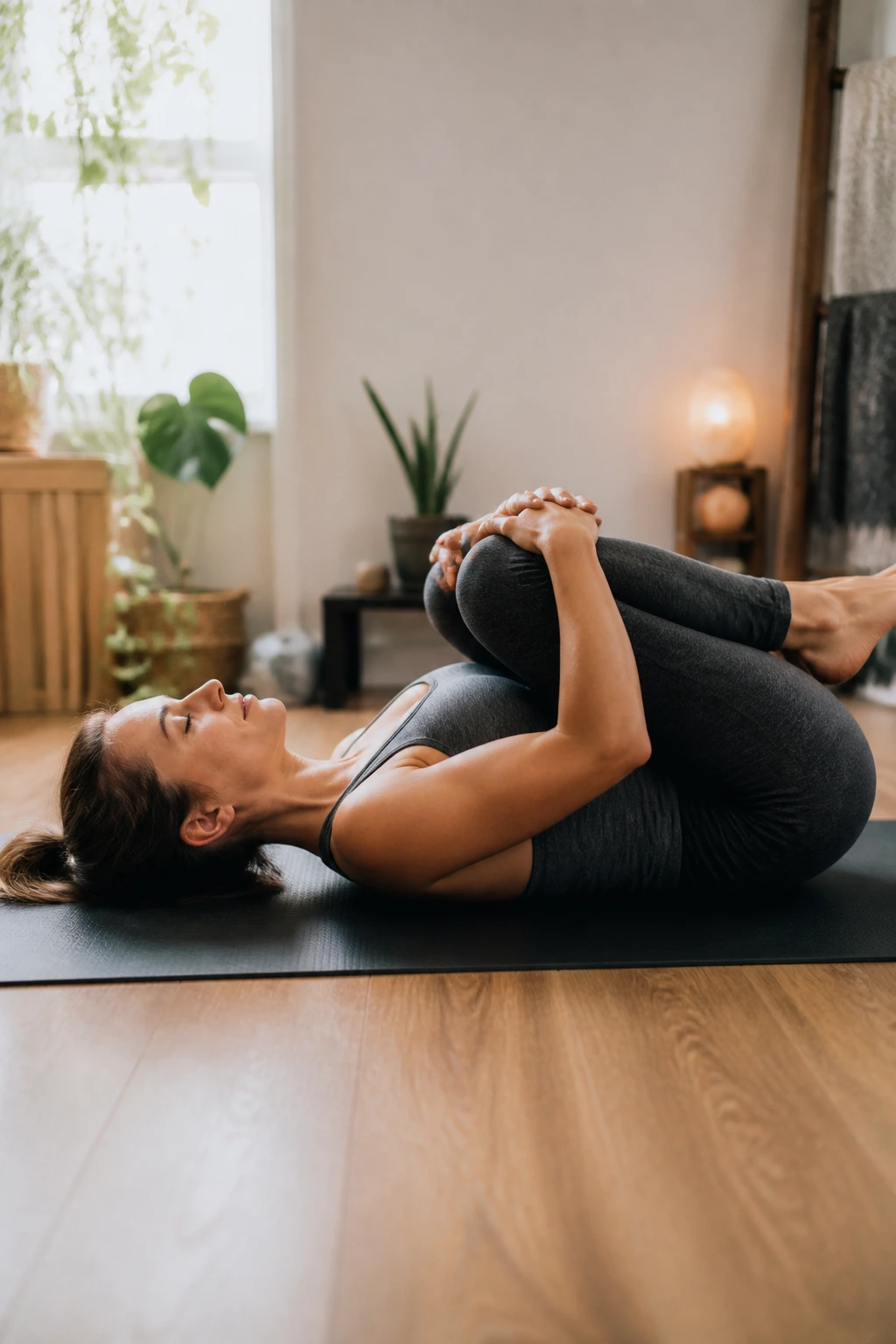
When the low back is grumpy, people tend to stretch the wrong thing too hard. That usually makes the whole area feel more guarded, not less.
A better flow starts with pelvic tilts, knees-to-chest, bridge pose, reclined twist, and sphinx. The goal is to create a little space around the spine, then ask the hips to share some of the work. Keep the bridge low if your back arches easily. A small lift is enough.
- 6 to 8 pelvic tilts
- 30 seconds knees-to-chest
- 3 breaths in a low bridge
- 30 seconds per side in reclined twist
If pain shoots, stops you from moving, or lingers after practice, that’s not a yoga problem anymore. Don’t push through that. For ordinary tightness, though, this sequence can feel like a reset button.
15. Runner’s Recovery Flow for Legs That Feel Heavy
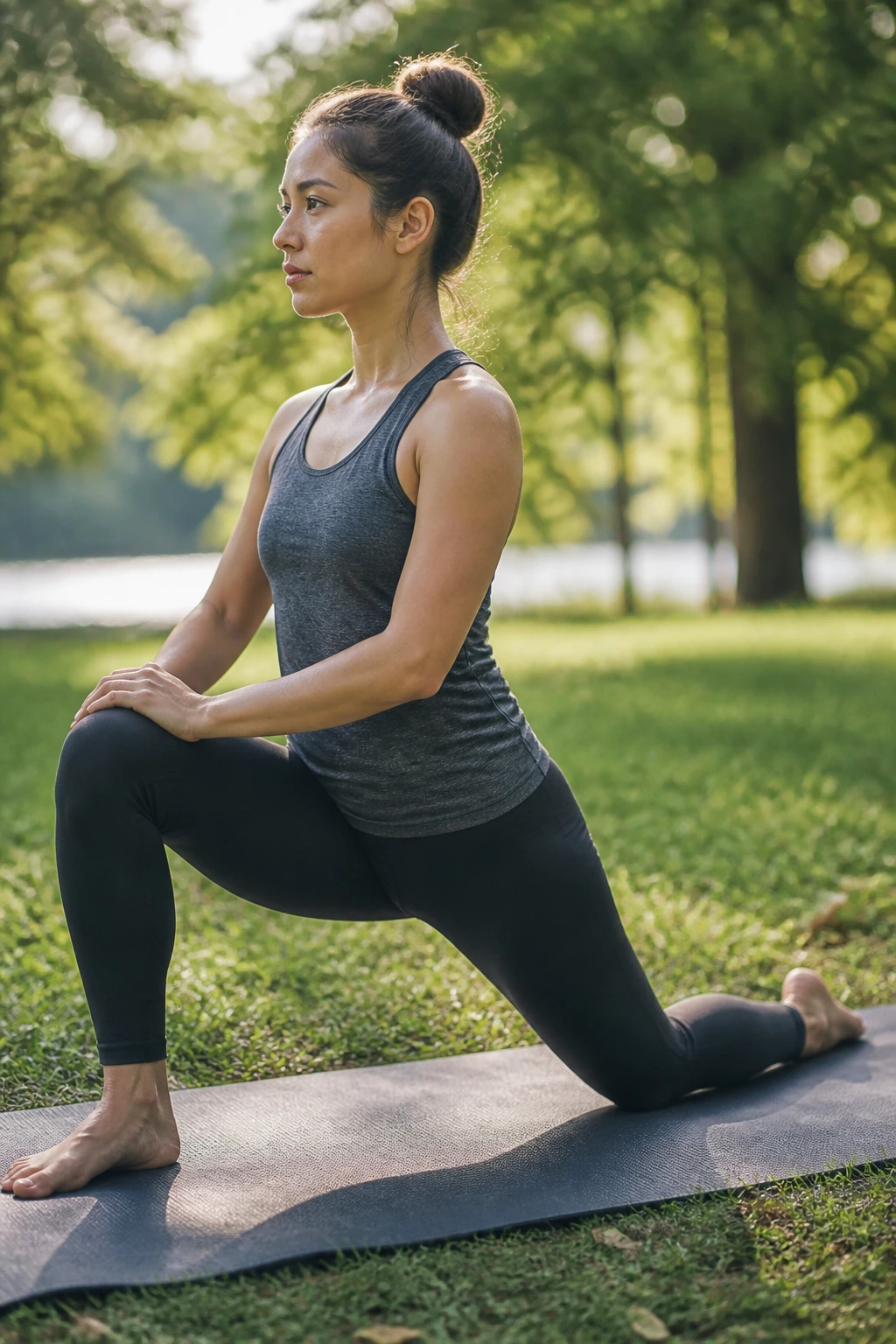
Runner’s legs need more than a hamstring stretch. They need hips, calves, feet, and a little patience. This flow is built for the whole chain.
Start low with lunge, then move into calf stretch, half split, pigeon, quad stretch, and a short downward dog with bent knees. That order matters because the calves and hips often hold more tension than people realize. If the ankles are stiff, spend extra time there. They change how the rest of the leg loads.
Unlike a random post-run stretch, this sequence lets the body cool while you’re still moving. That makes the tissue easier to work with. Keep the holds at 20 to 40 seconds, and skip anything sharp. Heavy legs are normal after a run. Sharp pain is not part of the deal.
16. Full-Body Vinyasa Flow for a Sweaty Practice
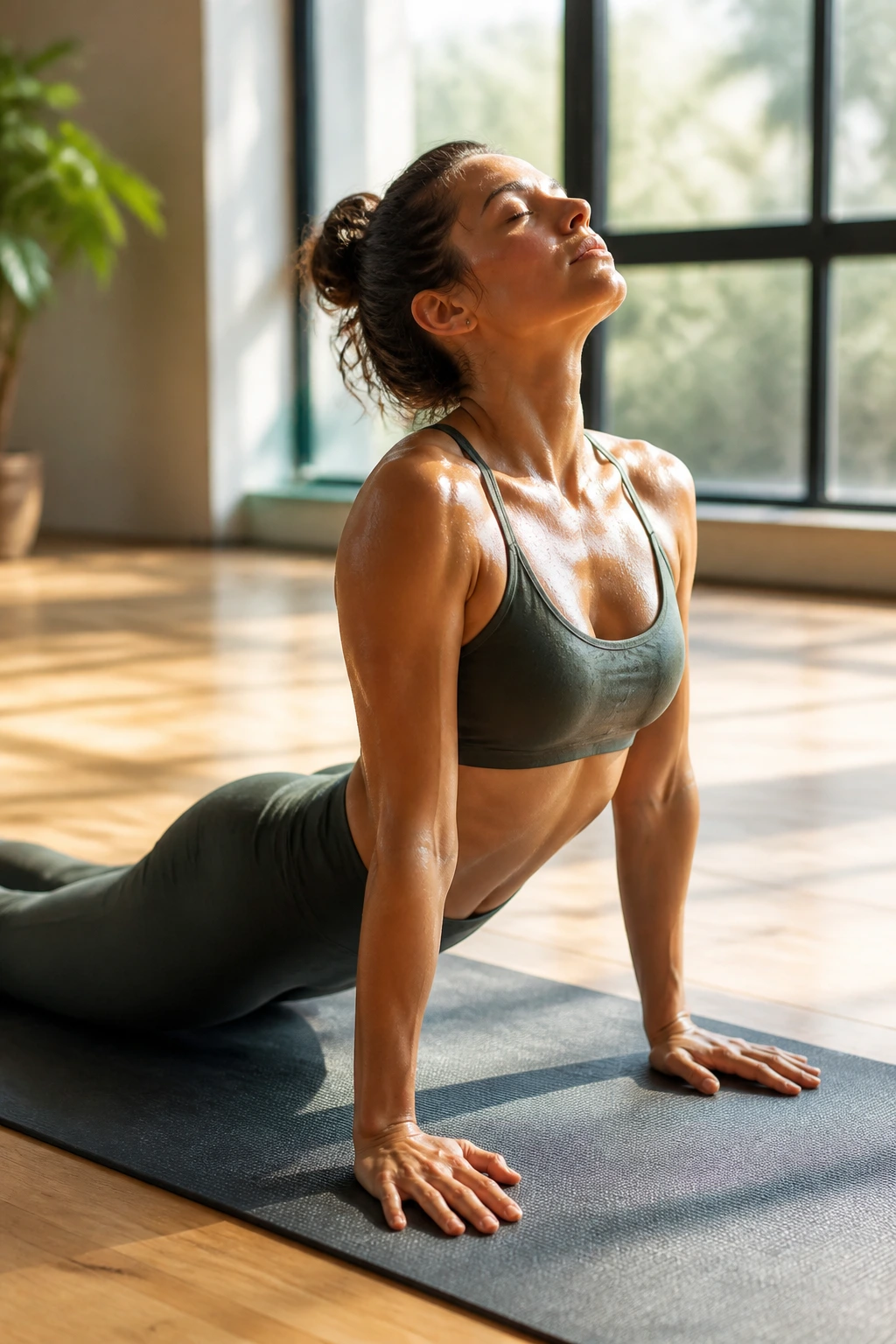
A full-body vinyasa flow is for days when you want to move, not tiptoe around the mat. It links breath and motion fast enough to raise heat, but it still keeps the shape of yoga instead of turning into pure cardio.
Round structure
- 1 round to find the pace
- 2 to 4 work rounds at a steady breath
- 1 slower round to come down
Use chair pose, high lunge, plank, chaturanga or knees-down lower, upward-facing dog or cobra, and downward dog. Add side plank if you want more shoulder work. If your wrists complain, drop to forearms in the plank or skip the lower entirely and step back into down dog.
The trick is not to rush the transitions. A clean vinyasa feels strong because the links are controlled. Sloppy speed just looks busy.
17. Breath-Led Slow Flow for Nervous-System Calm
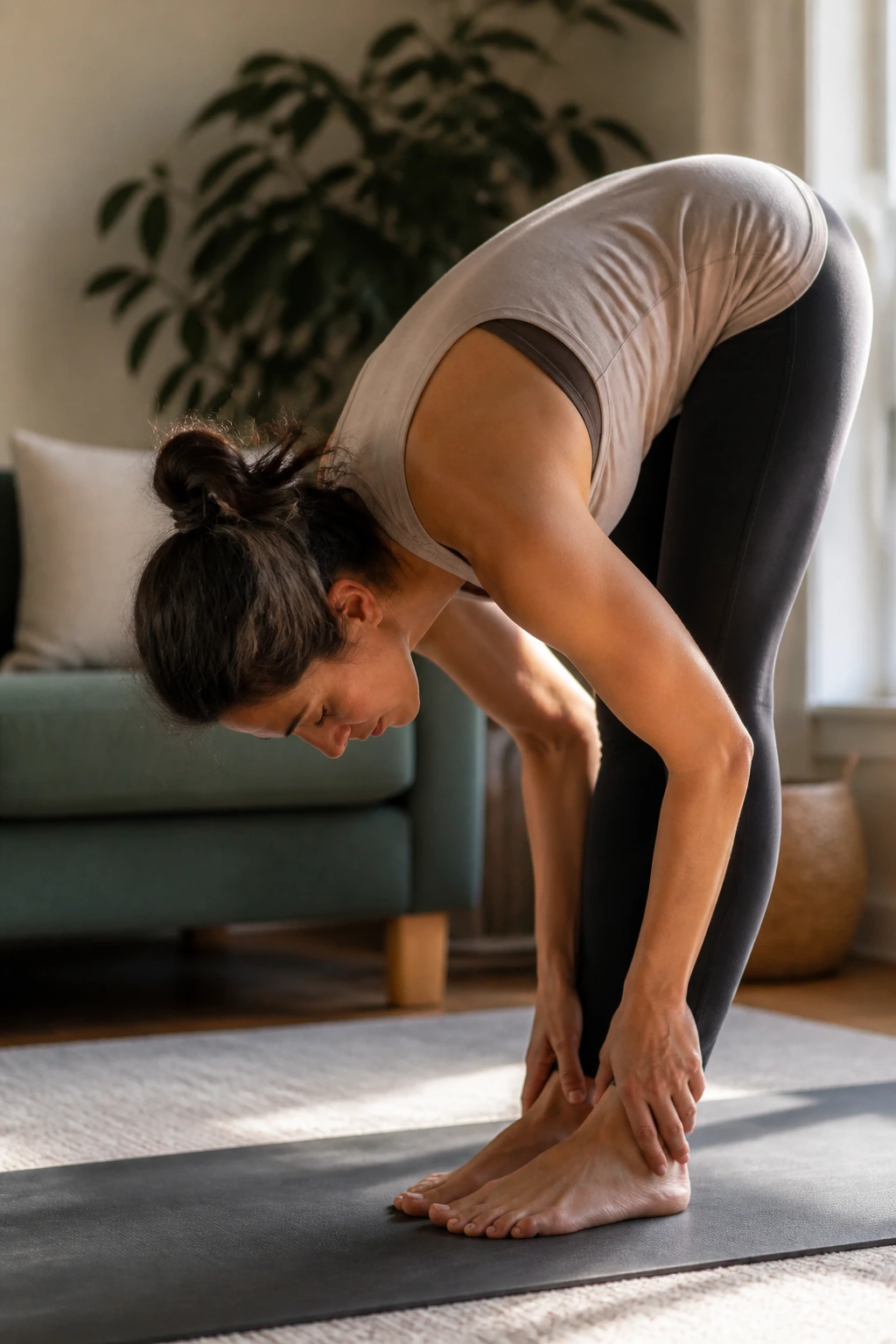
Slower can feel harder. Not because the body is working more, but because the mind has fewer places to hide.
A breath-led slow flow uses long inhales and even longer exhales to pace the movement. Think low lunge, half lift, standing fold, lizard, child’s pose, and seated twist, all done with a deliberate rhythm. Five breaths in a pose can feel like a lot at first. Then it starts to feel steady, and the whole practice gets quieter.
I like this style when the day has been noisy or rushed. It doesn’t ask for a sweat. It asks for attention. That’s a different kind of effort, and people often underestimate it. If you find your shoulders rising or your jaw clenching, pause there. That is the practice.
18. Sore-Muscle Recovery Flow for the Day After
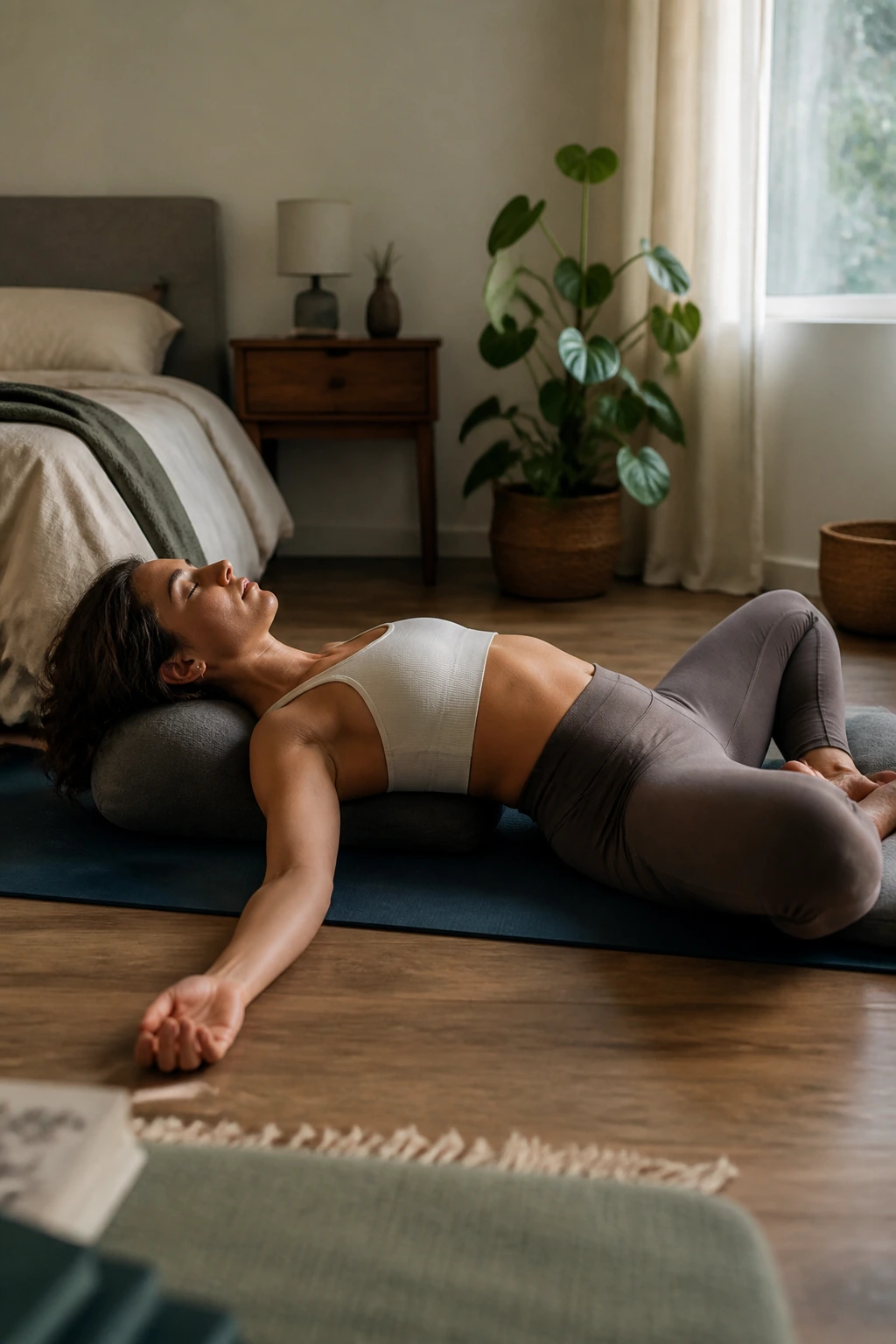
Sore from yesterday’s workout? Skip the heroic stretch fest. Recovery flow should feel smaller, not bigger.
Use easy cat-cow, child’s pose, a short lunge, a gentle hamstring stretch, and reclined butterfly. Keep the range of motion modest and avoid long, deep holds if the muscles feel bruised or hot. Active recovery works because it keeps blood moving without piling on more stress.
What to avoid
Deep bouncing. Long painful holds. Trying to “fix” soreness in one session. That usually backfires.
If the body feels better after 10 minutes than it did at minute 1, you’re on the right track. If it feels tighter, stop. A recovery flow should leave some gas in the tank, not empty the tank again.
19. Flexibility-Focused Flow for Deeper Range
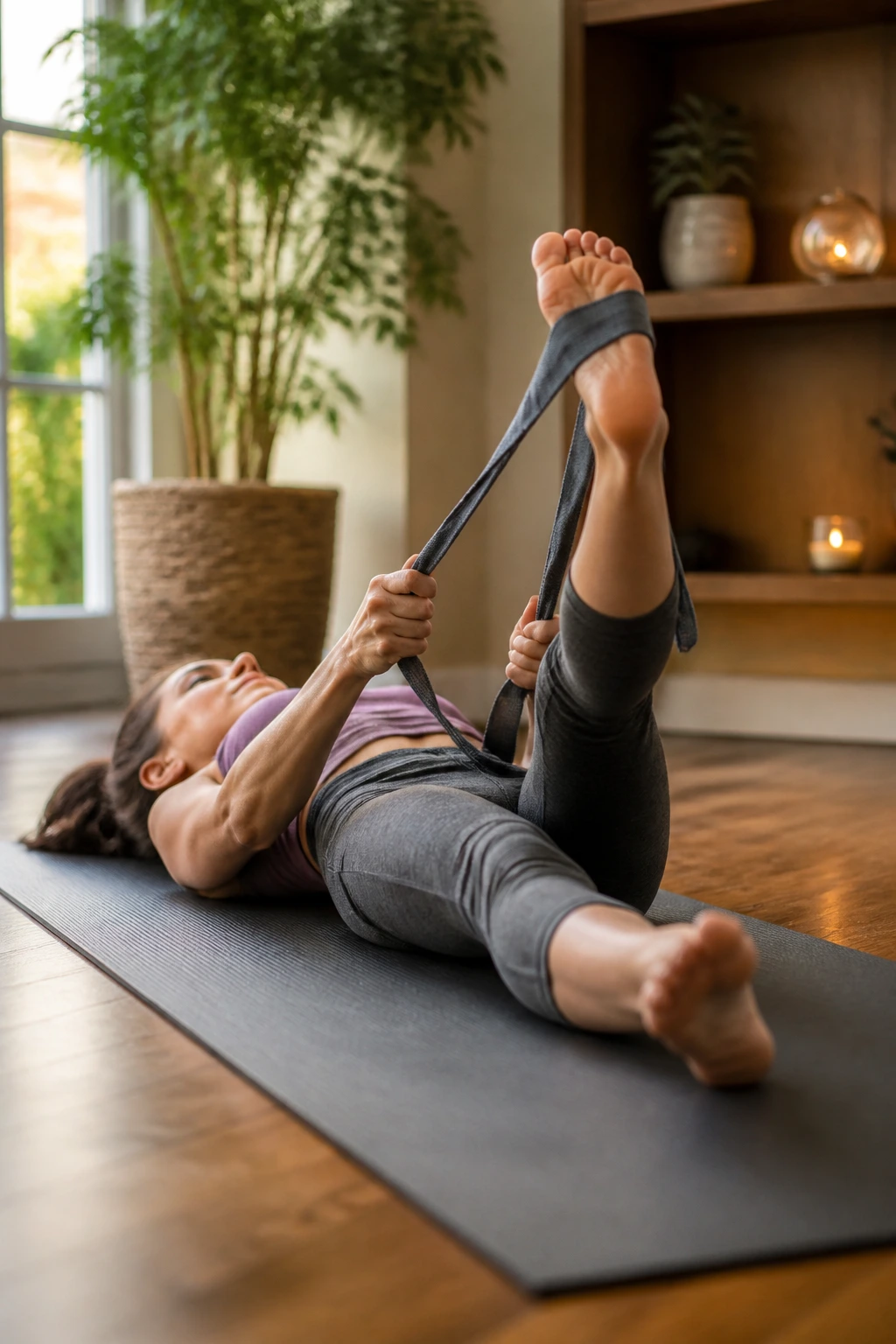
The difference between flexibility work that helps and flexibility work that irritates is usually time. Longer holds matter. So does warmth.
Build this flow around low lunge, half split, pigeon, seated forward fold, and a strap-assisted reclined hamstring stretch. Stay 45 to 90 seconds in each shape if the body feels warm enough. That’s long enough for most people to notice the muscle stop resisting quite so hard.
How to get the most from it
- Warm up first with 3 to 5 minutes of easy movement.
- Use a strap instead of tugging with the hands.
- Keep the breath even and unforced.
- Ease out slowly, not all at once.
This is not the flow to force on a cold morning. It works much better after a walk, a short warm-up, or the end of a workout. Patience beats intensity here every time.
20. Strength-and-Flow Hybrid for Mixed Goals
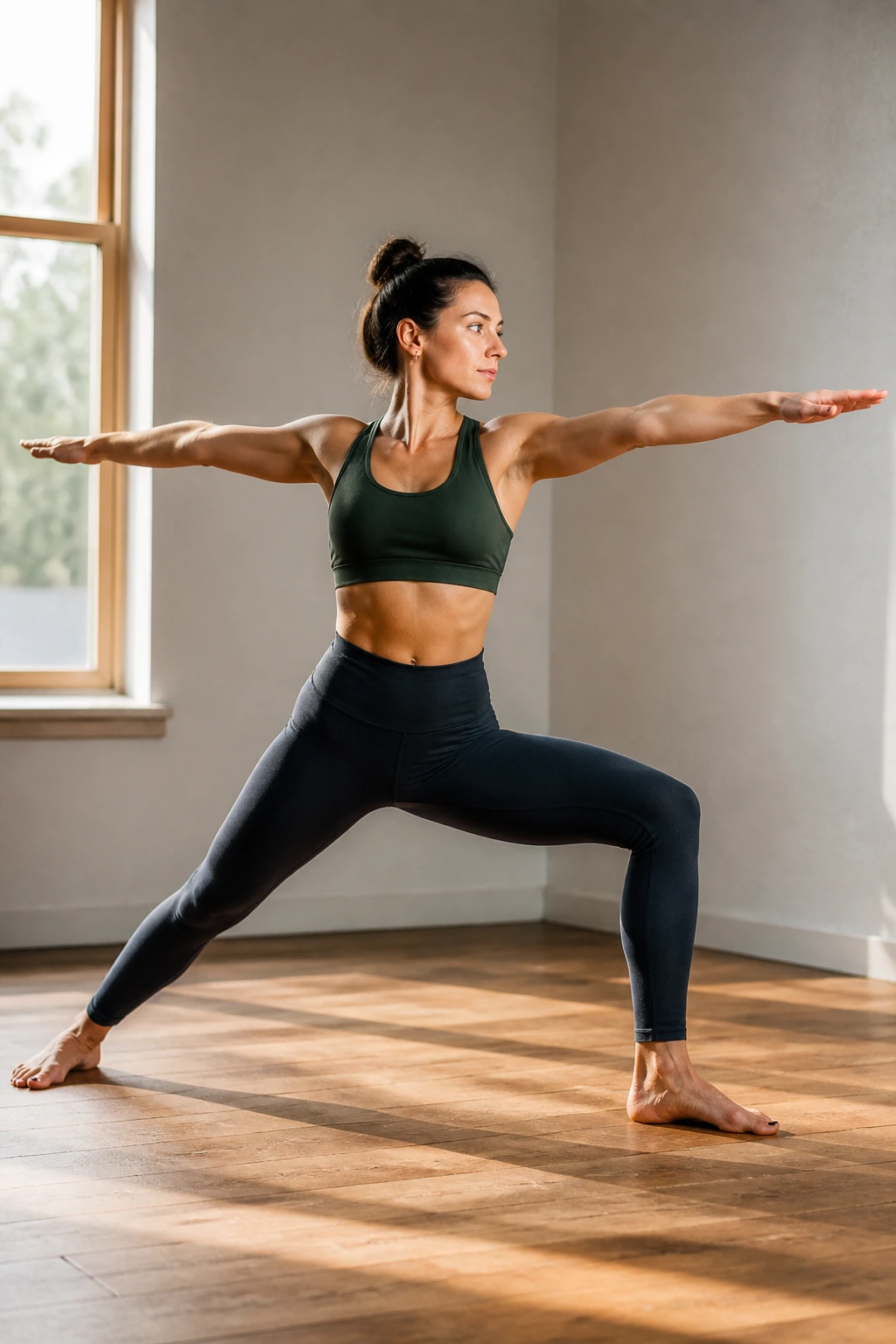
Unlike a pure power flow, this sequence keeps the rests short but the holds strict. That makes it a tidy option when you want strength, mobility, and a little sweat without turning the whole session into conditioning.
Blend chair pose, warrior II, crescent lunge, plank, side angle, and a controlled transition back to mountain. Hold each standing pose for 3 to 5 breaths, then move on before the body gets lazy. The shoulders work, the legs work, and the spine stays involved the whole time.
Who it suits
People cross-training with running or lifting tend to like this one. So do movers who get bored by long holds. If you want a sequence that feels athletic but still counts as yoga, this is a solid place to spend 15 to 20 minutes. Keep a block nearby for side angle and skip the chaturanga if the shoulders are cooked.
21. Grounded Standing Flow for Better Stability
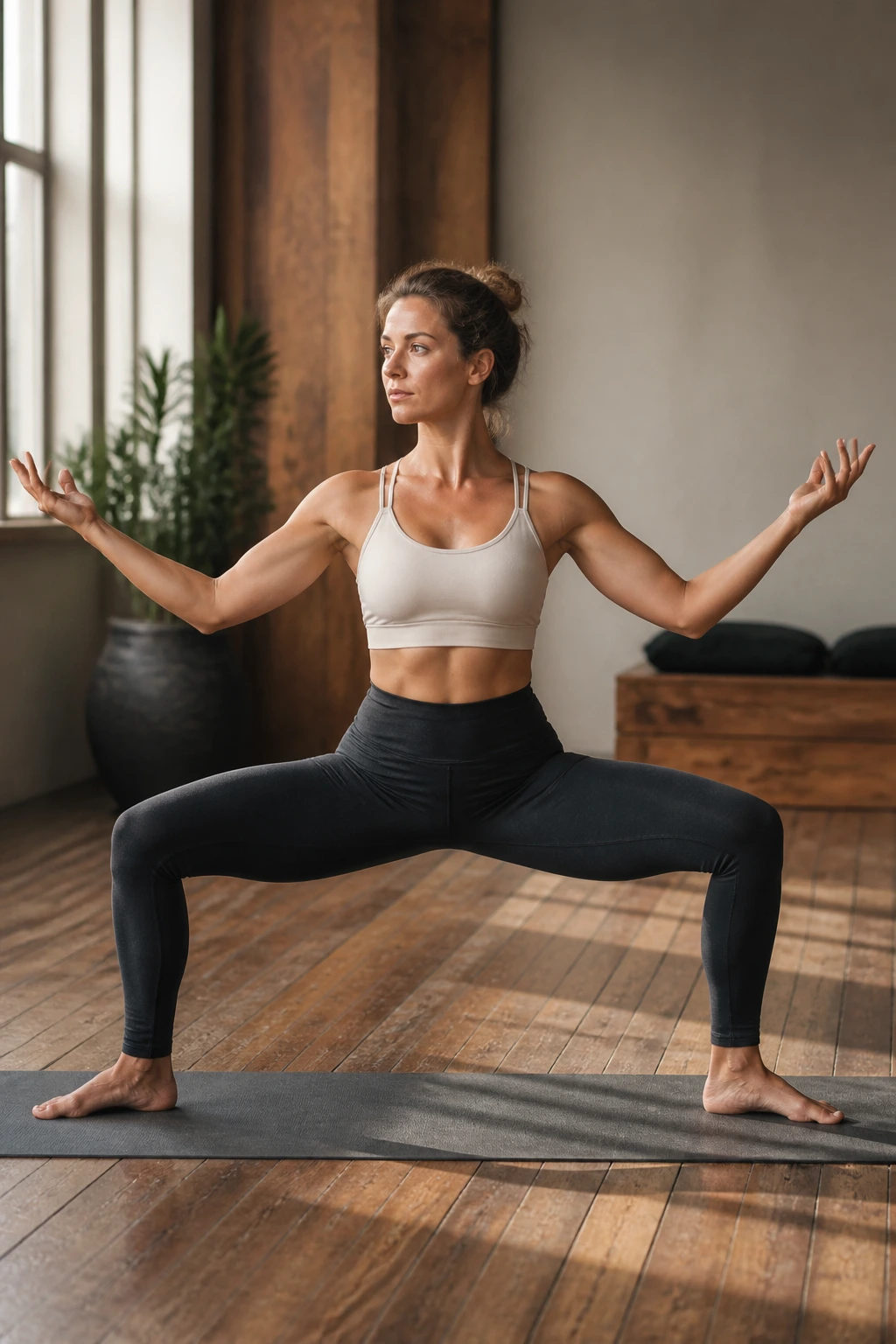
A wide stance changes the feel of a practice fast. The feet root harder, the hips wake up, and the body starts to feel more organized from the ground up.
Start with goddess pose, warrior II, humble warrior, side angle, and a low squat if your knees are happy with it. Keep the weight even across the feet, especially in goddess and wide-legged stances. If the inner arches collapse, the whole chain gets sloppy.
This flow is one of my favorites for days when I feel scattered. It pulls attention back into the legs and feet, which sounds simple, but it works. The stronger your base feels, the easier the rest of the practice tends to go.
22. Travel-Mat Flow for Small Spaces
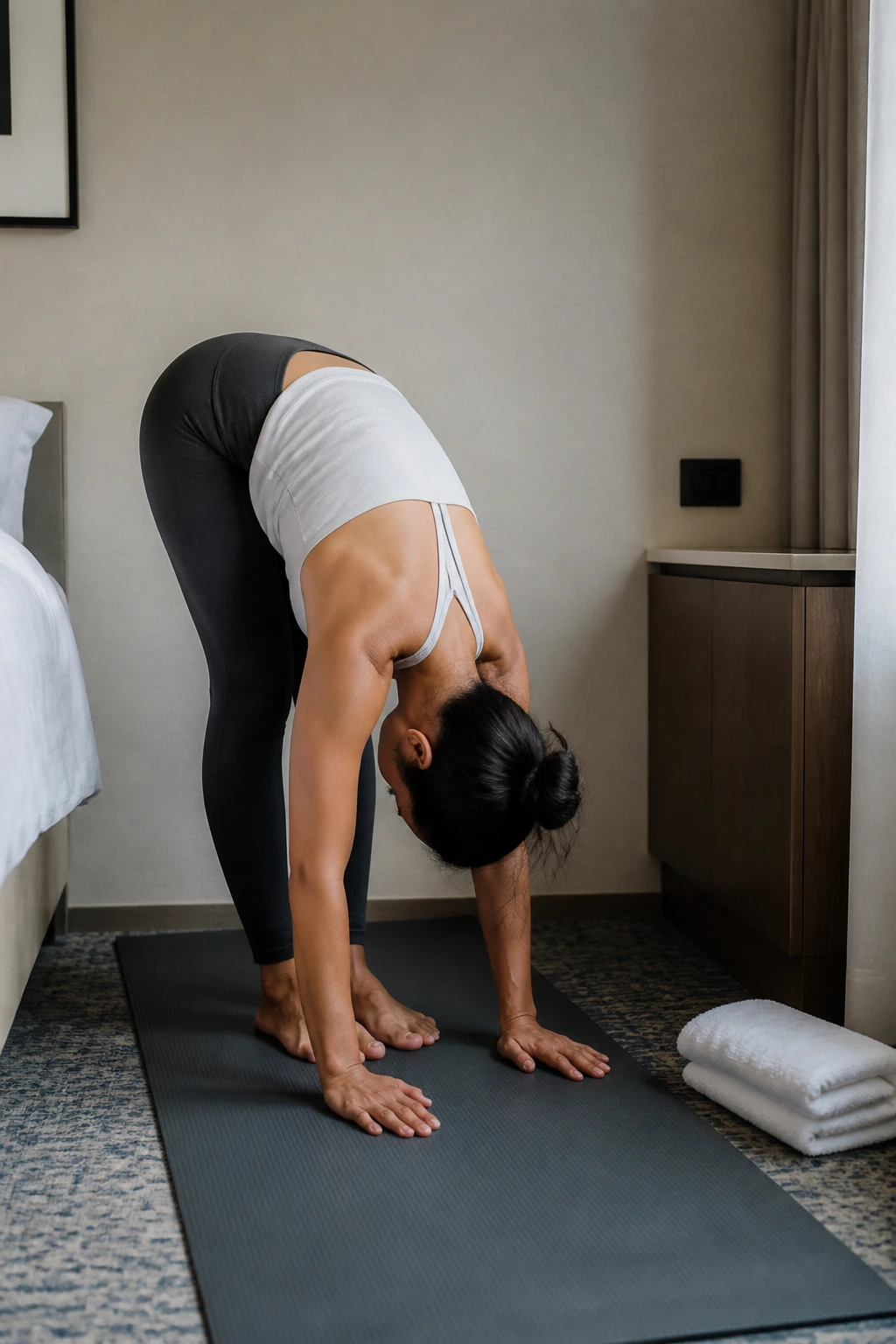
Hotel room. Tiny living room. A corner beside the bed. Travel yoga needs a compact sequence that doesn’t rely on fancy space or a pile of props.
Choose standing forward fold, low lunge, cat-cow, seated twist, bridge, and a quick child’s pose. You can do the whole thing on one mat-width and still get a full-body feel. A folded towel can replace a block in a pinch. A wall can replace a lot more than people expect.
The best part is the simplicity. No setup, no noise, no room rearranging. Just enough movement to undo the stiffness that builds when travel or long sitting keeps the body folded in half. Keep it short, too — 8 to 12 minutes is enough.
23. Beginner-Friendly Floor Flow for New Yoga Practitioners
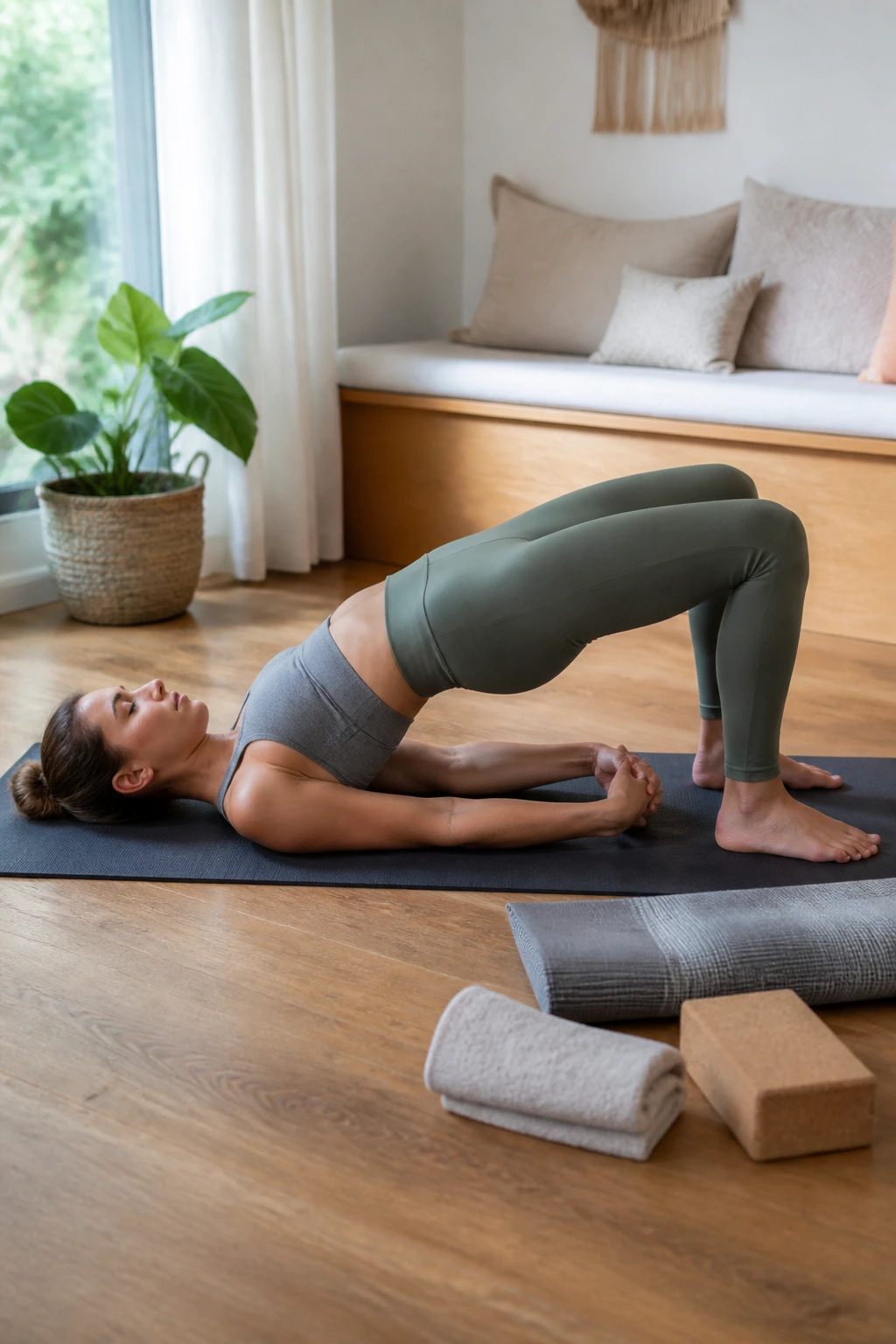
What if standing balance feels like too much on day one? Start on the floor. That’s not a compromise; it’s a smart entry point.
A beginner-friendly floor flow can move through cat-cow, child’s pose, low lunge with the back knee down, bridge, figure four, and a gentle seated fold. All of it can happen with knees supported and props nearby. The floor makes it easier to slow down and notice where the body gets sticky.
Easy version
- Keep the front knee bent in low lunge.
- Put a folded blanket under the hips in seated positions.
- Skip full bridge if it feels too intense.
- Stay with 3 breaths in each pose before switching.
The point is to build trust. A good beginner flow should leave you feeling capable, not confused. Clear is better than fancy.
24. Heat-Building Athletic Flow for Fast Energy
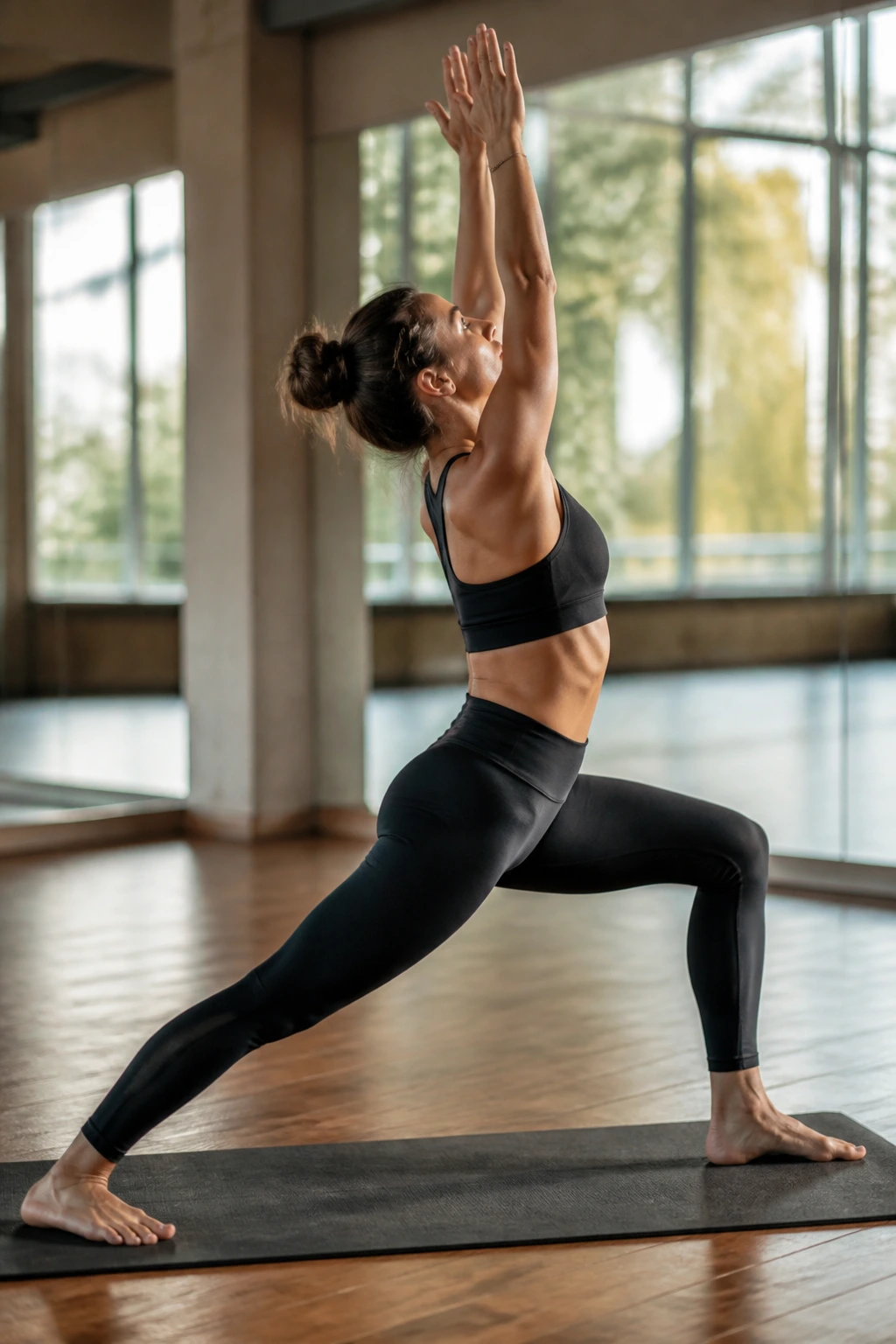
Fast energy does not require jumping. A quick, athletic yoga flow can raise heat through repetition, leg work, and controlled transitions.
Use sun salutation variations, chair pose pulses, crescent lunge, warrior III, plank shoulder taps, and a strong downward dog. Keep the transitions tight, and repeat the whole circuit 3 or 4 times. The body will know it is working by the second round.
How to scale the pace
- Slow the breath before speeding up the movement.
- Cut the holds in half if the form starts to wobble.
- Drop the shoulder taps if the wrists tire early.
- Keep one recovery pose ready, like child’s pose, between rounds.
This is the flow for days when you want your practice to feel athletic and deliberate. The sweat comes from effort, not from chaos.
25. Wind-Down Flow for Sleepy Evenings
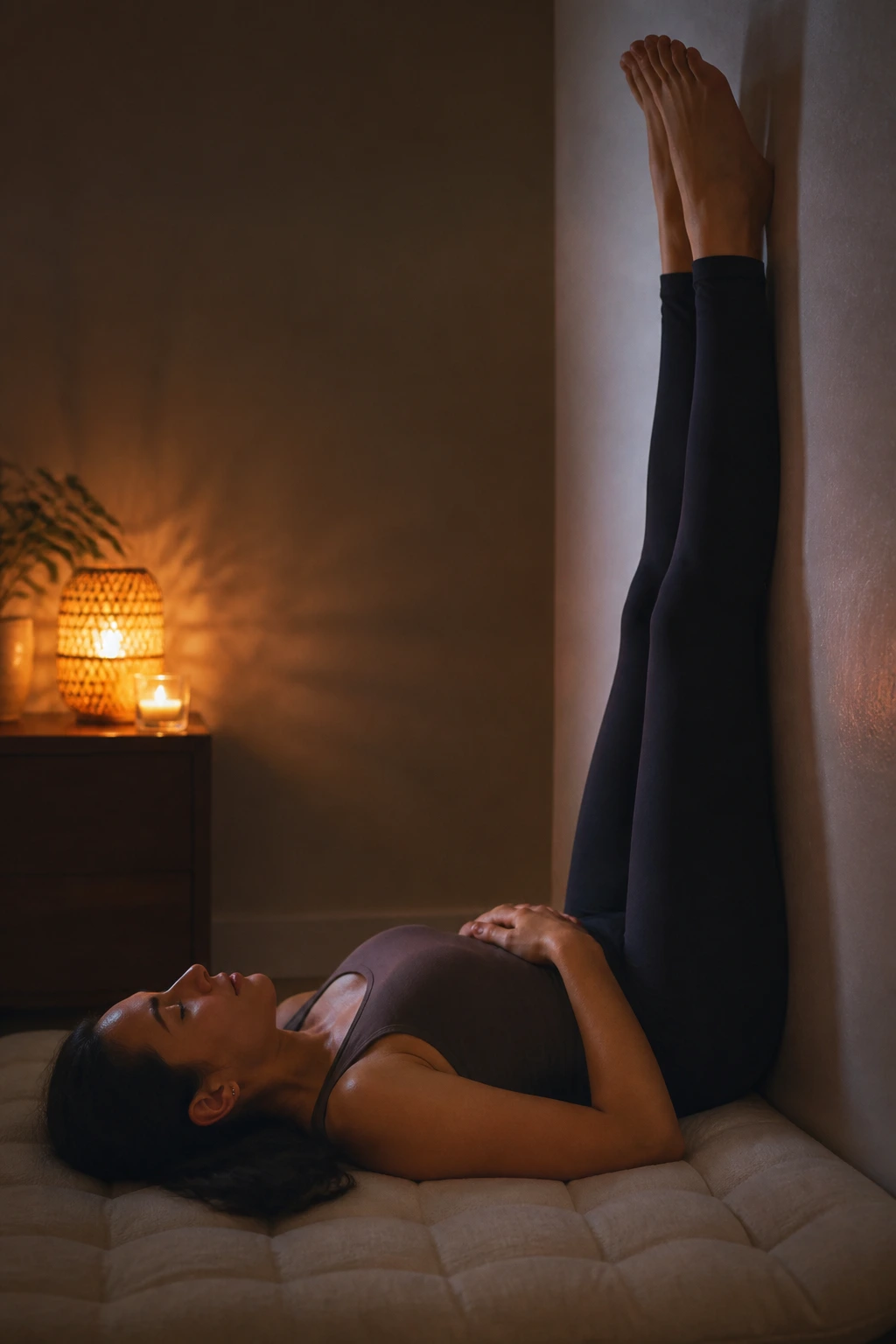
This is not the practice for chasing a sweat. It is the practice for finding the floor, softening the jaw, and letting the day stop talking so loudly.
A wind-down flow usually looks like legs-up-the-wall, reclined bound angle, gentle supine twist, supported child’s pose, and a few slow rounds of breath awareness. The room can be dim. The pace can be almost irritatingly slow. That’s fine.
The body tends to respond to repetition here more than novelty. Two minutes in one pose can feel more useful than four quick ones strung together. If the shoulders stay lifted or the mind keeps racing, use a longer exhale. Even 4 counts in and 6 to 8 counts out can change the tone of the whole room.
Final Thoughts
The smartest way to use yoga flows is to stop treating them like one-size-fits-all recipes. A strong vinyasa day, a chair-based reset, and a floor-only recovery session can all belong in the same week without competing with each other.
That mix matters. Some days need heat. Some need joints to move more freely. Some need the nervous system to back off a little.
If you only keep a few in rotation, make them one standing sequence, one recovery sequence, and one short flow you can do when life is messy. That combination covers a lot of ground without making practice feel like homework.
