



Most body fitness routines fail for a dull reason: they ask for a perfect mood, a perfect hour, and a perfect room with no laundry on the chair. Real life does not hand those out together. The better routines are the ones that still make sense when you’re tired, short on space, and trying not to spend 20 minutes hunting for a missing dumbbell.
A good routine should give you a clear job. Move the big patterns. Breathe hard enough to know you did something. Leave with enough gas in the tank to train again tomorrow if you need to. That’s why the strongest workout plans keep coming back to the same core ideas: squat, hinge, push, pull, carry, brace, recover.
The 15 routines below cover those basics from different angles. Some are built for beginners who need clean, simple movement. Some are better when you want a heavier strength session, a fast conditioning block, or a low-impact day that still counts. Pick the one that fits your gear, your energy, and the time you actually have.
Start with the first routine if you want the gentlest on-ramp. Jump to the ones that match your setup if you already know what your body likes.
1. 10-Minute Bodyweight Wake-Up
This is the cleanest place to begin. No equipment, no setup, no excuses. Ten minutes is enough to raise your temperature, wake up your hips and shoulders, and tell you whether your body is ready for more load or just needs something lighter.
How it works
- 30 seconds of marching in place or jumping jacks
- 8 bodyweight squats
- 6 incline push-ups on a bench, wall, or sturdy table
- 8 glute bridges
- 20-second plank
Run that circuit for 2 rounds if you’re new, or 3 to 4 rounds if you want a bit more heat. Rest 20 to 30 seconds between exercises, just long enough to catch your breath and keep the reps clean.
The point is not to get wrecked. Move crisply, keep your ribs stacked over your hips, and stop the set when your form starts to wobble. If you want to make it harder, slow the lowering phase to 3 seconds on the squats and push-ups. That tiny change does more than people expect.
2. Full-Body Dumbbell Strength Circuit

Dumbbells earn their keep fast. Two handles, a floor, maybe a bench, and you can train your legs, back, chest, shoulders, and core without turning the session into a scavenger hunt.
Set up a circuit with goblet squats, one-arm rows, dumbbell floor presses, Romanian deadlifts, and split squats. Use 3 sets of 8 to 10 reps for each move, resting 45 to 75 seconds between rounds. Keep the last 2 reps challenging, but not sloppy. If your back rounds on the deadlift or your knees cave on the squat, the load is too heavy.
For beginners, one pair of light dumbbells is enough. For intermediate lifters, a moderate load with slower tempo makes the session bite harder. Advanced lifters can add a fourth round or finish with a 30-second suitcase carry on each side, which is a small thing that somehow makes your trunk feel much more awake the next day.
Dumbbells are practical. That’s why they last.
3. Low-Impact Cardio and Core Flow

Need something that lifts your heart rate without making your knees file a complaint? This is the one.
A low-impact cardio and core flow works well on days when you want sweat, but not pounding. Think step jacks, shadow boxing, dead bugs, bird dogs, and mountain climbers with your hands on a bench instead of the floor. Keep each move going for 30 to 40 seconds, then move to the next one with 15 to 20 seconds of rest.
Why it fits so many people
The first few minutes feel almost too easy. Then your breathing changes, your midsection starts doing real work, and the session quietly gets honest. That’s the nice part: your heart rate climbs without the sharp impact that can make jumping sessions feel rough on the ankles or lower back.
Use 3 rounds if you’re starting out. Use 4 or 5 if you want the session to behave more like conditioning. If you can speak in short sentences but not comfortably hold a full conversation, you’re in the right zone. Simple test. Still works.
4. Upper-Body Push-Pull Routine

If you sit a lot, your upper body usually starts to drift forward. Shoulders round. Upper back gets lazy. Neck tightens. A good push-pull routine pushes against that pattern without turning every session into chest day.
Pair push-ups or dumbbell presses with rows, then add overhead pressing and face pulls if you’ve got bands or cables. I like 3 supersets of 8 to 12 reps: press, row, press, row, then a short accessory finisher like triceps extensions or band pull-aparts. Keep the rest brief, around 45 seconds between pairs, and watch how your upper back feels by the end.
Do not race this one. Better reps beat frantic reps, especially on pressing work where the shoulders can get cranky if you rush. If you’re new, use incline push-ups and chest-supported rows. If you’re stronger, slow the lowering phase on presses and add a pause at the top of each row.
The boring advice is also the useful advice: press, pull, repeat.
5. Lower-Body Strength Ladder
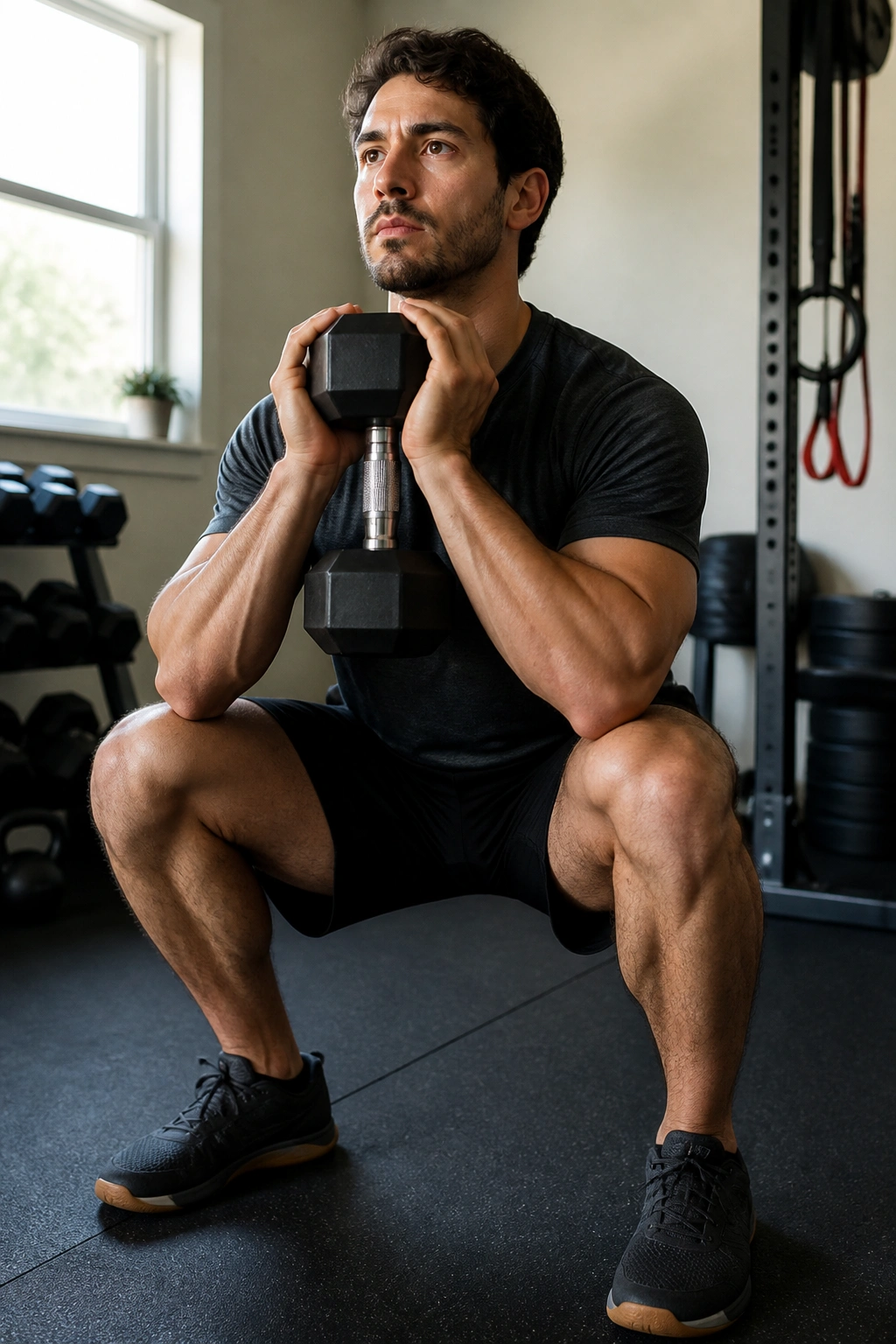
Leg day does not have to be a circus of max effort. Sometimes the smartest lower-body session is a steady ladder that builds volume without frying your nervous system.
Start with 12 goblet squats, 10 reverse lunges on each leg, 12 Romanian deadlifts, 15 calf raises, and a 30-second wall sit. Then repeat the whole block for 2 to 4 rounds depending on your level and how fresh your legs feel. The work is simple, but the detail matters: keep your chest up on the squat, step back far enough on the lunge that your front shin stays fairly vertical, and keep the dumbbells close to your thighs on the hinge.
One-sentence truth: single-leg work changes everything.
It catches side-to-side weakness that two-legged moves can hide. If your knees feel iffy, hold onto a rack or doorframe during the lunges and shorten the range until you can move without wobbling. Advanced lifters can add a 2-second pause at the bottom of each squat. That pause feels rude. It also works.
6. Kettlebell Hinge and Carry Circuit
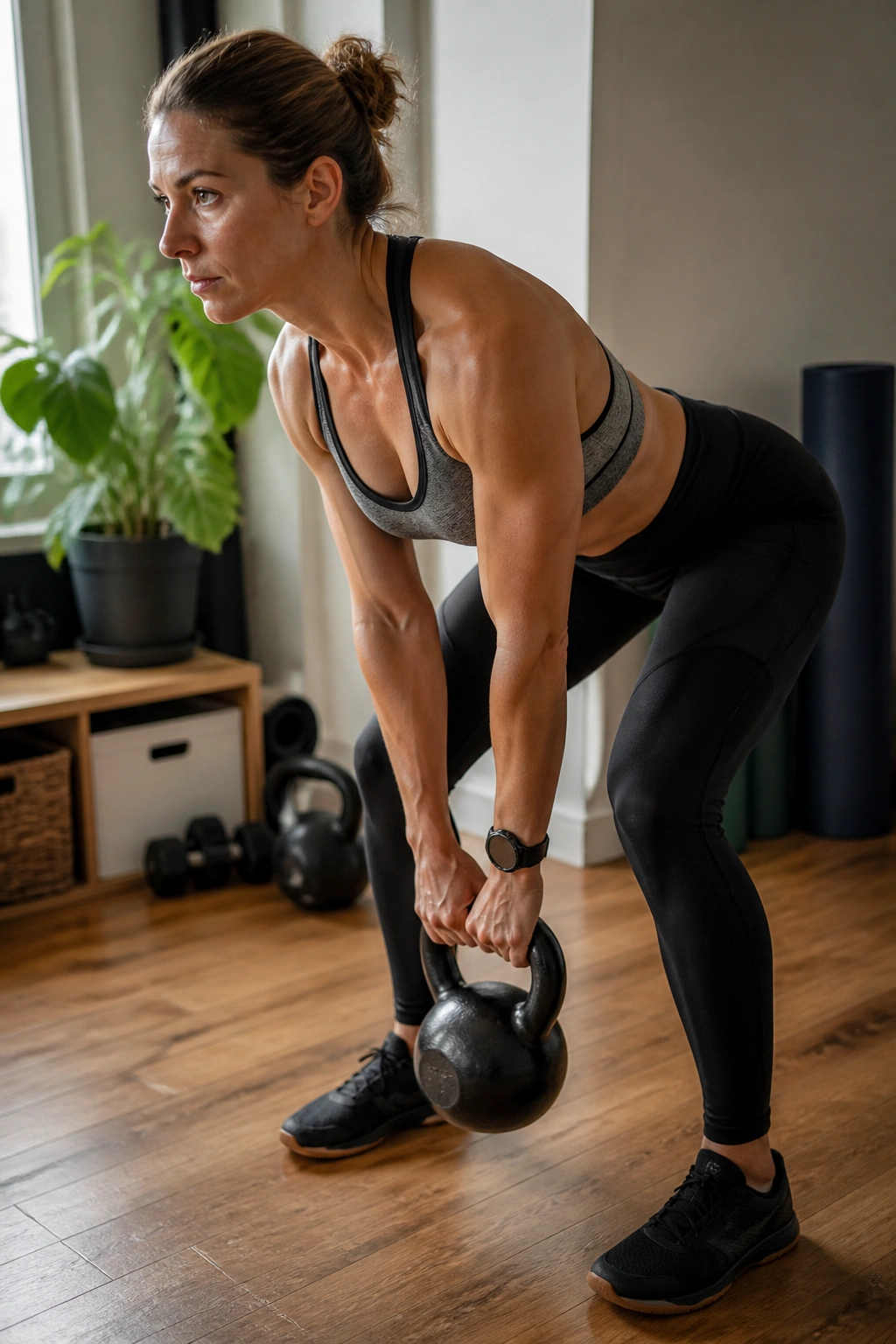
Unlike a squat-heavy session, a kettlebell hinge-and-carry circuit trains the back side, the grip, and the ribs that keep you from folding on the last rep. It’s a small package with a lot going on.
Use kettlebell deadlifts, swings, goblet squats, suitcase carries, and farmer carries. A clean setup is 5 rounds of 8 deadlifts, 10 swings, 8 goblet squats, and 20 to 30 meters of carries on each side. Rest about a minute between rounds. If the swing technique is still shaky, skip it for now and stay with deadlifts plus carries. No shame in that.
How to scale it
- Beginner: light kettlebell, deadlifts instead of swings, 3 rounds
- Intermediate: moderate bell, 4 rounds, shorter rest
- Advanced: heavier bell, 5 rounds, add a second carry variation
The carry is the part people underestimate. It teaches you to stay tall, breathe under load, and keep your trunk from twisting when fatigue creeps in. That skill shows up everywhere, from lifting groceries to moving better in sports.
7. Resistance Band Joint-Friendly Routine
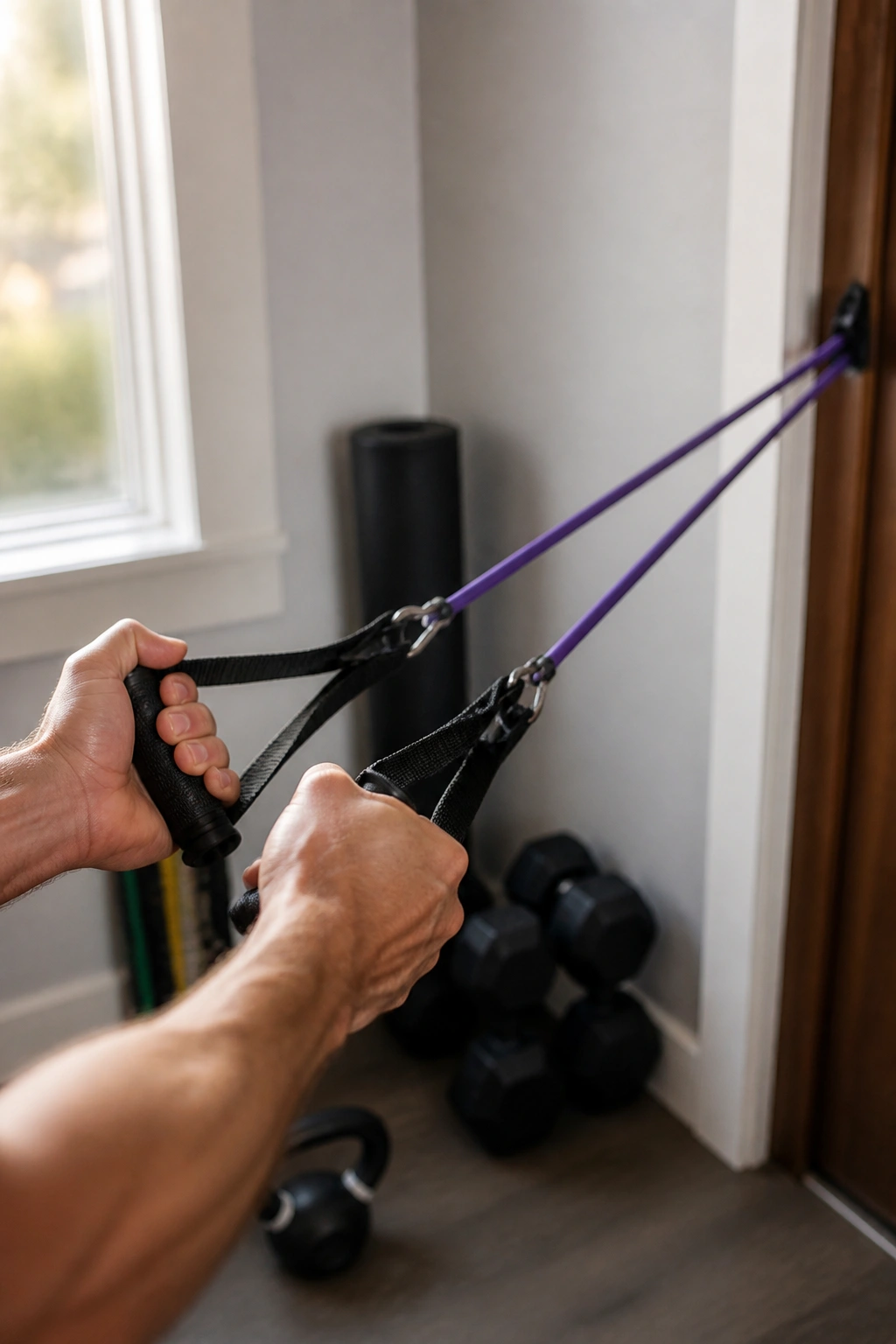
Resistance bands look soft until you try to pull them apart with tired shoulders. Then they get interesting.
Band work is a solid choice when you want tension without a lot of joint stress. Run band rows, chest presses, pull-aparts, lateral walks, good mornings, and Pallof presses. Two to four sets of 12 to 20 reps is the sweet spot for most people, with 30 to 45 seconds of rest between moves. The burn comes on fast because the tension stays on through the whole range.
What to watch for
- Use a band you can control all the way back to the start position
- Anchor it to something stable if the move needs it
- Keep your ribs down on presses and Pallof holds
- Step on the band with both feet for rows and good mornings so it does not slip
A good band session feels smooth, not jerky. If the band snaps you backward at the end of a rep, it’s too light or your setup is off. If you’re traveling, keeping one medium band in a bag is about as useful as it gets.
8. Beginner EMOM Whole-Body Routine

What if the clock did the planning for you? That’s the idea behind an EMOM, or every minute on the minute. You start a set at the top of each minute, finish the reps, then rest with whatever time remains.
Use a 12- to 16-minute block and rotate simple moves: minute 1, 8 squats; minute 2, 6 incline push-ups; minute 3, 10 band rows or towel rows; minute 4, 20-second plank. Repeat that cycle 3 or 4 times. Keep the reps low enough that you finish each minute with 20 to 30 seconds of breathing room.
Minute-by-minute setup
For beginners, the EMOM format removes guesswork. You are not staring at a huge list of sets, and you are not wondering when to stop. For intermediate lifters, it becomes a neat way to keep intensity up without turning the workout into a race. Advanced trainees can add load, increase reps a little, or shorten the rest window by filling more of each minute.
The real advantage is pacing. EMOMs teach you to work hard, then step back and recover. That rhythm makes the session feel organized, which is handy on days when your brain is already busy.
9. Stair, Hill, or Incline Conditioning Session

Stairs are rude in the best way. They give you a clear answer fast.
A stair, hill, or incline session is a great cardio workout when you want more leg drive and less boredom. Walk up briskly for 30 seconds, then recover for 60 seconds on the way down or on flat ground. Repeat 8 to 12 times. Beginners can start with 6 rounds and call it enough. If you want a harder push, make the climb 40 seconds and the recovery 40 seconds.
Keep your torso tall, drive through the whole foot, and avoid lunging so hard that your knees take over. On stairs, the descent matters too. Move down under control, not like you’re trying to win a race nobody asked for.
- Stay close to the railing if balance is shaky
- Shorten your stride on steeper climbs
- Breathe out on the hard part of the ascent
- Stop if your form gets messy
This one is simple, cheap, and weirdly humbling. Those are good traits in conditioning work.
10. Core Stability and Anti-Rotation Workout
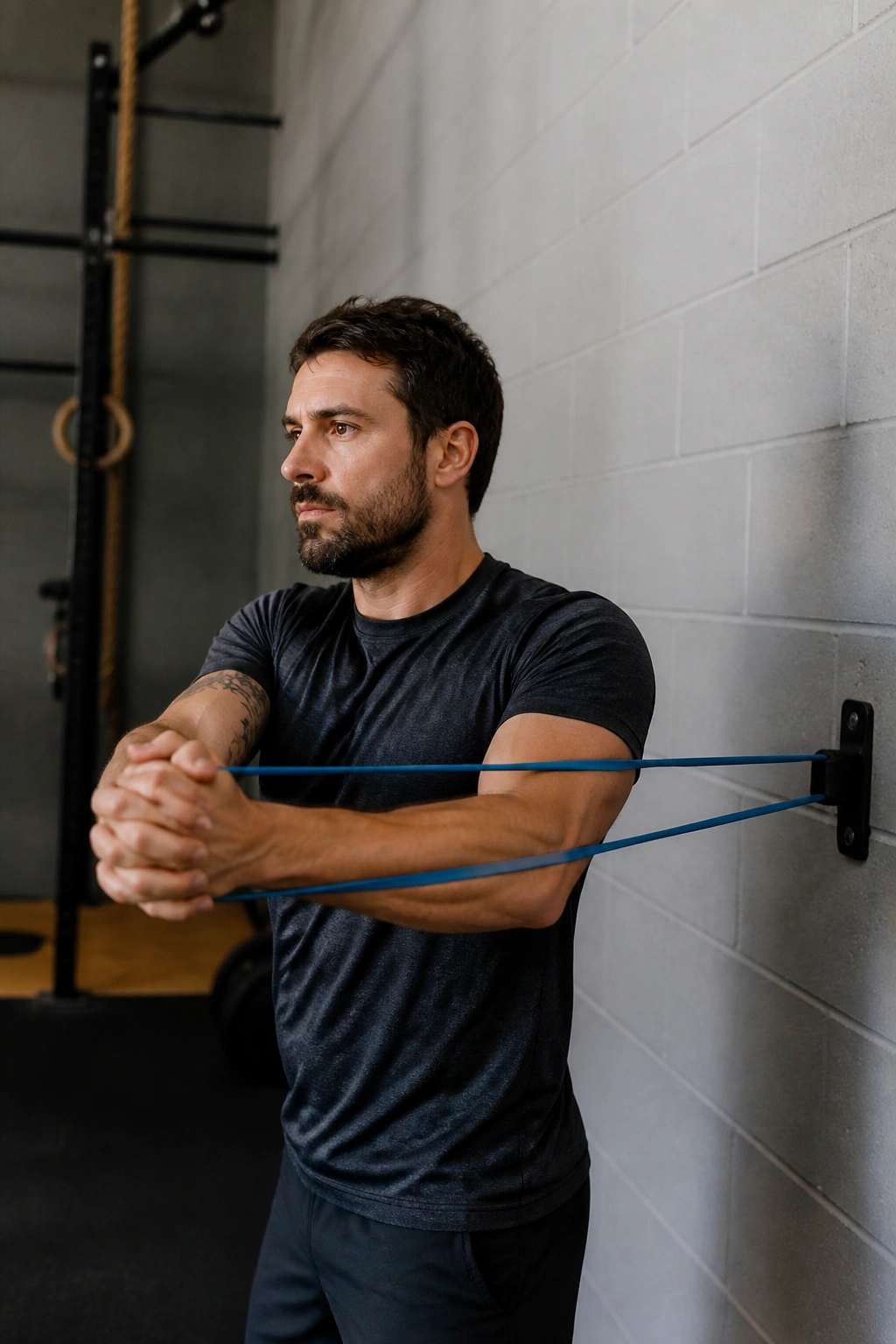
A strong core is mostly about resisting motion. That sounds less glamorous than endless crunches, but it’s the version that pays off when you pick up a bag, brace for a deadlift, or twist to catch yourself on an awkward step.
Build the session around dead bugs, side planks, Pallof presses, plank shoulder taps, and bird dogs. Use 20 to 40 seconds for holds and 6 to 10 slow reps for controlled drills. Rest about 20 seconds between exercises and 60 seconds between rounds. Two to four rounds is enough for most people.
One-sentence rule: if your lower back is doing the work, the exercise is too hard.
Shorten the lever. Bend your knees more. Use a lighter band. Those small changes matter, and they let you train the core instead of the spine complaining about it. People often rush core work because it looks easy. Then they arch the back on the last rep and call it a day. Don’t. Keep the pelvis stable, breathe behind the brace, and make the movement boring in the best way.
11. Mobility-First Recovery Routine

Recovery work can feel dull until your hips start feeling welded shut. Then it becomes a little more interesting.
A mobility-first routine is what I reach for after hard sessions, long desk days, or any stretch of training where the joints feel stiff before the warm-up even starts. Run cat-cow, 90/90 hip switches, ankle rocks, world’s greatest stretch, and shoulder circles or CARs. One to two rounds is usually enough, with 5 to 10 smooth reps per move and slow nose breathing throughout.
What it should feel like
- Hips open a little
- Ankles move without pinching
- Upper back rotates more freely
- Breathing slows down
This should not feel like punishment. If you are forcing range or gritting your teeth, back off. Mobility work works best when it feels like lubrication, not a test. Finish with a 30-second child’s pose or a long exhale in a deep squat hold if that position feels good on your knees and ankles.
Tiny sessions like this make the next workout cleaner. They also make the day feel less stiff, which is a useful outcome even when the gym is closed.
12. At-Home HIIT With Minimal Space

A spare room is enough. So is a patch of floor by the couch.
High-intensity interval training at home works well when you want a fast session that still leaves your lungs honest. Use 20 seconds of work and 40 seconds of rest if you’re newer. Shift to 30 seconds on and 30 off once you can hold good form. Advanced folks can go 40 on and 20 off, but only if the landings stay quiet and the movements stay sharp.
Pick 4 to 6 moves: skaters, squat-to-reach, step-back burpees, high knees or fast marching, mountain climbers, and push-ups with a knee drive. Run 4 to 6 rounds. That gives you enough total work to matter without turning the session into a mess.
- Land softly
- Keep your knees tracking over your toes
- Use step-back burpees if jumping feels rough
- Stop a rep early if your posture starts to collapse
This kind of session is short, sweaty, and useful. It also respects small spaces, which more workout plans should do.
13. Gym Machine Full-Body Session

Machines are not a consolation prize. They’re a clean way to train hard when you want a stable path and less setup.
A full-body machine session can be built from the leg press, chest press, lat pulldown, seated row, hamstring curl, and cable crunch. Use 2 to 3 sets of 10 to 15 reps per exercise, resting 45 to 60 seconds. That rep range gives you a solid mix of muscle work and endurance, especially if you keep the tempo controlled on the way down.
The nice part is that the machine helps lock in the path, so balance does not become the limiting factor. That makes this style useful for beginners, for people coming back after time off, and for anyone who wants to push volume without managing too many moving parts.
A few setup cues
- Seat the machine so your joints line up with the pivots
- Use the full range you can control
- Pause for a beat at the hardest point
- Stop a set when the last clean rep disappears
If you finish a machine session feeling worked but not beaten up, the setup was probably right.
14. Mixed Modality Athlete Routine

Can one short session cover strength, speed, and conditioning? Yes, if you keep the pieces in the right order.
A mixed modality routine is a smart pick for people who like a more athletic feel. Start with an explosive move like medicine ball slams or kettlebell swings, move into a strength piece like box step-ups or front squats, then finish with rows, sled pushes, bike sprints, or rower intervals. A simple version is 4 rounds of 5 slams, 6 step-ups per leg, 8 TRX rows, and 30 seconds on the bike.
Best order for the pieces
Power first. Strength second. Conditioning last.
That order matters because speed work falls apart when you’re already tired, and tired form is where sloppy reps live. Keep the explosive part crisp and short. If the medicine ball slam starts looking like a sad shoulder raise, the bell is too heavy or the set is too long. For intermediate lifters, this style feels exciting without becoming random. For advanced trainees, it’s a useful bridge between strength training and conditioning.
The whole thing should feel athletic, not chaotic. There’s a difference.
15. Travel-Size 20-Minute No-Equipment Routine

Travel can wreck a good training streak if you let it. This routine is the one that saves the week when you’re in a hotel room, a friend’s apartment, or a place where all you’ve got is floor space and maybe a towel.
Use 3 rounds of 12 squats, 8 incline push-ups on a desk or bed frame, 10 reverse lunges per leg, 12 glute bridges, 20 seconds of hollow hold or dead bug, and 30 seconds of fast marching in place. Rest 30 to 45 seconds between moves. If the room is tiny, swap the march for mountain climbers or a brisk plank shoulder tap.
No fancy gear. No excuses needed.
The beauty of this one is how little it asks from you. You can do it in socks. You can do it before breakfast. You can do it when the schedule is weird and your energy is lower than you hoped. Add a 3-minute stretch at the end if your hips feel tight, especially after a long drive or a flight.
It is plain, but it works.
Final Note
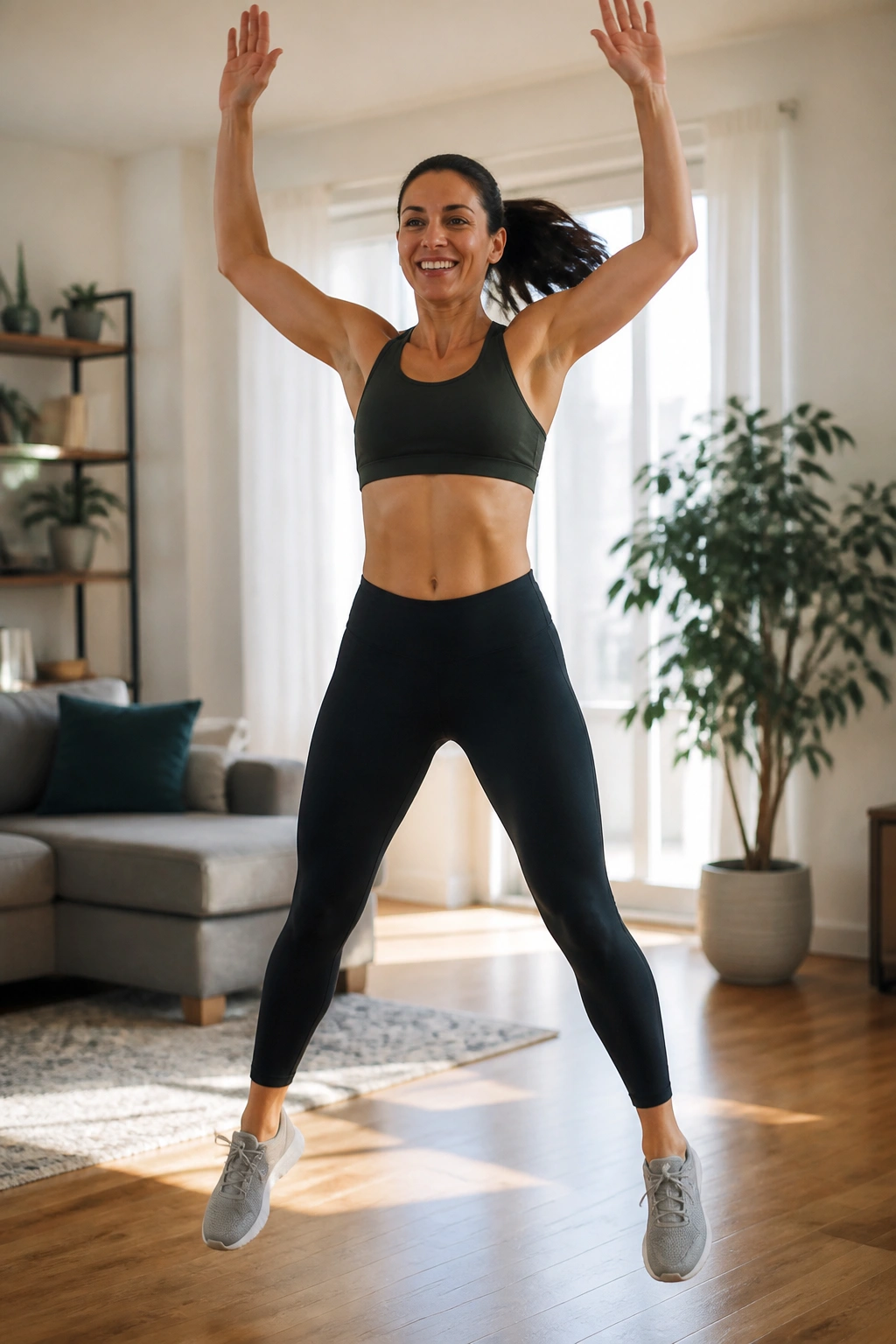
The smartest fitness plan is usually not the hardest one. It’s the one you can repeat with decent form, enough effort, and very little drama.
Keep a small menu in your head: one routine for strength, one for conditioning, one for recovery. That makes it easier to choose instead of overthink. And once you stop chasing the perfect session, the useful ones start to add up fast.
