



A pregnancy workout does not have to leave you bent over, dizzy, or wondering whether your core has quit on you. The best full body pregnancy workouts safe each trimester are usually the plain-looking ones: walking, biking, pool work, strength circuits, and slow, controlled standing exercises that let you breathe.
The American College of Obstetricians and Gynecologists has long pointed to 150 minutes a week of moderate activity for uncomplicated pregnancies, and that old “talk test” still earns its keep. You should be able to speak in full sentences while you move. Not sing. Not gasp through every rep.
No heroics.
That matters because pregnancy changes balance, joint looseness, energy, temperature tolerance, and the way your core feels under load. A workout that felt fine six weeks ago can feel clumsy now, and that does not mean you are doing it wrong. It usually means the exercise needs a smaller range, a steadier pace, or a different angle.
If you get bleeding, leaking fluid, chest pain, faintness, regular contractions, severe headache, or calf pain, stop and call your clinician. If you have a high-risk pregnancy or have been told to avoid exercise, that advice wins every time. For everyone else, the sweet spot is steady movement that leaves you challenged but not rattled. Start with walking, because it tells you a lot about how your body feels on a given day.
1. Brisk Walking Intervals
Walking looks too basic to matter, which is exactly why I like it so much. It is one of the most dependable pregnancy workouts because it trains your legs, lungs, posture, and stamina without asking your joints to take a beating.
How to make it count
A good walking session can be as simple as 5 minutes easy, 1 minute brisk, repeated 6 to 8 times, then 5 minutes to cool down. The “brisk” part should feel active, not frantic. Your arms swing a little harder, your breathing deepens, and you can still talk.
Trimester tweaks: in the first trimester, many people can keep their normal route and pace if nausea is calm. In the second trimester, a slightly wider stride and a flatter route usually feel better. By the third, shorter steps and more frequent water breaks beat pride every single time.
- Wear shoes with a stable heel and enough toe room.
- Keep your ribs stacked over your pelvis; don’t lean back.
- Pick a route with a bathroom nearby. You’ll thank yourself later.
- If your pelvis feels heavy, cut the brisk intervals in half.
One good rule: if your walk leaves you feeling springy rather than spent, you nailed it.
2. Stationary Bike Rides
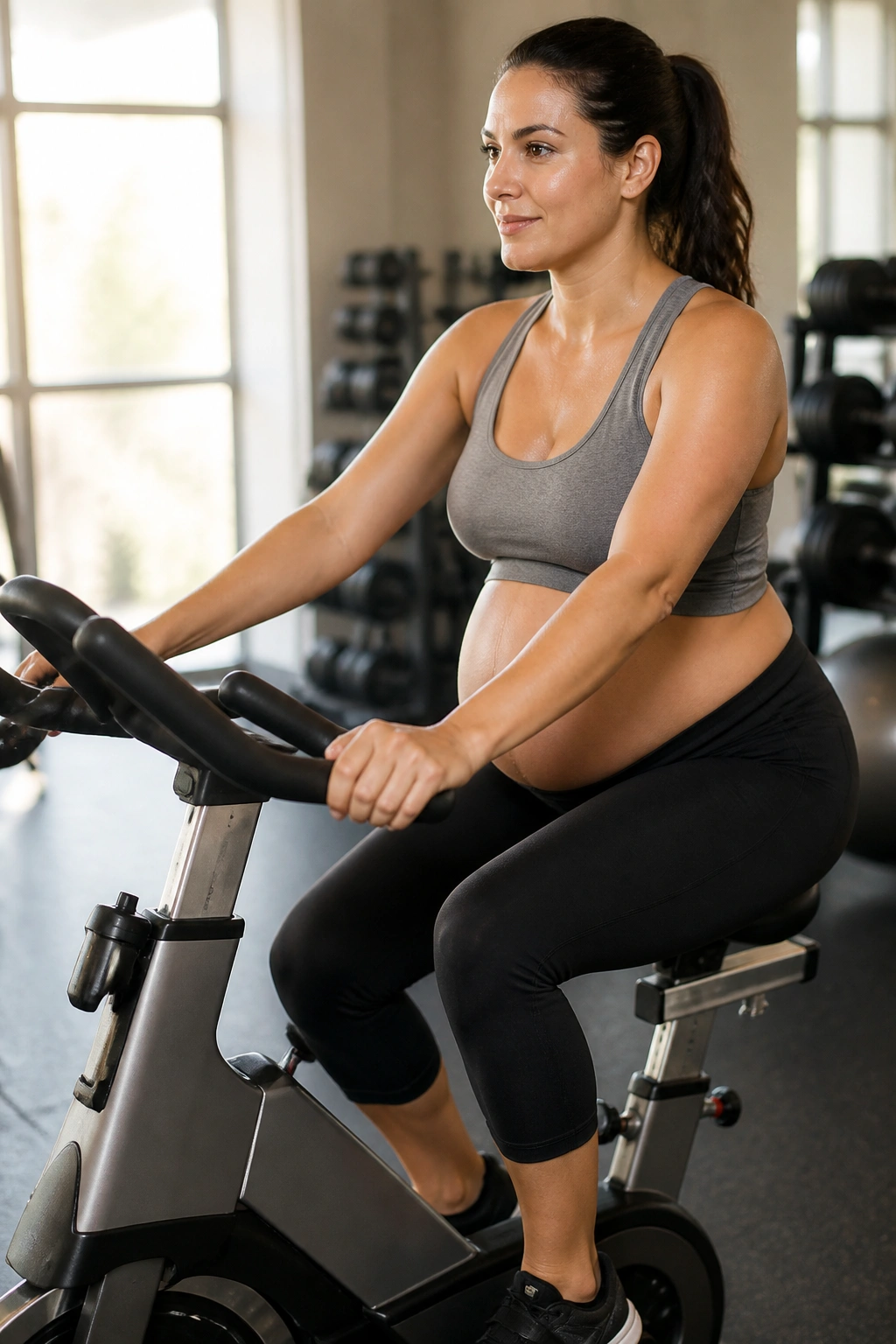
The stationary bike is a quiet workhorse. No impact, no uneven ground, no surprise puddles, and no awkward balance demands when your center of gravity starts changing.
That makes it a smart choice from the first trimester through the third, especially on days when walking feels choppy or your feet are already swelling. The seat should sit high enough that your knees stay slightly bent at the bottom of the pedal stroke. If your hips rock side to side, the seat is too low.
A solid ride usually lives in the 15-30 minute range, with a pace that lets you breathe through your nose most of the time and talk without huffing. Some days that means moderate resistance. Some days it means light resistance and a little sweat. Both count.
Keep the handlebars close enough that you are not rounding your lower back. I also like a tiny forward lean over an upright, locked posture — enough to feel athletic, not enough to strain the belly. And if nausea shows up, a fan aimed at your face can make the whole thing feel ten times more manageable.
3. Pool Walking and Aqua Jogging
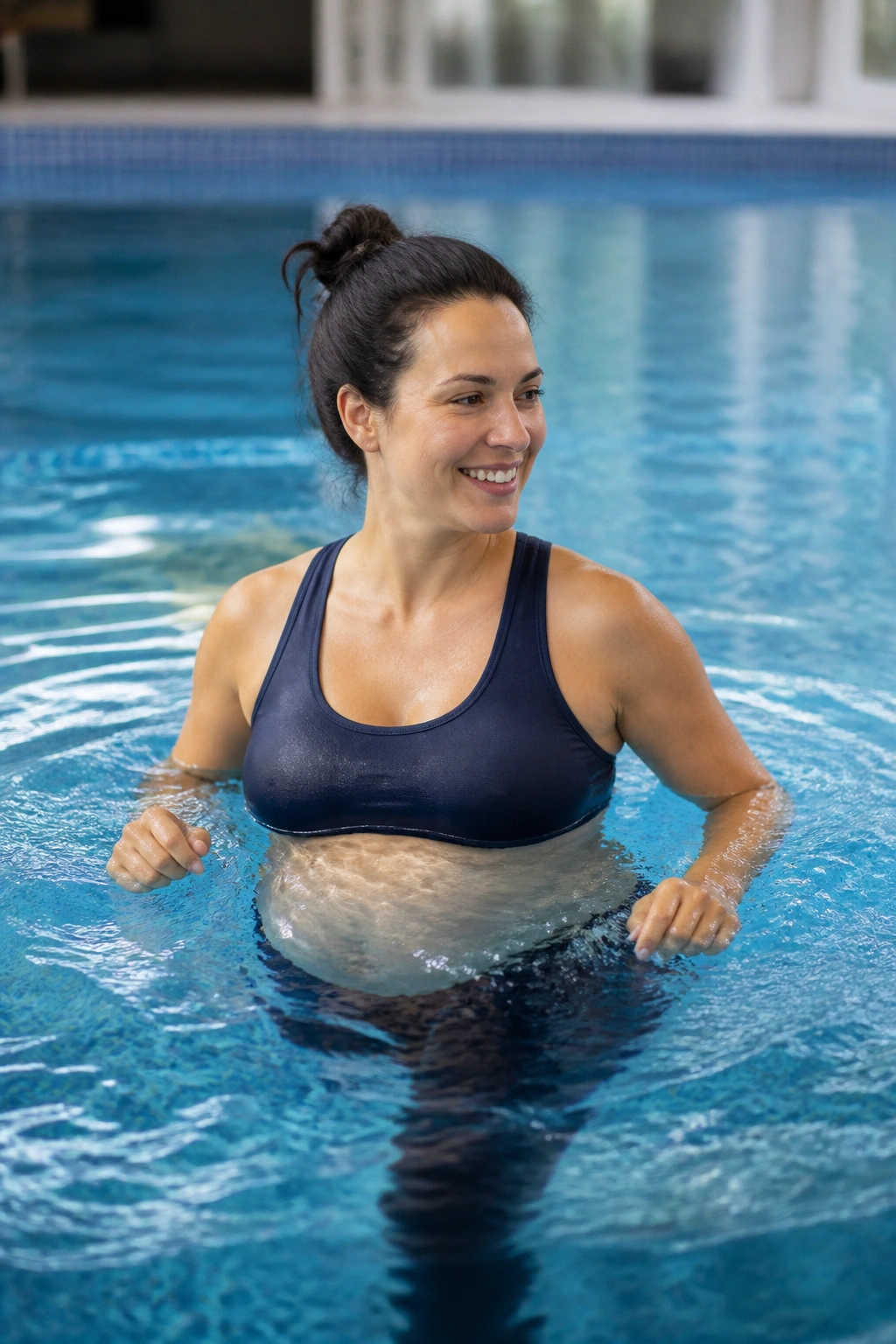
If your feet feel like bricks and your lower back has opinions, get in the water.
Pool work is one of the best low-impact pregnancy exercises because the water carries part of your body weight, softens the pounding, and keeps you cooler than most land workouts. That cooling effect matters more than people think. Overheating is not the goal.
A simple pool session
Start with 5 minutes of easy walking in chest-deep water. Then move into 10 to 15 minutes of brisk water walking or aqua jogging. Finish with another 5 minutes easy and a few arm circles under the surface.
You can make it more challenging by pushing through the water with straight arms, adding knee lifts, or using a pool noodle for gentle resistance. You do not need to sprint. Water already adds enough load to make your shoulders, glutes, and core work.
The pool is especially kind in the second and third trimesters, when standing upright for long stretches can feel tiring. And if your ankles puff up by the end of the day, the water pressure often feels like relief. Not magic. Relief.
4. Full-Body Dumbbell Strength Circuits
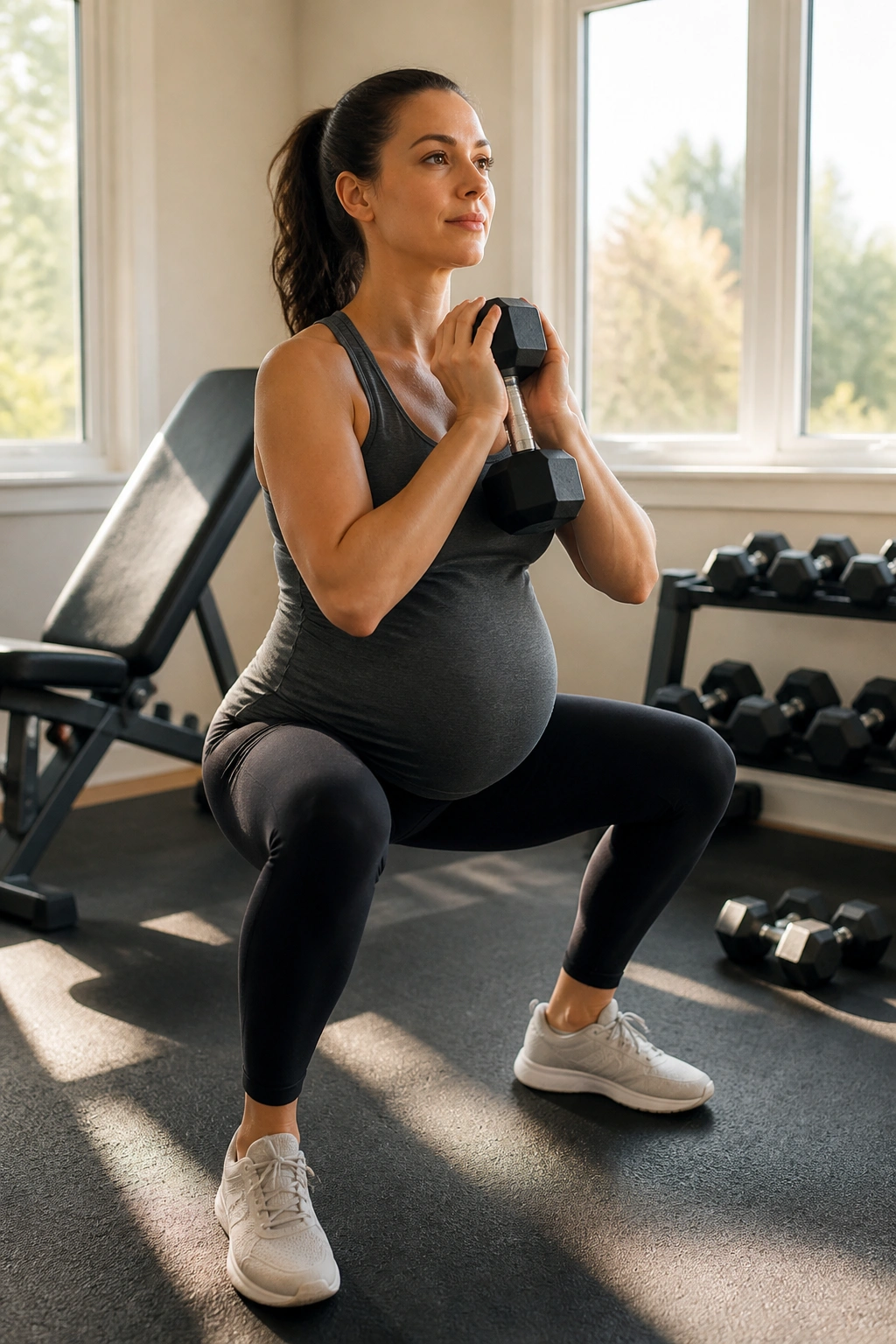
Strength training during pregnancy gets unfairly treated like a risky hobby. Done with sane loads and clean form, it is one of the most useful things you can do for daily life.
The trick is to keep the weights modest and the effort controlled. Think 5 to 15 pounds per dumbbell, depending on your experience, and leave a couple of reps in the tank. Breath-holding is the enemy here. Exhale as you stand, press, or pull.
A solid circuit
Try 2 to 3 rounds of the following:
- 8 to 10 goblet squats to a box or bench
- 8 to 10 one-arm rows per side
- 8 to 12 incline push-ups on a counter or wall
- 10 to 12 Romanian deadlifts with light dumbbells
- 20 to 30-second farmer carries
The circuit works because it hits legs, back, chest, hips, and grip in one neat package. If your belly starts doming during a move, reduce the load, raise the surface, or cut the range. That dome is a signal, not a challenge.
Late in pregnancy, I like this style more than complicated gym machines. You can move at your own pace, use a bench for support, and stop the second your form gets sloppy.
5. Resistance Band Full-Body Flows
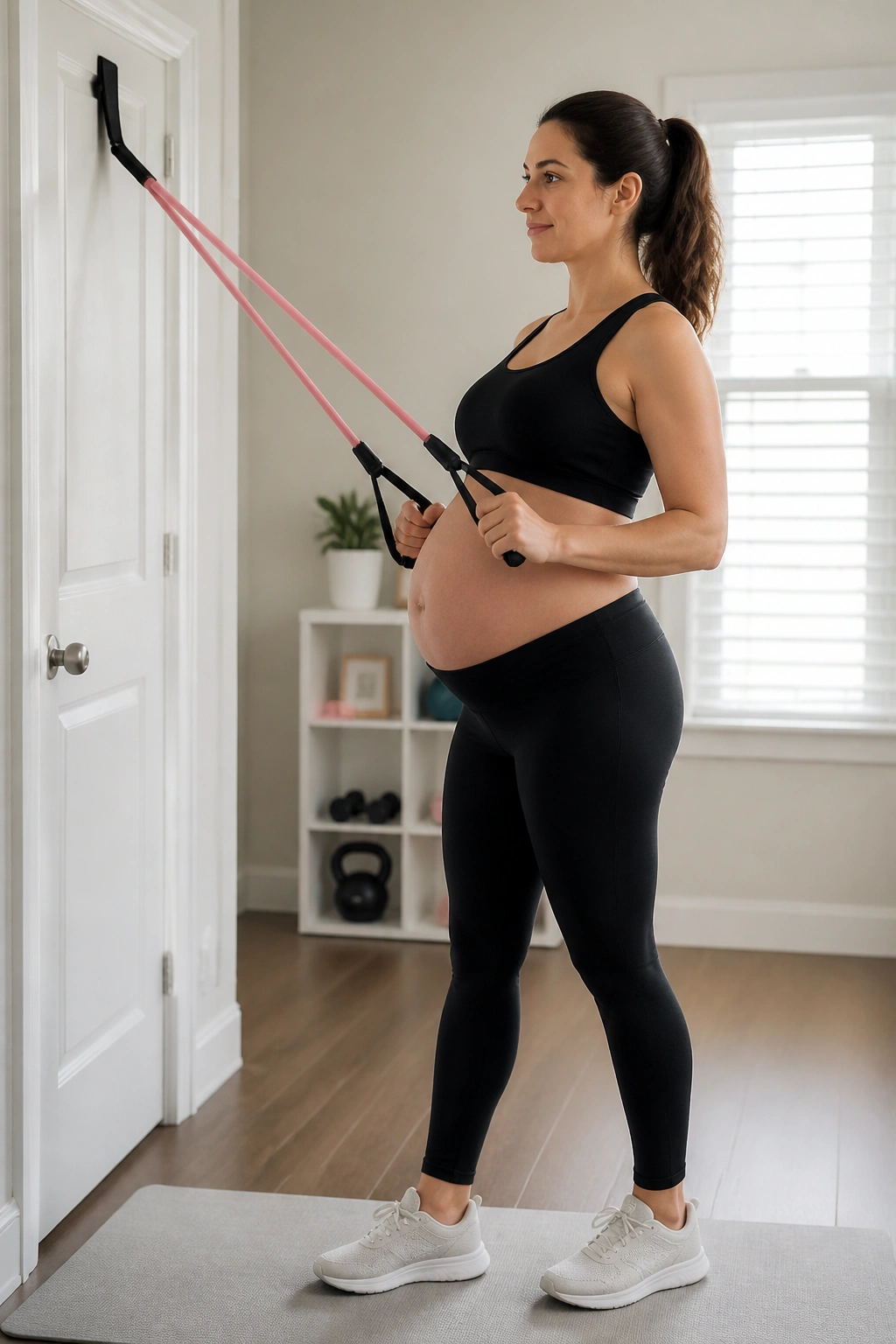
Why do bands work so well? Because they give resistance without demanding much space, much setup, or much balance. They are also kinder on days when your joints feel loose and your energy is uneven.
A band flow can hit your legs, back, shoulders, and hips in one short session. The constant tension makes each rep feel clean and controlled, which is useful when pregnancy already makes you feel a little less planted.
What a band session can look like
Use a light-to-medium loop band and do 2 rounds of:
- 12 banded squats
- 10 standing rows
- 10 chest presses
- 12 lateral steps each way
- 10 standing glute kickbacks per side
Take slow steps. Keep your knees tracking over your toes. Pull the band apart until your shoulder blades move, not until your neck takes over. That last point matters more than people admit. A lot of band work turns into shrugging if you get tired.
First trimester, you may tolerate longer rounds. Later on, shorter sets with a quick rest feel better. Bands travel well too, which is handy if your usual gym feel turns finicky. Less setup, fewer excuses, more movement.
6. Incline Treadmill Walks
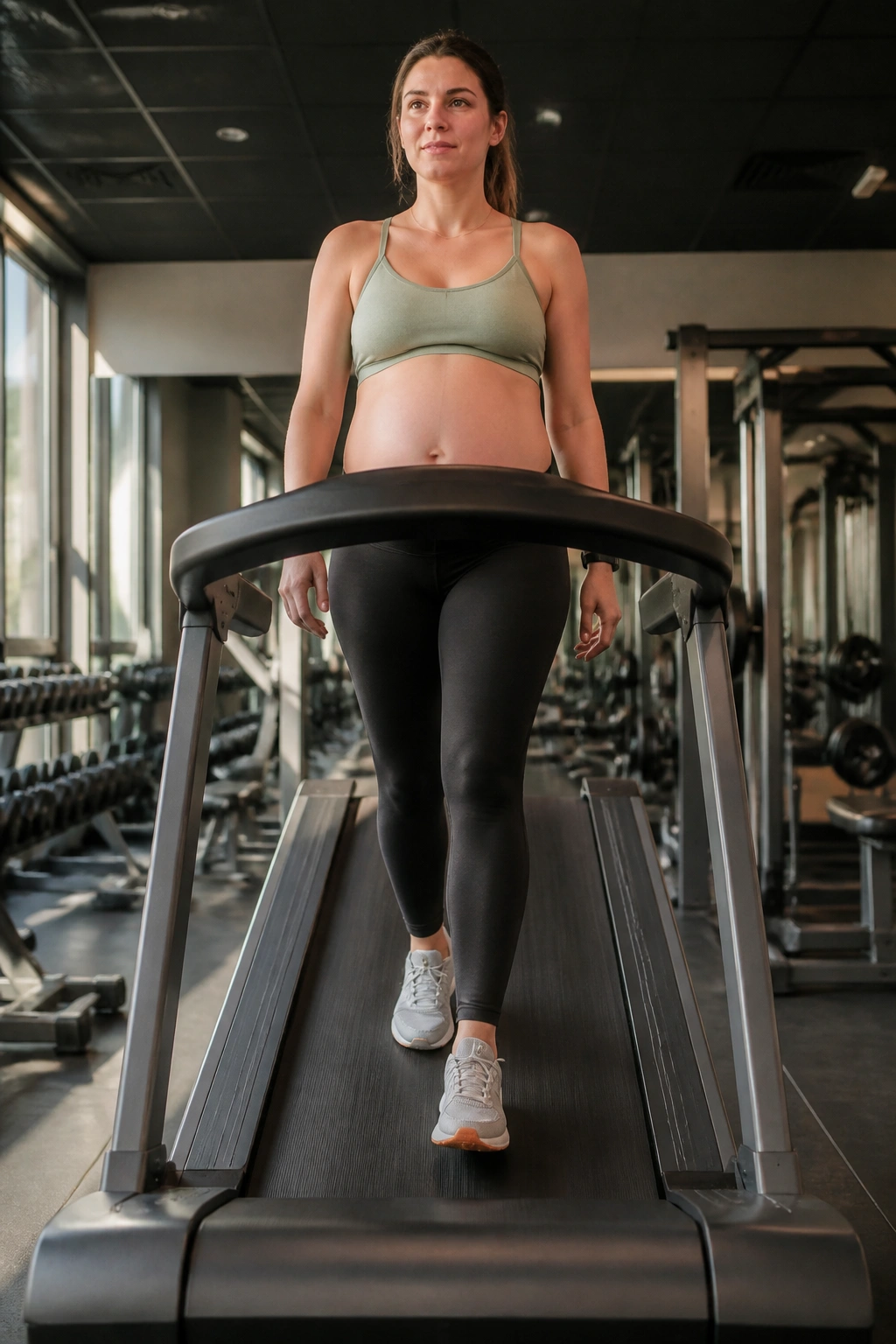
Incline walking is the version of walking that wakes up your glutes without asking you to run. That matters because running is not everyone’s friend during pregnancy, and it does not need to be.
A treadmill gives you steady footing, a handrail if you need it, and a clear way to control the effort. I like 1% to 4% incline for most people, with short pushes up to 6% only if balance feels solid and your pelvic floor is happy. Speed can stay in the comfortable walking range.
Unlike outdoor walking, the treadmill lets you repeat the same pattern without hills, curbs, or traffic stops. That makes it easier to keep your breathing even. It also makes intervals more precise, which is useful if you are tired and want something simple: 2 minutes flat, 2 minutes incline, repeat 6 times.
Keep your posture tall and avoid hanging on the rails. Light fingertips are fine. Full body weight on the handles is not. If you need that much support, lower the speed or the slope. A good incline walk should feel like you are climbing a steady grade, not surviving one.
7. Chair Squats and Hip Hinges
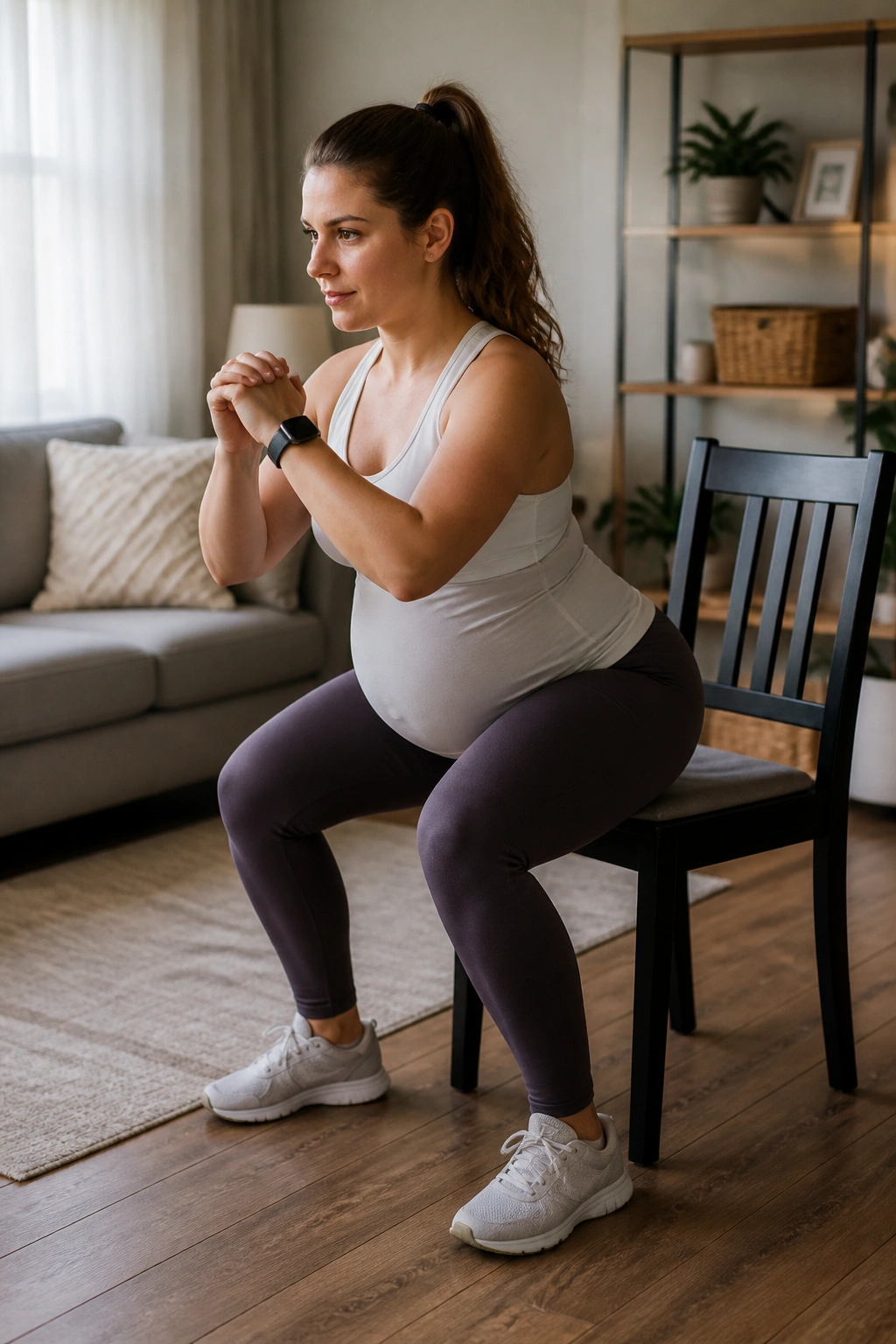
Standing up from a chair becomes surprisingly relevant during pregnancy. So does bending to pick up a toy, a laundry basket, or a dropped phone that seems to fall exactly where you can’t reach.
That is why chair squats and hip hinges deserve a place here. They build leg strength, teach control, and reduce the “drop and grab” movement that can irritate your back. Simple, yes. Boring, maybe. Useful, absolutely.
A low-drama mini workout
Use a sturdy chair or box and do:
- 10 sit-to-stands
- 10 supported hip hinges
- 8 step-backs to the chair per side
- 20-second wall sit
- 8 calf raises
Move slowly on the way down. That eccentric lowering phase matters more than it looks like it should. It teaches your thighs and glutes to brake the movement, not just launch it.
By the second trimester, many people like a slightly wider stance to make room for the bump. By the third, the chair gives you a confidence boost because it marks your depth and keeps the squat from turning into an awkward plop. If your knees cave inward, shorten the range and slow down.
8. Bird-Dog and Side-Lying Core Routine
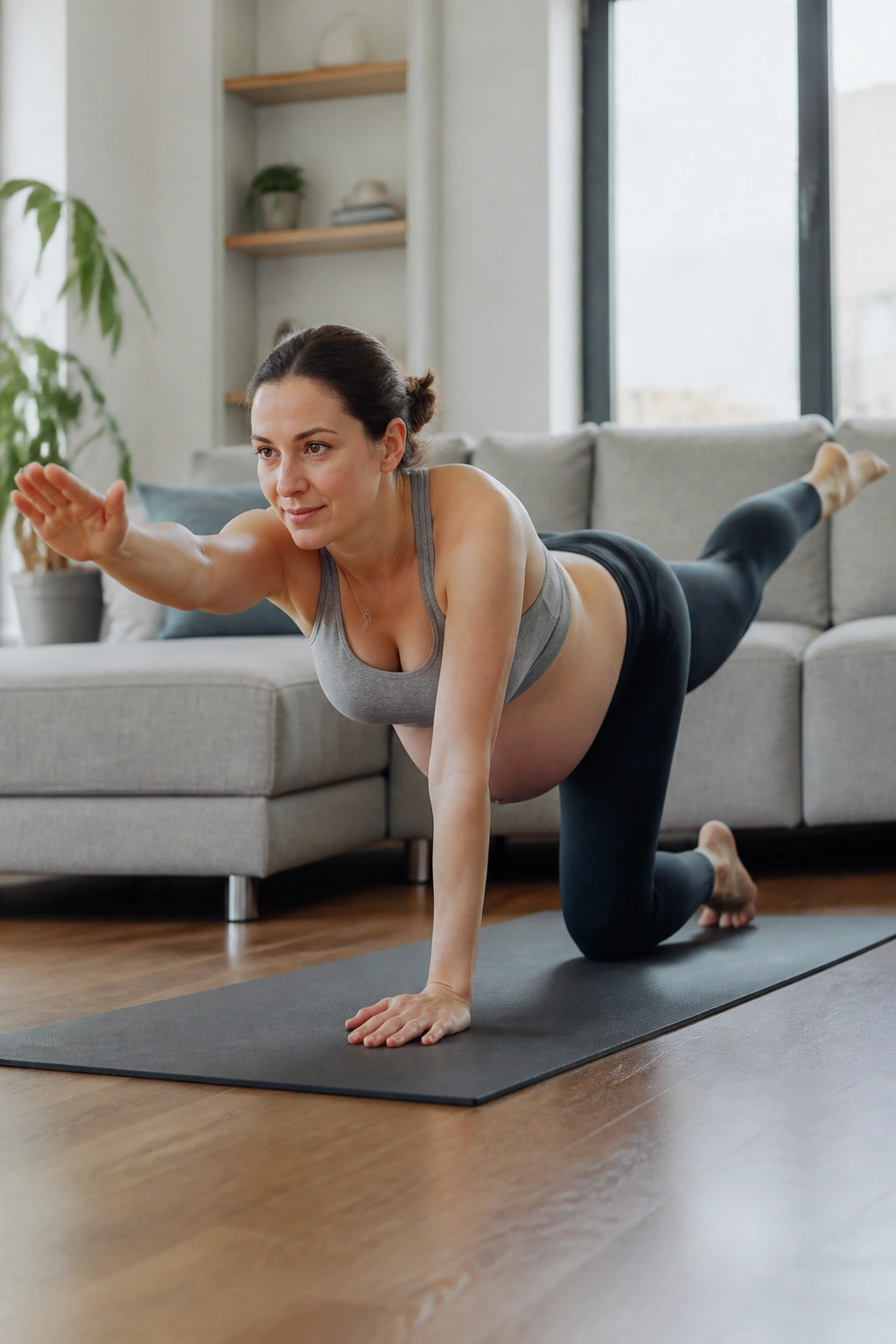
Core work during pregnancy should not feel like punishment. It should feel like support.
Bird dogs, side-lying glute work, and other low-pressure core drills train the muscles that help you stay steady when your center shifts. They also avoid the big mistake I see in a lot of pregnancy workouts: too much crunching, too much strain, too much “let’s see what happens.” No thanks.
A useful routine might include 6 slow bird dogs per side, 12 clamshells per side, 8 quadruped rock-backs, and 10 standing knee drives. Move with control. Exhale as you extend. Watch for doming down the middle of the belly. If it shows up, back off and shorten the range.
This kind of workout is especially kind in the second and third trimesters because it keeps pressure lower than floor-based ab work. It also helps your back feel more supported when you stand up, twist to reach something, or carry a bag on one shoulder for too long. Small work. Big payoff.
9. Prenatal Yoga Strength Flow
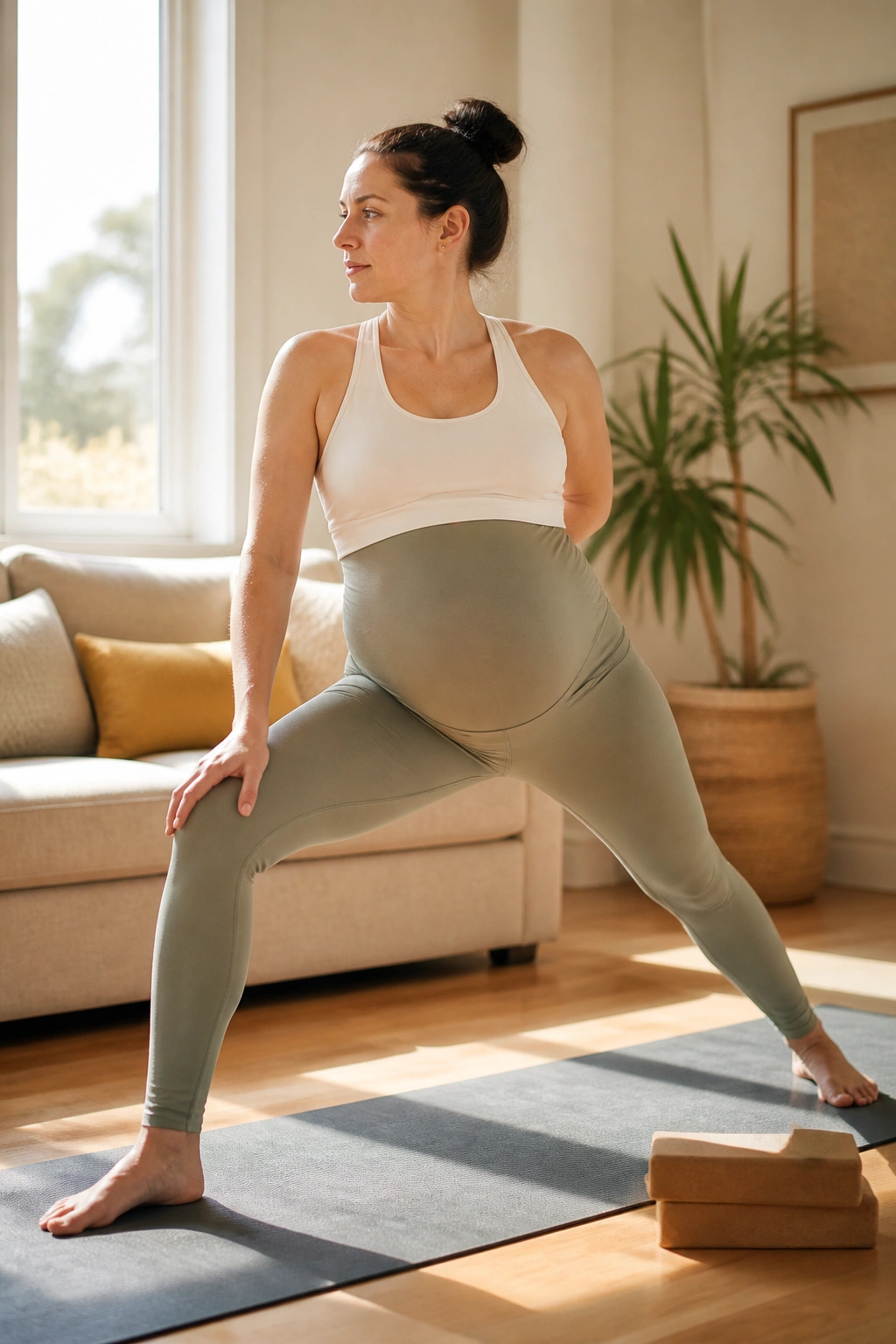
Can yoga count as a workout? Yes, if you treat it like one.
A prenatal yoga flow that uses chair pose, supported warrior II, side-angle with a forearm on the thigh, cat-cow, and gentle balance work can build real strength. It is not just stretching in cute clothes. Done well, it trains legs, hips, posture, breath, and balance all at once.
Keep the flow practical
Hold each pose for 3 to 5 slow breaths. Keep twists open and soft, not deep and cranked. Skip hot rooms. Skip anything that makes you feel dizzy or puts long pressure on your back when flat on the floor.
The best versions of prenatal yoga are steady and rooted. I like them more later in pregnancy because the movements feel familiar but not heavy. If one side feels tighter than the other, stay there a breath longer instead of forcing symmetry. Bodies do not always want symmetry, and pregnancy makes that even more obvious.
A good flow can move from cat-cow to kneeling side stretch to supported warrior to wide-legged forward fold with hands on blocks. Nothing flashy. Just enough load to wake the muscles, enough mobility to keep you from feeling rusted shut.
10. Low-Impact Dance Cardio
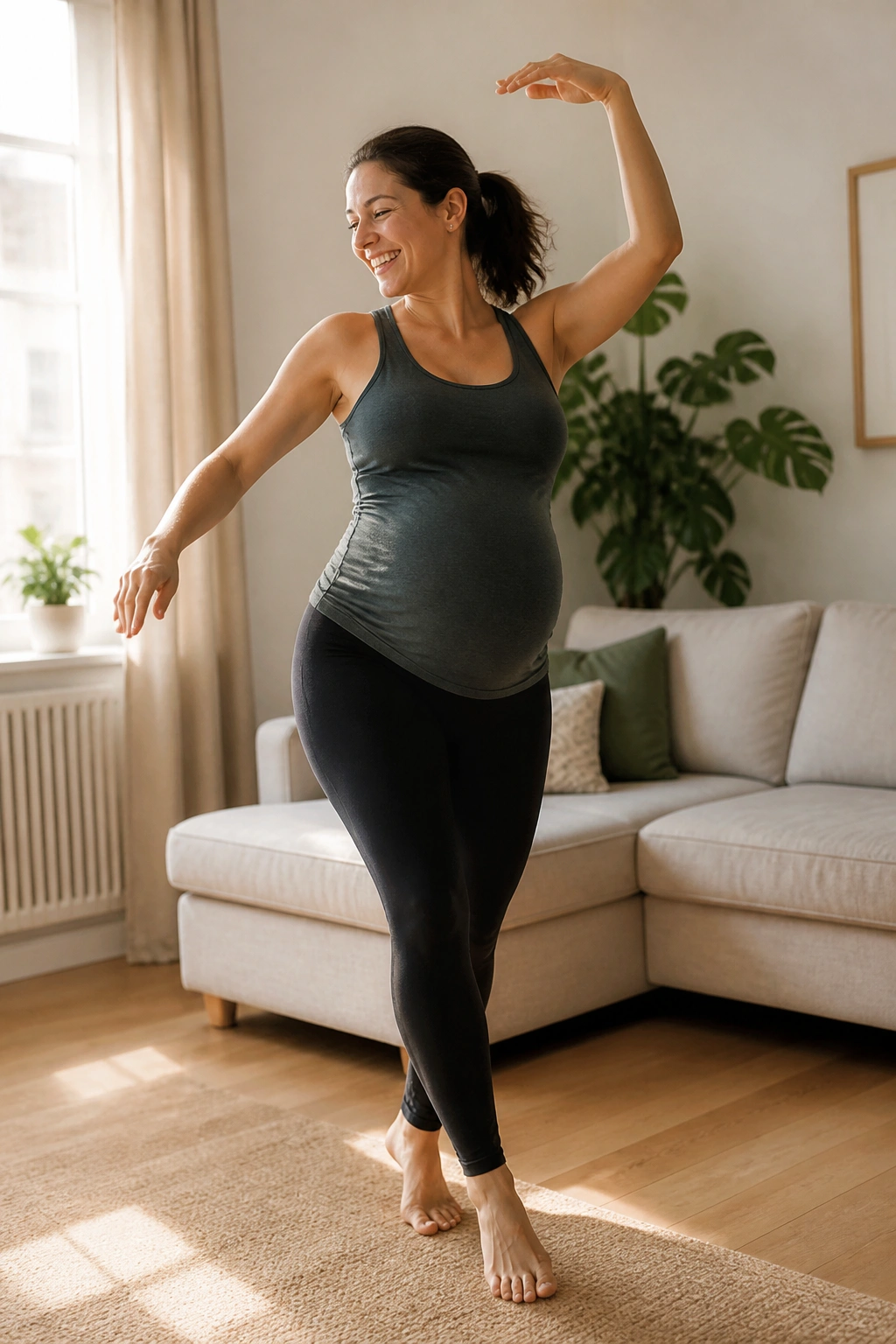
A living room, a playlist, and a little rhythm can do more than people expect.
Low-impact dance cardio is one of those workouts that looks playful but quietly raises your heart rate, works your legs, and loosens the stiffness that builds up when you sit too long. It is also easier to stick with when you are tired of treadmill faces and gym mirrors.
What the workout looks like
Use 30 to 45 seconds each of marching, step-touches, grapevines, heel digs, knee lifts, and side reaches. Keep one foot on the floor. That is the whole point. No jumps. No frantic pivots. No pretending your balance is the same as before.
The upper body matters here. Reach overhead, sweep across the body, open the chest, and let the arms help with the rhythm. If your belly gets in the way of a big turn, make the turn smaller. Nobody is scoring this.
Later in pregnancy, the best dance sessions are the ones that let you smile once or twice. That sounds soft, but it matters. A workout you do happily at 7 p.m. is worth more than a perfect plan you avoid for three days.
11. Supported Step-Ups
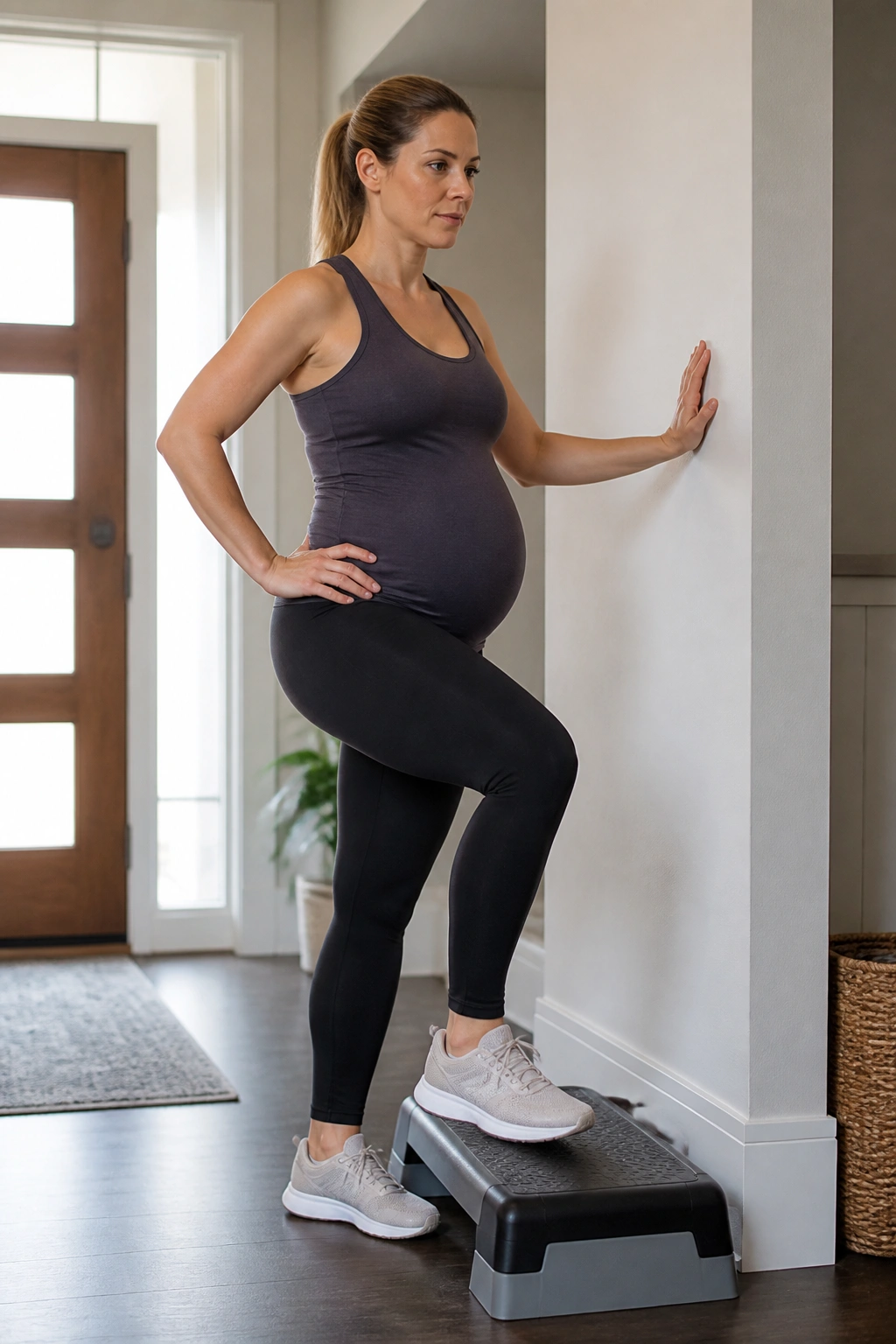
A low step can light up your glutes and quads faster than people expect. It can also expose balance problems fast, which is why support matters.
Use a step that is 4 to 6 inches high at first. Hold a wall, rail, or countertop lightly. Step up with one foot, stand tall, then lower in a controlled way. Alternate sides every rep or every set.
Keep it steady
- Do 8 to 10 reps per side.
- Keep your chest open and your ribs down.
- Drive through the heel of the working leg.
- Stop if your pelvis wobbles or your belly feels pulled forward.
Step-ups are useful because they mimic real life. Stairs. Curb steps. Getting into a higher chair. The movement trains one leg at a time, which is helpful when one hip feels weaker than the other. That happens more than people admit.
Third trimester tip: go slower than you think you need to. Fast step-ups are where form gets messy. Clean reps on a low step beat heroic reps on a tall one every time.
12. Standing Push-Pull-Carry Circuit
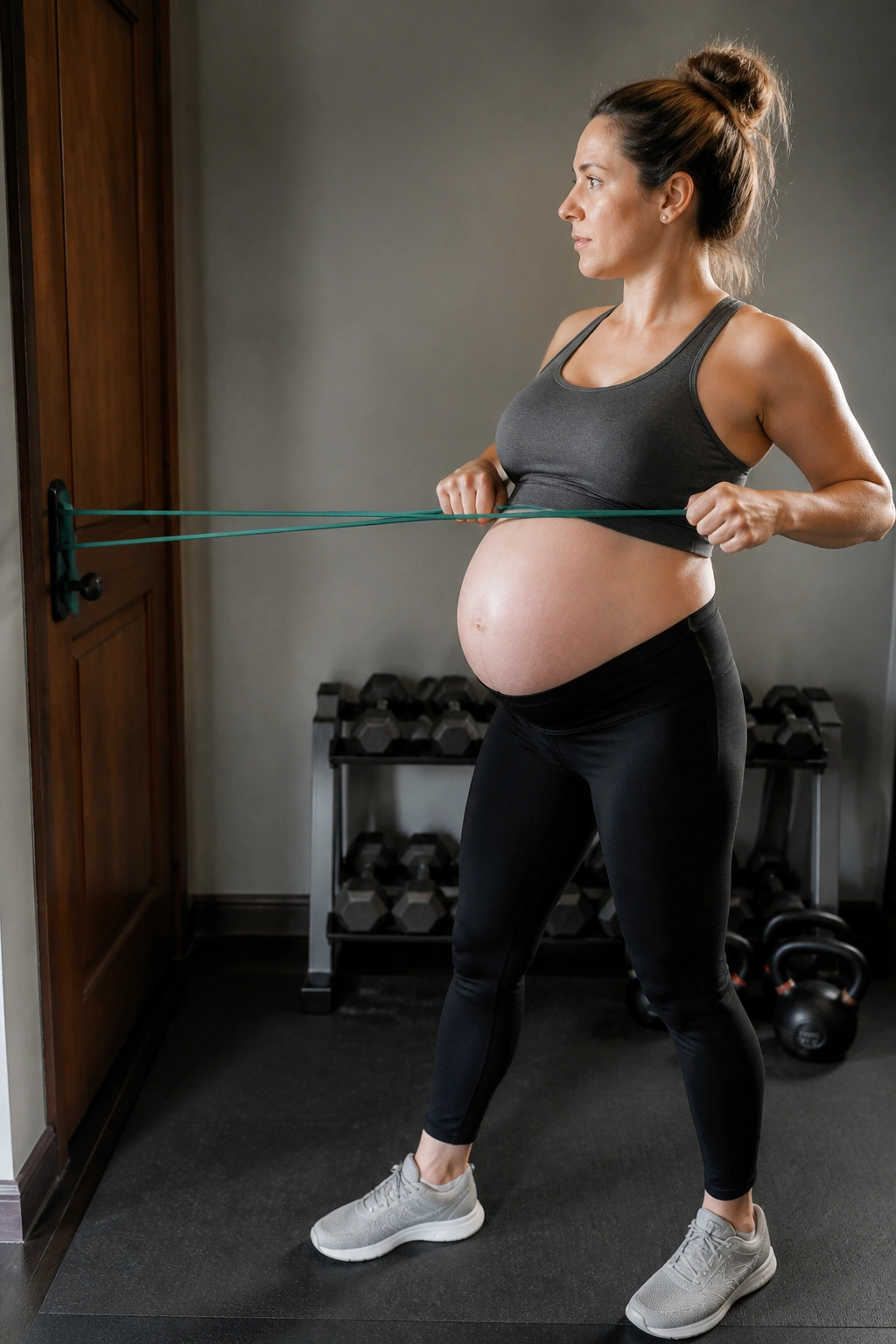
Standing strength work has a lot going for it during pregnancy. It keeps you upright, lets you breathe well, and avoids the long floor sessions that get awkward once the belly gets in the way.
A good circuit might use a wall for push-ups, a resistance band or cable for rows, and dumbbells for carries or overhead presses. If overhead pressing feels fine, keep the weight light. If it pinches your lower back, skip it and stick with rows plus carries.
You could do 3 rounds of 10 wall push-ups, 12 rows, a 30-second farmer carry, and 8 light overhead presses per side. Rest 45 to 60 seconds between rounds. Not every move has to feel hard. The point is clean work, not strain.
I love carries because they make your trunk work without crunching it. Your grip, shoulders, and posture all get involved, which is handy when you are hauling groceries, a diaper bag, or a water bottle that somehow weighs more than it should. Short version: this one trains the body you actually use.
13. Stability Ball Total-Body Session
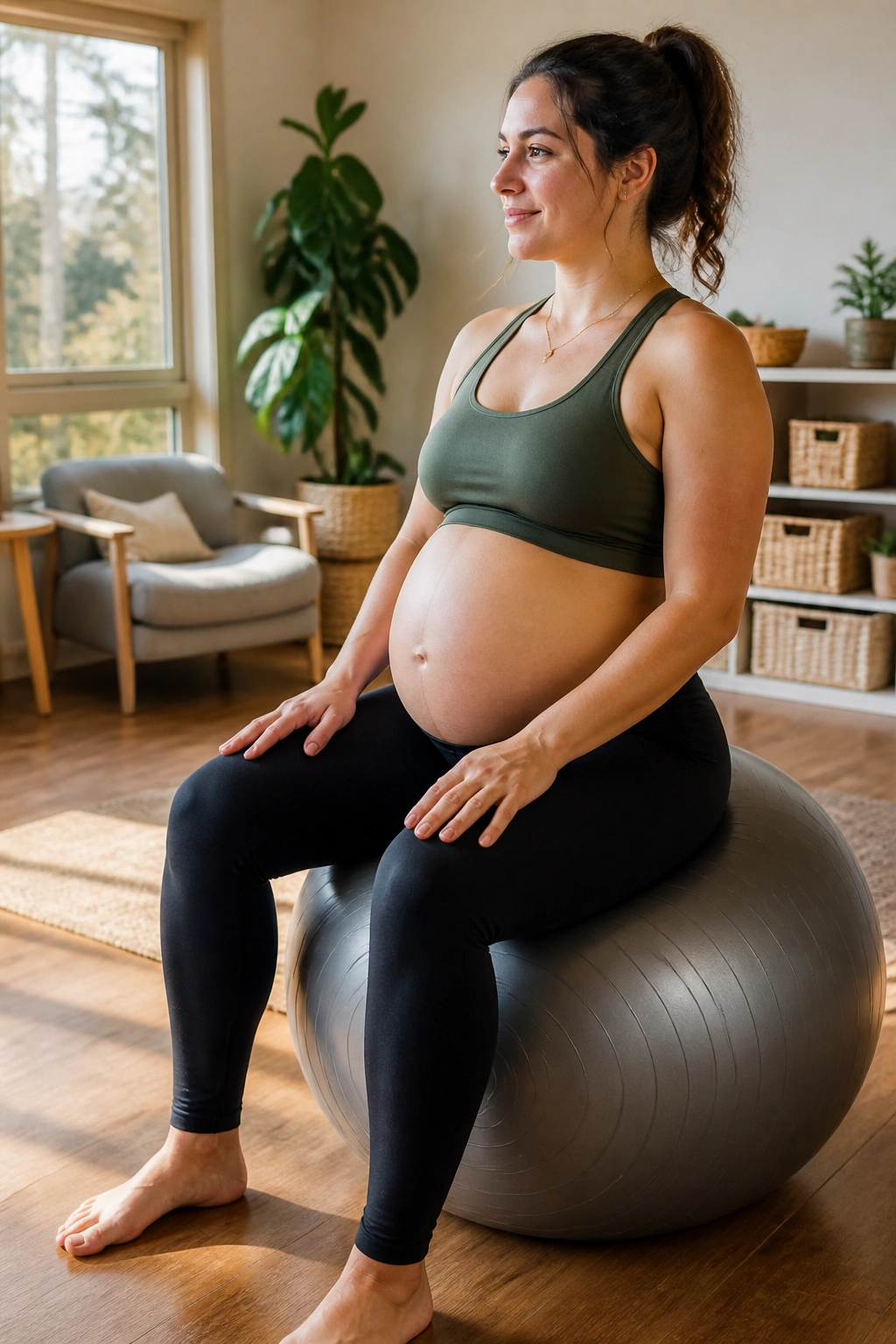
A stability ball can be a friend or a nuisance. The difference is usually size and setup.
If the ball is the right height, your knees should sit close to a right angle when you are seated. Too small, and you feel cramped. Too large, and you wobble around like a shopping cart with one bad wheel. Not ideal.
Why the ball helps
Unlike floor work, the ball keeps you upright and supported while still asking your core to stay awake. A session might include seated marches, wall squats with the ball behind your back, light seated overhead presses, and gentle pelvic tilts.
Use 8 to 12 reps per move and keep the pace slow enough that you can stop without flailing. The ball is especially nice in the second and third trimesters because it encourages more upright positions. Sitting on it between sets also gives the hips a break.
A small warning: if the surface feels slick or the room is crowded, skip the ball and use a chair. The workout should feel steady, not like a balance stunt.
14. Pilates-Inspired Standing Core Session
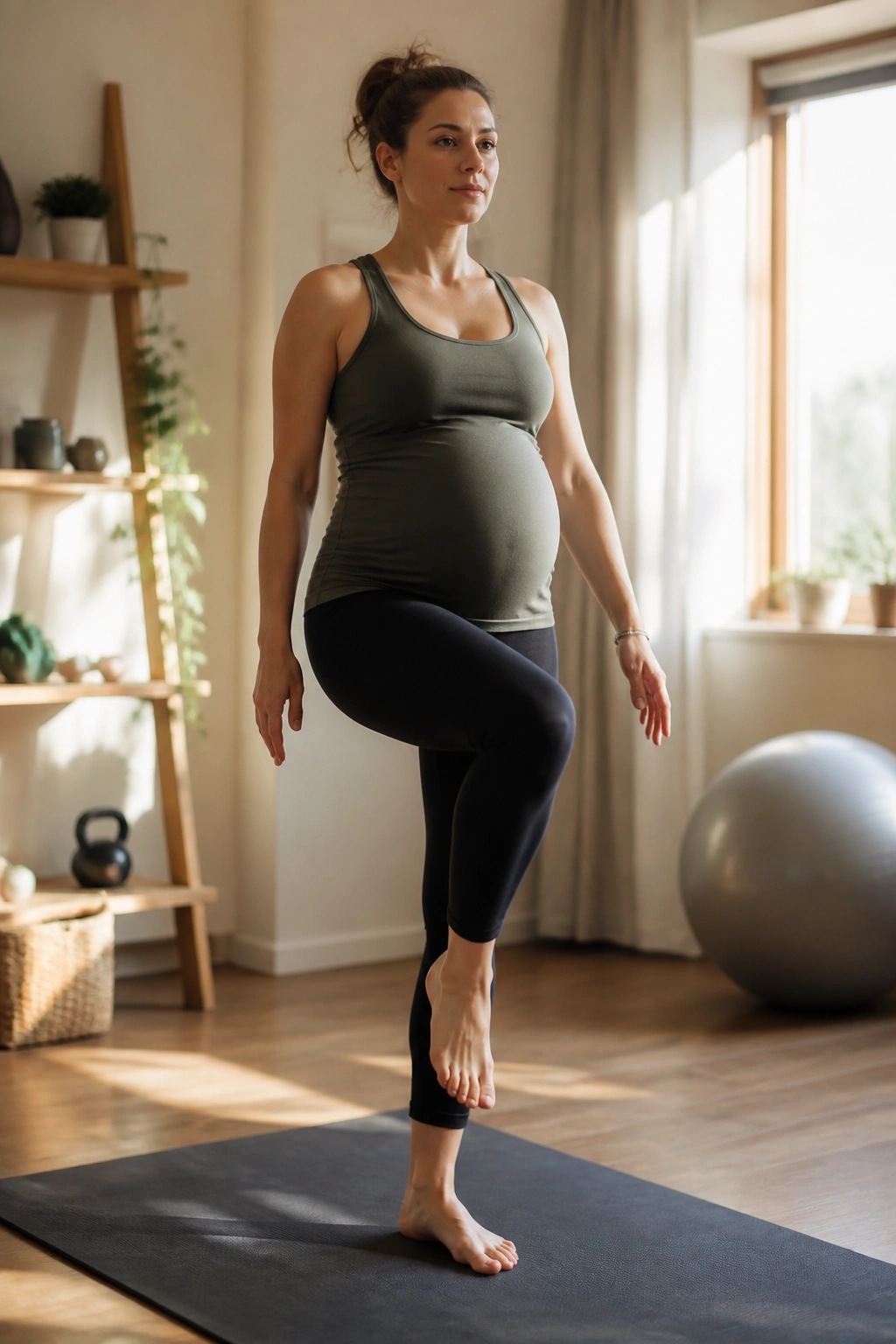
Standing Pilates is a sneaky little favorite of mine because it gives you the control work without asking you to lie flat or crank through a bunch of crunches.
Think marching, toe taps, controlled side steps, standing knee lifts, and slow arm patterns that keep your trunk from wobbling. Add a light band if you want a little more challenge. The goal is anti-rotation strength — your body resisting twist and sway while you move.
A simple flow
Try 40 seconds on, 20 seconds off for each move:
- Standing march
- Side step with band
- Knee lift with opposite arm reach
- Standing leg extension
- Wall-supported roll-down to halfway
This is a useful choice when your back wants support but you still want to train your middle. It works well across trimesters because you can make it smaller, slower, or more upright without losing the point. If a move makes your belly dome or your back grip, shorten the range and move on. No guilt. Just adjustment.
15. Supported Shadow Boxing and March Combo
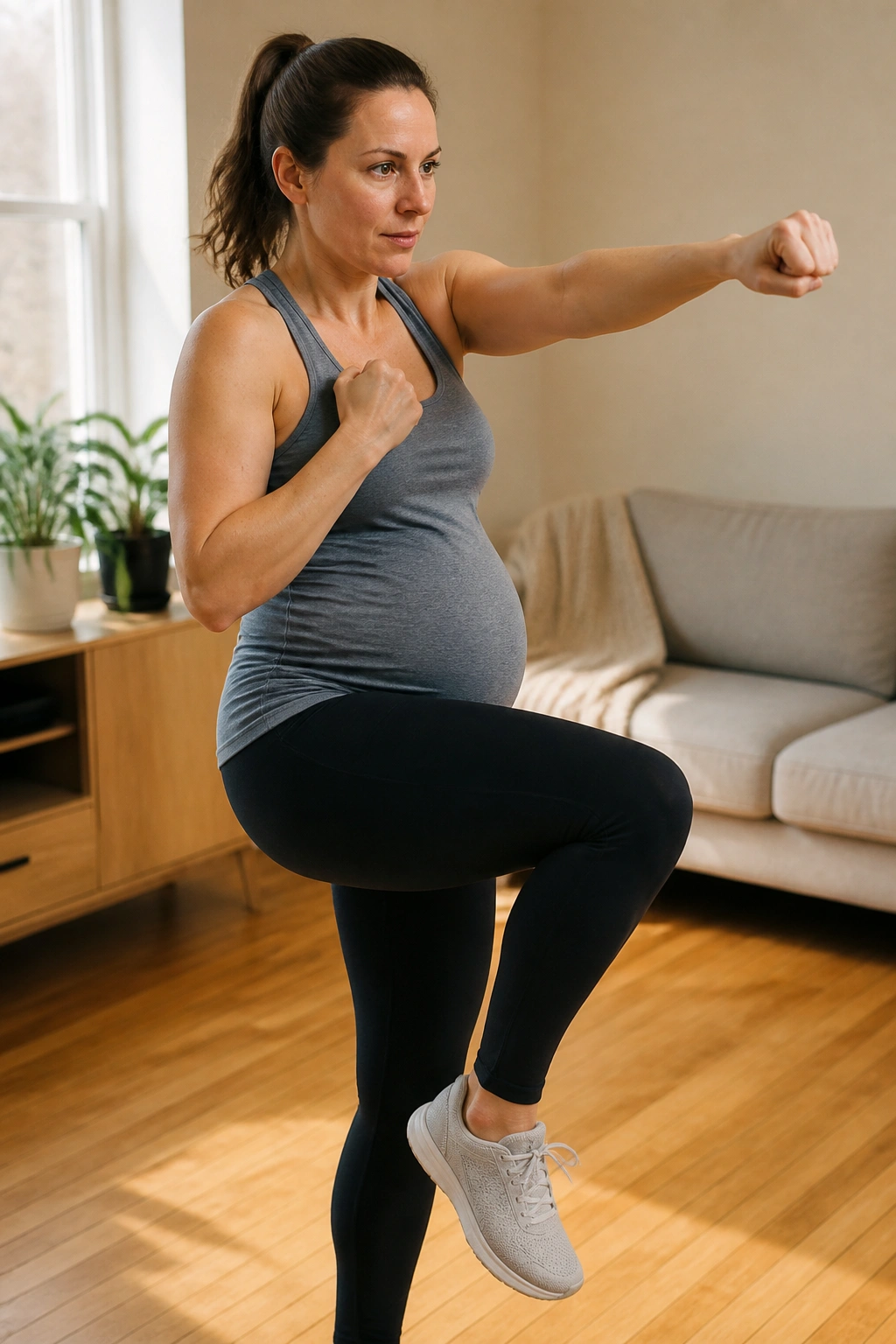
This one is sneaky good.
Shadow boxing looks like cardio, but it also wakes up your shoulders, arms, trunk, and legs at the same time. Add a march between punches and you get a full-body session that stays low impact and keeps both feet grounded enough to feel stable.
How to build it
Use 1 to 2 minutes per round. Jab, cross, hook, then march in place for 15 to 20 seconds. Repeat for 6 to 10 rounds. Keep the punches light and sharp. You are not trying to throw your spine around. You are trying to move with control.
If your shoulders feel tired, shrink the punches. If your knees feel cranky, keep the march tiny. If your breathing gets away from you, slow the sequence before you stop. That flexibility is what makes this a good pregnancy workout rather than a flashy one.
I like this choice for the third trimester because it gives you heat and rhythm without bouncing. It also works on days when you want something that feels a little less clinical. Punch, step, breathe, repeat. That’s enough.
Final Thoughts
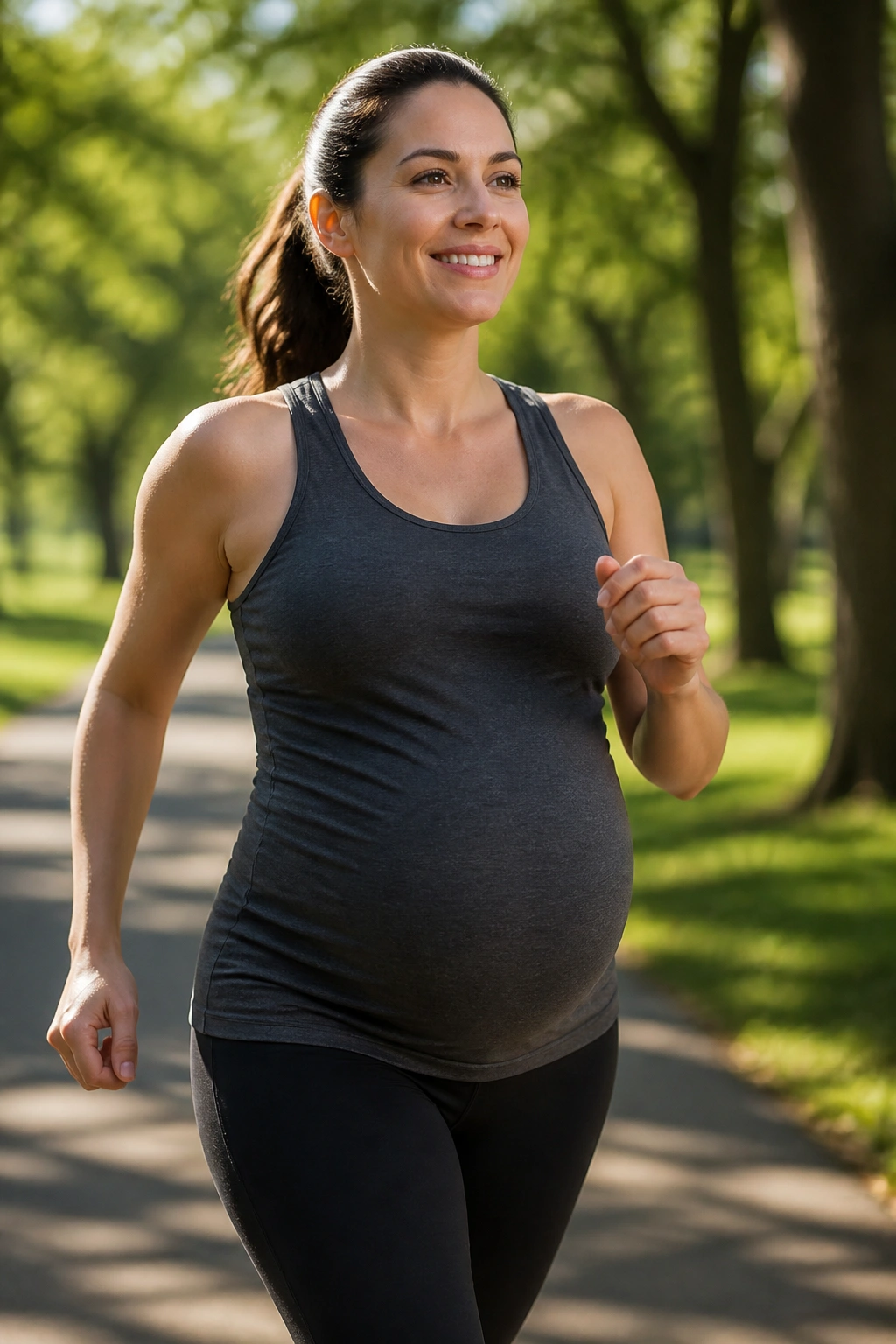
The safest pregnancy workouts usually look steadier than dramatic. Walking, biking, pool work, strength circuits, and upright core training do a lot of work without making your body feel cornered.
Pick the versions that let you breathe, keep your balance, and recover well the same day. If a movement gives you pelvic pressure, coning, dizziness, or a weird tug that keeps getting worse, change it. Smaller ranges and slower reps solve more problems than most people expect.
A good weekly mix is simple: one or two cardio days, two strength days, and one mobility or core day. Keep a fan nearby, drink water, and trust the boring stuff a little more than the flashy stuff. It usually earns its place.
