



You do not need a reformer, a studio membership, or a polished hardwood floor to make Pilates work. Some of the best Pilates workouts you can do at home are built from plain mat moves, a steady exhale, and the kind of control that makes your abs start trembling long before your heart rate spikes.
Home Pilates has one big advantage that classes sometimes do not: you can slow it down enough to feel what is going on. If your neck takes over during chest lifts, if your hip flexors grip during leg lowers, if your lower back pops up off the mat every time your legs move, that is not you “being bad at Pilates.” It usually means the exercise is a notch too hard, your setup is off by an inch, or you skipped the quieter drills that teach the movement first.
Joseph Pilates called his method Contrology, which still feels like the right word for mat work done well. The point is not to fling your arms and legs around until you feel tired. The point is to place your ribs, pelvis, and shoulders with enough care that each rep actually teaches your body something useful — better posture, stronger glutes, smoother spinal movement, steadier balance.
Pick the session that matches the body you brought to the room today.
1. Breath-and-Core Reset on the Mat
Start here.
A short breathing reset sounds almost too gentle to count as a workout, yet it fixes the thing that derails plenty of home Pilates sessions: people brace hard through the neck and upper chest instead of learning how to move from the ribs, deep abs, and pelvis. Spend 8 minutes here and the rest of your workout usually feels cleaner.
Try this sequence
- Lie on your back with knees bent and feet hip-width apart. Take 5 slow breaths, inhaling into the sides and back of your rib cage.
- Add 8 pelvic tilts, rolling the pelvis toward you on the exhale and returning to neutral on the inhale.
- Do 6 pelvic clocks each direction, imagining the pelvis as a clock face shifting from 12 to 6 and side to side.
- Lift into 10 mini bridges, peeling the spine up one vertebra at a time.
- Finish with 8 bent-knee marches per side, keeping the pelvis quiet.
What you should feel
Your lower belly should firm up on the exhale, but your throat and jaw should stay soft. If your feet grip the mat or your ribs flare upward, shorten the range. The bridge only needs to go as high as your hamstrings and glutes can manage without cramping.
Best cue: exhale like you are fogging a mirror, then feel the front ribs settle.
2. Beginner Core Stability Mat Flow
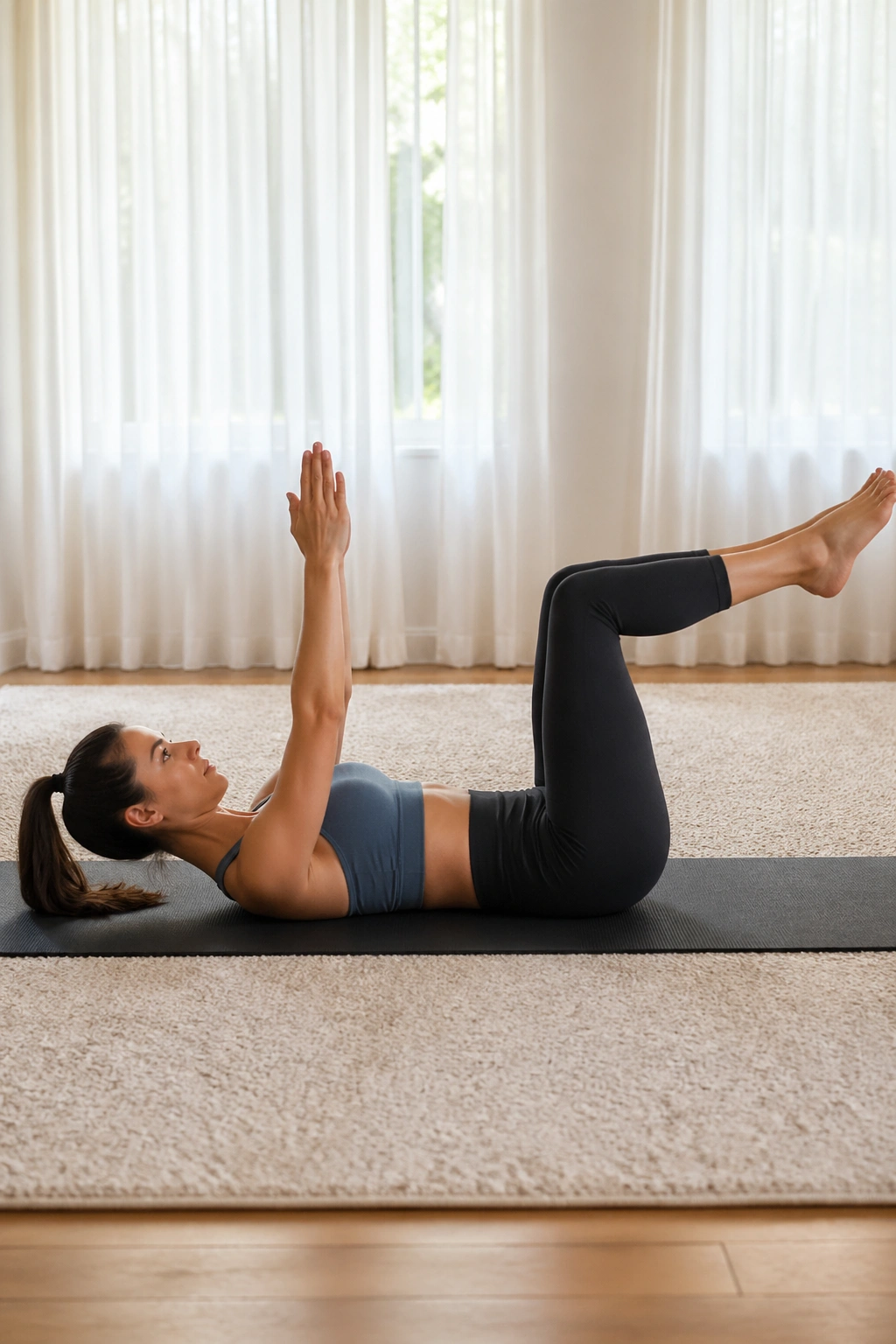
Fewer moves, slower reps, better results. That is my favorite way to start a beginner with mat Pilates, because chasing a big exercise list usually leads straight to sloppy leg swings and a sore neck.
Try a 12-minute flow built around four exercises: dead bug arms, toe taps, single-leg stretch, and forearm plank on the knees. Do 8 reps per side on the first three moves, then hold the plank for 20 seconds, rest, and repeat the full circuit twice. Keep your low back heavy on the mat during the leg work. If that contact disappears, bring the knees higher and make the movement smaller.
What makes this session work is the order. Dead bug arms teach rib control without the distraction of moving legs. Toe taps add challenge but keep the knees bent, which is kinder on the back. Single-leg stretch introduces a longer lever, though you still get to hug one knee in. By the time you kneel for the plank, your trunk is awake.
Do not rush the transitions. The setup is half the rep.
One more thing: if your shoulders creep toward your ears in the plank, push the floor away and think wide collarbones, not locked elbows.
3. Standing Wall Posture Tune-Up
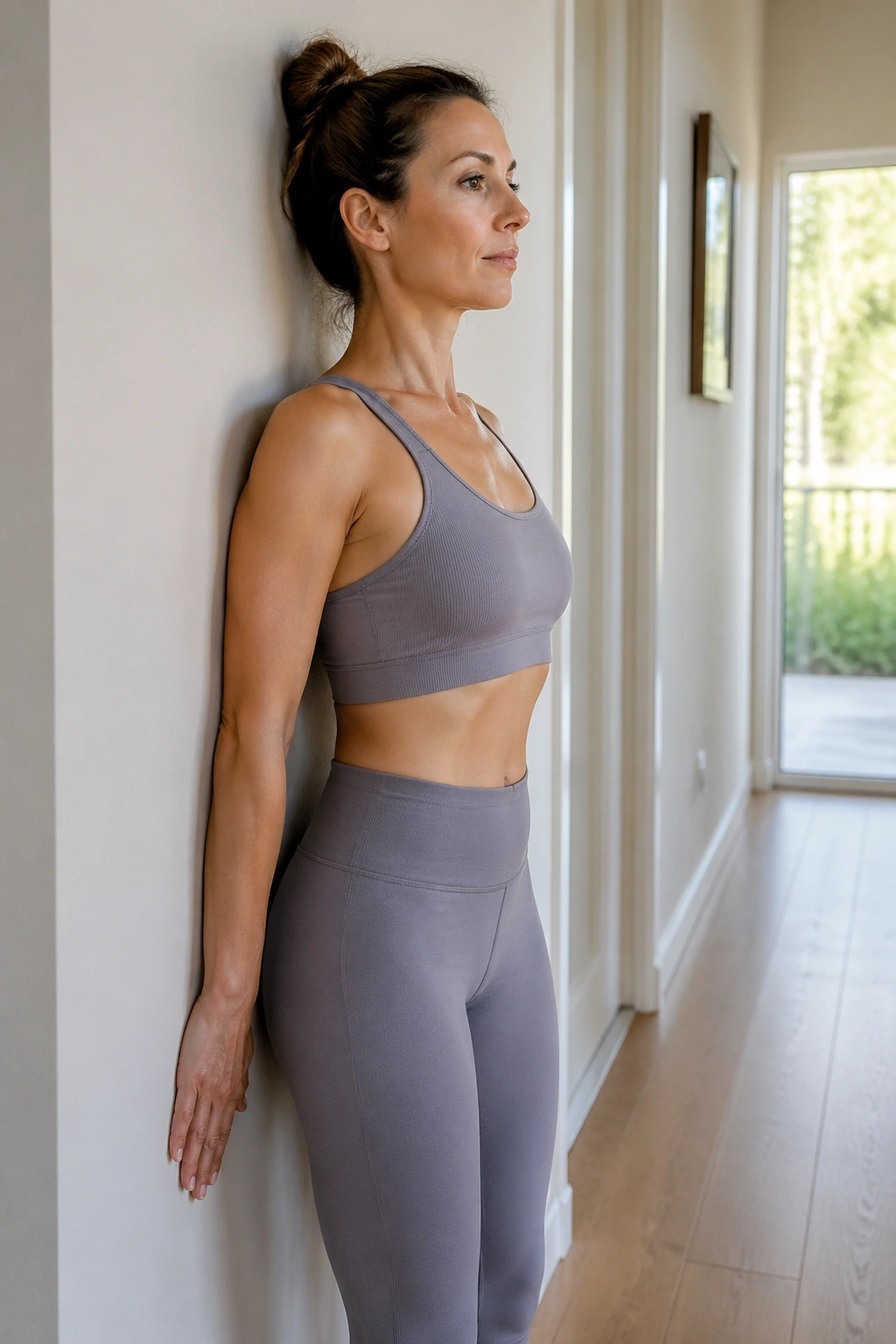
Need a Pilates workout you can do in work clothes, beside a wall, without getting on the floor? This one earns its keep.
Wall work gives instant feedback. If the back of your rib cage, pelvis, and head cannot find the wall comfortably, you will notice fast — and that awareness carries over into the rest of your day, especially if you spend hours leaning toward a laptop.
Set it up
Stand with your back against a wall, feet about 6 to 10 inches away from it, knees soft. Let the back of your pelvis and rib cage rest on the wall. Your lower back will keep a small natural curve; do not mash it flat.
Then move through this series:
- 10 wall roll-downs, peeling away from the wall and stacking back up
- 8 wall squats with the arms reaching forward
- 10 standing arm slides into a low “V”
- 8 single-leg marches per side
- 30-second wall sit with calm breathing
Most people notice one sneaky pattern here: the chin shoots forward the second the arms lift. Pull the head back a touch, like you are making room at the base of the skull. It feels odd. It is worth it.
A wall will not build posture on its own, though it does expose the habits that keep dragging posture down.
4. Glute Bridge and Hamstring Burner
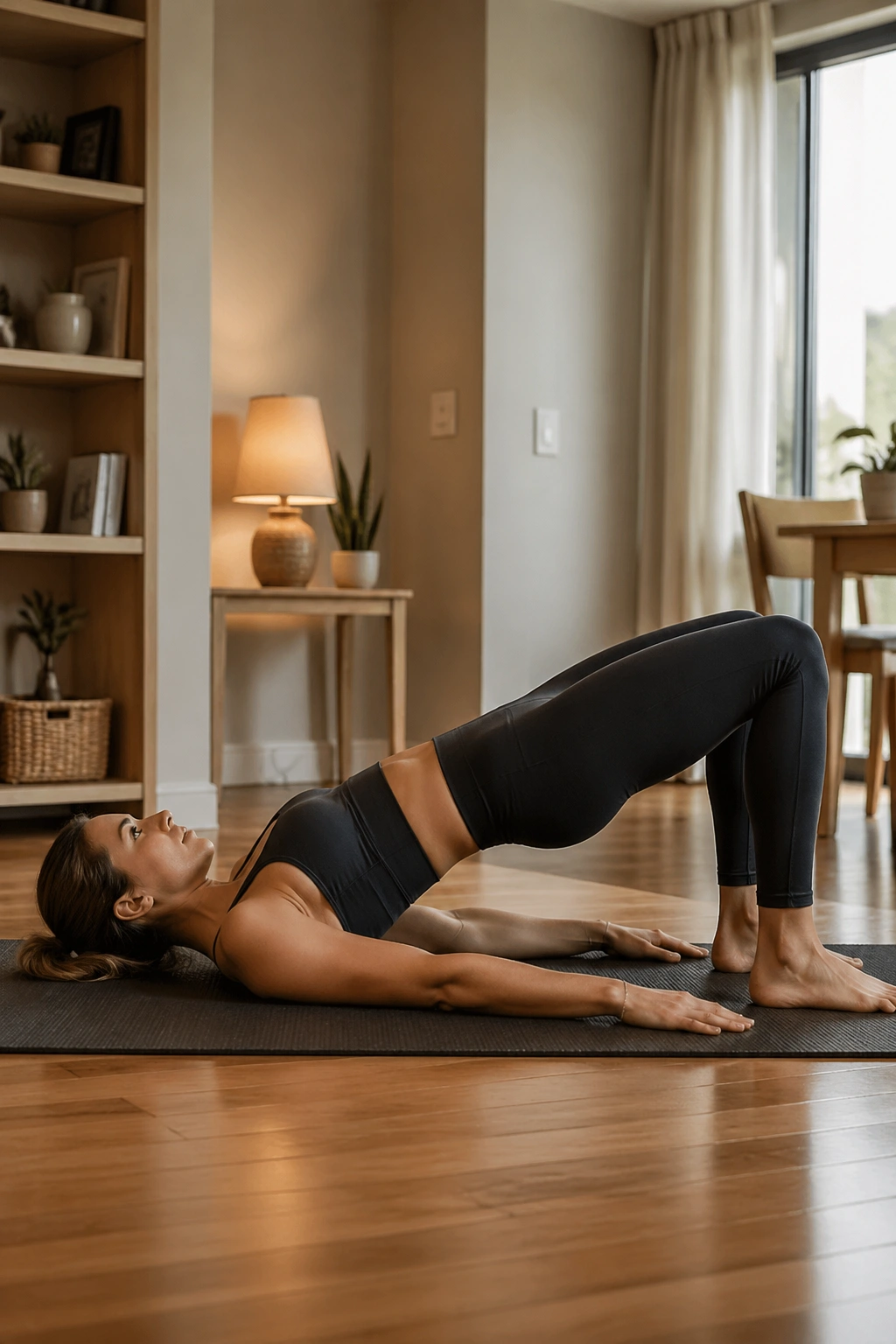
If your hamstrings cramp the second you bridge, your glutes have probably been off duty for a while.
That is common. Long stretches of sitting make the backside lazy, and then every lower-body workout turns into a quad-and-hamstring event. A focused Pilates bridge series can wake the right muscles up without needing dumbbells or impact.
Try this as a 10-minute lower-body block:
- 12 articulated bridges — roll up and down slowly
- 10 bridge pulses at the top, small range
- 8 bridge marches per side
- 10 heel digs with the toes lifted
- 20-second bridge hold squeezing a pillow or folded towel between the knees
- Rest 30 seconds, then do the full round again
Press through the full foot, not the toes. At the top, your ribs should stay knitted down rather than popping open. If your hamstrings threaten to seize, bring your heels a little closer to your seat and lower the height of the bridge.
The move looks harmless — until rep 9. Then the whole backside starts talking.
Quiet rule: stop one rep before your lower back starts doing the lifting.
5. Dead Bug and Toe-Tap Deep Core Session
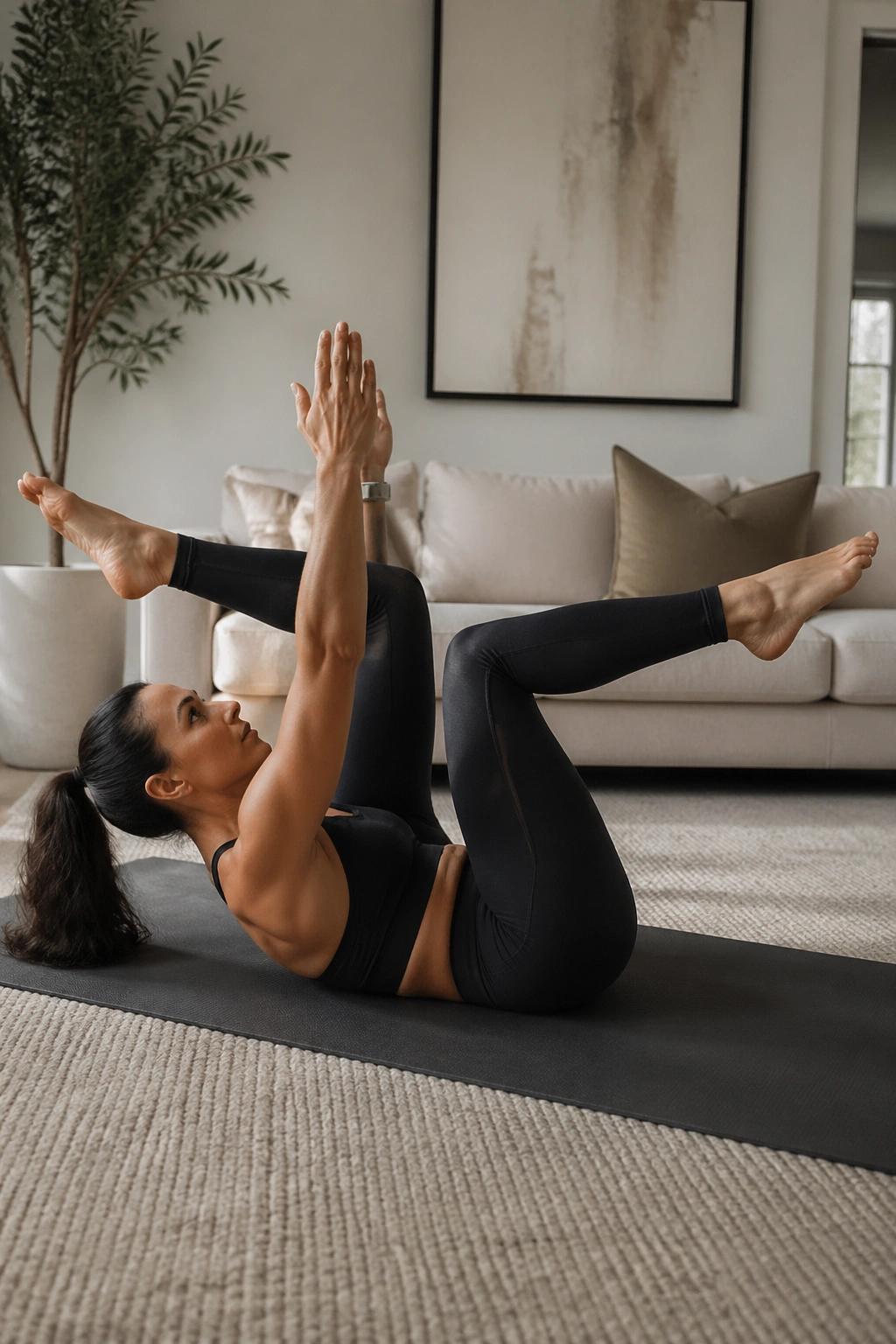
Some home Pilates sessions leave you sweaty but oddly disconnected, like you moved a lot without learning much. Deep-core work fixes that. It is not flashy, and I would argue that is exactly why it matters.
Lie on your back with the knees lifted to tabletop, shins parallel to the floor. Start with arms reaching to the ceiling. On the exhale, lower one heel toward the floor while the opposite arm reaches overhead, then return to center. Alternate for 8 slow reps per side. Your lower ribs should stay heavy, and the front of the pelvis should not tip forward as the leg lowers. If it does, shorten the reach.
After that, keep both arms reaching up and do 10 toe taps per side. Move on to heel slides, one leg at a time, for 8 reps each. Finish with a 30-second tabletop hold, arms pressing gently into the thighs to create more abdominal connection.
You will not see dramatic movement. Good. Deep core training often looks almost boring from the outside. Inside, the lower abs are working hard to control pressure and keep the trunk stable while the limbs move around them.
Sharp back pinching means regress. Control first.
6. Side-Lying Hip Stability Series
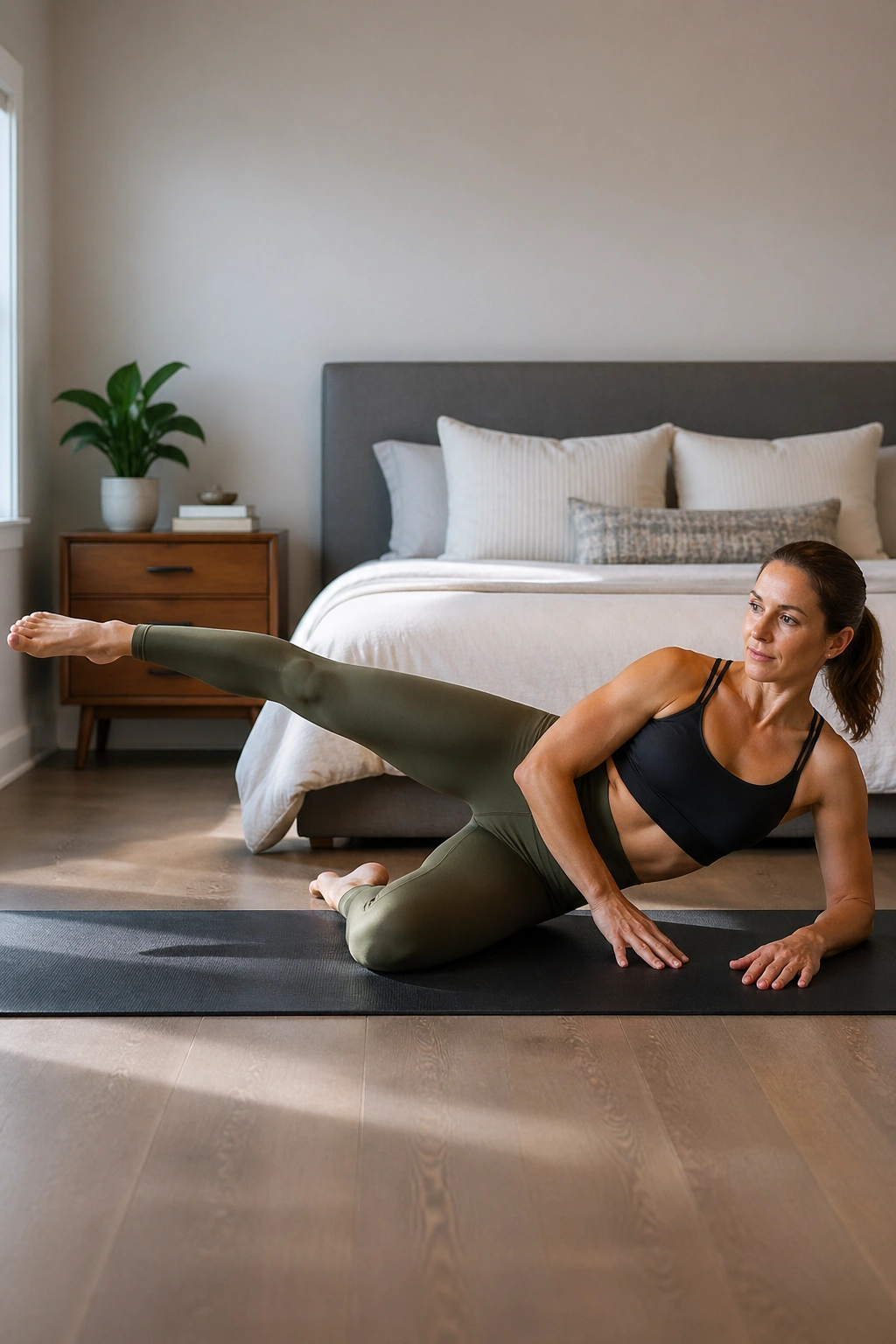
Unlike squat-heavy leg workouts, a side-lying Pilates series puts the spotlight on the outer hip — glute medius territory, the muscle group that helps steady the pelvis when you walk, run, climb stairs, or stand on one leg to put on pants without wobbling into a wall.
Set up on your side with your lower knee bent for balance and your top leg long. Lift the top leg to hip height and do 12 straight lifts, 10 small circles each direction, then 12 front-to-back swings with the torso staying still. Flip into a clamshell position and add 15 clams per side, squeezing at the top for one beat.
Done well, this series does more than “tone the thighs.” It teaches pelvic control. If the waist collapses into the floor or the rib cage rocks back and forth, you have lost the point of the move. A small folded towel under the waist can help you notice that gap and keep the side body active.
Who benefits most? Runners, anyone with knees that cave inward during squats, and people whose hips feel unstable during standing balance work.
No drama here. Just good, honest burn.
7. Seated Spinal Mobility Flow
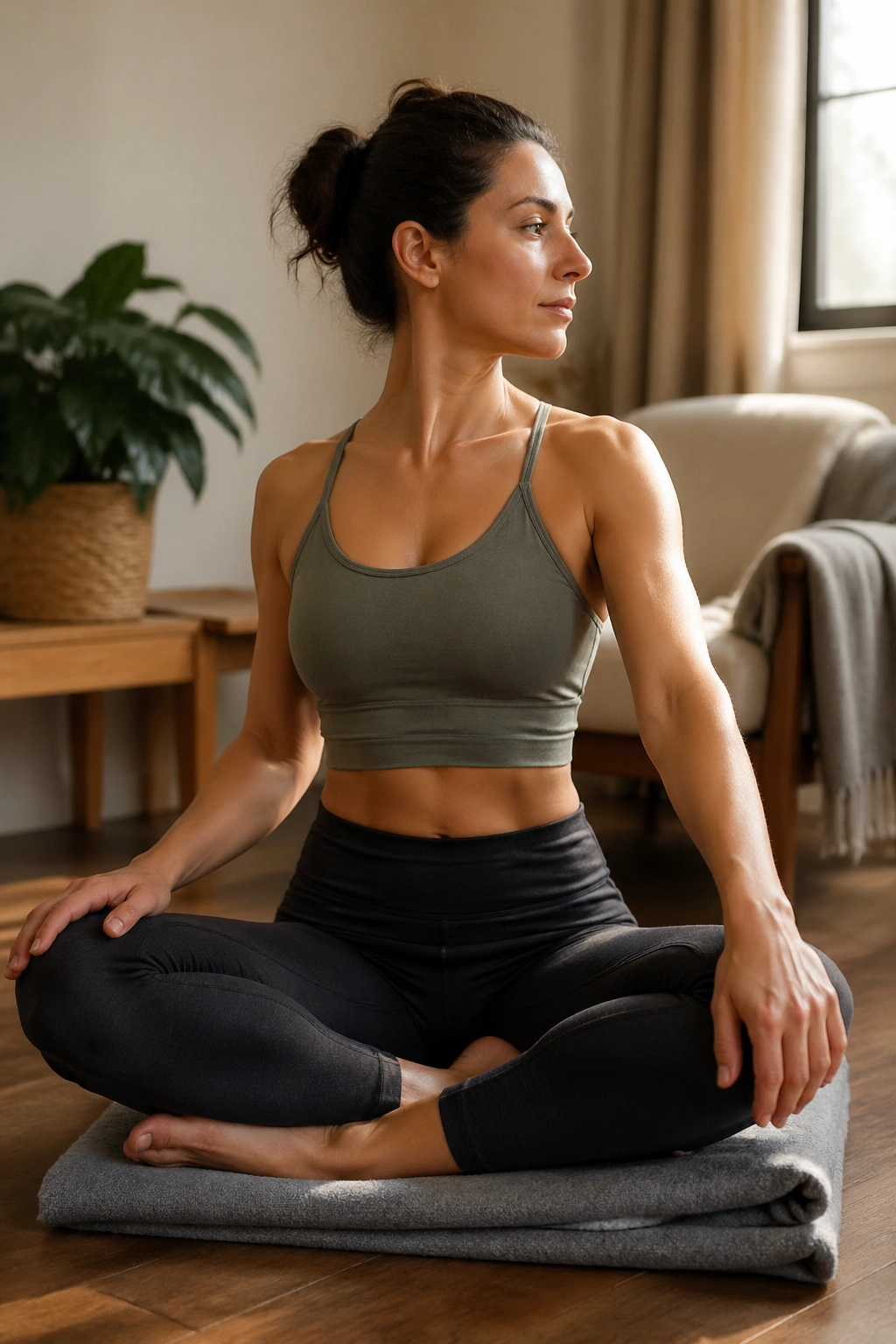
A stiff mid-back can make every Pilates move feel heavier. Roll-ups get jerky. Rotation shrinks. Even breathing feels shallow because the ribs do not want to move.
That is why I like a seated mobility flow on days when the body feels welded together.
Run it in this order
- Sit cross-legged or on a folded blanket and take 5 wide rib breaths
- Do 8 seated pelvic rocks, tipping the pelvis forward and back
- Add 6 seated cat-cows
- Rotate gently right and left for 8 twists per side
- Reach into 6 side bends per side
- Finish with 6 spine stretch forwards, exhaling as you round over the legs
Sit on a cushion if your hips are tight. The extra height changes everything. Once the pelvis can tip forward, the spine usually has more room to articulate instead of collapsing into one stubborn spot at the lower back.
The goal is not a giant stretch. Think segment by segment. Each rep should feel like you are giving the spine a little more space between the vertebrae, especially around the bra line where many people get rigid.
This makes a strong warm-up before abs, and it also works as a stand-alone 7-minute reset when you have been parked in a chair too long.
8. Neck-Friendly Pilates Abs Routine
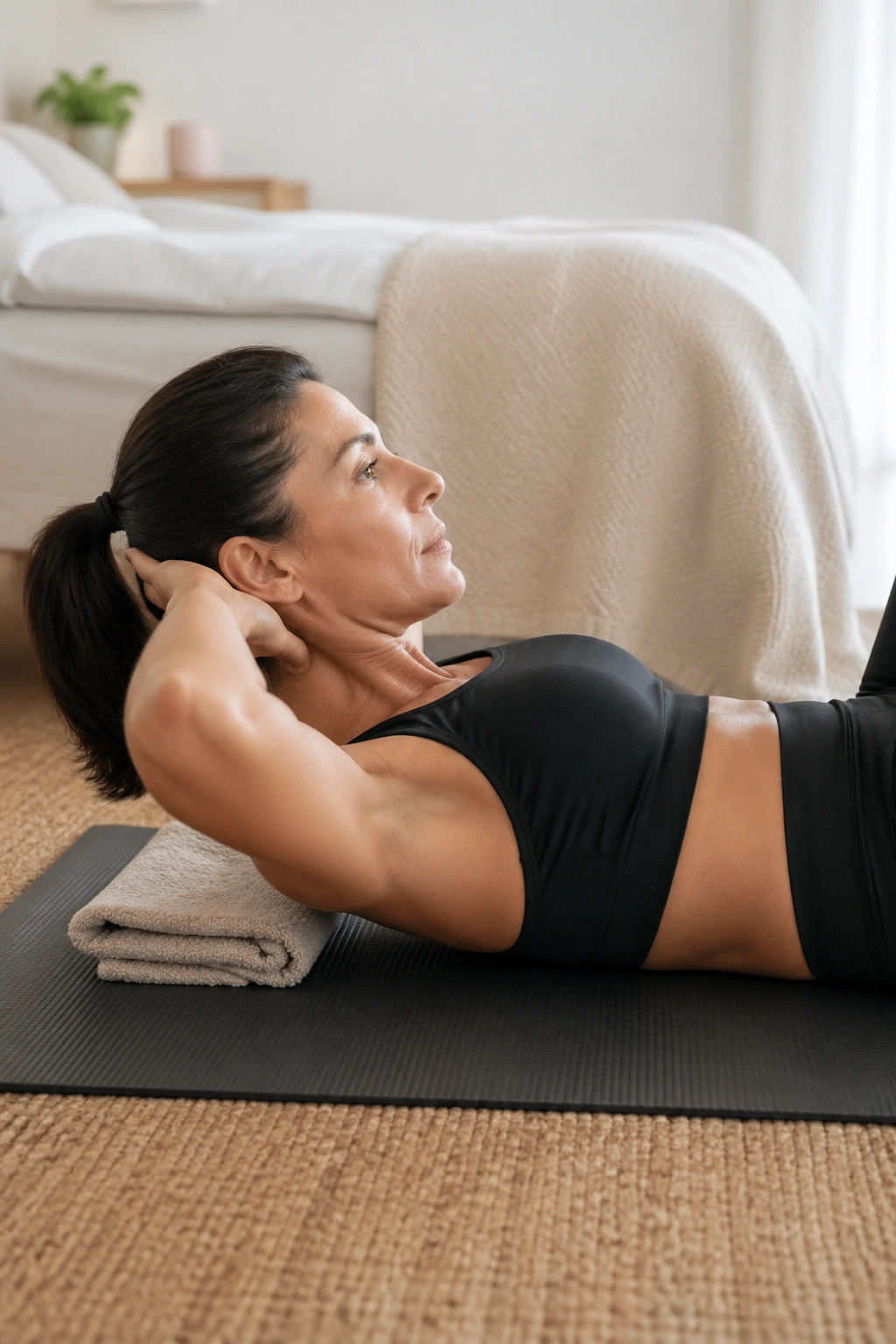
Your neck is not supposed to be the star of an ab workout. If it burns first, the setup needs work.
Start on your back with a small folded towel under the base of the skull. Hands support the head lightly; elbows stay in your side vision rather than yanked wide. Lift into a chest curl on the exhale and hold for 5 breaths. Lower. Repeat 3 times. Then add single-leg toe taps for 8 reps per side while staying in the curl, followed by criss-cross prep — rotate the ribs, not the elbow — for 6 reps per side.
A lot of people pull the chin to the chest and flatten the throat. Skip that. Picture the breastbone gliding toward the pelvis while the back of the neck stays long. Your gaze should land toward the thighs, not the ceiling and not your belly button jammed into your face.
The towel is not cheating. It gives feedback and slightly reduces the weight your neck has to manage. If you still feel strain, keep one foot down or lower your head between reps.
Some days the smart choice is leaving the head on the mat and training the abs through leg work alone. That still counts.
9. Wall Pilates Leg Sculptor
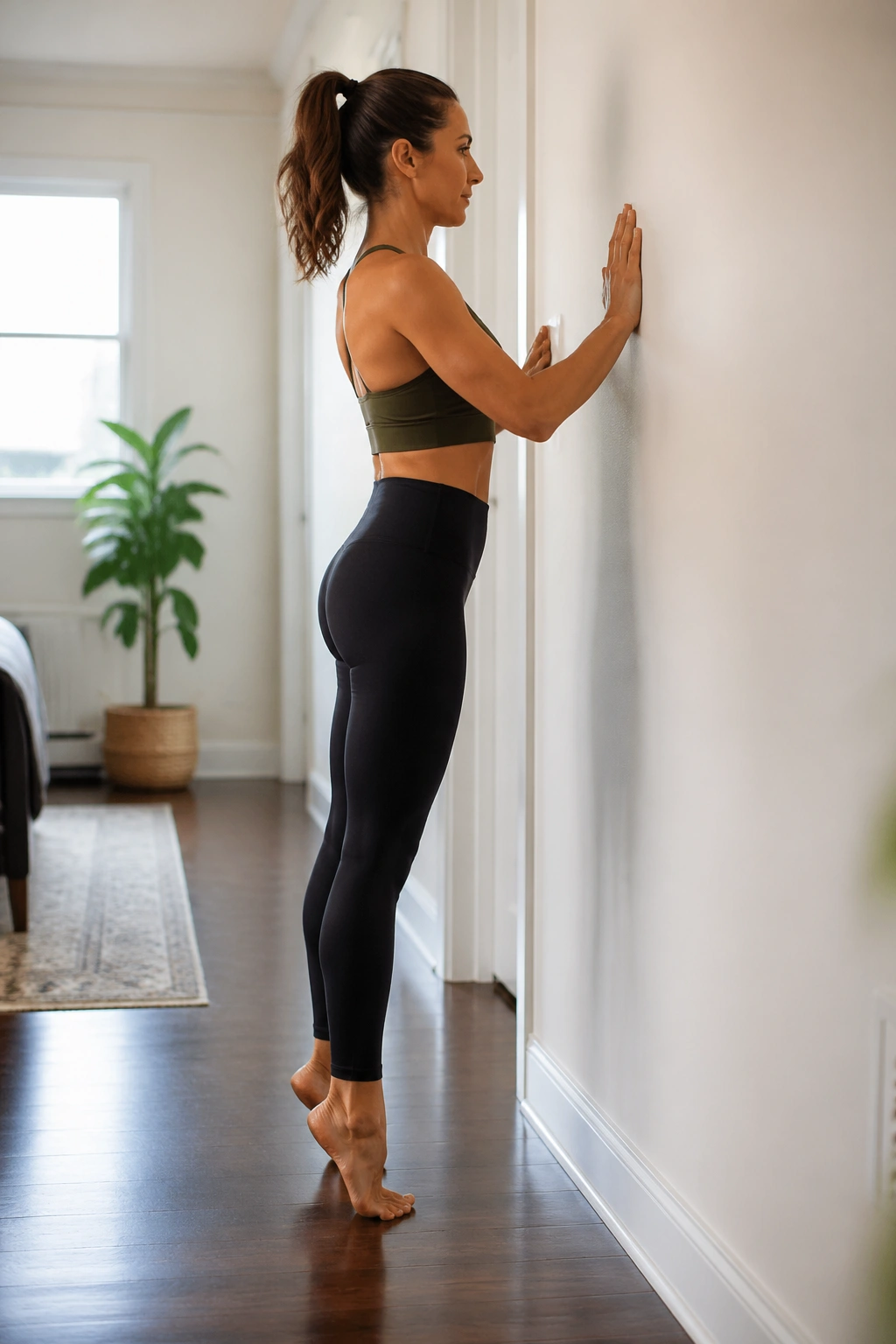
Wall Pilates gets oversold online. I will say that upfront. A wall is not magic.
Still, it is a useful teacher because it limits momentum and tells you when your pelvis has wandered off. That makes it handy for leg work at home, especially if floor space is tight.
15-minute wall leg sequence
- Stand facing the wall, fingertips resting on it, and do 15 slow calf raises
- Step back and perform 12 mini wall squats
- Turn sideways and do 15 standing leg lifts to the side per leg
- Face the wall again for 12 standing leg extensions behind you per side
- Lean your back into the wall and hold a 30-second wall sit
- Finish with 10 single-leg balance taps per leg
The main trap is arching the lower back during the rear-leg lifts. Keep the front ribs quiet and think long leg, not high leg. On the side lifts, your standing hip will want to drift out. Pull up through the standing waist and keep the movement clean.
This one builds a sneaky amount of fatigue with almost no noise, which apartment dwellers tend to appreciate.
10. Small-Space Morning Stretch Flow
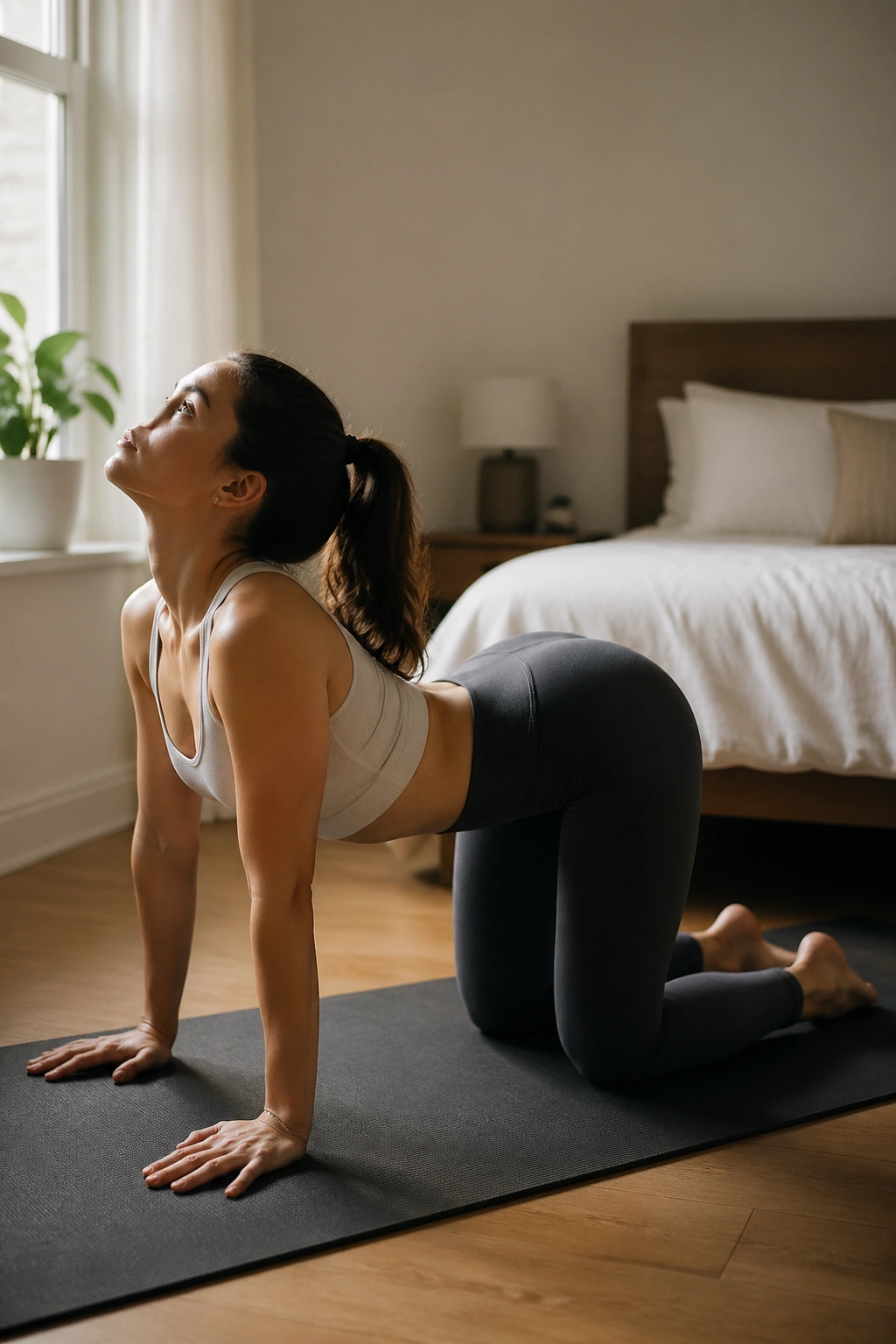
Cramped room? Half-awake body? You can still get a useful Pilates session done in the strip of floor next to the bed.
A good morning flow should do three things in under 10 minutes: open the spine, switch on the core, and wake up the hips without demanding athletic ambition before coffee. Roll your mat out — or do it on a carpet if that is what you have — and move through cat-cow for 6 reps, thread-the-needle for 5 reps per side, child’s pose with side reach for 3 breaths each side, a low kneeling lunge for 30 seconds per side, then finish with 8 slow bridges and 8 dead bug reaches per side.
Notice the order. Mobility first, then gentle strength. If you start with hard abs while the back and hips still feel stiff, the body often grabs with the hip flexors and skips the deep ab work you wanted.
Do not chase a stretch sensation. Breathe into the position and let range come to you. Sharp pulling at the front of the hip means back out a little and tuck the pelvis more.
Ten minutes can change the whole morning.
11. Upper-Back and Arm Endurance Session
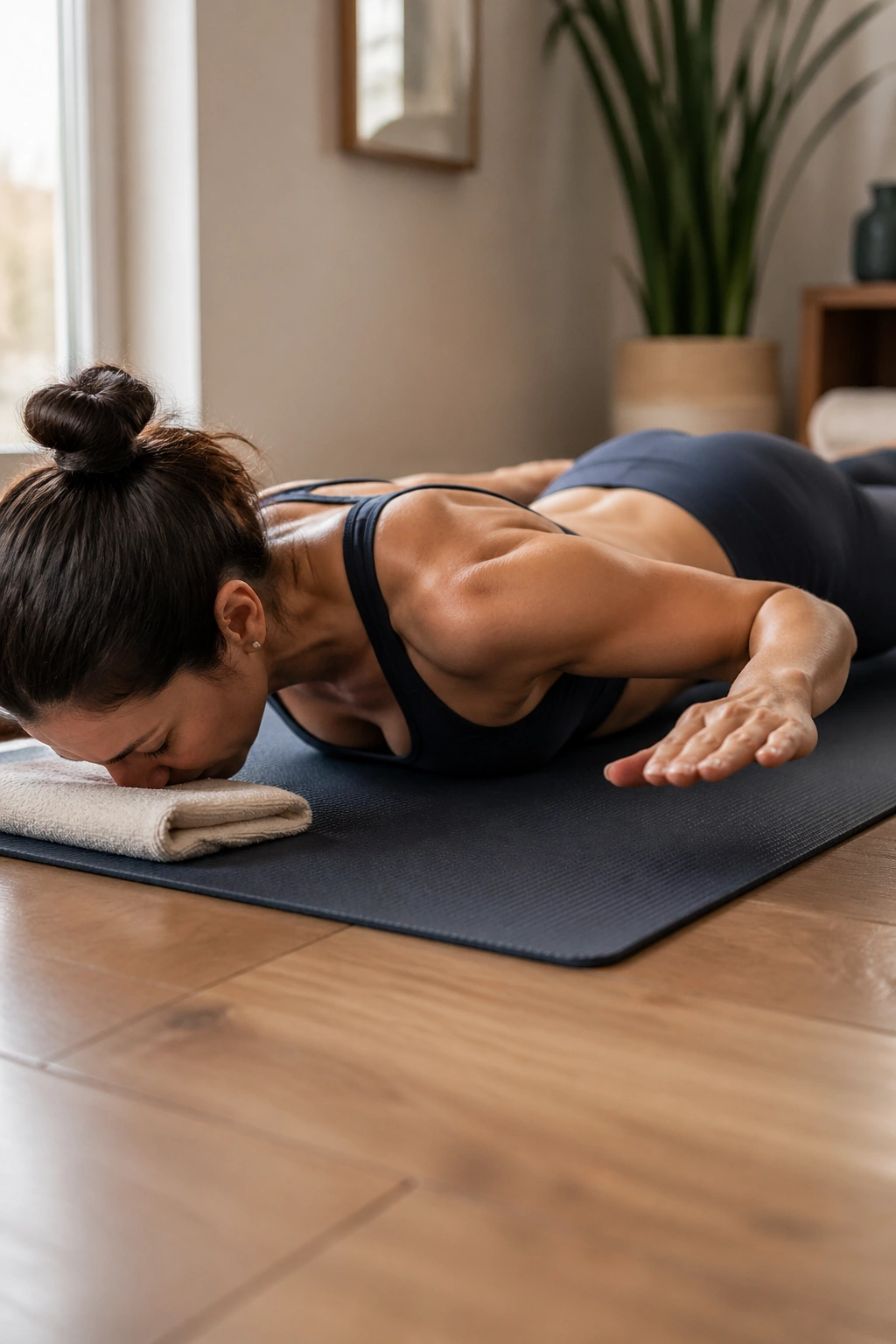
Pilates has a reputation for abs, though some of the most useful home sessions target the upper back and shoulder girdle. If your posture collapses by noon, this is the stuff that earns your attention.
Lie face down with a folded towel under the forehead. Start with 8 dart lifts, lifting the chest a few inches while the arms hover by your sides. Then move to 10 T lifts, arms out wide with thumbs up, followed by 8 W pulls, drawing the elbows toward the ribs. Finish on hands and knees with 10 scapular push-ups and a 20-second bear hover if your wrists and knees tolerate it.
Small range matters here. Cranking into a big backbend turns the exercise into a lower-back move. Instead, think long through the crown of the head and broad across the collarbones. Your shoulder blades should slide down and inward without pinching like a nutcracker.
This session pairs well with desk-heavy days, rowing days, and any phase where push-ups feel stronger than they look because your chest is doing all the work.
The burn between the shoulder blades arrives fast. Let it.
12. Chair-Assisted Beginner Pilates Routine
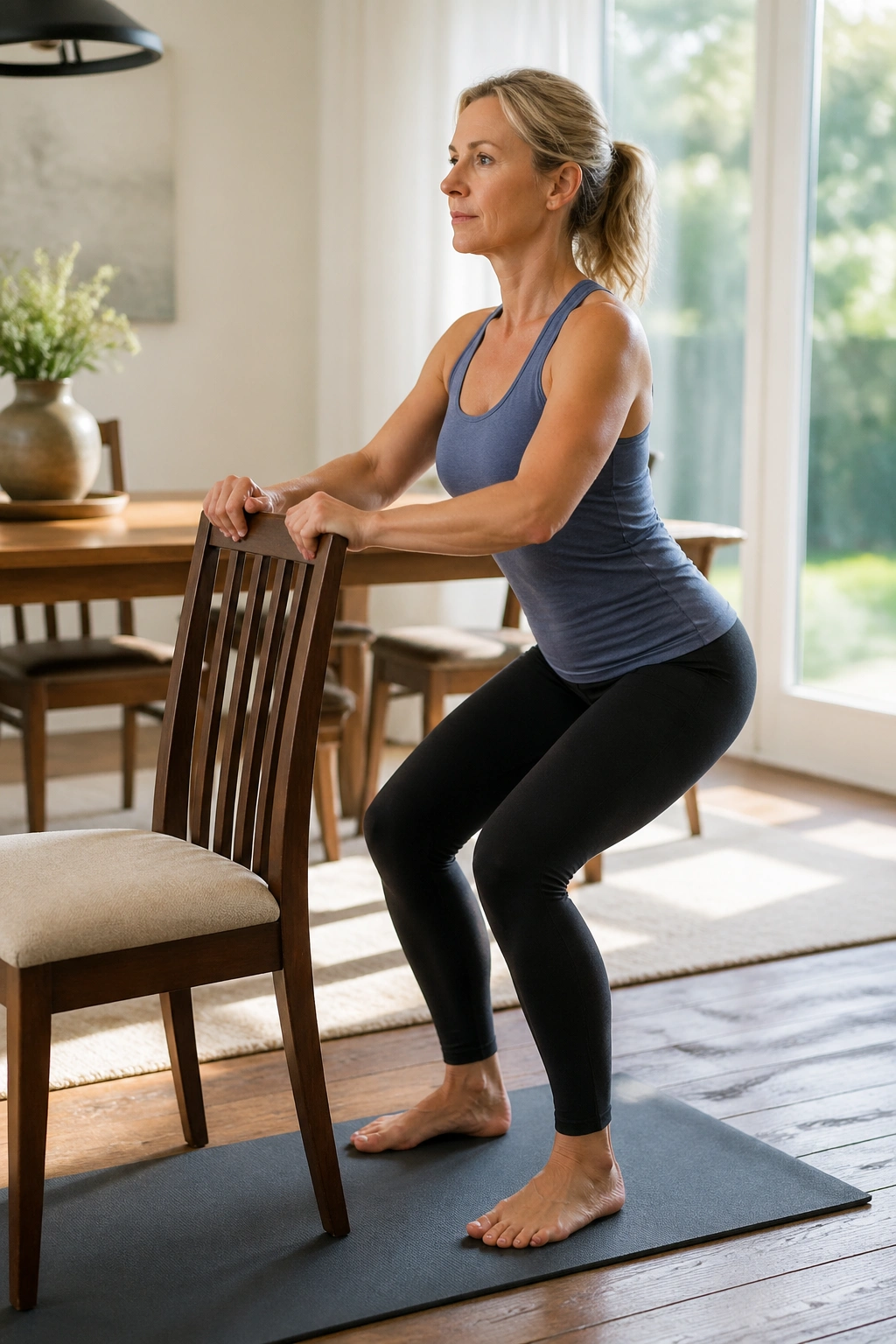
Unlike mat sessions that demand you get down to the floor and back up again, a chair-based Pilates routine lowers the barrier enough that you may actually do it. That matters more than people admit.
Use a sturdy dining chair, not a rolling office chair. Sit tall near the front edge. Start with 8 seated pelvic tilts, then 8 seated knee lifts per side without leaning back. Stand up for 10 sit-to-stands, lowering slowly for a count of 3. Hold the chair back and add 12 standing leg slides to the side per leg, then 10 calf raises and a 20-second single-leg balance hold each side.
The chair gives support, though do not drape yourself over it. Keep the fingertips light when possible. You want the legs and trunk doing the work, not your grip.
This routine suits beginners, older adults, anyone returning after illness, and days when energy is low but you still want structure. It is also a smart first step for people who feel dizzy on the floor or have trouble with transitions.
A chair is humble equipment. It works.
13. Classic Mat Sweat Circuit
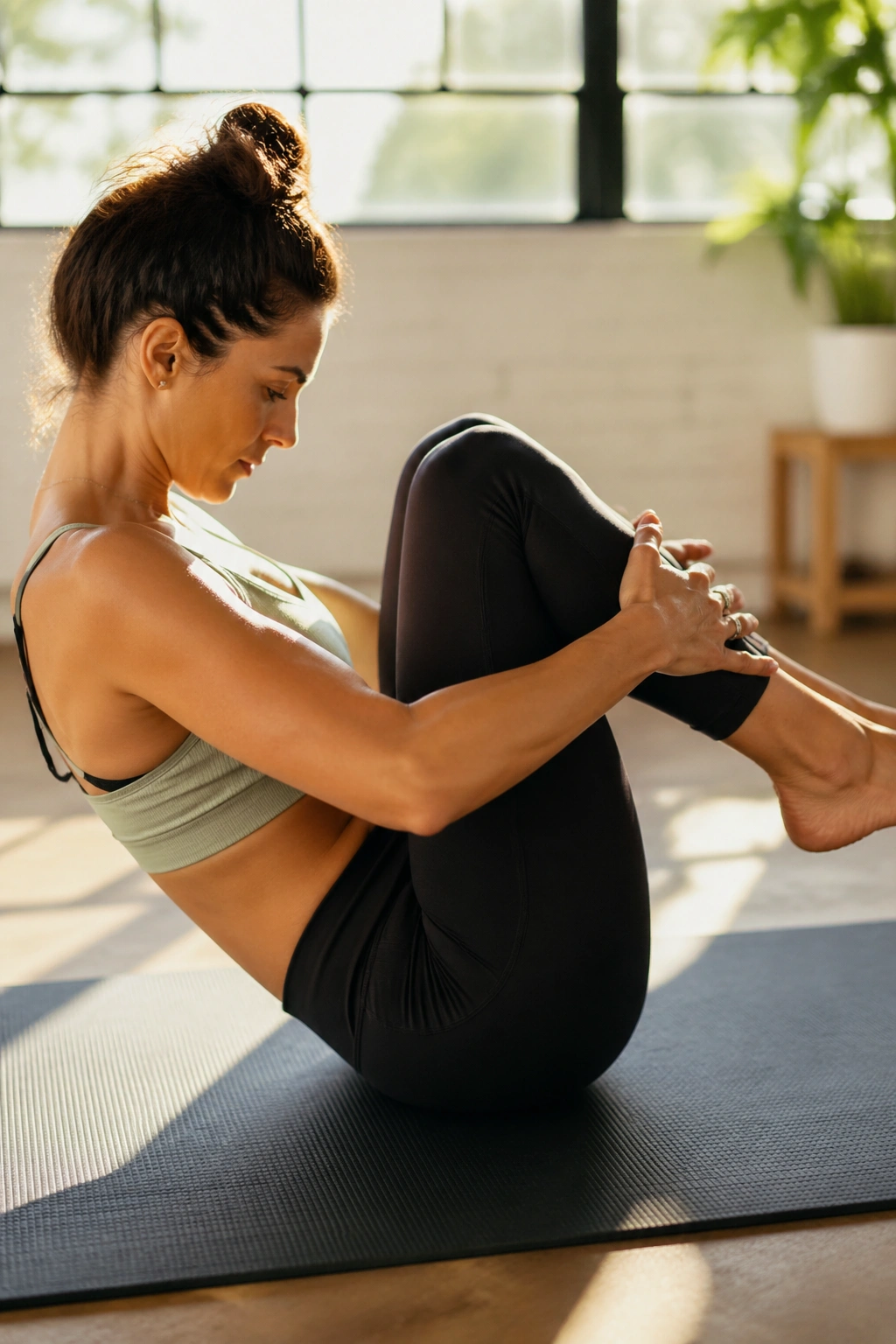
If you want an at-home Pilates workout that feels more like exercise and less like rehab, build a circuit from the classic mat vocabulary. You still need control. You also get a stronger training effect.
Run each move for 40 seconds
- Hundred prep with bent knees
- Single-leg stretch
- Double-leg stretch
- Spine stretch forward
- Rolling like a ball
- Swimming
- Plank with shoulder taps
Rest 20 seconds between moves, then repeat the whole circuit 2 to 3 rounds.
The hundred prep is where most people either light up their core or lose the plot. Keep the ribs heavy and pump the arms from the shoulders, not the wrists. During rolling like a ball, do not throw yourself backward. Hold the rounded shape and let the breath drive the motion.
This circuit works because it alternates spinal flexion, trunk stability, and back-body effort. You never stay in one pattern long enough to fry the same tissue, so the session feels brisk without needing jumps or fast burpees.
Best use: days when you want Pilates to feel athletic but still low-impact.
14. Lower-Back-Friendly Core Session
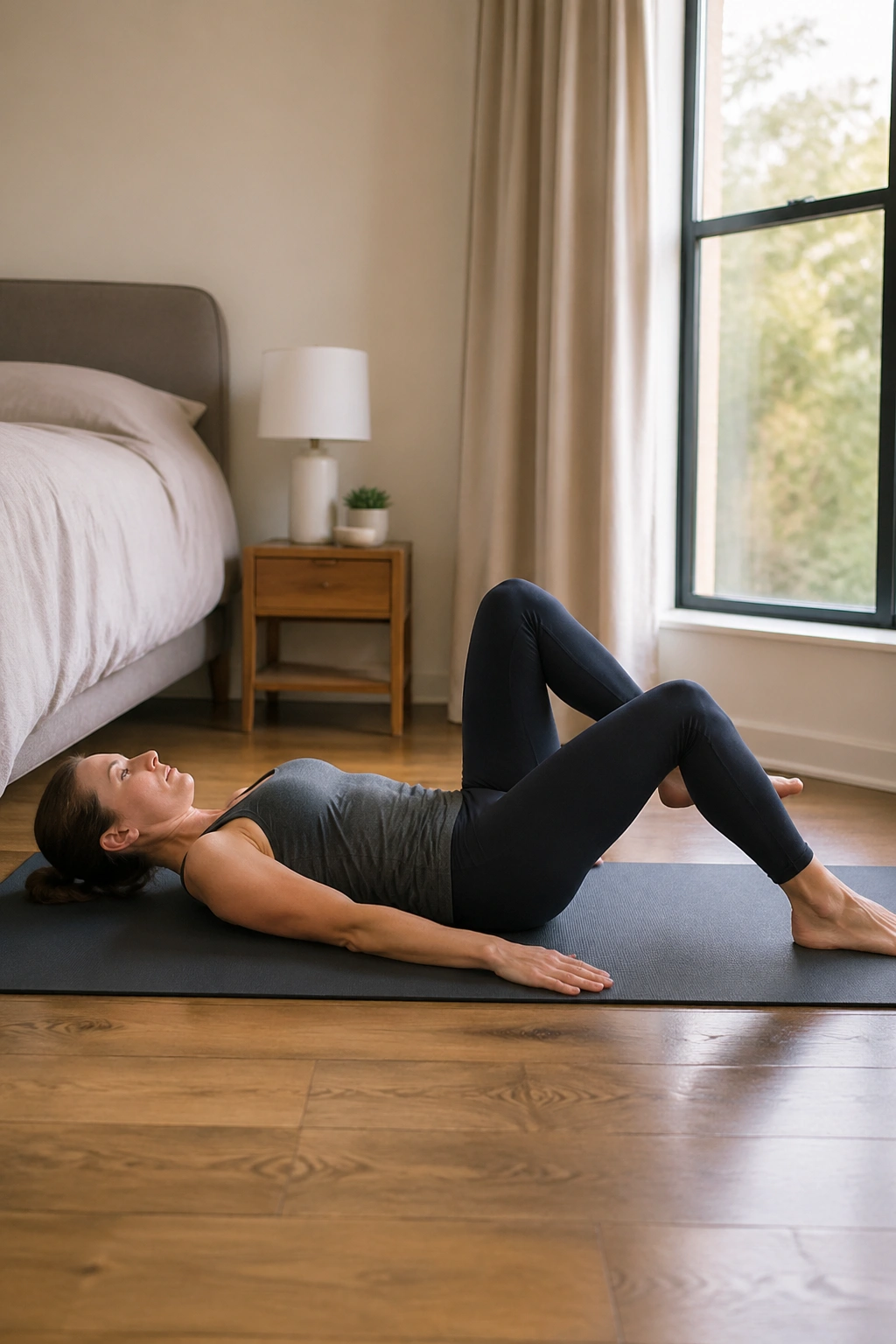
Back discomfort does not always mean you should skip Pilates. It often means you should choose better exercises and tighten up the setup.
A lower-back-friendly core session starts with neutral pelvis, bent knees, and short levers. Think heel slides, bent-knee fallouts, dead bug arms, bird dog from hands and knees, and supported bridge holds. Try 8 to 10 reps per side for each move, done slowly, with a full exhale before the limb moves. Two rounds are enough.
Skip big double-leg lowers, aggressive roll-ups, and fast scissors if your back already feels irritated. Those moves are not bad across the board, though they ask for control many people do not yet have. There is no prize for forcing them.
Pay attention to pressure. A useful rep feels like the front, sides, and back of the trunk all working together. A bad rep feels like the lower back gripping, the ribs popping, or the hip flexors yanking at the front of the pelvis.
If one heel slide done with clean breathing beats ten messy leg lowers, take the heel slide and move on.
15. Towel Slider Inner-Thigh and Hamstring Workout
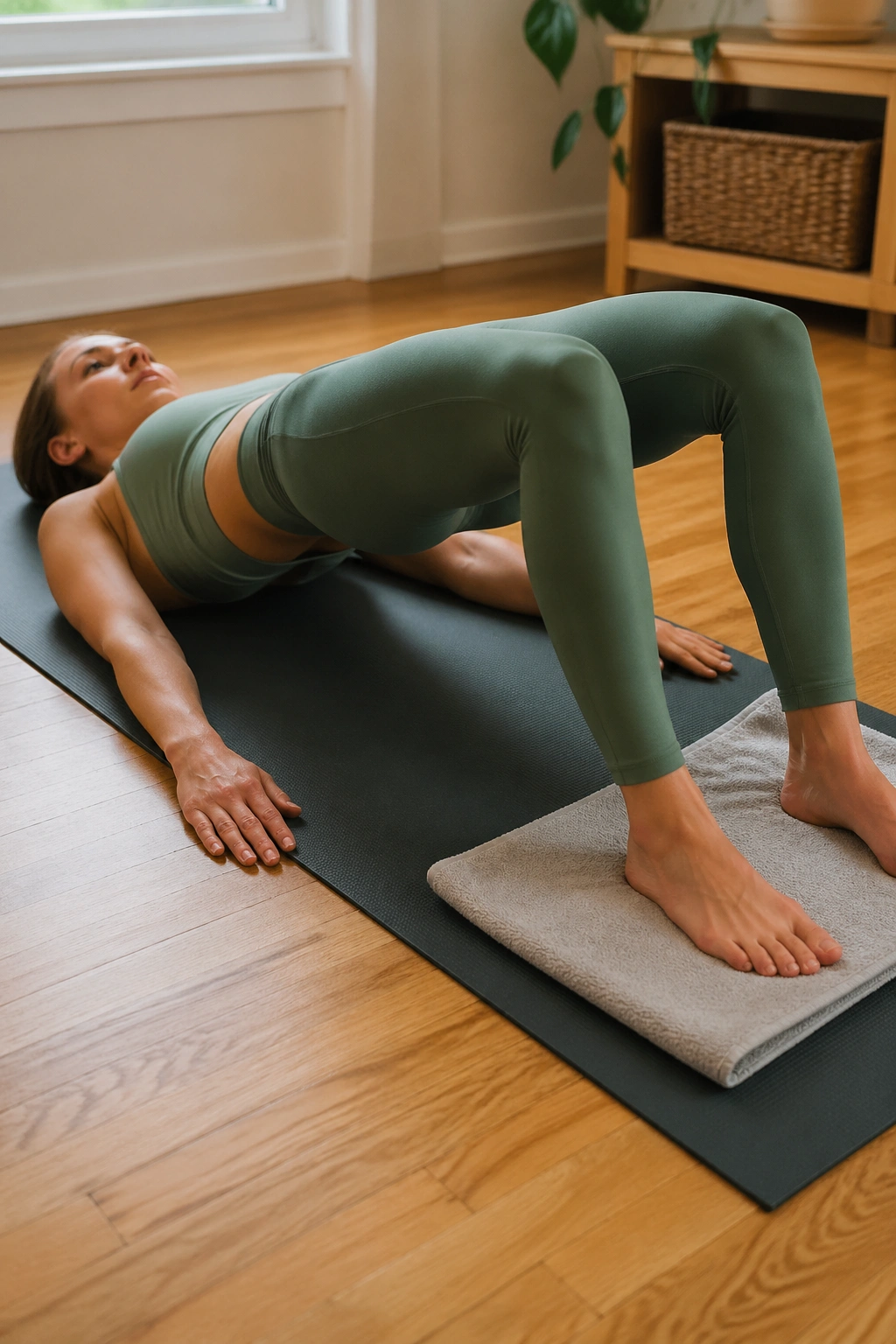
Got a small hand towel and a smooth floor? That is enough equipment for one of the slickest home Pilates workouts around.
Set up the slider series
Place one heel on the towel while lying on your back in a bridge. Lift the hips and slide the towel out a few inches, then pull it back in. Do 8 reps per leg. Lower down, keep both heels on towels, and try 10 double-leg hamstring curls if your floor allows it. Finish on your side with a towel between the ankles for 12 inner-thigh squeezes per side, then add 20-second adductor holds.
The towel changes the feel of bridge work right away. Because the heel can move, your hamstrings have to control the slide instead of passively hanging out while the glutes do most of the lifting. That makes the exercise harder than it looks.
Move in tiny ranges at first. If the hips drop or cramp, shorten the slide. Hardwood and tile tend to work best; carpet is hit or miss. Socks on a wood floor can stand in if the towel bunches up.
One warning: do not race the curl back in. Slow return equals more work.
16. Side Plank Progression for Obliques
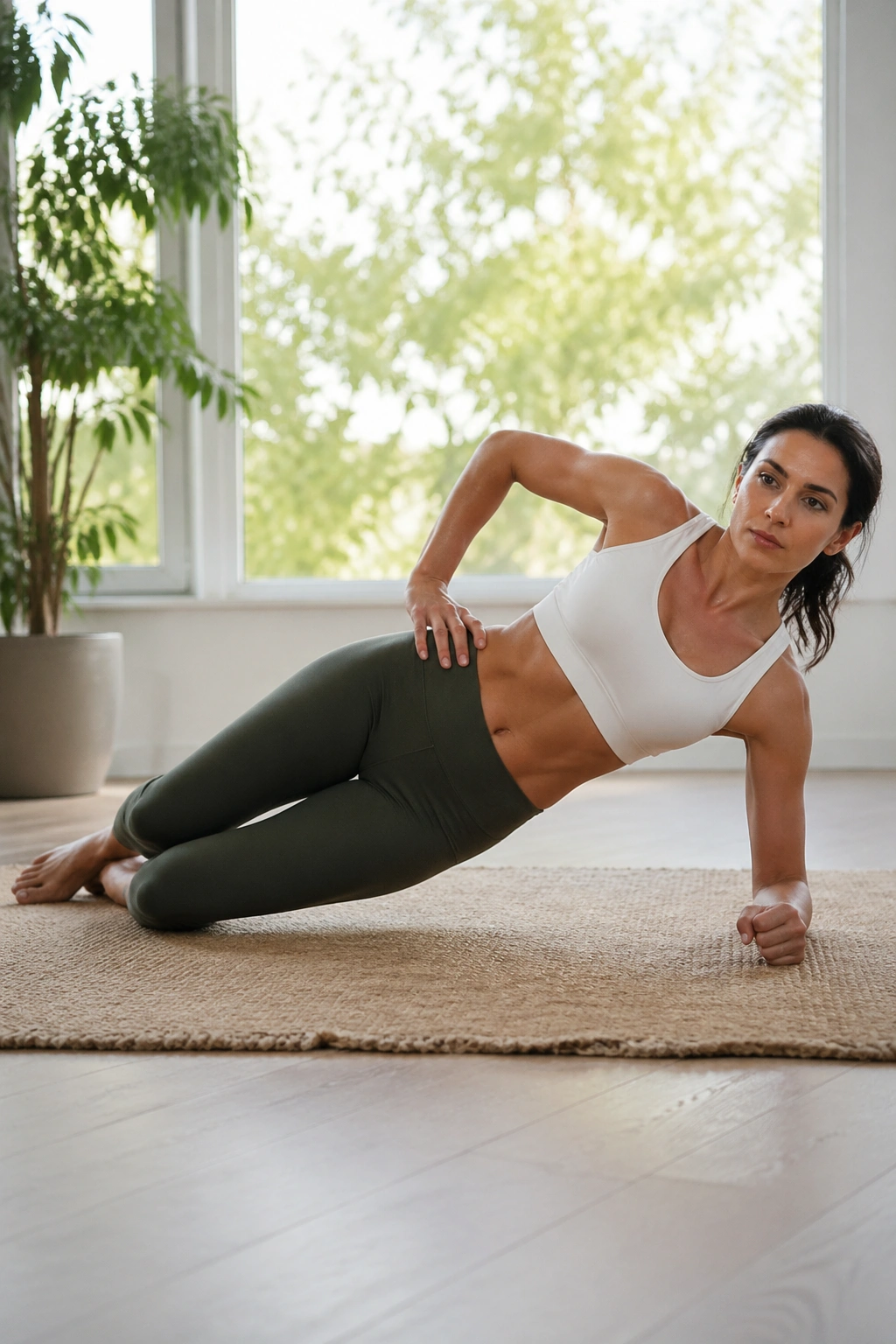
Plenty of people hate side planks because they jump straight to the full version and spend the whole hold wondering why their shoulder, neck, and wrist are yelling. Build the position in stages and it turns into a solid Pilates oblique workout instead of an endurance test you dread.
Start with the lower knee bent and the elbow under the shoulder. Lift the hips for 3 holds of 15 seconds per side. Once that feels steady, add 8 hip dips. Then extend the top leg long and hold again. The full side plank — both legs straight — comes after that. If you get there, try 6 top-leg lifts without letting the rib cage roll open.
What makes it work
- The underside waist lifts away from the floor
- The supporting shoulder pushes down and away from the ear
- The pelvis stays stacked instead of tipping forward
You should feel the side body, glute medius, and shoulder working together. If the wrist complains, stay on the forearm. If the shoulder feels pinchy, return to the knee-down version and own it first.
Good side planks look calm. They are not calm.
17. Floor-Based Booty Lift Session
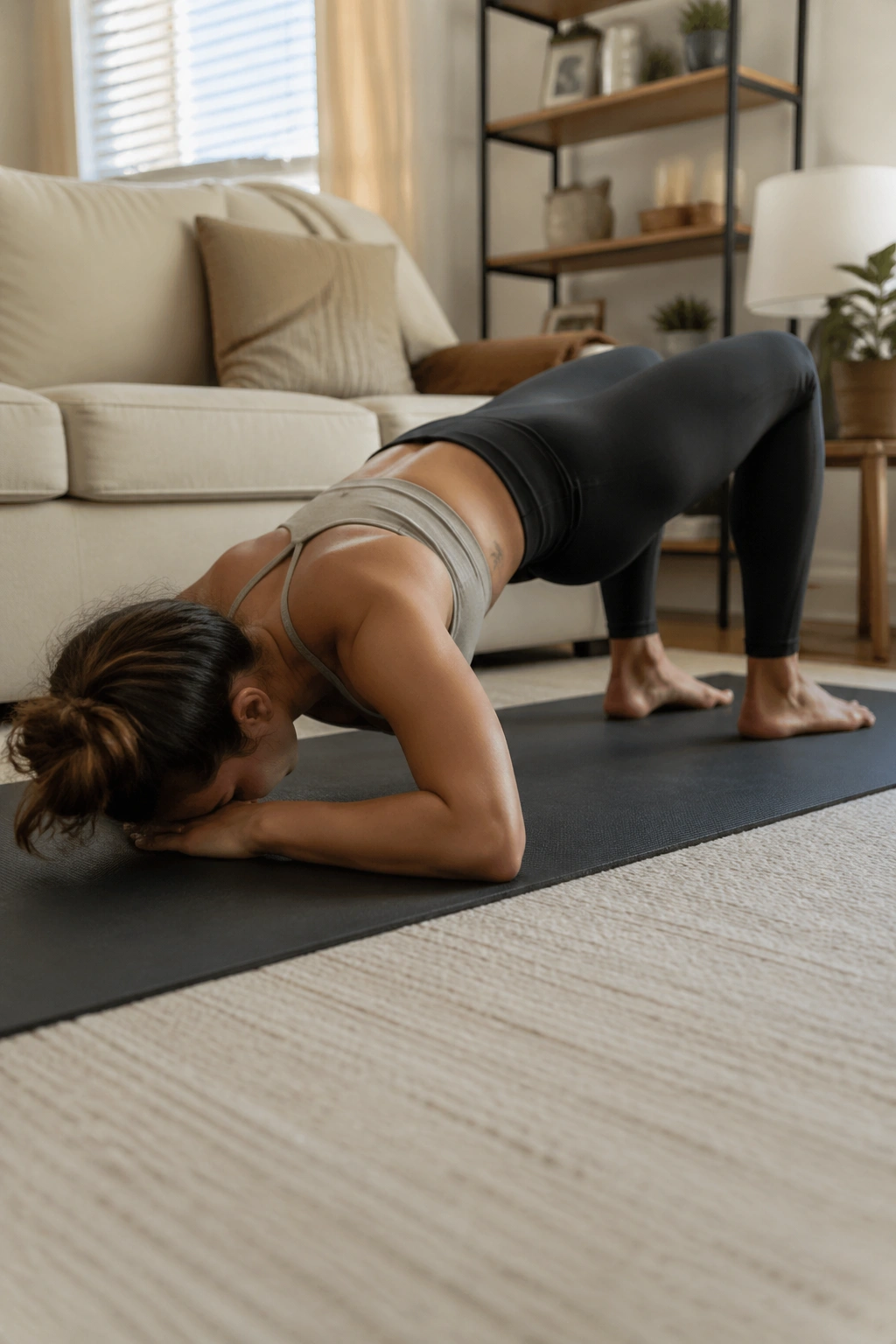
A floor-based glute session can be far more precise than a generic “booty burner” video, mostly because Pilates asks the hips to move without the lower back stealing the load. That changes the whole feel.
Begin prone with the forehead on stacked hands. Do 15 bent-knee heel presses per leg, pushing the sole of the foot toward the ceiling without twisting the pelvis. Flip onto your back for 12 bridges, then 10 bridge marches per side. Roll to hands and knees for 12 donkey kicks per side and 10 fire hydrants per side. Finish with 20 glute pulses in a high bridge.
Tempo matters. Use a 3-count lift, 1-count hold, 3-count lower on the first round. That slower pace gives the glutes time to own the movement instead of letting momentum sling the leg around.
You do not need a huge range. A rear-leg lift that stays low with a square pelvis will hit harder than a high kick that twists the spine and opens the ribs.
Glute work done this way pays off in squats, stair climbing, and low-back comfort. It is not glamorous. It is useful.
18. Desk-Break Pilates for Tight Hips
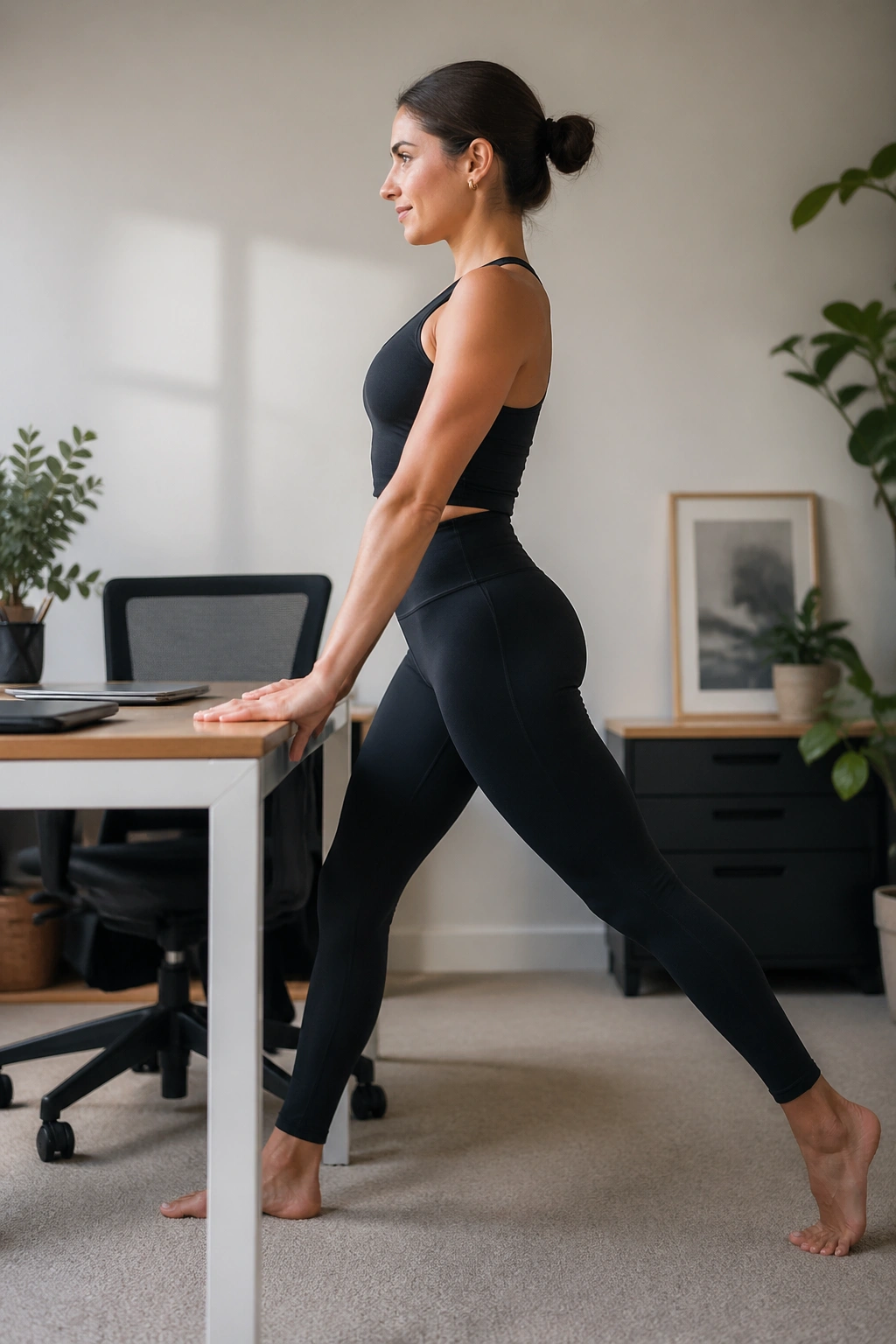
Unlike long mat sessions, a desk-break routine has to cut through stiffness fast. You want something you can do in 8 minutes, maybe in socks, maybe between meetings, without ending up sweat-soaked and annoyed.
Stand up and start with 10 pelvic tucks while holding the back of a chair or desk. Step one foot back into a standing hip-flexor stretch for 20 seconds, then add a gentle reach overhead. Do that on both sides. Move into 8 standing figure-four sit-backs per leg, then 10 side leg lifts per side. Finish on the floor — if you have space — with 90/90 hip switches for 1 minute and 6 cat-cows.
What makes this a Pilates workout rather than a loose stretch break is the control through the trunk. During each hip move, the ribs stay organized over the pelvis. You are not hanging off the lower back to find range.
This is the session I come back to when the hips feel pinched from sitting. It is short enough to use, and that is half the battle.
19. Standing Balance and Ankle Strength Flow
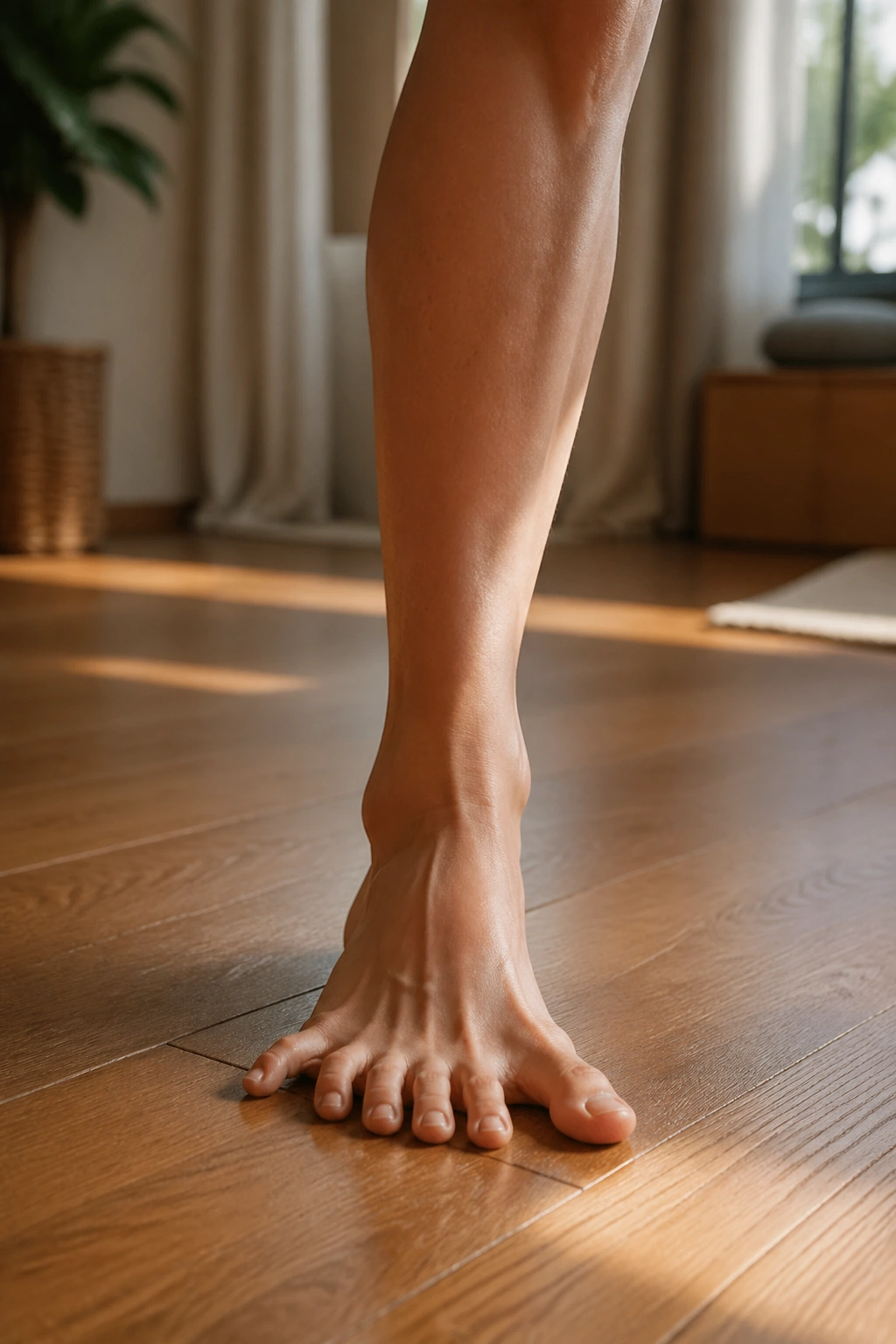
Most home Pilates plans undertrain the feet and ankles, which is strange because balance starts there. If your foot collapses, your knee and hip have to clean up the mess.
Build the flow
- 15 calf raises with a slow 2-count lift and 3-count lower
- 10 toe lifts while keeping the ball of the foot grounded
- 20-second single-leg balance hold per side
- 8 standing leg circles each direction per leg
- 8 single-leg hinges per side with fingertips on a wall if needed
- 30 seconds of tandem stance — heel to toe — each side
Watch the standing foot. The big toe mound, little toe mound, and heel should all stay in contact with the floor as much as possible. If the arch collapses inward on every rep, decrease the range and rebuild.
Balance training in Pilates is less about daring poses and more about quiet corrections. The ankle wobbles, the hip steadies, the ribs adjust, the breath stays even. That conversation between body parts is what you are training.
Do this one barefoot if your floor is clean. Shoes muffle the feedback.
20. Gentle Recovery Pilates for Sore Days
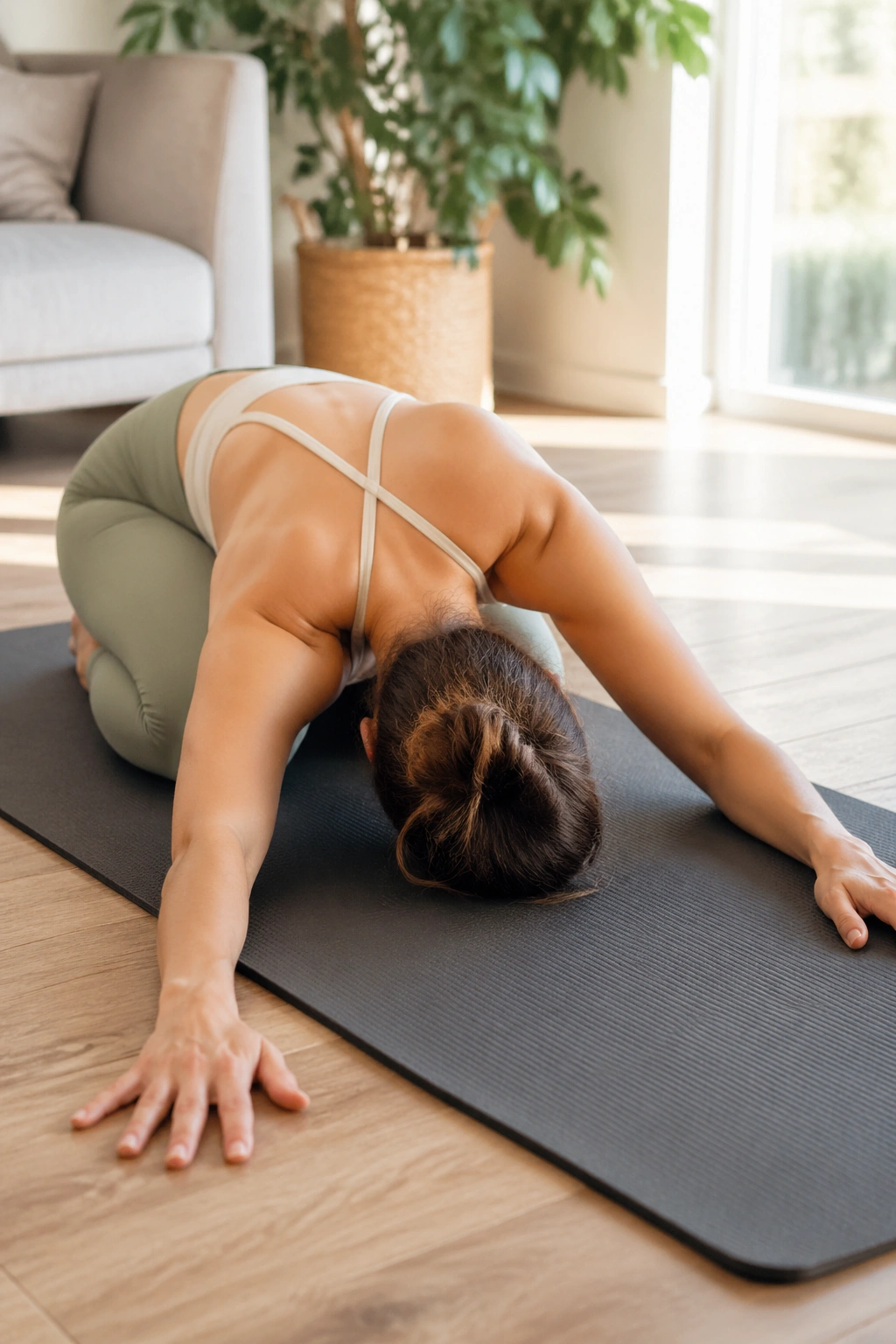
Hard training days are not the only days that count. A gentle recovery session can leave you moving better by evening than another punishing workout ever would.
Take 12 to 15 minutes and keep the pace unhurried. Start with crocodile breathing on your belly for 5 breaths, then move to child’s pose with side reach, 30 seconds per side. Come to hands and knees for 8 cat-cows and 6 bird dogs per side. Lie on your back for 10 windshield wipers, 8 bridges, and 1 minute of legs up the wall if you have a wall free.
The point here is circulation, spinal movement, and low-level muscular work — enough to remind the body how to organize itself without piling on more fatigue. Your breath should stay smooth the whole time. If you are huffing, you missed the assignment.
Sore days often tempt people into doing nothing or doing too much. A recovery flow sits in the useful middle ground. You finish feeling looser, warmer, and less creaky, which is a far better outcome than crawling onto the couch and stiffening up again.
21. Roll-Up and Teaser Prep Flow
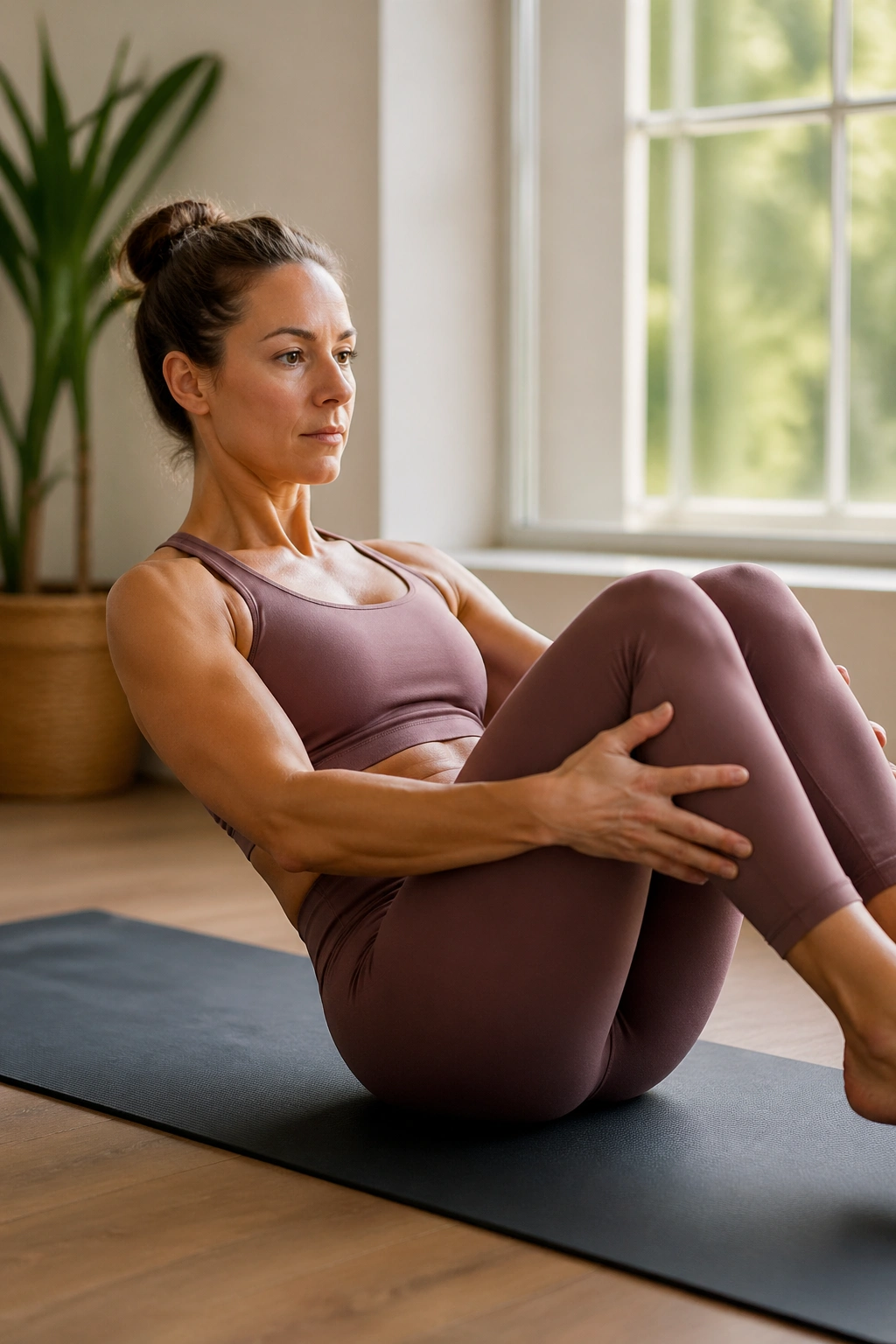
Want the satisfaction of a teaser without folding yourself in half and yanking on your hip flexors? Build toward it.
Practice ladder
- 8 half roll-backs seated with knees bent, hands behind thighs
- 6 assisted roll-ups using the hands on the backs of the legs
- 8 single-leg stretch reps per side
- 6 double-leg toe taps
- 5 tabletop holds with arm reaches
- 4 teaser preps, lifting the chest and shins together for one breath
The magic sits in the half roll-back. Most people rush past it because it looks easy, though it teaches the rounded lumbar shape and low-ab control that the full roll-up needs. If you collapse into the shoulders or jerk through the sticky part, return to the half version.
A folded towel behind the thighs can help on the teaser prep if your hip flexors take over. Exhale first, then float the legs. Do not fling them up and hope the trunk catches up.
Advanced Pilates moves are often less about strength than timing. Build the timing and the move stops feeling impossible.
22. Resistance Band Full-Body Pilates Circuit
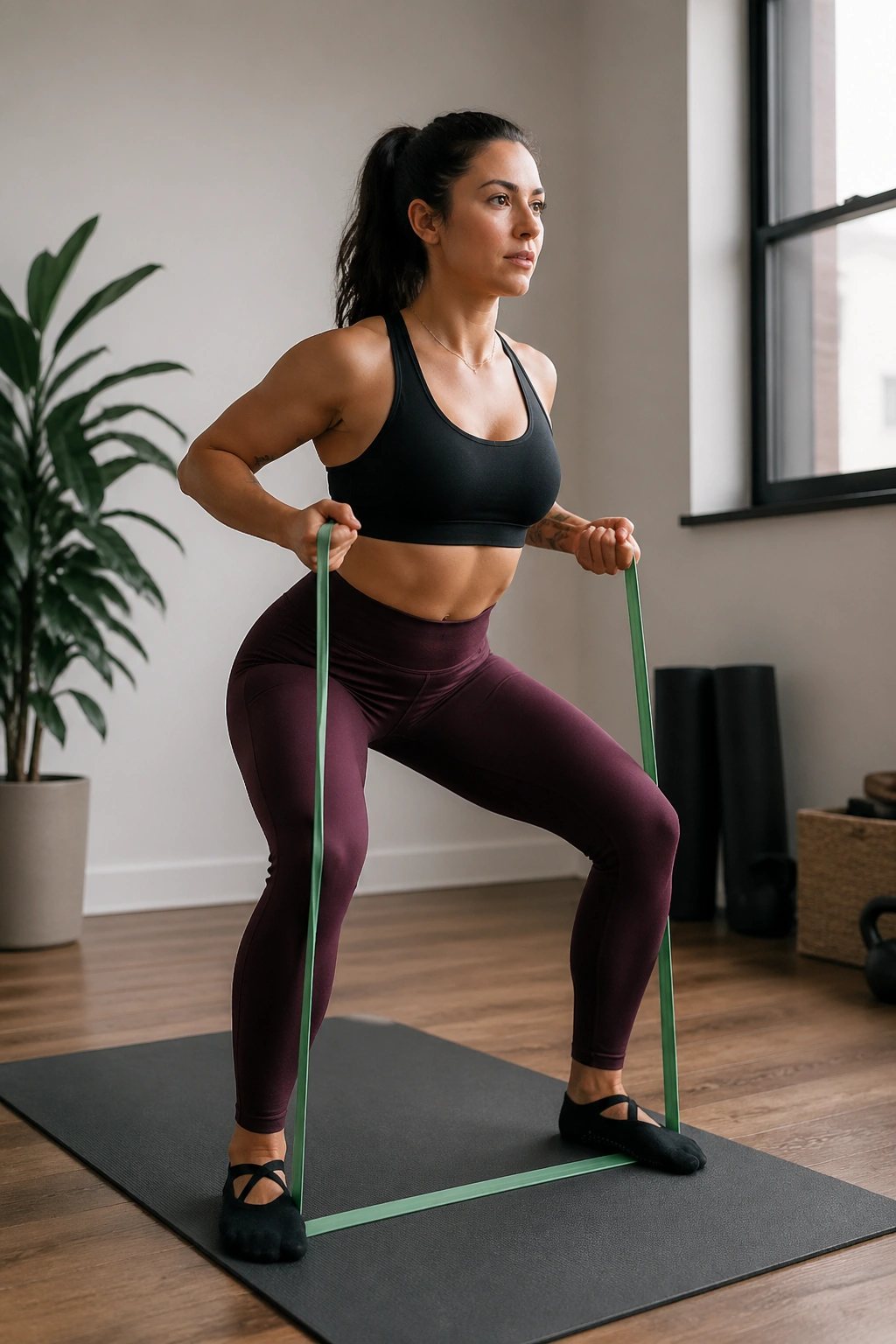
A long loop band or light therapy band adds honest feedback to home Pilates. Pulling against resistance makes weak spots obvious fast — which is useful, if mildly humbling.
Use a light-to-medium band. Stand on it for 10 squats with a row, then sit for 8 banded roll-backs. Lie down and place the band around the feet for 10 leg presses and 8 hamstring curls if your setup allows. Roll to your side for 12 banded clams per side, then finish standing with 10 overhead presses while keeping the ribs from flaring.
Quick details that matter
- Choose a band you can move with control for the full rep
- Exhale on the hardest part of the pull or press
- If the shoulders hike up, the band is too heavy or the range is too big
Bands can make a simple Pilates session feel more like strength training, though they also tempt people to chase tension and lose shape. I would rather see a lighter band and cleaner shoulder placement than a thick band dragging the torso out of alignment every rep.
23. No-Equipment Waist and Oblique Routine
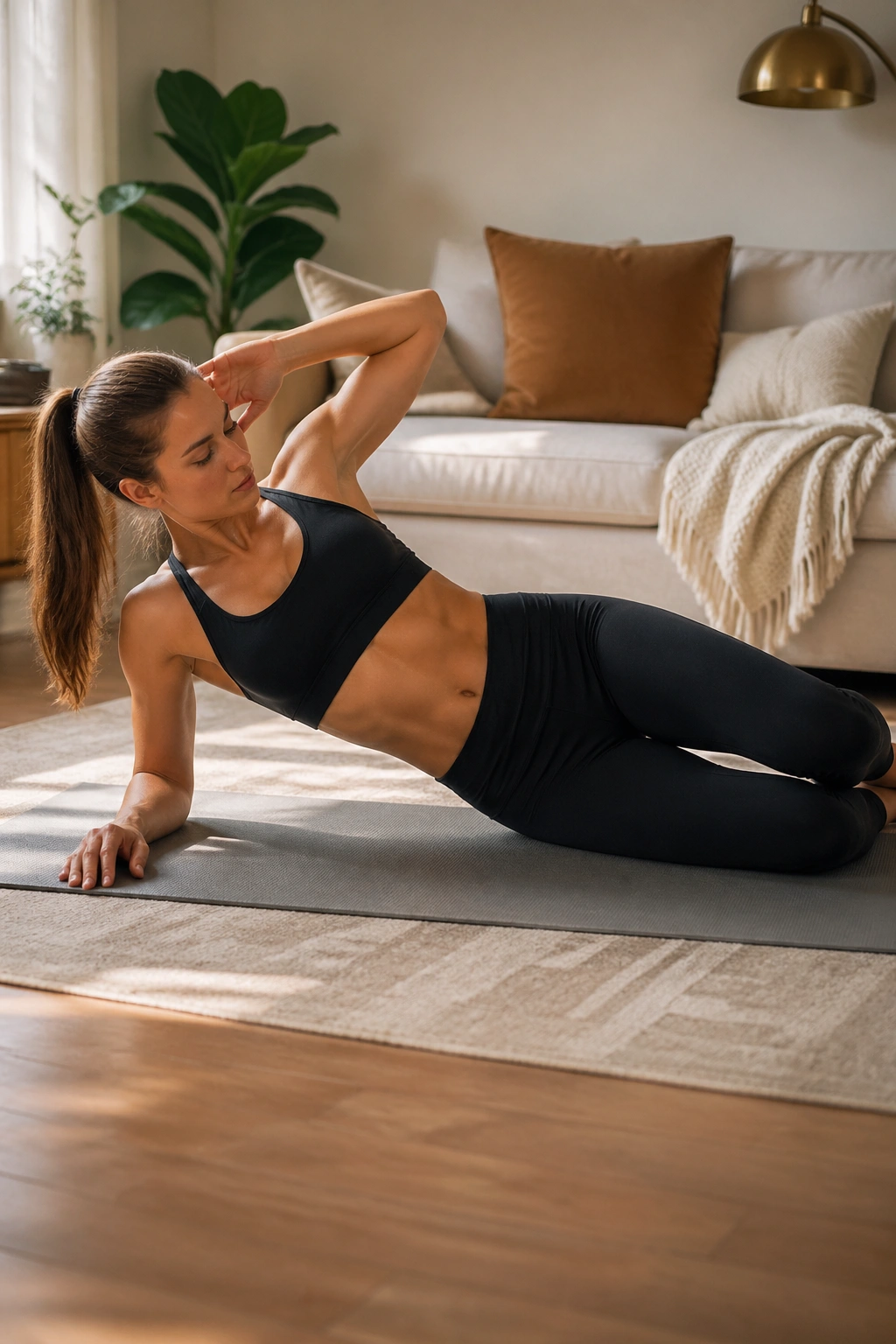
A good oblique workout is not endless side bends done at random. In Pilates, the waist works through rotation, anti-rotation, side flexion, and the quiet task of keeping the trunk from wobbling while the limbs move.
One sharp session goes like this: start with side-lying waist lifts for 10 reps per side. Move into criss-cross for 8 slow reps per side, then saw for 6 reps per side, sitting on a folded blanket if the hamstrings pull you backward. Finish with kneeling side bends for 8 reps per side and a 20-second forearm side plank if you still have room in the tank.
Where people go wrong is twisting the elbows and calling it rotation. The turn should come from the rib cage moving over a stable pelvis. In saw, reach the pinky finger toward the outer foot while the back arm stretches long behind you. In criss-cross, think armpit toward opposite knee rather than elbow to knee.
This session gives that deep side-body fatigue you feel when you cough or laugh later and suddenly remember you trained your waist.
24. Prone Back-Body Strength Session
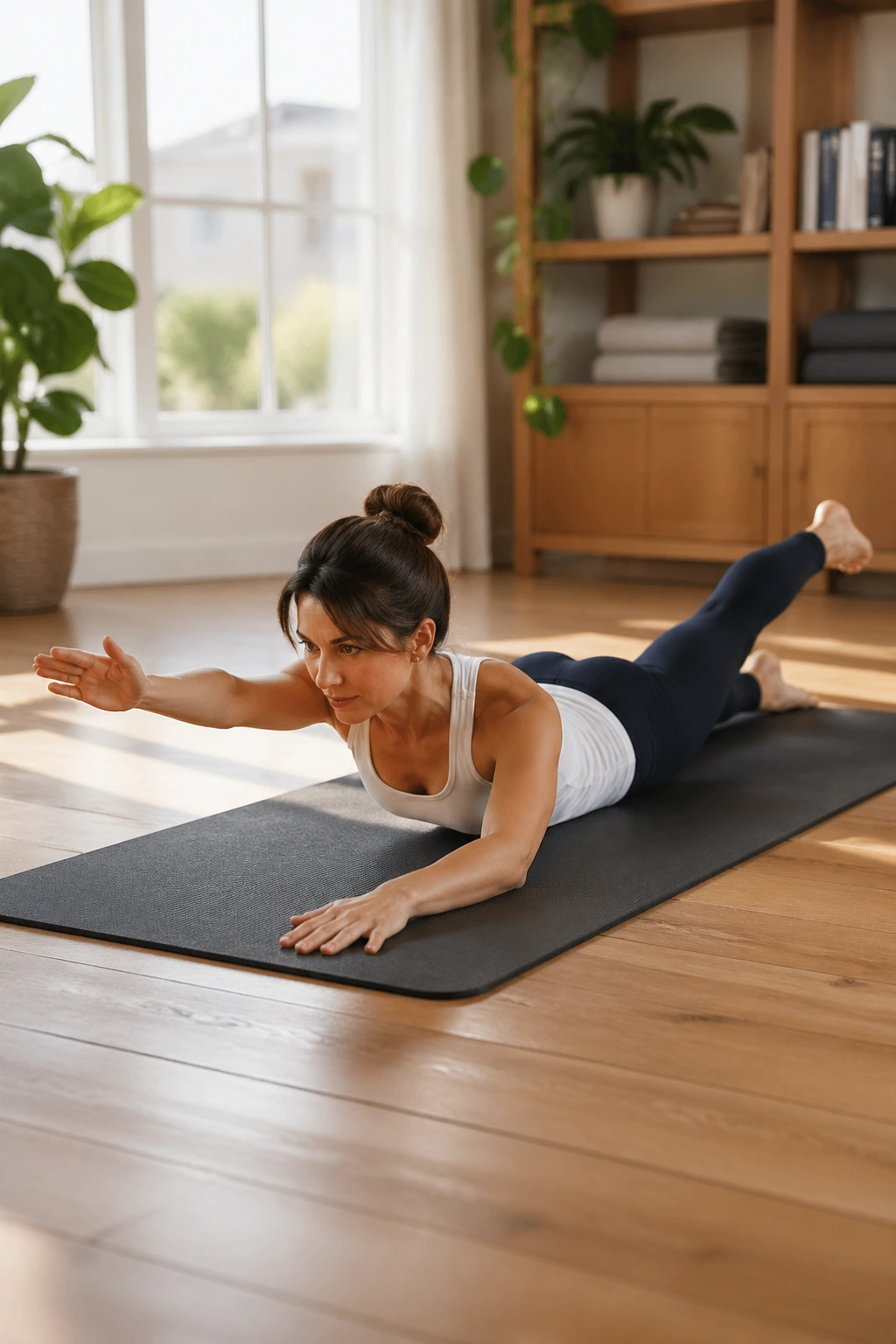
Unlike front-body work, back-body training often gets skipped because it is less flashy and harder to watch in a mirror. Still, if your home Pilates routine is all abs and no extension, your posture and shoulder mechanics will eventually complain.
Begin face down with the forehead hovering or resting on a folded towel. Do 8 darts, lifting the chest slightly with the arms long by the hips. Move into 6 swan preps, hands under shoulders, peeling the chest up only as far as the ribs stay long. Then add 20 seconds of swimming, alternating opposite arm and leg lifts, rest, and repeat twice. Finish with child’s pose for 5 breaths.
Who should use this session? People with rounded desk posture, swimmers, climbers, and anyone who notices that prone work feels oddly hard. That last group is big.
Keep your glutes lightly active, pubic bone heavy on the mat, and neck long. Looking too far forward jams the back of the neck. The lift should spread through the whole spine, not hinge from one cranky spot near the waistband.
This is one of those workouts that feels modest during the session and pays off later when standing tall gets easier.
25. Pelvic Floor and Deep Core Reset
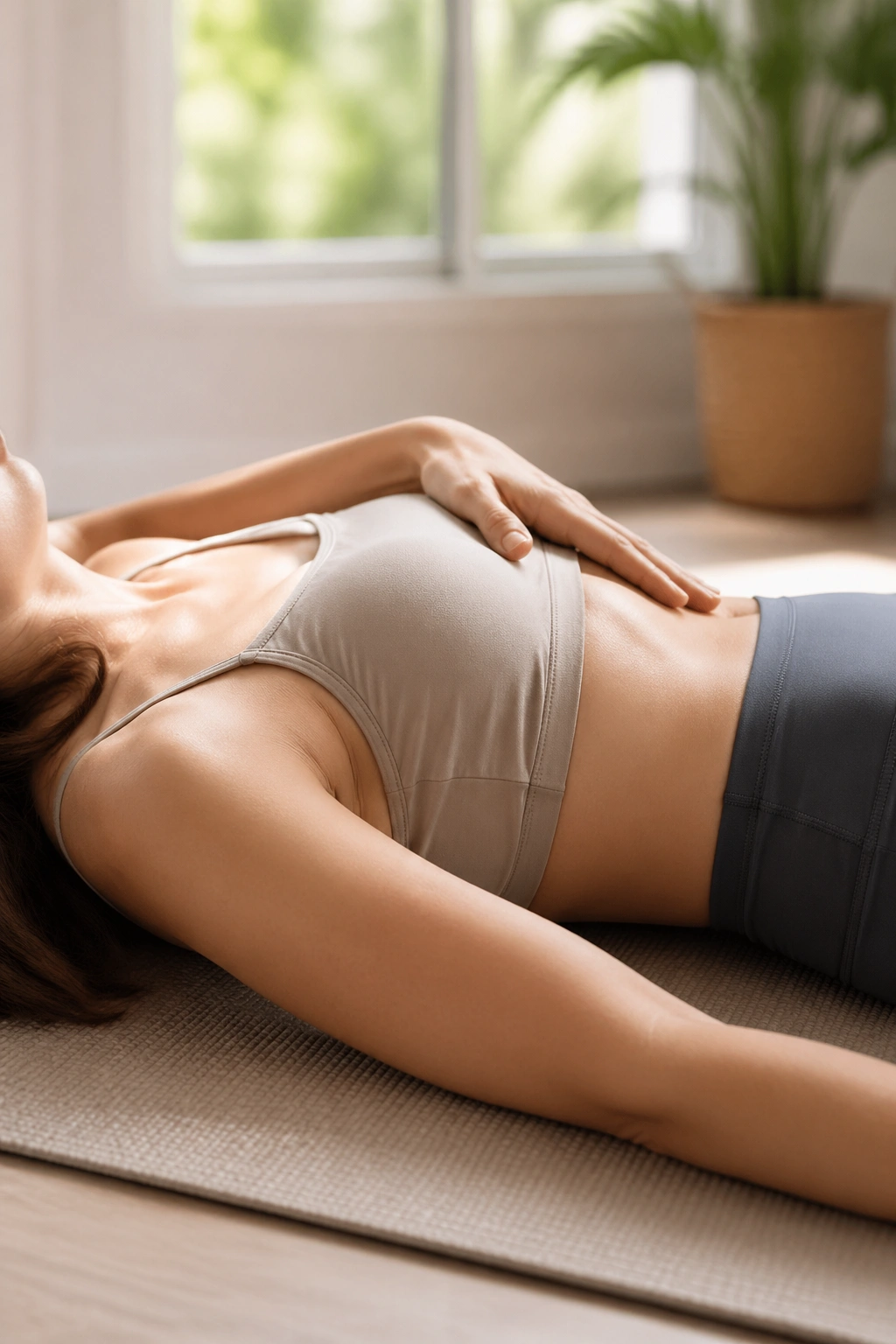
Quiet work matters.
A pelvic floor and deep-core reset is less about visible movement and more about pressure management — how you breathe, how the lower belly responds, and whether the trunk can organize without bracing like armor. That makes it useful for postpartum return to exercise, people who feel “domed” through the midline during abs, and anyone who leaks during impact or coughing. If you have pelvic pain or ongoing symptoms, a pelvic floor physical therapist is the right call.
Try this gentle sequence
- 5 lateral rib breaths with one hand on the lower ribs
- 8 exhale-to-engage heel slides per side
- 10 pillow squeezes in bridge with a soft exhale
- 8 bent-knee fallouts per side
- 20-second tabletop hold with hands pressing into thighs
The cue I like best is lift and close on the exhale, not clench and bear down. You are looking for a subtle inner support, not a hard squeeze through the glutes or a breath-holding contest.
Done well, this session feels controlled, almost quiet, though the lower abs usually wake up in a hurry.
26. Athletic Cross-Training Pilates Session
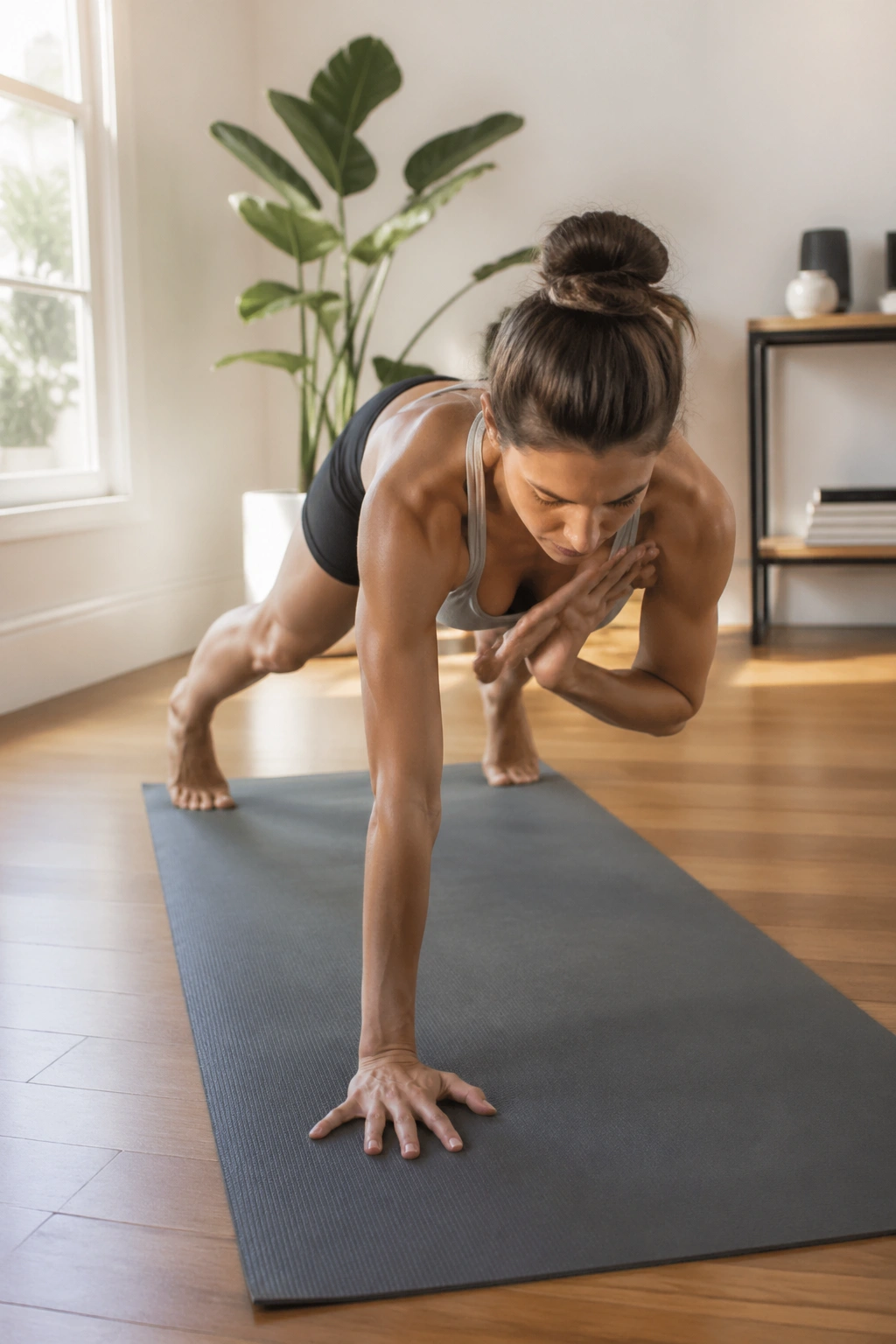
Athletes often need slower core work more than they need another round of speed. Running, lifting, cycling, and court sports build plenty of force. Pilates fills in the control between those forces.
Set a timer for 20 minutes and cycle through: 8 single-leg bridges per side, 10 plank shoulder taps per side, 8 side-lying leg circles each direction, 6 bird-dog rows per side using a water bottle or no weight, 8 reverse lunges with a knee drive per side, and 20 seconds of hollow-body hold with bent knees if needed. Rest 30 seconds between rounds and complete 2 to 3 rounds.
This session works because it blends trunk stiffness, hip stability, and mobility in one block. The athlete gets enough challenge to stay interested, yet the movements still punish sloppy alignment. If the pelvis drops in the single-leg bridge or the rib cage twists in the shoulder taps, the body is telling on itself.
It is also a smart add-on after a run when the legs are tired but you still want trunk work without pounding.
27. Bed Pilates on a Mattress
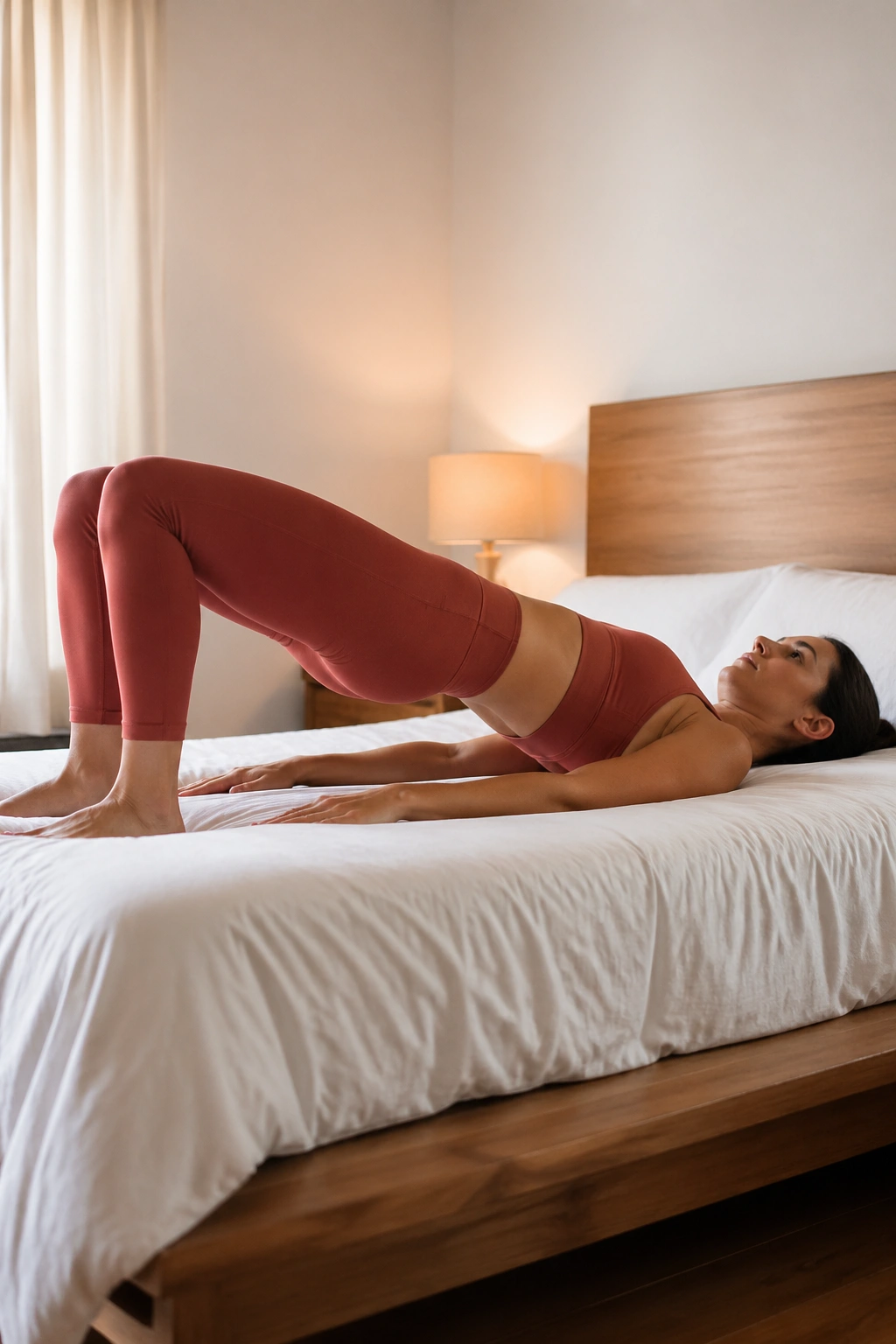
No floor space? No problem. A mattress changes the workout, though, so choose the moves carefully.
Best bets on a bed
- 8 pelvic tilts
- 10 bridges
- 8 bent-knee marches per side
- 10 side-lying clams per side
- 20-second side-lying leg hold per side
- 5 cat-cows if the mattress is firm enough
The unstable surface makes some drills harder because your body has to control the wobble. Bridges and marches work well. Full planks, fast roll-ups, and anything that needs a solid push into the ground usually feel awkward on a soft mattress and are not worth the hassle.
Use this routine when traveling, sharing a small space, or easing into movement before getting out of bed. Keep the range small. A mattress swallows force, so crisp alignment matters more than usual.
One caution: if the bed is plush and your back feels unsupported, move to the floor. Comfort is fine. Mushy instability is not always helpful.
28. 20-Minute Full-Body Classical Mat Blend
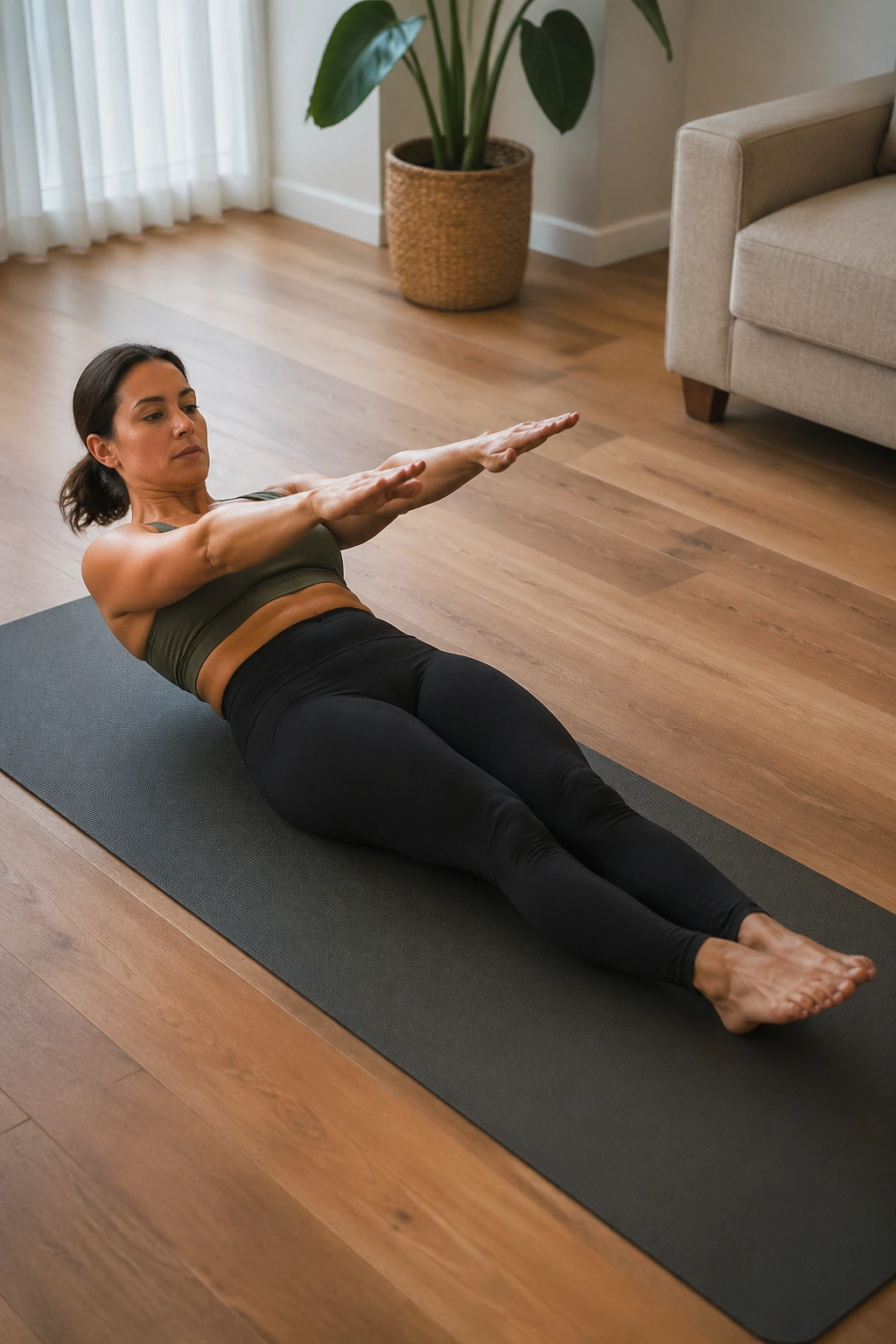
If you want one home Pilates workout that touches the whole body without dragging on forever, a 20-minute classical blend is a strong pick. It borrows from the mat repertoire but trims it into something most people can finish with decent form.
Try this order:
- Hundred prep — 1 minute
- Roll-up or half roll-back — 6 reps
- Single-leg circles — 6 each direction per side
- Single-leg stretch — 8 per side
- Spine stretch forward — 6 reps
- Swan prep — 6 reps
- Side kicks — 10 front/back per side
- Swimming — 20 seconds
- Shoulder bridge — 8 reps
- Mermaid stretch — 3 breaths per side
That sequence works because it shifts planes and positions often enough to keep the body awake. You flex, extend, rotate a bit, lie on your back, then your side, then your belly. Home workouts get dull when they camp in one lane.
Treat the transitions as part of the workout. Roll onto your side with control. Sit up without flinging. That is Pilates too.
29. Quiet Apartment Cardio-Pilates Flow
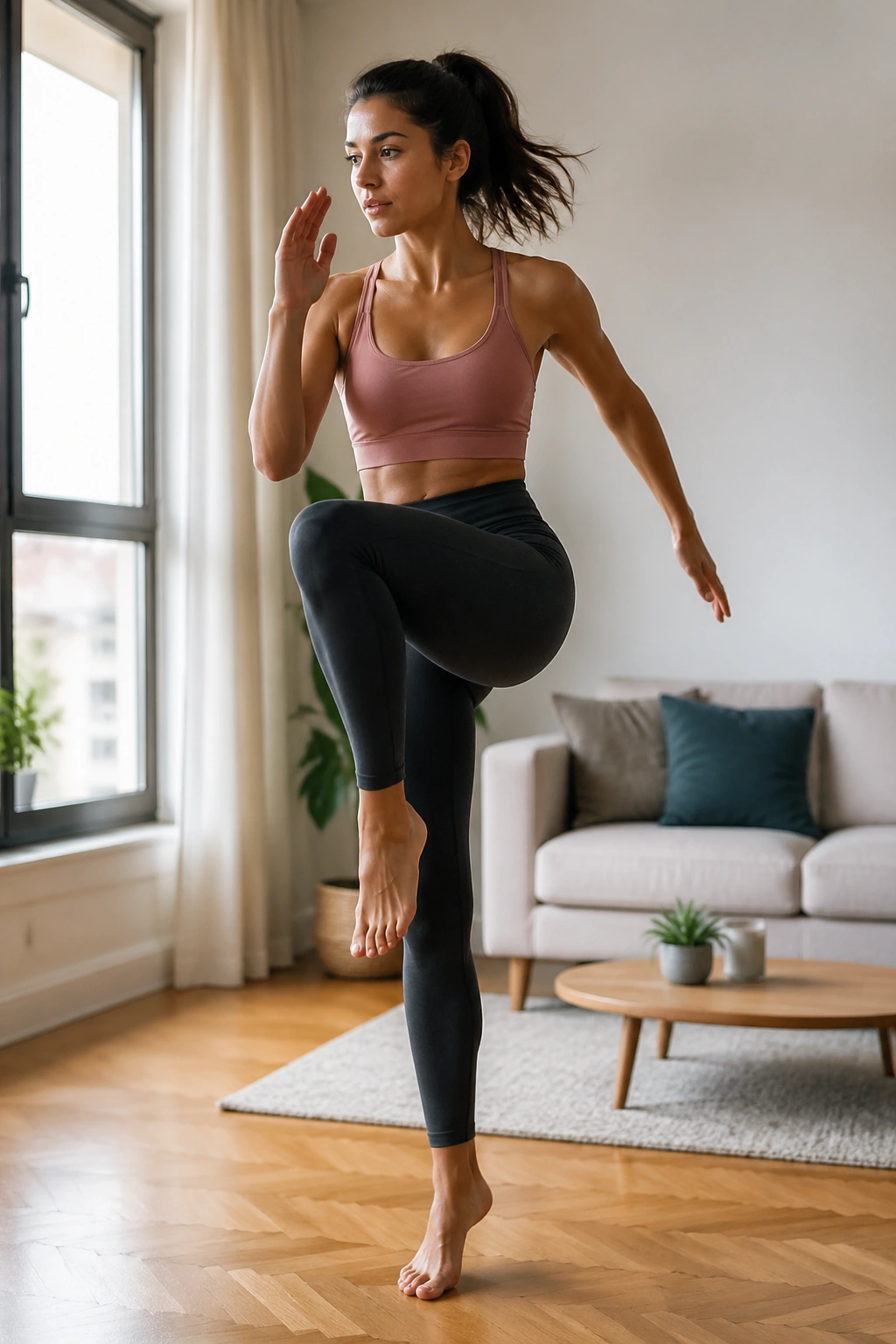
Plenty of people want cardio at home but need to keep the noise low. No jumping. No stomping. No downstairs-neighbor diplomacy mission.
A cardio-Pilates flow solves that by using continuous low-impact movement with short rest. Set intervals of 45 seconds on, 15 seconds off and cycle through standing knee drives, squat-to-calf raise, lunge with rotation reach, plank walk-outs to a high incline on a couch, fast side-lying leg lifts, and seated boxer twists. Rest 1 minute after one full round and repeat 3 times.
The trick is pace without chaos. Move briskly, though keep the ribs stacked and the feet landing softly. If you start slamming through the squat-to-calf raise or throwing the arms during the knee drives, it stops feeling like Pilates and turns into random motion.
This flow will not mimic sprint intervals. It does raise the heart rate enough to count as conditioning, especially if you stay honest with the timing and do not stretch the rests into mini vacations.
Low noise. Solid burn.
30. Advanced Tempo-and-Hold Home Challenge
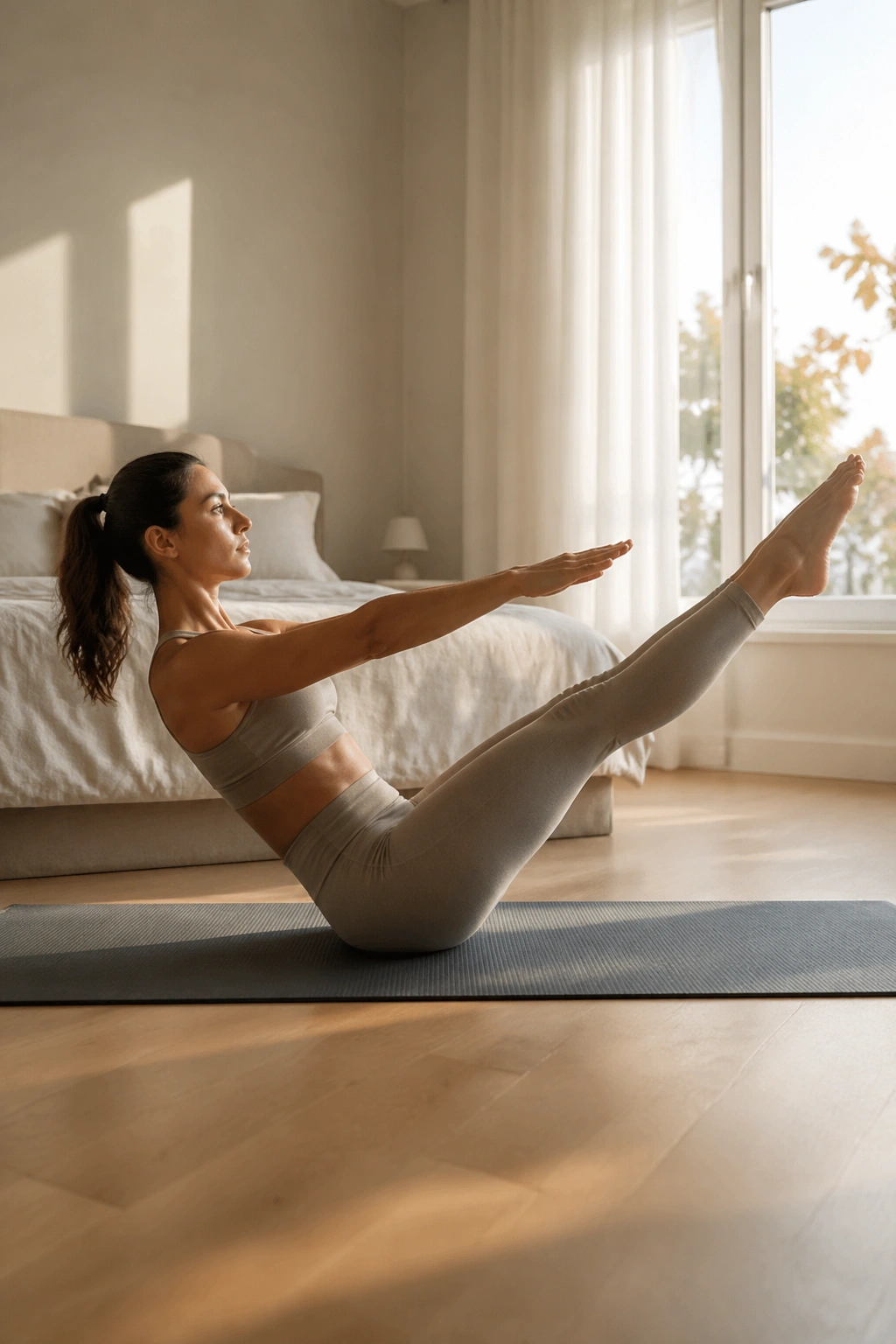
Unlike fast “burner” videos that chase fatigue through speed, an advanced Pilates session gets hard by slowing everything down. Tempo exposes every shortcut. Holds expose the ones you did not know you had.
Try this challenge for 2 rounds:
- Roll-up — 5 reps with a 3-count lower
- Teaser prep or full teaser — 4 reps with a 2-breath hold
- Single-leg bridge — 8 reps per side with a 2-count pause at the top
- Forearm plank with leg lift — 6 lifts per side
- Side plank — 20 seconds per side
- Swimming — 30 seconds
- Wall sit with heels lifted — 30 seconds
You need clean basics before using this one. If your lower back arches during teasers or your shoulders collapse in planks, go back to the prep sessions. Advanced work is not advanced because the shapes look impressive. It is advanced because you can control them under tension and keep breathing.
Expect shaking. Expect slower reps than your ego wants. That is the point.
Stop when form breaks, not when the timer says so.
Final Thoughts
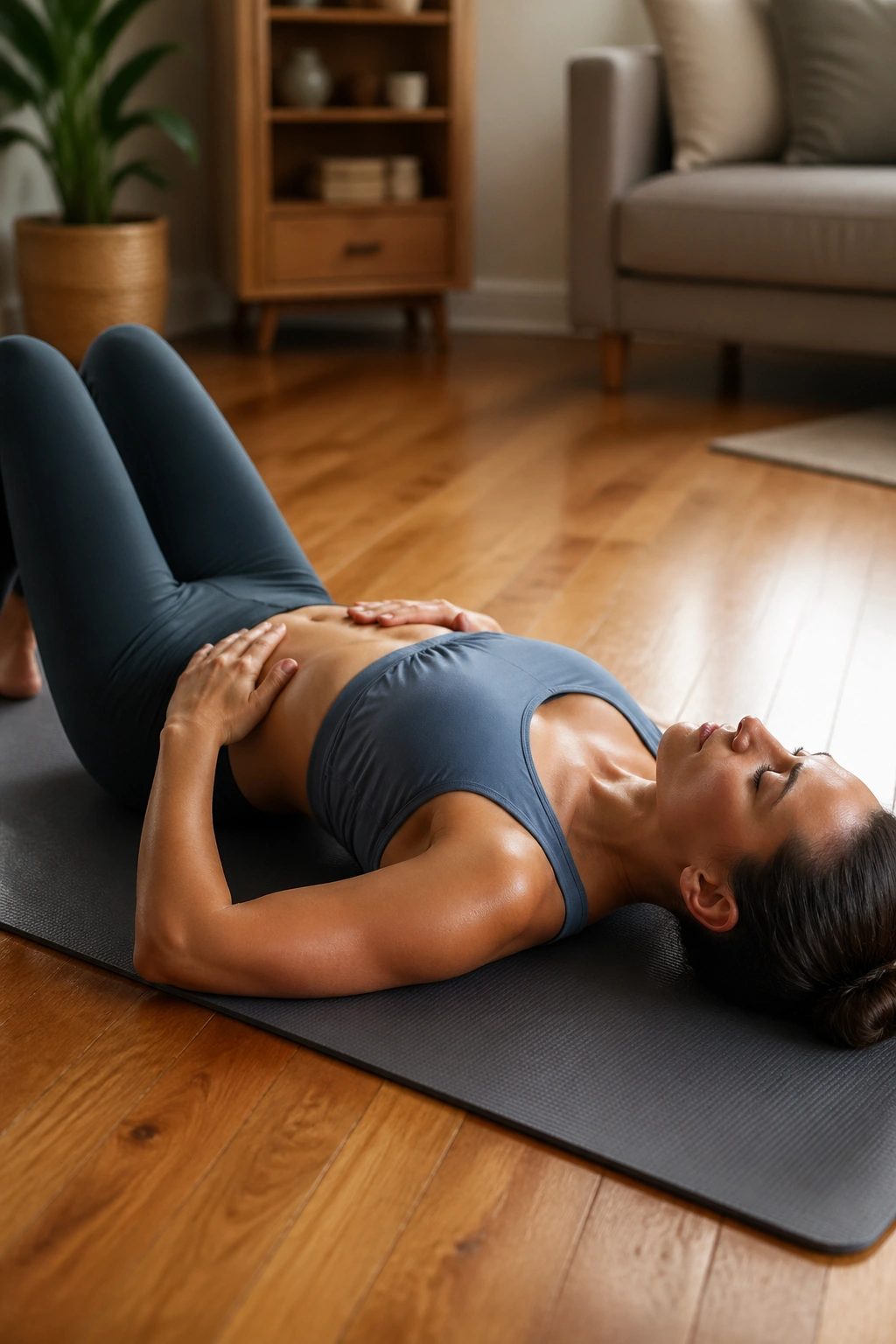
The best at-home Pilates plan is rarely the one with the hardest moves. It is the one you can repeat often enough to get sharper at the basics — breathing, rib placement, pelvic control, hip stability, spinal movement, balance.
Pick three or four of these workouts and give each one a job. Use one for posture, one for glutes, one for core, one for recovery. Rotate them across the week and let the advanced sessions earn their place instead of forcing them too soon.
Seven clean reps beat twenty messy ones every time.
And if a move feels wrong in the sharp, pinchy sense of the word, change it. Pilates done at home should leave you feeling more organized in your body, not more beat up.
