



If you’ve ever finished a pile of crunches, stood up, and felt your neck more than your abs, you already know why Pilates workouts for lower belly fat get so much attention. The lower abdomen is a stubborn area for a lot of people. It can look soft even when you’re active, and it can push forward when your pelvis tips, your deep core is weak, or your breathing pattern is working against you.
A blunt truth first: you cannot force fat loss from one small spot by hammering that spot with exercise. The body does not work that way. What Pilates can do—better than most rushed ab routines—is train the deep abdominal wall, improve pelvic control, clean up posture, and make your core work as a unit instead of as a loose collection of muscles fighting each other.
That matters more than people think. In Pilates classes and in clinical exercise settings, the changes people notice first are often not dramatic “six-pack” lines. It’s a flatter lower stomach when standing, less back tension, better control during leg lifts, and a waistline that feels firmer because the transverse abdominis, the deep corset-like muscle around your middle, is finally doing its job.
And when that work is paired with walking, solid protein intake, sleep that isn’t a mess, and enough consistency to let your body change—then the lower belly starts to look different too.
Why Pilates Workouts for Lower Belly Fat Feel Different From Crunches
Most old-school ab routines chase burn. Pilates chases control first.
That sounds small until you try a slow toe tap or a clean leg lower and realize your lower back wants to arch the second your legs move away from your body. That arch is the giveaway. Your hip flexors are taking over, your ribs are popping up, and the lower abs you wanted to train are losing the argument.
The deep-core difference
Pilates asks you to start with breath, pelvic position, and rib placement. Exhale, draw the front ribs down, keep the pelvis steady, then move the limbs without letting the trunk wobble. It’s less flashy than doing 40 fast sit-ups. It also works better for the lower abs.
A lot of people carry a slight anterior pelvic tilt—hips tipped forward, lower back more arched than it needs to be. When that happens, the lower stomach can stick out even at a lighter body weight. Pilates helps because it trains the trunk to resist that spill-forward position.
What these workouts can and cannot do
They can:
- Strengthen the deep core and lower ab area
- Improve posture so your stomach looks less pushed out
- Build endurance in the muscles that stabilize the pelvis
- Make cardio, lifting, and everyday movement feel cleaner
They cannot:
- Melt fat from one inch below your navel
- Cancel out a sedentary week by themselves
- Fix bloating caused by food issues, constipation, or hormonal shifts
That’s not bad news. It’s useful news.
How to Schedule Pilates Workouts for Lower Belly Fat During the Week
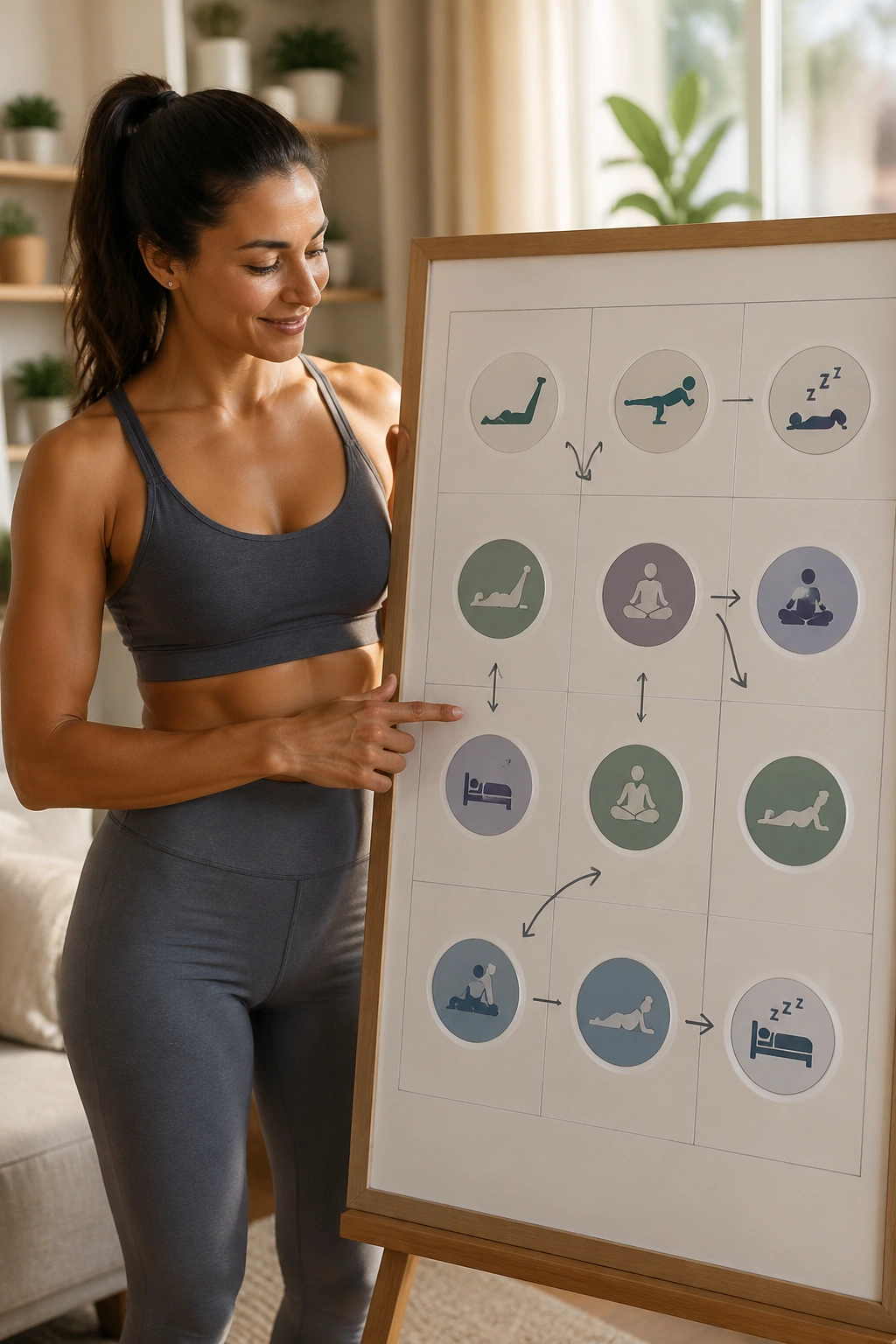
You do not need to do all 22 workouts in one week. Please don’t.
Three to four Pilates sessions per week is enough for most people if the work is clean and you stay active outside those sessions. A good target is 15 to 25 minutes per workout, then layer in brisk walks, cycling, swimming, or strength training on other days so your body has a reason to tap into stored energy.
Here’s a simple way to use the routines below:
- Day 1: Choose 1 warm-up workout, 2 mat-based workouts, and 1 finisher
- Day 2: Walk or do another form of cardio for 30 to 45 minutes
- Day 3: Choose 1 standing or plank workout, 2 lower-ab sequences, and 1 recovery-focused set
- Day 4: Rest or light mobility
- Day 5: Pick 4 workouts you skipped earlier in the week
- Day 6: Longer walk, light strength work, or a short Pilates session
- Day 7: Full rest
A few form rules will save you time.
Exhale during the hard part. Move slower than you think you need to. If your lower back pinches, shorten the leg range or bend the knees more. If your neck grabs during abdominal work, support your head or switch to a version with the head down. And if you’ve had abdominal surgery, are pregnant, or notice doming down the middle of your stomach during core work, get a clinician or pelvic-floor specialist involved before you push harder.
1. Supine Breath and Pelvic Curl Reset
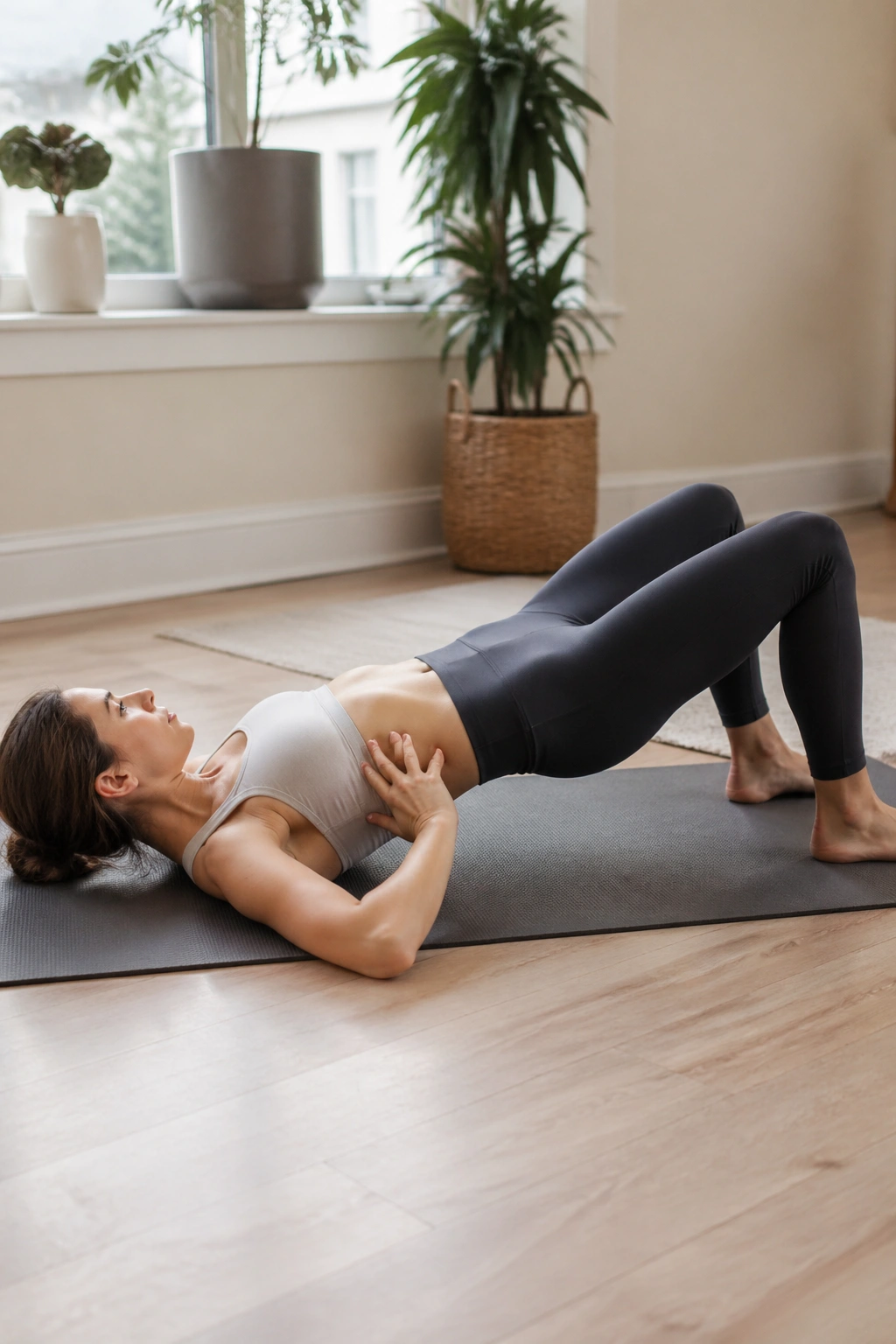
Start here if your lower abs feel asleep.
Lie on your back with knees bent, feet hip-width apart, and hands on the sides of your lower ribs. Inhale through your nose and feel the rib cage widen. Exhale through pursed lips for 4 to 6 seconds, letting the ribs soften down while the lower belly gently narrows. After 5 breaths, add a pelvic curl: tilt the pelvis, peel the spine off the mat one bone at a time, pause at the top, then roll back down slowly.
Why this one earns its place
People skip this because it looks easy. Then they do it correctly and realize their spine is stiffer than they thought and their abs are not organizing well under load. The reset teaches you how to find the back of the rib cage, the back of the pelvis, and the deep ab wall before the harder routines arrive.
Quick setup
- Breaths: 5 slow cycles
- Pelvic curls: 8 to 10 reps
- Tempo: 3 seconds up, 3 seconds down
- Best use: Warm-up before any other routine on this list
Best cue: Keep the lift modest. You’re rolling, not launching your hips toward the ceiling.
2. Bent-Knee Hundred Intervals
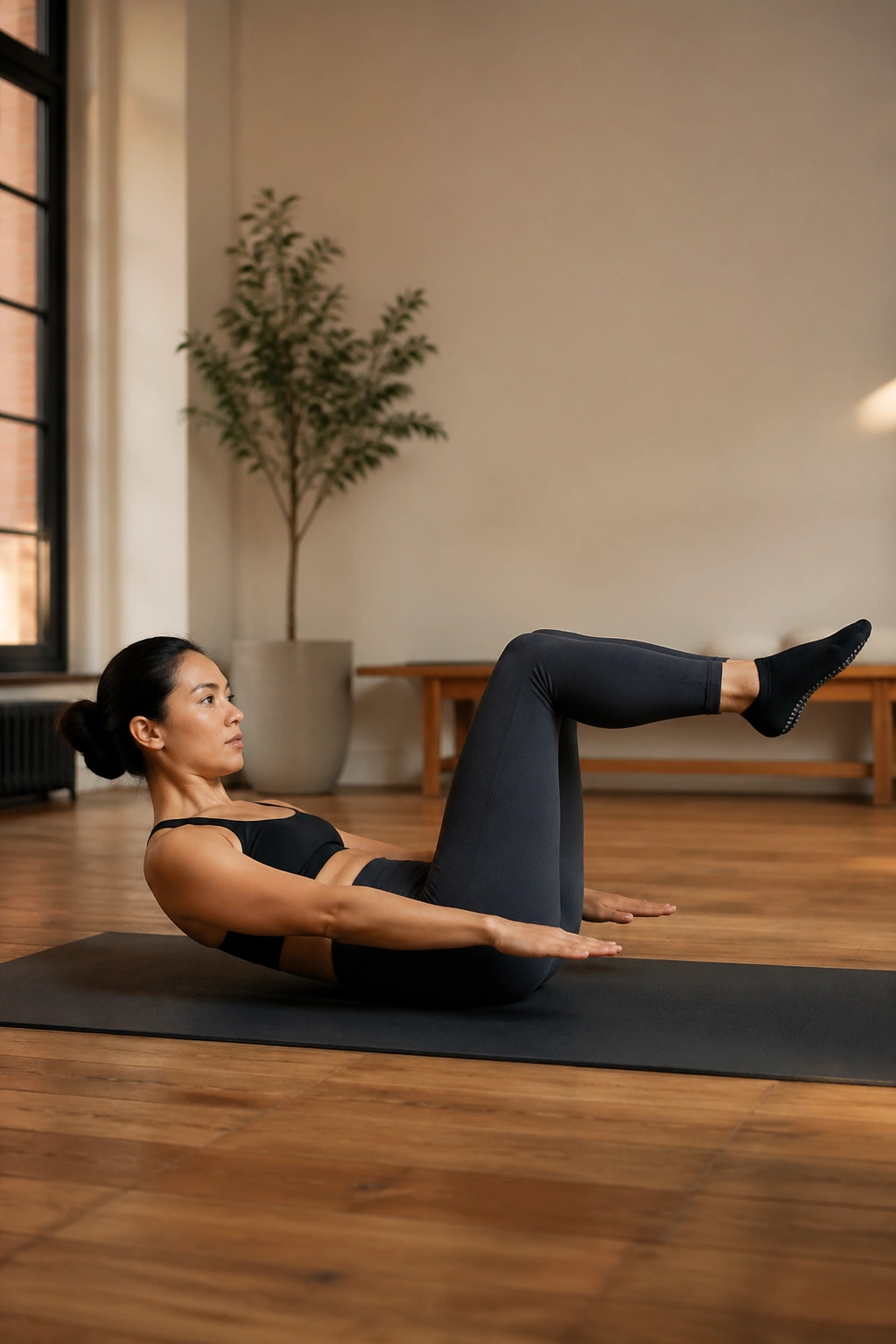
If one Pilates move had to stay in the room, I’d keep the Hundred. Not the dramatic straight-leg version people force too early—the bent-knee one that lets you breathe well and hold your trunk steady.
Lie on your back, bring both knees to tabletop, curl your head and shoulders up if your neck allows, and extend your arms long by your sides. Pump the arms in short, sharp beats while inhaling for 5 counts and exhaling for 5 counts. That is one breath cycle. Aim for 10 cycles.
The magic sits in the details. Your thighs should stay quiet, your ribs should not flare, and the front of your hip crease should stay softer than you expect. When it’s done right, the burn lands low across the abdomen, almost like a wide belt tightening from hip to hip.
People rush this. Don’t. If your back starts arching, plant one foot, then the other, and keep the arm pumps going. You’ll still get the benefit. Quality beats the full version every time.
3. Tabletop Toe Tap Ladder
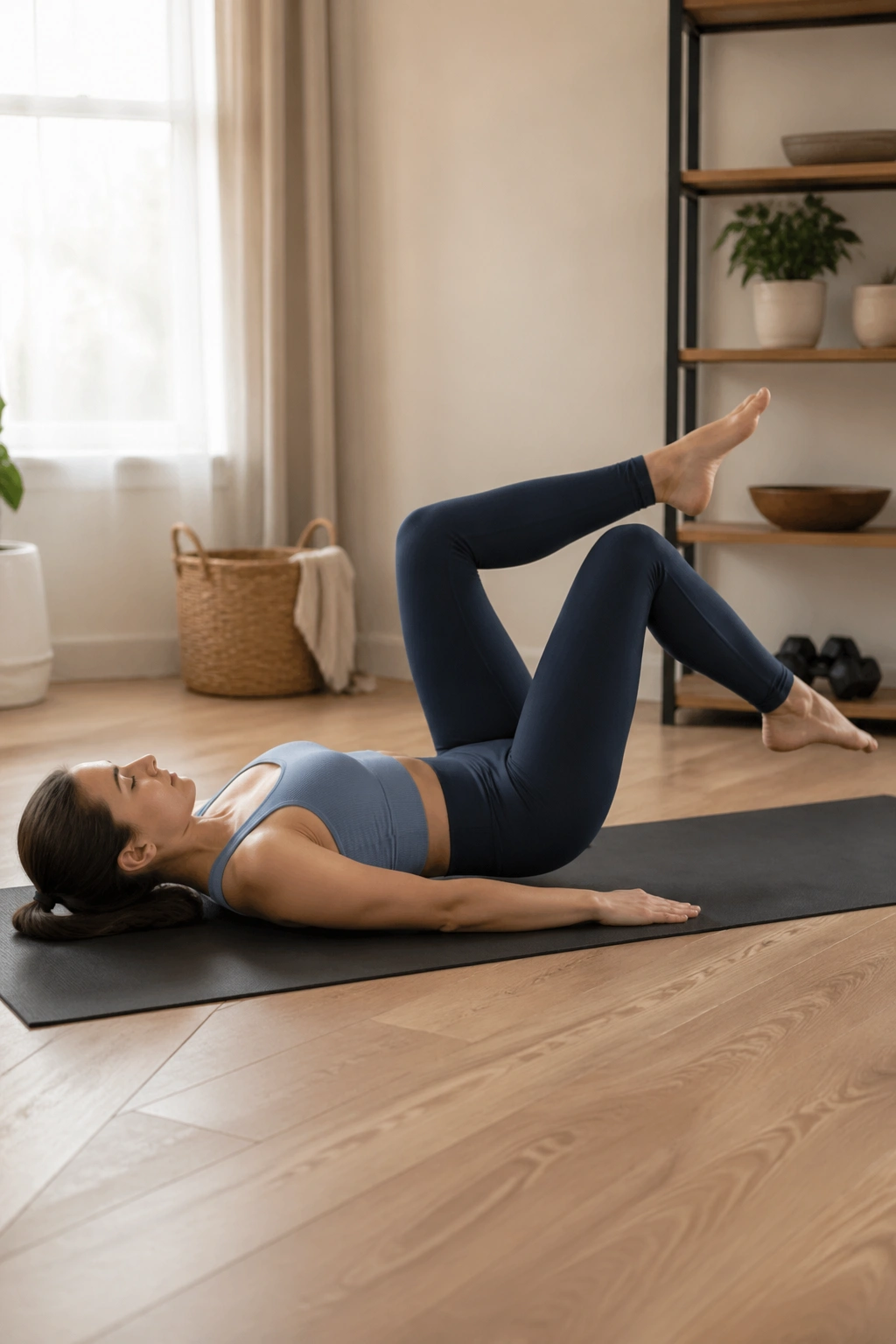
Why does this humble move light up the lower abs so fast? Because the second one foot drifts too low, your pelvis tells on you.
Set up on your back with both knees in tabletop and arms by your sides. Exhale and lower one foot to tap the mat, then bring it back up. Switch legs. Once that feels solid, turn it into a ladder: 8 alternating taps, then 6, then 4, then 2—but lower the foot a little farther each round only if the lower back stays heavy.
How to use it well
The goal is not to touch the floor at any cost. The goal is to keep the pelvis still while the legs move. Some people will tap 2 inches off the mat and get a stronger training effect than someone else who slams the heel down with a flared rib cage.
Try this format:
- 8 alternating taps
- Rest 20 seconds
- 6 slower taps with a 2-second pause at the bottom
- Rest 20 seconds
- 4 taps with both hands reaching overhead
- 2 taps per side at your lowest clean range
Your abs should feel warm and dense, not your low back.
4. Single-Leg Stretch Tempo Waves
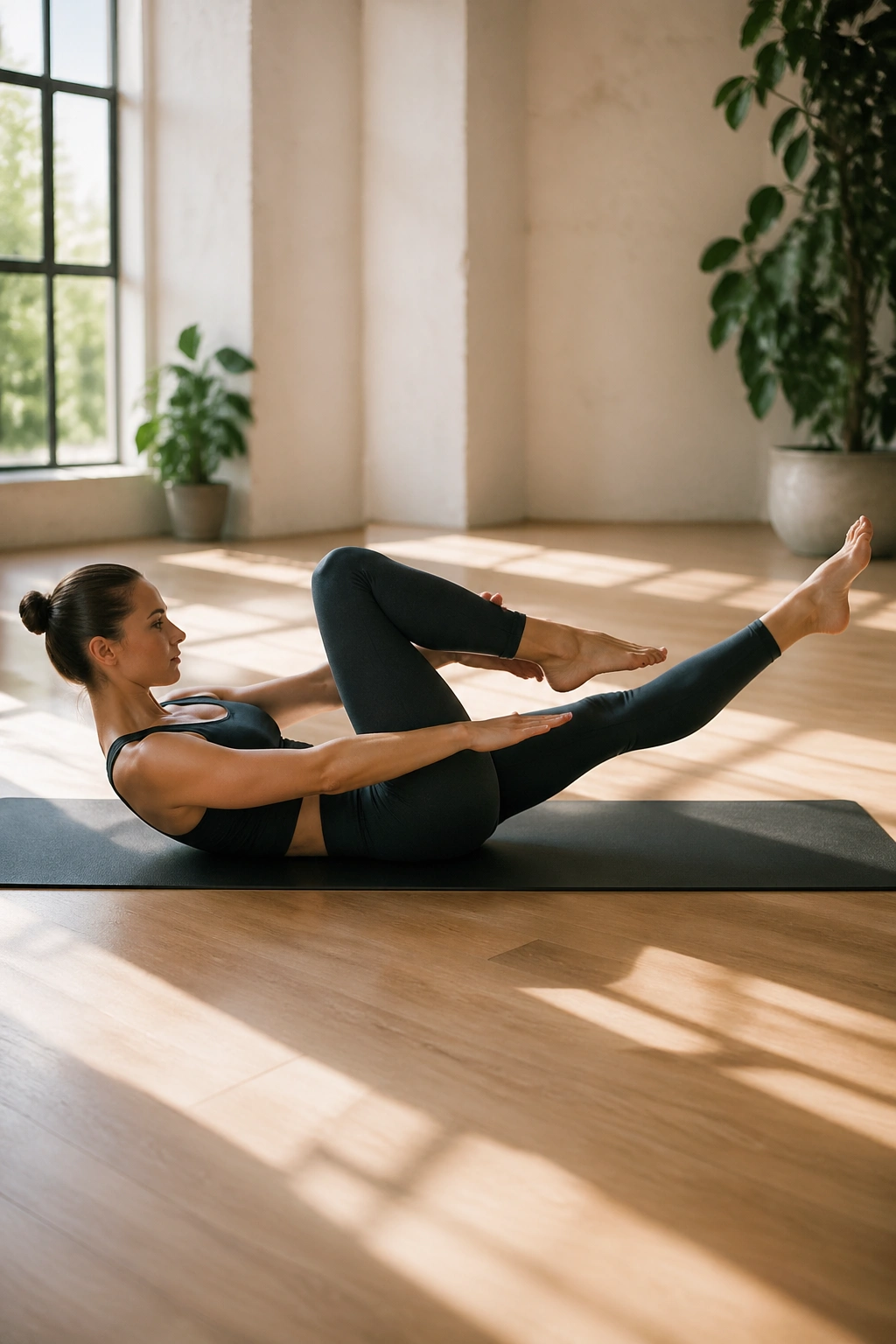
I see one mistake here all the time: people fling the legs like they’re pedaling downhill. That turns a sharp Pilates staple into a hip-flexor sprint.
Curl up into your abdominal position, bring one knee in toward your chest, extend the other leg long at about a 45-degree angle, then switch. Start with 10 slow switches. Then do 10 at a moderate pace. Finish with 10 slow ones again. Those tempo waves change the feel of the workout completely.
The slow rounds teach control. The middle round adds heat. The last round is where fatigue tries to steal your form and you refuse to hand it over.
A clean rep has a narrow waist, steady pelvis, and shoulders that stay broad instead of creeping toward the ears. If your neck hates the curled position, keep your head down and move only the legs. You lose some intensity, sure, but you keep the lower-ab training where you want it.
5. Double-Leg Stretch With a Short Reach Arc
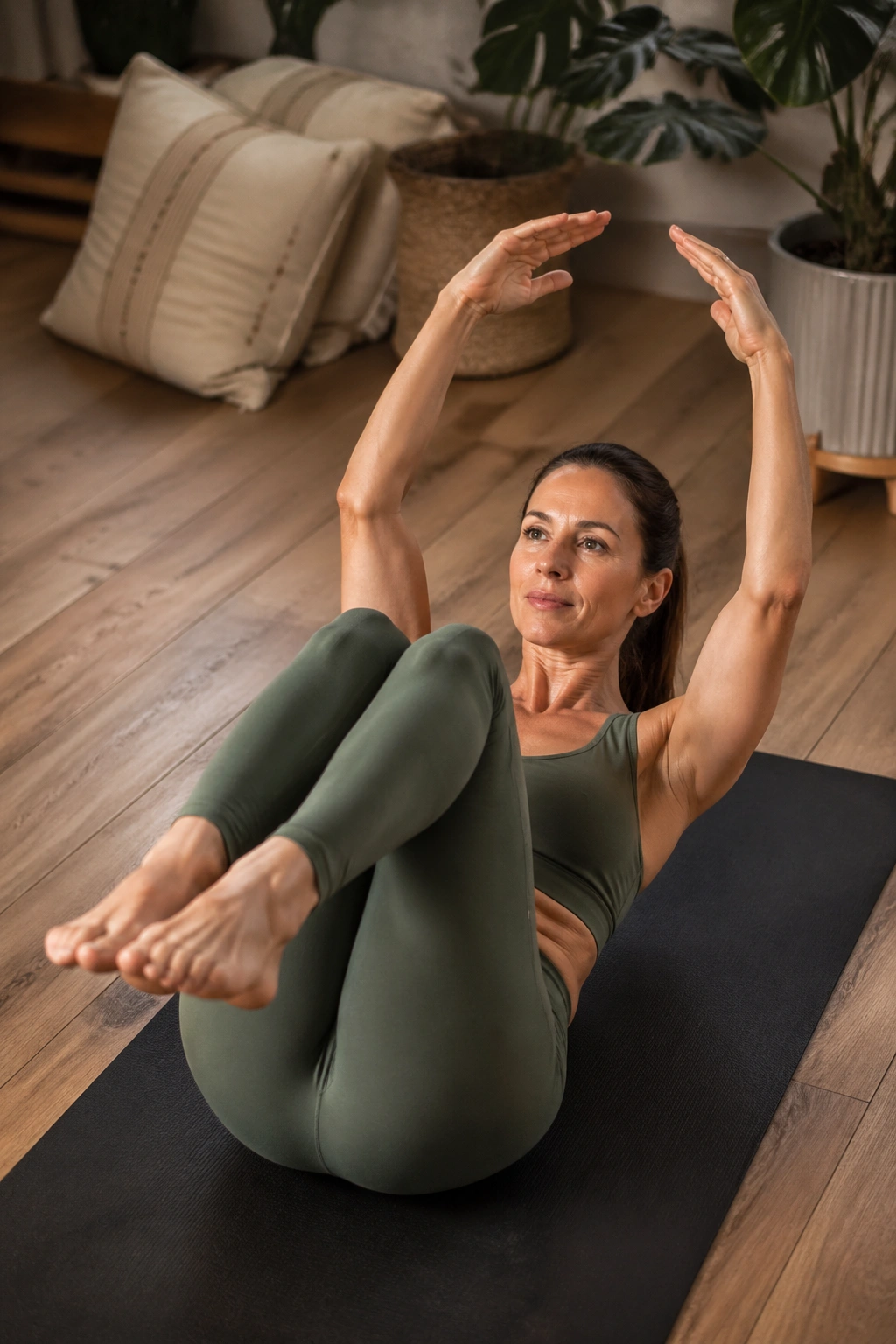
Double-leg stretch can be brilliant or useless. The difference is the length of the reach.
From a curled-up position, hug both knees in. Exhale as you send the arms overhead and legs away from the body, then circle the arms and pull the knees back in. Most people extend too far, too soon. That’s where the lower back lifts, the ribs pop, and the exercise turns sloppy.
Keep the legs higher than you think you need to. Use a short arc with the arms if going fully overhead yanks your ribs up. There’s no medal for making the shape bigger. The hard part is keeping the trunk quiet while the limbs travel.
Do 6 to 8 clean reps, rest 15 seconds, then repeat for 3 rounds. The later rounds are where the lower belly starts to tremble. Good. That shaking is often your deep core trying to hold the line under fatigue.
And yes, this one looks smoother on social media than it feels on a mat.
6. Dead Bug Pilates March
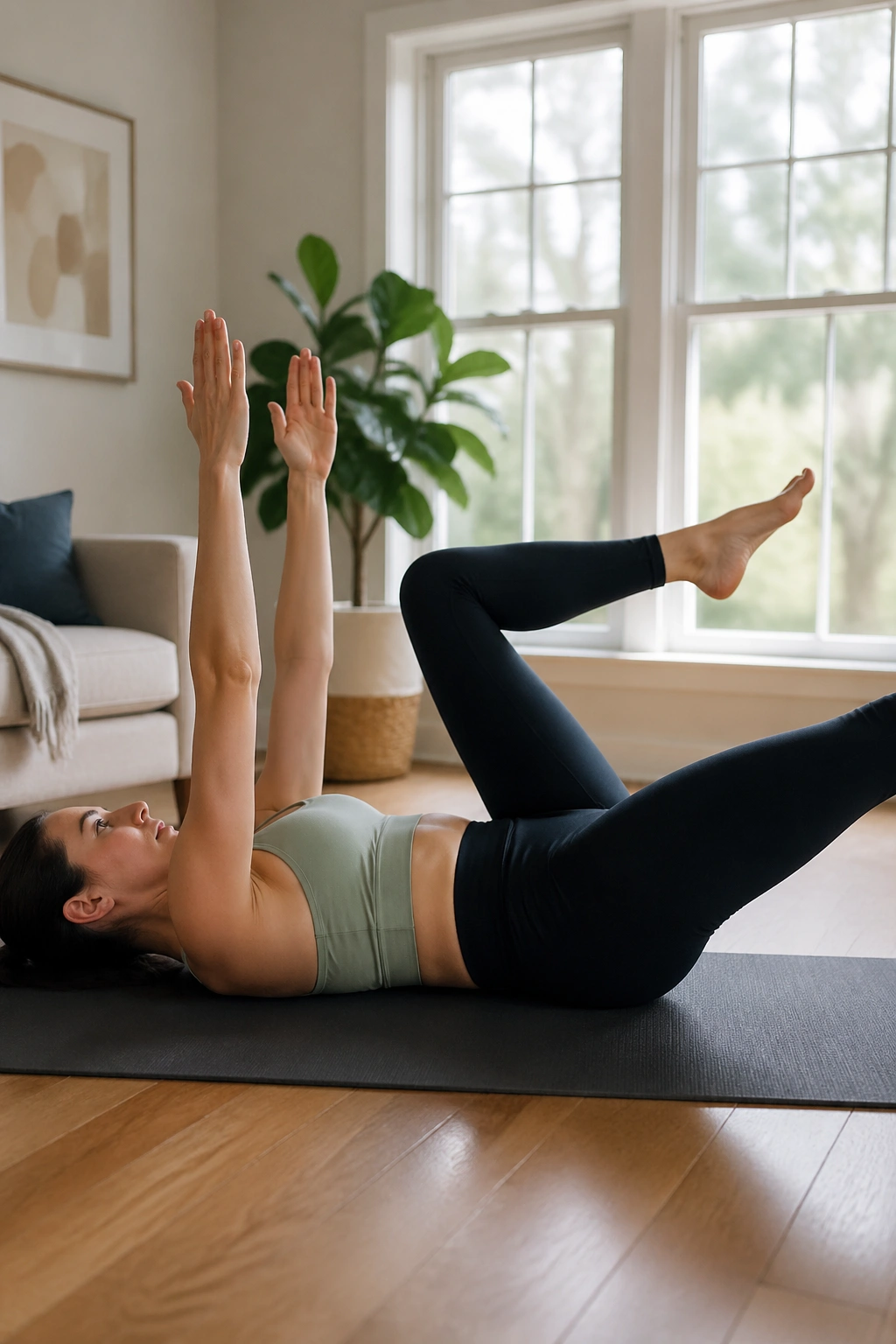
Unlike a traditional crunch, this sequence trains the abs to resist movement, which is one of their main jobs in real life.
Lie on your back with both knees in tabletop and arms reaching to the ceiling. Exhale and lower your right heel toward the floor while the left arm reaches overhead. Inhale back to center. Switch sides. After 10 alternating reps, turn it into a march: lower one heel, then the other, while both arms stay straight up and the pelvis remains still.
This is a smart choice for people who want lower-ab work without neck strain, and it’s one of my favorite building blocks for anyone returning after back irritation. The pace should feel almost stubbornly slow.
Who gets the most from it?
- People whose lower back arches during leg work
- Anyone rebuilding core strength after time off
- Lifters who need better trunk control during squats and presses
- Walkers or runners who feel their hips doing all the work
A folded towel under the pelvis can help you feel neutral. Tiny tweak. Big payoff.
7. Roll-Back and Knee Lift Combo
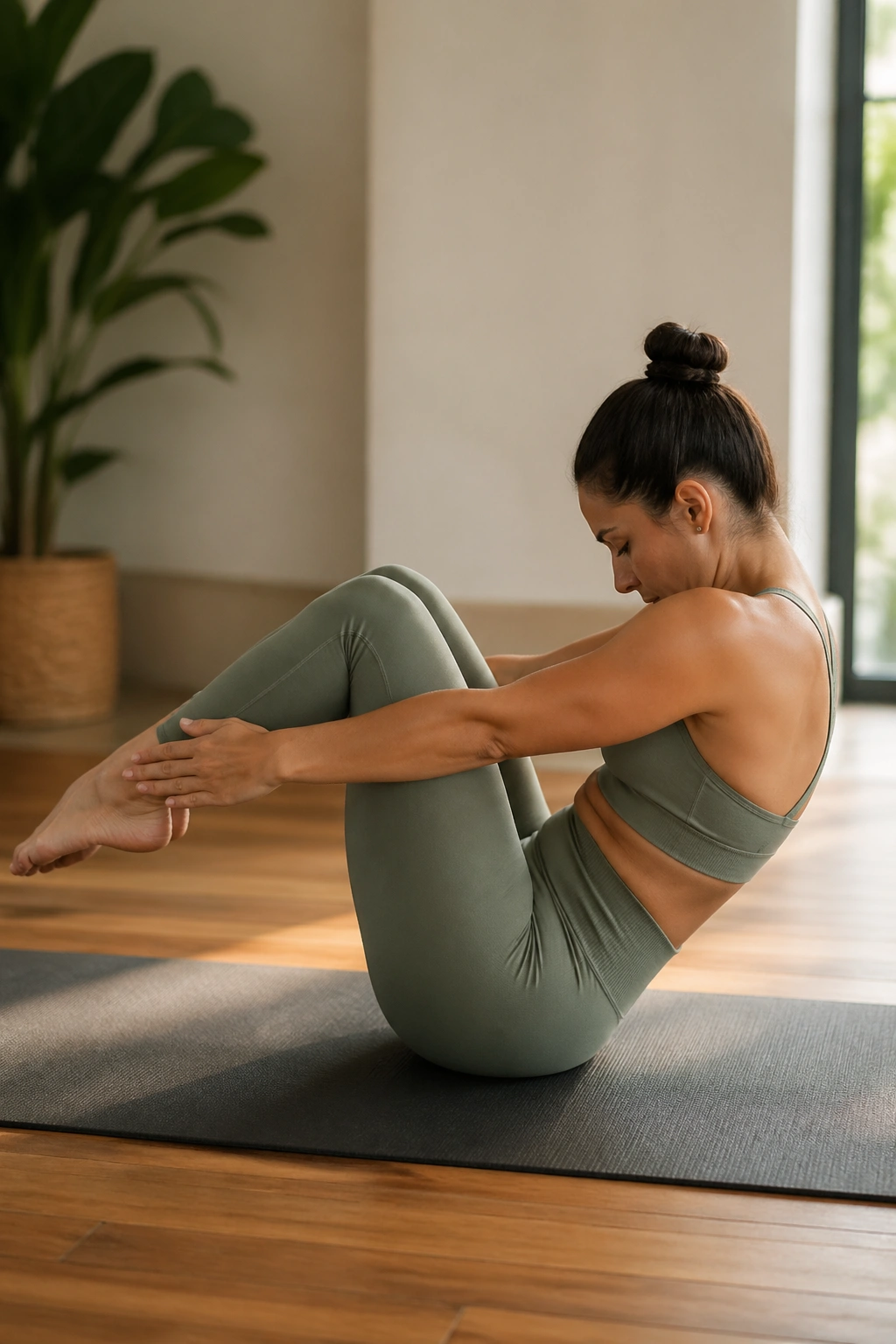
This one looks like a warm-up until the shaking starts.
Sit with knees bent, feet on the mat, and hands behind the thighs. Roll halfway back until you feel the abdominals catch your weight. Hold that C-curve. From there, lift one foot an inch or two off the floor, set it down, then switch. After 10 lifts per side, roll back up, sit tall, and repeat the whole sequence 3 times.
What makes it different
The move blends a spinal roll-back with an unstable leg lift, so your lower abs and deep core have to work while you’re partly upright. That upright angle matters because plenty of people can find their core on their back but lose it the second gravity changes direction.
Fast coaching notes
- Keep the low back rounded, not collapsed
- Lift the foot low; don’t yank the knee toward the chest
- Exhale on each knee lift
- If the hip flexors grab, lean a touch higher and make the lift smaller
Best use: Middle of a workout, once you’re warm and your breath is under control.
8. Half Roll-Up Pulse Set
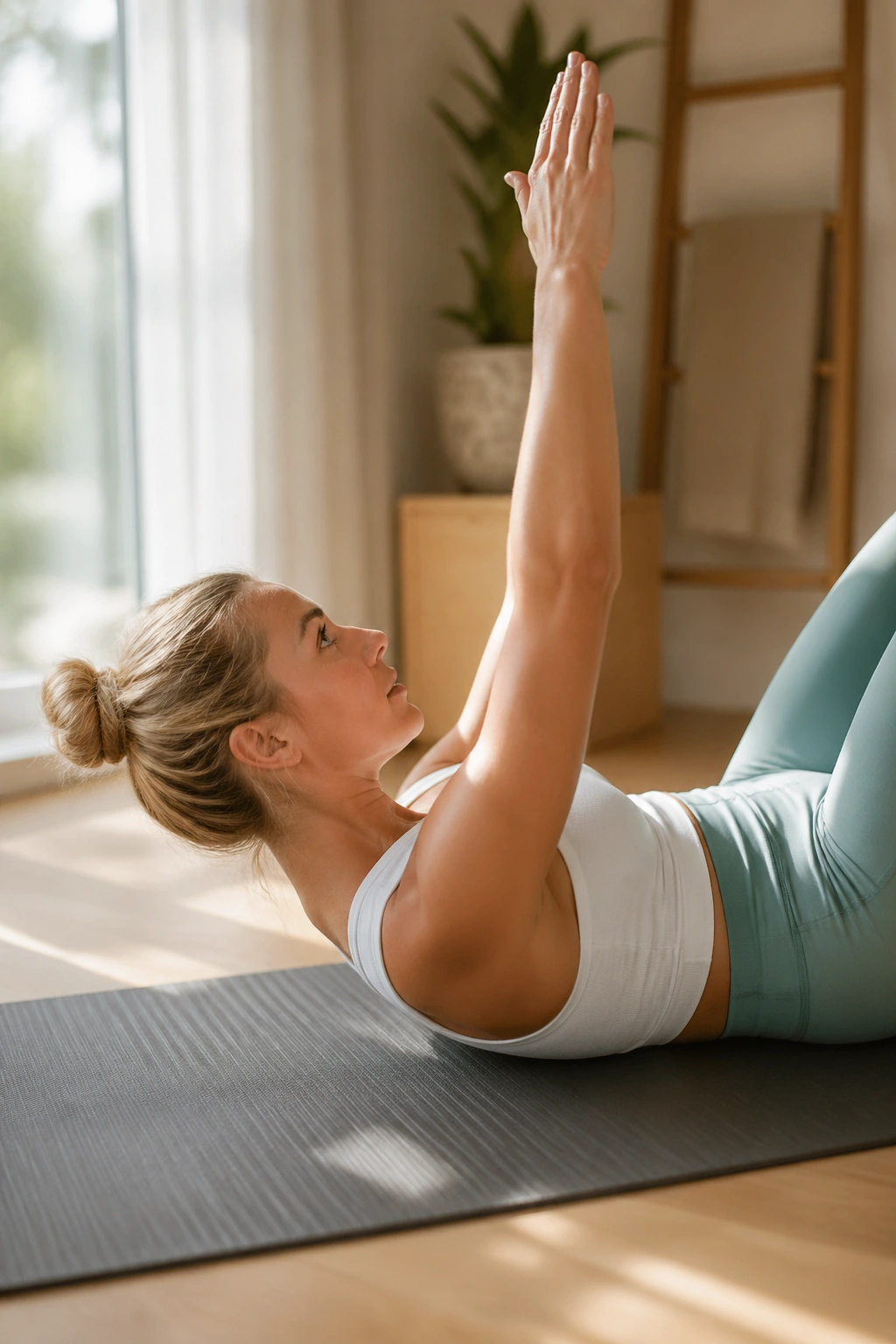
Can you strengthen the lower abs without doing a full roll-up? Yes, and for a lot of people the half version works better.
Lie on your back with legs bent or straight—bent is friendlier for tight hamstrings. Reach your arms toward the ceiling, exhale, and curl up until your shoulder blades clear the mat. Pause there. Pulse forward 3 short times from the ribs, then lower halfway down, hover, and come back up. That’s one rep. Aim for 8.
Why the hover matters
The lowering phase is where the trunk wants to drop and the lower belly wants to switch off. The hover forces the abs to stay online. You’re not swinging. You’re controlling the descent with the front body while keeping the pelvis quiet.
This is one of those workouts that gets hard before it looks hard. If your feet lift off the floor or your neck starts barking, place a small pillow under your head on the way down and reset between reps. Clean reps beat ugly ones, every time.
9. Scissor Switch Endurance Series
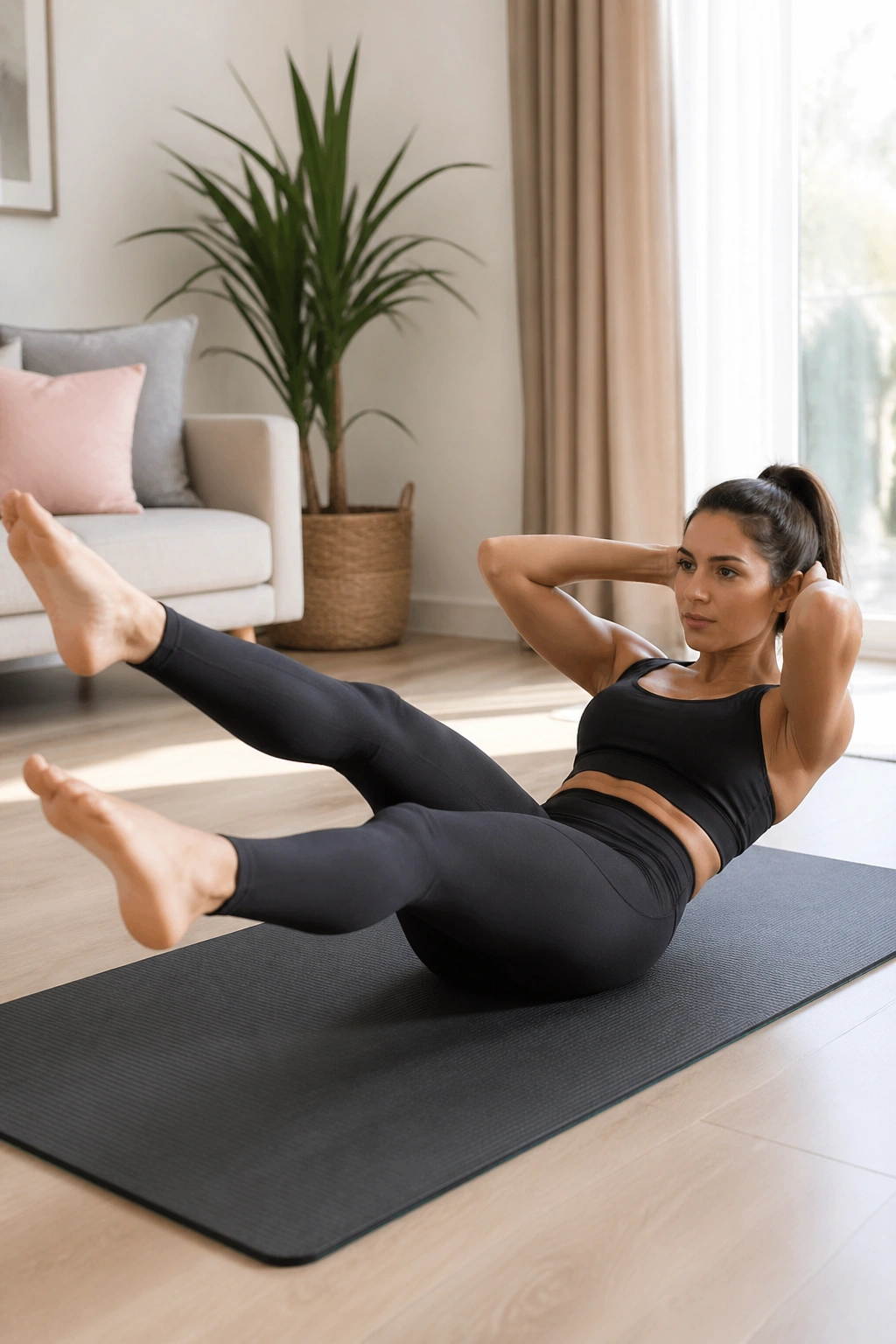
Picture the classic Pilates scissor, then slow it down enough that each switch becomes work instead of momentum.
Lie on your back and lift both legs toward the ceiling. Curl up and hold behind one calf or thigh while the other leg reaches away. Switch on each exhale, staying for a full second in every position. Do 12 slow switches, rest, then finish with 20 quicker ones that still keep the pelvis steady.
A few details make or break this series:
- The top leg does not have to be perfectly straight
- The lower leg should reach from the center, not from the hip crease alone
- Your chin should stay lightly nodded, not jammed to the chest
- Hands can hold behind the thigh if hamstrings are tight
This sequence pulls in the lower abs because the legs keep changing leverage. The farther one leg moves away, the more your trunk has to resist the urge to arch. If you feel it mostly in the front of the thighs, shorten the range and exhale harder on each switch.
10. Crisscross With Heel Tap Pause
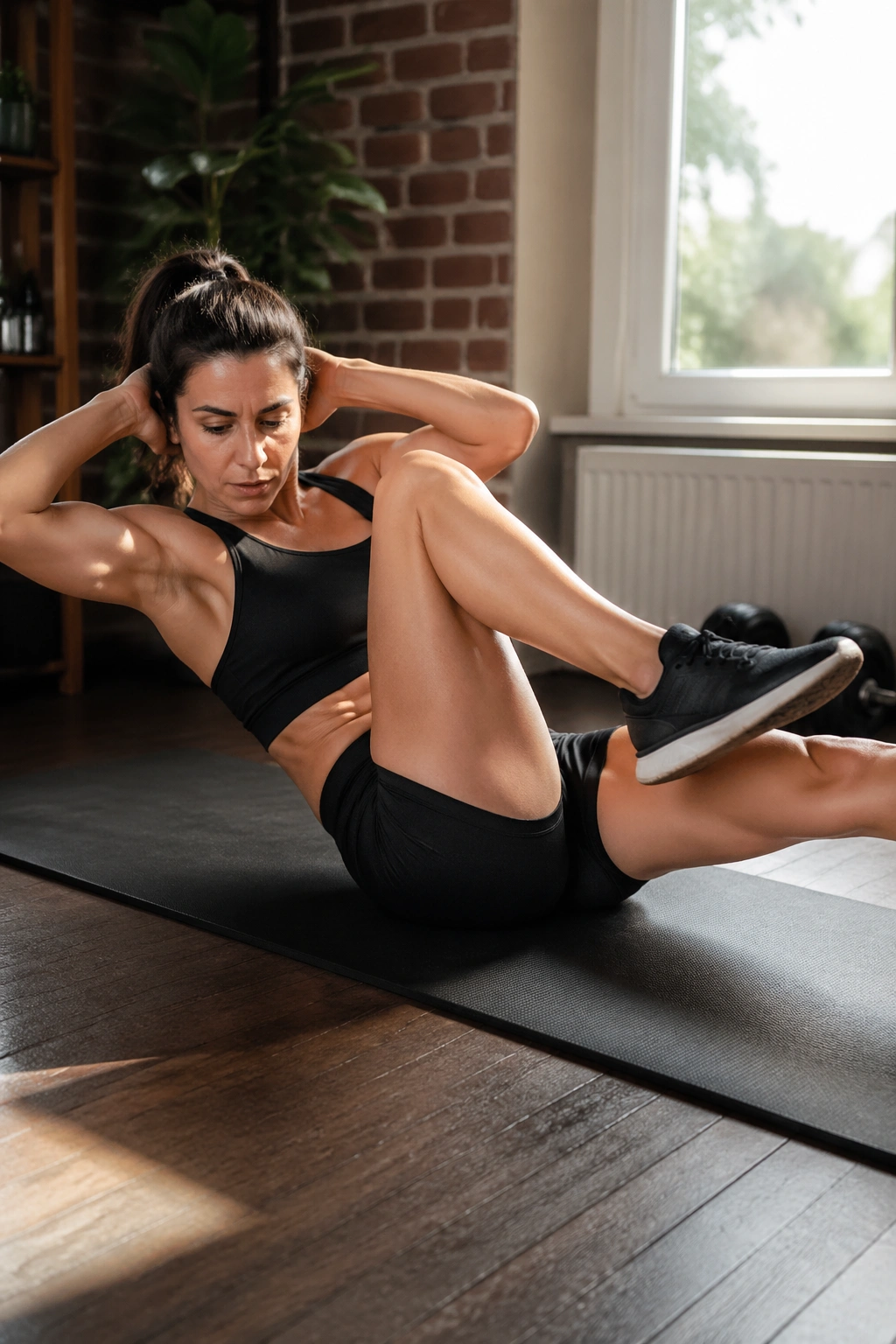
A lot of people treat crisscross like a speed drill. I think that ruins it.
The slower, meaner version starts in a curled-up position with hands behind the head, one knee in, the other leg extended. Rotate the rib cage toward the bent knee, hold for 2 seconds, switch sides, hold again, then after 8 slow reps per side add a heel tap before each switch. That pause changes the whole move because it forces you to organize the twist instead of flinging the elbow around.
The lower abs show up here because rotation and leg extension happen together. Your trunk has to stay lifted while the extended leg reaches long, and that long leg creates the downward pull your center has to control.
One warning: if you lead with the elbow, you’ll miss the point. Lead with the ribs. The elbow follows. Better twist, less neck strain, more work where you wanted it in the first place.
11. Leg Lower and Lift Ladder
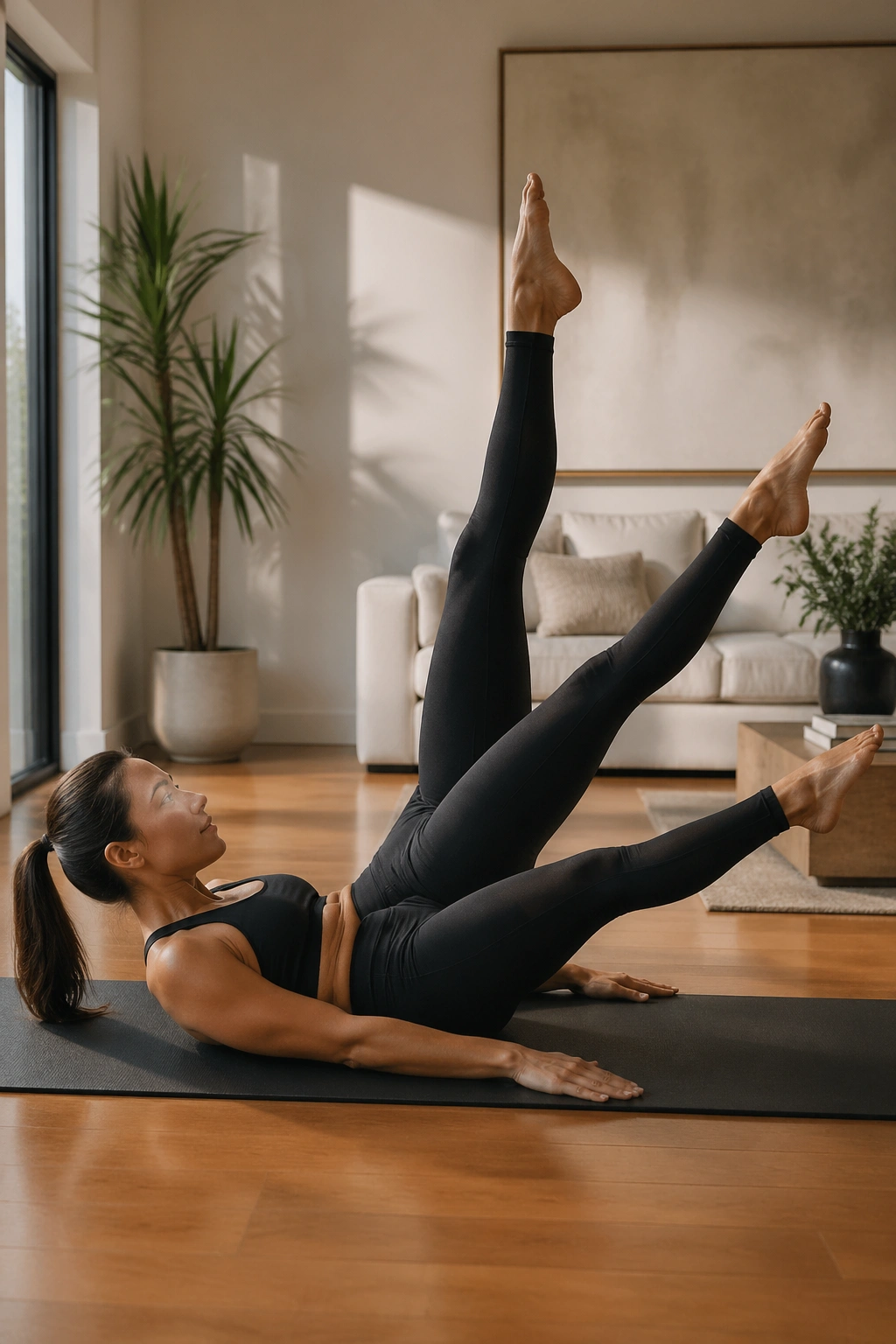
This workout has a reputation for bullying the lower back. It earns that reputation when people go too low.
Start with both legs reaching to the ceiling. Hands can go under the pelvis if you need support, though I’d rather see you bend the knees slightly than wedge your body into a shape it cannot hold. Lower the legs 20 degrees, lift. Then 30. Then 40—only if the abs still control the descent. Climb back up the ladder by making the range smaller as fatigue sets in.
Who should use this one? People who already have decent tabletop control and want a sharper challenge. Who should skip it for now? Anyone who feels the low back peel off the mat the second both legs move together.
The sweet spot is narrower than most people think. A 12-inch lowering range with a heavy spine can be brutal. A huge drop with a flared rib cage is just practice for compensation. Small range, strict form, steady breath.
12. Reverse Crunch Hip Curl Sequence
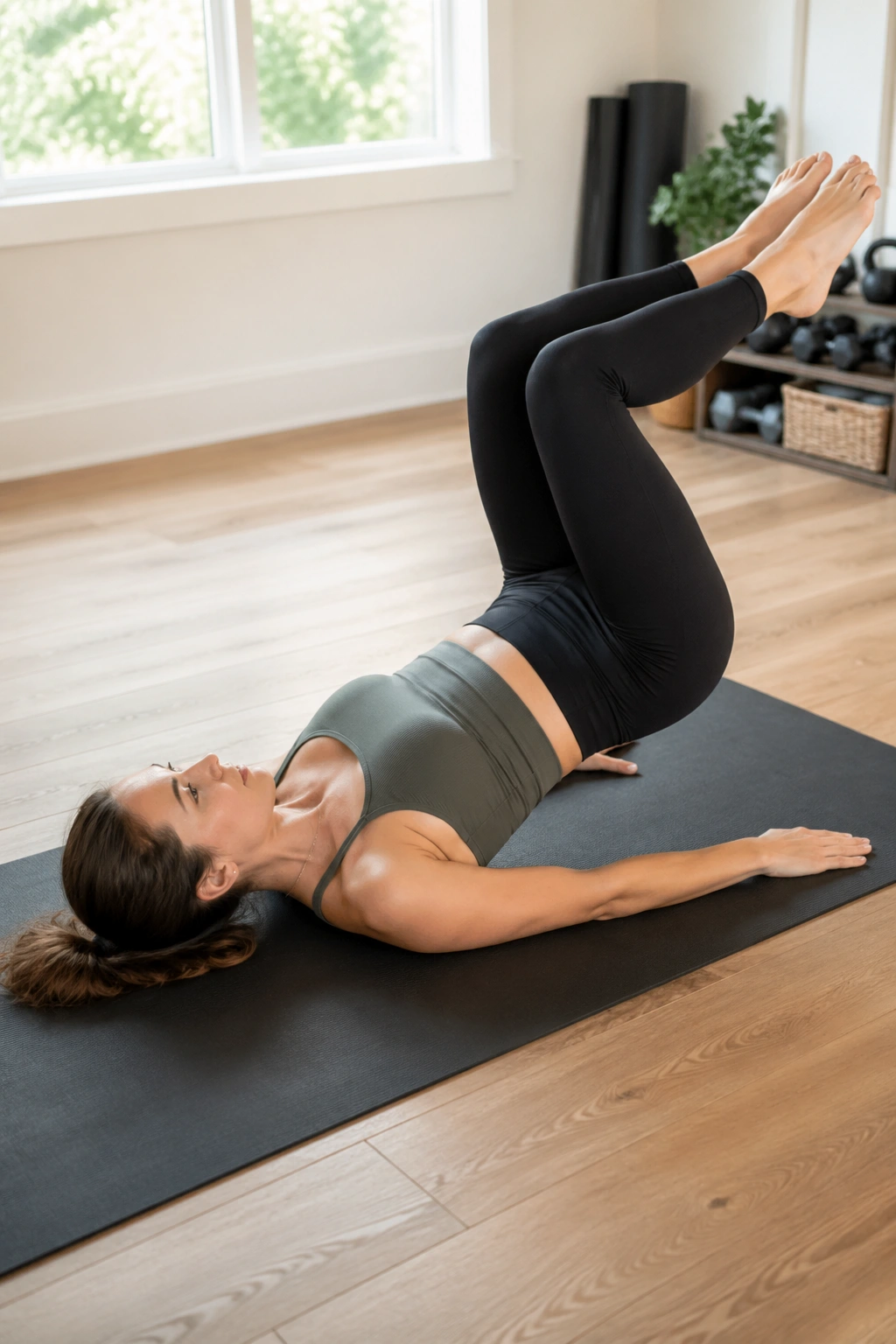
If your lower belly responds to anything, it often responds to this.
Lie on your back with knees bent to tabletop and arms pressing into the mat. Exhale and gently curl the tailbone off the floor, bringing the knees toward the chest without swinging. Lower down one vertebra at a time. After 10 reps, hold the knees in and add 10 tiny hip curls—small, neat, almost stingy.
The part most people miss
The knees do not drive the movement. The pelvis curls because the lower abs initiate it. If you rock backward and throw the legs around, the move loses its point.
A good short sequence
- 10 reverse crunches with a 2-second lower
- Rest 20 seconds
- 10 tiny hip curls
- Rest 20 seconds
- 6 slow reverse crunches with the head and shoulders lifted
Warning: Stop if you feel pressure in the neck or if the mat thumps under you on the way down. A reverse crunch should feel controlled, not crash-landed.
13. Frog Press and Heel Click Set
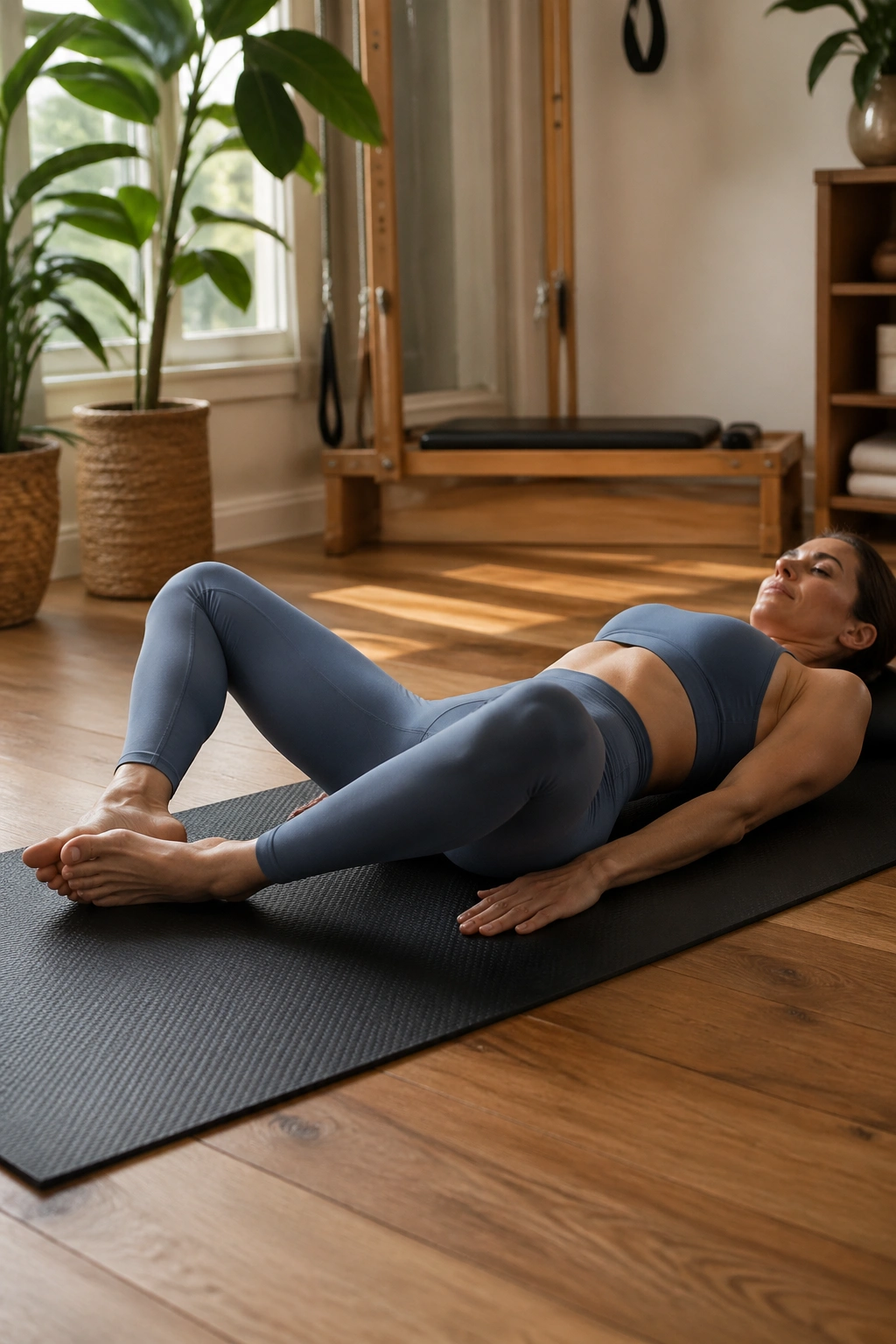
This one has a dancer’s shape and a nasty little core demand.
Bring your heels together, toes apart, knees bent into a frog position. From a curled-up or head-down position, press the legs out on a diagonal, squeeze the heels together, bend back in, then add a small heel click when the legs are extended. Do 12 reps, rest, then do 12 more with the head lifted.
The frog shape shifts the load and often makes people notice how much their inner thighs and lower abs work together. That pairing matters. A stable pelvis likes help from the adductors, and the adductors often wake the lower abdominal wall in a useful way.
Make the diagonal line high enough that your low back stays grounded. No ego here. If you send the legs too low, the abs lose and the hip flexors celebrate.
This is a smart workout when regular double-leg work feels stale and you want something a touch different without jumping into advanced tricks.
14. Pilates Ball Squeeze Toe Taps
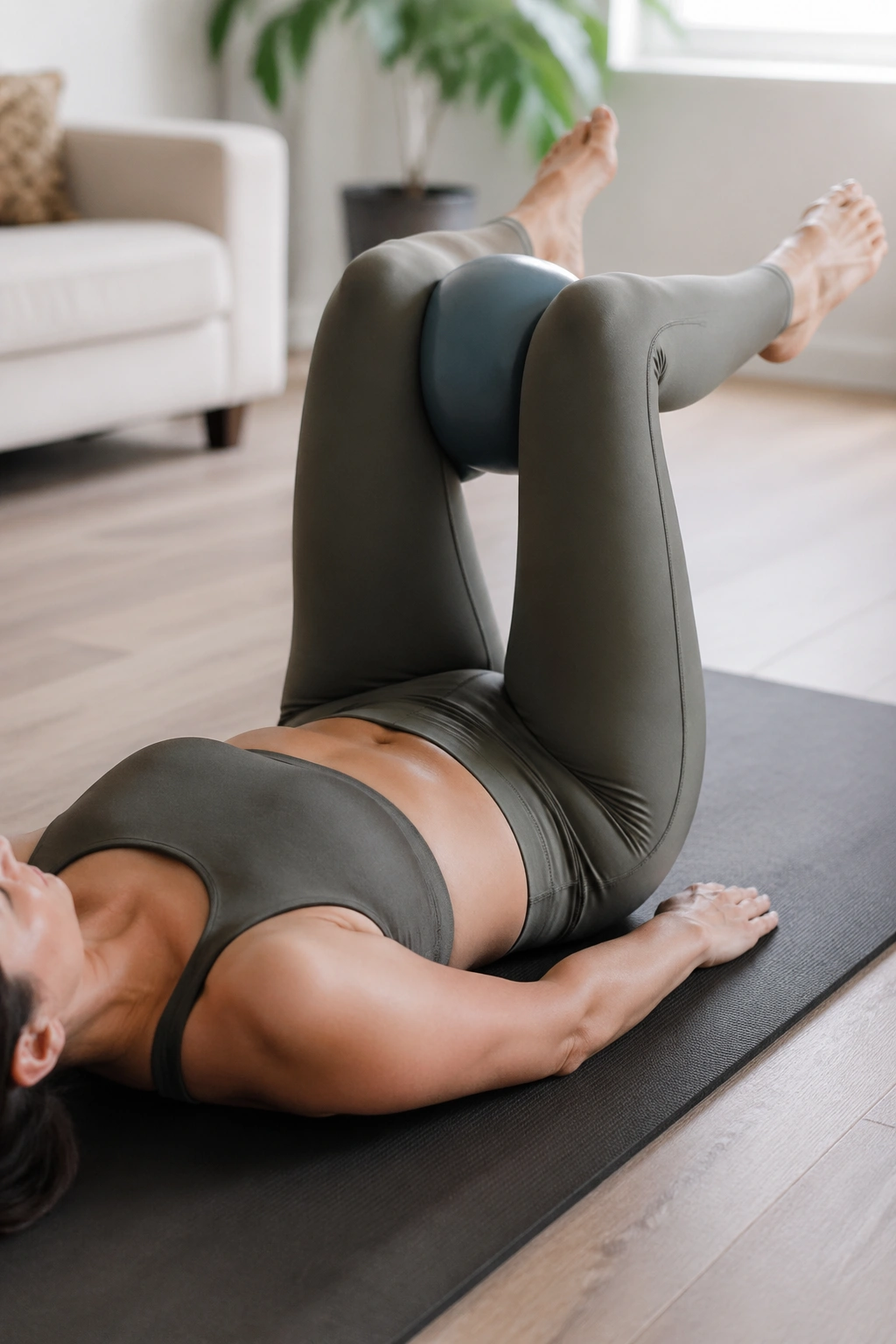
Put a small Pilates ball between the knees and ordinary toe taps become stricter in a hurry. No ball? Use a folded pillow or even a rolled sweatshirt.
Lie on your back with knees in tabletop and the ball lightly squeezed. Exhale, tap one toe down, return, then the other. After 16 alternating taps, hold both legs still and squeeze the ball for 10 short pulses. Repeat the whole round 3 times.
What the squeeze changes
The inner-thigh connection helps keep the pelvis centered, and that often makes the lower-ab work cleaner. People who feel toe taps mostly in the front of the hips usually get more from this version because the squeeze gives them a better line from ribs to pelvis to thighs.
A mistake I see a lot: crushing the ball like it owes you money. Don’t. Use a light, steady squeeze, maybe 30 to 40 percent effort, so you can still breathe and move cleanly. Too much tension in the thighs can harden everything and make the breath choppy.
15. Side-Lying Lower-Core Sweep
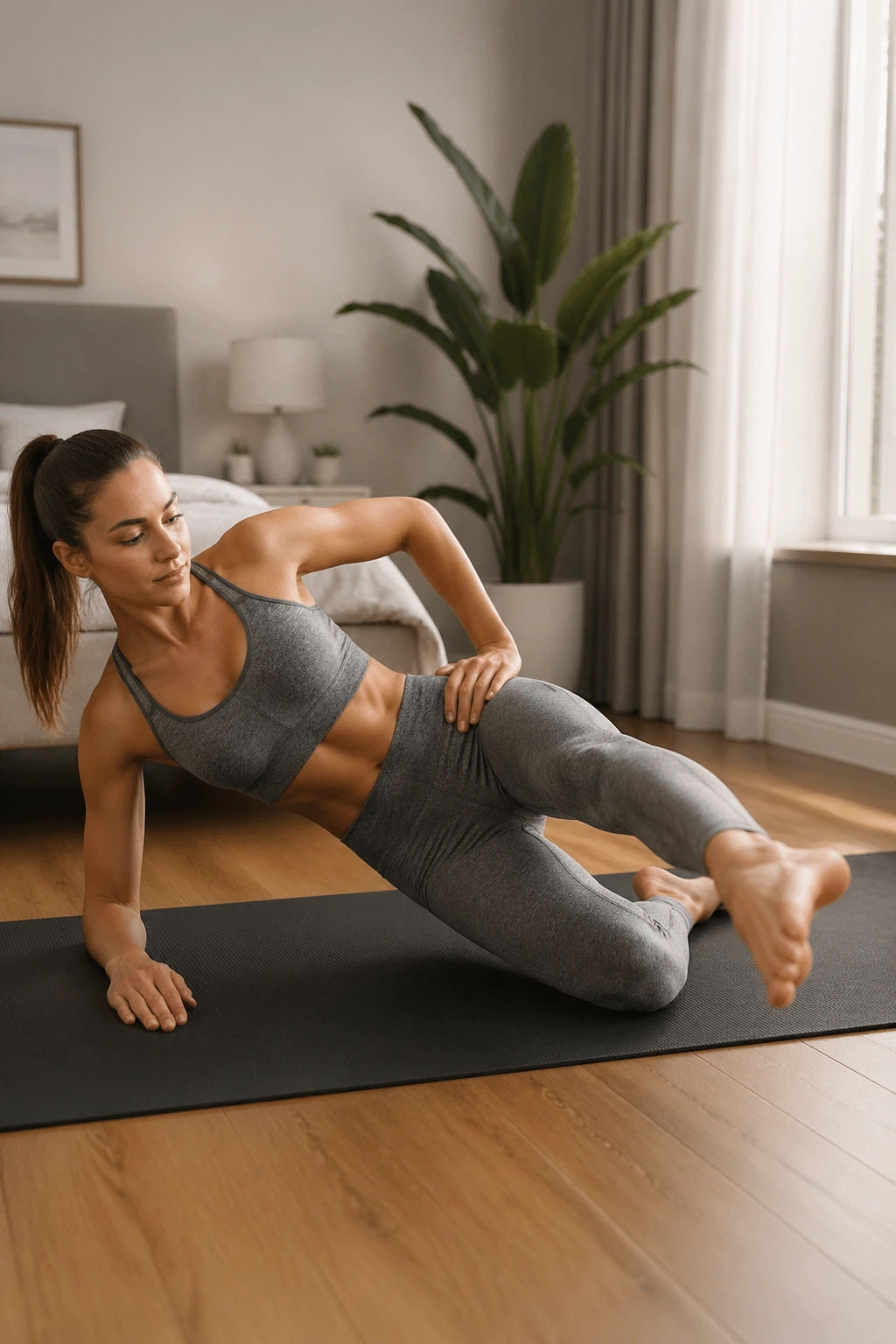
Lower-belly training does not have to happen flat on your back.
Lie on one side with your bottom knee bent for support and the top leg long. Rest on your forearm or lie all the way down. Reach the top leg slightly forward, then sweep it back in a small arc while keeping the waist lifted off the mat. After 12 sweeps, bring both knees bent in front of you and lift them together 8 times without rolling backward. Switch sides.
The first part hits the side body and hip. The second part sneaks into the lower abs because the trunk has to stabilize the pelvis while both legs leave the floor. If that sounds easy, try it without rocking.
I like this sequence for people who are tired of only sagittal-plane ab work—up and down, up and down—and need their core to behave better in side positions. Better side-body strength usually cleans up planks, walking gait, and standing balance too. Useful carryover, not fluff.
16. Forearm Plank Knee Slide Flow
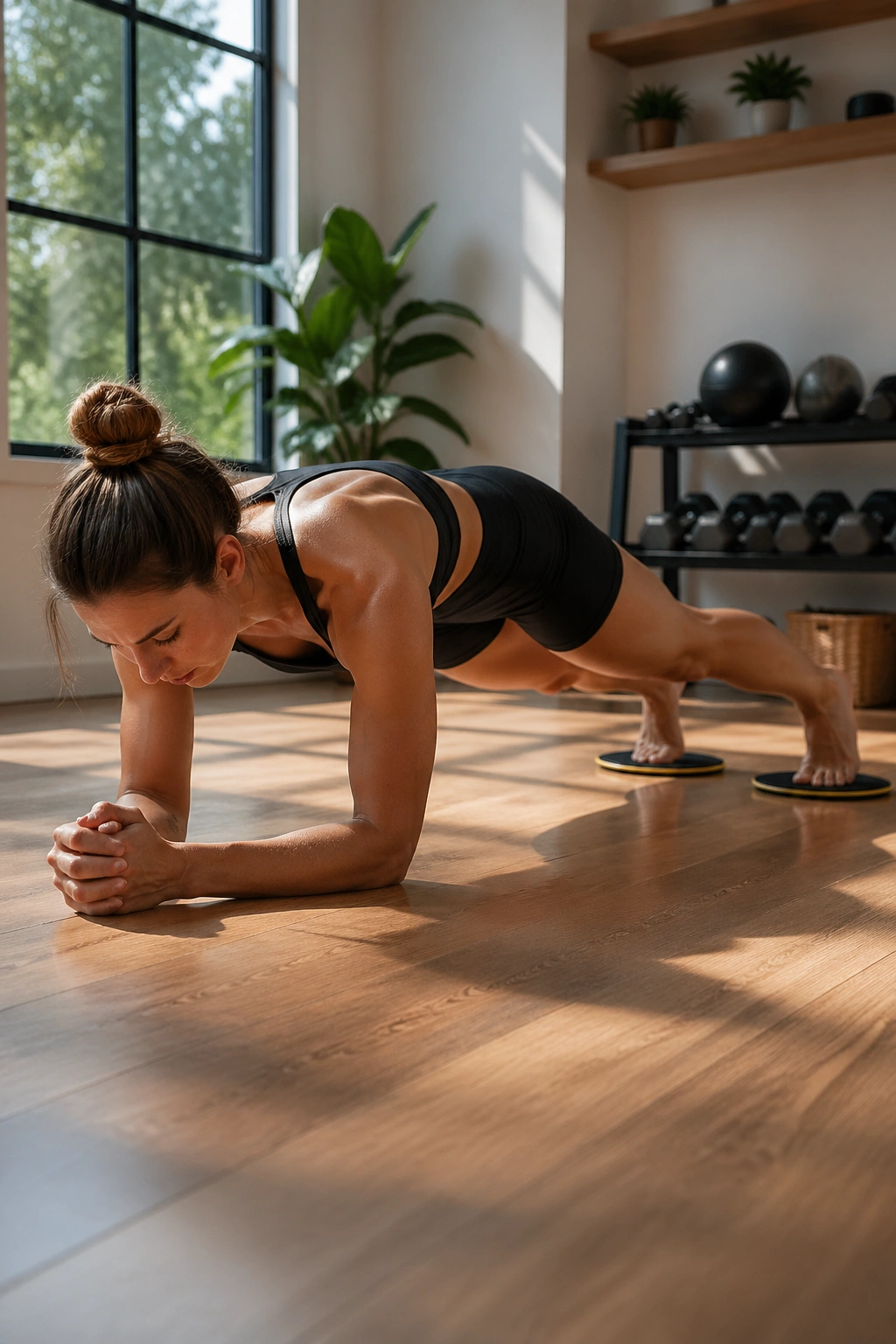
Planks are easy to fake. This version is harder to fake.
Set up in a forearm plank with feet on towels, sliders, or socks on a smooth floor. Exhale and slide one knee forward a few inches without shifting the hips. Return it. Switch sides. After 10 per side, slide both knees halfway in, pause for 2 seconds, and send them back out.
Why this hits low
The sliding action removes the bounce people use in regular mountain climbers. Your lower abs have to pull the legs in while your shoulders and ribs stay stacked. There’s nowhere to hide.
A clean work set
- 10 single knee slides per side
- 6 double-knee slides
- Rest 30 seconds
- Repeat for 3 rounds
If your low back sags, drop to an elevated plank with forearms on a bench or couch. Same idea. Better form. More honest work.
17. Bear Hover Breath Holds
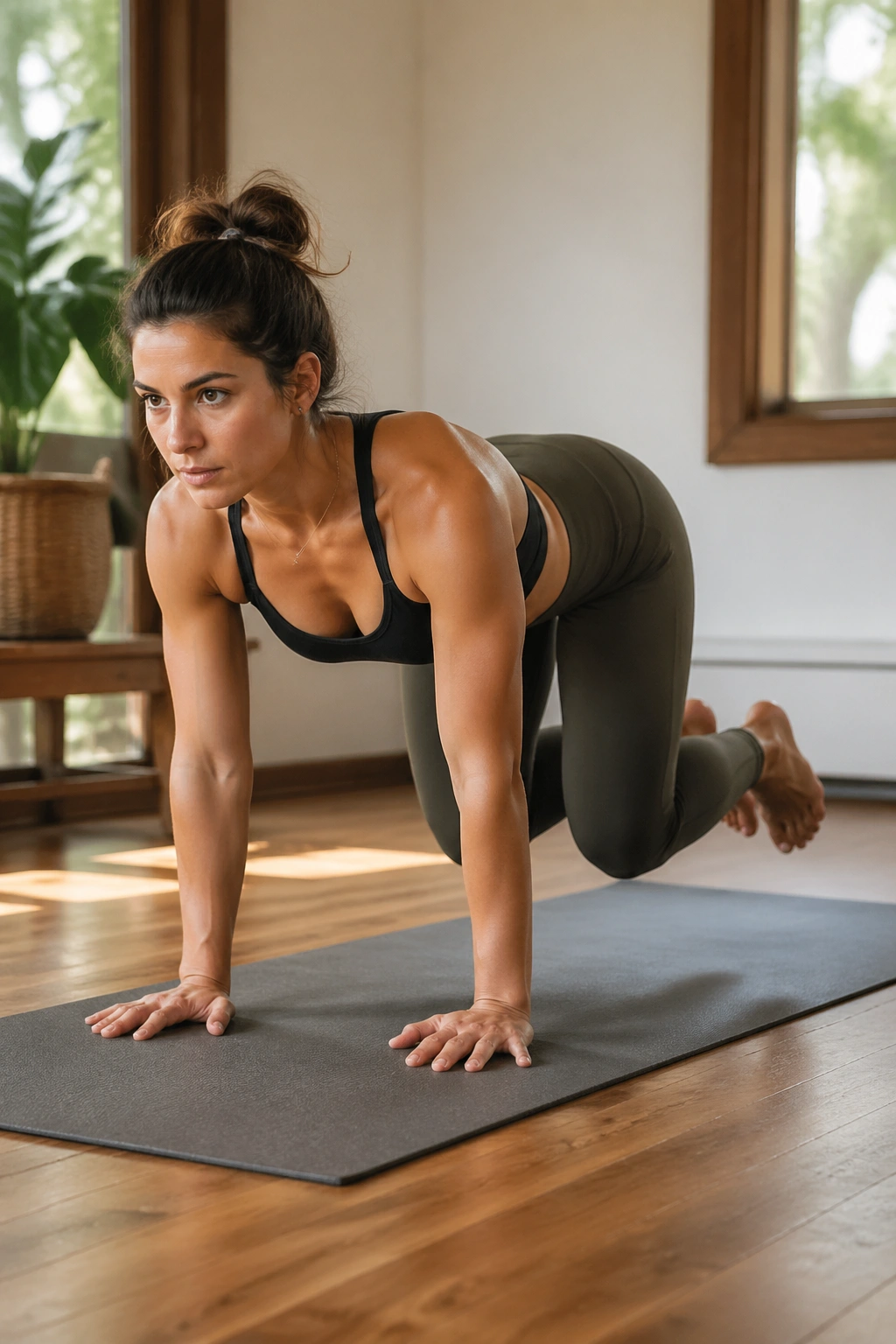
Short. Brutal. Effective.
Start on all fours with wrists under shoulders and knees under hips. Tuck the toes and hover the knees 1 to 2 inches off the floor. Hold for 20 seconds while taking slow nasal inhales and long mouth exhales. Rest 15 seconds. Do 4 to 6 rounds.
The reason this works so well for the lower abs is that the body has to hold a compact position without letting the spine dump into extension. Your center is fighting gravity from underneath, and the long exhale helps the deep core cinch inward.
A few coaching notes matter here:
- Push the floor away so the upper back stays broad
- Keep the shins parallel to the floor
- Do not let the knees drift too high
- If the quads start screaming before the core turns on, shift slightly back
This is one of those workouts that makes people underestimate 20 seconds. Then round three arrives.
18. Slow Mountain Climber With Pilates Scoop
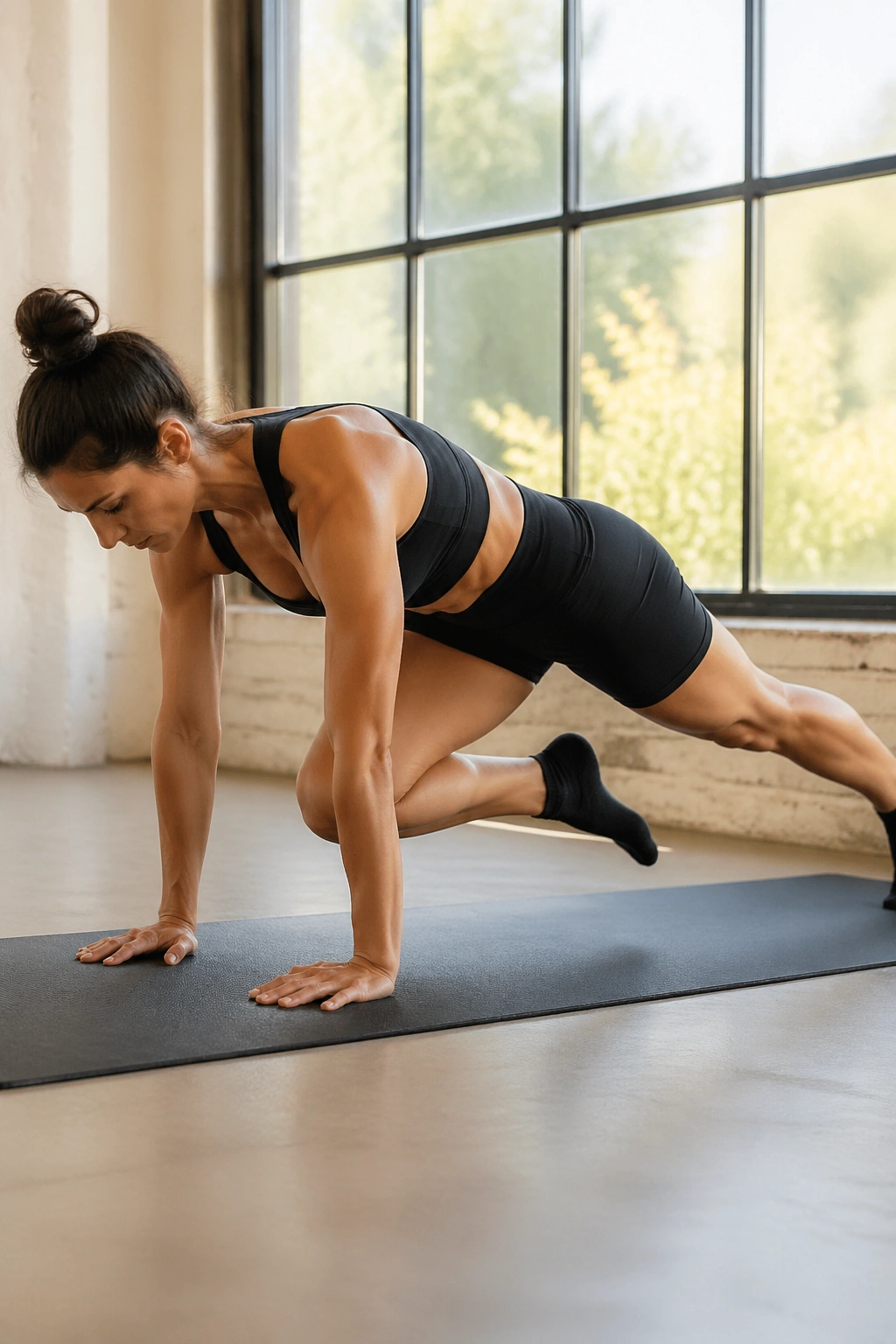
Unlike fast cardio-style mountain climbers, the Pilates version is a drag, pause, return pattern.
Set up in a high plank. Exhale and draw one knee toward the chest over 3 seconds, hold it for 1 second while scooping the lower belly up, then send it back over 2 seconds. Alternate for 8 reps per side. Rest, then repeat with the feet on sliders if you want more challenge.
The slow drag matters because momentum cannot help you. Your abs have to create and control the movement. It also gives you time to notice whether you’re twisting through the hips or keeping the pelvis square.
This one works best when you think “lift the thigh from the lower ab” rather than “slam the knee forward.” Subtle wording, different result. If wrists are touchy, do it on forearms or place your hands on a box, bench, or sturdy chair.
19. Standing Pilates Knee-Drive Reach Sequence
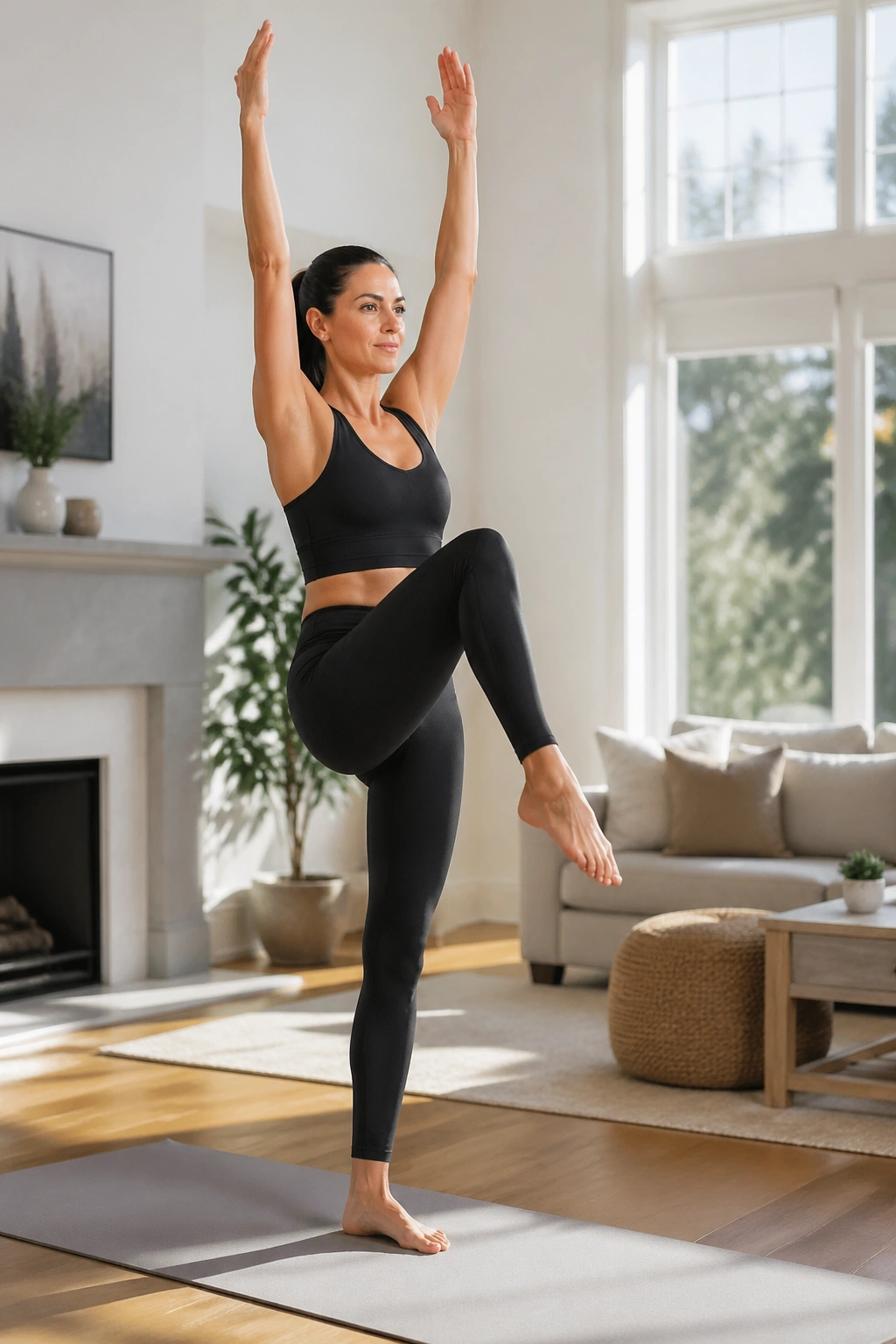
Not every lower-ab workout needs floor space. That’s handy on busy days and on days when getting down to the mat feels like a chore.
Stand tall with feet hip-width apart and arms reaching overhead. Exhale and pull one knee to hip height while the arms sweep down by your sides. Pause for 2 seconds, lower the foot slowly, then repeat on the other side. After 10 per side, add a diagonal cross-body reach so the rib cage and pelvis have to resist twisting.
This sequence sounds mild. It isn’t, not when done cleanly. The standing position asks your deep core to manage balance, pelvic control, and limb movement all at once. Your lower abs should feel like they’re bracing the front of the pelvis each time the knee lifts.
Use this as a travel workout, a warm-up before a walk, or a low-impact option on days when plank work feels like too much.
20. Wall Roll-Down With Marches
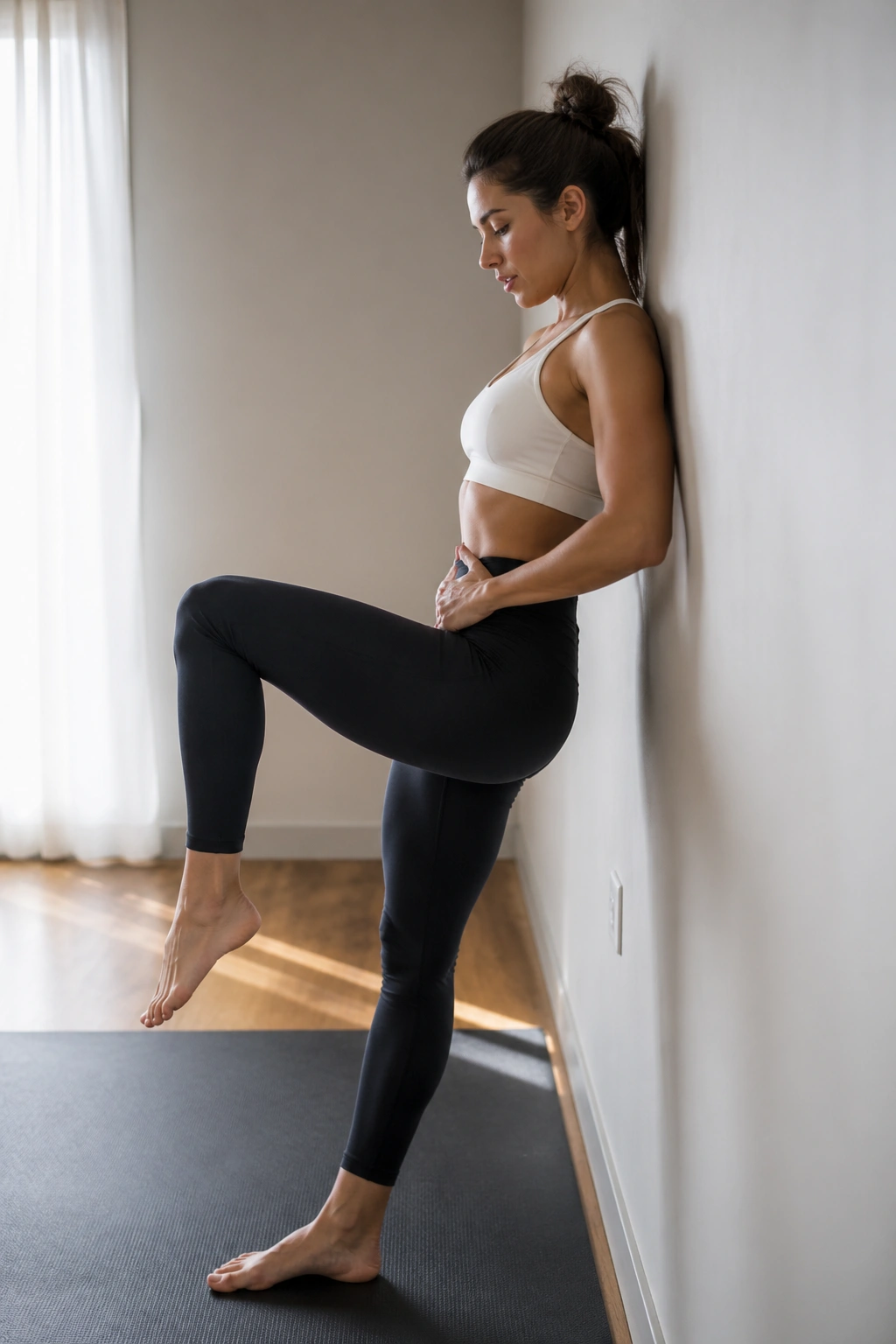
A wall can tell you more about your posture than a mirror.
Stand with your back against a wall, heels 4 to 6 inches forward, knees soft, and the back of the ribs touching if possible. Exhale and nod the chin, then roll down one vertebra at a time until you’re folded over. Pause. Roll halfway up and hold that rounded shape. From there, march one knee up, set it down, then switch for 10 total lifts.
The wall gives feedback. If you come up and your ribs flare away from the wall right away, you know you’re losing trunk control. If one hip hikes during the march, same story.
I like this workout for people who want lower-ab work that doubles as posture practice. A lot of “lower belly” frustration has as much to do with rib flare and pelvic tilt as it does with body fat. This does not replace fat loss habits, no. It does help stop your posture from making the area look more pronounced than it is.
21. Slider Tuck-to-Pike Series
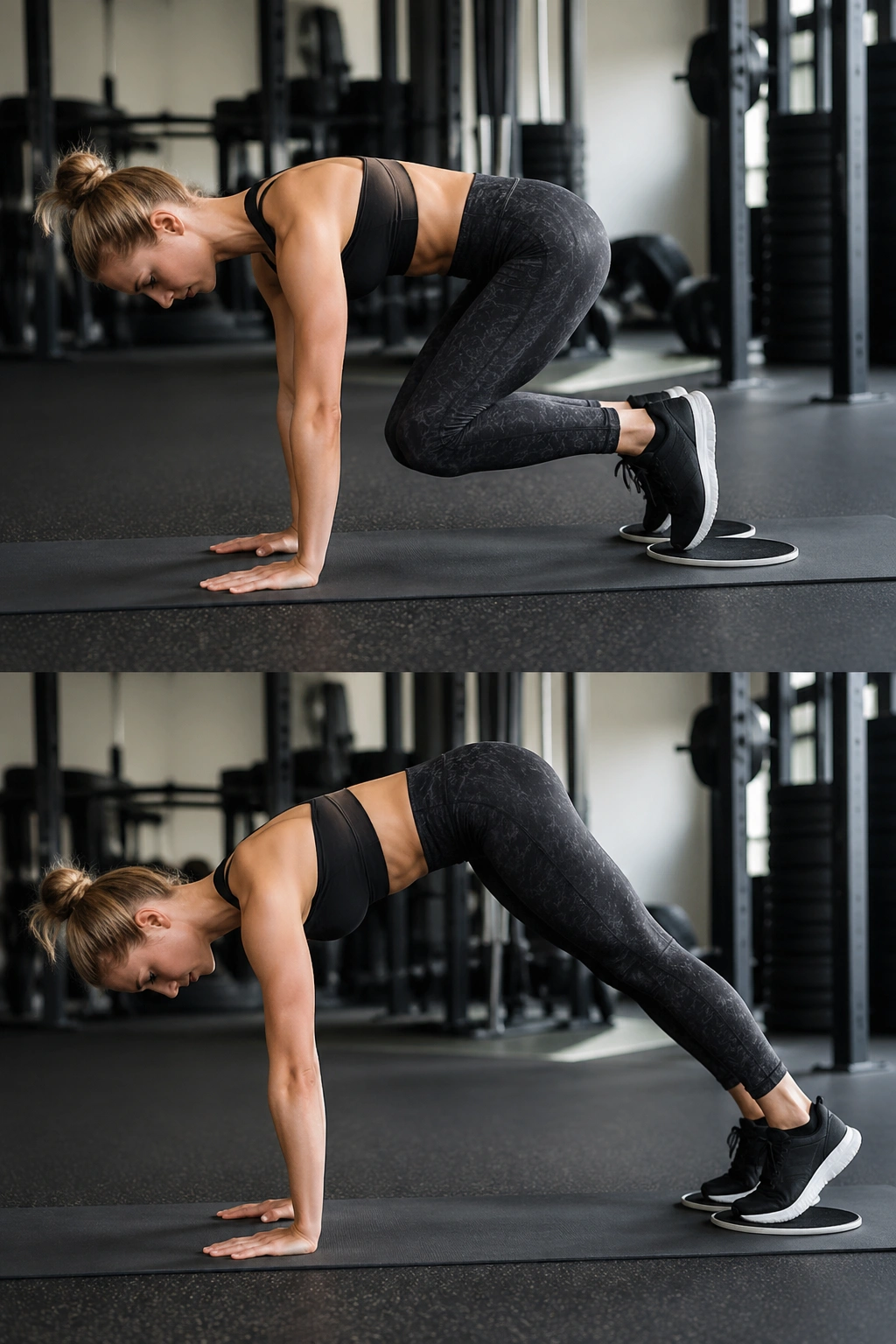
This is the advanced one. You’ll know fast if you’re ready for it.
Start in a high plank with both feet on sliders or towels. Exhale and tuck the knees toward the chest, slide back out, then on the next rep lift the hips into a small pike instead of a tuck. Alternate tuck and pike for 8 to 10 total reps. Rest 45 seconds. Do 3 rounds.
Why it works
The tuck challenges the lower abs in a compact shape. The pike adds more shoulder and upper-ab demand while still forcing the pelvis to move under control. That alternating pattern keeps the workout from turning into a one-note grind.
Before you try it
- You should already own a solid plank for 30 seconds
- Toe taps and reverse crunches should feel controlled
- Hamstrings need enough length for the pike to happen without rounding into chaos
Skip this one if your wrists, low back, or shoulders are already irritated. There are 21 other options here for a reason.
22. The 12-Minute Lower-Belly Mat Circuit
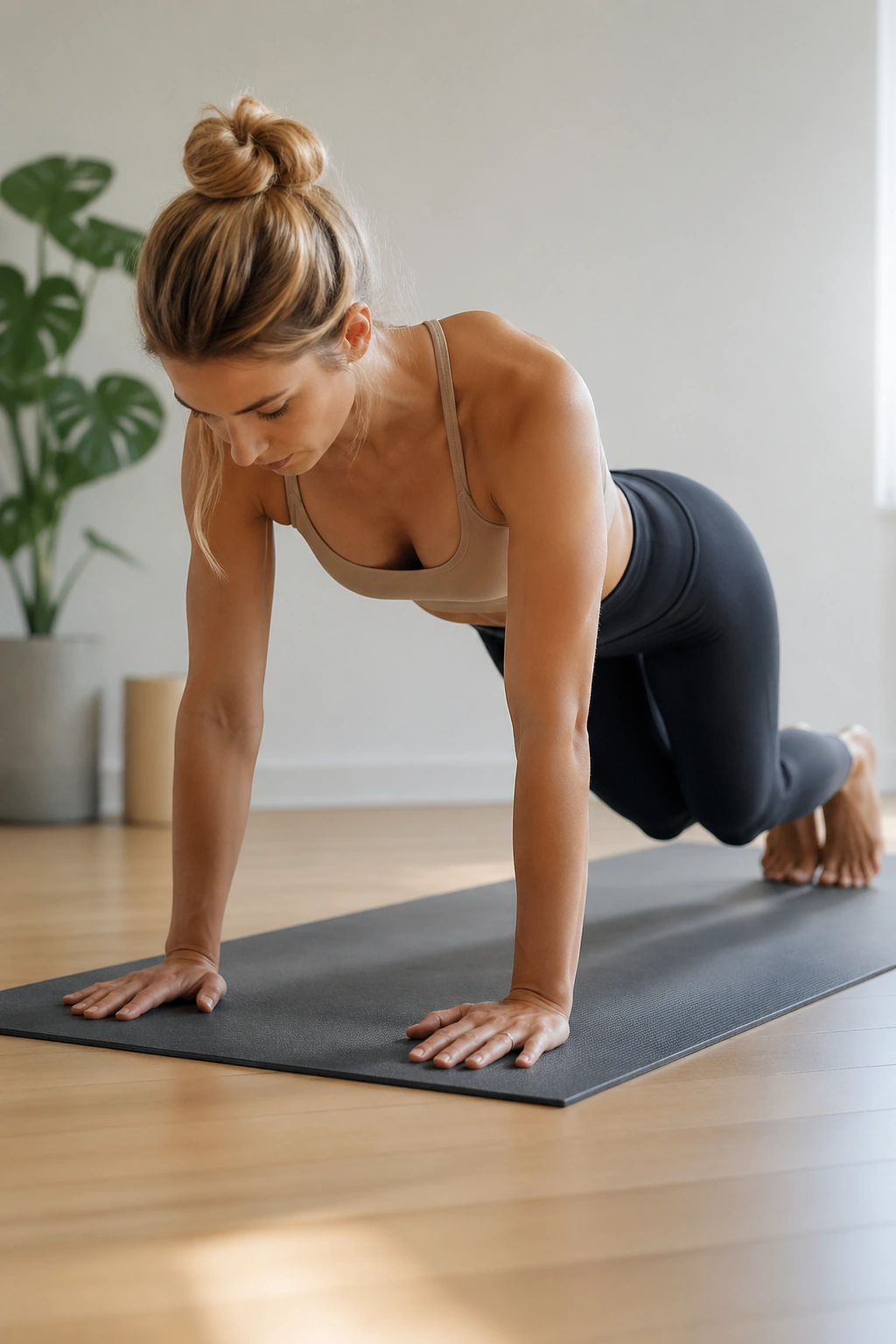
When you want one session that feels like a full workout instead of a single drill, use this circuit.
Set a timer and move through the following sequence twice. Work for 45 seconds per move, rest 15 seconds between exercises, and take 1 minute between rounds.
Round structure
- Supine breath with pelvic tilt
- Tabletop toe taps
- Single-leg stretch
- Reverse crunch hip curls
- Bear hover hold
- Forearm plank knee slides
The beauty of this circuit is the order. You start by organizing the trunk, then build into leg movement, then rotation-free lower-ab work, then a curling pattern, then an anti-extension hold, then a sliding plank finisher. It climbs without jumping from easy to ugly.
If 45 seconds is too long, use 30 seconds. If the transitions feel rushed, do only 1 round and keep the reps cleaner. A short session done 3 or 4 times a week will move the needle more than one heroic ab day followed by five days of nothing.
What to Eat and Do Outside the Mat for a Leaner Lower Stomach
Let me be direct: endless ab work cannot out-train a calorie surplus, poor sleep, and low daily movement.
Lower belly fat usually changes when a few basic habits line up at once. You do not need a perfect meal plan, and you do not need to live in a gym. You do need enough consistency that your body gets a clear signal over time.
A practical base looks like this:
- Walk 7,000 to 10,000 steps most days, or get a similar amount of easy-to-moderate movement
- Eat a source of protein at each meal—eggs, Greek yogurt, tofu, fish, chicken, beans, cottage cheese
- Aim for 25 to 35 grams of fiber across the day from fruit, vegetables, oats, potatoes, beans, and whole grains
- Keep alcohol moderate if fat loss is the goal
- Sleep in a predictable window instead of treating bedtime like an accident
Bloating muddies the picture too. Some people think they’re dealing with fat below the navel when a chunk of the issue is digestion, constipation, stress, or food triggers. If your stomach changes size wildly across one day, pay attention. That’s a clue.
Common Mistakes That Make Lower-Ab Pilates Less Effective
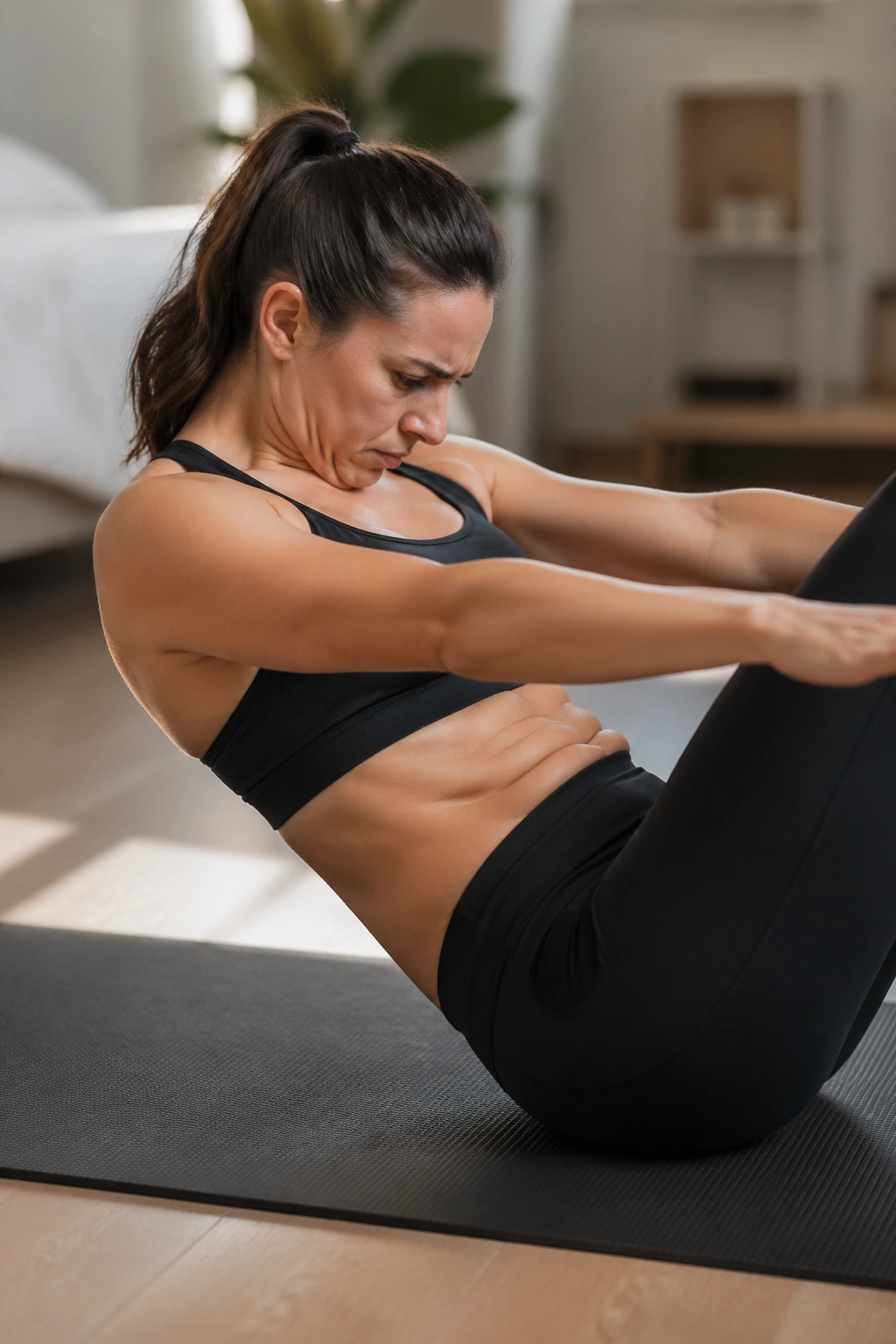
The first mistake is going too low with the legs.
The second is holding your breath. A held breath can create tension, sure, but it often pushes pressure outward instead of helping the deep abs draw in. Long exhales make a difference here—more than people expect.
A few others show up again and again:
Form errors worth fixing
- Ribs popping up during leg work
- Neck yanking forward in curled-up exercises
- Fast reps that hide weak control
- Pelvis rocking side to side in tabletop drills
- Doing advanced versions too early
And one more. People chase soreness instead of skill. Pilates is not at its best when you fling through 100 reps and call it core work. It shines when you do 8 crisp reps, feel exactly where the effort lands, and build from there. Less flashy. Better result.
Final Thoughts
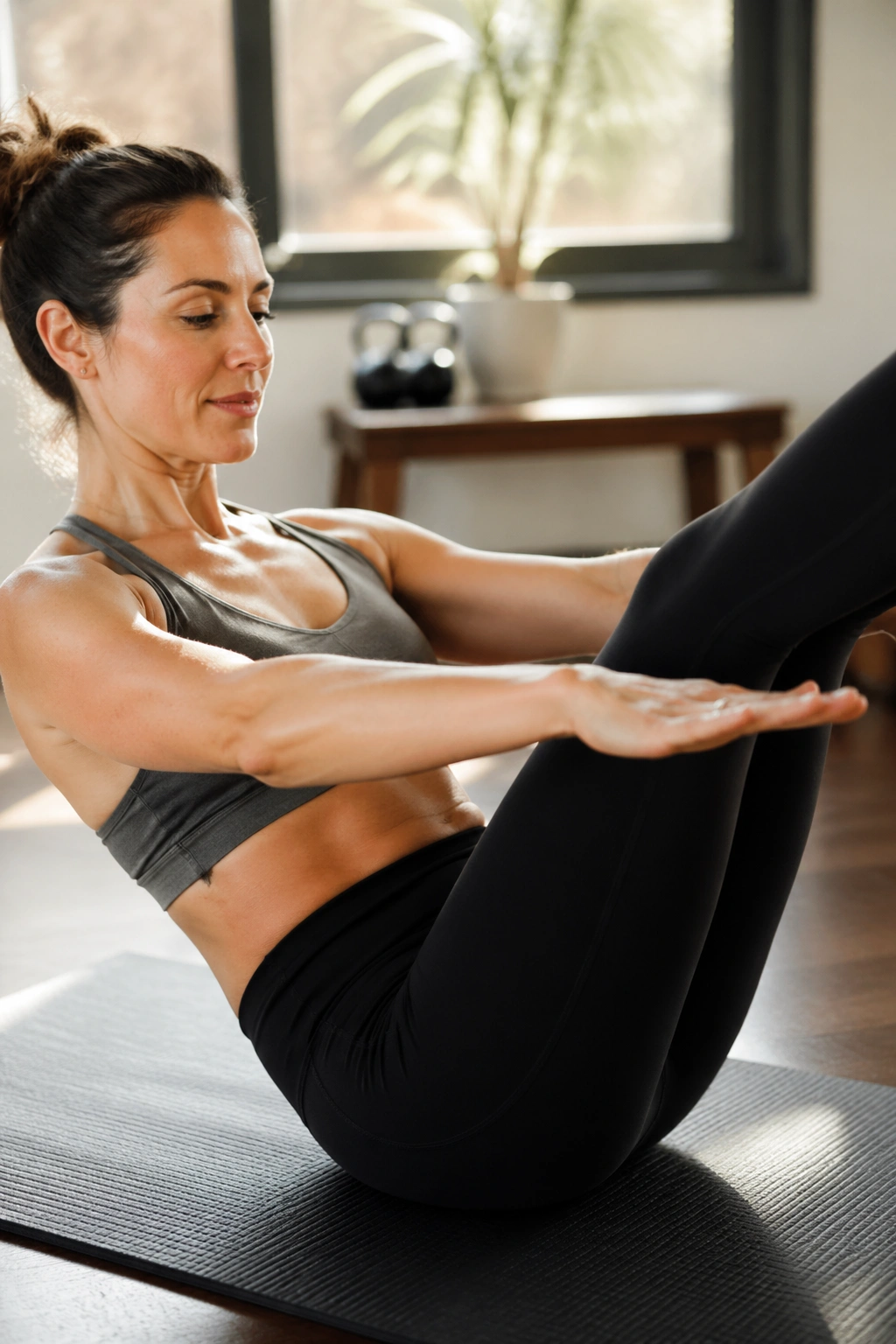
The lower abdomen is stubborn, and anybody who tells you one magic move will flatten it is selling fantasy. The good news is less dramatic and more useful: Pilates can tighten the deep core, improve the way your pelvis sits, and make your stomach look and feel firmer while you work on the fat-loss side of the equation elsewhere.
Pick 4 to 6 of these workouts and repeat them for a few weeks instead of bouncing between all 22 at random. Learn what a heavy rib cage feels like. Learn where your neutral pelvis sits. Get strong enough that the slow versions stop feeling impossible.
Then build.
That’s how the lower belly changes—through control, repetition, decent recovery, and enough patience to let small improvements stack into visible ones.
