



A Pilates schedule works best when it looks almost plain on paper. Not flashy. Not punishing. Just repeatable enough that your body starts recognizing the pattern and doing the work before your brain starts negotiating with the couch.
The people who get the most out of Pilates usually are not the ones chasing the hardest class on the calendar. They’re the ones who can keep showing up three or four times a week, even when the session is only 20 or 30 minutes long. That’s where the changes start to show up: better trunk control, less wobble in single-leg work, cleaner posture when you stand up from a chair, and a lower-back area that stops acting like it’s been personally insulted by life.
Pilates rewards rhythm. It also rewards honesty. A 25-minute mat session done with focus will help more than a 75-minute class you keep skipping because it feels too ambitious for a weekday evening.
So the useful question is not “What’s the hardest Pilates plan?” It’s “What weekly shape can I actually keep?” These 20 schedules give you a bunch of ways to answer that without pretending your schedule is built for perfection.
1. Three 30-Minute Mat Sessions That Actually Fit a Real Week
Three half-hour mat sessions is the sweet spot for a lot of people. It’s enough frequency to build skill, but not so much that the week starts to feel organized around exercise instead of living your life.
Thirty minutes matters because it keeps the session honest. There’s no room for a wandering warm-up, no time to scroll between exercises, and fewer excuses to turn “one quick class” into a whole production. If you keep the work focused—think controlled roll-downs, bridges, side-lying leg series, and a few solid plank variations—you’ll usually notice smoother movement before you notice dramatic muscle soreness.
Why this schedule works
Pilates is a skill as much as a workout. Repeating the same basic patterns three times a week helps your nervous system learn where your ribs, pelvis, and shoulders are supposed to be. That means cleaner form, not just harder effort.
A simple version looks like this:
- Day 1: core and spinal mobility
- Day 2: glutes, hips, and back body
- Day 3: full-body flow with a little balance work
Best tip: keep one exercise from each session the same for four weeks. That repetition makes progress easier to spot.
2. Monday, Wednesday, Friday Reformer Pilates
Why do people stick with this schedule for so long? Because it feels like a real training week without being overbuilt. Three reformer sessions give you resistance, support, and enough variety to challenge the legs, the trunk, and the shoulders without needing a long recovery window.
The reformer gives you spring tension, which changes the feel of familiar exercises in a good way. Footwork, long stretches, rowing, and kneeling arm series all ask for control in a way mat work sometimes doesn’t. You can go harder here, but you do not need to crush yourself. If the carriage starts slamming around and your neck is taking over, the session has drifted too far from quality.
How to use it
Keep one day heavier, one day moderate, and one day smoother. For example:
- Monday: lower-body strength and footwork
- Wednesday: upper body and spine articulation
- Friday: full-body flow with balance and breathing
This structure is strong for people who want visible tone, better coordination, and a little more challenge than a home mat session. It also works well if you tend to get bored. The carriage keeps things from feeling samey.
3. Two Longer Weekend Classes and Two Easy Walk Days
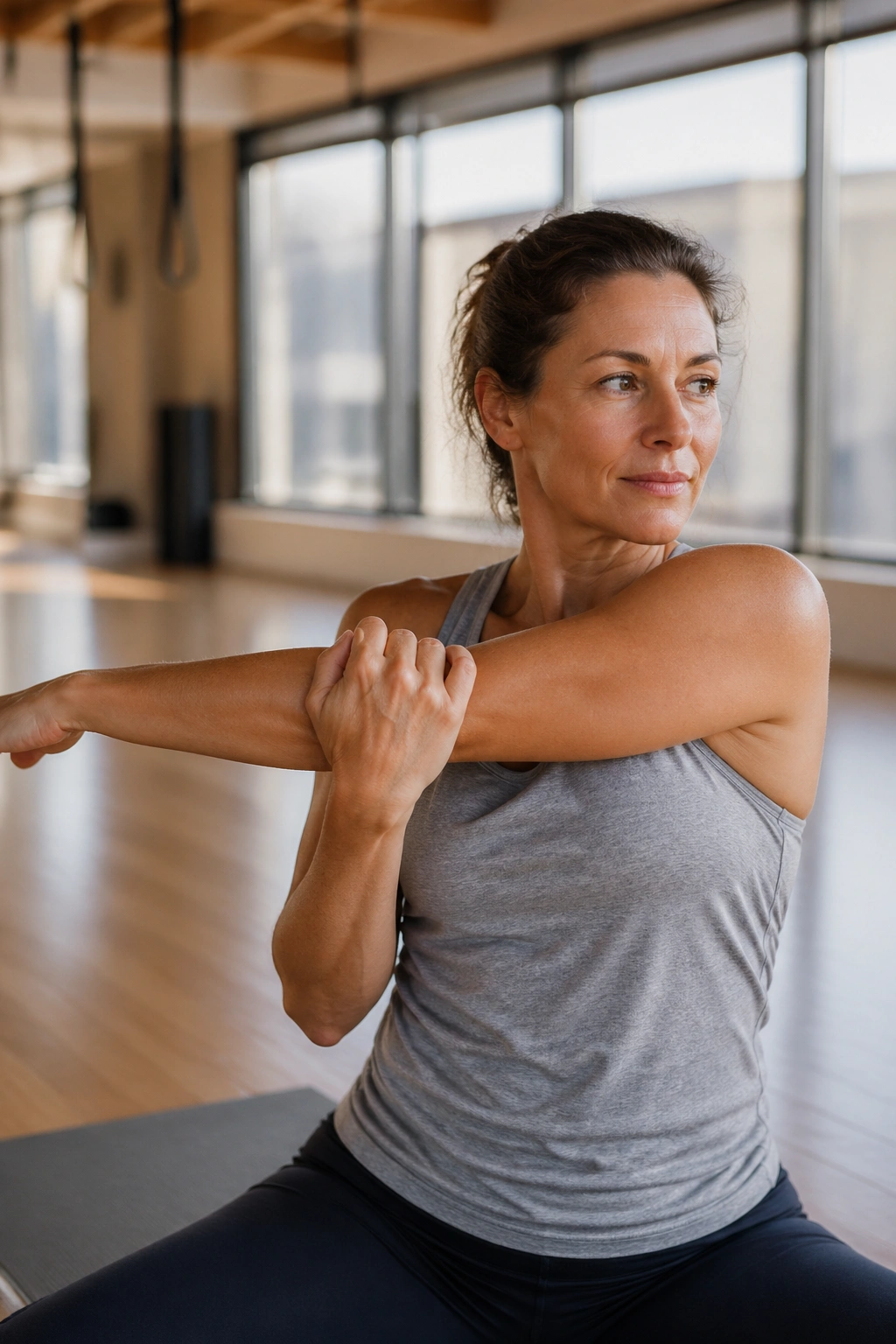
A lot of people need a schedule that stops pretending weekdays are calm. This one does. You hit two longer Pilates sessions on the weekend—45 to 60 minutes each—then use two weekday walks or light mobility days to stay in motion without adding stress.
The logic is simple. Long sessions let you work through warm-up, strength, and stretch without rushing. The weekday walks keep your hips from locking up and your back from feeling like a folded chair. If you sit a lot, this schedule can feel kinder than trying to force five workout days into an already crowded week.
What the week looks like
- Saturday: full-body mat or reformer class
- Sunday: lower-body and core emphasis
- Tuesday: 20- to 30-minute walk
- Thursday: another walk or 10-minute mobility flow
You will not get the same training frequency as a five-day plan, and that’s fine. The real win here is consistency without friction. If you enjoy longer classes and hate weekday pressure, this is a clean fit. Keep the walks easy. They’re there to keep you moving, not to turn the week into a second job.
4. Five 15-Minute Pilates Bursts for Busy Schedules
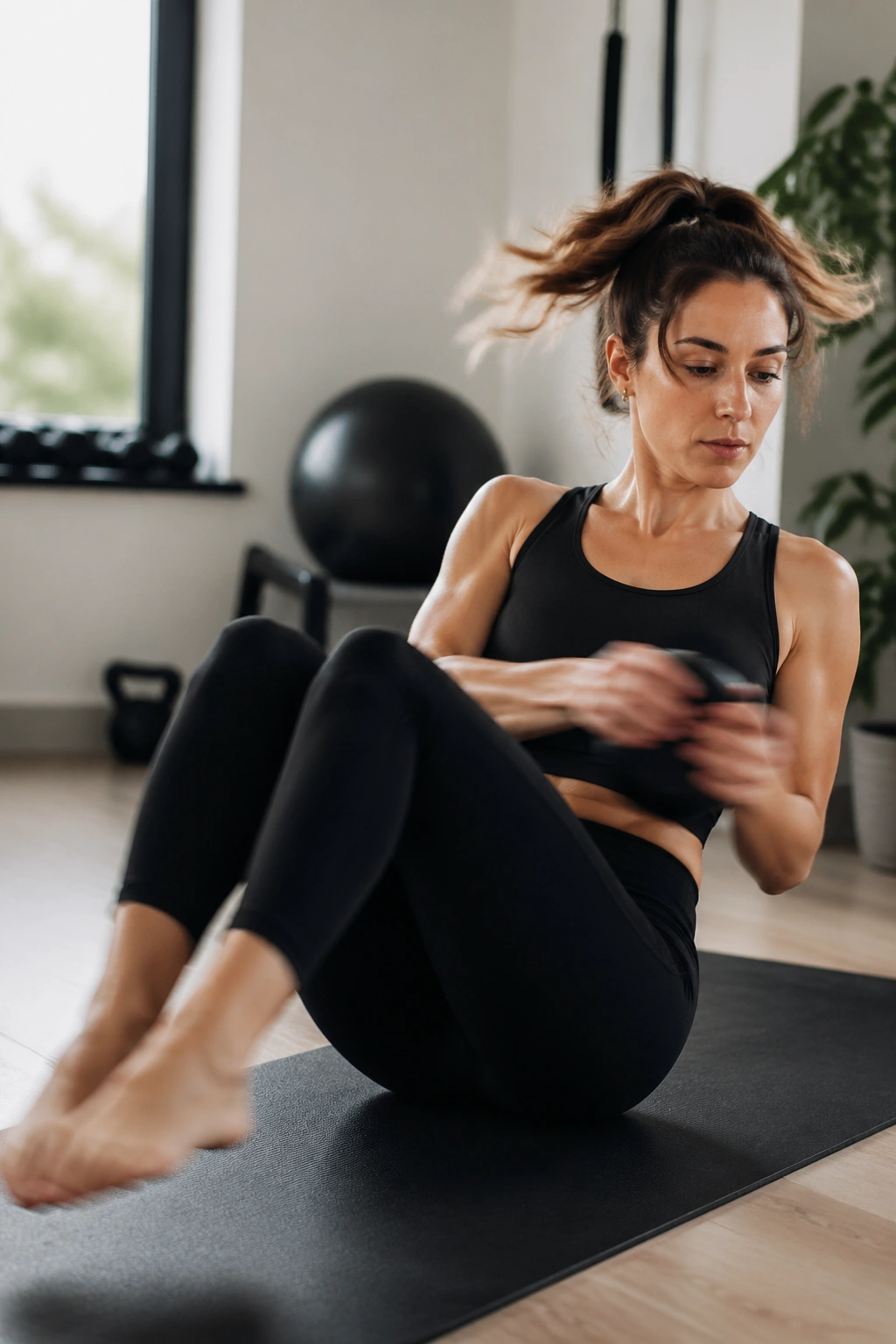
Fifteen minutes sounds almost too small to matter. It isn’t. Short Pilates sessions can work well when the alternative is doing nothing because the window is tiny and your energy is thin.
The trick is to stop treating every session like it has to cover everything. One burst can be all abs and breath. Another can be bridges and hamstring work. Another can be mobility for the spine and hips. That kind of specificity makes the week feel less random, even if each piece is brief.
A few things happen when you go short and frequent: your form stays sharper, the exercises feel less intimidating, and the habit gets easier to protect. The downside is obvious. You won’t have enough time for a big, sweaty class format. But if the goal is steady practice, short sessions win more often than people expect.
This schedule is especially useful for travel weeks, shift work, and parents who are playing calendar Tetris. The sessions can happen before coffee, between meetings, or while dinner is in the oven. Keep the workout size small enough that you never dread it.
5. Core Monday, Hips Wednesday, Back Friday
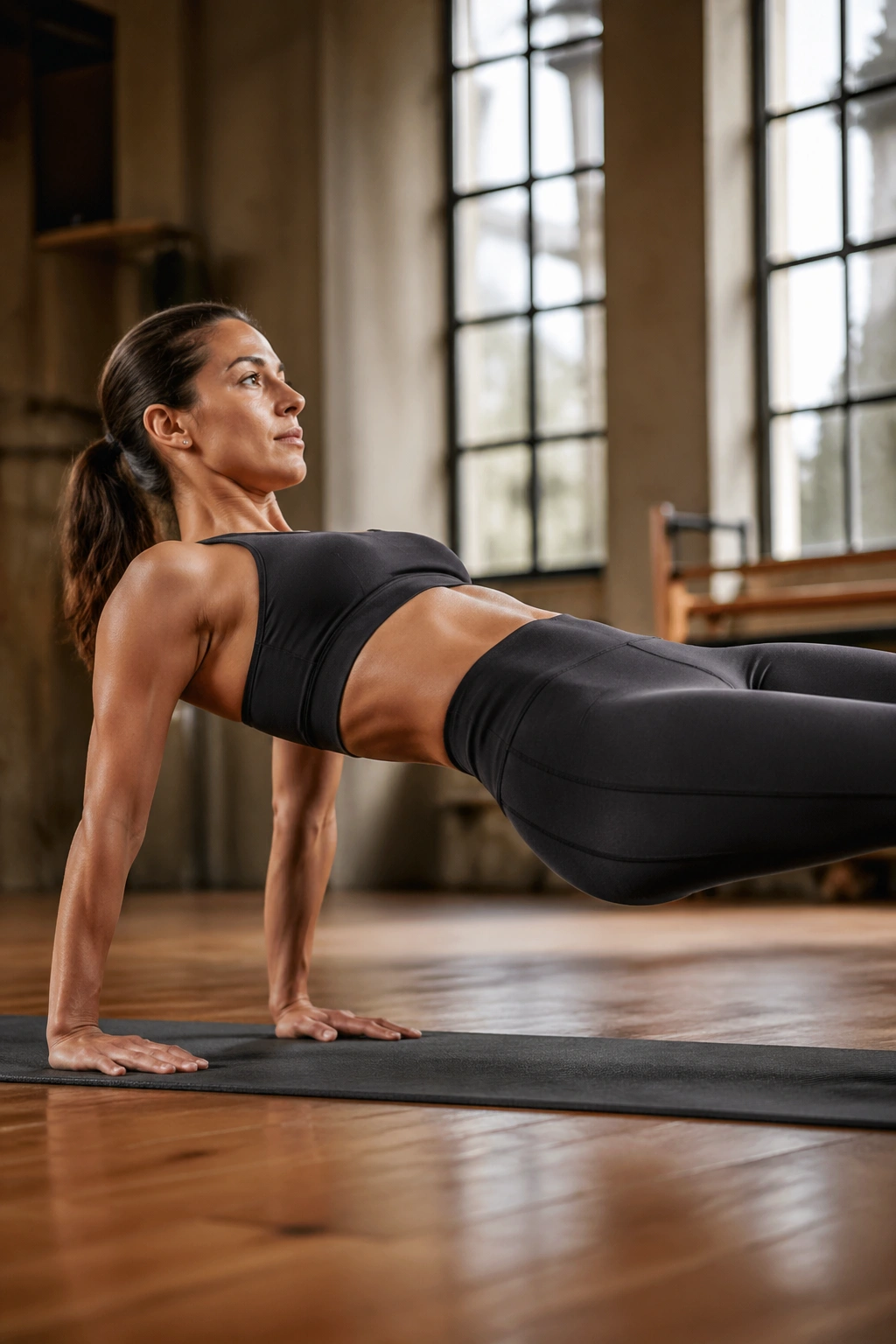
This split is for people who like clear lanes. One day focuses on the front of the body and trunk control, one day leans into hip mobility and glute work, and one day brings the back body into the picture with extension and posture work.
Compared with a generic full-body class, this schedule gives each area more attention. That can be useful if you know where your body feels weak or grumpy. Tight hips? They get their own day. Rounded shoulders? Friday takes care of that. Sloppy core control when you climb stairs? Monday handles the basics without rushing past them.
A clean weekly rhythm
- Monday: abdominal work, pelvic control, spinal curl patterns
- Wednesday: hip openers, side-lying leg work, glute bridges
- Friday: swan prep, rowing variations, back-body endurance
The nice part is how easy it is to repeat. You do not need to invent a new structure every week. You just make the emphasis clear and let the exercises change inside that frame. That’s one reason this schedule sticks. It gives your body a familiar map.
6. A Daily 10-Minute Reset Plus One Full Class
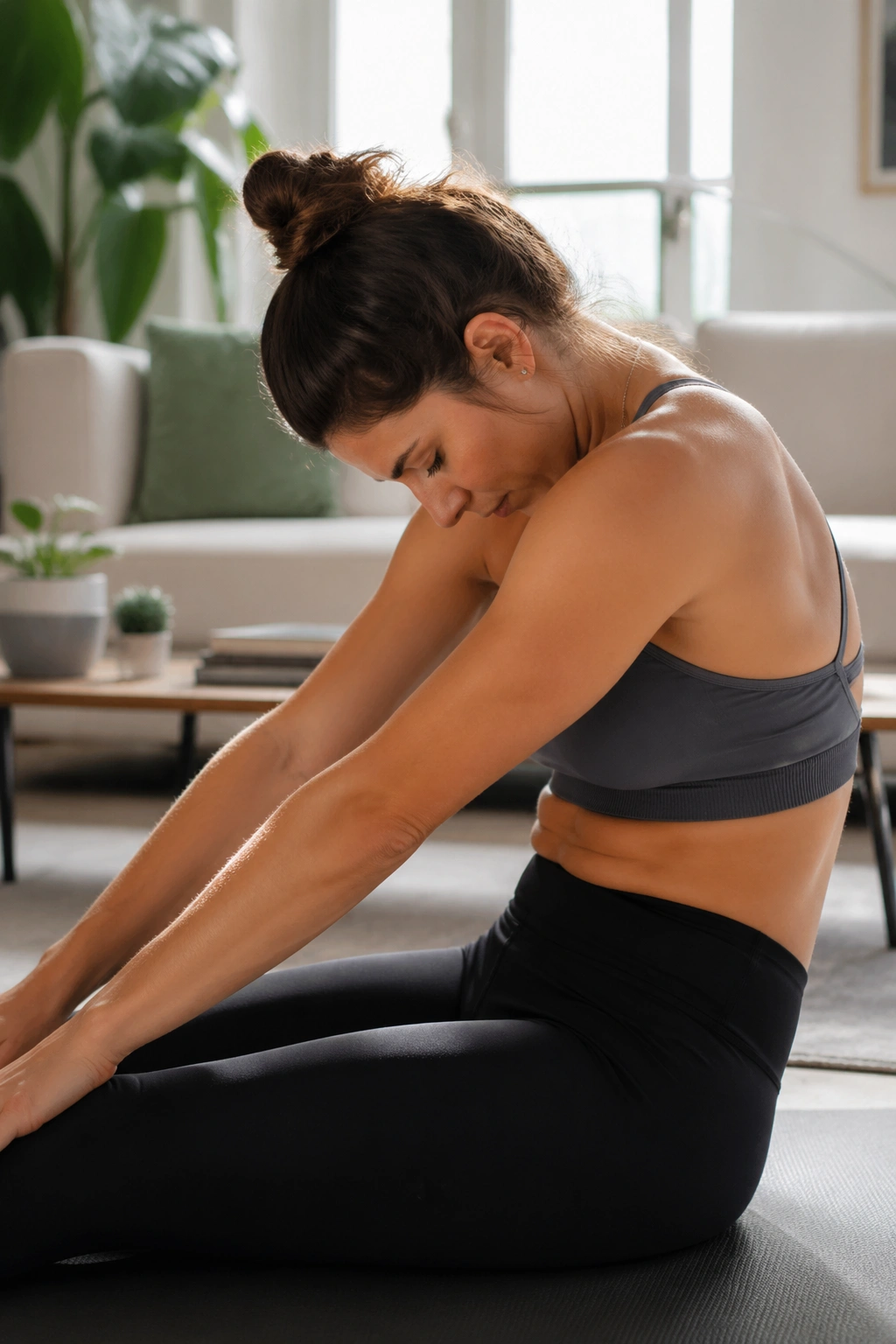
A ten-minute reset sounds small because it is small. That’s the point. It keeps Pilates from becoming a rare event and turns it into something that lives in your day instead of hovering outside it.
The daily piece should be gentle and repeatable: a spinal roll-down, a few pelvic tilts, maybe a bridge sequence, a side stretch, and one or two breathing drills. Then one longer class during the week gives you the deeper strength work and the kind of effort that actually challenges your coordination.
What to keep in the reset
- 1 minute: breathing and rib expansion
- 2 minutes: spine articulation
- 3 minutes: glute bridges or marching bridges
- 2 minutes: side-lying leg work
- 2 minutes: seated or kneeling mobility
That little daily dose can make the full class feel better, not harder. Hips loosen up faster. Your back may complain less during the warm-up. You also start recognizing patterns in your posture, which is half the battle with Pilates anyway. The danger here is turning the reset into a vague stretch break. Keep it purposeful.
7. Two Strength Days and One Mobility Day
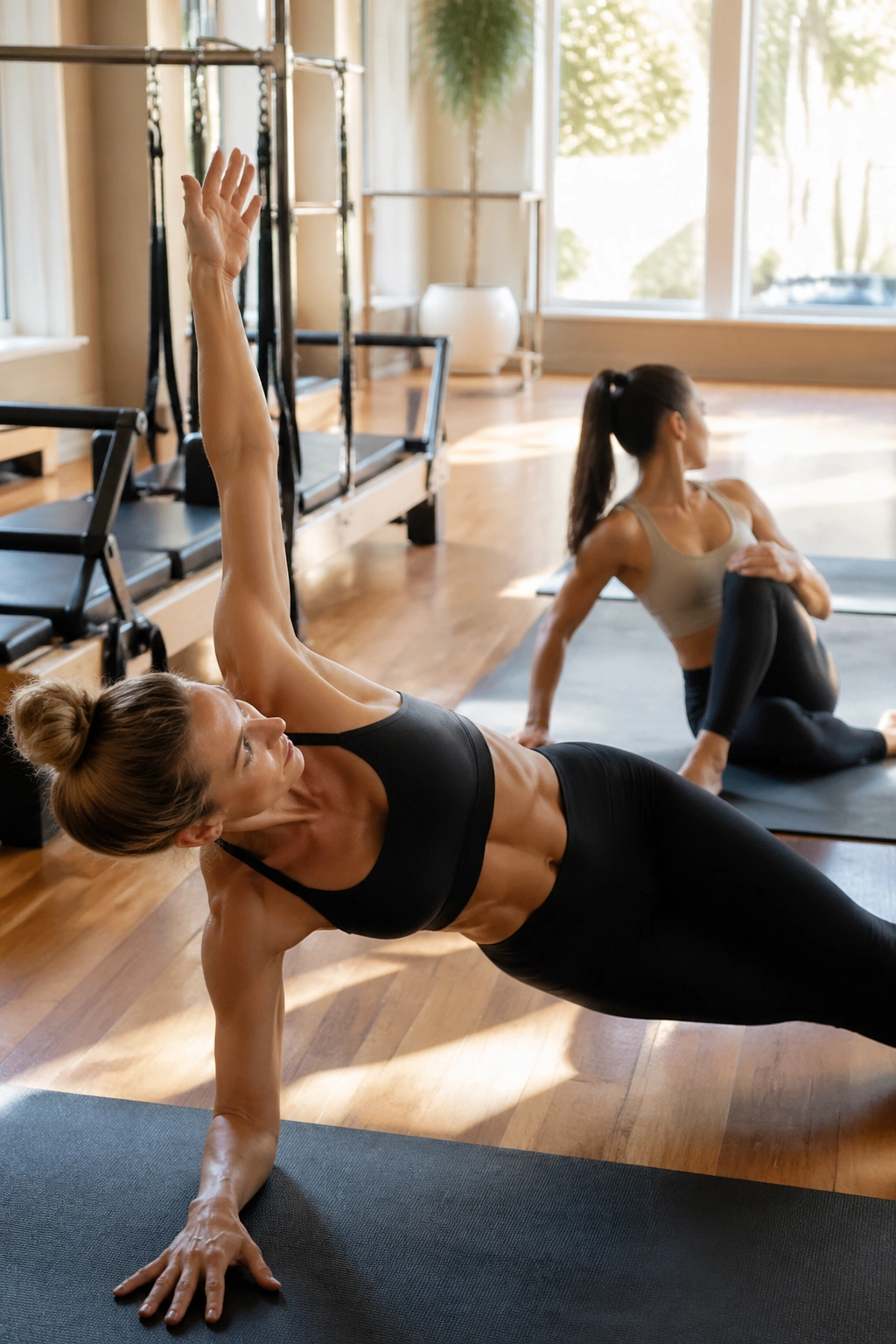
Pilates does not have to be soft to be smart. Two strength-focused sessions and one mobility day is a strong weekly shape if you want more challenge without building a schedule that leaves you flat on the floor.
The strength days should use controlled resistance, longer holds, slower tempo, and fewer sloppy reps. Think footwork on the reformer, side planks, teaser prep, single-leg bridges, and some serious standing balance. The mobility day should feel different. More breathing. More spinal rotation. More hip release. You want to leave that day feeling taller, not cooked.
If you like the idea of Pilates as strength training, this schedule gives you a clean way to prove it. It’s also honest. You are not pretending every class is recovery, and you are not pretending every class should leave you drenched. The body likes contrast. Use it.
One useful rule: if your strength day feels easier than your mobility day, something is off. The lighter day should restore range. The harder day should ask more from the muscles.
8. Reformer Pilates and Mat Pilates in the Same Week
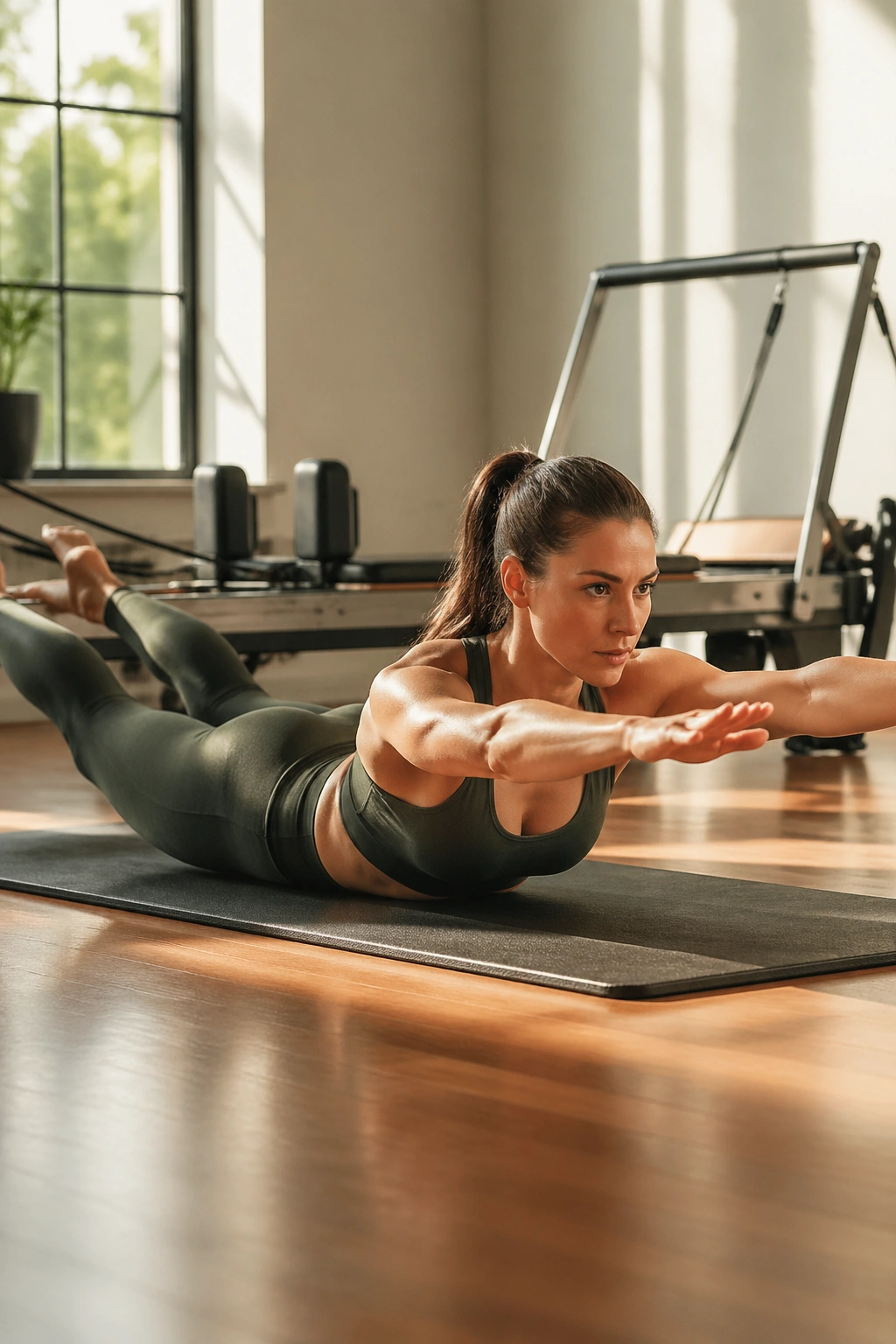
Can you mix reformer and mat work without confusing your body? Absolutely. In fact, the mix often works better than sticking to one format all week.
Reformer Pilates usually gives you more resistance and more support. Mat Pilates often exposes weak spots faster because you have to create the stability yourself. Put them together and you get a very complete week. The reformer helps load the legs and back body. The mat helps clean up control, especially around the trunk and hips.
A simple hybrid week might look like this:
A sensible hybrid split
- Day 1: reformer strength work
- Day 2: mat core and mobility
- Day 3: reformer full-body flow
- Optional Day 4: short mat reset or stretch session
This works well for people who can access a studio once or twice a week but still want home practice in between. It also keeps boredom low. And honestly, boredom is a bigger reason people quit than difficulty is. When the classes feel too similar, the calendar starts to feel stale.
9. Three Days On, One Day Off, Repeated
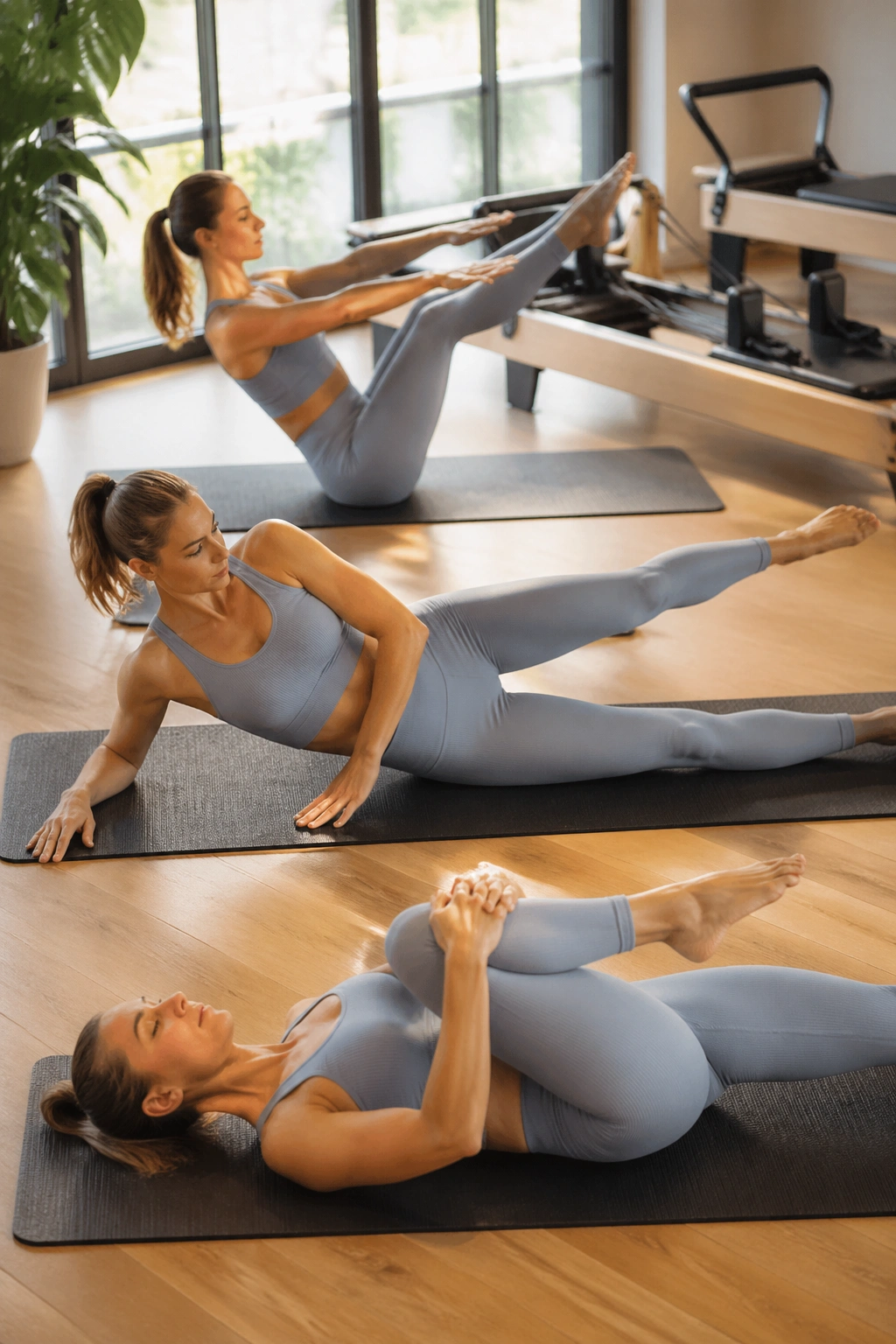
A three-on, one-off rhythm feels good for people who like momentum. You train Monday, Tuesday, Wednesday, rest Thursday, then pick it back up on Friday, Saturday, Sunday. The cycle is simple enough to remember without a spreadsheet.
The appeal is not mystery. It gives you enough repetition to improve while still building in recovery before fatigue gets sloppy. That matters in Pilates because tired form is ugly form. When your ribs flare, your neck takes over, and your pelvis stops cooperating, the session stops teaching you much.
This schedule is especially useful if you enjoy short to medium sessions of 20 to 40 minutes. The off day is not a free pass to sit motionless all day. A walk, a few spinal rolls, or five minutes of hip work can keep the body loose without turning rest into another task.
People who like routine without total rigidity tend to do well here. It feels structured. It also leaves room for real life, which is usually the part most fitness plans forget.
10. A Four-Day Upper-Body and Lower-Body Split
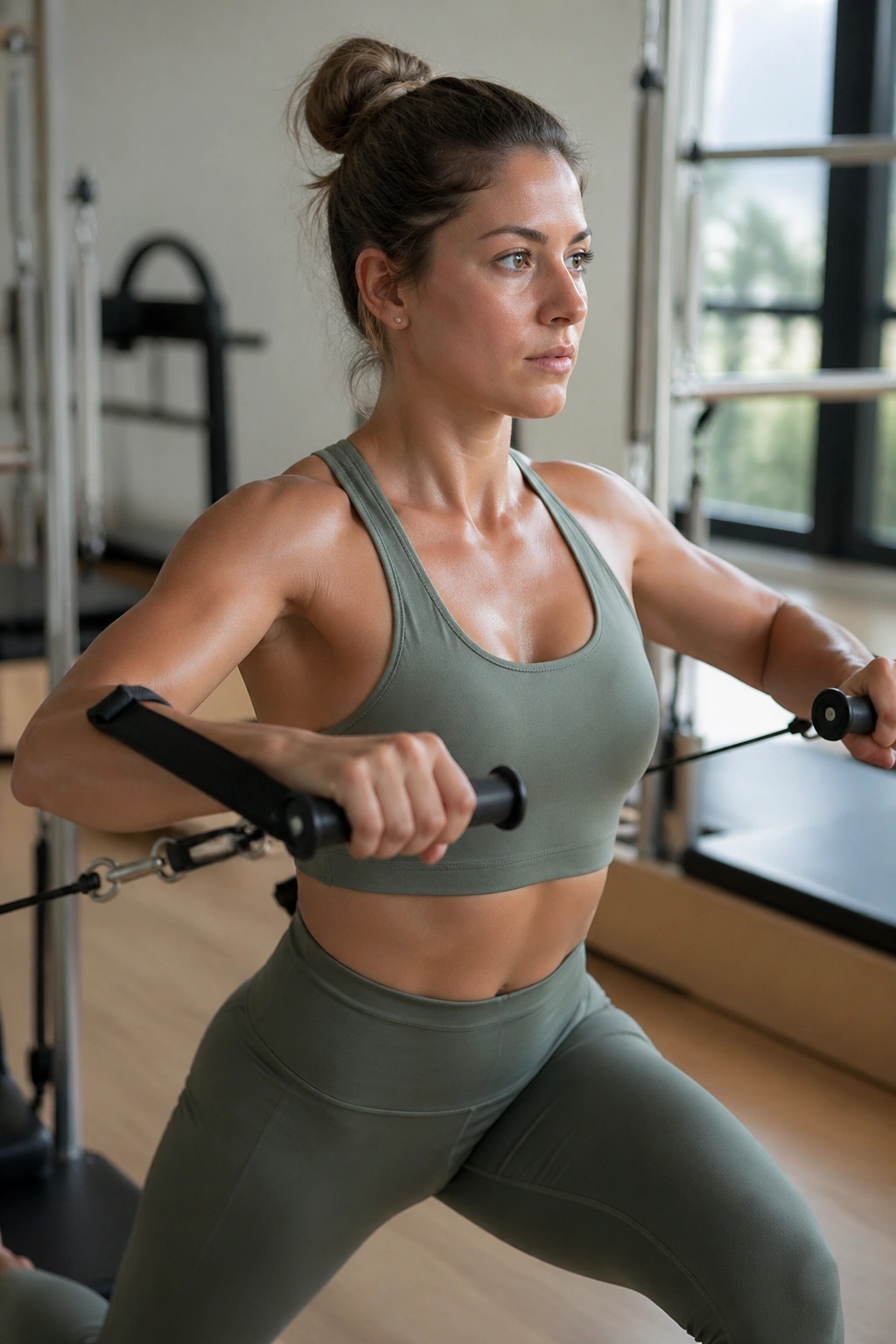
Most Pilates people think in terms of core, but the body does not actually move that way. Shoulders, hips, back, and trunk all show up together. A four-day split lets you give the upper and lower body more direct attention without losing that Pilates feel.
One day can emphasize pushing and pulling with the arms. Another can focus on glutes, hamstrings, and hip stability. Then you repeat the pattern with a little variation. That makes the week feel more like training and less like random movement.
A simple way to map it
- Day 1: upper body push and pull
- Day 2: lower body strength
- Day 3: upper body posture and balance
- Day 4: lower body control and core integration
This kind of schedule works for people who want visible changes in posture and shape. It’s also useful if your legs are strong but your shoulders look like they live in a different body. The split helps you stop overworking your favorite areas and ignoring the rest. That imbalance is common. So is the fix.
11. Posture Pilates for Desk-Heavy Days

Sitting all day changes how Pilates should feel. If your chest is tight, your neck gets cranky, and your hips feel glued to the chair, you do not need a punishing class. You need a schedule that opens the front of the body and wakes up the back.
A posture-focused week usually mixes short sessions with lots of thoracic extension, scapular control, and hip work. Think chest openers, wall roll-downs, swimming prep, bird dog variations, and gentle back extension. Skip the urge to do only ab work. That’s a common mistake. If your shoulders live forward, your schedule should address shoulders, not just the front of the waist.
What to look for in this plan
- 3 sessions a week: 20 to 30 minutes each
- Daily breaks: 2 to 5 minutes away from the chair
- Movement focus: upper back, shoulder blades, hip flexors
- Bonus: one longer stretch session on the weekend
The result you’ll notice first is usually not a dramatic body change. It’s a feeling of space through the ribs and fewer end-of-day aches. Small improvement? Sure. But it matters every time you stand up.
12. Pilates Cross-Training for Runners

Runners often need Pilates more than they think they do. Not because running is wrong. Because running is repetitive, and Pilates helps clean up the places where repetition gets sloppy.
A good runner’s schedule usually includes two Pilates sessions a week: one strength-heavy day and one mobility-and-control day. The first session helps with glute support, single-leg stability, and trunk endurance. The second session should make the hips, calves, and spine feel less stuck after mileage.
The best part is how well Pilates fits around run days. You can place a shorter mat session after an easy run or keep it on a non-run day as active recovery. What you do not want is a leg-destroying Pilates workout the day before speed work. That’s not smart training. That’s just tired legs in expensive socks.
This schedule is a quiet fix for common running issues: hip drop, low-back tension, and that weird feeling that one side of your body does all the work. Pilates won’t replace running, and it shouldn’t. It makes the running cleaner.
13. A Recovery-First Week After Hard Training
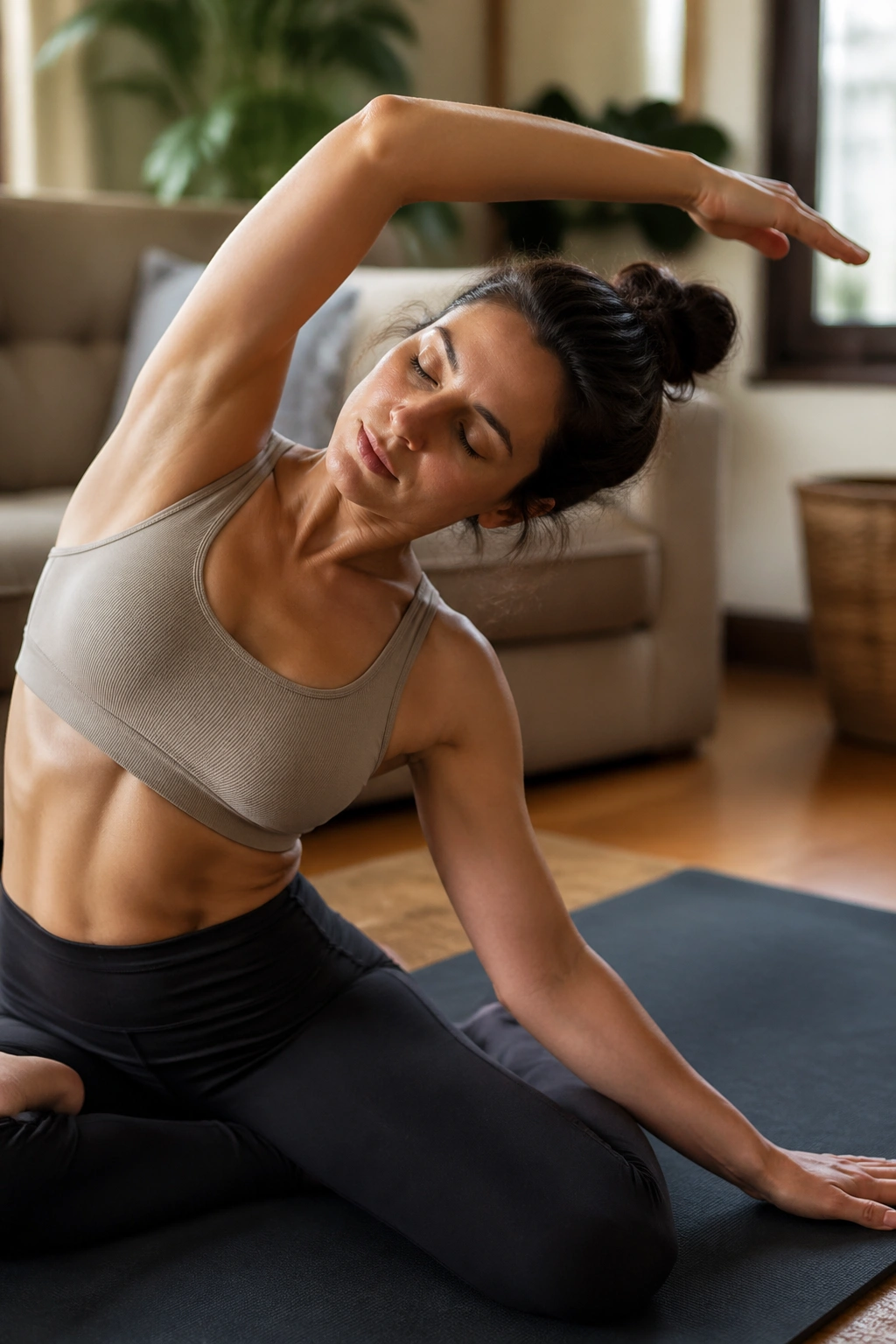
Some weeks the right Pilates schedule is the one that asks less. That sounds obvious until people ignore it and keep stacking hard sessions on sore legs.
A recovery-first week keeps the intensity low and the movement quality high. You might do two or three gentle sessions, each 15 to 25 minutes, with plenty of breathing, spinal mobility, and easy bridges. The point is to restore range and reduce stiffness, not to chase a burn.
If you’re carrying fatigue from lifting, running, long work hours, or just bad sleep, this kind of week can be a relief. It can also keep you from doing the all-too-common thing where you turn every “recovery” session into another competition with yourself. Don’t. That defeats the point.
Keep the recovery week boring on purpose
- No max-effort planks
- No long holds that shake for a minute
- No aggressive ab series
- Yes to gentle mobility, breathing, and easy control work
A recovery week is not lazy. It is the thing that lets the harder weeks keep working.
14. A Ten-Day Pilates Rotation Instead of a Seven-Day Week
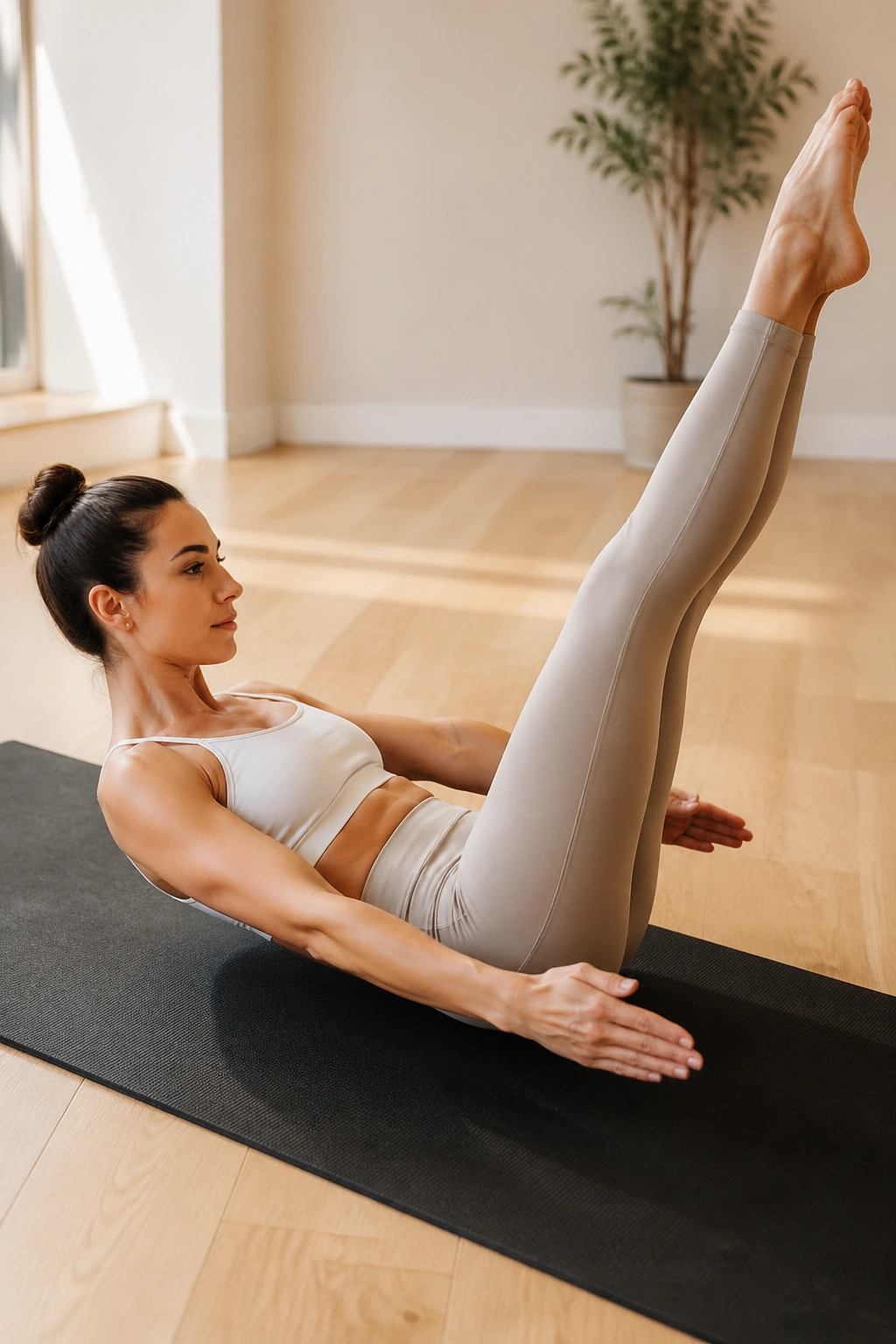
Not every life fits neatly into Monday through Sunday. If your shifts change, your travel pattern is messy, or your energy drops in weird cycles, a ten-day rotation can be easier to keep than a weekly plan.
The structure is simple: train on Days 1, 2, 4, 6, and 8, with rest or light movement on the days between. You can also make it three Pilates days and two recovery days if that feels better. The point is to stop tying your progress to a seven-day rhythm that does not match your life.
This works well for people who hate feeling “behind” when they miss a fixed weekday class. In a ten-day cycle, missing one day does not wreck the system. You just move to the next slot.
It also gives you room to vary the effort. One session can be heavier. One can be a core-and-mobility day. One can be a short reset. The body does not care that the calendar is tidy. It cares that the work repeats often enough to matter.
15. A Four-Week Build From Two Sessions to Four
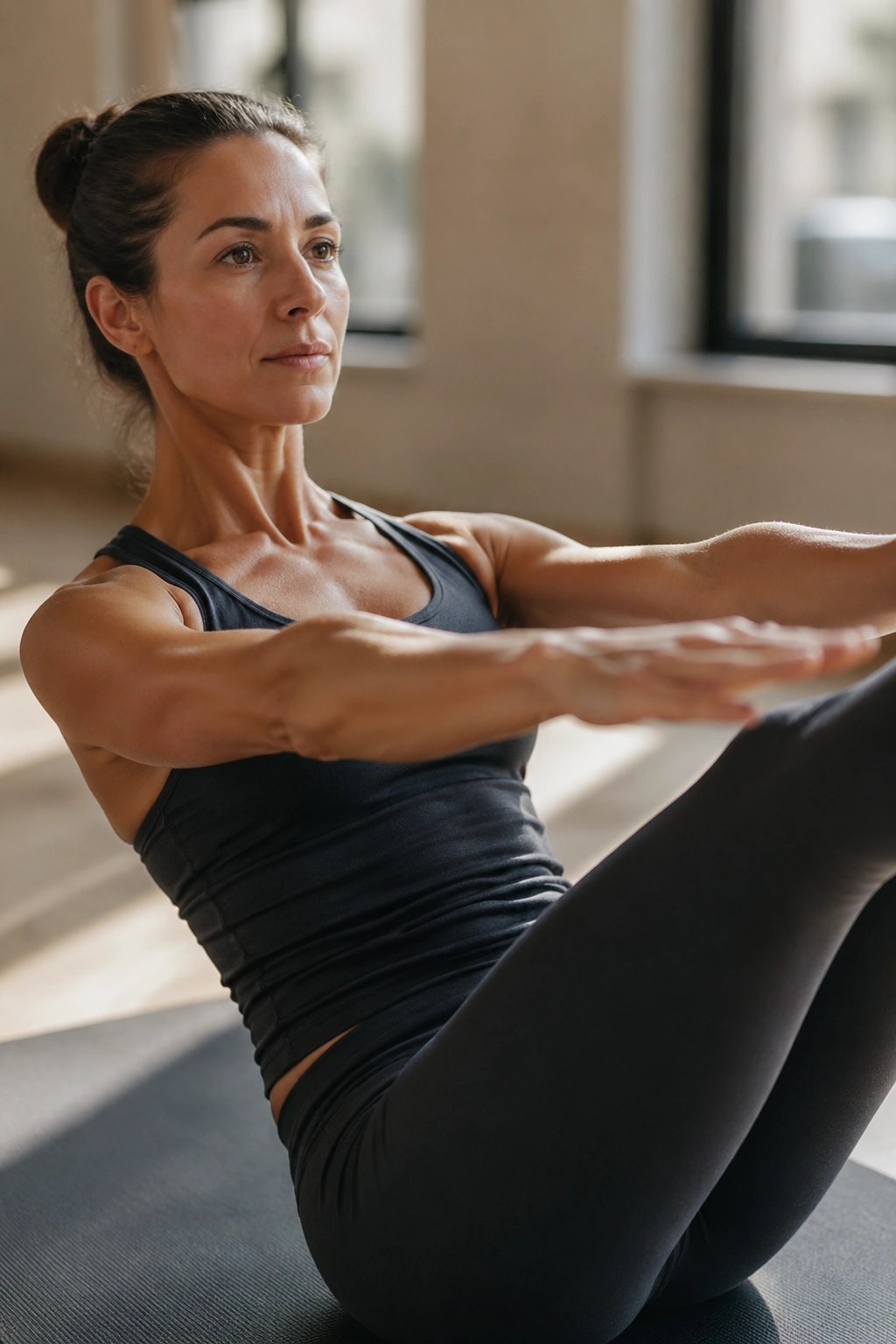
A schedule with a built-in ramp is useful when you want results but your body is not ready for a big jump. Start with two Pilates sessions a week. Hold that for a stretch. Then add a third session. After that feels steady, bring in a fourth.
The nice part of this plan is that it respects adaptation. People often jump from zero to five workouts and then wonder why their hips feel angry. A slower build lets the trunk, shoulders, and calves catch up. It also gives you a chance to notice which session types you recover from fast and which ones leave you dragging.
A simple build
- Weeks 1-2: 2 sessions
- Weeks 3-4: 3 sessions
- Weeks 5-6: 4 sessions, if recovery stays solid
Keep the added session short at first. Fifteen or twenty minutes is enough. You are teaching your week to hold more Pilates, not proving how tough you are. That difference matters.
16. The Minimum Effective Dose: Two Strong Sessions
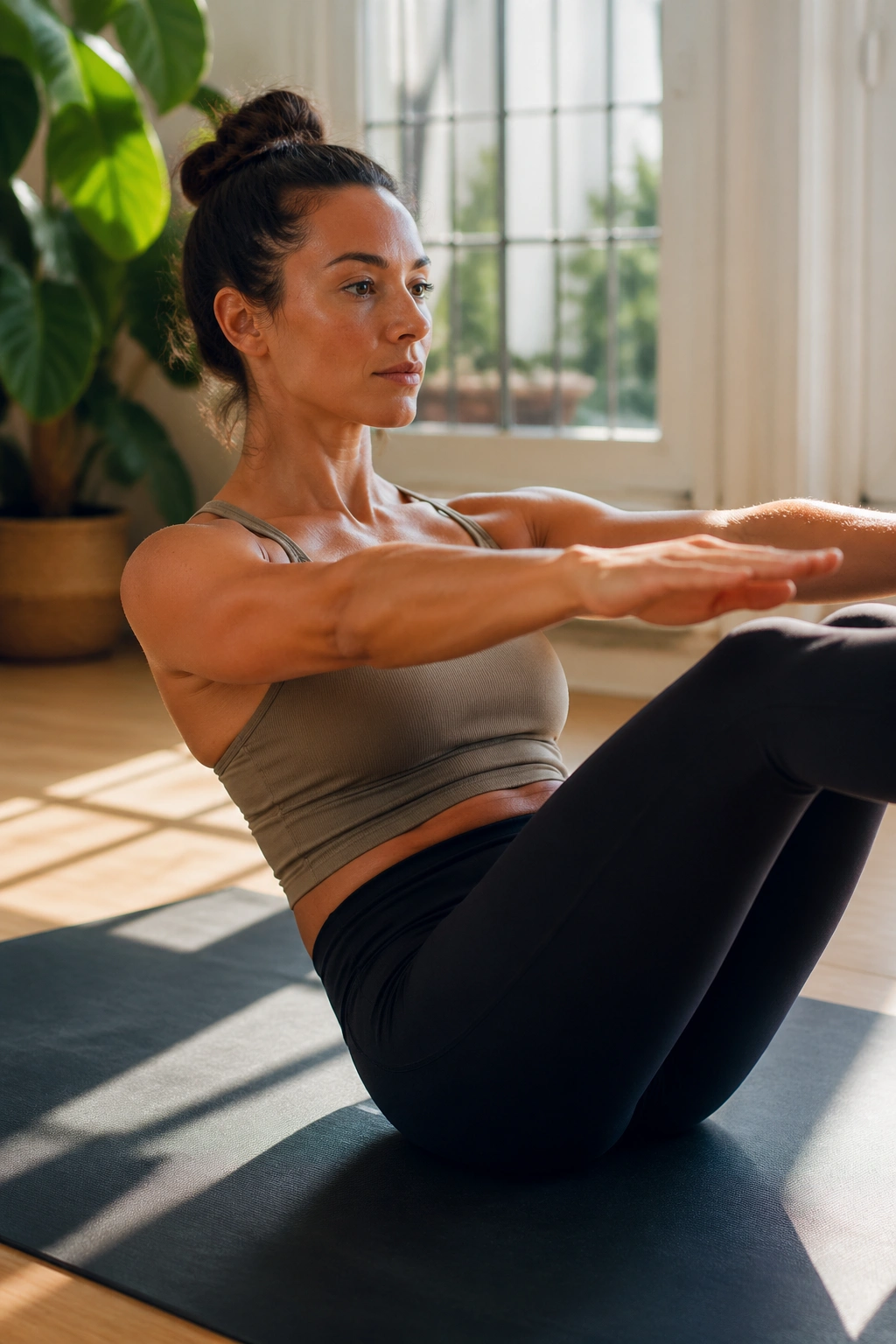
Two quality sessions can be enough to make a difference, especially if you’re already active in other ways. This is the schedule for people who need a realistic floor, not a perfect ceiling.
The key word is strong. Two sloppy sessions where you’re half on your phone and half on the mat do not count. But two focused classes, each 40 to 50 minutes, can absolutely improve trunk control, hip strength, and movement awareness. If the rest of your week includes walking, standing, carrying, or other sports, this may be all you need.
This plan is also honest about life. Not every week allows four workouts. Not every body wants four workouts. There’s nothing noble about burning out on a schedule you can’t maintain.
The catch is obvious: two sessions will not feel dramatic right away. But the body usually responds better to repeatable work than to occasional heroic efforts. A lot of people need to hear that twice. Maybe three times.
17. A Five-Day Hard-and-Easy Alternating Plan
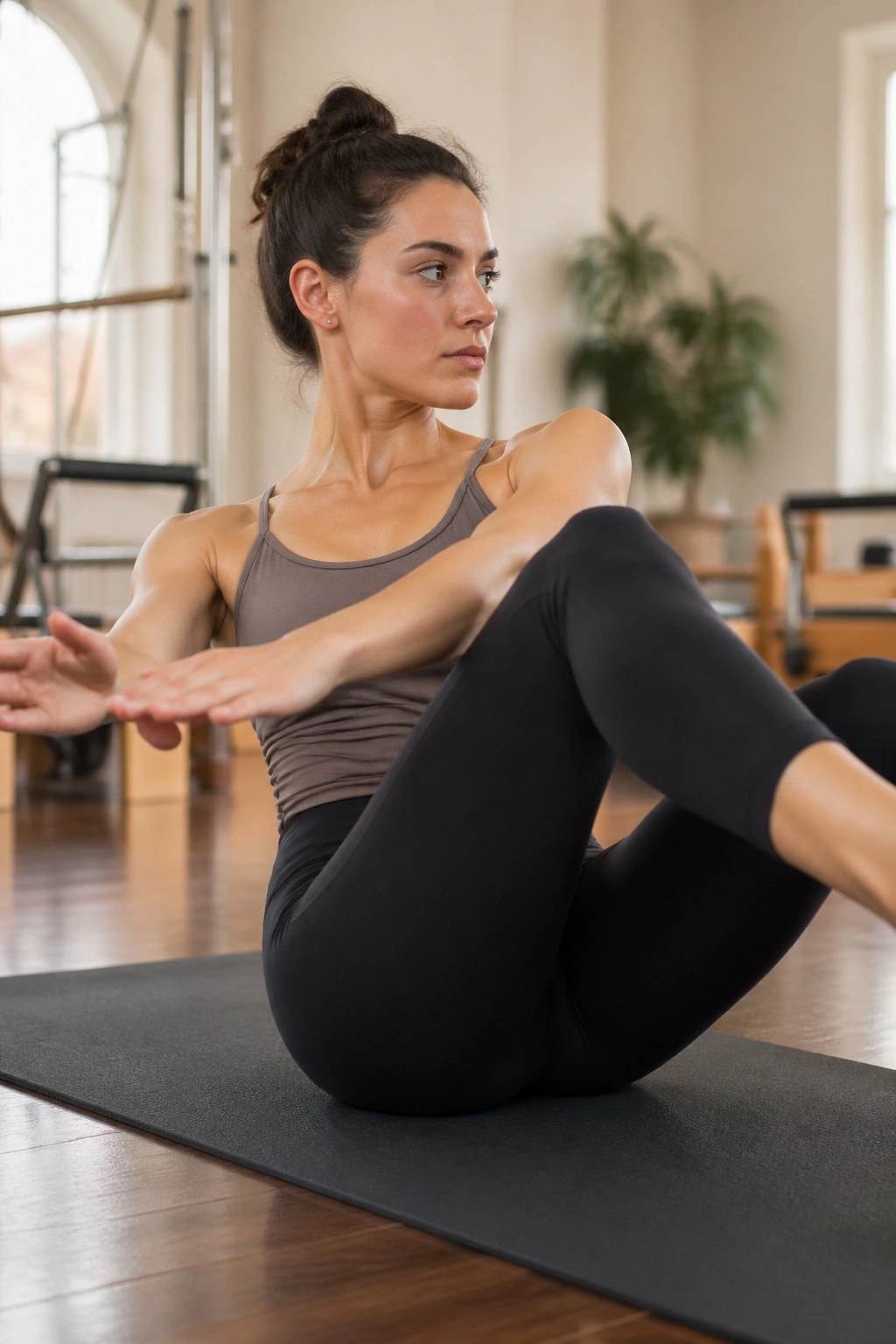
Five Pilates days a week sounds like a lot until you give them different jobs. Hard, easy, hard, easy, medium. That’s the real shape.
The hard days should challenge strength and control. Longer lever positions. More resistance. Fewer shortcuts. The easy days should focus on mobility, breath, and coordination. If every day is hard, the quality slides. If every day is easy, you stop adapting.
A clean version looks like this:
- Day 1: strength-heavy lower body
- Day 2: mobility and spine work
- Day 3: full-body challenge
- Day 4: light recovery flow
- Day 5: posture and balance
This schedule can work for advanced practitioners, but only if the easy days stay easy. That’s the part people miss. Easy does not mean pointless. It means you leave with enough gas to make the next hard day useful.
18. Core, Glutes, and Back in a Three-Part Rotation
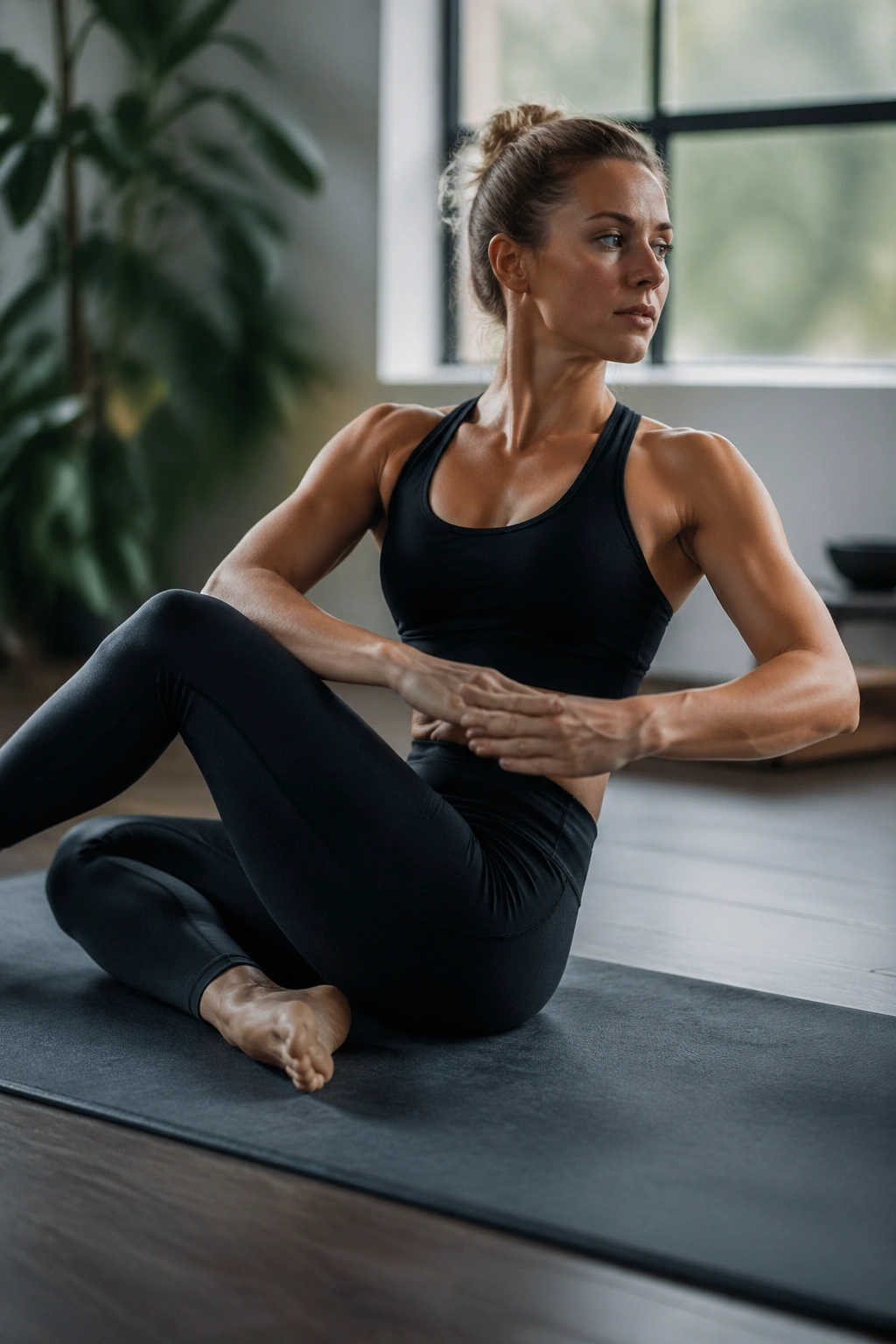
Why do so many Pilates plans stall? Because they stay too general. A three-part rotation fixes that by giving each key movement group its own lane: trunk control, hip extension, and back-body strength.
Core day should not become a neck day. Glute day should not turn into endless squats that barely resemble Pilates. Back day should not mean throwing your head back and calling it extension. The aim is cleaner movement, not just more effort.
How the rotation can look
- Session 1: deep core control, breathing, anti-rotation
- Session 2: glute bridges, side-lying work, hip stability
- Session 3: swan prep, rowing, posterior-chain endurance
This is a smart plan for people who know they are weak in one of those areas. It lets you spot patterns fast. Maybe your core is strong but your glutes bail out. Maybe your back feels fine until you ask it to hold posture for more than 10 minutes. The schedule makes the weak spot obvious, which is annoying and useful at the same time.
19. Weekday Home Work and Weekend Studio Sessions
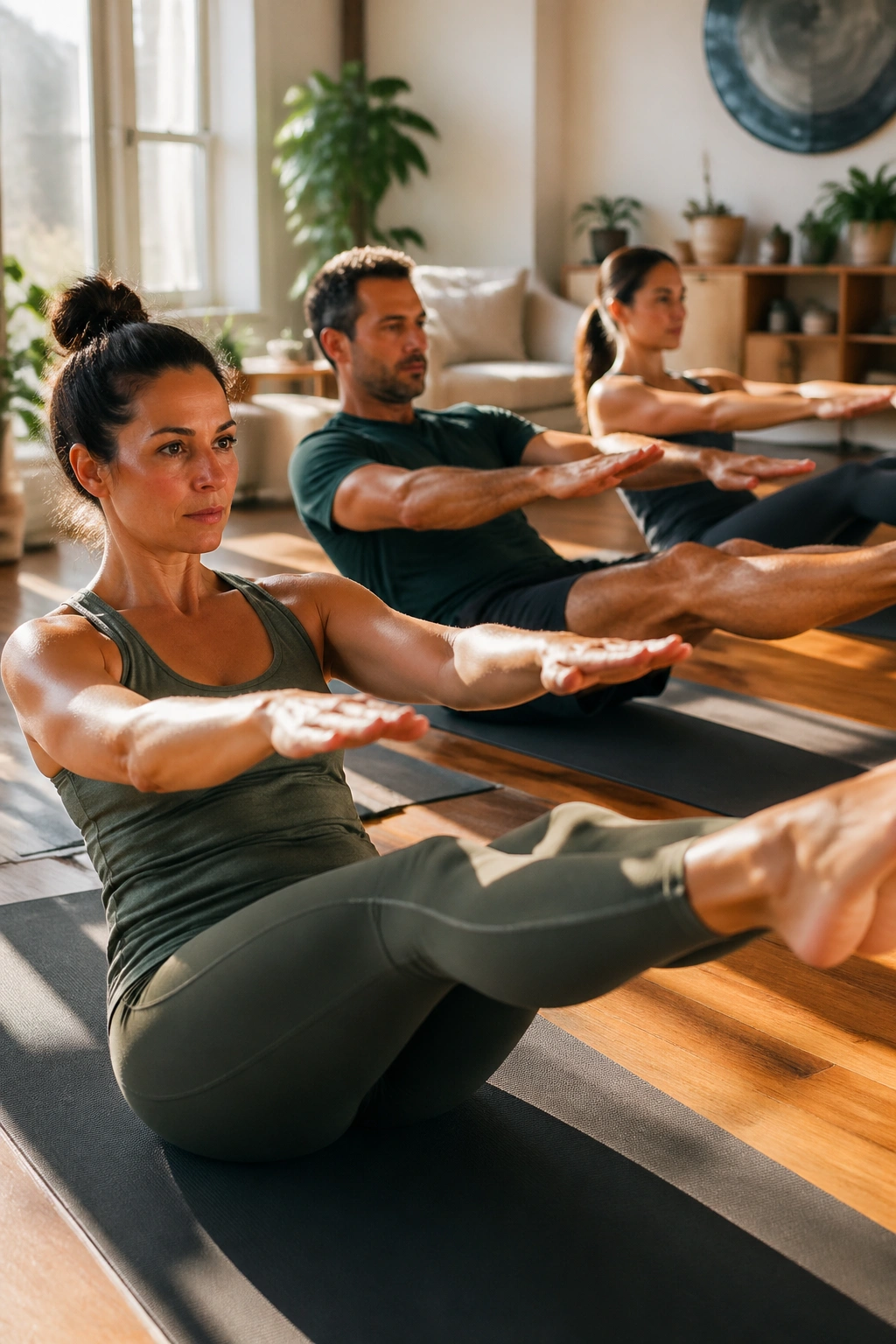
Studio Pilates and home Pilates solve different problems, so pairing them can be a smart move. Home sessions make weekday consistency easier. Studio sessions bring resistance, feedback, and a little more seriousness to the weekend.
A common version of this schedule is three short home practices during the week and one studio class on Saturday or Sunday. Home work might be 15 to 25 minutes. The studio session can run 50 minutes and handle the heavier lifting. That combination keeps the week from becoming all-or-nothing.
You also get a nice psychological trick here. The home sessions feel accessible, so you do them. The studio class feels special, so you pay attention. That mix often beats a plan that depends on either total solitude or constant class attendance.
The weak point is obvious: home sessions can drift if you do not choose them ahead of time. Pick the flow before the week starts. Don’t waste ten minutes deciding whether to do bridges or side planks while standing in socks.
20. The Restart Schedule for When You Miss a Week
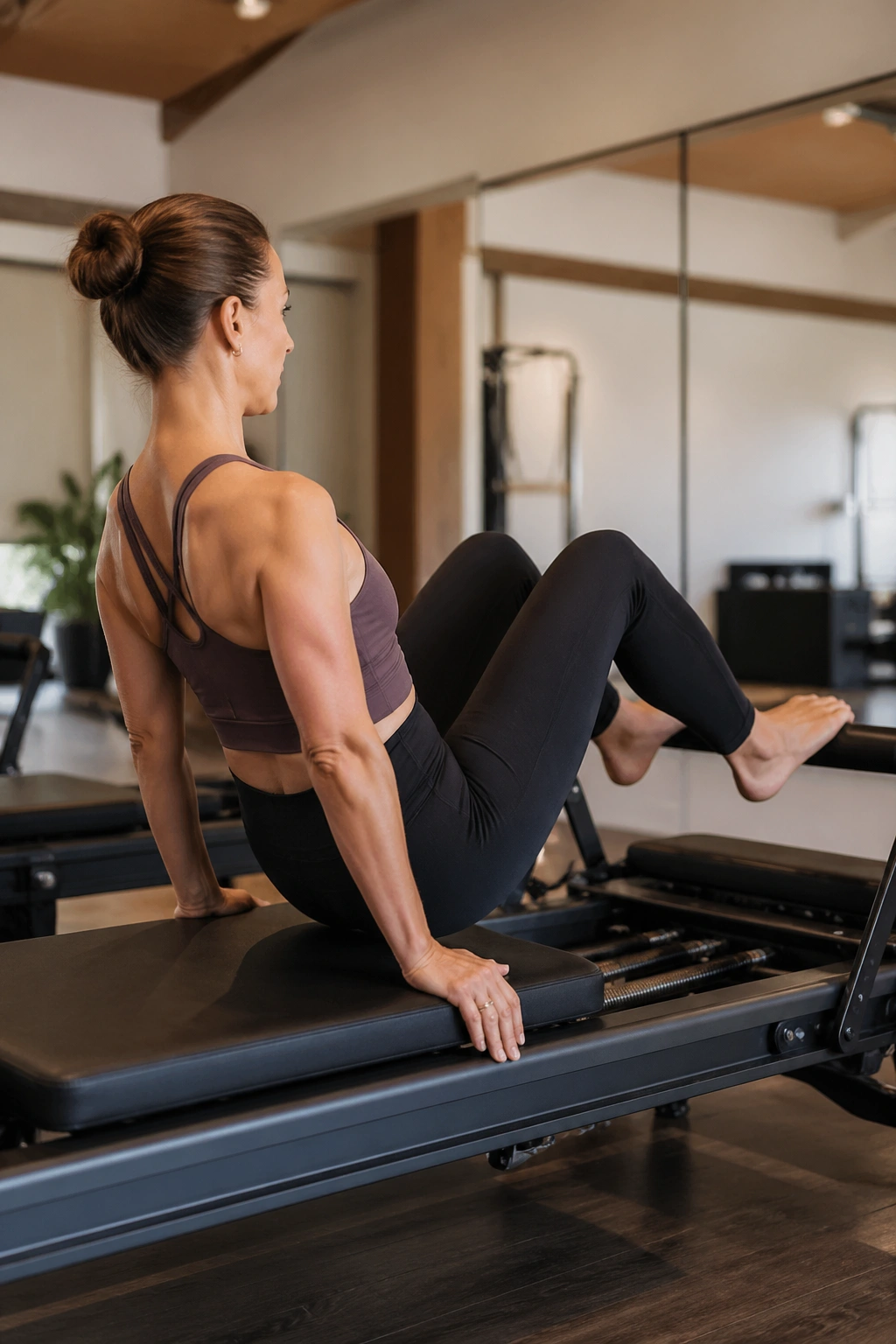
Missed weeks happen. Travel happens. Bad sleep happens. Boring life stuff happens. A good Pilates schedule includes a way back in, because restarting with a ridiculous plan is how people disappear for another month.
Use one short reset session first. Twenty minutes. Nothing fancy. Then do two moderate sessions in the next four days. After that, return to your normal rhythm. The purpose is to wake up your patterning without shocking sore muscles or turning the comeback into a test.
A simple restart might look like this:
- Day 1: 15- to 20-minute mobility and core reset
- Day 3: 30-minute full-body mat or reformer session
- Day 5: 30- to 40-minute strength-focused session
- Day 7 or 8: back to your regular weekly shape
That’s the part people forget. Progress is not only about building up. It’s also about coming back cleanly after life gets messy. A realistic Pilates schedule gives you a way to resume without drama, and that may be the most useful result of all.
