



If your neck gives out before your abs do, Pilates upper ab exercises are probably not the problem. The setup is. I see people crank on their head, shove their chin into their chest, fling their ribs upward, and then wonder why every curl feels like punishment instead of clean abdominal work.
Good upper-ab work in Pilates feels smaller than most people expect. The first inch matters more than the fifth. When you exhale and curl from the breastbone, the top edges of your shoulder blades start to peel off the mat, your ribs soften toward your pelvis, and the area above your navel lights up in a way that feels sharp, controlled, and honest.
One thing I want to say early: you cannot fully isolate the “upper abs” as a separate muscle. The rectus abdominis is one long sheet running from rib cage to pelvis. Still, some movements put more demand on the upper portion by asking you to sustain spinal flexion, control the rib cage, and resist dropping your head back to the mat. That’s the sweet spot this style of training hits.
And when it clicks, even six slow reps can feel brutal—in a good way.
What Upper-Ab Work in Pilates Is Actually Training
Pilates does not train your abs by chasing big motion. It trains them by making small motion harder to fake.
When people say “upper abs,” they usually mean the part of the front abdominal wall they feel during curl-ups, Hundreds, and bent-knee teaser work. Anatomically, you are still using the whole rectus abdominis, plus the transverse abdominis, obliques, and deep stabilizers around the spine and pelvis. The reason upper-ab Pilates work feels different is that the rib cage starts the action.
That detail matters. A chest lift is not a neck yank. A Roll-Up is not a hip-flexor throw. In well-taught Pilates, the sternum softens, the ribs narrow on the exhale, and the trunk curls one segment at a time. You should feel effort from the base of the breastbone down toward the navel, with your throat staying soft and your jaw unclenched.
A second point gets missed all the time: strong upper abs help you control the return, not only the lift. Lowering from a curl with slow control is often harder than lifting into one. That lowering phase is where a lot of people discover whether their abs are doing the work or whether momentum has been covering for them.
Spinal flexion is not right for every body, though. Anyone dealing with osteoporosis, a fresh disc flare, abdominal surgery recovery, or pregnancy-related concerns should get tailored guidance before loading repeated curl patterns. Pilates is smart training when it is matched to the person in front of it—not when every body gets the same drill.
Set Your Ribs, Breath, and Head Position Before Upper-Ab Pilates Work
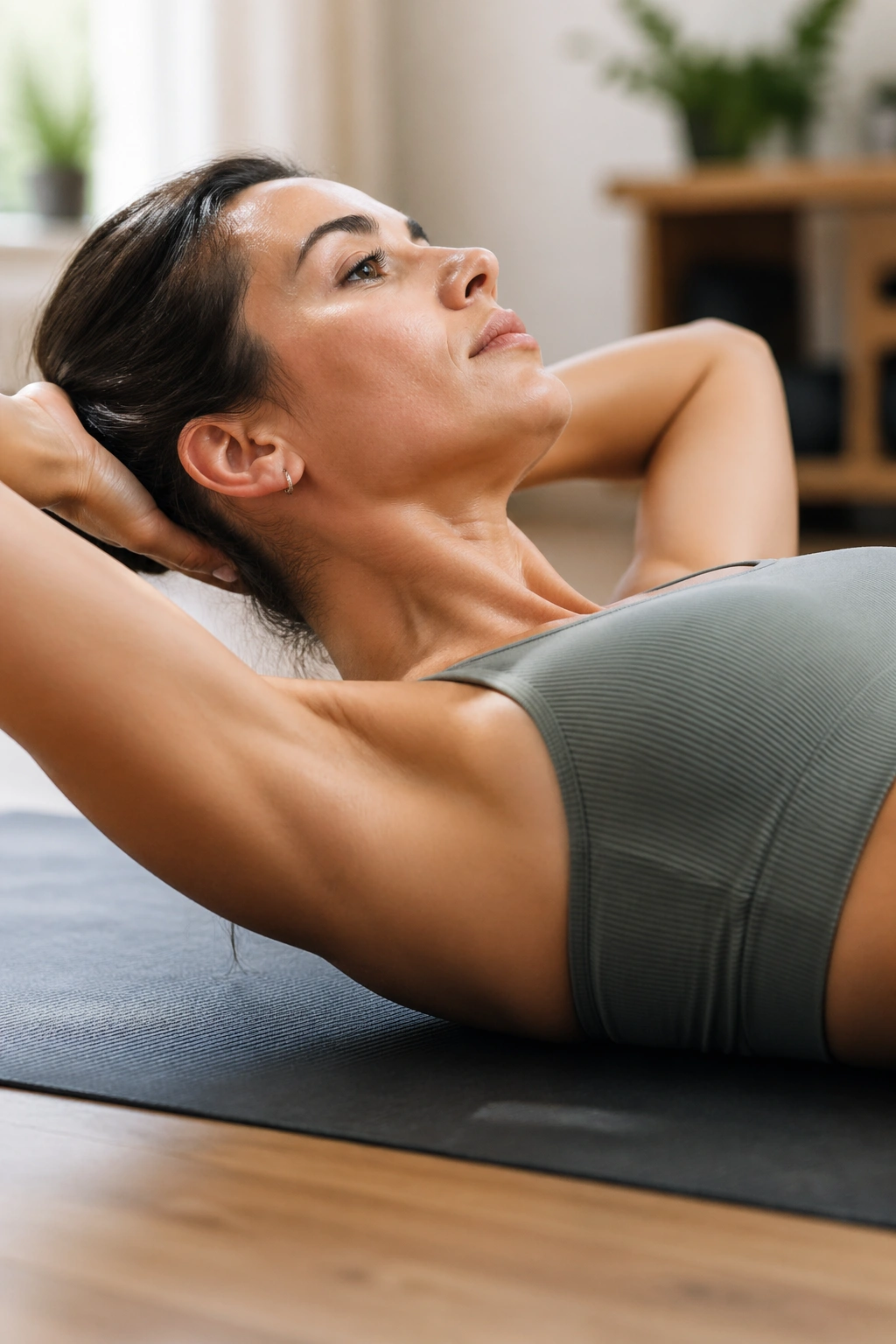
Picture the start of a good Pilates curl. Your feet are grounded. The back of your ribs feels wide on the mat. Your chin is not jammed down, and it is not floating toward the ceiling either. You are making a small nod first, almost like saying yes before the curl even begins.
That nod changes everything.
The head-and-rib setup that saves your neck
Most neck strain comes from skipping the sequence. Start with an inhale through the nose to widen the rib cage. Then exhale through pursed lips and let the front ribs draw down as your head floats up. Your hands support the weight of the head; they do not pull it.
A cue I love is this: lift the skull into the hands, not the hands into the skull. It keeps the throat softer and stops the elbows from collapsing forward.
Quick form checks before your first rep
- Keep a fist-sized gap under your chin. If the chin jams to the chest, the front of the neck takes over.
- Exhale on the hardest part. That breath helps knit the ribs down and gives your deep core something to work with.
- Lift only as high as you can keep the ribs contained. Bigger is not better here.
- Lower with control for 2 to 3 seconds. The descent tells the truth.
- Stop when the neck leads. One clean rep beats ten sloppy ones.
Small setup details are boring. I know. They are also the difference between “I feel nothing in my abs” and “wow, that second set got me.”
1. Chest Lift
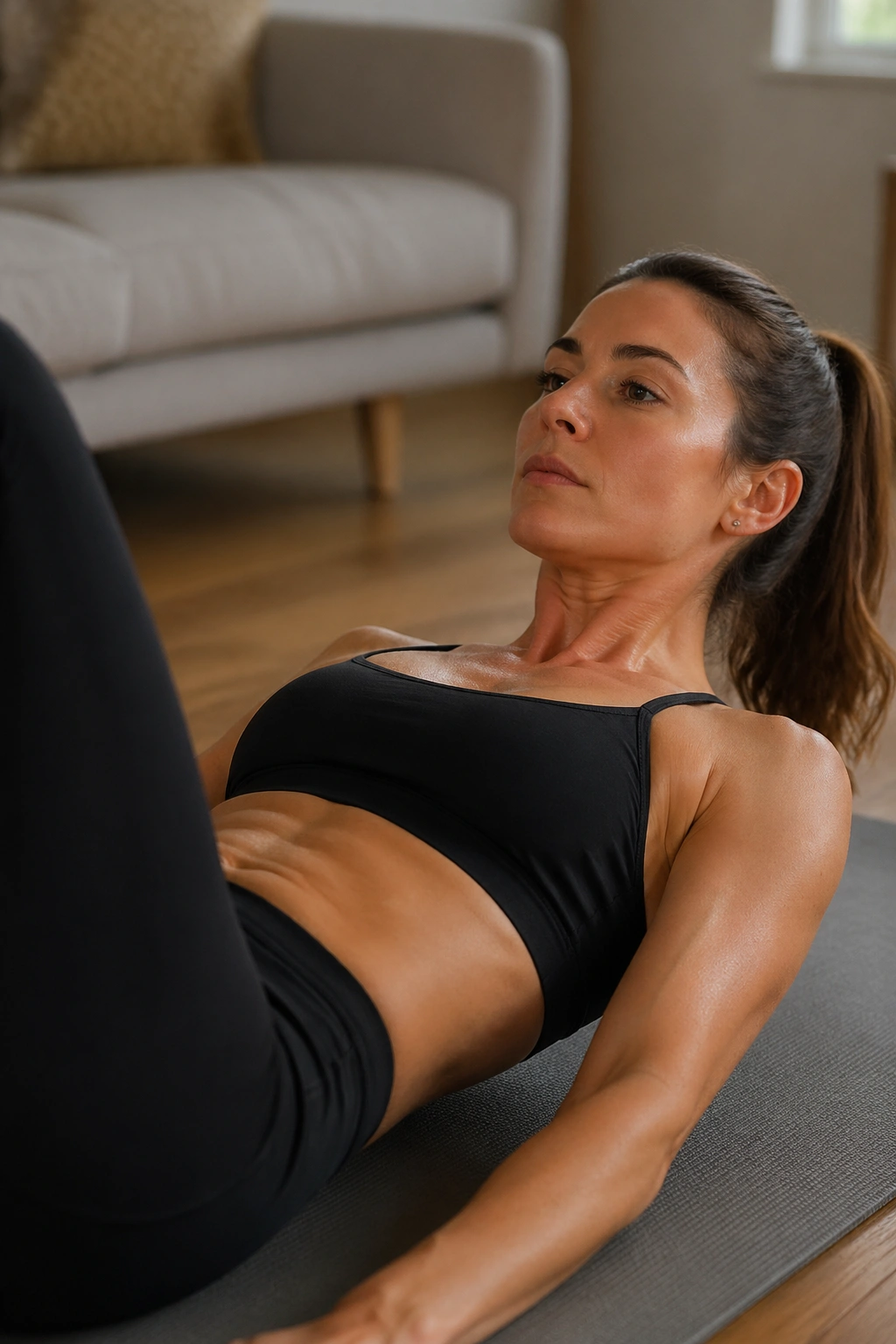
Start here. Always.
The Pilates Chest Lift is the plain white T-shirt of upper-ab training: basic, dependable, and far more useful than flashy variations. Lie on your back with your knees bent, feet hip-width apart, and hands lightly behind your head. Inhale to prepare. Exhale, nod your chin, and curl your head and shoulder tips off the mat until the bottom edges of the shoulder blades still stay down. Inhale at the top. Exhale to lower for a slow count of three.
Where you should feel it
You want a firm, concentrated burn from the base of the ribs to the area above the navel. Your low back can stay neutral or gently imprinted, depending on your teacher’s style and what lets you keep the ribs from popping.
Clean-rep checklist
- Reps: 8 to 10 slow lifts
- Tempo: 1 count up, 1 hold, 3 counts down
- Gaze: Toward the tops of the thighs, not the ceiling
- Mistake: Elbows slamming forward and head getting dragged up
Best use: Put Chest Lift at the front of your session, right after breathing and pelvic setup work. If this move feels messy, the harder ones will not clean themselves up later.
2. Reach-and-Pulse Chest Lift
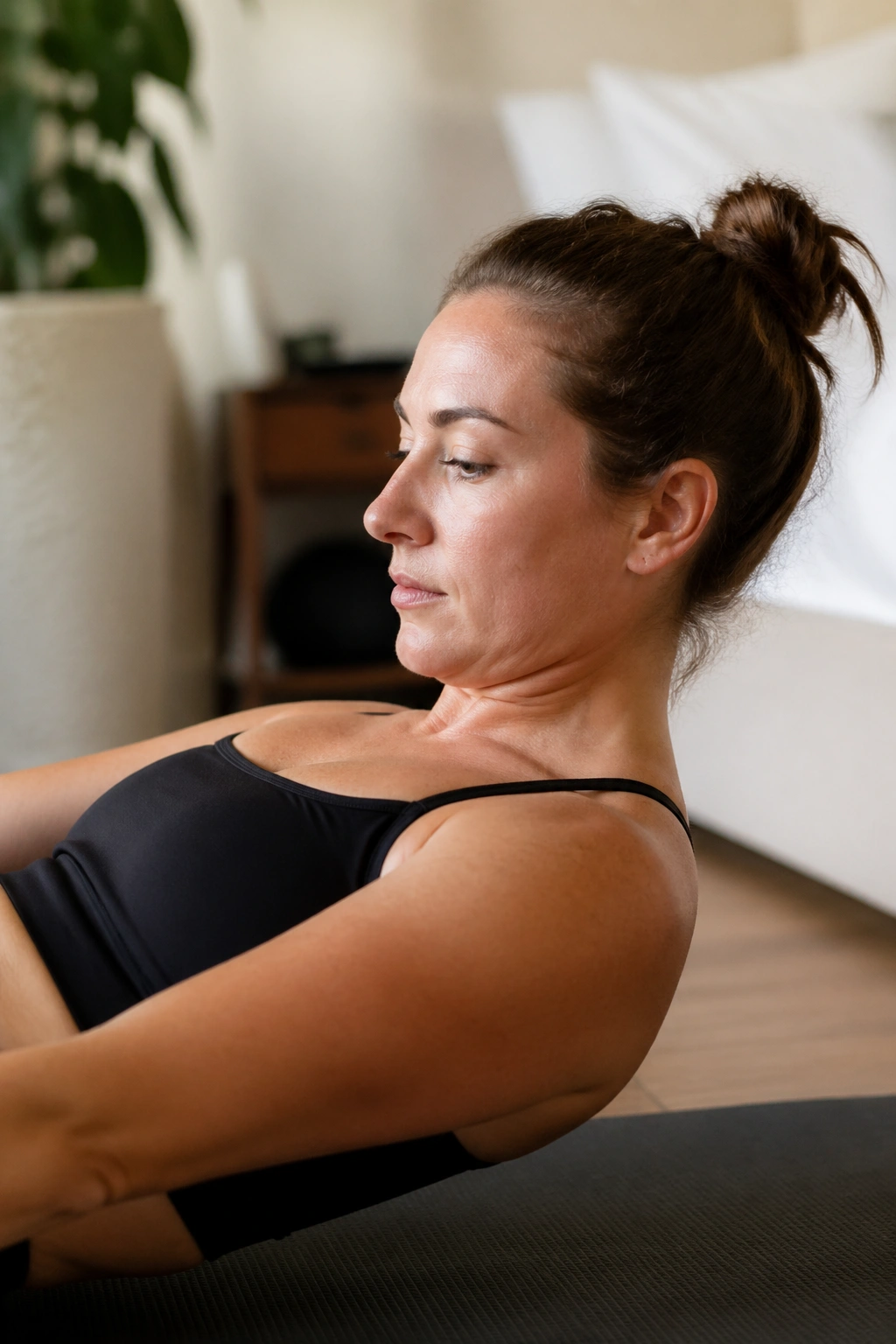
Taking the hands off the head makes a simple curl feel twice as honest. That is why this version stings so fast.
Set up as you did for Chest Lift, but place your arms long by your sides. Exhale to curl up and reach your fingertips toward your heels. At the top, add three tiny pulses by lifting the sternum a fraction higher each time without jutting the chin. Lower all the way down after the third pulse. Six to eight rounds is plenty for most people.
Longer arms change the lever. Without the hands helping support the head, your upper abs have to hold the position cleanly, and your shoulders have to stay broad instead of creeping toward your ears. That combo makes the work land exactly where many people want it: in the upper front wall of the abdomen.
A detail worth paying attention to—if your low ribs bulge upward when the arms reach, shorten the range. Reach toward your knees rather than your ankles. You will still get the effect, and your abs will stay in the job instead of handing it off to your back.
This move also makes a good reality check. If Chest Lift feels fine but Reach-and-Pulse turns into neck tension after three reps, you have found your weak link.
3. Hundred Prep
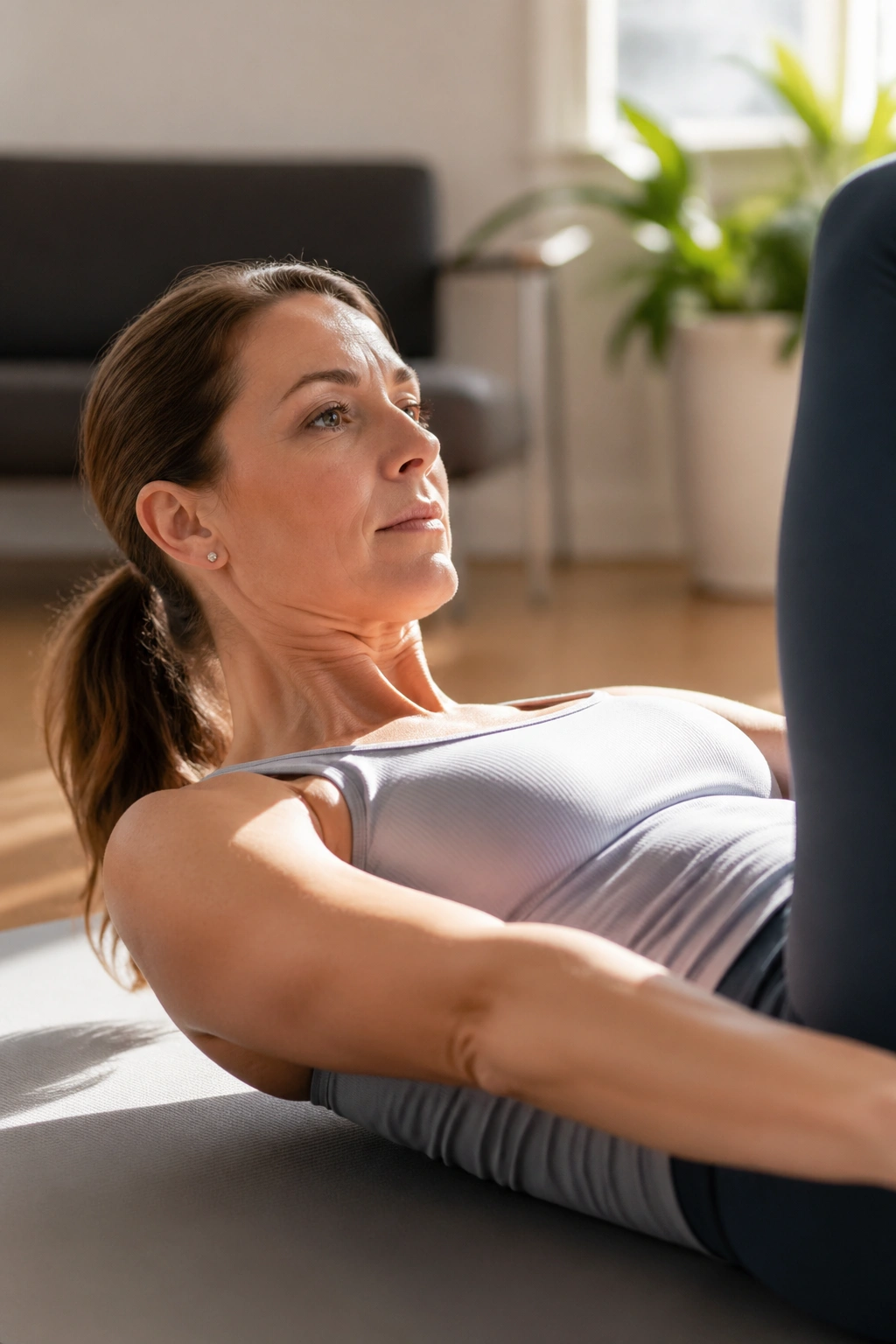
Why does the Hundred Prep feel harder than it looks on paper? Because the challenge is not the arm pumps. It is the sustained chest lift.
Lie on your back, bring one leg to tabletop and then the other, and curl your head and shoulders up into a strong upper-ab hold. Stretch your arms long beside you and pump them 5 small beats on the inhale, 5 small beats on the exhale. Keep the knees bent at 90 degrees the whole time. Start with 50 pumps total if 100 turns your form into soup.
Most people first notice the upper-ab demand right around the third breath cycle. The arms are moving, the legs are fixed, and the trunk has to stay lifted without the ribs widening. That is Pilates at its best: one body part moves while another refuses to wobble.
Make the hold cleaner
Instead of thinking “pump the arms,” think float the chest and tap the air. The pumps come from the shoulders and triceps, yet the trunk stays quiet. If your neck starts barking, drop one foot to the mat or place your head down for 2 breaths, then come back up. Modification is not defeat. It is how you keep the target where you want it.
4. Toe Taps from a Curled Chest Lift
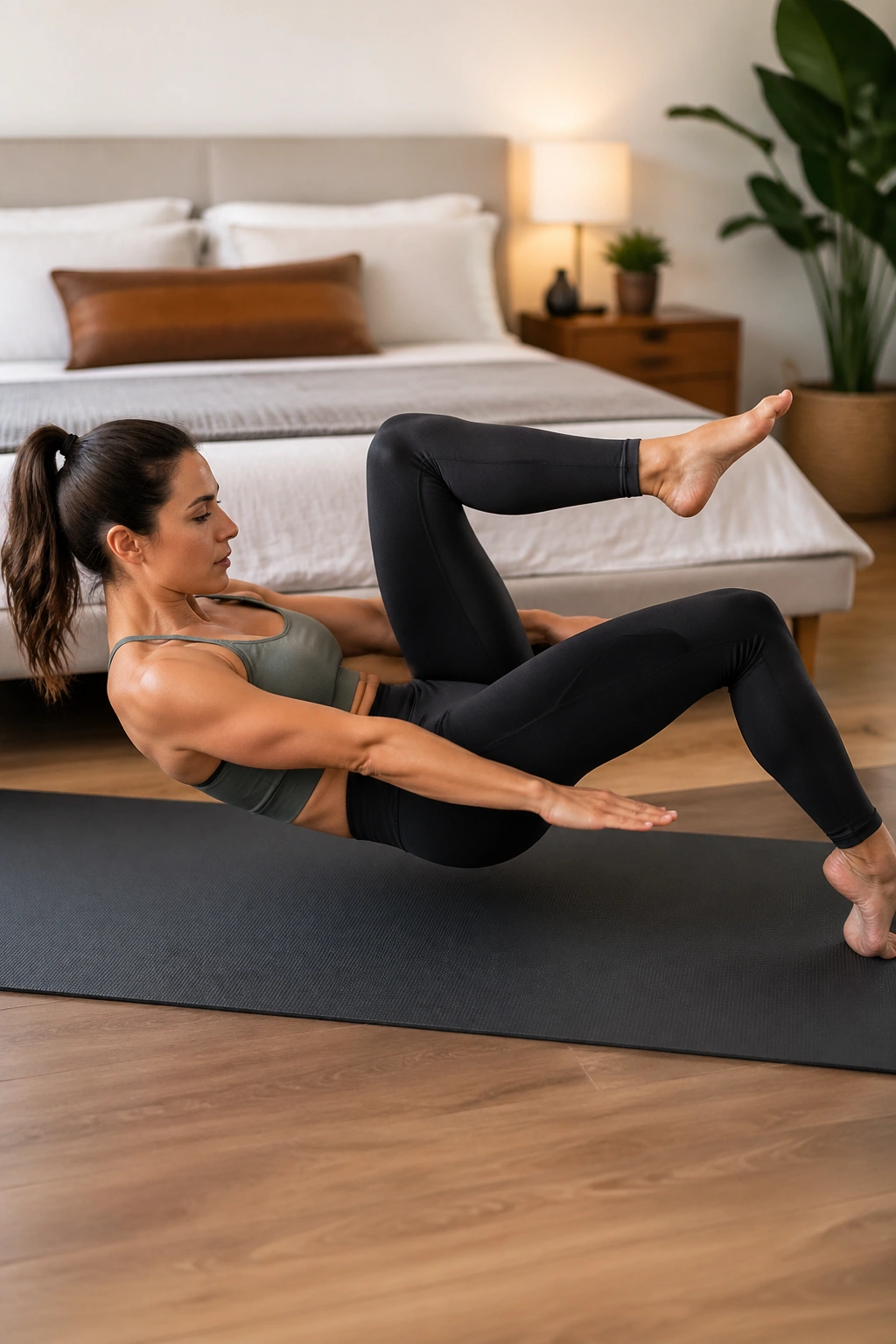
Picture the moment when your abs are working, your ribs are behaving, and then one leg moves. Suddenly the whole shape wants to fall apart. That is exactly why Toe Taps from a Curled Chest Lift earn a spot here.
Set up in tabletop with both knees stacked over the hips. Curl head and shoulders up. On an inhale, lower one foot toward the floor and tap the toes lightly. Exhale to bring that leg back to tabletop. Alternate sides for 8 to 10 reps each. The touch should be feather-light, not a thud.
The upper abs do more than curl you up in this move. They help keep the rib cage from lifting and the torso from dropping each time the leg lowers. That anti-collapse work is gold for people who can do one chest lift well but lose all control once the legs get involved.
A few coaching notes make a huge difference:
- Keep the thigh still until the knee angle starts to open. Do not let the whole leg drift away from you.
- Lower only as far as the ribs stay down. The floor is not the goal; control is.
- Think breastbone to pelvis on every exhale. That image keeps the curl active.
The exercise looks modest. Your abs will disagree by rep six.
5. Heel Slides with Head Lift
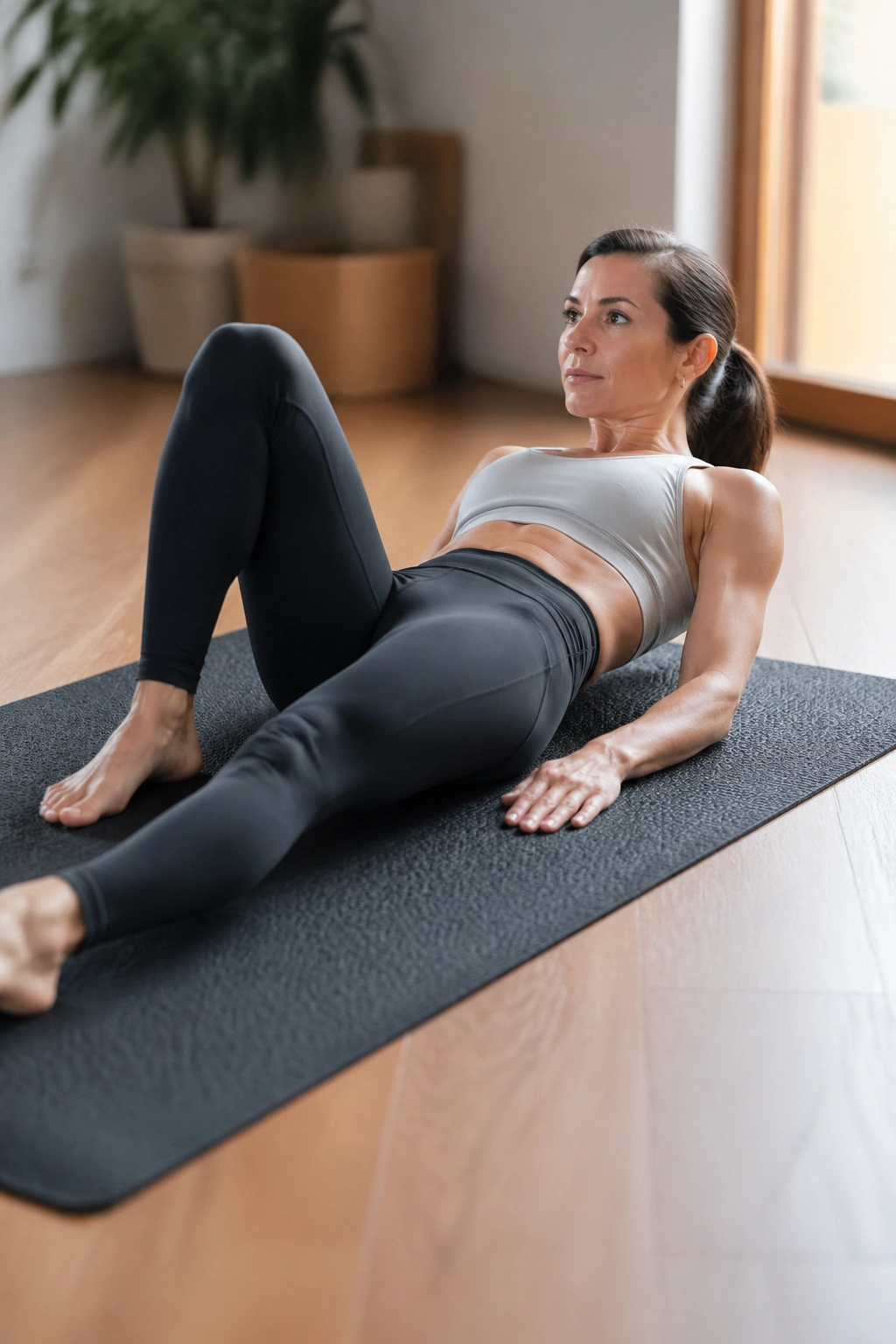
This one does not get enough love.
Heel Slides with a curled-up torso are one of my favorite upper-ab drills for beginners, for people returning after time off, and for anyone whose hip flexors hijack tabletop work. Lie on your back with knees bent and feet planted. Curl into a chest lift. From there, slide one heel forward along the mat until the leg is almost straight, then drag it back in. Alternate sides for 6 to 8 reps each.
Because the foot stays in contact with the floor, the lever is shorter and the pelvis has an easier time staying steady. That gives you room to focus on what the upper trunk is doing. The challenge is to hold the same curl shape while one leg changes length.
Unlike Toe Taps, which ask you to support the weight of the leg in the air, Heel Slides let you build endurance without the move turning into a hip-flexor contest. A lot of people feel the right muscles faster with this version, and that matters. Feeling the target early can teach your body the pattern far better than grinding through harder reps with shaky form.
If the mat has too much drag, wear socks or place a towel under the heel. Small fix. Big difference.
6. Full Hundred
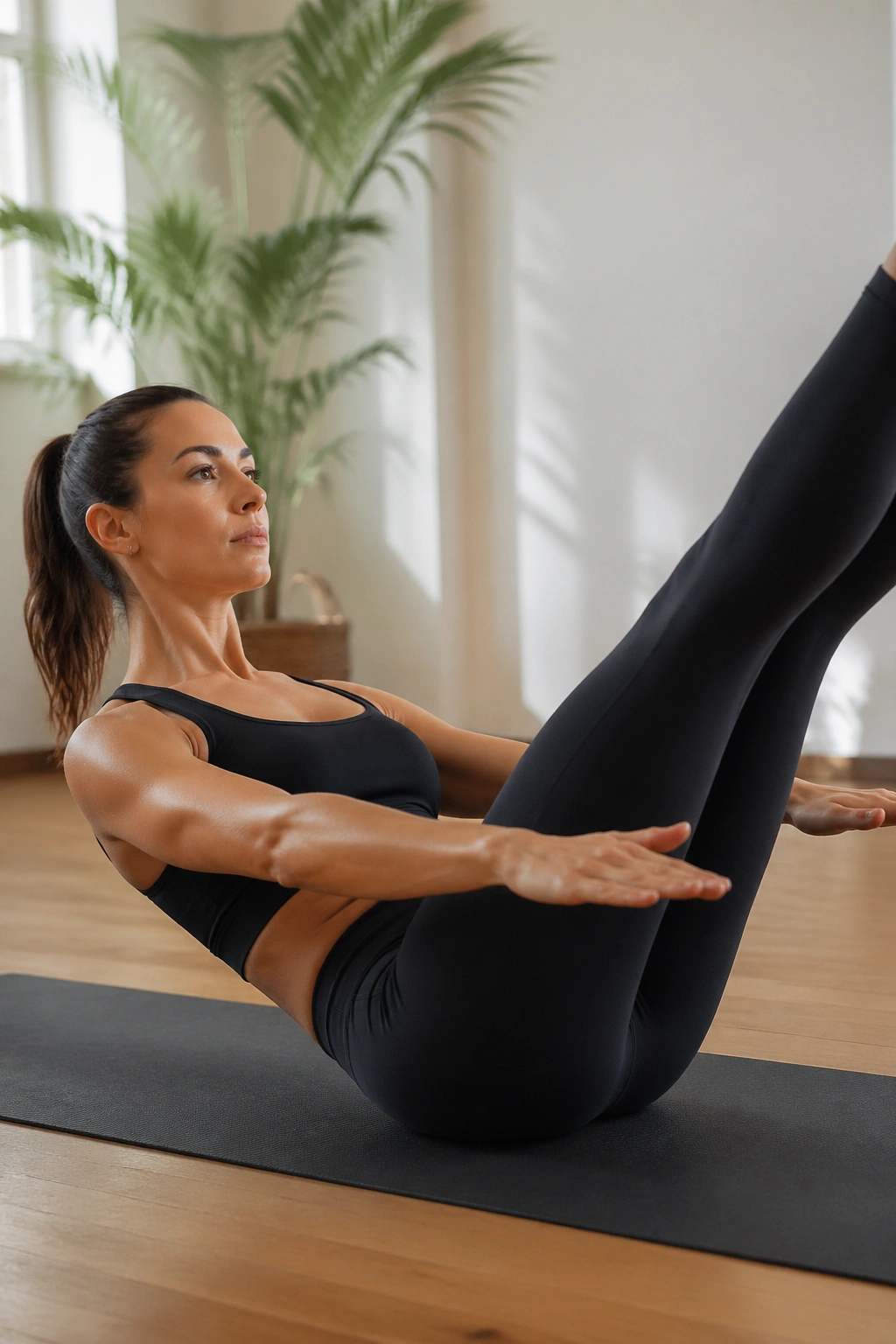
Unlike Hundred Prep, the full version adds a longer lever through the legs, and that changes the demand right away.
From a strong chest lift, bring both legs to tabletop and then extend them to a height where your low ribs still stay anchored. For some people that is 60 degrees. For others it is 45. A few bodies can go lower without losing shape. Pump the arms for 10 breath cycles—5 counts in, 5 counts out—for the classic 100 pumps.
The upper abs have to work like mad here because the torso stays in flexion while the legs pull the pelvis away from your center. If your back arches or your ribs flare, the abs are no longer winning the argument. Bend the knees and keep going. There is no prize for low legs and lousy mechanics.
Who does this suit best? People who can already hold Hundred Prep without neck strain and can breathe into the back and sides of the ribs while the front body stays gathered. That last part is tougher than it sounds. Breathing under abdominal load is a skill.
A good standard: if you cannot keep the same lift for all 10 breath cycles, break it into 4 cycles, rest, then 4, then 2. You still get the training effect, and the last reps stay worth doing.
7. Single-Leg Stretch
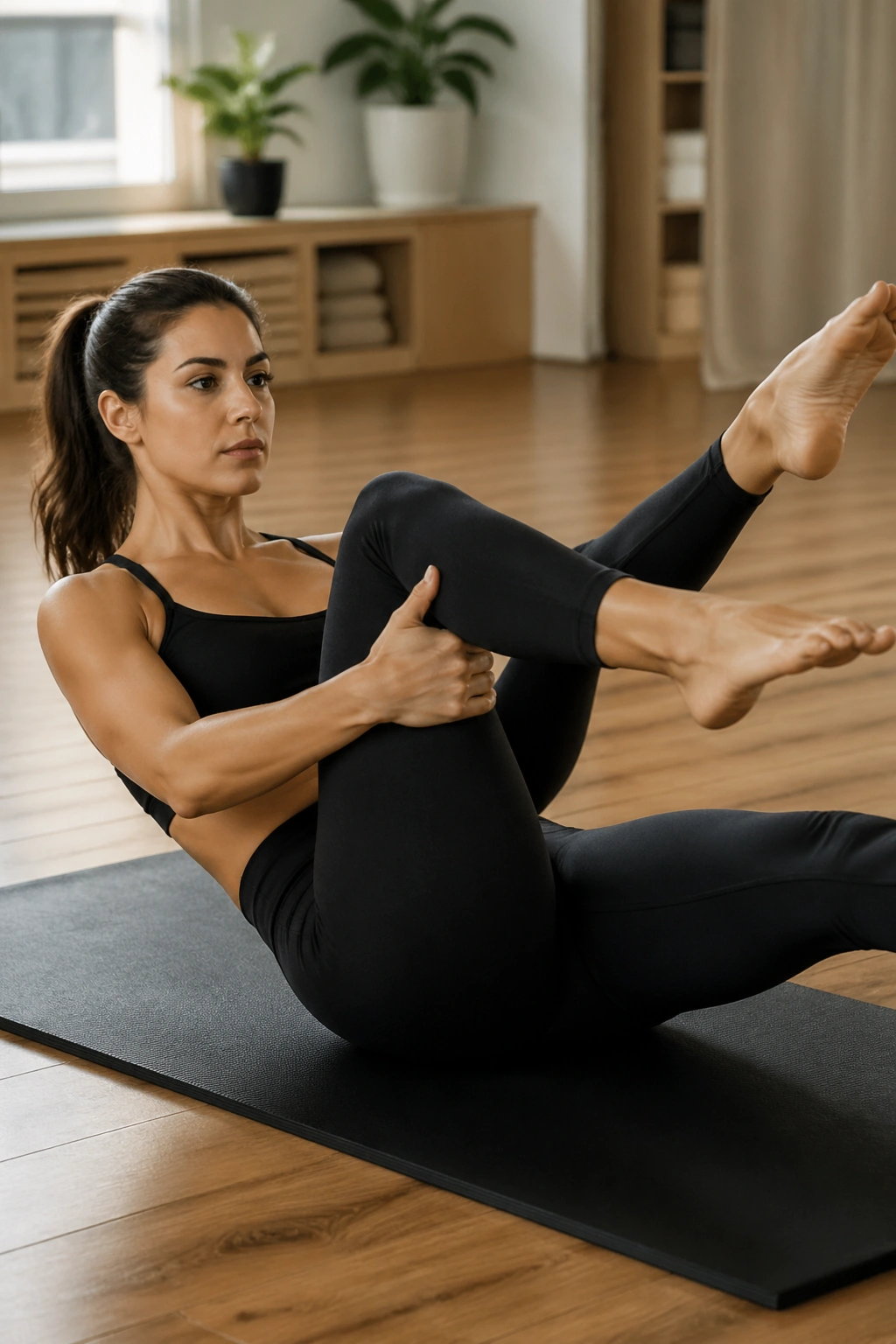
Single-Leg Stretch is where Pilates starts to feel rhythmic. Pull one knee in, reach the other leg long, switch with control, and keep the chest lifted the whole time. The upper abs do not get to clock out between sides.
Set up in a curled chest lift with one hand on the shin and one hand near the ankle of the bent leg. The other leg reaches forward on a diagonal. Switch legs on the exhale, moving with precision rather than speed. Aim for 8 to 10 reps per side.
Why this move hits the upper trunk so well
Every switch tries to tug your torso backward. If you stay lifted, the upper abs have to keep the rib cage curling inward while the legs trade places. It is a moving challenge layered onto a static hold, and Pilates loves that kind of demand.
Form details that change the feel
- Reach the long leg from the hip, not from a locked knee.
- Keep the elbows wide enough that the collarbones stay open.
- Pull the knee in only as far as the pelvis stays quiet.
- Exhale on the switch if you need more control.
Try this: hold each side for 1 full breath before switching. Slower reps expose cheats fast.
8. Double-Leg Stretch
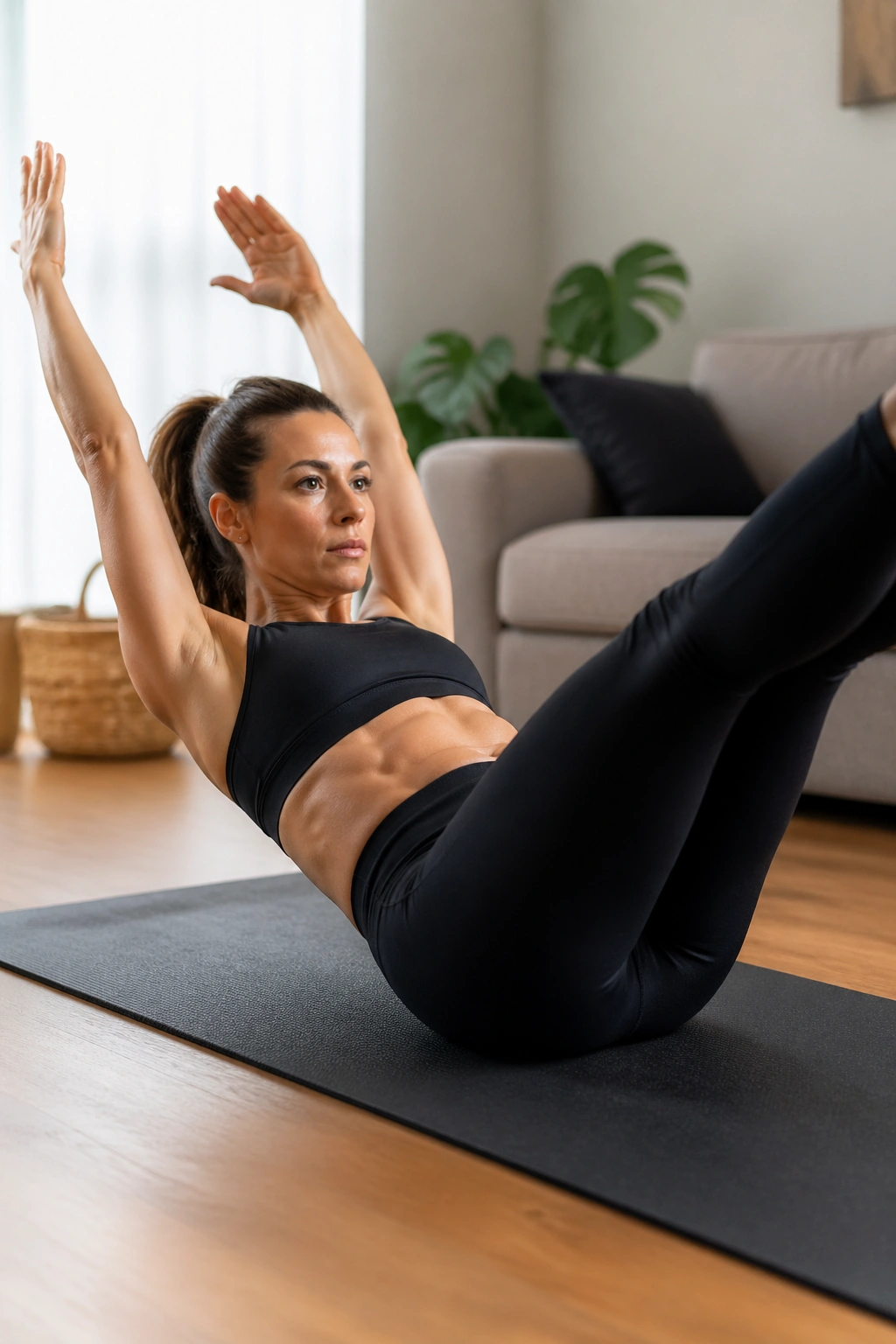
Few mat moves expose a loose rib cage faster than Double-Leg Stretch. You begin curled up with knees hugged in. Then, on the inhale, the arms arc overhead while the legs reach away. On the exhale, circle the arms around and pull the knees back in without dropping the chest.
That expansion-and-return pattern is what makes the move so effective. When the limbs reach long in opposite directions, the front body wants to spring open. Your upper abs have to stop that from happening. You should feel them brace hard as the arms pass your ears and the legs extend away.
Use 6 to 8 clean reps. More than that, and many people start rushing the return or flaring the ribs. If your lower back lifts and your abs disappear, shorten the arm reach, bend the knees more, or send the legs higher. There is always a version that keeps the work in the right place.
I like this move after Single-Leg Stretch because the body already knows how to hold the chest lift, and now the lever gets longer on both ends. One caution, though—do not throw your arms back. Reach with control, keep the neck soft, and think of the torso as the anchor the limbs orbit around.
9. Criss-Cross
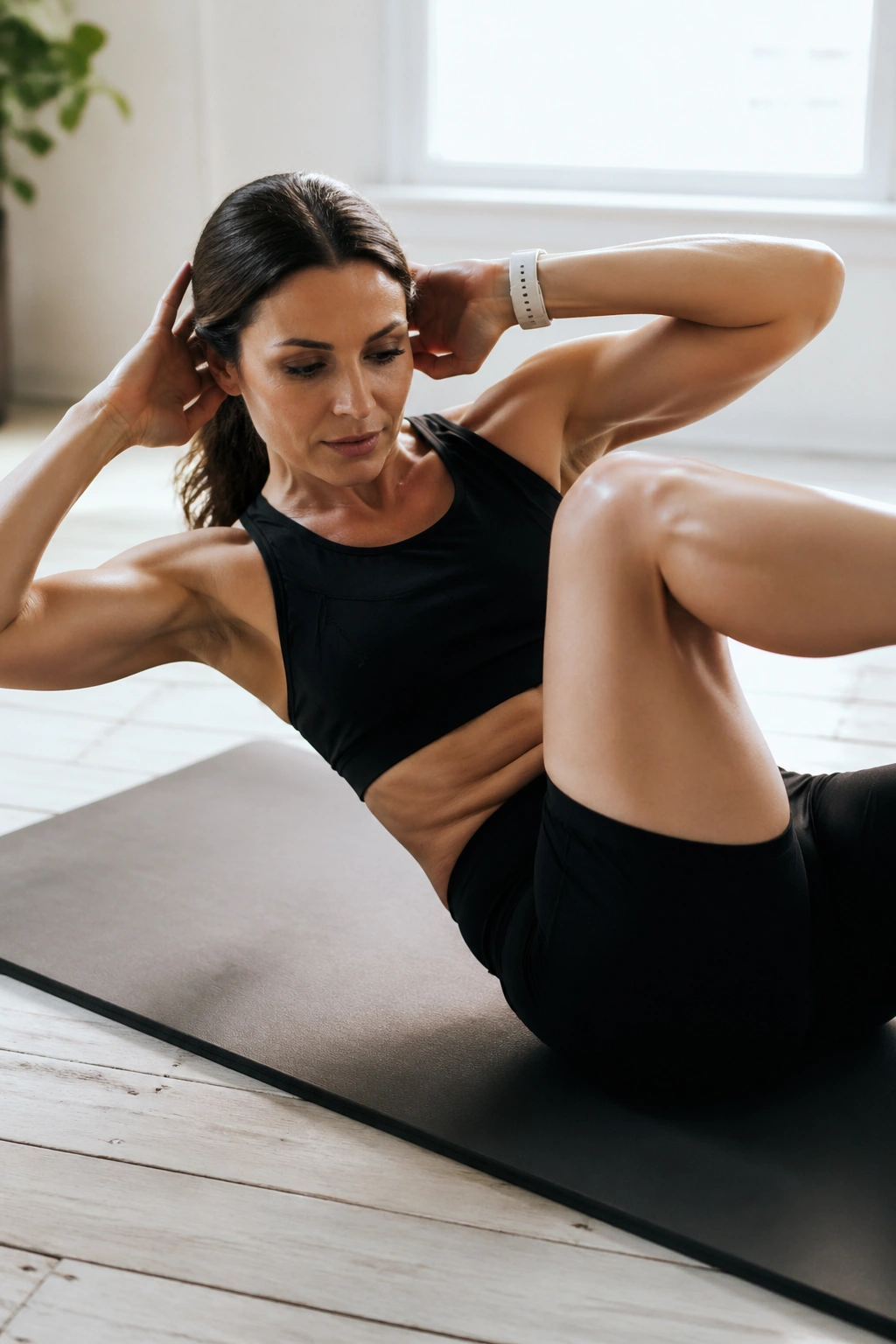
Criss-Cross is not elbow-to-knee theater. Done well, it is one of the sharpest upper-ab and oblique exercises in the whole Pilates mat sequence.
Curl up, bring one knee in, and rotate the rib cage toward that bent leg while the other leg reaches long. Switch sides with control. The goal is not to slam your elbow across the body. The goal is to turn the chest while staying lifted high enough that the upper shoulder blade tips remain off the mat.
A lot of people ruin Criss-Cross by leading with the arms. Then the neck twists, the elbow chases the knee, and the torso barely rotates. Think sternum toward opposite thigh instead. Your hands are along for the ride. Your ribs do the turning.
Practical rule: do fewer reps than you want. Six controlled turns per side beat twenty frantic ones. The slower pace lets you keep the chest lifted between rotations, which is where the upper-ab demand lives. Done that way, Criss-Cross can feel less like a bicycle crunch and more like a precise wringing-out of the trunk.
If your pelvis rocks side to side, shorten the leg reach. Rotation without stability turns sloppy fast.
10. Single Straight-Leg Stretch
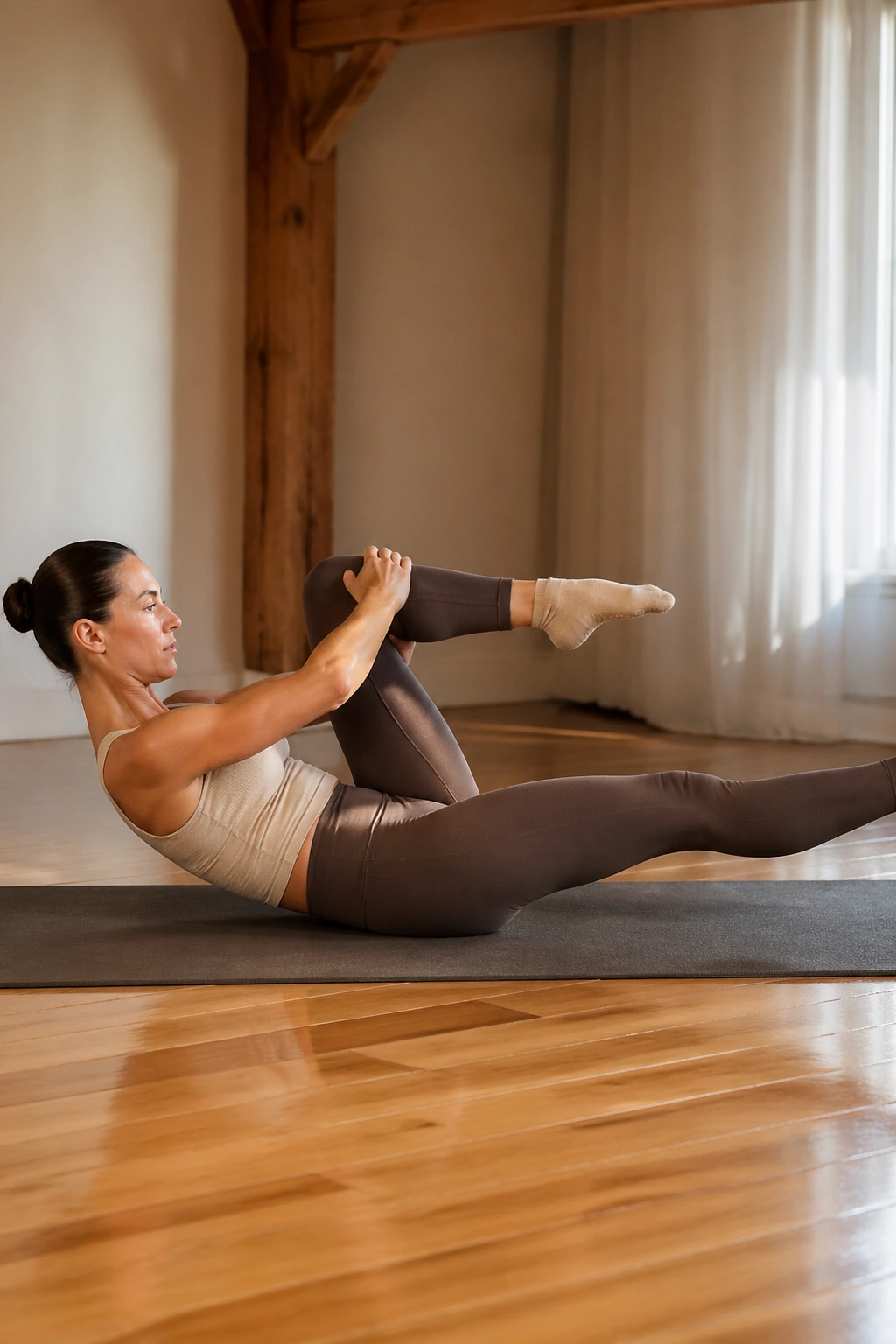
Take Single-Leg Stretch, lengthen both knees, and the difficulty jumps. That is Single Straight-Leg Stretch, often called Scissors in Pilates classes.
Lie curled up, extend both legs toward the ceiling or slightly forward, hold one calf or thigh with both hands, and pulse that leg toward you twice while the other leg reaches away. Then switch. The upper abs stay lifted the entire time, and your sternum keeps curling inward as the legs trade jobs.
Why long legs change the whole exercise
Long legs create more leverage, and leverage asks more from your trunk. Your abs have to resist the tendency to arch the back or let the head drop. Tight hamstrings can complicate the shape, though, so it is fine to hold behind the thigh instead of grabbing the calf.
Quick standards for clean reps
- Reps: 6 to 8 per side
- Lowering leg: Stop at the point before the ribs pop
- Top leg: Keep it vertical enough that the pelvis does not tuck under
- Neck: Stay wide across the collarbones
This move looks sleek in photos. In practice, it is humbling. Which is why it works.
11. Half Roll-Back Hold
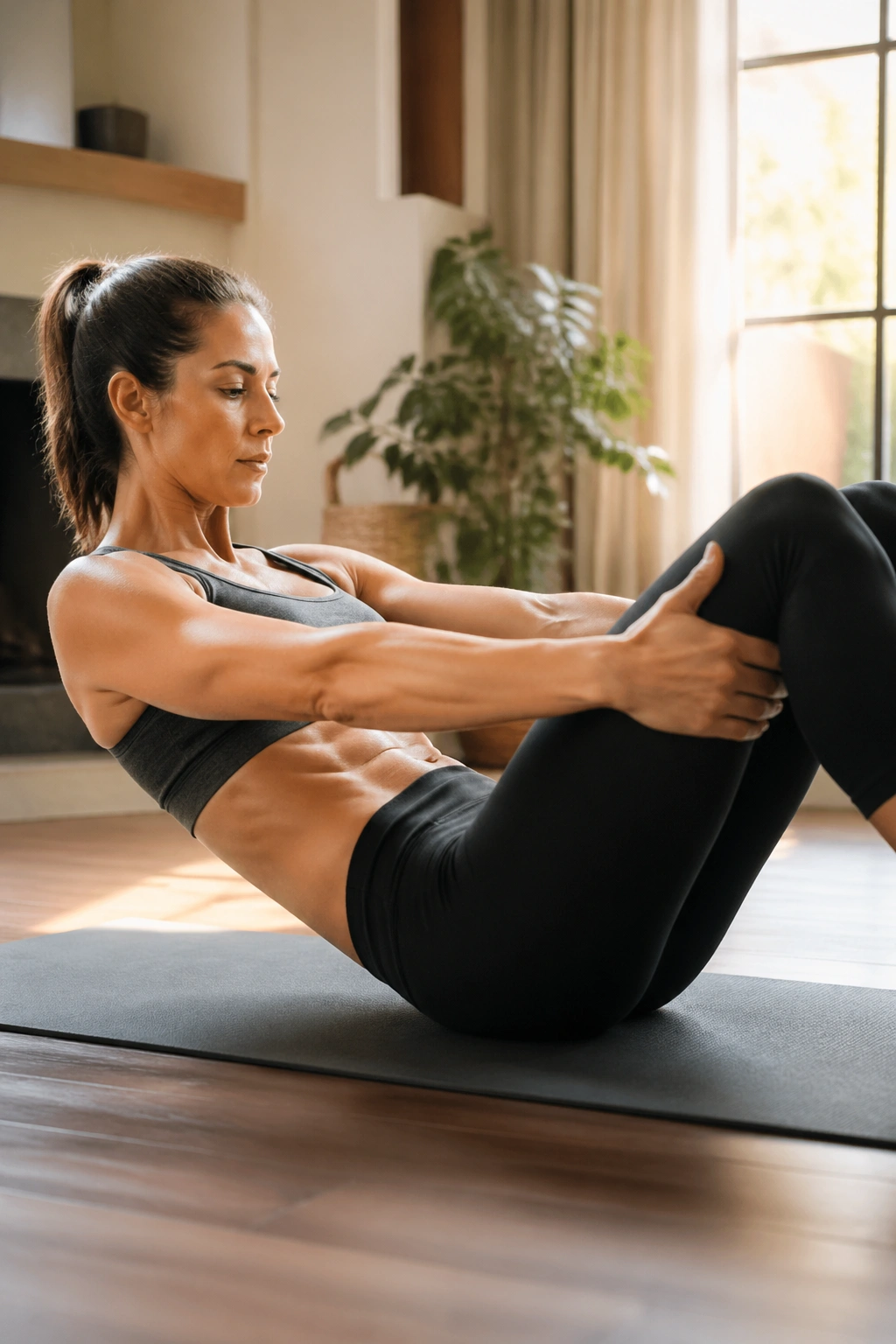
People chase the full Roll-Up and skip the drill that often teaches it best. Half Roll-Back Hold is one of those unglamorous exercises that pays rent every time you do it.
Sit with your knees bent and feet flat. Hold behind your thighs. Exhale and roll the pelvis back until you are balanced just behind the sit bones, making a smooth C-curve from pelvis to ribs. Then hold that shape for 3 to 5 slow breaths without collapsing into the low back or shrugging the shoulders.
This position targets the upper abs because they help maintain the rounded trunk while gravity tries to pull you upright. It also teaches the connection many people miss on the mat: the ribs pulling back as the pelvis rolls under. In other words, the front body shortens without the chest caving in.
Do not lean back so far that the hip flexors grip harder than the abdominals. That is the usual miss. Stay in the zone where your feet can stay grounded, your breath stays steady, and the work sits deep in the front line of the torso. Three holds is enough to tell you whether you are there.
Ugly? A little. Effective? No question.
12. Seated C-Curve with Arm Reaches
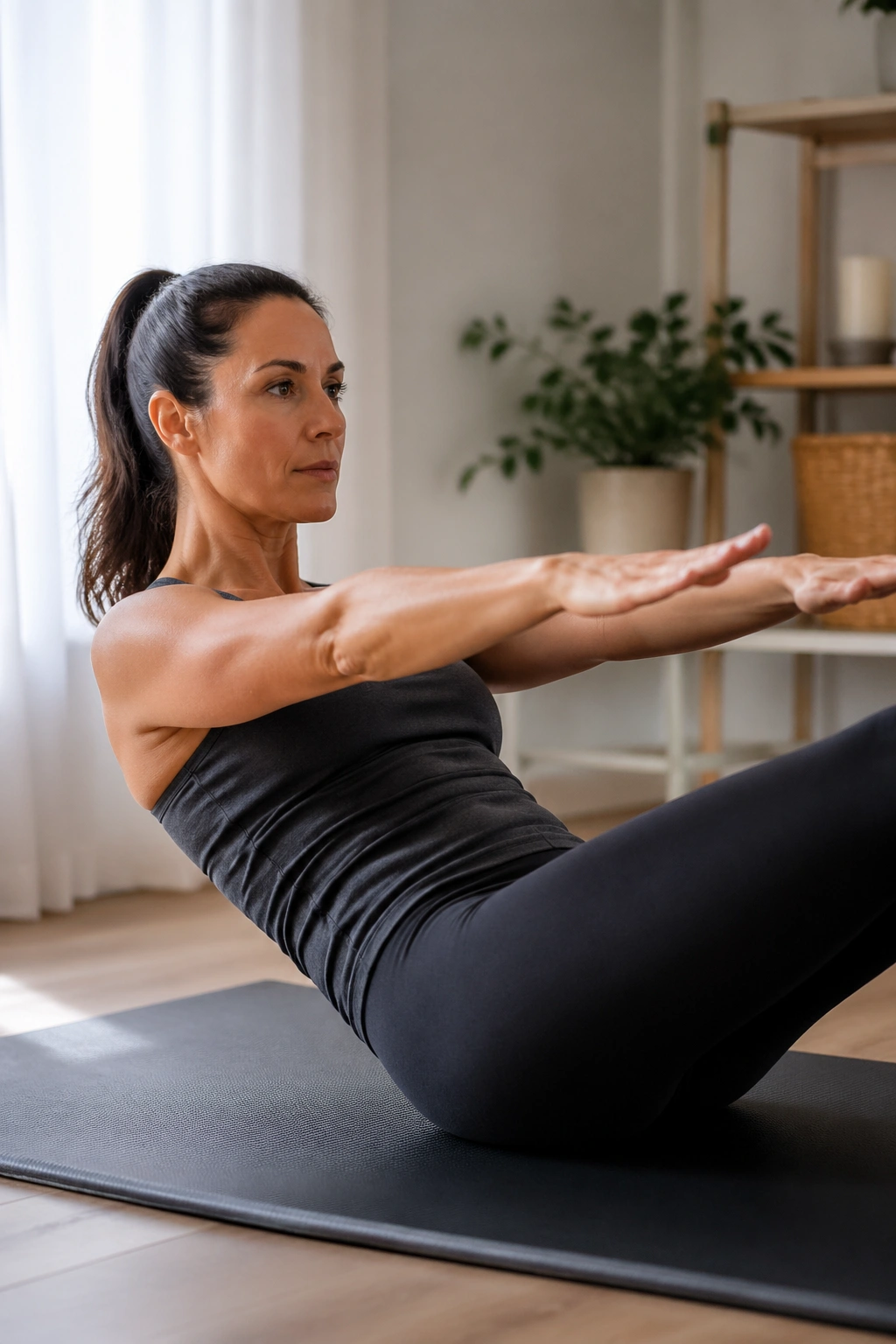
Small move. Hot abs.
From that same half roll-back position, let go of your thighs and reach both arms forward at shoulder height. Hold the C-curve and alternate tiny arm actions: reach forward, open wide, or lift the arms an inch and lower them again. Each pattern changes the challenge because the trunk has to stay frozen while the arms move.
The upper abs work hard here because the chest wants to rise every time the arms travel. Your job is to keep the back of the ribs broad and the front ribs pulled inward. Eight to ten arm movements per set is plenty, and two sets will usually do the job.
This is one of those exercises that looks too easy to matter until you do it correctly. If you stay tucked behind the sit bones, breathe low into the sides of the ribs, and stop the shoulders from creeping up, the burn arrives fast—often faster than in flashier teaser drills.
Need a clean progression? Start with arms reaching forward. Later, try one arm overhead while the other stays forward. That uneven load makes the upper trunk resist rotation, which adds another layer without changing the shape.
13. Roll-Up with Segmental Reach
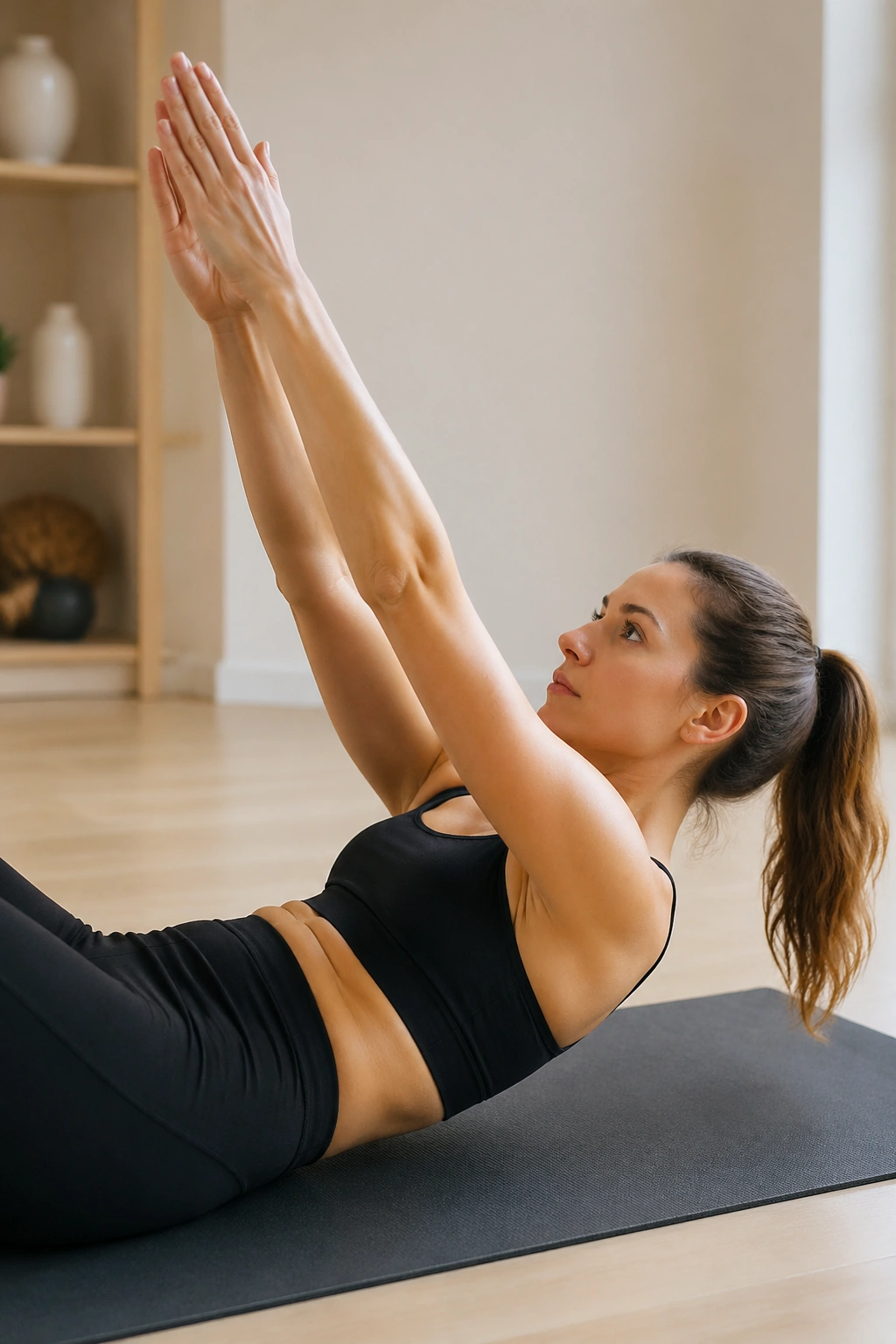
The Roll-Up has a reputation for being a flexibility exercise. I think that sells it short. Done with control, it is one of the best ways to teach the upper abs to start spinal flexion without a yank.
Lie long with arms reaching to the ceiling. Exhale, nod the chin, float the head and ribs, then peel up one section at a time until you pass through a rounded seated shape. Reach forward over the legs. Inhale there. Exhale and roll back down slowly, aiming to place the low back, then the ribs, then the head in sequence. Try 5 to 6 reps.
The part most people rush
The first third of the lift is where the upper abs earn their keep. If the arms fling you forward or the feet pin you down while you jerk upright, the abs miss half the point. Move slowly enough that the rib cage visibly rounds before the lower back leaves the mat.
If full Roll-Up feels out of reach
Bend the knees. Hook a towel around the feet for light assistance. Or work only the top half—curl up to shoulder blades, slide hands toward knees, and lower back down. Those versions still build the pattern you need.
A good Roll-Up feels almost quiet. No thump. No swing. No drama.
14. Bent-Knee Teaser Prep
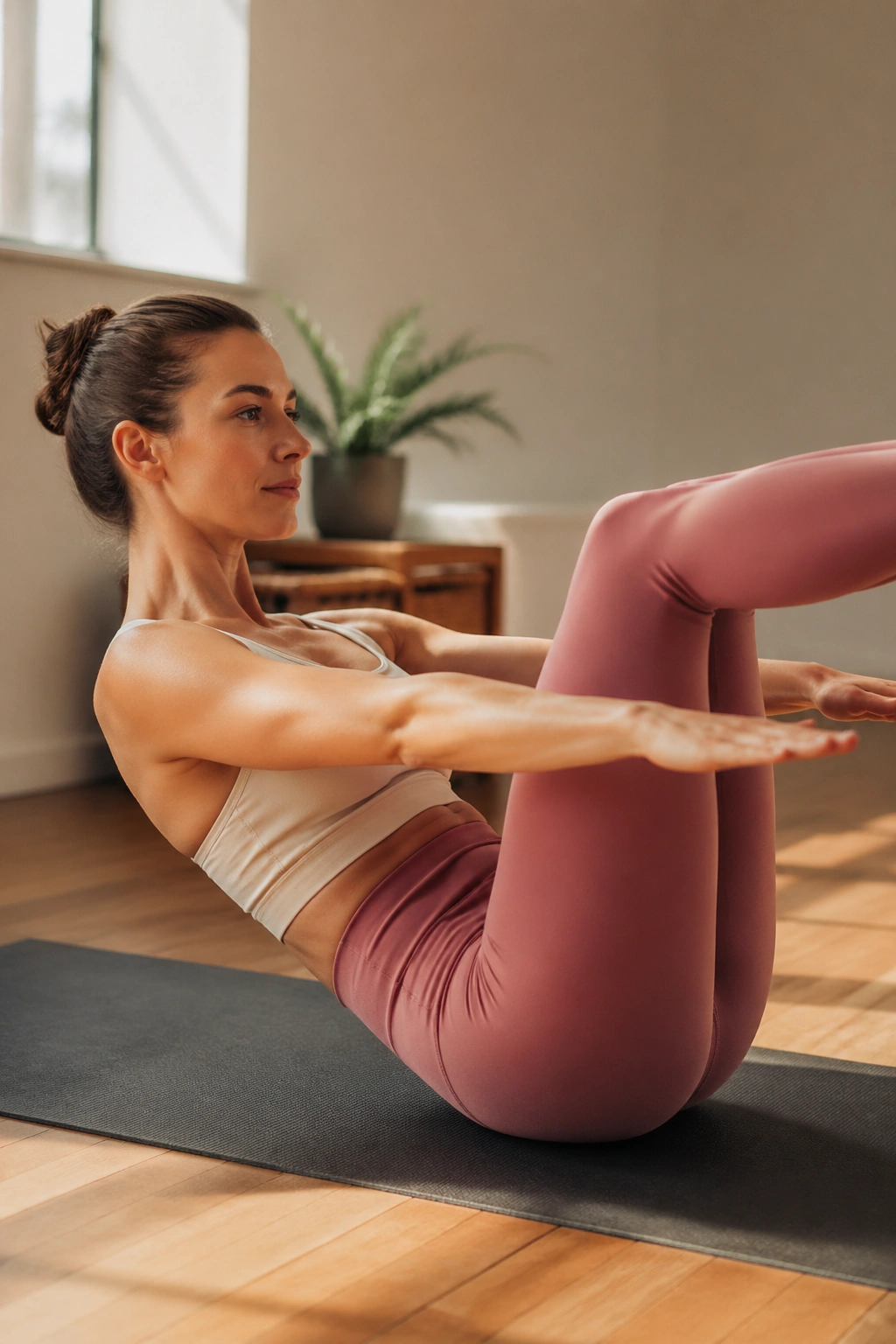
Bent-Knee Teaser Prep is where upper-ab strength starts to meet balance. You sit tall, hold behind the thighs, lift one shin to tabletop and then the other, and balance with both knees bent. From there, roll halfway back until the shoulder blade tips nearly touch, then exhale back up to the balanced V-shape.
Done right, the movement begins with the ribs pulling back and down, not with the legs flinging you around. The bent knees shorten the lever enough that you can keep the upper trunk active, which makes this a smarter entry point than jumping straight into a straight-leg Teaser.
Use 4 to 6 slow reps. That sounds low. It is enough.
The top position tells you a lot. If you can balance only by rounding through the shoulders and gripping the fronts of the hips, step back to Half Roll-Back Hold and C-Curve Reaches for another few weeks. If you can keep the chest broad while the abs pull inward, you are in business.
I like this move near the end of a session, once the torso already understands how to curl and hold. Put it too early and people muscle through it. Put it later and the quality tends to sharpen.
15. Open-Leg Rocker Prep Balance
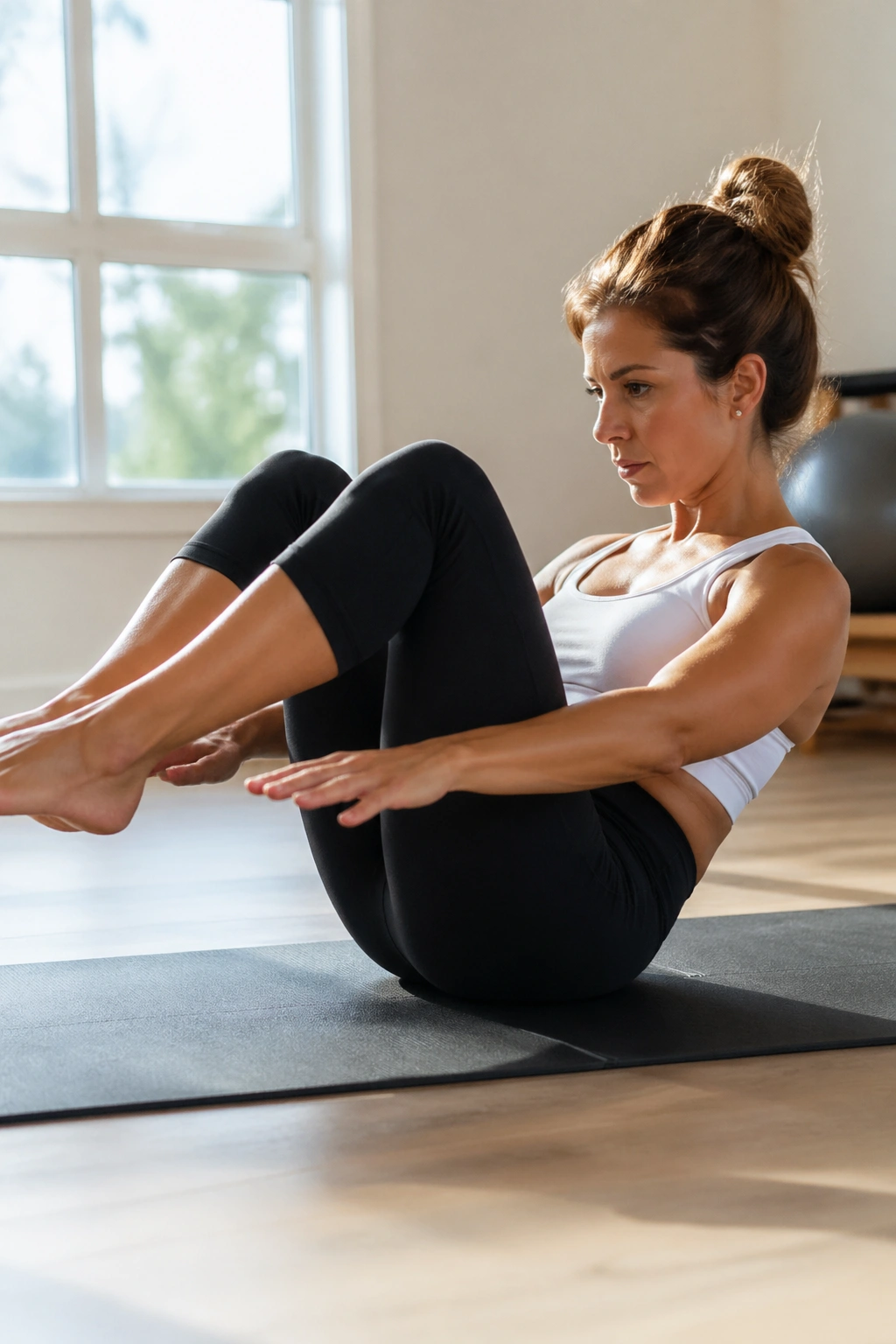
Can an exercise work your upper abs without a single crunch-like pulse? Yes. Open-Leg Rocker Prep Balance proves it.
Sit near the front of your mat, bend the knees, and hold behind the thighs. Lift the feet so you balance just behind the sit bones. Then, if your hamstrings allow it, open the knees a little and extend the legs partway while keeping the spine in a rounded C-curve. Hold. You can stay there for 3 breaths or add tiny rocks back to the shoulder blades and forward to balance again.
The reason this belongs on an upper-ab list is the sustained shape. To stay rounded and balanced, the ribs have to keep drawing inward while the front body stays active. Lose the upper-ab support and the chest pops up, the lumbar spine collapses, and the whole thing turns into a wobbly circus trick.
A few details matter more than people think:
- Do not chase straight legs. Bent knees with a clean C-curve beat long legs with a flattened spine.
- Rock only as far as you can return without kicking.
- Keep the gaze toward the thighs or shins. Throwing the head back ruins the line.
This is advanced, no doubt. Still, it is one of the most satisfying Pilates balances once the pieces come together.
A 10-Minute Upper-Ab Pilates Flow You Can Repeat
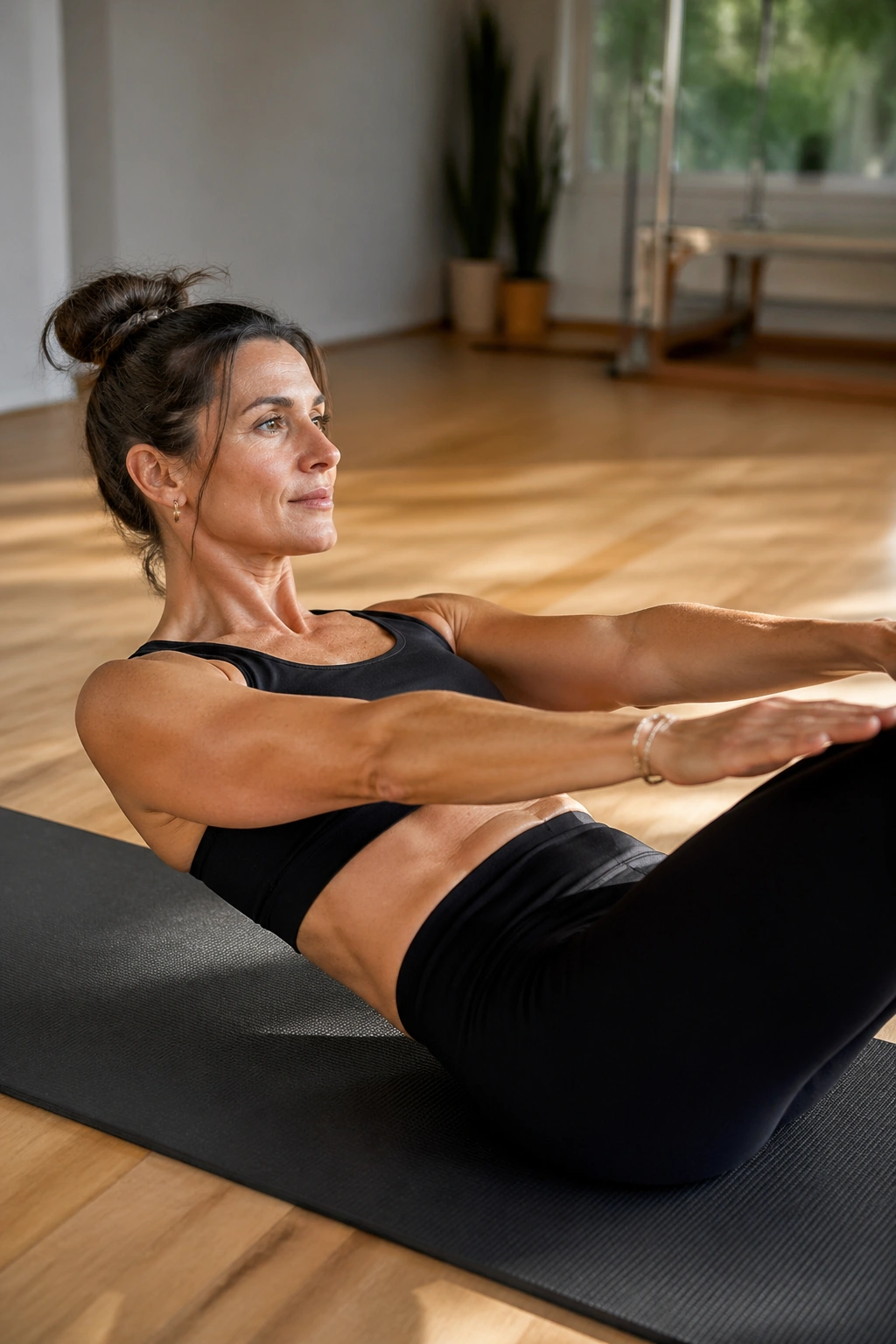
If you want to turn these moves into a short upper-ab Pilates routine, keep it tight and clean. You do not need all 15 in one session. Pick 5 or 6 that fit your level and string them together with almost no rest.
A smart beginner-friendly flow looks like this:
- Chest Lift – 8 reps
- Heel Slides with Head Lift – 6 reps each side
- Hundred Prep – 50 pumps
- Single-Leg Stretch – 8 reps each side
- Half Roll-Back Hold – 3 holds of 3 breaths
- Roll-Up top-half only – 5 reps
If you want more challenge, try this sequence:
- Reach-and-Pulse Chest Lift – 6 reps
- Full Hundred – 100 pumps or 3 broken sets
- Double-Leg Stretch – 6 reps
- Criss-Cross – 6 reps each side
- Single Straight-Leg Stretch – 6 reps each side
- Bent-Knee Teaser Prep – 4 reps
Rest 20 to 30 seconds between moves if your form starts to slide. Better yet, stop a rep earlier than your ego wants. Pilates core work gets better when the quality stays high and the tempo stays calm. Grinding out ugly reps is bodybuilding logic sneaking into a method built on control.
Final Thoughts
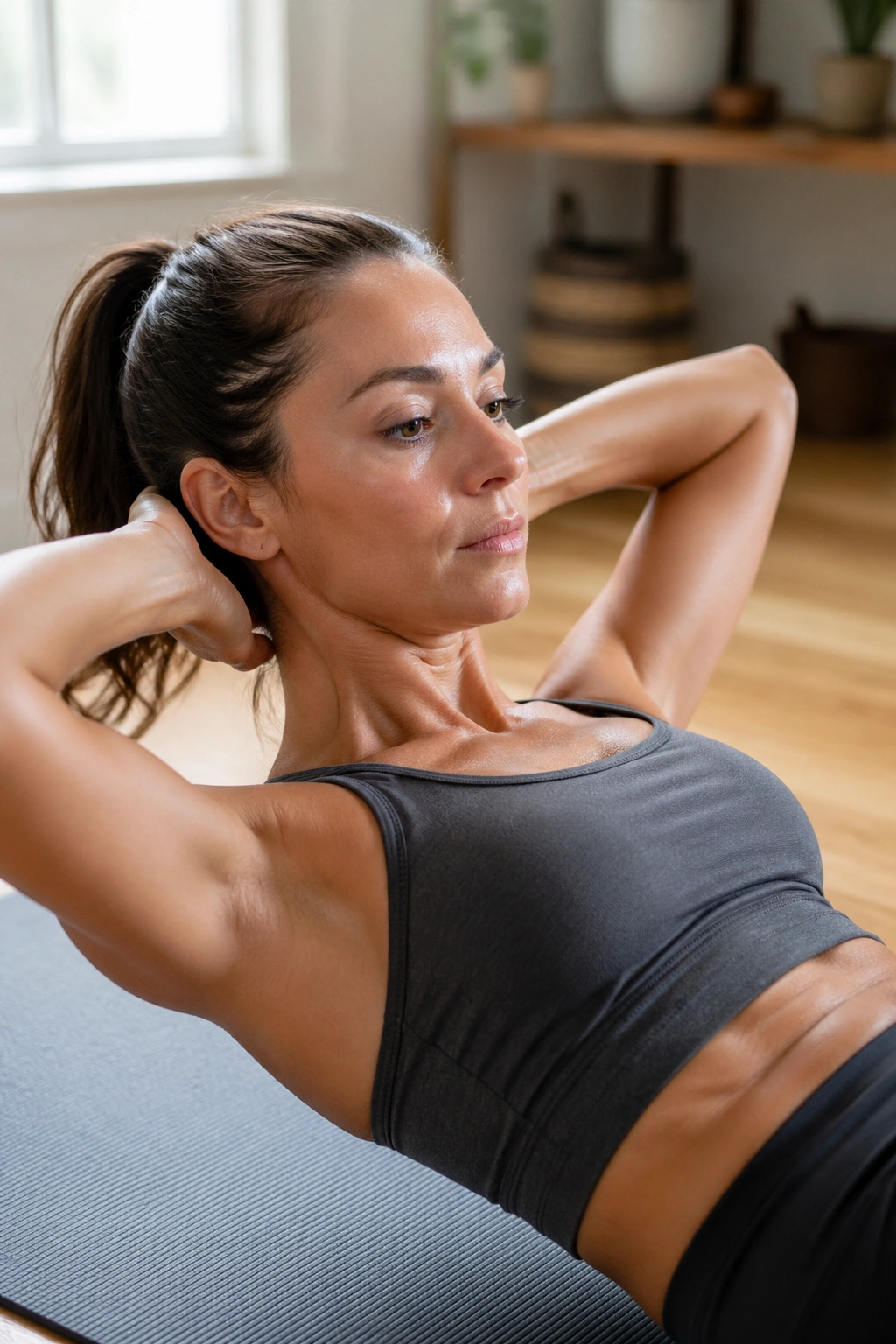
The best Pilates upper-ab exercises are not always the flashiest ones. Chest Lift, Hundred Prep, Half Roll-Back Hold—those plain-looking drills build the shape and control that make the harder moves worth doing.
If I had to give one piece of advice, it would be this: train the curl you can control, not the one that looks advanced. Six crisp reps with soft ribs and a quiet neck will do more for your core than twenty rushed ones with a flared chest and a sore throat.
Stay patient with the small stuff. In Pilates, the smallest moves are often the ones that hit hardest.
