



Pilates workouts for weight loss at home earn their place when they do two jobs at once: they train your muscles hard enough to matter, and they keep you moving long enough to raise your effort level. People who have only tried a slow stretch class often miss that. Hold a clean leg-lower for 30 seconds, though, and your abs, hips, and lungs will settle the argument fast.
What makes home Pilates so useful for fat loss is not magic. It is consistency. You can roll out a mat in a bedroom, use a wall instead of a reformer, and finish a strong session in 12 to 30 minutes without pounding your knees or waking the whole house with jump squats.
There is also a form detail that changes everything: when your ribs flare and your lower back peels off the mat, the work slips out of your core and into your hip flexors. Exhale hard through pursed lips, knit the ribs down, and the same move suddenly feels twice as hard. That small shift is why one Pilates workout feels pointless and another leaves your midsection shaking.
Done well, home Pilates is not a filler workout. It is training. And the routines below are built to make that clear from the first round.
Why Pilates Workouts for Weight Loss at Home Work Better Than People Think
Pilates gets brushed off as “light toning” by people who have never held a hover plank with clean form. Muscle tension is the whole story here. When you move slowly, control the lowering phase, and limit rest to 15 or 20 seconds, your body works far harder than the calm music in some classes would suggest.
Fat loss still comes down to energy balance. No mat session can erase a steady calorie surplus. What Pilates can do is help you build lean muscle, improve posture, make your trunk stronger, and give you workouts you will keep doing because they do not beat you up.
Across 8-to-12-week trials, people who stick with Pilates a few times per week often see waist measurements shrink before the scale changes much. That pattern makes sense. Core endurance improves, posture gets taller, movement feels easier, and body composition can shift even when weight drops slowly.
A home session works best when you use four rules:
- Pick big movement patterns like planks, bridges, squats, lunges, and standing twists.
- Keep rests short, usually 10 to 20 seconds.
- Breathe with intention, exhaling on the hard part of each move.
- Repeat sessions often enough to progress, which usually means 4 or 5 workouts each week.
You do not need fancy gear. You need effort, good alignment, and enough repetition for your body to adapt.
The Small-Space Setup That Makes Home Sessions Easier
A mat, a bare wall, and enough room to stretch your arms without smacking a lamp. That is plenty.
The best home Pilates corner is boring on purpose. Less clutter means fewer excuses. If you have to drag out a bench, clear three boxes, and hunt for bands every time, your workout starts feeling like a chore before your first roll-down.
Use this short list and stop there:
- A mat or folded blanket for your spine, hips, and knees
- A wall for wall sits, leg presses, and balance help
- A sturdy chair for support during standing work
- A small pillow or rolled towel for inner-thigh squeezes
- Socks or paper plates if you want sliding hamstring curls on a hard floor
- Two water bottles if you want light arm work
Temperature matters more than people admit. If the room is stuffy, floor work feels heavier. If the floor is slippery, your planks get messy. Fix the room first, then train.
A Simple Way to Rotate Pilates Workouts for Weight Loss at Home
Four sessions a week is enough to make these routines count.
One easy split looks like this: pick two strength-focused workouts, one faster interval-style session, and one longer full-body flow. Add 20 to 40 minutes of walking on two or three other days and you have a plan that is hard to argue with.
You can also rotate by feel. On high-energy days, use planks, lunges, wall sits, and brisk standing flows. On low-energy days, choose side-lying work, core control, back-body training, or the recovery routine near the end of this list. That still counts. Habit beats the “all or nothing” approach every time.
Progress comes from small bumps in effort:
- Add one extra round
- Extend work intervals by 10 seconds
- Cut rest by 5 seconds
- Slow the lowering phase to 3 counts
- Hold the hardest point for 2 breaths
That is enough. No dramatic overhaul needed.
1. Standing Reach-and-Twist Wake-Up Flow
Good Pilates does not have to start on the floor. A standing flow raises your body temperature fast and gets your hips, ribs, and shoulders working before the harder sets begin.
Try this sequence
- 45 seconds of marching with wide arm sweeps
- 8 slow roll-downs to a half lift
- 12 squat-to-reach reps
- 10 standing knee drives with a twist per side
- 8 side-bend reaches per side
Run it twice with 15 seconds of rest between moves. Keep the pace brisk enough that talking feels awkward, though not impossible.
A standing start is a smart choice if you wake up stiff or spend long hours at a desk. Your spine gets movement in flexion, extension, and rotation before you ask it to stabilize in planks or teaser shapes.
Best cue: exhale as the knee lifts or the torso twists, and keep your pelvis facing forward instead of yanking the movement from your lower back.
2. Hundred-to-Bridge Starter Circuit
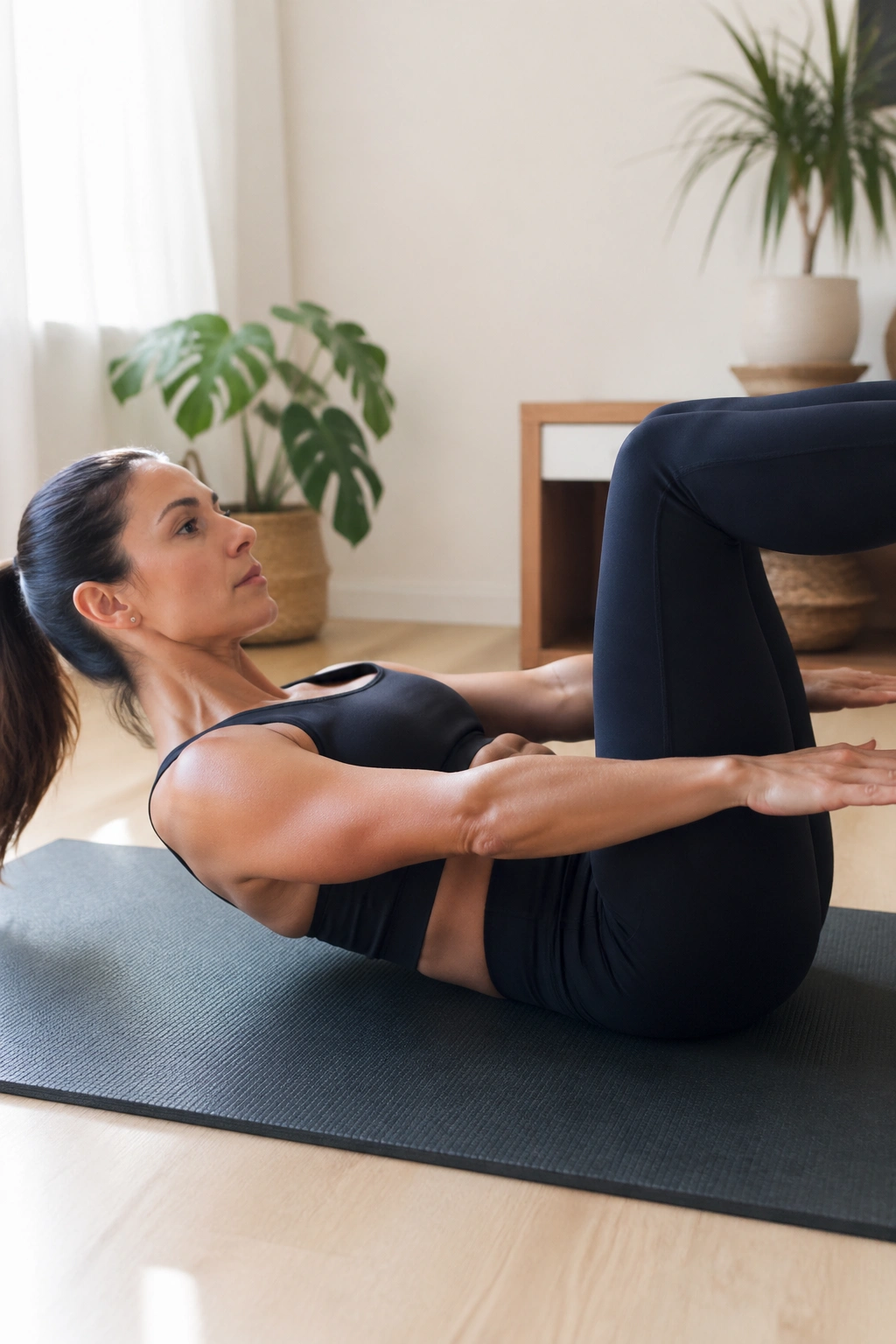
This one looks basic. It is not. The hundred heats up the front of your body, and bridges hit the glutes and hamstrings hard enough to balance all that core flexion.
Lie on your back, bring your legs to tabletop, curl your head and shoulders up, and pump your arms for 40 beats of the hundred. Drop your head, plant your feet, then do 12 glute bridges with a 2-second squeeze at the top. Finish the round with 10 heel taps per side and rest for 20 seconds. Three rounds is plenty.
What I like here is the contrast. Your abs brace in one move, your backside drives the next, and your heart rate never settles. A cleaner bridge also helps your posture outside the workout, which matters more than it sounds. If your glutes do their share, your lower back stops trying to do everybody else’s job.
Neck strain creeping in? Put your head down during the hundred and keep pumping. Form wins.
3. Side-Lying Leg Series for Hips and Waist
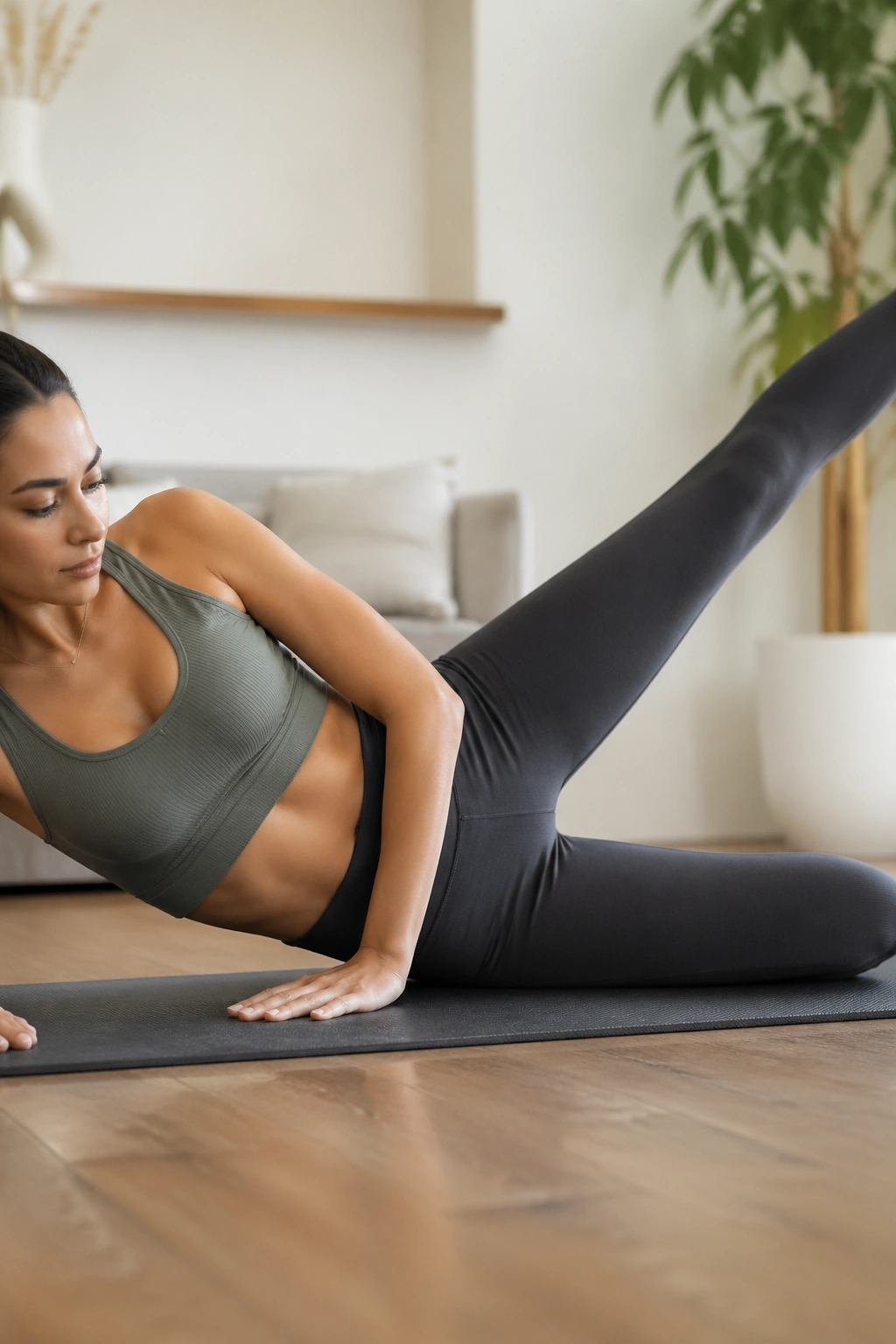
Why does side-lying work feel easy for about 12 seconds and then turn savage? Because the outer hip muscles tire fast when they lose momentum and have to control every inch.
Set yourself up on one side with your bottom knee bent or your legs long, depending on what your back likes. Do 12 front-and-back kicks, 15 straight leg lifts, 10 small circles each way, and then hold the leg up for 20 seconds. Flip over and repeat. Go through both sides twice.
How to make it count
Aim the top heel long, keep your waist lifted away from the mat, and do not let the leg drift behind your body during the lifts. The second it swings back, your low back starts helping.
This is one of my favorite “quiet” fat-loss sessions because it shapes the glutes, firms the side hips, and supports better knee tracking during standing work. It is not flashy. It works.
4. Wall-Supported Squat and Roll-Down Set
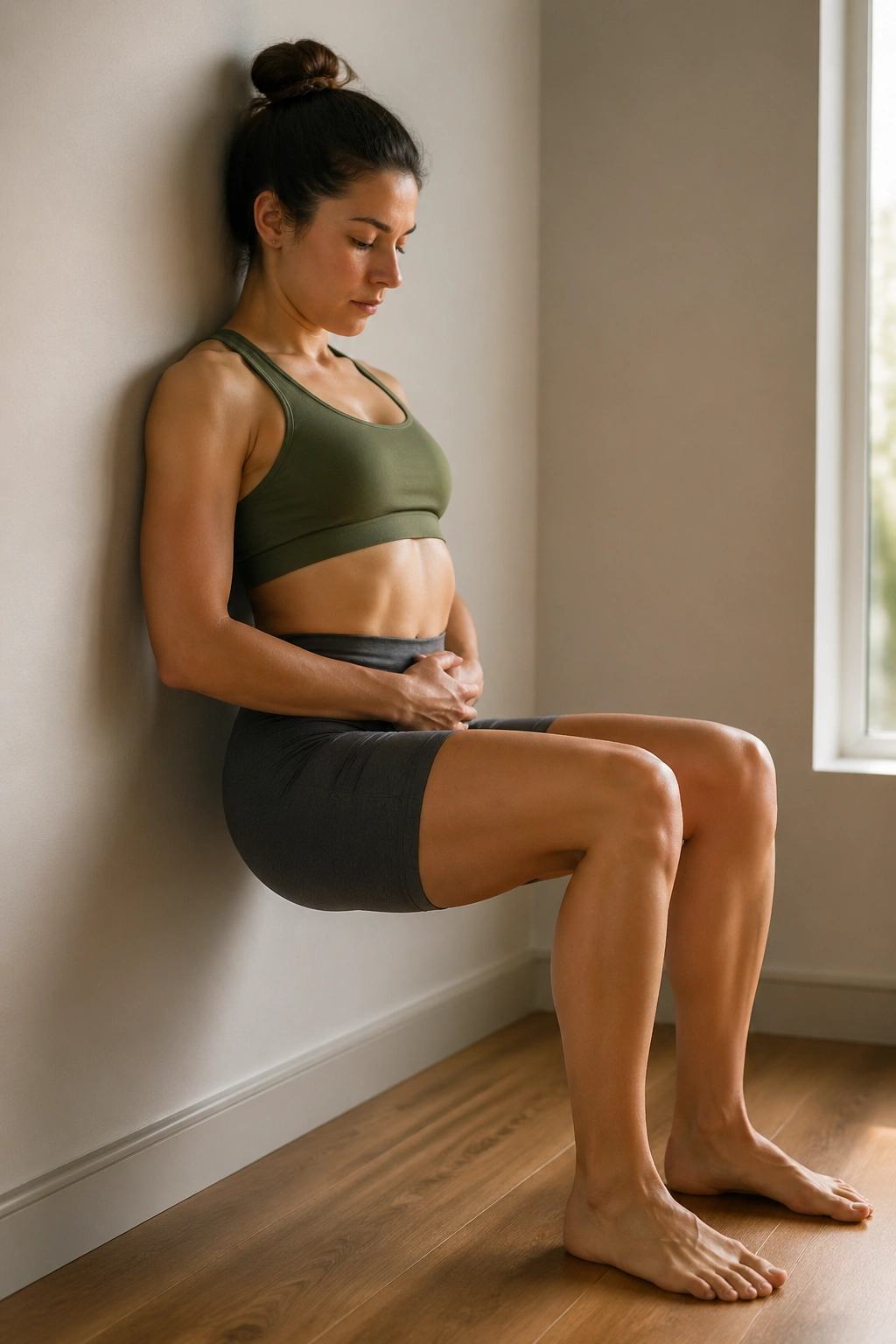
The wall sit is rude in the most useful way. Your thighs start talking almost at once, and your core has to brace so your ribs do not pop forward.
Use a bare wall and run this circuit three times:
- 45-second wall sit
- 20 tiny pulses at the bottom
- 8 standing roll-downs after you come up
- 12 calf raises with your back still touching the wall
- 10 squat-to-overhead reaches
Rest 25 seconds, then go again.
The roll-down after the wall sit is the sneaky part. Your legs are already warm, your breathing is up, and then your trunk has to control spinal movement instead of collapsing forward. That makes the whole set feel more athletic than people expect from “wall Pilates.”
Do not slide so low that your knees pinch. A knee angle a little above 90 degrees is fine and often stronger.
5. Plank-to-Pike Core Ladder
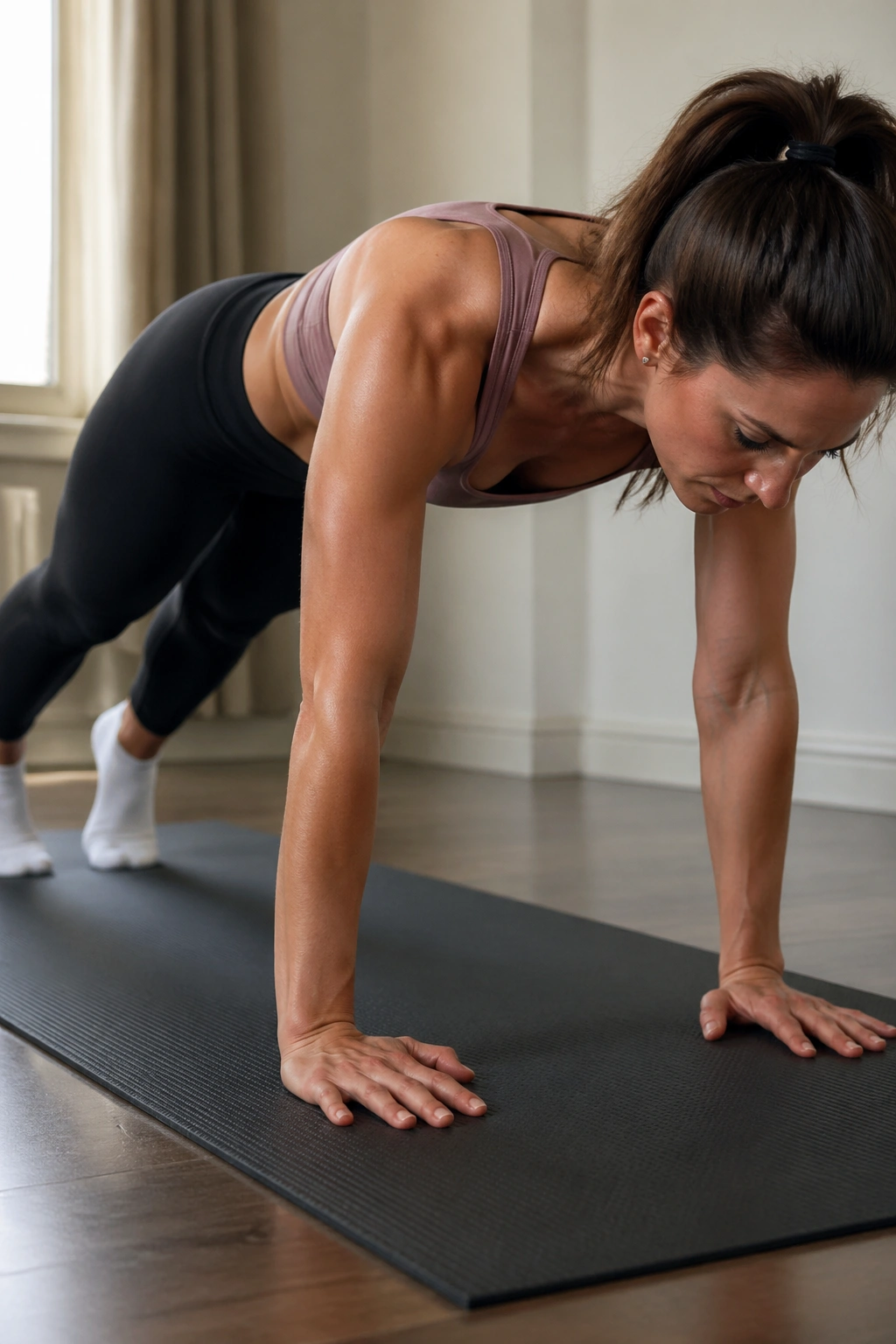
You will feel this in your shoulders before your abs if your setup is sloppy.
Start in a high plank with socks on a hard floor or paper plates under your feet. Do 6 plank pikes, 8 slow knee tucks, 10 shoulder taps, then hold a forearm plank for 20 seconds. Rest 20 seconds. Repeat for 3 to 4 rounds.
The pike is where this workout earns its keep. You are not flinging your hips upward. You are dragging them there with the lower abs while the shoulders stay broad and the ribs stay hugged in. If the move turns into a fast inverted V, slow down and shorten the range.
Short. Sharp. Effective.
People chasing weight loss often lean too hard on crunches because they “feel” the core more. A controlled plank ladder does more work per minute. Your abs brace, your chest and shoulders stabilize, your quads fire, and your heart rate climbs because so much muscle is involved at once.
6. Glute Bridge March Burner
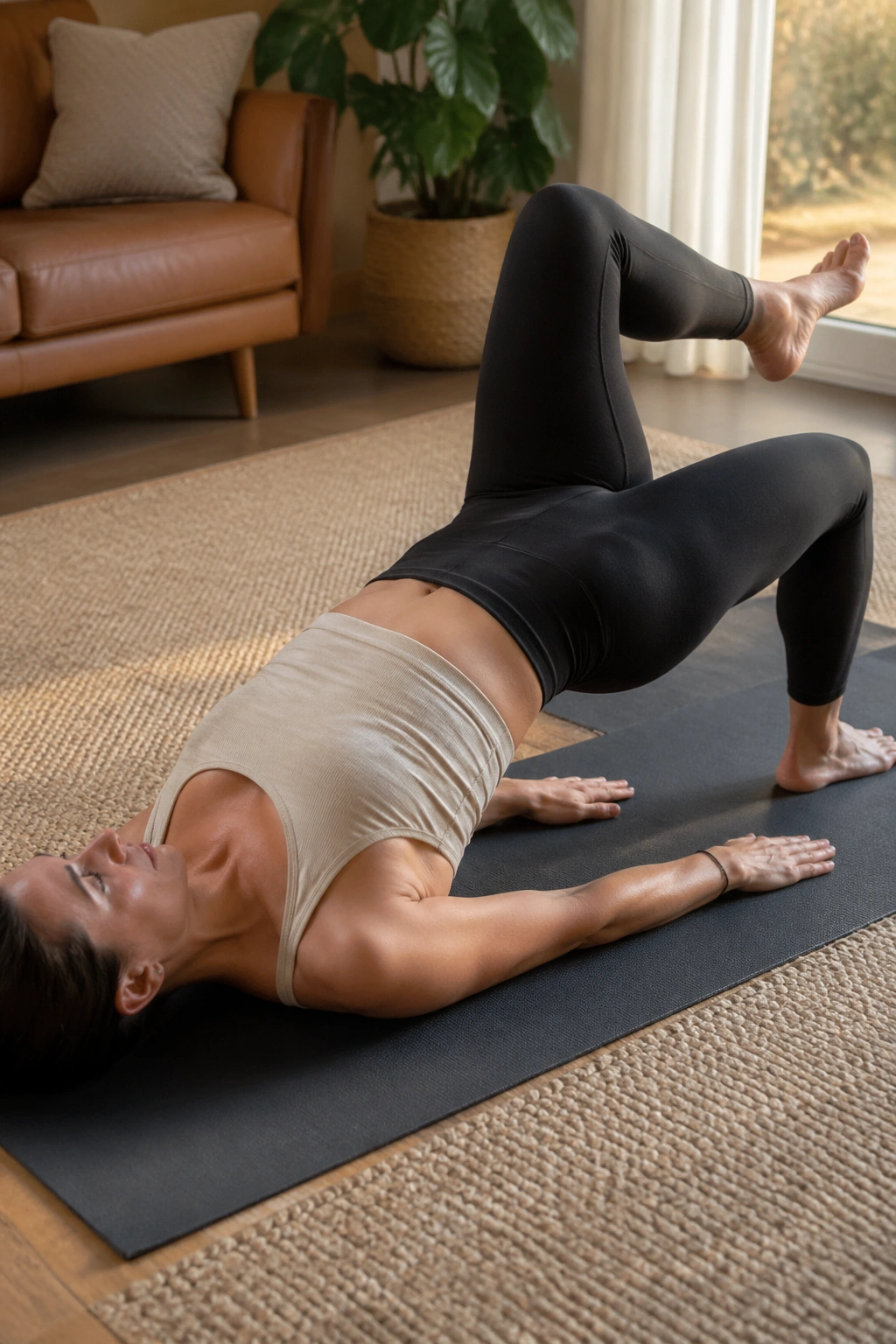
Unlike endless donkey kicks, a bridge march forces your pelvis to stay level while one leg works at a time. That anti-rotation piece is why the move feels tougher than it looks.
Lift into a bridge and hold. March one knee in, set it down, then switch sides for 10 marches per leg. After that, do 8 single-leg bridges per side and finish with 20 top-range bridge pulses using both feet. Three rounds will light up your glutes and hamstrings without much joint stress.
This session is a strong pick when you want lower-body work but your knees are cranky. Most of the load sits in the backside, not the front of the knee. Your abs still have to brace, though, because the pelvis loves to tip or twist when fatigue kicks in.
If your hamstrings cramp, bring your heels a few inches farther from your hips and press through the whole foot instead of jamming into the toes.
7. Seated Spine Twist and Saw Combo
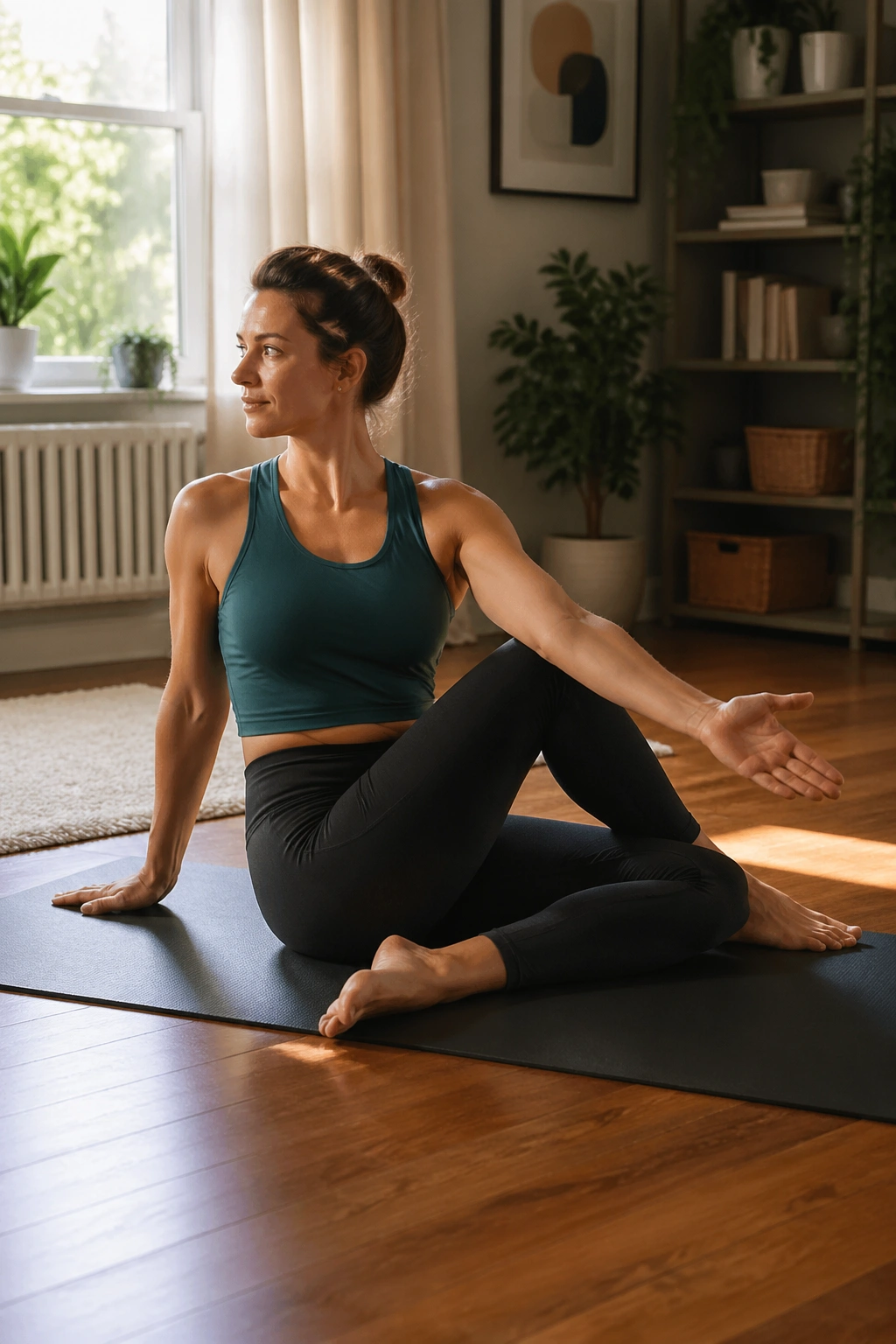
Rotation done well can make a short session feel fresh again. This workout trains your waist, mid-back, and hamstrings without hammering your hip flexors.
Sequence
- 8 seated spine twists per side
- 6 saw reps per side
- 10 hinge-backs in a C-curve position
- 30-second chest lift hold with arms reaching long
Take two or three rounds, moving slowly enough that you can feel each vertebra stacking back up as you rise.
The saw is the key move here. Reach the opposite hand toward the little-toe side of the front foot, but keep both sit bones grounded as long as you can. That gives you rotation through the rib cage instead of a sloppy collapse.
Do it better: bend your knees if your hamstrings yank your pelvis backward. A clean spine beat a locked-out knee every time.
8. Standing Side-Kick Cardio Flow
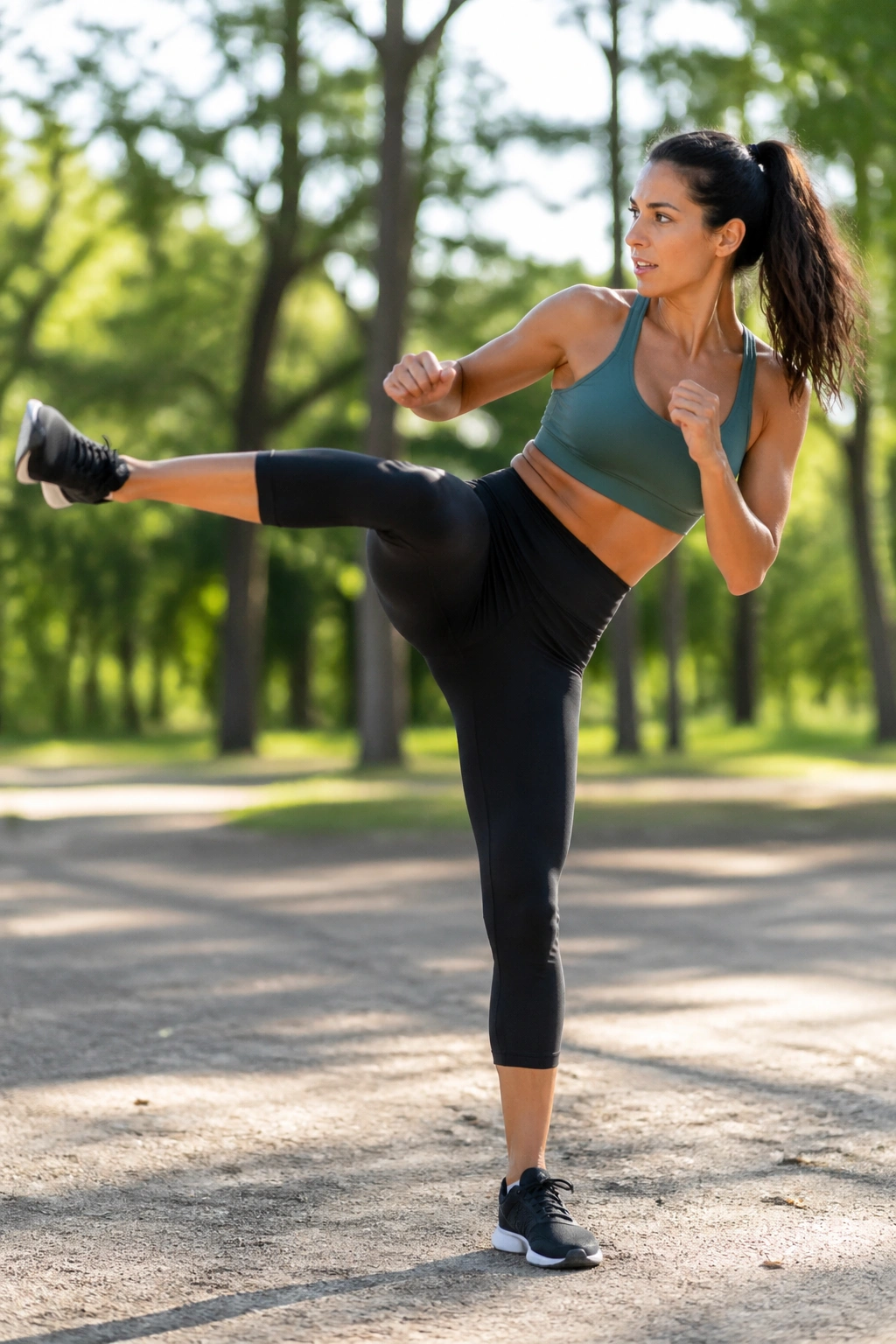
A standing Pilates flow can raise your heart rate faster than mat work because you spend less time getting up and down and more time moving from one pattern to the next.
Try 30 seconds per move with 10 seconds to switch: squat reach, right side kick, left side kick, alternating knee drive with twist, curtsey tap with arm sweep, and fast heel-toe steps with arms pumping overhead. Run the whole thing three times.
The kicks do not need to fly high. Hip height is enough if the standing leg stays stable and your torso does not wobble like a metronome. That control is what keeps the session in the Pilates family instead of turning it into random cardio.
I like this one on days when floor work sounds miserable. No mat. No setup. Shoes optional. By round two, your breathing will tell you whether you were working hard enough.
9. Dead Bug and Toe Tap Core Reset
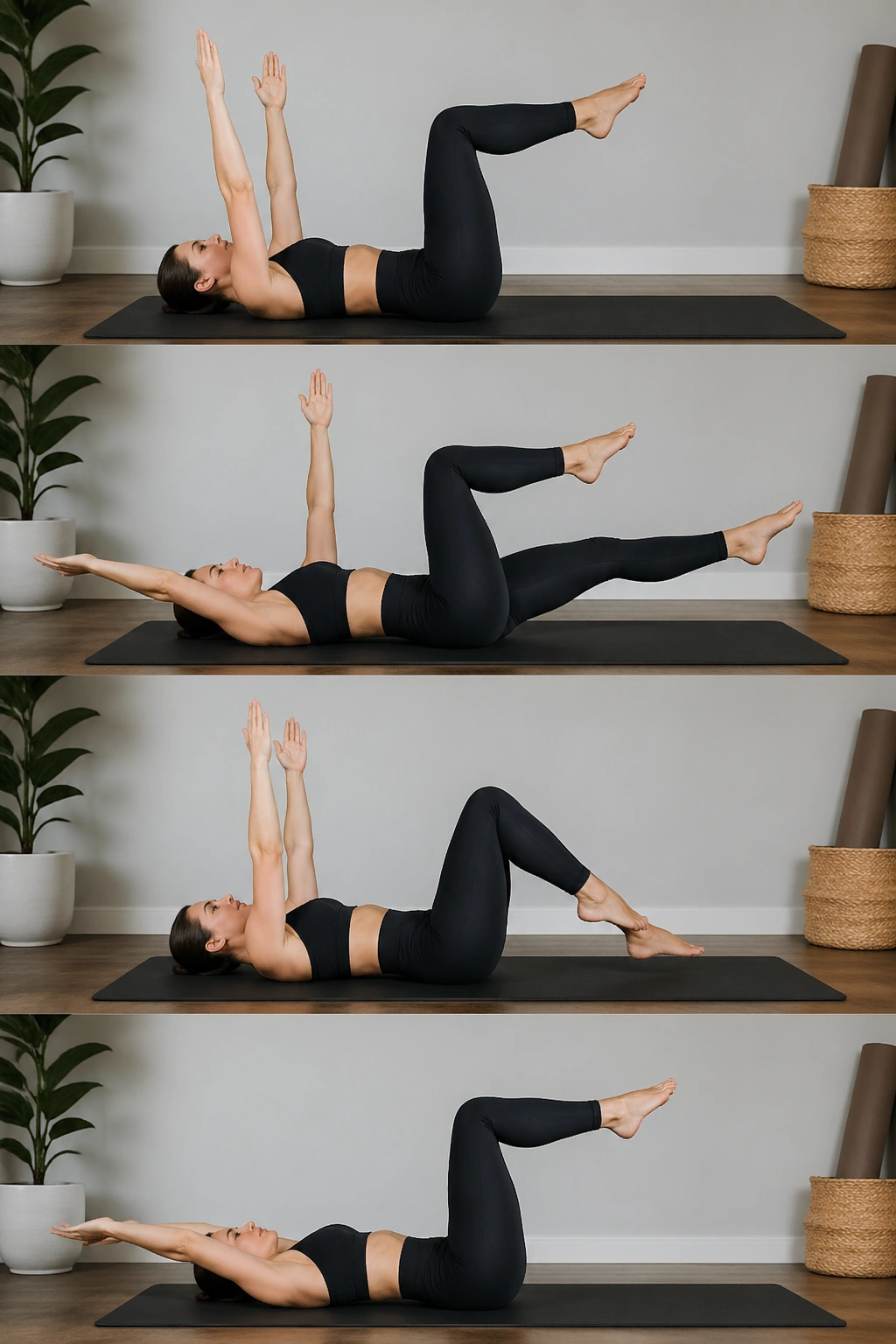
Need a core workout that does not bully your lower back? Start here.
Lie on your back with knees in tabletop. Do 10 dead bugs per side, 12 bent-knee toe taps per side, 8 heel slides per side, then hold tabletop while reaching your arms overhead for 30 seconds. Rest briefly and repeat for three rounds.
Why it works
The dead bug teaches rib control. As the opposite arm and leg move away, your trunk has to resist extension. That sounds technical; on the mat it feels like your abs tightening around the front of your waist while your back stays heavy against the floor.
You can make this much harder without changing the shape. Exhale longer. Move slower. Hover the heel an inch above the ground instead of tapping it down.
For people who arch hard in leg-lower work, this reset session often fixes the problem.
10. Pilates Scissor and Lower-Lift Sequence
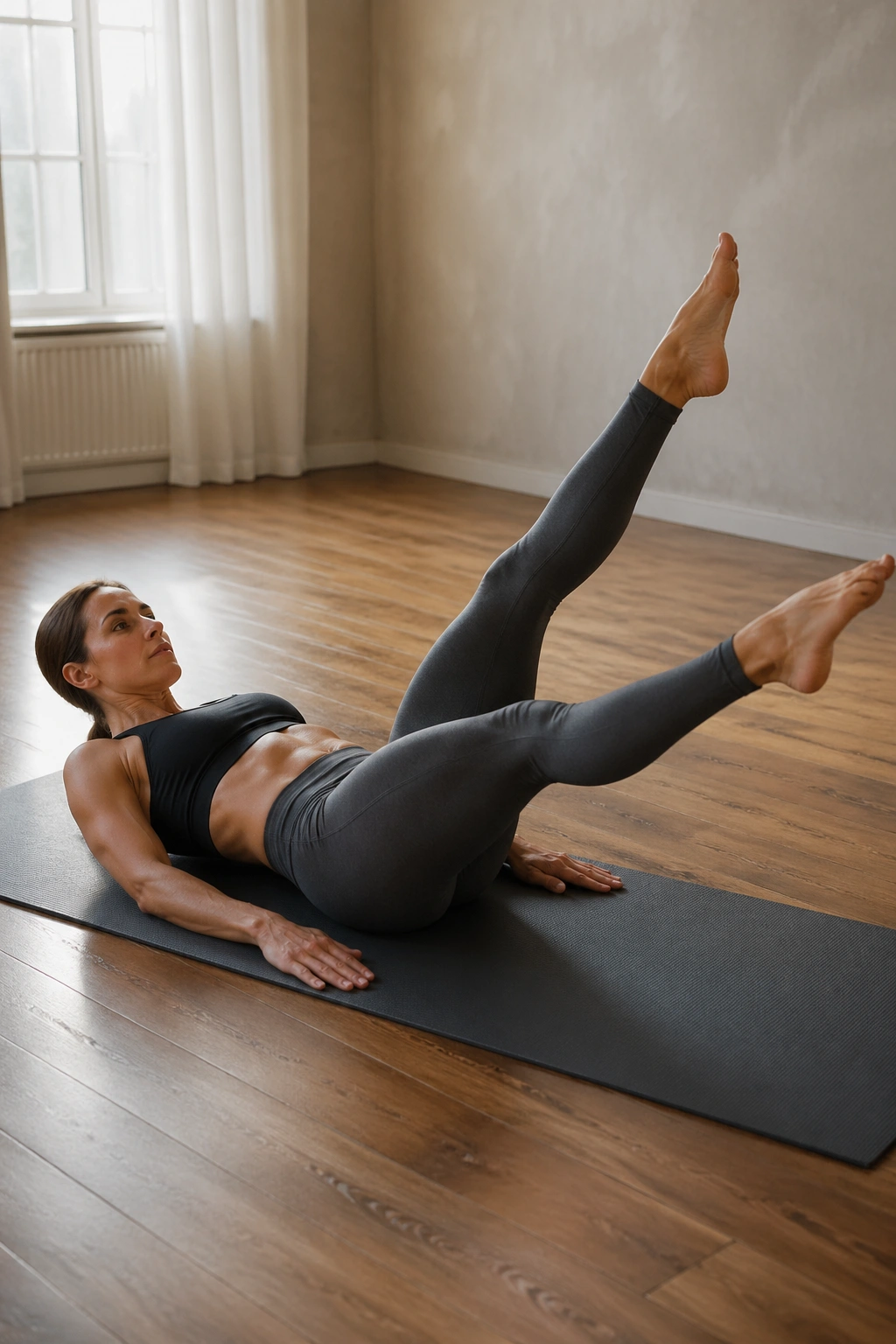
The scissor has a way of exposing weak lower abs within the first five reps. One leg reaches long, the other pulls in, and your trunk has to stay quiet while both hips move.
Run this ladder twice or three times:
- 10 scissor switches per side
- 8 double-leg lowers with bent knees if needed
- 12 toe reaches
- 20-second hollow-body hold
Keep your hands behind one thigh if the hamstrings fight you. That still counts. What does not count is yanking the neck forward or letting the lower back pop off the floor during the leg lowers.
Small range beats sloppy range. Lower your legs only as far as you can while keeping the ribs down and the belly flat instead of doming upward.
11. Bear Plank Shoulder Tap Challenge
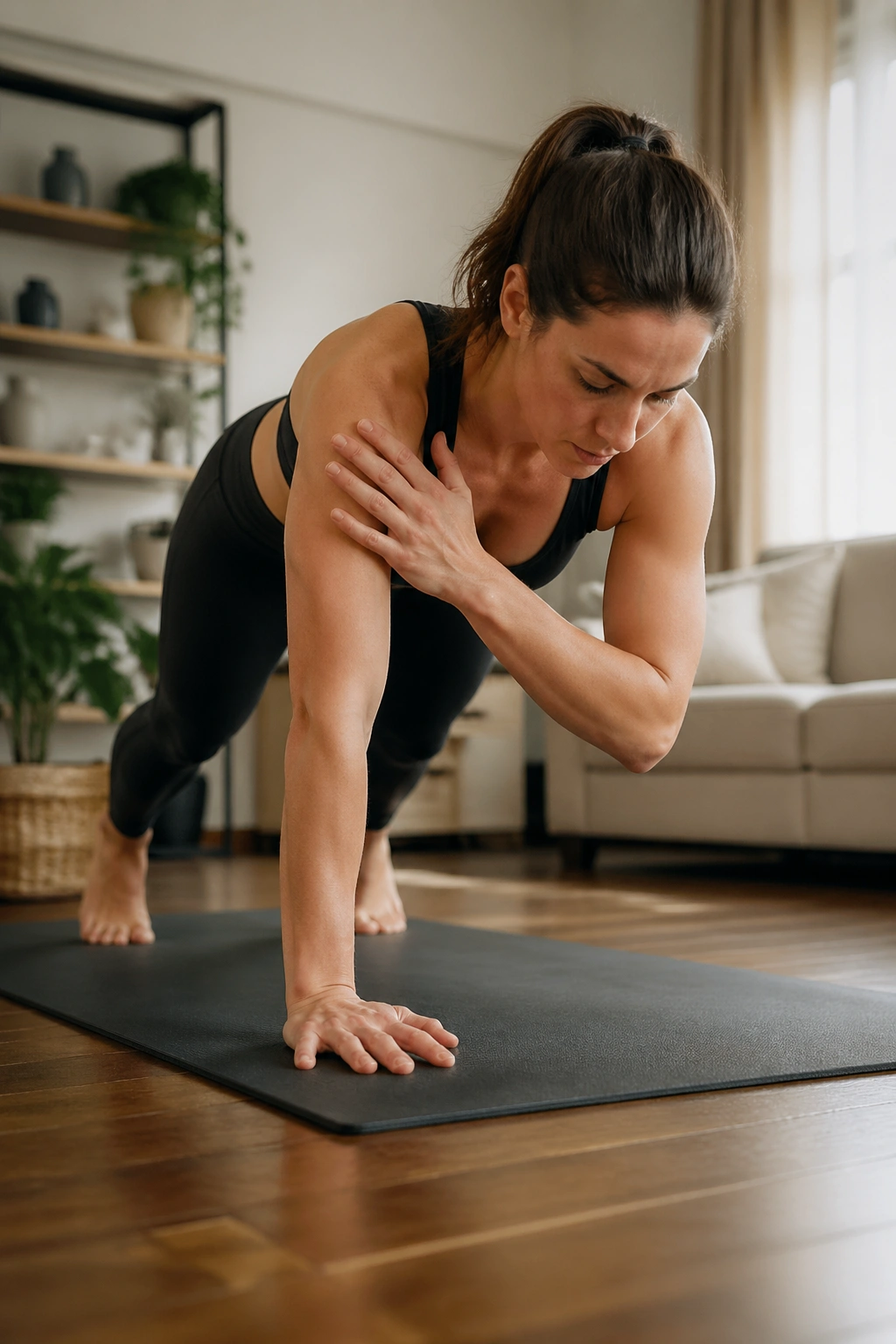
The bear plank is one of the cleanest home moves for fat loss because it turns on almost everything at once. Quads, shoulders, deep core, even the arches of your feet are in on it.
Set your hands under your shoulders and knees under hips. Hover the knees 1 or 2 inches off the floor. Hold for 20 seconds, then do 10 shoulder taps without swaying side to side. Follow that with 8 step-outs per leg and rest for 20 seconds. Four rounds is enough for most people.
You will want to lift the hips too high when the set gets rough. Do not. Keep the back broad, gaze between the hands, and think of dragging the floor apart with your palms. That spreads the effort through the upper body instead of dumping it into the wrists.
Sweat comes fast here — faster than many people expect from a move that barely travels.
12. Wall Pilates Leg Lift Session
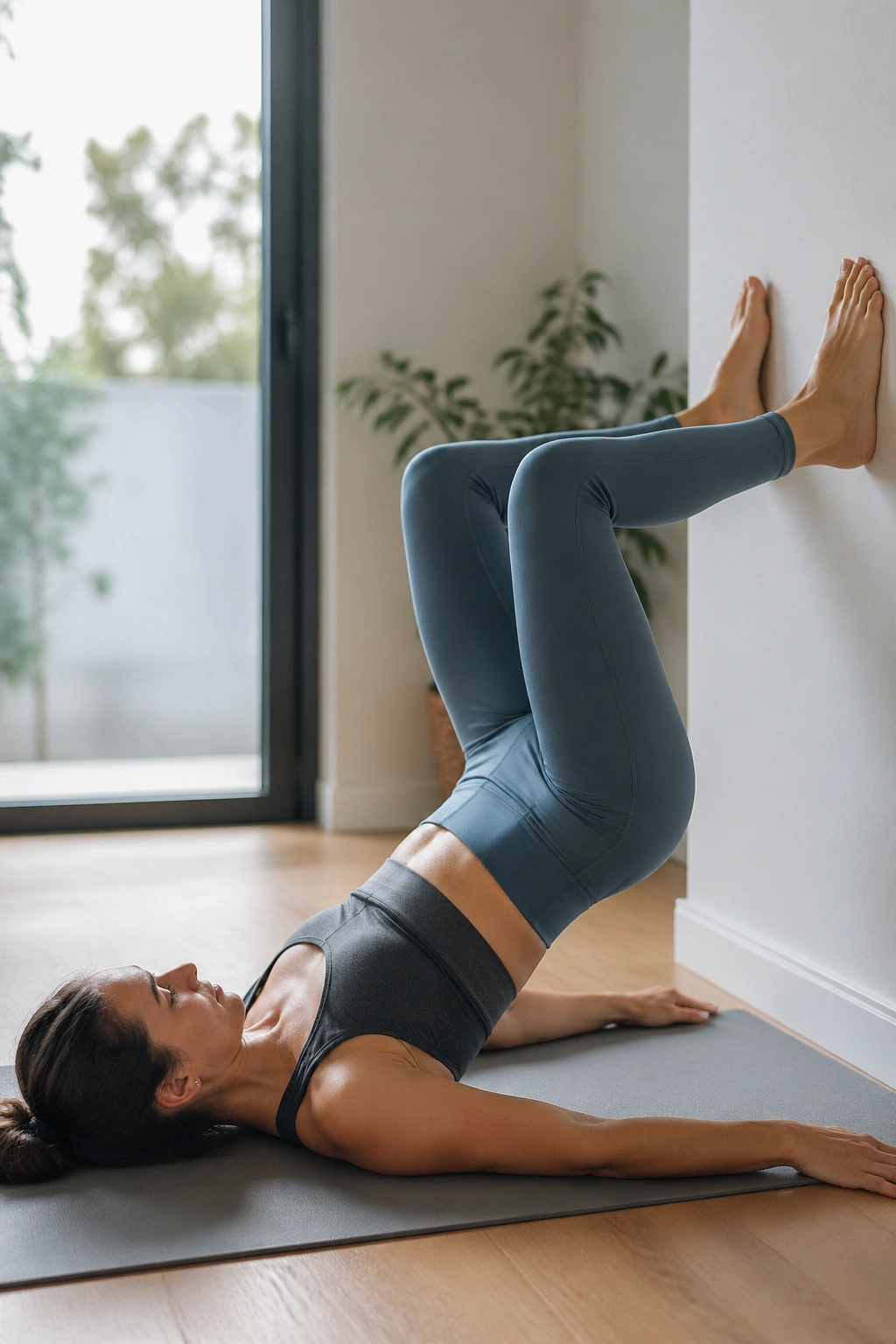
Compared with free-standing leg work, wall-supported training lets you stay stricter, which means the target muscles do more and momentum does less.
Lie on your back with both feet flat on a wall, knees bent about 90 degrees. Press through the feet and do 12 wall bridges. Hold the top and alternate 10 wall marches per side. Then place a small pillow between the knees for 15 squeeze pulses and end with a 30-second bridge hold. Two or three rounds hit the glutes, inner thighs, and deep core in one compact series.
The wall gives you feedback right away. If one foot presses harder, you feel it. If your pelvis twists, you feel that too. That built-in honesty is why I like wall Pilates for home workouts; it cleans up lazy form without much coaching.
If your neck feels crowded, fold a thin towel under your head.
13. Roll-Up and Hollow Hold Ladder
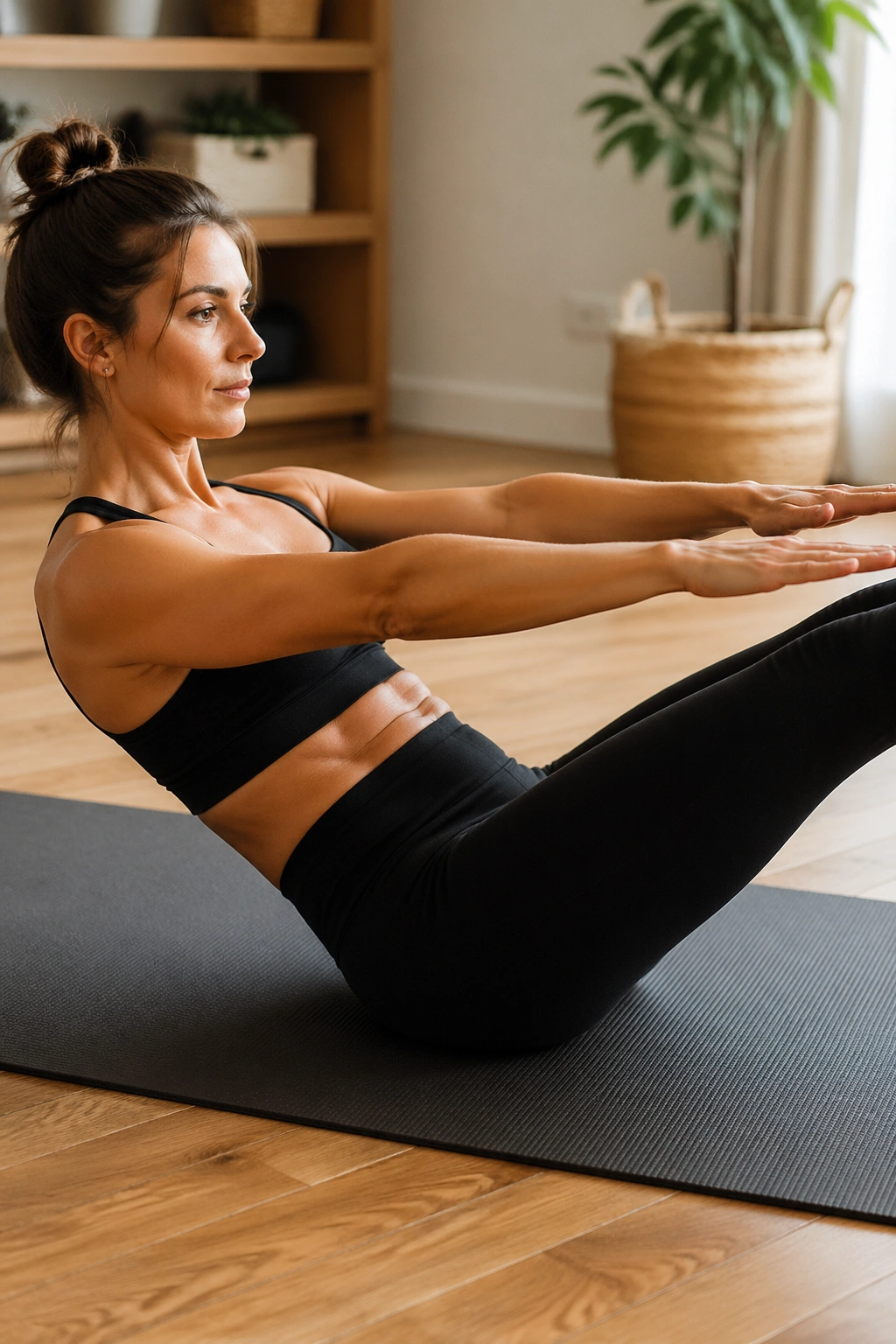
Classical Pilates has a streak of cruelty in it, and the roll-up is part of that charm. Done well, it trains deep abdominal control, spinal mobility, and patience.
Work through it like this
- 6 roll-ups with a 3-count lower
- 20-second hollow hold
- 10 single-leg stretch reps per side
- 15-second teaser prep hold with shins parallel to the floor
Take 20 seconds off and repeat for 3 rounds.
The slow lower on the roll-up matters more than the trip up. Coming down one bone at a time keeps tension on the abs long after momentum would have taken over. If you cannot get all the way up without jerking, anchor your feet under a sofa edge for the first week or two, then phase that help out.
Sharp cue: reach your arms long past your knees, not up toward the ceiling.
14. Mermaid to Side Plank Waist Workout
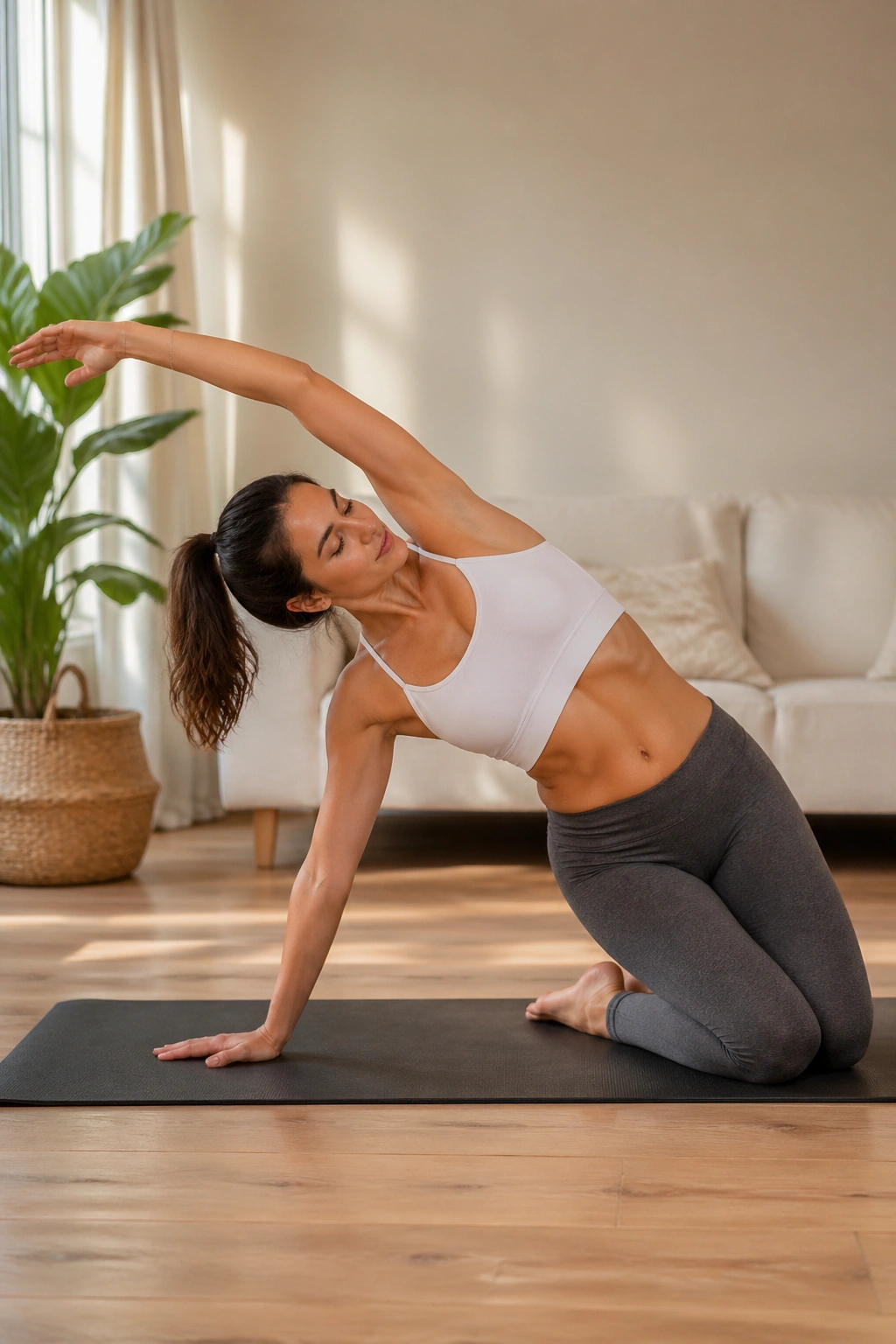
This session earns its place because the side body often gets ignored until it is weak enough to cause trouble. Tight hips, a cranky low back, poor balance — the missing piece is often lateral strength.
Start seated in a mermaid position and reach into a side bend for 6 slow reps per side. Then come to a modified side plank on the lower knee and do 10 hip lifts. Finish with 15 seconds of top-arm reaches while holding the side plank. Run both sides twice.
The shift from stretch to strength is the whole point. Your waist lengthens in the mermaid, then has to shorten and stabilize in the plank. That contrast feels clean and athletic, especially if you move with control instead of rushing through the shape change.
Knee pressure from the side plank? Fold your mat or blanket in half.
15. Inner-Thigh Pillow Squeeze Routine
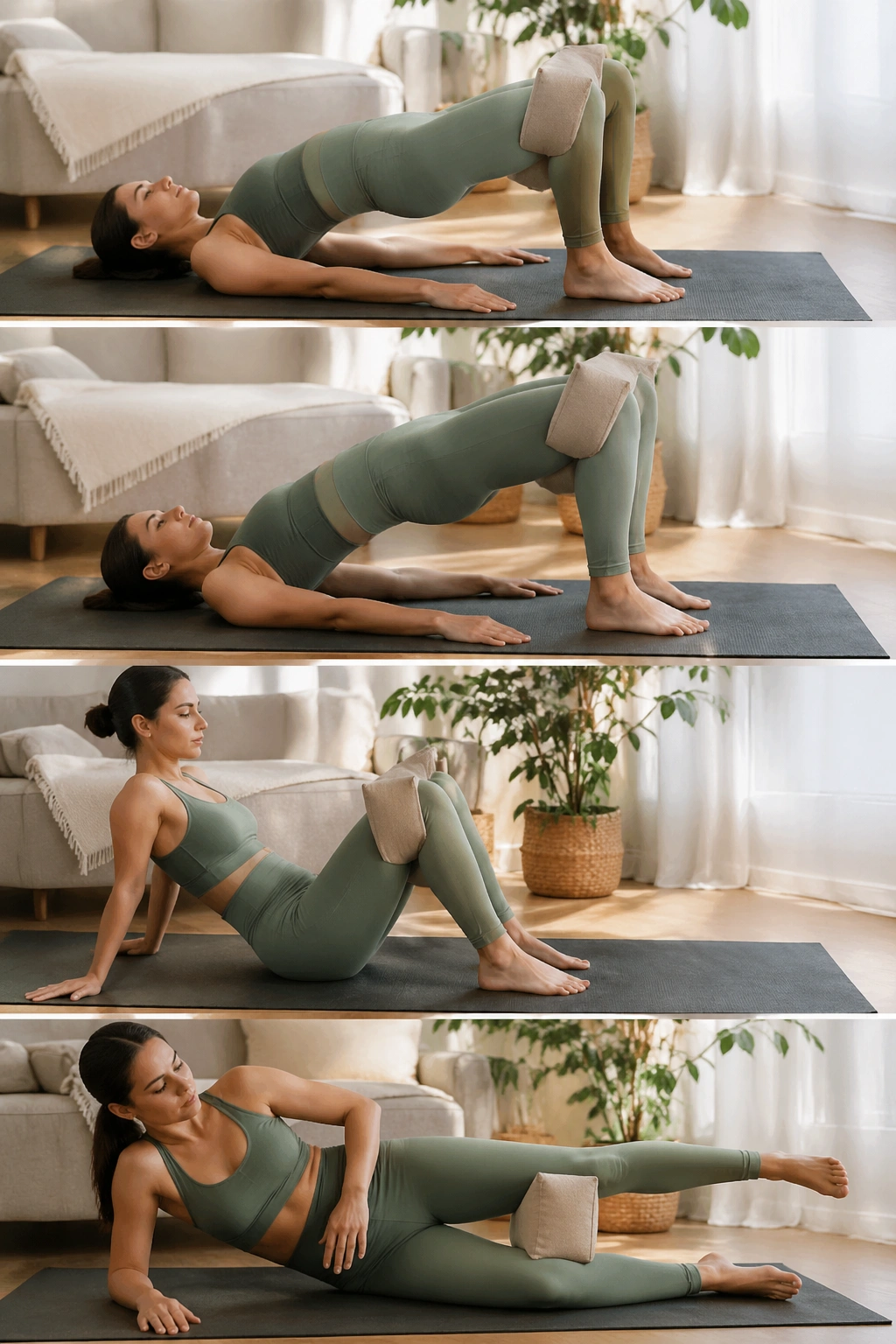
Need a low-impact workout that still makes your legs shake? Grab a pillow.
Place the pillow between your knees for 15 bridge squeezes, then hold the top of the bridge for 20 seconds while pulsing the squeeze. Move to seated and do 30 seconds of bent-knee squeezes, then lie on your side and lift the bottom leg for 15 reps per side. Two or three rounds build a strong inner-thigh burn with barely any setup.
Where people miss it
They squeeze with the knees and forget the whole leg. Think of drawing the thighs inward from high up near the groin. That spreads the work and makes the bridge feel steadier.
This is not a glamorous session. It is a useful one. Inner-thigh strength helps with pelvic stability, and that carries into squats, lunges, and walking pace.
16. Kneeling Arm Pulses and Thoracic Rotation Flow
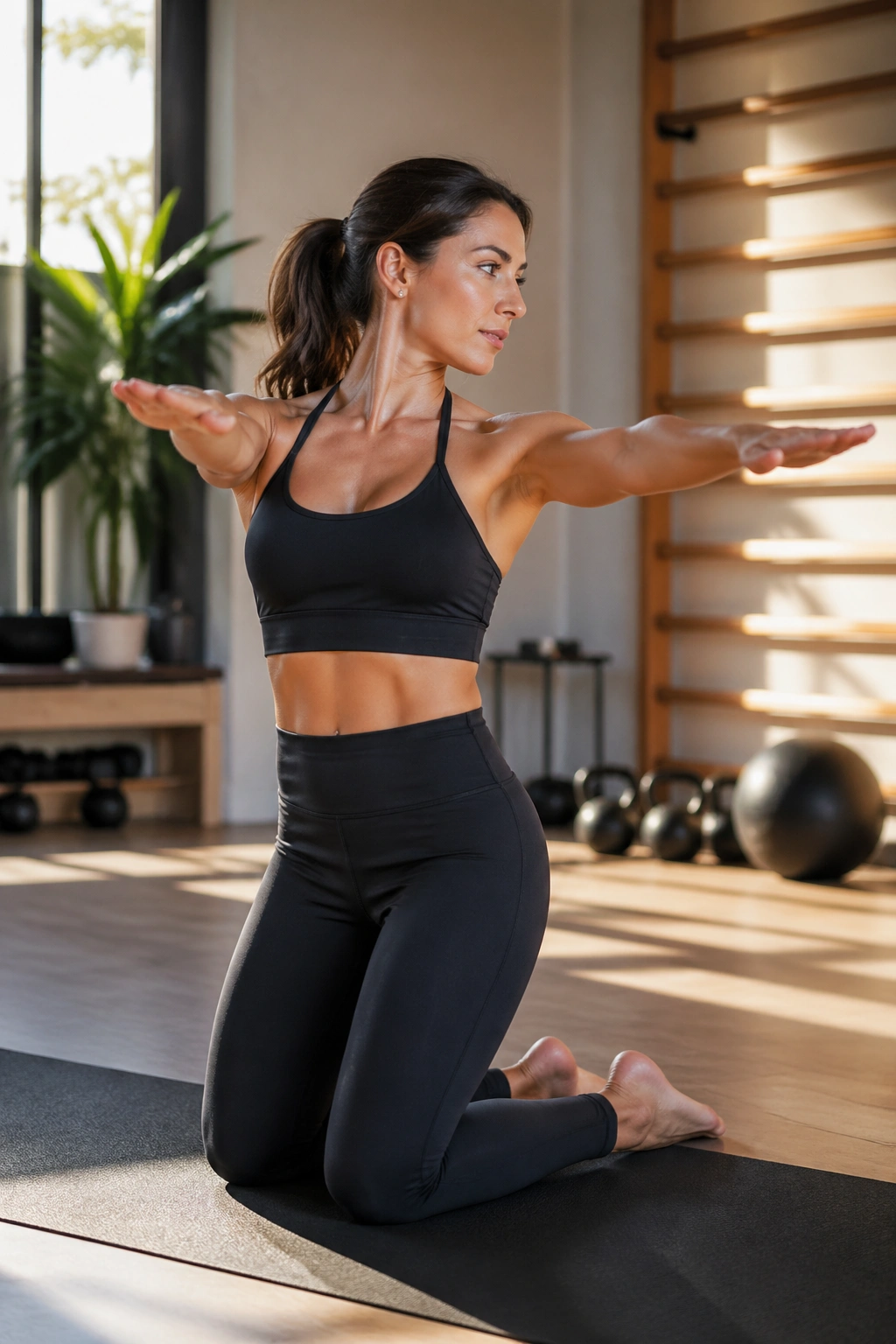
Tall kneeling exposes lazy posture in seconds. The moment you lose your glutes or let the ribs flare, the whole position falls apart.
Use two light water bottles if you want extra load. Do 30 seconds of arm circles forward, 30 seconds backward, then 12 kneeling rotations per side with arms extended at shoulder height. Follow that with 10 kneeling hip hinges and 8 thread-the-needle rotations per side from all fours. Two or three rounds give your shoulders, mid-back, glutes, and abs plenty of work.
- Hips stay stacked over knees
- Glutes stay lightly squeezed
- Chin stays tucked, not poking forward
That tall-kneeling hinge looks harmless — until rep eight. Then you find out how much your trunk was helping you stand upright all along.
17. Low-Impact Pilates Interval Circuit
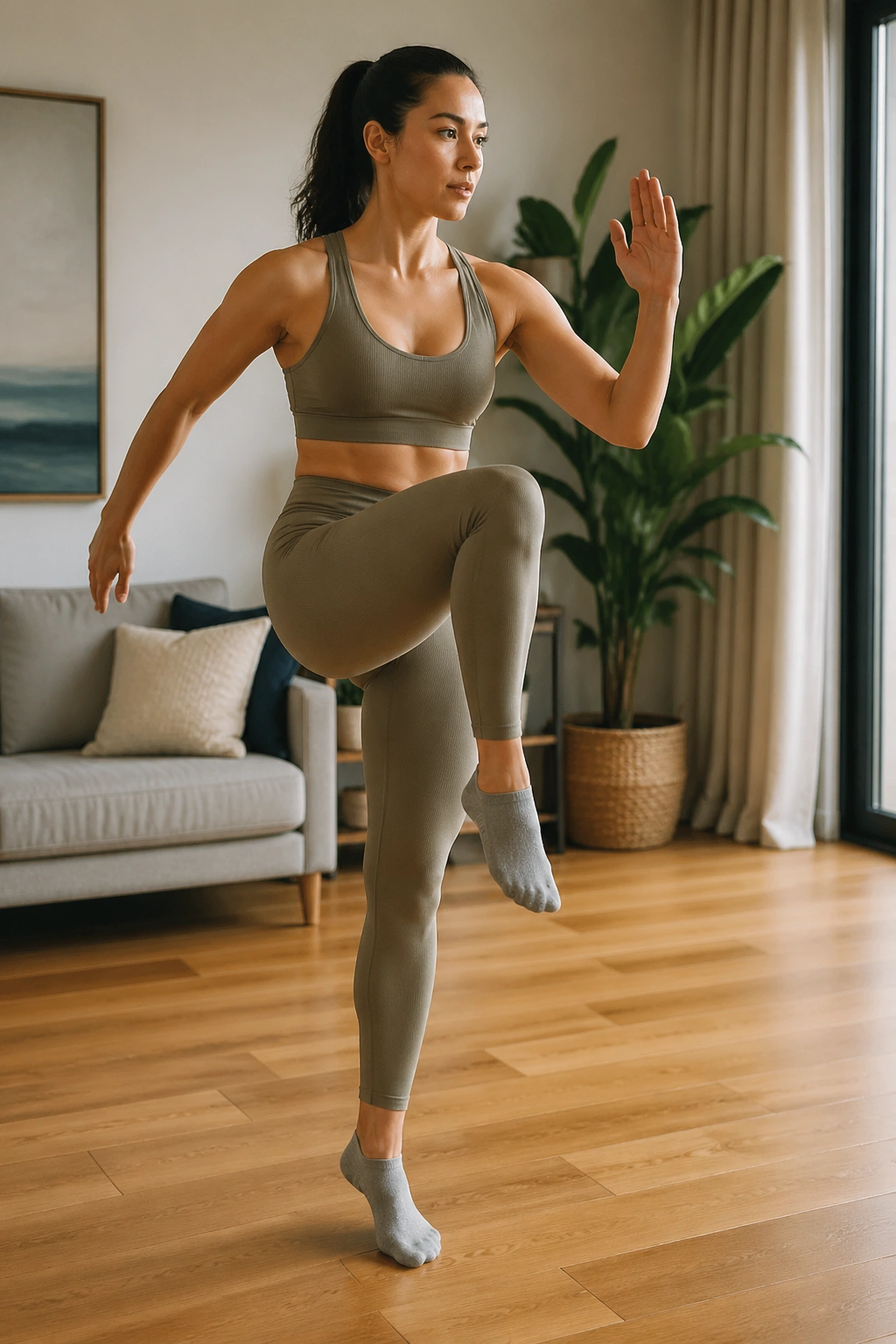
This is the session for days when you want the calorie burn of a faster workout without pounding your joints. Move fast between exercises, not during them. That distinction matters.
Set a timer for 35 seconds on, 15 seconds off. Rotate through squat reach, plank knee pull, bridge march, crisscross, standing side kick, and bear hover. Rest for one minute after all six moves. Do 3 rounds.
The trick is keeping the Pilates shape while the clock pushes you. Your squat still needs rib control. Your plank still needs a long spine. Your crisscross still needs rotation from the ribs instead of a neck yank. Lose those details and the workout turns into generic floor flailing.
You will breathe hard by round two. Good. That means the short rests are doing their job.
18. Reverse Plank and Leg Pull Series
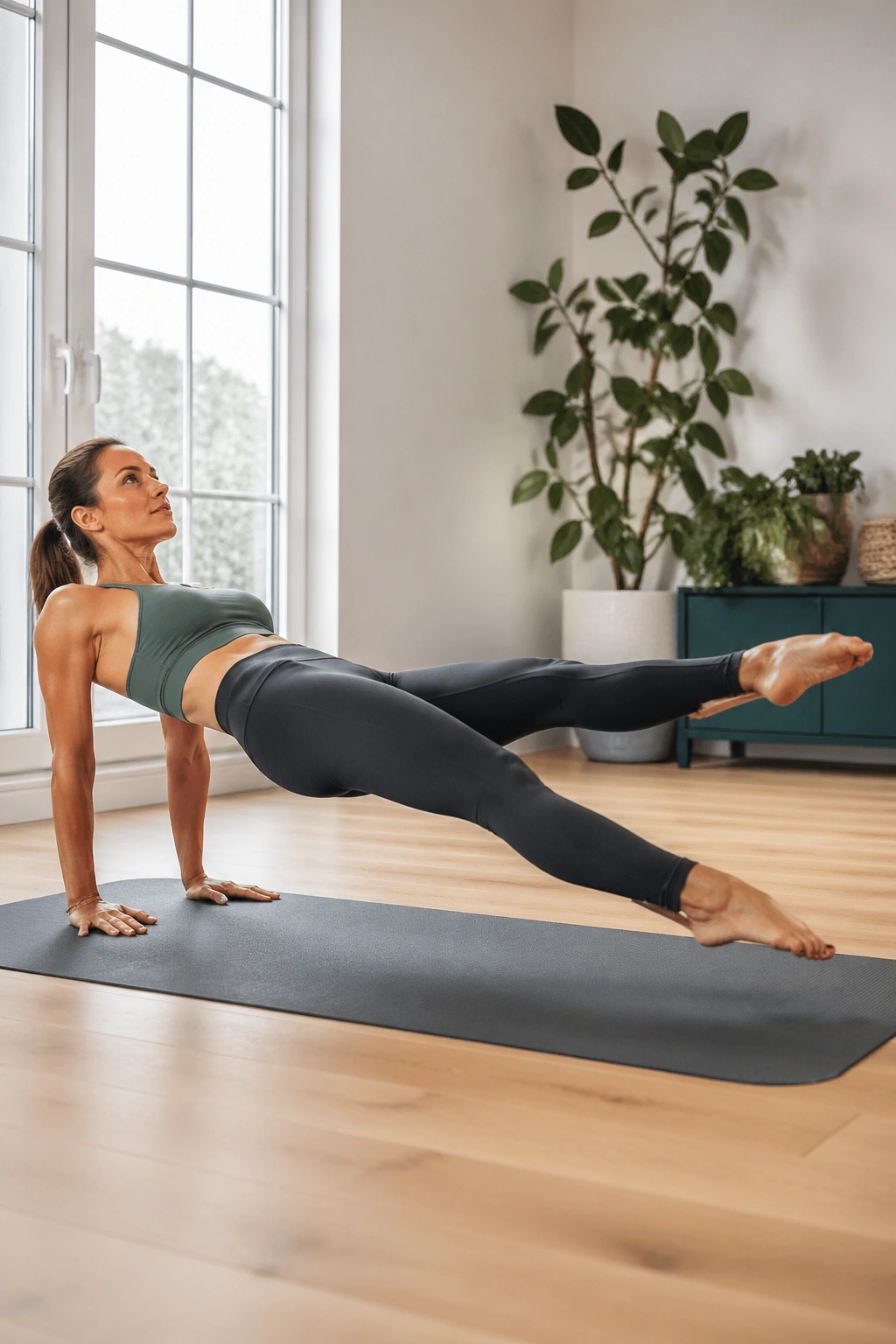
Unlike crunch-heavy sessions, reverse plank work opens the front of the body while training the backside hard. That balance feels good after a week of desk sitting.
Sit with your hands behind you, fingers pointing toward your feet if your wrists allow it. Lift into reverse tabletop or a long reverse plank and hold for 20 seconds. Lower, then do 8 alternating leg lifts, rise again for another 15-second hold, and finish with 10 triceps-focused dips if your shoulders feel solid. Two rounds is enough for most people.
This is one of those workouts that looks smooth in photos and feels humbling in real life. Your glutes have to drive, your upper back has to stay open, and your hamstrings complain almost right away.
If wrist angle is rough, turn the hands slightly outward or work from fists on a padded mat.
19. Single-Leg Stretch Endurance Set
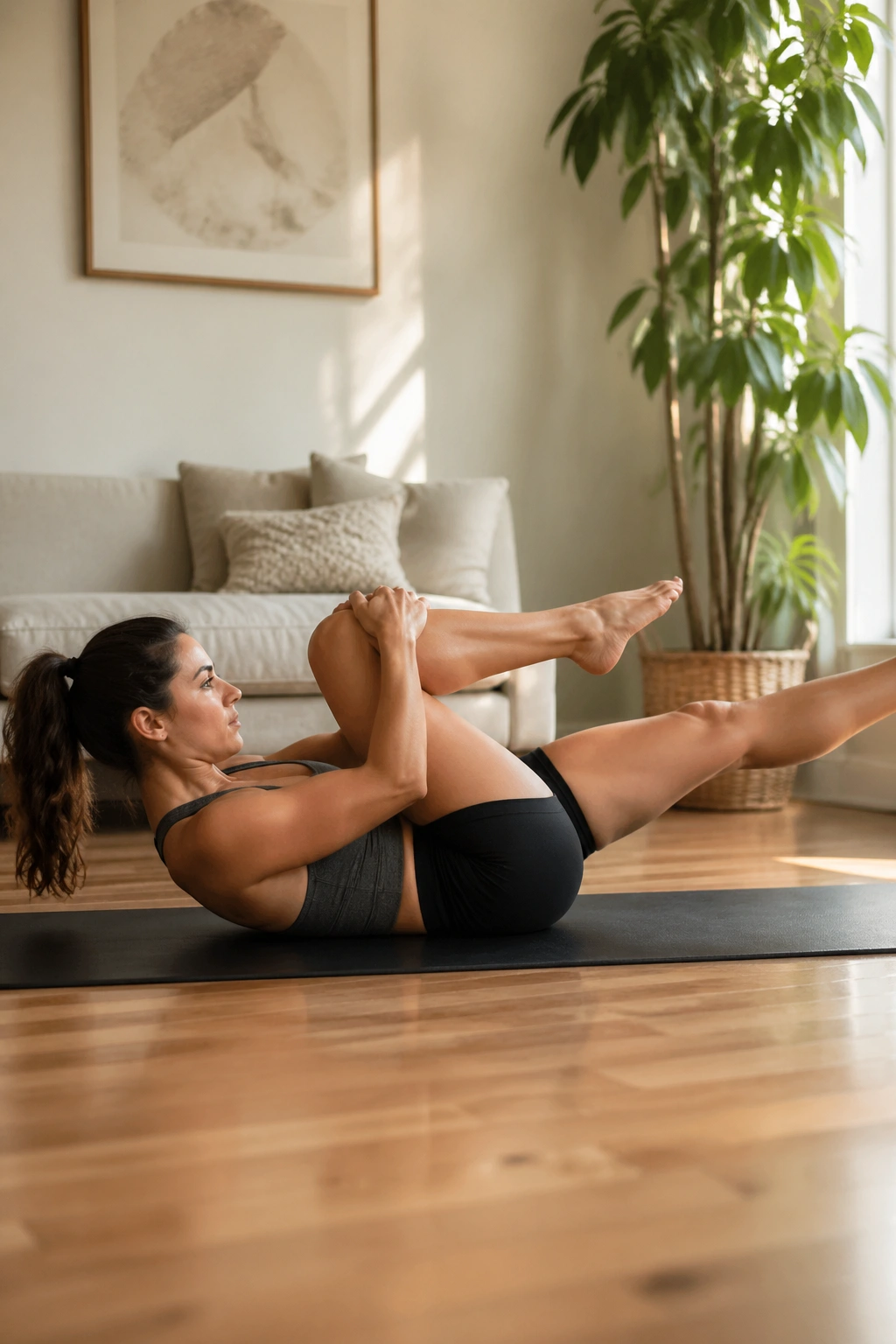
The single-leg stretch is old-school Pilates for a reason. It trains trunk control, breathing rhythm, and endurance in one clean pattern.
Do this mini-burner
- 20 single-leg stretch switches
- 8 double-leg stretch reps
- 20 slow bicycle twists
- 30-second tabletop hold with head down or up
Repeat it 2 or 3 times without taking more than 20 seconds between rounds.
The pace makes or breaks it. If you whip through the switches, the move becomes a hip-flexor drill. Slow the in-and-out change, keep the elbows wide, and curl the chest up from the sternum rather than cranking on the neck.
Worth doing well: exhale each time the leg reaches away. That keeps the front of the waist tight and the back heavy on the mat.
20. Wall Sit With Pilates Arm Presses
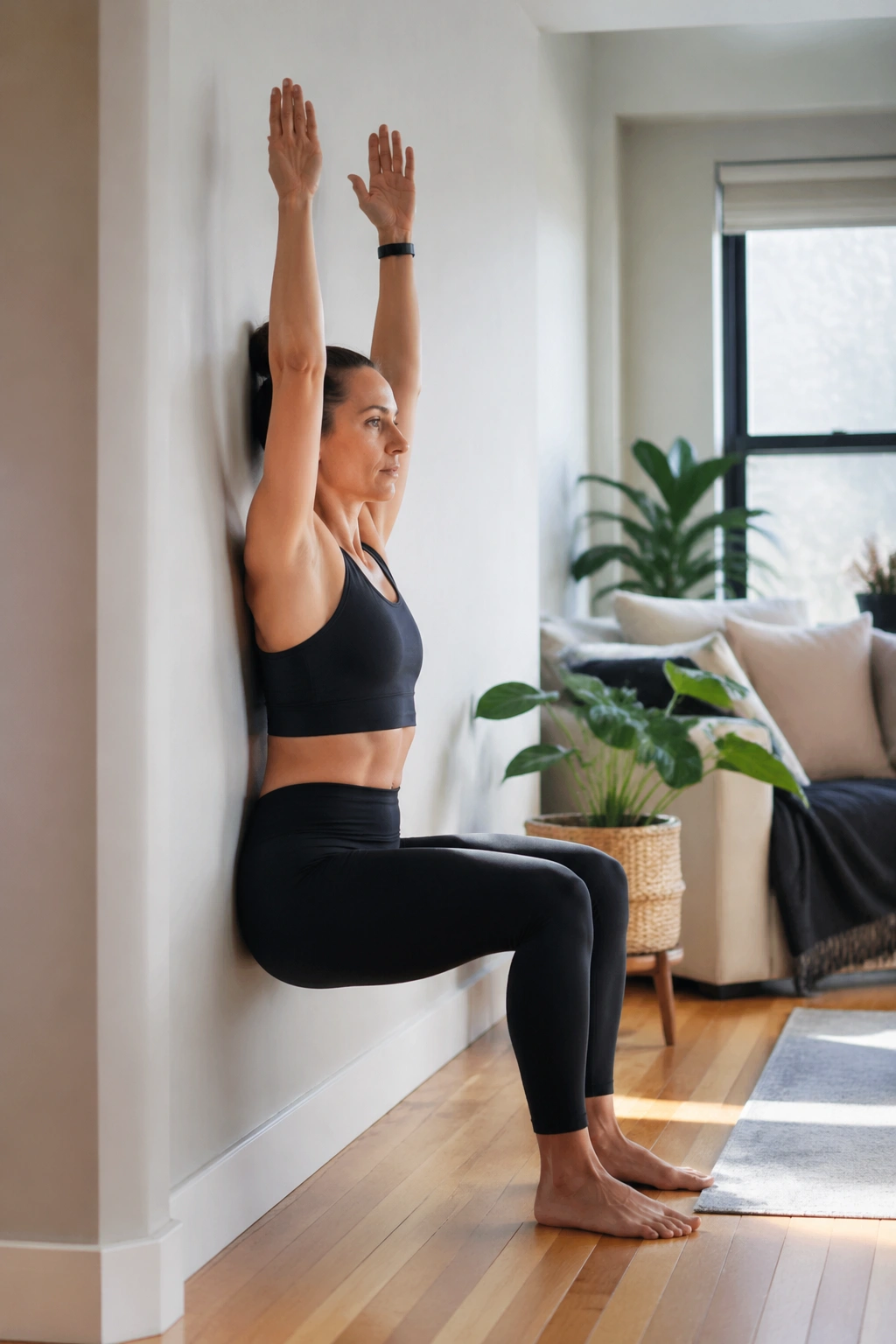
Cruel. Efficient. Memorable.
Slide down a wall into a wall sit and hold two light bottles or no weight at all. Press the arms forward for 20 reps, lift overhead for 15 reps, open into a wide “T” for 15 reps, then stay in the wall sit for 20 more seconds. Stand up, shake out the legs, and repeat for 3 rounds.
The arm work is not there to build giant shoulders. It is there to keep the trunk braced while the legs are already screaming. That doubles the training effect because your core has to stop your rib cage from flaring with each press and lift.
People often stand up too high halfway through. Do not. Stay low enough that the thighs carry the load, though not so low that your knees feel jammed.
21. Prone Back-Body Sculpting Session
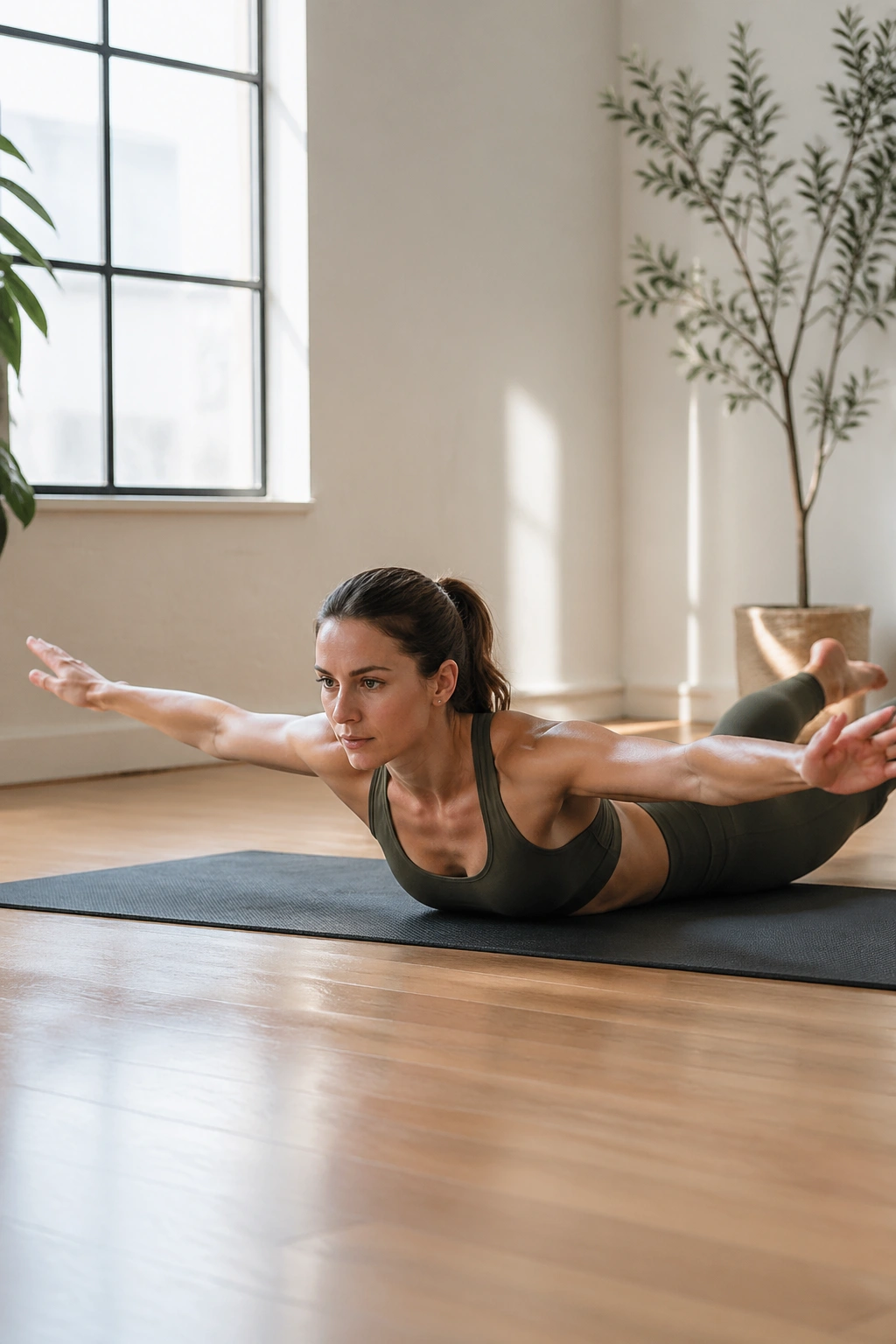
People chasing weight loss tend to pile on front-body work — crunches, mountain climbers, planks — and skip the muscles along the back. That is a mistake.
Lie face down and do 20 seconds of swimming, 10 dart lifts, 8 Y-raises, 8 T-raises, and a 20-second sphinx hold. Rest, then repeat for two or three rounds.
Why this matters
Back-body strength keeps your posture from collapsing as the week piles up. It also makes your core training better because the front of your body has something to work against. A strong trunk is not only abs. It is abs, obliques, spinal erectors, glutes, lats — the whole cylinder.
Your nose should hover above the mat during swimming, not crank upward. Think length first, height second. When done right, the muscles around your bra line and low glutes will light up in a way front-body workouts rarely touch.
22. Standing Booty Kick and Arabesque Flow
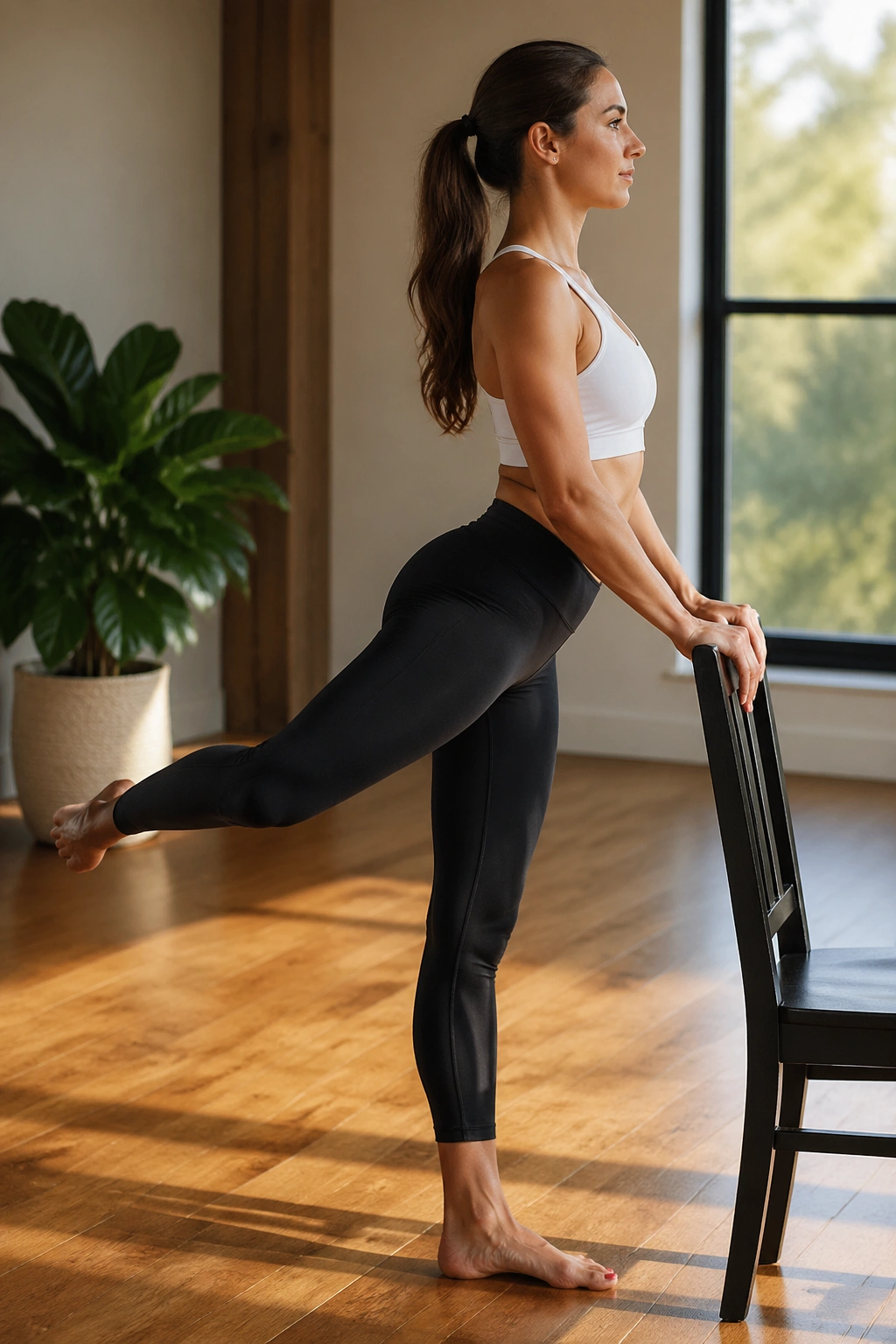
The standing glute flow is a sneaky one. Your working leg moves, but your standing leg, foot, and waist do almost as much work trying to keep you upright.
Run this sequence on one side before switching:
- 12 slow arabesque lifts
- 15 bent-knee back pulses
- 10 curtsey taps into knee drives
- 20-second single-leg balance hold with the lifted leg behind you
Do 2 rounds per side.
The arabesque lift is small. Think six inches, not a circus kick. When the leg flies high, the lower back grabs the motion and the glute loses it. Stay square through the hips, keep the standing knee soft, and lightly press the floor away with the planted foot.
Use a fingertip on a chair if balance steals all your attention. Stability support is smart, not cheating.
23. Mountain Climber Meets Pilates Knee Pull
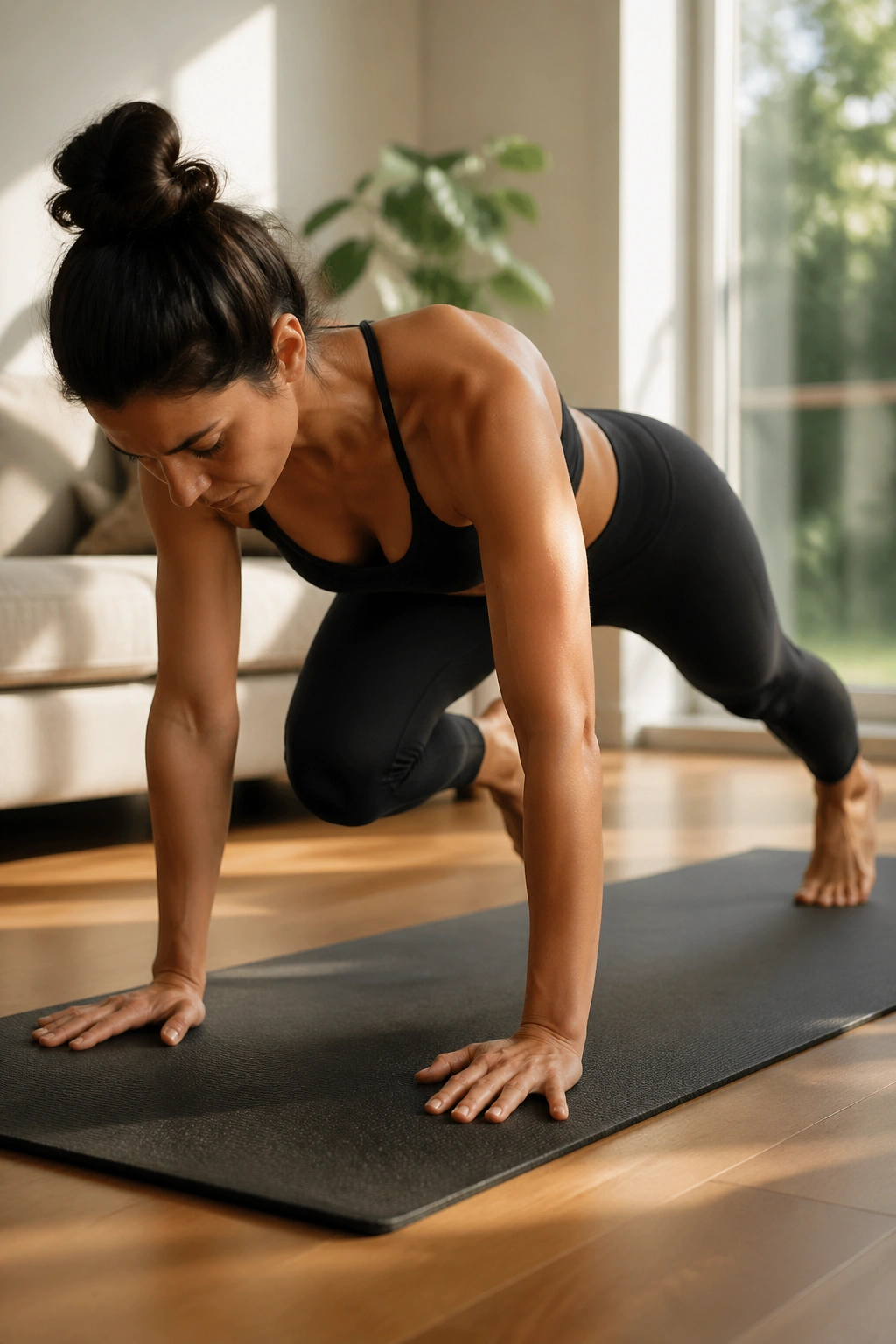
This hybrid workout is faster than classical mat work, though it still relies on Pilates control. Each knee pull should feel like the abs drag the leg in, not like the shoulders are bouncing over the wrists.
Start in a high plank. Do 20 slow mountain climbers, 10 cross-body knee pulls per side, 8 plank step-ins per side, and a 20-second plank hold. Rest for 20 seconds. Three or four rounds give you a strong conditioning hit in under 12 minutes.
You will know you are rushing if your feet start slapping the floor or your hips bob like a buoy. Slow down. The move gets harder, not easier, when you control the path of the knee.
I keep coming back to this one because it blends two things home workouts need: limited space and no wasted time.
24. Bridge, Curl, and Hamstring Walkout Combo
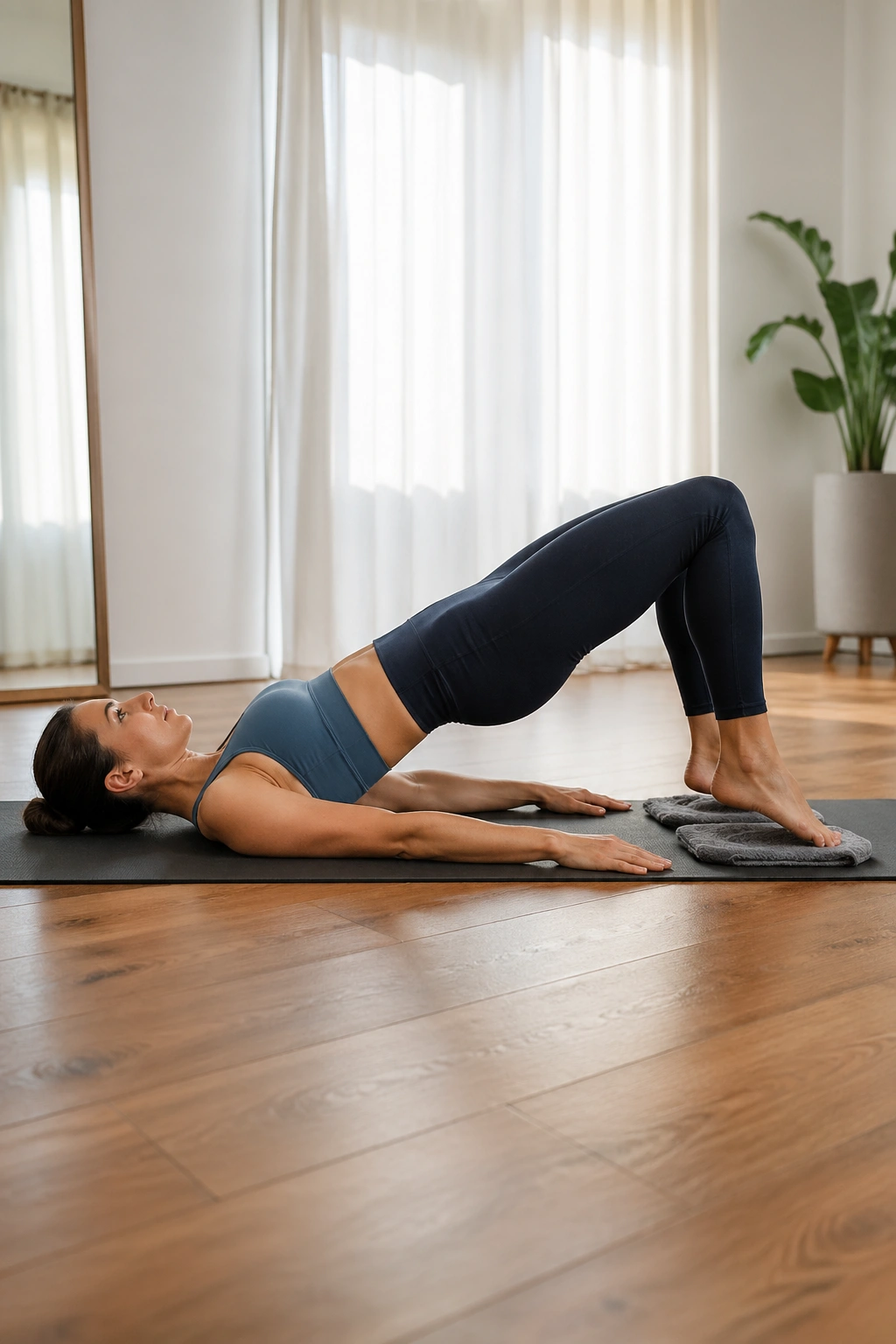
Compared with plain bridges, hamstring walkouts feel twice as hard and look half as dramatic. That is often a good sign.
Lift into a bridge. From the top, take 4 tiny heel steps away from your body, then 4 back in. That is one rep. Do 6 walkout reps, then place your heels on towels or socks and do 10 hamstring curls if you have a hard floor. Finish with a 20-second bridge hold. Two or three rounds will leave the backside of your legs cooked.
This session is outstanding for people who want more from home lower-body Pilates without adding impact. Your calves, hamstrings, glutes, and trunk all work together, and the walkout exposes side-to-side weakness fast.
If the pelvis drops on the second step out, shorten the walk. Fight to stay level.
25. Pilates Lunge With Rotation Sequence
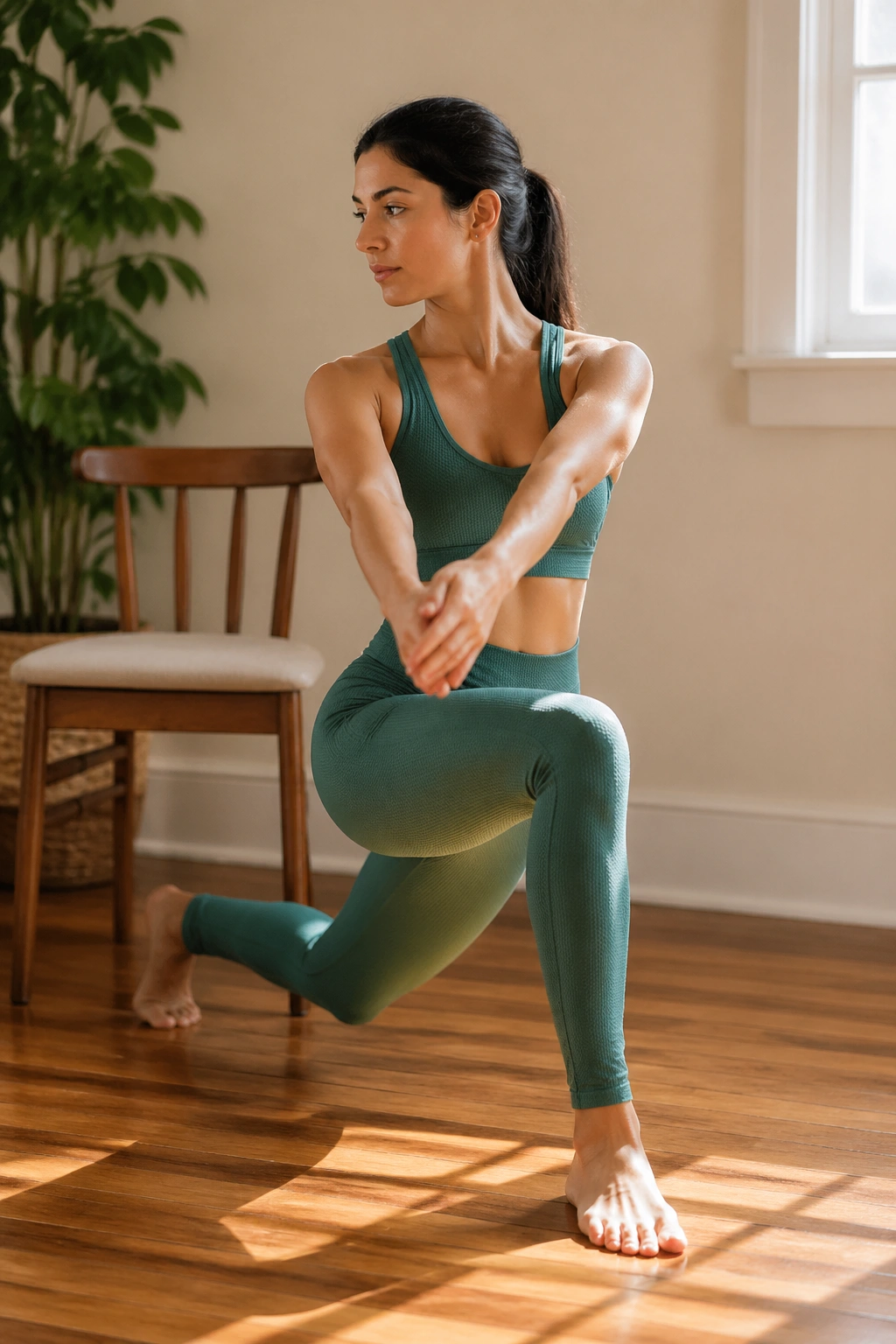
A lunge already trains plenty. Add controlled torso rotation and your core has to stabilize while your legs handle the load, which makes the whole pattern more useful for daily movement.
Build the sequence
- 10 reverse lunges per side
- 10 rib-cage rotations toward the front leg
- 12 split-squat pulses per side
- 20-second isometric lunge hold with arms reaching forward
Take two or three rounds.
The rotation is small. Turn from the ribs, not the hips, and keep the front knee tracking over the middle toes. If balance gets messy, tap the back foot down between reps instead of trying to float in and out like a dancer. The goal is tension and control, not performance art.
Strong modification: hold the back of a chair with one hand while you learn the pattern.
26. Oblique Crisscross Conditioning Set
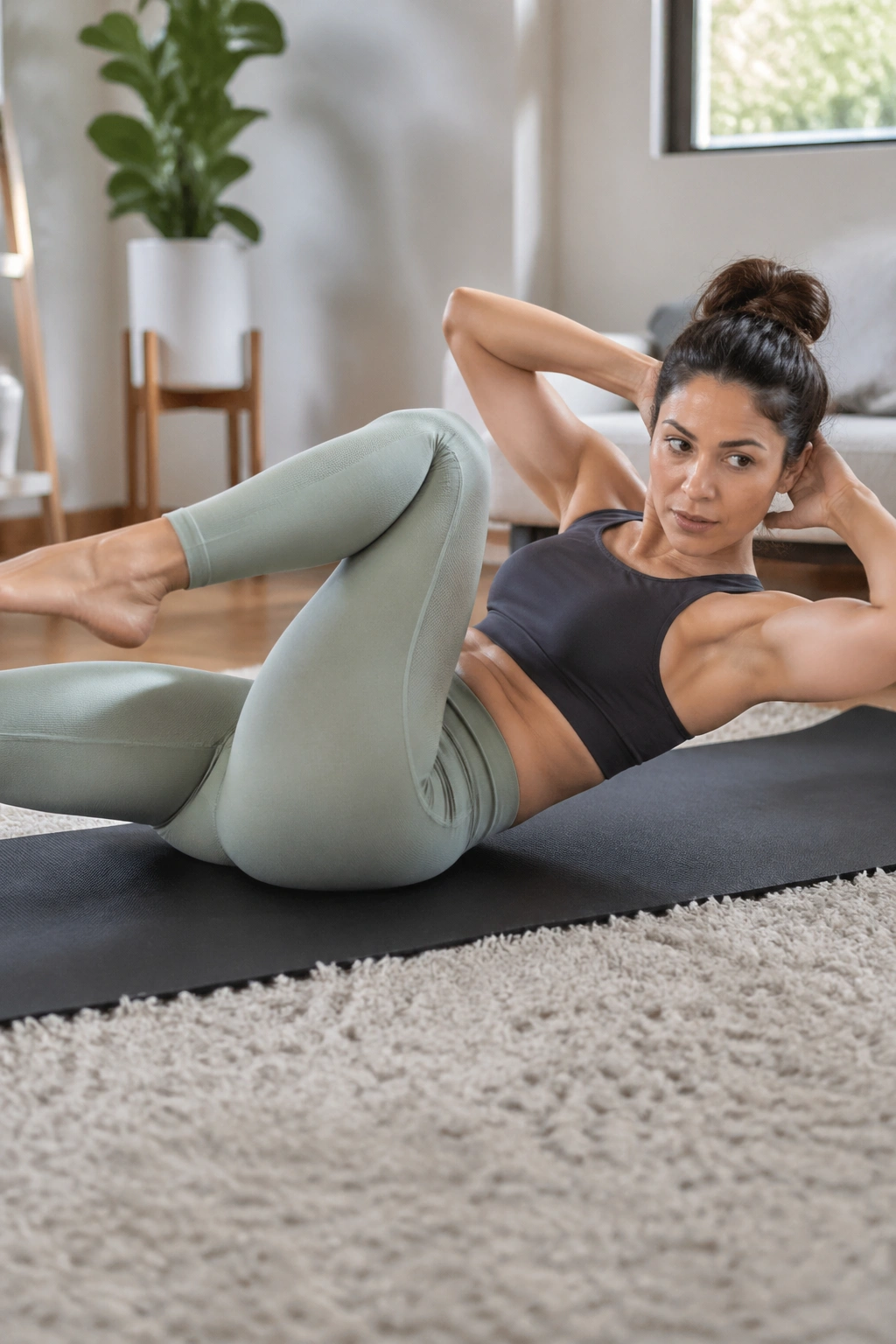
Most people do crisscross too fast and call it a waist workout. Slow it down and it becomes one.
Start with 20 slow crisscross reps, then roll to your side for 10 forearm side-plank hip dips per side. Finish on your back with 15 toe reaches and 20 seconds of bent-knee windshield wipers. Two rounds are enough for a dense oblique session.
What changes the move is the pause. When elbow moves toward knee, stop for half a beat and pull the rib cage inward before switching sides. That pause strips out momentum and makes the waist work hard.
And yes, your neck might complain if you tug on it. Support the head lightly, elbows wide, chest lifted. The twist comes from the trunk, not from jamming your arm across your body.
27. Slow-Tempo Full-Body Mat Flow
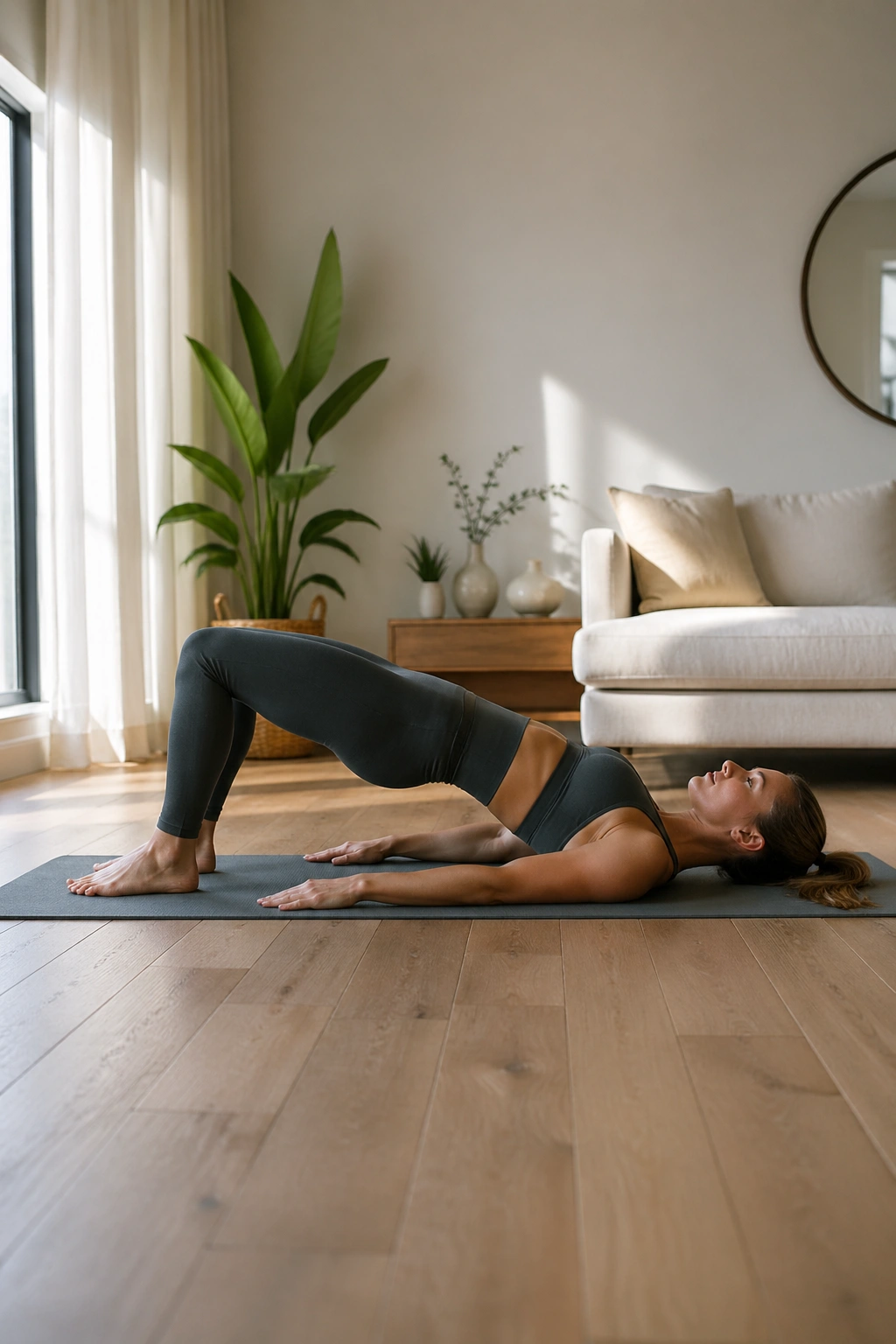
Need a session that feels hard without any frantic pace? Slow tempo is your answer.
Move through pelvic curl, tabletop toe taps, side-lying leg lifts, forearm plank, swimming, and child’s pose. Spend 45 seconds on each move and complete 2 or 3 rounds. Use a 3-count lower on every bridge and leg lift. That long lowering phase is where the burn comes from.
What makes slow training work
Time under tension. Your muscles stay loaded longer, your breathing stays active, and sloppy reps have nowhere to hide. The workout feels quieter than interval training, though it can be every bit as demanding by the second round.
This is one I use when my joints feel fine but my brain does not want chaos. You still finish warm, worked, and a little humbled.
28. 20-Second On, 10-Second Off Power Session
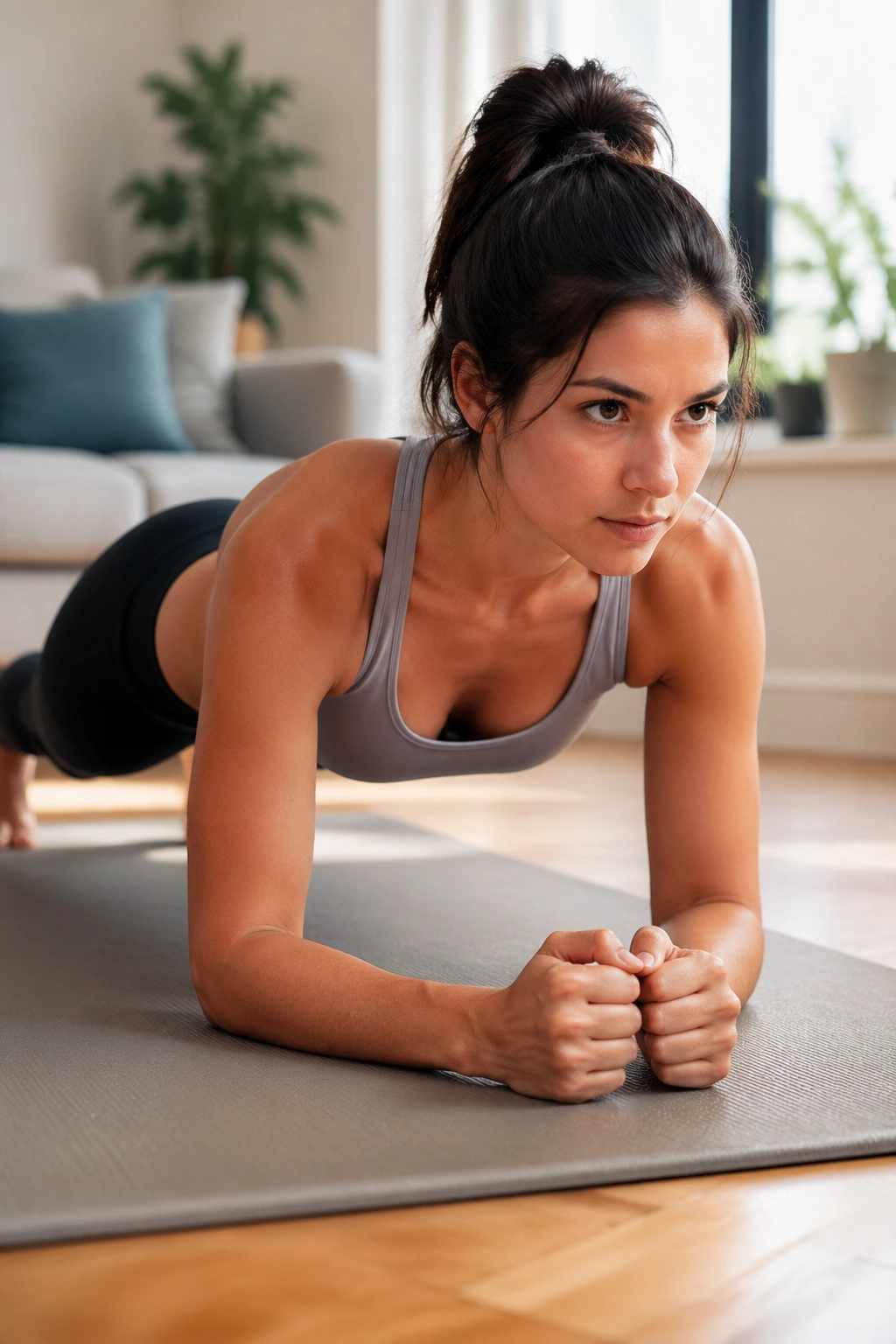
Eight minutes can be enough if the intervals are crisp.
Set a timer for 20 seconds of work and 10 seconds of rest. Rotate through squat reach, plank knee tuck, bridge pulse, and standing twist, then repeat that same four-move cycle one more time for 8 rounds total.
- Round 1: squat reach
- Round 2: plank knee tuck
- Round 3: bridge pulse
- Round 4: standing twist
- Rounds 5 to 8: repeat
The short work periods let you go harder without losing form. Your squat can stay deep, your plank can stay long, and your twists can stay controlled because the break is always near. That makes this session one of the best options when time is tight and motivation is low.
Train with intent: start the next round fast, not sloppy.
29. Recovery-Core Stretch and Tone Practice
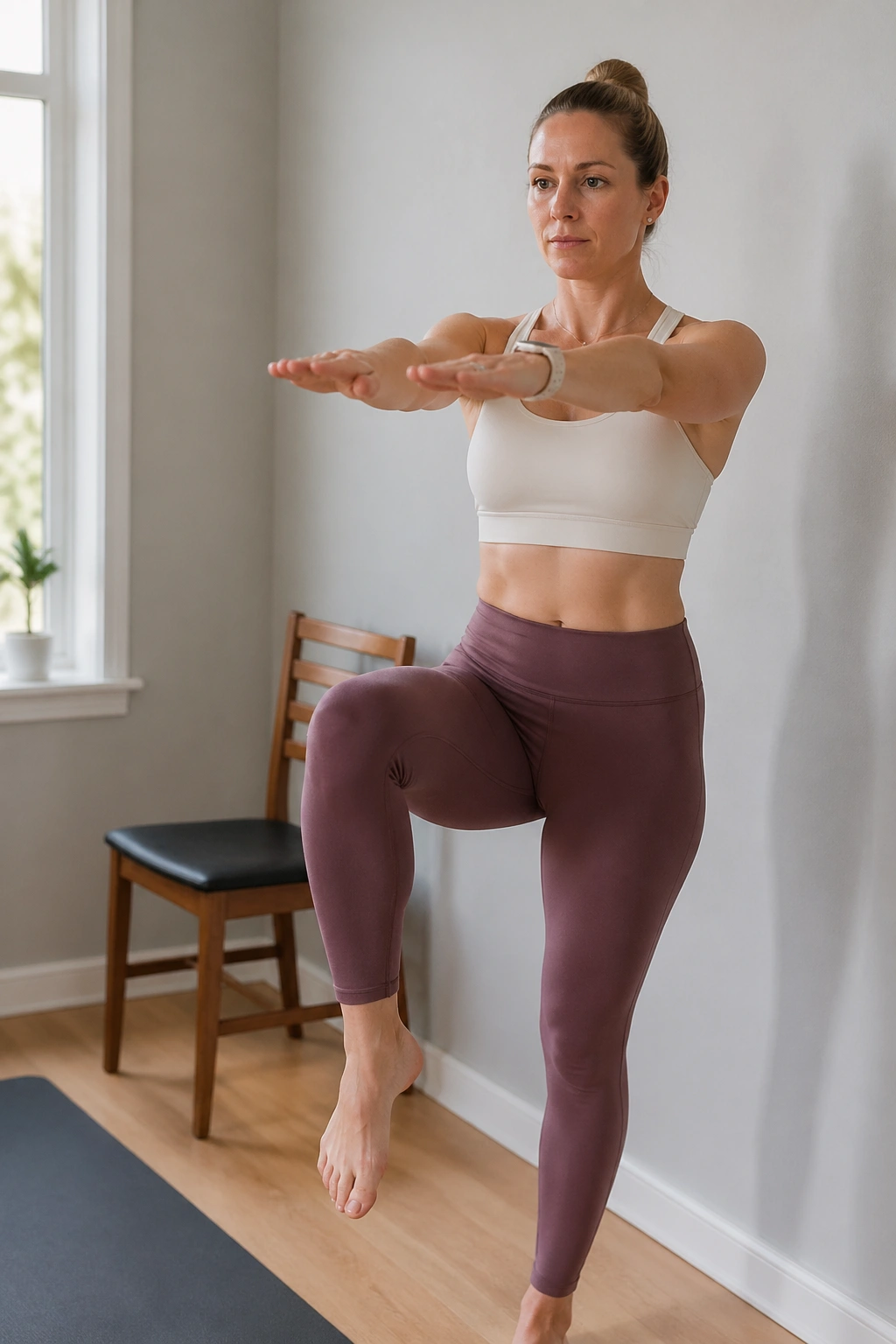
Harder is not always better. If you stack intense sessions back to back, your form slips, your hips tighten, and the workouts you could have done get skipped.
Use this active recovery flow for 15 to 20 minutes: cat-cow for 1 minute, pelvic curls for 10 reps, dead bugs for 8 per side, mermaid stretch for 5 per side, swimming prep for 20 seconds, then a deep squat hold with breathing for 30 seconds. Move through the circuit two or three times.
The point here is tissue quality and pattern cleanup. Your spine gets movement, your abs still switch on, and your glutes keep working without the grind of hard intervals. A good recovery workout leaves you feeling taller and looser, not flattened.
Pick this session after a rough leg day, poor sleep, or any week where your body feels a half-step behind.
30. 30-Minute No-Equipment Pilates Fat-Burner
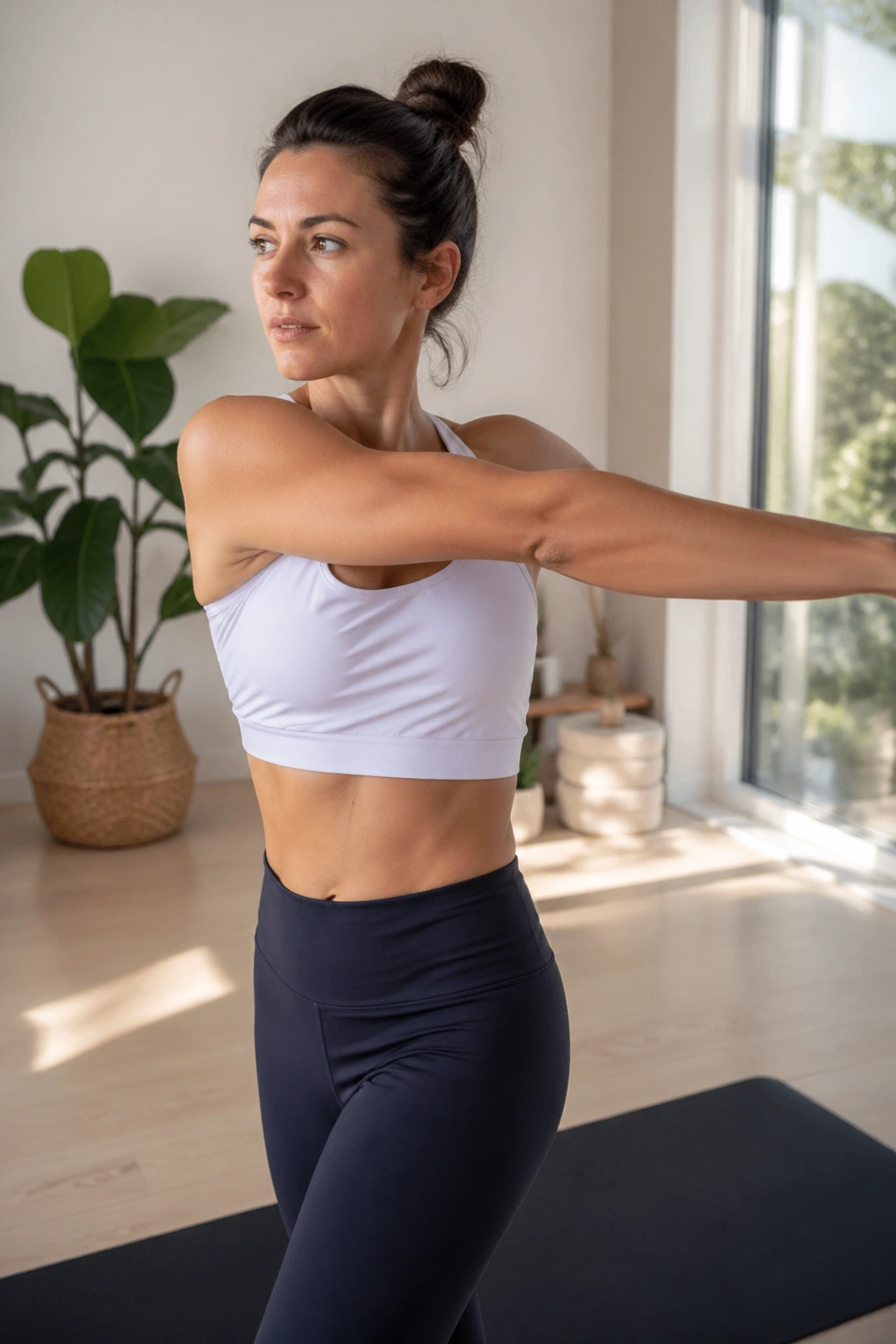
If you want one longer home session that covers almost everything, use this.
Start with 5 minutes of warm-up: marching with arm sweeps, roll-downs, hip circles, and squat reaches. Move straight into a 10-minute standing block of alternating reverse lunges, side kicks, knee drives with twists, and fast heel-toe steps. Work for 40 seconds per move with 15 seconds to switch.
Drop to the mat for a 10-minute floor block: hundred for 40 beats, bridge march for 10 per side, side-lying leg lifts for 15 per side, dead bugs for 10 per side, and forearm plank for 20 seconds. Run that floor block twice.
Finish with a 5-minute burner made of scissor kicks, crisscross, prone swimming, and a final wall sit if you still have anything left. Then cool down with a mermaid stretch and spinal rotation.
This session works because it alternates standing effort with controlled mat strength. Your heart rate rises, settles slightly, then rises again. That wave pattern makes 30 minutes pass faster than a single-style workout — and it trains more of your body in the same span.
Final Thoughts
You do not need all 30 workouts in one week. Pick 4 to 6 that match your energy, space, and skill level, then repeat them until the reps feel cleaner and the rests feel shorter. Repetition is where progress hides.
The people who get the most from home Pilates are usually not the ones chasing novelty every day. They are the ones who learn what a good exhale feels like, what a level pelvis feels like, and how to keep tension in the target muscle instead of flinging the body through the shape.
Start with the routines you will not dread. Then build from there.
