



Pilates works best when it respects the body you have, not the body you had at 25. That matters even more after 40, when tight hips, cranky lower backs, stiff shoulders, and a core that seems to have gone missing all start asking for a different kind of training. Pilates workouts for women over 40 are usually smartest when they are clean, controlled, and a little stubborn about good form.
The nice thing about Pilates is that it doesn’t need to feel punishing to be effective. A slow bridge can light up your glutes. A tiny toe tap can wake up deep abdominal muscles. A side-lying leg series can make your outer hips feel like they have been switched back on after years of sitting, driving, carrying bags, and doing all the small jobs nobody thinks about.
And there’s a bonus people underestimate: Pilates gives you practice for real life. Getting up from the sofa, climbing stairs, reaching overhead, standing on one leg to put on a shoe — all of that gets easier when your trunk, hips, and shoulders are doing their jobs together. The workouts below are built for that, with enough variety to keep things interesting and enough structure to make them useful.
1. The 5-Minute Spine Reset for Women Over 40
Start here if your back feels stiff first thing in the morning or after a long day at a desk. This short mat Pilates sequence loosens the spine without tossing you into aggressive crunches or deep backbends.
Do this sequence
- 5 standing roll-downs, moving one vertebra at a time
- 6 cat-cow rounds on hands and knees
- 8 pelvic tilts lying on your back
- 5 slow breaths in child’s pose
Keep your knees soft in the roll-down, and stop halfway if your hamstrings grab. The goal is a smoother back, not a forced stretch. If cat-cow makes your wrists complain, do it on your forearms or with your hands on a sofa seat. Small adjustments matter.
Best use: first thing in the morning, or after sitting too long.
2. The 8-Minute Hundred and Toe-Tap Core Set
If crunches make your neck feel like it was hit with a hammer, this is a better place to start. The hundred variation builds abdominal endurance, and the toe taps teach your core to hold steady while your legs move.
Lie on your back with your knees bent. Pump the arms for 30 to 50 counts, keeping your ribs heavy and your neck long. Then shift into toe taps: one leg at a time, lower the foot toward the floor and bring it back up for 8 to 10 reps per side. Keep the movement small. Small is good here.
How to make it work
- Keep your low back heavy on the mat.
- Exhale as the leg lowers.
- Stop if your neck starts to jut forward.
- Bend your knees higher if your back arches.
This workout is quiet, but it bites. In the best way.
3. The 10-Minute Glute Bridge Ladder
A bridge is one of those exercises that looks almost too simple, then suddenly makes your hamstrings and glutes wake up like they’ve had coffee. After 40, that matters because glutes often get lazy from sitting, and lazy glutes tend to hand extra work to the lower back.
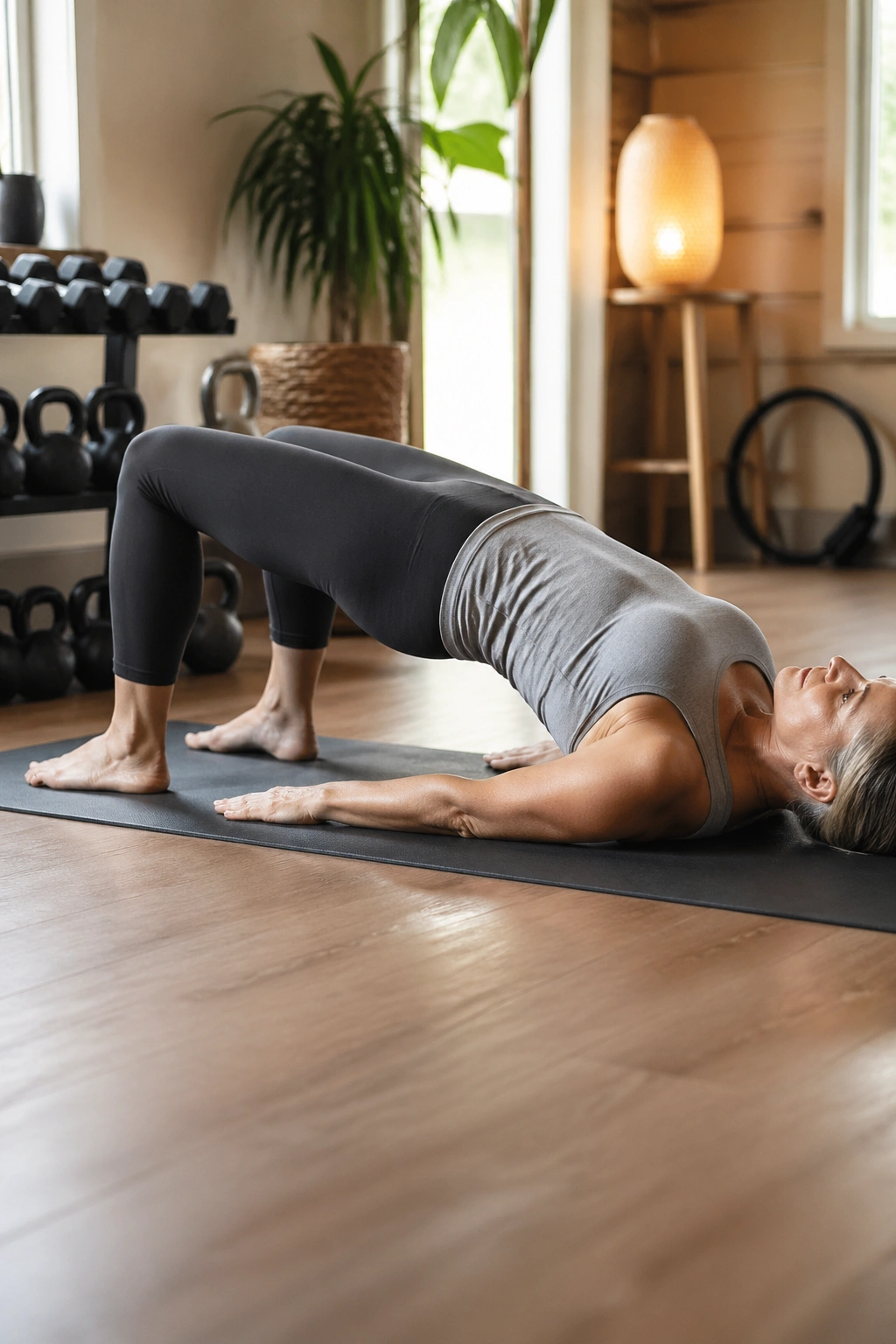
Start with 10 basic bridges. Then hold the top for 10 seconds. Then do 8 bridges with a 2-second squeeze at the top. Finish with 6 single-leg bridge lifts if your pelvis stays level. If not, stay with two legs and make each rep slower.
What to watch for
- Feet hip-width apart.
- Ribs down, not flared.
- No pushing from the neck or shoulders.
- Hips rise only as high as you can keep control.
A good bridge feels like the back of your thighs and the center of your seat are doing the heavy lifting, not your lower back.
4. The Dead Bug and Bird Dog Circuit
This one is for the days when you want core work that feels smart instead of savage. Dead bug trains your abs to resist movement, and bird dog asks your balance and coordination to show up too.
Start with 6 dead bugs per side. Move slowly, one arm and the opposite leg reaching away as your trunk stays quiet. Then come to hands and knees for 6 bird dogs per side, pausing for a beat when the arm and leg are fully extended. If you wobble, that is fine. Wobble means the work is real.
Make it friendlier
- Keep the lifted leg low.
- Rest your forehead on a folded towel if your neck tires.
- Skip the full reach and just slide the heel back.
- Use a wall instead of the floor if wrists are touchy.
This is a strong choice for Pilates workouts for women over 40 because it trains the deep stuff without beating up the joints.
5. The Side-Lying Hip Series That Wakes Up Lazy Glutes
Side-lying Pilates is one of my favorite fixes for hips that feel flat, tight, or weirdly weak. You can do it with a mat and nothing else, and it tends to hit the outer glutes far better than a thousand half-hearted squats.
Lie on one side with your head supported and your waist slightly lifted off the mat. Do 12 leg lifts, 12 circles forward, 12 circles back, then 10 small kicks to the front and back. Keep the foot flexed on the lifted leg if you want more stability, and don’t let the top hip roll open.
A folded towel under the waist helps if your side feels bony on the mat. That tiny cushion changes everything. So does moving slowly enough to stop the hip from cheating.
6. The Mermaid and Saw Twist Flow
A lot of women want more waist mobility but hate the feel of endless crunches. Fair enough. Mermaid and saw give you spinal rotation and side-body length without making the workout feel like punishment.
Sit tall, cross your legs, and lift one arm overhead for mermaid side bends, 4 to 5 reps per side. Then switch into saw: arms out wide, twist gently, and reach the back hand toward the opposite little toe for 4 slow reps. Keep the twist small at first. Big twists are usually where the low back steals the show.
Why it helps
- Opens the ribs for easier breathing
- Loosens the upper back
- Gives the obliques work without heavy flexion
- Feels good after a lot of sitting
If your hips hate the cross-legged position, sit on a cushion or a folded blanket. That tiny lift makes the spine easier to stack.
7. The Wall Roll-Down Posture Routine
A wall is boring. Perfect. That’s why it works so well. A wall roll-down routine is one of the cleanest Pilates workouts for women over 40 because it teaches alignment while giving you feedback you can actually feel.
Stand with your heels a few inches from the wall. Roll down slowly until your hands hang near your knees, then stack back up one bone at a time. Repeat 5 times. Add 8 wall angels or wall slides if your shoulders can keep contact without shrugging.
Keep these points in mind
- Chin slightly tucked, not forced.
- Weight balanced across both feet.
- Lower ribs stay quiet.
- Only go as far as your spine can stay smooth.
This is especially useful if your posture has started to drift forward from driving, typing, phone scrolling, or plain old life. Which is most of us.
8. The 10-Minute Standing Foot and Ankle Balance Set
Balance work gets ignored until one ankle rolls on a curb or you realize getting dressed on one foot feels weirdly shaky. A standing Pilates set trains the small stabilizers that keep you steady.
Try 30 seconds of single-leg standing on each side, then 10 calf raises, then 10 heel lifts with toes anchored, then 8 slow reach-outs forward, side, and back while standing on one leg. Use a wall or chair for light support, not death grip support. Just a fingertip is enough.
What makes it useful
- Ankles get stronger
- Feet wake up
- Hips learn to stabilize
- Standing tasks feel less wobbly
If one side is much shakier, that is normal. Stay on that side a little longer. Don’t rush past the weak spot.
9. The Ring Squeeze Inner-Thigh Burner
A Pilates ring or a small soft ball can turn inner-thigh work from vague to unmistakable. It also gives you a way to train adductors without loading the knees heavily.
Lie on your back with knees bent or sit tall on a chair. Squeeze the ring gently for 10 counts, release for 5, and repeat 8 to 10 times. Then add 12 small pulses if the pressure feels even. You want firm effort, not a death squeeze. If your feet cramp, relax them and keep the pressure in the thighs.
Good places to use this
- During bridge holds
- Between knees in seated work
- While lying on your side for a core challenge
- As a finisher after leg day
The inner thighs do a lot more than most people think. They help with pelvic stability and walking control, which is why this little tool earns its place.
10. The 10-Minute Arm and Upper-Back Mat Series
Shoulders that creep up to your ears are not a personality trait. They are usually a sign that the upper back needs some help. This mat series works the arms, shoulder blades, and posture muscles together.
Start prone or kneeling with arm lifts, then move to triceps presses behind the body, then open into a T-shape for 8 to 12 reps each. If prone work bothers your low back, stay kneeling or do the same pattern standing with light hand weights. Keep the neck long and the collarbones broad.
The useful part
- Shoulder blades glide down and back
- Upper traps stop doing everything
- Arms work without a lot of joint strain
- Posture gets a cleaner feel
This is a good example of Pilates for women over 40 doing more than looking neat. It fixes the boring, useful stuff that daily life keeps breaking down.
11. The Pelvic-Floor-Friendly Ab Workout
A lot of ab routines ask too much too fast. If you feel pressure, doming, or a weird downward heaviness in your middle, back up and choose a sequence that respects the pelvic floor.
Start with breathing: inhale wide into the ribs, exhale and gently draw the lower belly in. Add heel slides for 8 reps per side, then bent-knee marches for 10 total, then toe taps only if the belly stays flat and calm. Stop at the first sign of strain. That is not weakness. That is information.
Make it friendlier
- Keep the head down.
- Exhale on effort.
- Reduce range before reducing control.
- Skip full roll-ups for now if they push pressure downward.
This kind of core work is steady, not flashy. And that is exactly why it earns trust.
12. The Low-Back Relief Hip Slide Routine
Some days the lower back isn’t weak so much as irritated by tight hips and a pelvis that has been parked in one position for too long. Hip slides can help without a lot of drama.
Lie on your back with knees bent. Let both knees drift an inch to one side, then back to center, then the other side for 8 slow reps. Follow with 6 knee folds per side and 6 glute bridge lifts. Keep the movement tiny. If you force range, your back will complain.
Useful cues
- Shoulders stay heavy.
- Hips move like a small pendulum.
- No yanking the knees side to side.
- Breath stays slow and even.
This is one of those workouts that looks too gentle to matter, then makes you stand up feeling looser through the whole pelvis.
13. The Chest Opener and Thoracic Rotation Flow
If your upper back feels glued shut, the answer is not more neck stretching. It is better thoracic movement. That means the ribcage gets to twist and open while the lower back stays fairly calm.
Try seated arm circles, open-book rotations on the floor, and a gentle chest opener with hands behind the head or reaching wide. Do 5 to 6 reps per side. Keep the motion coming from the ribs, not from a cranky lumbar twist. That difference matters more than people think.
Use it when
- You’ve been hunched over a laptop
- Your bras feel tight because your ribs won’t expand
- Breathing feels shallow
- Your neck keeps carrying the load
This is less about stretching hard and more about letting the upper spine move like it should. Small, clean motion beats a forced twist every time.
14. The Reformer Footwork Session
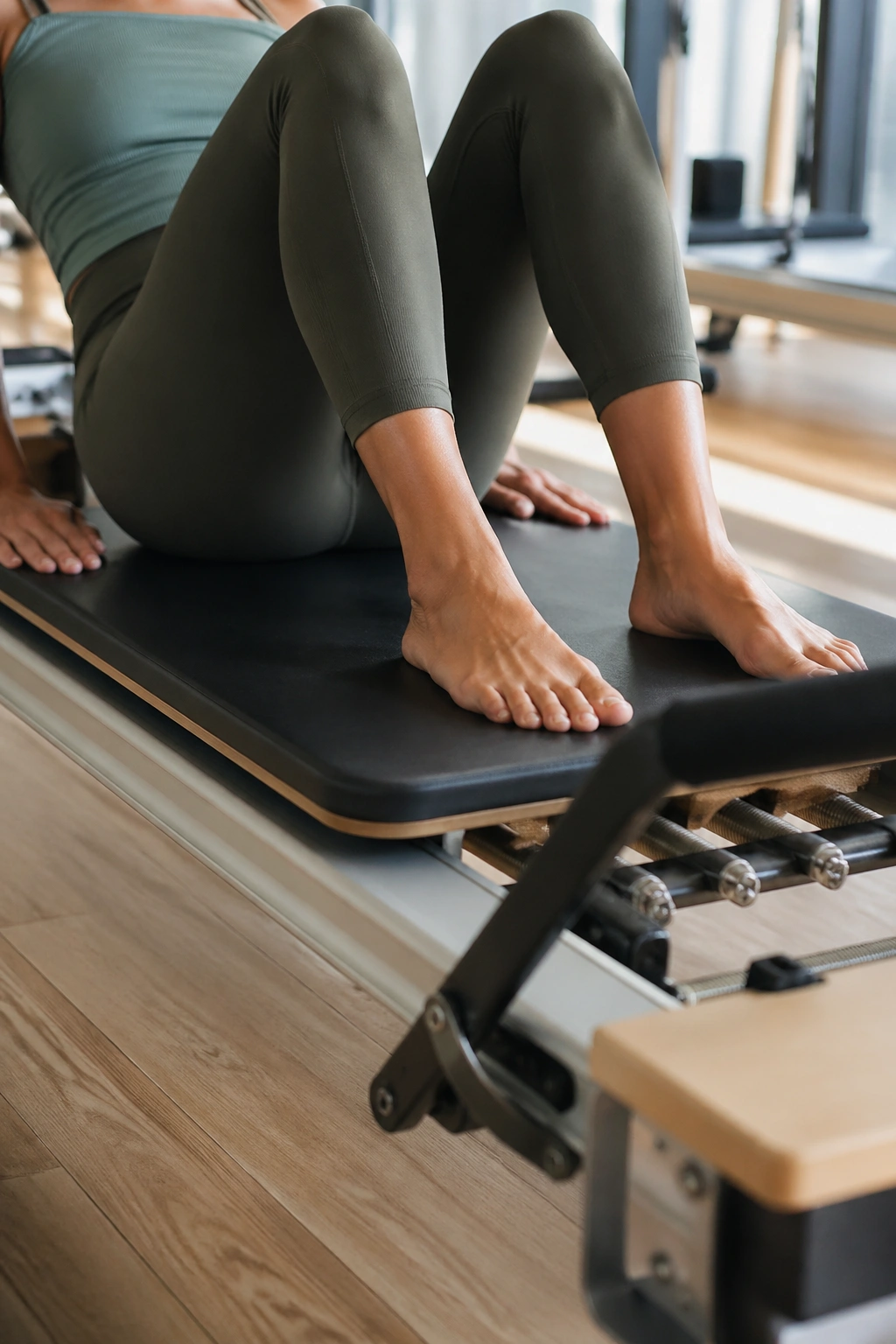
If you have a reformer, footwork is an easy win. If you don’t, the same idea can be done on the mat with a ball, block, or just careful bodyweight work. Footwork targets legs and hips while teaching the pelvis to stay quiet.
On the reformer, try parallel heels, parallel toes, turned-out heels, and a narrow V position for 10 to 12 presses each. Keep the carriage controlled and the knees tracking over the second toe. On the mat, mirror the pattern with bridge presses or wall presses.
Why people keep coming back to it
- Builds leg strength without pounding joints
- Shows you asymmetries fast
- Works calves, quads, and glutes in a clean line
- Feels structured without feeling harsh
It’s plain, but it works. That plainness is the point.
15. The Chair Pilates for Tight Hips Routine
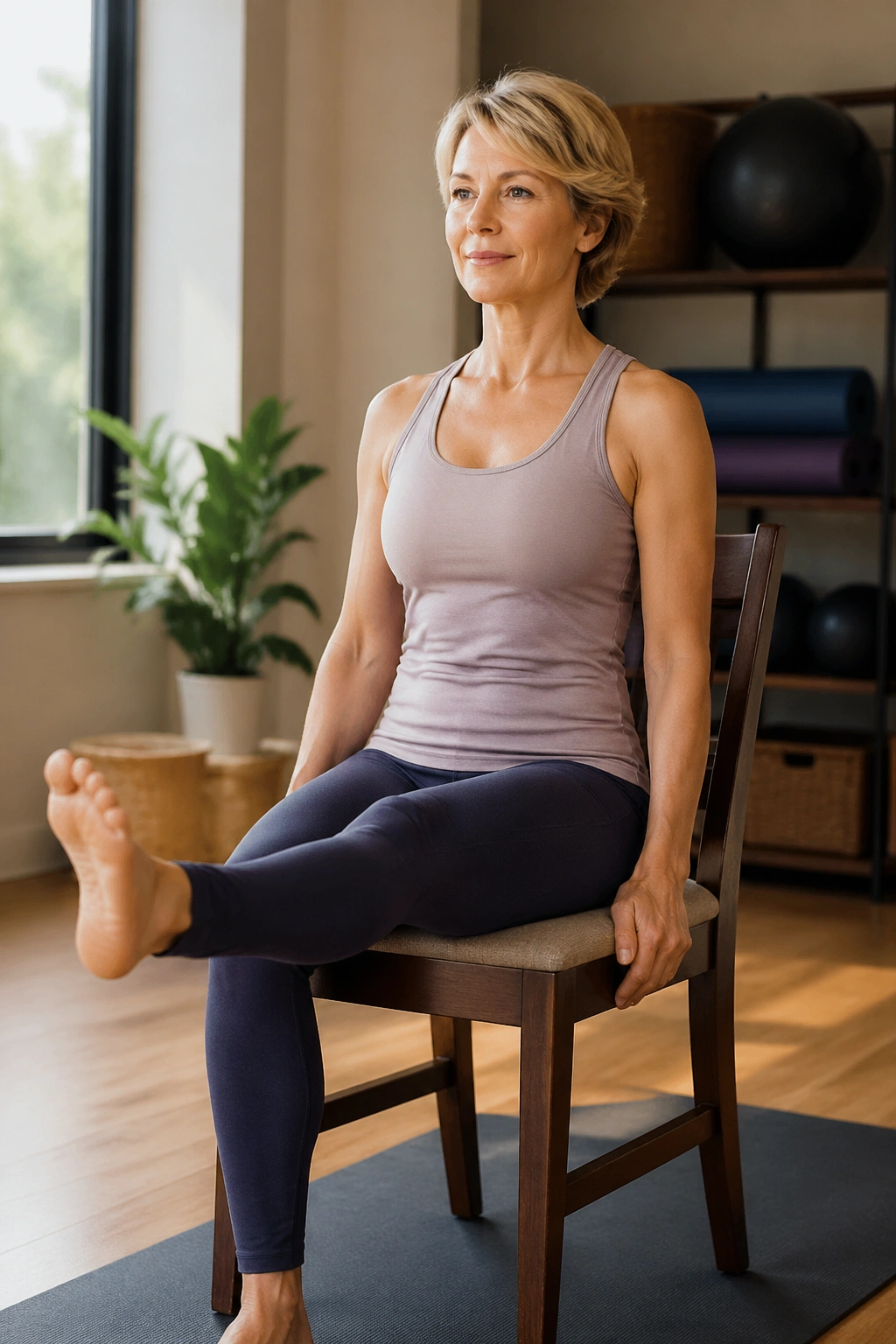
A chair is useful in a way fancy gear is not. It lets you train hips, core, and balance while giving you a bit of support when standing feels wobbly or floor work feels like too much.
Do seated leg lifts, standing chair-supported squats, hip circles, and a small seated spine twist. Ten reps each is plenty. Keep the seat height high enough that your knees don’t jam up. If you feel pinching in the front of the hip, shorten the range and sit taller.
This is a good office-break workout and a smart option for days when the floor is just not appealing. Which happens. Often.
16. The Bird Dog and Heel-Drive Strength Set
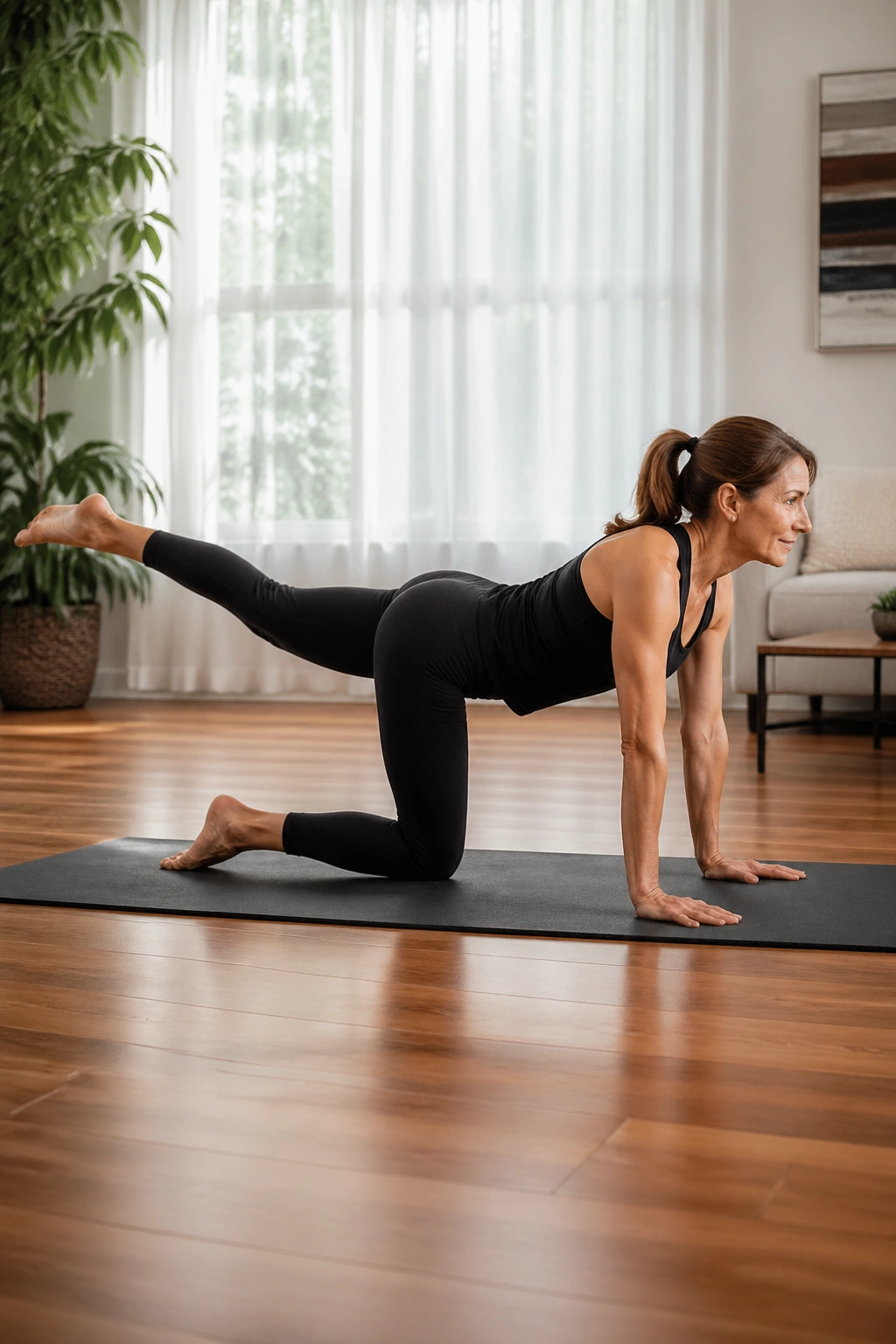
Bird dog gets better when you stop rushing it. Add a heel drive, and the whole thing becomes a sneaky strength workout for the back body and deep core.
From hands and knees, extend one leg behind you and press the heel back as if you’re pushing a wall. Hold for 2 counts, then switch. Do 8 reps per side. Add the opposite arm only after the leg version feels steady. If the back arches, lift the leg less. Quality wins here.
What to notice
- The trunk should stay still
- The neck stays long
- The standing knee does not sway open
- The working glute should fire before the low back does
This is the sort of Pilates move that seems simple until the third rep, when you feel exactly where you cheat.
17. The Side Plank Prep for Obliques
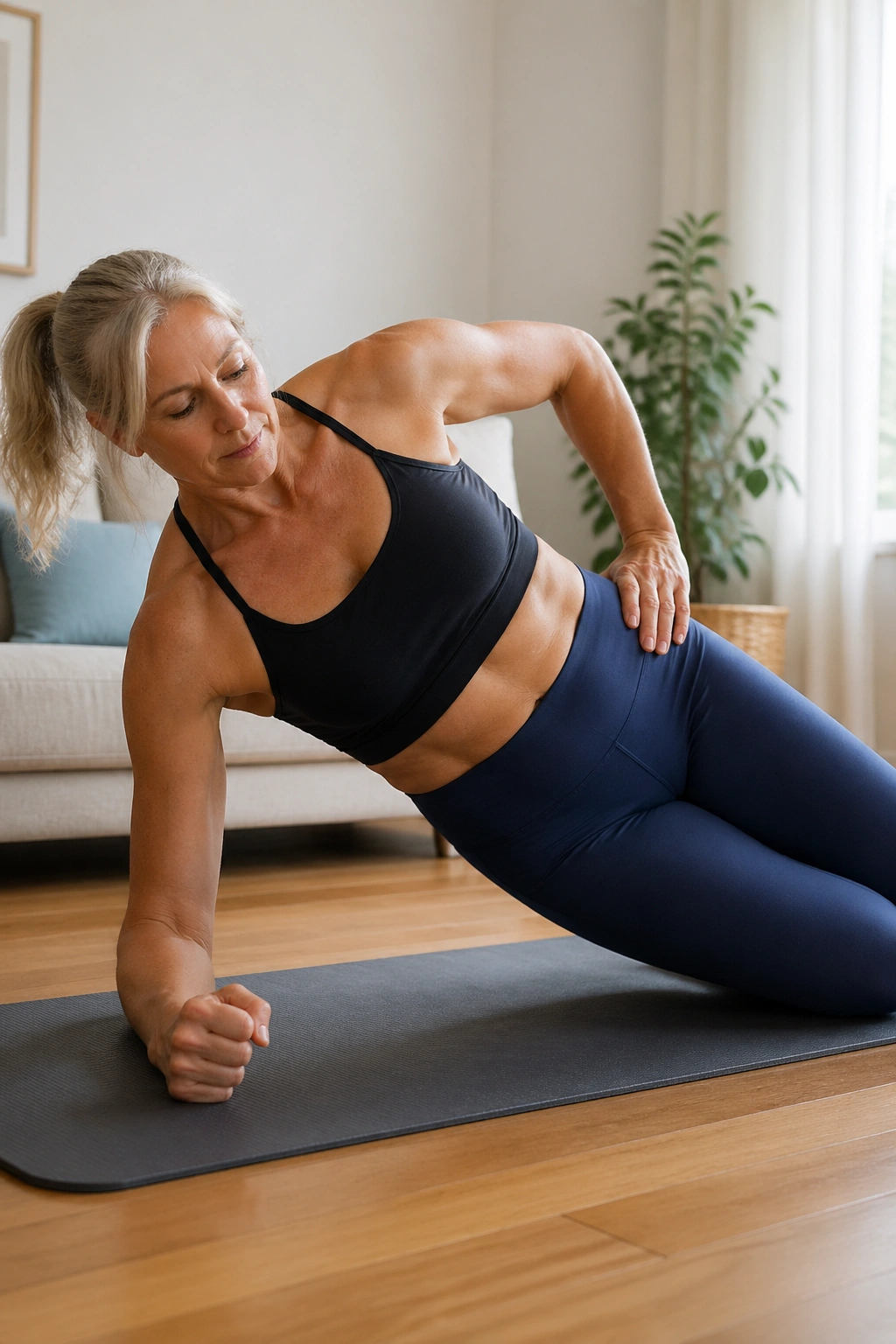
Full side planks can be a lot, especially if wrists, shoulders, or knees are touchy. Prep work gives you the same side-body challenge with less crankiness.
Start on your forearm with knees bent and lift the hips for 15 to 20 seconds. Repeat 3 times per side. If that feels steady, straighten the top leg or add a small top-arm reach. Keep the ribs from collapsing forward. The obliques should work, but the shoulder should not shrug up to help.
Best for
- Waist strength
- Shoulder stability
- Balance on one side
- People who hate endless side crunches
It’s a compact workout. Also a humbling one.
18. The Swimming Back-Body Workout
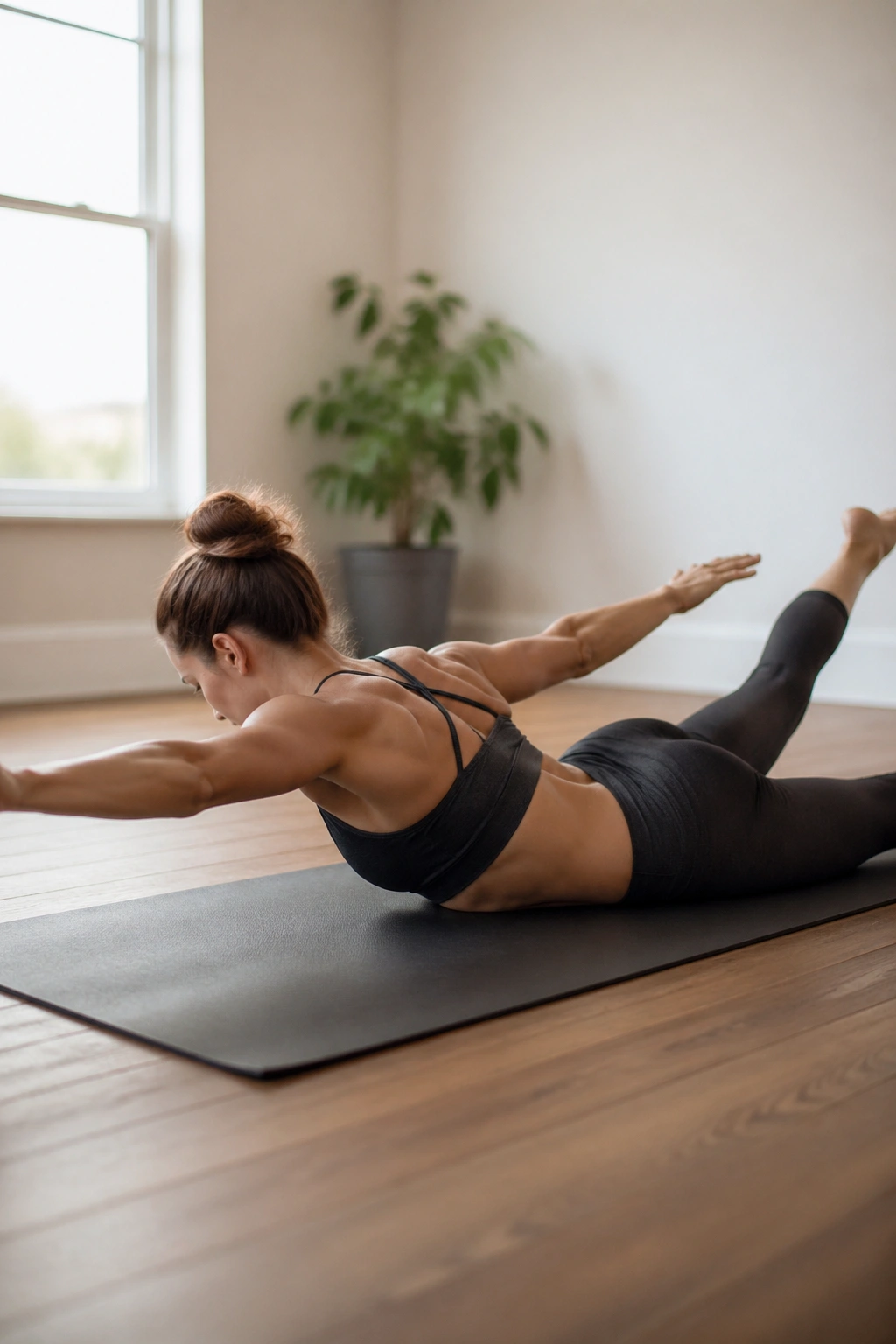
Swimming is a classic for a reason. It asks your back extensors, glutes, and posterior shoulders to work together, which can help counter all the forward-bending life does to us.
Lie on your stomach with your forehead on a towel. Lift opposite arm and leg, then switch in a steady pattern for 20 to 30 seconds. Rest, then repeat 3 rounds. If full lifts make your low back tighten, keep the limbs lower and think length instead of height. You’re reaching away, not arching up.
Keep it honest
- Pelvis stays heavy
- Legs stay active, not floppy
- Neck remains neutral
- Breathing stays smooth, not held
This one can feel surprisingly athletic. That is part of the charm.
19. The Bone-Friendly Standing Balance Routine for Women Over 40
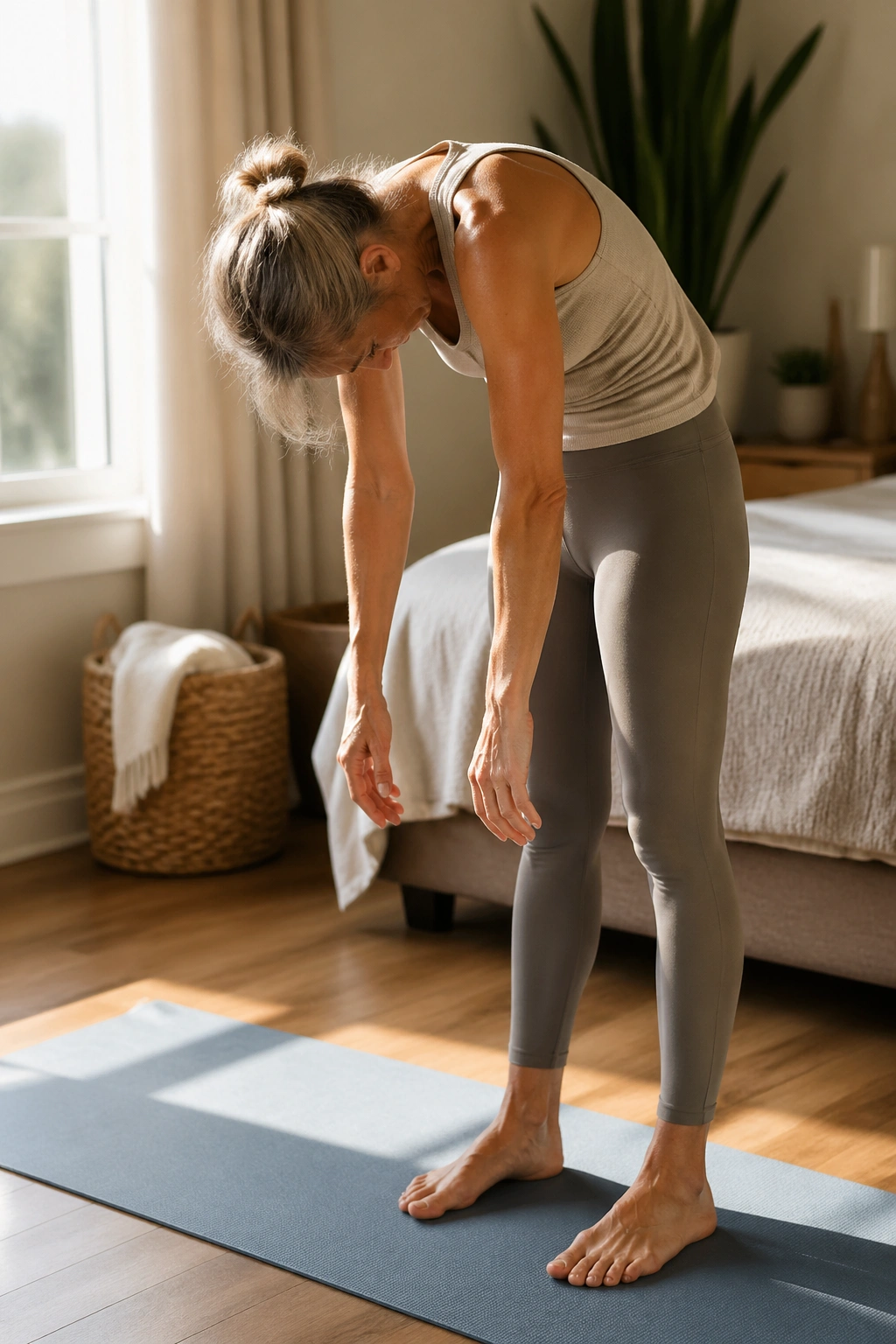
Standing Pilates is underrated when you want a workout that challenges balance, hips, and posture while loading the body in a more upright way. That matters for bone health and for real-world coordination.
Try step touches with arm reaches, standing leg lifts with a pause, heel raises, and slow mini-squats near a wall. Work for 30 to 40 seconds per move. Keep the torso stacked and the feet grounded. You are not trying to wobble for the sake of wobbling. You are training control under load.
Good signs
- You can breathe through it
- One leg starts to feel stronger
- Your feet stay awake on the floor
- The movement feels cleaner by the second round
If you’ve spent years on the mat only, standing work can feel fresh fast.
20. The 12-Minute Travel Mat Workout in a Small Space
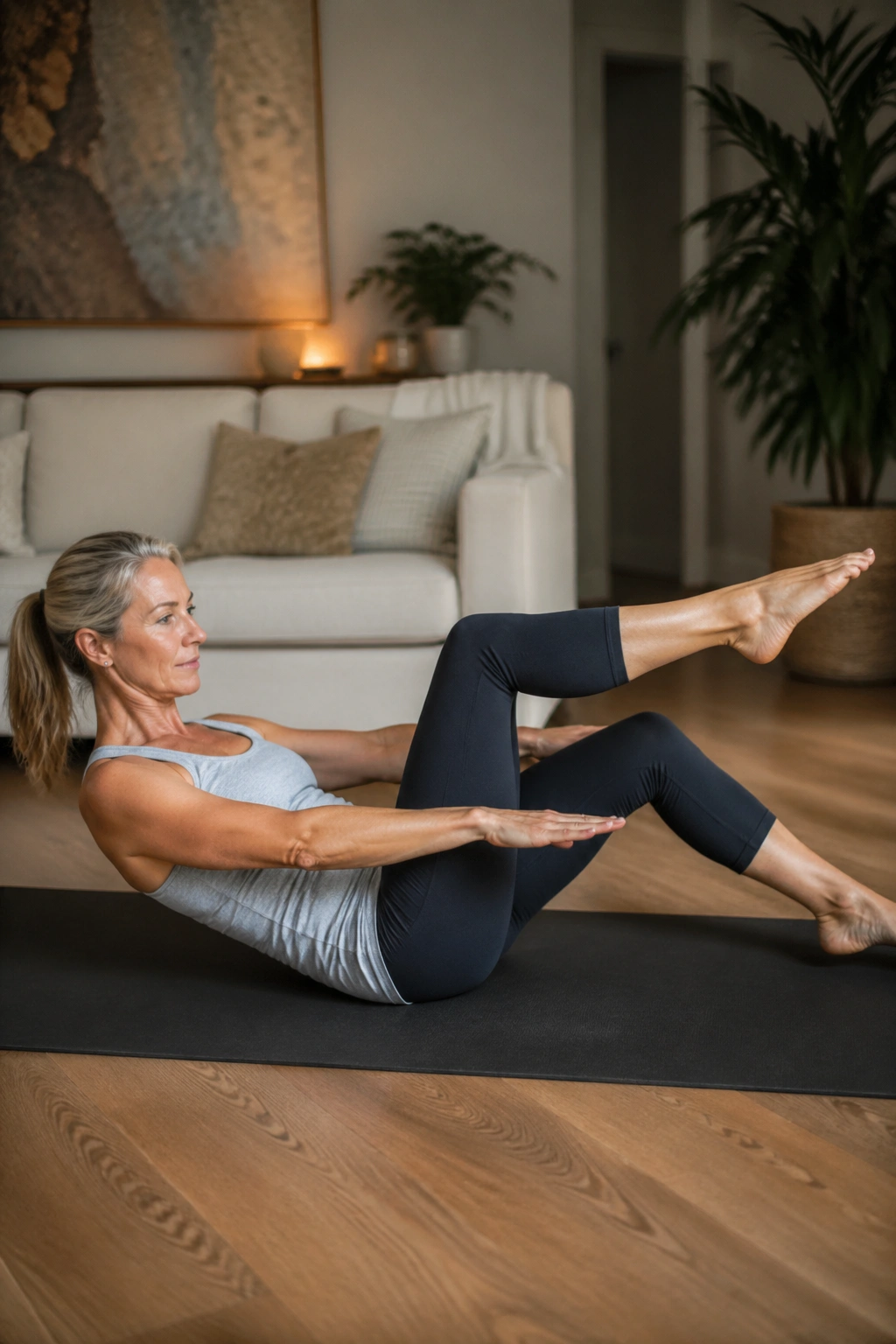
Hotel rooms, guest rooms, a quiet corner of the living room — Pilates doesn’t need much real estate. This short routine is useful when you want to move without rearranging the furniture.
Do 6 roll-downs, 8 bridges, 10 toe taps, 8 side-lying leg lifts per side, and 6 seated spine twists per side. That’s enough to keep things open and activated without making the floor feel like a battlefield. A towel under the head and a folded blanket under the knees can make the whole thing far more comfortable.
Why it works on the road
- Low-impact and quiet
- No equipment required
- Covers spine, core, and hips
- Easy to repeat the next day
If you travel a lot, this is the kind of routine that saves your back from turning into a brick.
21. The Light-Weight Pilates Arms and Posture Set
A pair of 1- to 3-pound weights is enough. More than that usually turns a neat posture workout into shoulder chaos, which is not the goal. Pilates arms should feel controlled, not like an ego contest.
Try front raises, lateral raises, triceps kicks, and a 90-degree arm hold while you keep your ribs quiet. Do 8 to 12 reps per move. Stand tall or kneel if that helps you keep your torso from swaying. The shoulders should move smoothly, and the neck should stay bored.
A smart way to use it
- Pair it with wall posture work
- Do it after core activation
- Keep the range small if shoulders are cranky
- Stop before the form gets sloppy
This is a tidy little upper-body workout, and it makes a difference in how your clothes hang and how you carry yourself.
22. The Knee-Friendly Leg Strength Flow
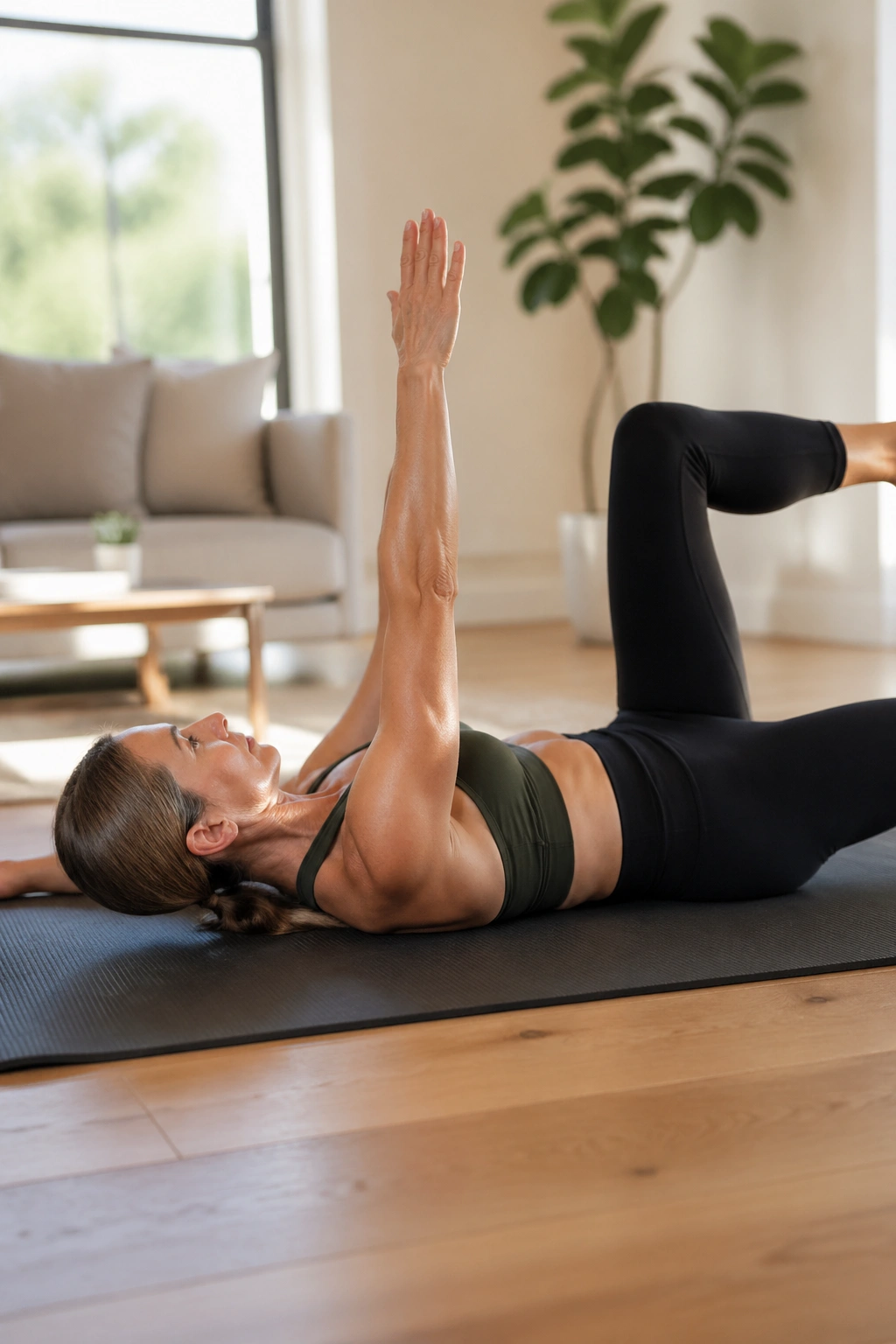
Knees do not love random depth or sloppy alignment. A knee-friendly Pilates leg flow keeps the hips and ankles involved so the knee doesn’t take the whole hit.
Use supported squats, step-back lunges to a small range, side leg lifts, and bridge marches. Work slowly for 6 to 10 reps each. Keep the knee tracking over the middle toes, and don’t drop too deep if you feel pressure in front of the joint. If lunges annoy you, swap them for a seated or wall-supported version.
Helpful cues
- Heel stays planted when possible
- Weight stays even across the foot
- Hips stay level
- No bouncing in and out of the bottom
A good knee-friendly workout should feel useful, not timid. There’s a difference.
23. The Half-Kneeling Hip Flexor Release Workout
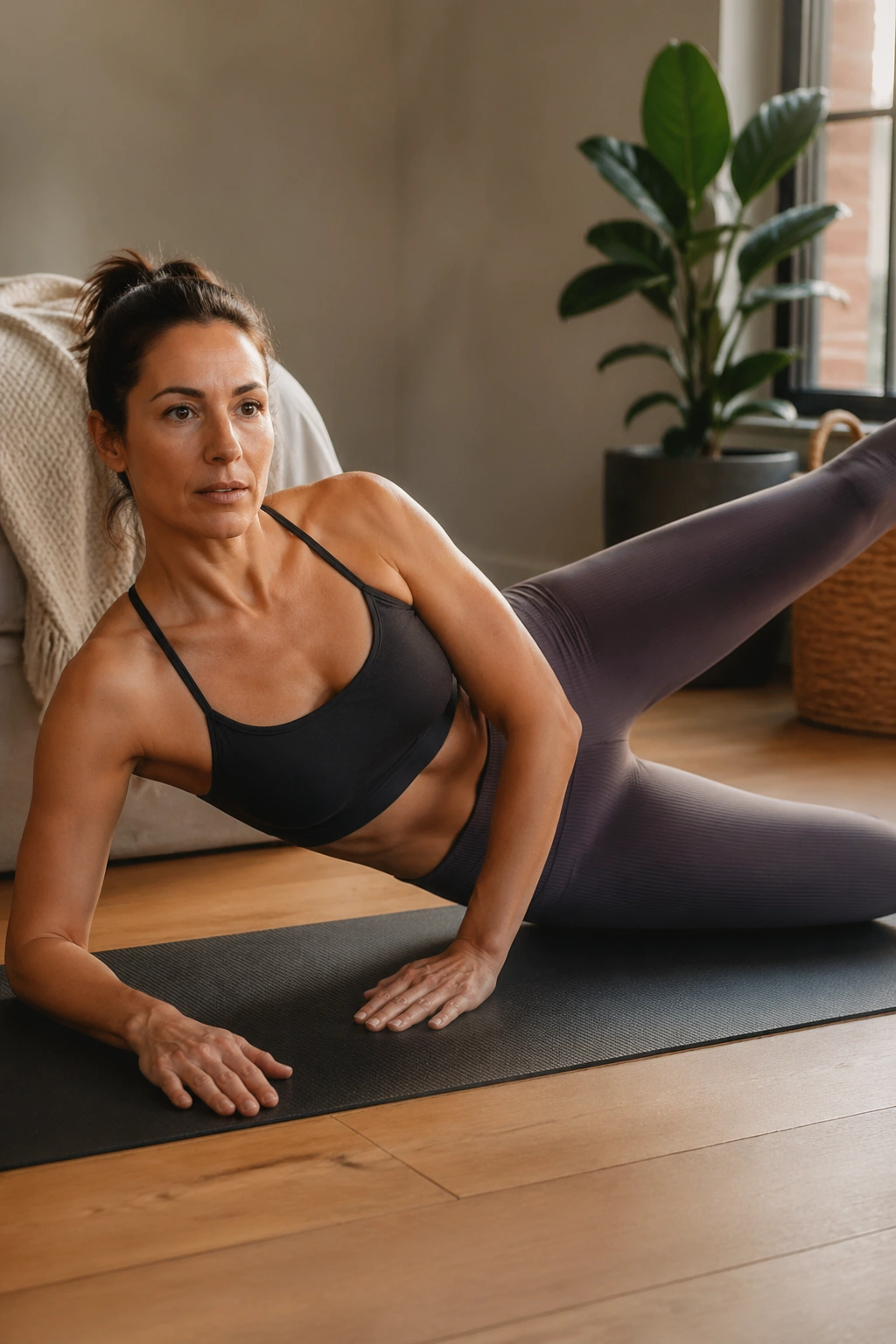
Tight hip flexors can make the front of the hips feel pinched and can drag the lower back into a forward tilt. Half-kneeling work lets you stretch and strengthen at the same time.
Put one knee on a cushion and the other foot in front. Tuck the tail slightly, shift forward a few inches, then lift the same-side arm overhead. Hold for 20 to 30 seconds per side and add 5 small pulses. If kneeling hurts, do the same shape standing with one foot back and the heel lifted.
What to feel
- Stretch in the front of the back hip
- Glute engagement on the kneeling side
- Ribs not flaring up
- Spine long, not dumped forward
This is a tiny shape with a big payoff if you sit a lot.
24. The No-Crunch Deep Core Workout
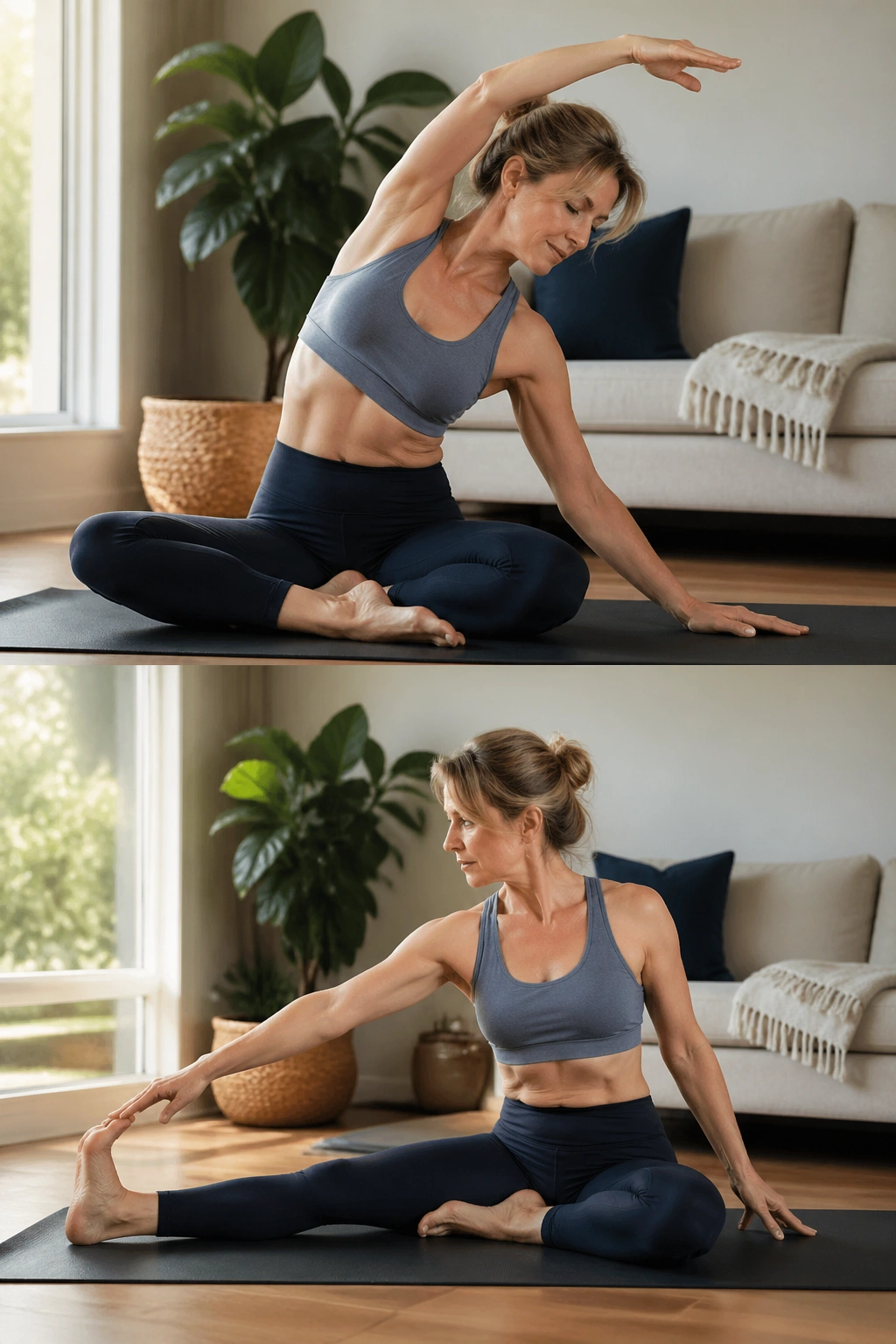
Some core workouts shout. This one whispers. And that’s exactly why it can be useful for women who want core work without neck strain, doming, or a sense that the abs are being bullied.
Start with breathing and abdominal wall engagement, then move into heel slides, dead bugs, marching bridges, and low leg lowers with a bent knee. Keep the effort inside the belly, not at the surface. If your low back arches, reduce the range. If your abdomen domes, stop and simplify.
Try this pattern
- 6 breaths with rib expansion
- 8 heel slides
- 8 marches
- 6 supported leg lowers per side
This is the kind of session that builds real control. Not drama. Control.
25. The Wall Sit and Heel Lift Burn
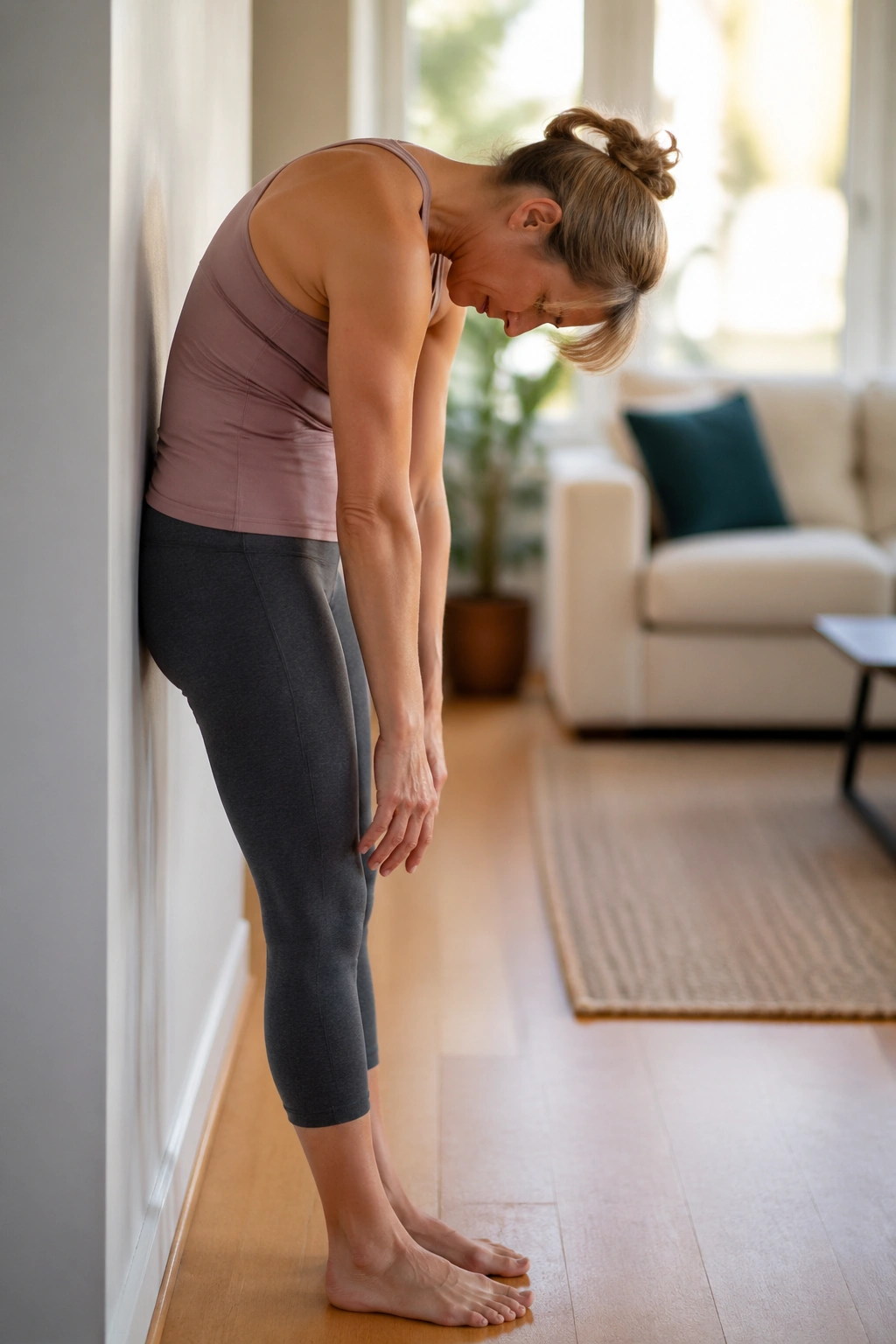
A wall sit gets sneaky when you add heel lifts. Suddenly the calves, quads, and glutes all have to play together, and the ankles start doing their share too.
Slide down to a shallow wall sit and hold for 20 to 30 seconds. Then lift the heels for 10 slow reps. Stand up, shake out, and repeat 2 to 4 rounds. Keep the knees comfortable and the back flat against the wall. If your knees don’t like a deep bend, stay high. High is fine.
Why it belongs here
- Builds lower-body endurance
- Trains ankle stability
- Strengthens posture under load
- Easy to scale up or down
This one is straightforward, a little gritty, and very good at exposing weak spots.
26. The Single-Leg Reach and Balance Series
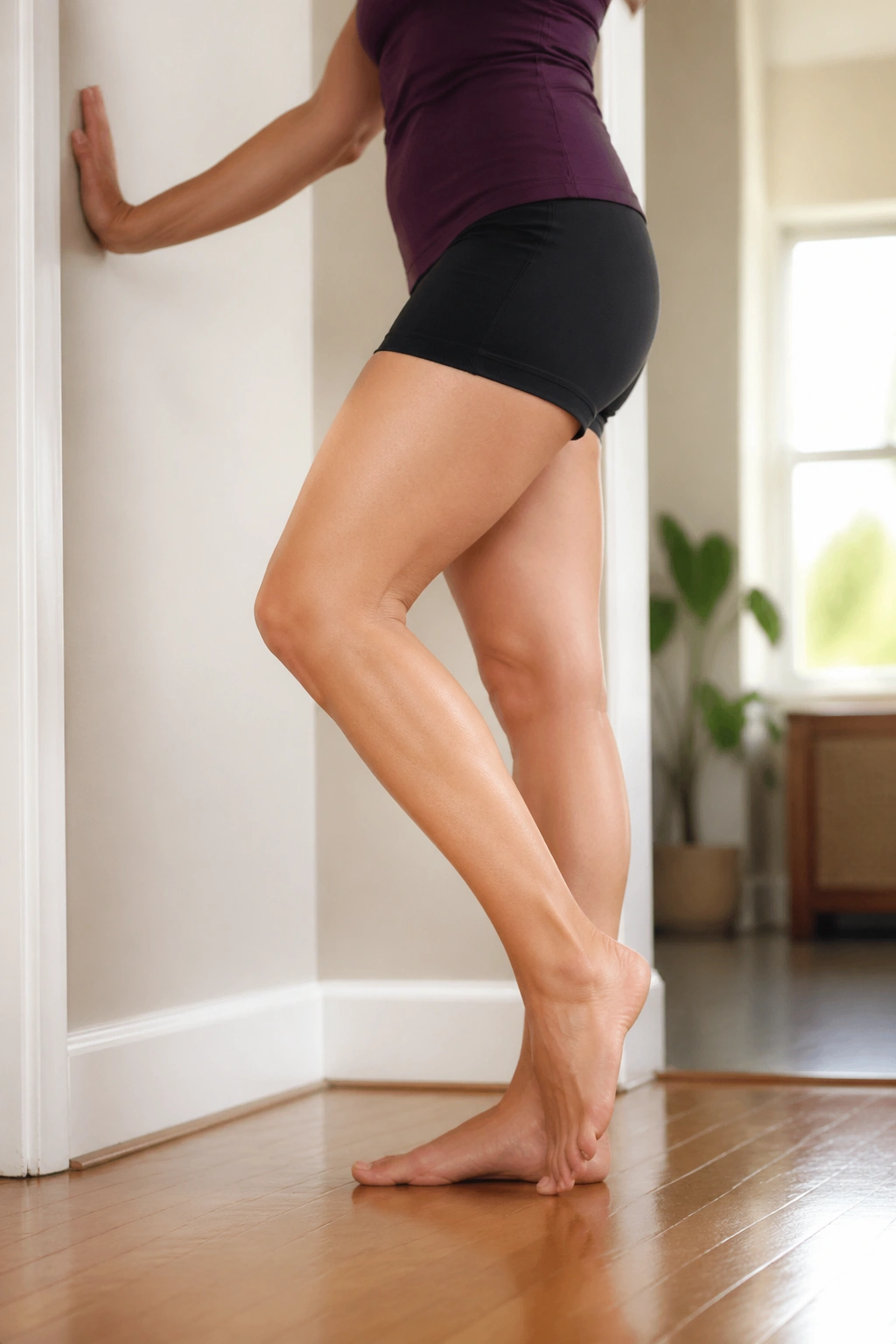
If one leg does more than the other, this workout will tell on you. Good. That feedback is useful. Single-leg reach work sharpens balance while asking the standing hip to stabilize and the core to stay calm.
Stand tall, reach one leg back, then out to the side, then slightly forward without collapsing the trunk. Do 5 rounds per side. Add a forward fold reach if your balance is decent, or keep one hand on a wall if it isn’t. The point is control, not circus tricks.
Best cues
- Stand foot has a tripod base: big toe, little toe, heel
- Pelvis stays level
- Spine stays long
- Reaches are small enough to manage
This is a quiet workout with a lot of information in it. You can tell a lot from one standing leg.
27. The 15-Minute Total-Body Mat Flow for Women Over 40
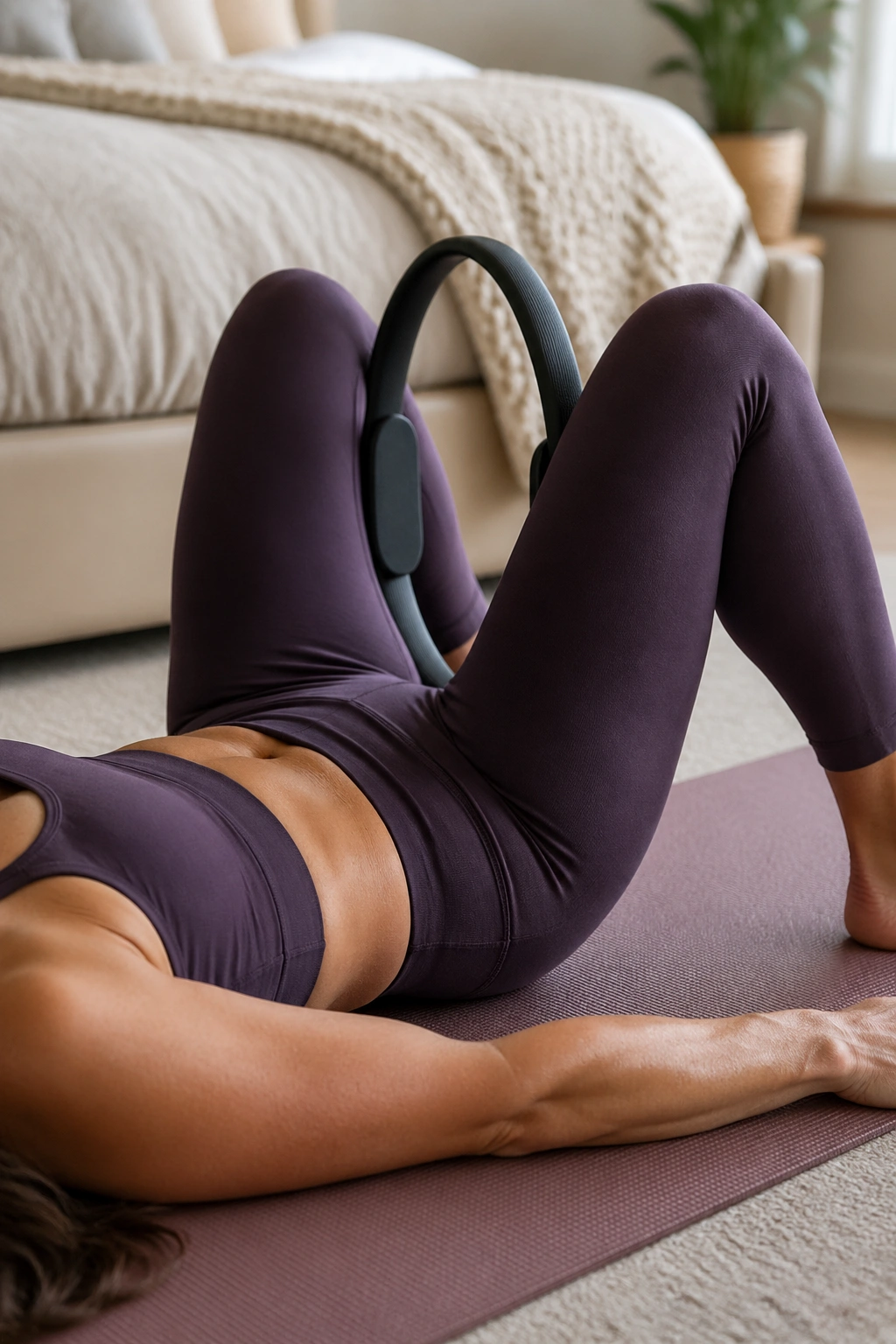
When you want one routine that touches most of the body, this is the one to save. It blends spine movement, core work, glute work, shoulder stability, and a little balance so you don’t have to piece together five different videos.
Move through roll-downs, bridges, toe taps, side-lying leg lifts, swimming, and a standing reach sequence. Do 6 to 10 reps of each move, or work in 30-second blocks if that feels easier to track. Keep the transitions slow. Fast transitions are where form gets sloppy and breath goes missing.
A good order
- Spine first
- Core second
- Hips third
- Back body and balance last
That order usually feels better than jumping straight into the hard stuff. Your joints like being introduced to the work, not shocked by it.
28. The Evening Mobility Wind-Down
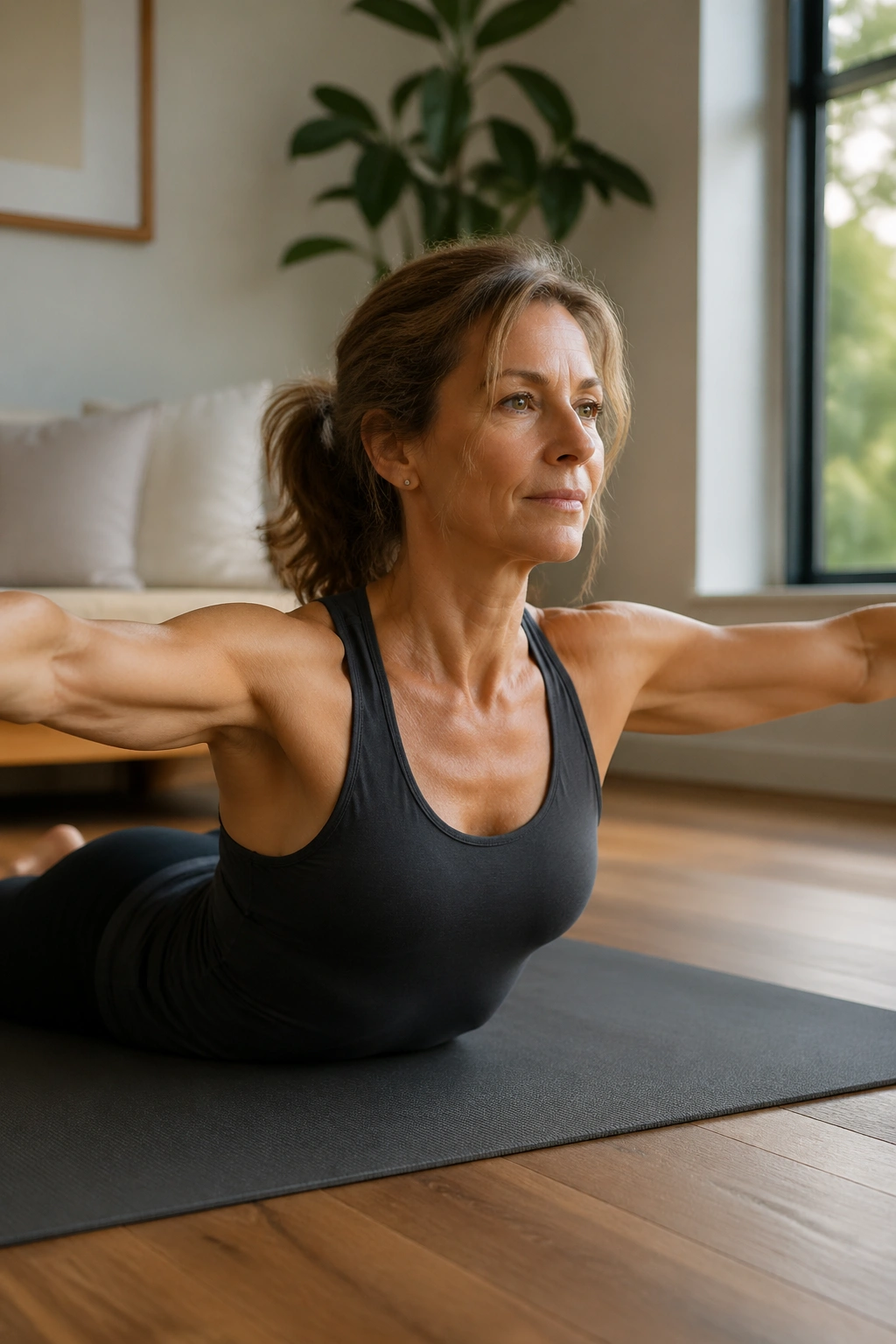
Pilates doesn’t have to be energizing. Sometimes the best session is the one that tells your body the day is over. This wind-down routine is a little slower, a little softer, and very useful if you carry tension in the neck, hips, or jaw.
Do cat-cow, mermaid side bends, figure-four stretch, and a supported spine twist. Spend 30 to 45 seconds in each position. Breathe into the ribs and let the exhale get longer than the inhale. If the floor feels too hard, use pillows. There is no prize for suffering.
What it can do
- Reduce that wired-but-tired feeling
- Ease hip tightness
- Lower shoulder tension
- Make sleep come easier
A calm Pilates session can be just as valuable as a strong one. Maybe more, on certain days.
29. The Cardio-Pilates Interval Set
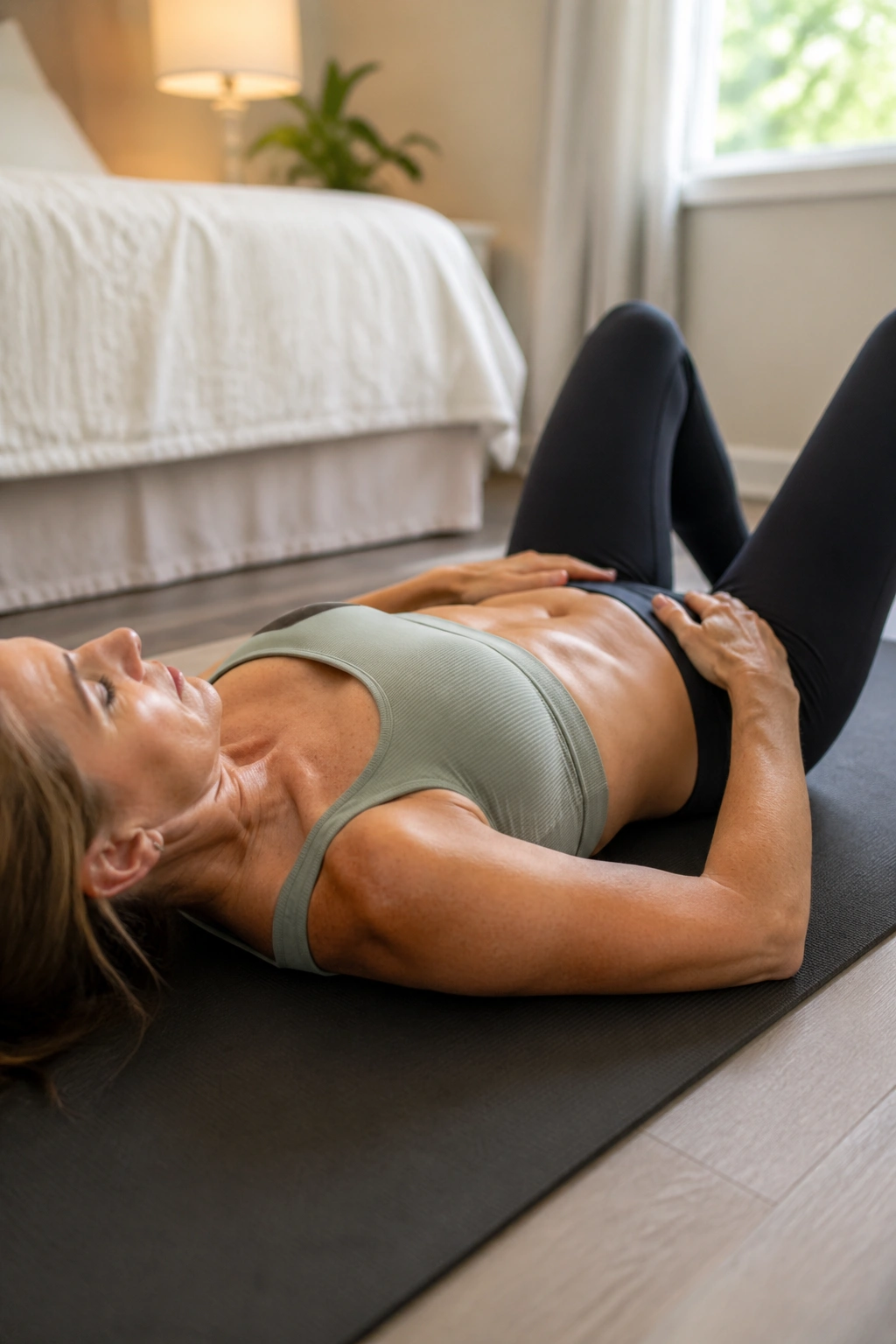
Yes, Pilates can get your heart rate up. It won’t look like a treadmill sprint, and that’s fine. The trick is to move with purpose and keep the transitions quick enough to raise the demand.
Try 30 seconds each of squat pulses, mountain-climber knee drives on a wall or mat, speed bridges, standing side reaches, and plank taps from the knees. Repeat the circuit 2 or 3 times. Keep the form clean. Once the form falls apart, the workout stops being Pilates and starts being a shuffle.
Use this if you want
- More heat without jumping
- A sweaty session with low impact
- Extra leg and core work in one round
- A break from slower sessions
This one feels more athletic, but it still respects the joints. That’s the sweet spot.
30. The Strength-and-Stretch Blend You’ll Keep Coming Back To
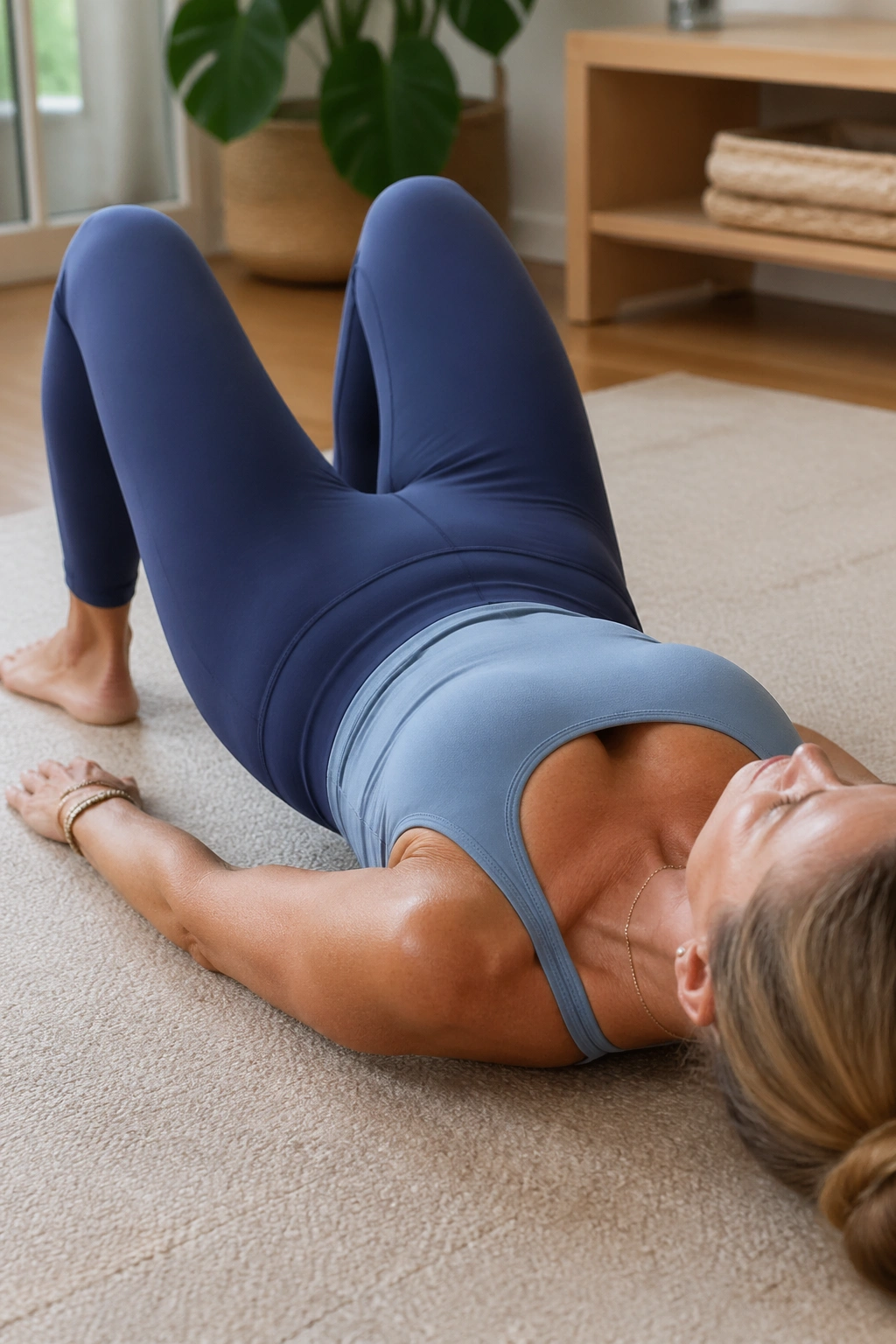
The best Pilates workout is often the one you can repeat without dreading it. This blend mixes strength and stretch so you leave feeling worked, not wrecked.
Start with bridges, move to dead bugs, then side-lying legs, then a chest opener and standing roll-down. Do 8 reps of the strength moves and 20 to 30 seconds for the stretches. If you want a little more challenge, add a second round. If you feel fatigued, stop after one. That’s not quitting. That’s pacing.
Why this one sticks
- Covers the big basics
- Leaves the spine feeling longer
- Balances effort with recovery
- Works on a mat in a small space
If you only keep a few workouts from this list, keep one strength-focused routine, one mobility-focused routine, and one that challenges balance. That mix tends to keep the body happier than chasing one type of movement all the time.
Final Thoughts
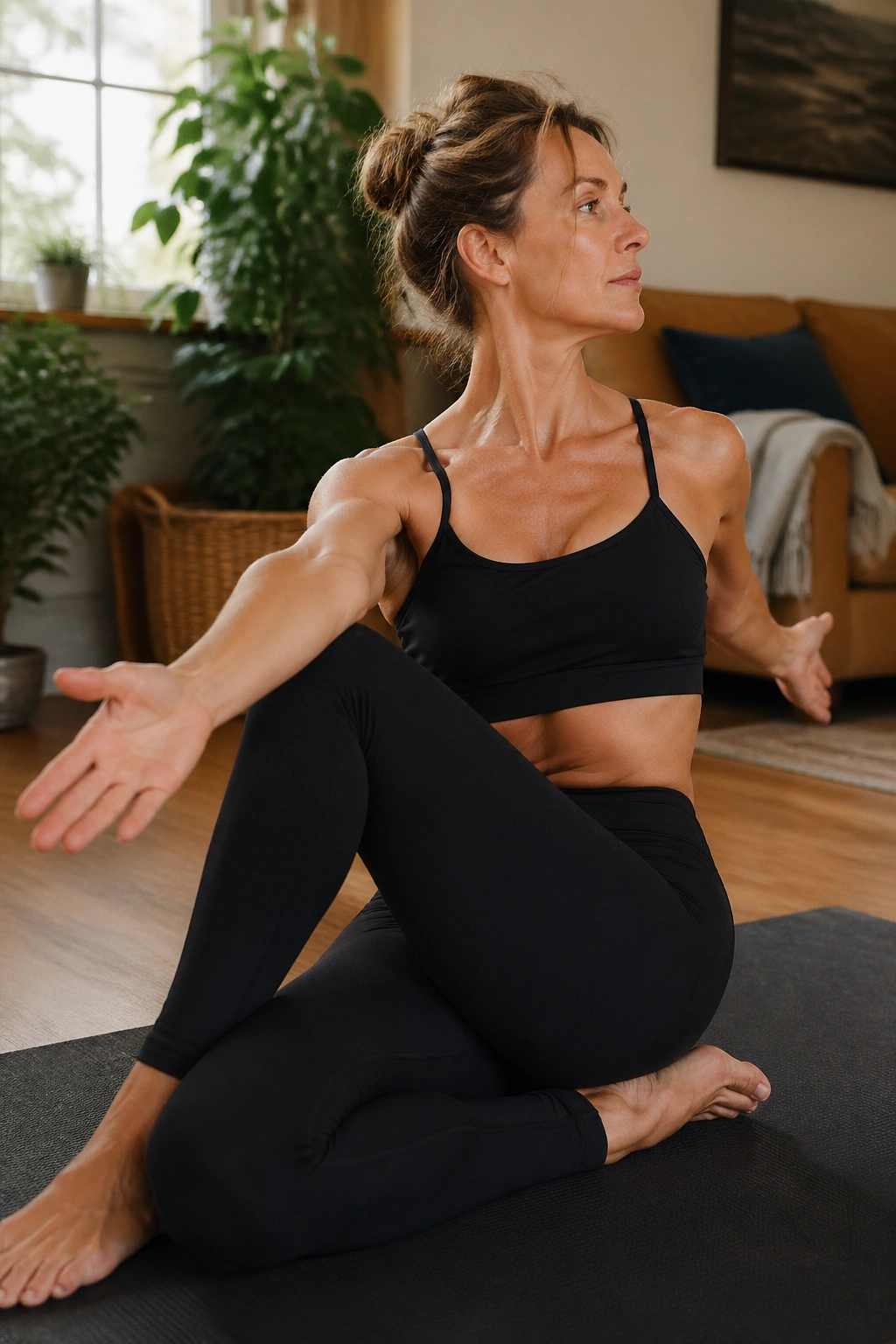
Pilates workouts for women over 40 work best when they’re specific. A bridge for the glutes. A roll-down for the spine. A balance drill for the ankle that keeps wobbling on the stairs. Those small things add up fast when you practice them with care.
Pick three or four workouts from this list and rotate them instead of trying to do everything at once. Your body will tell you which moves feel nourishing and which ones need a smaller range, a slower pace, or a different setup. Listen to that feedback. It’s usually smarter than forcing a favorite exercise to behave.
