



A stiff spine at sunrise can make even reaching for the kettle feel oddly technical. A good Pilates morning routine fixes that faster than random stretching, because it asks your body to organize itself before it asks it to work hard.
That matters more than people think. Overnight, your rib cage gets a little quieter, your hips cool down, and your lower back often takes on more load than it should when you stand up too fast. A smart Pilates morning routine doesn’t try to bully that stiffness away. It wakes things up in order.
I’m partial to routines that start with breath and pelvis before anyone starts throwing around leg lifts. That order gives you cleaner movement later, whether you’re heading to a desk, a run, a long commute, or a day that needs you switched on without feeling wrung out.
Some mornings call for five calm minutes. Other mornings need a sharper circuit that leaves you feeling taller, steadier, and a little harder to knock around. Both can be Pilates. Both can set the tone for the day.
1. The 5-Minute Pilates Morning Routine for a Stiff Spine
If your back feels like it slept in a folded position, start here. This is the kind of Pilates morning routine I like for the first minute after getting out of bed: simple, low drama, and focused on making the spine feel like a spine again.
Why It Works
The body does not love sudden demands before breakfast. A few rounds of breath work, pelvic tilts, and gentle spinal motion tell your nervous system that the day has started without forcing your joints to catch up all at once.
Start on your back with your knees bent. Take 3 slow breaths into the sides of your ribs, then flatten and release your lower back against the mat 6 to 8 times. After that, slide one heel out at a time, keeping your pelvis quiet.
- 3 side-rib breaths
- 6 to 8 pelvic tilts
- 6 heel slides per side
- 4 cat-cows if you move to hands and knees
- 2 slow roll-downs when you stand
Keep the movement small. Morning stiffness responds better to control than to force, and you’ll feel that difference by the time you’re upright.
2. The Standing Roll-Down That Unkinks the Whole Back
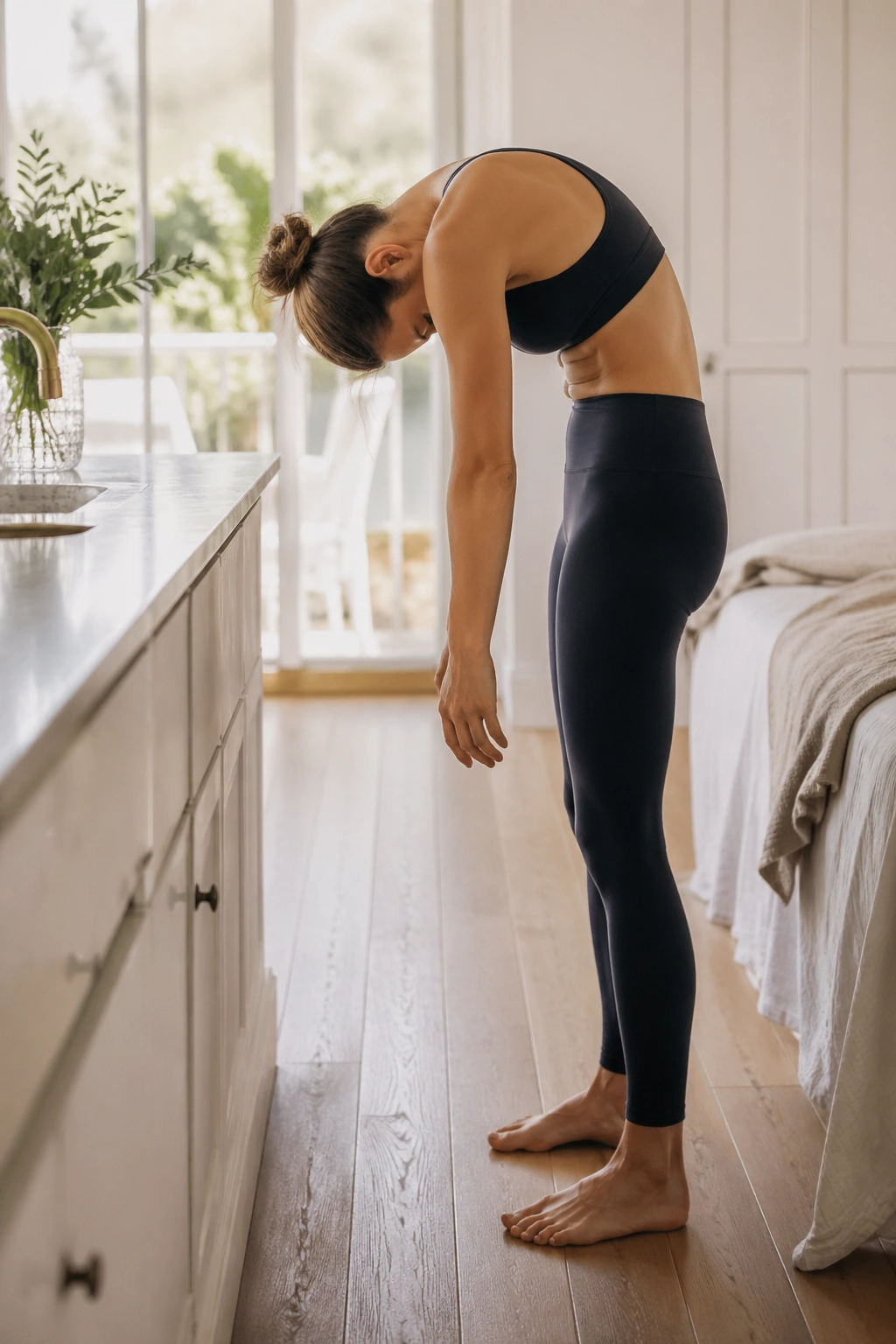
A standing roll-down is one of those Pilates basics that looks unassuming and works harder than it seems. You hinge, you articulate, you breathe, and suddenly your whole back feels less welded together.
The trick is not to chase depth. Reach the crown of your head forward, let your chin nod, and peel down one vertebra at a time until your arms hang. Stay there for one breath. Then roll back up the same way, stacking your spine instead of yanking yourself upright.
I like this for people who hate getting on the floor first thing. You can do it barefoot beside the bed, at the counter, or after a shower when your body has warmed up a touch. Morning hamstrings can be stingy, so bend your knees as much as you need. No points for straight legs.
The best part is the finish. Stand tall, soften your shoulders, and notice if your weight has slid toward one foot. That little check-in matters. It tells you more about your posture than a mirror usually does.
3. The Hundred-Prep Core Sequence
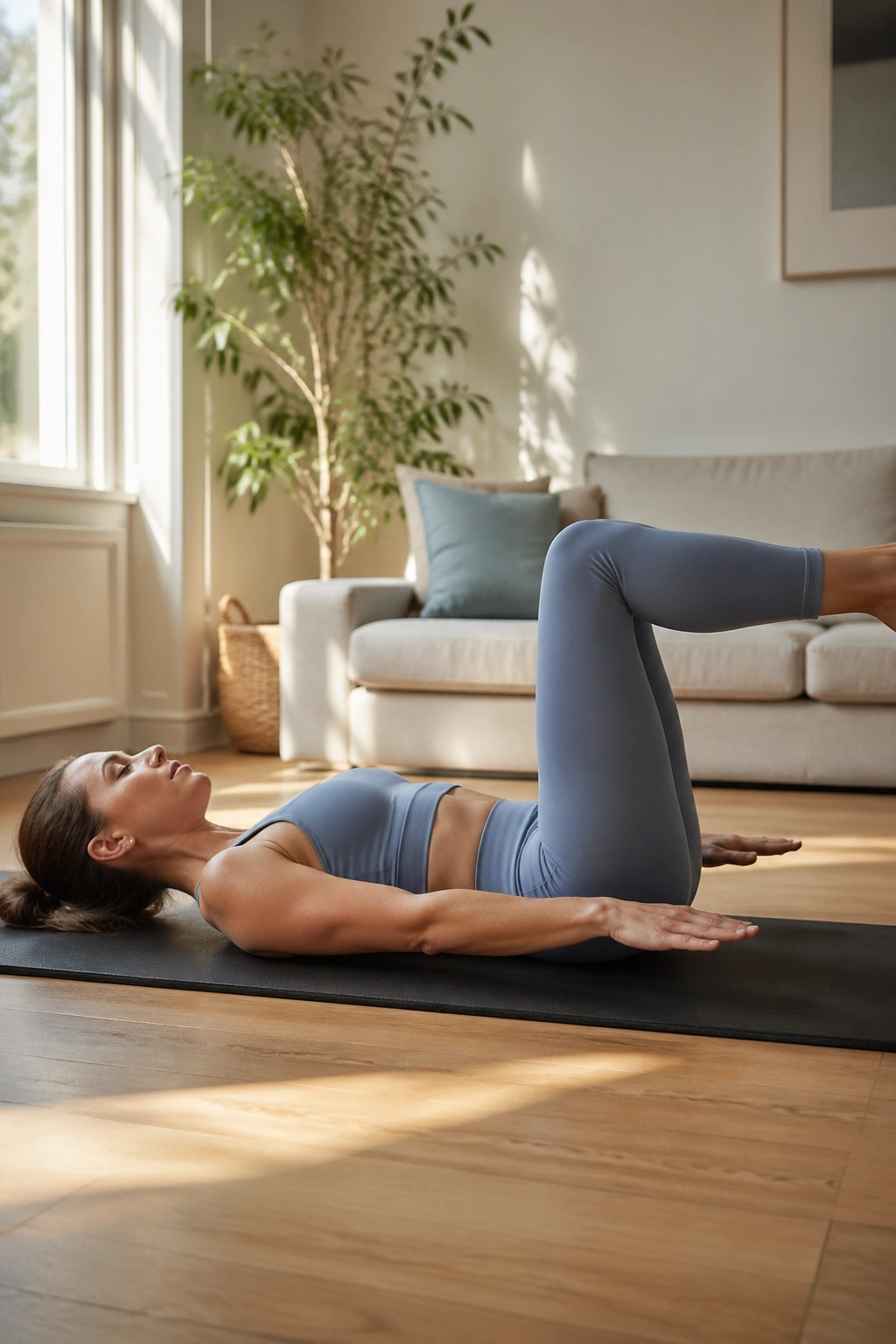
Need your core on without feeling punished? Use a Hundred prep instead of the full thing. The classic Pilates Hundred is a big gulp of work; in the morning, a smaller version usually feels smarter.
How to Set It Up
Lie on your back with your knees in tabletop, or keep your feet on the floor if your lower back prefers that. Lift your head and shoulders only if your neck feels calm. If not, keep your head down and work the arms and breath first.
- Reach both arms long by your sides
- Pump the arms for 10 small beats
- Hold the exhale for 5 counts
- Repeat for 4 to 6 rounds
- Add toe taps only after your pelvis stays quiet
What matters here is the relationship between breath and control. The belly should feel engaged, not braced like you’re waiting for a punch. If your ribs pop up, lower the legs. If your neck tightens, lower the head.
The full Hundred can wait. A morning core sequence should switch you on, not leave you negotiating with your jaw.
4. Bird Dog to Dead Bug for Cross-Body Strength
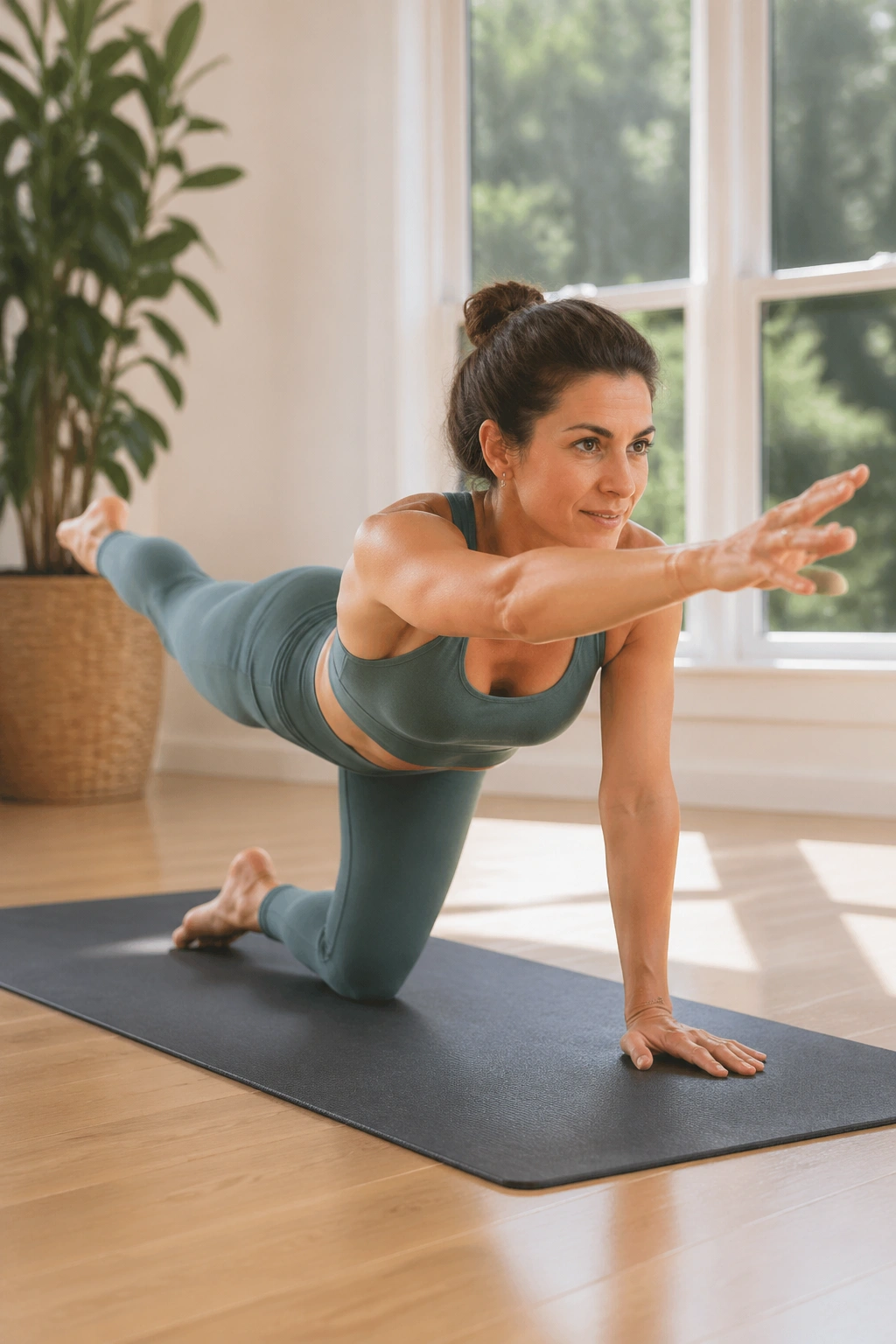
A lot of people discover, a little late, that one side of the body does more cheating than the other. Bird dog and dead bug are good at exposing that habit without making a scene.
Bird dog asks you to reach opposite arm and leg while keeping the pelvis square. Dead bug does the same job from your back, which gives you a different kind of honesty. Together, they train cross-body control in a way that feels useful for carrying bags, climbing stairs, and not folding sideways when you reach for something on a high shelf.
What to Watch For
Start with 6 slow reps per side on bird dog, then 6 dead-bug toe taps per side. Pause for one full breath between sides. That pause matters more than people think. It stops the movement from turning into flinging.
- Keep the ribs heavy
- Reach long, not high
- Move only as far as you can stay level
- Stop before the lower back arches
The routine is modest, but it has teeth. That’s why I like it. You walk away feeling more organized, not just more tired.
5. Side-Lying Glute Work That Wakes Up Your Hips
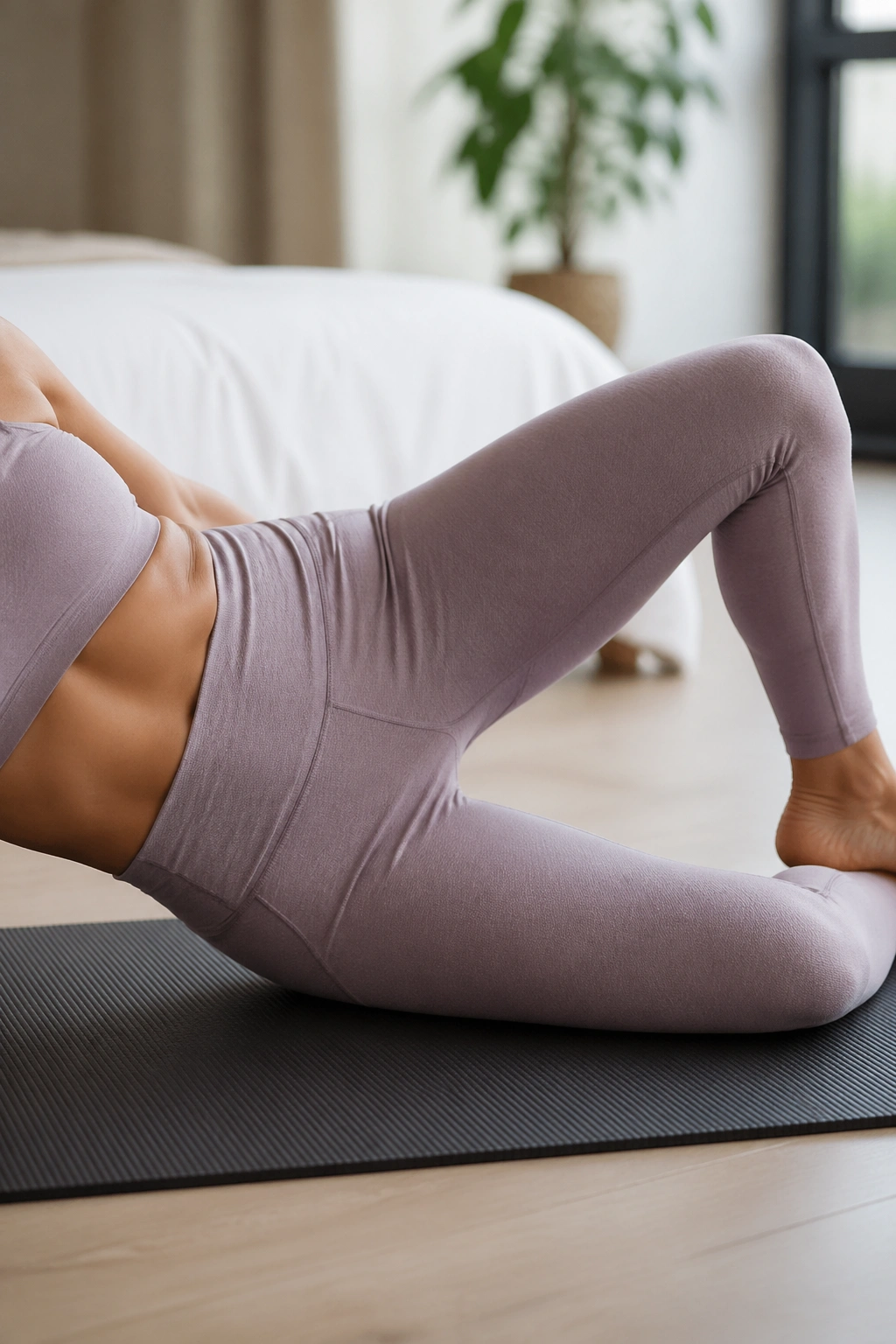
Side-lying Pilates is the morning move I reach for when hips feel sleepy and the pelvis feels a little wobbly. It’s quiet work, but it changes how the whole lower body behaves once you stand up.
Clamshells, side kicks, and small circles hit the glute medius and the muscles around it, which help keep the pelvis steady. If those muscles are flat in the morning, your lower back often tries to help too much. That’s where the cranky feeling starts.
A good side-lying sequence can be short: 10 clamshells, 8 front-back leg swings, 6 small circles each direction, then a set of inner-thigh lifts if you want more. Keep your waist lifted off the mat a little and avoid rolling backward. That cheat turns the whole thing into a hip flop.
Move slowly enough to feel the top hip working. If you rush, the leg gets all the attention and the glute does nothing. That’s not the deal.
6. Wall Pilates for Posture That Feels Honest
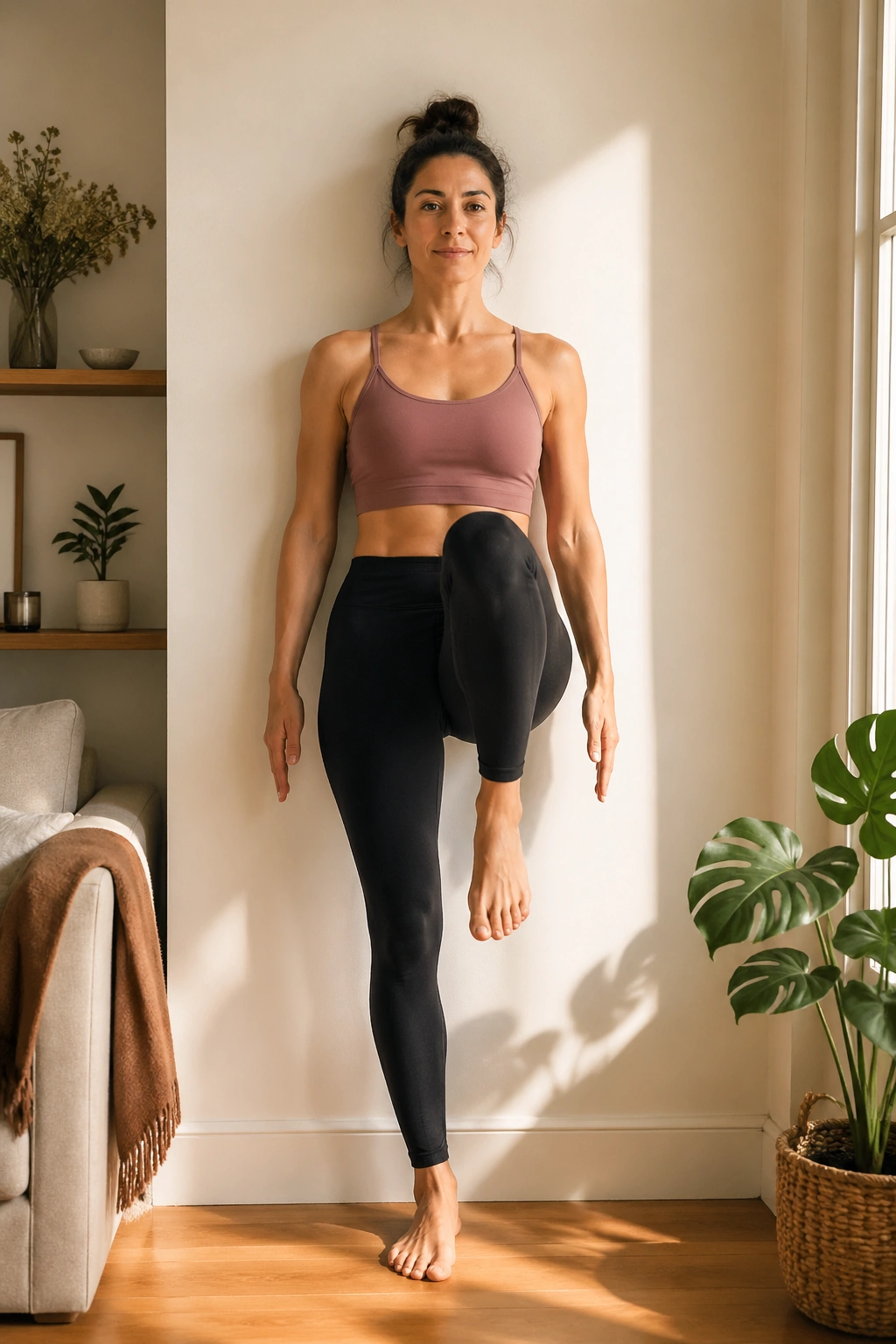
The wall is a blunt teacher. I like that about it. Unlike a mat, it tells you fast when your ribs flare, your pelvis tips forward, or your head wanders ahead of your shoulders.
This is where a wall-based morning routine becomes useful. You stand with your heels a few inches from the baseboard, the back of your ribs lightly touching the wall, and the back of your head aiming toward it without forcing contact. From there, do wall roll-downs, slow arm arcs, and marching knee lifts with your core steady.
What the Wall Shows You
- Whether your lower back is over-arching
- Whether your shoulders live too far forward
- Whether your chin is jutting out
- Whether one foot carries more weight than the other
That feedback is gold. Not glamorous. Gold.
I like wall Pilates for people who spend a lot of time at a screen because it teaches standing alignment in a way the floor cannot. The floor is useful, sure, but the wall makes bad habits obvious fast.
7. A Hip-Opening Pilates Morning Routine for Tight Mornings
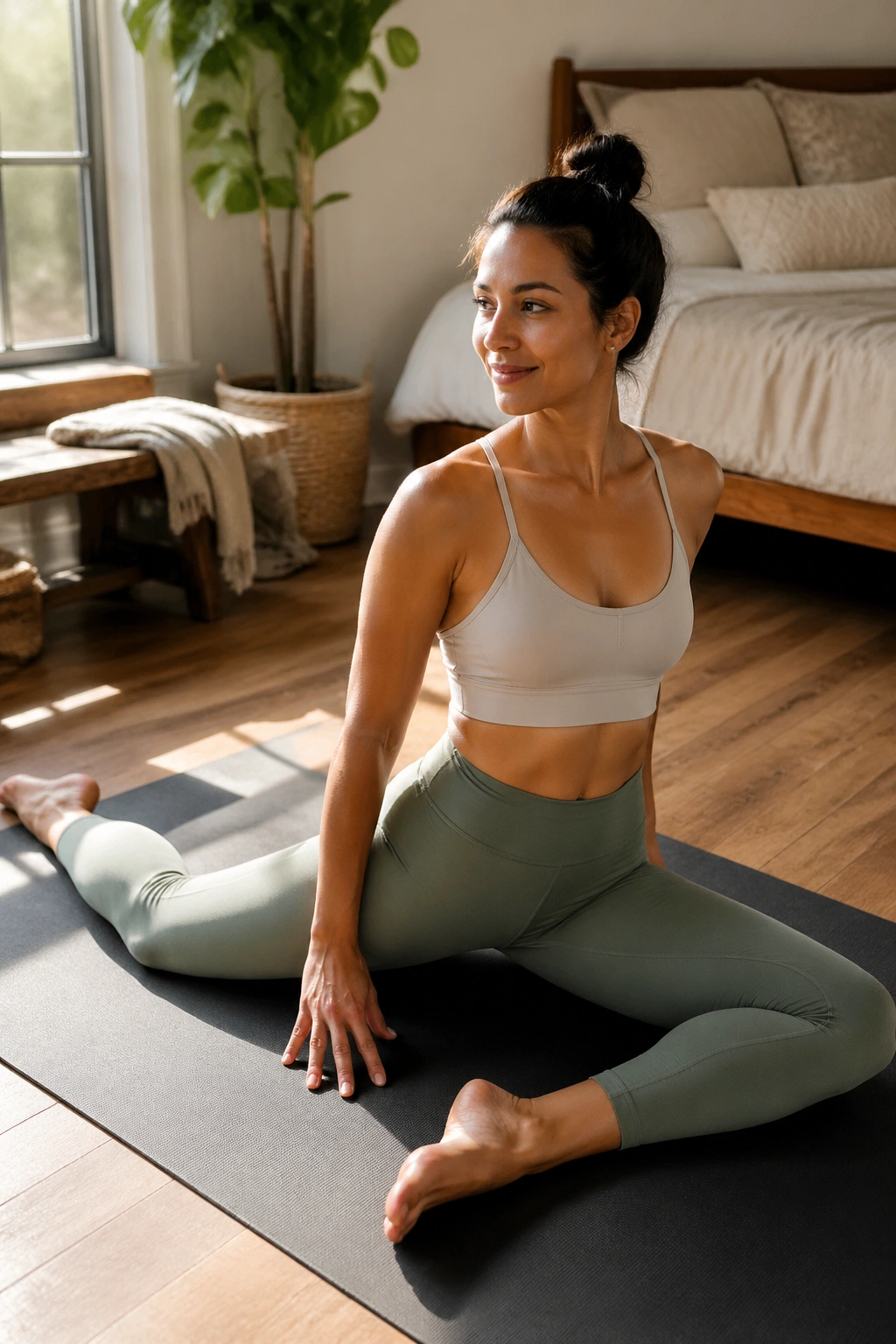
Tight hips in the morning can make the rest of the day feel shorter than it is. That stiffness often shows up first in the hip flexors, then in the low back, then in the way you sit and stand without noticing it.
The Sequence
Start with 90/90 hip switches, 5 slow rounds. Move into a half-kneeling hip flexor stretch for 20 to 30 seconds per side, then add a small glute squeeze on the back leg. After that, do 6 figure-four lifts on your back and finish with 4 gentle spinal twists on each side.
A useful rule: keep the stretch mild in the first minute. Morning tissues can be touchy, and pushing hard tends to make them clamp down instead of release.
This routine is especially good if you sit a lot, drive a lot, or sleep in a position that leaves one hip doing more work than the other. It’s not fancy. It works because it respects what hips feel like first thing.
8. The Lower-Back-Friendly Reset
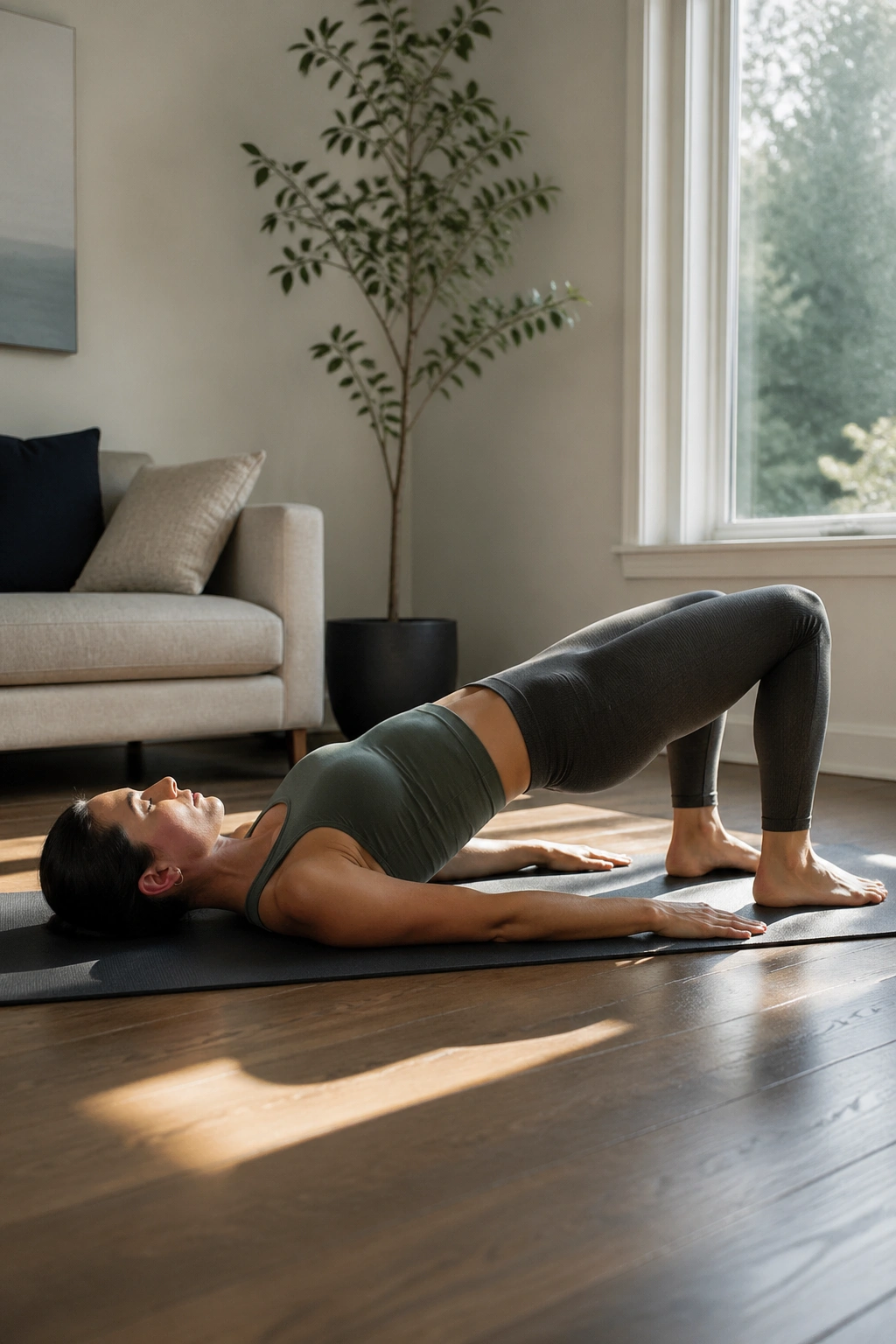
Not every sore back wants more stretching. Some backs want better support, cleaner breathing, and less chaos around the pelvis.
That’s why I like a lower-back-friendly routine that starts with pelvic tilts and bridge work instead of deep forward folds or aggressive twists. Lie on your back, feet hip-width apart, and make 8 small tilts so the lower ribs settle. Then lift into a bridge for 5 slow breaths, lower with control, and repeat 4 to 6 times.
A bridge march is the next useful step if your back feels steady. Lift one foot an inch off the floor without letting the pelvis drop, then switch sides. It sounds small. It is small. And it can be exactly the right amount.
Skip anything that pinches in the low back. Seriously. Morning is not the time to prove flexibility. It’s the time to create support.
9. The Desk-Day Posture Routine
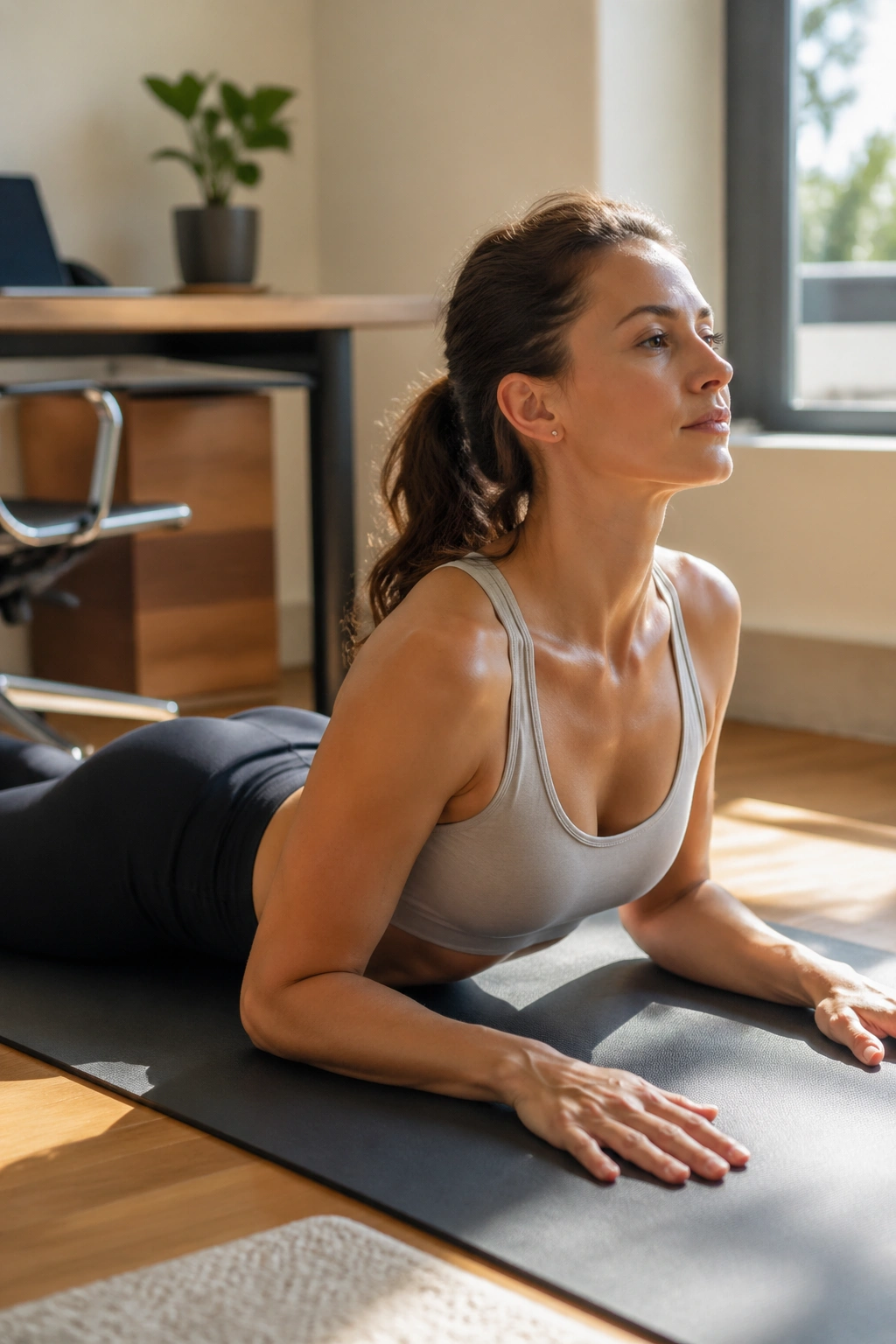
If your shoulders live somewhere around your ears by lunchtime, start the morning by opening the upper back before you ask your body to sit all day.
This routine likes thoracic extension, scapular glide, and gentle chest opening. Swan prep is a good place to begin: lie on your stomach, press the pubic bone gently into the mat, and lift the chest just a few inches while the back of the neck stays long. From there, do 8 arm circles per side, reaching the thumb forward on the way up and back on the way down.
What to Feel
- The shoulder blades sliding, not pinching
- The back of the neck staying long
- The ribs staying mostly grounded
- The chest opening without collapsing into the lower back
A standing chest opener against a wall can finish the job. Press the forearms lightly into the wall, step one foot back, and breathe into the side ribs for 3 breaths. That tiny reset often changes how a shirt fits across the shoulders, which is a small but honest win.
10. The Runner’s Morning Routine for Springy Legs
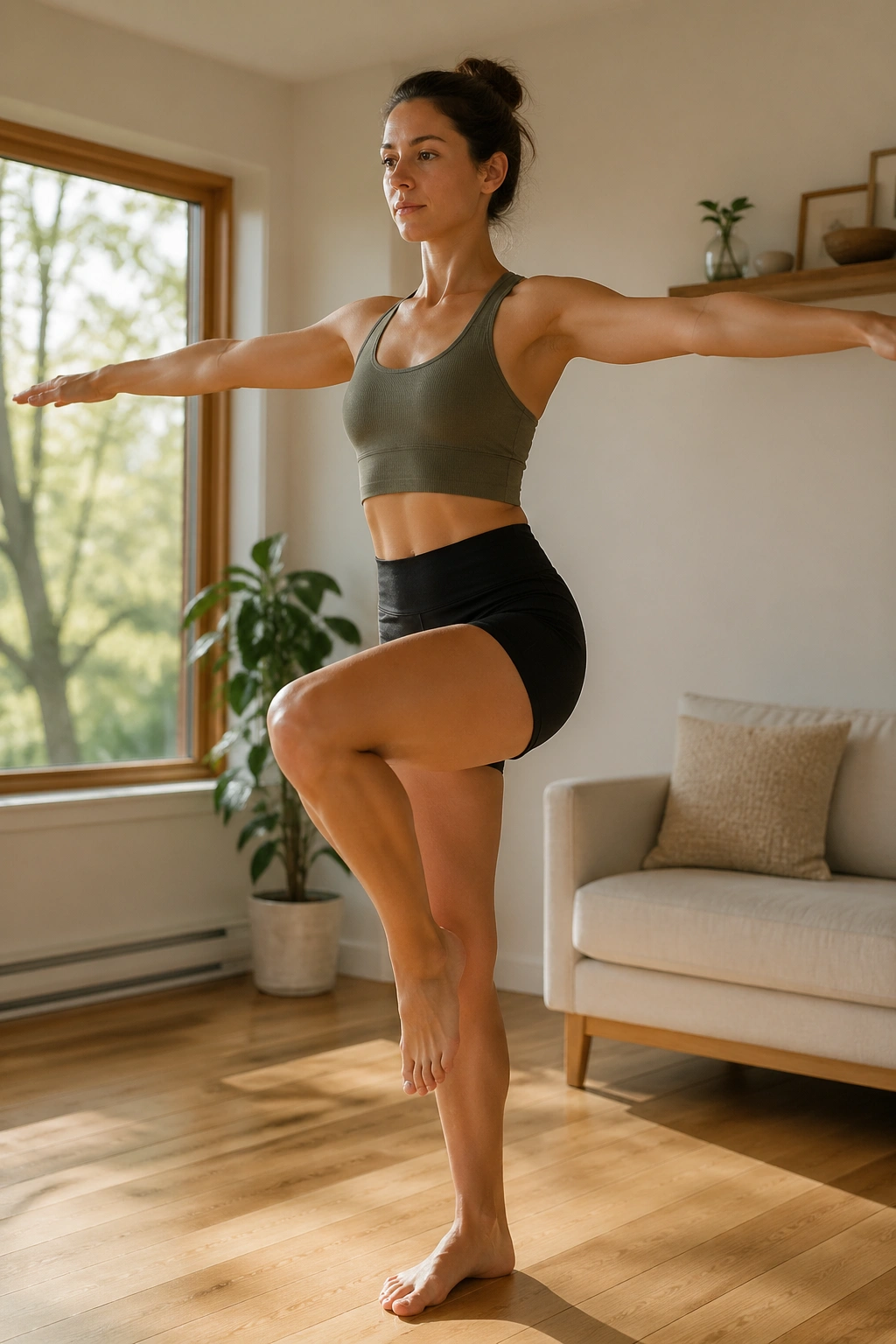
A runner who starts the day with dead feet and tight calves is basically driving with the parking brake on. Pilates can clean that up before the first mile.
Begin with foot articulation. Roll from heel to toe 10 times on each foot, then do 12 calf raises with slow lowering. Add single-leg balance for 20 seconds per side, keeping the standing knee soft and the arch alive. From there, bridge 8 times, then finish with standing hamstring sweeps so the back line of the body wakes up without getting yanked.
A Few Details That Matter
- Keep the toes relaxed in the balance work
- Don’t lock the standing knee
- Lift through the crown of the head
- Let the arms help with balance instead of freezing them
Runners often want harder work first. I get it. But the feet and ankles set the tone for the whole chain, and if they’re clumsy, the rest of the body usually pays for it later in the day.
11. A Gentle Pilates Morning Routine for Low-Energy Days
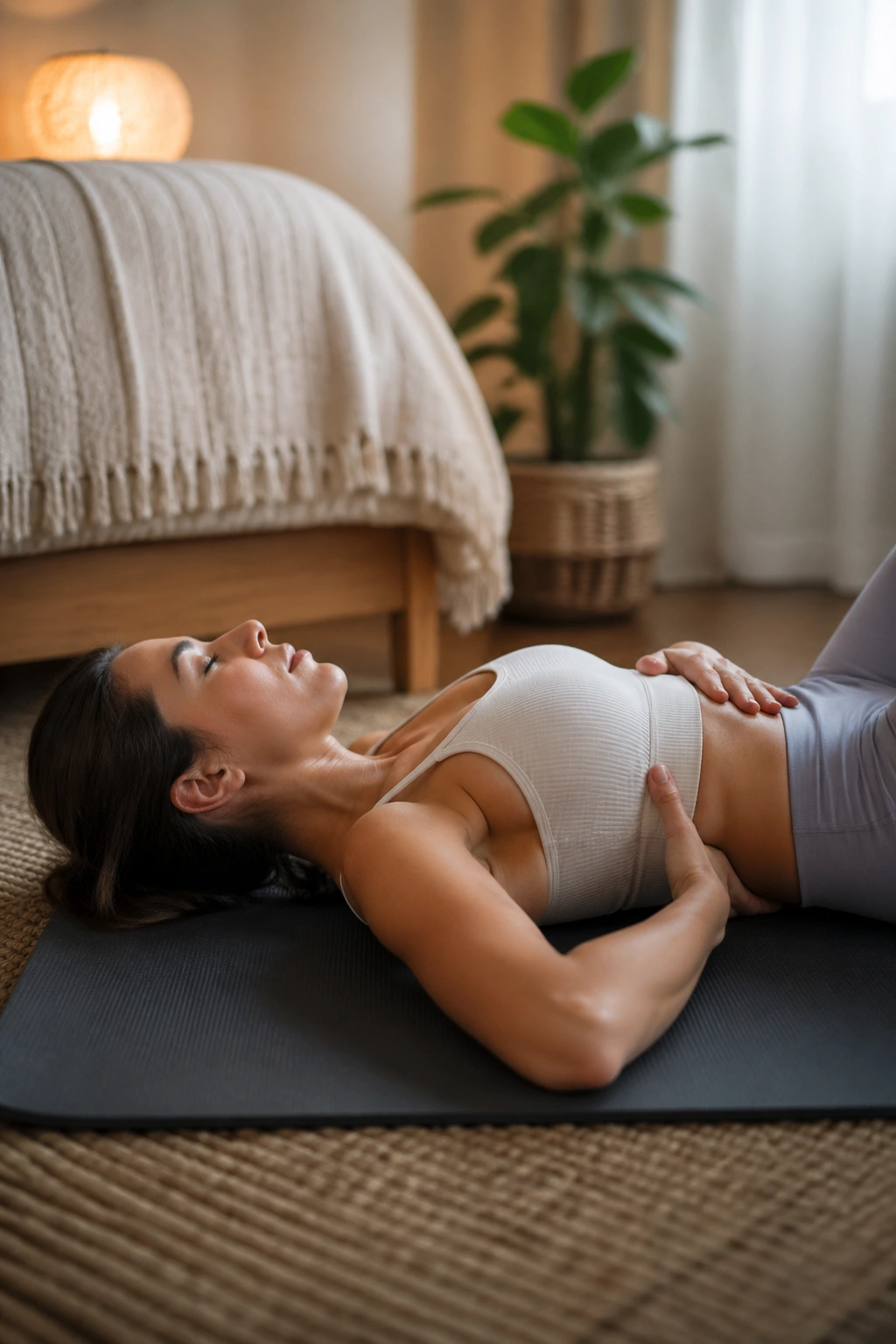
Some mornings are not made for ambition. They’re made for maintenance, and that’s fine.
On those days, I like a softer Pilates morning routine built around breath, cat-cow, mermaid, and spine rotation. It’s the kind of session that keeps you in the game without asking for a performance. Lie on your back and breathe into the sides of the ribs for 4 slow breaths. Then move to hands and knees and do 6 cat-cows with a pause at each end of the range.
Mermaid stretch works well after that, especially if you hold each side for 2 breaths and let the reach stay long rather than dramatic. A seated spine twist can finish things off. Keep the hips planted. Let the ribs turn.
Morning movement does not need to be intense to count. Some of the smartest work is almost annoyingly quiet.
12. Standing Balance and Ankle Work That Changes the Whole Day
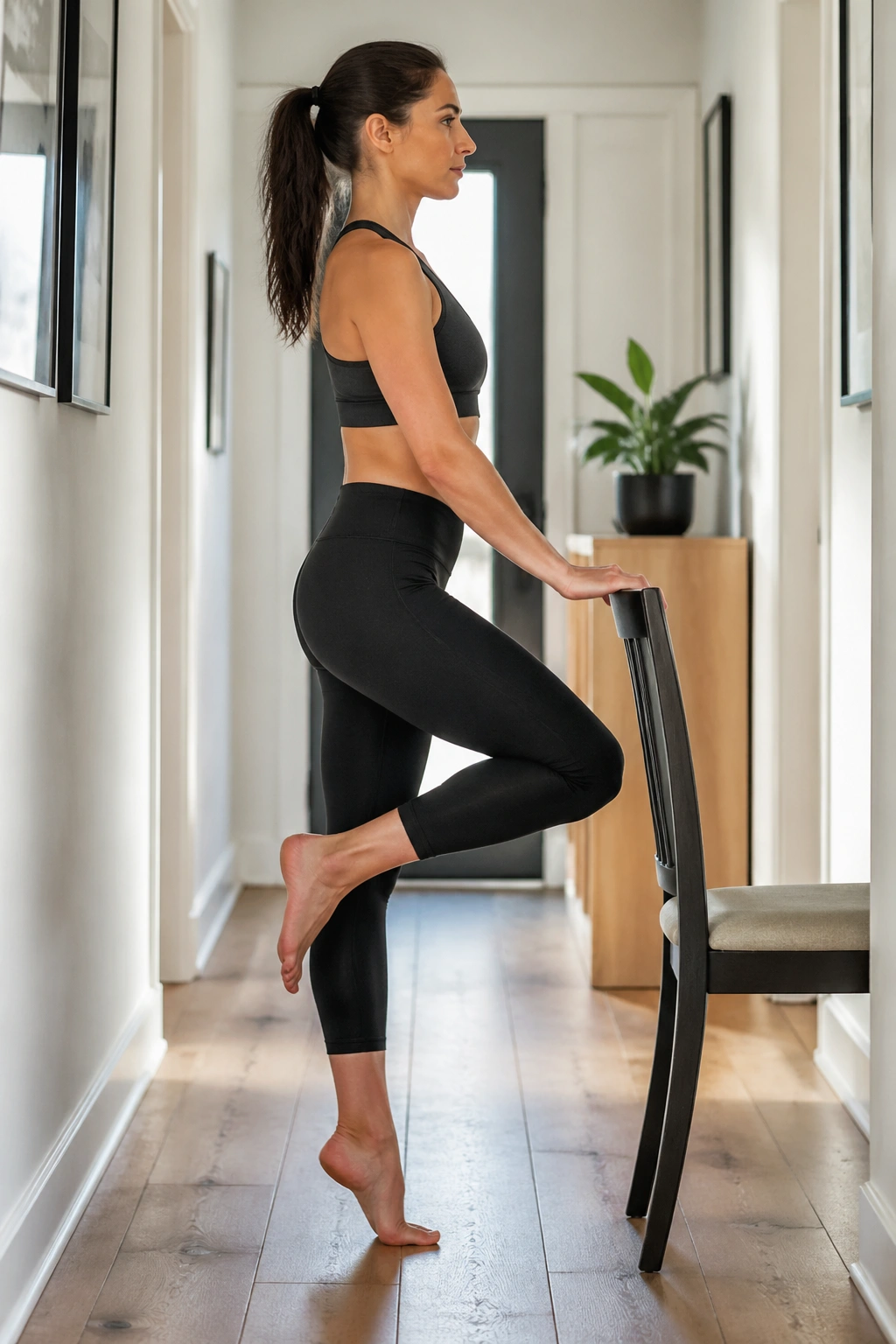
Foot and ankle strength barely gets credit, which is a shame because they affect how you stand, walk, and load the hips.
A standing balance routine gives you more than balance. It teaches the small muscles around the ankle to wake up on cue, which makes the knees and hips less likely to wobble later. Start with 10 heel raises, then 10 toe raises, then 5 slow single-leg hinges on each side. A wall or countertop for light support is fair game.
Why It Feels Different From Mat Work
Unlike floor Pilates, standing work asks the whole chain to organize itself at once. Your foot has to press, your glute has to stabilize, and your ribs have to stay stacked instead of drifting backward.
That honesty is useful. It also explains why standing balance can feel harder than it looks. Keep your gaze fixed on one spot and make the movements smaller than you think you need. If you start wobbling, reduce the range instead of muscling through it.
13. The Full-Body Mat Circuit for a Switched-On Morning
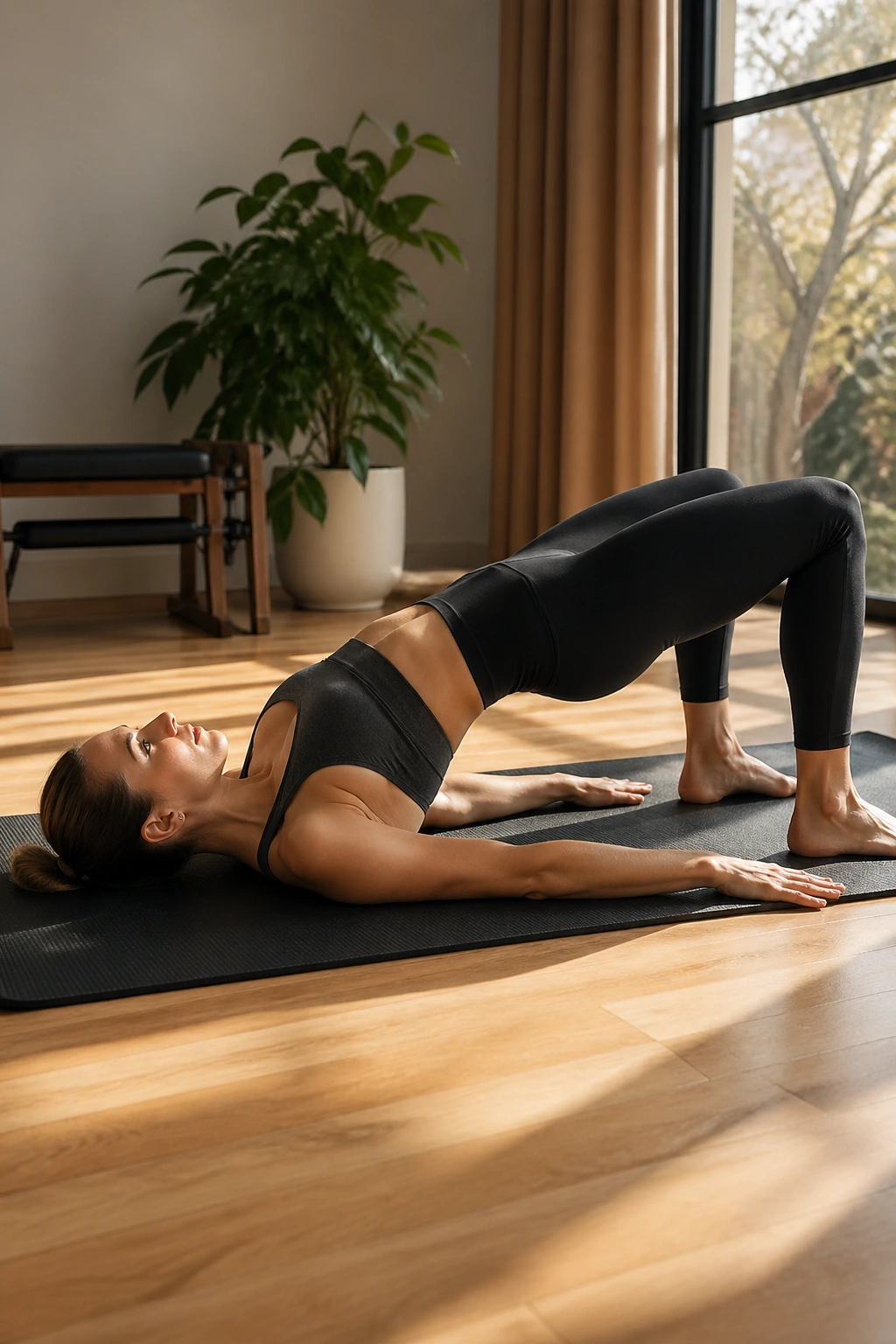
A good mat circuit should feel tidy, not chaotic. You want sequence, not random effort.
I like this version when the goal is to feel pulled together from head to toe. Start with 6 pelvic tilts, move into 8 bridges, then hold tabletop for 3 breaths. Add 6 dead-bug toe taps, 6 side-lying leg lifts per side, and 4 swan prep lifts. Finish with 3 standing roll-downs.
The Order Matters
- Breath and pelvis first
- Core second
- Hips and back after that
- Standing work last
That order gives the body a chance to organize itself instead of scrambling for stability in the middle of the routine.
A circuit like this can take 8 to 12 minutes, depending on your pace. It is enough to change how your day feels. Not because it’s brutal, but because it connects the pieces before the day starts pulling them apart.
14. The No-Mat Morning Routine for Small Spaces
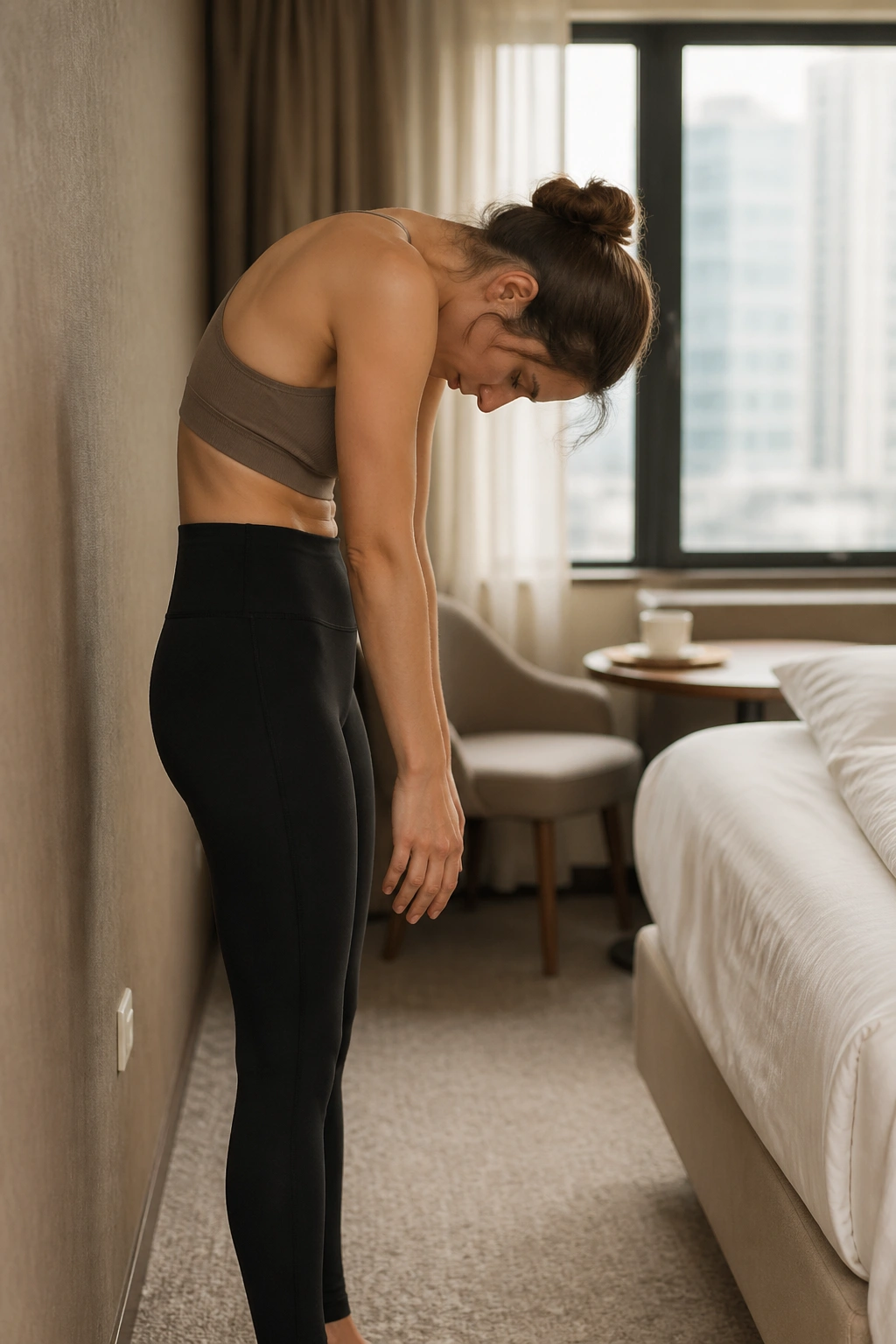
No mat? No problem. A Pilates morning routine can happen in a hotel room, beside a bed, or in the tiny gap between the sofa and the wall.
Start with standing roll-downs, 3 slow reps. Add 8 wall pushes, where you press the palms into the wall and feel the shoulder blades glide away from the spine. Then do 10 knee lifts on each side, keeping the torso quiet. Finish with 5 standing side reaches per side, letting the ribs lengthen instead of collapsing.
This is a useful routine when your schedule is messy or your floor space is gone. It keeps the work clean and upright. It also tends to be easier on sleepy joints because you’re not asking the wrists or knees to carry much.
A small room does not mean a small workout. It just means you have to be choosy.
15. The Chair-Based Routine That Saves a Stiff Back
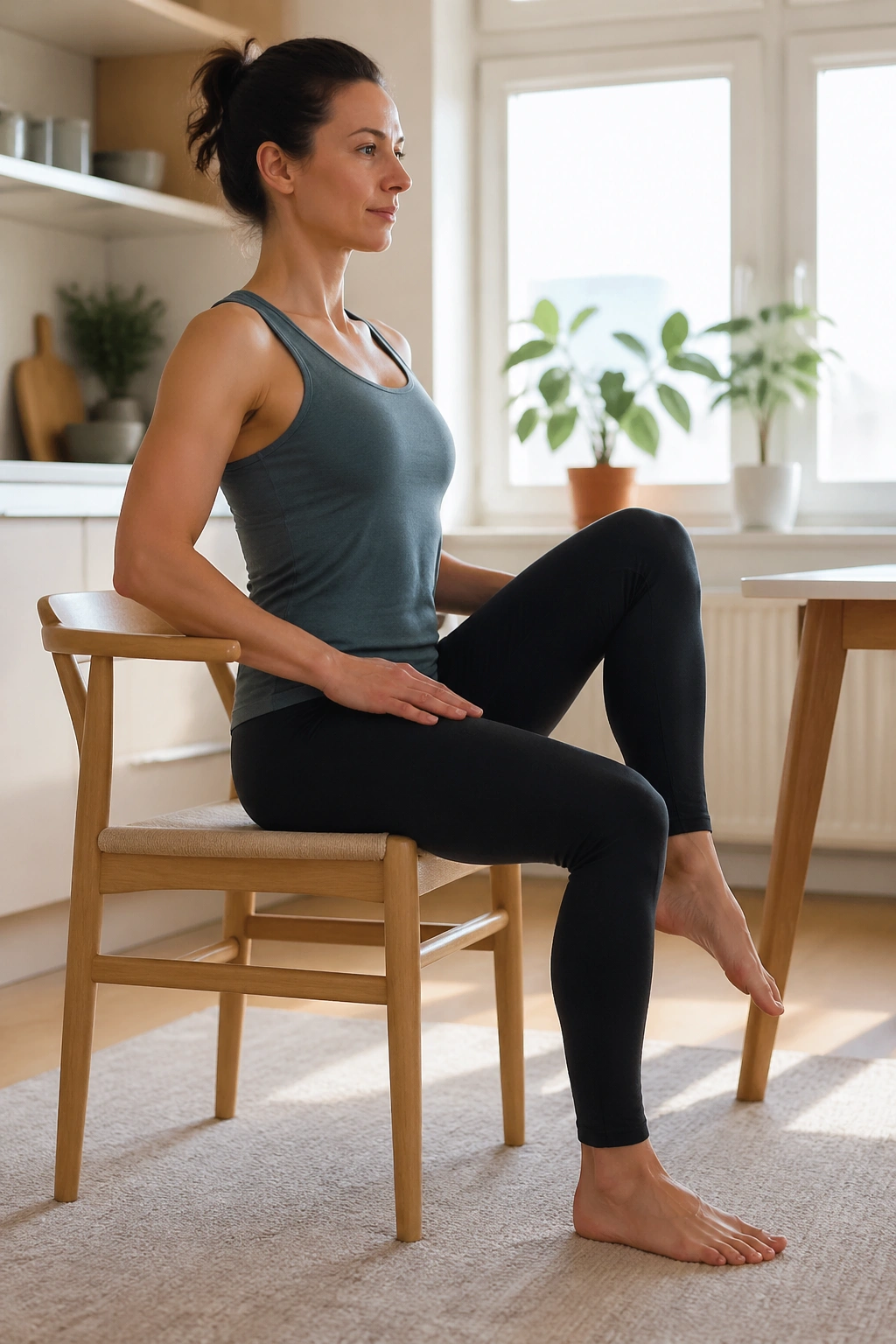
Ever tried to do Pilates before your coffee without leaving the chair? It can be done, and it’s better than sitting there stiff and hoping the body loosens by itself.
How to Use the Chair
Sit near the front edge with both feet grounded. Begin with 8 pelvic tilts, rocking the pelvis forward and back. Then lift one knee at a time for 10 slow marches, keeping the ribs stacked over the pelvis. Add a seated spine twist, 4 breaths each side, and finish with seated arm reaches overhead for 3 slow reps.
A chair routine is smart for anyone with a cranky morning back, limited energy, or a space problem. It’s also useful on days when you want movement but don’t want to commit to the floor yet.
The nice thing is how quickly it changes the feel of sitting. You go from passive to organized, which is a bigger difference than it sounds like on paper.
16. Upper-Back and Shoulder Openers for Screen-Weary Bodies
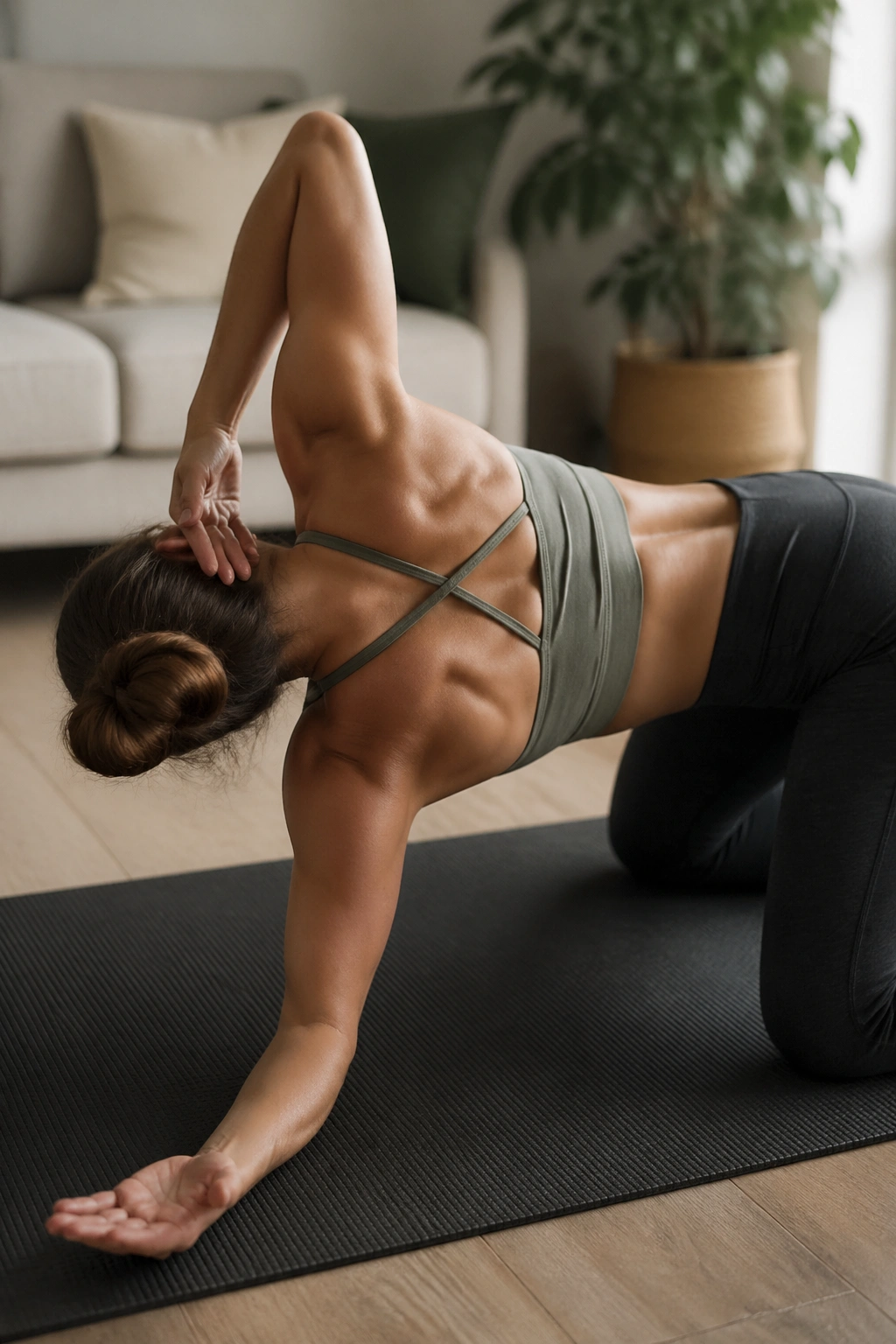
After a morning spent looking down at a phone or laptop, the upper back can feel locked in place before the day even starts.
This routine focuses on thoracic mobility and shoulder control. Thread-the-needle is a strong first move: on hands and knees, slide one arm under the other and breathe into the upper back for 3 breaths. Then add 6 scapular push-ups from a plank or tabletop position, keeping the elbows straight and letting the shoulder blades slide. Finish with swimming prep on the mat for 6 slow lifts.
What Makes This Worth Doing
The shoulders need both motion and control. Stretching alone can leave them loose but not useful. Scapular work helps them glide better, which matters when you carry bags, reach overhead, or spend too much of the day typing.
Prone arm circles are a good add-on if your neck stays calm. Keep them small. The goal is not to throw the arms around. It’s to wake the upper back without irritating the front of the shoulders.
17. The Oblique and Rotation Routine
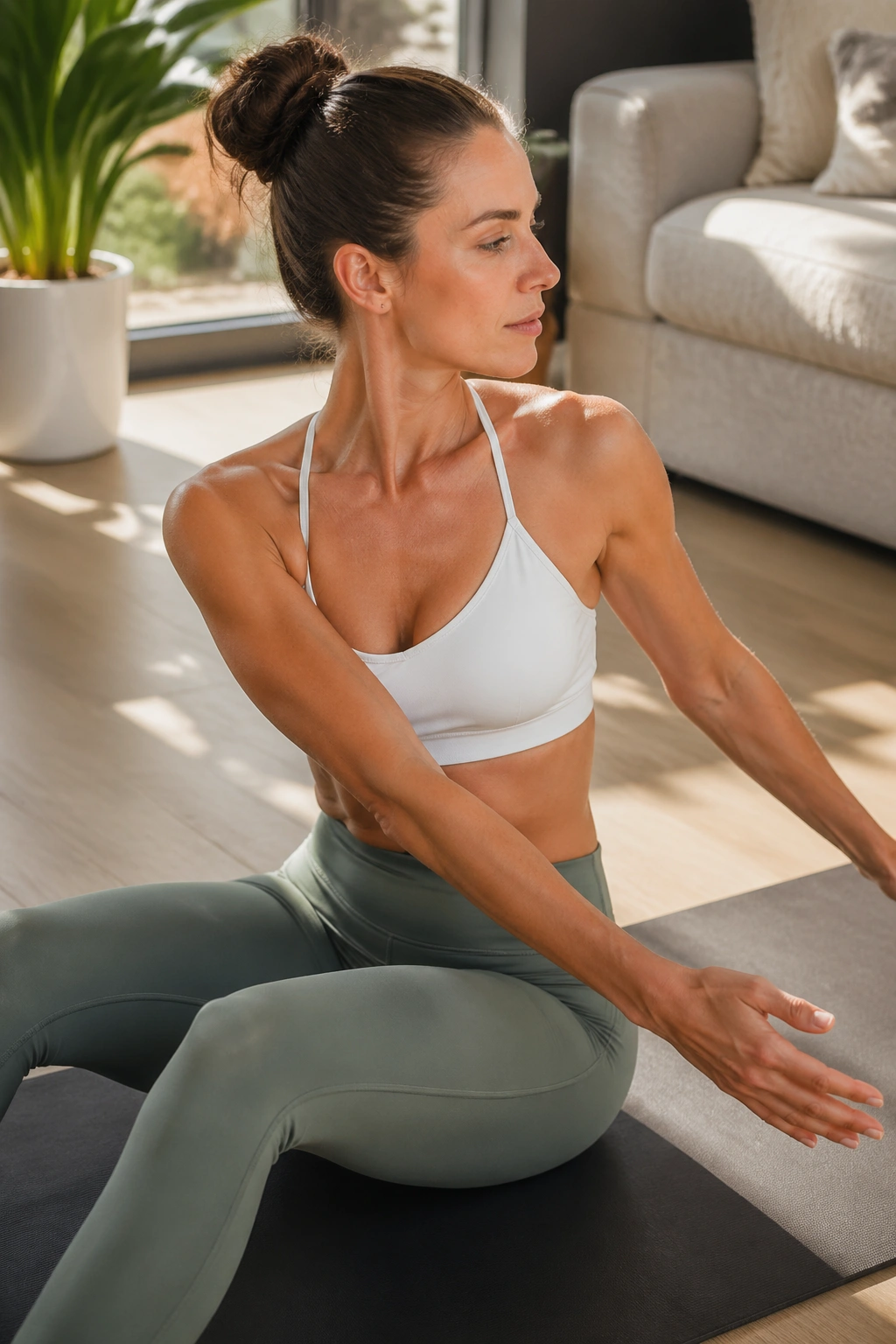
Straight-ahead core work is fine, but the torso also needs rotation. That’s where the obliques earn their keep.
A morning rotation routine usually starts with the saw or a seated spine twist, then moves into side plank variations and controlled crisscross work. I like 4 saw reaches per side, 6 slow crisscross reps per side, and a side plank with the lower knee down held for 15 to 20 seconds on each side.
Do not yank the neck in this one. Rotation should come from the ribs and waist, not from pulling the head around like a door handle.
The nice part about oblique work is how it shows up later. You feel more able to turn, reach, and carry your body without that stiff, one-piece feeling. That’s useful in sports, but it’s even more useful in normal life, which is usually more awkward than sports.
18. The Strong-Day Challenge Routine
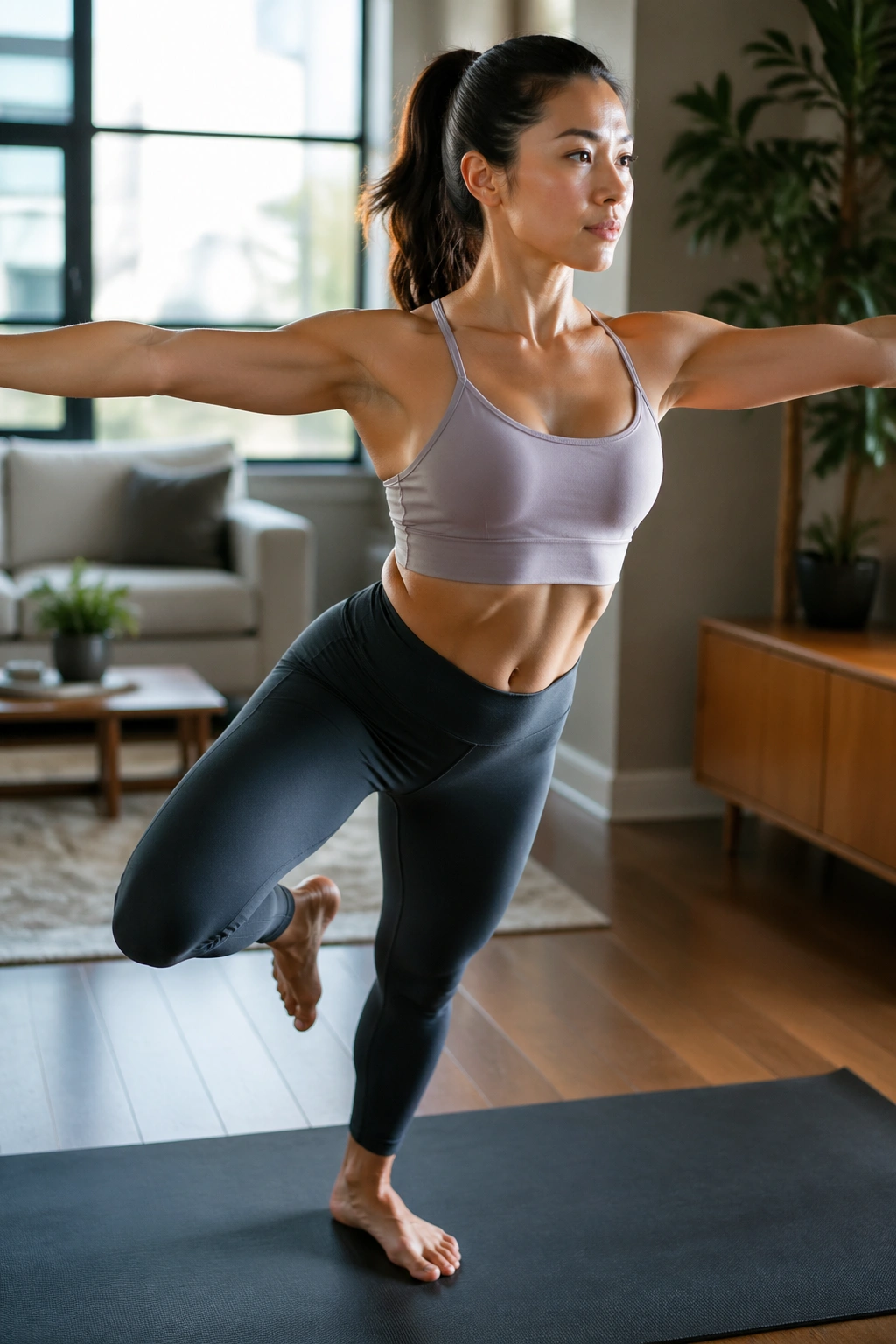
Some mornings ask for a little more. Not punishment. Just more.
This is the routine I’d pick when you want to feel athletic before breakfast. Start with 3 roll-downs, then move into 8 bridges with a 2-second squeeze at the top. Add 6 Hundred-prep breath cycles, 6 side kicks per side, 4 swan lifts, and 3 teaser prep holds of 10 seconds each. Finish with 30 seconds of standing balance on each leg.
How to Pace It
- Keep transitions quick but not rushed
- Rest for one breath between exercises
- Use smaller range if form gets sloppy
- Stop before your shoulders start creeping upward
The challenge here is control under a little bit of fatigue. That’s the whole point. A strong morning routine should leave you more precise, not more scattered. If the teaser prep makes your hip flexors seize up, shorten the lever and keep the ribs calm. That’s not cheating. That’s Pilates.
Final Thoughts
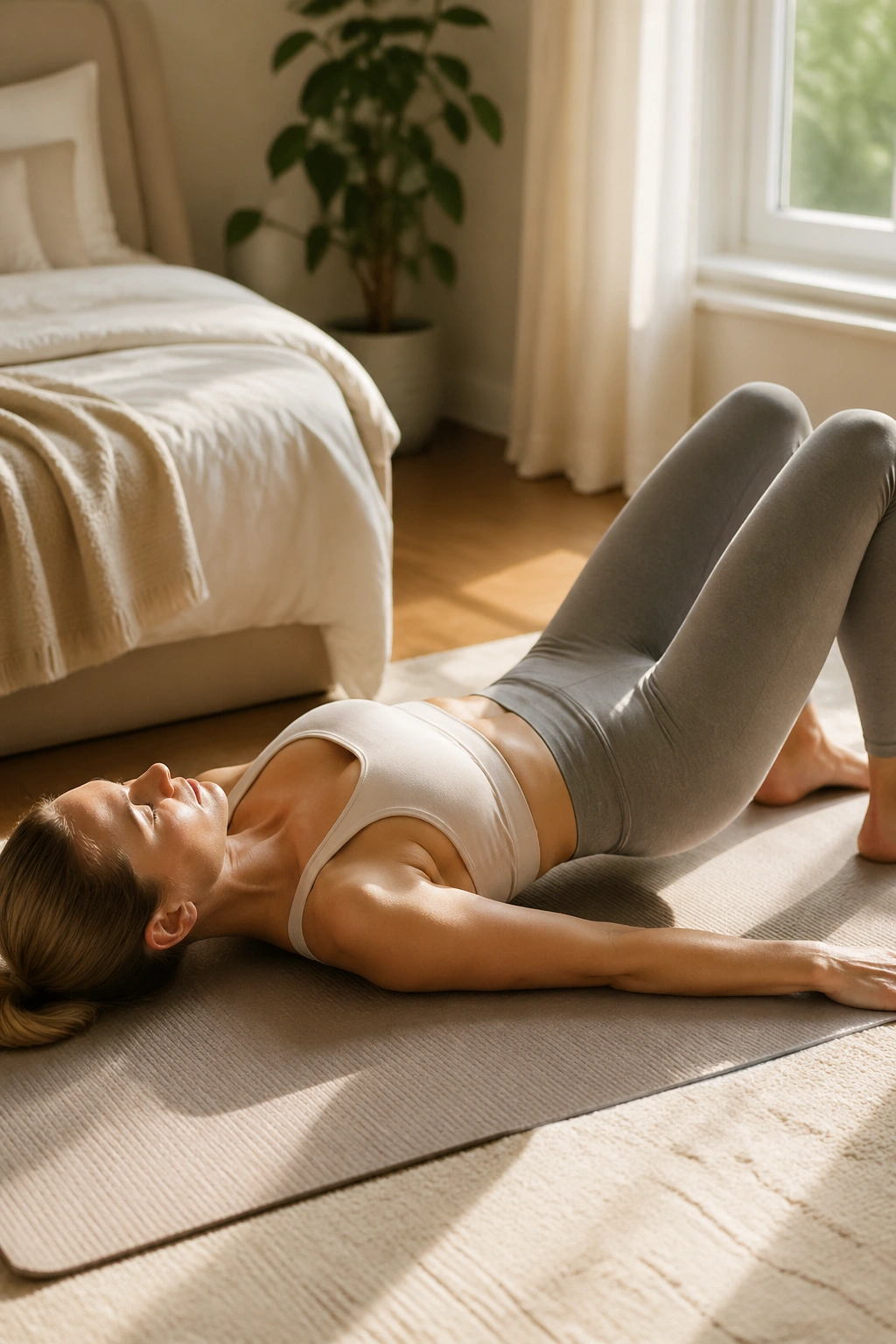
The best Pilates morning routine is the one your body will actually do on a sleepy day. Fancy sequences are nice, but consistency wins, and consistency usually comes from routines that feel clear, manageable, and repeatable.
I’d start by picking one routine for stiff mornings, one for low-energy mornings, and one stronger option for days when you want to feel turned on from the first hour. Keep them nearby. Reuse them. Your body likes familiar good work more than endless novelty.
And if you notice one move always makes you feel worse, drop it. Fast. A morning practice should sharpen the day, not spend the first ten minutes arguing with your back.
