



The Cadillac can humble your core fast. For Cadillac Pilates moves for a toned core, the springs tell the truth in a way floor work sometimes hides. The moment your ribs pop, your pelvis tips, or your neck starts helping, the apparatus lets you know.
That is why people either fall in love with it or back away from it. The Cadillac, with its roll-down bar, push-through bar, leg springs, and arm springs, gives you feedback that feels almost rude at first. Then it gets useful. Very useful.
The real payoff is not a dramatic burn. It is control. You start noticing the difference between “I moved my legs” and “I kept my trunk steady while my legs moved,” which is a much bigger deal if you want a midsection that looks firm and works hard.
A lot of Pilates core work can be faked with momentum. The Cadillac makes faking harder. Springs pull, bars resist, and the whole setup rewards precision over effort, which is why the best core series on this apparatus feel clean, a little unforgiving, and strangely satisfying once you stop trying to dominate them.
1. Hundred with the Roll-Down Bar
The Hundred on the Cadillac looks almost too familiar until you feel the bar overhead. Then it stops being a basic warm-up and becomes a serious test of whether your trunk can stay quiet while your arms pump and your breath keeps time.
Why It Hits the Core So Well
The spring tension gives your shoulders something to organize against, which means your rib cage has to stay down while your arms do their little pulses. That sounds simple. It isn’t. If your lower ribs flare or your chin tucks too hard, the whole shape falls apart fast.
A clean version feels long through the back of the neck, heavy through the waist, and surprisingly small in the lower belly. Small is good here. Small means honest.
- Start with the knees in tabletop or keep them bent if your lower back needs it.
- Reach the bar to a level where your arms are active but not straining your shoulders.
- Pump the arms from the upper back, not from the neck.
- Exhale for five counts, inhale for five counts, and keep the legs steady.
Tip: If your hip flexors start shouting, lower the legs or keep them bent. The point is abdominal control, not a fight with your pelvis.
2. Roll-Up with the Push-Through Bar
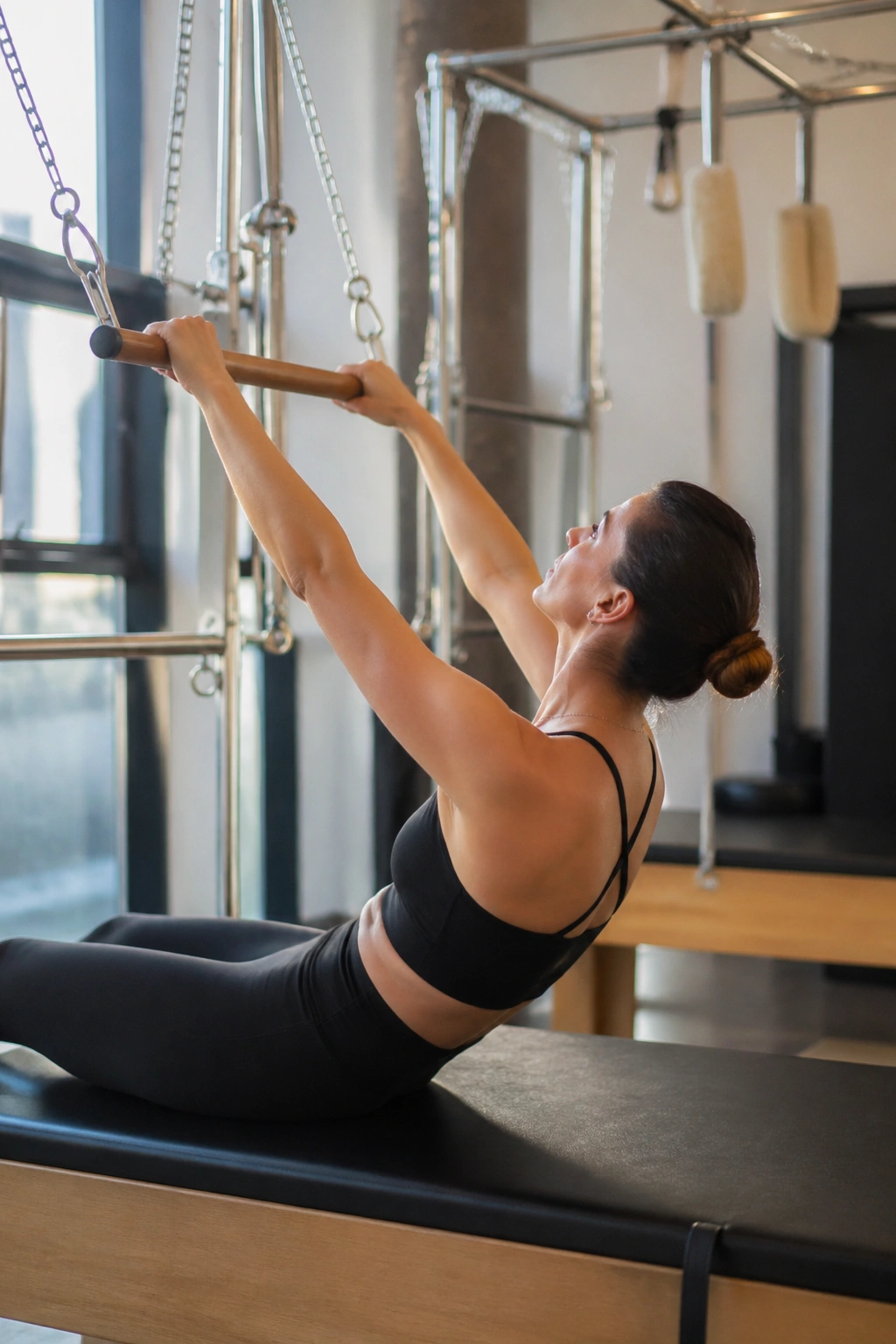
Why bother doing a roll-up on the Cadillac when the mat version already works? Because the push-through bar changes the conversation. It gives you something to press into, pull against, and control on the way up and down, which makes spinal articulation much clearer.
The first thing people get wrong is speed. They yank. Then they wonder why their hip flexors take over and their shoulders creep toward their ears. Slow the whole thing down. Peel the spine off the mat one vertebra at a time, pause when the ribs start to leave, and keep the bar movement smooth instead of jerky.
I like this version because it exposes cheating early. If you fling your head or whip your arms, the bar does not hide it. If you keep the movement honest, though, the lower belly gets a deep job: lifting, controlling, and then lowering the trunk without dumping into the low back.
The return is where the work lives. Keep reaching through the heels, keep the front of the ribs soft, and lower with the same patience you used to rise. No rush. None.
3. Frogs with Leg Springs
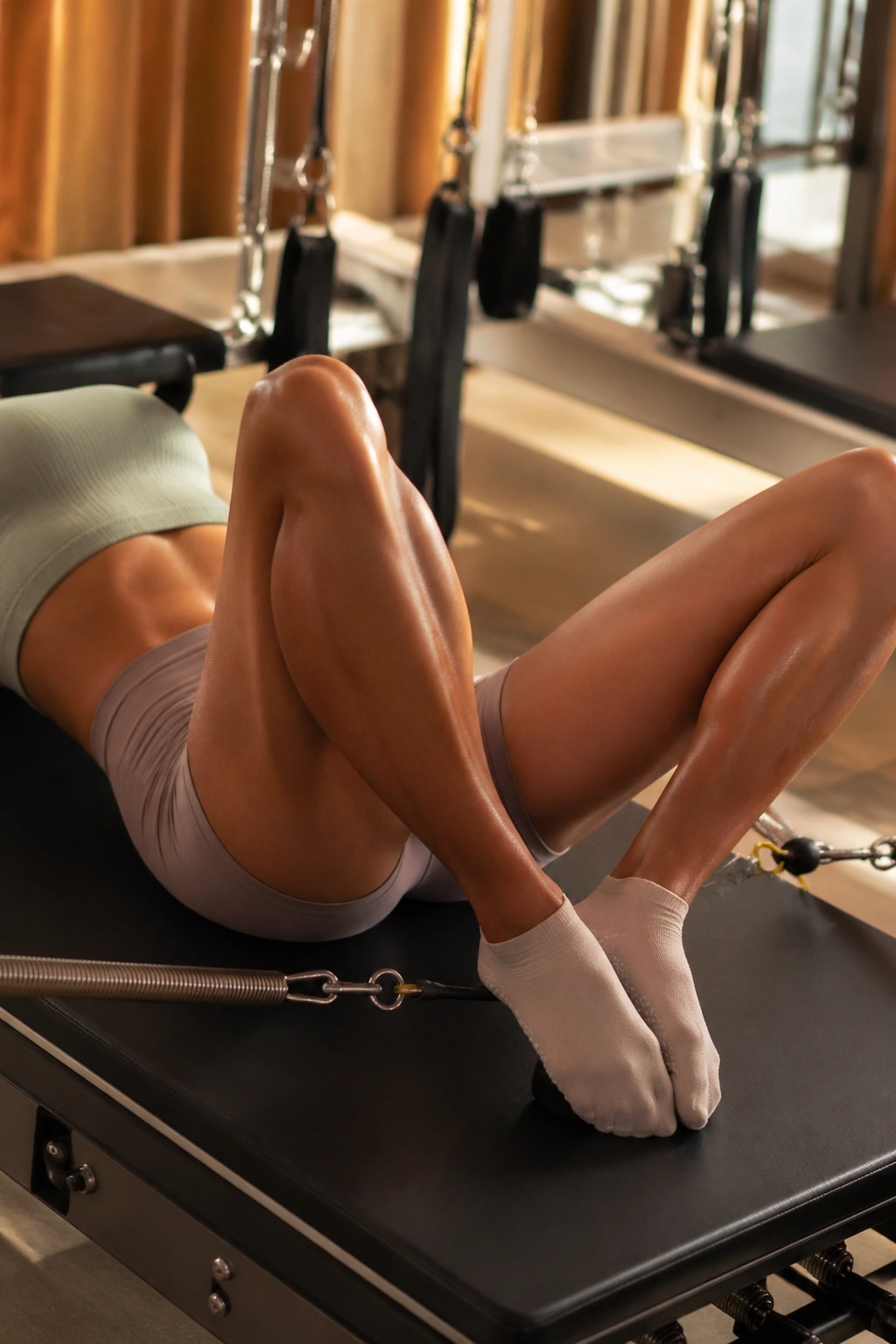
The smallest-looking leg spring exercise often works the core the hardest. Frogs seem harmless because the range is short and the shape is tidy. Then your pelvis starts wobbling and you realize the springs have turned a simple leg pattern into a stability drill.
What to Feel
The goal is not to smash the legs open and closed with force. It is to keep the sacrum heavy, the waist long, and the inner thighs active while the knees bend and extend. If the low back arches on the opening, shorten the range. If your feet start drifting apart like loose socks, reset.
A lot of people push too wide because it feels more athletic. It usually looks messier, too. A compact frog with a steady pelvis does more for the deep core than a big, sloppy one.
- Keep the heels together or close in a turned-out diamond shape, depending on the spring setup.
- Open the knees only as far as you can without the pelvis moving.
- Exhale as you press out, inhale as you return.
- Stop the moment the front of the hips start to grip.
Watch for: If your lower back lifts off the table, the springs are winning. Reduce the load or the range before you chase a bigger shape.
4. Single-Leg Circles with Leg Springs
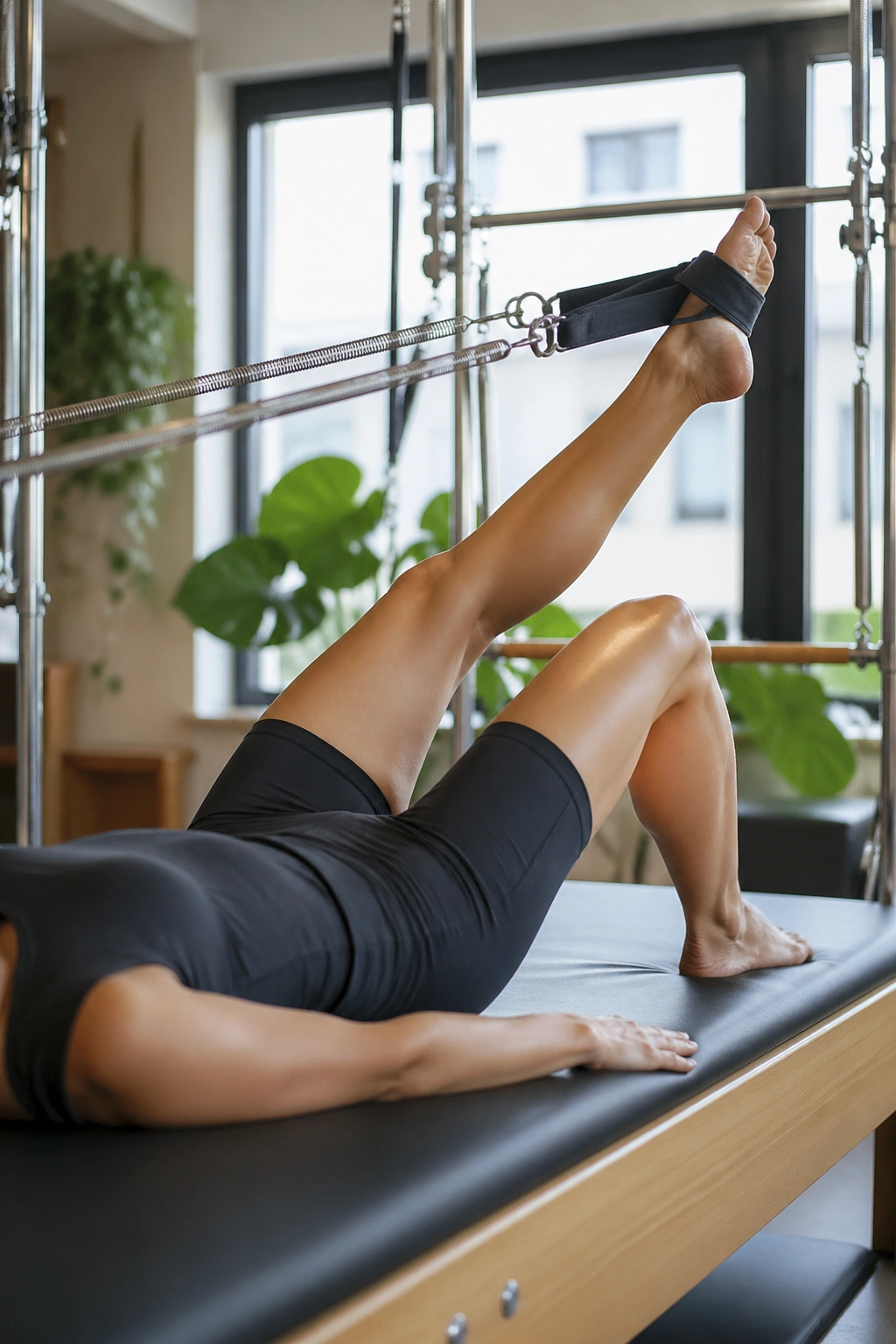
If your pelvis rocks the minute one leg moves, this is the exercise that tells on you. Single-leg circles with leg springs are blunt about compensation. They do not care how pretty the circle looks if the standing side of the pelvis is bouncing around.
The best version starts smaller than most people expect. Tiny circles. Almost boring. That is the point. You want the femur moving in the socket while the waist stays heavy and the other hip stays quiet. Bigger circles are fine later, once the control is there. Before that, bigger just means messier.
The Cadillac springs help because they give you enough resistance to feel where the leg is traveling without letting it go completely slack. That feedback matters. It keeps the movement organized through the center rather than flung from the thigh.
How to Use It
Keep the opposite hip bone grounded and imagine the circle drawing from the inner thigh, not the knee. If the working leg starts yanking on the pelvis, shorten the circle immediately. You will get more core work from a small, exact path than from a giant arc that turns into a hip hike.
5. Leg Lower and Lift with Leg Springs
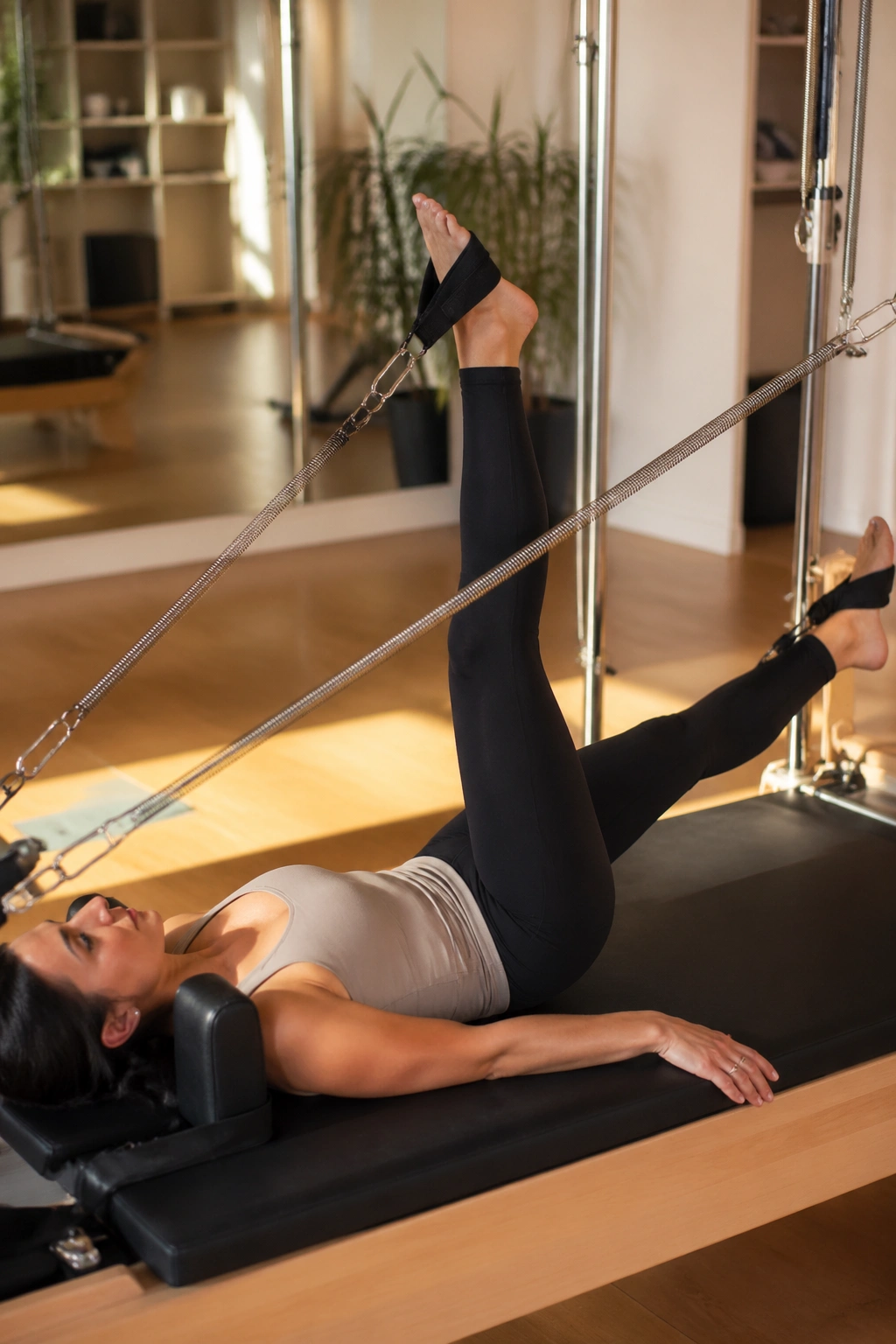
The straps should feel like a steady tug, not a yank. That’s the first thing to notice with leg lowers and lifts on the Cadillac. When the tension is even, you can feel your abdominals organizing the front of the pelvis while the legs hover and move.
This is a sneaky one. It looks like a lower-body exercise, but the real job is keeping the rib cage and pelvis from opening like a hinge. If the belly domes, the low back presses hard, or the thighs start shaking before the center settles, the range is too big.
I prefer a clean, boring version over a dramatic one every time. Lower the legs only as far as you can keep the lower back long and the front of the hip soft. Then bring them back up without snapping the springs.
The burn, if you want to call it that, lives low and deep. Not in a neck-crunchy way. In a steady, workmanlike way.
6. Push-Through Bar Teaser
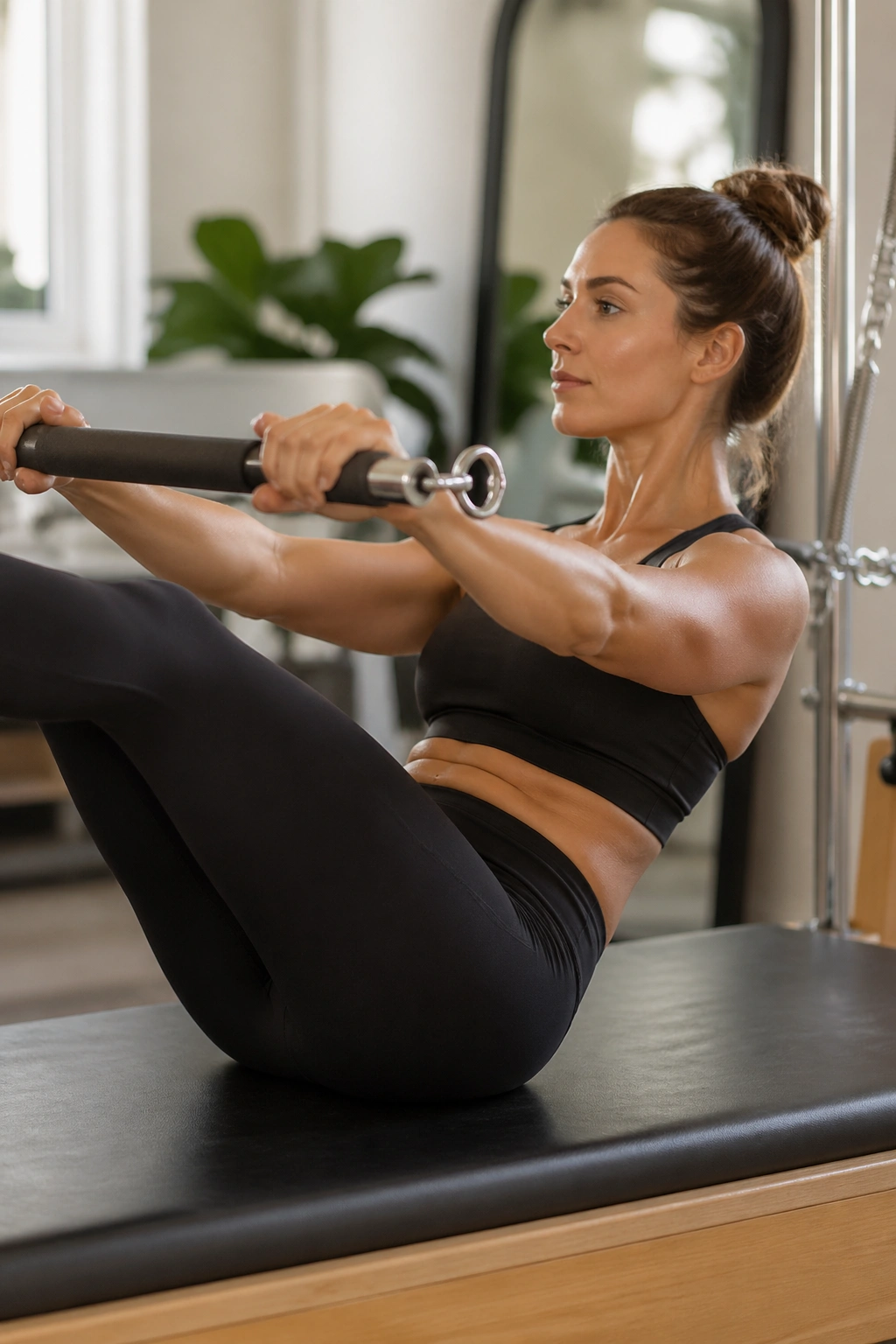
Picture the push-through bar hovering over your shins while you try to keep your spine in one long C-shape. That is the teaser on the Cadillac in a nutshell. It is not a dramatic sit-up. It is a balance problem with a very clear center.
The bar gives you a place to press and a place to control the return, which is why this version often feels cleaner than the mat version. Your arms help, but only if they stay organized. If you pull with the shoulders or throw the chin forward, the whole thing loses its line.
Quick Setup Cues
- Start with bent knees if straight legs make the hip flexors dominate.
- Roll back only as far as you can keep the low belly engaged.
- Reach through the bar instead of muscling it down.
- Return by curling the spine up, not by yanking your torso forward.
A good teaser leaves you feeling long through the front body and tight through the waist. A bad one leaves you tired in the neck and annoyed at the springs. You can tell the difference in about two reps.
7. Tower Prep with the Vertical Springs
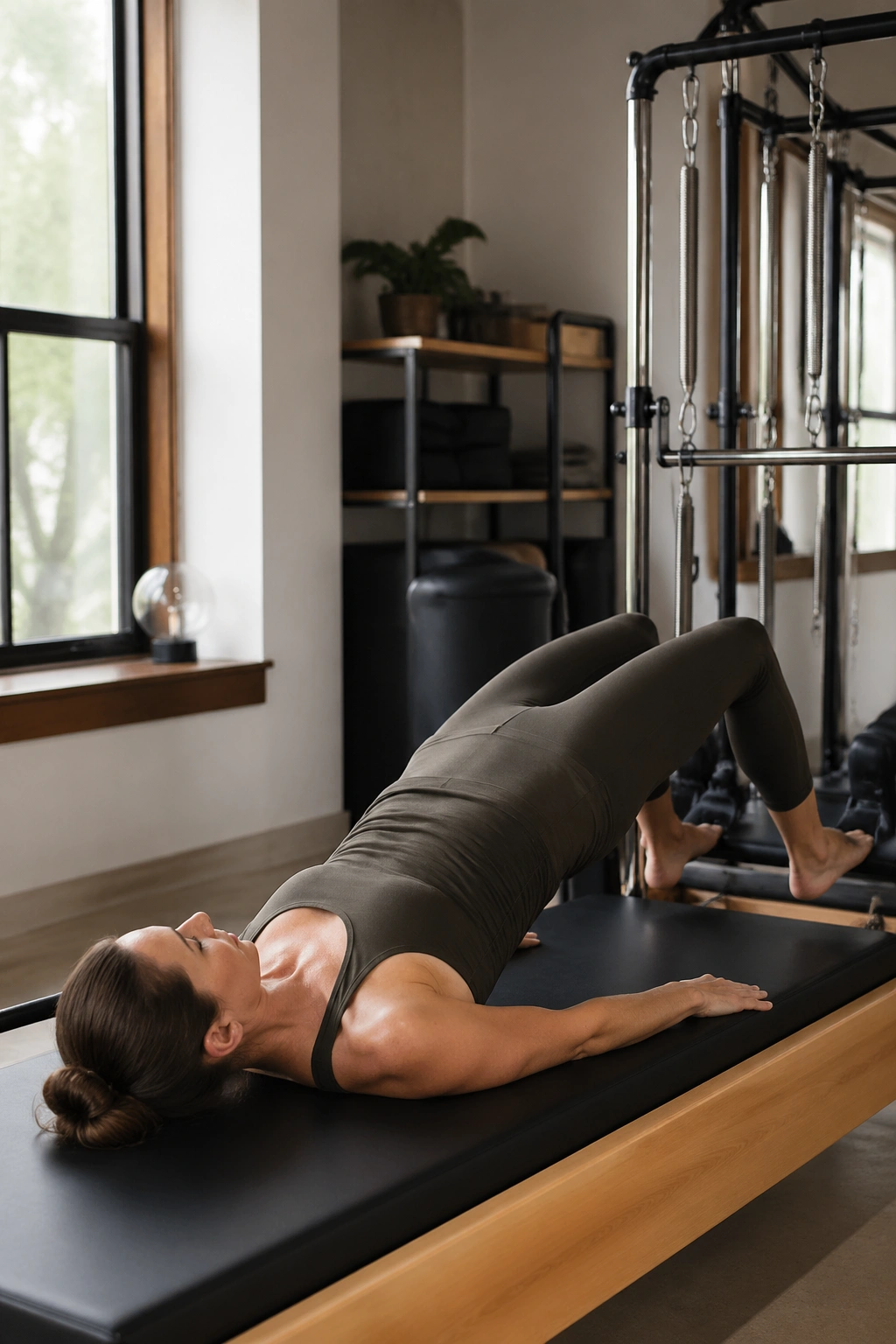
Tower prep is one of those Cadillac exercises that looks calm until you try to keep your pelvis from wobbling. The movement asks for hip flexion, spinal articulation, and a little nerve, because the springs are encouraging the legs to travel while the torso stays surprisingly still.
What makes it useful for the core is the pause. The moment before the hips roll, the moment the legs lower, the moment you decide whether to keep the ribs anchored or let them flare—those tiny choices matter more than the showy part. Strong core work often lives in those in-between moments.
Why the Setup Matters
If the springs are too heavy, the hamstrings and hip flexors start barking and the lumbar spine takes over. If they are too light, the movement can get floppy. Aim for enough resistance that you feel challenged, not trapped.
Best cue: Keep the back of the ribs broad as the pelvis lifts. That single idea cleans up a lot of the shape.
8. Corkscrew on the Cadillac
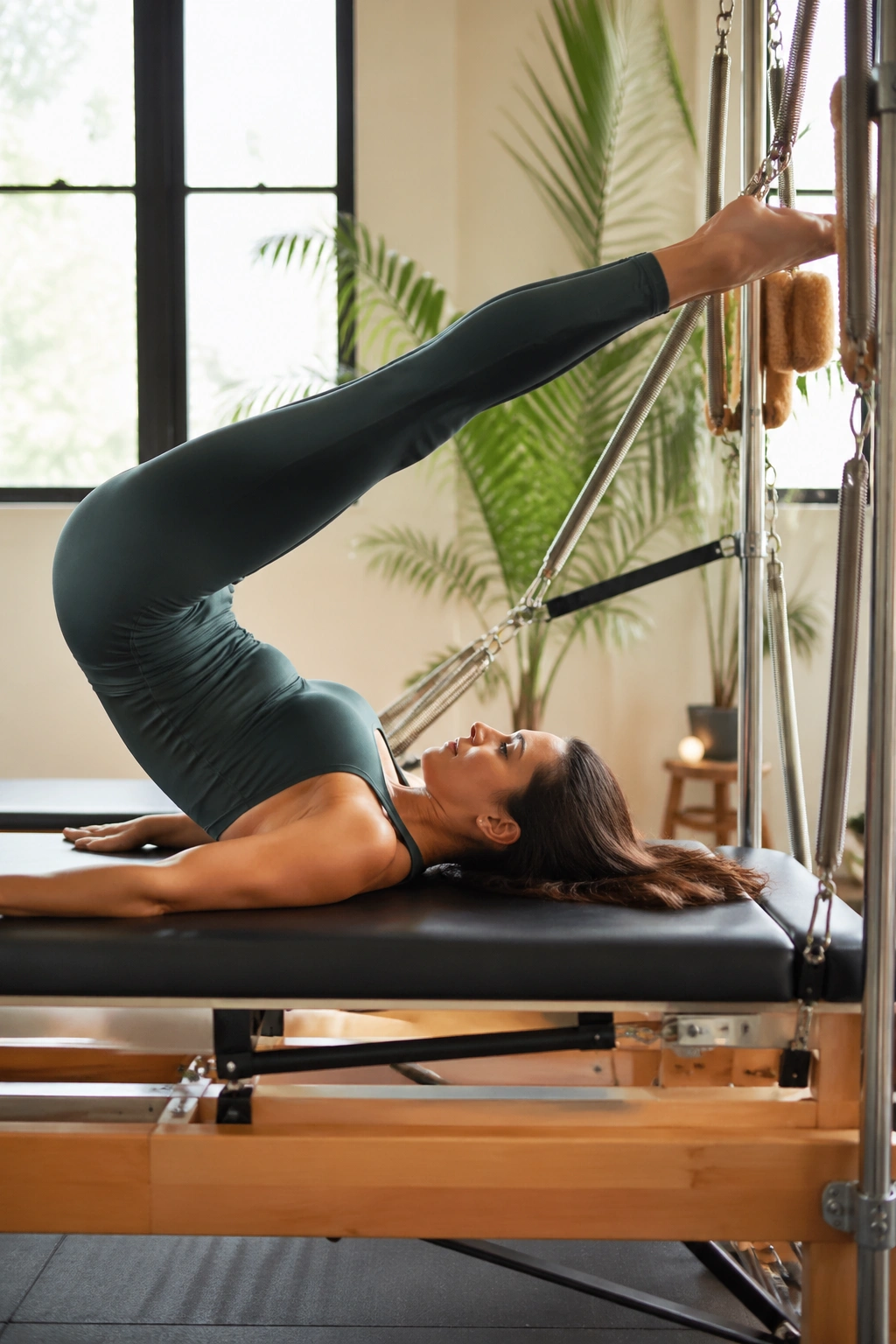
What does a corkscrew have to do with core tone? Quite a bit, actually. The exercise asks the trunk to resist rotation while the legs draw a circle overhead, and that is exactly the sort of work that wakes up the obliques.
The Cadillac version can feel more controlled than the mat version because the bar and spring setup gives you a bit of structure. That structure matters. It keeps the movement from becoming a leg toss with a fancy name.
The mistake I see most is chasing range. People want the legs to drop farther, circle wider, and make the shape more dramatic. The core does not care about drama. It cares about precision. Keep the shoulders weighted, the neck soft, and the rib cage quiet while the legs travel in a controlled path.
If you feel the movement in your lower back, the circle is too big or the return is too fast. Shrink it. Slow it. Then do it again.
9. Bicycle with Leg Springs
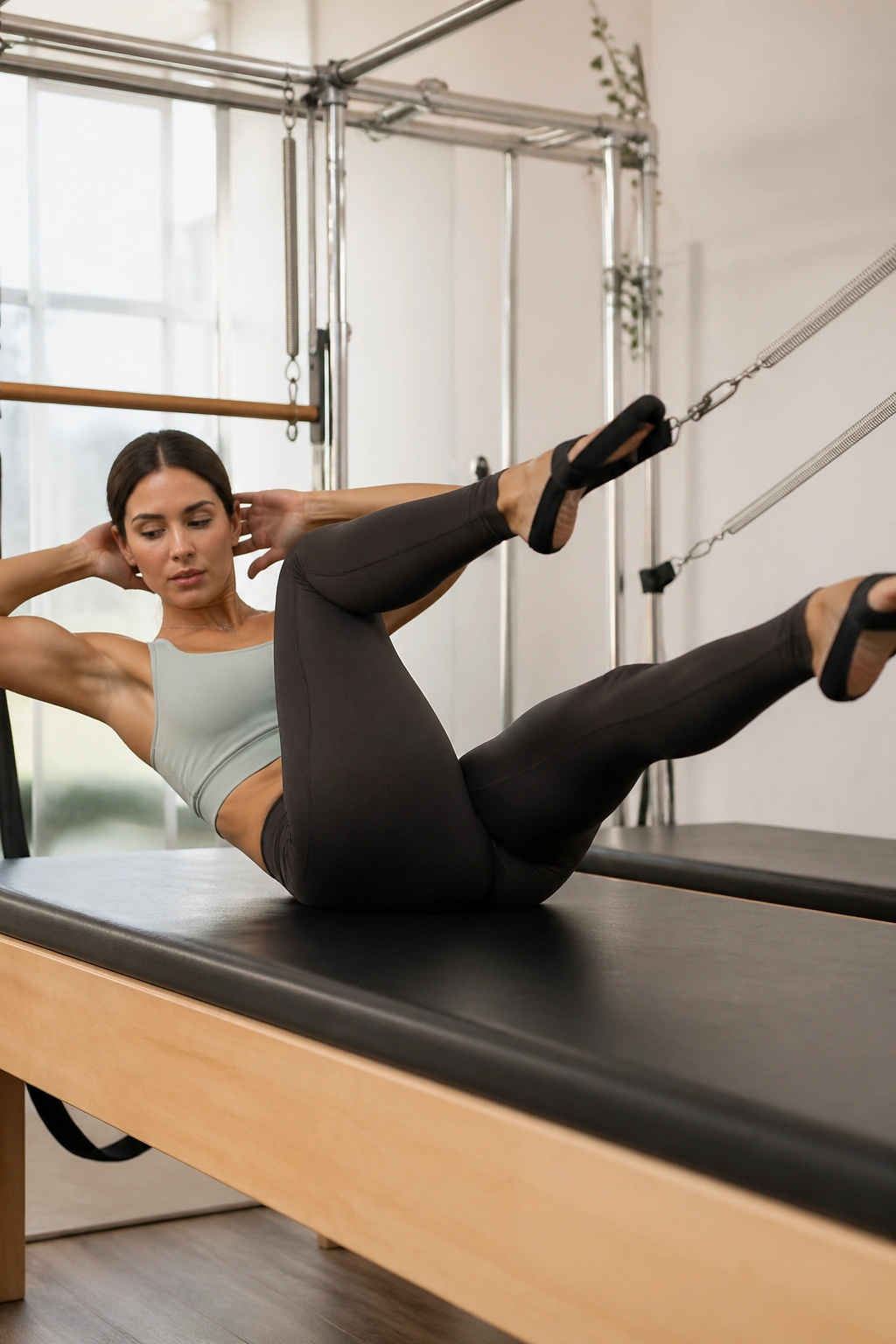
A bicycle on the Cadillac feels different from the mat version because the springs keep one leg from drifting off into lazy territory. That extra resistance is useful. It makes the obliques and lower abdominals work harder to keep the pelvis from twisting each time the legs change shape.
A Few Things That Matter
- Keep the movement smooth, not pedaled like you’re racing somewhere.
- Let the knees bend and extend without letting the ribs pop.
- Hold the pelvis still enough that the working leg feels like it is moving from the hip, not the low back.
- Breathe into the sides of the ribs so the chest does not clamp down.
If your hip flexors cramp, you are probably forcing the range. Bend the knees more, or slow the bicycle down until the center catches up.
The best bicycles on the Cadillac feel almost too controlled to be exciting. Good. Excitement is cheap. Control is what changes the shape of the waist and how the trunk behaves under load.
10. Side Kick Series with Leg Springs
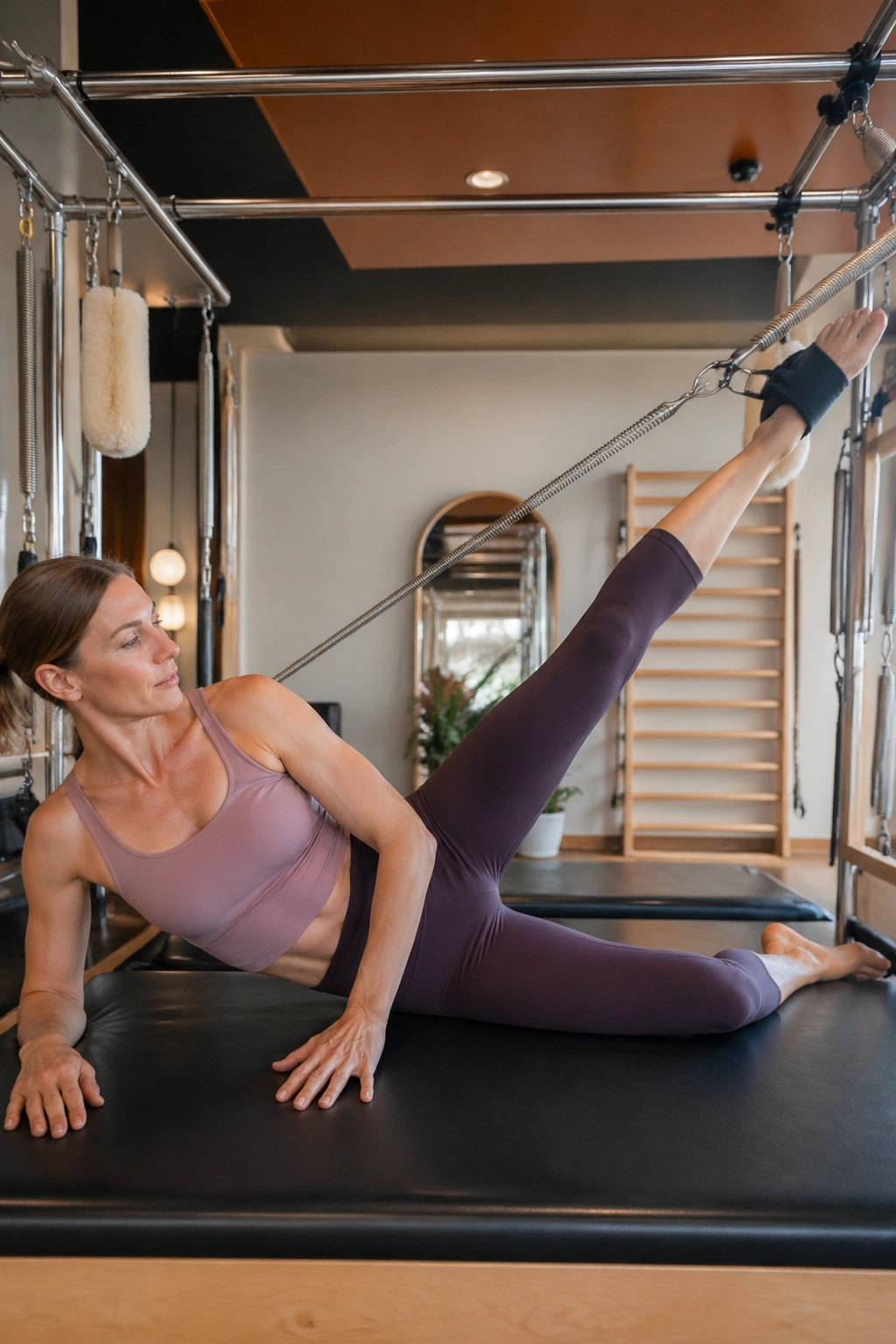
Unlike the mat side kick series, the Cadillac version keeps the non-working hip honest. The springs tug just enough to expose whether your waist is lifted or collapsed, which makes this series excellent for the obliques and the side wall.
I like this work because it punishes sloppy alignment in a useful way. If the top leg swings wildly, the pelvis follows. If the waist shortens, the side body caves. Keep the torso stacked, keep the legs active, and let the springs remind you where the center is.
Keep the Waist Lifted
The main goal is not a bigger leg line. It is a quieter trunk. When the side waist stays long, the leg can move freely without dragging the whole body with it.
A few small details help a lot:
- Press lightly into the supporting shoulder so you do not collapse into the mat.
- Keep the lower ribs knit in.
- Move the top leg from the hip socket, not from momentum.
- Pause at the end of each kick and feel whether the pelvis stayed square.
That pause matters. It tells you whether the exercise is training your core or just entertaining your leg.
11. Side Sit-Up with the Push-Through Bar
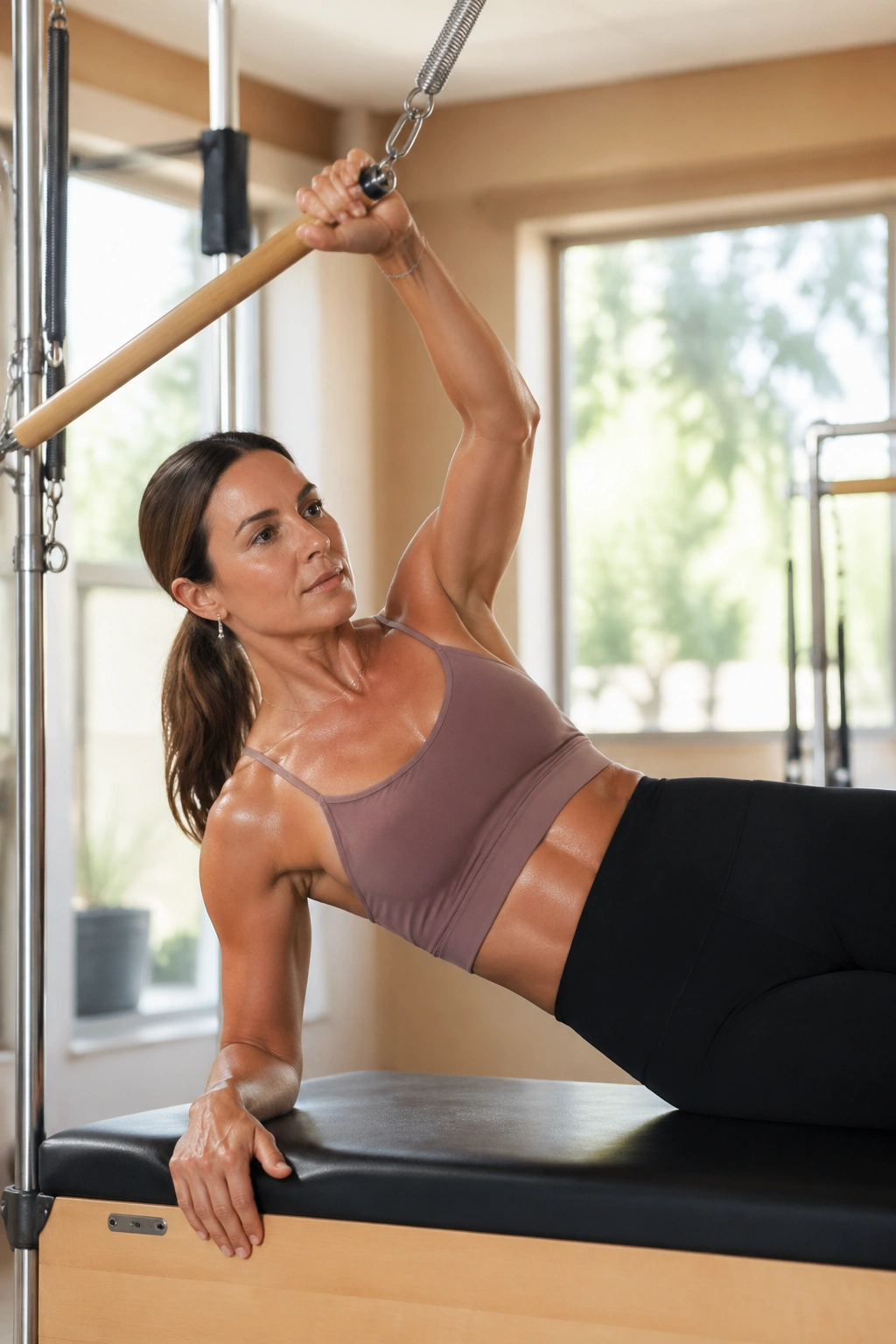
You can feel this one in the whole side body from the first rep. The side sit-up with the push-through bar asks the obliques to shorten and lengthen while the arm line stays active, and that combination makes the waist work in a very direct way.
The temptation is to use the arm like a lever. Don’t. If you yank the bar to help you pop up, the side body misses the point. Instead, keep the shoulder settled, let the trunk lift from the waist, and think about peeling the side ribs away from the mat.
The motion should feel like a controlled side bend, not a crunch. There’s a difference. A crunch collapses. A side bend opens and closes with more space through the ribs and better length through the spine.
A clean rep leaves the side waist a little warm and the shoulder calmer than you expected. That’s a good sign. The arm helped, but it didn’t take over.
12. Short Spine Massage on the Cadillac
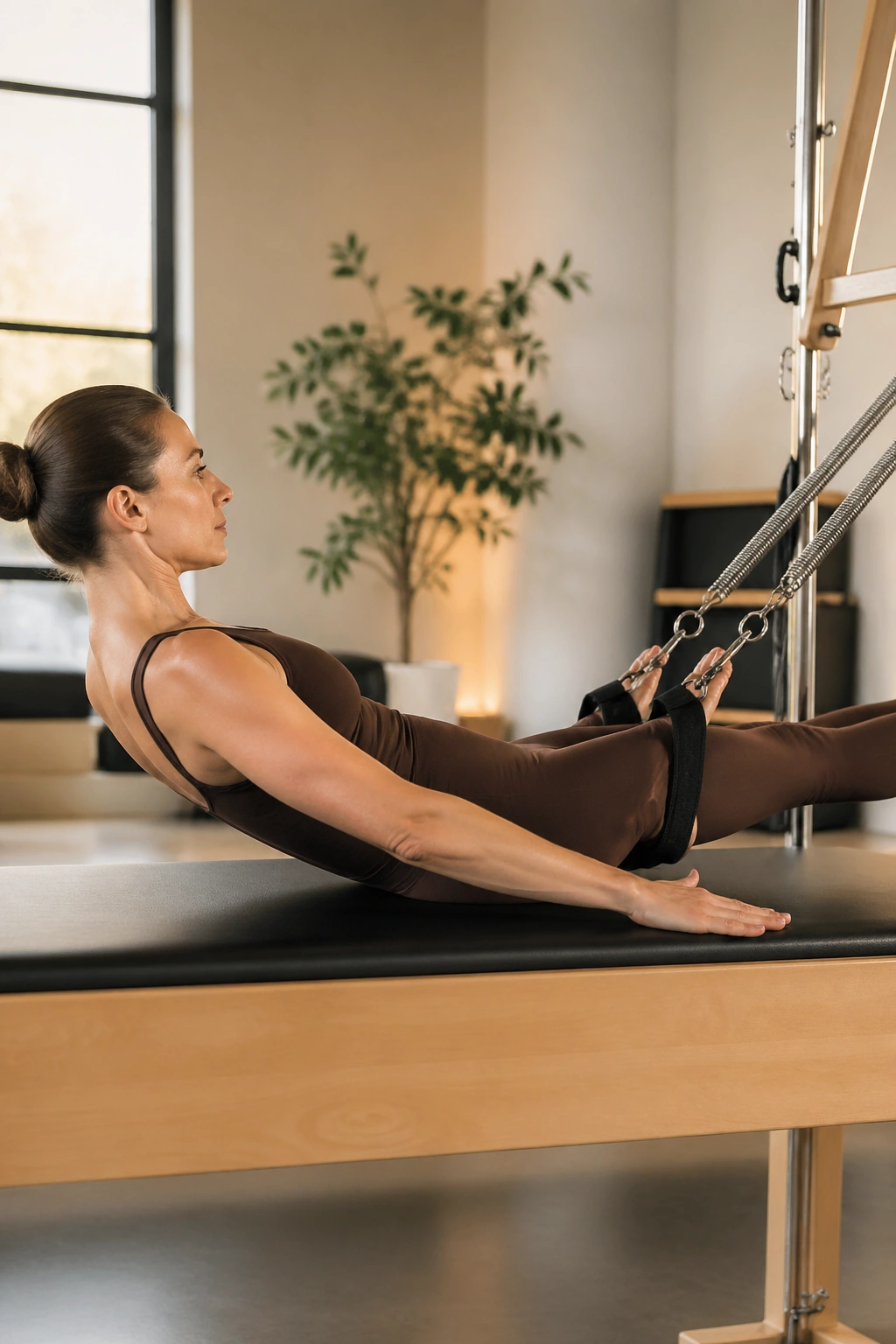
Can a move that looks like a hamstring stretch also work the core hard? Yes. Short spine massage does exactly that, which is why it earns a spot on any serious Cadillac core list.
The shape asks for control through the roll-up, the pause overhead, and the return. If you fling the legs and drop the pelvis, the springs will carry you through the hard part. If you slow down and keep the abdominal wall engaged, the exercise becomes a deep trunk challenge with a stretch attached.
The part people rush is the transition at the top. That’s where the work is. The pelvis has to stay organized while the spine articulates, and the legs have to stay connected to the center rather than flying apart in a sloppy arc.
If your neck feels compressed, stop. Reset the springs, make the range smaller, and keep the chest broad. This is one of those exercises that improves fast when the setup is patient.
13. Roll-Over with the Push-Through Bar
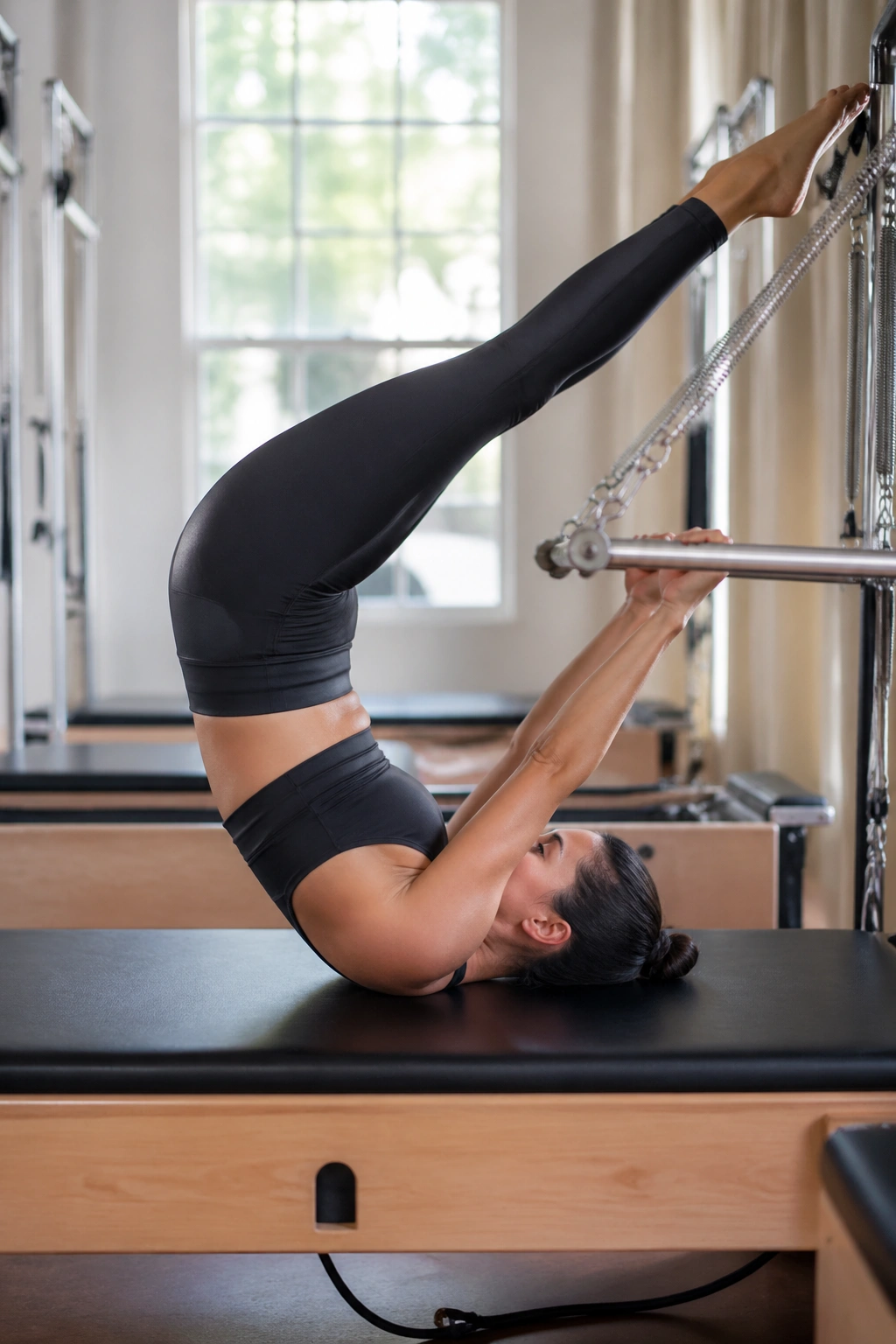
This is not a show-off move, no matter how pretty it looks when someone does it well. The roll-over on the Cadillac is a serious abdominal control exercise, and it punishes impatience almost immediately.
The bar gives you a line to manage as the legs travel overhead. That means the trunk has to organize the pelvis, the ribs, and the return path instead of letting momentum do the heavy lifting. It is advanced work. Respect it.
What to Watch For
- Do not roll back so far that the neck feels crowded.
- Keep the shoulders rooted before the legs go overhead.
- Control the return one piece at a time.
- Stop if the low back arches hard or the breath gets held.
A good roll-over feels long, contained, and almost quiet. A bad one feels like the springs are dragging you around. The difference is usually tempo. Slow fixes more than people want to admit.
If you want toned abs, this is the kind of move that asks the real question: can your center stay steady when your legs are upside down and your brain wants to hurry?
14. Chest Expansion with Arm Springs
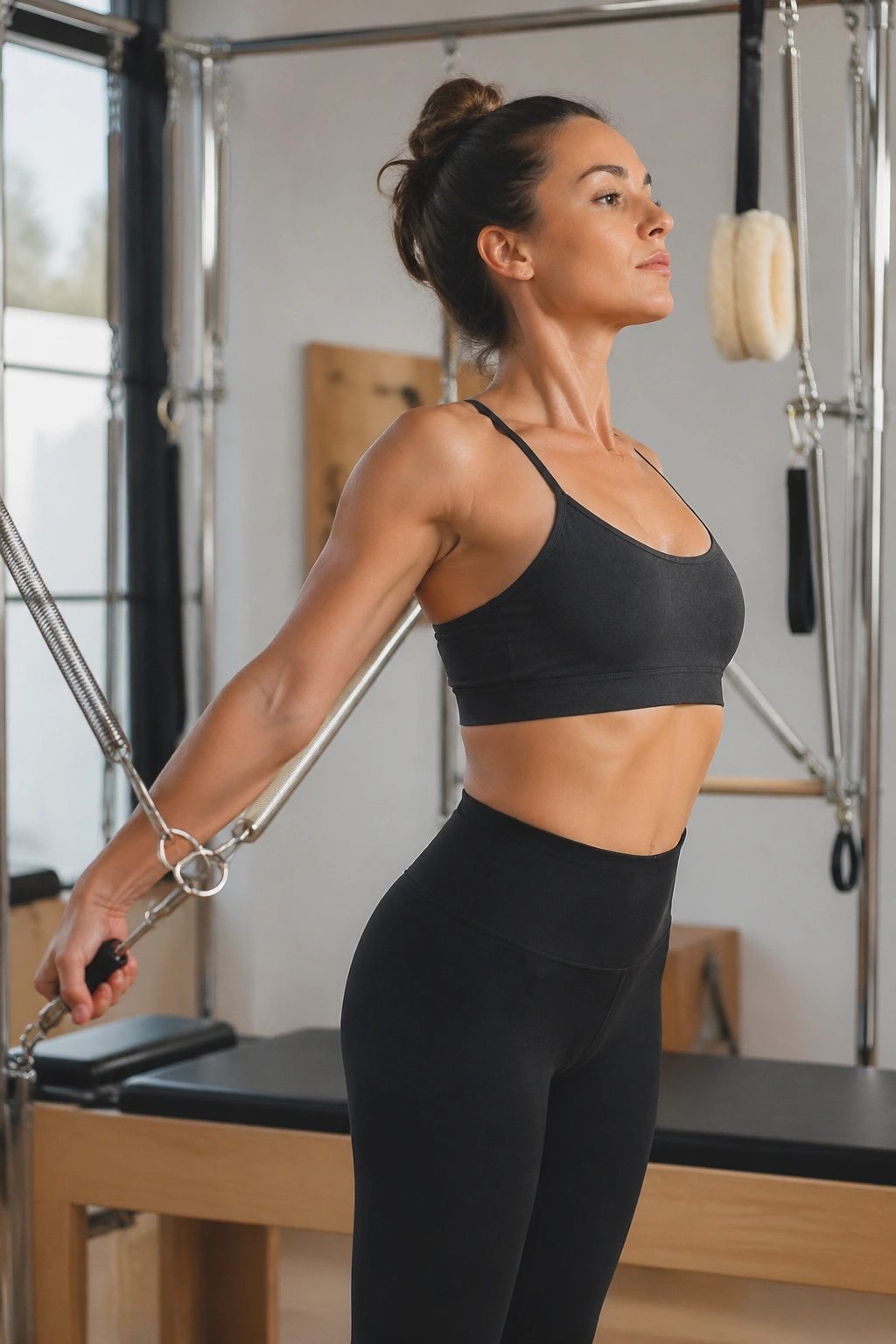
People think core work means crunches and leg lowers. Sometimes it means standing tall while the springs try to twist your torso. Chest expansion with arm springs is a good example of that. The movement looks upper-body focused, but the trunk has to stay organized or the whole body sways.
The setup is simple: stand with the ribs stacked over the pelvis, pull the arms back, and resist the spring pulling you off center. That resistance wakes up the deep support muscles around the spine and lower ribs in a way that feels clean, not flashy.
A detail I care about here is breath. If you hold it, the shoulders take over. If you keep the neck soft and exhale as the arms pull back, the midsection has a much better shot at staying steady. That steadiness matters more than how far the arms go.
It’s also one of the better Cadillac moves for posture, which is part of a toned look whether people want to admit it or not. A stacked trunk makes the waist line look different in clothing, and the exercise helps you practice exactly that.
15. Control Balance Prep on the Cadillac
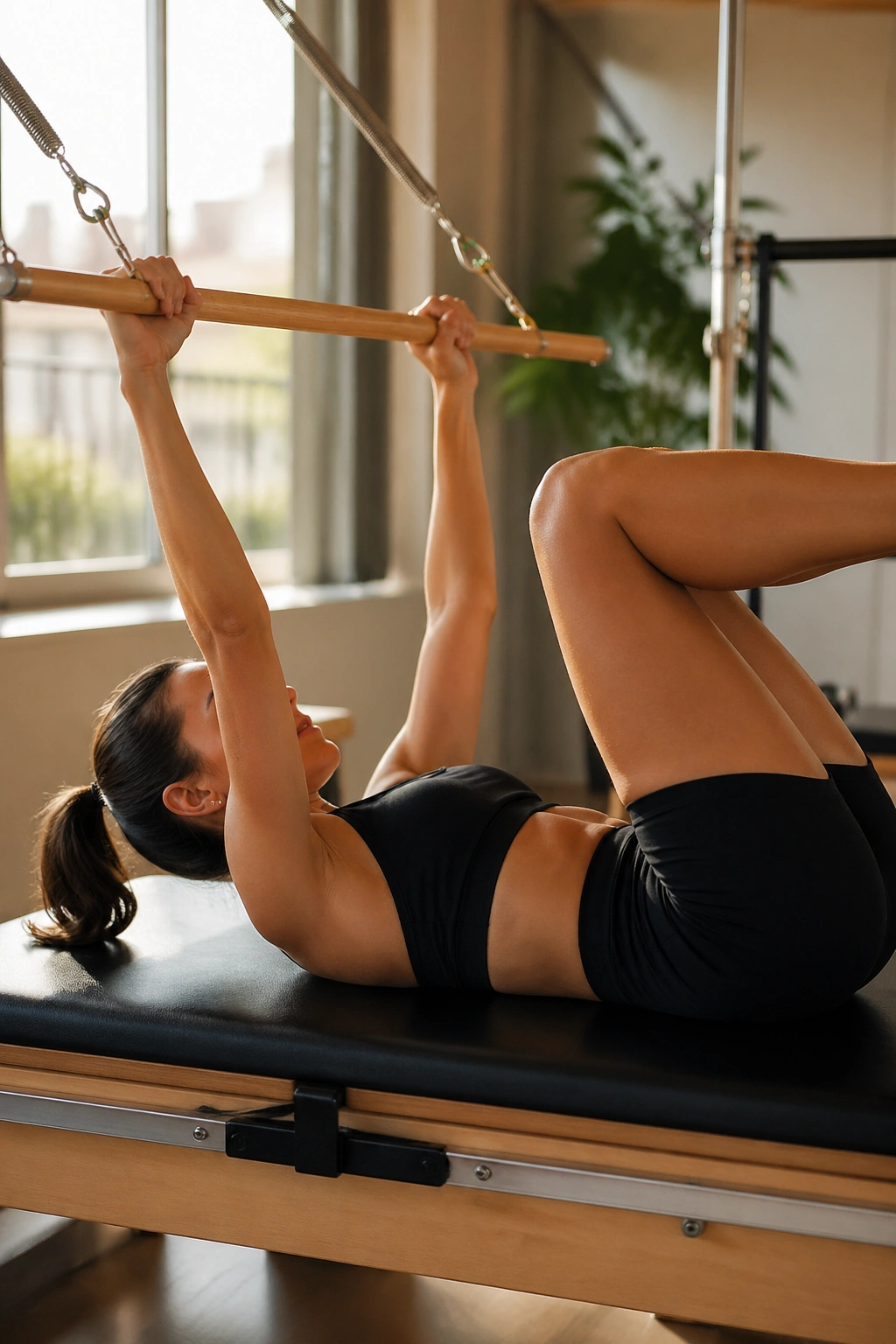
The first time your legs float overhead and one tiny wobble shows up, you know whether your core is actually doing its job. Control balance prep is that kind of exercise. It asks for strength, but it asks for composure too.
The move is not about throwing the legs up and hoping the springs catch you. It is about creating a stable trunk, controlling the roll, and keeping the hips from drifting off to one side when the shape gets challenging. If the shoulders scrunch or the jaw tightens, you are probably pushing too hard.
When to Scale It Down
- Use smaller leg range if your hamstrings are tight.
- Keep the roll-over portion shorter if your neck gets cranky.
- Bend one knee if you need a clearer line of control.
- Stay with the prep until the pelvis feels steady on both sides.
That last part matters. A toned core is not only about visible muscle. It is about the ability to keep shape under pressure, and the Cadillac makes that pressure very obvious. Once you can stay centered here, the other spring work starts to feel less random and more connected.
And honestly, that is the point. Not bigger movement. Better movement. The Cadillac rewards the person who can make a small shape look organized, controlled, and calm, even when the springs are pulling in every direction.
If you want the smartest return from these 15 Cadillac Pilates moves, keep the range honest and the pace slower than you think you need. The abs will still work. Usually more.
