



Pilates exercises for intermediate levels have a funny way of exposing everything you thought you had under control. The shapes look clean. The pace looks calm. Then the slow roll-down starts, the leg line gets longer, and all the little cheats you used to get through easier work show up in plain daylight.
That is what makes intermediate Pilates worth doing. The goal is not to make the exercises bigger or faster. It is to make them cleaner, with less tension in the neck, less wobble in the pelvis, and more control in the places that tend to drift when you get tired. A strong set of abs is nice. A strong set of abs that can keep the ribs closed while the legs move in two directions at once is better.
A good mat session leaves you warm through the center, a little open through the back, and more honest about how your body organizes itself. You can usually tell when the work is right because the effort lands in the belly, the upper back, and the deep hip muscles instead of turning into neck strain or a cranky lower spine. Small towel under the head, clear floor space, and a willingness to slow down help more than fancy gear.
The twenty moves below live in that intermediate zone where the basics stop being enough. Some are classical, some are transitional, and a few push hard. That mix is the point.
1. The Roll-Up
The roll-up looks calm until you try to do it slowly. Then it becomes brutally honest about whether your spine is moving one vertebra at a time or whether you are flinging yourself up with momentum.
Lie on your back with your legs long, feet flexed, and arms reaching overhead. Inhale to prepare. On the exhale, nod the chin, peel the head and shoulders off the mat, and continue curling up until you reach toward your toes. The real work is the trip back down. Lower one segment at a time, keeping the ribs knit and the belly deep, until your back is flat on the mat again.
What makes it intermediate
The basic version is one thing. The slow version is another. When you reduce speed, the hip flexors stop hiding, and any tugging in the neck becomes obvious fast.
- Keep the ribs heavy as you start down.
- Reach forward through the crown of the head, not the chin.
- If your feet lift off the mat, bend the knees a little.
- A strap around the feet can help tight hamstrings.
Do not throw your body up and drop back like a plank of wood. Smooth articulation is the whole exercise.
2. The Hundred
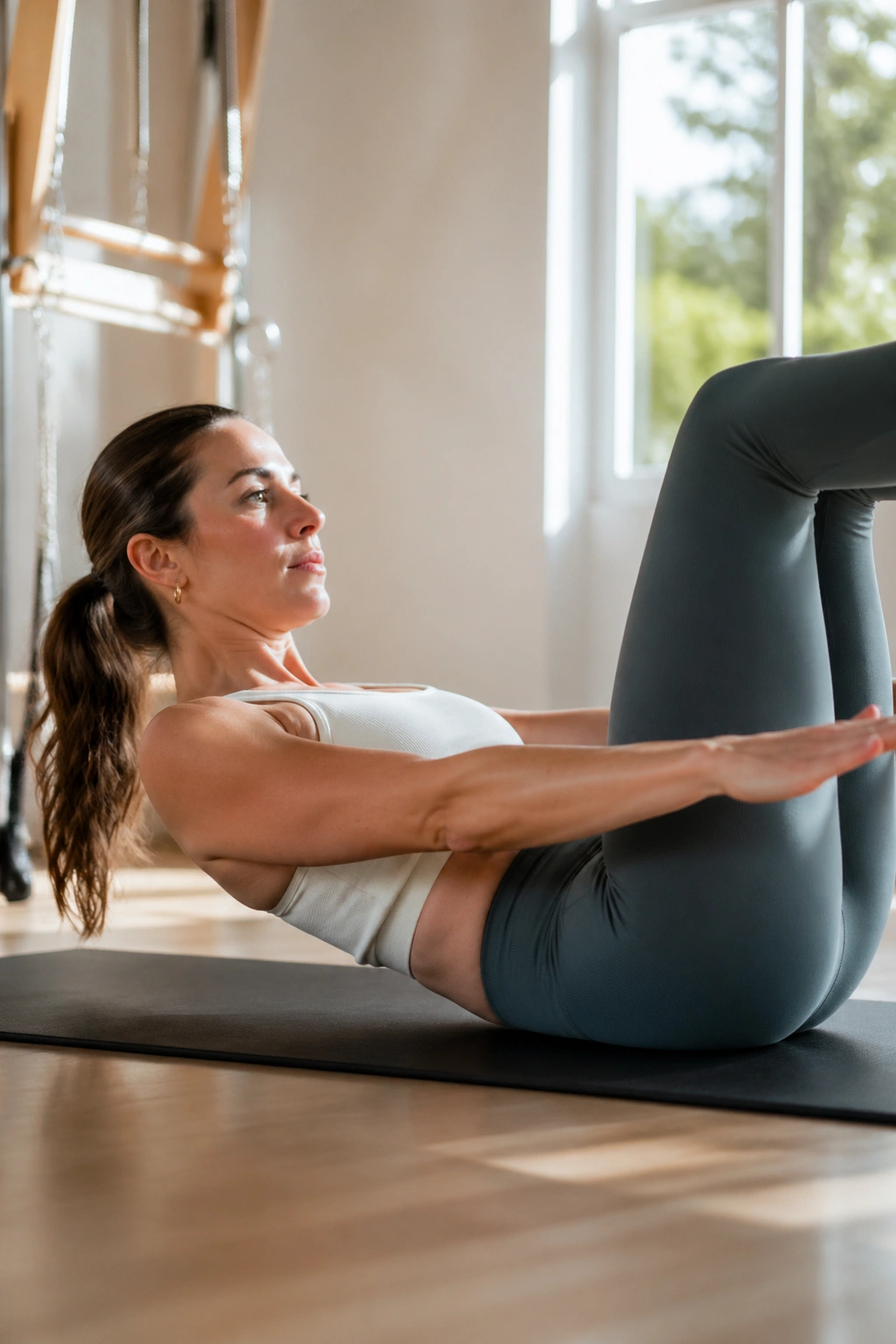
Can you hold the hundred without your neck taking over? That is the real question here. If your answer is no, you are in good company.
Set up with your knees bent in tabletop or with the legs extended lower if your back stays quiet. Lift the head and shoulders just enough to feel the abdominals switch on, then pump the arms hard and fast for five counts in, five counts out. Ten breath cycles make one full hundred. The rhythm matters, but the shape matters more. If the ribs flare or the low back arches, the set has gone off the rails.
Keep the neck out of it
This one gets messy when people try to prove something. No proof is needed.
- Keep your gaze toward the thighs, not the ceiling.
- Lower the legs only as far as the pelvis stays still.
- Exhale sharply enough to feel the deep belly draw in.
- Rest your head between sets if the neck starts to tighten.
A bent-knee hundred is still a real hundred. A sloppy straight-leg hundred is just noise.
3. Single Leg Circle
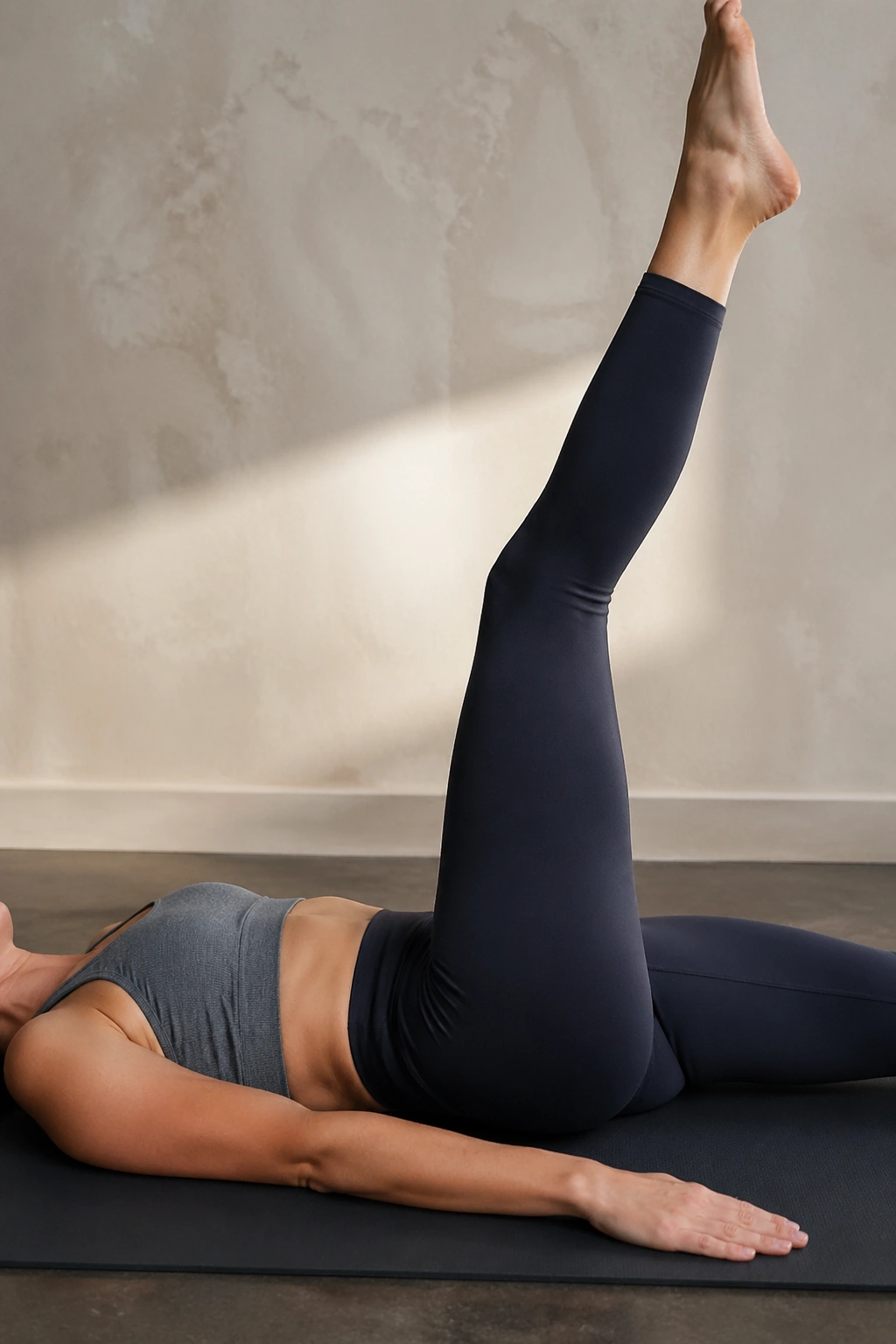
Single leg circle is where the pelvis starts telling the truth. One leg moves, but the job is really in the opposite hip, which has to stay heavy and quiet.
Lie on your back and extend one leg up toward the ceiling while the other leg reaches long on the mat. Circle the lifted leg across the body, down, around, and back to center. Keep the circle small enough that the pelvis does not rock. That part matters more than the size of the shape in the air. Most people make the circle too large on the first try, which turns the exercise into a hip joint fling.
How to keep it clean
A good circle feels controlled and boring in the best way.
- Press the weighted leg firmly into the mat.
- Keep both hip bones level.
- Move from the hip socket, not the knee.
- Make five circles each way before switching legs.
If the lower back arches, shrink the path immediately. Small circles are not a downgrade. They are the exercise.
4. Rolling Like a Ball
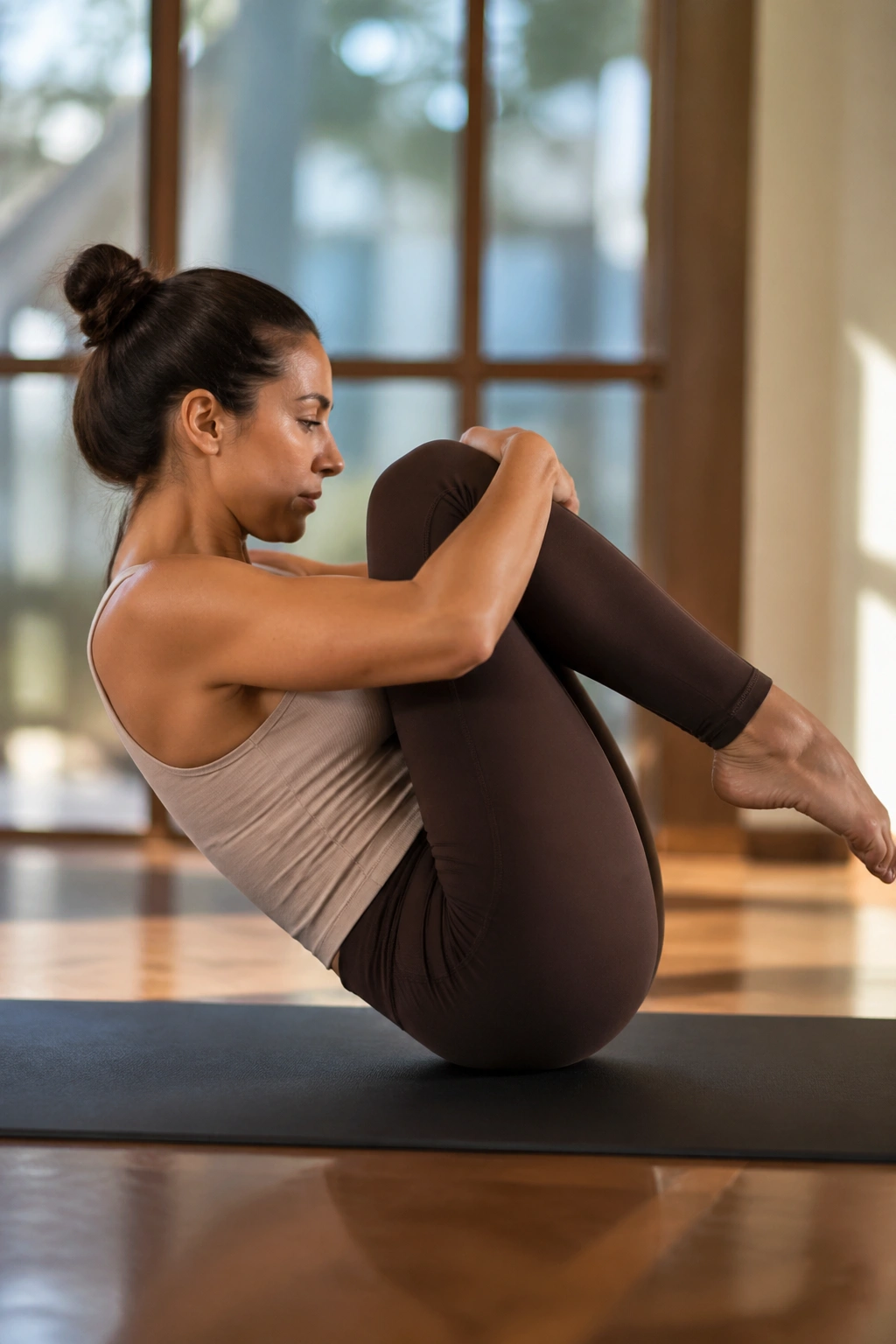
Rolling like a ball punishes sloppy balance fast. If you sit back on your coccyx instead of finding a true C-curve, the roll becomes clunky and the rebound disappears.
Start seated with your knees bent and feet lifted, holding behind the thighs or shins. Draw the belly in, round the spine, and roll back to the base of the shoulder blades. Inhale as you roll back, exhale as you come up, and try to land in the same balanced spot each time. The hands do not drag you through it. They just keep the shape together.
A lot of people rush this because it looks playful. It is not playful when the curve collapses. The exercise works best when the spine feels long and rounded, like a smooth wheel instead of a crash landing.
- Keep the knees glued close to the chest.
- Pause for a beat at the top.
- Stop if you are slamming into the mat.
- Stay off the neck; the head follows the spine.
5. Single Leg Stretch
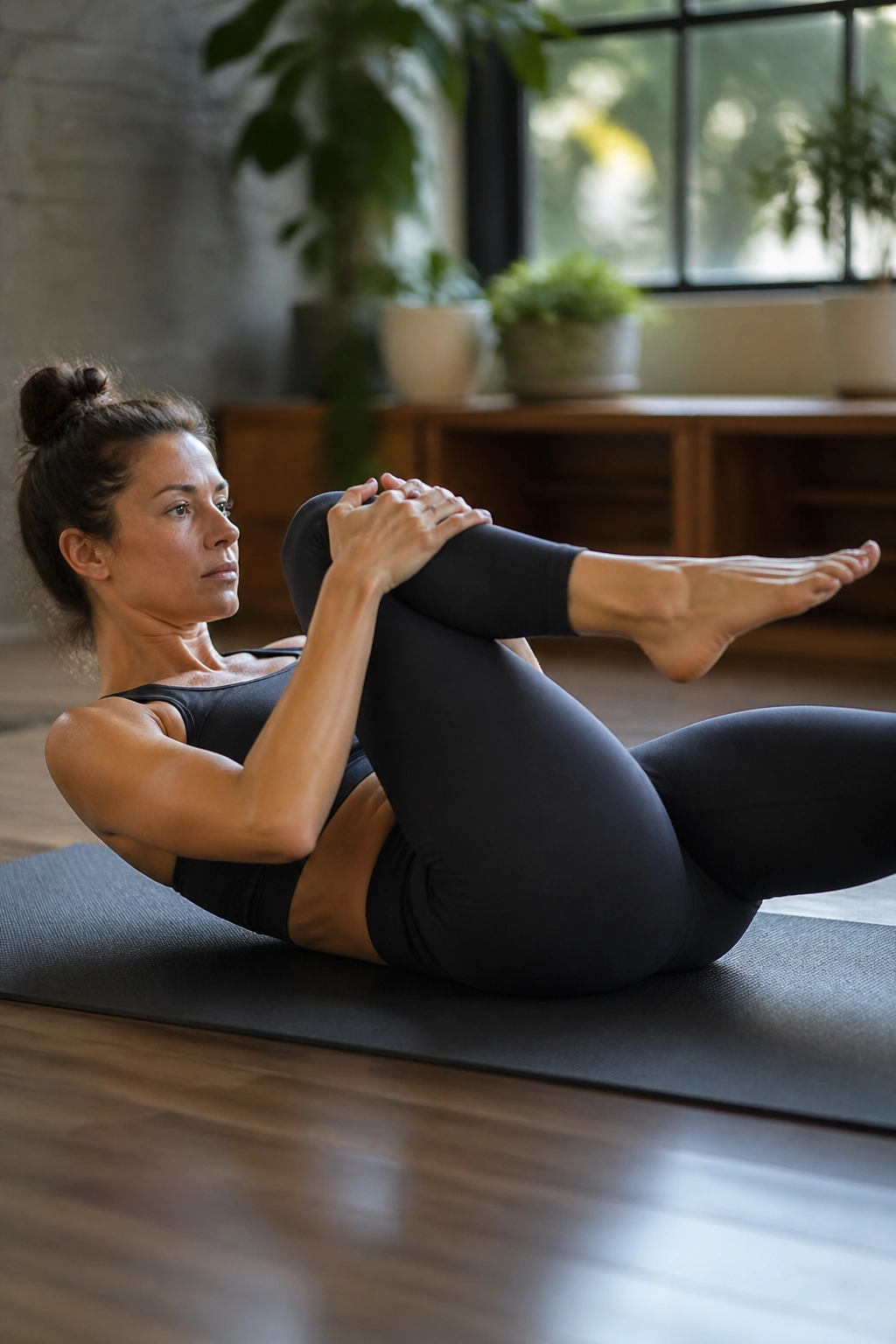
Single leg stretch feels simple until your ribs pop. Then it stops feeling simple very quickly.
Lie on your back, lift the head and shoulders, bring one knee toward the chest, and extend the other leg long and low. Switch legs with a steady breath pattern, keeping the pelvis still and the waist pulled back into the mat. The long leg should hover, not crash. If it drops too low, the lower back will announce itself.
The exercise teaches coordination more than brute strength. One side folds while the other reaches, and the trunk has to stay steady through the whole thing. That is the lesson. Not speed. Not flair.
A useful cue: imagine your thighs are sliding out of the hip sockets while your center stays zipped up. It sounds a little odd, but it works.
Lower the extended leg only as far as you can keep the belly flat. That is the line you should respect.
6. Double Leg Stretch
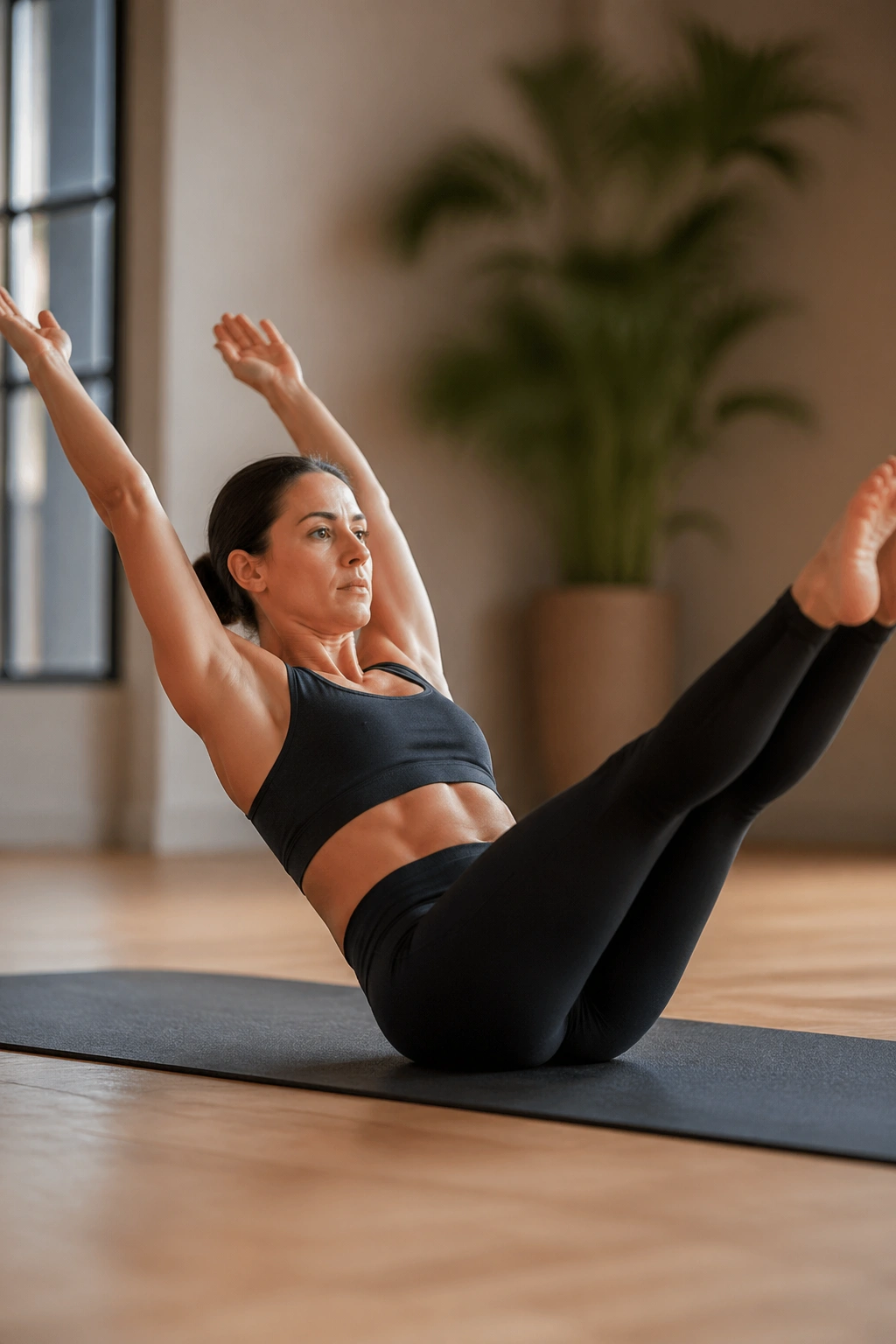
Double leg stretch is the move that exposes fake core work. If you are holding yourself together with neck tension or a tight hip grip, this one reveals it in a few repetitions.
Start curled up with both knees in. Inhale as you stretch the arms overhead and the legs long at the same time. Exhale to circle the arms around and pull the knees back in. The body opens, then closes. The torso stays steady through both phases.
What the movement should feel like
The reach out should feel long, not floppy. The return should feel like the belly scoops the limbs back in.
- Keep the ribs from flaring when the arms go overhead.
- Reach the legs only as low as you can control.
- Keep the shoulders away from the ears.
- Stop if the lower back starts to arch.
This one is worth doing slowly. Fast reps make it look easier than it is, and they usually hide the weak spots instead of building them.
7. Criss-Cross
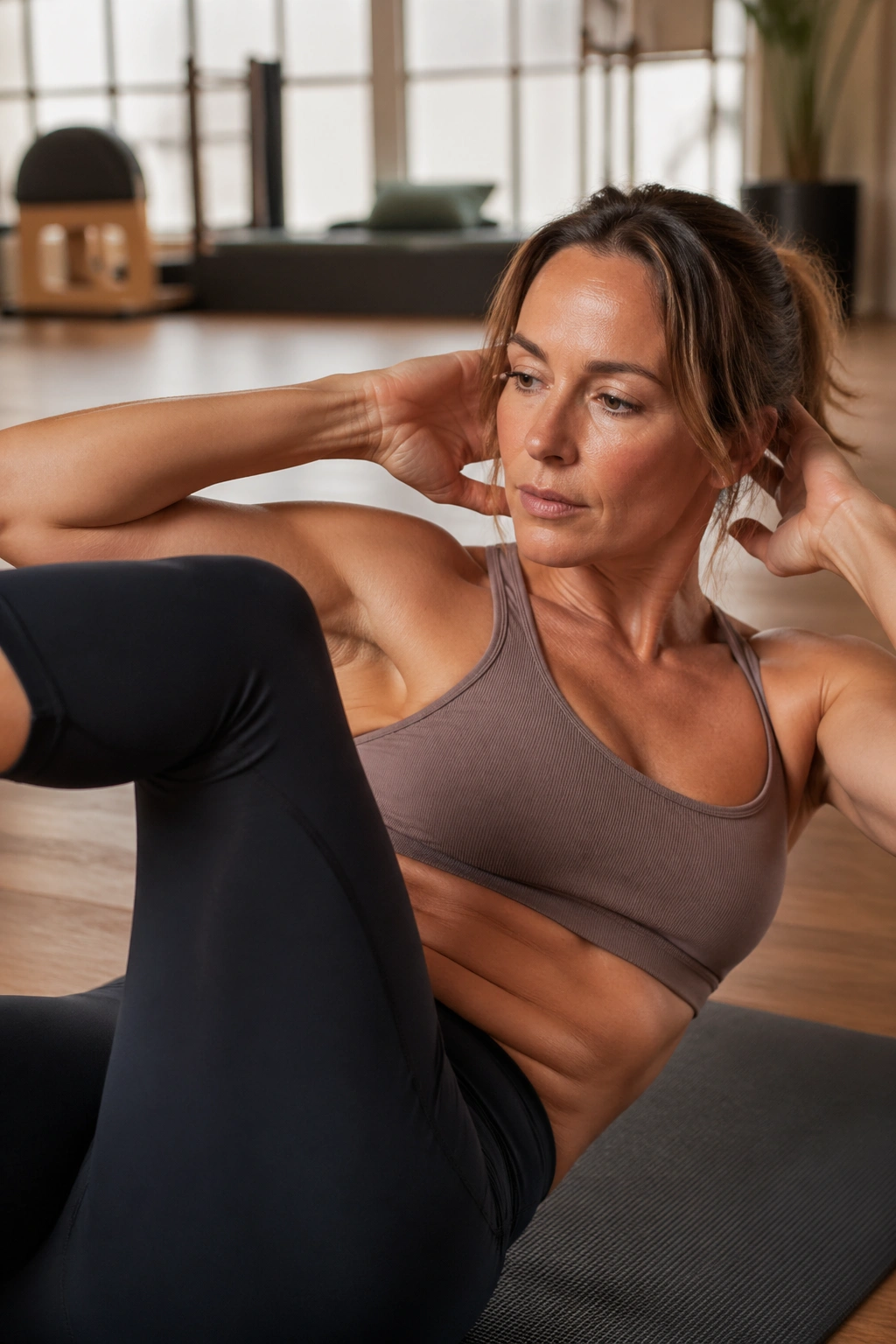
Criss-cross is not a bicycle crunch in Pilates clothes. It is a rotation exercise, and the twist needs to come from the ribs and waist instead of the elbows yanking the head.
Lift into a curled upper body, draw one knee in, extend the other leg long, and rotate the torso so the opposite shoulder moves toward the bent knee. Switch sides with control. The key is the twist of the rib cage, not a frantic elbow-to-knee tap.
If you have ever felt this in your neck more than your obliques, the form is off. Back off the range. Lift the chest a little higher. Keep the elbows open. The twist can be smaller and still matter.
Watch for these mistakes
- Pulling on the head.
- Letting the legs swing.
- Letting the pelvis wobble side to side.
- Racing the breath.
Exhale on the twist. It helps the waist narrow and keeps the movement from turning sloppy.
8. Open Leg Rocker
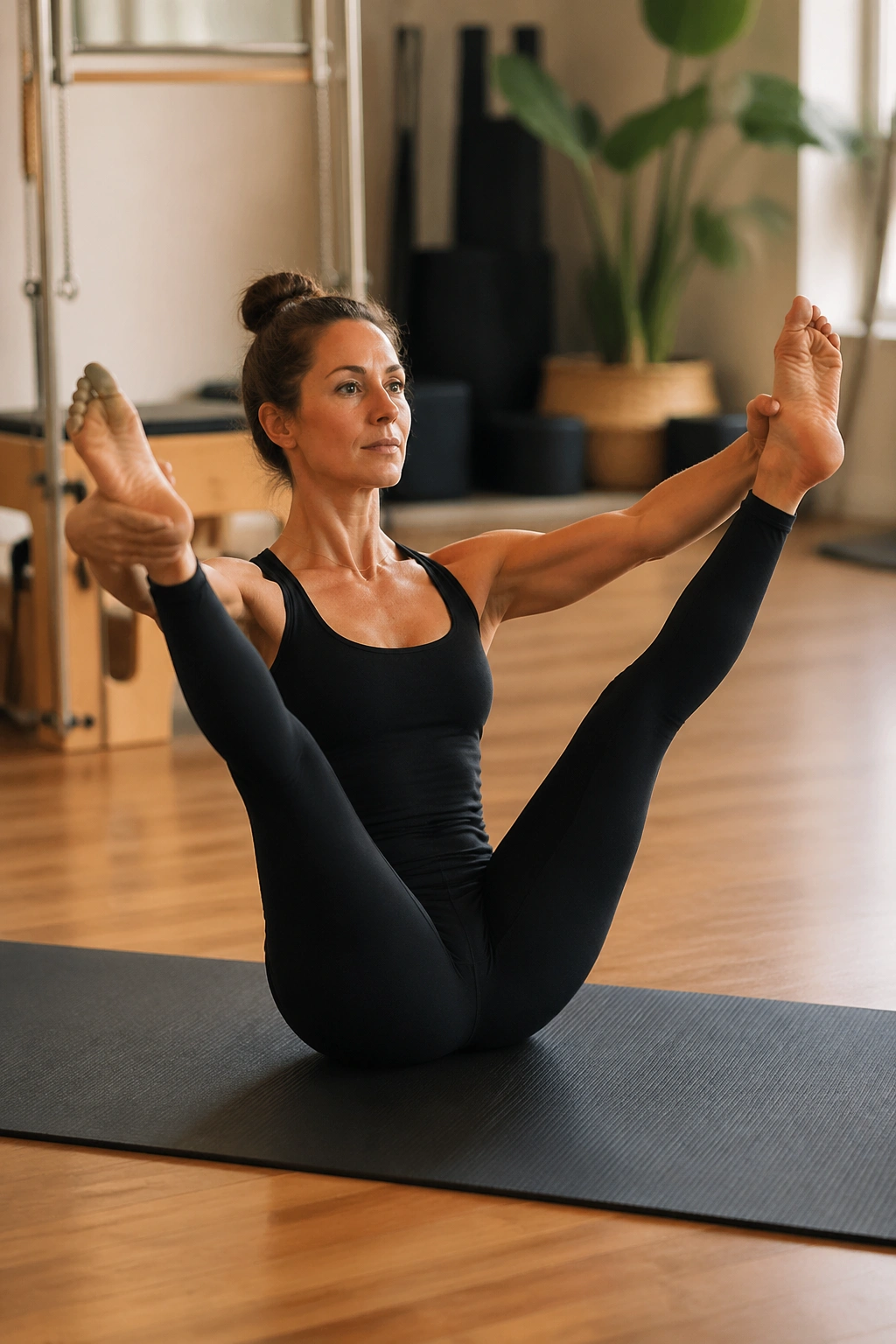
Open leg rocker looks playful, then the balance demands show up. The shape asks for hamstring length, spinal control, and enough abdominal strength to stay balanced on the sit bones.
Sit with the legs open in a V shape, hold the ankles or calves, and find a lifted spine before you tip back. From there, roll back to the shoulders and return to balance without collapsing into the knees. If your hamstrings are tight, bend the knees. Seriously. Tight legs make this move ugly fast, and there is no prize for forcing the shape.
The best version feels buoyant. You roll, pause, and come back up without clenching your jaw. That pause at the top is not decoration. It is the whole point.
A little messy? Fine. A lot of wobble? No.
- Keep the chest open.
- Use a soft grip, not a death grip.
- Keep the gaze on the knees or shins.
- Do not let the lower back round too early.
9. Spine Stretch Forward
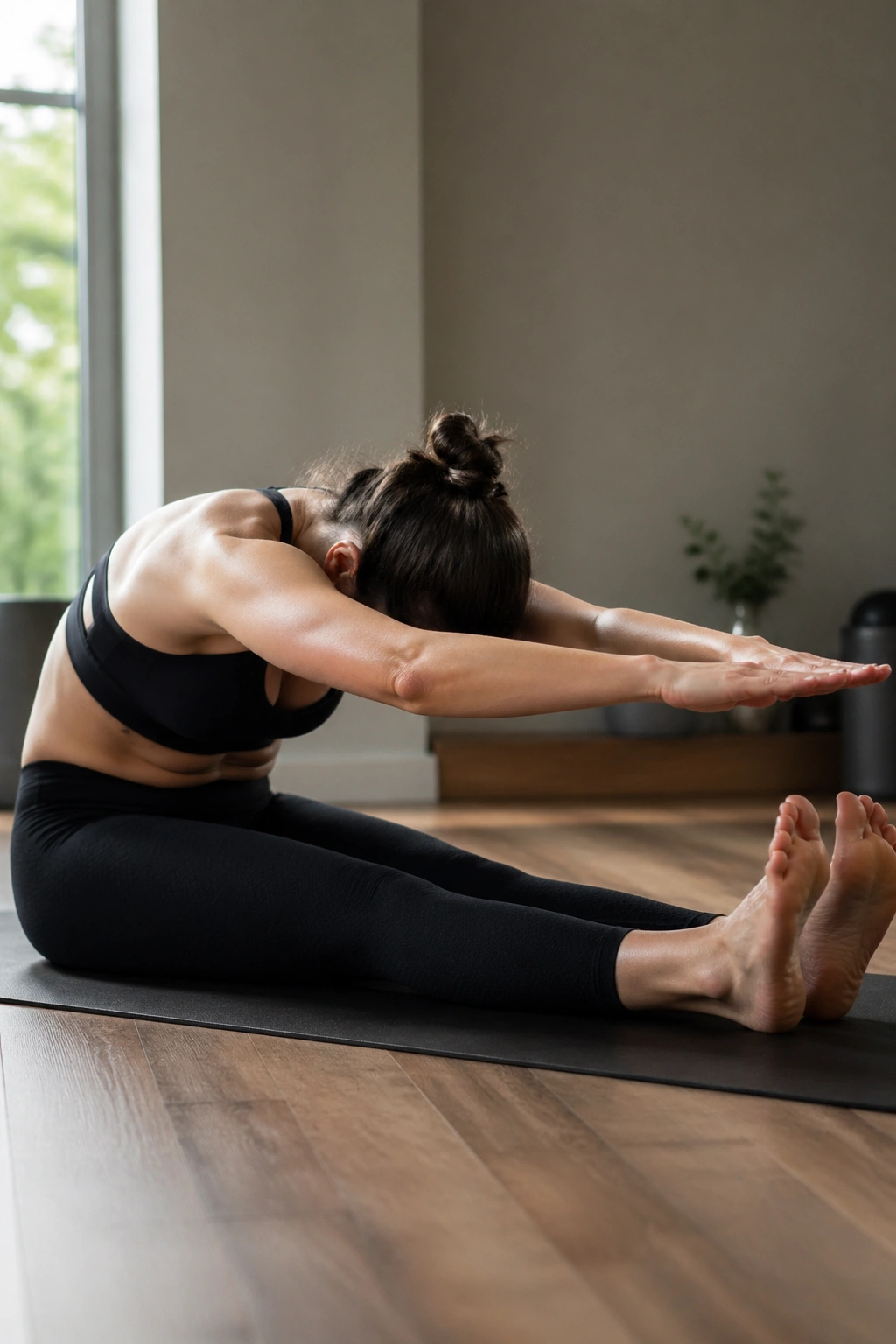
The best spine stretch forward feels almost boring. That is a compliment.
Sit tall with the legs extended and feet flexed, arms reaching in front at shoulder height. Inhale to grow upward through the crown of the head. Exhale to round forward, peeling the ribs back and reaching the fingers past the toes without collapsing the chest. The sit bones stay grounded. The pelvis does not tuck under and chase the movement.
This is one of those Pilates exercises that looks like a simple reach but behaves like a spinal reset when it is done well. The stretch should spread across the back body, not jam into the low back or turn into a hamstring tug-of-war.
What it should feel like
- A widening between the shoulder blades.
- A gentle pull along the back of the legs.
- A deep exhale that empties the ribs.
- No strain at the neck.
If you can only round halfway before the pelvis shifts, that is the correct stopping point for now. Keep that shape honest and build from there.
10. Saw
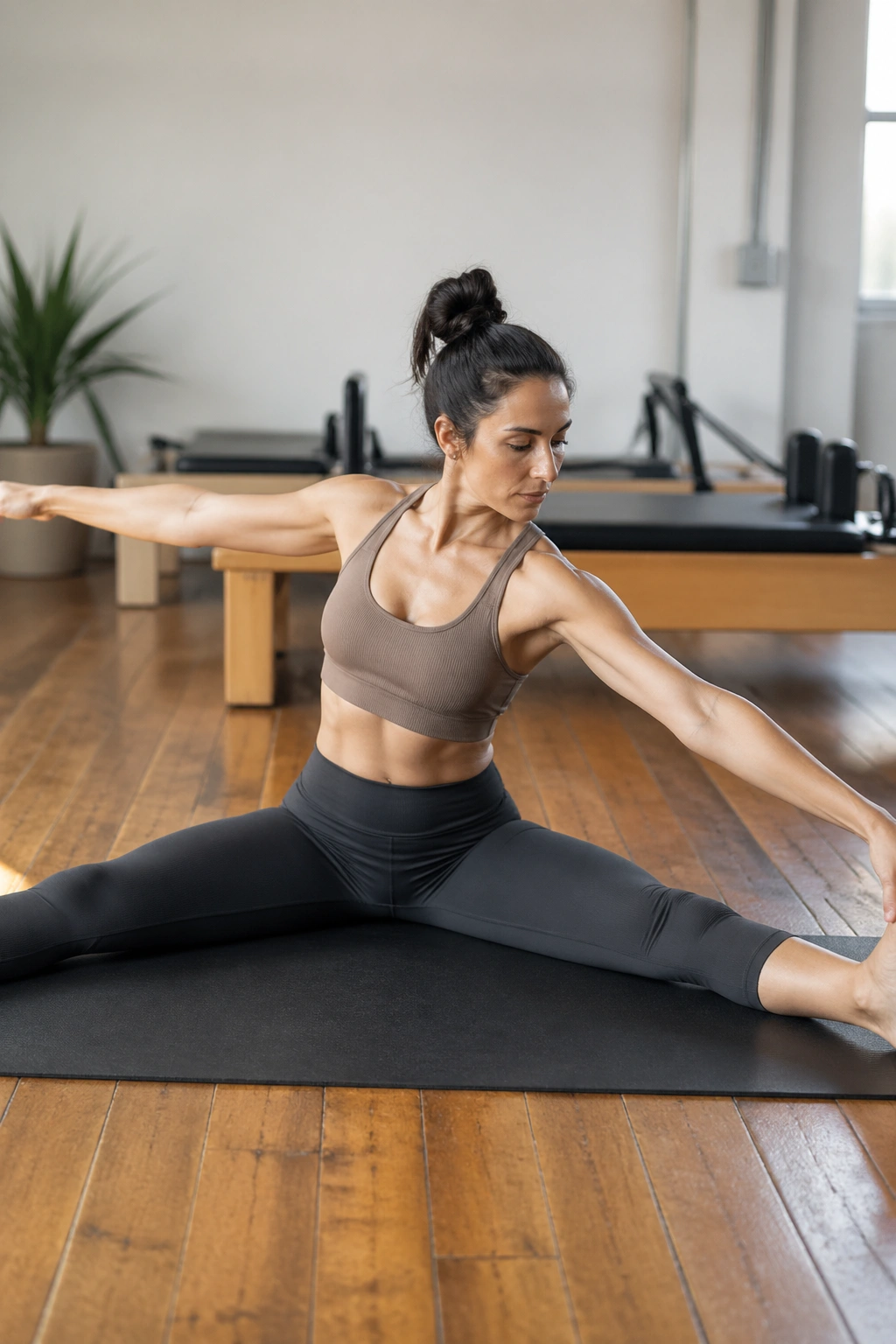
Saw is one of those exercises that gets cleaner the slower you go. Hurry through it, and it turns into a flailing reach. Slow it down, and the twist starts doing real work.
Sit in a wide V with the arms stretched out at shoulder height. Rotate the torso toward one leg, reach the opposite hand toward the pinky toe, and then rebound back to center before switching sides. The pelvis stays rooted. The legs stay active. The twist happens above the waist, not by yanking the shoulders around.
A cleaner twist
The saw should look long, not collapsed. That matters.
- Keep both sit bones heavy.
- Rotate from the rib cage first.
- Reach past the little toe, not down into the shin.
- Keep the opposite hip from floating off the mat.
A lot of people fold forward too early. Resist that. The twist comes first, then the reach. If you reverse the order, the move gets cramped and the spine misses the point.
11. Corkscrew
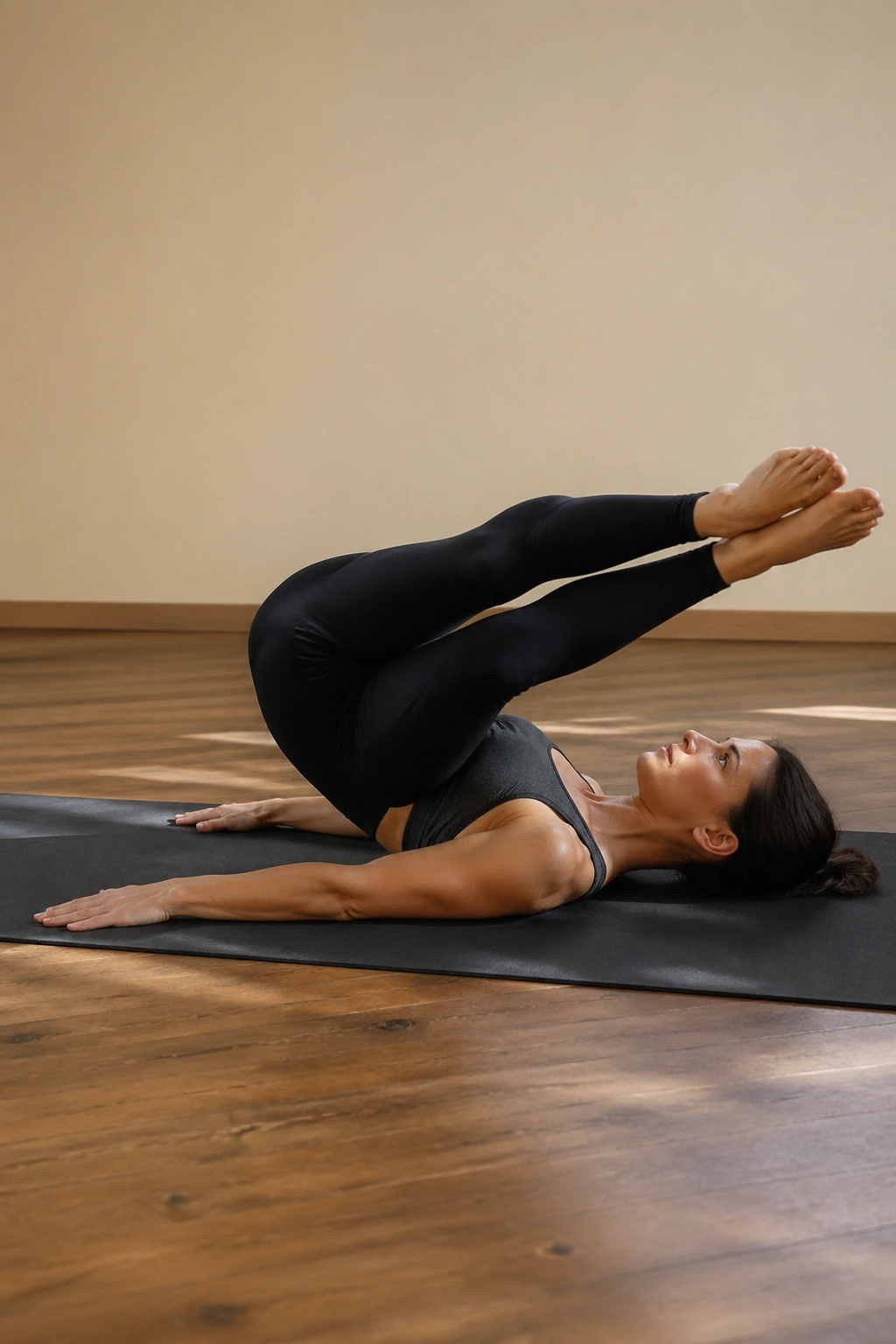
Corkscrew asks your torso to stay calm while your legs draw circles. That sounds easy until the circles start pulling the pelvis off center.
Lie on your back with the legs together and lifted. Circle them to one side, down, and around with control, keeping the shoulders grounded and the ribs stable. The movement can stay small. It should stay small if the low back is sensitive or if the abs are not quite ready for bigger ranges. Bigger is not better here. Cleaner is better.
This one is a good teacher because it shows whether the deep abdominal wall is actually catching the movement or whether the lower back is doing the job. If your pelvis tilts, shrink the circle. If your shoulders peel off the mat, shorten it again.
Quick checks
- Keep the chin slightly tucked.
- Press the upper arms into the mat.
- Move the legs as a unit.
- Stop before the back arches.
If the shape starts to wobble, the circle is too big. That is usually the whole story.
12. Swan Dive
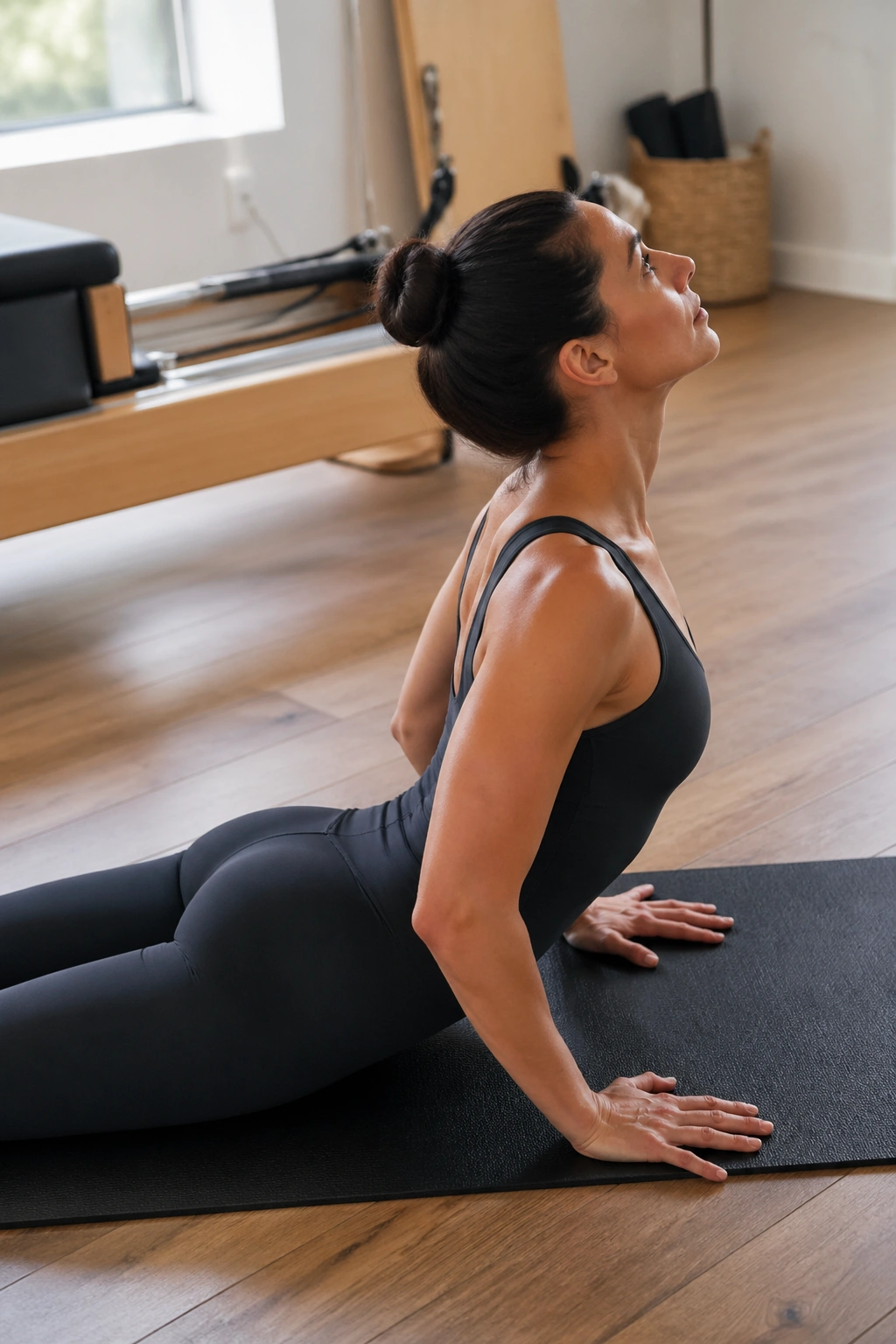
Swan dive is a back extension exercise, not a neck exercise. That distinction matters more than most people think.
Lie face down, hands under the shoulders, and press the chest forward and up while keeping the back of the neck long. The legs stay active and long behind you. Depending on the version, you may stay in a lifted swan shape or rock lightly forward and back. Either way, the lift should come from the upper back and the line through the spine, not from cranking the head upward.
The first time this feels right, the chest opens in a way that is almost startling. Not dramatic. Just open. That is the word.
- Keep the shoulders sliding down the back.
- Anchor the pubic bone lightly into the mat.
- Lift only as high as the lumbar spine can support.
- Breathe into the ribs, not the throat.
13. Single Leg Kick
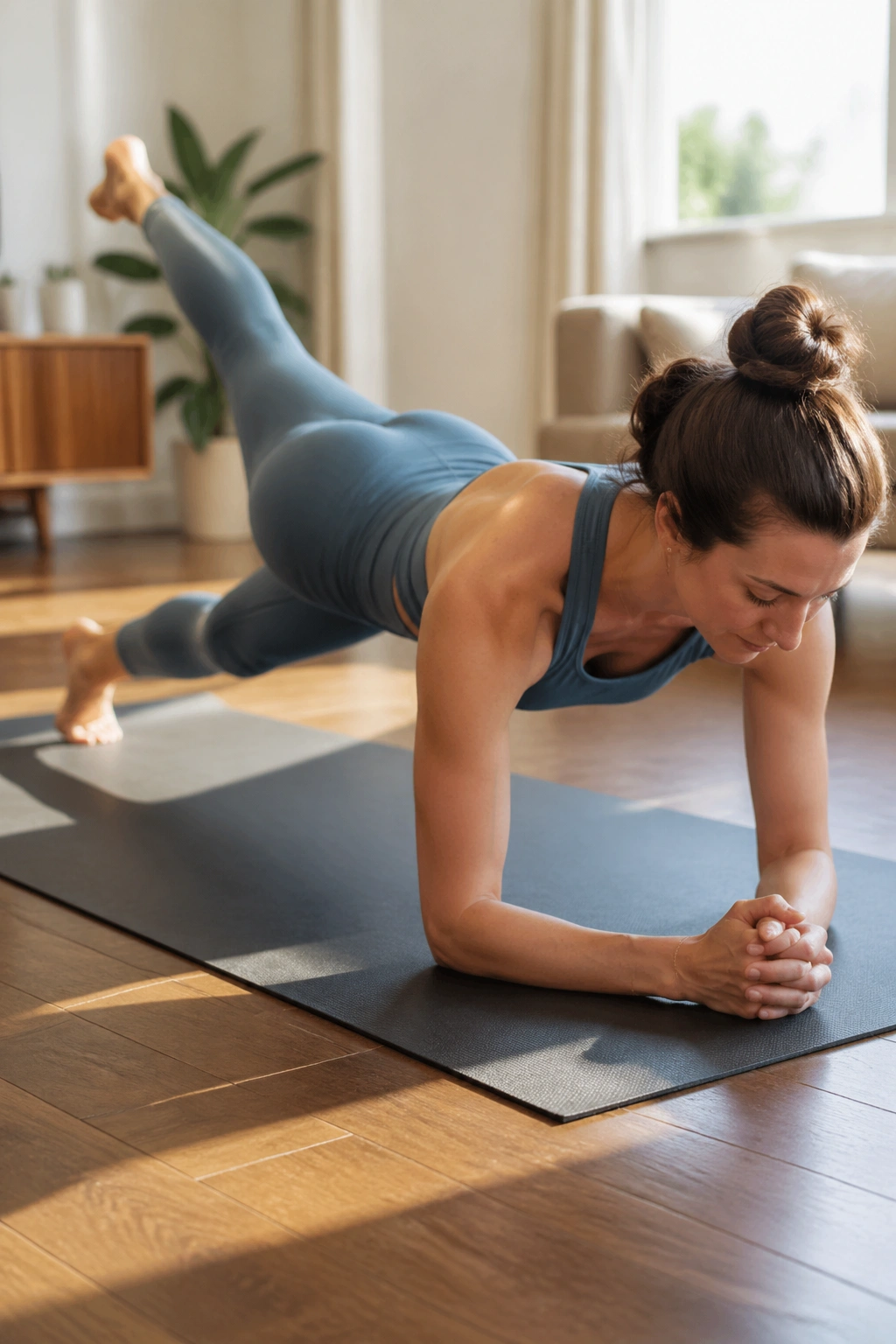
Single leg kick is all about staying lifted while the legs move. The torso has to stay long and steady, which is harder than it sounds when the hamstrings start to work.
Prop onto the forearms, lift the chest, and bring one heel toward the seat with two small kicks before switching sides. The hips remain down and the abdominals keep the lower back from dropping. A lot of people let the movement collapse into a neck strain or a sloppy sway through the pelvis. That ruins the point.
The kicks themselves are tiny. That is not a typo. Small kicks keep the work where it belongs.
The cue that helps most
Think of the front of the body lifting forward and up while the legs alternate behind you.
- Keep the elbows under the shoulders.
- Press the forearms firmly into the mat.
- Kick with control, not snap.
- Keep the thighs long on the return.
If the chest dives, pause and reset. The upper body should feel proud, not jammed.
14. Double Leg Kick
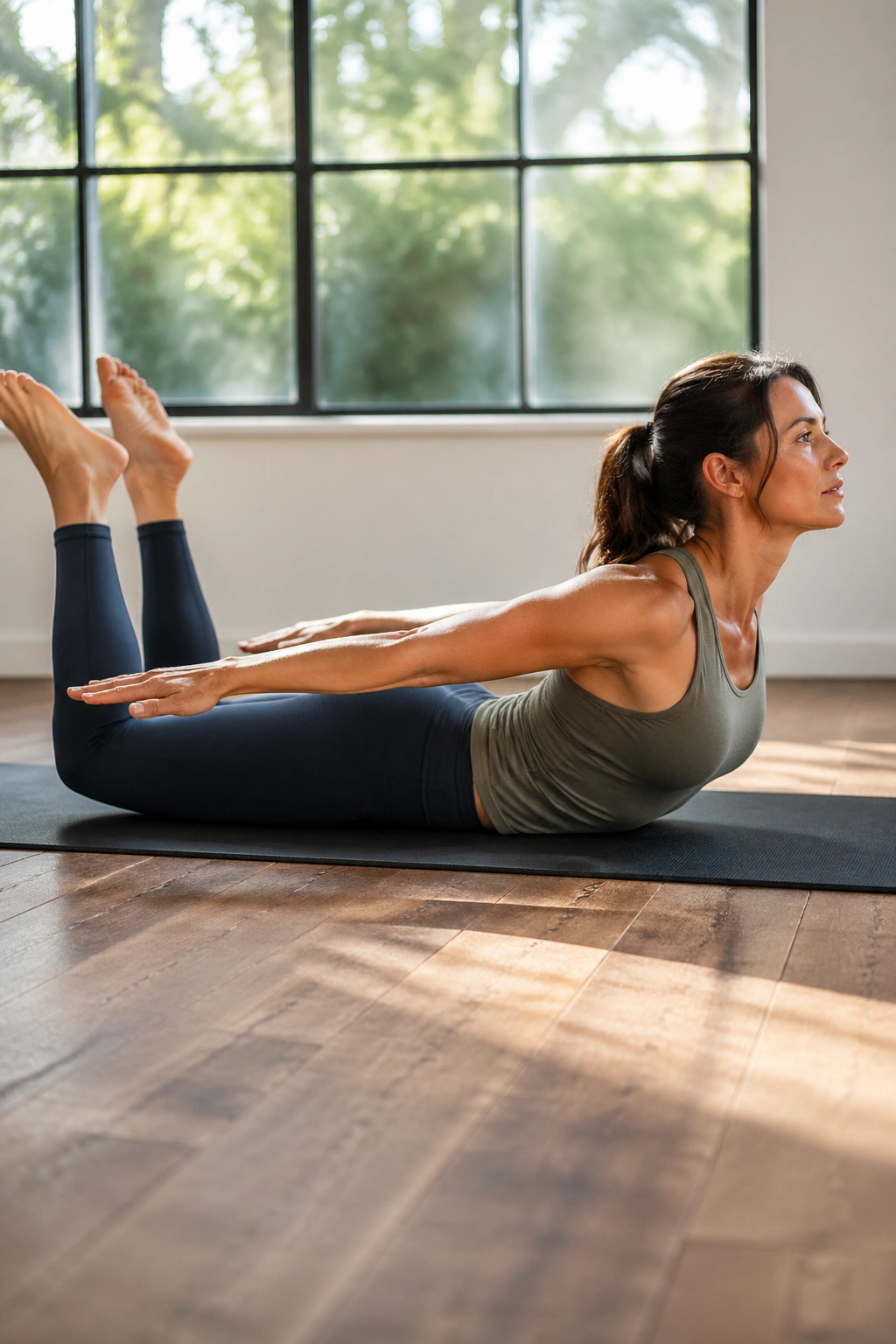
Double leg kick is the moment the shoulders have to earn their keep. It is a back-body exercise, but only if the setup is clean.
Lie face down, turn the head to one side, and bend both knees so the heels draw toward the seat for three controlled kicks. Then extend the legs long, sweep the arms back, and lift the chest as the head comes up through center. The whole sequence should feel measured. If you rush the kicks, the lift gets noisy and the low back takes the hit.
The best version gives you a long line through the front of the body and a deep working line through the glutes and upper back. It is demanding. Good. That is why people keep coming back to it.
One sentence warning: do not throw the chest upward by crunching the neck.
15. Side Kick Series
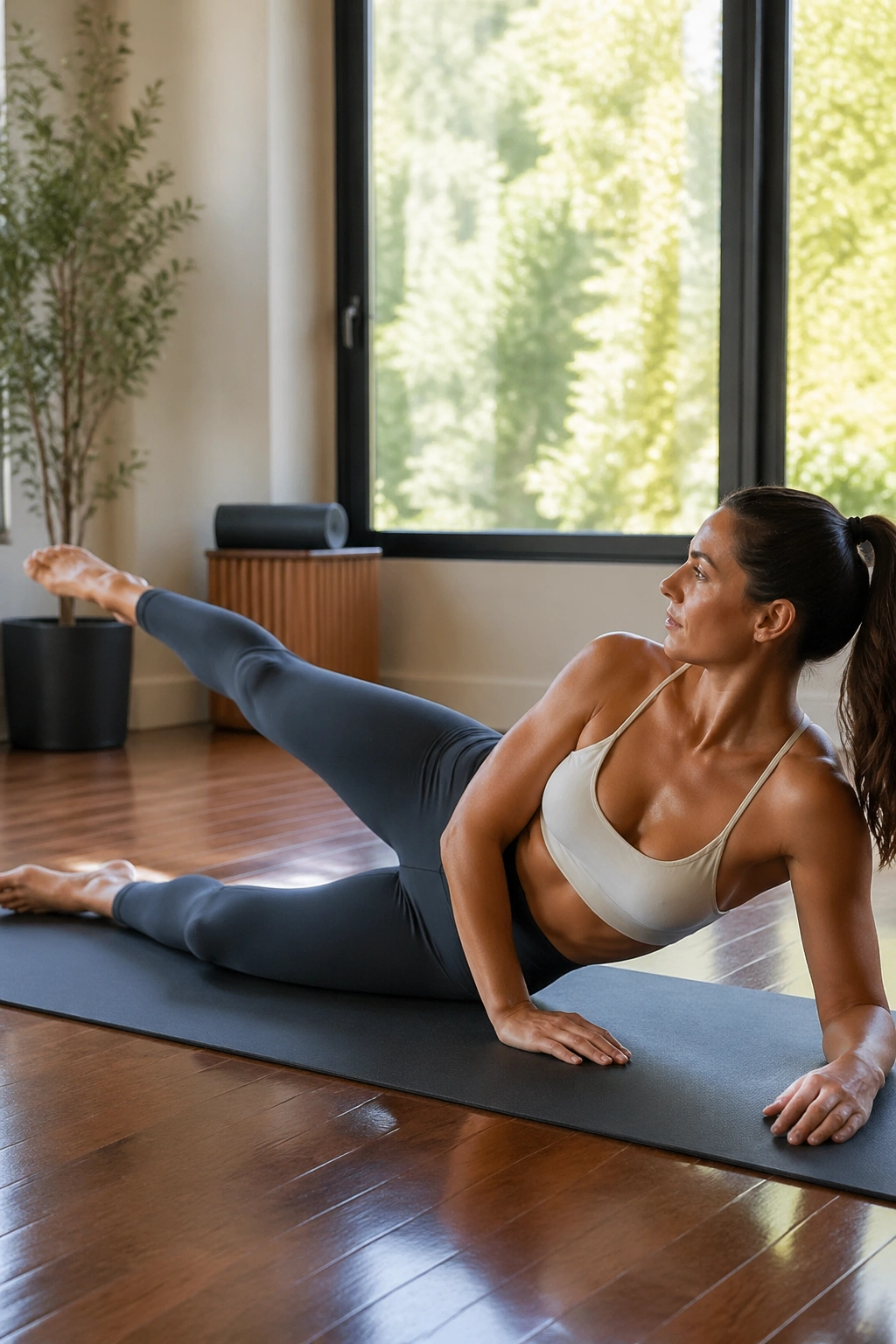
Side kick series looks easy on paper. Lie on your side and move the top leg. Done, right? Not even close.
That top leg has a habit of stealing all the attention while the waist caves and the pelvis rolls. The real job is to keep the trunk stacked and the waist lifted off the mat as the leg swings forward, back, up, down, and in small circles. Keep the movement deliberate. Let the hip joint do the work.
Common side kick variations
- Front and back kicks.
- Small controlled circles.
- Lifts with a brief hold at the top.
- Scissors-like reach with the bottom waist still active.
If the body tips backward, the leg is too high or too fast. Lower it. Slow it. And if you feel the outside hip burning, that is normal. If you feel pinching in the front of the hip, that is a sign to shorten the range.
16. Boomerang
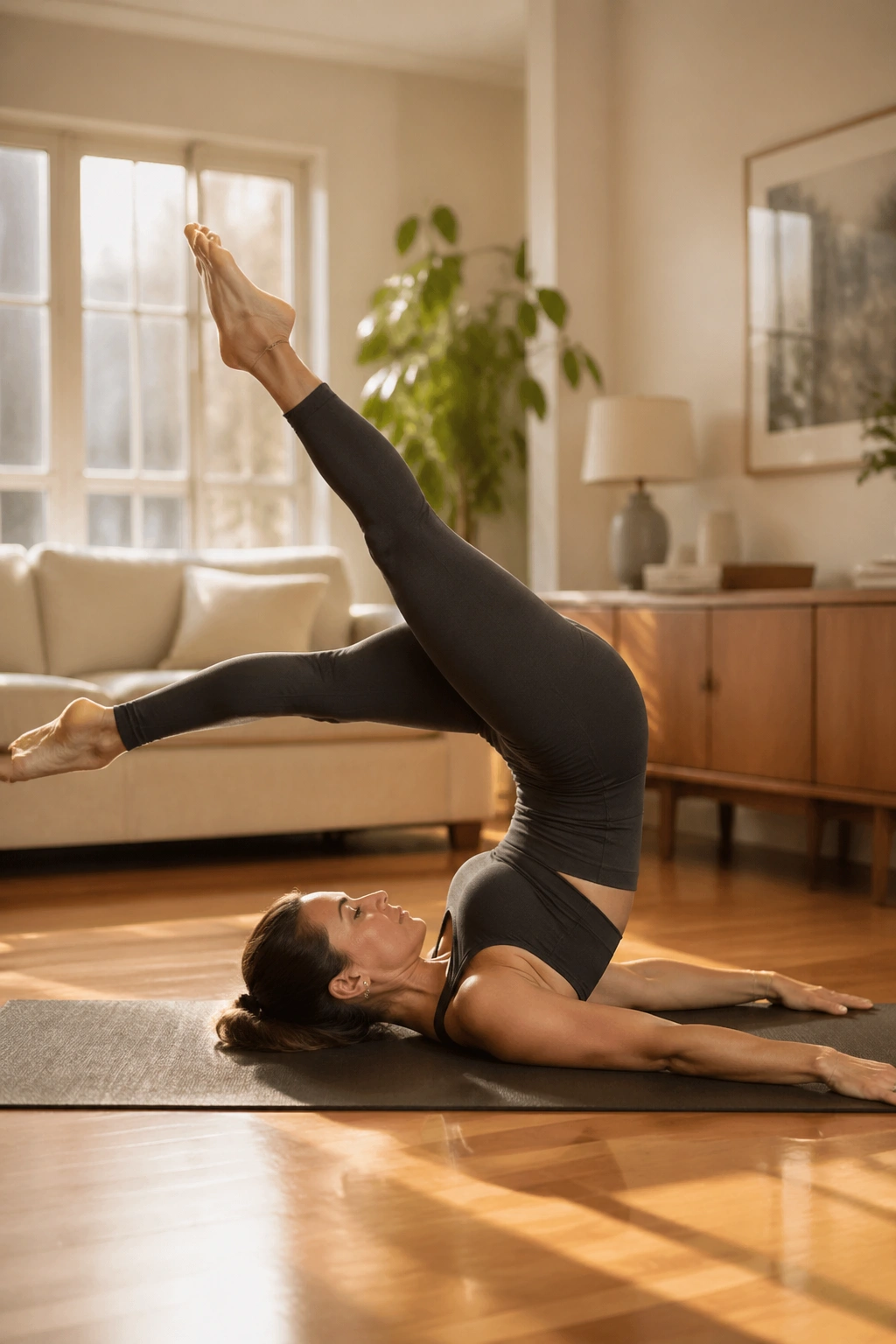
Boomerang is the kind of move that rewards patience and punishes rushing. It asks for a roll-up, a balance, and a smooth transition all in one piece.
From a seated start, roll the legs overhead, change the crossing of the legs in the air, and continue through the balance without losing the lifted spine. Then reverse with control. The pattern sounds a little abstract until you do it, and then it becomes obvious how much timing it takes. The breath has to stay organized. The center has to stay awake.
This exercise is not friendly to people who rush transitions. Good. A little friction is useful here.
What helps most
- Keep the shoulders away from the ears.
- Move with a steady, even breath.
- Use the belly to slow the roll, not the hands.
- Stop if the neck feels compressed.
The finish should look quiet, not dramatic. If it looks dramatic, the control went missing.
17. Teaser
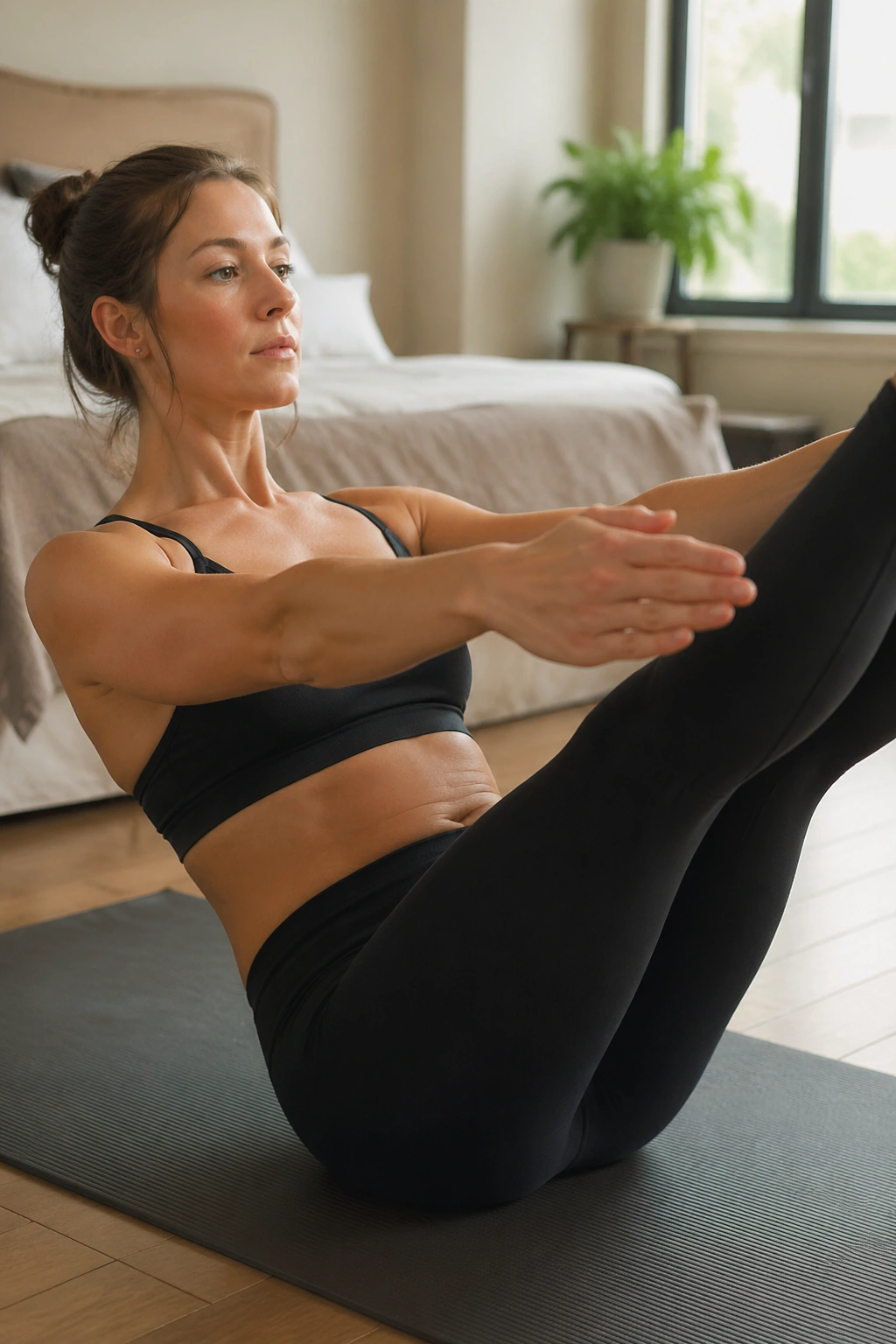
Teaser is where many Pilates lovers meet their ego. It is also where form either gets elegant or falls apart in a hurry.
Lie on your back, lift the legs and torso together into a balanced V shape, and hold the line without pulling on the neck. Some people start with bent knees. Some start with one leg bent and one leg long. That is fine. The point is not to fake the full expression. The point is to keep the chest open, the ribs knitted, and the balance centered over the sit bones.
A good teaser feels like you are floating a little. Not because it is easy, but because the work is distributed well.
Progressions that actually help
- Bent-knee teaser.
- One-leg teaser.
- Half roll-back with one leg lifted.
- Full teaser only after the lower versions stay clean.
Do not turn it into a sit-up. If you are yanking your body forward, the shape has already lost its Pilates quality.
18. Side Bend
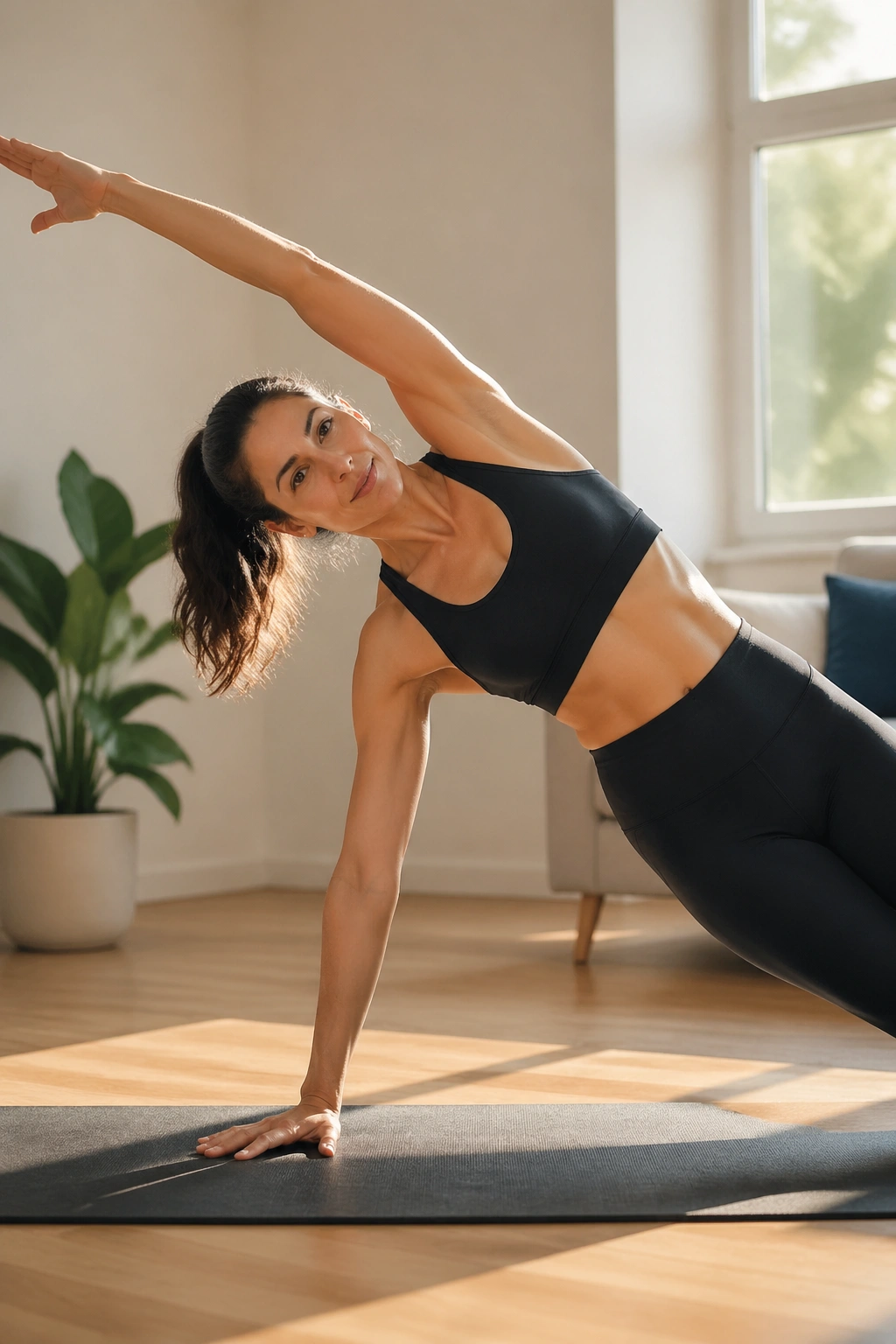
Side bend turns side work into a full-body hold. It looks elegant, but there is some serious shoulder and oblique strength tucked inside it.
Set up on one hand and the side of the foot, with the other arm reaching overhead or toward the ceiling depending on the version. Lift the hips, lengthen through the waist, and maintain a straight line from the supporting wrist through the ankle. The challenge is not only holding yourself up. It is keeping the side waist from collapsing while the top arm reaches.
A contrarian thing to say: the move gets better when you stop trying to make it pretty. Stable first. Pretty later.
- Keep the supporting shoulder packed.
- Press the feet firmly into the floor or mat.
- Reach long through the top fingertips.
- Lower with the same control you used to lift.
If the neck tightens, bring the top arm lower and focus on the rib line.
19. Leg Pull Front
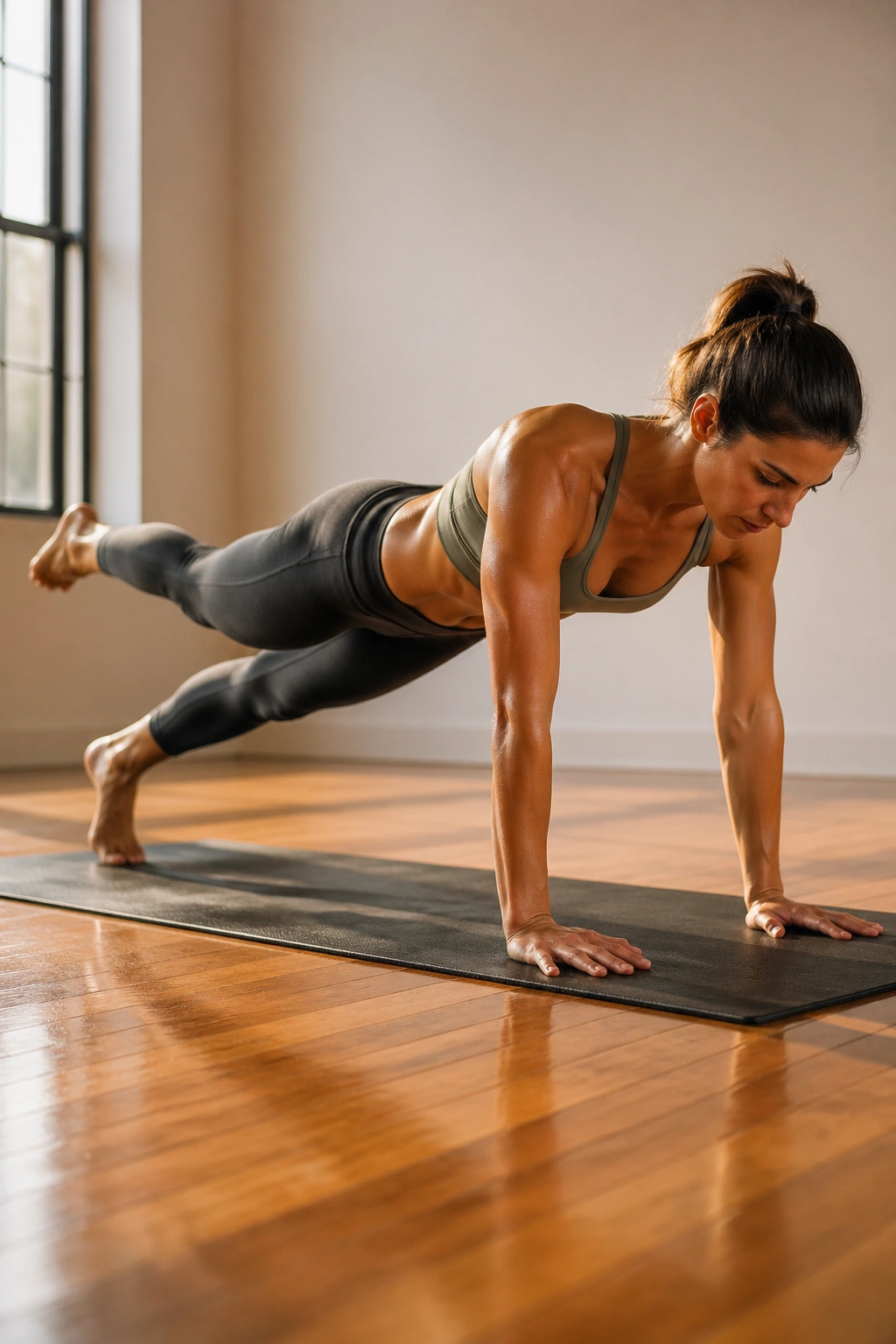
Leg pull front is plank with a longer memory. You are not just holding still; you are asking the body to shift weight without wobbling apart.
Set up in a strong plank with the shoulders over the wrists and the body in one long line. Lift one leg a few inches, keeping the pelvis square, then lower it and switch sides. The supporting leg and shoulder have to work together. If the hips swing, the lift is too high or the core has dropped out.
What to watch for
- Hands spread wide and rooted.
- Neck long, gaze slightly ahead of the hands.
- Belly lifted so the low back does not sag.
- Leg lift small and controlled.
This move is honest. If you can hold a clean plank and still move a leg without twisting, your shoulder stability is doing its job. If not, shorten the hold and clean up the base first.
20. Jackknife
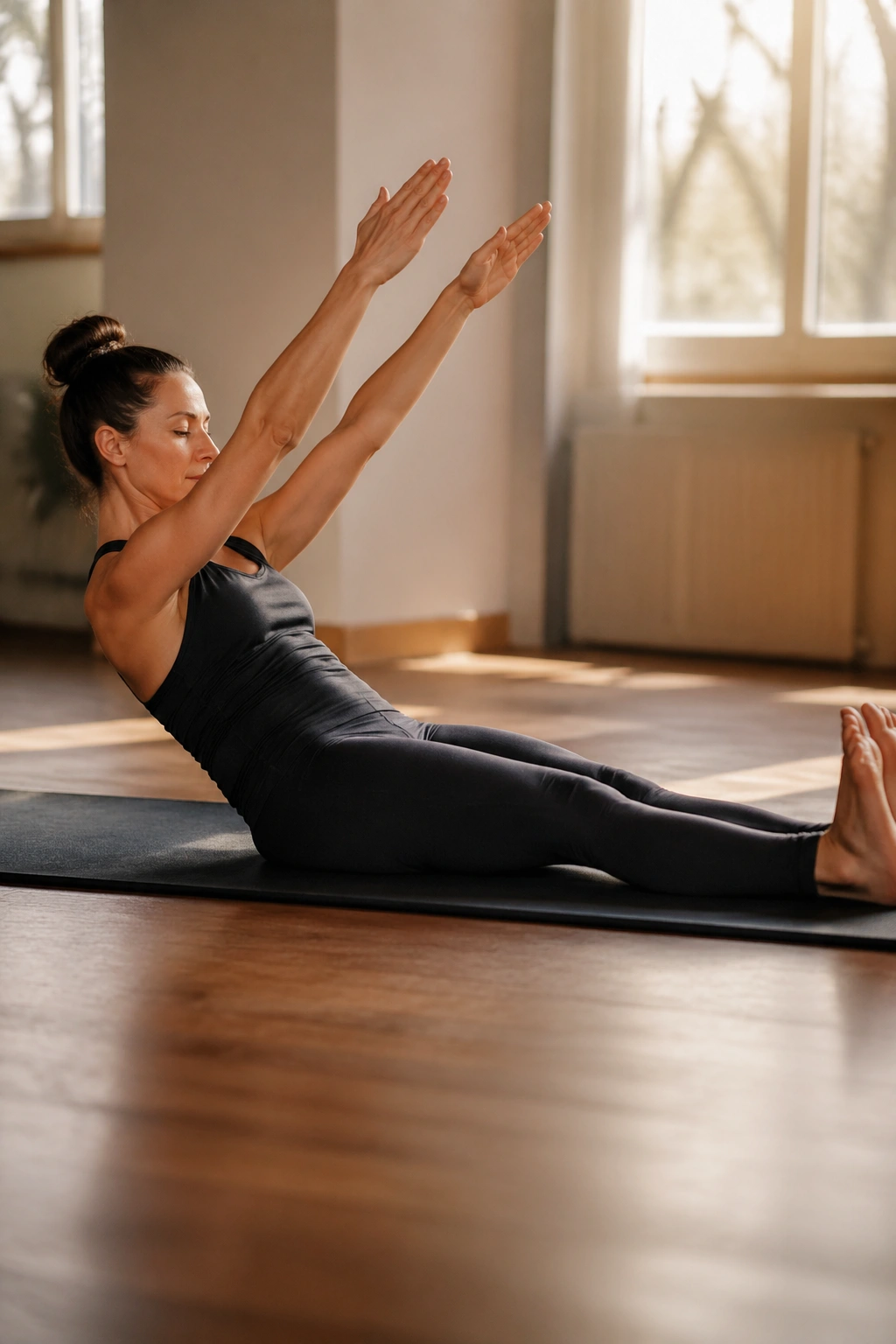
Jackknife is the exercise that makes control feel like strength. It asks you to roll the legs overhead, lift through the center, and lower with the kind of patience most people skip when they are tired.
Lie on your back with the arms long by the sides. Lift the legs overhead, then use the abdominals to curl the hips toward the ceiling until the weight lands on the shoulders, not the neck. From there, lower the spine one piece at a time until you return to the mat. That slow descent matters. A lot. It is the difference between a controlled jackknife and a hopeful fling.
This is a move to earn, not rush. If the shoulders feel squashed or the breath gets stuck, go back to teaser, roll-over prep, and bridge work for a while. The body will tell you when it is ready.
A clean intermediate Pilates session does not need all twenty exercises at once. Pick five or six, keep the range honest, and stay with the versions that let you feel the work in the center instead of the joints. That is where the real progress lives.
