



A good mat Pilates workout can make one strip of floor feel like a full studio session. You do not need a reformer, a mirror wall, or an hour you can barely spare. You need enough room to stretch out, a mat that does not slide, and the patience to move with control instead of rushing through reps.
That last part matters more than people think. Pilates looks calm from the outside, yet a small change in breath or pelvic position can turn an easy-looking move into a deep abdominal challenge. If you have ever done leg lowers and felt your hip flexors take over, or tried a bridge and caught your hamstrings cramping before your glutes even woke up, you already know the difference between doing the shape and doing the exercise well.
Mat work is where the method shows its teeth. Joseph Pilates built the mat series around body weight, spinal articulation, breath, and control—he called it Contrology for a reason. Rehab and sports performance researchers have linked Pilates practice with better balance, trunk endurance, and lower pain scores in people dealing with stubborn low back issues, which makes sense once you feel how much these sequences ask from your deep core, hips, and posture muscles.
A few broad rules before you start: exhale on the hardest part, move on a range you can own, and stop if you feel sharp pain, pinching, or numbness. A folded towel under your head can help if your neck gets cranky. Start with the workout that matches how your body feels right this minute.
1. The 10-Minute Wake-Up Core Flow
Mornings can make your body feel assembled in the wrong order. Hips tight. Ribs flared. Low back already overworking before breakfast.
This short home Pilates routine is for that exact state. The goal is not to exhaust you; it is to get your spine moving, switch on your deep abs, and wake up your glutes so the rest of the day feels less creaky.
Run the flow like this
- 360 breathing, 60 seconds: Lie on your back with knees bent and feet flat. Inhale wide into your ribs, then exhale through pursed lips and feel your lower ribs drop toward the mat.
- Pelvic tilts, 8 reps: Rock from neutral spine into a gentle imprint, then back out. Keep the motion small and smooth.
- Pelvic curls, 8 reps: Peel into bridge one bone at a time, pause for 2 breaths at the top, then roll down slowly.
- Dead bug toe taps, 8 reps each side: Hold tabletop legs, tap one toe to the mat, and exhale as the leg returns.
- Single-leg stretch, 6 reps each side: Lift head and shoulders only if your neck stays quiet.
- Forearm plank, 20 to 30 seconds x 2: Think long through heels and crown of head, not low through the belly.
Best use: do it before coffee, after coffee, or while the kettle boils. Ten minutes is enough.
2. The Beginner Mat Pilates Workout for Learning Neutral Spine
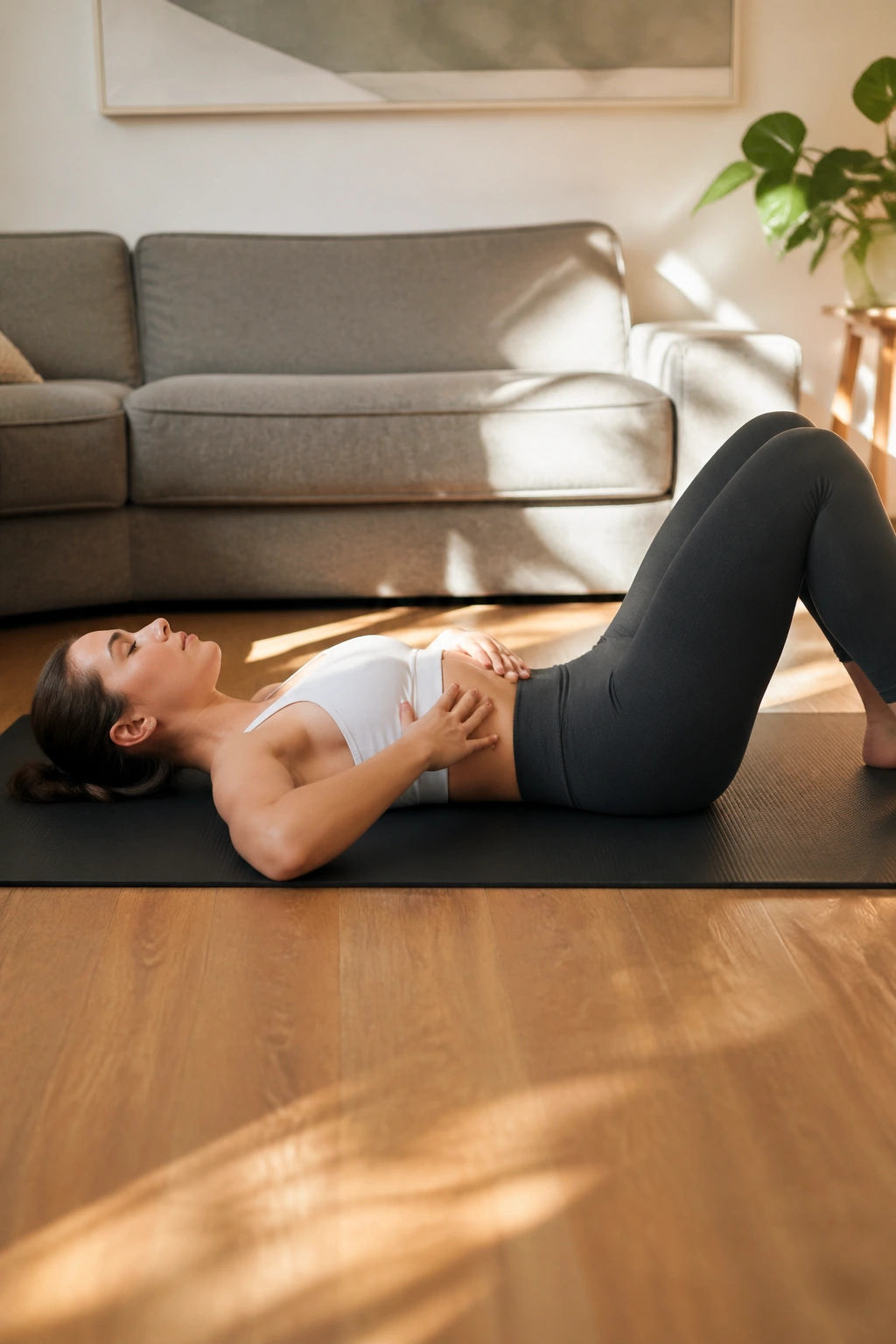
Beginners do better with fewer moves and longer pauses. That is not me being gentle. It is the fastest way to learn what neutral spine actually feels like, which is the skill that makes later workouts click.
Set aside 12 to 15 minutes. Start on your back with knees bent, hands on your lower ribs. Breathe in for 4 counts, breathe out for 6, and let the front ribs soften. Then work through knee folds, heel slides, bent-knee fallouts, and a small bridge—6 to 8 reps each, moving one side at a time. Your pelvis should stay almost boringly still.
Half roll-backs come next. Sit tall with knees bent, hold behind your thighs, tip your pelvis under, and roll halfway back for 3 slow counts. Return upright without yanking with your arms. That small motion teaches lower-ab control far better than flinging yourself through full roll-ups you cannot yet control.
Finish with a short spine stretch forward and a 30-second tabletop hold. If your hip flexors grip during the hold, keep one foot down and switch sides. No heroics.
Most new Pilates students want to feel a burn. I would rather see you feel precision first.
3. The Lower-Ab Toe Tap Burner
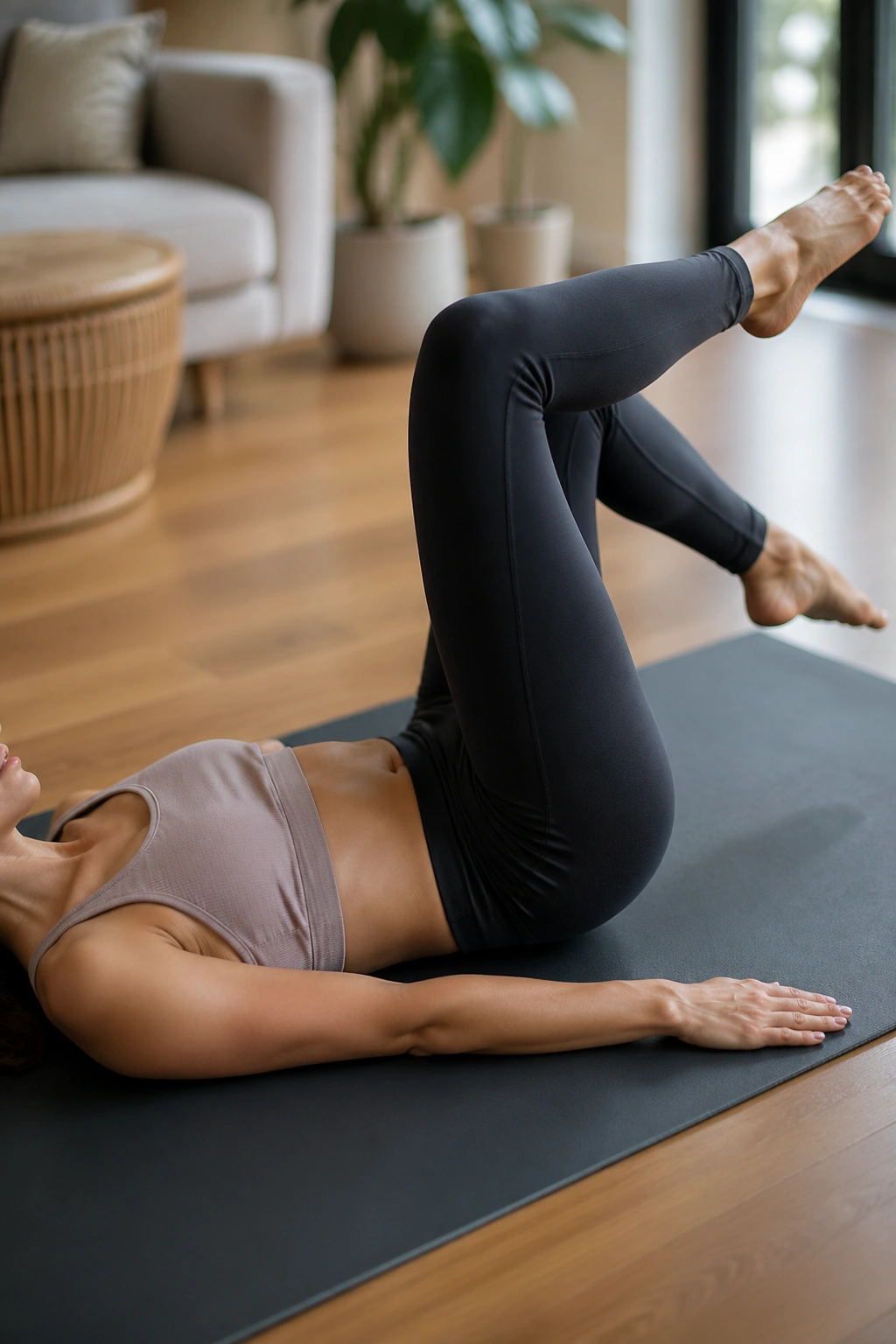
Why do toe taps feel harmless until rep five?
Because they expose whether your lower abs are actually controlling your pelvis or whether your low back is taking the hit. This workout leans hard into that idea. Slow tempo matters more than range, and if you feel your back arch off the mat, shorten the move right away.
Start with 30 seconds of tabletop breathing. Hold both knees over hips, shins parallel to the floor, and exhale until your waistband feels snug against the mat. Then move into the main set.
How to use it
Do 2 rounds of this sequence with 20 seconds of rest between moves:
- Toe taps: 10 reps each side
- Heel slides: 8 reps each side, reaching the leg only as far as your pelvis stays steady
- Single-leg stretch: 8 reps each side
- Double-knee tabletop hold: 20 seconds
- Bent-knee leg lowers: 6 reps, both legs together, tiny range
- Dead bug with opposite arm reach: 8 reps each side
If your neck complains during abdominal flexion, keep your head down for the whole series. You will still get the point of the workout. The rule here is simple: ribs down, pelvis quiet, breath steady.
4. The Pelvic Floor and Deep Core Reconnection Session
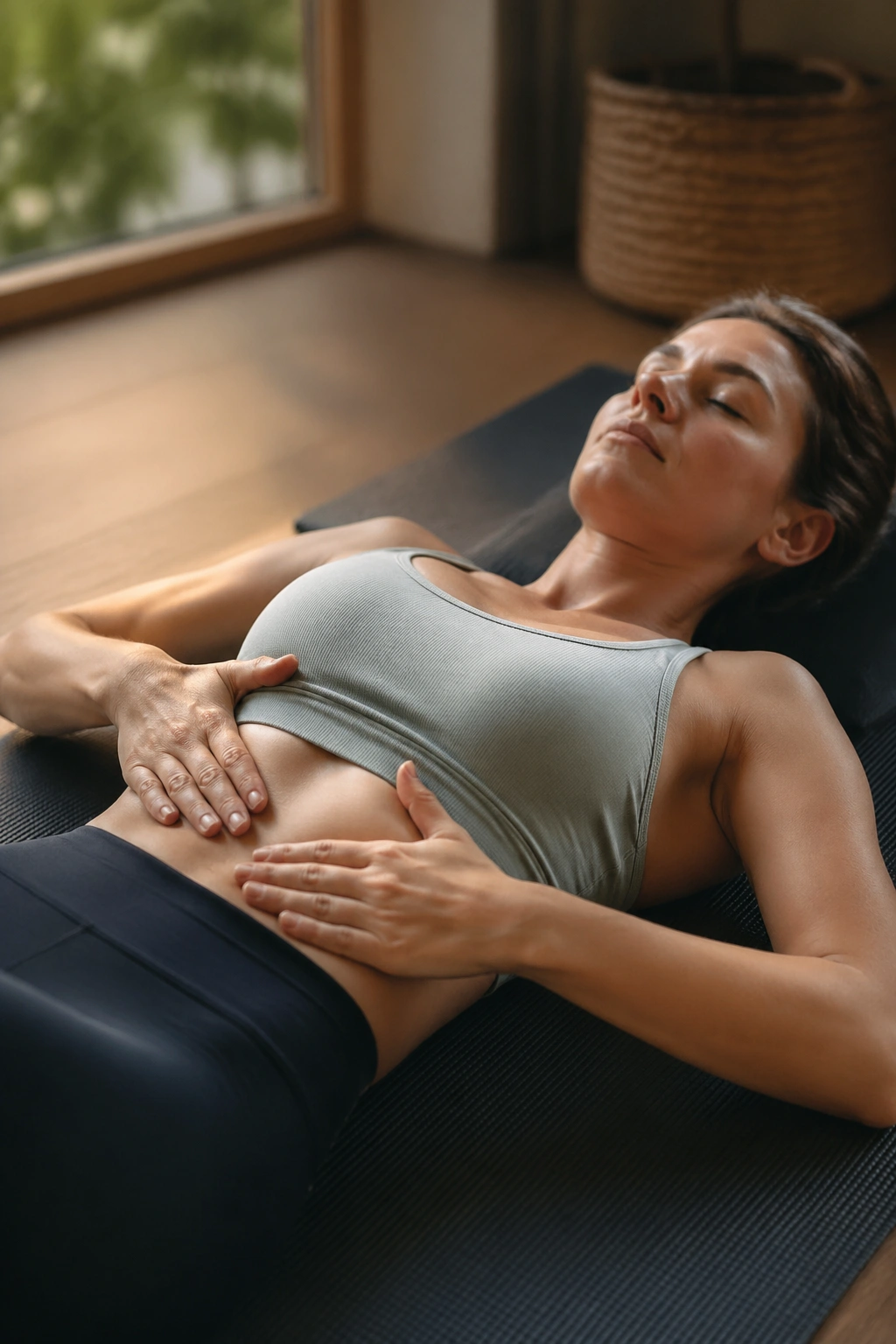
Some workouts are for sweat. This one is for rebuilding pressure control.
Use it after a stretch of stress, shallow breathing, long days at a desk, or any spell where your midsection feels disconnected from the rest of you. It is also a smart reset if you notice bulging through the center line of your abs during harder work. Back off, reconnect, then return.
The sequence works best when you move slowly enough to feel the breath change each exercise.
- Supine 360 breathing, 5 breaths: Hands around lower ribs.
- Exhale with heel slide, 6 reps each side: Slide the heel out on the exhale, return on the inhale.
- Bent-knee fallout, 6 reps each side: Let one knee open a few inches while the opposite side of the pelvis stays heavy.
- Marching, 8 reps each side: Lift one foot into tabletop, lower, then switch.
- All-fours hover breath, 3 holds of 10 seconds: Knees float 1 inch off the mat while you keep the waist lifted.
- Modified side plank, 2 holds each side for 15 seconds: Stack shoulder over elbow and breathe into the top-side ribs.
No burn-chasing here. Done well, it feels steady, deep, and a little humbling.
5. The Desk-Body Posture Reset on the Mat
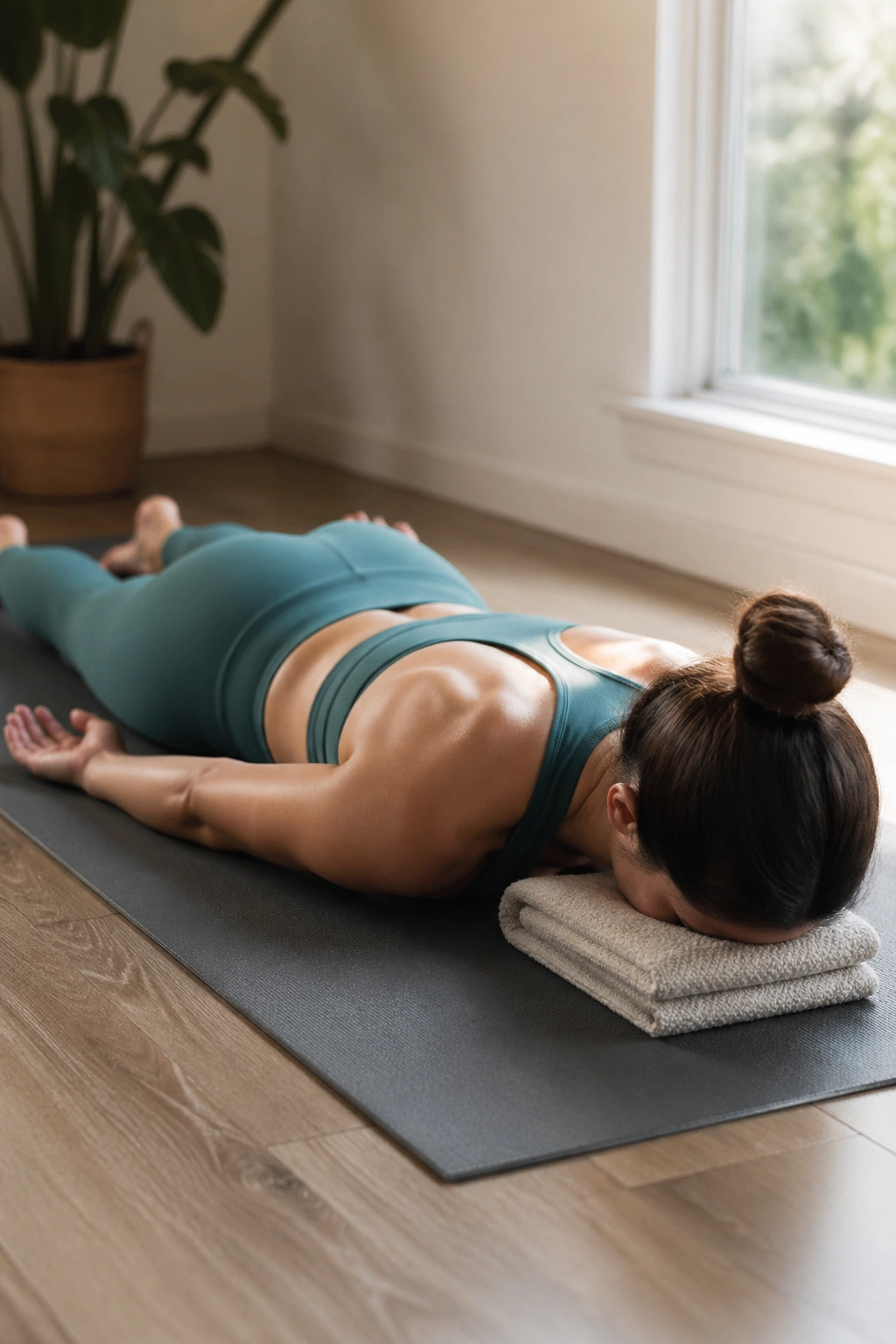
Hours at a laptop leave clues. Your chin drifts forward. Your upper back stiffens. Shoulder blades slide out to the sides and stop helping. Then you try a Pilates class and wonder why swan prep feels impossible.
This reset goes after those exact problems. Begin face down with a folded towel under your forehead and your arms by your sides. Lift the belly lightly away from the mat so you are not hanging in your low back. From there, do scapular slides: draw shoulder blades down toward your back pockets, release, and repeat for 10 slow reps. Tiny move. Big payoff.
Stay prone and add breaststroke prep. Lift your chest a few inches while reaching your fingertips long behind you, then lower with control. Six reps is enough if you do not shove your neck forward. Roll onto your side for thoracic rotations—knees bent, arms stacked, top arm opens across the body for 8 reps each side. You should feel the ribs move, not the lower back twisting wildly.
Finish seated with spine stretch forward and a mermaid side bend. The whole thing takes around 14 minutes. Your shoulders will sit lower, your chest will feel less locked, and your next upper-body workout will make more sense.
And yes, you may yawn halfway through. That usually means the rib cage is finally moving again.
6. The Low Back-Friendly Stability Session
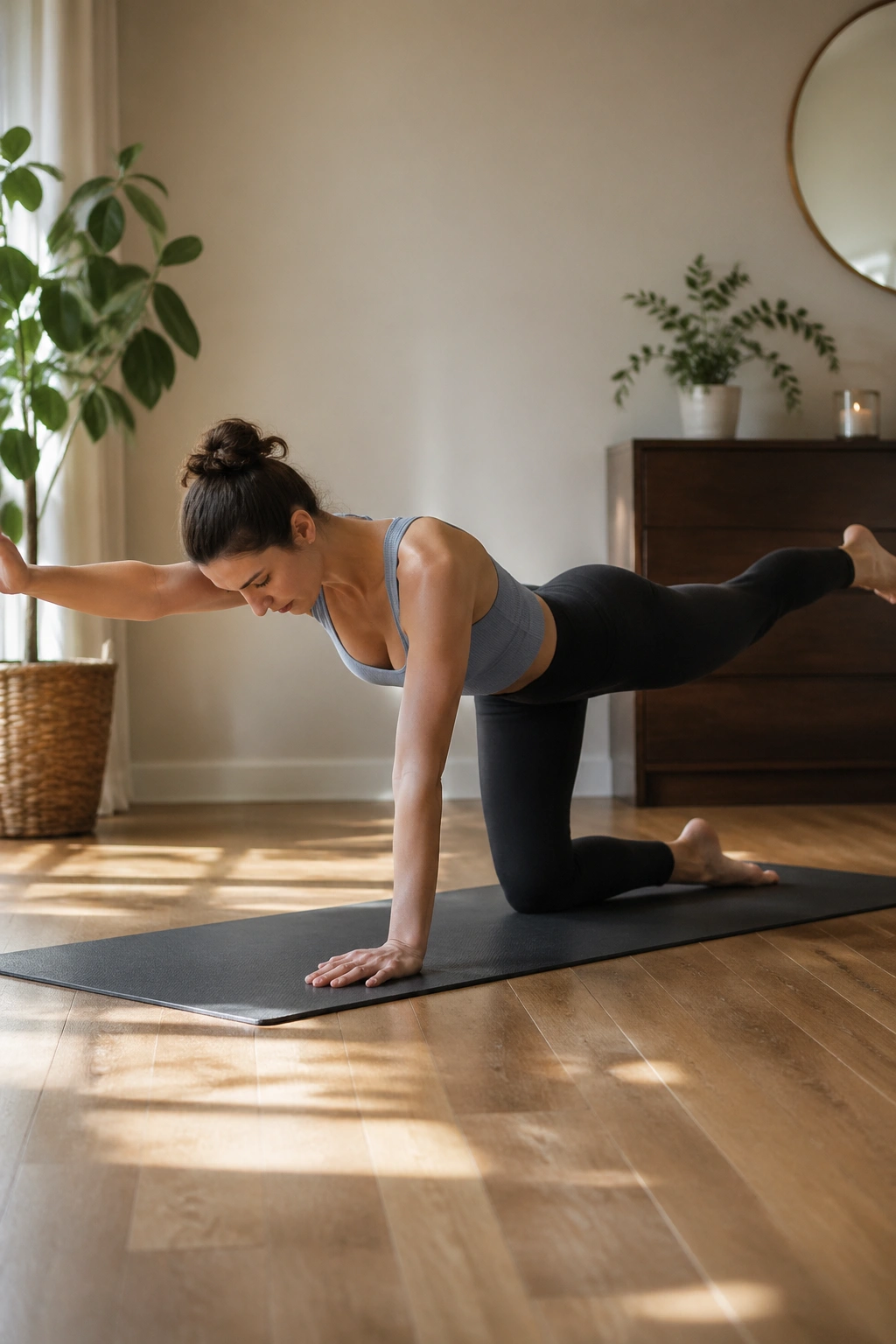
Unlike crunch-heavy ab routines that ask your spine to do all the bending, this one treats the trunk like a stabilizer first. That shift matters for sore backs.
Start with pelvic clocks on your back—imagine your pelvis as a clock face and tip gently toward 12, 3, 6, and 9. Do 2 rounds. Then move into heel slides and dead bug taps, keeping one foot on the mat whenever two tabletop legs feel too loaded. Bridge holds come next: lift, hold for 15 seconds, lower. Repeat 4 times instead of chasing 20 sloppy reps.
Quadruped bird dog is the star of this session. Reach opposite arm and leg long for 6 reps each side, but only if you can stop your torso from swaying. Smaller is better here. Finish with side-lying clams and a child’s-pose-style rock back if that position feels fine on your knees and hips.
Who gets the most from this? People whose low backs bark during sit-ups, long standing days, or housework. If flexion tends to irritate you, skip roll-ups and stay with this style of home Pilates routine for a while. It builds the support those flashier moves need.
7. The Glute Bridge and Side-Lying Seat Series
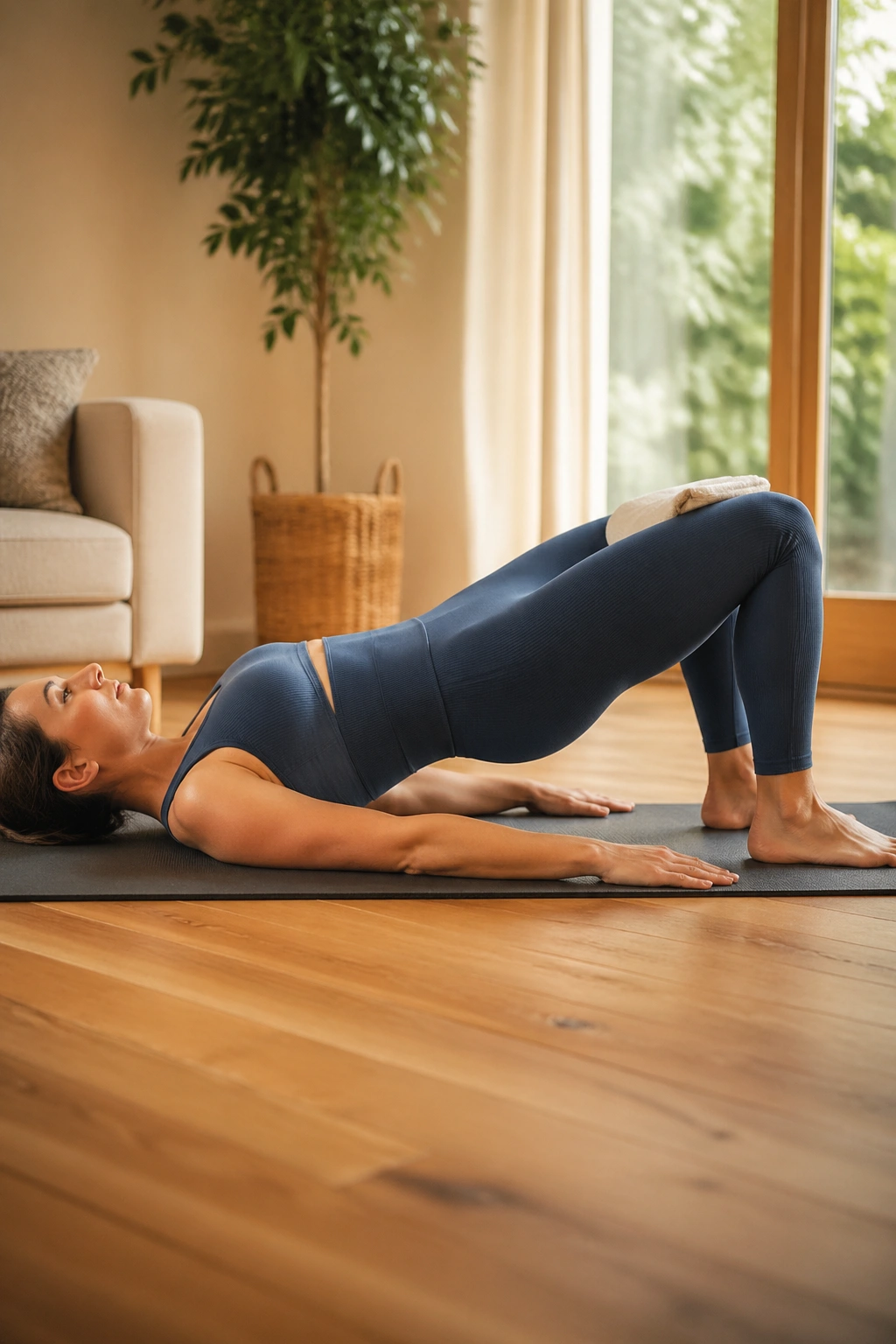
Eight slow bridges can light up your backside more than 30 rushed squats.
This mat Pilates workout targets glutes from two angles: hip extension in bridges and hip abduction in side-lying work. That combo helps if your knees cave in on stairs, your low back steals bridge work, or your outer hips feel asleep all day.
The sequence
- Bridge with 3-second hold: 10 reps
- Bridge march: 8 lifts each side while pelvis stays level
- Single-leg bridge prep: 6 reps each side with one heel light on the mat
- Side-lying clam: 12 reps each side
- Side leg lift with slight internal rotation: 10 reps each side
- Front-and-back side kicks: 8 swings each side
- Prone heel beats: 20 small beats
Drive through your heels in the bridge and keep your ribs from flaring at the top. In side-lying work, stack your top hip over the bottom one—rolling back turns the exercise into something else.
A small towel between your knees during the first bridge set can help you feel pelvic alignment before you remove it.
8. The Inner-Thigh Adductor Sequence
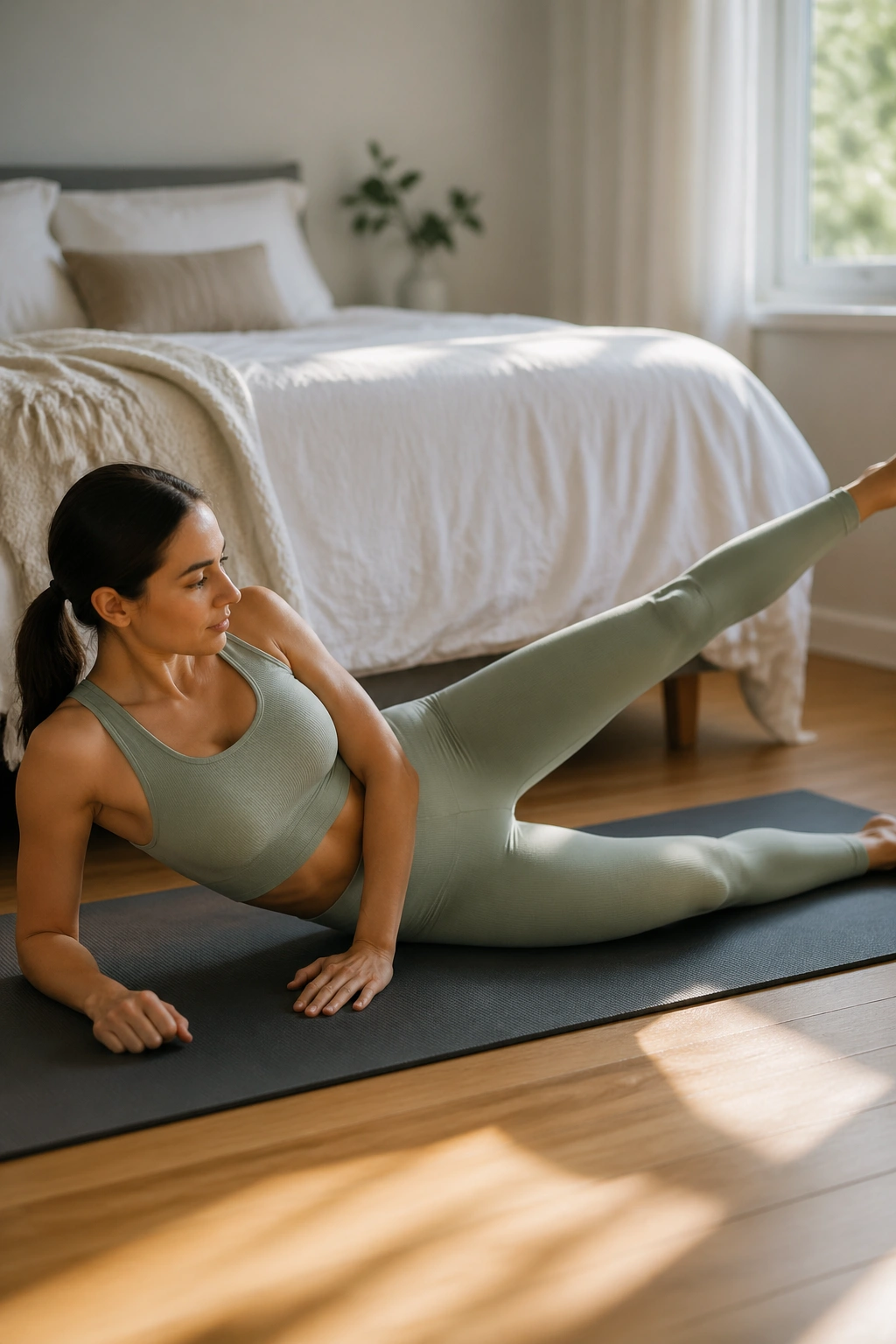
People talk about glutes nonstop and skip the muscles that help control the legs from the inside. Bad trade. Adductors matter for pelvic stability, knee tracking, and clean leg lines in Pilates.
This routine is short, sharp, and a bit sneaky. Begin with a Pilates V position on your back—heels together, toes apart—and do 12 tiny heel squeezes while keeping the glutes soft. Then place a pillow, folded blanket, or yoga block between your knees and move through 10 bridges with a 2-second squeeze at the top. You are not crushing the prop; you are using it as feedback.
Shift into side-lying inner-thigh lifts. Top foot plants in front, bottom leg lifts for 12 reps each side. After that, try bent-knee scissors on your back: legs in tabletop, knees squeeze toward each other as you lower one toe to the floor, 8 reps each side.
You will feel this along the inner thighs and low lower abs, not in a flashy way but in a “why are my legs shaking already?” way. That is usually the sign you found muscles your other workouts have been neglecting.
9. The Upper-Body Mat Pilates Workout Without Dumbbells
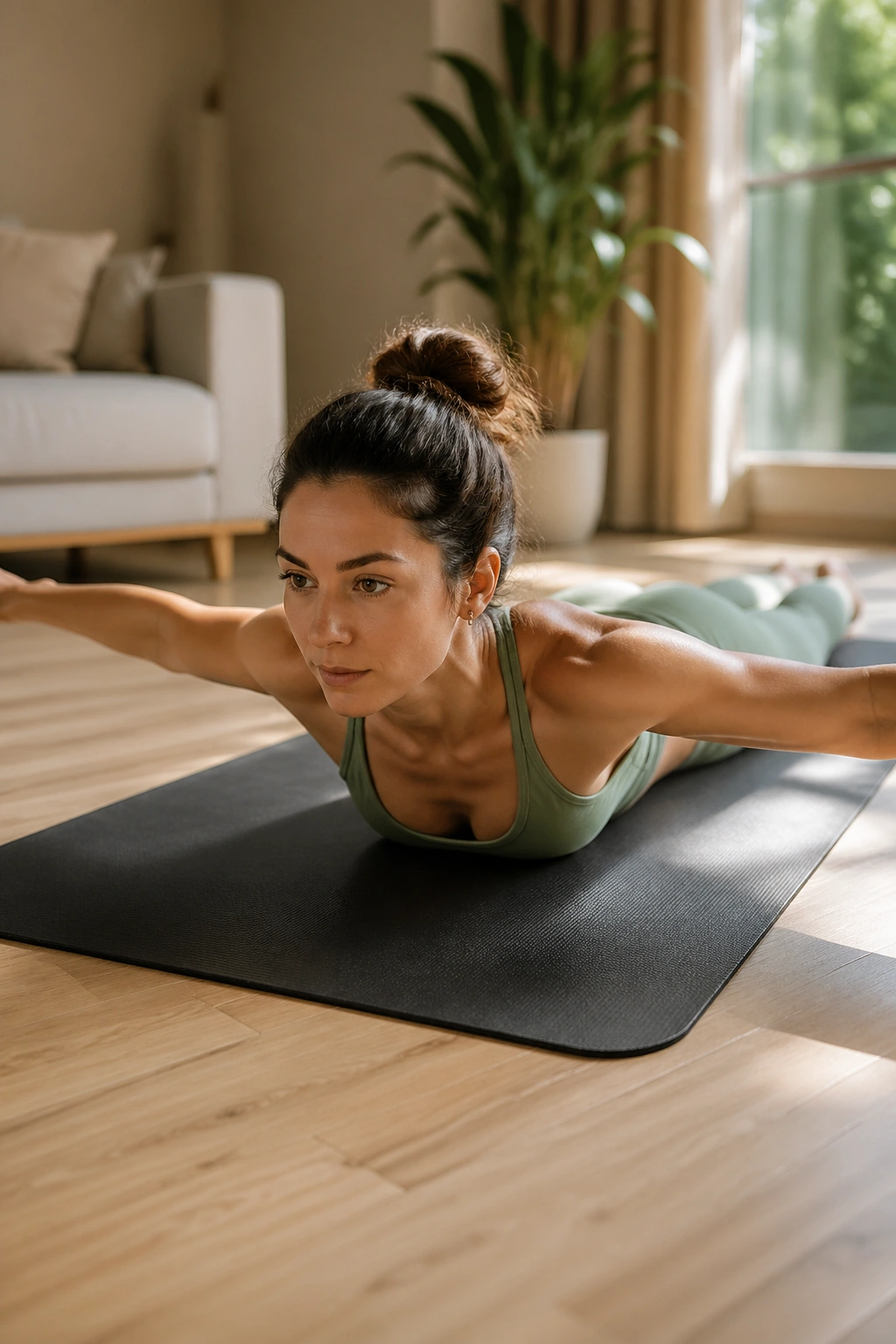
Can mat Pilates train your upper body without a single weight? Yes—and the trick is lever length, time under tension, and honest positioning.
A lot of people breeze through arm-heavy Pilates moves by shrugging into the neck and collapsing into the wrists. This workout avoids that trap. Start prone with “T” lifts: arms out to the sides, thumbs up, lift for 1 count and lower for 3, 8 reps. Then switch to triceps press backs with elbows hugged in for 10 reps.
What to do next
Move into kneeling push-up prep. Lower halfway for 6 to 8 reps, keeping one straight line from knees to head. Then hold forearm plank for 20 seconds, rest 15, and repeat twice. Finish with side plank on one knee, top arm reaching to the ceiling, 2 holds of 15 to 20 seconds per side.
If your wrists dislike straight-arm support, stay on forearms for plank work and make the prone series your main strength block. Shoulders should feel worked, not pinched. That difference matters.
10. The Oblique and Waist Rotation Workout
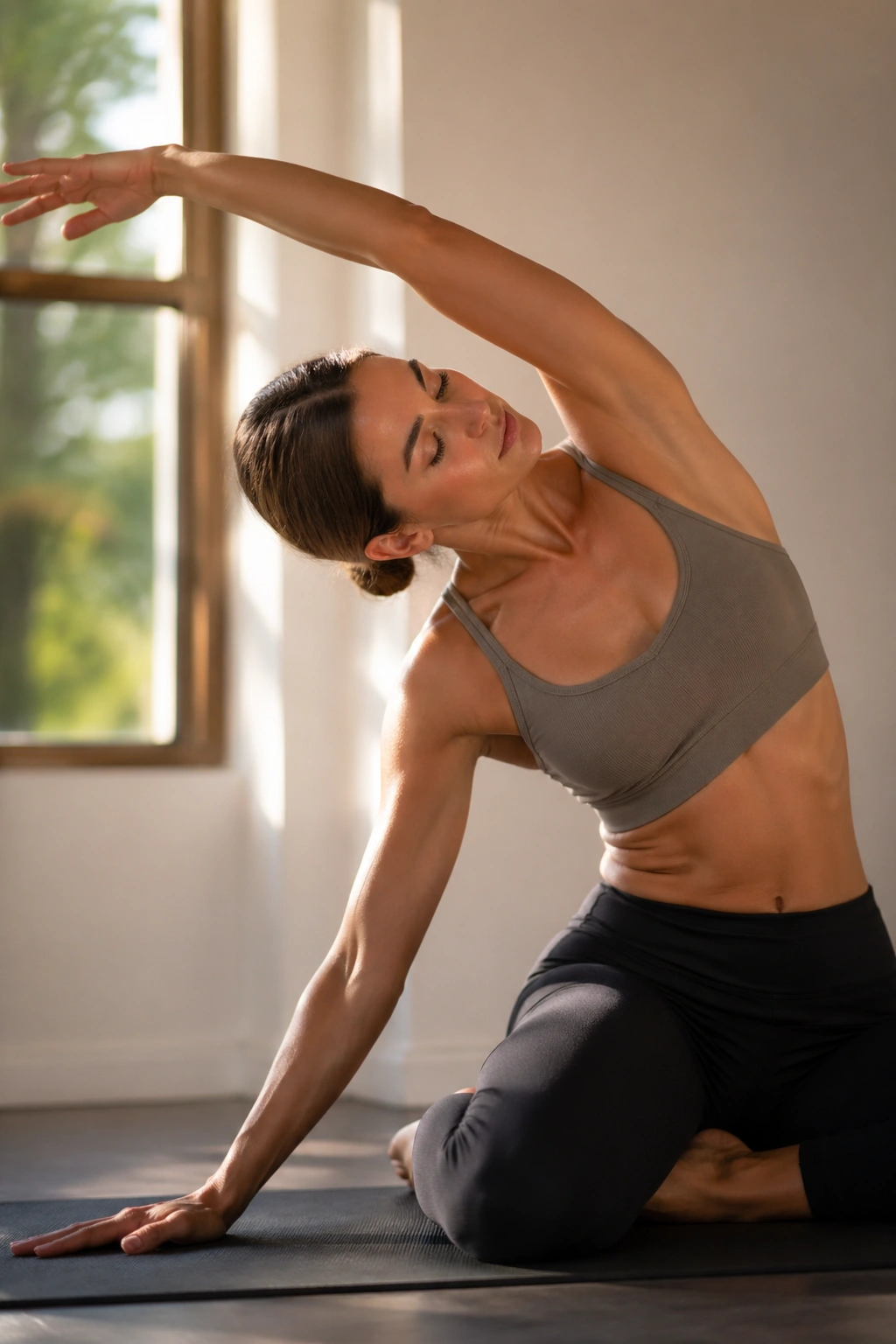
Try this after a day of turning from your desk to your bag to your car seat with the grace of a rusty gate. Rotation can vanish fast when we sit too much, and then the obliques stop doing their share.
This workout mixes side bending and twisting so your waist muscles do more than crunch inward.
- Mermaid side bend: 6 reps each side
- Knee sways on your back: 8 reps each side, ribs anchored
- Criss-cross, slow tempo: 6 reps each side with a 2-second hold on each twist
- Saw: 6 reps each side, seated with legs wide
- Side plank hip dips from knees: 8 reps each side
- Seated spine twist pulses: 3 pulses x 4 sets each side
Move the ribs around the spine instead of yanking the elbows around the room. In criss-cross, think shoulder toward opposite knee, not elbow to knee. If your hip flexors dominate, bend both knees more in seated work and sit on a folded blanket to lift your pelvis.
The section that surprises most people is the saw. Done with control, it opens hamstrings, wakes up obliques, and teaches rotation without collapsing through the chest.
11. The Gentle Evening Unwind Flow
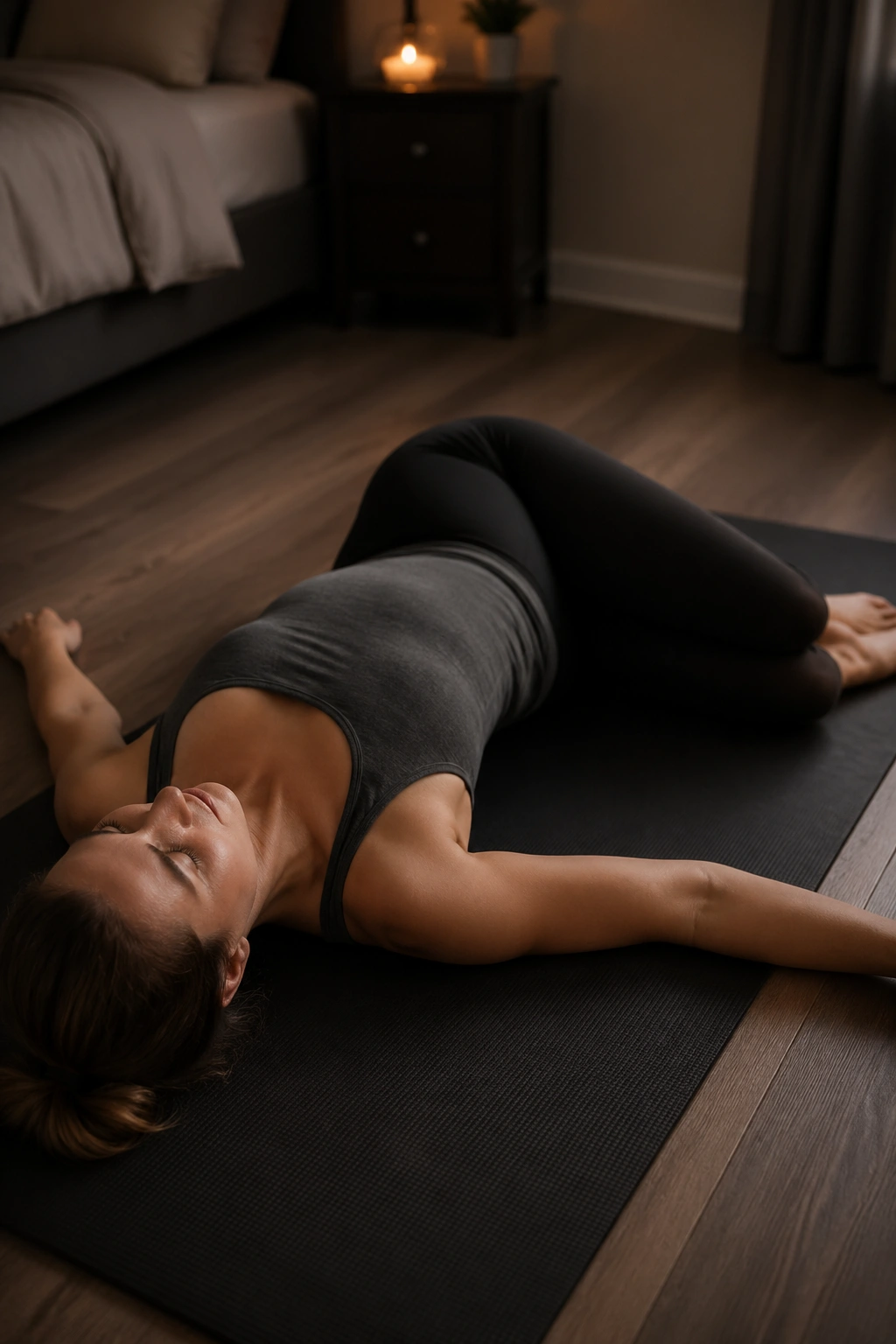
This one is slower on purpose.
When your body feels wired but tired, hard intervals can leave you more revved up than restored. A soft Pilates flow works better: breath-led movement, lower lighting if you want it, and no pressure to chase a burn. Start with 5 deep breaths on your back, one hand on belly, one on side ribs. Then let your knees sway side to side for 60 seconds.
Move into pelvic curls, 8 reps, lifting only as high as your ribs stay soft. Follow with spine stretch forward and a seated roll-back that stops halfway down. The motion should feel like your lower spine is making a gentle C-curve, not like you are dropping onto the mat.
Add figure-four stretches, side-lying book opens, and a relaxed mermaid stretch. Finish flat on your back with feet wide and knees leaning together for 1 minute. Your jaw should unclench somewhere in the middle of this. If not, stay there longer.
No prize for finishing fast. The value of this session sits in the slower exhale.
12. The Cardio-Style Mat Pilates Workout for Small Spaces
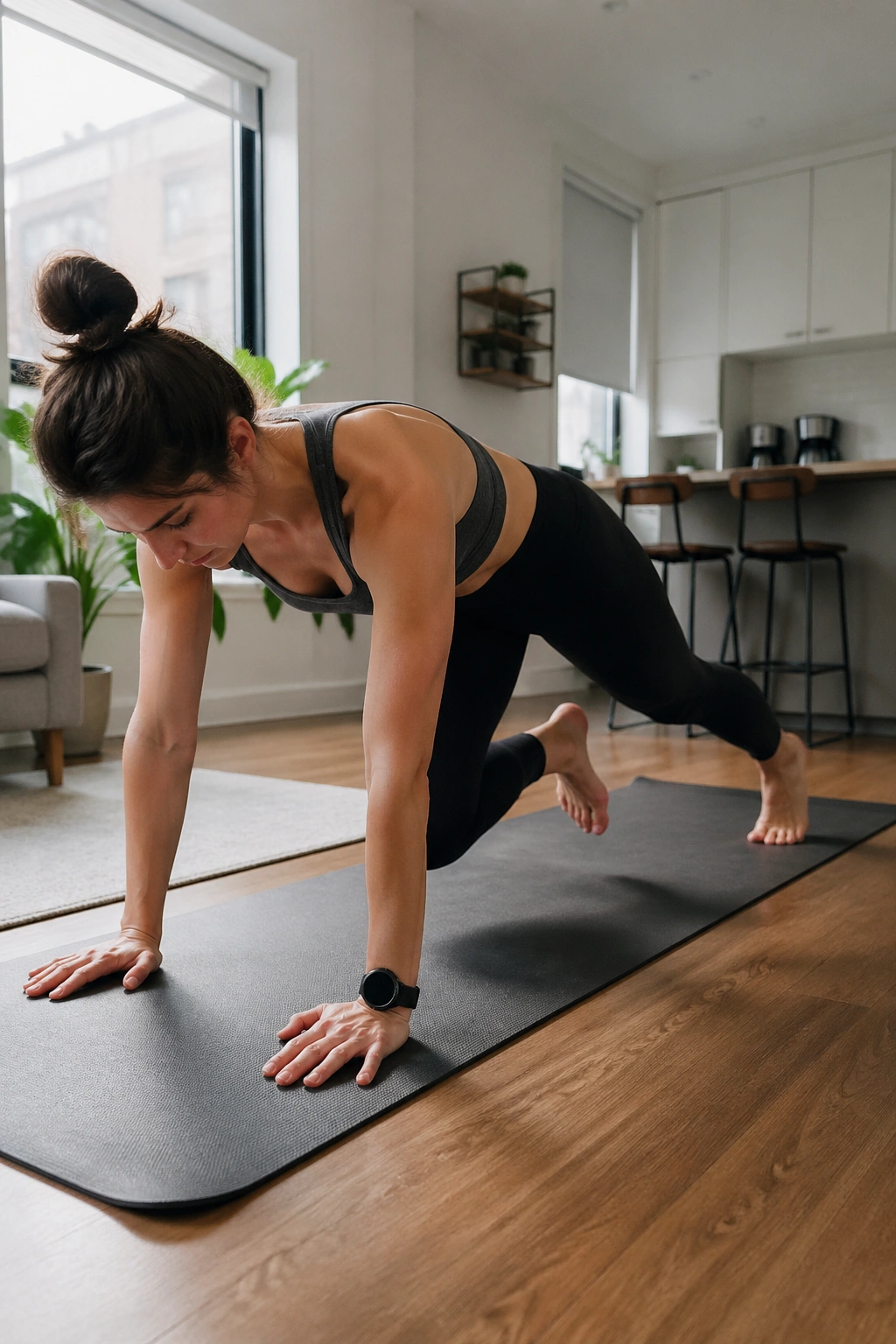
Unlike jumping circuits that rattle your joints and neighbors, a cardio-style mat Pilates workout keeps impact low and tension high. You still get breathless. You just do it with control.
Set a timer for 40 seconds of work and 20 seconds of rest. Run the circuit 3 times. Start with bear hover hold and knee taps. Then move to plank shoulder taps, mountain climber cross-tucks at a steady pace, squat-to-seated-roll-back transitions, and fast scissors with the head down if your neck gets tired. Finish each round with swimming for 30 seconds.
The heart-rate bump comes from flowing between positions, not flinging through reps. Get up from the mat briskly, lower back down with control, then change direction again. That constant shift from supine to prone to plank is what makes the session feel athletic without turning sloppy.
This one suits days when you want a sweatier Pilates at home session but do not want to pound the floor. Put a towel nearby. You may need it by round two.
13. The Classical Hundred-to-Roll-Up Ladder
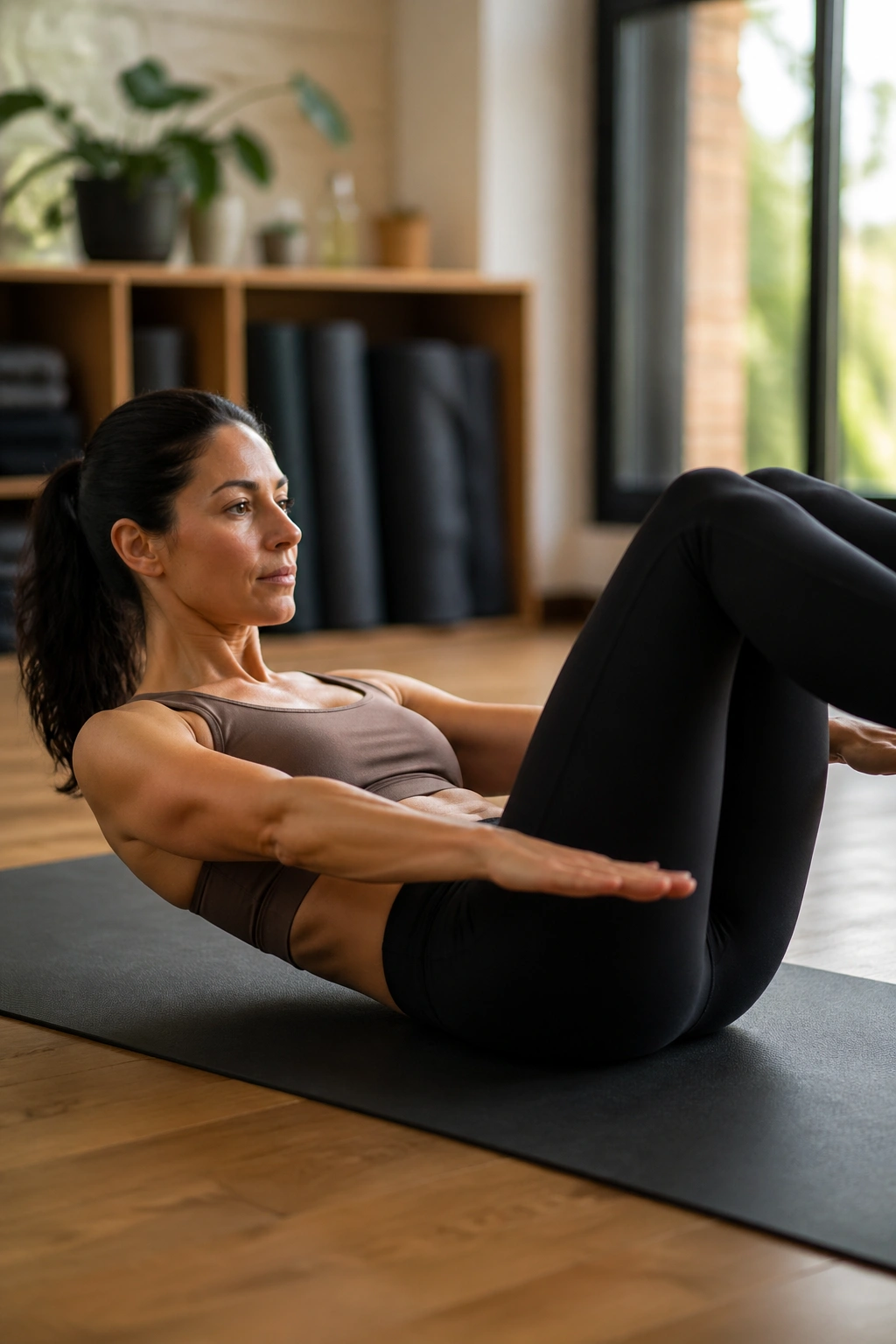
The first five exercises from the classical mat order still hold up because they build one skill on top of the next. Breath, control, articulation, then coordination.
Try this mini ladder
- The Hundred: 50 to 100 arm pumps, knees bent if needed
- Roll-Up: 5 reps, using a towel around your feet if you cannot roll smoothly
- Single-Leg Circles: 5 each direction, each leg
- Rolling Like a Ball: 6 reps, balancing behind sit bones
- Single-Leg Stretch: 8 reps each side
Rest for 45 seconds. Repeat the ladder once more.
The beauty of this sequence is the pacing. The Hundred heats the body, the roll-up asks for spinal articulation, circles anchor the pelvis, rolling like a ball challenges balance, and single-leg stretch turns the whole thing into a moving core drill. One exercise feeds the next.
Do not rush the roll-up. If you need to bend the knees, hook the feet under a sofa, or use a towel, do it. Clean reps beat theatrical ones every time.
14. The Lengthening Session for Tight Hips and Hamstrings
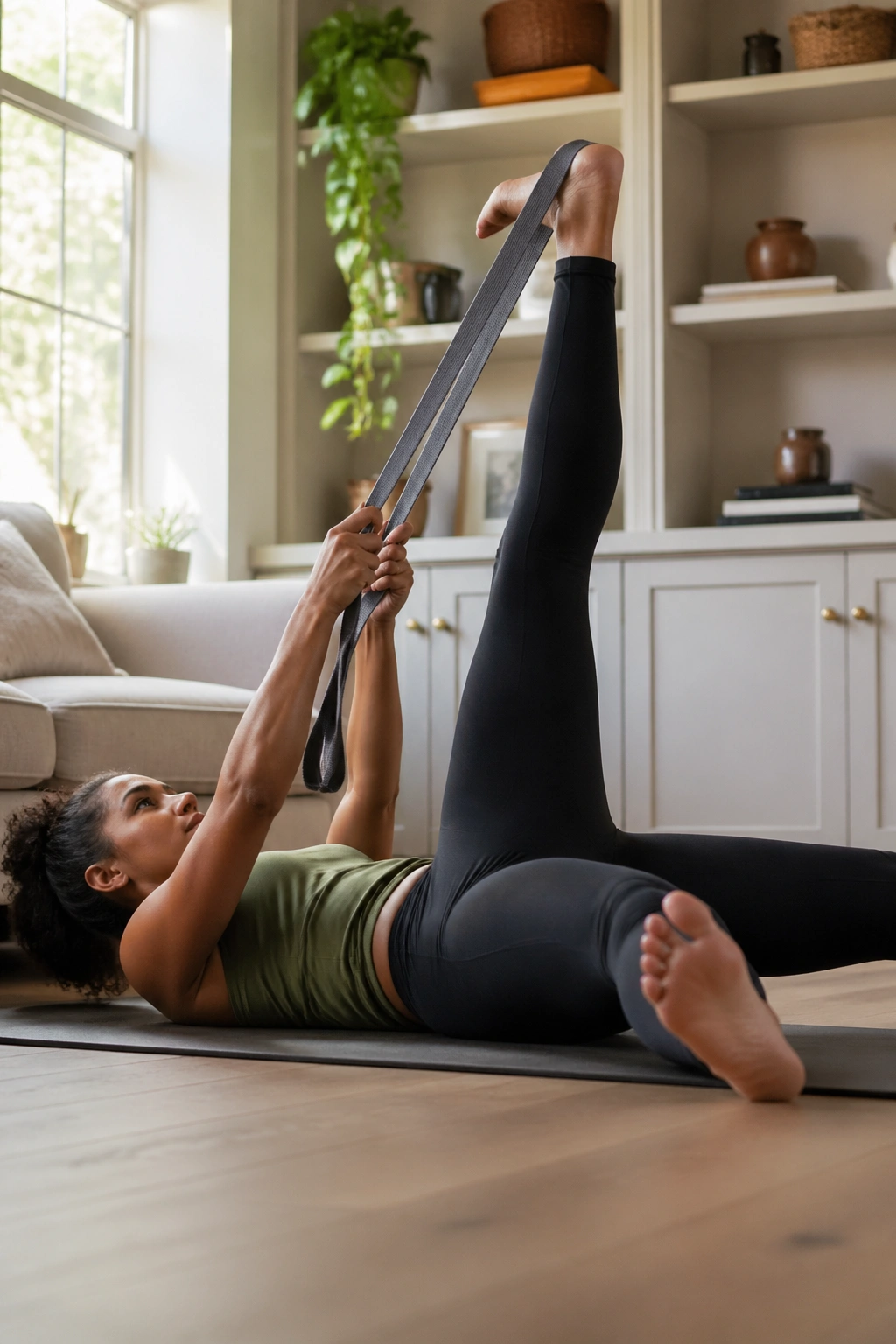
Tight hamstrings do not always need harder stretching. Plenty of times they need your pelvis and rib cage to stop fighting each other.
This session uses controlled leg work to create length you can keep after the workout ends. Start with a half roll-back and hold for 3 breaths to wake up the low abs. Then lie down and move through single-leg hamstring stretches with a strap or bath towel, 5 breath cycles each side. Follow with scissors: one leg reaching upward, the other long on the mat, 8 switches each side without yanking the lifted leg closer.
Side kick series matters here too. People forget that hip extension can make the front of the hips feel less jammed. Swing the top leg front and back for 10 reps each side, making the back reach longer than the front kick. Then sit up for spine stretch forward and saw, both with bent knees if your pelvis keeps rolling backward.
You should stand up from this feeling less grippy through the back of the legs and less compressed through the hips. If you feel stretched yet unstable, your range was too aggressive. Pull it back next time.
15. The Side-Body Anti-Slouch Routine
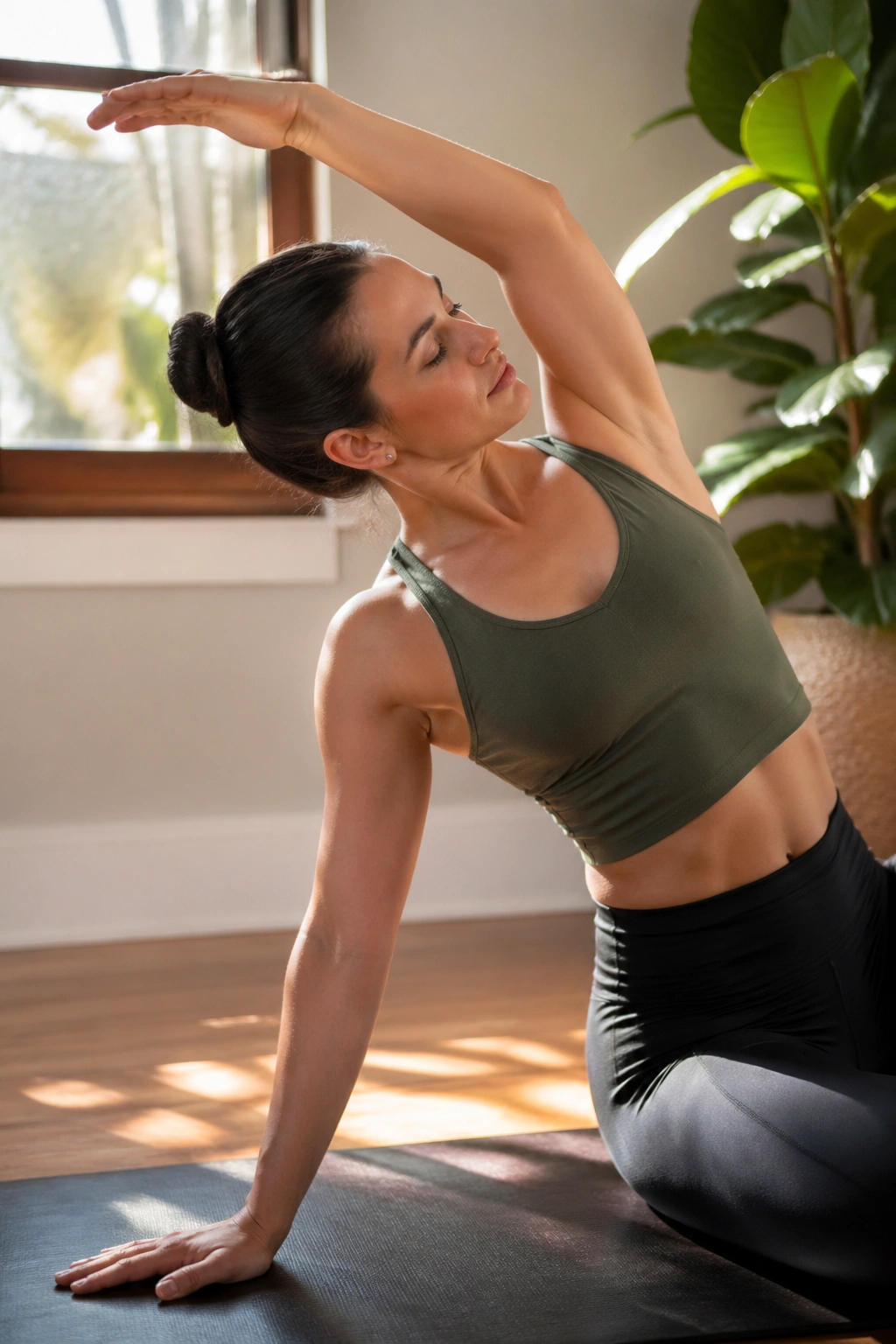
When was the last time you trained your side body on purpose?
Most home workouts hammer the front of the abs and call it core work. Your obliques, quadratus lumborum, serratus, and outer hips deserve better than that. They help you stay upright, resist collapsing into one hip, and hold a side plank without turning it into a shoulder survival test.
Build the session around these moves
Start with mermaid side bends for 6 reps per side. Move into side-lying waist lifts, 8 reps per side, pressing the underside ribs away from the mat. Then try a knee-down side plank hold for 15 to 20 seconds, twice each side. Finish with side-kick kneeling—top leg lifts and taps forward on a diagonal, 8 reps each side.
Expect one side to feel easier. That is common. Stay with the weaker side for one extra set if you have time. A stronger side body makes desk posture, walking mechanics, and even roll-ups look cleaner.
16. The Single-Leg Balance and Control Challenge
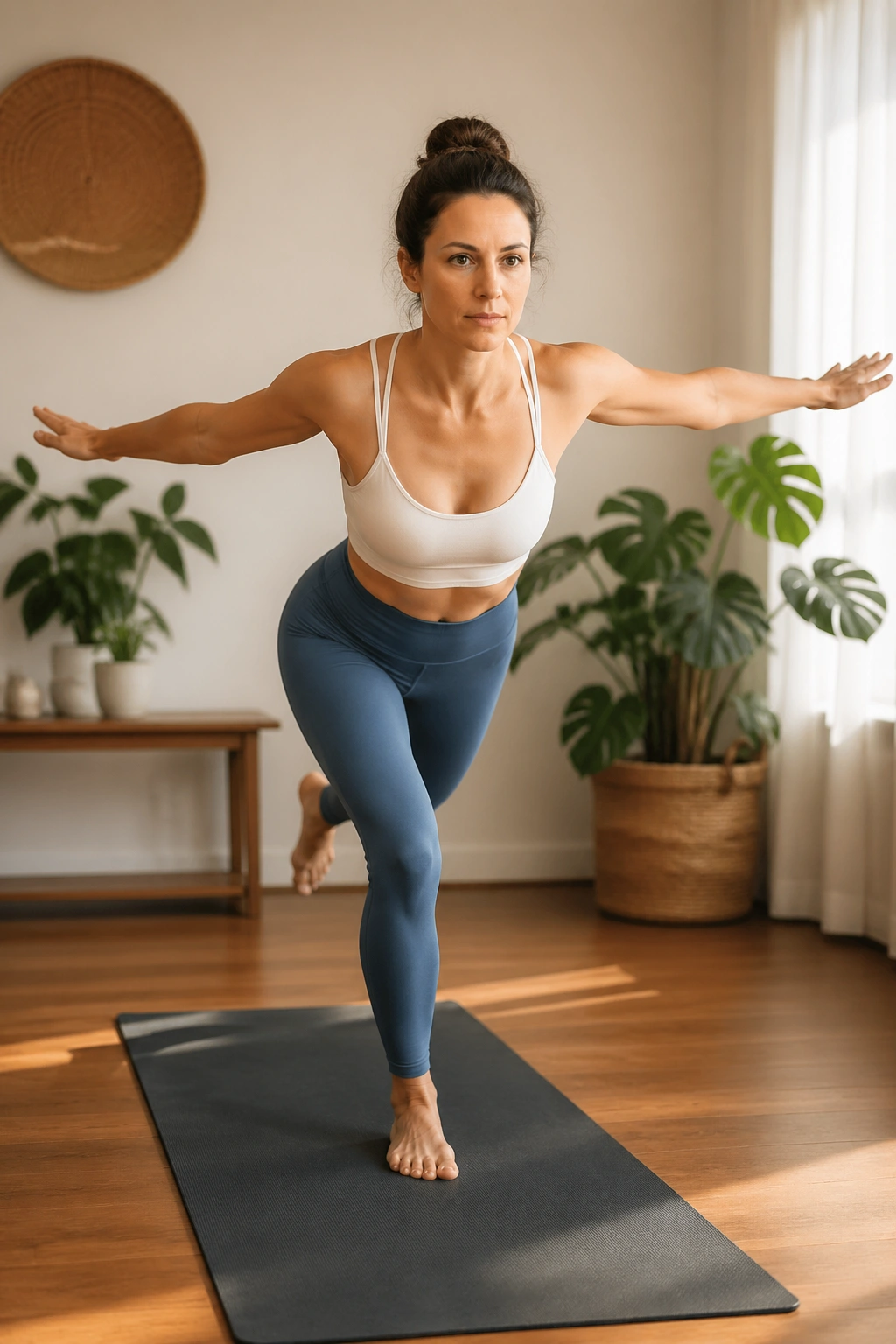
The first time you do a bridge march and your pelvis wobbles like a tray on one hand, you learn something fast: balance is not only a standing skill.
This workout uses single-leg loading on the mat to expose side-to-side differences. Start with bridge march, 10 alternating lifts. Then hold tabletop and draw single-leg circles with one leg while the other stays fixed, 6 circles each direction per side. Shift to quadruped for bird dog with a 2-second pause, then kneeling hover with one foot floating for 5 seconds at a time.
- Single-leg bridge: 6 reps each side
- Tabletop single-leg circles: 6 each direction
- Bird dog hold: 6 reps each side
- Side-lying développé: 8 reps each side
- Bent-knee teaser prep with one leg lifted: 5 reps each side
If you start shaking, good. Shaking often means the stabilizers finally have to join the conversation. Keep the reps low, the breath smooth, and the ego quiet.
17. The No-Equipment Full-Body Toning Circuit
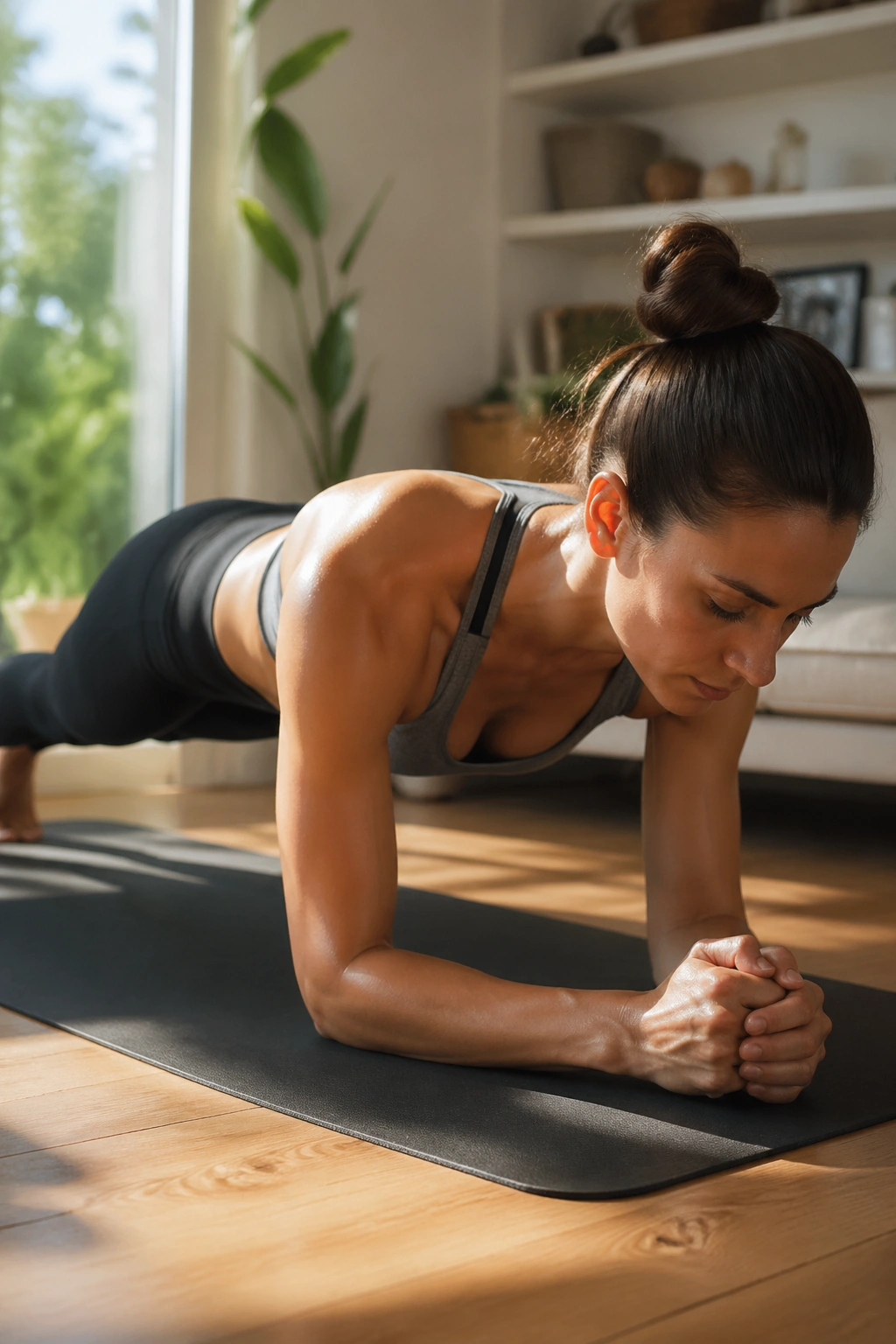
If you want one no-equipment Pilates workout that covers almost everything, this is the one I would save first. It has enough core work to feel like Pilates, enough posterior-chain work to offset sitting, and enough upper-body loading to leave your shoulders honest.
Use 6 stations, 45 seconds each with 15 seconds to change positions. Run the circuit 3 times. Station one is forearm plank with small forward-back rocks. Station two is swan prep or breaststroke prep, depending on how your back feels. Station three is bridge march. Station four is side-lying leg lifts on the right. Station five is side-lying leg lifts on the left. Station six is seated half roll-back with arm reaches.
You can keep the whole workout under 20 minutes and still hit abs, glutes, back, shoulders, and hips. That efficiency is why mat Pilates at home works so well for busy schedules. No setup. No swapping weights. No hunting for a resistance band that vanished into a drawer three weeks ago.
The catch—yes, there is one—is that tight transitions matter. If you spend 40 seconds scrolling between sets, the rhythm dies.
18. The Hamstrings-and-Seat Backline Builder
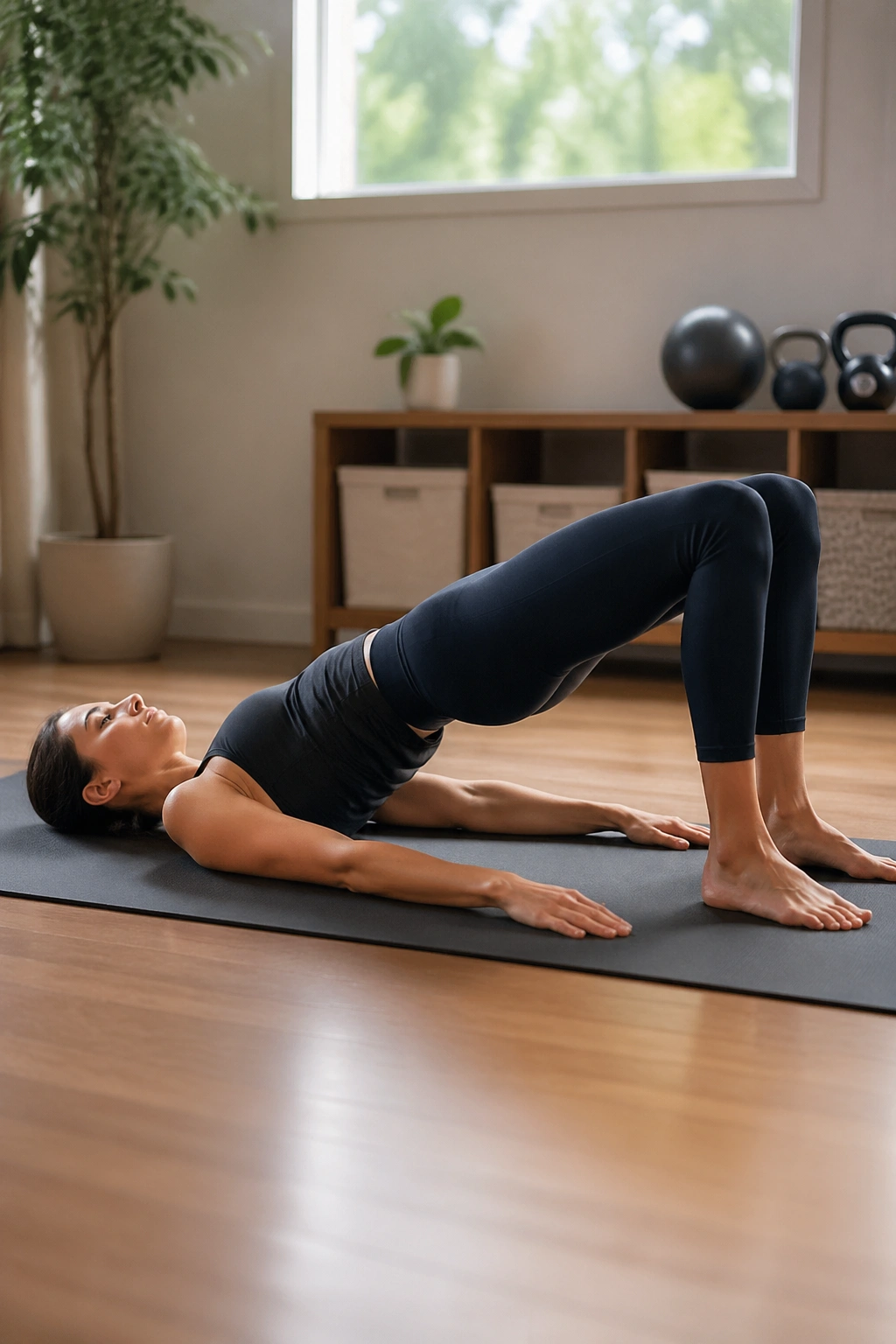
Unlike quad-heavy workouts that leave the front of your thighs burning while your backside naps, this sequence goes after the posterior chain—glutes, hamstrings, spinal extensors, and the deep stabilizers around the hips.
Start with heel-dig bridges. Pull your heels toward your glutes without actually moving them and lift for 8 slow reps. Then hold the bridge and take 6 tiny heel walks away from the body and back in. If hamstrings cramp, lower, reset, and shorten the range. That cramp is common when the muscle is weak, not only when it is tight.
Move face down for prone leg lifts, 8 each side, then swimming for 20 to 30 seconds. Finish in all-fours with donkey kicks and bent-knee pulses, 10 plus 10 each side. The work should land in the lower glute fold and upper hamstring, not in your low back.
Runners and cyclists usually need this more than they think. Those sports build plenty of endurance, yet they do not always build balanced hip extension strength through a controlled range.
19. The Hip Mobility Flow for People Who Sit Too Much
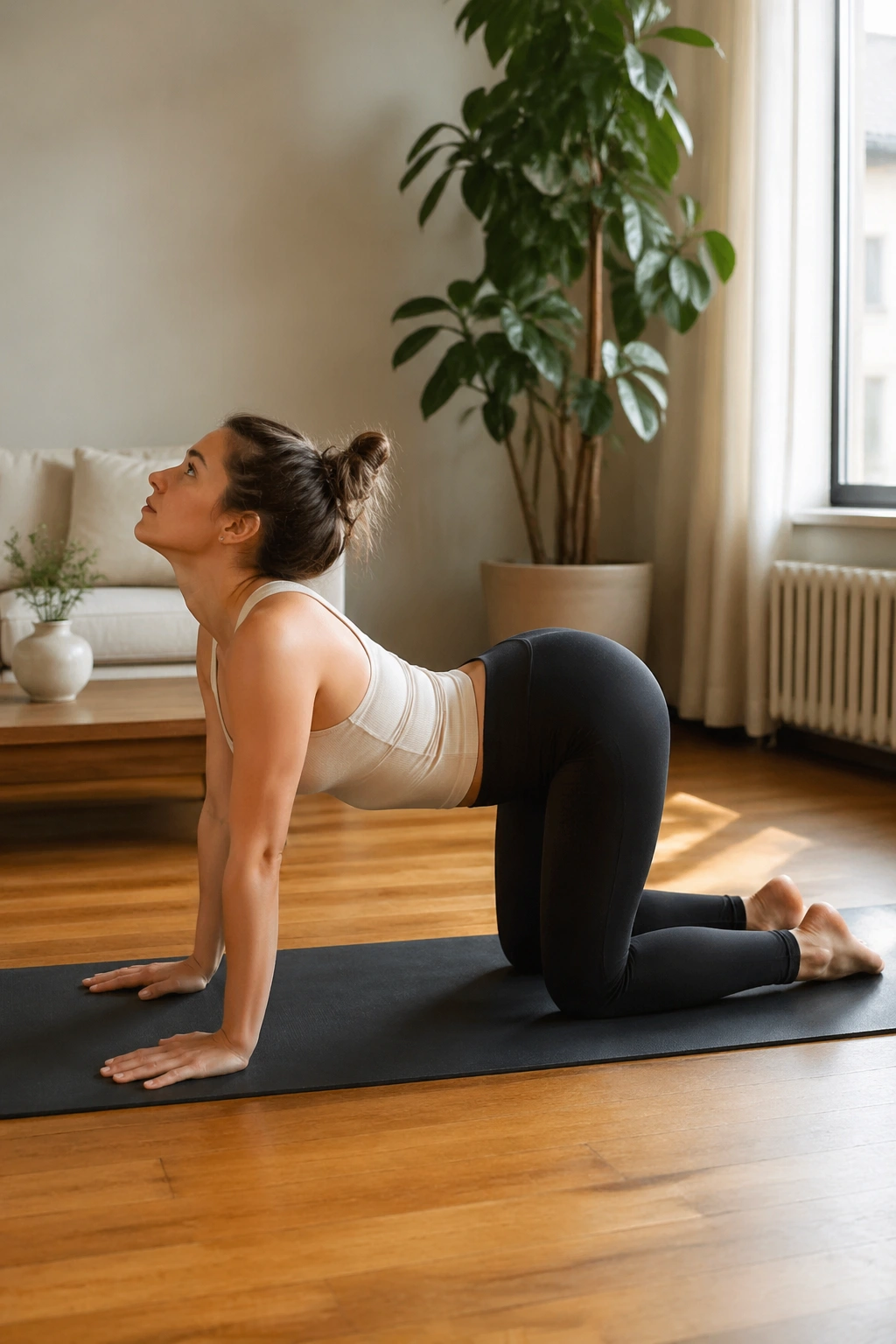
Hips get sticky fast.
This is the mat Pilates answer to that heavy, blocked feeling that shows up after long desk days, long drives, or long flights. The aim is not circus-level flexibility. You want cleaner rotation, easier extension, and less pulling at the front of the hips when you walk.
Do these in order
- Cat-cow, 6 rounds: Move from tail to head, not the other way around.
- Quadruped hip circles, 5 each direction per side: Keep the torso steady.
- 90/90 seated switches, 8 total: Use your hands on the floor if needed.
- Side kick front and back, 10 each side: Longer reach behind you than in front.
- Kneeling hip flexor reach, 30 seconds each side: Squeeze the glute of the kneeling leg.
- Supine figure-four, 5 breaths each side
Move slowly enough to notice where the motion stops. Then breathe there. The first round often feels clunky; the second usually feels smoother. That is your sign to keep going.
20. The Athletic Recovery Mat Pilates Session After Running or Cycling
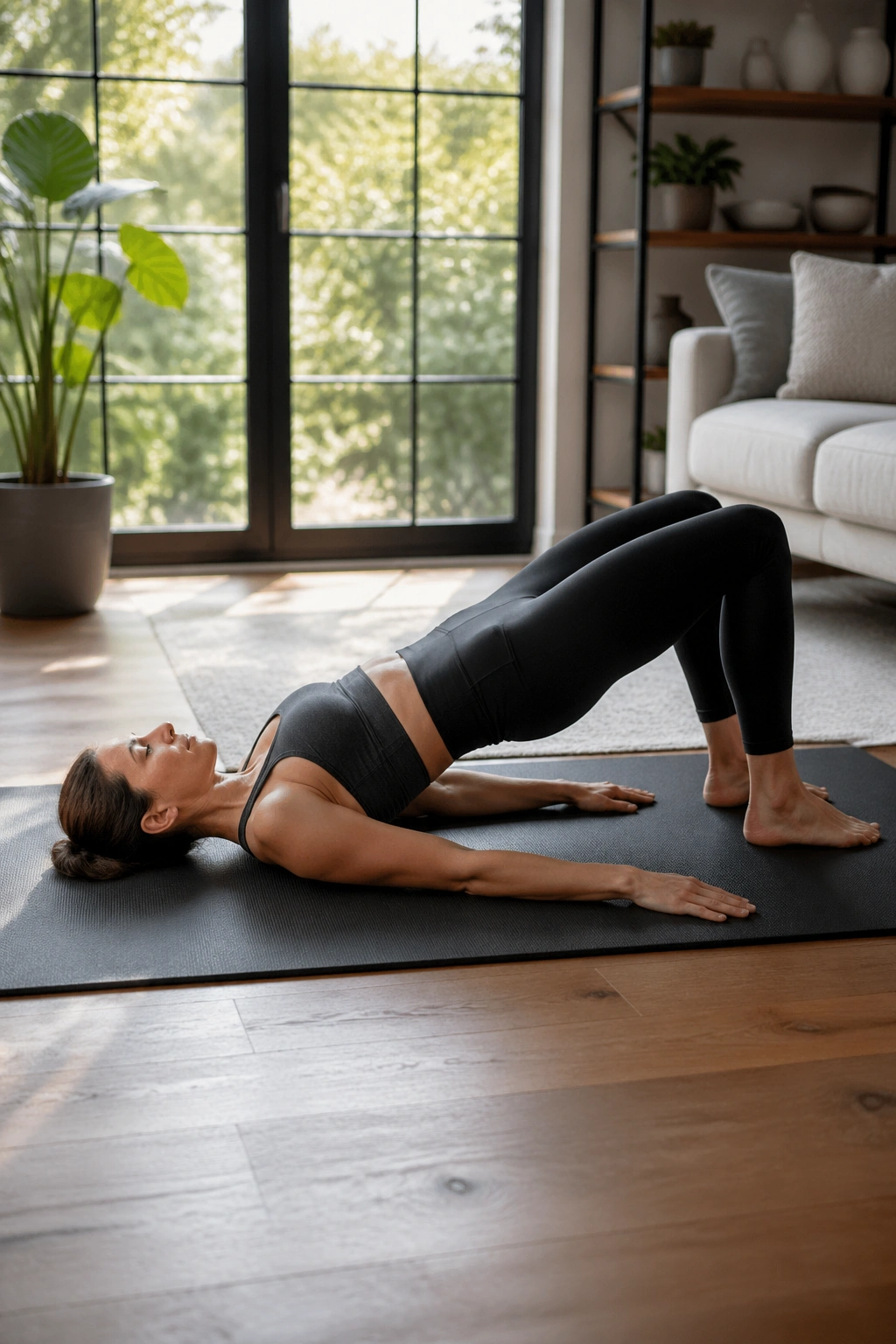
Athletes often treat recovery like dead time. Bad idea. A short home Pilates routine can clean up the stiffness that mileage and saddle time leave behind.
Start with calf pumps and ankle circles on your back for 1 minute. Then bridge with a hamstring bias—heels a bit farther from the glutes than usual—for 10 reps. Move into single-leg stretch, scissors, and side-lying leg series to restore hip control after repetitive forward motion. Add thoracic rotation and swan prep so the upper back gets some attention too; runners and cyclists both spend plenty of time rounded forward.
Keep the whole thing around 18 minutes. You should finish feeling taller, not cooked. If your hip flexors feel shredded after a hard run or long ride, bend the knees more in all abdominal work and skip teaser prep that day. Recovery sessions do not need to prove anything.
I like this style of Pilates most the day after a hard effort, when the body feels heavy and compressed but still wants to move.
21. The Neck-and-Shoulder Relief Sequence
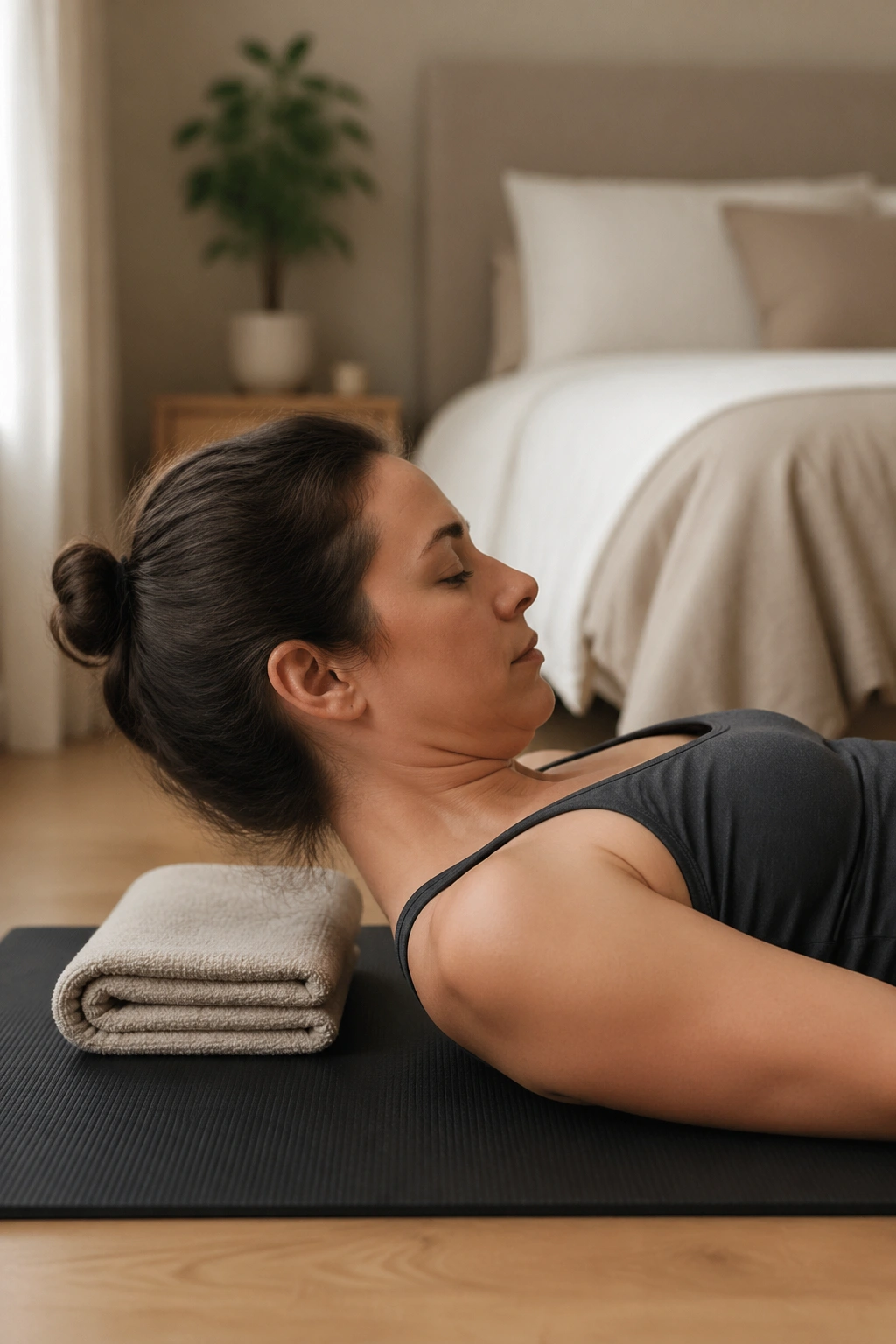
Can Pilates help a neck that feels glued to your shoulders? It can, if you stop turning every ab exercise into a chin-jut contest.
A lot of neck tension starts lower down: stiff ribs, sleepy serratus, shoulder blades that do not glide well, and abs that switch off so the neck braces instead. This workout addresses those pieces before you lift your head even once.
Use this order
Begin with chin nods on your back, 8 tiny reps. Add scapular slides with arms reaching to the ceiling, 10 reps. Turn onto your front for breaststroke prep, 6 reps, keeping the back of the neck long. Then go to thread-the-needle rotations in quadruped, 6 each side, followed by forearm plank with shoulder blade protraction, 3 holds of 15 seconds.
Use a folded towel under your head in supine work if the chin tips upward. In prone exercises, think of sliding the crown of the head forward rather than lifting the face. Neck relief often starts with rib control and shoulder mechanics, not stretching the neck harder.
22. The 15-Minute Core Endurance Ladder
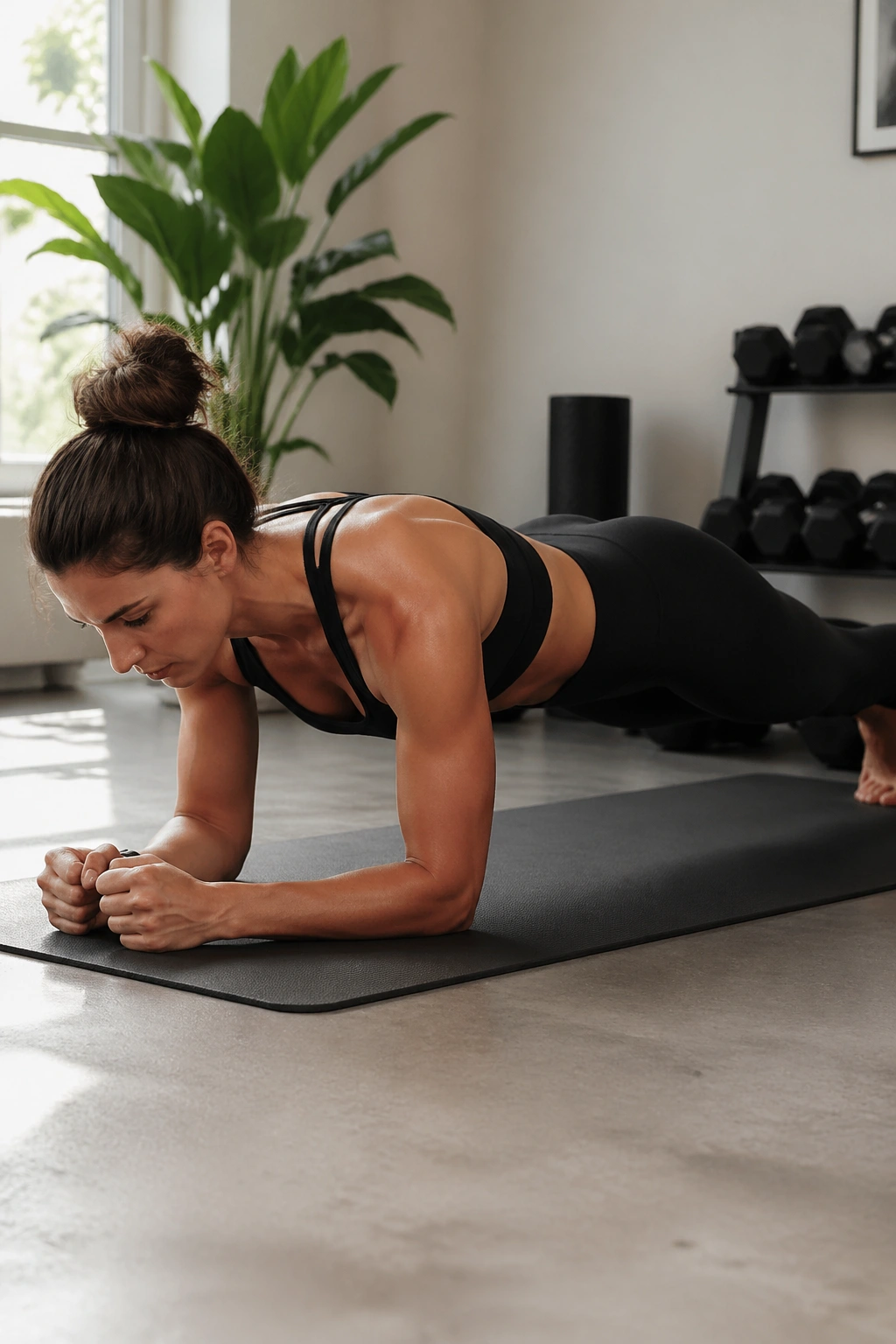
A timer changes the mood fast. This ladder is one of my favorite mat Pilates workouts when I want structure without too much decision-making.
You will climb from 20-second holds to 40-second holds, then come back down. Pick 4 movements: forearm plank, dead bug hold, side plank from knees, and hollow-body tuck hold. Work 20 seconds each, rest 10 seconds between moves. Then do 30 seconds each. Then 40. On the way down, return to 30 and then 20.
- Round 1: 20-second holds
- Round 2: 30-second holds
- Round 3: 40-second holds
- Round 4: 30-second holds
- Round 5: 20-second holds
If hollow-body tuck hold feels too intense, swap in tabletop hold with arm reaches. The point is endurance under clean alignment, not collapsing into your lower back while the timer mocks you from the screen.
Short workout. Mean little ladder.
23. The Teaser Prep Workout for Building Up to Advanced Mat Pilates
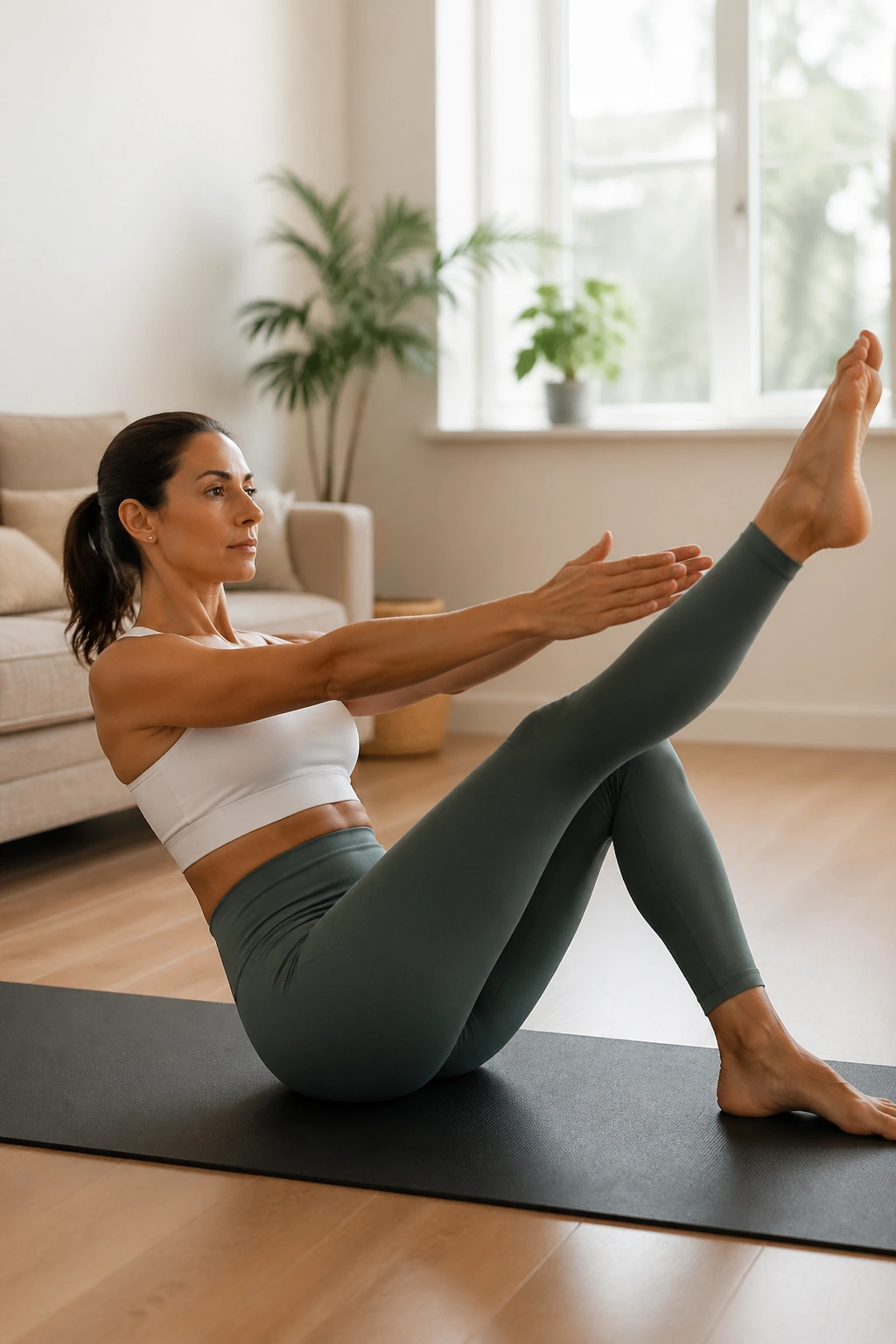
I love advanced Pilates. I also think people jump to teaser too early and then blame their bodies when the move turns into a hip-flexor wrestling match.
This session builds the ingredients instead of chasing the final shape. Start with half roll-backs, 6 reps, holding the lowest point for 2 breaths. Then move into single-leg stretch and double-leg stretch with the head down if needed, 8 reps each. After that, practice one-leg teaser prep: one knee bent, one leg long, arms reaching forward, roll up partway and pause. Do 5 reps per side.
Open-leg rocker prep is the next step. Hold behind thighs, lift the feet, balance, and maybe rock a few inches back if you can keep the same C-curve. No drama if you cannot. Finish with spine stretch forward and bridge to unload the hip flexors.
This is not flashy, which is why it works. Build the pattern first. The clean teaser comes later.
24. The Coordination and Cross-Body Pattern Workout
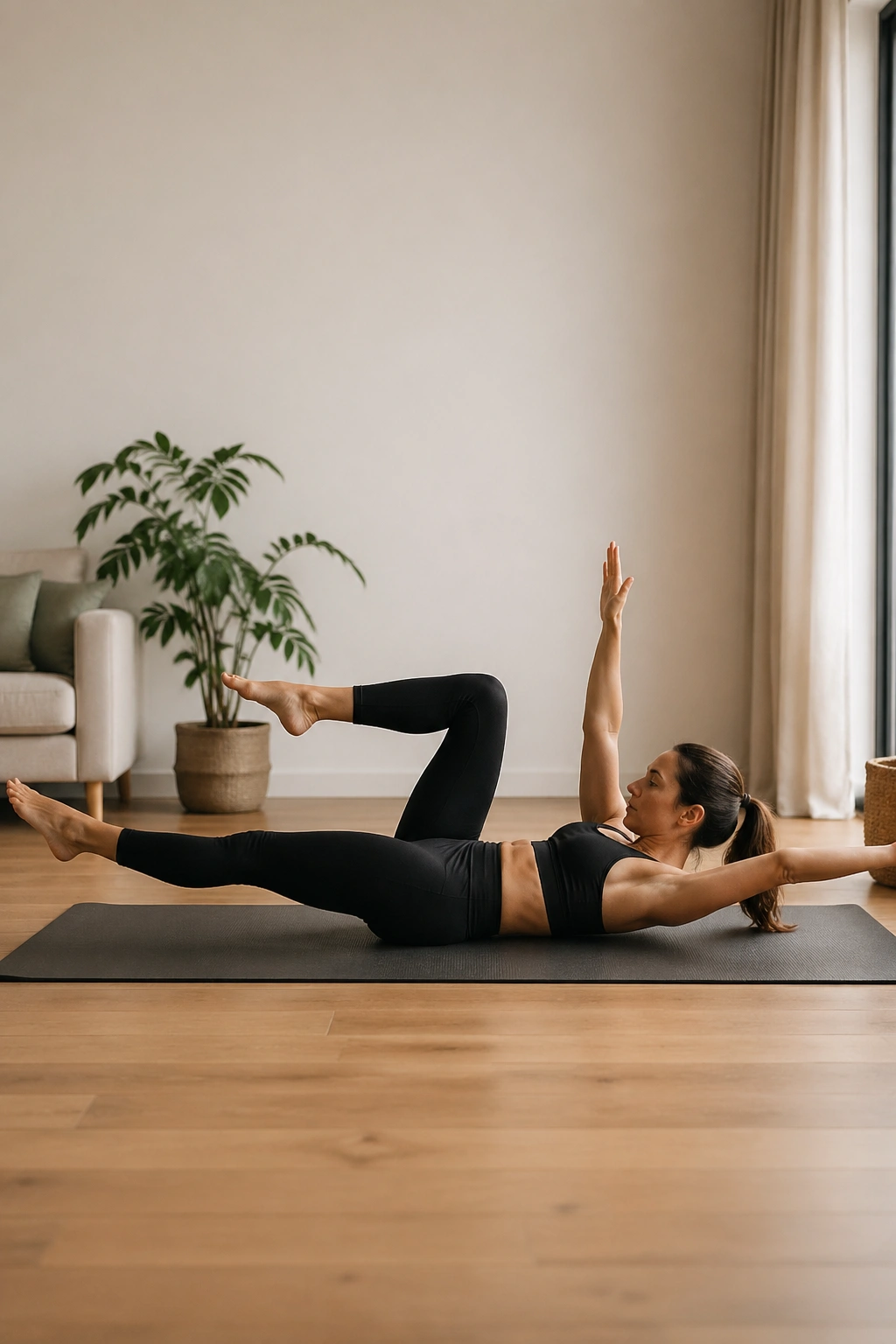
Unlike brute-force core sessions that only ask you to brace, cross-body Pilates makes your trunk and limbs talk to each other. That coordination carries over to walking, running, stair climbing, and sports where one side of the body has to organize around the other.
Start on your back with contralateral dead bug: right arm and left leg reach away, then switch, 8 reps each side. Move to criss-cross with a 2-second pause, 6 reps each side. Then switch to quadruped bird dog with elbow-to-knee connection under the body, 8 reps per side. Finish face down with swimming, 20 to 30 seconds, and kneeling diagonal reaches, 6 each side.
Who benefits most? Anyone who feels strong in straight-ahead exercises yet clumsy when rotation enters the picture. Golfers, tennis players, dancers, field-sport athletes—also desk workers who have forgotten how their rib cage and pelvis are supposed to share a task.
A small tip: go slower than you think. Coordination falls apart when speed gets there first.
25. The 30-Minute Full-Length Mat Pilates Workout at Home
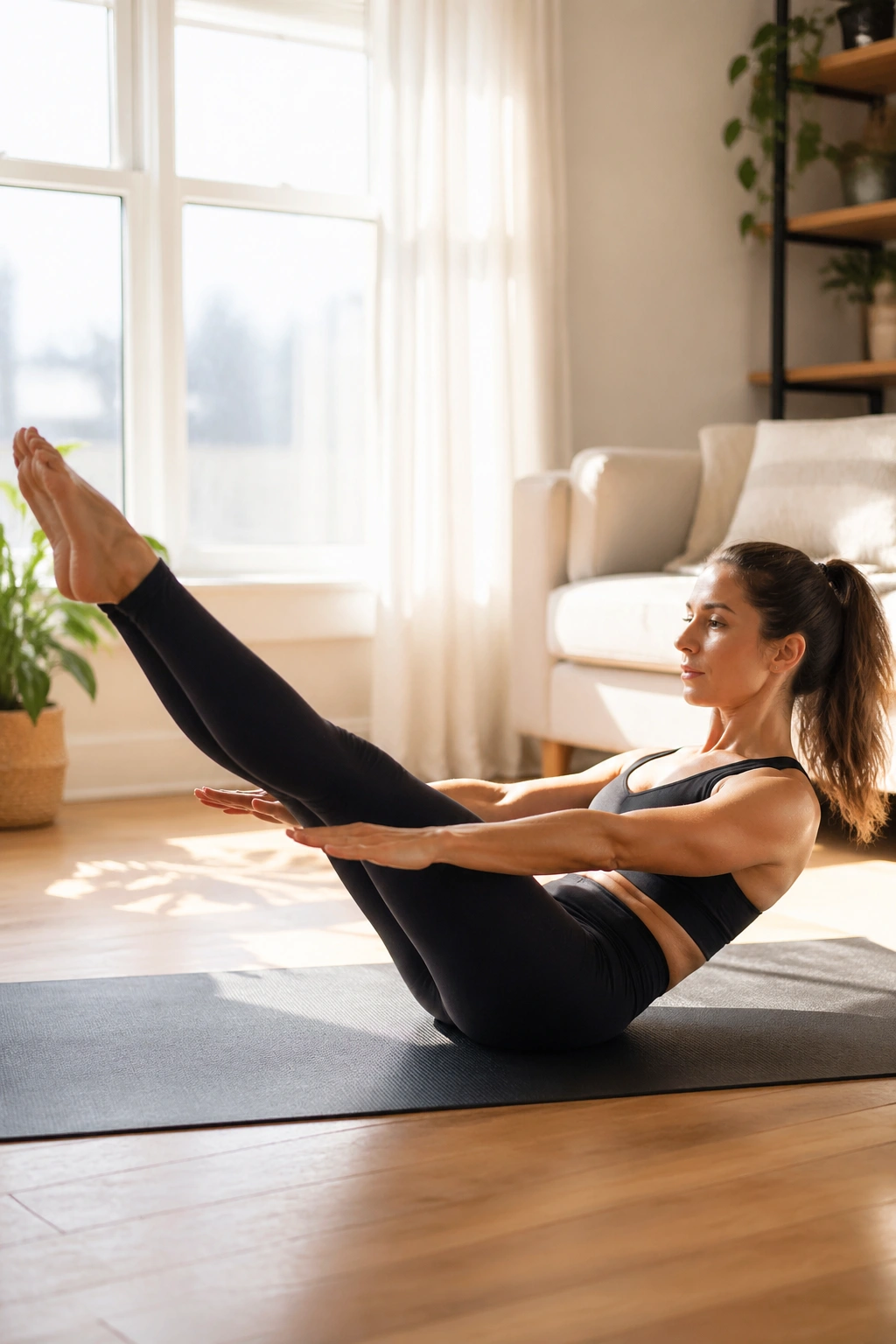
If you want one session that feels closest to a studio class, make it this 30-minute mat Pilates workout at home. It covers breath, articulation, abs, glutes, side body, back extension, and a short cool-down without stuffing too much into one block.
Break it into five parts
- Warm-up, 5 minutes: 360 breathing, pelvic tilts, pelvic curls, cat-cow
- Core block, 8 minutes: Hundred, single-leg stretch, toe taps, half roll-backs
- Glute and hip block, 7 minutes: Bridge march, side-lying clams, side kicks, prone heel beats
- Upper back and posture block, 6 minutes: Breaststroke prep, swimming, forearm plank, mermaid side bends
- Cool-down, 4 minutes: Spine stretch forward, supine twist, figure-four stretch
A good pace is 45 seconds of work or 8 controlled reps per move, depending on the exercise. Rest about 15 seconds between moves and 45 seconds between blocks. That keeps the session moving without turning it into frantic cardio.
You can repeat this full-length sequence 2 or 3 times a week and use the shorter workouts above on the days between. If your form slips, cut a block, not your standards. Pilates rewards clean work more than extra volume.
Final Thoughts
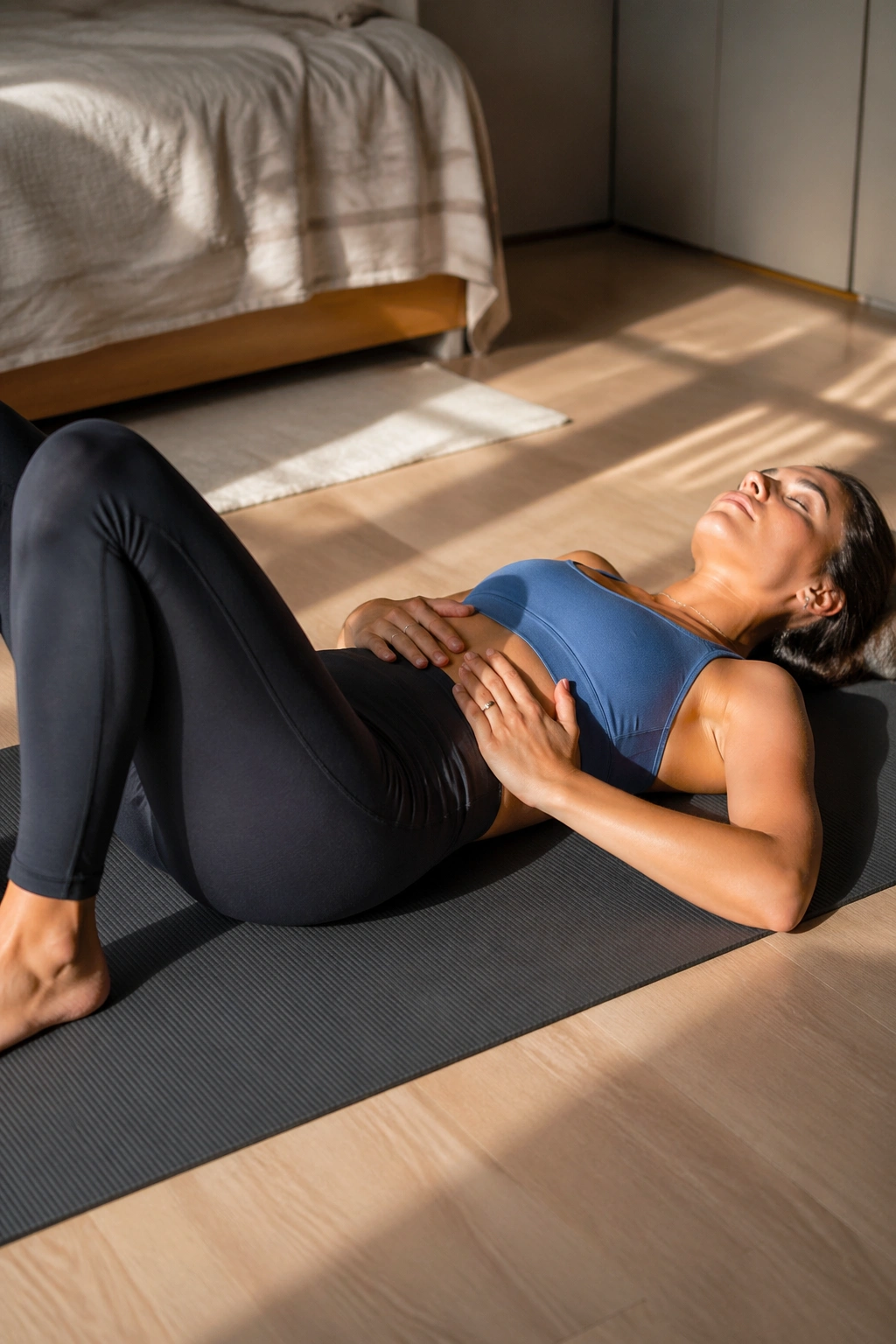
The best mat Pilates workouts at home are not always the hardest ones. The sessions that stick are the ones you can start without dread, run with control, and finish feeling more organized than when you began.
Pick three from this list and give them real repetition for two weeks: one core-focused session, one glute or posture session, and one recovery flow. That small rotation is usually enough to show you where your body is strong, where it cheats, and where Pilates can clean things up fast.
And when a move feels oddly difficult, pay attention. That is often the exercise you need most.
