



Most people think of Pilates as a series of gentle, controlled movements performed on a mat. While that’s certainly part of the picture, it sells the discipline short. True Pilates is an exercise in structural integrity, a way to re-engineer the way your body moves through space by emphasizing the “powerhouse”—the deep abdominal muscles, the lower back, and the pelvic floor. When you really commit to the technique, you aren’t just doing a workout; you are training your nervous system to support your skeleton more efficiently.
The beauty of this method lies in its near-infinite scalability. You can take the exact same set of movements and make them accessible to someone recovering from an injury or so grueling that a professional athlete will be shaking by the end of the session. It is the only modality I know that truly respects the nuances of human biomechanics regardless of where you are starting from.
Whether you are looking to build a rock-solid core, fix that nagging back pain from sitting at a desk all day, or simply find a routine that doesn’t leave your joints aching, there is a version of this practice that fits. Let’s look at twenty-two distinct approaches to the mat.
1. Foundations of Beginner Floor Pilates
Beginner floor Pilates is less about burning calories and everything about learning how to “switch on” the right muscles. If you treat this as a race to get to the hardest move, you will miss the point entirely. The focus here is on pelvic placement—finding your neutral spine—and understanding how to initiate movement from the transverse abdominis rather than straining your hip flexors or neck.
The Core Principles to Master First
- The Hundred (modified): Keep your legs in a tabletop position instead of extending them straight out; this protects the lower back while you learn to pump your arms and coordinate your breath.
- Pelvic Curls: Focus on the articulation of the spine, lifting one vertebra at a time off the floor, rather than just thrusting the hips upward.
- Breathing: Inhale through the nose to expand the ribcage laterally—not into the belly—and exhale through pursed lips to engage the deep core.
Pro tip: If your neck hurts during abdominal work, you are likely pulling with your head instead of using your core. Drop your head back down to the mat, reset your ribs, and try again with a smaller range of motion.
2. Low-Impact Pilates for Prenatal Support
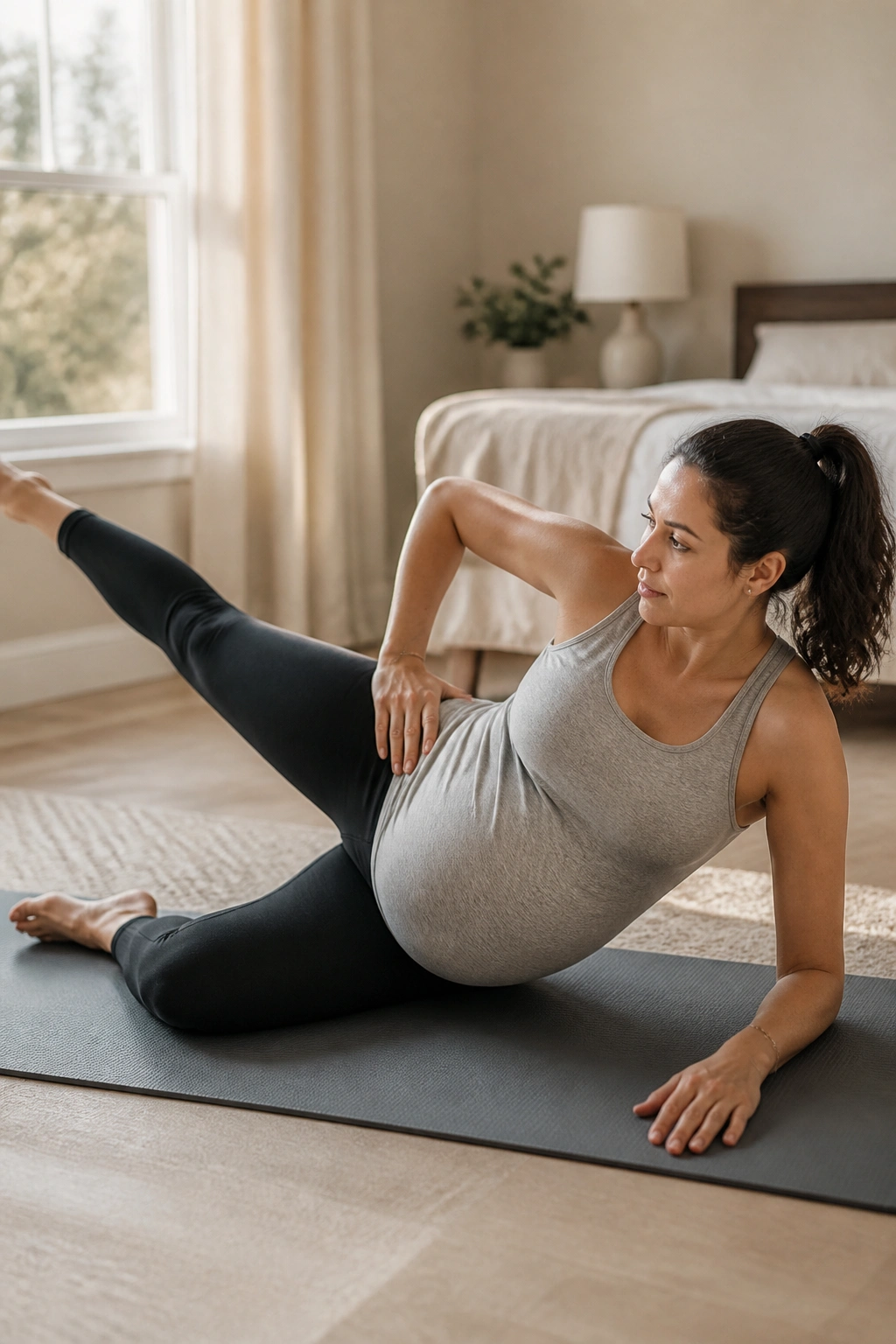
When working through pregnancy, the goal shifts from “maximum exertion” to “maintenance and support.” Your center of gravity is changing daily, and the relaxin hormone is making your ligaments looser. This requires a shift toward stabilization rather than deep stretching or heavy flexion.
Avoid any moves that require you to lie flat on your back for extended periods after the first trimester, as this can compress major veins. Instead, prioritize side-lying leg series, quadruped (all fours) exercises, and seated postural work. These positions keep you safe while still challenging your glutes and obliques, which are crucial for carrying extra weight.
Focus on maintaining a neutral spine throughout every movement. It is easy to let the lower back arch excessively as the belly grows; keep the ribcage knitted in and the pelvis stable. By doing this, you are actively preventing lower back pain and keeping the pelvic floor functional.
3. Targeted Pilates for Lower Back Pain Relief
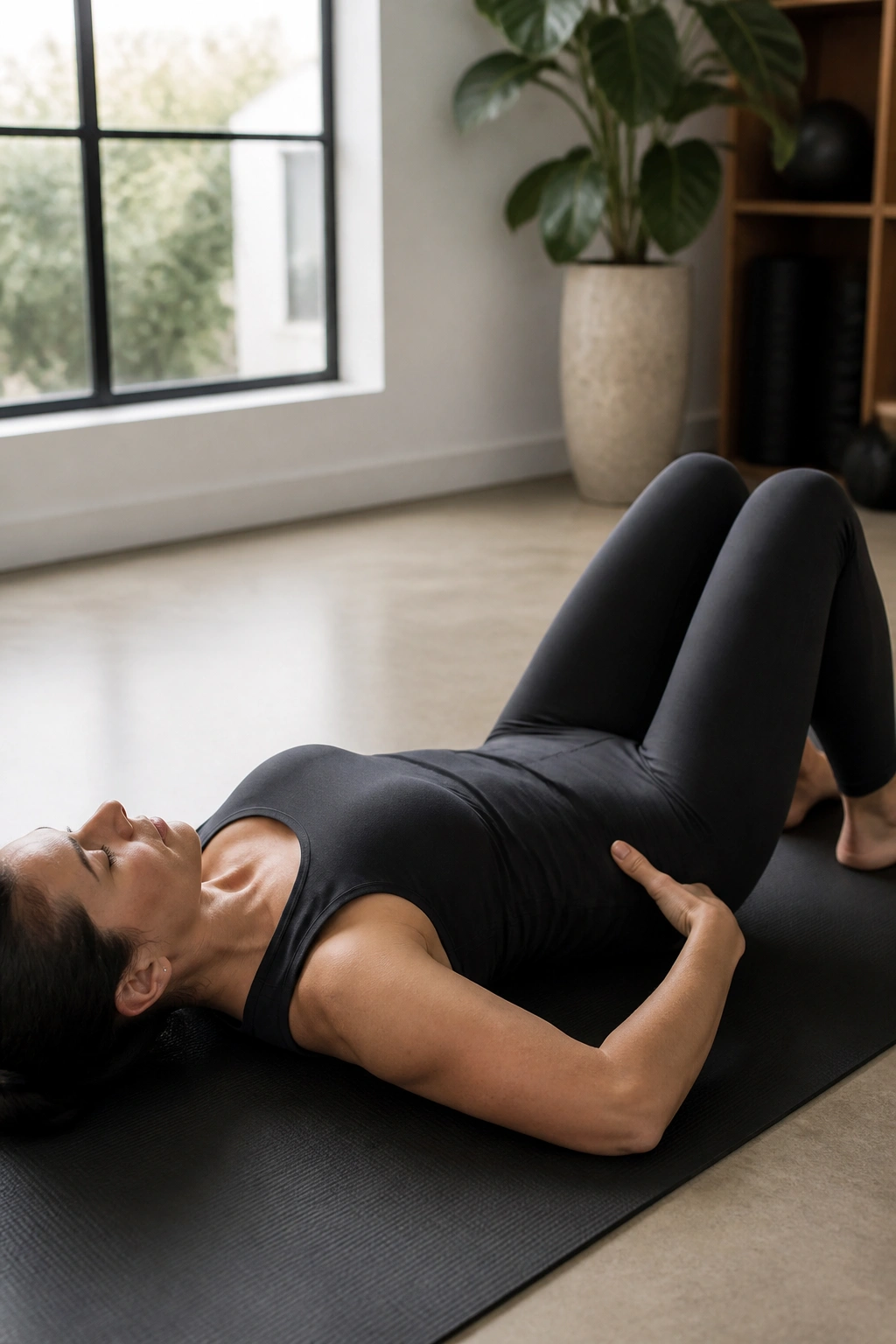
Lower back pain is often a symptom of weakness elsewhere—specifically, the core or the glutes. This routine focuses on “imprinting” the spine, which means learning how to gently press the lumbar region into the floor to deactivate tight erector spinae muscles.
Why This Works
- Decompression: Movements that prioritize lengthening the spine, like a gentle cat-cow or a controlled roll-up, create space between the vertebrae.
- Glute Activation: Many back issues stem from weak glutes forcing the lower back to overcompensate. Glute bridges are your best friend here.
- Transverse Abdominis Engagement: Learning to pull the belly button toward the spine creates an internal brace that supports the back during daily tasks.
Common Mistake: Never push through sharp, shooting pain. If a movement feels “pinchy” in the lower back, stop, reset, and try a lower-intensity version. You should feel the muscles working, not the joints grinding.
4. Intermediate Mat Flow for Endurance
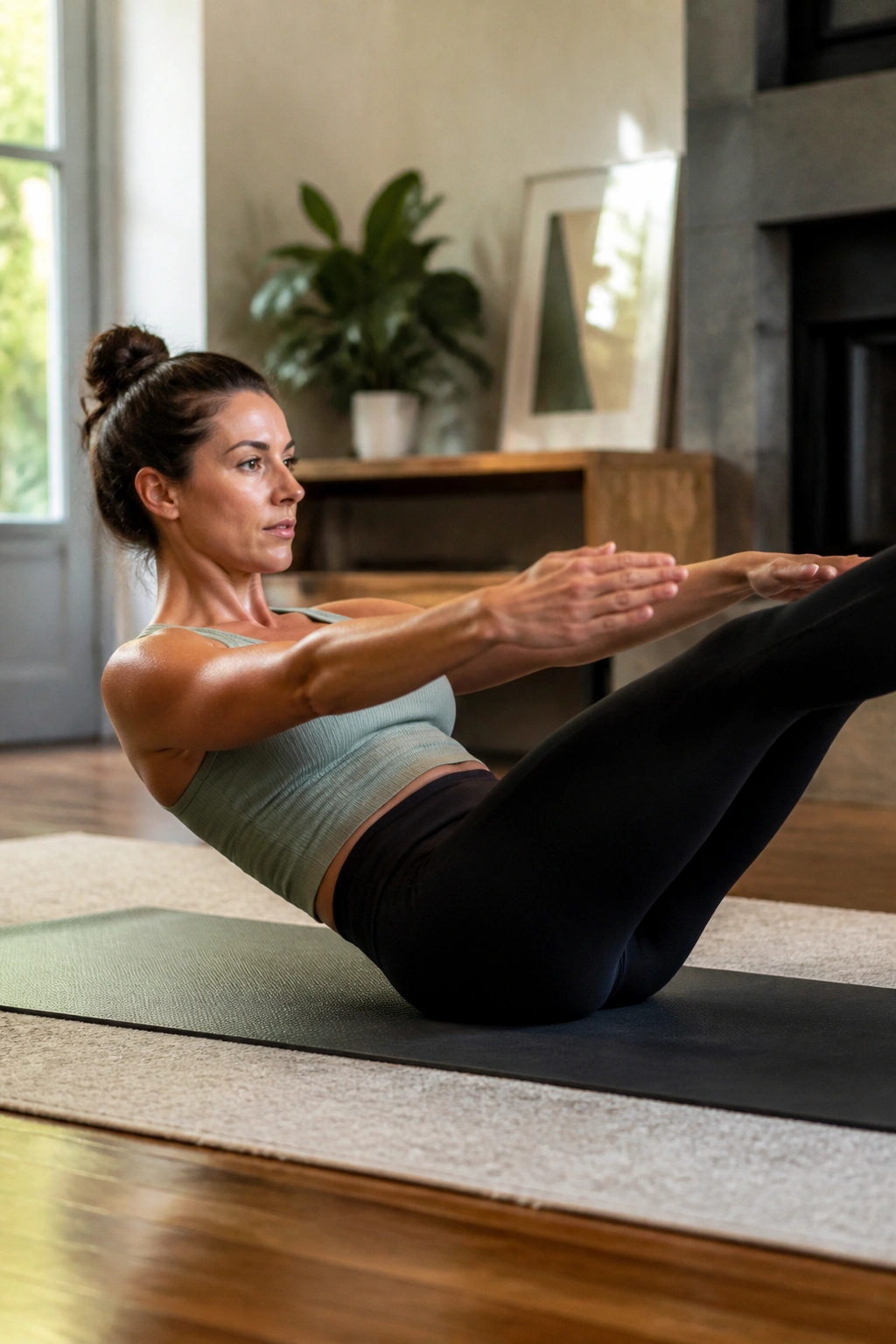
Once you have mastered the foundational positions, the intermediate mat flow is where the conditioning really kicks in. This is about linking movements together with minimal rest. You move from the Hundred directly into the Roll-up, then into single-leg circles, without resetting.
The secret here is flow. Instead of seeing these as individual reps, visualize the routine as a single, continuous, fluid motion. If you have to stop and catch your breath between every move, you are likely pushing too hard or losing your form.
Think about the “scapular anchor.” Keep your shoulder blades drawn down and back throughout the entire sequence. It is very easy to let them creep up toward your ears when fatigue sets in. By keeping them stabilized, you maintain a level of poise and grace that differentiates true Pilates from standard floor calisthenics.
5. Advanced Reformer-Style Mat Exercises
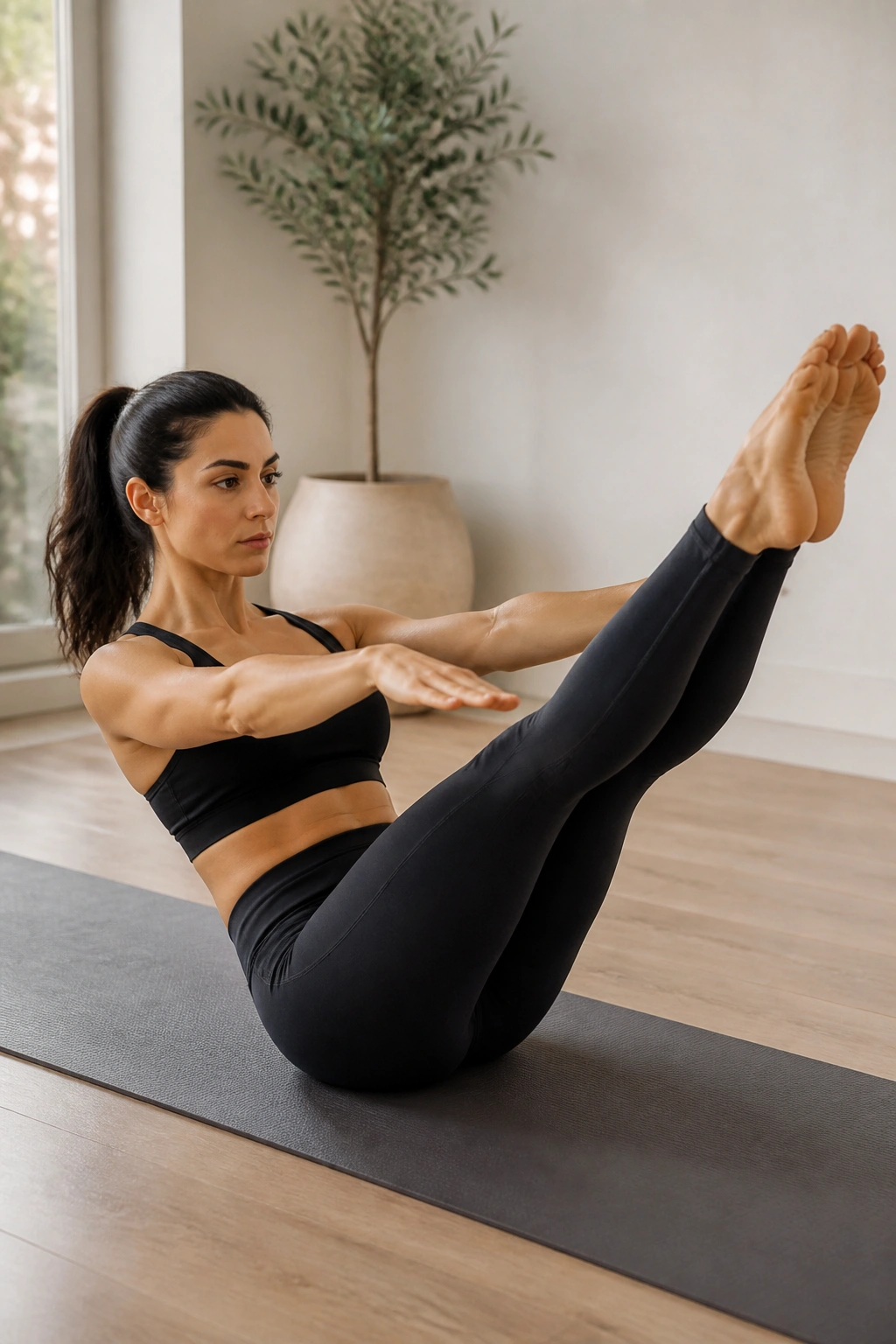
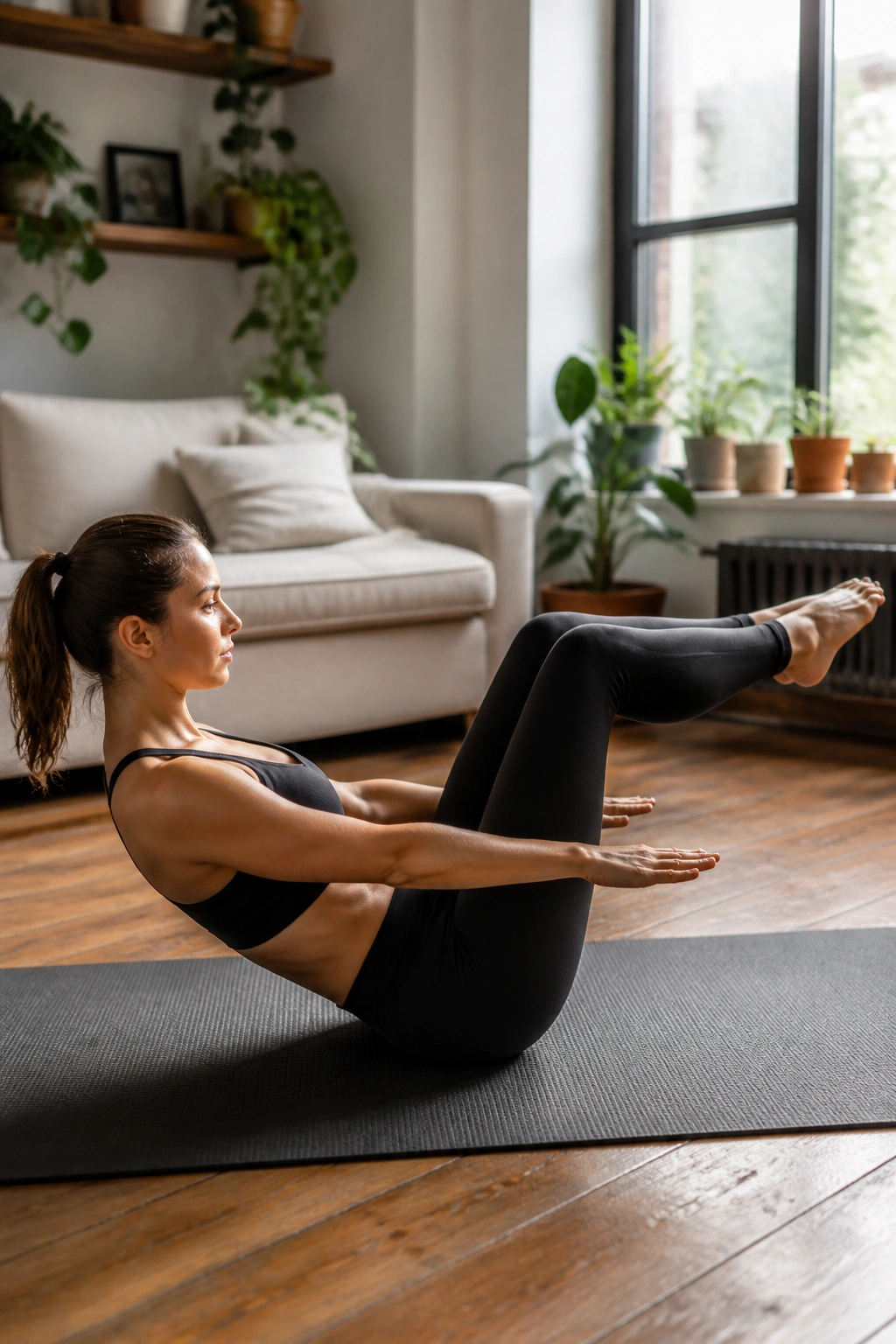
This is the level where you challenge gravity with advanced lever lengths and precarious balance. We are talking about exercises like the “Teaser,” “Criss-Cross,” and “Jackknife.” These moves are essentially the mat equivalent of doing heavy work on a Reformer machine, minus the mechanical assistance of the springs.
When you do these moves, the physics changes. Your legs become long, heavy levers, and your abdominal wall has to work overtime to stabilize them. Because you don’t have a carriage to push against, your core must act as the resistance.
These exercises are not for beginners. If you try to jump into this level without a solid base, you will likely end up straining your hip flexors or snapping into your lower back. Only move here when you can perform the intermediate flow with perfect, effortless control.
6. Resistance Band Pilates for Added Intensity
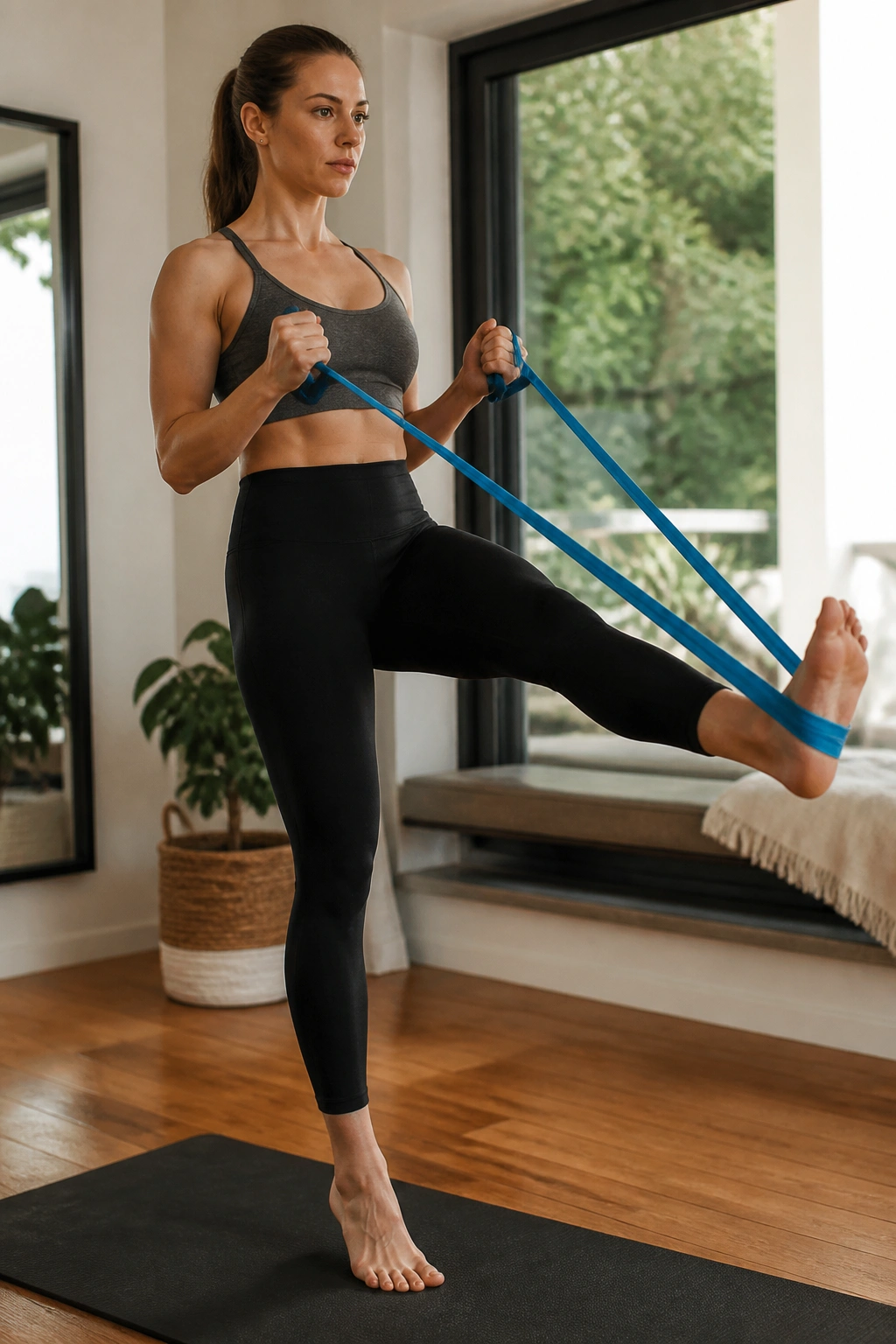
A simple loop or long resistance band can completely transform a basic mat routine. By adding external tension, you force your muscles to engage both on the concentric (shortening) and eccentric (lengthening) phases of the movement.
How to Use Bands Effectively
- Foot Loops: Place the band around the soles of your feet during leg extensions to add resistance to your hamstrings and quads.
- Arm Tension: Hold the band taut between your hands during back extensions to activate the rhomboids and posterior deltoids.
- Glute Loops: Put a mini-loop above your knees during bridges; pushing out against the band fires up the gluteus medius, which is essential for hip stability.
The key to using bands is speed control. Do not let the band “snap” back when you return to the starting position. Control the tension on the way back—that is where the real strengthening happens.
7. Weighted Pilates for Muscle Sculpting
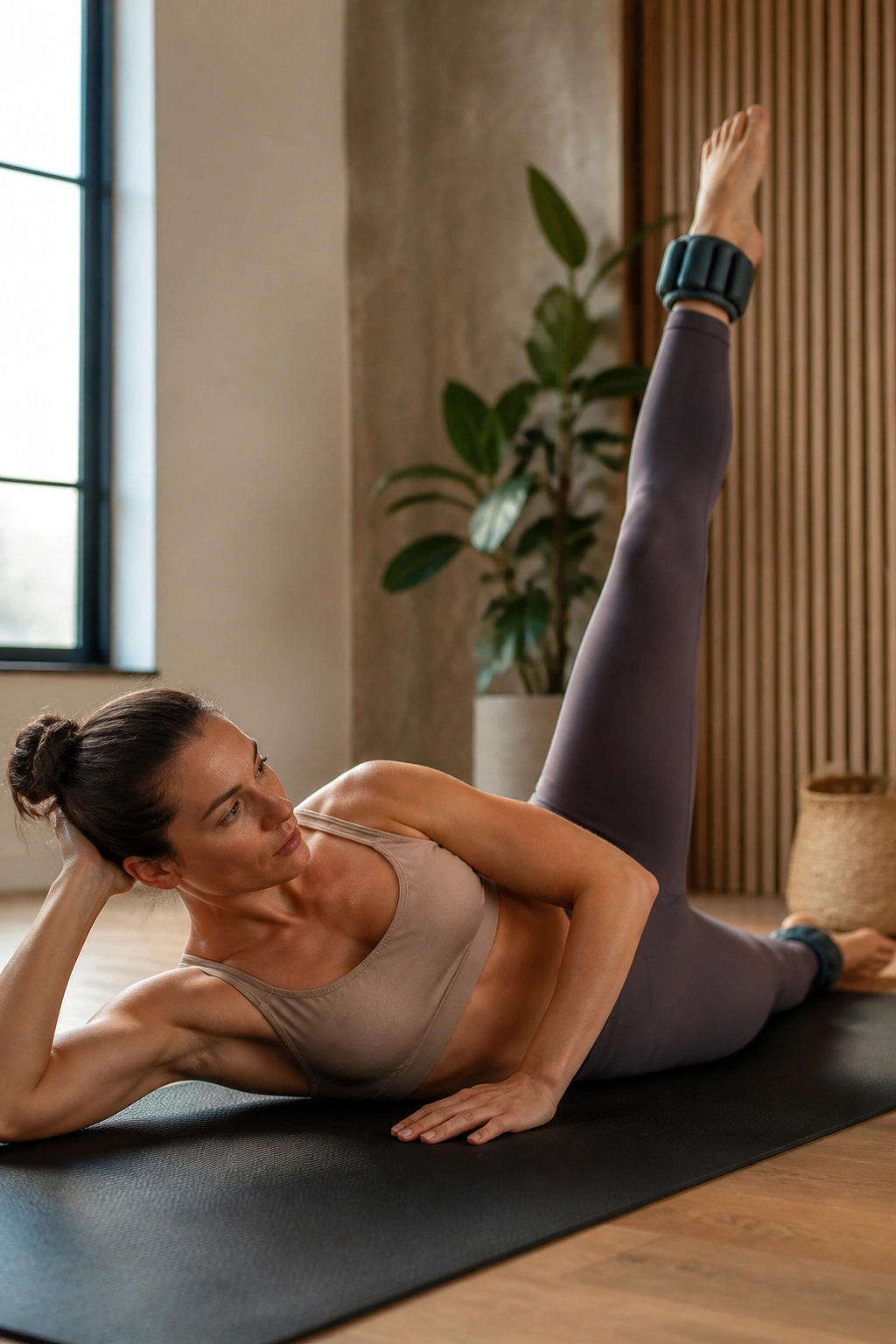
Some purists argue against using weights in Pilates, but if your goal is lean muscle definition and bone density support, light ankle weights or 1-2 pound hand weights are incredibly effective. Adding even a small amount of weight changes the leverage of the limbs significantly.
When you add weight, the “lever arm” becomes longer. A simple leg lift that was easy on the mat suddenly requires double the abdominal strength to prevent the back from arching. This is excellent for creating that toned, dancer-like physique.
Just be careful with your joints. Do not use heavy weights. The point of Pilates is control and precision; if the weight is so heavy that you start swinging your limbs to gain momentum, you are no longer doing Pilates. You are just doing sloppy weight training. Stick to weights that allow you to maintain perfect form for the entire set.
8. Deep Core Stability Training
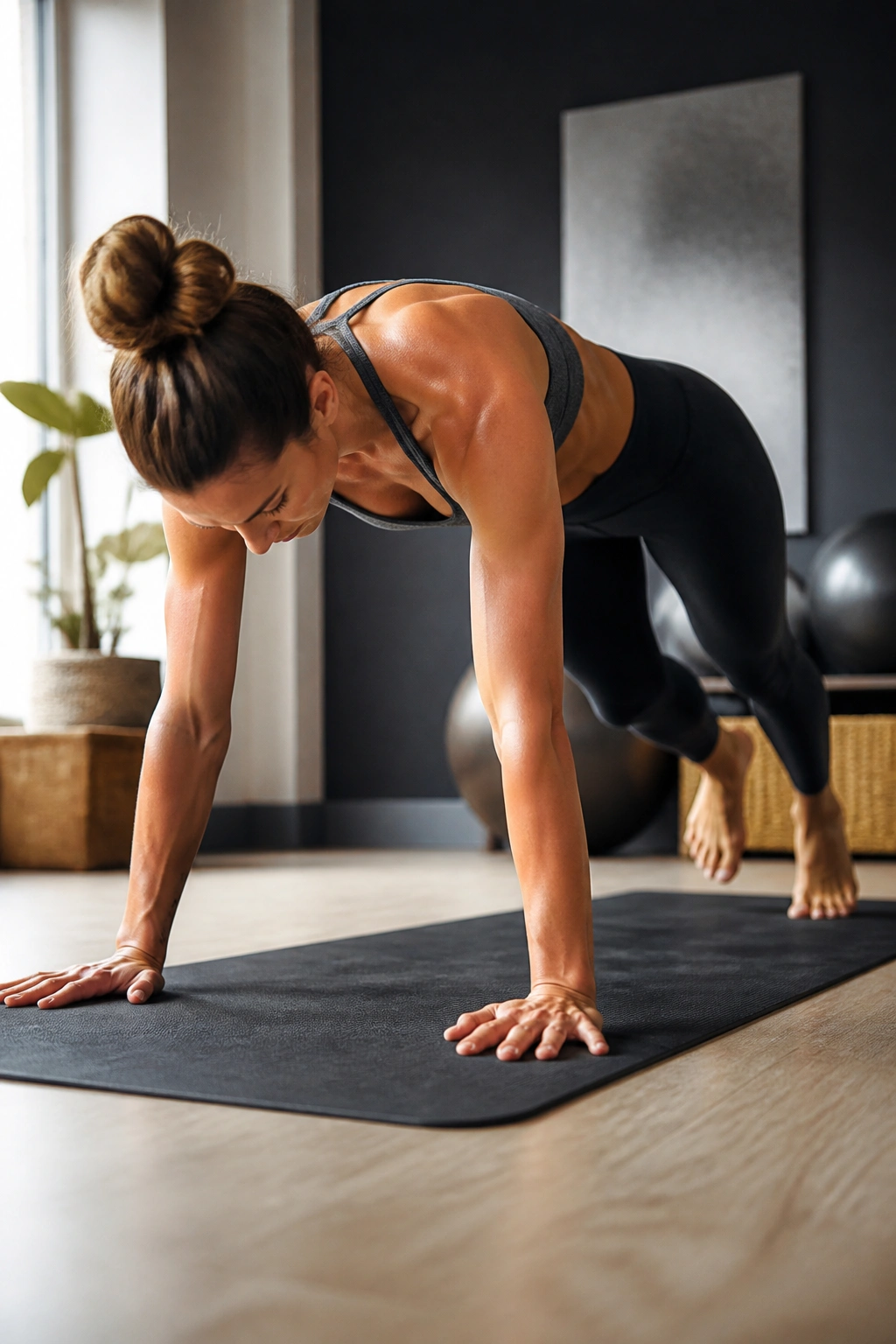
This isn’t about getting a six-pack; this is about deep-layer stabilization. We are targeting the muscles that wrap around your spine like a corset. If you have ever felt “loose” or “unstable” during a workout, this is the remedy.
The focus here is on isometric holds. Think about the “Plank to Pike” transition or “Swimming” on the mat. These moves require you to hold your body steady against a gravity-defying challenge.
You have to breathe while maintaining this tension. It is tempting to hold your breath when things get hard, but doing so increases intra-abdominal pressure and can actually make you less stable. Exhale on the exertion, keep the ribs knit, and keep the core firing the entire time.
9. Pilates for Targeted Glute Activation
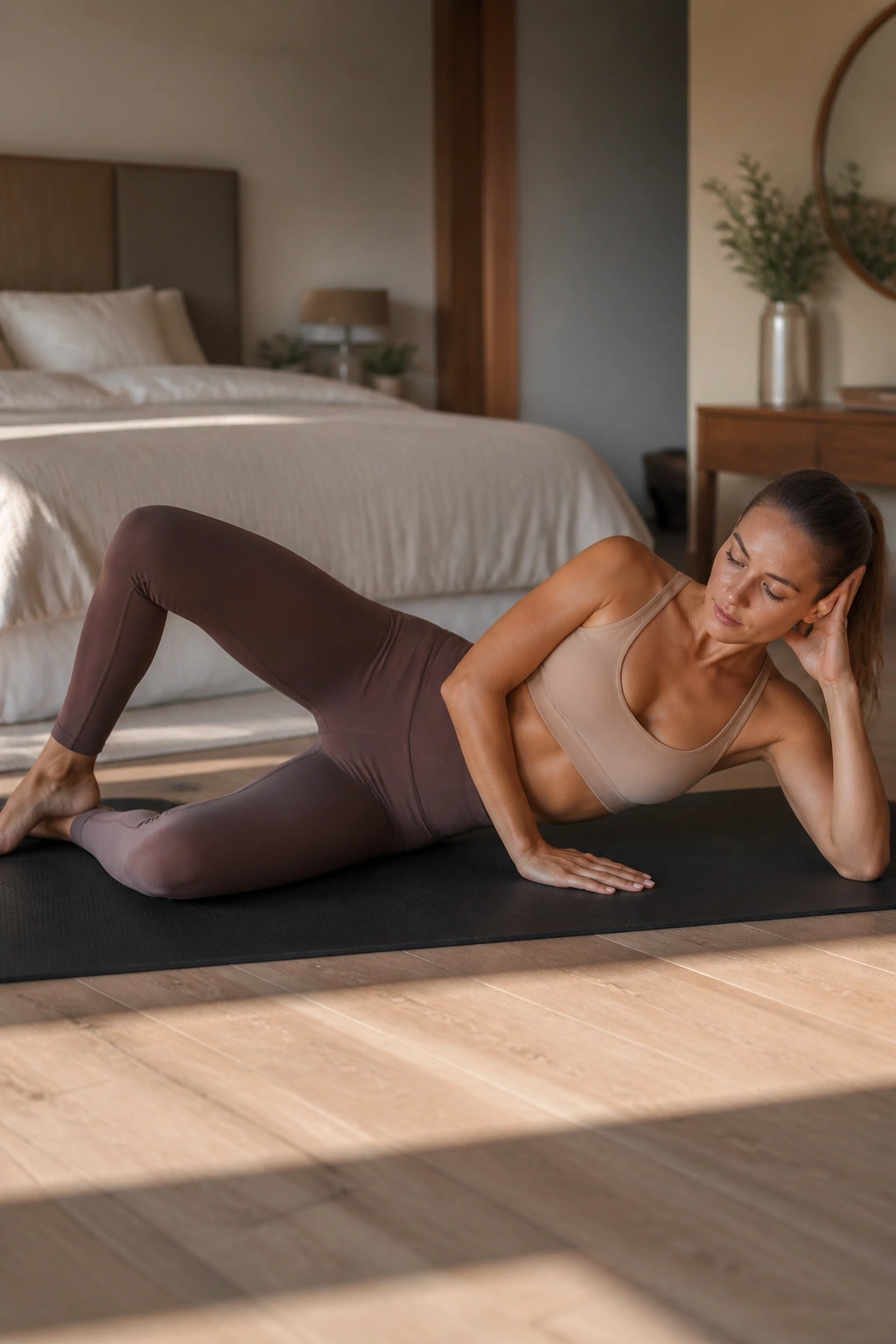
If your glutes are “asleep”—often due to sitting at a desk—your lower back and knees will eventually pay the price. This routine focuses on isolating the gluteus maximus, medius, and minimus using side-lying series and bridge variations.
The Best Glute-Burning Moves
- Clamshells: Lay on your side, knees bent, and open the top knee like a clam. This targets the gluteus medius.
- Side-Lying Leg Circles: While on your side, extend the top leg and draw small, controlled circles. Keep the hips perfectly stacked—do not let them roll back.
- Single-Leg Bridge: Perform a standard bridge, but lift one foot an inch off the floor. The stabilizing leg has to work twice as hard to keep the pelvis level.
10. Posture Correction and Shoulder Health
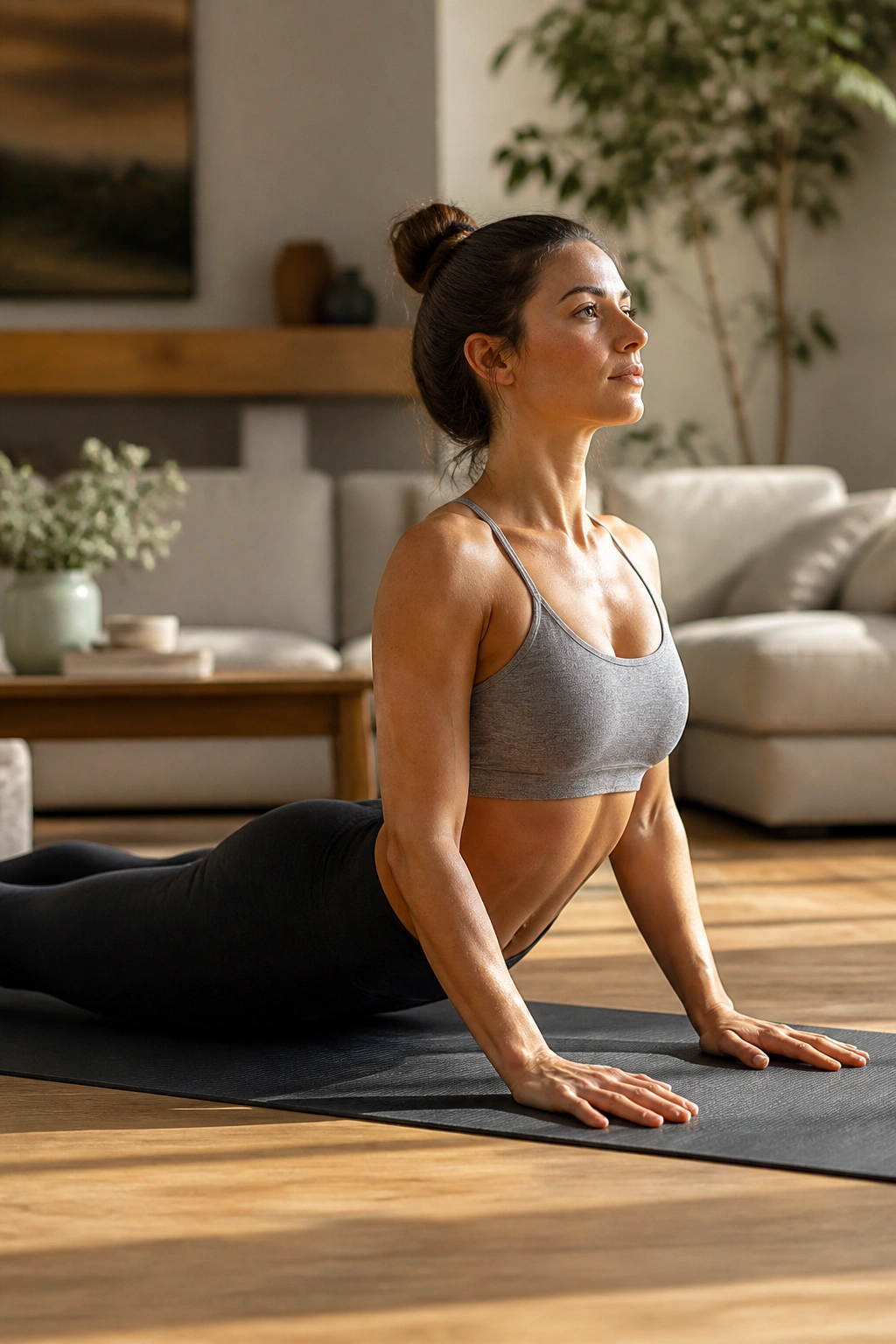
Modern life is a recipe for rounded shoulders and a forward-head posture. This routine acts as a counterbalance. We focus on scapular retraction—pulling the shoulder blades together—and thoracic extension (opening up the upper back).
Spend extra time on the “Swan” exercise. By pressing your hands into the floor and lifting your chest, you strengthen the muscles of the upper back that keep your spine upright. Pair this with “Dart” movements, where you hover your chest off the mat with your arms reaching toward your feet, palms facing in.
These exercises feel boring at first because they lack the “burn” of ab work, but they are the most important movements you can do for your long-term skeletal health. Improving your posture makes you look taller, move more efficiently, and reduces tension headaches.
11. Standing Pilates for Balance and Stability
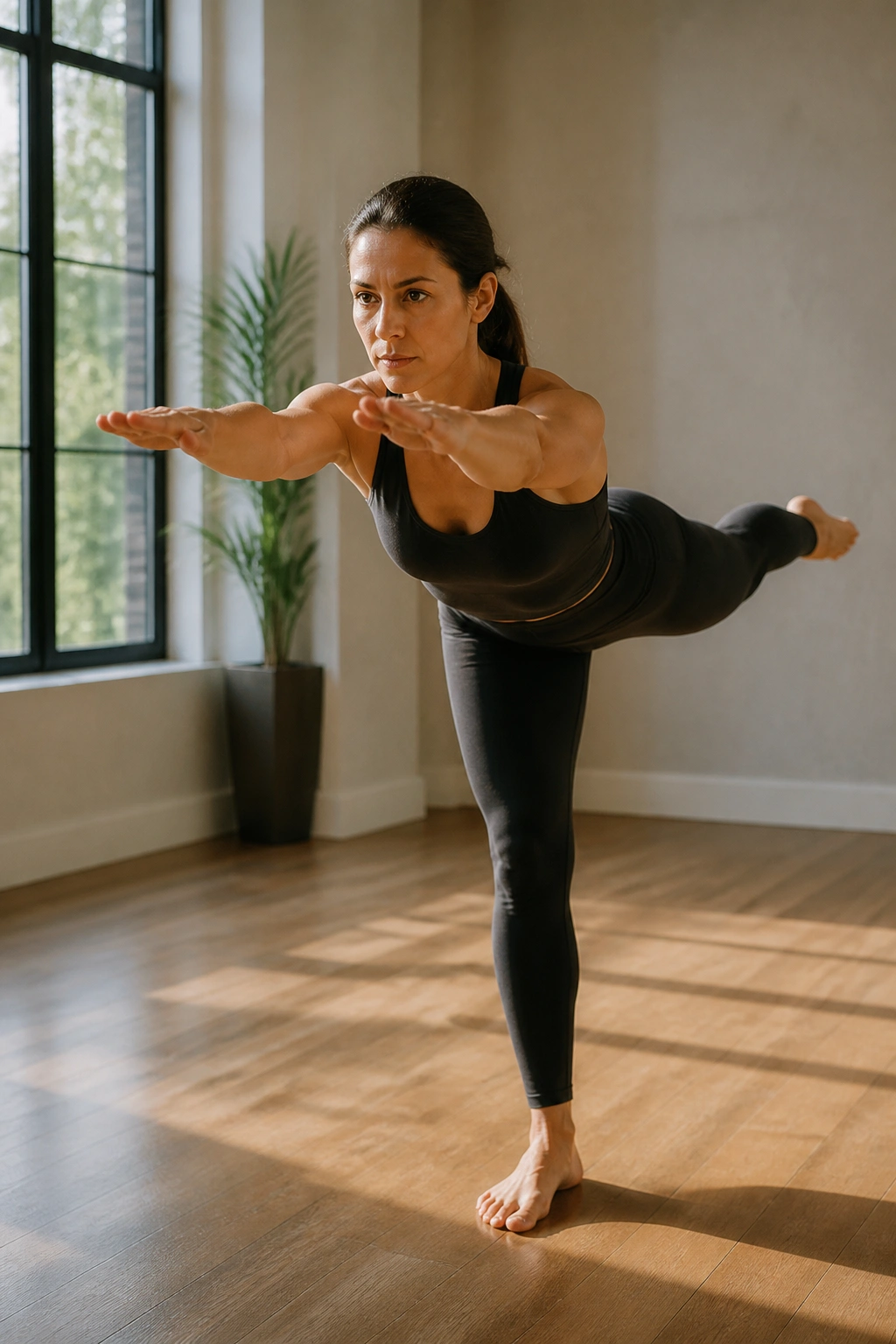
Pilates is usually associated with the floor, but standing work is just as effective and arguably more functional. When you are on your feet, you have to engage your core and your stabilizers—the tiny muscles around your ankles and knees—to keep from toppling over.
Try standing “Leg Pulls” or balance reaches. Stand on one leg, hinge at the hips, and extend the other leg back while reaching your arms forward. This mimics real-life movements, like bending over to pick something up.
The challenge here is “proprioception”—your body’s ability to sense its position in space. By closing your eyes for a few seconds during the hold, you force your brain to rely on muscular feedback rather than visual cues, which rapidly accelerates your balance development.
12. Pilates with a Magic Circle
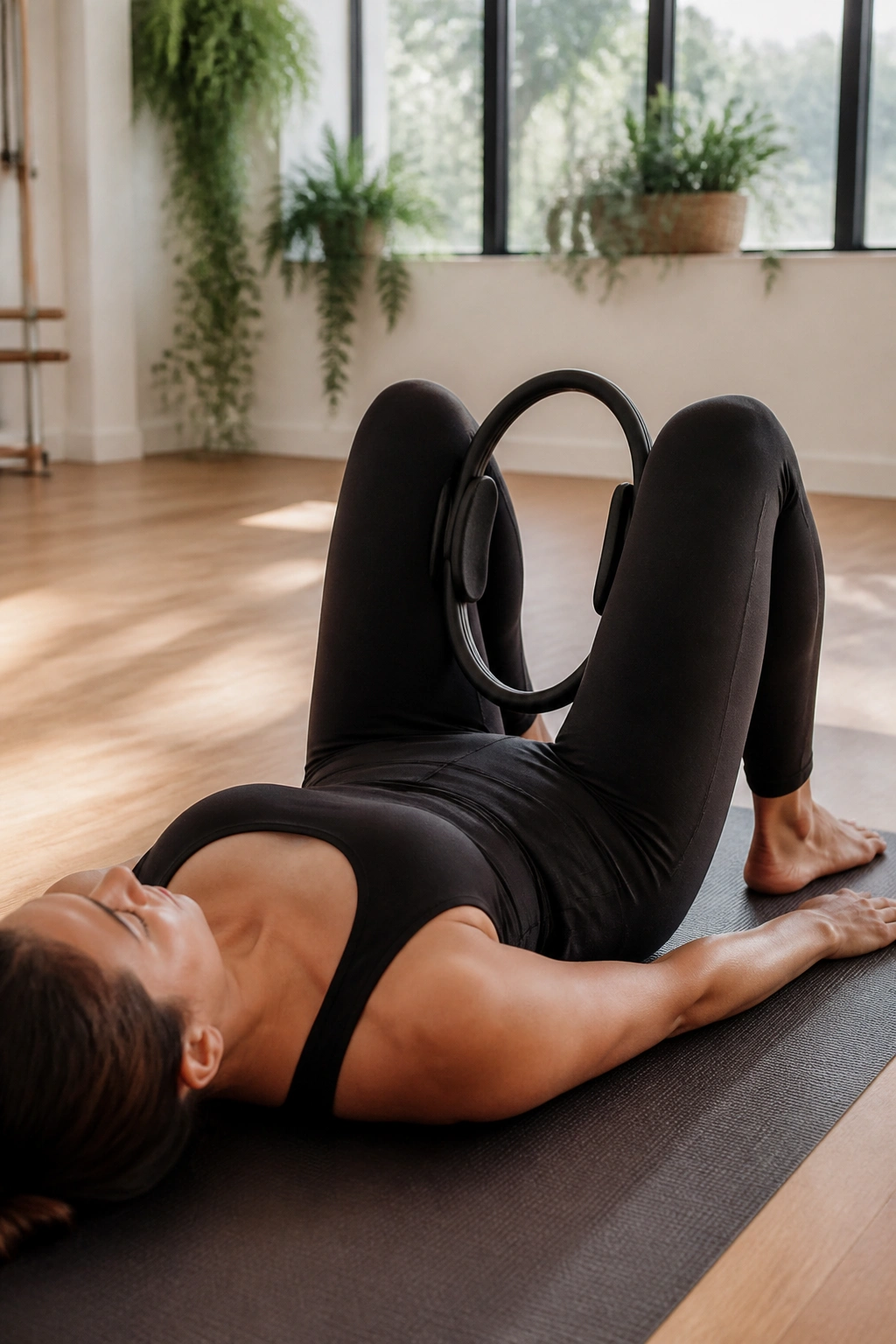
The Magic Circle (or Pilates ring) is a classic piece of equipment that provides immediate feedback on muscle engagement. When you squeeze the ring between your thighs, your inner thighs (adductors) fire instantly. When you push against it with your hands, your chest and triceps wake up.
It prevents “cheating.” If you are doing an inner-thigh squeeze without the ring, it is easy to disengage. With the ring, you have a physical object that requires constant pressure.
It also serves as a great tool for assisted stretching. Hook the ring over your foot and use it to pull your leg deeper into a hamstring stretch. It gives you a way to deepen the movement without needing to be hyper-flexible right away.
13. Gentle Pilates for Senior Mobility
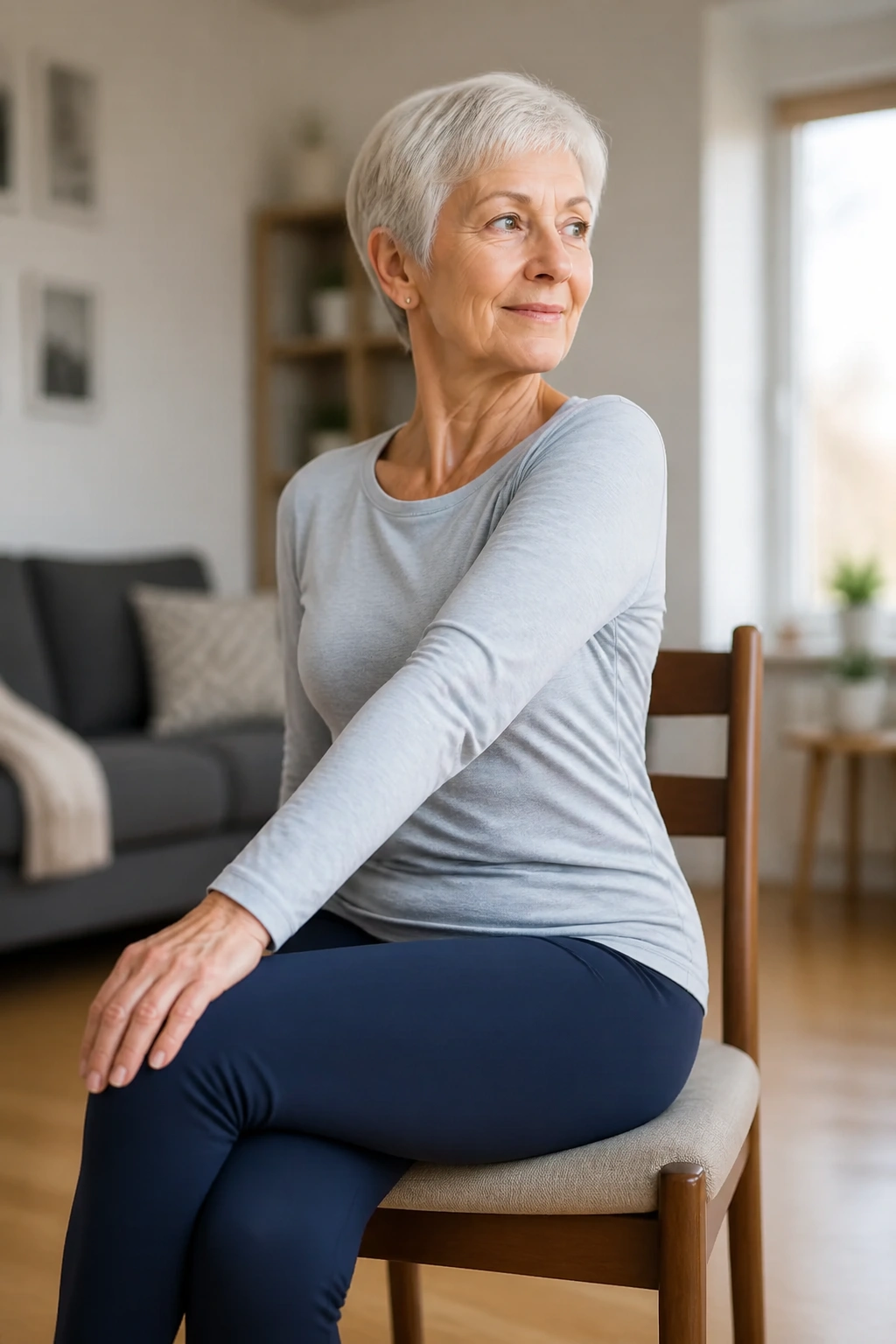
For seniors or those with limited range of motion, Pilates is a perfect way to maintain independence. The focus here is on joint health, fluid movement, and core support to prevent falls.
We ditch the high-intensity crunches and focus on seated or standing exercises. Movements like seated spinal twists, gentle neck stretches, and standing leg raises help keep the joints lubricated and the muscles toned without causing undue stress.
The goal is quality of movement. Never force a stretch or a contraction. Even a small range of motion, performed with mindfulness and breath, provides massive benefits for mobility and balance.
14. Athletic Pilates for Cardiovascular Stamina
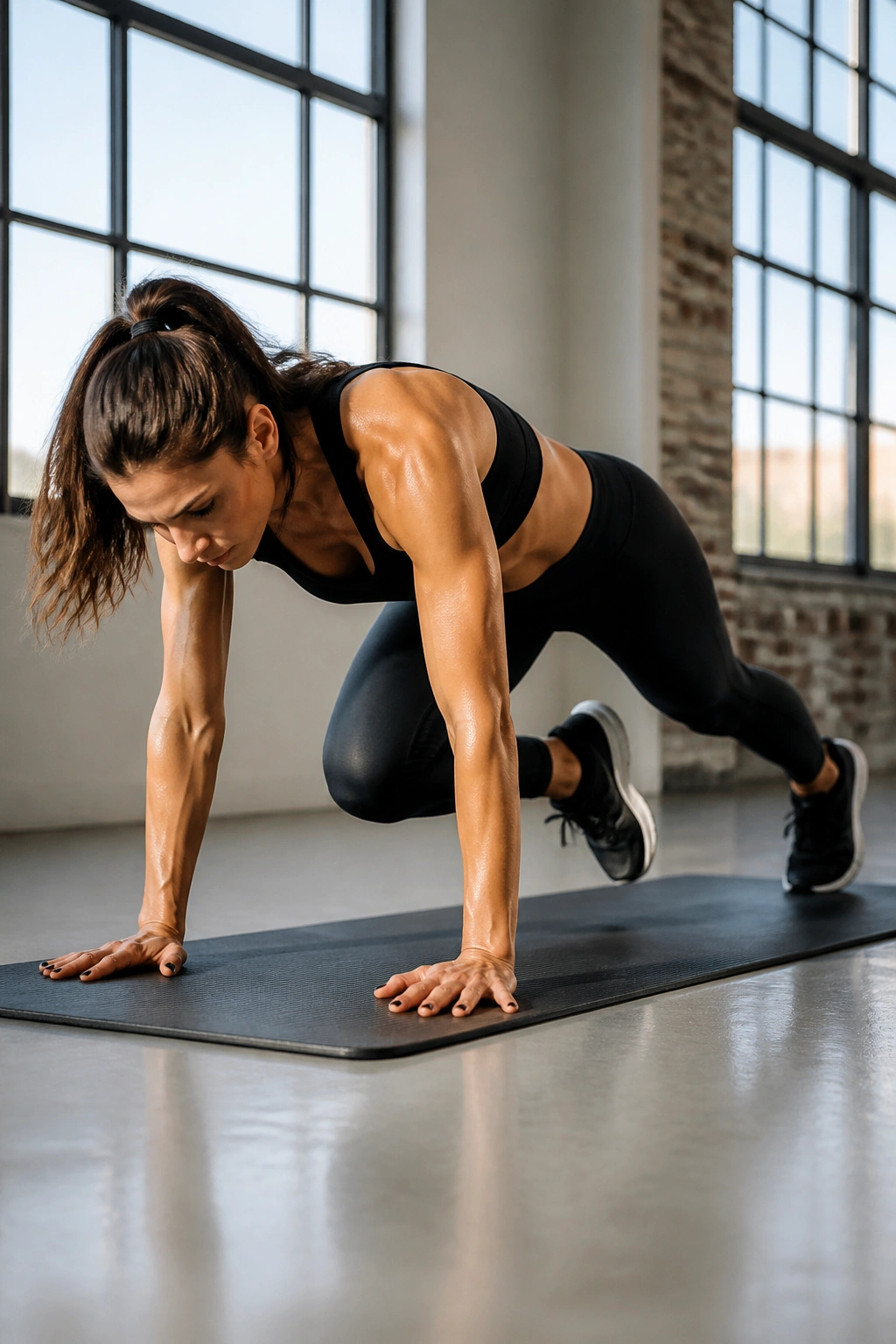
Yes, Pilates can be a cardio workout. By stringing together high-energy movements and minimizing transitions, you can get your heart rate into a zone that builds endurance. This is often called “Power Pilates” or “Athletic Pilates.”
Think of movements like “Mountain Climbers” modified for the mat, or quick “Scissors” kicks with a fast tempo. The key is to keep the intensity high while maintaining that core stabilization.
This style of training is fantastic for cross-training. It builds the stability and core strength necessary to run, cycle, or play sports, but it does so in a way that is kinder to your joints than high-impact plyometrics.
15. Pilates Movements Specifically for Runners
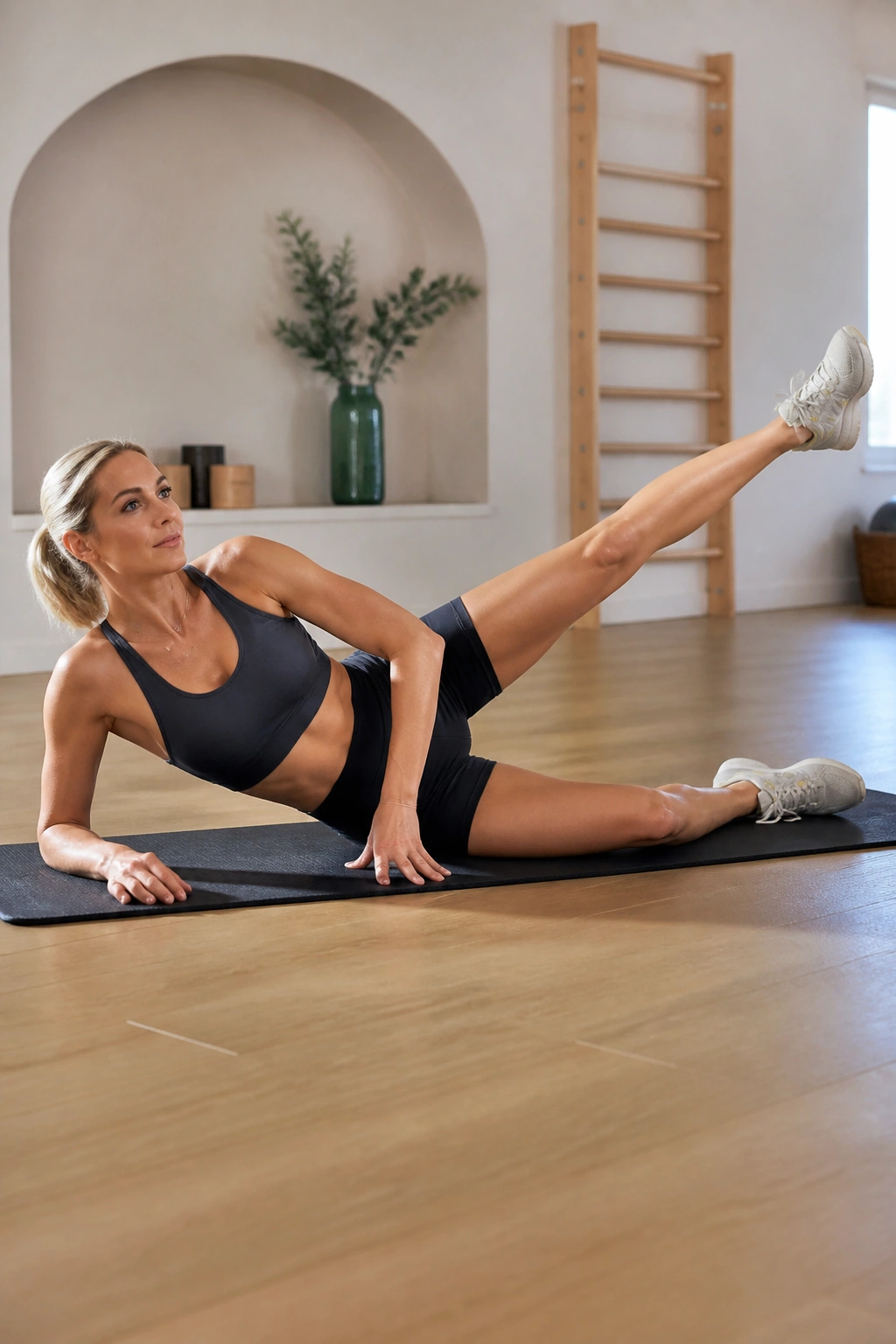
Runners are notorious for having tight hip flexors and weak glutes. This Pilates routine focuses on “opening” the front of the hips and strengthening the lateral glutes to prevent knee tracking issues.
Top Priorities for Runners
- Hip Flexor Release: Lunging variations that focus on the stretch in the front of the hip.
- Lateral Glute Work: Side-lying kicks are non-negotiable. Strong glute medius prevents the knee from collapsing inward during a run.
- Ankle Stabilization: Standing work on the balls of the feet to strengthen the calves and improve foot strike efficiency.
Why this matters: A strong core prevents your torso from rotating excessively while you run, which saves energy. Every time you don’t rotate, you save a tiny bit of momentum. Over a 5K or a marathon, that adds up to massive efficiency gains.
16. Flexibility and Deep Stretching Pilates
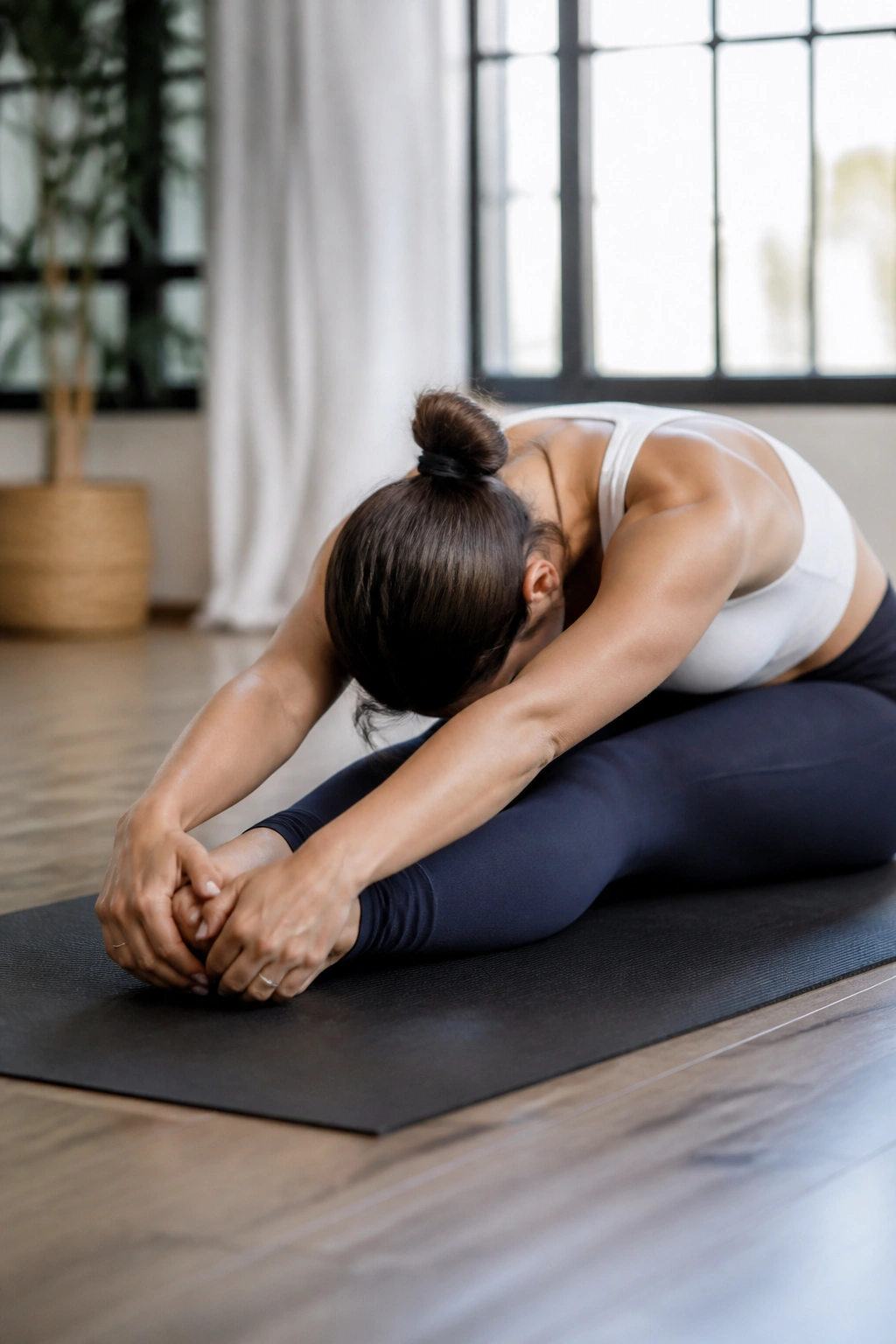
There is a difference between “stretching” and “Pilates stretching.” In traditional yoga, you might sink into a passive stretch for minutes. In Pilates, we prefer active, eccentric stretching—moving through a range of motion while the muscles are under tension.
Think of the “Saw” or “Spine Stretch Forward.” You are reaching, but you are also pulling your belly button in and lifting your spine, keeping the muscles active the whole time.
This approach is much safer because it prevents you from overstretching your ligaments. You are stretching the muscle, not the joint, which is the key to increasing flexibility without causing injury.
17. Pilates for Desk Workers and Neck Tension
If your job involves staring at a screen, your chest is likely tight, your upper back is weak, and your neck is screaming. This routine is a quick “reset” you can do in 15 minutes.
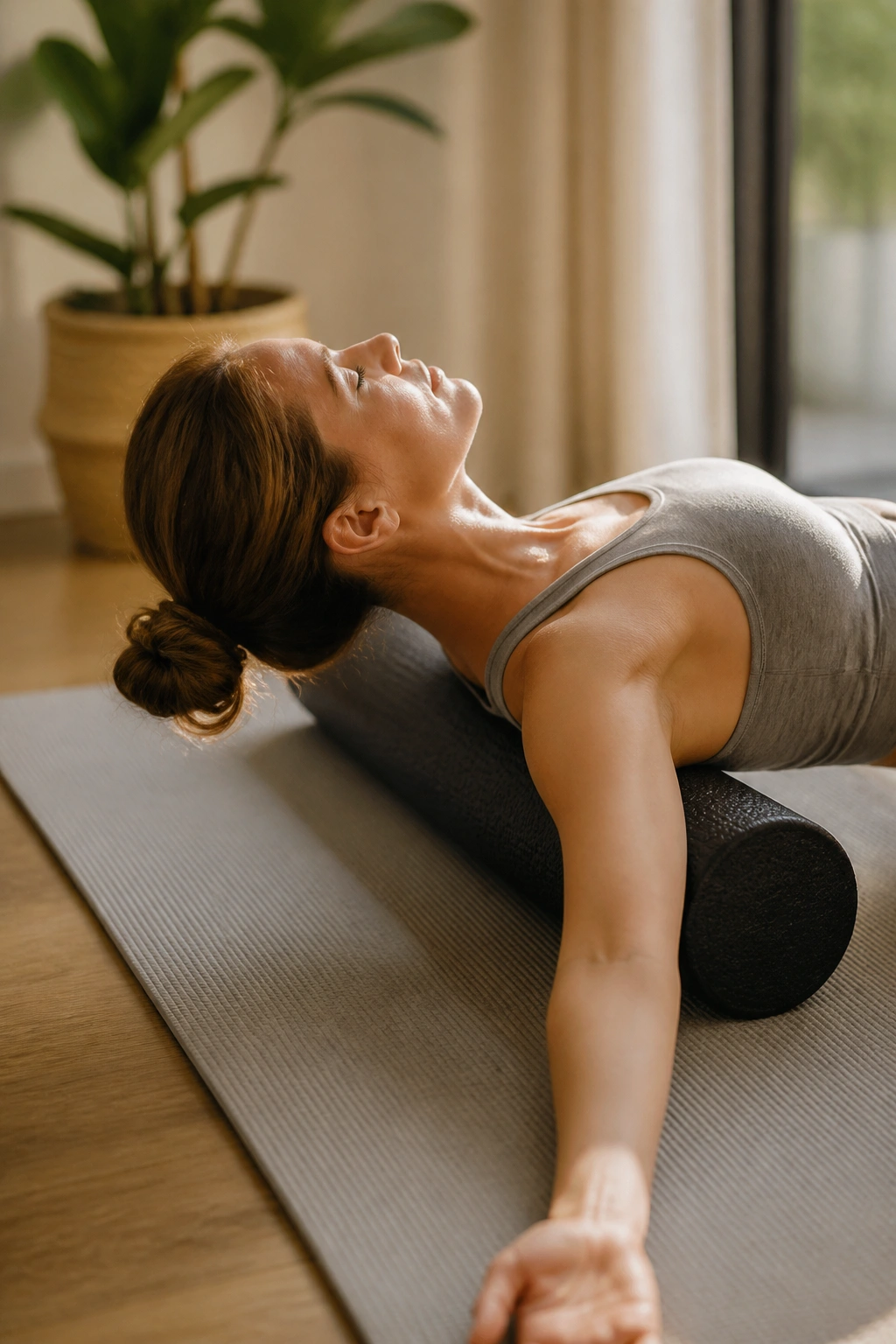
Focus on chest openers. Lie on your back with a foam roller or a rolled-up towel vertically along your spine. Let your arms hang open to the sides. This simple move reverses the “slouch” position and stretches the pecs.
Follow this with “prone swimming”—lying on your stomach and fluttering your arms and legs while lifting your chest. This strengthens the entire posterior chain, helping you maintain an upright posture for the rest of your workday.
18. HIIT-Style Pilates for Maximum Calorie Burn
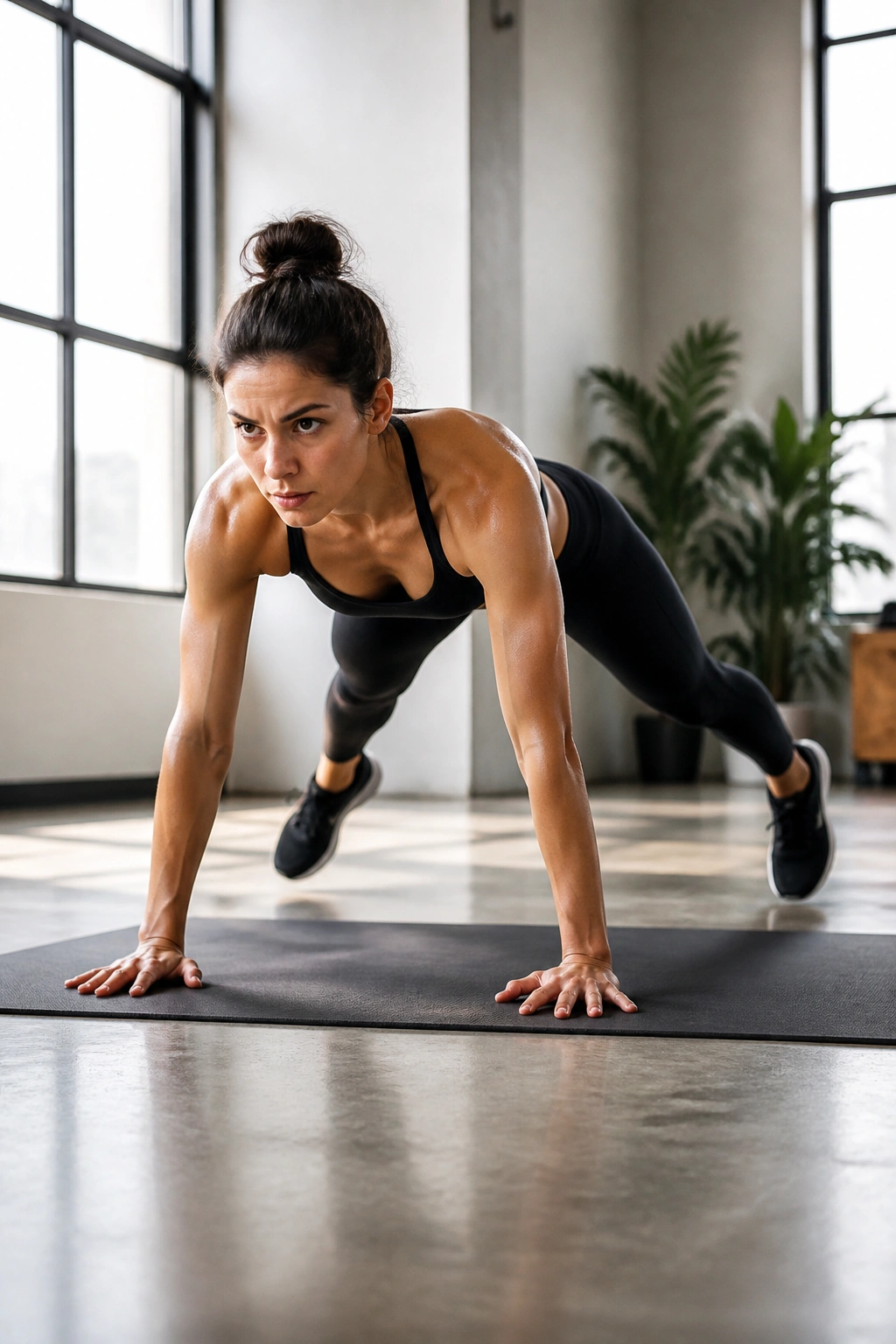
HIIT (High-Intensity Interval Training) mixed with Pilates is a killer combination. You do 45 seconds of a high-energy move—like “Plank Jacks” or “Jump-less Burpees”—followed by 15 seconds of a core-focused hold.
The intensity is brutal, but because you are staying grounded on the mat, you aren’t pounding your joints. You get the cardiovascular benefits of a HIIT session with the toning benefits of Pilates.
The trick is to not sacrifice form for speed. If you start arching your back during the high-energy segments, slow down. The movement is only effective if your core is doing the work, not your back.
19. Coordination and Cross-Body Connection
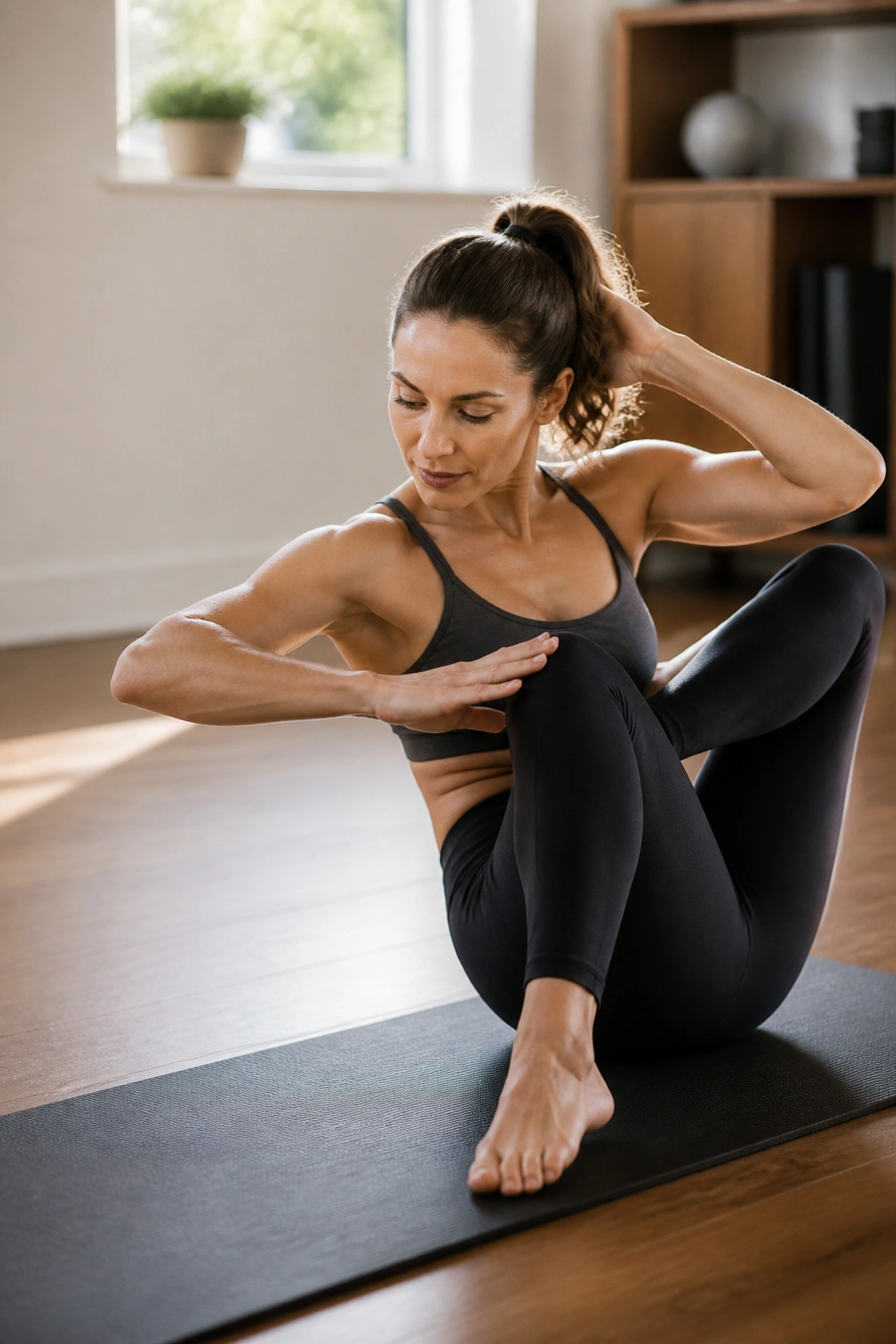
Some of the most challenging Pilates moves are the ones that require cross-body coordination. Movements like the “Criss-Cross” or “Swimming” require you to move opposite arms and legs in sequence.
This is brain training. It forces the right and left hemispheres of your brain to communicate, which improves your overall coordination. It’s the kind of movement that makes you feel “smarter” in your body—more agile, more precise, and more connected.
When you struggle with these, it is usually because you are thinking too hard. Try to soften your focus. Let your breath lead the movement. If you exhale and pull the abs in, the limb movement often happens naturally.
20. Express 15-Minute Pilates for Busy Schedules
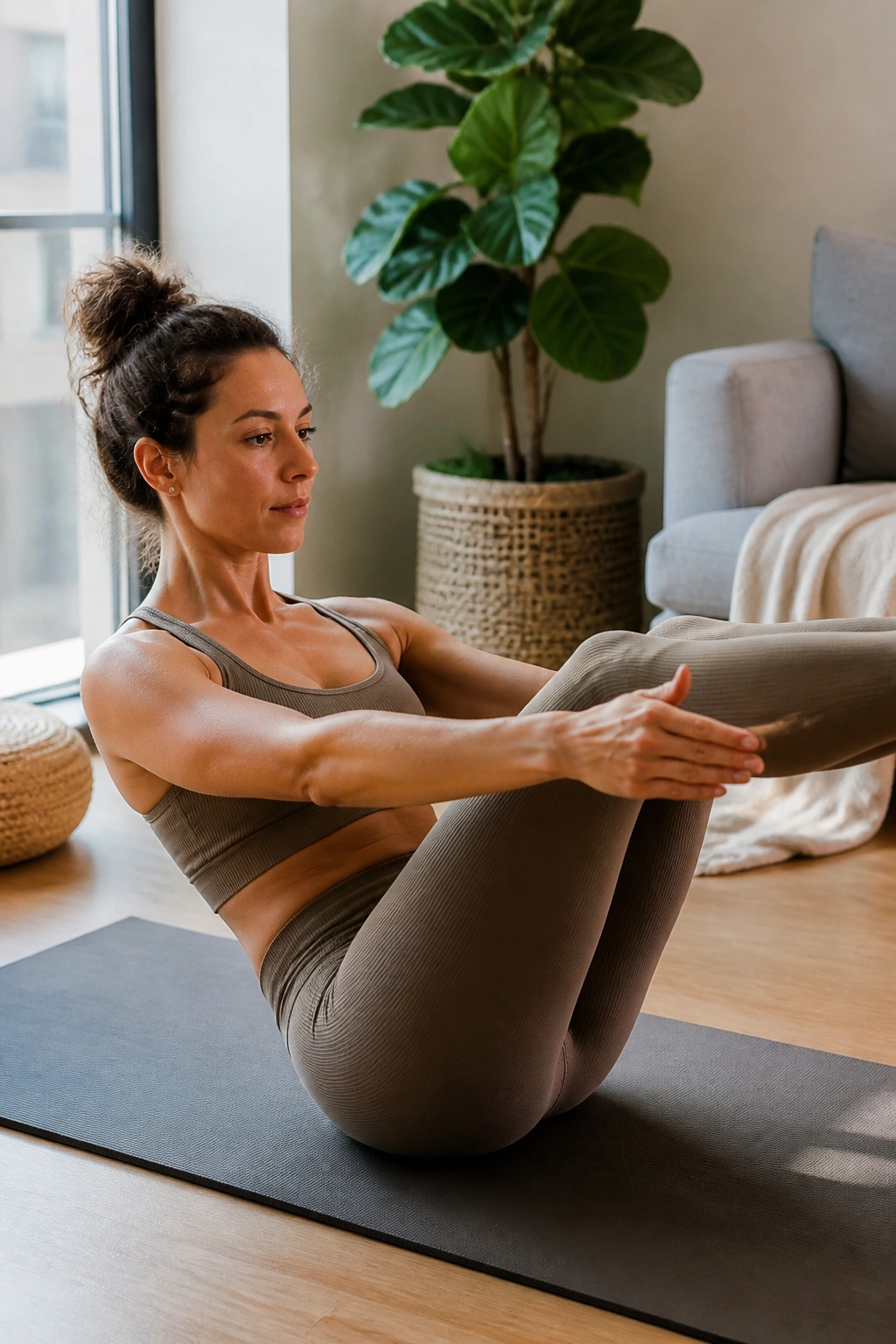
You don’t need an hour to get a great Pilates workout. In fact, 15 minutes of high-focus, high-quality work is better than an hour of distracted, half-hearted movement.
Build a routine that hits the major zones: 5 minutes of core (Hundred/Roll-ups), 5 minutes of glutes (Bridges/Side-lying), and 5 minutes of posture (Swan/Plank).
This is a “maintenance” routine. You won’t see massive changes overnight, but doing this every day will keep your core strong, your back pain-free, and your posture upright for a lifetime. Consistency is better than intensity.
21. Upper Body Tone Pilates
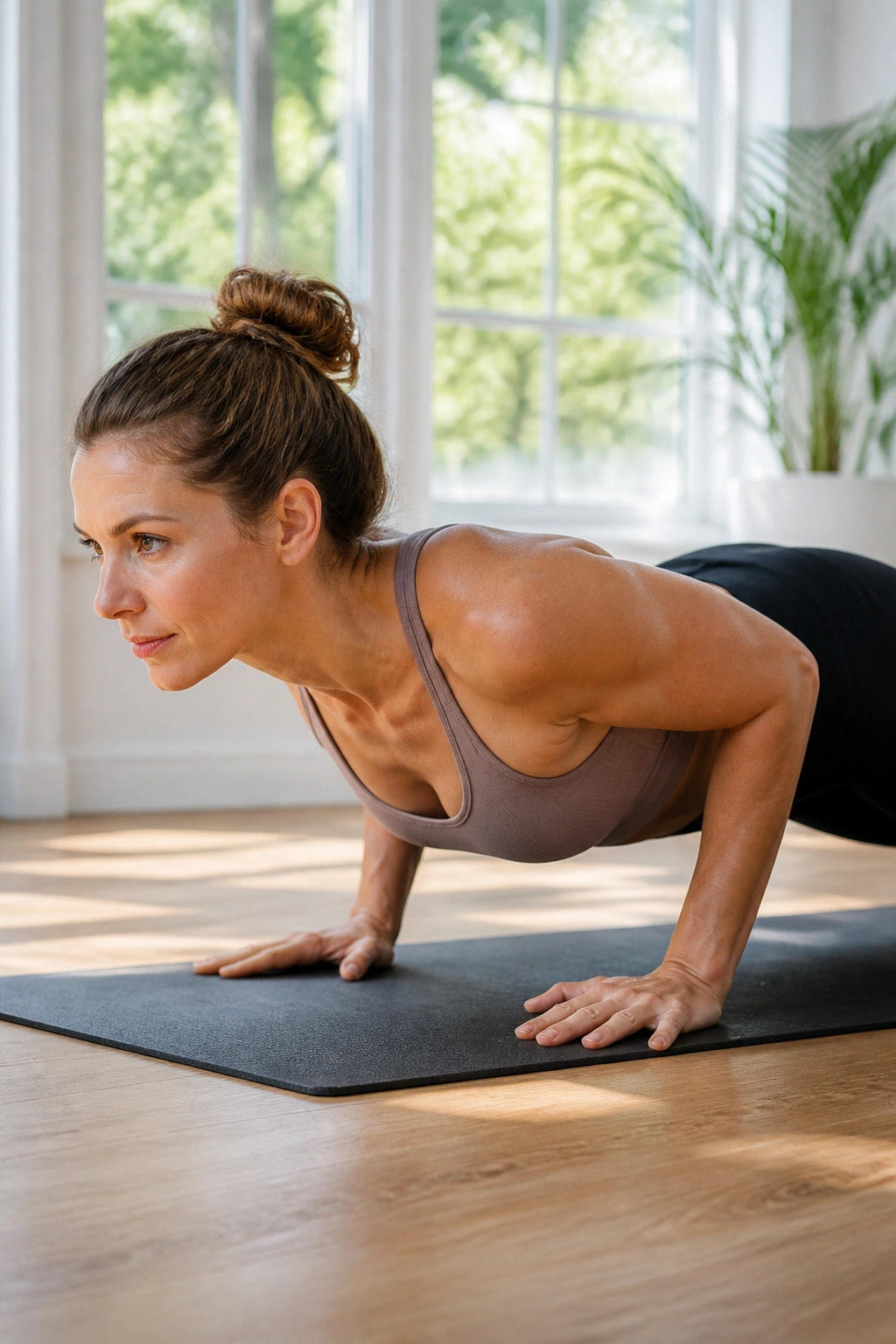
People often forget that Pilates is fantastic for upper body conditioning. By using your own body weight in plank positions, side-arm balances, and push-up variations, you can build impressive definition in the arms and shoulders.
Focus on “tricep push-ups” where your elbows graze your ribs as you lower down. This is much more effective than wide-grip push-ups for targeting the back of the arms.
Pair this with “arm circles” performed while holding your core in a bridge. You are effectively performing a stable, controlled resistance exercise that taxes the shoulders and the core simultaneously.
22. Mindful Breathing and Relaxation Pilates
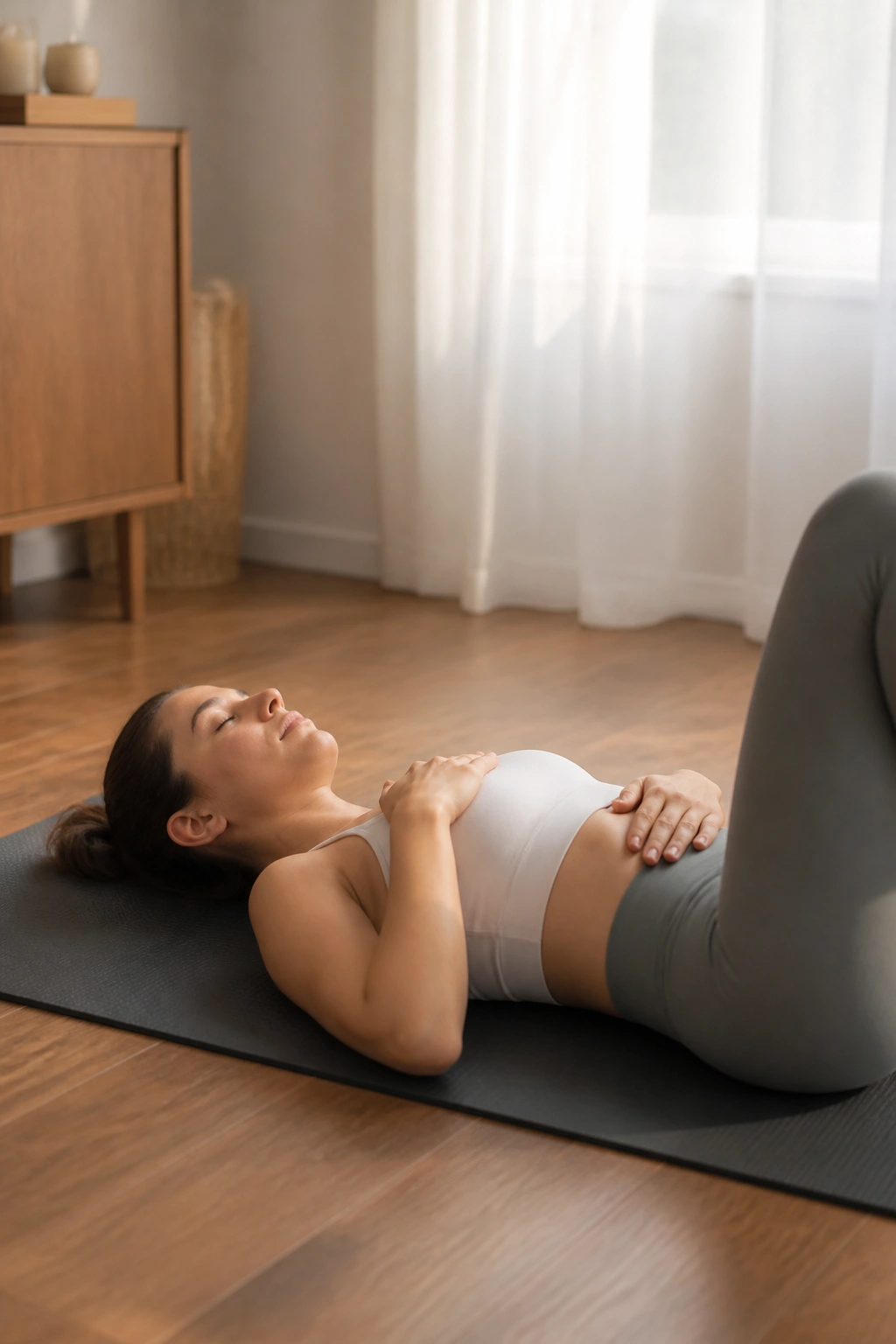
Finally, we have the restorative side of the practice. Sometimes, the most “Pilates” thing you can do is lie on the mat and breathe. This isn’t sleeping; it is active relaxation.
Use lateral ribcage breathing. Inhale, feeling your ribs expand to the sides. Exhale, feeling the ribs knit together and the abdominal wall draw in and up.
This is the foundation of everything else. If you cannot breathe into your ribs, you cannot stabilize your core. If you cannot stabilize your core, you cannot do the harder movements. Start here. End here.
Final Thoughts
The sheer variety of Pilates workouts is the primary reason the method has stuck around for as long as it has. You can be an elite athlete training for peak performance or a desk worker trying to stop your lower back from aching, and you can both use the same basic principles to get there.
The magic isn’t in the specific moves; it’s in the focus. It’s the decision to turn off the autopilot and actually feel where your muscles are, how they are firing, and where they might be compensating. Once you learn to do that on the mat, you start doing it in the grocery store, in your office chair, and while you’re out for a walk. That is the true, lasting benefit of the practice. Pick a routine that matches your energy today, roll out the mat, and pay attention to what your body is trying to tell you. Everything else will follow.
