



A flatter-looking stomach is usually not built by punishment. It comes from teaching your torso to hold itself together while you breathe, reach, twist, and keep your ribs from flaring out like a bad accordion. That is where Pilates gets interesting, because the method asks your deep core to work before your outer abs start shouting for attention.
Pilates ab exercises are different from the frantic crunch-marathon approach people still reach for when they want a flatter stomach. The goal is not to grind your neck into the mat or do a hundred sloppy reps. The goal is control: a quieter waist, steadier pelvis, cleaner posture, and the kind of abdominal strength that shows up when you stand, walk, sit, and even exhale.
That deeper work matters. The transverse abdominis, obliques, rectus abdominis, diaphragm, and pelvic floor all play together when a Pilates move is done well. If one piece takes over, the whole thing gets messy. If the breathing stays calm and the rib cage stays stacked over the pelvis, the abs do more with less drama.
So the exercise list below is built around that idea. Some moves are tiny and sneaky. Some are classic mat work that burns in a slow, honest way. A few will expose weak spots fast. Good. That means they’re doing their job.
1. The Hundred
The Hundred is the move that tells your core to wake up and stay awake. It looks simple from across the room, but the breath pattern, the arm pumps, and the lifted head all force your midsection to work without help from momentum.
Why It Works
Lie on your back, lift your head and shoulders, extend your legs to tabletop or a little lower if your back stays flat, then pump your arms about 6 inches up and down. Breathe in for five counts and out for five counts, repeating ten times.
- Keep your lower ribs heavy.
- If your neck gets cranky, keep one foot or both feet on the mat.
- The exhale should feel long and active, not lazy.
Tip: Think ribs down, belly in, arms small.
2. Pelvic Tilt
If your lower back arches every time you move, start here. A pelvic tilt is small, but it teaches the abdomen to pull the pelvis into a steadier position, which is one of the fastest ways to make the waist look neater in motion.
Nope, this is not a throwaway beginner drill. On an exhale, gently flatten the low back toward the mat, then return to neutral on the inhale. Ten to fifteen slow reps are enough when you do them cleanly.
The key is subtlety. If the movement looks dramatic, it is too big. If your butt clenches hard, you are missing the point. The deep abs should feel like they are scooping the pelvis, not smashing it into the floor.
3. Chest Lift
Why do people skip the chest lift and go straight for fast crunches? Because the chest lift is slower, smaller, and much better at teaching the abs to curl the ribs toward the pelvis without yanking on the neck.
How to Use It
Start lying down with knees bent and feet grounded. On the exhale, lift the head, neck, and shoulder blades just a few inches, then lower with control. Keep the chin slightly tucked, as if you’re holding a small orange under it.
The lift should come from the upper abs, not from swinging your elbows forward. Eight to twelve reps is plenty. If the front of the neck grabs, reduce the height and keep the gaze toward the thighs.
4. Chest Lift with Rotation
If one side of your waist works harder than the other, this is the move that shows it. The rotation should come from the ribs, not from dragging the elbows around like you are wringing out a towel.
Lie back, hands behind the head, knees bent. Lift into a chest lift, then rotate the ribs so one shoulder blade comes slightly higher as the opposite elbow moves toward the opposite knee. Switch sides slowly for 6 to 10 reps each way.
A lot of people twist with the shoulders and call it done. That does not count. Keep the pelvis still and let the obliques do the talking.
5. Single Leg Stretch
This one feels friendly until you forget the lower back. One knee comes in, the other leg reaches long, and your job is to keep the torso quiet while the legs switch like a careful pair of scissors.
The tempo should be smooth, not jerky. Draw one knee in with both hands, extend the opposite leg on the diagonal, then switch on the exhale. Ten to fifteen total switches is a sensible starting point.
The trick is to keep the leg extension long without letting the back arch. If the leg has to come higher to protect your spine, do that. Flat stomach work is useless if your back is hanging on for dear life.
6. Double Leg Stretch
Unlike the single leg version, this one exposes lazy lower abs in a hurry. Both legs reach away, both arms circle back, and the core has to stay organized while the body tries to open up.
Bend the knees into the chest, lift into a small curl, then send the arms and legs away together on the inhale. Circle the arms back and hug the knees in on the exhale. Six to ten reps is a solid dose.
This exercise is not about range. It is about control. If the low back lifts off the mat, shorten the leg reach immediately.
7. Single Straight Leg Stretch
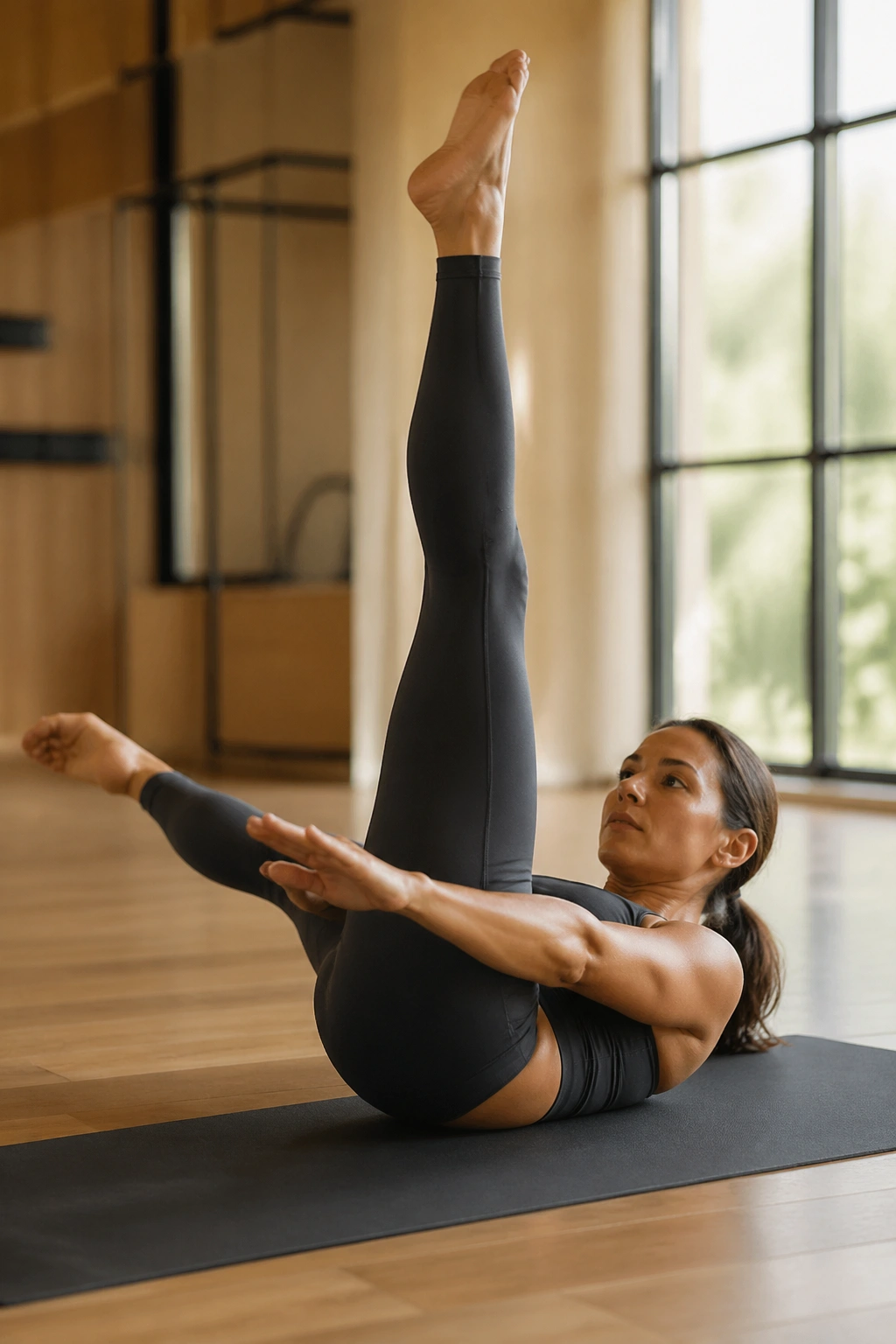
This is the cleaner, longer cousin of the single leg stretch. The leg that stays extended gives your hamstrings a job, but the real work still belongs to the abs that keep the pelvis steady.
What to Watch For
One leg points toward the ceiling while the other hovers low, but not so low that your back peels away. Reach for the lifted leg with a gentle pulse, switch sides, and keep the movement sharp and tidy.
- Keep both hips square.
- Move the legs from the hip, not from the lower back.
- Use a smaller leg angle if your hamstrings pull hard.
Best cue: Keep the pelvis as still as a tray of water.
8. Double Straight Leg Lower Lift
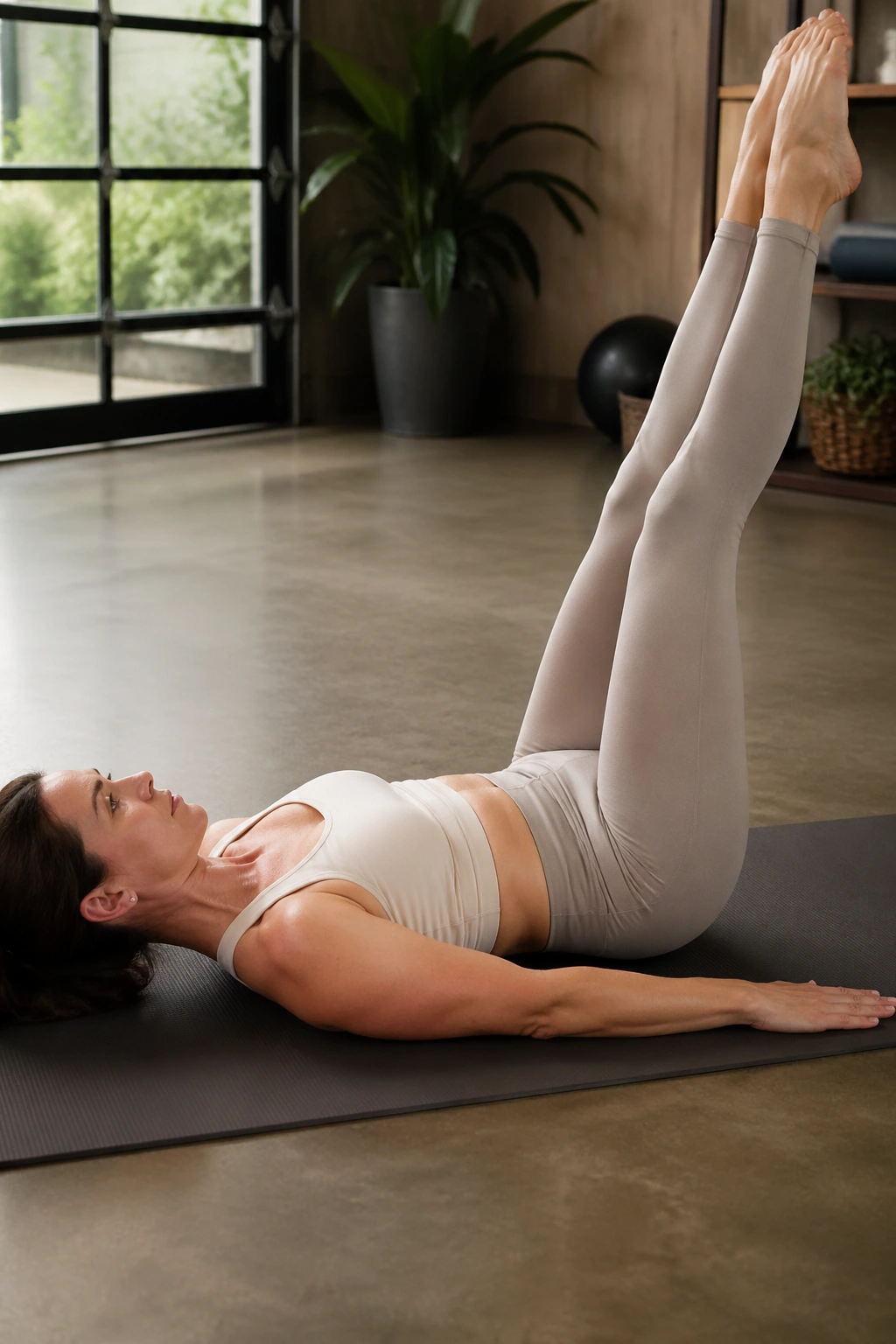
This move will tell you fast whether your core can control a lever or only crunch a rib cage. Both legs lower together, then lift with discipline, and the lower abs have to work hard to keep the spine from arching.
Start with the legs extended toward the ceiling, hands under the hips if needed. Lower the legs only as far as the back stays heavy and the ribs stay quiet. Then lift with the same control. Six to eight slow reps is enough.
The lower the legs go, the more honest the exercise becomes. Honestly, that is why people avoid it. But if you keep the range small and the tempo slow, it is one of the better flat-stomach Pilates moves.
9. Criss Cross
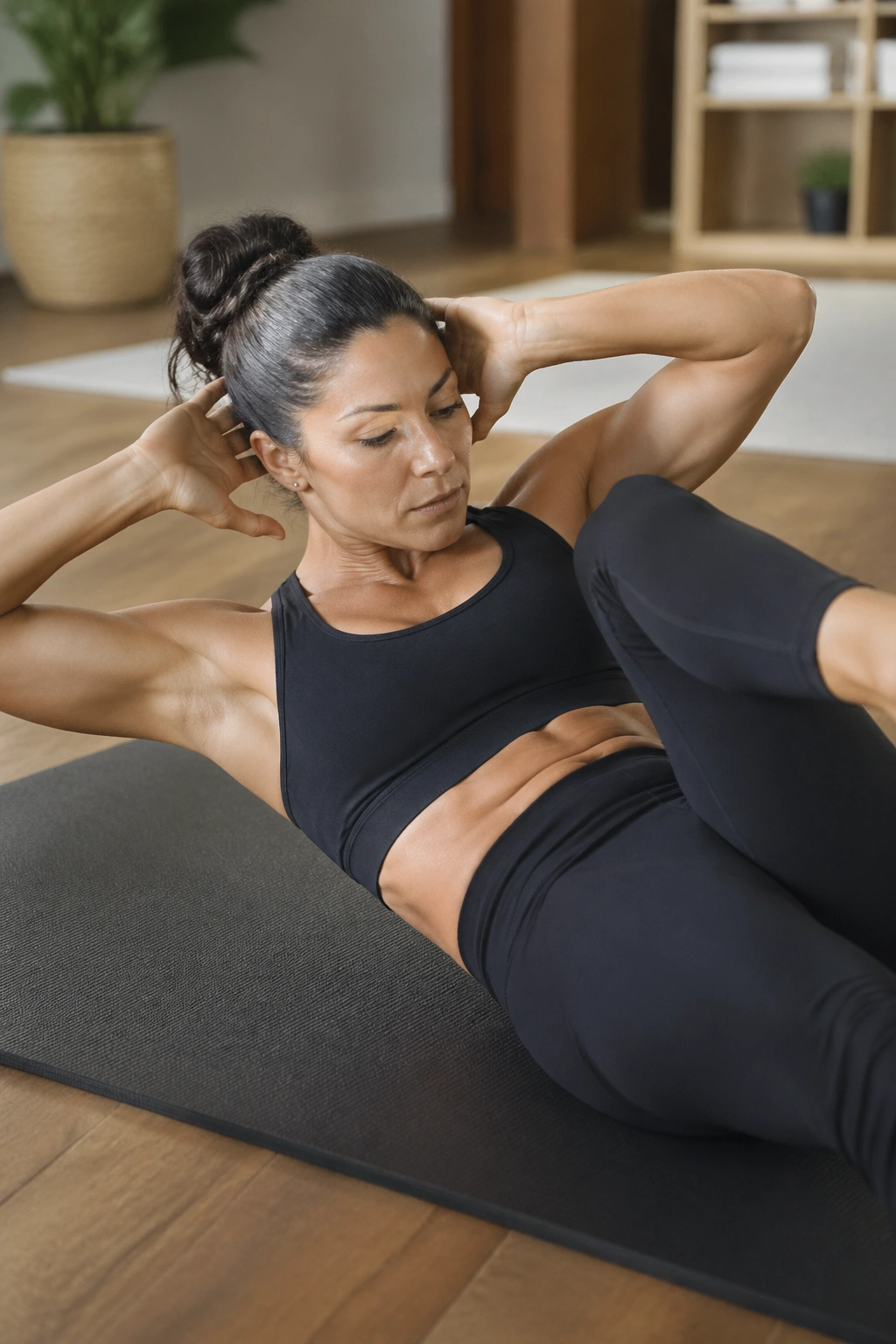
Criss cross is the rotation move people think they already know. They usually do not. The twist should come from the waist while the head stays light and the elbows remain wide.
Why It Helps the Waist
Lie on your back, lift into a chest lift, and rotate so the right elbow moves toward the left knee while the right leg extends. Switch sides in a steady rhythm, usually 8 to 12 total pairs.
The mistake is simple: yanking the elbow toward the knee and calling that rotation. Slow down. Turn from the ribs, not the shoulders, and let the opposite leg stretch long enough to make the abs do the work.
10. Roll-Up
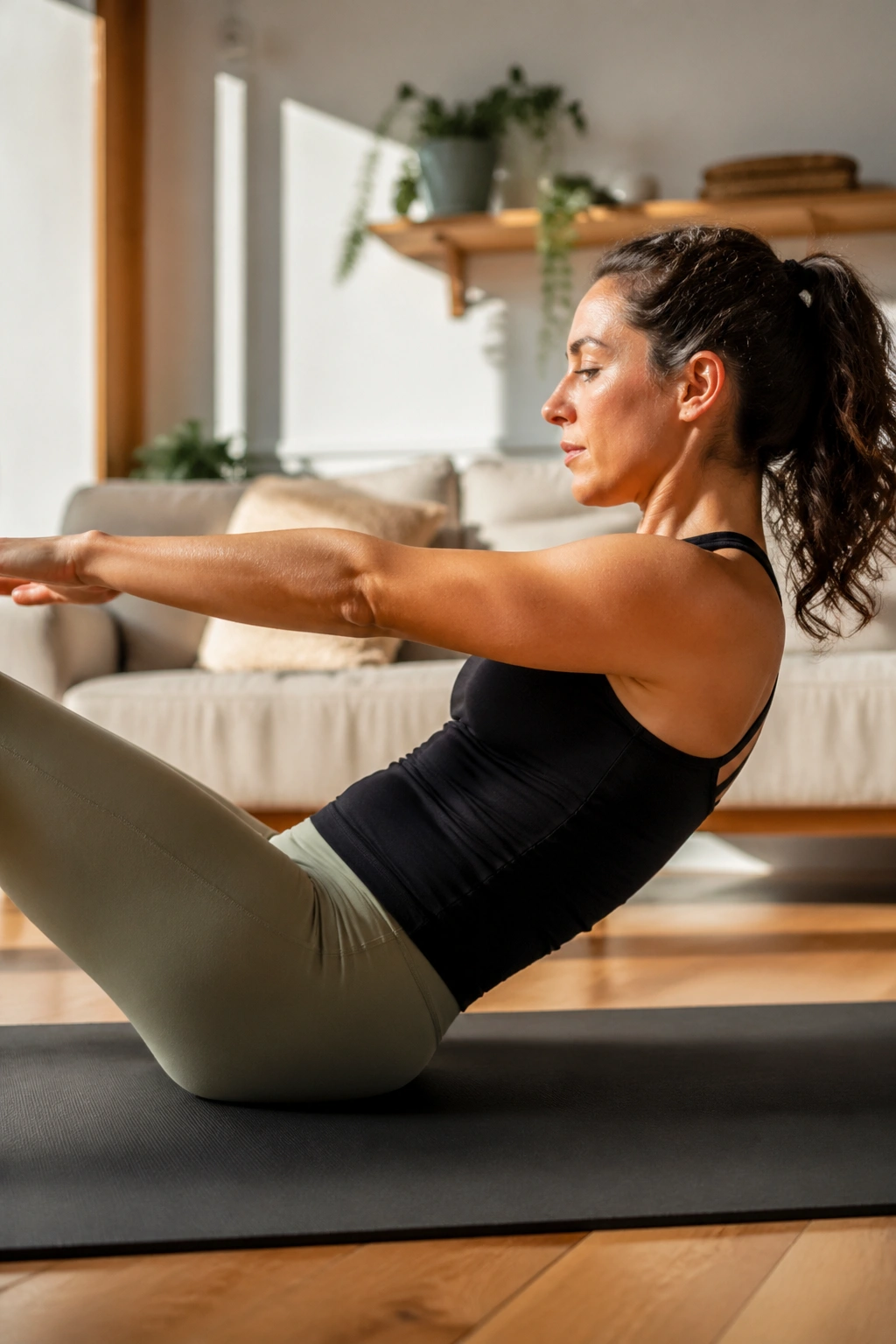
A good roll-up is basically a spine lesson disguised as an ab exercise. You peel up one vertebra at a time, then lower with the same control, which is exactly the kind of work that makes the midsection feel tighter and more useful.
If your hamstrings are tight, bend the knees a little. If your back rounds too fast, use your arms more slowly. One smooth roll-up followed by one smooth roll-down counts as one rep.
This move should never look like a frantic sit-up. It should look measured, almost careful. Six clean repetitions beat fifteen sloppy ones every time.
11. Half Roll Back
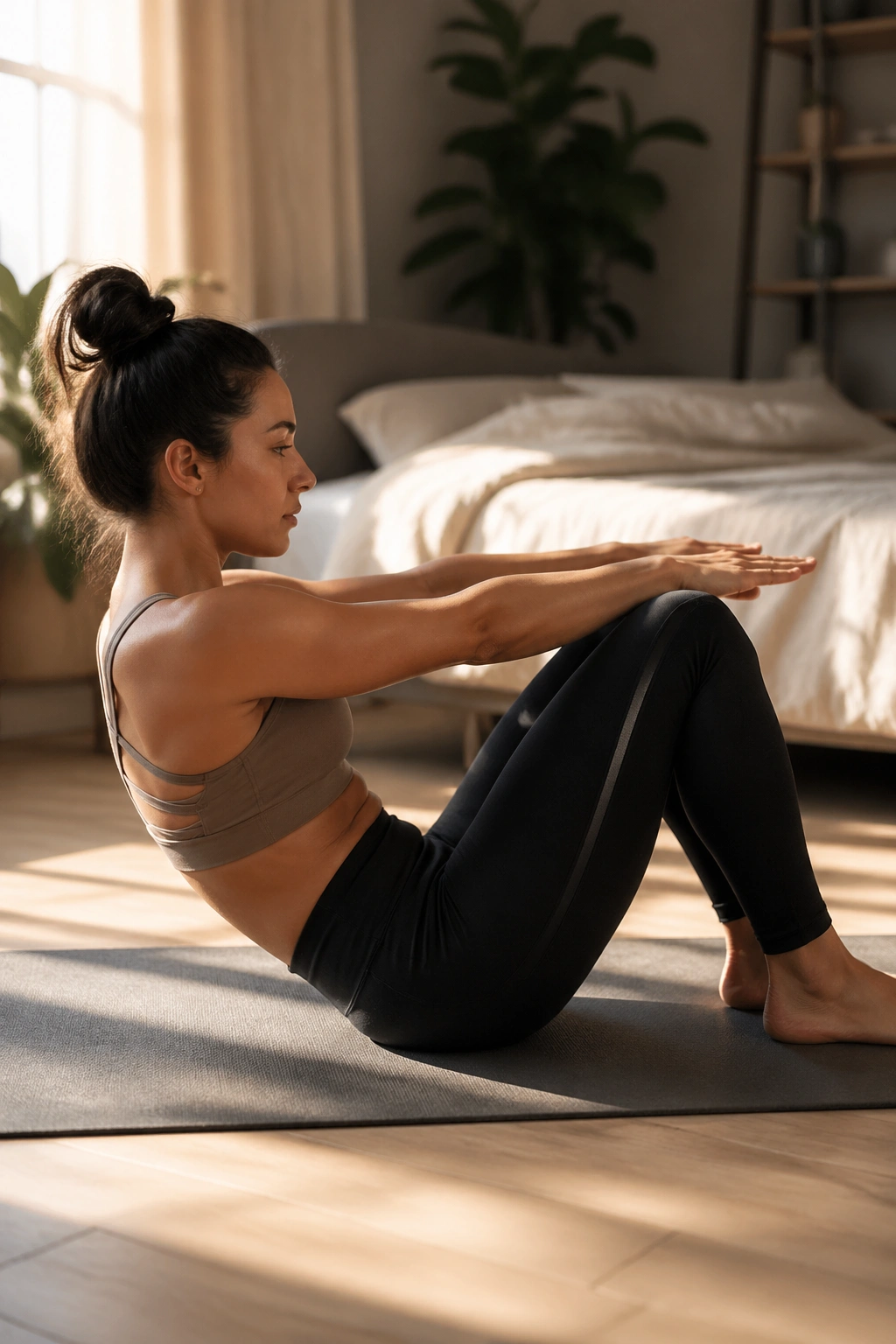
The half roll back is the quieter version of the roll-up, and I like it for that reason. There is less drama, less momentum, and a lot more control in the lower abs.
Sit with knees bent, feet flat, arms reaching forward. Round the lower back just enough to tip the tailbone under, then roll halfway back and return without collapsing into the shoulders. Eight to ten reps works well.
The seat bones stay heavy, the chest stays open, and the belly pulls inward on the exhale. If you can hold the shape without gripping the hip flexors, you are doing it right.
12. Teaser Prep
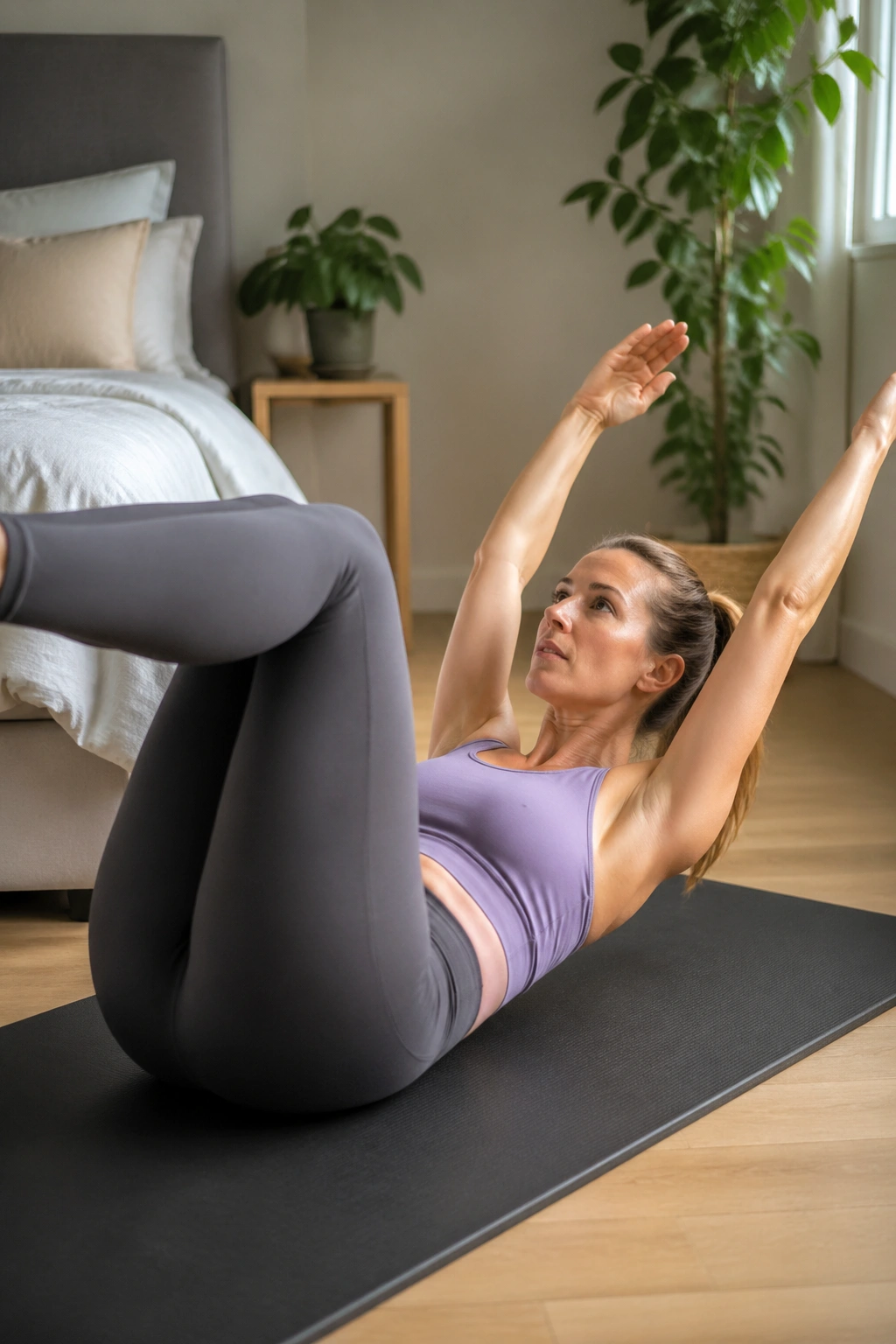
Teaser prep is where the flat-stomach work gets honest. You need balance, breath, and the ability to keep the ribs from popping while the legs and trunk work together.
Lie on your back, lift the legs to tabletop, then reach the arms overhead and start to curl the head, shoulders, and upper back off the mat. Pause. Lower with control. That’s the prep.
What Makes It Different
The goal is not height. It is coordination. If the legs stay bent and the roll-up is small, that is still useful. You are teaching the body the shape before you demand the full version.
Keep the movement slow enough that you can breathe through it. If you rush, the hip flexors hijack everything.
13. Teaser
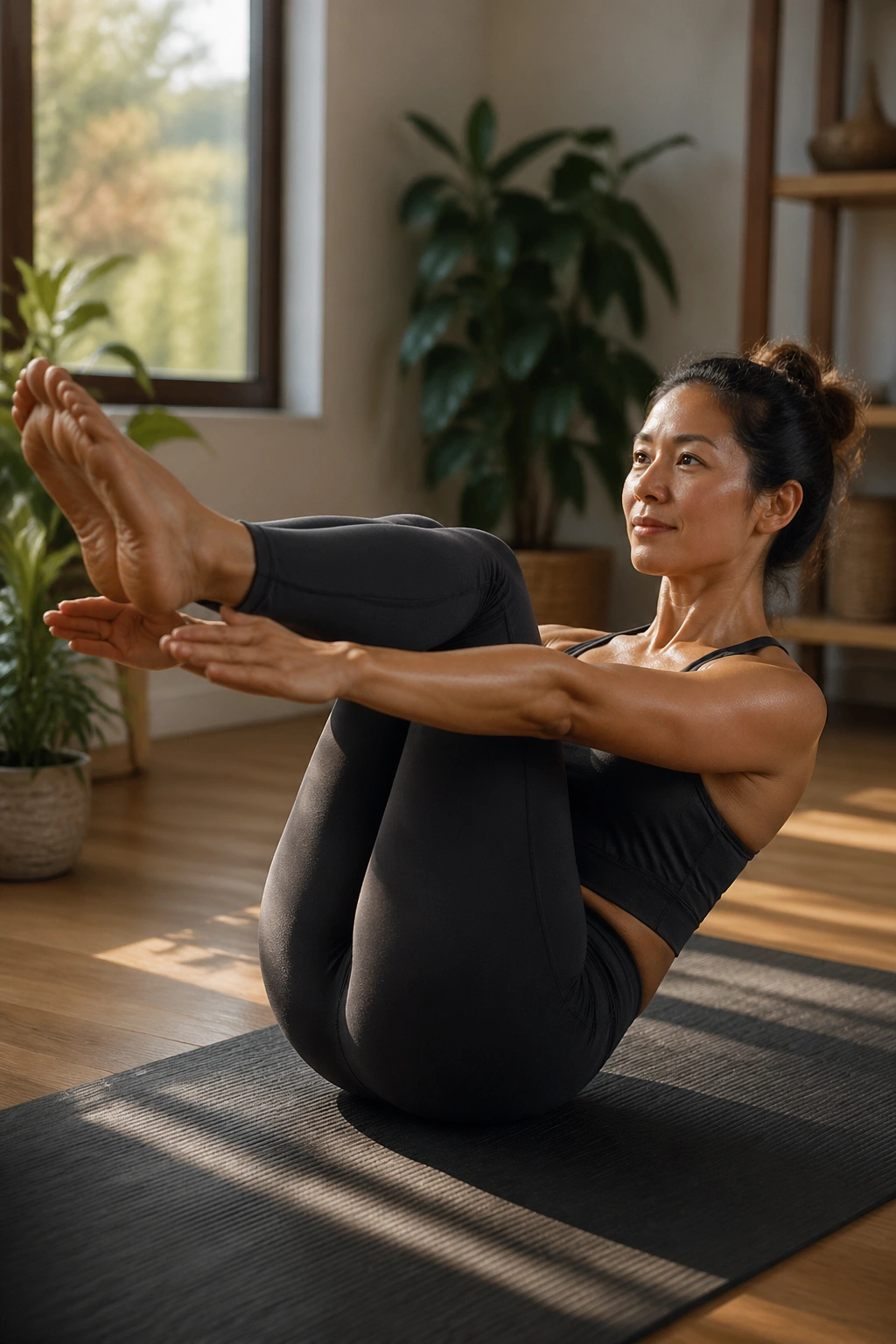
Can you hold a V-shape without turning your neck into a rope? That is the real teaser question, and it is why this move earns its reputation.
The teaser asks the torso and legs to rise together, then stay lifted while the arms reach long. Start with bent knees if needed. Extend the legs only as far as you can keep the spine rounded and the pelvis steady.
A clean teaser is not huge. It is organized. If you can hold the shape for two or three breaths without wobbling, that is a strong sign your deep abs are doing real work.
14. Corkscrew
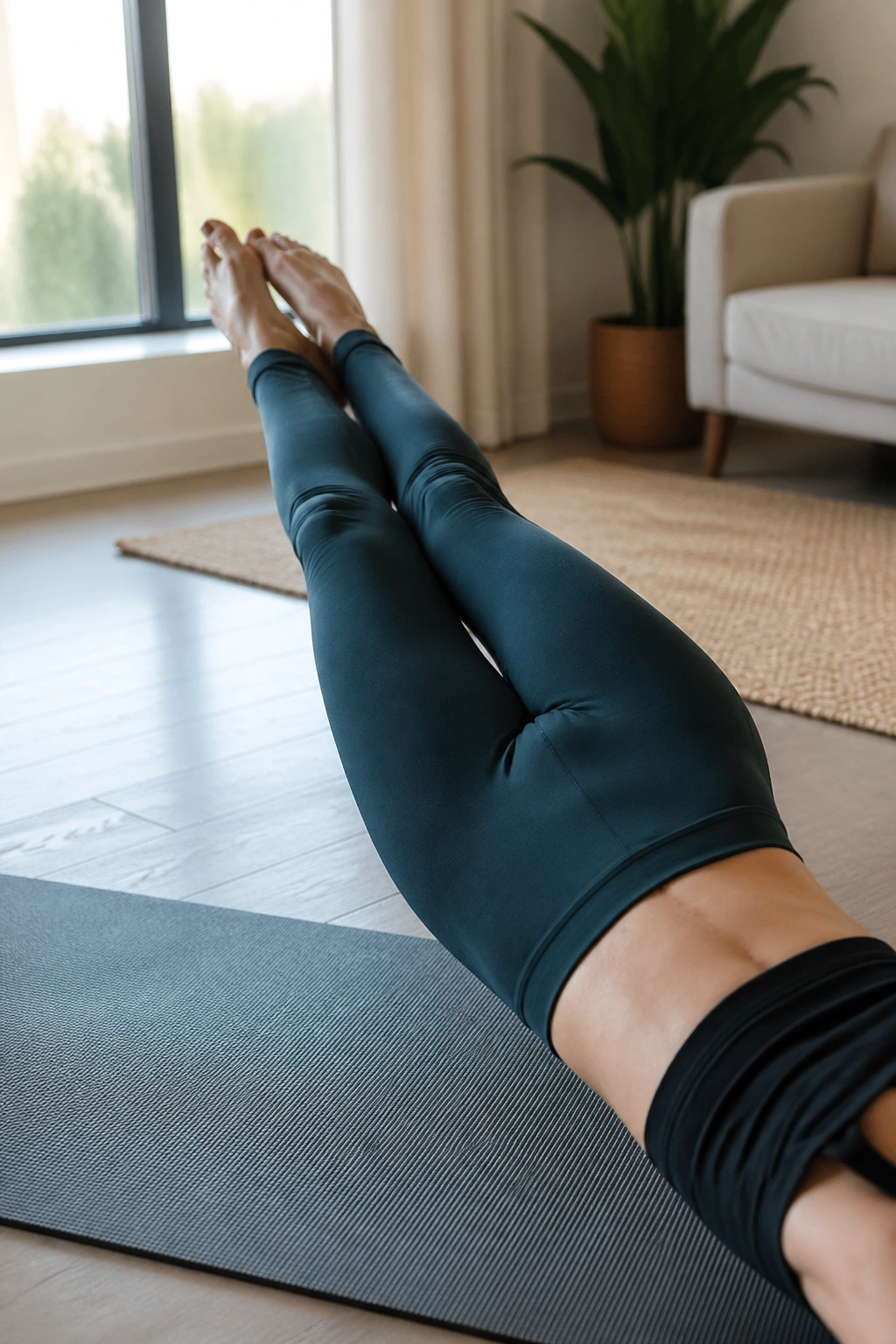
A small circle, yes. A tiny cheat, no. Corkscrew looks like a leg drill, but the abs are the brakes that keep the pelvis from rolling around like loose luggage.
Lie on your back, legs up, and circle them a few inches to one side, down, and to the other side. Keep the ribs quiet and the lower back heavy. Three circles each direction is enough to start.
If the circle gets too wide, the movement turns into a backbend. Keep it compact. You should feel the lower abs catching the motion on the way around.
15. Scissors
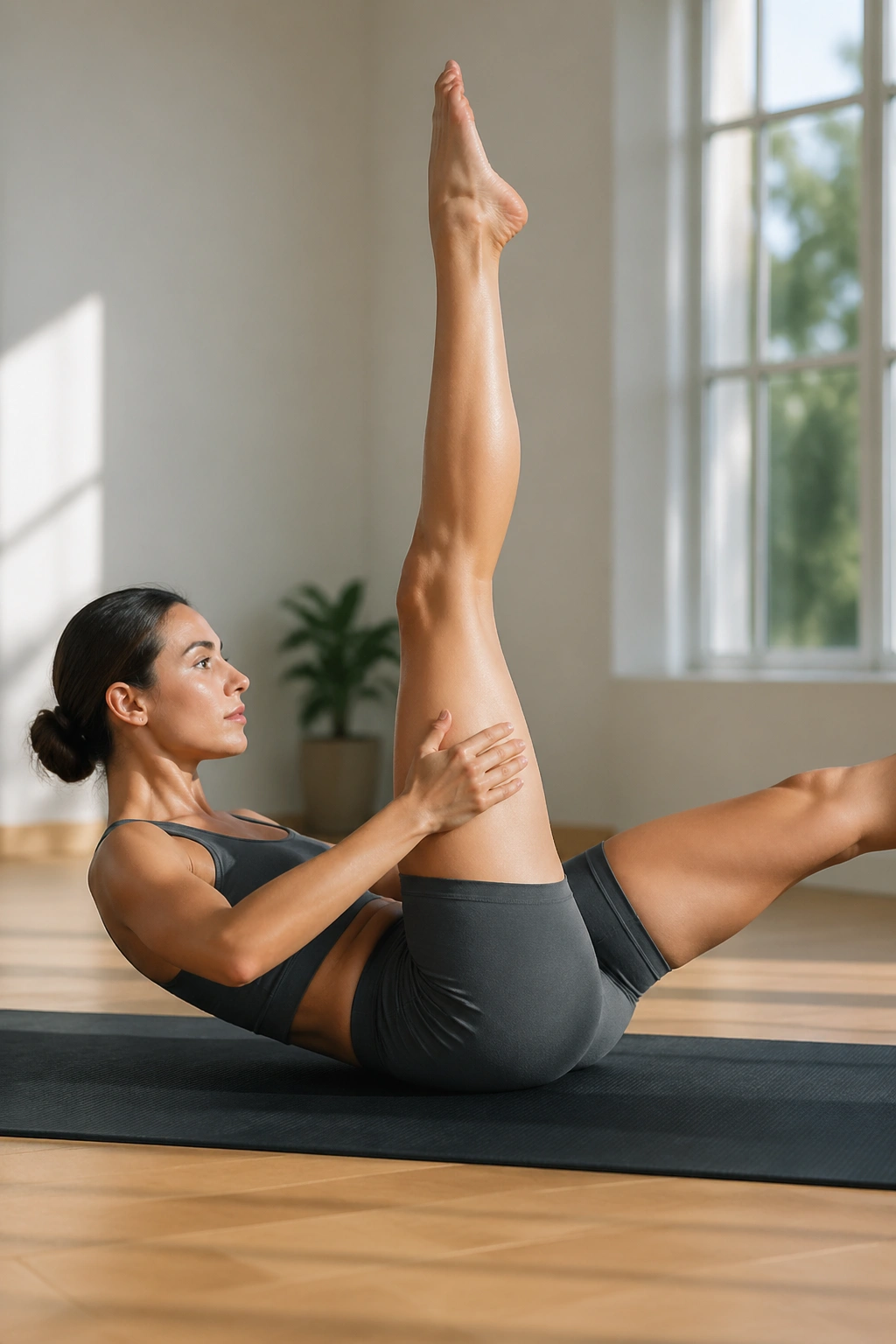
Scissors asks for length, not speed. One leg reaches toward the ceiling while the other hovers low, and the abs have to stop the pelvis from tipping while the hamstrings stretch under pressure.
Hold behind one thigh, lift the other leg to the vertical, then switch with a small pulse. The movement should feel smooth, almost slow enough to count out loud. Six to ten switches is plenty.
The best part is the feeling afterward. Your hip flexors should not be screaming. Your core should feel like it has been holding a conversation the whole time.
16. Bicycle
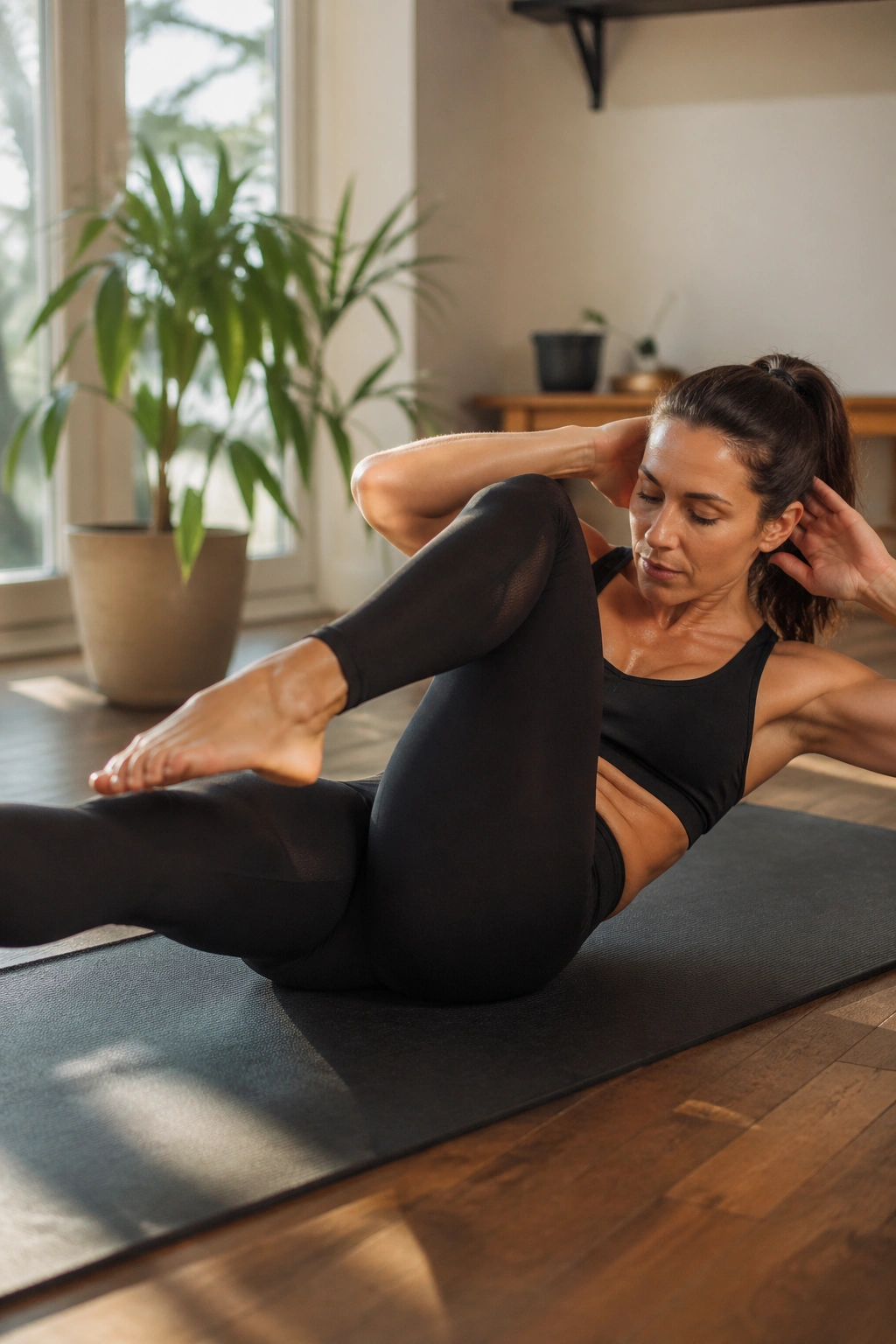
Do not confuse this with the fast crunches people do in the gym floor haze. Pilates bicycle is slower, longer, and much stricter about rib control.
One leg reaches out, the other bends in, and then the body rotates as the legs switch. Keep the shoulders lifted only as much as needed and the neck relaxed. Six to eight controlled pairs are enough.
Why It Stands Out
The torso stays quiet while the legs and rotation do the obvious work. That makes the obliques answer for the movement instead of letting momentum steal the credit.
If the elbows start pulling the head forward, stop and reset. The movement gets better the second you slow down.
17. Plank
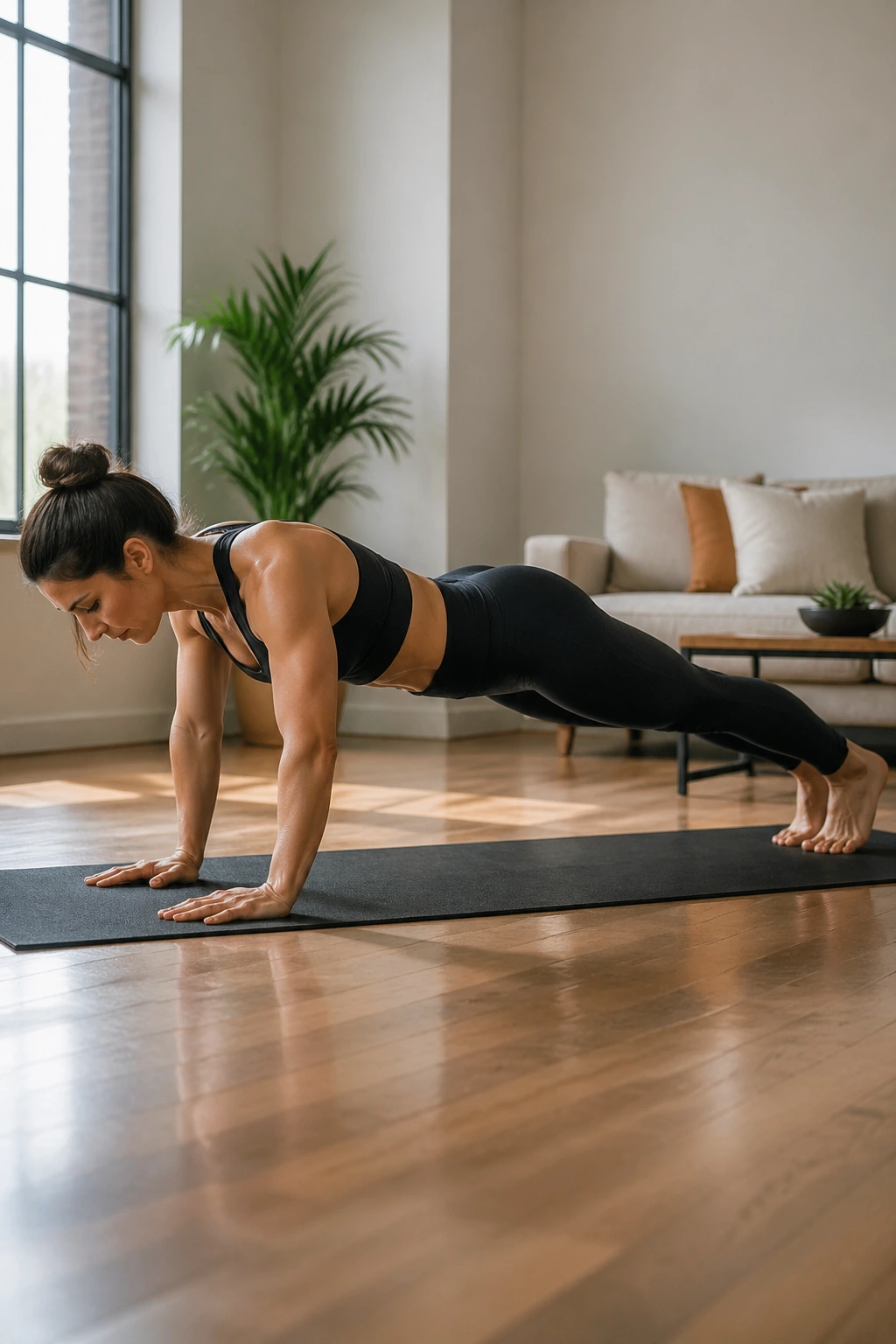
A strong plank often changes the look of the waist faster than endless flexion drills. Not because it burns fat from the stomach — it doesn’t — but because it teaches the front line of the body to hold a long, stacked shape.
Form Cues That Matter
Set your hands under your shoulders or come down to forearms. Press the floor away, draw the ribs in, and reach the heels back. Hold for 20 to 45 seconds with clean form.
- Keep the neck long.
- Squeeze the glutes lightly so the low back does not sag.
- Stop before the shoulders collapse.
Best habit: End the hold while the shape is still good.
18. Side Plank
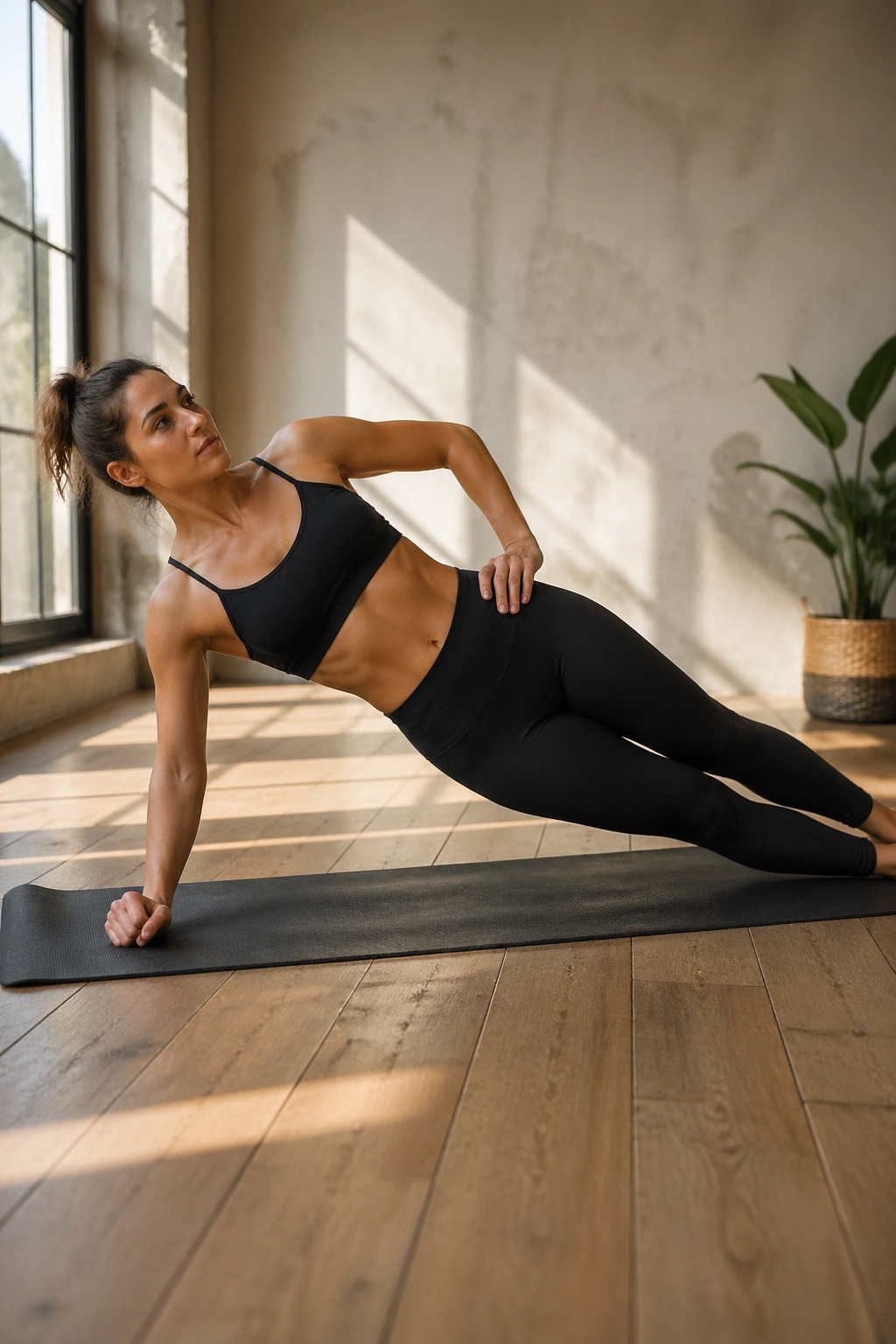
Why is the side plank such a good waist exercise? Because it asks one side of the body to hold up the whole frame while the obliques, shoulder, and side glutes all pitch in.
Lie on one side and stack the feet or bend the lower knee for support. Lift the hips, keep the top shoulder from rolling forward, and breathe for 15 to 30 seconds. Switch sides and repeat.
This one has a sneaky payoff: it teaches the side body to stay long instead of pinching. If the waist crumples, lower the bottom knee and rebuild from there.
19. Leg Pull Front
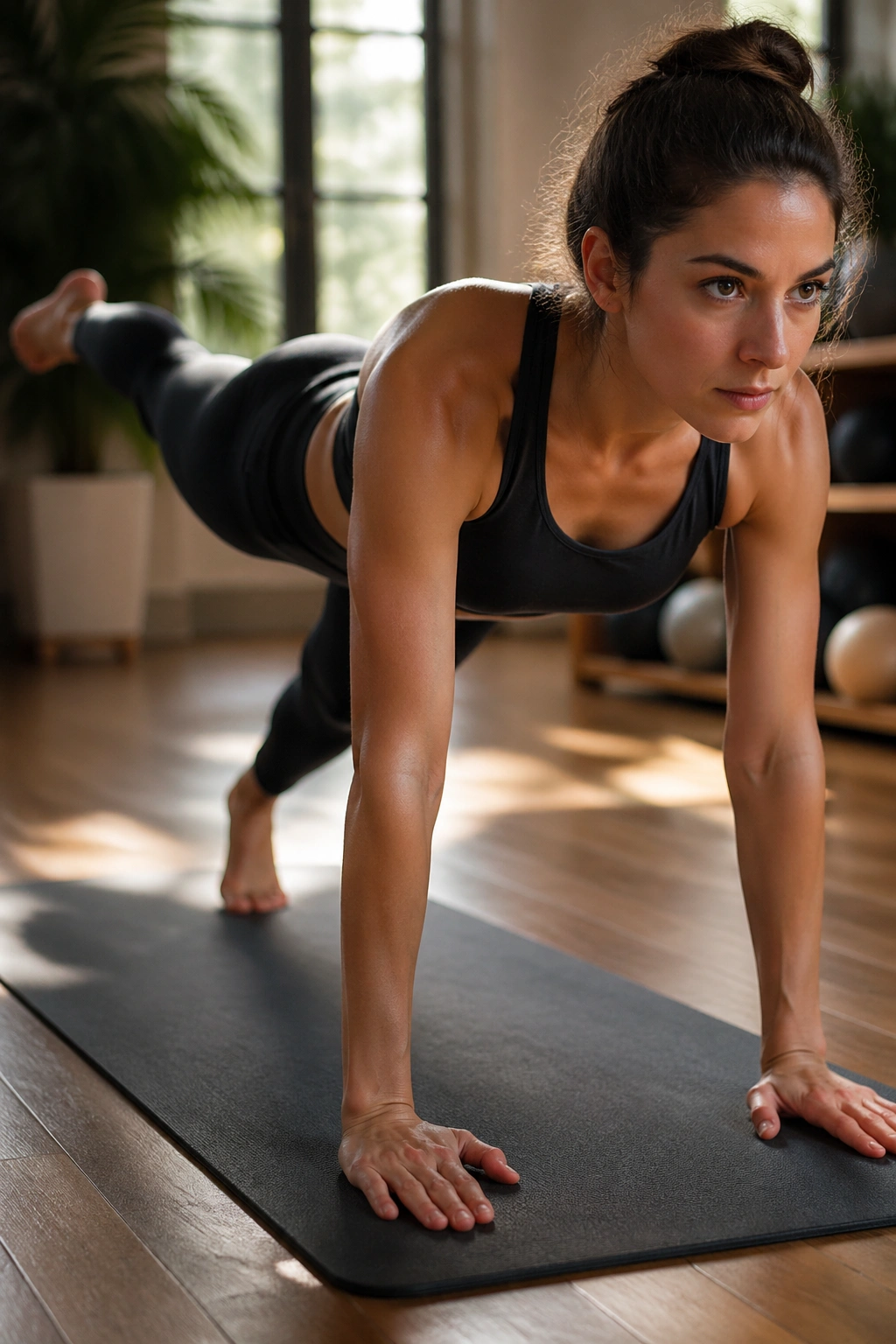
If plank feels too familiar, leg pull front adds a balance problem to the mix. One leg lifts, the pelvis wants to rotate, and the abs have to argue the body back into line.
How to Keep It Clean
Start in a high plank. Lift one leg a few inches without letting the hips twist, hold for one breath, and lower. Alternate sides for 4 to 6 lifts each leg.
The challenge is not the leg lift itself. It is the stillness around it. Keep the shoulders square, the ribs tucked in, and the support leg active.
A lot of people swing the lifted leg high. Don’t. Two or three inches is enough if the rest of you stays steady.
20. Leg Pull Back
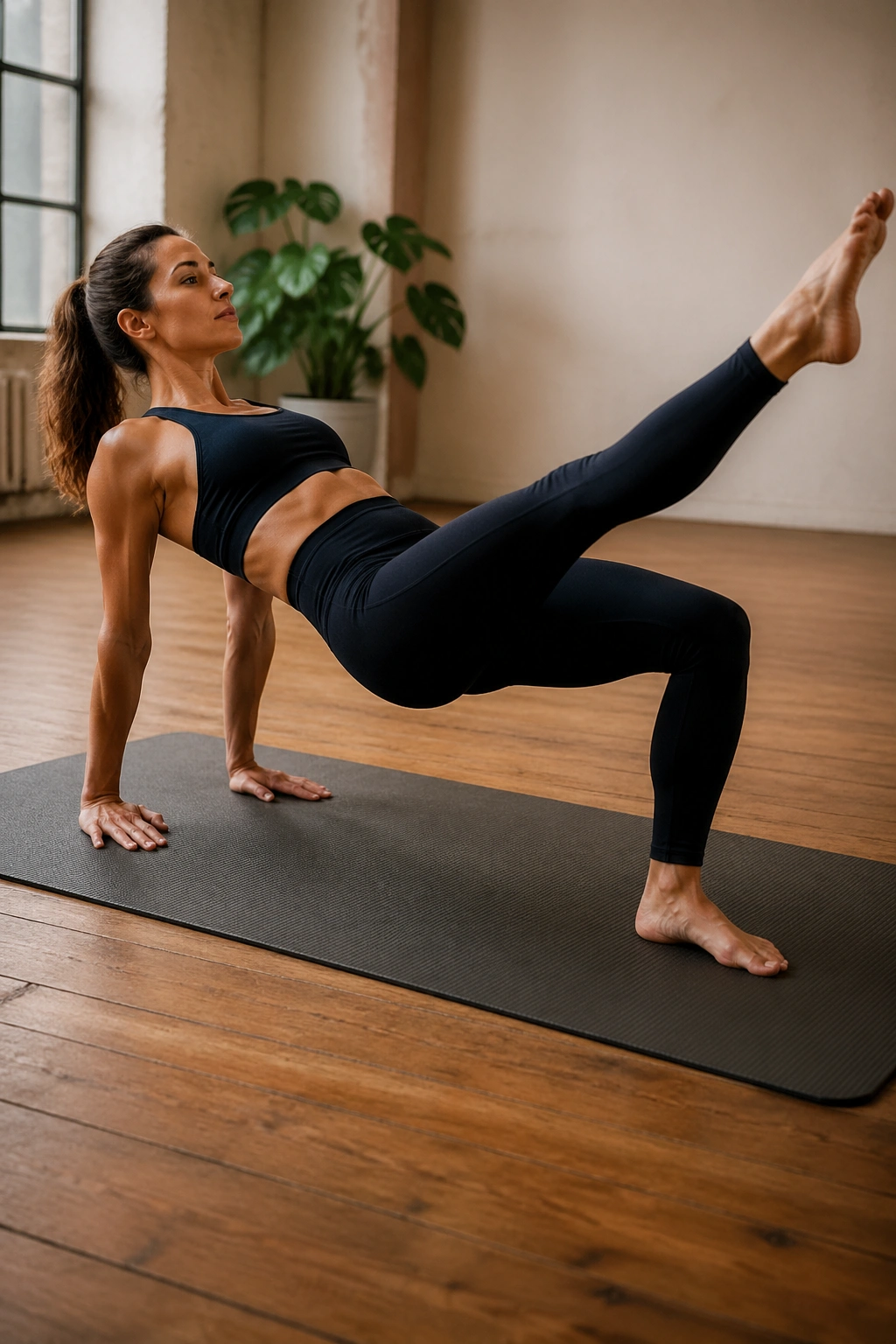
Unlike the front support work, this one asks the backside to stay open while the front abs do not collapse. It is a little awkward at first, and that is part of the point.
Sit with hands behind you, lift the hips into a reverse plank shape, then float one leg and switch. The chest should stay open, the glutes active, and the belly drawn in. Four to six switches per side is a fair start.
If your wrists hate it, shorten the hold or keep both feet on the floor. The deep core still works hard just from keeping the hips lifted.
21. Knee Tucks in Plank
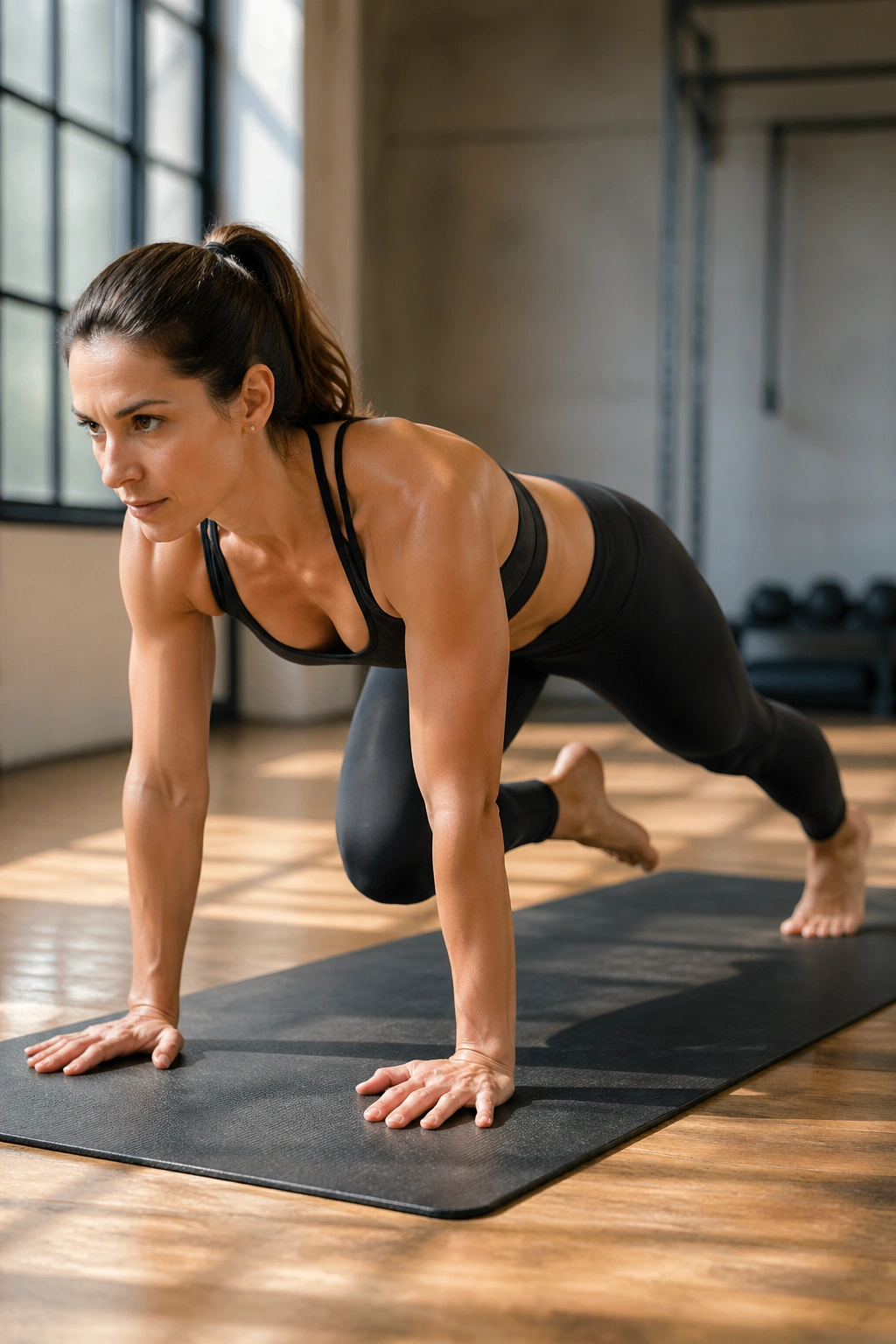
This is the move for people who want something that feels direct. The knees tuck under the torso, the shoulders stay steady, and the abdominal wall has to keep the spine from folding in the wrong place.
Start in a plank, then pull one knee toward the chest or toward the same-side elbow, depending on the variation. Return the foot with control and repeat for 8 to 12 reps per side.
What to Avoid
A fast knee drive turns the drill into a cardio flail. Slow it down. Keep the pelvis from bouncing and the arms from collapsing.
If the lower back arches, shorten the range. The shape matters more than the speed.
22. Swimming
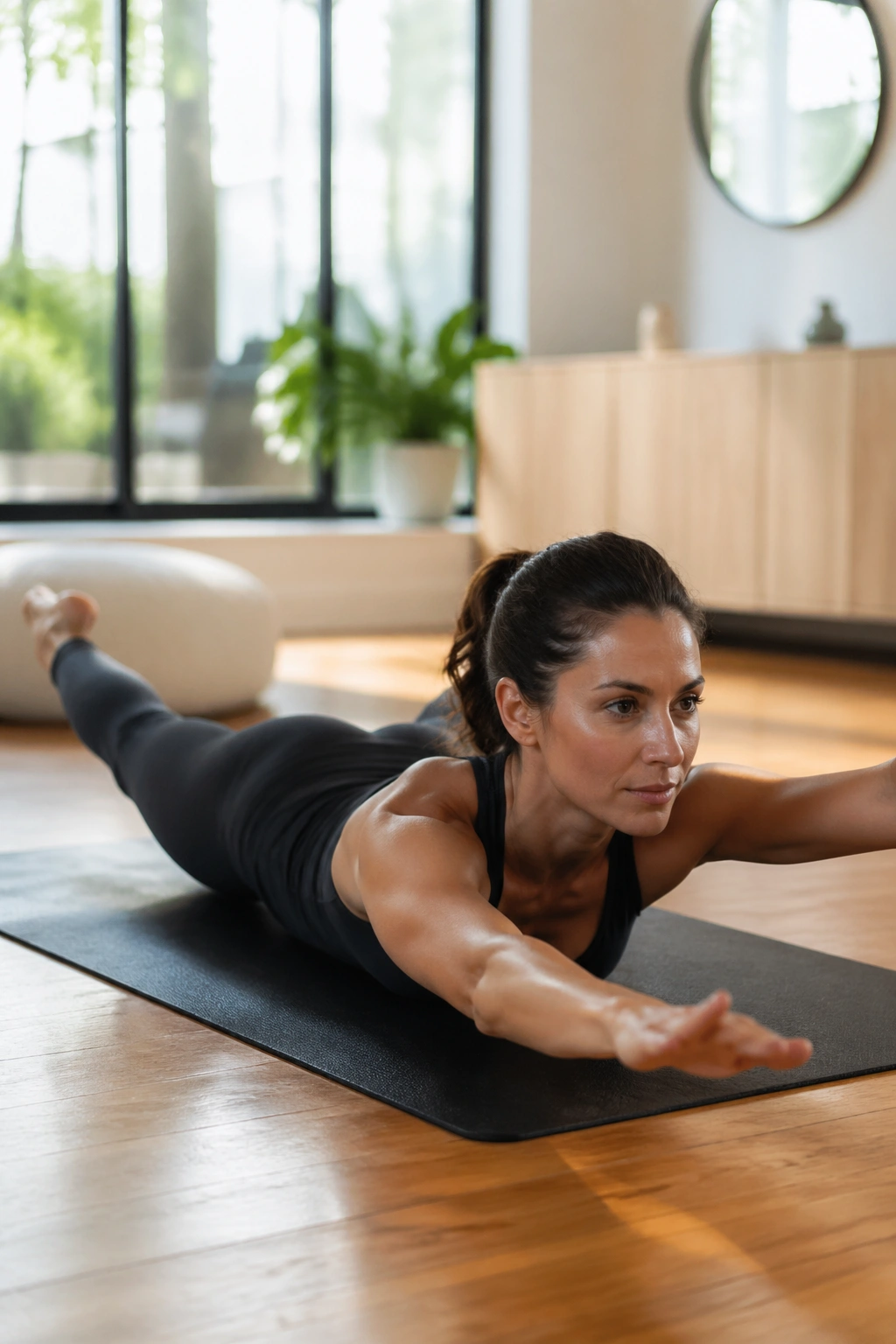
Swimming is not a classic crunch, but it is one of the nicest ways to teach the core to support the spine from the back side. That matters, because a flatter-looking stomach is not only about the front of the body.
Lie face down, lengthen the arms and legs, then lift opposite arm and leg in small alternating pulses. Keep the neck long and the belly lightly drawn off the mat. Ten to twenty seconds is enough for a strong set.
The movement should feel like long, even reaching, not like flapping around on the floor. If the low back pinches, lift less and lengthen more.
23. Saw
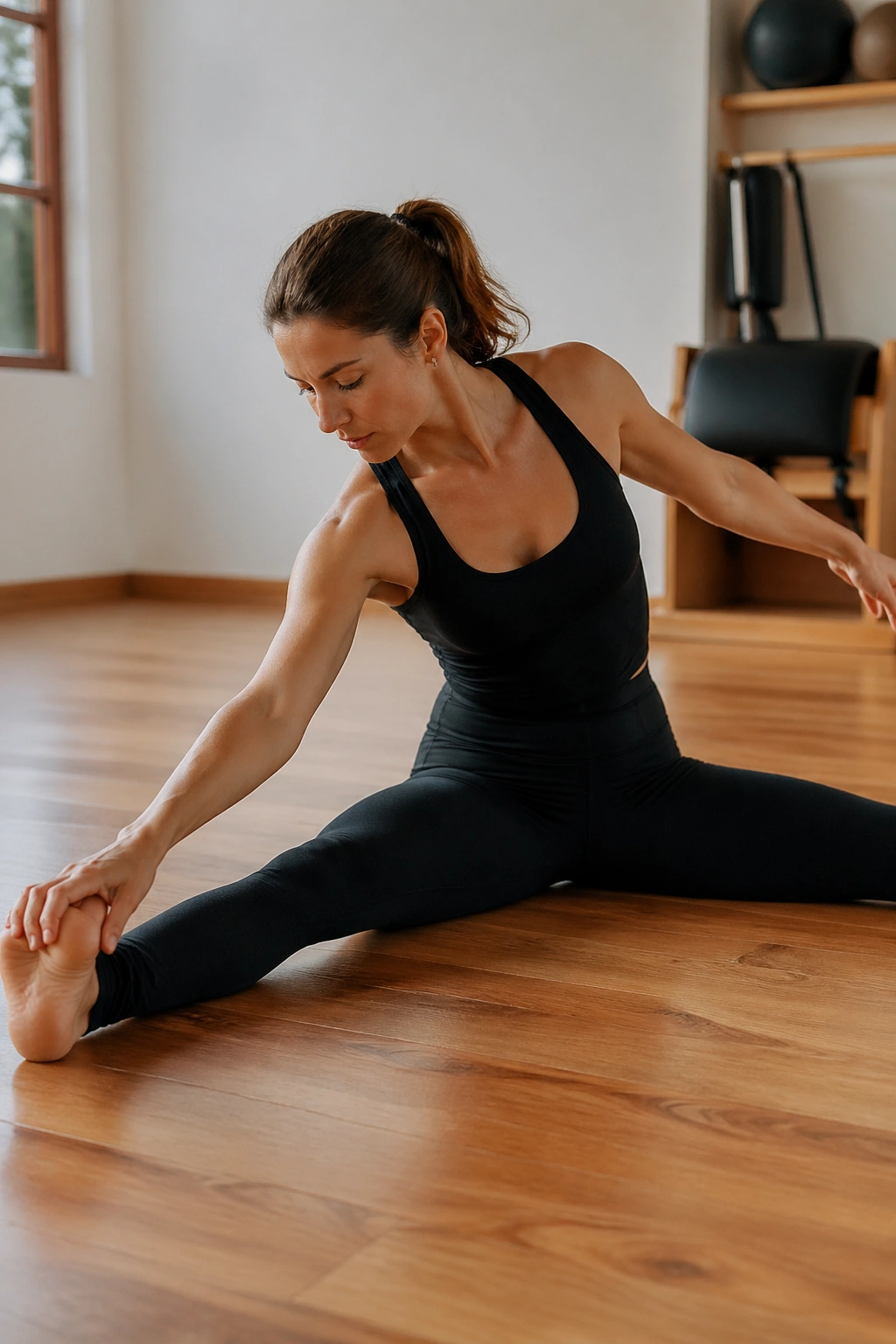
The saw is one of those Pilates exercises that looks civilized and hits the waist anyway. The twist, the reach, and the forward fold all ask the abs to stay engaged while the spine moves.
Sit tall with the legs wide, arms out to the side. Rotate, then reach the opposite hand toward the outside of the opposite foot in a diagonal chopping motion. Come back up and switch sides for 3 to 5 rounds.
The Real Job
The twist should not collapse the chest. Keep lifting as you rotate, then fold only as far as you can stay organized.
If your hamstrings complain, bend the knees a little. Long legs are optional. Clean form is not.
24. Spine Stretch Forward
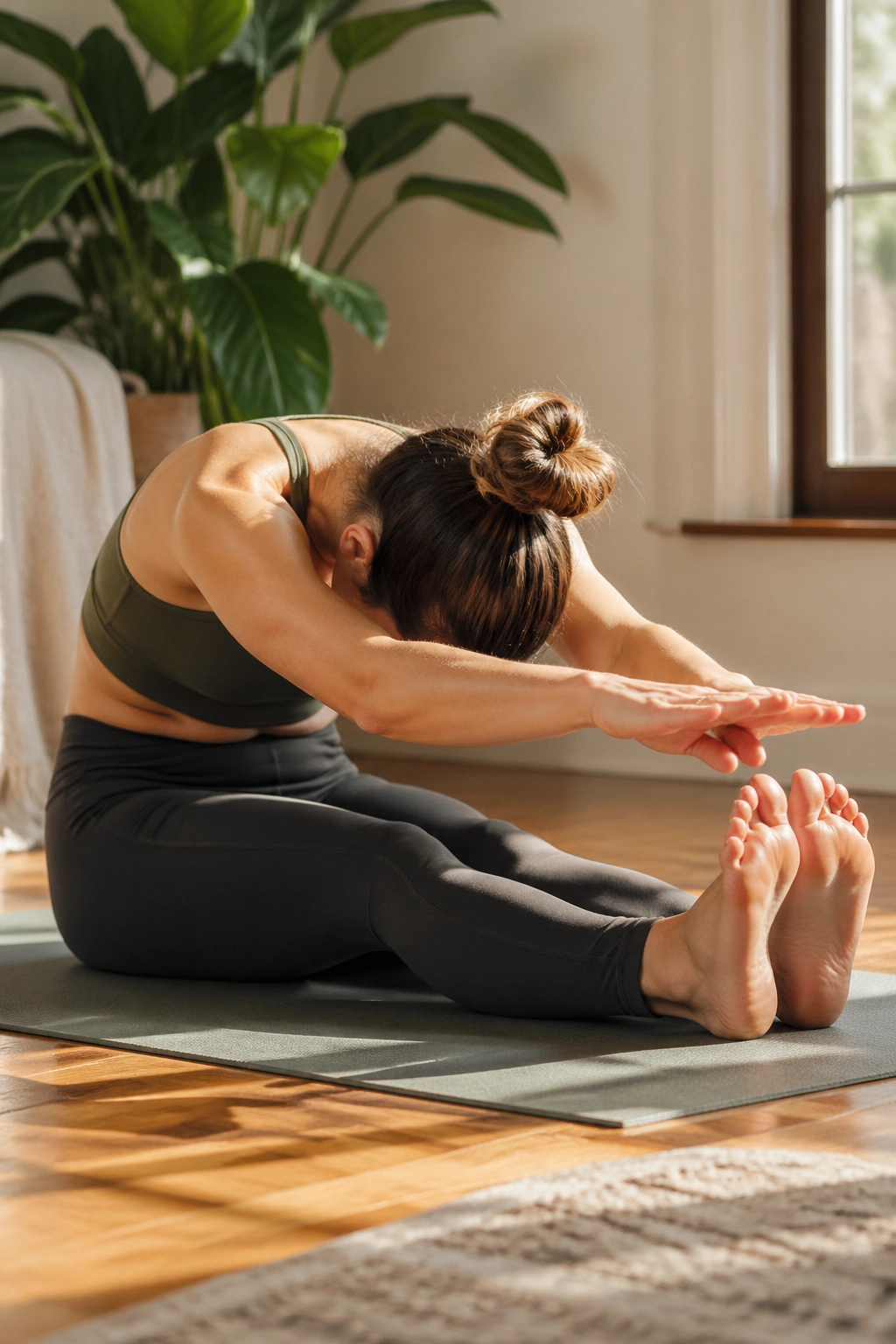
A stretch can still be an ab exercise. Spine stretch forward teaches the ribs to close, the belly to hollow, and the torso to fold without slumping like a paper doll.
Sit with legs long and arms reaching forward. Exhale and round the spine away from the hips, reaching the fingertips forward as the ribs pull back. Inhale to sit tall again. Six to eight reps does the trick.
This one feels quiet, but the core has to work hard to control the fold and the return. If the shoulders creep up toward the ears, reset and soften them down.
25. Mermaid Side Bend
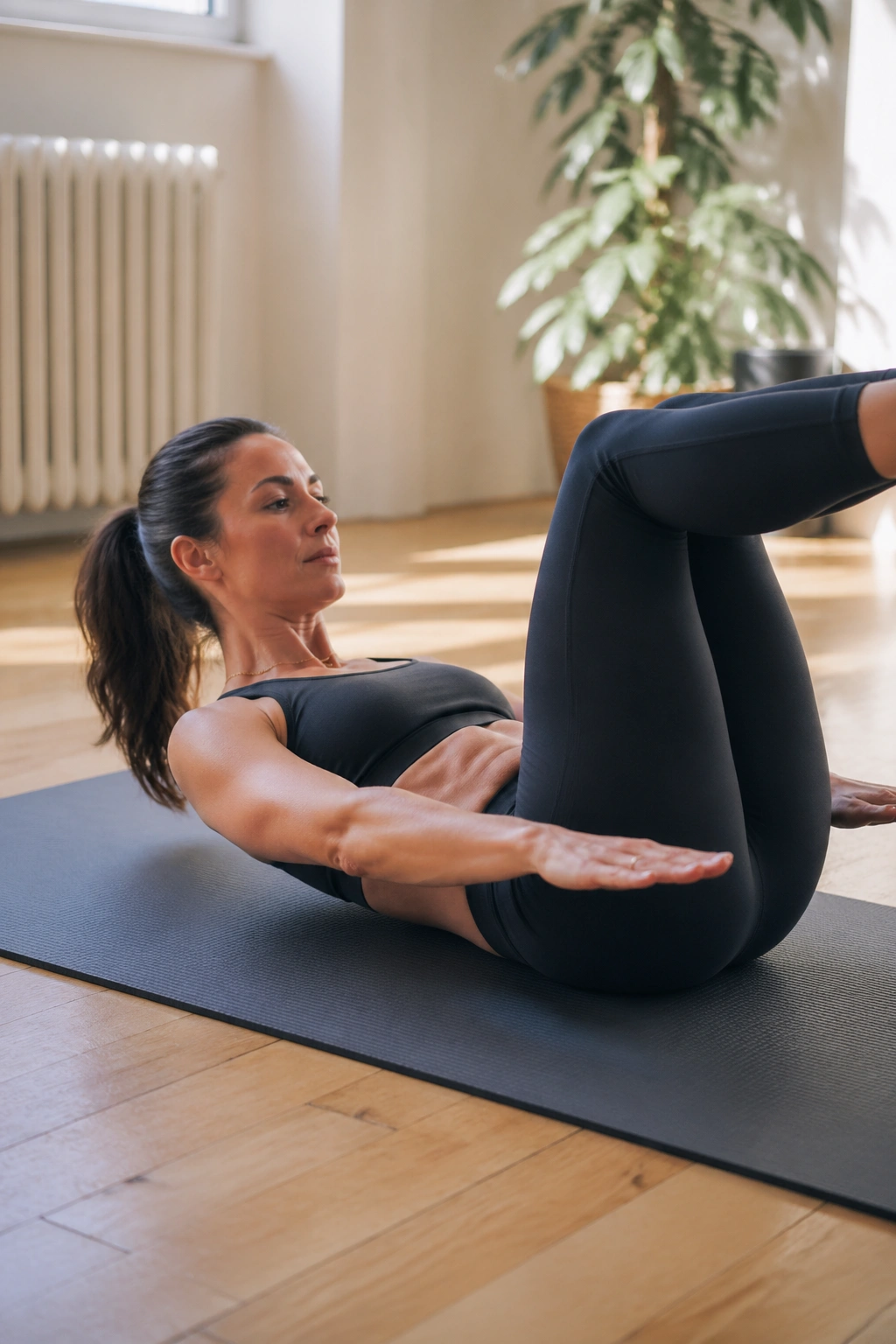
Mermaid is often treated like a stretch, and that misses half the value. The side bend makes the obliques lengthen and contract, which is useful if you want the waist to look and move better.
How to Feel It
Sit with one leg folded beside you and the other reaching out. Lift one arm, side bend over, then return to center with control. Three to five reps per side is enough.
- Keep both sit bones grounded.
- Reach long before you bend.
- Let the lower ribs open on the inhale.
Best cue: Think long side body, not collapsed side body.
26. Hip Twist
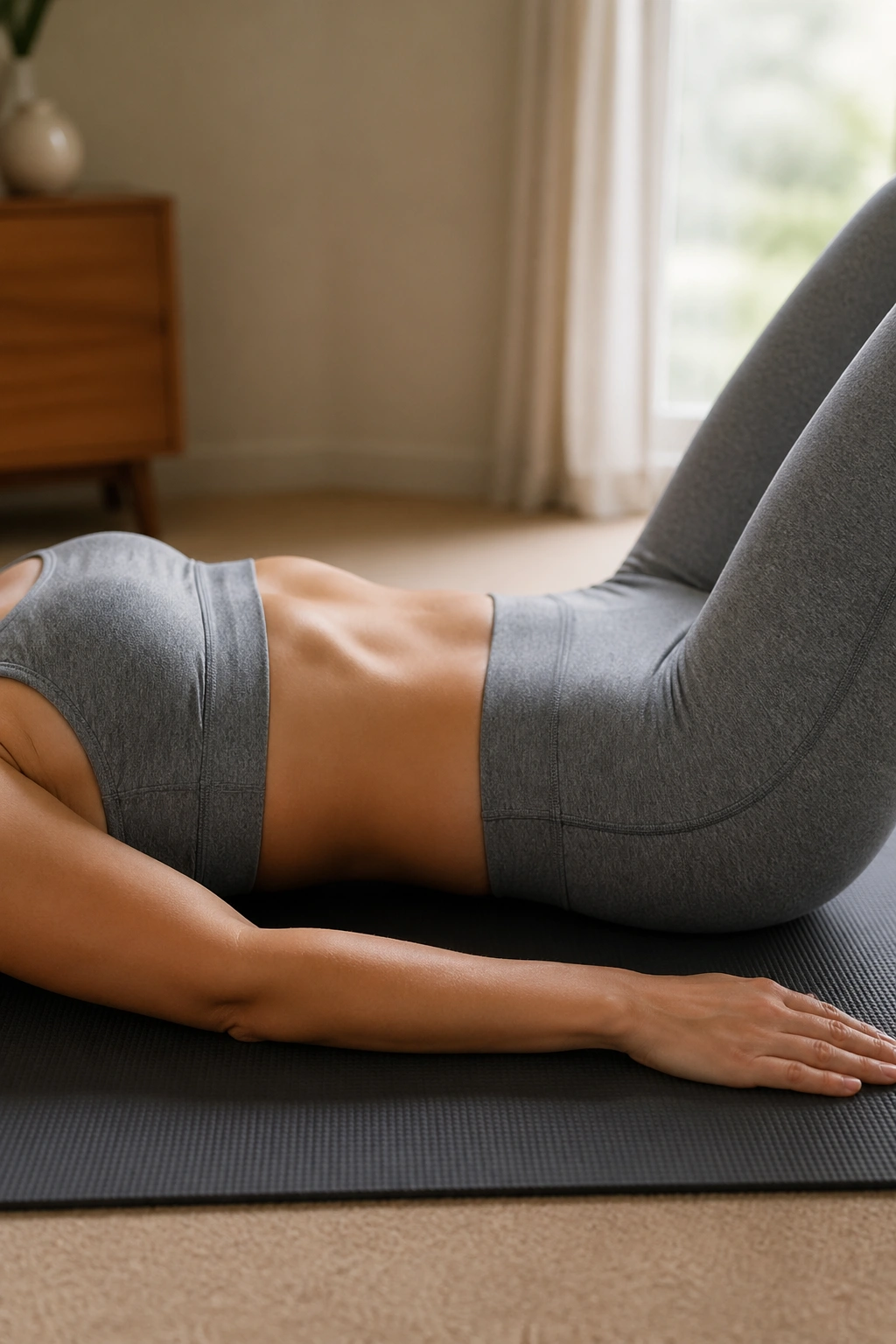
Hip twist looks easy until the ribs start wandering. The pelvis stays planted while the torso rotates side to side, and the deep abs have to stop the movement from turning sloppy.
Sit in a supported V-sit or tabletop position, lean back slightly, and rotate the legs and torso together a few inches to one side, then the other. Keep it small. Eight to ten total switches is a good start.
If the shoulders are doing the work, slow down and shrink the circle. This is not a big sweeping move. It is a control exercise wearing a twist.
27. Seal
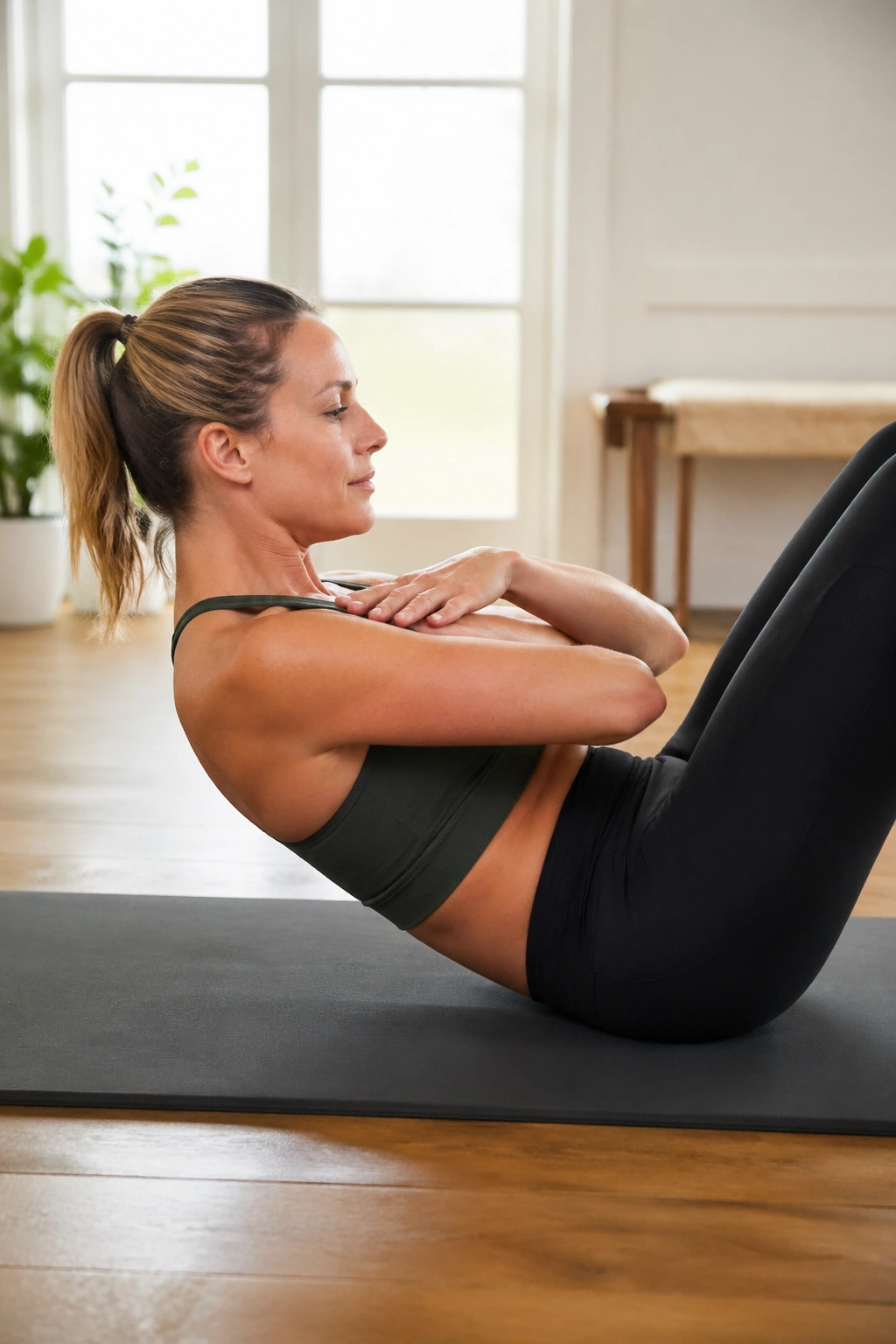
Seal is playful, but do not let the clapping fool you. The rolling action and the balance point make the core work harder than the cheerful shape suggests.
Sit in the seal position, hold the ankles, clap the feet together three times, then roll back and up to balance. Five to six rolls is enough for most people. Keep the neck tucked and the movement rounded.
The rhythm matters. If you throw yourself backward, you lose the exercise and just get dizzy. Smooth and controlled is the whole game.
28. Boomerang
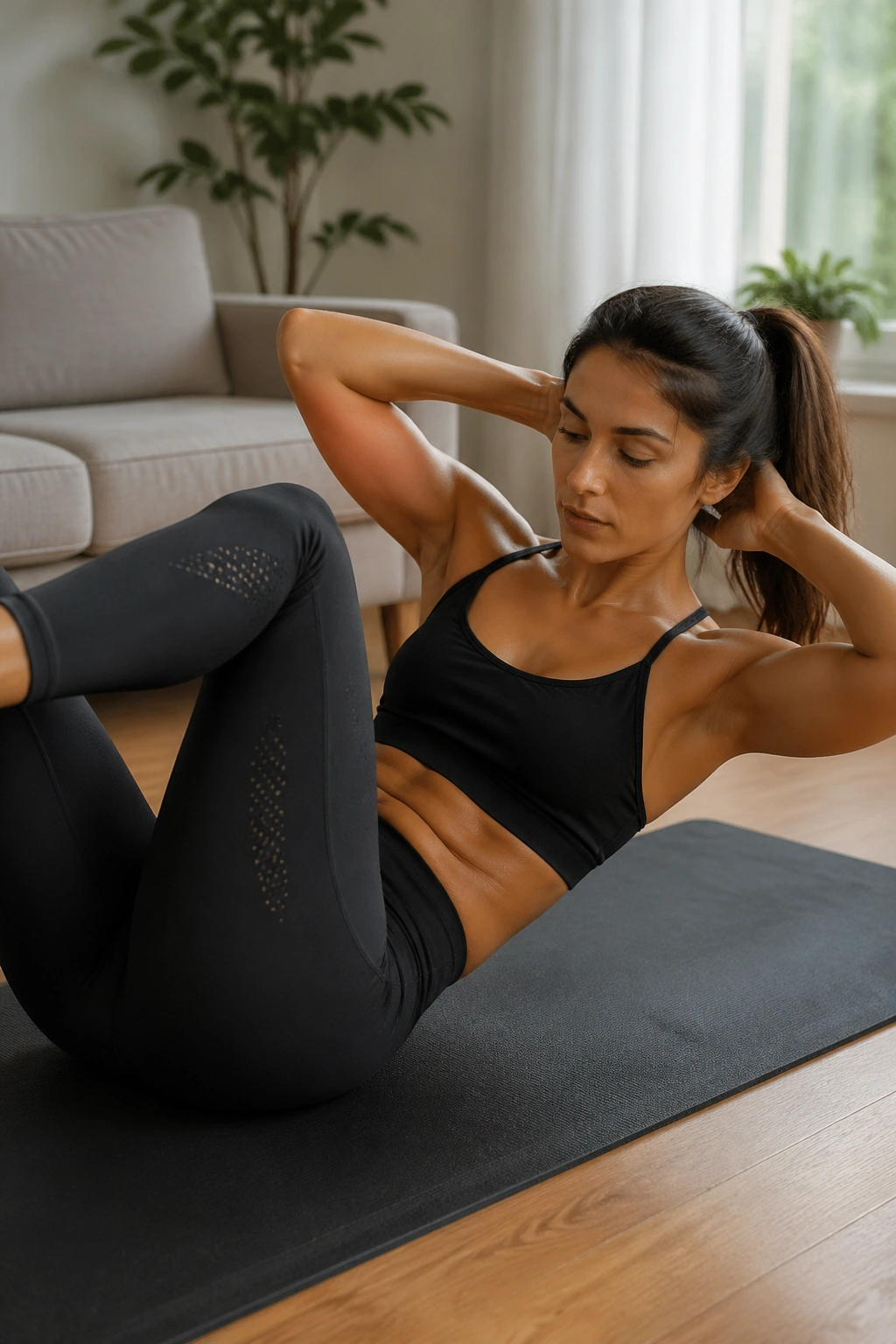
Boomerang is one of the more advanced Pilates ab exercises, and it shows. The move combines a roll, a lift, a balance, and a controlled hand change that keeps the midsection busy the whole way through.
Unlike the seal, boomerang adds a much more precise transition. You roll back, open the legs overhead, switch the arms, and return to a seated shape without collapsing. Try 3 to 5 slow reps, and only if the teaser and roll-up already feel decent.
It is not a beginner move. No shame there. If you can keep the spine rounded and the breath steady, though, it becomes one of the most satisfying core drills in the whole list.
29. Jackknife
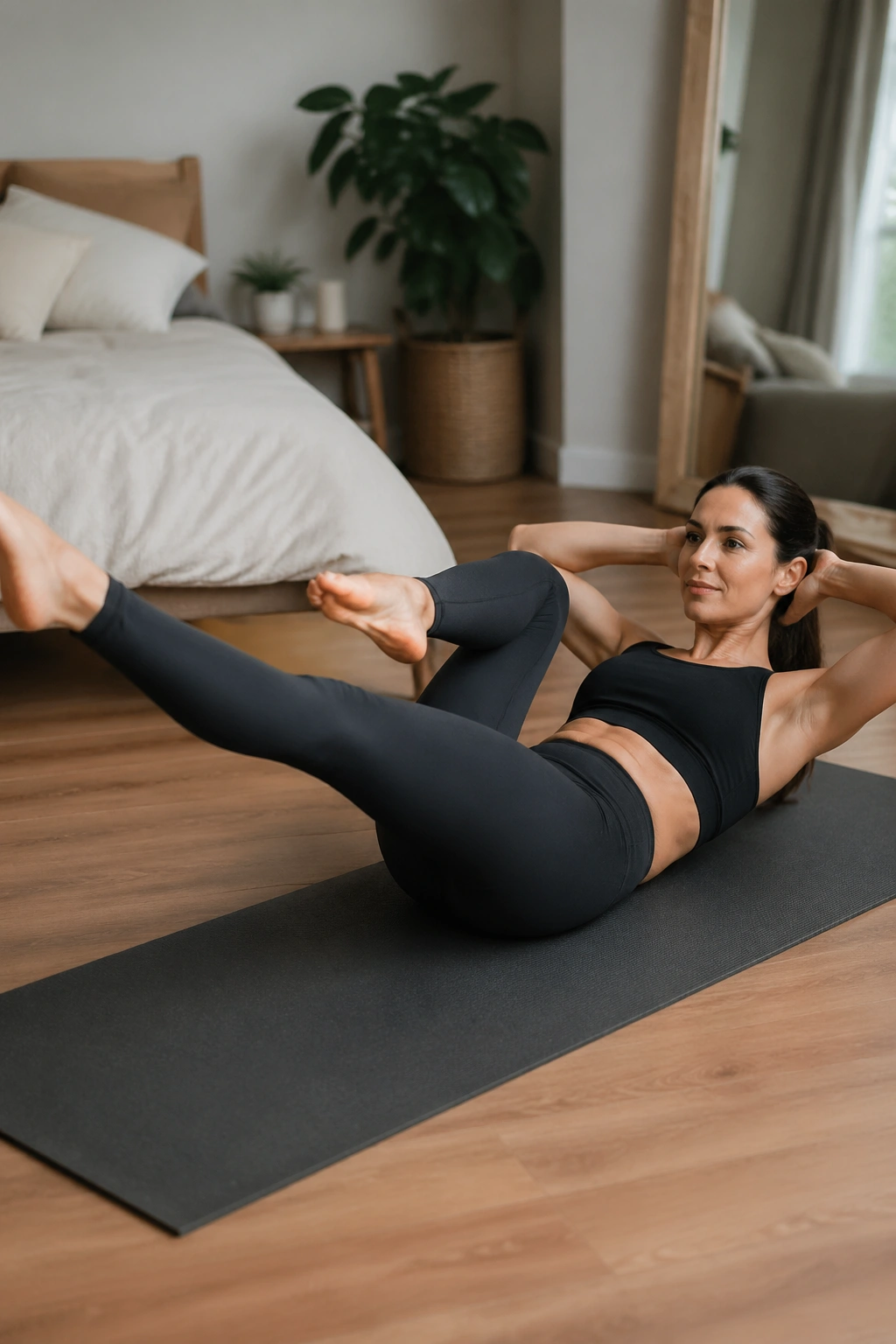
Jackknife is a serious test of control. The legs go overhead, the hips lift, and the abs have to stop the whole thing from dumping into the neck or the lower back.
Lie down, lift the legs overhead, and roll the hips up with support from the core, not a swing. Lower the spine one vertebra at a time. Four to six slow reps is more than enough.
The warning is simple: do not force the range. If your shoulders or neck feel jammed, skip it for now and come back after you have more teaser and roll-over strength.
30. Tabletop Toe Taps
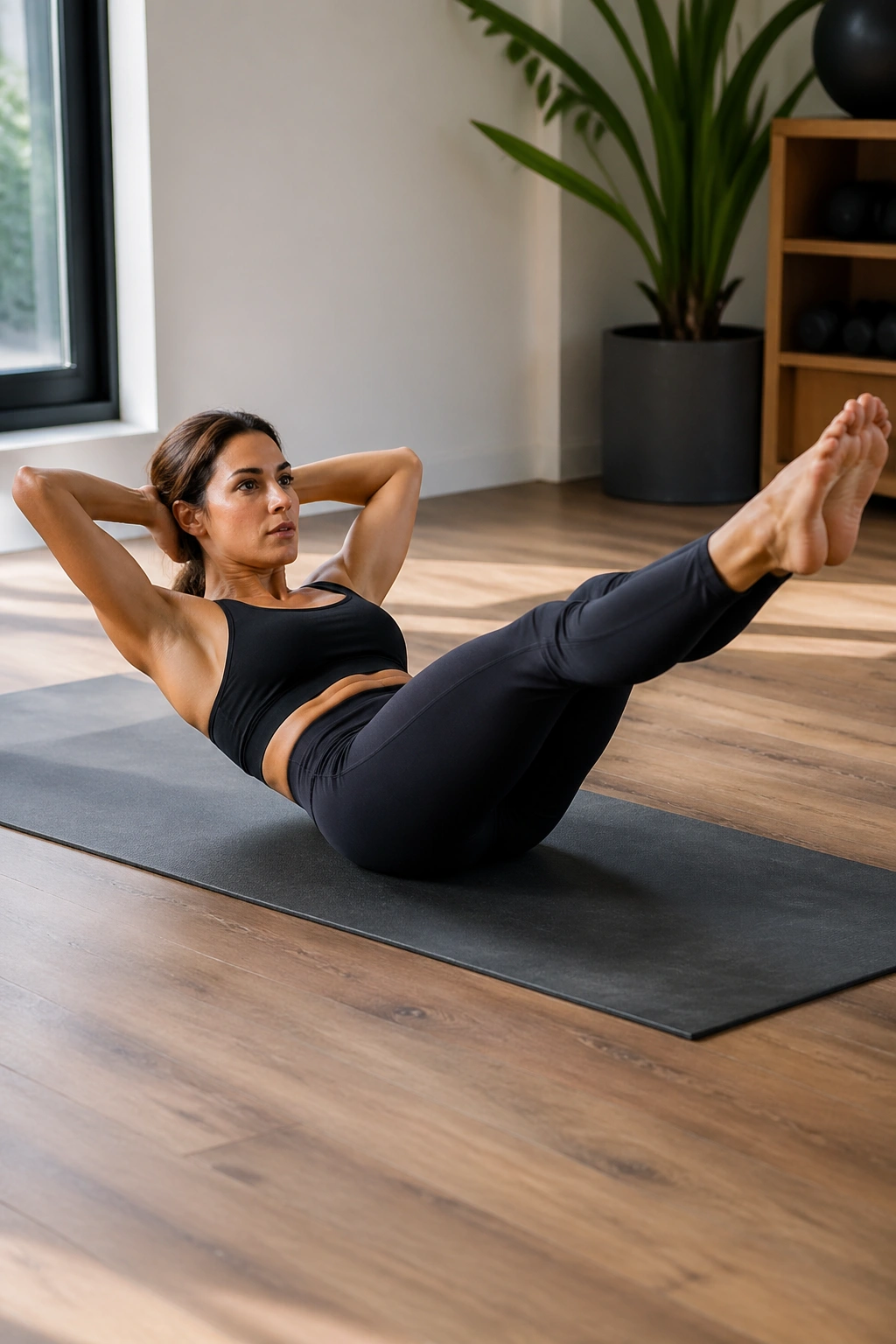
If you only have a few minutes, this is one of the smartest places to spend them. Tabletop toe taps are small, direct, and brutally honest about whether your lower abs can keep the pelvis from tipping.
Lie on your back with both legs in tabletop. On the exhale, lower one toe toward the floor, tap lightly, and return. Alternate sides for 8 to 12 taps each leg. Keep the back heavy and the ribs quiet.
What Makes It Useful
The movement is tiny, which is the point. If the low back arches even a little, raise the legs higher and shorten the lever.
Done well, this drill leaves the lower abs awake without wrecking your neck or your mood. That is a useful trade, and honestly, it is why Pilates keeps winning for people who want a flatter-looking stomach without beating themselves up over it.
