



The easiest Pilates session is not the flashiest one. It is the one that lets you feel your ribs settle, your pelvis quiet down, and your breath stop racing.
That matters for absolute beginners, because beginner Pilates workouts are less about pushing hard and more about learning what controlled movement feels like. A lot of people expect a burn, then get discouraged when the first win is subtler: a steadier neck, a calmer low back, a core that feels switched on without a single sit-up.
That subtlety is the whole point. Pilates works best when you can notice small things — whether one hip hikes higher than the other, whether your shoulders creep toward your ears, whether your stomach bulges when you exhale instead of drawing inward.
A mat, a wall, and a folded towel are enough to start. The 30 workouts below move from very gentle floor drills to fuller beginner flows, so you can build control without feeling thrown into the deep end.
1. Five-Minute Breath and Pelvic Tilt Reset
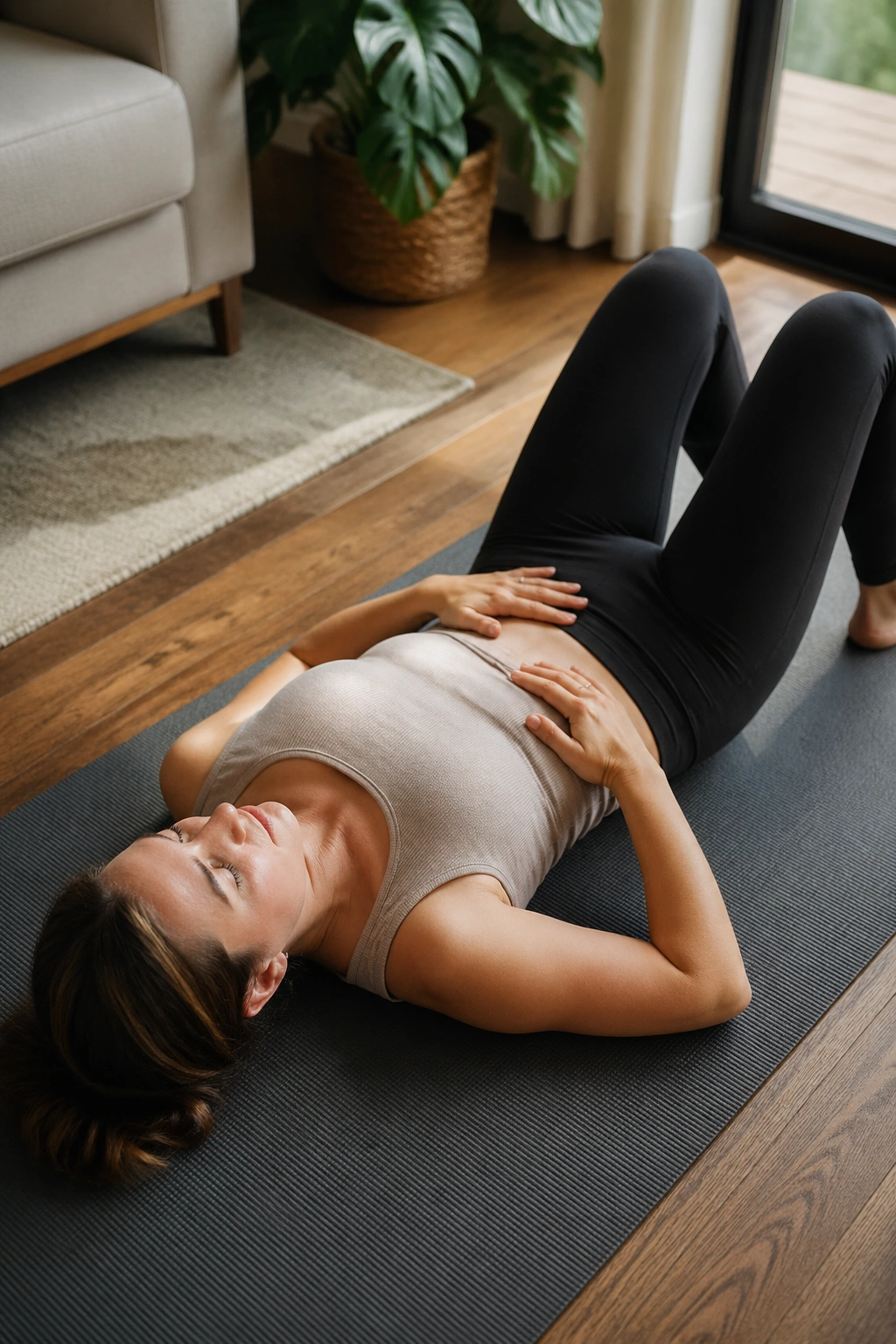
This is the session I’d hand someone who says, “I want to start Pilates, but I have no idea what my body is supposed to do.” It is quiet, simple, and not remotely flashy. That is a compliment.
Lie on your back with your knees bent and feet flat. Rest one hand on your ribs and the other on your lower belly, then take 5 slow breaths that widen the ribs to the sides and back. After that, do 8 pelvic tilts, flattening the low back into the mat on the exhale and letting it return to neutral on the inhale. Finish with 6 knee folds per side and 8 slow arm reaches overhead.
Keep your shoulders heavy. If they start hiking up, you are doing too much.
2. Supine Marching Without the Crunch
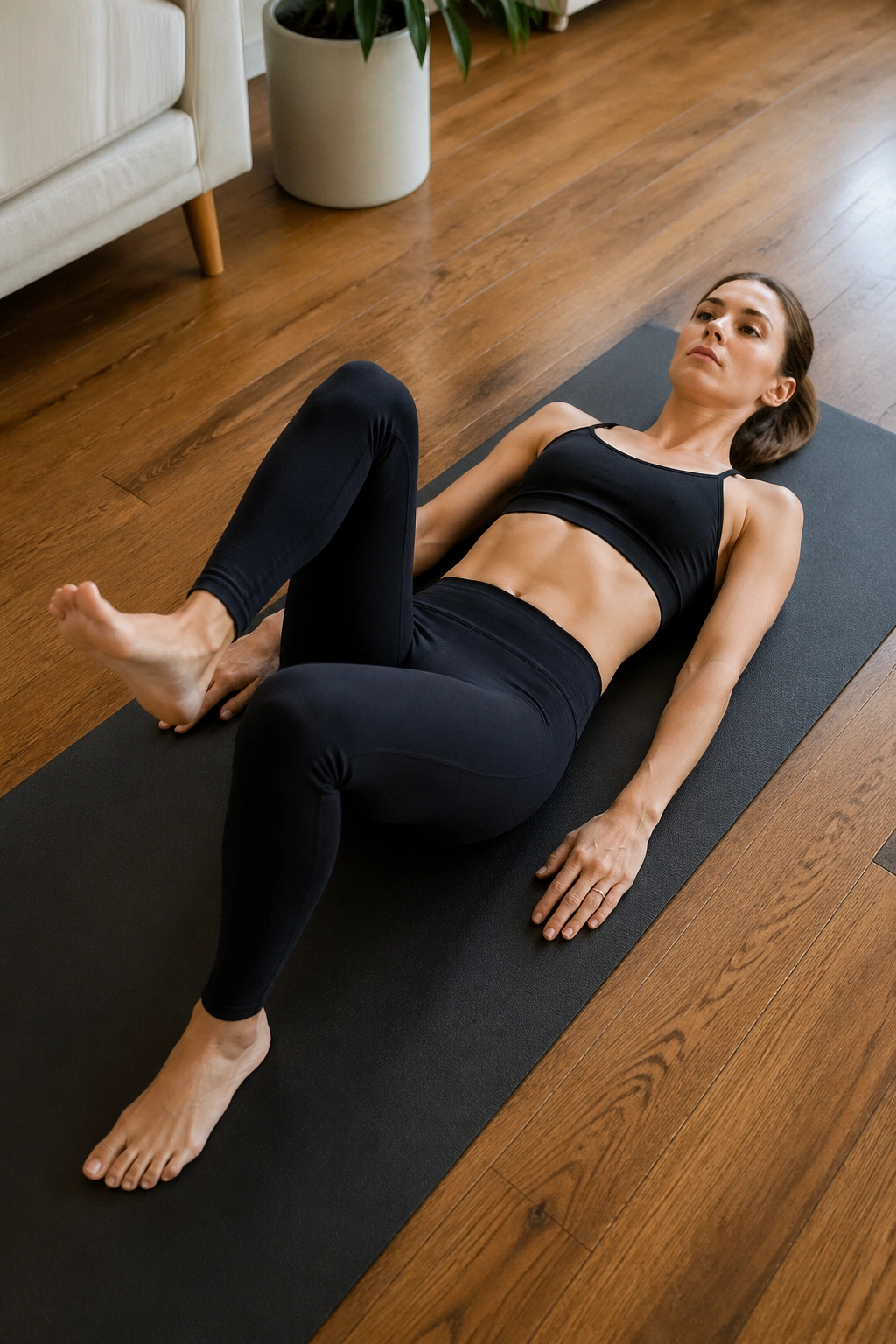
Why does marching feel harder than it looks? Because the challenge is not the legs. It is keeping the pelvis still while the limbs move.
Lie on your back with your knees bent, then lift one foot a few inches at a time as if you are marching in place. Start with 8 slow marches per side, keeping the movement tiny. If that feels easy, add 6 toe taps per side and pause for one full breath between reps. The low back should stay calm, not pinched or arched.
What to Feel
You want the work to land in your lower abs, not in your hip flexors. If your neck tightens, place your head on a folded towel and slow everything down.
This workout looks plain. It is not plain at all.
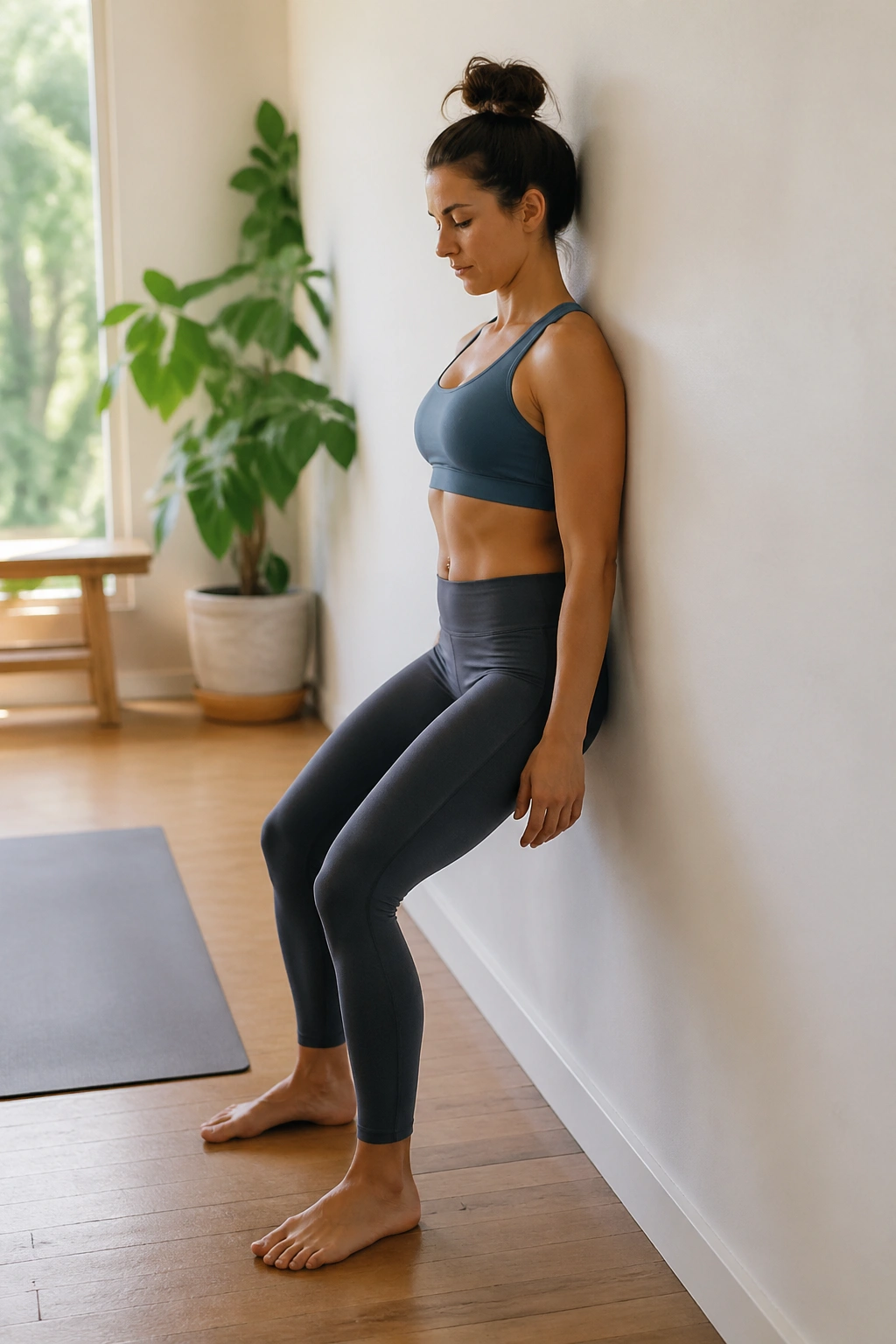
3. Wall Roll-Down and Reach
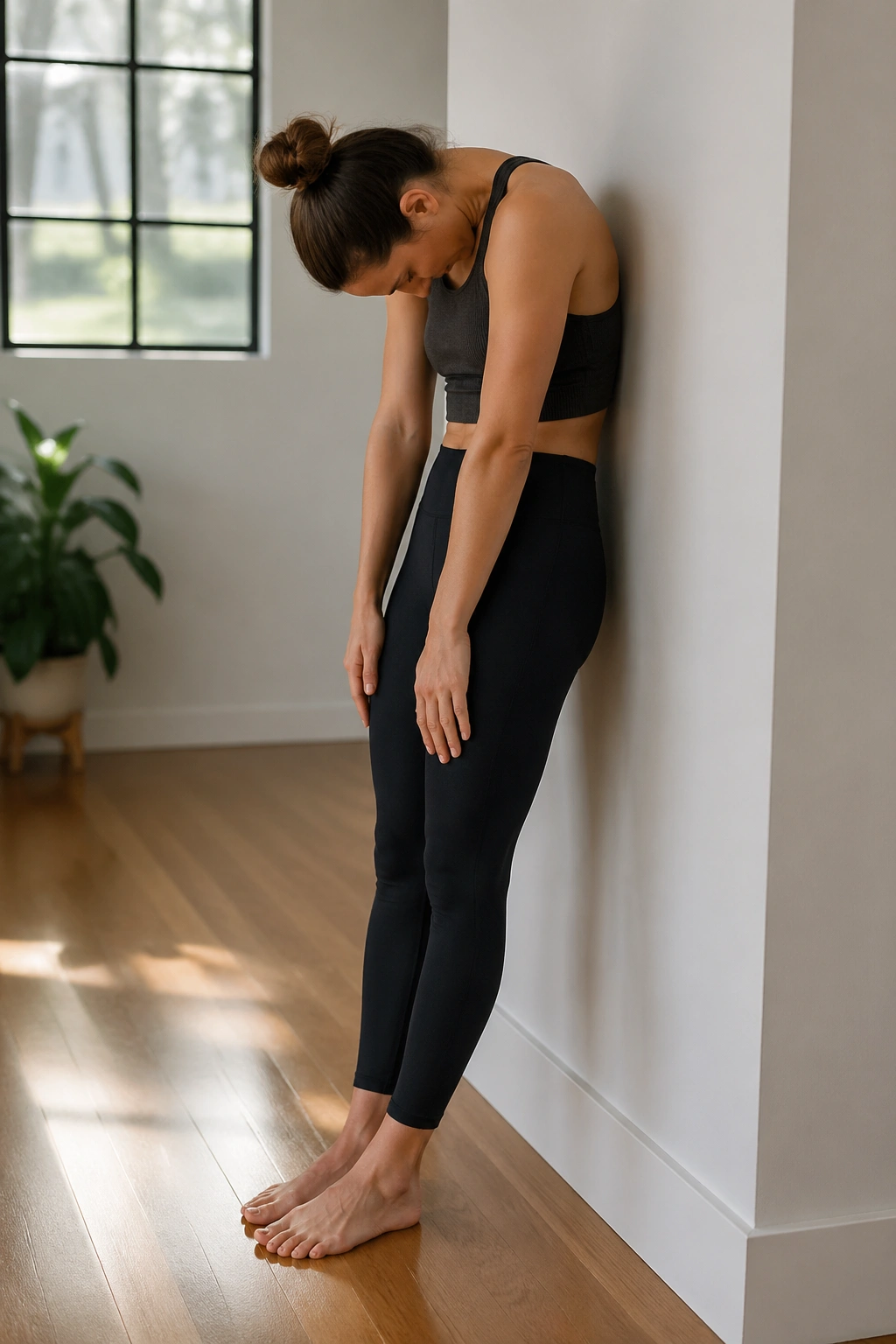
If the floor feels a little too honest at first, the wall gives you guardrails. I like this one for beginners who want to feel Pilates in a standing position before they lie down.
Stand with your back against a wall and your feet about 8 inches away from it. Roll your spine down one vertebra at a time until your hands reach your thighs, then roll back up through the spine slowly. Do 5 roll-downs, then hold a half-squat at the wall for 3 breaths, and finish with 6 overhead reaches while keeping your ribs from flaring.
The wall should keep you honest, not rigid. If the low back arches hard at the top, soften your knees and shorten the reach.
4. Glute Bridge With Tiny Heel Slides
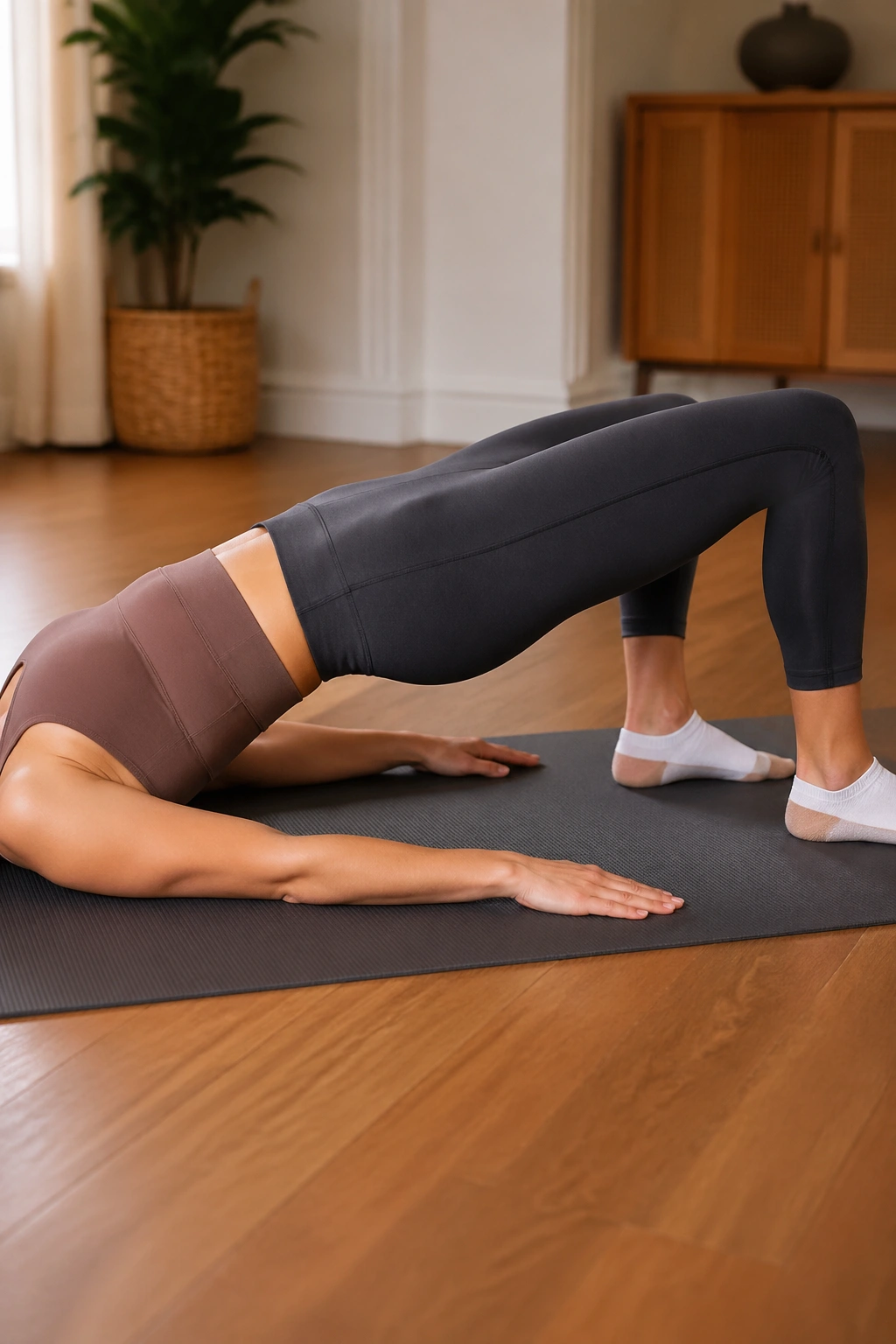
A bridge is a classic beginner Pilates move for a reason. It wakes up the back of the body without beating up your knees or your neck.
Lie on your back, feet hip-width apart, then lift into a small bridge until your hips are in line with your thighs. Hold there and slide one heel away by 2 to 4 inches, then draw it back. Do 6 heel slides per side, then lower slowly and repeat for 2 rounds. Keep the pelvis level; if one side drops, cut the range in half.
Your glutes should work. Your low back should not feel squashed.
A short pause at the top makes this feel much more like Pilates and much less like random lifting.
5. Dead Bug Arms-Only Practice
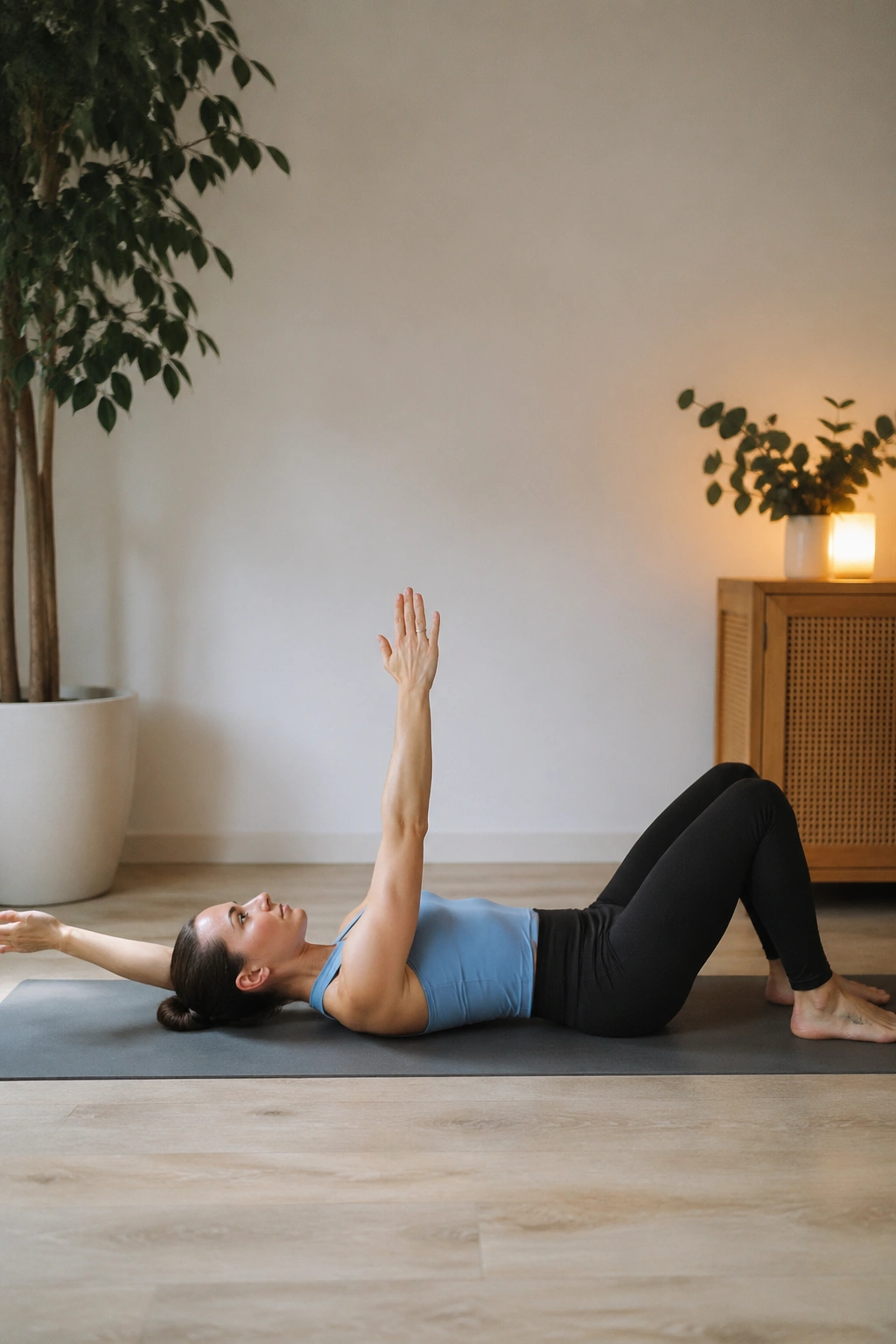
You do not need to throw your legs in the air to train the core. In fact, for many beginners, that is the quickest way to lose the low back.
Lie on your back with both feet on the mat and your knees bent. Reach both arms toward the ceiling, then lower one arm overhead while the other stays still. Alternate sides for 8 reps each, keeping the ribs quiet and the pelvis heavy. If you want a little more, add a slow leg march only after the arms feel controlled.
The Easy Way to Make It Work
- Keep one foot pressed into the mat.
- Exhale as the arm reaches long.
- Stop the movement before the low back changes shape.
- Use a folded towel under the head if your neck strains.
Small range. Clean control. That is the win here.
6. Cat-Cow to Bird Dog Lite
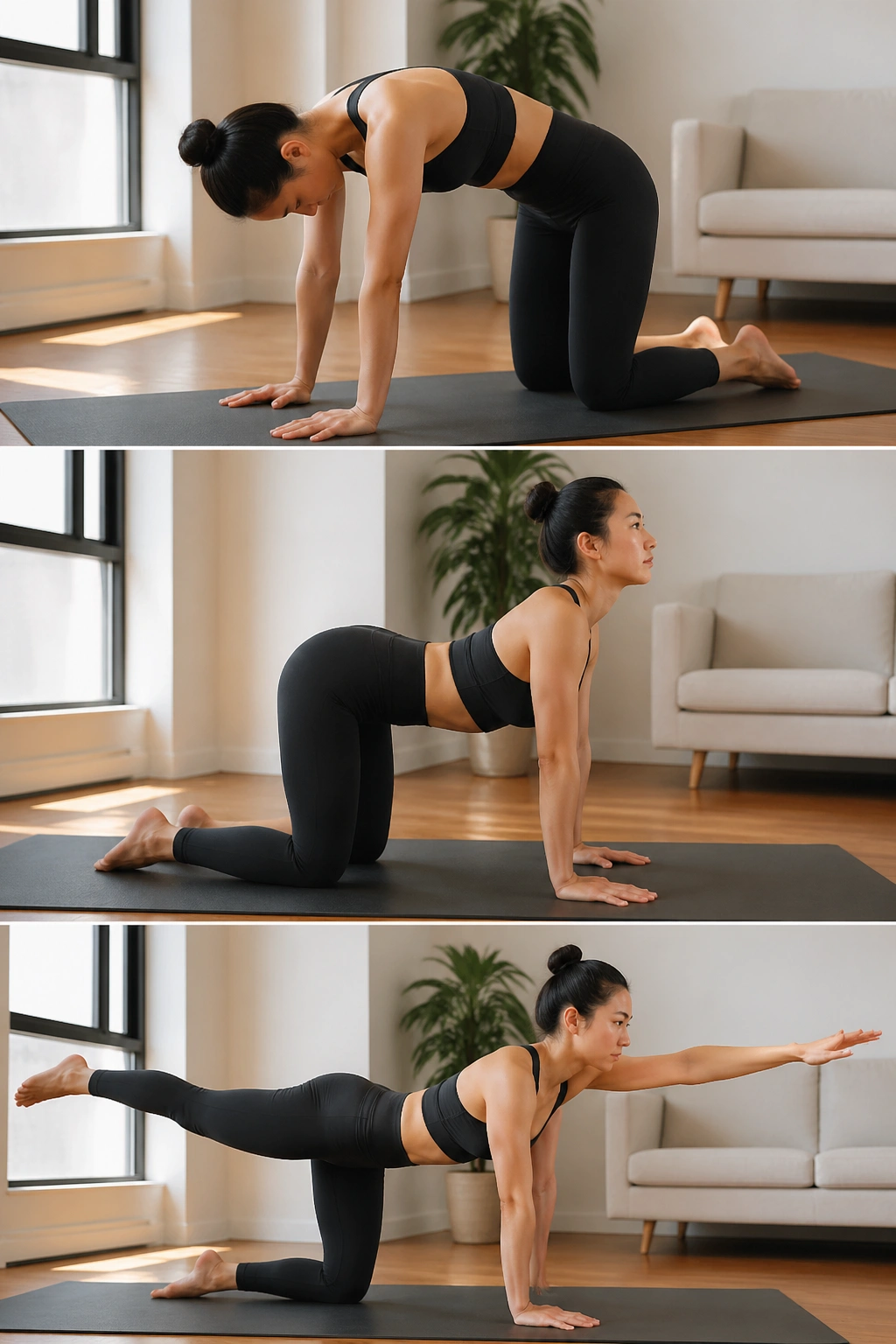
If your spine feels stiff first thing, this one is a good way to wake it up without rushing. It moves from mobility to balance in a gentle, tidy way.
Start on hands and knees. Do 6 cat-cow rounds, rounding and arching the spine slowly with your breath. Then shift into 4 bird-dog reaches per side, extending only the leg if the opposite arm feels like too much, or stretching one arm forward while the other knee stays down. Keep the neck long and the belly lightly engaged.
How to Pace It
Move like you are trying not to spill water from a glass on your back. That image works better than “tighten your core,” which tends to make people brace everything.
The best version feels smooth. The second-best version is still helpful, as long as it is calm.
7. Side-Lying Leg Lifts for Hip Stability
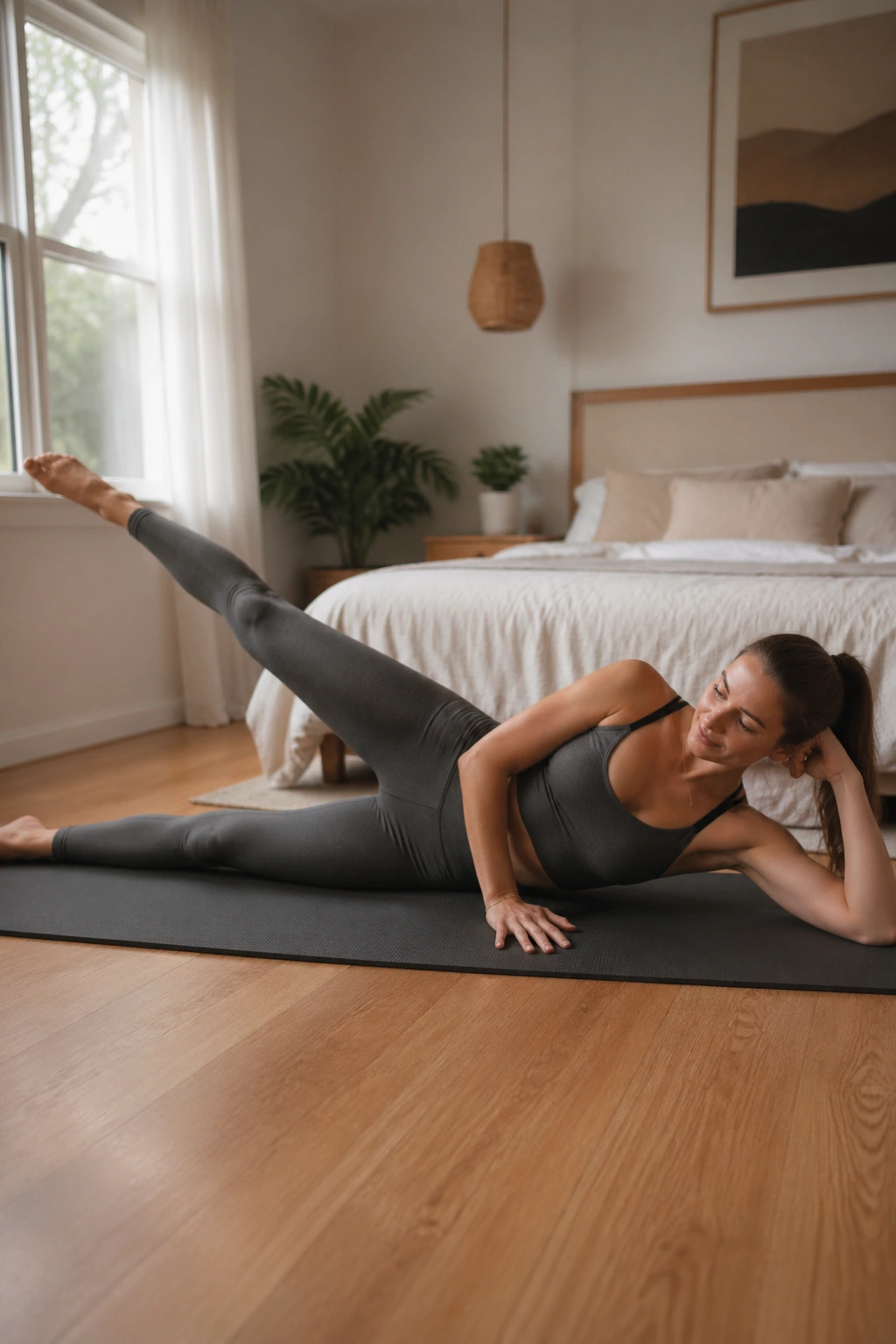
Side-lying work looks gentle until you try to keep the waist lifted and the hip from rocking. Then it gets interesting in a low-key way.
Lie on one side with your head supported by your arm or a folded towel. Stack your hips and shoulders, then lift the top leg 8 to 10 inches on a slow exhale. Lower it without dropping the waist. Do 10 lifts, then add 8 small circles each direction and 6 clamshells before switching sides.
The foot can stay slightly turned down. That keeps the work where you want it — in the side glutes, not in the front of the hip.
A tiny movement done well beats a bigger swing every time.
8. Seated Spine Twist and Tall Posture Flow
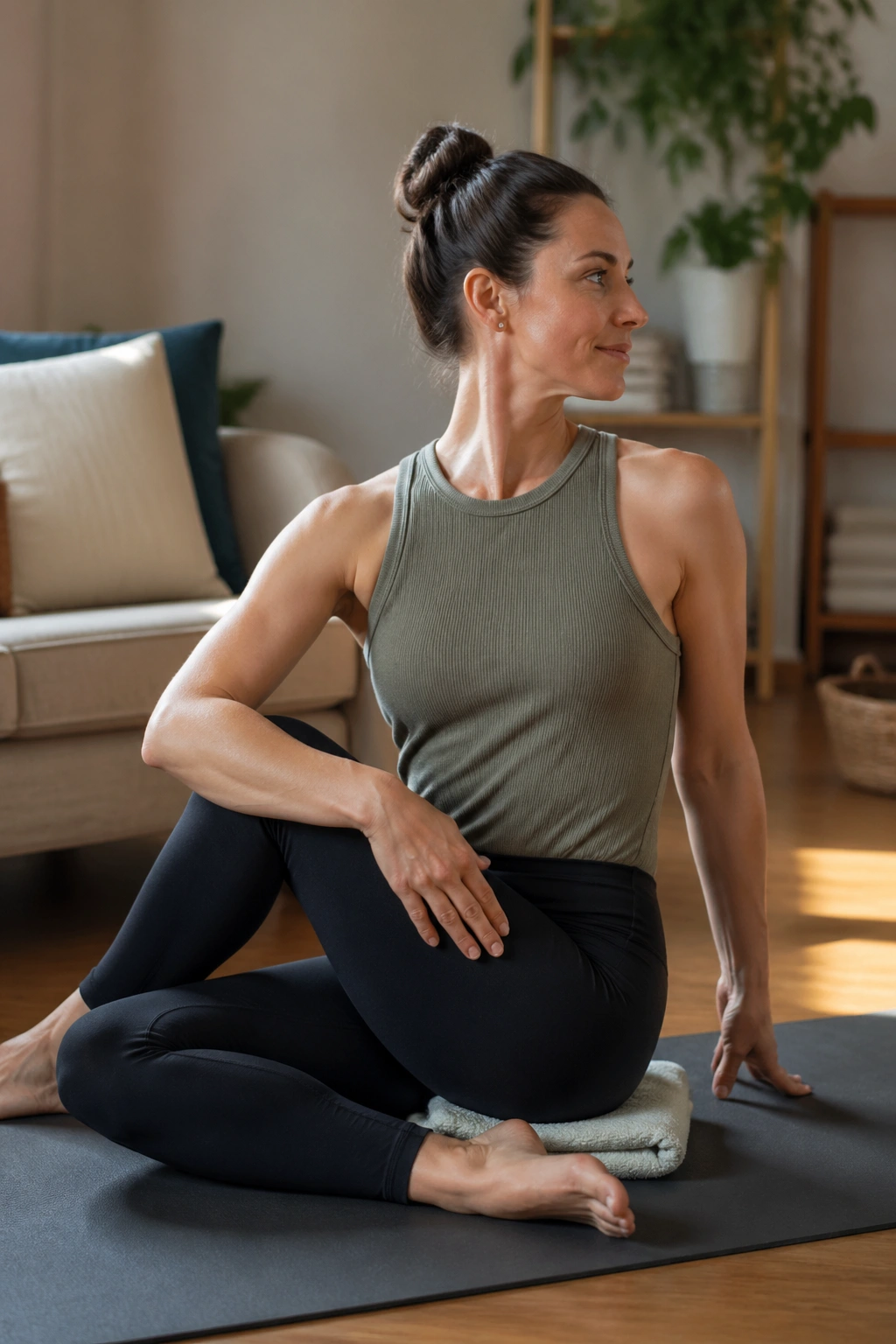
Can you do Pilates seated on the floor? Absolutely. A lot of beginners feel safer there because they can focus on posture without worrying about balance.
Sit on a folded towel or cushion so your hips are slightly higher than your knees. Grow tall through the crown of the head, then rotate the rib cage gently to one side and back to center. Do 5 twists per side, then add 4 side reaches and 4 arm circles while keeping the sit bones grounded.
The trick is not to wrench the waist. Rotate from the ribs and let the head follow after the chest.
If your hamstrings pull hard, bend the knees more. That small adjustment changes everything.
9. Tabletop Toe Taps, One at a Time
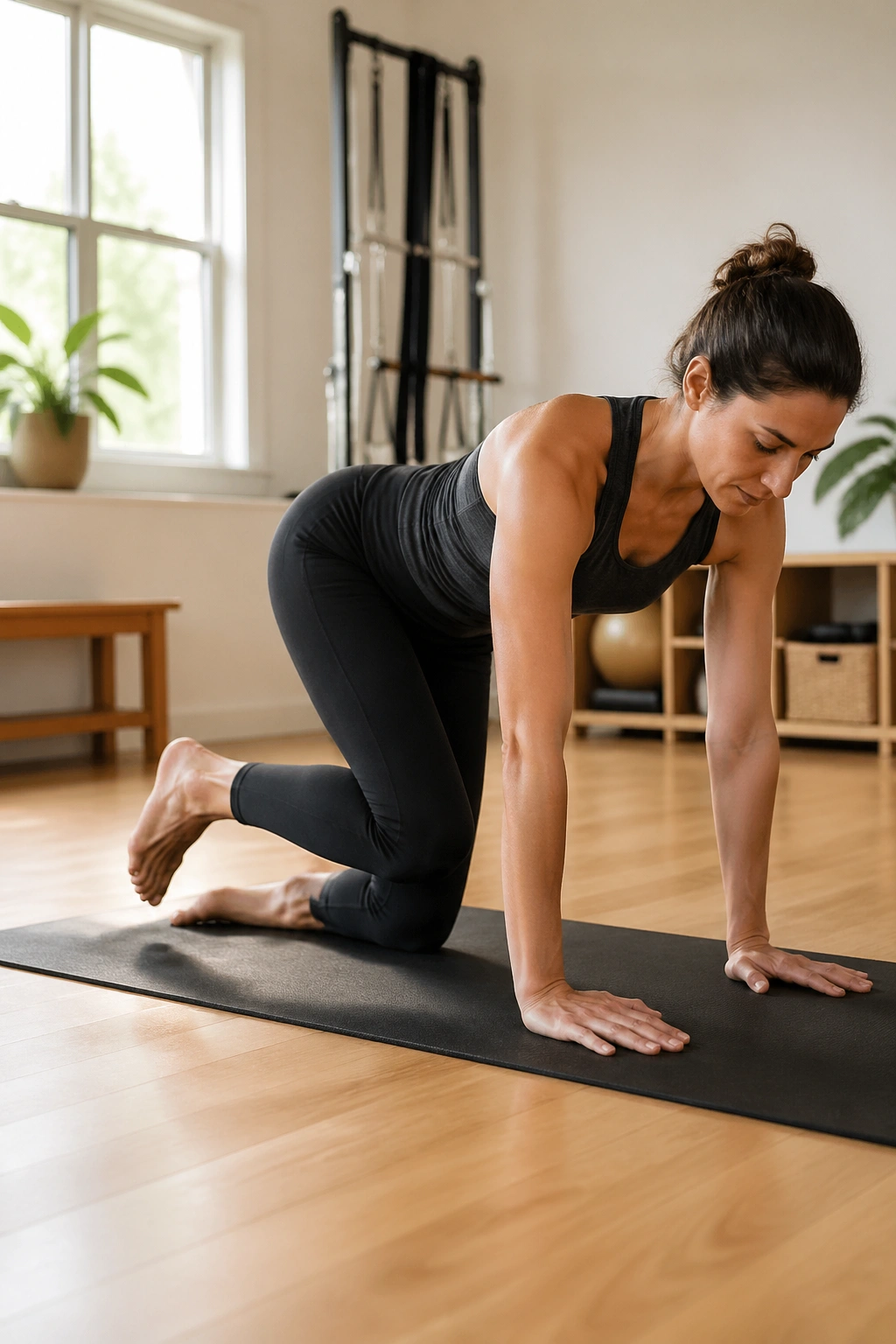
Unlike fast crunches, this keeps the neck calm and teaches the pelvis to stay still under load. That makes it a smart early core drill.
Bring both legs into tabletop one at a time, then lower one toe to tap the mat and return it. Repeat for 8 taps per side, moving slowly enough that the pelvis does not rock. If that feels solid, lower both feet together only halfway and hold for one breath before bringing them back.
What Makes It Work
The movement is small on purpose. A big leg drop usually turns into a low-back tug-of-war, and nobody needs that.
If your back arches, tap higher. That is not cheating. That is good judgment.
10. Hundred Prep With Bent Knees
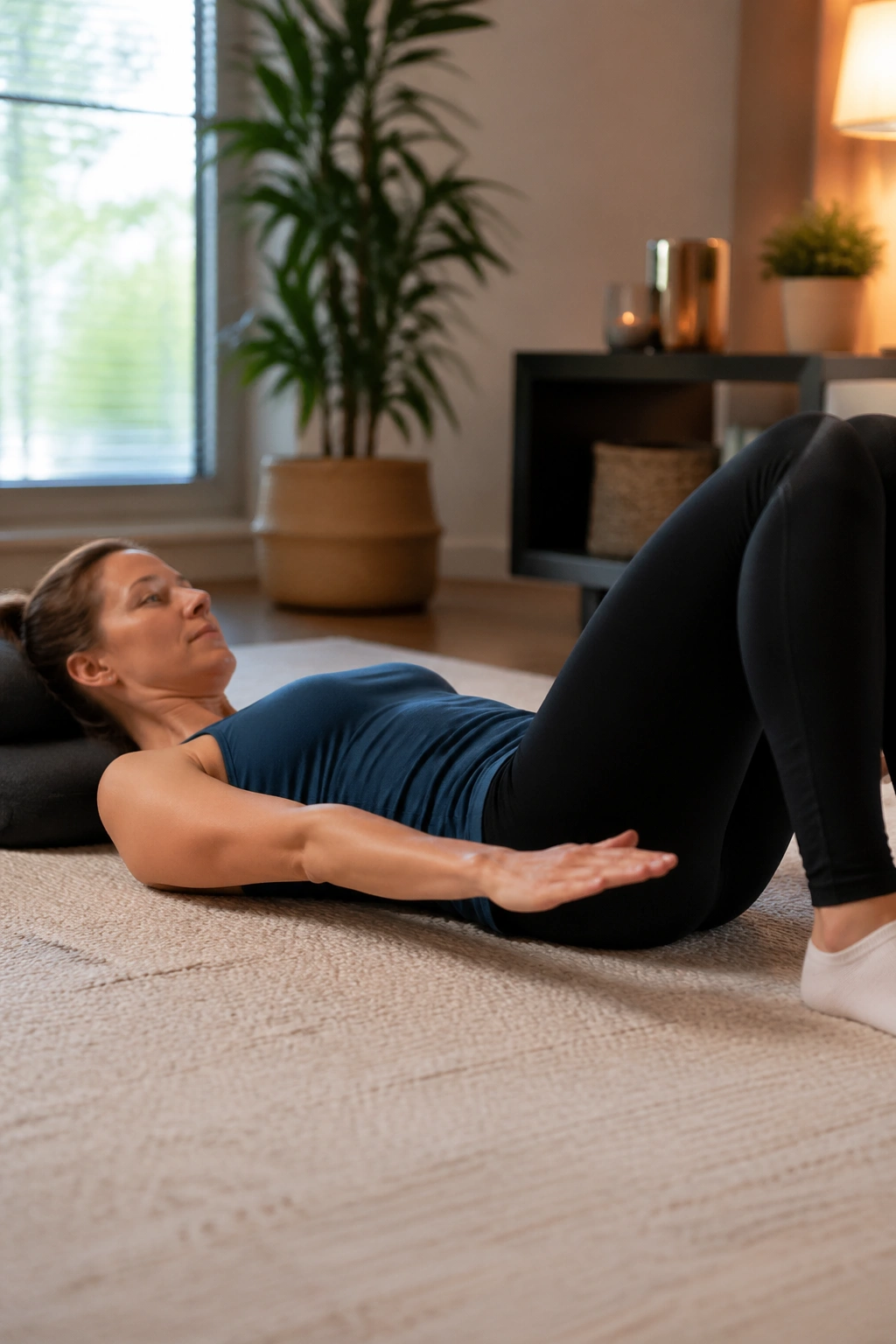
The Hundred gets talked about like it is a rite of passage, but beginners do not need the full version right away. The prep is enough to teach breath, rhythm, and abdominal support.
Lie on your back, knees bent or legs in tabletop if that feels fine. Lift your head only if your neck agrees, then pump the arms by your sides for 5 breaths of 10 counts each. If the head-up position feels like a fight, keep the head down and just work the arms and breath.
The lower belly should stay active, but not hard like a board. Think more “support” than “brace.”
If you start holding your breath, stop and reset. Pilates hates shallow panic breathing.
11. Single-Leg Stretch, Slow and Small
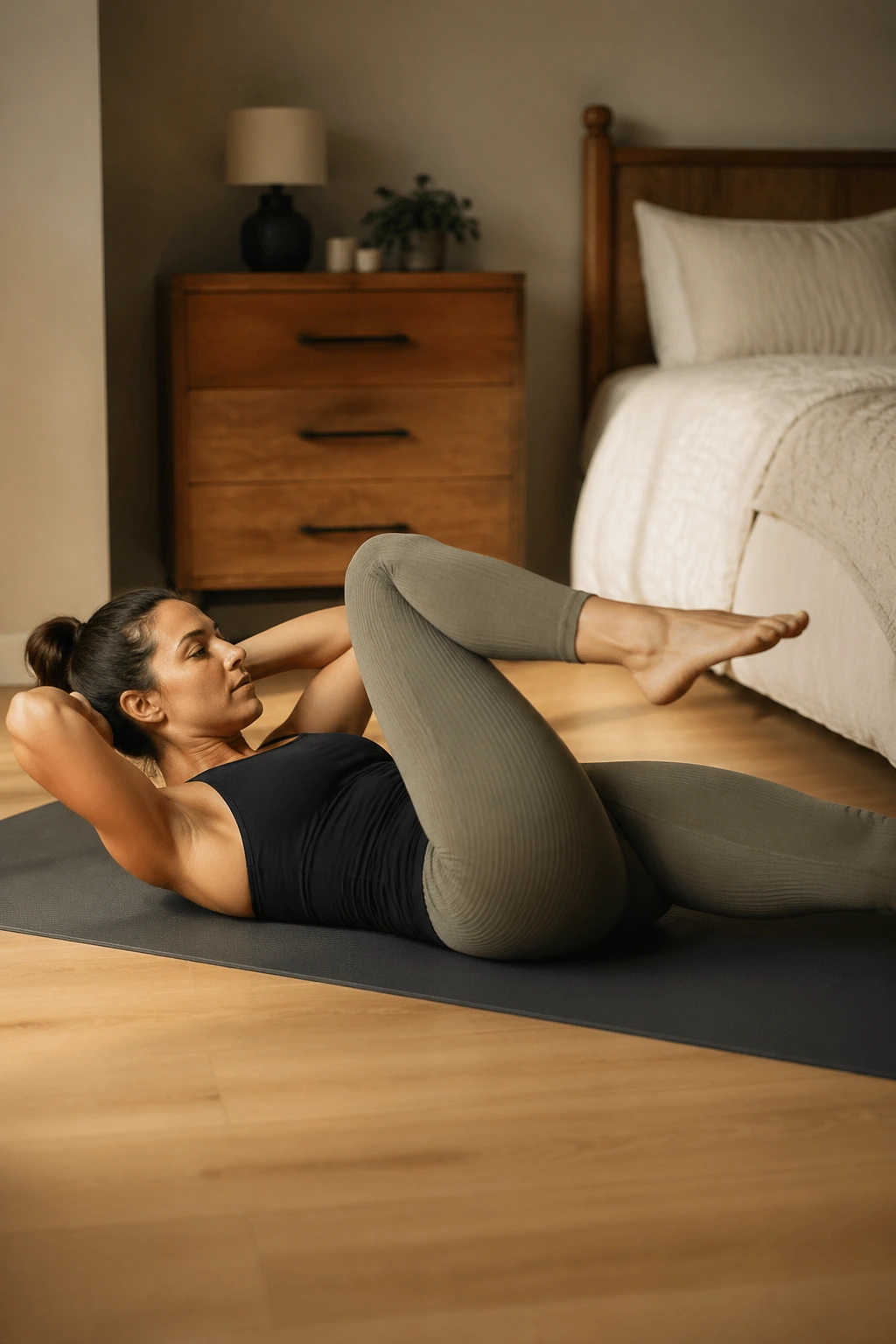
What people call “easy” here is often not easy at all. Single-leg stretch teaches you to switch legs without losing the shape of the torso.
Lie on your back and draw one knee in while the other leg stays bent with the foot on the mat. Switch legs slowly for 5 reps per side, keeping the motion small. As you get more comfortable, extend the working leg a little farther, but stop before the low back starts to arch.
How to Keep It Honest
- Exhale on the switch.
- Keep the elbows wide if your hands are behind the thighs.
- Pause for one beat in the center.
- Shorten the range if the neck gets tired.
This one rewards patience. Rush it, and it turns messy fast.
12. Mermaid Side Bend and Rib Lift
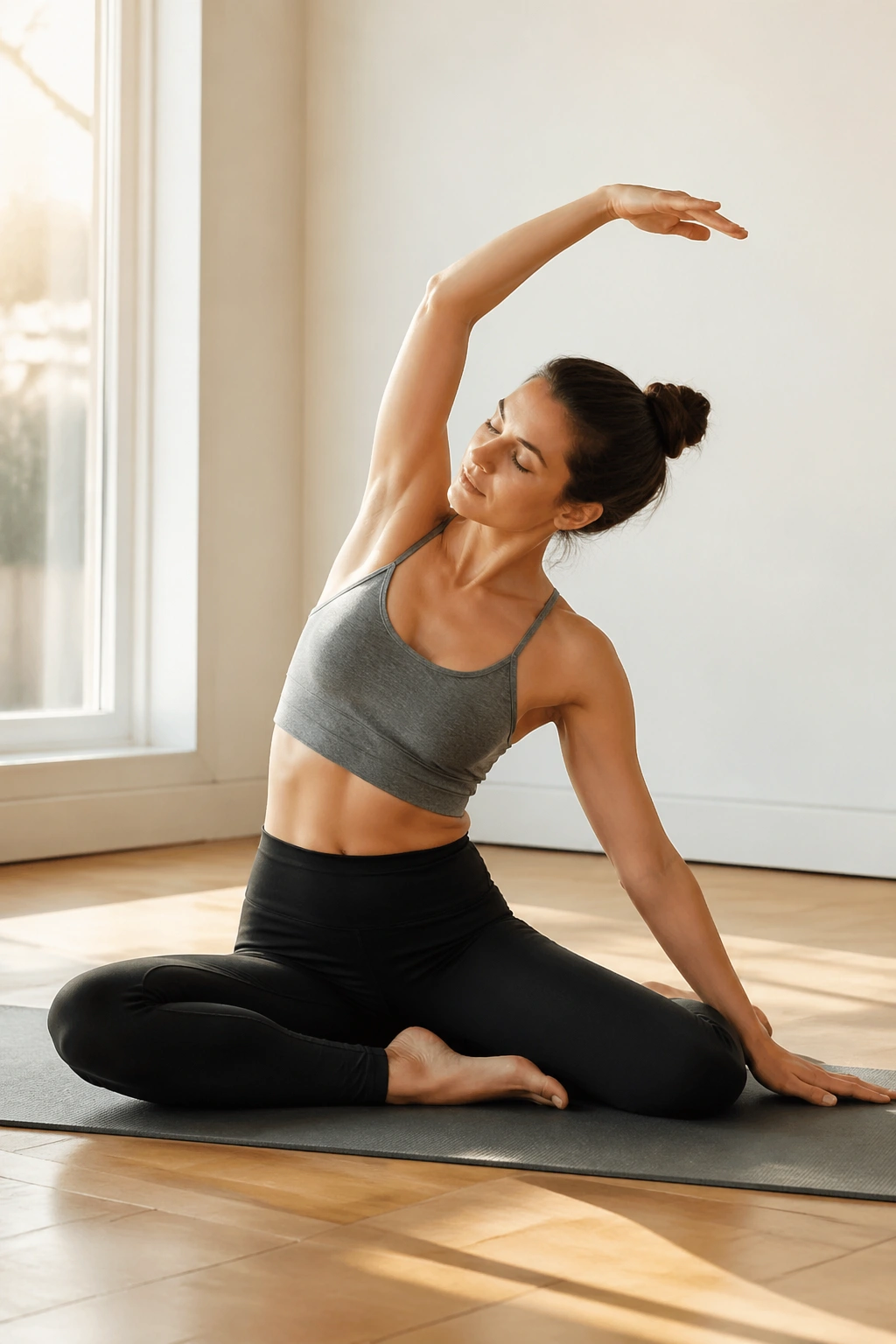
Mermaid is one of those Pilates shapes that feels almost luxurious after a few core drills. It opens the side body while teaching you to stay tall instead of collapsing into the hip.
Sit to one side with your legs folded in a comfortable shape, then lift one arm overhead and side-bend gently away from the grounded hip. Hold for 2 slow breaths, return to center, and repeat 3 times per side. If the floor bothers your knees, sit on a cushion.
The side bend should feel long, not crushed. You want space between the ribs and the hip on the lifted side.
A small arm reach can change the whole shape of your torso. That is the neat part.
13. Inner-Thigh Pillow Squeeze Circuit
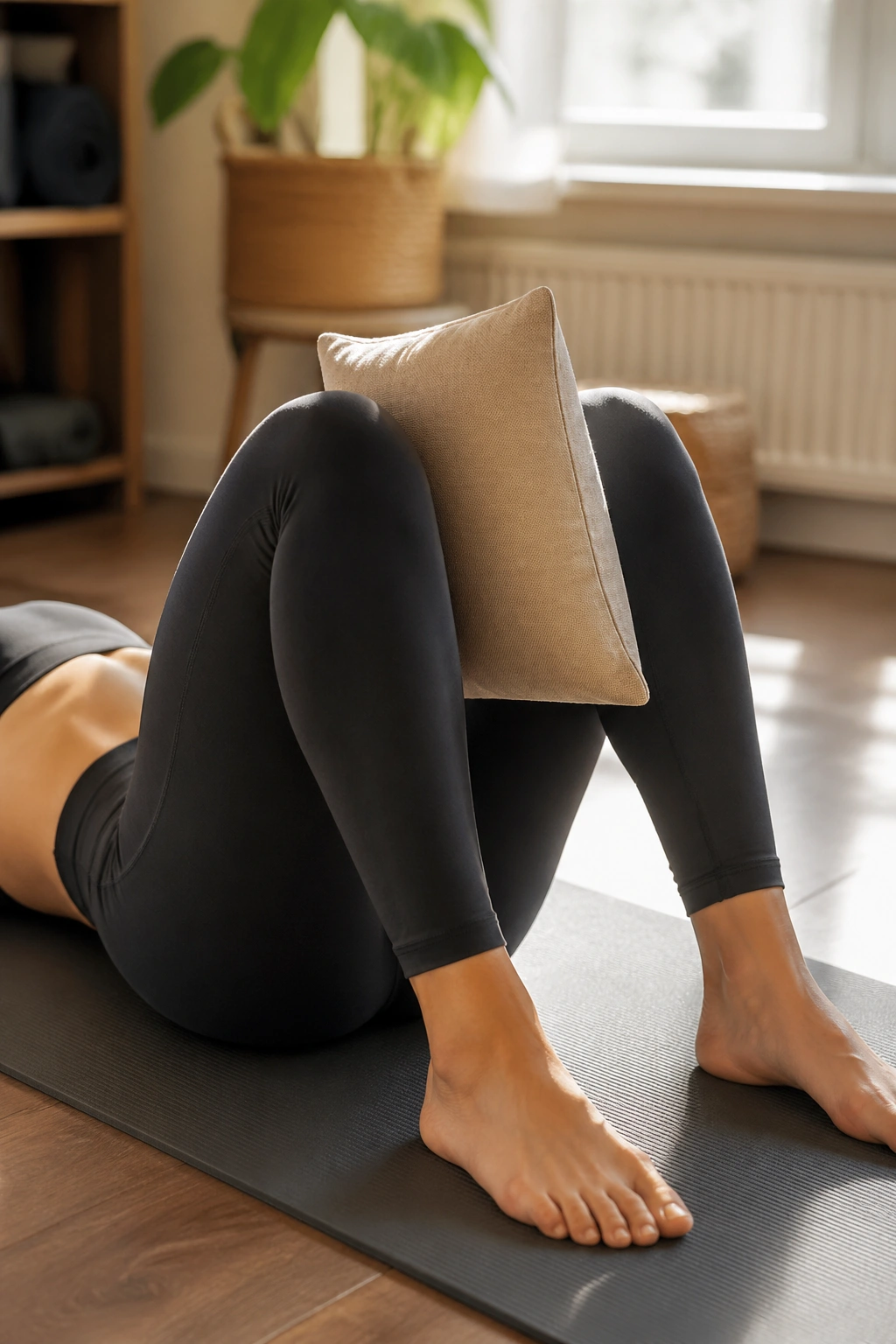
A pillow between the knees can do more than most people expect. It gives beginners a simple way to feel the inner thighs and lower abs working together.
Lie on your back with knees bent and place a firm pillow or small ball between your knees. Squeeze for 5 seconds, release for 5 seconds, and repeat 8 times. Then keep the squeeze light and lift into a small bridge for 6 reps, lowering with control each time.
Your knees should track straight ahead, not flop apart.
If the hips cramp, lighten the squeeze. The goal is connection, not a death grip.
14. Forearm Plank From Knees
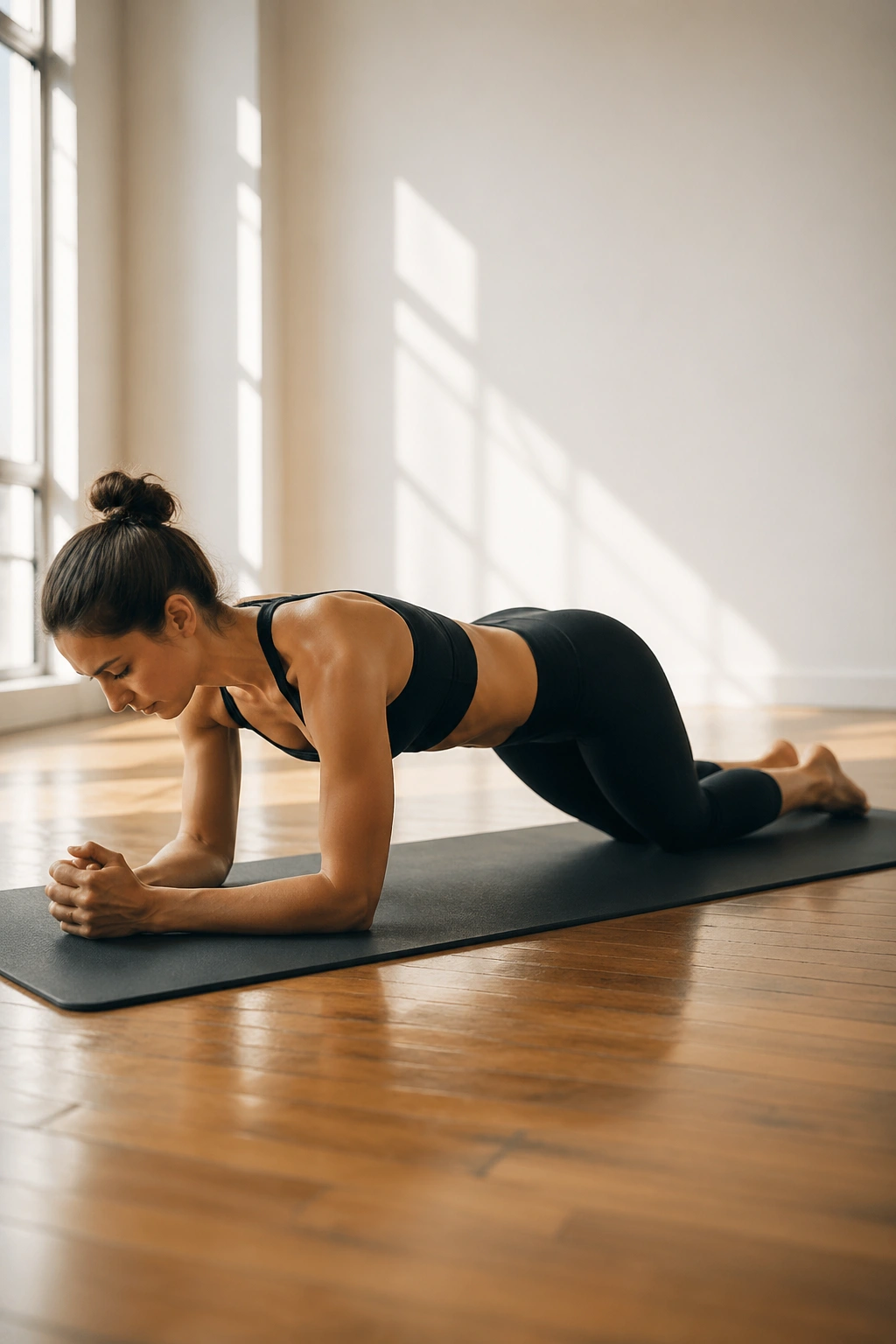
A full plank is not required to build a strong Pilates base. The kneeling version teaches shoulder stability and deep core support without overloading the wrists.
Set your forearms on the mat, knees down, and step the legs back so the body makes one long line from head to knees. Hold for 10 to 20 seconds, rest, then repeat 3 rounds. Keep the rib cage from sagging toward the floor and the tailbone long.
Your shoulders should feel broad, not jammed.
If the lower back feels pinchy, lift the hips a touch and shorten the hold. Tiny corrections matter here.
15. Swimming Prep on the Mat
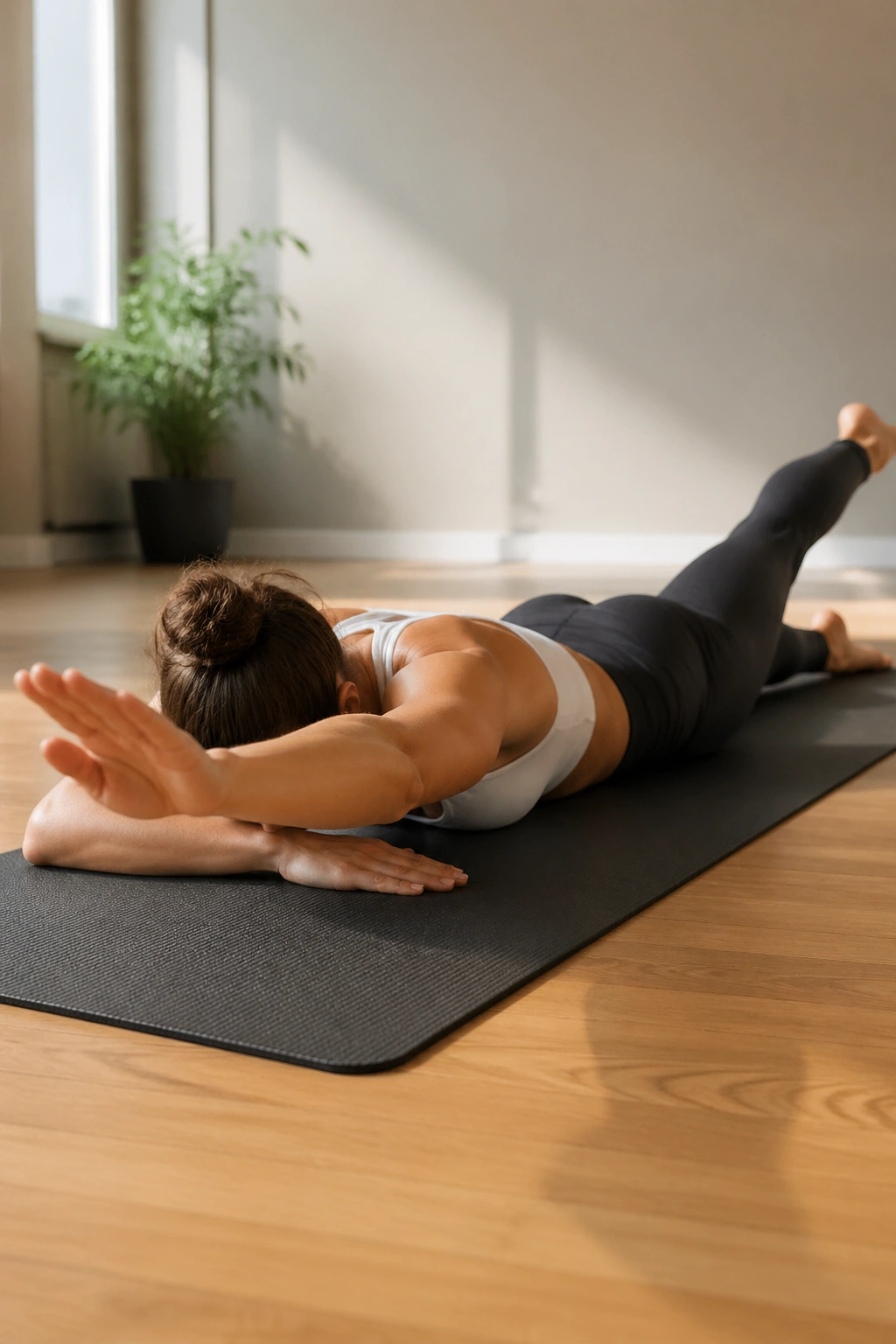
This is the version that lets beginners learn length before speed. Unlike a big flutter-kick sequence, it trains the back body with a slower, cleaner pattern.
Lie face down with your forehead on your hands, then lift one arm and the opposite leg just a few inches off the mat. Alternate sides for 6 rounds, holding each reach for 2 breaths if that feels okay. If the low back is sensitive, keep the lifts even smaller or raise only the arm.
Why It’s Worth Practicing
The body should feel long from fingertips to toes. If you feel yourself crunching upward, you are lifting too high.
This one looks tiny from the outside. Inside, it is doing a lot.
16. Roll-Up Prep With Bent Knees
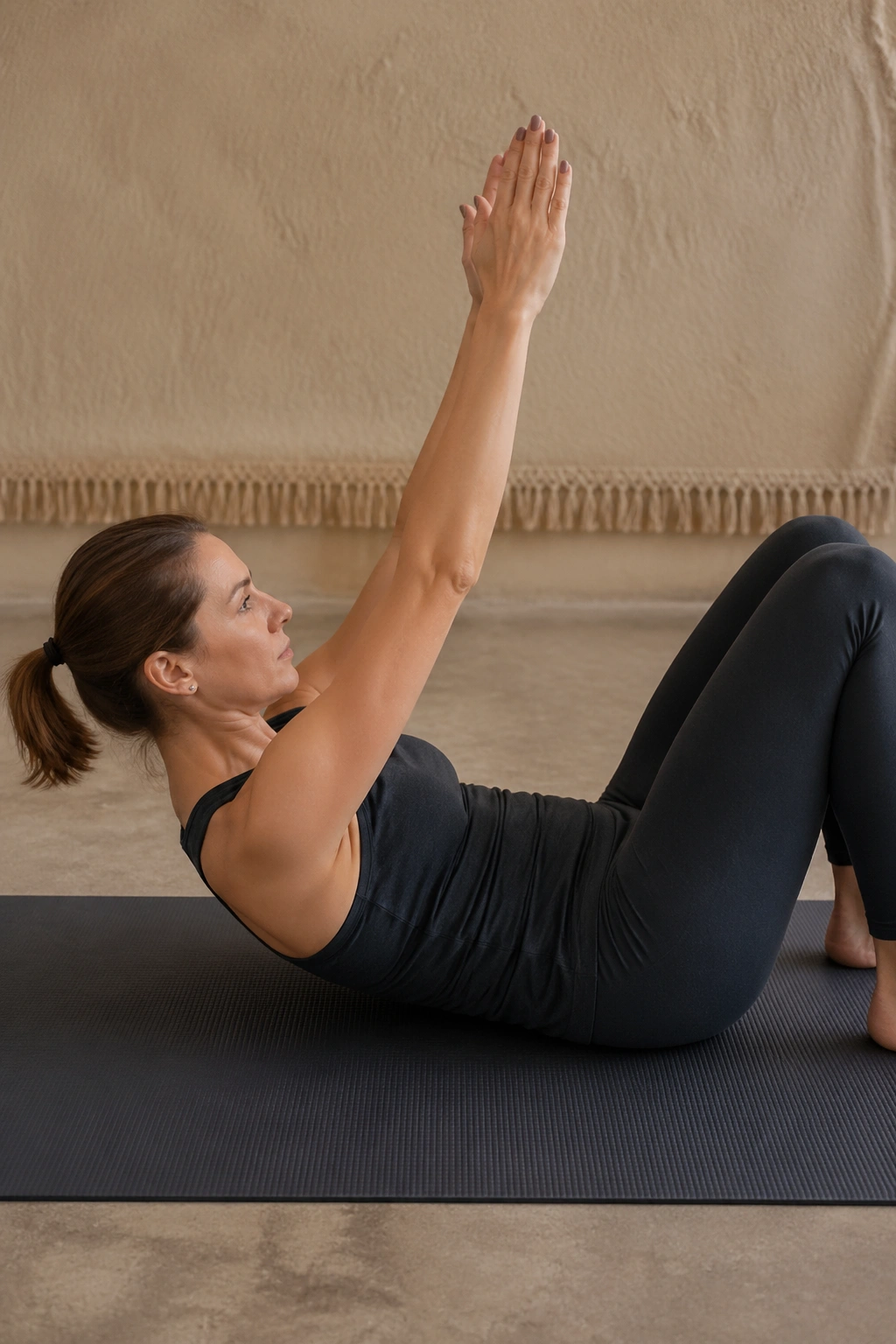
The full roll-up can be a lot on a beginner spine. The prep version teaches control without the neck strain that often shows up when people try to sit all the way up too soon.
Lie on your back with knees bent and arms reaching toward the ceiling. Exhale and lift your head, shoulders, and upper back just enough to hover, then lower down with control. Do 6 reps, then place your hands behind your thighs and practice a tiny half-roll-back with 3 slow lowers.
The belly should scoop inward as you lift. If your neck tightens, keep the head on the mat and work only the shoulders.
It is boring in the best possible way.
17. Standing Balance and Heel Lift Flow
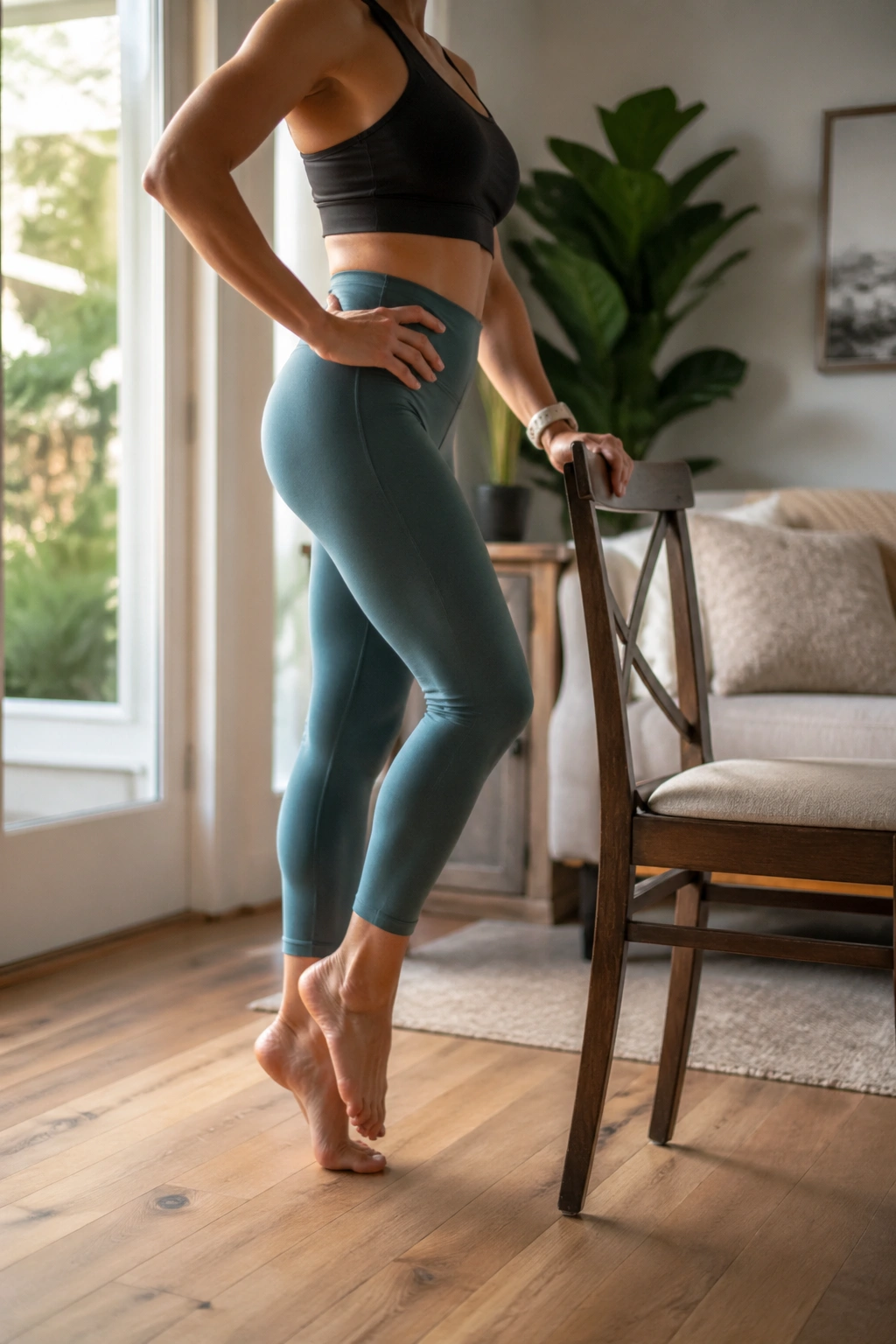
Not every Pilates workout has to happen on the floor. Standing work is useful for people who want better balance and more confidence before getting down to mat exercises.
Stand near a chair or wall and rise onto the balls of the feet for 8 calf raises. Lower, then shift to one foot at a time with 6 slow knee lifts per side. End with a small forward hinge and return to standing, keeping the ribs stacked over the pelvis.
The ankle work matters more than people think. Stable feet give you a steadier center.
If balance feels shaky, keep one fingertips’ worth of support on the chair. That is still legitimate work.
18. Clamshells and Side-Kick Prep
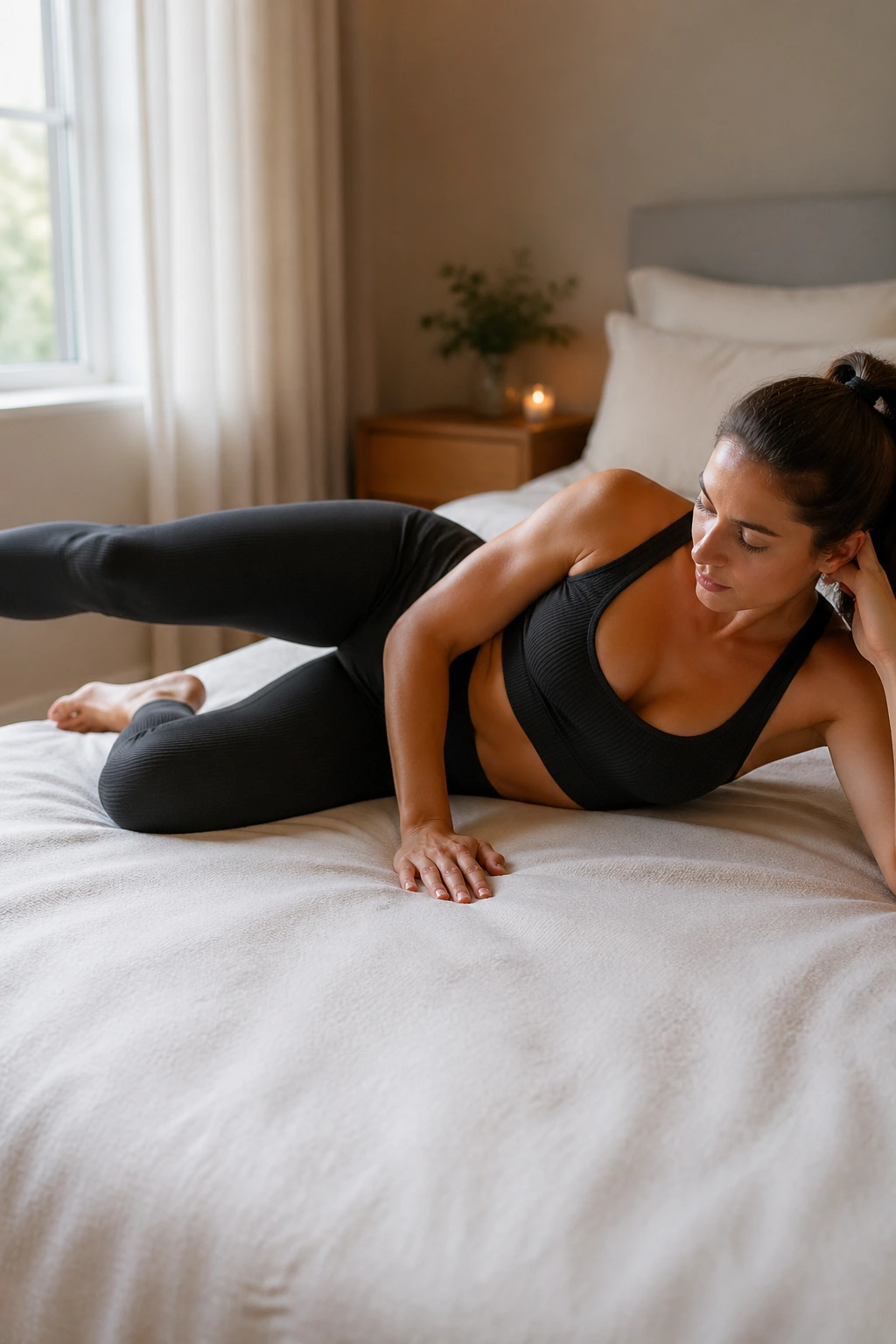
If your hips feel sleepy, this pair wakes them up fast without pounding the joints.
Lie on your side with knees bent and heels together. Open the top knee like a clamshell for 10 reps, then straighten the top leg and lift it a few inches for 8 side kicks. Add 8 tiny circles at the top if you still feel stable. Switch sides and repeat.
The pelvis should stay stacked. If you roll backward, reduce the range before you worry about the number of reps.
A mini-band can make this harder, but you do not need one on day one.
19. Half-Kneeling Hip Flexor Release With Reach
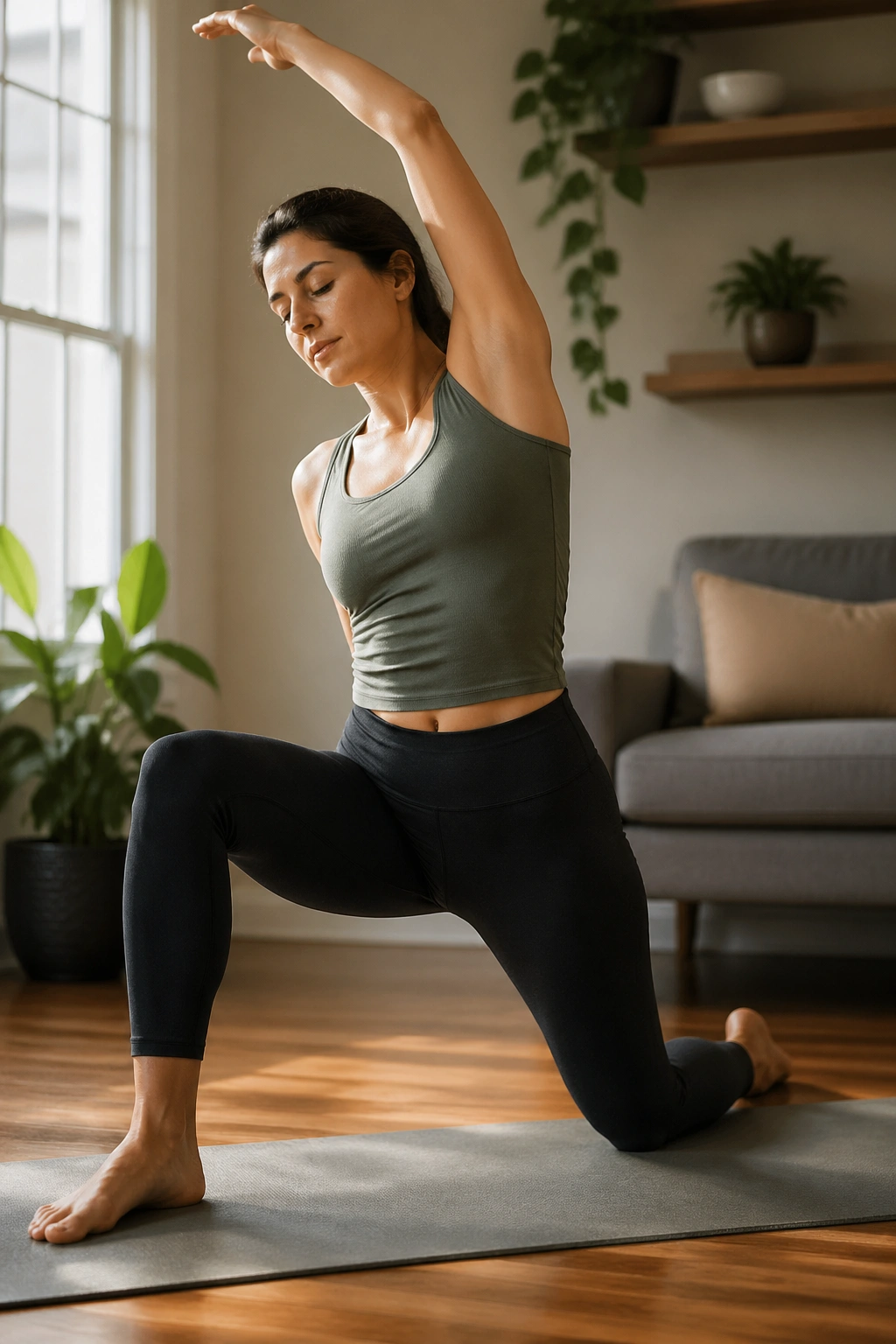
Tight hip flexors can make beginner Pilates feel oddly cramped. This little half-kneeling flow gives the front of the hip some room and helps the ribs stop flaring.
Come into a half-kneeling position with one knee down and the other foot in front. Gently tuck the tailbone, squeeze the glute on the kneeling side, and hold for 3 breaths. Then reach the same-side arm overhead and slightly across for 2 more breaths. Repeat 3 rounds per side.
Do not lunge forward hard. The stretch should come from the back leg lengthening, not from dumping the pelvis.
It feels better when you stop trying to force it.
20. Quadruped Shoulder Taps and Reach
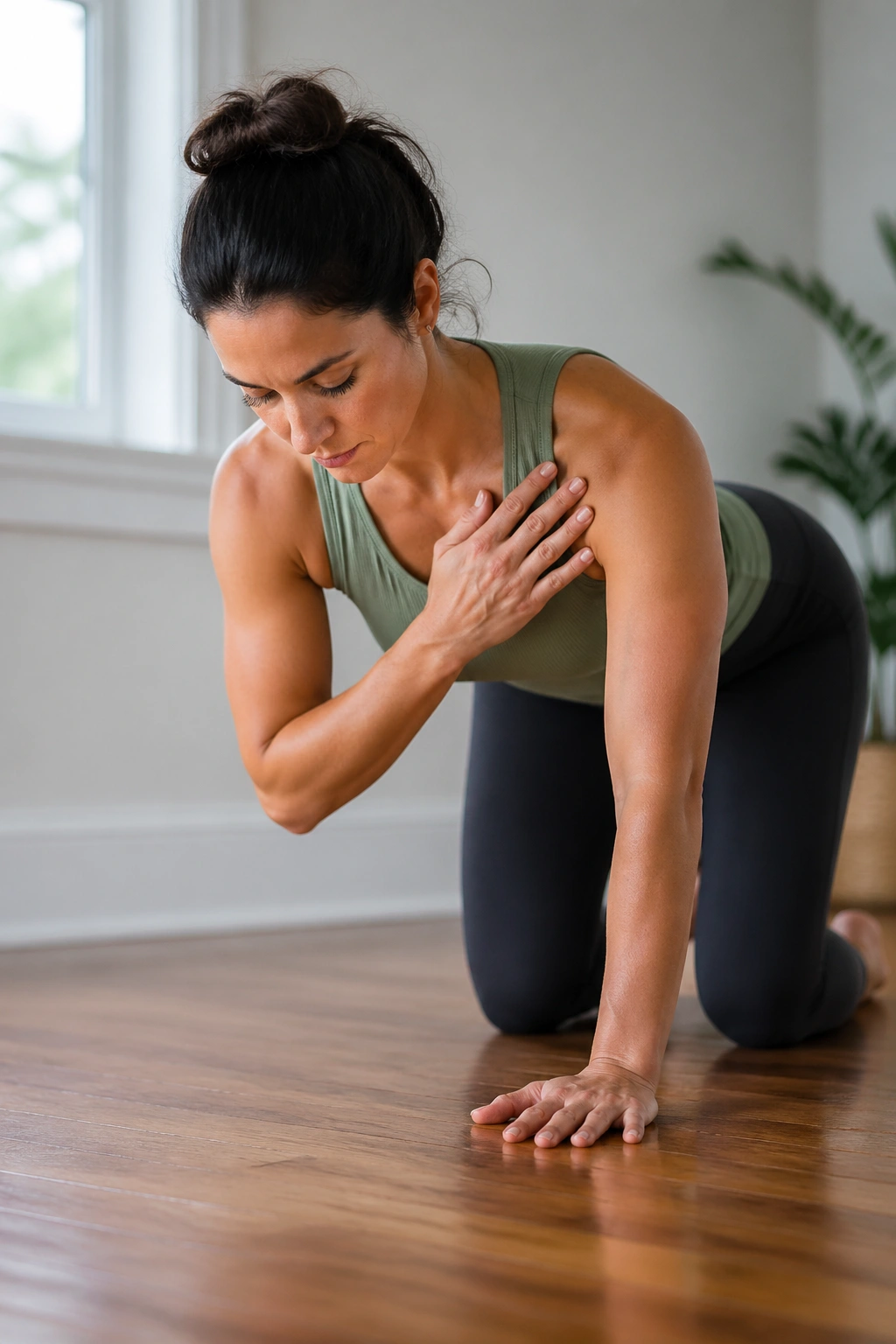
Hands-and-knees work can be a little humbling. That is part of its charm. The body has to steady itself from the shoulders all the way to the hips.
Start on all fours and take one hand off the mat to tap the opposite shoulder, then return it. Do 6 taps per side, then reach one arm forward while the opposite leg stays planted, or lift it only if the spine stays level. Keep the neck long and the gaze down.
A Simple Cue
Imagine a glass of water on your low back.
If that picture makes you laugh, good. It also helps.
21. C-Curve Seated Core Hold
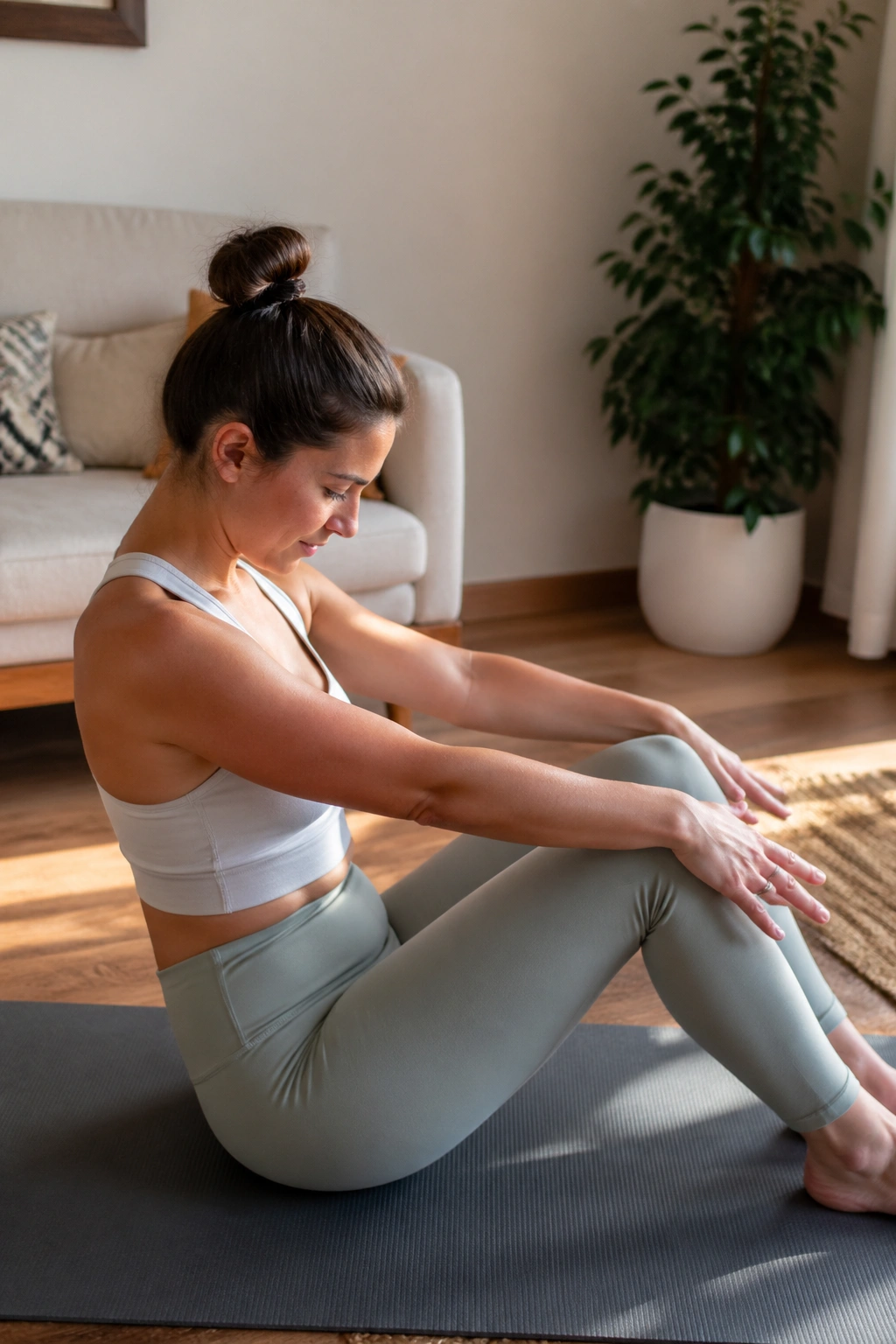
This one is short, but it asks for a lot of honesty. The goal is not to collapse backward. The goal is to hold a rounded, supported spine without losing control.
Sit with your knees bent and feet flat, then scoop the belly inward and round the lower spine slightly into a C-shape. Hold for 15 seconds, rest, and repeat 4 times. If that feels okay, lift one foot at a time for a tiny marching variation.
The chest stays open enough to breathe. If the shoulders round forward hard, sit taller and make the curve smaller.
This is one of those exercises that looks easy until you count the seconds.
22. Wall Bridge With Feet Up
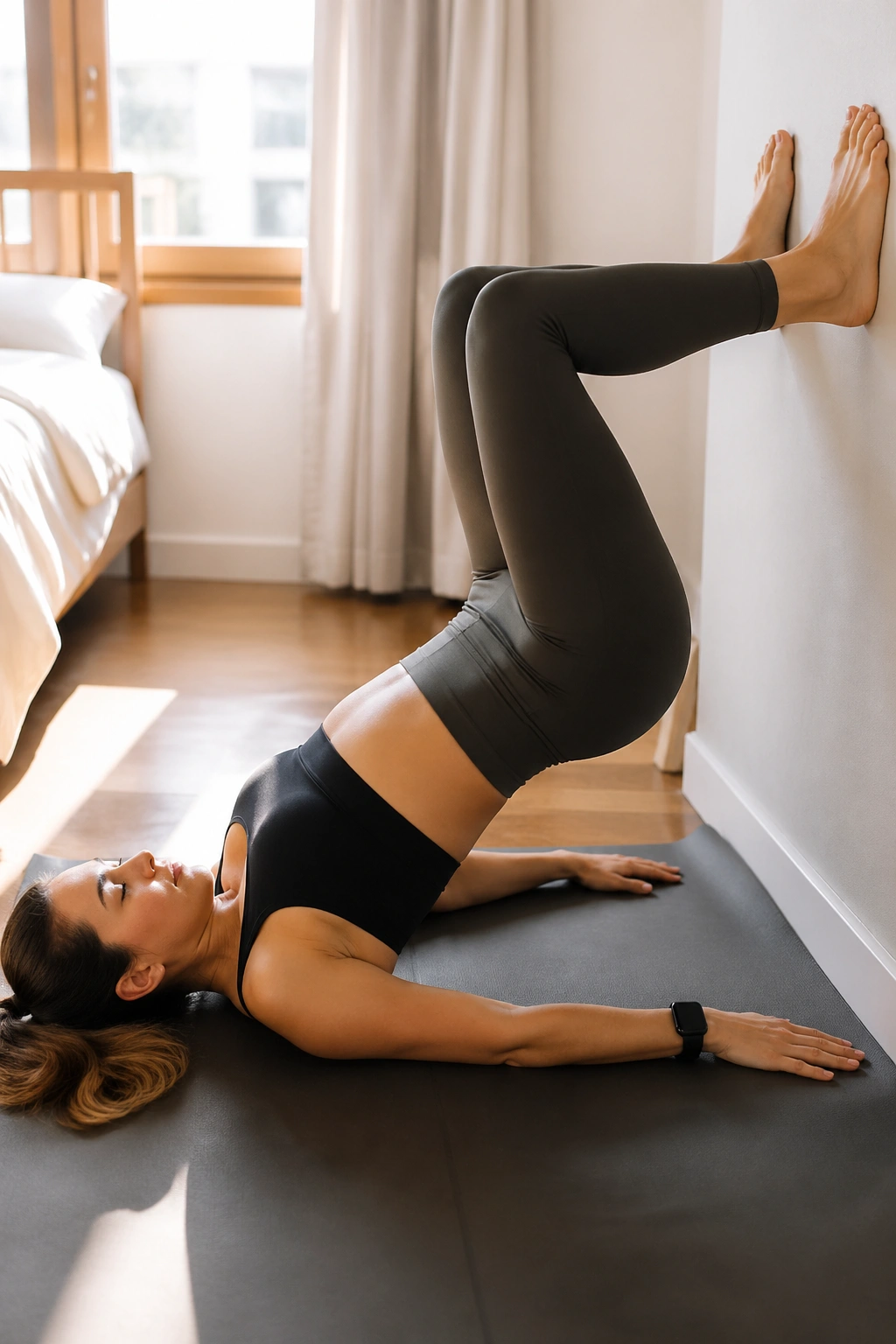
A wall bridge gives beginners a different angle on the classic bridge. The wall supports the feet, which can make the hamstrings and glutes easier to feel without grabbing the lower back.
Lie on your back with calves on the wall, knees bent about 90 degrees. Press gently into the wall and lift the hips 2 to 3 inches, then lower with control. Do 8 reps, pausing at the top for one breath. If your hamstrings cramp, move the feet a little higher on the wall.
Unlike a floor bridge, this version can feel more grounded because the legs are already supported.
It is one of my favorite quiet drills for tired legs.
23. Shoulder Bridge With Marching
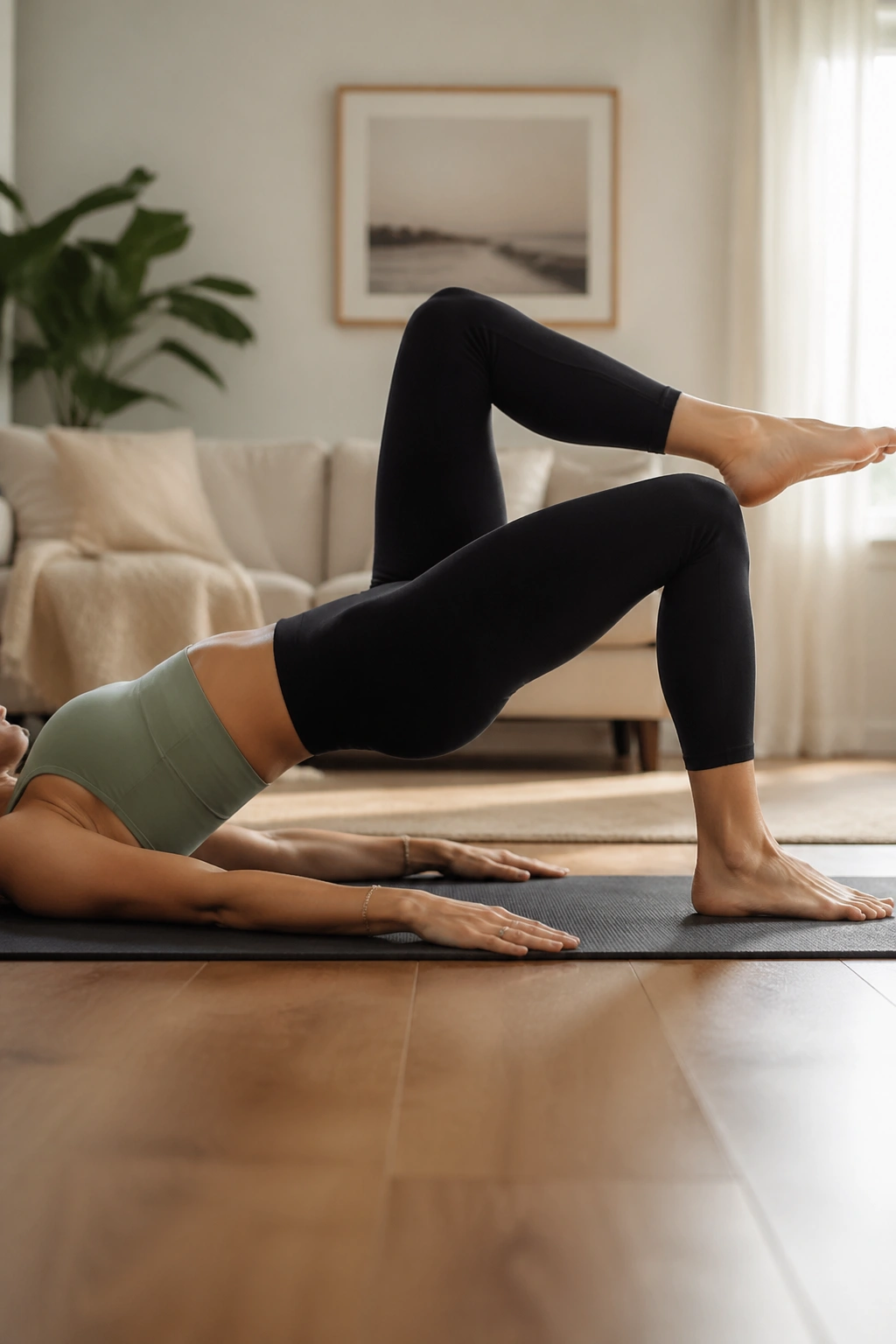
Once the basic bridge feels steady, marching adds a balance challenge without requiring a full advanced sequence.
Lift into a bridge, then keep the pelvis level while one foot lifts a few inches off the mat and returns. Alternate for 4 marches per side. If that is too much, hold the bridge and breathe for 3 counts before lowering. The goal is to keep the hips from wobbling.
How to Know It’s Working
The glutes should keep firing while the front of the hips stay calm. If the bridge drops when a foot lifts, make the bridge lower.
That is not failure. That is feedback.
24. Spine Twist Supine With Open Arms
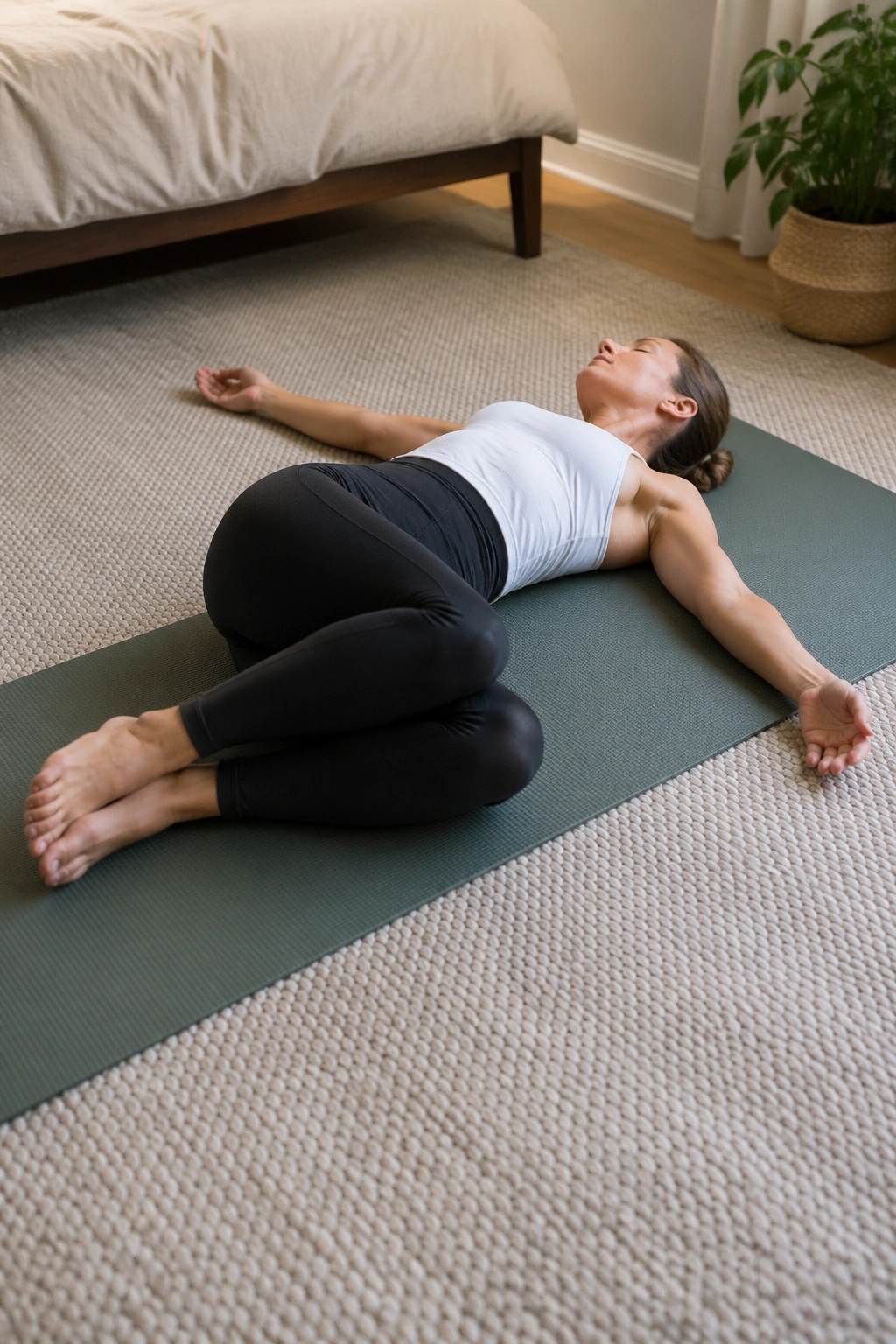
Lying twists are useful for beginners because they give the spine a gentle range of motion without demanding much strength.
Lie on your back with your arms open in a T, knees bent, and feet on the mat. Let both knees tip to one side, then return to center and repeat to the other side for 6 total reps. Keep the shoulders heavy and the movement smooth. If the knees do not reach the floor, that is fine.
The exhale should help the ribs soften. Do not yank the knees with your hands.
This is one of the easiest ways to end a workout feeling less boxed in.
25. Mini-Band Side Steps and Standing Abduction
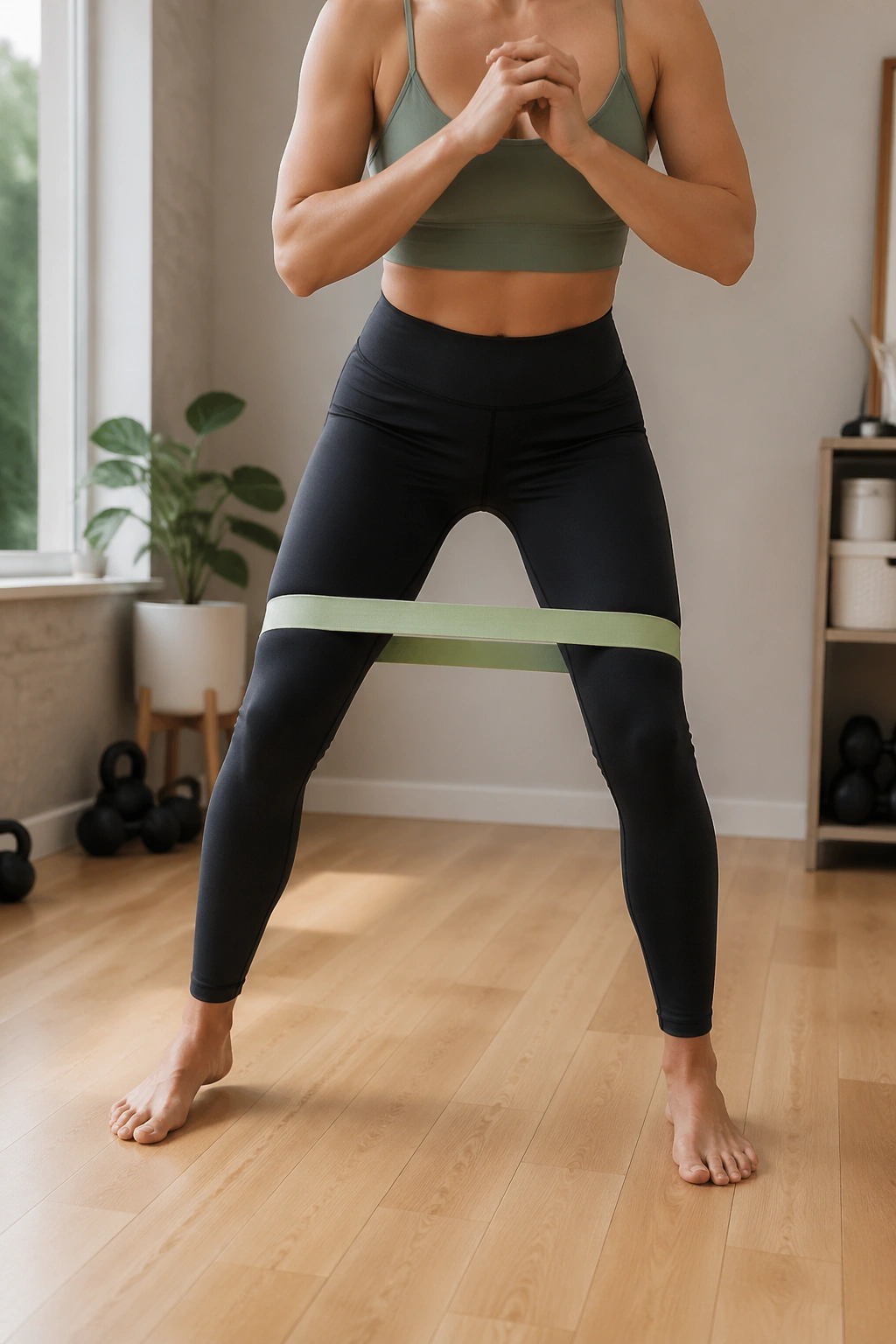
A mini-band can turn a simple standing drill into a real glute workout. Use a light band above the knees or at the ankles if you want more challenge.
Take 8 side steps to the right, then 8 to the left, keeping the knees soft and the pelvis level. After that, stand on one leg and lift the other leg straight out to the side for 6 controlled reps per side. The standing leg should stay quiet and strong.
Do not sway the torso to cheat the lift. If you have to lean, the band is too strong or the range is too big.
This one burns in a very honest way.
26. Seated Saw and Forward Reach
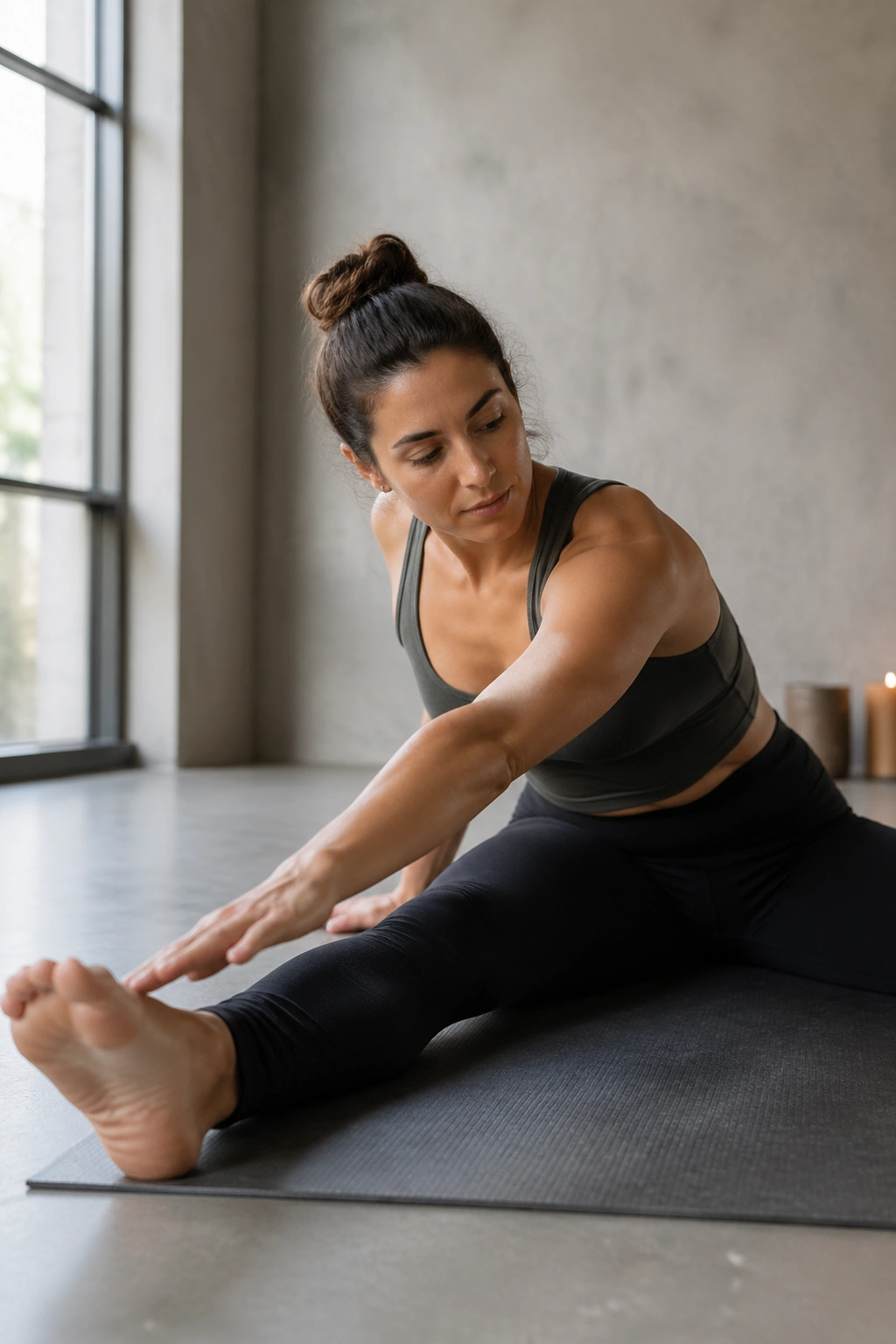
The seated saw is a lovely beginner stretch when it is kept small and slow. It teaches spinal rotation, hamstring length, and a bit of side-body control.
Sit with the legs open in a comfortable V shape or with knees slightly bent. Reach one arm across toward the opposite foot, then return tall. Do 4 reaches per side, breathing into the side ribs as you go. If the hamstrings protest, bend the knees more and sit on a folded towel.
The chest should stay open on the way out and on the way back.
A tiny reach here beats a dramatic slump every time.
27. Beginner Teaser Prep With One Foot Down
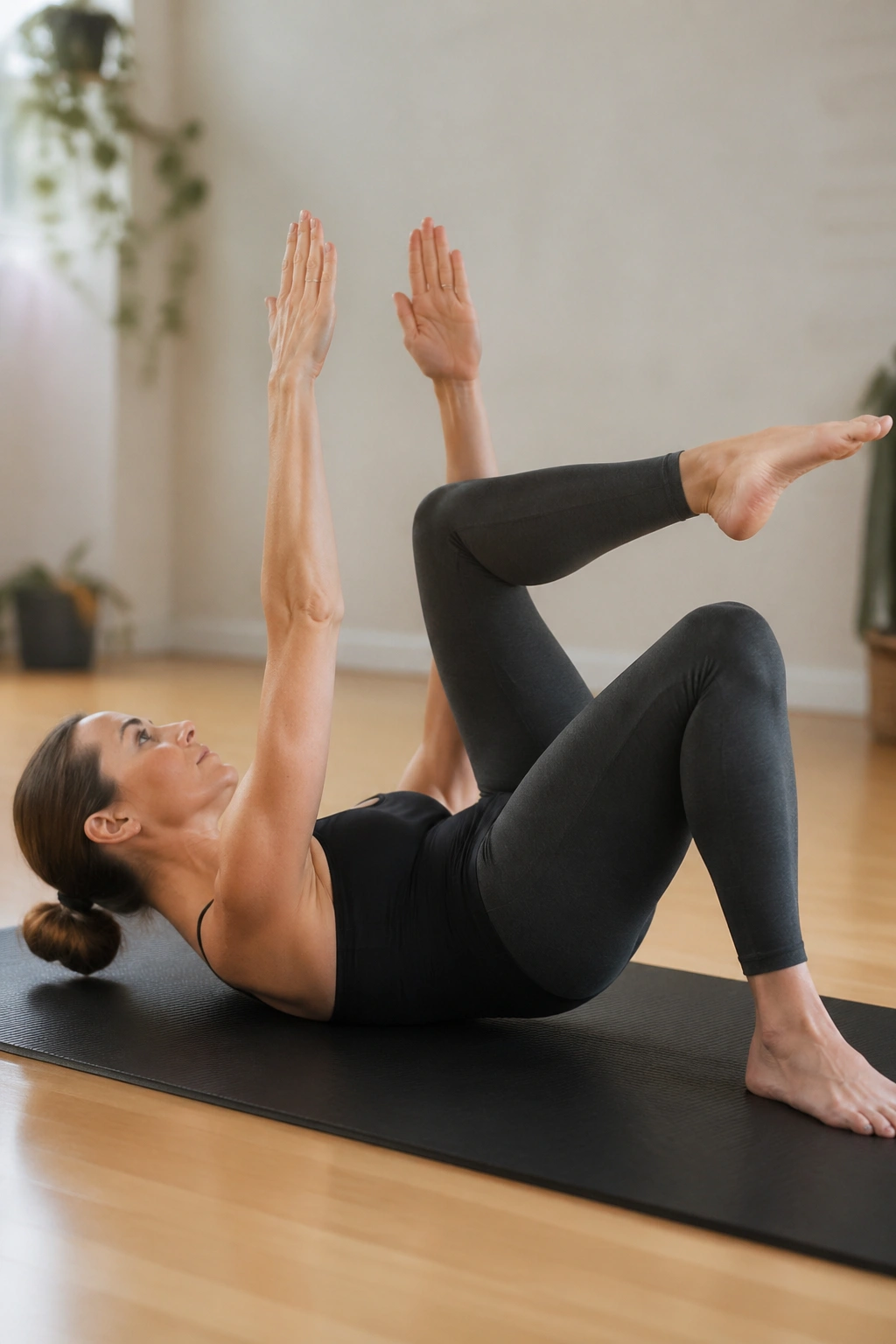
Can beginners touch teaser work? Yes, if they keep it tiny. The goal is to train balance and abdominal control, not to fling the torso into a curl.
Lie on your back with one foot on the floor and the other leg in tabletop. Reach the arms toward the ceiling, then curl the head and shoulders just enough to see the thighs. Hold for 2 breaths, lower, and switch the lifted leg. Do 4 reps per side.
What Helps Most
- Keep the down foot planted.
- Use a small chest lift.
- Exhale before the curl begins.
- Stop if the neck grabs.
A teaser is a shape, not a contest.
28. Full-Body Beginner Mat Flow
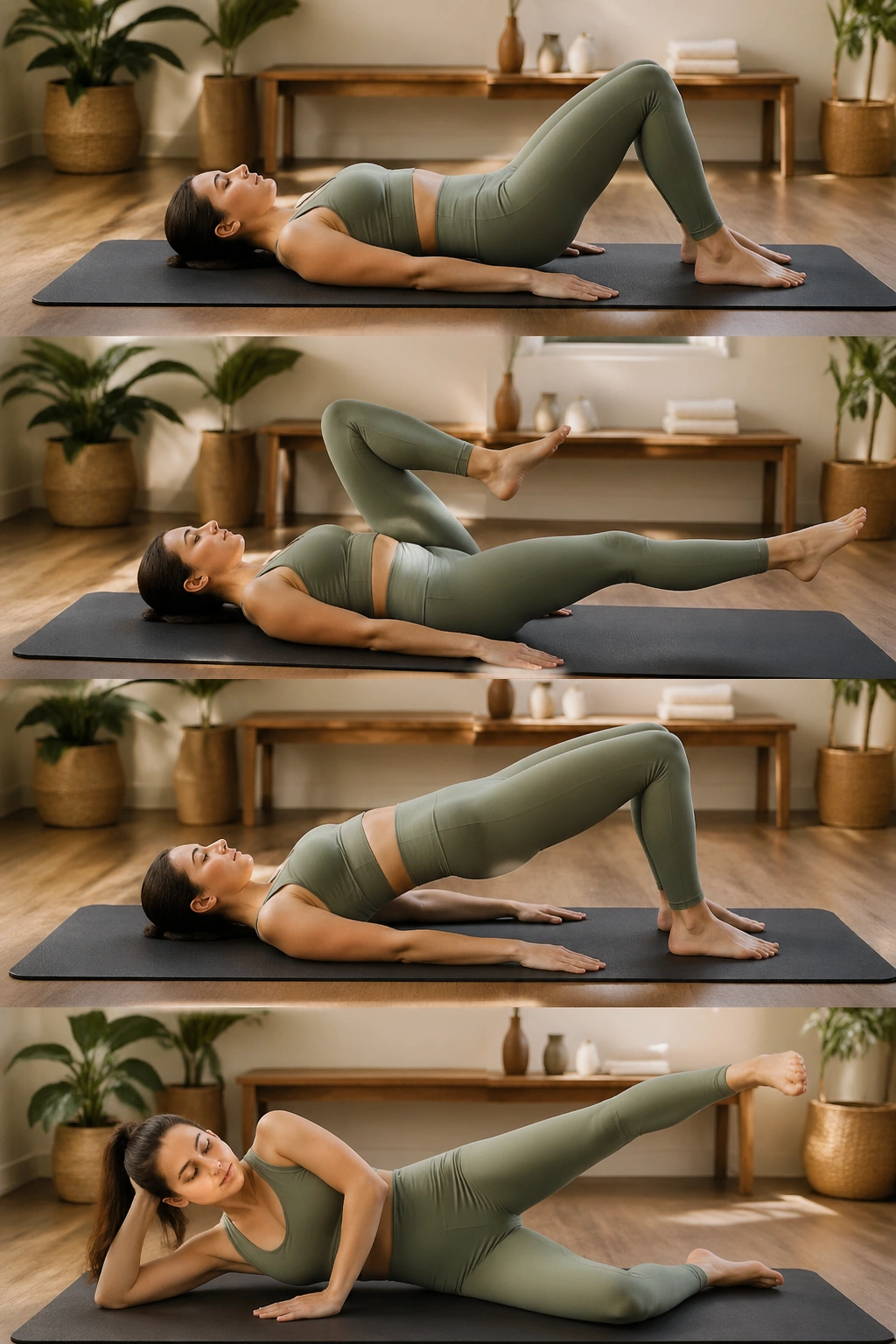
This is the kind of short class I’d save for a day when you want movement but not chaos. One round is enough, and it links the major beginner patterns together in a tidy way.
Do 6 pelvic tilts, 6 marches per side, 8 bridges, and 6 side-lying leg lifts per side. Finish with 3 seated twists and a gentle forward fold. Move from one exercise to the next without rushing, but also without dragging it out so long that your focus wanders.
The point is to notice the transitions. Pilates lives in those transitions.
A tidy flow often teaches more than a long one.
29. Gentle Core and Glute Fusion With a Towel
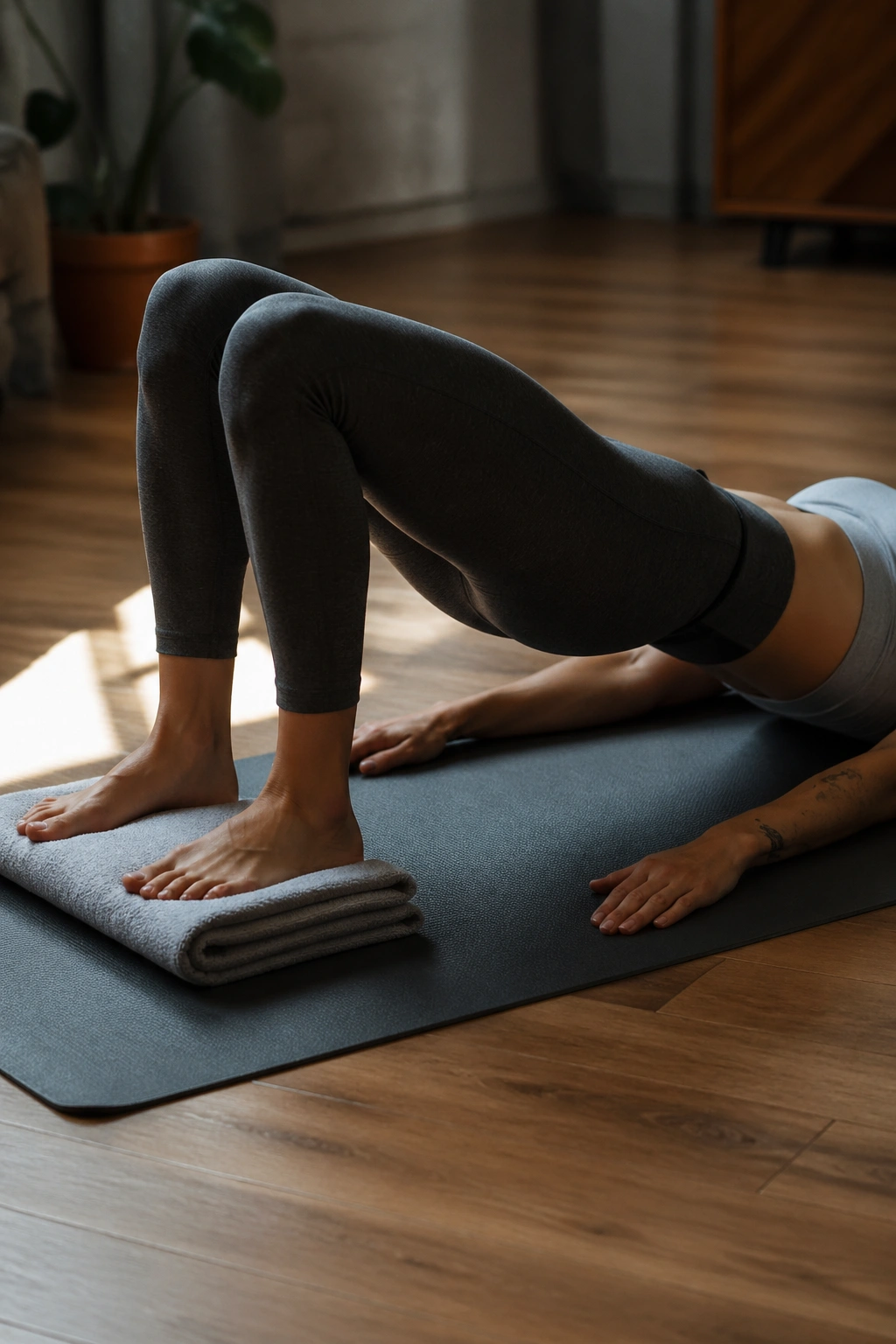
A folded towel can make beginner work feel smoother, especially if your heels slip or your knees get cranky on the mat. I like this one for people who need something practical, not precious.
Place a towel under the heels and slide them out and in during a bridge for 6 reps. Then stay on your back and alternate a knee fold with a light abdominal brace for 8 reps per side. Finish with 6 clamshells per side or a short side-lying lift series.
Unlike a fancy setup, this version works in a small space and asks for almost nothing.
That is a win on busy days.
30. Fifteen-Minute Confidence Builder
By the time a beginner is ready for a longer class, what they usually need is not more complexity. They need a short routine that feels familiar and clean.
Start with 5 breaths, then do 8 pelvic tilts, 6 marches per side, 8 bridges, 6 toe taps per side, 4 seated twists, and 3 gentle roll-downs at the wall. If you still have energy, add 5 side-lying leg lifts per side before you stop. Keep the pace slow enough that you can notice your breath and your ribs.
This workout works because it borrows from everything above without piling on too much. That balance matters.
Stop while you still feel organized. The best beginner session ends with a little more confidence than you had at the start.
The Bottom Line
Pilates for absolute beginners should feel clear, not confusing. If a workout makes your neck tense, your low back pinch, or your breath disappear, the range is too big or the sequence is too ambitious.
Start with the smaller shapes. The steady ones. The ones that let you notice how your body organizes itself from the inside out.
That part is not boring. It is the whole point.
