



Most thigh workouts fail in the first ten seconds—the pelvis rolls back, the top hip hikes up, and your lower back starts doing a job your legs were supposed to handle. Pilates thigh slimming exercises feel different because Pilates starts with alignment, not punishment. When your ribs stay quiet, your hips stay stacked, and your leg moves from the socket instead of the waist, the burn lands where you wanted it all along.
There is one boring truth worth saying early: you cannot choose where fat leaves first. Exercise physiology has been blunt about that for a long time. What you can do is build stronger adductors, abductors, hamstrings, and glutes, improve how your legs track under you, and create the firmer, longer line most people mean when they say they want slimmer thighs.
That’s where Pilates earns its keep. A clean side-lying leg lift with a 3-second lower can light up the outer thigh harder than 25 sloppy reps done with momentum. A bridge with a small ball between the knees changes the whole feel of the move. And those tiny details—heel leading the kick, inner thighs zipping together, tailbone reaching long—matter more than people think.
You do not need a reformer for this list. A mat, a wall, and maybe a pillow or small ball will cover almost everything here. Move slowly, breathe out on the hard part, and stop a rep or two before your form breaks apart. That’s where the work starts to count.
1. Side-Lying Inner Thigh Lift
If you want one move that targets the inner thigh without beating up your knees, start here. It looks tame. It is not.
Lie on your side with your bottom leg long and your top foot planted on the floor in front of your bottom thigh. Rest your head on your lower arm or prop yourself on your forearm if your neck gets cranky. Then flex the bottom foot and lift that lower leg 6 to 10 inches off the mat, keeping the waist lifted so you do not collapse into the floor.
Set-Up That Wakes Up the Right Muscle
The magic is in the line of the leg. Reach your heel away from your hip before you lift. That cue turns down the hip flexor and helps the inner thigh near the knee and groin crease do the job.
Quick Cues
- Lift on an exhale and lower for a slow count of 3.
- Keep the toes facing forward, not rolled up toward the ceiling.
- Think long, not high—8 inches with control beats a giant swing.
- Do 12 to 15 reps, then hold the leg up for 10 seconds on the last rep.
Best tip: If you feel the front of the hip gripping, move the bottom leg 2 inches in front of your body and shorten the range.
2. Side-Lying Outer Thigh Lift and Lower
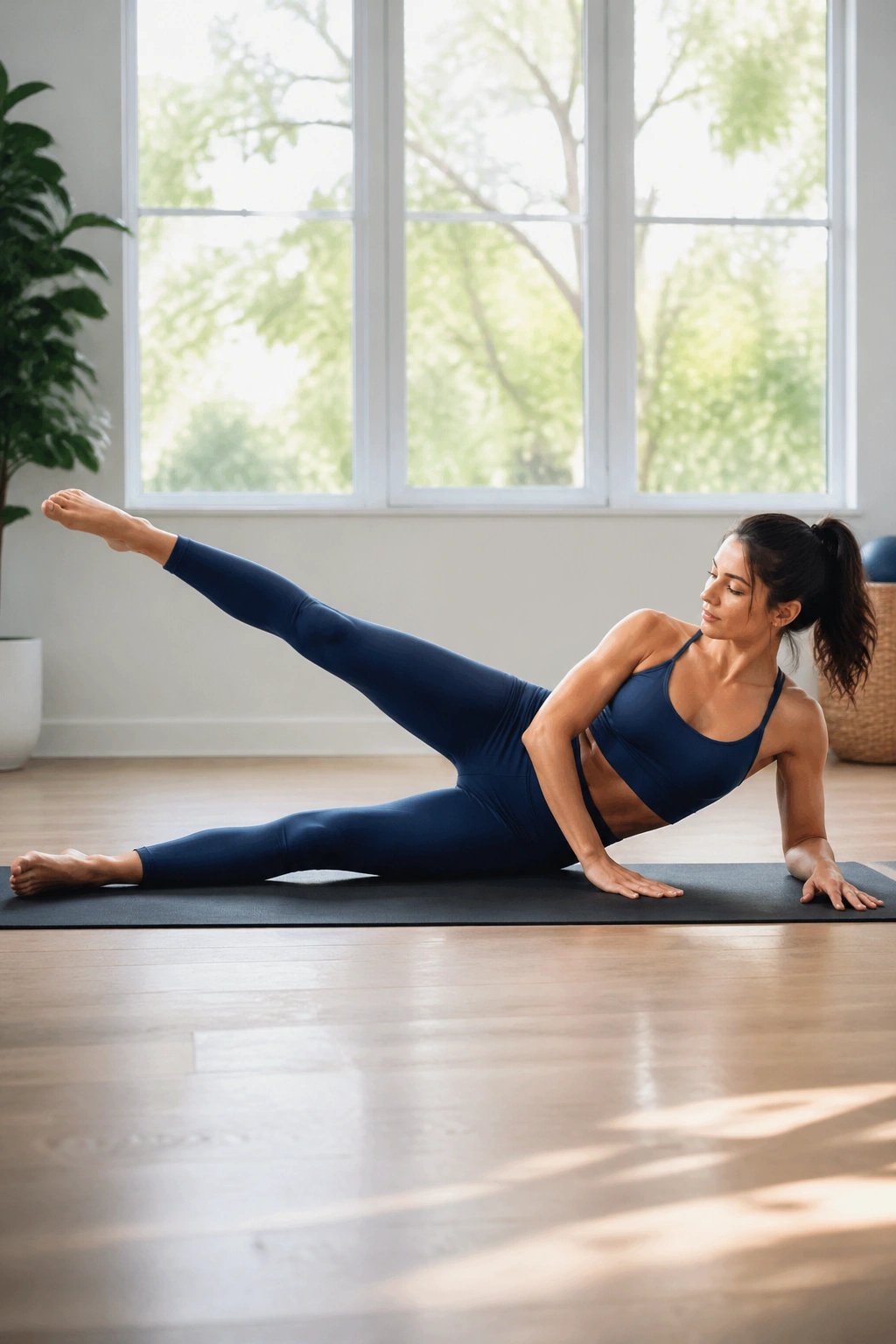
This move earns its place because it trains the outer hip to hold your pelvis level. When that area is weak, your knees cave in during stairs, squats, and long walks. Your thighs end up doing work in a messy pattern, and nothing feels smooth.
Set up on your side with both legs long, heels in line with your sit bones, and your top hand planted on the floor for balance. Lift the top leg to about hip height, pause for 1 second, then lower it halfway down without resting. The halfway stop matters. It keeps tension on the outer thigh and glute medius, the pair that gives the side of the leg more shape and control.
Do 10 slow reps, then add 10 small pulses at the top if you want a stingy little finish. You will know the move is landing well when your waist stays lifted and your torso stays quiet. If your whole body rocks back and forth, the leg is too high.
People chase height here. Bad trade. A lower lift with your hip stacked is the version that changes things.
3. Front-to-Back Side Kicks
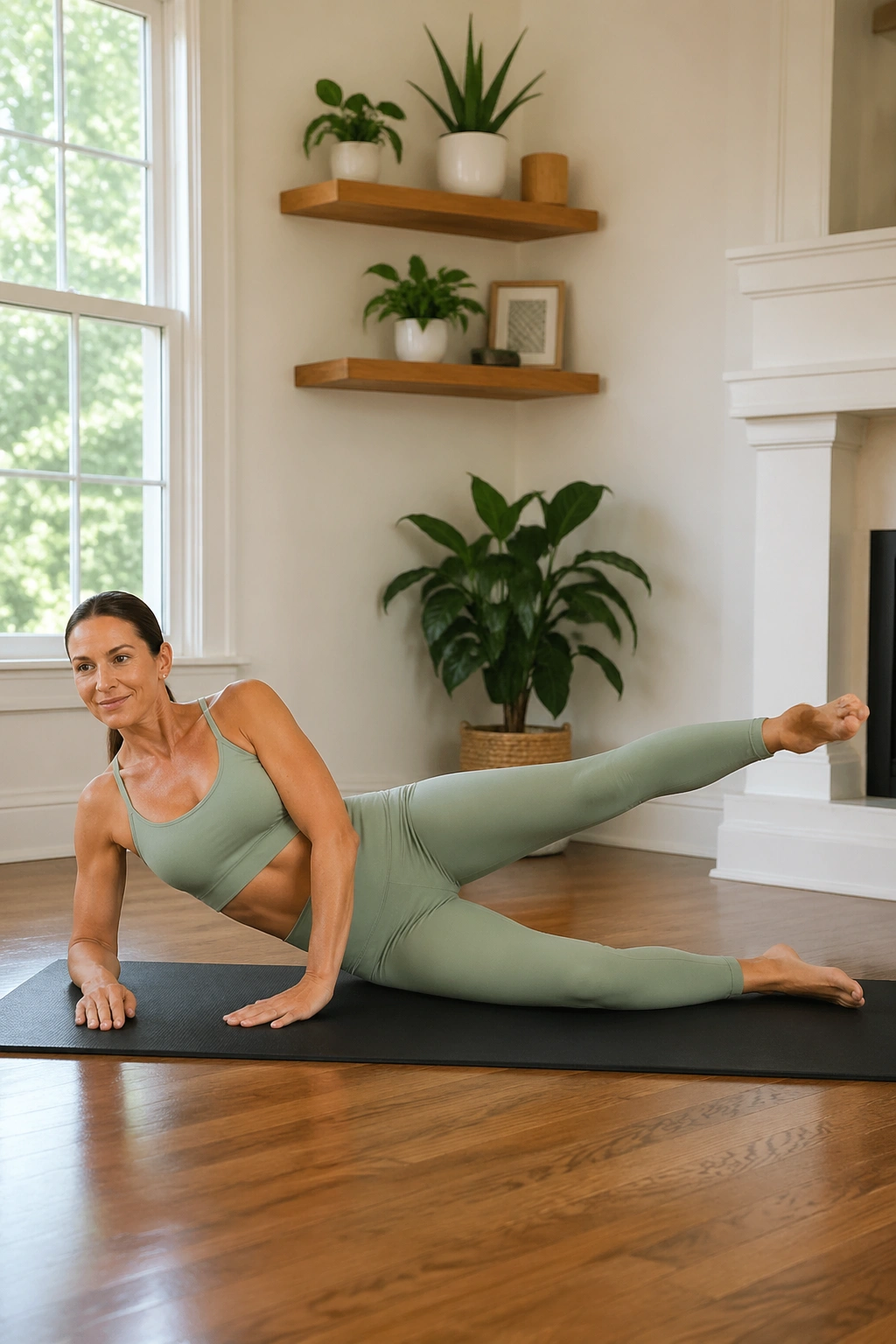
Why does this old-school Pilates move hit the thighs so hard when it barely looks like a workout? Because the challenge is not the swing. The challenge is keeping your trunk still while the leg travels.
Lie on your side and bring both legs slightly in front of your body so you form a small banana shape. Prop up on your forearm, place the top hand on the mat, and lift the top leg to hip height. Kick it forward twice with a flexed foot, then point the toes and sweep it behind you once. The pelvis should stay stacked the whole time—no rolling backward to fake the range.
You’ll feel the front of the thigh and hip work on the forward kick, then the hamstring and glute pick up the load on the way back. That change in direction is what makes the move so useful. It teaches the leg to move cleanly through the hip socket rather than yanking from the lower back.
Use This Tempo
Do 8 to 10 full kick cycles per side, breathing out on the double kick forward. A smaller back sweep is often better than a big one. If you pinch at the front of the hip, shorten the range and reach the leg longer instead of farther.
4. Small Side-Lying Leg Circles
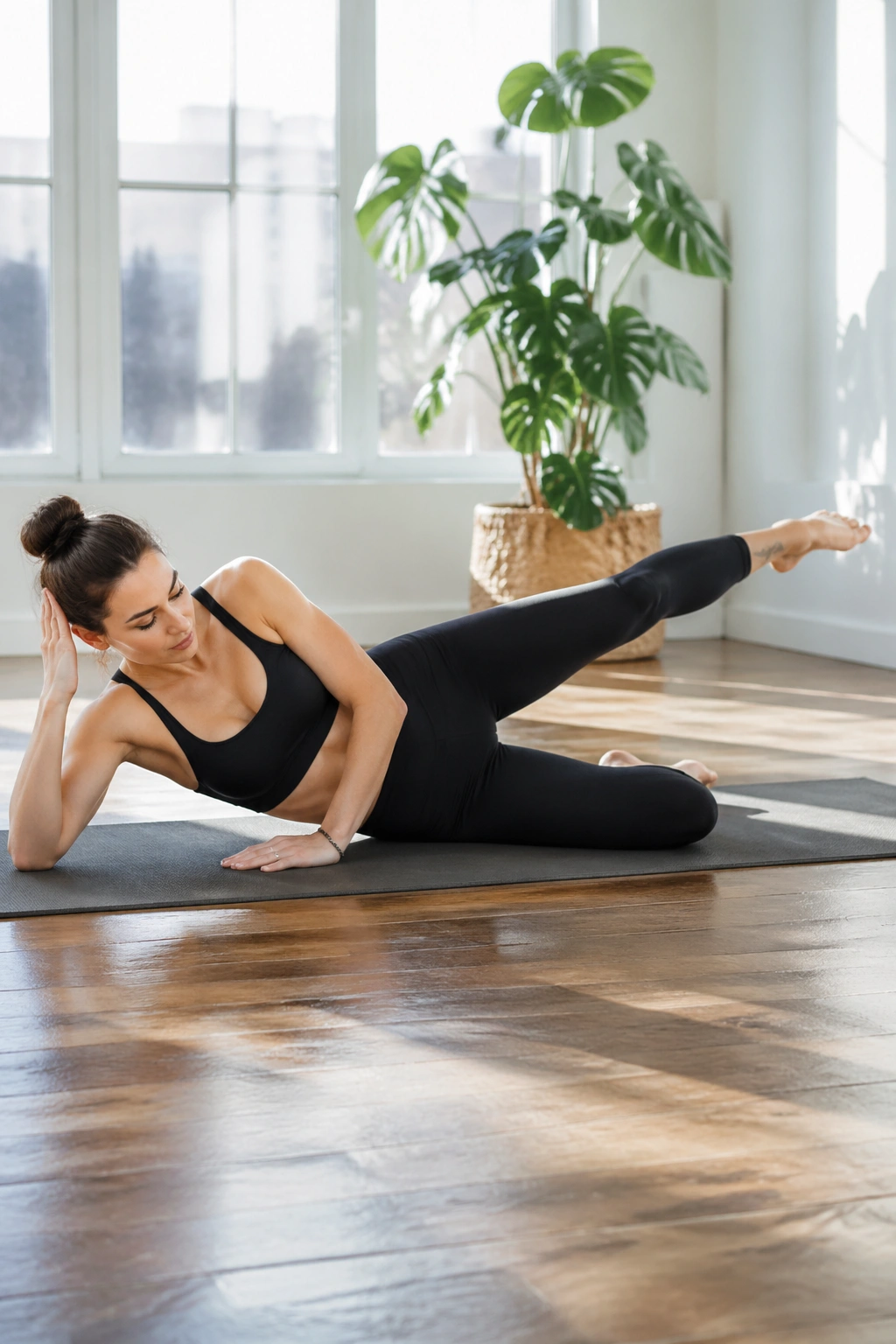
Picture the usual mistake: the leg starts circling, then the whole body joins in, and suddenly the exercise looks like a slow-motion wobble. That wobble is your clue to make the circle smaller.
Start on your side with the top leg lifted to hip height. Draw circles about the size of a salad plate, not a hula hoop. Five circles forward. Five back. Then rest and do a second round.
The point is control. Your femur rotates and moves inside the hip joint while your rib cage and pelvis stay quiet. That asks a lot from the outer thigh, inner thigh, and deep hip stabilizers all at once.
- Circle size: 6 to 8 inches across
- Reps: 5 to 8 each direction, 2 rounds
- Foot: pointed for more flow, flexed for more muscular feedback
- Watch for: lower back arching or the top hip rocking
A smaller circle is not the beginner version here. It is the honest version.
5. Pilates Frog
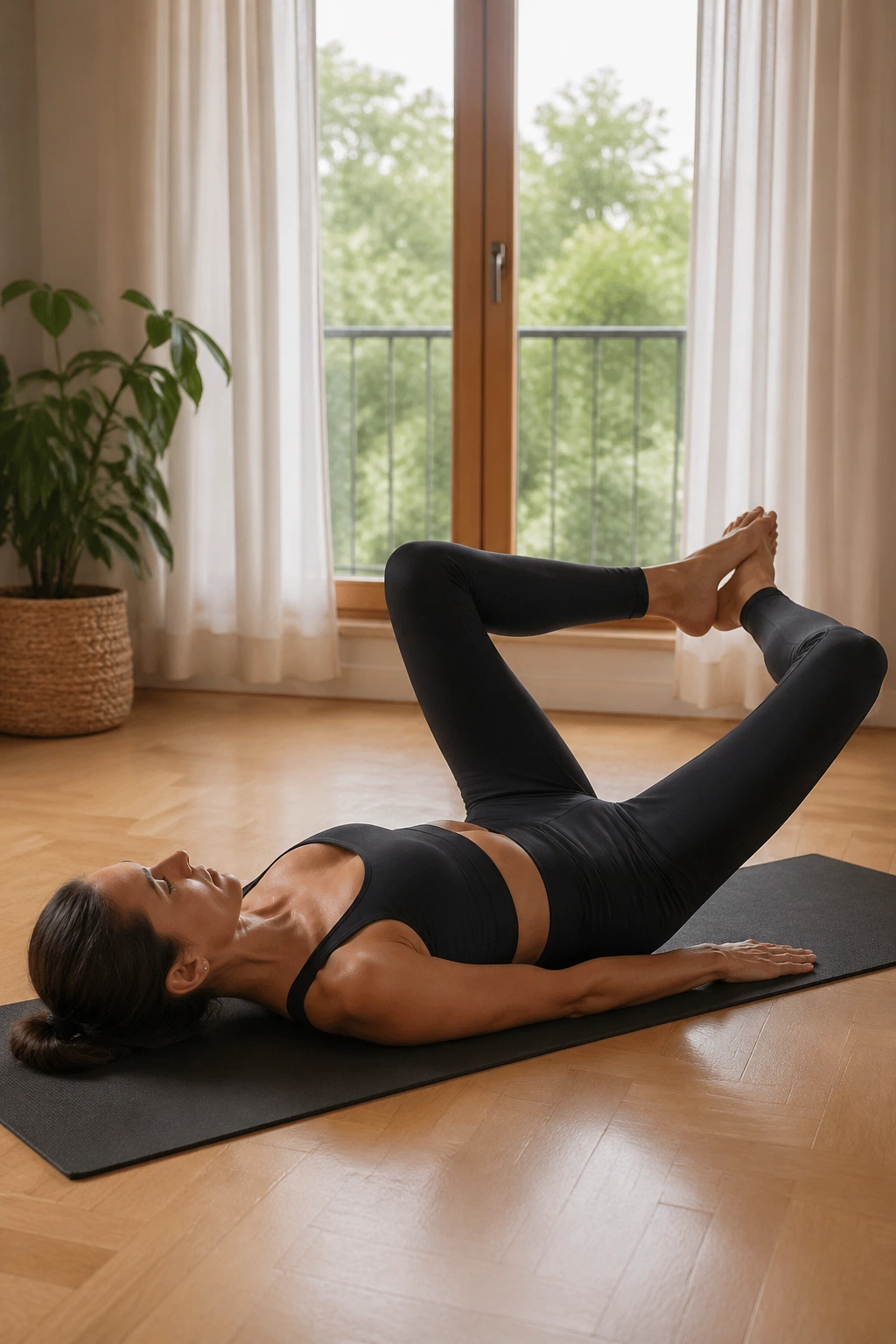
Pilates Frog is one of those moves that can feel awkward for the first few reps and then suddenly click. Once it clicks, your inner thighs light up fast.
Lie on your back, lift your legs into tabletop or a higher diagonal, and bring your heels together with the knees turned out in a diamond shape. From there, press the legs away until they are long at about a 45-degree angle, then bend back in with the heels touching again. Think of your thighs squeezing toward each other as they extend.
The move hits the adductors, but it also asks for lower-ab control. If your ribs pop up or your back arches when the legs press out, raise the legs higher. That one change makes the move safer and harder in the right way.
Breath matters here. Exhale on the press, inhale as the knees bend. Slow the return. Most people rush it, and that is where the work disappears.
Try 10 to 12 reps with your head down first. If you want more challenge, curl the head and shoulders up and hold the chest lift for the set. Your neck should feel long, not clenched. If it does not, place the head back on the mat and keep the legs moving.
6. Shoulder Bridge with Ball Squeeze
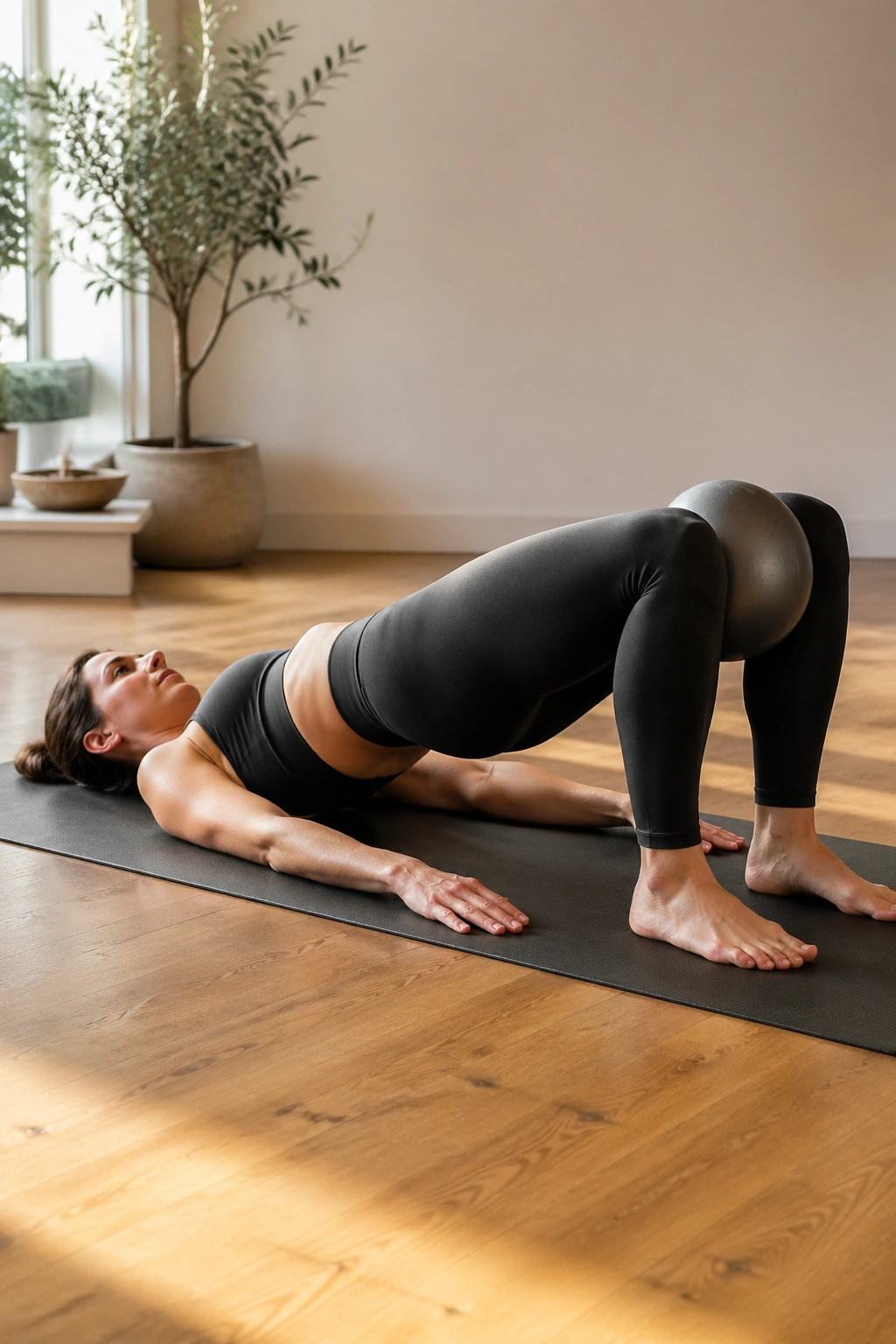
Unlike a plain bridge, a bridge with a ball or folded pillow between the knees makes the inner thighs stay awake from start to finish. That changes the whole feel of the lift.
Lie on your back with knees bent, feet hip-width apart, and the prop lightly squeezed between your thighs. Press into your heels and peel the spine off the mat one section at a time until your hips line up with your knees and shoulders. Hold for 2 breaths, squeeze the ball a little more, then roll down slowly.
That extra squeeze recruits the adductors, which link up with the pelvic floor and deep core in a way many mat exercises miss. You also get hamstring and glute work without the quad-heavy feel that some bridge variations bring along. If your hamstrings cramp, move your feet an inch farther from your hips and press through the whole foot, not only the toes.
This one suits almost everyone, especially people who feel shaky during standing leg work. Aim for 10 bridges with a 2-second hold at the top. If the knees drift apart, the prop is either too large or your squeeze faded.
7. Single-Leg Bridge Hover
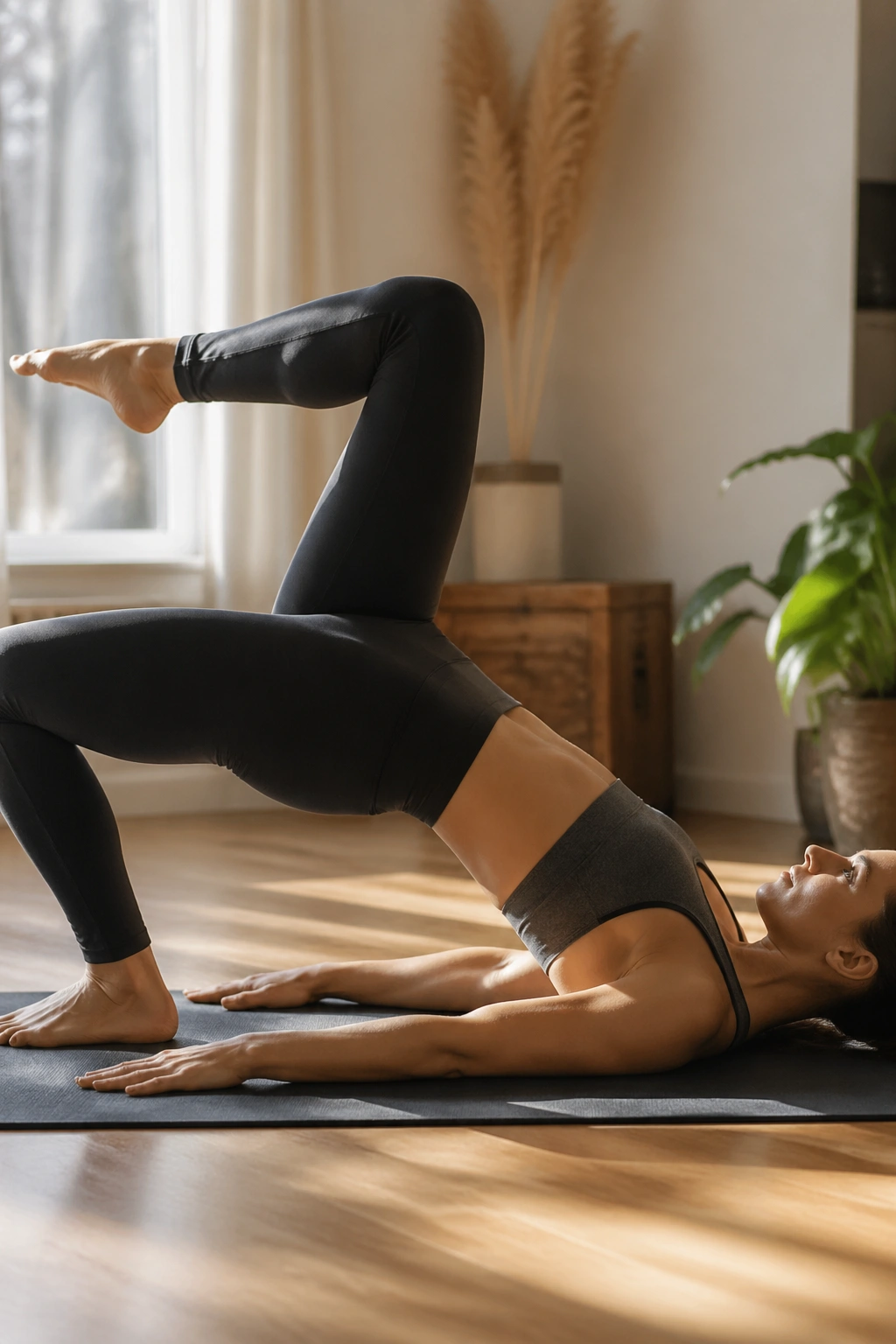
You will feel this one in the back of the thigh almost at once.
Set up in a bridge position, lift the hips, then float one knee into tabletop without letting the pelvis tip. Hold for 2 breaths. Lower that foot and switch sides. The body wants to drop or twist the moment one leg leaves the floor, which is why this move builds the kind of hip stability that changes how your legs look and work during daily life.
Where It Should Burn
The standing leg—especially the hamstring just under the glute fold—should carry most of the load. Your waist should stay long, and your ribs should not flare.
Short Checklist
- Keep both hip bones facing the ceiling.
- Lift only as high as you can hold without cramping.
- Exhale as the leg floats up.
- Alternate for 8 lifts per side.
Sharp note: Do not chase height. A low bridge with a level pelvis beats a high bridge with a twisted trunk every time.
8. Standing Wall-Assisted Side Leg Lift
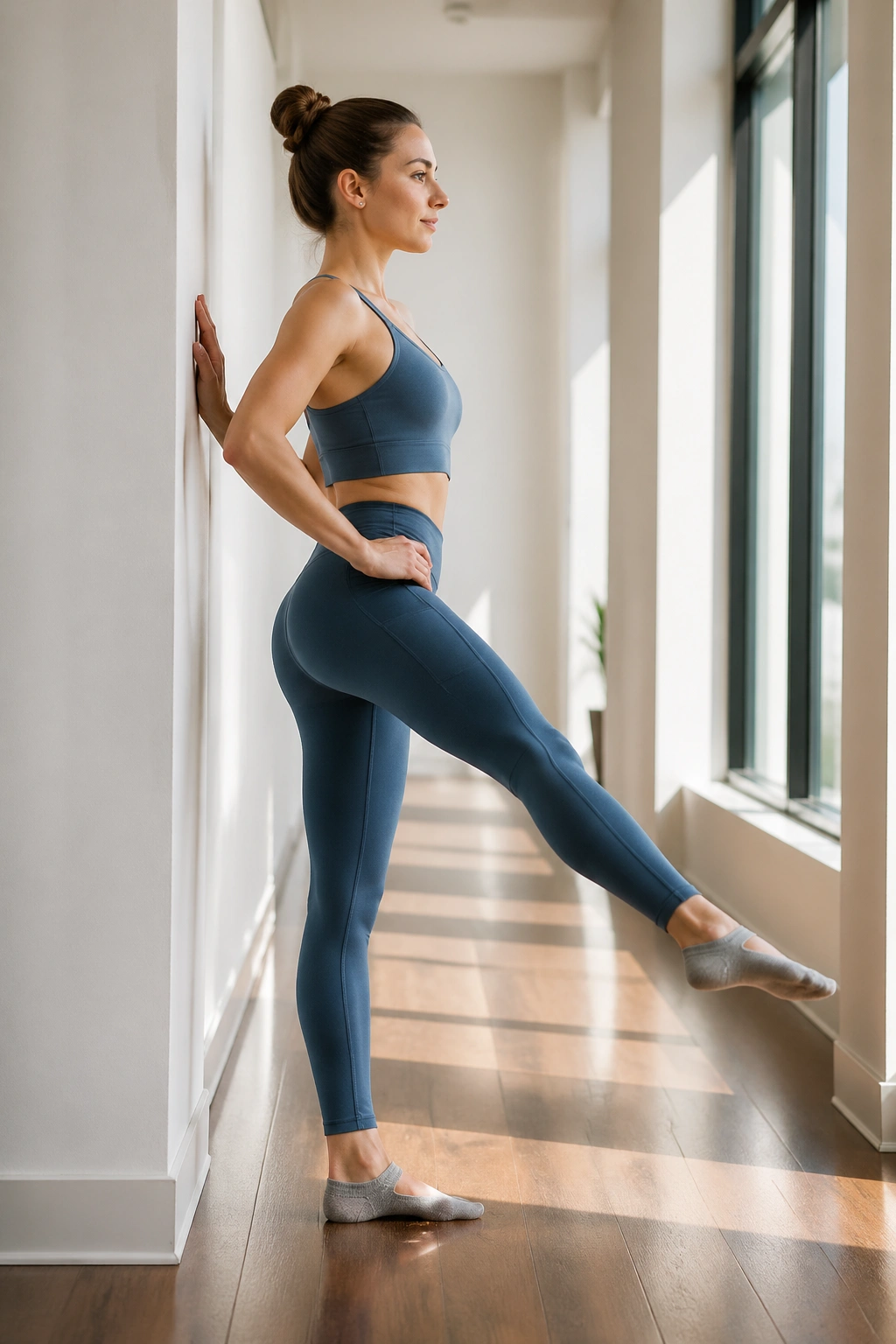
Standing work shows you what the floor can hide. The wall gives you enough support to stay upright without leaning into a lazy shape.
Stand sideways next to a wall, fingertips resting lightly on it. Shift onto the inside leg with a soft standing knee and long spine. Lift the outer leg 8 to 12 inches to the side, pause, and lower with control. Your toes can face forward or turn down a hair; that second option often helps people feel more outer hip and less front-of-hip grabbing.
The standing leg works too, and that is part of the appeal. You are training balance, pelvic control, and the outer thigh of the moving leg at the same time. Keep the torso tall. If the shoulder hikes toward your ear or your hip pops out toward the wall, reset and make the lift smaller.
Go for 12 to 15 reps each side. On the last rep, hold the leg up for 15 seconds. This move is plain, maybe even a little dull, but it pays off—especially if stairs or long standing leave your hips tired.
9. Standing Plié Heel Raise
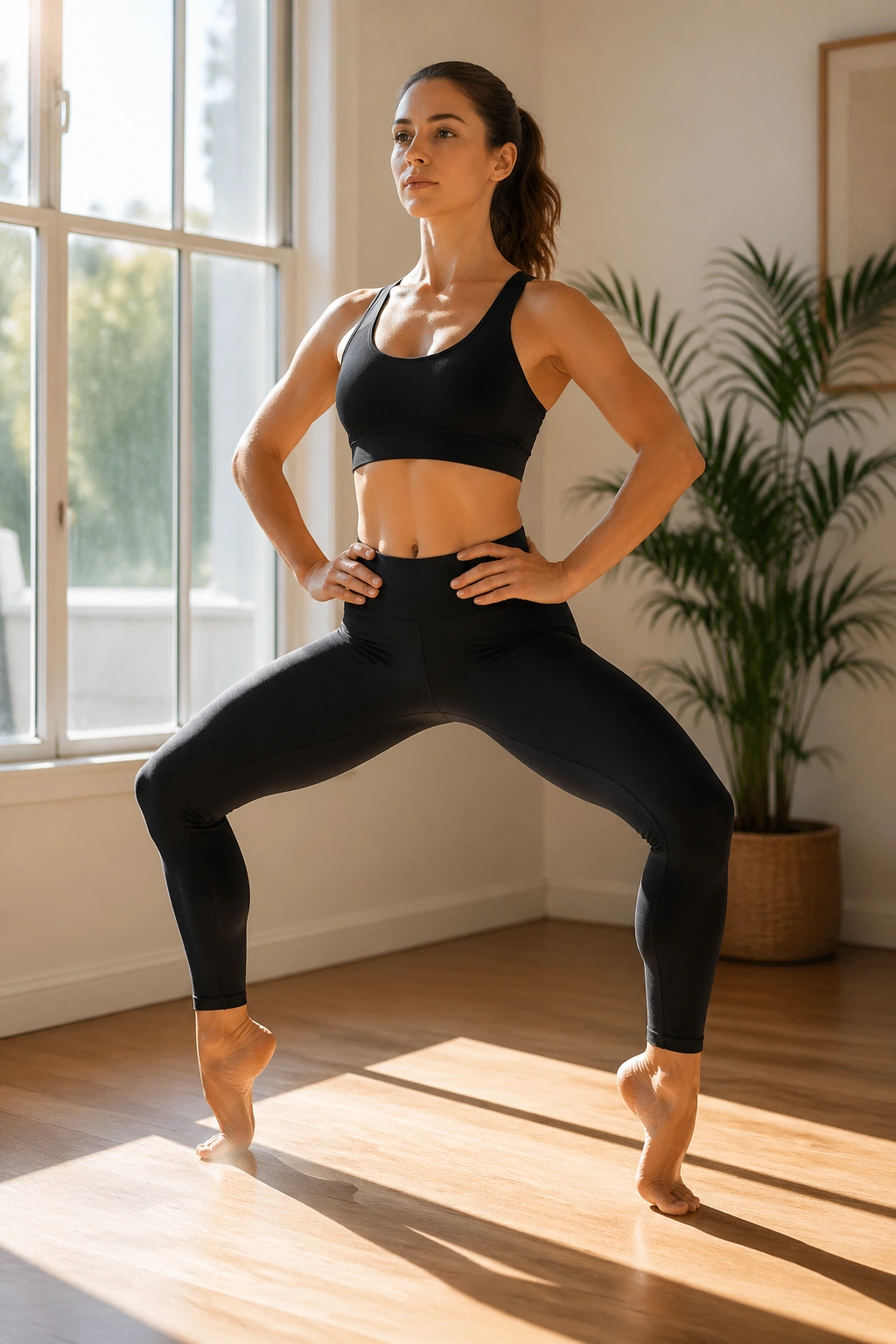
Can a small turned-out squat make the thighs work harder than a deep one? Yes, if you stay lifted through the torso and add the heel raise.
Take your feet a little wider than hips with toes turned out modestly—think 20 to 30 degrees, not a ballet split. Bend the knees into a shallow plié, keeping them tracking over the second toes. From the bottom of that bend, rise onto the balls of the feet, lower the heels, then straighten the legs. That full sequence counts as one rep.
The inner thighs work to guide the turnout, the quads control the bend, and the calves jump in during the heel raise. It is a nice mix for people who want thigh definition without heavy impact. You also get ankle strength, which helps more than people expect with balance and knee tracking.
A Better Range
Stay in a bend you can control for 10 to 12 reps. If your knees ache, narrow your stance and turn the feet out less. The move should feel muscular, not pinchy.
10. Kneeling Side Kick
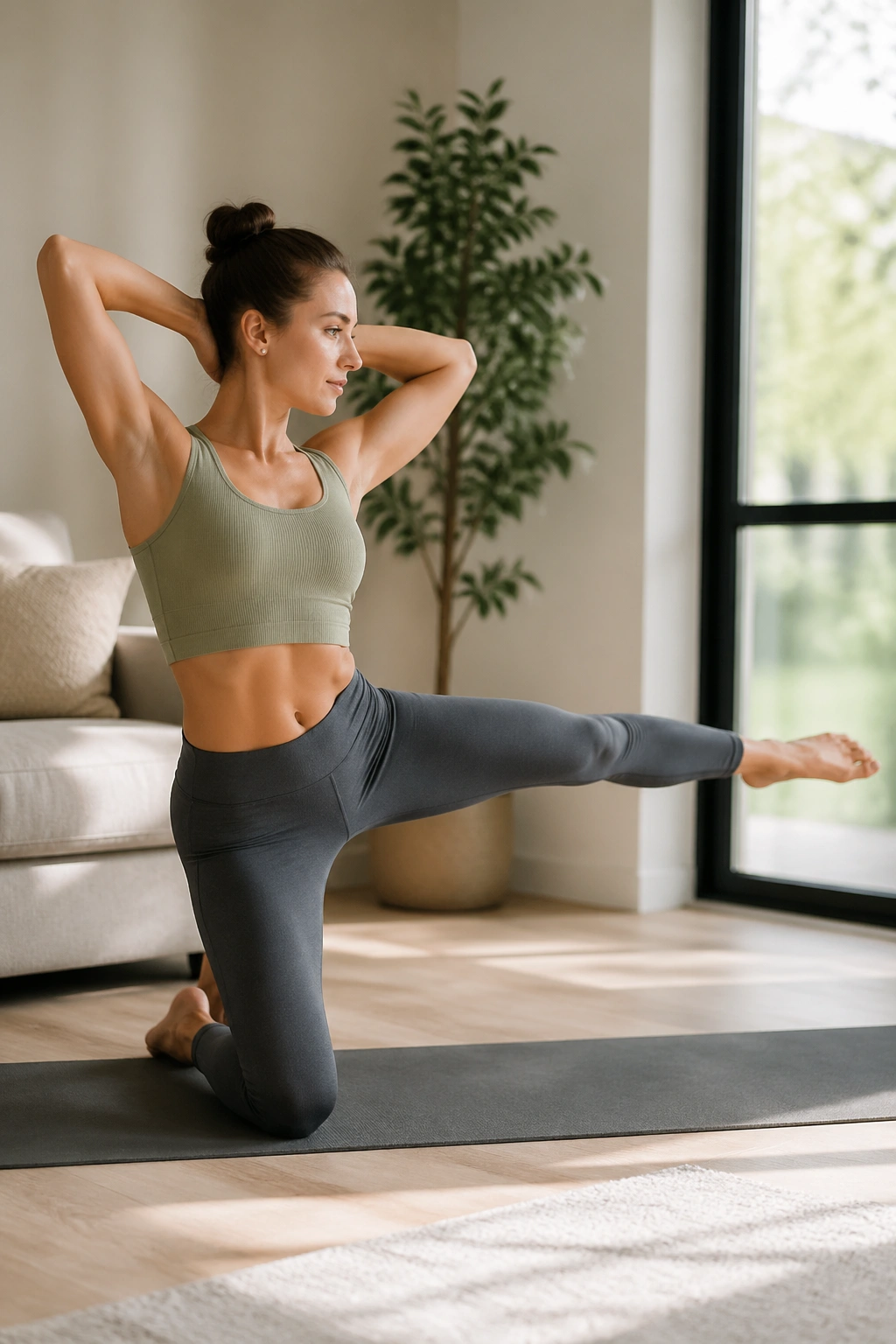
I like this one because it strips away momentum. There is no lying on the mat and pretending the trunk is stable while the leg flies around. Your balance tells on you fast.
Come onto one knee with the other leg extended out to the side, toes on the floor at first. One hand can rest behind the head, or both arms can reach wide if you want more challenge. Lift the extended leg to hip height, kick it forward with a flexed foot, then point the toes and sweep it back behind the body.
The kneeling side changes the demand completely. The supporting glute and inner thigh have to keep you upright while the moving leg works through the hip. It is a strong pick for outer thighs, but it also teaches the standing side of your body to hold you in space—a skill that pays off in walking and stair climbing.
- Reps: 8 forward-and-back cycles each side
- Range: small at first
- Feel: outer hip of the moving leg, side waist of the kneeling side
- Skip it if: kneeling bothers your knee even with padding
When it is done well, the torso barely budges.
11. Clamshell to Long Leg Extension
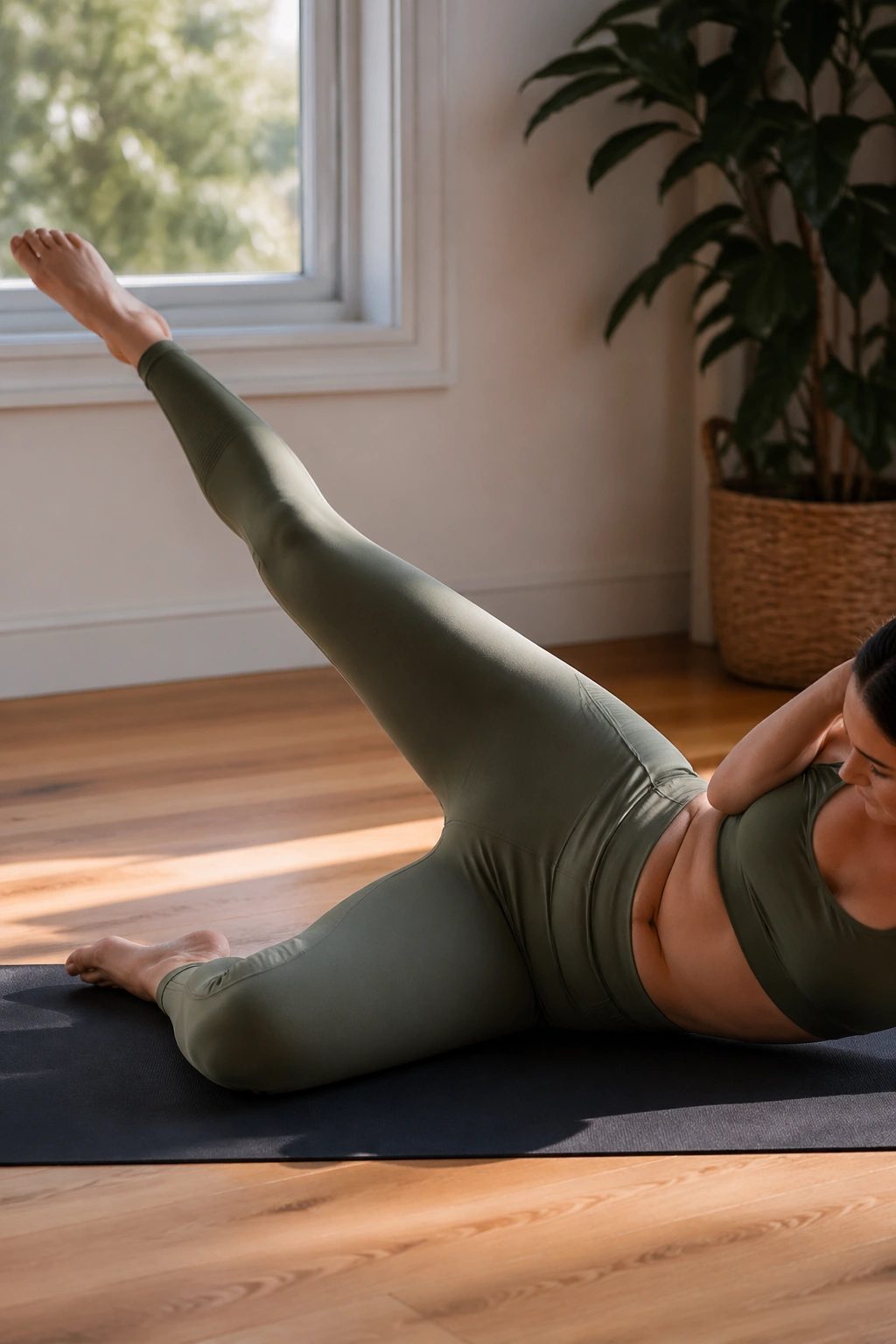
This is the move I hand out when someone says, “I do side leg lifts and still feel them mostly in the front of my hips.” The bent-knee start helps many people find the glute and outer thigh before the long leg adds leverage.
Lie on your side with knees bent to about 90 degrees and heels lined up with your spine. Open the top knee into a clamshell without rolling the pelvis back. Then, keeping that knee lifted, extend the top leg long on a diagonal. Bend it back in. Lower the knee. That is one rep.
The sequence starts with external rotation and moves into extension, which lights up the side of the hip in a fuller way than a plain clamshell. You will also feel the thigh of the top leg work hard to hold the line during the extension. If your waist collapses into the mat, tuck a small towel under your side or prop yourself higher.
Take 8 to 10 reps per side and move with patience. The move is better when it looks almost boring. Fast reps turn it into a swing, and the whole point disappears.
12. Magic Circle Inner-Thigh Press
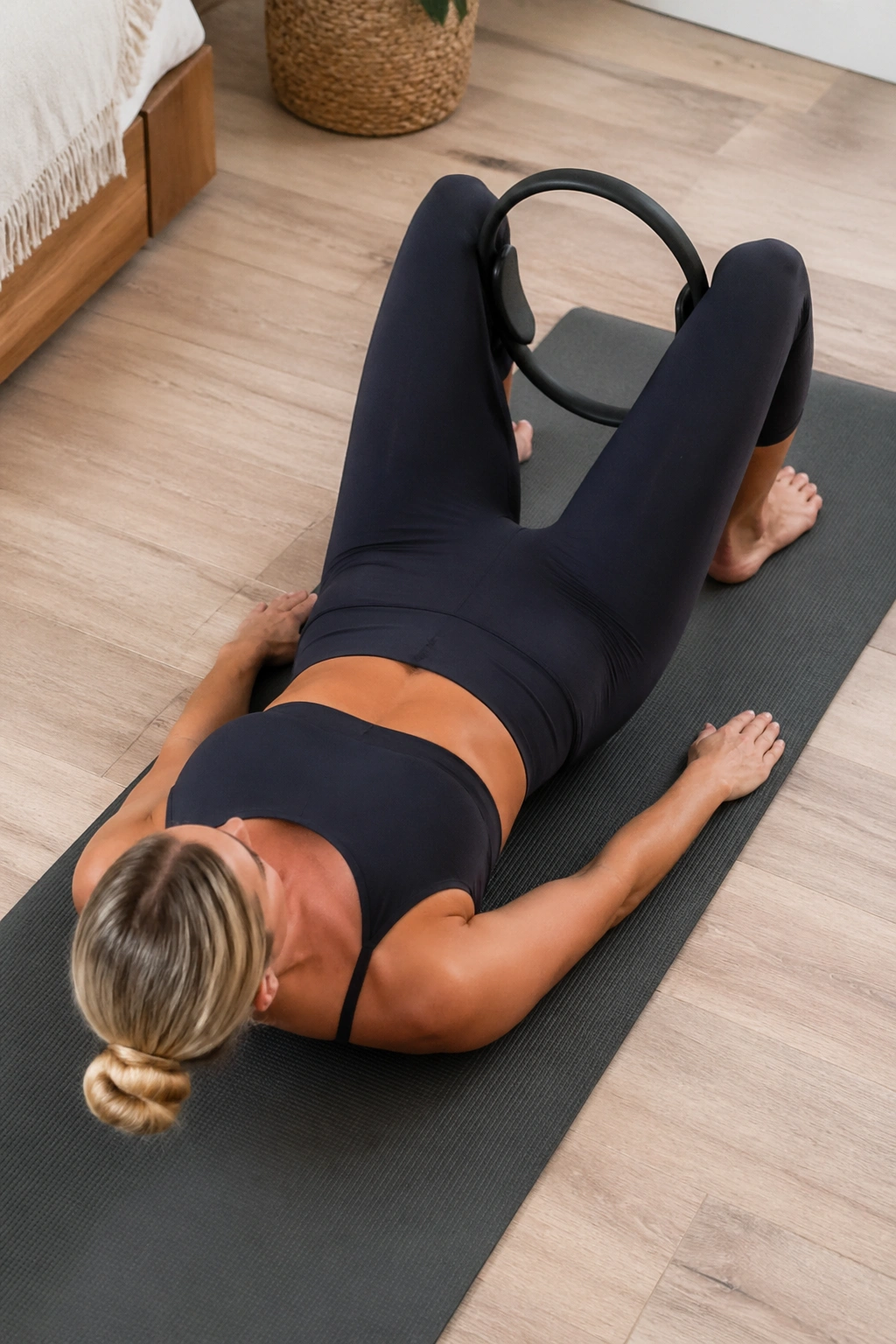
If you own a Magic Circle, this is where it earns shelf space. If you do not, a firm pillow or small ball works well enough.
Lie on your back with knees bent and feet flat, or lift the legs into tabletop if you want more challenge. Place the ring between the inner thighs, not the knees themselves but slightly above them, where the adductors can grip without joint strain. Press in for 2 counts, release halfway, and repeat.
Compared with open-chain leg lifts, this exercise gives you direct inner-thigh tension with low movement. That makes it useful on days when hips feel irritated or your lower back wants to take over everything. It also pairs nicely with deep exhalation. Press the ring as you breathe out through pursed lips, feel the ribs settle, and hold the squeeze for a beat before easing off.
Try 12 to 15 presses, then 15 small pulses. If your hip flexors start to grip in tabletop, put the feet back on the floor. No glory points for making the setup harder than it needs to be.
13. Prone Heel Beats
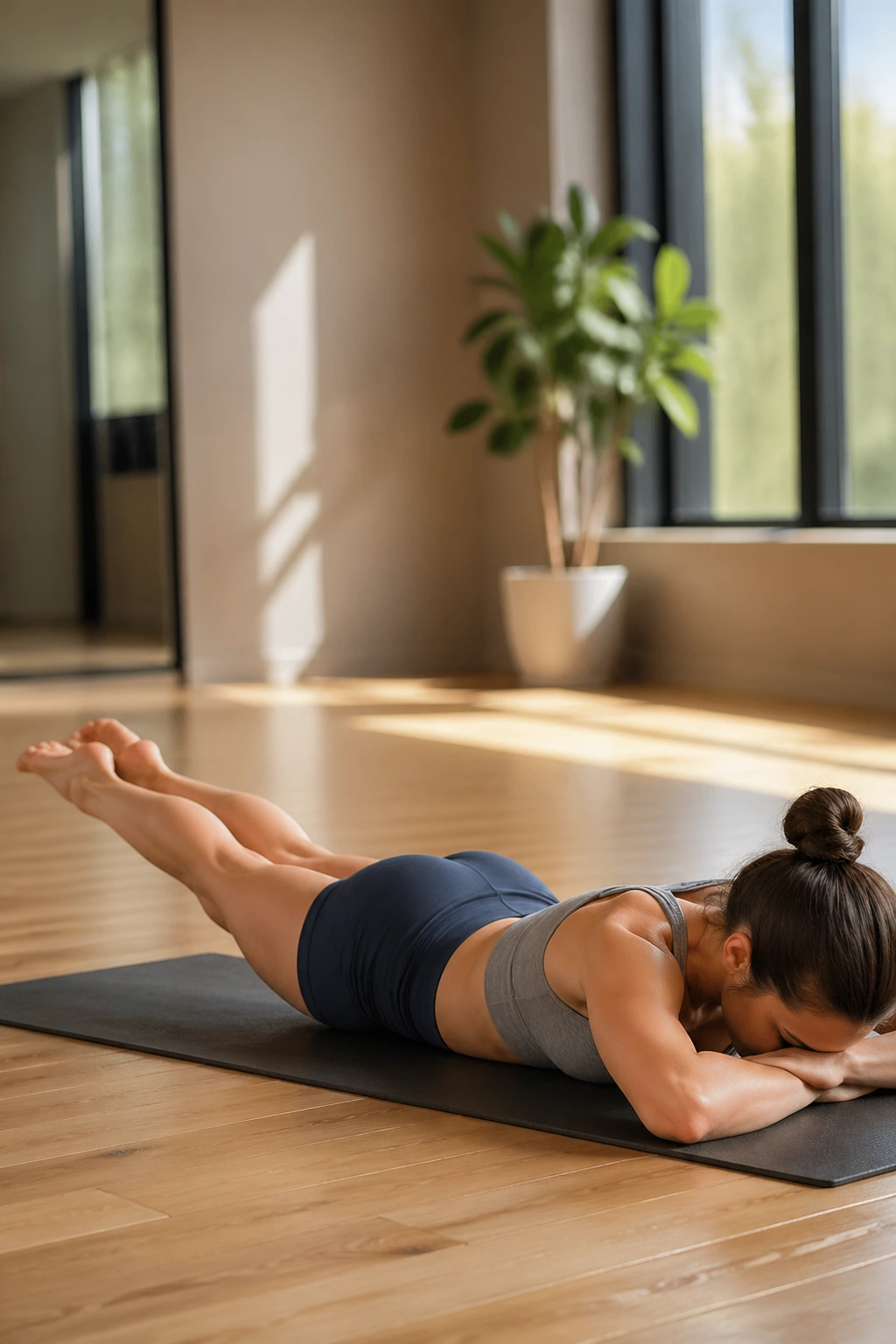
This one looks almost silly from across the room. Your inner thighs will not care.
Lie on your stomach with forehead stacked on your hands. Stretch both legs long behind you, lift them a few inches off the mat, turn the heels toward each other, and tap the heels together in small quick beats. The movement is tiny. The effort is not.
What Makes It Work
The lift asks the backs of the legs and glutes to support the position, while the tapping wakes up the inner thighs. Keep the legs long and low enough that your lower back stays comfortable. If your back feels compressed, separate the legs a bit more or lower them.
Quick Markers
- Beat the heels together for 20 to 30 taps
- Rest, then do 2 to 3 rounds
- Think of reaching the knees away from the hips
- Stop if you feel pinching in the lumbar spine
Little adjustment, big difference: Lift the thighs only an inch off the floor. Higher is rarely better here.
14. Single Leg Kick
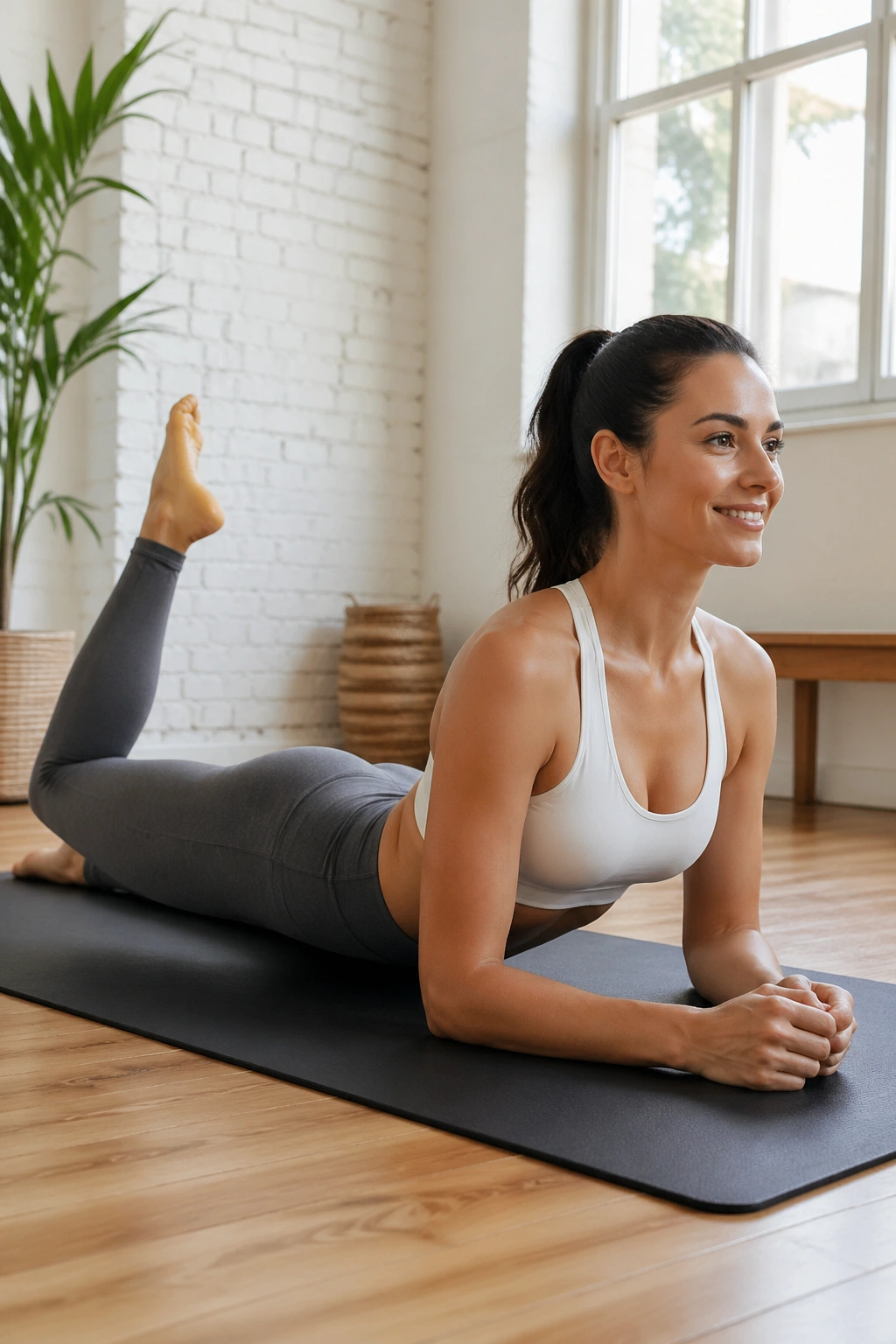
This classical Pilates move pulls double duty: it trains the hamstrings while opening the front of the hips and thighs, which can make the legs feel less stiff and bulky after long hours of sitting.
Lie on your stomach propped on your forearms, chest open, shoulders away from ears. Keep both thighs lightly lifted if you can. Kick one heel toward the seat twice—kick, kick—then switch legs. The kick is small and sharp, like the heel is tapping toward the glute without jamming the knee.
The work lands in the hamstrings, yet the front of the thigh gets a stretch each time the leg lengthens back. That combo is useful for people whose quads dominate everything. If you feel pressure in the lower back, lower the thighs and pull your lower belly away from the mat before you start kicking again.
Go for 8 to 10 double kicks per leg. Think long through the crown of the head. A broad collarbone and steady chest make the move cleaner—and much more effective.
15. Scissors
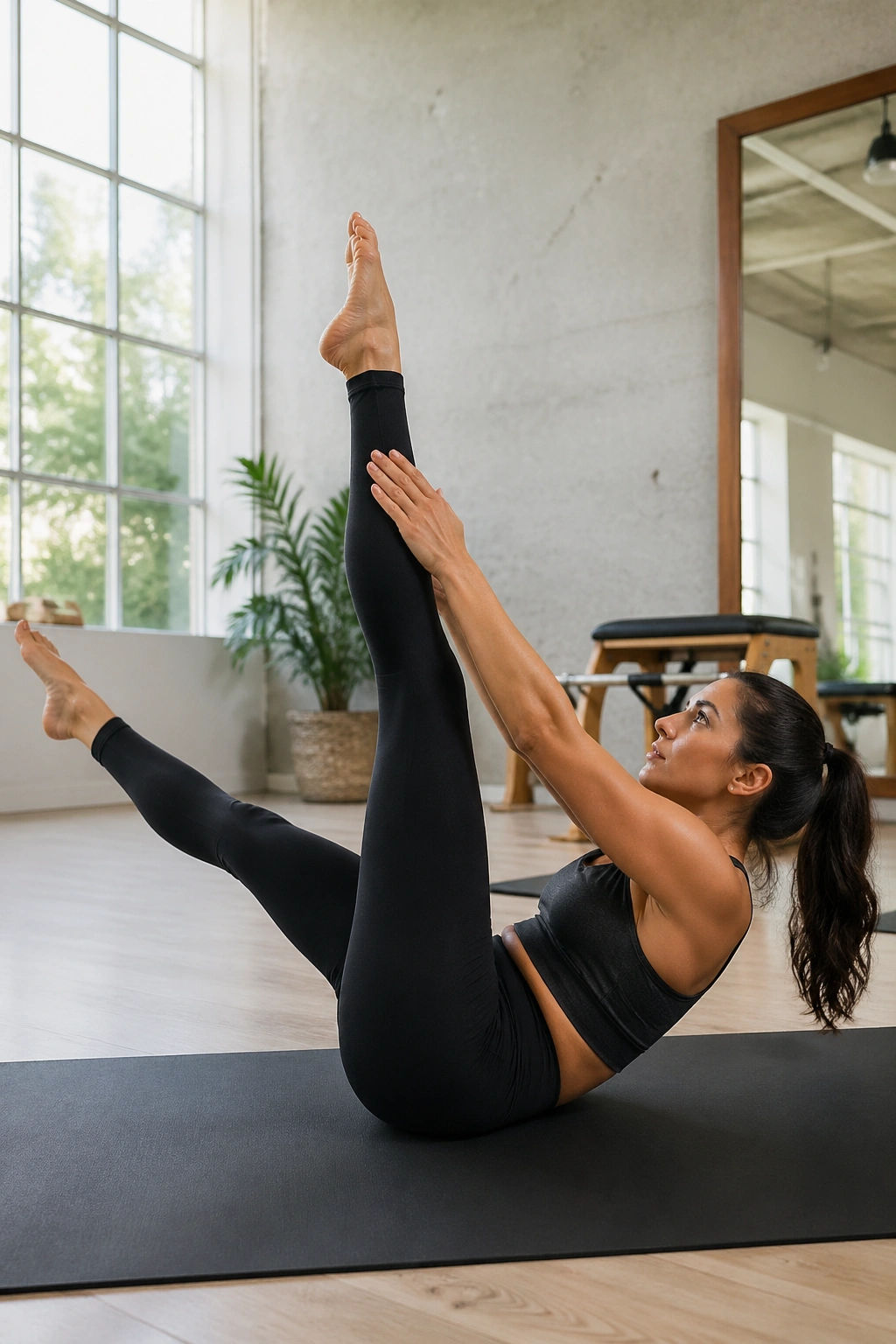
What if you want the thighs to work while the core keeps the pelvis from wobbling all over the place? Scissors does that job well.
Lie on your back and raise both legs toward the ceiling. Curl the head and shoulders up if your neck tolerates it, reaching your hands toward one calf or ankle while the other leg lowers away from you. Switch legs with control, keeping the pelvis steady and the lower back long. The top leg gets a hamstring stretch; the lower leg works hard through the front of the thigh and deep hip flexors.
Done badly, it turns into a frantic bicycle. Done well, it becomes a sharp lesson in leg length, abdominal control, and hamstring mobility. That combination can change how the thighs feel during standing work because the hips stop fighting for range they do not have.
A Smarter Version
Keep the lowering leg higher than you think—maybe 45 to 60 degrees off the floor—and alternate for 8 to 12 switches per side. Your abs should tremble before your neck does. If the neck wins, place the head down and keep the legs moving.
16. Pilates V Leg Lowers
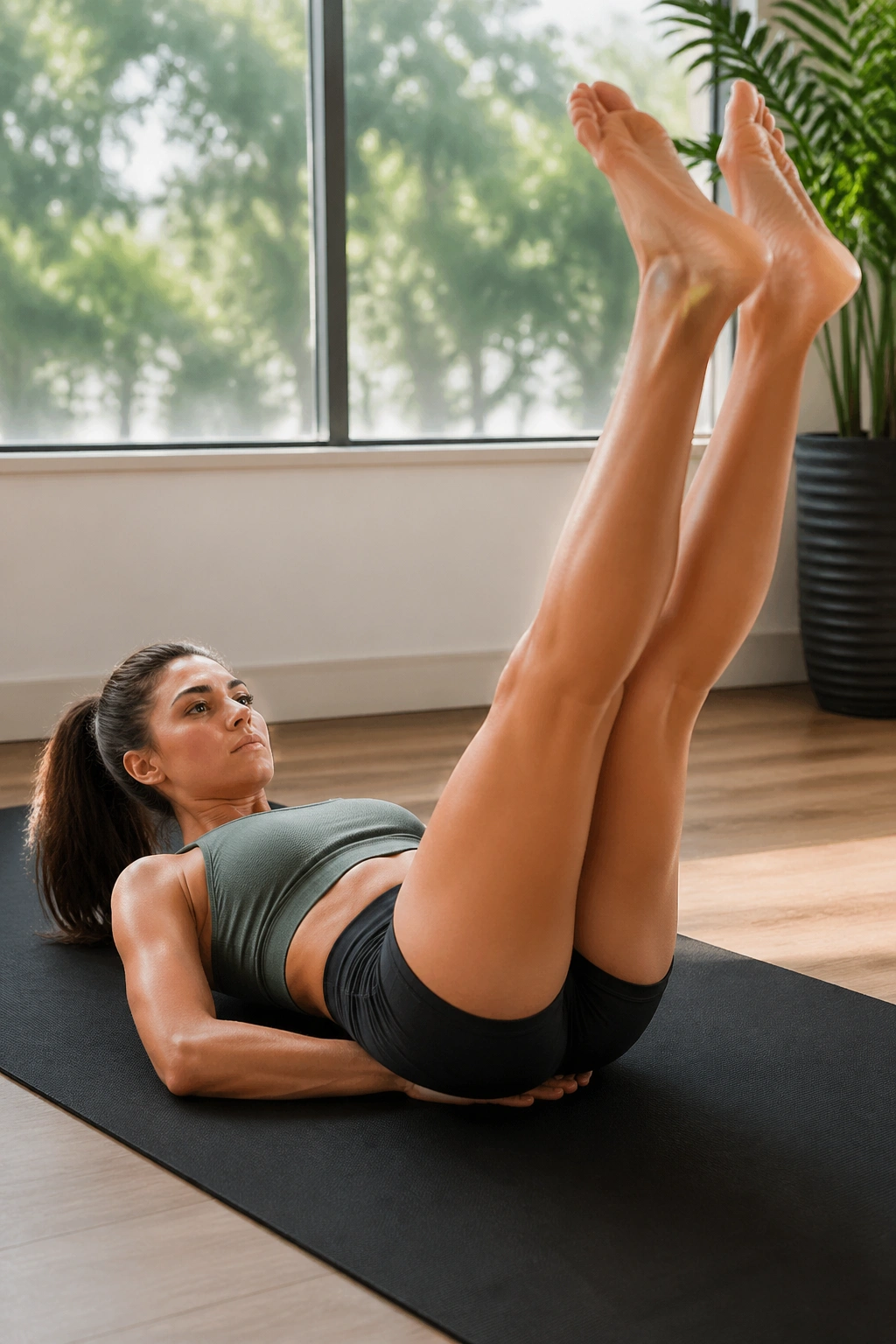
I have a soft spot for this one because it exposes shortcuts fast. If your lower ribs pop up, the move tells you. If the thighs want to turn into a hip-flexor party, the move tells you that too.
Lie on your back with legs extended toward the ceiling in a small Pilates V—heels together, toes apart, turnout coming from the hips, not the feet. Lower both legs a short distance, pause, then lift them back up using the lower abs and inner thighs to guide the line. The range can be tiny at first. Tiny is fine.
The beauty of the Pilates V is the constant adductor connection. Your inner thighs stay zipped from top to bottom, which changes the feel compared with parallel leg lowers. If your back arches, bend the knees a bit or place your hands under the sacrum for feedback. The move still counts.
- Reps: 8 to 10 slow lowers
- Tempo: 2 counts down, 1 pause, 2 counts up
- Watch for: feet turning out harder as the legs lower
- Best cue: squeeze the top of the inner thighs, not the ankles alone
17. Side Plank Top-Leg Lift
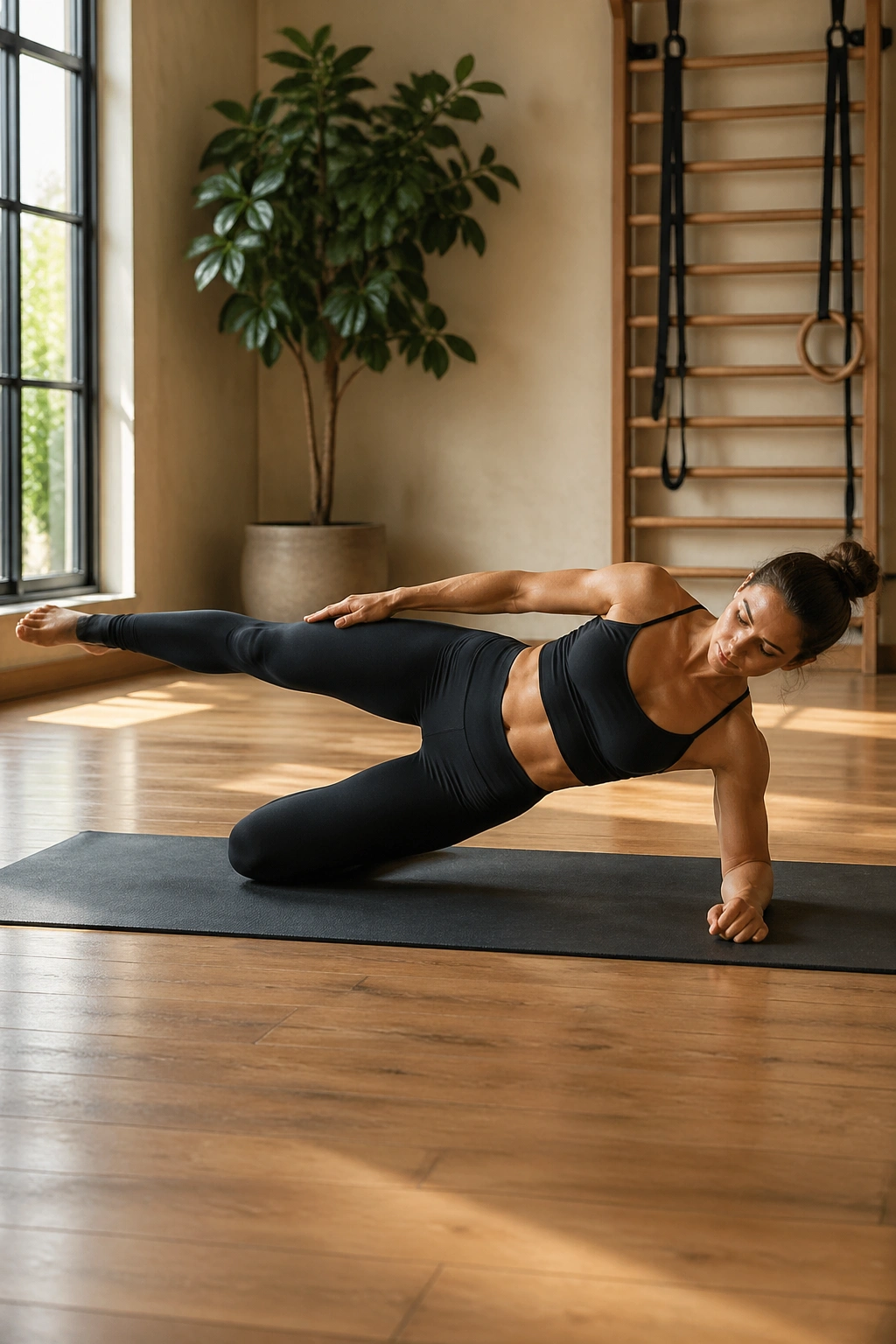
This is where Pilates stops being polite. The side waist, outer hip, inner thigh of the bottom leg, shoulder, and obliques all show up at once.
Set up in a side plank on your forearm with knees bent for the entry version, or legs long for the full version. Once stable, lift the top leg 6 to 8 inches and lower it without dropping into the shoulder. The bottom side of your body is doing as much work as the lifting leg, maybe more.
The move is brutal in a clean way because the pelvis has to stay stacked while your base narrows. That makes it one of the best exercises here for outer-thigh shape and trunk stability together. If full side plank is a mess, use the bent-knee version and nail that first. There is no shame in it. Bent-knee side plank can still torch you.
Take 6 to 8 lifts per side or hold the top leg up for 10 seconds. Your neck should stay long, and the supporting shoulder should feel packed down rather than shoved up into the ear.
18. Swimming Leg Beats
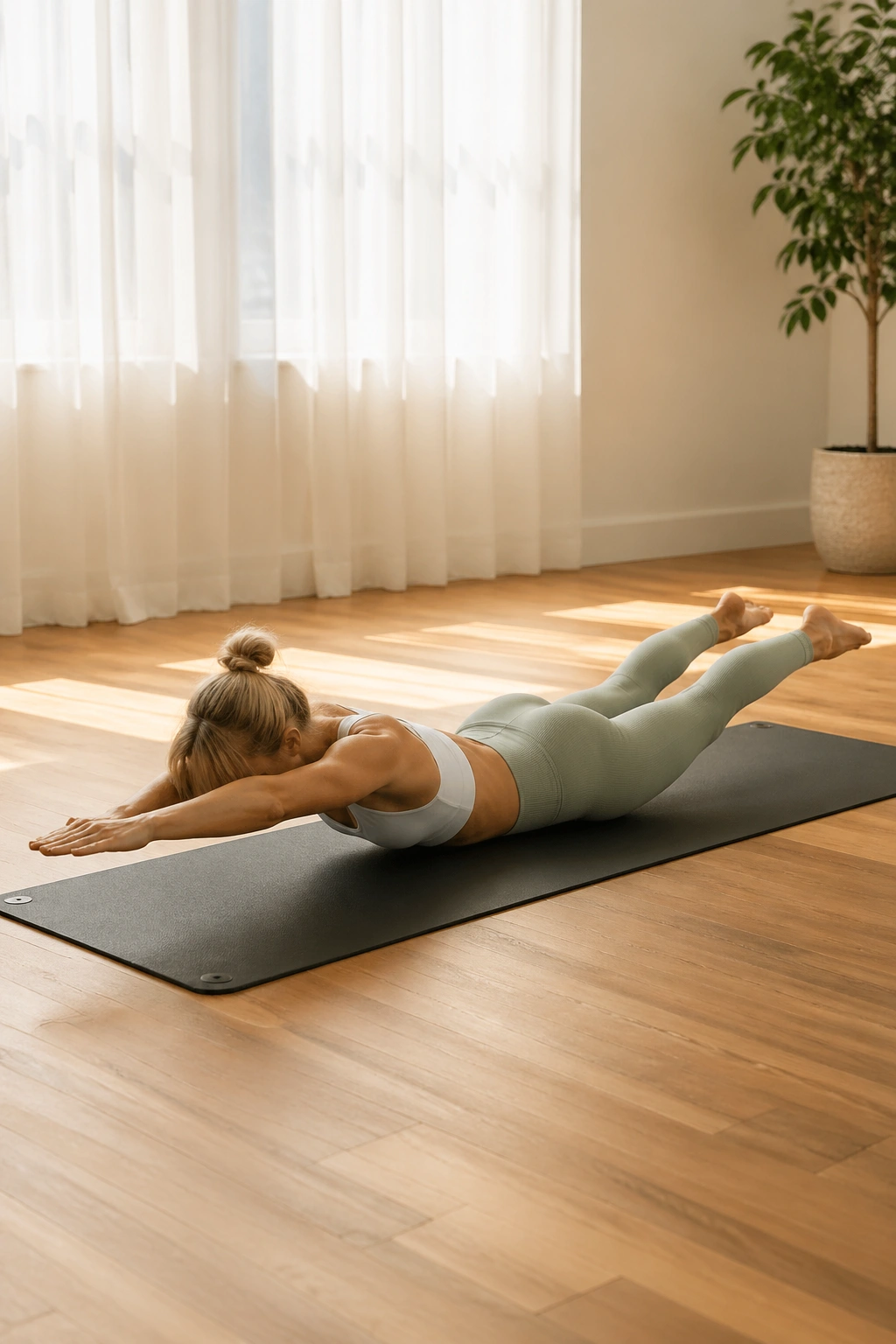
Unlike prone heel beats, this version puts the legs in a longer alternating pattern, which adds a different kind of back-of-thigh challenge. You get hamstrings, glutes, inner thighs, and spinal extension all talking to each other.
Lie on your stomach with arms long overhead or bent in a goalpost if the shoulders prefer that. Lift the chest, arms, and legs a few inches, then flutter the legs quickly from the hips. The motion is small and crisp. Think of splashing water with the tops of the feet rather than kicking from the knees.
This move is less about raw range and more about endurance. After 15 seconds, the backs of the thighs start to complain—in a fair way—while the trunk works to stay long. If your lower back feels compressed, lower the chest a bit or leave the arms on the floor and do only the leg beats.
Aim for 20 to 30 seconds, rest, then repeat twice. It is a strong finisher after bridge or side-lying work because it hits the back line of the legs, which many thigh-focused routines miss.
19. Hot Potato
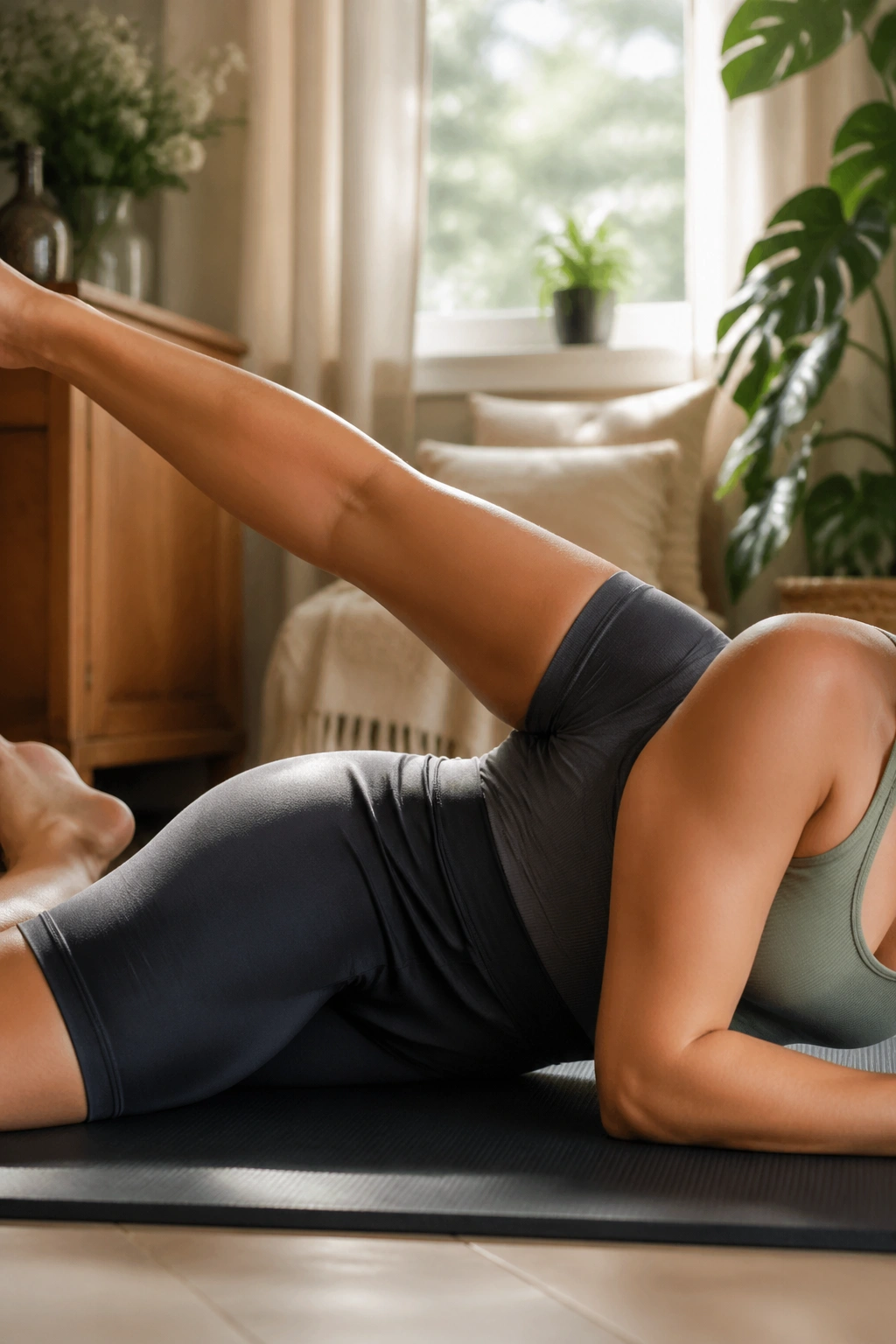
Pilates names can be absurd. Hot Potato sounds like a joke until your outer thigh starts shaking.
Lie on your side with the top leg lifted a little higher than hip height. Tap that top foot to the floor in front of the bottom leg, lift it, then tap it to the floor behind the bottom leg. Move in a quick front-back-front-back pattern while the trunk stays still. The leg stays lifted the whole time except for the taps.
Why This One Feels Different
You are changing direction fast without losing hip control. That wakes up the outer thigh and glute in a more athletic way than slow lifts do, while the standing side of your torso has to hold the shape.
Rep Target
- Do 8 taps front and 8 taps back as one set
- Keep the taps light
- Stay long through the waist
- Make the range smaller if the pelvis rocks
Use it late in the workout. It works best after your hips already know where stacked position is.
20. Wall Slide with Adductor Squeeze
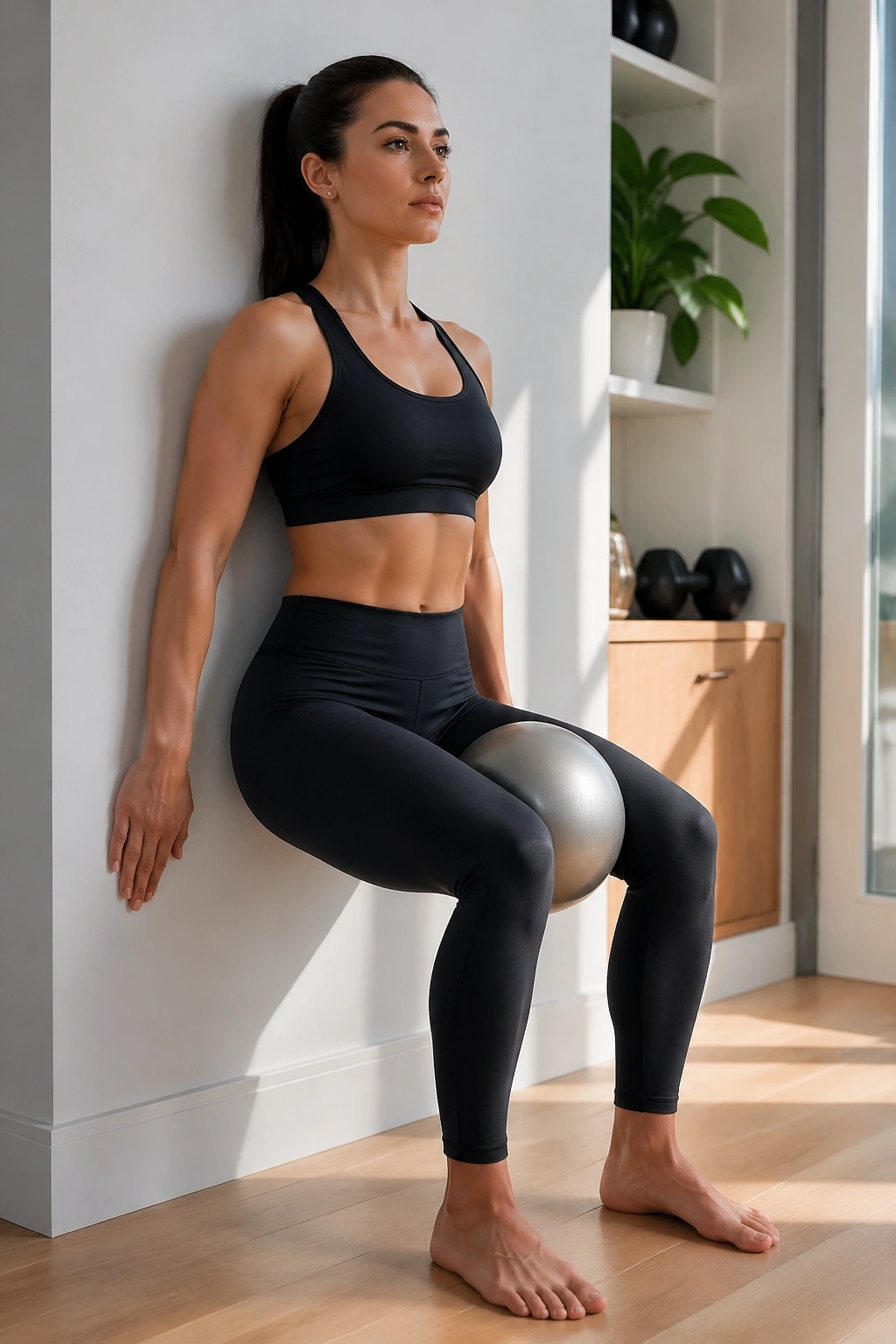
If you want a final move that ties the whole thigh together, this is a strong place to end. You get quads, inner thighs, glutes, and postural control in one shot.
Stand with your back against a wall, feet about 12 to 18 inches forward, and place a small ball, pillow, or rolled towel between the thighs. Slide down until the knees are bent around 45 to 60 degrees—no need to hit a deep squat—then squeeze the prop gently as you hold for 20 to 30 seconds. Stand back up, rest, and repeat.
The wall support lets you focus on leg line and steady pressure rather than balance. That is helpful when you are tired and still want good reps. The adductor squeeze keeps the knees tracking better and adds inner-thigh work to what would otherwise be a quad-only hold. You will feel the burn spread across the front and inside of the thighs after 10 seconds or so.
For a sharper finish, add 8 small heel raises while holding the wall slide. That extra piece turns the exercise into a full lower-body endurance set—and it is one of the easiest Pilates thigh slimming exercise finishers to plug into a short routine.
Final Thoughts
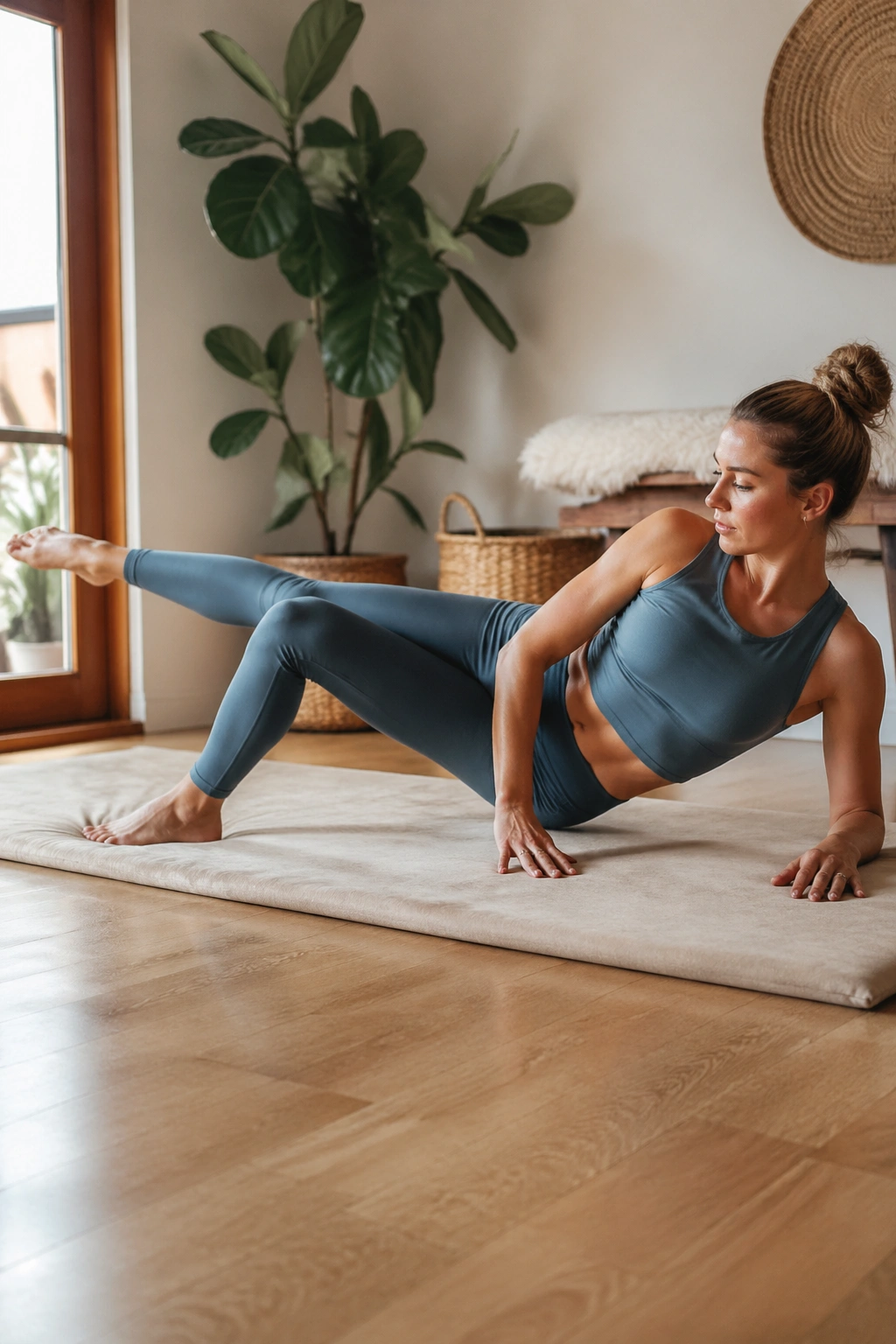
You do not need all 20 moves in one session. In practice, 6 to 8 well-chosen exercises done with clean form will beat a marathon routine full of rushed reps. A smart mix might look like one inner-thigh move, one outer-thigh move, one bridge, one standing move, one prone hamstring exercise, and one finisher.
If your goal is slimmer-looking thighs, pair these Pilates exercises with the unglamorous stuff that still matters: regular walking, enough protein to support muscle, and sleep that does not leave you dragging through every workout. The mat work shapes the line. Your daily habits decide how much of that line you see.
And slow down more than you think you need to. Pilates pays people back for patience.
