



Pilates exercises for men over 40 tend to work best when you stop treating them like a soft option and start treating them like repair work for stiff hips, sleepy glutes, and a lower back that complains after one bad chair or one hard workout.
A lot of men can still lift, run, or swing hard, yet they cannot rotate cleanly through the ribs or keep the pelvis quiet when the legs move. That mismatch is where Pilates earns its keep. It trains breathing, spinal control, hip mobility, and the kind of strength that shows up when you stand up from a low sofa or tie your shoes without making a face.
The exercises below move from simple floor control to more demanding balance and rotation, because jumping straight to flashy work is how people irritate a body that already feels tight. If your knees don’t love the floor, pad them. If your neck gets cranky, keep your head down longer. Sharp pain is a stop sign, not a training cue.
1. Pelvic Tilts for Men Over 40: The Reset Button for a Tight Lower Back
Start here. Pelvic tilts look almost too basic, which is exactly why they work. When a lower back has been doing too much of the work for too long, this little move teaches it to let go and lets your deep abs do their share.
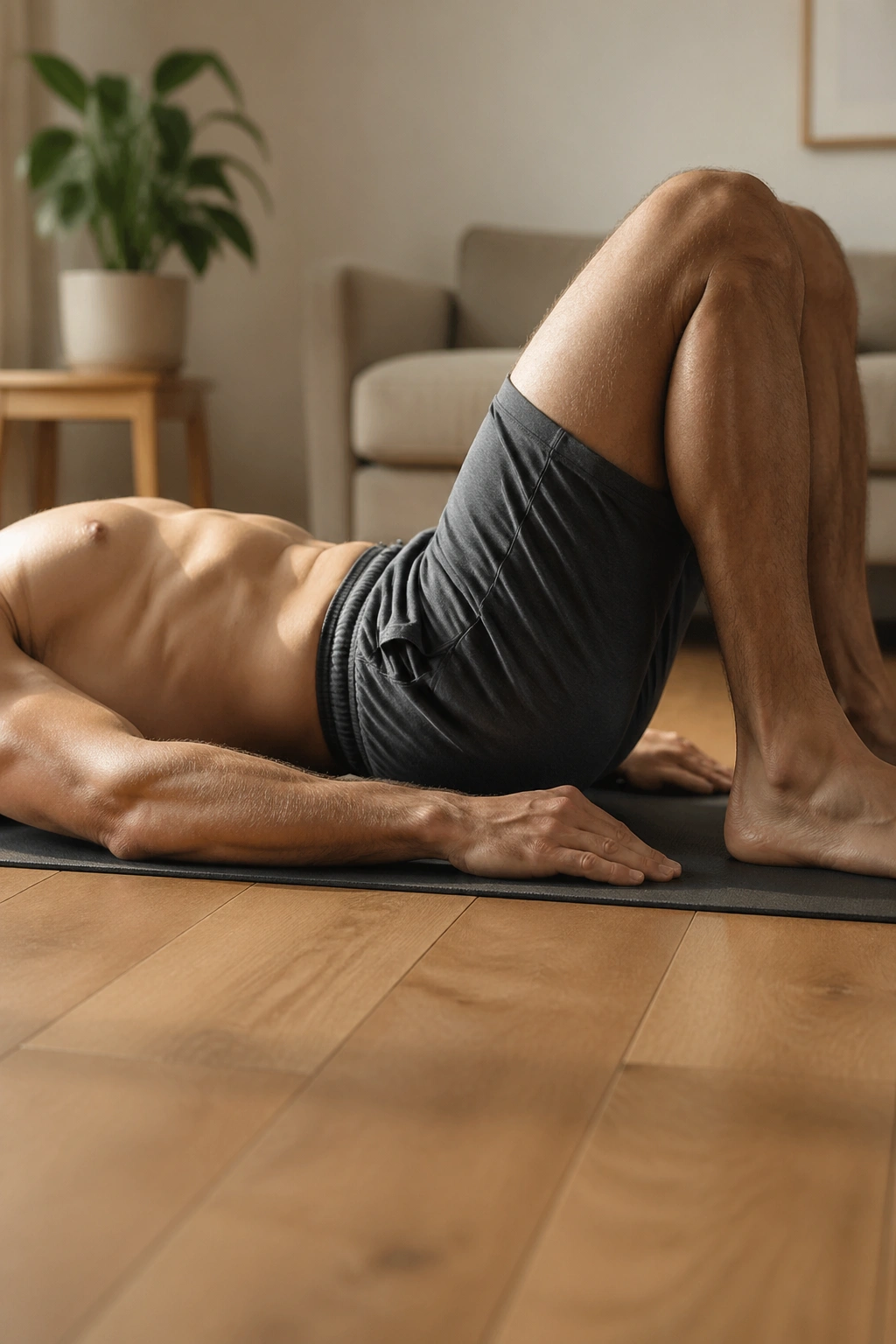
Lie on your back with knees bent and feet flat, hip-width apart. On the exhale, tip your pelvis so your lower back gently presses into the mat. On the inhale, return to a neutral spine with a tiny natural curve. Keep the motion small; this is about control, not drama.
A good pelvic tilt should feel like a quiet reorganization, not a crunch. If you catch yourself pushing hard through the glutes, you’ve made it too big. If your ribs flare up, shorten the range. Eight slow reps is plenty to start.
One sentence matters here: small range wins. Men who lift a lot often try to “help” with force, and that habit just skips the part that needs training most.
2. The Hundred: Breath, Heat, and Control Before the Core Gets Tired
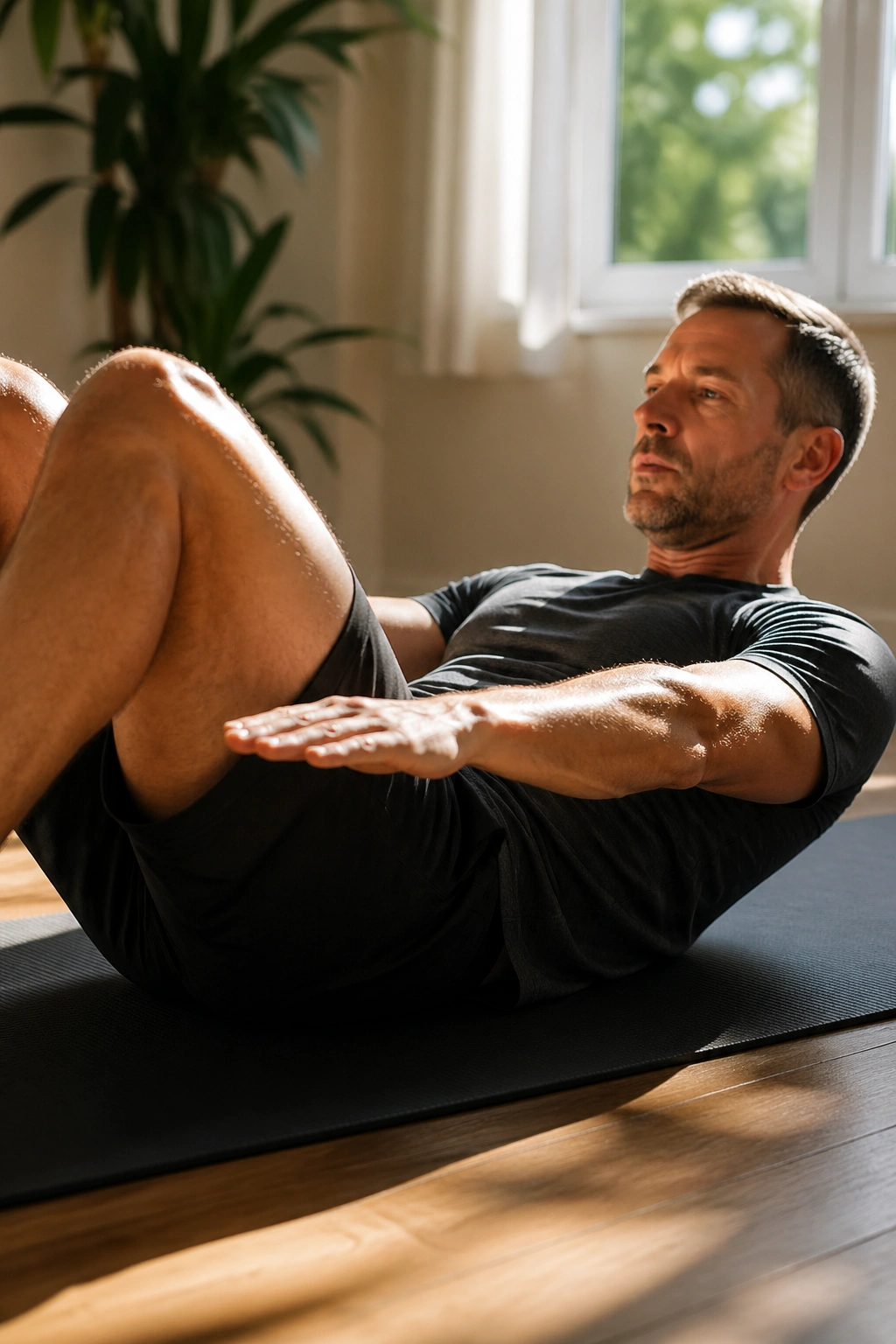
Why do people rush this one? The Hundred is only useful when the breath stays organized. Once the ribs start popping up and the neck starts helping, the exercise turns into a mess with nice intentions.
Why It Matters
The Hundred builds trunk endurance in a way plain crunches do not. You hold a position while the arms pump, and that makes your core work without letting the movement become sloppy. The breathing pattern also matters: five short inhales, five short exhales, repeated for ten cycles.
If your neck feels exposed, lower your head to the mat and keep the legs bent with feet down. That’s not a downgrade. It’s the correct version for a lot of men over 40, especially if the chest is tight from years of driving, desk work, or pressing weights.
How to Set It Up
- Lie on your back with knees bent, or lift the legs to tabletop if your low back stays calm.
- Lift the head and shoulders only if the neck stays long.
- Pump the arms small and fast, about 6 to 8 inches up and down.
- Keep the lower ribs heavy and the pelvis steady.
The goal is not to suffer. The goal is to keep breathing when the core gets tired, which is a skill that carries into almost every other exercise.
3. Chest Lifts: Stronger Abs Without Yanking on the Neck
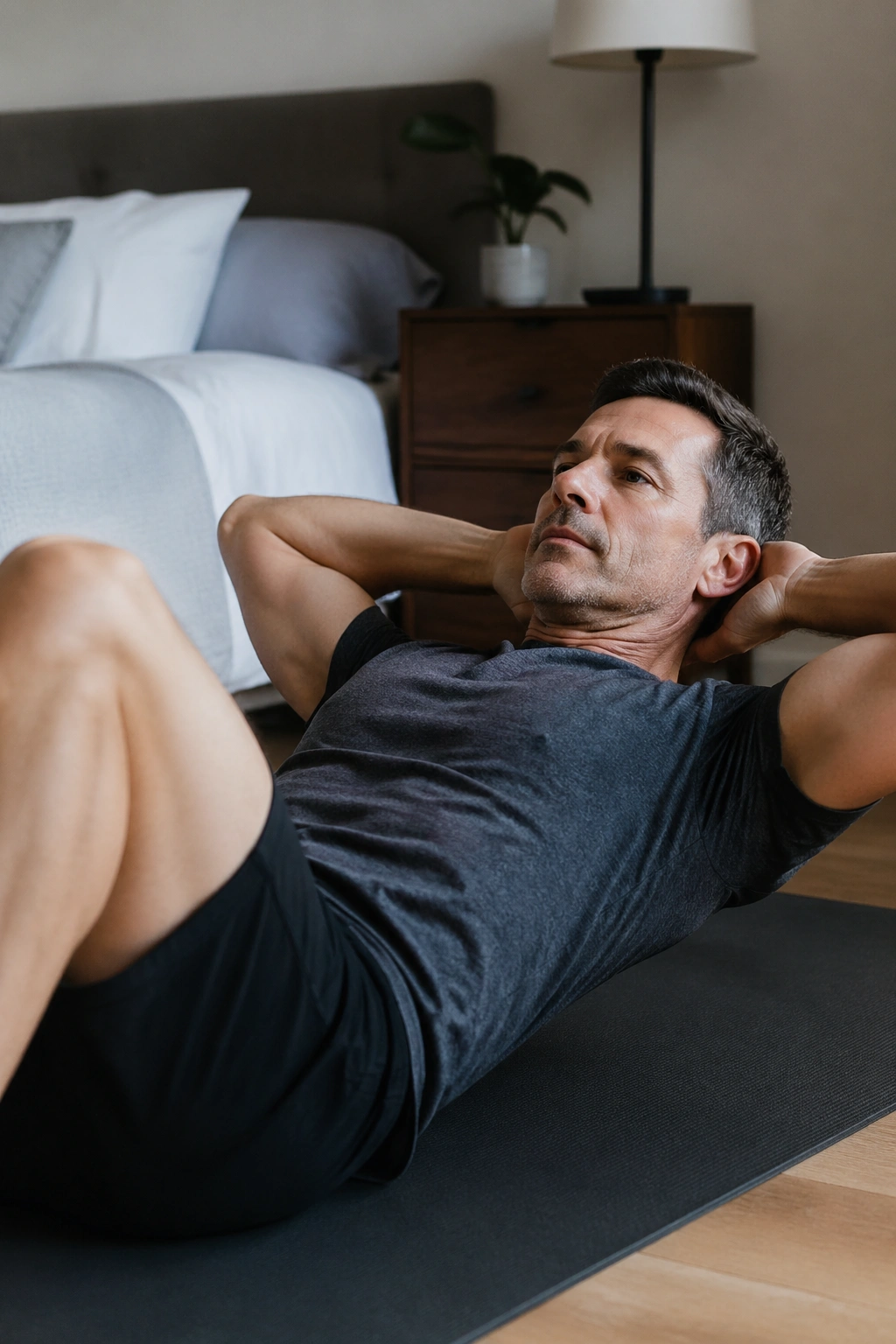
If crunches make your neck angry, chest lifts usually behave better. The movement is smaller than a full sit-up, and that’s the point. You’re training the front of the trunk without hauling the whole upper body around like a bad cable machine rep.
Lie on your back with knees bent and feet grounded. Support the head lightly with your hands or keep the arms long by your sides. Exhale, nod the chin, then lift the shoulder blades just off the mat while the gaze stays toward the thighs. Inhale down with control. Do not pull on the head.
The lift should be small enough that your ribs don’t flare and your low back doesn’t arch. If your chin juts forward, stop and reset. Five to eight clean reps beat fifteen messy ones every time.
A lot of men feel this in the upper abs first, then down near the lower ribs. Good. That’s a useful burn. If the neck takes over, the range is too big or the head is coming forward instead of the ribs curling up.
4. Toe Taps: A Quiet Test for Pelvic Stability
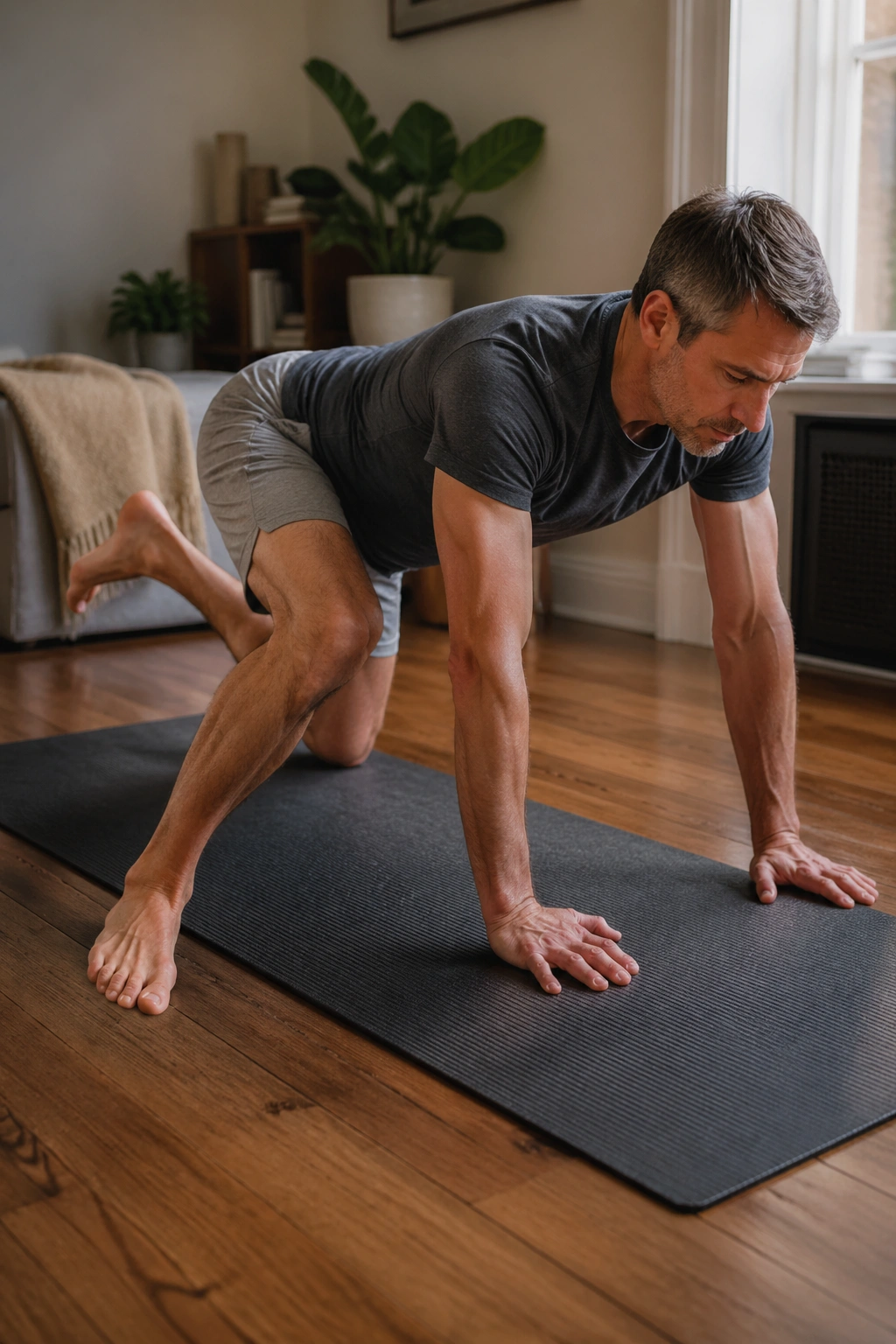
Toe taps look harmless. They are not. The exercise tells you fast whether your pelvis can stay still while one leg moves, and that matters more than people admit.
Start in tabletop with knees over hips. Keep one knee still while the other foot taps the floor lightly, then return it to tabletop. Alternate sides for 8 to 12 reps each. If the low back wants to arch, lower the legs less or keep both feet on the floor and work smaller.
The trick is to keep the ribs from flaring and the pelvis from rocking. Think of the torso as a tray carrying two glasses of water. No spill. No wobble.
What Good Form Feels Like
- The abs stay active, but not clenched.
- The lower back stays long against the mat.
- The neck stays relaxed.
- The moving leg feels light, not heavy.
This is a great one for men who squat or deadlift but still feel unstable when one leg leaves the ground. It fills in a gap that straight strength work sometimes leaves behind.
5. Shoulder Bridge: Glutes, Hamstrings, and a Spine That Moves One Vertebra at a Time
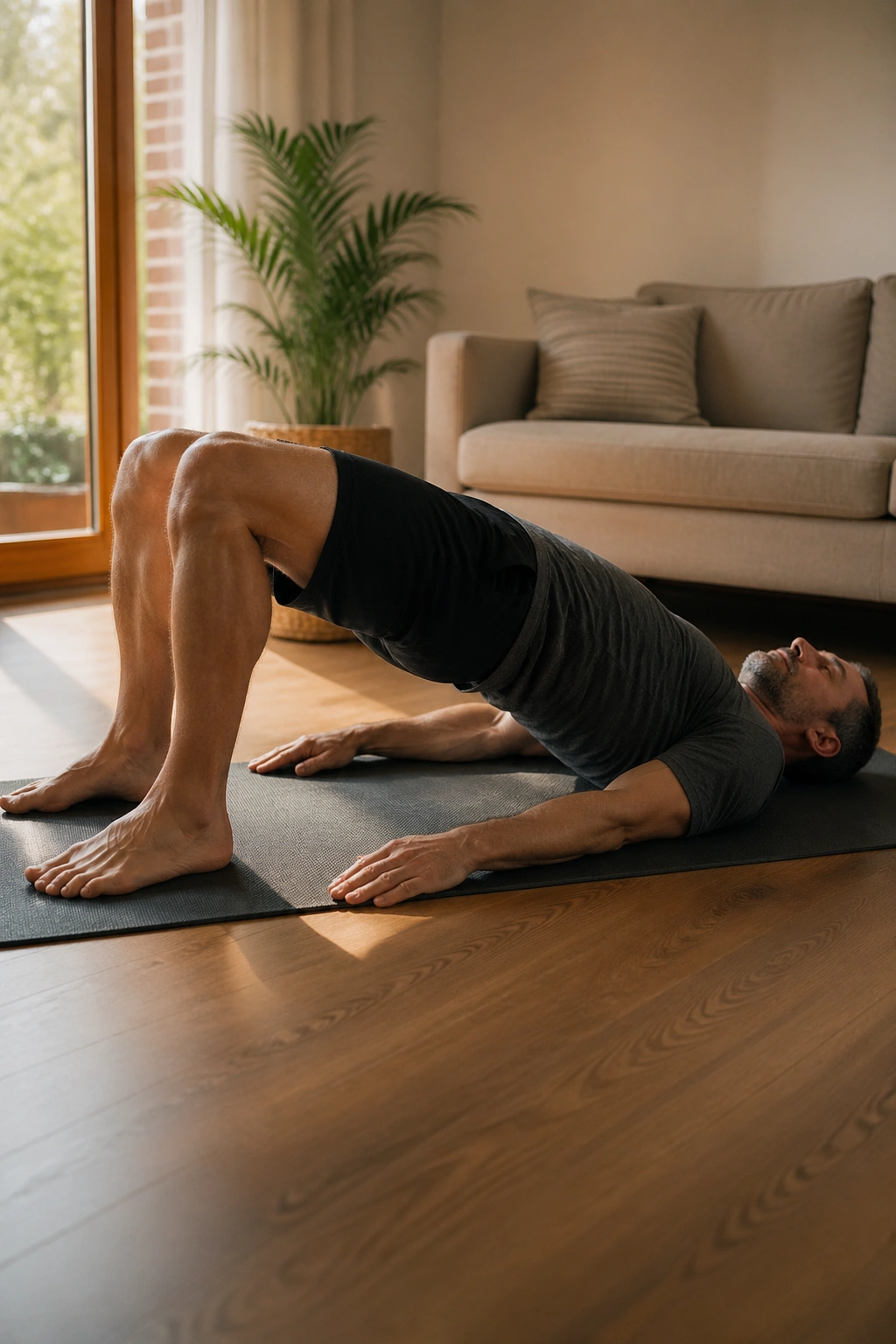
This is one of the best Pilates exercises for men over 40 because it does several jobs at once. It wakes up the glutes, frees the hips, and teaches the spine to roll up and down instead of locking into one shape.
Lie on your back with knees bent and feet hip-width apart. Exhale, tilt the pelvis slightly, then peel the spine off the mat until you’re resting on the shoulder blades. Inhale at the top. Exhale and roll back down one vertebra at a time. Six slow reps is a solid starting point.
The mistake I see most is people shoving the hips up with the low back instead of lifting through the hamstrings and glutes. Another common one: knees drifting apart. Keep them parallel. If the hamstrings cramp, move the feet a little farther from the hips and reduce the height.
One good rep feels smooth and segmented. The body should look like it’s unrolling, not flopping.
6. Single Leg Stretch: Keeping the Pelvis Honest While the Legs Switch
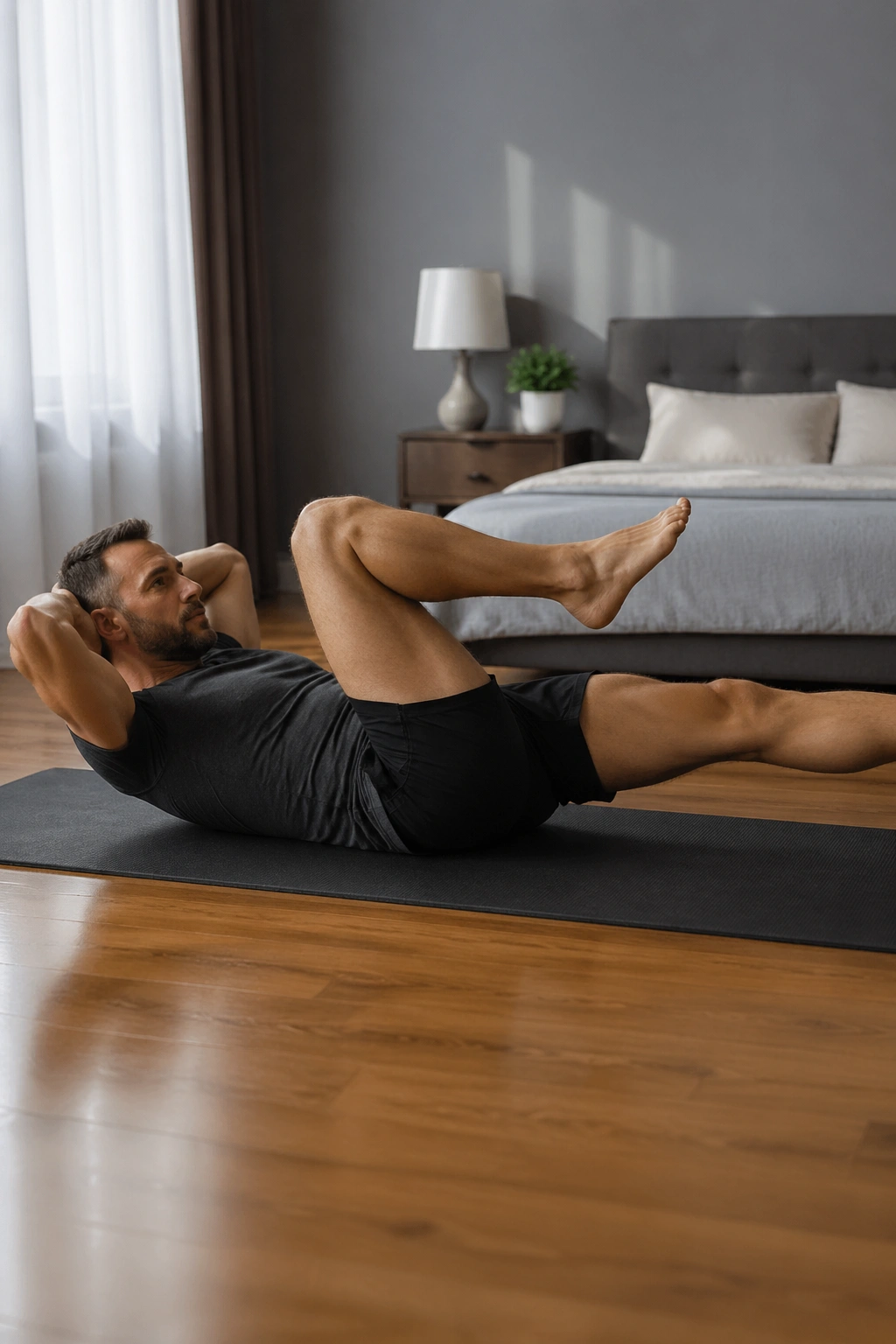
What makes this move so useful is also what makes it annoying. The legs keep changing, and the torso is supposed to stay calm. That is the whole game.
How to Keep the Pelvis Quiet
Lie on your back and bring one knee in while the other leg extends long at a low angle. Switch sides in a steady rhythm. Keep the pelvis heavy and the ribs pulled in. If the legs get too low and your back arches, bring them higher. There’s no prize for making it harder than it needs to be.
What to Watch For
- The neck should not jut forward.
- The elbows stay wide if your hands are behind the head.
- The extending leg can stay bent if hamstrings are tight.
- The low back stays quiet, not pinched.
Eight to ten switches per side is enough. This is not a race. It is a control drill, and men who sit a lot usually find out fast where their weak link is.
7. Double Leg Stretch: The Move That Exposes Weak Control Fast
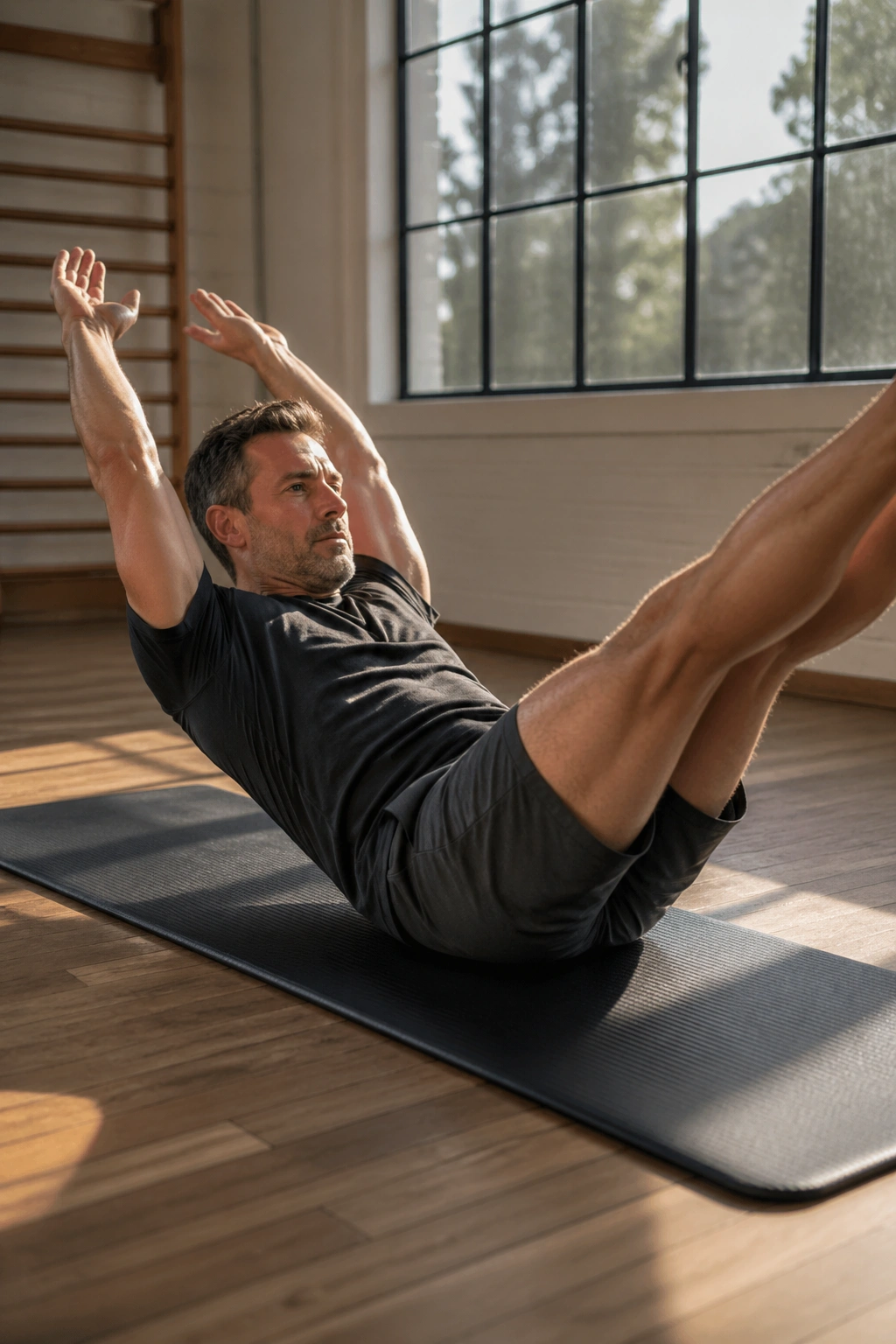
The first time you reach both arms and both legs away at once, you learn whether your middle section is awake. No hiding. The exercise is honest that way.
Start with both knees hugged in. Exhale as you reach the arms overhead and the legs long at the same time. Inhale as you circle the arms back around and bring the knees in. Keep the ribs from popping and the low back from arching. Six reps is enough for most people.
If the legs going low makes the back arch, raise them. If the neck feels crushed, keep the head down and just work the arm-and-leg pattern. Small changes make the move useful again.
The best version feels smooth and controlled, almost calm. The worst version looks like a fight with gravity. Pick the first one.
8. Spine Stretch Forward for Men Over 40: A Better Answer for Stiff Backs and Desk Shoulders
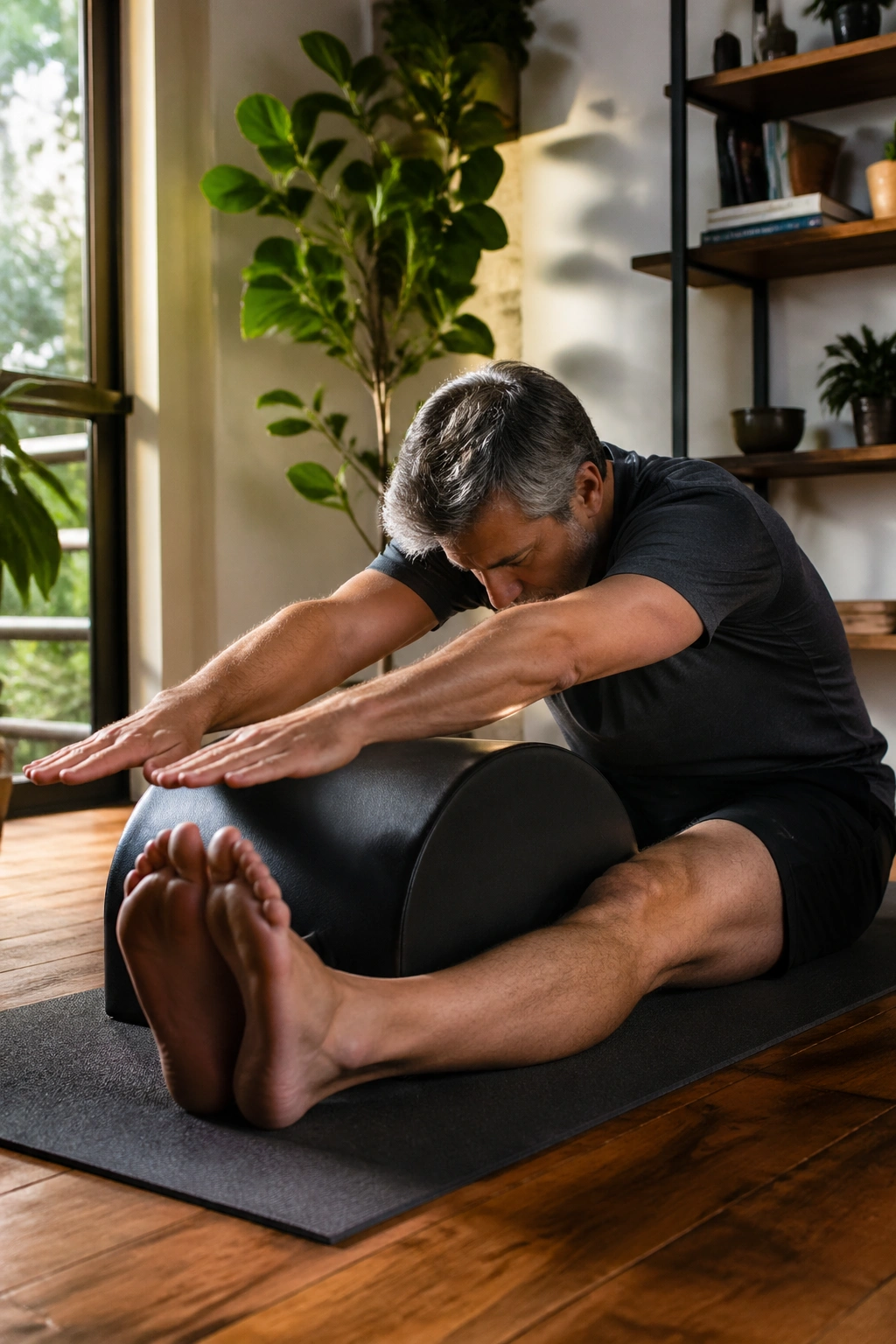
Why does a seated fold help so much? Because it asks the spine to move segment by segment instead of collapsing all at once. That matters when the upper back has gone stiff from too much sitting and too little rotation.
Sit tall with legs straight in front, or bend the knees if your hamstrings are grumpy. Inhale to grow up through the crown of the head. Exhale and round forward, reaching the arms ahead as if you’re sliding over a big barrel. Then stack back up slowly. Five slow rounds are plenty.
Keep the sit bones grounded. If your lower back rounds before the upper back moves, the range is too big. The point is not to touch your toes. The point is to lengthen the spine and stop the shoulders from owning the movement.
This one tends to feel best after a few breaths and a couple of easier floor exercises. A cold back folds badly. A prepared back folds well.
9. Saw: Rotation Without Heaving Through the Low Back
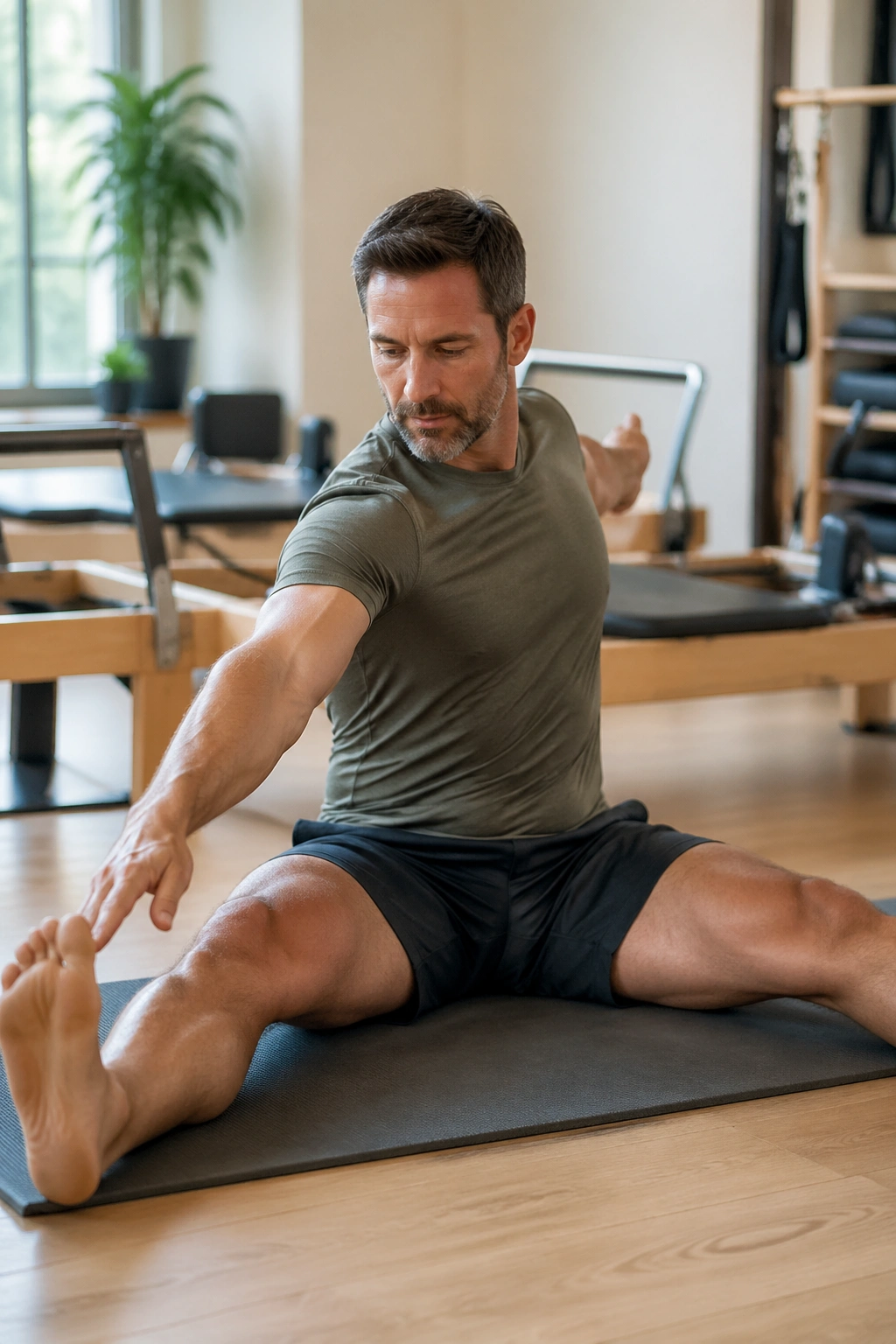
Golf swings, tennis serves, and even simple reaching all want rotation. The problem is that many men borrow that twist from the lower back, and the low back usually hates the arrangement.
Sit with the legs open in a wide V if the hips allow it, or keep them narrower. Stretch both arms out at shoulder height. Twist from the ribs, then reach the opposite hand toward the outside of the little toe in a smooth “sawing” motion. Come back up and switch sides. Four to six rounds each way works well.
A good Saw is less about depth and more about staying long while you rotate. If one hip lifts off the mat, you’ve gone too far. If the chest collapses, back off and keep the movement smaller. The twist should come from the mid-back, not from yanking the pelvis around.
A detail people miss: breathe out as you twist. That helps the ribs close and makes the rotation feel cleaner.
10. Side-Lying Leg Lifts: Small Range, Serious Hip Work
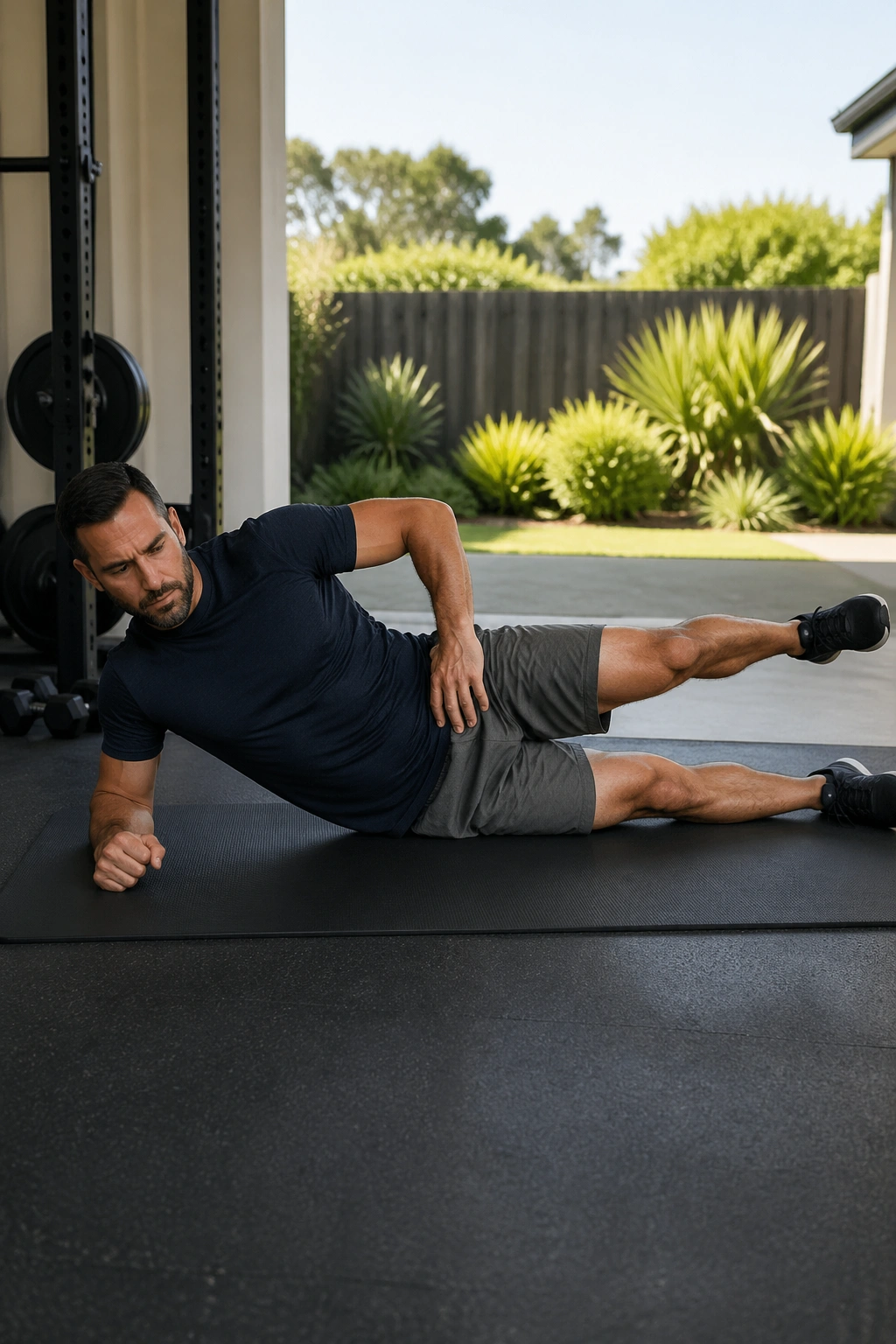
The smallest moves in Pilates often expose the most lazy glute work. Side-lying leg lifts are one of those moves. They look polite. They are not.
Lie on one side with the body in one long line. Lift the top leg a few inches, then lower it with control. Keep the foot slightly turned down so the front of the hip does not take over. Ten to twelve reps on each side is enough to make the outer hip wake up.
What Your Working Hip Should Feel Like
- The side of the glute, not the front of the hip, should light up.
- The waist should stay long.
- The pelvis should not roll back.
- The leg should lift smoothly, not jerk upward.
If the top hip keeps drifting behind you, put your back against a wall for feedback. That simple trick can clean up the whole exercise. And yes, the range can be tiny. That’s normal.
11. Clamshells: The Side-Hip Exercise Men Skip and Then Need Most
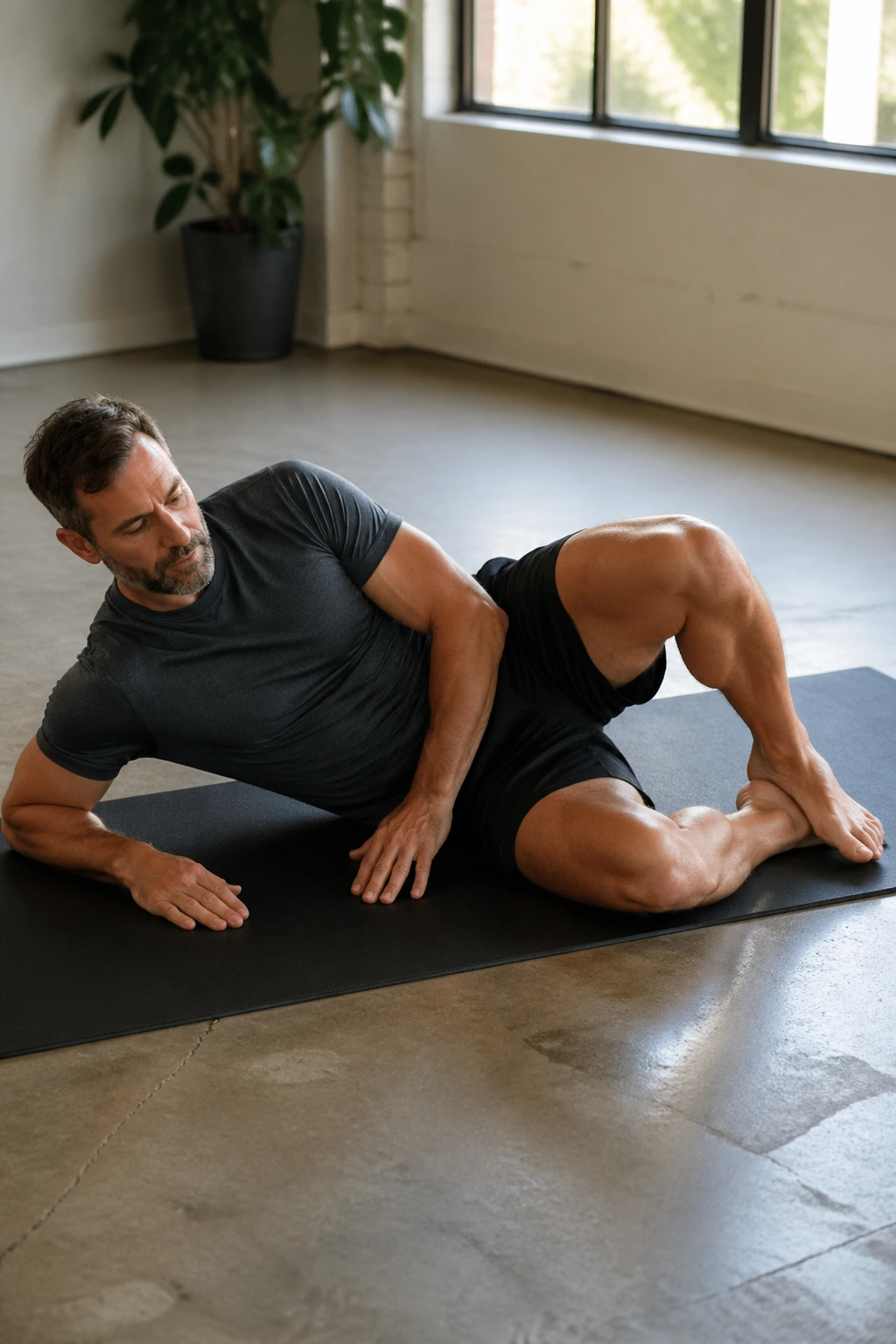
If your knees cave in on stairs or your hips feel sloppy when you walk fast, clamshells deserve more attention. They target the outer hip in a way that helps the pelvis stay steadier in everyday movement.
Lie on your side with knees bent and heels together. Keep the feet touching, then open the top knee like a clam shell without rolling the pelvis backward. Close it slowly. Twelve to fifteen reps each side is a good dose. Add a light mini band later if the body is ready.
A lot of men turn this into a hip-flexor movement by lifting too high. Don’t. The opening should be modest and controlled. You want the deep hip rotators and glute medius to do the work, not momentum.
This is one of those boring exercises that pays rent. It helps with balance, knee tracking, and the awkward side-to-side stability people notice most when they start getting older and less tolerant of sloppy mechanics.
12. Swimming: Posterior-Chain Work That Feels Light but Burns
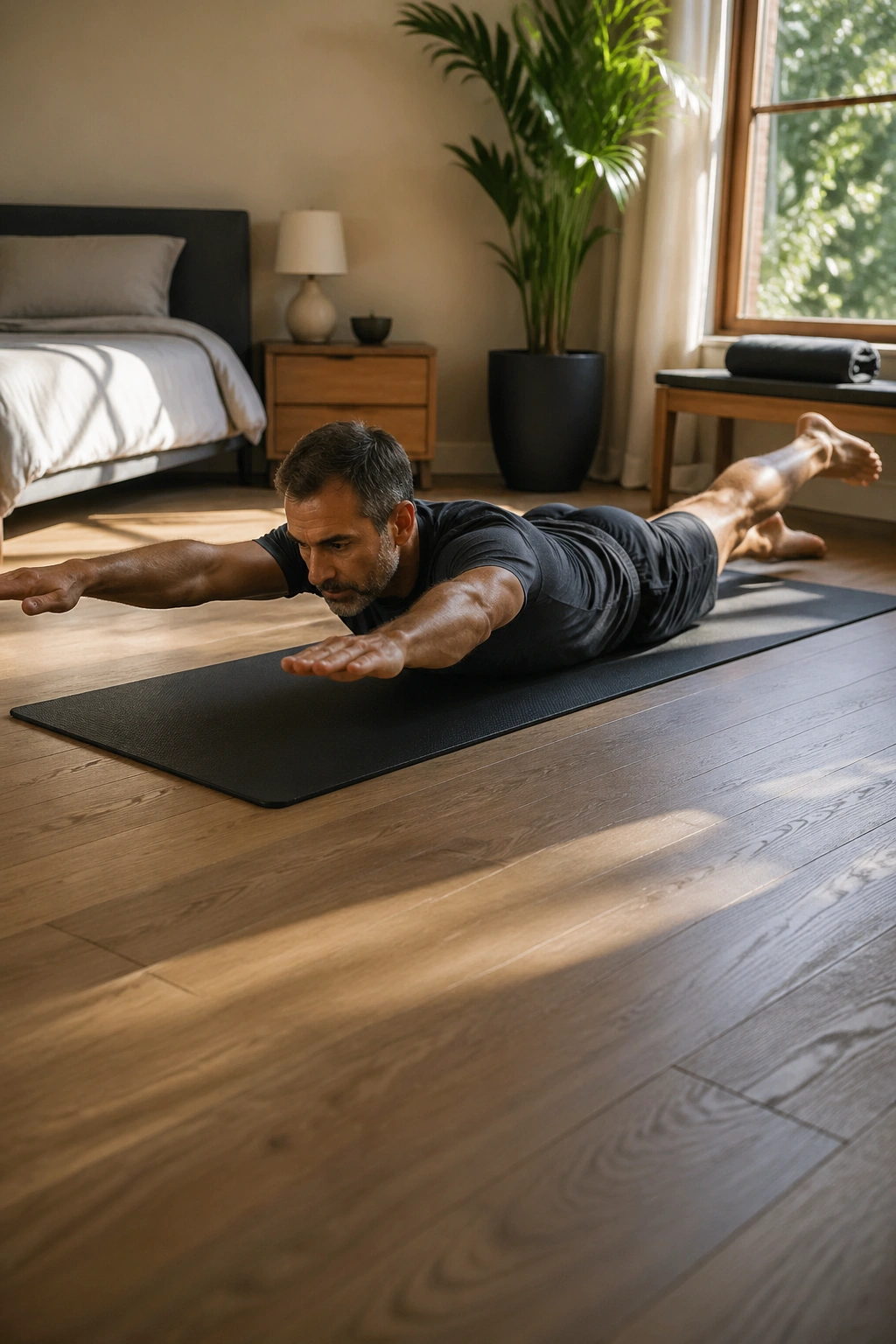
Face down, ribs heavy, neck long. That setup alone tells you a lot. If the low back pinches before you even start lifting, the lift is too big.
Extend the arms long in front and the legs long behind. Lift opposite arm and leg, then switch in a quick but tiny rhythm, like a slow flutter through the whole body. Keep the movement small enough that the pelvis stays mostly quiet. Twenty to thirty seconds is a good start.
Swimming is one of the cleanest ways to train the back of the body without heavy loading. It asks for glutes, upper back, and spinal extensors to work together. Good posture is not just about standing tall; it’s about being able to hold that shape when fatigue sets in.
The neck should stay in line with the spine. If you have to crane the chin to see forward, rest your forehead on the mat for a few breaths and try again.
13. Swan Prep: Opening the Front Body Without Cranking the Lumbar Spine
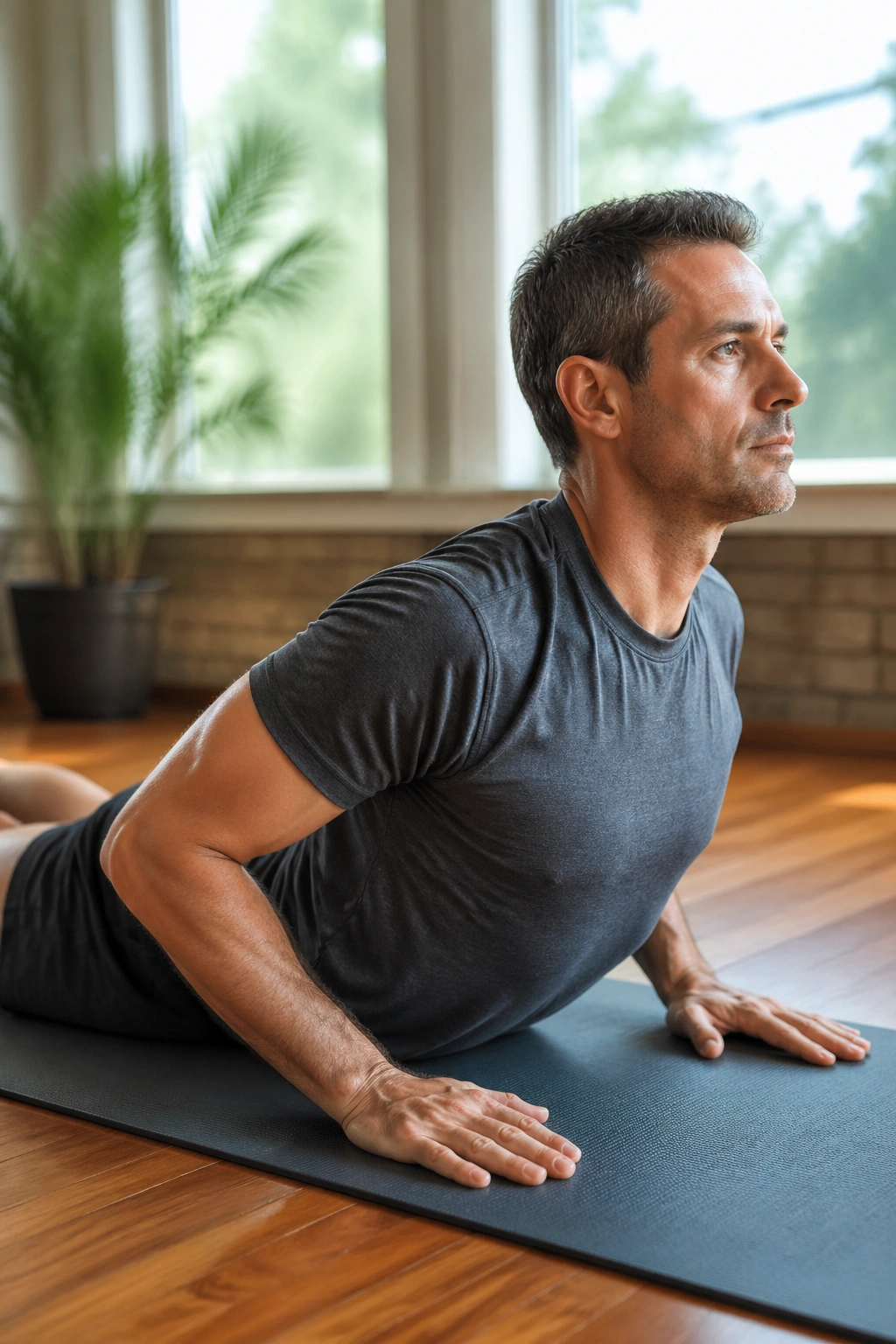
This is not a backbend contest. Swan prep is a gentle extension exercise, which means it should lengthen the front of the body while the low back stays calm.
Lie face down with hands under the shoulders, elbows bent. Press lightly into the mat and lift the chest a few inches, keeping the pubic bone grounded. Lower with control. Five to six small reps are enough. If the low back pinches, make the lift smaller or stay on the forearms.
Where the Effort Should Live
The work belongs in the upper back, not in a jammed lumbar spine. The chest should feel open, the neck long, and the shoulders away from the ears. If you feel a hard squeeze at the base of the spine, stop and reduce the range immediately.
This move is especially useful for men who spend a lot of time hunched over a steering wheel or keyboard. It gives the front body a counterbalance, and that balance matters more than brute strength.
14. Mermaid: Side Body Length for Stiff Ribs and Tight Lats
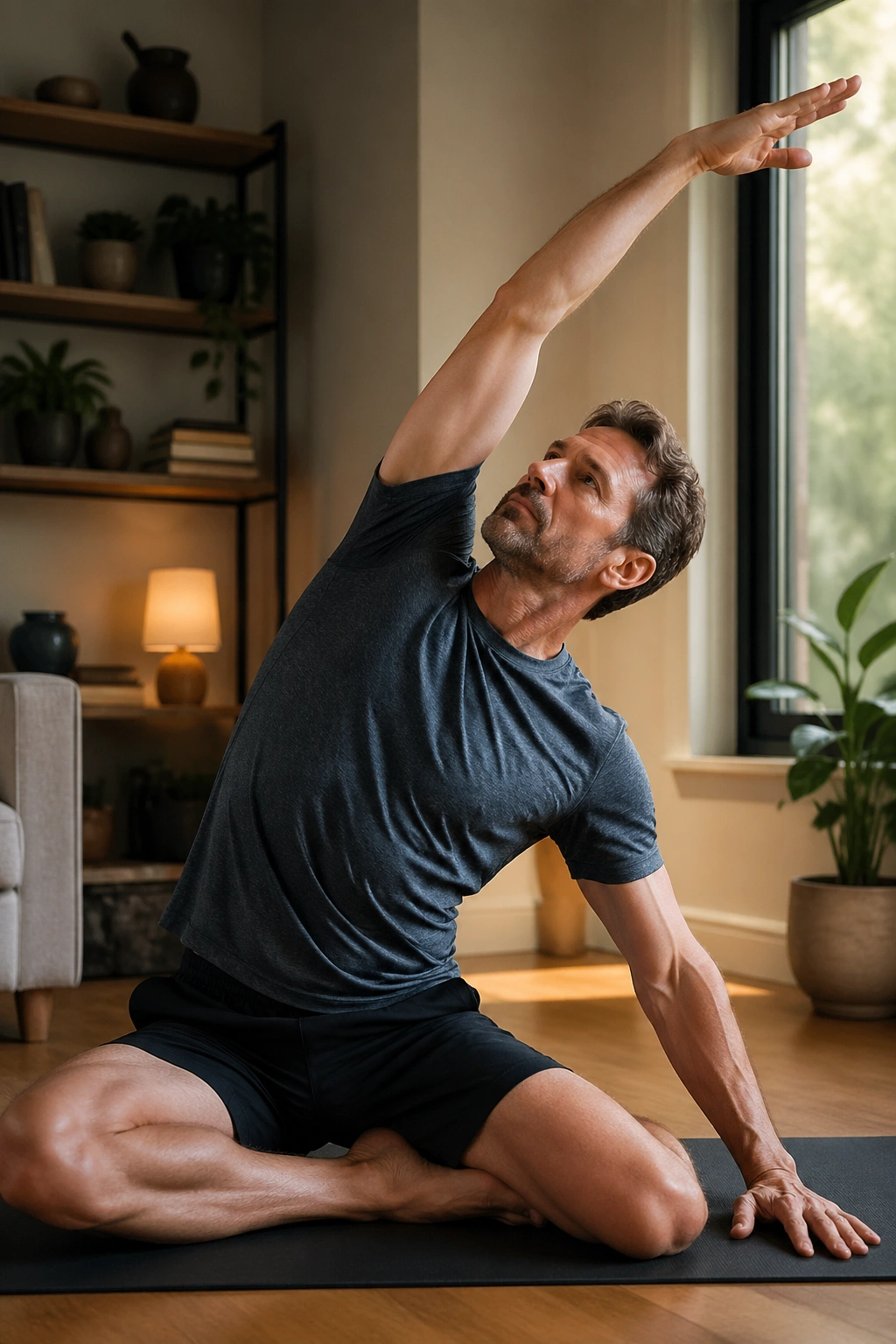
Can a side bend really make you feel taller? Yes, if you do it with some control and do not collapse into the hip.
Sit with the legs folded to one side or in a comfortable position that your hips tolerate. Reach one arm overhead and bend sideways, keeping both sit bones as grounded as possible. Breathe into the side ribs for three to five breaths, then switch sides. If the floor feels far away, sit on a folded towel or cushion.
The value here is not just side-bending. Mermaid opens the lats, the side waist, and the ribs that often get stuck when people spend too much time in a forward-facing posture. That stiffness shows up in shoulder work, breathing, and even walking mechanics.
Keep the movement smooth and unhurried. If the top shoulder creeps toward the ear, lower the range and lengthen first.
15. Rolling Like a Ball: Balance, Spinal Control, and a Little Humility
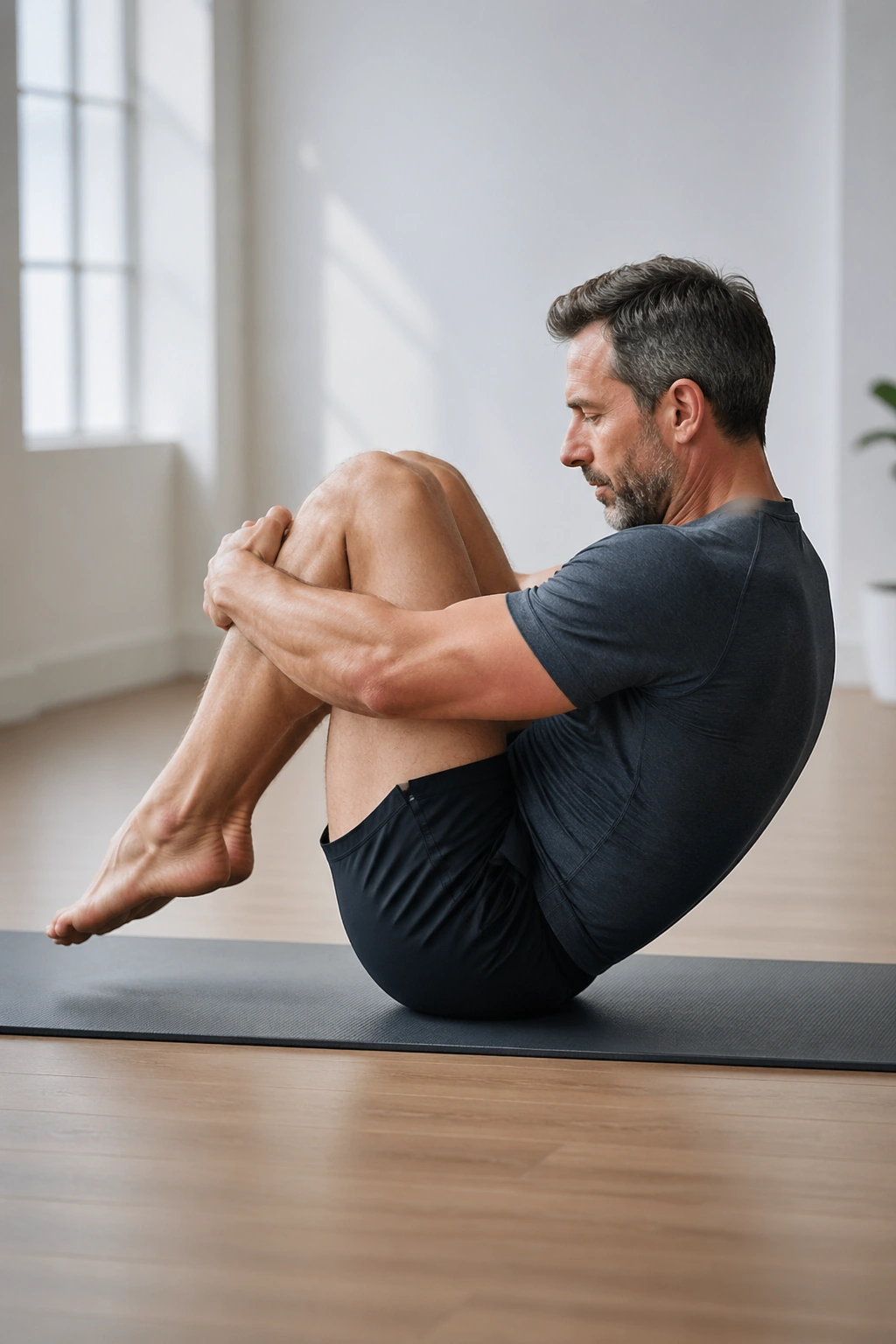
This one is part core drill, part honesty test. Rolling Like a Ball asks you to keep your shape while your body moves through space, which is harder than it sounds.
Sit with knees bent and hold behind the thighs or shins. Balance back on the sit bones, round the spine, then roll back to the shoulder blades and return without letting the feet slam down. Five to eight reps is enough. The movement should feel smooth and even, not like a coin bouncing off the floor.
If your lower back is irritated by flexion, skip this one for the day. No exercise is sacred. But if it feels fine, it teaches control in a way that carries over to getting up from the floor, navigating uneven ground, and staying coordinated when tired.
A good rep leaves you feeling organized, not rattled.
16. Side Plank: Obliques, Shoulders, and Hip Stability in One Hold
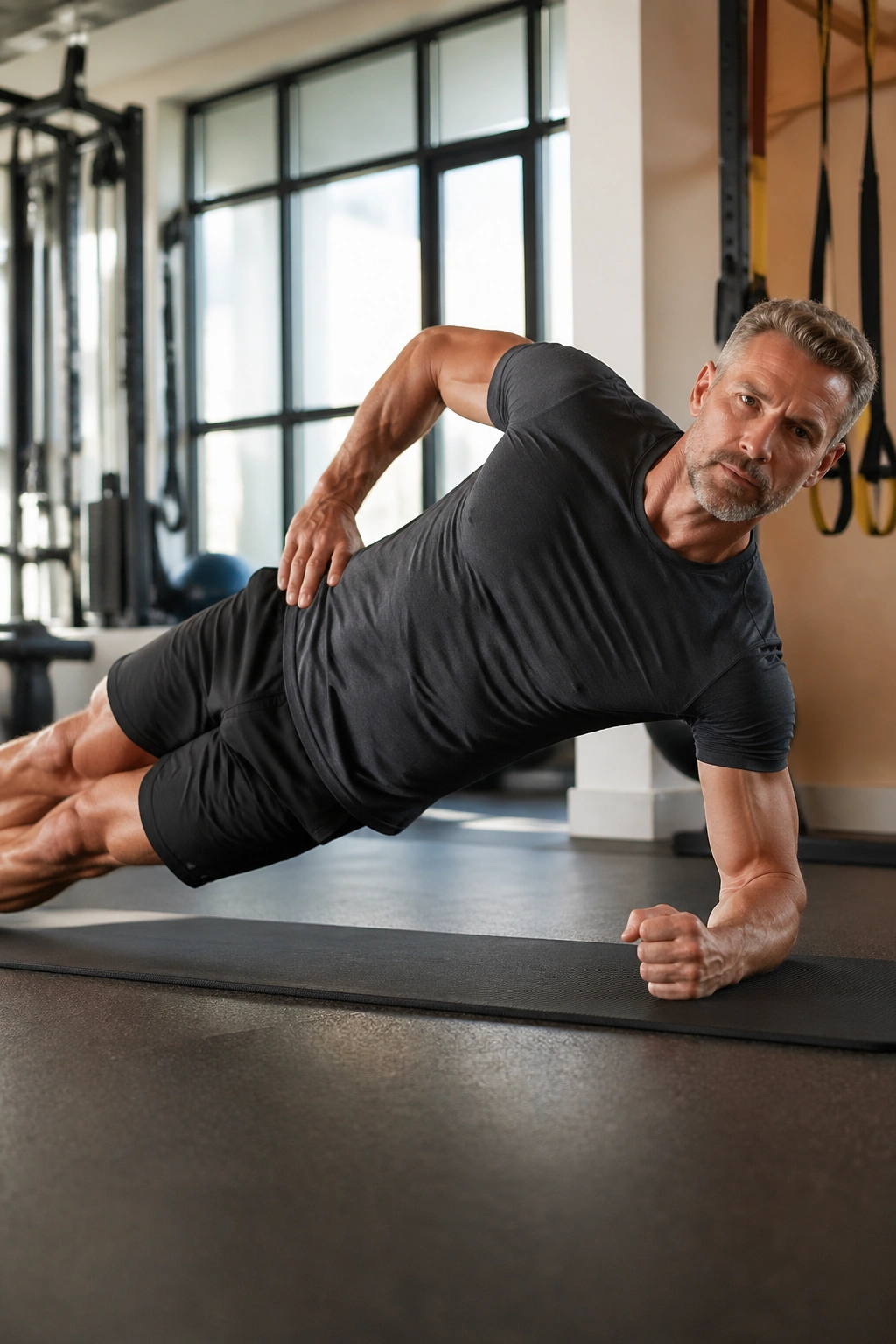
A side plank tells you quickly whether your shoulder and hip are in the same conversation. If they aren’t, the pose shakes, sags, or dumps all the work into the wrist and neck.
Set the elbow under the shoulder and stack the feet, or keep the bottom knee down for a modified version. Lift the hips and hold for 15 to 25 seconds on each side. Keep the top shoulder away from the ear and the ribs from twisting forward.
This is one of the best exercises in the whole list for lateral core strength. It helps with carrying loads, resisting side bend, and keeping the pelvis steady when one leg works harder than the other. That matters in walking, lunging, and sports that involve cutting or turning.
If the wrist bothers you, drop to the forearm. If the shoulder feels pinchy, shorten the hold and reset your stack.
17. Quadruped Rock-Backs: The Easiest Way to Get Hips Moving Again
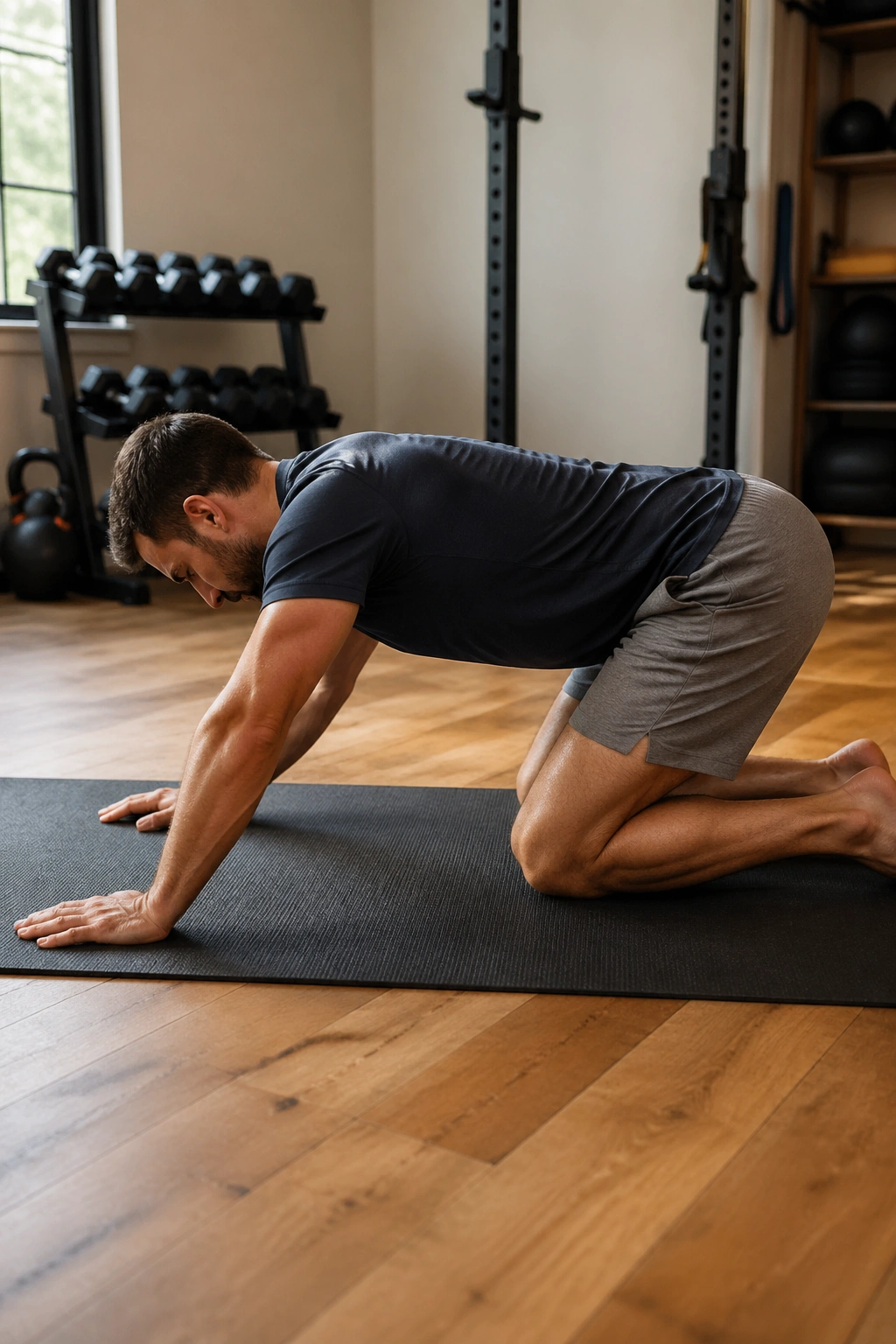
On a stiff morning, this can feel like a small mercy. It’s simple, but it unlocks a lot: hips, inner thighs, ankles, and a spine that needs to learn how to stay long while the pelvis shifts.
Why This Humble Drill Matters
Start on all fours with hands under shoulders and knees under hips. Keep the spine neutral, then rock the hips back toward the heels and return to start. Do 8 to 10 reps. A folded towel under the knees helps a lot if the floor is unforgiving.
How to Make It Work for Tight Knees or Hips
- Keep the motion slow.
- Stop before the spine rounds.
- Let the hips go only as far as they can without strain.
- Breathe out on the rock-back and inhale on the return.
People often skip this because it looks too easy. That’s a mistake. The pattern teaches hip flexion without loading the knees hard, and it often makes the next exercise feel cleaner.
18. Standing Roll Down for Men Over 40: Bringing Pilates Into Real Life
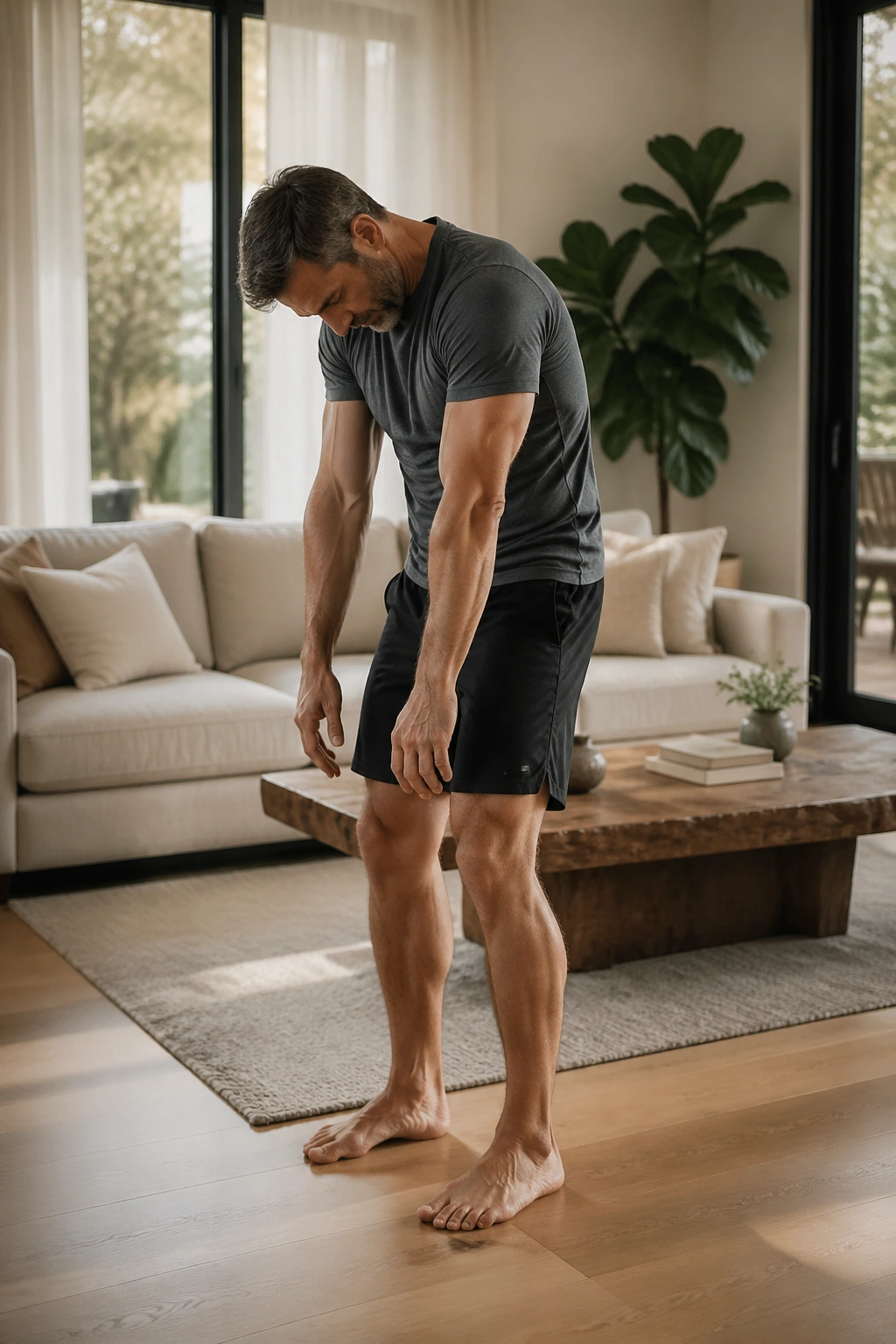
If you want Pilates to carry into walking, lifting, and bending, finish standing. The standing roll down takes the spine out of the floor and asks it to move in the position life actually uses.
Stand with feet hip-width apart and soften the knees. Exhale, nod the chin, and let the head, shoulders, and upper back peel forward one section at a time. Hang there if the hamstrings are tight, then roll back up slowly, stacking the spine until you’re tall again. Three to five slow reps is enough.
The best version feels controlled from top to bottom. If you rush the way back up, the work disappears. If your knees lock, you lose the benefit. Keep a tiny bend in the legs and let the whole back chain participate.
This is a great test at the end of a session. If the roll down feels smoother on the third rep than it did on the first, your body is already responding.
Final Thoughts
The best Pilates exercises for men over 40 are the ones that clean up the boring stuff: breathing, pelvic control, spinal motion, and hip stability. That is the work that makes everything else feel less clunky.
If you only have a short window, pair one core exercise, one hip exercise, and one standing drill. Pelvic tilts, shoulder bridge, and standing roll downs are a solid three-move combo. Clean reps beat a long messy session.
Stick with the moves that make you feel taller, looser, and more organized when you stand up. That is usually the sign you picked the right ones.
