



A strong core changes everything in Pilates. Not the flashy parts. The quiet parts. The moment your ribs stay heavy while your legs float, or your pelvis stops wobbling while one hip works harder than the other, you feel what advanced Pilates workouts for strong cores are really for: control that holds up when things get ugly.
That’s the big divide between beginner mat work and the advanced stuff. Beginner Pilates teaches shape. Advanced Pilates asks whether you can keep that shape while leverage, speed, and fatigue start to mess with you. The moves get longer. The holds get meaner. The range gets smaller in the best possible way.
And no, a strong Pilates core is not just a tight stomach. It’s the deep wall of the abdomen, the obliques, the diaphragm, the pelvic floor, and the muscles that keep your spine honest when your legs are in motion. If one part starts freelancing, you know it immediately. Usually in the lower back. Sometimes in the neck. Occasionally in both.
These eighteen workouts live in that harder place. Some are classical, some are a little more gym-floor friendly, and all of them demand that you keep breathing when you’d rather grunt and hope for the best. That’s the point.
1. The Hundred With Straight-Leg Lowering
The Hundred is old news until you add straight-leg lowering. Then it stops feeling like a warm-up and starts acting like a lie detector for your trunk.
Where the Burn Should Land
The work belongs in the deep abdominal wall, not the hip flexors and not the front of the neck. If your thighs are burning first, your legs are probably doing too much. If your neck is already angry before the fifth breath cycle, your chest is too high or your chin is tucked too hard.
Hold the legs at a height where the low back stays anchored. That’s the whole game. Lower them 2 to 6 inches, not 18. Small range, big demand.
- Keep the arms pumping from the shoulders, not the wrists.
- Exhale for 5 counts, inhale for 5 counts.
- Float the legs lower only while the waist stays broad.
- Stop the moment your ribs flare.
Best cue: think heavy ribs, light legs. That one fixes more than most people expect.
How to Make It Harder Without Getting Sloppy
Once the regular hold feels steady, straighten the legs one at a time for 2 counts each, then return to the hover. That tiny change makes the lower abs work harder than another ten rushed reps.
Do not chase bigger leg circles or faster arm pumps. Faster is not cleaner. It just hides weak control for a few seconds.
2. Single-Leg Stretch With Full Body Curl
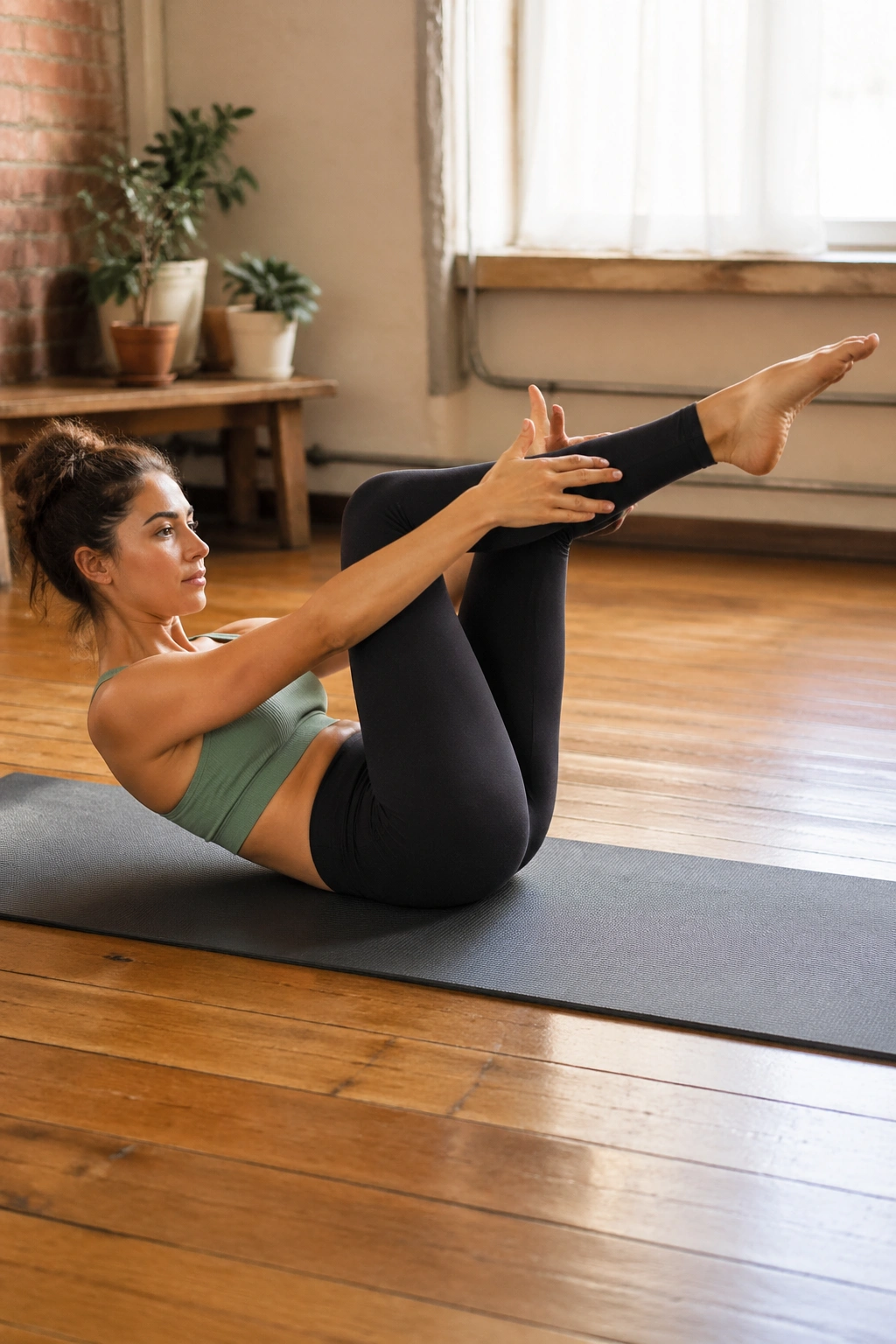
Can you keep your pelvis still while one leg moves like a piston? The single-leg stretch will tell you fast.
The advanced version starts with a deeper curl and a slower leg switch. That slower switch matters. It keeps the front of the hip from stealing the load and gives the lower belly a chance to do the job it is supposed to do.
Press the pulled-in knee into your hands for a second, then switch with control. The leg that extends should reach long, not low. If it goes too far toward the floor, your back usually arches to save it. Bad trade.
A lot of people rush this move because it feels familiar. I don’t love that habit. The speed turns the exercise into a bicycle blur, and the curl gets shallower with every rep. Keep the chest lifted, keep the breath clean, and let the legs move like they have to pass a test.
The best version leaves you with a warm line through the lower abs and a little shake around the obliques. Good. That shake is honest.
3. Double-Leg Stretch With Hover Pause
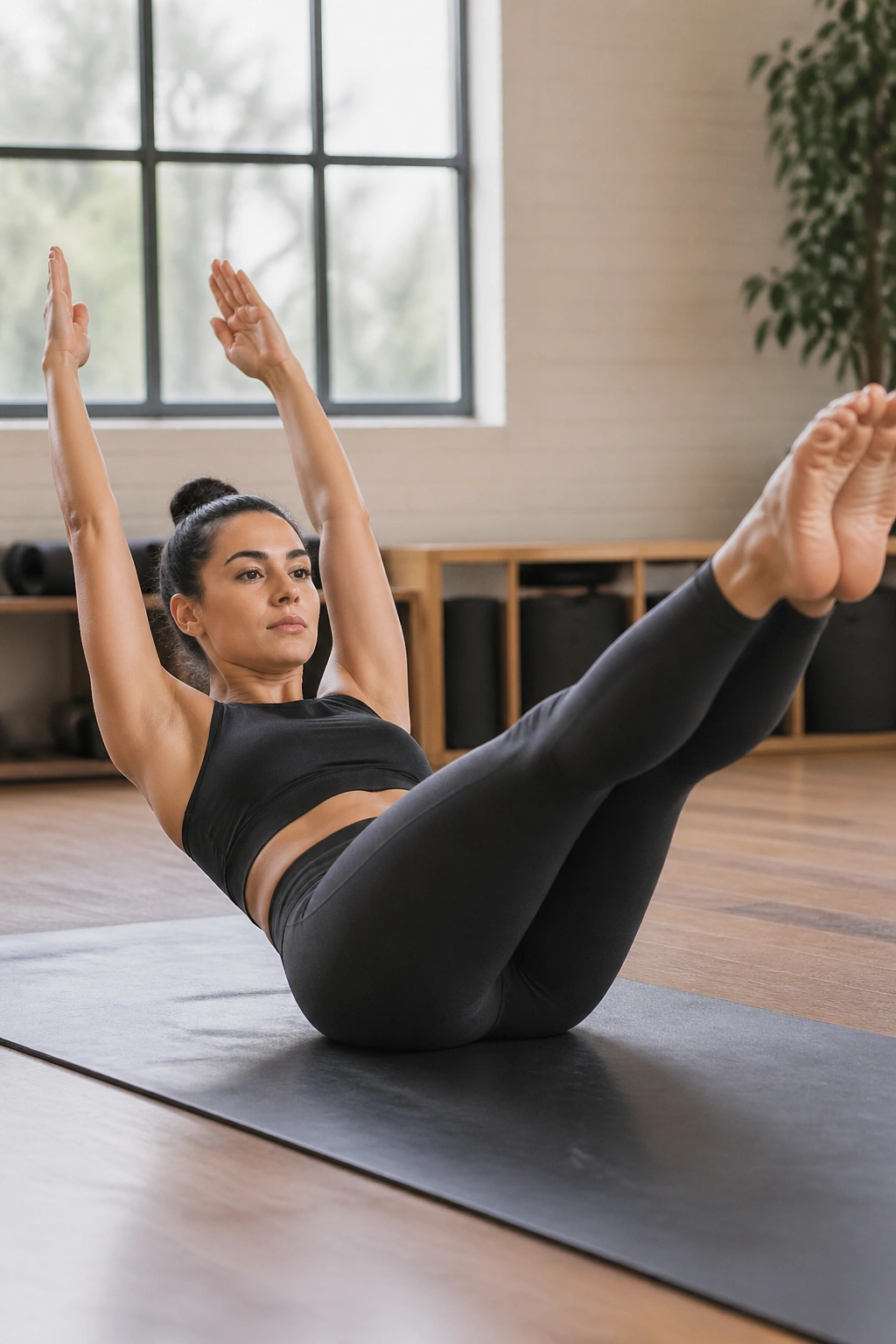
Nothing exposes lazy core work faster than the double-leg stretch. Once both legs leave the mat together, the body either stays organized or it turns into a seesaw.
Why the Pause Changes Everything
The pause at full extension is where the work lives. Two counts is enough. Longer if you can hold your ribs down and your low back still feels wide on the mat. Shorter if the neck starts to strain.
Reach the arms and legs away from the center, then pause before you snap back in. That pause keeps the movement from becoming momentum with a Pilates label slapped on it.
- Arms go back by the ears only if the ribs stay closed.
- Legs extend to a height that keeps the pelvis neutral.
- Neck stays long; don’t jam the chin down.
- Return with a breath, not a fling.
What to Watch For
If the low back lifts, stop lowering the legs. If the shoulders creep toward the ears, make the arm reach smaller. If the movement feels more like throwing than controlling, the tempo is too fast.
I prefer this exercise when it looks almost boring. That’s when it is doing its job.
4. Criss-Cross With Slow Rotation
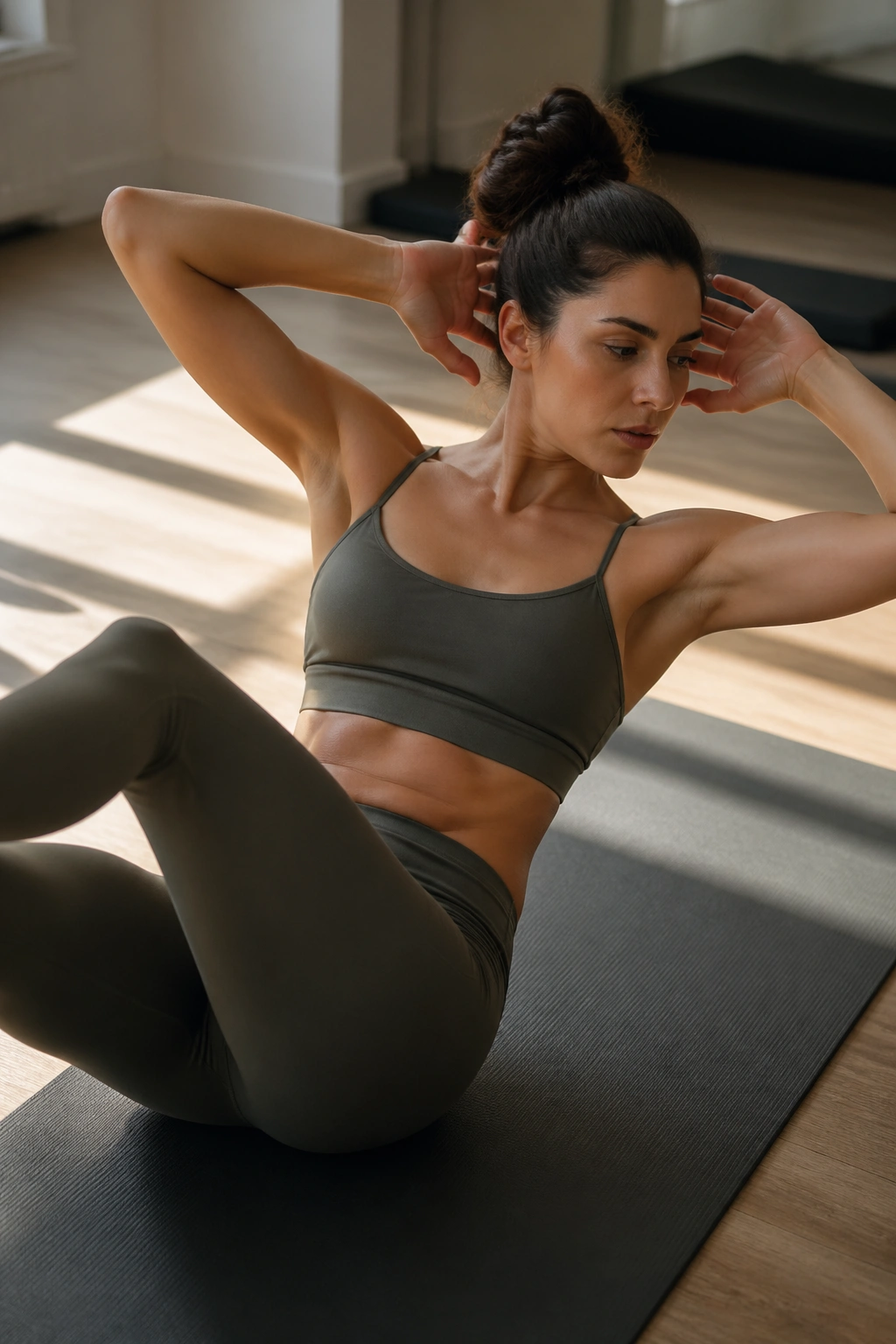
Picture the moment your shoulders stay lifted and your legs start to tip side to side. That’s where criss-cross earns its keep.
This move is not about elbow-to-knee contact. That part is almost decoration. The real work is the rotation through the rib cage while the pelvis stays mostly quiet. Slow it down enough and you’ll feel the obliques light up on the turn, not just the hip flexor on the lift.
The Clean Version
Turn from the ribs. Not from the elbows. Not from the head.
- Keep the opposite leg long and heavy.
- Reach the floating elbow across, but do not yank.
- Exhale on the twist.
- Let the back shoulder blade stay lifted off the mat.
The slower the return, the better the work. People love to fling themselves into the twist and call it effort. It isn’t. It’s chaos.
A clean criss-cross can leave your waist feeling narrower for a few hours, which is a strange but useful way to know the obliques actually showed up.
5. Roll Over With Controlled Pike
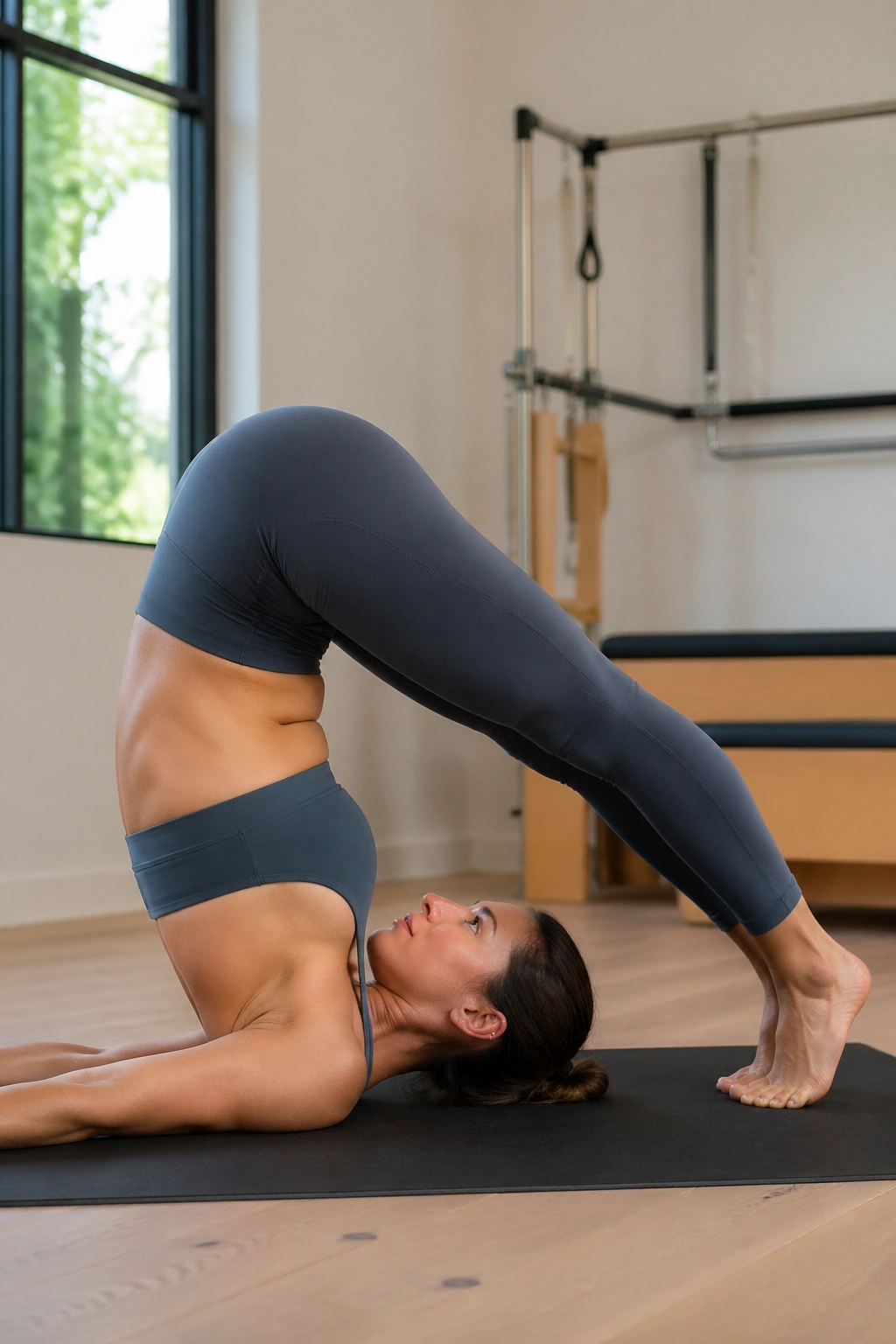
Roll over looks like a hamstring stretch. It is not. It’s a core articulation drill with a spine that has to stay patient.
The move asks for hip lift, abdominal scoop, and a slow return through the vertebrae. If you kick your legs up and toss them overhead, the exercise becomes a circus trick. Pretty useless for core strength. The advanced version is all about braking, not launching.
Start with legs together and pressed firmly. Roll the pelvis up until the weight moves over the shoulders, then pause. That pause is where the deep abs have to hold the shape while the legs hover in space.
What Makes It Hard
The lowering phase is the hard part. Always.
When you roll down, keep the legs long and resist the urge to let them drop. The belly has to stay scooped as the spine peels down one bone at a time. If the low back slams into the mat, you went too fast.
Skip the full range if your neck is irritated. A smaller rollover with bent knees is still worthwhile. Better controlled, less dramatic, far more useful.
6. Corkscrew With Hip Fixation
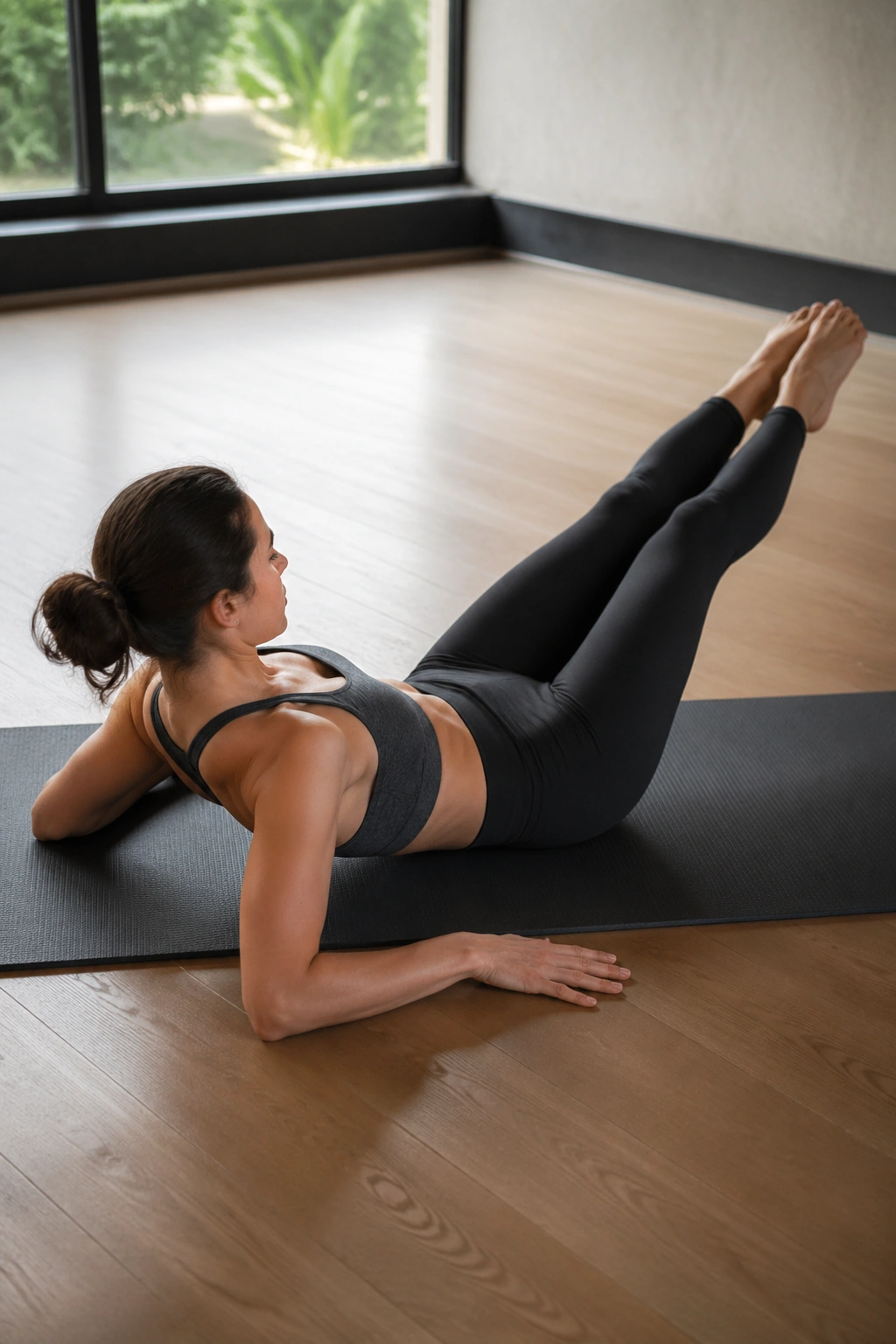
Unlike leg circles, corkscrew asks your ribs to stay quiet while the legs draw a precise circle in the air. That difference matters more than people think.
The pelvis should feel anchored while the legs sweep together to one side, circle low, and return through center. The movement is small if you’re honest about it. Huge circles usually mean the spine is giving up support and the low back is hanging on for dear life.
The upper body stays grounded. The shoulders stay broad. Your job is to move the legs without letting the torso slide around to help.
A strong corkscrew teaches a strange kind of discipline. You feel the abs pull in one direction while the hips try to wander in another. That’s the whole lesson. Keep the circle smooth, keep the path even, and do not chase size. Clean lines beat circus circles every time.
If your mat has a slight slip to it, use it. You’ll feel the difference between controlled and sloppy in the first rep.
7. Control Balance
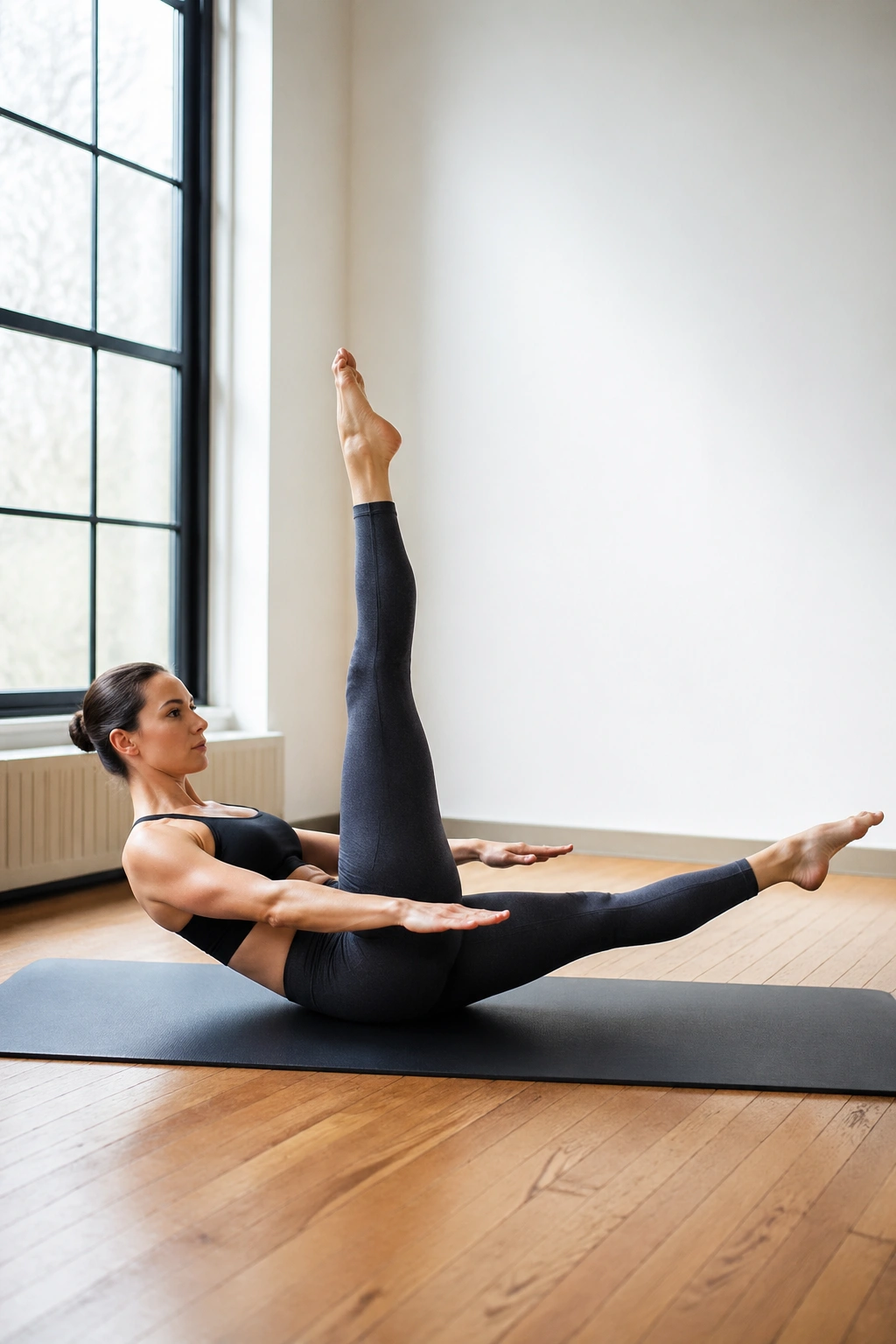
Control Balance is not an exercise you rush. It looks slow, and it should feel even slower.
The setup is part shoulder stand, part leg exchange, part quiet panic management. One leg reaches toward the ceiling while the other lowers with control, and the pelvis has to stay stacked while the spine stays long. If the weight dumps into the neck, the move is over. Simple.
What I like about this one is that it rewards patience. The person who moves 2 inches with precision gets more out of it than the person who swings through a bigger range. The core has to keep the body honest while the hamstrings and glutes join the party from the back end.
Keep It Small
- Press the upper arms into the mat.
- Lift through the inner thighs.
- Switch the legs slowly.
- Stop before the lower back collapses.
It is a beautiful way to learn that strength and restraint are the same conversation in Pilates.
8. Jackknife Into Toe Reach
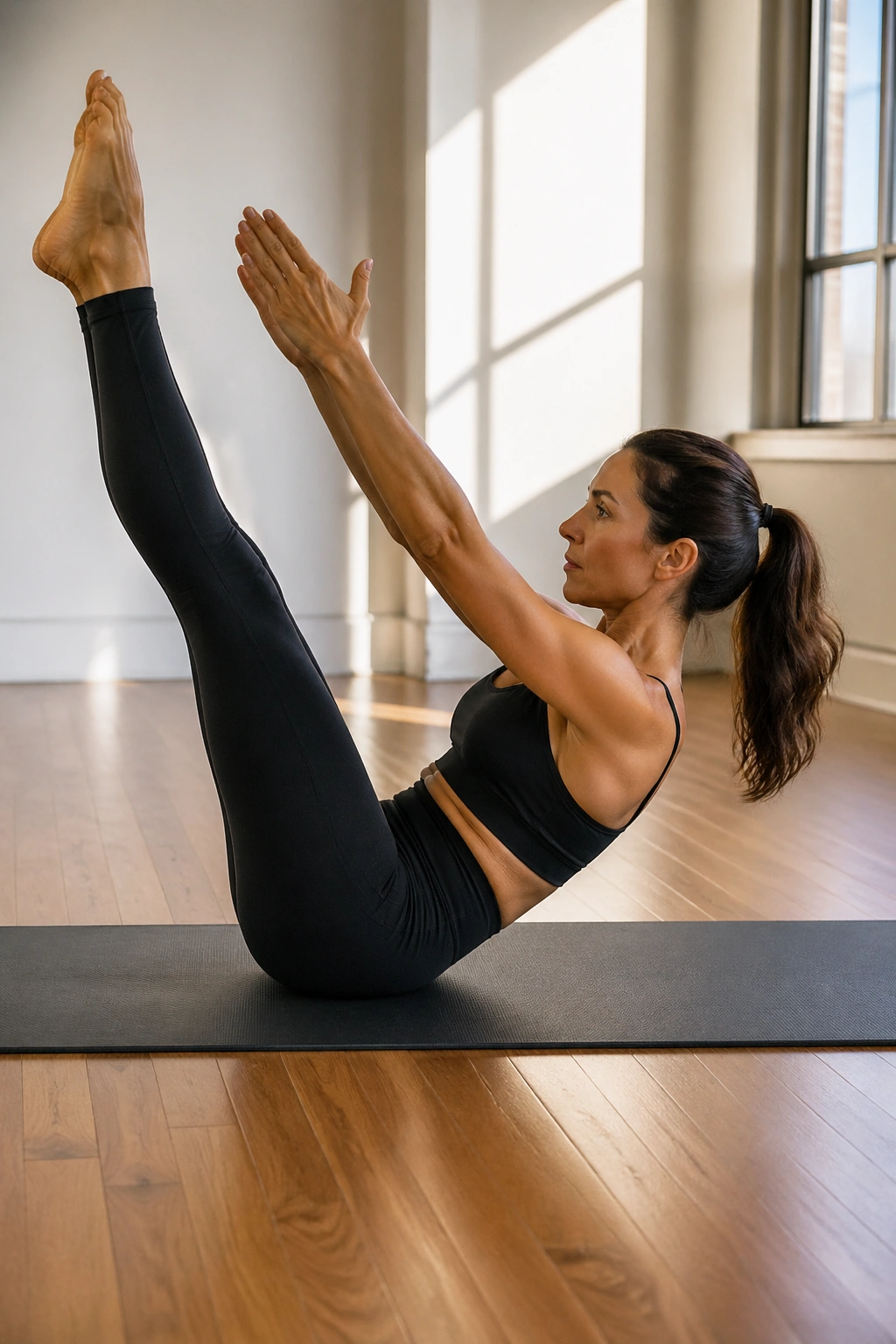
Why does jackknife feel harder than it looks? Because the legs are doing overhead work while the abdomen is still expected to control the exit.
This is one of those Pilates moves that exposes whether you can keep the spine stacked while the legs travel through a big shape. The hips lift, the legs point upward, and then the body has to unroll without crashing into the mat. There’s no place to hide.
How to Keep the Shape Clean
The roll up should feel like a controlled fold, not a kick. If you use momentum, you’ll get to the top faster and learn nothing.
The toe reach at the peak is the part most people love and most people rush. Keep it brief. Touch or hover, then begin the descent with the same amount of control you used on the way up.
- Keep the chin soft.
- Press the upper arms down.
- Draw the belly inward before the lift.
- Lower with the same pace on every rep.
If the neck feels loaded, stop the set early. That’s not failure. That’s respecting the line between core work and a bad morning.
9. Scissors With Shoulder Blade Lift
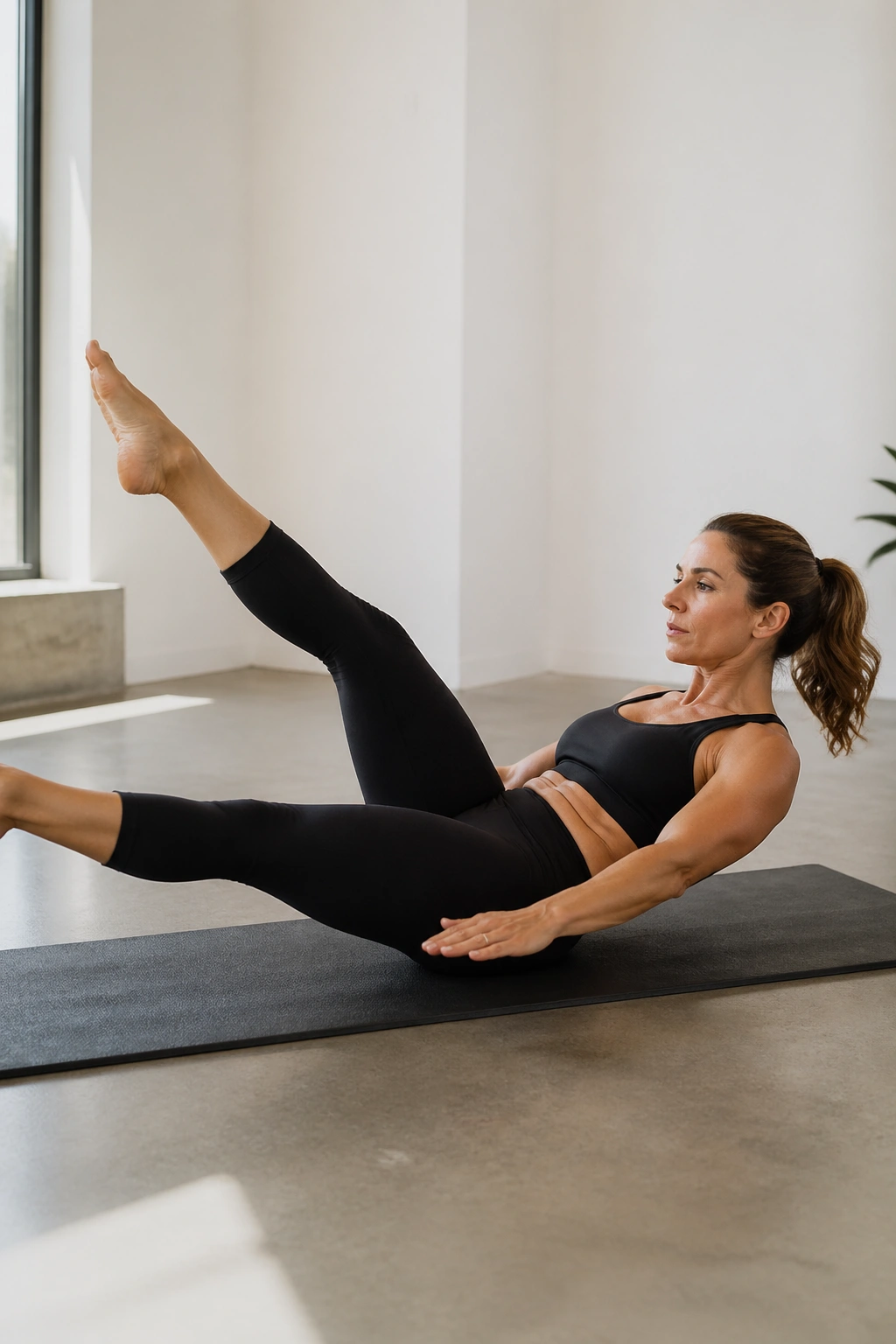
If you can keep your shoulder blades up while one leg reaches long and the other climbs, your core is doing real work.
The scissors pattern asks for a lifted chest, stable pelvis, and a long hamstring line. It’s easy to let the lower leg swing too far toward the floor. Don’t. That usually flattens the movement into a backbend. A smaller shape gives you more abdominal control and usually a cleaner stretch through the back of the leg.
Quick Form Checks
- Keep both hip bones level.
- Reach the lower leg only as far as you can without arching.
- Switch with a breath, not a kick.
- Keep the ribs heavy even while the chest stays open.
The slower version feels almost irritating at first. Good. That’s usually the sign the work landed where it should have.
I like scissors because it exposes shortcuts fast. If your legs are moving and your trunk is still, you’re doing it well. If everything is wobbling, the tempo needs to come down.
10. Bicycle With Long-Leg Reach
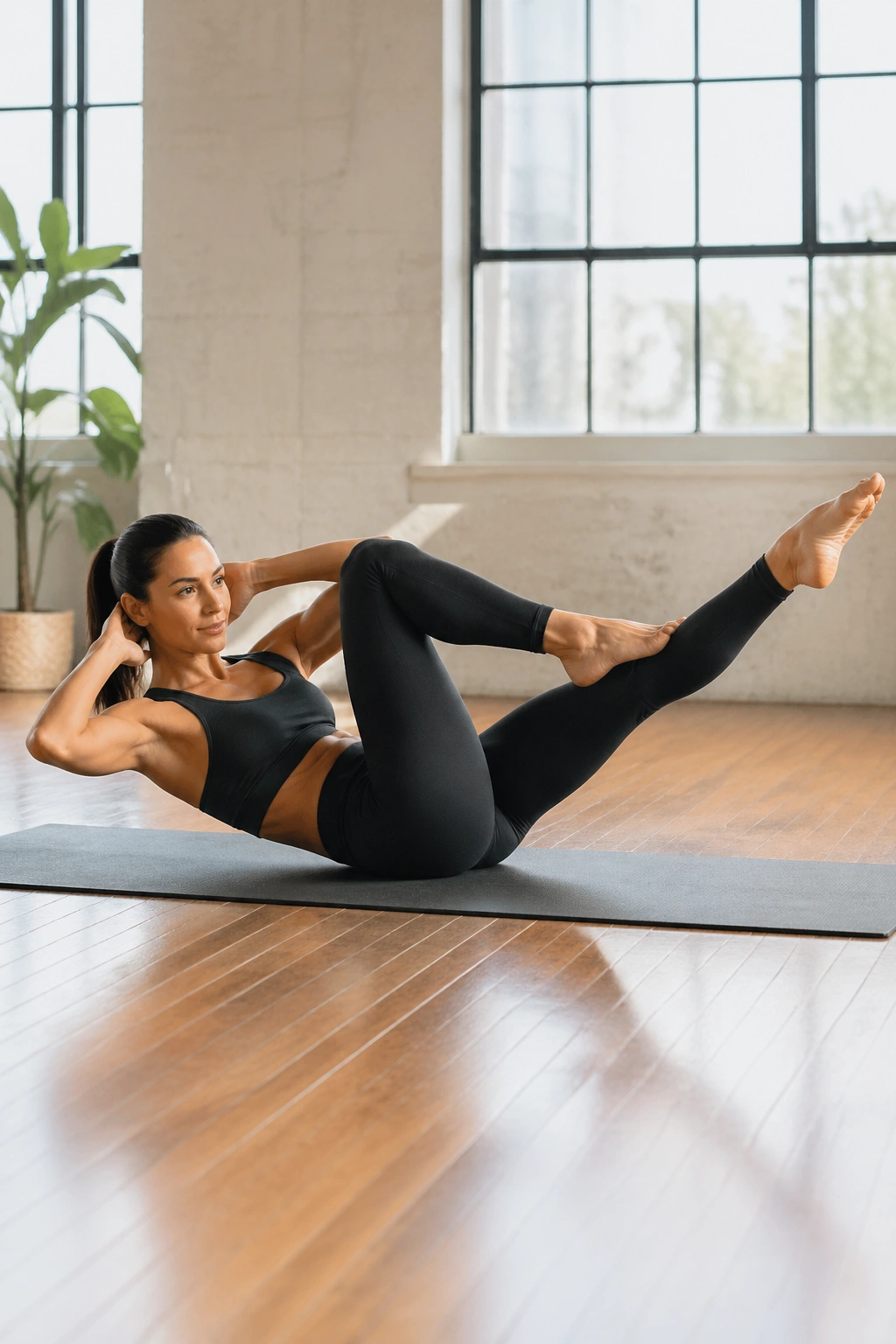
Bicycle is not about pedaling faster. It’s about keeping the pelvis from wobbling when the legs switch roles.
The move combines a hamstring stretch, spinal curl, and a rotating core pattern. One leg extends away as the other bends in, and the torso has to stay lifted and centered through the change. If you feel it mostly in the hip flexors, shorten the reach. If the neck starts to grip, lower the chest an inch and breathe again.
I like a long, deliberate reach here. It forces the abdomen to keep the waist narrow while the legs do something broad and slightly unruly. That tension is exactly what makes the exercise useful.
A good bicycle should look smooth from the outside and feel hard from the inside. The chest stays lifted, the shoulders stay down, and the legs move with the same pace on both sides. No yanking. No flinging. No fake speed.
11. Boomerang
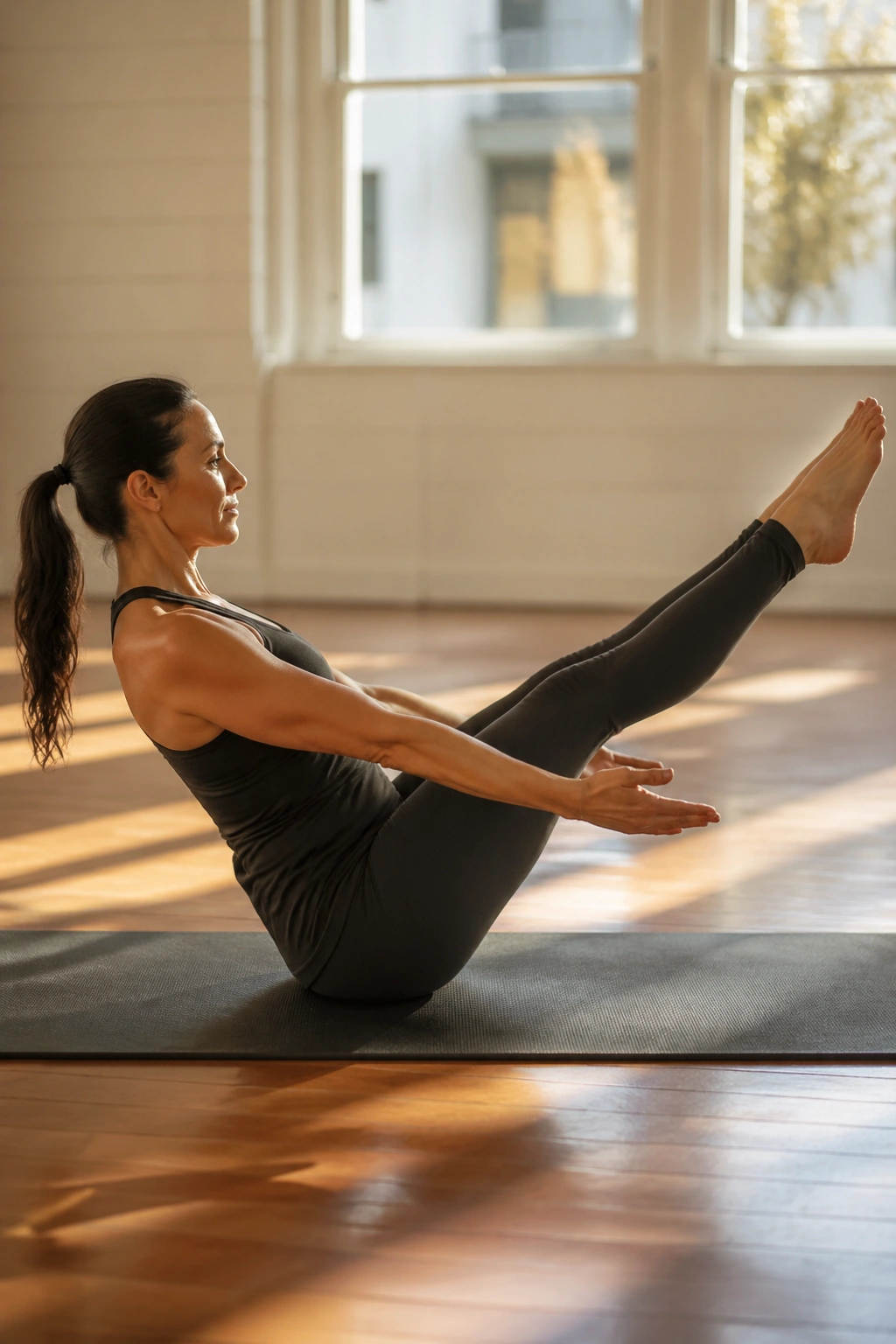
Boomerang is the move that makes people sigh before they start. Then they do it once cleanly and realize the shape is less about acrobatics than control.
The transition from rolling back to unfolding forward is where the core gets tested. The legs lift, the spine curls, and the body has to land in a seated position without collapsing into the shoulders. It is a lot. That is why it matters.
The best Boomerang has a soft rhythm. Not fast. Not choppy. The legs stay active, the chest stays open, and the return to sitting feels earned. If you can keep the breath smooth through the transition, you’re probably not cheating.
What to Feel
You should feel the back of the body helping without taking over. The abs should stay engaged as the spine rounds and then lengthens. If the movement becomes a shove, reset and make the range smaller.
Boomerang is a favorite of mine for teaching control under pressure. It asks the body to change direction without losing itself. That’s a useful skill anywhere, not only on a mat.
12. Side Bend With Top-Leg Lift
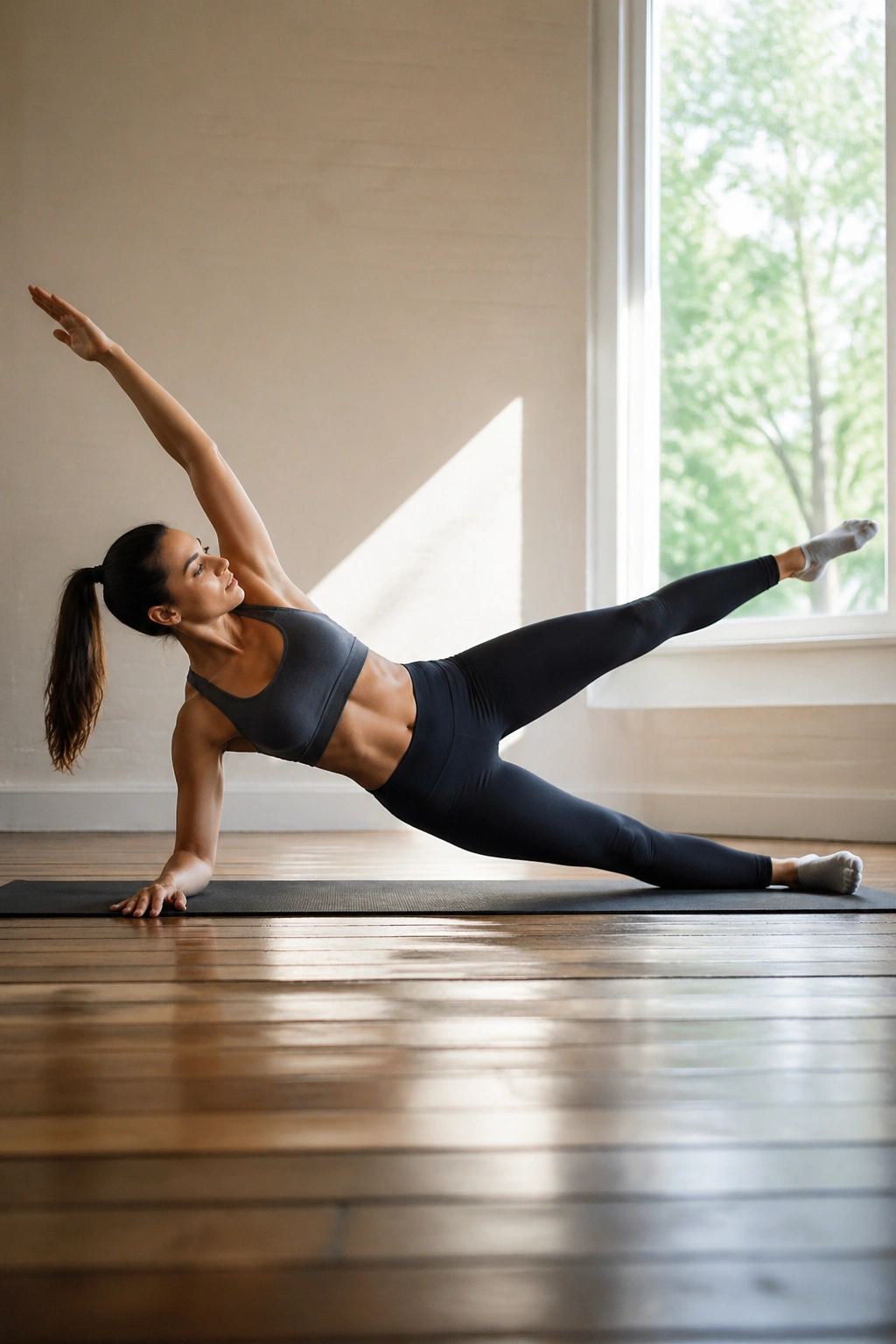
This move gives you the side-body work a thousand crunches miss.
Side bend already lights up the obliques and shoulder stabilizers. Add the top-leg lift and the exercise turns into a test of hip control too. The lower side has to hold the body up while the lifted leg creates more leverage than you’d expect. It’s a sneaky little burner.
Why It Beats a Basic Side Plank for Pilates Feel
A side plank can get the job done, but this Pilates version asks for more articulation. The body is moving through a shape instead of freezing in one. That means the waist has to stay active while the spine remains long and the lifted leg doesn’t dump the pelvis forward.
- Press through the bottom hand or forearm.
- Keep the top hip stacked.
- Lift the leg from the outer hip, not the low back.
- Lower with control, not collapse.
The nice part is the precision. The annoying part is also the precision. If the body drifts a few degrees out of line, you feel it immediately.
13. Snake Twist Prep
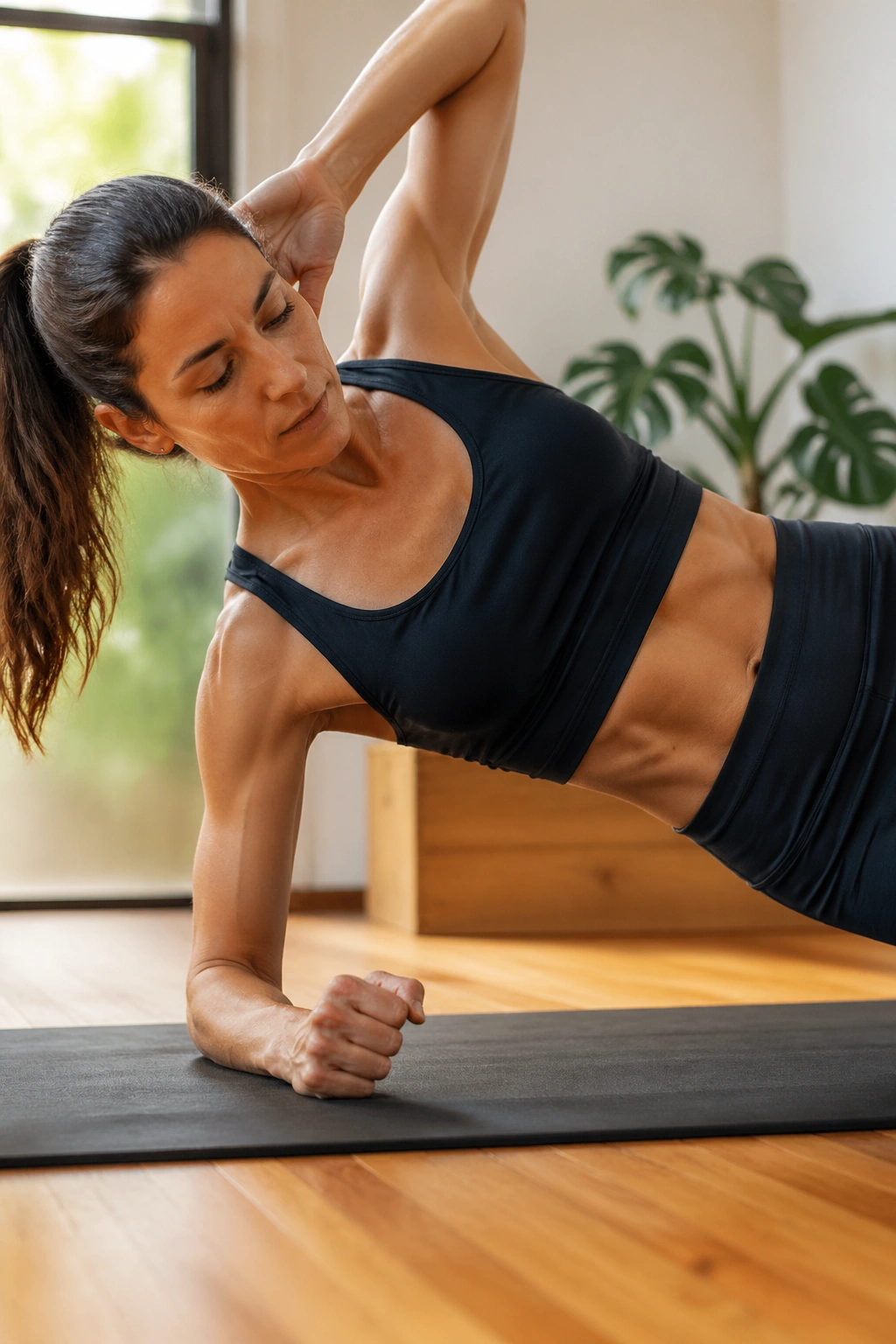
Snake Twist Prep is not a glamour move. It is a shoulder-and-oblique check disguised as a fancy shape.
You start in a supported plank or modified side plank, then thread the body through a controlled twist. The challenge is keeping the shoulders strong while the spine rotates and the waist lifts away from the floor. If you rush it, the front shoulder gets pinched and the midsection disappears. Slow is the only sensible choice here.
How to Protect the Shape
Keep the supporting hand planted like you mean it. Rotate from the ribs first, hips second. The top leg can sweep, but not if it drags the lower back with it.
The prep version is enough for most strong-core work. You do not need a full circus bend to get the training effect. A clean twist with a solid lift can light up the obliques more than a lot of flashy floor work.
This is a move I’d keep for days when the shoulders feel ready and the torso feels awake. If either one is off, skip it and come back later.
14. Plank to Pike
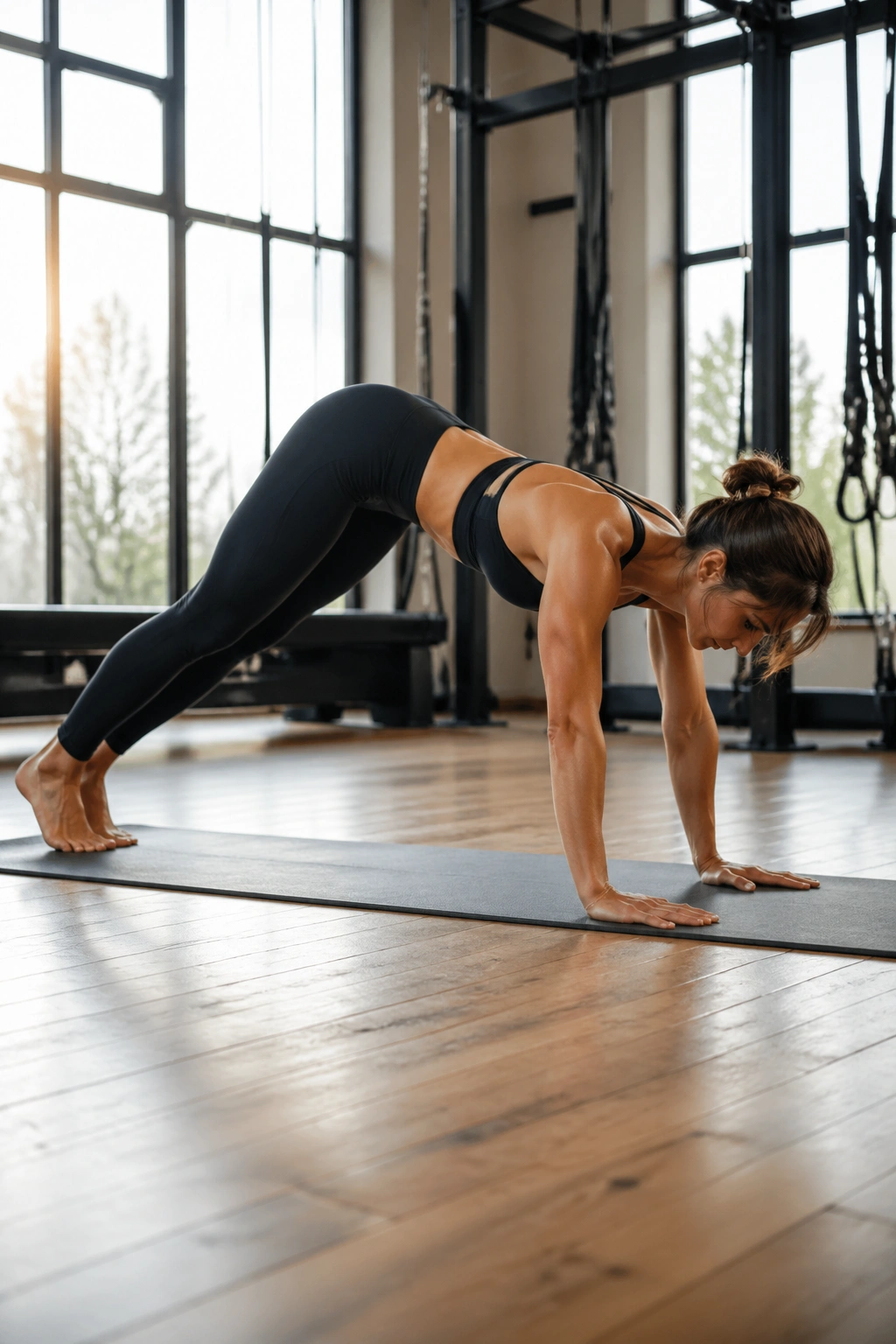
A 20-second plank to pike with a Pilates scoop can tell you more about your core than a long abs circuit.
The transition from plank into pike asks for shoulder stability, abdominal lift, and some patience in the hamstrings. The hips rise, the ribs draw inward, and the spine should stay long instead of folding in half. If the movement turns into a jumpy mountain climber, you’ve lost the point.
How to Keep It Pilates, Not Just Athletic
Use a slow breath on the lift and a slow breath on the return. The motion should feel organized, not explosive. That’s the line between a strength drill and a tired scramble.
- Start with wrists under shoulders.
- Keep the gaze slightly ahead of the mat.
- Lift the hips by scooping the lower belly in.
- Lower back into plank without dumping into the low back.
The best part? It scales easily. Small range. Big control. That’s enough.
15. Saw With Rotation And Pulse
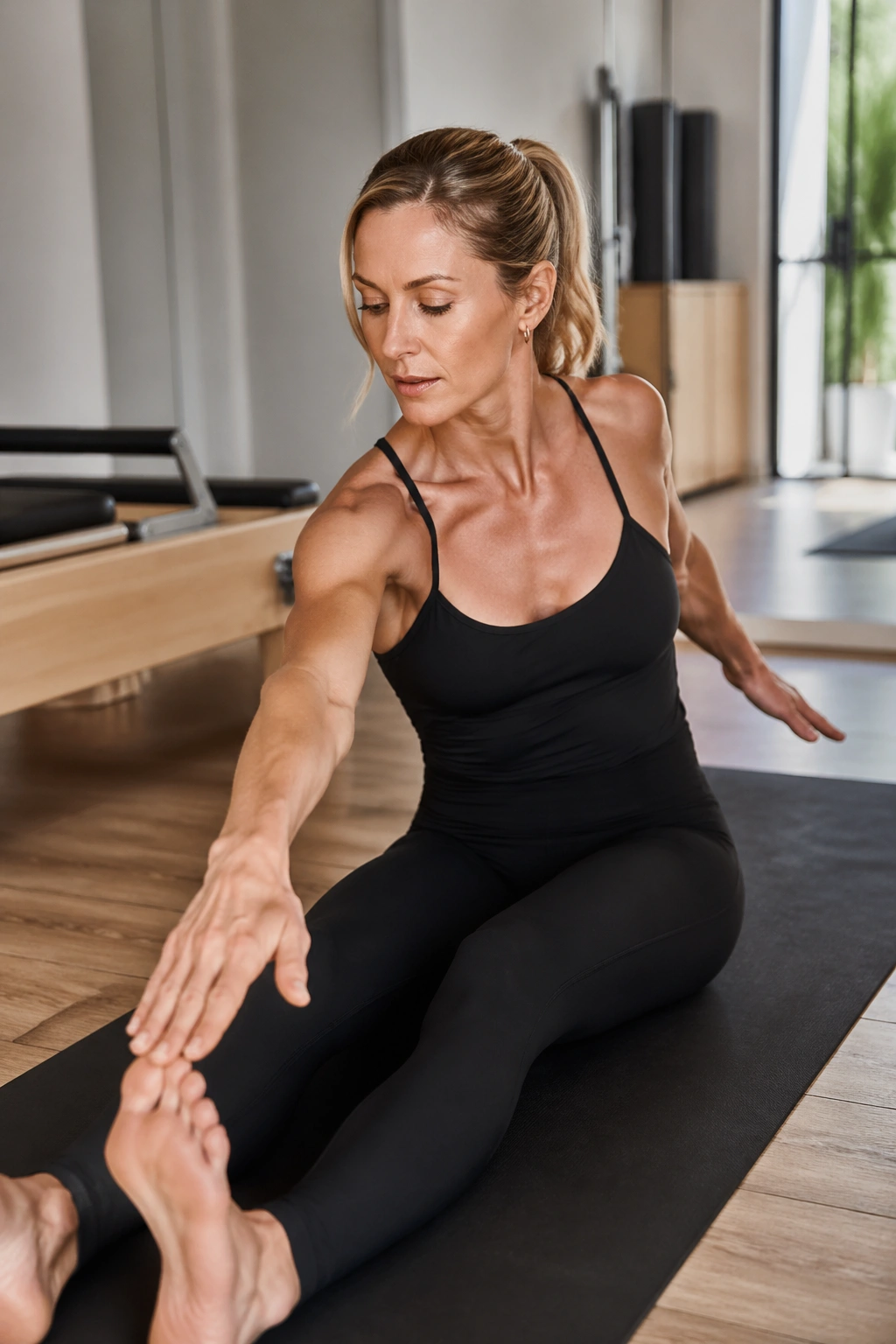
Saw should feel like carving space through the ribs, not reaching to touch your toes.
The classic shape already asks for spinal rotation and a long hamstring stretch. Add a tiny pulse at the end range and the obliques have to hold the body together while the legs stay alive. Tiny pulse. Not a bounce. A pulse. There’s a difference, and your lower back knows it.
Where the Work Lands
If you can keep both sit bones rooted while rotating, the waist does the job. If one hip pops up, the torso is twisting out of control and the stretch is stealing the exercise.
- Sit tall before you rotate.
- Reach the back arm wide.
- Keep the front ribs from drifting forward.
- Pulse only 1 or 2 inches past the stretch.
I like saw because it teaches a clean, useful kind of reach. You feel long, but not loose. That’s rare.
16. Swan Dive Prep With Deep Scoop
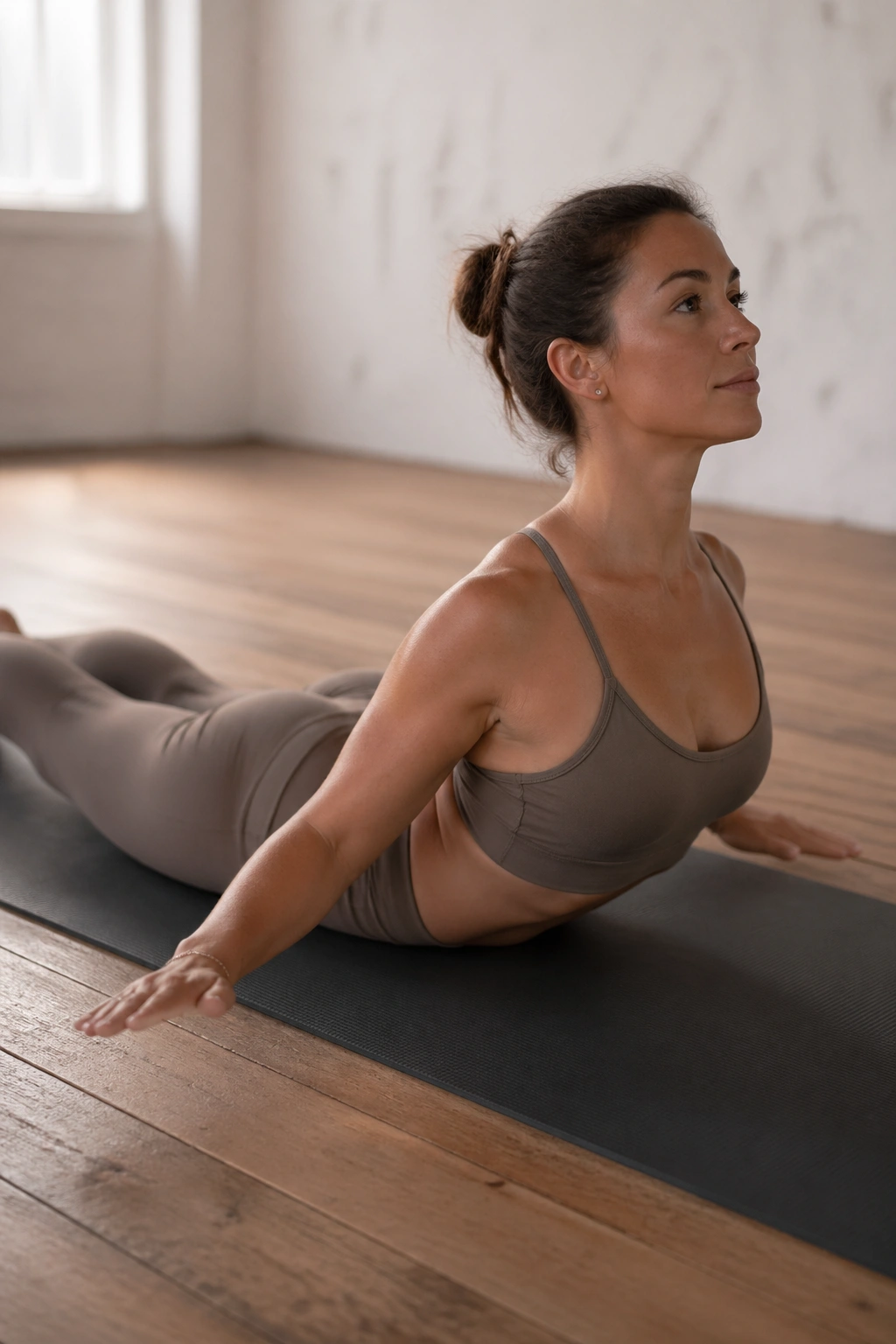
Swan Dive Prep is one of those moves where the front of your body feels long and the back body has to stay awake.
The chest lifts as the spine extends, but the belly cannot disappear. That’s the trick. If the low back pinches, the shape is too large or the ribs are throwing themselves forward. Keep the lift modest and the core engaged, and the whole thing suddenly makes sense.
This one is not just for the back line. The deep abdominals help stabilize the pelvis so the extension comes from strength rather than compression. That makes it useful for people who need better trunk control in extension work and not just more abdominal burn.
A clean prep version, held for 2 to 4 breaths, can be plenty. Hold, lower, repeat. Simple. Hard enough.
17. Kneeling Knee Hover Series
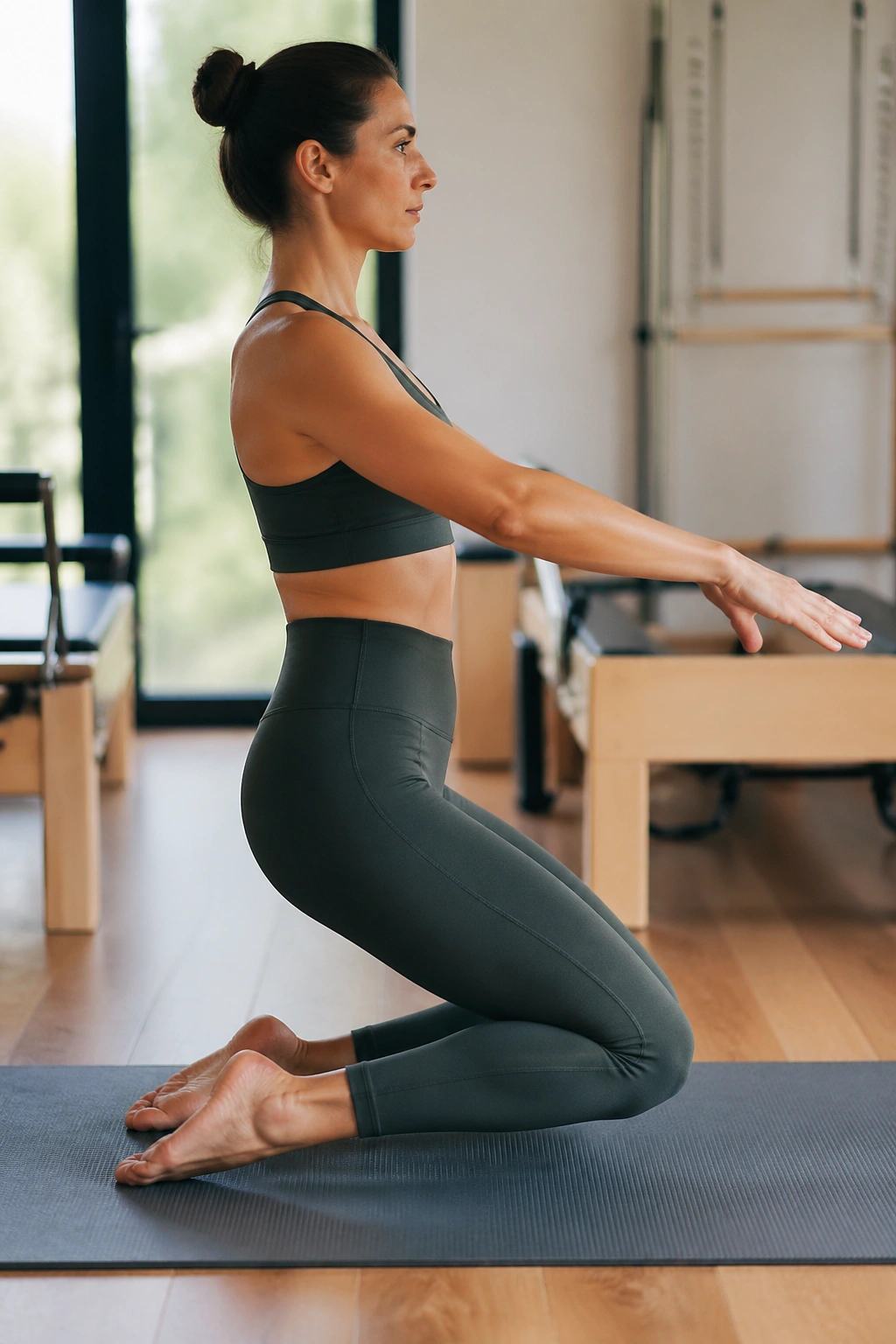
Can your knees hover one inch above the mat without your low back doing all the work? That’s the test here.
The kneeling knee hover series uses a tall kneeling or tabletop setup, then asks for a tiny lift and hold. The movement is small enough to feel almost rude. That’s why it works. The abs have to stabilize the pelvis while the thighs and hip stabilizers keep the hover from collapsing.
The Cleanest Way to Do It
Keep the torso vertical. Draw the lower belly inward before the lift. Hover the knees only 1 to 2 inches, then set them down with control. If you lean back, the exercise becomes a quad drill. If the lower back arches, stop and reset.
The series can include tiny shifts forward and back, or a static hold with arm reaches. Both are good. The point is not drama. The point is control under load.
That one-inch hover has a way of exposing everything. I respect that in a workout.
18. Teaser-to-Bridge Core Flow
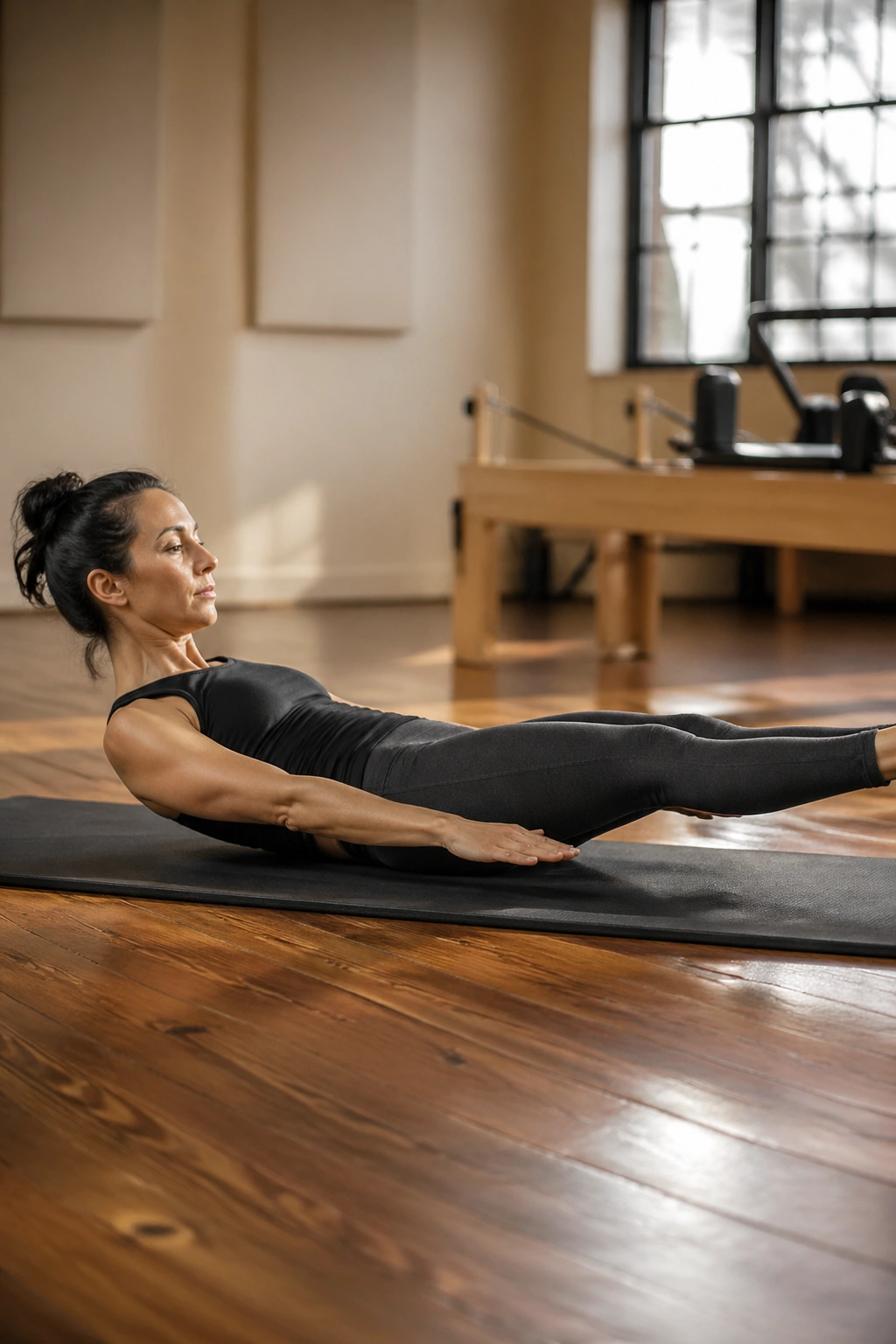
This is the one I’d save for the end of a hard Pilates session. It’s a small flow, but it packs plenty into the room.
Start with a teaser hold for 3 breaths. Roll down with control. Press into a bridge, keeping the ribs knitted in. Lower one vertebra at a time. Then return to teaser or a bent-knee variation and repeat the cycle 3 to 5 times. No rushing. No bouncing. Just clean transitions.
A Simple Sequence That Works
- Teaser hold: 3 breaths
- Bridge lift: 4 slow reps
- Roll down: 1 controlled pass
- Optional leg reach in bridge: 2 reps each side
- Final teaser hold: 2 breaths
The beauty of this flow is that it ties together everything the earlier exercises ask for. Flexion. Extension. Balance. Breath. The core has to keep changing jobs without losing its shape, and that’s the kind of strength that shows up when you stand up from the floor and don’t feel wrecked.
A strong Pilates core isn’t loud. It’s steady. It keeps the ribs where they belong, the pelvis from tipping, and the spine free enough to move without drama. That’s the real win, and it’s worth the work.
