



Pilates ball moves for glutes and legs look mild on paper. Then your inner thighs start shaking during rep six, and the bridge you thought was easy turns into a lesson in control.
The small soft ball changes the job of familiar lower-body work. It gives you pressure to squeeze into, a target to keep steady, and a fast read on sloppy alignment. If your knees cave in, if your pelvis tilts, if one hip always does a little less than the other, the ball tattles.
I’m using “Pilates ball” broadly here: the soft mini ball for squeezes and support, plus the larger stability ball for hamstring-heavy moves. A slightly underinflated ball is often easier to use than a rock-hard one. You get feedback without fighting bounce.
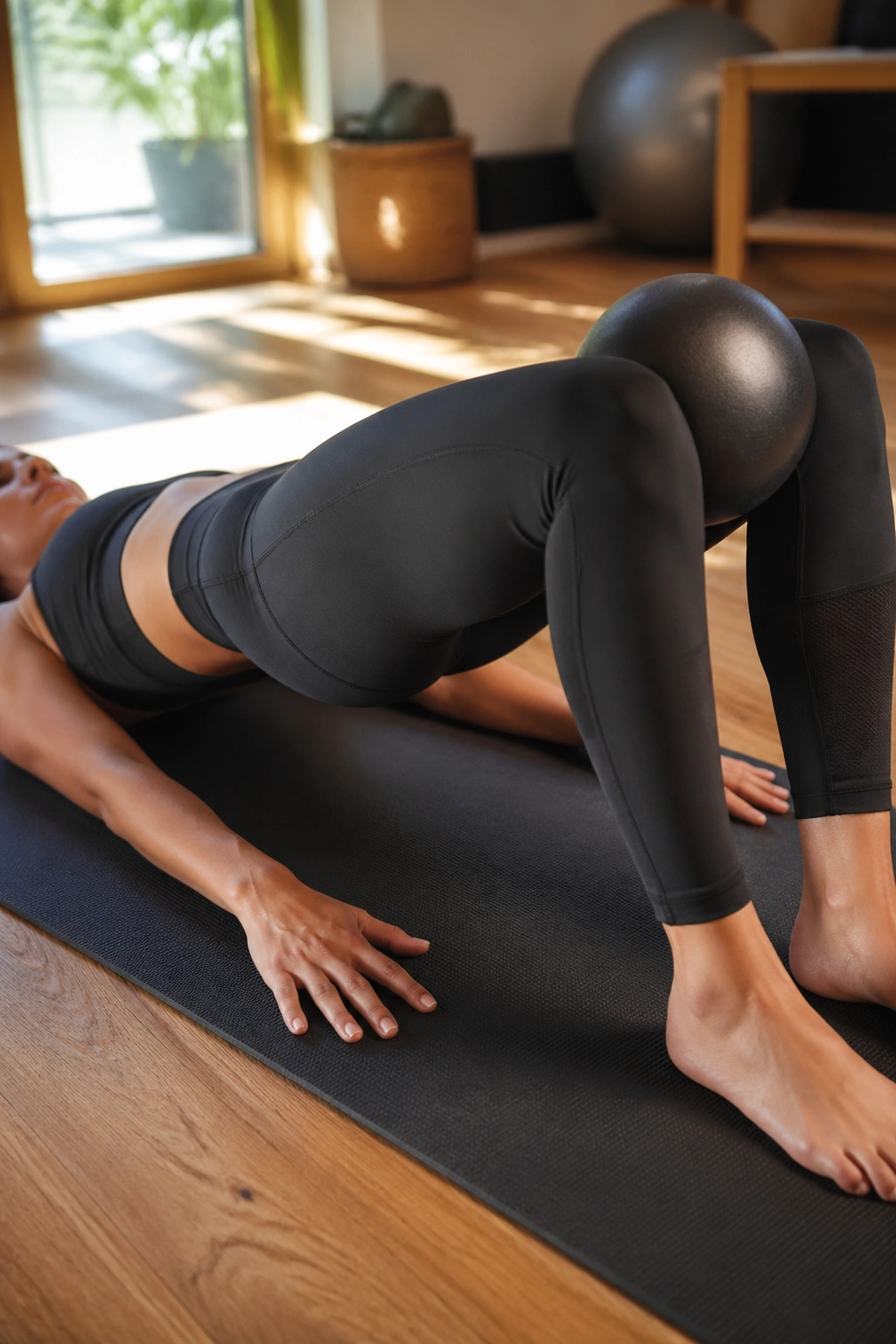
1. Pilates Ball Glute Bridge
This is the move I’d start with if your glutes tend to stay asleep. A ball-squeeze bridge looks simple, and that is exactly why it works so well. The ball gives your inner thighs a job, which helps your pelvis stay steady while the glutes do the lifting.
How to Set It Up
Lie on your back with your knees bent, feet flat, and the ball tucked between your knees. Your feet should sit about hip-width apart, close enough that your heels can push into the floor without your lower back arching.
Exhale, press the ball lightly, and lift your hips until your body makes a clean line from shoulders to knees. Hold for a second or two at the top. Lower with control. Burn is fine. Wobbling around is not.
- Keep the squeeze at about 30 to 40 percent effort.
- Drive through your heels, not your toes.
- Stop the lift before your ribs flare.
- If your hamstrings cramp, move your feet 1 to 2 inches closer to your hips.
Small tip: pause at the top and try to keep the ball still. If it slips, your knees are drifting.
2. Pilates Ball Wall Sit Squeeze
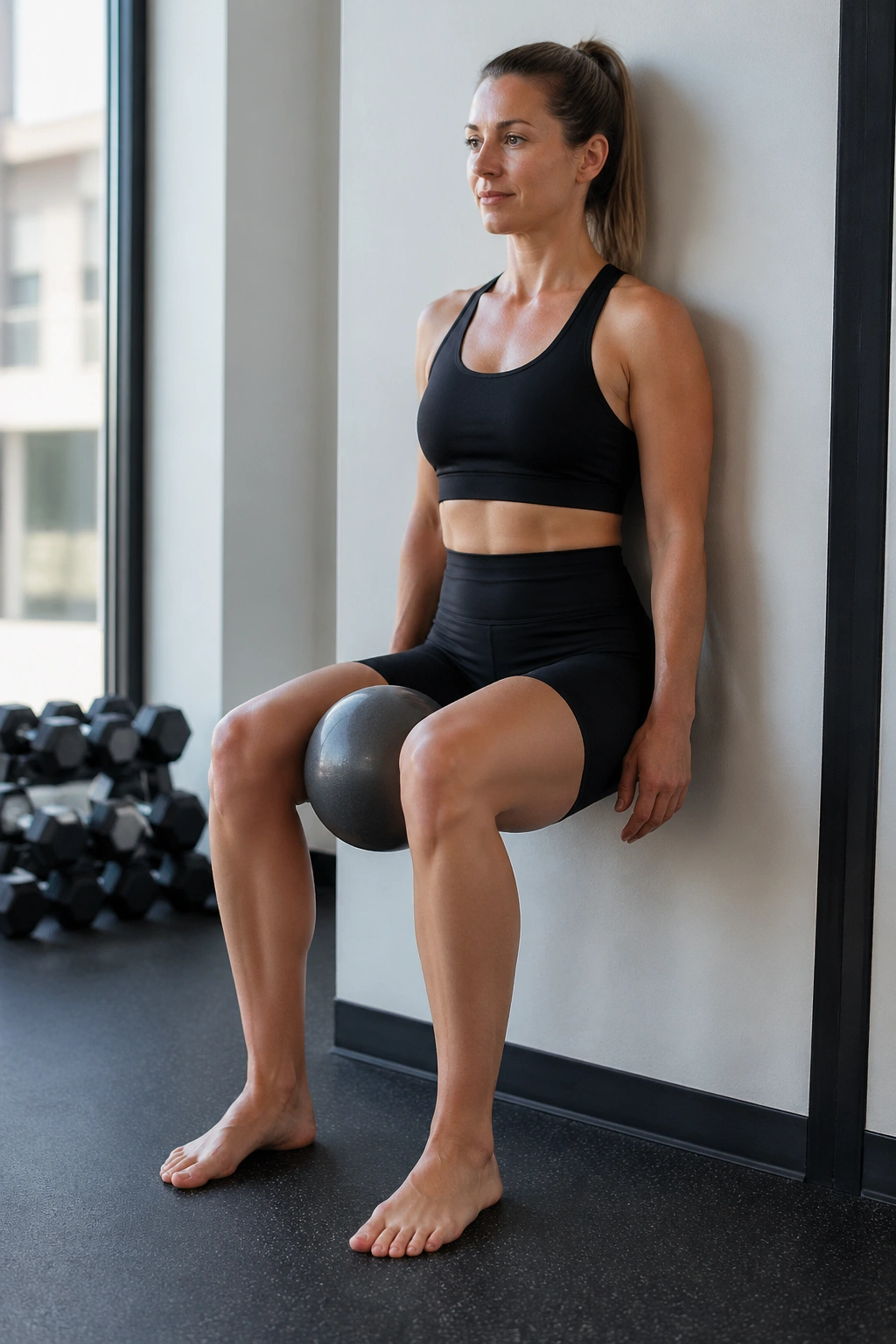
Why does a wall sit with a ball between your knees feel harder than it should? Because it asks your quads, glutes, and inner thighs to work together while your trunk stays pinned in place. There is nowhere to hide.
Stand with your back against a wall and slide down until your thighs are close to parallel with the floor, or a little higher if your knees are fussy. Put the ball between your knees, then press into it lightly while keeping your feet flat and your shins mostly vertical.
The ball should make you feel more organized, not more cramped. If your knees pinch, move your feet a few inches farther from the wall. That tiny change usually helps.
What to Watch For
- Knees tracking over the middle toes
- Heels staying down
- Chest relaxed, not braced like you’re about to be hit
- Even pressure into both feet
A 20- to 30-second hold is enough to make this one count. If you want more, add small pulses instead of sinking deeper.
3. Stability Ball Hamstring Curl
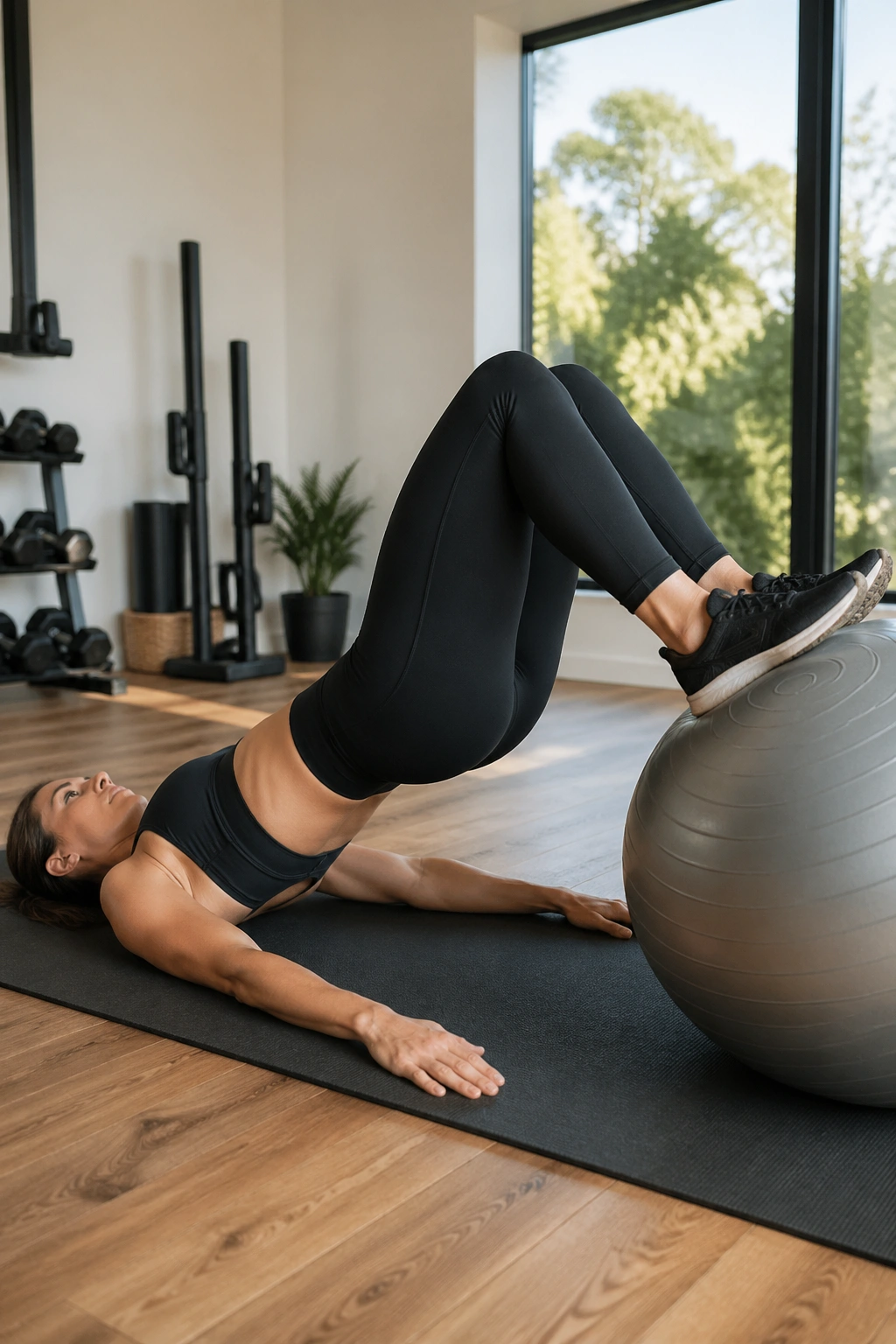
A stability ball hamstring curl is where the rear of your legs starts paying attention fast. The first half of the move looks calm. The second half gets honest.
Lie on your back with your heels on the larger ball, legs extended, and arms down by your sides. Lift your hips into a bridge, then bend your knees to roll the ball toward you. Keep your hips up as long as you can, then extend the legs back out with control.
The goal is smooth motion. If the ball rockets toward you, slow down. If your hips drop every time you curl in, shorten the range and rebuild from there.
What Makes It Different
This is not just a hamstring drill. It also teaches your glutes to stay on while your knees bend, which is a sneaky useful skill for walking, running, climbing stairs, and any squat pattern that starts to feel weak at the back end.
What to Watch For
- Hips staying lifted instead of sagging
- Toes relaxed so the calves do not take over
- The ball rolling, not bouncing
- Lower back staying quiet
If both legs cramp, bring your heels closer to your seat before you start.
4. Pilates Ball Sumo Squat Press
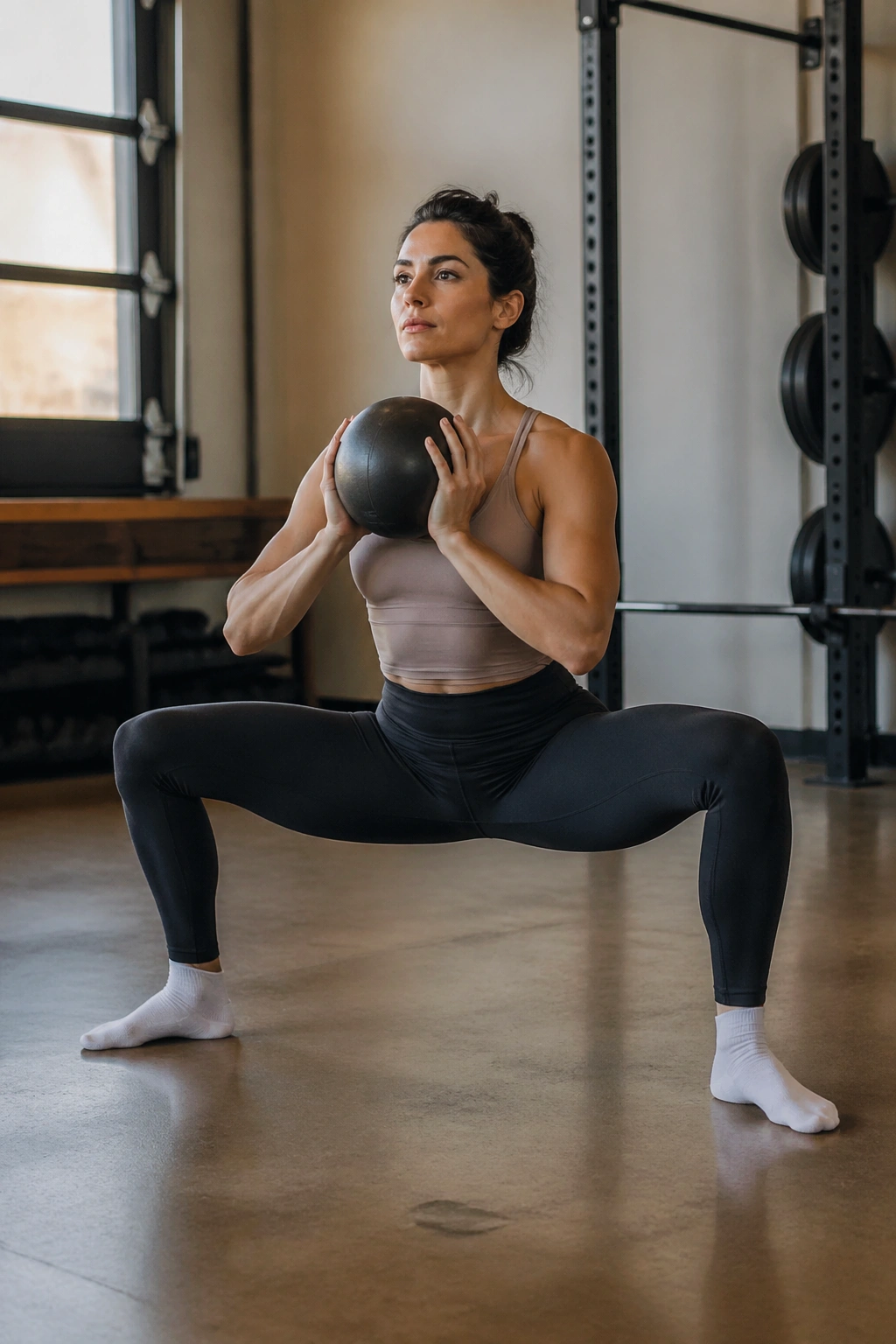
A wide-stance squat with the ball at your chest is one of those moves that looks friendly until the third set. The ball keeps your ribs stacked, and the sumo stance opens up the inner thighs in a way a narrow squat never does.
Stand with your feet wider than your hips and turn your toes out about 30 degrees. Hold the ball at chest height and press it gently between your palms. Sit down between your hips, not forward into your knees, then stand up by driving through the heels.
The inner thighs should feel active on the way down. The glutes should wake up on the way up. If your knees cave inward, squeeze the ball a little more and think about spreading the floor apart with your feet.
- Keep the ball near your sternum.
- Let the knees track in the direction of the toes.
- Stop the squat when your heels start peeling up.
- Add 10 short pulses at the bottom if you want a sharper burn.
This one is a solid bridge between strength and Pilates control. It does not need to be fancy.
5. Side-Lying Inner Thigh Lift
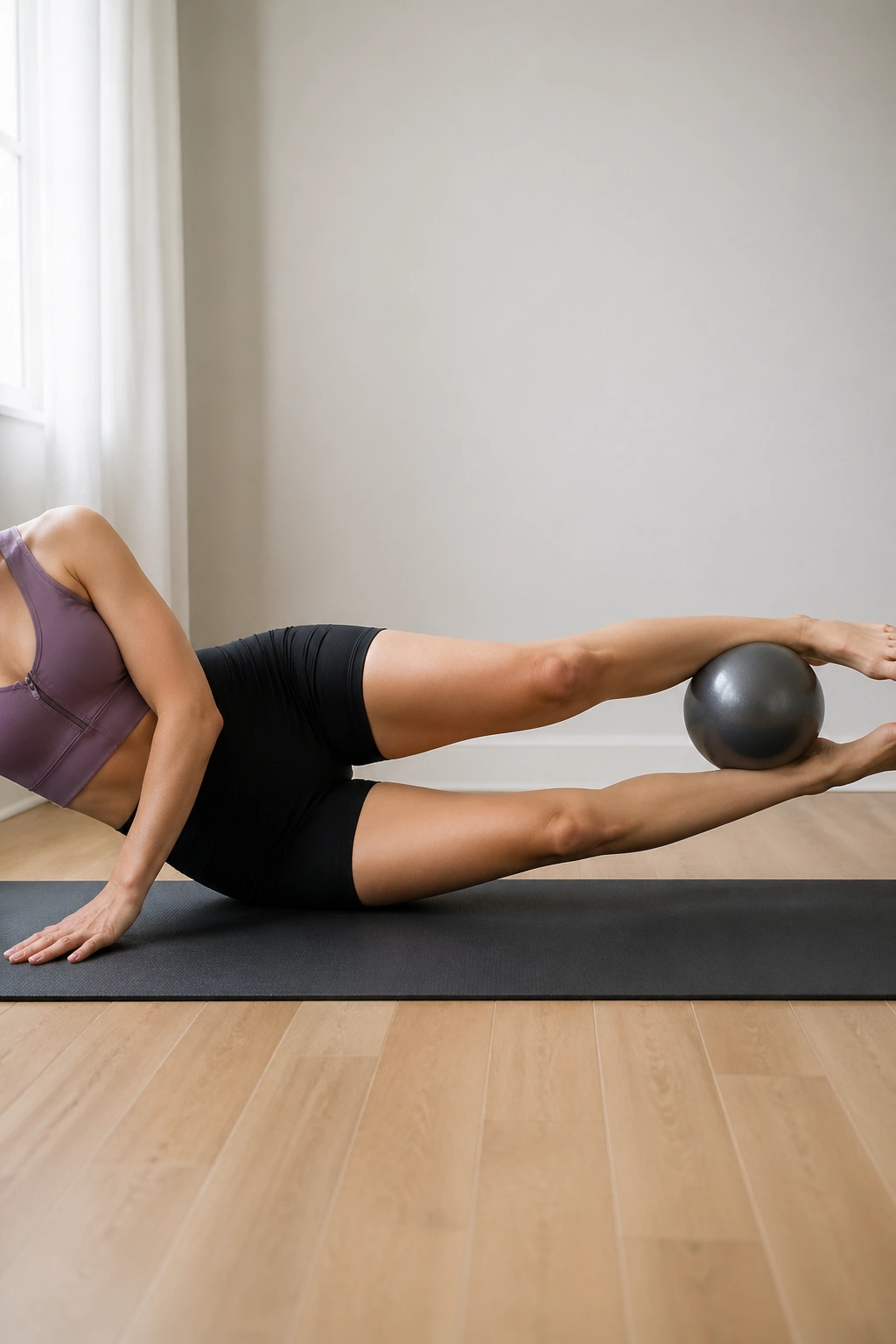
This one burns quietly, which is rude in its own way. You lie on your side, settle the ball between your ankles, and then lift the bottom leg just a few inches. That tiny lift is enough to light up the adductors—the inner-thigh muscles that often get ignored.
Stack your hips so they face forward, not slightly back. Keep both legs long and let the top leg stay quiet while the bottom leg lifts and lowers slowly. If the movement turns into a hip hike, you’re going too high.
The sweet spot is small. Two to four inches is plenty.
Your toes can stay pointed forward or slightly down, depending on where you want the work. Forward is usually kinder to the hip; slightly down keeps cheating to a minimum. Neither version should feel sloppy.
A short set goes a long way here. Twelve controlled reps on each side is plenty for most people, and the last few should feel annoyingly precise.
6. Single-Leg Bridge with Ball Squeeze
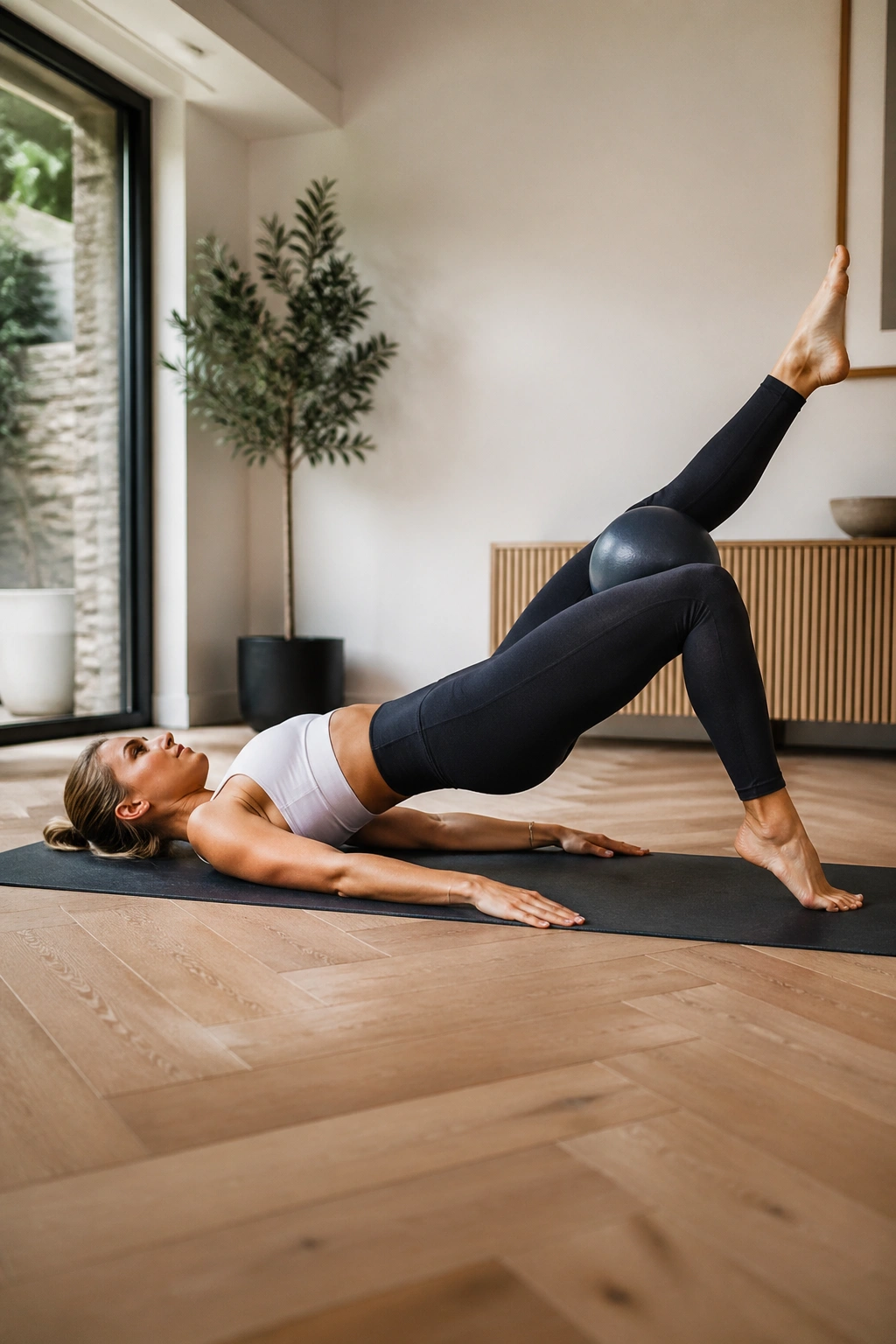
Compared with a regular bridge, the single-leg version shows you the truth fast. One side will usually feel steadier. The other side may wobble like it needs coffee.
Set up like the first bridge, ball between your knees, then extend one leg long or hold the thigh in line with the other. Press the ball lightly, lift through the standing heel, and keep both hip bones level as you rise. Lower with the same level of control.
The trick is not to chase height. A lower, cleaner bridge beats a high one with a twisted pelvis.
Why It’s Worth Doing
This move asks one glute to carry more of the load, which is exactly where weak spots show up. The ball keeps the working side from getting too lazy and the non-working side from flopping around.
How to Use It
- Start with 6 to 8 reps per side.
- Keep the lifted leg long and relaxed.
- If the pelvis tilts, lower the bridge height.
- Pair it with the two-leg version if you want a fast finisher.
A steady pelvis matters more than a big range. Every time.
7. Prone Hamstring Curl on the Stability Ball
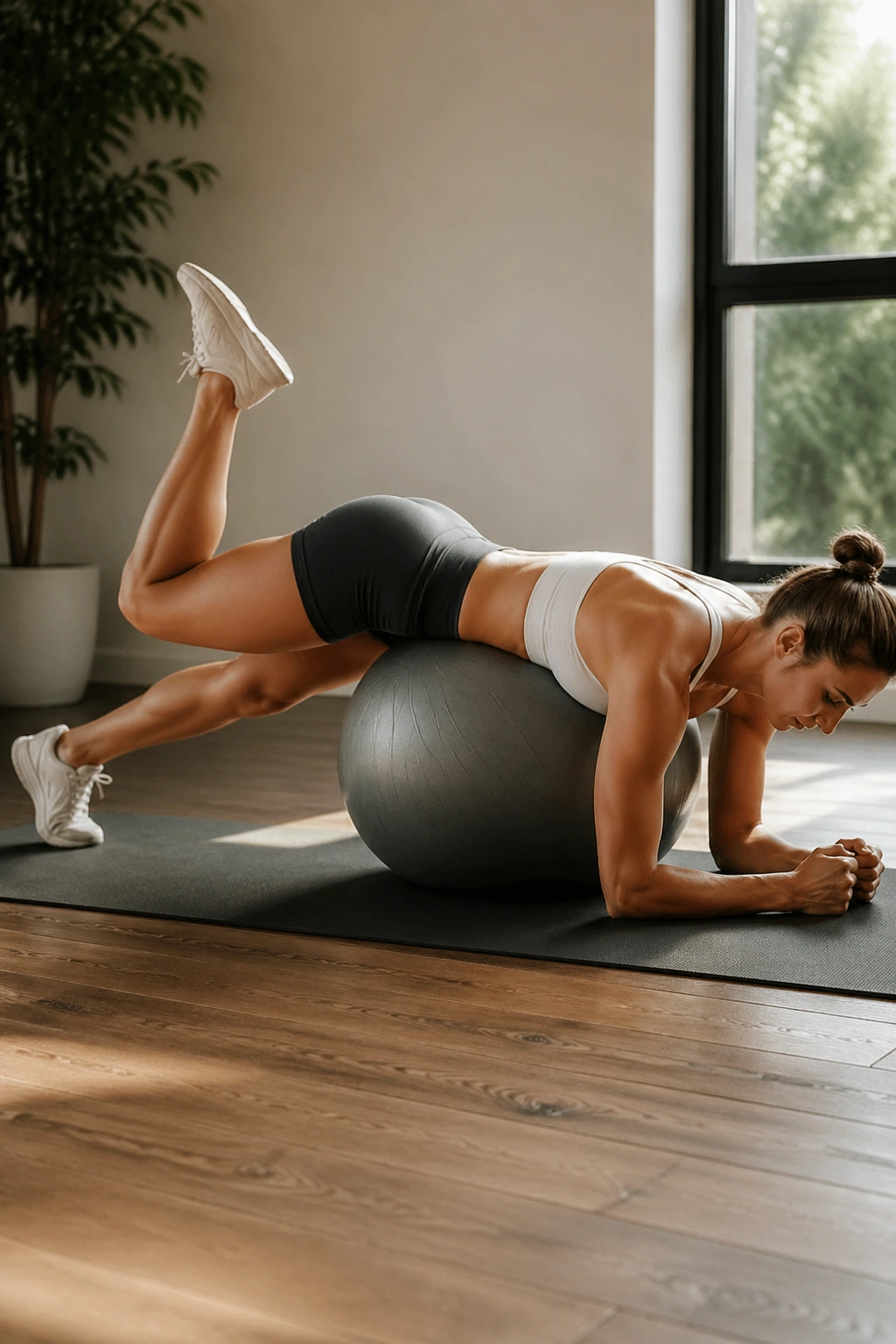
A ball under your lower body turns a simple hamstring curl into a whole-body problem. That is the appeal. Nothing gets to coast.
Lie face down with the stability ball under your hips or lower thighs and your hands on the floor for support. Keep your core lightly braced, bend one knee, and draw the heel toward the seat. Lower slowly, then switch sides.
The movement should feel clean and contained. If your lower back starts to pinch, the ball is too far forward or you’re lifting too high. Shift a little more weight onto the thighs and keep the ribs heavy.
What to Feel
- Hamstrings doing the bending
- Glutes staying awake, not locked
- Shoulders stable against the floor
- The pelvis staying square
This one is especially useful if bridges stop challenging you. It hits the back of the legs in a different line, and that matters more than people think.
8. Reverse Lunge with Ball Hold
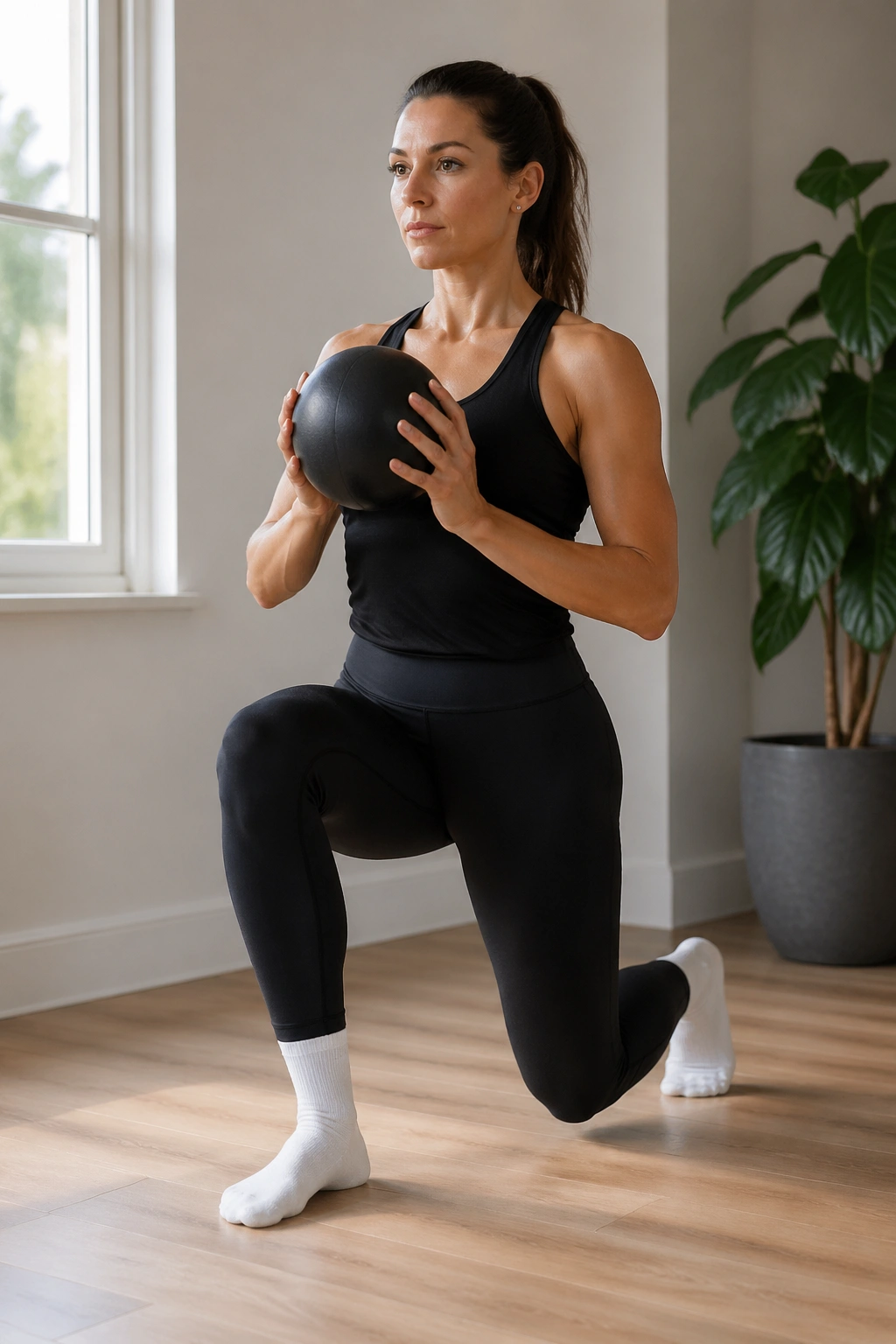
If your knees cave in or your torso folds forward during lunges, holding the ball at chest height changes the whole picture. It gives your upper body a job and keeps the ribs from flinging open.
Stand tall, hold the ball just below the sternum, and step one leg back into a reverse lunge. Lower until the back knee hovers just above the floor. Then press through the front heel to stand back up.
The front glute should feel like the driver. The back leg is mostly along for the ride.
- Keep your front foot flat.
- Stay tall through the chest.
- Take a longer step if your knee feels jammed.
- Use a smaller range if you lose balance.
A reverse lunge is kinder to the knees than a forward lunge for many people, and the ball helps keep the effort where it belongs—in the legs, not in the lower back.
9. Frog Pump with Pilates Ball
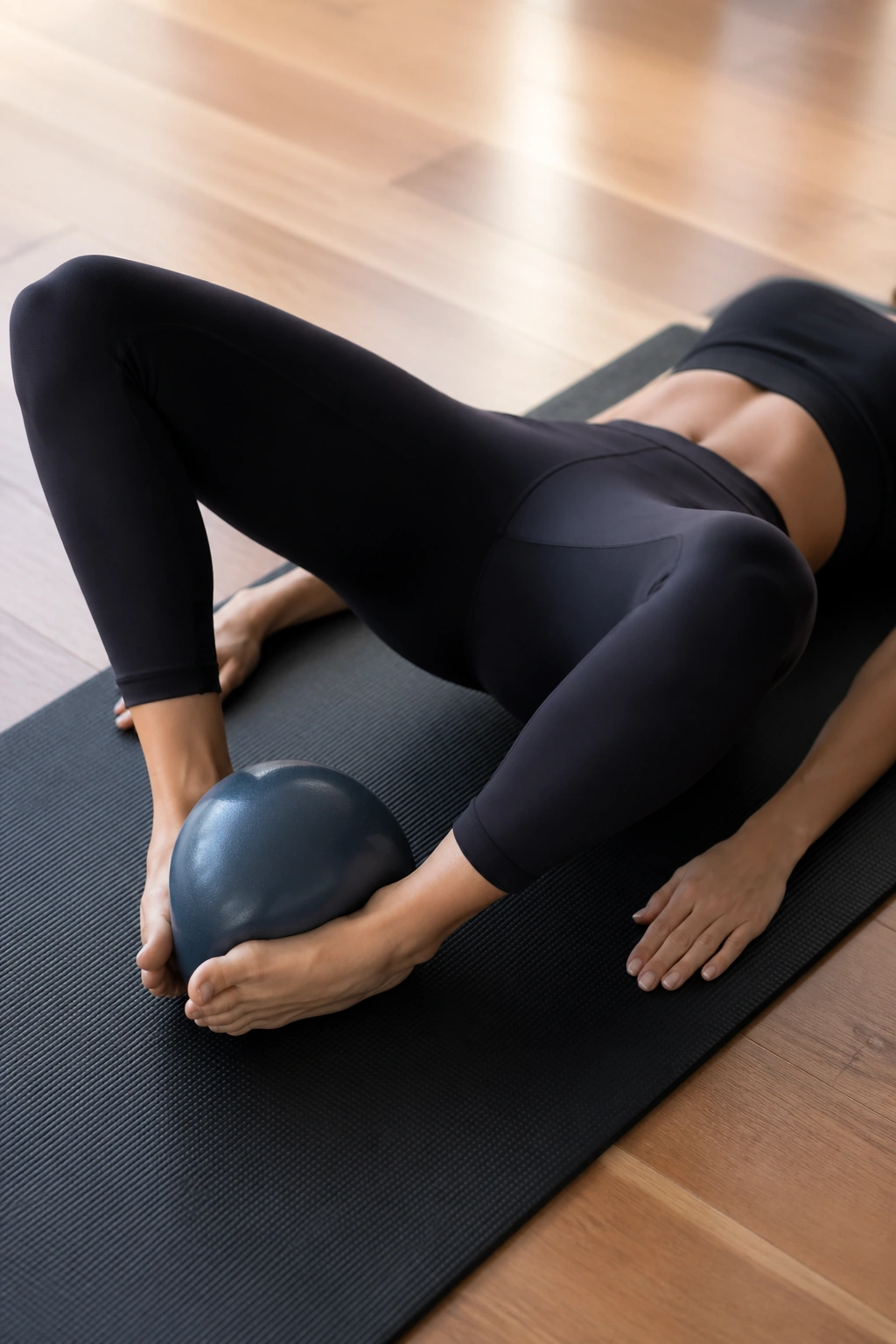
Why does a frog pump set your glutes on fire so fast? The range is short, the tension never really lets go, and the ball between your knees keeps the inner thighs involved the whole time.
Lie on your back with the soles of your feet together, knees open, and the ball tucked between your knees. Tuck your pelvis slightly so your lower back feels long, then lift and lower your hips in short pulses. Think “glutes up, ribs quiet.”
How to Get the Most From It
Exhale on the way up and pause for a split second at the top. That pause matters. It keeps the glutes working instead of letting momentum steal the rep.
Do not chase a giant lift. A frog pump is a squeeze exercise, not a yoga pose.
- Keep the knees open but not forced.
- Press into the ball gently the whole time.
- Stop if your lower back starts doing the job.
- Aim for 15 to 25 pulses.
Short sets are enough. Long sets get spicy fast.
10. Kneeling Donkey Kick with Ball Behind the Knee
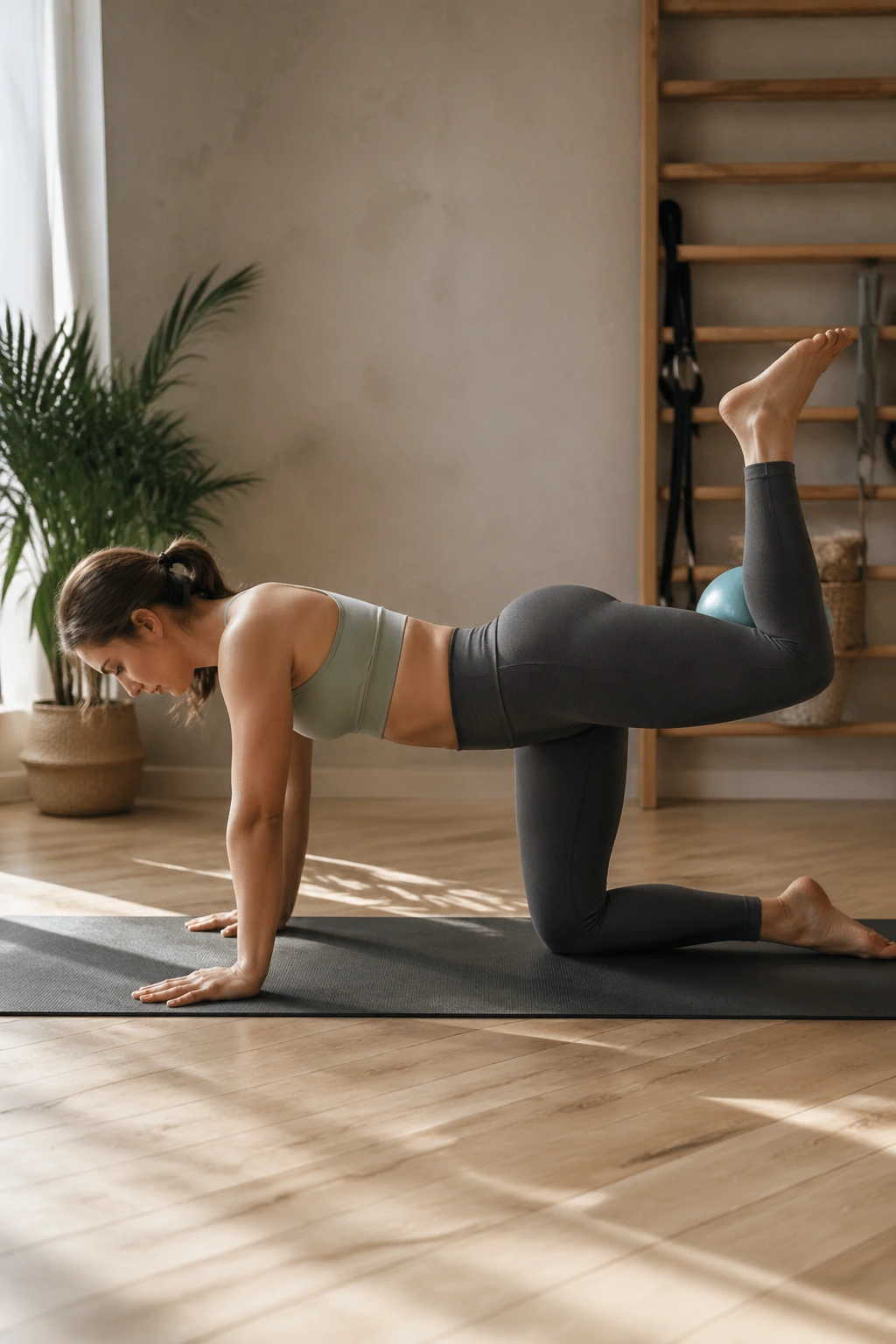
On all fours, tuck the ball behind one bent knee and keep the foot flexed so it stays put. Then drive the thigh back and up a few inches, like you’re pushing the ceiling away with the heel.
The ball changes the game here. It makes the hamstring stay switched on and keeps the kick from turning into a lazy lower-back swing. That little bit of resistance is enough to sharpen the whole movement.
I like this one when bridges feel too familiar. It reminds the body that the hips can move without the spine doing all the work.
The main mistake is rushing the lift. If the leg flies up and the ribs flare, the glute loses the job. Keep the pelvis quiet and the movement small. Ten to twelve slow reps per side is plenty.
11. Clamshell with Ball Between Ankles
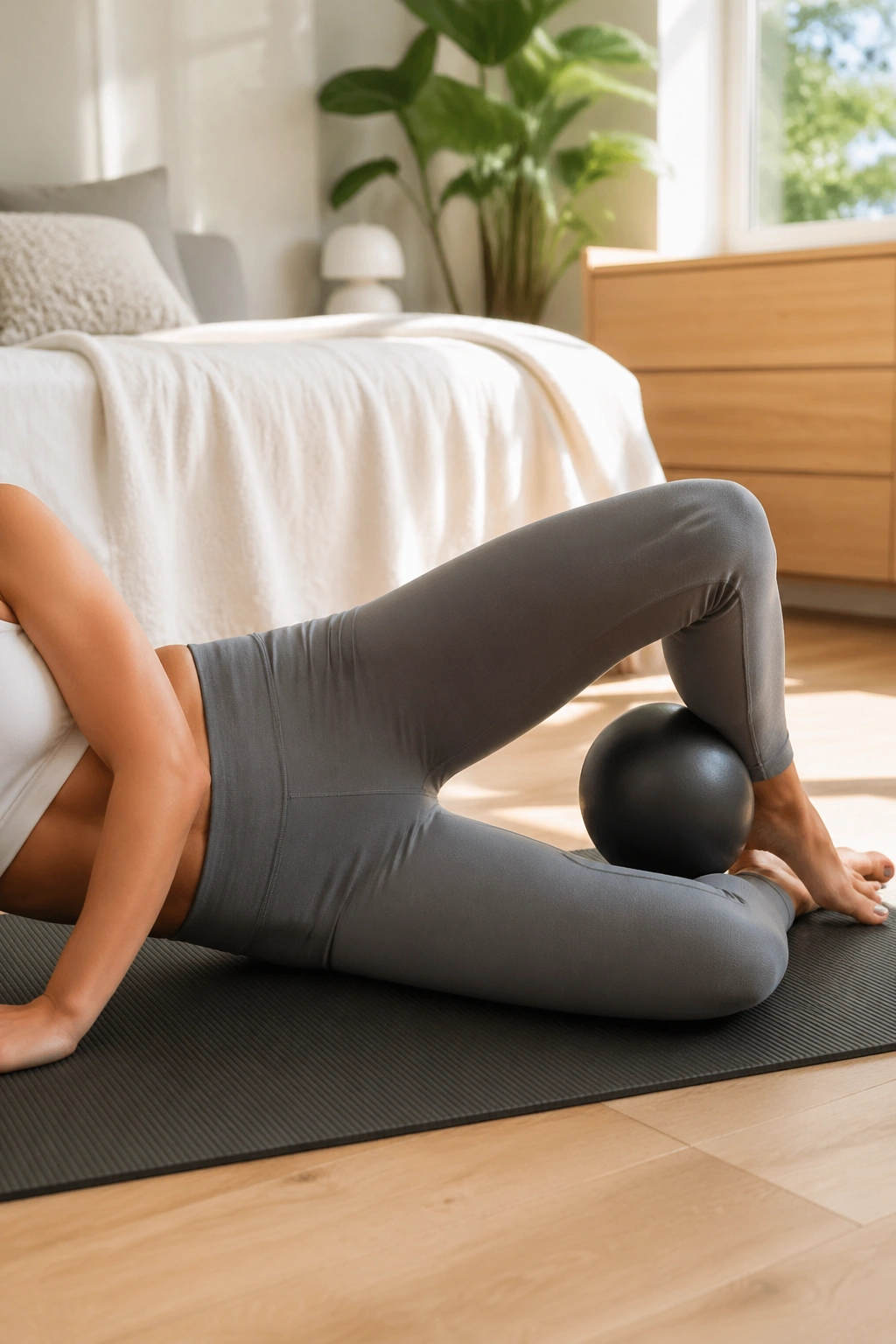
A clamshell with a ball between your ankles is less forgiving than the band version, and I mean that in a good way. The ball keeps the feet honest and stops the lower leg from wandering off while the outer hip works.
Lie on your side with knees bent, feet stacked, and the ball resting between your ankles. Keep the heels touching, then open the top knee like a clamshell without rolling your pelvis backward. Close with control.
The outer glute should feel like it’s doing the lifting. If you feel the front of the hip more than the side, your foot position is probably too far forward.
What Makes It Different
The ball creates a steadier line through the lower legs. That means less cheating, more glute medius, and usually a cleaner burn than a loose, sloppy clamshell ever gives.
How to Use It
- Keep the top hip stacked over the bottom hip
- Open only as far as you can stay still
- Hold the top for one second
- Use 12 to 15 reps per side
This is one of those small moves that keeps paying rent.
12. Feet-on-Ball Bridge Hold
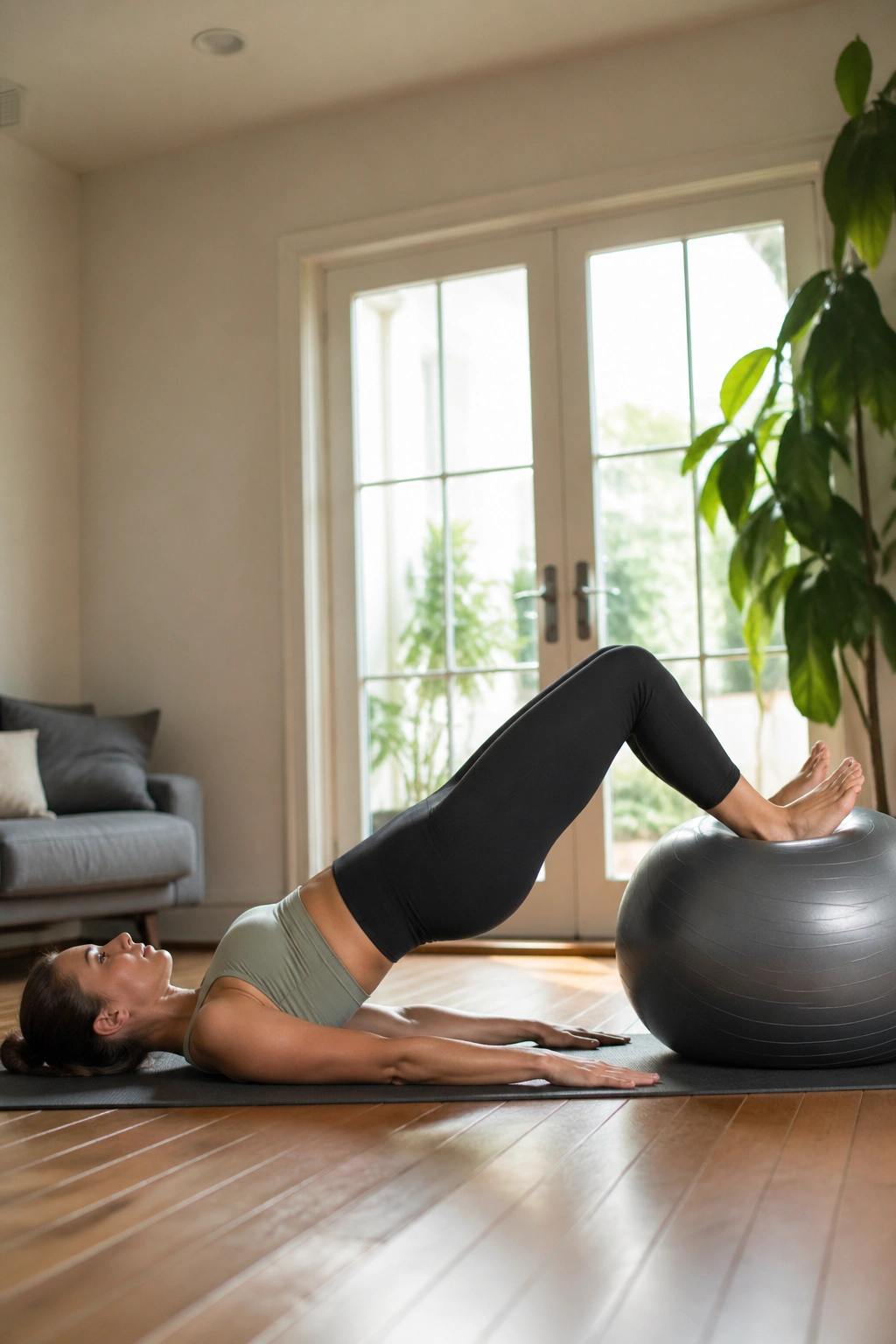
A bridge with your heels on a stability ball is a patience test. The ball wiggles, the hamstrings complain, and the glutes have to keep the hips up while everything else tries to wobble.
Start on your back with your heels on the ball and legs slightly bent. Lift your hips into a bridge and hold. Keep your toes softly lifted so the calves do not dominate the work.
Checkpoints That Matter
- Hips stay level from side to side
- Shoulders remain heavy on the mat
- The ball rolls only if you tell it to
- Lower back stays long, not arched
If the hamstrings cramp, lower the hips an inch and try again. Tiny changes make a big difference here.
This move is not flashy. It is better than flashy. You get a long hold, a steady glute squeeze, and a lot of hamstring involvement without needing a single fast rep.
13. Bridge March with Ball Squeeze
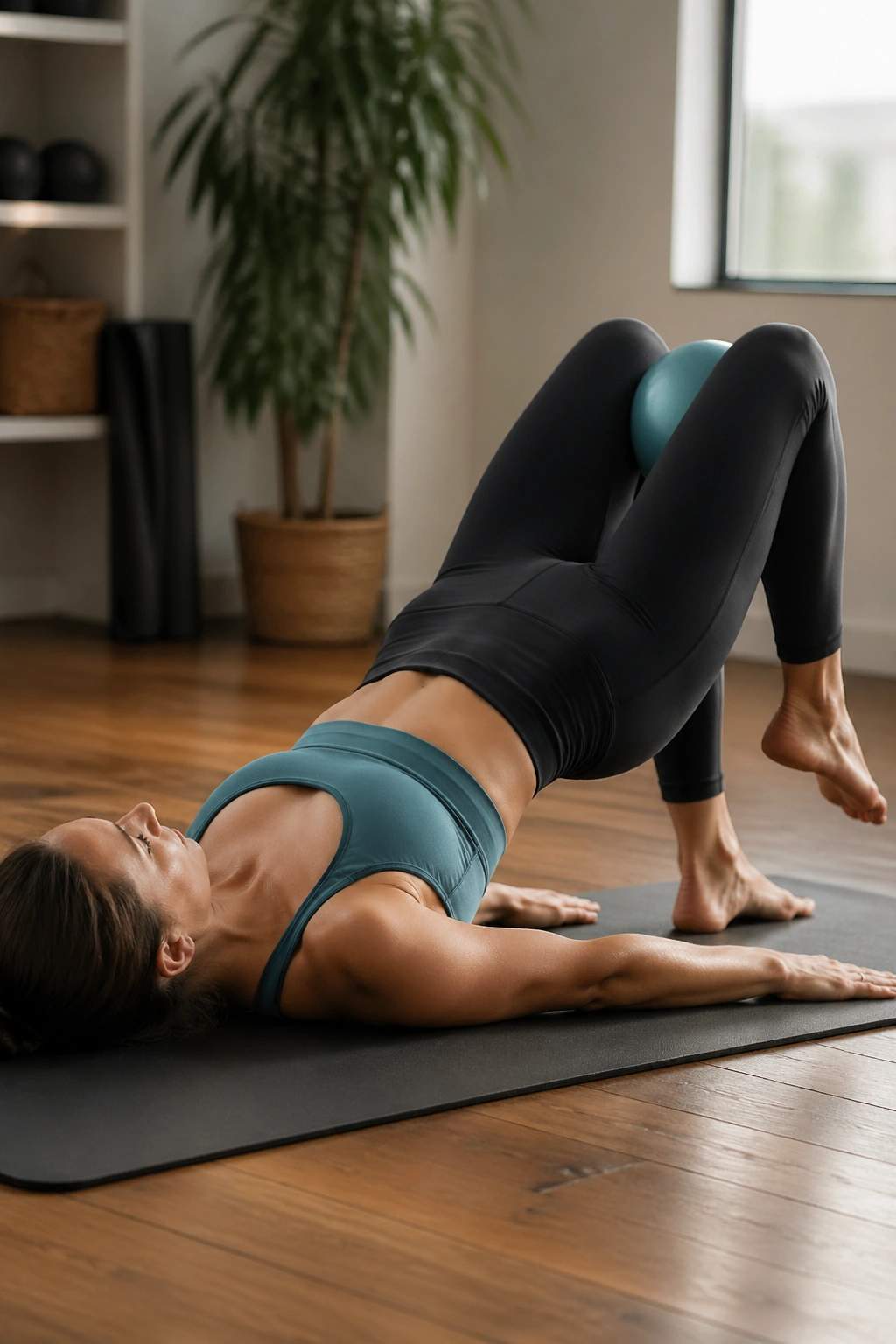
A bridge march is one of those moves that exposes weak hip control faster than people expect. Add the ball between your knees and the whole thing gets even more precise.
Lift into a strong bridge, press the ball lightly, then float one foot off the floor by an inch or two. Set it down and switch sides. The pelvis should stay nearly still. If it shifts, lower the bridge and shorten the march.
The job here is not height. The job is control.
This is one of the cleanest ways to train the glute medius without standing work. Each tiny march asks the standing side to resist rotation, which is where a lot of lower-body stability lives.
A slow rhythm works better than a quick one. Count two seconds up, two seconds down, and keep the ball quiet. Six to eight marches total is enough to make your hips notice.
14. Curtsy Squat with Ball Press
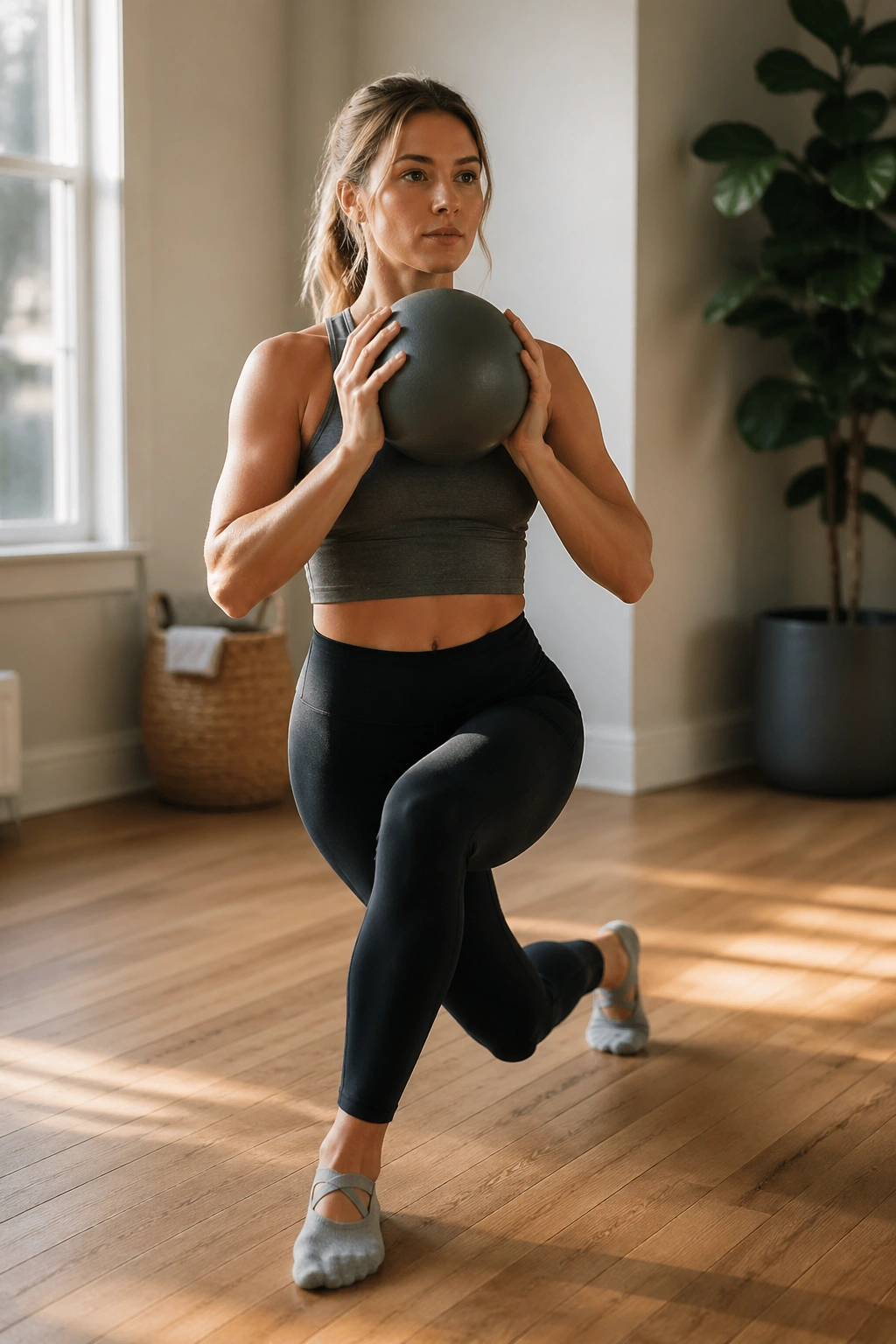
A curtsy squat with a ball held at chest height adds a little more structure to a move that can get messy fast. Without that front-load, people lean, twist, and dump all the work into the knees.
Step one leg back and across behind the other, then lower into a diagonal squat. Keep the ball pressed lightly at your chest, which helps your torso stay upright and your ribs stay stacked. Come back to standing through the front heel.
Why It Hits the Outer Hip
The cross-behind angle asks the glute medius and glute max to control the leg in a way a straight squat does not. You’ll feel the outside of the standing hip more than you do in a regular squat.
What to Watch For
- Front knee stays soft and tracked
- Back foot lands lightly, not hard
- Torso stays centered over the hips
- Range stays small if the knees protest
A curtsy squat is not for everyone. If it bothers the knee, reduce the cross-behind step or skip it. No prize for forcing it.
15. Lateral Step-Out Squat
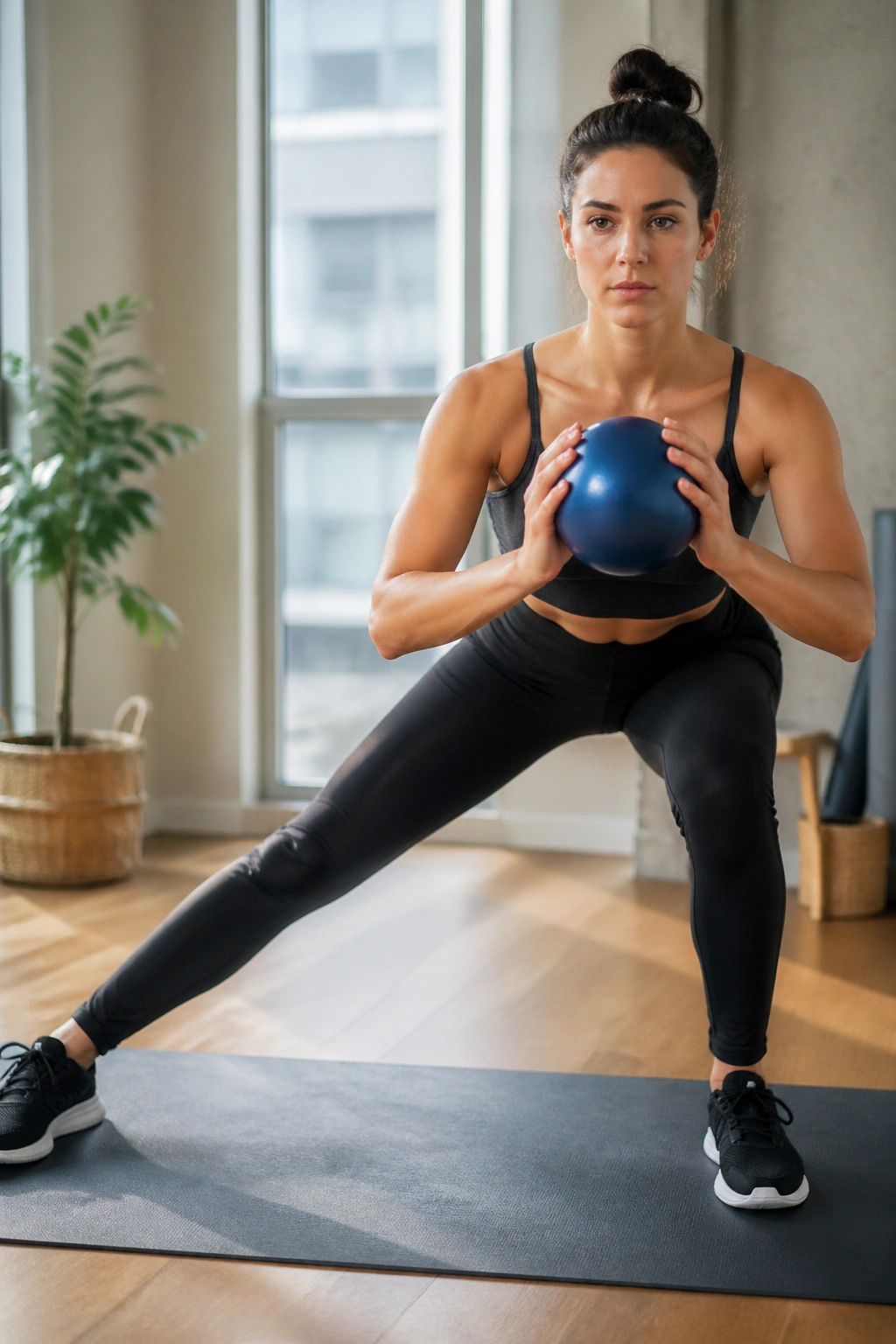
Side-to-side work is different from straight up-and-down work. Your glutes have to catch, slow, and redirect your body weight, which wakes up parts of the hips that regular squats can miss.
Hold the ball at chest height, step out to one side, and sink into that leg while the other leg stays long. Push the floor away to return to center, then repeat on the other side. Keep the chest calm and the ribs from flaring.
How to Get the Most From It
Take a real step. Tiny shuffles turn this into a half-hearted move. You want enough distance that the working hip actually has to bend.
- Press both hands evenly into the ball
- Keep the stepping foot fully planted
- Sit back into the hip, not forward into the knee
- Use a slow return to center
This move feels especially useful if your outer hips get tight from sitting a lot. They usually do.
16. Rear-Foot Split Squat on the Ball
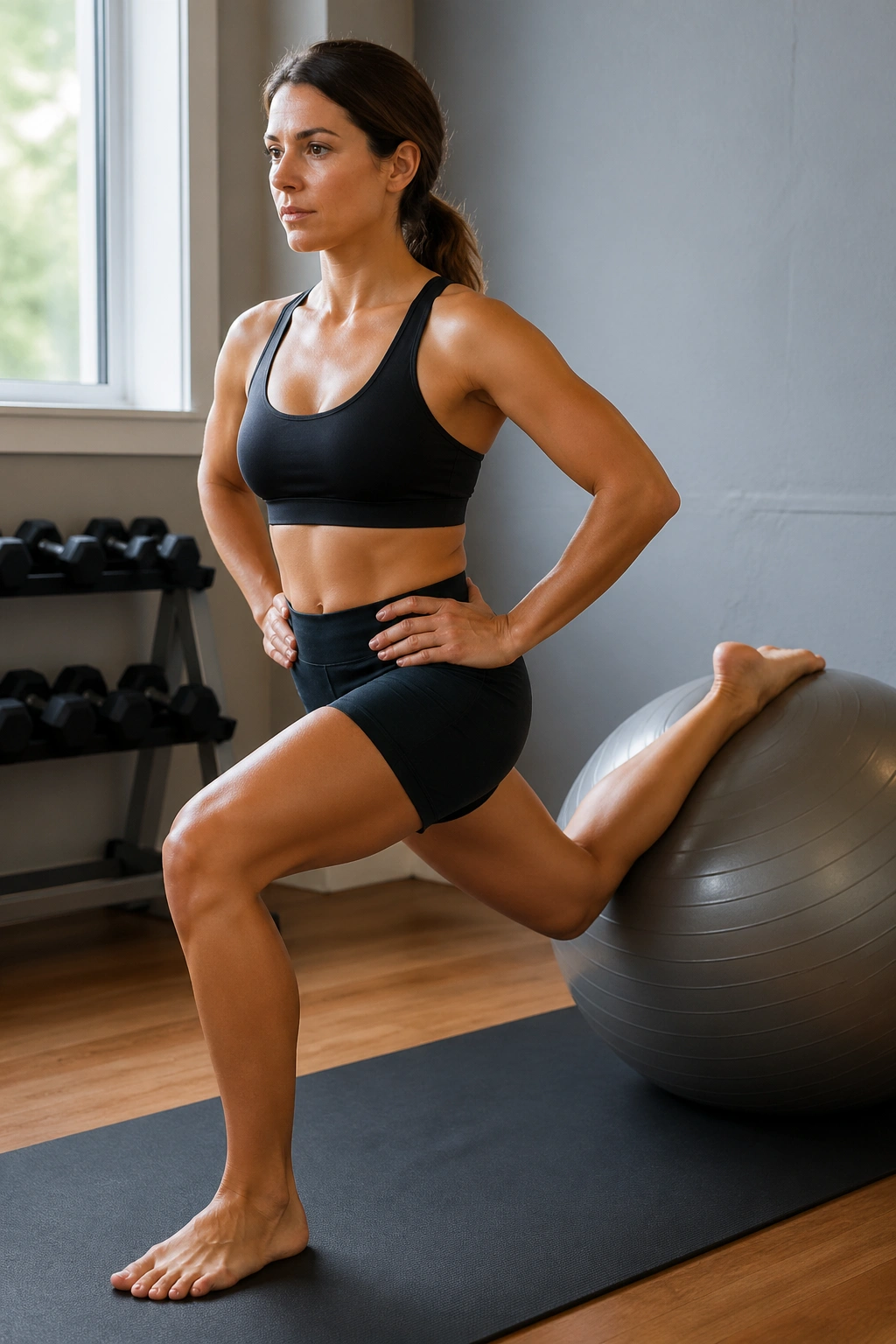
Unlike a floor split squat, this version makes the rear leg work to stay in place against the ball, which turns the whole pattern into a balance drill with a real leg payoff. It is harder than it looks.
Set a stability ball behind you near a wall or sturdy support. Place the back foot or lower shin against the ball, keep the front foot flat, and lower straight down into a split squat. Stand back up by driving through the front heel.
The front glute should do most of the heavy lifting. The rear leg helps stabilize, but it should not be collapsing into the floor.
What Makes It Different
The ball adds instability, which forces better hip control on the front side. If you rush it, the movement gets sloppy fast. If you slow it down, it becomes a serious leg exercise.
If balance is shaky, hold a wall or chair with one hand. That is not cheating. That is smart.
17. Fire Hydrant with Ball Support
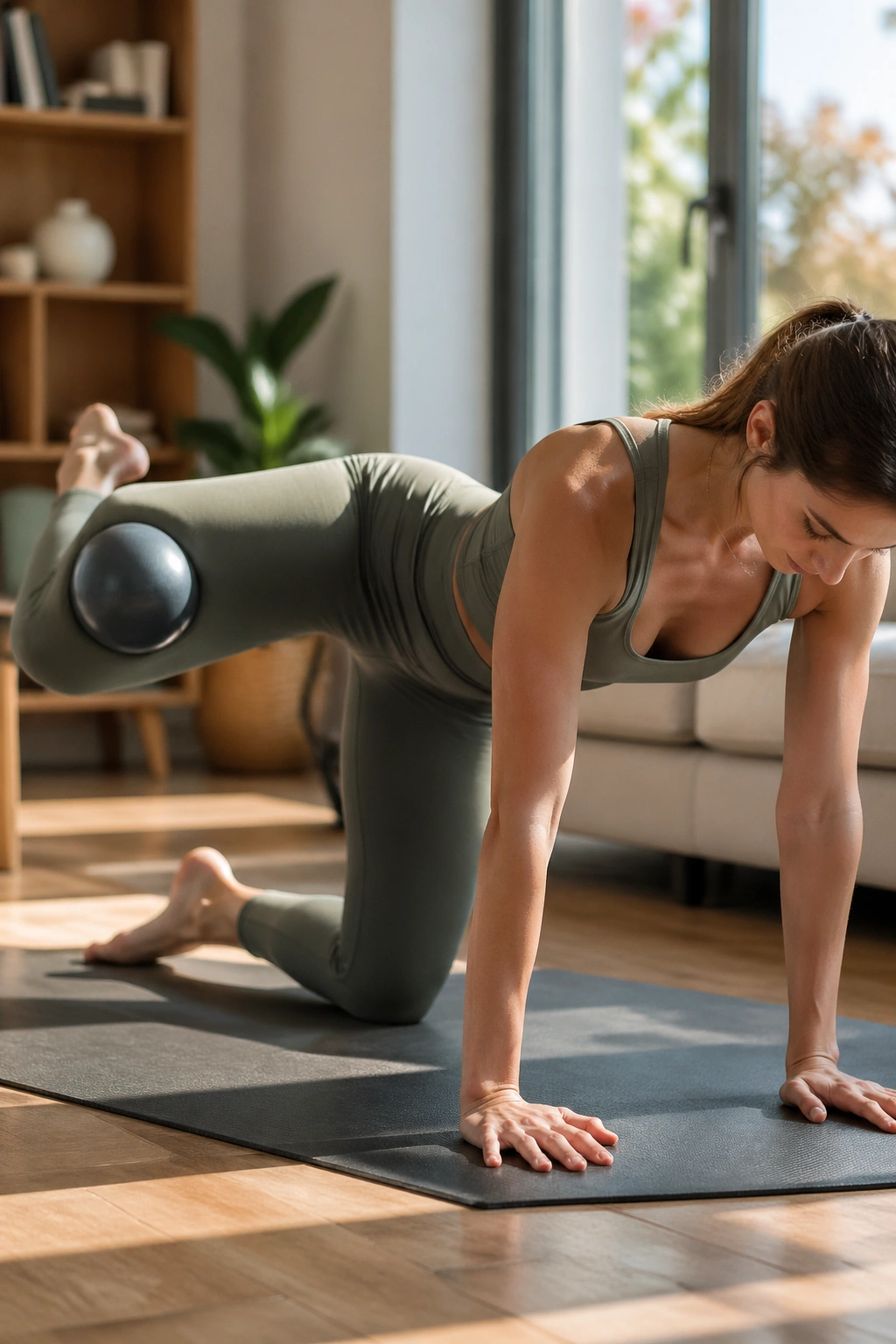
A fire hydrant with a mini ball tucked behind the working knee is a small move with a big opinion. It refuses to let you swing the leg wildly, which is the whole point.
Start on all fours, bend one knee to 90 degrees, and rest the ball behind that knee. Keep the foot flexed so the ball stays put, then lift the knee out to the side until the hip starts to rotate. Lower slowly.
The outer hip should do the work. If your torso twists or your lower back arches, the range is too big.
- Keep the shoulders square
- Stop before the pelvis rolls open
- Move slowly enough to feel the side hip
- Use 8 to 12 clean reps per side
This is one of my favorites for glute medius activation because the ball gives an instant yes-or-no answer. Either you stay steady, or the prop falls.
18. Side-Lying Leg Press to the Ball
Finish here when you want something that feels small and somehow gets meaner with every rep. A side-lying leg press to the ball keeps the inner thighs, outer hips, and low glutes working at the same time.
Lie on your side with the ball between your ankles and both legs long. Keep your top hand on the floor for balance. Press the top leg gently down into the ball as the bottom leg lifts a few inches, then switch the pressure and lower with control. The movement is tiny. The burn is not.
Your hips should stay stacked. If you roll backward, the front of the hip will steal the work. If you lift too high, the whole thing loses its shape.
This one is a nice closing move because it feels tidy. No big swinging, no fancy setup, no drama. Just controlled pressure, steady hips, and the kind of leg fatigue that settles in deep enough to remind you you did something worthwhile.
